US9799892B2 - Electrocatalyst for oxygen reduction including silver/silver halide composite, fuel cell including the same, and preparing method of the same - Google Patents
Electrocatalyst for oxygen reduction including silver/silver halide composite, fuel cell including the same, and preparing method of the same Download PDFInfo
- Publication number
- US9799892B2 US9799892B2 US13/860,660 US201313860660A US9799892B2 US 9799892 B2 US9799892 B2 US 9799892B2 US 201313860660 A US201313860660 A US 201313860660A US 9799892 B2 US9799892 B2 US 9799892B2
- Authority
- US
- United States
- Prior art keywords
- silver
- silver halide
- oxygen reduction
- electrocatalyst
- composite
- Prior art date
- Legal status (The legal status is an assumption and is not a legal conclusion. Google has not performed a legal analysis and makes no representation as to the accuracy of the status listed.)
- Active, expires
Links
Images




Classifications
-
- B—PERFORMING OPERATIONS; TRANSPORTING
- B01—PHYSICAL OR CHEMICAL PROCESSES OR APPARATUS IN GENERAL
- B01J—CHEMICAL OR PHYSICAL PROCESSES, e.g. CATALYSIS OR COLLOID CHEMISTRY; THEIR RELEVANT APPARATUS
- B01J23/00—Catalysts comprising metals or metal oxides or hydroxides, not provided for in group B01J21/00
- B01J23/38—Catalysts comprising metals or metal oxides or hydroxides, not provided for in group B01J21/00 of noble metals
- B01J23/48—Silver or gold
- B01J23/50—Silver
-
- H—ELECTRICITY
- H01—ELECTRIC ELEMENTS
- H01M—PROCESSES OR MEANS, e.g. BATTERIES, FOR THE DIRECT CONVERSION OF CHEMICAL ENERGY INTO ELECTRICAL ENERGY
- H01M4/00—Electrodes
- H01M4/86—Inert electrodes with catalytic activity, e.g. for fuel cells
- H01M4/90—Selection of catalytic material
-
- B—PERFORMING OPERATIONS; TRANSPORTING
- B01—PHYSICAL OR CHEMICAL PROCESSES OR APPARATUS IN GENERAL
- B01J—CHEMICAL OR PHYSICAL PROCESSES, e.g. CATALYSIS OR COLLOID CHEMISTRY; THEIR RELEVANT APPARATUS
- B01J37/00—Processes, in general, for preparing catalysts; Processes, in general, for activation of catalysts
- B01J37/16—Reducing
-
- H—ELECTRICITY
- H01—ELECTRIC ELEMENTS
- H01M—PROCESSES OR MEANS, e.g. BATTERIES, FOR THE DIRECT CONVERSION OF CHEMICAL ENERGY INTO ELECTRICAL ENERGY
- H01M4/00—Electrodes
- H01M4/86—Inert electrodes with catalytic activity, e.g. for fuel cells
- H01M4/90—Selection of catalytic material
- H01M4/9041—Metals or alloys
-
- H—ELECTRICITY
- H01—ELECTRIC ELEMENTS
- H01M—PROCESSES OR MEANS, e.g. BATTERIES, FOR THE DIRECT CONVERSION OF CHEMICAL ENERGY INTO ELECTRICAL ENERGY
- H01M8/00—Fuel cells; Manufacture thereof
- H01M8/02—Details
-
- H—ELECTRICITY
- H01—ELECTRIC ELEMENTS
- H01M—PROCESSES OR MEANS, e.g. BATTERIES, FOR THE DIRECT CONVERSION OF CHEMICAL ENERGY INTO ELECTRICAL ENERGY
- H01M8/00—Fuel cells; Manufacture thereof
- H01M8/10—Fuel cells with solid electrolytes
- H01M2008/1095—Fuel cells with polymeric electrolytes
-
- Y—GENERAL TAGGING OF NEW TECHNOLOGICAL DEVELOPMENTS; GENERAL TAGGING OF CROSS-SECTIONAL TECHNOLOGIES SPANNING OVER SEVERAL SECTIONS OF THE IPC; TECHNICAL SUBJECTS COVERED BY FORMER USPC CROSS-REFERENCE ART COLLECTIONS [XRACs] AND DIGESTS
- Y02—TECHNOLOGIES OR APPLICATIONS FOR MITIGATION OR ADAPTATION AGAINST CLIMATE CHANGE
- Y02E—REDUCTION OF GREENHOUSE GAS [GHG] EMISSIONS, RELATED TO ENERGY GENERATION, TRANSMISSION OR DISTRIBUTION
- Y02E60/00—Enabling technologies; Technologies with a potential or indirect contribution to GHG emissions mitigation
- Y02E60/30—Hydrogen technology
- Y02E60/50—Fuel cells
Definitions
- the present disclosure relates to an electrocatalyst for oxygen reduction including a silver/silver halide composite, a fuel cell including the electrocatalyst for oxygen reduction, and a method for preparing the electrocatalyst for oxygen reduction.
- a fuel cell is a device for changing chemical energy into electric energy.
- a gas phase fuel such as hydrogen is supplied to an anode (electrode for oxidation), and an oxidizer such as oxygen is supplied to a cathode (electrode for reduction).
- an oxidizer such as oxygen is supplied to a cathode (electrode for reduction).
- a hydrogen/oxygen fuel cell hydrogen is supplied to an anode, and oxygen is supplied to a cathode.
- the hydrogen is oxidized to form hydrogen ions and simultaneously discharge electrons to an external circuit.
- the hydrogen ions move to the cathode through a conductive polymer film to react with the oxygen species thereby forming water.
- a typical reaction of a hydrogen/oxygen fuel cell is as follows: Anode: 2H 2 ⁇ 4H + +4e ⁇ (1)
- an electrocatalyst In order to cause the oxidation reaction and the reduction reaction in the fuel cell at a rapid reaction rate and a low overpotential, an electrocatalyst is required. Where no eletrocatalyst exists, a general electrode reaction occurs in a very high potential state. The eletrodecatalyst increases the electrochemical reaction rate, and thus, can operate the fuel cell at a low potential.
- platinum since platinum has a high catalyst property, platinum and a platinum alloy material are generally used as electrocatalysts for an anode and a cathode of a fuel cell.
- platinum is disadvantageous because it is highly expensive and increases the preparation costs for the fuel cell.
- the present disclosure provides an electrocatalyst, which improves efficiency of an oxygen reduction reaction (ORR) in a fuel cell and contains no platinum.
- ORR oxygen reduction reaction
- the present disclosure provides an electrocatalyst for oxygen reduction including a silver/silver halide composite, a fuel cell including the electrocatalyst for oxygen reduction, and a method for preparing the electrocatalyst for oxygen reduction.
- an electrocatalyst for oxygen reduction comprising a silver/silver halide composite.
- a fuel cell comprising the electrocatalyst for oxygen reduction according to the first aspect of present disclosure.
- a method for preparing the electrocatalyst for oxygen reduction comprising forming a silver nanomaterial, and combining a silver halide with the silver nanomaterial.
- a method for increasing stability of an electrocatalyst for oxygen reduction comprising adding from about 0.1 mM to about 100 mM of NaCl to an anode electrolyte environment in which the oxygen reduction occurs.
- a fuel electrode for a fuel cell comprising a silver/silver halide composite.
- the electrocatalyst for oxygen reduction in accordance with the present disclosure does not contain expensive platinum, preparation costs in preparing a fuel cell by using the electrocatalyst for oxygen reduction can be significantly reduced. Also, the electrocatalyst for oxygen reduction exhibits excellent oxygen reduction catalytic activity and stability, etc., in an alkaline medium, compared to a conventional electrocatalyst for oxygen reduction. The electrocatalyst for oxygen reduction can also increase its resistance to ethanol. Accordingly, since the electrocatalyst for oxygen reduction has a superior electron transfer property, it also corresponds to a fuel electrode.
- FIG. 1 is a sequence view of a method for preparing an electrocatalyst for oxygen reduction including a silver/silver halide (Ag/AgBr) nanowire in accordance with an illustrative embodiment of the present disclosure
- FIG. 2 provides transmission electron microscope (TEM) and scanning electron microscope (SEM) photographs of a pure silver nanowire in accordance with an example of the present disclosure
- FIG. 3 provides SEM photographs of a silver/silver chloride (Ag/AgCl) nanowire or a silver/silver bromide (Ag/AgBr) nanowire depending on the presence of polyvinylpyrrolidone in an example of the present disclosure;
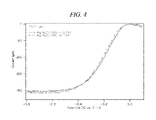
- FIG. 4 provides results of a rotating disk electrode (RDE) test conducted in a 0.1 M NaOH solution for oxygen reduction with respect to a silver/silver chloride (Ag/AgCl) nanowire depending on the presence of polyvinylpyrrolidone in an example of the present disclosure
- FIG. 5 provides results of a RDE test conducted in a 0.1 M NaOH solution for oxygen reduction with respect to a silver/silver bromide (Ag/AgBr) nanowire depending on the presence of polyvinylpyrrolidone in an example of the present disclosure
- FIG. 6 compares results of RDE tests conducted in a 0.1 M NaOH solution for oxygen reduction with respect to silver/silver chloride (Ag/AgCl) and silver/silver bromide (Ag/AgBr) nanowires, which were synthesized without polyvinylpyrrolidone, a pure silver nanowire, and a commercial platinum catalyst (ETEK), in accordance with an example of the present disclosure;
- FIG. 7 compares results of RDE tests conducted in a 0.1 M NaOH solution for oxygen reduction with respect to silver/silver chloride (Ag/AgCl) and silver/silver bromide (Ag/AgBr) bulk materials, which were synthesized in bulk, silver oxide (Ag 2 O), a silver nanoparticle/carbon support, and a commercial platinum catalyst (ETEK) in accordance with an example of the present disclosure;
- FIG. 8 compares results of a RDE test conducted at 1,600 rpm in a 0.1 M NaOH for oxygen reduction with respect to oxygen reduction of bulk-synthesized silver/silver chloride (Ag/AgCl) depending on a change of NaCl concentration; and
- FIG. 9 shows stability of a catalyst with respect to an oxygen reduction reaction of bulk-synthesized silver/silver chloride (Ag/AgCl) through a RDE test in a 0.1 M NaOH (containing 1 mM NaCl) solution in an example of the present disclosure.
- connection or coupling are used to designate a connection or coupling of one element to another element and include both a case where an element is “directly connected or coupled to” another element and a case where an element is “electronically connected or coupled to” another element via still another element.
- the term “on” that is used to designate a position of one element with respect to another element includes both a case that the one element is adjacent to the another element and a case that any other element exists between these two elements.
- halogen or “halo” means chlorine, bromine, fluorine, or iodine.
- an electrocatalyst for oxygen reduction including a silver/silver halide composite, a fuel cell including the electrocatalyst for oxygen reduction, and a method for preparing the electrocatalyst for oxygen reduction will be explained in detail with reference to illustrative embodiments and examples.
- the present disclosure is not limited to the illustrative embodiments and the examples.
- a first aspect of the present disclosure provides an electrocatalyst for oxygen reduction including a silver/silver halide composite.
- the silver halide may be combined in an alloy form with a surface and an interior of a silver nanomaterial by a spontaneous reduction reaction.
- the silver/silver halide composite may be formed by performing a spontaneous reduction reaction through a Galvanic replacement reaction in the manner that a halogen precursor solution is dropwisely added to the silver nanomaterial.
- the silver nanomaterial may include, for example, a silver nanowire.
- the present disclosure may not be limited thereto.
- the silver/silver halide composite may have a structure including nanopores depending on a concentration of the halogen precursor solution.
- a metal concentration may be in the range of from about 1 mM to about 200 mM, from about 5 mM to about 200 mM, from about 10 mM to about 200 mM, from about 20 mM to about 200 mM, from about 30 mM to about 200 mM, from about 40 mM to about 200 mM, from about 50 mM to about 200 mM, from about 60 mM to about 200 mM, from about 70 mM to about 200 mM, from about 80 mM to about 200 mM, from about 90 mM to about 200 mM, from about 100 mM to about 200 mM, from about 1 mM to about 180 mM, from about 1 mM to about 150 mM
- the nanopores may have a size of from about 1 nm to about 100 nm, from about 5 nm to about 100 nm, from about 10 nm to about 100 nm, from about 2 nm to about 100 nm, from about 30 nm to about 100 nm, from about 40 nm to about 100 nm, from about 50 nm to about 100 nm, from about 60 nm to about 100 nm, from about 70 nm to about 100 nm, from about 1 nm to about 90 nm, from about 1 nm to about 80 nm, from about 1 nm to about 70 nm, from about 1 nm to about 60 nm, from about 1 nm to about 50 nm, from about 1 nm to about 40 nm, from about 1 nm to about 30 nm, from about 1 nm to about 20 nm, or from about 1 nm to about
- a cross section of the silver nanowire may include a pentagon structure.
- An end part of the silver nanowire may include a circular structure.
- a diameter of the silver nanowire may be about 200 nm or less, about 150 nm or less, or about 100 nm or less. However, the present disclosure may not be limited thereto.
- the silver halide may include silver chloride or silver bromide.
- the present disclosure may not be limited thereto.
- the silver/silver halide composite may include a form selected from the group consisting of a nanowire, a core-shell nanoparticle, and a bulk material.
- the present disclosure may not be limited thereto.
- the bulk material may be in a powder form.
- the present disclosure may not be limited thereto.
- the silver/silver halide composite may include the silver and the halogen at a weight ratio of from about 99.0:about 1.0 to about 1.0:about 99.0.
- the present disclosure may not be limited thereto.
- the electrocatalyst for oxygen reduction of the present disclosure may be increased oxygen-reduction catalytic activity under an alkaline or acidic condition.
- the present disclosure may not be limited thereto.
- the electrocatalyst for oxygen reduction of the present disclosure may be increased its resistance to ethanol.
- the present disclosure may not be limited thereto.
- a second aspect of the present disclosure provides a fuel cell including the electrocatalyst for oxygen reduction in accordance with the first aspect.
- the electrocatalyst for oxygen reduction may be included in a cathode electrode (electrode for reduction) of a fuel cell, or may be also included in an anode (electrode for oxidation).
- the fuel cell including the electrocatalyst for oxygen reduction including the silver/silver halide composite can increase efficiency of an oxygen reduction reaction on a cathode electrode, compared to a conventional electrocatalyst for oxygen reduction including only platinum.
- the fuel cell can increase the efficiency of the oxygen reduction reaction even under the alkaline condition.
- the fuel cell since the fuel cell has increased its resistance to ethanol, it has a superior electron transfer property.
- the fuel cell contains no platinum, it is advantageous in drastically reducing preparation costs for the fuel cell.
- the ethanol When ethanol is used as a fuel in a fuel cell, the ethanol may be reacted in a cathode, which corresponds to a fuel electrode. After the reaction, a product may be moved to an anode, which corresponds to an oxygen electrode.
- a cathode which corresponds to a fuel electrode.
- anode which corresponds to an oxygen electrode.
- voltage drop occurs in the whole fuel cell so that the efficiency of the fuel cell is deteriorated.
- the fuel cell including the electrocatalyst for oxygen reduction including the silver/silver halide binary component can minimize the problem.
- a third aspect of the present disclosure provides a method for preparing the electrocatalyst for oxygen reduction in accordance with the first aspect of the present disclosure, including: forming a silver nanomaterial; and combining a silver halide with the silver nanomaterial.
- the silver nanomaterial may include, for example, a silver nanowire.
- the present disclosure may not be limited thereto.
- a modified polyol process may be further included in forming the silver nanomaterial.
- the modified polyol process includes dissolving each of a silver precursor (e.g., AgNO 3 ) and polyvinylpyrrolidone (PVP), for example, in ethylene glycol (EG), combining the solutions, and then, removing the polyvinylpyrrolidone.
- the silver nanowire can be formed by the modified polyol process.
- the formed silver nanowire may also serve as a mold as well as a precursor in the process for combination with silver halide. Accordingly, the silver halide may be combined onto the silver nanowire.
- FIG. 2 it is identified that the silver nanowire can be prepared even when the modified polyol process is not performed.
- the process of combining the silver halide with the silver nanomaterial may include forming a silver/silver halide composite by performing a spontaneous reduction reaction via a Galvanic replacement reaction in the manner that a halogen precursor solution is dropwisely added to the silver nanomaterial.
- the halogen precursor solution may include a halogen metal selected from the group consisting of chlorine, bromine, fluorine, and iodine.
- the halogen precursor solution may include clorine or bromine, but may not be limited thereto.
- a concentration of the halogen metal may be from about 1 mM to about 200 mM, for example, from about 5 mM to about 200 mM, from about 10 mM to about 200 mM, from about 20 mM to 200 mM, from about 30 mM to about 200 mM, from about 40 mM to about 200 mM, from about 50 mM to about 200 mM, from about 60 mM to about 200 mM, from about 70 mM to about 200 mM, from about 80 mM to about 200 mM, from about 90 mM to about 200 mM, from about 100 mM to about 200 mM, from about 1 mM to about 180 mM, from about 1 mM to about 150 mM, from about 1 mM to about 120 mM, from about 1 mM to about 100 mM, or from about 1 mM to about 50 mM.
- the present disclosure may not be limited thereto.
- a fourth aspect of the present disclosure provides a method for increasing stability of an electrocatalyst for oxygen reduction, including adding from about 0.1 mM to about 100 mM of NaCl to an anode electrolyte environment in which the oxygen reduction occurs.
- a concentration of the NaCl may be from about 0.1 mM to about 100 mM, from about 1 mM to about 100 mM, from about 5 mM to about 100 mM, from about 10 mM to about 100 mM, from about 20 mM to about 100 mM, from about 30 mM to about 100 mM, from about 40 mM to about 100 mM, from about 50 mM to about 100 mM, from about 0.1 mM to about 90 mM, from about 0.1 mM to about 80 mM, from about 0.1 mM to about 70 mM, from about 0.1 mM to about 60 mM, from about 0.1 mM to about 50 mM, from about 0.1 m
- the present disclosure may not be limited thereto. Since oxidation does not occur due to the addition of NaCl, the stability of the silver/silver halide composite can be improved. However, the present disclosure may not be limited thereto.
- the silver/silver halide is subject to all the descriptions of the silver/silver halide included in the above-described electrocatalyst for oxygen reduction. For convenience in explanation, the overlapping descriptions of the silver/silver halide are omitted hereinafter.
- a fifth aspect of the present disclosure provides a fuel electrode for a fuel cell. Since the silver/silver halide composite has a superior electron transfer property, it can provide excellent activity as an electrocatalyst of a fuel electrode.
- the silver/silver halide is subject to all the descriptions of the silver/silver halide included in the above-described electrocatalyst for oxygen reduction. For convenience in explanation, the overlapping descriptions polyvinylpyrrolidone are omitted hereinafter.
- FIG. 1 is a sequence view for preparing the electrocatalyst for oxygen reduction including the silver/silver halide composite in accordance with an illustrative embodiment of the present disclosure. This sequence view can be applied to another electrocatalyst, e.g., an electrocatalyst for fuel-oxidation.
- a silver nanowire is formed (S 110 ).
- the silver nanowire may be formed, for example, by a modified polyol process, but may not be limited thereto.
- the modified polyol process includes dissolving each of a silver precursor (e.g., AgNO 3 ) and polyvinylpyrrolidone (PVP), for example, in ethylene glycol (EG), combining the solutions, and then, removing the polyvinylpyrrolidone.
- the silver nanowire may be formed by the modified polyol process.
- the formed silver nanowire can also serve as a mold as well as a precursor in the process for combination with a silver halide, e.g., silver chloride or silver bromide. Accordingly, the silver halide may be combined onto the silver nanowire.
- a cross section of the silver nanowire may include a pentagon structure.
- An end part of the silver nanowire may include a circular structure.
- a diameter of the silver nanowire may be about 200 nm or less, about 150 nm or less, or about 100 nm or less. However, the present disclosure may not be limited thereto.
- the silver halide is combined with the silver nanowire thereby forming a silver/silver chloride or silver/silver bromide binary nanowire (S 130 ).
- Combining the silver halide with the silver nanowire may be performed by a method including performing a spontaneous reduction reaction via a Galvanic replacement reaction in the manner that a halogen precursor solution is dropwisely added to the silver nanowire (S 120 ).
- a halogen precursor solution e.g., a FeCl 3 or FeBr 3 solution
- the silver/silver chloride or silver/silver bromide binary nanowire may be formed by dropwisely adding a halogen precursor solution, e.g., a FeCl 3 or FeBr 3 solution to the silver nanowire.
- the metal ions of the halogen precursor e.g., Fe 3+
- the metal ions are reduced to Fe 2+ on a surface and/or in an interior of the silver nanowire.
- part of the silver from the silver nanowire is oxidized so that the silver halide is formed on the surface of the silver nanowire. Accordingly, the silver/silver halide binary nanowire, in which silver halide is combined onto the silver nanowire, can be formed.
- the silver/(silver halide) binary nanowire may have a structure including nanopores depending on a concentration of the halogen precursor solution.
- a metal concentration may include a range of from about 1 mM to about 200 mM, from about 5 mM to about 150 mM, or from about 10 mM to about 100 mM.
- the nanopores may have, for example, a size of from about 1 nm to about 100.
- the present disclosure may not be limited thereto.
- a silver nanowire was prepared by using the modified polyol process. Specifically, 10.0 mL of ethylene glycol (EG) was injected into a round-bottom flask having a coolant, a temperature controller, and a magnetic stirring bar, and heated at 170° C. for 1 hour.
- EG ethylene glycol
- the washed silver nanowire was placed in a vial and dried to obtain a silver nanowire in the solid powder state. Thereafter, the silver nanowire was dispersed in water such that 2 mg/mL was reached.
- FIG. 2 shows TEM and SEM photographs of the obtained silver nanowire.
- the nanowires were divided depending on existence of injection of PVP.
- 500 mM FeCl 3 and FeBr 3 stock solution and 500 mM PVP stock solution were prepared. Each of the stock solutions was dissolved in water as a solvent.
- the method for synthesizing Ag/AgCl core/shell nanowires will be described.
- the FeCl 3 stock solution was injected into 1 mL of the silver nanowire prepared in Example 1 and dispersed in water, so as to be 100 mM.
- the PVP stock solution was injected into 1 mL of another silver nanowire, so as to be 50 mM. After 5 minutes, the FeCl 3 stock solution was injected thereinto such that 100 mM was reached. After the injection of the FeCl 3 solution, the two reaction solutions were reacted for 10 minutes.
- the same synthesis as that for the Ag/AgCl core/shell nanowires was performed while using the FeBr 3 stock solution.
- the reactions were proceeded with only for 5 minutes. All the reactions were proceeded with at a room temperature while being stirred by a magnetic stirrer. After the reactions finished, Fe, Cl, and Br ions and PVP remaining in the water were removed by using a centrifuge. The Ag/AgBr core/shell nanowires and the Ag/AgCl core/shell nanowires were dried to obtain materials in the solid powder state. The materials were dispersed in water such that 2 mg/mL was reached. SEM photographs of the obtained silver/silver halide nanowires and the silver/silver bromide nanowiers are illustrated in FIG.
- Each of 5 mL of a 0.1 M AgNO 3 solution, 5 mL of a 0.1 M NaCl solution and 5 mL of a NaBr solution was prepared in a 20 mL vial.
- AgNO 3 was continuously stirred by a spin bar.
- Each of the NaCl solution and the NaBr solution was injected into a syringe such that the solutions were injected into the vial at a constant rate for 10 minutes by using the syringe pump.
- a Galvanic replacement reaction each of Bulks AgCl and AgBr sank to the bottom of the vial. The bulks were separated by using a centrifuge and dried so that solid AgCl and AgBr were obtained.
- Electrodes used in the electrochemistry include a work electrode, a reference electrode, and an auxiliary electrode.
- a glassy carbon (GC) electrode having a diameter of 3 mm was used as the work electrode.
- a saturated calomel electrode (S.C.E) was used as the reference electrode.
- a Pt wire was used as the auxiliary electrode. All samples were dispersed in water to have a density of 2.0 ⁇ g/ ⁇ L and blended uniformly by using a vortex machine for more than 10 minutes. Thereafter, 6.0 ⁇ L was taken and dropped onto the GC electrode and dried. This process was repeated 5 times so that total 30.0 ⁇ L samples were put on the electrode. 10.0 ⁇ L of 0.05 wt % Nafion diluted with ethanol was dropwisely added thereto and completely dried.
- An oxygen reduction reaction (ORR) activity test was conducted in a 0.1 M NaOH solution. Prior to the test, the NaOH solution was saturated with oxygen gas and argon gas for about 20 minutes. In this case, a voltage scan rate was 10 mV/s. A measurement voltage range was 0.1 V to ⁇ 0.8 V. The spin rate of the electrode was measured at 100, 400, 900, 1,600, 2,500 and 3,600 rpm.
- the ORR activity test for Bulk AgCl was conducted in the same manner as described above at a NaCl concentration of 0, 0.01, 0.1, 1, 10, and 100 mM for measurement of an anion effect.
- the RDE stability test for Bulk AgCl was conducted in a 0 mM and 1 mM NaCl+0.1 M NaOH solution. After measurement of linear sweep voltammetry (LSV), CV having 50 cycles was operated. Thereafter, LSV was measured once again. This process was repeated 20 times (total 1,000 cycles).
- LSV linear sweep voltammetry
- Results of the RDE tests in Examples 1 to 3 are illustrated in FIGS. 4 to 9 .
- FIG. 4 provides RDE voltammetry results, in which the Ag/AgCl nanowires synthesized in the oxygen-saturated 0.1 M NaOH solution depending upon the use of PVP have similar activity to an oxygen reduction reaction.
- FIG. 5 provides RDE voltammetry results, in which the Ag/AgBr nanowires synthesized in the oxygen-saturated 0.1 M NaOH solution depending on the use of PVP have different activities to an oxygen reduction reaction. It is identified that the catalytic activity of the Ag/AgCl nanowire synthesized without the use of PVP is better.
- FIG. 6 provides results of comparison for catalyst activities of the Ag nanowire, the Ag/AgCl nanowire, the Ag/AgBr nanowire, and a commercial Pt to an oxygen reduction reaction via RDE voltammetry in an oxygen-saturated 0.1 M NaOH solution. It is identified that since the Ag/AgCl nanowire enables oxygen reduction to start at a lower voltage than that for the commercial Pt, the Ag/AgCl nanowire has comparable activity with that of the commercial Pt.
- FIG. 7 provides results of comparison for catalytic activities of Bulk AgCl, Bulk AgBr, Ag 2 O, carbon-supported Ag nanoparticles, not a nanowire structure, and a commercial Pt to oxygen reduction via RDE voltammetry in an oxygen-saturated 0.1 M NaOH solution. It is identified that the activity of them is slightly poor compared to that of the Ag/AgCl having a nanowire structure, but still comparable with that of the commercial Pt. In particular, since the activity of AgCl is much better than the oxygen reduction activity of Ag 2 O, it is identified that the ionic chloride is important.
- FIG. 8 provides results of comparison for catalytic activity stability of Bulk AgCl to oxygen reduction via RDE voltammetry in an oxygen-saturated 0.1 M NaOH solution under the presence of 0, 0.01, 0.1, 1, 10, and 100 mM NaCl. 1 mM of NaCl concentration is best. When the concentration of NaCl is optimum, it is confirmed that the catalytic activity get better. Accordingly, it is further confirmed that the ionic chloride is important.
- FIG. 9 provides results of comparison for catalytic activity of Bulk AgCl to oxygen reduction via RDE voltammetry in an oxygen-saturated 0.1 M NaOH solution under the presence of 0 and 1 mM NaCl. In comparison to RDE prior to and after repeating the RDE test 1,000 times in the environment where NaCl exists, we can identify very stable in both cases.
Landscapes
- Chemical & Material Sciences (AREA)
- Engineering & Computer Science (AREA)
- Chemical Kinetics & Catalysis (AREA)
- Materials Engineering (AREA)
- Electrochemistry (AREA)
- General Chemical & Material Sciences (AREA)
- Organic Chemistry (AREA)
- Sustainable Development (AREA)
- Sustainable Energy (AREA)
- Manufacturing & Machinery (AREA)
- Life Sciences & Earth Sciences (AREA)
- Catalysts (AREA)
- Manufacture Of Metal Powder And Suspensions Thereof (AREA)
- Powder Metallurgy (AREA)
Abstract
Description
Anode: 2H2→4H++4e− (1)
Cathode: O2+4H++4e−→2H2O (acidic) O2+2H2O+4e−→4OH− (alkaline) (2)
Net reaction: 2H2+O2→2H2O (3)
Claims (12)
Applications Claiming Priority (2)
| Application Number | Priority Date | Filing Date | Title |
|---|---|---|---|
| KR20120037944 | 2012-04-12 | ||
| KR10-2012-0037944 | 2012-04-12 |
Publications (2)
| Publication Number | Publication Date |
|---|---|
| US20130273458A1 US20130273458A1 (en) | 2013-10-17 |
| US9799892B2 true US9799892B2 (en) | 2017-10-24 |
Family
ID=49325402
Family Applications (1)
| Application Number | Title | Priority Date | Filing Date |
|---|---|---|---|
| US13/860,660 Active 2033-10-19 US9799892B2 (en) | 2012-04-12 | 2013-04-11 | Electrocatalyst for oxygen reduction including silver/silver halide composite, fuel cell including the same, and preparing method of the same |
Country Status (2)
| Country | Link |
|---|---|
| US (1) | US9799892B2 (en) |
| KR (1) | KR101483468B1 (en) |
Families Citing this family (3)
| Publication number | Priority date | Publication date | Assignee | Title |
|---|---|---|---|---|
| KR101698384B1 (en) * | 2016-06-21 | 2017-01-20 | 한국표준과학연구원 | GSR sensor and method of manufacturing the same |
| DE102017203903A1 (en) * | 2017-03-09 | 2018-09-13 | Siemens Aktiengesellschaft | Sparingly soluble salts as a supplement to gas diffusion electrodes to increase the CO2 selectivity at high current densities |
| CN106972205A (en) * | 2017-05-24 | 2017-07-21 | 马晓军 | A kind of silver salt acidic twice battery |
Citations (5)
| Publication number | Priority date | Publication date | Assignee | Title |
|---|---|---|---|---|
| US20030068544A1 (en) * | 2001-10-10 | 2003-04-10 | Alan Cisar | Bifunctional catalytic electrode |
| US20070292735A1 (en) * | 2006-03-30 | 2007-12-20 | Fordham University | Photocatalytic electrode and fuel cell |
| US20080274391A1 (en) * | 2007-03-05 | 2008-11-06 | Bose Rathindra N | Multifunctional tunable metal-phosphate composite electrocatalyst for efficient oxygen reduction and methanol oxidation for applications in fuel cells and electrolysis |
| US20100010243A1 (en) * | 2008-07-09 | 2010-01-14 | The Regents Of The University Of Michigan | Epoxidation catalyst and process |
| US20100316920A1 (en) * | 2005-11-04 | 2010-12-16 | Sony Corporation | Electrochemical energy generating apparatus and operating method thereof, and electrochemical device |
-
2013
- 2013-04-11 US US13/860,660 patent/US9799892B2/en active Active
- 2013-04-11 KR KR20130039935A patent/KR101483468B1/en not_active Expired - Fee Related
Patent Citations (5)
| Publication number | Priority date | Publication date | Assignee | Title |
|---|---|---|---|---|
| US20030068544A1 (en) * | 2001-10-10 | 2003-04-10 | Alan Cisar | Bifunctional catalytic electrode |
| US20100316920A1 (en) * | 2005-11-04 | 2010-12-16 | Sony Corporation | Electrochemical energy generating apparatus and operating method thereof, and electrochemical device |
| US20070292735A1 (en) * | 2006-03-30 | 2007-12-20 | Fordham University | Photocatalytic electrode and fuel cell |
| US20080274391A1 (en) * | 2007-03-05 | 2008-11-06 | Bose Rathindra N | Multifunctional tunable metal-phosphate composite electrocatalyst for efficient oxygen reduction and methanol oxidation for applications in fuel cells and electrolysis |
| US20100010243A1 (en) * | 2008-07-09 | 2010-01-14 | The Regents Of The University Of Michigan | Epoxidation catalyst and process |
Non-Patent Citations (10)
Also Published As
| Publication number | Publication date |
|---|---|
| KR20130116192A (en) | 2013-10-23 |
| US20130273458A1 (en) | 2013-10-17 |
| KR101483468B1 (en) | 2015-01-16 |
Similar Documents
| Publication | Publication Date | Title |
|---|---|---|
| Sui et al. | Constructing asymmetric Fe–Nb diatomic sites to enhance ORR activity and durability | |
| Xiong et al. | N-doping induced tensile-strained Pt nanoparticles ensuring an excellent durability of the oxygen reduction reaction | |
| Zou et al. | Conversion of PtNi alloy from disordered to ordered for enhanced activity and durability in methanol-tolerant oxygen reduction reactions | |
| Shin et al. | Carbon‐embedded Pt alloy cluster catalysts for proton exchange membrane fuel cells | |
| JP6232505B2 (en) | Fuel cell electrode catalyst and method for producing the same | |
| EP2958173B1 (en) | Catalyst for solid polymer fuel cells and method for producing same | |
| Zou et al. | Structural transformation of carbon-supported Pt 3 Cr nanoparticles from a disordered to an ordered phase as a durable oxygen reduction electrocatalyst | |
| EP2169749B1 (en) | Electrode catalyst for fuel cell, method for producing the same, and fuel cell using the electrode catalyst | |
| Qian et al. | Platinum–palladium bimetallic nanoparticles on graphitic carbon nitride modified carbon black: a highly electroactive and durable catalyst for electrooxidation of alcohols | |
| CN103227333B (en) | Compound, the catalyst containing it, fuel cell and lithium-air battery containing it | |
| Liang et al. | Constructing highly porous low iridium anode catalysts via dealloying for proton exchange membrane water electrolyzers | |
| Tian et al. | Greatly Enhanced Oxygen Reduction Reaction in Anion Exchange Membrane Fuel Cell and Zn‐Air Battery via Hole Inner Edge Reconstruction of 2D Pd Nanomesh | |
| Liu et al. | Local electric fields coupled with Cl− fixation strategy for improving seawater oxygen reduction reaction performance | |
| KR20200022728A (en) | Electrode catalyst for fuel cell and manufacturing method thereof | |
| WO2020059504A1 (en) | Anode catalyst layer for fuel cell and fuel cell using same | |
| WO2020059503A1 (en) | Anode catalyst layer for fuel cell and fuel cell using same | |
| JP2018006107A (en) | Electrode catalyst for fuel cell and method of manufacturing the same, and fuel cell | |
| US20130273458A1 (en) | Electrocatalyst for oxygen reduction including silver/silver halide composite, fuel cell including the same, and preparing method of the same | |
| Han et al. | Highly stable and active Pt electrocatalysts on TiO2-Co3O4-C composite support for polymer exchange membrane fuel cells | |
| KR101392196B1 (en) | Bimetallic nanowire-based oxygen-reduction electrocatalyst, and preparing method of the same | |
| JP2007273340A (en) | High durability electrode catalyst for fuel cell and fuel cell using the electrode catalyst | |
| JP2016148078A (en) | Platinum alloy powder and method for producing the same | |
| US11631865B2 (en) | Transition metal support for catalyst electrode and method of manufacturing same | |
| Ali et al. | Electrochemical oxidation of ethanol and methanol at Rh@ Pt catalysts at 80° C in proton exchange membrane (PEM) cells | |
| KR20190009584A (en) | Catalyst for fuel cell and method of manufacturing the same, and membrane-electrode assmbly and method of manufacturing the same |
Legal Events
| Date | Code | Title | Description |
|---|---|---|---|
| AS | Assignment |
Owner name: EWHA UNIVERSITY - INDUSTRY COLLABORATION FOUNDATIO Free format text: ASSIGNMENT OF ASSIGNORS INTEREST;ASSIGNORS:LEE, YOUNGMI;LEE, CHONGMOK;SHIM, JUN HO;AND OTHERS;REEL/FRAME:030195/0219 Effective date: 20130328 |
|
| STCF | Information on status: patent grant |
Free format text: PATENTED CASE |
|
| MAFP | Maintenance fee payment |
Free format text: PAYMENT OF MAINTENANCE FEE, 4TH YR, SMALL ENTITY (ORIGINAL EVENT CODE: M2551); ENTITY STATUS OF PATENT OWNER: SMALL ENTITY Year of fee payment: 4 |
|
| MAFP | Maintenance fee payment |
Free format text: PAYMENT OF MAINTENANCE FEE, 8TH YR, SMALL ENTITY (ORIGINAL EVENT CODE: M2552); ENTITY STATUS OF PATENT OWNER: SMALL ENTITY Year of fee payment: 8 |