US9792284B2 - System, method and computer program product for multilingual content management - Google Patents
System, method and computer program product for multilingual content management Download PDFInfo
- Publication number
- US9792284B2 US9792284B2 US15/357,110 US201615357110A US9792284B2 US 9792284 B2 US9792284 B2 US 9792284B2 US 201615357110 A US201615357110 A US 201615357110A US 9792284 B2 US9792284 B2 US 9792284B2
- Authority
- US
- United States
- Prior art keywords
- content
- translation
- multilingual
- translation group
- linguistic
- Prior art date
- Legal status (The legal status is an assumption and is not a legal conclusion. Google has not performed a legal analysis and makes no representation as to the accuracy of the status listed.)
- Active
Links
Images




Classifications
-
- G06F17/289—
-
- G—PHYSICS
- G06—COMPUTING OR CALCULATING; COUNTING
- G06F—ELECTRIC DIGITAL DATA PROCESSING
- G06F40/00—Handling natural language data
- G06F40/40—Processing or translation of natural language
- G06F40/58—Use of machine translation, e.g. for multi-lingual retrieval, for server-side translation for client devices or for real-time translation
-
- G—PHYSICS
- G06—COMPUTING OR CALCULATING; COUNTING
- G06F—ELECTRIC DIGITAL DATA PROCESSING
- G06F16/00—Information retrieval; Database structures therefor; File system structures therefor
- G06F16/90—Details of database functions independent of the retrieved data types
- G06F16/95—Retrieval from the web
- G06F16/958—Organisation or management of web site content, e.g. publishing, maintaining pages or automatic linking
-
- G06F17/275—
-
- G06F17/3089—
-
- G—PHYSICS
- G06—COMPUTING OR CALCULATING; COUNTING
- G06F—ELECTRIC DIGITAL DATA PROCESSING
- G06F40/00—Handling natural language data
- G06F40/20—Natural language analysis
- G06F40/263—Language identification
-
- G06F9/4448—
-
- G—PHYSICS
- G06—COMPUTING OR CALCULATING; COUNTING
- G06F—ELECTRIC DIGITAL DATA PROCESSING
- G06F9/00—Arrangements for program control, e.g. control units
- G06F9/06—Arrangements for program control, e.g. control units using stored programs, i.e. using an internal store of processing equipment to receive or retain programs
- G06F9/44—Arrangements for executing specific programs
- G06F9/451—Execution arrangements for user interfaces
- G06F9/454—Multi-language systems; Localisation; Internationalisation
-
- G06F17/2872—
-
- G—PHYSICS
- G06—COMPUTING OR CALCULATING; COUNTING
- G06F—ELECTRIC DIGITAL DATA PROCESSING
- G06F40/00—Handling natural language data
- G06F40/40—Processing or translation of natural language
- G06F40/55—Rule-based translation
Definitions
- This disclosure relates generally to enterprise-class multilingual web sites and endpoint hardware and software supporting same. More particularly, this disclosure relates to evolutionary technologies for building and maintaining multilingual web sites with reduced cost and complexity of life-cycle maintenance associated therewith.
- Enterprises are complex organizations that often span multiple geographies, cultures, and authorities. Enterprises may include long-lived software systems such as web sites that are accessible through a web-tier by a potentially unlimited number of end users. Such software systems may also include content management systems configured to manage content items used by the web sites.
- an enterprise may develop a web site for a specific locale or region. In doing so, the enterprise may produce, manage, and publish monolingual content for the web site. Often a content management system supporting the web site is also monolingual. A later expansion by the enterprise to cover a different locale or region may require that their web site(s) and content management system(s) support multilingual content, for instance, allowing a client device to send a HTTP request or make a method call (e.g., REST API calls).
- a method call e.g., REST API calls
- Translation-centric solutions manage translations of content as distinct objects and do not associate different translated versions of the content with each other.
- Object-centric solutions model translated versions of content as different values/versions of the same object, and require additional metadata to identify what translated versions of content are related on the web-tier.
- Object-centric solutions require independent management for each of the translated versions of content on the web tier. More specifically, translation-centric solutions model translations as different objects to provide independent life-cycles for translations.
- translation-centric solutions suffer from high reference maintenance cost associated with continual modification to existing software to refer to new translations.
- Object-centric solutions model translations as different values of the same object, thereby avoiding the reference maintenance cost problem.
- object-centric solutions suffer from tight coupling of translations to the life-cycle of a single object. This increases maintenance cost when translations need to be decoupled, for instance, in the event those translations diverge, or if they otherwise need to be managed independently.
- Embodiments disclosed herein provide a new multilingual content management solution that can achieve the benefits of prior solutions without their deficiencies.
- An object of the invention disclosed herein is to significantly reduce the cost and complexity associated with multilingual content management. This object is achieved in embodiments disclosed herein by identifying and exploiting evolutionary methods for introducing and developing new functionalities, for instance, grouping content items that are translations of each other. Evolutionary technologies promote change through transformational adaptations to existing technologies that enable preservation of existing technologies with flexible migration toward new capabilities.
- embodiments provide a system, method, and computer program product for multilingual content management that allows web sites, particularly enterprise-class web sites, to evolve to support multilingual content.
- Some embodiments can be implemented as part of a web experience management (WEM) system.
- WEM web experience management
- a multilingual content management system includes a plurality of unique features configured to provide maximum flexibility in supporting enterprise-class software systems, including creation of multilingual content and sites from scratch, upgrading/migrating existing, monolingual content and sites to multilingual content and sites, etc.
- salient features of a multilingual content management system can include:
- exemplar references can provide flexibility when and where an application chooses to evolve multilingual content.
- An “exemplar reference”, in this context, refers to any reference to a multilingual content item that can act as an “exemplar” for other content items. As multilingual content evolves, exemplar references further provide the flexibility in how content can be mapped to sites and rendered by pages.
- a system in response to a request for content received from a client device communicatively connected to a web server in an enterprise computing environment, may determine an exemplar reference that identifies a managed object.
- the system may utilize the exemplar reference to determine a translation group.
- a new content item When a new content item is created, it can be multilingual enabled and assigned to a translation group.
- An existing content item can also be updated to reflect an assignment to the translation group.
- Content items in the same translation group are assigned to a single translation group identifier and each of the members of the translation group has a unique identifier.
- the system may determine an effective locale for the request for content received from the client device and determine a language that is appropriate for the effective locale. Accordingly, utilizing the exemplar reference, the request for content can be dynamically resolved and the requested content can be dynamically rendered and delivered in the language that is appropriate for the effective locale.
- Embodiments disclosed herein can provide many advantages. For example, embodiments can provide an evolutionary software solution achieving the benefits of both conventional translation-centric and object-centric models while avoiding the problems plaguing these models.
- Exemplar references are a transformational adaptation of existing object references enabling the same, without change, to refer to either a discrete translation or any of a composite, multilingual group of translations. This preserves investment upon upgrade of existing software and avoids the reference maintenance cost and complexity associated with translation-centric models.
- translation group management provides a flexible, bidirectional migration path between monolingual and multilingual content, allowing incremental and independent introduction of translations while avoiding the tight coupling of life-cycles associated with object-centric models.
- exemplar references can intrinsically relate content items that are translations of each other in a translational group so that life-cycle management features such as creating, publishing, exporting, importing, versioning, etc. of the translation group may be performed simultaneously for each of the group's content items.
- This advantageously eliminates the need to have additional mechanisms to manage, control, and/or translate content items in a translation group. As noted above, such additional mechanisms are often required in conventional content management systems.
- FIG. 1 depicts a diagrammatic representation of an example client-server computer system where embodiments can be implemented.
- FIG. 2 depicts diagrammatic representation of an example content management object model in accordance with one embodiment.
- FIG. 3 depicts a diagrammatic representation of a portion of a content type modeling program for a multilingual content management system implementing a content management object model in accordance with one embodiment.
- FIG. 4 depicts a diagrammatic representation of a portion of a site management program in accordance with one embodiment.
- FIG. 5 depicts a flow diagram illustrating an example of a multilingual content management data flow in accordance with one embodiment.
- FIG. 6 depicts a diagrammatic representation of a multilingual content management system in accordance with one embodiment.
- FIG. 7 depicts a flow diagram illustrating one embodiment of a method for creating multilingual content.
- FIG. 8 depicts a diagrammatic representation of one example of a system utilizing multilingual content in accordance with one embodiment.
- FIG. 9 depicts a flow diagram illustrating one embodiment of a method for dynamically delivering content in a language appropriate for a web site visitor.
- FIG. 10 depicts a diagrammatic representation of one example of a method for selecting content in an appropriate language for locale based content delivery.
- FIG. 1 depicts a diagrammatic representation of an example client-server computer system 10 where embodiments can be implemented.
- System 10 includes client devices such as client devices 20 , 30 , and 40 , and one or more server machines such as server machine 60 .
- client devices 20 , 30 , and 40 and server machine 60 can be connected via standard transmission channel 50 , which may be a wired and/or wireless network including a local area network (LAN), wide area network (WAN), the Internet, or other wired and/or wireless network.
- standard transmission channel 50 which may be a wired and/or wireless network including a local area network (LAN), wide area network (WAN), the Internet, or other wired and/or wireless network.
- LAN local area network
- WAN wide area network
- the Internet or other wired and/or wireless network.
- Each client device in system 10 can be a standard computer including a central processing unit (“CPU”) (e.g., CPU 22 , CPU 32 , and CPU 42 ), a network connection device (e.g., network interface 24 , network interface 34 , and network interface 44 ), and a non-transitory computer readable medium (e.g., computer readable medium 28 , computer readable medium 38 , and computer readable medium 48 .
- Computer readable medium 28 can comprise any combination of a primary memory, a secondary memory, a random access memory (RAM), a read only memory (ROM), and/or a magnetic storage device such as a hard drive (HD) or other non-transitory computer readable storage medium.
- Each computer readable medium may store a number of computer programs.
- computer readable medium 28 may store a browser 26 .
- a browser application can be used to communicate with remote server computers such as server machine 40 and to visually present the information received from server machine 40 .
- Each client device can establish network communications through transmission channel 50 .
- server machine 40 may host a network site and a network site visitor may visit the network site using browser 26 running on client device 20 .
- Server machine 60 can include a plurality of server computer components, including a CPU 62 , a network connection device 64 , and a non-transitory computer readable medium 68 .
- Computer readable medium 68 can comprise any combination of a primary memory, a secondary memory, a RAM, a ROM, and/or a magnetic storage device such as a HD or other non-transitory computer readable storage medium.
- Computer readable medium 68 may store a number of computer programs.
- server machine 60 stores web server program 66 for servicing requests from client devices such as client devices 20 , 30 , and 40 over transmission channel 50 .
- Server machine 60 can also act as a content management system running multilingual content management (MCM) system program 70 (MCM 70 ).
- MCM multilingual content management
- MCM 70 and repository 80 can be used to create, test, modify, manage and store page templates and other content belonging to an entity such as an enterprise or organization.
- client devices such as client devices 30 and 40 can be used by administrators and enterprise users to access MCM 70 and repository 80 .
- computer readable medium 38 may store a number of computer programs, including a content type modeling program 36 .
- Content type modeling program 36 can interface with MCM 70 running on server machine 60 , requesting information from repository 80 and/or causing MCM 70 to take appropriate action, and visually present the information received from MCM 70 .
- computer readable medium 48 may store a number of computer programs, including a site management program 46 . Example features of a content type modeling program and a site management program are provided below.
- client devices 30 and 40 are non-limiting examples of MCM client devices.
- Repository 80 may store objects managed by MCM 70 .
- objects managed by MCM 70 and stored in repository 80 may include objects of the following object types:
- Each of the objects types listed above is defined by a variable number of attributes (e.g., name and description are default attributes for each object) with default settings which can be configured if needed.
- attributes e.g., name and description are default attributes for each object
- default settings which can be configured if needed.
- Instances of the object types above are called “managed objects”, which obey a number of predetermined rules and properties when it comes to the content life cycle and the security model (e.g., logical placement in the repository, approval and publishing rules, etc.). From a class hierarchy standpoint, these object instances can be represented in a content management object model.
- FIG. 2 depicts a diagrammatic representation of an example content management object model 200 .
- Content management object model 200 may be utilized to manage content for web sites.
- Each web site may have a collection of objects, including file assets and non-file assets.
- Non-file assets can include assets such as users, groups, modules, module types, pages, menus, themes, structures, styles and templates, logon permissions, administrative permissions, site branding, site content, site navigation, instantiated programming language objects, permissions, user preferences and settings.
- Various content objects may reference file assets including resources such as code including JSP pages, ASP pages, Java classes and/or object oriented programming language classes, and images including GIF files, etc. It should be noted that such assets belonging to an entity may be shared among the entity's web sites and thus the collections of objects for the web sites need not be mutually exclusive.
- a “content item” may represent a piece of content that is either of the “content instance” object type or of the “static file” object type described above.
- Content items can be stored as corresponding content objects in a repository such as repository 80 .
- repository 80 can include references to another system and its corresponding objects or repository.
- Each content object can have an arbitrary amount of metadata associated with it. For purposes of web site management, such metadata may include whether the content object has been approved for publication, whether it was published, or any other information that is useful in classifying the content object for web site management.
- managed objects can be stored at a central location (e.g., repository 80 ) or they can be distributed.
- a content item may be stored at another location and a reference to the content item stored in repository 80 .
- a bank statement may reside in an enterprise system and a reference to the bank statement may be stored in repository 80 and managed by MCM 70 .
- programs running on client devices can be used to communicate with MCM 70 running on server machine 60 .
- Such programs can be accessible by a keyboard, mouse, and/or touch and viewed on a display for each client device.
- content type modeling program 36 can request information or initiate actions at MCM 70 by sending requests that are translated into API calls to API 72 (e.g., by web server program 66 or other program).
- MCM 70 will return the appropriate data and/or take the appropriate actions.
- One example action may be to define a new content type definition per user inputs received via content type modeling program 36 .
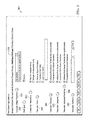
- FIG. 3 depicts a diagrammatic representation of a portion of a content type modeling program 300 .
- the depicted portion represents multilingual settings 310 of content type modeling program 300 .
- content type modeling program 300 can be part a multilingual content management system implementing a content management object model disclosed herein.
- content type modeling program 300 can be part of MCM 70 shown in FIG. 1 .
- multilingual settings 310 may have a set of attributes, including Language Widget Placement 320 , Multilingual 330 , Create new instances 340 , Translation Folder 350 , Translation Channels 360 , Translation Categories 370 , Translation Scheduled Publishing 380 , and Translation Workflow 390 .
- Content type modeling program 300 can be used to configure a content item editing program.
- An end user in the enterprise computing environment may utilize the content item editing program to create and/or edit a piece of content managed by a multilingual content management such as MCM 70 .
- MCM 70 multilingual content management
- An example interface for a content item editing program is described below.
- FIG. 4 depicts a diagrammatic representation of a portion of a site management program 400 .
- the depicted portion represents content item editing program 410 of site management program 400 .
- site management program 400 can be part a multilingual content management system implementing a content management object model disclosed herein.
- site management program 400 can be part of MCM 70 shown in FIG. 1 .
- content item editing program 410 includes a language widget 420 located below a text box provided to a user of content item editing program 410 (e.g., an enterprise user in an enterprise computing environment where server machine 60 resides).
- language widget 420 may include a dropdown menu listing available languages that can be selected for a content item.
- a user of content type modeling program 300 can decide whether to present language widget 420 to a user of content item editing program 410 (e.g., a user of client device 40 shown in FIG. 1 ). If no placement selection is made via Language Widget Placement 320 , language widget 420 will not be presented via content item editing program 410 . In the example of FIG. 3 , a selection “Place it after the above selected attribute” is made and, as a result, language widget 420 is subsequently presented via content item editing program 410 as shown in FIG. 4 .
- Multilingual 330 is enabled, causing Translation Folder 350 , Translation Channels 360 , Translation Categories 370 , Translation Scheduled Publishing 380 , and Translation Workflow 390 to be displayed as selectable attributes in multilingual settings 310 .
- Multilingual 330 if Multilingual 330 is disabled, Translation Folder 350 , Translation Channels 360 , Translation Categories 370 , translation Scheduled Publishing 380 , and Translation Workflow 390 will also be disabled.
- FIG. 5 depicts a flow diagram illustrating an example of a multilingual content management data flow 500 .
- a user 100 in an enterprise computing environment may set a language/locale preference or default 501 for a site 510 using a language widget (e.g., language widget 420 of content item editing program 410 shown in FIG. 4 ).
- Site 510 may have a content type 520 with a multilingual attribute enabled.
- site and content type objects may be created by authorized users such as an administrator in an enterprise computing environment.
- site 510 is configured to support multilingual content management and thus user 100 is allowed to set language/locale preference or default 501 for site 510 .
- User 100 may create an original content instance 530 of content type 520 using the default language (also referred to herein as the source language) and select one or more languages (also referred to herein as the target language(s)) to translate.
- Various translation methods can be utilized to perform the translation(s).
- original content instance 530 can be duplicated to create a new content instance (e.g., translation 531 ) which can be edited by user 100 .
- the creation of the new content instance can be manual or automatic (e.g., through a translation workflow).
- user 100 may select an existing content item to assign it as a translation instance for original content instance 530 .
- original content instance 530 and its translation(s) are automatically members of a translation family or group 550 having a translation group identification (TGID) 555 .
- TGID translation group identification
- Members in translation group 550 all have the same TGID 555 .
- FIG. 6 depicts a diagrammatic representation of a multilingual content management system 600 having a content management object model 602 , a site management program 604 , and a web page component rendering model 606 .
- Content management object model 602 can be the same or similar to content management object model 200 shown in FIG. 2 . Additionally, content management object model 602 can include translation groups 612 .
- a translation group is used to relate content items. Assigning the same identifier to multiple content items establishes a translation group. Content items in the translation group may be added or removed at any time. Applied to multiple instances of the same content type, each member of the translation group represents the same content translated into different languages.
- the translation group represents a composite, multilingual content item. Meanwhile, each of its members remains a content item fully capable of an independent life-cycle.
- exemplary references allow any member of a translation group to function as an independent content item or as an extensible, multilingual content item whose composition and effective resolution, described below, depend on the context in which the reference occurs.
- translation defines an equivalence relation over content, and a translation group is the equivalence class of the exemplar, which may assume its identity.
- Translation groups may be assembled (or dissembled) using new or existing content items as members. Any member of a translation group may function as an exemplar, and this happens implicitly anywhere that member's identity is referenced. This includes any channel association or dependency reference to that content item. Moreover, since any content item may be added to, or removed from, a translation group at any time, essentially this means that all references in the system are potentially exemplar references, capable of referring to that individual content item or its translation group, whose membership may change over time. This provides significant flexibility for both multilingual evolution and site deployment. Referring back to FIG. 5 , for example, exemplar reference 502 may reference original content instance 530 , translation 531 , or translation group 550 .
- Exemplar references allow existing, monolingual content to transform intrinsically into multilingual content based on discretionary, incremental introduction of translation groups. This provides an essential migration path for applications that must preserve substantial investments in existing sites and pages. Without changing or republishing any channel associations or dependency references, sites with potentially large and complex navigation and interrelationship of content may remain functionally intact and operational, while exemplar references implicitly transform from monolingual into multilingual content by superimposing translation groups and members.
- new translation group members become exemplars upon reference, and groups may be divided or arbitrarily refactored at any time. For instance, if divergent evolution of translation members warrants, groups may be branched for differentiation or specialization of new multilingual content. Based on exemplar references, this may all be accomplished in situ, without modification to channel associations or dependency references.
- Exemplar references also allow the same content to be shared by multiple sites with different multilingual composition, including single member (monolingual) composition.
- multilingual evolution for the same content can be managed independently for different sites. This is accomplished using locale eligibility management.
- site management 604 of multilingual content management system 600 may include locale eligibility management 614 .
- Locale eligibility management 614 may allow an enterprise user to declare locale eligibility for a site (e.g., site 510 shown in FIG. 5 ). Declaring locale eligibility transforms a non-multilingual site into a multilingual site.
- Locale eligibility management 614 may allow an enterprise user to define which languages (more specifically, locales) are supported by which sites. Supported locale eligibility provides the context according to which exemplar references for translation groups are transformed into composite, multilingual content. The enterprise user may further refine which of those supported languages are required by which sites. Required locale eligibility can establish stricter constraints. Both supported locale eligibility and required locale eligibility are further described below.
- web page component rendering model 606 of multilingual content management system 600 may include dynamic locale resolution management 616 .
- Dynamic locale resolution management 616 may determine how exemplar references are transformed, or resolved, at page rendering time into their corresponding translation group members. Based on the effective locale relative to a given page request, it allows the same page components to be rendered in different languages, automatically choosing the appropriate language for each request.
- exemplar references are a salient aspect for locale resolution. They allow pre-existing, non-multilingual/monolingual pages and components to be transformed implicitly, while remaining unchanged, into multilingual pages and components based on translation groups and membership. They allow pages and components to be developed and managed in one language, rendered in others, and evolve automatically along with translation groups.
- exemplar is used in this disclosure to reflect the concept/significance of the ability to use any reference to refer to a multilingual content item.
- An “exemplar” can be any object being referenced, whether by channel-association or some arbitrary, user-defined reference. More specifically, an object becomes an “exemplar” when the object being referenced is a member of some translation group—in other words, when it is one of the translations of a multilingual content item. Because, in that case, the referenced object behaves as a placeholder for the translation group at large. For example, for “locale-resolution” on delivery, although the reference is to a particular translation (the exemplar), resolution can locate and substitute the appropriate translation based on the request locale.
- That resolution process relies on knowing the translation group to which the exemplar belongs, so it can determine that group's membership in order to select the appropriate translation.
- the reference attribute alone is not able to indicate the exemplar's translation group; rather, it must resolve that reference to find the exemplar object, then from the exemplar object, find the exemplar object's translation group and that group's members.
- some embodiments may optionally be configured to provide some intervention in the form of API exceptions or user interface (UI) warnings/confirmation dialogs to advise the user when they risk dangling an exemplar reference by unpublishing or deleting it.
- API user interface
- the term “locale eligibility” refers to publishing constraints affecting multilingual content on multilingual sites.
- the constraints relate to the site's locales that are supported or required.
- Declaring locales for a site indicates which languages the site supports. Locales can be added or removed from that list over time to change the site's supported languages.
- a translation group member is published to the site, whether directly or indirectly through some exemplar reference, other members of the exemplar's translation group that are among the site's supported languages are automatically included in the publishing operation. The result is a multilingual content item composed of the site's supported languages.
- supported locale eligibility may be used to segment and target translations for the same multilingual content item to different sites, resulting in different compositions for that content at those sites.
- Different sites may define overlapping or disjoint sets of supported locales.
- a single site may support all languages, or parallel sites may each declare a distinct language.
- Dynamic composition and resolution of exemplar references allows site languages to evolve flexibly and orthogonally from translation group membership.
- Any subset of the site's supported locales may optionally be declared as required. If so, that subset defines the required locale eligibility for the site.
- Required locale eligibility establishes stricter publishing constraints to ensure all multilingual content items consist of all required translations. In other words, it imposes a necessary and sufficient publishing condition upon translation group membership and prevents publishing an incomplete multilingual content item missing any required language. Conversely, it prevents unpublishing a proper subset of required members which would leave a published incomplete multilingual content item.
- Required locale eligibility may be used for various purposes. For instance, it may impose more rigorously the default language for a site, ensuring that any multilingual content that is published always consists of a translation in that language. It may be used to comply with business or regulatory requirements for specific language translations. In general, it allows delivery applications to assume that the composition of all multilingual content items includes translation group members in the required languages. This allows an exemplar reference locale resolution to be assumed for those languages.
- a site When a site declares certain locales to be required, it means that multilingual content published to that site must contain translations for those locales. If it does not—for instance, if one of the required translations either does not exist or is not approved—that multilingual content would be “locale ineligible”, and it should not be published. Conversely, if an unpublish operation were to remove some, but not all, translations for some multilingual content, that may also constitute a violation of the site's required locales, if it were to leave a proper subset of them published.
- new locale-eligibility constraints are added to both publishing and unpublishing which can result in warnings or errors preventing invalid operations.
- New logic is also added to both publish and unpublish job creation to facilitate locale eligibility by automatically expanding exemplars to include in the job the appropriate translations from its group. In this way, multilingual content may get included in a job through arbitrary references from other content.
- this expansion is controlled by an advanced option called “Unpublish Translations” which defaults to the value of a new configuration variable called “DEPLOYMENT_UNPUBLISH_TRANSLATIONS,” which defaults to true.
- multilingual content is treated as groups for both publishing and unpublishing, although the user is allowed to override this behavior to unpublish individual translations, provided the unpublish action does not violate locale eligibility.
- This enables the ability to utilize constraints for an unpublish operation in a content management system.
- conventional content management system unpublish operations have always been unconstrained.
- locale eligibility relates to “unsupported” locales—locales that are not among a site's supported set of locales. When certain locales are declared as supported for a site, this means that other locales are not supported. A multilingual translation with an unsupported locale should not be published to the site. Accordingly, job creation exemplar expansion omits from the job any unsupported translations.
- an exception is made when an exemplar's locale is unsupported. This is because by definition an exemplar is either a direct association or some explicit reference from other content in the job. Thus, an exemplar will not be omitted and will be included regardless of their locale for referential integrity. This can avoid having the exemplar reference dangling on the delivery stage.
- a warning may be issued and presented to a user in case the user wants to correct the situation, perhaps by replacing the exemplar with some other, supported translation from the same group. Nevertheless, the user is allowed to choose to publish the unsupported exemplar.
- a locale eligibility applicability rule may specify that locale eligibility only applies to multilingual content published/unpublished to/from multilingual sites.
- a site is multilingual provided it declares at least one locale.
- a content item is multilingual if it belongs to some translation group. If it does, it may or may not nevertheless have a locale.
- another locale eligibility applicability rule may specify that locale eligibility only applies to content items with locales.
- locale eligibility applicability rules constrain which locales to include or omit, they do not apply to content items (which may include some translations) that have no locale. What these locale eligibility applicability rules mean is that the same content published to different sites may present different warnings or errors, since locale eligibility relates to each site's configuration. If a content item is not multilingual, yet it has an unsupported locale, it may be published without warning.
- Multilingual publishing rules only apply when publishing to a multilingual site (i.e., a site declared with at least one locale.) If the site is not multilingual, the following multilingual publishing rules do not apply.
- Multilingual unpublish jobs enforce “inverse” required, locale-eligibility consistent with publish job validation. That is, an unpublish job is invalidated if it attempts to unpublish a proper subset of published, site-required translations. As with publish validation, this prevents multilingual content being published to a site lacking translations for all required locales.
- an unpublish job will by default include all translations, and therefore be valid.
- an unpublish job only if a user disables the “unpublish translations” option (either globally in the configuration default setting, or selectively on a given unpublish job), is an unpublish job invalidation possible. And then, only if the site specifies multiple required locales, translations for those locales are published, and the user attempts to unpublish a proper subset of them.
- the invalidation can occur for all levels of an approval policy, including a “lenient” level thereof. This means that no user is allowed to proceed with a required locale ineligible unpublish job. Making the unpublish fatal at any level can ensure that the site contains all (or none) of its required translations.
- an exception may be made to allow a user (e.g., a content contributor or creator) to proceed under a lenient policy which allows omission of a required translation if some prior version of it is already published. In this case, a non-fatal warning is issued for a locale ineligible unpublish job, but the job is allowed to proceed at the user's discretion.
- FIG. 7 depicts a flow diagram illustrating one embodiment of a method 700 for creating multilingual content.
- a content item (referred to as “Cl” in FIG. 7 ) may be created by a content creator or contributor such as an author in an enterprise computing environment for use by one or more web sites hosted on one or more server machines in the enterprise computing environment.
- a content lifecycle referred to as the content lifecycle
- the content lifecycle can be a complex process and can involve a plurality of stages or phases, including content creation, review, approval, publishing, and delivery.
- the delivery stage may occur at a web tier while the other stages may occur at a management tier, as further described below.
- Each content item can have its own lifecycle, separate and independent from the lifecycles of other content items.
- Content items that have not yet been published are not accessible by end users such as web site visitors outside of the enterprise computing environment.
- the content contributor may create the content item using a content item editing program (e.g., content item editing program 410 shown in FIG. 4 ).
- the content item can be a static file such as a text file, image, or audio/file or a content instance such as a database table.
- the content contributor may determine whether to specify a language or locale for the content item. This can be done via a language widget in the content item editing program. For example, referring to FIG. 4 , a user of content item editing program 410 may decide not to specify any language for a content item “new Story” by not changing the default setting “No Selection” of language widget 420 . If no language is to be specified for the content item (e.g., no selection of a language is made via language widget 420 ), method 700 may proceed to step 730 . Otherwise, method 700 may proceed to step 740 .
- the content contributor or another user may edit the content item in the undefined language.
- the content item “new Story” can be edited in English, although the language attribute for the content item remains undefined.
- the content item “new Story” since the content item “new Story” has no defined language, it can be considered a “non-multilingual” content item.
- the default language setting for the content item can be changed (e.g., at step 760 ), causing method 700 to proceed to step 740 which, in turn, transforms the content item from “non-multilingual” to “monolingual”.
- a language is selected for the content item. For example, referring to FIG. 4 , a language can be selected for the content item “new Story” from a dropdown menu of language widget 420 .
- the content item can be edited in the selected language. At this point, a need may rise to change the selected language for the content item. If so, method 700 may proceed to step 760 . Otherwise, method 700 may proceed to step 765 .
- the language attribute of the content item may be changed.
- the language attribute may be undefined (step 730 ) or it may specify a selected language (step 750 ) as described above.
- the language attribute of the content item may be changed by selecting a new language for the content item (step 740 ). The above-described process involving steps 740 , 750 , and 760 may be repeated as appropriate. If there is no need to change the language for the content item, method 700 may proceed to step 765 .
- a decision may be made to ascertain whether the content item is multilingual enabled. If the content item is not multilingual enabled, method 700 may end at step 770 and the content item may be managed as a monolingual content item. If the content item is multilingual enabled, method 700 may proceed to step 775 .
- a content item may be identified as being multilingual enabled via a metadata attribute associated with the content item classifying the content item as a multilingual enabled. In one embodiment, an attribute classifying the content item as a multilingual enabled may be dynamically changed at any time.
- a translation of the content item it may be determined that a translation of the content item is needed.
- a user can optionally add any translation to a multilingual enabled content item.
- the content item is multilingual enabled, it is automatically a member of a translation group. Any translation of the content item is also automatically a member of the same translation group.
- Each member of the translation group as well as the translation group itself can be identified by the same translation group identifier.
- Each member of the translation group is treated as a monolingual content item while the translation group is treated as a composite multilingual content item.
- a translation of the content item may be added by various translation methods, some examples of which have been described above.
- a translation of the content item may be added by selecting an available translation language from a list of target translation languages presented to the content contributor or another user such as an editor or reviewer.
- one or more target translation languages can be selected.
- the selection of one or more target translation languages may result in the content item being associated with one or more translations.
- Each of the one or more translations can have a global unique identifier (GUID) and share the same translation group identifier (TGID) with other members of the translation group. GUIDs and TGIDs are described in more detail below.
- FIG. 8 depicts a diagrammatic representation of one example of a system 800 utilizing multilingual content items.
- system 800 may include a management tier 801 and a web tier 802 .
- Web tier 802 may include a web site 812 .
- Management tier 801 may include a multilingual content management system (e.g., MCM 70 ), repository (e.g., repository 80 ), and client computers (e.g., client devices 30 and 40 ) for creating and managing a collection of objects for web site 812 via an enterprise computing environment 810 .
- the collection of objects may include a plurality of multilingual content items created, for example, via an embodiment of method 700 described above.
- the multilingual content items thus created can be published and delivered (e.g., by web server 66 ) over a network 820 to visitors of web site 812 .
- network 820 need not be a public network such as the World Wide Web, although the term “web” is used to refer to web site 812 .
- network 820 may represent various types of networks.
- network 820 may represent a private network or intranet.
- web site 812 may represent a network site accessible by users in the private network or intranet but not accessible by users outside of the private network or intranet.
- the same logical web site 812 can be dynamically rendered in different languages in real time.
- FIG. 9 depicts a flow diagram illustrating one embodiment of a method 900 for dynamically delivering content to a web site visitor.
- FIG. 10 depicts a diagrammatic representation of one example of a method 1000 for selecting multilingual content in an appropriate language for locale based content delivery.
- a request for content may be received at a web server (e.g., web server 66 shown in FIG. 1 ) from a client device communicatively connected to the web server (e.g., client device 20 shown in FIG. 1 ).
- Responding to such a request for content can be a very complex process as the requested content may involve multiple references to various types of managed objects.
- a request for content may contain a reference to a site 1002 which may contain a reference to a channel 1004 which, in turn, may contain one or more references to one or more content items (e.g., content item 1010 ), etc.
- each content item can be a content instance or a static file, each of which may contain zero or more references to other content instances and/or static files. All of these references must be resolved correctly, timely, and efficiently.
- metadata may be utilized.
- metadata for managed objects such as sites, channels, and/or content items in an enterprise computing environment can be stored in a data structure, such as a table 1030 shown in FIG. 10 .
- Table 1030 may be configured to store metadata for managed objects.
- table 1030 may contain information for all the managed objects in an enterprise computing environment.
- table 1030 may contain information for all the managed objects in a collection of objects for a web site (e.g., site 1002 ). Objects within table 1030 that are translations of each other may be grouped together by associating the same translation group identification with those objects.
- Each entry in table 1030 may include a global user identifier (GUID), a name, and a language for a managed object, and a translation group identifier (TGID) to which the managed object is assigned.
- GUID global user identifier
- TGID translation group identifier
- multilingual may be enabled, for instance, by enabling a multilingual attribute of the content type (e.g., multilingual 330 shown in FIG. 3 ).
- Managed objects created based on such a content type can also be multilingual enabled.
- a determination may be made as to whether a managed object referenced in the request for content is multilingual.
- a multilingual content management system e.g., MCM 70
- the multilingual content management system may check the multilingual attribute for the managed object. If the multilingual attribute for the managed object is not enabled, the managed object is not multilingual.
- content item 1010 is of a multilingual enabled content type and thus can be considered as a multilingual content item.
- the multilingual content management system may interpret the GUID for the managed object as an absolute reference to a single, monolingual content item.
- the GUID in this case, can be utilized by the multilingual content management system to retrieve the monolingual content item (e.g., from a repository) and return to the web server for dynamic assembly and/or delivery of the requested content to the client device.
- the exemplar reference can be utilized to determine a TGID for the translation group to which it belongs.
- a content instance when created, it can be created as part of a translation group and automatically assigned a TGID.
- Each member of the translation group may be dynamically added to or removed from the translation group at any time.
- each member of the translation group can be managed, published, and delivered independent of other members in the translation group.
- FIG. 10 illustrates, four translations are assigned to the same translation group “bio”.
- exemplar reference 1020 of content item 1010 can be utilized to determine that content item 1010 belongs to the translation group “bio”.
- an effective locale/language may be determined. This can be done, for example, by parsing the request for content for locale or language identifier that may be set as properties or preferences for the client device or a browser running on the client device. As another example, if the user has registered with the web site, the locale and/or language may be determined based on user preference(s). As yet another example, a default setting may be utilized.
- the selected translation appropriate for the effective locale e.g., the German translation of “Biography”
- the selected translation appropriate for the effective locale is retrieved and delivered, along with other appropriate managed objects, to the client device in response to the request for content from the client device.
- the above described example method 900 can occur dynamically in real time.
- embodiments described herein allow translation groups to be added in an evolutionary manner. This provides flexibility in converting a monolingual (or non-multilingual) content management system into a multilingual content management system where users can readily create multilingual managed objects such as content items and sites from scratch, or upgrade/migrate existing, monolingual managed objects.
- exemplar references provide a mechanism through which existing objects can be transformed and adapted to a new multilingual content management system.
- each exemplar reference may refer to either a discrete translation or a composite, multilingual group of translations. This can allow preservation of investments on systems and web sites that are already created upon the systems and web sites being upgraded to multilingual systems, while avoiding the reference maintenance cost and complexity associated with translation-centric models.
- translation group management provides a flexible, bidirectional migration path between monolingual and multilingual content, allowing incremental and independent introduction of translations while avoiding the tighter coupling of life-cycles associated with object-centric models.
- Embodiments of the present invention can be implemented in a computer communicatively coupled to a network (for example, the Internet, an intranet, an internet, a wide area network (WAN), a local area network (LAN), a storage area network (SAN), etc.), another computer, or in a standalone computer.
- the computer can include a central processing unit (“CPU”) or processor, at least one read-only memory (“ROM”), at least one random access memory (“RAM”), at least one hard drive (“HD”), and one or more input/output (“I/O”) device(s).
- the I/O devices can include a keyboard, monitor, printer, electronic pointing device (for example, mouse, trackball, stylus, etc.), or the like.
- the computer has access to at least one database over the network.
- ROM, RAM, and HD are computer memories for storing computer-executable instructions executable by the CPU or capable of being compiled or interpreted to be executable by the CPU.
- the term “computer readable medium” is not limited to ROM, RAM, and HD and can include any type of data storage medium that can be read by a processor.
- a computer-readable medium may refer to a data cartridge, a data backup magnetic tape, a floppy diskette, a flash memory drive, an optical data storage drive, a CD-ROM, ROM, RAM, HD, or the like.
- the processes described herein may be implemented in suitable computer-executable instructions that may reside on a computer readable medium (for example, a disk, CD-ROM, a memory, etc.).
- the computer-executable instructions may be stored as software code components on a DASD array, magnetic tape, floppy diskette, optical storage device, or other appropriate computer-readable medium or storage device.
- Any suitable programming language can be used to implement the routines, methods or programs of embodiments of the invention described herein, including C, C++, Java, JavaScript, HTML, or any other programming or scripting code, etc.
- Other software/hardware/network architectures may be used.
- the functions of the disclosed embodiments may be implemented on one computer or shared/distributed among two or more computers in or across a network. Communications between computers implementing embodiments can be accomplished using any electronic, optical, radio frequency signals, or other suitable methods and tools of communication in compliance with known network protocols.
- Any particular routine can execute on a single computer processing device or multiple computer processing devices, a single computer processor or multiple computer processors. Data may be stored in a single storage medium or distributed through multiple storage mediums, and may reside in a single database or multiple databases (or other data storage techniques).
- steps, operations, or computations may be presented in a specific order, this order may be changed in different embodiments. In some embodiments, to the extent multiple steps are shown as sequential in this specification, some combination of such steps in alternative embodiments may be performed at the same time.
- the sequence of operations described herein can be interrupted, suspended, or otherwise controlled by another process, such as an operating system, kernel, etc.
- the routines can operate in an operating system environment or as stand-alone routines. Functions, routines, methods, steps and operations described herein can be performed in hardware, software, firmware or any combination thereof.
- Embodiments described herein can be implemented in the form of control logic in software or hardware or a combination of both.
- the control logic may be stored in an information storage medium, such as a computer-readable medium, as a plurality of instructions adapted to direct an information processing device to perform a set of steps disclosed in the various embodiments.
- communication or transfer (or otherwise moving from one place to another) of data may be wired, wireless, or by any other means.
- a “computer-readable medium” may be any medium that can contain, store, communicate, propagate, or transport the program for use by or in connection with the instruction execution system, apparatus, system or device.
- the computer readable medium can be, by way of example only but not by limitation, an electronic, magnetic, optical, electromagnetic, infrared, or semiconductor system, apparatus, system, device, propagation medium, or computer memory.
- Such computer-readable medium shall generally be machine readable and include software programming or code that can be human readable (e.g., source code) or machine readable (e.g., object code).
- non-transitory computer-readable media can include random access memories, read-only memories, hard drives, data cartridges, magnetic tapes, floppy diskettes, flash memory drives, optical data storage devices, compact-disc read-only memories, and other appropriate computer memories and data storage devices.
- some or all of the software components may reside on a single server computer or on any combination of separate server computers.
- a computer program product implementing an embodiment disclosed herein may comprise one or more non-transitory computer readable media storing computer instructions translatable by one or more processors in a computing environment.
- a “processor” includes any, hardware system, mechanism or component that processes data, signals or other information.
- a processor can include a system with a central processing unit, multiple processing units, dedicated circuitry for achieving functionality, or other systems. Processing need not be limited to a geographic location, or have temporal limitations. For example, a processor can perform its functions in “real-time,” “offline,” in a “batch mode,” etc. Portions of processing can be performed at different times and at different locations, by different (or the same) processing systems.
- the terms “comprises,” “comprising,” “includes,” “including,” “has,” “having” or any other variation thereof, are intended to cover a non-exclusive inclusion.
- a process, article, or apparatus that comprises a list of elements is not necessarily limited only those elements but may include other elements not expressly listed or inherent to such process, article, or apparatus.
Landscapes
- Engineering & Computer Science (AREA)
- Theoretical Computer Science (AREA)
- Physics & Mathematics (AREA)
- General Engineering & Computer Science (AREA)
- General Physics & Mathematics (AREA)
- Software Systems (AREA)
- Databases & Information Systems (AREA)
- Health & Medical Sciences (AREA)
- Artificial Intelligence (AREA)
- Audiology, Speech & Language Pathology (AREA)
- Computational Linguistics (AREA)
- General Health & Medical Sciences (AREA)
- Human Computer Interaction (AREA)
- Data Mining & Analysis (AREA)
- Information Transfer Between Computers (AREA)
Abstract
Description
-
- Site: A “site” object refers to a logical container for content instances and channels representing a site structure. A site object serves as the online endpoint (which can be a web site) for content published on the web-tier.
- Channel: A “channel” object refers to a logical node in a site structure to which content items can be associated. In this context, “channels” can be used to organize and manage user access to managed content. As a specific example, a web site may have channels such as news, sports, entertainment, etc., each being represented by a channel object in the site navigation tree of the web site and accessible by visitors of the web site through, for instance, a page or a link in the web site domain.
- Content type: A “content type” object contains a logical definition for a piece of structured content that results in a form editable by end users of MCM 70 (e.g., a user of client device 40) for creating or editing content. In some embodiments,
MCM 70 may support content types that meet common content management and presentation management requirements (e.g., images, videos, pages, regions, components, themes, and more.) - Content instance: A “content instance” object refers to an individual piece of content created from a given content type definition (contained in a “content type” object).
- Static file: A “static file” object refers to any individual file uploaded by an end user of
MCM 70 and managed as such byMCM 70.MCM 70 can support all current file formats. Some formats such as images and videos can be supported with extra features such as metadata extraction. - Category: A “category” object refers to a logical node in a global classification that can be assigned to content items and used to drive personalization rules or web analytics reports. Examples of content items are provided below.
-
- When a multilingual channel is included in the job, any and all of its channel localized data is deployed. In accordance with one embodiment, there is no filtering or eligibility constraint based on locale for a channel.
- When a content item (e.g., a content instance of a static file) is included in a job due to explicit channel association or object reference (which means that the content item in this case is an “exemplar”), it is included regardless whether it is multilingual, whether it has a locale, or whether that locale is among the site's supported list. In other words, exemplars are always included in the job.
- When a multilingual content item is included in a job, so are all of its translations that are among the site's supported list of locales. Translations that are not among the site's supported list are omitted from the job.
- Any object included in a job must be eligible (namely, status-approved and time-eligible, if applicable), or a prior-published descendent, if a “lenient” policy (which is explained further below) is in use. This “standard” or “non-multilingual” eligibility is assessed first. If a content item fails standard eligibility rules, the job is invalid, and an error message (e.g., “JobltemStatusMsg”) is sent.
- For any multilingual content item that is included in a job, if its locale is not among the site's supported list of locales (which, as explained above, can only happen for exemplars), the content item is included with a warning message.
- For any multilingual translation group included in a job, if not all the site's required locales are included/eligible, the job is invalid, and all missing required members of that group are indicated as errors. These errors may indicate non-existing objects. In accordance with one embodiment, an attribute “ExcludedJobltem” may identify the referrer as one of the existing group members (which may be eligible), so that the referrer may be used to build a valid hyperlink to an editor from which a new (required) translation may be created.
Claims (20)
Priority Applications (1)
| Application Number | Priority Date | Filing Date | Title |
|---|---|---|---|
| US15/357,110 US9792284B2 (en) | 2013-02-28 | 2016-11-21 | System, method and computer program product for multilingual content management |
Applications Claiming Priority (2)
| Application Number | Priority Date | Filing Date | Title |
|---|---|---|---|
| US13/780,329 US9519642B2 (en) | 2013-02-28 | 2013-02-28 | System, method and computer program product for multilingual content management |
| US15/357,110 US9792284B2 (en) | 2013-02-28 | 2016-11-21 | System, method and computer program product for multilingual content management |
Related Parent Applications (1)
| Application Number | Title | Priority Date | Filing Date |
|---|---|---|---|
| US13/780,329 Continuation US9519642B2 (en) | 2013-02-28 | 2013-02-28 | System, method and computer program product for multilingual content management |
Publications (2)
| Publication Number | Publication Date |
|---|---|
| US20170068663A1 US20170068663A1 (en) | 2017-03-09 |
| US9792284B2 true US9792284B2 (en) | 2017-10-17 |
Family
ID=51389025
Family Applications (2)
| Application Number | Title | Priority Date | Filing Date |
|---|---|---|---|
| US13/780,329 Expired - Fee Related US9519642B2 (en) | 2013-02-28 | 2013-02-28 | System, method and computer program product for multilingual content management |
| US15/357,110 Active US9792284B2 (en) | 2013-02-28 | 2016-11-21 | System, method and computer program product for multilingual content management |
Family Applications Before (1)
| Application Number | Title | Priority Date | Filing Date |
|---|---|---|---|
| US13/780,329 Expired - Fee Related US9519642B2 (en) | 2013-02-28 | 2013-02-28 | System, method and computer program product for multilingual content management |
Country Status (1)
| Country | Link |
|---|---|
| US (2) | US9519642B2 (en) |
Cited By (2)
| Publication number | Priority date | Publication date | Assignee | Title |
|---|---|---|---|---|
| US9906615B1 (en) | 2013-02-28 | 2018-02-27 | Open Text Sa Ulc | System and method for selective activation of site features |
| WO2022215092A1 (en) * | 2021-04-09 | 2022-10-13 | Bombinate Technologies Private Limited | System for simultaneous multilingual content creation and method thereof |
Families Citing this family (18)
| Publication number | Priority date | Publication date | Assignee | Title |
|---|---|---|---|---|
| US9348890B2 (en) | 2011-08-30 | 2016-05-24 | Open Text S.A. | System and method of search indexes using key-value attributes to searchable metadata |
| JP6019968B2 (en) * | 2012-09-10 | 2016-11-02 | 株式会社リコー | Report creation system, report creation apparatus and program |
| US9519642B2 (en) | 2013-02-28 | 2016-12-13 | Open Text Sa Ulc | System, method and computer program product for multilingual content management |
| US20150324336A1 (en) * | 2014-05-07 | 2015-11-12 | Transifex Limited | Content localization |
| EP3321812A4 (en) * | 2015-07-06 | 2018-06-13 | Ricoh Company, Ltd. | Information processing device, information processing method, information processing program, information processing system, and nontemporary computer-readable information recording medium |
| US11030181B2 (en) * | 2015-11-30 | 2021-06-08 | Open Text Sa Ulc | Systems and methods for multi-brand experience in enterprise computing environment |
| JP6572844B2 (en) * | 2016-07-28 | 2019-09-11 | 京セラドキュメントソリューションズ株式会社 | Term management system, image forming apparatus, and term management method |
| US10685006B2 (en) | 2016-10-21 | 2020-06-16 | Open Text Sa Ulc | Content management system and method for synchronizing content translations |
| US10481928B2 (en) * | 2016-12-14 | 2019-11-19 | International Business Machines Corporation | Providing user interface language options |
| CN107122190A (en) * | 2017-04-27 | 2017-09-01 | 努比亚技术有限公司 | A kind of multilingual static page generation method, server and storage medium |
| US20180329877A1 (en) * | 2017-05-09 | 2018-11-15 | International Business Machines Corporation | Multilingual content management |
| UA122556C2 (en) * | 2018-12-03 | 2020-11-25 | Олександр Вікторович Романєєв | MULTI-USER MULTILINGUAL SYSTEM FOR CREATING ORDERS AND MANUFACTURING WINDOWS AND DOORS |
| CN109783579B (en) * | 2019-01-22 | 2020-06-02 | 南京焦点领动云计算技术有限公司 | Method for quickly copying and translating website |
| CN109861904B (en) * | 2019-02-19 | 2021-01-05 | 天津字节跳动科技有限公司 | Name label display method and device |
| US10599786B1 (en) * | 2019-03-19 | 2020-03-24 | Servicenow, Inc. | Dynamic translation |
| US12475176B2 (en) * | 2021-03-11 | 2025-11-18 | Jatin V. Mehta | Automated system and method for creating structured data objects for a media-based electronic document |
| US12229514B2 (en) * | 2022-01-25 | 2025-02-18 | Extramarks Education India Pvt Ltd. | System and method for identification and classification of multilingual messages in an online interactive portal |
| US12135952B2 (en) * | 2022-04-19 | 2024-11-05 | Sap Se | Logical pointers supporting reuse of text translations |
Citations (33)
| Publication number | Priority date | Publication date | Assignee | Title |
|---|---|---|---|---|
| US20020002452A1 (en) | 2000-03-28 | 2002-01-03 | Christy Samuel T. | Network-based text composition, translation, and document searching |
| US20020143468A1 (en) | 1999-08-16 | 2002-10-03 | Josephine Cheng | Generating small footprint applications for mobile devices |
| US6492995B1 (en) | 1999-04-26 | 2002-12-10 | International Business Machines Corporation | Method and system for enabling localization support on web applications |
| US20030005159A1 (en) | 2001-06-07 | 2003-01-02 | International Business Machines Corporation | Method and system for generating and serving multilingual web pages |
| US20030140316A1 (en) | 1998-02-23 | 2003-07-24 | David Lakritz | Translation management system |
| US6623529B1 (en) | 1998-02-23 | 2003-09-23 | David Lakritz | Multilingual electronic document translation, management, and delivery system |
| US20060294199A1 (en) | 2005-06-24 | 2006-12-28 | The Zeppo Network, Inc. | Systems and Methods for Providing A Foundational Web Platform |
| US7194506B1 (en) | 2000-12-21 | 2007-03-20 | Vignette Corporation | Method and system for cache management of locale-sensitive content |
| US20070067154A1 (en) | 2005-09-22 | 2007-03-22 | International Business Machines Corporation | Language translation system |
| US20070180143A1 (en) | 2006-01-30 | 2007-08-02 | Microsoft Corporation | Translation Web Services For Localizing Resources |
| US7360210B1 (en) | 2002-07-03 | 2008-04-15 | Sprint Spectrum L.P. | Method and system for dynamically varying intermediation functions in a communication path between a content server and a client station |
| US20090037801A1 (en) | 2005-05-26 | 2009-02-05 | International Business Machines Corporation | Method and apparatus for automatic user manual generation |
| US7958516B2 (en) | 2007-04-18 | 2011-06-07 | Google Inc | Controlling communication within a container document |
| US20110172987A1 (en) | 2010-01-12 | 2011-07-14 | Kent Paul R | Automatic technical language extension engine |
| US7996417B2 (en) | 2003-02-21 | 2011-08-09 | Motionpoint Corporation | Dynamic language translation of web site content |
| US8145521B2 (en) | 2008-07-15 | 2012-03-27 | Google Inc. | Geographic and keyword context in embedded applications |
| US8185819B2 (en) | 2005-12-12 | 2012-05-22 | Google Inc. | Module specification for a module to be incorporated into a container document |
| US20120330644A1 (en) | 2011-06-22 | 2012-12-27 | Salesforce.Com Inc. | Multi-lingual knowledge base |
| US20130031166A1 (en) | 2010-04-29 | 2013-01-31 | Hewlett-Packard Development Company, L.P. | Processing content in a plurality of languages |
| US20130054745A1 (en) | 2006-01-31 | 2013-02-28 | Hideo Ando | Information reproducing system using information storage medium |
| US20130262078A1 (en) | 2012-03-30 | 2013-10-03 | George Gleadall | System and method for providing text content on web pages in multiple human languages |
| US20130282360A1 (en) * | 2012-04-20 | 2013-10-24 | James A. Shimota | Method and Apparatus for Translating and Locating Services in Multiple Languages |
| US8689117B1 (en) | 2009-10-30 | 2014-04-01 | Google Inc. | Webpages with conditional content |
| US20140108971A1 (en) | 2012-08-31 | 2014-04-17 | Salesforce.Com.Inc. | Application builder |
| US20140222413A1 (en) | 2013-02-01 | 2014-08-07 | Klip, Inc. | Method and user interface for controlling language translations using touch sensitive display screens |
| US8812295B1 (en) | 2011-07-26 | 2014-08-19 | Google Inc. | Techniques for performing language detection and translation for multi-language content feeds |
| US20140244236A1 (en) | 2013-02-28 | 2014-08-28 | Open Text S.A. | System, method and computer program product for multilingual content management |
| US8843360B1 (en) | 2011-03-04 | 2014-09-23 | Amazon Technologies, Inc. | Client-side localization of network pages |
| US8887044B1 (en) | 2012-06-27 | 2014-11-11 | Amazon Technologies, Inc. | Visually distinguishing portions of content |
| US8914736B2 (en) | 2010-03-30 | 2014-12-16 | International Business Machines Corporation | On-page manipulation and real-time replacement of content |
| US8942973B2 (en) | 2012-03-09 | 2015-01-27 | Language Weaver, Inc. | Content page URL translation |
| US20150161227A1 (en) | 2011-06-30 | 2015-06-11 | Google Inc. | Cluster-Based Language Detection |
| US9164988B2 (en) | 2011-01-14 | 2015-10-20 | Lionbridge Technologies, Inc. | Methods and systems for the dynamic creation of a translated website |
-
2013
- 2013-02-28 US US13/780,329 patent/US9519642B2/en not_active Expired - Fee Related
-
2016
- 2016-11-21 US US15/357,110 patent/US9792284B2/en active Active
Patent Citations (34)
| Publication number | Priority date | Publication date | Assignee | Title |
|---|---|---|---|---|
| US20030140316A1 (en) | 1998-02-23 | 2003-07-24 | David Lakritz | Translation management system |
| US6623529B1 (en) | 1998-02-23 | 2003-09-23 | David Lakritz | Multilingual electronic document translation, management, and delivery system |
| US6492995B1 (en) | 1999-04-26 | 2002-12-10 | International Business Machines Corporation | Method and system for enabling localization support on web applications |
| US20020143468A1 (en) | 1999-08-16 | 2002-10-03 | Josephine Cheng | Generating small footprint applications for mobile devices |
| US20020002452A1 (en) | 2000-03-28 | 2002-01-03 | Christy Samuel T. | Network-based text composition, translation, and document searching |
| US7194506B1 (en) | 2000-12-21 | 2007-03-20 | Vignette Corporation | Method and system for cache management of locale-sensitive content |
| US20030005159A1 (en) | 2001-06-07 | 2003-01-02 | International Business Machines Corporation | Method and system for generating and serving multilingual web pages |
| US7360210B1 (en) | 2002-07-03 | 2008-04-15 | Sprint Spectrum L.P. | Method and system for dynamically varying intermediation functions in a communication path between a content server and a client station |
| US7996417B2 (en) | 2003-02-21 | 2011-08-09 | Motionpoint Corporation | Dynamic language translation of web site content |
| US20090037801A1 (en) | 2005-05-26 | 2009-02-05 | International Business Machines Corporation | Method and apparatus for automatic user manual generation |
| US20060294199A1 (en) | 2005-06-24 | 2006-12-28 | The Zeppo Network, Inc. | Systems and Methods for Providing A Foundational Web Platform |
| US20070067154A1 (en) | 2005-09-22 | 2007-03-22 | International Business Machines Corporation | Language translation system |
| US8185819B2 (en) | 2005-12-12 | 2012-05-22 | Google Inc. | Module specification for a module to be incorporated into a container document |
| US20070180143A1 (en) | 2006-01-30 | 2007-08-02 | Microsoft Corporation | Translation Web Services For Localizing Resources |
| US20130054745A1 (en) | 2006-01-31 | 2013-02-28 | Hideo Ando | Information reproducing system using information storage medium |
| US7958516B2 (en) | 2007-04-18 | 2011-06-07 | Google Inc | Controlling communication within a container document |
| US8145521B2 (en) | 2008-07-15 | 2012-03-27 | Google Inc. | Geographic and keyword context in embedded applications |
| US8689117B1 (en) | 2009-10-30 | 2014-04-01 | Google Inc. | Webpages with conditional content |
| US20110172987A1 (en) | 2010-01-12 | 2011-07-14 | Kent Paul R | Automatic technical language extension engine |
| US8914736B2 (en) | 2010-03-30 | 2014-12-16 | International Business Machines Corporation | On-page manipulation and real-time replacement of content |
| US20130031166A1 (en) | 2010-04-29 | 2013-01-31 | Hewlett-Packard Development Company, L.P. | Processing content in a plurality of languages |
| US9164988B2 (en) | 2011-01-14 | 2015-10-20 | Lionbridge Technologies, Inc. | Methods and systems for the dynamic creation of a translated website |
| US8843360B1 (en) | 2011-03-04 | 2014-09-23 | Amazon Technologies, Inc. | Client-side localization of network pages |
| US20120330644A1 (en) | 2011-06-22 | 2012-12-27 | Salesforce.Com Inc. | Multi-lingual knowledge base |
| US20150161227A1 (en) | 2011-06-30 | 2015-06-11 | Google Inc. | Cluster-Based Language Detection |
| US8812295B1 (en) | 2011-07-26 | 2014-08-19 | Google Inc. | Techniques for performing language detection and translation for multi-language content feeds |
| US8942973B2 (en) | 2012-03-09 | 2015-01-27 | Language Weaver, Inc. | Content page URL translation |
| US20130262078A1 (en) | 2012-03-30 | 2013-10-03 | George Gleadall | System and method for providing text content on web pages in multiple human languages |
| US20130282360A1 (en) * | 2012-04-20 | 2013-10-24 | James A. Shimota | Method and Apparatus for Translating and Locating Services in Multiple Languages |
| US8887044B1 (en) | 2012-06-27 | 2014-11-11 | Amazon Technologies, Inc. | Visually distinguishing portions of content |
| US20140108971A1 (en) | 2012-08-31 | 2014-04-17 | Salesforce.Com.Inc. | Application builder |
| US20140222413A1 (en) | 2013-02-01 | 2014-08-07 | Klip, Inc. | Method and user interface for controlling language translations using touch sensitive display screens |
| US20140244236A1 (en) | 2013-02-28 | 2014-08-28 | Open Text S.A. | System, method and computer program product for multilingual content management |
| US9519642B2 (en) | 2013-02-28 | 2016-12-13 | Open Text Sa Ulc | System, method and computer program product for multilingual content management |
Non-Patent Citations (9)
| Title |
|---|
| Notice of Allowance for U.S. Appl. No. 13/780,329, dated Jul. 25, 2016, 10 pgs. |
| Notice of Allowance for U.S. Appl. No. 13/780,329, dated Sep. 26, 2016, 4 pgs. |
| Office Action for U.S. Appl. No. 13/780,329 dated Feb. 12, 2015, 10 pages. |
| Office Action for U.S. Appl. No. 13/780,329 dated Jul. 16, 2015, 10 pages. |
| Office Action for U.S. Appl. No. 13/780,329, dated Feb. 9, 2016, 12 pgs. |
| Office Action for U.S. Appl. No. 14/153,863 dated Dec. 2, 2015, 14 pgs. |
| Office Action for U.S. Appl. No. 14/153,863, dated Aug. 11, 2016, 11 pgs. |
| Office Action for U.S. Appl. No. 14/153,863, dated Jun. 28, 2017, 10 pgs. |
| Office Action for U.S. Appl. No. 14/153,863, dated Mar. 8, 2017, 11 pages. |
Cited By (2)
| Publication number | Priority date | Publication date | Assignee | Title |
|---|---|---|---|---|
| US9906615B1 (en) | 2013-02-28 | 2018-02-27 | Open Text Sa Ulc | System and method for selective activation of site features |
| WO2022215092A1 (en) * | 2021-04-09 | 2022-10-13 | Bombinate Technologies Private Limited | System for simultaneous multilingual content creation and method thereof |
Also Published As
| Publication number | Publication date |
|---|---|
| US20170068663A1 (en) | 2017-03-09 |
| US20140244236A1 (en) | 2014-08-28 |
| US9519642B2 (en) | 2016-12-13 |
Similar Documents
| Publication | Publication Date | Title |
|---|---|---|
| US9519642B2 (en) | System, method and computer program product for multilingual content management | |
| US12524217B2 (en) | Systems and methods for automated retrofitting of customized code objects | |
| US10747716B2 (en) | Rule generation in a data governance framework | |
| US10270874B2 (en) | System and method for selective activation of site features | |
| US10318126B2 (en) | Data-driven schema for describing and executing management tasks in a graphical user interface | |
| US10706033B2 (en) | Content management system and method for managing ad-hoc collections of content | |
| US10372812B2 (en) | Combining aspects of a template into multiple web pages | |
| CN106933887B (en) | Data visualization method and device | |
| WO2021022703A1 (en) | Software project reconstruction method and device, and computer device and storage medium | |
| CN106528088A (en) | Method and device for addling control in online form | |
| CN110162299B (en) | Web application rapid development apparatus, development methods and related equipment | |
| US8886725B2 (en) | Merging instances of a modular document | |
| US20220334829A1 (en) | Custom abap cloud enabler | |
| US10915599B2 (en) | System and method for producing transferable, modular web pages | |
| US11977473B2 (en) | Providing a pseudo language for manipulating complex variables of an orchestration flow | |
| CN114693275B (en) | A method for dynamically executing business system functions | |
| US8490068B1 (en) | Method and system for feature migration | |
| US10210149B2 (en) | Personalized wiki-book annotation | |
| US20260072817A1 (en) | Systems and methods for integrated design, assessment and remediation of web pages | |
| CN121704834A (en) | Form processing method, form processing device, computer equipment and storage medium | |
| CN116909674A (en) | User interface configuration method, device and storage medium |
Legal Events
| Date | Code | Title | Description |
|---|---|---|---|
| AS | Assignment |
Owner name: OPEN TEXT S.A., LUXEMBOURG Free format text: ASSIGNMENT OF ASSIGNORS INTEREST;ASSIGNORS:JOHNSON, CLAIBORNE HOLT, III;SCHEEVEL, MARK R.;JASKIEWICZ, MICHAEL GERARD;AND OTHERS;SIGNING DATES FROM 20130226 TO 20130227;REEL/FRAME:040393/0016 Owner name: IP OT SUB ULC, CANADA Free format text: CERTIFICATE OF CONTINUANCE;ASSIGNOR:OT IP SUB, LLC;REEL/FRAME:040657/0827 Effective date: 20160702 Owner name: OPEN TEXT SA ULC, CANADA Free format text: CERTIFICATE OF AMALGAMATION;ASSIGNOR:IP OT SUB ULC;REEL/FRAME:040658/0029 Effective date: 20160708 Owner name: OT IP SUB, LLC, DELAWARE Free format text: IP BUSINESS SALE AGREEMENT;ASSIGNOR:OPEN TEXT S.A.;REEL/FRAME:040657/0872 Effective date: 20160701 |
|
| STCF | Information on status: patent grant |
Free format text: PATENTED CASE |
|
| MAFP | Maintenance fee payment |
Free format text: PAYMENT OF MAINTENANCE FEE, 4TH YEAR, LARGE ENTITY (ORIGINAL EVENT CODE: M1551); ENTITY STATUS OF PATENT OWNER: LARGE ENTITY Year of fee payment: 4 |
|
| MAFP | Maintenance fee payment |
Free format text: PAYMENT OF MAINTENANCE FEE, 8TH YEAR, LARGE ENTITY (ORIGINAL EVENT CODE: M1552); ENTITY STATUS OF PATENT OWNER: LARGE ENTITY Year of fee payment: 8 |