US9790187B2 - Heterocyclic compounds - Google Patents
Heterocyclic compounds Download PDFInfo
- Publication number
- US9790187B2 US9790187B2 US14/791,611 US201514791611A US9790187B2 US 9790187 B2 US9790187 B2 US 9790187B2 US 201514791611 A US201514791611 A US 201514791611A US 9790187 B2 US9790187 B2 US 9790187B2
- Authority
- US
- United States
- Prior art keywords
- group
- ppm
- compound
- alkyl
- nmr
- Prior art date
- Legal status (The legal status is an assumption and is not a legal conclusion. Google has not performed a legal analysis and makes no representation as to the accuracy of the status listed.)
- Expired - Fee Related
Links
- 0 [3*]/C1=C2\C[2*]C\C2=C(/[3*])C(=O)CCC1 Chemical compound [3*]/C1=C2\C[2*]C\C2=C(/[3*])C(=O)CCC1 0.000 description 9
- QIRVGKYPAOQVNP-UHFFFAOYSA-N C=C1CCC1 Chemical compound C=C1CCC1 QIRVGKYPAOQVNP-UHFFFAOYSA-N 0.000 description 2
- NSGYELRBVXMIQI-UHFFFAOYSA-N CC1=C2CCCCC2=C(C)C2(CN(C(C3=CC=CC=C3)C3=CC=CC=C3)C2)O1 Chemical compound CC1=C2CCCCC2=C(C)C2(CN(C(C3=CC=CC=C3)C3=CC=CC=C3)C2)O1 NSGYELRBVXMIQI-UHFFFAOYSA-N 0.000 description 2
- BEYDOEXXFGNVRZ-UHFFFAOYSA-N CC1CCC(C(C)C)C(P(C2=CC=CC=C2)C2=CC=CC=C2)C1 Chemical compound CC1CCC(C(C)C)C(P(C2=CC=CC=C2)C2=CC=CC=C2)C1 BEYDOEXXFGNVRZ-UHFFFAOYSA-N 0.000 description 2
- WDKAUYJHZQRICX-SJSCYNRQSA-N CCO/C1=C2\COC\C2=C(/C)C(=O)CN(C(C2=CC=CC=C2)C2=CC=CC=C2)C1 Chemical compound CCO/C1=C2\COC\C2=C(/C)C(=O)CN(C(C2=CC=CC=C2)C2=CC=CC=C2)C1 WDKAUYJHZQRICX-SJSCYNRQSA-N 0.000 description 2
- ATSOZKWRVJQBAE-SCJBNLFGSA-N [H]/C1=C2\CC(C(=O)OC)(C(=O)OC)C\C2=C(/C)C(=O)CN(C(C2=CC=CC=C2)C2=CC=CC=C2)C1 Chemical compound [H]/C1=C2\CC(C(=O)OC)(C(=O)OC)C\C2=C(/C)C(=O)CN(C(C2=CC=CC=C2)C2=CC=CC=C2)C1 ATSOZKWRVJQBAE-SCJBNLFGSA-N 0.000 description 2
- HGFULPYLORQJFG-LAHYBRFOSA-N C/C1=C2\CC(C#N)(C3=CC=CC=C3)C\C2=C(/C)C(=O)CN(C(C2=CC=CC=C2)C2=CC=CC=C2)C1 Chemical compound C/C1=C2\CC(C#N)(C3=CC=CC=C3)C\C2=C(/C)C(=O)CN(C(C2=CC=CC=C2)C2=CC=CC=C2)C1 HGFULPYLORQJFG-LAHYBRFOSA-N 0.000 description 1
- SBTLMMONBUVLSA-YSBSNMNTSA-N C/C1=C2\CC(S(=O)(=O)C3=CC=CC=C3)(S(=O)(=O)C3=CC=CC=C3)C\C2=C(/C)C(=O)CN(C(C2=CC=CC=C2)C2=CC=CC=C2)C1 Chemical compound C/C1=C2\CC(S(=O)(=O)C3=CC=CC=C3)(S(=O)(=O)C3=CC=CC=C3)C\C2=C(/C)C(=O)CN(C(C2=CC=CC=C2)C2=CC=CC=C2)C1 SBTLMMONBUVLSA-YSBSNMNTSA-N 0.000 description 1
- HBSYYGVACVDTHV-SRPFLQSCSA-N C/C1=C2\CC3(COC3)C\C2=C(/C)C(=O)CN(C(C2=CC=CC=C2)C2=CC=CC=C2)C1 Chemical compound C/C1=C2\CC3(COC3)C\C2=C(/C)C(=O)CN(C(C2=CC=CC=C2)C2=CC=CC=C2)C1 HBSYYGVACVDTHV-SRPFLQSCSA-N 0.000 description 1
- QJUAQGJVEYPARB-ZDSKVHJSSA-N C/C1=C2\CC3(C\C2=C(/C)C(=O)CN(C(C2=CC=CC=C2)C2=CC=CC=C2)C1)C(=O)C1=C(C=CC=C1)C3=O Chemical compound C/C1=C2\CC3(C\C2=C(/C)C(=O)CN(C(C2=CC=CC=C2)C2=CC=CC=C2)C1)C(=O)C1=C(C=CC=C1)C3=O QJUAQGJVEYPARB-ZDSKVHJSSA-N 0.000 description 1
- MYAKRCLADQMRMG-SRPFLQSCSA-N C/C1=C2\CC3(C\C2=C(/C)C(=O)CN(C(C2=CC=CC=C2)C2=CC=CC=C2)C1)C(=O)OC(C)(C)OC3=O Chemical compound C/C1=C2\CC3(C\C2=C(/C)C(=O)CN(C(C2=CC=CC=C2)C2=CC=CC=C2)C1)C(=O)OC(C)(C)OC3=O MYAKRCLADQMRMG-SRPFLQSCSA-N 0.000 description 1
- QGYHMSMGLYGHSP-YSVNBZGQSA-N C/C1=C2\CC3(C\C2=C(/C)C(=O)CN(C(C2=CC=CC=C2)C2=CC=CC=C2)C1)CN(C(C1=CC=CC=C1)C1=CC=CC=C1)C3 Chemical compound C/C1=C2\CC3(C\C2=C(/C)C(=O)CN(C(C2=CC=CC=C2)C2=CC=CC=C2)C1)CN(C(C1=CC=CC=C1)C1=CC=CC=C1)C3 QGYHMSMGLYGHSP-YSVNBZGQSA-N 0.000 description 1
- KEOIFEADFQDQEU-RSFSRFMPSA-N C/C1=C2\CCC\C2=C(/C)C(=O)CN(C(C2=CC=CC=C2)C2=CC=CC=C2)C1 Chemical compound C/C1=C2\CCC\C2=C(/C)C(=O)CN(C(C2=CC=CC=C2)C2=CC=CC=C2)C1 KEOIFEADFQDQEU-RSFSRFMPSA-N 0.000 description 1
- ZPKKRUFBOUHRTH-SVJWQLCWSA-N C/C1=C2\COC\C2=C(/C)C(=O)CN(C(C2=CC=CC=C2)C2=CC=CC=C2)C1 Chemical compound C/C1=C2\COC\C2=C(/C)C(=O)CN(C(C2=CC=CC=C2)C2=CC=CC=C2)C1 ZPKKRUFBOUHRTH-SVJWQLCWSA-N 0.000 description 1
- XNVVLAFHVNRWNG-UHFFFAOYSA-N CC#CCC(C#N)(CC#CC)C1=CC=CC=C1.CC#CCC1(CC#CC)CN(C)C1.CC#CCC1(CC#CC)COC1.CC#CCCCC#CC.CC#CCOCC#CC.[H]C#CCC(CC#CC)(COC=O)C(=O)OC Chemical compound CC#CCC(C#N)(CC#CC)C1=CC=CC=C1.CC#CCC1(CC#CC)CN(C)C1.CC#CCC1(CC#CC)COC1.CC#CCCCC#CC.CC#CCOCC#CC.[H]C#CCC(CC#CC)(COC=O)C(=O)OC XNVVLAFHVNRWNG-UHFFFAOYSA-N 0.000 description 1
- CXYXBPXUZPSJNN-IFWVZVKYSA-N CC#CCC(C)(CC#CC)C(=O)OC.CC(C)(C)OC(=O)N1CC(=O)C1.COC(=O)C1(C(=O)OC)CC2=C(\C)CN(C(=O)OC(C)(C)C)CC(=O)/C(C)=C\2C1.O=C=O Chemical compound CC#CCC(C)(CC#CC)C(=O)OC.CC(C)(C)OC(=O)N1CC(=O)C1.COC(=O)C1(C(=O)OC)CC2=C(\C)CN(C(=O)OC(C)(C)C)CC(=O)/C(C)=C\2C1.O=C=O CXYXBPXUZPSJNN-IFWVZVKYSA-N 0.000 description 1
- KATRGAQFQOKROV-RFATVGFYSA-N CC#CCC(C)(CC#CC)C(=O)OC.CN1CC(=O)C1.COC(=O)C1(C(=O)OC)CC2=C(\C)CN(C)CC(=O)/C(C)=C\2C1.O=C=O Chemical compound CC#CCC(C)(CC#CC)C(=O)OC.CN1CC(=O)C1.COC(=O)C1(C(=O)OC)CC2=C(\C)CN(C)CC(=O)/C(C)=C\2C1.O=C=O KATRGAQFQOKROV-RFATVGFYSA-N 0.000 description 1
- PYHJBUXCZLIJEJ-UHFFFAOYSA-N CC#CCC(CC#CC)(C1=CC=CC=C1)S(=O)(=O)C1=CC=CC=C1.CC#CCC(CC#CC)(COC)COC.CC#CCC(CC#CC)(COC=O)C(=O)OC.CC#CCC1(CC#CC)C(=O)C2=C(C=CC=C2)C1=O.CC#CCC1(CC#CC)C(=O)OC(C)(C)OC1=O.CC#CCN(CC#CC)S(=O)(=O)C1=CC=C(C)C=C1.CC#CCOCC#CC.O=S=O Chemical compound CC#CCC(CC#CC)(C1=CC=CC=C1)S(=O)(=O)C1=CC=CC=C1.CC#CCC(CC#CC)(COC)COC.CC#CCC(CC#CC)(COC=O)C(=O)OC.CC#CCC1(CC#CC)C(=O)C2=C(C=CC=C2)C1=O.CC#CCC1(CC#CC)C(=O)OC(C)(C)OC1=O.CC#CCN(CC#CC)S(=O)(=O)C1=CC=C(C)C=C1.CC#CCOCC#CC.O=S=O PYHJBUXCZLIJEJ-UHFFFAOYSA-N 0.000 description 1
- NNPPMTNAJDCUHE-UHFFFAOYSA-N CC(C)C Chemical compound CC(C)C NNPPMTNAJDCUHE-UHFFFAOYSA-N 0.000 description 1
- HBPIWECCBGCNAK-UHFFFAOYSA-N CC(CN(C1)C(c2ccccc2)c2ccccc2)=C(CC(C2)(C(OC)=O)C(OC)=O)C2=C(C)C1=O Chemical compound CC(CN(C1)C(c2ccccc2)c2ccccc2)=C(CC(C2)(C(OC)=O)C(OC)=O)C2=C(C)C1=O HBPIWECCBGCNAK-UHFFFAOYSA-N 0.000 description 1
- HGFULPYLORQJFG-UHFFFAOYSA-N CC(CN(C1)C(c2ccccc2)c2ccccc2)=C(CC(C2)(c3ccccc3)C#N)C2=C(C)C1=O Chemical compound CC(CN(C1)C(c2ccccc2)c2ccccc2)=C(CC(C2)(c3ccccc3)C#N)C2=C(C)C1=O HGFULPYLORQJFG-UHFFFAOYSA-N 0.000 description 1
- ZRNSWQWIPVDDPH-LAHYBRFOSA-N CC1=CC=C(S(=O)(=O)N2CC3=C(\C)CN(C(C4=CC=CC=C4)C4=CC=CC=C4)CC(=O)/C(C)=C\3C2)C=C1 Chemical compound CC1=CC=C(S(=O)(=O)N2CC3=C(\C)CN(C(C4=CC=CC=C4)C4=CC=CC=C4)CC(=O)/C(C)=C\3C2)C=C1 ZRNSWQWIPVDDPH-LAHYBRFOSA-N 0.000 description 1
- NFZLPQKKCIDJMJ-UHFFFAOYSA-N CCC1(CC)CC2=C(C)OC3(CN(C(C4=CC=CC=C4)C4=CC=CC=C4)C3)C(C)=C2CC1(CC)CC.O=C=O.O=C=O.O=C=O.O=C=O Chemical compound CCC1(CC)CC2=C(C)OC3(CN(C(C4=CC=CC=C4)C4=CC=CC=C4)C3)C(C)=C2CC1(CC)CC.O=C=O.O=C=O.O=C=O.O=C=O NFZLPQKKCIDJMJ-UHFFFAOYSA-N 0.000 description 1
- BAZNZWWRYWTFFR-DZDAAMPGSA-N COC(=O)C1(C(=O)OC)CC2=C(\C)CN(C(=O)OC(C)(C)C)CC(=O)/C(C)=C\2C1 Chemical compound COC(=O)C1(C(=O)OC)CC2=C(\C)CN(C(=O)OC(C)(C)C)CC(=O)/C(C)=C\2C1 BAZNZWWRYWTFFR-DZDAAMPGSA-N 0.000 description 1
- HBPIWECCBGCNAK-SRPFLQSCSA-N COC(=O)C1(C(=O)OC)CC2=C(\C)CN(C(C3=CC=CC=C3)C3=CC=CC=C3)CC(=O)/C(C)=C\2C1 Chemical compound COC(=O)C1(C(=O)OC)CC2=C(\C)CN(C(C3=CC=CC=C3)C3=CC=CC=C3)CC(=O)/C(C)=C\2C1 HBPIWECCBGCNAK-SRPFLQSCSA-N 0.000 description 1
- TUGGGYXFNCHKPQ-KTUALKGKSA-N COC(=O)C1(C(=O)OC)CC2=C(\C)CN(C)CC(=O)/C(C)=C\2C1.O=C=O Chemical compound COC(=O)C1(C(=O)OC)CC2=C(\C)CN(C)CC(=O)/C(C)=C\2C1.O=C=O TUGGGYXFNCHKPQ-KTUALKGKSA-N 0.000 description 1
- HGVIXPOVNDXWLT-SAQCZPFTSA-N COC(=O)C1(C(=O)OC)CC2=C(\C)CN(S(=O)(=O)C3=CC=C(C)C=C3)CC(=O)/C(C)=C\2C1 Chemical compound COC(=O)C1(C(=O)OC)CC2=C(\C)CN(S(=O)(=O)C3=CC=C(C)C=C3)CC(=O)/C(C)=C\2C1 HGVIXPOVNDXWLT-SAQCZPFTSA-N 0.000 description 1
- VCHVPQABEZCJQO-HWAYABPNSA-N COC(=O)C1(C(=O)OC)CC2=C(\C)CNCC(=O)/C(C)=C\2C1 Chemical compound COC(=O)C1(C(=O)OC)CC2=C(\C)CNCC(=O)/C(C)=C\2C1 VCHVPQABEZCJQO-HWAYABPNSA-N 0.000 description 1
- UNMCLHGATFXEDK-HWAYABPNSA-N COC(=O)C1(C(=O)OC)CC2=C(\C)COCC(=O)/C(C)=C\2C1 Chemical compound COC(=O)C1(C(=O)OC)CC2=C(\C)COCC(=O)/C(C)=C\2C1 UNMCLHGATFXEDK-HWAYABPNSA-N 0.000 description 1
- CNXYNQJXGCWSCG-ORFRIDJFSA-N COCC1(COC)CC2=C(\C)CN(C(C3=CC=CC=C3)C3=CC=CC=C3)CC(=O)/C(C)=C\2C1 Chemical compound COCC1(COC)CC2=C(\C)CN(C(C3=CC=CC=C3)C3=CC=CC=C3)CC(=O)/C(C)=C\2C1 CNXYNQJXGCWSCG-ORFRIDJFSA-N 0.000 description 1
- SHQSVMDWKBRBGB-UHFFFAOYSA-N O=C1CCC1 Chemical compound O=C1CCC1 SHQSVMDWKBRBGB-UHFFFAOYSA-N 0.000 description 1
Images

Classifications
-
- C—CHEMISTRY; METALLURGY
- C07—ORGANIC CHEMISTRY
- C07D—HETEROCYCLIC COMPOUNDS
- C07D225/00—Heterocyclic compounds containing rings of more than seven members having one nitrogen atom as the only ring hetero atom
- C07D225/04—Heterocyclic compounds containing rings of more than seven members having one nitrogen atom as the only ring hetero atom condensed with carbocyclic rings or ring systems
-
- C—CHEMISTRY; METALLURGY
- C07—ORGANIC CHEMISTRY
- C07D—HETEROCYCLIC COMPOUNDS
- C07D313/00—Heterocyclic compounds containing rings of more than six members having one oxygen atom as the only ring hetero atom
- C07D313/02—Seven-membered rings
- C07D313/06—Seven-membered rings condensed with carbocyclic rings or ring systems
-
- C—CHEMISTRY; METALLURGY
- C07—ORGANIC CHEMISTRY
- C07D—HETEROCYCLIC COMPOUNDS
- C07D313/00—Heterocyclic compounds containing rings of more than six members having one oxygen atom as the only ring hetero atom
- C07D313/16—Eight-membered rings
- C07D313/20—Eight-membered rings condensed with carbocyclic rings or ring systems
-
- C—CHEMISTRY; METALLURGY
- C07—ORGANIC CHEMISTRY
- C07D—HETEROCYCLIC COMPOUNDS
- C07D487/00—Heterocyclic compounds containing nitrogen atoms as the only ring hetero atoms in the condensed system, not provided for by groups C07D451/00 - C07D477/00
- C07D487/02—Heterocyclic compounds containing nitrogen atoms as the only ring hetero atoms in the condensed system, not provided for by groups C07D451/00 - C07D477/00 in which the condensed system contains two hetero rings
- C07D487/04—Ortho-condensed systems
-
- C—CHEMISTRY; METALLURGY
- C07—ORGANIC CHEMISTRY
- C07D—HETEROCYCLIC COMPOUNDS
- C07D487/00—Heterocyclic compounds containing nitrogen atoms as the only ring hetero atoms in the condensed system, not provided for by groups C07D451/00 - C07D477/00
- C07D487/02—Heterocyclic compounds containing nitrogen atoms as the only ring hetero atoms in the condensed system, not provided for by groups C07D451/00 - C07D477/00 in which the condensed system contains two hetero rings
- C07D487/10—Spiro-condensed systems
-
- C—CHEMISTRY; METALLURGY
- C07—ORGANIC CHEMISTRY
- C07D—HETEROCYCLIC COMPOUNDS
- C07D491/00—Heterocyclic compounds containing in the condensed ring system both one or more rings having oxygen atoms as the only ring hetero atoms and one or more rings having nitrogen atoms as the only ring hetero atoms, not provided for by groups C07D451/00 - C07D459/00, C07D463/00, C07D477/00 or C07D489/00
- C07D491/02—Heterocyclic compounds containing in the condensed ring system both one or more rings having oxygen atoms as the only ring hetero atoms and one or more rings having nitrogen atoms as the only ring hetero atoms, not provided for by groups C07D451/00 - C07D459/00, C07D463/00, C07D477/00 or C07D489/00 in which the condensed system contains two hetero rings
- C07D491/04—Ortho-condensed systems
-
- C—CHEMISTRY; METALLURGY
- C07—ORGANIC CHEMISTRY
- C07D—HETEROCYCLIC COMPOUNDS
- C07D491/00—Heterocyclic compounds containing in the condensed ring system both one or more rings having oxygen atoms as the only ring hetero atoms and one or more rings having nitrogen atoms as the only ring hetero atoms, not provided for by groups C07D451/00 - C07D459/00, C07D463/00, C07D477/00 or C07D489/00
- C07D491/02—Heterocyclic compounds containing in the condensed ring system both one or more rings having oxygen atoms as the only ring hetero atoms and one or more rings having nitrogen atoms as the only ring hetero atoms, not provided for by groups C07D451/00 - C07D459/00, C07D463/00, C07D477/00 or C07D489/00 in which the condensed system contains two hetero rings
- C07D491/04—Ortho-condensed systems
- C07D491/044—Ortho-condensed systems with only one oxygen atom as ring hetero atom in the oxygen-containing ring
- C07D491/048—Ortho-condensed systems with only one oxygen atom as ring hetero atom in the oxygen-containing ring the oxygen-containing ring being five-membered
-
- C—CHEMISTRY; METALLURGY
- C07—ORGANIC CHEMISTRY
- C07D—HETEROCYCLIC COMPOUNDS
- C07D491/00—Heterocyclic compounds containing in the condensed ring system both one or more rings having oxygen atoms as the only ring hetero atoms and one or more rings having nitrogen atoms as the only ring hetero atoms, not provided for by groups C07D451/00 - C07D459/00, C07D463/00, C07D477/00 or C07D489/00
- C07D491/02—Heterocyclic compounds containing in the condensed ring system both one or more rings having oxygen atoms as the only ring hetero atoms and one or more rings having nitrogen atoms as the only ring hetero atoms, not provided for by groups C07D451/00 - C07D459/00, C07D463/00, C07D477/00 or C07D489/00 in which the condensed system contains two hetero rings
- C07D491/10—Spiro-condensed systems
-
- C—CHEMISTRY; METALLURGY
- C07—ORGANIC CHEMISTRY
- C07D—HETEROCYCLIC COMPOUNDS
- C07D491/00—Heterocyclic compounds containing in the condensed ring system both one or more rings having oxygen atoms as the only ring hetero atoms and one or more rings having nitrogen atoms as the only ring hetero atoms, not provided for by groups C07D451/00 - C07D459/00, C07D463/00, C07D477/00 or C07D489/00
- C07D491/02—Heterocyclic compounds containing in the condensed ring system both one or more rings having oxygen atoms as the only ring hetero atoms and one or more rings having nitrogen atoms as the only ring hetero atoms, not provided for by groups C07D451/00 - C07D459/00, C07D463/00, C07D477/00 or C07D489/00 in which the condensed system contains two hetero rings
- C07D491/10—Spiro-condensed systems
- C07D491/107—Spiro-condensed systems with only one oxygen atom as ring hetero atom in the oxygen-containing ring
-
- C—CHEMISTRY; METALLURGY
- C07—ORGANIC CHEMISTRY
- C07D—HETEROCYCLIC COMPOUNDS
- C07D491/00—Heterocyclic compounds containing in the condensed ring system both one or more rings having oxygen atoms as the only ring hetero atoms and one or more rings having nitrogen atoms as the only ring hetero atoms, not provided for by groups C07D451/00 - C07D459/00, C07D463/00, C07D477/00 or C07D489/00
- C07D491/02—Heterocyclic compounds containing in the condensed ring system both one or more rings having oxygen atoms as the only ring hetero atoms and one or more rings having nitrogen atoms as the only ring hetero atoms, not provided for by groups C07D451/00 - C07D459/00, C07D463/00, C07D477/00 or C07D489/00 in which the condensed system contains two hetero rings
- C07D491/10—Spiro-condensed systems
- C07D491/113—Spiro-condensed systems with two or more oxygen atoms as ring hetero atoms in the oxygen-containing ring
Definitions
- C—C bond activation is still relatively dormant. This may be attributed to the highly inert nature of the C—C sigma bond in addition to a poor interaction of the orbitals of the C—C sigma bond and transition metals.
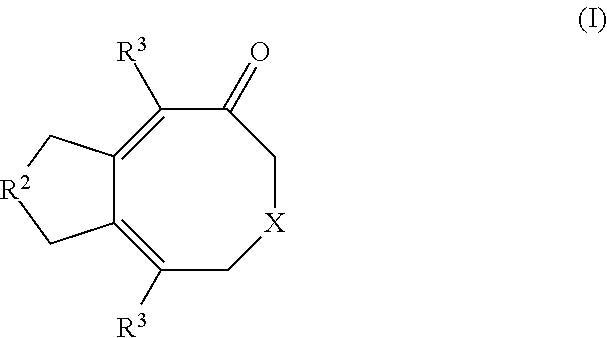
- this disclosure provides a method of synthesizing a compound of formula (I):
- X is selected from the group consisting of O and NR 1 ;
- R 1 is selected from the group consisting of hydrogen, alkyl, and a nitrogen protecting group
- R 2 is selected from the group consisting of —C(O)O—, —C(O)—, —O—, —NR 4 — and —CR 5 2 —;
- each R 3 is independently selected from the group consisting of hydrogen, alkyl, alkenyl, alkynyl, cycloalkyl, heterocyclyl, aryl, heteroaryl and cyano, any of which may be optionally substituted;
- R 4 is selected from the group consisting of hydrogen, alkyl, and a nitrogen protecting group
- each R 5 is independently selected from the group consisting of hydrogen, alkyl, alkenyl, alkynyl, cycloalkyl, heterocyclyl, aryl, heteroaryl, acyl, alkoxy, amido, amino, carboxy, cyano, ester, halo, haloalkyl, hydroxy, nitro, phosphonate, sulfinyl, sulfonyl, sulfonate, sulfonamino and sulfonamido, any of which may be optionally substituted; or two R 5 are taken together with the atom to which they are attached to form an optionally substituted ring system;
- reaction mixture comprising combining the following components to form a reaction mixture:
- this disclosure provides a compound of formula (I):
- X is selected from the group consisting of O and NR 1 ;
- R 1 is selected from the group consisting of hydrogen, alkyl, and a nitrogen protecting group
- R 2 is selected from the group consisting of —C(O)O—, —C(O)—, —O—, —NR 4 — and —CR 5 2 —;
- each R 3 is independently selected from the group consisting of hydrogen, alkyl, alkenyl, alkynyl, cycloalkyl, heterocyclyl, aryl, heteroaryl and cyano, any of which may be optionally substituted;
- R 4 is selected from the group consisting of hydrogen, alkyl, and a nitrogen protecting group
- each R 5 is independently selected from the group consisting of hydrogen, alkyl, alkenyl, alkynyl, cycloalkyl, heterocyclyl, aryl, heteroaryl, acyl, alkoxy, amido, amino, carboxy, cyano, ester, halo, haloalkyl, hydroxy, nitro, phosphonate, sulfinyl, sulfonyl, sulfonate, sulfonamino and sulfonamido, any of which may be optionally substituted; or two R 5 are taken together with the atom to which they are attached to form an optionally substituted ring system.
- FIG. 1 shows an Oak Ridge Thermal Ellipsoid Plot (ORTEP) of compound 3dd, described herein, which was characterized by single-crystal X-ray crystallography.
- ORTEP Oak Ridge Thermal Ellipsoid Plot
- Described herein are methods of synthesizing eight-membered heterocyclic ring systems, including highly substituted eight-membered heterocycles.
- the heterocycles may be effectively produced in one step, by coupling a diyne with a 3-azetidinone or 3-oxetanone compound in the presence of a nickel-containing compound and a ligand.
- the methodology may be of great use in developing new pharmaceutical compounds.
- each intervening number there between with the same degree of precision is explicitly contemplated.
- the numbers 7 and 8 are contemplated in addition to 6 and 9, and for the range 6.0-7.0, the numbers 6.0, 6.1, 6.2, 6.3, 6.4, 6.5, 6.6, 6.7, 6.8, 6.9 and 7.0 are explicitly contemplated.
- the term “about” is used synonymously with the term “approximately.”
- the term “about,” as used in connection with a particular value indicates that the value may be slightly outside the particular value. Variation may be due to conditions such as experimental error, manufacturing tolerances, variations in equilibrium conditions, and the like.
- the term “about” includes the cited value plus or minus 10%. Such values are thus encompassed by the scope of the claims reciting the terms “about” and “approximately.”
- acyl refers to an alkylcarbonyl, cycloalkylcarbonyl, heterocyclylcarbonyl, arylcarbonyl or heteroarylcarbonyl substituent, any of which may be further substituted (e.g., with one or more substituents).
- alkyl refers to a straight or branched saturated hydrocarbon chain.
- Alkyl groups may include a specified number of carbon atoms.
- C 1 -C 12 alkyl indicates that the alkyl group may have 1, 2, 3, 4, 5, 6, 7, 8, 9, 10, 11 or 12 carbon atoms.
- An alkyl group may be, e.g., a C 1 -C 12 alkyl group, a C 1 -C 10 alkyl group, a C 1 -C 8 alkyl group, a C 1 -C 6 alkyl group or a C 1 -C 4 alkyl group.
- exemplary C 1 -C 4 alkyl groups include methyl, ethyl, n-propyl, isopropyl, n-butyl, sec-butyl, isobutyl and tert-butyl groups.
- An alkyl group may be optionally substituted with one or more substituents.
- alkenyl refers to a straight or branched hydrocarbon chain having one or more double bonds.
- Alkenyl groups may include a specified number of carbon atoms. For example, C 2 -C 12 alkenyl indicates that the alkenyl group may have 2, 3, 4, 5, 6, 7, 8, 9, 10, 11 or 12 carbon atoms.
- An alkenyl group may be, e.g., a C 2 -C 12 alkenyl group, a C 2 -C 10 alkenyl group, a C 2 -C 8 alkenyl group, a C 2 -C 6 alkenyl group or a C 2 -C 4 alkenyl group.
- alkenyl groups include but are not limited to allyl, propenyl, 2-butenyl, 3-hexenyl and 3-octenyl groups.
- One of the double bond carbons may optionally be the point of attachment of the alkenyl substituent.
- An alkenyl group may be optionally substituted with one or more substituents.
- alkynyl refers to a straight or branched hydrocarbon chain having one or more triple bonds.
- Alkynyl groups may include a specified number of carbon atoms.
- C 2 -C 12 alkynyl indicates that the alkynyl group may have 2, 3, 4, 5, 6, 7, 8, 9, 10, 11 or 12 carbon atoms.
- An alkynyl group may be, e.g., a C 2 -C 12 alkynyl group, a C 2 -C 10 alkynyl group, a C 2 -C 8 alkynyl group, a C 2 -C 6 alkynyl group or a C 2 -C 4 alkynyl group.
- alkynyl groups include but are not limited to ethynyl, propargyl, and 3-hexynyl.
- One of the triple bond carbons may optionally be the point of attachment of the alkynyl substituent.
- An alkynyl group may be optionally substituted with one or more substituents.
- aryl refers to an aromatic monocyclic, bicyclic, or tricyclic hydrocarbon ring system, wherein any ring atom capable of substitution may be substituted (e.g., with one or more substituents).
- aryl moieties include but are not limited to phenyl, naphthyl, and anthracenyl.
- Aryl groups may be optionally substituted with one or more substituents.
- arylalkyl refers to an alkyl moiety in which at least one alkyl hydrogen atom is replaced with an aryl group.
- Arylalkyl includes groups in which more than one hydrogen atom has been replaced with an aryl group. Examples of arylalkyl groups include but are not limited to benzyl, 2-phenylethyl, 3-phenylpropyl, 9-fluorenyl, benzhydryl, and trityl groups.
- Arylalkyl groups may be optionally substituted with one or more substituents, on either the aryl moiety or the alkyl moiety.
- cycloalkyl refers to non-aromatic, saturated or partially unsaturated cyclic, bicyclic, tricyclic or polycyclic hydrocarbon groups having 3 to 12 carbons. Any ring atom may be substituted (e.g., with one or more substituents). Cycloalkyl groups may contain fused rings. Fused rings are rings that share one or more common carbon atoms.
- cycloalkyl groups include but are not limited to cyclopropyl, cyclobutyl, cyclopentyl, cyclohexyl, cyclohexenyl, cyclohexadienyl, methylcyclohexyl, adamantyl, norbornyl, norbornenyl, tetrahydronaphthalenyl and dihydroindenyl. Cycloalkyl groups may be optionally substituted with one or more substituents.
- halo or “halogen” as used herein refers to any radical of fluorine, chlorine, bromine or iodine.
- haloalkyl refers to an alkyl group as defined herein, such as a C 1 -C 4 alkyl group, in which one or more hydrogen atoms are replaced with halogen atoms, and includes alkyl moieties in which all hydrogens have been replaced with halogens (e.g., perfluoroalkyl such as CF 3 ).
- heteroaryl refers to an aromatic 5-8 membered monocyclic, 8-12 membered bicyclic, or 11-14 membered tricyclic ring system having 1-3 heteroatoms if monocyclic, 1-6 heteroatoms if bicyclic, or 1-9 heteroatoms if tricyclic, said heteroatoms independently selected from O, N, S, P and Si (e.g., carbon atoms and 1-3, 1-6, or 1-9 heteroatoms independently selected from O, N, S, P and Si if monocyclic, bicyclic, or tricyclic, respectively). Any ring atom may be substituted (e.g., with one or more substituents).
- Heteroaryl groups may contain fused rings, which are rings that share one or more common atoms.
- Examples of heteroaryl groups include but are not limited to radicals of pyridine, pyrimidine, pyrazine, pyridazine, pyrrole, imidazole, pyrazole, oxazole, isoxazole, furan, thiazole, isothiazole, thiophene, quinoline, isoquinoline, quinoxaline, quinazoline, cinnoline, indole, isoindole, indolizine, indazole, benzimidazole, phthalazine, pteridine, carbazole, carboline, phenanthridine, acridine, phenanthroline, phenazine, naphthyridines and purines. Heteroaryl groups may be optionally substituted with one or more substituents.
- heteroatom refers to a non-carbon or hydrogen atom such as a nitrogen, sulfur, oxygen, silicon or phosphorus atom. Groups containing more than one heteroatom may contain different heteroatoms.
- heterocyclyl refers to a nonaromatic, saturated or partially unsaturated 3-10 membered monocyclic, 8-12 membered bicyclic, or 11-14 membered tricyclic ring system having 1-3 heteroatoms if monocyclic, 1-6 heteroatoms if bicyclic, or 1-9 heteroatoms if tricyclic, said heteroatoms selected from O, N, S, Si and P (e.g., carbon atoms and 1-3, 1-6, or 1-9 heteroatoms of O, N, S, Si and P if monocyclic, bicyclic, or tricyclic, respectively). Any ring atom may be substituted (e.g., with one or more substituents).
- Heterocyclyl groups may contain fused rings, which are rings that share one or more common atoms.
- heterocyclyl groups include but are not limited to radicals of tetrahydrofuran, tetrahydrothiophene, tetrahydropyran, oxetane, piperidine, piperazine, morpholine, pyrroline, pyrimidine, pyrrolidine, indoline, tetrahydropyridine, dihydropyran, thianthrene, pyran, benzopyran, xanthene, phenoxathiin, phenothiazine, furazan, lactones, lactams such as azetidinones and pyrrolidinones, sultams, sultones, and the like. Heterocyclyl groups may be optionally substituted with one or more substituents.
- hydroxy refers to an —OH radical.
- alkoxy refers to an —O-alkyl radical.
- aryloxy refers to an —O-aryl radical.
- the alkyl portion of an alkoxy group or the aryl portion of an aryloxy group may be optionally substituted with one or more substituents. (For example, “alkoxy” encompasses hydroxyalkoxy groups, in which the alkyl portion of the alkoxy group is substituted with a hydroxy group.)
- ligand refers to an organic molecule comprising at least one unshared electron pair that is available for donation to a metal atom.
- the unshared electron pair may reside on, for example, a nitrogen, phosphorus, arsenic, oxygen, sulfur or carbon atom.
- nitrogen protecting group refers to a moiety that is used to temporarily block a desired nitrogen functional groups in a compound, e.g., a compound with multiple reactive sites.
- the nitrogen protecting group may protect a nitrogen atom from undesirable chemical reactions under specified conditions (e.g., pH, temperature, radiation, solvent, and the like).
- a protecting group has one, or more, or all of the following characteristics: a) it may be added selectively to a nitrogen functional group in good yield to give a protected compound; b) it is stable to reactions occurring at one or more reactive sites in the molecule; and c) it is selectively removable in good yield by reagents that do not attack the regenerated, deprotected nitrogen functional group.
- Nitrogen protecting groups include but are not limited to: acetyl (Ac), allyloxycarbonyl (Alloc), benzyl (Bn), benzhydryl (Bnh), benzoyl (Bz), tert-butyloxycarbonyl (Boc), 2-biphenyl-2-propoxycarbonyl (Bpoc), carbobenzyloxy (Cbz), 3,4-dimethoxybenzyl (DMPM), 9-fluorenylmethyloxycarbonyl (FMOC), p-methoxybenzylcarbonyl (Moz), 2- or 4-nitrobenzenesulfonyl (nosyl, Ns), o-nitrophenyIsulfenyI (Nps), 2-(phenylsulfonyl)ethyloxycarbonyl (Psec), p-ethoxybenzyl (PMB), p-methoxyphenyl (PMP), p-toluenesulfonyl (to
- oxo refers to an oxygen atom, which forms a carbonyl when attached to carbon, an N-oxide when attached to nitrogen, and a sulfoxide or sulfone when attached to sulfur (i.e. ⁇ O).
- mercapto or “thiol” refers to an —SH radical.
- thioalkoxy or “thioether” refers to an —S-alkyl radical.
- thioaryloxy refers to an —S-aryl radical.
- substituted refers to a group “substituted” on an alkyl, alkenyl, alkynyl, cycloalkyl, heterocyclyl, aryl, arylalkyl, heteroaryl or heteroarylalkyl group at any atom of that group. Any atom may be substituted.
- Suitable substituents include, without limitation: acyl, acylamido, acyloxy, alkoxy, alkyl, alkenyl, alkynyl, amido, amino, carboxy, cyano, ester, halo, haloalkyl, hydroxy, imino, nitro, oxo (e.g., C ⁇ O), phosphonate, sulfinyl, sulfonyl, sulfonate, sulfonamino, sulfonamido, thioamido, thiol, thioxo (e.g., C ⁇ S), and ureido.
- substituents on a group are independently any one single, or any combination of the aforementioned substituents.
- a substituent may itself be substituted with any one of the above substituents.
- groups and substituents thereof may be selected in accordance with permitted valence of the atoms and the substituents, and such that the selections and substitutions result in a stable compound, e.g., a compound that does not spontaneously undergo transformation such as by rearrangement, cyclization, elimination, etc.
- substituent groups are specified by their conventional chemical formulae, written from left to right, they optionally encompass substituents resulting from writing the structure from right to left, e.g., —CH 2 O— optionally also recites —OCH 2 —.
- This disclosure provides methods of synthesizing compounds of formula (I), which may proceed via coupling of a 3-azetidinone or a 3-oxetanone with a diyne.
- the disclosure provides a method of synthesizing a compound of formula (I):
- X is selected from the group consisting of O and NR 1 ;
- R 1 is selected from the group consisting of hydrogen, alkyl, and a nitrogen protecting group
- R 2 is selected from the group consisting of —C(O)O—, —C(O)—, —O—, —NR 4 — and —CR 5 2 —;
- each R 3 is independently selected from the group consisting of hydrogen, alkyl, alkenyl, alkynyl, cycloalkyl, heterocyclyl, aryl, heteroaryl and cyano, any of which may be optionally substituted;
- R 4 is selected from the group consisting of hydrogen, alkyl, and a nitrogen protecting group
- each R 5 is independently selected from the group consisting of hydrogen, alkyl, alkenyl, alkynyl, cycloalkyl, heterocyclyl, aryl, heteroaryl, acyl, alkoxy, amido, amino, carboxy, cyano, ester, halo, haloalkyl, hydroxy, nitro, phosphonate, sulfinyl, sulfonyl, sulfonate, sulfonamino and sulfonamido, any of which may be optionally substituted; or two R 5 are taken together with the atom to which they are attached to form an optionally substituted ring system;
- reaction mixture comprising combining the following components to form a reaction mixture:
- X is selected from the group consisting of O and NR 1 ;
- R 1 is selected from the group consisting of hydrogen, alkyl, and a nitrogen protecting group.
- X is O. In some embodiments, X is NR 1 . In some embodiments, R 1 is alkyl. In some embodiments, R 1 is a nitrogen protecting group, such as, e.g., tert-butyloxycarbonyl (Boc) or benzhydryl (Bnh).
- Boc tert-butyloxycarbonyl
- Bnh benzhydryl
- Suitable compounds of formula (II) include, but are not limited to, 1-Boc-3-azetidinone, 1-benzhydryl-3-azetidinone, and 3-oxetanone.
- Such compounds may be commercially available from a variety of sources (e.g., Sigma-Aldrich, St. Louis, Mo.), or may be synthesized by any means known in the art.
- 3-azetidinone may be N-protected using any suitable protecting group reagent.
- compounds of formula (II) may be further substituted, e.g., with a substituent in the 2-position of the azocine or oxetanone. In some embodiments, use of such compounds may lead to formation of enantiopure products.
- R 2 is selected from the group consisting of —C(O)O—, —C(O)—, —O—, —NR 4 — and —CR 5 2 —;
- each R 3 is independently selected from the group consisting of hydrogen, alkyl, alkenyl, alkynyl, cycloalkyl, heterocyclyl, aryl, heteroaryl and cyano, any of which may be optionally substituted;
- R 4 is selected from the group consisting of hydrogen, alkyl, and a nitrogen protecting group
- each R 5 is independently selected from the group consisting of hydrogen, alkyl, alkenyl, alkynyl, cycloalkyl, heterocyclyl, aryl, heteroaryl, acyl, alkoxy, amido, amino, carboxy, cyano, ester, halo, haloalkyl, hydroxy, nitro, phosphonate, sulfinyl, sulfonyl, sulfonate, sulfonamino and sulfonamido, any of which may be optionally substituted; or two R 5 are taken together with the atom to which they are attached to form an optionally substituted ring system.
- R 2 is selected from the group consisting of —O—, —NR 4 — and —CR 5 2 —. In some embodiments, R 2 is O.
- R 2 is —NR 4 —.
- R 4 is a nitrogen protecting group, such as, e.g., tert-butyloxycarbonyl (Boc) or tosyl (Ts).
- R 2 is —CR 5 2 —.
- the two R 5 groups are the same. In some embodiments, the two R 5 groups are different.
- each R 5 is independently selected from the group consisting of hydrogen, C 1 -C 6 alkyl (e.g., C 1 -C 4 alkyl such as methyl, ethyl, isopropyl, n-propyl and tert-butyl), including substituted C 1 -C 6 alkyl groups (e.g., an alkoxyalkyl group such as methoxymethyl), ester (e.g., a methyl ester or —C(O)OCH 3 ), sulfonyl (e.g., —SO 2 Ph), aryl (e.g., phenyl), and cyano.
- C 1 -C 6 alkyl e.g., C 1 -C 4 alkyl such as methyl, ethyl, isopropyl, n-propyl and tert-butyl
- substituted C 1 -C 6 alkyl groups e.g., an alkoxyalkyl group such
- both R 5 are taken together with the atom to which they are attached to form an optionally substituted ring. In some embodiments, both R 5 are taken together with the atom to which they are attached to form a monocyclic 4-, 5- or 6-membered ring. In some embodiments, two R 5 are taken together with the atom to which they are attached to form a ring that is fused to an additional ring, e.g., to make a bicyclic ring system.
- both R 5 are taken together with the atom to which they are attached to form a ring selected from the group consisting of: a dioxane ring, which may be substituted (e.g., 2,2-dimethyl-1,3-dioxane-4,6-dione); an indane ring, which may be substituted (e.g., 1H-indene-1,3(2H)-dione); an oxetane ring; and an azetidine ring, such as a protected azetidine ring (e.g., 1-benzhydrylazetidine).
- a dioxane ring which may be substituted (e.g., 2,2-dimethyl-1,3-dioxane-4,6-dione)
- an indane ring which may be substituted (e.g., 1H-indene-1,3(2H)-dione)
- an oxetane ring e.
- Suitable compounds of formula (III) include, but are not limited to, the following:
- Such compounds may be commercially available from a variety of sources (e.g., Sigma-Aldrich, St. Louis, Mo.), or may be synthesized by any means known in the art.
- a compound of formula (III) may be included in a reaction at an amount of about 1.0 to about 5.0 equivalents compared to the compound of formula (II).
- 1.0 mmol of a compound of formula (II) is included in a reaction mixture, then about 1.0, 1.1, 1.2, 1.3, 1.4, 1.5, 1.6, 1.7, 1.8, 1.9, 2.0, 2.1, 2.2, 2.3, 2.4, 2.5, 2.6, 2.7, 2.8, 2.9, 3.0, 3.1, 3.2, 3.3, 3.4, 3.5, 3.6, 3.7, 3.8, 3.9, 4.0, 4.1, 4.2, 4.3, 4.4, 4.5, 4.6, 4.7, 4.8, 4.9 or 5.0 mmol of the compound of formula (III) may be included in the reaction mixture.
- nickel-containing compound may include Ni(0).
- a suitable source of Ni(0) is bis(cyclooctadiene)nickel(0).
- a nickel-containing compound may be included in a reaction mixture in an amount of about 1 mol % to about 20 mol %, e.g., about 5 mol % to about 15 mol %.
- a nickel-containing compound may be included in a reaction mixture in an amount of about 1, 2, 3, 4, 5, 6, 7, 8, 9, 10, 11, 12, 13, 14, 15, 16, 17, 18, 19, or 20 mol %.
- the ligand includes at least one atom bearing an unshared electron pair, which may interact with the nickel of the nickel-containing compound.
- a ligand may include at least one atom selected from nitrogen, phosphorus, arsenic, oxygen, sulfur and carbon that includes an unshared electron pair.
- the ligand may be a monodentate ligand, which includes only one atom bearing an unshared electron pair that may interact with the nickel.
- exemplary monodentate ligands may include, but are not limited to, monophosphines, such as trialkylphosphines and tricycloalkylphosphines, such as tributylphosphine, tricyclohexylphosphine, and tricyclopentylphosphine.
- exemplary monodentate ligands may include, but are not limited to, N-heterocyclic carbene ligands, such as, for example, 1,3-bis(2,6-diisopropylphenyl)imidazol-2-ylidene (which is often abbreviated Ipr).
- N-heterocyclic carbene ligands such as, for example, 1,3-bis(2,6-diisopropylphenyl)imidazol-2-ylidene (which is often abbreviated Ipr).
- the ligand may be a bidentate or “chelating” ligand, i.e., a ligand comprising two atoms bearing unshared electron pairs, with a spatial relationship therebetween, such that the atoms are capable of interacting simultaneously with the nickel atom or ion.
- a chelating ligand may be a diamine, aminoalcohol, or a bisphosphine.
- a ligand may be included in a reaction mixture in an amount of about 5 mol % to about 30 mol %.
- a ligand compound may be included in a reaction mixture in an amount of about 5, 6, 7, 8, 9, 10, 11, 12, 13, 14, 15, 16, 17, 18, 19, 20, 21, 22, 23, 24, 25, 26, 27, 28, 29, or 30 mol %.
- a ligand may be included in a reaction mixture in an amount of about double the amount of the nickel-containing compound.
- the nickel-containing compound and one or more molecules of the ligand may interact to form a metal-ligand complex, which may serve as a catalyst for the reaction.
- the reaction mixture may further comprise a solvent. Any suitable solvent that is compatible with the components of the reaction mixture may be used.
- a solvent will be selected such that the compounds of formula (II) and (III) will be at least partially soluble (or fully soluble), and will allow the reaction mixture to be heated or cooled to a temperature sufficient for the reaction to produce a compound of formula (I).
- Exemplary solvents include, but are not limited to: ethers such as diethyl ether, dibutyl ether, 1,2-dimethoxyethane, diglyme, t-butyl methyl ether, tetrahydrofuran, dioxane and the like; halogenated solvents such as chloroform, dichloromethane, dichloroethane, trifluorotoluene, chlorobenzene and the like; aliphatic or aromatic hydrocarbon solvents such as benzene, xylene, toluene, hexane, pentane and the like; esters and ketones such as ethyl acetate, acetone, 2-butanone and the like; polar aprotic solvents such as acetonitrile, dimethylformamide, dimethylsulfoxide and the like; or any combination of two or more solvents.
- ethers such as diethyl ether, dibutyl ether, 1,2-d
- the reaction may be conducted in a solution in which the concentration of the compound of formula (II) is from about 0.01 M to about 1.0 M, e.g., about 0.01 M, about 0.05 M, about 0.10 M, 0.15 M, 0.20 M, 0.25 M, 0.30 M, 0.35 M, 0.40 M, 0.45 M, 0.50 M, 0.55 M, 0.60 M, 0.65 M, 0.70 M, 0.75 M, 0.80 M, 0.85 M, 0.90 M, 0.95 M, or 1.0 M.
- concentration of the compound of formula (II) is from about 0.01 M to about 1.0 M, e.g., about 0.01 M, about 0.05 M, about 0.10 M, 0.15 M, 0.20 M, 0.25 M, 0.30 M, 0.35 M, 0.40 M, 0.45 M, 0.50 M, 0.55 M, 0.60 M, 0.65 M, 0.70 M, 0.75 M, 0.80 M, 0.85 M, 0.90 M, 0.95 M, or 1.0 M.
- the solvent and/or the reaction mixture may be substantially anhydrous, i.e. may be substantially free of water.
- the solvent and/or the reaction mixture may comprise less than about 10 wt. %, 9.5 wt. %, 9.0 wt. %, 8.5 wt. %, 8.0 wt. %, 7.5 wt. %, 7.0 wt. %, 6.5 wt. %, 6.0 wt. %, 5.5 wt. %, 5.0 wt. %, 4.5 wt. %, 4.0 wt. %, 3.5 wt. %, 3.0 wt. %, 2.5 wt. %, 2.0 wt.
- wt. % 1.5 wt. %, 1.0 wt. %, 0.95 wt. %, 0.90 wt. %, 0.85 wt. %, 0.80 wt. %, 0.75 wt. %, 0.70 wt. %, 0.65 wt. %, 0.60 wt. %, 0.55 wt. %, 0.50 wt. %, 0.45 wt. %, 0.40 wt. %, 0.35 wt. %, 0.30 wt. %, 0.25 wt. %, 0.20 wt. %, 0.15 wt. %, 0.10 wt. %, 0.09 wt.
- the method of synthesizing the compound of formula (I) may further comprise cooling the reaction mixture.
- the reaction mixture may be cooled to a temperature of about ⁇ 50° C. to about 20° C., about ⁇ 40° C. to about 15° C., or about ⁇ 20° C.
- the method of synthesizing the compound of formula (I) may further comprise heating the reaction mixture.
- the reaction mixture may be heated to a temperatuer of about 25° C. to about 110° C., e.g., to about 25° C., 30° C., 35° C., 40° C., 45° C., 50° C., 55° C., 60° C., 65° C., 70° C., 75° C., 80° C., 85° C., 90° C., 95° C., 100° C., 105° C., or 110° C.
- a temperatuer of about 25° C. to about 110° C., e.g., to about 25° C., 30° C., 35° C., 40° C., 45° C., 50° C., 55° C., 60° C., 65° C., 70° C., 75° C., 80° C., 85° C., 90° C., 95° C., 100° C., 105° C., or 110° C.
- reaction mixture may also be added to the reaction mixture, such as an acid, a base, or a salt.
- the method of synthesizing the compound of formula (I) may further comprise stirring the reaction mixture.
- the reaction mixture may be stirred using a magnetic stirring bar, or an overhead mixer.
- the reaction mixture may be contained within any suitable reaction vessel, such as a vial, flask, beaker, tube (e.g., a sealed tube), or the like.
- the reaction vessel may be suitably dry, e.g., the reaction vessel may be dried in an oven and/or under vacuum.
- the reaction mixture may further comprise an inert atmosphere.
- a reaction vessel comprising the reaction mixture may consist essentially of an inert gas such as nitrogen, argon, or a mixture thereof.
- an inert atmosphere comprises dioxygen (O 2 ) in an amount of less than about 1000 ppm, 900 ppm, 800 ppm, 700 ppm, 600 ppm, 500 ppm, 400 ppm, 300 ppm, 200 ppm, 100 ppm, 95 ppm, 90 ppm, 85 ppm, 80 ppm, 75 ppm, 70 ppm, 65 ppm, 60 ppm, 55 ppm, 50 ppm, 45 ppm, 40 ppm, 35 ppm, 30 ppm, 25 ppm, 20 ppm, 15 ppm, 10 ppm, 9 ppm, 8 ppm, 7 ppm, 6 ppm, 5 ppm, 4 ppm, 3 ppm, 2 ppm or
- the method may comprise incubating, stirring and/or heating the reaction mixture for a period of time sufficient to form a compound of formula (I).
- the reaction mixture may be incubated, stirred and/or heated for about 1 hour to about 24 hours, or about 2 hours to about 12 hours.
- the reaction mixture may be incubated, stirred and/or heated for about 1, 2, 3, 4, 5, 6, 7, 8, 9, 10, 11, 12, 13, 14, 15, 16, 17, 18, 19, 20, 21, 22, 23, or 24 hours.
- the method may provide a compound of formula (I) in a yield of about 20% to about 100%, e.g., about 50% to about 99%.
- the method may provide a compound of formula (I) in about 50%, 51%, 52%, 53%, 54%, 55%, 56%, 57%, 58%, 59%, 60%, 61%, 62%, 63%, 64%, 65%, 66%, 67%, 68%, 69%, 70%, 71%, 72%, 73%, 74%, 75%, 76%, 77%, 78%, 79%, 80%, 81%, 82%, 83%, 84%, 85%, 86%, 87%, 88%, 89%, 90%, 91%, 92%, 93%, 94%, 95%, 96%, 97%, 98%, 99% or 100% yield.
- Methods of synthesizing compounds of formula (I) may optionally further include additional process steps.
- the method may further comprise the step of purifying the compound of formula (I) from the reaction mixture.
- the reaction mixture may be directly subjected to column chromatography (e.g., flash column chromatography) on a solid phase such as silica gel.
- the reaction mixture may alternatively be purified using other forms of chromatography, such as high pressure liquid chromatography (HPLC).
- HPLC high pressure liquid chromatography
- the reaction mixture may be concentrated or the solvent may be removed prior to purification.
- the method may further comprise the step of removing the nitrogen protecting group.
- the protecting group may be removed using any suitable method that is capable of removing the protecting group.
- the method may further comprise the step of reacting the compound of formula (I) with an acid (e.g., a strong acid such as hydrochloric acid or trifluoroacetic acid).
- the method may further comprise the step of reacting the compound of formula (I) with an acid (e.g., a strong acid such as hydrobromic acid or sulfuric acid), or a reducing agent (e.g., sodium or sodium amalgam).
- an acid e.g., a strong acid such as hydrobromic acid or sulfuric acid
- a reducing agent e.g., sodium or sodium amalgam
- the carbonyl moiety may be reduced to the alcohol.
- the method may further comprise the step of reacting the compound of formula (I) with a reducing agent (e.g., sodium borohydride or lithium aluminum hydride), to yield a hydroxylated heterocyclic compound.
- a reducing agent e.g., sodium borohydride or lithium aluminum hydride
- the product of the reaction is a compound of formula (I) as described above.
- the product of the reaction may be evaluated using a number of techniques. For example, compounds may be subjected to structural characterization using, for example, nuclear magnetic resonance (NMR) spectroscopy, mass spectrometry (MS), and infrared (IR) spectroscopy. Reactions may be monitored for formation of a product using techniques such as gas chromatography (GC) or thin-layer chromatography (TLC). Purified products may be confirmed using elemental analysis (EA).
- a reaction may proceed regioselectively.
- the reaction may produce two products in a ratio of about 99:1 to about 80:20, e.g., about 99.9:0.1, 99:1, 98:2, 97:3, 96:4, 95:5, 94:6, 93:7, 92:8, 91:9, 90:10, 89:11, 8:12, 87:13, 86:14, 85:15, 84:16, 83:17, 82:18, 81:19 or 80:20.
- Exemplary two products 1 and 2 are illustrated in Scheme 1.
- Scheme 1 is illustrated in Scheme 1.
- Products 1 and 2 may be separated using techniques known to those skilled in the art, such as chromatography (e.g., column chromatography such as flash column chromatography or HPLC).
- chromatography e.g., column chromatography such as flash column chromatography or HPLC.
- X is selected from the group consisting of O and NR 1 ;
- R 1 is selected from the group consisting of hydrogen, alkyl, and a nitrogen protecting group
- R 2 is selected from the group consisting of —C(O)O—, —C(O)—, —O—, —NR 4 — and —CR 5 2 —;
- each R 3 is independently selected from the group consisting of hydrogen, alkyl, alkenyl, alkynyl, cycloalkyl, heterocyclyl, aryl, heteroaryl and cyano, any of which may be optionally substituted;
- R 4 is selected from the group consisting of hydrogen, alkyl, and a nitrogen protecting group
- each R 5 is independently selected from the group consisting of hydrogen, alkyl, alkenyl, alkynyl, cycloalkyl, heterocyclyl, aryl, heteroaryl, acyl, alkoxy, amido, amino, carboxy, cyano, ester, halo, haloalkyl, hydroxy, nitro, phosphonate, sulfinyl, sulfonyl, sulfonate, sulfonamino and sulfonamido, any of which may be optionally substituted; or two R 5 are taken together with the atom to which they are attached to form an optionally substituted ring system.
- X is O. In some embodiments, X is NR 1 . In some embodiments, R 1 is alkyl. In some embodiments, R 1 is a nitrogen protecting group, such as, e.g., tert-butyloxycarbonyl (Boc) or benzhydryl (Bnh).
- Boc tert-butyloxycarbonyl
- Bnh benzhydryl
- R 2 is selected from the group consisting of —O—, —NR 4 — and —CR 5 2 —. In some embodiments, R 2 is O.
- R 2 is —NR 4 —.
- R 4 is a nitrogen protecting group, such as, e.g., tert-butyloxycarbonyl (Boc) or tosyl (Ts).
- R 2 is —CR 5 2 —.
- the two R 5 groups are the same. In some embodiments, the two R 5 groups are different.
- each R 5 is independently selected from the group consisting of hydrogen, C 1 -C 6 alkyl (e.g., C 1 -C 4 alkyl such as methyl, ethyl, isopropyl, n-propyl and tert-butyl), including substituted C 1 -C 6 alkyl groups (e.g., an alkoxyalkyl group such as methoxymethyl), ester (e.g., a methyl ester or —C(O)OCH 3 ), sulfonyl (e.g., —SO 2 Ph), aryl (e.g., phenyl), and cyano.
- C 1 -C 6 alkyl e.g., C 1 -C 4 alkyl such as methyl, ethyl, isopropyl, n-propyl and tert-butyl
- substituted C 1 -C 6 alkyl groups e.g., an alkoxyalkyl group such
- both R 5 are taken together with the atom to which they are attached to form an optionally substituted ring. In some embodiments, both R 5 are taken together with the atom to which they are attached to form a monocyclic 4-, 5- or 6-membered ring. In some embodiments, two R 5 are taken together with the atom to which they are attached to form a ring that is fused to an additional ring, e.g., to make a bicyclic ring system.
- both R 5 are taken together with the atom to which they are attached to form a ring selected from the group consisting of: a dioxane ring, which may be substituted (e.g., 2,2-dimethyl-1,3-dioxane-4,6-dione); an indane ring, which may be substituted (e.g., 1H-indene-1,3(2H)-dione); an oxetane ring; and an azetidine ring, such as a protected azetidine ring (e.g., 1-benzhydrylazetidine).
- a dioxane ring which may be substituted (e.g., 2,2-dimethyl-1,3-dioxane-4,6-dione)
- an indane ring which may be substituted (e.g., 1H-indene-1,3(2H)-dione)
- an oxetane ring e.
- Compounds of formula (I) may be in the form of a salt, e.g., a pharmaceutically acceptable salt.
- a pharmaceutically acceptable salt refers to those salts which are, within the scope of sound medical judgment, suitable for use in contact with the tissues of humans and lower animals without undue toxicity, irritation, allergic response, and the like, and are commensurate with a reasonable benefit/risk ratio.
- Pharmaceutically acceptable salts are well-known in the art. The salts may be prepared in situ during the final isolation and purification of the compounds or separately by reacting a compound with a suitable acid or base, depending on the particular substituents found on the compounds described herein.
- Neutral forms of the compounds may be regenerated by contacting the salt with a base or acid and isolating the parent compound in a conventional manner.
- the parent form of the compound differs from the various salt forms in certain physical properties, such as solubility in polar solvents, but otherwise the salts are equivalent to the parent form of the compound for the purposes of this disclosure. Examples of pharmaceutically acceptable salts are discussed in Berge et al, 1977, “Pharmaceutically Acceptable Salts.” J. Pharm. Sci. Vol. 66, pp. 1-19.
- Representative acid addition salts may be prepared using various suitable acids for example, including, but are not limited to, acetic, adipic, alginic, citric, aspartic, benzoic, benzenesulfonic, butyric, camphoric, camphorsulfonic, carbonic, digluconic, glycerophosphoric, heptanoic, hexanoic, fumaric, hydrochloric, hydrobromic, hydroiodic, 2-hydroxyethansulfonic (isethionic), lactic, maleic, methanesulfonic, nicotinic, 2-naphthalenesulfonic, oxalic, pamoic, pectinic, persulfuric, 3-phenylpropionic, picric, pivalic, propionic, succinic, sulfuric, tartaric, thiocyanic, phosphoric, glutamatic, p-toluenesulfonic, and undecanoic acids.
- Basic addition salts may be prepared in situ during the final isolation and purification of compounds by reacting a carboxylic acid-containing moiety with a suitable base such as the hydroxide, carbonate or bicarbonate of a pharmaceutically acceptable metal cation or with ammonia or an organic primary, secondary or tertiary amine
- Pharmaceutically acceptable salts include, but are not limited to, cations based on alkali metals or alkaline earth metals such as lithium, sodium, potassium, calcium, magnesium, and aluminum salts, and the like, and nontoxic quaternary ammonia and amine cations including ammonium, tetramethylammonium, tetraethylammonium, methylamine, dimethylamine, trimethylamine, triethylamine, diethylamine, ethylamine and the such as.
- Other representative organic amines useful for the formation of base addition salts include ethylenediamine, ethanolamine, diethanolamine, piperidine, and piperazine.
- the basic nitrogen-containing groups may be quaternized with such agents as lower alkyl halides such as methyl, ethyl, propyl, and butyl chlorides, bromides and iodides; dialkyl sulfates such as dimethyl, diethyl, dibutyl and diamyl sulfates; long chain halides such as decyl, lauryl, myristyl and stearyl chlorides, bromides and iodides; arylalkyl halides such as benzyl and phenethyl bromides and others. Water or oil-soluble or dispersible products are thereby obtained.
- lower alkyl halides such as methyl, ethyl, propyl, and butyl chlorides, bromides and iodides
- dialkyl sulfates such as dimethyl, diethyl, dibutyl and diamyl sulfates
- long chain halides such as de
- Certain compounds may exist in one or more particular geometric, optical, enantiomeric, diastereomeric, epimeric, atropic, stereoisomer, tautomeric, conformational, or anomeric forms, including but not limited to, cis- and trans-forms; E- and Z-forms; c-, t-, and r-forms; endo- and exo-forms; R-, S-, and meso-forms; D- and L-forms; d- and 1-forms; (+) and ( ⁇ ) forms; keto-, enol-, and enolate-forms; syn- and anti-forms; synclinal- and anticlinal-forms; a- and ⁇ -forms; axial and equatorial forms; boat-, chair-, twist-, envelope-, and half chair-forms; and combinations thereof, hereinafter collectively referred to as “isomers” (or “isomeric forms”).
- a compound described herein may be an enantiomerically enriched isomer of a stereoisomer described herein, or a method of synthesizing a compound may produce an enantiomerically enriched isomer of a stereoisomer described herein.
- the compound may have an enantiomeric excess of at least about 10%, 15%, 20%, 25%, 30%, 35%, 40%, 45%, 50%, 55%, 60%, 65%, 70%, 75%, 80%, 85%, 90%, 95%, 96%, 97%, 98%, or 99%.
- Enantiomer when used herein, refers to either of a pair of chemical compounds whose molecular structures have a mirror-image relationship to each other.
- a preparation of a compound disclosed herein is enriched for an isomer of the compound having a selected stereochemistry, e.g., R or S, corresponding to a selected stereocenter.
- the compound has a purity corresponding to a compound having a selected stereochemistry of a selected stereocenter of at least about 60%, 65%, 70%, 75%, 80%, 85%, 90%, 95%, 96%, 97%, 98%, or 99%.
- a composition described herein includes a preparation of a compound disclosed herein that is enriched for a structure or structures having a selected stereochemistry, e.g., R or S, at a selected stereocenter.
- a selected stereochemistry e.g., R or S
- Exemplary R/S configurations may be those provided in an example described herein.
- An “enriched preparation,” as used herein, is enriched for a selected stereoconfiguration of one, two, three or more selected stereocenters within the subject compound.
- Exemplary selected stereocenters and exemplary stereoconfigurations thereof may be selected from those provided herein, e.g., in an example described herein.
- enriched is meant at least 60%, e.g., of the molecules of compound in the preparation have a selected stereochemistry of a selected stereocenter. In an embodiment it is at least 65%, 70%, 75%, 80%, 85%, 90%, 95%, 96%, 97%, 98%, or 99%.
- Enriched refers to the level of a subject molecule(s) and does not connote a process limitation unless specified.
- Compounds may be prepared in racemic form or as individual enantiomers or diastereomers by either stereospecific synthesis or by resolution.
- the compounds may, for example, be resolved into their component enantiomers or diastereomers by standard techniques, such as the formation of stereoisomeric pairs by salt formation with an optically active base, followed by fractional crystallization and regeneration of the free acid.
- the compounds may also be resolved by formation of stereoisomeric esters or amides, followed by chromatographic separation and removal of the chiral auxiliary. Alternatively, the compounds may be resolved using a chiral HPLC column.
- the enantiomers also may be obtained from kinetic resolution of the racemate of corresponding esters using lipase enzymes.
- isomers are structural (or constitutional) isomers (i.e., isomers which differ in the connections between atoms rather than merely by the position of atoms in space).
- a reference to a methoxy group, —OCH 3 is not to be construed as a reference to its structural isomer, a hydroxymethyl group, —CH 2 OH.
- a reference to ortho-chlorophenyl is not to be construed as a reference to its structural isomer, meta-chlorophenyl.
- a reference to a class of structures may well include structurally isomeric forms falling within that class (e.g., C 3 -alkyl or propyl includes n-propyl and iso-propyl; C 4 -alkyl or butyl includes n-, iso-, sec-, and tert-butyl; methoxyphenyl includes ortho-, meta-, and para-methoxyphenyl).
- C 3 -alkyl or propyl includes n-propyl and iso-propyl
- C 4 -alkyl or butyl includes n-, iso-, sec-, and tert-butyl
- methoxyphenyl includes ortho-, meta-, and para-methoxyphenyl
- keto-, enol-, and enolate-forms as in, for example, the following tautomeric pairs: keto/enol, imine/enamine, amide/imino alcohol, amidine/amidine, nitroso/oxime, thioketone/enethiol, N-nitroso/hydroxyazo, and nitro/aci-nitro.
- H may be in any isotopic form, including 1 H, 2 H (D), and 3 H (T); C may be in any isotopic form, including 12 C, 13 C, and 14 C; O may be in any isotopic form, including 16 O and 18 O; and the like.
- compositions comprising a compound of formula (I), and a pharmaceutically acceptable carrier.
- pharmaceutically acceptable carrier means a non-toxic, inert solid, semi-solid or liquid filler, diluent, encapsulating material or formulation auxiliary of any type.
- materials which may serve as pharmaceutically acceptable carriers are sugars such as lactose, glucose and sucrose; starches such as corn starch and potato starch; cellulose and its derivatives such as sodium carboxymethyl cellulose, ethyl cellulose and cellulose acetate; powdered tragacanth; malt; gelatin; talc; cocoa butter and suppository waxes; oils such as peanut oil, cottonseed oil, safflower oil, sesame oil, olive oil, corn oil and soybean oil; glycols; such a propylene glycol; esters such as ethyl oleate and ethyl laurate; agar; buffering agents such as magnesium hydroxide and aluminum hydroxide; alginic acid; pyrogen-free water; isotonic saline; Ringer's solution; ethyl alcohol, and phosphate buffer solutions, as well as other non-toxic compatible lubricants such as sodium lauryl sulfate and magnesium steacetate
- compositions may be administered to subjects (e.g., humans and other mammals) orally, rectally, parenterally, intracisternally, intravaginally, intraperitoneally, topically (as by powders, ointments or drops), bucally or as an oral or nasal spray.
- subjects e.g., humans and other mammals
- parenterally refers to modes of administration, including intravenous, intramuscular, intraperitoneal, intrasternal, subcutaneous, intraarticular injection and infusion.
- compositions for parenteral injection comprise pharmaceutically acceptable sterile aqueous or nonaqueous solutions, dispersions, suspensions or emulsions and sterile powders for reconstitution into sterile injectable solutions or dispersions.
- suitable aqueous and nonaqueous carriers, diluents, solvents or vehicles include water, ethanol, polyols (propylene glycol, polyethylene glycol, glycerol, and the like, and suitable mixtures thereof), vegetable oils (such as olive oil) and injectable organic esters such as ethyl oleate, or suitable mixtures thereof.
- Suitable fluidity of the composition may be maintained, for example, by the use of a coating such as lecithin, by the maintenance of the required particle size in the case of dispersions, and by the use of surfactants.
- compositions may also contain adjuvants such as preservative agents, wetting agents, emulsifying agents, and dispersing agents. Prevention of the action of microorganisms may be ensured by various antibacterial and antifungal agents, for example, parabens, chlorobutanol, phenol, sorbic acid, and the like. It also may be desirable to include isotonic agents, for example, sugars, sodium chloride and the like. Prolonged absorption of the injectable pharmaceutical form may be brought about by the use of agents delaying absorption, for example, aluminum monostearate and gelatin.
- a parenterally administered drug form may be administered by dissolving or suspending the drug in an oil vehicle.
- Suspensions in addition to the active compounds, may contain suspending agents, for example, ethoxylated isostearyl alcohols, polyoxyethylene sorbitol and sorbitan esters, microcrystalline cellulose, aluminum metahydroxide, bentonite, agar-agar, tragacanth, and mixtures thereof.
- suspending agents for example, ethoxylated isostearyl alcohols, polyoxyethylene sorbitol and sorbitan esters, microcrystalline cellulose, aluminum metahydroxide, bentonite, agar-agar, tragacanth, and mixtures thereof.
- the compounds may be incorporated into slow-release or targeted-delivery systems such as polymer matrices, liposomes, and microspheres. They may be sterilized, for example, by filtration through a bacteria-retaining filter or by incorporation of sterilizing agents in the form of sterile solid compositions, which may be dissolved in sterile water or some other sterile injectable medium immediately before use.
- Injectable depot forms are made by forming microencapsulated matrices of the drug in biodegradable polymers such as polylactide-polyglycolide. Depending upon the ratio of drug to polymer and the nature of the particular polymer employed, the rate of drug release may be controlled. Examples of other biodegradable polymers include poly(orthoesters) and poly(anhydrides) Depot injectable formulations also are prepared by entrapping the drug in liposomes or microemulsions which are compatible with body tissues.
- the injectable formulations may be sterilized, for example, by filtration through a bacterial-retaining filter or by incorporating sterilizing agents in the form of sterile solid compositions which may be dissolved or dispersed in sterile water or other sterile injectable medium just prior to use.
- sterile injectable aqueous or oleaginous suspensions may be formulated according to the known art using suitable dispersing or wetting agents and suspending agents.
- the sterile injectable preparation also may be a sterile injectable solution, suspension or emulsion in a nontoxic, parenterally acceptable diluent or solvent such as a solution in 1,3-butanediol.
- acceptable vehicles and solvents that may be employed are water, Ringer's solution, U.S.P. and isotonic sodium chloride solution.
- sterile, fixed oils are conventionally employed as a solvent or suspending medium.
- any bland fixed oil may be employed including synthetic mono- or diglycerides.
- fatty acids such as oleic acid are used in the preparation of injectables.
- Solid dosage forms for oral administration include capsules, tablets, pills, powders, and granules.
- one or more compounds is mixed with at least one inert pharmaceutically acceptable carrier such as sodium citrate or dicalcium phosphate and/or a) fillers or extenders such as starches, lactose, sucrose, glucose, mannitol, and salicylic acid; b) binders such as carboxymethylcellulose, alginates, gelatin, polyvinylpyrrolidinone, sucrose, and acacia; c) humectants such as glycerol; d) disintegrating agents such as agar-agar, calcium carbonate, potato or tapioca starch, alginic acid, certain silicates, and sodium carbonate; e) solution retarding agents such as paraffin; f) absorption accelerators such as quaternary ammonium compounds; g) wetting agents such as cetyl alcohol and glycerol monostearate; h) absorbent
- compositions of a similar type may also be employed as fillers in soft and hard-filled gelatin capsules using lactose or milk sugar as well as high molecular weight polyethylene glycols.
- the solid dosage forms of tablets, dragees, capsules, pills, and granules may be prepared with coatings and shells such as enteric coatings and other coatings well-known in the pharmaceutical formulating art. They may optionally contain opacifying agents and may also be of a composition that they release the active ingredient(s) only, or preferentially, in a certain part of the intestinal tract in a delayed manner. Examples of materials useful for delaying release of the active agent may include polymeric substances and waxes.
- compositions for rectal or vaginal administration are preferably suppositories which may be prepared by mixing the compounds with suitable non-irritating carriers such as cocoa butter, polyethylene glycol or a suppository wax which are solid at ambient temperature but liquid at body temperature and therefore melt in the rectum or vaginal cavity and release the active compound.
- suitable non-irritating carriers such as cocoa butter, polyethylene glycol or a suppository wax which are solid at ambient temperature but liquid at body temperature and therefore melt in the rectum or vaginal cavity and release the active compound.
- Liquid dosage forms for oral administration include pharmaceutically acceptable emulsions, microemulsions, solutions, suspensions, syrups and elixirs.
- the liquid dosage forms may contain inert diluents commonly used in the art such as, for example, water or other solvents, solubilizing agents and emulsifiers such as ethyl alcohol, isopropyl alcohol, ethyl carbonate, ethyl acetate, benzyl alcohol, benzyl benzoate, propylene glycol, 1,3-butylene glycol, dimethylformamide, oils (in particular, cottonseed, groundnut, corn, germ, olive, castor, and sesame oils), glycerol, tetrahydrofurfuryl alcohol, polyethylene glycols and fatty acid esters of sorbitan, and mixtures thereof.
- inert diluents commonly used in the art such as, for example, water or other solvents, solubilizing agents and
- the oral compositions may also include adjuvants such as wetting agents, emulsifying and suspending agents, sweetening, flavoring, and perfuming agents.
- adjuvants such as wetting agents, emulsifying and suspending agents, sweetening, flavoring, and perfuming agents.
- Suspensions in addition to the active compounds, may contain suspending agents, for example, ethoxylated isostearyl alcohols, polyoxyethylene sorbitol and sorbitan esters, microcrystalline cellulose, aluminum metahydroxide, bentonite, agar-agar, tragacanth, and mixtures thereof.
- suspending agents for example, ethoxylated isostearyl alcohols, polyoxyethylene sorbitol and sorbitan esters, microcrystalline cellulose, aluminum metahydroxide, bentonite, agar-agar, tragacanth, and mixtures thereof.
- the compounds may be incorporated into slow-release or targeted-delivery systems such as polymer matrices, liposomes, and microspheres. They may be sterilized, for example, by filtration through a bacteria-retaining filter or by incorporation of sterilizing agents in the form of sterile solid compositions, which may be dissolved in sterile water or some other sterile injectable medium immediately before use.
- Dosage forms for topical or transdermal administration of a compound include ointments, pastes, creams, lotions, gels, powders, solutions, sprays, inhalants or patches.
- a desired compound is admixed under sterile conditions with a pharmaceutically acceptable carrier and any needed preservatives or buffers as may be required.
- Ophthalmic formulation, eardrops, eye ointments, powders and solutions are also contemplated as being within the scope of this disclosure.
- the ointments, pastes, creams and gels may contain, in addition to an active compound, animal and vegetable fats, oils, waxes, paraffins, starch, tragacanth, cellulose derivatives, polyethylene glycols, silicones, bentonites, silicic acid, talc and zinc oxide, or mixtures thereof.
- Powders and sprays may contain, in addition to the compounds, lactose, talc, silicic acid, aluminum hydroxide, calcium silicates and polyamide powder, or mixtures of these substances.
- Sprays may additionally contain customary propellants such as chlorofluorohydrocarbons.
- liposomes are generally derived from phospholipids or other lipid substances. Liposomes are formed by mono- or multi-lamellar hydrated liquid crystals that are dispersed in an aqueous medium. Any non-toxic, physiologically acceptable and metabolizable lipid capable of forming liposomes may be used.
- the present compositions in liposome form may contain, in addition to the compounds, stabilizers, preservatives, and the like.
- the preferred lipids are the natural and synthetic phospholipids and phosphatidylcholines (lecithins) used separately or together. Methods to form liposomes are known in the art. See, for example, Prescott, Ed., Methods in Cell Biology, Volume XIV, Academic Press, New York, N.Y., (1976), p 33 et seq.
- Dosage forms for topical administration of a compound described herein include powders, sprays, ointments and inhalants.
- the active compound is mixed under sterile conditions with a pharmaceutically acceptable carrier and any needed preservatives, buffers or propellants.
- Ophthalmic formulations, eye ointments, powders and solutions are also contemplated as being within the scope of this disclosure.
- Aqueous liquid compositions may also be useful.
- Diynes 1b, 1f, and 1m were prepared according to reported procedures (Zhang et al. J. Org. Chem. 2011, 76, 4686). Diynes 1g (Hashmi, A. S. K.; Häffner, T.; Rudolph, M.; Rominger, F. Chem. Eur. J. 2011, 17, 8195), 1h (Sperger, C. A.; Fiksdahl, A. J. Org. Chem.
- the crystals suitable for single crystal X-ray crystallography were grown from slow diffusion of hexanes into a saturated solution of 3dd in THF.
- the regiochemistry was assigned by 1 d-NOESY experiment. The correlation of vinylic H with two methylene was observed.
- the regiochemistry was assigned on the basis of 1d-NOESY experiment.
- g-HMBC summary The following cross peaks were observed: H(4) and C(5); H(5) and C(6); H(6) and C(5); H(7) and C(6); H(10) and C(1); C(1); H(11); H(10) and C(11); H(10) and C(14); H(11) and C(1); H(11) and C(10); H(11) and C(14); H(12) and C(2); H(12) and C(3); H(13) and C(8).
- Ten frames of data were collected at 150(1)K with an oscillation range of 1 deg/frame and an exposure time of 20 sec/frame (COLLECT Data Collection Software. Nonius B.V. 1998). Indexing and unit cell refinement based on all observed reflection from those ten frames, indicated a monoclinic P lattice .
- FIG. 1 An ORTEP diagram is illustrated in FIG. 1 .
Landscapes
- Chemical & Material Sciences (AREA)
- Organic Chemistry (AREA)
- Plural Heterocyclic Compounds (AREA)
Abstract
Description


is used in structural formulae herein to depict the bond that is the point of attachment of the moiety or substituent to the core or backbone structure.
2. Methods of Synthesizing Compounds


Such compounds may be commercially available from a variety of sources (e.g., Sigma-Aldrich, St. Louis, Mo.), or may be synthesized by any means known in the art.


| TABLE 1 |
| Ligand evaluation for the Ni-catalyzed |
| coupling of diyne 1a and azetidinone 2a[a] |
| 2a | 3aa | ||
| entry | ligand | conversion[b] | isolated yield |
| 1 | PPh3 | 49% | n.d.[c] |
| 2 | DPPF | 48% | n.d.[c] |
| 3 | BINAP | — | n.d.[c] |
| 4 | PCy2Ph | 60% | n.d.[c] |
| 5 | P(n-Bu)3 | 72% | 23% |
| 6 | PCy3 | 83% | 37% (28%)[d] |
| 7 | P(Cyp)3 | 81% | 30% |
| 8 |
 |
18% | n.d.[c] |
| 9 | IPr | >99% | 70%[e] |
| [a]Azetidinone 2a (0.1 M), diyne 1a (0.12 M), 10 mol % Ni(cod)2, L (20 mol % for entry 1, 4-8 and 10 mol % for entries 2-3), toluene, 100° C., 12 h. | |||
| [b]Conversion of diyne was determined by 1H NMR using 1,3,5-trimethoxybenzene as an internal standard. | |||
| [c]n.d. = not detected. | |||
| [d]Diyne 1a was added dropwise to the reaction mixture. | |||
| [e]Reaction was run at rt. | |||
| TABLE 2 |
| Temperature effect evaluation on the Ni/IPr- |
| catalyzed coupling of 1a and 2a to afford 3aa[a] |
| a | 1a | ||||
| entry | temperature | concentration | isolated yield | ||
| 1 | rt | 0.1M | 70% | ||
| 2 | 60° C. | 0.1M | 35% | ||
| 3 | 100° C. | 0.1M | 21% | ||
| 4 | 0° C. | 0.1M | 84% | ||
| 5 | 0° C. | 0.2M | 68% | ||
| 6 | 0° C. | 0.05M | 88% | ||
| [a]Azetidinone 2a (0.1M), diyne 1a (0.12M), 10 mol % Ni(cod)2. 20 mol % IPr, toluene, 8 h. | |||||


Claims (3)

Priority Applications (1)
| Application Number | Priority Date | Filing Date | Title |
|---|---|---|---|
| US14/791,611 US9790187B2 (en) | 2011-08-29 | 2015-07-06 | Heterocyclic compounds |
Applications Claiming Priority (4)
| Application Number | Priority Date | Filing Date | Title |
|---|---|---|---|
| US201161528739P | 2011-08-29 | 2011-08-29 | |
| US201261670974P | 2012-07-12 | 2012-07-12 | |
| US13/598,130 US9102683B2 (en) | 2011-08-29 | 2012-08-29 | Heterocyclic compounds |
| US14/791,611 US9790187B2 (en) | 2011-08-29 | 2015-07-06 | Heterocyclic compounds |
Related Parent Applications (1)
| Application Number | Title | Priority Date | Filing Date |
|---|---|---|---|
| US13/598,130 Continuation US9102683B2 (en) | 2011-08-29 | 2012-08-29 | Heterocyclic compounds |
Publications (2)
| Publication Number | Publication Date |
|---|---|
| US20150307455A1 US20150307455A1 (en) | 2015-10-29 |
| US9790187B2 true US9790187B2 (en) | 2017-10-17 |
Family
ID=47744606
Family Applications (2)
| Application Number | Title | Priority Date | Filing Date |
|---|---|---|---|
| US13/598,130 Expired - Fee Related US9102683B2 (en) | 2011-08-29 | 2012-08-29 | Heterocyclic compounds |
| US14/791,611 Expired - Fee Related US9790187B2 (en) | 2011-08-29 | 2015-07-06 | Heterocyclic compounds |
Family Applications Before (1)
| Application Number | Title | Priority Date | Filing Date |
|---|---|---|---|
| US13/598,130 Expired - Fee Related US9102683B2 (en) | 2011-08-29 | 2012-08-29 | Heterocyclic compounds |
Country Status (1)
| Country | Link |
|---|---|
| US (2) | US9102683B2 (en) |
Families Citing this family (1)
| Publication number | Priority date | Publication date | Assignee | Title |
|---|---|---|---|---|
| EA201992768A1 (en) | 2017-06-29 | 2020-05-19 | Г1 Терапьютикс, Инк. | MORPHOLOGICAL FORMS G1T38 AND METHODS FOR PRODUCING THEM |
Citations (1)
| Publication number | Priority date | Publication date | Assignee | Title |
|---|---|---|---|---|
| US7612087B2 (en) | 2002-01-28 | 2009-11-03 | Novexel | Heterocyclic compounds as inhibitors of beta-lactamases |
-
2012
- 2012-08-29 US US13/598,130 patent/US9102683B2/en not_active Expired - Fee Related
-
2015
- 2015-07-06 US US14/791,611 patent/US9790187B2/en not_active Expired - Fee Related
Patent Citations (1)
| Publication number | Priority date | Publication date | Assignee | Title |
|---|---|---|---|---|
| US7612087B2 (en) | 2002-01-28 | 2009-11-03 | Novexel | Heterocyclic compounds as inhibitors of beta-lactamases |
Non-Patent Citations (34)
| Title |
|---|
| Altomare et al., "SIR92-A program for automatic solution and refinement of crystal structure." J. Appl. Cryst. (1994). 27, 435. |
| Altomare et al., "SIR92—A program for automatic solution and refinement of crystal structure." J. Appl. Cryst. (1994). 27, 435. |
| Berge et al, 1977, "Pharmaceutically Acceptable Salts." J. Pharm. Sci. vol. 66, pp. 1-19. |
| Carruthers, "Some Modem Methods of Organic Synthesis, 3 Edition," Cambridge University Press, Cambridge, 1987. |
| Cesar, et al., "Trimethylsilyldiazomethane in the preparation of diazoketones via mixed anhydride and coupling reagent methods: a new approach to the Arndt-Eistert synthesis," Tet. Lett. 2001, 42, 7099-7102. |
| Chang, L. W., "The neurotoxicology and pathology of organomercury, organolead and organotin" Journal of Toxicological Sciences, 1990, 15 (Suppl. 4) 125-51. |
| Creagh et al., "International Tables for Crystallography: mathematical, Physical and Chemical tables," vol. C, Chapter 4 Wilson, A. J. C., Ed.; Kluwer, Dordrecht, The Netherlands, 1992; pp. 206-222. |
| Donohoe, "Synthesis of substituted pyridines and pyridazines via ring closing metathesis," Chemical Communications, 2009, 21, 3008-3010. |
| Duong et al., "Nickel-Catalyzed Cycloaddition of Alkynes and Isocyanates," J. Am. Chem. Soc. 2004, 126, 11438-11439. |
| Farrugia, "ORTEP-3 for Windows-a version of ORTEP-III with a Graphical User Interface (GUI)," J. Appl. Crystallogr. 1997, 30, 565. |
| Farrugia, "ORTEP-3 for Windows—a version of ORTEP-III with a Graphical User Interface (GUI)," J. Appl. Crystallogr. 1997, 30, 565. |
| Greene and Wuts, Protective Groups in Organic Synthesis 3rd edition Wiley: New York, 1999, pp. 494-615. |
| Greene. Protective Groups in Organic Synthesis, 1999, chapter 7 table of contents, pp. 494-503. * |
| Hashmi, et al., "Gold Catalysis: Domino Reaction of En-Diynes to Highly Substituted Phenols," Chem. Eur. J. 2011, 17, 8195-8201. |
| Hillier et al., "A One-Pot Preparation of 1,3-Disubstituted Azetidines," J. Org. Chem. 2006, 71, 7885-7887. |
| Katvalyan, G. T. "Regiospecific cyclization of 3-aza-1, 5-diketones to 4, 5 dehydro-3-piperidinones," Izvestiya Akademii Nauk SSSR, Seriya Khimicheskaya 1976, (2), 468-71 (abstract only). |
| Kumar et al., "A Serendipitous Discovery: Nickel Catalyst for the Cycloaddition of Diynes with Unactivated Nitriles," Angew. Chem. Int. Ed. 2011, 50, 10694-10698. |
| Kumar et al., "Ni-Catalyzed Ketene Cycloaddition: A System That Resists theFormation of Decarbonylation Side Products," J. Am. Chem. Soc. 2011, 133, 7719-7721. |
| Kumar. Angewandte Communications, 2012, 51, 8602-8606. |
| Louie et al., "Efficient Nickel-Catalyzed [2+2+2] Cycloaddition of CO2 and Diynes," J. Am. Chem. Soc. 2002, 124, 15188-15189. |
| Loy et al., "Enantioselective Intramolecular Openings of Oxetanes Catalyzed by (salen)Co(III) Complexes: Access to Enantioenriched Tetrahydrofurans," J. Am. Chem. Soc. 2009, 131, 2786-2787. |
| Maslen et al. International Tables for Crystallography: Mathematical, Physical and Chemical Tables, vol. C, Chapter 6, Wilson, A. J. C., Ed.; Kluwer, Dordrecht, The Netherlands, 1992; pp. 476-516. |
| McDonald et al., "Rhodium-Catalyzed Alkyne Cyclotrimerization Strategies for C-Arylglycoside Synthesis," J. Am. Chem. Soc. 1995, 117, 6605-6606. |
| Otwinowski, Z.; Minor, W., "Processing of X-ray Diffraction Data Collected in Oscillation Mode", Methods Enzymol. 1997, 276, 307-326. |
| Podlech, et al., "Azetidin-3-ones from (S)-a:-Amino Acids and Their Reactions with Nucleophiles: Preparation of Some Azetidine-Containing Amino-Alcohol and Amino-Acid Derivatives," Seebach, D. Helv. Chim. Acta 1995, 78, 1238-1246. |
| Poste et al., "Lipid Vesicles as Carriers for Introducing Biologically Active Materials into Cells," Prescott, Ed., Methods in Cell Biology, vol. XIV, Academic Press, New York, N.Y., (1976) p. 33-71. |
| RN 1177770-96-5, 4-(aminomethyl)-1, 6-dihydro-1, 2-dimethyl-5-[(phosphonooxy)methyl]-(2H)-Pyridin-3-one, Entered STN: Aug. 30, 2009. |
| Sorrell, "Organic Chemistry," Journal of Chemical Education, vol. 77, No. 1, Jan. 2000, p. 31. |
| Sperger, et al., "Gold-Catalyzed Tandem Cyclizations of 1,6-Diynes Triggered by Internal N- and O-Nucleophiles," J. Org. Chem. 2010, 75, 4542-4553. |
| United States Patent Office Action for U.S. Appl. No. 13/598,116 dated Apr. 2, 2015 (11 pages). |
| United States Patent Office Action for U.S. Appl. No. 13/598,116 dated Jun. 24, 2014 (8 pages). |
| United States Patent Office Final Rejection for U.S. Appl. No. 13/598,116 dated Nov. 6, 2014 (9 pages). |
| Yip "Aerobic Oxidative cyclization under Pd (II) catalysis. A regioselective approach to heterocycles," Organic Letters, 2005, 7(25), 5717-5719. |
| Zhang et al., "Rhodium-Catalyzed Decarboxylative Cycloaddition Route toSubstituted Anilines," J. Org. Chem. 2011, 76, 4686-4691. |
Also Published As
| Publication number | Publication date |
|---|---|
| US9102683B2 (en) | 2015-08-11 |
| US20150307455A1 (en) | 2015-10-29 |
| US20130053553A1 (en) | 2013-02-28 |
Similar Documents
| Publication | Publication Date | Title |
|---|---|---|
| EP3765452B1 (en) | Preparative process of two 4-{[(2s)-2-{4-[5-chloro-2-(1h-1,2,3-triazol-1-yl)phenyl]-5-methoxy-2-oxopyridin-1(2h)-yl}butanoyl]amino}-2-fluorobenzamide derivatives | |
| KR102445288B1 (en) | Synthesis of N-(heteroaryl)-pyrrolo[3,2-d]pyrimidin-2-amine | |
| US20130012720A1 (en) | Total synthesis of salinosporamide a and analogs thereof | |
| JP2762068B2 (en) | Method for producing D-(+)-biotin | |
| ES2665546T3 (en) | Synthesis of Triazolopyrimidine Compounds | |
| SK17022001A3 (en) | Novel derivatives and analogues of galanthamin | |
| KR102485731B1 (en) | JAK Enzyme Inhibitors and Manufacturing Methods and Uses Thereof | |
| CA2205872A1 (en) | Acrylamide derivatives and process for production thereof | |
| US9790187B2 (en) | Heterocyclic compounds | |
| US20130053565A1 (en) | Substituted 3-piperidone compounds | |
| GB2056437A (en) | Secoergoline derivatives | |
| CA2443585A1 (en) | New derivatives of (3,4-a:3,4-c) carbazole, their preparation process, and pharmaceutical compositions that contain them | |
| CN114375290A (en) | Novel synthetic options for the preparation of (6R,10S) -10- {4- [ 5-chloro-2- (4-chloro-1H-1, 2, 3-triazol-1-yl) phenyl ] -6-oxo-1 (6H) -pyrimidinyl } -1- (dioxomethyl) -6-methyl-1, 4,7,8,9, 10-hexahydro-11, 15- (methylenebridging) pyrazolo [4,3-B ] [1,7] diazacyclotetradecyn-5 (6H) -one | |
| PL202231B1 (en) | Novel analogues of camptothecin, method of obtaining them and pharmacological compositions containing such compounds | |
| EP3386984B1 (en) | Hexahydropyrazinotriazinone derivatives as kinase inhibitors | |
| Negrebetsky et al. | Lactamomethyl derivatives of diphenols: synthesis, structure, and potential biological activity | |
| EP3360865A1 (en) | Process for the preparation of cyclopropyldiketopiperazines, and of a key intermediate of ds-5272 | |
| Witiak et al. | Syntheses and proton NMR conformational analyses of diastereomeric 4, 4'-(4, 5-dihydroxy-1, 2-cyclohexanediyl) bis (2, 6-piperazinedione) s and a synthetically related tricyclic octahydro-2, 2-dimethyl-6-oxo-1, 3-dioxolo [4, 5-g] quinoxaline-5, 8-diacetic acid ester | |
| EP1554277A1 (en) | Pyrrolo (3,4-c) carbazole and pyrido (2,3-b) pyrrolo (3,4-e) indole derivatives, preparation method and pharmaceutical compositions containing same | |
| US7705155B2 (en) | Processes for the production of useful intermediates | |
| EP2488527A1 (en) | Pyrrolo [3, 2 -e][1,2,4]triazolo [1,5 -a]pyrimidines derivatives as inhibitors of microglia activation | |
| US20250051312A1 (en) | Process for Manufacturing Pibrentasvir Active Drug Substance | |
| Tietz et al. | A Novel Isocyanate Reaction− The Formation and Structure of Unexpected Cycloadducts | |
| RU2774253C2 (en) | Synthesis of n-(heteroaryl)-pyrrolo[3,2-d]pyrimidine-2-amines | |
| CN117720540A (en) | Sitagliptin intermediate and preparation method of sitagliptin |
Legal Events
| Date | Code | Title | Description |
|---|---|---|---|
| AS | Assignment |
Owner name: UNIVERSITY OF UTAH, UTAH Free format text: ASSIGNMENT OF ASSIGNORS INTEREST;ASSIGNORS:LOUIE, JANIS;KUMAR, PUNEET;REEL/FRAME:036040/0840 Effective date: 20120831 Owner name: UNIVERSITY OF UTAH RESEARCH FOUNDATION, UTAH Free format text: ASSIGNMENT OF ASSIGNORS INTEREST;ASSIGNOR:UNIVERSITY OF UTAH;REEL/FRAME:036040/0885 Effective date: 20120903 |
|
| STCF | Information on status: patent grant |
Free format text: PATENTED CASE |
|
| AS | Assignment |
Owner name: NATIONAL SCIENCE FOUNDATION, VIRGINIA Free format text: CONFIRMATORY LICENSE;ASSIGNOR:UNIVERSITY OF UTAH;REEL/FRAME:045925/0902 Effective date: 20180412 |
|
| FEPP | Fee payment procedure |
Free format text: MAINTENANCE FEE REMINDER MAILED (ORIGINAL EVENT CODE: REM.); ENTITY STATUS OF PATENT OWNER: SMALL ENTITY |
|
| FEPP | Fee payment procedure |
Free format text: SURCHARGE FOR LATE PAYMENT, SMALL ENTITY (ORIGINAL EVENT CODE: M2554); ENTITY STATUS OF PATENT OWNER: SMALL ENTITY |
|
| MAFP | Maintenance fee payment |
Free format text: PAYMENT OF MAINTENANCE FEE, 4TH YR, SMALL ENTITY (ORIGINAL EVENT CODE: M2551); ENTITY STATUS OF PATENT OWNER: SMALL ENTITY Year of fee payment: 4 |
|
| FEPP | Fee payment procedure |
Free format text: MAINTENANCE FEE REMINDER MAILED (ORIGINAL EVENT CODE: REM.); ENTITY STATUS OF PATENT OWNER: SMALL ENTITY |
|
| LAPS | Lapse for failure to pay maintenance fees |
Free format text: PATENT EXPIRED FOR FAILURE TO PAY MAINTENANCE FEES (ORIGINAL EVENT CODE: EXP.); ENTITY STATUS OF PATENT OWNER: SMALL ENTITY |
|
| STCH | Information on status: patent discontinuation |
Free format text: PATENT EXPIRED DUE TO NONPAYMENT OF MAINTENANCE FEES UNDER 37 CFR 1.362 |
|
| FP | Lapsed due to failure to pay maintenance fee |
Effective date: 20251017 |