US9778229B2 - Apparatus and method for measuring nonlinearity parameter using laser - Google Patents

Apparatus and method for measuring nonlinearity parameter using laser Download PDF

Info

Publication number
US9778229B2
US9778229B2 US14/632,101 US201514632101A US9778229B2 US 9778229 B2 US9778229 B2 US 9778229B2 US 201514632101 A US201514632101 A US 201514632101A US 9778229 B2 US9778229 B2 US 9778229B2
Authority
US
United States
Prior art keywords
laser
component
measuring
signal
amplitude
Prior art date
Legal status (The legal status is an assumption and is not a legal conclusion. Google has not performed a legal analysis and makes no representation as to the accuracy of the status listed.)
Expired - Fee Related, expires
Application number
US14/632,101
Other versions
US20150241395A1 (en
Inventor
To KANG
Jin-ho Park
Doo-Byung Yoon
Soon-Woo HAN
Jang-Soo Lee
Current Assignee (The listed assignees may be inaccurate. Google has not performed a legal analysis and makes no representation or warranty as to the accuracy of the list.)
Korea Atomic Energy Research Institute KAERI
Original Assignee
Korea Atomic Energy Research Institute KAERI
Priority date (The priority date is an assumption and is not a legal conclusion. Google has not performed a legal analysis and makes no representation as to the accuracy of the date listed.)
Filing date
Publication date
Application filed by Korea Atomic Energy Research Institute KAERI filed Critical Korea Atomic Energy Research Institute KAERI
Assigned to KOREA ATOMIC ENERGY RESEARCH INSTITUTE reassignment KOREA ATOMIC ENERGY RESEARCH INSTITUTE ASSIGNMENT OF ASSIGNORS INTEREST (SEE DOCUMENT FOR DETAILS). Assignors: LEE, JANG-SOO, HAN, SOON-WOO, KANG, TO, PARK, JIN-HO, YOON, DOO-BYUNG
Publication of US20150241395A1 publication Critical patent/US20150241395A1/en
Application granted granted Critical
Publication of US9778229B2 publication Critical patent/US9778229B2/en
Expired - Fee Related legal-status Critical Current
Adjusted expiration legal-status Critical

Links

Images

Classifications

    • GPHYSICS
    • G01MEASURING; TESTING
    • G01NINVESTIGATING OR ANALYSING MATERIALS BY DETERMINING THEIR CHEMICAL OR PHYSICAL PROPERTIES
    • G01N21/00Investigating or analysing materials by the use of optical means, i.e. using sub-millimetre waves, infrared, visible or ultraviolet light
    • G01N21/17Systems in which incident light is modified in accordance with the properties of the material investigated
    • G01N21/41Refractivity; Phase-affecting properties, e.g. optical path length
    • G01N21/45Refractivity; Phase-affecting properties, e.g. optical path length using interferometric methods; using Schlieren methods
    • GPHYSICS
    • G01MEASURING; TESTING
    • G01NINVESTIGATING OR ANALYSING MATERIALS BY DETERMINING THEIR CHEMICAL OR PHYSICAL PROPERTIES
    • G01N29/00Investigating or analysing materials by the use of ultrasonic, sonic or infrasonic waves; Visualisation of the interior of objects by transmitting ultrasonic or sonic waves through the object
    • G01N29/22Details, e.g. general constructional or apparatus details
    • G01N29/24Probes
    • G01N29/2418Probes using optoacoustic interaction with the material, e.g. laser radiation, photoacoustics
    • GPHYSICS
    • G01MEASURING; TESTING
    • G01BMEASURING LENGTH, THICKNESS OR SIMILAR LINEAR DIMENSIONS; MEASURING ANGLES; MEASURING AREAS; MEASURING IRREGULARITIES OF SURFACES OR CONTOURS
    • G01B11/00Measuring arrangements characterised by the use of optical techniques
    • G01B11/02Measuring arrangements characterised by the use of optical techniques for measuring length, width or thickness
    • G01B11/06Measuring arrangements characterised by the use of optical techniques for measuring length, width or thickness for measuring thickness ; e.g. of sheet material
    • G01B11/0616Measuring arrangements characterised by the use of optical techniques for measuring length, width or thickness for measuring thickness ; e.g. of sheet material of coating
    • G01B11/0666Measuring arrangements characterised by the use of optical techniques for measuring length, width or thickness for measuring thickness ; e.g. of sheet material of coating using an exciting beam and a detection beam including surface acoustic waves [SAW]
    • GPHYSICS
    • G01MEASURING; TESTING
    • G01BMEASURING LENGTH, THICKNESS OR SIMILAR LINEAR DIMENSIONS; MEASURING ANGLES; MEASURING AREAS; MEASURING IRREGULARITIES OF SURFACES OR CONTOURS
    • G01B11/00Measuring arrangements characterised by the use of optical techniques
    • G01B11/16Measuring arrangements characterised by the use of optical techniques for measuring the deformation in a solid, e.g. optical strain gauge
    • G01B11/161Measuring arrangements characterised by the use of optical techniques for measuring the deformation in a solid, e.g. optical strain gauge by interferometric means
    • GPHYSICS
    • G01MEASURING; TESTING
    • G01BMEASURING LENGTH, THICKNESS OR SIMILAR LINEAR DIMENSIONS; MEASURING ANGLES; MEASURING AREAS; MEASURING IRREGULARITIES OF SURFACES OR CONTOURS
    • G01B9/00Measuring instruments characterised by the use of optical techniques
    • G01B9/02Interferometers
    • GPHYSICS
    • G01MEASURING; TESTING
    • G01NINVESTIGATING OR ANALYSING MATERIALS BY DETERMINING THEIR CHEMICAL OR PHYSICAL PROPERTIES
    • G01N21/00Investigating or analysing materials by the use of optical means, i.e. using sub-millimetre waves, infrared, visible or ultraviolet light
    • GPHYSICS
    • G01MEASURING; TESTING
    • G01NINVESTIGATING OR ANALYSING MATERIALS BY DETERMINING THEIR CHEMICAL OR PHYSICAL PROPERTIES
    • G01N21/00Investigating or analysing materials by the use of optical means, i.e. using sub-millimetre waves, infrared, visible or ultraviolet light
    • G01N21/17Systems in which incident light is modified in accordance with the properties of the material investigated
    • G01N21/41Refractivity; Phase-affecting properties, e.g. optical path length
    • G01N21/45Refractivity; Phase-affecting properties, e.g. optical path length using interferometric methods; using Schlieren methods
    • G01N21/453Holographic interferometry
    • GPHYSICS
    • G01MEASURING; TESTING
    • G01NINVESTIGATING OR ANALYSING MATERIALS BY DETERMINING THEIR CHEMICAL OR PHYSICAL PROPERTIES
    • G01N29/00Investigating or analysing materials by the use of ultrasonic, sonic or infrasonic waves; Visualisation of the interior of objects by transmitting ultrasonic or sonic waves through the object
    • G01N29/04Analysing solids
    • G01N29/11Analysing solids by measuring attenuation of acoustic waves
    • GPHYSICS
    • G01MEASURING; TESTING
    • G01NINVESTIGATING OR ANALYSING MATERIALS BY DETERMINING THEIR CHEMICAL OR PHYSICAL PROPERTIES
    • G01N29/00Investigating or analysing materials by the use of ultrasonic, sonic or infrasonic waves; Visualisation of the interior of objects by transmitting ultrasonic or sonic waves through the object
    • G01N29/34Generating the ultrasonic, sonic or infrasonic waves, e.g. electronic circuits specially adapted therefor
    • G01N29/341Generating the ultrasonic, sonic or infrasonic waves, e.g. electronic circuits specially adapted therefor with time characteristics
    • G01N29/343Generating the ultrasonic, sonic or infrasonic waves, e.g. electronic circuits specially adapted therefor with time characteristics pulse waves, e.g. particular sequence of pulses, bursts
    • GPHYSICS
    • G01MEASURING; TESTING
    • G01NINVESTIGATING OR ANALYSING MATERIALS BY DETERMINING THEIR CHEMICAL OR PHYSICAL PROPERTIES
    • G01N29/00Investigating or analysing materials by the use of ultrasonic, sonic or infrasonic waves; Visualisation of the interior of objects by transmitting ultrasonic or sonic waves through the object
    • G01N29/36Detecting the response signal, e.g. electronic circuits specially adapted therefor
    • G01N29/42Detecting the response signal, e.g. electronic circuits specially adapted therefor by frequency filtering or by tuning to resonant frequency
    • GPHYSICS
    • G01MEASURING; TESTING
    • G01NINVESTIGATING OR ANALYSING MATERIALS BY DETERMINING THEIR CHEMICAL OR PHYSICAL PROPERTIES
    • G01N2291/00Indexing codes associated with group G01N29/00
    • G01N2291/02Indexing codes associated with the analysed material
    • G01N2291/024Mixtures
    • G01N2291/02491Materials with nonlinear acoustic properties

Definitions

  • the present invention relates to an apparatus and a method for measuring a nonlinearity parameter using laser, and more particularly, to an apparatus and method for measuring a nonlinearity parameter using laser for computing the nonlinearity parameter by irradiating laser of a toneburst signal on a surface of a sample using a non-contact type laser so as to excite the sample, irradiating a measurement laser beam on the surface of the sample so as to receive displacement information occurring on the surface of the sample over time, measuring the displacement in an interferometer principle, and performing a bandpass filtering for the measured signal so as to measure an amplitude A 1 of a component of a fundamental frequency and an amplitude A 2 of a component of a secondary harmonic wave.
  • a non-destructive inspection is performed to secure safety for quality of a product by checking whether or not the product has defect during the production, manufacturing or use of the product. For example, the non-destructive inspection is also performed to evaluate whether the product can be continuously used by checking a corrosion state, deterioration, whether or not a crack occurs, and the like.
  • a nonlinearity parameter is an ultrasonic technique capable of measuring material properties.
  • Examples of a previously developed method for measuring the nonlinearity parameter include a capacitance measuring method and a piezoelectric receiving method.
  • the above-mentioned methods may compute the nonlinearity parameter by measuring a displacement A 1 of a fundamental frequency and a displacement A 2 of a secondary harmonic wave.
  • the capacitance measuring method needs to prepare a test specimen having surface roughness of 1 to 2 ⁇ m and requires a complex calibration process for converting the measured signal into the components of a fundamental frequency and a secondary harmonic wave, it is very difficult to be used at the site.
  • the piezoelectric receiving method has a simpler calibration process than the capacitance measuring method, but has a problem in that a value of the computed nonlinearity parameter is varied depending on an attachment state of a probe and a kind and length of window at the time of a digital signal process.
  • Korean Patent Laid-Open Publication No. 10-2012-0031674 discloses a system and apparatus for measuring nonlinearity of an ultrasonic wave.
  • An embodiment of the present invention is directed to an apparatus and a method for measuring a nonlinearity parameter using laser capable of each performing excitation and reception using non-contact laser by performing the excitation using a toneburst apparatus that generates a narrow band frequency by optically modulating continuous wave (CW) laser, and collecting a signal using a laser interferometer at the opposite side, in order to minimize error due to an attachment state of a probe or a signal processing.
  • CW continuous wave
  • an apparatus for measuring a nonlinearity parameter using laser includes: an exciting unit 100 irradiating laser of a toneburst signal on a surface of a sample 10 so as to excite the sample 10 ; a receiving unit 200 irradiating laser beam for measurement on the surface of the sample 10 on which the laser of the toneburst signal is irradiated from the exciting unit 100 , using an interferometer and receiving displacement information occurring on the surface of the sample 10 over time; and a component measuring unit 300 performing a bandpass filtering for a signal received from the receiving unit 200 so as to measure an amplitude A 1 of a component of a fundamental frequency and an amplitude A 2 of a component of a secondary harmonic wave.
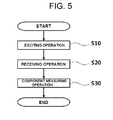
  • a method for measuring a nonlinearity parameter using laser includes: an exciting operation S 10 irradiating laser of a toneburst signal on a surface of a sample 10 so as to excite the sample 10 ; a receiving operation S 20 irradiating laser beam for measurement on the surface of the sample 10 on which the laser of the toneburst signal is irradiated from the exciting operation S 10 , using an interferometer and receiving displacement information occurring on the surface of the sample 10 over time; and a component measuring operation S 30 performing a bandpass filtering for a signal received from the receiving operation S 20 so as to measure an amplitude A 1 of component of a fundamental frequency and an amplitude A 2 of component of a secondary harmonic wave.
  • FIG. 1 is a block diagram of an apparatus for measuring a nonlinearity parameter using laser according to an exemplary embodiment of the present invention.
  • FIG. 2 is a block diagram specifically showing an exciting unit of FIG. 1 .
  • FIG. 3 is a block diagram specifically showing a component measuring unit of FIG. 1 .
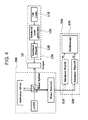
  • FIG. 4 is a concept diagram of the apparatus for measuring a nonlinearity parameter using laser according to an exemplary embodiment of the present invention.
  • FIG. 5 is a flowchart of a method for measuring a nonlinearity parameter using laser according to an exemplary embodiment of the present invention.
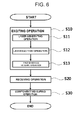
  • FIG. 6 is a flowchart specifically showing an excitation operation of FIG. 5 .
  • FIG. 7 is a flowchart specifically showing a component measuring operation of FIG. 5 .
  • FIG. 1 is a block diagram of an apparatus for measuring a nonlinearity parameter using laser according to an exemplary embodiment of the present invention
  • FIG. 2 is a block diagram specifically showing an exciting unit of FIG. 1
  • FIG. 3 is a block diagram specifically showing a component measuring unit of FIG. 1
  • FIG. 4 is a concept diagram of the apparatus for measuring a nonlinearity parameter using laser according to an exemplary embodiment of the present invention
  • FIG. 5 is a flowchart of a method for measuring a nonlinearity parameter using laser according to an exemplary embodiment of the present invention
  • FIG. 6 is a flowchart specifically showing an excitation operation of FIG. 5
  • FIG. 7 is a flowchart specifically showing a component measuring operation of FIG. 5 .
  • an apparatus for measuring a nonlinearity parameter using laser includes an exciting unit 100 , a receiving unit 200 , and a component measuring unit 300 .
  • the exciting unit 100 irradiates laser of a toneburst signal on a surface of a sample 10 so as to excite the sample 10 .
  • toneburst means an adjustable sine wave burst for a test
  • tone means a signal sound by a frequency of a range from 20 Hz to several MHz.
  • the sample is excited and an ultrasound wave is propagated into the sample, and if the ultrasound wave arrives at the opposite side, a displacement occurs on a surface of the sample over time.
  • the exciting unit 100 excites the sample using a non-contact laser.
  • the exciting unit 100 generating the laser of the toneburst signal will be described below in more detail.
  • the exciting unit 100 may include a continuous wave (CW) laser generator 110 , a toneburst laser exciter 120 , and a first bandpass filter unit 130 .
  • CW continuous wave
  • CW laser refers to laser that may be continuously oscillated at a constant output and may maintain a straight line output which is in parallel to a time axis on a graph of time and output.
  • the toneburst laser exciter 120 modulates the signal generated from the CW laser generator 110 into a toneburst signal.
  • the toneburst signal is generated by modulating the CW laser using the toneburst laser exciter 120 . That is, a component of a fundamental frequency is excited.
  • the first bandpass filter unit 130 suppresses harmonic components of the signal output from the toneburst laser exciter 120 .
  • the harmonic components of the laser of the toneburst signal may be suppressed by using the first bandpass filter unit 130 .
  • the signal having a desired frequency and wavelength may be generated by modulating the CW laser into the toneburst signal having a desired frequency using the toneburst laser exciter, and suppressing harmonic components using the first bandpass filter unit, it is possible to more accurately measure the nonlinearity parameter.
  • the receiving unit 200 irradiates laser beam for measurement on the surface of the sample 10 to which the laser of the toneburst signal is irradiated from the exciter 100 , by using an interferometer, and receives displacement information occurring on the surface of the sample 10 over time.
  • the sample is excited and the ultrasound wave is propagated into the sample, and if the ultrasound wave arrives at the opposite side, the displacement occurs on the surface of the sample over time.
  • the displacement is measured by using the interferometer.
  • the interferometer is used to measure a wavelength, precisely compare a length and a distance with each other, compare an optical distance, and so forth, and may be generally classified into two kinds, that is, an interference spectroscope and an interference refractometer.
  • the interference spectroscope is an apparatus for observing a microstructure of a spectrum and generally uses multi-beam interference.
  • the representative examples thereof include Fabry-Perot interferometer, Lummer-Gehrcke plate, Michelson's step-grating, and the like.
  • the interference refractometer which is an apparatus for precisely calculating a difference in the light path causing interference by measuring positions of interference fringes and measuring a refractive index of gas using the difference of the light path, uses interference between two rays.
  • the representative examples thereof include Rayleigh's interferometer, Jamin interferometer, and the like, including Michelson interferometer.
  • the above-mentioned interferometers may use the Michelson interferometer or Laser Doppler vibrometer.
  • the Michelson interferometer which is an interferometer (see FIG. 4 ) configured of a dielectric thin plate (beam splitter) having anti-reflectivity, a fixed reflective plate (reference mirror), and a movable reflective plate (sample), is an apparatus for accurately measuring a millimeter-wave frequency.
  • a phase difference of the wave which is reflected by the two reflective plates and is input to a receiver, is changed between 0° and 180° by moving the movable reflective plate to change a position thereof, and consequently, the input of the receiver may also be changed between the maximum and the minimum. Thereby, a wavelength and a frequency of the wave are obtained.
  • the nonlinearity parameter may be more accurately measured by using the Michelson interferometer.
  • the Laser Doppler vibrometer may be used. Since the Laser Doppler vibrometer is available from a regular corporation (e.g., Polytec, and the like), it may be easily installed in the apparatus, and may be a practical method when the measurement is performed at the real site.
  • a regular corporation e.g., Polytec, and the like
  • the component measuring unit 300 measures an amplitude A 1 of a component of the fundamental frequency and an amplitude A 2 of a component of the secondary harmonic wave by performing a bandpass filtering for the signal received from the receiving unit 200 .
  • the component measuring unit 300 that measures the amplitude A 1 of the component of the fundamental frequency and the amplitude A 2 of the component of the secondary harmonic wave will be described below in more detail.
  • the component measuring unit 300 may include a second bandpass filter unit 310 , a third bandpass filter unit 320 , and an oscilloscope 330 .
  • the second bandpass filter unit 310 extracts the component of the fundamental frequency of the signal measured from the receiving unit 200 .
  • the third bandpass filter unit 320 extracts the component of the secondary harmonic wave of the signal measured from the receiving unit 200 .
  • the oscilloscope 330 measures amplitudes of the respective components that pass through the second bandpass filter unit 310 and the third bandpass filter unit 320 .
  • the amplitude A 1 of the component of the fundamental frequency and the amplitude A 2 of the component of the secondary harmonic wave may be measured by performing the bandpass filtering for the measured signal.
  • the amplitude of the component of the fundamental frequency and the amplitude of the component of the secondary harmonic wave may be simultaneously measured by using the respective bandpass filter units, it is possible to more accurately measure the nonlinearity parameter in real time.
  • the apparatus for measuring a nonlinearity parameter using laser may further include a nonlinearity parameter measuring unit for measuring the nonlinearity parameter using the measured values from the component measuring unit 300 .
  • the nonlinearity parameter which is an ultrasonic wave technique capable of measuring material properties, may be measured as expressed in the following Equation.
  • a 1 denotes an amplitude of a component of a fundamental frequency
  • a 2 denotes an amplitude of a component of a secondary harmonic wave
  • k denotes a wave number
  • x denotes a length of a sample
  • the measurements of the nonlinearity parameter may be varied depending on the attachment state of the probe.
  • the apparatus for measuring a nonlinearity parameter using laser according to an exemplary embodiment of the present invention since there is no need to directly contact the probe with the specimen, measurement repeatability may be maintained and measurement reliability may be improved.
  • the probe that may be operated at the above-mentioned temperature is required and an ambient temperature probe may not be applied thereto.
  • the apparatus for measuring a nonlinearity parameter using a laser according to an exemplary embodiment of the present invention since the excitation and reception are performed in the non-contact method, the present invention may be utilized in a high temperature facility.
  • the nonlinearity parameter of the structures installed even in the above-mentioned area may be measured.
  • a method for measuring a nonlinearity parameter using a laser includes an exciting operation S 10 , a receiving operation S 20 , and a component measuring operation S 30 .
  • the sample is excided and an ultrasound wave is propagated into the sample, and if the ultrasound wave arrives at the opposite side, a displacement occurs on a surface of the sample over time.
  • the exciting operation S 10 generating the laser of the toneburst signal will be described below in more detail.
  • the exciting operation S 10 may include a laser generating operation S 11 , a toneburst laser exciting operation S 12 , and a first bandpass filtering operation S 13 .
  • continuous wave (CW) laser is generated.
  • the CW laser may maintain a straight line output which is in parallel to a time axis, that is, a constant output, on a graph of time and output.
  • the signal generated from the laser generating operation S 11 is modulated into a toneburst signal.
  • first bandpass filtering operation S 13 a harmonic component of the signal output from the laser exciting operation S 12 is suppressed.
  • the signal having a desired frequency and wavelength may be generated by modulating the CW laser having a constant output into the toneburst signal having a desired frequency by the toneburst laser exciting operation S 12 and suppressing harmonic components by the first bandpass filtering operation S 13 , it is possible to more accurately measure the nonlinearity parameter.
  • laser beam for measurement is irradiated on the surface of the sample 100 to which the laser of the toneburst signal is irradiated from the exciting operation S 10 , by using an interferometer, and displacement information occurring on the surface of the sample 10 over time is received.
  • the sample is excited and the ultrasound wave is propagated into the sample, and if the ultrasound wave arrives at the opposite side, the displacement occurs on the surface of the sample over time.
  • the displacement is measured by using the interferometer.
  • the above-mentioned interferometers may use the Michelson interferometer or the Laser Doppler vibrometer.
  • an amplitude A 1 of the component of the fundamental frequency and an amplitude A 2 of the component of the secondary harmonic wave are measured by performing a bandpass filtering for the signal received from the receiving operation S 20 .
  • the component measuring operation S 30 that measures the amplitude A 1 of the component of the fundamental frequency and the amplitude A 2 of the component of the secondary harmonic wave will be described below in more detail.
  • the component measuring operation S 30 may include a second bandpass filtering operation S 31 and a component amplitude measuring operation S 32 .
  • the component of the fundamental frequency and the component of the secondary harmonic wave of the signal measured from the receiving operation S 20 are extracted.
  • the component amplitude measuring operation S 32 the amplitudes of the components of the fundamental frequency and the secondary harmonic wave extracted by the second bandpass filtering operation S 31 are measured.
  • the amplitude of the component of the fundamental frequency and the amplitude of the component of the secondary harmonic wave may be simultaneously measured by the second bandpass filtering operation S 31 , it is possible to more accurately measure the nonlinearity parameter in real time.
  • the method for measuring a nonlinearity parameter using laser may further include a nonlinearity parameter measuring operation for measuring the nonlinearity parameter using the measured values from the component measuring operation S 30 .
  • the nonlinearity parameter which is an ultrasonic technique capable of measuring material properties, may be measured as expressed in the following Equation.
  • a 1 denotes an amplitude of a component of a fundamental frequency
  • a 2 denotes an amplitude of a component of a secondary harmonic wave
  • k denotes a wave number
  • x denotes a length of a sample
  • the method for measuring a nonlinearity parameter using a laser may also be provided so as to be included in a computer-readable recording medium by tangibly implementing a program of instructions for implementing the method.
  • the method for measuring a nonlinearity parameter using laser according to an exemplary embodiment of the present invention is implemented in a form of program instructions capable of being performed through various computer components so as to be recordable in the computer-readable recording medium.
  • the computer readable recording medium may include program instructions, data files, data structure, or the like, alone or in a combination thereof.
  • the program instructions recorded in the computer-readable recording medium may be designed and configured especially for the present invention, or may be known to those skilled in a field of computer software.
  • Examples of the computer-readable recording medium may include a magnetic medium such as a hard disk, a floppy disk, and a magnetic tape; an optical media such as a CD-ROM and a DVD; a magneto-optical media such as a floptical disk; and a hardware device specially constituted to store and perform program instructions such as a ROM, a RAM, a flash memory, a USB memory, or the like.
  • the computer-readable recording medium may also be a transmission medium such as a light or metal line, a waveguide, or the like including a carrier transmitting a signal specifying program instructions, data structures, and the like.
  • Examples of program instructions include machine language codes such as being made by compilers as well as high-level language codes capable of being executed by computers using interpreters, or the like.
  • the hardware device may be constituted to be operated as one or more software modules in order to perform the operation according to the present invention, and vice versa.
  • the apparatus and method for measuring a nonlinearity parameter using laser do not use the probe which is separately attached, by each performing the excitation and the reception using the non-contact laser, the apparatus and method for measuring a nonlinearity parameter using laser may be used at the site without being significantly affected by the surface state of specimen, the attachment state of the probe, and the kind and length of window at the time of the digital signal processing that are problems of an existing method occurring due to the attachment state of the probe or at the time of a signal processing, whereby measurement repeatability may be maintained and measurement reliability may be improved, thereby making it possible to accurately measure the nonlinearity parameter.
  • the present invention may be utilized in the high temperature facility.
  • the nonlinearity parameter may be measured.
  • the signal having a desired frequency and length may be generated by modulating the CW laser into the toneburst signal having the desired frequency using the toneburst laser exciter and suppressing the harmonic components using the first bandpass filter unit, it is possible to more accurately measure the nonlinearity parameter.
  • the apparatus may be easily built using a laser Doppler interferometer.
  • the amplitude of the component of the fundamental frequency and the amplitude of the component of the secondary harmonic wave may be simultaneously measured by using the respective bandpass filter units, it is possible to more accurately measure the nonlinearity parameter in real time.
  • the present invention is not limited to the above-mentioned exemplary embodiments, and may be variously applied, and may be variously modified without departing from the gist of the present invention claimed in the claims.

Landscapes

  • Physics & Mathematics (AREA)
  • General Physics & Mathematics (AREA)
  • Biochemistry (AREA)
  • Life Sciences & Earth Sciences (AREA)
  • Chemical & Material Sciences (AREA)
  • Analytical Chemistry (AREA)
  • Health & Medical Sciences (AREA)
  • General Health & Medical Sciences (AREA)
  • Immunology (AREA)
  • Pathology (AREA)
  • Acoustics & Sound (AREA)
  • Optics & Photonics (AREA)
  • Investigating Or Analyzing Materials By The Use Of Ultrasonic Waves (AREA)
  • Length Measuring Devices By Optical Means (AREA)

Abstract

Provided are an apparatus and a method for measuring a nonlinearity parameter using laser, and more particularly, an apparatus and a method for measuring a nonlinearity parameter using laser for computing the nonlinearity parameter by irradiating laser of a toneburst signal on a surface of a sample by non-contact type laser so as to excite the sample, irradiating measurement laser beam on the surface of the sample so as to receive displacement information occurring on the surface of the sample over time, measuring the displacement in an interferometer principle, and performing a bandpass filtering for the measured signal so as to measure amplitude A1 of a component of a fundamental frequency and amplitude A2 of a component of a secondary harmonic wave.

Description

CROSS-REFERENCE TO RELATED APPLICATIONS
This application claims priority under 35 U.S.C. §119 to Korean Patent Application No. 10-2014-0022991, filed on Feb. 27, 2014, in the Korean Intellectual Property Office, the disclosure of which is incorporated herein by reference in its entirety.
TECHNICAL FIELD
The present invention relates to an apparatus and a method for measuring a nonlinearity parameter using laser, and more particularly, to an apparatus and method for measuring a nonlinearity parameter using laser for computing the nonlinearity parameter by irradiating laser of a toneburst signal on a surface of a sample using a non-contact type laser so as to excite the sample, irradiating a measurement laser beam on the surface of the sample so as to receive displacement information occurring on the surface of the sample over time, measuring the displacement in an interferometer principle, and performing a bandpass filtering for the measured signal so as to measure an amplitude A1 of a component of a fundamental frequency and an amplitude A2 of a component of a secondary harmonic wave.
BACKGROUND
A non-destructive inspection is performed to secure safety for quality of a product by checking whether or not the product has defect during the production, manufacturing or use of the product. For example, the non-destructive inspection is also performed to evaluate whether the product can be continuously used by checking a corrosion state, deterioration, whether or not a crack occurs, and the like.
A nonlinearity parameter is an ultrasonic technique capable of measuring material properties. Examples of a previously developed method for measuring the nonlinearity parameter include a capacitance measuring method and a piezoelectric receiving method. The above-mentioned methods may compute the nonlinearity parameter by measuring a displacement A1 of a fundamental frequency and a displacement A2 of a secondary harmonic wave.
Since the capacitance measuring method needs to prepare a test specimen having surface roughness of 1 to 2 μm and requires a complex calibration process for converting the measured signal into the components of a fundamental frequency and a secondary harmonic wave, it is very difficult to be used at the site.
The piezoelectric receiving method has a simpler calibration process than the capacitance measuring method, but has a problem in that a value of the computed nonlinearity parameter is varied depending on an attachment state of a probe and a kind and length of window at the time of a digital signal process.
Korean Patent Laid-Open Publication No. 10-2012-0031674 discloses a system and apparatus for measuring nonlinearity of an ultrasonic wave.
SUMMARY
An embodiment of the present invention is directed to an apparatus and a method for measuring a nonlinearity parameter using laser capable of each performing excitation and reception using non-contact laser by performing the excitation using a toneburst apparatus that generates a narrow band frequency by optically modulating continuous wave (CW) laser, and collecting a signal using a laser interferometer at the opposite side, in order to minimize error due to an attachment state of a probe or a signal processing.
In one general aspect of the present invention, an apparatus for measuring a nonlinearity parameter using laser includes: an exciting unit 100 irradiating laser of a toneburst signal on a surface of a sample 10 so as to excite the sample 10; a receiving unit 200 irradiating laser beam for measurement on the surface of the sample 10 on which the laser of the toneburst signal is irradiated from the exciting unit 100, using an interferometer and receiving displacement information occurring on the surface of the sample 10 over time; and a component measuring unit 300 performing a bandpass filtering for a signal received from the receiving unit 200 so as to measure an amplitude A1 of a component of a fundamental frequency and an amplitude A2 of a component of a secondary harmonic wave.
In another general aspect, a method for measuring a nonlinearity parameter using laser includes: an exciting operation S10 irradiating laser of a toneburst signal on a surface of a sample 10 so as to excite the sample 10; a receiving operation S20 irradiating laser beam for measurement on the surface of the sample 10 on which the laser of the toneburst signal is irradiated from the exciting operation S10, using an interferometer and receiving displacement information occurring on the surface of the sample 10 over time; and a component measuring operation S30 performing a bandpass filtering for a signal received from the receiving operation S20 so as to measure an amplitude A1 of component of a fundamental frequency and an amplitude A2 of component of a secondary harmonic wave.
Other features and aspects will be apparent from the following detailed description, the drawings, and the claims.
BRIEF DESCRIPTION OF THE DRAWINGS
FIG. 1 is a block diagram of an apparatus for measuring a nonlinearity parameter using laser according to an exemplary embodiment of the present invention.
FIG. 2 is a block diagram specifically showing an exciting unit of FIG. 1.
FIG. 3 is a block diagram specifically showing a component measuring unit of FIG. 1.
FIG. 4 is a concept diagram of the apparatus for measuring a nonlinearity parameter using laser according to an exemplary embodiment of the present invention.
FIG. 5 is a flowchart of a method for measuring a nonlinearity parameter using laser according to an exemplary embodiment of the present invention.
FIG. 6 is a flowchart specifically showing an excitation operation of FIG. 5.
FIG. 7 is a flowchart specifically showing a component measuring operation of FIG. 5.
DETAILED DESCRIPTION OF EMBODIMENTS
The advantages, features and aspects of the present invention will become apparent from the following description of the embodiments with reference to the accompanying drawings, which is set forth hereinafter. The present invention may, however, be embodied in different forms and should not be construed as limited to the embodiments set forth herein. Rather, these embodiments are provided so that this disclosure will be thorough and complete, and will fully convey the scope of the present invention to those skilled in the art. The terminology used herein is for the purpose of describing particular embodiments only and is not intended to be limiting of example embodiments. As used herein, the singular forms “a,” “an” and “the” are intended to include the plural forms as well, unless the context clearly indicates otherwise. It will be further understood that the terms “comprises” and/or “comprising,” when used in this specification, specify the presence of stated features, integers, steps, operations, elements, and/or components, but do not preclude the presence or addition of one or more other features, integers, steps, operations, elements, components, and/or groups thereof.
Hereinafter, exemplary embodiments will be described in detail with reference to the accompanying drawings.
FIG. 1 is a block diagram of an apparatus for measuring a nonlinearity parameter using laser according to an exemplary embodiment of the present invention, FIG. 2 is a block diagram specifically showing an exciting unit of FIG. 1, FIG. 3 is a block diagram specifically showing a component measuring unit of FIG. 1, FIG. 4 is a concept diagram of the apparatus for measuring a nonlinearity parameter using laser according to an exemplary embodiment of the present invention, FIG. 5 is a flowchart of a method for measuring a nonlinearity parameter using laser according to an exemplary embodiment of the present invention, FIG. 6 is a flowchart specifically showing an excitation operation of FIG. 5, and FIG. 7 is a flowchart specifically showing a component measuring operation of FIG. 5.
As shown in FIG. 1, an apparatus for measuring a nonlinearity parameter using laser includes an exciting unit 100, a receiving unit 200, and a component measuring unit 300.
The exciting unit 100 irradiates laser of a toneburst signal on a surface of a sample 10 so as to excite the sample 10. Here, the terms “toneburst” means an adjustable sine wave burst for a test, and “tone” means a signal sound by a frequency of a range from 20 Hz to several MHz.
If laser of the toneburst signal is irradiated on the sample, the sample is excited and an ultrasound wave is propagated into the sample, and if the ultrasound wave arrives at the opposite side, a displacement occurs on a surface of the sample over time.
In other words, the exciting unit 100 excites the sample using a non-contact laser.
As shown in FIG. 2, the exciting unit 100 generating the laser of the toneburst signal will be described below in more detail.
The exciting unit 100 may include a continuous wave (CW) laser generator 110, a toneburst laser exciter 120, and a first bandpass filter unit 130.
The terms “CW laser” refers to laser that may be continuously oscillated at a constant output and may maintain a straight line output which is in parallel to a time axis on a graph of time and output.
The toneburst laser exciter 120 modulates the signal generated from the CW laser generator 110 into a toneburst signal.
In other words, the toneburst signal is generated by modulating the CW laser using the toneburst laser exciter 120. That is, a component of a fundamental frequency is excited.
The first bandpass filter unit 130 suppresses harmonic components of the signal output from the toneburst laser exciter 120.
In other words, the harmonic components of the laser of the toneburst signal may be suppressed by using the first bandpass filter unit 130.
As a result, since the signal having a desired frequency and wavelength may be generated by modulating the CW laser into the toneburst signal having a desired frequency using the toneburst laser exciter, and suppressing harmonic components using the first bandpass filter unit, it is possible to more accurately measure the nonlinearity parameter.
The receiving unit 200 irradiates laser beam for measurement on the surface of the sample 10 to which the laser of the toneburst signal is irradiated from the exciter 100, by using an interferometer, and receives displacement information occurring on the surface of the sample 10 over time.
As described above, if the laser of the toneburst signal is irradiated on the sample, the sample is excited and the ultrasound wave is propagated into the sample, and if the ultrasound wave arrives at the opposite side, the displacement occurs on the surface of the sample over time. The displacement is measured by using the interferometer.
The interferometer is used to measure a wavelength, precisely compare a length and a distance with each other, compare an optical distance, and so forth, and may be generally classified into two kinds, that is, an interference spectroscope and an interference refractometer. The interference spectroscope is an apparatus for observing a microstructure of a spectrum and generally uses multi-beam interference. The representative examples thereof include Fabry-Perot interferometer, Lummer-Gehrcke plate, Michelson's step-grating, and the like. The interference refractometer, which is an apparatus for precisely calculating a difference in the light path causing interference by measuring positions of interference fringes and measuring a refractive index of gas using the difference of the light path, uses interference between two rays. The representative examples thereof include Rayleigh's interferometer, Jamin interferometer, and the like, including Michelson interferometer.
In this case, the above-mentioned interferometers may use the Michelson interferometer or Laser Doppler vibrometer.
The Michelson interferometer, which is an interferometer (see FIG. 4) configured of a dielectric thin plate (beam splitter) having anti-reflectivity, a fixed reflective plate (reference mirror), and a movable reflective plate (sample), is an apparatus for accurately measuring a millimeter-wave frequency. A phase difference of the wave, which is reflected by the two reflective plates and is input to a receiver, is changed between 0° and 180° by moving the movable reflective plate to change a position thereof, and consequently, the input of the receiver may also be changed between the maximum and the minimum. Thereby, a wavelength and a frequency of the wave are obtained.
In other words, the nonlinearity parameter may be more accurately measured by using the Michelson interferometer.
However, in the case where it is difficult to install the Michelson interferometer, the Laser Doppler vibrometer may be used. Since the Laser Doppler vibrometer is available from a regular corporation (e.g., Polytec, and the like), it may be easily installed in the apparatus, and may be a practical method when the measurement is performed at the real site.
The component measuring unit 300 measures an amplitude A1 of a component of the fundamental frequency and an amplitude A2 of a component of the secondary harmonic wave by performing a bandpass filtering for the signal received from the receiving unit 200.
As shown in FIG. 3, the component measuring unit 300 that measures the amplitude A1 of the component of the fundamental frequency and the amplitude A2 of the component of the secondary harmonic wave will be described below in more detail.
The component measuring unit 300 may include a second bandpass filter unit 310, a third bandpass filter unit 320, and an oscilloscope 330.
The second bandpass filter unit 310 extracts the component of the fundamental frequency of the signal measured from the receiving unit 200.
The third bandpass filter unit 320 extracts the component of the secondary harmonic wave of the signal measured from the receiving unit 200.
The oscilloscope 330 measures amplitudes of the respective components that pass through the second bandpass filter unit 310 and the third bandpass filter unit 320.
That is, the amplitude A1 of the component of the fundamental frequency and the amplitude A2 of the component of the secondary harmonic wave may be measured by performing the bandpass filtering for the measured signal.
In other words, since the amplitude of the component of the fundamental frequency and the amplitude of the component of the secondary harmonic wave may be simultaneously measured by using the respective bandpass filter units, it is possible to more accurately measure the nonlinearity parameter in real time.
The apparatus for measuring a nonlinearity parameter using laser according to an exemplary embodiment of the present invention may further include a nonlinearity parameter measuring unit for measuring the nonlinearity parameter using the measured values from the component measuring unit 300.
The nonlinearity parameter, which is an ultrasonic wave technique capable of measuring material properties, may be measured as expressed in the following Equation.
β = 8 k 2 x A 2 A 1 2
(where A1 denotes an amplitude of a component of a fundamental frequency, A2 denotes an amplitude of a component of a secondary harmonic wave, k denotes a wave number, and x denotes a length of a sample)
According to the piezoelectric receiving method, the measurements of the nonlinearity parameter may be varied depending on the attachment state of the probe. However, in the case where the apparatus for measuring a nonlinearity parameter using laser according to an exemplary embodiment of the present invention is used, since there is no need to directly contact the probe with the specimen, measurement repeatability may be maintained and measurement reliability may be improved.
In addition, since pipes in nuclear plants and power plants are operated in a high temperature environment of 200 to 300° C., the probe that may be operated at the above-mentioned temperature is required and an ambient temperature probe may not be applied thereto. However, in the case where the apparatus for measuring a nonlinearity parameter using a laser according to an exemplary embodiment of the present invention is used, since the excitation and reception are performed in the non-contact method, the present invention may be utilized in a high temperature facility.
In addition, in the case where some of the pipes and structures of a power generating unit are in a remote area where it is difficult for people to access, there are cases in which it is impossible to install an experiment apparatus. Therefore, in the case in which the apparatus for measuring a nonlinearity parameter using a laser according to an exemplary embodiment of the present invention is used, the nonlinearity parameter of the structures installed even in the above-mentioned area may be measured.
As shown in FIG. 5, a method for measuring a nonlinearity parameter using a laser according to an exemplary embodiment of the present invention includes an exciting operation S10, a receiving operation S20, and a component measuring operation S30.
In the exciting operation S10, laser of a toneburst signal is irradiated on a surface of a sample 10 so as to excite the sample 10.
If the laser of the toneburst signal is irradiated on the sample, the sample is excided and an ultrasound wave is propagated into the sample, and if the ultrasound wave arrives at the opposite side, a displacement occurs on a surface of the sample over time.
As shown in FIG. 6, the exciting operation S10 generating the laser of the toneburst signal will be described below in more detail.
The exciting operation S10 may include a laser generating operation S11, a toneburst laser exciting operation S12, and a first bandpass filtering operation S13.
In the laser generating operation S11, continuous wave (CW) laser is generated.
The CW laser may maintain a straight line output which is in parallel to a time axis, that is, a constant output, on a graph of time and output.
In the toneburst laser exciting operation S12, the signal generated from the laser generating operation S11 is modulated into a toneburst signal.
In first bandpass filtering operation S13, a harmonic component of the signal output from the laser exciting operation S12 is suppressed.
That is, since the signal having a desired frequency and wavelength may be generated by modulating the CW laser having a constant output into the toneburst signal having a desired frequency by the toneburst laser exciting operation S12 and suppressing harmonic components by the first bandpass filtering operation S13, it is possible to more accurately measure the nonlinearity parameter.
In the receiving operation S20, laser beam for measurement is irradiated on the surface of the sample 100 to which the laser of the toneburst signal is irradiated from the exciting operation S10, by using an interferometer, and displacement information occurring on the surface of the sample 10 over time is received.
As described above, if the laser of the toneburst signal is irradiated on the sample, the sample is excited and the ultrasound wave is propagated into the sample, and if the ultrasound wave arrives at the opposite side, the displacement occurs on the surface of the sample over time. The displacement is measured by using the interferometer.
In this case, the above-mentioned interferometers may use the Michelson interferometer or the Laser Doppler vibrometer.
In the component measuring operation S30, an amplitude A1 of the component of the fundamental frequency and an amplitude A2 of the component of the secondary harmonic wave are measured by performing a bandpass filtering for the signal received from the receiving operation S20.
As shown in FIG. 7, the component measuring operation S30 that measures the amplitude A1 of the component of the fundamental frequency and the amplitude A2 of the component of the secondary harmonic wave will be described below in more detail.
The component measuring operation S30 may include a second bandpass filtering operation S31 and a component amplitude measuring operation S32.
In the second bandpass filtering operation S31, the component of the fundamental frequency and the component of the secondary harmonic wave of the signal measured from the receiving operation S20 are extracted.
In the component amplitude measuring operation S32, the amplitudes of the components of the fundamental frequency and the secondary harmonic wave extracted by the second bandpass filtering operation S31 are measured.
That is, since the amplitude of the component of the fundamental frequency and the amplitude of the component of the secondary harmonic wave may be simultaneously measured by the second bandpass filtering operation S31, it is possible to more accurately measure the nonlinearity parameter in real time.
The method for measuring a nonlinearity parameter using laser according to an exemplary embodiment of the present invention may further include a nonlinearity parameter measuring operation for measuring the nonlinearity parameter using the measured values from the component measuring operation S30.
The nonlinearity parameter, which is an ultrasonic technique capable of measuring material properties, may be measured as expressed in the following Equation.
β = 8 k 2 x A 2 A 1 2
(where A1 denotes an amplitude of a component of a fundamental frequency, A2 denotes an amplitude of a component of a secondary harmonic wave, k denotes a wave number, and x denotes a length of a sample)
Hereinabove, although the method for measuring a nonlinearity parameter using a laser according to an exemplary embodiment of the present invention has been described, it will be easily understood by those of ordinary skill in the art that the method for measuring a nonlinearity parameter using laser described above may also be provided so as to be included in a computer-readable recording medium by tangibly implementing a program of instructions for implementing the method. In other words, the method for measuring a nonlinearity parameter using laser according to an exemplary embodiment of the present invention is implemented in a form of program instructions capable of being performed through various computer components so as to be recordable in the computer-readable recording medium. The computer readable recording medium may include program instructions, data files, data structure, or the like, alone or in a combination thereof. The program instructions recorded in the computer-readable recording medium may be designed and configured especially for the present invention, or may be known to those skilled in a field of computer software. Examples of the computer-readable recording medium may include a magnetic medium such as a hard disk, a floppy disk, and a magnetic tape; an optical media such as a CD-ROM and a DVD; a magneto-optical media such as a floptical disk; and a hardware device specially constituted to store and perform program instructions such as a ROM, a RAM, a flash memory, a USB memory, or the like. The computer-readable recording medium may also be a transmission medium such as a light or metal line, a waveguide, or the like including a carrier transmitting a signal specifying program instructions, data structures, and the like. Examples of program instructions include machine language codes such as being made by compilers as well as high-level language codes capable of being executed by computers using interpreters, or the like. The hardware device may be constituted to be operated as one or more software modules in order to perform the operation according to the present invention, and vice versa.
As set forth above, according to the exemplary embodiment of the present invention, since the apparatus and method for measuring a nonlinearity parameter using laser do not use the probe which is separately attached, by each performing the excitation and the reception using the non-contact laser, the apparatus and method for measuring a nonlinearity parameter using laser may be used at the site without being significantly affected by the surface state of specimen, the attachment state of the probe, and the kind and length of window at the time of the digital signal processing that are problems of an existing method occurring due to the attachment state of the probe or at the time of a signal processing, whereby measurement repeatability may be maintained and measurement reliability may be improved, thereby making it possible to accurately measure the nonlinearity parameter.
In addition, since the excitation and the reception are performed in the non-contact method, the present invention may be utilized in the high temperature facility.
In addition, even in the case in which the high temperature facility is in a remote area where it is difficult for people to access and consequently, it is impossible to install an experimental apparatus therein, the nonlinearity parameter may be measured.
In addition, since the signal having a desired frequency and length may be generated by modulating the CW laser into the toneburst signal having the desired frequency using the toneburst laser exciter and suppressing the harmonic components using the first bandpass filter unit, it is possible to more accurately measure the nonlinearity parameter.
In addition, it is possible to more accurately measure the nonlinearity parameter using Michelson interferometer, and in the case in which it is difficult to install the Michelson interferometer, the apparatus may be easily built using a laser Doppler interferometer.
Further, since the amplitude of the component of the fundamental frequency and the amplitude of the component of the secondary harmonic wave may be simultaneously measured by using the respective bandpass filter units, it is possible to more accurately measure the nonlinearity parameter in real time.
The present invention is not limited to the above-mentioned exemplary embodiments, and may be variously applied, and may be variously modified without departing from the gist of the present invention claimed in the claims.

Claims (6)

What is claimed is:
1. An apparatus for measuring a nonlinearity parameter using laser, the apparatus comprising:
an exciting unit irradiating laser of a toneburst signal on a surface of a sample so as to excite the sample;
a receiving unit irradiating laser beam for measurement on the surface of the sample on which the laser of the toneburst signal is irradiated from the exciting unit, using an interferometer, and receiving displacement information occurring on the surface of the sample over time;
a component measuring unit performing a bandpass filtering for a signal received from the receiving unit so as to measure a first amplitude of a component of a fundamental frequency and a second amplitude of a component of a secondary harmonic wave,
wherein the component measuring unit includes:
a first bandpass filter unit extracting the component of the fundamental frequency of the signal measured from the receiving unit;
a second bandpass filter unit extracting the component of the secondary harmonic wave of the signal measured from the receiving unit; and
an oscilloscope measuring the first amplitude of the component of the fundamental frequency and the second amplitude of the component of the secondary harmonic wave that pass through the first bandpass filter unit and the second bandpass filter unit; and
a nonlinearity parameter measuring unit for measuring the nonlinearity parameter using the measured first amplitude and the measured second amplitude from the component measuring unit.
2. The apparatus of claim 1, wherein the exciting unit includes:
a continuous wave (CW) laser generator;
a toneburst laser exciter modulating a signal generated from the CW laser generator into the toneburst signal; and
a third bandpass filter unit suppressing harmonic components of a signal output from the toneburst laser exciter.
3. The apparatus of claim 1, wherein the interferometer uses a Michelson interferometer or a laser Doppler vibrometer.
4. A method for measuring a nonlinearity parameter using laser, the method comprising:
an exciting operation irradiating laser of a toneburst signal on a surface of a sample so as to excite the sample;
a receiving operation irradiating laser beam for measurement on the surface of the sample on which the laser of the toneburst signal is irradiated from the exciting operation, using an interferometer, and receiving displacement information occurring on the surface of the sample over time;
a component measuring operation performing a bandpass filtering operation for a signal received from the receiving operation so as to measure a first amplitude of a component of a fundamental frequency and a second amplitude of a component of a secondary harmonic wave,
wherein the bandpass filtering operation includes:
a first bandpass filtering operation extracting the component of the fundamental frequency of the signal measured from the receiving operation;
a second bandpass filtering operation extracting the component of the secondary harmonic wave of the signal measured from the receiving operation; and
a component amplitude measuring operation measuring the first amplitudes of the component of the fundamental frequency and the second amplitude of the component of the secondary harmonic wave; and
a nonlinearity parameter measuring operation for measuring the nonlinearity parameter using the measured first amplitude and the measured second amplitude from the component measuring operation.
5. The method of claim 4, wherein the exciting operation includes:
a laser generating operation generating continuous wave (CW) laser;
a toneburst laser exciting operation modulating a signal generated from the laser generating operation into the toneburst signal; and
a third bandpass filtering operation suppressing harmonic components of a signal output from the toneburst laser exciting operation.
6. The method of claim 4, wherein the interferometer uses a Michelson interferometer or a laser Doppler vibrometer.
US14/632,101 2014-02-27 2015-02-26 Apparatus and method for measuring nonlinearity parameter using laser Expired - Fee Related US9778229B2 (en)

Applications Claiming Priority (2)

Application Number Priority Date Filing Date Title
KR1020140022991A KR101700139B1 (en) 2014-02-27 2014-02-27 Apparatus and method for measurement of nonlinearity parameter using laser
KR10-2014-0022991 2014-02-27

Publications (2)

Publication Number Publication Date
US20150241395A1 US20150241395A1 (en) 2015-08-27
US9778229B2 true US9778229B2 (en) 2017-10-03

Family

ID=53881954

Family Applications (1)

Application Number Title Priority Date Filing Date
US14/632,101 Expired - Fee Related US9778229B2 (en) 2014-02-27 2015-02-26 Apparatus and method for measuring nonlinearity parameter using laser

Country Status (2)

Country Link
US (1) US9778229B2 (en)
KR (1) KR101700139B1 (en)

Families Citing this family (3)

* Cited by examiner, † Cited by third party
Publication number Priority date Publication date Assignee Title
US9829469B2 (en) * 2012-12-24 2017-11-28 Korea Research Institute Of Standards And Science Apparatus and method for measuring nonlinear parameters
KR101642952B1 (en) * 2015-11-11 2016-07-26 한국과학기술원 Graphical length measuring apparatus using two-color interferometer
CN114460172B (en) * 2022-01-27 2023-05-19 重庆工业职业技术学院 A Second Harmonic Detection Method for Early Damage of Periodic Composite Materials

Citations (8)

* Cited by examiner, † Cited by third party
Publication number Priority date Publication date Assignee Title
US5608166A (en) * 1995-10-12 1997-03-04 National Research Council Of Canada Generation and detection of ultrasound with long pulse lasers
KR20020034995A (en) 1999-07-27 2002-05-09 록히드 마틴 코포레이션 System and method for ultrasonic laser testing using a laser source to generate ultrasound having a tunable wavelength
US20050023434A1 (en) * 2003-07-31 2005-02-03 Ler Technologies, Inc. Electro-optic sensor
JP2009053043A (en) 2007-08-27 2009-03-12 Central Res Inst Of Electric Power Ind Ultrasonic flaw detection method and apparatus for surface flaw detection
KR20120031674A (en) 2010-09-27 2012-04-04 한양대학교 산학협력단 System and apparatus for measuring non-linearity of ultrasonic wave
US20130314717A1 (en) * 2012-05-24 2013-11-28 Northwestern University Methods and apparatus for laser scanning structured illumination microscopy and tomography
US20140347462A1 (en) * 2011-12-20 2014-11-27 Ecolee Polyechnique Quantitative nonlinear optical microscopy using a shaped beam
US20150160120A1 (en) * 2013-12-09 2015-06-11 National Taiwan University Optical microscopy systems based on photoacoustic imaging

Family Cites Families (3)

* Cited by examiner, † Cited by third party
Publication number Priority date Publication date Assignee Title
JP3150239B2 (en) * 1993-08-31 2001-03-26 キヤノン株式会社 Measuring device for micro-periodic vibration displacement
KR20040000067A (en) * 2002-06-21 2004-01-03 삼성전자주식회사 Apparatus for Chemical mechanical polishing process
EP2678658B1 (en) 2011-02-25 2022-09-14 Mayo Foundation For Medical Education And Research Ultrasound vibrometry with unfocused ultrasound

Patent Citations (8)

* Cited by examiner, † Cited by third party
Publication number Priority date Publication date Assignee Title
US5608166A (en) * 1995-10-12 1997-03-04 National Research Council Of Canada Generation and detection of ultrasound with long pulse lasers
KR20020034995A (en) 1999-07-27 2002-05-09 록히드 마틴 코포레이션 System and method for ultrasonic laser testing using a laser source to generate ultrasound having a tunable wavelength
US20050023434A1 (en) * 2003-07-31 2005-02-03 Ler Technologies, Inc. Electro-optic sensor
JP2009053043A (en) 2007-08-27 2009-03-12 Central Res Inst Of Electric Power Ind Ultrasonic flaw detection method and apparatus for surface flaw detection
KR20120031674A (en) 2010-09-27 2012-04-04 한양대학교 산학협력단 System and apparatus for measuring non-linearity of ultrasonic wave
US20140347462A1 (en) * 2011-12-20 2014-11-27 Ecolee Polyechnique Quantitative nonlinear optical microscopy using a shaped beam
US20130314717A1 (en) * 2012-05-24 2013-11-28 Northwestern University Methods and apparatus for laser scanning structured illumination microscopy and tomography
US20150160120A1 (en) * 2013-12-09 2015-06-11 National Taiwan University Optical microscopy systems based on photoacoustic imaging

Also Published As

Publication number Publication date
KR101700139B1 (en) 2017-02-13
US20150241395A1 (en) 2015-08-27
KR20150101557A (en) 2015-09-04

Similar Documents

Publication Publication Date Title
JP6189227B2 (en) Ultrasonic flaw detector and its evaluation method
US11092573B2 (en) Apparatus, systems, and methods for determining nonlinear properties of a material to detect early fatigue or damage
JP2008545123A (en) Method and system for determining material properties using ultrasonic attenuation
WO2006020341A2 (en) Characterization of materials with optically shaped acoustic waveforms
JP5295531B2 (en) Ultrasonic flaw detection method and apparatus for surface flaw detection
US9778229B2 (en) Apparatus and method for measuring nonlinearity parameter using laser
CN103154720B (en) Measuring apparatus and measuring method for metallic microstructures ormaterial properties
CN105424798A (en) Method for actively detecting defects in metal thin-walled structure part
KR101242888B1 (en) Measuring Method and Measruting Apparatus of Poisson's Ratio
Karppinen et al. Phase-delayed laser diode array allows ultrasonic guided wave mode selection and tuning
JP6121873B2 (en) Laser ultrasonic inspection apparatus and method
KR101242873B1 (en) Method and apparatus for measuring stress of strip sheet
Jhang et al. Measurement of nonlinear ultrasonic parameters from higher harmonics
JP5528395B2 (en) Thin plate stress measuring method and measuring apparatus
JP2008544269A (en) Method and apparatus for measuring structural properties by wavelength effect in a photoacoustic system
Jia et al. Combining laser-excited edge resonance and ZGV resonance for measuring wave velocities and global thickness distribution of isotropic homogeneous plates
KR101717501B1 (en) Device and method for estimating ultrasonic absolute nonlinear parameter by using ultrasonic relative nonlinear parameter of dissimilar material
CN114018825B (en) High-precision photorefractive crystal interference nondestructive flaw detection equipment and method
US9829469B2 (en) Apparatus and method for measuring nonlinear parameters
Grünsteidl et al. Using zero-group-velocity lamb waves to determine thickness and bulk sound velocities of isotropic plates
Yoo et al. Compensation of system nonlinearity in the measurement of acoustic nonlinearity parameters
Djerir et al. Laser ultrasonic measurements for generation and detection of lateral waves in a solid for surface defect inspection
Vogelaar et al. Pipe Attrition Acoustic Locater (PAAL) from multi-mode dispersion analysis
US10247659B2 (en) Device for characterizing an interface of a structure and corresponding device
Esward et al. An investigation into the establishment and assessment of a test facility for the calibration of acoustic emission sensors.

Legal Events

Date Code Title Description
AS Assignment

Owner name: KOREA ATOMIC ENERGY RESEARCH INSTITUTE, KOREA, REP

Free format text: ASSIGNMENT OF ASSIGNORS INTEREST;ASSIGNORS:KANG, TO;PARK, JIN-HO;YOON, DOO-BYUNG;AND OTHERS;SIGNING DATES FROM 20150130 TO 20150226;REEL/FRAME:035101/0953

STCF Information on status: patent grant

Free format text: PATENTED CASE

MAFP Maintenance fee payment

Free format text: PAYMENT OF MAINTENANCE FEE, 4TH YR, SMALL ENTITY (ORIGINAL EVENT CODE: M2551); ENTITY STATUS OF PATENT OWNER: SMALL ENTITY

Year of fee payment: 4

FEPP Fee payment procedure

Free format text: MAINTENANCE FEE REMINDER MAILED (ORIGINAL EVENT CODE: REM.); ENTITY STATUS OF PATENT OWNER: SMALL ENTITY

LAPS Lapse for failure to pay maintenance fees

Free format text: PATENT EXPIRED FOR FAILURE TO PAY MAINTENANCE FEES (ORIGINAL EVENT CODE: EXP.); ENTITY STATUS OF PATENT OWNER: SMALL ENTITY

STCH Information on status: patent discontinuation

Free format text: PATENT EXPIRED DUE TO NONPAYMENT OF MAINTENANCE FEES UNDER 37 CFR 1.362

FP Lapsed due to failure to pay maintenance fee

Effective date: 20251003