US9707201B2 - Allium extracts - Google Patents
Allium extracts Download PDFInfo
- Publication number
- US9707201B2 US9707201B2 US14/905,220 US201414905220A US9707201B2 US 9707201 B2 US9707201 B2 US 9707201B2 US 201414905220 A US201414905220 A US 201414905220A US 9707201 B2 US9707201 B2 US 9707201B2
- Authority
- US
- United States
- Prior art keywords
- analogue
- thiosulfinate
- methyl
- garlic
- allicin
- Prior art date
- Legal status (The legal status is an assumption and is not a legal conclusion. Google has not performed a legal analysis and makes no representation as to the accuracy of the status listed.)
- Expired - Fee Related
Links
- 241000234282 Allium Species 0.000 title abstract description 82
- 239000000284 extract Substances 0.000 title abstract description 65
- 238000000034 method Methods 0.000 claims abstract description 180
- RJQXTJLFIWVMTO-TYNCELHUSA-N Methicillin Chemical compound COC1=CC=CC(OC)=C1C(=O)N[C@@H]1C(=O)N2[C@@H](C(O)=O)C(C)(C)S[C@@H]21 RJQXTJLFIWVMTO-TYNCELHUSA-N 0.000 claims abstract description 7
- 241000191967 Staphylococcus aureus Species 0.000 claims abstract description 7
- 229960003085 meticillin Drugs 0.000 claims abstract description 7
- 239000000243 solution Substances 0.000 claims description 164
- 239000007864 aqueous solution Substances 0.000 claims description 49
- SSKDKJXTTZKHOV-UHFFFAOYSA-N methoxy-methyl-sulfanylidene-$l^{4}-sulfane Chemical compound COS(C)=S SSKDKJXTTZKHOV-UHFFFAOYSA-N 0.000 claims description 29
- 239000008194 pharmaceutical composition Substances 0.000 claims description 4
- 239000004480 active ingredient Substances 0.000 claims description 3
- 230000001476 alcoholic effect Effects 0.000 claims description 2
- 208000015181 infectious disease Diseases 0.000 claims 3
- ZZLHPCSGGOGHFW-UHFFFAOYSA-N S-methyl-L-cysteine sulphoxide Natural products CS(=O)CC(N)C(O)=O ZZLHPCSGGOGHFW-UHFFFAOYSA-N 0.000 abstract description 98
- ZZLHPCSGGOGHFW-KTCWOMIQSA-N (2r)-2-azaniumyl-3-[(s)-methylsulfinyl]propanoate Chemical compound C[S@](=O)C[C@H](N)C(O)=O ZZLHPCSGGOGHFW-KTCWOMIQSA-N 0.000 abstract description 87
- 239000000203 mixture Substances 0.000 abstract description 85
- XUHLIQGRKRUKPH-UHFFFAOYSA-N S-allyl-L-cysteine sulfoxide Natural products OC(=O)C(N)CS(=O)CC=C XUHLIQGRKRUKPH-UHFFFAOYSA-N 0.000 abstract description 71
- XUHLIQGRKRUKPH-DYEAUMGKSA-N alliin Chemical compound OC(=O)[C@@H](N)C[S@@](=O)CC=C XUHLIQGRKRUKPH-DYEAUMGKSA-N 0.000 abstract description 69
- XUHLIQGRKRUKPH-GCXOYZPQSA-N Alliin Natural products N[C@H](C[S@@](=O)CC=C)C(O)=O XUHLIQGRKRUKPH-GCXOYZPQSA-N 0.000 abstract description 67
- 235000015295 alliin Nutrition 0.000 abstract description 67
- 238000006243 chemical reaction Methods 0.000 abstract description 65
- -1 methyl methyl thiosulfinate Chemical class 0.000 abstract description 36
- 230000015572 biosynthetic process Effects 0.000 abstract description 32
- 230000001225 therapeutic effect Effects 0.000 abstract description 13
- 238000003786 synthesis reaction Methods 0.000 abstract description 12
- 230000006872 improvement Effects 0.000 abstract description 8
- 229940029982 garlic powder Drugs 0.000 description 178
- JDLKFOPOAOFWQN-UHFFFAOYSA-N allicin Chemical compound C=CCSS(=O)CC=C JDLKFOPOAOFWQN-UHFFFAOYSA-N 0.000 description 160
- XLYOFNOQVPJJNP-UHFFFAOYSA-N water Substances O XLYOFNOQVPJJNP-UHFFFAOYSA-N 0.000 description 153
- JDLKFOPOAOFWQN-VIFPVBQESA-N Allicin Natural products C=CCS[S@](=O)CC=C JDLKFOPOAOFWQN-VIFPVBQESA-N 0.000 description 147
- 235000010081 allicin Nutrition 0.000 description 139
- ZIMQNNOENLFVMT-UHFFFAOYSA-N S-Methyl 2-propene-1-sulfinothioate Chemical compound CSS(=O)CC=C ZIMQNNOENLFVMT-UHFFFAOYSA-N 0.000 description 122
- 240000002234 Allium sativum Species 0.000 description 112
- 235000004611 garlic Nutrition 0.000 description 109
- 239000007788 liquid Substances 0.000 description 104
- 230000008569 process Effects 0.000 description 87
- LFQSCWFLJHTTHZ-UHFFFAOYSA-N Ethanol Chemical compound CCO LFQSCWFLJHTTHZ-UHFFFAOYSA-N 0.000 description 84
- VHWBWHBJEXGPNM-UHFFFAOYSA-N N(2)-(2,4-dichlorophenyl)-N-(7-{[(2,4-dichlorophenyl)amino]sulfonyl}-1-oxo-1,2-dihydronaphthalen-2-yl)glycinamide Chemical compound ClC1=CC(Cl)=CC=C1NCC(=O)NC1C(=O)C2=CC(S(=O)(=O)NC=3C(=CC(Cl)=CC=3)Cl)=CC=C2C=C1 VHWBWHBJEXGPNM-UHFFFAOYSA-N 0.000 description 74
- 150000008111 thiosulfinates Chemical class 0.000 description 63
- BBZQGJLFMJHRSD-UHFFFAOYSA-N S-2-Propenyl methanesulfinothioate Chemical compound CS(=O)SCC=C BBZQGJLFMJHRSD-UHFFFAOYSA-N 0.000 description 60
- 230000014759 maintenance of location Effects 0.000 description 56
- 230000010354 integration Effects 0.000 description 49
- 238000004128 high performance liquid chromatography Methods 0.000 description 47
- 235000020706 garlic extract Nutrition 0.000 description 46
- 238000004519 manufacturing process Methods 0.000 description 46
- 239000006000 Garlic extract Substances 0.000 description 41
- 230000035484 reaction time Effects 0.000 description 39
- 238000004007 reversed phase HPLC Methods 0.000 description 30
- 238000004166 bioassay Methods 0.000 description 29
- 210000001519 tissue Anatomy 0.000 description 27
- 239000011541 reaction mixture Substances 0.000 description 26
- 230000000694 effects Effects 0.000 description 23
- 238000002156 mixing Methods 0.000 description 19
- 238000002360 preparation method Methods 0.000 description 19
- 238000004458 analytical method Methods 0.000 description 18
- FFBHFFJDDLITSX-UHFFFAOYSA-N benzyl N-[2-hydroxy-4-(3-oxomorpholin-4-yl)phenyl]carbamate Chemical compound OC1=C(NC(=O)OCC2=CC=CC=C2)C=CC(=C1)N1CCOCC1=O FFBHFFJDDLITSX-UHFFFAOYSA-N 0.000 description 17
- 238000003860 storage Methods 0.000 description 17
- 150000008115 S-alk(en)yl-l-cysteine sulfoxides Chemical class 0.000 description 16
- 238000000354 decomposition reaction Methods 0.000 description 14
- 125000003903 2-propenyl group Chemical group [H]C([*])([H])C([H])=C([H])[H] 0.000 description 13
- 125000002496 methyl group Chemical group [H]C([H])([H])* 0.000 description 13
- 241000894007 species Species 0.000 description 13
- 238000007710 freezing Methods 0.000 description 12
- 230000008014 freezing Effects 0.000 description 12
- QTBSBXVTEAMEQO-UHFFFAOYSA-N Acetic acid Chemical compound CC(O)=O QTBSBXVTEAMEQO-UHFFFAOYSA-N 0.000 description 11
- 230000001965 increasing effect Effects 0.000 description 11
- VLGWYKOEXANHJT-UHFFFAOYSA-N methylsulfanol Chemical compound CSO VLGWYKOEXANHJT-UHFFFAOYSA-N 0.000 description 11
- 125000006238 prop-1-en-1-yl group Chemical group [H]\C(*)=C(/[H])C([H])([H])[H] 0.000 description 11
- 238000003756 stirring Methods 0.000 description 11
- 150000003450 sulfenic acids Chemical class 0.000 description 11
- CSCPPACGZOOCGX-UHFFFAOYSA-N Acetone Chemical compound CC(C)=O CSCPPACGZOOCGX-UHFFFAOYSA-N 0.000 description 10
- WLHNIAVMSNXYHO-UHFFFAOYSA-N S-allylsulfenic acid Chemical compound OSCC=C WLHNIAVMSNXYHO-UHFFFAOYSA-N 0.000 description 10
- 244000223014 Syzygium aromaticum Species 0.000 description 10
- 235000016639 Syzygium aromaticum Nutrition 0.000 description 10
- 239000000047 product Substances 0.000 description 10
- ZFAHNWWNDFHPOH-YFKPBYRVSA-N S-allylcysteine Chemical compound OC(=O)[C@@H](N)CSCC=C ZFAHNWWNDFHPOH-YFKPBYRVSA-N 0.000 description 9
- 150000001875 compounds Chemical class 0.000 description 9
- RRGUMJYEQDVBFP-UHFFFAOYSA-N dimethyl disulfide-S-monoxide Natural products CSS(C)=O RRGUMJYEQDVBFP-UHFFFAOYSA-N 0.000 description 9
- 238000006460 hydrolysis reaction Methods 0.000 description 9
- ZFAHNWWNDFHPOH-UHFFFAOYSA-N S-Allyl-L-cystein Natural products OC(=O)C(N)CSCC=C ZFAHNWWNDFHPOH-UHFFFAOYSA-N 0.000 description 8
- 230000009471 action Effects 0.000 description 8
- 238000004364 calculation method Methods 0.000 description 8
- 230000007062 hydrolysis Effects 0.000 description 8
- ZZLHPCSGGOGHFW-BUKSALPDSA-N S-Methylcysteine S-oxide Chemical compound CS(=O)C[C@H](N)C(O)=O ZZLHPCSGGOGHFW-BUKSALPDSA-N 0.000 description 7
- 230000000052 comparative effect Effects 0.000 description 7
- 239000013078 crystal Substances 0.000 description 7
- 238000002474 experimental method Methods 0.000 description 7
- 238000007689 inspection Methods 0.000 description 7
- OKKJLVBELUTLKV-UHFFFAOYSA-N Methanol Chemical compound OC OKKJLVBELUTLKV-UHFFFAOYSA-N 0.000 description 6
- 230000000845 anti-microbial effect Effects 0.000 description 6
- 239000006286 aqueous extract Substances 0.000 description 6
- 230000004071 biological effect Effects 0.000 description 6
- 238000006482 condensation reaction Methods 0.000 description 6
- 238000010790 dilution Methods 0.000 description 6
- 239000012895 dilution Substances 0.000 description 6
- 230000002708 enhancing effect Effects 0.000 description 6
- 238000009472 formulation Methods 0.000 description 6
- 238000004895 liquid chromatography mass spectrometry Methods 0.000 description 6
- 239000002002 slurry Substances 0.000 description 6
- CSZTZFUEOCFFJH-UHFFFAOYSA-N Ethiin Chemical compound CCS(=O)CC(N)C(O)=O CSZTZFUEOCFFJH-UHFFFAOYSA-N 0.000 description 5
- 230000008901 benefit Effects 0.000 description 5
- 238000009833 condensation Methods 0.000 description 5
- 238000001914 filtration Methods 0.000 description 5
- 235000013305 food Nutrition 0.000 description 5
- 230000005764 inhibitory process Effects 0.000 description 5
- 239000000843 powder Substances 0.000 description 5
- 239000000126 substance Substances 0.000 description 5
- QSLPNSWXUQHVLP-UHFFFAOYSA-N $l^{1}-sulfanylmethane Chemical compound [S]C QSLPNSWXUQHVLP-UHFFFAOYSA-N 0.000 description 4
- 229920001817 Agar Polymers 0.000 description 4
- 244000291564 Allium cepa Species 0.000 description 4
- 108090000790 Enzymes Proteins 0.000 description 4
- 102000004190 Enzymes Human genes 0.000 description 4
- MHAJPDPJQMAIIY-UHFFFAOYSA-N Hydrogen peroxide Chemical compound OO MHAJPDPJQMAIIY-UHFFFAOYSA-N 0.000 description 4
- XUJNEKJLAYXESH-REOHCLBHSA-N L-Cysteine Chemical compound SC[C@H](N)C(O)=O XUJNEKJLAYXESH-REOHCLBHSA-N 0.000 description 4
- 229960000583 acetic acid Drugs 0.000 description 4
- 239000008272 agar Substances 0.000 description 4
- 238000001514 detection method Methods 0.000 description 4
- 238000005259 measurement Methods 0.000 description 4
- 230000001404 mediated effect Effects 0.000 description 4
- 239000011550 stock solution Substances 0.000 description 4
- UALJWNWDDJRJTL-UHFFFAOYSA-N 1-Propenylallylthiosulfinate Natural products CC=CSS(=O)CC=C UALJWNWDDJRJTL-UHFFFAOYSA-N 0.000 description 3
- OSDWBNJEKMUWAV-UHFFFAOYSA-N Allyl chloride Chemical compound ClCC=C OSDWBNJEKMUWAV-UHFFFAOYSA-N 0.000 description 3
- 241000894006 Bacteria Species 0.000 description 3
- 238000010268 HPLC based assay Methods 0.000 description 3
- HEMHJVSKTPXQMS-UHFFFAOYSA-M Sodium hydroxide Chemical compound [OH-].[Na+] HEMHJVSKTPXQMS-UHFFFAOYSA-M 0.000 description 3
- 238000001816 cooling Methods 0.000 description 3
- 238000000605 extraction Methods 0.000 description 3
- 239000002243 precursor Substances 0.000 description 3
- 239000011343 solid material Substances 0.000 description 3
- 239000002904 solvent Substances 0.000 description 3
- 239000012086 standard solution Substances 0.000 description 3
- 238000010257 thawing Methods 0.000 description 3
- 238000011179 visual inspection Methods 0.000 description 3
- JZKMSAGUCSIIAH-ITZCMCNPSA-N (2r)-2-amino-3-propylsulfinylpropanoic acid Chemical compound CCCS(=O)C[C@H](N)C(O)=O JZKMSAGUCSIIAH-ITZCMCNPSA-N 0.000 description 2
- 0 *SO.*SO.*SOCC.*SOS[1*].*SOS[1*].CC(=O)C(=O)O.N.O.[1*]SO Chemical compound *SO.*SO.*SOCC.*SOS[1*].*SOS[1*].CC(=O)C(=O)O.N.O.[1*]SO 0.000 description 2
- XUHLIQGRKRUKPH-ITZCMCNPSA-N 3-(Allylsulphinyl)-L-alanine Chemical compound OC(=O)[C@@H](N)CS(=O)CC=C XUHLIQGRKRUKPH-ITZCMCNPSA-N 0.000 description 2
- 240000006108 Allium ampeloprasum Species 0.000 description 2
- 244000257727 Allium fistulosum Species 0.000 description 2
- 244000016163 Allium sibiricum Species 0.000 description 2
- 244000003377 Allium tuberosum Species 0.000 description 2
- 244000003363 Allium ursinum Species 0.000 description 2
- QGZKDVFQNNGYKY-UHFFFAOYSA-N Ammonia Chemical compound N QGZKDVFQNNGYKY-UHFFFAOYSA-N 0.000 description 2
- 241000196324 Embryophyta Species 0.000 description 2
- 239000004201 L-cysteine Substances 0.000 description 2
- 235000013878 L-cysteine Nutrition 0.000 description 2
- JZKMSAGUCSIIAH-DYEAUMGKSA-N Propiin Natural products CCC[S@](=O)C[C@H](N)C(O)=O JZKMSAGUCSIIAH-DYEAUMGKSA-N 0.000 description 2
- OKYHUOHBRKWCQJ-FTJYXMLISA-N S-1-propenyl-L-cysteine sulfoxide zwitterion Chemical compound C\C=C\S(=O)C[C@H](N)C(O)=O OKYHUOHBRKWCQJ-FTJYXMLISA-N 0.000 description 2
- 239000004599 antimicrobial Substances 0.000 description 2
- 238000003556 assay Methods 0.000 description 2
- 230000000975 bioactive effect Effects 0.000 description 2
- 238000009835 boiling Methods 0.000 description 2
- 230000015556 catabolic process Effects 0.000 description 2
- OKYHUOHBRKWCQJ-UHFFFAOYSA-N cis S-1-Propenyl-L-cystein Natural products CC=CS(=O)CC(N)C(O)=O OKYHUOHBRKWCQJ-UHFFFAOYSA-N 0.000 description 2
- 230000005494 condensation Effects 0.000 description 2
- 230000001276 controlling effect Effects 0.000 description 2
- 210000000805 cytoplasm Anatomy 0.000 description 2
- 230000007423 decrease Effects 0.000 description 2
- 201000010099 disease Diseases 0.000 description 2
- 208000037265 diseases, disorders, signs and symptoms Diseases 0.000 description 2
- 229940014062 garlic preparation Drugs 0.000 description 2
- 239000012535 impurity Substances 0.000 description 2
- 238000000338 in vitro Methods 0.000 description 2
- 238000013383 initial experiment Methods 0.000 description 2
- 150000002500 ions Chemical class 0.000 description 2
- 239000012528 membrane Substances 0.000 description 2
- 238000012986 modification Methods 0.000 description 2
- 230000004048 modification Effects 0.000 description 2
- 230000003389 potentiating effect Effects 0.000 description 2
- 238000000275 quality assurance Methods 0.000 description 2
- 230000000630 rising effect Effects 0.000 description 2
- 238000000926 separation method Methods 0.000 description 2
- 125000001424 substituent group Chemical group 0.000 description 2
- RVEZZJVBDQCTEF-UHFFFAOYSA-N sulfenic acid Chemical compound SO RVEZZJVBDQCTEF-UHFFFAOYSA-N 0.000 description 2
- 238000012360 testing method Methods 0.000 description 2
- 210000003934 vacuole Anatomy 0.000 description 2
- 230000003253 viricidal effect Effects 0.000 description 2
- 125000006017 1-propenyl group Chemical group 0.000 description 1
- CBFHOPPJBYHALQ-RLWMBFFFSA-N 3-(Butyl sulfinyl)-alanine Chemical compound CCCCS(=O)C[C@H](N)C(O)=O CBFHOPPJBYHALQ-RLWMBFFFSA-N 0.000 description 1
- 235000005254 Allium ampeloprasum Nutrition 0.000 description 1
- 235000018714 Allium canadense Nutrition 0.000 description 1
- 235000010167 Allium cepa var aggregatum Nutrition 0.000 description 1
- 235000002732 Allium cepa var. cepa Nutrition 0.000 description 1
- 235000008553 Allium fistulosum Nutrition 0.000 description 1
- 235000018645 Allium odorum Nutrition 0.000 description 1
- 235000001270 Allium sibiricum Nutrition 0.000 description 1
- 235000005338 Allium tuberosum Nutrition 0.000 description 1
- 235000005336 Allium ursinum Nutrition 0.000 description 1
- 235000005534 Allium vineale ssp. compactum Nutrition 0.000 description 1
- 235000003686 Allium vineale ssp. vineale Nutrition 0.000 description 1
- 244000099147 Ananas comosus Species 0.000 description 1
- 235000007119 Ananas comosus Nutrition 0.000 description 1
- 241001425390 Aphis fabae Species 0.000 description 1
- 238000009631 Broth culture Methods 0.000 description 1
- CBFHOPPJBYHALQ-PWCHPLFNSA-N Butiin Natural products CCCC[S@@](=O)C[C@H]([NH3+])C([O-])=O CBFHOPPJBYHALQ-PWCHPLFNSA-N 0.000 description 1
- OKYHUOHBRKWCQJ-NSCUHMNNSA-N C/C=C/S(=O)CC(N)C(=O)O Chemical compound C/C=C/S(=O)CC(N)C(=O)O OKYHUOHBRKWCQJ-NSCUHMNNSA-N 0.000 description 1
- ZXGFRNGXZJZFJC-IHWYPQMZSA-N C/C=C\C1=CC2CC1C2 Chemical compound C/C=C\C1=CC2CC1C2 ZXGFRNGXZJZFJC-IHWYPQMZSA-N 0.000 description 1
- VQQOEYYYSLAQNN-UHFFFAOYSA-N C=CCSO.C=CCSO.C=CCSOSC.C=CCSOSCC=C.C=CCSOSCC=C.CCCSOSC.CO.CO.CSO.CSO.CSOSC Chemical compound C=CCSO.C=CCSO.C=CCSOSC.C=CCSOSCC=C.C=CCSOSCC=C.CCCSOSC.CO.CO.CSO.CSO.CSOSC VQQOEYYYSLAQNN-UHFFFAOYSA-N 0.000 description 1
- ZXULUTUMMOAVFZ-UHFFFAOYSA-N C=CCSO.C=CCSOSC.C=CCSOSC.CO.CSO Chemical compound C=CCSO.C=CCSOSC.C=CCSOSC.CO.CSO ZXULUTUMMOAVFZ-UHFFFAOYSA-N 0.000 description 1
- CBFHOPPJBYHALQ-UHFFFAOYSA-N CCCCS(=O)CC(N)C(=O)O Chemical compound CCCCS(=O)CC(N)C(=O)O CBFHOPPJBYHALQ-UHFFFAOYSA-N 0.000 description 1
- JZKMSAGUCSIIAH-UHFFFAOYSA-N CCCS(=O)CC(N)C(=O)O Chemical compound CCCS(=O)CC(N)C(=O)O JZKMSAGUCSIIAH-UHFFFAOYSA-N 0.000 description 1
- 235000014036 Castanea Nutrition 0.000 description 1
- 241001070941 Castanea Species 0.000 description 1
- 241000709661 Enterovirus Species 0.000 description 1
- 241000588724 Escherichia coli Species 0.000 description 1
- 206010015946 Eye irritation Diseases 0.000 description 1
- 241000192125 Firmicutes Species 0.000 description 1
- 241000287828 Gallus gallus Species 0.000 description 1
- 241000590002 Helicobacter pylori Species 0.000 description 1
- 241000712003 Human respirovirus 3 Species 0.000 description 1
- 238000002768 Kirby-Bauer method Methods 0.000 description 1
- DBTDEFJAFBUGPP-UHFFFAOYSA-N Methanethial Chemical compound S=C DBTDEFJAFBUGPP-UHFFFAOYSA-N 0.000 description 1
- 239000001888 Peptone Substances 0.000 description 1
- 108010080698 Peptones Proteins 0.000 description 1
- LCTONWCANYUPML-UHFFFAOYSA-M Pyruvate Chemical compound CC(=O)C([O-])=O LCTONWCANYUPML-UHFFFAOYSA-M 0.000 description 1
- 241000220317 Rosa Species 0.000 description 1
- IDIDJDIHTAOVLG-UHFFFAOYSA-N S-methyl-L-cysteine Natural products CSCC(N)C(O)=O IDIDJDIHTAOVLG-UHFFFAOYSA-N 0.000 description 1
- IDIDJDIHTAOVLG-VKHMYHEASA-N S-methylcysteine Chemical compound CSC[C@H](N)C(O)=O IDIDJDIHTAOVLG-VKHMYHEASA-N 0.000 description 1
- BHLMCOCHAVMHLD-REOHCLBHSA-N S-oxy-L-cysteine Chemical compound OC(=O)[C@@H](N)CS=O BHLMCOCHAVMHLD-REOHCLBHSA-N 0.000 description 1
- 240000004808 Saccharomyces cerevisiae Species 0.000 description 1
- 241000700584 Simplexvirus Species 0.000 description 1
- NINIDFKCEFEMDL-UHFFFAOYSA-N Sulfur Chemical compound [S] NINIDFKCEFEMDL-UHFFFAOYSA-N 0.000 description 1
- 241000700605 Viruses Species 0.000 description 1
- 230000032683 aging Effects 0.000 description 1
- 150000008428 ajoenes Chemical class 0.000 description 1
- 125000003342 alkenyl group Chemical group 0.000 description 1
- 125000000217 alkyl group Chemical group 0.000 description 1
- 235000001014 amino acid Nutrition 0.000 description 1
- 150000001413 amino acids Chemical class 0.000 description 1
- 229910021529 ammonia Inorganic materials 0.000 description 1
- 230000000844 anti-bacterial effect Effects 0.000 description 1
- 230000003466 anti-cipated effect Effects 0.000 description 1
- 230000001532 anti-fungicidal effect Effects 0.000 description 1
- 239000012736 aqueous medium Substances 0.000 description 1
- 230000033228 biological regulation Effects 0.000 description 1
- 230000003139 buffering effect Effects 0.000 description 1
- 230000008859 change Effects 0.000 description 1
- 238000001311 chemical methods and process Methods 0.000 description 1
- 235000013330 chicken meat Nutrition 0.000 description 1
- 238000004587 chromatography analysis Methods 0.000 description 1
- 239000000470 constituent Substances 0.000 description 1
- 238000011109 contamination Methods 0.000 description 1
- 238000012937 correction Methods 0.000 description 1
- 238000002425 crystallisation Methods 0.000 description 1
- 230000008025 crystallization Effects 0.000 description 1
- XUJNEKJLAYXESH-UHFFFAOYSA-N cysteine Natural products SCC(N)C(O)=O XUJNEKJLAYXESH-UHFFFAOYSA-N 0.000 description 1
- 235000018417 cysteine Nutrition 0.000 description 1
- 238000006731 degradation reaction Methods 0.000 description 1
- 229910003460 diamond Inorganic materials 0.000 description 1
- 239000010432 diamond Substances 0.000 description 1
- 238000007865 diluting Methods 0.000 description 1
- 238000009826 distribution Methods 0.000 description 1
- 239000003651 drinking water Substances 0.000 description 1
- 235000020188 drinking water Nutrition 0.000 description 1
- 238000011156 evaluation Methods 0.000 description 1
- 238000013213 extrapolation Methods 0.000 description 1
- 231100000013 eye irritation Toxicity 0.000 description 1
- 239000000499 gel Substances 0.000 description 1
- 239000012362 glacial acetic acid Substances 0.000 description 1
- 239000011521 glass Substances 0.000 description 1
- 239000008187 granular material Substances 0.000 description 1
- 238000000227 grinding Methods 0.000 description 1
- 229940037467 helicobacter pylori Drugs 0.000 description 1
- 238000010348 incorporation Methods 0.000 description 1
- 239000004615 ingredient Substances 0.000 description 1
- 238000002347 injection Methods 0.000 description 1
- 239000007924 injection Substances 0.000 description 1
- 238000000752 ionisation method Methods 0.000 description 1
- 230000001788 irregular Effects 0.000 description 1
- 230000007794 irritation Effects 0.000 description 1
- 239000000463 material Substances 0.000 description 1
- 239000002609 medium Substances 0.000 description 1
- 230000000813 microbial effect Effects 0.000 description 1
- 125000004108 n-butyl group Chemical group [H]C([H])([H])C([H])([H])C([H])([H])C([H])([H])* 0.000 description 1
- 229930014626 natural product Natural products 0.000 description 1
- 239000013642 negative control Substances 0.000 description 1
- 239000002245 particle Substances 0.000 description 1
- 230000037361 pathway Effects 0.000 description 1
- 235000019319 peptone Nutrition 0.000 description 1
- 239000000049 pigment Substances 0.000 description 1
- 239000011148 porous material Substances 0.000 description 1
- 238000004886 process control Methods 0.000 description 1
- 238000011165 process development Methods 0.000 description 1
- 125000004368 propenyl group Chemical group C(=CC)* 0.000 description 1
- 238000000746 purification Methods 0.000 description 1
- NGVDGCNFYWLIFO-UHFFFAOYSA-N pyridoxal 5'-phosphate Chemical compound CC1=NC=C(COP(O)(O)=O)C(C=O)=C1O NGVDGCNFYWLIFO-UHFFFAOYSA-N 0.000 description 1
- 235000007682 pyridoxal 5'-phosphate Nutrition 0.000 description 1
- 239000011589 pyridoxal 5'-phosphate Substances 0.000 description 1
- 230000036632 reaction speed Effects 0.000 description 1
- 238000001953 recrystallisation Methods 0.000 description 1
- 238000005057 refrigeration Methods 0.000 description 1
- 230000001105 regulatory effect Effects 0.000 description 1
- 238000012552 review Methods 0.000 description 1
- 238000005070 sampling Methods 0.000 description 1
- 239000007787 solid Substances 0.000 description 1
- 239000000758 substrate Substances 0.000 description 1
- 150000003462 sulfoxides Chemical class 0.000 description 1
- 229910052717 sulfur Inorganic materials 0.000 description 1
- 239000011593 sulfur Substances 0.000 description 1
- 239000006228 supernatant Substances 0.000 description 1
- 239000000725 suspension Substances 0.000 description 1
- 238000010189 synthetic method Methods 0.000 description 1
- 238000005979 thermal decomposition reaction Methods 0.000 description 1
- 239000012498 ultrapure water Substances 0.000 description 1
- 235000013311 vegetables Nutrition 0.000 description 1
- 238000009423 ventilation Methods 0.000 description 1
- 238000012795 verification Methods 0.000 description 1
- 238000005406 washing Methods 0.000 description 1
- 238000007704 wet chemistry method Methods 0.000 description 1
Images




Classifications
-
- A—HUMAN NECESSITIES
- A61—MEDICAL OR VETERINARY SCIENCE; HYGIENE
- A61K—PREPARATIONS FOR MEDICAL, DENTAL OR TOILETRY PURPOSES
- A61K31/00—Medicinal preparations containing organic active ingredients
- A61K31/21—Esters, e.g. nitroglycerine, selenocyanates
- A61K31/255—Esters, e.g. nitroglycerine, selenocyanates of sulfoxy acids or sulfur analogues thereof
-
- A—HUMAN NECESSITIES
- A61—MEDICAL OR VETERINARY SCIENCE; HYGIENE
- A61K—PREPARATIONS FOR MEDICAL, DENTAL OR TOILETRY PURPOSES
- A61K36/00—Medicinal preparations of undetermined constitution containing material from algae, lichens, fungi or plants, or derivatives thereof, e.g. traditional herbal medicines
- A61K36/18—Magnoliophyta (angiosperms)
- A61K36/88—Liliopsida (monocotyledons)
- A61K36/896—Liliaceae (Lily family), e.g. daylily, plantain lily, Hyacinth or narcissus
- A61K36/8962—Allium, e.g. garden onion, leek, garlic or chives
-
- A—HUMAN NECESSITIES
- A61—MEDICAL OR VETERINARY SCIENCE; HYGIENE
- A61P—SPECIFIC THERAPEUTIC ACTIVITY OF CHEMICAL COMPOUNDS OR MEDICINAL PREPARATIONS
- A61P31/00—Antiinfectives, i.e. antibiotics, antiseptics, chemotherapeutics
-
- A—HUMAN NECESSITIES
- A61—MEDICAL OR VETERINARY SCIENCE; HYGIENE
- A61P—SPECIFIC THERAPEUTIC ACTIVITY OF CHEMICAL COMPOUNDS OR MEDICINAL PREPARATIONS
- A61P31/00—Antiinfectives, i.e. antibiotics, antiseptics, chemotherapeutics
- A61P31/04—Antibacterial agents
-
- A—HUMAN NECESSITIES
- A61—MEDICAL OR VETERINARY SCIENCE; HYGIENE
- A61P—SPECIFIC THERAPEUTIC ACTIVITY OF CHEMICAL COMPOUNDS OR MEDICINAL PREPARATIONS
- A61P31/00—Antiinfectives, i.e. antibiotics, antiseptics, chemotherapeutics
- A61P31/10—Antimycotics
-
- A—HUMAN NECESSITIES
- A61—MEDICAL OR VETERINARY SCIENCE; HYGIENE
- A61P—SPECIFIC THERAPEUTIC ACTIVITY OF CHEMICAL COMPOUNDS OR MEDICINAL PREPARATIONS
- A61P31/00—Antiinfectives, i.e. antibiotics, antiseptics, chemotherapeutics
- A61P31/12—Antivirals
-
- C—CHEMISTRY; METALLURGY
- C12—BIOCHEMISTRY; BEER; SPIRITS; WINE; VINEGAR; MICROBIOLOGY; ENZYMOLOGY; MUTATION OR GENETIC ENGINEERING
- C12P—FERMENTATION OR ENZYME-USING PROCESSES TO SYNTHESISE A DESIRED CHEMICAL COMPOUND OR COMPOSITION OR TO SEPARATE OPTICAL ISOMERS FROM A RACEMIC MIXTURE
- C12P11/00—Preparation of sulfur-containing organic compounds
Definitions
- the present invention relates to improvements in or relating to Allium extracts. In particular, it relates to improvements in or relating to extending the therapeutic half-life or duration of Allium extracts.
- the invention also relates to the synthesis of certain thiosulfinate compounds, especially to the synthesis of methyl allyl thiosulfinate and allyl methyl thiosulfinate, in particular from either methiin or alliin alone or a mixture of both.
- the invention further relates to the synthesis of methyl allyl thiosulfinate, allyl methyl thiosulfinate, allicin, and methyl methyl thiosulfinate in a mixture with varying molar or mass ratios depending on the reaction conditions, in particular from either methiin or alliin alone or a mixture of both.
- a high yielding, optimized synthesis of allicin starts from alliin, whereas methyl methyl thiosulfinate is advantageously obtained from methiin.
- a kit comprising methiin in a first container and/or alliin in a second container and an allinase source, in particular garlic powder in a third container.
- the invention provides a method of preparing a mixture of methyl allyl thiosulfinate, allyl methyl thiosulfinate, allyl allyl thiosulfinate (allicin) and methyl methyl thiosulfinate from methiin and pieces of an Allium species.
- the present invention relates to improvements in or relating to Allium extracts.
- it relates to improvements in or relating to extending the therapeutic half-life or duration of Allium extracts.
- a method of preparing an Allium species extract comprising the steps of preparing a preparation of chopped, minced, ground or crushed cloves of an Allium species; allowing the preparation to stand for a first predetermined period at a first temperature; mixing with water at a second temperature for a second predetermined period; freezing the Allium /water mixture; maintaining the Allium /water mixture in a frozen state for a third predetermined period of time; allowing the Allium /water mixture to thaw at a third temperature; and removing solid material from the mixture to leave an aqueous Allium extract.
- a method of enhancing the methyl allyl-thiosulfinate and/or allyl methyl-thiosulfinate content of an aqueous Allium extract comprising freezing the extract; allowing the frozen extract to begin to thaw; and collecting the liquid produced before thawing is complete; a method of enhancing the methyl allyl-thiosulfinate and/or allyl methyl-thiosulfinate content of an Allium species extract, the method comprising preparing a preparation of chopped, minced, ground or crushed cloves in an Allium species; adding methiin or a source of methiin to the Allium species preparation; and a method of extending the shelf-life or the bioactivity duration of an Allium species extract; the method comprising increasing a methyl allyl-thiosulfinate and/or allyl methyl-thiosulfinate content of the extract.
- Allium species extract comprising allicin and at least one of methyl allyl-thiosulfinate and allyl methyl-thiosulfinate wherein the methyl allyl-thiosulfinate and allyl methyl-thiosulfinate is present in a combined amount of 17.5 wt % or more based on the combined amount of allicin, methyl allyl-thiosulfinate and allyl methyl-thiosulfinate, preferably 30 wt % or more.
- S-Alk(enyl)-cysteine sulfoxides are widely distributed throughout the species in the genus Allium .
- Common examples of edible species that help form the approximate 700 species that belong to the genus Allium include: shallot ( A. asacalonicum aust.), scallion ( A. fitstulosum L.), leek ( A. porrum L.), garlic ( A. sativum L.), onion ( A. cepa L.), chive ( A. schoenoprasum L.), wild garlic ( A. ursinum L.), Welsh onion ( A. fistulosum L.), and Chinese chives ( A. tuberosum L.).
- Allium species Common to all Allium species is the enzyme allinase which catalyses the hydrolysis of S-alk(en)yl-L-cysteine sulfoxides (SACSs) in the presence of the cofactor pyridoxal 5′-phosphate to produce pyruvate, ammonia and sulfenic acids.
- SACSs S-alk(en)yl-L-cysteine sulfoxides
- thiosulfinates Condensation of two molecules of sulfenic acids gives rise to the formation of one thiosulfinate molecule (general formula RS(O)SR 1 where R and R 1 are alkyl and/or alkenyl groups).
- the thiosulfinates thus formed can be divided into two groups: (1) symmetrical thiosulfinates formed by the condensation of two molecules of sulfenic acid each with the same alk(en)yl substituent group R ⁇ R 1 or (2) asymmetrical thiosulfinates generated from two different molecules of sulfenic acid each with a different alk(en)yl substituent (R ⁇ R 1 ).
- the thiosulfinate allicin [CH 2 CH ⁇ CH 2 S(O)SCH 2 CH ⁇ CH 2 , whose structure can be represented as AllS(O)SAll where All represents an allyl substituent] is a symmetrical thiosulfinate since R ⁇ R 1 ⁇ —CH 2 CH ⁇ CH 2 .
- MeS(O)SAll and AllS(O)SMe thiosulfinate analogues it is advantageous for both the MeS(O)SAll and AllS(O)SMe thiosulfinate analogues to be present to support and help compliment the therapeutic activity of allicin in Allium species extracts, in particular those extracts derived from garlic.
- Block et al. J. Agric. Food Chem., (1992), 40, pp. 2418-2430] have reported very significant variation in the quantities of MeS(O)SAll and AllS(O)SMe in extracts derived from different species of garlic obtained from different geographical locations and/or stored under different conditions prior to extraction.
- Some garlic extracts provide relatively very low concentrations of AllS(O)SMe and MeS(O)SAll. The present invention seeks to address this problem.
- the present invention thus provides
- an Allium species extract having an enhanced methyl allyl-thiosulfinate and/or allyl methyl-thiosulfinate content obtainable by the method of any one of the embodiments (12) to (16) has a content enhanced by at least 10% more preferably at least 50%, even more preferably at least 100% or from 50 to 75 compared to the original methyl allyl-thiosulfinate and/or allyl methyl-thiosulfinate content;
- the present invention is based on the determination by the present inventors that the methyl allyl-thiosulfinate and allyl methyl-thiosulfinate products have significantly longer half-lives than allicin. Based on this determination products containing allicin can be formulated to provide extended shelf-lives or extended duration therapeutic efficacy.
- the present inventors have also developed procedures for enhancing the content of MeS(O)SAll and AllS(O)SMe in therapeutic compositions containing Allium extracts.
- the present invention provides a method of preparing an Allium extract.
- the process comprises the steps of chopping cloves of an Allium species; allowing the chopped cloves to stand for a first predetermined period at a first temperature; mixing with water at a second temperature for a second predetermined period; freezing the Allium /water mixture; maintaining the Allium /water mixture in a frozen state for a third predetermined period of time; allowing the Allium /water mixture to thaw at a third temperature; and removing solid material from the mixture to leave an aqueous Allium extract.
- the process further comprises the step of freezing the aqueous Allium extract at a fourth temperature until ice formation is complete; allowing the frozen extract to begin to thaw collecting the liquid so obtained. Liquid collection is stopped before the frozen extract has completely thawed.
- the first predetermined period is from 3 to 30 minutes, preferably 5 to 20 minutes, more preferably 10 to 15 minutes, particularly about 15 minutes.
- the second predetermined period is 3 to 10 minutes, preferably about 5 minutes.
- the third predetermined period of time is less than about 48 hours, preferably from 8 to 36 hours, more preferably from 12 to 24 hours.
- the water mixture is frozen for fractional freeze concentration of the mixture, suitably at a temperature of ⁇ 10° C. to ⁇ 30° C., more preferably at a temperature of about ⁇ 20° C.
- the fourth predetermined period is from 12 to 36 hours, more preferably about 24 hours.
- the predetermined period is less than 24 hours and more than 12 hours, for example from 14 to 20 hours.
- the first temperature is from 10° C. to 30° C., preferably 15-25° C., more preferably about 20° C.
- the second temperature is less than 10° C., more preferably less than about 6° C., suitably about 4° C.
- the third temperature is between 5° C. and 15° C., preferably about 10° C.
- the fourth temperature is ⁇ 10° C. to ⁇ 30° C., preferably about ⁇ 20° C.
- the chopped/minced cloves and water are mixed in a ratio 0.5:1 (w/v) to 3:1 (w/v), more preferably 0.5:1 (w/v) to 2:1 (w/v), even more preferably 0.6:1 (w/v).
- the present invention provides a method of enhancing the methyl allyl-thiosulfinate and/or allyl methyl-thiosulfinate content of an aqueous Allium extract; the method comprising freezing the extract; allowing the frozen extract to begin to thaw; and collecting the liquid produced, stopping collection before the extract has completely thawed.
- the Allium extract composition is improved by addition of isolated semi purified or synthetic methyl allyl-thiosulfinate and/or allyl methyl-thiosulfinate.
- the present invention comprises an Allium species extract having an enhanced methyl allyl-thiosulfinate and/or allyl methyl-thiosulfinate content, obtainable by the method described above.
- an Allium species extract having an enhanced methyl allyl-thiosulfinate and/or allyl methyl-thiosulfinate content obtainable by the method of any one of the embodiments (12) to (16) has a content enhanced by at least 10% more preferably at least 50%, even more preferably at least 100% or from 50 to 75% compared to the original methyl allyl-thiosulfinate and/or allyl methyl-thiosulfinate content;
- the present invention provides an Allium species extract comprising allicin and methyl allyl-thiosulfinate and/or allyl methyl-thiosulfinate wherein the methyl allyl-thiosulfinate and/or allyl methyl-thiosulfinate is present in a combined amount of 17.5 wt % or more based on the combined amount of allicin, methyl allyl-thiosulfinate and allyl methyl-thiosulfinate; preferably 30 wt % or more.
- the present invention provides a method of extending the shelf-life or bioactivity duration of an Allium species extract, the method comprising increasing a methyl allyl-thiosulfinate and/or allyl methyl-thiosulfinate content of the extract.
- the Allium species extract is an extract of Allium Sativum L.
- powdered Allium species is also added typically during the initial preparation of the Allium /water mixture.
- the present invention also seeks to provide a synthetically-enhanced route to the MA and AM analogues.
- the present invention provides a method of producing an aqueous solution of methyl allyl thiosulfinate and allyl methyl thiosulfinate, the method comprising the steps of (i) dissolving alliin and/or methiin in water at a temperature controlled to be within a range of 0° C. to 50° C.; and (ii) contacting the solution with allinase for a predetermined period.
- the temperature range is between 10° C. and 40° C.
- the source of allinase is garlic, more preferably freshly minced garlic.
- the garlic is added in an amount of from 5 wt % to 200 wt % based on the amount of alliin.
- the predetermined period is 5 to 20 minutes; more typically about 10 minutes.
- HPLC assay is used to determine completion of the reaction.
- the process further comprises the step, upon completion of the reaction, of dilution of the solution with water at a temperature of between 0° C. and 10° C., preferably about 4° C.
- water is added to provide a 5-20 times dilution, more preferably about 10 times dilution.
- the method further comprises the steps of filtration and storage at a temperature of 0° C. or less, more preferably about ⁇ 20° C.
- alliin and methiin are dissolved in the water in substantially equimolar amounts.
- the molar excess is about 2 moles of alliin to 1 mole of methiin.
- the method produces an aqueous solution of methyl allyl thiosulfinate, allyl methyl thiosulfinate and allicin.
- a method of producing an aqueous solution of methyl methyl-thiosulfinate comprising the steps of (i) dissolving methiin in water and (ii) contacting the solution with a powdered source of allinase for a predetermined time.
- a powdered source of allinase is garlic powder.
- Freshly chopped/minced garlic tissue produces a pungent odour that causes irritation to the eyes and lingers in the preparation area.
- the preparation area must be equipped with ventilation equipment/extraction hoods to facilitate the preparation of fresh garlic that is either chopped or minced.
- Many potential sub-contractors despite having the space, manpower and facilities to prepare freshly chopped/minced garlic decline to do so on the basis that the odour is offensive and may taint other products that they prepare. 4.
- Once chopped/minced fresh garlic bulb tissue is prepared it must be used very quickly—since without extraction/dilution the rapid build up in allicin concentration in damaged fresh garlic tissue (or other Allium Species tissue) denatures allinase.
- the quality of fresh garlic is seasonally and geographically variable.
- Garlic powder is in effect purchased as a: cheap, highly stable pre-prepared source of dehydrated allinase. It has a very long-shelf life and can be weighed and used as required. It is compact to store. 7. Commercially available garlic powder is derived from very large batch sizes of essentially uniform composition whose manufacture is traceable. From an incoming Quality Assurance perspective garlic powder is ideal—only one assay is required to assess allinase content, microbial contamination etc. 8.
- garlic powder provides the same allinase activity of 6 g chopped/minced fresh garlic bulb. 12. Once hydrated, garlic powder is easily and reproducibly blended into an aqueous medium. In contrast homogenized fresh garlic tissue provides a very wide distribution of particle sizes and shapes (therefore contact surface area) that can significantly influence process reproducibility. 13. Unlike processes requiring a freezing stage—slurries made from garlic powder are not frozen since the finely ground garlic powder provides a large heavily damaged area of garlic tissue when hydrated. 14. At the end of the alliin and/or methiin reaction period with contacting allinase derived from garlic powder, it is still relatively convenient to filter away the swollen hydrated garlic powder. 15.
- kits In terms of providing kits to customers—the supply of garlic powder that will provide the correct level of allinase activity along with powdered/granules of dry alliin and/or methiin is an ideal way to reduce transport costs to customers rather than shipping large volumes of pre-prepared liquids. 16.
- concentrations of A-4, A-2 and A-1 provided in kits prepared from garlic powder of the correct specification and alliin and/or methiin can be easily adjusted by mixing in the appropriate volume of water to prepare liquids of many different types of compositions and strengths.
- concentrations of A-4, A-2 and A-1 in liquids prepared using such kits is easy for the customer to prepare.
- kits cannot be supplied with fresh garlic tissue—International Regulations do not permit the free transport of either live vegetable/herbal tissue or their seeds.
- kits in which the customer will provide fresh garlic bulb as a source of allinase has all the drawbacks of preparing fresh garlic but is especially vulnerable to the age, season and specific type of garlic used.
- Kits prepared from supplied quantities of dry alliin and or methiin when made up by the customer using water and fresh garlic bulb tissue (or other fresh Allium species tissue) will potentially provide liquids of widely varying A-4, A-1 and A-2 composition compared with binary powder kits provided that provide garlic powder and are tested before release. 17.
- Kits providing separate sources of alliin and/or methiin and garlic powder have long shelf-lives even if stored at ambient temperatures and can be made up by the simple addition of water and mixing as and when the end-user requires.
- This feature of supplying the correct grade garlic powder to be contacted with different controlled concentrations of alliin and/or methiin in water to provide the end user with liquids with different concentrations of A-4, A-2 and A-1 is considered to be commercially very attractive and has potential to provide completely new, compact, long shelf-life type of product to the diverse market place for such products.
- the aqueous solution of step (i) is preferably prepared prior to the addition of garlic powder in step (ii).
- methiin is synthetic, preferably semi-synthetic and most preferably fully synthetic.
- methiin is the only Cysteine sulfoxide, preferably the only sulfoxide dissolved in the water to form the solution.
- MMTSO methyl methyl-thiosulfinate
- the method may include the step (ia) of also dissolving alliin in the water to form the solution. This produces a solution with a high concentration of MA-AM, in addition to MMTSO.
- the alliin is synthetic, preferably semi-synthetic or most preferably fully synthetic.
- the water is at a temperature controlled to be within a range of 0° C. to 50° C. for producing a solution of methyl allyl-thiosulfinate and/or allyl methyl-thiosulfinate.
- a method of producing an aqueous solution of methyl allyl-thiosulfinate and/or allyl methyl-thiosulfinate comprising the steps of (i) dissolving methiin and alliin in water and (ii) contacting the solution with freshly minced garlic as a source of allinase for a predetermined time.
- This method produces a liquid containing MA-AM, Allicin and MMTSO, which all have useful properties, and in particular is characterized by the production of MMTSO which has a particularly long half-life.
- the alliin and methiin are synthetic, preferably semi-synthetic and more preferably fully synthetic.
- the water is at a temperature controlled to be within a range of 0° C. to 50° C.
- an aqueous solution of methyl methyl-thiosulfinate for use as an antimicrobial agent against methicillin-resistant staphylococcus aureus (MRSA).
- MRSA methicillin-resistant staphylococcus aureus
- the aqueous solution of methyl methyl-thiosulfinate according to claim 10 has a concentration of greater than 100 ppm.
- the concentration is greater than 200 ppm; even more preferably the concentration is greater than 500 ppm; yet more preferably the concentration is greater than 1000 ppm and most preferably the concentration is greater than 2000 ppm. Ranges between these limits are also preferred.
- the relative concentration of A1, A2 and A4 can be balanced depending on the amount of methiin and alliin introduced and the time that the solution is mixed for. Ranges of MMTSO from 100-2000 are preferable, 500-1000 is more preferable, especially when the solution also contains MAAM and Allicin. The same preferred ranges apply to Allicin and MAAM concentrations.
- aqueous alcoholic preferably aqueous ethanolic, solution as set out above is also provided. This may be useful in a hospital environment as a hand gel or rub.
- the aqueous solution of MMTSO is manufactured by the process of the 7 th or 8 th aspect of the invention
- the invention also provide use of an aqueous solution of methyl methyl-thiosulfinate according to any of the preceding claims against methicillin-resistant Staphylococcus aureus and a pharmaceutical composition comprising methyl methyl-thiosulfinate as an active ingredient, preferably the only active ingredient.
- methyl methyl-thiosulfinate is the only active thiosulfinate in the pharmaceutical composition.
- the pharmaceutical composition is for treatment of methicillin-resistant Staphylococcus aureus.
- kits of parts for use in the methods set out above comprising a container containing methiin and a container containing garlic powder.
- the kit further comprises a container containing alliin.
- kits of parts for use in the methods set out above comprising a container containing methiin and a container containing alliin.
- ratio of the amount of components in the containers is predetermined to produce a predetermined quantity of a thiosulfinate.
- kits comprise instructions concerning the amount of water to add to the components to carry out the methods set out above.
- the weight ratio of garlic powder to methiin is from 200:1 to 1:1; preferably from 80:1 to 1:1, and most preferably from 40:1 to 1:1.
- the weight ratio of methiin to alliin is 1:0 to 4:1, preferably from 1:0 to 2:1.
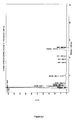
- FIG. 1 is a HPLC profile of an aqueous garlic extract manufactured according to Process 1. Peak at retention time 4.840 minutes is MeS(O)SAll and AllS(O)SMe (collectively, the structural isomers are referred to as Analogue-1), peak at retention time 12.924 minutes is allicin (Analogue-2). The peak at retention time 20.108 minutes is 1-propenyl-(E,Z) allyl-thiosulfinate, [whose structural formula is: CH 2 ⁇ CH—CH 2 —S(O)—S—CH ⁇ CH—CH 3 whose abbreviation is AllS(O)SPn-(E,Z) and whose geometric isomers are collectively referred to as Analogue-3].
- FIG. 2 is an exponential first order decay profile obtained for MeS(O)SAll and AllS(O)SMe. Data obtained by quantitative reverse phase HPLC analysis method. Best fit graph calculated using ORIGIN® version 6.1 software. Analogue-1 decomposition profile in 25% ethanol at 20° C. Example of exponential first order decay profile obtained for MeS(O)SAll and AllS(O)SMe (collectively referred to as Analogue-1). Data obtained by quantitative HPLC and is derived from one of three triplicate samples made up with 25% ethanol and stored at 20° C. Best fit graph calculated using ORIGIN® version 6.1 software (OriginLab Corporation).
- FIG. 3 is an exponential first order decay profile obtained for allicin.
- Data obtained by quantitative reverse phase HPLC analysis method. Best graphical fit calculated using ORIGIN® version 6.1 software. Analogue-2 decomposition profile in 25% ethanol at 20° C.
- Example of exponential first order decay profile obtained for AllS(O)SAll (allicin also referred to as Analogue-2).
- Data obtained by quantitative HPLC and is derived from one of three triplicate samples made up with 25% ethanol and stored at 20° C. Best fit graph calculated using ORIGIN® version 6.1 software (OriginLab Corporation).
- FIG. 4 is an exponential first order decay profile obtained for AllS(O)SPn-(E,Z). Data obtained by quantitative reverse phase HPLC analysis method. Best graphical fit calculated using ORIGIN® version 6.1 software. Analogue-3 decomposition profile in 25% ethanol at 20° C. Example of exponential first order decay profile obtained for AllS(O)SPn-(E,Z) (the E and Z geometric isomers are collectively referred to as Analogue-3). Data obtained by quantitative HPLC and is derived from one of three triplicate samples made up with 25% ethanol and stored at 20° C. Best fit graph calculated using ORIGIN® version 6.1 software (OriginLab Corporation).
- FIG. 5 is a reverse phase HPLC chromatogram obtained for aqueous garlic extract solution diluted to provide 25% percentage volume ethanol with initial allicin concentration of 400 ppm. Chromatogram obtained for freshly prepared solution Before being stored at 20° C.; reverse phase HPLC chromatogram obtained for an aqueous garlic extract solution diluted to provide 25% percentage volume ethanol providing an initial allicin concentration of 400 ppm. Chromatogram obtained for a freshly prepared extract before being stored at 20° C.
- Analogue-1 is MeS(O)SAll and AllS(O)SMe
- Analogue-2 is allicin
- Analogue-3 is AllS(O)SPn-(E,Z).
- FIG. 6 is a reverse phase HPLC profile of same solution shown in FIG. 5 BUT after being stored at 20° C. for 452.75 hours.
- FIG. 7 is a feasibility study to demonstrate increased yield of Analogue-1 thiosulfinates via the addition of S-methyl-L-cysteine sulfoxide (MCSO) to aqueous garlic tissue homogenate solutions; (a) Pre-addition of MCSO and (b) Post-addition of MCSO.
- MCSO S-methyl-L-cysteine sulfoxide
- FIG. 8 is a reverse phase HPLC chromatogram of a garlic powder in water; reverse phase HPLC profile obtained for a solution prepared by treating garlic powder with water.
- the peak labeled as Analogue-1 is composed of MeS(O)SAll and AllS(O)SMe and peak labeled as Analogue-2 is allicin.
- FIG. 9 is a reverse phase HPLC chromatogram of a freshly prepared garlic extract; reverse phase HPLC profile obtained for a garlic extract prepared from only garlic and water according to Process 1.
- peak labeled as Analogue-1 is derived from the unresolved MeS(O)SAll and AllS(O)SMe thiosulfinates;
- Analogue-2 is allicin and
- Analogue-3 is AllS(O)SPn-(E,Z).
- FIG. 10 is a reverse phase HPLC chromatogram of a freshly prepared garlic extract to which garlic powder has been added; reverse phase HPLC profile obtained for a garlic extract prepared from garlic and water according to Process 1 BUT including the addition of garlic powder.
- peak labeled as Analogue-1 is derived from the unresolved MeS(O)SAll and AllS(O)SMe thiosulfinates;
- Analogue-2 is allicin and
- Analogue-3 is AllS(O)SPn-(E,Z).
- FIG. 11 is a reverse phase HPLC chromatogram of a commercially available garlic liquid
- FIG. 12 is a reverse phase HPLC chromatogram of another freshly prepared garlic extract
- FIG. 13 is a reverse phase HPLC chromatogram obtained for a sample of liquid prepared in accordance with process 4(a);
- FIG. 14 is a reverse phase HPLC chromatogram obtained for a sample of liquid prepared in accordance with process 4(b);
- FIG. 15 is a reverse phase HPLC chromatogram obtained for a sample of liquid prepared in accordance with process 4(c);
- FIG. 16 shows an expanded section of the chromatogram of FIG. 13 ;
- FIG. 17 shows an expanded section of the chromatogram of FIG. 14 ;
- FIG. 18 shows an expanded section of the chromatogram of FIG. 15 ;
- FIG. 19 shows the LC-MS analysis for a solution prepared from GP+Precursor-1 (methiin);
- FIG. 20 shows the LC-MS analysis for a solution prepared from GP+Precursor-1 (methiin)+Precursor-2 (allicin);
- FIG. 21 shows the rate of production for Analogue-1 for various solutions contacted with 3.0 g GP, each of the ⁇ 6 aqueous solutions having different total concentrations of Precursor-1 (P-1) and Precursor-2 (P-2); rate of production of Analogue-1.
- FIG. 22 shows the rate of production for Analogue-2 for various solutions contacted with 3.0 g GP, each of the ⁇ 6 aqueous solutions having different total concentrations of Precursor-1 (P-1) and Precursor-2 (P-2); rate of production of Analogue-2.
- FIG. 23 shows the rate of production for Analogue-4 (retention time approx. 2.5 minutes) for various solutions contacted with 3.0 g GP, each of the ⁇ 6 aqueous solutions having different total concentrations of Precursor-1 (P-1) and Precursor-2 (P-2); rate of production of Analogue-4 (retention time approx. 2.5 min).
- FIG. 24 shows the quantities of Analogue-1, Analogue-2 and Analogue-4 produced after 3 hours reaction time, which are now expressed as a function of the variable mass of Precursor-2 added to the reaction mixture; amount of Analogue-1 and Analogue-2 produced after 3 hours reaction time using different amounts of Precursor-2 added to 3.0 g GP+200 mg Precursor-1 mixed in 35 ml water. Integration data for Analogue-4 included.
- FIG. 25 shows the effect of the amount of GP (garlic powder) used on the rate of production of analogue-2 (allicin); effect of amount of GP used on rate of production of Analogue-2.
- FIG. 26 shows the rate of production of Analogue-1 and Analogue-2 using different quantities of garlic powder. Rate of production of Analogue-1 and Analogue-2 using different quantities of garlic powder.
- FIG. 27 shows the rate of production of Analogue-1 using different quantities of garlic powder. Rate of production of Analogue-1 using different quantities of garlic powder.
- FIG. 28 shows a chromatogram obtained after 60 min reaction time for reaction mixture 3.0 g GP+200 mg P-1+150 mg P-2—mixed in 35 ml water (retention times: Analogue-1 at 4.716 min, Analogue-2 at 12.476 min, Analogue-4 at 2.436 min);
- FIG. 29 shows a chromatogram obtained after 120 min reaction time for reaction mixture 3.0 g GP+200 mg P-1+150 mg P-2—mixed in 35 ml water (retention times: Analogue-1 at 4.784 min, Analogue-2 at 12.572 min, Analogue-4 at 2.456 min);
- FIG. 30 shows a chromatogram obtained after 180 min reaction time for reaction mixture 3.0 g GP+200 mg P-1+150 mg P-2—mixed in 35 ml water (retention times: Analogue-1 at 4.784 min, Analogue-2 at 12.588 min, Analogue-4 at 2.456 min);
- FIG. 31 shows a chromatogram obtained after 240 min reaction time for reaction mixture 3.0 g GP+200 mg P-1+150 mg P-2—mixed in 35 ml water (retention times: Analogue-1 at 4.788 min, Analogue-2 at 12.580 min, Analogue-4 at 2.456 min);
- FIG. 32 shows a chromatogram obtained after 60 min reaction time for reaction mixture 1.0 g GP+200 mg P-2—mixed in 35 ml water (retention times: Analogue-1 at 4.732 min, Analogue-2 at 12.272 min; Analogue-4 effectively absent);
- FIG. 33 shows a chromatogram obtained after 120 min reaction time for reaction mixture 1.0 g GP+200 mg P-2 mixed in 35 ml water (retention times: Analogue-1 at 4.744 min, Analogue-2 at 12.276 min; Analogue-4 effectively absent);
- FIG. 34 shows a chromatogram obtained after 180 min reaction time for reaction mixture 1.0 g GP+200 mg P-2—mixed in 35 ml water (retention times: Analogue-1 at 4.720 min, Analogue-2 at 12.172 min; Analogue-4 effectively absent);
- FIG. 35 shows a chromatogram obtained after 240 min reaction time for reaction mixture 1.0 g GP+200 mg P-2—mixed in 35 ml water (retention times: Analogue-1 at 4.740 min, Analogue-2 at 12.128 min; Analogue-4 effectively absent);
- FIG. 36 shows the rate of production for Analogue-1; FG—rate of production of Analogue-1.
- FIG. 37 shows the rate of production for Analogue-2; FG—rate of production of Analogue-2.
- FIG. 38 shows the rate of production for Analogue-4 (retention time approx. 2.5 minutes); FG—rate of production of Analogue-4 (retention time approx. 2.5 min).
- FIG. 39 shows identical characteristics to those previously shown and discussed for FIG. 24 ; amount of Analogue-1 and Analogue-2 produced after 3 hours reaction time using different amounts of Precursor-2 reacted with [6.0 g FG+200 mg P-1] mixed in equivalent of 35 ml water. Integration data for Analogue-4 included.
- FIG. 40 shows a chromatogram obtained after 60 min reaction time for reaction mixture [12.0 g FG+400 mg P-1+300 mg P-2]—mixed in 70 ml water (retention times: Analogue-1 at 4.696 min, Analogue-2 at 12.060 min, Analogue-4 at 2.440 min);
- FIG. 41 shows a chromatogram obtained after 120 min reaction time for reaction mixture [12.0 g FG+400 mg P-1+300 mg P-2]—mixed in 70 ml water (retention times: Analogue-1 at 4.684 min, Analogue-2 at 12.148 min, Analogue-4 at 2.436 min);
- FIG. 42 shows a chromatogram obtained after 180 min reaction time for reaction mixture [12.0 g FG+400 mg P-1+300 mg P-2]—mixed in 70 ml water (retention times: Analogue-1 at 4.720 min, Analogue-2 at 12.104 min, Analogue-4 at 2.440 min);
- FIG. 43 shows a chromatogram obtained after 240 min reaction time for reaction mixture [12.0 g FG+400 mg P-1+300 mg P-2]—mixed in 70 ml water (retention times: Analogue-1 at 4.704 min, Analogue-2 at 12.220 min, Analogue-4 at 2.444 min);
- FIG. 44 shows the rate of production for Analogue-1 with various masses of FG acting as the source of P-2 and allinase; FG—rate of production of Analogue-1.
- FIG. 45 shows the rate of production for Analogue-2; FG—rate of production of Analogue-2.
- FIG. 46 shows the rate of production for Analogue-4 (retention time approx. 2.5 minutes; note there is only a relatively small variation in the quantity of Analogue-4 produced through the range of different masses of FG studied; this would tend to suggest some “buffering” type relationship with the 200 mg (equivalent amount in 35 ml water) P-1 used); FG—rate of Analogue-4 production.
- FIG. 47 can be constructed based on FIGS. 44-46 and shows the concentrations of Analogue-1 (Analogue-2 and Analogue-4 determined at 3 hours as a function of the mass of FG used); rate of production of Analogue-1, Analogue-2 and Analogue-4 after 3 hours reaction time. Varying quantities of fresh garlic in equivalent of [35 ml water+200 mg P-1].
- FIG. 48 shows a chromatogram obtained after 180 min reaction time for reaction mixture [6.0 g FG+400 mg P-1]—mixed in 70 ml water (retention times: Analogue-1 at 4.756 min, Analogue-2 at 12.284 min, Analogue-4 at 2.480 min);
- FIG. 49 shows a chromatogram obtained after 180 min reaction time for reaction mixture [12.0 g FG+400 mg P-1]—mixed in 70 ml water (retention times: Analogue-1 at 4.720 min, Analogue-2 at 12.388 min, Analogue-4 at 2.444 min);
- FIG. 50 shows a chromatogram obtained after 180 min reaction time for reaction mixture [18.0 g FG+400 mg P-1]—mixed in 70 ml water (retention times: Analogue-1 at 4.692 min, Analogue-2 at 12.240 min, Analogue-4 at 2.424 min);
- FIG. 51 shows a chromatogram obtained after 180 min reaction time for reaction mixture [24.0 g FG+400 mg P-1]—mixed in 70 ml water (retention times: Analogue-1 at 4.828 min, Analogue-2 at 12.788 min, Analogue-4 at 2.472 min).
- FIG. 52 shows the chromatogram obtained for 12.0 g FG mixed in 70 ml water that was obtained after 60 minutes mixing.
- FIG. 53 shows a graph of the half-life of MAAM in 25% aqueous solution
- FIG. 54 shows a graph of the half-life of MMTSO in 25% aqueous solution
- FIG. 55 shows a chromatogram at time zero for: a reaction solution: [3.0 g GP+200 mg P-1+35 ml water] diluted to provide an ethanol content of 25% v/v. Chromatogram obtained immediately before sample stored at 40° C. Retention Times: Analogue-1 at 3.924 min, Analogue-4 at 2.256 min.
- FIG. 56 shows a chromatogram for the same solution shown in FIG. 55 : a reaction solution: [3.0 g GP+200 mg P-1+35 ml water] diluted to provide an ethanol content of 25% v/v. BUT Chromatogram now obtained after 263.5 hours sample stored at 40° C. Retention Times: Analogue-1 at 4.792 min, Analogue-4 at 2.448 min.
- FIG. 57 shows a chromatogram obtained at time zero for a solution of 12.0 g FG (+400 mg P-1+70 ml water) before the solution was subjected to storage at 40° C.
- FIG. 58 shows a chromatogram obtained after 120 hours at 40° C. for the solution of FIG. 57 ;
- FIG. 59 shows a chromatogram obtained after 168 hours at 40° C. for the solution of FIG. 57 ;
- FIG. 60 shows a chromatogram obtained after 672 hours at 40° C. for the solution of FIG. 57 ;
- FIG. 61 shows a chromatogram of a solution of MMTSO produced by dissolving 1.25 g of methiin in 400 ml of water then stirring in 5.7 g of garlic powder and continuing to stir for three hours;
- FIG. 62 shows a chromatogram of a solution of Allicin produced by dissolving 1.25 g of alliin in 400 ml of water then stirring in 5.7 g of garlic powder and continuing to stir for three hours;
- FIG. 63 shows a chromatogram of a solution produced by dissolving 5.7 g of garlic powder in water and stirring for three hours;
- FIG. 64 shows a Chromatogram obtained at Time Zero (immediately prior to storage at 55° C.) for a Liquid Blend prepared from three Liquids in the following proportions [400 mg P-1+400 mg P-2+6 g GP+70 ml Water]—2 parts volume; [400 mg P-1+6 g GP+70 ml Water]—3 parts volume; [400 mg P-2+6 g GP+70 ml Water]—1 part volume;
- FIG. 65 shows the chromatogram for the same blend as FIG. 64 , after 24 hours storage at 55° C.;
- FIG. 66 shows the chromatogram for the same blend as FIGS. 64 and 65 after 57 hours storage at 55° C.
- FIG. 67 shows a graph of the decomposition profile obtained for MMTSO in the 100% aqueous solution used to prepare the chromatograms of FIGS. 64-66 stored at 55° C.
- FIG. 68 shows a graph of the decomposition profile obtained for MAAM in the 100% aqueous solution used to prepare the chromatograms of FIGS. 64-66 stored at 55° C.
- FIG. 69 shows a graph of the decomposition profile obtained for Allicin in the 100% aqueous solution used to prepare the chromatograms of FIGS. 64-66 stored at 55° C.
- the compound names methyl allyl thiosulfinate, allyl methyl thiosulfinate, allyl allyl thiosulfinate (which is allicin) and methyl methyl thiosulfinate can also alternatively be written as methyl allyl-thiosulfinate, allyl methyl-thiosulfinate, allyl allyl-thiosulfinate and methyl methyl-thiosulfinate, respectively.
- Analogue-1 is a mixture of methyl allyl-thiosulfinate (MA) and its structural isomer allyl methyl-thiosulfinate (AM). These isomers are not separated by the reverse phase HPLC method that has provided all the chromatograms.
- Analogue-2 is allyl allyl-thiosulfinate commonly known via its trivial name allicin.
- Analogue-3 is 1-propenyl allyl-thiosulfinate and exists in E,Z geometric isomer forms.
- Analogue-4 is methyl methyl-thiosulfinate, also known as methyl methanethiosulfinate and by the abbreviation MMTSO (whose structural formula is CH3-S(O)—S—CH3 and whose abbreviation is MeS(O)SMe).
- This method uses raw garlic and high purity water to provide an aqueous extract of garlic that will provide a 750-1650 ppm allicin content with a relatively significant MeS(O)SAll and AllS(O)SMe (MA-AM) content.
- the outer skin of garlic bulbs was removed and the bulbs split into individual cloves, washed in water and coarsely chopped using a conventional food-processor.
- the chopped garlic was left at 20° C. for 5-20 minutes (typically 15 minutes); and then mixed with ultra-pure drinking water at a temperature of 4° C., with mixing for 5 minutes at a ratio of 0.6 kg garlic with 1 liter of water.
- the chopped garlic-water slurry was then rapidly frozen at ⁇ 20° C. After 12-24 hours the frozen chopped garlic-water slurry was allowed to thaw at 10° C. Immediately after the slurry was completely thawed, it was coarsely filtered and the resultant aqueous garlic extract filtered through stacked sieves: top sieve with 250 micron mesh, lower sieve with 125 micron mesh.
- the aqueous garlic extract was then placed into a settling vessel and allowed to stand for 24 hours at 0-4° C. during which period any unfiltered garlic tissue fines were allowed to settle.
- the supernatant liquid was then drawn away from the settling vessel such that the garlic fines were substantially separated. An aliquot of the settled liquid was then submitted for HPLC analysis.
- aqueous garlic extract that has been concentrated by fractional freezing may be added such that the desired allicin and MeS(O)SAll and AllS(O)SMe concentrations are obtained as measured by quantitative reverse phase HPLC assay.
- This step produces a concentrated aqueous extract of garlic and, typically provide an allicin concentration in the range 2000-4000 ppm.
- the typical associated range of the concentrated MA-AM thiosulfinates (collectively assayed) being in the range 400-2000 ppm.
- Aqueous garlic extract solution was prepared according to Process 1 above up to and including separation of the garlic fines.
- the liquid was then placed into a cylindrical container, open at one end, and in an upright position is frozen at ⁇ 20° C. until ice formation was complete.
- the cylinder containing the frozen aqueous garlic extract solution was then inverted in a stand with a cold collection vessel placed below the open end of the container containing the frozen aqueous garlic extract.
- the collected liquid was periodically assayed for allicin and relative MeS(O)SAll and AllS(O)SMe concentration.
- the first stage concentrated thiosulfinate containing liquid can, in turn, be frozen at ⁇ 20° C. and the process through the freezing and thawing stages can be repeated to bring about a second stage of thiosulfinate concentration by the process of fractional freezing.
- the concentrated allicin liquid that is used to adjust the allicin and MeS(O)SAll and AllS(O)SMe is typically prepared in the range 2400-4000 ppm with respect to allicin content concentration with the collective MeS(O)SAll and AllS(O)SMe concentration typically in the range 550-2000 ppm.
- HPLC column 150 ⁇ 4.6 mm Agilent C-18 column fitted with 10 ⁇ 2 mm C-18 precolumn.
- HPLC mobile phase 34:66 methanol:water by % volume.
- Detection diode-array detection.
- FIG. 1 A typical chromatogram obtained for reverse phase HPLC analysis of an aqueous garlic extract prepared according to Process 1 is given in FIG. 1 .
- the species that are partially or fully separated in the chromatogram fall into three categories: (1) predominantly polar species such as water soluble pigments and amino acids in the retention time window 0-4 minutes; (2) thiosulfinates, predominantly present in the retention time window 4-25 minutes; and (3) breakdown products of thiosulfinates such as ajoenes (detected at retention times greater than 25 minutes).
- an aqueous garlic extract prepared according to Process 1 produces an extract relatively rich in: methyl allyl-thiosulfinate [whose structural formula is CH 2 ⁇ CH—CH 2 —S(O)—S—CH 3 also represented as AllS(O)SMe], allyl methyl-thiosulfinate [whose structural formula is CH 3 —S(O)—S—CH 2 —CH ⁇ CH 2 also represented as MeS(O)SAll], allicin [whose structural formula is CH 2 ⁇ CH—CH 2 —S(O)—S—CH 2 —CH ⁇ CH 2 also represented as AllS(O)SAll] and 1-propenyl allyl-thiosulfinate [whose structural formula is CH 2 ⁇ CH—CH 2 —S(O)—S—CH ⁇ CH—CH 3 also represented as AllS(O)SPn-(E,Z) with the 1-propenyl group resulting in the possibility of E,Z
- the two structural thiosulfinate isomers MeS(O)SAll and AllS(O)SMe are unresolved using reverse phase HPLC and produce a single peak at retention 4.840 minutes in FIG. 1 .
- the peak detected at 12.924 minutes in FIG. 1 is allicin [AllS(O)SAll].
- the peak detected at retention time 20.106 minutes in FIG. 1 is 1-propenyl allyl-thiosulfinate possibly being composed by either one of the E,Z isomers or a mixture of the E,Z geometric isomers.
- the aqueous stock solution of garlic extract assayed by HPLC was determined to have an allicin content of 1600 ppm (1600 mg allicin in 1000 ml water) and each of the 25%, 50% and 75% ethanol:aqueous dilutions prepared from the aqueous garlic extract stock solution were prepared to provide an initial allicin concentration of 400 ppm.
- each 25%, 50% or 75% ethanol content sample was prepared in triplicate and separately aged at the specified temperature and separately analysed at appropriate time intervals after the samples had commenced storage at a specific accurately controlled temperature.
- FIGS. 2-4 produced from data obtained from the HPLC analyses of the same single sample whose solvent composition was ethanol:water (25:75% by volume) with an initial allicin concentration of 400 ppm.
- the decay profiles were obtained using ORIGIN version 6.1 software (Origin is a registered trade mark of OriginLab Corporation) software that determined the best fit for decomposition profiles as being first-order exponential decay. From the decomposition profiles shown in FIGS. 2-4 it is possible to interpolate to determine the time required for each thiosulfinate to decompose to 50% of its initial concentration level that had been initially measured at the outset when controlled temperature storage started.
- FIGS. 2-4 can be used to calculate half-life values for the thiosulfinates defined as being Analogues 1-3 for one of the 3 samples containing 25% ethanol that had been stored accurately at 20° C.
- Table 3 provides the half-life data recorded for MeS(O)SAll and AllS(O)SMe (Analogue-1), allicin (Analogue-2) and AllS(O)SPn-(E,Z) (Analogue-3).
- MeS(O)SAll and AllS(O)SMe With aqueous solutions containing 25% and 50% ethanol MeS(O)SAll and AllS(O)SMe also have significantly longer half-lives than that determined for AllS(O)SPn-(E,Z) throughout the temperature range measured. However, with an aqueous solution containing 75% ethanol the half-lives determined for MeS(O)SAll and AllS(O)SMe are similar to AllS(O)SPn-(E,Z) throughout the temperature range measured.
- Tables 3 and 4 demonstrate that both MeS(O)SAll and AllS(O)SMe possess significantly longer half-lives than allicin in aqueous ethanol and aqueous garlic extracts such that Allium species formulations specifically designed to incorporate these thiosulfinates will thereby provide longer shelf-lives and longer periods of therapeutic activity after the formulation has been administered.
- Formulations containing both allicin and significant relative quantities of MeS(O)SAll and AllS(O)SMe therefore offer significant advantages compared to those formulations predominantly containing only allicin as the principle bioactive thiosulfinate.
- Both MeS(O)SAll and AllS(O)SMe support and compliment the bioactivity of allicin. As allicin concentrations start to diminish due to thermal degradation, the relative contribution of MeS(O)SAll and AllS(O)SMe to provide and support extended therapeutic biological activity progressively becomes more important. This is illustrated by comparison of the chromatograms shown in FIG. 5 and FIG.
- Aqueous garlic extracts produced according to Process 1 typically provide allicin concentrations in the range 750-1650 ppm. However, the relative concentration of MeS(O)SAll and AllS(O)SMe independently varies and is not directly related to initially manufactured allicin concentration.
- a typical range measured by comparing the integrated reverse phase HPLC peak area for MeS(O)SAll and AllS(O)SMe compared to the peak area obtained for allicin indicates that Process 1 provides an aqueous solution of garlic extract whose relative concentration of MeS(O)SAll and AllS(O)SMe is typically such that the reverse phase HPLC peak area integration value obtained (chromatogram at 240 nm) for the MeS(O)SAll and AllS(O)SMe thiosulfinates (Analogue-1) is 20-40% of the relative peak area obtained for allicin (Analogue-2) in a freshly manufactured, non-aged aqueous garlic extract.
- Process 1 described above provides a “semi-natural” process by which the MeS(O)SAll and AllS(O)SMe thiosulfinate content is enhanced.
- the natural processes whereby MeS(O)SAll and AllS(O)SMe are produced using damaged garlic tissue as the primary source of the essential precursor S-methyl-L-cysteine sulfoxide (methiin) are provided in Schemes 2-3.
- the processes given in Scheme 2 show the possibility of two condensation reactions between methyl-sulfenic acid and allyl-sulfenic acid to produce MeS(O)SAll and AllS(O)SMe.
- S-allyl-L-cysteine sulfoxide is a SACS species that undergoes rapid hydrolysis by the action of allinase—hence, allyl-sulfenic acid (CH 2 ⁇ CH—CH 2 —SOH) is rapidly formed when Allium species tissue is damaged. Allyl-sulfenic acid is highly reactive and once formed can rapidly undergo self-condensation such that two molecules of allyl-sulfenic acid bring about the formation of one molecule of allicin as represented in Scheme 3.
- S-methyl-L-cysteine sulfoxide is a SACS species that undergoes relatively slow hydrolysis by the action of allinase.
- methiin S-methyl-L-cysteine sulfoxide
- CH 3 —SOH methyl-sulfenic acid
- the thiosulfinate allicin has already been produced. This fact provides the basis for the complex manner in which other reactions bring about the formation of the MeS(O)SAll and AllS(O)SMe thiosulfinates.
- methyl-sulfenic acid can react with pre-formed allicin to produce AllS(O)SMe.
- This specific reaction liberates fresh allyl-sulfenic acid which will then very rapidly undergo further reactions—self-condensation producing allicin or reaction with other sulfenic acids to produce asymmetrical thiosulfinates e.g. reaction with methyl-sulfenic acid to produce further MeS(O)SAll and AllS(O)SMe as shown in Scheme 2.
- methyl-sulfenic acid may undergo self-condensation to produce methyl methyl-thiosulfinate (MeS(O)SMe) that may then react with alliin in the presence of allinase to produce AllS(O)SMe.
- MeS(O)SMe methyl methyl-thiosulfinate
- MeS(O)SAll and AllS(O)SMe yield could be boosted via the addition of methiin to a garlic tissue aqueous homogenate.
- the comparative reverse phase HPLC analyses shown in FIG. 7 clearly demonstrate that an increase in yield of MeS(O)SAll and AllS(O)SMe thiosulfinates can be obtained via the addition of synthetic methiin (sourced by Shanghai Boyle Chemical Company Ltd., Shanghai, China) to freshly homogenised garlic tissue blended in water.
- methiin sourced by Shanghai Boyle Chemical Company Ltd., Shanghai, China
- the reverse phase HPLC profile obtained for a garlic extract made without the addition of methiin is shown, after which during retention interval 25-50 minutes the HPLC profile of an aqueous garlic extract to which methiin had been added is shown.
- methiin has boosted (allicin peak amplitude approximately the same value for both extracts) the concentration of MeS(O)SAll and AllS(O)SMe relative to the allicin concentration.
- the collective MeS(O)SAll and AllS(O)SMe concentration can indeed be boosted in the inventive method by addition of synthetic methiin to a fresh Allium species extract, in particular that made from a chopped/minced/ground/crushed garlic water slurry.
- the methiin can be provided by synthetic sources as used in our trial or from other sources, such as a powdered Allium species (for example, powdered garlic).
- FIG. 8 shows a chromatogram (same conditions as above) of a commercial garlic powder mixed with water.
- A-1 is the chromatographic peak obtained for the co-eluting MeS(O)SAll and AllS(O)SMe analogues and
- A-2 is allicin (as above).
- AllS(O)SPn-(E,Z) A-3.
- the chromatogram in FIG. 8 establishes powdered garlic is a relatively rich source of both methiin and alliin providing sufficient allinase activity on being contacted with water to bring about the production of MeS(O)SAll and AllS(O)SMe and allicin.
- FIG. 9 is a chromatogram of a fresh extract of garlic and FIG. 10 is a chromatogram of a garlic extract prepared as for FIG. 9 but with the addition of the garlic powder chromatographed in FIG. 8 .
- FIG. 9 is a chromatogram obtained from a garlic extract prepared according to Process 1—using an initial mix of 625 g chopped garlic+1 liter of water only.
- FIG. 10 is a chromatogram obtained from a garlic extract prepared according to Process 1—using an initial mix of 625 g chopped garlic+1 liter of water+25 g garlic powder.
- the 25 g garlic powder going into the initial mix is of the same type as that used to provide an extract whose chromatogram is shown in FIG. 8 .
- FIG. 11 shows the HPLC analysis of a comparative example of commercially available liquid, where A-1, A-2 and A-3 retention times are 4.636, 11.996 and 18.252 min respectively. Peak integration values for thiosulfinate analogue peaks are also shown.
- FIG. 12 shows the HPLC analysis of extract prepared from Fresh Garlic, according to process 1, where A-1, A-2 and A-3 retention times are 4.644, 12.016 and 18.28 min respectively. Peak integration values for thiosulfinate analogue peaks are also shown.
- Bioassay results confirm that for an aqueous allicin containing liquid—initial bioassay performance (liquids not aged) is improved if A-1 concentration is increased.
- a solution was prepared by dissolving 1.3 g alliin (7.3446 mmol) and 1.1 g methiin (7.2847 mmol) with mixing in 100 ml water at a temperature maintained at 10-40° C. The mixed alliin and methiin solution was then contacted with allinase (e.g. 0.2-2 g freshly minced garlic) and the solution stirred for 10 minutes. The solution was assayed periodically using HPLC to calculate the concentration of methyl allyl thiosulfinate and allyl methyl thiosulfinate.
- allinase e.g. 0.2-2 g freshly minced garlic
- Process 3 is highly adaptable.
- concentration of methiin and alliin can be adjusted by varying the amount of water.
- the alliin can be added progressively to a solution of the methiin to allow time for methiin to form the methyl-sulfenic acid so that it is immediately available once alliin very rapidly is converted into allyl-sulfenic acid.
- Analogue-1 Analogue-2 Solution FIG. (MA-AM) (Allicin) GP + Precursor-1 13 795 ppm 39 ppm GP + Precursor-2 14 152 2540 GP + Precursor-1 + Precursor-2* 15 1508 1225
- Analogue-1 can be substantially boosted by contacting a solution of methiin and alliin with garlic powder.
- Examination of the chromatograms of FIGS. 13-15 reveals that solutions containing Precursor-1 when contacted with garlic powder produce a chromatographic peak at retention time of around 2.5 minutes.
- FIGS. 16-18 For comparative purposes early sections of FIGS. 13-15 are shown in FIGS. 16-18 , respectively, with the mAU axis attenuation adjusted such that both the peak whose retention time at approx. 2.5 mins and Analogue-1 peak are on-scale.
- FIGS. 16-18 Examination of FIGS. 16-18 reveals that the peak at about 2.5 minutes is most intense when only Precursor-1 is treated with GP and is virtually absent when only Precursor-2 is treated with GP.
- the peak whose retention time is approximately 2.5 mins is the methyl methyl-thiosulfinate.
- the relative molecular weights of the species of interest are:
- Analogue-1 (MA-AM): 136
- the ionization method was positive ion electrospray which means that for each of the above three species a protonated molecule ion [M+H] + should be formed at m/z: 111, 137, and 163, respectively.
- FIG. 19 Sample: 3.0 g GP added to a solution of 200 mg Precursor-1 (methiin) in 35 ml water.
- FIG. 19 there are strong signals in the m/z channels: 111 and 137 with only a weak signal in the m/z channel 163. The peaks are in the correct relative retention time order.
- FIG. 20 Sample: 3.0 g GP added to a solution of a mixture of 200 mg Precursor-1 (methiin)+200 mg Precursor-2 (alliin) in 35 ml water.
- FIG. 20 there are strong signals in all the m/z channels: 111, 137 and 163. The peaks are in the correct relative retention time order.
- Analogue-1 mixture of allyl methyl thiosulfinate and methyl allyl-thiosulfinate; this mixture is also called MA-AM
- Analogue-2 allicin
- Tables 5-10 also include data for the peak with approximate retention time of 2.5 minutes, previously identified as methyl methyl-thiosulfinate [CH 3 S(O)SCH 3 whose structural formula can also be represented as MeS(O)SMe] and from now also referred to as Analogue-4.
- the structure of Analogue-3 is given in the previous patent application. Analogue-3 thus far has not been produced by GP itself but as the study extends to the use of fresh garlic tissue using mixtures of P-1 and P-2 its detection is anticipated.
- FIGS. 21-23 Various graphs have been constructed and inspection of FIGS. 21-23 reveals that for Analogue-1, Analogue-2 and Analogue-4 production—using the conditions employed—reaction can be generally considered to be approximately complete after 3 hrs of mixing. Stemming from this observation a fourth very informative graph as depicted in FIG. 24 can be constructed. The 3 hour concentration values can now be selected from Tables 5-10 to construct FIG. 24 .
- FIG. 24 illustrates several important points:
- Analogue-1 is obtained from a mixture utilizing 3.0 g GP+200 mg P-1+150 mg P-2.
- Analogue-4 produced declines in a linear manner as the concentration of P-2 incrementally increases. This would be expected since the allyl sulfenic acid produced from Precursor-2 (on contacting with allinase) would react very quickly with methyl sulfenic acid produced from Precursor-1. In other words with higher concentrations of allyl sulfenic acid the tendency for two molecules of methyl sulfenic acid to react to produce Analogue-4 are reduced. From a basic “wet chemistry” perspective this observation lends yet further support to (“tallies with”) the LC/MS data presented for PROCESS 4 above. 3. Why should the production of Analogue-1 show a maximum value?
- a wide range of different and very novel aqueous based liquid types can be prepared containing different concentrations of Analogue-1, Analogue-2 and Analogue-4.
- different types of liquids produced by contacting varying quantities of P-1 and P-2 with GP could be blended to greatly extend the range of products.
- the major unanticipated finding relates to the formation of Analogue-4. This may in fact be serendipitous since it is documented that Analogue-4 is biologically active. In other words, deliberately manufactured Analogue-4 may provide real commercial potential. Accordingly, this provides a new set of standards for urgent bioassays.
- One of these standards has a high Analogue-4 concentration—this liquid was made from a diluted type shown in Table 6. 5.
- the GP (McCormick a Chinese brand) used throughout these studies was obtained at a local store. It may well transpire that other more carefully screened GPs may provide higher intrinsic P-1 and P-2 concentrations and far more importantly better allinase activity once hydrated.
- Analogue-2 (allicin) is boosted by contacting allinase provided by GP (garlic powder) with Precursor-2.
- GP garlic powder
- Potential benefits include (i) easier separation of the liquid from hydrated GP at the end of the reaction period and (ii) improving the colour of the liquid manufactured.
- Source of allinase is garlic powder (GP).
- Tables 11-16 The compositions of the solutions, all prepared in 35 ml of water, are provided in the headers of Tables 11-16. At 60, 120, 180 and 240 minute intervals samples were withdrawn and analyzed by quantitative HPLC. The results are summarized in Tables 11-16. A representative complete set of 4 chromatograms (to go with Table 14) is also included. Tables 11-16 also include data for the peak with approximate retention time of 2.5 minutes, previously identified as methyl methyl-thiosulfinate [CH 3 S(O)SCH 3 i.e. MeS(O)SMe] and now also referred to as Analogue-4.
- Analogue-3 CH 2 ⁇ CH—CH 2 —S(O)—S—CH ⁇ CH—CH 3 whose abbreviation is AllS(O)SPn-(E,Z), as given already further above.
- FIG. 25 has been constructed using the data given in Tables 11-16. These graphs illustrate that in the case of Analogue-2 formed from 200 mg P-2 both 3.0 g GP and 1.0 g GP contain sufficient allinase for the conversion of this quantity of P-2 to Analogue-2.
- the four graphs use the raw data given in Tables 13-14 and also show the corrected graphs when the Analogue-2 concentrations given in Tables 11-12 for either 3.0 g GP or 1.0 g GP are deducted.
- FIG. 26 has been constructed using the data given in Tables 10 (see Process 5.1) and 15. As indicated in Table 15 virtually no allinase activity was detected after 60 min reaction time. Consequently immediately after the third sample was taken at 180 min (third sample taken to confirm no significant allinase activity) a further 1.0 g GP was added to the reaction mixture. Comparison of graphs B and D (for Analogue-1) then E and C (for Analogue-2) shown in FIG. 26 confirm that the addition of a further 1.0 g GP at 180 min restored allinase activity resulting in yields of Analogue-1 and Analogue-2 at 240 min closely approximating those that had been obtained using 3.0 g GP. This is potentially an important finding: unlike the situation described for FIG.
- FIG. 27 has been constructed using the data in Tables 6 (see Process 5.1) and 16.
- FIG. 27 confirms that GP does not contain sufficient P-2 to make a very strong solution of Analogue-1—recall that Analogue-1 (MA-AM) is formed by the condensation reaction between methyl sulfenic acid and allyl sulfenic acid produced when allinase contacts P-1 and P-2 respectively.
- MA-AM Analogue-1
- FIG. 27 has been constructed using the data in Tables 6 (see Process 5.1) and 16.
- FIG. 27 confirms that GP does not contain sufficient P-2 to make a very strong solution of Analogue-1—recall that Analogue-1 (MA-AM) is formed by the condensation reaction between methyl sulfenic acid and allyl sulfenic acid produced when allinase contacts P-1 and P-2 respectively.
- visual inspection of the data shown in Table 6 demonstrates that contacting 3.0 g GP with 200 mg P-1 produced the strongest strength solution of Analogue-4. This is because
- Analogue-1 and/or Analogue-4 appear to be more efficient in preventing allinase activity than Analogue-2. See previous notes concerning FIG. 26 .
- Analogue-4 By treating a solution containing only P-1 with GP, apart from Analogue-1, Analogue-4 can be produced in high quantity. See previous notes concerning FIG. 27 .
- the colour of the liquid produced is directly influenced by the quality and quantity of GP used.
- the reaction conditions employed (3.0 g GP+200 mg P-1+150 mg P-2) produced the liquid with highest Analogue-1 concentration—see FIG. 24 .
- FIGS. 32-35 A further example of a representative complete set of ⁇ 4 chromatograms now follows in FIGS. 32-35 .
- This set of chromatograms provided the data to construct Table 14.
- a fully worked specimen calculation is applied to the reaction mixture of (3.0 g GP+200 mg P-2) to determine the theoretical efficiency of producing Analogue-2.
- the calculation will involve considering the concentration determined for Analogue-2 after 3 hrs reaction time in Table 9. Also the concentration determined for Analogue-2 after 3 hrs reaction time in Table 7 is required.
- Relative Molecular Weight of Analogue-2 is 162 i.e. 1 mole weighs 162 g
- Relative Molecular Weight of P-2 is 177 i.e. 1 mole weighs 177 g
- the BP HPLC METHOD due to its chromatographic mobile phase conditions is not capable of providing a chromatogram showing resolved peaks for both Analogue-1 and Analogue-4. It is strictly designed to measure Analogue-2 content in garlic powder.
- Analogue-1 A-1; mixture of allyl methyl thiosulfinate and methyl allyl-thiosulfinate; this mixture is also called MA-AM
- Analogue-2 A-2; allicin concentrations to various levels by contacting an aqueous solution of various synthetic mixtures of Precursor-1 (P-1; methiin) and Precursor-2 (P-2; alliin) with a source of allinase—in this process specifically fresh garlic bulb tissue—is investigated while also determining appropriate reaction times.
- Source of allinase fresh garlic (FG), minced using a domestic garlic press. N.B. Only minced garlic tissue that had been forced through the perforated face of the press was used. Larger pieces were discarded. Timing was important—the method protocol involved contacting weighed, freshly minced garlic with aqueous solutions before 2 minutes had lapsed from the time when garlic mincing had commenced.
- Tables 17-21 A representative complete set of 4 chromatograms (used to construct Table 20) are also included. Tables 17-21 also include data for the peak with approximate retention time of 2.5 minutes, previously identified as methyl methyl-thiosulfinate [CH 3 S(O)SCH 3 whose structural formula can also be represented as MeS(O)SMe] and from now also referred to as Analogue-4.
- Analogue-3 CH 2 ⁇ CH—CH 2 —S(O)—S—CH ⁇ CH—CH 3 named 1-propenyl-(E,Z) allyl-thiosulfinate whose abbreviation is AllS(O)SPn-(E,Z), and whose geometric isomers are collectively referred to as Analogue-3.
- FIG. 39 shows identical characteristics to those previously shown and discussed for FIG. 24 (see Process 5), hence discussion of these points will not be duplicated here.
- Reaction time can be controlled to maximize yields of Analogue-1, Analogue-2 and Analogue-4.
- a wide range of different and very novel aqueous based liquid types can be prepared containing different concentrations of Analogue-1, Analogue-2 and Analogue-4.
- different types of liquids produced by contacting varying quantities of P-1 and P-2 with FG could be blended to greatly extend the range of products.
- the major unanticipated finding relates to the formation of Analogue-4. This may in fact be serendipitous since it is documented that Analogue-4 is biologically active. In other words, deliberately manufactured Analogue-4 may provide real commercial potential. Accordingly, this provides a new set of standards for urgent bioassays.
- One of these standards has a high Analogue-4 concentration—this liquid was made from a diluted type shown in Table 6 (see Process 5).
- FIGS. 40-43 were also used to construct the graphs shown in FIGS. 36-38 , but were labelled as being produced from the half-volume equivalent solution, i.e. [6.0 g FG+200 mg P-1+200 mg P-2+35 ml water].
- reaction can be generally considered to be approximately complete after 3 hrs of mixing.
- FIG. 47 can be constructed and shows the concentrations of Analogue-1, Analogue-2 and Analogue-4 determined at 3 hours as a function of the mass of FG used. Inspection of the graphs shown in FIG. 47 reveals:
- the set of chromatograms used to construct the graphs shown in FIG. 27 follows. These 4 chromatograms were obtained after 3 hour reaction period and involved contacting 6.0-24.0 g FG with 400 mg P-1 that had been dissolved in 70 ml water.
- the x-axis for the graphs shown in FIG. 47 was labelled as being produced from the half-volume equivalent solution i.e. 3.0-12.0 g FG with 200 mg P-1 dissolved in 35 ml water.
- Table 26 summarises the results obtained. If compared to Table 9 (see Process 5) visual inspection of these two Tables reveals that little correlation exists in terms of the production of Analogue-1, Analogue-2 and Analogue-4.
- Tables 27-30 summarize the data obtained for mixing 2.0-24.0 g FG in 70 ml water. Inspection of the Analogue-1 concentrations reveals that 12.0 g FG in 70 ml water provides the closest match to 3.0 g garlic powder in 35 ml water (Table 5 also shown for comparison). In other words 6.0 g FG in 35 ml water approximately equates to 3.0 g garlic powder in 35 ml water in terms of Analogue-1 production. Therefore the experiments performed in Report 5 Section A involved the use of the equivalent of 6.0 g FG in 35 ml water.
- FIG. 52 shows the chromatogram obtained for 12.0 g FG mixed in 70 ml water that was obtained after 60 minutes mixing.
- P-1 The method described to produce P-1 is a modified version of that previously published by Bernhard Iberl, Georg Winkler, Bernd Muller and Karl Knobloch, in Planta Medica, Volume 56, pages 320-326, 1990.
- L-Cysteine and allyl chloride were used as the precursor for the synthesis of L-deoxyalliin.
- the procedure is as follows:
- L-Cysteine (30.25 g—obtained from Sigma-Aldrich) was suspended in 750 ml ethanol. Whilst the suspension was stirred a solution of sodium hydroxide (35 g dissolved in 45 ml water) was added dropwise using a burette. The stirred solution was cooled to 4° C. Allyl chloride (23.5 ml—obtained from Dickma) was then slowly added dropwise during which the solution temperature was maintained at 4° C. Once all the allyl chloride was added the cooled solution was stirred for 1 hour after which time its temperature was adjusted to 25° C. and the solution was then stirred for a further 2 hours.
- a 25% aqueous ethanol solution was prepared as follows: 5 ml of the above reaction solution was mixed with 5 ml ethanol. The 10 ml solution so produced was then mixed with 10 ml water.
- FIG. 53 Demonstrates that Analogue-1 exhibits a first order exponential decomposition profile. Its half-life is determined from the graph by interpolation (using the same s/w used to construct the graph—Micocal Origin). The half-life is the time at which the integrated peak area obtained for Analogue-1 provided half the value of that obtained in the chromatogram obtained at time zero. The half-life of Analogue-1, of 38 hours, is shorter than that previously disclosed—this is due to the fact its concentration was higher than in the solutions previously used. It is well known that more concentrated solutions of thiosulfinates decompose more rapidly.
- FIG. 54 demonstrates that Analogue-4 exhibits a more linear decomposition profile. Its half-life again is determined by interpolation using the s/w used to construct the graph and can be seen to be very long indeed—179.7 hours under these conditions.
- FIG. 55 shows the chromatogram obtained for the 25% aqueous ethanol solution of the diluted reaction mixture at time zero and FIG. 56 shows the chromatogram obtained for the 25% aqueous ethanol solution 263.5 hours after being stored at 40° C.
- the significant difference in retention times for Analogue-1 and Analogue-4 in the two chromatograms is probably due to a change of pre-columns during analysis times.
- the chromatogram shown in FIG. 54 probably the column not having been equilibrated for sufficient time with the mobile phase prior to sample injection. The results are potentially very significant from a commercial perspective.
- Analogue-4 provides a significantly longer half-life than Analogue-1, even when stored in 25% aqueous ethanol solution at 40° C. Until the ease of manufacture of Analogue-4 was discovered it was thought that Analogue-1 was the thiosulfinate providing longest half-life.
- analogue-4 may provide considerable potential commercial interest in its own right.
- reaction mixture (12.0 g FG+400 mg P-1+70 ml H 2 O) was filtered immediately after 4 hour reaction time and served as the stock solution for this study.
- the filtered solution was divided into 2 portions. One to be stored frozen and the other to be stored at 40° C.
- the portion of filtered solution to be used to determine the half-life of A4 was placed in a sealed glass bottle that was placed in an oven that provided a stable temperature of 40° C.
- FIGS. 57-60 show the chromatogram obtained after 0, 120, 168 and 672 hours respectively. Their concentrations are set out below in table 32:
- the activity of powders and liquids was determined using standard agar diffusion tests. Susceptibility of isolates by measuring the zones of inhibition around a measured amount of the anti-microbial agent.
- MRSA clinical isolate QMUL301 was used. Overnight broth cultures in isosensitest broth were prepared. These were diluted to give a final concentration of 10 5 cfu/ml
- aqueous solutions discussed immediately above produced by the method of process 6a, as set out in row 4 of table 23 were used in a bioassay study.
- Two solutions were assayed in triplicate (1) “Blue Spot”—a control solution that was frozen at ⁇ 20° C. immediately after preparation and had concentrations as set out in row 1 of table 22 and (2) “Red Spot”—identical solution to Blue Spot but with this portion being stored at 40° C. for 672 hrs, such that the concentrations of thiosulfinates are as set out in table 33 below.
- Blue Spot a control solution that was frozen at ⁇ 20° C. immediately after preparation and had concentrations as set out in row 1 of table 22
- Red Spot identical solution to Blue Spot but with this portion being stored at 40° C. for 672 hrs, such that the concentrations of thiosulfinates are as set out in table 33 below.
- A-4 provides very significant potential to provide potent antimicrobial activity in aqueous solution for relatively very long periods compared with other aqueous solutions containing other allium derived thiosulfinates, in particular when compared to either A-1 or A-2.
- A-4 aqueous solutions remain bioactive for relatively long periods even when stored at warm temperatures. 3. Since A-4 only occurs at relatively very low levels in aqueous extracts prepared from fresh garlic tissue (typically less than 50-95 ppm resulting in a very small HPLC peak) its literature reference in such preparations is largely confined to a very small chromatographic peak identity statement.
- Allicin was prepared by initially dissolving 1.25 g P-2 in 400 ml water then stirring in 5.7 g Garlic Powder (McCormick Brand). The mixture was stirred for 3 hr at 21° C. The mixture was filtered and analysed by HPLC. Approx. 325 ml of the frozen filtered liquid used for bioassay studies.
- a control solution was also produced by stirring 5.7 g or Garlic Powder in 400 ml water for 3 hours at 21° C.
- FIG. 61 shows a chromatogram of the process 7, MMTSO liquid
- FIG. 62 shows the chromatogram of the process 8, allicin liquid
- FIG. 63 shows the chromatogram of the control liquid. From these chromatograms, table 35 (below) can be constructed, showing the concentrations of the solutions obtained.
- Process 7 MMTSO
- Process 8 Allicin
- Process 7 MMTSO
- Process 8 Allicin
- the average diameter values are based upon the inhibition zones measured in mm.
- A-4 provides at least the same level of antimicrobial activity against MRSA as A-2 (Allicin) when the bioassay is performed using fresh A-4 and A-2 solutions with almost identical molarity values see footnote to Table 35.
- A-4 MMTSO
- A-4 (MMTSO) is considerably more stable than A-2 (Allicin) in aqueous solution thus providing very potent antimicrobial activity at 17° C. for very long time periods compared to A-2—namely allicin whose antimicrobial activity has been the subject of many scientific reports now spanning several decades.
- These bioassay results correlate with the half-life data trends for A-4 and A-2 as determined using HPLC. 4.
- A-4 is only present in aqueous extracts of natural crushed/minced garlic at very low levels (typically less than 50-95 ppm), hitherto not making it an obvious major naturally occurring candidate for process development and commercial exploitation.
- Aqueous solutions were prepared using 70 ml water and 6 g McCormick garlic powder, along with methiin or alliin in the proportions shown in table 37 below.
- the liquid in the top row was prepared from a blend of the following liquids:
- Liquid prepared from: [400 mg P-1+400 mg P-2+6 g GP+70 ml Water]—2 parts volume
- Liquid prepared from: [400 mg P-1+6 g GP+70 ml Water]—3 parts volume
- FIGS. 64, 65 and 66 show the time zero results (Chromatographic peak integral values measured at 240 nm as shown are considered to represent 100% Relative Thiosulfinate Concentration Values) with: A-4 Retention Time at 2.532 min; A-1 Retention Time at 5.036 min; and A-2 Retention Time at 13.420 min. 5.
- the decomposition profile graphs for MMTSO, MA-AM and Allicin are shown in FIGS. 67, 68 and 69 respectively.
- Half-life for A-1 was determined as 30.2 hrs. Once again, the half-life value was obtained by interpolating the time at which A-2 (Allicin) peak provides 1 ⁇ 2 integral value of that initially obtained for A-2 peak at Time Zero. Half-life for A-2 is determined as 9.4 hrs.
- MMTSO provides a first order exponential decomposition profile when stored in aqueous solution at 55° C.
- A-4 provides a significantly longer half-life than either A-1 (MAAM) or A-2 (Allicin).
- MAAM (A-1), Allicin (A-2) and MMTSO (A-4) all provide first order exponential decay profiles—at 55° C. there appears to be little difference in relative half-life values at this storage temperature for A-1 and A-4. The difference in half-life values between A-1 and A-4 becomes very significant at lower normal temperatures, particularly the types of ambient temperature ranges in which these products are used. 5. Inspection of the half-life values shown for MAAM, A-1 at 40° C. and 45° C. shown in Table 1—tend to indicate that MAAM (A-1) is more stable in the presence of MMTSO (A-4) rather than Allicin (A-2).
- kits incorporating the raw ingredients in appropriate ratios such that users may make solutions containing thiosulfinates at their leisure.
- Kits intended for the methods using garlic powder are particularly suitable for this application and containers comprising appropriate ratios of garlic powder and methiin and/or alliin can be supplied to users.
- Such powder kits would avoid sending large consignments of bulk liquid to customers around the world as is currently done to supply allicin. This would have cost advantages and would also allow shipments to be sent to hot countries without refrigeration.
Landscapes
- Health & Medical Sciences (AREA)
- Life Sciences & Earth Sciences (AREA)
- Chemical & Material Sciences (AREA)
- Natural Medicines & Medicinal Plants (AREA)
- General Health & Medical Sciences (AREA)
- Veterinary Medicine (AREA)
- Public Health (AREA)
- Medicinal Chemistry (AREA)
- Animal Behavior & Ethology (AREA)
- Pharmacology & Pharmacy (AREA)
- Organic Chemistry (AREA)
- General Chemical & Material Sciences (AREA)
- Chemical Kinetics & Catalysis (AREA)
- Engineering & Computer Science (AREA)
- Epidemiology (AREA)
- Nuclear Medicine, Radiotherapy & Molecular Imaging (AREA)
- Oncology (AREA)
- Communicable Diseases (AREA)
- Biotechnology (AREA)
- Microbiology (AREA)
- Zoology (AREA)
- Wood Science & Technology (AREA)
- Emergency Medicine (AREA)
- Alternative & Traditional Medicine (AREA)
- Mycology (AREA)
- Medical Informatics (AREA)
- Botany (AREA)
- Genetics & Genomics (AREA)
- General Engineering & Computer Science (AREA)
- Bioinformatics & Cheminformatics (AREA)
- Biochemistry (AREA)
- Virology (AREA)
- Medicines Containing Plant Substances (AREA)
- Preparation Of Fruits And Vegetables (AREA)
- Coloring Foods And Improving Nutritive Qualities (AREA)
Abstract
Improvements in or relating to Allium extracts. In particular, improvements in or relating to extending the therapeutic half-life or duration of Allium extracts. The invention further relates to the synthesis of methyl methyl thiosulfinate in a mixture with varying molar or mass ratios depending on the reaction conditions, in particular from either methiin or alliin alone or a mixture of both. Methods of treatment methicillin-resistant Staphylococcus aureus are also provided. Also provided is a kit comprising methiin in a first container and alliin in a second container.
Description
The present invention relates to improvements in or relating to Allium extracts. In particular, it relates to improvements in or relating to extending the therapeutic half-life or duration of Allium extracts. The invention also relates to the synthesis of certain thiosulfinate compounds, especially to the synthesis of methyl allyl thiosulfinate and allyl methyl thiosulfinate, in particular from either methiin or alliin alone or a mixture of both. The invention further relates to the synthesis of methyl allyl thiosulfinate, allyl methyl thiosulfinate, allicin, and methyl methyl thiosulfinate in a mixture with varying molar or mass ratios depending on the reaction conditions, in particular from either methiin or alliin alone or a mixture of both. A high yielding, optimized synthesis of allicin starts from alliin, whereas methyl methyl thiosulfinate is advantageously obtained from methiin. Also provided is a kit comprising methiin in a first container and/or alliin in a second container and an allinase source, in particular garlic powder in a third container. Finally, the invention provides a method of preparing a mixture of methyl allyl thiosulfinate, allyl methyl thiosulfinate, allyl allyl thiosulfinate (allicin) and methyl methyl thiosulfinate from methiin and pieces of an Allium species.
The present invention relates to improvements in or relating to Allium extracts. In particular, it relates to improvements in or relating to extending the therapeutic half-life or duration of Allium extracts. We describe a method of preparing an Allium species extract, the process comprising the steps of preparing a preparation of chopped, minced, ground or crushed cloves of an Allium species; allowing the preparation to stand for a first predetermined period at a first temperature; mixing with water at a second temperature for a second predetermined period; freezing the Allium/water mixture; maintaining the Allium/water mixture in a frozen state for a third predetermined period of time; allowing the Allium/water mixture to thaw at a third temperature; and removing solid material from the mixture to leave an aqueous Allium extract. We also describe a method of enhancing the methyl allyl-thiosulfinate and/or allyl methyl-thiosulfinate content of an aqueous Allium extract; the method comprising freezing the extract; allowing the frozen extract to begin to thaw; and collecting the liquid produced before thawing is complete; a method of enhancing the methyl allyl-thiosulfinate and/or allyl methyl-thiosulfinate content of an Allium species extract, the method comprising preparing a preparation of chopped, minced, ground or crushed cloves in an Allium species; adding methiin or a source of methiin to the Allium species preparation; and a method of extending the shelf-life or the bioactivity duration of an Allium species extract; the method comprising increasing a methyl allyl-thiosulfinate and/or allyl methyl-thiosulfinate content of the extract. We also describe an Allium species extract comprising allicin and at least one of methyl allyl-thiosulfinate and allyl methyl-thiosulfinate wherein the methyl allyl-thiosulfinate and allyl methyl-thiosulfinate is present in a combined amount of 17.5 wt % or more based on the combined amount of allicin, methyl allyl-thiosulfinate and allyl methyl-thiosulfinate, preferably 30 wt % or more.
S-Alk(enyl)-cysteine sulfoxides are widely distributed throughout the species in the genus Allium. Common examples of edible species that help form the approximate 700 species that belong to the genus Allium include: shallot (A. asacalonicum aust.), scallion (A. fitstulosum L.), leek (A. porrum L.), garlic (A. sativum L.), onion (A. cepa L.), chive (A. schoenoprasum L.), wild garlic (A. ursinum L.), Welsh onion (A. fistulosum L.), and Chinese chives (A. tuberosum L.).
Common to all Allium species is the enzyme allinase which catalyses the hydrolysis of S-alk(en)yl-L-cysteine sulfoxides (SACSs) in the presence of the cofactor pyridoxal 5′-phosphate to produce pyruvate, ammonia and sulfenic acids. In intact Allium species tissues, allinase is separately compartmentalized within plant vacuoles and the representative SACSs are located in the cytoplasm. Once Allium species tissue is damaged, the contents of the vacuole and cytoplasm mix, resulting in allinase being able to act on SACSs in a hydrolysis reaction leading to the formation of highly reactive sulfenic acids.
The sulfenic acids once formed, typically react with each other rapidly eliminating water in a condensation reaction that results in the synthesis of mixtures of thiosulfinates. The general reaction scheme showing the allinase-mediated hydrolysis of SACSs leading to the formation of sulfenic acids that can undergo condensation reaction with one another to form thiosulfinates is given in Scheme 1:

According to a comprehensive review article, [P. Rose, M. Whiteman, P. K. Moore and Y. Z. Zhu, Natural Product Reports, (2005), 22, pp. 351-368] concerning the biosynthesis, bioactivity and chemistry of SACSs, to date four major and two minor SACSs have been identified in the genus Allium and from these six SACSs approximately fifty additional sulfur containing compounds can be generated. The structures of the six SACSs commonly found in Allium species are given in Table 1:
| TABLE 1 |
| Structures of six of the most common S-Alk(en)yl cysteine sulfoxides found in the genus Allium. |
| Common Name | Chemical Name | Chemical Structure |
| Methiin | (+)-S-Methyl-L-cysteine sulfoxide |
 |
| Ethiin | (+)-S-Ethyl-L-cysteine sulfoxide |
 |
| Alliin | (+)-S-Allyl-L-cysteine sulfoxide |
 |
| Isoalliin | (+)-S-Propenyl-L-cysteine sulfoxide |
 |
| Propiin | (+)-S-Propyl-L-cysteine sulfoxide |
 |
| Butiin | (+)-S-n-Butyl-L-cysteine sulfoxide |
 |
Condensation of two molecules of sulfenic acids gives rise to the formation of one thiosulfinate molecule (general formula RS(O)SR1 where R and R1 are alkyl and/or alkenyl groups). The thiosulfinates thus formed can be divided into two groups: (1) symmetrical thiosulfinates formed by the condensation of two molecules of sulfenic acid each with the same alk(en)yl substituent group R═R1 or (2) asymmetrical thiosulfinates generated from two different molecules of sulfenic acid each with a different alk(en)yl substituent (R≠R1). Thus, the thiosulfinate allicin [CH2CH═CH2S(O)SCH2CH═CH2, whose structure can be represented as AllS(O)SAll where All represents an allyl substituent] is a symmetrical thiosulfinate since R═R1═—CH2CH═CH2.
Since the six SACSs shown in Table 1 produce six different sulfenic acids due to hydrolysis brought about by allinase then numerous thiosulfinates can be produced. The structures of commonly produced thiosulfinates brought about by condensation reaction between the sulfenic acids that Allium species commonly produce have been identified [C. Shen, H. Xiao and K. L. Parkin, Journal of Agricultural and Food Chemistry, (2002), 50, pp. 2644-2651] and include those structures given in Table 2:
| TABLE 2 |
| Structures of symmetric and examples of asymmetric thiosulfinates produced by |
| the species in the genus Allium. Some thiosulfinates that contain a propenyl group |
| (—CH═CH—CH3) also exist in the form of E,Z-geometric isomers. |
 |
|
| Alk(en)yl Groups In Symmetrical | Thiosulfinate RS(O)SR1 |
| Thiosulfinates | Alk(en)yl Groups In Asymmetrical Thiosulfinates |
| R = R1= | —CH3 | R = —CH3 | with R1 = —CH2—CH═CH2 |
| —CH2—CH3 | R = —CH3 | with R1 = —CH2—CH2—CH3 | |
| —CH2—CH2—CH3 | R = —CH3 | with R1 = —CH═CH—CH3 | |
| —CH2—CH═CH2 | R = —CH2—CH═CH2 | with R1 = —CH3 | |
| —CH═CH—CH3 | R = —CH2—CH═CH2 | with R1 = —CH2—CH═CH2 | |
| —CH2—CH2—CH2—CH3 | R = —CH2—CH═CH2 | with R1 = —CH═CH—CH3 | |
| R = —CH2—CH2—CH3 | with R1 = —CH3 | ||
| R = —CH2—CH2—CH3 | with R1 = —CH═CH—CH3 | ||
| R = —CH═CH—CH3 | with R1 = —CH3 | ||
| R = —CH═CH—CH3 | with R1 = —CH2—CH2—CH3 | ||
The pathways of thiosulfinate production have been studied [C. Shen, Z. Hong and K. L. Parkin, Journal of Agricultural and Food Chemistry, (2002), 50, pp. 2652-2659; and C. Shen and K. L. Parkin, Journal of Agricultural and Food Chemistry, (2000), 48, pp. 6254-6260] stemming from which it has been revealed that the precursor SACSs undergo hydrolysis at different rates. The reported rates of allinase mediated SACSs hydrolysis to form sulfenic acids are: (+)-S-trans-1-propenyl-L-cysteine sulfoxide (isoalliin)>(+)-S-allyl-L-cysteine sulfoxide (alliin)>(+)-propyl-L-cysteine sulfoxide (propiin)>(+)-S-ethyl-L-cysteine sulfoxide (ethiin)>(+)-S-methyl-L-cysteine sulfoxide (methiin). It is also reported that those thiosulfinates more rapidly formed from the SACSs that more rapidly undergo hydrolysis in an allinase mediated reaction can in turn react with the sulfenic acids produced by SACSs that are more slowly hydrolysed by the action allinase.
Allicin is known to have a range of therapeutic effects. However, its half-life is short [H. Fujisawa, K. Suma, K. Origuchi, T. Seki and T. Ariga, Journal of Agricultural and Food Chemistry, (2008), 56, pp. 4229-4235; and H. Fujisawa, K. Suma, K. Origuchi, T. Seki and T. Ariga, Bioscience, Biotechnology and Biochemistry, (2008), 72, pp. 2877-2883].
Although the vast majority of published scientific literature concerning the therapeutic action of garlic tends to focus on allicin [whose structural formula is: H2═CH—CH2—S(O)—S—CH2—CH═CH2 and whose abbreviation is AllS(O)SAll], there are a limited number of reports that indicate that both allyl methyl-thiosulfinate [whose structural formula is: CH3—S(O)—S—CH2—CH═CH2 and whose abbreviation is MeS(O)SAll] and methyl allyl-thiosulfinate [whose structural formula is: CH2═CH—CH2—S(O)—S—CH3 and whose abbreviation is AllS(O)SMe], also possess significant therapeutic biological activity. Examples of such reports are: (i) the potency of the antibacterial and antifungicidal activity of AllS(O)SMe tested against a range of gram-positive bacteria, gram-negative bacteria and yeasts has been found to be similar [H. Yoshida, H. Katsuzaki, R. Ohta, K. Ishikawa, H. Fukuda, T. Fujino and A. Suzuki, Bioscience, Biotechnology and Biochemistry, (1999), 63, pp. 591-594] to that of allicin; (ii) in vitro virucidal studies concerning compounds present in garlic extracts against a range of selected viruses including herpes simplex virus types 1 and 2, parainfluenza virus type 3 and rhinovirus type 2 have established that allicin, MeS(O)SAll and AllS(O)SMe thiosulfinates all possess virucidal activity; and (iii) that allicin, MeS(O)SAll and AllS(O)SMe all show inhibition [P. Canizares. I. Gracia, L. A. Gomez, C. M. de Argila, D. Boixeda, A. Garcia and L. de Rafael, Biotechnology Progress, (2004), pp. 397-401] of the in vitro growth of Helicobacter pylori.
Hence, apart from the presence of allicin, it is advantageous for both the MeS(O)SAll and AllS(O)SMe thiosulfinate analogues to be present to support and help compliment the therapeutic activity of allicin in Allium species extracts, in particular those extracts derived from garlic. However, Block et al. [J. Agric. Food Chem., (1992), 40, pp. 2418-2430] have reported very significant variation in the quantities of MeS(O)SAll and AllS(O)SMe in extracts derived from different species of garlic obtained from different geographical locations and/or stored under different conditions prior to extraction. Some garlic extracts provide relatively very low concentrations of AllS(O)SMe and MeS(O)SAll. The present invention seeks to address this problem.
In view of allicin's relatively short half-life there is a need to enhance the therapeutic half-life of garlic and other Allium species extract compositions to overcome the limitations of the short half-life of allicin. The present inventions seek to provide a solution.
The present invention thus provides
(1) a method of producing an aqueous solution of methyl allyl thiosulfinate and/or allyl methyl thiosulfinate, the method comprising the steps of (i) dissolving alliin and/or methiin in water at a temperature controlled to be within a range of 0° C. to 50° C.; and (ii) contacting the solution with allinase for a predetermined period;
(2) the method according embodiment (1) wherein the source of allinase is an Allium species or parts thereof, the parts preferably being the cloves, the Allium species preferably being garlic;
(3) the method according to embodiment (2) wherein the garlic is freshly minced garlic;
(4) the method according to embodiment (2) wherein the garlic is garlic powder;
(5) the method according to anyone of embodiments (1) to (4) which produces an aqueous solution additionally containing allyl allyl thiosulfinate (allicin) and/or methyl methyl thiosulfinate;
(6) a kit comprising a container containing methiin and/or a container containing alliin and a container containing an allinase source;
(7) a kit according to embodiment (6) comprising a container containing alliin and a container containing an allinase source;
(8) the use of a kit which comprises
(i) methiin in a first container, alliin in second container, and an allinase source in a third container for producing methyl allyl thiosulfinate and/or allyl methyl thiosulfinate; or
(ii) alliin in a first container and an allinase source in a second container for producing allicin; or
(iii) methiin in a first container and an allinase source in a second container for producing methyl methyl thiosulfinate;
(9) a method of producing a mixture comprising methyl allyl thiosulfinate, allyl methyl thiosulfinate and/or methyl methyl thiosulfinate comprising the steps of
(i) chopping, mincing, grinding and/or crushing cloves of an Allium species;
(ii) adding water; and
(iii) adding methiin;
(10) the use of an Allium species or parts thereof for producing a compound selected from the group consisting of methyl allyl thiosulfinate, allyl methyl thiosulfinate, allyl allyl thiosulfinate (allicin), and methyl methyl thiosulfinate, preferably selected from the group consisting of methyl allyl thiosulfinate, allyl methyl thiosulfinate, and methyl methyl thiosulfinate;
(11) the use according to embodiment (10) for producing a mixture comprising methyl allyl thiosulfinate, allyl methyl thiosulfinate, allyl allyl thiosulfinate (allicin), and methyl methyl thiosulfinate, preferably comprising methyl allyl thiosulfinate, allyl methyl thiosulfinate, and methyl methyl thiosulfinate;
(12) a method of preparing an Allium species extract, the process comprising the steps of preparing a preparation of chopped, minced, ground or crushed cloves of an Allium species; allowing the preparation to stand for a first predetermined period at a first temperature; mixing with water at a second temperature for a second predetermined period; freezing the Allium/water mixture; maintaining the Allium/water mixture in a frozen state for a third predetermined period of time; allowing the Allium/water mixture to thaw at a third temperature; and removing solid material from the mixture to leave an aqueous Allium extract;
(13) a method of enhancing the methyl allyl-thiosulfinate and/or allyl methyl-thiosulfinate content of an aqueous Allium extract; the method comprising freezing the extract; allowing the frozen extract to begin to thaw; and collecting the liquid produced before thawing is complete;
(14) a method of enhancing the methyl allyl-thiosulfinate and/or allyl methyl-thiosulfinate content of an Allium species extract, the method comprising preparing a preparation of chopped, minced, ground or crushed cloves in an Allium species; and adding methiin or a source of methiin to the Allium species preparation;
(15) a method of extending the shelf-life and/or the bioactivity duration of an Allium species extract; the method comprising increasing a methyl allyl-thiosulfinate and/or allyl methyl-thiosulfinate content of the extract;
(16) the method according to anyone of embodiments (12) to (15) wherein the Allium species extract is an extract of Allium Sativum L;
(17) an Allium species extract having an enhanced methyl allyl-thiosulfinate and/or allyl methyl-thiosulfinate content, obtainable by the method of any one of the embodiments (12) to (16);
(18) an Allium species extract comprising allicin and at least one of methyl allyl-thiosulfinate and allyl methylthiosulfinate wherein the methyl allyl-thiosulfinate and allyl methyl-thiosulfinate is present in a combined amount of 17.5 wt % or more based on the combined amount of allicin, methyl allyl-thiosulfinate and allyl methyl-thiosulfinate, preferably 30 wt % or more; and
(19) the Allium species extract according to embodiment (17) or (18) wherein the Allium extract is an extract of Allium Sativum L.
(2) the method according embodiment (1) wherein the source of allinase is an Allium species or parts thereof, the parts preferably being the cloves, the Allium species preferably being garlic;
(3) the method according to embodiment (2) wherein the garlic is freshly minced garlic;
(4) the method according to embodiment (2) wherein the garlic is garlic powder;
(5) the method according to anyone of embodiments (1) to (4) which produces an aqueous solution additionally containing allyl allyl thiosulfinate (allicin) and/or methyl methyl thiosulfinate;
(6) a kit comprising a container containing methiin and/or a container containing alliin and a container containing an allinase source;
(7) a kit according to embodiment (6) comprising a container containing alliin and a container containing an allinase source;
(8) the use of a kit which comprises
(i) methiin in a first container, alliin in second container, and an allinase source in a third container for producing methyl allyl thiosulfinate and/or allyl methyl thiosulfinate; or
(ii) alliin in a first container and an allinase source in a second container for producing allicin; or
(iii) methiin in a first container and an allinase source in a second container for producing methyl methyl thiosulfinate;
(9) a method of producing a mixture comprising methyl allyl thiosulfinate, allyl methyl thiosulfinate and/or methyl methyl thiosulfinate comprising the steps of
(i) chopping, mincing, grinding and/or crushing cloves of an Allium species;
(ii) adding water; and
(iii) adding methiin;
(10) the use of an Allium species or parts thereof for producing a compound selected from the group consisting of methyl allyl thiosulfinate, allyl methyl thiosulfinate, allyl allyl thiosulfinate (allicin), and methyl methyl thiosulfinate, preferably selected from the group consisting of methyl allyl thiosulfinate, allyl methyl thiosulfinate, and methyl methyl thiosulfinate;
(11) the use according to embodiment (10) for producing a mixture comprising methyl allyl thiosulfinate, allyl methyl thiosulfinate, allyl allyl thiosulfinate (allicin), and methyl methyl thiosulfinate, preferably comprising methyl allyl thiosulfinate, allyl methyl thiosulfinate, and methyl methyl thiosulfinate;
(12) a method of preparing an Allium species extract, the process comprising the steps of preparing a preparation of chopped, minced, ground or crushed cloves of an Allium species; allowing the preparation to stand for a first predetermined period at a first temperature; mixing with water at a second temperature for a second predetermined period; freezing the Allium/water mixture; maintaining the Allium/water mixture in a frozen state for a third predetermined period of time; allowing the Allium/water mixture to thaw at a third temperature; and removing solid material from the mixture to leave an aqueous Allium extract;
(13) a method of enhancing the methyl allyl-thiosulfinate and/or allyl methyl-thiosulfinate content of an aqueous Allium extract; the method comprising freezing the extract; allowing the frozen extract to begin to thaw; and collecting the liquid produced before thawing is complete;
(14) a method of enhancing the methyl allyl-thiosulfinate and/or allyl methyl-thiosulfinate content of an Allium species extract, the method comprising preparing a preparation of chopped, minced, ground or crushed cloves in an Allium species; and adding methiin or a source of methiin to the Allium species preparation;
(15) a method of extending the shelf-life and/or the bioactivity duration of an Allium species extract; the method comprising increasing a methyl allyl-thiosulfinate and/or allyl methyl-thiosulfinate content of the extract;
(16) the method according to anyone of embodiments (12) to (15) wherein the Allium species extract is an extract of Allium Sativum L;
(17) an Allium species extract having an enhanced methyl allyl-thiosulfinate and/or allyl methyl-thiosulfinate content, obtainable by the method of any one of the embodiments (12) to (16);
(18) an Allium species extract comprising allicin and at least one of methyl allyl-thiosulfinate and allyl methylthiosulfinate wherein the methyl allyl-thiosulfinate and allyl methyl-thiosulfinate is present in a combined amount of 17.5 wt % or more based on the combined amount of allicin, methyl allyl-thiosulfinate and allyl methyl-thiosulfinate, preferably 30 wt % or more; and
(19) the Allium species extract according to embodiment (17) or (18) wherein the Allium extract is an extract of Allium Sativum L.
Preferably the an Allium species extract having an enhanced methyl allyl-thiosulfinate and/or allyl methyl-thiosulfinate content, obtainable by the method of any one of the embodiments (12) to (16) has a content enhanced by at least 10% more preferably at least 50%, even more preferably at least 100% or from 50 to 75 compared to the original methyl allyl-thiosulfinate and/or allyl methyl-thiosulfinate content;
In its broadest sense, the present invention is based on the determination by the present inventors that the methyl allyl-thiosulfinate and allyl methyl-thiosulfinate products have significantly longer half-lives than allicin. Based on this determination products containing allicin can be formulated to provide extended shelf-lives or extended duration therapeutic efficacy. The present inventors have also developed procedures for enhancing the content of MeS(O)SAll and AllS(O)SMe in therapeutic compositions containing Allium extracts. It has surprisingly been found that the synthesis of each of methyl allyl thiosulfinate and allyl methyl thiosulfinate or both together in a mixture can be accomplished not only from a mixture of methiin or alliin, but most notably from either methiin or alliin alone when contacted with the enzyme allinase, i.e. subjected as a substrate to the action of that enzyme.
As used herein
-
- Analogue-1 (also briefly dubbed “A-1”) collectively refers to a mixture of allyl methyl-thiosulfinate (AM) represented by formula CH3—S(O)—S—CH2—CH═CH2 (often abbreviated MeS(O)SAll) and methyl allyl-thiosulfinate (MA) represented by formula CH2═CH—CH2—S(O)—S—CH3 (often abbreviated AllS(O)SMe); analogue-1 is herein also referred to as MAAM or MA-AM
- Analogue-2 (also dubbed “A-2”) refers to allyl allyl-thiosulfinate, which is also named allicin and represented by formula CH2═CH—CH2—S(O)—S—CH2—CH═CH2 (often abbreviated as AllS(O)SAll)
- Analogue-3 (also dubbed “A-3”) collectively refers to both geometric isomers of 1-propenyl-(E,Z) allyl-thiosulfinate represented by formula CH2═CH—CH2—S(O)—S—CH2═CH—CH3 (often abbreviated as AllS(O)SPn-(E,Z))
- Analogue-4 (also dubbed “A-4”) refers to methyl methyl-thiosulfinate represented by formula CH3—S(O)—S—CH3 (often abbreviated as MeS(O)SMe or MMTSO).
In one aspect, the present invention provides a method of preparing an Allium extract. The process comprises the steps of chopping cloves of an Allium species; allowing the chopped cloves to stand for a first predetermined period at a first temperature; mixing with water at a second temperature for a second predetermined period; freezing the Allium/water mixture; maintaining the Allium/water mixture in a frozen state for a third predetermined period of time; allowing the Allium/water mixture to thaw at a third temperature; and removing solid material from the mixture to leave an aqueous Allium extract.
Advantageously, the process further comprises the step of freezing the aqueous Allium extract at a fourth temperature until ice formation is complete; allowing the frozen extract to begin to thaw collecting the liquid so obtained. Liquid collection is stopped before the frozen extract has completely thawed.
Advantageously, the first predetermined period is from 3 to 30 minutes, preferably 5 to 20 minutes, more preferably 10 to 15 minutes, particularly about 15 minutes.
Advantageously, the second predetermined period is 3 to 10 minutes, preferably about 5 minutes.
Advantageously, the third predetermined period of time is less than about 48 hours, preferably from 8 to 36 hours, more preferably from 12 to 24 hours.
Preferably, the water mixture is frozen for fractional freeze concentration of the mixture, suitably at a temperature of −10° C. to −30° C., more preferably at a temperature of about −20° C.
Preferably, the fourth predetermined period is from 12 to 36 hours, more preferably about 24 hours. Alternatively the predetermined period is less than 24 hours and more than 12 hours, for example from 14 to 20 hours.
Advantageously, the first temperature is from 10° C. to 30° C., preferably 15-25° C., more preferably about 20° C.
Advantageously, the second temperature is less than 10° C., more preferably less than about 6° C., suitably about 4° C.
Advantageously, the third temperature is between 5° C. and 15° C., preferably about 10° C.
Advantageously, the fourth temperature is −10° C. to −30° C., preferably about −20° C.
Preferably, the chopped/minced cloves and water are mixed in a ratio 0.5:1 (w/v) to 3:1 (w/v), more preferably 0.5:1 (w/v) to 2:1 (w/v), even more preferably 0.6:1 (w/v).
In a second aspect, the present invention provides a method of enhancing the methyl allyl-thiosulfinate and/or allyl methyl-thiosulfinate content of an aqueous Allium extract; the method comprising freezing the extract; allowing the frozen extract to begin to thaw; and collecting the liquid produced, stopping collection before the extract has completely thawed.
In an alternative embodiment, the Allium extract composition is improved by addition of isolated semi purified or synthetic methyl allyl-thiosulfinate and/or allyl methyl-thiosulfinate.
In a third aspect, the present invention comprises an Allium species extract having an enhanced methyl allyl-thiosulfinate and/or allyl methyl-thiosulfinate content, obtainable by the method described above.
Preferably the an Allium species extract having an enhanced methyl allyl-thiosulfinate and/or allyl methyl-thiosulfinate content, obtainable by the method of any one of the embodiments (12) to (16) has a content enhanced by at least 10% more preferably at least 50%, even more preferably at least 100% or from 50 to 75% compared to the original methyl allyl-thiosulfinate and/or allyl methyl-thiosulfinate content;
In a fourth aspect, the present invention provides an Allium species extract comprising allicin and methyl allyl-thiosulfinate and/or allyl methyl-thiosulfinate wherein the methyl allyl-thiosulfinate and/or allyl methyl-thiosulfinate is present in a combined amount of 17.5 wt % or more based on the combined amount of allicin, methyl allyl-thiosulfinate and allyl methyl-thiosulfinate; preferably 30 wt % or more.
In the fifth aspect, the present invention provides a method of extending the shelf-life or bioactivity duration of an Allium species extract, the method comprising increasing a methyl allyl-thiosulfinate and/or allyl methyl-thiosulfinate content of the extract.
Advantageously, the Allium species extract is an extract of Allium Sativum L.
In a modification, powdered Allium species is also added typically during the initial preparation of the Allium/water mixture.
The present invention also seeks to provide a synthetically-enhanced route to the MA and AM analogues.
Accordingly, in a sixth aspect, the present invention provides a method of producing an aqueous solution of methyl allyl thiosulfinate and allyl methyl thiosulfinate, the method comprising the steps of (i) dissolving alliin and/or methiin in water at a temperature controlled to be within a range of 0° C. to 50° C.; and (ii) contacting the solution with allinase for a predetermined period.
Preferably, the temperature range is between 10° C. and 40° C.
Preferably, the source of allinase is garlic, more preferably freshly minced garlic.
Preferably, the garlic is added in an amount of from 5 wt % to 200 wt % based on the amount of alliin.
Typically, the predetermined period is 5 to 20 minutes; more typically about 10 minutes.
Preferably, HPLC assay is used to determine completion of the reaction.
Preferably, the process further comprises the step, upon completion of the reaction, of dilution of the solution with water at a temperature of between 0° C. and 10° C., preferably about 4° C.
Preferably, water is added to provide a 5-20 times dilution, more preferably about 10 times dilution.
Preferably, the method further comprises the steps of filtration and storage at a temperature of 0° C. or less, more preferably about −20° C.
In one embodiment of the sixth aspect of the invention, alliin and methiin are dissolved in the water in substantially equimolar amounts. Preferably, there is a slight molar excess of methiin over alliin.
In a second embodiment of the sixth aspect of the invention, there is a molar excess of alliin over methiin.
Suitably the molar excess is about 2 moles of alliin to 1 mole of methiin.
In accordance with the second embodiment of the sixth aspect of the invention, the method produces an aqueous solution of methyl allyl thiosulfinate, allyl methyl thiosulfinate and allicin.
According to a seventh aspect of the invention there is provided a method of producing an aqueous solution of methyl methyl-thiosulfinate comprising the steps of (i) dissolving methiin in water and (ii) contacting the solution with a powdered source of allinase for a predetermined time. Preferably the powdered source of allinase is garlic powder.
Use of garlic powder offers numerous advantages when compared to use of fresh garlic, as set out below:
1. To wash, peel, and chop/mince fresh garlic are labour intensive processes.
2. Freshly chopped/minced garlic tissue produces a pungent odour that causes irritation to the eyes and lingers in the preparation area. The preparation area must be equipped with ventilation equipment/extraction hoods to facilitate the preparation of fresh garlic that is either chopped or minced.
3. Many potential sub-contractors despite having the space, manpower and facilities to prepare freshly chopped/minced garlic decline to do so on the basis that the odour is offensive and may taint other products that they prepare.
4. Once chopped/minced fresh garlic bulb tissue is prepared it must be used very quickly—since without extraction/dilution the rapid build up in allicin concentration in damaged fresh garlic tissue (or other Allium Species tissue) denatures allinase.
5. The quality of fresh garlic is seasonally and geographically variable. For example, early season garlic from Shandong Province typically produces a higher relative A-1 content to A-2 content with a low A-3 content. In contrast Autumn season garlic from Shandong Province provides highest A-2 content and high A-3 content.
6. Garlic powder is in effect purchased as a: cheap, highly stable pre-prepared source of dehydrated allinase. It has a very long-shelf life and can be weighed and used as required. It is compact to store.
7. Commercially available garlic powder is derived from very large batch sizes of essentially uniform composition whose manufacture is traceable. From an incoming Quality Assurance perspective garlic powder is ideal—only one assay is required to assess allinase content, microbial contamination etc.
8. For the reasons given inpoint 5, processes involving garlic powder to provide allinase vastly serve to promote process reproducibility.
9. The use of garlic powder eliminates labour intensive fresh garlic preparation stages (washing, peeling and chopping/mincing) and massively reduces the problems associated with garlic odour and eye irritation.
10. Garlic powder when hydrated provides no/virtually no A-3 species. The inventors have noted that liquids prepared from fresh garlic that provide a significant quantity of A-3 tend to go green in colour rather than remaining a stable yellow or a stable pineapple colour. This is especially the case for those liquids prepared from late season Shandong Province garlic crops.
11. According to the R&D work disclosed herein approximately 3 g of garlic powder provides the same allinase activity of 6 g chopped/minced fresh garlic bulb.
12. Once hydrated, garlic powder is easily and reproducibly blended into an aqueous medium. In contrast homogenized fresh garlic tissue provides a very wide distribution of particle sizes and shapes (therefore contact surface area) that can significantly influence process reproducibility.
13. Unlike processes requiring a freezing stage—slurries made from garlic powder are not frozen since the finely ground garlic powder provides a large heavily damaged area of garlic tissue when hydrated.
14. At the end of the alliin and/or methiin reaction period with contacting allinase derived from garlic powder, it is still relatively convenient to filter away the swollen hydrated garlic powder.
15. In terms of providing kits to customers—the supply of garlic powder that will provide the correct level of allinase activity along with powdered/granules of dry alliin and/or methiin is an ideal way to reduce transport costs to customers rather than shipping large volumes of pre-prepared liquids.
16. The concentrations of A-4, A-2 and A-1 provided in kits prepared from garlic powder of the correct specification and alliin and/or methiin can be easily adjusted by mixing in the appropriate volume of water to prepare liquids of many different types of compositions and strengths. The concentrations of A-4, A-2 and A-1 in liquids prepared using such kits is easy for the customer to prepare.
In contrast kits cannot be supplied with fresh garlic tissue—International Regulations do not permit the free transport of either live vegetable/herbal tissue or their seeds.
End user prepared kits in which the customer will provide fresh garlic bulb as a source of allinase has all the drawbacks of preparing fresh garlic but is especially vulnerable to the age, season and specific type of garlic used. Kits prepared from supplied quantities of dry alliin and or methiin when made up by the customer using water and fresh garlic bulb tissue (or other fresh Allium species tissue) will potentially provide liquids of widely varying A-4, A-1 and A-2 composition compared with binary powder kits provided that provide garlic powder and are tested before release.
17. Kits providing separate sources of alliin and/or methiin and garlic powder have long shelf-lives even if stored at ambient temperatures and can be made up by the simple addition of water and mixing as and when the end-user requires. This feature of supplying the correct grade garlic powder to be contacted with different controlled concentrations of alliin and/or methiin in water to provide the end user with liquids with different concentrations of A-4, A-2 and A-1 is considered to be commercially very attractive and has potential to provide completely new, compact, long shelf-life type of product to the diverse market place for such products.
3. Many potential sub-contractors despite having the space, manpower and facilities to prepare freshly chopped/minced garlic decline to do so on the basis that the odour is offensive and may taint other products that they prepare.
4. Once chopped/minced fresh garlic bulb tissue is prepared it must be used very quickly—since without extraction/dilution the rapid build up in allicin concentration in damaged fresh garlic tissue (or other Allium Species tissue) denatures allinase.
5. The quality of fresh garlic is seasonally and geographically variable. For example, early season garlic from Shandong Province typically produces a higher relative A-1 content to A-2 content with a low A-3 content. In contrast Autumn season garlic from Shandong Province provides highest A-2 content and high A-3 content.
6. Garlic powder is in effect purchased as a: cheap, highly stable pre-prepared source of dehydrated allinase. It has a very long-shelf life and can be weighed and used as required. It is compact to store.
7. Commercially available garlic powder is derived from very large batch sizes of essentially uniform composition whose manufacture is traceable. From an incoming Quality Assurance perspective garlic powder is ideal—only one assay is required to assess allinase content, microbial contamination etc.
8. For the reasons given in
9. The use of garlic powder eliminates labour intensive fresh garlic preparation stages (washing, peeling and chopping/mincing) and massively reduces the problems associated with garlic odour and eye irritation.
10. Garlic powder when hydrated provides no/virtually no A-3 species. The inventors have noted that liquids prepared from fresh garlic that provide a significant quantity of A-3 tend to go green in colour rather than remaining a stable yellow or a stable pineapple colour. This is especially the case for those liquids prepared from late season Shandong Province garlic crops.
11. According to the R&D work disclosed herein approximately 3 g of garlic powder provides the same allinase activity of 6 g chopped/minced fresh garlic bulb.
12. Once hydrated, garlic powder is easily and reproducibly blended into an aqueous medium. In contrast homogenized fresh garlic tissue provides a very wide distribution of particle sizes and shapes (therefore contact surface area) that can significantly influence process reproducibility.
13. Unlike processes requiring a freezing stage—slurries made from garlic powder are not frozen since the finely ground garlic powder provides a large heavily damaged area of garlic tissue when hydrated.
14. At the end of the alliin and/or methiin reaction period with contacting allinase derived from garlic powder, it is still relatively convenient to filter away the swollen hydrated garlic powder.
15. In terms of providing kits to customers—the supply of garlic powder that will provide the correct level of allinase activity along with powdered/granules of dry alliin and/or methiin is an ideal way to reduce transport costs to customers rather than shipping large volumes of pre-prepared liquids.
16. The concentrations of A-4, A-2 and A-1 provided in kits prepared from garlic powder of the correct specification and alliin and/or methiin can be easily adjusted by mixing in the appropriate volume of water to prepare liquids of many different types of compositions and strengths. The concentrations of A-4, A-2 and A-1 in liquids prepared using such kits is easy for the customer to prepare.
In contrast kits cannot be supplied with fresh garlic tissue—International Regulations do not permit the free transport of either live vegetable/herbal tissue or their seeds.
End user prepared kits in which the customer will provide fresh garlic bulb as a source of allinase has all the drawbacks of preparing fresh garlic but is especially vulnerable to the age, season and specific type of garlic used. Kits prepared from supplied quantities of dry alliin and or methiin when made up by the customer using water and fresh garlic bulb tissue (or other fresh Allium species tissue) will potentially provide liquids of widely varying A-4, A-1 and A-2 composition compared with binary powder kits provided that provide garlic powder and are tested before release.
17. Kits providing separate sources of alliin and/or methiin and garlic powder have long shelf-lives even if stored at ambient temperatures and can be made up by the simple addition of water and mixing as and when the end-user requires. This feature of supplying the correct grade garlic powder to be contacted with different controlled concentrations of alliin and/or methiin in water to provide the end user with liquids with different concentrations of A-4, A-2 and A-1 is considered to be commercially very attractive and has potential to provide completely new, compact, long shelf-life type of product to the diverse market place for such products.
In the method of the seventh aspect of the invention the aqueous solution of step (i) is preferably prepared prior to the addition of garlic powder in step (ii).
In the method, preferably methiin is synthetic, preferably semi-synthetic and most preferably fully synthetic.
In the method, preferably methiin is the only Cysteine sulfoxide, preferably the only sulfoxide dissolved in the water to form the solution. This produces a solution high in methyl methyl-thiosulfinate (MMTSO) concentration, which is shown to have useful properties, such as a very high shelf-life relative to both allicin and MA-AM.
The method may include the step (ia) of also dissolving alliin in the water to form the solution. This produces a solution with a high concentration of MA-AM, in addition to MMTSO.
Preferably, the alliin is synthetic, preferably semi-synthetic or most preferably fully synthetic.
Preferably the water is at a temperature controlled to be within a range of 0° C. to 50° C. for producing a solution of methyl allyl-thiosulfinate and/or allyl methyl-thiosulfinate.
In an eighth aspect of the invention there is provided a method of producing an aqueous solution of methyl allyl-thiosulfinate and/or allyl methyl-thiosulfinate comprising the steps of (i) dissolving methiin and alliin in water and (ii) contacting the solution with freshly minced garlic as a source of allinase for a predetermined time. This method produces a liquid containing MA-AM, Allicin and MMTSO, which all have useful properties, and in particular is characterized by the production of MMTSO which has a particularly long half-life.
Preferably the alliin and methiin are synthetic, preferably semi-synthetic and more preferably fully synthetic.
Preferably the water is at a temperature controlled to be within a range of 0° C. to 50° C.
In a ninth aspect of the invention, there is provided an aqueous solution of methyl methyl-thiosulfinate for use as an antimicrobial agent against methicillin-resistant staphylococcus aureus (MRSA). Allicin has previously been used against MRSA, but it is surprising that MMTSO is as effective as Allicin, and also has a longer half-life making it more stable.
Preferably the aqueous solution of methyl methyl-thiosulfinate according to claim 10 has a concentration of greater than 100 ppm.
More preferably the concentration is greater than 200 ppm; even more preferably the concentration is greater than 500 ppm; yet more preferably the concentration is greater than 1000 ppm and most preferably the concentration is greater than 2000 ppm. Ranges between these limits are also preferred. Using the methods disclosed, the relative concentration of A1, A2 and A4 can be balanced depending on the amount of methiin and alliin introduced and the time that the solution is mixed for. Ranges of MMTSO from 100-2000 are preferable, 500-1000 is more preferable, especially when the solution also contains MAAM and Allicin. The same preferred ranges apply to Allicin and MAAM concentrations.
An aqueous alcoholic, preferably aqueous ethanolic, solution as set out above is also provided. This may be useful in a hospital environment as a hand gel or rub.
Preferably the aqueous solution of MMTSO is manufactured by the process of the 7th or 8th aspect of the invention
The invention also provide use of an aqueous solution of methyl methyl-thiosulfinate according to any of the preceding claims against methicillin-resistant Staphylococcus aureus and a pharmaceutical composition comprising methyl methyl-thiosulfinate as an active ingredient, preferably the only active ingredient.
Preferably methyl methyl-thiosulfinate is the only active thiosulfinate in the pharmaceutical composition. Preferably the pharmaceutical composition is for treatment of methicillin-resistant Staphylococcus aureus.
In a tenth aspect of the invention, there is provided a kit of parts for use in the methods set out above; the kit comprising a container containing methiin and a container containing garlic powder.
Preferably the kit further comprises a container containing alliin.
In an eleventh aspect of the invention, there is provided a kit of parts for use in the methods set out above; the kit comprising a container containing methiin and a container containing alliin.
In either the tenth or eleventh aspects, preferably wherein ratio of the amount of components in the containers is predetermined to produce a predetermined quantity of a thiosulfinate.
More preferably the kits comprise instructions concerning the amount of water to add to the components to carry out the methods set out above.
In either the methods or the kits, preferably the weight ratio of garlic powder to methiin is from 200:1 to 1:1; preferably from 80:1 to 1:1, and most preferably from 40:1 to 1:1. Similarly where both alliin and methiin are provided in the kits or the methods it is preferred that the weight ratio of methiin to alliin is 1:0 to 4:1, preferably from 1:0 to 2:1.
The above and other aspects of the invention will now be described in further detail by way of example only, with reference to the following examples and the accompanying drawings, in which:
In this specification, in discussions of chemical structures, “All” is used as a shorthand notation for an allyl moiety (CH2═CH—CH2—). For example, MeS(O)SAll is allyl methyl-thiosulfinate; and AllS(O)SMe is methyl allyl-thiosulfinate. In the HPLC analyses which follow, these two compounds elute substantially jointly. This mixture of compounds will also be described herein as a MA-AM mixture or Analogue-1, the MA and AM thiosulfinate structural isomers are analogues of allicin MA representing methyl allyl-thiosulfinate and AM representing allyl methyl-thiosulfinate.
The compound names methyl allyl thiosulfinate, allyl methyl thiosulfinate, allyl allyl thiosulfinate (which is allicin) and methyl methyl thiosulfinate can also alternatively be written as methyl allyl-thiosulfinate, allyl methyl-thiosulfinate, allyl allyl-thiosulfinate and methyl methyl-thiosulfinate, respectively.
Moreover, in this specification the compounds are sometimes referred to as analogues, in which:
Analogue-1 is a mixture of methyl allyl-thiosulfinate (MA) and its structural isomer allyl methyl-thiosulfinate (AM). These isomers are not separated by the reverse phase HPLC method that has provided all the chromatograms.
Analogue-2 is allyl allyl-thiosulfinate commonly known via its trivial name allicin.
Analogue-3 is 1-propenyl allyl-thiosulfinate and exists in E,Z geometric isomer forms.
Analogue-4 is methyl methyl-thiosulfinate, also known as methyl methanethiosulfinate and by the abbreviation MMTSO (whose structural formula is CH3-S(O)—S—CH3 and whose abbreviation is MeS(O)SMe).
Experimental
Method of Manufacturing an Allicin Containing Water Extracts Containing an Enhanced Relative Quantity of MeS(O)SAll and AllS(O)SMe Thiosulfinates.
This method uses raw garlic and high purity water to provide an aqueous extract of garlic that will provide a 750-1650 ppm allicin content with a relatively significant MeS(O)SAll and AllS(O)SMe (MA-AM) content.
The outer skin of garlic bulbs was removed and the bulbs split into individual cloves, washed in water and coarsely chopped using a conventional food-processor. The chopped garlic was left at 20° C. for 5-20 minutes (typically 15 minutes); and then mixed with ultra-pure drinking water at a temperature of 4° C., with mixing for 5 minutes at a ratio of 0.6 kg garlic with 1 liter of water. The chopped garlic-water slurry was then rapidly frozen at −20° C. After 12-24 hours the frozen chopped garlic-water slurry was allowed to thaw at 10° C. Immediately after the slurry was completely thawed, it was coarsely filtered and the resultant aqueous garlic extract filtered through stacked sieves: top sieve with 250 micron mesh, lower sieve with 125 micron mesh.
The aqueous garlic extract was then placed into a settling vessel and allowed to stand for 24 hours at 0-4° C. during which period any unfiltered garlic tissue fines were allowed to settle. The supernatant liquid was then drawn away from the settling vessel such that the garlic fines were substantially separated. An aliquot of the settled liquid was then submitted for HPLC analysis.
Using the preceding steps, a garlic extract whose allicin concentration is in the range 750-1650 ppm was produced. The integrated peak area obtained for the MeS(O)SAll and AllS(O)SMe thiosulfinates (MA-AM mixture), separated as a single peak using the HPLC conditions below, should provide a value of between 15-50% of the integrated peak area obtained for allicin. Typically, this value will be 20-40% of the allicin peak area. The peak integration ratios quoted relate to a chromatogram obtained with detection at 240 nm.
If the allicin concentration is below 1000 ppm and/or the relative reverse phase HPLC peak area for the MeS(O)SAll and AllS(O)SMe (measured as a single peak) falls below a desired value in the range 15-50% relative peak area to that obtained for allicin, aqueous garlic extract that has been concentrated by fractional freezing may be added such that the desired allicin and MeS(O)SAll and AllS(O)SMe concentrations are obtained as measured by quantitative reverse phase HPLC assay.
This step produces a concentrated aqueous extract of garlic and, typically provide an allicin concentration in the range 2000-4000 ppm. The typical associated range of the concentrated MA-AM thiosulfinates (collectively assayed) being in the range 400-2000 ppm.
Aqueous garlic extract solution was prepared according to Process 1 above up to and including separation of the garlic fines.
The liquid was then placed into a cylindrical container, open at one end, and in an upright position is frozen at −20° C. until ice formation was complete. The cylinder containing the frozen aqueous garlic extract solution was then inverted in a stand with a cold collection vessel placed below the open end of the container containing the frozen aqueous garlic extract.
Since allicin and MeS(O)SAll and AllS(O)SMe have lower freezing points than water, once the frozen aqueous garlic extract starts to thaw a viscous liquid (typically yellow-orange brown) enriched in thiosulfinate content starts to percolate through the main body of ice. The concentrated liquid is collected typically such that 25-40% of the original liquid sample volume that was frozen is isolated.
The collected liquid was periodically assayed for allicin and relative MeS(O)SAll and AllS(O)SMe concentration. The first stage concentrated thiosulfinate containing liquid can, in turn, be frozen at −20° C. and the process through the freezing and thawing stages can be repeated to bring about a second stage of thiosulfinate concentration by the process of fractional freezing.
The concentrated allicin liquid that is used to adjust the allicin and MeS(O)SAll and AllS(O)SMe is typically prepared in the range 2400-4000 ppm with respect to allicin content concentration with the collective MeS(O)SAll and AllS(O)SMe concentration typically in the range 550-2000 ppm.
Reverse Phase HPLC Conditions
HPLC column: 150×4.6 mm Agilent C-18 column fitted with 10×2 mm C-18 precolumn.
HPLC mobile phase: 34:66 methanol:water by % volume.
Detection: diode-array detection.
A typical chromatogram obtained for reverse phase HPLC analysis of an aqueous garlic extract prepared according to Process 1 is given in FIG. 1 . The species that are partially or fully separated in the chromatogram fall into three categories: (1) predominantly polar species such as water soluble pigments and amino acids in the retention time window 0-4 minutes; (2) thiosulfinates, predominantly present in the retention time window 4-25 minutes; and (3) breakdown products of thiosulfinates such as ajoenes (detected at retention times greater than 25 minutes). Using diode-array HPLC procedures and LC-MS procedures it was found that an aqueous garlic extract prepared according to Process 1 produces an extract relatively rich in: methyl allyl-thiosulfinate [whose structural formula is CH2═CH—CH2—S(O)—S—CH3 also represented as AllS(O)SMe], allyl methyl-thiosulfinate [whose structural formula is CH3—S(O)—S—CH2—CH═CH2 also represented as MeS(O)SAll], allicin [whose structural formula is CH2═CH—CH2—S(O)—S—CH2—CH═CH2 also represented as AllS(O)SAll] and 1-propenyl allyl-thiosulfinate [whose structural formula is CH2═CH—CH2—S(O)—S—CH═CH—CH3 also represented as AllS(O)SPn-(E,Z) with the 1-propenyl group resulting in the possibility of E,Z geometric isomers] whose peaks are not resolved by reverse phase HPLC. The two structural thiosulfinate isomers MeS(O)SAll and AllS(O)SMe are unresolved using reverse phase HPLC and produce a single peak at retention 4.840 minutes in FIG. 1 . The peak detected at 12.924 minutes in FIG. 1 is allicin [AllS(O)SAll]. The peak detected at retention time 20.106 minutes in FIG. 1 is 1-propenyl allyl-thiosulfinate possibly being composed by either one of the E,Z isomers or a mixture of the E,Z geometric isomers.
Although the half-life of allicin in aqueous solution has been reported no such measurements have been previously reported for the following thiosulfinates: MeS(O)SAll, AllS(O)SMe and AllS(O)SPn-(E,Z).
The half-lives for MeS(O)All and AllS(O)SMe (jointly measured), AllS(O)SAll and AllS(O)SPn-(E,Z), determined by quantitative reverse phase HPLC, are now revealed in this patent application and have been measured for aqueous garlic extracts diluted with ethanol to provide water:ethanol solutions with ethanol content ranging from 25%, 50% and 75% by percentage volume. The solutions were prepared from a single stock aqueous garlic extract solution that was diluted with the appropriate volume of ethanol to produce the 25%, 50% and 75% ethanol garlic aqueous extract solutions. The aqueous stock solution of garlic extract assayed by HPLC was determined to have an allicin content of 1600 ppm (1600 mg allicin in 1000 ml water) and each of the 25%, 50% and 75% ethanol:aqueous dilutions prepared from the aqueous garlic extract stock solution were prepared to provide an initial allicin concentration of 400 ppm. In order to gather statistical data relevant to determining the precision of the mean half-life measurements of the thiosulfinate Analogues, each 25%, 50% or 75% ethanol content sample was prepared in triplicate and separately aged at the specified temperature and separately analysed at appropriate time intervals after the samples had commenced storage at a specific accurately controlled temperature.
The decomposition profiles of MeS(O)SAll and AllS(O)SMe (the MA-AM mixture collectively referred to as Analogue-1), AllS(O)SAll (Allicin, Analogue-2) and AllS(O)SPn-(E,Z) (Analogue-3) thiosulfinates were then determined by quantitative reverse phase HPLC. The quantitative HPLC procedure involved determining the relative concentrations of each thiosulfinate in the various solutions at the various ageing temperatures as a function of the time that each solution was stored at a carefully controlled temperature. The initial measurement of the concentration value for each thiosulfinate determined immediately after freshly prepared solutions were prepared provides the 100% thiosulfinate concentration value for the start time (time zero) at which the time-lapse thermal decomposition measurements started to commence.
The quantitative HPLC data recorded for the MA-AM mixture (Analogue-1), allicin (Analogue-2) and AllS(O)SPn-(E,Z) (Analogue-3) established that each thiosulfinate was subject to a first-order exponential decay process when the 25%, 50% and 75% aqueous:ethanol garlic extract solutions were stored (aged) through the temperature range 40-20° C. FIGS. 2-4 show exponential decay profiles obtained for MA-AM (Analogue-1), allicin (Analogue-2) and AllS(O)SPn-(E,Z) (Analogue-3)—FIGS. 2-4 produced from data obtained from the HPLC analyses of the same single sample whose solvent composition was ethanol:water (25:75% by volume) with an initial allicin concentration of 400 ppm. The decay profiles were obtained using ORIGIN version 6.1 software (Origin is a registered trade mark of OriginLab Corporation) software that determined the best fit for decomposition profiles as being first-order exponential decay. From the decomposition profiles shown in FIGS. 2-4 it is possible to interpolate to determine the time required for each thiosulfinate to decompose to 50% of its initial concentration level that had been initially measured at the outset when controlled temperature storage started. Thus, FIGS. 2-4 can be used to calculate half-life values for the thiosulfinates defined as being Analogues 1-3 for one of the 3 samples containing 25% ethanol that had been stored accurately at 20° C.
Table 3 provides the half-life data recorded for MeS(O)SAll and AllS(O)SMe (Analogue-1), allicin (Analogue-2) and AllS(O)SPn-(E,Z) (Analogue-3).
| TABLE 3 |
| Half-life data* (all values given in hours) at various temperatures determined for thiosulfinates in |
| aqueous ethanol solutions. Initial aqueous garlic stock extract prepared by |
| aqueous extract (1600 ppm with respect to allicin concentration) diluted to provide solutions |
| containing 25%, 50% and 75% ethanol - each solution with initial allicin concentration at 400 ppm. |
| Where A-I refers to MeS(O)SAll and AllS(O)SMe (collectively referred to Analogue-I), A-2 is allicin |
| (referred to as Analogue-2) and A-3 refers to AllS(O)SPn-(E,Z) with both geometric isomers being |
| collectively referred to as Analogue-3. |
| Liquid Medium | 40° C. | 35° C. | 30° C. | 25° C. | 20° C. |
| 75% EtOH | A-1 = 15.4 (1.3) | A-1 = 30.9 (1.0) | A-1 = 43.6 (1.0) | A-1 = 76.9 (3.8) | A-1 = 150 (2.7) |
| A-2 = 8.4 (0.3) | A-2 = 16.3 (0.2) | A-2 = 23.3 (0.5) | A-2 = 41.2 (1.8) | A-2 = 82.3 (2.7) | |
| A-3 = 17.6 (1.0) | A-3 = 30.3 (0.8) | A-3 = 46.9 (1.5) | A-3 = 73.4 (3.3) | A-3 = 160.7 (5.1) | |
| 50% EtOH | A-1 = 27.7 (0.5) | A-1 = 49.8 (1.1) | A-1 = 102.5 (4.8) | A-1 = 175.5 (6.8) | A-1 = 349.3 (12.1) |
| A-2 = 14.8 (0.9) | A-2 = 28.1 (0.8) | A-2 = 57.1 (2.2) | A-2 = 101.9 (5.0) | A-2 = 181.6 (8.1) | |
| A-3 = 17.3 (0.6) | A-3 = 28.8 (0.2) | A-3 = 65.6 (3.4) | A-3 = 121.3 (5.9) | A-3 = 203 (8.6) | |
| 25% EtOH | A-1 = 50.3 (1.6) | A-1 = 90.3 (1.9) | A-1 = 135.1 (6.7) | A-1 = 247.4 (5.9) | A-1 = 472.2 (18.4) |
| A-2 = 24.1 (0.2) | A-2 = 41.8 (0.4) | A-2 = 62.1 (1.7) | A-2 = 115.4 (7.4) | A-2 = 218.5 (9.6) | |
| A-3 = 15.3 (1.2) | A-3 = 25 (1.3) | A-3 = 39.5 (1.2) | A-3 = 66.1 (3.4) | A-3 = 134 (8.1) | |
| N.B. Values given relate to all garlic extract solutions each with an initial Analogue-2 concentration at 400 ppm. | |||||
| *Mean half-life values shown with standard deviation values given in parentheses, For each temperature, a set of three separate samples were prepared for each aqueous ethanol composition and separately analyzed. Standard deviation values calculated using (n − 1) degrees of freedom applied to each triplicate sample data set. | |||||
The data in Table 3 reveals that for each aqueous garlic extract solution made up to provide a 25%, 50% and 75% ethanol concentration, throughout the temperature range measured MeS(O)SAll and AllS(O)SMe have significantly longer half-lives than allicin.
With aqueous solutions containing 25% and 50% ethanol MeS(O)SAll and AllS(O)SMe also have significantly longer half-lives than that determined for AllS(O)SPn-(E,Z) throughout the temperature range measured. However, with an aqueous solution containing 75% ethanol the half-lives determined for MeS(O)SAll and AllS(O)SMe are similar to AllS(O)SPn-(E,Z) throughout the temperature range measured.
When the same quantitative HPLC procedure is used to determine the half-lives of the thiosulfinates in a stock solution diluted with water to prepare an initial concentration of allicin equivalent to 375 ppm—again the half-lives of MeS(O)SAll and AllS(O)SMe measured at 20° C. are significantly greater than the half-lives for either allicin or AllS(O)SPn-(E,Z). The results are shown in Table 4 that also includes half-life data for the thiosulfinates determined in a 100% aqueous garlic extract solution aged at 20° C. with an initial allicin concentration equivalent to 1500 ppm.
| TABLE 4 |
| Thiosulfinate half-lives in 100% aqueous solution prepared from |
| garlic according to |
| solution was prepared by diluting the garlic extract solution that |
| provided 1500 ppm allicin concentration. |
| Initial Allicin (A-2) Concentration | Half-Life (hours) at 20° C. |
| 375 ppm | A-1 = 487.4 (13.5) |
| A-2 = 228.2 (13.7) | |
| A-3 = 140.4 (4.5) | |
| 1500 ppm | A-1 = 300.9 (10.1) |
| A-2 = 133.5 (2.3) | |
| A-3 = 77.2 (1.6) | |
| Identities of A-1, A-2 and A-3 previously specified in Table 3 caption. Mean half-life values and standard deviation values in parentheses determined from analyses of three separate samples prepared at each initial allicin concentration level. Standard deviation values calculated using (n − 1) degrees of freedom. | |
Tables 3 and 4 demonstrate that both MeS(O)SAll and AllS(O)SMe possess significantly longer half-lives than allicin in aqueous ethanol and aqueous garlic extracts such that Allium species formulations specifically designed to incorporate these thiosulfinates will thereby provide longer shelf-lives and longer periods of therapeutic activity after the formulation has been administered.
Formulations containing both allicin and significant relative quantities of MeS(O)SAll and AllS(O)SMe therefore offer significant advantages compared to those formulations predominantly containing only allicin as the principle bioactive thiosulfinate. Both MeS(O)SAll and AllS(O)SMe support and compliment the bioactivity of allicin. As allicin concentrations start to diminish due to thermal degradation, the relative contribution of MeS(O)SAll and AllS(O)SMe to provide and support extended therapeutic biological activity progressively becomes more important. This is illustrated by comparison of the chromatograms shown in FIG. 5 and FIG. 6 that show the results of HPLC analyses obtained for the same aqueous garlic extract solution that had been diluted to initially provide 400 ppm allicin in a 25% ethanol preparation. As shown in FIG. 5 allicin initially provides a peak of higher amplitude (peak maxima measured on the mAU scale) compared with the peak obtained for the MeS(O)SAll and AllS(O)SMe thiosulfinate products. However, as shown in FIG. 6 after 452.75 hours storage at 20° C., due to its more rapid rate of decay the allicin peak is of lower amplitude than the peak obtained for the more stable MeS(O)SAll and AllS(O)SMe thiosulfinate isomers. This result indicates that allicin formulations supported by the incorporation of the MeS(O)SAll and AllS(O)SMe thiosulfinates would be more suitable for applications that require the therapeutic actions of thiosulfinates to be maintained for longer periods.
Aqueous garlic extracts produced according to Process 1 typically provide allicin concentrations in the range 750-1650 ppm. However, the relative concentration of MeS(O)SAll and AllS(O)SMe independently varies and is not directly related to initially manufactured allicin concentration. A typical range measured by comparing the integrated reverse phase HPLC peak area for MeS(O)SAll and AllS(O)SMe compared to the peak area obtained for allicin indicates that Process 1 provides an aqueous solution of garlic extract whose relative concentration of MeS(O)SAll and AllS(O)SMe is typically such that the reverse phase HPLC peak area integration value obtained (chromatogram at 240 nm) for the MeS(O)SAll and AllS(O)SMe thiosulfinates (Analogue-1) is 20-40% of the relative peak area obtained for allicin (Analogue-2) in a freshly manufactured, non-aged aqueous garlic extract.
In contrast to the procedure disclosed in Process 1—the Block et al report referred to previously provides data that establishes that some Allium species including garlic obtained from different geographical locations produce very low relative yields of MeS(O)SAll and AllS(O)SMe compared to allicin yield.


However, the natural chemical processes leading to MeS(O)SAll and AllS(O)SMe formation are more complex than Scheme 2 depicts.
S-allyl-L-cysteine sulfoxide (alliin) is a SACS species that undergoes rapid hydrolysis by the action of allinase—hence, allyl-sulfenic acid (CH2═CH—CH2—SOH) is rapidly formed when Allium species tissue is damaged. Allyl-sulfenic acid is highly reactive and once formed can rapidly undergo self-condensation such that two molecules of allyl-sulfenic acid bring about the formation of one molecule of allicin as represented in Scheme 3.
In comparison, S-methyl-L-cysteine sulfoxide (methiin) is a SACS species that undergoes relatively slow hydrolysis by the action of allinase. As a consequence of the relative rates of SACSs hydrolyses mediated by the action of allinase, during the time period required to bring about the formation of methyl-sulfenic acid (CH3—SOH), the thiosulfinate allicin has already been produced. This fact provides the basis for the complex manner in which other reactions bring about the formation of the MeS(O)SAll and AllS(O)SMe thiosulfinates. As illustrated in Scheme 3, methyl-sulfenic acid can react with pre-formed allicin to produce AllS(O)SMe. This specific reaction liberates fresh allyl-sulfenic acid which will then very rapidly undergo further reactions—self-condensation producing allicin or reaction with other sulfenic acids to produce asymmetrical thiosulfinates e.g. reaction with methyl-sulfenic acid to produce further MeS(O)SAll and AllS(O)SMe as shown in Scheme 2. Alternatively, as is also shown in Scheme 3, methyl-sulfenic acid may undergo self-condensation to produce methyl methyl-thiosulfinate (MeS(O)SMe) that may then react with alliin in the presence of allinase to produce AllS(O)SMe.
Accordingly, in order to promote and control the amount of MeS(O)SAll and AllS(O)SMe manufactured in a formulation derived from Allium species independent of the age and geographical source of the Allium species, there is a need to regulate the processes that bring about the formation of thiosulfinates due to the action of allinase on the SACSs.
A study was then carried out to determine whether MeS(O)SAll and AllS(O)SMe yield could be boosted via the addition of methiin to a garlic tissue aqueous homogenate.
The comparative reverse phase HPLC analyses shown in FIG. 7 clearly demonstrate that an increase in yield of MeS(O)SAll and AllS(O)SMe thiosulfinates can be obtained via the addition of synthetic methiin (sourced by Shanghai Boyle Chemical Company Ltd., Shanghai, China) to freshly homogenised garlic tissue blended in water. During the retention time interval 0-25 minutes the reverse phase HPLC profile obtained for a garlic extract made without the addition of methiin is shown, after which during retention interval 25-50 minutes the HPLC profile of an aqueous garlic extract to which methiin had been added is shown. Clearly the addition of methiin has boosted (allicin peak amplitude approximately the same value for both extracts) the concentration of MeS(O)SAll and AllS(O)SMe relative to the allicin concentration.
Accordingly, it was clear that the that the collective MeS(O)SAll and AllS(O)SMe concentration can indeed be boosted in the inventive method by addition of synthetic methiin to a fresh Allium species extract, in particular that made from a chopped/minced/ground/crushed garlic water slurry. This forms a further aspect to the present invention. The methiin can be provided by synthetic sources as used in our trial or from other sources, such as a powdered Allium species (for example, powdered garlic).
This is illustrated by a comparison of FIGS. 8 to 10 . FIG. 8 shows a chromatogram (same conditions as above) of a commercial garlic powder mixed with water. A-1 is the chromatographic peak obtained for the co-eluting MeS(O)SAll and AllS(O)SMe analogues and A-2 is allicin (as above). It will be appreciated that hydrated garlic powder has not provided a source of AllS(O)SPn-(E,Z) (A-3). However, as the chromatogram in FIG. 8 establishes powdered garlic is a relatively rich source of both methiin and alliin providing sufficient allinase activity on being contacted with water to bring about the production of MeS(O)SAll and AllS(O)SMe and allicin.
Comparing the integration values shown in FIGS. 9 and 10 for the collective MeS(O)SAll and AllS(O)SMe chromatographic peak there is an enhancement of the MeS(O)SAll and AllS(O)SMe concentration in the garlic extract prepared with garlic powder addition. Also, comparison of the allicin peak integration values in FIGS. 9 and 10 reveals that the allicin concentration has also been increased by the addition of garlic powder. The concentration of produced AllS(O)SPn-(E,Z) is virtually unaffected by the addition of garlic powder and its peak integration value is therefore almost the same in FIGS. 9 and 10 . In FIG. 9 the collective MeS(O)SAll and AllS(O)SMe integrated peak area compared to the allicin integrated peak area is 22.9% whereas this ratio increases to 33.9% in FIG. 10 . This result confirms that the addition of garlic powder constitutes an inventive step to preferentially boost the production of the MA-AM analogues relative to allicin whose concentration is also promoted via the addition of garlic powder to fresh garlic using Process 1.
Bioassay Study
A bioassay study was conducted to compare the liquid produced according to Process 1 with commercially available allicin containing liquid, i.e. Allisure® Liquid provided by Allicin International Limited (AIL), Half House, Military Road, Rye East Sussex TN31 7NY, United Kingdom.
A. AIL supplied liquid with relatively low A-1 concentration, relatively low A-2 and low A-3 concentration.
B. Liquid prepared from fresh garlic according to process 1—with high A-1 concentration, low A-3 concentration.
Details of Liquid Compositions
| Sample Origin | A-1 | A-2 | A-3 | Total |
| A - Allisure ® Liquid | 58 ppm | 570 |
9 ppm | 637 ppm |
| B - Fresh Garlic Extract | 259 ppm | 561 |
4 ppm | 824 ppm |
Theoretical Bioassay Performance
Assuming that the two thiosulfinate analogues provide approximately equivalent bioactivity then Fresh Garlic extract should provide a bioassay 824/637=approx. +29% higher than AIL liquid.
Bioassay Method
1. Sterile agar plate prepared with a broth containing a strain of E. Coli.
2. Plates air dried.
3. Plate divided into 3 sectors.
3. A 7.5 mm well cut into each of the 3 sectors of the plate.
4. 50 μl of liquid then added to two wells.
5. Plate incubated at 25° C. overnight.
6. Zones (diameters) of inhibition measured.
Bioassay Results
A 24 mm zone of bioactivity was obtained around the well of “AIL liquid”. For the Fresh Garlic extract manufactured according to process 1, a 26 mm zone was obtained. To determine the performance, the following formula was used:
Area of bioactivity=Total area of Zone−Area of Well
Area of bioactivity=Total area of Zone−Area of Well
Accordingly the area of bioactivity for the commercially available liquid=[3.1416×(12)2]−[3.1416×(3.75)2]=408 mm2. The area of bioactivity for the liquid made in accordance with process 1=[3.1416×(13)2]−[3.1416×(3.75)2]=486 mm2
Accordingly, for extract prepared from fresh garlic extract, the relative performance improvement compared to commercially available AIL liquid is 486/408=+19%.
Conclusions:
Bioassay results confirm that for an aqueous allicin containing liquid—initial bioassay performance (liquids not aged) is improved if A-1 concentration is increased.
The liquids tested both had very low A-3 concentrations i.e. performance enhancement is due to increased A-1 concentration.
The experimentally determined +19% for the extracts prepared from fresh garlic and powdered garlic is below the theoretical +28-29%. Nevertheless, the enhancement (approx. 66% of that theoretically predicted) is commercially significant and confirms that A-1 (i.e. methyl allyl-thiosulfinate and/or allyl methyl-thiosulfinate) is effective.
The difference between theoretical and experimental bioassay results may be due to the accuracy in measuring zones of bioactivity in this instance a tolerance of ±0.5 mm is highly significant and the fact that the wells were not perfectly cut to provide accurate circles resulted in the zones not providing perfect circles—made it more difficult to accurately measure zones (diameters) of biological activity.
If the zone of activity for fresh garlic extract had been measured at 26.5 mm then the calculated improvement in biological activity would be +24% (i.e. approx. 83% of that theoretically predicted).
A solution was prepared by dissolving 1.3 g alliin (7.3446 mmol) and 1.1 g methiin (7.2847 mmol) with mixing in 100 ml water at a temperature maintained at 10-40° C. The mixed alliin and methiin solution was then contacted with allinase (e.g. 0.2-2 g freshly minced garlic) and the solution stirred for 10 minutes. The solution was assayed periodically using HPLC to calculate the concentration of methyl allyl thiosulfinate and allyl methyl thiosulfinate. Once HPLC assay results indicated no further production of methyl allyl thiosulfinate and allyl methyl thiosulfinate, 900 ml of water at a temperature of 4° C. was added, to provide a methyl allyl thiosulfinate and allyl methyl thiosulfinate solution of approximately 1000 ppm concentration (based on the combined amounts of methyl allyl thiosulfinate and allyl methyl thiosulfinate). The resultant solution was filtered and stored at −20° C. until required.
In a modification of this process, increasing an amount of alliin relative to a fixed mass of methiin above a 1:1 mole ratio, controlled quantity of allicin is formed in addition to the methyl allyl thiosulfinate and allyl methyl thiosulfinate formed.
Further “almost fully synthetic” processes were also carried out, in which the source of alliin (herein also referred to as “Precursor-2”) and methiin (herein also referred to as “Precursor-1”) were synthetic and the source of allinase was garlic powder (GP).
In process 4(a) Garlic powder (3.0 g) was added to a solution of “Precursor-1” (200 mg of synthetic methiin dissolved in 35 ml water). After 60 min mixing at 21° C. a sample was withdrawn and analysed by HPLC. The result is shown in FIG. 13 .
In process 4(b) Garlic powder (3.0 g) was added to a solution of “Precursor-2” (200 mg of synthetic alliin dissolved in 35 ml water). After 60 min mixing at 21° C. a sample was withdrawn and analysed by HPLC. The result is shown in FIG. 14 .
In process 4(c) Garlic powder (3.0 g) was added to a solution of “Precursor-1” and “Precursor-2” (200 mg of each of synthetic methiin and synthetic alliin combined and dissolved in 35 ml water). After 60 min mixing at 21° C. a sample was withdrawn and analysed by HPLC. The result is shown in FIG. 15 .
After 60 min mixing at 21° C. HPLC assays shown in FIGS. 13-15 show the following peaks:
| Analogue-1 | Analogue-2 | ||
| Solution | FIG. | (MA-AM) | (Allicin) |
| GP + Precursor-1 | 13 | 795 ppm | 39 ppm |
| GP + Precursor-2 | 14 | 152 | 2540 |
| GP + Precursor-1 + Precursor-2* | 15 | 1508 | 1225 |
It can be seen from the results that the concentration of Analogue-1 can be substantially boosted by contacting a solution of methiin and alliin with garlic powder. Examination of the chromatograms of FIGS. 13-15 , reveals that solutions containing Precursor-1 when contacted with garlic powder produce a chromatographic peak at retention time of around 2.5 minutes. Some information concerning the possible identity of the peak whose retention time is about 2.5 mins, which is believed to be methyl methyl-thiosulfinate is set out below.
For comparative purposes early sections of FIGS. 13-15 are shown in FIGS. 16-18 , respectively, with the mAU axis attenuation adjusted such that both the peak whose retention time at approx. 2.5 mins and Analogue-1 peak are on-scale.
Examination of FIGS. 16-18 reveals that the peak at about 2.5 minutes is most intense when only Precursor-1 is treated with GP and is virtually absent when only Precursor-2 is treated with GP.
Being aware of the relevant chemistry it is postulated that the peak whose retention time is approximately 2.5 mins is the methyl methyl-thiosulfinate.
In order to ascertain the compound causing the peak whose retention time is around 2.5 min LC-MS studies were performed.
Unfortunately the LC system could not be directly connected to the MS since the MS system could not directly handle the 1 ml/min flow rate. Therefore, a reduced flow rate was used with a gradient mobile phase of increasing methanol content.
The relative molecular weights of the species of interest are:
Methyl methyl-thiosulfinate: 110
Analogue-1 (MA-AM): 136
Analogue-2 (Allicin): 162
The ionization method was positive ion electrospray which means that for each of the above three species a protonated molecule ion [M+H]+ should be formed at m/z: 111, 137, and 163, respectively.
Due to the considerable changes in chromatography conditions retention data in the LC-MS studies will not correlate with those shown in FIGS. 13-18 . However, relative peak position and intensity data will be considered.
From these results it can be concluded:
1. There is strong evidence to suggest that the peak at retention time approx. 2.5 min is methyl methyl-thiosulfinate.
2. Both the levels of formation of the methyl methyl-thiosilfinate species and of Analogue-2 (allicin) relative to the level of formation of Analogue-1 will be influenced by the specific quantities of Precursor-1 (methiin) and Precursor-2 (alliin) to be contacted with a source of allinase, and the reaction time used.
Process 5
Process 5.1
Process 5.1
Concentrations of Analogue-1 (mixture of allyl methyl thiosulfinate and methyl allyl-thiosulfinate; this mixture is also called MA-AM) and Analogue-2 (allicin) are increased to various levels by contacting an aqueous solution of various synthetic mixtures of Precursor-1 (P-1; methiin) and Precursor-2 (P-2; alliin) with a source of allinase using appropriate reaction times.
1. Source of allinase—garlic powder (GP).
2. For comparative purposes:
(a) Garlic powder (3.0 g) is added to various solutions of Precursor-1 and Precursor-2 first dissolved in 35 ml water. N.B—With the exception of a solution containing only 3.0 g of GP, the other solutions used contained a constant quantity of Precursor-1 (200 mg) but varying quantities of Precursor-2 (50-200 mg). The reaction solutions were stirred with a magnetic stir bar. At 60, 120, 180 and 240 minute intervals—samples were withdrawn and analysed by quantitative HPLC. The results are summarized in Tables 5-10. A representative complete set of 4 chromatograms (used to construct Table 9) is shown in FIGS. 28-31 . Tables 5-10 also include data for the peak with approximate retention time of 2.5 minutes, previously identified as methyl methyl-thiosulfinate [CH3S(O)SCH3 whose structural formula can also be represented as MeS(O)SMe] and from now also referred to as Analogue-4. The structure of Analogue-3 is given in the previous patent application. Analogue-3 thus far has not been produced by GP itself but as the study extends to the use of fresh garlic tissue using mixtures of P-1 and P-2 its detection is anticipated.
Treatment of Data Provided in Tables 5-10:
Treatment of Data Provided in Tables 5-10:
Various graphs have been constructed and inspection of FIGS. 21-23 reveals that for Analogue-1, Analogue-2 and Analogue-4 production—using the conditions employed—reaction can be generally considered to be approximately complete after 3 hrs of mixing. Stemming from this observation a fourth very informative graph as depicted in FIG. 24 can be constructed. The 3 hour concentration values can now be selected from Tables 5-10 to construct FIG. 24 . FIG. 24 illustrates several important points:
1. Maximum production of Analogue-1 is obtained from a mixture utilizing 3.0 g GP+200 mg P-1+150 mg P-2.
2. The concentration of Analogue-4 produced declines in a linear manner as the concentration of P-2 incrementally increases. This would be expected since the allyl sulfenic acid produced from Precursor-2 (on contacting with allinase) would react very quickly with methyl sulfenic acid produced from Precursor-1. In other words with higher concentrations of allyl sulfenic acid the tendency for two molecules of methyl sulfenic acid to react to produce Analogue-4 are reduced. From a basic “wet chemistry” perspective this observation lends yet further support to (“tallies with”) the LC/MS data presented for PROCESS 4 above.
3. Why should the production of Analogue-1 show a maximum value? This is probably related to the speed of formation of the relevant sulfenic acids from P-1 and P-2 and then their following individual reaction speeds (kinetics) in forming the various thiosulfinates. It is well documented that Precursor-2 very rapidly forms allyl sulfenic acid when contacted with allinase whereas Precursor-1 reacts more slowly with allinase to produce methyl sulfenic acid.
4. Inspection of Table 5 reveals that 3.0 g GP would produce approximately 273 ppm of Analogue-2 after 3 hours reaction time—a single “diamond data point” is shown inFIG. 24 to denote this value. Using this point for extrapolation it is estimated that the addition of more than approximately 75 mg of P-2 to a mixture of 3.0 g GP+200 mg P-1 would be the point at which more than 273 ppm of Analogue-2 would be formed.
5. The graphs shown inFIG. 24 are of the type that can provide a valuable prediction aid concerning the relatively complex outcome of contacting GP with various mixtures of P-1 and P-2.
Conclusions:
1. The data categorically demonstrates the feasibility of controlling an almost totally synthetic reaction to produce Analogue-1 and Analogue-2 using GP as the source of allinase.
2. Reaction time can be controlled to maximize yields of Analogue-1, Analogue-2 and Analogue-4.
3. As summarized inFIG. 24 , a wide range of different and very novel aqueous based liquid types can be prepared containing different concentrations of Analogue-1, Analogue-2 and Analogue-4. In fact different types of liquids produced by contacting varying quantities of P-1 and P-2 with GP could be blended to greatly extend the range of products.
4. The major unanticipated finding relates to the formation of Analogue-4. This may in fact be serendipitous since it is documented that Analogue-4 is biologically active. In other words, deliberately manufactured Analogue-4 may provide real commercial potential. Accordingly, this provides a new set of standards for urgent bioassays. One of these standards has a high Analogue-4 concentration—this liquid was made from a diluted type shown in Table 6.
5. The GP (McCormick a Chinese brand) used throughout these studies was obtained at a local store. It may well transpire that other more carefully screened GPs may provide higher intrinsic P-1 and P-2 concentrations and far more importantly better allinase activity once hydrated.
3. Why should the production of Analogue-1 show a maximum value? This is probably related to the speed of formation of the relevant sulfenic acids from P-1 and P-2 and then their following individual reaction speeds (kinetics) in forming the various thiosulfinates. It is well documented that Precursor-2 very rapidly forms allyl sulfenic acid when contacted with allinase whereas Precursor-1 reacts more slowly with allinase to produce methyl sulfenic acid.
4. Inspection of Table 5 reveals that 3.0 g GP would produce approximately 273 ppm of Analogue-2 after 3 hours reaction time—a single “diamond data point” is shown in
5. The graphs shown in
Conclusions:
1. The data categorically demonstrates the feasibility of controlling an almost totally synthetic reaction to produce Analogue-1 and Analogue-2 using GP as the source of allinase.
2. Reaction time can be controlled to maximize yields of Analogue-1, Analogue-2 and Analogue-4.
3. As summarized in
4. The major unanticipated finding relates to the formation of Analogue-4. This may in fact be serendipitous since it is documented that Analogue-4 is biologically active. In other words, deliberately manufactured Analogue-4 may provide real commercial potential. Accordingly, this provides a new set of standards for urgent bioassays. One of these standards has a high Analogue-4 concentration—this liquid was made from a diluted type shown in Table 6.
5. The GP (McCormick a Chinese brand) used throughout these studies was obtained at a local store. It may well transpire that other more carefully screened GPs may provide higher intrinsic P-1 and P-2 concentrations and far more importantly better allinase activity once hydrated.
| TABLE 5 |
| GP (3.0 g) |
| Peak Retention Time | |||
| (R.T.) = 2.5 min | |||
| Reaction | A-1 | A-2 | (corresponding to A-4 |
| Time | Concentration | Concentration | Concentration) |
| Min | ppm | ppm | Integration Value × 10−4 |
| 60 | 110 | 281 | — |
| 120 | 107 | 262 | — |
| 180 | 110 | 273 | — |
| 240 | 106 | 260 | — |
| TABLE 6 |
| GP (3.0 g) + P-1 (200 mg) |
| Reaction | A-1 | A-2 | |
| Time | Concentration | Concentration | A-4 Concentration |
| Min | ppm | ppm | Integration Value × 10−4 |
| 60 | 752 | 31 | 932 |
| 120 | 836 | 30 | 1104 |
| 180 | 835 | 26 | 1118 |
| 240 | 876 | 30 | 1163 |
| TABLE 7 |
| GP (3.0 g) + P-1 (200 mg) + P-2 (50 mg) |
| Reaction | A-1 | A-2 | |
| Time | Concentration | Concentration | A-4 Concentration |
| Min | ppm | ppm | Integration Value × 10−4 |
| 60 | 1415 | 177 | 681 |
| 120 | 1541 | 161 | 824 |
| 180 | 1538 | 170 | 855 |
| 240 | 1562 | 168 | 873 |
| TABLE 8 |
| GP (3.0 g) + P-1 (200 mg) + P-2 (100 mg) |
| Reaction | A-1 | A-2 | |
| Time | Concentration | Concentration | A-4 Concentration |
| Min | ppm | ppm | Integration Value × 10−4 |
| 60 | 2012 | 543 | 514 |
| 120 | 2248 | 574 | 670 |
| 180 | 2307 | 538 | 710 |
| 240 | 2417 | 566 | 707 |
| TABLE 9 |
| GP (3.0 g) + P-1 (200 mg) + P-2 (150 mg) |
| Reaction | A-1 | A-2 | |
| Time | Concentration | Concentration | A-4 Concentration |
| Min | ppm | ppm | Integration Value × 10−4 |
| 60 | 2215 | 968 | 433 |
| 120 | 2465 | 1002 | 506 |
| 180 | 2597 | 998 | 551 |
| 240 | 2570 | 937 | 564 |
| TABLE 10 |
| GP (3.0 g) + P-1 (200 mg) + P-2 (200 mg) |
| Reaction | A-1 | A-2 | |
| Time | Concentration | Concentration | A-4 Concentration |
| Min | ppm | ppm | Integration Value × 10−4 |
| 60 | 1508 | 1225 | 212 |
| 120 | 2067 | 1584 | 280 |
| 180 | 2031 | 1593 | 287 |
| 240 | 2180 | 1648 | 311 |
Process 5.2
The manufacture of Analogue-2 (allicin) is boosted by contacting allinase provided by GP (garlic powder) with Precursor-2. The possibility of using less than 3.0 g GP in 35 ml water to manufacture both Analogue-1 and Analogue-2 is investigated. Potential benefits include (i) easier separation of the liquid from hydrated GP at the end of the reaction period and (ii) improving the colour of the liquid manufactured.
1. Source of allinase is garlic powder (GP).
2. For comparative purposes:
(a) The compositions of the solutions, all prepared in 35 ml of water, are provided in the headers of Tables 11-16. At 60, 120, 180 and 240 minute intervals samples were withdrawn and analyzed by quantitative HPLC. The results are summarized in Tables 11-16. A representative complete set of 4 chromatograms (to go with Table 14) is also included. Tables 11-16 also include data for the peak with approximate retention time of 2.5 minutes, previously identified as methyl methyl-thiosulfinate [CH3S(O)SCH3 i.e. MeS(O)SMe] and now also referred to as Analogue-4. The structure of Analogue-3 is CH2═CH—CH2—S(O)—S—CH═CH—CH3 whose abbreviation is AllS(O)SPn-(E,Z), as given already further above.
Treatment of Data Provided in Tables 11-16:
Treatment of Data Provided in Tables 11-16:
Various graphs have been constructed:
For example, for graph —C— in FIG. 25 , at 60 min the corrected concentration for Analogue-2 is calculated as (2042-101) ppm. Then next for —C—, at 120 min the corrected concentration for Analogue-2 is calculated as (2302-92) ppm etc.
Under “mass balance calculations” further below the conversion of P-2 to Analogue-2 is illustrated as a very efficient process.
Conclusions:
1. Contacting an aqueous solution of P-2 with GP is an effective and rapid means to produce an aqueous solution of Analogue-2. The yield of Analogue-2 is high (see Mass Balance Calculations).
2. Conversion of P-2 to Analogue-2 can be efficiently and rapidly achieved using reduced quantities of GP, to provide the same yield of Analogue-2 that a larger quantity of GP can provide. See previous notes concerning FIG. 25 .
3. Compared to an aqueous solution containing only P-2, for solutions containing both P-1 and P-2 higher quantities of GP are required to attain maximum yields of Analogue-1 combined with Analogue-2.
4. Related to preceding point: Analogue-1 and/or Analogue-4 appear to be more efficient in preventing allinase activity than Analogue-2. See previous notes concerning FIG. 26 .
5. By treating a solution containing only P-1 with GP, apart from Analogue-1, Analogue-4 can be produced in high quantity. See previous notes concerning FIG. 27 .
6. The GP (McCormick a Chinese brand) used throughout these studies was obtained at a local store. It may well transpire that other more carefully screened GPs may provide higher intrinsic P-1 and P-2 concentrations and far more importantly better allinase activity once hydrated.
7. The colour of the liquid produced is directly influenced by the quality and quantity of GP used.
7. The colour of the liquid produced is directly influenced by the quality and quantity of GP used.
| TABLE 11 |
| (same as for Table 5). GP (3.0 g) |
| Reaction | A-1 | A-2 | |
| Time | Concentration | Concentration | A-4 Concentration |
| Min | ppm | ppm | Integration Value × 10−4 |
| 60 | 110 | 281 | — |
| 120 | 107 | 262 | — |
| 180 | 110 | 273 | — |
| 240 | 106 | 260 | — |
| TABLE 12 |
| GP (1.0 g) |
| Reaction | A-1 | A-2 | |
| Time | Concentration | Concentration | A-4 Concentration |
| Min | ppm | ppm | Integration Value × 10−4 |
| 60 | 38 | 101 | — |
| 120 | 37 | 92 | — |
| 180 | 36 | 89 | — |
| 240 | 37 | 90 | — |
| TABLE 13 |
| GP (3.0 g) + P-2 (200 mg) |
| A-4 Concen- | |||||
| Reaction | A-1 Concen- | A-2 Concen- | tration | ||
| Time | tration | tration | Integration | ||
| Min | ppm | ppm | Value × 10−4 | ||
| 60 | 141 | 2473 | — | ||
| 120 | 139 | 2342 | — | ||
| 180 | 152 | 2536 | — | ||
| 240 | 150 | 2545 | — | ||
| TABLE 14 |
| GP (1.0 g) + P-2 (200 mg) |
| A-4 Concen- | |||||
| Reaction | A-1 Concen- | A-2 Concen- | tration | ||
| Time | tration | tration | Integration | ||
| Min | ppm | ppm | Value × 10−4 | ||
| 60 | 49 | 2042 | — | ||
| 120 | 53 | 2302 | — | ||
| 180 | 54 | 2400 | — | ||
| 240 | 55 | 2409 | — | ||
| TABLE 15 |
| GP (1.0 g)** + P-1 (200 mg) + P-2 (200 mg) |
| A-4 Concen- | |||
| Reaction | A-1 Concen- | A-2 Concen- | tration |
| Time | tration | tration | Integration |
| Min | ppm | ppm | Value × 10−4 |
| 60 | 1179 | 1071 | 132 |
| 120 | 1187 | 980 | 140 |
| 180** (+1.0 GP) | 1260 | 1054 | 140 |
| 240 | 2302 | 1547 | 307 |
| **After sample withdrawn at 180 min, an additional 1.0 g garlic powder added. Action taken since between 60-120 min no significant allinase activity detected. The results at 240 min confirm that the addition of 1.0 g GP at 180 min provided fresh allinase activity. | |||
| TABLE 16 |
| GP (1.0 g) + P-1 (200 mg) |
| A-4 Concen- | |||||
| Reaction | A-1 Concen- | A-2 Concen- | tration | ||
| Time | tration | tration | Integration | ||
| Min | ppm | ppm | Value × 10−4 | ||
| 60 | 328 | — | 801 | ||
| 120 | 315 | — | 896 | ||
| 180 | 326 | — | 978 | ||
| 240 | 326 | — | 997 | ||
An example of a representative complete set of four chromatograms now follows in FIGS. 28-31 . This set of chromatograms provided the data to construct Table 9.
The reaction conditions employed (3.0 g GP+200 mg P-1+150 mg P-2) produced the liquid with highest Analogue-1 concentration—see FIG. 24 .
A further example of a representative complete set of ×4 chromatograms now follows in FIGS. 32-35 . This set of chromatograms provided the data to construct Table 14.
The reaction conditions employed produced the liquid with highest Analogue-2 concentration (note the small difference between using 3.0 g GP and 1.0 g GP to contact 200 mg P-2 is most probably related to experimental errors)—after a correction had been made for the quantity of Analogue-2 GP intrinsically produces by itself—see FIG. 25 (corrected graph with black circle data points).
A fully worked specimen calculation is applied to the reaction mixture of (3.0 g GP+200 mg P-2) to determine the theoretical efficiency of producing Analogue-2. The calculation will involve considering the concentration determined for Analogue-2 after 3 hrs reaction time in Table 9. Also the concentration determined for Analogue-2 after 3 hrs reaction time in Table 7 is required.
Before the calculation is presented the following information is also required:
Relative Molecular Weight of Analogue-2 is 162 i.e. 1 mole weighs 162 g
Relative Molecular Weight of P-2 is 177 i.e. 1 mole weighs 177 g
Basic Chemical Equation for Analogue-2 synthesis is:

With the above information the calculation is as follows:
200 mg P-2=0.2/177 mole P-2
200 mg P-2=0.2/177 mole P-2
Therefore number of moles Analogue-2 produced at 100% efficiency level is:
Theoretical Maximum Analogue Yield=0.5×(0.2/177) moles Analogue-2
Or theoretical Maximum Analogue Yield=0.5×(0.2/177)×162 g Analogue-2
This would equate to 0.092 g Analogue-2 in 35 ml water.
We now convert the above concentration to equivalent g/L concentration:
Hence, Maximum Yield for Analogue-2 in equivalent g/L=0.092×(1000/35)=2.629 g/L
In other words maximum theoretical concentration for fully converting 200 mg P-2 into Analogue-2 is 2629 ppm
After 3 hr measured concentration (see Table 9) is 2536 ppm of which 273 ppm (Table 7) would be expected to be obtained from the P-2 converted to Analogue-2 in 3.0 g GP
* This efficiency calculation is based upon using the HPLC Method described above.
In April 2013 the inventors compared the results for their HPLC Method against the official British Pharmacopeia HPLC Method and it was demonstrated that the inventors' HPLC METHOD provided a lower value of 90% when compared to the official BP HPLC Method, meaning that 86% inventors Efficiency=95.6% Efficiency by the BP HPLC Method.
The BP HPLC METHOD due to its chromatographic mobile phase conditions is not capable of providing a chromatogram showing resolved peaks for both Analogue-1 and Analogue-4. It is strictly designed to measure Analogue-2 content in garlic powder.
Process 6.A
Boosting of Analogue-1 (A-1; mixture of allyl methyl thiosulfinate and methyl allyl-thiosulfinate; this mixture is also called MA-AM) and Analogue-2 (A-2; allicin) concentrations to various levels by contacting an aqueous solution of various synthetic mixtures of Precursor-1 (P-1; methiin) and Precursor-2 (P-2; alliin) with a source of allinase—in this process specifically fresh garlic bulb tissue—is investigated while also determining appropriate reaction times.
1. Source of allinase—fresh garlic (FG), minced using a domestic garlic press. N.B. Only minced garlic tissue that had been forced through the perforated face of the press was used. Larger pieces were discarded. Timing was important—the method protocol involved contacting weighed, freshly minced garlic with aqueous solutions before 2 minutes had lapsed from the time when garlic mincing had commenced.
Source and type of garlic: Harvested Shandong Province—Early Summer Crop. See FIG. 52 .
2. Initial experiments were performed to determine the mass of minced fresh garlic (FG) that would provide equivalent performance characteristics to 3.0 g garlic powder that had been widely used in the experiments to generate the data presented for Process 5 above. Appendix 1 presents details of these initial experiments.
It was determined that 6.0 g minced fresh garlic of the type used in these studies provided equivalent performance to 3.0 g garlic powder of the type previously used.
3. For comparative purposes: Experiments forProcess 5 generally involved adding 3.0 g garlic powder to solutions of P-1 and P-2 prepared in 35 ml water:
(a) For this Process Section A minced fresh garlic (12.0 g) was added to various solutions of Precursor-1 and Precursor-2 first dissolved in 70 ml water. N.B—With the exception of a solution containing only 12.0 g FG, the other solutions used contained a constant quantity of Precursor-1 (400 mg) but varying quantities of Precursor-2 (100-400 mg).
It was determined that 6.0 g minced fresh garlic of the type used in these studies provided equivalent performance to 3.0 g garlic powder of the type previously used.
3. For comparative purposes: Experiments for
(a) For this Process Section A minced fresh garlic (12.0 g) was added to various solutions of Precursor-1 and Precursor-2 first dissolved in 70 ml water. N.B—With the exception of a solution containing only 12.0 g FG, the other solutions used contained a constant quantity of Precursor-1 (400 mg) but varying quantities of Precursor-2 (100-400 mg).
N.B. Due to sampling considerations the standard solutions made using FG were of equivalent composition w.r.t. to P-1 and P-2 concentrations to those prepared for Process 5.1 that utilized garlic powder. The volume of water (70 ml) used to prepare the FG standard solutions prepared was twice that previously used (35 ml) to prepare the standard solutions treated with garlic powder.
The reaction solutions were stirred with a magnetic stir bar. At 60, 120, 180 and 240 minute intervals—samples were withdrawn and analysed by quantitative HPLC. The results are summarized in Tables 17-21. A representative complete set of 4 chromatograms (used to construct Table 20) are also included. Tables 17-21 also include data for the peak with approximate retention time of 2.5 minutes, previously identified as methyl methyl-thiosulfinate [CH3S(O)SCH3 whose structural formula can also be represented as MeS(O)SMe] and from now also referred to as Analogue-4. The structure of Analogue-3 is CH2═CH—CH2—S(O)—S—CH═CH—CH3 named 1-propenyl-(E,Z) allyl-thiosulfinate whose abbreviation is AllS(O)SPn-(E,Z), and whose geometric isomers are collectively referred to as Analogue-3.
Treatment of Data Provided in Tables 13-17:
1. Various graphs have been constructed—these largely mirror those presented in FIGS. 21-24 .
2. In order to facilitate ease of comparison with FIGS. 21-24 the quantities of FG, P-1 and P-2 shown in the graphs in FIGS. 36-39 are those that would be present had only 35 ml water been used to prepare lower volume solutions of the same composition. Inspection of FIGS. 33-37 reveals that for Analogue-1, Analogue-2 and Analogue-4 production—using the conditions employed—reaction can be generally considered to be approximately complete after 3 hrs of mixing.
Based on the above observation (same as for garlic powder) and was explained for Process 5, FIG. 39 was constructed. FIG. 39 shows identical characteristics to those previously shown and discussed for FIG. 24 (see Process 5), hence discussion of these points will not be duplicated here.
Process 6.A—Conclusions:
(Conclusions 1-4 below are the same that were derived for Process 5.1 except they now apply to the use of FG).
1. The data categorically demonstrates the feasibility of controlling an almost totally synthetic reaction to produce Analogue-1 and Analogue-2 using FG as the source of allinase.
2. Reaction time can be controlled to maximize yields of Analogue-1, Analogue-2 and Analogue-4.
3. As summarized in FIG. 39 , a wide range of different and very novel aqueous based liquid types can be prepared containing different concentrations of Analogue-1, Analogue-2 and Analogue-4. In fact different types of liquids produced by contacting varying quantities of P-1 and P-2 with FG could be blended to greatly extend the range of products.
4. The major unanticipated finding relates to the formation of Analogue-4. This may in fact be serendipitous since it is documented that Analogue-4 is biologically active. In other words, deliberately manufactured Analogue-4 may provide real commercial potential. Accordingly, this provides a new set of standards for urgent bioassays. One of these standards has a high Analogue-4 concentration—this liquid was made from a diluted type shown in Table 6 (see Process 5).
Additional Conclusion:
5. Though not described within this section an additional experiment was performed—this entailed delaying the introduction of freshly minced and weighed fresh garlic into a solution (400 mg P-1+400 mg P-2+70 ml water) until 5 minutes (not 2 minutes) after the mincing had commenced. The resultant reaction solutions provided significantly higher concentrations of A-2 than those shown in Table 17. There are important consequences to this observation—seeAppendix 2 for details.
4. The major unanticipated finding relates to the formation of Analogue-4. This may in fact be serendipitous since it is documented that Analogue-4 is biologically active. In other words, deliberately manufactured Analogue-4 may provide real commercial potential. Accordingly, this provides a new set of standards for urgent bioassays. One of these standards has a high Analogue-4 concentration—this liquid was made from a diluted type shown in Table 6 (see Process 5).
Additional Conclusion:
5. Though not described within this section an additional experiment was performed—this entailed delaying the introduction of freshly minced and weighed fresh garlic into a solution (400 mg P-1+400 mg P-2+70 ml water) until 5 minutes (not 2 minutes) after the mincing had commenced. The resultant reaction solutions provided significantly higher concentrations of A-2 than those shown in Table 17. There are important consequences to this observation—see
| TABLE 17 |
| FG (12.0 g) |
| A-4 Concen- | |||||
| Reaction | A-1 Concen- | A-2 Concen- | tration | ||
| Time | tration | tration | Integration | ||
| Min | ppm | ppm | Value × 10−4 | ||
| 60 | 102 | 393 | — | ||
| 120 | 105 | 378 | — | ||
| 180 | 113 | 426 | — | ||
| 240 | 110 | 391 | — | ||
| TABLE 18 |
| FG (12.0 g) + P-1 (400 mg) + P-2 (100 mg) |
| A-4 Concen- | |||||
| Reaction | A-1 Concen- | A-2 Concen- | tration | ||
| Time | tration | tration | Integration | ||
| Min | ppm | ppm | Value × 10−4 | ||
| 60 | 1854 | 312 | 842 | ||
| 120 | 1928 | 293 | 936 | ||
| 180 | 1924 | 276 | 963 | ||
| 240 | 1926 | 270 | 991 | ||
| TABLE 19 |
| FG (12.0 g) + P-1 (400 mg) + P-2 (200 mg) |
| A-4 Concen- | |||||
| Reaction | A-1 Concen- | A-2 Concen- | tration | ||
| Time | tration | tration | Integration | ||
| Min | ppm | ppm | Value × 10−4 | ||
| 60 | 2096 | 512 | 594 | ||
| 120 | 2146 | 532 | 682 | ||
| 180 | 2328 | 574 | 727 | ||
| 240 | 2299 | 558 | 762 | ||
| TABLE 20 |
| FG (12.0 g) + P-1 (400 mg) + P-2 (300 mg) |
| A-4 Concen- | |||||
| Reaction | A-1 Concen- | A-2 Concen- | tration | ||
| Time | tration | tration | Integration | ||
| min | ppm | ppm | Value × 10−4 | ||
| 60 | 2103 | 1051 | 392 | ||
| 120 | 2349 | 1120 | 447 | ||
| 180 | 2437 | 1128 | 465 | ||
| 240 | 2408 | 1124 | 473 | ||
| TABLE 21 |
| FG (12.0 g) + P-1 (400 mg) + P-2 (400 mg) |
| A-4 Concen- | |||||
| Reaction | A-1 Concen- | A-2 Concen- | tration | ||
| Time | tration | tration | Integration | ||
| Min | ppm | ppm | Value × 10−4 | ||
| 60 | 1961 | 1586 | 249 | ||
| 120 | 2010 | 1618 | 256 | ||
| 180 | 1978 | 1578 | 255 | ||
| 240 | 2025 | 1618 | 260 | ||
An example of a representative complete set of ×4 chromatograms now follows in FIGS. 40-43 . This set of chromatograms provided the data to construct Table 20.
Of the reaction conditions employed, 12.0 g FG+400 mg P-1+350 mg P-2+70 ml water produced the liquid with highest Analogue-1 concentration after 3 hours reaction (see FIG. 39 ).
The data provided by FIGS. 40-43 were also used to construct the graphs shown in FIGS. 36-38 , but were labelled as being produced from the half-volume equivalent solution, i.e. [6.0 g FG+200 mg P-1+200 mg P-2+35 ml water].
Process 6.B
In the following solutions of P-1 are contacted with minced fresh garlic to boost the production of Analogue-1. In doing so, Analogue-4 is also manufactured. Further, the relationship between the mass of minced fresh garlic and the yields of Analogue-1 and Analogue-4 are determined and reaction time data obtained.
Method:
1. Source of allinase and P-1 fresh garlic (FG), minced using a domestic garlic press.
N.B. Only minced garlic tissue that had been forced through the perforated face of the press was used. Larger pieces were discarded. Timing was important—the method protocol involved contacting weighed, freshly minced garlic with aqueous solutions before 2 minutes had lapsed from the time when garlic mincing had commenced.
Source and type of garlic: Harvested Shandong Province—Early Summer Crop. See FIG. 52 .
2. Various masses of minced fresh garlic (6.0 g-24.0 g) were added to separate solutions each containing 400 mg Precursor-1 dissolved in 70 ml water.
The reaction solutions were stirred with a magnetic stir bar. At 60, 120, 180 and 240 minute intervals—samples were withdrawn and analysed by quantitative HPLC. The results are summarized in Tables 22-25. Tables 22-25 also include data for the peak with approximate retention time of 2.5 minutes, previously identified as methyl methyl-thiosulfinate [CH3S(O)SCH3 whose structural formula can also be represented as MeS(O)SMe] and herein also referred to as Analogue-4. The structure of Analogue-3 is given elsewhere herein.
Treatment of Data Provided in Tables 22-25:
1. Various graphs have been constructed.
2. In order to facilitate ease of comparison—the quantities of FG and P-1 and shown in the graphs in FIGS. 44-47 are those that would be present had only 35 ml water been used to prepare lower volume solutions of the same composition.
Inspection of FIGS. 44-46 reveals that for Analogue-1 and Analogue-4 production—using the conditions employed, reaction can be generally considered to be approximately complete after 3 hrs of mixing.
Based on the above observation FIG. 47 can be constructed and shows the concentrations of Analogue-1, Analogue-2 and Analogue-4 determined at 3 hours as a function of the mass of FG used. Inspection of the graphs shown in FIG. 47 reveals:
1. For the range of different masses of FG studied the concentrations of Analogue-1 and Analogue-2 show a linear increase as the amount of FG is increased.
2. There is a small linear decrease in the amount of Analogue-4 produced.
Conclusions:
1. Mixing solutions of P-1 with FG is an effective means of producing liquids with high Analogue-1 and Analogue-4 content but with low Analogue-2 content.
2. A very large mass of FG would be required to boost Analogue-2 content using this method. Such mixtures would be slurries.
3. If a liquid was required that would provide a high (greater than 1000 ppm) Analogue-1 and Analogue-2 content, liquids prepared by contacting only P-1 with FG would have to be blended with liquids separately manufactured to provide high Analogue-2 content e.g. liquids manufactured by contacting solutions of P-2 with garlic powder.
4. And so concerning Process 1 and 2 in this patent application this showed a modest increase in Analogue-1 production with relatively high Analogue-2 concentration. The processes 1 and 2 cannot be directly compared with this study since the quantity of P-1 used in Processes 1 and 2 was very small and the reaction dynamics were completely different—the P-1 used in Processes 1 and 2 was added not at the start of the reaction but sometime after the reaction of FG in water had been initiated by which time Analogue-2 had been independently preformed. Clearly in Processes 1 and 2 timing was such that when P-1 was added, sufficient P-2 was still available to give rise to the enhancement in Analogue-1 concentration. The point being that this current process uses more controlled conditions to enhance the manufacture of Analogue-1 by contacting solutions of P-1 with fresh garlic at the start of the reaction period.
4. And so concerning
| TABLE 22 |
| FG (6.0 g) + P-1 (400 mg) |
| A-4 Concen- | |||||
| Reaction | A-1 Concen- | A-2 Concen- | tration | ||
| Time | tration | tration | Integration | ||
| Min | ppm | ppm | Value × 10−4 | ||
| 60 | 474 | 21 | 901 | ||
| 120 | 531 | 18 | 1065 | ||
| 180 | 537 | 18 | 1098 | ||
| 240 | 543 | 19 | 1123 | ||
| TABLE 23 |
| FG (12.0 g) + P-1 (400 mg) |
| A-4 Concen- | |||||
| Reaction | A-1 Concen- | A-2 Concen- | tration | ||
| Time | tration | tration | Integration | ||
| Min | ppm | ppm | Value × 10−4 | ||
| 60 | 807 | 47 | 1065 | ||
| 120 | 832 | 45 | 1131 | ||
| 180 | 841 | 45 | 1151 | ||
| 240 | 843 | 47 | 1153 | ||
| TABLE 24 |
| FG (18.0 g) + P-1 (400 mg) |
| A-4 Concen- | |||||
| Reaction | A-1 Concen- | A-2 Concen- | tration | ||
| Time | tration | tration | Integration | ||
| Min | ppm | ppm | Value × 10−4 | ||
| 60 | 1086 | 102 | 989 | ||
| 120 | 1136 | 103 | 1042 | ||
| 180 | 1159 | 112 | 1051 | ||
| 240 | 1112 | 111 | 1015 | ||
| TABLE 25 |
| FG (24.0 g) + P-1 (400 mg) |
| A-4 Concen- | |||||
| Reaction | A-1 Concen- | A-2 Concen- | tration | ||
| Time | tration | tration | Integration | ||
| Min | ppm | ppm | Value × 10−4 | ||
| 60 | 1333 | 169 | 1011 | ||
| 120 | 1325 | 170 | 1013 | ||
| 180 | 1378 | 176 | 1052 | ||
| 240 | 1396 | 173 | 1038 | ||
The set of chromatograms used to construct the graphs shown in FIG. 27 follows. These 4 chromatograms were obtained after 3 hour reaction period and involved contacting 6.0-24.0 g FG with 400 mg P-1 that had been dissolved in 70 ml water.
The x-axis for the graphs shown in FIG. 47 was labelled as being produced from the half-volume equivalent solution i.e. 3.0-12.0 g FG with 200 mg P-1 dissolved in 35 ml water.
Experiments to determine the mass of the type of minced fresh garlic used in these studies that would provide equivalent allinase activity to 3.0 g of the type of garlic powder used to generate the data presented for Process 5.
The initial assumption made as a start point was that 3.0 g FG would provide equivalent allinase activity to 3.0 g garlic powder.
Preparation and use of minced fresh garlic: Only minced garlic tissue that had been forced through the perforated face of a small domestic press was used. Larger pieces were discarded. Timing was important—the method protocol involved contacting weighed, freshly minced garlic with aqueous solutions before 2 minutes had lapsed from the time when garlic mincing had commenced.
In order to test the initial assumption and using Process 5 as a reference point it was decided that the equivalent of 3.0 g minced fresh garlic should be contacted with an aqueous solution with the equivalent composition of [200 mg P-1+150 mg P-2+35 ml water]since this aqueous solution had provided the highest yield of Analogue-1 in the study involving garlic powder.
Table 26 summarises the results obtained. If compared to Table 9 (see Process 5) visual inspection of these two Tables reveals that little correlation exists in terms of the production of Analogue-1, Analogue-2 and Analogue-4.
Following this finding it was decided that various masses of minced fresh garlic should be mixed with 70 ml water and the results obtained should be compared with the equivalent results obtained by mixing 3.0 g garlic powder in 35 ml water.
Tables 27-30 summarize the data obtained for mixing 2.0-24.0 g FG in 70 ml water. Inspection of the Analogue-1 concentrations reveals that 12.0 g FG in 70 ml water provides the closest match to 3.0 g garlic powder in 35 ml water (Table 5 also shown for comparison). In other words 6.0 g FG in 35 ml water approximately equates to 3.0 g garlic powder in 35 ml water in terms of Analogue-1 production. Therefore the experiments performed in Report 5 Section A involved the use of the equivalent of 6.0 g FG in 35 ml water.
As a reference/record to the quality of the FG used throughout this report FIG. 52 shows the chromatogram obtained for 12.0 g FG mixed in 70 ml water that was obtained after 60 minutes mixing.
As a means of verification Table 20 is now compared with Table 9, both Tables previously presented herein. Visual inspection reveals that a reasonable correlation regarding the conversion of P-1 and P-2 to: Analogue-1, Analogue-2 and Analogue-4 was achieved. This provided further measure of confidence in 12.0 g FG garlic in 70 ml water providing approximately the same allinase activity to 3.0 g GP in 35 ml water.
| TABLE 26 |
| FG (6.0 g) + P-1 (400 mg) + P-2 (300 mg) - in 70 ml Water |
| Equivalent to: FG (3.0 g) + P-1 (200 mg) + P-2 (150 mg) - in 35 ml Water |
| A-4 Concen- | |||||
| Reaction | A-1 Concen- | A-2 Concen- | tration | ||
| Time | tration | tration | Integration | ||
| min | ppm | ppm | Value × 10−4 | ||
| 60 | 1381 | 748 | 231 | ||
| 120 | 1518 | 860 | 243 | ||
| 180 | 1609 | 966 | 268 | ||
| 240 | 1658 | 1000 | 273 | ||
| TABLE 9 |
| (for comparison). |
| GP (3.0 g) + P-1 (200 mg) + P-2 (150 mg) - in 35 ml Water |
| A-4 Concen- | |||||
| Reaction | A-1 Concen- | A-2 Concen- | tration | ||
| Time | tration | tration | Integration | ||
| min | ppm | ppm | Value × 10−4 | ||
| 60 | 2215 | 968 | 433 | ||
| 120 | 2465 | 1002 | 506 | ||
| 180 | 2597 | 998 | 551 | ||
| 240 | 2570 | 937 | 564 | ||
| TABLE 27 |
| FG (2.0 g) - in 70 ml Water |
| A-1 | A-2 | A-4 Concentration | |
| Reaction Time | Concentration | Concentration | Integration |
| Min | ppm | ppm | Value × 10−4 |
| 60 | 21 | 62 | — |
| 120 | 24 | 77 | — |
| 180 | 24 | 80 | — |
| 240 | 25 | 84 | — |
| TABLE 28 |
| FG (6.0 g) - in 70 ml Water |
| A-1 | A-2 | A-4 Concentration | |
| Reaction Time | Concentration | Concentration | Integration |
| Min | ppm | ppm | Value × 10−4 |
| 60 | 58 | 196 | — |
| 120 | 65 | 211 | — |
| 180 | 70 | 221 | — |
| 240 | 73 | 240 | — |
| TABLE 29 |
| FG (12.0 g) - in 70 ml Water |
| A-1 | A-2 | A-4 Concentration | |
| Reaction Time | Concentration | Concentration | Integration |
| Min | ppm | ppm | Value × 10−4 |
| 60 | 102 | 393 | — |
| 120 | 105 | 378 | — |
| 180 | 113 | 426 | — |
| 240 | 110 | 391 | — |
| TABLE 30 |
| FG (24.0 g) - in 70 ml Water |
| A-1 | A-2 | A-4 Concentration | |
| Reaction Time | Concentration | Concentration | Integration |
| min | ppm | ppm | Value × 10−4 |
| 60 | 229 | 653 | — |
| 120 | 233 | 691 | — |
| 180 | 248 | 709 | — |
| 240 | 245 | 698 | — |
| TABLE 5 |
| (for comparison). GP (3.0 g) - in 35 ml Water |
| A-1 | A-2 | A-4 Concentration | |
| Reaction Time | Concentration | Concentration | Integration |
| Min | ppm | ppm | Value × 10−4 |
| 60 | 110 | 281 | — |
| 120 | 107 | 262 | — |
| 180 | 110 | 273 | — |
| 240 | 106 | 260 | — |
| TABLE 20 |
| FG (12.0 g) + P-1 (400 mg) + P-2 (300 mg) - in 70 ml Water |
| Equivalent to: FG (6.0 g) + P-1 (200 mg) + |
| P-2 (150 mg) - in 35 ml Water |
| A-1 | A-2 | A-4 Concentration | |
| Reaction Time | Concentration | Concentration | Integration |
| min | ppm | ppm | Value × 10−4 |
| 60 | 2103 | 1051 | 392 |
| 120 | 2349 | 1120 | 447 |
| 180 | 2437 | 1128 | 465 |
| 240 | 2408 | 1124 | 473 |
| TABLE 9 |
| (for comparison). GP (3.0 g) + P-1 (200 mg) + |
| P-2 (150 mg) - in 35 ml Water |
| A-1 | A-2 | A-4 Concentration | |
| Reaction Time | Concentration | Concentration | Integration |
| Min | ppm | ppm | Value × 10−4 |
| 60 | 2215 | 968 | 433 |
| 120 | 2465 | 1002 | 506 |
| 180 | 2597 | 998 | 551 |
| 240 | 2570 | 937 | 564 |
Effect of varying minced fresh garlic preparation time on the composition of liquids.
Preparation and use of minced fresh garlic used throughout this report: Only minced garlic tissue that had been forced through the perforated face of the a small domestic press was used. Larger pieces were discarded. Timing was important—the method protocol involved contacting weighed, freshly minced garlic with aqueous solutions before 2 minutes had lapsed from the time when garlic mincing had commenced.
In fact the very instant fresh garlic bulb tissue is damaged allinase immediately starts to convert both P-1 and P-2 to the various thiosulfinates. From a production perspective this may cause a potential problem in terms of quality assurance if minced fresh garlic is to be used as the source of allinase to separately contact: P-1 or P-2 or mixtures of P-1 and P-2. The potential problem relates to contact timing.
To gain an appreciation of the type of problem the use of minced fresh garlic may introduce an experiment was conducted. This involved delaying the introduction of 12.0 g FG into a solution of [400 mg P-1+400 mg P-2+70 ml]5 minutes after the mincing had commenced. Table 31 summarises the results. Comparison of Table 31 with Table 21 reveals that the 3 minute extension to introducing the 12.0 g FG to the aqueous mixture had a dramatic effect on the concentration of Analogues produced.
No further confirmatory work was conducted in this area but the result is included to highlight a potential problem in using fresh garlic as a source of allinase. In comparison garlic powder only becomes active once it has been hydrated thus making process control a lot easier.
| TABLE 31 |
| FG (12.0 g) + P-1 (400 mg) + P-2 (400 mg) |
| FG - Contacted 5 minutes after mincing commenced. |
| A-1 | A-2 | A-4 Concentration | |
| Reaction Time | Concentration | Concentration | Integration |
| Min | ppm | Ppm | Value × 10−4 |
| 60 | 2232 | 1458 | 324 |
| 120 | 2498 | 1589 | 371 |
| 180 | 2484 | 1497 | 383 |
| 240 | 2581 | 1565 | 401 |
| TABLE 21 |
| (for comparison). FG (12.0 g) + P-1 (400 mg) + P-2 (400 mg) |
| FG - Contacted 2 minutes after mincing commenced. |
| A-1 | A-2 | A-4 Concentration | |
| Reaction Time | Concentration | Concentration | Integration |
| min | ppm | Ppm | Value × 10−4 |
| 60 | 1961 | 1586 | 249 |
| 120 | 2010 | 1618 | 256 |
| 180 | 1978 | 1578 | 255 |
| 240 | 2025 | 1618 | 260 |
Synthetic Procedures to Prepare Alliin and Methiin
Note both Methiin (Precursor-1 or briefly P-1) and Alliin (Precursor-2 or P-2) are commercially available but their current extremely high price precludes their purchase at the quantities required for manufacturing purposes and even an R&D program.
1. Preparation of Alliin (P-2):
This falls into two stages that involves
(i) the initial manufacture of L-deoxyalliin (S-allyl-L-cysteine) that is then
(ii) oxidized to produce alliin (S-allyl-L-cysteine sulphoxide).
The method described to produce P-1 is a modified version of that previously published by Bernhard Iberl, Georg Winkler, Bernd Muller and Karl Knobloch, in Planta Medica, Volume 56, pages 320-326, 1990.
(i) The Synthesis of L-Deoxyalliin (S-Allyl-L-Cysteine):
L-Cysteine and allyl chloride were used as the precursor for the synthesis of L-deoxyalliin. The procedure is as follows:
L-Cysteine (30.25 g—obtained from Sigma-Aldrich) was suspended in 750 ml ethanol. Whilst the suspension was stirred a solution of sodium hydroxide (35 g dissolved in 45 ml water) was added dropwise using a burette. The stirred solution was cooled to 4° C. Allyl chloride (23.5 ml—obtained from Dickma) was then slowly added dropwise during which the solution temperature was maintained at 4° C. Once all the allyl chloride was added the cooled solution was stirred for 1 hour after which time its temperature was adjusted to 25° C. and the solution was then stirred for a further 2 hours. After this period the pH of the solution was adjusted to 5.5 via the gradual addition of glacial acetic acid with the temperature maintained at 25° C. The solution was then cooled to 4° C. to complete the crystallization of L-deoxyalliin. The crude deoxyalliin was isolated via filtration with the crystals being washed with two cold 25 ml aliquots of ethanol. Purification was then achieved by dissolving the crystals in the minimum volume of 1% v/v boiling aqueous acetic acid solution. This volume of solution was then poured into a 15-fold volume amount of boiling ethanol. Recrystallisation occurred as the solution gradually cooled to room temperature and was completed by cooling at 4° C. The purified L-deoxyalliin crystals were then isolated by filtration and washed with two aliquots of 25 ml acetone. Thereafter, the L-deoxyalliin was air dried at 25° C.
(ii) The Synthesis of Alliin (S-Allyl-L-Cysteine Sulphoxide):
L-Deoxyalliin (5 g—as prepared in step (i) above) was dissolved in 25 ml water and whilst the solution was stirred 5.5 ml of 30% m/m hydrogen peroxide was added dropwise whilst the solution temperature was maintained at 25° C. The solution was stirred for 24 hours during which time the temperature was maintained at 25° C. After this period, the solvent was removed at 60° C. under vacuum using a rotary evaporator. The white residue was dissolved in the minimum volume of acetone:water:acetic acid (65:34:1 v/v) whose temperature was 45° C. with alliin crystals forming on cooling at 4° C. The alliin crystals were isolated by filtration and were washed with two 25 ml aliquots of cold acetone. Thereafter, the alliin was air dried at 25° C. and then stored at 4° C. prior to use.
2. Preparation of Methiin (P-1; S-Methyl-L-Cysteine Sulphoxide):
S-Methyl-L-cysteine (5 g—obtained from Dickma) was dissolved in 25 ml water and whilst the solution was stirred 5.5 ml of 30% m/m hydrogen peroxide was added dropwise whilst the solution temperature was maintained at 25° C. The solution was stirred for 24 hours during which time the temperature was maintained at 25° C. After this period, the solvent was removed at 60° C. under vacuum using a rotary evaporator. The white residue was dissolved in the minimum volume of acetone:water:acetic acid (65:34:1 v/v) whose temperature was 45° C. with methiin crystals forming on cooling at 4° C. The methiin crystals were isolated by filtration and were washed with two 25 ml aliquots of cold acetone. Thereafter, the methiin was air dried at 25° C. and then stored at 4° C. prior to use.
Bioassays and Half-Life Data
Half Life:
Experiments were carried out which rapidly assess the half-lives of Analogue 4 (MMTSO) and Analogue 1 (MAAM) and which show that the lives of these analogues are remarkably long. In order to accelerate the decomposition, a solution containing the compounds of interest was diluted with ethanol.
1. Initially, a solution was manufactured in accordance with process 5, table 6, row 4: 200 mg Methiin was dissolved in 35 ml water and then reacted with garlic powder for 4 hours).
2. At the end of the 4 hour reaction period a 25% aqueous ethanol solution was prepared as follows: 5 ml of the above reaction solution was mixed with 5 ml ethanol. The 10 ml solution so produced was then mixed with 10 ml water.
3. The above 20 ml of 25% aqueous ethanol solution was then filtered through a fluted filter paper.
4. Approximately 3 ml of the first filtered solution was then filtered through a membrane filter disc (0.25 micron pore rating) compatible with aqueous samples. The disc was fitted to a syringe in order to pull a sample through the membrane.
5. A 20 μl aliquot of the fine filtered 3 ml solution was then analysed by HPLC with the integrated diode-array chromatogram obtained at 240 nm being used to obtain peak integration values for Analogue-4 and Analogue-1.
6. The time at which the first sample was analysed by HPLC was considered to be time zero. Thereafter, the sealed syringe containing the remaining volume of the 3 ml 25% v/v aqueous solution of the reaction mixture (see point 1 above) was placed in an oven whose temperature was maintained at 40° C.
7. Periodically the solution stored at 40° C. was analysed by HPLC to obtain peak integration values for Analogue-4 and Analogue-1.
Treatment of Data
7. Periodically the solution stored at 40° C. was analysed by HPLC to obtain peak integration values for Analogue-4 and Analogue-1.
Treatment of Data
Initial concentrations of A1 and A4 in the 25% ethanolic solution were 161 ppm and 537 ppm respectively.
As shown in FIG. 53 and FIG. 54 —separate graphs were constructed each expressing peak integration area measured at 240 nm as a function of time that the 25% aqueous ethanol dilution of the original reaction solution was stored at 40° C.
Analogue-4 provides a significantly longer half-life than Analogue-1, even when stored in 25% aqueous ethanol solution at 40° C. Until the ease of manufacture of Analogue-4 was discovered it was thought that Analogue-1 was the thiosulfinate providing longest half-life.
This half-life data obtained so far for A-4 compared to A-1 coupled with the bioassay result set out below suggests that apart from the initial target of successful MAAM (analogue-1) synthesis, analogue-4 may provide considerable potential commercial interest in its own right.
Similar studies were conducted with an aqueous solution of analogue 4 (MMTSO) produced by the method of process 6a, as set out in row 4 of table 23.
1. The reaction mixture (12.0 g FG+400 mg P-1+70 ml H2O) was filtered immediately after 4 hour reaction time and served as the stock solution for this study.
2. The filtered solution was divided into 2 portions. One to be stored frozen and the other to be stored at 40° C.
40° C. was selected as it had been previously determined that A4 was likely to be substantially more stable than A1 and for comparative purposes whilst decomposing A4 as quickly as possible 40° C. was selected.
3. The portion of filtered solution to be used to determine the half-life of A4 was placed in a sealed glass bottle that was placed in an oven that provided a stable temperature of 40° C.
4. At irregular intervals a sample of the aqueous solution was withdrawn and analysed by HPLC.
| TABLE 32 | ||||
| Number | ||||
| of hours | A1 | A2 | ||
| aged at | A4 Peak | concentration | concentration | |
| 40° C. | Value × 10−4 | (ppm) | (ppm) | |
| 0 | 1153 | 843 | 47 |
| (=2410 ppm) | |||
| 120 | 1074 | 415 | — |
| 168 | 1004 | 314 | — |
| 672 | 764 | 35 | — |
| This data shows clearly that A4 deteriorates more slowly than either A1 or A2. | |||
Bioassay:
The activity of powders and liquids was determined using standard agar diffusion tests. Susceptibility of isolates by measuring the zones of inhibition around a measured amount of the anti-microbial agent.
Materials and Methods
Bacteria: MRSA clinical isolate QMUL301 was used. Overnight broth cultures in isosensitest broth were prepared. These were diluted to give a final concentration of 105 cfu/ml
Media: Isosensitest agar (Oxoid Ltd).
Method:
-
- A broth containing 105 cfu/ml was prepared in peptone water.
- 0.2 ml was spread over each isosensitest plate.
- Plates were air dried and a 6 mm well cut in the centre of the plate.
- A volume of 100 ul of liquid or 100 ug of solid was added to each well.
- Plates were incubated overnight at 37° C.
- The presence of zones of inhibition around a well is indicative of biological activity being present. No zone around the 6 mm well, (as with the negative control) represented no biological activity.
The aqueous solutions discussed immediately above (produced by the method of process 6a, as set out in row 4 of table 23) were used in a bioassay study. Two solutions were assayed in triplicate (1) “Blue Spot”—a control solution that was frozen at −20° C. immediately after preparation and had concentrations as set out in row 1 of table 22 and (2) “Red Spot”—identical solution to Blue Spot but with this portion being stored at 40° C. for 672 hrs, such that the concentrations of thiosulfinates are as set out in table 33 below.
The samples of Blue Spot (frozen control) and Red Spot (40° C. aged) solutions were tested for antimicrobial activity using Agar plates inoculated with the super-bug MRSA as set out above. The results are set out below in tables 33 and 34.
| TABLE 33 |
| R&D Samples |
| Spot | Bioassay | ||||
| Colour | A-1 ppm | A-2 ppm | A-4 ppm | | Comment |
| Red | |||||
| 35 ppm | — | 1597 ppm | 35.3 mm | A portion of “Blue Spot” - | |
| (743) | stored at 40° C. for 672 | ||||
| hours. | |||||
| IN VIEW OF WARM | |||||
| STORAGE - THIS IS AN | |||||
| OUTSTANDING | |||||
| BIOASSAY RESULT | |||||
| Blue | 843 ppm | 47 ppm | 2410 ppm | 39.3 mm | Control to “Red Spot” - |
| (1153) | stored frozen at | ||||
| −20° C. after manufacture. | |||||
| Values in parentheses - A-4 Peak Integration Value (at 240 nm) × 10−4 | |||||
| TABLE 34 |
| Full Bioassay Results - Given as diameters (mm) of observed |
| bioactivity. |
| | ||||
| Sample | Analysis | |||
| 1 | | Analysis 3 | (mm) | |
| Red Spot - Stored 40° C. | 35.0 | 35.0 | 36.0 | 35.3 |
| Blue Spot - Stored −20° C. | 40.0 | 40.0 | 39.0 | 39.3 |
| Test Bacteria Culture: MRSA inoculated Agar plates | ||||
Conclusions:
1. A-4 demonstrates significant antimicrobial activity—this is confirmed by the bioassay result obtained for “Red Spot”. After storage at 40° C. 672 hrs the A-1 content in the aqueous “Red Spot” solution had decayed to a very low value i.e. from 843 ppm to 35 ppm.
2. Based upon the results above there is little doubt that A-4 provides very significant potential to provide potent antimicrobial activity in aqueous solution for relatively very long periods compared with other aqueous solutions containing other allium derived thiosulfinates, in particular when compared to either A-1 or A-2. As the bioassay results establish, A-4 aqueous solutions remain bioactive for relatively long periods even when stored at warm temperatures.
3. Since A-4 only occurs at relatively very low levels in aqueous extracts prepared from fresh garlic tissue (typically less than 50-95 ppm resulting in a very small HPLC peak) its literature reference in such preparations is largely confined to a very small chromatographic peak identity statement. As demonstrated for the first time, only when an aqueous solution of methiin is contacted with allinase derived from either fresh allium species tissue or dry powdered allium species tissue, specifically fresh or dried garlic tissue is A-4 produced in very high quantity at manufactured concentrations that can be controlled using a semi-synthetic method (synthetic methiin contacted with a natural bio-source of allinase).
Further Bioassays were carried out on solutions produced by the alternative methods disclosed herein.
Process 7
Initially a solution of MMTSO was produced by initially dissolving 1.25 g P-1 in 400 ml water, then stirring in 5.7 g Garlic Powder (McCormick Brand). The mixture was stirred for 3 hr at 21° C. The mixture was filtered and analysed by HPLC. Approx. 325 ml of the frozen filtered liquid was then used for bioassay studies. The
Process 8:
A solution of Allicin was prepared by initially dissolving 1.25 g P-2 in 400 ml water then stirring in 5.7 g Garlic Powder (McCormick Brand). The mixture was stirred for 3 hr at 21° C. The mixture was filtered and analysed by HPLC. Approx. 325 ml of the frozen filtered liquid used for bioassay studies.
Control
A control solution was also produced by stirring 5.7 g or Garlic Powder in 400 ml water for 3 hours at 21° C.
| TABLE 35 |
| HPLC Analysis - Results |
| Liquid-Type | A-1 ppm | A-2 ppm | A-4 ppm | |
| Control |
| 14 | 39 | — | 53 | |
| P-1 (325 ml) | 157 | — | 925 | 1082 |
| P-2 (325 ml) | 27 | 1318 | — | 1345 |
| A 925 ppm A-4 solution equates to a 8.4 × 10⁻³ mole A-4 solution. | ||||
| A 1318 ppm A-2 solution equates to a 8.14 × 10⁻³ mole A-2 solution. | ||||
| In other words in terms of molarity the A-4 concentration and A-2 concentration in the P-1 and P-2 solutions are approximately equal i.e. approximately the same numbers of molecules of A-4 and A-2 in respective aqueous solutions. |
Evaluation of the Process 7 and
Two 25 ml aliquots of the process 7 (table 26, row 2) liquid were measured into ×2 sample bottles and sealed.
Likewise, two 25 ml aliquots of the process 8 (table 26 row 3) liquid were measured into ×2 sample bottles and sealed.
One bottle of Process 7 (MMTSO) liquid and one bottle of Process 8 (Allicin) liquid were stored in freezer at −20° C.
One bottle of Process 7 (MMTSO) liquid and one bottle of Process 8 (Allicin) liquid were allowed to stand for 8 weeks at 17° C., a stable room like temperature. Shaken daily.
At the end of the storage time—all 4 bottles containing −20° C. and 17° C. stored samples tested by bioassay according to the protocol set out above. The results are set out in table 36 below.
| TABLE 36 |
| Bioassay results. |
| | Analysis # | 1 | |
|
Average* |
| Process 7 liquid - | 38 | 35 | 35 | 36 |
| | ||||
| Process | ||||
| 8 liquid - | 32 | 34 | 33 | 33 |
| frozen | ||||
| Process 7 liquid - | 28 | 29 | 28 | 28 |
| stored at 17° | ||||
| for 56 | ||||
| Process | ||||
| 8 liquid - | 0 | 0 | 0 | 0 |
| stored at 17° | ||||
| for 56 days | ||||
The average diameter values are based upon the inhibition zones measured in mm.
Where the solutions have been stored frozen at −20° C., they are high in initial A-4 and A-2 concentrations respectively (see Table 26). On the other hand where solutions have been stored at 17° C. for 56 days, the process 7 liquid had a high initial A-4 concentration whereas the process 8 liquid had a high initial A-2 concentration. However, whereas the solution of A-4 (MMTSO) remains active, the solution of A-2 (Allicin) has lost all measurable activity.
Conclusions:
1. These bioassay results are clear—A-4 (MMTSO) provides at least the same level of antimicrobial activity against MRSA as A-2 (Allicin) when the bioassay is performed using fresh A-4 and A-2 solutions with almost identical molarity values see footnote to Table 35.
2. A-4 (MMTSO) is considerably more stable than A-2 (Allicin) in aqueous solution thus providing very potent antimicrobial activity at 17° C. for very long time periods compared to A-2—namely allicin whose antimicrobial activity has been the subject of many scientific reports now spanning several decades.
3. These bioassay results correlate with the half-life data trends for A-4 and A-2 as determined using HPLC.
4. A-4 is only present in aqueous extracts of natural crushed/minced garlic at very low levels (typically less than 50-95 ppm), hitherto not making it an obvious major naturally occurring candidate for process development and commercial exploitation.
2. A-4 (MMTSO) is considerably more stable than A-2 (Allicin) in aqueous solution thus providing very potent antimicrobial activity at 17° C. for very long time periods compared to A-2—namely allicin whose antimicrobial activity has been the subject of many scientific reports now spanning several decades.
3. These bioassay results correlate with the half-life data trends for A-4 and A-2 as determined using HPLC.
4. A-4 is only present in aqueous extracts of natural crushed/minced garlic at very low levels (typically less than 50-95 ppm), hitherto not making it an obvious major naturally occurring candidate for process development and commercial exploitation.
Yet further studies were carried out storing liquids prepared from garlic powder and alliin or methiin at high temperatures another liquid composed of a mixture of a liquid formed from GP+alliin, a liquid formed from GP+methiin and a liquid formed from GP+alliin and methiin was also tested.
Method
1. Aqueous solutions were prepared using 70 ml water and 6 g McCormick garlic powder, along with methiin or alliin in the proportions shown in table 37 below. The liquid in the top row was prepared from a blend of the following liquids:
Blend:
Liquid prepared from: [400 mg P-1+400 mg P-2+6 g GP+70 ml Water]—2 parts volume
Liquid prepared from: [400 mg P-1+6 g GP+70 ml Water]—3 parts volume
Liquid prepared from: [400 mg P-2+6 g GP+70 ml Water]—1 part volume
| TABLE 37 |
| Table 1. Half-Life Data Obtained For Thiosulfinates Stored |
| in Pure Water Solutions at Various Temperatures. |
| Constituents added | A-1 Half-Life | A-2 Half-Life | A-4 Half-Life | |
| Temperature | to 70 ml Water | hrs | hrs | hrs |
| 55° C. | Blenda - of x3 | 30.2 | 9.4 | 51.1 |
| liquids | (1433) | (1228) | (1083) | |
| 45° C. | 400 mg P-1 + 6 g GP | 53.3 | — | 345.9 |
| (867) | (trace level) | (2158) | ||
| 45° C. | 400 mg P-2 + 6 g GP | 40.5 | 24 | — |
| (160) | (3166) | (not detected) | ||
| 40° C. | 400 mg P-1 + 6 g GP | 94 | — | 824.9 |
| (858) | (trace level) | (2173) | ||
| 40° C. | 400 mg P-2 + 6 g GP | 85.6 | 36.2 | — |
| (167) | (3430) | (not detected) | ||
| Values shown in parentheses are initial thiosulfinate concentration expressed in ppm. | ||||
2. All solutions were prepared at a temperature of 21° C. with the garlic powder reaction mixture being stirred for 3 hours. At the end of the 3 hour stirred reaction period, the solutions were filtered and immediately assayed by HPLC for their respective A-1, A-2 and A-4 content. These initial concentration values were considered as Time Zero values.
3. After Time Zero thiosulfinate concentrations had been obtained, the solutions were stored at stable temperatures within accurate temperature regulated ovens. The temperatures are shown in table 37 above.
4. Samples of each temperature stored aqueous solution were withdrawn at appropriate time intervals and assayed by HPLC for A-1, A-2 and A-4 content. The decay of the blended liquid can be seen in
5. The decomposition profile graphs for MMTSO, MA-AM and Allicin are shown in
The same methods were used to obtain the other data in table 37, the half-life of A-4 (MMTSO) in the liquids formed from 400 mg of methiin and 6 g of garlic powder, stored at 45° C. A-4 had a very long half-life of 345.9 hours, while at 40° C. A-4, its half-life was extremely long, 824.9 hours (about 5 weeks). This indicates a very long half-life is obtained from these mixtures formed from garlic powder and methiin.
The following conclusions can be drawn from the data shown in table 37 and discussed above:
1. As illustrated in FIG. 67 , MMTSO provides a first order exponential decomposition profile when stored in aqueous solution at 55° C.
2. A-4 (MMTSO) provides a significantly longer half-life than either A-1 (MAAM) or A-2 (Allicin).
3. In this study a storage temperature of 55° C. was used to rapidly to confirm that A-4 provides a first order exponential decay profile; in practice liquids will rarely be subjected to such high temperatures.
4. Although MAAM (A-1), Allicin (A-2) and MMTSO (A-4) all provide first order exponential decay profiles—at 55° C. there appears to be little difference in relative half-life values at this storage temperature for A-1 and A-4. The difference in half-life values between A-1 and A-4 becomes very significant at lower normal temperatures, particularly the types of ambient temperature ranges in which these products are used.
5. Inspection of the half-life values shown for MAAM, A-1 at 40° C. and 45° C. shown in Table 1—tend to indicate that MAAM (A-1) is more stable in the presence of MMTSO (A-4) rather than Allicin (A-2).
5. Inspection of the half-life values shown for MAAM, A-1 at 40° C. and 45° C. shown in Table 1—tend to indicate that MAAM (A-1) is more stable in the presence of MMTSO (A-4) rather than Allicin (A-2).
It may be noted that some values for the MMTSO (A-4) concentration are given in ppm whilst others use the raw A-4 peak integration values×10−4 values. These can be converted as follows:
(A-4 Peak Integration Value×10−4)×104×2.09=A-4 concentration in ppm.
By way of 2 types of relevant examples:
for Table 6. GP (3.0 g)+P-1 (200 mg) the A-4 values in ppm would be:
At 60 min A-4 was: (932×104)×104×2.09=1948 ppm
At 120 min A-4 was: (1104×10−4)×104×2.09=2307 ppm
At 180 min A-4 was: (1118×10−4)×104×2.09=2337 ppm
At 240 min A-4 was: (1163×10−4)×104×2.09=2431 ppm
By way of a second relevant type of example the A-4 concentration for the A-4 peak whose peak integral is shown in FIG. 64 is:
(518×10−4)×104×2.09=1083 ppm
(518×10−4)×104×2.09=1083 ppm
Any embodiment described herein or in the appended claims may be combined with any one or more other embodiment(s) disclosed herein or in the claims. Such combinations can form yet further embodiment or further define one or more features or ranges of (numerical) values or parameters of the embodiments previously described and/or claimed.
The methods described above for preparing solutions of useful thiosulfinates may be carried out by manufacturers for sale of such liquids, or use of the liquids. Moreover manufacturers may provide kits incorporating the raw ingredients in appropriate ratios such that users may make solutions containing thiosulfinates at their leisure. Kits intended for the methods using garlic powder are particularly suitable for this application and containers comprising appropriate ratios of garlic powder and methiin and/or alliin can be supplied to users. Such powder kits would avoid sending large consignments of bulk liquid to customers around the world as is currently done to supply allicin. This would have cost advantages and would also allow shipments to be sent to hot countries without refrigeration.
By sending kits of powder, it would enable the end user to make the amount of liquid they require for immediate use, without wastage and without the need for cold storage.
Once the powder kits have been made into a liquid, their uses are manifold and have a global application in several industries, as follows:
-
- 1. Arboriculture—trees may be injected with the liquid to treat, for example, Chestnut Canker, Leaf Minor.
- 2. Agriculture/Horticulture—flowers and plants may be sprayed to treat pestilence and disease eg black fly
- 3. Agriculture—the liquids may be used to treat chickens and horses, for example.
- 4. Healthcare/Hospitals—treatment of disease, especially in hot countries where cold storage may be an issue. Kits do not require cold storage and would have cost advantages.
Claims (7)
1. A method of treating an infection caused by methicillin-resistant staphylococcus aureus comprising administering methyl methyl-thiosulfinate to a subject in need thereof.
2. The method according to claim 1 , wherein the methyl methyl-thiosulfinate is present in a solution.
3. The method according to claim 2 , wherein said solution of methyl methyl-thiosulfinate has a concentration of greater than 200 ppm.
4. The method according to claim 3 , wherein said solution of methyl methyl-thiosulfinate has a concentration of greater than 1000 ppm.
5. The method of claim 2 , wherein said solution is an aqueous alcoholic solution.
6. A method of treating an infection caused by methicillin-resistant Staphylococcus aureus comprising administering an aqueous solution of methyl methyl-thiosulfinate to a subject in need thereof.
7. A method of treating an infection caused by methicillin-resistant Staphylococcus aureus comprising administering pharmaceutical composition comprising methyl methyl-thiosulfinate as an active ingredient to a patient in need thereof.
Applications Claiming Priority (4)
| Application Number | Priority Date | Filing Date | Title |
|---|---|---|---|
| PCT/GB2013/051892 WO2014009759A2 (en) | 2012-07-13 | 2013-07-15 | Improvements in or relating to allium extracts |
| GBPCT/GB13/51892 | 2013-07-15 | ||
| WOPCT/GB13/51892 | 2013-07-15 | ||
| PCT/GB2014/050060 WO2015008019A1 (en) | 2013-07-15 | 2014-01-10 | Improvements in or relating to allium extracts |
Publications (2)
| Publication Number | Publication Date |
|---|---|
| US20160151324A1 US20160151324A1 (en) | 2016-06-02 |
| US9707201B2 true US9707201B2 (en) | 2017-07-18 |
Family
ID=50151313
Family Applications (1)
| Application Number | Title | Priority Date | Filing Date |
|---|---|---|---|
| US14/905,220 Expired - Fee Related US9707201B2 (en) | 2013-07-15 | 2014-01-10 | Allium extracts |
Country Status (5)
| Country | Link |
|---|---|
| US (1) | US9707201B2 (en) |
| EP (1) | EP3021860A1 (en) |
| AU (1) | AU2014291838B2 (en) |
| CA (1) | CA2949654A1 (en) |
| WO (1) | WO2015008019A1 (en) |
Families Citing this family (5)
| Publication number | Priority date | Publication date | Assignee | Title |
|---|---|---|---|---|
| CN105646301B (en) * | 2016-02-02 | 2018-05-01 | 陈虎 | From extracting alliin from garlic coproduction garlic polysaccharide and the method for garlic powder |
| CN108486181B (en) * | 2018-01-19 | 2021-09-10 | 新疆埃乐欣药业有限公司 | High-purity allicin and preparation method thereof |
| KR102333313B1 (en) * | 2019-09-27 | 2021-12-02 | 씨제이제일제당 (주) | Flavor-enhanced raw material concentrate and manufacturing method thereof |
| IT202000007234A1 (en) | 2020-04-06 | 2021-10-06 | Isagro Spa | Compounds with fungicidal activity, relative agronomic compositions and use for the control of phytopathogenic fungi |
| CN118032977B (en) * | 2024-02-05 | 2025-08-26 | 四川新绿色药业科技发展有限公司 | A method for constructing characteristic maps of scallion medicinal materials, standard decoctions, and formula granules and its application |
Family Cites Families (4)
| Publication number | Priority date | Publication date | Assignee | Title |
|---|---|---|---|---|
| AT397464B (en) * | 1992-10-07 | 1994-04-25 | Koch Heinrich P Dr | METHOD FOR OBTAINING A THERAPEUTIC PLANT EXTRACT |
| CA2565711C (en) * | 2004-05-05 | 2014-03-11 | Ophios, Llc | Green garlic and methods of production |
| GB0903869D0 (en) * | 2009-03-05 | 2009-04-22 | Neem Biotech Ltd | Process for the preparation of ajoene |
| CN101928735A (en) * | 2009-05-05 | 2010-12-29 | 广州军区广州总医院 | The preparation technology of ajoene (ajoene) |
-
2014
- 2014-01-10 US US14/905,220 patent/US9707201B2/en not_active Expired - Fee Related
- 2014-01-10 EP EP14705854.9A patent/EP3021860A1/en not_active Withdrawn
- 2014-01-10 AU AU2014291838A patent/AU2014291838B2/en not_active Ceased
- 2014-01-10 WO PCT/GB2014/050060 patent/WO2015008019A1/en not_active Ceased
- 2014-01-10 CA CA2949654A patent/CA2949654A1/en not_active Abandoned
Non-Patent Citations (5)
| Title |
|---|
| Benkeblia (Food 1(2) 193-201, 2007, Global Science Books). * |
| Gnan (Journal of Ethnopharmacology, 68, 1999, 103-108). * |
| Keusgen; Journal of Agricultural and Food Chemistry, vol. 50(10), 2002, pp. 2884-2890. * |
| Kwon (Bioscience, biotechnology, and biochemistry, 65(4), 966-968, 2001). * |
| Sigma (http://www.sigmaaldrich.com/catalog/product/sial/nist2897a?lang=en®ion=US; Ethanol solution, downloaded on Sep. 22, 2016). * |
Also Published As
| Publication number | Publication date |
|---|---|
| WO2015008019A1 (en) | 2015-01-22 |
| AU2014291838B2 (en) | 2019-08-01 |
| EP3021860A1 (en) | 2016-05-25 |
| US20160151324A1 (en) | 2016-06-02 |
| CA2949654A1 (en) | 2015-01-22 |
| AU2014291838A1 (en) | 2016-03-03 |
Similar Documents
| Publication | Publication Date | Title |
|---|---|---|
| US9707201B2 (en) | Allium extracts | |
| Dumont et al. | Selenium speciation from food source to metabolites: a critical review | |
| Avato et al. | Allylsulfide constituents of garlic volatile oil as antimicrobial agents | |
| Pandey et al. | Screening of nutritional, phytochemical, antioxidant and antibacterial activity of Chenopodium album (Bathua) | |
| Thibon et al. | 3-Sulfanylhexanol precursor biogenesis in grapevine cells: the stimulating effect of Botrytis cinerea | |
| Seydel et al. | Formation of cyclotides and variations in cyclotide expression in Oldenlandia affinis suspension cultures | |
| Ali et al. | Determination and stereochemistry of proteinogenic and non-proteinogenic amino acids in Saudi Arabian date fruits | |
| Németh et al. | Stilbenes in the different organs of Vitis vinifera cv. Merlot grafted on Teleki Kober 5BB rootstock | |
| JP2013253072A (en) | Protein glycation reaction inhibitor | |
| WO2014009759A2 (en) | Improvements in or relating to allium extracts | |
| Hasan et al. | Estimation of amino acid composition, total carbohydrate, and total protein content in Ballota pseudodictamnus plant extracts from Al Jabal Al Akhdar Region, Libya | |
| CN102204550A (en) | Sterilization composite containing metalaxyl-M and application thereof | |
| kan Bakır et al. | Amino acid composition and antioxidant properties of five edible mushroom species from Kastamonu, Turkey | |
| Beye et al. | Anthocyanin content of two Hibiscus sabdariffa cultivars grown in Senegal | |
| Peirovi | Different applications of pistachio skin | |
| US20240197664A1 (en) | Sirtuin or klotho activator or expression enhancer, nad+ increasing agent, and senolytic agent | |
| KR100888771B1 (en) | Onion vinegar with antihypertensive and antithrombotic efficacy and preparation method thereof | |
| KR20160058201A (en) | Manufacturing method of ginseng leaves powder cultured by hydroponics and ginseng leaves powder thereof | |
| Zekić et al. | Glucosinolate profiling of Calepina irregularis | |
| Boonsupa et al. | Effect of date palm cultivars on chemical and phytochemical properties of date vinegars. | |
| Bi et al. | Phytochemicals compound and antioxidant activity study using different solvents and drying mode of flower Bombax costatum Pellgr and Vuillet (Bombacaceae) from Côte d’Ivoire | |
| Ali et al. | Effect of Egyptian Moringa oleifera Lam. on blood hematology, serum biochemical parameters and lipid profile with special reference to kidney function in albino rats | |
| Lee et al. | The chemical basis of green pigment formation ('greening') in crushed garlic (Allium sativum L.) cloves | |
| CN111948383A (en) | Sucrose-containing biological product stabilizer for ELISA kit | |
| Kurmanbayeva et al. | Impact of sea buckthorn extract on bread indicators. |
Legal Events
| Date | Code | Title | Description |
|---|---|---|---|
| STCF | Information on status: patent grant |
Free format text: PATENTED CASE |
|
| FEPP | Fee payment procedure |
Free format text: MAINTENANCE FEE REMINDER MAILED (ORIGINAL EVENT CODE: REM.); ENTITY STATUS OF PATENT OWNER: LARGE ENTITY |
|
| LAPS | Lapse for failure to pay maintenance fees |
Free format text: PATENT EXPIRED FOR FAILURE TO PAY MAINTENANCE FEES (ORIGINAL EVENT CODE: EXP.); ENTITY STATUS OF PATENT OWNER: LARGE ENTITY |
|
| STCH | Information on status: patent discontinuation |
Free format text: PATENT EXPIRED DUE TO NONPAYMENT OF MAINTENANCE FEES UNDER 37 CFR 1.362 |
|
| FP | Lapsed due to failure to pay maintenance fee |
Effective date: 20210718 |