US9690339B2 - Systems and methods for providing user-visible thermal performance degradation monitoring in an information handling system - Google Patents
Systems and methods for providing user-visible thermal performance degradation monitoring in an information handling system Download PDFInfo
- Publication number
- US9690339B2 US9690339B2 US14/190,563 US201414190563A US9690339B2 US 9690339 B2 US9690339 B2 US 9690339B2 US 201414190563 A US201414190563 A US 201414190563A US 9690339 B2 US9690339 B2 US 9690339B2
- Authority
- US
- United States
- Prior art keywords
- information handling
- handling system
- thermal
- temperature
- thermal resistance
- Prior art date
- Legal status (The legal status is an assumption and is not a legal conclusion. Google has not performed a legal analysis and makes no representation as to the accuracy of the status listed.)
- Active, expires
Links
Images



Classifications
-
- G—PHYSICS
- G06—COMPUTING OR CALCULATING; COUNTING
- G06F—ELECTRIC DIGITAL DATA PROCESSING
- G06F1/00—Details not covered by groups G06F3/00 - G06F13/00 and G06F21/00
- G06F1/16—Constructional details or arrangements
- G06F1/20—Cooling means
- G06F1/206—Cooling means comprising thermal management
Definitions
- the present disclosure relates in general to information handling systems, and more particularly to providing user-visible thermal performance degradation monitoring in an information handling system, including reporting thermal performance degradation to a user during runtime of an operating system executing on the information handling system.
- An information handling system generally processes, compiles, stores, and/or communicates information or data for business, personal, or other purposes thereby allowing users to take advantage of the value of the information.
- information handling systems may also vary regarding what information is handled, how the information is handled, how much information is processed, stored, or communicated, and how quickly and efficiently the information may be processed, stored, or communicated.
- the variations in information handling systems allow for information handling systems to be general or configured for a specific user or specific use such as financial transaction processing, airline reservations, enterprise data storage, or global communications.
- information handling systems may include a variety of hardware and software components that may be configured to process, store, and communicate information and may include one or more computer systems, data storage systems, and networking systems.
- cooling systems e.g., cooling fans, blowers, liquid pumps, jets, free convection enclosures, etc.
- particulates e.g., dust
- fouling of cooling surfaces e.g., heatsinks
- increased coolant flow impedance reduce heat transfer from information handling system components
- this fouling can result in significantly increased speeds of coolant driven by a cooling system (e.g., increase in air mover speeds), component throttling, and/or reduced ambient support, all of which negatively impact customer experience.
- particulate build up and fouling often go unnoticed by customers, increased noise caused by increased cooling system speeds (e.g., fan speeds) and degradation in information handling system performance is often noticed by consumers.
- the disadvantages and problems associated with user experience as it relates to thermal performance degradation in an information handling system may be reduced or eliminated.
- an information handling system may include a processor, a user interface communicatively coupled to the processor, and a thermal management application.
- the thermal management application may include a program of instructions embodied in non-transitory computer-readable media, and may be configured to, when executed by the processor receive measurements associated with a plurality of parameters of a thermal system of the information handling system, calculate a calculated thermal resistance based on the measurements, and report information regarding the calculated thermal resistance via the user interface.
- a method may include receiving measurements associated with a plurality of parameters of a thermal system of an information handling system. The method may also include calculating a calculated thermal resistance based on the measurements. The method may further include reporting information regarding the calculated thermal resistance via a user interface of the information handling system.
- an article of manufacture may include a non-transitory computer readable medium and computer-executable instructions carried on the computer readable medium.
- the instructions may be readable by a processor, the instructions, when read and executed, for causing the processor to: receive measurements associated with a plurality of parameters of a thermal system of an information handling system, calculate a calculated thermal resistance based on the measurements, and report information regarding the calculated thermal resistance via a user interface of the information handling system.
- FIG. 1 illustrates a block diagram of an example information handling system including functionality for providing user-visible thermal performance degradation monitoring, in accordance with certain embodiments of the present disclosure
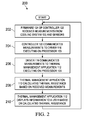
- FIG. 2 illustrates a flow chart of an example method for providing user-visible thermal performance degradation monitoring, in accordance with certain embodiments of the present disclosure
- FIG. 3 illustrates example curves of thermal resistance versus coolant speed over a lifetime of an information handling system, in accordance with certain embodiments of the present disclosure.
- FIGS. 1-3 wherein like numbers are used to indicate like and corresponding parts.
- an information handling system may include any instrumentality or aggregate of instrumentalities operable to compute, classify, process, transmit, receive, retrieve, originate, switch, store, display, manifest, detect, record, reproduce, handle, or utilize any form of information, intelligence, or data for business, scientific, control, entertainment, or other purposes.
- an information handling system may be a personal computer, a personal digital assistant (PDA), a consumer electronic device, a network storage device, or any other suitable device and may vary in size, shape, performance, functionality, and price.
- the information handling system may include memory, one or more processing resources such as a central processing unit (“CPU”) or hardware or software control logic.
- Additional components of the information handling system may include one or more storage devices, one or more communications ports for communicating with external devices as well as various input/output (“I/O”) devices, such as a keyboard, a mouse, and a video display.
- the information handling system may also include one or more buses operable to transmit communication between the various hardware components.
- Computer-readable media may include any instrumentality or aggregation of instrumentalities that may retain data and/or instructions for a period of time.
- Computer-readable media may include, without limitation, storage media such as a direct access storage device (e.g., a hard disk drive or floppy disk), a sequential access storage device (e.g., a tape disk drive), compact disk, CD-ROM, DVD, random access memory (RAM), read-only memory (ROM), electrically erasable programmable read-only memory (EEPROM), and/or flash memory; as well as communications media such as wires, optical fibers, microwaves, radio waves, and other electromagnetic and/or optical carriers; and/or any combination of the foregoing.
- storage media such as a direct access storage device (e.g., a hard disk drive or floppy disk), a sequential access storage device (e.g., a tape disk drive), compact disk, CD-ROM, DVD, random access memory (RAM), read-only memory (ROM), electrically erasable programmable read-
- information handling resources may broadly refer to any component system, device or apparatus of an information handling system, including without limitation processors, service processors, basic input/output systems (BIOSs), buses, memories, I/O devices and/or interfaces, storage resources, network interfaces, motherboards, and/or any other components and/or elements of an information handling system.
- processors service processors, basic input/output systems (BIOSs), buses, memories, I/O devices and/or interfaces, storage resources, network interfaces, motherboards, and/or any other components and/or elements of an information handling system.
- BIOS basic input/output systems
- FIG. 1 illustrates a block diagram of an example information handling system 102 including functionality for providing user-visible thermal performance degradation monitoring.
- information handling system 102 may comprise a server.
- information handling system 102 may be a personal computer (e.g., a desktop computer, a laptop, notebook, tablet, handheld, smart phone, personal digital assistant, etc.). As depicted in FIG.
- information handling system 102 may include a processor 103 , a memory 104 communicatively coupled to processor 103 , a user interface 110 communicatively coupled to processor 103 , a controller 122 communicatively coupled to processor 103 , a cooling system 120 communicatively coupled to controller 122 , one or more temperature sensors 118 coupled to controller 122 , and one or more accelerometers coupled to controller 122 .
- Processor 103 may include any system, device, or apparatus configured to interpret and/or execute program instructions and/or process data, and may include, without limitation, a microprocessor, microcontroller, digital signal processor (DSP), application specific integrated circuit (ASIC), or any other digital or analog circuitry configured to interpret and/or execute program instructions and/or process data.
- processor 103 may interpret and/or execute program instructions and/or process data stored in memory 104 and/or another component of information handling system 102 .
- Memory 104 may be communicatively coupled to processor 103 and may include any system, device, or apparatus configured to retain program instructions and/or data for a period of time (e.g., computer-readable media).
- Memory 104 may include RAM, EEPROM, a PCMCIA card, flash memory, magnetic storage, opto-magnetic storage, or any suitable selection and/or array of volatile or non-volatile memory that retains data after power to information handling system 102 is turned off.
- memory 104 may have operating system 106 stored thereon.
- Operating system 106 may be any program of executable instructions, or aggregation of programs of executable instructions, configured to manage and/or control the allocation and usage of hardware resources (e.g., processor 103 , memory 104 , user interface 110 , and/or other information handling resources) and provide an interface between such hardware resources and application programs hosted by operating system 106 , and thus may act as a host for application programs to be executed by information handling system 102 .
- Active portions of operating system 106 may be read and executed by processor 103 in order to carry out the functionality of operating system 106 .
- Examples of operating system 106 may include, without limitation, Windows, MacOS, UNIX, LINUX, Android, iOS, or any other closed or open source operating system.
- operating system 106 may include a thermal management application 112 and a driver 116 .
- Thermal management application 112 may comprise any program of instructions configured to, when read and executed by processor 103 , facilitate communication (e.g., via user interface 110 ) of information (e.g., notifications, alerts, messages, prompts) to a user of information handling system 102 regarding thermal conditions of information handling system 102 , as described in greater detail below.
- thermal management application 112 may comprise and/or may have functionality similar to that of OpenManage Client Instrumentation (OMCI), which is available from Dell Inc.
- OMCI OpenManage Client Instrumentation
- thermal management application 112 may, when read and executed by processor 103 , communicate with driver 116 to receive thermal information.
- thermal management application 112 is depicted in FIG. 1 as being part of or being capable of executing upon an operating system 106 , it is noted thermal application 112 may reside in and/or execute upon any suitable component of information handling system (e.g., a basic input/output system of information handling system 102 , pre-boot diagnostic utility of information handling system 102 , etc.)
- information handling system e.g., a basic input/output system of information handling system 102 , pre-boot diagnostic utility of information handling system 102 , etc.
- Driver 116 may comprise a program of instructions configured to, when read and executed by processor 103 , provide an interface between operating system 106 and firmware 124 executing on controller 122 . As described in greater detail below, driver 116 may receive information regarding thermal conditions of information handling system 102 from firmware 124 , and further communicate such information (e.g., in the form of notifications, alerts, messages, and/or prompts to user interface 110 ) to thermal management application 112 , thus permitting operating-system runtime reporting of thermal information to a user. In some embodiments, driver 116 may comprise an Intelligent Platform Management Interface (IPMI) driver.
- IPMI Intelligent Platform Management Interface
- thermal data 126 may include any suitable information regarding thermal characteristics of information handling resources of information handling system 102 .
- thermal data 126 may include information indicative of an ideal thermal resistance (as such term is defined below) at various speeds of a mover of coolant (e.g., air, liquid, etc.), which may represent an approximate desired thermal resistance in the presence of little or no thermal degradation of information handling system 102 .
- User interface 110 may comprise any instrumentality or aggregation of instrumentalities by which a user may interact with information handling system 102 .
- user interface 110 may permit a user to input data and/or instructions into information handling system 102 , and/or otherwise manipulate information handling system 102 and its associated components.
- User interface 110 may also permit information handling system 102 to communicate data to a user, e.g., by way of a display device.
- Cooling system 120 may be communicatively coupled to controller 122 , and may include any mechanical or electro-mechanical system, apparatus, or device operable to move coolant (e.g., air, other gasses, liquids) throughout a chassis or enclosure of information handling system 102 .
- coolant e.g., air, other gasses, liquids
- cooling system 120 may comprise a fan (e.g., a rotating arrangement of vanes or blades which act on a gaseous coolant such as air).
- cooling system 120 may comprise a blower (e.g., a centrifugal fan that employs rotating impellers to accelerate gaseous cooling received at its intake and change the direction of the airflow).
- the air mover may cool information handling resources of information handling system 102 by drawing cool air into an enclosure housing the information handling resources from the outside of the housing, expel warm air from inside the enclosure to the outside of such enclosure, and/or move air across one or more heatsinks (not explicitly shown) internal to the enclosure to cool one or more information handling resources.
- an air mover e.g., fan or blower
- the air mover may cool information handling resources of information handling system 102 by drawing cool air into an enclosure housing the information handling resources from the outside of the housing, expel warm air from inside the enclosure to the outside of such enclosure, and/or move air across one or more heatsinks (not explicitly shown) internal to the enclosure to cool one or more information handling resources.
- cooling system 120 may comprise mechanisms other than a blower for moving coolant, including liquid pumps, jets, and/or free convection enclosures.
- rotating and other components for moving coolant by cooling system 120 may be driven by a motor or other mechanical device.
- the rotational speed of such motor may be controlled by suitable control signals communicated from a controller 122 of cooling system 120 .
- Controller 122 may comprise any system, device, or apparatus configured to, under the direction of firmware 124 executing thereon, control a coolant flow delivered by cooling system 120 based on appropriate control signals received from temperature sensor 118 .
- controller 122 may also be configured to, under direction of firmware 124 , communicate thermal information receive from temperature sensor 118 to driver 116 (e.g., via IPMI).
- Temperature sensor 118 may be any system, device, or apparatus (e.g., a thermometer, thermistor, etc.) configured to communicate a signal to controller 122 indicative of a temperature within information handling system 102 .
- information handling system 102 may comprise a plurality of temperature sensors 118 , wherein each temperature sensor 118 detects a temperature of a particular component and/or location within information handling system 102 .
- one temperature sensor 118 may detect an ambient temperature of coolant entering information handling system 102 via a cooling system 120 while another temperature sensor 118 may detect a temperature of processor 103 .
- Accelerometer 126 may be communicatively coupled to controller 122 , and may include any system, device, or apparatus configured to measure acceleration (e.g., proper acceleration) experienced by information handling system 102 . Accordingly, accelerometer 126 may measure a gravitational orientation of information handling system 102 .
- information handling system 102 may include one or more other information handling resources.
- controller 122 may receive measurements indicative of thermal performance of cooling system 120 .
- measurements may include a speed of coolant driven by the cooling system (e.g., air flow generated by air mover, liquid flow generated by liquid pump or jet, flow of coolant in a free-convection system, etc.), an ambient temperature associated with information handling system 102 (e.g., a temperature measured by a temperature sensor 118 at an coolant intake inlet of cooing system 120 ), a temperature associated with one or more information handling resources of information handling system 102 (e.g., a temperature measured by a temperature sensor 118 proximate to processor 103 and/or other heat-dissipating information handling resource), and/or a gravitational orientation of information handling system 102 as measured by accelerometer 126 .
- a speed of coolant driven by the cooling system e.g., air flow generated by air mover, liquid flow generated by liquid pump or jet, flow of coolant in a free-convection system, etc.
- Controller 122 may in turn communicate such measurements to thermal management application 112 via driver 116 .
- thermal management application 112 may generate an alert to user interface 110 , which may prompt a user to take action in response to the thermal degradation (e.g., clean inlet vents for coolant, clean dust from heat sinks, clean/replace filters, and/or identify failures in the thermal system).
- thermal degradation e.g., clean inlet vents for coolant, clean dust from heat sinks, clean/replace filters, and/or identify failures in the thermal system.
- FIG. 2 illustrates a flow chart of an example method 200 for providing user-visible thermal performance degradation monitoring, in accordance with certain embodiments of the present disclosure.
- method 200 may begin at step 202 .
- teachings of the present disclosure may be implemented in a variety of configurations of information handling system 102 .
- firmware 124 of controller 122 may receive measurements from cooling system 120 and one or more sensors of information handling system 102 (e.g., temperature sensor 118 and/or accelerometer 126 ).
- controller 122 may receive from cooling system 120 a measurement of the speed of the flow of the coolant, may receive from temperature sensors 118 measurements of a plurality of temperatures of information handling system 102 (e.g., one or more ambient temperatures associated with information handling system 102 , temperatures proximate to one or more information handling resources of information handling system 102 , power consumed by processor 103 or other information handling resources, etc.), and may receive from accelerometer 126 measurements of a gravitational orientation of information handling system 102 .
- controller 122 may communicate such measurements to driver 116 executing on processor 103 which may in turn, at step 206 , communicate such measurements to thermal management application 112 executing on processor 103 .
- thermal management application 112 may calculate a thermal resistance based on received measurements. For example, such thermal resistance may be calculated as the difference between a temperature of a given information handling resource (e.g., processor 103 ) and an ambient temperature associated with information handling system 102 , divided by a power consumed by the given information handling resource.
- a thermal resistance may be calculated as the difference between a temperature of a given information handling resource (e.g., processor 103 ) and an ambient temperature associated with information handling system 102 , divided by a power consumed by the given information handling resource.
- thermal resistance versus coolant speed of a thermal system may be characterized by curve 302 .
- information stored in thermal data 126 may be indicative of such ideal curve 302 .
- fouling may cause degradation of the thermal system, and thermal resistance may generally increase over such time for all coolant speeds, as shown by curves 304 , 306 , and 308 .
- cooling system 120 must employ increasing speed in order to meet a target thermal resistance 310 for adequately cooling an information handling resource. If sufficient degradation occurs, the thermal performance of the thermal system may reach a point at which no speed of coolant from cooling system 120 will provide adequate thermal performance (see, e.g., curve 308 ), which may lead to overheating of information handling resources and throttling of information handling resources in order to reduce their heat generation.
- thermal management application 112 may display information to a user (e.g., via user interface 110 ) based on the calculated thermal resistance.
- information may include the value of the thermal resistance.
- thermal management application 112 may compare the calculated thermal resistance to an ideal thermal resistance for the particular speed of the coolant at which the calculated thermal resistance was determined.
- such ideal thermal resistance for the particular speed of the coolant may be retrieved from thermal data 126 . If the calculated thermal resistance is more than a predetermined factor (e.g., 1.5, 2) of the ideal thermal resistance at the relevant speed of the coolant, such a condition may indicate degraded thermal performance of cooling system 120 . Accordingly, in response to the calculated thermal resistance exceeding the ideal thermal resistance by the predetermined factor, thermal management application 112 may display an alert to a user (e.g., via user interface 110 ).
- a predetermined factor e.g. 1.5, 2
- such alert may include a prompt to an end user or administrator of information handling system 102 to take an action in response to the alert, including without limitation a prompt to clean intake vents of the housing of information handling system 102 , clean dust from cooling surfaces of information handling system 102 , and/or clean or change one or more filters of information handling system 102 and/or cooling system 120 .
- method 200 may proceed again to step 202 .
- a method identical or similar to method 200 may be employed in a factory setting in which information handling system 102 is manufactured, such that a factory technician and/or a factory automation may ensure that thermal performance is within a satisfactory tolerance of ideal performance prior to information handling system 102 being shipped to a customer. Operation outside of such satisfactory tolerance may indicate a defect in components of a thermal system (e.g., an improperly attached heat sink, unintended blockage of coolant, etc.).
- FIG. 2 discloses a particular number of steps to be taken with respect to method 200
- method 200 may be executed with greater or lesser steps than those depicted in FIG. 2 .
- FIG. 2 discloses a certain order of steps to be taken with respect to method 200
- the steps comprising method 200 may be completed in any suitable order.
- Method 200 may be implemented using information handling system 102 or any other system operable to implement method 200 .
- method 200 may be implemented partially or fully in software and/or firmware embodied in computer-readable media.
- references in the appended claims to an apparatus or system or a component of an apparatus or system being adapted to, arranged to, capable of, configured to, enabled to, operable to, or operative to perform a particular function encompasses that apparatus, system, or component, whether or not it or that particular function is activated, turned on, or unlocked, as long as that apparatus, system, or component is so adapted, arranged, capable, configured, enabled, operable, or operative.
Landscapes
- Engineering & Computer Science (AREA)
- Theoretical Computer Science (AREA)
- Physics & Mathematics (AREA)
- General Physics & Mathematics (AREA)
- Human Computer Interaction (AREA)
- General Engineering & Computer Science (AREA)
- Automation & Control Theory (AREA)
- Cooling Or The Like Of Electrical Apparatus (AREA)
- Cooling Or The Like Of Semiconductors Or Solid State Devices (AREA)
Abstract
Description
Claims (18)
Priority Applications (1)
| Application Number | Priority Date | Filing Date | Title |
|---|---|---|---|
| US14/190,563 US9690339B2 (en) | 2014-02-26 | 2014-02-26 | Systems and methods for providing user-visible thermal performance degradation monitoring in an information handling system |
Applications Claiming Priority (1)
| Application Number | Priority Date | Filing Date | Title |
|---|---|---|---|
| US14/190,563 US9690339B2 (en) | 2014-02-26 | 2014-02-26 | Systems and methods for providing user-visible thermal performance degradation monitoring in an information handling system |
Publications (2)
| Publication Number | Publication Date |
|---|---|
| US20150241885A1 US20150241885A1 (en) | 2015-08-27 |
| US9690339B2 true US9690339B2 (en) | 2017-06-27 |
Family
ID=53882135
Family Applications (1)
| Application Number | Title | Priority Date | Filing Date |
|---|---|---|---|
| US14/190,563 Active 2035-04-19 US9690339B2 (en) | 2014-02-26 | 2014-02-26 | Systems and methods for providing user-visible thermal performance degradation monitoring in an information handling system |
Country Status (1)
| Country | Link |
|---|---|
| US (1) | US9690339B2 (en) |
Families Citing this family (3)
| Publication number | Priority date | Publication date | Assignee | Title |
|---|---|---|---|---|
| US12045104B2 (en) * | 2019-07-19 | 2024-07-23 | Hewlett-Packard Development Company, L.P. | Processor thermal metric |
| US11500436B2 (en) * | 2020-11-12 | 2022-11-15 | Dell Products L.P. | System and method for predictive fan speed control and management |
| US20260228703A1 (en) * | 2025-02-04 | 2026-08-06 | Dell Products L.P. | System health-based maintenance reminder |
Citations (8)
| Publication number | Priority date | Publication date | Assignee | Title |
|---|---|---|---|---|
| JPH1053016A (en) * | 1996-06-17 | 1998-02-24 | Bayerische Motoren Werke Ag | Accurate external temperature detection method |
| US20090268404A1 (en) * | 2008-04-23 | 2009-10-29 | International Business Machines Corporation | Energy efficient apparatus and method for cooling an electronics rack |
| US20090295648A1 (en) * | 2008-06-03 | 2009-12-03 | Dorsey John G | Antenna diversity systems for portable electronic devices |
| US20100193336A1 (en) * | 2009-01-30 | 2010-08-05 | R.O.I. Lighting And Controls | Switch for a moveable pole |
| US20130015799A1 (en) * | 2010-03-10 | 2013-01-17 | Hitachi Ltd | Power Converter |
| US20130128918A1 (en) * | 2011-11-21 | 2013-05-23 | International Business Machines Corporation | Thermal resistance-based monitoring of cooling of an electronic component |
| US20130343668A1 (en) * | 2012-06-26 | 2013-12-26 | Dunling Li | Low Delay Low Complexity Lossless Compression System |
| US20150003492A1 (en) * | 2013-06-27 | 2015-01-01 | Fuji Electric Co., Ltd. | Thermal resistance measuring method and thermal resistance measuring device |
-
2014
- 2014-02-26 US US14/190,563 patent/US9690339B2/en active Active
Patent Citations (8)
| Publication number | Priority date | Publication date | Assignee | Title |
|---|---|---|---|---|
| JPH1053016A (en) * | 1996-06-17 | 1998-02-24 | Bayerische Motoren Werke Ag | Accurate external temperature detection method |
| US20090268404A1 (en) * | 2008-04-23 | 2009-10-29 | International Business Machines Corporation | Energy efficient apparatus and method for cooling an electronics rack |
| US20090295648A1 (en) * | 2008-06-03 | 2009-12-03 | Dorsey John G | Antenna diversity systems for portable electronic devices |
| US20100193336A1 (en) * | 2009-01-30 | 2010-08-05 | R.O.I. Lighting And Controls | Switch for a moveable pole |
| US20130015799A1 (en) * | 2010-03-10 | 2013-01-17 | Hitachi Ltd | Power Converter |
| US20130128918A1 (en) * | 2011-11-21 | 2013-05-23 | International Business Machines Corporation | Thermal resistance-based monitoring of cooling of an electronic component |
| US20130343668A1 (en) * | 2012-06-26 | 2013-12-26 | Dunling Li | Low Delay Low Complexity Lossless Compression System |
| US20150003492A1 (en) * | 2013-06-27 | 2015-01-01 | Fuji Electric Co., Ltd. | Thermal resistance measuring method and thermal resistance measuring device |
Also Published As
| Publication number | Publication date |
|---|---|
| US20150241885A1 (en) | 2015-08-27 |
Similar Documents
| Publication | Publication Date | Title |
|---|---|---|
| US10191523B2 (en) | Systems and methods for management of exhaust temperature in an information handling system | |
| US10254807B2 (en) | Systems and methods for policy-based per-zone air mover management for offline management controller | |
| US10642672B2 (en) | Systems and methods for dynamic thermal excursion timeout determination and predictive failure notification based on airflow escape detection | |
| US10405461B2 (en) | Systems and methods for fan performance-based scaling of thermal control parameters | |
| US10860072B2 (en) | Expected and detected air mover configurations | |
| US20180077823A1 (en) | System and method of controlling an air mover | |
| US12621956B2 (en) | Acoustically-sensitive filter fouling tests | |
| US20150241885A1 (en) | Systems and methods for providing user-visible thermal performance degradation monitoring in an information handling system | |
| US20160135333A1 (en) | Systems and methods for economical airflow sensor and closed-loop airflow control in an information handling system | |
| US10428824B2 (en) | Systems and methods for speed control of an air mover | |
| US10921785B2 (en) | Systems and methods for thermal control of information handling resources based on user proximity | |
| US20150169030A1 (en) | Systems and methods for thermal control of a storage enclosure | |
| US10095290B2 (en) | Systems and methods for thermal control support for predecessor information handling systems | |
| US10180690B2 (en) | Systems and methods for mitigation of oscillation in a closed-loop system | |
| US10761548B2 (en) | Systems and methods for providing sensor information from an intelligent device for closed-loop thermal control | |
| US12346177B2 (en) | Self-calculating filter fouling thresholds | |
| US10353357B2 (en) | Systems and methods for combined active and passive cooling of an information handling resource | |
| US12430221B2 (en) | Systems and methods for estimating information handling system performance capacity based on temperature and acoustic parameters | |
| US20170318708A1 (en) | Systems and methods for controlling air mover speed during boot of information handling system | |
| US10627880B2 (en) | Systems and methods for forward compatibility of custom thermal settings | |
| US10725511B2 (en) | Systems and methods for thermal control of information handling resources based on system architecture | |
| US9934080B2 (en) | Systems and methods for reporting air mover events to an operating system during operating system runtime | |
| US20200146189A1 (en) | Systems and methods for cooling with variable-location air mover | |
| US20260111326A1 (en) | Systems and methods for real-time assessment of air mover cooling efficiency using key performance indicators | |
| US9606593B2 (en) | Systems and methods for management of surface temperature in an information handling system |
Legal Events
| Date | Code | Title | Description |
|---|---|---|---|
| AS | Assignment |
Owner name: DELL PRODUCTS L.P., TEXAS Free format text: ASSIGNMENT OF ASSIGNORS INTEREST;ASSIGNORS:SHELNUTT, AUSTIN MICHAEL;HELBERG, CHRISTOPHER M.;NORTH, TRAVIS C.;REEL/FRAME:032303/0071 Effective date: 20140224 |
|
| AS | Assignment |
Owner name: THE BANK OF NEW YORK MELLON TRUST COMPANY N.A., AS NOTES COLLATERAL AGENT, TEXAS Free format text: SUPPLEMENT TO PATENT SECURITY AGREEMENT (NOTES);ASSIGNORS:DELL PRODUCTS L.P.;DELL SOFTWARE INC.;SECUREWORKS, INC.;REEL/FRAME:032809/0987 Effective date: 20140402 Owner name: BANK OF AMERICA, N.A., AS COLLATERAL AGENT, NORTH CAROLINA Free format text: SUPPLEMENT TO PATENT SECURITY AGREEMENT (TERM LOAN);ASSIGNORS:DELL PRODUCTS L.P.;DELL SOFTWARE INC.;SECUREWORKS, INC.;REEL/FRAME:032810/0038 Effective date: 20140402 Owner name: BANK OF AMERICA, N.A., AS ADMINISTRATIVE AGENT, NORTH CAROLINA Free format text: SUPPLEMENT TO PATENT SECURITY AGREEMENT (ABL);ASSIGNORS:DELL PRODUCTS L.P.;DELL SOFTWARE INC.;SECUREWORKS, INC.;REEL/FRAME:032810/0023 Effective date: 20140402 Owner name: BANK OF AMERICA, N.A., AS COLLATERAL AGENT, NORTH Free format text: SUPPLEMENT TO PATENT SECURITY AGREEMENT (TERM LOAN);ASSIGNORS:DELL PRODUCTS L.P.;DELL SOFTWARE INC.;SECUREWORKS, INC.;REEL/FRAME:032810/0038 Effective date: 20140402 Owner name: BANK OF AMERICA, N.A., AS ADMINISTRATIVE AGENT, NO Free format text: SUPPLEMENT TO PATENT SECURITY AGREEMENT (ABL);ASSIGNORS:DELL PRODUCTS L.P.;DELL SOFTWARE INC.;SECUREWORKS, INC.;REEL/FRAME:032810/0023 Effective date: 20140402 Owner name: THE BANK OF NEW YORK MELLON TRUST COMPANY N.A., AS Free format text: SUPPLEMENT TO PATENT SECURITY AGREEMENT (NOTES);ASSIGNORS:DELL PRODUCTS L.P.;DELL SOFTWARE INC.;SECUREWORKS, INC.;REEL/FRAME:032809/0987 Effective date: 20140402 |
|
| AS | Assignment |
Owner name: DELL PRODUCTS L.P., TEXAS Free format text: RELEASE OF REEL 032810 FRAME 0023 (ABL);ASSIGNOR:BANK OF AMERICA, N.A., AS ADMINISTRATIVE AGENT;REEL/FRAME:040014/0320 Effective date: 20160907 Owner name: DELL SOFTWARE INC., CALIFORNIA Free format text: RELEASE OF REEL 032810 FRAME 0023 (ABL);ASSIGNOR:BANK OF AMERICA, N.A., AS ADMINISTRATIVE AGENT;REEL/FRAME:040014/0320 Effective date: 20160907 Owner name: SECUREWORKS, INC., GEORGIA Free format text: RELEASE OF REEL 032810 FRAME 0023 (ABL);ASSIGNOR:BANK OF AMERICA, N.A., AS ADMINISTRATIVE AGENT;REEL/FRAME:040014/0320 Effective date: 20160907 |
|
| AS | Assignment |
Owner name: SECUREWORKS, INC., GEORGIA Free format text: RELEASE OF REEL 032809 FRAME 0987 (NOTE);ASSIGNOR:BANK OF NEW YORK MELLON TRUST COMPANY, N.A., AS COLLATERAL AGENT;REEL/FRAME:040026/0953 Effective date: 20160907 Owner name: DELL SOFTWARE INC., CALIFORNIA Free format text: RELEASE OF REEL 032809 FRAME 0987 (NOTE);ASSIGNOR:BANK OF NEW YORK MELLON TRUST COMPANY, N.A., AS COLLATERAL AGENT;REEL/FRAME:040026/0953 Effective date: 20160907 Owner name: DELL PRODUCTS L.P., TEXAS Free format text: RELEASE OF REEL 032809 FRAME 0987 (NOTE);ASSIGNOR:BANK OF NEW YORK MELLON TRUST COMPANY, N.A., AS COLLATERAL AGENT;REEL/FRAME:040026/0953 Effective date: 20160907 Owner name: DELL SOFTWARE INC., CALIFORNIA Free format text: RELEASE OF REEL 032810 FRAME 0038 (TL);ASSIGNOR:BANK OF AMERICA, N.A., AS COLLATERAL AGENT;REEL/FRAME:040027/0686 Effective date: 20160907 Owner name: DELL PRODUCTS L.P., TEXAS Free format text: RELEASE OF REEL 032810 FRAME 0038 (TL);ASSIGNOR:BANK OF AMERICA, N.A., AS COLLATERAL AGENT;REEL/FRAME:040027/0686 Effective date: 20160907 Owner name: SECUREWORKS, INC., GEORGIA Free format text: RELEASE OF REEL 032810 FRAME 0038 (TL);ASSIGNOR:BANK OF AMERICA, N.A., AS COLLATERAL AGENT;REEL/FRAME:040027/0686 Effective date: 20160907 |
|
| AS | Assignment |
Owner name: CREDIT SUISSE AG, CAYMAN ISLANDS BRANCH, AS COLLATERAL AGENT, NORTH CAROLINA Free format text: SECURITY AGREEMENT;ASSIGNORS:ASAP SOFTWARE EXPRESS, INC.;AVENTAIL LLC;CREDANT TECHNOLOGIES, INC.;AND OTHERS;REEL/FRAME:040134/0001 Effective date: 20160907 Owner name: THE BANK OF NEW YORK MELLON TRUST COMPANY, N.A., AS NOTES COLLATERAL AGENT, TEXAS Free format text: SECURITY AGREEMENT;ASSIGNORS:ASAP SOFTWARE EXPRESS, INC.;AVENTAIL LLC;CREDANT TECHNOLOGIES, INC.;AND OTHERS;REEL/FRAME:040136/0001 Effective date: 20160907 Owner name: CREDIT SUISSE AG, CAYMAN ISLANDS BRANCH, AS COLLAT Free format text: SECURITY AGREEMENT;ASSIGNORS:ASAP SOFTWARE EXPRESS, INC.;AVENTAIL LLC;CREDANT TECHNOLOGIES, INC.;AND OTHERS;REEL/FRAME:040134/0001 Effective date: 20160907 Owner name: THE BANK OF NEW YORK MELLON TRUST COMPANY, N.A., A Free format text: SECURITY AGREEMENT;ASSIGNORS:ASAP SOFTWARE EXPRESS, INC.;AVENTAIL LLC;CREDANT TECHNOLOGIES, INC.;AND OTHERS;REEL/FRAME:040136/0001 Effective date: 20160907 |
|
| FEPP | Fee payment procedure |
Free format text: PAYOR NUMBER ASSIGNED (ORIGINAL EVENT CODE: ASPN); ENTITY STATUS OF PATENT OWNER: LARGE ENTITY |
|
| STCF | Information on status: patent grant |
Free format text: PATENTED CASE |
|
| AS | Assignment |
Owner name: THE BANK OF NEW YORK MELLON TRUST COMPANY, N.A., T Free format text: SECURITY AGREEMENT;ASSIGNORS:CREDANT TECHNOLOGIES, INC.;DELL INTERNATIONAL L.L.C.;DELL MARKETING L.P.;AND OTHERS;REEL/FRAME:049452/0223 Effective date: 20190320 Owner name: THE BANK OF NEW YORK MELLON TRUST COMPANY, N.A., TEXAS Free format text: SECURITY AGREEMENT;ASSIGNORS:CREDANT TECHNOLOGIES, INC.;DELL INTERNATIONAL L.L.C.;DELL MARKETING L.P.;AND OTHERS;REEL/FRAME:049452/0223 Effective date: 20190320 |
|
| AS | Assignment |
Owner name: THE BANK OF NEW YORK MELLON TRUST COMPANY, N.A., TEXAS Free format text: SECURITY AGREEMENT;ASSIGNORS:CREDANT TECHNOLOGIES INC.;DELL INTERNATIONAL L.L.C.;DELL MARKETING L.P.;AND OTHERS;REEL/FRAME:053546/0001 Effective date: 20200409 |
|
| MAFP | Maintenance fee payment |
Free format text: PAYMENT OF MAINTENANCE FEE, 4TH YEAR, LARGE ENTITY (ORIGINAL EVENT CODE: M1551); ENTITY STATUS OF PATENT OWNER: LARGE ENTITY Year of fee payment: 4 |
|
| AS | Assignment |
Owner name: WYSE TECHNOLOGY L.L.C., CALIFORNIA Free format text: RELEASE BY SECURED PARTY;ASSIGNOR:CREDIT SUISSE AG, CAYMAN ISLANDS BRANCH;REEL/FRAME:058216/0001 Effective date: 20211101 Owner name: SCALEIO LLC, MASSACHUSETTS Free format text: RELEASE BY SECURED PARTY;ASSIGNOR:CREDIT SUISSE AG, CAYMAN ISLANDS BRANCH;REEL/FRAME:058216/0001 Effective date: 20211101 Owner name: MOZY, INC., WASHINGTON Free format text: RELEASE BY SECURED PARTY;ASSIGNOR:CREDIT SUISSE AG, CAYMAN ISLANDS BRANCH;REEL/FRAME:058216/0001 Effective date: 20211101 Owner name: MAGINATICS LLC, CALIFORNIA Free format text: RELEASE BY SECURED PARTY;ASSIGNOR:CREDIT SUISSE AG, CAYMAN ISLANDS BRANCH;REEL/FRAME:058216/0001 Effective date: 20211101 Owner name: FORCE10 NETWORKS, INC., CALIFORNIA Free format text: RELEASE BY SECURED PARTY;ASSIGNOR:CREDIT SUISSE AG, CAYMAN ISLANDS BRANCH;REEL/FRAME:058216/0001 Effective date: 20211101 Owner name: EMC IP HOLDING COMPANY LLC, TEXAS Free format text: RELEASE BY SECURED PARTY;ASSIGNOR:CREDIT SUISSE AG, CAYMAN ISLANDS BRANCH;REEL/FRAME:058216/0001 Effective date: 20211101 Owner name: EMC CORPORATION, MASSACHUSETTS Free format text: RELEASE BY SECURED PARTY;ASSIGNOR:CREDIT SUISSE AG, CAYMAN ISLANDS BRANCH;REEL/FRAME:058216/0001 Effective date: 20211101 Owner name: DELL SYSTEMS CORPORATION, TEXAS Free format text: RELEASE BY SECURED PARTY;ASSIGNOR:CREDIT SUISSE AG, CAYMAN ISLANDS BRANCH;REEL/FRAME:058216/0001 Effective date: 20211101 Owner name: DELL SOFTWARE INC., CALIFORNIA Free format text: RELEASE BY SECURED PARTY;ASSIGNOR:CREDIT SUISSE AG, CAYMAN ISLANDS BRANCH;REEL/FRAME:058216/0001 Effective date: 20211101 Owner name: DELL PRODUCTS L.P., TEXAS Free format text: RELEASE BY SECURED PARTY;ASSIGNOR:CREDIT SUISSE AG, CAYMAN ISLANDS BRANCH;REEL/FRAME:058216/0001 Effective date: 20211101 Owner name: DELL MARKETING L.P., TEXAS Free format text: RELEASE BY SECURED PARTY;ASSIGNOR:CREDIT SUISSE AG, CAYMAN ISLANDS BRANCH;REEL/FRAME:058216/0001 Effective date: 20211101 Owner name: DELL INTERNATIONAL, L.L.C., TEXAS Free format text: RELEASE BY SECURED PARTY;ASSIGNOR:CREDIT SUISSE AG, CAYMAN ISLANDS BRANCH;REEL/FRAME:058216/0001 Effective date: 20211101 Owner name: DELL USA L.P., TEXAS Free format text: RELEASE BY SECURED PARTY;ASSIGNOR:CREDIT SUISSE AG, CAYMAN ISLANDS BRANCH;REEL/FRAME:058216/0001 Effective date: 20211101 Owner name: CREDANT TECHNOLOGIES, INC., TEXAS Free format text: RELEASE BY SECURED PARTY;ASSIGNOR:CREDIT SUISSE AG, CAYMAN ISLANDS BRANCH;REEL/FRAME:058216/0001 Effective date: 20211101 Owner name: AVENTAIL LLC, CALIFORNIA Free format text: RELEASE BY SECURED PARTY;ASSIGNOR:CREDIT SUISSE AG, CAYMAN ISLANDS BRANCH;REEL/FRAME:058216/0001 Effective date: 20211101 Owner name: ASAP SOFTWARE EXPRESS, INC., ILLINOIS Free format text: RELEASE BY SECURED PARTY;ASSIGNOR:CREDIT SUISSE AG, CAYMAN ISLANDS BRANCH;REEL/FRAME:058216/0001 Effective date: 20211101 Owner name: ASAP SOFTWARE EXPRESS, INC., ILLINOIS Free format text: RELEASE OF SECURITY INTEREST;ASSIGNOR:CREDIT SUISSE AG, CAYMAN ISLANDS BRANCH;REEL/FRAME:058216/0001 Effective date: 20211101 Owner name: AVENTAIL LLC, CALIFORNIA Free format text: RELEASE OF SECURITY INTEREST;ASSIGNOR:CREDIT SUISSE AG, CAYMAN ISLANDS BRANCH;REEL/FRAME:058216/0001 Effective date: 20211101 Owner name: CREDANT TECHNOLOGIES, INC., TEXAS Free format text: RELEASE OF SECURITY INTEREST;ASSIGNOR:CREDIT SUISSE AG, CAYMAN ISLANDS BRANCH;REEL/FRAME:058216/0001 Effective date: 20211101 Owner name: DELL USA L.P., TEXAS Free format text: RELEASE OF SECURITY INTEREST;ASSIGNOR:CREDIT SUISSE AG, CAYMAN ISLANDS BRANCH;REEL/FRAME:058216/0001 Effective date: 20211101 Owner name: DELL INTERNATIONAL, L.L.C., TEXAS Free format text: RELEASE OF SECURITY INTEREST;ASSIGNOR:CREDIT SUISSE AG, CAYMAN ISLANDS BRANCH;REEL/FRAME:058216/0001 Effective date: 20211101 Owner name: DELL MARKETING L.P., TEXAS Free format text: RELEASE OF SECURITY INTEREST;ASSIGNOR:CREDIT SUISSE AG, CAYMAN ISLANDS BRANCH;REEL/FRAME:058216/0001 Effective date: 20211101 Owner name: DELL PRODUCTS L.P., TEXAS Free format text: RELEASE OF SECURITY INTEREST;ASSIGNOR:CREDIT SUISSE AG, CAYMAN ISLANDS BRANCH;REEL/FRAME:058216/0001 Effective date: 20211101 Owner name: DELL SOFTWARE INC., CALIFORNIA Free format text: RELEASE OF SECURITY INTEREST;ASSIGNOR:CREDIT SUISSE AG, CAYMAN ISLANDS BRANCH;REEL/FRAME:058216/0001 Effective date: 20211101 Owner name: DELL SYSTEMS CORPORATION, TEXAS Free format text: RELEASE OF SECURITY INTEREST;ASSIGNOR:CREDIT SUISSE AG, CAYMAN ISLANDS BRANCH;REEL/FRAME:058216/0001 Effective date: 20211101 Owner name: EMC CORPORATION, MASSACHUSETTS Free format text: RELEASE OF SECURITY INTEREST;ASSIGNOR:CREDIT SUISSE AG, CAYMAN ISLANDS BRANCH;REEL/FRAME:058216/0001 Effective date: 20211101 Owner name: EMC IP HOLDING COMPANY LLC, TEXAS Free format text: RELEASE OF SECURITY INTEREST;ASSIGNOR:CREDIT SUISSE AG, CAYMAN ISLANDS BRANCH;REEL/FRAME:058216/0001 Effective date: 20211101 Owner name: FORCE10 NETWORKS, INC., CALIFORNIA Free format text: RELEASE OF SECURITY INTEREST;ASSIGNOR:CREDIT SUISSE AG, CAYMAN ISLANDS BRANCH;REEL/FRAME:058216/0001 Effective date: 20211101 Owner name: MAGINATICS LLC, CALIFORNIA Free format text: RELEASE OF SECURITY INTEREST;ASSIGNOR:CREDIT SUISSE AG, CAYMAN ISLANDS BRANCH;REEL/FRAME:058216/0001 Effective date: 20211101 Owner name: MOZY, INC., WASHINGTON Free format text: RELEASE OF SECURITY INTEREST;ASSIGNOR:CREDIT SUISSE AG, CAYMAN ISLANDS BRANCH;REEL/FRAME:058216/0001 Effective date: 20211101 Owner name: SCALEIO LLC, MASSACHUSETTS Free format text: RELEASE OF SECURITY INTEREST;ASSIGNOR:CREDIT SUISSE AG, CAYMAN ISLANDS BRANCH;REEL/FRAME:058216/0001 Effective date: 20211101 Owner name: WYSE TECHNOLOGY L.L.C., CALIFORNIA Free format text: RELEASE OF SECURITY INTEREST;ASSIGNOR:CREDIT SUISSE AG, CAYMAN ISLANDS BRANCH;REEL/FRAME:058216/0001 Effective date: 20211101 |
|
| AS | Assignment |
Owner name: SCALEIO LLC, MASSACHUSETTS Free format text: RELEASE OF SECURITY INTEREST IN PATENTS PREVIOUSLY RECORDED AT REEL/FRAME (040136/0001);ASSIGNOR:THE BANK OF NEW YORK MELLON TRUST COMPANY, N.A., AS NOTES COLLATERAL AGENT;REEL/FRAME:061324/0001 Effective date: 20220329 Owner name: EMC IP HOLDING COMPANY LLC (ON BEHALF OF ITSELF AND AS SUCCESSOR-IN-INTEREST TO MOZY, INC.), TEXAS Free format text: RELEASE OF SECURITY INTEREST IN PATENTS PREVIOUSLY RECORDED AT REEL/FRAME (040136/0001);ASSIGNOR:THE BANK OF NEW YORK MELLON TRUST COMPANY, N.A., AS NOTES COLLATERAL AGENT;REEL/FRAME:061324/0001 Effective date: 20220329 Owner name: EMC CORPORATION (ON BEHALF OF ITSELF AND AS SUCCESSOR-IN-INTEREST TO MAGINATICS LLC), MASSACHUSETTS Free format text: RELEASE OF SECURITY INTEREST IN PATENTS PREVIOUSLY RECORDED AT REEL/FRAME (040136/0001);ASSIGNOR:THE BANK OF NEW YORK MELLON TRUST COMPANY, N.A., AS NOTES COLLATERAL AGENT;REEL/FRAME:061324/0001 Effective date: 20220329 Owner name: DELL MARKETING CORPORATION (SUCCESSOR-IN-INTEREST TO FORCE10 NETWORKS, INC. AND WYSE TECHNOLOGY L.L.C.), TEXAS Free format text: RELEASE OF SECURITY INTEREST IN PATENTS PREVIOUSLY RECORDED AT REEL/FRAME (040136/0001);ASSIGNOR:THE BANK OF NEW YORK MELLON TRUST COMPANY, N.A., AS NOTES COLLATERAL AGENT;REEL/FRAME:061324/0001 Effective date: 20220329 Owner name: DELL PRODUCTS L.P., TEXAS Free format text: RELEASE OF SECURITY INTEREST IN PATENTS PREVIOUSLY RECORDED AT REEL/FRAME (040136/0001);ASSIGNOR:THE BANK OF NEW YORK MELLON TRUST COMPANY, N.A., AS NOTES COLLATERAL AGENT;REEL/FRAME:061324/0001 Effective date: 20220329 Owner name: DELL INTERNATIONAL L.L.C., TEXAS Free format text: RELEASE OF SECURITY INTEREST IN PATENTS PREVIOUSLY RECORDED AT REEL/FRAME (040136/0001);ASSIGNOR:THE BANK OF NEW YORK MELLON TRUST COMPANY, N.A., AS NOTES COLLATERAL AGENT;REEL/FRAME:061324/0001 Effective date: 20220329 Owner name: DELL USA L.P., TEXAS Free format text: RELEASE OF SECURITY INTEREST IN PATENTS PREVIOUSLY RECORDED AT REEL/FRAME (040136/0001);ASSIGNOR:THE BANK OF NEW YORK MELLON TRUST COMPANY, N.A., AS NOTES COLLATERAL AGENT;REEL/FRAME:061324/0001 Effective date: 20220329 Owner name: DELL MARKETING L.P. (ON BEHALF OF ITSELF AND AS SUCCESSOR-IN-INTEREST TO CREDANT TECHNOLOGIES, INC.), TEXAS Free format text: RELEASE OF SECURITY INTEREST IN PATENTS PREVIOUSLY RECORDED AT REEL/FRAME (040136/0001);ASSIGNOR:THE BANK OF NEW YORK MELLON TRUST COMPANY, N.A., AS NOTES COLLATERAL AGENT;REEL/FRAME:061324/0001 Effective date: 20220329 Owner name: DELL MARKETING CORPORATION (SUCCESSOR-IN-INTEREST TO ASAP SOFTWARE EXPRESS, INC.), TEXAS Free format text: RELEASE OF SECURITY INTEREST IN PATENTS PREVIOUSLY RECORDED AT REEL/FRAME (040136/0001);ASSIGNOR:THE BANK OF NEW YORK MELLON TRUST COMPANY, N.A., AS NOTES COLLATERAL AGENT;REEL/FRAME:061324/0001 Effective date: 20220329 |
|
| AS | Assignment |
Owner name: SCALEIO LLC, MASSACHUSETTS Free format text: RELEASE OF SECURITY INTEREST IN PATENTS PREVIOUSLY RECORDED AT REEL/FRAME (045455/0001);ASSIGNOR:THE BANK OF NEW YORK MELLON TRUST COMPANY, N.A., AS NOTES COLLATERAL AGENT;REEL/FRAME:061753/0001 Effective date: 20220329 Owner name: EMC IP HOLDING COMPANY LLC (ON BEHALF OF ITSELF AND AS SUCCESSOR-IN-INTEREST TO MOZY, INC.), TEXAS Free format text: RELEASE OF SECURITY INTEREST IN PATENTS PREVIOUSLY RECORDED AT REEL/FRAME (045455/0001);ASSIGNOR:THE BANK OF NEW YORK MELLON TRUST COMPANY, N.A., AS NOTES COLLATERAL AGENT;REEL/FRAME:061753/0001 Effective date: 20220329 Owner name: EMC CORPORATION (ON BEHALF OF ITSELF AND AS SUCCESSOR-IN-INTEREST TO MAGINATICS LLC), MASSACHUSETTS Free format text: RELEASE OF SECURITY INTEREST IN PATENTS PREVIOUSLY RECORDED AT REEL/FRAME (045455/0001);ASSIGNOR:THE BANK OF NEW YORK MELLON TRUST COMPANY, N.A., AS NOTES COLLATERAL AGENT;REEL/FRAME:061753/0001 Effective date: 20220329 Owner name: DELL MARKETING CORPORATION (SUCCESSOR-IN-INTEREST TO FORCE10 NETWORKS, INC. AND WYSE TECHNOLOGY L.L.C.), TEXAS Free format text: RELEASE OF SECURITY INTEREST IN PATENTS PREVIOUSLY RECORDED AT REEL/FRAME (045455/0001);ASSIGNOR:THE BANK OF NEW YORK MELLON TRUST COMPANY, N.A., AS NOTES COLLATERAL AGENT;REEL/FRAME:061753/0001 Effective date: 20220329 Owner name: DELL PRODUCTS L.P., TEXAS Free format text: RELEASE OF SECURITY INTEREST IN PATENTS PREVIOUSLY RECORDED AT REEL/FRAME (045455/0001);ASSIGNOR:THE BANK OF NEW YORK MELLON TRUST COMPANY, N.A., AS NOTES COLLATERAL AGENT;REEL/FRAME:061753/0001 Effective date: 20220329 Owner name: DELL INTERNATIONAL L.L.C., TEXAS Free format text: RELEASE OF SECURITY INTEREST IN PATENTS PREVIOUSLY RECORDED AT REEL/FRAME (045455/0001);ASSIGNOR:THE BANK OF NEW YORK MELLON TRUST COMPANY, N.A., AS NOTES COLLATERAL AGENT;REEL/FRAME:061753/0001 Effective date: 20220329 Owner name: DELL USA L.P., TEXAS Free format text: RELEASE OF SECURITY INTEREST IN PATENTS PREVIOUSLY RECORDED AT REEL/FRAME (045455/0001);ASSIGNOR:THE BANK OF NEW YORK MELLON TRUST COMPANY, N.A., AS NOTES COLLATERAL AGENT;REEL/FRAME:061753/0001 Effective date: 20220329 Owner name: DELL MARKETING L.P. (ON BEHALF OF ITSELF AND AS SUCCESSOR-IN-INTEREST TO CREDANT TECHNOLOGIES, INC.), TEXAS Free format text: RELEASE OF SECURITY INTEREST IN PATENTS PREVIOUSLY RECORDED AT REEL/FRAME (045455/0001);ASSIGNOR:THE BANK OF NEW YORK MELLON TRUST COMPANY, N.A., AS NOTES COLLATERAL AGENT;REEL/FRAME:061753/0001 Effective date: 20220329 Owner name: DELL MARKETING CORPORATION (SUCCESSOR-IN-INTEREST TO ASAP SOFTWARE EXPRESS, INC.), TEXAS Free format text: RELEASE OF SECURITY INTEREST IN PATENTS PREVIOUSLY RECORDED AT REEL/FRAME (045455/0001);ASSIGNOR:THE BANK OF NEW YORK MELLON TRUST COMPANY, N.A., AS NOTES COLLATERAL AGENT;REEL/FRAME:061753/0001 Effective date: 20220329 |
|
| AS | Assignment |
Owner name: DELL MARKETING L.P. (ON BEHALF OF ITSELF AND AS SUCCESSOR-IN-INTEREST TO CREDANT TECHNOLOGIES, INC.), TEXAS Free format text: RELEASE OF SECURITY INTEREST IN PATENTS PREVIOUSLY RECORDED AT REEL/FRAME (053546/0001);ASSIGNOR:THE BANK OF NEW YORK MELLON TRUST COMPANY, N.A., AS NOTES COLLATERAL AGENT;REEL/FRAME:071642/0001 Effective date: 20220329 Owner name: DELL INTERNATIONAL L.L.C., TEXAS Free format text: RELEASE OF SECURITY INTEREST IN PATENTS PREVIOUSLY RECORDED AT REEL/FRAME (053546/0001);ASSIGNOR:THE BANK OF NEW YORK MELLON TRUST COMPANY, N.A., AS NOTES COLLATERAL AGENT;REEL/FRAME:071642/0001 Effective date: 20220329 Owner name: DELL PRODUCTS L.P., TEXAS Free format text: RELEASE OF SECURITY INTEREST IN PATENTS PREVIOUSLY RECORDED AT REEL/FRAME (053546/0001);ASSIGNOR:THE BANK OF NEW YORK MELLON TRUST COMPANY, N.A., AS NOTES COLLATERAL AGENT;REEL/FRAME:071642/0001 Effective date: 20220329 Owner name: DELL USA L.P., TEXAS Free format text: RELEASE OF SECURITY INTEREST IN PATENTS PREVIOUSLY RECORDED AT REEL/FRAME (053546/0001);ASSIGNOR:THE BANK OF NEW YORK MELLON TRUST COMPANY, N.A., AS NOTES COLLATERAL AGENT;REEL/FRAME:071642/0001 Effective date: 20220329 Owner name: EMC CORPORATION, MASSACHUSETTS Free format text: RELEASE OF SECURITY INTEREST IN PATENTS PREVIOUSLY RECORDED AT REEL/FRAME (053546/0001);ASSIGNOR:THE BANK OF NEW YORK MELLON TRUST COMPANY, N.A., AS NOTES COLLATERAL AGENT;REEL/FRAME:071642/0001 Effective date: 20220329 Owner name: DELL MARKETING CORPORATION (SUCCESSOR-IN-INTEREST TO FORCE10 NETWORKS, INC. AND WYSE TECHNOLOGY L.L.C.), TEXAS Free format text: RELEASE OF SECURITY INTEREST IN PATENTS PREVIOUSLY RECORDED AT REEL/FRAME (053546/0001);ASSIGNOR:THE BANK OF NEW YORK MELLON TRUST COMPANY, N.A., AS NOTES COLLATERAL AGENT;REEL/FRAME:071642/0001 Effective date: 20220329 Owner name: EMC IP HOLDING COMPANY LLC, TEXAS Free format text: RELEASE OF SECURITY INTEREST IN PATENTS PREVIOUSLY RECORDED AT REEL/FRAME (053546/0001);ASSIGNOR:THE BANK OF NEW YORK MELLON TRUST COMPANY, N.A., AS NOTES COLLATERAL AGENT;REEL/FRAME:071642/0001 Effective date: 20220329 |
|
| MAFP | Maintenance fee payment |
Free format text: PAYMENT OF MAINTENANCE FEE, 8TH YEAR, LARGE ENTITY (ORIGINAL EVENT CODE: M1552); ENTITY STATUS OF PATENT OWNER: LARGE ENTITY Year of fee payment: 8 |