US9683223B2 - Agarase, composition containing the same, and application thereof - Google Patents

Agarase, composition containing the same, and application thereof Download PDF

Info

Publication number
US9683223B2
US9683223B2 US15/218,839 US201615218839A US9683223B2 US 9683223 B2 US9683223 B2 US 9683223B2 US 201615218839 A US201615218839 A US 201615218839A US 9683223 B2 US9683223 B2 US 9683223B2
Authority
US
United States
Prior art keywords
agarase
present
agarose
seq
conducted
Prior art date
Legal status (The legal status is an assumption and is not a legal conclusion. Google has not performed a legal analysis and makes no representation as to the accuracy of the status listed.)
Active
Application number
US15/218,839
Other versions
US20170130217A1 (en
Inventor
Jiunn-Horng Lin
Jyh-Perng WANG
Zeng-Weng CHEN
Hui-Jie LIN
Weng-Zeng Huang
Jian-Fong Lai
Shih-Ling HSUAN
Current Assignee (The listed assignees may be inaccurate. Google has not performed a legal analysis and makes no representation or warranty as to the accuracy of the list.)
Agricultural Technology Research Institute
Original Assignee
Agricultural Technology Research Institute
Priority date (The priority date is an assumption and is not a legal conclusion. Google has not performed a legal analysis and makes no representation as to the accuracy of the date listed.)
Filing date
Publication date
Application filed by Agricultural Technology Research Institute filed Critical Agricultural Technology Research Institute
Assigned to AGRICULTURAL TECHNOLOGY RESEARCH INSTITUTE reassignment AGRICULTURAL TECHNOLOGY RESEARCH INSTITUTE ASSIGNMENT OF ASSIGNORS INTEREST (SEE DOCUMENT FOR DETAILS). Assignors: LIN, JIUNN-HORNG, HSUAN, Shih-Ling, CHEN, Zeng-Weng, HUANG, Weng-Zeng, LAI, Jian-Fong, LIN, Hui-jie, WANG, JYH-PERNG
Publication of US20170130217A1 publication Critical patent/US20170130217A1/en
Application granted granted Critical
Publication of US9683223B2 publication Critical patent/US9683223B2/en
Active legal-status Critical Current
Anticipated expiration legal-status Critical

Links

Images

Classifications

    • CCHEMISTRY; METALLURGY
    • C12BIOCHEMISTRY; BEER; SPIRITS; WINE; VINEGAR; MICROBIOLOGY; ENZYMOLOGY; MUTATION OR GENETIC ENGINEERING
    • C12NMICROORGANISMS OR ENZYMES; COMPOSITIONS THEREOF; PROPAGATING, PRESERVING, OR MAINTAINING MICROORGANISMS; MUTATION OR GENETIC ENGINEERING; CULTURE MEDIA
    • C12N9/00Enzymes; Proenzymes; Compositions thereof; Processes for preparing, activating, inhibiting, separating or purifying enzymes
    • C12N9/14Hydrolases (3)
    • C12N9/24Hydrolases (3) acting on glycosyl compounds (3.2)
    • C12N9/2402Hydrolases (3) acting on glycosyl compounds (3.2) hydrolysing O- and S- glycosyl compounds (3.2.1)
    • C12N9/2468Hydrolases (3) acting on glycosyl compounds (3.2) hydrolysing O- and S- glycosyl compounds (3.2.1) acting on beta-galactose-glycoside bonds, e.g. carrageenases (3.2.1.83; 3.2.1.157); beta-agarase (3.2.1.81)
    • CCHEMISTRY; METALLURGY
    • C12BIOCHEMISTRY; BEER; SPIRITS; WINE; VINEGAR; MICROBIOLOGY; ENZYMOLOGY; MUTATION OR GENETIC ENGINEERING
    • C12PFERMENTATION OR ENZYME-USING PROCESSES TO SYNTHESISE A DESIRED CHEMICAL COMPOUND OR COMPOSITION OR TO SEPARATE OPTICAL ISOMERS FROM A RACEMIC MIXTURE
    • C12P19/00Preparation of compounds containing saccharide radicals
    • C12P19/04Polysaccharides, i.e. compounds containing more than five saccharide radicals attached to each other by glycosidic bonds
    • CCHEMISTRY; METALLURGY
    • C12BIOCHEMISTRY; BEER; SPIRITS; WINE; VINEGAR; MICROBIOLOGY; ENZYMOLOGY; MUTATION OR GENETIC ENGINEERING
    • C12PFERMENTATION OR ENZYME-USING PROCESSES TO SYNTHESISE A DESIRED CHEMICAL COMPOUND OR COMPOSITION OR TO SEPARATE OPTICAL ISOMERS FROM A RACEMIC MIXTURE
    • C12P19/00Preparation of compounds containing saccharide radicals
    • C12P19/14Preparation of compounds containing saccharide radicals produced by the action of a carbohydrase (EC 3.2.x), e.g. by alpha-amylase, e.g. by cellulase, hemicellulase
    • CCHEMISTRY; METALLURGY
    • C12BIOCHEMISTRY; BEER; SPIRITS; WINE; VINEGAR; MICROBIOLOGY; ENZYMOLOGY; MUTATION OR GENETIC ENGINEERING
    • C12YENZYMES
    • C12Y302/00Hydrolases acting on glycosyl compounds, i.e. glycosylases (3.2)
    • C12Y302/01Glycosidases, i.e. enzymes hydrolysing O- and S-glycosyl compounds (3.2.1)
    • C12Y302/01081Beta-agarase (3.2.1.81)

Definitions

  • the present invention is related to an agarase, especially to an agarase produced via a prokaryotic cell expression system.
  • Agar is a hydrophilic polysaccharide extracted from cell walls of red algae such as Gelidium spp., Gracilaria spp., Porphyra spp., and etc, and the main components thereof are agarose and agaropectin.
  • Agarose is a neutral polysaccharide with ⁇ -1,3 and ⁇ -1,4 glycosidic linkage, which is capable of forming gel and has a molecular weight of at least 100 kDa.
  • Agaropectin is not capable of forming gel and has a molecular weight of at most 20 kDa.
  • Agaropectin has a similar composition with agarose while some hydroxyl groups of 3,6-anhydro- ⁇ -L-galactose thereof are replaced with methoxy, sulfoxy or pyruvate groups.
  • agarase Hydrolase capable of hydrolyzing agar
  • ⁇ -agarase EC 3.2.1.158
  • ⁇ -agarase EC 3.2.1.81
  • ⁇ -Agarase hydrolyzes at the ⁇ -1,3 glycosidic linkage of agarose and agaropectin and results in agaro-oligosaccharides having 3,6-anhydro- ⁇ -L-galactose group at the reducing end thereof.
  • ⁇ -Agarase hydrolyzes at the ⁇ -1,4 glycosidic linkage of agarose and agaropectin and results in neoagaro-oligosaccharides having D-galactose group at the reducing end thereof.
  • agarase can be used in molecular biology research for recovery of DNA from agarose Gel, can be used in cartilage tissue engineering as agar substrate for supporting cartilage cells and thereby facilitating cartilage cells purification, increasing collagen content, and improving the culture of cartilage tissue; can be used for preparing agaro-oligosaccharide and neoagaro-oligosaccharide; can be used for preparing algae protoplast for DNA transformation and cell fusion; can be used for hydrolysis of algae polysaccharides and speculating the structure of the algae polysaccharides based on the hydrolysis product; can be used for preparing algae single cell being used as feed of marine animal breeding.
  • the current researches have proved the oligosaccharides obtained by hydrolyzing agar or algae polysaccharide crude extract exhibit several physiological and biological activities, such as antioxidation, immune regulation, antibacterial, tyrosinase suppression, moisturizing, being used as prebiotic, decreasing serum total cholesterol, and etc.
  • the oligosaccharides can also be the new generation of high value functional oligosaccharides, which are widely applied in cosmetic, health food, and pharmaceutical industries.
  • the strengths includes enzymatic selectivity in cutting specific types of glycosidic linkages to obtain oligosaccharides of desired polymerization, ease in controlling degradation condition, temperature required for enzymatic reaction is lower than that of acid hydrolysis method therefore the energy consumption is decreased, ease in operation comparing with acid hydrolysis method wherein processes like acid-base neutralization and desalination are not required, chemical agents are not necessary therefore the operation is safer and less possible in contaminating environment, and agaro-oligosaccharide and neoagaro-oligosaccharide can be obtained.
  • one of the objectives of the present invention is to provide a novel agarase and thereby provide more options for the industry.
  • Another objective of the present invention is to provide a method for producing neoagaro-oligosaccharide by using agarase, which adopts prokaryotic cell expression systems for exogenous mass production of agarase and applies the produced agarase in hydrolysis of agar, agarose, or algae polysaccharide crude extract and reduces the product cost of neoagaro-oligosaccharide.
  • the present invention provides a ⁇ -agarase comprising a sequence as SEQ ID NO 01.
  • the ⁇ -agarase is encoded by a sequence as SEQ ID NO 02.
  • the present invention also provides a gene for encoding ⁇ -agarase, comprising a sequence as SEQ ID NO 02.
  • the present invention more provides a composition for hydrolyzing agarose, comprising: 0.1 to 10 U/mL of the ⁇ -agarase of claim 1 or claim 2 ; and 1 to 2 mM of a salt; wherein said U/mL and mM are based on a total volume of said composition.
  • the composition further comprises 50 to 200 mM of a buffer based on a total volume of said composition; wherein said buffer is citrate buffer (pH 5 to 6) or phosphate buffer (pH 6 to 7).
  • said buffer is citrate buffer (pH 5 to 6) or phosphate buffer (pH 6 to 7).
  • said salt is CuSO 4 , KCl, FeSO 4 BaCl 2 , NaCl, SrCl 2 , CoCl 2 , MgSO 4 , MnCl 2 , CaCl 2 , AlCl 3 , or a combination thereof.
  • said ⁇ -agarase is produced by exogenously expressing the nucleotide sequence as SEQ ID NO 02 by a gene expression system. More preferably, said gene expression system is an E. coli gene expression system.
  • said ⁇ -agarase is produced by exogenous expression of an expression vector contained in a gene expression system; wherein said expression vector comprises a nucleotide sequence as SEQ ID NO 02. More preferably, said expression vector has a nucleotide sequence as SEQ ID NO 05.
  • said exogenous expression is conducted at 15 to 32° C.
  • the present invention also provides a method for agarose hydrolysis, comprising the following steps: (A) providing a sample, which comprises agarose; (B) contacting said sample with said ⁇ -agarase to obtain a product.
  • said product comprises 95 wt % of neoagarotetraose based on the total weight of said product.
  • said product is substantially devoid of neoagarobiose and/or neoagarohexose.
  • said step (B) is conducted at 40 to 45° C.
  • said step (B) is conducted at pH 5 to 7.
  • said step (B) for 1 to 24 hours.
  • said sample is agarose, low melting point agarose, agar, algae polysaccharide crude extract, or a combination thereof.
  • said ⁇ -agarase is produced by exogenously expressing the nucleotide sequence as SEQ ID NO 02 by a gene expression system.
  • said gene expression system is an E. coli gene expression system.
  • said ⁇ -agarase is produced by exogenous expression of an expression vector contained in a gene expression system; wherein said expression vector comprises a nucleotide sequence as SEQ ID NO 02. More preferably, said expression vector has a nucleotide sequence as SEQ ID NO 05.
  • said exogenous expression is conducted at 15 to 32° C.
  • the present invention more provides a ⁇ -agarase expression vector, comprising: a nucleotide sequence, comprising a sequence as SEQ ID NO 02; and a regulatory element.
  • said regulatory element comprises a promoter and a ribosome binding site.
  • said expression vector comprises a sequence as SEQ ID NO 05.
  • the present invention provides a novel agarase and teaches a method of agarose hydrolysis by using the same. It is notable that, the hydrolysis product of agarose by using the present agarase is substantially devoid of neoagarobiose and neoagarohexose. Accordingly, neoagarotetraose of high purity can be easily obtained by using the present agarase and thereby the production cost of neoagarotetraose can be favorably reduced. Moreover, the present invention provides a method for exogenously expressing agarase. The method may use an E. coli gene expression system to express the present agarase and thereby significantly reduces the production cost of the agarase and improves the stability in production thereof, which are both favorable for commercialization.
  • FIG. 1 is an image of protein electrophoresis. The image showed the results of Experiment 2; wherein various temperatures were used in expressing the present agarase in an E. coli gene expression system. (A) 37° C.; (B) 30° C.; (C) 25° C.; (D) 20° C.; (E) 16° C.; wherein the first line of each group represents the result after 4 hours expression and the second line thereof represents the result after 24 hours expression.
  • FIG. 2 shows the results of the determination to the enzymatic activity conducted in Experiment 3, showing the substrates hydrolysable by the present agarase.
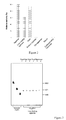
  • FIG. 3 shows the results of the thin layer chromatography conducted in Experiment 3, showing the hydrolysis product of low melting point agarose by the present agarase.
  • FIG. 4 shows the results of the DNA recovery assay conducted in Experiment 3, showing the efficiency of the present agarase in recovering DNA.
  • prokaryotic expression systems has been used in expressing desired protein, it does not mean every kind of proteins can be produced massively by prokaryotic expression systems.
  • prokaryotic expression systems There are numerous factors that could affect the production of desired protein by prokaryotic expression systems, including the distribution of the gene codon, the stability of mRNA, and stability of the desired protein, which kind of expression system is used, and the production conditions of the expression system chosen. If the desired protein is essentially not suitable for exogenous production, it would be nearly impossible to product it by a prokaryotic expression system.
  • every production condition of an expression system would critically affect the capability of the expression system at issue in producing the desired protein at a commercial scale and thereby determine the production cost.
  • Paenibacillus agarexedens was first isolated from meadow soil in 1972. Before the present invention, there was no any publication reciting the agarase genes thereof. The present invention isolated a gene fragment from the bacteria and obtained a novel agarase therefrom, which may offer the industry an alternative of agarase.
  • one of the aspects of the present invention provides a ⁇ -agarase, which comprises a sequence as SEQ ID NO 01.
  • Said SEQ ID NO 01 shows the amino acid sequences of the present agarase.
  • said ⁇ -agarase is translated from a sequence as SEQ ID NO 02.
  • compositions for hydrolyzing agarose can be used in the industry for obtaining the hydrolysis products of agarose, such as neoagarotetraose.
  • Said composition comprises 0.1 to 10 U/mL of said ⁇ -agarase and 1 to 2 mM of a salt; wherein said U/mL and said mM are respectively based on a total volume of said composition.
  • said salt comprises: CuSO 4 , KCl, FeSO 4 BaCl 2 , NaCl, SrCl 2 , CoCl 2 , MgSO 4 , MnCl 2 , CaCl 2 , AlCl 3 , or a combination thereof.
  • said salt may exist as a metal ion and a nonmetal ion through dissociation or exist at a dissociation state and a non-dissociation state.
  • said composition may further comprise 50 to 200 mM of a buffer based on a total volume of said composition.
  • Said buffer can be chosen as long as the chosen buffer won't affect the structure, function, or other properties of said ⁇ -agarase.
  • said buffer could be citrate buffer (pH 5 to 6) or phosphate buffer (pH 6 to 7).
  • Another aspect of the present invention provides a method for agarose hydrolysis.
  • Said method comprises the following steps: (A) providing a sample comprising agarose; (B) contacting said sample with said ⁇ -agarase and obtain a product.
  • Said sample may be agarose, low melting point agarose, agar, algae polysaccharide crude extract, or a combination thereof.
  • said product obtained by said method comprises at least 95 weight percentage of neoagarotetraose based on a total weight of said product.
  • said product is substantially devoid of neoagarobiose and neoagarohexose.
  • Neoagarobiose, neoagarotetraose, and neoagarohexose have their industrial applications respectively; therefore, by using the present method for agarose hydrolysis, one can easily obtain a product having high purity of neoagarotetraose. In other words, there would be no need for additional purification procedure and the product can be directly used for the industry so that some production cost and time can be saved.
  • said contacting of said step (B) is conducted at a temperature of 40 to 45° C. In a preferable embodiment, said contacting of said step (B) is conducted at a pH of 5 to 7. In a preferable embodiment, said contacting of said step (B) is conducted for 1 to 24 hours.
  • said ⁇ -agarase is obtained by exogenously expressing a nucleotide sequence as SEQ ID NO 02 in a gene expression system.
  • Said “exogenously expressing”, “exogenous expression” or a like is referred to as said ⁇ -agarase is expressed in a microorganism which is not the microorganism naturally contains said ⁇ -agarase. Case in point, said ⁇ -agarase naturally exists in P. agarexedens . Therefore, expressing said ⁇ -agarase in an E. coli expression system is what the present invention defined “exogenous expression”.
  • said ⁇ -agarase is obtained by an exogenous expression contacted in an E. coli expression system containing an expression vector.
  • said expression vector comprises a nucleotide sequence as SEQ ID NO 02.
  • said expression vector comprises a nucleotide sequence as SEQ ID NO 05.
  • every production conditions of an expression system would affect the production of the desired production and thereby affect the production cost.
  • the efficiency of mass production of a desired protein in an expression system can be achieved by using critical production conditions.
  • a favorable temperature, 15 to 32° C., for exogenously expressing the present ⁇ -agarase in an E. coli expression system was proved through extensive trials and experiments in the researches of the present invention.
  • ⁇ -agarase obtained at the aforesaid temperature range exhibits better solubility and thus is favorable for mass production for commercial need.
  • a ⁇ -agarase expression vector comprising a nucleotide sequence comprising a sequence as SEQ ID NO 02; and a regulatory element.
  • Said regulatory element is referred to as the element necessary to switch on gene transcription and translation process in an expression system.
  • Said regulatory element shall at least comprise a promoter and a ribosome binding site.
  • said regulatory element may additional comprises an operator, enhancer sequences, or a combination thereof.
  • said expression vector comprises a nucleotide sequence as SEQ ID NO 05.
  • One open reading frame (which has an amino acid sequence as SEQ ID NO 01 having 883 amino acids; which has a nucleotide sequence as SEQ ID NO 02 having 2652 nucleotides) was chosen from the genome of P. agarexedens in this experiment. According to the result of protein blast analysis, the researchers of the present invention presumed that the open reading frame might encode a protein capable of hydrolyzing agarose (ie. an agarase). Before the present invention, there was never any research disclosed or hinted that the open reading frame and its potential physiological activities. Besides, the open reading frame did not share significant similarity with those known agarases in the gene sequence at the time of filing of the present invention. The present invention then established the open reading frame in an expression vector through genetic engineering for massively and stably expressing the presumed agarase in a prokaryotic gene expression system.
  • P. agarexedens BCRC 17346 was purchased from Food Industry Research and Development Institute as the research subject matter of the present invention. Escherichia coli (ECOS 9-5, Yeastern, Taiwan) was used as the host cell for DNA cloning.
  • P. agarexedens was cultured in a nutrient broth medium (BD Difco, USA) containing 0.1% of urea and 1.5% (w/v) of agar (BD Difco, USA) can also be added for preparing solid culture plate.
  • E. coli was cultured in Lurai-Bertani (LB) medium (BD Difco, USA) and antibiotic or 1.5% of agar can also be added if needed.
  • a single colony of BCRC 17346 was picked and inoculated in a nutrient broth medium containing 0.1% urea and then cultured at conditions of 30° C. and 180 rpm for 24 hours.
  • DNA purification kit Tissue & Cell Genomic DNA Purification kit; GMbiolab, Taiwan
  • 4 mL of the broth was placed in a tube and put under centrifugation (5,870 ⁇ g, 5 minutes). Then, the supernatant was discarded and the pellet was collected.
  • solution A (10 mM Tris-HCl, pH 8.0; 10 mM EDTA; 50 mM; NaCl; 20% (w/v) sucrose; 10 mg/mL lysozyme) was added to re-suspend the pellet.
  • the solution A was reacted with the pellet for 1 hour at 37° C. for digesting cell wall of the bacteria.
  • 20 ⁇ L of proteinase K (10 mg/mL) and 200 ⁇ L of extract reagent were added in and reacted at 56° C. for 3 hours. The tube was gently shaken up side down every five minutes to let the bacterial and the reagent mix well. After that, 200 ⁇ L of binding solution was added for reaction at 70° C. for 10 minutes.
  • the obtained P. agarexdens genomic DNA was used as template for amplifying the agarase gene of the present invention by polymerase chain reaction (PCR).
  • PCR polymerase chain reaction
  • the 50 ⁇ L PCR mixture contained 1 ⁇ GDP-HiFi PCRbufferB, 200 ⁇ M of dNTP (dATP, dTTP, dGTP, and dCTP), 1 ⁇ M of amplification primer, 100 ng of P. agarexdens genomic DNA, and 1 U GDP-HiFi DNA polymerase.
  • the PCR reaction conditions was one cycle of 98° C. for 5 minutes, 35 cycles of 94° C. for 30 seconds, 55° C. for 30 seconds, 68° C. for 90 seconds, and one cycle of 68° C. for 5 minutes.
  • the transformed bacteria were inoculated on LB solid plates containing ampicillin (100 ⁇ g/mL). The grown colony was picked for colony PCR for selecting strains that are transformed successfully. The PCR reaction conditions was one cycle of 95° C. for 5 minutes, 25 cycles of 95° C. for 30 seconds, 55° C. for 30 seconds, 72° C. for 3 minutes, and one cycle of 72° C. for 7 minutes. After being verified to have the desired DNA by colony PCR, the recombinant plasmid of the transformed strains was extracted for DNA sequencing (Tri-I Biotech, Inc.). The plasmid having the agarase gene of the present invention was named pJET-AGAB-4.
  • the plasmid pJET-AGAB-4 was cut by KpnI and XhoI.
  • the obtained agarase gene fragment of the present invention was ligated into a plasmid pET29a cut by the same restriction enzymes by using T4 DNA ligase.
  • the ligation product (pET29a ligated with the present agarase gene fragment) was transformed in to E. coli ECOS 9-5. Colony PCR was conducted for selecting transformed strains DNA gel electrophoresis was then conducted for verifying if DNA fragments of desired size exist. After being verified to have the desired insert DNA, the recombinant plasmid of the transformed strains was extracted for DNA sequencing.
  • the plasmid having the correct sequence of the agarase gene of the present invention was named pET-AGAB-4; that is the present expression vector of SEQ ID NO 05.
  • E. coli BL21 (DE3) was used as the hose for gene expression of this experiment.
  • Lurai-Bertani (LB) medium (BD Difco, USA) was used for E. coli culture and antibiotic or 1.5% of agar can be added if needed.
  • the expression vector pET-AGAB-4 of the present invention was transformed into E. coli BL21 (DE3). A single colony was picked and inoculated in 5 mL of LB medium containing kanamycin at a final concentration of 30 ⁇ g/mL. The cells were cultured at 37° C. and 180 rpm overnight. Then, 100 ⁇ L of the broth was added in 10 mL of fresh LB medium containing kanamycin at a final concentration of 30 ⁇ g/mL and cultured at 37° C. and 180 rpm until the OD 600 value reached about 0.4 to 0.6.
  • IPTG isopropyl ⁇ -D-1-thiogalactopyranoside
  • the present agarase can be successfully expressed by the E. coli expression system within the range of 16 to 37° C.
  • Table 1 further exhibits the solubility of the present agarase expressed at different temperature. It indicated that even though the present agarase can be expressed within the range of 16 to 37° C., the yield of soluble agarase was lower when it was expressed at 37° C. In comparison, larger amount of soluble agarase can be obtained at relatively short period at 30° C., 25° C., 20° C., or 16° C.
  • the subsequent purification process of soluble agarase is much easier than that of insoluble agarase; therefore, obtaining soluble agarase would be particular favorable for commercial scale of production.
  • the agarase of the present invention was expressed by the expression system established in the Experiment 2 and then purified for analyzing properties thereof.
  • a single colony of the E. coli strain (BL21/DE3, pET-AGAB-4) of Experiment 2 was picked and inoculated at 12 mL of LB medium containing kanamycin (which had a final concentration of 30 ⁇ g/mL). The culture was maintained at 37° C. and 180 rpm for overnight. Afterward, 10 mL of the broth was transferred to 1 L of fresh LB medium containing kanamycin (which had a final concentration of 30 ⁇ g/mL) and cultured at 37° C. and 180 rpm until the OD 600 value thereof achieved about 0.4 to 0.6. Then, 0.1 mM of IPTG was added at 20° C. to induce the expression of the recombinant protein.
  • pellet After being induced for 24 hours, pellet was collected by centrifugation (10,000 ⁇ g, 10 minutes, 4° C.) and re-suspended in 10 mL of lysis buffer (20 mM sodium phosphate, 500 mM NaCl, pH 7.4). The pellet was crushed by sonicator and further centrifugation was conducted to collect the supernatant. Lastly, the supernatant was filtered by 0.22 ⁇ m filter.
  • immobilized-metal ion affinity chromatography was used for protein purification.
  • the purification of the recombinant agarase was conducted by using a protein liquid chromatography system, ⁇ KTA prime plus (GE Healthcare, Sweden) equipped with 5 mL HiTrapTM Ni excel column (GE Healthcare, Sweden). First of all, the column was balanced by 25 mL of lysis buffer and then the above-obtained supernatant was introduced into the HiTrapTM Ni excel column.
  • wash buffer (20 mM sodium phosphate, 500 mM NaCl, 30 mM imidazole, pH 7.4) was applied in to wash off the non-specific binding protein.
  • 150 mL of elution buffer (20 mM sodium phosphate, 500 mM NaCl, 250 mM imidazole, pH 7.4) was applied to elute the agarase binding on the resin.
  • the theory is to compete the binding site on the resin of the recombinant protein by using high concentration of imidazole and let the recombinant agarase elute from the resin.
  • the purified protein solution was moved to a centrifuge tube (Amicon ultra-15 ultracel-30K, Merck Millipore, USA) and stored at 4° C. after being centrifuged at 2,600 ⁇ g to a proper volume.
  • This experiment intended to test substances that can be hydrolyzed by the present agarase.
  • 850 ⁇ L of 0.24% (w/v) agarose, low melting point agarose, agar and sodium alginate, carrageenan, soluble starch, and sodium carboxymethylcellulose solution was respectively mixed with 100 ⁇ L of 0.5 M phosphate buffer (pH 6) and heated until the contents therein was dissolved. Then, the solution was placed at 55° C. for 10 minutes. After that, 50 ⁇ L of agarase solution (being properly diluted) was added in to the substrate solution and reacted at 55° C. for 10 minutes.
  • DNS solution 1% 3,5-dinitrosalicylic acid, 30% potassium sodium tartrate tetrahydrate, 1.6% NaOH
  • 1.0 mL of DNS solution 1% 3,5-dinitrosalicylic acid, 30% potassium sodium tartrate tetrahydrate, 1.6% NaOH
  • 1 mL of deionized water was added in and mixed.
  • the mixture was transferred to a 96-well plate (100 ⁇ L/per well) and the absorbance at 540 nm of each well was detected by an ELISA reader.
  • a standard curve of the reducing sugar was set by DNS color reaction of various concentrations of D-galactose solutions. The amount of the reducing sugar of each well was calculated by comparing the absorbance thereof with the D-galactose standard curve.
  • One activity unit (U) was defined as the amount of the enzyme needed for producing 1 ⁇ mole of galactose in one minute.
  • the results of the experiments were shown in FIG. 2 .
  • the present agarase was able to hydrolyze agarose, low melting point agarose and agar, especially agarose. Nevertheless, the present agarase cannot hydrolyze sodium alginate, carrageenan, soluble starch, and sodium carboxymethylcellulose.
  • TLC Thin layer chromatography
  • the TLC films were taken out for drying and then 0.1 M of aniline phthalate solution (Sigma-Aldrich, US) was sprayed over the films. After drying, the films were heated to show the color and the Rf value (retention factor value) of testing samples and standard sample was calculated. The hydrolysis product of agarase was identified through the Rf value.
  • the product of hydrolyzing low melting point agarose by the present agarase was substantially neoagarotetraose and was substantially devoid of neoagarobiose and neoagarohexose.
  • the recovery rate of using the present agarase in nucleic acid sample recovery is above 95% showing that the present agarase is suitable for recovering DNA within gel.

Landscapes

  • Chemical & Material Sciences (AREA)
  • Organic Chemistry (AREA)
  • Life Sciences & Earth Sciences (AREA)
  • Engineering & Computer Science (AREA)
  • Zoology (AREA)
  • Wood Science & Technology (AREA)
  • Health & Medical Sciences (AREA)
  • Genetics & Genomics (AREA)
  • Bioinformatics & Cheminformatics (AREA)
  • General Health & Medical Sciences (AREA)
  • Biochemistry (AREA)
  • General Engineering & Computer Science (AREA)
  • Microbiology (AREA)
  • Biotechnology (AREA)
  • Chemical Kinetics & Catalysis (AREA)
  • General Chemical & Material Sciences (AREA)
  • Medicinal Chemistry (AREA)
  • Molecular Biology (AREA)
  • Biomedical Technology (AREA)
  • Enzymes And Modification Thereof (AREA)
  • Preparation Of Compounds By Using Micro-Organisms (AREA)
  • Micro-Organisms Or Cultivation Processes Thereof (AREA)

Abstract

The present invention provides a β-agarase, a composition containing the same and applications thereof. The present β-agarase provides the field a novel alternative and is favorable for the industrial utilities of the hydrolysis products of agarose. Furthermore, the hydrolysis product of agarose by the present β-agarase has high purity of neoagarotetraose therefore the present β-agarase is especially useful for the neoagarotetraose's utilities in the field.

Description

BACKGROUND
Technical Field
The present invention is related to an agarase, especially to an agarase produced via a prokaryotic cell expression system.
Description of Related Art
Agar is a hydrophilic polysaccharide extracted from cell walls of red algae such as Gelidium spp., Gracilaria spp., Porphyra spp., and etc, and the main components thereof are agarose and agaropectin. Agarose is a neutral polysaccharide with α-1,3 and β-1,4 glycosidic linkage, which is capable of forming gel and has a molecular weight of at least 100 kDa. Agaropectin is not capable of forming gel and has a molecular weight of at most 20 kDa. Agaropectin has a similar composition with agarose while some hydroxyl groups of 3,6-anhydro-α-L-galactose thereof are replaced with methoxy, sulfoxy or pyruvate groups.
Hydrolase capable of hydrolyzing agar is named agarase, which can be classified as α-agarase (EC 3.2.1.158) and β-agarase (EC 3.2.1.81) in accordance with the hydrolysis site thereof. α-Agarase hydrolyzes at the α-1,3 glycosidic linkage of agarose and agaropectin and results in agaro-oligosaccharides having 3,6-anhydro-α-L-galactose group at the reducing end thereof. β-Agarase hydrolyzes at the β-1,4 glycosidic linkage of agarose and agaropectin and results in neoagaro-oligosaccharides having D-galactose group at the reducing end thereof.
There are many applications for agarase. Case in point, agarase can be used in molecular biology research for recovery of DNA from agarose Gel, can be used in cartilage tissue engineering as agar substrate for supporting cartilage cells and thereby facilitating cartilage cells purification, increasing collagen content, and improving the culture of cartilage tissue; can be used for preparing agaro-oligosaccharide and neoagaro-oligosaccharide; can be used for preparing algae protoplast for DNA transformation and cell fusion; can be used for hydrolysis of algae polysaccharides and speculating the structure of the algae polysaccharides based on the hydrolysis product; can be used for preparing algae single cell being used as feed of marine animal breeding.
Furthermore, the current researches have proved the oligosaccharides obtained by hydrolyzing agar or algae polysaccharide crude extract exhibit several physiological and biological activities, such as antioxidation, immune regulation, antibacterial, tyrosinase suppression, moisturizing, being used as prebiotic, decreasing serum total cholesterol, and etc. The oligosaccharides can also be the new generation of high value functional oligosaccharides, which are widely applied in cosmetic, health food, and pharmaceutical industries. There are several microorganisms being proved to be able to produce agarase; nevertheless, the production of agarase by those known microorganisms encounters lost of difficulties and defects unfavorable for mass production in the industries, for instance, insufficient production, unstable production, safety concern to the bacterial used, high production cost and etc.
In light of the foregoing, the researchers in the field have considered using acid hydrolysis method to hydrolyze agar or algae polysaccharide crude extract to obtain the required oligosaccharide. However, although conventional acid hydrolysis method is able to obtain agaro-oligosaccharide mixtures, it is unable to obtain products having uniform degree of polymerization. In comparison with acid hydrolysis method, enzymatic hydrolysis has several strengths and thereby is more ideal than acid hydrolysis method. The strengths includes enzymatic selectivity in cutting specific types of glycosidic linkages to obtain oligosaccharides of desired polymerization, ease in controlling degradation condition, temperature required for enzymatic reaction is lower than that of acid hydrolysis method therefore the energy consumption is decreased, ease in operation comparing with acid hydrolysis method wherein processes like acid-base neutralization and desalination are not required, chemical agents are not necessary therefore the operation is safer and less possible in contaminating environment, and agaro-oligosaccharide and neoagaro-oligosaccharide can be obtained.
To sum up, in order to facilitate the industrial applications of the oligosaccharides obtained from agarase hydrolysis of agar or algae polysaccharide crude extract, there is a need of novel agarase to provide more options for the field. Moreover, there is also a need of a production method of agarase, which can be operated in lower cost so that the production cost of the aforesaid oligosaccharides can be decreased for facilitating commercialization.
SUMMARY
In light of the foregoing, one of the objectives of the present invention is to provide a novel agarase and thereby provide more options for the industry.
Another objective of the present invention is to provide a method for producing neoagaro-oligosaccharide by using agarase, which adopts prokaryotic cell expression systems for exogenous mass production of agarase and applies the produced agarase in hydrolysis of agar, agarose, or algae polysaccharide crude extract and reduces the product cost of neoagaro-oligosaccharide.
In order to achieve the aforesaid objectives, the present invention provides a β-agarase comprising a sequence as SEQ ID NO 01. Preferably, the β-agarase is encoded by a sequence as SEQ ID NO 02.
The present invention also provides a gene for encoding β-agarase, comprising a sequence as SEQ ID NO 02.
The present invention more provides a composition for hydrolyzing agarose, comprising: 0.1 to 10 U/mL of the β-agarase of claim 1 or claim 2; and 1 to 2 mM of a salt; wherein said U/mL and mM are based on a total volume of said composition.
Preferably, the composition further comprises 50 to 200 mM of a buffer based on a total volume of said composition; wherein said buffer is citrate buffer (pH 5 to 6) or phosphate buffer (pH 6 to 7).
Preferably, said salt is CuSO4, KCl, FeSO4 BaCl2, NaCl, SrCl2, CoCl2, MgSO4, MnCl2, CaCl2, AlCl3, or a combination thereof.
Preferably, said β-agarase is produced by exogenously expressing the nucleotide sequence as SEQ ID NO 02 by a gene expression system. More preferably, said gene expression system is an E. coli gene expression system.
Preferably, said β-agarase is produced by exogenous expression of an expression vector contained in a gene expression system; wherein said expression vector comprises a nucleotide sequence as SEQ ID NO 02. More preferably, said expression vector has a nucleotide sequence as SEQ ID NO 05. Preferably, said exogenous expression is conducted at 15 to 32° C.
The present invention also provides a method for agarose hydrolysis, comprising the following steps: (A) providing a sample, which comprises agarose; (B) contacting said sample with said β-agarase to obtain a product.
Preferably, said product comprises 95 wt % of neoagarotetraose based on the total weight of said product.
Preferably, said product is substantially devoid of neoagarobiose and/or neoagarohexose.
Preferably, said step (B) is conducted at 40 to 45° C.
Preferably, said step (B) is conducted at pH 5 to 7.
Preferably, said step (B) for 1 to 24 hours.
Preferably, said sample is agarose, low melting point agarose, agar, algae polysaccharide crude extract, or a combination thereof.
Preferably, said β-agarase is produced by exogenously expressing the nucleotide sequence as SEQ ID NO 02 by a gene expression system.
Preferably, said gene expression system is an E. coli gene expression system. Preferably, said β-agarase is produced by exogenous expression of an expression vector contained in a gene expression system; wherein said expression vector comprises a nucleotide sequence as SEQ ID NO 02. More preferably, said expression vector has a nucleotide sequence as SEQ ID NO 05. Preferably, said exogenous expression is conducted at 15 to 32° C.
The present invention more provides a β-agarase expression vector, comprising: a nucleotide sequence, comprising a sequence as SEQ ID NO 02; and a regulatory element.
Preferably, said regulatory element comprises a promoter and a ribosome binding site.
Preferably, said expression vector comprises a sequence as SEQ ID NO 05.
To sum up, the present invention provides a novel agarase and teaches a method of agarose hydrolysis by using the same. It is notable that, the hydrolysis product of agarose by using the present agarase is substantially devoid of neoagarobiose and neoagarohexose. Accordingly, neoagarotetraose of high purity can be easily obtained by using the present agarase and thereby the production cost of neoagarotetraose can be favorably reduced. Moreover, the present invention provides a method for exogenously expressing agarase. The method may use an E. coli gene expression system to express the present agarase and thereby significantly reduces the production cost of the agarase and improves the stability in production thereof, which are both favorable for commercialization.
BRIEF DESCRIPTION OF THE DRAWINGS
FIG. 1 is an image of protein electrophoresis. The image showed the results of Experiment 2; wherein various temperatures were used in expressing the present agarase in an E. coli gene expression system. (A) 37° C.; (B) 30° C.; (C) 25° C.; (D) 20° C.; (E) 16° C.; wherein the first line of each group represents the result after 4 hours expression and the second line thereof represents the result after 24 hours expression.
FIG. 2 shows the results of the determination to the enzymatic activity conducted in Experiment 3, showing the substrates hydrolysable by the present agarase.
FIG. 3 shows the results of the thin layer chromatography conducted in Experiment 3, showing the hydrolysis product of low melting point agarose by the present agarase.
FIG. 4 shows the results of the DNA recovery assay conducted in Experiment 3, showing the efficiency of the present agarase in recovering DNA.
DETAILED DESCRIPTION
As set forth in the preceding paragraphs, although it is known to use microorganisms in producing agarase, those conventional production methods have some drawbacks. On the other hand, although prokaryotic expression systems has been used in expressing desired protein, it does not mean every kind of proteins can be produced massively by prokaryotic expression systems. There are numerous factors that could affect the production of desired protein by prokaryotic expression systems, including the distribution of the gene codon, the stability of mRNA, and stability of the desired protein, which kind of expression system is used, and the production conditions of the expression system chosen. If the desired protein is essentially not suitable for exogenous production, it would be nearly impossible to product it by a prokaryotic expression system. Furthermore, every production condition of an expression system would critically affect the capability of the expression system at issue in producing the desired protein at a commercial scale and thereby determine the production cost.
Paenibacillus agarexedens was first isolated from meadow soil in 1972. Before the present invention, there was no any publication reciting the agarase genes thereof. The present invention isolated a gene fragment from the bacteria and obtained a novel agarase therefrom, which may offer the industry an alternative of agarase.
In particular, one of the aspects of the present invention provides a β-agarase, which comprises a sequence as SEQ ID NO 01. Said SEQ ID NO 01 shows the amino acid sequences of the present agarase. According to the corresponding relationship between amino acid and codon, those having ordinary skill in the art shall be able to infer the nucleotide sequences encoding said SEQ ID NO 01. In a preferable embodiment, said β-agarase is translated from a sequence as SEQ ID NO 02.
Another aspect of the present invention provides a composition for hydrolyzing agarose. Said composition can be used in the industry for obtaining the hydrolysis products of agarose, such as neoagarotetraose. Said composition comprises 0.1 to 10 U/mL of said β-agarase and 1 to 2 mM of a salt; wherein said U/mL and said mM are respectively based on a total volume of said composition.
In a preferable embodiment, said salt comprises: CuSO4, KCl, FeSO4 BaCl2, NaCl, SrCl2, CoCl2, MgSO4, MnCl2, CaCl2, AlCl3, or a combination thereof. Those having ordinary skill in the art shall be able to understand that said salt may exist as a metal ion and a nonmetal ion through dissociation or exist at a dissociation state and a non-dissociation state.
In a preferable embodiment, said composition may further comprise 50 to 200 mM of a buffer based on a total volume of said composition. Said buffer can be chosen as long as the chosen buffer won't affect the structure, function, or other properties of said β-agarase. For instance, said buffer could be citrate buffer (pH 5 to 6) or phosphate buffer (pH 6 to 7).
Another aspect of the present invention provides a method for agarose hydrolysis. Said method comprises the following steps: (A) providing a sample comprising agarose; (B) contacting said sample with said β-agarase and obtain a product. Said sample may be agarose, low melting point agarose, agar, algae polysaccharide crude extract, or a combination thereof.
In a preferable embodiment, said product obtained by said method comprises at least 95 weight percentage of neoagarotetraose based on a total weight of said product. In another preferable embodiment, said product is substantially devoid of neoagarobiose and neoagarohexose. Neoagarobiose, neoagarotetraose, and neoagarohexose have their industrial applications respectively; therefore, by using the present method for agarose hydrolysis, one can easily obtain a product having high purity of neoagarotetraose. In other words, there would be no need for additional purification procedure and the product can be directly used for the industry so that some production cost and time can be saved.
In a preferable embodiment, said contacting of said step (B) is conducted at a temperature of 40 to 45° C. In a preferable embodiment, said contacting of said step (B) is conducted at a pH of 5 to 7. In a preferable embodiment, said contacting of said step (B) is conducted for 1 to 24 hours.
In a preferable embodiment, said β-agarase is obtained by exogenously expressing a nucleotide sequence as SEQ ID NO 02 in a gene expression system. Said “exogenously expressing”, “exogenous expression” or a like is referred to as said β-agarase is expressed in a microorganism which is not the microorganism naturally contains said β-agarase. Case in point, said β-agarase naturally exists in P. agarexedens. Therefore, expressing said β-agarase in an E. coli expression system is what the present invention defined “exogenous expression”.
In a preferable embodiment, said β-agarase is obtained by an exogenous expression contacted in an E. coli expression system containing an expression vector. Alternatively, said expression vector comprises a nucleotide sequence as SEQ ID NO 02. In an alternative embodiment, said expression vector comprises a nucleotide sequence as SEQ ID NO 05.
As mentioned in the preceding paragraphs, every production conditions of an expression system would affect the production of the desired production and thereby affect the production cost. The efficiency of mass production of a desired protein in an expression system can be achieved by using critical production conditions. In a preferable embodiment of the present invention, a favorable temperature, 15 to 32° C., for exogenously expressing the present β-agarase in an E. coli expression system was proved through extensive trials and experiments in the researches of the present invention. β-agarase obtained at the aforesaid temperature range exhibits better solubility and thus is favorable for mass production for commercial need.
Another aspect of the present invention provides a β-agarase expression vector, comprising a nucleotide sequence comprising a sequence as SEQ ID NO 02; and a regulatory element. Said regulatory element is referred to as the element necessary to switch on gene transcription and translation process in an expression system. Said regulatory element shall at least comprise a promoter and a ribosome binding site. Preferably, said regulatory element may additional comprises an operator, enhancer sequences, or a combination thereof.
In a preferable, said expression vector comprises a nucleotide sequence as SEQ ID NO 05.
Experiment 1: Cloning of the Present Agarase Gene and Establishing the Present Expression Vector
One open reading frame (which has an amino acid sequence as SEQ ID NO 01 having 883 amino acids; which has a nucleotide sequence as SEQ ID NO 02 having 2652 nucleotides) was chosen from the genome of P. agarexedens in this experiment. According to the result of protein blast analysis, the researchers of the present invention presumed that the open reading frame might encode a protein capable of hydrolyzing agarose (ie. an agarase). Before the present invention, there was never any research disclosed or hinted that the open reading frame and its potential physiological activities. Besides, the open reading frame did not share significant similarity with those known agarases in the gene sequence at the time of filing of the present invention. The present invention then established the open reading frame in an expression vector through genetic engineering for massively and stably expressing the presumed agarase in a prokaryotic gene expression system.
Strains and Culture Medium
P. agarexedens BCRC 17346 was purchased from Food Industry Research and Development Institute as the research subject matter of the present invention. Escherichia coli (ECOS 9-5, Yeastern, Taiwan) was used as the host cell for DNA cloning.
P. agarexedens was cultured in a nutrient broth medium (BD Difco, USA) containing 0.1% of urea and 1.5% (w/v) of agar (BD Difco, USA) can also be added for preparing solid culture plate. E. coli was cultured in Lurai-Bertani (LB) medium (BD Difco, USA) and antibiotic or 1.5% of agar can also be added if needed.
Extraction of Genomic DNA
A single colony of BCRC 17346 was picked and inoculated in a nutrient broth medium containing 0.1% urea and then cultured at conditions of 30° C. and 180 rpm for 24 hours. DNA purification kit (Tissue & Cell Genomic DNA Purification kit; GMbiolab, Taiwan) was used to extract the genomic DNA. First of all, 4 mL of the broth was placed in a tube and put under centrifugation (5,870×g, 5 minutes). Then, the supernatant was discarded and the pellet was collected. 200 μL of solution A (10 mM Tris-HCl, pH 8.0; 10 mM EDTA; 50 mM; NaCl; 20% (w/v) sucrose; 10 mg/mL lysozyme) was added to re-suspend the pellet. The solution A was reacted with the pellet for 1 hour at 37° C. for digesting cell wall of the bacteria. Afterward, 20 μL of proteinase K (10 mg/mL) and 200 μL of extract reagent were added in and reacted at 56° C. for 3 hours. The tube was gently shaken up side down every five minutes to let the bacterial and the reagent mix well. After that, 200 μL of binding solution was added for reaction at 70° C. for 10 minutes. Then, 200 μL of anhydrous alcohol was added and mixed in the tube and then all the contents therein was moved to a spin column. The spin column was placed in a collection tube for centrifugation. After centrifugation (17,970×g) for 2 minutes, the eluent was discarded and 300 μL of binding solution was added to the spin column and the spin column (placed in the collection tube) was centrifuged (17,970×g) for another 2 minutes. Afterward, 700 μL of wash solution was added to the spin column. After centrifugation (17,970×g) for 2 minutes, the eluent was also discarded. The washing procedure with the wash solution was repeated again. Lastly, the spin column was centrifuged (17,970×g) for another 5 minutes to remove the residual ethanol. The spin column was then placed in a clean and sterile tube and dd-water was added to elute the genomic DNA out.
Cloning of the Agarase Gene of the Present Invention
The obtained P. agarexdens genomic DNA was used as template for amplifying the agarase gene of the present invention by polymerase chain reaction (PCR). The PCR was conducted by using the following primer sets.
primer name: PBAGA4F
SEQ ID NO 03
GATATAGGTACCGCCACGCCGTTCCCTACTC
primer name: PBAGA4R
SEQ ID NO 04
CAATATCTCGAGTTAGTGGTGGTGGTGGTGGTGCTTTGAGATT
AGCAGACGATCCATTA
The 50 μL PCR mixture contained 1×GDP-HiFi PCRbufferB, 200 μM of dNTP (dATP, dTTP, dGTP, and dCTP), 1 μM of amplification primer, 100 ng of P. agarexdens genomic DNA, and 1 U GDP-HiFi DNA polymerase. The PCR reaction conditions was one cycle of 98° C. for 5 minutes, 35 cycles of 94° C. for 30 seconds, 55° C. for 30 seconds, 68° C. for 90 seconds, and one cycle of 68° C. for 5 minutes.
After the PCR reaction, a gel electrophoresis was conducted to verify if a DNA fragment of expected size was obtained. Then, the PCR product was recovered by using the PCR-M™ Clean Up system kit (GeneMark, Taiwan) and by following the indication of the product manual thereof. After than the cloning of the agarase gene was conducted by using the CloneJET PCR Cloning Kit and by following the indication of the product manual thereof. The ligation mixture was transformed into E. coli ECOS™ 9-5. The protocol of transformation could be based on the product manual or modified according to the standard protocol known in the art.
The transformed bacteria were inoculated on LB solid plates containing ampicillin (100 μg/mL). The grown colony was picked for colony PCR for selecting strains that are transformed successfully. The PCR reaction conditions was one cycle of 95° C. for 5 minutes, 25 cycles of 95° C. for 30 seconds, 55° C. for 30 seconds, 72° C. for 3 minutes, and one cycle of 72° C. for 7 minutes. After being verified to have the desired DNA by colony PCR, the recombinant plasmid of the transformed strains was extracted for DNA sequencing (Tri-I Biotech, Inc.). The plasmid having the agarase gene of the present invention was named pJET-AGAB-4.
Establishment of the Expression Vector of the Present Invention
The plasmid pJET-AGAB-4 was cut by KpnI and XhoI. The obtained agarase gene fragment of the present invention was ligated into a plasmid pET29a cut by the same restriction enzymes by using T4 DNA ligase. The ligation product (pET29a ligated with the present agarase gene fragment) was transformed in to E. coli ECOS 9-5. Colony PCR was conducted for selecting transformed strains DNA gel electrophoresis was then conducted for verifying if DNA fragments of desired size exist. After being verified to have the desired insert DNA, the recombinant plasmid of the transformed strains was extracted for DNA sequencing. The plasmid having the correct sequence of the agarase gene of the present invention was named pET-AGAB-4; that is the present expression vector of SEQ ID NO 05.
Experiment 2: Establishing a Prokaryotic Expression System for Expressing the Agarase of the Present Invention
Before the present invention, there had never any research successfully express of the present agarase. This experiment tried to express of present agarase in an E. coli expression system for the purpose of massive and stable production.
Strains and Medium
E. coli BL21 (DE3) was used as the hose for gene expression of this experiment. Lurai-Bertani (LB) medium (BD Difco, USA) was used for E. coli culture and antibiotic or 1.5% of agar can be added if needed.
The Expression of the Present Agarase at Different Temperature
The expression vector pET-AGAB-4 of the present invention was transformed into E. coli BL21 (DE3). A single colony was picked and inoculated in 5 mL of LB medium containing kanamycin at a final concentration of 30 μg/mL. The cells were cultured at 37° C. and 180 rpm overnight. Then, 100 μL of the broth was added in 10 mL of fresh LB medium containing kanamycin at a final concentration of 30 μg/mL and cultured at 37° C. and 180 rpm until the OD600 value reached about 0.4 to 0.6. Afterward, 0.1 mM of isopropyl β-D-1-thiogalactopyranoside (IPTG) was added and the expression of the recombinant protein was induced at various temperatures (37° C., 30° C., 25° C., 20° C., or 16° C.). 2 mL of broth was collected at 4 and 24 hours respectively after induction. The broth was centrifuged (20,630×, 5 minutes, 4° C.) and the pellet was collected. The proteins contained in the pellet were separated based on their solubility. Protein electrophoresis was conducted to examine the solubility of the recombinant agarase.
According to FIG. 1, it was noted that the present agarase can be successfully expressed by the E. coli expression system within the range of 16 to 37° C. The following Table 1 further exhibits the solubility of the present agarase expressed at different temperature. It indicated that even though the present agarase can be expressed within the range of 16 to 37° C., the yield of soluble agarase was lower when it was expressed at 37° C. In comparison, larger amount of soluble agarase can be obtained at relatively short period at 30° C., 25° C., 20° C., or 16° C. The subsequent purification process of soluble agarase is much easier than that of insoluble agarase; therefore, obtaining soluble agarase would be particular favorable for commercial scale of production.
TABLE 1
Production of soluble agarase at different
induction temperature
Induction Expression Production of
Tem. Time soluble agarase
(° C.) (hr) (mg/L)
37 4 1
24 4
30 4 16
24 31
25 4 32
24 37
20 4 20
24 67
16 4 16
24 52
Experiment 3: Analysis of the Properties of the Present Agarase
The agarase of the present invention was expressed by the expression system established in the Experiment 2 and then purified for analyzing properties thereof.
Expression and Purification of the Agarase of the Present Invention
A single colony of the E. coli strain (BL21/DE3, pET-AGAB-4) of Experiment 2 was picked and inoculated at 12 mL of LB medium containing kanamycin (which had a final concentration of 30 μg/mL). The culture was maintained at 37° C. and 180 rpm for overnight. Afterward, 10 mL of the broth was transferred to 1 L of fresh LB medium containing kanamycin (which had a final concentration of 30 μg/mL) and cultured at 37° C. and 180 rpm until the OD600 value thereof achieved about 0.4 to 0.6. Then, 0.1 mM of IPTG was added at 20° C. to induce the expression of the recombinant protein. After being induced for 24 hours, pellet was collected by centrifugation (10,000×g, 10 minutes, 4° C.) and re-suspended in 10 mL of lysis buffer (20 mM sodium phosphate, 500 mM NaCl, pH 7.4). The pellet was crushed by sonicator and further centrifugation was conducted to collect the supernatant. Lastly, the supernatant was filtered by 0.22 μm filter.
Then, taking advantage of the fact that the His tag at the C-terminus of the recombinant protein can form coordinate covalent bond with nickel or cobalt ion, immobilized-metal ion affinity chromatography was used for protein purification. The purification of the recombinant agarase was conducted by using a protein liquid chromatography system, ÄKTA prime plus (GE Healthcare, Sweden) equipped with 5 mL HiTrap™ Ni excel column (GE Healthcare, Sweden). First of all, the column was balanced by 25 mL of lysis buffer and then the above-obtained supernatant was introduced into the HiTrap™ Ni excel column. After that, 100 mL of wash buffer (20 mM sodium phosphate, 500 mM NaCl, 30 mM imidazole, pH 7.4) was applied in to wash off the non-specific binding protein. Then, 150 mL of elution buffer (20 mM sodium phosphate, 500 mM NaCl, 250 mM imidazole, pH 7.4) was applied to elute the agarase binding on the resin. The theory is to compete the binding site on the resin of the recombinant protein by using high concentration of imidazole and let the recombinant agarase elute from the resin. The purified protein solution was moved to a centrifuge tube (Amicon ultra-15 ultracel-30K, Merck Millipore, USA) and stored at 4° C. after being centrifuged at 2,600×g to a proper volume.
Analysis of the Substrate of the Present Agarase
This experiment intended to test substances that can be hydrolyzed by the present agarase. 850 μL of 0.24% (w/v) agarose, low melting point agarose, agar and sodium alginate, carrageenan, soluble starch, and sodium carboxymethylcellulose solution was respectively mixed with 100 μL of 0.5 M phosphate buffer (pH 6) and heated until the contents therein was dissolved. Then, the solution was placed at 55° C. for 10 minutes. After that, 50 μL of agarase solution (being properly diluted) was added in to the substrate solution and reacted at 55° C. for 10 minutes. Afterward, 1.0 mL of DNS solution (1% 3,5-dinitrosalicylic acid, 30% potassium sodium tartrate tetrahydrate, 1.6% NaOH) was added in immediately and the mixture was heated at 100° C. for 5 minutes. After the reaction solution cooled down, 1 mL of deionized water was added in and mixed. Then, the mixture was transferred to a 96-well plate (100 μL/per well) and the absorbance at 540 nm of each well was detected by an ELISA reader. A standard curve of the reducing sugar was set by DNS color reaction of various concentrations of D-galactose solutions. The amount of the reducing sugar of each well was calculated by comparing the absorbance thereof with the D-galactose standard curve. One activity unit (U) was defined as the amount of the enzyme needed for producing 1 μmole of galactose in one minute.
The results of the experiments were shown in FIG. 2. The present agarase was able to hydrolyze agarose, low melting point agarose and agar, especially agarose. Nevertheless, the present agarase cannot hydrolyze sodium alginate, carrageenan, soluble starch, and sodium carboxymethylcellulose.
Analysis of the Hydrolysis Production of Agarose by the Present Agarase
Thin layer chromatography (TLC) was used in this experiment to analyze the hydrolysis product of agarose by the present agarase. 850 μL of 0.24% (w/v) low melting point agarose solution and 100 μL of 0.5 M phosphate buffer (pH 6) were mixed to be a mixture and heated until the contents therein were completely dissolved. Then, the mixture was placed at 40° C. for 10 minutes and then 50 μL of agarase solution (2 U/mL) was added in. The reaction was maintained at 40° C. for 24 hours. After that, the mixture was centrifuged (15,000 rpm, 4° C., 10 minutes) and filtered by 0.22 μm filter to remove bacteria therein. Then, the solution was stored at −20° C. Afterwards, 8 μL of agarase hydrolysis product, 2 μL neoagarobiose solution (10 μg/μL), 2 μL neoagarotetraose solution (10 μg/μL) and 2 μL neoagarohexose solution (10 μg/μL) were dotted on silica gel 60 TLC films (Merck Millipore, USA). After the samples dotted on the sheet were dried, the films were inserted obliquely into developing buffer (50% of 1-butanol, 25% of acetic acid, 25% of deionized water) contained in a developing tank. After developing, the TLC films were taken out for drying and then 0.1 M of aniline phthalate solution (Sigma-Aldrich, US) was sprayed over the films. After drying, the films were heated to show the color and the Rf value (retention factor value) of testing samples and standard sample was calculated. The hydrolysis product of agarase was identified through the Rf value.
The results were shown in FIG. 3. According to six independent experiments, the product of hydrolyzing low melting point agarose by the present agarase was substantially neoagarotetraose and was substantially devoid of neoagarobiose and neoagarohexose. The results demonstrated that the present agarase can be used for producing neoagarotetraose of high purity and is particularly useful for the industrial application of neoagarotetraose.
Application of the Present Agarase in DNA Recovery from Gel
2.5 μg of pUC 19 plasmid and 200 μL of 1% low melting point agarose (formulated by 0.5× of TAE buffer) were mixed and placed at 4° C. for solidification. The DNA agarose gel was placed at 70° C. for 10 minutes to melt the agarose. Than, the sample was placed at 40° C. for 10 minutes. 1 U of agarase was added in and reacted at 40° C. for 1 hour. Afterwards, the mixture was centrifuged (20,630×g, 5 minutes, 4° C.) and the supernatant was collected. Then, glycogen and 10 M of ammonium acetate were added; wherein the final working concentrations thereof are respectively 1 μg/μL and 2.5 M. After that, 0.6 folds the supernatant's volume of isopropyl alcohol was added and the mixture was placed at −20° C. for 30 minutes. Then, the mixture was centrifuged at 4° C., 20,630×g for 15 minutes and the supernatant was discarded. Afterwards, 1 mL of 70% ethanol was added to re-suspend the precipitate. The suspension was then centrifuged at 4° C., 20,630×g for 10 minutes and again the supernatant was discarded. The precipitated DNA was placed at room temperature for drying and then a proper amount of sterile 10 mM Tris-HCl buffer (pH 8.0) was added to solve the DNA. Electrophoresis of 0.7% agarose gel was conducted for the recovered DNA sample and the original DNA sample (ie. pUC19 plasmid) and for calculating the recovery rate of DNA.
The results were shown in FIG. 4. The recovery rate of using the present agarase in nucleic acid sample recovery is above 95% showing that the present agarase is suitable for recovering DNA within gel.
The Effect of Metal Ions to the Activity of the Present Agarase
50 μL of 20 mM metal salt solution, 750 μL of 0.27% (w/v) agarose, and 100 μL of 0.5 M phosphate buffer (pH 6) were mixed and heated until the contents therein were completely dissolved. Then, the mixture was placed at 55° C. for 10 minutes. Afterwards, 50 μL of properly diluted agarase solution was added in to the mixture and reacted at 55° C. for 10 minutes. Subsequent DNS color reaction and enzymatic activity were conducted as set forth in the paragraphs above. Effects of different metal ions on the hydrolysis activity of the agarase of the present invention were evaluated by comparing the relative activities in each experiment group. The results were shown in the following Table 2. It exhibited that CuSO4, KCl, FeSO4, BaCl2, NaCl, SrCl2, CoCl2, MgSO4, MnCl2, CaCl2, AlCl3, and etc. were able to significantly improve the activity of the present agarase.
TABLE 2
Salt and the activities of agarase
Metal salt (metal ion) Enzymatic activity (U) Relative activity (%)
none 0.097 100
CuSO4 (Cu2+) 0.110 113
KCl (K+) 0.118 121
ZnSO4 (Zn2+) 0.104 107
FeSO4 (Fe2+) 0.109 112
BaCl2 (Ba2+) 0.119 122
NaCl (Na+) 0.120 124
SrCl2 (Sr2+) 0.120 124
CoCl2 (Co2+) 0.137 140
MgSO4 (Mg2+) 0.112 116
MnCl2 (Mn2+) 0.189 195
CaCl2 (Ca2+) 0.118 121
AlCl3 (Al3+) 0.108 111

Claims (11)

What is claimed is:
1. A method for agarose hydrolysis, comprising the following steps:
(A) providing a sample, which comprises agarose;
(B) contacting said sample with a composition comprising 0.1 to 10 U/ml of a β-agarase and 1-2 mM of a salt, wherein said β-agarase comprises SEQ ID NO: 1 or is encoded by SEQ ID NO: 2, wherein said U/ml and mM is based on a total volume of said composition and wherein said contacting results in a recovered hydrolyzed agarose product.
2. The method of claim 1, wherein said product comprises 95 wt % of neoagarotetraose based on the total weight of said product.
3. The method of claim 1, wherein said product is substantially devoid of neoagarobiose and/or neoagarohexose.
4. The method of claim 1, wherein said step (B) is conducted at 40 to 45° C.
5. The method of claim 1, wherein said step (B) is conducted at pH 5 to 7.
6. The method of claim 1, wherein said step (B) is conducted for 1 to 24 hours.
7. The method of claim 1, wherein said sample is agarose, low melting point agarose, agar, algae polysaccharide crude extract, or a combination thereof.
8. The method of claim 1, wherein said β-agarase is produced by exogenously expressing the nucleotide sequence as SEQ ID NO: 2 in an E. coli gene expression system.
9. The method of claim 1, wherein said β-agarase is produced by expression of an expression vector contained in an E. coli gene expression system; wherein said expression vector comprises a gene encoding said β-agarase represented by SEQ ID NO: 2.
10. The method of claim 9, wherein said expression vector comprises SEQ ID NO: 5.
11. The method of claim 9, wherein said expression is conducted at 15 to 32° C.
US15/218,839 2015-11-11 2016-07-25 Agarase, composition containing the same, and application thereof Active US9683223B2 (en)

Applications Claiming Priority (3)

Application Number Priority Date Filing Date Title
TW104137138A 2015-11-11
TW104137138 2015-11-11
TW104137138A TWI607087B (en) 2015-11-11 2015-11-11 Agarase, composition containing the same, and application thereof

Publications (2)

Publication Number Publication Date
US20170130217A1 US20170130217A1 (en) 2017-05-11
US9683223B2 true US9683223B2 (en) 2017-06-20

Family

ID=58663281

Family Applications (1)

Application Number Title Priority Date Filing Date
US15/218,839 Active US9683223B2 (en) 2015-11-11 2016-07-25 Agarase, composition containing the same, and application thereof

Country Status (3)

Country Link
US (1) US9683223B2 (en)
JP (1) JP6236512B2 (en)
TW (1) TWI607087B (en)

Families Citing this family (3)

* Cited by examiner, † Cited by third party
Publication number Priority date Publication date Assignee Title
TWI788573B (en) * 2018-05-31 2023-01-01 日商德山股份有限公司 Method for producing diarylmethane compound
CN110438108B (en) * 2019-07-19 2020-12-18 自然资源部第三海洋研究所 A kind of beta-agarase and its gene and application
CN110713997B (en) * 2019-11-04 2022-02-01 江南大学 Agarase with uniform degradation products and application thereof

Family Cites Families (4)

* Cited by examiner, † Cited by third party
Publication number Priority date Publication date Assignee Title
WO2002068659A1 (en) * 2001-02-27 2002-09-06 Takara Bio Inc. Agarase and gene thereof
JP4334361B2 (en) * 2004-01-08 2009-09-30 独立行政法人海洋研究開発機構 Agar-degrading enzyme and its use
JP2009153490A (en) * 2007-12-27 2009-07-16 Kochi Univ Of Technology Separation and purification method of agar oligosaccharide
CN104878029B (en) * 2015-06-10 2018-01-26 南京农业大学 A kind of β gelases AgaW and encoding gene and application

Also Published As

Publication number Publication date
JP6236512B2 (en) 2017-11-22
JP2017086073A (en) 2017-05-25
TWI607087B (en) 2017-12-01
US20170130217A1 (en) 2017-05-11
TW201716571A (en) 2017-05-16

Similar Documents

Publication Publication Date Title
CN103555690B (en) A novel fructosidase and its coding gene and application
CN108699549B (en) Beta-galactosidase enzyme
CN116376875B (en) N-acetylglucosaminidase mutants with improved thermostability and their applications
CN116144635B (en) A chitinase BlChiA mutant with improved specific activity and acid resistance
US9683223B2 (en) Agarase, composition containing the same, and application thereof
CN111836900A (en) Novel β-glucosidase for the production of glucose and laminarin oligosaccharides from seaweed
CN102965361B (en) Pullulanase XWPu2 and gene thereof
CN105483102A (en) Beta-N-acetylglucosamine enzyme hJ5nag resisting product inhibition and preparation method thereof
CN102719414A (en) Novel ferulic acid esterase and applications thereof
CN113481186B (en) GH18 chitinase ChiA and application thereof
US10822602B2 (en) Agarase, composition containing the same, and application thereof
CN111607580A (en) Novel chitosanase CHI3, its encoding gene and its preparation method
JP7011132B2 (en) New chitosanase CHI1, its coding gene and its use
CN115873912A (en) Method for preparing alginate oligosaccharides by using alginate lyase FaAly554
CN102586208A (en) Protein with Beta-N-acetamido glucosaminidase activity as well as encoding gene and application thereof
CN101407820B (en) Gene of encoding glycosyl hydrolase family 32 sucrase and use thereof
EP3390629B1 (en) Pectinases with improved thermostability
CN110982831B (en) Application of gene AlgL23 with cold adaptability
CN110218716B (en) A kind of multifunctional seaweed polysaccharide lyase AlgL1281 with high salt tolerance and use thereof
CN103184203A (en) Xylanase AnxB and coding gene thereof
EP4556484A1 (en) Variant polypeptide having glucanase activity
Alias et al. Isolation and Molecular Cloning of Carbohydrate Binding Module (CBM40) From Vibrio cholerae Non-O1 Neuraminidase.
Liu et al. Identification, heterologous expression of a PL8 family polysaccharide lyase Pmply8 from Bacillus mucilaginosus SM-01 and its specific degradation of BMPS
EP3390628B1 (en) Calcium independent pectinases with improved thermostability
CN106978410A (en) A kind of difunctional dextranase, gene, carrier, engineering bacteria and its application with chitosan hydrolyzate activity

Legal Events

Date Code Title Description
AS Assignment

Owner name: AGRICULTURAL TECHNOLOGY RESEARCH INSTITUTE, TAIWAN

Free format text: ASSIGNMENT OF ASSIGNORS INTEREST;ASSIGNORS:LIN, JIUNN-HORNG;WANG, JYH-PERNG;CHEN, ZENG-WENG;AND OTHERS;SIGNING DATES FROM 20160629 TO 20160704;REEL/FRAME:039257/0409

STCF Information on status: patent grant

Free format text: PATENTED CASE

MAFP Maintenance fee payment

Free format text: PAYMENT OF MAINTENANCE FEE, 4TH YR, SMALL ENTITY (ORIGINAL EVENT CODE: M2551); ENTITY STATUS OF PATENT OWNER: SMALL ENTITY

Year of fee payment: 4

MAFP Maintenance fee payment

Free format text: PAYMENT OF MAINTENANCE FEE, 8TH YR, SMALL ENTITY (ORIGINAL EVENT CODE: M2552); ENTITY STATUS OF PATENT OWNER: SMALL ENTITY

Year of fee payment: 8