US9677077B1 - Cationic acrylamide copolymer transfection reagents - Google Patents
Cationic acrylamide copolymer transfection reagents Download PDFInfo
- Publication number
- US9677077B1 US9677077B1 US14/212,748 US201414212748A US9677077B1 US 9677077 B1 US9677077 B1 US 9677077B1 US 201414212748 A US201414212748 A US 201414212748A US 9677077 B1 US9677077 B1 US 9677077B1
- Authority
- US
- United States
- Prior art keywords
- cationic
- acrylamide
- polymer
- monomers
- group
- Prior art date
- Legal status (The legal status is an assumption and is not a legal conclusion. Google has not performed a legal analysis and makes no representation as to the accuracy of the status listed.)
- Active
Links
- 0 [1*]C(C)(CC)C(=O)N[2*] Chemical compound [1*]C(C)(CC)C(=O)N[2*] 0.000 description 4
- NQRYJNQNLNOLGT-UHFFFAOYSA-N C1CCNCC1 Chemical compound C1CCNCC1 NQRYJNQNLNOLGT-UHFFFAOYSA-N 0.000 description 2
- UZOFELREXGAFOI-UHFFFAOYSA-N CC1CCNCC1 Chemical compound CC1CCNCC1 UZOFELREXGAFOI-UHFFFAOYSA-N 0.000 description 1
- NJQHZENQKNIRSY-UHFFFAOYSA-N CCC1=CNC=N1 Chemical compound CCC1=CNC=N1 NJQHZENQKNIRSY-UHFFFAOYSA-N 0.000 description 1
- KPZNJYFFUWANHA-UHFFFAOYSA-N CCCCCCCCNCCCN Chemical compound CCCCCCCCNCCCN KPZNJYFFUWANHA-UHFFFAOYSA-N 0.000 description 1
- WGYKZJWCGVVSQN-UHFFFAOYSA-N CCCN Chemical compound CCCN WGYKZJWCGVVSQN-UHFFFAOYSA-N 0.000 description 1
- BONFUFNENSVBSK-UHFFFAOYSA-N CCCNC(=O)C(CCCCCCCN)NCCCN Chemical compound CCCNC(=O)C(CCCCCCCN)NCCCN BONFUFNENSVBSK-UHFFFAOYSA-N 0.000 description 1
- QUSNBJAOOMFDIB-UHFFFAOYSA-N CCN Chemical compound CCN QUSNBJAOOMFDIB-UHFFFAOYSA-N 0.000 description 1
- PYMBPKPYZVMBOG-UHFFFAOYSA-N CCNCCCCCN Chemical compound CCNCCCCCN PYMBPKPYZVMBOG-UHFFFAOYSA-N 0.000 description 1
- CTZWRTKABWNWIE-UHFFFAOYSA-N CCNCCCCCNCCN Chemical compound CCNCCCCCNCCN CTZWRTKABWNWIE-UHFFFAOYSA-N 0.000 description 1
Images




Classifications
-
- C—CHEMISTRY; METALLURGY
- C12—BIOCHEMISTRY; BEER; SPIRITS; WINE; VINEGAR; MICROBIOLOGY; ENZYMOLOGY; MUTATION OR GENETIC ENGINEERING
- C12N—MICROORGANISMS OR ENZYMES; COMPOSITIONS THEREOF; PROPAGATING, PRESERVING, OR MAINTAINING MICROORGANISMS; MUTATION OR GENETIC ENGINEERING; CULTURE MEDIA
- C12N15/00—Mutation or genetic engineering; DNA or RNA concerning genetic engineering, vectors, e.g. plasmids, or their isolation, preparation or purification; Use of hosts therefor
- C12N15/09—Recombinant DNA-technology
- C12N15/63—Introduction of foreign genetic material using vectors; Vectors; Use of hosts therefor; Regulation of expression
-
- C—CHEMISTRY; METALLURGY
- C12—BIOCHEMISTRY; BEER; SPIRITS; WINE; VINEGAR; MICROBIOLOGY; ENZYMOLOGY; MUTATION OR GENETIC ENGINEERING
- C12N—MICROORGANISMS OR ENZYMES; COMPOSITIONS THEREOF; PROPAGATING, PRESERVING, OR MAINTAINING MICROORGANISMS; MUTATION OR GENETIC ENGINEERING; CULTURE MEDIA
- C12N15/00—Mutation or genetic engineering; DNA or RNA concerning genetic engineering, vectors, e.g. plasmids, or their isolation, preparation or purification; Use of hosts therefor
- C12N15/09—Recombinant DNA-technology
- C12N15/87—Introduction of foreign genetic material using processes not otherwise provided for, e.g. co-transformation
-
- C—CHEMISTRY; METALLURGY
- C12—BIOCHEMISTRY; BEER; SPIRITS; WINE; VINEGAR; MICROBIOLOGY; ENZYMOLOGY; MUTATION OR GENETIC ENGINEERING
- C12N—MICROORGANISMS OR ENZYMES; COMPOSITIONS THEREOF; PROPAGATING, PRESERVING, OR MAINTAINING MICROORGANISMS; MUTATION OR GENETIC ENGINEERING; CULTURE MEDIA
- C12N15/00—Mutation or genetic engineering; DNA or RNA concerning genetic engineering, vectors, e.g. plasmids, or their isolation, preparation or purification; Use of hosts therefor
- C12N15/09—Recombinant DNA-technology
- C12N15/10—Processes for the isolation, preparation or purification of DNA or RNA
Definitions
- the field of the present invention is compounds comprising cationic acrylamide copolymers and the use of such reagents for delivering nucleic acids to a cell.
- the present invention relates to cationic polymer-nucleic acid compounds which have use in the delivery of nucleic acid to cells in biological systems, for instance in in vitro cell transfection research.
- the invention also relates to methods of making such compounds and potentially to gene therapy using such compounds.
- Nucleic acids encode proteins which, as enzymes, hormones and other regulatory factors, carry out the processes which enable living organisms to function. Nucleic acids also encode for regulatory sequences which control the expression of proteins.
- nucleic acids Because of its central role in living organisms, nucleic acids make an ideal therapeutic target. It is thought that many diseases could be controlled by the manipulation of nucleic acids in living organisms.
- nucleic acids are fragile molecules which are highly negatively charged (one negative charge per phosphate group) and which are readily cleaved by nucleases present both in extracellular fluids and intracellular compartments. As a highly charged molecule it will not cross the lipid membranes surrounding the cell, nor can it readily escape from endosomal compartments involved in the uptake of macromolecules into cells. Even RNAi molecules, although smaller in molecular weight, show significant problems of stability and uptake.
- Cationic lipid formulations suffer from a number of shortcomings.
- the lipids used in these formulations are often toxic to cells, and their use as delivery vehicles for nucleic acid to cells can be limited by the toxicity of this component.
- Cationic lipid formulations are also unstable and have a relatively short shelf life. The short shelf life is at least partly due to the tendency of these formulations to aggregate. Furthermore, lipid formulations are generally expensive.
- cationic polymers overcomes some, but not all, of the problems associated with cationic lipid formulations.
- Polycationic polymers are, however, generally cytotoxic although some cationic polymers with lower toxicity have been reported.
- Cationic polymers are generally cheap to produce, and do not have the shelf life problems associated with cationic lipids.
- Cationic polymers are very efficient at condensing nucleic acids into a small volume and at protecting nucleic acids from degradation by serum nucleases. Interaction is through an equilibrium reaction in which adjustment of the environmental conditions, (salt concentration, pH, molecular weight of each of the polymers) will affect the composition and form of the complexes.
- the lack of efficiency of cationic polymer-nucleic acid delivery systems may relate to the efficiency with which they can be taken up into cells, and with which they can escape from the endosomal compartment of the cell, into the cytoplasm. For this reason there has been much research into incorporating ligands and other biologically-active molecules which recognize cell surface receptors involved in endocytosis, and into the use of molecules, such as amphipathic peptides, which can disrupt endosomal membranes.
- Cationic polyamines such as polyethylenimine (PEI), poly(L-lysine), polyamidoamines, chitosan, poly(amino ester)s and polyacrylates have been widely investigated as nucleic acid delivery vehicles.
- PEI polyethylenimine
- L-lysine poly(L-lysine)
- polyamidoamines chitosan
- poly(amino ester)s and polyacrylates have been widely investigated as nucleic acid delivery vehicles.
- FIG. 1 shows the general structure of cationic acrylamide polymers and copolymers.
- FIG. 2 shows the general structure of cationic acrylamide and alkyl acrylamide/acrylate copolymers.
- FIG. 3 shows tert-Butyloxycarbonyl (BOC) protected (meth)acrylamide monomers synthesized and polymerized by Mirus Bio LLC.
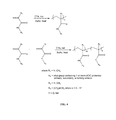
- FIG. 4 shows RAFT polymerization of BOC protected (meth)acrylamide monomers in the presence of a chain transfer agent (CTA), free radical initiator (Init), solvent (butyl acetate, BuAc), and heat (60-100 C).
- CTA chain transfer agent
- Iit free radical initiator
- solvent butyl acetate, BuAc
- heat 60-100 C
- FIG. 5 shows the removal of BOC protecting groups to form cationic polymers with primary and secondary amine side chains.
- FIG. 6 shows the 1H NMR of 1-(N-BOC-piperidyl)-4-acrylamide.
- FIG. 7 shows the effects of lipids and the ratios of polymer:lipid:pDNA-reagents Transit-2020, Transit-PRO (Mirus Bio LLC, Madison, Wis.) are used as controls.
- pDNA shows greater luciferase expression compared to complexes using lipid MC1100 (Mirus Bio LLC, Madison, Wis.) at similar ratios.
- the invention pertains to the use of synthetic cationic acrylamide polymers and copolymers as nucleic acid transfection agents.
- the polycations described are used in conjunction with various endosomolytic lipids to transfect nucleic acids, including RNAi, into cells.
- the present invention provides a compound to assist nucleic acid transfer into animal cells via a complex comprising nucleic acid and a cationic polyacrylamide.
- a novel compound and method of preparation thereof, is described.
- compositions comprising nucleic acids and cationic polyacrylamides, and processes using such compositions to deliver a nucleic acid to an animal cell in vivo or in vitro for the purposes of altering expression of a gene in the cell are described.
- compositions and compounds that facilitate delivery of nucleic acid to an animal cell in vitro and in vivo.
- the nucleic acid comprises a double stranded structure having a nucleotide sequence substantially identical to part of an expressed target nucleic acid within the cell. Further, the use of a cationic polyacrylamide significantly increased nucleic acid transfer efficiency. The nucleic acid then alters expression of a selected endogenous nucleic acid.
- the cationic polyacrylamide is used to assist transfection of DNA, RNA, mRNA or RNAi into a cell.
- the nucleic acid then alters the cell's natural process.
- RNA interference is a phenomenon wherein double-stranded RNA, when present in a cell, inhibits expression of a gene that has an identical or nearly identical sequence. Inhibition is caused by degradation of the messenger RNA (mRNA) transcribed from the target gene.
- mRNA messenger RNA
- the double-stranded RNA responsible for inducing RNAi is termed interfering RNA.
- dsRNA introduced into the cytoplasm of a cell is first processed into RNA fragments 21-25 nucleotides long. It has been shown in in vitro studies that these dsRNAs, termed small interfering RNAs (siRNA) are generated at least in part by the RNAse III-like enzyme Dicer.
- Each siRNA is unwound into two single-stranded (ss) ssRNAs, the passenger strand and the guide strand.
- the passenger strand is degraded, and the guide strand is incorporated into the RNA-induced silencing complex (RISC).
- RISC RNA-induced silencing complex
- the most studied outcome is post-transcriptional gene silencing, which occurs when the guide strand base pairs with a complementary sequence in a messenger RNA molecule and induces cleavage by Argonaute, the catalytic component of the RISC complex.
- RNAi has become a valuable research tool, both in cell culture and in living organisms, because synthetic dsRNA introduced into cells can selectively and robustly induce suppression of specific genes of interest.
- RNAi may be used for large-scale screens that systematically shut down each gene in the cell, which can help identify the components necessary for a particular cellular process or an event such as cell division.
- the pathway is also used as a practical tool in biotechnology and medicine.
- the cationic polyacrylamides described in this specification provide a mechanism to transfect siRNA and other nucleic acids into cells.
- the acrylamide repeat units of the polycations described here have one or more amines present on the side chain.
- the amines can be either primary, secondary, or tertiary, or a combination thereof.
- the precursor acrylamide monomers containing primary and/or secondary amine side groups are protected with tert-butoxycarbonyl (BOC) protecting moieties.
- BOC protected acrylamide monomers can be used to form homopolymers or various types of copolymers with acrylamide and/or acrylate co-monomers.
- the BOC groups are subsequently removed under acidic conditions post-polymerization to form the required polycations.
- RAFT reversible-addition fragmentation chain transfer
- RAFT has rivaled other controlled free radical polymerization techniques such as atom transfer radical polymerization (ATRP) as one of the most effective ways to synthesize well-defined and novel polymers.
- ATRP atom transfer radical polymerization
- the controlled synthesis of RAFT polymers is achieved using conventional radical initiators such as azobisisobutyronitrile (AIBN), and the reversible chain transfer of dithiocarbonyl compounds.
- AIBN azobisisobutyronitrile
- a polymer is a molecule built up by repetitive bonding together of smaller units called monomers.
- the term polymer includes both oligomers which have two to about 80 monomers and polymers having more than 80 monomers.
- the polymer can be linear, branched network, star, comb, or ladder types of polymer.
- the polymer can be a homopolymer in which a single monomer is used or can be copolymer in which two or more monomers are used. Types of copolymers include alternating, random, block and graft.
- the main chain of a polymer is composed of the atoms whose bonds are required for propagation of polymer length.
- the side chain of a polymer is composed of the atoms whose bonds are not required for propagation of polymer length.
- a wide variety of monomers can be used in the polymerization processes. These include positive charged organic monomers such as amines, imidine, guanidine, imine, hydroxylamine, hydrazine, heterocycles (like imidazole, pyridine, morpholine, pyrimidine, or pyrene).
- the amines can be pH-sensitive in that the pKa of the amine is within the physiologic range of 4 to 8.
- Specific amines include spermine, spermidine, N,N′-bis(2-aminoethyl)-1,3-propanediamine (AEPD), and 3,3′-diamino-N,N-25 dimethyldipropylammonium bromide.
- Monomers can also be hydrophobic, hydrophilic or amphipathic. Monomers can also be intercalating agents such as acridine, thiazole orange, or ethidium bromide.
- the polymers may have other groups that increase their utility. These groups can be incorporated into monomers prior to polymer formation or attached to the polymer after its formation. These groups include: targeting groups—such groups are used for targeting the polymer-nucleic acid complexes to specific cells or tissues.
- a steric stabilizer is a long chain hydrophilic group that prevents aggregation of final polymer by sterically hindering particle to particle electrostatic interactions. Examples include: alkyl groups, PEG chains, polysaccharides, alkyl amines. Electrostatic interactions are the non-covalent association of two or more substances due to attractive forces between positive and negative charges.
- Buffers are made from a weak acid or weak base and their salts. Buffer solutions resist changes in pH when additional acid or base is added to the solution.
- Biochemical reactions Biological, chemical, or biochemical reactions involve the formation or cleavage of ionic and/or covalent bonds.
- Reactive A compound is reactive if it is capable of forming either an ionic or a covalent bond with another compound.
- the portions of reactive compounds that are capable of forming covalent bonds are referred to as reactive functional groups.
- a steroid derivative means a sterol, a sterol in which the hydroxyl moiety has been modified (for example, acylated), or a steroid hormone, or an analog thereof.
- the modification can include spacer groups, linkers, or reactive groups.
- Steric hindrance or sterics, is the prevention or retardation of a chemical reaction because of neighboring groups on the same molecule.
- Monomer synthesis Polymers with an acrylamide or methacrylamide backbone and an alkyl side group (two or more carbons) containing one or more primary, secondary, or tertiary amines ( FIG. 1 ). Copolymers in which at least one of the repeat units are a class of acrylamide or methacrylamide with an alkyl side group containing an amine are also described. The copolymers can be a combination of two or more different cationic repeat unit structures, or can be a combination of (meth)acrylamide and (meth)acrylate cationic units ( FIG. 1 ).
- Copolymers can be a combination of (meth)acrylamide cationic units and alkyl (meth)acrylamide units, or can be a combination of (meth)acrylamide cationic units and alkyl (meth)acrylate units ( FIG. 2 ).
- FIG. 3 highlights the tert-Butyloxycarbonyl (BOC) protected acrylamide monomers already synthesized and polymerized at Mirus Bio LLC.
- the monomers are synthesized by reacting acryloyl chloride or methacryloyl chloride with primary amines in the presence of a base (usually diisopropylethylamine) and solvent (usually dichloromethane). These monomers then undergo RAFT polymerization and copolymerization ( FIG. 4 ). Once the copolymers are purified by precipitation (usually into hexane) and are analyzed by gel permeation chromatography (organic solvent phase) and 1 H NMR ( FIG. 6 ), they are deprotected under acidic conditions to remove the BOC protecting groups ( FIG. 5 ).
- BOC tert-Butyloxycarbonyl
- 4-amino-1-boc-piperidine (5.00 g, 0.025 mol) was dissolved in dichloromethane (50 mL) and added to a dry 250 mL 3 neck round bottom flask flushed with nitrogen and equipped with a dropping funnel and stirrer bar. The flask was immersed in an ice bath before acryloyl chloride (2.47 g, 0.0272 mol) in dichloromethane (15 mL) was added to the stirring solution drop-wise via the dropping funnel over a period of 45 min. The solution was stirred overnight and allowed to warm to room temperature.
- Polymer synthesis The monomers described were polymerized using RAFT in order to synthesize polymers of well-defined molecular weights, compositions, and architectures.
- the synthesis of poly(1-piperidyl)-4-acrylamide) (P14PipAm) is given as an example.
- 1-(N-BOC-piperidyl)-4-acrylamide (0.200 g, 0.787 mmol)
- 4-cyano-4(phenylcarbonothioylthio)pentanoic acid CPCPA, 1.12 mg, 0.00401 mmol
- AIBN 0.098 mg, 0.00060 mmol
- butyl acetate (1.00 mL) were added to a 20 mL glass vial with stirrer bar.
- the vial was sealed with a rubber cap and the solution bubbled with nitrogen using a long syringe with a second syringe as the outlet for 1 h.
- the syringes were removed and the vial heated to 80° C. for 15 h using an oil bath.
- the BOC protected polyaminoacrylamides were deprotected post-polymerization to yield primary and secondary amines in the polymer side groups.
- the deprotection of P14PipAm-BOC is described as an example.
Landscapes
- Health & Medical Sciences (AREA)
- Genetics & Genomics (AREA)
- Life Sciences & Earth Sciences (AREA)
- Engineering & Computer Science (AREA)
- Chemical & Material Sciences (AREA)
- Biomedical Technology (AREA)
- Organic Chemistry (AREA)
- Biotechnology (AREA)
- General Engineering & Computer Science (AREA)
- Zoology (AREA)
- Wood Science & Technology (AREA)
- Bioinformatics & Cheminformatics (AREA)
- Microbiology (AREA)
- Plant Pathology (AREA)
- Molecular Biology (AREA)
- Physics & Mathematics (AREA)
- Biochemistry (AREA)
- General Health & Medical Sciences (AREA)
- Biophysics (AREA)
- Crystallography & Structural Chemistry (AREA)
- Medicinal Preparation (AREA)
- Medicines That Contain Protein Lipid Enzymes And Other Medicines (AREA)
- Pharmaceuticals Containing Other Organic And Inorganic Compounds (AREA)
Abstract
Description
| TABLE 1 |
| Structure of side chains |
| Polymer | Nomenclature | R1 | R3 | Structure |
| 1 | PEtAAm | H | Ethylamine |
 |
|
| 2 | PPrAAm | H | Propylamine |
 |
|
| 3 | PtriEIAm | H | Triethylamine |
 |
|
| 4 | PtetEIAm | H | Tetraethylamine |
 |
|
| 5 | PSpmA | H | Spermine |
 |
|
| 6 | PSpmPrAm | H | Spermine- carboxamide propyl? |
 |
|
| 7 | | H | 1,4-piperidine |
 |
|
| 8 | PPipMeAm | H | 1-piperidyl-4- methyl |
 |
|
| 9 | | CH | 3 | 1,4-piperidine |
 |
| 10 | PHistAm | H | histamine |
 |
|
Claims (4)


Priority Applications (1)
| Application Number | Priority Date | Filing Date | Title |
|---|---|---|---|
| US14/212,748 US9677077B1 (en) | 2014-03-14 | 2014-03-14 | Cationic acrylamide copolymer transfection reagents |
Applications Claiming Priority (1)
| Application Number | Priority Date | Filing Date | Title |
|---|---|---|---|
| US14/212,748 US9677077B1 (en) | 2014-03-14 | 2014-03-14 | Cationic acrylamide copolymer transfection reagents |
Publications (1)
| Publication Number | Publication Date |
|---|---|
| US9677077B1 true US9677077B1 (en) | 2017-06-13 |
Family
ID=59011323
Family Applications (1)
| Application Number | Title | Priority Date | Filing Date |
|---|---|---|---|
| US14/212,748 Active US9677077B1 (en) | 2014-03-14 | 2014-03-14 | Cationic acrylamide copolymer transfection reagents |
Country Status (1)
| Country | Link |
|---|---|
| US (1) | US9677077B1 (en) |
Citations (1)
| Publication number | Priority date | Publication date | Assignee | Title |
|---|---|---|---|---|
| JP2010115153A (en) * | 2008-11-13 | 2010-05-27 | National Cardiovascular Center | Gene-transferring agent and nucleic acid complex |
-
2014
- 2014-03-14 US US14/212,748 patent/US9677077B1/en active Active
Patent Citations (1)
| Publication number | Priority date | Publication date | Assignee | Title |
|---|---|---|---|---|
| JP2010115153A (en) * | 2008-11-13 | 2010-05-27 | National Cardiovascular Center | Gene-transferring agent and nucleic acid complex |
Non-Patent Citations (1)
| Title |
|---|
| Zhou et al. (Deposition transfection technology using a DNA complex with a thermoresponsive cationic star polymer, Journal of Controlled Release 123 (2007) 239-246). * |
Similar Documents
| Publication | Publication Date | Title |
|---|---|---|
| Malmo et al. | siRNA delivery with chitosan nanoparticles: Molecular properties favoring efficient gene silencing | |
| US9006193B2 (en) | Polymeric carrier | |
| JP5766611B2 (en) | Multiblock copolymer | |
| JP2022528840A (en) | Modified oligonucleotides with increased stability | |
| US20090068743A1 (en) | Cationic alpha-amino acid-containing biodegradable polymer gene transfer compositions | |
| CA2708354C (en) | Means for delivery of nucleic acids active for gene silencing using synthetic polymers | |
| KR20110020803A (en) | Micelle assembly | |
| JP2014520506A (en) | Nucleic acid complex | |
| CN105452465A (en) | Sphingolipid-polyalkylamine-oligonucleotide compounds | |
| WO2005078084A1 (en) | Polyion complex carrying double stranded oligonucleic acid, process for producing the same and pharmaceutical composition containing the same | |
| US7718432B2 (en) | Non-immunogenic, hydrophilic/cationic block copolymers and uses thereof | |
| US20240026051A1 (en) | Cationic cyclic amine and amphipathic transfection reagents | |
| JP2011511776A (en) | Cationic siRNA for RNA interference, synthesis and use | |
| CN106188223B (en) | A compound containing dipeptide lipid cation and its preparation method and application | |
| US9677077B1 (en) | Cationic acrylamide copolymer transfection reagents | |
| US10619162B1 (en) | Cationic cyclic amine and amphipathic transfection reagents | |
| EP2421880A1 (en) | Nucleic acid delivery compositions and methods | |
| US20150275206A1 (en) | Polymer conjugates for delivery of biologically active agents | |
| US9290779B1 (en) | Transfection compositions using amphipathic compounds | |
| US20240035027A1 (en) | Oligonucleotides for pms2 modulation | |
| JP5317105B2 (en) | Complex of polymer fine particle derived from cross-linked polymer having quaternized amino group and nucleic acid | |
| Tatsumi et al. | PEG-siRNA Conjugate Bearing 27 bp siRNA to Form Novel PEGylated Polyplexes with Improved Stability | |
| HK1149052A (en) | Means for delivery of nucleic acids active for gene silencing using synthetic polymers |
Legal Events
| Date | Code | Title | Description |
|---|---|---|---|
| AS | Assignment |
Owner name: MIRUS BIO LLC, WISCONSIN Free format text: ASSIGNMENT OF ASSIGNORS INTEREST;ASSIGNOR:ROSSI, NICHOLAS A. A.;REEL/FRAME:032544/0250 Effective date: 20140327 |
|
| AS | Assignment |
Owner name: MIRUS BIO LLC, WISCONSIN Free format text: ASSIGNMENT OF ASSIGNORS INTEREST;ASSIGNOR:ROSSI, NICHOLAS;REEL/FRAME:042465/0938 Effective date: 20170509 |
|
| STCF | Information on status: patent grant |
Free format text: PATENTED CASE |
|
| MAFP | Maintenance fee payment |
Free format text: PAYMENT OF MAINTENANCE FEE, 4TH YR, SMALL ENTITY (ORIGINAL EVENT CODE: M2551); ENTITY STATUS OF PATENT OWNER: SMALL ENTITY Year of fee payment: 4 |
|
| MAFP | Maintenance fee payment |
Free format text: PAYMENT OF MAINTENANCE FEE, 8TH YR, SMALL ENTITY (ORIGINAL EVENT CODE: M2552); ENTITY STATUS OF PATENT OWNER: SMALL ENTITY Year of fee payment: 8 |
|
| MAFP | Maintenance fee payment |
Free format text: PAYMENT OF MAINTENANCE FEE UNDER 1.28(C) (ORIGINAL EVENT CODE: M1559); ENTITY STATUS OF PATENT OWNER: LARGE ENTITY |
|
| FEPP | Fee payment procedure |
Free format text: ENTITY STATUS SET TO UNDISCOUNTED (ORIGINAL EVENT CODE: BIG.); ENTITY STATUS OF PATENT OWNER: LARGE ENTITY |