US9603895B2 - Cyclosporin analogues for preventing or treating hepatitis C infection - Google Patents
Cyclosporin analogues for preventing or treating hepatitis C infection Download PDFInfo
- Publication number
- US9603895B2 US9603895B2 US14/843,119 US201514843119A US9603895B2 US 9603895 B2 US9603895 B2 US 9603895B2 US 201514843119 A US201514843119 A US 201514843119A US 9603895 B2 US9603895 B2 US 9603895B2
- Authority
- US
- United States
- Prior art keywords
- compound
- formula
- previously defined
- substituted
- mmol
- Prior art date
- Legal status (The legal status is an assumption and is not a legal conclusion. Google has not performed a legal analysis and makes no representation as to the accuracy of the status listed.)
- Expired - Fee Related
Links
- JVSWJIKNEAIKJW-UHFFFAOYSA-N CCCCCC(C)C Chemical compound CCCCCC(C)C JVSWJIKNEAIKJW-UHFFFAOYSA-N 0.000 description 31
- 0 *[C@@H]1NC(=O)[C@]([H])([C@H](C)[C@H](C)CB)CC(=O)[C@H](C(C)C)N(C)C(=O)[C@H](CC(C)C)CC(=O)[C@H](CC(C)C)N(C)C(=O)[C@@H](C)NC(=O)[C@H](C)CC(=O)[C@@H](CC(C)C)N(C)C(=O)[C@H](C(C)C)CC(=O)[C@H](C[C@@]([4*])([5*])[W][6*])N([3*])C(=O)[C@@H](C[V][2*])CC1=O Chemical compound *[C@@H]1NC(=O)[C@]([H])([C@H](C)[C@H](C)CB)CC(=O)[C@H](C(C)C)N(C)C(=O)[C@H](CC(C)C)CC(=O)[C@H](CC(C)C)N(C)C(=O)[C@@H](C)NC(=O)[C@H](C)CC(=O)[C@@H](CC(C)C)N(C)C(=O)[C@H](C(C)C)CC(=O)[C@H](C[C@@]([4*])([5*])[W][6*])N([3*])C(=O)[C@@H](C[V][2*])CC1=O 0.000 description 19
- PARDALBXSPCGRP-UHFFFAOYSA-N CC(C)CCCCN1CCCCC1 Chemical compound CC(C)CCCCN1CCCCC1 PARDALBXSPCGRP-UHFFFAOYSA-N 0.000 description 17
- PMPISKBGRHSPEE-AATRIKPKSA-N CC/C=C/CC(C)C Chemical compound CC/C=C/CC(C)C PMPISKBGRHSPEE-AATRIKPKSA-N 0.000 description 13
- BUPIUOGAWISLEL-VQHVLOKHSA-N C/N=C/CCCC(C)C Chemical compound C/N=C/CCCC(C)C BUPIUOGAWISLEL-VQHVLOKHSA-N 0.000 description 12
- ZOKBUPLODPYSKX-UHFFFAOYSA-N CC1=CC=C(N(C)CCCCC(C)C)C=C1 Chemical compound CC1=CC=C(N(C)CCCCC(C)C)C=C1 ZOKBUPLODPYSKX-UHFFFAOYSA-N 0.000 description 12
- OOYBITFWBADNKC-UHFFFAOYSA-N CC(=O)OCCCCC(C)C Chemical compound CC(=O)OCCCCC(C)C OOYBITFWBADNKC-UHFFFAOYSA-N 0.000 description 10
- HDEUOOBSAKUIRJ-UHFFFAOYSA-N CC(C)CCCCN1CC[O]CC1 Chemical compound CC(C)CCCCN1CC[O]CC1 HDEUOOBSAKUIRJ-UHFFFAOYSA-N 0.000 description 7
- LMUQRAZCXCLPJX-UHFFFAOYSA-N CC(C)CCCCN1CCN(C)CC1 Chemical compound CC(C)CCCCN1CCN(C)CC1 LMUQRAZCXCLPJX-UHFFFAOYSA-N 0.000 description 6
- GHXHKXDSEFCOFL-LBPRGKRZSA-N CC(C)CCCCOC(=O)[C@@H](C)C(C)C Chemical compound CC(C)CCCCOC(=O)[C@@H](C)C(C)C GHXHKXDSEFCOFL-LBPRGKRZSA-N 0.000 description 6
- LYNULACQXANFEC-QPJJXVBHSA-N CC(C)C/C=C/CN1CCCCC1 Chemical compound CC(C)C/C=C/CN1CCCCC1 LYNULACQXANFEC-QPJJXVBHSA-N 0.000 description 4
- XWRMFHRKZIHRCR-UHFFFAOYSA-N CC1=NC(=O)N(CCCCC(C)C)C=C1 Chemical compound CC1=NC(=O)N(CCCCC(C)C)C=C1 XWRMFHRKZIHRCR-UHFFFAOYSA-N 0.000 description 4
- DPLGXGDPPMLJHN-UHFFFAOYSA-N CC(=O)CCCC(C)C Chemical compound CC(=O)CCCC(C)C DPLGXGDPPMLJHN-UHFFFAOYSA-N 0.000 description 3
- SNRLNUNDFMIYKE-UHFFFAOYSA-N CC(=O)NC1=NC(OCCCCC(C)C)=NC=C1 Chemical compound CC(=O)NC1=NC(OCCCCC(C)C)=NC=C1 SNRLNUNDFMIYKE-UHFFFAOYSA-N 0.000 description 3
- PTHCELNZRYCTQY-UHFFFAOYSA-N CC(C)CCCC(=O)N(C)C Chemical compound CC(C)CCCC(=O)N(C)C PTHCELNZRYCTQY-UHFFFAOYSA-N 0.000 description 3
- IESFBWBGGDGYHM-UHFFFAOYSA-N CC(C)CCCCCC(=O)N1CCCCC1 Chemical compound CC(C)CCCCCC(=O)N1CCCCC1 IESFBWBGGDGYHM-UHFFFAOYSA-N 0.000 description 3
- XPVRJQDONKKJDK-MRXNPFEDSA-N CC(C)CCCCN1C(=O)OC[C@H]1CC1=CC=CC=C1 Chemical compound CC(C)CCCCN1C(=O)OC[C@H]1CC1=CC=CC=C1 XPVRJQDONKKJDK-MRXNPFEDSA-N 0.000 description 3
- YNILFXXJUPPROZ-UHFFFAOYSA-N CC(C)CCCCN1C=CN=N1 Chemical compound CC(C)CCCCN1C=CN=N1 YNILFXXJUPPROZ-UHFFFAOYSA-N 0.000 description 3
- HDEUOOBSAKUIRJ-UHFFFAOYSA-O CC(C)CCCCN1CC[OH+]CC1 Chemical compound CC(C)CCCCN1CC[OH+]CC1 HDEUOOBSAKUIRJ-UHFFFAOYSA-O 0.000 description 3
- TZXWDNMPOIRJMF-UHFFFAOYSA-N CC(C)CCCCN1N=CN=N1 Chemical compound CC(C)CCCCN1N=CN=N1 TZXWDNMPOIRJMF-UHFFFAOYSA-N 0.000 description 3
- HWKCXDGMZLNSRJ-UHFFFAOYSA-N CC(C)CCCCOC(=O)N1CC2=C(C=CC=C2)C1 Chemical compound CC(C)CCCCOC(=O)N1CC2=C(C=CC=C2)C1 HWKCXDGMZLNSRJ-UHFFFAOYSA-N 0.000 description 3
- CUKLNIWQHXNQKY-UHFFFAOYSA-N CC(C)CCCCOC(=O)N1CCCCC1 Chemical compound CC(C)CCCCOC(=O)N1CCCCC1 CUKLNIWQHXNQKY-UHFFFAOYSA-N 0.000 description 3
- DUYWZZFIUDFINL-UHFFFAOYSA-N CC(C)CCCC[N+]1([O-])CCCCC1 Chemical compound CC(C)CCCC[N+]1([O-])CCCCC1 DUYWZZFIUDFINL-UHFFFAOYSA-N 0.000 description 3
- RRPXLLKTJMWBGE-UHFFFAOYSA-N CCC(=O)CCCC(C)C Chemical compound CCC(=O)CCCC(C)C RRPXLLKTJMWBGE-UHFFFAOYSA-N 0.000 description 3
- GXDHCNNESPLIKD-UHFFFAOYSA-N CCCCC(C)C Chemical compound CCCCC(C)C GXDHCNNESPLIKD-UHFFFAOYSA-N 0.000 description 3
- DFVOXRAAHOJJBN-UHFFFAOYSA-N [H]C(=C)CCCC(C)C Chemical compound [H]C(=C)CCCC(C)C DFVOXRAAHOJJBN-UHFFFAOYSA-N 0.000 description 3
- VKGPXUUBTWEOCR-UHFFFAOYSA-N C=C1C=CN(CCCCC(C)C)C(=O)N1 Chemical compound C=C1C=CN(CCCCC(C)C)C(=O)N1 VKGPXUUBTWEOCR-UHFFFAOYSA-N 0.000 description 2
- FYAHSXKNKBZAAR-UHFFFAOYSA-N C=C1NC(=O)N(CCCCC(C)C)C=C1C Chemical compound C=C1NC(=O)N(CCCCC(C)C)C=C1C FYAHSXKNKBZAAR-UHFFFAOYSA-N 0.000 description 2
- GQEFPXSNRRKUHO-UXBLZVDNSA-N CC(C)C/C=C/C1=CC=CC=C1 Chemical compound CC(C)C/C=C/C1=CC=CC=C1 GQEFPXSNRRKUHO-UXBLZVDNSA-N 0.000 description 2
- AGVKOJRRTPGYKX-ONEGZZNKSA-N CC(C)C/C=C/CN1CC[O]CC1 Chemical compound CC(C)C/C=C/CN1CC[O]CC1 AGVKOJRRTPGYKX-ONEGZZNKSA-N 0.000 description 2
- OKMMSSMMKDGVSO-QPJJXVBHSA-N CC(C)C/C=C/COCCN1CCCCC1 Chemical compound CC(C)C/C=C/COCCN1CCCCC1 OKMMSSMMKDGVSO-QPJJXVBHSA-N 0.000 description 2
- WMOREIKUSCWYFS-GIJQJNRQSA-N CC(C)CCC/C=N/OCC1=CN=C(C2=CC=NO2)C=C1 Chemical compound CC(C)CCC/C=N/OCC1=CN=C(C2=CC=NO2)C=C1 WMOREIKUSCWYFS-GIJQJNRQSA-N 0.000 description 2
- RDEJFMPYAOJZRQ-VXLYETTFSA-N CC(C)CCC/C=N/OCC1=CN=C(N2C=CC=N2)C=C1 Chemical compound CC(C)CCC/C=N/OCC1=CN=C(N2C=CC=N2)C=C1 RDEJFMPYAOJZRQ-VXLYETTFSA-N 0.000 description 2
- XYHRMIHUDANUGH-UHFFFAOYSA-N CC(C)CCCCN(C)C1=CC=C(N(C)C)C=C1 Chemical compound CC(C)CCCCN(C)C1=CC=C(N(C)C)C=C1 XYHRMIHUDANUGH-UHFFFAOYSA-N 0.000 description 2
- IRMNJRLSQIRJOQ-UHFFFAOYSA-N CC(C)CCCCN(C)C1=CC=CC=C1 Chemical compound CC(C)CCCCN(C)C1=CC=CC=C1 IRMNJRLSQIRJOQ-UHFFFAOYSA-N 0.000 description 2
- LOMXOYRWRXXTOY-JTQLQIEISA-N CC(C)CCCCN1C(=O)OC[C@@H]1C Chemical compound CC(C)CCCCN1C(=O)OC[C@@H]1C LOMXOYRWRXXTOY-JTQLQIEISA-N 0.000 description 2
- XPVRJQDONKKJDK-INIZCTEOSA-N CC(C)CCCCN1C(=O)OC[C@@H]1CC1=CC=CC=C1 Chemical compound CC(C)CCCCN1C(=O)OC[C@@H]1CC1=CC=CC=C1 XPVRJQDONKKJDK-INIZCTEOSA-N 0.000 description 2
- LOMXOYRWRXXTOY-SNVBAGLBSA-N CC(C)CCCCN1C(=O)OC[C@H]1C Chemical compound CC(C)CCCCN1C(=O)OC[C@H]1C LOMXOYRWRXXTOY-SNVBAGLBSA-N 0.000 description 2
- HEMWBZLAWYQVNK-UHFFFAOYSA-N CC(C)CCCCN1CC2=C(C=CC=C2)C1 Chemical compound CC(C)CCCCN1CC2=C(C=CC=C2)C1 HEMWBZLAWYQVNK-UHFFFAOYSA-N 0.000 description 2
- YTCSSOQRQCHHAS-UHFFFAOYSA-N CC(C)CCCCN1CC=CC1 Chemical compound CC(C)CCCCN1CC=CC1 YTCSSOQRQCHHAS-UHFFFAOYSA-N 0.000 description 2
- QXIGBXSWSVVCKX-UHFFFAOYSA-N CC(C)CCCCN1CCC1 Chemical compound CC(C)CCCCN1CCC1 QXIGBXSWSVVCKX-UHFFFAOYSA-N 0.000 description 2
- WXDPGFIMLXLOTD-UHFFFAOYSA-N CC(C)CCCCN1CCC2=C(C=CC=C2)C1 Chemical compound CC(C)CCCCN1CCC2=C(C=CC=C2)C1 WXDPGFIMLXLOTD-UHFFFAOYSA-N 0.000 description 2
- FYXGJIXFYOANSD-UHFFFAOYSA-N CC(C)CCCCN1CCN(C(C)C)CC1 Chemical compound CC(C)CCCCN1CCN(C(C)C)CC1 FYXGJIXFYOANSD-UHFFFAOYSA-N 0.000 description 2
- PPOFGAOBGLMTOS-UHFFFAOYSA-N CC(C)CCCCN1CCN(CC2CC2)CC1 Chemical compound CC(C)CCCCN1CCN(CC2CC2)CC1 PPOFGAOBGLMTOS-UHFFFAOYSA-N 0.000 description 2
- BYCWCRDFTGXOBO-BETUJISGSA-N CC(C)CCCCN1C[C@H](C)O[C@H](C)C1 Chemical compound CC(C)CCCCN1C[C@H](C)O[C@H](C)C1 BYCWCRDFTGXOBO-BETUJISGSA-N 0.000 description 2
- KOOQJINBDNZUTB-UHFFFAOYSA-N CC(C)CCN(C)C Chemical compound CC(C)CCN(C)C KOOQJINBDNZUTB-UHFFFAOYSA-N 0.000 description 2
- BAYNOYIKCPATGM-UHFFFAOYSA-N CC(C)CCN1CCOC1=O Chemical compound CC(C)CCN1CCOC1=O BAYNOYIKCPATGM-UHFFFAOYSA-N 0.000 description 2
- MJFLIEKSBSLNDA-UHFFFAOYSA-N CC(C)CCOC(=O)N1CCCCC1 Chemical compound CC(C)CCOC(=O)N1CCCCC1 MJFLIEKSBSLNDA-UHFFFAOYSA-N 0.000 description 2
- TVUAWSFGRQVOKE-UHFFFAOYSA-N CC1=CC=C(N(C)CCCCC(C)C)C=C1Cl Chemical compound CC1=CC=C(N(C)CCCCC(C)C)C=C1Cl TVUAWSFGRQVOKE-UHFFFAOYSA-N 0.000 description 2
- FXZLPMJUBAYNFY-RQZCQDPDSA-N CC1=NC2=CC(CO/N=C/CCCC(C)C)=CC=C2O1 Chemical compound CC1=NC2=CC(CO/N=C/CCCC(C)C)=CC=C2O1 FXZLPMJUBAYNFY-RQZCQDPDSA-N 0.000 description 2
- JCJNVRXRAVEEFX-AWQFTUOYSA-N CC1=NC=C(C2=NC=C(CO/N=C/CCCC(C)C)C=C2)S1 Chemical compound CC1=NC=C(C2=NC=C(CO/N=C/CCCC(C)C)C=C2)S1 JCJNVRXRAVEEFX-AWQFTUOYSA-N 0.000 description 2
- RMKMZUNYCGRSTG-UHFFFAOYSA-N CC1=NC=NC2=C1N=CN2CCCCC(C)C Chemical compound CC1=NC=NC2=C1N=CN2CCCCC(C)C RMKMZUNYCGRSTG-UHFFFAOYSA-N 0.000 description 2
- RLRRQSBJIGMOIG-AATRIKPKSA-N CCC(CO)(CO)CC/C=C/CC(C)C Chemical compound CCC(CO)(CO)CC/C=C/CC(C)C RLRRQSBJIGMOIG-AATRIKPKSA-N 0.000 description 2
- RTBKHEKHQAJDBA-UHFFFAOYSA-N CCOC(C)CCCC(C)C Chemical compound CCOC(C)CCCC(C)C RTBKHEKHQAJDBA-UHFFFAOYSA-N 0.000 description 2
- ZKSSSLRWKUEXGW-ZHDGHSLASA-N [H][C@@](C(=O)N[C@@H](CC)C(=O)OC)([C@H](O)[C@H](C)C/C=C/C)N(C)C(=O)[C@H](C(C)C)N(C)C(=O)[C@H](CC(C)C)N(C)C(=O)[C@H](CC(C)C)N(C)C(=O)[C@@H](C)NC(=O)[C@H](C)CC(=O)[C@H](CC(C)C)N(C)C(=O)[C@@H](N)C(C)C Chemical compound [H][C@@](C(=O)N[C@@H](CC)C(=O)OC)([C@H](O)[C@H](C)C/C=C/C)N(C)C(=O)[C@H](C(C)C)N(C)C(=O)[C@H](CC(C)C)N(C)C(=O)[C@H](CC(C)C)N(C)C(=O)[C@@H](C)NC(=O)[C@H](C)CC(=O)[C@H](CC(C)C)N(C)C(=O)[C@@H](N)C(C)C ZKSSSLRWKUEXGW-ZHDGHSLASA-N 0.000 description 2
- JYSYAYLFTYRHCX-WXKOMYKKSA-N [H][C@@](C(=O)N[C@@H](CC)C(=O)OCCN(C)C(C)=O)([C@H](OC(C)=O)[C@H](C)C/C=C/C)N(C)C(=O)[C@H](C(C)C)N(C)C(=O)[C@H](CC(C)C)N(C)C(=O)[C@H](CC(C)C)N(C)C(=O)[C@@H](C)NC(=O)[C@H](C)CC(=O)[C@H](CC(C)C)N(C)C(=O)[C@@H](CC(=O)OCC1C2=C(C=CC=C2)C2=C1C=CC=C2)C(C)C Chemical compound [H][C@@](C(=O)N[C@@H](CC)C(=O)OCCN(C)C(C)=O)([C@H](OC(C)=O)[C@H](C)C/C=C/C)N(C)C(=O)[C@H](C(C)C)N(C)C(=O)[C@H](CC(C)C)N(C)C(=O)[C@H](CC(C)C)N(C)C(=O)[C@@H](C)NC(=O)[C@H](C)CC(=O)[C@H](CC(C)C)N(C)C(=O)[C@@H](CC(=O)OCC1C2=C(C=CC=C2)C2=C1C=CC=C2)C(C)C JYSYAYLFTYRHCX-WXKOMYKKSA-N 0.000 description 2
- JQKQBQYDRPHTBC-GXELBYKOSA-N C.C.C.[H][C@@](C(=O)N[C@@H](CC)C(=O)N(C)CC(=O)OC)([C@H](OC(C)=O)[C@H](C)C/C=C/C)N(C)C(=O)[C@H](C(C)C)N(C)C(=O)[C@H](CC(C)C)N(C)C(=O)[C@H](CC(C)C)N(C)C(=O)[C@@H](C)NC(=O)[C@H](C)CC(=O)[C@H](CC(C)C)N(C)C(=O)[C@@H](N)C(C)C.[H][C@@](C(=O)N[C@@H](CC)C(=O)N(C)CCO)([C@H](OC(C)=O)[C@H](C)C/C=C/C)N(C)C(=O)[C@H](C(C)C)N(C)C(=O)[C@H](CC(C)C)N(C)C(=O)[C@H](CC(C)C)N(C)C(=O)[C@@H](C)NC(=O)[C@H](C)CC(=O)[C@H](CC(C)C)N(C)C(=O)[C@@H](CC(=O)OCC1C2=C(C=CC=C2)C2=C1C=CC=C2)C(C)C.[H][C@@](C(=O)N[C@@H](CC)C(=O)OCCN(C)C(C)=O)([C@H](OC(C)=O)[C@H](C)C/C=C/C)N(C)C(=O)[C@H](C(C)C)N(C)C(=O)[C@H](CC(C)C)N(C)C(=O)[C@H](CC(C)C)N(C)C(=O)[C@@H](C)NC(=O)[C@H](C)CC(=O)[C@H](CC(C)C)N(C)C(=O)[C@@H](CC(=O)OCC1C2=C(C=CC=C2)C2=C1C=CC=C2)C(C)C Chemical compound C.C.C.[H][C@@](C(=O)N[C@@H](CC)C(=O)N(C)CC(=O)OC)([C@H](OC(C)=O)[C@H](C)C/C=C/C)N(C)C(=O)[C@H](C(C)C)N(C)C(=O)[C@H](CC(C)C)N(C)C(=O)[C@H](CC(C)C)N(C)C(=O)[C@@H](C)NC(=O)[C@H](C)CC(=O)[C@H](CC(C)C)N(C)C(=O)[C@@H](N)C(C)C.[H][C@@](C(=O)N[C@@H](CC)C(=O)N(C)CCO)([C@H](OC(C)=O)[C@H](C)C/C=C/C)N(C)C(=O)[C@H](C(C)C)N(C)C(=O)[C@H](CC(C)C)N(C)C(=O)[C@H](CC(C)C)N(C)C(=O)[C@@H](C)NC(=O)[C@H](C)CC(=O)[C@H](CC(C)C)N(C)C(=O)[C@@H](CC(=O)OCC1C2=C(C=CC=C2)C2=C1C=CC=C2)C(C)C.[H][C@@](C(=O)N[C@@H](CC)C(=O)OCCN(C)C(C)=O)([C@H](OC(C)=O)[C@H](C)C/C=C/C)N(C)C(=O)[C@H](C(C)C)N(C)C(=O)[C@H](CC(C)C)N(C)C(=O)[C@H](CC(C)C)N(C)C(=O)[C@@H](C)NC(=O)[C@H](C)CC(=O)[C@H](CC(C)C)N(C)C(=O)[C@@H](CC(=O)OCC1C2=C(C=CC=C2)C2=C1C=CC=C2)C(C)C JQKQBQYDRPHTBC-GXELBYKOSA-N 0.000 description 1
- SVUMNLBACMDZBL-LOXNISPLSA-N C.CC(C)C/C=C/C1=CC=CC=C1.CC(C)C/C=C/CN1CCCCC1.CC(C)C/C=C/COCCN1CCCCC1.CC/C=C/CC(C)C.CC/C=C/CC(C)C.CC/C=C/CC(C)C.CC/C=C/CC(C)C.CCC(CO)(CO)CC/C=C/CC(C)C Chemical compound C.CC(C)C/C=C/C1=CC=CC=C1.CC(C)C/C=C/CN1CCCCC1.CC(C)C/C=C/COCCN1CCCCC1.CC/C=C/CC(C)C.CC/C=C/CC(C)C.CC/C=C/CC(C)C.CC/C=C/CC(C)C.CCC(CO)(CO)CC/C=C/CC(C)C SVUMNLBACMDZBL-LOXNISPLSA-N 0.000 description 1
- ZMHAYTNHVDGJFJ-RDFGDGTMSA-N C.[H][C@@](CC(=O)[C@H](C(C)C)N(C)C(=O)[C@@H](CC(=O)[C@H](CC(C)C)N(C)C(=O)[C@@H](C)NC(=O)[C@H](C)CC(=O)[C@H](CC(C)C)N(C)C(=O)[C@@H](N)C(C)C)CC(C)C)(C(=O)N[C@@H](CC)C(=O)CCC(=O)OC)[C@H](OC(C)=O)[C@H](C)C/C=C/C Chemical compound C.[H][C@@](CC(=O)[C@H](C(C)C)N(C)C(=O)[C@@H](CC(=O)[C@H](CC(C)C)N(C)C(=O)[C@@H](C)NC(=O)[C@H](C)CC(=O)[C@H](CC(C)C)N(C)C(=O)[C@@H](N)C(C)C)CC(C)C)(C(=O)N[C@@H](CC)C(=O)CCC(=O)OC)[C@H](OC(C)=O)[C@H](C)C/C=C/C ZMHAYTNHVDGJFJ-RDFGDGTMSA-N 0.000 description 1
- FESBRNGTFJSXSP-UGHKDIBOSA-N C/N=C/CCCC(C)C.[H]O[C@H]([C@H](C)C/C=C/C)[C@]1([H])CC(=O)[C@H](C(C)C)N(C)C(=O)[C@H](CC(C)C)CC(=O)[C@H](CC(C)C)N(C)C(=O)[C@@H](C)NC(=O)[C@H](C)CC(=O)[C@H](CC(C)C)N(C)C(=O)[C@H](C(C)C)CC(=O)[C@H]([C@@H](C)OCCC/C=N/O)N(C)C(=O)CCC(=O)[C@H](CC)NC1=O Chemical compound C/N=C/CCCC(C)C.[H]O[C@H]([C@H](C)C/C=C/C)[C@]1([H])CC(=O)[C@H](C(C)C)N(C)C(=O)[C@H](CC(C)C)CC(=O)[C@H](CC(C)C)N(C)C(=O)[C@@H](C)NC(=O)[C@H](C)CC(=O)[C@H](CC(C)C)N(C)C(=O)[C@H](C(C)C)CC(=O)[C@H]([C@@H](C)OCCC/C=N/O)N(C)C(=O)CCC(=O)[C@H](CC)NC1=O FESBRNGTFJSXSP-UGHKDIBOSA-N 0.000 description 1
- JFQYDNBKCBQDIW-SNQVYZCNSA-N C/N=C/CCCC(C)C.[H]O[C@H]([C@H](C)C/C=C/C)[C@]1([H])CC(=O)[C@H](C(C)C)N(C)C(=O)[C@H](CC(C)C)CC(=O)[C@H](CC(C)C)N(C)C(=O)[C@@H](C)NC(=O)[C@H](C)CC(=O)[C@H](CC(C)C)N(C)C(=O)[C@H](C(C)C)CC(=O)[C@H]([C@@H](C)OCCC/C=N/OC)N(C)C(=O)CCC(=O)[C@H](CC)NC1=O Chemical compound C/N=C/CCCC(C)C.[H]O[C@H]([C@H](C)C/C=C/C)[C@]1([H])CC(=O)[C@H](C(C)C)N(C)C(=O)[C@H](CC(C)C)CC(=O)[C@H](CC(C)C)N(C)C(=O)[C@@H](C)NC(=O)[C@H](C)CC(=O)[C@H](CC(C)C)N(C)C(=O)[C@H](C(C)C)CC(=O)[C@H]([C@@H](C)OCCC/C=N/OC)N(C)C(=O)CCC(=O)[C@H](CC)NC1=O JFQYDNBKCBQDIW-SNQVYZCNSA-N 0.000 description 1
- ONMQWAOTBKSHID-BAHBBWEPSA-N C/N=C/CCCC(C)C.[H]O[C@H]([C@H](C)C/C=C/C)[C@]1([H])CC(=O)[C@H](C(C)C)N(C)C(=O)[C@H](CC(C)C)CC(=O)[C@H](CC(C)C)N(C)C(=O)[C@@H](C)NC(=O)[C@H](C)CC(=O)[C@H](CC(C)C)N(C)C(=O)[C@H](C(C)C)CC(=O)[C@H]([C@@H](C)OCCC/C=N/OC2=CC=CC=C2)N(C)C(=O)CCC(=O)[C@H](CC)NC1=O Chemical compound C/N=C/CCCC(C)C.[H]O[C@H]([C@H](C)C/C=C/C)[C@]1([H])CC(=O)[C@H](C(C)C)N(C)C(=O)[C@H](CC(C)C)CC(=O)[C@H](CC(C)C)N(C)C(=O)[C@@H](C)NC(=O)[C@H](C)CC(=O)[C@H](CC(C)C)N(C)C(=O)[C@H](C(C)C)CC(=O)[C@H]([C@@H](C)OCCC/C=N/OC2=CC=CC=C2)N(C)C(=O)CCC(=O)[C@H](CC)NC1=O ONMQWAOTBKSHID-BAHBBWEPSA-N 0.000 description 1
- ZAFHLZRRUQAMGZ-SHLFVHIGSA-N C/N=C/CCCC(C)C.[H]O[C@H]([C@H](C)C/C=C/C)[C@]1([H])CC(=O)[C@H](C(C)C)N(C)C(=O)[C@H](CC(C)C)CC(=O)[C@H](CC(C)C)N(C)C(=O)[C@@H](C)NC(=O)[C@H](C)CC(=O)[C@H](CC(C)C)N(C)C(=O)[C@H](C(C)C)CC(=O)[C@H]([C@@H](C)OCCC/C=N/OCC2=CC=CC=C2)N(C)C(=O)CCC(=O)[C@H](CC)NC1=O Chemical compound C/N=C/CCCC(C)C.[H]O[C@H]([C@H](C)C/C=C/C)[C@]1([H])CC(=O)[C@H](C(C)C)N(C)C(=O)[C@H](CC(C)C)CC(=O)[C@H](CC(C)C)N(C)C(=O)[C@@H](C)NC(=O)[C@H](C)CC(=O)[C@H](CC(C)C)N(C)C(=O)[C@H](C(C)C)CC(=O)[C@H]([C@@H](C)OCCC/C=N/OCC2=CC=CC=C2)N(C)C(=O)CCC(=O)[C@H](CC)NC1=O ZAFHLZRRUQAMGZ-SHLFVHIGSA-N 0.000 description 1
- BWHDLZIXCYQOQS-BPDPYNLZSA-N CC(=O)CCCC(C)C.[H]O[C@H]([C@H](C)C/C=C/C)[C@]1([H])CC(=O)[C@H](C(C)C)N(C)C(=O)[C@H](CC(C)C)CC(=O)[C@H](CC(C)C)N(C)C(=O)[C@@H](C)NC(=O)[C@H](C)CC(=O)[C@H](CC(C)C)N(C)C(=O)[C@H](C(C)C)CC(=O)[C@H]([C@@H](C)OCCCC(=O)O)N(C)C(=O)CCC(=O)[C@H](CC)NC1=O Chemical compound CC(=O)CCCC(C)C.[H]O[C@H]([C@H](C)C/C=C/C)[C@]1([H])CC(=O)[C@H](C(C)C)N(C)C(=O)[C@H](CC(C)C)CC(=O)[C@H](CC(C)C)N(C)C(=O)[C@@H](C)NC(=O)[C@H](C)CC(=O)[C@H](CC(C)C)N(C)C(=O)[C@H](C(C)C)CC(=O)[C@H]([C@@H](C)OCCCC(=O)O)N(C)C(=O)CCC(=O)[C@H](CC)NC1=O BWHDLZIXCYQOQS-BPDPYNLZSA-N 0.000 description 1
- MCPADEANPSAXPQ-KSXNDGKMSA-N CC(=O)OCCCCC(C)C.[H]O[C@H]([C@H](C)C/C=C/C)[C@]1([H])CC(=O)[C@H](C(C)C)N(C)C(=O)[C@H](CC(C)C)CC(=O)[C@H](CC(C)C)N(C)C(=O)[C@@H](C)NC(=O)[C@H](C)CC(=O)[C@H](CC(C)C)N(C)C(=O)[C@H](C(C)C)CC(=O)[C@H]([C@@H](C)OCCCCOC(=O)N(C)C)N(C)C(=O)CCC(=O)[C@H](CC)NC1=O Chemical compound CC(=O)OCCCCC(C)C.[H]O[C@H]([C@H](C)C/C=C/C)[C@]1([H])CC(=O)[C@H](C(C)C)N(C)C(=O)[C@H](CC(C)C)CC(=O)[C@H](CC(C)C)N(C)C(=O)[C@@H](C)NC(=O)[C@H](C)CC(=O)[C@H](CC(C)C)N(C)C(=O)[C@H](C(C)C)CC(=O)[C@H]([C@@H](C)OCCCCOC(=O)N(C)C)N(C)C(=O)CCC(=O)[C@H](CC)NC1=O MCPADEANPSAXPQ-KSXNDGKMSA-N 0.000 description 1
- LKTOKARLBAPHSA-HHVGUJHMSA-N CC(=O)OCCCCC(C)C.[H]O[C@H]([C@H](C)C/C=C/C)[C@]1([H])CC(=O)[C@H](C(C)C)N(C)C(=O)[C@H](CC(C)C)CC(=O)[C@H](CC(C)C)N(C)C(=O)[C@@H](C)NC(=O)[C@H](C)CC(=O)[C@H](CC(C)C)N(C)C(=O)[C@H](C(C)C)CC(=O)[C@H]([C@@H](C)OCCCCOC(=O)NC)N(C)C(=O)CCC(=O)[C@H](CC)NC1=O Chemical compound CC(=O)OCCCCC(C)C.[H]O[C@H]([C@H](C)C/C=C/C)[C@]1([H])CC(=O)[C@H](C(C)C)N(C)C(=O)[C@H](CC(C)C)CC(=O)[C@H](CC(C)C)N(C)C(=O)[C@@H](C)NC(=O)[C@H](C)CC(=O)[C@H](CC(C)C)N(C)C(=O)[C@H](C(C)C)CC(=O)[C@H]([C@@H](C)OCCCCOC(=O)NC)N(C)C(=O)CCC(=O)[C@H](CC)NC1=O LKTOKARLBAPHSA-HHVGUJHMSA-N 0.000 description 1
- DYEQDKWZYFUWFD-ZNGFRSHKSA-N CC(=O)OCCCCC(C)C.[H]O[C@H]([C@H](C)C/C=C/C)[C@]1([H])CC(=O)[C@H](C(C)C)N(C)C(=O)[C@H](CC(C)C)CC(=O)[C@H](CC(C)C)N(C)C(=O)[C@@H](C)NC(=O)[C@H](C)CC(=O)[C@H](CC(C)C)N(C)C(=O)[C@H](C(C)C)CC(=O)[C@H]([C@@H](C)OCCCCOC(N)=O)N(C)C(=O)CCC(=O)[C@H](CC)NC1=O Chemical compound CC(=O)OCCCCC(C)C.[H]O[C@H]([C@H](C)C/C=C/C)[C@]1([H])CC(=O)[C@H](C(C)C)N(C)C(=O)[C@H](CC(C)C)CC(=O)[C@H](CC(C)C)N(C)C(=O)[C@@H](C)NC(=O)[C@H](C)CC(=O)[C@H](CC(C)C)N(C)C(=O)[C@H](C(C)C)CC(=O)[C@H]([C@@H](C)OCCCCOC(N)=O)N(C)C(=O)CCC(=O)[C@H](CC)NC1=O DYEQDKWZYFUWFD-ZNGFRSHKSA-N 0.000 description 1
- WLYCXMARWIHWRF-JTQLQIEISA-N CC(=O)OCCCCO[C@@H](C)C(C)C Chemical compound CC(=O)OCCCCO[C@@H](C)C(C)C WLYCXMARWIHWRF-JTQLQIEISA-N 0.000 description 1
- RIKWYJJIGYTIII-RMHPXZJDSA-N CC(C)C/C=C/C1=CC=CC=C1.[H]O[C@H]([C@H](C)C/C=C/C)[C@]1([H])CC(=O)[C@H](C(C)C)N(C)C(=O)[C@H](CC(C)C)CC(=O)[C@H](CC(C)C)N(C)C(=O)[C@@H](C)NC(=O)[C@H](C)CC(=O)[C@H](CC(C)C)N(C)C(=O)[C@H](C(C)C)CC(=O)[C@H]([C@@H](C)OC/C=C/C2=CC=CC=C2)N(C)C(=O)CCC(=O)[C@H](CC)NC1=O Chemical compound CC(C)C/C=C/C1=CC=CC=C1.[H]O[C@H]([C@H](C)C/C=C/C)[C@]1([H])CC(=O)[C@H](C(C)C)N(C)C(=O)[C@H](CC(C)C)CC(=O)[C@H](CC(C)C)N(C)C(=O)[C@@H](C)NC(=O)[C@H](C)CC(=O)[C@H](CC(C)C)N(C)C(=O)[C@H](C(C)C)CC(=O)[C@H]([C@@H](C)OC/C=C/C2=CC=CC=C2)N(C)C(=O)CCC(=O)[C@H](CC)NC1=O RIKWYJJIGYTIII-RMHPXZJDSA-N 0.000 description 1
- IGAXWHMHBIMVAB-YOYXXBSNSA-N CC(C)C/C=C/CN1CCCCC1.[H]O[C@H]([C@H](C)C/C=C/C)[C@]1([H])CC(=O)[C@H](C(C)C)N(C)C(=O)[C@H](CC(C)C)CC(=O)[C@H](CC(C)C)N(C)C(=O)[C@@H](C)NC(=O)[C@H](C)CC(=O)[C@H](CC(C)C)N(C)C(=O)[C@H](C(C)C)CC(=O)[C@H]([C@@H](C)OC/C=C/CN2CCOCC2)N(C)C(=O)CCC(=O)[C@H](CC)NC1=O Chemical compound CC(C)C/C=C/CN1CCCCC1.[H]O[C@H]([C@H](C)C/C=C/C)[C@]1([H])CC(=O)[C@H](C(C)C)N(C)C(=O)[C@H](CC(C)C)CC(=O)[C@H](CC(C)C)N(C)C(=O)[C@@H](C)NC(=O)[C@H](C)CC(=O)[C@H](CC(C)C)N(C)C(=O)[C@H](C(C)C)CC(=O)[C@H]([C@@H](C)OC/C=C/CN2CCOCC2)N(C)C(=O)CCC(=O)[C@H](CC)NC1=O IGAXWHMHBIMVAB-YOYXXBSNSA-N 0.000 description 1
- AGVKOJRRTPGYKX-ONEGZZNKSA-O CC(C)C/C=C/CN1CC[OH+]CC1 Chemical compound CC(C)C/C=C/CN1CC[OH+]CC1 AGVKOJRRTPGYKX-ONEGZZNKSA-O 0.000 description 1
- ZMZNWCDMEPZVBV-ONEGZZNKSA-O CC(C)C/C=C/CNC(CO)(CO)C[OH2+] Chemical compound CC(C)C/C=C/CNC(CO)(CO)C[OH2+] ZMZNWCDMEPZVBV-ONEGZZNKSA-O 0.000 description 1
- YMXZHOSQJJCNRT-YTCSZCDUSA-N CC(C)C/C=C/COCCN1CCCCC1.[H]O[C@H]([C@H](C)C/C=C/C)[C@]1([H])CC(=O)[C@H](C(C)C)N(C)C(=O)[C@H](CC(C)C)CC(=O)[C@H](CC(C)C)N(C)C(=O)[C@@H](C)NC(=O)[C@H](C)CC(=O)[C@H](CC(C)C)N(C)C(=O)[C@H](C(C)C)CC(=O)[C@H]([C@@H](C)OC/C=C/COCCN2CCOCC2)N(C)C(=O)CCC(=O)[C@H](CC)NC1=O Chemical compound CC(C)C/C=C/COCCN1CCCCC1.[H]O[C@H]([C@H](C)C/C=C/C)[C@]1([H])CC(=O)[C@H](C(C)C)N(C)C(=O)[C@H](CC(C)C)CC(=O)[C@H](CC(C)C)N(C)C(=O)[C@@H](C)NC(=O)[C@H](C)CC(=O)[C@H](CC(C)C)N(C)C(=O)[C@H](C(C)C)CC(=O)[C@H]([C@@H](C)OC/C=C/COCCN2CCOCC2)N(C)C(=O)CCC(=O)[C@H](CC)NC1=O YMXZHOSQJJCNRT-YTCSZCDUSA-N 0.000 description 1
- VYPPPOFUQUGRTO-WJLXDNRJSA-N CC(C)CCC/C=N/O.CC(C)CCCC#N.CC(C)CCCCC#N.CC(C)CCCCCC(=O)N1CCCCC1.CC(C)CCCCN1CCOCC1.CC(C)CCCCN1C[C@H](C)O[C@H](C)C1.CC(C)CCCCN1N=CN=N1.CC(C)CCCCN=[N+]=[N-].CC(C)CCCCO.CC(C)CCCCOC(=O)N1CCCCC1.CC(C)CCCC[N+]1([O-])CCOCC1.CC(C)CCN1CCOC1=O.CC(C)CCOC(=O)N1CCOCC1.CCCCCC(C)C.CO/N=C/CCCC(C)C.CSCCCCC(C)C.[H]C(=O)CCCC(C)C Chemical compound CC(C)CCC/C=N/O.CC(C)CCCC#N.CC(C)CCCCC#N.CC(C)CCCCCC(=O)N1CCCCC1.CC(C)CCCCN1CCOCC1.CC(C)CCCCN1C[C@H](C)O[C@H](C)C1.CC(C)CCCCN1N=CN=N1.CC(C)CCCCN=[N+]=[N-].CC(C)CCCCO.CC(C)CCCCOC(=O)N1CCCCC1.CC(C)CCCC[N+]1([O-])CCOCC1.CC(C)CCN1CCOC1=O.CC(C)CCOC(=O)N1CCOCC1.CCCCCC(C)C.CO/N=C/CCCC(C)C.CSCCCCC(C)C.[H]C(=O)CCCC(C)C VYPPPOFUQUGRTO-WJLXDNRJSA-N 0.000 description 1
- CCJRGCRSUTYQSS-HHDRECKRSA-N CC(C)CCC/C=N/OCC1=CN=C(C2=CC=NO2)C=C1.[H]O[C@H]([C@H](C)C/C=C/C)[C@]1([H])CC(=O)[C@H](C(C)C)N(C)C(=O)[C@H](CC(C)C)CC(=O)[C@H](CC(C)C)N(C)C(=O)[C@@H](C)NC(=O)[C@H](C)CC(=O)[C@H](CC(C)C)N(C)C(=O)[C@H](C(C)C)CC(=O)[C@H]([C@@H](C)OCCC/C=N/OCC2=CN=C(C3=CC=NO3)C=C2)N(C)C(=O)CCC(=O)[C@H](CC)NC1=O Chemical compound CC(C)CCC/C=N/OCC1=CN=C(C2=CC=NO2)C=C1.[H]O[C@H]([C@H](C)C/C=C/C)[C@]1([H])CC(=O)[C@H](C(C)C)N(C)C(=O)[C@H](CC(C)C)CC(=O)[C@H](CC(C)C)N(C)C(=O)[C@@H](C)NC(=O)[C@H](C)CC(=O)[C@H](CC(C)C)N(C)C(=O)[C@H](C(C)C)CC(=O)[C@H]([C@@H](C)OCCC/C=N/OCC2=CN=C(C3=CC=NO3)C=C2)N(C)C(=O)CCC(=O)[C@H](CC)NC1=O CCJRGCRSUTYQSS-HHDRECKRSA-N 0.000 description 1
- GIMKQMLFRGYJTD-JFHQZQLYSA-N CC(C)CCC/C=N/OCC1=CN=C(N2C=CC=N2)C=C1.[H]O[C@H]([C@H](C)C/C=C/C)[C@]1([H])CC(=O)[C@H](C(C)C)N(C)C(=O)[C@H](CC(C)C)CC(=O)[C@H](CC(C)C)N(C)C(=O)[C@@H](C)NC(=O)[C@H](C)CC(=O)[C@H](CC(C)C)N(C)C(=O)[C@H](C(C)C)CC(=O)[C@H]([C@@H](C)OCCC/C=N/OCC2=CN=C(N3C=CC=N3)C=C2)N(C)C(=O)CCC(=O)[C@H](CC)NC1=O Chemical compound CC(C)CCC/C=N/OCC1=CN=C(N2C=CC=N2)C=C1.[H]O[C@H]([C@H](C)C/C=C/C)[C@]1([H])CC(=O)[C@H](C(C)C)N(C)C(=O)[C@H](CC(C)C)CC(=O)[C@H](CC(C)C)N(C)C(=O)[C@@H](C)NC(=O)[C@H](C)CC(=O)[C@H](CC(C)C)N(C)C(=O)[C@H](C(C)C)CC(=O)[C@H]([C@@H](C)OCCC/C=N/OCC2=CN=C(N3C=CC=N3)C=C2)N(C)C(=O)CCC(=O)[C@H](CC)NC1=O GIMKQMLFRGYJTD-JFHQZQLYSA-N 0.000 description 1
- AFNMWQAIHJPTGA-PVZVHVNISA-N CC(C)CCCC(=O)N(C)C.[H]O[C@H]([C@H](C)C/C=C/C)[C@]1([H])CC(=O)[C@H](C(C)C)N(C)C(=O)[C@H](CC(C)C)CC(=O)[C@H](CC(C)C)N(C)C(=O)[C@@H](C)NC(=O)[C@H](C)CC(=O)[C@H](CC(C)C)N(C)C(=O)[C@H](C(C)C)CC(=O)[C@H]([C@@H](C)OCCCC(=O)N(C)O)N(C)C(=O)CCC(=O)[C@H](CC)NC1=O Chemical compound CC(C)CCCC(=O)N(C)C.[H]O[C@H]([C@H](C)C/C=C/C)[C@]1([H])CC(=O)[C@H](C(C)C)N(C)C(=O)[C@H](CC(C)C)CC(=O)[C@H](CC(C)C)N(C)C(=O)[C@@H](C)NC(=O)[C@H](C)CC(=O)[C@H](CC(C)C)N(C)C(=O)[C@H](C(C)C)CC(=O)[C@H]([C@@H](C)OCCCC(=O)N(C)O)N(C)C(=O)CCC(=O)[C@H](CC)NC1=O AFNMWQAIHJPTGA-PVZVHVNISA-N 0.000 description 1
- XGHGGZKRDOBRFP-UHFFFAOYSA-N CC(C)CCCC(N(C)O)=O Chemical compound CC(C)CCCC(N(C)O)=O XGHGGZKRDOBRFP-UHFFFAOYSA-N 0.000 description 1
- XGHGGZKRDOBRFP-UHFFFAOYSA-O CC(C)CCCC(N(C)[OH2+])=O Chemical compound CC(C)CCCC(N(C)[OH2+])=O XGHGGZKRDOBRFP-UHFFFAOYSA-O 0.000 description 1
- FNJAARUWUJOJEV-UHFFFAOYSA-O CC(C)CCCC=NOCc(cc1)cc2c1[o]c([NH3+])n2 Chemical compound CC(C)CCCC=NOCc(cc1)cc2c1[o]c([NH3+])n2 FNJAARUWUJOJEV-UHFFFAOYSA-O 0.000 description 1
- GDGQOAJDTSOEPG-WXESGGATSA-N CC(C)CCCCCC(=O)N1CCCCC1.[H]O[C@H]([C@H](C)C/C=C/C)[C@]1([H])CC(=O)[C@H](C(C)C)N(C)C(=O)[C@H](CC(C)C)CC(=O)[C@H](CC(C)C)N(C)C(=O)[C@@H](C)NC(=O)[C@H](C)CC(=O)[C@H](CC(C)C)N(C)C(=O)[C@H](C(C)C)CC(=O)[C@H]([C@@H](C)OCCCCNC(=O)N2CCOCC2)N(C)C(=O)CCC(=O)[C@H](CC)NC1=O Chemical compound CC(C)CCCCCC(=O)N1CCCCC1.[H]O[C@H]([C@H](C)C/C=C/C)[C@]1([H])CC(=O)[C@H](C(C)C)N(C)C(=O)[C@H](CC(C)C)CC(=O)[C@H](CC(C)C)N(C)C(=O)[C@@H](C)NC(=O)[C@H](C)CC(=O)[C@H](CC(C)C)N(C)C(=O)[C@H](C(C)C)CC(=O)[C@H]([C@@H](C)OCCCCNC(=O)N2CCOCC2)N(C)C(=O)CCC(=O)[C@H](CC)NC1=O GDGQOAJDTSOEPG-WXESGGATSA-N 0.000 description 1
- MAASSWJCSQWIJW-UHFFFAOYSA-N CC(C)CCCCN(CC1)CCN1C=O Chemical compound CC(C)CCCCN(CC1)CCN1C=O MAASSWJCSQWIJW-UHFFFAOYSA-N 0.000 description 1
- JVQJCRVFIIMIOQ-RXBUPNRDSA-N CC(C)CCCCN1C=CN=N1.[H]O[C@H]([C@H](C)C/C=C/C)[C@]1([H])CC(=O)[C@H](C(C)C)N(C)C(=O)[C@H](CC(C)C)CC(=O)[C@H](CC(C)C)N(C)C(=O)[C@@H](C)NC(=O)[C@H](C)CC(=O)[C@H](CC(C)C)N(C)C(=O)[C@H](C(C)C)CC(=O)[C@H]([C@@H](C)OCCCCN2C=NN=N2)N(C)C(=O)CCC(=O)[C@H](CC)NC1=O Chemical compound CC(C)CCCCN1C=CN=N1.[H]O[C@H]([C@H](C)C/C=C/C)[C@]1([H])CC(=O)[C@H](C(C)C)N(C)C(=O)[C@H](CC(C)C)CC(=O)[C@H](CC(C)C)N(C)C(=O)[C@@H](C)NC(=O)[C@H](C)CC(=O)[C@H](CC(C)C)N(C)C(=O)[C@H](C(C)C)CC(=O)[C@H]([C@@H](C)OCCCCN2C=NN=N2)N(C)C(=O)CCC(=O)[C@H](CC)NC1=O JVQJCRVFIIMIOQ-RXBUPNRDSA-N 0.000 description 1
- GHPSORRWTOOLHB-UHFFFAOYSA-N CC(C)CCCCN1C=NC2=C1N=C(N)CC2=O Chemical compound CC(C)CCCCN1C=NC2=C1N=C(N)CC2=O GHPSORRWTOOLHB-UHFFFAOYSA-N 0.000 description 1
- GMXOBXFQOHSLTE-WXESGGATSA-N CC(C)CCCCN1CCCCC1.[H]O[C@H]([C@H](C)C/C=C/C)[C@]1([H])CC(=O)[C@H](C(C)C)N(C)C(=O)[C@H](CC(C)C)CC(=O)[C@H](CC(C)C)N(C)C(=O)[C@@H](C)NC(=O)[C@H](C)CC(=O)[C@H](CC(C)C)N(C)C(=O)[C@H](C(C)C)CC(=O)[C@H]([C@@H](C)OCCCCN2CCOCC2)N(C)C(=O)CCC(=O)[C@H](CC)NC1=O Chemical compound CC(C)CCCCN1CCCCC1.[H]O[C@H]([C@H](C)C/C=C/C)[C@]1([H])CC(=O)[C@H](C(C)C)N(C)C(=O)[C@H](CC(C)C)CC(=O)[C@H](CC(C)C)N(C)C(=O)[C@@H](C)NC(=O)[C@H](C)CC(=O)[C@H](CC(C)C)N(C)C(=O)[C@H](C(C)C)CC(=O)[C@H]([C@@H](C)OCCCCN2CCOCC2)N(C)C(=O)CCC(=O)[C@H](CC)NC1=O GMXOBXFQOHSLTE-WXESGGATSA-N 0.000 description 1
- NAEOHYFLOQXYHJ-SOWJEOBJSA-N CC(C)CCCCN1CCCCC1.[H]O[C@H]([C@H](C)C/C=C/C)[C@]1([H])CC(=O)[C@H](C(C)C)N(C)C(=O)[C@H](CC(C)C)CC(=O)[C@H](CC(C)C)N(C)C(=O)[C@@H](C)NC(=O)[C@H](C)CC(=O)[C@H](CC(C)C)N(C)C(=O)[C@H](C(C)C)CC(=O)[C@H]([C@@H](C)OCCCCN2CCOCC2)N(CC=C)C(=O)CCC(=O)[C@H](CC)NC1=O Chemical compound CC(C)CCCCN1CCCCC1.[H]O[C@H]([C@H](C)C/C=C/C)[C@]1([H])CC(=O)[C@H](C(C)C)N(C)C(=O)[C@H](CC(C)C)CC(=O)[C@H](CC(C)C)N(C)C(=O)[C@@H](C)NC(=O)[C@H](C)CC(=O)[C@H](CC(C)C)N(C)C(=O)[C@H](C(C)C)CC(=O)[C@H]([C@@H](C)OCCCCN2CCOCC2)N(CC=C)C(=O)CCC(=O)[C@H](CC)NC1=O NAEOHYFLOQXYHJ-SOWJEOBJSA-N 0.000 description 1
- JNNPIIDNKRLXEN-UHFFFAOYSA-N CC(C)CCCCN1CCOCC1.CC(C)CCOC(=O)N1CCCCC1 Chemical compound CC(C)CCCCN1CCOCC1.CC(C)CCOC(=O)N1CCCCC1 JNNPIIDNKRLXEN-UHFFFAOYSA-N 0.000 description 1
- MEXJMOYRUWUWSL-UHFFFAOYSA-N CC(C)CCCCN1N=CC=N1 Chemical compound CC(C)CCCCN1N=CC=N1 MEXJMOYRUWUWSL-UHFFFAOYSA-N 0.000 description 1
- VKYBSGCVAMEBRM-RXBUPNRDSA-N CC(C)CCCCN1N=CN=N1.[H]O[C@H]([C@H](C)C/C=C/C)[C@]1([H])CC(=O)[C@H](C(C)C)N(C)C(=O)[C@H](CC(C)C)CC(=O)[C@H](CC(C)C)N(C)C(=O)[C@@H](C)NC(=O)[C@H](C)CC(=O)[C@H](CC(C)C)N(C)C(=O)[C@H](C(C)C)CC(=O)[C@H]([C@@H](C)OCCCCN2N=CN=N2)N(C)C(=O)CCC(=O)[C@H](CC)NC1=O Chemical compound CC(C)CCCCN1N=CN=N1.[H]O[C@H]([C@H](C)C/C=C/C)[C@]1([H])CC(=O)[C@H](C(C)C)N(C)C(=O)[C@H](CC(C)C)CC(=O)[C@H](CC(C)C)N(C)C(=O)[C@@H](C)NC(=O)[C@H](C)CC(=O)[C@H](CC(C)C)N(C)C(=O)[C@H](C(C)C)CC(=O)[C@H]([C@@H](C)OCCCCN2N=CN=N2)N(C)C(=O)CCC(=O)[C@H](CC)NC1=O VKYBSGCVAMEBRM-RXBUPNRDSA-N 0.000 description 1
- YASUYZMDFUCWQS-WXESGGATSA-N CC(C)CCCCOC(=O)N1CCCCC1.[H]O[C@H]([C@H](C)C/C=C/C)[C@]1([H])CC(=O)[C@H](C(C)C)N(C)C(=O)[C@H](CC(C)C)CC(=O)[C@H](CC(C)C)N(C)C(=O)[C@@H](C)NC(=O)[C@H](C)CC(=O)[C@H](CC(C)C)N(C)C(=O)[C@H](C(C)C)CC(=O)[C@H]([C@@H](C)OCCCCOC(=O)N2CCOCC2)N(C)C(=O)CCC(=O)[C@H](CC)NC1=O Chemical compound CC(C)CCCCOC(=O)N1CCCCC1.[H]O[C@H]([C@H](C)C/C=C/C)[C@]1([H])CC(=O)[C@H](C(C)C)N(C)C(=O)[C@H](CC(C)C)CC(=O)[C@H](CC(C)C)N(C)C(=O)[C@@H](C)NC(=O)[C@H](C)CC(=O)[C@H](CC(C)C)N(C)C(=O)[C@H](C(C)C)CC(=O)[C@H]([C@@H](C)OCCCCOC(=O)N2CCOCC2)N(C)C(=O)CCC(=O)[C@H](CC)NC1=O YASUYZMDFUCWQS-WXESGGATSA-N 0.000 description 1
- VAGPSOKNYXZWCP-WDLJTOEHSA-N CC(C)CCCCOC(=O)[C@@H](C)C(C)C.[H]O[C@H]([C@H](C)C/C=C/C)[C@]1([H])CC(=O)[C@H](C(C)C)N(C)C(=O)[C@H](CC(C)C)CC(=O)[C@H](CC(C)C)N(C)C(=O)[C@@H](C)NC(=O)[C@H](C)CC(=O)[C@H](CC(C)C)N(C)C(=O)[C@H](C(C)C)CC(=O)[C@H]([C@@H](C)OCCCCOC(=O)[C@@H](N)C(C)C)N(C)C(=O)CCC(=O)[C@H](CC)NC1=O Chemical compound CC(C)CCCCOC(=O)[C@@H](C)C(C)C.[H]O[C@H]([C@H](C)C/C=C/C)[C@]1([H])CC(=O)[C@H](C(C)C)N(C)C(=O)[C@H](CC(C)C)CC(=O)[C@H](CC(C)C)N(C)C(=O)[C@@H](C)NC(=O)[C@H](C)CC(=O)[C@H](CC(C)C)N(C)C(=O)[C@H](C(C)C)CC(=O)[C@H]([C@@H](C)OCCCCOC(=O)[C@@H](N)C(C)C)N(C)C(=O)CCC(=O)[C@H](CC)NC1=O VAGPSOKNYXZWCP-WDLJTOEHSA-N 0.000 description 1
- JLBKBAQWLYYGOH-RHYAENQASA-N CC(C)CCCCOC(=O)[C@@H](C)C(C)C.[H]O[C@H]([C@H](C)C/C=C/C)[C@]1([H])CC(=O)[C@H](C(C)C)N(C)C(=O)[C@H](CC(C)C)CC(=O)[C@H](CC(C)C)N(C)C(=O)[C@@H](C)NC(=O)[C@H](C)CC(=O)[C@H](CC(C)C)N(C)C(=O)[C@H](C(C)C)CC(=O)[C@H]([C@@H](C)OCCCCOC(=O)[C@@H](NC(=O)OC(C)(C)C)C(C)C)N(C)C(=O)CCC(=O)[C@H](CC)NC1=O Chemical compound CC(C)CCCCOC(=O)[C@@H](C)C(C)C.[H]O[C@H]([C@H](C)C/C=C/C)[C@]1([H])CC(=O)[C@H](C(C)C)N(C)C(=O)[C@H](CC(C)C)CC(=O)[C@H](CC(C)C)N(C)C(=O)[C@@H](C)NC(=O)[C@H](C)CC(=O)[C@H](CC(C)C)N(C)C(=O)[C@H](C(C)C)CC(=O)[C@H]([C@@H](C)OCCCCOC(=O)[C@@H](NC(=O)OC(C)(C)C)C(C)C)N(C)C(=O)CCC(=O)[C@H](CC)NC1=O JLBKBAQWLYYGOH-RHYAENQASA-N 0.000 description 1
- WWEFFYLBNGIWFM-UHFFFAOYSA-O CC(C)CCCCOC(C(C(C)C)[NH3+])=O Chemical compound CC(C)CCCCOC(C(C(C)C)[NH3+])=O WWEFFYLBNGIWFM-UHFFFAOYSA-O 0.000 description 1
- SZVZGCUTAZCDHB-UHFFFAOYSA-N CC(C)CCCCOC(N(C)C)=O Chemical compound CC(C)CCCCOC(N(C)C)=O SZVZGCUTAZCDHB-UHFFFAOYSA-N 0.000 description 1
- QIWDHOFZBUGHLF-UHFFFAOYSA-N CC(C)CCCCOC(NC)=O Chemical compound CC(C)CCCCOC(NC)=O QIWDHOFZBUGHLF-UHFFFAOYSA-N 0.000 description 1
- XLWGDDZWWNCXIE-AWEZNQCLSA-N CC(C)CCCCOC([C@H](C(C)C)NC(OC(C)(C)C)=O)=O Chemical compound CC(C)CCCCOC([C@H](C(C)C)NC(OC(C)(C)C)=O)=O XLWGDDZWWNCXIE-AWEZNQCLSA-N 0.000 description 1
- DOUZVVBDWTUOEF-WXESGGATSA-O CC(C)CCCC[N+]1([O-])CCCCC1.[H]O[C@H]([C@H](C)C/C=C/C)[C@]1([H])CC(=O)[C@H](C(C)C)N(C)C(=O)[C@H](CC(C)C)CC(=O)[C@H](CC(C)C)N(C)C(=O)[C@@H](C)NC(=O)[C@H](C)CC(=O)[C@H](CC(C)C)N(C)C(=O)[C@H](C(C)C)CC(=O)[C@H]([C@@H](C)OCCCC[N+]2(O)CCOCC2)N(C)C(=O)CCC(=O)[C@H](CC)NC1=O Chemical compound CC(C)CCCC[N+]1([O-])CCCCC1.[H]O[C@H]([C@H](C)C/C=C/C)[C@]1([H])CC(=O)[C@H](C(C)C)N(C)C(=O)[C@H](CC(C)C)CC(=O)[C@H](CC(C)C)N(C)C(=O)[C@@H](C)NC(=O)[C@H](C)CC(=O)[C@H](CC(C)C)N(C)C(=O)[C@H](C(C)C)CC(=O)[C@H]([C@@H](C)OCCCC[N+]2(O)CCOCC2)N(C)C(=O)CCC(=O)[C@H](CC)NC1=O DOUZVVBDWTUOEF-WXESGGATSA-O 0.000 description 1
- UOQVSNMPDLRWAN-ZNGFRSHKSA-N CC(C)CCCC[O].[H]O[C@H]([C@H](C)C/C=C/C)[C@]1([H])CC(=O)[C@H](C(C)C)N(C)C(=O)[C@H](CC(C)C)CC(=O)[C@H](CC(C)C)N(C)C(=O)[C@@H](C)NC(=O)[C@H](C)CC(=O)[C@H](CC(C)C)N(C)C(=O)[C@H](C(C)C)CC(=O)[C@H]([C@@H](C)OCCCCO)N(C)C(=O)CCC(=O)[C@H](CC)NC1=O Chemical compound CC(C)CCCC[O].[H]O[C@H]([C@H](C)C/C=C/C)[C@]1([H])CC(=O)[C@H](C(C)C)N(C)C(=O)[C@H](CC(C)C)CC(=O)[C@H](CC(C)C)N(C)C(=O)[C@@H](C)NC(=O)[C@H](C)CC(=O)[C@H](CC(C)C)N(C)C(=O)[C@H](C(C)C)CC(=O)[C@H]([C@@H](C)OCCCCO)N(C)C(=O)CCC(=O)[C@H](CC)NC1=O UOQVSNMPDLRWAN-ZNGFRSHKSA-N 0.000 description 1
- JWIOILVZTNAUNA-UHFFFAOYSA-O CC(C)CCCC[n]1nn[nH+]c1 Chemical compound CC(C)CCCC[n]1nn[nH+]c1 JWIOILVZTNAUNA-UHFFFAOYSA-O 0.000 description 1
- RCQARVBFCIDGIR-LKUROFCASA-N CC/C=C/CC(C)C.[H]O[C@H]([C@H](C)C/C=C/C)[C@]1([H])CC(=O)[C@H](C(C)C)N(C)C(=O)[C@H](CC(C)C)CC(=O)[C@H](CC(C)C)N(C)C(=O)[C@@H](C)NC(=O)[C@H](C)CC(=O)[C@H](CC(C)C)N(C)C(=O)[C@H](C(C)C)CC(=O)[C@H]([C@@H](C)OC/C=C/CN(CC)CC)N(C)C(=O)CCC(=O)[C@H](CC)NC1=O Chemical compound CC/C=C/CC(C)C.[H]O[C@H]([C@H](C)C/C=C/C)[C@]1([H])CC(=O)[C@H](C(C)C)N(C)C(=O)[C@H](CC(C)C)CC(=O)[C@H](CC(C)C)N(C)C(=O)[C@@H](C)NC(=O)[C@H](C)CC(=O)[C@H](CC(C)C)N(C)C(=O)[C@H](C(C)C)CC(=O)[C@H]([C@@H](C)OC/C=C/CN(CC)CC)N(C)C(=O)CCC(=O)[C@H](CC)NC1=O RCQARVBFCIDGIR-LKUROFCASA-N 0.000 description 1
- NHXPVNCRDDWYKL-VVPJCZPQSA-N CC/C=C/CC(C)C.[H]O[C@H]([C@H](C)C/C=C/C)[C@]1([H])CC(=O)[C@H](C(C)C)N(C)C(=O)[C@H](CC(C)C)CC(=O)[C@H](CC(C)C)N(C)C(=O)[C@@H](C)NC(=O)[C@H](C)CC(=O)[C@H](CC(C)C)N(C)C(=O)[C@H](C(C)C)CC(=O)[C@H]([C@@H](C)OC/C=C/CO)N(C)C(=O)CCC(=O)[C@H](CC)NC1=O Chemical compound CC/C=C/CC(C)C.[H]O[C@H]([C@H](C)C/C=C/C)[C@]1([H])CC(=O)[C@H](C(C)C)N(C)C(=O)[C@H](CC(C)C)CC(=O)[C@H](CC(C)C)N(C)C(=O)[C@@H](C)NC(=O)[C@H](C)CC(=O)[C@H](CC(C)C)N(C)C(=O)[C@H](C(C)C)CC(=O)[C@H]([C@@H](C)OC/C=C/CO)N(C)C(=O)CCC(=O)[C@H](CC)NC1=O NHXPVNCRDDWYKL-VVPJCZPQSA-N 0.000 description 1
- XUTDZIIZLXCSPP-VAWLVDKISA-N CC/C=C/CC(C)C.[H]O[C@H]([C@H](C)C/C=C/C)[C@]1([H])CC(=O)[C@H](C(C)C)N(C)C(=O)[C@H](CC(C)C)CC(=O)[C@H](CC(C)C)N(C)C(=O)[C@@H](C)NC(=O)[C@H](C)CC(=O)[C@H](CC(C)C)N(C)C(=O)[C@H](C(C)C)CC(=O)[C@H]([C@@H](C)OC/C=C/COC(=O)OC(C)(C)C)N(C)C(=O)CCC(=O)[C@H](CC)NC1=O Chemical compound CC/C=C/CC(C)C.[H]O[C@H]([C@H](C)C/C=C/C)[C@]1([H])CC(=O)[C@H](C(C)C)N(C)C(=O)[C@H](CC(C)C)CC(=O)[C@H](CC(C)C)N(C)C(=O)[C@@H](C)NC(=O)[C@H](C)CC(=O)[C@H](CC(C)C)N(C)C(=O)[C@H](C(C)C)CC(=O)[C@H]([C@@H](C)OC/C=C/COC(=O)OC(C)(C)C)N(C)C(=O)CCC(=O)[C@H](CC)NC1=O XUTDZIIZLXCSPP-VAWLVDKISA-N 0.000 description 1
- WDZZHZRYHYTOGP-YJVXIVDHSA-N CC/C=C/CC(C)C.[H]O[C@H]([C@H](C)C/C=C/C)[C@]1([H])CC(=O)[C@H](C(C)C)N(C)C(=O)[C@H](CC(C)C)CC(=O)[C@H](CC(C)C)N(C)C(=O)[C@@H](C)NC(=O)[C@H](C)CC(=O)[C@H](CC(C)C)N(C)C(=O)[C@H](C(C)C)CC(=O)[C@H]([C@@H](C)OC/C=C/COC(C)=O)N(C)C(=O)CCC(=O)[C@H](CC)NC1=O Chemical compound CC/C=C/CC(C)C.[H]O[C@H]([C@H](C)C/C=C/C)[C@]1([H])CC(=O)[C@H](C(C)C)N(C)C(=O)[C@H](CC(C)C)CC(=O)[C@H](CC(C)C)N(C)C(=O)[C@@H](C)NC(=O)[C@H](C)CC(=O)[C@H](CC(C)C)N(C)C(=O)[C@H](C(C)C)CC(=O)[C@H]([C@@H](C)OC/C=C/COC(C)=O)N(C)C(=O)CCC(=O)[C@H](CC)NC1=O WDZZHZRYHYTOGP-YJVXIVDHSA-N 0.000 description 1
- XOYCESZLUZKIAL-UHFFFAOYSA-N CC1=NC2=C(N=CN2CCCCC(C)C)C(=O)N1 Chemical compound CC1=NC2=C(N=CN2CCCCC(C)C)C(=O)N1 XOYCESZLUZKIAL-UHFFFAOYSA-N 0.000 description 1
- YEAMXOAKMCSEJU-RWZJMIMYSA-N CC1=NC2=CC(CO/N=C/CCCC(C)C)=CC=C2O1.[H]O[C@H]([C@H](C)C/C=C/C)[C@]1([H])CC(=O)[C@H](C(C)C)N(C)C(=O)[C@H](CC(C)C)CC(=O)[C@H](CC(C)C)N(C)C(=O)[C@@H](C)NC(=O)[C@H](C)CC(=O)[C@H](CC(C)C)N(C)C(=O)[C@H](C(C)C)CC(=O)[C@H]([C@@H](C)OCCC/C=N/OCC2=CC3=C(C=C2)OC(N)=N3)N(C)C(=O)CCC(=O)[C@H](CC)NC1=O Chemical compound CC1=NC2=CC(CO/N=C/CCCC(C)C)=CC=C2O1.[H]O[C@H]([C@H](C)C/C=C/C)[C@]1([H])CC(=O)[C@H](C(C)C)N(C)C(=O)[C@H](CC(C)C)CC(=O)[C@H](CC(C)C)N(C)C(=O)[C@@H](C)NC(=O)[C@H](C)CC(=O)[C@H](CC(C)C)N(C)C(=O)[C@H](C(C)C)CC(=O)[C@H]([C@@H](C)OCCC/C=N/OCC2=CC3=C(C=C2)OC(N)=N3)N(C)C(=O)CCC(=O)[C@H](CC)NC1=O YEAMXOAKMCSEJU-RWZJMIMYSA-N 0.000 description 1
- PFWRKMUCJGKKRI-ZSZJHZGSSA-N CC1=NC=C(C2=NC=C(CO/N=C/CCCC(C)C)C=C2)S1.[H]O[C@H]([C@H](C)C/C=C/C)[C@]1([H])CC(=O)[C@H](C(C)C)N(C)C(=O)[C@H](CC(C)C)CC(=O)[C@H](CC(C)C)N(C)C(=O)[C@@H](C)NC(=O)[C@H](C)CC(=O)[C@H](CC(C)C)N(C)C(=O)[C@H](C(C)C)CC(=O)[C@H]([C@@H](C)OCCC/C=N/OCC2=NC=C(C3=CN=C(N)S3)C=C2)N(C)C(=O)CCC(=O)[C@H](CC)NC1=O Chemical compound CC1=NC=C(C2=NC=C(CO/N=C/CCCC(C)C)C=C2)S1.[H]O[C@H]([C@H](C)C/C=C/C)[C@]1([H])CC(=O)[C@H](C(C)C)N(C)C(=O)[C@H](CC(C)C)CC(=O)[C@H](CC(C)C)N(C)C(=O)[C@@H](C)NC(=O)[C@H](C)CC(=O)[C@H](CC(C)C)N(C)C(=O)[C@H](C(C)C)CC(=O)[C@H]([C@@H](C)OCCC/C=N/OCC2=NC=C(C3=CN=C(N)S3)C=C2)N(C)C(=O)CCC(=O)[C@H](CC)NC1=O PFWRKMUCJGKKRI-ZSZJHZGSSA-N 0.000 description 1
- GONXLFVCIMVWNX-BPDPYNLZSA-N CCC(=O)CCCC(C)C.[H]O[C@H]([C@H](C)C/C=C/C)[C@]1([H])CC(=O)[C@H](C(C)C)N(C)C(=O)[C@H](CC(C)C)CC(=O)[C@H](CC(C)C)N(C)C(=O)[C@@H](C)NC(=O)[C@H](C)CC(=O)[C@H](CC(C)C)N(C)C(=O)[C@H](C(C)C)CC(=O)[C@H]([C@@H](C)OCCCC(=O)NO)N(C)C(=O)CCC(=O)[C@H](CC)NC1=O Chemical compound CCC(=O)CCCC(C)C.[H]O[C@H]([C@H](C)C/C=C/C)[C@]1([H])CC(=O)[C@H](C(C)C)N(C)C(=O)[C@H](CC(C)C)CC(=O)[C@H](CC(C)C)N(C)C(=O)[C@@H](C)NC(=O)[C@H](C)CC(=O)[C@H](CC(C)C)N(C)C(=O)[C@H](C(C)C)CC(=O)[C@H]([C@@H](C)OCCCC(=O)NO)N(C)C(=O)CCC(=O)[C@H](CC)NC1=O GONXLFVCIMVWNX-BPDPYNLZSA-N 0.000 description 1
- VVRHGAOQPXYQOJ-NLSBRVDLSA-N CCC(CO)(CO)CC/C=C/CC(C)C.[H]O[C@H]([C@H](C)C/C=C/C)[C@]1([H])CC(=O)[C@H](C(C)C)N(C)C(=O)[C@H](CC(C)C)CC(=O)[C@H](CC(C)C)N(C)C(=O)[C@@H](C)NC(=O)[C@H](C)CC(=O)[C@H](CC(C)C)N(C)C(=O)[C@H](C(C)C)CC(=O)[C@H]([C@@H](C)OC/C=C/CNC(CO)(CO)CO)N(C)C(=O)CCC(=O)[C@H](CC)NC1=O Chemical compound CCC(CO)(CO)CC/C=C/CC(C)C.[H]O[C@H]([C@H](C)C/C=C/C)[C@]1([H])CC(=O)[C@H](C(C)C)N(C)C(=O)[C@H](CC(C)C)CC(=O)[C@H](CC(C)C)N(C)C(=O)[C@@H](C)NC(=O)[C@H](C)CC(=O)[C@H](CC(C)C)N(C)C(=O)[C@H](C(C)C)CC(=O)[C@H]([C@@H](C)OC/C=C/CNC(CO)(CO)CO)N(C)C(=O)CCC(=O)[C@H](CC)NC1=O VVRHGAOQPXYQOJ-NLSBRVDLSA-N 0.000 description 1
- PMNJHLFETLPHNQ-ZNGFRSHKSA-N CCCCC(C)C.[H]O[C@H]([C@H](C)C/C=C/C)[C@]1([H])CC(=O)[C@H](C(C)C)N(C)C(=O)[C@H](CC(C)C)CC(=O)[C@H](CC(C)C)N(C)C(=O)[C@@H](C)NC(=O)[C@H](C)CC(=O)[C@H](CC(C)C)N(C)C(=O)[C@H](C(C)C)CC(=O)[C@H]([C@@H](C)OCCCC#N)N(C)C(=O)CCC(=O)[C@H](CC)NC1=O Chemical compound CCCCC(C)C.[H]O[C@H]([C@H](C)C/C=C/C)[C@]1([H])CC(=O)[C@H](C(C)C)N(C)C(=O)[C@H](CC(C)C)CC(=O)[C@H](CC(C)C)N(C)C(=O)[C@@H](C)NC(=O)[C@H](C)CC(=O)[C@H](CC(C)C)N(C)C(=O)[C@H](C(C)C)CC(=O)[C@H]([C@@H](C)OCCCC#N)N(C)C(=O)CCC(=O)[C@H](CC)NC1=O PMNJHLFETLPHNQ-ZNGFRSHKSA-N 0.000 description 1
- RIINZAQVUCCSSL-RXBUPNRDSA-N CCCCCC(C)C.[H]O[C@H]([C@H](C)C/C=C/C)[C@]1([H])CC(=O)[C@H](C(C)C)N(C)C(=O)[C@H](CC(C)C)CC(=O)[C@H](CC(C)C)N(C)C(=O)[C@@H](C)NC(=O)[C@H](C)CC(=O)[C@H](CC(C)C)N(C)C(=O)[C@H](C(C)C)CC(=O)[C@H]([C@@H](C)OCCCCC#N)N(C)C(=O)CCC(=O)[C@H](CC)NC1=O Chemical compound CCCCCC(C)C.[H]O[C@H]([C@H](C)C/C=C/C)[C@]1([H])CC(=O)[C@H](C(C)C)N(C)C(=O)[C@H](CC(C)C)CC(=O)[C@H](CC(C)C)N(C)C(=O)[C@@H](C)NC(=O)[C@H](C)CC(=O)[C@H](CC(C)C)N(C)C(=O)[C@H](C(C)C)CC(=O)[C@H]([C@@H](C)OCCCCC#N)N(C)C(=O)CCC(=O)[C@H](CC)NC1=O RIINZAQVUCCSSL-RXBUPNRDSA-N 0.000 description 1
- VFMPPKNCMDCFFG-ZNGFRSHKSA-N CCCCCC(C)C.[H]O[C@H]([C@H](C)C/C=C/C)[C@]1([H])CC(=O)[C@H](C(C)C)N(C)C(=O)[C@H](CC(C)C)CC(=O)[C@H](CC(C)C)N(C)C(=O)[C@@H](C)NC(=O)[C@H](C)CC(=O)[C@H](CC(C)C)N(C)C(=O)[C@H](C(C)C)CC(=O)[C@H]([C@@H](C)OCCCCF)N(C)C(=O)CCC(=O)[C@H](CC)NC1=O Chemical compound CCCCCC(C)C.[H]O[C@H]([C@H](C)C/C=C/C)[C@]1([H])CC(=O)[C@H](C(C)C)N(C)C(=O)[C@H](CC(C)C)CC(=O)[C@H](CC(C)C)N(C)C(=O)[C@@H](C)NC(=O)[C@H](C)CC(=O)[C@H](CC(C)C)N(C)C(=O)[C@H](C(C)C)CC(=O)[C@H]([C@@H](C)OCCCCF)N(C)C(=O)CCC(=O)[C@H](CC)NC1=O VFMPPKNCMDCFFG-ZNGFRSHKSA-N 0.000 description 1
- YMEOHERXIXUAND-ZNGFRSHKSA-N CCCCCC(C)C.[H]O[C@H]([C@H](C)C/C=C/C)[C@]1([H])CC(=O)[C@H](C(C)C)N(C)C(=O)[C@H](CC(C)C)CC(=O)[C@H](CC(C)C)N(C)C(=O)[C@@H](C)NC(=O)[C@H](C)CC(=O)[C@H](CC(C)C)N(C)C(=O)[C@H](C(C)C)CC(=O)[C@H]([C@@H](C)OCCCCN)N(C)C(=O)CCC(=O)[C@H](CC)NC1=O Chemical compound CCCCCC(C)C.[H]O[C@H]([C@H](C)C/C=C/C)[C@]1([H])CC(=O)[C@H](C(C)C)N(C)C(=O)[C@H](CC(C)C)CC(=O)[C@H](CC(C)C)N(C)C(=O)[C@@H](C)NC(=O)[C@H](C)CC(=O)[C@H](CC(C)C)N(C)C(=O)[C@H](C(C)C)CC(=O)[C@H]([C@@H](C)OCCCCN)N(C)C(=O)CCC(=O)[C@H](CC)NC1=O YMEOHERXIXUAND-ZNGFRSHKSA-N 0.000 description 1
- HRPTXICQNSAJGP-ZNGFRSHKSA-N CCCCCC(C)C.[H]O[C@H]([C@H](C)C/C=C/C)[C@]1([H])CC(=O)[C@H](C(C)C)N(C)C(=O)[C@H](CC(C)C)CC(=O)[C@H](CC(C)C)N(C)C(=O)[C@@H](C)NC(=O)[C@H](C)CC(=O)[C@H](CC(C)C)N(C)C(=O)[C@H](C(C)C)CC(=O)[C@H]([C@@H](C)OCCCCN=[N+]=[N-])N(C)C(=O)CCC(=O)[C@H](CC)NC1=O Chemical compound CCCCCC(C)C.[H]O[C@H]([C@H](C)C/C=C/C)[C@]1([H])CC(=O)[C@H](C(C)C)N(C)C(=O)[C@H](CC(C)C)CC(=O)[C@H](CC(C)C)N(C)C(=O)[C@@H](C)NC(=O)[C@H](C)CC(=O)[C@H](CC(C)C)N(C)C(=O)[C@H](C(C)C)CC(=O)[C@H]([C@@H](C)OCCCCN=[N+]=[N-])N(C)C(=O)CCC(=O)[C@H](CC)NC1=O HRPTXICQNSAJGP-ZNGFRSHKSA-N 0.000 description 1
- WBTULFAWCJBVIZ-QDKMBHITSA-N CCCCCC(C)C.[H]O[C@H]([C@H](C)C/C=C/C)[C@]1([H])CC(=O)[C@H](C(C)C)N(C)C(=O)[C@H](CC(C)C)CC(=O)[C@H](CC(C)C)N(C)C(=O)[C@@H](C)NC(=O)[C@H](C)CC(=O)[C@H](CC(C)C)N(C)C(=O)[C@H](C(C)C)CC(=O)[C@H]([C@@H](C)OCCCCOC(C)=O)N(C)C(=O)CCC(=O)[C@H](CC)NC1=O Chemical compound CCCCCC(C)C.[H]O[C@H]([C@H](C)C/C=C/C)[C@]1([H])CC(=O)[C@H](C(C)C)N(C)C(=O)[C@H](CC(C)C)CC(=O)[C@H](CC(C)C)N(C)C(=O)[C@@H](C)NC(=O)[C@H](C)CC(=O)[C@H](CC(C)C)N(C)C(=O)[C@H](C(C)C)CC(=O)[C@H]([C@@H](C)OCCCCOC(C)=O)N(C)C(=O)CCC(=O)[C@H](CC)NC1=O WBTULFAWCJBVIZ-QDKMBHITSA-N 0.000 description 1
- KGHCHXIZGODASA-HHVGUJHMSA-N CCCCCC(C)C.[H]O[C@H]([C@H](C)C/C=C/C)[C@]1([H])CC(=O)[C@H](C(C)C)N(C)C(=O)[C@H](CC(C)C)CC(=O)[C@H](CC(C)C)N(C)C(=O)[C@@H](C)NC(=O)[C@H](C)CC(=O)[C@H](CC(C)C)N(C)C(=O)[C@H](C(C)C)CC(=O)[C@H]([C@@H](C)OCCCCOS(C)(=O)=O)N(C)C(=O)CCC(=O)[C@H](CC)NC1=O Chemical compound CCCCCC(C)C.[H]O[C@H]([C@H](C)C/C=C/C)[C@]1([H])CC(=O)[C@H](C(C)C)N(C)C(=O)[C@H](CC(C)C)CC(=O)[C@H](CC(C)C)N(C)C(=O)[C@@H](C)NC(=O)[C@H](C)CC(=O)[C@H](CC(C)C)N(C)C(=O)[C@H](C(C)C)CC(=O)[C@H]([C@@H](C)OCCCCOS(C)(=O)=O)N(C)C(=O)CCC(=O)[C@H](CC)NC1=O KGHCHXIZGODASA-HHVGUJHMSA-N 0.000 description 1
- BCINZGYTWUXHIG-ZNGFRSHKSA-N CCCCCC(C)C.[H]O[C@H]([C@H](C)C/C=C/C)[C@]1([H])CC(=O)[C@H](C(C)C)N(C)C(=O)[C@H](CC(C)C)CC(=O)[C@H](CC(C)C)N(C)C(=O)[C@@H](C)NC(=O)[C@H](C)CC(=O)[C@H](CC(C)C)N(C)C(=O)[C@H](C(C)C)CC(=O)[C@H]([C@@H](C)OCCCCS)N(C)C(=O)CCC(=O)[C@H](CC)NC1=O Chemical compound CCCCCC(C)C.[H]O[C@H]([C@H](C)C/C=C/C)[C@]1([H])CC(=O)[C@H](C(C)C)N(C)C(=O)[C@H](CC(C)C)CC(=O)[C@H](CC(C)C)N(C)C(=O)[C@@H](C)NC(=O)[C@H](C)CC(=O)[C@H](CC(C)C)N(C)C(=O)[C@H](C(C)C)CC(=O)[C@H]([C@@H](C)OCCCCS)N(C)C(=O)CCC(=O)[C@H](CC)NC1=O BCINZGYTWUXHIG-ZNGFRSHKSA-N 0.000 description 1
- ABCRESBXBFBHHN-QDKMBHITSA-N CCCCCC(C)C.[H]O[C@H]([C@H](C)C/C=C/C)[C@]1([H])CC(=O)[C@H](C(C)C)N(C)C(=O)[C@H](CC(C)C)CC(=O)[C@H](CC(C)C)N(C)C(=O)[C@@H](C)NC(=O)[C@H](C)CC(=O)[C@H](CC(C)C)N(C)C(=O)[C@H](C(C)C)CC(=O)[C@H]([C@@H](C)OCCCCSC(C)=O)N(C)C(=O)CCC(=O)[C@H](CC)NC1=O Chemical compound CCCCCC(C)C.[H]O[C@H]([C@H](C)C/C=C/C)[C@]1([H])CC(=O)[C@H](C(C)C)N(C)C(=O)[C@H](CC(C)C)CC(=O)[C@H](CC(C)C)N(C)C(=O)[C@@H](C)NC(=O)[C@H](C)CC(=O)[C@H](CC(C)C)N(C)C(=O)[C@H](C(C)C)CC(=O)[C@H]([C@@H](C)OCCCCSC(C)=O)N(C)C(=O)CCC(=O)[C@H](CC)NC1=O ABCRESBXBFBHHN-QDKMBHITSA-N 0.000 description 1
- DSDDQRHUPVNIIS-HHVGUJHMSA-N CCCCCC(C)C.[H]O[C@H]([C@H](C)C/C=C/C)[C@]1([H])CC(=O)[C@H](C(C)C)N(C)C(=O)[C@H](CC(C)C)CC(=O)[C@H](CC(C)C)N(C)C(=O)[C@@H](C)NC(=O)[C@H](C)CC(=O)[C@H](CC(C)C)N(C)C(=O)[C@H](C(C)C)CC(=O)[C@H]([C@@H](C)OCCCCSC)N(C)C(=O)CCC(=O)[C@H](CC)NC1=O Chemical compound CCCCCC(C)C.[H]O[C@H]([C@H](C)C/C=C/C)[C@]1([H])CC(=O)[C@H](C(C)C)N(C)C(=O)[C@H](CC(C)C)CC(=O)[C@H](CC(C)C)N(C)C(=O)[C@@H](C)NC(=O)[C@H](C)CC(=O)[C@H](CC(C)C)N(C)C(=O)[C@H](C(C)C)CC(=O)[C@H]([C@@H](C)OCCCCSC)N(C)C(=O)CCC(=O)[C@H](CC)NC1=O DSDDQRHUPVNIIS-HHVGUJHMSA-N 0.000 description 1
- AVQNIWDXXZVNHZ-ICHRGDFXSA-N CCOC(C)CCCC(C)C.[H]O[C@H]([C@H](C)C/C=C/C)[C@]1([H])CC(=O)[C@H](C(C)C)N(C)C(=O)[C@H](CC(C)C)CC(=O)[C@H](CC(C)C)N(C)C(=O)[C@@H](C)NC(=O)[C@H](C)CC(=O)[C@H](CC(C)C)N(C)C(=O)[C@H](C(C)C)CC(=O)[C@H]([C@@H](C)OCCCC(OCC)OCC)N(C)C(=O)CCC(=O)[C@H](CC)NC1=O Chemical compound CCOC(C)CCCC(C)C.[H]O[C@H]([C@H](C)C/C=C/C)[C@]1([H])CC(=O)[C@H](C(C)C)N(C)C(=O)[C@H](CC(C)C)CC(=O)[C@H](CC(C)C)N(C)C(=O)[C@@H](C)NC(=O)[C@H](C)CC(=O)[C@H](CC(C)C)N(C)C(=O)[C@H](C(C)C)CC(=O)[C@H]([C@@H](C)OCCCC(OCC)OCC)N(C)C(=O)CCC(=O)[C@H](CC)NC1=O AVQNIWDXXZVNHZ-ICHRGDFXSA-N 0.000 description 1
- XDUIPQSYBLXARZ-FQBATTCOSA-N CC[C@@H](C(N(C)CC(N(C)[C@@H]([C@@H](C)OC/C=C/CO)C(N[C@@H](C(C)C)C(N(C)[C@@H](CC(C)C)C(N[C@@H](C)C(N(C(C)C[C@@H](C(N(C)[C@@H](C(C)C)C(N(C)[C@H]1[C@@H]([C@H](C)C/C=C/C)O)=O)=O)N(C)C([C@H](CC(C)C)N2C)=O)[C@H](C)C2=O)=O)=O)=O)=O)=O)=O)NC1=O Chemical compound CC[C@@H](C(N(C)CC(N(C)[C@@H]([C@@H](C)OC/C=C/CO)C(N[C@@H](C(C)C)C(N(C)[C@@H](CC(C)C)C(N[C@@H](C)C(N(C(C)C[C@@H](C(N(C)[C@@H](C(C)C)C(N(C)[C@H]1[C@@H]([C@H](C)C/C=C/C)O)=O)=O)N(C)C([C@H](CC(C)C)N2C)=O)[C@H](C)C2=O)=O)=O)=O)=O)=O)=O)NC1=O XDUIPQSYBLXARZ-FQBATTCOSA-N 0.000 description 1
- AMJFCBHAMNKMLG-ZTKYURPYSA-N CC[C@@H](C(N(C)CC(N(C)[C@@H]([C@@H](C)OCCCC(N(C)O)=O)C(N[C@@H](C(C)C)C(N(C)[C@@H](CC(C)C)C(N[C@@H](C)C(N[C@H](C)C(N(C)[C@@H](CC(C)C)C(N(C)[C@@H](CC(C)C)C(N(C)[C@@H](C(C)C)C(N(C)[C@H]1[C@@H]([C@H](C)C/C=C/C)O)=O)=O)=O)=O)=O)=O)=O)=O)=O)=O)NC1=O Chemical compound CC[C@@H](C(N(C)CC(N(C)[C@@H]([C@@H](C)OCCCC(N(C)O)=O)C(N[C@@H](C(C)C)C(N(C)[C@@H](CC(C)C)C(N[C@@H](C)C(N[C@H](C)C(N(C)[C@@H](CC(C)C)C(N(C)[C@@H](CC(C)C)C(N(C)[C@@H](C(C)C)C(N(C)[C@H]1[C@@H]([C@H](C)C/C=C/C)O)=O)=O)=O)=O)=O)=O)=O)=O)=O)=O)NC1=O AMJFCBHAMNKMLG-ZTKYURPYSA-N 0.000 description 1
- YVDMUPLKMFMBLU-FXEMNLCJSA-N CC[C@@H](C(N(C)CC(N(C)[C@@H]([C@@H](C)OCCCC(OCC)OCC)C(N[C@@H](C(C)C)C(N(C)[C@@H](CC(C)C)C(N[C@@H](C)C(N[C@H](C)C(N(C)[C@@H](CC(C)C)C(N(C)[C@@H](CC(C)C)C(N(C)[C@@H](C(C)C)C(N(C)[C@H]1[C@@H]([C@H](C)C/C=C/C)O)=O)=O)=O)=O)=O)=O)=O)=O)=O)=O)NC1=O Chemical compound CC[C@@H](C(N(C)CC(N(C)[C@@H]([C@@H](C)OCCCC(OCC)OCC)C(N[C@@H](C(C)C)C(N(C)[C@@H](CC(C)C)C(N[C@@H](C)C(N[C@H](C)C(N(C)[C@@H](CC(C)C)C(N(C)[C@@H](CC(C)C)C(N(C)[C@@H](C(C)C)C(N(C)[C@H]1[C@@H]([C@H](C)C/C=C/C)O)=O)=O)=O)=O)=O)=O)=O)=O)=O)=O)NC1=O YVDMUPLKMFMBLU-FXEMNLCJSA-N 0.000 description 1
- CJGYZNWNLIWOBW-QAVHQNSBSA-N CC[C@@H](C(N(C)CC(N(C)[C@@H]([C@@H](C)OCCCCN=C)C(N[C@@H](C(C)C)C(N(C)[C@@H](CC(C)C)C(N[C@@H](C)C(N[C@H](C)C(N(C)[C@@H](CC(C)C)C(N(C)[C@@H](CC(C)C)C(N(C)[C@@H](C(C)C)C(N(C)[C@H]1[C@@H]([C@H](C)C/C=C/C)O)=O)=O)=O)=O)=O)=O)=O)=O)=O)=O)NC1=O Chemical compound CC[C@@H](C(N(C)CC(N(C)[C@@H]([C@@H](C)OCCCCN=C)C(N[C@@H](C(C)C)C(N(C)[C@@H](CC(C)C)C(N[C@@H](C)C(N[C@H](C)C(N(C)[C@@H](CC(C)C)C(N(C)[C@@H](CC(C)C)C(N(C)[C@@H](C(C)C)C(N(C)[C@H]1[C@@H]([C@H](C)C/C=C/C)O)=O)=O)=O)=O)=O)=O)=O)=O)=O)=O)NC1=O CJGYZNWNLIWOBW-QAVHQNSBSA-N 0.000 description 1
- VJAWUZBQXHGEFX-CRORLHHLSA-N CC[C@@H](C(N(C)CC(N(C)[C@@H]([C@@H](C)OCCCCOC(N(C)C)=O)C(N[C@@H](C(C)C)C(N(C)[C@@H](CC(C)C)C(N[C@@H](C)C(N(C(C)C[C@@H](C(N(C)[C@@H](C(C)C)C(N(C)[C@H]1[C@@H]([C@H](C)C/C=C/C)O)=O)=O)N(C)C([C@H](CC(C)C)N2C)=O)[C@H](C)C2=O)=O)=O)=O)=O)=O)=O)NC1=O Chemical compound CC[C@@H](C(N(C)CC(N(C)[C@@H]([C@@H](C)OCCCCOC(N(C)C)=O)C(N[C@@H](C(C)C)C(N(C)[C@@H](CC(C)C)C(N[C@@H](C)C(N(C(C)C[C@@H](C(N(C)[C@@H](C(C)C)C(N(C)[C@H]1[C@@H]([C@H](C)C/C=C/C)O)=O)=O)N(C)C([C@H](CC(C)C)N2C)=O)[C@H](C)C2=O)=O)=O)=O)=O)=O)=O)NC1=O VJAWUZBQXHGEFX-CRORLHHLSA-N 0.000 description 1
- KGEUTXNAXUIPOE-ZNGFRSHKSA-N [H]C(=C)CCCC(C)C.[H]O[C@H]([C@H](C)C/C=C/C)[C@]1([H])CC(=O)[C@H](C(C)C)N(C)C(=O)[C@H](CC(C)C)CC(=O)[C@H](CC(C)C)N(C)C(=O)[C@@H](C)NC(=O)[C@H](C)CC(=O)[C@H](CC(C)C)N(C)C(=O)[C@H](C(C)C)CC(=O)[C@H]([C@@H](C)OCCCC([H])=O)N(C)C(=O)CCC(=O)[C@H](CC)NC1=O Chemical compound [H]C(=C)CCCC(C)C.[H]O[C@H]([C@H](C)C/C=C/C)[C@]1([H])CC(=O)[C@H](C(C)C)N(C)C(=O)[C@H](CC(C)C)CC(=O)[C@H](CC(C)C)N(C)C(=O)[C@@H](C)NC(=O)[C@H](C)CC(=O)[C@H](CC(C)C)N(C)C(=O)[C@H](C(C)C)CC(=O)[C@H]([C@@H](C)OCCCC([H])=O)N(C)C(=O)CCC(=O)[C@H](CC)NC1=O KGEUTXNAXUIPOE-ZNGFRSHKSA-N 0.000 description 1
- LXFVOTLIIYODLN-NIOMRTMNSA-N [H]O[C@H]([C@H](C)C/C=C/C)[C@]1([H])CC(=O)[C@H](C(C)C)N(C)C(=O)[C@H](CC(C)C)CC(=O)[C@H](CC(C)C)N(C)C(=O)[C@@H](C)NC(=O)[C@H](C)CC(=O)[C@H](CC(C)C)N(C)C(=O)[C@H](C(C)C)CC(=O)[C@H]([C@@H](C)OC(C)=O)N(C)C(=O)CCC(=O)[C@H](CC)NC1=O Chemical compound [H]O[C@H]([C@H](C)C/C=C/C)[C@]1([H])CC(=O)[C@H](C(C)C)N(C)C(=O)[C@H](CC(C)C)CC(=O)[C@H](CC(C)C)N(C)C(=O)[C@@H](C)NC(=O)[C@H](C)CC(=O)[C@H](CC(C)C)N(C)C(=O)[C@H](C(C)C)CC(=O)[C@H]([C@@H](C)OC(C)=O)N(C)C(=O)CCC(=O)[C@H](CC)NC1=O LXFVOTLIIYODLN-NIOMRTMNSA-N 0.000 description 1
- OPUGPEDTBAXUED-MPOOAWMTSA-N [H]O[C@H]([C@H](C)C/C=C/C)[C@]1([H])CC(=O)[C@H](C(C)C)N(C)C(=O)[C@H](CC(C)C)CC(=O)[C@H](CC(C)C)N(C)C(=O)[C@@H](C)NC(=O)[C@H](C)CC(=O)[C@H](CC(C)C)N(C)C(=O)[C@H](C(C)C)CC(=O)[C@H]([C@@H](C)OCC2=CC=CC=C2)N(C)C(=O)CCC(=O)[C@H](CC)NC1=O Chemical compound [H]O[C@H]([C@H](C)C/C=C/C)[C@]1([H])CC(=O)[C@H](C(C)C)N(C)C(=O)[C@H](CC(C)C)CC(=O)[C@H](CC(C)C)N(C)C(=O)[C@@H](C)NC(=O)[C@H](C)CC(=O)[C@H](CC(C)C)N(C)C(=O)[C@H](C(C)C)CC(=O)[C@H]([C@@H](C)OCC2=CC=CC=C2)N(C)C(=O)CCC(=O)[C@H](CC)NC1=O OPUGPEDTBAXUED-MPOOAWMTSA-N 0.000 description 1
- YWJHZEQGKUNSEG-JFWPSFPVSA-N [H]O[C@H]([C@H](C)C/C=C/C)[C@]1([H])CC(=O)[C@H](C(C)C)N(C)C(=O)[C@H](CC(C)C)CC(=O)[C@H](CC(C)C)N(C)C(=O)[C@@H](C)NC(=O)[C@H](C)CC(=O)[C@H](CC(C)C)N(C)C(=O)[C@H](C(C)C)CC(=O)[C@H]([C@@H](C)OCC=C)N(C)C(=O)CCC(=O)[C@H](CC)NC1=O Chemical compound [H]O[C@H]([C@H](C)C/C=C/C)[C@]1([H])CC(=O)[C@H](C(C)C)N(C)C(=O)[C@H](CC(C)C)CC(=O)[C@H](CC(C)C)N(C)C(=O)[C@@H](C)NC(=O)[C@H](C)CC(=O)[C@H](CC(C)C)N(C)C(=O)[C@H](C(C)C)CC(=O)[C@H]([C@@H](C)OCC=C)N(C)C(=O)CCC(=O)[C@H](CC)NC1=O YWJHZEQGKUNSEG-JFWPSFPVSA-N 0.000 description 1
- UCLLSKOESGHCND-CLMZPDBTSA-N [H][C@@](C(=O)N[C@@H](CC)C(=O)N(C)CC(C)=O)([C@H](OC(C)=O)[C@H](C)C/C=C/C)N(C)C(=O)[C@H](C(C)C)N(C)C(=O)[C@H](CC(C)C)N(C)C(=O)[C@H](CC(C)C)N(C)C(=O)[C@@H](C)NC(=O)[C@H](C)CC(=O)[C@H](CC(C)C)N(C)C(=O)[C@@H](N)C(C)C Chemical compound [H][C@@](C(=O)N[C@@H](CC)C(=O)N(C)CC(C)=O)([C@H](OC(C)=O)[C@H](C)C/C=C/C)N(C)C(=O)[C@H](C(C)C)N(C)C(=O)[C@H](CC(C)C)N(C)C(=O)[C@H](CC(C)C)N(C)C(=O)[C@@H](C)NC(=O)[C@H](C)CC(=O)[C@H](CC(C)C)N(C)C(=O)[C@@H](N)C(C)C UCLLSKOESGHCND-CLMZPDBTSA-N 0.000 description 1
- HRDSZXUHOAAGEU-JAJJIDSRSA-N [H][C@@](C(=O)N[C@@H](CC)C(=O)N(C)CCC)([C@H](OC(C)=O)[C@H](C)C/C=C/C)N(C)C(=O)[C@H](C(C)C)N(C)C(=O)[C@H](CC(C)C)N(C)C(=O)[C@H](CC(C)C)N(C)C(=O)[C@@H](C)NC(=O)[C@H](C)CC(=O)[C@H](CC(C)C)N(C)C(=O)[C@@H](CC(=O)OCC1C2=C(C=CC=C2)C2=C1C=CC=C2)C(C)C Chemical compound [H][C@@](C(=O)N[C@@H](CC)C(=O)N(C)CCC)([C@H](OC(C)=O)[C@H](C)C/C=C/C)N(C)C(=O)[C@H](C(C)C)N(C)C(=O)[C@H](CC(C)C)N(C)C(=O)[C@H](CC(C)C)N(C)C(=O)[C@@H](C)NC(=O)[C@H](C)CC(=O)[C@H](CC(C)C)N(C)C(=O)[C@@H](CC(=O)OCC1C2=C(C=CC=C2)C2=C1C=CC=C2)C(C)C HRDSZXUHOAAGEU-JAJJIDSRSA-N 0.000 description 1
- DEWKXPXKLMKEBY-ZBOSRRDOSA-N [H][C@@](C(=O)N[C@@H](CC)C(=O)N(C)CCO)([C@H](OC(C)=O)[C@H](C)C/C=C/C)N(C)C(=O)[C@H](C(C)C)N(C)C(=O)[C@H](CC(C)C)N(C)C(=O)[C@H](CC(C)C)N(C)C(=O)[C@@H](C)NC(=O)[C@H](C)CC(=O)[C@H](CC(C)C)N(C)C(=O)[C@@H](CC(=O)OCC1C2=C(C=CC=C2)C2=C1C=CC=C2)C(C)C Chemical compound [H][C@@](C(=O)N[C@@H](CC)C(=O)N(C)CCO)([C@H](OC(C)=O)[C@H](C)C/C=C/C)N(C)C(=O)[C@H](C(C)C)N(C)C(=O)[C@H](CC(C)C)N(C)C(=O)[C@H](CC(C)C)N(C)C(=O)[C@@H](C)NC(=O)[C@H](C)CC(=O)[C@H](CC(C)C)N(C)C(=O)[C@@H](CC(=O)OCC1C2=C(C=CC=C2)C2=C1C=CC=C2)C(C)C DEWKXPXKLMKEBY-ZBOSRRDOSA-N 0.000 description 1
- HGQNIKNBAYRUOI-DNKQEFFOSA-N [H][C@@](C(=O)N[C@@H](CC)C(=O)O)([C@H](O)[C@H](C)C/C=C/C)N(C)C(=O)[C@H](C(C)C)N(C)C(=O)[C@H](CC(C)C)N(C)C(=O)[C@H](CC(C)C)N(C)C(=O)[C@@H](C)NC(=O)[C@H](C)CC(=O)[C@H](CC(C)C)N(C)C(=O)[C@@H](CC(=O)[C@H]([C@H](C)OCCCCO)N(C)C(=O)[C@@H](C)NC)C(C)C Chemical compound [H][C@@](C(=O)N[C@@H](CC)C(=O)O)([C@H](O)[C@H](C)C/C=C/C)N(C)C(=O)[C@H](C(C)C)N(C)C(=O)[C@H](CC(C)C)N(C)C(=O)[C@H](CC(C)C)N(C)C(=O)[C@@H](C)NC(=O)[C@H](C)CC(=O)[C@H](CC(C)C)N(C)C(=O)[C@@H](CC(=O)[C@H]([C@H](C)OCCCCO)N(C)C(=O)[C@@H](C)NC)C(C)C HGQNIKNBAYRUOI-DNKQEFFOSA-N 0.000 description 1
- OPUXPPATOMLYNO-HPJOKWLJSA-N [H][C@@](C(=O)N[C@@H](CC)C(=O)OC)([C@H](O)[C@H](C)C/C=C/C)N(C)C(=O)[C@H](C(C)C)N(C)C(=O)[C@H](CC(C)C)N(C)C(=O)[C@H](CC(C)C)N(C)C(=O)[C@@H](C)NC(=O)[C@H](C)CC(=O)[C@H](CC(C)C)N(C)C(=O)[C@@H](CC(=O)[C@H]([C@H](C)OCCCCOC(C)=O)N(C)C(=O)[C@@H](C)N(C)C(=O)OC(C)(C)C)C(C)C Chemical compound [H][C@@](C(=O)N[C@@H](CC)C(=O)OC)([C@H](O)[C@H](C)C/C=C/C)N(C)C(=O)[C@H](C(C)C)N(C)C(=O)[C@H](CC(C)C)N(C)C(=O)[C@H](CC(C)C)N(C)C(=O)[C@@H](C)NC(=O)[C@H](C)CC(=O)[C@H](CC(C)C)N(C)C(=O)[C@@H](CC(=O)[C@H]([C@H](C)OCCCCOC(C)=O)N(C)C(=O)[C@@H](C)N(C)C(=O)OC(C)(C)C)C(C)C OPUXPPATOMLYNO-HPJOKWLJSA-N 0.000 description 1
- UNWUYMBDEOMOPJ-CCDMHPPDSA-N [H][C@@](C(=O)N[C@@H](CC)C(=O)OC)([C@H](O)[C@H](C)C/C=C/C)N(C)C(=O)[C@H](C(C)C)N(C)C(=O)[C@H](CC(C)C)N(C)C(=O)[C@H](CC(C)C)N(C)C(=O)[C@@H](C)NC(=O)[C@H](C)CC(=O)[C@H](CC(C)C)N(C)C(=O)[C@@H](CC(=O)[C@H]([C@H](C)OCCCCOC(C)=O)N(C)C(=O)[C@@H](C)NC)C(C)C Chemical compound [H][C@@](C(=O)N[C@@H](CC)C(=O)OC)([C@H](O)[C@H](C)C/C=C/C)N(C)C(=O)[C@H](C(C)C)N(C)C(=O)[C@H](CC(C)C)N(C)C(=O)[C@H](CC(C)C)N(C)C(=O)[C@@H](C)NC(=O)[C@H](C)CC(=O)[C@H](CC(C)C)N(C)C(=O)[C@@H](CC(=O)[C@H]([C@H](C)OCCCCOC(C)=O)N(C)C(=O)[C@@H](C)NC)C(C)C UNWUYMBDEOMOPJ-CCDMHPPDSA-N 0.000 description 1
- XWQOKLVXYQKMQC-DNKQEFFOSA-N [H][C@]1([C@H](O)[C@H](C)C/C=C/C)C(=O)N[C@@H](CC)C(=O)N(C)[C@H](C)C(=O)N(C)[C@@H]([C@H](C)OCCCCO)C(=O)C[C@@H](C(C)C)C(=O)N(C)[C@@H](CC(C)C)C(=O)C[C@@H](C)C(=O)N[C@H](C)C(=O)N(C)[C@@H](CC(C)C)C(=O)N(C)[C@@H](CC(C)C)C(=O)N(C)[C@@H](C(C)C)C(=O)N1C Chemical compound [H][C@]1([C@H](O)[C@H](C)C/C=C/C)C(=O)N[C@@H](CC)C(=O)N(C)[C@H](C)C(=O)N(C)[C@@H]([C@H](C)OCCCCO)C(=O)C[C@@H](C(C)C)C(=O)N(C)[C@@H](CC(C)C)C(=O)C[C@@H](C)C(=O)N[C@H](C)C(=O)N(C)[C@@H](CC(C)C)C(=O)N(C)[C@@H](CC(C)C)C(=O)N(C)[C@@H](C(C)C)C(=O)N1C XWQOKLVXYQKMQC-DNKQEFFOSA-N 0.000 description 1
Classifications
-
- C—CHEMISTRY; METALLURGY
- C07—ORGANIC CHEMISTRY
- C07D—HETEROCYCLIC COMPOUNDS
- C07D259/00—Heterocyclic compounds containing rings having more than four nitrogen atoms as the only ring hetero atoms
-
- A—HUMAN NECESSITIES
- A61—MEDICAL OR VETERINARY SCIENCE; HYGIENE
- A61K—PREPARATIONS FOR MEDICAL, DENTAL OR TOILETRY PURPOSES
- A61K38/00—Medicinal preparations containing peptides
- A61K38/04—Peptides having up to 20 amino acids in a fully defined sequence; Derivatives thereof
- A61K38/12—Cyclic peptides, e.g. bacitracins; Polymyxins; Gramicidins S, C; Tyrocidins A, B or C
- A61K38/13—Cyclosporins
-
- A—HUMAN NECESSITIES
- A61—MEDICAL OR VETERINARY SCIENCE; HYGIENE
- A61K—PREPARATIONS FOR MEDICAL, DENTAL OR TOILETRY PURPOSES
- A61K31/00—Medicinal preparations containing organic active ingredients
- A61K31/70—Carbohydrates; Sugars; Derivatives thereof
- A61K31/7088—Compounds having three or more nucleosides or nucleotides
-
- A—HUMAN NECESSITIES
- A61—MEDICAL OR VETERINARY SCIENCE; HYGIENE
- A61K—PREPARATIONS FOR MEDICAL, DENTAL OR TOILETRY PURPOSES
- A61K38/00—Medicinal preparations containing peptides
- A61K38/16—Peptides having more than 20 amino acids; Gastrins; Somatostatins; Melanotropins; Derivatives thereof
- A61K38/17—Peptides having more than 20 amino acids; Gastrins; Somatostatins; Melanotropins; Derivatives thereof from animals; from humans
- A61K38/19—Cytokines; Lymphokines; Interferons
- A61K38/21—Interferons [IFN]
-
- A—HUMAN NECESSITIES
- A61—MEDICAL OR VETERINARY SCIENCE; HYGIENE
- A61K—PREPARATIONS FOR MEDICAL, DENTAL OR TOILETRY PURPOSES
- A61K45/00—Medicinal preparations containing active ingredients not provided for in groups A61K31/00 - A61K41/00
-
- A—HUMAN NECESSITIES
- A61—MEDICAL OR VETERINARY SCIENCE; HYGIENE
- A61K—PREPARATIONS FOR MEDICAL, DENTAL OR TOILETRY PURPOSES
- A61K45/00—Medicinal preparations containing active ingredients not provided for in groups A61K31/00 - A61K41/00
- A61K45/06—Mixtures of active ingredients without chemical characterisation, e.g. antiphlogistics and cardiaca
-
- A—HUMAN NECESSITIES
- A61—MEDICAL OR VETERINARY SCIENCE; HYGIENE
- A61P—SPECIFIC THERAPEUTIC ACTIVITY OF CHEMICAL COMPOUNDS OR MEDICINAL PREPARATIONS
- A61P31/00—Antiinfectives, i.e. antibiotics, antiseptics, chemotherapeutics
- A61P31/12—Antivirals
-
- A—HUMAN NECESSITIES
- A61—MEDICAL OR VETERINARY SCIENCE; HYGIENE
- A61P—SPECIFIC THERAPEUTIC ACTIVITY OF CHEMICAL COMPOUNDS OR MEDICINAL PREPARATIONS
- A61P31/00—Antiinfectives, i.e. antibiotics, antiseptics, chemotherapeutics
- A61P31/12—Antivirals
- A61P31/14—Antivirals for RNA viruses
-
- A—HUMAN NECESSITIES
- A61—MEDICAL OR VETERINARY SCIENCE; HYGIENE
- A61P—SPECIFIC THERAPEUTIC ACTIVITY OF CHEMICAL COMPOUNDS OR MEDICINAL PREPARATIONS
- A61P31/00—Antiinfectives, i.e. antibiotics, antiseptics, chemotherapeutics
- A61P31/12—Antivirals
- A61P31/14—Antivirals for RNA viruses
- A61P31/18—Antivirals for RNA viruses for HIV
-
- A—HUMAN NECESSITIES
- A61—MEDICAL OR VETERINARY SCIENCE; HYGIENE
- A61P—SPECIFIC THERAPEUTIC ACTIVITY OF CHEMICAL COMPOUNDS OR MEDICINAL PREPARATIONS
- A61P31/00—Antiinfectives, i.e. antibiotics, antiseptics, chemotherapeutics
- A61P31/12—Antivirals
- A61P31/20—Antivirals for DNA viruses
-
- C—CHEMISTRY; METALLURGY
- C07—ORGANIC CHEMISTRY
- C07K—PEPTIDES
- C07K7/00—Peptides having 5 to 20 amino acids in a fully defined sequence; Derivatives thereof
- C07K7/50—Cyclic peptides containing at least one abnormal peptide link
- C07K7/52—Cyclic peptides containing at least one abnormal peptide link with only normal peptide links in the ring
-
- C—CHEMISTRY; METALLURGY
- C07—ORGANIC CHEMISTRY
- C07K—PEPTIDES
- C07K7/00—Peptides having 5 to 20 amino acids in a fully defined sequence; Derivatives thereof
- C07K7/64—Cyclic peptides containing only normal peptide links
- C07K7/645—Cyclosporins; Related peptides
-
- Y—GENERAL TAGGING OF NEW TECHNOLOGICAL DEVELOPMENTS; GENERAL TAGGING OF CROSS-SECTIONAL TECHNOLOGIES SPANNING OVER SEVERAL SECTIONS OF THE IPC; TECHNICAL SUBJECTS COVERED BY FORMER USPC CROSS-REFERENCE ART COLLECTIONS [XRACs] AND DIGESTS
- Y02—TECHNOLOGIES OR APPLICATIONS FOR MITIGATION OR ADAPTATION AGAINST CLIMATE CHANGE
- Y02A—TECHNOLOGIES FOR ADAPTATION TO CLIMATE CHANGE
- Y02A50/00—TECHNOLOGIES FOR ADAPTATION TO CLIMATE CHANGE in human health protection, e.g. against extreme weather
- Y02A50/30—Against vector-borne diseases, e.g. mosquito-borne, fly-borne, tick-borne or waterborne diseases whose impact is exacerbated by climate change
Definitions
- the present invention relates to novel cyclosporin analogues having antiviral activity against HCV and useful in the treatment of HCV infections. More particularly, the invention relates to novel cyclosporin analogue compounds, compositions containing such compounds and methods for using the same, as well as processes for making such compounds.
- HCV infection is responsible for 40-60% of all chronic liver disease and 30% of all liver transplants.
- Chronic HCV infection accounts for 30% of all cirrhosis, end-stage liver disease, and liver cancer in the U.S. The CDC estimates that the number of deaths due to HCV will minimally increase to 38,000/year by the year 2010.
- anti-HCV therapeutics There are considerable barriers to the development of anti-HCV therapeutics, which include, but are not limited to, the persistence of the virus, the genetic diversity of the virus during replication in the host, the high incident rate of the virus developing drug-resistant mutants, and the lack of reproducible infectious culture systems and small-animal models for HCV replication and pathogenesis. In a majority of cases, given the mild course of the infection and the complex biology of the liver, careful consideration must be given to antiviral drugs, which are likely to have significant side effects.
- Cyclosporin A (CsA), a neutral cyclic undecapeptide isolated from the fungus Tolypocladium injlaturn and currently marketed as Neoral and sandimmunem (Novartis, Basel, Switzerland), has been widely used for the prevention of organ transplant rejection.
- the molecular basis for the immunosuppressant activity of cyclosporin A and cyclosporin analogues begins with the passive diffusion of the cyclosporin (Cs) molecule into the cell, followed by binding to its intracellular receptor, cyclophilin A (CypA).
- CypA belongs to a family of proteins that catalyze cis-trans peptidyl-prolyl isomerization, i.e., PPIase, a rate-limiting step in protein folding.
- CsA and other cyclosporin analogues bind to the active site of CypA.
- immunosuppression is not believed to be due to the inhibition of CypA PPIase activity.
- the target of the CsA-CypA complex is a Ca 2+ -calmodulin-dependent serine-threonine-specific protein phosphatase, calcineurin.
- NFAT nuclear factor of activated T-cells
- CsA and other immunosuppressive cyclosporin derivatives inhibit calcineurin which results in the inhibition of expression of cytokine genes, e.g., interleukin-2 (IL-2) that promotes T-cell activation and proliferation, i.e., immunosuppressive activity.
- IL-2 interleukin-2
- Cyclosporin A and certain derivatives have been reported as having anti-HCV activity, see Watashi et al., Hepatology, 2003, Volume 38, pp 1282-1288, Nakagawa et al., Biochem. Biophys. Res. Commun. 2004, Volume 3 13, pp 42-7, and Shimotohno and K. Watashi, 2004 American Transplant Congress, Abstract No. 648 (American Journal of Transplantation 2004, Volume 4, Issue s8, Pages 1-653).
- the authors of the Nakagawa et al. paper state that certain chaperone activities, such as those of cyclophilins, may be crucial for the processing and maturation of the viralproteins and for viral replication.
- Cyclosporin derivatives having HCV activity are known from International Publication No's. WO 2005/021028, WO 2006/039668, WO 2006/038088, WO 2006/039688, WO 2007/112352, WO 2007/112357, WO 2007/112345 and WO 2007/041631.
- PCT International Patent Publication No. WO 2006/005610 recently described the use of a combination of cyclosporin A and pegylated interferon for treating hepatitis C viral infection.
- PCT International Patent Publication No. WO 2005/021028 relates to the use of non-immunosuppressive cyclosporins for treatment of HCV disorders.
- the present invention relates to cyclosporin analogues represented herein below, pharmaceutical compositions comprising such compounds, and methods for the treatment of viral (particularly hepatitis C viral) infection in a subject in need of such therapy with said compounds.
- the present invention provides a compound of formula (I);
- R 1 is selected from:
- the present invention provides a pharmaceutical composition
- a pharmaceutical composition comprising a therapeutically effective amount of a compound or combination of compounds of the present invention, or a pharmaceutically acceptable salt form, prodrug, salt of a prodrug, stereoisomer, tautomer, solvate, or combination thereof, in combination with a pharmaceutically acceptable carrier or excipient.
- the present invention provides a method of inhibiting the replication of an RNA-containing virus comprising contacting said virus with a therapeutically effective amount of a compound or a combination of compounds of the present invention, or a pharmaceutically acceptable salt, prodrug, salt of a pro drug, stereoisomer, tautomer, solvate, or combination thereof.
- this invention is directed to methods of inhibiting the replication of hepatitis C virus.
- the present invention provides a method of treating or preventing infection caused by an RNA-containing virus comprising administering to a patient in need of such treatment a therapeutically effective amount of a compound or combination of compounds of the present invention, or a pharmaceutically acceptable salt form, prodrug, salt of a prodrug, stereoisomer, or tautomer, solvate, or combination thereof.
- this invention is directed to methods of treating or preventing infection caused by hepatitis C virus.
- Yet another embodiment of the present invention provides the use of a compound or combination of compounds of the present invention, or a therapeutically acceptable salt form, prodrug, salt of a prodrug, stereoisomer or tautomer, solvate, or combination thereof, as defined hereinafter, in the preparation of a medicament for the treatment or prevention of infection caused by RNA-containing virus, specifically hepatitis C virus (HCV).
- RNA-containing virus specifically hepatitis C virus (HCV).
- a first embodiment of the present invention is a compound of formula (I) as illustrated above, or a pharmaceutically acceptable salt, ester or prodrug thereof.
- Representative subgenera of the present invention include:
- R 1 , R 2 , R 3 , R 4 , R 5 , R 6 , V, and W are as defined above and represents a single bond or a double bond;
- R 1 , R 2 , R 3 , R 4 , R 5 , R 6 , V and W are as defined above and represents a single bond or a double bond.
- R 3 , R 4 , R 5 , R 6 , and W are as defined above.
- R 3 , R 4 , R 5 and R 6 are as defined above.
- Representative species of the present invention include the following compounds of formula (V) or (VI):
- a further embodiment of the present invention includes pharmaceutical compositions comprising any single compound delineated herein, or a pharmaceutically acceptable salt, ester, solvate, or prodrug thereof, with a pharmaceutically acceptable carrier or excipient.
- Yet another embodiment of the present invention is a pharmaceutical composition
- a pharmaceutical composition comprising a combination of two or more compounds delineated herein, or a pharmaceutically acceptable salt, ester, solvate, or prodrug thereof, with a pharmaceutically acceptable carrier or excipient.
- Yet a further embodiment of the present invention is a pharmaceutical composition
- a pharmaceutical composition comprising any single compound delineated herein in combination with one or more HCV compounds known in the art, or a pharmaceutically acceptable salt, ester, solvate, or prodrug thereof, with a pharmaceutically acceptable carrier or excipient.
- references herein to therapy and/or treatment includes, but is not limited to prevention, retardation, prophylaxis, therapy and cure of the disease. It will further be appreciated that references herein to treatment or prophylaxis of HCV infection includes treatment or prophylaxis of HCV-associated disease such as liver fibrosis, cirrhosis and hepatocellular carcinoma.
- the compounds of the present invention may contain one or more asymmetric carbon atoms and may exist in racemic, diastereoisomeric, and optically active forms. It will still be appreciated that certain compounds of the present invention may exist in different tautomeric forms. All tautomers are contemplated to be within the scope of the present invention.
- the compounds of the invention can be administered as the sole active pharmaceutical agent, or used in combination with one or more agents to treat or prevent hepatitis C infections or the symptoms associated with HCV infection.
- agents to be administered in combination with a compound or combination of compounds of the invention include therapies for disease caused by HCV infection that suppresses HCV viral replication by direct or indirect mechanisms.
- agents such as host immune modulators (for example, interferon-alpha, pegylated interferon-alpha, interferon-beta, interferon-gamma, CpG oligonucleotides and the like), or antiviral compounds that inhibit host cellular functions such as inosine monophosphate dehydrogenase (for example, ribavirin and the like).
- host immune modulators for example, interferon-alpha, pegylated interferon-alpha, interferon-beta, interferon-gamma, CpG oligonucleotides and the like
- antiviral compounds that inhibit host cellular functions such as inosine monophosphate dehydrogenase (for example, ribavirin and the like).
- cytokines that modulate immune function.
- vaccines which comprise HCV antigens or antigen adjuvant combinations directed against HCV.
- Other agents to be administered in combination with a compound of the present invention include any agent or combination of agents that inhibit the replication of HCV by targeting proteins of the viral genome involved in the viral replication. These agents include but are not limited to other inhibitors of HCV RNA dependent RNA polymerase such as, for example, nucleoside type polymerase inhibitors described in WO 01/90121(A2), or U.S. Pat. No.
- 6,348,587B1 or WO 01/60315 or WO 01/32153 or non-nucleoside inhibitors such as, for example, benzimidazole polymerase inhibitors described in EP 1 162196A1 or WO 02/04425.
- one aspect of the invention is directed to a method for treating or preventing an infection caused by an RNA-containing virus comprising co-administering to a patient in need of such treatment one or more agents selected from the group consisting of a host immune modulator and a second antiviral agent, or a combination thereof, with a therapeutically effective amount of a compound or combination of compounds of the invention, or a pharmaceutically acceptable salt, stereoisomer, tautomer, prodrug, salt of a prodrug, or combination thereof.
- Examples of the host immune modulator are, but not limited to, interferon-alpha, pegylated-interferon-alpha, interferon-beta, interferon-gamma, a cytokine, a vaccine, and a vaccine comprising an antigen and an adjuvant, and said second antiviral agent inhibits replication of HCV either by inhibiting host cellular functions associated with viral replication or by targeting proteins of the viral genome.
- Further aspect of the invention is directed to a method of treating or preventing infection caused by an RNA-containing virus comprising co-administering to a patient in need of such treatment an agent or combination of agents that treat or alleviate symptoms of HCV infection including cirrhosis and inflammation of the liver, with a therapeutically effective amount of a compound or combination of compounds of the invention, or a pharmaceutically acceptable salt, stereoisomer, tautomer, prodrug, salt of a prodrug, or combination thereof.
- Yet another aspect of the invention provides a method of treating or preventing infection caused by an RNA-containing virus comprising co-administering to a patient in need of such treatment one or more agents that treat patients for disease caused by hepatitis B (HBV) infection, with a therapeutically effective amount of a compound or a combination of compounds of the invention, or a pharmaceutically acceptable salt, stereoisomer, tautomer, prodrug, salt of a prodrug, or combination thereof.
- An agent that treats patients for disease caused by hepatitis B (HBV) infection may be for example, but not limited thereto, L-deoxythymidine, adefovir, lamivudine or tenfovir, or any combination thereof.
- Example of the RNA-containing virus includes, but not limited to, hepatitis C virus (HCV).
- Another aspect of the invention provides a method of treating or preventing infection caused by an RNA-containing virus comprising co-administering to a patient in need of such treatment one or more agents that treat patients for disease caused by human immunodeficiency virus (HIV) infection, with a therapeutically effective amount of a compound or a combination of compounds of the invention, or a pharmaceutically acceptable salt, stereoisomer, tautomer, prodrug, salt of a prodrug, or combination thereof.
- HIV human immunodeficiency virus
- the agent that treats patients for disease caused by human immunodeficiency virus (HIV) infection may include, but is not limited thereto, ritonavir, lopinavir, indinavir, nelfmavir, saquinavir, amprenavir, atazanavir, tipranavir, TMC-114, fosamprenavir, zidovudine, lamivudine, didanosine, stavudine, tenofovir, zalcitabine, abacavir, efavirenz, nevirapine, delavirdine, TMC-125, L-870812, S-1360, enfuvirtide (T-20) or T-1249, or any combination thereof.
- HIV human immunodeficiency virus
- Example of the RNA-containing virus includes, but not limited to, hepatitis C virus (HCV).
- HCV hepatitis C virus
- the present invention provides the use of a compound or a combination of compounds of the invention, or a therapeutically acceptable salt form, stereoisomer, or tautomer, prodrug, salt of a prodrug, or combination thereof, and one or more agents selected from the group consisting of a host immune modulator and a second antiviral agent, or a combination thereof, to prepare a medicament for the treatment of an infection caused by an RNA-containing virus in a patient, particularly hepatitis C virus.
- HCV hepatitis C virus
- Examples of the host immune modulator are, but not limited to, interferon-alpha, pegylated-interferon-alpha, interferon-beta, interferon-gamma, a cytokine, a vaccine, and a vaccine comprising an antigen and an adjuvant, and said second antiviral agent inhibits replication of HCV either by inhibiting host cellular functions associated with viral replication or by targeting proteins of the viral genome.
- combination of compound or compounds of the invention, together with one or more agents as defined herein above can be employed in pure form or, where such forms exist, in pharmaceutically acceptable salt form, prodrug, salt of a prodrug, or combination thereof.
- combination of therapeutic agents can be administered as a pharmaceutical composition containing a therapeutically effective amount of the compound or combination of compounds of interest, or their pharmaceutically acceptable salt form, prodrugs, or salts of the prodrug, in combination with one or more agents as defined hereinabove, and a pharmaceutically acceptable carrier.
- Such pharmaceutical compositions can be used for inhibiting the replication of an RNA-containing virus, particularly Hepatitis C virus (HCV), by contacting said virus with said pharmaceutical composition.
- such compositions are useful for the treatment or prevention of an infection caused by an RNA-containing virus, particularly Hepatitis C virus (HCV).
- further aspect of the invention is directed to a method of treating or preventing infection caused by an RNA-containing virus, particularly a hepatitis C virus (HCV), comprising administering to a patient in need of such treatment a pharmaceutical composition comprising a compound or combination of compounds of the invention or a pharmaceutically acceptable salt, stereoisomer, or tautomer, prodrug, salt of a prodrug, or combination thereof, one or more agents as defined hereinabove, and a pharmaceutically acceptable carrier.
- HCV hepatitis C virus
- the therapeutic agents When administered as a combination, the therapeutic agents can be formulated as separate compositions which are given at the same time or within a predetermined period of time, or the therapeutic agents can be given as a single unit dosage form.
- Antiviral agents contemplated for use in such combination therapy include agents (compounds or biologicals) that are effective to inhibit the formation and/or replication of a virus in a mammal, including but not limited to agents that interfere with either host or viral mechanisms necessary for the formation and/or replication of a virus in a mammal.
- agents can be selected from another anti-HCV agent; an HIV inhibitor; an HAV inhibitor; and an HBV inhibitor.
- anti-HCV agents include those agents that are effective for diminishing or preventing the progression of hepatitis C related symptoms or disease. Such agents include but are not limited to immunomodulatory agents, inhibitors of HCV NS3 protease, other inhibitors of HCV polymerase, inhibitors of another target in the HCV life cycle and other anti-HCV agents, including but not limited to ribavirin, amantadine, levovirin and viramidine.
- Immunomodulatory agents include those agents (compounds or biologicals) that are effective to enhance or potentiate the immune system response in a mammal.
- Immunomodulatory agents include, but are not limited to, inosine monophosphate dehydrogenase inhibitors such as VX-497 (merimepodib, Vertex Pharmaceuticals), class I interferons, class II interferons, consensus interferons, asialo-interferons pegylated interferons and conjugated interferons, including but not limited to interferons conjugated with other proteins including but not limited to human albumin.
- Class I interferons are a group of interferons that all bind to receptor type I, including both naturally and synthetically produced class I interferons, while class II interferons all bind to receptor type II.
- Examples of class I interferons include, but are not limited to, [alpha]-, [beta]-, [delta]-, [omega]-, and [tau]-interferons, while examples of class II interferons include, but are not limited to, [gamma]-interferons.
- Inhibitors of HCV NS3 protease include agents (compounds or biologicals) that are effective to inhibit the function of HCV NS3 protease in a mammal
- Inhibitors of HCV NS3 protease include, but are not limited to, those compounds described in WO 99/07733, WO 99/07734, WO 00/09558, WO 00/09543, WO 00/59929, WO 03/064416, WO 03/064455, WO 03/064456, WO 2004/030670, WO 2004/037855, WO 2004/039833, WO 2004/101602, WO 2004/101605, WO 2004/103996, WO 2005/028501, WO 2005/070955, WO 2006/000085, WO 2006/007700 and WO 2006/007708 (all by Boehringer Ingelheim), WO 02/060926, WO 03/053349, WO03/099274, WO 03/09
- Inhibitors of HCV polymerase include agents (compounds or biologicals) that are effective to inhibit the function of an HCV polymerase.
- Such inhibitors include, but are not limited to, non-nucleoside and nucleoside inhibitors of HCV NS5B polymerase.
- inhibitors of HCV polymerase include but are not limited to those compounds described in: WO 02/04425, WO 03/007945, WO 03/010140, WO 03/010141, WO 2004/064925, WO 2004/065367, WO 2005/080388 and WO 2006/007693 (all by Boehringer Ingelheim), WO 2005/049622 (Japan Tobacco), WO 2005/014543 (Japan Tobacco), WO 2005/012288 (Genelabs), WO 2004/087714 (IRBM), WO 03/101993 (Neogenesis), WO 03/026587 (BMS), WO 03/000254 (Japan Tobacco), and WO 01/47883 (Japan Tobacco), and the clinical candidates XTL-2125, HCV 796, R-1626 and NM 283.
- Inhibitors of another target in the HCV life cycle include agents (compounds or biologicals) that are effective to inhibit the formation and/or replication of HCV other than by inhibiting the function of the HCV NS3 protease. Such agents may interfere with either host or HCV viral mechanisms necessary for the formation and/or replication of HCV.
- Inhibitors of another target in the HCV life cycle include, but are not limited to, entry inhibitors, agents that inhibit a target selected from a helicase, a NS2/3 protease and an internal ribosome entry site (IRES) and agents that interfere with the function of other viral targets including but not limited to an NS5A protein and an NS4B protein.
- a patient may be co-infected with hepatitis C virus and one or more other viruses, including but not limited to human immunodeficiency virus (HIV), hepatitis A virus (HAV) and hepatitis B virus (HBV).
- HAV human immunodeficiency virus
- HAV hepatitis A virus
- HBV hepatitis B virus
- combination therapy to treat such co-infections by co-administering a compound according to the present invention with at least one of an HIV inhibitor, an HAV inhibitor and an HBV inhibitor.
- aryl refers to a mono- or polycyclic carbocyclic ring system including, but not limited to, phenyl, naphthyl, tetrahydronaphthyl, indanyl, idenyl.
- heteroaryl refers to a mono- or polycyclic aromatic radical having one or more ring atom selected from S, O and N; and the remaining ring atoms are carbon, wherein any N or S contained within the ring may be optionally oxidized.
- Heteroaryl includes, but is not limited to, pyridinyl, pyrazinyl, pyrimidinyl, pyrrolyl, pyrazolyl, imidazolyl, thiazolyl, oxazolyl, isooxazolyl, thiadiazolyl, oxadiazolyl, thiophenyl, furanyl, quinolinyl, isoquinolinyl, benzimidazolyl, benzooxazolyl, quinoxalinyl.
- any of the aryls, substituted aryls, heteroaryls and substituted heteroaryls described herein, can be any aromatic group.
- Aromatic groups can be substituted or unsubstituted.
- C 1 -C 8 alkyl or “C 1 -C 12 alkyl,” as used herein, refer to saturated, straight- or branched-chain hydrocarbon radicals containing between one and eight, or one and twelve carbon atoms, respectively.
- C 1 -C 8 alkyl radicals include, but are not limited to, methyl, ethyl, propyl, isopropyl, n-butyl, tert-butyl, neopentyl, n-hexyl, heptyl and octyl radicals; and examples of C 1 -C 12 alkyl radicals include, but are not limited to, ethyl, propyl, isopropyl, n-hexyl, octyl, decyl, dodecyl radicals.
- C 2 -C 8 alkenyl refer to straight- or branched-chain hydrocarbon radicals containing from two to eight carbon atoms having at least one carbon-carbon double bond by the removal of a single hydrogen atom.
- Alkenyl groups include, but are not limited to, for example, ethenyl, propenyl, butenyl, 1-methyl-2-buten-1-yl, heptenyl, octenyl, and the like.
- C 2 -C 8 alkynyl refer to straight- or branched-chain hydrocarbon radicals containing from two to eight carbon atoms having at least one carbon-carbon triple bond by the removal of a single hydrogen atom.
- Representative alkynyl groups include, but are not limited to, for example, ethynyl, 1-propynyl, 1-butynyl, heptynyl, octynyl, and the like.
- C 3 -C 8 -cycloalkyl refers to a monocyclic or polycyclic saturated carbocyclic ring compound.
- Examples of C 3 -C 8 -cycloalkyl include, but not limited to, cyclopropyl, cyclobutyl, cyclopentyl, cyclohexyl, cyclopentyl and cyclooctyl; and examples of C 3 -C 12 -cycloalkyl include, but not limited to, cyclopropyl, cyclobutyl, cyclopentyl, cyclohexyl, bicyclo[2.2.1]heptyl, and bicyclo[2.2.2]octyl.
- C 3 -C 8 cycloalkenyl or “C 3 -C 12 cycloalkenyl” as used herein, refers to monocyclic or polycyclic carbocyclic ring compound having at least one carbon-carbon double bond.
- C 3 -C 8 cycloalkenyl examples include, but not limited to, cyclopropenyl, cyclobutenyl, cyclopentenyl, cyclohexenyl, cycloheptenyl, cyclooctenyl, and the like; and examples of C 3 -C 12 cycloalkenyl include, but not limited to, cyclopropenyl, cyclobutenyl, cyclopentenyl, cyclohexenyl, cycloheptenyl, cyclooctenyl, and the like.
- any alkyl, alkenyl, alkynyl and cycloalkyl moiety described herein can also be an aliphatic group, an alicyclic group or a heterocyclic group.
- An “aliphatic” group is a non-aromatic moiety that may contain any combination of carbon atoms, hydrogen atoms, halogen atoms, oxygen, nitrogen or other atoms, and optionally contain one or more units of unsaturation, e.g., double and/or triple bonds.
- An aliphatic group may be straight chained, branched or cyclic and preferably contains between about 1 and about 24 carbon atoms, more typically between about 1 and about 12 carbon atoms.
- aliphatic groups include, for example, polyalkoxyalkyls, such as polyalkylene glycols, polyamines, and polyimines, for example. Such aliphatic groups may be further substituted.
- alicyclic denotes a monovalent group derived from a monocyclic or bicyclic saturated carbocyclic ring compound by the removal of a single hydrogen atom. Examples include, but not limited to, cyclopropyl, cyclobutyl, cyclopentyl, cyclohexyl, bicyclo[2.2.1]heptyl, and bicyclo[2.2.2]octyl. Such alicyclic groups may be further substituted.
- heterocyclic or “heterocycloalkyl” can be used interchangeably and referred to a non-aromatic ring or a bi- or tri-cyclic group fused system, where (i) each ring system contains at least one heteroatom independently selected from oxygen, sulfur and nitrogen, (ii) each ring system can be saturated or unsaturated (iii) the nitrogen and sulfur heteroatoms may optionally be oxidized, (iv) the nitrogen heteroatom may optionally be quaternized, (v) any of the above rings may be fused to an aromatic ring, and (vi) the remaining ring atoms are carbon atoms which may be optionally oxo-substituted.
- heterocyclic groups include, but are not limited to, 1,3-dioxolane, pyrrolidinyl, pyrazolinyl, pyrazolidinyl, imidazolinyl, imidazolidinyl, piperidinyl, piperazinyl, oxazolidinyl, isoxazolidinyl, morpholinyl, thiazolidinyl, isothiazolidinyl, quinoxalinyl, pyridazinonyl, and tetrahydrofuryl. Such heterocyclic groups may be further substituted.
- substituted refers to substitution by independent replacement of one, two, or three or more of the hydrogen atoms thereon with substituents including, but not limited to, —F, —Cl, —Br, —I, —OH, protected hydroxy, —NO 2 , —CN, —N 3 , —NH 2 , protected amino, oxo, thioxo, —NH—C 1 -C 12 -alkyl, —NH—C 2 -C 8 -alkenyl, —NH—C 2 -C 8 -alkynyl, —NH—C 3 -C 12 -cycloalkyl, —NH-aryl, —NH-heteroaryl, —NH-heterocycloalkyl, -dialkylamino, -diarylamino, -diheteroarylamino, —O—C 1 -C 12 -alkyl, —O—C
- halogen refers to an atom selected from fluorine, chlorine, bromine and iodine.
- hydroxy activating group refers to a labile chemical moiety which is known in the art to activate a hydroxyl group so that it will depart during synthetic procedures such as in a substitution or an elimination reaction.
- hydroxyl activating group include, but not limited to, mesylate, tosylate, triflate, p-nitrobenzoate, phosphonate and the like.
- activated hydroxy refers to a hydroxy group activated with a hydroxyl activating group, as defined above, including mesylate, tosylate, triflate, p-nitrobenzoate, phosphonate groups, for example.
- hydroxy protecting group refers to a labile chemical moiety which is known in the art to protect a hydroxyl group against undesired reactions during synthetic procedures. After said synthetic procedure(s) the hydroxy protecting group as described herein may be selectively removed. Hydroxy protecting groups as known in the art are described generally in T. H. Greene and P. G. M. Wuts, Protective Groups in Organic Synthesis, 3rd edition, John Wiley & Sons, New York (1999).
- hydroxyl protecting groups include benzyloxycarbonyl, 4-nitrobenzyloxycarbonyl, 4-bromobenzyloxycarbonyl, 4-methoxybenzyloxycarbonyl, methoxycarbonyl, tert-butoxycarbonyl, isopropoxycarbonyl, diphenylmethoxycarbonyl, 2,2,2-trichloroethoxycarbonyl, 2-(trimethylsilyl)ethoxycarbonyl, 2-furfuryloxycarbonyl, allyloxycarbonyl, acetyl, formyl, chloroacetyl, trifluoroacetyl, methoxyacetyl, phenoxyacetyl, benzoyl, methyl, t-butyl, 2,2,2-trichloroethyl, 2-trimethylsilyl ethyl, 1,1-dimethyl-2-propenyl, 3-methyl-3-butenyl, allyl, benzyl, para-methoxybenzyldip
- Preferred hydroxyl protecting groups for the present invention are acetyl (Ac or —C(O)CH 3 ), benzoyl (Bz or —C(O)C 6 H 5 ), and trimethylsilyl (TMS or —Si(CH 3 ) 3 ).
- protected hydroxy refers to a hydroxy group protected with a hydroxy protecting group, as defined above, including benzoyl, acetyl, trimethylsilyl, triethylsilyl, methoxymethyl groups, for example.
- hydroxy prodrug group refers to a promoiety group which is known in the art to change the physicochemical, and hence the biological properties of a parent drug in a transient manner by covering or masking the hydroxy group. After said synthetic procedure(s), the hydroxy prodrug group as described herein must be capable of reverting back to hydroxy group in vivo. Hydroxy prodrug groups as known in the art are described generally in Kenneth B. Sloan, Prodrugs, Topical and Ocular Drug Delivery , (Drugs and the Pharmaceutical Sciences; Volume 53), Marcel Dekker, Inc., New York (1992).
- amino protecting group refers to a labile chemical moiety which is known in the art to protect an amino group against undesired reactions during synthetic procedures. After said synthetic procedure(s) the amino protecting group as described herein may be selectively removed.
- Amino protecting groups as known in the art are described generally in T. H. Greene and P. G. M. Wuts, Protective Groups in Organic Synthesis, 3rd edition, John Wiley & Sons, New York (1999). Examples of amino protecting groups include, but are not limited to, t-butoxycarbonyl, 9-fluorenylmethoxycarbonyl, benzyloxycarbonyl, and the like.
- leaving group means a functional group or atom which can be displaced by another functional group or atom in a substitution reaction, such as a nucleophilic substitution reaction.
- representative leaving groups include chloro, bromo and iodo groups; sulfonic ester groups, such as mesylate, tosylate, brosylate, nosylate and the like; and acyloxy groups, such as acetoxy, trifluoroacetoxy and the like.
- protected amino refers to an amino group protected with an amino protecting group as defined above.
- aprotic solvent refers to a solvent that is relatively inert to proton activity, i.e., not acting as a proton-donor.
- examples include, but are not limited to, hydrocarbons, such as hexane and toluene, for example, halogenated hydrocarbons, such as, for example, methylene chloride, ethylene chloride, chloroform, and the like, heterocyclic compounds, such as, for example, tetrahydrofuran and N-methylpyrrolidinone, and ethers such as diethyl ether, bis-methoxymethyl ether.
- protic solvent refers to a solvent that tends to provide protons, such as an alcohol, for example, methanol, ethanol, propanol, isopropanol, butanol, t-butanol, and the like.
- alcohol for example, methanol, ethanol, propanol, isopropanol, butanol, t-butanol, and the like.
- solvents are well known to those skilled in the art, and it will be obvious to those skilled in the art that individual solvents or mixtures thereof may be preferred for specific compounds and reaction conditions, depending upon such factors as the solubility of reagents, reactivity of reagents and preferred temperature ranges, for example.
- stable refers to compounds which possess stability sufficient to allow manufacture and which maintains the integrity of the compound for a sufficient period of time to be useful for the purposes detailed herein (e.g., therapeutic or prophylactic administration to a subject).
- the synthesized compounds can be separated from a reaction mixture and further purified by a method such as column chromatography, high pressure liquid chromatography, or recrystallization.
- a method such as column chromatography, high pressure liquid chromatography, or recrystallization.
- further methods of synthesizing the compounds of the Formula herein will be evident to those of ordinary skill in the art. Additionally, the various synthetic steps may be performed in an alternate sequence or order to give the desired compounds.
- Synthetic chemistry transformations and protecting group methodologies (protection and deprotection) useful in synthesizing the compounds described herein are known in the art and include, for example, those such as described in R. Larock, Comprehensive Organic Transformations, 2 nd Ed. Wiley-VCH (1999); T. W. Greene and P. G. M.
- subject refers to an animal.
- the animal is a mammal. More preferably the mammal is a human.
- a subject also refers to, for example, dogs, cats, horses, cows, pigs, guinea pigs, fish, birds and the like.
- the compounds of this invention may be modified by appending appropriate functionalities to enhance selective biological properties.
- modifications are known in the art and may include those which increase biological penetration into a given biological system (e.g., blood, lymphatic system, central nervous system), increase oral availability, increase solubility to allow administration by injection, alter metabolism and alter rate of excretion.
- the compounds described herein contain one or more asymmetric centers and thus give rise to enantiomers, diastereomers, and other stereoisomeric forms that may be defined, in terms of absolute stereochemistry, as (R)- or (S)-, or as (D)- or (L)-for amino acids.
- the present invention is meant to include all such possible isomers, as well as their racemic and optically pure forms.
- Optical isomers may be prepared from their respective optically active precursors by the procedures described above, or by resolving the racemic mixtures. The resolution can be carried out in the presence of a resolving agent, by chromatography or by repeated crystallization or by some combination of these techniques which are known to those skilled in the art.
- any carbon-carbon double bond appearing herein is selected for convenience only and is not intended to designate a particular configuration unless the text so states; thus a carbon-carbon double bond or carbon-heteroatom double bond depicted arbitrarily herein as trans may be cis, trans, or a mixture of the two in any proportion.
- the term “pharmaceutically acceptable salt” refers to those salts which are, within the scope of sound medical judgment, suitable for use in contact with the tissues of humans and lower animals without undue toxicity, irritation, allergic response and the like, and are commensurate with a reasonable benefit/risk ratio.
- Pharmaceutically acceptable salts are well known in the art. For example, S. M. Berge, et al. describes pharmaceutically acceptable salts in detail in J. Pharmaceutical Sciences, 66: 1-19 (1977).
- the salts can be prepared in situ during the final isolation and purification of the compounds of the invention, or separately by reacting the free base function with a suitable organic acid.
- nontoxic acid addition salts are salts of an amino group formed with inorganic acids such as hydrochloric acid, hydrobromic acid, phosphoric acid, sulfuric acid and perchloric acid or with organic acids such as acetic acid, maleic acid, tartaric acid, citric acid, succinic acid or malonic acid or by using other methods used in the art such as ion exchange.
- salts include, but are not limited to, adipate, alginate, ascorbate, aspartate, benzenesulfonate, benzoate, bisulfate, borate, butyrate, camphorate, camphorsulfonate, citrate, cyclopentanepropionate, digluconate, dodecylsulfate, ethanesulfonate, formate, fumarate, glucoheptonate, glycerophosphate, gluconate, hemisulfate, heptanoate, hexanoate, hydroiodide, 2-hydroxy-ethanesulfonate, lactobionate, lactate, laurate, lauryl sulfate, malate, maleate, malonate, methanesulfonate, 2-naphthalenesulfonate, nicotinate, nitrate, oleate, oxalate, palmitate, pamo
- alkali or alkaline earth metal salts include sodium, lithium, potassium, calcium, magnesium, and the like.
- Further pharmaceutically acceptable salts include, when appropriate, nontoxic ammonium, quaternary ammonium, and amine cations formed using counterions such as halide, hydroxide, carboxylate, sulfate, phosphate, nitrate, alkyl having from 1 to 6 carbon atoms, sulfonate and aryl sulfonate.
- ester refers to esters which hydrolyze in vivo and include those that break down readily in the human body to leave the parent compound or a salt thereof.
- Suitable ester groups include, for example, those derived from pharmaceutically acceptable aliphatic carboxylic acids, particularly alkanoic, alkenoic, cycloalkanoic and alkanedioic acids, in which each alkyl or alkenyl moiety advantageously has not more than 6 carbon atoms.
- esters include, but are not limited to, formates, acetates, propionates, butyrates, acrylates and ethylsuccinates.
- prodrugs refers to those prodrugs of the compounds of the present invention which are, within the scope of sound medical judgment, suitable for use in contact with the tissues of humans and lower animals with undue toxicity, irritation, allergic response, and the like, commensurate with a reasonable benefit/risk ratio, and effective for their intended use, as well as the zwitterionic forms, where possible, of the compounds of the present invention.
- Prodrug as used herein means a compound which is convertible in vivo by metabolic means (e.g. by hydrolysis) to a compound of the invention.
- prodrugs are known in the art, for example, as discussed in Bundgaard, (ed.), Design of Prodrugs, Elsevier (1985); Widder, et al. (ed.), Methods in Enzymology, vol. 4, Academic Press (1985); Krogsgaard-Larsen, et al., (ed). “Design and Application of Prodrugs, Textbook of Drug Design and Development, Chapter 5, 113-191 (1991); Bundgaard, et al., Journal of Drug Deliver Reviews, 8:1-38(1992); Bundgaard, J. of Pharmaceutical Sciences, 77:285 et seq.
- the present invention also relates to solvates of the compounds of Formula (I), for example hydrates.
- This invention also encompasses pharmaceutical compositions containing, and methods of treating viral infections through administering, pharmaceutically acceptable prodrugs of compounds of the invention.
- compounds of the invention having free amino, amido, hydroxy or carboxylic groups can be converted into prodrugs.
- Prodrugs include compounds wherein an amino acid residue, or a polypeptide chain of two or more (e.g., two, three or four) amino acid residues is covalently joined through an amide or ester bond to a free amino, hydroxy or carboxylic acid group of compounds of the invention.
- the amino acid residues include but are not limited to the 20 naturally occurring amino acids commonly designated by three letter symbols and also includes 4-hydroxyproline, hydroxylysine, demosine, isodemosine, 3-methylhistidine, norvalin, beta-alanine, gamma-aminobutyric acid, citrulline, homocysteine, homoserine, ornithine and methionine sulfone. Additional types of prodrugs are also encompassed. For instance, free carboxyl groups can be derivatized as amides or alkyl esters.
- Free hydroxy groups may be derivatized using groups including but not limited to hemisuccinates, phosphate esters, dimethylaminoacetates, and phosphoryloxymethyloxycarbonyls, as outlined in Advanced Drug Delivery Reviews, 1996, 19, 115.
- Carbamate prodrugs of hydroxy and amino groups are also included, as are carbonate prodrugs, sulfonate esters and sulfate esters of hydroxy groups.
- acyl group may be an alkyl ester, optionally substituted with groups including but not limited to ether, amine and carboxylic acid functionalities, or where the acyl group is an amino acid ester as described above, are also encompassed.
- Prodrugs of this type are described in J. Med. Chem. 1996, 39, 10. Free amines can also be derivatized as amides, sulfonamides or phosphonamides. All of these prodrug moieties may incorporate groups including but not limited to ether, amine and carboxylic acid functionalities.
- compositions of the present invention comprise a therapeutically effective amount of a compound of the present invention formulated together with one or more pharmaceutically acceptable carriers or excipients.
- the term “pharmaceutically acceptable carrier or excipient” means a non-toxic, inert solid, semi-solid or liquid filler, diluent, encapsulating material or formulation auxiliary of any type.
- materials which can serve as pharmaceutically acceptable carriers are sugars such as lactose, glucose and sucrose; starches such as corn starch and potato starch; cellulose and its derivatives such as sodium carboxymethyl cellulose, ethyl cellulose and cellulose acetate; powdered tragacanth; malt; gelatin; talc; excipients such as cocoa butter and suppository waxes; oils such as peanut oil, cottonseed oil, safflower oil, sesame oil, olive oil, corn oil and soybean oil; glycols such as propylene glycol; esters such as ethyl oleate and ethyl laurate; agar; buffering agents such as magnesium hydroxide and aluminum hydroxide; alginic acid;
- compositions of this invention may be administered orally, parenterally, by inhalation spray, topically, rectally, nasally, buccally, vaginally or via an implanted reservoir, preferably by oral administration or administration by injection.
- the pharmaceutical compositions of this invention may contain any conventional non-toxic pharmaceutically-acceptable carriers, adjuvants or vehicles.
- the pH of the formulation may be adjusted with pharmaceutically acceptable acids, bases or buffers to enhance the stability of the formulated compound or its delivery form.
- parenteral as used herein includes subcutaneous, intracutaneous, intravenous, intramuscular, intraarticular, intraarterial, intrasynovial, intrasternal, intrathecal, intralesional and intracranial injection or infusion techniques.
- Liquid dosage forms for oral administration include pharmaceutically acceptable emulsions, microemulsions, solutions, suspensions, syrups and elixirs.
- the liquid dosage forms may contain inert diluents commonly used in the art such as, for example, water or other solvents, solubilizing agents and emulsifiers such as ethyl alcohol, isopropyl alcohol, ethyl carbonate, ethyl acetate, benzyl alcohol, benzyl benzoate, propylene glycol, 1,3-butylene glycol, dimethylformamide, oils (in particular, cottonseed, groundnut, corn, germ, olive, castor, and sesame oils), glycerol, tetrahydrofurfuryl alcohol, polyethylene glycols and fatty acid esters of sorbitan, and mixtures thereof.
- the oral compositions can also include adjuvants such as wetting agents, e
- Injectable preparations for example, sterile injectable aqueous or oleaginous suspensions, may be formulated according to the known art using suitable dispersing or wetting agents and suspending agents.
- the sterile injectable preparation may also be a sterile injectable solution, suspension or emulsion in a nontoxic parenterally acceptable diluent or solvent, for example, as a solution in 1,3-butanediol.
- the acceptable vehicles and solvents that may be employed are water, Ringer's solution, U.S.P. and isotonic sodium chloride solution.
- sterile, fixed oils are conventionally employed as a solvent or suspending medium.
- any bland fixed oil can be employed including synthetic mono- or diglycerides.
- fatty acids such as oleic acid are used in the preparation of injectables.
- the injectable formulations can be sterilized, for example, by filtration through a bacterial-retaining filter, or by incorporating sterilizing agents in the form of sterile solid compositions which can be dissolved or dispersed in sterile water or other sterile injectable medium prior to use.
- the rate of drug release can be controlled.
- biodegradable polymers include poly(orthoesters) and poly(anhydrides).
- Depot injectable formulations are also prepared by entrapping the drug in liposomes or microemulsions that are compatible with body tissues.
- compositions for rectal or vaginal administration are preferably suppositories which can be prepared by mixing the compounds of this invention with suitable non-irritating excipients or carriers such as cocoa butter, polyethylene glycol or a suppository wax which are solid at ambient temperature but liquid at body temperature and therefore melt in the rectum or vaginal cavity and release the active compound.
- suitable non-irritating excipients or carriers such as cocoa butter, polyethylene glycol or a suppository wax which are solid at ambient temperature but liquid at body temperature and therefore melt in the rectum or vaginal cavity and release the active compound.
- Solid dosage forms for oral administration include capsules, tablets, pills, powders, and granules.
- the active compound is mixed with at least one inert, pharmaceutically acceptable excipient or carrier such as sodium citrate or dicalcium phosphate and/or: a) fillers or extenders such as starches, lactose, sucrose, glucose, mannitol, and silicic acid, b) binders such as, for example, carboxymethylcellulose, alginates, gelatin, polyvinylpyrrolidinone, sucrose, and acacia, c) humectants such as glycerol, d) disintegrating agents such as agar-agar, calcium carbonate, potato or tapioca starch, alginic acid, certain silicates, and sodium carbonate, e) solution retarding agents such as paraffin, f) absorption accelerators such as quaternary ammonium compounds, g) wetting agents such as, for example, cetyl alcohol and g
- compositions of a similar type may also be employed as fillers in soft and hard-filled gelatin capsules using such excipients as lactose or milk sugar as well as high molecular weight polyethylene glycols and the like.
- the solid dosage forms of tablets, dragees, capsules, pills, and granules can be prepared with coatings and shells such as enteric coatings and other coatings well known in the pharmaceutical formulating art. They may optionally contain opacifying agents and can also be of a composition that they release the active ingredient(s) only, or preferentially, in a certain part of the intestinal tract, optionally, in a delayed manner. Examples of embedding compositions that can be used include polymeric substances and waxes.
- Dosage forms for topical or transdermal administration of a compound of this invention include ointments, pastes, creams, lotions, gels, powders, solutions, sprays, inhalants or patches.
- the active component is admixed under sterile conditions with a pharmaceutically acceptable carrier and any needed preservatives or buffers as may be required.
- Ophthalmic formulation, ear drops, eye ointments, powders and solutions are also contemplated as being within the scope of this invention.
- the ointments, pastes, creams and gels may contain, in addition to an active compound of this invention, excipients such as animal and vegetable fats, oils, waxes, paraffins, starch, tragacanth, cellulose derivatives, polyethylene glycols, silicones, bentonites, silicic acid, talc and zinc oxide, or mixtures thereof.
- excipients such as animal and vegetable fats, oils, waxes, paraffins, starch, tragacanth, cellulose derivatives, polyethylene glycols, silicones, bentonites, silicic acid, talc and zinc oxide, or mixtures thereof.
- Powders and sprays can contain, in addition to the compounds of this invention, excipients such as lactose, talc, silicic acid, aluminum hydroxide, calcium silicates and polyamide powder, or mixtures of these substances.
- Sprays can additionally contain customary propellants such as chlorofluorohydrocarbons.
- Transdermal patches have the added advantage of providing controlled delivery of a compound to the body.
- dosage forms can be made by dissolving or dispensing the compound in the proper medium.
- Absorption enhancers can also be used to increase the flux of the compound across the skin.
- the rate can be controlled by either providing a rate controlling membrane or by dispersing the compound in a polymer matrix or gel.
- a therapeutic composition of the invention is formulated and administered to the patient in solid or liquid particulate form by direct administration e.g., inhalation into the respiratory system.
- Solid or liquid particulate forms of the active compound prepared for practicing the present invention include particles of respirable size: that is, particles of a size sufficiently small to pass through the mouth and larynx upon inhalation and into the bronchi and alveoli of the lungs. Delivery of aerosolized therapeutics, particularly aerosolized antibiotics, is known in the art (see, for example U.S. Pat. No. 5,767,068 to VanDevanter et al., U.S. Pat. No.
- viral infections, conditions are treated or prevented in a patient such as a human or another animal by administering to the patient a therapeutically effective amount of a compound of the invention, in such amounts and for such time as is necessary to achieve the desired result.
- a “therapeutically effective amount” of a compound of the invention is meant an amount of the compound which confers a therapeutic effect on the treated subject, at a reasonable benefit/risk ratio applicable to any medical treatment.
- the therapeutic effect may be objective (i.e., measurable by some test or marker) or subjective (i.e., subject gives an indication of or feels an effect).
- An effective amount of the compound described above may range from about 0.1 mg/Kg to about 500 mg/Kg, preferably from about 1 to about 50 mg/Kg. Effective doses will also vary depending on route of administration, as well as the possibility of co-usage with other agents. It will be understood, however, that the total daily usage of the compounds and compositions of the present invention will be decided by the attending physician within the scope of sound medical judgment.
- the specific therapeutically effective dose level for any particular patient will depend upon a variety of factors including the disorder being treated and the severity of the disorder; the activity of the specific compound employed; the specific composition employed; the age, body weight, general health, sex and diet of the patient; the time of administration, route of administration, and rate of excretion of the specific compound employed; the duration of the treatment; drugs used in combination or contemporaneously with the specific compound employed; and like factors well known in the medical arts.
- the total daily dose of the compounds of this invention administered to a human or other animal in single or in divided doses can be in amounts, for example, from 0.01 to 50 mg/kg body weight or more usually from 0.1 to 25 mg/kg body weight.
- Single dose compositions may contain such amounts or submultiples thereof to make up the daily dose.
- treatment regimens according to the present invention comprise administration to a patient in need of such treatment from about 10 mg to about 1000 mg of the compound(s) of this invention per day in single or multiple doses.
- the compounds of the Formula described herein can, for example, be administered by injection, intravenously, intraarterially, subdermally, intraperitoneally, intramuscularly, or subcutaneously; or orally, buccally, nasally, transmucosally, topically, in an ophthalmic preparation, or by inhalation, with a dosage ranging from about 0.1 to about 500 mg/kg of body weight, alternatively dosages between 1 mg and 1000 mg/dose, every 4 to 120 hours, or according to the requirements of the particular drug.
- the methods herein contemplate administration of an effective amount of compound or compound composition to achieve the desired or stated effect.
- the pharmaceutical compositions of this invention will be administered from about 1 to about 6 times per day or alternatively, as a continuous infusion.
- Such administration can be used as a chronic or acute therapy.
- the amount of active ingredient that may be combined with pharmaceutically excipients or carriers to produce a single dosage form will vary depending upon the host treated and the particular mode of administration.
- a typical preparation will contain from about 5% to about 95% active compound (w/w).
- such preparations may contain from about 20% to about 80% active compound.
- a maintenance dose of a compound, composition or combination of this invention may be administered, if necessary. Subsequently, the dosage or frequency of administration, or both, may be reduced, as a function of the symptoms, to a level at which the improved condition is retained when the symptoms have been alleviated to the desired level. Patients may, however, require intermittent treatment on a long-term basis upon any recurrence of disease symptoms.
- compositions of this invention comprise a combination of a compound of the invention described herein and one or more additional therapeutic or prophylactic agents
- both the compound and the additional agent should be present at dosage levels of between about 1 to 100%, and more preferably between about 5 to 95% of the dosage normally administered in a monotherapy regimen.
- the additional agents may be administered separately, as part of a multiple dose regimen, from the compounds of this invention. Alternatively, those agents may be part of a single dosage form, mixed together with the compounds of this invention in a single composition.
- additional therapeutic or prophylactic agents includes but not limited to, immune therapies (eg. interferon), therapeutic vaccines, antifibrotic agents, anti-inflammatory agents such as corticosteroids or NSAIDs, bronchodilators such as beta-2 adrenergic agonists and xanthines (e.g. theophylline), mucolytic agents, anti-muscarinics, anti-leukotrienes, inhibitors of cell adhesion (e.g.
- compositions according to the invention may also be used in combination with gene replacement therapy.
- novel cyclosporin analogues of the present invention are derived from cyclosporin A.
- a key intermediate of formula (1-3) was prepared by selective removal of amino acid in position four—N-methyl leucine of cyclosporin A (see Roland Wenger et al, “Synthetic routes to NEtXaa 4 -cycloporin A derivatives as potential anti-HIV I drugs”, Tetrahedron Letters, 2000, 41, 7193, which is hereby incorporated by reference in its entirety).
- cyclosporin A was reacted with acetic anhydride, optionally in the presence of pyridine or DMAP in CH 2 Cl 2 to give acetylated intermediate (1-1), which was followed by selective cleavage of the amide bond between position three and position four amino acid with trimethyloxonium tetrafluoroborate in CH 2 Cl 2 to afford the intermediate (1-2). Edman degradation of (1-2) gave the key intermediate (1-3).
- Scheme 2 illustrates a process of the invention for the preparation of compounds according to the invention.
- the intermediate of formula (1-3) is then converted to the compound of formula (2-1) by hydrolysis promoted with inorganic base such as but not limited to sodium methoxide, potassium carbonate, sodium carbonate, and the like.
- inorganic base such as but not limited to sodium methoxide, potassium carbonate, sodium carbonate, and the like.
- the reaction is carried our in a solvent such as but not limited to methanol, ethanol, THF, DMF, CH 3 CN.
- the most preferred solvent is methanol.
- the reaction temperature can vary from 0° C. to about 50° C.
- the coupling regent can be selected from, but not limited to DCC, EDC, di-isopropyl carbodiimide, BOP-Cl, PyBOP, PyAOP, TFFH and HATU.
- Suitable bases include, but are not limited to, triethylamine, diisopropylethylamine, DBU, N-methylmorpholine and DMAP.
- the coupling reaction is carried out in an aprotic solvent such as, but not limited to, CH 2 Cl 2 , DMF and THF.
- the reaction temperature can vary from 0° C. to about 50° C.
- the protected amino acids of formula (2-2) are prepared by the method described in Hu, T. and Panek, J. S.; J. Am. Chem. Soc. 2002, 124, 11372.
- the methyl ester of compound of formula (2-3) is converted to the corresponding acid compound of formula (2-4) via alkaline hydrolysis in protic solvents.
- Representative alkali compounds include lithium hydroxide, sodium hydroxide, potassium hydroxide, and the like.
- Suitable solvents include, but are not limited to, methanol, ethanol, isopropanol, butanol, THF, 1,4-dioxane and mixtures there of.
- the reaction temperature is preferably 0° to 35° C.
- Compound of formula (2-4) is converted to the compound of formula (2-5) by acidic Boc deprotection.
- the acid can be selected from, but not limited to, TFA, HCl in dioxane, methanesulfonic acid.
- Compound of formula (2-6) is prepared by intramolecular amide formation reaction.
- the regent can be selected from, but not limited to DCC, EDC, di-isopropyl carbodiimide, BOP-Cl, PyBOP, PyAOP, TFFH and HATU.
- Suitable bases include, but are not limited to, triethylamine, diisopropylethylamine, DBU, N-methylmorpholine and DMAP.
- the coupling reaction is carried out in an aprotic solvent such as, but not limited to, CH 2 Cl 2 , DMF and THF.
- the reaction temperature can vary from 0° C. to about 50° C.
- the amino group of compound of formula (2-1) is protected by reacting with Boc 2 O in the presence of a base such as, but limited to TEA, DIPEA, DMAP, pyridine and the like.
- a base such as, but limited to TEA, DIPEA, DMAP, pyridine and the like.
- the reaction can be carried out in a variety of organic solvents such as CH 2 Cl 2 , toluene, Et 2 O, EtOAc and chloroform.
- silylating reagents such as, but not limited to, TMSCl, TBSCl, TESCl, TMSOTf and N, O-bis(trimethylsilyl) acetamide in the presence of an organic base.
- the silylating reagent is TMSCl and N, O-bis-(trimethylsilyl)acetamide
- the organic base is 1-methylimidazole.
- the compound of formula (3-1) is converted to the compound of formula (3-2) by hydrolysis with the essential same condition described in the conversion of (1-3) to (2-1). Further coupling of (3-2) with a protected amino acid of formula (3-3) is proceeded using essential same condition described in the conversion of (2-1) to (2-3) to give the compound of formula (3-4).
- Compound of formula (3-6) is prepared by intramolecular amide formation reaction, which is descried in the conversion of (2-5) to (2-6).
- Scheme 4 illustrates a process of the invention for the preparation of compounds according to the invention.
- Reduction of the compound of formula (1-3) with a reducing agent such as, but not limited to NaBH 4 followed by protection of the amino group with Fmoc affords the compound of formula (4-1).
- the reduction is carried out in a protic solvent such as, but not limited to, methanol, ethanol, isopropanol or tert-butanol or a mixture of two protic solvents.
- the reaction temperature can vary from 0° C. to about 50° C.
- the acetyl protection reaction is carried out in an aprotic solvent such as, but not limited to, CH 2 Cl 2 , ClCH 2 CH 2 Cl, DMF or THF, with acetic anhydride in the presence of base.
- Suitable bases include, but are not limited to, triethylamine, diisopropylethylamine, DBU, N-methylmorpholine and DMAP.
- the compound of formula (4-2) is converted to the compound of formula (4-3) with sodium methoxide in methanol.
- the coupling regent can be selected from, but not limited to, DCC, EDC, di-isopropyl carbodiimide, BOP-Cl, PyBOP, PyAOP, TFFH and HATU.
- Suitable bases include, but are not limited to, triethylamine, diisopropylethylamine, DBU, N-methylmorpholine and DMAP.
- the coupling reaction is carried out in an aprotic solvent such as, but not limited to, CH 2 Cl 2 , DMF or THF.
- the reaction temperature can vary from 0° C. to about 50° C.
- the protected dipeptides of formula (4-4) can be prepared by the method described in Hu, T. and Panek, J. S.; J. Am. Chem. Soc. 2002, 124, 11372.
- the compound of formula (4-5) is converted to the compound of formula (4-6) by acidic Boc deprotection.
- the acid can be selected from, but not limited to, TFA, HCl in dioxane, methanesulfonic acid.
- the methyl ester of compound of formula (4-6) is converted to the corresponding acid compound of formula (4-7) via alkaline hydrolysis in protic solvents.
- Representative alkali compounds include lithium hydroxide, sodium hydroxide, potassium hydroxide, and the like.
- Suitable solvents include, but are not limited to, methanol, ethanol, isopropanol, butanol, THF, 1,4-dioxane and mixtures there of.
- the reaction temperature is preferably 0° to 35° C.
- Compound of formula (4-8) is prepared by intramolecular amide formation reaction.
- the regent can be selected from, but not limited to DCC, EDC, di-isopropyl carbodiimide, BOP-Cl, PyBOP, PyAOP, TFFH and HATU.
- Suitable bases include, but are not limited to, triethylamine, diisopropylethylamine, DBU, N-methylmorpholine and DMAP.
- the coupling reaction is carried out in an aprotic solvent such as, but not limited to, CH 2 Cl 2 , DMF and THF.
- the reaction temperature can vary from 0° C. to about 50° C.
- Step 1a Compound of Formula (1-1)
- Step 1b Compound of Formula (1-2)
- Step 1c Compound of Formula (1-3)
- step 1d To a 250 mL round-bottomed flask were added the compound from step 1d (0.91 g, 0.82 mmol), the compound of formula (2-2), where R 3 is methyl, R 4 is H, R 5 is methyl and R 6 acetyl (276 mg, 1 mmol), CH 2 Cl 2 (20 mL), BOP (437.9 mg, 0.99 mmol), and DMAP (241.9 mg, 1.98 mmol) respectively.
- the solution was stirred at room temperature for 16 hrs. Diluted with CH 2 Cl 2 , washed with 10% citric acid, water, saturated NaHCO 3 , brine and dried over Na 2 SO 4 . Concentrated and the residue was purified by flash chromatography (MeOH in CH 2 Cl 2 , 0 ⁇ 20%, v/v) to afford a white solid 1.1 g.
- Step 1g Compound of Formula (2-5)
- step 1f To a 50 mL round-bottomed flask were added the compound from step 1f (380 mg, 0.26 mmol) from step 1f were added CH 2 Cl 2 (3 mL) and the solution was cooled to 0° C. followed by the addition of TFA (3 mL) dropwise. The reaction mixture was stirred at 0° C. for 2 hrs and the solvents were removed in vacuo and the residue was dissolved in CH 2 Cl 2 (30 mL). Washed with saturated NaHCO 3 , brine and dried over anhydrous Na 2 SO 4 , The solvent was removed and the residue was purified by flash chromatography (MeOH/CH 2 Cl 2 , 1-10%, v/v) to give colorless oil 380 mg.
- Step 2a Compound of Formula (2-2) where R 3 is H, R 4 ⁇ H, R 5 ⁇ CH 3 and R 6 is allyl
- Step 2b Compound of Formula (2-2) where R 3 is methyl R 4 ⁇ H, R 5 ⁇ CH 3 and R 6 is allyl
- step 2b the compound of example 2 was prepared using essentially same procedure from step 1e to step 1h in the preparation of the compound of example 1 with the compound from step 1d and the compound of formula (2-2) where R 3 is methyl and R 6 is allyl which was prepared in step 2b.
- the compound of example 3 was prepared using essentially same procedure from step 1e to step 1h in the preparation of the compound of example 1 with the compound from step 1d and the compound of formula (2-2) where R 3 is methyl and R 6 is benzyl.
- Step 5a Compound of Formula (2-2) where R 3 is methyl R 4 ⁇ H, R 5 ⁇ CH 3 and R 6 is
- step 2b To a 250 mL round-bottomed flask were added the compound of step 2b (1.8 g, 6.59 mmol), 1,4-diacetoxy-2-butene (16.2 g, 56.2 mmol), Hoveyda-Grubbs 2nd generation catalyst (413.6 mg, 0.66 mmol) and the flask was capped with a rubber septum stopper. Vacuum was applied and backflashed with N 2 three times. Degassed 1,2-dichloroethane (70 mL) was added and the reaction mixture was stirred at 40° C. for 16 hrs. Concentrated and charged with water (100 mL). The biphasic mixture was cooled to 0° C.
- the compound of example 7 was prepared using essentially same procedure in the preparation of the compound of example 6 with the compound of example 5 and morpholine.
- the compound of example 8 was prepared using essentially same procedure in the preparation of the compound of example 6 with the compound of example 5 and tris-(hydroxymethyl)aminomethane.
- the compound of example 11 was prepared using essentially same procedure in the preparation of the compound of example 6 with the compound of example 10 and 2-morpholin-4-yl-ethanol.
- Step 12a Compound of Formula (2-2) where R 3 is methyl R 4 ⁇ H, R 5 ⁇ CH 3 and R 6 is
- Step 12b Compound of Formula (2-2) where R 3 is methyl R 4 ⁇ H, R 5 ⁇ CH 3 and R 6 is
- step 12a which was prepared in step 12a (350 mg) and 10% palladium on carbon (40 mg) in MeOH (10 ml) was stirred at room temperature under H 2 for 13 hrs. The mixture was filtered through a pad of celite and the filtrate was concentrated to give the title compound as colorless oil (350 mg).
- Step 13a Compound of Formula (2-2) where R 3 is methyl R 4 ⁇ H, R 5 ⁇ CH 3 and R 6 is
- step 5a which was prepared in step 5a (2.76 g, 8 mmol) in ethyl acetate (40 ml) was added 5% palladium on carbon (400 mg). The mixture was stirred under H2 (1 atm) at 0° C. for 2 hrs and filtered through a pad of celite. The filtrate was concentrated and purified by flash chromatography to give the title compound as colorless oil (2.0 g).
- the compound of example 18 was prepared using essential same procedure in the preparation of example 17 (30 mg).
- the compound of example 18 was prepared using essential same procedure in the preparation of example 19 (18 mg).
- the compound of example 26 was prepared using essential same procedure in the preparation of example 17 (20 mg).
- the compound of example 30 was prepared using essential same procedure in the preparation of example 29 (9 mg).
- the compound of example 31 was prepared using essential same procedure in the preparation of example 29 (10 mg).
- the compound of example 32 was prepared using essential same procedure in the preparation of example 29 (10 mg).
- the compound of example 33 was prepared using essential same procedure in the preparation of example 29 (11 mg).
- the compound of example 34 was prepared using essential same procedure in the preparation of example 29 (11 mg).
- the compound of example 35 was prepared using essential same procedure in the preparation of example 29 (11 mg).
- the compound of example 36 was prepared using essential same procedure in the preparation of example 29 (11 mg).
- the compound of example 38 was prepared using essential same procedure in the preparation of example 29 (11 mg).
- the compound of example 44 was prepared using essentially the same procedure in the preparation of example 43 (5.0 mg).
- Step 47a Compound of Formula (2-2) where R 3 is H, R 4 ⁇ H, R 5 ⁇ CH 3 and R 6 is
- step 2a To a 500 mL round-bottomed flask were added the compound of formula (2-2) where R 3 is H and R 6 is allyl, which was prepared in step 2a (6.4 g, 24.7 mmol), Cis-1,4-Diactoxy-2-butene (42.5 g, 247 mmol), Hoveyda-Grubbs 2 nd generation catalyst (770 mg, 1.23 mmol) and the flask was capped with a rubber septum stopper. Vacuum was applied and backflashed with N 2 three times. Degassed DCE (250 mL) was added and the reaction was heated at 40° C. for 18 h. Concentrated and charged with water (100 mL).
- the biphasic mixture was cooled to 0° C. followed by addition of 2 N NaOH (12.4 mL). The mixture was stirred for 10 min at 0° C., and then transferred to a separational funnel. Water (150 mL) and Et 2 O (300 mL) were added. The ether layer was discarded and the aqueous layer was extracted again with Et 2 O (200 mL). The aqueous layer was poured into 1 L flask and acidified with 2 N HCl (20 mL) at 0° C. Extracted with Et 2 O (250 mL ⁇ 3) and the combined organic layers were washed with brine, dried, concentrated and purified by flash chromatography to give the title compound as a yellow foam (6.5 g, 79.5% yield).
- Step 47b Compound of Formula (2-2) where R 3 is H, R 4 ⁇ H, R 5 ⁇ CH 3 and R 2 is
- step 47a which was prepared in step 47a (3.4 g, 10.2 mmol), Pd 2 (dba) 3 ( 748 mg, 0.8 mmol), dppe (650 mg, 1.6 mmol), THF (50 mL), morpholine (8.7 g, 100 mmol) under N 2 and the mixture was stirred at 65° C. for 2 hrs. Solvents were removed and the residue was purified by flash chromatography to give the title compound as yellow foam (3.4 g (contaminated with morpholine).
- Step 47c Compound of Formula (2-2) where R 3 is H, R 4 ⁇ H, R 5 ⁇ CH 3 and R 6 is
- step 47b which was prepared in step 47b (1.7 g, 4.7 mmol) and 10% Pd/C (110 mg) in MeOH (50 mL) was stirred at room temperature under H 2 for 20 hrs followed by passing through a pad of celite. Concentrated to give the title compound as an oil (1.7 g, 100% yield).
- Step 47d Compound of Formula (3-3) where R 3 is allyl, R 4 ⁇ H, R 5 ⁇ CH 3 and R 6 is
- step 47c which was prepared in step 47c (238 mg, 0.66 mmol), THF (2 mL), t BuOK (78.5 mg, 0.70 mmol), Pd 2 (dba) 3 (60.4 mg, 0.066 mmol), dppe (52.6 mg, 0.13 mmol), and allylic tert-butoxy carbonate (418 mg, 2.64 mmol).
- the solution was stirred at 75° C. for 0.5 h.
- the reaction mixture was then cooled to room temperature, diluted with EtOAc, filtered through a pad of celite. The filtrate was concentrated and purified by flash chromatography (Acetone/Hexane, 0-10%, v/v) to give the compound as an oil (148 mg, 51% yield).
- Step 47e Compound of Formula (3-1) where R p is TMS
- Step 47g Compound of Formula (3-4) where R 3 is allyl and R 6 is
- step 47d which was prepared in step 47d (110 mg, 0.32 mmol) and DMAP (138 mg, 1.12 mmol) in DMF (2 mL) was added HATU (307 mg, 0.81 mmol) at room temperature. After stirred at room temperature for 48 hrs and 40° C. for 4 hrs, the reaction mixture was quenched with aqueous saturated NaHCO 3 . The resulting mixture was extracted with CH 2 Cl 2 . The organic layer was washed with saturated KHSO 4 solution, brine and dried over anhydrous Na 2 SO 4 , filtered, concentrated, and purified by flash chromatography (CH 2 Cl 2 /MeOH, 100-90%, v/v) to give the title compound 120 mg as white foam in 25% yield.
- Step 47h Compound of Formula (3-5) where R 3 is allyl and R 6 is
- step 47g which was prepared in step 47g (60 mg, 0.04 mmol), Dimedone (11.2 mg, 0.08 mmol) in THF (1 mL) was added Pd(Ph 3 P) 4 (4.6 mg, 0.004 mmol) at room temperature. The reaction mixture was stirred at room temperature for 20 mins and diluted with EtOAc. Filtered through a pad of celite, the filtrate was concentrated and the residue was purified by flash chromatography (CH 2 Cl 2 /MeOH, 5%, v/v) to give the compound 24 mg as an oil in 40% yield.
- Step 47i Compound of Formula (3-6) where R 3 is allyl and R 6 is
- step 47h which was prepared in step 47h (14 mg, 0.010 mmol) in CH 2 Cl 2 (20 mL) at room temperature. The solution was stirred at room temperature for 16 h. The reaction mixture was then washed with aqueous KHSO 4 , 10% aqueous Na 2 CO 3 , brine, dried over anhydrous Na 2 SO 4 , filtered, concentrated, and purified by HPLC to give the title compound 2.2 mg as a white foam 16% yield.
- Step 49a Compound of Formula (4-1)
- Example 50 to Example 131 were synthesized using the general methods described in Examples 1 to 49.
Landscapes
- Health & Medical Sciences (AREA)
- Life Sciences & Earth Sciences (AREA)
- Chemical & Material Sciences (AREA)
- General Health & Medical Sciences (AREA)
- Medicinal Chemistry (AREA)
- Animal Behavior & Ethology (AREA)
- Veterinary Medicine (AREA)
- Public Health (AREA)
- Pharmacology & Pharmacy (AREA)
- Organic Chemistry (AREA)
- Epidemiology (AREA)
- Proteomics, Peptides & Aminoacids (AREA)
- Molecular Biology (AREA)
- Virology (AREA)
- Engineering & Computer Science (AREA)
- Bioinformatics & Cheminformatics (AREA)
- Immunology (AREA)
- Gastroenterology & Hepatology (AREA)
- Communicable Diseases (AREA)
- Oncology (AREA)
- Chemical Kinetics & Catalysis (AREA)
- General Chemical & Material Sciences (AREA)
- Nuclear Medicine, Radiotherapy & Molecular Imaging (AREA)
- Biophysics (AREA)
- Genetics & Genomics (AREA)
- Biochemistry (AREA)
- Zoology (AREA)
- AIDS & HIV (AREA)
- Biotechnology (AREA)
- Tropical Medicine & Parasitology (AREA)
- Medicines That Contain Protein Lipid Enzymes And Other Medicines (AREA)
- Pharmaceuticals Containing Other Organic And Inorganic Compounds (AREA)
- Peptides Or Proteins (AREA)
Abstract
Description

where
- X is OH or OAc;
- B is
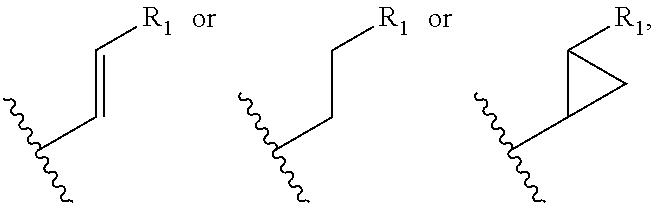
where R1 is selected from:
-
- a) R11, where R11 is selected from:
- 1) Hydrogen;
- 2) Deuterium;
- 3) C1-C8 alkyl;
- 4) Substituted C1-C8 alkyl;
- 5) C2-C8 alkenyl;
- 6) Substituted C2-C8 alkenyl;
- 7) C2-C8 alkynyl;
- 8) Substituted C2-C8 alkynyl;
- 9) C3-C12 cycloalkyl;
- 10) Substituted C3-C12 cycloalkyl;
- 11) Aryl;
- 12) Substituted aryl;
- 13) Heterocycloalkyl;
- 14) Substituted heterocycloalkyl;
- 15) Heteroaryl; and
- 16) Substituted heteroaryl;
- b) —C(O)OR11, where R11 is as previously defined;
- c) —C(O)R11, where R11 is as previously defined;
- d) —C(O)OCH2-T-R12, where T is —O— or —S— and R12 is selected from:
- 1) C1-C8 alkyl;
- 2) Substituted C1-C8 alkyl;
- 3) C2-C8 alkenyl;
- 4) Substituted C2-C8 alkenyl;
- 5) C2-C8 alkynyl;
- 6) Substituted C2-C8 alkynyl;
- 7) C3-C12 cycloalkyl;
- 8) Substituted C3-C12 cycloalkyl;
- 9) Aryl;
- 10) Substituted aryl;
- 11) Heterocycloalkyl;
- 12) Substituted heterocycloalkyl;
- 13) Heteroaryl; or
- 14) Substituted heteroaryl;
- e) —C(O)N(R13)(R14), where R13 and R14 are independently selected from R11 and R11 is as previously defined or R13 and R14, together with the nitrogen atom to which they are attached, form a substituted or unsubstituted heterocycloalkyl;
- f) —C(O)SR11, where R11 is as previously defined;
- g) —C(S)OR11, where R11 is as previously defined;
- h) —C(O)OCH2OC(O)R12, where R12 is as previously defined;
- i) —C(S)S R11, where R11 is as previously defined;
- j) R15, where R15 is selected from:
- 1) -M-R11, where R11 is as previously defined and M is selected from:
- i. C1-C8 alkyl;
- ii. Substituted C1-C8 alkyl;
- iii. C2-C8 alkenyl;
- iv. Substituted C2-C8 alkenyl;
- v. C2-C8 alkynyl;
- vi. Substituted C2-C8 alkynyl;
- vii. C3-C12 cycloalkyl; and
- viii. Substituted C3-C12 cycloalkyl;
- 2) -M-NR16R11, where R16 is R11 or R16 and R11 together with the nitrogen atom to which they are attached form a substituted or unsubstituted heterocycloalkyl, M is as previously defined;
- 3) -M-S(O)mR11, where m=0, 1, or 2; M and R11 are as previously defined;
- 4) -M-OR11, where M and R11 are as previously defined;
- 5) -M-C(O)R11, where M and R11 are as previously defined;
- 6) -M-OC(O)R12, where M and R12 are as previously defined;
- 7) -M-OC(O)O R12, where M and R12 are as previously defined;
- 8) -M-NR17C(O)R12, where R17 is R11, M and R12 are as previously defined;
- 9) -MNR17C(O)O R12, where R17, M and R12 are as previously defined;
- 10) -M-C(O)NR16R11, where R16, M and R11 are as previously defined;
- 11) -M-C(O)N(R16)—OR11, where R16, M and R11 are as previously defined;
- 12) -M-OC(O)NR16R11, where R16, M and R11 are as previously defined;
- 13) -M-NR17C(O)NR16R11, where M, R11, R17 and R16 are as previously defined or R16 and R11 together with the nitrogen atom to which they are attached form a substituted or unsubstituted heterocycloalkyl;
- 14) -M-C(S)S R11, where M and R11 are as previously defined;
- 15) -M-OC(S)S R12, where M and R12 are as previously defined;
- 16) -M-NR17C(O)S R12, where M, R17 and R12 are as previously defined;
- 17) -M-SC(O)NR16R11, where M, R11 and R16 are as previously defined or R16 and R11 together with the nitrogen atom to which they are attached form a substituted or unsubstituted heterocycloalkyl;
- 18) -M-CH═N—OR11, where M and R11 are as previously defined;
- 19) -M-CH═N—NR16R11, where M, R11 and R16 are as previously defined or R16 and R11 together with the nitrogen atom to which they are attached form a substituted or unsubstituted heterocycloalkyl;
- 1) -M-R11, where R11 is as previously defined and M is selected from:
- a) R11, where R11 is selected from:
- A is ethyl, 1-hydroxyethyl, isopropyl or n-propyl;
- W and V are each independently absent, —O—, or —S(O)m—, where m=0, 1, or 2;
- R2 is R1, where R1 is as previously defined;
- R3 is selected from methyl or ethyl or allyl or propyl;
- R4 and R5 are independently selected from: hydrogen or methyl or ethyl or allyl, or propyl, or isopropyl;
- R6 is R1, where R1 is as previously defined; and
- n and n′ are each independently 0, 1, or 2.

wherein R1, R2, R3, R4, R5, R6, V, and W are as defined above and


wherein R1, R2, R3, R4, R5, R6, V and W are as defined above and

wherein, R3, R4, R5, R6, and W are as defined above.

wherein R3, R4, R5 and R6 are as defined above.


and


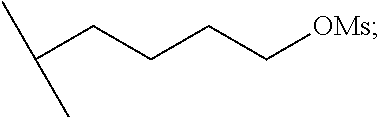


and

-
- Ac for acetyl;
- Boc2O for di-tert-butyl-dicarbonate;
- Boc for t-butoxycarbonyl;
- Bz for benzoyl;
- Bn for benzyl;
- BocNHOH for tert-butyl N-hydroxycarbamate;
- t-BuOK for potassium tert-butoxide;
- BOP for (benzotriazol-1-yloxy)tris(dimethylamino)phosphonium Hexafluorophosphate;
- Brine for sodium chloride solution in water;
- CDI for carbonyldiimidazole;
- CH2Cl2 for dichloromethane;
- CH3 for methyl;
- CH3CN for acetonitrile;
- Cs2CO3 for cesium carbonate;
- dba for dibenzylidene acetone;
- dppb for diphenylphosphino butane;
- dppe for diphenylphosphino ethane;
- DBU for 1,8-diazabicyclo[5.4.0]undec-7-ene;
- DCC for N,N′-dicyclohexylcarbodiimide;
- DEAD for diethylazodicarboxylate;
- DIAD for diisopropyl azodicarboxylate;
- DIPEA or (i-Pr)2EtN for N,N,-diisopropylethyl amine;
- Dess-Martin periodinane for 1,1,1-tris(acetyloxy)-1,1-dihydro-1,2-benziodoxol-3-(1H)-one;
- DMAP for 4-dimethylaminopyridine;
- DME for 1,2-dimethoxyethane;
- DMF for N,N-dimethylformamide;
- DMSO for dimethyl sulfoxide;
- DPPA for diphenylphosphoryl azide;
- EDC for N-(3-dimethylaminopropyl)-N′-ethylcarbodiimide;
- EDC HCl for N-(3-dimethylaminopropyl)-N′-ethylcarbodiimide hydrochloride;
- EtOAc for ethyl acetate;
- EtOH for ethanol;
- Et2O for diethyl ether;
- HATU for O-(7-azabenzotriazol-1-yl)-N,N,N′,N′,-tetramethyluronium Hexafluorophosphate;
- HCl for hydrogen chloride;
- HOBT for 1-hydroxybenzotriazole;
- K2CO3 for potassium carbonate;
- MeOH for methanol;
- Ms for mesyl or —SO2—CH3;
- Ms2O for methanesulfonic anhydride or mesyl-anhydride;
- NaHCO3 for sodium bicarbonate or sodium hydrogen carbonate;
- Na2CO3 sodium carbonate;
- NaOH for sodium hydroxide;
- Na2SO4 for sodium sulfate;
- NaHSO3 for sodium bisulfite or sodium hydrogen sulfite;
- Na2S2O3 for sodium thiosulfate;
- NH2NH2 for hydrazine;
- NH4HCO3 for ammonium bicarbonate;
- NH4Cl for ammonium chloride;
- NMMO for N-methylmorpholine N-oxide;
- NaIO4 for sodium periodate;
- OH for hydroxy;
- OsO4 for osmium tetroxide;
- TEA or Et3N for triethylamine;
- TFA for trifluoroacetic acid;
- THF for tetrahydrofuran;
- TPP or PPh3 for triphenylphosphine;
- Ts for tosyl or —SO2—C6H4CH3;
- Ts2O for tolylsulfonic anhydride or tosyl-anhydride;
- TsOH for p-tolylsulfonic acid;
- Pd for palladium;
- Ph for phenyl;
- Pd2(dba)3 for tris(dibenzylideneacetone)dipalladium (0);
- Pd(PPh3)4 for tetrakis(triphenylphosphine)palladium (0);
- TBS for tert-butyl dimethylsilyl; or
- TMS for trimethylsilyl;
- TMSCl for trimethylsilyl chloride; and
- CsA for cyclosporin A.
Synthetic Methods


Step 1a: Compound of Formula (1-1)

Step 2a: Compound of Formula (2-2) where R3 is H, R4═H, R5═CH3 and R6 is allyl


Step 5a: Compound of Formula (2-2) where R3 is methyl R4═H, R5═CH3 and R6 is


which was prepared in step 5a.


Step 12a: Compound of Formula (2-2) where R3 is methyl R4═H, R5═CH3 and R6 is


which was prepared in step 5a (2.76 g, 8 mmol) in anhydrous THF was added morphline (6.76 g, 80 mmol), Pd2(dba)2 (460 mmol, 0.5 mmol) and dppb (424 mg, 1 mmol) at room temperature. The mixture was degassed and heated to 65° C. After stirred at 65° C. for 4 hrs, the reaction mixture was concentrated and the residue was purified by flash chromatography to give colorless oil (2.5 g).
Step 12b: Compound of Formula (2-2) where R3 is methyl R4═H, R5═CH3 and R6 is


which was prepared in step 12a (350 mg) and 10% palladium on carbon (40 mg) in MeOH (10 ml) was stirred at room temperature under H2 for 13 hrs. The mixture was filtered through a pad of celite and the filtrate was concentrated to give the title compound as colorless oil (350 mg).

which was prepared in step 12b.

Step 13a: Compound of Formula (2-2) where R3 is methyl R4═H, R5═CH3 and R6 is


which was prepared in step 5a (2.76 g, 8 mmol) in ethyl acetate (40 ml) was added 5% palladium on carbon (400 mg). The mixture was stirred under H2 (1 atm) at 0° C. for 2 hrs and filtered through a pad of celite. The filtrate was concentrated and purified by flash chromatography to give the title compound as colorless oil (2.0 g).

which was prepared in step 13a.


Step 47a: Compound of Formula (2-2) where R3 is H, R4═H, R5═CH3 and R6 is


which was prepared in step 47a (3.4 g, 10.2 mmol), Pd2(dba)3 (748 mg, 0.8 mmol), dppe (650 mg, 1.6 mmol), THF (50 mL), morpholine (8.7 g, 100 mmol) under N2 and the mixture was stirred at 65° C. for 2 hrs. Solvents were removed and the residue was purified by flash chromatography to give the title compound as yellow foam (3.4 g (contaminated with morpholine).


which was prepared in step 47b (1.7 g, 4.7 mmol) and 10% Pd/C (110 mg) in MeOH (50 mL) was stirred at room temperature under H2 for 20 hrs followed by passing through a pad of celite. Concentrated to give the title compound as an oil (1.7 g, 100% yield).


which was prepared in step 47c (238 mg, 0.66 mmol), THF (2 mL), tBuOK (78.5 mg, 0.70 mmol), Pd2(dba)3 (60.4 mg, 0.066 mmol), dppe (52.6 mg, 0.13 mmol), and allylic tert-butoxy carbonate (418 mg, 2.64 mmol). The solution was stirred at 75° C. for 0.5 h. The reaction mixture was then cooled to room temperature, diluted with EtOAc, filtered through a pad of celite. The filtrate was concentrated and purified by flash chromatography (Acetone/Hexane, 0-10%, v/v) to give the compound as an oil (148 mg, 51% yield).


which was prepared in step 47d (110 mg, 0.32 mmol) and DMAP (138 mg, 1.12 mmol) in DMF (2 mL) was added HATU (307 mg, 0.81 mmol) at room temperature. After stirred at room temperature for 48 hrs and 40° C. for 4 hrs, the reaction mixture was quenched with aqueous saturated NaHCO3. The resulting mixture was extracted with CH2Cl2. The organic layer was washed with saturated KHSO4 solution, brine and dried over anhydrous Na2SO4, filtered, concentrated, and purified by flash chromatography (CH2Cl2/MeOH, 100-90%, v/v) to give the title compound 120 mg as white foam in 25% yield.


which was prepared in step 47g (60 mg, 0.04 mmol), Dimedone (11.2 mg, 0.08 mmol) in THF (1 mL) was added Pd(Ph3P)4 (4.6 mg, 0.004 mmol) at room temperature. The reaction mixture was stirred at room temperature for 20 mins and diluted with EtOAc. Filtered through a pad of celite, the filtrate was concentrated and the residue was purified by flash chromatography (CH2Cl2/MeOH, 5%, v/v) to give the compound 24 mg as an oil in 40% yield.


which was prepared in step 47h (14 mg, 0.010 mmol) in CH2Cl2 (20 mL) at room temperature. The solution was stirred at room temperature for 16 h. The reaction mixture was then washed with aqueous KHSO4, 10% aqueous Na2CO3, brine, dried over anhydrous Na2SO4, filtered, concentrated, and purified by HPLC to give the title compound 2.2 mg as a white foam 16% yield.


(475 mg, 1.1 mmol), CH2Cl2 (20 mL), BOP (531 mg, 1.2 mmol), and DMAP (241.9 mg, 1.98 mmol) respectively. The solution was stirred at room temperature for 16 hrs. Diluted with CH2Cl2, washed with 10% citric acid, water, saturated NaHCO3, brine and dried over Na2SO4. Concentrated and the residue was purified by flash chromatography (MeOH in CH2Cl2, 0˜20%, v/v) to afford a white solid 1.4 g.


Claims (16)


Priority Applications (1)
| Application Number | Priority Date | Filing Date | Title |
|---|---|---|---|
| US14/843,119 US9603895B2 (en) | 2009-01-30 | 2015-09-02 | Cyclosporin analogues for preventing or treating hepatitis C infection |
Applications Claiming Priority (4)
| Application Number | Priority Date | Filing Date | Title |
|---|---|---|---|
| US14858309P | 2009-01-30 | 2009-01-30 | |
| US12/697,215 US8367618B2 (en) | 2009-01-30 | 2010-01-30 | Cyclosporin analogues for preventing or treating hepatitis C infection |
| US13/734,074 US9156886B2 (en) | 2009-01-30 | 2013-01-04 | Cyclosporin analogues for preventing or treating hepatitis C infection |
| US14/843,119 US9603895B2 (en) | 2009-01-30 | 2015-09-02 | Cyclosporin analogues for preventing or treating hepatitis C infection |
Related Parent Applications (1)
| Application Number | Title | Priority Date | Filing Date |
|---|---|---|---|
| US13/734,074 Continuation US9156886B2 (en) | 2009-01-30 | 2013-01-04 | Cyclosporin analogues for preventing or treating hepatitis C infection |
Publications (2)
| Publication Number | Publication Date |
|---|---|
| US20160051625A1 US20160051625A1 (en) | 2016-02-25 |
| US9603895B2 true US9603895B2 (en) | 2017-03-28 |
Family
ID=42396050
Family Applications (3)
| Application Number | Title | Priority Date | Filing Date |
|---|---|---|---|
| US12/697,215 Expired - Fee Related US8367618B2 (en) | 2009-01-30 | 2010-01-30 | Cyclosporin analogues for preventing or treating hepatitis C infection |
| US13/734,074 Active US9156886B2 (en) | 2009-01-30 | 2013-01-04 | Cyclosporin analogues for preventing or treating hepatitis C infection |
| US14/843,119 Expired - Fee Related US9603895B2 (en) | 2009-01-30 | 2015-09-02 | Cyclosporin analogues for preventing or treating hepatitis C infection |
Family Applications Before (2)
| Application Number | Title | Priority Date | Filing Date |
|---|---|---|---|
| US12/697,215 Expired - Fee Related US8367618B2 (en) | 2009-01-30 | 2010-01-30 | Cyclosporin analogues for preventing or treating hepatitis C infection |
| US13/734,074 Active US9156886B2 (en) | 2009-01-30 | 2013-01-04 | Cyclosporin analogues for preventing or treating hepatitis C infection |
Country Status (14)
| Country | Link |
|---|---|
| US (3) | US8367618B2 (en) |
| EP (1) | EP2391376A4 (en) |
| JP (1) | JP5406943B2 (en) |
| KR (2) | KR20110111321A (en) |
| CN (1) | CN102365094A (en) |
| AU (1) | AU2010208071C1 (en) |
| BR (1) | BRPI1007476A2 (en) |
| CA (1) | CA2751210C (en) |
| IL (1) | IL214278A0 (en) |
| MX (1) | MX2011008000A (en) |
| NZ (1) | NZ594755A (en) |
| RU (1) | RU2492181C2 (en) |
| SG (1) | SG173180A1 (en) |
| WO (1) | WO2010088573A1 (en) |
Families Citing this family (35)
| Publication number | Priority date | Publication date | Assignee | Title |
|---|---|---|---|---|
| KR20110111321A (en) * | 2009-01-30 | 2011-10-10 | 이난타 파마슈티칼스, 인코포레이티드 | Cyclosporine analogs for preventing or treating hepatitis C |
| US8481483B2 (en) * | 2009-02-19 | 2013-07-09 | Enanta Pharmaceuticals, Inc. | Cyclosporin analogues |
| US8367053B2 (en) * | 2009-07-09 | 2013-02-05 | Enanta Pharmaceuticals, Inc. | Cyclosporin analogues |
| US8685917B2 (en) * | 2009-07-09 | 2014-04-01 | Enanta Pharmaceuticals, Inc. | Cyclosporin analogues |
| US8349312B2 (en) * | 2009-07-09 | 2013-01-08 | Enanta Pharmaceuticals, Inc. | Proline substituted cyclosporin analogues |
| WO2011082289A1 (en) * | 2009-12-30 | 2011-07-07 | Scynexis Inc. | Cyclosporine analogues |
| US8623814B2 (en) * | 2010-02-23 | 2014-01-07 | Enanta Pharmaceuticals, Inc. | Antiviral agents |
| WO2012009715A2 (en) | 2010-07-16 | 2012-01-19 | S&T Global Inc. | Novel cyclosporin derivatives for the treatment and prevention of a viral infection |
| US9573978B2 (en) * | 2010-08-12 | 2017-02-21 | S&T Global, Inc. | Cyclosporin derivatives for the treatment and prevention of a viral infection |
| ES2625502T3 (en) * | 2010-12-03 | 2017-07-19 | S&T Global Inc | New cyclosporine derivatives for the treatment and prevention of a viral infection |
| US9890198B2 (en) * | 2010-12-03 | 2018-02-13 | S&T Global Inc. | Cyclosporin derivatives and uses thereof |
| BR112013014890B1 (en) | 2010-12-15 | 2023-10-24 | Contravir Pharmaceuticals, Inc | ANALOG COMPOUND OF MOLECULES BELONGING TO THE CYCLOSPORINE FAMILY, PHARMACEUTICAL COMPOSITION COMPRISING THE SAME, THERAPEUTIC OR PROPHYLACTIC USE OF SAID COMPOUND AND PROCESSES FOR PREPARING THE SAME |
| US9428845B1 (en) | 2010-12-28 | 2016-08-30 | Warp Drive Bio, Inc. | Identifying new therapeutic agents |
| AR090964A1 (en) * | 2012-05-09 | 2014-12-17 | Novartis Ag | PROCESS FOR THE PREPARATION OF CYCLE UNDECAPEPTIDES |
| JP2015519368A (en) | 2012-06-01 | 2015-07-09 | アラーガン インコーポレイテッドAllergan,Incorporated | Cyclosporine A analog |
| EP2900684A2 (en) | 2012-09-29 | 2015-08-05 | Novartis AG | Cyclic peptides and use as medicines |
| WO2014085623A1 (en) * | 2012-11-28 | 2014-06-05 | Enanta Pharmaceuticals, Inc. | Novel [n-me-4-hydroxyleucine]-9-cyclosporin analogues |
| JP2016538317A (en) | 2013-08-26 | 2016-12-08 | エナンタ ファーマシューティカルズ インコーポレイテッド | Novel cyclosporine analogues for preventing or treating hepatitis C |
| JP6413455B2 (en) * | 2014-08-07 | 2018-10-31 | 日本電気株式会社 | Water heater control device, water heater control system, water heater control method and program |
| GB201414806D0 (en) | 2014-08-20 | 2014-10-01 | Ucl Business Plc | Cyclosporin conjugates |
| US9669095B2 (en) | 2014-11-03 | 2017-06-06 | Enanta Pharmaceuticals, Inc. | Cyclosporin analogues for preventing or treating hepatitis C infection |
| CN105693820A (en) * | 2014-11-27 | 2016-06-22 | 武汉药明康德新药开发有限公司 | Degradation method of cyclosporine A |
| US9914755B2 (en) | 2015-01-08 | 2018-03-13 | Allergan, Inc. | Cyclosporin derivatives wherein the MeBmt sidechain has been cyclized |
| TW201629069A (en) | 2015-01-09 | 2016-08-16 | 霍普驅動生物科技股份有限公司 | Compounds that participate in synergistic combination and their uses |
| EP3247378B8 (en) | 2015-01-09 | 2023-08-23 | Revolution Medicines, Inc. | Macrocyclic compounds that participate in cooperative binding and medical uses thereof |
| EP4242304A3 (en) | 2015-10-01 | 2024-02-07 | Revolution Medicines, Inc. | Methods and reagents for analyzing protein-protein interfaces |
| CN109641062A (en) | 2016-04-12 | 2019-04-16 | 华普卓威生物公司 | For generating the composition and method of compound |
| US11479797B2 (en) | 2016-10-28 | 2022-10-25 | Ginkgo Bioworks, Inc. | Compositions and methods for the production of compounds |
| AU2020377925A1 (en) | 2019-11-04 | 2022-05-05 | Revolution Medicines, Inc. | Ras inhibitors |
| IL322454A (en) | 2019-11-04 | 2025-09-01 | Revolution Medicines Inc | Ras inhibitors |
| TW202132316A (en) | 2019-11-04 | 2021-09-01 | 美商銳新醫藥公司 | Ras inhibitors |
| IL296586B1 (en) * | 2020-03-26 | 2026-04-01 | Farsight Medical Tech Shanghai Co Ltd | Cyclophilin inhibitors and uses thereof |
| CA3194067A1 (en) | 2020-09-15 | 2022-03-24 | Revolution Medicines, Inc. | Ras inhibitors |
| KR20240017811A (en) | 2021-05-05 | 2024-02-08 | 레볼루션 메디슨즈, 인크. | RAS inhibitors for the treatment of cancer |
| AR127308A1 (en) | 2021-10-08 | 2024-01-10 | Revolution Medicines Inc | RAS INHIBITORS |
Citations (3)
| Publication number | Priority date | Publication date | Assignee | Title |
|---|---|---|---|---|
| USRE40987E1 (en) * | 1998-07-01 | 2009-11-17 | Debiopharm S.A. | Cyclosporin with improved activity profile |
| US8367618B2 (en) * | 2009-01-30 | 2013-02-05 | Enanta Pharmaceuticals, Inc. | Cyclosporin analogues for preventing or treating hepatitis C infection |
| US9221878B2 (en) * | 2013-08-26 | 2015-12-29 | Enanta Pharmaceuticals, Inc. | Cyclosporin analogues for preventing or treating hepatitis C infection |
Family Cites Families (48)
| Publication number | Priority date | Publication date | Assignee | Title |
|---|---|---|---|---|
| CH614931A5 (en) | 1975-11-04 | 1979-12-28 | Sandoz Ag | |
| DE2819094A1 (en) | 1977-05-10 | 1978-11-23 | Sandoz Ag | CYCLOSPORIN DERIVATIVES, THEIR USE AND MANUFACTURING |
| SE448386B (en) | 1978-10-18 | 1987-02-16 | Sandoz Ag | NEW CYCLOSPORIN DERIVATIVES, PROCEDURE FOR PREPARING THEM AND PHARMACEUTICAL COMPOSITION CONTAINING THEM |
| IE54936B1 (en) | 1980-02-14 | 1990-03-28 | Sandoz Ltd | A method for the total synthesis of cyclosporins, novel cyclosporins and novel intermediates and methods for their production |
| US4396542A (en) | 1980-02-14 | 1983-08-02 | Sandoz Ltd. | Method for the total synthesis of cyclosporins, novel cyclosporins and novel intermediates and methods for their production |
| US4384996A (en) | 1981-01-09 | 1983-05-24 | Sandoz Ltd. | Novel cyclosporins |
| EP0290762B1 (en) | 1984-10-04 | 1993-05-12 | Sandoz Ag | Cyclosporins |
| EP0194972B1 (en) | 1985-03-11 | 1992-07-29 | Sandoz Ag | Novel cyclosporins |
| US5239057A (en) | 1987-03-27 | 1993-08-24 | Abbott Laboratories | Fluorescence polarization assay for cyclosporin a and metabolites and related immunogens and antibodies |
| US4798823A (en) | 1987-06-03 | 1989-01-17 | Merck & Co., Inc. | New cyclosporin analogs with modified "C-9 amino acids" |
| DE3884470T2 (en) | 1987-06-17 | 1994-03-10 | Sandoz Ag | Cyclosporins and their use as medicines. |
| GB2206119B (en) | 1987-06-22 | 1990-10-31 | Merck & Co Inc | A new cyclosporin derivative with modified "8-amino acid" |
| GB8717300D0 (en) | 1987-07-22 | 1987-08-26 | Nat Res Dev | Cyclosporins |
| GB8717299D0 (en) | 1987-07-22 | 1987-08-26 | Nat Res Dev | Peptides |
| GB2207678A (en) | 1987-08-03 | 1989-02-08 | Merck & Co Inc | Novel immunosuppressive fluorinated cyclosporin analogs |
| US5604092A (en) | 1988-12-05 | 1997-02-18 | The Trustees Of Columbia University In The City Of New York | Method for the detection of HIV-1 using a cyclosporine-specific monoclonal antibody that reacts with the P24 Gag protein |
| US5284826A (en) | 1989-07-24 | 1994-02-08 | Sandoz Ltd. | 0-hydroxyethyl and acyloxyethyl derivatives of [ser]8 cyclosporins |
| FR2762843B1 (en) * | 1997-04-30 | 1999-12-10 | Rhone Poulenc Rorer Sa | NOVEL CYCLOSPORIN DERIVATIVES, THEIR PREPARATION AND THE PHARMACEUTICAL COMPOSITIONS CONTAINING THEM |
| AU750245B2 (en) | 1997-10-08 | 2002-07-11 | Aurinia Phamaceuticals Inc. | Deuterated cyclosporine analogs and their use as immunomodulating agents |
| US6784156B2 (en) | 2001-03-05 | 2004-08-31 | Enanta Pharmaceuticals, Inc. | Cyclosporins for the treatment of respiratory diseases |
| US6809077B2 (en) | 2001-10-12 | 2004-10-26 | Enanta Pharmaceuticals, Inc. | Cyclosporin analogs for the treatment of autoimmune diseases |
| US20030087813A1 (en) | 2001-10-12 | 2003-05-08 | Or Yat Sun | Cyclosporin analogs for the treatment of lung diseases |
| MXPA04003625A (en) | 2001-10-19 | 2004-12-02 | Sotechnika Inc | CYCLOSPORINE ANALOG SYNTHESIS. |
| US7012065B2 (en) | 2003-02-07 | 2006-03-14 | Enanta Pharmaceuticals, Inc. | Cyclosporins for the treatment of immune disorders |
| US20040266669A1 (en) | 2003-06-20 | 2004-12-30 | Wu Frank X. H. | Cyclosporin derivatives for the treatment of immune disorders |
| GB0320638D0 (en) | 2003-09-03 | 2003-10-01 | Novartis Ag | Organic compounds |
| US7671017B2 (en) | 2004-07-14 | 2010-03-02 | Novartis Ag | Use of a combination of cyclosporine and pegylated interferon for treating hepatitis C (HCV) |
| JP2008514702A (en) * | 2004-09-29 | 2008-05-08 | エーエムアール テクノロジー インコーポレイテッド | Novel cyclosporine analogues and their pharmaceutical use |
| SI1802650T1 (en) | 2004-10-01 | 2012-03-30 | Scynexis Inc | 3-ether and 3-thioether substituted cyclosporin derivatives for the treatment and prevention of hepatitis c infection |
| DK1793844T3 (en) | 2004-10-01 | 2011-03-21 | Debiopharm Sa | Use of [D-MeAla] 3- [EtVal] 4-cyclosporin for the treatment of hepatitis C infection |
| EP1931696B1 (en) | 2005-09-30 | 2011-02-16 | Scynexis, Inc. | Arylalkyl and heteroarylalkyl derivatives of cyclosporine a for the treatment and prevention of viral infection |
| PT1957518E (en) | 2005-10-26 | 2016-02-26 | Astellas Pharma Inc | New cyclic peptide compounds |
| EP1996565A2 (en) | 2006-03-08 | 2008-12-03 | Achillion Pharmaceuticals, Inc. | Substituted aminothiazole derivatives with anti-hcv activity |
| US7696165B2 (en) | 2006-03-28 | 2010-04-13 | Albany Molecular Research, Inc. | Use of cyclosporin alkyne analogues for preventing or treating viral-induced disorders |
| US20070232532A1 (en) | 2006-03-28 | 2007-10-04 | Amr Technology, Inc. | Use of cyclosporin alkene analogues for preventing or treating viral-induced disorders |
| US7696166B2 (en) | 2006-03-28 | 2010-04-13 | Albany Molecular Research, Inc. | Use of cyclosporin alkyne/alkene analogues for preventing or treating viral-induced disorders |
| US7776832B2 (en) * | 2006-04-21 | 2010-08-17 | Gem Pharmaceuticals, Llc | Anticancer treatment with a combination of taxanes and 13-deoxyanthracyclines |
| KR20100017547A (en) | 2007-05-02 | 2010-02-16 | 아스텔라스세이야쿠 가부시키가이샤 | New cyclic peptide compounds |
| WO2008143996A1 (en) * | 2007-05-18 | 2008-11-27 | Scynexis, Inc. | New chemical processes |
| US8481483B2 (en) | 2009-02-19 | 2013-07-09 | Enanta Pharmaceuticals, Inc. | Cyclosporin analogues |
| US8367053B2 (en) | 2009-07-09 | 2013-02-05 | Enanta Pharmaceuticals, Inc. | Cyclosporin analogues |
| US8685917B2 (en) | 2009-07-09 | 2014-04-01 | Enanta Pharmaceuticals, Inc. | Cyclosporin analogues |
| US8349312B2 (en) | 2009-07-09 | 2013-01-08 | Enanta Pharmaceuticals, Inc. | Proline substituted cyclosporin analogues |
| US8429835B2 (en) * | 2009-10-21 | 2013-04-30 | Nike, Inc. | Composite shoe upper and method of making same |
| US8623814B2 (en) | 2010-02-23 | 2014-01-07 | Enanta Pharmaceuticals, Inc. | Antiviral agents |
| US8178531B2 (en) | 2010-02-23 | 2012-05-15 | Enanta Pharmaceuticals, Inc. | Antiviral agents |
| WO2012009715A2 (en) | 2010-07-16 | 2012-01-19 | S&T Global Inc. | Novel cyclosporin derivatives for the treatment and prevention of a viral infection |
| US9573978B2 (en) | 2010-08-12 | 2017-02-21 | S&T Global, Inc. | Cyclosporin derivatives for the treatment and prevention of a viral infection |
-
2010
- 2010-01-30 KR KR1020117020221A patent/KR20110111321A/en not_active Ceased
- 2010-01-30 MX MX2011008000A patent/MX2011008000A/en active IP Right Grant
- 2010-01-30 RU RU2011133900/04A patent/RU2492181C2/en not_active IP Right Cessation
- 2010-01-30 CA CA2751210A patent/CA2751210C/en not_active Expired - Fee Related
- 2010-01-30 NZ NZ594755A patent/NZ594755A/en not_active IP Right Cessation
- 2010-01-30 EP EP10736507A patent/EP2391376A4/en not_active Withdrawn
- 2010-01-30 CN CN2010800142248A patent/CN102365094A/en active Pending
- 2010-01-30 JP JP2011548361A patent/JP5406943B2/en not_active Expired - Fee Related
- 2010-01-30 US US12/697,215 patent/US8367618B2/en not_active Expired - Fee Related
- 2010-01-30 WO PCT/US2010/022675 patent/WO2010088573A1/en not_active Ceased
- 2010-01-30 BR BRPI1007476A patent/BRPI1007476A2/en not_active Application Discontinuation
- 2010-01-30 AU AU2010208071A patent/AU2010208071C1/en not_active Ceased
- 2010-01-30 SG SG2011054715A patent/SG173180A1/en unknown
- 2010-01-30 KR KR1020147001832A patent/KR101476626B1/en not_active Expired - Fee Related
-
2011
- 2011-07-25 IL IL214278A patent/IL214278A0/en unknown
-
2013
- 2013-01-04 US US13/734,074 patent/US9156886B2/en active Active
-
2015
- 2015-09-02 US US14/843,119 patent/US9603895B2/en not_active Expired - Fee Related
Patent Citations (4)
| Publication number | Priority date | Publication date | Assignee | Title |
|---|---|---|---|---|
| USRE40987E1 (en) * | 1998-07-01 | 2009-11-17 | Debiopharm S.A. | Cyclosporin with improved activity profile |
| US8367618B2 (en) * | 2009-01-30 | 2013-02-05 | Enanta Pharmaceuticals, Inc. | Cyclosporin analogues for preventing or treating hepatitis C infection |
| US9156886B2 (en) * | 2009-01-30 | 2015-10-13 | Enanta Pharmaceuticals, Inc. | Cyclosporin analogues for preventing or treating hepatitis C infection |
| US9221878B2 (en) * | 2013-08-26 | 2015-12-29 | Enanta Pharmaceuticals, Inc. | Cyclosporin analogues for preventing or treating hepatitis C infection |
Non-Patent Citations (2)
| Title |
|---|
| Muamba et al. New Synthetic Routes to NEtXaa4-Cyclosporin Derivatives as Potential Anti-HIV Drugs. Peptides: The Wave of the Future MichalLebland Richard A. Houghten (Editors) American Peptide Society, 2001, 2 pages. * |
| Scribner, Andrew, et al., "Synthesis and biological evaluation of [ D-lysine )8cydosporin A analogs as potential anti-HVC agents," Bioorganic & Medicinal Chemistry Letters, 20(22):6542-6546, 2010. |
Also Published As
| Publication number | Publication date |
|---|---|
| AU2010208071C1 (en) | 2013-06-20 |
| US20100196316A1 (en) | 2010-08-05 |
| US20130183267A1 (en) | 2013-07-18 |
| BRPI1007476A2 (en) | 2016-02-16 |
| RU2011133900A (en) | 2013-03-10 |
| IL214278A0 (en) | 2011-09-27 |
| EP2391376A1 (en) | 2011-12-07 |
| NZ594755A (en) | 2013-12-20 |
| CA2751210A1 (en) | 2010-08-05 |
| EP2391376A4 (en) | 2012-08-01 |
| US8367618B2 (en) | 2013-02-05 |
| CA2751210C (en) | 2015-04-21 |
| KR20110111321A (en) | 2011-10-10 |
| JP2012516850A (en) | 2012-07-26 |
| MX2011008000A (en) | 2011-09-15 |
| JP5406943B2 (en) | 2014-02-05 |
| WO2010088573A1 (en) | 2010-08-05 |
| AU2010208071B2 (en) | 2012-11-08 |
| SG173180A1 (en) | 2011-09-29 |
| KR101476626B1 (en) | 2014-12-26 |
| RU2492181C2 (en) | 2013-09-10 |
| AU2010208071A1 (en) | 2011-09-01 |
| US20160051625A1 (en) | 2016-02-25 |
| KR20140014323A (en) | 2014-02-05 |
| US9156886B2 (en) | 2015-10-13 |
| CN102365094A (en) | 2012-02-29 |
Similar Documents
| Publication | Publication Date | Title |
|---|---|---|
| US9603895B2 (en) | Cyclosporin analogues for preventing or treating hepatitis C infection | |
| US8623814B2 (en) | Antiviral agents | |
| US8178531B2 (en) | Antiviral agents | |
| US8481483B2 (en) | Cyclosporin analogues | |
| US9616099B2 (en) | Cyclosporin analogues for preventing or treating hepatitis C infection | |
| US8273709B2 (en) | Triazole-containing macrocyclic HCV serine protease inhibitors | |
| US8367053B2 (en) | Cyclosporin analogues | |
| US8349312B2 (en) | Proline substituted cyclosporin analogues | |
| US20190263860A1 (en) | Macrocyclic proline derived hcv serine protease inhibitors | |
| US20090123425A1 (en) | Macrocyclic, pyridazinone-containing hepatitis c serine protease inhibitors | |
| US8685917B2 (en) | Cyclosporin analogues | |
| US9669095B2 (en) | Cyclosporin analogues for preventing or treating hepatitis C infection | |
| US8906853B2 (en) | [N-Me-4-hydroxyleucine]-9-cyclosporin analogues for treatment and prevention of hepatitis C infection | |
| AU2013200652A1 (en) | Cyclosporin analogues for preventing or treating hepatitis C infection |
Legal Events
| Date | Code | Title | Description |
|---|---|---|---|
| STCF | Information on status: patent grant |
Free format text: PATENTED CASE |
|
| MAFP | Maintenance fee payment |
Free format text: PAYMENT OF MAINTENANCE FEE, 4TH YEAR, LARGE ENTITY (ORIGINAL EVENT CODE: M1551); ENTITY STATUS OF PATENT OWNER: LARGE ENTITY Year of fee payment: 4 |
|
| FEPP | Fee payment procedure |
Free format text: MAINTENANCE FEE REMINDER MAILED (ORIGINAL EVENT CODE: REM.); ENTITY STATUS OF PATENT OWNER: LARGE ENTITY |
|
| LAPS | Lapse for failure to pay maintenance fees |
Free format text: PATENT EXPIRED FOR FAILURE TO PAY MAINTENANCE FEES (ORIGINAL EVENT CODE: EXP.); ENTITY STATUS OF PATENT OWNER: LARGE ENTITY |
|
| STCH | Information on status: patent discontinuation |
Free format text: PATENT EXPIRED DUE TO NONPAYMENT OF MAINTENANCE FEES UNDER 37 CFR 1.362 |
|
| FP | Lapsed due to failure to pay maintenance fee |
Effective date: 20250328 |