US9540627B2 - Methods and compositions for isolating, identifying and characterizing monocot plastidic accase herbicide tolerant mutations using a model system - Google Patents
Methods and compositions for isolating, identifying and characterizing monocot plastidic accase herbicide tolerant mutations using a model system Download PDFInfo
- Publication number
- US9540627B2 US9540627B2 US14/357,691 US201214357691A US9540627B2 US 9540627 B2 US9540627 B2 US 9540627B2 US 201214357691 A US201214357691 A US 201214357691A US 9540627 B2 US9540627 B2 US 9540627B2
- Authority
- US
- United States
- Prior art keywords
- accase
- yeast
- herbicide
- chimeric
- growth
- Prior art date
- Legal status (The legal status is an assumption and is not a legal conclusion. Google has not performed a legal analysis and makes no representation as to the accuracy of the status listed.)
- Active
Links
- 239000004009 herbicide Substances 0.000 title claims abstract description 363
- 230000035772 mutation Effects 0.000 title claims abstract description 253
- 230000002363 herbicidal effect Effects 0.000 title claims abstract description 162
- 238000000034 method Methods 0.000 title claims abstract description 92
- 241000209510 Liliopsida Species 0.000 title claims abstract description 66
- 239000000203 mixture Substances 0.000 title abstract description 45
- 108010016219 Acetyl-CoA carboxylase Proteins 0.000 claims abstract description 453
- 102000000452 Acetyl-CoA carboxylase Human genes 0.000 claims abstract description 335
- 108010018763 Biotin carboxylase Proteins 0.000 claims description 453
- 240000004808 Saccharomyces cerevisiae Species 0.000 claims description 224
- IOYNQIMAUDJVEI-ZFNPBRLTSA-N 2-[N-[(E)-3-chloroprop-2-enoxy]-C-ethylcarbonimidoyl]-3-hydroxy-5-(oxan-4-yl)cyclohex-2-en-1-one Chemical compound C1C(=O)C(C(=NOC\C=C\Cl)CC)=C(O)CC1C1CCOCC1 IOYNQIMAUDJVEI-ZFNPBRLTSA-N 0.000 claims description 147
- GGWHBJGBERXSLL-NBVRZTHBSA-N chembl113137 Chemical compound C1C(=O)C(C(=N/OCC)/CCC)=C(O)CC1C1CSCCC1 GGWHBJGBERXSLL-NBVRZTHBSA-N 0.000 claims description 143
- 239000005501 Cycloxydim Substances 0.000 claims description 141
- 210000004897 n-terminal region Anatomy 0.000 claims description 81
- 210000004027 cell Anatomy 0.000 claims description 65
- 210000004899 c-terminal region Anatomy 0.000 claims description 60
- 150000001413 amino acids Chemical class 0.000 claims description 47
- 239000013612 plasmid Substances 0.000 claims description 39
- 231100000350 mutagenesis Toxicity 0.000 claims description 28
- 238000002703 mutagenesis Methods 0.000 claims description 25
- 241000233866 Fungi Species 0.000 claims description 21
- 230000002950 deficient Effects 0.000 claims description 20
- 241001621841 Alopecurus myosuroides Species 0.000 claims description 19
- 108020004707 nucleic acids Proteins 0.000 claims description 17
- 102000039446 nucleic acids Human genes 0.000 claims description 17
- 150000007523 nucleic acids Chemical class 0.000 claims description 17
- OILAIQUEIWYQPH-UHFFFAOYSA-N cyclohexane-1,2-dione Chemical compound O=C1CCCCC1=O OILAIQUEIWYQPH-UHFFFAOYSA-N 0.000 claims description 15
- 125000003275 alpha amino acid group Chemical group 0.000 claims description 14
- 238000012258 culturing Methods 0.000 claims description 13
- 230000035945 sensitivity Effects 0.000 claims description 12
- 108020004705 Codon Proteins 0.000 claims description 11
- CSPPKDPQLUUTND-NBVRZTHBSA-N Sethoxydim Chemical compound CCO\N=C(/CCC)C1=C(O)CC(CC(C)SCC)CC1=O CSPPKDPQLUUTND-NBVRZTHBSA-N 0.000 claims description 11
- 102000004190 Enzymes Human genes 0.000 claims description 10
- 108090000790 Enzymes Proteins 0.000 claims description 10
- 238000012217 deletion Methods 0.000 claims description 8
- 230000037430 deletion Effects 0.000 claims description 8
- KRQUFUKTQHISJB-YYADALCUSA-N 2-[(E)-N-[2-(4-chlorophenoxy)propoxy]-C-propylcarbonimidoyl]-3-hydroxy-5-(thian-3-yl)cyclohex-2-en-1-one Chemical compound CCC\C(=N/OCC(C)OC1=CC=C(Cl)C=C1)C1=C(O)CC(CC1=O)C1CCCSC1 KRQUFUKTQHISJB-YYADALCUSA-N 0.000 claims description 7
- 239000007788 liquid Substances 0.000 claims description 7
- 230000000295 complement effect Effects 0.000 claims description 6
- 230000036961 partial effect Effects 0.000 claims description 6
- 241000209094 Oryza Species 0.000 claims description 5
- 241000235648 Pichia Species 0.000 claims description 5
- 241000235070 Saccharomyces Species 0.000 claims description 5
- 239000005624 Tralkoxydim Substances 0.000 claims description 5
- FROBCXTULYFHEJ-OAHLLOKOSA-N propaquizafop Chemical compound C1=CC(O[C@H](C)C(=O)OCCON=C(C)C)=CC=C1OC1=CN=C(C=C(Cl)C=C2)C2=N1 FROBCXTULYFHEJ-OAHLLOKOSA-N 0.000 claims description 5
- DQFPEYARZIQXRM-LTGZKZEYSA-N tralkoxydim Chemical compound C1C(=O)C(C(/CC)=N/OCC)=C(O)CC1C1=C(C)C=C(C)C=C1C DQFPEYARZIQXRM-LTGZKZEYSA-N 0.000 claims description 5
- ADDQHLREJDZPMT-AWEZNQCLSA-N (S)-metamifop Chemical compound O=C([C@@H](OC=1C=CC(OC=2OC3=CC(Cl)=CC=C3N=2)=CC=1)C)N(C)C1=CC=CC=C1F ADDQHLREJDZPMT-AWEZNQCLSA-N 0.000 claims description 4
- ABOOPXYCKNFDNJ-UHFFFAOYSA-N 2-{4-[(6-chloroquinoxalin-2-yl)oxy]phenoxy}propanoic acid Chemical compound C1=CC(OC(C)C(O)=O)=CC=C1OC1=CN=C(C=C(Cl)C=C2)C2=N1 ABOOPXYCKNFDNJ-UHFFFAOYSA-N 0.000 claims description 4
- 239000005497 Clethodim Substances 0.000 claims description 4
- 239000005498 Clodinafop Substances 0.000 claims description 4
- 239000005599 Profoxydim Substances 0.000 claims description 4
- 239000005600 Propaquizafop Substances 0.000 claims description 4
- 241000235346 Schizosaccharomyces Species 0.000 claims description 4
- PNCNFDRSHBFIDM-WOJGMQOQSA-N chembl111617 Chemical compound C=CCO\N=C(/CCC)C1=C(O)C(C(=O)OC)C(C)(C)CC1=O PNCNFDRSHBFIDM-WOJGMQOQSA-N 0.000 claims description 4
- SILSDTWXNBZOGF-JWGBMQLESA-N clethodim Chemical compound CCSC(C)CC1CC(O)=C(C(CC)=NOC\C=C\Cl)C(=O)C1 SILSDTWXNBZOGF-JWGBMQLESA-N 0.000 claims description 4
- YUIKUTLBPMDDNQ-MRVPVSSYSA-N clodinafop Chemical compound C1=CC(O[C@H](C)C(O)=O)=CC=C1OC1=NC=C(Cl)C=C1F YUIKUTLBPMDDNQ-MRVPVSSYSA-N 0.000 claims description 4
- 230000002401 inhibitory effect Effects 0.000 claims description 4
- ROBSGBGTWRRYSK-SNVBAGLBSA-N (2r)-2-[4-(4-cyano-2-fluorophenoxy)phenoxy]propanoic acid Chemical compound C1=CC(O[C@H](C)C(O)=O)=CC=C1OC1=CC=C(C#N)C=C1F ROBSGBGTWRRYSK-SNVBAGLBSA-N 0.000 claims description 3
- YUVKUEAFAVKILW-UHFFFAOYSA-N 2-(4-{[5-(trifluoromethyl)pyridin-2-yl]oxy}phenoxy)propanoic acid Chemical compound C1=CC(OC(C)C(O)=O)=CC=C1OC1=CC=C(C(F)(F)F)C=N1 YUVKUEAFAVKILW-UHFFFAOYSA-N 0.000 claims description 3
- OOLBCHYXZDXLDS-UHFFFAOYSA-N 2-[4-(2,4-dichlorophenoxy)phenoxy]propanoic acid Chemical compound C1=CC(OC(C)C(O)=O)=CC=C1OC1=CC=C(Cl)C=C1Cl OOLBCHYXZDXLDS-UHFFFAOYSA-N 0.000 claims description 3
- 241001523626 Arxula Species 0.000 claims description 3
- 241000222120 Candida <Saccharomycetales> Species 0.000 claims description 3
- 241000123346 Chrysosporium Species 0.000 claims description 3
- 241001337994 Cryptococcus <scale insect> Species 0.000 claims description 3
- 239000005506 Diclofop Substances 0.000 claims description 3
- 241000235649 Kluyveromyces Species 0.000 claims description 3
- 241000221960 Neurospora Species 0.000 claims description 3
- 241000235013 Yarrowia Species 0.000 claims description 3
- ZOGDSYNXUXQGHF-XIEYBQDHSA-N Butroxydim Chemical compound CCCC(=O)C1=C(C)C=C(C)C(C2CC(=O)C(\C(CC)=N\OCC)=C(O)C2)=C1C ZOGDSYNXUXQGHF-XIEYBQDHSA-N 0.000 claims 1
- 239000007790 solid phase Substances 0.000 claims 1
- 235000014680 Saccharomyces cerevisiae Nutrition 0.000 description 207
- 230000012010 growth Effects 0.000 description 206
- GOCUAJYOYBLQRH-UHFFFAOYSA-N 2-(4-{[3-chloro-5-(trifluoromethyl)pyridin-2-yl]oxy}phenoxy)propanoic acid Chemical compound C1=CC(OC(C)C(O)=O)=CC=C1OC1=NC=C(C(F)(F)F)C=C1Cl GOCUAJYOYBLQRH-UHFFFAOYSA-N 0.000 description 98
- 230000006870 function Effects 0.000 description 85
- 240000007594 Oryza sativa Species 0.000 description 71
- 235000007164 Oryza sativa Nutrition 0.000 description 66
- 230000009466 transformation Effects 0.000 description 64
- 230000001086 cytosolic effect Effects 0.000 description 58
- 239000012634 fragment Substances 0.000 description 54
- 235000001014 amino acid Nutrition 0.000 description 52
- 210000005253 yeast cell Anatomy 0.000 description 52
- 229940024606 amino acid Drugs 0.000 description 46
- 241000196324 Embryophyta Species 0.000 description 45
- 229960000310 isoleucine Drugs 0.000 description 44
- AGPKZVBTJJNPAG-UHFFFAOYSA-N isoleucine Natural products CCC(C)C(N)C(O)=O AGPKZVBTJJNPAG-UHFFFAOYSA-N 0.000 description 44
- 239000002609 medium Substances 0.000 description 44
- 235000009566 rice Nutrition 0.000 description 44
- 101150006679 DIM gene Proteins 0.000 description 43
- AGPKZVBTJJNPAG-WHFBIAKZSA-N L-isoleucine Chemical compound CC[C@H](C)[C@H](N)C(O)=O AGPKZVBTJJNPAG-WHFBIAKZSA-N 0.000 description 43
- YBJHBAHKTGYVGT-ZKWXMUAHSA-N (+)-Biotin Chemical group N1C(=O)N[C@@H]2[C@H](CCCCC(=O)O)SC[C@@H]21 YBJHBAHKTGYVGT-ZKWXMUAHSA-N 0.000 description 28
- 230000002269 spontaneous effect Effects 0.000 description 28
- 238000002474 experimental method Methods 0.000 description 24
- 244000098338 Triticum aestivum Species 0.000 description 23
- 235000014113 dietary fatty acids Nutrition 0.000 description 22
- 229930195729 fatty acid Natural products 0.000 description 22
- 239000000194 fatty acid Substances 0.000 description 22
- 150000004665 fatty acids Chemical class 0.000 description 20
- 108090000623 proteins and genes Proteins 0.000 description 20
- 230000000694 effects Effects 0.000 description 19
- 239000002773 nucleotide Substances 0.000 description 19
- 125000003729 nucleotide group Chemical group 0.000 description 19
- OKKJLVBELUTLKV-UHFFFAOYSA-N Methanol Chemical compound OC OKKJLVBELUTLKV-UHFFFAOYSA-N 0.000 description 18
- 101150058703 ACC1 gene Proteins 0.000 description 16
- IJGRMHOSHXDMSA-UHFFFAOYSA-N Atomic nitrogen Chemical compound N#N IJGRMHOSHXDMSA-UHFFFAOYSA-N 0.000 description 16
- 238000007747 plating Methods 0.000 description 16
- 238000012216 screening Methods 0.000 description 15
- FSBIGDSBMBYOPN-VKHMYHEASA-N L-canavanine Chemical compound OC(=O)[C@@H](N)CCONC(N)=N FSBIGDSBMBYOPN-VKHMYHEASA-N 0.000 description 14
- 230000001965 increasing effect Effects 0.000 description 14
- 235000020958 biotin Nutrition 0.000 description 13
- 239000011616 biotin Substances 0.000 description 13
- 229960002685 biotin Drugs 0.000 description 13
- 238000011144 upstream manufacturing Methods 0.000 description 13
- 230000015572 biosynthetic process Effects 0.000 description 12
- 238000006467 substitution reaction Methods 0.000 description 12
- 240000008042 Zea mays Species 0.000 description 11
- 238000003556 assay Methods 0.000 description 11
- 241001233957 eudicotyledons Species 0.000 description 11
- 241000894007 species Species 0.000 description 11
- 208000024891 symptom Diseases 0.000 description 11
- 108091034117 Oligonucleotide Proteins 0.000 description 10
- 235000021307 Triticum Nutrition 0.000 description 10
- 208000027418 Wounds and injury Diseases 0.000 description 10
- 125000000539 amino acid group Chemical group 0.000 description 10
- 230000006378 damage Effects 0.000 description 10
- 229930182830 galactose Natural products 0.000 description 10
- 208000014674 injury Diseases 0.000 description 10
- 230000028070 sporulation Effects 0.000 description 10
- 238000000844 transformation Methods 0.000 description 10
- 125000001360 methionine group Chemical class N[C@@H](CCSC)C(=O)* 0.000 description 9
- 229910052757 nitrogen Inorganic materials 0.000 description 9
- 108090000765 processed proteins & peptides Proteins 0.000 description 9
- UVZZAUIWJCQWEO-DFWYDOINSA-N (2s)-2-aminopentanedioic acid;sodium Chemical compound [Na].OC(=O)[C@@H](N)CCC(O)=O UVZZAUIWJCQWEO-DFWYDOINSA-N 0.000 description 8
- 244000058871 Echinochloa crus-galli Species 0.000 description 8
- 241000209082 Lolium Species 0.000 description 8
- 108010076504 Protein Sorting Signals Proteins 0.000 description 8
- BFNBIHQBYMNNAN-UHFFFAOYSA-N ammonium sulfate Chemical compound N.N.OS(O)(=O)=O BFNBIHQBYMNNAN-UHFFFAOYSA-N 0.000 description 8
- 229910052921 ammonium sulfate Inorganic materials 0.000 description 8
- 235000011130 ammonium sulphate Nutrition 0.000 description 8
- 230000001419 dependent effect Effects 0.000 description 8
- 238000002955 isolation Methods 0.000 description 8
- 239000003471 mutagenic agent Substances 0.000 description 8
- 231100000707 mutagenic chemical Toxicity 0.000 description 8
- FSBIGDSBMBYOPN-UHFFFAOYSA-N O-guanidino-DL-homoserine Natural products OC(=O)C(N)CCON=C(N)N FSBIGDSBMBYOPN-UHFFFAOYSA-N 0.000 description 7
- 210000003783 haploid cell Anatomy 0.000 description 7
- 102000004169 proteins and genes Human genes 0.000 description 7
- 101150008604 CAN1 gene Proteins 0.000 description 6
- 108020004414 DNA Proteins 0.000 description 6
- 102000053602 DNA Human genes 0.000 description 6
- IAZDPXIOMUYVGZ-UHFFFAOYSA-N Dimethylsulphoxide Chemical compound CS(C)=O IAZDPXIOMUYVGZ-UHFFFAOYSA-N 0.000 description 6
- 108091028043 Nucleic acid sequence Proteins 0.000 description 6
- 101100000443 Saccharomyces cerevisiae (strain ATCC 204508 / S288c) ACC1 gene Proteins 0.000 description 6
- 230000001939 inductive effect Effects 0.000 description 6
- 230000003505 mutagenic effect Effects 0.000 description 6
- 102000004196 processed proteins & peptides Human genes 0.000 description 6
- 102000007132 Carboxyl and Carbamoyl Transferases Human genes 0.000 description 5
- 108010072957 Carboxyl and Carbamoyl Transferases Proteins 0.000 description 5
- 101000931108 Mus musculus DNA (cytosine-5)-methyltransferase 1 Proteins 0.000 description 5
- 240000006394 Sorghum bicolor Species 0.000 description 5
- 238000013459 approach Methods 0.000 description 5
- 238000000423 cell based assay Methods 0.000 description 5
- 230000008859 change Effects 0.000 description 5
- 238000002744 homologous recombination Methods 0.000 description 5
- 230000006801 homologous recombination Effects 0.000 description 5
- 238000010348 incorporation Methods 0.000 description 5
- 238000004519 manufacturing process Methods 0.000 description 5
- BACHBFVBHLGWSL-UHFFFAOYSA-N methyl 2-[4-(2,4-dichlorophenoxy)phenoxy]propanoate Chemical group C1=CC(OC(C)C(=O)OC)=CC=C1OC1=CC=C(Cl)C=C1Cl BACHBFVBHLGWSL-UHFFFAOYSA-N 0.000 description 5
- 231100000219 mutagenic Toxicity 0.000 description 5
- 229920001184 polypeptide Polymers 0.000 description 5
- 238000011084 recovery Methods 0.000 description 5
- 230000009467 reduction Effects 0.000 description 5
- 230000008685 targeting Effects 0.000 description 5
- 238000011282 treatment Methods 0.000 description 5
- 230000000007 visual effect Effects 0.000 description 5
- 241000743339 Agrostis Species 0.000 description 4
- 241001647031 Avena sterilis Species 0.000 description 4
- 235000004535 Avena sterilis Nutrition 0.000 description 4
- 241000047982 Axonopus Species 0.000 description 4
- 241000234642 Festuca Species 0.000 description 4
- 241001330030 Oryzoideae Species 0.000 description 4
- 241000209504 Poaceae Species 0.000 description 4
- 240000005498 Setaria italica Species 0.000 description 4
- 235000007230 Sorghum bicolor Nutrition 0.000 description 4
- 235000011684 Sorghum saccharatum Nutrition 0.000 description 4
- 244000062793 Sorghum vulgare Species 0.000 description 4
- 240000001102 Zoysia matrella Species 0.000 description 4
- ZSLZBFCDCINBPY-ZSJPKINUSA-N acetyl-CoA Chemical compound O[C@@H]1[C@H](OP(O)(O)=O)[C@@H](COP(O)(=O)OP(O)(=O)OCC(C)(C)[C@@H](O)C(=O)NCCC(=O)NCCSC(=O)C)O[C@H]1N1C2=NC=NC(N)=C2N=C1 ZSLZBFCDCINBPY-ZSJPKINUSA-N 0.000 description 4
- 244000022203 blackseeded proso millet Species 0.000 description 4
- 238000005119 centrifugation Methods 0.000 description 4
- 210000000349 chromosome Anatomy 0.000 description 4
- 210000001840 diploid cell Anatomy 0.000 description 4
- IPCSVZSSVZVIGE-UHFFFAOYSA-N hexadecanoic acid Chemical compound CCCCCCCCCCCCCCCC(O)=O IPCSVZSSVZVIGE-UHFFFAOYSA-N 0.000 description 4
- 235000006109 methionine Nutrition 0.000 description 4
- 230000017074 necrotic cell death Effects 0.000 description 4
- 230000002829 reductive effect Effects 0.000 description 4
- 238000012163 sequencing technique Methods 0.000 description 4
- 239000007787 solid Substances 0.000 description 4
- 238000012360 testing method Methods 0.000 description 4
- 210000001519 tissue Anatomy 0.000 description 4
- 239000013598 vector Substances 0.000 description 4
- 239000007221 ypg medium Substances 0.000 description 4
- ZOGDSYNXUXQGHF-UHFFFAOYSA-N 5-(3-butanoyl-2,4,6-trimethylphenyl)-2-[(Z)-N-ethoxy-C-ethylcarbonimidoyl]-3-hydroxycyclohex-2-en-1-one Chemical compound C(C)ON=C(CC)/C=1C(CC(CC1O)C1=C(C(=C(C=C1C)C)C(CCC)=O)C)=O ZOGDSYNXUXQGHF-UHFFFAOYSA-N 0.000 description 3
- 244000099147 Ananas comosus Species 0.000 description 3
- 235000007320 Avena fatua Nutrition 0.000 description 3
- 241001330024 Bambusoideae Species 0.000 description 3
- 239000002028 Biomass Substances 0.000 description 3
- 241000232312 Bouteloua Species 0.000 description 3
- 241000339490 Brachyachne Species 0.000 description 3
- 101100268665 Caenorhabditis elegans acc-1 gene Proteins 0.000 description 3
- -1 Carboxyl Chemical group 0.000 description 3
- TYIYMOAHACZAMQ-CQSZACIVSA-N Cyhalofop-butyl Chemical group C1=CC(O[C@H](C)C(=O)OCCCC)=CC=C1OC1=CC=C(C#N)C=C1F TYIYMOAHACZAMQ-CQSZACIVSA-N 0.000 description 3
- 230000006820 DNA synthesis Effects 0.000 description 3
- 241001303487 Digitaria <clam> Species 0.000 description 3
- 241000744312 Ehrharta Species 0.000 description 3
- 241000588724 Escherichia coli Species 0.000 description 3
- 241000209219 Hordeum Species 0.000 description 3
- 240000005979 Hordeum vulgare Species 0.000 description 3
- 206010020649 Hyperkeratosis Diseases 0.000 description 3
- ROHFNLRQFUQHCH-YFKPBYRVSA-N L-leucine Chemical compound CC(C)C[C@H](N)C(O)=O ROHFNLRQFUQHCH-YFKPBYRVSA-N 0.000 description 3
- FFEARJCKVFRZRR-BYPYZUCNSA-N L-methionine Chemical compound CSCC[C@H](N)C(O)=O FFEARJCKVFRZRR-BYPYZUCNSA-N 0.000 description 3
- ROHFNLRQFUQHCH-UHFFFAOYSA-N Leucine Natural products CC(C)CC(N)C(O)=O ROHFNLRQFUQHCH-UHFFFAOYSA-N 0.000 description 3
- 235000007189 Oryza longistaminata Nutrition 0.000 description 3
- 241001330453 Paspalum Species 0.000 description 3
- 235000007226 Setaria italica Nutrition 0.000 description 3
- 241000044578 Stenotaphrum secundatum Species 0.000 description 3
- 235000007244 Zea mays Nutrition 0.000 description 3
- JLCPHMBAVCMARE-UHFFFAOYSA-N [3-[[3-[[3-[[3-[[3-[[3-[[3-[[3-[[3-[[3-[[3-[[5-(2-amino-6-oxo-1H-purin-9-yl)-3-[[3-[[3-[[3-[[3-[[3-[[5-(2-amino-6-oxo-1H-purin-9-yl)-3-[[5-(2-amino-6-oxo-1H-purin-9-yl)-3-hydroxyoxolan-2-yl]methoxy-hydroxyphosphoryl]oxyoxolan-2-yl]methoxy-hydroxyphosphoryl]oxy-5-(5-methyl-2,4-dioxopyrimidin-1-yl)oxolan-2-yl]methoxy-hydroxyphosphoryl]oxy-5-(6-aminopurin-9-yl)oxolan-2-yl]methoxy-hydroxyphosphoryl]oxy-5-(6-aminopurin-9-yl)oxolan-2-yl]methoxy-hydroxyphosphoryl]oxy-5-(6-aminopurin-9-yl)oxolan-2-yl]methoxy-hydroxyphosphoryl]oxy-5-(6-aminopurin-9-yl)oxolan-2-yl]methoxy-hydroxyphosphoryl]oxyoxolan-2-yl]methoxy-hydroxyphosphoryl]oxy-5-(5-methyl-2,4-dioxopyrimidin-1-yl)oxolan-2-yl]methoxy-hydroxyphosphoryl]oxy-5-(4-amino-2-oxopyrimidin-1-yl)oxolan-2-yl]methoxy-hydroxyphosphoryl]oxy-5-(5-methyl-2,4-dioxopyrimidin-1-yl)oxolan-2-yl]methoxy-hydroxyphosphoryl]oxy-5-(5-methyl-2,4-dioxopyrimidin-1-yl)oxolan-2-yl]methoxy-hydroxyphosphoryl]oxy-5-(6-aminopurin-9-yl)oxolan-2-yl]methoxy-hydroxyphosphoryl]oxy-5-(6-aminopurin-9-yl)oxolan-2-yl]methoxy-hydroxyphosphoryl]oxy-5-(4-amino-2-oxopyrimidin-1-yl)oxolan-2-yl]methoxy-hydroxyphosphoryl]oxy-5-(4-amino-2-oxopyrimidin-1-yl)oxolan-2-yl]methoxy-hydroxyphosphoryl]oxy-5-(4-amino-2-oxopyrimidin-1-yl)oxolan-2-yl]methoxy-hydroxyphosphoryl]oxy-5-(6-aminopurin-9-yl)oxolan-2-yl]methoxy-hydroxyphosphoryl]oxy-5-(4-amino-2-oxopyrimidin-1-yl)oxolan-2-yl]methyl [5-(6-aminopurin-9-yl)-2-(hydroxymethyl)oxolan-3-yl] hydrogen phosphate Polymers Cc1cn(C2CC(OP(O)(=O)OCC3OC(CC3OP(O)(=O)OCC3OC(CC3O)n3cnc4c3nc(N)[nH]c4=O)n3cnc4c3nc(N)[nH]c4=O)C(COP(O)(=O)OC3CC(OC3COP(O)(=O)OC3CC(OC3COP(O)(=O)OC3CC(OC3COP(O)(=O)OC3CC(OC3COP(O)(=O)OC3CC(OC3COP(O)(=O)OC3CC(OC3COP(O)(=O)OC3CC(OC3COP(O)(=O)OC3CC(OC3COP(O)(=O)OC3CC(OC3COP(O)(=O)OC3CC(OC3COP(O)(=O)OC3CC(OC3COP(O)(=O)OC3CC(OC3COP(O)(=O)OC3CC(OC3COP(O)(=O)OC3CC(OC3COP(O)(=O)OC3CC(OC3COP(O)(=O)OC3CC(OC3COP(O)(=O)OC3CC(OC3CO)n3cnc4c(N)ncnc34)n3ccc(N)nc3=O)n3cnc4c(N)ncnc34)n3ccc(N)nc3=O)n3ccc(N)nc3=O)n3ccc(N)nc3=O)n3cnc4c(N)ncnc34)n3cnc4c(N)ncnc34)n3cc(C)c(=O)[nH]c3=O)n3cc(C)c(=O)[nH]c3=O)n3ccc(N)nc3=O)n3cc(C)c(=O)[nH]c3=O)n3cnc4c3nc(N)[nH]c4=O)n3cnc4c(N)ncnc34)n3cnc4c(N)ncnc34)n3cnc4c(N)ncnc34)n3cnc4c(N)ncnc34)O2)c(=O)[nH]c1=O JLCPHMBAVCMARE-UHFFFAOYSA-N 0.000 description 3
- 239000002168 alkylating agent Substances 0.000 description 3
- VAIZTNZGPYBOGF-UHFFFAOYSA-N butyl 2-(4-{[5-(trifluoromethyl)pyridin-2-yl]oxy}phenoxy)propanoate Chemical compound C1=CC(OC(C)C(=O)OCCCC)=CC=C1OC1=CC=C(C(F)(F)F)C=N1 VAIZTNZGPYBOGF-UHFFFAOYSA-N 0.000 description 3
- 238000006243 chemical reaction Methods 0.000 description 3
- 238000010276 construction Methods 0.000 description 3
- 230000007812 deficiency Effects 0.000 description 3
- 238000013461 design Methods 0.000 description 3
- 210000002472 endoplasmic reticulum Anatomy 0.000 description 3
- VAIZTNZGPYBOGF-CYBMUJFWSA-N fluazifop-P-butyl Chemical group C1=CC(O[C@H](C)C(=O)OCCCC)=CC=C1OC1=CC=C(C(F)(F)F)C=N1 VAIZTNZGPYBOGF-CYBMUJFWSA-N 0.000 description 3
- 230000004927 fusion Effects 0.000 description 3
- 239000000499 gel Substances 0.000 description 3
- 239000003112 inhibitor Substances 0.000 description 3
- 230000005764 inhibitory process Effects 0.000 description 3
- 239000003999 initiator Substances 0.000 description 3
- 125000000741 isoleucyl group Chemical group [H]N([H])C(C(C([H])([H])[H])C([H])([H])C([H])([H])[H])C(=O)O* 0.000 description 3
- 239000012528 membrane Substances 0.000 description 3
- 229930182817 methionine Natural products 0.000 description 3
- 238000001823 molecular biology technique Methods 0.000 description 3
- 235000018102 proteins Nutrition 0.000 description 3
- 230000008707 rearrangement Effects 0.000 description 3
- 230000008439 repair process Effects 0.000 description 3
- 239000006152 selective media Substances 0.000 description 3
- 239000000243 solution Substances 0.000 description 3
- 239000000126 substance Substances 0.000 description 3
- JLIDBLDQVAYHNE-YKALOCIXSA-N (+)-Abscisic acid Chemical compound OC(=O)/C=C(/C)\C=C\[C@@]1(O)C(C)=CC(=O)CC1(C)C JLIDBLDQVAYHNE-YKALOCIXSA-N 0.000 description 2
- WOVKYSAHUYNSMH-RRKCRQDMSA-N 5-bromodeoxyuridine Chemical group C1[C@H](O)[C@@H](CO)O[C@H]1N1C(=O)NC(=O)C(Br)=C1 WOVKYSAHUYNSMH-RRKCRQDMSA-N 0.000 description 2
- 229930024421 Adenine Natural products 0.000 description 2
- GFFGJBXGBJISGV-UHFFFAOYSA-N Adenine Chemical compound NC1=NC=NC2=C1N=CN2 GFFGJBXGBJISGV-UHFFFAOYSA-N 0.000 description 2
- 241000743985 Alopecurus Species 0.000 description 2
- 235000007119 Ananas comosus Nutrition 0.000 description 2
- 241000209134 Arundinaria Species 0.000 description 2
- 241001426059 Aveneae Species 0.000 description 2
- WOVKYSAHUYNSMH-UHFFFAOYSA-N BROMODEOXYURIDINE Natural products C1C(O)C(CO)OC1N1C(=O)NC(=O)C(Br)=C1 WOVKYSAHUYNSMH-UHFFFAOYSA-N 0.000 description 2
- 241000209128 Bambusa Species 0.000 description 2
- OTMSDBZUPAUEDD-UHFFFAOYSA-N CC Chemical compound CC OTMSDBZUPAUEDD-UHFFFAOYSA-N 0.000 description 2
- 244000025254 Cannabis sativa Species 0.000 description 2
- 101710113083 Carbamoyl-phosphate synthase Proteins 0.000 description 2
- 241001494513 Chusquea Species 0.000 description 2
- 102000016928 DNA-directed DNA polymerase Human genes 0.000 description 2
- 108010014303 DNA-directed DNA polymerase Proteins 0.000 description 2
- 235000017896 Digitaria Nutrition 0.000 description 2
- 241000192043 Echinochloa Species 0.000 description 2
- 244000078127 Eleusine coracana Species 0.000 description 2
- 241001433310 Eremochloa Species 0.000 description 2
- 241000025852 Eremochloa ophiuroides Species 0.000 description 2
- PLUBXMRUUVWRLT-UHFFFAOYSA-N Ethyl methanesulfonate Chemical compound CCOS(C)(=O)=O PLUBXMRUUVWRLT-UHFFFAOYSA-N 0.000 description 2
- 101150038242 GAL10 gene Proteins 0.000 description 2
- 102100024637 Galectin-10 Human genes 0.000 description 2
- DHMQDGOQFOQNFH-UHFFFAOYSA-N Glycine Chemical compound NCC(O)=O DHMQDGOQFOQNFH-UHFFFAOYSA-N 0.000 description 2
- 241001520001 Guadua Species 0.000 description 2
- 235000007340 Hordeum vulgare Nutrition 0.000 description 2
- 241001494496 Leersia Species 0.000 description 2
- 229910009891 LiAc Inorganic materials 0.000 description 2
- 241001465754 Metazoa Species 0.000 description 2
- 241000234295 Musa Species 0.000 description 2
- 235000005043 Oryza sativa Japonica Group Nutrition 0.000 description 2
- 235000021314 Palmitic acid Nutrition 0.000 description 2
- 241001330028 Panicoideae Species 0.000 description 2
- 235000007199 Panicum miliaceum Nutrition 0.000 description 2
- 235000006443 Panicum miliaceum subsp. miliaceum Nutrition 0.000 description 2
- 235000009037 Panicum miliaceum subsp. ruderale Nutrition 0.000 description 2
- 241000209046 Pennisetum Species 0.000 description 2
- 235000007195 Pennisetum typhoides Nutrition 0.000 description 2
- 241000209048 Poa Species 0.000 description 2
- 241000209049 Poa pratensis Species 0.000 description 2
- 241001330029 Pooideae Species 0.000 description 2
- 241000209051 Saccharum Species 0.000 description 2
- 238000012300 Sequence Analysis Methods 0.000 description 2
- 235000005775 Setaria Nutrition 0.000 description 2
- 241000232088 Setaria <nematode> Species 0.000 description 2
- 241000498786 Shibataea Species 0.000 description 2
- 244000087212 Stenotaphrum Species 0.000 description 2
- 241001329985 Triticeae Species 0.000 description 2
- 240000000581 Triticum monococcum Species 0.000 description 2
- 240000002805 Triticum turgidum Species 0.000 description 2
- 241000746966 Zizania Species 0.000 description 2
- 229960000643 adenine Drugs 0.000 description 2
- 229940100198 alkylating agent Drugs 0.000 description 2
- 229950004398 broxuridine Drugs 0.000 description 2
- 238000004113 cell culture Methods 0.000 description 2
- 230000010261 cell growth Effects 0.000 description 2
- 210000003763 chloroplast Anatomy 0.000 description 2
- 238000010367 cloning Methods 0.000 description 2
- 230000034994 death Effects 0.000 description 2
- DENRZWYUOJLTMF-UHFFFAOYSA-N diethyl sulfate Chemical compound CCOS(=O)(=O)OCC DENRZWYUOJLTMF-UHFFFAOYSA-N 0.000 description 2
- 229940008406 diethyl sulfate Drugs 0.000 description 2
- 230000029087 digestion Effects 0.000 description 2
- 238000010790 dilution Methods 0.000 description 2
- 239000012895 dilution Substances 0.000 description 2
- 230000002255 enzymatic effect Effects 0.000 description 2
- 125000001495 ethyl group Chemical group [H]C([H])([H])C([H])([H])* 0.000 description 2
- 230000001747 exhibiting effect Effects 0.000 description 2
- 238000009472 formulation Methods 0.000 description 2
- 229910052739 hydrogen Inorganic materials 0.000 description 2
- 230000006872 improvement Effects 0.000 description 2
- 238000000338 in vitro Methods 0.000 description 2
- 238000011534 incubation Methods 0.000 description 2
- 230000037356 lipid metabolism Effects 0.000 description 2
- 238000009630 liquid culture Methods 0.000 description 2
- 230000001404 mediated effect Effects 0.000 description 2
- 230000010436 membrane biogenesis Effects 0.000 description 2
- 239000002207 metabolite Substances 0.000 description 2
- 125000002496 methyl group Chemical group [H]C([H])([H])* 0.000 description 2
- MBABOKRGFJTBAE-UHFFFAOYSA-N methyl methanesulfonate Chemical compound COS(C)(=O)=O MBABOKRGFJTBAE-UHFFFAOYSA-N 0.000 description 2
- 230000003278 mimic effect Effects 0.000 description 2
- 108091005763 multidomain proteins Proteins 0.000 description 2
- WQEPLUUGTLDZJY-UHFFFAOYSA-N n-Pentadecanoic acid Natural products CCCCCCCCCCCCCCC(O)=O WQEPLUUGTLDZJY-UHFFFAOYSA-N 0.000 description 2
- QIQXTHQIDYTFRH-UHFFFAOYSA-N octadecanoic acid Chemical compound CCCCCCCCCCCCCCCCCC(O)=O QIQXTHQIDYTFRH-UHFFFAOYSA-N 0.000 description 2
- 210000002706 plastid Anatomy 0.000 description 2
- 230000005855 radiation Effects 0.000 description 2
- 238000002708 random mutagenesis Methods 0.000 description 2
- 239000007320 rich medium Substances 0.000 description 2
- 229920006395 saturated elastomer Polymers 0.000 description 2
- DVQHRBFGRZHMSR-UHFFFAOYSA-N sodium methyl 2,2-dimethyl-4,6-dioxo-5-(N-prop-2-enoxy-C-propylcarbonimidoyl)cyclohexane-1-carboxylate Chemical compound [Na+].C=CCON=C(CCC)[C-]1C(=O)CC(C)(C)C(C(=O)OC)C1=O DVQHRBFGRZHMSR-UHFFFAOYSA-N 0.000 description 2
- 239000002904 solvent Substances 0.000 description 2
- 239000011550 stock solution Substances 0.000 description 2
- 229910052717 sulfur Inorganic materials 0.000 description 2
- 238000003786 synthesis reaction Methods 0.000 description 2
- 231100000331 toxic Toxicity 0.000 description 2
- 230000002588 toxic effect Effects 0.000 description 2
- 238000012546 transfer Methods 0.000 description 2
- 230000001131 transforming effect Effects 0.000 description 2
- 230000009261 transgenic effect Effects 0.000 description 2
- 108010082737 zymolyase Proteins 0.000 description 2
- FQVLRGLGWNWPSS-BXBUPLCLSA-N (4r,7s,10s,13s,16r)-16-acetamido-13-(1h-imidazol-5-ylmethyl)-10-methyl-6,9,12,15-tetraoxo-7-propan-2-yl-1,2-dithia-5,8,11,14-tetrazacycloheptadecane-4-carboxamide Chemical compound N1C(=O)[C@@H](NC(C)=O)CSSC[C@@H](C(N)=O)NC(=O)[C@H](C(C)C)NC(=O)[C@H](C)NC(=O)[C@@H]1CC1=CN=CN1 FQVLRGLGWNWPSS-BXBUPLCLSA-N 0.000 description 1
- XWJBVGZSIAZDKJ-FXQIFTODSA-N 2-[3-[(3as,4s,6ar)-2-oxo-1,3,3a,4,6,6a-hexahydrothieno[3,4-d]imidazol-4-yl]propyl]propanedioic acid Chemical compound N1C(=O)N[C@@H]2[C@H](CCCC(C(=O)O)C(O)=O)SC[C@@H]21 XWJBVGZSIAZDKJ-FXQIFTODSA-N 0.000 description 1
- MPPOHAUSNPTFAJ-UHFFFAOYSA-N 2-[4-[(6-chloro-1,3-benzoxazol-2-yl)oxy]phenoxy]propanoic acid Chemical compound C1=CC(OC(C)C(O)=O)=CC=C1OC1=NC2=CC=C(Cl)C=C2O1 MPPOHAUSNPTFAJ-UHFFFAOYSA-N 0.000 description 1
- MIJLZGZLQLAQCM-UHFFFAOYSA-N 2-ethoxyethyl 2-(4-{[3-chloro-5-(trifluoromethyl)pyridin-2-yl]oxy}phenoxy)propanoate Chemical group C1=CC(OC(C)C(=O)OCCOCC)=CC=C1OC1=NC=C(C(F)(F)F)C=C1Cl MIJLZGZLQLAQCM-UHFFFAOYSA-N 0.000 description 1
- WTLKTXIHIHFSGU-UHFFFAOYSA-N 2-nitrosoguanidine Chemical compound NC(N)=NN=O WTLKTXIHIHFSGU-UHFFFAOYSA-N 0.000 description 1
- 125000001494 2-propynyl group Chemical group [H]C#CC([H])([H])* 0.000 description 1
- FWMNVWWHGCHHJJ-SKKKGAJSSA-N 4-amino-1-[(2r)-6-amino-2-[[(2r)-2-[[(2r)-2-[[(2r)-2-amino-3-phenylpropanoyl]amino]-3-phenylpropanoyl]amino]-4-methylpentanoyl]amino]hexanoyl]piperidine-4-carboxylic acid Chemical compound C([C@H](C(=O)N[C@H](CC(C)C)C(=O)N[C@H](CCCCN)C(=O)N1CCC(N)(CC1)C(O)=O)NC(=O)[C@H](N)CC=1C=CC=CC=1)C1=CC=CC=C1 FWMNVWWHGCHHJJ-SKKKGAJSSA-N 0.000 description 1
- 229920001817 Agar Polymers 0.000 description 1
- 241000589158 Agrobacterium Species 0.000 description 1
- 241000209136 Agropyron Species 0.000 description 1
- 102100034035 Alcohol dehydrogenase 1A Human genes 0.000 description 1
- 241000368670 Ammophila <wasp> Species 0.000 description 1
- 241000744007 Andropogon Species 0.000 description 1
- 108020005544 Antisense RNA Proteins 0.000 description 1
- 241000219195 Arabidopsis thaliana Species 0.000 description 1
- 241001640427 Aristidoideae Species 0.000 description 1
- 241000508787 Arrhenatherum Species 0.000 description 1
- 241000026166 Arundinoideae Species 0.000 description 1
- 241001133170 BOP clade Species 0.000 description 1
- 101710201279 Biotin carboxyl carrier protein Proteins 0.000 description 1
- 241000283690 Bos taurus Species 0.000 description 1
- 241000320720 Bouteloua dactyloides Species 0.000 description 1
- 241000209200 Bromus Species 0.000 description 1
- 241000320719 Buchloe Species 0.000 description 1
- IEOSOVJINBQHHQ-DLGCUCRUSA-N C.C.C.C.C.C.C.C.C.C.C.C.C.C.C.C.C.C.C.C.C.C.C.C.C.C.C.C.C.C.C.C.C.C.C.C.C[V].[2H]N.[2H]N.[2H]N.[2H]N.[2H]N.[2H]N.[2H]N.[2H]N.[2H]N.[2H]N.[2H]N.[2H]N.[2H]N.[2H]N.[2H]N.[2H]N.[2H]N.[2H]N Chemical compound C.C.C.C.C.C.C.C.C.C.C.C.C.C.C.C.C.C.C.C.C.C.C.C.C.C.C.C.C.C.C.C.C.C.C.C.C[V].[2H]N.[2H]N.[2H]N.[2H]N.[2H]N.[2H]N.[2H]N.[2H]N.[2H]N.[2H]N.[2H]N.[2H]N.[2H]N.[2H]N.[2H]N.[2H]N.[2H]N.[2H]N IEOSOVJINBQHHQ-DLGCUCRUSA-N 0.000 description 1
- 241000743801 Calamovilfa Species 0.000 description 1
- 241000222178 Candida tropicalis Species 0.000 description 1
- CURLTUGMZLYLDI-UHFFFAOYSA-N Carbon dioxide Chemical compound O=C=O CURLTUGMZLYLDI-UHFFFAOYSA-N 0.000 description 1
- 108010051109 Cell-Penetrating Peptides Proteins 0.000 description 1
- 102000020313 Cell-Penetrating Peptides Human genes 0.000 description 1
- 241000209120 Cenchrus Species 0.000 description 1
- 244000146462 Centella asiatica Species 0.000 description 1
- 235000004032 Centella asiatica Nutrition 0.000 description 1
- 108091092236 Chimeric RNA Proteins 0.000 description 1
- 241001329999 Chloridoideae Species 0.000 description 1
- 241000861718 Chloris <Aves> Species 0.000 description 1
- 108091026890 Coding region Proteins 0.000 description 1
- 108700010070 Codon Usage Proteins 0.000 description 1
- 244000074881 Conyza canadensis Species 0.000 description 1
- 235000004385 Conyza canadensis Nutrition 0.000 description 1
- 241000256057 Culex quinquefasciatus Species 0.000 description 1
- 239000005502 Cyhalofop-butyl Substances 0.000 description 1
- 244000052363 Cynodon dactylon Species 0.000 description 1
- 241000234653 Cyperus Species 0.000 description 1
- 241000817004 Cyperus amuricus Species 0.000 description 1
- 235000016854 Cyperus rotundus Nutrition 0.000 description 1
- 244000075634 Cyperus rotundus Species 0.000 description 1
- FBPFZTCFMRRESA-FSIIMWSLSA-N D-Glucitol Natural products OC[C@H](O)[C@H](O)[C@@H](O)[C@H](O)CO FBPFZTCFMRRESA-FSIIMWSLSA-N 0.000 description 1
- 238000007399 DNA isolation Methods 0.000 description 1
- 230000004543 DNA replication Effects 0.000 description 1
- 241000209210 Dactylis Species 0.000 description 1
- 241001640425 Danthonioideae Species 0.000 description 1
- 101100139452 Dictyostelium discoideum ctps gene Proteins 0.000 description 1
- 244000152970 Digitaria sanguinalis Species 0.000 description 1
- 235000010823 Digitaria sanguinalis Nutrition 0.000 description 1
- 241001649081 Dina Species 0.000 description 1
- 241000255581 Drosophila <fruit fly, genus> Species 0.000 description 1
- 241000209215 Eleusine Species 0.000 description 1
- 235000007351 Eleusine Nutrition 0.000 description 1
- 235000007349 Eleusine coracana Nutrition 0.000 description 1
- 235000013499 Eleusine coracana subsp coracana Nutrition 0.000 description 1
- 241000744304 Elymus Species 0.000 description 1
- 241001518935 Eragrostis Species 0.000 description 1
- 241000132521 Erigeron Species 0.000 description 1
- VGGSQFUCUMXWEO-UHFFFAOYSA-N Ethene Chemical compound C=C VGGSQFUCUMXWEO-UHFFFAOYSA-N 0.000 description 1
- 239000005977 Ethylene Substances 0.000 description 1
- 241000221079 Euphorbia <genus> Species 0.000 description 1
- 241001555026 Euphorbia humifusa Species 0.000 description 1
- 230000005526 G1 to G0 transition Effects 0.000 description 1
- 241000287828 Gallus gallus Species 0.000 description 1
- 108700007698 Genetic Terminator Regions Proteins 0.000 description 1
- 101000892220 Geobacillus thermodenitrificans (strain NG80-2) Long-chain-alcohol dehydrogenase 1 Proteins 0.000 description 1
- WQZGKKKJIJFFOK-GASJEMHNSA-N Glucose Natural products OC[C@H]1OC(O)[C@H](O)[C@@H](O)[C@@H]1O WQZGKKKJIJFFOK-GASJEMHNSA-N 0.000 description 1
- 239000004471 Glycine Substances 0.000 description 1
- 235000010469 Glycine max Nutrition 0.000 description 1
- 244000068988 Glycine max Species 0.000 description 1
- 101150009006 HIS3 gene Proteins 0.000 description 1
- 241000052086 Hilaria Species 0.000 description 1
- 101000780443 Homo sapiens Alcohol dehydrogenase 1A Proteins 0.000 description 1
- 241001086809 Hordeum arizonicum Species 0.000 description 1
- 241000209224 Hordeum bogdanii Species 0.000 description 1
- 241000511734 Hordeum brachyantherum Species 0.000 description 1
- 241000508734 Hordeum brevisubulatum Species 0.000 description 1
- 235000007338 Hordeum bulbosum Nutrition 0.000 description 1
- 244000075920 Hordeum bulbosum Species 0.000 description 1
- 241000173691 Hordeum comosum Species 0.000 description 1
- 241000596189 Hordeum depressum Species 0.000 description 1
- 241000173701 Hordeum intercedens Species 0.000 description 1
- 241000209229 Hordeum marinum Species 0.000 description 1
- 241001086851 Hordeum parodii Species 0.000 description 1
- 241001536541 Hordeum pusillum Species 0.000 description 1
- 241000250396 Hordeum secalinum Species 0.000 description 1
- 235000017335 Hordeum vulgare subsp spontaneum Nutrition 0.000 description 1
- 241001299819 Hordeum vulgare subsp. spontaneum Species 0.000 description 1
- 244000018434 Hydrocotyle sibthorpioides Species 0.000 description 1
- 235000002788 Hydrocotyle sibthorpioides Nutrition 0.000 description 1
- 241001138401 Kluyveromyces lactis Species 0.000 description 1
- 241000235058 Komagataella pastoris Species 0.000 description 1
- 241000522167 Kummerowia Species 0.000 description 1
- 241001166994 Kummerowia striata Species 0.000 description 1
- 244000157344 Kyllinga brevifolia Species 0.000 description 1
- 241001290529 Kyllinga clade Species 0.000 description 1
- KZSNJWFQEVHDMF-BYPYZUCNSA-N L-valine Chemical compound CC(C)[C@H](N)C(O)=O KZSNJWFQEVHDMF-BYPYZUCNSA-N 0.000 description 1
- 241000033020 Lolium canariense Species 0.000 description 1
- 244000100545 Lolium multiflorum Species 0.000 description 1
- 240000004296 Lolium perenne Species 0.000 description 1
- 241000033016 Lolium rigidum Species 0.000 description 1
- 244000048927 Lolium temulentum Species 0.000 description 1
- LTYOQGRJFJAKNA-KKIMTKSISA-N Malonyl CoA Natural products S(C(=O)CC(=O)O)CCNC(=O)CCNC(=O)[C@@H](O)C(CO[P@](=O)(O[P@](=O)(OC[C@H]1[C@@H](OP(=O)(O)O)[C@@H](O)[C@@H](n2c3ncnc(N)c3nc2)O1)O)O)(C)C LTYOQGRJFJAKNA-KKIMTKSISA-N 0.000 description 1
- 241001565331 Margarodes Species 0.000 description 1
- 235000010624 Medicago sativa Nutrition 0.000 description 1
- 240000004658 Medicago sativa Species 0.000 description 1
- 241001599018 Melanogaster Species 0.000 description 1
- 241001329161 Micrairoideae Species 0.000 description 1
- 241000592161 Muhlenbergia Species 0.000 description 1
- 101100139441 Mus musculus Ctps1 gene Proteins 0.000 description 1
- 240000005561 Musa balbisiana Species 0.000 description 1
- VZUNGTLZRAYYDE-UHFFFAOYSA-N N-methyl-N'-nitro-N-nitrosoguanidine Chemical compound O=NN(C)C(=N)N[N+]([O-])=O VZUNGTLZRAYYDE-UHFFFAOYSA-N 0.000 description 1
- 206010028980 Neoplasm Diseases 0.000 description 1
- 241000221961 Neurospora crassa Species 0.000 description 1
- 240000008346 Oryza glaberrima Species 0.000 description 1
- 235000005044 Oryza sativa Indica Group Nutrition 0.000 description 1
- 240000008467 Oryza sativa Japonica Group Species 0.000 description 1
- 235000010248 Oryza sativa subsp. glutinosa Nutrition 0.000 description 1
- 241001518636 Oryzopsis Species 0.000 description 1
- 238000012408 PCR amplification Methods 0.000 description 1
- 229910019142 PO4 Inorganic materials 0.000 description 1
- 235000011999 Panicum crusgalli Nutrition 0.000 description 1
- 241001330451 Paspalum notatum Species 0.000 description 1
- 241001494479 Pecora Species 0.000 description 1
- 244000038248 Pennisetum spicatum Species 0.000 description 1
- 241000745991 Phalaris Species 0.000 description 1
- 241000746981 Phleum Species 0.000 description 1
- 239000005597 Pinoxaden Substances 0.000 description 1
- 244000292693 Poa annua Species 0.000 description 1
- 241001329978 Poeae Species 0.000 description 1
- 108010029485 Protein Isoforms Proteins 0.000 description 1
- 102000001708 Protein Isoforms Human genes 0.000 description 1
- 108091030071 RNAI Proteins 0.000 description 1
- 101100373202 Rattus norvegicus Cx3cl1 gene Proteins 0.000 description 1
- 101100394989 Rhodopseudomonas palustris (strain ATCC BAA-98 / CGA009) hisI gene Proteins 0.000 description 1
- 101100386089 Saccharomyces cerevisiae (strain ATCC 204508 / S288c) MET17 gene Proteins 0.000 description 1
- 235000007201 Saccharum officinarum Nutrition 0.000 description 1
- 240000000111 Saccharum officinarum Species 0.000 description 1
- 235000008515 Setaria glauca Nutrition 0.000 description 1
- 108020004459 Small interfering RNA Proteins 0.000 description 1
- 241001327268 Sorghastrum Species 0.000 description 1
- 241001520881 Sporobolus Species 0.000 description 1
- 235000021355 Stearic acid Nutrition 0.000 description 1
- 241000746422 Stipa Species 0.000 description 1
- 244000152045 Themeda triandra Species 0.000 description 1
- 241000209138 Tripsacum Species 0.000 description 1
- 235000007218 Tripsacum dactyloides Nutrition 0.000 description 1
- 239000007984 Tris EDTA buffer Substances 0.000 description 1
- 235000002037 Triticum compactum Nutrition 0.000 description 1
- 240000006716 Triticum compactum Species 0.000 description 1
- 235000002041 Triticum macha Nutrition 0.000 description 1
- 244000102426 Triticum macha Species 0.000 description 1
- 235000007251 Triticum monococcum Nutrition 0.000 description 1
- 235000018637 Triticum sphaerococcum Nutrition 0.000 description 1
- 240000004176 Triticum sphaerococcum Species 0.000 description 1
- 235000007249 Triticum timopheevi Nutrition 0.000 description 1
- 241000209153 Triticum timopheevii Species 0.000 description 1
- 235000007247 Triticum turgidum Nutrition 0.000 description 1
- 241000209147 Triticum urartu Species 0.000 description 1
- 241001302310 Triticum zhukovskyi Species 0.000 description 1
- 101150050575 URA3 gene Proteins 0.000 description 1
- KZSNJWFQEVHDMF-UHFFFAOYSA-N Valine Natural products CC(C)C(N)C(O)=O KZSNJWFQEVHDMF-UHFFFAOYSA-N 0.000 description 1
- 241000394440 Viola arvensis Species 0.000 description 1
- 241000235015 Yarrowia lipolytica Species 0.000 description 1
- 241000607479 Yersinia pestis Species 0.000 description 1
- 241000209149 Zea Species 0.000 description 1
- 235000005824 Zea mays ssp. parviglumis Nutrition 0.000 description 1
- 235000002017 Zea mays subsp mays Nutrition 0.000 description 1
- 241000981595 Zoysia japonica Species 0.000 description 1
- 239000004480 active ingredient Substances 0.000 description 1
- 230000000996 additive effect Effects 0.000 description 1
- 239000008272 agar Substances 0.000 description 1
- 235000004279 alanine Nutrition 0.000 description 1
- 125000003295 alanine group Chemical group N[C@@H](C)C(=O)* 0.000 description 1
- 238000004458 analytical method Methods 0.000 description 1
- 230000003466 anti-cipated effect Effects 0.000 description 1
- 125000000637 arginyl group Chemical class N[C@@H](CCCNC(N)=N)C(=O)* 0.000 description 1
- 230000001580 bacterial effect Effects 0.000 description 1
- 230000037429 base substitution Effects 0.000 description 1
- 230000009286 beneficial effect Effects 0.000 description 1
- 230000008901 benefit Effects 0.000 description 1
- 229940041514 candida albicans extract Drugs 0.000 description 1
- 229910052799 carbon Inorganic materials 0.000 description 1
- 235000011089 carbon dioxide Nutrition 0.000 description 1
- 125000003178 carboxy group Chemical group [H]OC(*)=O 0.000 description 1
- 150000007942 carboxylates Chemical class 0.000 description 1
- 230000032823 cell division Effects 0.000 description 1
- 230000006037 cell lysis Effects 0.000 description 1
- 210000000170 cell membrane Anatomy 0.000 description 1
- 235000013339 cereals Nutrition 0.000 description 1
- 238000012512 characterization method Methods 0.000 description 1
- 239000013043 chemical agent Substances 0.000 description 1
- 239000003795 chemical substances by application Substances 0.000 description 1
- 230000011088 chloroplast localization Effects 0.000 description 1
- 108010031100 chloroplast transit peptides Proteins 0.000 description 1
- 239000003184 complementary RNA Substances 0.000 description 1
- 230000001010 compromised effect Effects 0.000 description 1
- 238000012790 confirmation Methods 0.000 description 1
- 239000002872 contrast media Substances 0.000 description 1
- 230000001276 controlling effect Effects 0.000 description 1
- 235000005822 corn Nutrition 0.000 description 1
- 238000012937 correction Methods 0.000 description 1
- 238000003967 crop rotation Methods 0.000 description 1
- 210000000172 cytosol Anatomy 0.000 description 1
- 230000003247 decreasing effect Effects 0.000 description 1
- 230000001934 delay Effects 0.000 description 1
- 230000027832 depurination Effects 0.000 description 1
- FCRACOPGPMPSHN-UHFFFAOYSA-N desoxyabscisic acid Natural products OC(=O)C=C(C)C=CC1C(C)=CC(=O)CC1(C)C FCRACOPGPMPSHN-UHFFFAOYSA-N 0.000 description 1
- 230000001627 detrimental effect Effects 0.000 description 1
- 238000002845 discoloration Methods 0.000 description 1
- 201000010099 disease Diseases 0.000 description 1
- 208000037265 diseases, disorders, signs and symptoms Diseases 0.000 description 1
- 238000002224 dissection Methods 0.000 description 1
- 230000034431 double-strand break repair via homologous recombination Effects 0.000 description 1
- 238000004520 electroporation Methods 0.000 description 1
- 210000002257 embryonic structure Anatomy 0.000 description 1
- 125000002587 enol group Chemical group 0.000 description 1
- 230000009088 enzymatic function Effects 0.000 description 1
- OSUHJPCHFDQAIT-UHFFFAOYSA-N ethyl 2-{4-[(6-chloroquinoxalin-2-yl)oxy]phenoxy}propanoate Chemical compound C1=CC(OC(C)C(=O)OCC)=CC=C1OC1=CN=C(C=C(Cl)C=C2)C2=N1 OSUHJPCHFDQAIT-UHFFFAOYSA-N 0.000 description 1
- 238000001704 evaporation Methods 0.000 description 1
- 230000008020 evaporation Effects 0.000 description 1
- 239000013604 expression vector Substances 0.000 description 1
- 230000002349 favourable effect Effects 0.000 description 1
- 229930003935 flavonoid Natural products 0.000 description 1
- 150000002215 flavonoids Chemical class 0.000 description 1
- 235000017173 flavonoids Nutrition 0.000 description 1
- 108020001507 fusion proteins Proteins 0.000 description 1
- 102000037865 fusion proteins Human genes 0.000 description 1
- 229960003692 gamma aminobutyric acid Drugs 0.000 description 1
- BTCSSZJGUNDROE-UHFFFAOYSA-N gamma-aminobutyric acid Chemical compound NCCCC(O)=O BTCSSZJGUNDROE-UHFFFAOYSA-N 0.000 description 1
- 230000009368 gene silencing by RNA Effects 0.000 description 1
- 238000010363 gene targeting Methods 0.000 description 1
- 230000035784 germination Effects 0.000 description 1
- 239000008103 glucose Substances 0.000 description 1
- 208000037824 growth disorder Diseases 0.000 description 1
- 230000009036 growth inhibition Effects 0.000 description 1
- 238000012165 high-throughput sequencing Methods 0.000 description 1
- HNDVDQJCIGZPNO-UHFFFAOYSA-N histidine Natural products OC(=O)C(N)CC1=CN=CN1 HNDVDQJCIGZPNO-UHFFFAOYSA-N 0.000 description 1
- 208000006278 hypochromic anemia Diseases 0.000 description 1
- 238000001727 in vivo Methods 0.000 description 1
- 230000002779 inactivation Effects 0.000 description 1
- 238000003780 insertion Methods 0.000 description 1
- 230000037431 insertion Effects 0.000 description 1
- 125000000468 ketone group Chemical group 0.000 description 1
- 230000003902 lesion Effects 0.000 description 1
- 125000003977 lipoyl group Chemical group S1SC(C([H])([H])C(C(C(C(=O)[*])([H])[H])([H])[H])([H])[H])([H])C([H])([H])C1([H])[H] 0.000 description 1
- 231100000053 low toxicity Toxicity 0.000 description 1
- 238000012423 maintenance Methods 0.000 description 1
- LTYOQGRJFJAKNA-DVVLENMVSA-N malonyl-CoA Chemical compound O[C@@H]1[C@H](OP(O)(O)=O)[C@@H](COP(O)(=O)OP(O)(=O)OCC(C)(C)[C@@H](O)C(=O)NCCC(=O)NCCSC(=O)CC(O)=O)O[C@H]1N1C2=NC=NC(N)=C2N=C1 LTYOQGRJFJAKNA-DVVLENMVSA-N 0.000 description 1
- 230000000442 meristematic effect Effects 0.000 description 1
- 230000002503 metabolic effect Effects 0.000 description 1
- 101150009774 mfa1 gene Proteins 0.000 description 1
- 230000000813 microbial effect Effects 0.000 description 1
- 238000000520 microinjection Methods 0.000 description 1
- 235000019713 millet Nutrition 0.000 description 1
- 230000002438 mitochondrial effect Effects 0.000 description 1
- 230000007935 neutral effect Effects 0.000 description 1
- OQCDKBAXFALNLD-UHFFFAOYSA-N octadecanoic acid Natural products CCCCCCCC(C)CCCCCCCCC(O)=O OQCDKBAXFALNLD-UHFFFAOYSA-N 0.000 description 1
- 230000003287 optical effect Effects 0.000 description 1
- 210000003463 organelle Anatomy 0.000 description 1
- 235000002252 panizo Nutrition 0.000 description 1
- 239000008188 pellet Substances 0.000 description 1
- 230000035515 penetration Effects 0.000 description 1
- 230000002688 persistence Effects 0.000 description 1
- NBIIXXVUZAFLBC-UHFFFAOYSA-K phosphate Chemical compound [O-]P([O-])([O-])=O NBIIXXVUZAFLBC-UHFFFAOYSA-K 0.000 description 1
- 239000010452 phosphate Substances 0.000 description 1
- 150000003904 phospholipids Chemical class 0.000 description 1
- 229910052698 phosphorus Inorganic materials 0.000 description 1
- MGOHCFMYLBAPRN-UHFFFAOYSA-N pinoxaden Chemical compound CCC1=CC(C)=CC(CC)=C1C(C1=O)=C(OC(=O)C(C)(C)C)N2N1CCOCC2 MGOHCFMYLBAPRN-UHFFFAOYSA-N 0.000 description 1
- 230000008654 plant damage Effects 0.000 description 1
- 230000005080 plant death Effects 0.000 description 1
- 239000013600 plasmid vector Substances 0.000 description 1
- 229920000136 polysorbate Polymers 0.000 description 1
- 239000013641 positive control Substances 0.000 description 1
- 229910052700 potassium Inorganic materials 0.000 description 1
- 230000002035 prolonged effect Effects 0.000 description 1
- 230000000644 propagated effect Effects 0.000 description 1
- 210000001938 protoplast Anatomy 0.000 description 1
- 238000000746 purification Methods 0.000 description 1
- OSUHJPCHFDQAIT-GFCCVEGCSA-N quizalofop-P-ethyl Chemical compound C1=CC(O[C@H](C)C(=O)OCC)=CC=C1OC1=CN=C(C=C(Cl)C=C2)C2=N1 OSUHJPCHFDQAIT-GFCCVEGCSA-N 0.000 description 1
- BBKDWPHJZANJGB-IKJXHCRLSA-N quizalofop-P-tefuryl Chemical compound O=C([C@H](OC=1C=CC(OC=2N=C3C=CC(Cl)=CC3=NC=2)=CC=1)C)OCC1CCCO1 BBKDWPHJZANJGB-IKJXHCRLSA-N 0.000 description 1
- BACHBFVBHLGWSL-JTQLQIEISA-N rac-diclofop methyl Natural products C1=CC(O[C@@H](C)C(=O)OC)=CC=C1OC1=CC=C(Cl)C=C1Cl BACHBFVBHLGWSL-JTQLQIEISA-N 0.000 description 1
- 230000006798 recombination Effects 0.000 description 1
- 238000005215 recombination Methods 0.000 description 1
- 230000008929 regeneration Effects 0.000 description 1
- 238000011069 regeneration method Methods 0.000 description 1
- 238000009877 rendering Methods 0.000 description 1
- 230000010076 replication Effects 0.000 description 1
- 238000011160 research Methods 0.000 description 1
- 108091008146 restriction endonucleases Proteins 0.000 description 1
- 230000002441 reversible effect Effects 0.000 description 1
- 230000028327 secretion Effects 0.000 description 1
- 230000009758 senescence Effects 0.000 description 1
- 239000013605 shuttle vector Substances 0.000 description 1
- 238000002741 site-directed mutagenesis Methods 0.000 description 1
- 239000011734 sodium Substances 0.000 description 1
- 239000002689 soil Substances 0.000 description 1
- 239000000600 sorbitol Substances 0.000 description 1
- 239000007362 sporulation medium Substances 0.000 description 1
- 239000007921 spray Substances 0.000 description 1
- 230000007480 spreading Effects 0.000 description 1
- 239000008117 stearic acid Substances 0.000 description 1
- 230000000638 stimulation Effects 0.000 description 1
- 230000035882 stress Effects 0.000 description 1
- 230000000153 supplemental effect Effects 0.000 description 1
- 239000000725 suspension Substances 0.000 description 1
- 230000002459 sustained effect Effects 0.000 description 1
- 230000002195 synergetic effect Effects 0.000 description 1
- 238000010257 thawing Methods 0.000 description 1
- 238000011426 transformation method Methods 0.000 description 1
- 239000012137 tryptone Substances 0.000 description 1
- 210000003934 vacuole Anatomy 0.000 description 1
- 239000004474 valine Substances 0.000 description 1
- 108700026220 vif Genes Proteins 0.000 description 1
- 238000005406 washing Methods 0.000 description 1
- 239000012138 yeast extract Substances 0.000 description 1
Images








Classifications
-
- C—CHEMISTRY; METALLURGY
- C12—BIOCHEMISTRY; BEER; SPIRITS; WINE; VINEGAR; MICROBIOLOGY; ENZYMOLOGY; MUTATION OR GENETIC ENGINEERING
- C12N—MICROORGANISMS OR ENZYMES; COMPOSITIONS THEREOF; PROPAGATING, PRESERVING, OR MAINTAINING MICROORGANISMS; MUTATION OR GENETIC ENGINEERING; CULTURE MEDIA
- C12N9/00—Enzymes; Proenzymes; Compositions thereof; Processes for preparing, activating, inhibiting, separating or purifying enzymes
- C12N9/93—Ligases (6)
-
- C—CHEMISTRY; METALLURGY
- C12—BIOCHEMISTRY; BEER; SPIRITS; WINE; VINEGAR; MICROBIOLOGY; ENZYMOLOGY; MUTATION OR GENETIC ENGINEERING
- C12N—MICROORGANISMS OR ENZYMES; COMPOSITIONS THEREOF; PROPAGATING, PRESERVING, OR MAINTAINING MICROORGANISMS; MUTATION OR GENETIC ENGINEERING; CULTURE MEDIA
- C12N15/00—Mutation or genetic engineering; DNA or RNA concerning genetic engineering, vectors, e.g. plasmids, or their isolation, preparation or purification; Use of hosts therefor
- C12N15/09—Recombinant DNA-technology
- C12N15/63—Introduction of foreign genetic material using vectors; Vectors; Use of hosts therefor; Regulation of expression
- C12N15/79—Vectors or expression systems specially adapted for eukaryotic hosts
- C12N15/82—Vectors or expression systems specially adapted for eukaryotic hosts for plant cells, e.g. plant artificial chromosomes (PACs)
- C12N15/8241—Phenotypically and genetically modified plants via recombinant DNA technology
- C12N15/8261—Phenotypically and genetically modified plants via recombinant DNA technology with agronomic (input) traits, e.g. crop yield
- C12N15/8271—Phenotypically and genetically modified plants via recombinant DNA technology with agronomic (input) traits, e.g. crop yield for stress resistance, e.g. heavy metal resistance
- C12N15/8274—Phenotypically and genetically modified plants via recombinant DNA technology with agronomic (input) traits, e.g. crop yield for stress resistance, e.g. heavy metal resistance for herbicide resistance
-
- C—CHEMISTRY; METALLURGY
- C12—BIOCHEMISTRY; BEER; SPIRITS; WINE; VINEGAR; MICROBIOLOGY; ENZYMOLOGY; MUTATION OR GENETIC ENGINEERING
- C12Y—ENZYMES
- C12Y604/00—Ligases forming carbon-carbon bonds (6.4)
- C12Y604/01—Ligases forming carbon-carbon bonds (6.4.1)
- C12Y604/01002—Acetyl-CoA carboxylase (6.4.1.2)
-
- C—CHEMISTRY; METALLURGY
- C12—BIOCHEMISTRY; BEER; SPIRITS; WINE; VINEGAR; MICROBIOLOGY; ENZYMOLOGY; MUTATION OR GENETIC ENGINEERING
- C12Y—ENZYMES
- C12Y604/00—Ligases forming carbon-carbon bonds (6.4)
- C12Y604/01—Ligases forming carbon-carbon bonds (6.4.1)
Definitions
- the present invention relates compositions and methods for identifying and isolating herbicide tolerant mutations in plant acetyl-CoA carboxylases.
- Aryloxyphenoxypropionate (FOP) and cyclohexanedione (DIM) herbicides are used post-emergence in dicot crops to control gramineous weeds. Because these herbicides effectively kill most monocotyledonous species at low concentrations, there is low toxicity to non-target organisms. Great potential exists for developing cereal varieties that can be treated post-emergence to control weedy grasses that escape other pre-emergent herbicides treatments (Somers, 1996). Furthermore, these herbicides have low persistence in soil and provide growers with increased flexibility for weed control and crop rotation. For example, red rice is the most pervasive and expensive pest in U.S.
- CLEARFIELD® Rice is the premier tool for managing red rice in infested areas; however, gene flow between red rice and CLEARFIELD® Rice can result in ⁇ 170 FI hybrids/ha (Shivrain et al., 2007). Thus, stewardship guidelines limit CLEARFIELD® Rice market penetration to two out of any four years on any given field. Therefore, the generation of cultivated rice with tolerance to different herbicides will provide farmers CLEARFIELD® with a rotation partner to help manage red rice weed populations.
- FOPs and DIMs target the enzyme Acetyl-CoA Carboxylase (EC 6.4.1.2), which catalyzes the first committed step in fatty acid (FA) biosynthesis.
- ACCase is a biotinylated enzyme that converts acetyl-CoA to malonyl-CoA in a 2-step reversible reaction. The enzyme first carboxylates the biotin group and then the intrinsic carboxytranferase activity transfers the carboxyl group from carboxybiotin to acetyl-CoA (Nikolau et al., 2003). ACCase activity is necessary in the plastid which is the primary site for FA biosynthesis for membrane biogenesis.
- ACCase activity is also present in the cytosol, where it is involved in the synthesis of very long chain FA and flavonoids (Chugh and Eudes, 2008).
- the multidomain, cytoplasmic monocot and dicot ACCases are not sensitive to the FOP and DIM herbicides. It is the plastidic form of ACCase that confers the selectivity to this class of herbicides.
- Dicot plastidic ACCases are naturally insensitive while monocot plastidic ACCases are herbicide-sensitive.
- the plastidic ACCases are highly expressed in meristematic tissue to feed the high demand for membrane biogenesis in rapidly growing, young seedlings (Podkowinski et al., 2003). This essential role for growth explains the effectiveness of targeting ACCase inhibition in post-emergent weeds.
- Two approaches to develop DIM tolerant rice include the following.
- first approach previously identified mutations in natural blackgrass and wild oat are introduced by means of molecular biological techniques in rice plastidic ACCase. The effects of the mutations are studied in rice after Agrobacterium -mediated transformation of the modified ACCase genes.
- the same mutations can be engineered at the endogenous locus through oligonucleotide gene targeting (Beetham et al., 1999).
- rice callus is propagated in medium with gradually increasing DIM concentrations. This procedure can enrich the callus for cells in which plastidic ACCase has mutated to become more tolerant to the herbicide. Plants can be regenerated from the callus when a satisfactory tolerance level has been reached.
- both approaches are limited in the number of mutations that can be generated and/or tested.
- yeast is an excellent model organism for screening and testing large numbers of mutated rice ACCase genes for increased herbicide tolerance.
- yeast contains a single, endogenous ACCase gene (ACC1), which encodes a multidomain protein that is highly tolerant to herbicides.
- ACC1 endogenous ACCase gene
- Haploid yeast in which ACC1 is disrupted is not viable (Hasslacher et al., 1993).
- Joachimiak et al. (1997) introduced wheat cytoplasmic ACCase into a diploid strain heterozygous for ACC1. Standard tetrad analysis demonstrated that the ACC1 mutation was complemented by the plant ACCase.
- Wheat c60p40 ACCase which is comprised of the first 60% of cytoplasmic ACCase and last 40% of plastidic ACCase, complemented an ACCase deletion mutant, ⁇ acc1, while showing the highest sensitivity towards haloxyfop, clodinafop, quizalofop, cethoxydim and sethoxydim of all constructs tested.
- the c60p40 chimeric ACCase is a suitable target for mutagenesis, as all herbicide-conferring mutations known have been mapped to the last 40% of plastidic ACCase. Yet, the Joachimiak approach is limited in its efficiency in that each new mutant plastid ACCase construct is separately introduced into yeast cells to create a new yeast knockout complement.
- DIMs and FOPs are important herbicides and there is a need for methods and compositions to isolate, identify and characterize herbicide tolerant ACCase variants.
- the methods and compositions described herein are suitable for isolating, identifying, and characterizing such herbicide tolerant ACCase variants. Citation or discussion of a reference herein shall not be construed as an admission that such is prior art to the present invention.
- the present invention provides methods of producing an acetyl-CoA carboxylase (ACCase) enzyme that is tolerant to at least one herbicide.
- the methods of the invention are high throughput methods.
- Such methods will typically comprise providing an ACCase-deficient yeast that comprises a nucleic acid encoding a chimeric ACCase.
- Any nucleic acid molecule known in the art may be used for this purpose. Suitable examples include, but are not limited to, plasmids, for example single copy plasmids.
- the chimeric ACCase encoded by the nucleic acid will comprise two or more regions.
- the nucleic acid will comprise an N-terminal region and a C-terminal region, wherein the C-terminal region comprises an herbicide sensitivity region (HSR).
- HSR herbicide sensitivity region
- the ACCase-deficient yeast comprising the nucleic acid will be contacted with at least one mutagenic oligonucleotide under conditions that permit site-directed mutagenesis of at least one codon of the nucleic acid encoding the chimeric ACCase.
- the mutagenized yeast can then be grown thereby forming a library of mutagenized yeast colonies.
- the library of mutagenized yeast colonies can be cultured in the presence of at least one ACCase-inhibiting herbicide to form treated colonies; and at least one of said treated colonies isolated so as to identify at least one mutagenized yeast that grows in the presence of the herbicide, wherein the mutagenized yeast that grows in the presence of the herbicide comprises a mutagenized ACCase that has a tolerance to the herbicide that is greater than that exhibited by the chimeric ACCase prior to mutagenesis.
- one trained worker can generate and screen at least 500 different HSR-variant ACCases, each from its own cell colony, in 1 month, more preferably at least or about 1000, 2000, or 4000, and preferably up to or about 5000, 8000, or 10000 per month; as compared to the Nikolskaya yeast method (tetrad dissection) in which one worker could accomplish 10 to less than about 50.
- the present methods are capable of producing at least about 100, 200, 300, 400, 500, 1,000, 2,500, 5,000, or 10,000 different HSR-variant ACCases per month per trained worker.
- Preferably methods of the invention are capable of producing at least about 500, 1,000, 2,500, 5,000, or 10,000 different HSR-variant ACCases per month per trained worker. This assumes that the trained worker in either case begins with all needed supplies of competent cells and vectors useful to transform those cells either with mutagenic oligos according to a present embodiment or with the ACCase variant according to the Nikolskaya method; and that no cell colonies are split to form multiplicates for assaying, after the clonal colonies are established.
- the present invention relates to methods of producing, isolating, identifying and characterizing herbicide tolerant ACCase variants.
- the invention encompasses a method of screening for an acetyl-CoA carboxylase (ACCase) enzyme which is tolerant to at least one herbicide, comprising: a) providing an ACCase-deficient yeast with a chimeric ACCase, said chimeric ACCase comprising: at least two regions wherein said regions further comprise; i) an N-terminal region, said N-terminal region derived from yeast, fungi or monocot cytoplasmic ACCases, preferably a yeast ACCase; ii) a C-terminal region, said C-terminal region derived from monocot plastidic ACCases and comprising an HSR; and iii) said N-terminal region comprises about 50% to about 60% of the chimeric ACCase; b) isolating herbicide tolerant yeast
- the present invention relates to a yeast cell tolerant to at least one herbicide wherein the cell is produced by: a) complementing an ACCase-deficient yeast with a chimeric ACCase, said chimeric ACCase comprising at least two regions wherein said regions further comprise; i) an N-terminal region, said N-terminal region derived from yeast, fungi or monocot ACCases; ii) a C-terminal region, said C-terminal region derived from one or more monocot-species plastidic ACCases and comprising an HSR; and iii) said N-terminal region comprises about 50% to about 60% of the chimeric ACCase; and b) isolating herbicide tolerant yeast cells after culturing in the presence of at least one herbicide.
- the present invention relates to an isolated yeast cell comprising: a) no active genomic ACCase; b) a nucleic acid encoding a chimeric ACCase, said chimeric ACCase comprising at least two regions wherein said regions further comprise; i) an N-terminal region, said N-terminal region derived from yeast, fungi or monocot ACCases; ii) a C-terminal region, said C-terminal region derived from monocot-species plastidic ACCase and comprising an HSR; and iii) said N-terminal region comprises about 50% to about 60% of the chimeric ACCase; and c) at least one oligonucleotide that is mutagenic for the non-yeast ACCase.
- the present invention relates to a mutant ACCase which is tolerant to at least on herbicide wherein the ACCase is identified by: a) providing an ACCase-deficient yeast with a chimeric ACCase, said chimeric ACCase comprising at least two regions wherein said regions comprise; i) an N-terminal region, said N-terminal region derived from yeast, fungi or monocot ACCases; ii) a C-terminal region, said C-terminal region derived from monocot-species plastidic ACCases and comprising an HSR; and iii) said N-terminal region comprises about 50% to about 60% of the chimeric ACCase; b) isolating herbicide tolerant yeast cells after culturing in the presence of at least one herbicide; c) further comprising identifying the mutation(s) not present in chimeric ACCase prior to culturing, which confers tolerance to
- the present invention relates to an isolated DNA molecule encoding a chimeric ACCase which is tolerant to at least one herbicide, said chimeric ACCase comprising at least two regions wherein said regions comprise; a) an N-terminal region, said N-terminal region derived from yeast, fungi or monocot cytoplasmic ACCases; b) a C-terminal region, said C-terminal region derived from monocot plastidic ACCases and comprising an HSR, wherein said C-terminal region further comprises at least one mutation that confers tolerance to the herbicide; and c) said N-terminal region comprises about 50% to about 60% of the chimeric ACCase.
- the present invention relates to an isolated chimeric ACCase which is tolerant to at least one herbicide, said chimeric ACCase comprising at least two regions wherein said regions comprise: a) an N-terminal region, said N-terminal region derived from yeast, fungi or monocot cytoplasmic ACCases; b) a C-terminal region, said C-terminal region derived from monocot plastidic ACCases and comprising an HSR; and c) said N-terminal region comprises about 50% to about 60% of the chimeric ACCase.
- methods and compositions of the invention encompass ACCase-deficient yeast due to a mutation of the genomic yeast ACCase gene which can include a single point mutation, multiple point mutations, a partial deletion, a partial knockout, a complete deletion and a complete knockout.
- methods and compositions of the invention encompass an chimeric or mutant ACCase, wherein said N-terminal region is derived from a yeast or fungi genus selected from the group consisting of Saccharomyces, Schizosaccharomyces, Candida, Ascomycetes Neurospora, Kluyveromyces, Pichia Cryptococcus, Chrysosporium, Yarrowia, Arxula , and Hansenula.
- methods and compositions of the invention encompass a chimeric or mutant ACCase, wherein said N-terminal region or C-terminal region is derived from a monocot genus selected from the group consisting of Saccharum, Poa, Agrostis, Lolium, Festuca, Zoysia, Cynodon, Stenotaphrum, Paspalum, Eremochloa, Axonopus, Bouteloua, Arundinaria, Bambusa, Chusquea, Guadua, Shibataea, Erharta, Leersia, Microlaena, Oryza, Zizania, Triticeae, Aveneae, Hordeum, Lolium, Digitaria, Cyperus, Kyllinga, Erigeron, Hydrocotyle, Kummerowia, Euphorbia , and Viola, Zea, Sorghum, Pennisetum, Panicum, Setaria, Eleusine, Ananas , and Musa.
- methods and compositions of the invention encompass a chimeric ACCase, wherein said N-terminal region is derived from a cytoplasmic ACCase from an Oryza species.
- methods and compositions of the invention encompass a chimeric ACCase, wherein said C-terminal region is derived from a plastidic ACCase from an Oryza species.
- methods and compositions of the invention encompass at least one herbicide that is an aryloxyphenoxypropionate (FOP) or cyclohexanedione (DIM) herbicide.
- FOP aryloxyphenoxypropionate
- DIM cyclohexanedione
- methods and compositions of the invention encompass a FOP herbicide selected from the group consisting of haloxyfop, cyhalofop, quizalofop, diclofop, clodinafop, fluazifop, metamifop, propaquizafop, and fenoxyprop.
- methods and compositions of the invention encompass a DIM herbicide selected from the group consisting of alloxydim, butroxydim, clethodim, cycloxydim, tepraloxydim, sethoxydim, tralkoxydim, and profoxydim.
- methods and compositions of the invention encompass at least one herbicide present at a concentration from about 0.02 ⁇ M to about 200 ⁇ M.
- methods and compositions of the invention encompass mutagenesis of the chimeric ACCase. In further embodiments, methods and compositions of the invention encompass mutagenesis induced by chemical agents, ultraviolet radiation, or a library of DNA oligos provided to the yeast cell.
- methods and compositions of the invention encompass a chimeric ACCase were C-terminal region comprises about 50% to about 60% of the chimeric ACCase.
- methods and compositions of the invention encompass yeast cells cultured at a temperature of about 23° C. to about 30° C. In other embodiments, methods and compositions of the invention encompass yeast cells are cultured in liquid or on solid media.
- methods and compositions of the invention encompass a chimeric or mutant ACCase wherein said C-terminal region comprises a sequence which encodes for at least one mutation selected from the group consisting of I1781L, W1999G, I1781T, V2049F, V2075L, V2075I, D2078G, and V2098A.
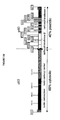
- FIG. 1A provides a schematic view of the domain structure of a monocot plastidic ACCase.
- FIG. 1B provides an overview of the OsJACCc60p40 chimeric protein. Unique restriction sites introduced in the corresponding DNA sequence for subcloning are indicated. Amino acids for which substitutions have been found to confer herbicide tolerance are indicated by white rectangles.
- FIG. 2A provides an overview of plasmid RTP3240-1
- FIG. 2B provides an overview of plasmid RTP4108
- FIG. 2C provides the DNA sequence of RTP4108 (SEQ ID NO:13).
- FIG. 3A provides an overview of plasmid RTP3378; and FIG. 3B provides the DNA sequence of the rice plastidic ACCase portion of plasmid RTP3378 (SEQ ID NO:14).
- FIG. 4 provides an overview of the p40 (40% plastidic) regions of four yeast vectors used in this work. All plasmids were identical to RTP4108 outside these regions. RLW001 and RTP4106 contain a small stretch that is optimized for expression in rice between Acc65I and XhoI. FIG. 4 discloses the “10 ⁇ His tag” as SEQ ID NO:31.
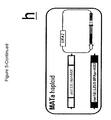
- FIG. 5 presents an overview of directed in vitro evolution screening.
- (a) is an overview of the rice chimeric ACCase present on RTP4108.
- Panels (b) through (e) represent plasmid-chromosome shuffling with the SGA reporter (can1 ⁇ ::LEU2-MFApr-HIS3/CAN1). Plasmids RTP4106, RTP4107 and RLW001 were also used for shuffling, (e)-(h).
- Panel (f) represents a library of synthetic DNA fragments with degenerate nucleotides at a desired position to mutagenize the chimeric ACCase present in the yeast cell.
- Panel (g) represents homologous recombination events that occur between the library of synthetic DNA fragments with the chimeric ACCase gene in the yeast cell followed by screening for mutations that confer tolerance to FOPs or DIMs along with sequencing of mutations conferring tolerance in panel (h).
- FIG. 6 represents an example of verifying the absence of an intact genomic copy of the Yeast ACC1 gene (primer pairs A and B) along with the presence of the chimeric ACCase gene (primer pair C).
- Independent haploid colonies relying on RTP4108 for FA biosynthesis were checked by PCR using ACC1-specific primer set A (ACC1aFW and ACC1aRV) and set B (ACC1bFW and ACC1bRV) and OsJACCc60p40-specific primer set C (c60p40-5924FW and c60p40-6421RV).
- a yeast haploid with ACC1 on chromosome 14 was used as a control.
- FIG. 7 represents a depiction of ‘Kill curves’ for RTP4108-8b-2 (indicated by ‘c60p40’).
- RTP4107-5b-1 (indicated by ‘c60p40 His-Tag’)
- RLW001-1a-1 (indicated by ‘I1781L’)
- RTP4106-7a-1 (indicated by ‘I1781L His-Tag’)
- yeast ACC1 (indicated by ‘ACC1’) with varying concentrations of the herbicides cycloxydim ( 7 A), tepraloxydim ( 7 B), and haloxyfop ( 7 C).
- Yeast containing a wild-type yeast ACC1 gene were used as a tolerant control, center of each inset.
- FIG. 8 is a table showing frequency of mutations observed (columns) after transformation with different fragments and plating on different DIMs (rows).
- I1781X C100 transformation carried out with fragments with degeneracy in the triplet corresponding to I1781 and plating on 100 ⁇ M cycloxydim.
- I1781X T1 same transformation plated on 1 ⁇ M tepraloxydim, etc.
- Wt control a fragment corresponding to the I1781X fragment, but with the “Wt” isoleucine-encoding triplet only. Shaded squares represent mutants that obtained the intended mutation (of which a fraction may be spontaneous as they only differed in one nucleotide from the “Wt” sequence).
- FIG. 9 is a table showing frequency of mutations observed (columns) after transformation with I2041X and W2027X fragments and plating on different DIMs (rows).
- FIG. 10 is a table showing frequency of observed double mutations (columns) after transformation of fragments (donor) to strains that have already one mutation in place (acceptor) and plating on 75 ⁇ M tepraloxydim. Shaded squares represent intended double mutants.
- DuplV2075 means a duplication of V2075.
- FIG. 11 is a table showing double mutations identified by plating single mutants and waiting for spontaneous second mutations.
- FIG. 12 is line graph showing the growth of yeast expressing a yeast ACC1 gene grown in the presence of the indicated herbicides.
- the growth is measured as the OD 600nm (y-axis) as a function of time in days.
- FIG. 13 is line graph showing the growth of yeast expressing a chimeric ACCase gene of the invention grown in the presence of the indicated herbicides.
- the growth is measured as the OD 600nm (y-axis) as a function of time in days.
- FIG. 14 is line graph showing the growth of yeast expressing a chimeric ACCase gene of the invention grown in the presence of the indicated herbicides.
- the growth is measured as the OD 600nm (y-axis) as a function of time in days.
- the mutation in the HSR is as indicated.
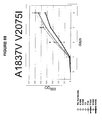
- FIG. 15 is line graph showing the growth of yeast expressing a chimeric ACCase gene of the invention grown in the presence of the indicated herbicides.
- the growth is measured as the OD 600nm (y-axis) as a function of time in days.
- the mutation in the HSR is as indicated.
- FIG. 16 is line graph showing the growth of yeast expressing a chimeric ACCase gene of the invention grown in the presence of the indicated herbicides.
- the growth is measured as the OD 600nm (y-axis) as a function of time in days.
- the mutation in the HSR is as indicated.
- FIG. 17 is line graph showing the growth of yeast expressing a chimeric ACCase gene of the invention grown in the presence of the indicated herbicides.
- the growth is measured as the OD 600nm (y-axis) as a function of time in days.
- the mutation in the HSR is as indicated.
- FIG. 18 is line graph showing the growth of yeast expressing a chimeric ACCase gene of the invention grown in the presence of the indicated herbicides.
- the growth is measured as the OD 600nm (y-axis) as a function of time in days.
- the mutation in the HSR is as indicated.
- FIG. 19 is line graph showing the growth of yeast expressing a chimeric ACCase gene of the invention grown in the presence of the indicated herbicides.
- the growth is measured as the OD 600nm (y-axis) as a function of time in days.
- the mutation in the HSR is as indicated.
- FIG. 20 is line graph showing the growth of yeast expressing a chimeric ACCase gene of the invention grown in the presence of the indicated herbicides.
- the growth is measured as the OD 600nm (y-axis) as a function of time in days.
- the mutation in the HSR is as indicated.
- FIG. 21 is line graph showing the growth of yeast expressing a chimeric ACCase gene of the invention grown in the presence of the indicated herbicides.
- the growth is measured as the OD 600nm (y-axis) as a function of time in days.
- the mutation in the HSR is as indicated.
- FIG. 22 is line graph showing the growth of yeast expressing a chimeric ACCase gene of the invention grown in the presence of the indicated herbicides.
- the growth is measured as the OD 600nm (y-axis) as a function of time in days.
- the mutation in the HSR is as indicated.
- FIG. 23 is line graph showing the growth of yeast expressing a chimeric ACCase gene of the invention grown in the presence of the indicated herbicides.
- the growth is measured as the OD 600nm (y-axis) as a function of time in days.
- the mutation in the HSR is as indicated.
- FIG. 24 is line graph showing the growth of yeast expressing a chimeric ACCase gene of the invention grown in the presence of the indicated herbicides.
- the growth is measured as the OD 600nm (y-axis) as a function of time in days.
- the mutation in the HSR is as indicated.
- FIG. 25 is line graph showing the growth of yeast expressing a chimeric ACCase gene of the invention grown in the presence of the indicated herbicides.
- the growth is measured as the OD 600nm (y-axis) as a function of time in days.
- the mutation in the HSR is as indicated.
- FIG. 26 is line graph showing the growth of yeast expressing a chimeric ACCase gene of the invention grown in the presence of the indicated herbicides.
- the growth is measured as the OD 600nm (y-axis) as a function of time in days.
- the mutation in the HSR is as indicated.
- FIG. 27 is line graph showing the growth of yeast expressing a chimeric ACCase gene of the invention grown in the presence of the indicated herbicides.
- the growth is measured as the OD 600nm (y-axis) as a function of time in days.
- the mutation in the HSR is as indicated.
- FIG. 28 is line graph showing the growth of yeast expressing a chimeric ACCase gene of the invention grown in the presence of the indicated herbicides.
- the growth is measured as the OD 600nm (y-axis) as a function of time in days.
- the mutation in the HSR is as indicated.
- FIG. 29 is line graph showing the growth of yeast expressing a chimeric ACCase gene of the invention grown in the presence of the indicated herbicides.
- the growth is measured as the OD 600nm (y-axis) as a function of time in days.
- the mutation in the HSR is as indicated.
- FIG. 30 is line graph showing the growth of yeast expressing a chimeric ACCase gene of the invention grown in the presence of the indicated herbicides.
- the growth is measured as the OD 600nm (y-axis) as a function of time in days.
- the mutation in the HSR is as indicated.
- FIG. 31 is line graph showing the growth of yeast expressing a chimeric ACCase gene of the invention grown in the presence of the indicated herbicides.
- the growth is measured as the OD 600nm (y-axis) as a function of time in days.
- the mutation in the HSR is as indicated.
- FIG. 32 is line graph showing the growth of yeast expressing a chimeric ACCase gene of the invention grown in the presence of the indicated herbicides.
- the growth is measured as the OD 600nm (y-axis) as a function of time in days.
- the mutation in the HSR is as indicated.
- FIG. 33 is line graph showing the growth of yeast expressing a chimeric ACCase gene of the invention grown in the presence of the indicated herbicides.
- the growth is measured as the OD 600nm (y-axis) as a function of time in days.
- the mutation in the HSR is as indicated.
- FIG. 34 is line graph showing the growth of yeast expressing a chimeric ACCase gene of the invention grown in the presence of the indicated herbicides.
- the growth is measured as the OD 600nm (y-axis) as a function of time in days.
- the mutation in the HSR is as indicated.
- FIG. 35 is line graph showing the growth of yeast expressing a chimeric ACCase gene of the invention grown in the presence of the indicated herbicides.
- the growth is measured as the OD 600nm (y-axis) as a function of time in days.
- the mutation in the HSR is as indicated.
- FIG. 36 is line graph showing the growth of yeast expressing a chimeric ACCase gene of the invention grown in the presence of the indicated herbicides.
- the growth is measured as the OD 600nm (y-axis) as a function of time in days.
- the mutation in the HSR is as indicated.
- FIG. 37 is line graph showing the growth of yeast expressing a chimeric ACCase gene of the invention grown in the presence of the indicated herbicides.
- the growth is measured as the OD 600nm (y-axis) as a function of time in days.
- the mutation in the HSR is as indicated.
- FIG. 38 is line graph showing the growth of yeast expressing a chimeric ACCase gene of the invention grown in the presence of the indicated herbicides.
- the growth is measured as the OD 600nm (y-axis) as a function of time in days.
- the mutation in the HSR is as indicated.
- FIG. 39 is line graph showing the growth of yeast expressing a chimeric ACCase gene of the invention grown in the presence of the indicated herbicides.
- the growth is measured as the OD 600nm (y-axis) as a function of time in days.
- the mutation in the HSR is as indicated.
- FIG. 40 is line graph showing the growth of yeast expressing a chimeric ACCase gene of the invention grown in the presence of the indicated herbicides.
- the growth is measured as the OD 600nm (y-axis) as a function of time in days.
- the mutation in the HSR is as indicated.
- FIG. 41 is line graph showing the growth of yeast expressing a chimeric ACCase gene of the invention grown in the presence of the indicated herbicides.
- the growth is measured as the OD 600nm (y-axis) as a function of time in days.
- the mutation in the HSR is as indicated.
- FIG. 42 is line graph showing the growth of yeast expressing a chimeric ACCase gene of the invention grown in the presence of the indicated herbicides.
- the growth is measured as the OD 600nm (y-axis) as a function of time in days.
- the mutation in the HSR is as indicated.
- FIG. 43 is line graph showing the growth of yeast expressing a chimeric ACCase gene of the invention grown in the presence of the indicated herbicides.
- the growth is measured as the OD 600nm (y-axis) as a function of time in days.
- the mutation in the HSR is as indicated.
- FIG. 44 is line graph showing the growth of yeast expressing a chimeric ACCase gene of the invention grown in the presence of the indicated herbicides.
- the growth is measured as the OD 600nm (y-axis) as a function of time in days.
- the mutation in the HSR is as indicated.
- FIG. 45 is line graph showing the growth of yeast expressing a chimeric ACCase gene of the invention grown in the presence of the indicated herbicides.
- the growth is measured as the OD 600nm (y-axis) as a function of time in days.
- the mutation in the HSR is as indicated.
- FIG. 46 is line graph showing the growth of yeast expressing a chimeric ACCase gene of the invention grown in the presence of the indicated herbicides.
- the growth is measured as the OD 600nm (y-axis) as a function of time in days.
- the mutation in the HSR is as indicated.
- FIG. 47 is line graph showing the growth of yeast expressing a chimeric ACCase gene of the invention grown in the presence of the indicated herbicides.
- the growth is measured as the OD 600nm (y-axis) as a function of time in days.
- the mutation in the HSR is as indicated.
- FIG. 48 is line graph showing the growth of yeast expressing a chimeric ACCase gene of the invention grown in the presence of the indicated herbicides.
- the growth is measured as the OD 600nm (y-axis) as a function of time in days.
- the mutation in the HSR is as indicated.
- FIG. 49 is line graph showing the growth of yeast expressing a chimeric ACCase gene of the invention grown in the presence of the indicated herbicides.
- the growth is measured as the OD 600nm (y-axis) as a function of time in days.
- the mutation in the HSR is as indicated.
- FIG. 50 is line graph showing the growth of yeast expressing a chimeric ACCase gene of the invention grown in the presence of the indicated herbicides.
- the growth is measured as the OD 600nm (y-axis) as a function of time in days.
- the mutation in the HSR is as indicated.
- FIG. 51 is line graph showing the growth of yeast expressing a chimeric ACCase gene of the invention grown in the presence of the indicated herbicides.
- the growth is measured as the OD 600nm (y-axis) as a function of time in days.
- the mutation in the HSR is as indicated.
- FIG. 52 is line graph showing the growth of yeast expressing a chimeric ACCase gene of the invention grown in the presence of the indicated herbicides.
- the growth is measured as the OD 600nm (y-axis) as a function of time in days.
- the mutation in the HSR is as indicated.
- FIG. 53 is line graph showing the growth of yeast expressing a chimeric ACCase gene of the invention grown in the presence of the indicated herbicides.
- the growth is measured as the OD 600nm (y-axis) as a function of time in days.
- the mutation in the HSR is as indicated.
- FIG. 54 is line graph showing the growth of yeast expressing a chimeric ACCase gene of the invention grown in the presence of the indicated herbicides.
- the growth is measured as the OD 600nm (y-axis) as a function of time in days.
- the mutation in the HSR is as indicated.
- FIG. 55 is line graph showing the growth of yeast expressing a chimeric ACCase gene of the invention grown in the presence of the indicated herbicides.
- the growth is measured as the OD 600nm (y-axis) as a function of time in days.
- the mutation in the HSR is as indicated.
- FIG. 56 is line graph showing the growth of yeast expressing a chimeric ACCase gene of the invention grown in the presence of the indicated herbicides.
- the growth is measured as the OD 600nm (y-axis) as a function of time in days.
- the mutation in the HSR is as indicated.
- FIG. 57 is line graph showing the growth of yeast expressing a chimeric ACCase gene of the invention grown in the presence of the indicated herbicides.
- the growth is measured as the OD 600nm (y-axis) as a function of time in days.
- the mutation in the HSR is as indicated.
- FIG. 58 is line graph showing the growth of yeast expressing a chimeric ACCase gene of the invention grown in the presence of the indicated herbicides.
- the growth is measured as the OD 600nm (y-axis) as a function of time in days.
- the mutation in the HSR is as indicated.
- FIG. 59 is line graph showing the growth of yeast expressing a chimeric ACCase gene of the invention grown in the presence of the indicated herbicides.
- the growth is measured as the OD 600nm (y-axis) as a function of time in days.
- the mutation in the HSR is as indicated.
- FIG. 60 is line graph showing the growth of yeast expressing a chimeric ACCase gene of the invention grown in the presence of the indicated herbicides.
- the growth is measured as the OD 600nm (y-axis) as a function of time in days.
- the mutation in the HSR is as indicated.
- FIG. 61 is line graph showing the growth of yeast expressing a chimeric ACCase gene of the invention grown in the presence of the indicated herbicides.
- the growth is measured as the OD 600nm (y-axis) as a function of time in days.
- the mutation in the HSR is as indicated.
- FIG. 62 is line graph showing the growth of yeast expressing a chimeric ACCase gene of the invention grown in the presence of the indicated herbicides.
- the growth is measured as the OD 600nm (y-axis) as a function of time in days.
- the mutation in the HSR is as indicated.
- FIG. 63 is line graph showing the growth of yeast expressing a chimeric ACCase gene of the invention grown in the presence of the indicated herbicides.
- the growth is measured as the OD 600nm (y-axis) as a function of time in days.
- the mutation in the HSR is as indicated.
- FIG. 64 is line graph showing the growth of yeast expressing a chimeric ACCase gene of the invention grown in the presence of the indicated herbicides.
- the growth is measured as the OD 600nm (y-axis) as a function of time in days.
- the mutation in the HSR is as indicated.
- FIG. 65 is line graph showing the growth of yeast expressing a chimeric ACCase gene of the invention grown in the presence of the indicated herbicides.
- the growth is measured as the OD 600nm (y-axis) as a function of time in days.
- the mutation in the HSR is as indicated.
- FIG. 66 is line graph showing the growth of yeast expressing a chimeric ACCase gene of the invention grown in the presence of the indicated herbicides.
- the growth is measured as the OD 600nm (y-axis) as a function of time in days.
- the mutation in the HSR is as indicated.
- FIG. 67 is line graph showing the growth of yeast expressing a chimeric ACCase gene of the invention grown in the presence of the indicated herbicides.
- the growth is measured as the OD 600nm (y-axis) as a function of time in days.
- the mutation in the HSR is as indicated.
- FIG. 68 is line graph showing the growth of yeast expressing a chimeric ACCase gene of the invention grown in the presence of the indicated herbicides.
- the growth is measured as the OD 600nm (y-axis) as a function of time in days.
- the mutation in the HSR is as indicated.
- FIG. 69 is line graph showing the growth of yeast expressing a chimeric ACCase gene of the invention grown in the presence of the indicated herbicides.
- the growth is measured as the OD 600nm (y-axis) as a function of time in days.
- the mutation in the HSR is as indicated.
- FIG. 70 is line graph showing the growth of yeast expressing a chimeric ACCase gene of the invention grown in the presence of the indicated herbicides.
- the growth is measured as the OD 600nm (y-axis) as a function of time in days.
- the mutation in the HSR is as indicated.
- FIG. 71 is line graph showing the growth of yeast expressing a chimeric ACCase gene of the invention grown in the presence of the indicated herbicides.
- the growth is measured as the OD 600nm (y-axis) as a function of time in days.
- the mutation in the HSR is as indicated.
- FIG. 72 is line graph showing the growth of yeast expressing a chimeric ACCase gene of the invention grown in the presence of the indicated herbicides.
- the growth is measured as the OD 600nm (y-axis) as a function of time in days.
- the mutation in the HSR is as indicated.
- FIG. 73 is line graph showing the growth of yeast expressing a chimeric ACCase gene of the invention grown in the presence of the indicated herbicides.
- the growth is measured as the OD 600nm (y-axis) as a function of time in days.
- the mutation in the HSR is as indicated.
- FIG. 74 is line graph showing the growth of yeast expressing a chimeric ACCase gene of the invention grown in the presence of the indicated herbicides.
- the growth is measured as the OD 600nm (y-axis) as a function of time in days.
- the mutation in the HSR is as indicated.
- FIG. 75 is line graph showing the growth of yeast expressing a chimeric ACCase gene of the invention grown in the presence of the indicated herbicides.
- the growth is measured as the OD 600nm (y-axis) as a function of time in days.
- the mutation in the HSR is as indicated.
- FIG. 76 is line graph showing the growth of yeast expressing a chimeric ACCase gene of the invention grown in the presence of the indicated herbicides.
- the growth is measured as the OD 600nm (y-axis) as a function of time in days.
- the mutation in the HSR is as indicated.
- FIG. 77 is line graph showing the growth of yeast expressing a chimeric ACCase gene of the invention grown in the presence of the indicated herbicides.
- the growth is measured as the OD 600nm (y-axis) as a function of time in days.
- the mutation in the HSR is as indicated.
- FIG. 78 is line graph showing the growth of yeast expressing a chimeric ACCase gene of the invention grown in the presence of the indicated herbicides.
- the growth is measured as the OD 600nm (y-axis) as a function of time in days.
- the mutation in the HSR is as indicated.
- FIG. 79 is line graph showing the growth of yeast expressing a chimeric ACCase gene of the invention grown in the presence of the indicated herbicides.
- the growth is measured as the OD 600nm (y-axis) as a function of time in days.
- the number is ⁇ M concentration.
- the mutation in the HSR is as indicated.
- FIG. 80 is line graph showing the growth of yeast expressing a chimeric ACCase gene of the invention grown in the presence of the indicated herbicides.
- the growth is measured as the OD 600nm (y-axis) as a function of time in days.
- the mutation in the HSR is as indicated.
- FIG. 81 is line graph showing the growth of yeast expressing a chimeric ACCase gene of the invention grown in the presence of the indicated herbicides.
- the growth is measured as the OD 600nm (y-axis) as a function of time in days.
- the mutation in the HSR is as indicated.
- FIG. 82 is line graph showing the growth of yeast expressing a chimeric ACCase gene of the invention grown in the presence of the indicated herbicides.
- the growth is measured as the OD 600nm (y-axis) as a function of time in days.
- the mutation in the HSR is as indicated.
- FIG. 83 is line graph showing the growth of yeast expressing a chimeric ACCase gene of the invention grown in the presence of the indicated herbicides.
- the growth is measured as the OD 600nm (y-axis) as a function of time in days.
- the mutation in the HSR is as indicated.
- FIG. 84 is line graph showing the growth of yeast expressing a chimeric ACCase gene of the invention grown in the presence of the indicated herbicides.
- the growth is measured as the OD 600nm (y-axis) as a function of time in days.
- the mutation in the HSR is as indicated.
- FIG. 85 is line graph showing the growth of yeast expressing a chimeric ACCase gene of the invention grown in the presence of the indicated herbicides.
- the growth is measured as the OD 600nm (y-axis) as a function of time in days.
- the mutation in the HSR is as indicated.
- FIG. 86 is line graph showing the growth of yeast expressing a chimeric ACCase gene of the invention grown in the presence of the indicated herbicides.
- the growth is measured as the OD 600nm (y-axis) as a function of time in days.
- the mutation in the HSR is as indicated.
- FIG. 87 is line graph showing the growth of yeast expressing a chimeric ACCase gene of the invention grown in the presence of the indicated herbicides.
- the growth is measured as the OD 600nm (y-axis) as a function of time in days.
- the mutation in the HSR is as indicated.
- FIG. 88 is line graph showing the growth of yeast expressing a chimeric ACCase gene of the invention grown in the presence of the indicated herbicides.
- the growth is measured as the OD 600nm (y-axis) as a function of time in days.
- the mutation in the HSR is as indicated.
- FIG. 89 is line graph showing the growth of yeast expressing a chimeric ACCase gene of the invention grown in the presence of the indicated herbicides.
- the growth is measured as the OD 600nm (y-axis) as a function of time in days.
- the mutation in the HSR is as indicated.
- FIG. 90 is line graph showing the growth of yeast expressing a chimeric ACCase gene of the invention grown in the presence of the indicated herbicides.
- the growth is measured as the OD 600nm (y-axis) as a function of time in days.
- the mutation in the HSR is as indicated.
- FIG. 91 is line graph showing the growth of yeast expressing a chimeric ACCase gene of the invention grown in the presence of the indicated herbicides.
- the growth is measured as the OD 600nm (y-axis) as a function of time in days.
- the mutation in the HSR is as indicated.
- FIG. 92 is line graph showing the growth of yeast expressing a chimeric ACCase gene of the invention grown in the presence of the indicated herbicides.
- the growth is measured as the OD 600nm (y-axis) as a function of time in days.
- the mutation in the HSR is as indicated.
- FIG. 93 is line graph showing the growth of yeast expressing a chimeric ACCase gene of the invention grown in the presence of the indicated herbicides.
- the growth is measured as the OD 600nm (y-axis) as a function of time in days.
- the mutation in the HSR is as indicated.
- tolerant indicates a yeast cell or strain; a plant; or a plant cell capable of growing in the presence of an amount of herbicide that normally causes growth inhibition in a non-tolerant (e.g., a wild-type) yeast cell or strain; a plant; or a plant cell.
- an ACCase is “sensitive” to a particular herbicide if the enzymatic activity of the ACCase is reduced in the presence of the herbicide when compared to the activity of the ACCase under identical conditions in the absence of the herbicide.
- Examples of herbicides to which an ACCase might be sensitive are set forth in Table 1.
- chimeric refers to a non-naturally occurring polypeptide composed of two or more regions derived from different sources.
- Examples of a chimeric polypeptide include, but are not limited to, polypeptides having ACCase activity wherein the polypeptides have an N-terminal region derived from one source and a C-terminal region derived from another source.
- chimeric ACCases include, but are not limited to, a chimeric ACCase comprising an N-terminal region derived from a monocot cytosolic ACCase and a C-terminal region derived from a monocot plastidic ACCase, and a chimeric ACCase comprising an N-terminal region derived from a yeast ACCase and a C-terminal region derived from a monocot plastidic ACCase, e.g., a rice plastidic ACCase.
- an “ACCase-deficient yeast” is a yeast cell or strain that does not express a functional ACCase activity other than that of the chimeric ACCase of the invention.
- An ACCase-deficient yeast cell will typically comprise an exogenous source of ACCase activity, for example, an extra-genomic nucleic acid, e.g., a plasmid, encoding a chimeric ACCase of the invention.
- recombinant refers to an organism having genetic material from different sources.
- mutagenized refers to a segment of DNA that has been modified to contain one or more nucleotides that vary from the original DNA sequence. Any method known in the art may be used to induce mutations. Methods of inducing mutations may induce mutations in random positions in the genetic material or may induce mutations in specific locations in the genetic material (i.e., may be directed mutagenesis techniques).
- the terms “herbicide-tolerant” and “herbicide-resistant” are used interchangeably and are intended to have an equivalent meaning and an equivalent scope.
- the terms “herbicide-tolerance” and “herbicide-resistance” are used interchangeably and are intended to have an equivalent meaning and an equivalent scope.
- the terms “tolerant” and “resistant” are used interchangeably and are intended to have an equivalent meaning and an equivalent scope.
- amino acid numbering, and the associated DNA sequence numbering are based on the numbering of the ACCase in Alopecurus myosuroides (blackgrass) (Genbank CAC84161.1) and denoted with an (Am).
- the reference positions cited within are intended to correspond to the actual recited positional equivalent in the ACCase of Alopecurus myosuroides.
- HSR herbicide sensitivity region
- the wild type HSR comprises a monocot plastidic ACCase amino acid sequence of or corresponding to residues 1781(Am)-2098(Am).
- high throughput means capable of producing at least about 100, 200, 300, 400, 500, 1,000, 2,500, 5,000, or 10,000 different HSR-variant ACCases per month per trained worker.
- methods of the invention are capable of producing at least about 500, 1,000, 2,500, 5,000, or 10,000 different HSR-variant ACCases per month per trained worker
- the invention encompasses methods and compositions useful for isolating, identifying and characterizing mutations in ACCase that confer tolerance to at least one herbicide.
- a yeast model system was employed.
- the yeast model system included an ACCase-deficient yeast cell with a chimeric ACCase which comprises and HSR.
- the chimeric ACCase complements the ACCase-deficiency of the yeast.
- the methods and compositions encompassed by the invention relate to making and using such a system to isolate, identify and characterize mutations in ACCase which confer tolerance to an herbicide by screening or selection on media with herbicide present. Such isolated mutants in the ACCase that confer tolerance to the herbicide are not present prior to the screening or culturing in the presence of herbicide.
- Prior art screening systems for example that reported by Nikolskaya, were limited in the number of mutations that could be generated and screened.
- the present invention has overcome these limitations by expressing the chimeric ACCase of the invention from a single copy plasmid. Any mutation, either spontaneous or introduced through transformation will be identified far more efficiently.
- Prior art systems made use of high copy number plasmids (like pRS426 with 20 copies/haploid cell). In theory, a single plasmid with a herbicide resistance-conferring mutation could be formed in the presence of 19 or so wild-type plasmids in a cell. In subsequent rounds of cell division, daughter cells should start containing the mutated plasmid only, if the selection pressure is kept throughout.
- the invention encompasses a method of screening for an acetyl-CoA carboxylase (ACCase) enzyme that is tolerant to at least one herbicide.
- ACCase acetyl-CoA carboxylase
- methods may include providing a yeast cell deficient in ACCase activity, i.e., an ACCase-deficient yeast cell.
- methods can include providing an ACCase-deficient yeast with a chimeric ACCase.
- the chimeric ACCase may comprise at least two or more regions.
- the chimeric ACCase may comprise an N-terminal region.
- the N-terminal region may be derived from a yeast, fungi or monocot cytoplasmic ACCase.
- the N-terminal region may comprise from about 10% to about 75% of the chimeric ACCase.
- the chimeric ACCase also comprises a C-terminal region.
- the C-terminal region may comprise from about 90% to about 25% of the chimeric ACCase.
- the C-terminal region comprises an HSR and may be derived from a monocot plastidic ACCase sensitive to at least one herbicide. Percentages herein are calculated relative to amino acids 98-2320 of a mature Am ACCase.
- the invention encompasses methods of isolating herbicide tolerant yeast cells expressing a chimeric ACCase after culturing in the presence of at least one herbicide.
- the chimeric ACCase in such herbicide tolerant yeast cells may harbor at least one mutation that confers the tolerance to the herbicide the yeast cell is cultured in.
- the mutation(s) conferring tolerance to the ACCase and the yeast cell may be further identified using the yeast cells.
- the invention encompasses a yeast cell tolerant to at least one herbicide.
- a yeast cell may be produced by complementing an ACCase-deficient yeast with a chimeric ACCase.
- the chimeric ACCase may comprise at least two or more regions.
- the chimeric ACCase may comprise an N-terminal region.
- the N-terminal region may be derived from a yeast, fungi, dicot, or monocot cytoplasmic ACCase.
- the N-terminal region may comprise from about 10% to about 75% of the chimeric ACCase.
- the chimeric ACCase also comprises a C-terminal region.
- the C-terminal region may comprise from about 90% to about 25% of the chimeric ACCase.
- the C-terminal region comprises an HSR and may be derived from a monocot plastidic ACCase sensitive to at least one herbicide.
- the yeast cell may be cultured in the presence of at least one or more herbicides.
- the invention encompasses an isolated DINA molecule encoding a chimeric ACCase which is tolerant to at least one herbicide.
- the DNA molecule encodes a chimeric ACCase which comprises at least two or more regions.
- the DNA molecule encodes a chimeric ACCase that may comprise at least one ore more N-terminal regions.
- the DNA molecule encodes an ACCase N-terminal region that may be derived from yeast, fungi, dicot or monocot cytoplasmic ACCases. The N-terminal region may comprise from about 10% to about 75% of the chimeric ACCase.
- the chimeric ACCase encoded by the DNA molecule also comprises at least one C-terminal region.
- the C-terminal region that may comprise from about 90% to about 25% of the chimeric ACCase.
- the C-terminal region will comprise an HSR and may be derived from a monocot plastidic ACCase sensitive to at least one herbicide.
- the invention encompasses an isolated chimeric ACCase which is tolerant to at least one herbicide.
- the chimeric ACCase may comprise an N-terminal region.
- the N-terminal region may be derived from a yeast, fungi, dicot or monocot cytoplasmic ACCase.
- the N-terminal region may comprise from about 10% to about 75% of the chimeric ACCase.
- the chimeric ACCase also comprises a C-terminal region.
- the C-terminal region may comprise from about 90% to about 25% of the chimeric ACCase.
- the C-terminal region comprises an HSR and may be derived from a monocot plastidic ACCase sensitive to at least one herbicide.
- the invention encompasses a mutant ACCase which is tolerate to at least one herbicide.
- the mutant ACCase is generated by inducing one or more mutations in the HSR of a chimeric ACCase.
- the chimeric ACCase may comprise an N-terminal region.
- the N-terminal region may be derived from a yeast, fungi, dicot or monocot cytoplasmic ACCase.
- the N-terminal region may comprise from about 10% to about 75% of the chimeric ACCase.
- the chimeric ACCase also comprises a C-terminal region.
- the C-terminal region may comprise from about 90% to about 25% of the chimeric ACCase.
- the C-terminal region comprises an HSR and may be derived from a monocot plastidic ACCase sensitive to at least one herbicide.
- the mutation(s) in the chimeric ACCase that result in tolerance to herbicides in the yeast cell may be identified by, for example, sequencing the DNA molecule encoding the chimeric ACCase.
- the method may comprise introducing the herbicide tolerant mutation(s) identified from the chimeric ACCase into a full-length, or other ACCase.
- Yeast contain a single, endogenous ACCase gene (ACC1), which encodes a multidomain protein that is highly tolerant to herbicides. Haploid yeast in which ACC1 is disrupted is not viable (Hasslacher et al., 1993).
- ACC1 ACCase gene
- methods of the invention comprise ACCase-deficient yeast.
- An ACCase-deficient yeast may lack endogenous ACCase activity due to one or more mutations of the genomic yeast ACCase gene which may include a single point mutation, multiple point mutations, a partial deletion, a partial knockout, a complete deletion and a complete knockout.
- genomic yeast ACCase activity may be reduced or ablated using other molecular biology techniques such as RNAi, siRNA or antisense RNA. Such molecular biology techniques are well known in the art.
- the invention comprises introducing a nucleic acid molecule encoding a chimeric ACCase into a diploid yeast strain heterozygous for a functional genomic ACC1 gene.
- the method includes verifying incorporation of the nucleic acid encoding the chimeric ACCase into a heterozygous strain.
- the method also may include inducing sporulation and isolation of haploid yeast cells containing an inactive yeast ACC1 gene and a chimeric ACCase gene. Accordingly, the method may include verifying incorporation of the chimeric ACCase into a haploid strain with an inactivated genomic ACC1 gene.
- the invention comprises incorporation of a nucleic acid molecule encoding a chimeric ACCase into a homozygous strain followed by inactivation of one or both copies of the yeast ACC1 gene.
- the method includes verifying incorporation of the chimeric ACCase gene into a homozygous strain.
- the invention comprises inducing sporulation and isolation of haploid yeast cells containing an inactive yeast ACC1 gene and a chimeric ACCase gene.
- the invention comprises a chimeric ACCase gene that complements a deficiency in the yeast ACC1 gene.
- complementation of the yeast ACC1 gene deficiency occurs when yeast cells containing the chimeric ACCase are cultured at a temperature of about 23° C. to about 30° C.
- complementation of the yeast ACC1 gene occurs when yeast cells containing the chimeric ACCase are cultured at a temperature of about 23° C., about 24° C., about 25° C., about 26° C., 27° C., about 28° C., about 29° C., or about 30° C.
- complementation may occur at a permissive temperature, but not a restrictive temperature.
- permissive temperatures may range from about 23° C. to about 30° C.
- permissive temperatures may be about 23° C., about 24° C., about 25° C., about 26° C., 27° C., about 28° C., about 29° C., or about 30° C.
- restrictive temperatures include but are not limited to a range from about 23° C. to about 30° C.
- such permissive temperatures may be about 23° C., about 24° C., about 25° C., about 26° C., 27° C., about 28° C., about 29° C., or about 30° C.
- the present invention encompasses chimeric ACCases and nucleic acid molecules encoding the same.
- the chimeric ACCase will comprise an amino acid sequence that is the same as, or corresponds to, that found in a monocot plastidic ACCase, for example, in Alopecurus myosuroides multi-functional ACCase 2 (Genbank CAC84161).
- Monocot plastidic ACCases share a similar structure characterized by the occurrence and arrangement of 8 functional regions as shown in FIG. 1A .
- the (Am) residue numbers for these regions are as follows (bullet points show regions falling within Region 1 or Region 5).
- the carboxyl transferase domain catalyzes the transcarboxylation from biotin to an acceptor molecule.
- All ACCases useful as sources of sequences for constructing chimeric ACCase enzymes for the practice of the present invention contain a set of these 8 regions, arranged in the same relative order.
- multifunctional ACCases listed herein relies on the Am ACCase standard, to which they are all homologous.
- Region 8 comprises the carboxyl transferase domain of the ACCase enzyme of the invention.
- Herbicide sensitivity has been mapped to a region termed the Herbicide Sensitivity Region (HSR) located in region 8 of monocot plastidic ACCases. All or a part of region 8 of a monocot plastidic ACCase may be used as an HSR.
- a chimeric ACCase of the invention may comprise an HSR that starts anywhere from 1654(Am) to 1781(Am), and could end, e.g., anywhere from 2098(Am) to 2204(Am).
- an HSR of the invention may comprise amino acids corresponding to 1654(Am) to 2204(Am), 1654(Am) to 2130(Am), 1654(Am) to 2098(Am), 1750(Am) to 2204(Am), 1750(Am) to 2130(Am), 1750(Am) to 2098(Am), 1781(Am) to 2204(Am), 1781(Am) to 2130(Am), or 1781(Am) to 2098(Am).
- suitable HSR regions for use in the practice of the present invention include, but are not limited to, those in the following table.
- Table of HSR sequences A. myosuroides ihgsaaiasa ysrayeetft ltfvtgrtvg igaylarlgi rciqrldqpi O. sativa ihgsaaiasa ysrayeetft ltfvtgrtvg igaylarlgi rciqrldqpi E. crus-galli ihgsaaiasa ysrayeetft ltfvtgrtvg igaylarlgi rciqrldqpi Set.
- aestivum iltgfsalnk llgrevyssh mqlggpkima tngvvhltvp ddlegvsnil Z. mays iltgfsalnk llgrevyssh mqlggpkima tngvvhltvp ddlegvsnil A. myosuroides rwlsyvpani ggplpitksl dpidrpvayi pentcdpraa isgiddsqgk O.
- myosuroides wlggmfdkds fvetfegwak tvvtgraklg gipvgviave tqtmmqlvpa O. sativa wlggmfdkds fvetfegwak tvvtgraklg gipvgviave tqtmmqtipa E. crus-galli wlggmfdkds fvetfegwak tvvtgraklg gipvgviave tqtmmqlipa Set.
- wlggmfdkds fvetfegwak tvvtgraklg gipvgviave tqtmmqiipa A. myosuroides dpgqpdsher svpragqvwf pdsatktaqa mldfnreglp lfilanwrgf O. sativa dpgqldsreq svpragqvwf pdsatktaqa lldfnreglp lfilanwrgf E.
- aestivum dpgqldsher svpragqvwf pdsatktaqa mldfnreglp lfilanwrgf Z. mays dpgqldsher svpragqvwf pdsatktaqa lldfnreglp lfilanwrgf A. myosuroides sggqrdlfeg ilqagstive nlrtynqpaf vyipkaaelr ggawvvidsk O.
- Alopecurus myosuroides 1781-2098 (GenBank accession number CAC84161) (SEQ ID NO:15); Oryza sativa 1792-2109 (GenBank accession number AAM18728) (SEQ ID NO:16); Echinochloa crus - galli 1775-2092 (GenBank accession number ADR32358) (SEQ ID NO:17); Setaria italica 1780-2097 (GenBank accession number AAO062902) (SEQ ID NO:18); Sorghum bicolor 1785-2102 (GenBank accession number EES10506) (SEQ ID NO:19); Triticum aestivum 1769-2086 (GenBank accession number AAC49275) (SEQ ID NO:20); Zea mays 1783-2100 (GenBank accession number AAP78896) (SEQ ID NO:21).
- Chimeric ACCases of the invention typically comprise at least two regions, an N-terminal region and a C-terminal region.
- the present invention may encompass full-length chimeric ACCases.
- the present invention may encompass chimeric ACCases with truncated N-terminal and/or C-terminal ends that retain acetyl-CoA carboxylase activity.
- chimeric ACCases may include N-terminal and/or C-terminal regions that include sequences that are derived from the same sources as the remainder of the N-terminal and/or C-terminal regions. Such sequences may be incorporated for purposes of identification of mutants, purification of the ACCase, or other such functions.
- the present invention comprises a chimeric ACCase with an N-terminal region derived from a yeast, fungi, dicot or monocot-cytoplasmic ACCase.
- the N-terminal region of the chimeric ACCase may be derived from a rice cytoplasmic ACCase.
- the N-terminal region may be derived from Saccharomyces .
- monocot cytoplasmic ACCases are preferred sources of N-terminal regions, other sources of N-terminal region include dicot, yeast, and animal cytoplasmic and other (e.g., endoplasmic reticulum) ACCases, examples of which are provided herein.
- the N-terminal region comprises from about 10% to about 75% of the total length of the chimeric ACCase. More specifically, the N-terminal region may comprise about 10%, about 20%, about 30%, about 40%, about 50%, about 60%, about 70%, or about 75% of the total length of the chimeric ACCase.
- the 3′-most amino acid residue of the N-terminal region may correspond to an amino acid in the vicinity of 319(Am).
- the N-terminal region comprises about 20% of the chimeric ACCase
- the 3′-most amino acid residue of the N-terminal region may correspond to an amino acid in the vicinity of 542(Am).
- the N-terminal region comprises about 30% of the chimeric ACCase
- the 3′-most amino acid residue of the N-terminal region may correspond to an amino acid in the vicinity of 764(Am).
- the N-terminal region comprises about 62% of the chimeric ACCase and the 3′-most amino acid residue of the N-terminal region may correspond to an amino acid in the vicinity of 1472(Am). In some embodiments, the N-terminal region comprises about 39% of the chimeric ACCase and the 3′-most amino acid residue of the N-terminal region may correspond to an amino acid in the vicinity of 969(Am). In some embodiments, the N-terminal region comprises about 33.5% of the chimeric ACCase and the 3′-most amino acid residue of the N-terminal region may correspond to an amino acid in the vicinity of 841 (Am). In some embodiments, the N-terminal region comprises about 76% of the chimeric ACCase and the 3′-most amino acid residue of the N-terminal region may correspond to an amino acid in the vicinity of 1781(Am).
- the N-terminal region comprises about 35% to about 76% of the length of the chimeric ACCase assuming that the total length of the chimeric ACCase is about the same as amino acids 98-2320 of a mature Am ACCase.
- the N-terminal region may comprise regions 1 to 7, 1 to 6, or 1-5 of an ACCase derived from a yeast, fungi, dicot or monocot-cytoplasmic ACCase.
- the N-terminal regions of the invention begin at the cytoplasmic methionine whose position corresponds to Am ACCase (plastidic) H98. In other embodiments, N-terminal regions may begin at other native methionines, e.g., the cytoplasmic methionine corresponding to Am ACCase M104 or S111.
- the following alignment shows the positions of other methionine residues in cytosolic ACCases that may be used as the first amino acid of the N-terminal region of the chimeric ACCases of the invention (see arrows below). In the alignment, cytosolic sequences are shown with numbering starting at their native Met-1 residues, whereas the plastidic sequences are shown without their leader peptides/chloroplast transit peptides (ctps).
- an N-terminal region containing a plant ACCase leader peptide included upstream from the start of the cytoplasmic ACCase segment, i.e. added upstream of the position at which a cytoplasmic ACCase's native Met-1 occurs, may be used and the native Met-1 of the added leader peptide can serve as a native-type initiator Met.
- a construct encoding a synthetic Met site can be used to initiate the chimeric ACCase.
- the synthetic Met site could be situated anywhere upstream from the beginning of Region 1 of the ACCase, e.g., up to about 100 or 150 amino acids upstream therefrom, though preferably from about 10 or 15 to about 50 or 60 amino acids residues upstream of Region 1.
- N-terminal leader peptides particularly N-terminal targeting peptides, are absent from chimeric ACCases of the invention.
- a yeast cytoplasmic ACCase can be used as an alternative source of an N-terminal sequence for the chimeric ACCase of the invention.
- any native or synthetic Met site upstream of Region 1 of the yeast ACCase can be used as a native initiator Met for the construct; preferably native Met-1 of the yeast polypeptide is used in one embodiment.
- Saccharomyces cerevisiae ACC1 (Genbank AAA20073) includes two native Met sites in its N-terminal region: Met-1 and Met-14, i.e. as numbered according to the S. cerevisiae sequence: MSEESLFESSPQKME.
- the numbering of these positions relative to the Am ACCase standard can vary, based on the alignment chosen, as being aligned with either H98(Am) and S111(Am), or A57(Am) and P70(Am), respectively. Yet, in any event, these two residues fall adjacent to I77(Am) and D90(Am) when the yeast cytoplasmic and Am plastidic ACCase enzyme domains, i.e. Regions 1-8, are optimally aligned without also computationally aligning their upstream peptide sequences. See the exemplary alignments below, with numbering according to the Am standard above, and S. cerevisiae numbering below.
- the following table presents useful examples of cytosolic and other (e.g., endoplasmic reticulum) multi-functional ACCase sources for N-terminal regions in a chimeric ACCases of the invention.
- the table also shows key start and stop sites in native herbicide sensitive ACCases that correspond to those of the Am standard.
- N-terminal sequences are preferably used without any N-terminal signal peptide segment thereof, if any is present in the native sequence.
- N-terminal sequences in general are optional in a chimeric ACCase of the invention, but typically about 10-50 amino acids of N-terminal sequence can be present in a chimeric ACCase of the invention.
- an N-terminal sequence i.e. upstream from Region 1
- it is preferably devoid of any signal peptide operable in the host cell of the yeast system.
- a yeast ACCase is used as a source of sequence for the N-terminal region of a chimeric ACCase of the invention, it will preferably be selected from a yeast species different from the species of the yeast host cell in which it is to be used. In various embodiments, monocot cytoplasmic ACCases are more preferred sources of N-terminal sequence for the constructs.
- the determination of the N-terminus (start point) amino acid residue of a plastidic ACCase portion, i.e., the C-terminal region, to use in a construct generally determines the immediately upstream amino acid residue as the C-terminus of a N-terminal region, although judgment of the skilled artisan can be used to vary the selection of the actual splice point.
- the present invention encompasses a chimeric ACCase with a C-terminal region derived from a monocot plastidic ACCase that is sensitive to at least one herbicide.
- the C-terminal region confers herbicide sensitivity to the chimeric ACCase.
- the C-terminal region may be derived from the rice plastidic ACCase gene.
- a number of suitable monocot plastidic ACCases are identified in the table below that can serve as the source for the C-terminal region of the chimeric ACCases of the invention.
- the sequences of these ACCases are homologous to one another and are representative of multi-functional (single-chain) ACCases.
- the table also shows key start and stop sites in native herbicide sensitive ACCases that correspond to those of the Am standard listed in the first row.
- the HSR (“Herbicide Sensitivity Region”) in the above ACCases is the segment corresponding to that spanning the set of all ACCase herbicide tolerance mutations known to date, which comprises the sequence from and to the positions indicated above in the final two columns.
- the complete HSR may include some amount of sequence further upstream and/or further downstream from the above-indicated sequence of the HSR, e.g., from about 10, 20, or 30 residues upstream and/or to about 10, 20, or 30 residues downstream of the indicated sequence, or from about 1750(Am), 1760(Am), 1770(Am), or 1780(Am) to about 2100(Am), 2110(Am), 2120(Am), or 2130(Am).
- the HSR has now been defined to be a finite portion of Region 8 of such multi-functional ACCases, this also now make possible yeast system embodiments that employ a chimeric ACCase that comprises three regions, an N-terminal region derived from a cytoplasmic ACCase, an HSR containing region derived from a monocot plastidic ACCase and an additional region 3′ to the HSR derived from a cytoplasmic ACCase.
- the above-described HSR segment, or the larger Region 8 segment, or the entirety of the Region 8 can be used.
- the C-terminal region comprises about 50% to about 60% of the total length of the chimeric ACCase. In specific embodiments, the C-terminal region comprises about 50%, about 51%, about 52%, about 53%, about 54%, about 55%, about 56%, about 57%, about 58%, about 59%, or about 60% of the total length of the chimeric ACCase.
- the native monocot ACCase HSR has been found, in the present work, to include the ACCase segment from 1781(Am) to 2098(Am).
- a larger portion of Region 8 of an herbicide-sensitive, monocot ACCase can be used, e.g., a region starting at about 1750(Am), 1760(Am), 1770(Am), or 1780(Am), and extending to about 2100(Am), 2110(Am), 2120(Am), or 2130(Am).
- such a later portion of an herbicide-susceptible, monocot plastidic ACCase Region 8 can comprise: the entirety of the herbicide susceptible, monocot ACCase's sequence corresponding to the segment from about 1750(Am) to about 2130(Am); or a complete herbicide-susceptible, monocot plastidic ACCase's Region 8 sequence, i.e. the sequence corresponding to the segment from about 1654(Am) to 2204(Am).
- Herbicide sensitive residue positions include the following, listed with exemplary, native-type herbicide-sensitive amino acid residues: I1781(Am), A1785(Am), A1786(Am), I1811(Am), Q1824(Am), V1864(Am), W1999(Am), W2027(Am), E2039(Am), I2041(Am), V2049(Am), A2059(Am), W2074(Am), V2075(Am), D2078(Am), S2079(Am), K2080(Am), I2081(Am), C2088(Am), K2095(Am), G2096(Am), and V2098(Am).
- one or more of these positions may be mutated to an herbicide tolerant residue and the resulting HSR included in a chimeric ACCase of the invention.
- a chimeric ACCase can be used to generate additional mutations in the chimeric ACCase that may allow for a greater herbicide tolerance than that exhibited by the chimeric ACCase having only a single herbicide tolerance mutation.
- the present invention encompasses cytoplasmic ACCases or portions thereof from Yeast or Fungi.
- Yeast/Fungi group include, but are not limited to genus members of Saccharomyces, Schizosaccharomyces, Candida, Ascomycetes Neurospora, Kluyveromyces, Picha, Cryptococcus, Chrysosporium, Yarrowia, Arxula , and Hansenula.
- the invention encompasses chimeric ACCases that have at least 90%, at least 91%, at least 92%, at least 93%, at least 94%, at least 95%, at least 96%, at least 97%, at least 98%, or at least 99% identity to a particular amino acid sequence for a cytoplasmic ACCases from Yeast or Fungi referenced herein.
- the invention encompasses cytoplasmic and/or plastidic ACCases or portions thereof from the monocot family of plants.
- the present invention encompasses cytoplasmic and/or plastidic ACCases of the Ehrhartoideae subfamily.
- examples of the subfamily Ehrhartoideae include, but are not limited to, those of the genera Erharta, Leersia, Microlaena, Oryza , and Zizania.
- the present invention encompasses cytoplasmic and/or plastidic ACCases of rice plants or portions thereof.
- Two species of rice are most frequently cultivated, Oryza sativa and Oryza glaberrima .
- Numerous subspecies of Oryza sativa are commercially important including, but not limited to Oryza sativa subsp. indica, Oryza sativa subsp. japonica, Oryza sativa subsp. javanica, Oryza sativa subsp. glutinosa (glutinous rice), Oryza sativa Aromatica group (basmati), and Oryza sativa Floating rice group.
- the present invention encompasses cytoplasmic and/or plastidic ACCases of the grass family Poaceae or portions thereof.
- the family Poaceae may be divided into two major clades, the clade containing the subfamilies Bambusoideae, Ehrhartoideae, and Pooideae (the BEP clade) and the clade containing the subfamilies Panicoideae, Arundinoideae, Chloridoideae, Centothecoideae, Micrairoideae, Aristidoideae, and Danthonioideae (the PACCMAD clade).
- the present invention encompasses cytoplasmic and/or plastidic ACCases of the commercially important monocots or portions thereof, including, but not limited to Sugarcane ( Saccharum spp.), as well as Turfgrasses, e.g., Poa pratensis (Bluegrass), Agrostis spp. (Bentgrass), Lolium spp. (Ryegrasses), Festuca spp. (Fescues), Zoysia spp. ( Zoysia grass), Cynodon spp. (Bermudagrass), Stenotaphrum secundatum (St. Augustine grass), Paspalum spp.
- Sugarcane Saccharum spp.
- Turfgrasses e.g., Poa pratensis (Bluegrass), Agrostis spp. (Bentgrass), Lolium spp. (Ryegrasses), Festuca spp. (Fescues), Zoysi
- the present invention encompasses cytoplasmic and/or plastidic ACCases of the Bambusoideae subfamily or portions thereof.
- the subfamily Bambusoideae include, but are not limited to, those of the genera Arundinaria, Bambusa, Chusquea, Guadua , and Shibataea.
- the present invention encompasses cytoplasmic and/or plastidic ACCases of the Pooideae subfamily or portions thereof.
- examples of the subfamily Ehrhartoideae include, but are not limited to, those of the genera Triticeae, Aveneae , and Poeae.
- the present invention encompasses cytoplasmic and/or plastidic ACCases of wheat plants or portions thereof.
- Two species of wheat are most frequently cultivated, Triticum aestivum , and Triticum turgidum .
- Numerous other species are commercially important including, but not limited to, Triticum timopheevii, Triticum monococcum, Triticum zhukovskyi and Triticum urartu and hybrids thereof.
- T. aestivum subspecies included within the present invention are aestivum (common wheat), compactum (club wheat), macha ( macha wheat), vavilovi ( vavilovi wheat), spelta and sphaecrococcum (shot wheat).
- T. turgidum subspecies included within the present invention are turgidum, carthlicum, dicoccon, durum, paleocolchicuna, polonicum, turanicum and dicoccoides .
- T. monococcum subspecies included within the present invention are monococcum (einkon) and aegilopoides.
- the present invention encompasses cytoplasmic and/or plastidic ACCases of barley plants or portions thereof.
- Two species of barley are most frequently cultivated, Hordeum vulgare and Hordeum arizonicum .
- Numerous other species are commercially important including, but not limited, Hordeum bogdanii, Hordeum brachyantherum, Hordeum brevisubulatum, Hordeum bulbosum, Hordeum comosum, Hordeum depressum, Hordeum intercedens, Hordeum jubalum, Hordeum marinum, Hordeum marinurm, Hordeum parodii, Hordeum pusillum, Hordeum secalinum, Hordeum spontaneum.
- the present invention encompasses cytoplasmic and/or plastidic ACCases of rye plants or portions thereof.
- Two species of rye are most frequently cultivated, Lolium canariense and Lolium edwardi .
- Numerous other species are commercially important including, but not limited to, Lolium multiflorum, Lolium perenne, Lolium pericum, Lolium remotrum, Lolium rigidum , and Lolium temulentum.
- the present invention encompasses cytoplasmic and/or plastidic ACCases of turfgrass or portions thereof.
- a turfgrass as used herein, is a monocot, preferably a member of the Poaceae, that exhibits a growth habit as a ground-cover; such a growth habit is in many cases the result of a spreading or stoloniferous propagation pattern of the plant.
- Examples of genera to which turgrass species and varieties belong include: Agropyron, Agrostis, Alopecurus, Ammophila, Andropogon, Arrhenatherum, Axonopus, Bouteloua, Bromus, Buchloe, Calamovilfa, Cenchrus, Chloris, Cynodon, Dactylis, Digitaria, Echinochloa, Ehrharta, Elymus, Eragrostis, Eremochloa, Festuca, Hilaria, Lolium, Muhlenbergia, Oryzopsis, Panicum, Paspalum, Pennisetum, Phalaris, Phleum, Poa, Setaria, Sorghastrum, Sorghum, Sporobolus, Stenotaphrum, Stipa, Trichachne, Tripsacum and Zoysia .
- Turf grass Numerous commercially important species of Turf grass include Zoysia japonica, Agrostris palustris, Poa pratensis, Poa annua, Digitaria sanguinalis, Cyperus rotundus, Kyllinga brevifolia, Cyperus amuricus, Erigeron canadensis, Hydrocotyle sibthorpioides, Kummerowia striata, Euphorbia humifusa , and Viola arvensis.
- the invention encompasses cytoplasmic and/or plastidic ACCases from monocot plants selected from Zea (for example Zea mays ), Sorghum (for example Sorghum bicolor, Sorghum vulgare ), millet (e.g. pearl millet ( Pennisetum glaucum ), proso millet ( Panicum miliaceum ), foxtail millet ( Setaria italica ), finger millet ( Eleusine coracana )), pineapple ( Ananas comosus ), and banana species ( Musa spp.) or portions thereof.
- Zea for example Zea mays
- Sorghum for example Sorghum bicolor, Sorghum vulgare
- millet e.g. pearl millet ( Pennisetum glaucum ), proso millet ( Panicum miliaceum ), foxtail millet ( Setaria italica ), finger millet ( Eleusine coracana )), pineapple ( Ananas comosus
- the invention encompasses chimeric ACCases that have at least 90%, at least 91%, at least 92%, at least 93%, at least 94%, at least 95%, at least 96%, at least 97%, at least 98%, or at least 99% identity to a particular amino acid sequence for a monocot cytoplasmic and/or plastidic ACCase referenced herein.
- the invention encompasses a chimeric ACCase comprising an N-terminal region derived from a cytoplasmic ACCase from Oryza sativa.
- the invention encompasses a chimeric ACCase comprising a C-terminal region derived from a plastidic ACCase from Oryza sativa.
- the invention encompasses culturing yeast cells deficient in yeast ACC1 while having a chimeric ACCase as described herein in an effort to induce, screen, grow, and/or isolate mutant ACCases comprising mutations that confer herbicide tolerance to the yeast cells.
- methods of the invention encompass culturing yeast cells in the presence of at least one herbicide in liquid or on solid media.
- yeast cells are cultured in rich media prior to being exposed to at least one herbicide.
- rich media may be supplemented with fatty acids, (including, but not limited to palmitic acid or steric acid) or biotin, alone or in combination.
- yeast cells are cultured in media containing an increasing concentration of herbicide over time. In further embodiments, yeast cells are exposed to a stepwise increase of herbicide concentration over time.
- the methods of the invention encompass culturing yeast cells deficient in yeast ACC1 while having a chimeric ACCase in the presence of at least one herbicide.
- herbicides include, but are not limited to an aryloxyphenoxypropionate (FOP) or cyclohexanedione (DIM) herbicide.
- FOP herbicides include, but are not limited to, of cyhalofop, quizalofop, diclofop, clodinafop, fluazifop, metamifop, propaquizafop, and fenoxyprop.
- DIM herbicides include, but are not limited to, alloxydim, butroxydim, clethodim, cycloxydim, tepraloxydim, sethoxydim, tralkoxydim, and profoxydim.
- the herbicide includes, but is not limited to, any herbicide listed in Table 1 herein.
- yeast cells are exposed to at least one herbicide present at a concentration from about 0.02 ⁇ M to about 200 ⁇ M. In other embodiments, yeast cells are exposed to at least one herbicide present at a concentration of about 0.02 ⁇ M, about 0.05 ⁇ M, about 0.1 ⁇ M, about 0.5 ⁇ M, about 0.1 ⁇ M, about 5 ⁇ M, about 10 ⁇ M, about 40 ⁇ M, about 100 ⁇ M, or about 200 ⁇ M. In specific embodiments, yeast cells are exposed to cycloxidim at a concentration of about 1 ⁇ M, about 10 ⁇ M, about 40 ⁇ M, about 100 ⁇ M, or about 200 ⁇ M. In another specific embodiment, yeast cells are exposed to tepraloxydim at a concentration of about 1 ⁇ M, about 10 ⁇ M, about 40 ⁇ M, about 100 ⁇ M, or about 200 ⁇ M.
- yeast cells are exposed 1, 2, 3, 4, 5, 6, 7, 8, or more herbicides in one selection event. In other embodiments, yeast cells are exposed to at least 1, at least 2, at least 3, at least 4, at least 5, at least 6, at least 7, at least 8, or more herbicides in one selection event.
- a selection event represents one round of selection conditions whereby a collection of cells are screened for, in this case, herbicide tolerance.
- said herbicides may be present at a concentration that is not inhibitory to the chimeric ACCase when used in isolation from other herbicides. In yet other embodiments, 2 or more herbicides may be used concurrently or sequentially.
- the invention encompasses mutant chimeric ACCases tolerant to at least one herbicide that arise due to mutations (for example, spontaneous or induced) of the chimeric ACCase present and selection in the presence of the at least one herbicide.
- yeast cells are cultured in rich media prior to exposure to herbicide.
- spontaneous mutagenesis may lead to at least one, at least two, at least three, at least four, at least five, at least six or more mutations that confer tolerance to the herbicide.
- individual spontaneous mutations are sufficient to elicit tolerance to the herbicide used for selection.
- mutations at multiple sites are required to provide tolerance to the herbicide tested.
- the invention comprises using an ACCase with at least one known mutation that confers herbicide tolerance in a method to isolate or identify additional spontaneous mutations that increase or augment herbicide tolerance of the known mutation.
- the invention encompasses spontaneous mutation rates of about 1 tolerant mutation in every 5 ⁇ 10 9 cells.
- the invention encompasses a mutagenesis step to introduce mutations of the chimeric ACCase that will result in herbicide tolerance when yeast containing the mutated chimeric ACCase are cultured in the presence of the herbicide.
- the mutagenesis step involves random mutagenesis of the nucleic acid encoding the chimeric ACCase.
- the chemical mutagenesis is performed by incubation of the yeast cell comprising the chimeric ACCase with a base analog mutagen.
- Base analog mutagens are chemicals that are structurally similar to normal bases and as such fool the DNA replication system. Their essential property is that they base-pair with two different bases thus making mutations because of their lack of consistency in base-pairing. To be mutagens they must be incorporated into the DNA and therefore they need be present during active DNA synthesis.
- 5-bromo-deoxyuridine 5-BU
- T mimic keto form
- C mimic an enol form
- the chemical mutagenesis is performed by incubation of the yeast cell comprising the chimeric ACCase with a base alkylating agent.
- Base alkylating agents react directly with certain bases and thus do not require active DNA synthesis in order to act but still do require DNA synthesis in order to be “fixed”. They are very commonly used because they are powerful mutagens in nearly every biological system. Examples of alkylators include ethyl methane sulfonate (EMS), methyl methane sulfonate (MMS), diethylsulfate (DES), and nitrosoguanidine (NTG, NG, MNNG).
- random mutagenesis is performed with UV radiation.
- yeast cells comprising the chimeric ACCase sensitive to an herbicide is exposed to a UV source for a period of time sufficient to develop lesions in the DNA.
- Further protocols relating to UV induced mutagenesis can be found throughout the art including: Rose, M. D., Winston, F., and Hieter, P. 1990. Laboratory Course Manual for Methods in Yeast Genetics. Cold Spring Harbor Laboratory, Cold Spring Harbor, N.Y. which is hereby incorporated by reference for all purposes.
- the invention encompasses directed mutagenesis towards at least one or more amino acids.
- directed mutagenesis may target 1, 2, 3, 4, 5, 6, 7, 8, or more amino acids in one event.
- directed mutagenesis may be to randomize the selection of an amino acid substitution for at least one or more amino acid present in the ACCase.
- the directed mutagenesis is a restrictive substitution of at least one amino acid present in the ACCase.
- directed mutagenesis may be developed to include particular amino acids, or classes of amino acids while excluding others.
- the directed mutagenesis is performed by providing a library of oligonucleotides which hybridize to the nucleic acid encoding the chimeric ACCase, but are mutagenic for at least one amino acid position.
- the randomized library will hybridize to the chimeric ACCase gene and trigger recombination, thereby incorporating the randomization of at least one amino acid position in the chimeric ACCase gene.
- the randomized library is a complete randomization for nucleotide base inclusion into the codon.
- the randomized library is a restricted diversity library where the inclusion of nucleotides into the codon is not completely random, for example, the restriction of the first position being adenine with result in codons that code for amino acids that all begin with adenine.
- the resultant mutagenized chimeric ACCase gene can then be expressed and selected for herbicide tolerance as described herein.
- Suitable mutations that may be encoded in an oligonucleotide and used to construct an ACCases to be used in the present invention include those in the following table.
- the invention encompasses mutant and chimeric ACCase wherein the at least one or more of the following specific substitutions is not present: I1781L, W2027C, I2041N, G2096A, D2078G and C2088R.
- the invention encompasses a yeast cell which comprises no active genomic ACCase gene, a nucleotide sequence encoding a chimeric ACCase as described herein, and at least one oligonucleotide that is mutagenic for at least one amino acid position in the chimeric ACCase.
- the invention encompasses compositions and methods where a chimeric ACCase is randomized at the amino acid corresponding to position 1781(Am) of the plastidic ACCase of Oryza sativa .
- the invention encompasses compositions and methods in which a chimeric ACCase is randomized at the amino acid corresponding to a position selected from 1781(Am), 1999(Am), 2049(Am), 2075(Am), 2075(Am), 2078(Am), 2098(Am), 2027(Am), 2041(Am), 2096(Am), and 2088(Am) of the plastidic ACCase of Oryza sativa (which are positions referenced to Alopecurus myosuroides ).
- the invention encompasses mutant ACCases which are tolerant to at least one herbicide.
- mutant ACCases are constructed providing an ACCase-deficient yeast with a chimeric ACCase.
- the chimeric ACCase comprising at least two regions, an N-terminal and a C-terminal region.
- the N-terminal region is derived from yeast, fungi or monocot cytoplasmic ACCases while the C-terminal region is derived from monocot plastidic ACCases and comprises an HSR.
- tolerant cells may be studied to identify the mutation(s) not present in chimeric ACCase prior to culturing, which confers tolerance to at least one herbicide. Once the mutations conferring tolerance to the chimeric ACCase are known, they may be introduced into a full-length monocot plastidic ACCase gene.
- Methods for introducing the herbicide tolerant mutation in a full-length monocot plastidic ACCase gene include general molecular biology techniques known in the art.
- the mutation can be excised from the chimeric ACCase gene via restriction endonucleases and ‘spliced’ into the full length monocot plastidic ACCase gene.
- the mutation can be engineered into the full length gene through PCR.
- an oligo encoding the mutation may be generated and delivered to a host cell containing the full-length gene and, through homologous recombination, the mutation can be incorporated.
- Full length monocot plastic ACCase genes containing the desired mutations can then be introduced into plants and/or plant cells using any method known to those skilled in the art.
- the gene will included nucleotide sequences that direct expression of the gene in the desired plant cells and organelles.
- sequences include, but are not limited to, promoter sequences, leader sequences, targeting sequences (for example, chloroplast targeting sequences), terminator sequences and the like.
- the genes may be introduced using any methods known to those skilled in the art including, but not limited to, by using tumor-inducing (Ti) plasmid vectors, plant transformation vectors, PEG mediated protoplast transformation, electroporation, microinjections, and biolistics or microprojectile bombardment.
- Ti tumor-inducing
- Plant cells comprising the mutated ACCase gene may then be regenerated into plants using known techniques.
- the regenerated plants will comprise the mutated ACCase gene.
- the mutated gene will render the plant herbicide resistant.
- the ACCase gene comprising one or more substitutions will be introduced into the wild type locus of the ACCase gene.
- chimeric ACCases invention comprise an HSR derived from a monocot plastidic ACCase, rendering the chimeric ACCase herbicide sensitive.
- HSR derived from a monocot plastidic ACCase
- rendering the chimeric ACCase herbicide sensitive may be determined using any assay method known to those skilled in the art.
- the assay can be, e.g., either (1) a whole-plant assay, e.g., a visual injury rating scale, scored following contact with a 1 ⁇ rate of ACCase-inhibitor selected from among the DIMs, FOPs, and DENs, according to manufacturer's instructions; or (2) a cell-based assay (e.g., plant cell-based or microbial cell-based) wherein the cells are exposed to equivalent concentrations of ACCase inhibitor as are delivered to in planta cells in the plant-based assay, taking into account the increase in delivery of herbicide active ingredient(s) to the cells of an in vitro cell-based assay.
- a whole-plant assay e.g., a visual injury rating scale, scored following contact with a 1 ⁇ rate of ACCase-inhibitor selected from among the DIMs, FOPs, and DENs, according to manufacturer's instructions
- a cell-based assay e.g., plant cell-based or
- the ACCase whose herbicide susceptibility is being determined can be native to the plant or cell or can be exogenous thereto.
- the degree of herbicide-induced injury to the plant or cell/cell culture provides an indication of whether or not the monocot plastidic ACCase therein is to be considered “susceptible” to the herbicide.
- a visual injury rating scale of 0 to 10 can be used, wherein 0 indicates no visually detectable injury symptoms, and 10 indicates death of the plant.
- Use of such a scale to score plant “injury” can take into account symptoms including, e.g., chlorosis or other discoloration, necrosis, wilting, stunting and other plant deformity.
- an herbicide sprayer calibrated to deliver a spray volume of typically about 100-500 L/ha (usually about 250 L/ha) can be used and, following treatment, the injury determination can be made at least once within 4 weeks after treatment.
- An example of such a visual injury rating scale is as follows:
- PVHI Plant Visual Herbicide Injury
- a post-herbicide-treatment rating scale can be used that ranges, e.g., from 0 to 6, with 0 indicating no symptoms and 6 indicating death of all cells, wherein a score of 0-2 indicates tolerant, with 0-1 being highly tolerant; and 3-6 indicating susceptible, with 5-6 being highly susceptible.
- scoring “injury” for cells symptoms to be noted include, e.g., temporary decrease in rate of cell multiplication, decrease in production of normal metabolites (e.g., fatty acids, phospholipids), increase in production of stress-related metabolites (e.g., abscisic acid, ethylene, GABA), sustained decrease in rate of cell multiplication, decrease in plant cell chloroplast population, plant cell senescence, chloroplast localization in the plant cell vacuole, cell membrane deformation or disruption, cell leakage, and cell lysis.
- the scoring can be performed at least once within 10 days following exposure to the herbicide.
- the visual scoring can be done by eye alone, or with the aid of a microscope, metabolic screen, dye or contrast agent, or other analytical equipment or supplemental agent.
- CBHI Cell-Based Herbicide Injury
- MATa haploid cells relying solely on rice OsJACCc60p40 for fatty acid biosynthesis were obtained. These cells can be used to isolate mutations by plating cells directly on medium containing herbicide. These cells were made competent for LiAc/PEG-based transformation (Gietz et al., 1992) of DNA fragment mixtures that could create mutant chimeric ACCase genes through homologous recombination. We demonstrated that directed and spontaneous mutagenesis leads to herbicide tolerant chimeric ACCases.
- the heterozygous diploid YNR016C BY4743 (MATa/ ⁇ his3 ⁇ 1/his3 ⁇ 1 leu2 ⁇ 0/leu2 ⁇ 0 lys2 ⁇ 0/LYS met15 ⁇ 0/MET15 ura3 ⁇ 0/ura3 ⁇ 0 can1 ⁇ ::LEU2-MFApr-HIS3/CAN1 acc1::kanMX/ACC1 [Chromosome: 14]) was ordered from Open Biosystems (catalogue number YSC4034-97040689, clone ID 25391).
- YNR016C BY4743 was grown in YPG (20 g/L yeast extract, 40 g/L bacto tryptone, 2% filter-sterilized galactose, pH 6.5) with 200 mg/l G418 (Invitrogen, Carlsbad, Calif.) at 30° C. and 200 rpm.
- Haploid strains which depend on plasmid-borne plant ACCase for fatty acid biosynthesis, were grown in 1 g/L monosodium L-glutamic acid, 1.7 g/L yeast nitrogen base without amino acids and without ammonium sulfate (BD, Franklin Lakes, N.J.), 1.57 g/L SC-Arg-His-Leu-Ura (Sunrise Science, San Diego, Calif.), 2% galactose, 200 mg/L G418 and 50 mg/L L-Canavanine (Sigma-Aldrich, St. Louis, Mo.) at 30° C. and 200 rpm.
- the control haploid strain which depends on yeast ACC1 for fatty acid biosynthesis was grown in 1 g/L mono sodium L-glutamic acid, 1.7 g/L yeast nitrogen base without amino acids and without ammonium sulfate, 1.57 g/L SC-Arg-His-Leu-Ura, 2% galactose, 50 mg/L L-Canavanine and 0.02 g/L Ura at 30° C. and 200 rpm.
- All media were supplemented with 20 g/L Difco Agar Noble 214230.
- agar was autoclaved separate from the other solutions as suggested by Tong and Boone (2006).
- Cycloxydim was kept as a 614 mM stock solution in naphtha or a 100 mM stock solution dissolved in methanol. Both haloxyfop and tepraloxydim were kept as 100 mM solutions in DMSO.
- FIGS. 1B and 2C A fusion construct of the GAL10 promoter, OsJACCc60p40 and the ADH1 terminator ( FIGS. 1B and 2C ) was synthesized by GENEART (Regensburg, Germany).
- the nucleotide sequence of OsJACCc60p40 was optimized for expression in yeast with Leto 3.0 software (Entelechon, Regensburg, Germany). Restriction sites for mutagenesis and subcloning were introduced at key points ( FIG. 1B ) and homology with yeast ACC1 was kept to a minimum to avoid gene conversion.
- the construct was delivered as purified plasmid in the pMK vector (RTP3240, FIG. 2A ).
- the yeast expression vector pRS416 (Mumberg et al., 1995) was modified prior to cloning of the 7468 bp SalI-SpeI fragment of RTP3240 containing GAL10pr-OsJACCc60p40-tADH1.
- the NotI and Acc651 site in the multiple cloning site of pRS416 were sequentially eliminated by digestion with the corresponding enzymes, ‘blunting’ with T4 DNA polymerase (Promega, Madison, Wis.) and re-ligation.
- the adapted pRS416 ⁇ NotI ⁇ Acc651 plasmid was digested with XhoI and SpeI and RTP4108 was constructed by ligation of the 7468 bp SalI-SpeI fragment of RTP3240 ( FIGS. 2B and 2C ).
- the complete rice plastidic ACCase coding sequence was also synthesized by GENEART and delivered as RTP3378 ( FIG. 3A ).
- This ACCase sequence ( FIG. 3B ) was optimized for expression in rice and most of the restriction sites present in RTP4108 were included in corresponding positions to allow exchange of subfragments.
- the triplet at relative position 1781 in RTP3378 was synthesized to encode leucine rather than the ‘wild type’ amino acid isoleucine (I1781L).
- a 134 bp Acc65I-XhoI fragment of RTP3378 with the I1781L mutation was exchanged with the corresponding fragment in RTP4108 to produce the control plasmid RLW001.
- C-terminal 10 ⁇ His tags (SEQ ID NO: 31) were added to both RLW001 and RTP4108 for plasmids RTP4106 and RTP4107, respectively by exchanging the BamHI-NotI fragments at the 3′ coding end with the BamHI NotI-digested synthetic sequence:
- Transformation was carried out with the YeastmakerTM Yeast Transformation System 2 kit (Clontech, Mountain View, Calif.) as described in Clontech's manual with 200 ng plasmid.
- Cells were plated on 20 g/l Difco Agar Noble 214230, 1 g/L monosodium L-glutamic acid, 1.7 g/L yeast nitrogen base without amino acids and without ammonium sulfate, 1.57 g/L SC-Arg-His-Leu-Ura, 2% galactose, 200 mg/L G418 and 0.02 g/L His.
- Single colonies of the heterozygous diploid YNR016C BY4743 harboring a plasmid with rice chimeric ACCase were grown in 10 mL 1 g/L monosodium L-glutamic acid, 1.7 g/L yeast nitrogen base without amino acids and without ammonium sulfate, 1.57 g/L SC-Arg-His-Leu-Ura, 2% galactose, 200 mg/L G418 and 0.02 g/L His at 30° C. and 200 rpm until the OD600 nm reached 0.400.
- Cell cultures were transferred to 50 mL tubes, centrifuged (700 ⁇ g, 5 minutes) and washed in 40 ml H 2 O.
- the wash step was repeated and cells were resuspended in 2 ml sporulation medium (1% KAc, 0.005% ZnAc, 0.3 mM His). Tubes were shaken horizontally at 25° C., 200 rpm for 5 days. Cells were collected through centrifugation, washed with 40 ml H 2 O and resuspended in 10 mL H 2 O after the final centrifugation step.
- 2 ml sporulation medium 1% KAc, 0.005% ZnAc, 0.3 mM His
- 50 ⁇ L and 50 ⁇ L of 10 ⁇ and 100 ⁇ dilutions were plated on 20 g/L Difco Agar Noble 214230, 1 g/L monosodium L-glutamic acid, 1.7 g/L yeast nitrogen base without amino acids and without ammonium sulfate, 1.57 g/L SC-Arg-His-Leu-Ura, 2% galactose, 200 mg/L G418 and 50 mg/L L-Canavanine and incubated at 30° C. for 5 days.
- Fragment mixtures with degenerate nucleotides in selected positions were ordered from Epoch Biolabs (Sugar Land, Tex.).
- each degenerate triplet was flanked by 150 bp OsJACCc60p40 DNA to allow incorporation through homologous recombination except the triplet corresponding to I1781.
- PCR was performed with the Expand High Fidelity PCR system using primers that match the outer 21 nucleotides of the 303 bp synthetic fragments.
- the degenerate triplet was flanked by 100 bp at the 5′ coding end and 197 bp at the 3′ coding end in the final PCR product.
- the mutated triplet is centered in the synthetic fragment.
- the first set of synthetic fragment mixtures that was ordered contained large fragments with multiple mutations at multiple positions. That was used as template for the I1781 fragments in a PCR reaction (excluding the other mutations that were present). Later, synthetic, symmetric fragments for each position were used.
- RTP4108-8b-2 Cells that rely on RTP4108 for fatty acid biosynthesis (designated RTP4108-8b-2) were pre-grown in YPG G418 or YPG G418 supplemented with 1% Tween, 0.015% palmitic acid, 0.015% stearic acid and/or 0.4 mg/L biotin. Prior to transformation cells were washed 2 ⁇ with H 2 O to remove fatty acids from the medium. Transformation was performed as described in the YeastmakerTM Yeast Transformation System 2 kit protocol with a 11 ⁇ 2 hour recovery step in YPG. For each fragment mixture 6 transformations were plated onto medium with tepraloxydim and 6 onto medium with cycloxydim.
- PCR was performed with the Expand High Fidelity PCR system and c60p40-9561FW (ccgttctctagaactattgac [SEQ ID NO:11]) and c60p40-12331RV (cgacctcatgctatacctgag [SEQ ID NO:12]) primers. Sequencing of PCR products was performed by DNA Landmarks. For high throughput sequencing cultures were grown in 1 ml medium in 96 deepwell blocks mounted on the shaker for 2 days.
- a stretch of DNA ranging from 227 bp upstream from the codon for I1781 to 194 bp downstream form the codon for V2098 was PCR-amplified (primers CTGGTGCAAGAATCGGTATT (SEQ ID NO:20) and TGGGTGTATAATGGCATCAGT (SEQ ID NO:21)) and sequenced.
- Single colonies of mutants and controls were grown in 1 g/l mono sodium L-glutamic acid, 1.7 g/l yeast nitrogen base without amino acids and without ammonium sulfate, 1.57 g/l SC-Arg-His-Leu-Ura, 2% galactose, 50 mg/l L-Canavanine and 200 mg/l G418 (rice hybrid ACCase-dependent strains) or 0.02 g/l Ura (ACC1-dependent strain) at 30° C. and 200 rpm for two days. Fully grown cultures were spun down and resuspended in 300-800 ⁇ l medium to produce starting strains with roughly comparable densities.
- the sequences of the rice ( Oryza sativa Japonica group) plastidic and cytoplasmic ACCase genes were used to design the synthetic, chimeric ACCase gene OsJACCc60p40 ( FIGS. 1B and 2C ).
- the protein encoded by OsJACCc60p40 consists of the first 60% of the cytoplasmic ACCase protein and the last 40% of the plastidic ACCase protein.
- the sequence of the plastidic ACCase protein that was submitted to GenBank (EAZ33685) contained sequence errors, which were corrected with the help of ref
- the amino acids sequence was found to be identical to that of the plastidic ACCase protein of the Indica group (EAY97401).
- the GAL10pr-OsJACCc60p40-tADH1 fusion construct was synthesized and cloned into a modified pRS416 shuttle vector (Mumberg et al., 1995) to create RTP4108.
- RTP4108 and all other plasmids that contain the GAL10pr-OsJACCc60p40 fusion construct or derivatives thereof are highly toxic to E. coli and prolonged growth of bacterial cultures results in gross rearrangements within the plasmid. Therefore, identical E.
- coli cultures were grown in parallel in five culture tubes in the presence of glucose until early log phase after which samples were checked for rearrangements. All culture tubes in which rearrangements were not apparent on gel after HindIII digestion were pooled and subjected to plasmid isolation. Maintenance of plasmids in E. coli was minimized to this step only.
- RTP4107 GAL10pr-OsJACCc60p40+10 ⁇ C-terminal His tag (“10 ⁇ His tag” disclosed as SEQ ID NO:31)
- RLW001 GAL10pr-OsJACCc60p40 I1781L
- RTP4106 GAL10pr-OsJACCc60p40 I1781L+10 ⁇ C-terminal His tag (“10 ⁇ His tag” disclosed as SEQ ID NO:31)
- Yeast mutants in which the endogenous ACC1 gene is deleted are not viable.
- the low copy number plasmids RTP4108, RTP4107, RLW001 and RTP4106 were transformed to the heterozygous diploid YNR016C BY4743 and cells were selected for the presence of the URA3 gene on the plasmid ( FIG. 5 b -5 d ).
- the diploid cells contained both the endogenous ACC1 gene and a rice chimeric ACCase.
- Shuffling was made possible due to two heterozygous loci: (i) on one of the chromosomes 14, the endogenous ACC1 gene had been replaced by the kanMX cassette, which confers resistance to G418 and (ii) on one of the chromosomes 5 the CAN1 gene had been replaced by the SGA reporter (can1 ⁇ ::LEU2-MFA1pr-HIS3/CAN1, Tong et al., 2001). Sporulation was induced in diploid cells which contained both ACCase genes. After sporulation cells were plated on selective medium and grown at 23° C. and 30° C. ( FIG. 5 d -5 e ). Haploid cells which inherited the endogenous ACC1 gene were killed by G418.
- the SGA reporter consists of the auxotrophic HIS3 selection gene under control of the MATa-specific MFA1 promoter. The absence of histidine in the medium ensured that only MATa haploid cells were able to survive.
- Model strains with RTP4108 (RTP4108-8b-2), RTP4107 (RTP4107-5b-1), RLW001 (also referred to as RLW001-1a-1, or YIL-1a-1) and RTP4106 (RTP4106-7a-1) and yeast ACC1 were plated on different concentrations of haloxyfop, cycloxydim and tepraloxydim ( FIG. 7 ) and incubated at 30° C. for 4 days. Growth of strains with I1781 was severely hampered by 100 ⁇ M cycloxydim and 1 ⁇ M tepraloxydim.
- the mutation I1781L which has been known to confer tolerance in plants, increased the tolerance and significant reduction in growth was observed at 200 ⁇ M cycloxydim and 10 ⁇ M tepraloxydim.
- This test established that yeast could be used as a model organism to screen for increased cycloxydim and tepraloxydim tolerance.
- yeast ACC1 was tolerant to all concentrations tested, although a slight, yet reproducible reduction in growth was observed at 200 ⁇ M cycloxydim. Control plates with comparable volumes of DMSO and methanol showed no effect on the growth of any of the strains used here (data not shown). His-tags did not have a detrimental effect.
- mutagenesis can also be done starting with RTP4107-5b-1 or RTP4106-7a-1 (the latter for finding double mutations with I1781L) and the presence of the His-tags could be beneficial for subsequent biochemical characterization.
- the results shown in FIG. 7 were highly reproducible with 3-4 independent haploid lines which contained the same plasmids (data not shown).
- RTP4108-8b-2 was chosen for a pilot transformation experiment with a 299 bp fragment corresponding with the sequence of RTP4108 with TTG, encoding I1781L, in the center (Mu13).
- a similar, 299 bp control fragment contained the original ATA codon for isoleucine at that position (Wt10).
- RTP4108-8b-2 cells were initially grown in monosodium L-glutamic acid, yeast nitrogen base without amino acids and without ammonium sulfate, SC-Arg-His-Leu-Ura, 2% galactose, 200 mg/l G418 and 50 mg/l L-Canavanine, but the transformation efficiency turned out to be impractically low due to the slow growth rate in this medium (data not shown) and possibly altered membrane composition (Schneiter et al., 1996). Table 2 shows the transformation efficiency after pregrowth in rich medium or rich medium supplemented with FA and/or biotin and plating on medium with 100 ⁇ M cycloxydim.
- Pregrowth in YPG G418+FA and biotin resulted in 11 transformants and this number can be increased to 200-300 colonies by switching from the ‘200 ng’ to the ‘library scale’ (15 ⁇ g) transformation protocol described in Clontech's YeastmakerTM Yeast Transformation System 2 kit manual (data not shown). Transformation with a 299 bp fragment mixture containing all possible triplets at the site corresponding to I1781 has been carried out.
- RTP4108-8b-2 was plated in large quantities on 200 ⁇ M cycloxydim and 10 ⁇ M tepraloxydim.
- RLW001-1a-1 was plated on 40 ⁇ M tepraloxydim and 100 ⁇ M tepraloxydim to obtain double mutants.
- all colonies that grew on control plates in earlier experiments aimed at optimizing the transformation procedure were analyzed (data not shown). All herbicide-tolerant colonies were grown on plates with 100 and 200 ⁇ M cycloxydim and 1 and 10 ⁇ M tepraloxydim and the relative growth rate was estimated.
- the following table summarizes other colonies of interest for which sequence data was obtained.
- Mutant 8 possessed a new mutation, W1999G, which gave tolerance to both cycloxydim and tepraloxydim.
- the mutation W1999C has been associated with fenoxaprop tolerance, but this mutation did not lead to tolerance for sethoxydim and tralkoxydim (Liu et al., 2007).
- I1781T in mutant 22 also represented a new mutation at a known position. Interestingly, this mutation only conferred tolerance to cycloxydim. V2049F led to moderate tolerance to tepraloxydim. This single mutation was found in four independent colonies (29, 30, 32 and 33) and the growth rates on plates with different herbicides was highly reproducible.
- the mutation V2075L which led to high tepraloxydim tolerance only, was found multiple times and led to consistent growth rates as shown above.
- the cycloxydim tolerance-conferring mutation I1781T and tepraloxydim tolerance-conferring mutation V2075L may be used in rotation in rice.
- V2075I was less favorable for DIM tolerance compared to V2075L.
- Mutant 31 contained a known mutation: D2078G. This mutation has been known to be associated with a fitness penalty in rice. In yeast, the fitness penalty does not translate itself in a slow growth rate (Liu et al., 2007 and this study). However, reducing GAL10 promoter activity by decreasing the galactose concentration in the medium may reveal suboptimal enzymatic activity of ACCase with D2078G.
- V2098A was identified twice and led to high tolerance to both cycloxydim and tepraloxydim.
- RTP4107-5b-1 cells can be mutagenized by transformation of fragments carrying degeneracy in selected sites and subsequent plating on cycloxydim or tepraloxydim medium ( FIG. 5 e -5 h ).
- To determine the transformation efficiency we transformed fragments encoding the mutation I1781L to RTP4107-5b-1 and RTP4108-8b-2. In pilot experiments the efficiency was typically only 5-20 transformants/ ⁇ g DNA (data not shown).
- the haploid strains RTP4108-8b-2 and RTP4107-5b-1 (as well as RLW001-1a-1 and RTP4106-7a-1) have a doubling time of approximately 41 ⁇ 2 hours in liquid YPG G418 biotin FA medium.
- I1781L, D2078G, C2088R and G2096A have been known to confer resistance (Powles and Yu, 2010) and validated the yeast model system.
- I1781V and I1781T are novel mutations in a known site.
- W1999C has been reported as a mutation that allowed growth in the presence of FOPs, but not DIMs (Powles and Yu, 2010).
- W1999G was identified as a strong candidate for conferring DIM resistance.
- the remaining mutations in the preceding table are novel mutations at novel sites, of which I1811, V2049, V2075 and V2098 were later implied to be involved in tepraloxydim binding by studying the protein structure of yeast ACC1 (Xiang et al., 2009).
- the yeast model is further validated by the high frequency at which the same, novel mutations were identified (preceding table, second column). All A1785G and V2075G mutants may be dependent as they were isolated in one experiment, but all others appeared independently in two or more experiments, often after starting with the RTP4107-5b-1 and RTP4108-8b-2 strains.
- liquid cultures of RTP4107-5b-1 were incubated in the presence of cycloxydim to enrich the culture for cells with mutations that confer resistance to this herbicide. This alternative method for obtaining spontaneous mutants was successful, but was not followed up on because of the increased likeliness that mutants are daughter cells from a single mutation event.
- novel amino acid mutations that required more than one base pair to be altered in a single triplet. These included V2075M (GTT ⁇ ATG), D20781 (GAC ⁇ ACG and ACT), V2098H (GTT ⁇ CAC), V2098P (GTT ⁇ CCG and CCC) and V2098S (GTT ⁇ AGC, AGT and TCG).
- V2075M GTT ⁇ ATG
- D20781 GAC ⁇ ACG and ACT
- V2098H GTT ⁇ CAC
- V2098P GTT ⁇ CCG and CCC
- V2098S GTT ⁇ AGC, AGT and TCG.
- Other methods by which novel mutants can be identified include: i. changing the codon usage of OsJACCc60p40 in RTP4107-5b-1 to allow alternative amino acid substitutions upon spontaneous nucleotide changes. ii. exploring mutagens that alter consecutive nucleotides.
- novel V2049 variants (V2049A, V2049C, V2049L, V2049S, V2049T) always had a second D2078G or V2098A mutation. From this experiment we cannot conclude whether the novel V2049 mutations contributed to resistance or represented mutations that could be classified as “neutral” to both herbicide-tolerance and enzymatic function of the protein. The easiest way to test this is to compare growth curves of strains having V2049 mutations in combination with D2078G or V2098A to D2078G and V2098A single mutants in the presence of DIMs (see below).
- V2098A and V2098G mutations were often accompanied by C2088 mutations. Both the V2098 and C2088 mutations used a wide variety of codons (data not shown); thus both mutations were almost certainly introduced from the synthetic DNA fragments (unlike the double mutants involving V2049, which were always accompanied by “single nucleotide-mutated” D2078G and V2098A residues). Epoch Biolabs confirmed that their synthetic fragment mixtures possessed imperfections due to technical limitations to the production of these fragments. V2098 mutagenesis “enriched” for imperfections at position C2088.
- V2075M mutants The high level of saturation is initially supported by the appearance of six V2075M mutants ( FIG. 8 ). Methionine is encoded by ATG only and the six transformants were independently obtained as the doubling time of rice ACCase-dependent yeast strains is much longer (41 ⁇ 2 h) than the regeneration time used in the transformation procedure (11 ⁇ 2 h).
- V2075L mutants were encoded by CTG, CTT, TTG and TTA, but never by CTC or CTA and V2075I mutants were never isolated from tepraloxydim plates, even though this mutation should confer resistance to the concentration used.
- Epoch's fragment mixtures do not contain equimolar amounts of all possible variants and that our screening was not completely saturated.
- additional mutations in V2075, as well as in all other sites investigated here, that confer DIM resistance may still exist. These putative mutants can be uncovered by increasing the scale of the transformation experiments or by parallel transformations with fragments encoding for single, untested amino acids in selected sites.
- Double mutants can be made by transforming fragments with a DIM-resistance-conferring mutation to an acceptor strain with another DIM-resistance-conferring mutation and subsequent plating on a high DIM concentration that inhibits growth of untransformed single mutants and allows selection of superior double mutants.
- FIG. 7 shows that growth of yeast expressing yeast ACC1 was slightly reduced by 200 ⁇ M cycloxydim. We confirmed that this effect was not caused by methanol, which was used as a solvent for cycloxydim.
- FIG. 10 shows that I1781L+V2075L, W1999G+V2075L, W1999G+D2078G, W1999G+G2096A and W1999G+V2098A mutants were obtained as intended. However, most intended double mutants were not obtained. Instead, spontaneous second mutations were often found in addition to the mutation already in place in the acceptor strain. The absence of intended double mutants could have had two causes: i.
- Double mutants involving residues that are close together can be obtained by transforming RTP4107-5b-1 with a fragment carrying both mutations. This strategy was not used here. Instead, we reasoned that those and other double mutants could be obtained much easier by plating single mutants on plates with 75 ⁇ M tepraloxydim and waiting for spontaneous second mutations to appear. This method is not only less labor-intensive, it also automatically selects for mutations that perform well together. FIG.
- 11 shows the single mutants that were plated (between 1.5 ⁇ 10 9 and 5 ⁇ 10 9 cells), including the mutants that required more than one nucleotide change (V2075M, D2078T, V2098H, V2098P, V2098S), and the additional, spontaneous mutations that were gained.
- the frequency of the appearance of these mutations is less relevant, because the double mutants could be daughter cells from a single event.
- the OsJACCc60p40 control strain (RTP4107-5b-1) was unable to grow in the presence of any of the herbicides tested here ( FIG. 13 ). All single mutants showed a certain degree of herbicide tolerance. The single mutants W1999G and V2098A were tested in triplicate with three independently obtained strains ( FIGS. 14-19 ). The triplicates produced similar graphs. However, caution should be taken comparing across different strains. We aimed at starting all cultures with the same amount of cells, but the general fitness of cultures may differ depending on how long pre-cultures were in stationary phase prior to dilution into medium with herbicides. Growth should always be judged as relative growth compared to growth in medium without herbicide.
- V2075M (and to a lesser extent V2075L) is a good mutation for growth in tepraloxydim medium, but not cycloxydim medium.
- This mutation has potential to be used in rotation with the I1781L mutation, for which it has been shown that it provides commercial tolerance to cycloxydim, but not tepraloxydim.
- Haloxyfop resistance is most pronounced in W1999G and C2088R mutants.
- Mutations Q1824P and E2039G did not seem to change herbicide tolerance and other mutations had a negative effect on herbicide tolerance (W2027R, V2049L, S2079F, S2079P, C2088F and C2088S).
- Mutations A1837V, V1864F, W1999C, I2041V, V2049C, V2049I, V2049T, duplication V2075, K2080E, C2088G, C2088H, C2088K, C2088L, C2088T, C2088V, K2095E and V2098C increased tolerance to at least one herbicide.
- V1864F V2049C, V2049T, C2088L, C2088V and V2098C
- V2075G mutant which was isolated from cycloxydim plates, is the most “FOP-specific” mutation that was isolated. Mutants that are specifically tolerant to FOPs can be obtained by repeating all screenings described here and selecting on FOP plates.
- A1837V+V2075I, I1781L+V2049F, I1781L+V2098G, W1999G+D2078G, W1999C+V2075I and I2041V+D2078G may be also be used.
- Additional double mutants that may be used include, but are not limited to, S1792L+V2049F, N1780D+I1781L, I1781V+V2049F, A1785G+D2078G, A1785G+V2098A, A1785G+V2098G, W1999L+V2049F, V2049A+D2078G, V2049F+C2088F, V2049S+D2078G, A2059G+D2078G, V2075L+C2088W and C2088T+V2098A.
- the single mutants V2075L, V2098A and V2098G are the most tepraloxydim resistant single mutants, with V2075L exhibiting lesser tolerance to cycloxydim and V2098G exhibiting more.
- Double mutants containing W1999G in combination with I1781L and/or V2075L exhibited good tolerance.
- the double mutant W1999G V2075L is resistant to 100 ⁇ M tepraloxydim (compare to I1781L T100).
- W1999C appears to specifically provide tolerance to only FOPs.
Landscapes
- Health & Medical Sciences (AREA)
- Life Sciences & Earth Sciences (AREA)
- Genetics & Genomics (AREA)
- Chemical & Material Sciences (AREA)
- Organic Chemistry (AREA)
- Engineering & Computer Science (AREA)
- Zoology (AREA)
- Wood Science & Technology (AREA)
- Bioinformatics & Cheminformatics (AREA)
- General Engineering & Computer Science (AREA)
- General Health & Medical Sciences (AREA)
- Molecular Biology (AREA)
- Biochemistry (AREA)
- Biotechnology (AREA)
- Biomedical Technology (AREA)
- Microbiology (AREA)
- Medicinal Chemistry (AREA)
- Cell Biology (AREA)
- Physics & Mathematics (AREA)
- Biophysics (AREA)
- Plant Pathology (AREA)
- Agricultural Chemicals And Associated Chemicals (AREA)
- Micro-Organisms Or Cultivation Processes Thereof (AREA)
- Measuring Or Testing Involving Enzymes Or Micro-Organisms (AREA)
Abstract
The present invention relates compositions and methods for identifying, isolating, and characterizing herbicide tolerant mutations in monocot plastidic acetyl-CoA carboxylases using a model system.
Description
This application is a national stage application under 35 U.S.C. §371 of PCT/US2012/064831, filed Nov. 13, 2012, which claims benefit of U.S. provisional application No. 61/559,618, filed Nov. 14, 2011.
The Sequence Listing associated with this application is filed in electronic format via EFS-Web and hereby incorporated by reference into the specification in its entirety. The name of the text file containing the Sequence Listing is PF70236_SeqList. The size of the text file is 54 KB, and the text file was created on May 8, 2014.
The present invention relates compositions and methods for identifying and isolating herbicide tolerant mutations in plant acetyl-CoA carboxylases.
Aryloxyphenoxypropionate (FOP) and cyclohexanedione (DIM) herbicides are used post-emergence in dicot crops to control gramineous weeds. Because these herbicides effectively kill most monocotyledonous species at low concentrations, there is low toxicity to non-target organisms. Great potential exists for developing cereal varieties that can be treated post-emergence to control weedy grasses that escape other pre-emergent herbicides treatments (Somers, 1996). Furthermore, these herbicides have low persistence in soil and provide growers with increased flexibility for weed control and crop rotation. For example, red rice is the most pervasive and expensive pest in U.S. rice production (USDA-ARS Dale Bumpers National Rice Research Center 2006 Annual Report) and can serve as a host for rice diseases. CLEARFIELD® Rice is the premier tool for managing red rice in infested areas; however, gene flow between red rice and CLEARFIELD® Rice can result in ˜170 FI hybrids/ha (Shivrain et al., 2007). Thus, stewardship guidelines limit CLEARFIELD® Rice market penetration to two out of any four years on any given field. Therefore, the generation of cultivated rice with tolerance to different herbicides will provide farmers CLEARFIELD® with a rotation partner to help manage red rice weed populations.
FOPs and DIMs target the enzyme Acetyl-CoA Carboxylase (EC 6.4.1.2), which catalyzes the first committed step in fatty acid (FA) biosynthesis. ACCase is a biotinylated enzyme that converts acetyl-CoA to malonyl-CoA in a 2-step reversible reaction. The enzyme first carboxylates the biotin group and then the intrinsic carboxytranferase activity transfers the carboxyl group from carboxybiotin to acetyl-CoA (Nikolau et al., 2003). ACCase activity is necessary in the plastid which is the primary site for FA biosynthesis for membrane biogenesis. ACCase activity is also present in the cytosol, where it is involved in the synthesis of very long chain FA and flavonoids (Chugh and Eudes, 2008). The multidomain, cytoplasmic monocot and dicot ACCases are not sensitive to the FOP and DIM herbicides. It is the plastidic form of ACCase that confers the selectivity to this class of herbicides. Dicot plastidic ACCases are naturally insensitive while monocot plastidic ACCases are herbicide-sensitive. The plastidic ACCases are highly expressed in meristematic tissue to feed the high demand for membrane biogenesis in rapidly growing, young seedlings (Podkowinski et al., 2003). This essential role for growth explains the effectiveness of targeting ACCase inhibition in post-emergent weeds.
Since the inception of FOP and DIM use for controlling weeds in world agriculture in the 1980s, there has been an emergence of tolerance amid various weed species. Among these, the most extensively studied are Alopecurus myosuroides (blackgrass) and Avena sterilis (wild oat). Comprehensive studies of natural blackgrass and wild oat mutants have revealed six residues within the carboxyltransferase domain of the plastidic isoform that confer tolerance to FOPs and/or DIMs (Delye et al., 2003; Delye et al., 2005; Liu et al., 2007) and these are I1781L, W2027C, I2041N, G2096A, D2078G and C2088R (designation according to standard blackgrass ACCase reference sequence). Interestingly, I1781L and D2078G confer tolerance to both FOPs and DIMs while the other four mutations confer tolerance only to FOPs, suggesting that the binding sites of the two classes of herbicides is overlapping, yet distinct.
Two approaches to develop DIM tolerant rice that have been tried include the following. In the first approach, previously identified mutations in natural blackgrass and wild oat are introduced by means of molecular biological techniques in rice plastidic ACCase. The effects of the mutations are studied in rice after Agrobacterium-mediated transformation of the modified ACCase genes. Ultimately, the same mutations can be engineered at the endogenous locus through oligonucleotide gene targeting (Beetham et al., 1999). In the second approach rice callus is propagated in medium with gradually increasing DIM concentrations. This procedure can enrich the callus for cells in which plastidic ACCase has mutated to become more tolerant to the herbicide. Plants can be regenerated from the callus when a satisfactory tolerance level has been reached. However, both approaches are limited in the number of mutations that can be generated and/or tested.
Yeast is an excellent model organism for screening and testing large numbers of mutated rice ACCase genes for increased herbicide tolerance. However, yeast contains a single, endogenous ACCase gene (ACC1), which encodes a multidomain protein that is highly tolerant to herbicides. Haploid yeast in which ACC1 is disrupted is not viable (Hasslacher et al., 1993). Joachimiak et al. (1997) introduced wheat cytoplasmic ACCase into a diploid strain heterozygous for ACC1. Standard tetrad analysis demonstrated that the ACC1 mutation was complemented by the plant ACCase. A similar experiment with the herbicide-sensitive wheat plastidic ACCase gene showed that this gene was not able to take over the function of ACC1 (Nikolskaya et al., 1999). A series of chimeric constructs consisting of the N-terminus of wheat cytoplasmic ACCase and the C-terminus of wheat plastidic ACCase was tested for complementation and herbicide sensitivity. Wheat c60p40 ACCase, which is comprised of the first 60% of cytoplasmic ACCase and last 40% of plastidic ACCase, complemented an ACCase deletion mutant, Δacc1, while showing the highest sensitivity towards haloxyfop, clodinafop, quizalofop, cethoxydim and sethoxydim of all constructs tested. The c60p40 chimeric ACCase is a suitable target for mutagenesis, as all herbicide-conferring mutations known have been mapped to the last 40% of plastidic ACCase. Yet, the Joachimiak approach is limited in its efficiency in that each new mutant plastid ACCase construct is separately introduced into yeast cells to create a new yeast knockout complement.
DIMs and FOPs are important herbicides and there is a need for methods and compositions to isolate, identify and characterize herbicide tolerant ACCase variants. The methods and compositions described herein are suitable for isolating, identifying, and characterizing such herbicide tolerant ACCase variants. Citation or discussion of a reference herein shall not be construed as an admission that such is prior art to the present invention.
In some embodiments, the present invention provides methods of producing an acetyl-CoA carboxylase (ACCase) enzyme that is tolerant to at least one herbicide. Typically, the methods of the invention are high throughput methods. Such methods will typically comprise providing an ACCase-deficient yeast that comprises a nucleic acid encoding a chimeric ACCase. Any nucleic acid molecule known in the art may be used for this purpose. Suitable examples include, but are not limited to, plasmids, for example single copy plasmids. The chimeric ACCase encoded by the nucleic acid will comprise two or more regions. In some embodiments, the nucleic acid will comprise an N-terminal region and a C-terminal region, wherein the C-terminal region comprises an herbicide sensitivity region (HSR). The ACCase-deficient yeast comprising the nucleic acid will be contacted with at least one mutagenic oligonucleotide under conditions that permit site-directed mutagenesis of at least one codon of the nucleic acid encoding the chimeric ACCase. The mutagenized yeast can then be grown thereby forming a library of mutagenized yeast colonies. The library of mutagenized yeast colonies can be cultured in the presence of at least one ACCase-inhibiting herbicide to form treated colonies; and at least one of said treated colonies isolated so as to identify at least one mutagenized yeast that grows in the presence of the herbicide, wherein the mutagenized yeast that grows in the presence of the herbicide comprises a mutagenized ACCase that has a tolerance to the herbicide that is greater than that exhibited by the chimeric ACCase prior to mutagenesis. As indicated above, typically these methods are high throughput, for example, in an embodiment of the present method, one trained worker can generate and screen at least 500 different HSR-variant ACCases, each from its own cell colony, in 1 month, more preferably at least or about 1000, 2000, or 4000, and preferably up to or about 5000, 8000, or 10000 per month; as compared to the Nikolskaya yeast method (tetrad dissection) in which one worker could accomplish 10 to less than about 50. In some embodiments of the invention, the present methods are capable of producing at least about 100, 200, 300, 400, 500, 1,000, 2,500, 5,000, or 10,000 different HSR-variant ACCases per month per trained worker. Preferably methods of the invention are capable of producing at least about 500, 1,000, 2,500, 5,000, or 10,000 different HSR-variant ACCases per month per trained worker. This assumes that the trained worker in either case begins with all needed supplies of competent cells and vectors useful to transform those cells either with mutagenic oligos according to a present embodiment or with the ACCase variant according to the Nikolskaya method; and that no cell colonies are split to form multiplicates for assaying, after the clonal colonies are established.
The present invention relates to methods of producing, isolating, identifying and characterizing herbicide tolerant ACCase variants. In one embodiment, the invention encompasses a method of screening for an acetyl-CoA carboxylase (ACCase) enzyme which is tolerant to at least one herbicide, comprising: a) providing an ACCase-deficient yeast with a chimeric ACCase, said chimeric ACCase comprising: at least two regions wherein said regions further comprise; i) an N-terminal region, said N-terminal region derived from yeast, fungi or monocot cytoplasmic ACCases, preferably a yeast ACCase; ii) a C-terminal region, said C-terminal region derived from monocot plastidic ACCases and comprising an HSR; and iii) said N-terminal region comprises about 50% to about 60% of the chimeric ACCase; b) isolating herbicide tolerant yeast cells after culturing in the presence of at least one herbicide; and c) further comprising identifying the mutation(s) not present in chimeric ACCase prior to culturing, which confers tolerance to at least one herbicide.
In other embodiments, the present invention relates to a yeast cell tolerant to at least one herbicide wherein the cell is produced by: a) complementing an ACCase-deficient yeast with a chimeric ACCase, said chimeric ACCase comprising at least two regions wherein said regions further comprise; i) an N-terminal region, said N-terminal region derived from yeast, fungi or monocot ACCases; ii) a C-terminal region, said C-terminal region derived from one or more monocot-species plastidic ACCases and comprising an HSR; and iii) said N-terminal region comprises about 50% to about 60% of the chimeric ACCase; and b) isolating herbicide tolerant yeast cells after culturing in the presence of at least one herbicide.
In yet other embodiments, the present invention relates to an isolated yeast cell comprising: a) no active genomic ACCase; b) a nucleic acid encoding a chimeric ACCase, said chimeric ACCase comprising at least two regions wherein said regions further comprise; i) an N-terminal region, said N-terminal region derived from yeast, fungi or monocot ACCases; ii) a C-terminal region, said C-terminal region derived from monocot-species plastidic ACCase and comprising an HSR; and iii) said N-terminal region comprises about 50% to about 60% of the chimeric ACCase; and c) at least one oligonucleotide that is mutagenic for the non-yeast ACCase.
In yet other embodiments, the present invention relates to a mutant ACCase which is tolerant to at least on herbicide wherein the ACCase is identified by: a) providing an ACCase-deficient yeast with a chimeric ACCase, said chimeric ACCase comprising at least two regions wherein said regions comprise; i) an N-terminal region, said N-terminal region derived from yeast, fungi or monocot ACCases; ii) a C-terminal region, said C-terminal region derived from monocot-species plastidic ACCases and comprising an HSR; and iii) said N-terminal region comprises about 50% to about 60% of the chimeric ACCase; b) isolating herbicide tolerant yeast cells after culturing in the presence of at least one herbicide; c) further comprising identifying the mutation(s) not present in chimeric ACCase prior to culturing, which confers tolerance to at least one herbicide; and d) recapitulating said mutation in a full-length monocot plastidic ACCase gene.
In yet other embodiments, the present invention relates to an isolated DNA molecule encoding a chimeric ACCase which is tolerant to at least one herbicide, said chimeric ACCase comprising at least two regions wherein said regions comprise; a) an N-terminal region, said N-terminal region derived from yeast, fungi or monocot cytoplasmic ACCases; b) a C-terminal region, said C-terminal region derived from monocot plastidic ACCases and comprising an HSR, wherein said C-terminal region further comprises at least one mutation that confers tolerance to the herbicide; and c) said N-terminal region comprises about 50% to about 60% of the chimeric ACCase.
In yet other embodiments, the present invention relates to an isolated chimeric ACCase which is tolerant to at least one herbicide, said chimeric ACCase comprising at least two regions wherein said regions comprise: a) an N-terminal region, said N-terminal region derived from yeast, fungi or monocot cytoplasmic ACCases; b) a C-terminal region, said C-terminal region derived from monocot plastidic ACCases and comprising an HSR; and c) said N-terminal region comprises about 50% to about 60% of the chimeric ACCase.
In other embodiments, methods and compositions of the invention encompass ACCase-deficient yeast due to a mutation of the genomic yeast ACCase gene which can include a single point mutation, multiple point mutations, a partial deletion, a partial knockout, a complete deletion and a complete knockout.
In other embodiments, methods and compositions of the invention encompass an chimeric or mutant ACCase, wherein said N-terminal region is derived from a yeast or fungi genus selected from the group consisting of Saccharomyces, Schizosaccharomyces, Candida, Ascomycetes Neurospora, Kluyveromyces, Pichia Cryptococcus, Chrysosporium, Yarrowia, Arxula, and Hansenula.
In other embodiments, methods and compositions of the invention encompass a chimeric or mutant ACCase, wherein said N-terminal region or C-terminal region is derived from a monocot genus selected from the group consisting of Saccharum, Poa, Agrostis, Lolium, Festuca, Zoysia, Cynodon, Stenotaphrum, Paspalum, Eremochloa, Axonopus, Bouteloua, Arundinaria, Bambusa, Chusquea, Guadua, Shibataea, Erharta, Leersia, Microlaena, Oryza, Zizania, Triticeae, Aveneae, Hordeum, Lolium, Digitaria, Cyperus, Kyllinga, Erigeron, Hydrocotyle, Kummerowia, Euphorbia, and Viola, Zea, Sorghum, Pennisetum, Panicum, Setaria, Eleusine, Ananas, and Musa.
In a specific embodiments, methods and compositions of the invention encompass a chimeric ACCase, wherein said N-terminal region is derived from a cytoplasmic ACCase from an Oryza species.
In yet other specific embodiments, in other embodiments, methods and compositions of the invention encompass a chimeric ACCase, wherein said C-terminal region is derived from a plastidic ACCase from an Oryza species.
In other embodiments, methods and compositions of the invention encompass at least one herbicide that is an aryloxyphenoxypropionate (FOP) or cyclohexanedione (DIM) herbicide. In other embodiments, methods and compositions of the invention encompass a FOP herbicide selected from the group consisting of haloxyfop, cyhalofop, quizalofop, diclofop, clodinafop, fluazifop, metamifop, propaquizafop, and fenoxyprop. In other embodiments, methods and compositions of the invention encompass a DIM herbicide selected from the group consisting of alloxydim, butroxydim, clethodim, cycloxydim, tepraloxydim, sethoxydim, tralkoxydim, and profoxydim. In yet further embodiments, methods and compositions of the invention encompass at least one herbicide present at a concentration from about 0.02 μM to about 200 μM.
In other embodiments, methods and compositions of the invention encompass mutagenesis of the chimeric ACCase. In further embodiments, methods and compositions of the invention encompass mutagenesis induced by chemical agents, ultraviolet radiation, or a library of DNA oligos provided to the yeast cell.
In other embodiments, methods and compositions of the invention encompass a chimeric ACCase were C-terminal region comprises about 50% to about 60% of the chimeric ACCase.
In other embodiments, methods and compositions of the invention encompass yeast cells cultured at a temperature of about 23° C. to about 30° C. In other embodiments, methods and compositions of the invention encompass yeast cells are cultured in liquid or on solid media.
In other embodiments, methods and compositions of the invention encompass a chimeric or mutant ACCase wherein said C-terminal region comprises a sequence which encodes for at least one mutation selected from the group consisting of I1781L, W1999G, I1781T, V2049F, V2075L, V2075I, D2078G, and V2098A.
For the purpose of illustrating the invention, there are depicted in the drawings certain embodiments on the invention. However, the invention is not limited to the precise arrangements and instrumentalities of the embodiments depicted in the drawings.
As used herein, “tolerant” or “herbicide-tolerant” indicates a yeast cell or strain; a plant; or a plant cell capable of growing in the presence of an amount of herbicide that normally causes growth inhibition in a non-tolerant (e.g., a wild-type) yeast cell or strain; a plant; or a plant cell.
As used herein, an ACCase is “sensitive” to a particular herbicide if the enzymatic activity of the ACCase is reduced in the presence of the herbicide when compared to the activity of the ACCase under identical conditions in the absence of the herbicide. Examples of herbicides to which an ACCase might be sensitive are set forth in Table 1.
| TABLE 1 |
| List of Herbicides |
| Maximum | |||||
| Rate | |||||
| ACCase Inhibitor | Class | Company | Example Trade Names | [g ai/ha] | Use |
| alloxydim | DIM | BASF | Fervin, Kusagard, NP- | 1000 | POST |
| 48Na, BAS 9021H | |||||
| butroxydim | DIM | Syngenta | Falcon, ICI-A0500 | 75 | POST |
| clethodim | DIM | Valent | Select, Prism, RE- | 280 | POST |
| 45601 | |||||
| clodinafop- | FOP | Syngenta | Discover, Topik, CGA | 80 | POST |
| propargyl | 184 927 | ||||
| cycloxydim | DIM | BASF | Focus, Laser, Stratos, | 448 | POST |
| BAS 517H | |||||
| cyhalofop-butyl | FOP | Dow | Clincher, XDE 537, DEH | 310 | POST |
| 112 | |||||
| diclofop-methyl | FOP | Bayer | Hoegrass, Hoelon, | 1120 | POST |
| Illoxan, HOE 23408 | |||||
| fenoxaprop-P- | FOP | Bayer | Super Whip, Option | 111 | POST |
| ethyl | Super, Exel Super, | ||||
| HOE-46360, Aclaim, | |||||
| Puma S | |||||
| fluazifop-P-butyl | FOP | Syngenta | Fusilade, Fusilade 2000, | 210 | POST |
| Fusilade DX, ICI-A | |||||
| 0009, ICI-A 0005, SL- | |||||
| 236, IH-773B, TF-1169 | |||||
| haloxyfop-etotyl | FOP | Dow | Gallant, DOWCO 453EE | 600 | POST |
| haloxyfop- | FOP | Dow | Verdict, DOWCO | 600 | POST |
| methyl | 453ME | ||||
| haloxyfop-P- | FOP | Dow | Edge, DE 535 | 600 | POST |
| methyl | |||||
| metamifop | FOP | Dongbu | NA | 201 | POST |
| pinoxaden | DEN | Syngenta | Axial | 60 | POST |
| profoxydim | DIM | BASF | Aura, Tetris, BAS 625H | 212 | POST |
| propaquizafop | FOP | Syngenta | Agil, Shogun, Ro 17- | 150 | POST |
| 3664 | |||||
| quizalofop-P- | FOP | DuPont | Assure, Assure II, DPX- | 112 | POST |
| ethyl | Y6202-3, Targa Super, | ||||
| NC-302 | |||||
| quizalofop-P- | FOP | Uniroyal | Pantera, UBI C4874 | 112 | POST |
| tefuryl | |||||
| sethoxydim | DIM | BASF | Poast, Poast Plus, | 560 | POST |
| NABU, Fervinal, NP-55, | |||||
| Sertin, BAS 562H | |||||
| tepraloxydim | DIM | BASF | BAS 620H, Aramo | 60 | POST |
| tralkoxydim | DIM | Syngenta | Achieve, Splendor, ICI- | 3400 | POST |
| A0604 | |||||
As used herein, “chimeric” refers to a non-naturally occurring polypeptide composed of two or more regions derived from different sources. Examples of a chimeric polypeptide include, but are not limited to, polypeptides having ACCase activity wherein the polypeptides have an N-terminal region derived from one source and a C-terminal region derived from another source. Examples of chimeric ACCases include, but are not limited to, a chimeric ACCase comprising an N-terminal region derived from a monocot cytosolic ACCase and a C-terminal region derived from a monocot plastidic ACCase, and a chimeric ACCase comprising an N-terminal region derived from a yeast ACCase and a C-terminal region derived from a monocot plastidic ACCase, e.g., a rice plastidic ACCase.
As used herein, an “ACCase-deficient yeast” is a yeast cell or strain that does not express a functional ACCase activity other than that of the chimeric ACCase of the invention. An ACCase-deficient yeast cell will typically comprise an exogenous source of ACCase activity, for example, an extra-genomic nucleic acid, e.g., a plasmid, encoding a chimeric ACCase of the invention.
As used herein, “recombinant” refers to an organism having genetic material from different sources.
As used herein, “mutagenized” refers to a segment of DNA that has been modified to contain one or more nucleotides that vary from the original DNA sequence. Any method known in the art may be used to induce mutations. Methods of inducing mutations may induce mutations in random positions in the genetic material or may induce mutations in specific locations in the genetic material (i.e., may be directed mutagenesis techniques).
As used herein, the terms “herbicide-tolerant” and “herbicide-resistant” are used interchangeably and are intended to have an equivalent meaning and an equivalent scope. Similarly, the terms “herbicide-tolerance” and “herbicide-resistance” are used interchangeably and are intended to have an equivalent meaning and an equivalent scope. Similarly, the terms “tolerant” and “resistant” are used interchangeably and are intended to have an equivalent meaning and an equivalent scope.
As used herein, the amino acid numbering, and the associated DNA sequence numbering are based on the numbering of the ACCase in Alopecurus myosuroides (blackgrass) (Genbank CAC84161.1) and denoted with an (Am). The reference positions cited within are intended to correspond to the actual recited positional equivalent in the ACCase of Alopecurus myosuroides.
As used herein, and “herbicide sensitivity region” (HSR) is an amino acid sequence present in the carboxyl transferase domain of a monocot plastidic ACCase that: (1) when present in the ACCase in its wild-type amino acid sequence, permits the ACCase to be sensitive to inhibition by at least one DIM, FOP or DEN herbicide, and (2) is capable of being mutagenized to contain at least one amino acid substitution that provides to the ACCase tolerance toward at least one DIM, FOP or DEN herbicide. Minimally, the wild type HSR comprises a monocot plastidic ACCase amino acid sequence of or corresponding to residues 1781(Am)-2098(Am).
As used herein, “high throughput” means capable of producing at least about 100, 200, 300, 400, 500, 1,000, 2,500, 5,000, or 10,000 different HSR-variant ACCases per month per trained worker. Preferably methods of the invention are capable of producing at least about 500, 1,000, 2,500, 5,000, or 10,000 different HSR-variant ACCases per month per trained worker
The invention encompasses methods and compositions useful for isolating, identifying and characterizing mutations in ACCase that confer tolerance to at least one herbicide. For this purpose, a yeast model system was employed. The yeast model system included an ACCase-deficient yeast cell with a chimeric ACCase which comprises and HSR. The chimeric ACCase complements the ACCase-deficiency of the yeast. The methods and compositions encompassed by the invention relate to making and using such a system to isolate, identify and characterize mutations in ACCase which confer tolerance to an herbicide by screening or selection on media with herbicide present. Such isolated mutants in the ACCase that confer tolerance to the herbicide are not present prior to the screening or culturing in the presence of herbicide.
Prior art screening systems, for example that reported by Nikolskaya, were limited in the number of mutations that could be generated and screened. The present invention has overcome these limitations by expressing the chimeric ACCase of the invention from a single copy plasmid. Any mutation, either spontaneous or introduced through transformation will be identified far more efficiently. Prior art systems made use of high copy number plasmids (like pRS426 with 20 copies/haploid cell). In theory, a single plasmid with a herbicide resistance-conferring mutation could be formed in the presence of 19 or so wild-type plasmids in a cell. In subsequent rounds of cell division, daughter cells should start containing the mutated plasmid only, if the selection pressure is kept throughout. However, this does not happen, because the expression from the initial, single, mutated plasmid among the 19 wild-type plasmids is not robust enough to make it through the early stages of herbicide selection pressure. An additional difficulty of the prior art method is the failure of the prior art construct to complement efficiently in yeast at 30 degrees. It only complements efficiently at 23 degrees. The chimeric ACCases described herein are more efficient and complement at 30 degrees.
In some embodiments, the invention encompasses a method of screening for an acetyl-CoA carboxylase (ACCase) enzyme that is tolerant to at least one herbicide. Typically, such methods may include providing a yeast cell deficient in ACCase activity, i.e., an ACCase-deficient yeast cell. Also, such methods can include providing an ACCase-deficient yeast with a chimeric ACCase. The chimeric ACCase may comprise at least two or more regions. The chimeric ACCase may comprise an N-terminal region. The N-terminal region may be derived from a yeast, fungi or monocot cytoplasmic ACCase. The N-terminal region may comprise from about 10% to about 75% of the chimeric ACCase. The chimeric ACCase also comprises a C-terminal region. Typically, the C-terminal region may comprise from about 90% to about 25% of the chimeric ACCase. The C-terminal region comprises an HSR and may be derived from a monocot plastidic ACCase sensitive to at least one herbicide. Percentages herein are calculated relative to amino acids 98-2320 of a mature Am ACCase.
In other embodiments, the invention encompasses methods of isolating herbicide tolerant yeast cells expressing a chimeric ACCase after culturing in the presence of at least one herbicide. Typically, the chimeric ACCase in such herbicide tolerant yeast cells may harbor at least one mutation that confers the tolerance to the herbicide the yeast cell is cultured in. Also, the mutation(s) conferring tolerance to the ACCase and the yeast cell may be further identified using the yeast cells.
In other embodiments, the invention encompasses a yeast cell tolerant to at least one herbicide. Such a yeast cell may be produced by complementing an ACCase-deficient yeast with a chimeric ACCase. Typically, the chimeric ACCase may comprise at least two or more regions. The chimeric ACCase may comprise an N-terminal region. The N-terminal region may be derived from a yeast, fungi, dicot, or monocot cytoplasmic ACCase. The N-terminal region may comprise from about 10% to about 75% of the chimeric ACCase. The chimeric ACCase also comprises a C-terminal region. Typically, the C-terminal region may comprise from about 90% to about 25% of the chimeric ACCase. The C-terminal region comprises an HSR and may be derived from a monocot plastidic ACCase sensitive to at least one herbicide. Generally, the yeast cell may be cultured in the presence of at least one or more herbicides.
In still other embodiments, the invention encompasses an isolated DINA molecule encoding a chimeric ACCase which is tolerant to at least one herbicide. In some embodiments, the DNA molecule encodes a chimeric ACCase which comprises at least two or more regions. Typically, the DNA molecule encodes a chimeric ACCase that may comprise at least one ore more N-terminal regions. Generally, the DNA molecule encodes an ACCase N-terminal region that may be derived from yeast, fungi, dicot or monocot cytoplasmic ACCases. The N-terminal region may comprise from about 10% to about 75% of the chimeric ACCase. The chimeric ACCase encoded by the DNA molecule also comprises at least one C-terminal region. The C-terminal region that may comprise from about 90% to about 25% of the chimeric ACCase. The C-terminal region will comprise an HSR and may be derived from a monocot plastidic ACCase sensitive to at least one herbicide.
In other embodiments, the invention encompasses an isolated chimeric ACCase which is tolerant to at least one herbicide. The chimeric ACCase may comprise an N-terminal region. The N-terminal region may be derived from a yeast, fungi, dicot or monocot cytoplasmic ACCase. The N-terminal region may comprise from about 10% to about 75% of the chimeric ACCase. The chimeric ACCase also comprises a C-terminal region. Typically, the C-terminal region may comprise from about 90% to about 25% of the chimeric ACCase. The C-terminal region comprises an HSR and may be derived from a monocot plastidic ACCase sensitive to at least one herbicide.
In yet other embodiments, the invention encompasses a mutant ACCase which is tolerate to at least one herbicide. Typically, the mutant ACCase is generated by inducing one or more mutations in the HSR of a chimeric ACCase. The chimeric ACCase may comprise an N-terminal region. The N-terminal region may be derived from a yeast, fungi, dicot or monocot cytoplasmic ACCase. The N-terminal region may comprise from about 10% to about 75% of the chimeric ACCase. The chimeric ACCase also comprises a C-terminal region. Typically, the C-terminal region may comprise from about 90% to about 25% of the chimeric ACCase. The C-terminal region comprises an HSR and may be derived from a monocot plastidic ACCase sensitive to at least one herbicide. Once induced, the mutation(s) in the chimeric ACCase that result in tolerance to herbicides in the yeast cell may be identified by, for example, sequencing the DNA molecule encoding the chimeric ACCase. Further, the method may comprise introducing the herbicide tolerant mutation(s) identified from the chimeric ACCase into a full-length, or other ACCase.
ACCase-Deficient Yeast and Complementation with Chimeric ACCase
Yeast contain a single, endogenous ACCase gene (ACC1), which encodes a multidomain protein that is highly tolerant to herbicides. Haploid yeast in which ACC1 is disrupted is not viable (Hasslacher et al., 1993).
In some embodiments, methods of the invention comprise ACCase-deficient yeast. An ACCase-deficient yeast may lack endogenous ACCase activity due to one or more mutations of the genomic yeast ACCase gene which may include a single point mutation, multiple point mutations, a partial deletion, a partial knockout, a complete deletion and a complete knockout. Typically, genomic yeast ACCase activity may be reduced or ablated using other molecular biology techniques such as RNAi, siRNA or antisense RNA. Such molecular biology techniques are well known in the art.
In some embodiments, the invention comprises introducing a nucleic acid molecule encoding a chimeric ACCase into a diploid yeast strain heterozygous for a functional genomic ACC1 gene. Typically, the method includes verifying incorporation of the nucleic acid encoding the chimeric ACCase into a heterozygous strain. Generally, the method also may include inducing sporulation and isolation of haploid yeast cells containing an inactive yeast ACC1 gene and a chimeric ACCase gene. Accordingly, the method may include verifying incorporation of the chimeric ACCase into a haploid strain with an inactivated genomic ACC1 gene.
In an alternative embodiment, the invention comprises incorporation of a nucleic acid molecule encoding a chimeric ACCase into a homozygous strain followed by inactivation of one or both copies of the yeast ACC1 gene. Typically, the method includes verifying incorporation of the chimeric ACCase gene into a homozygous strain. In yet further embodiments, the invention comprises inducing sporulation and isolation of haploid yeast cells containing an inactive yeast ACC1 gene and a chimeric ACCase gene.
In other embodiments, the invention comprises a chimeric ACCase gene that complements a deficiency in the yeast ACC1 gene. In other embodiments, complementation of the yeast ACC1 gene deficiency occurs when yeast cells containing the chimeric ACCase are cultured at a temperature of about 23° C. to about 30° C. In other embodiments, complementation of the yeast ACC1 gene occurs when yeast cells containing the chimeric ACCase are cultured at a temperature of about 23° C., about 24° C., about 25° C., about 26° C., 27° C., about 28° C., about 29° C., or about 30° C. In yet other embodiments, complementation may occur at a permissive temperature, but not a restrictive temperature. Such permissive temperatures may range from about 23° C. to about 30° C. In other embodiments, such permissive temperatures may be about 23° C., about 24° C., about 25° C., about 26° C., 27° C., about 28° C., about 29° C., or about 30° C. In other embodiments, restrictive temperatures include but are not limited to a range from about 23° C. to about 30° C. In other embodiments, such permissive temperatures may be about 23° C., about 24° C., about 25° C., about 26° C., 27° C., about 28° C., about 29° C., or about 30° C.
Chimeric ACCases
In one embodiment, the present invention encompasses chimeric ACCases and nucleic acid molecules encoding the same. Generally, at least a portion of the chimeric ACCase will comprise an amino acid sequence that is the same as, or corresponds to, that found in a monocot plastidic ACCase, for example, in Alopecurus myosuroides multi-functional ACCase 2 (Genbank CAC84161).
Monocot plastidic ACCases share a similar structure characterized by the occurrence and arrangement of 8 functional regions as shown in FIG. 1A . The (Am) residue numbers for these regions are as follows (bullet points show regions falling within Region 1 or Region 5).
| AmACCase Part | | Stop | |
| AmACCase |
| 1 | 2320 | ||
| |
135 | 643 | |
| ● |
135 | 257 | |
| ● |
259 | 492 | |
| ● |
530 | 637 | |
| |
703 | 841 | |
| ● |
787 | 841 | |
| |
842 | 1556 | |
| |
1654 | 2204 | |
The official COG designations from the “Clusters of Orthologous Groups” database administered by the US NIH National Center for Biotechnology Information, in Bethesda, Md., US and/or the pfam designations from the “Pfam Protein Families” database administered by the Wellcome Trust Sanger Institute, in Hinxton, Cambridge, UK of each of these regions is as follows.
-
- Region 1: COG0439 (Biotin carboxylase [Lipid metabolism])
-
Region 1 containingRegions - Region 2: pfam00289 (CPSase_L_chain) Carbamoyl-phosphate synthase L chain, N-terminal domain;
- Region 3: pfam02786 (CPSase_L_D2) Carbamoyl-phosphate synthase L chain, ATP binding domain;
- Region 4: pfam02785 (Biotin_carb_C) Biotin carboxylase C-terminal domain.
-
- Region 5: COG0511 (Biotin carboxyl carrier protein [Lipid metabolism])
-
Region 5 containingRegion 6 - Region 6: pfam00364 (Biotin_lipoyl) Biotin-requiring enzyme.
-
- Region 7: pfam08326 (ACC_central) Acetyl-CoA carboxylase, central region.
- Region 8: pfam01039 (Carboxyl_trans) Carboxyl transferase domain (of biotin-dependent carboxylases).
- Region 1: COG0439 (Biotin carboxylase [Lipid metabolism])
The carboxyl transferase domain catalyzes the transcarboxylation from biotin to an acceptor molecule. All ACCases useful as sources of sequences for constructing chimeric ACCase enzymes for the practice of the present invention contain a set of these 8 regions, arranged in the same relative order. Thus, standardized residue numbering for all monocot plastidic ACCases, as well as for all dicot, yeast, and animal cytosolic/etc. multifunctional ACCases listed herein relies on the Am ACCase standard, to which they are all homologous.
| Table of HSR sequences |
| A. myosuroides | ihgsaaiasa ysrayeetft ltfvtgrtvg igaylarlgi rciqrldqpi |
| O. sativa | ihgsaaiasa ysrayeetft ltfvtgrtvg igaylarlgi rciqrldqpi |
| E. crus-galli | ihgsaaiasa ysrayeetft ltfvtgrtvg igaylarlgi rciqrldqpi |
| Set. italica | ihgsaaiasa ysrayeetft ltfvtgrtvg igaylarlgi rciqrldqpi |
| Sor. bicolor | ihgsaaiasa ysrayeetft ltfvtgrtvg igaylarlgi rciqrldqpi |
| T. aestivum | ihgsaaiasa ysrayeetft ltfvtgrtvg igaylarlgi rciqrtdqpi |
| Z. mays | ihgsaaiasa ysrayeetft ltfvtgrtvg igaylarlgi rciqrldqpi |
| A. myosuroides | iltgfsalnk llgrevyssh mqlggpkima tngvvhltvp ddlegvsnil |
| O. sativa | iltgfsalnk llgrevyssh mqlggpkima tngvvhltvp ddlegvsnil |
| E. crus-galli | iltgfsalnk llgrevyssh mqlggpkima tngvvhltvp ddlegvsnil |
| Set. italica | iltgfsalnk llgrevyssh mqlggpkima tngvvhltvp ddlegvsnil |
| Sor. bicolor | iltgfsalnk llgrevyssh mqlggpkima tngvvhltvp ddlegvsnil |
| T. aestivum | iltgfsalnk llgrevyssh mqlggpkima tngvvhltvp ddlegvsnil |
| Z. mays | iltgfsalnk llgrevyssh mqlggpkima tngvvhltvp ddlegvsnil |
| A. myosuroides | rwlsyvpani ggplpitksl dpidrpvayi pentcdpraa isgiddsqgk |
| O. sativa | rwlsyvpayi ggplpvttpl dppdrpvayi penscdpraa irgvddsqgk |
| E. crus-galli | rwlsyvpani gghlpitkpl dppdrpvayi pentcdpraa irgvddsqgk |
| Set. italica | rwlsyvpani ggplpitkpl dppdrpvayi pentcdpraa irgvddsqgk |
| Sor. bicolor | rwlsyvpani ggplpitkpl dppdrpvayi pentcdpraa irgvddsqgk |
| T. aestivum | rwlsyvpani ggplpitksl dppdrpvayi pentcdpraa isgiddsqgk |
| Z. mays | rwlsyvpani ggplpitkpl dppdrpvayi pentcdpraa icgvddsqgk |
| A. myosuroides | wlggmfdkds fvetfegwak tvvtgraklg gipvgviave tqtmmqlvpa |
| O. sativa | wlggmfdkds fvetfegwak tvvtgraklg gipvgviave tqtmmqtipa |
| E. crus-galli | wlggmfdkds fvetfegwak tvvtgraklg gipvgviave tqtmmqlipa |
| Set. italica | wlggmfdkds fvetfegwak tvvtgraklg gipvgviave tqtmmqlipa |
| Sor. bicolor | wlggmfdkds fvetfegwak tvvtgraklg gipvgviave tqtmmqlvpa |
| T. aestivum | wlggmfdkds fvetfegwak svvtgraklg gipvgviave tqtmmqlipa |
| Z. mays | wlggmfdkds fvetfegwak tvvtgraklg gipvgviave tqtmmqiipa |
| A. myosuroides | dpgqpdsher svpragqvwf pdsatktaqa mldfnreglp lfilanwrgf |
| O. sativa | dpgqldsreq svpragqvwf pdsatktaqa lldfnreglp lfilanwrgf |
| E. crus-galli | dpgqldsher svpragqvwf pdsatktaqa lldfnreglp lfilanwrgf |
| Set. italica | dpgqldsher svpragqvwf pdsatktaqa lldfnreglp lfilanwrgf |
| Sor. bicolor | dpgqldsher svpragqvwf pdsatktaqa lldfnreglp lfilanwrgf |
| T. aestivum | dpgqldsher svpragqvwf pdsatktaqa mldfnreglp lfilanwrgf |
| Z. mays | dpgqldsher svpragqvwf pdsatktaqa lldfnreglp lfilanwrgf |
| A. myosuroides | sggqrdlfeg ilqagstive nlrtynqpaf vyipkaaelr ggawvvidsk |
| O. sativa | sggqrdlfeg ilqagstive nlrtynqpaf vyipmaaelr ggawvvvdsk |
| E. crus-galli | sggqrdlfeg ilqagstive nlrtynqpaf vyipmagelr ggawvvvdsk |
| Set. italica | sggqrdlfeg ilqagstive nlrtynqpaf vyipmagelr ggawvvvdsk |
| Sor. bicolor | sggqrdlfeg ilqagstive nlrtynqpaf vyipmagelr ggawvvvdsk |
| T. aestivum | sggqrdlfeg ilqagstive nlrtynqpaf vyipkaaelr ggawvvidsk |
| Z. mays | sggqrdlfeg ilqagstive nlrtynqpaf vyipmagelr ggawvvvdsk |
| A. myosuroides | inpdriecya ertakgnv (SEQ ID NO: 15) |
| O. sativa | inpdriecya ertakgnv (SEQ ID NO: 16) |
| E. crus-galli | inpdriecya ertakgnv (SEQ ID NO: 17) |
| Set. italica | inpdriecya ertakgnv (SEQ ID NO: 18) |
| Sor. bicolor | inpdriecya ertakgnv (SEQ ID NO: 19) |
| T. aestivum | inpdriefya ertakgnv (SEQ ID NO: 20) |
| Z. mays | inpdriecya ertakgnv (SEQ ID NO: 21) |
These sequences are Alopecurus myosuroides 1781-2098 (GenBank accession number CAC84161) (SEQ ID NO:15); Oryza sativa 1792-2109 (GenBank accession number AAM18728) (SEQ ID NO:16); Echinochloa crus-galli 1775-2092 (GenBank accession number ADR32358) (SEQ ID NO:17); Setaria italica 1780-2097 (GenBank accession number AAO062902) (SEQ ID NO:18); Sorghum bicolor 1785-2102 (GenBank accession number EES10506) (SEQ ID NO:19); Triticum aestivum 1769-2086 (GenBank accession number AAC49275) (SEQ ID NO:20); Zea mays 1783-2100 (GenBank accession number AAP78896) (SEQ ID NO:21).
Chimeric ACCases of the invention typically comprise at least two regions, an N-terminal region and a C-terminal region. Typically, the present invention may encompass full-length chimeric ACCases. Alternatively, the present invention may encompass chimeric ACCases with truncated N-terminal and/or C-terminal ends that retain acetyl-CoA carboxylase activity. Additionally, chimeric ACCases may include N-terminal and/or C-terminal regions that include sequences that are derived from the same sources as the remainder of the N-terminal and/or C-terminal regions. Such sequences may be incorporated for purposes of identification of mutants, purification of the ACCase, or other such functions.
N-Terminal Regions of Chimeric ACCases
In some embodiments, the present invention comprises a chimeric ACCase with an N-terminal region derived from a yeast, fungi, dicot or monocot-cytoplasmic ACCase. In a specific embodiment, the N-terminal region of the chimeric ACCase may be derived from a rice cytoplasmic ACCase. Alternatively, the N-terminal region may be derived from Saccharomyces. In addition, although monocot cytoplasmic ACCases are preferred sources of N-terminal regions, other sources of N-terminal region include dicot, yeast, and animal cytoplasmic and other (e.g., endoplasmic reticulum) ACCases, examples of which are provided herein. Any ACCase that is multifunctional, homologous to/hybridizable with and within the same general size range—e.g., 2000-2500 amino acids, or more preferably 2200-2400 amino acids, may be used as a source of the N-terminal region of a chimeric ACCase of the invention.
Typically, the N-terminal region comprises from about 10% to about 75% of the total length of the chimeric ACCase. More specifically, the N-terminal region may comprise about 10%, about 20%, about 30%, about 40%, about 50%, about 60%, about 70%, or about 75% of the total length of the chimeric ACCase.
When the N-terminal region comprises about 10% of the chimeric ACCase, the 3′-most amino acid residue of the N-terminal region may correspond to an amino acid in the vicinity of 319(Am). When the N-terminal region comprises about 20% of the chimeric ACCase, the 3′-most amino acid residue of the N-terminal region may correspond to an amino acid in the vicinity of 542(Am). When the N-terminal region comprises about 30% of the chimeric ACCase, the 3′-most amino acid residue of the N-terminal region may correspond to an amino acid in the vicinity of 764(Am). In some embodiments, the N-terminal region comprises about 62% of the chimeric ACCase and the 3′-most amino acid residue of the N-terminal region may correspond to an amino acid in the vicinity of 1472(Am). In some embodiments, the N-terminal region comprises about 39% of the chimeric ACCase and the 3′-most amino acid residue of the N-terminal region may correspond to an amino acid in the vicinity of 969(Am). In some embodiments, the N-terminal region comprises about 33.5% of the chimeric ACCase and the 3′-most amino acid residue of the N-terminal region may correspond to an amino acid in the vicinity of 841 (Am). In some embodiments, the N-terminal region comprises about 76% of the chimeric ACCase and the 3′-most amino acid residue of the N-terminal region may correspond to an amino acid in the vicinity of 1781(Am).
In some preferred embodiments, the N-terminal region comprises about 35% to about 76% of the length of the chimeric ACCase assuming that the total length of the chimeric ACCase is about the same as amino acids 98-2320 of a mature Am ACCase.
In some embodiments, the N-terminal region may comprise regions 1 to 7, 1 to 6, or 1-5 of an ACCase derived from a yeast, fungi, dicot or monocot-cytoplasmic ACCase.
In some embodiments, the N-terminal regions of the invention begin at the cytoplasmic methionine whose position corresponds to Am ACCase (plastidic) H98. In other embodiments, N-terminal regions may begin at other native methionines, e.g., the cytoplasmic methionine corresponding to Am ACCase M104 or S111. The following alignment shows the positions of other methionine residues in cytosolic ACCases that may be used as the first amino acid of the N-terminal region of the chimeric ACCases of the invention (see arrows below). In the alignment, cytosolic sequences are shown with numbering starting at their native Met-1 residues, whereas the plastidic sequences are shown without their leader peptides/chloroplast transit peptides (ctps).

These are examples of preferred options for constructs utilizing a native Met position as the initiator. In other embodiments, an N-terminal region containing a plant ACCase leader peptide included upstream from the start of the cytoplasmic ACCase segment, i.e. added upstream of the position at which a cytoplasmic ACCase's native Met-1 occurs, may be used and the native Met-1 of the added leader peptide can serve as a native-type initiator Met.
In some embodiments, a construct encoding a synthetic Met site can be used to initiate the chimeric ACCase. The synthetic Met site could be situated anywhere upstream from the beginning of Region 1 of the ACCase, e.g., up to about 100 or 150 amino acids upstream therefrom, though preferably from about 10 or 15 to about 50 or 60 amino acids residues upstream of Region 1.
The presence of peptide sequence upstream from such a preferred start site is optional, e.g., leader peptides, ctp's, etc., but can be included, provided that it is other than a mitochondrial, plastidic, nuclear, endoplasmic reticulum, secretion, or other targeting peptide operative in the yeast host cell. Preferably, N-terminal leader peptides, particularly N-terminal targeting peptides, are absent from chimeric ACCases of the invention.
A yeast cytoplasmic ACCase can be used as an alternative source of an N-terminal sequence for the chimeric ACCase of the invention. As in the case of the monocot cytoplasmic ACCases, any native or synthetic Met site upstream of Region 1 of the yeast ACCase can be used as a native initiator Met for the construct; preferably native Met-1 of the yeast polypeptide is used in one embodiment. For example, Saccharomyces cerevisiae ACC1 (Genbank AAA20073) includes two native Met sites in its N-terminal region: Met-1 and Met-14, i.e. as numbered according to the S. cerevisiae sequence: MSEESLFESSPQKME. The numbering of these positions relative to the Am ACCase standard can vary, based on the alignment chosen, as being aligned with either H98(Am) and S111(Am), or A57(Am) and P70(Am), respectively. Yet, in any event, these two residues fall adjacent to I77(Am) and D90(Am) when the yeast cytoplasmic and Am plastidic ACCase enzyme domains, i.e. Regions 1-8, are optimally aligned without also computationally aligning their upstream peptide sequences. See the exemplary alignments below, with numbering according to the Am standard above, and S. cerevisiae numbering below.

Monocot cytoplasmic and plastidic ACCases, and the yeast cytoplasmic ACCases, even though they all are single-chain (multi-functional) enzymes, do not necessarily correspond with each other or with Am ACCase in every position occupied by an amino acid. Alignment of these shows the presence of some gaps, insertions, etc. In addition to these differences, there is absent from the cytoplasmic forms a ctp-containing N-terminal leader peptide that is present in plastidic forms. Yet, commonly these monocot and yeast multifunctional forms are about 2000-2500 amino acids in length, typically about 2200-2400 amino acids in length, and all share the same 8-Region structural pattern.
The following table presents useful examples of cytosolic and other (e.g., endoplasmic reticulum) multi-functional ACCase sources for N-terminal regions in a chimeric ACCases of the invention. The table also shows key start and stop sites in native herbicide sensitive ACCases that correspond to those of the Am standard.
| Source | Genbank | Length | Reg. 1 | Reg. 7 | Reg. 7 | Reg. 8 | Reg. 8 | |
| Type | Source Organism | Accession | (aa) | Start | Start | Stop | Start | Stop |
| Monocot | Oryza sativa | AAM18728 | 2267 | 39 | 745 | 1495 | 1599 | 2152 |
| Sorghum bicolor | EES16080 | 2248 | 39 | 728 | 1476 | 1580 | 2133 | |
| Triticum aestivum | AAC49275 | 2260 | 30 | 736 | 1483 | 1587 | 2145 | |
| Dicot | Arabidopsis thaliana | AAC41645 | 2254 | 37 | 744 | 1485 | 1587 | 2139 |
| Glycine max | AAA75528 | 2261 | 39 | 746 | 1491 | 1593 | 2145 | |
| Medicago sativa | AAB42144 | 2257 | 39 | 746 | 1487 | 1589 | 2141 | |
| Yeast | Candida tropicalis | EER36267 | 2274 | 103 | 822 | 1522 | 1615 | 2172 |
| Kluyveromyces lactis | CAG98063 | 2231 | 60 | 769 | 1477 | 1572 | 2128 | |
| Neurospora crassa | EAA33781 | 2275 | 52 | 760 | 1500 | 1602 | 2153 | |
| Pichia pastoris | CAY68084 | 2215 | 44 | 735 | 1457 | 1552 | 2110 | |
| Saccharomyces | AAA20073 | 2237 | 59 | 768 | 1479 | 1574 | 2134 | |
| cerevisiae | ||||||||
| Schizosaccharomyces | BAA11238 | 2279 | 69 | 777 | 1516 | 1614 | 2169 | |
| pombe | ||||||||
| Yarrowia lipolytica | CAG82031 | 2266 | 67 | 776 | 1516 | 1610 | 2164 | |
| Animal | Bos Taurus | CAB56826 | 2346 | 118 | 819 | 1569 | 1669 | 2223 |
| Culex quinquefasciatus | EDS45294 | 2311 | 93 | 789 | 1531 | 1631 | 2185 | |
| Drosophila | AAF59156 | 2323 | 101 | 797 | 154 | 1641 | 2196 | |
| melanogaster | ||||||||
| Gallus gallus | AAA48701 | 2324 | 118 | 819 | 1546 | 1646 | 2200 | |
| Ovis aries | CAA56352 | 2346 | 118 | 819 | 1569 | 1669 | 2223 | |
These sequences are preferably used without any N-terminal signal peptide segment thereof, if any is present in the native sequence. N-terminal sequences in general are optional in a chimeric ACCase of the invention, but typically about 10-50 amino acids of N-terminal sequence can be present in a chimeric ACCase of the invention. In those embodiments in which an N-terminal sequence, i.e. upstream from Region 1, is used, it is preferably devoid of any signal peptide operable in the host cell of the yeast system.
Where a yeast ACCase is used as a source of sequence for the N-terminal region of a chimeric ACCase of the invention, it will preferably be selected from a yeast species different from the species of the yeast host cell in which it is to be used. In various embodiments, monocot cytoplasmic ACCases are more preferred sources of N-terminal sequence for the constructs.
C-Terminal Regions of Chimeric ACCases
Because the “cytoplasmic” and plastidic ACCases used as sequence sources for chimeric ACCases of the invention are homologous, the determination of the N-terminus (start point) amino acid residue of a plastidic ACCase portion, i.e., the C-terminal region, to use in a construct generally determines the immediately upstream amino acid residue as the C-terminus of a N-terminal region, although judgment of the skilled artisan can be used to vary the selection of the actual splice point.
In some embodiments, the present invention encompasses a chimeric ACCase with a C-terminal region derived from a monocot plastidic ACCase that is sensitive to at least one herbicide. Typically, the C-terminal region confers herbicide sensitivity to the chimeric ACCase. In a specific embodiment, the C-terminal region may be derived from the rice plastidic ACCase gene.
A number of suitable monocot plastidic ACCases are identified in the table below that can serve as the source for the C-terminal region of the chimeric ACCases of the invention. The sequences of these ACCases are homologous to one another and are representative of multi-functional (single-chain) ACCases. The table also shows key start and stop sites in native herbicide sensitive ACCases that correspond to those of the Am standard listed in the first row.
| Source | Genbank | Length | Reg. 1 | Reg. 7 | Reg. 7 | Reg. 8 | Reg. 8 | ‘HSR’ | ‘HSR’ | |
| Organism | Accession | (aa) | Start | Start | Stop | Start | Stop | From | To | |
|
| CAC84161 | 2320 | 135 | 842 | 1556 | 1654 | 2204 | 1781 | 2098 | |
| myosuroides | ||||||||||
| Oryza sativa | EAY97401 | 2327 | 135 | 842 | 1561 | 1665 | 2216 | 1792 | 2109 | |
| Echinochloa | ADR32358 | 2316 | 132 | 839 | 1549 | 1648 | 2201 | 1775 | 2092 | |
| crus-galli | ||||||||||
| Setaria italica | AAO62902 | 2321 | 132 | 839 | 1549 | 1653 | 2206 | 1780 | 2097 | |
| Sorghum bicolor | EES10506 | 2326 | 132 | 839 | 1554 | 1658 | 2211 | 1785 | 2102 | |
| Zea mays | AAP78896 | 2324 | 132 | 839 | 1552 | 1656 | 2219 | 1783 | 2100 | |
The HSR (“Herbicide Sensitivity Region”) in the above ACCases is the segment corresponding to that spanning the set of all ACCase herbicide tolerance mutations known to date, which comprises the sequence from and to the positions indicated above in the final two columns. Note that the complete HSR may include some amount of sequence further upstream and/or further downstream from the above-indicated sequence of the HSR, e.g., from about 10, 20, or 30 residues upstream and/or to about 10, 20, or 30 residues downstream of the indicated sequence, or from about 1750(Am), 1760(Am), 1770(Am), or 1780(Am) to about 2100(Am), 2110(Am), 2120(Am), or 2130(Am).
Because the HSR has now been defined to be a finite portion of Region 8 of such multi-functional ACCases, this also now make possible yeast system embodiments that employ a chimeric ACCase that comprises three regions, an N-terminal region derived from a cytoplasmic ACCase, an HSR containing region derived from a monocot plastidic ACCase and an additional region 3′ to the HSR derived from a cytoplasmic ACCase. Thus, the above-described HSR segment, or the larger Region 8 segment, or the entirety of the Region 8 can be used.
In other embodiments, the C-terminal region comprises about 50% to about 60% of the total length of the chimeric ACCase. In specific embodiments, the C-terminal region comprises about 50%, about 51%, about 52%, about 53%, about 54%, about 55%, about 56%, about 57%, about 58%, about 59%, or about 60% of the total length of the chimeric ACCase.
The native monocot ACCase HSR has been found, in the present work, to include the ACCase segment from 1781(Am) to 2098(Am). In some embodiments, a larger portion of Region 8 of an herbicide-sensitive, monocot ACCase can be used, e.g., a region starting at about 1750(Am), 1760(Am), 1770(Am), or 1780(Am), and extending to about 2100(Am), 2110(Am), 2120(Am), or 2130(Am). In some embodiments, such a later portion of an herbicide-susceptible, monocot plastidic ACCase Region 8 can comprise: the entirety of the herbicide susceptible, monocot ACCase's sequence corresponding to the segment from about 1750(Am) to about 2130(Am); or a complete herbicide-susceptible, monocot plastidic ACCase's Region 8 sequence, i.e. the sequence corresponding to the segment from about 1654(Am) to 2204(Am).
Herbicide sensitive residue positions include the following, listed with exemplary, native-type herbicide-sensitive amino acid residues: I1781(Am), A1785(Am), A1786(Am), I1811(Am), Q1824(Am), V1864(Am), W1999(Am), W2027(Am), E2039(Am), I2041(Am), V2049(Am), A2059(Am), W2074(Am), V2075(Am), D2078(Am), S2079(Am), K2080(Am), I2081(Am), C2088(Am), K2095(Am), G2096(Am), and V2098(Am). In some embodiments, one or more of these positions may be mutated to an herbicide tolerant residue and the resulting HSR included in a chimeric ACCase of the invention. Such a chimeric ACCase can be used to generate additional mutations in the chimeric ACCase that may allow for a greater herbicide tolerance than that exhibited by the chimeric ACCase having only a single herbicide tolerance mutation.
The following table provides some examples of mutations and expected herbicide tolerance characteristics of and ACCase having the indicated mutation:
| Cycloxydim | Tepraloxydim | Haloxyfop | ||
| Mutation | Tolerance | Tolerance | Tolerance | |
| I1781L | High | Low | High | |
| I1781T | Medium | None | Low | |
| I1781V | Medium | Low | Medium | |
| G1783C | Low | None | Low | |
| A1785G | Low | None | Low | |
| A1786P | Low | None | Medium | |
| I1811N | Low | None | None | |
| A1837V* | Higher | Higher | Higher | |
| V1864F* | Lower | Higher | None | |
| W1999C* | Higher | Higher | Higher | |
| W1999G | High | Medium | Very High | |
| I2041V* | Higher | Higher | Higher | |
| V2049C* | Higher | Higher | None | |
| V2049F | Low | Medium | None | |
| V2049I* | Same | Higher | Same | |
| V2049T* | Lower | Higher | Hone | |
| W2074L | Low | None | None | |
| V2075G | Low | None | Medium | |
| V2075I | None | Low | None | |
| V2075L | Low | High | Low | |
| V2075M | None | Very High | Medium | |
| 2xV2075* | Same | Higher | Same | |
| D2078G | High | High | High | |
| D2078T | High | High | High | |
| K2080E* | None | Higher | Higher | |
| ΔK2080ΔI2081 | None | Low | Low | |
| C2088G* | Lower | Higher | Higher | |
| C2088H* | Higher | Higher | Higher | |
| C2088K* | Higher | Same | Same | |
| C2088L* | Higher | Higher | Higher | |
| C2088R | High | Medium | Very High | |
| C2088T | Lower | Higher | None | |
| C2088V* | Lower | Higher | Higher | |
| C2088W | Low | None | None | |
| K2095E* | None | Higher | Same | |
| G2096A | High | Medium | High | |
| G2096S | Medium | Low | Medium | |
| V2098A | High | High | Medium | |
| V2098C* | Lower | Higher | None | |
| V2098G | High | High | Low | |
| V2098H | Medium | Medium | Low | |
| V2098P | Medium | High | Medium | |
| V2098S | Medium | High | Low | |
| *indicates identified in double mutants | ||||
Yeast/Fungi Sources of Cytoplasmic ACCase
In one embodiment, the present invention encompasses cytoplasmic ACCases or portions thereof from Yeast or Fungi. Members of the Yeast/Fungi group include, but are not limited to genus members of Saccharomyces, Schizosaccharomyces, Candida, Ascomycetes Neurospora, Kluyveromyces, Picha, Cryptococcus, Chrysosporium, Yarrowia, Arxula, and Hansenula.
In other embodiments, the invention encompasses chimeric ACCases that have at least 90%, at least 91%, at least 92%, at least 93%, at least 94%, at least 95%, at least 96%, at least 97%, at least 98%, or at least 99% identity to a particular amino acid sequence for a cytoplasmic ACCases from Yeast or Fungi referenced herein.
Monocot Sources of ACCase
In some embodiments, the invention encompasses cytoplasmic and/or plastidic ACCases or portions thereof from the monocot family of plants.
In another embodiment, the present invention encompasses cytoplasmic and/or plastidic ACCases of the Ehrhartoideae subfamily. Examples of the subfamily Ehrhartoideae include, but are not limited to, those of the genera Erharta, Leersia, Microlaena, Oryza, and Zizania.
In yet another embodiment, the present invention encompasses cytoplasmic and/or plastidic ACCases of rice plants or portions thereof. Two species of rice are most frequently cultivated, Oryza sativa and Oryza glaberrima. Numerous subspecies of Oryza sativa are commercially important including, but not limited to Oryza sativa subsp. indica, Oryza sativa subsp. japonica, Oryza sativa subsp. javanica, Oryza sativa subsp. glutinosa (glutinous rice), Oryza sativa Aromatica group (basmati), and Oryza sativa Floating rice group.
In one embodiment, the present invention encompasses cytoplasmic and/or plastidic ACCases of the grass family Poaceae or portions thereof. The family Poaceae may be divided into two major clades, the clade containing the subfamilies Bambusoideae, Ehrhartoideae, and Pooideae (the BEP clade) and the clade containing the subfamilies Panicoideae, Arundinoideae, Chloridoideae, Centothecoideae, Micrairoideae, Aristidoideae, and Danthonioideae (the PACCMAD clade).
In another embodiment, the present invention encompasses cytoplasmic and/or plastidic ACCases of the commercially important monocots or portions thereof, including, but not limited to Sugarcane (Saccharum spp.), as well as Turfgrasses, e.g., Poa pratensis (Bluegrass), Agrostis spp. (Bentgrass), Lolium spp. (Ryegrasses), Festuca spp. (Fescues), Zoysia spp. (Zoysia grass), Cynodon spp. (Bermudagrass), Stenotaphrum secundatum (St. Augustine grass), Paspalum spp. (Bahiagrass), Eremochloa ophiuroides (Centipedegrass), Axonopus spp. (Carpetgrass), Bouteloua dactyloides (Buffalograss), and Bouteloua var. spp. (Grama grass).
In another embodiment, the present invention encompasses cytoplasmic and/or plastidic ACCases of the Bambusoideae subfamily or portions thereof. Examples of the subfamily Bambusoideae include, but are not limited to, those of the genera Arundinaria, Bambusa, Chusquea, Guadua, and Shibataea.
In another embodiment, the present invention encompasses cytoplasmic and/or plastidic ACCases of the Pooideae subfamily or portions thereof. Examples of the subfamily Ehrhartoideae include, but are not limited to, those of the genera Triticeae, Aveneae, and Poeae.
In yet another embodiment, the present invention encompasses cytoplasmic and/or plastidic ACCases of wheat plants or portions thereof. Two species of wheat are most frequently cultivated, Triticum aestivum, and Triticum turgidum. Numerous other species are commercially important including, but not limited to, Triticum timopheevii, Triticum monococcum, Triticum zhukovskyi and Triticum urartu and hybrids thereof. Examples of T. aestivum subspecies included within the present invention are aestivum (common wheat), compactum (club wheat), macha (macha wheat), vavilovi (vavilovi wheat), spelta and sphaecrococcum (shot wheat). Examples of T. turgidum subspecies included within the present invention are turgidum, carthlicum, dicoccon, durum, paleocolchicuna, polonicum, turanicum and dicoccoides. Examples of T. monococcum subspecies included within the present invention are monococcum (einkon) and aegilopoides.
In another embodiment, the present invention encompasses cytoplasmic and/or plastidic ACCases of barley plants or portions thereof. Two species of barley are most frequently cultivated, Hordeum vulgare and Hordeum arizonicum. Numerous other species are commercially important including, but not limited, Hordeum bogdanii, Hordeum brachyantherum, Hordeum brevisubulatum, Hordeum bulbosum, Hordeum comosum, Hordeum depressum, Hordeum intercedens, Hordeum jubalum, Hordeum marinum, Hordeum marinurm, Hordeum parodii, Hordeum pusillum, Hordeum secalinum, Hordeum spontaneum.
In another embodiment, the present invention encompasses cytoplasmic and/or plastidic ACCases of rye plants or portions thereof. Two species of rye are most frequently cultivated, Lolium canariense and Lolium edwardi. Numerous other species are commercially important including, but not limited to, Lolium multiflorum, Lolium perenne, Lolium pericum, Lolium remotrum, Lolium rigidum, and Lolium temulentum.
In another embodiment, the present invention encompasses cytoplasmic and/or plastidic ACCases of turfgrass or portions thereof. A turfgrass, as used herein, is a monocot, preferably a member of the Poaceae, that exhibits a growth habit as a ground-cover; such a growth habit is in many cases the result of a spreading or stoloniferous propagation pattern of the plant. Examples of genera to which turgrass species and varieties belong include: Agropyron, Agrostis, Alopecurus, Ammophila, Andropogon, Arrhenatherum, Axonopus, Bouteloua, Bromus, Buchloe, Calamovilfa, Cenchrus, Chloris, Cynodon, Dactylis, Digitaria, Echinochloa, Ehrharta, Elymus, Eragrostis, Eremochloa, Festuca, Hilaria, Lolium, Muhlenbergia, Oryzopsis, Panicum, Paspalum, Pennisetum, Phalaris, Phleum, Poa, Setaria, Sorghastrum, Sorghum, Sporobolus, Stenotaphrum, Stipa, Trichachne, Tripsacum and Zoysia. Numerous commercially important species of Turf grass include Zoysia japonica, Agrostris palustris, Poa pratensis, Poa annua, Digitaria sanguinalis, Cyperus rotundus, Kyllinga brevifolia, Cyperus amuricus, Erigeron canadensis, Hydrocotyle sibthorpioides, Kummerowia striata, Euphorbia humifusa, and Viola arvensis.
In yet other embodiments, the invention encompasses cytoplasmic and/or plastidic ACCases from monocot plants selected from Zea (for example Zea mays), Sorghum (for example Sorghum bicolor, Sorghum vulgare), millet (e.g. pearl millet (Pennisetum glaucum), proso millet (Panicum miliaceum), foxtail millet (Setaria italica), finger millet (Eleusine coracana)), pineapple (Ananas comosus), and banana species (Musa spp.) or portions thereof.
In other embodiments, the invention encompasses chimeric ACCases that have at least 90%, at least 91%, at least 92%, at least 93%, at least 94%, at least 95%, at least 96%, at least 97%, at least 98%, or at least 99% identity to a particular amino acid sequence for a monocot cytoplasmic and/or plastidic ACCase referenced herein.
In a specific embodiment, the invention encompasses a chimeric ACCase comprising an N-terminal region derived from a cytoplasmic ACCase from Oryza sativa.
In a specific embodiment, the invention encompasses a chimeric ACCase comprising a C-terminal region derived from a plastidic ACCase from Oryza sativa.
Methods of Screening/Growing/Isolating Yeast Cells Comprising a Chimeric ACCase
Methods of culturing yeast cells are well known in the art. However, in some embodiments, the invention encompasses culturing yeast cells deficient in yeast ACC1 while having a chimeric ACCase as described herein in an effort to induce, screen, grow, and/or isolate mutant ACCases comprising mutations that confer herbicide tolerance to the yeast cells.
In some embodiments, methods of the invention encompass culturing yeast cells in the presence of at least one herbicide in liquid or on solid media. In other embodiments, yeast cells are cultured in rich media prior to being exposed to at least one herbicide. In some embodiments, rich media may be supplemented with fatty acids, (including, but not limited to palmitic acid or steric acid) or biotin, alone or in combination. In some embodiments, yeast cells are cultured in media containing an increasing concentration of herbicide over time. In further embodiments, yeast cells are exposed to a stepwise increase of herbicide concentration over time.
In some embodiments, the methods of the invention encompass culturing yeast cells deficient in yeast ACC1 while having a chimeric ACCase in the presence of at least one herbicide. In such embodiments, herbicides include, but are not limited to an aryloxyphenoxypropionate (FOP) or cyclohexanedione (DIM) herbicide. In some embodiments, FOP herbicides include, but are not limited to, of cyhalofop, quizalofop, diclofop, clodinafop, fluazifop, metamifop, propaquizafop, and fenoxyprop. In other embodiments, DIM herbicides include, but are not limited to, alloxydim, butroxydim, clethodim, cycloxydim, tepraloxydim, sethoxydim, tralkoxydim, and profoxydim. In yet other embodiments, the herbicide includes, but is not limited to, any herbicide listed in Table 1 herein.
In some embodiments, yeast cells are exposed to at least one herbicide present at a concentration from about 0.02 μM to about 200 μM. In other embodiments, yeast cells are exposed to at least one herbicide present at a concentration of about 0.02 μM, about 0.05 μM, about 0.1 μM, about 0.5 μM, about 0.1 μM, about 5 μM, about 10 μM, about 40 μM, about 100 μM, or about 200 μM. In specific embodiments, yeast cells are exposed to cycloxidim at a concentration of about 1 μM, about 10 μM, about 40 μM, about 100 μM, or about 200 μM. In another specific embodiment, yeast cells are exposed to tepraloxydim at a concentration of about 1 μM, about 10 μM, about 40 μM, about 100 μM, or about 200 μM.
In some embodiments, yeast cells are exposed 1, 2, 3, 4, 5, 6, 7, 8, or more herbicides in one selection event. In other embodiments, yeast cells are exposed to at least 1, at least 2, at least 3, at least 4, at least 5, at least 6, at least 7, at least 8, or more herbicides in one selection event. Typically, a selection event represents one round of selection conditions whereby a collection of cells are screened for, in this case, herbicide tolerance. In other embodiments comprising at least 2 or more herbicides, said herbicides may be present at a concentration that is not inhibitory to the chimeric ACCase when used in isolation from other herbicides. In yet other embodiments, 2 or more herbicides may be used concurrently or sequentially.
Methods of Generating Mutant Chimeric ACCases
In some embodiments the invention encompasses mutant chimeric ACCases tolerant to at least one herbicide that arise due to mutations (for example, spontaneous or induced) of the chimeric ACCase present and selection in the presence of the at least one herbicide. In a specific embodiment, yeast cells are cultured in rich media prior to exposure to herbicide. In some embodiments, spontaneous mutagenesis may lead to at least one, at least two, at least three, at least four, at least five, at least six or more mutations that confer tolerance to the herbicide. In some embodiments, individual spontaneous mutations are sufficient to elicit tolerance to the herbicide used for selection. In other embodiments, mutations at multiple sites are required to provide tolerance to the herbicide tested. In yet other embodiments, the invention comprises using an ACCase with at least one known mutation that confers herbicide tolerance in a method to isolate or identify additional spontaneous mutations that increase or augment herbicide tolerance of the known mutation.
In a specific embodiment, the invention encompasses spontaneous mutation rates of about 1 tolerant mutation in every 5×10⁹ cells.
In other embodiments, the invention encompasses a mutagenesis step to introduce mutations of the chimeric ACCase that will result in herbicide tolerance when yeast containing the mutated chimeric ACCase are cultured in the presence of the herbicide. In some embodiments, the mutagenesis step involves random mutagenesis of the nucleic acid encoding the chimeric ACCase.
In some embodiments, the chemical mutagenesis is performed by incubation of the yeast cell comprising the chimeric ACCase with a base analog mutagen. Base analog mutagens are chemicals that are structurally similar to normal bases and as such fool the DNA replication system. Their essential property is that they base-pair with two different bases thus making mutations because of their lack of consistency in base-pairing. To be mutagens they must be incorporated into the DNA and therefore they need be present during active DNA synthesis. One example is 5-bromo-deoxyuridine (5-BU), which can exist in two tautomeric forms: typically it exists in a keto form (T mimic) that pairs with A, but it can also exist in an enol form (C mimic) that pairs with G.
In other embodiments, the chemical mutagenesis is performed by incubation of the yeast cell comprising the chimeric ACCase with a base alkylating agent. Base alkylating agents react directly with certain bases and thus do not require active DNA synthesis in order to act but still do require DNA synthesis in order to be “fixed”. They are very commonly used because they are powerful mutagens in nearly every biological system. Examples of alkylators include ethyl methane sulfonate (EMS), methyl methane sulfonate (MMS), diethylsulfate (DES), and nitrosoguanidine (NTG, NG, MNNG). These mutagens tend to prefer G-rich regions, reacting to form a variety of modified G residues, the result often being depurination. Some of these modified G residues have the property of inducing error-prone repair although mispairing of the altered base might also be possible. This stimulation of error-prone repair allows all sorts of mutation types to occur as a result of these mutagens, though base substitutions are by far the most frequent. It also appears that alkylated bases can mispair during replication.
In other embodiments, random mutagenesis is performed with UV radiation. In such methods, yeast cells comprising the chimeric ACCase sensitive to an herbicide is exposed to a UV source for a period of time sufficient to develop lesions in the DNA. Further protocols relating to UV induced mutagenesis can be found throughout the art including: Rose, M. D., Winston, F., and Hieter, P. 1990. Laboratory Course Manual for Methods in Yeast Genetics. Cold Spring Harbor Laboratory, Cold Spring Harbor, N.Y. which is hereby incorporated by reference for all purposes.
In other embodiments, the invention encompasses directed mutagenesis towards at least one or more amino acids. In some embodiments, directed mutagenesis may target 1, 2, 3, 4, 5, 6, 7, 8, or more amino acids in one event. In other embodiments, directed mutagenesis may be to randomize the selection of an amino acid substitution for at least one or more amino acid present in the ACCase. In other embodiments, the directed mutagenesis is a restrictive substitution of at least one amino acid present in the ACCase. In other words, directed mutagenesis may be developed to include particular amino acids, or classes of amino acids while excluding others.
In one embodiment, the directed mutagenesis is performed by providing a library of oligonucleotides which hybridize to the nucleic acid encoding the chimeric ACCase, but are mutagenic for at least one amino acid position. The randomized library will hybridize to the chimeric ACCase gene and trigger recombination, thereby incorporating the randomization of at least one amino acid position in the chimeric ACCase gene. In some embodiments, the randomized library is a complete randomization for nucleotide base inclusion into the codon. In other embodiments, the randomized library is a restricted diversity library where the inclusion of nucleotides into the codon is not completely random, for example, the restriction of the first position being adenine with result in codons that code for amino acids that all begin with adenine. The resultant mutagenized chimeric ACCase gene can then be expressed and selected for herbicide tolerance as described herein.
Other suitable mutations that may be encoded in an oligonucleotide and used to construct an ACCases to be used in the present invention include those in the following table.
| Wild type amino acid and | ||
| position | possible mutations | |
| I1781 | L, V, T, A | |
| G1783 | C | |
| A1785 | G | |
| A1786 | P | |
| I1811 | N | |
| Q1824 | P | |
| A1837 | V | |
| V1864 | F | |
| W1999 | C, G | |
| W2027 | C, R | |
| E2039 | G | |
| I2041 | N, V | |
| V2049 | F, I, L, C, T | |
| A2059 | V | |
| W2074 | L | |
| V2075 | M, L, I, GVV(double valine) | |
| D2078 | K, G, T | |
| S2079 | F | |
| K2080 | E, deleted | |
| I2081 | deleted | |
| C2088 | R, W, F, G, H, K, S, T, L, V | |
| K2095 | E | |
| G2096 | A, S | |
| V2098 | A, G, P, H, S, C | |
In other embodiments, the invention encompasses mutant and chimeric ACCase wherein the at least one or more of the following specific substitutions is not present: I1781L, W2027C, I2041N, G2096A, D2078G and C2088R.
In a specific embodiment, the invention encompasses a yeast cell which comprises no active genomic ACCase gene, a nucleotide sequence encoding a chimeric ACCase as described herein, and at least one oligonucleotide that is mutagenic for at least one amino acid position in the chimeric ACCase.
In a specific embodiment, the invention encompasses compositions and methods where a chimeric ACCase is randomized at the amino acid corresponding to position 1781(Am) of the plastidic ACCase of Oryza sativa. In other embodiments, the invention encompasses compositions and methods in which a chimeric ACCase is randomized at the amino acid corresponding to a position selected from 1781(Am), 1999(Am), 2049(Am), 2075(Am), 2075(Am), 2078(Am), 2098(Am), 2027(Am), 2041(Am), 2096(Am), and 2088(Am) of the plastidic ACCase of Oryza sativa (which are positions referenced to Alopecurus myosuroides).
Products
In some embodiments, the invention encompasses mutant ACCases which are tolerant to at least one herbicide. Typically, mutant ACCases are constructed providing an ACCase-deficient yeast with a chimeric ACCase. Generally, the chimeric ACCase comprising at least two regions, an N-terminal and a C-terminal region. In some embodiments the N-terminal region is derived from yeast, fungi or monocot cytoplasmic ACCases while the C-terminal region is derived from monocot plastidic ACCases and comprises an HSR. Once yeast cells complemented with the chimeric ACCase gene are cultured in the presence of herbicide, tolerant cells may be isolated. These tolerant cells may be studied to identify the mutation(s) not present in chimeric ACCase prior to culturing, which confers tolerance to at least one herbicide. Once the mutations conferring tolerance to the chimeric ACCase are known, they may be introduced into a full-length monocot plastidic ACCase gene.
Methods for introducing the herbicide tolerant mutation in a full-length monocot plastidic ACCase gene include general molecular biology techniques known in the art. In some instances, the mutation can be excised from the chimeric ACCase gene via restriction endonucleases and ‘spliced’ into the full length monocot plastidic ACCase gene. Alternatively, the mutation can be engineered into the full length gene through PCR. Additionally, an oligo encoding the mutation may be generated and delivered to a host cell containing the full-length gene and, through homologous recombination, the mutation can be incorporated.
Full length monocot plastic ACCase genes containing the desired mutations can then be introduced into plants and/or plant cells using any method known to those skilled in the art. Typically the gene will included nucleotide sequences that direct expression of the gene in the desired plant cells and organelles. Such sequences include, but are not limited to, promoter sequences, leader sequences, targeting sequences (for example, chloroplast targeting sequences), terminator sequences and the like. The genes may be introduced using any methods known to those skilled in the art including, but not limited to, by using tumor-inducing (Ti) plasmid vectors, plant transformation vectors, PEG mediated protoplast transformation, electroporation, microinjections, and biolistics or microprojectile bombardment. Plant cells comprising the mutated ACCase gene may then be regenerated into plants using known techniques. The regenerated plants will comprise the mutated ACCase gene. Typically, the mutated gene will render the plant herbicide resistant. In some embodiments, the ACCase gene comprising one or more substitutions will be introduced into the wild type locus of the ACCase gene.
Methods for Determining Herbicide Sensitivity
In some embodiments of the invention, chimeric ACCases invention comprise an HSR derived from a monocot plastidic ACCase, rendering the chimeric ACCase herbicide sensitive. To determine if a monocot plastidic ACCase is suitable for use in constructing an herbicide-sensitive chimeric ACCase, the sensitivity of the monocot plastidic ACCase to inhibition by an ACCase-inhibiting herbicide may be determined using any assay method known to those skilled in the art.
The assay can be, e.g., either (1) a whole-plant assay, e.g., a visual injury rating scale, scored following contact with a 1× rate of ACCase-inhibitor selected from among the DIMs, FOPs, and DENs, according to manufacturer's instructions; or (2) a cell-based assay (e.g., plant cell-based or microbial cell-based) wherein the cells are exposed to equivalent concentrations of ACCase inhibitor as are delivered to in planta cells in the plant-based assay, taking into account the increase in delivery of herbicide active ingredient(s) to the cells of an in vitro cell-based assay. In either the whole-plant or cell-based assay, the ACCase whose herbicide susceptibility is being determined can be native to the plant or cell or can be exogenous thereto. The degree of herbicide-induced injury to the plant or cell/cell culture provides an indication of whether or not the monocot plastidic ACCase therein is to be considered “susceptible” to the herbicide.
Whole Plant (PVHI) Assay Example
For example, in a whole-plant assay to determine herbicide susceptibility, a visual injury rating scale of 0 to 10 can be used, wherein 0 indicates no visually detectable injury symptoms, and 10 indicates death of the plant. Use of such a scale to score plant “injury” can take into account symptoms including, e.g., chlorosis or other discoloration, necrosis, wilting, stunting and other plant deformity. In one exemplary 0- to 10 plant injury rating, plants rated from 0 to 3=tolerant, with 0 to 1=highly tolerant; plants rated 4 to 10=susceptible, with 8 to 10=highly susceptible.
In an exemplary embodiment, an herbicide sprayer calibrated to deliver a spray volume of typically about 100-500 L/ha (usually about 250 L/ha) can be used and, following treatment, the injury determination can be made at least once within 4 weeks after treatment. An example of such a visual injury rating scale is as follows:
0 no visible symptoms
1 slight symptoms
2 minor symptoms
3 mild symptoms, with agronomically-acceptable appearance maintained
4 evident symptoms, with no reduction in biomass
5 obvious symptoms, with likely reduction in biomass
6 substantial symptoms, with definite reduction in biomass
7 25-50% of plant tissue exhibits necrosis
8 50-75% of plant tissue exhibits necrosis
9 >75% of plant tissue exhibits necrosis
10 total plant death
Such an assay can be referred to herein as a Plant Visual Herbicide Injury (PVHI) assay.
Cell-Based (CBHI) Assay Example
In the case of cell-based assay to determine herbicide susceptibility, a post-herbicide-treatment rating scale can be used that ranges, e.g., from 0 to 6, with 0 indicating no symptoms and 6 indicating death of all cells, wherein a score of 0-2 indicates tolerant, with 0-1 being highly tolerant; and 3-6 indicating susceptible, with 5-6 being highly susceptible. In scoring “injury” for cells, symptoms to be noted include, e.g., temporary decrease in rate of cell multiplication, decrease in production of normal metabolites (e.g., fatty acids, phospholipids), increase in production of stress-related metabolites (e.g., abscisic acid, ethylene, GABA), sustained decrease in rate of cell multiplication, decrease in plant cell chloroplast population, plant cell senescence, chloroplast localization in the plant cell vacuole, cell membrane deformation or disruption, cell leakage, and cell lysis. In an exemplary embodiment, the scoring can be performed at least once within 10 days following exposure to the herbicide. In the case of such a cell-based assay, the visual scoring can be done by eye alone, or with the aid of a microscope, metabolic screen, dye or contrast agent, or other analytical equipment or supplemental agent.
Such an assay can be referred to herein as a Cell-Based Herbicide Injury (CBHI) assay.
The invention is now described with reference to the following examples. These examples are provided for the purpose of illustration only and the invention should in no way be construed as being limited to these examples but rather should be construed to encompass any and all variations which become evident as a result of the teachings provided herein.
Summary: For the invention described here, we constructed a rice (Oryza sativa) chimeric ACCase gene (OsJACCc60p40) corresponding to the N-terminal 60% of the rice cytoplasmic ACCase gene fused to the C-terminal 40% of the rice plastidic ACCase gene. A low copy number CEN plasmid with OsJACCc60p40 (where c60=cytoplasmic 60% and p40=plastidic 40%) was introduced into the yeast heterozygous diploid YNR016C BY4743 (acc1::kanMX/ACC1), which was equipped with the SGA reporter for plasmid-chromosome shuffling (Tong et al., 2001). After sporulation and germination on selective medium, MATa haploid cells relying solely on rice OsJACCc60p40 for fatty acid biosynthesis were obtained. These cells can be used to isolate mutations by plating cells directly on medium containing herbicide. These cells were made competent for LiAc/PEG-based transformation (Gietz et al., 1992) of DNA fragment mixtures that could create mutant chimeric ACCase genes through homologous recombination. We demonstrated that directed and spontaneous mutagenesis leads to herbicide tolerant chimeric ACCases.
Yeast Strains and Growth Conditions
The heterozygous diploid YNR016C BY4743 (MATa/α his3Δ1/his3Δ1 leu2Δ0/leu2Δ0 lys2Δ0/LYS met15Δ0/MET15 ura3Δ0/ura3Δ0 can1Δ::LEU2-MFApr-HIS3/CAN1 acc1::kanMX/ACC1 [Chromosome: 14]) was ordered from Open Biosystems (catalogue number YSC4034-97040689, clone ID 25391). YNR016C BY4743 was grown in YPG (20 g/L yeast extract, 40 g/L bacto tryptone, 2% filter-sterilized galactose, pH 6.5) with 200 mg/l G418 (Invitrogen, Carlsbad, Calif.) at 30° C. and 200 rpm. Haploid strains, which depend on plasmid-borne plant ACCase for fatty acid biosynthesis, were grown in 1 g/L monosodium L-glutamic acid, 1.7 g/L yeast nitrogen base without amino acids and without ammonium sulfate (BD, Franklin Lakes, N.J.), 1.57 g/L SC-Arg-His-Leu-Ura (Sunrise Science, San Diego, Calif.), 2% galactose, 200 mg/L G418 and 50 mg/L L-Canavanine (Sigma-Aldrich, St. Louis, Mo.) at 30° C. and 200 rpm. The control haploid strain which depends on yeast ACC1 for fatty acid biosynthesis was grown in 1 g/L mono sodium L-glutamic acid, 1.7 g/L yeast nitrogen base without amino acids and without ammonium sulfate, 1.57 g/L SC-Arg-His-Leu-Ura, 2% galactose, 50 mg/L L-Canavanine and 0.02 g/L Ura at 30° C. and 200 rpm. For growth on plates, all media were supplemented with 20 g/L Difco Agar Noble 214230. For all media, with the exception of YP, agar was autoclaved separate from the other solutions as suggested by Tong and Boone (2006). Cycloxydim was kept as a 614 mM stock solution in naphtha or a 100 mM stock solution dissolved in methanol. Both haloxyfop and tepraloxydim were kept as 100 mM solutions in DMSO.
Plasmid Construction
A fusion construct of the GAL10 promoter, OsJACCc60p40 and the ADH1 terminator (FIGS. 1B and 2C ) was synthesized by GENEART (Regensburg, Germany). The nucleotide sequence of OsJACCc60p40 was optimized for expression in yeast with Leto 3.0 software (Entelechon, Regensburg, Germany). Restriction sites for mutagenesis and subcloning were introduced at key points (FIG. 1B ) and homology with yeast ACC1 was kept to a minimum to avoid gene conversion. The construct was delivered as purified plasmid in the pMK vector (RTP3240, FIG. 2A ). The yeast expression vector pRS416 (Mumberg et al., 1995) was modified prior to cloning of the 7468 bp SalI-SpeI fragment of RTP3240 containing GAL10pr-OsJACCc60p40-tADH1. The NotI and Acc651 site in the multiple cloning site of pRS416 were sequentially eliminated by digestion with the corresponding enzymes, ‘blunting’ with T4 DNA polymerase (Promega, Madison, Wis.) and re-ligation. The adapted pRS416ΔNotIΔAcc651 plasmid was digested with XhoI and SpeI and RTP4108 was constructed by ligation of the 7468 bp SalI-SpeI fragment of RTP3240 (FIGS. 2B and 2C ).
The complete rice plastidic ACCase coding sequence was also synthesized by GENEART and delivered as RTP3378 (FIG. 3A ). This ACCase sequence (FIG. 3B ) was optimized for expression in rice and most of the restriction sites present in RTP4108 were included in corresponding positions to allow exchange of subfragments. The triplet at relative position 1781 in RTP3378 was synthesized to encode leucine rather than the ‘wild type’ amino acid isoleucine (I1781L). A 134 bp Acc65I-XhoI fragment of RTP3378 with the I1781L mutation was exchanged with the corresponding fragment in RTP4108 to produce the control plasmid RLW001. C-terminal 10×His tags (SEQ ID NO: 31) were added to both RLW001 and RTP4108 for plasmids RTP4106 and RTP4107, respectively by exchanging the BamHI-NotI fragments at the 3′ coding end with the BamHI NotI-digested synthetic sequence:
| SEQ ID NO: 1 |
| ggatccaactttgattgacttgaaggctaagtggaagttgccaacaagaa |
| tggatctgctgatacgaagtctttgcaagaaaatattgaagctagaacta |
| agcaactgatgccattatacacccaaattgctatcagattcgctgaattg |
| catgatacctctttgagaatggctgctaagggtgttatcaagaaggttgt |
| tgattgggaagaatccagatctttcttctacaagagattgagaaggagaa |
| tttccgaagatgttttggctaaggaaattagagctgttgctggtgaacaa |
| ttctctcatcaaccagctattgaactgattaagaagtggtactctgcttc |
| tcatgctgcagaatgggatgatgatgatgctttcgttgcttggatggata |
| acccagaaaactacaaggactacattcaatacctgaaagctcaaagagtg |
| tctcaatctttgtcctctttgtctgattcctcttctgatctacaagctct |
| accacaaggtttgtctatgttgttggataagatggacccatctagaagag |
| ctcaattggttgaagaaatcagaaaggttttgggtcatcatcatcatcat |
| catcatcatcatcattgataagcggccgc |
| (RTP3889, 10x His (SEQ ID NO: 31)codons underlined, |
| FIG. 4). |
Transformation of Plasmids Harboring Rice Chimeric ACCase Gene Constructs
Transformation was carried out with the Yeastmaker™ Yeast Transformation System 2 kit (Clontech, Mountain View, Calif.) as described in Clontech's manual with 200 ng plasmid. Cells were plated on 20 g/l Difco Agar Noble 214230, 1 g/L monosodium L-glutamic acid, 1.7 g/L yeast nitrogen base without amino acids and without ammonium sulfate, 1.57 g/L SC-Arg-His-Leu-Ura, 2% galactose, 200 mg/L G418 and 0.02 g/L His.
Sporulation and Plasmid-Chromosome Shuffling
Single colonies of the heterozygous diploid YNR016C BY4743 harboring a plasmid with rice chimeric ACCase were grown in 10 mL 1 g/L monosodium L-glutamic acid, 1.7 g/L yeast nitrogen base without amino acids and without ammonium sulfate, 1.57 g/L SC-Arg-His-Leu-Ura, 2% galactose, 200 mg/L G418 and 0.02 g/L His at 30° C. and 200 rpm until the OD600 nm reached 0.400. Cell cultures were transferred to 50 mL tubes, centrifuged (700×g, 5 minutes) and washed in 40 ml H2O. The wash step was repeated and cells were resuspended in 2 ml sporulation medium (1% KAc, 0.005% ZnAc, 0.3 mM His). Tubes were shaken horizontally at 25° C., 200 rpm for 5 days. Cells were collected through centrifugation, washed with 40 ml H2O and resuspended in 10 mL H2O after the final centrifugation step. 50 μL and 50 μL of 10× and 100× dilutions were plated on 20 g/L Difco Agar Noble 214230, 1 g/L monosodium L-glutamic acid, 1.7 g/L yeast nitrogen base without amino acids and without ammonium sulfate, 1.57 g/L SC-Arg-His-Leu-Ura, 2% galactose, 200 mg/L G418 and 50 mg/L L-Canavanine and incubated at 30° C. for 5 days. To obtain the control haploid strain which depends on yeast ACC1 for fatty acid biosynthesis the same procedure was used with the following changes: Initial growth took place in YPG with 200 mg/mL G418 and plates for selection of haploids did not contain G418, but were supplemented with 0.02 g/L Ura.
Confirmation of Genotype
Cells from 1 mL of culture were washed twice with 1 mL TE buffer. Following the last centrifugation step, excess liquid was aspirated and the cells were resuspended and disrupted by freeze-thawing. Subsequently, samples were heated at 95° C. for 5 min with occasional shaking. Cell debris was removed by centrifugation for 5 min and 2 μL of the denatured genomic DNA sample was used to confirm the genotype by PCR amplification with rice chimeric ACCase-specific primers (c60p40-5924FW: ttctcacgtcaagattccacc [SEQ ID NO:3] and c60p40-6421RV: tactcaccagtttccatagag [SEQ ID NO:4]) and ACC1-specific primers (ACC1aFW: gtgttgacaccgttcacgtgg [SEQ ID NO:5] and ACC1aRV: caccggagaccatttccgttg [SEQ ID NO:6]; ACC1bFW: gtttggctccagaagtacatc [SEQ ID NO:7] and ACC1bRV: tcatggtcgcttctgatcttt [SEQ ID NO:8]). PCR was performed with the Expand High Fidelity PCR system (Roche, Mannheim, Germany) according to the manufacturer's instructions.
Mutagenesis with DNA Fragments Containing Degenerate Nucleotides
Fragment mixtures with degenerate nucleotides in selected positions were ordered from Epoch Biolabs (Sugar Land, Tex.). A fragment designated LN1-mut spanned 1169 bp of the 3′ coding end of OsJACCc60p40 and had the following composition:
| SEQ ID NO: 2 |
| tacctctgttattgctcacaagatgcaacttgattctggtgaaattagat |
| gggtcattgattccgttgttggtaaggaagatggtttgggagttgaaaat |
| nnncatggttctgcgcaattgcttctgcttactcgagagcttacaaggaa |
| acgttcactttgactttcgttactggtagaactgttggtattggtgctta |
| cttggctagattgggtatcagatgcatccaaagacttgatcagcctatta |
| tcttgactggttactctgctttgaataagttgttgggtagagaagtttac |
| tcgtctcatatgcaattgggtggaccaaagattatggcaacaaatggtgt |
| tgtacacttgactgtttctgatgacttggaaggtgtctctaatatcctga |
| gatggttgtcttacgttccagcttacattggtggtcctttgccagttact |
| actccattggacccacctgatagaccagtgcttacatacctgaaaactct |
| tgcgatccaagagctgcaattagaggtgttgatgactctcaaggtaagtg |
| gcttggtggcatcttcgataaggattccttcgttgaaactttcgaaggtt |
| gggctaagactgttgttactggtagagctaagctaggaggtattccagtt |
| ggtgttattgcagttgaaacgcaaactatgatgcaaactattccagctga |
| ccaggtcaattggattctagagaacaaagtgttcctagagctggtcaagt |
| tnnnttcccagattctgctacaaagactgctcaagctttgttggacttca |
| atcgcgaaggttgccattgttcatcttggcaaatnnnagaggtttctccg |
| gaggtcaaagagatttgttcgaaggtnnnttgcaagctggttctactatc |
| gtcgaaaacttgagaacctacaatcaaccagctttcgtttacattcctat |
| ggctgctgaattgagaggtggcgcctgggttgttgttnnntctaagatta |
| acccggaccgtatcgaannntacgctgaacgtacggctaagggtaatgtt |
| ttggaaccacaannnttgattgaaatcaagttcagaagtgaagaattgca |
| agattgcatgagtagattggatccaactttgattgacttgaaggctaagt |
| tggaagttgccaaca |
In one study only degeneracy in the triplet that corresponds to isoleucine at relative position 1781 was tested (nucleotides underlined). A 299 bp fragment mixture was amplified with the Expand High Fidelity PCR system using LN1-mut as template and c60p40-10451FW (tacctctgttattgctcacaa [SEQ ID NO:9]) and c60p40-10750RV (taaacttctctacccaacaac [SEQ ID NO: 10]) as primers.
In other experiments, each degenerate triplet was flanked by 150 bp OsJACCc60p40 DNA to allow incorporation through homologous recombination except the triplet corresponding to I1781. PCR was performed with the Expand High Fidelity PCR system using primers that match the outer 21 nucleotides of the 303 bp synthetic fragments. For I1781, the degenerate triplet was flanked by 100 bp at the 5′ coding end and 197 bp at the 3′ coding end in the final PCR product.
Preferably, the mutated triplet is centered in the synthetic fragment. In our first experiments with substitutions for I1781, the first set of synthetic fragment mixtures that was ordered contained large fragments with multiple mutations at multiple positions. That was used as template for the I1781 fragments in a PCR reaction (excluding the other mutations that were present). Later, synthetic, symmetric fragments for each position were used.
After PCR, primers and dNTPs were removed with the Wizard® SV Gel and PCR Clean-Up System (Promega) and the PCR product was checked on gel. Approximately 200 ng was used for transformation. When mixtures of oligonucleotides are being transformed, the scale of the transformation procedure may be increased to ensure each of the components in the mixture will be represented among the transformed colonies. For mixtures we used 6×5 μg in parallel using the Yeastmaker® library scale protocol (per herbicide). When a single mutation is introduced (for example I1781L) by using a purified single fragment, only one transformed colony is required on a plate. Thus the scale can be much lower, e.g 200 ng and the standard transformation protocol may be used.
Cells that rely on RTP4108 for fatty acid biosynthesis (designated RTP4108-8b-2) were pre-grown in YPG G418 or YPG G418 supplemented with 1% Tween, 0.015% palmitic acid, 0.015% stearic acid and/or 0.4 mg/L biotin. Prior to transformation cells were washed 2× with H2O to remove fatty acids from the medium. Transformation was performed as described in the Yeastmaker™ Yeast Transformation System 2 kit protocol with a 1½ hour recovery step in YPG. For each fragment mixture 6 transformations were plated onto medium with tepraloxydim and 6 onto medium with cycloxydim. Thus, 12 transformations at Yeastmaker's library scale are started simultaneously for each fragment mixture and they are treated the same until it is time to plate them on their respective herbicide plates. Control DNA consisted of the same fragment in which nnn was ATT (encoding isoleucine, therefore creating the original sequence present in RTP4108) and TTG (encoding leucine, therefore creating a positive control for transformation).
DNA Isolation, PCR of the 3′ Coding End and Sequencing of Candidate Herbicide Tolerant Genes
Single colonies growing on plates with herbicide were transferred to fresh plates and selected once more on medium with the same herbicide to remove any traces of unwanted, untransformed cells. Cells were subsequently grown in 1 mL liquid medium (1 g/L mono sodium L-glutamic acid, 1.7 g/L yeast nitrogen base without amino acids and without ammonium sulfate, 1.57 g/L SC-Arg-His-Leu-Ura, 2% galactose, 200 mg/L G418 and 50 mg/L L-Canavanine) without herbicide until the OD600 nm reached 0.400. DNA was isolated with Zymoprep™ II, Yeast Plasmid Miniprep Kit (Zymo Research, Orange, Calif.). PCR was performed with the Expand High Fidelity PCR system and c60p40-9561FW (ccgttctctagaactattgac [SEQ ID NO:11]) and c60p40-12331RV (cgacctcatgctatacctgag [SEQ ID NO:12]) primers. Sequencing of PCR products was performed by DNA Landmarks. For high throughput sequencing cultures were grown in 1 ml medium in 96 deepwell blocks mounted on the shaker for 2 days. 0.4 ml of the fully grown yeast cultures was spun down and the pellets were resuspended in 30 ul zymolyase solution (2.5 mg/ml ICN zymolyase, 1.2 M Sorbitol, 0.1 M Na Phosphate pH 7.4). 10 ul of that suspension was aliquoted in V-shaped bottom 96-well plates and frozen on dry ice before shipping to DNA Landmarks. A stretch of DNA ranging from 227 bp upstream from the codon for I1781 to 194 bp downstream form the codon for V2098 was PCR-amplified (primers CTGGTGCAAGAATCGGTATT (SEQ ID NO:20) and TGGGTGTATAATGGCATCAGT (SEQ ID NO:21)) and sequenced.
High Throughput Production of Growth Curves in the Absence and Presence of Herbicides
Single colonies of mutants and controls were grown in 1 g/l mono sodium L-glutamic acid, 1.7 g/l yeast nitrogen base without amino acids and without ammonium sulfate, 1.57 g/l SC-Arg-His-Leu-Ura, 2% galactose, 50 mg/l L-Canavanine and 200 mg/l G418 (rice hybrid ACCase-dependent strains) or 0.02 g/l Ura (ACC1-dependent strain) at 30° C. and 200 rpm for two days. Fully grown cultures were spun down and resuspended in 300-800 μl medium to produce starting strains with roughly comparable densities. 5 μl of starting strain was transferred in triplicate to 96 deepwell blocks with 1.5 ml of the same medium or the same medium supplemented with herbicide. Blocks were mounted on the shaker and 100 μl samples were taken every 24 hours to determine the optical density at 600 nm with the Multiskan Ascent (ThermoLabs) plate reader.
Results and Discussion
Design of OsJACCc60p40 and Construction of RTP4108
The sequences of the rice (Oryza sativa Japonica group) plastidic and cytoplasmic ACCase genes (Accession numbers EAZ33685 and AAM18728, respectively) were used to design the synthetic, chimeric ACCase gene OsJACCc60p40 (FIGS. 1B and 2C ). The protein encoded by OsJACCc60p40 consists of the first 60% of the cytoplasmic ACCase protein and the last 40% of the plastidic ACCase protein. The sequence of the plastidic ACCase protein that was submitted to GenBank (EAZ33685) contained sequence errors, which were corrected with the help of ref|NC_008398.1|. With these corrections the amino acids sequence was found to be identical to that of the plastidic ACCase protein of the Indica group (EAY97401). The GAL10pr-OsJACCc60p40-tADH1 fusion construct was synthesized and cloned into a modified pRS416 shuttle vector (Mumberg et al., 1995) to create RTP4108. RTP4108 and all other plasmids that contain the GAL10pr-OsJACCc60p40 fusion construct or derivatives thereof are highly toxic to E. coli and prolonged growth of bacterial cultures results in gross rearrangements within the plasmid. Therefore, identical E. coli cultures were grown in parallel in five culture tubes in the presence of glucose until early log phase after which samples were checked for rearrangements. All culture tubes in which rearrangements were not apparent on gel after HindIII digestion were pooled and subjected to plasmid isolation. Maintenance of plasmids in E. coli was minimized to this step only. Next to RTP4108 (GAL10pr-OsJACCc60p40), we also constructed RTP4107 (GAL10pr-OsJACCc60p40+10× C-terminal His tag (“10×His tag” disclosed as SEQ ID NO:31)), RLW001 (GAL10pr-OsJACCc60p40 I1781L) and RTP4106 (GAL10pr-OsJACCc60p40 I1781L+10× C-terminal His tag (“10×His tag” disclosed as SEQ ID NO:31)) (FIG. 4 ).
Transformation of the Heterozygous Diploid YNR016C BY4743 (Acc1::kanMX/ACC1), Plasmid-Chromosome Shuffling and Complementation of ACC1 Deficiency by OsJACCc60p40
Yeast mutants in which the endogenous ACC1 gene is deleted are not viable. We used a plasmid-chromosome shuffling method to replace the ACC1 gene with plasmid-borne rice chimeric ACCase (FIG. 5a-5e ). The low copy number plasmids RTP4108, RTP4107, RLW001 and RTP4106 were transformed to the heterozygous diploid YNR016C BY4743 and cells were selected for the presence of the URA3 gene on the plasmid (FIG. 5b-5d ). Thus, the diploid cells contained both the endogenous ACC1 gene and a rice chimeric ACCase. Shuffling was made possible due to two heterozygous loci: (i) on one of the chromosomes 14, the endogenous ACC1 gene had been replaced by the kanMX cassette, which confers resistance to G418 and (ii) on one of the chromosomes 5 the CAN1 gene had been replaced by the SGA reporter (can1Δ::LEU2-MFA1pr-HIS3/CAN1, Tong et al., 2001). Sporulation was induced in diploid cells which contained both ACCase genes. After sporulation cells were plated on selective medium and grown at 23° C. and 30° C. (FIG. 5d-5e ). Haploid cells which inherited the endogenous ACC1 gene were killed by G418. All diploid cells still present in the sporulation mix and all haploid cells which possessed the CAN1 gene were killed by L-Canavanine; a toxic arginine analogue that is imported into the cell by the CAN1 gene product. The SGA reporter consists of the auxotrophic HIS3 selection gene under control of the MATa-specific MFA1 promoter. The absence of histidine in the medium ensured that only MATa haploid cells were able to survive. Haploid cells with RTP4108, RTP4107, RLW001 and RTP4106 were checked for the presence of rice chimeric ACCase and the absence of ACC1 with primer sets specific for both genes. The genotype of multiple independent colonies for each of these haploid cells was confirmed (data shown for RTP4108 in FIG. 6 ). All four plasmids complemented the acc1 knockout at both 23° C. and 30° C. The wheat ACCc60p40 construct used by Nikolskaya et al. (1999) was not able to complement at 30° C., despite being expressed from a high copy number plasmid. The result obtained here underlined the solid design of the rice chimeric ACCase nucleotide sequence and expression system, although the observed difference in growth at 30° C. could also be caused by specific differences in amino acid sequence between the chimeric ACCases from rice and wheat. Sporulation was also induced with diploid cells that did not contain a plasmid to obtain a haploid strain that relied on ACC1 (designated yeast ACC1, FIG. 6 ).
‘Kill Curves’ for Yeast Strains Containing Various ACCase Variants with Cycloxydim and Tepraloxydim
Model strains with RTP4108 (RTP4108-8b-2), RTP4107 (RTP4107-5b-1), RLW001 (also referred to as RLW001-1a-1, or YIL-1a-1) and RTP4106 (RTP4106-7a-1) and yeast ACC1 were plated on different concentrations of haloxyfop, cycloxydim and tepraloxydim (FIG. 7 ) and incubated at 30° C. for 4 days. Growth of strains with I1781 was severely hampered by 100 μM cycloxydim and 1 μM tepraloxydim. The mutation I1781L, which has been known to confer tolerance in plants, increased the tolerance and significant reduction in growth was observed at 200 μM cycloxydim and 10 μM tepraloxydim. This test established that yeast could be used as a model organism to screen for increased cycloxydim and tepraloxydim tolerance. As expected, yeast ACC1 was tolerant to all concentrations tested, although a slight, yet reproducible reduction in growth was observed at 200 μM cycloxydim. Control plates with comparable volumes of DMSO and methanol showed no effect on the growth of any of the strains used here (data not shown). His-tags did not have a detrimental effect. Hence, mutagenesis can also be done starting with RTP4107-5b-1 or RTP4106-7a-1 (the latter for finding double mutations with I1781L) and the presence of the His-tags could be beneficial for subsequent biochemical characterization. The results shown in FIG. 7 were highly reproducible with 3-4 independent haploid lines which contained the same plasmids (data not shown).
Mutagenesis with Fragments Containing Degeneracy at Preselected Sites
RTP4108-8b-2 was chosen for a pilot transformation experiment with a 299 bp fragment corresponding with the sequence of RTP4108 with TTG, encoding I1781L, in the center (Mu13). A similar, 299 bp control fragment contained the original ATA codon for isoleucine at that position (Wt10). RTP4108-8b-2 cells were initially grown in monosodium L-glutamic acid, yeast nitrogen base without amino acids and without ammonium sulfate, SC-Arg-His-Leu-Ura, 2% galactose, 200 mg/l G418 and 50 mg/l L-Canavanine, but the transformation efficiency turned out to be impractically low due to the slow growth rate in this medium (data not shown) and possibly altered membrane composition (Schneiter et al., 1996). Table 2 shows the transformation efficiency after pregrowth in rich medium or rich medium supplemented with FA and/or biotin and plating on medium with 100 μM cycloxydim. Pregrowth in YPG G418+FA and biotin resulted in 11 transformants and this number can be increased to 200-300 colonies by switching from the ‘200 ng’ to the ‘library scale’ (15 μg) transformation protocol described in Clontech's Yeastmaker™ Yeast Transformation System 2 kit manual (data not shown). Transformation with a 299 bp fragment mixture containing all possible triplets at the site corresponding to I1781 has been carried out.
Table of Transformation Efficiencies after Pre-Growth in Different Media
| Fragment | # | ||
| transformed | Pregrowth | Plating on | colonies |
| Wt10 | YPGal G418 | 100 |
0 |
| Wt10 | YPGal G418 Biotin | 100 |
0 |
| Wt10 | YPGal G418 FA | 100 |
2 |
| Wt10 | YPGal G418 Biotin FA | 100 |
0 |
| Mu13 (I1781L) | YPGal G418 | 100 |
5 |
| Mu13 (I1781L) | YPGal G418 Biotin | 100 |
7 |
| Mu13 (I1781L) | YPGal G418 FA | 100 |
6 |
| Mu13 (I1781L) | YPGal G418 Biotin FA | 100 |
11 |
A series of such experiments were performed. In pilot experiments the efficiency was typically only 5-20 transformants/μg DNA (data not shown). The haploid strains RTP4108-8b-2 and RTP4107-5b-1 (as well as RLW001-1a-1 and RTP4106-7a-1) have a doubling time of approximately 4½ hours in liquid YPG G418 biotin FA medium. The slow growth rate and possibly altered membrane composition (Schneiter et al., 1996) are believed to be the primary reasons for the poor transformation efficiencies. The transformation efficiency was ˜20% higher when pre-growth of cells took place in YPG medium supplemented with biotin and fatty acids and recovery took place in YPG medium as opposed to Clontech's standard YPD plus transformation recovery medium. Despite the improvements, transformation rates were poor, thus hampering efficient screening of high complexity mutagenized fragment mixtures.
Spontaneous Mutants and Sequence Analysis
The table of transformation efficiencies above showed that transformation with Wt10 resulted in the growth of two colonies when cells were pregrown in YPG G418+fatty acids. In theory, the Wt10 PCR-amplified fragment could contain unintentional mutations, either introduced by Epoch Biolabs during synthesis or by PCR with Expand DNA polymerase, which could incorporate into OsJACCc60p40 through homologous recombination and give rise to herbicide tolerant colonies. However, it was found that direct plating of RTP4108-8b-2 on 200 μM cycloxydim or 10 μM tepraloxydim, resulted in 1 spontaneous mutant for every ˜5×10⁹ cells. This phenomenon was fully exploited and RTP4108-8b-2 was plated in large quantities on 200 μM cycloxydim and 10 μM tepraloxydim. Similarly, RLW001-1a-1 was plated on 40 μM tepraloxydim and 100 μM tepraloxydim to obtain double mutants. In addition, all colonies that grew on control plates in earlier experiments aimed at optimizing the transformation procedure were analyzed (data not shown). All herbicide-tolerant colonies were grown on plates with 100 and 200 μM cycloxydim and 1 and 10 μM tepraloxydim and the relative growth rate was estimated. The following table summarizes other colonies of interest for which sequence data was obtained.
Table of mutants obtained in various screens (left column) and tolerance to C100 (100 μM cycloxydim), C200 (200 μM cycloxydim), T1 (1 μM tepraloxydim) and T10 (10 μM tepraloxydim).
| Relative growth | |||
| on condition after transfer | |||
| Identifier | Starting heploid cells | Inverted from plate wits | No herb. | C100 | C200 | T1 | T10 | Substitution |
| RTP4108-8b-2 control | RTP4108-8b-2 | No herbicide | ++++ | − | − | − | − | None |
| RLW001-1a-1 control | RLW001-1a-1 | No herbicide | ++++ | +++ | ++ | ++ | + | I1781L |
| 8 | RTP4108-8b-2 | 100 μM cycloxydim | ++++ | ++ | ++ | +++ | + | W1999G |
| 22 | RTP4108-8b-2 | 100 μM cycloxydim | ++++ | +++ | ++ | − | − | I1781T |
| 29 | RTP4108-8b-2 | 1 μM tepraloxydim | ++++ | + | − | ++ | + | V2049F |
| 30 | RTP4108-8b-2 | 1 μM tepraloxydim | ++++ | + | − | +++ | + | V2049F |
| 32 | RTP4108-8b-2 | 1 μM tepraloxydim | ++++ | + | − | +++ | + | V2049F |
| 33 | RTP4108-8b-2 | 1 μM tepraloxydim | ++++ | + | + | +++ | + | V2049F |
| 18 | RTP4108-8b-2 | 10 μM tepraloxydim | ++++ | + | − | ++++ | +++ | V2075L |
| 24 | RTP4108-8b-2 | 1 μM tepraloxydim | ++++ | ++ | + | +++ | +++ | V2075L |
| 25 | RTP4108-8b-2 | 1 μM tepraloxydim | ++++ | ++ | + | +++ | +++ | V2075L |
| 26 | RTP4108-8b-2 | 1 μM tepraloxydim | ++++ | ++ | + | +++ | +++ | V2075L |
| 27 | RTP4108-8b-2 | 1 μM tepraloxydim | ++++ | ++ | − | +++ | +++ | V2075L |
| 57 | RTP4108-8b-2 | 10 μM tepraloxydim | ++++ | ++ | + | +++ | +++ | V2075L |
| 58 | RTP4108-8b-2 | 10 μM tepraloxydim | ++++ | ++ | + | +++ | +++ | V2075L |
| 34 | RTP4108-8b-2 | 1 μM tepraloxydim | ++++ | ++ | + | ++ | + | V2075I |
| 31 | RTP4108-8b-2 | 100 μM cycloxydim | ++++ | +++ | +++ | +++ | +++ | D2078G |
| 21 | RTP4108-8b-2 | 10 μM tepraloxydim | ++++ | +++ | +++ | +++ | +++ | V2098A |
| 28 | RTP4108-8b-2 | 200 μM cycloxydim | ++++ | +++ | ++ | +++ | ++ | V2098A |
| 78 | RLW001-1a-1 | 40 μM tepraloxydim | ++++ | ++++ | ++++ | ++++ | ++++ | I1781L + |
| V2049F | ||||||||
Mutant 8 possessed a new mutation, W1999G, which gave tolerance to both cycloxydim and tepraloxydim. The mutation W1999C has been associated with fenoxaprop tolerance, but this mutation did not lead to tolerance for sethoxydim and tralkoxydim (Liu et al., 2007).
I1781T in mutant 22 also represented a new mutation at a known position. Interestingly, this mutation only conferred tolerance to cycloxydim. V2049F led to moderate tolerance to tepraloxydim. This single mutation was found in four independent colonies (29, 30, 32 and 33) and the growth rates on plates with different herbicides was highly reproducible.
Likewise, the mutation V2075L, which led to high tepraloxydim tolerance only, was found multiple times and led to consistent growth rates as shown above. The cycloxydim tolerance-conferring mutation I1781T and tepraloxydim tolerance-conferring mutation V2075L may be used in rotation in rice.
The mutation V2075I was less favorable for DIM tolerance compared to V2075L.
V2098A was identified twice and led to high tolerance to both cycloxydim and tepraloxydim.
In one experiment, in which RLW001-1a-1 was plated on 40 μM tepraloxydim, a tolerant double mutant with I1781L was uncovered. The second mutation turned out to be V2049F. The double mutant performed better than each of the two single mutants separately on medium with DIMs.
The isolation of ACCases with the same mutation in multiple independent colonies and the high reproducibility of the growth characteristics on plates with different (concentrations of) herbicides strongly support the fact that these mutations are involved in increased tolerance.
RTP4107-5b-1 cells can be mutagenized by transformation of fragments carrying degeneracy in selected sites and subsequent plating on cycloxydim or tepraloxydim medium (FIG. 5e-5h ). To determine the transformation efficiency we transformed fragments encoding the mutation I1781L to RTP4107-5b-1 and RTP4108-8b-2. In pilot experiments the efficiency was typically only 5-20 transformants/μg DNA (data not shown). The haploid strains RTP4108-8b-2 and RTP4107-5b-1 (as well as RLW001-1a-1 and RTP4106-7a-1) have a doubling time of approximately 4½ hours in liquid YPG G418 biotin FA medium. The slow growth rate and possibly altered membrane composition (Schneiter et al., 1996) are believed to be the primary reasons for the poor transformation efficiencies. The transformation efficiency was ˜20% higher when pre-growth of cells took place in YPG medium supplemented with biotin and fatty acids and recovery took place in YPG medium as opposed to Clontech's standard YPD plus transformation recovery medium. Despite the improvements, transformation rates were poor, thus hampering efficient screening of high complexity mutagenized fragment mixtures.
In control experiments it was noticed that transformation of fragments not carrying any mutation resulted in the appearance of colonies on 100 and 200 μM cycloxydim and 1 and 10 μM tepraloxydim plates. Moreover, direct plating of cells on selective medium yielded resistant colonies at a frequency of 1 in ˜1−5×10⁹ cells. Sequence analysis of these spontaneous mutants revealed that these colonies possessed specific mutations in the C-terminal domain of rice hybrid ACCase. Spontaneous mutations also occurred after transformation of fragments that carried mutations, like for instance I1781L. Thus in some cases the intended mutation, like in this example I1781L, was not observed, but another mutation was found in a different position. The following summarizes all spontaneous mutations obtained deliberately by direct plating of RTP4107-5b-1 or unintentionally as background in transformation experiments described below.
Table of spontaneous mutations conferring DIM resistance and the number of colonies harboring these mutations identified in all experiments. Novel mutations are indicated by *; novel mutations at novel sites by **
| Mutation | Identified | Nucleotide change | |
| I1781L | 7x | ATT → CTT | |
| I1781T* | 5x | ATT → ACT | |
| I1781V* | 42x | ATT → GTT | |
| G1783C** | 1x | GGT → TGT | |
| A1785G** | 2x | GCT → GGT | |
| A1786P** | 2x | GCA → CCA | |
| I1811N** | 4x | ATT → AAT | |
| W1999G* | 57x | TGG → GGG | |
| V2049F** | 13x | GTC → TTC | |
| W2074L** | 2x | TGG → TTG | |
| V2075G | 5x | GTT → GGT | |
| V2075I** | 8x | GTT → ATT | |
| V2075L** | 99x | GTT → CTT | |
| D2078G | 142x | GAC → GGC | |
| ΔK2080I2081** | 2x | AAGATT → Δ | |
| C2088R | 35x | TGC → CGC | |
| C2088W* | 5x | TGC → TGG | |
| G2096A | 101x | GGT → GCT | |
| G2096S* | 12x | GGT → AGT | |
| V2098A** | 62x | GTT → GCT | |
| V2098G** | 66x | GTT → GGT | |
Among the mutations identified, we found I1781L, D2078G, C2088R and G2096A. These mutations have been known to confer resistance (Powles and Yu, 2010) and validated the yeast model system. I1781V and I1781T are novel mutations in a known site. W1999C has been reported as a mutation that allowed growth in the presence of FOPs, but not DIMs (Powles and Yu, 2010). Interestingly, we identified W1999G as a strong candidate for conferring DIM resistance. The remaining mutations in the preceding table are novel mutations at novel sites, of which I1811, V2049, V2075 and V2098 were later implied to be involved in tepraloxydim binding by studying the protein structure of yeast ACC1 (Xiang et al., 2009).
The yeast model is further validated by the high frequency at which the same, novel mutations were identified (preceding table, second column). All A1785G and V2075G mutants may be dependent as they were isolated in one experiment, but all others appeared independently in two or more experiments, often after starting with the RTP4107-5b-1 and RTP4108-8b-2 strains. In a single experiment, liquid cultures of RTP4107-5b-1 were incubated in the presence of cycloxydim to enrich the culture for cells with mutations that confer resistance to this herbicide. This alternative method for obtaining spontaneous mutants was successful, but was not followed up on because of the increased likeliness that mutants are daughter cells from a single mutation event.
Some of the herbicide resistance-conferring new amino acids in the plastidic domain turned out to correspond to residues already present in ACC1 and cytosolic plant ACCases, suggesting that these residues may partially contribute to the natural resistance of the non-plastidic forms. Isoleucine at position 1781 and alanine at position 1785 in plastidic ACCases are leucine and glycine, respectively in non-plastidic ACCase. Alignments between resistant and susceptible ACCase may be valuable in identifying potential DIM-resistance conferring residues. Apart from I1781L and A1785G we did not obtain more mutations of this type, but it should be noted that the screenings described here were not fully saturated.
Generation of DIM-Resistant Mutants Through Transformation of Fragments Carrying Degeneracy in Selected Codons
Although plating of RTP4108-8b-2 and RTP4107-5b-1 is an easy and convenient method to obtain mutants, it has limitations. All mutations listed in the table of spontaneous mutations conferring DIM resistance above were single nucleotide substitutions. The spontaneous introduction of two or three mutations in a single triplet is a rare event. With single nucleotide substitutions approximately ⅔ of the amino acids will never be found at any given position. We used mutagens to increase the frequency of mutations, but such treatments led to an increased number of single nucleotide substitutions in two or more triplets throughout the 3′ coding end. Despite the low efficiency, transformation of fragments with complete degeneracy at a chosen position is the best method to test all amino acids at that position. Based on pilot experiments with I1781L fragments and the average frequency of the appearance of spontaneous mutants, it was estimated that transformations had to be performed at a scale that was six times larger than the library scale described in Clontech's Yeastmaker™ Yeast Transformation System 2 kit protocol to obtain 99% certainty that all triplets were transformed.
Sites that were randomized were chosen based on results obtained in the table of spontaneous mutations conferring DIM resistance above (I1781, W1999, V2049, V2075, D2078 and V2098) and literature (W2027 and I2041). Resistant colonies isolated after transformation and plating on cycloxydim and tepraloxydim were partially sequenced FIGS. 8 and 9 ). Transformations were significantly “contaminated” with spontaneous mutants as anticipated. However, for most transformations we observed enrichment in the number of colonies that have mutations in the triplet that was varied (shaded cells in FIG. 8 ). Transformations with fragments with degeneracy in W2027 and I2041 yielded only spontaneous mutants (FIG. 9 ), consistent with the results described above.
We identified novel amino acid mutations that required more than one base pair to be altered in a single triplet. These included V2075M (GTT→ATG), D20781 (GAC→ACG and ACT), V2098H (GTT→CAC), V2098P (GTT→CCG and CCC) and V2098S (GTT→AGC, AGT and TCG). Thus the transformation method described here allowed the isolation of novel mutants which were practically impossible to obtain by relying on spontaneous mutations alone. Other methods by which novel mutants can be identified include: i. changing the codon usage of OsJACCc60p40 in RTP4107-5b-1 to allow alternative amino acid substitutions upon spontaneous nucleotide changes. ii. exploring mutagens that alter consecutive nucleotides. iii. switching the chromosome-plasmid shuffling and mutagenesis step in FIG. 5 ; the diploid strain with OsJACCc60p40, which still relies on ACC1 for FA biosynthesis, can be made more competent for LiAc/PEG-based transformation of mutagenized fragments prior to sporulation and subsequent selection on DIM plates. Alternatively, linearized plasmids harboring OsJACCc600p40 with small deletions can be co-transformed with mutagenized repair fragments which can be incorporated by homologous recombination repair prior to sporulation and DIM selection. These methods may increase the throughput of mutagenized fragments allowing the discovery of novel mutations in a more efficient way.
In many cases two or three different triplets were found to be mutated in a single colony (FIG. 8 ). For instance novel V2049 variants (V2049A, V2049C, V2049L, V2049S, V2049T) always had a second D2078G or V2098A mutation. From this experiment we cannot conclude whether the novel V2049 mutations contributed to resistance or represented mutations that could be classified as “neutral” to both herbicide-tolerance and enzymatic function of the protein. The easiest way to test this is to compare growth curves of strains having V2049 mutations in combination with D2078G or V2098A to D2078G and V2098A single mutants in the presence of DIMs (see below). V2098A and V2098G mutations were often accompanied by C2088 mutations. Both the V2098 and C2088 mutations used a wide variety of codons (data not shown); thus both mutations were almost certainly introduced from the synthetic DNA fragments (unlike the double mutants involving V2049, which were always accompanied by “single nucleotide-mutated” D2078G and V2098A residues). Epoch Biolabs confirmed that their synthetic fragment mixtures possessed imperfections due to technical limitations to the production of these fragments. V2098 mutagenesis “enriched” for imperfections at position C2088.
Control experiments with I1781L fragments that were performed in parallel resulted in the appearance of 333 colonies on cycloxydim plates. “Wt control” fragments yielded 33 colonies on the same medium (table 2 only displays the mutants that were sequenced). We calculated the level of saturation as follows:
The high level of saturation is initially supported by the appearance of six V2075M mutants (FIG. 8 ). Methionine is encoded by ATG only and the six transformants were independently obtained as the doubling time of rice ACCase-dependent yeast strains is much longer (4½ h) than the regeneration time used in the transformation procedure (1½ h). However, other statistics suggest a lack of saturation. For instance, the V2075L mutants were encoded by CTG, CTT, TTG and TTA, but never by CTC or CTA and V2075I mutants were never isolated from tepraloxydim plates, even though this mutation should confer resistance to the concentration used. We speculate that Epoch's fragment mixtures do not contain equimolar amounts of all possible variants and that our screening was not completely saturated. Thus, additional mutations in V2075, as well as in all other sites investigated here, that confer DIM resistance may still exist. These putative mutants can be uncovered by increasing the scale of the transformation experiments or by parallel transformations with fragments encoding for single, untested amino acids in selected sites.
Generation of Double Mutants with Increased Tolerance to Herbicides
Double mutants can be made by transforming fragments with a DIM-resistance-conferring mutation to an acceptor strain with another DIM-resistance-conferring mutation and subsequent plating on a high DIM concentration that inhibits growth of untransformed single mutants and allows selection of superior double mutants. FIG. 7 shows that growth of yeast expressing yeast ACC1 was slightly reduced by 200 μM cycloxydim. We confirmed that this effect was not caused by methanol, which was used as a solvent for cycloxydim. Therefore, we chose tepraloxydim at a concentration of 75 μM (˜150× the concentration that significantly inhibited OsJACCc60p40-dependent strains and ˜8× the concentration that significantly inhibited “I1781L strains”) for selection. FIG. 10 shows that I1781L+V2075L, W1999G+V2075L, W1999G+D2078G, W1999G+G2096A and W1999G+V2098A mutants were obtained as intended. However, most intended double mutants were not obtained. Instead, spontaneous second mutations were often found in addition to the mutation already in place in the acceptor strain. The absence of intended double mutants could have had two causes: i. the two single mutations didn't have a synergistic or even additive effect on herbicide tolerance or compromised the function of the enzyme in a general way, ii. the transformation efficiency of rice hybrid ACCase dependent yeast was too low in some cases. All transformations that yielded the intended double mutants (indicated in shaded squares in FIG. 10 ) were obtained in a single transformation experiment. All other transformations shown in FIG. 10 were attempted four times without success. Some mutations may not work well together, but additional transformations are required to acquire more certainty.
Double mutants involving residues that are close together (e.g. G2096A and V2098A) can be obtained by transforming RTP4107-5b-1 with a fragment carrying both mutations. This strategy was not used here. Instead, we reasoned that those and other double mutants could be obtained much easier by plating single mutants on plates with 75 μM tepraloxydim and waiting for spontaneous second mutations to appear. This method is not only less labor-intensive, it also automatically selects for mutations that perform well together. FIG. 11 shows the single mutants that were plated (between 1.5×10⁹ and 5×10⁹ cells), including the mutants that required more than one nucleotide change (V2075M, D2078T, V2098H, V2098P, V2098S), and the additional, spontaneous mutations that were gained. In this table the frequency of the appearance of these mutations is less relevant, because the double mutants could be daughter cells from a single event.
Growth Curves of Mutants in the Presence of Tepraloxydim, Cycloxydim and Haloxyfop
The majority of the single and double mutants isolated here were grown in liquid cultures with and without herbicides to obtain growth curves and compare their relative effectiveness. Next to cycloxydim and tepraloxydim we were interested in the growth characteristics of mutants in the presence of haloxyfop, which belongs to the FOP class of herbicides. We made “kill curves” on solid haloxyfop plates first with RTP4107-5b-1 and DIVE292, a strain that possessed the I1781L mutation (FIG. 7C ). The activity of haloxyfop was comparable to that of cycloxydim. All methods described here can also be applied to FOP herbicides.
Growth curves were made with 100 and 200 μM cycloxydim, 2, 10 and 100 μM tepraloxydim, 100 and 200 μM haloxyfop and without herbicide (see Figures). In all previous experiments we used cycloxydim from Sigma-Aldrich dissolved in methanol. However, the product got discontinued, so the final growth curves were made with cycloxydim formulation, dissolved in naphta. The formulation has a negative effect on the yeast strain that depends on ACC1 for FA biosynthesis during the first 2 days of growth (FIG. 12 ). This phenomenon was not observed in earlier experiments with cycloxydim dissolved in methanol. We believe that naphta delays growth, but after evaporation of the solvent growth is quickly restored. The rice hybrid ACCase-dependent strains grow much slower and naphta effects were not clearly visible. Pilot growth curve experiments with cycloxydim dissolved in methanol confirmed this view for all mutants tested as graphs were found to be highly similar to the graphs presented here (data not shown).
The OsJACCc60p40 control strain (RTP4107-5b-1) was unable to grow in the presence of any of the herbicides tested here (FIG. 13 ). All single mutants showed a certain degree of herbicide tolerance. The single mutants W1999G and V2098A were tested in triplicate with three independently obtained strains (FIGS. 14-19 ). The triplicates produced similar graphs. However, caution should be taken comparing across different strains. We aimed at starting all cultures with the same amount of cells, but the general fitness of cultures may differ depending on how long pre-cultures were in stationary phase prior to dilution into medium with herbicides. Growth should always be judged as relative growth compared to growth in medium without herbicide. The best single mutations conferring DIM resistance are D2078G, V2098A and V2098G. V2075M (and to a lesser extent V2075L) is a good mutation for growth in tepraloxydim medium, but not cycloxydim medium. This mutation has potential to be used in rotation with the I1781L mutation, for which it has been shown that it provides commercial tolerance to cycloxydim, but not tepraloxydim. Haloxyfop resistance is most pronounced in W1999G and C2088R mutants.
We isolated a large number of double mutants in which one mutation was never characterized as a single mutation. Therefore these mutations may not have contributed to resistance. The following table shows the relative change in tolerance to cycloxydim, tepraloxydim and haloxyfop due to the second, uncharacterized mutation as compared to the characterized mutation.
Table of changes in relative resistance to cycloxydim, tepraloxydim and haloxyfop between single mutants that have been fully characterized and double mutants that have an untested mutation in combination with the tested mutations listed.
 |
| Grey boxes represent double mutants picked up from high concentration tepraloxydim plates (FIGS. 10 and 11). |
| ND = Not Determined; |
| — = no change in tolerance; |
| ↓ = decrease in tolerance; |
| ↑ = increase in tolerance. |
Mutations Q1824P and E2039G did not seem to change herbicide tolerance and other mutations had a negative effect on herbicide tolerance (W2027R, V2049L, S2079F, S2079P, C2088F and C2088S). Mutations A1837V, V1864F, W1999C, I2041V, V2049C, V2049I, V2049T, duplication V2075, K2080E, C2088G, C2088H, C2088K, C2088L, C2088T, C2088V, K2095E and V2098C increased tolerance to at least one herbicide. In some cases there was an accompanying decrease in tolerance to (an)other herbicide(s) (V1864F, V2049C, V2049T, C2088L, C2088V and V2098C). Most notably the extra presence of V1864F completely eliminated the high tolerance that I1781L and W1999G single mutants displayed for haloxyfop. Such observations are important in light of possible rotation between DIMs or between DIMs and FOPs in cultivated, modified, non-GMO rice in the future. All isolations described here were selected on DIM plates. The V2075G mutant, which was isolated from cycloxydim plates, is the most “FOP-specific” mutation that was isolated. Mutants that are specifically tolerant to FOPs can be obtained by repeating all screenings described here and selecting on FOP plates.
Among the double mutants consisting of two separately-characterized single mutations, I1781L+V2075L, W1999G+V2075L and W1999G+V2098A were found to be fully resistant to ˜150-200× the tepraloxydim concentration that completely halts growth of the OsJACCc60p40 control. These three double mutations were also highly resistant to cycloxydim and haloxyfop. Growth curves were made with three independently obtained strains (see Figures) and results were highly reproducible in multiple experiments (data not shown). These three double mutations, together with the V2075M single mutation, have been introduced in fully plastidic rice ACCase and can be used to generate transgenic plants, for example, transgenic corn. A1837V+V2075I, I1781L+V2049F, I1781L+V2098G, W1999G+D2078G, W1999C+V2075I and I2041V+D2078G may be also be used.
Additional double mutants that may be used include, but are not limited to, S1792L+V2049F, N1780D+I1781L, I1781V+V2049F, A1785G+D2078G, A1785G+V2098A, A1785G+V2098G, W1999L+V2049F, V2049A+D2078G, V2049F+C2088F, V2049S+D2078G, A2059G+D2078G, V2075L+C2088W and C2088T+V2098A.
The single mutants V2075L, V2098A and V2098G are the most tepraloxydim resistant single mutants, with V2075L exhibiting lesser tolerance to cycloxydim and V2098G exhibiting more. Double mutants containing W1999G in combination with I1781L and/or V2075L exhibited good tolerance. The double mutant W1999G V2075L is resistant to 100 μM tepraloxydim (compare to I1781L T100). W1999C appears to specifically provide tolerance to only FOPs.
- Beetham P R, Kipp P B, Sawycky X L, Arntzen C J and May G D (1999). A tool for functional plant genomics: Chimeric RNA/DNA oligonucleotides cause in vivo gene-specific mutations. Proc Natl Acad Sci USA 96: 8774-8778.
- Chugh and Eudes (2008). Study of uptake of cell penetrating peptides and their cargoes in permeabilized wheat immature embryos. FEBS J 275: 2403-2014.
- Delye C, Zhang X-Q, Chalopin C, Michel S and Powles S B (2003). An isoleucine residue within the carboxyltransferase domain of multidomain acetyl-coenzyme A carboxylase is a major determinant of sensitivity to aryloxyphenoxypropionate but not to cyclohexanedione inhibitors. Plant Physiol 132: 1716-1723.
- Delye C, Zhang X-Q, Michel S, Matejicek A and Powles S B (2005). Molecular bases for sensitivity to acetyl-coenzyme A carboxylase inhibitors in Black-Grass. Plant Physiol 137: 794-806.
- Gietz D, St Jean A, Woods R A and Schiestl G H (1992). Improved method for high efficiency transformation of intact yeast cells. Nucl Acids Res 20: 1425.
- Hasslacher M, Ivessa A S, Paltauf F and Kohlwein S D (1993). Acetyl-CoA carboxylase from yeast is an essential enzyme and is regulated by factors that control phospholipid metabolism. J Biol Chem 268 (15):10946-10952.
- Joachimiak M, Tevzadze G, Podkowinski J, Haselkorn R and Gornicki P (1997). Wheat cytosolic acetyl-CoA carboxylase complements an ACC1 null mutation in yeast. Proc Natl Acad Sci USA 94 (18): 9990-9995.
- Liu W, Harrison D K, Chalupska K, Gornicki P, O-Donnell C C, Adkins S W, Haselkorn R and Williams R R (2007). Single-site mutations in the carboxyltransferase domain of plastid acetyl-CoA carboxylase confer resistance to grass-specific herbicides. Proc Natl Acad Sci USA 104: 3627-3632.
- Mumberg D, Müller R and Funk M (1995). Yeast vectors for the controlled expression of heterologous proteins in different genetic backgrounds. Gene 156, 119-122.
- Nikolau B J, Ohlrogge J B and Wurtele E S (2003). Plant biotin-containing carboylases. Arch Biochem Biophys 414:211-222.
- Nikolskaya T, Zagnitko O, Tevzadze G, Haselkorn R, and Gornick P (1999) Herbicide sensitivity determinant of wheat plastid acetyl-CoA carboxylase is located in a 400-amino acid fragment of the carboxyltransferase domain. Proc Natl Acad Sci USA 96 (25): 14647-14651.
- Podkowinski J, Jelenska J, Sirikhachornkit A, Zuther E, Halekorn R and Gornicki P (2003). Expression of cytosolic and plastid acetyl-coenzyme A carboxylase genes in young wheat plants. Plant Physiol 131(2):763-772.
- Schneiter R, Hitomi M. Ivessa A S, Fasch E V, Kohlwein S D and Tartakoff A M (1996) A yeast acetyl coenzyme A carboxylase mutant links very-long-chain fatty acid synthesis to the structure and function of the nuclear membrane-pore complex. Mol Cell Biol 16: 7161-7172.
- Shivrain V K, Burgos N R, Anders M M, Rajguru S N, Moore J and Sales M A (2007). Gene flow between CLEARFIELD® rice and red rice. Crop Protection 26: 349-356.
- Somers D A (1996). Aryloxyphenoxypropionate- and cyclohexanedione-resistant crops. Duke S O. (Editor) In: Herbicide-Resistant Crops Agricultural, Environmental, Economic, Regulatory and Technical Aspects, Duke S O (Editor), CRC Press, New York, (1996). pp. 175-187188
- Tong A H, Evangelista M, Parsons A B, Xu H, Bader G D, Pagé N, Robinson M, Raghibizadeh S, Hogue C W, Bussey H, Andrews B, Tyers M and Boone C (2001). Systematic genetic analysis with ordered arrays of yeast deletion mutants. Science 294 (5550): 2364-2368.
- Tong A H and Boone C (2006). Synthetic genetic array analysis in Saccharomyces cerevisiae. Methods Mol Biol 313:171-92.
Whereas, particular embodiments of the invention have been described above for purposes of description, it will be appreciated by those skilled in the art that numerous variations of the details may be made without departing from the invention as described in the appended claims.
All publications, patents and patent applications mentioned in this specification are herein incorporated by reference into the specification to the same extent as if each individual publication, patent or patent application was specifically and individually indicated to be incorporated herein by reference.
Claims (12)
1. A method of producing an acetyl-CoA carboxylase (ACCase) enzyme that is tolerant to at least one herbicide, comprising:
a. providing a yeast knockout complement comprising an ACCase-deficient yeast into which has been introduced a nucleic acid encoding a chimeric ACCase, said chimeric ACCase comprising an N-terminal region and a C-terminal region, wherein the C-terminal region comprises a wild-type herbicide sensitive sensitivity region (HSR) of a monocot plastidic ACCase of an Oryza species, and wherein the chimeric ACCase being herbicide sensitive;
b. mutagenizing said yeast knockout complement under conditions that permit mutagenesis of at least one codon of the nucleic acid encoding the HSR of the chimeric ACCase to form a mutagenized yeast, and growing the mutagenized yeast thereby forming a library of mutagenized yeast colonies;
c. culturing the mutagenized yeast colonies in the presence of at least one ACCase-inhibiting herbicide to form treated colonies; and
d. isolating from at least one of said treated colonies at least one mutagenized yeast that grows in the presence of the herbicide, wherein the mutagenized yeast that grows in the presence of the herbicide comprises a mutagenized chimeric ACCase that has a tolerance to the herbicide that is greater than that exhibited by the chimeric ACCase of step (a),
wherein the method is a high throughput method in which one trained worker can generate and screen at least 500 different herbicide-sensitive-region (HSR)-variant ACCases, each from its own cell colony, in one month.
2. The method according to claim 1 , wherein the nucleic acid encoding the chimeric ACCase is a single-copy plasmid.
3. The method according to claim 1 , wherein the herbicide sensitivity region comprises an amino acid sequence corresponding to residues: 1654(Am) to 2204(Am), 1654(Am) to 2130(Am), 1654(Am) to 2098(Am), 1750(Am) to 2204(Am), 1750(Am) to 2130(Am), 1750(Am) to 2098(Am), 1781 (Am) to 2204(Am), 1781(Am) to 2130 (Am), or 1781(Am) to 2098 (Am), wherein (Am) refers to the amino acid numbering of the plastidic ACCase of Alopecurus myosuroides.
4. The method of claim 1 , wherein said ACCase-deficient yeast comprises a mutation of the genomic yeast ACCase gene selected from the group consisting of a single point mutations, multiple point mutations, a partial deletion, a partial knockout, a complete deletion and a complete knockout.
5. The method of claim 1 , wherein said N-terminal region is derived from a yeast or fungus genus ACCase, the yeast or fungus being selected from the group consisting of Saccharomyces, Schizosaccharomyces, Candida, Ascomycetes Neurospora, Kluyveromyces, Pichia, Cryptococcus, Chrysosporium, Yarrowia, Arxula, and Hansenula.
6. The method of claim 1 , wherein said herbicide is an aryloxyphenoxypropionate (FOP) or cyclohexanedione (DIM) herbicide.
7. The method of claim 6 , wherein said FOP herbicide is selected from the group consisting of cyhalofop, quizalofop, diclofop, clodinafop, fluazifop, metamifop, propaquizafop, and fenoxyprop herbicides.
8. The method of claim 6 , wherein said DIM herbicide is selected from the group consisting of alloxydim, butroxydim, clethodim, cycloxydim, tepraloxydim, sethoxydim, tralkoxydim, and profoxydim herbicides.
9. The method of claim 1 , wherein said herbicide is present at a concentration from about 0.02 μM to about 200 μM.
10. The method of claim 1 , wherein said yeast is cultured, in step (c), at a temperature of about 23° C. to about 30° C.
11. The method of claim 1 , wherein said yeast is cultured, in step (c), in liquid media.
12. The method of claim 1 , wherein said yeast is cultured, in step (c), on solid phase media.
Priority Applications (1)
| Application Number | Priority Date | Filing Date | Title |
|---|---|---|---|
| US14/357,691 US9540627B2 (en) | 2011-11-14 | 2012-11-13 | Methods and compositions for isolating, identifying and characterizing monocot plastidic accase herbicide tolerant mutations using a model system |
Applications Claiming Priority (3)
| Application Number | Priority Date | Filing Date | Title |
|---|---|---|---|
| US201161559618P | 2011-11-14 | 2011-11-14 | |
| PCT/US2012/064831 WO2013074524A1 (en) | 2011-11-14 | 2012-11-13 | Methods and compositions for isolating, identifying and characterizing monocot plastidic accase herbicide tolerant mutations using a model system |
| US14/357,691 US9540627B2 (en) | 2011-11-14 | 2012-11-13 | Methods and compositions for isolating, identifying and characterizing monocot plastidic accase herbicide tolerant mutations using a model system |
Related Parent Applications (2)
| Application Number | Title | Priority Date | Filing Date |
|---|---|---|---|
| PCT/US2012/064831 A-371-Of-International WO2013074524A1 (en) | 2009-09-01 | 2012-11-13 | Methods and compositions for isolating, identifying and characterizing monocot plastidic accase herbicide tolerant mutations using a model system |
| US15/156,671 Continuation-In-Part US20160264990A1 (en) | 2009-09-01 | 2016-05-17 | Herbicide-tolerant plants |
Related Child Applications (3)
| Application Number | Title | Priority Date | Filing Date |
|---|---|---|---|
| US15/156,671 Continuation-In-Part US20160264990A1 (en) | 2009-09-01 | 2016-05-17 | Herbicide-tolerant plants |
| US15/396,004 Continuation-In-Part US20170223957A1 (en) | 2009-09-01 | 2016-12-30 | Method for treating post-emergent rice |
| US15/395,832 Continuation-In-Part US11096345B2 (en) | 2009-09-01 | 2016-12-30 | Method for treating post-emergent rice |
Publications (2)
| Publication Number | Publication Date |
|---|---|
| US20140377835A1 US20140377835A1 (en) | 2014-12-25 |
| US9540627B2 true US9540627B2 (en) | 2017-01-10 |
Family
ID=48430084
Family Applications (1)
| Application Number | Title | Priority Date | Filing Date |
|---|---|---|---|
| US14/357,691 Active US9540627B2 (en) | 2011-11-14 | 2012-11-13 | Methods and compositions for isolating, identifying and characterizing monocot plastidic accase herbicide tolerant mutations using a model system |
Country Status (8)
| Country | Link |
|---|---|
| US (1) | US9540627B2 (en) |
| EP (1) | EP2788482B1 (en) |
| AU (1) | AU2012339759B2 (en) |
| CA (1) | CA2855933C (en) |
| ES (1) | ES2736998T3 (en) |
| PT (1) | PT2788482T (en) |
| TR (1) | TR201907004T4 (en) |
| WO (1) | WO2013074524A1 (en) |
Families Citing this family (5)
| Publication number | Priority date | Publication date | Assignee | Title |
|---|---|---|---|---|
| TW201113376A (en) | 2009-09-01 | 2011-04-16 | Basf Agrochemical Products Bv | Herbicide-tolerant plants |
| BR102015017012A2 (en) * | 2015-07-16 | 2017-01-24 | Epagri Empresa De Pesquisa Agropecuária E Extensão Rural De Santa Catarina | development of rice strains (oryza sativa l.) resistant to herbicides inhibitors of the enzyme acetyl coenzyme carboxylase (accase) obtained by gamma-induced mutation |
| BR112019023377A2 (en) * | 2017-05-11 | 2020-06-16 | Institute Of Genetics And Developmental Biology, Chinese Academy Of Sciences | CREATING A HERBICIDE RESISTANT GENE AND USE THE SAME |
| CN112410308B (en) * | 2020-11-20 | 2023-11-10 | 江苏省农业科学院 | Application of rice ACCase mutant gene and its protein in plant resistance to herbicides |
| WO2023062636A1 (en) | 2021-10-14 | 2023-04-20 | Weedout Ltd. | Methods of weed control |
Citations (2)
| Publication number | Priority date | Publication date | Assignee | Title |
|---|---|---|---|---|
| US5925805A (en) * | 1994-05-24 | 1999-07-20 | Board Of Trustees Operating Michigan State University | Methods of increasing oil content of seeds |
| US6306636B1 (en) | 1997-09-19 | 2001-10-23 | Arch Development Corporation | Nucleic acid segments encoding wheat acetyl-CoA carboxylase |
Family Cites Families (1)
| Publication number | Priority date | Publication date | Assignee | Title |
|---|---|---|---|---|
| TW201113376A (en) * | 2009-09-01 | 2011-04-16 | Basf Agrochemical Products Bv | Herbicide-tolerant plants |
-
2012
- 2012-11-13 AU AU2012339759A patent/AU2012339759B2/en active Active
- 2012-11-13 ES ES12850161T patent/ES2736998T3/en active Active
- 2012-11-13 EP EP12850161.6A patent/EP2788482B1/en active Active
- 2012-11-13 WO PCT/US2012/064831 patent/WO2013074524A1/en not_active Ceased
- 2012-11-13 TR TR2019/07004T patent/TR201907004T4/en unknown
- 2012-11-13 PT PT12850161T patent/PT2788482T/en unknown
- 2012-11-13 US US14/357,691 patent/US9540627B2/en active Active
- 2012-11-13 CA CA2855933A patent/CA2855933C/en active Active
Patent Citations (2)
| Publication number | Priority date | Publication date | Assignee | Title |
|---|---|---|---|---|
| US5925805A (en) * | 1994-05-24 | 1999-07-20 | Board Of Trustees Operating Michigan State University | Methods of increasing oil content of seeds |
| US6306636B1 (en) | 1997-09-19 | 2001-10-23 | Arch Development Corporation | Nucleic acid segments encoding wheat acetyl-CoA carboxylase |
Non-Patent Citations (21)
| Title |
|---|
| Beetham et al., "A Tool for Functional Plant Genomics: Chimeric RNA/DNA Oligonucleotides Cause In Vivo Gene-Specific Mutations," Proc Natl Acad Sci USA, vol. 96, pp. 8774-8778, 1999. |
| Chugh, A. and Eudes, F., "Study of Uptake of Cell Penetrating Peptides and Their Cargoes in Permeabilized Wheat Immature Embryos," FEBS J. vol. 275, pp. 2403-2414, 2008. |
| Delye et al., "An Isoleucine Residue Within the Carboxyltransferase Domain of Multidomain Acetyl-Coenzyme A Carboxylase is a Major Determinant of Sensitivity to Aryloxyphenoxypropionate but not to Cyclohexanedione Inhibitors," Plant Physiol, vol. 132, pp. 1716-1723, 2003. |
| Delye et al., "Molecular Bases for Sensitivity to Acetyl-Coenzyme A Carboxylase Inhibitors in Black-Grass," Plant Physiol, vol. 137, pp. 794-806, 2005. |
| Gietz et al., "Improved Method for High Efficiency Transformation of Intact Yeast Cells," Nucl Acids Res, vol. 20, p. 1425, 1992. |
| Hasslacher et al., "Acetyl-CoA Carboxylase from Yeast is an Essential Enzyme and is Regulated by Factors that Control Phospholipid Metabolism," J Biol Chem, vol. 268, No. 15, pp. 10946-10952, 1993. |
| International Preliminary Report on Patentability for application No. PCT/US2012/064831, filed Nov. 13, 2012. |
| International Search Report and Written Opinion for application No. PCT/US2012/064831, filed Nov. 13, 2012. |
| Joachimiak et al., "Wheat Cytosolic Acetyl-CoA Carboxylase Complements an ACC1 Null Mutation in Yeast," Proc Natl Acad Sci USA, vol. 94, No. 18, pp. 9990-9995, 1997. |
| Liu et al., "Single-Site Mutations in the Carboxyltransferase Domain of Plastid Acetyl-CoA Carboxylase Confer Resistance to Grass-Specific Herbicides," Proc Natl Acad Sci USA, vol. 104, No. 9, pp. 3627-3632, 2007. |
| Mumberg et al., "Yeast Vectors for the Controlled Expression of Heterologous Proteins in Different Genetic Backgrounds," Gene, vol. 156, pp. 119-122, 1995. |
| Nikolau et al., "Plant Biotin-Containing Carboxylases," Arch Biochem Biophys, vol. 414, pp. 211-222, 2003. |
| Nikolskaya et al., "Herbicide Sensitivity Determinant of Wheat Plastid Acetyl-CoA Carboxylase is Located in a 400-Amino Acid Fragment of the Carboxyltransferase Domain," Proc Natl Acad Sci USA, vol. 96, No. 25, pp. 14647-14651, 1999. |
| Podkowinski et al., Expression of Cytosolic and Plastid Acetyl-Coenzyme A Carboxylase Genes in Young Wheat Plants, Plant Physiol, vol. 131, No. 2, pp. 763-772, 2003. |
| Powles et al., Resistance and World Grains, CRC Press (2001), Boca Raton Florida, pp. 31-33. * |
| Schneiter et al., A Yeast Acetyl Coenzyme A Carboxylase Mutant Links Very-Long-Chain Fatty Acid Synthesis to the Structure and Function of the Nuclear Membrane-Pore Complex, Mol Cell Biol, vol. 16, pp. 7161-7172, 1996. |
| Shivrain et al., Gene Flow Between Clearfield® Rice and Red Rice, Crop Protection, vol. 26, pp. 349-356, 2007. |
| Somers, D.A., "Aryloxyphenoxypropionate and Cyclohexanedione-Resistant Crops," In: Duke SO (Editor), Herbicide-Resistant Crops Agricultural, Environmental, Economic, Regulatory and Technical Aspects, CRC Press, New York, pp. 175-187, 1996. |
| Tong et al., Systematic Genetic Analysis with Ordered Arrays of Yeast Deletion Mutants, Science, vol. 294, No. 5550, pp. 2364-2368, 2001. |
| Tong, A.H.Y. and Boone, C., "Synthetic Genetic Array Analysis in Saccharomyces cerevisiae," Methods Mol Biol, vol. 313, pp. 171-192, 2006. |
| Varanasi, A.V., "Assessment of Acetyl-CoA Carboxylase Mutations Using Partial Gene Replacement in Yeast," Proquest Dissertations and Theses: The Science and Engineering Collection, 2008. |
Also Published As
| Publication number | Publication date |
|---|---|
| EP2788482A1 (en) | 2014-10-15 |
| EP2788482B1 (en) | 2019-05-08 |
| US20140377835A1 (en) | 2014-12-25 |
| PT2788482T (en) | 2019-07-23 |
| WO2013074524A1 (en) | 2013-05-23 |
| CA2855933A1 (en) | 2013-05-23 |
| CA2855933C (en) | 2020-08-04 |
| AU2012339759B2 (en) | 2018-06-21 |
| EP2788482A4 (en) | 2015-08-05 |
| AU2012339759A1 (en) | 2014-06-05 |
| ES2736998T3 (en) | 2020-01-09 |
| TR201907004T4 (en) | 2019-06-21 |
Similar Documents
| Publication | Publication Date | Title |
|---|---|---|
| Darmency | Genetics of herbicide resistance in weeds and crops | |
| RU2441366C2 (en) | Epsps mutants | |
| US6703240B1 (en) | Modified starch metabolism enzymes and encoding genes for improvement and optimization of plant phenotypes | |
| CN121087082A (en) | Production of herbicide-resistant genes and uses thereof | |
| EP2788482B1 (en) | Methods and compositions for isolating, identifying and characterizing monocot plastidic accase herbicide tolerant mutations using a model system | |
| US20230125600A1 (en) | Plant epsp synthases and methods of use | |
| Yi | Overexpression of G10-EPSPS in soybean provides high glyphosate tolerance | |
| EP1109889A1 (en) | Transformation, selection, and screening of sequence-shuffled polynucleotides for development and optimization of plant phenotypes | |
| TW202505026A (en) | Methods and compositions for glyphosate tolerance in plants | |
| US11319552B2 (en) | Methods for improving transformation frequency | |
| US20250263733A1 (en) | Targeted gene integration in plants | |
| EP1114168A2 (en) | Uracil permease from arabidopsis as herbicidal target gene | |
| US10844396B2 (en) | Nucleic acid construct for conferring herbicide tolerance in plants | |
| US5541310A (en) | Herbicide resistant plants | |
| ES2905649T3 (en) | A nucleic acid molecule to confer insecticidal properties to plants | |
| US20180087063A1 (en) | Plant promoter for transgene expression | |
| CN109068602A (en) | For the plant promoter of transgene expression and 3 ' UTR | |
| Aqdas | Using Yeast System to Study Herbicide Production and Evaluation of Herbicide Target Gene Towards Herbicide-Resistant Crops | |
| WO2024218220A1 (en) | Herbicide resistant plants | |
| CN118613156A (en) | Non-GMO sunflower plants with increased tolerance to herbicides | |
| WO2025072809A2 (en) | Herbicide resistant hppd variants identified via directed evolution | |
| WO2024160989A1 (en) | Herbicide resistant plants | |
| Feng | Molecular Mechanism of Clomazone Resistance in Oryza sativa and Echinochloa phyllopogon | |
| CN121006334A (en) | A Peanut EPSPS Mutant Gene and Its Application | |
| Maggio | Metabolic engineering of proline biosynthesis to enhance plant osmotolerance |
Legal Events
| Date | Code | Title | Description |
|---|---|---|---|
| STCF | Information on status: patent grant |
Free format text: PATENTED CASE |
|
| MAFP | Maintenance fee payment |
Free format text: PAYMENT OF MAINTENANCE FEE, 4TH YEAR, LARGE ENTITY (ORIGINAL EVENT CODE: M1551); ENTITY STATUS OF PATENT OWNER: LARGE ENTITY Year of fee payment: 4 |