US9505779B2 - Tacrolimus analogues, a neuroprotective composition comprising the same, an immunosuppressive composition comprising the same, a method for preparing the same, and a mutant for producing the same - Google Patents
Tacrolimus analogues, a neuroprotective composition comprising the same, an immunosuppressive composition comprising the same, a method for preparing the same, and a mutant for producing the same Download PDFInfo
- Publication number
- US9505779B2 US9505779B2 US13/774,899 US201313774899A US9505779B2 US 9505779 B2 US9505779 B2 US 9505779B2 US 201313774899 A US201313774899 A US 201313774899A US 9505779 B2 US9505779 B2 US 9505779B2
- Authority
- US
- United States
- Prior art keywords
- tacrolimus
- strain
- streptomyces
- acid
- tcsb
- Prior art date
- Legal status (The legal status is an assumption and is not a legal conclusion. Google has not performed a legal analysis and makes no representation as to the accuracy of the status listed.)
- Active, expires
Links
- 0 *C[C@@H]1/C=C(\C)C[C@H](C)C[C@H](OC)[C@@]2([H])O[C@@](O)(C(=O)C(=O)N3CCCC[C@H]3C(=O)O[C@H](/C(C)=C/[C@@H]3CC[C@@H](O)[C@H](OC)C3)[C@H](C)[C@@H](O)CC1=O)[C@H](C)C[C@@H]2OC Chemical compound *C[C@@H]1/C=C(\C)C[C@H](C)C[C@H](OC)[C@@]2([H])O[C@@](O)(C(=O)C(=O)N3CCCC[C@H]3C(=O)O[C@H](/C(C)=C/[C@@H]3CC[C@@H](O)[C@H](OC)C3)[C@H](C)[C@@H](O)CC1=O)[C@H](C)C[C@@H]2OC 0.000 description 5
- QJJXYPPXXYFBGM-LFZNUXCKSA-N [H][C@@]12O[C@@](O)(C(=O)C(=O)N3CCCC[C@H]3C(=O)O[C@H](/C(C)=C/[C@@H]3CC[C@@H](O)[C@H](OC)C3)[C@H](C)[C@@H](O)CC(=O)[C@H](CC=C)/C=C(\C)C[C@H](C)C[C@@H]1OC)[C@H](C)C[C@@H]2OC Chemical compound [H][C@@]12O[C@@](O)(C(=O)C(=O)N3CCCC[C@H]3C(=O)O[C@H](/C(C)=C/[C@@H]3CC[C@@H](O)[C@H](OC)C3)[C@H](C)[C@@H](O)CC(=O)[C@H](CC=C)/C=C(\C)C[C@H](C)C[C@@H]1OC)[C@H](C)C[C@@H]2OC QJJXYPPXXYFBGM-LFZNUXCKSA-N 0.000 description 3
- ZIOLQNFIDZEQCZ-UHFFFAOYSA-N C=C(C)C(C)(C)C.CCC(C)(C)C Chemical compound C=C(C)C(C)(C)C.CCC(C)(C)C ZIOLQNFIDZEQCZ-UHFFFAOYSA-N 0.000 description 2
- QSTNWKUXVAGJIE-MIDRFAJTSA-N C[C@H](C[C@@H]1OC)[C@@](C(C(N(CCCC2)[C@@H]2C(O[C@@H]([C@H](C)[C@H](CC(C/C=C(\C)/C[C@H](C)C2)=O)O)/C(/C)=C/[C@H](CC[C@H]3O)C[C@H]3OC)=O)=O)=O)(O)O[C@@H]1[C@H]2OC Chemical compound C[C@H](C[C@@H]1OC)[C@@](C(C(N(CCCC2)[C@@H]2C(O[C@@H]([C@H](C)[C@H](CC(C/C=C(\C)/C[C@H](C)C2)=O)O)/C(/C)=C/[C@H](CC[C@H]3O)C[C@H]3OC)=O)=O)=O)(O)O[C@@H]1[C@H]2OC QSTNWKUXVAGJIE-MIDRFAJTSA-N 0.000 description 2
- AUYRUAVCWOAHQN-UHFFFAOYSA-N C=C(C)C(C)(C)C Chemical compound C=C(C)C(C)(C)C AUYRUAVCWOAHQN-UHFFFAOYSA-N 0.000 description 1
- PGFKAMPQGHDXQK-CEWHFFHJSA-F C=CCC(C(=O)O)C(=O)O.C=CCC(C(=O)O)C(=O)SC1=CC=CC=C1.C=CCC(C(=O)O)C(=O)SCCNC(=O)CCNC(=O)C(O)C(C)(C)COP(=O)([O-])OP(=O)([O-])OCC1OC(N2C=NC3=C2N=CN=C3N)C(O)C1OP(=O)([O-])[O-].CC/C=C/C(=O)O.CC/C=C/C(=O)SCCNC(=O)CCNC(=O)C(O)C(C)(C)COP(=O)([O-])OP(=O)([O-])OCC1OC(N2C=NC3=C2N=CN=C3N)C(O)C1OP(=O)([O-])[O-].CCOC(=O)Cl.SC1=CC=CC=C1 Chemical compound C=CCC(C(=O)O)C(=O)O.C=CCC(C(=O)O)C(=O)SC1=CC=CC=C1.C=CCC(C(=O)O)C(=O)SCCNC(=O)CCNC(=O)C(O)C(C)(C)COP(=O)([O-])OP(=O)([O-])OCC1OC(N2C=NC3=C2N=CN=C3N)C(O)C1OP(=O)([O-])[O-].CC/C=C/C(=O)O.CC/C=C/C(=O)SCCNC(=O)CCNC(=O)C(O)C(C)(C)COP(=O)([O-])OP(=O)([O-])OCC1OC(N2C=NC3=C2N=CN=C3N)C(O)C1OP(=O)([O-])[O-].CCOC(=O)Cl.SC1=CC=CC=C1 PGFKAMPQGHDXQK-CEWHFFHJSA-F 0.000 description 1
- CZJHAXLHYWLWBS-UHFFFAOYSA-N CC(C)(C)CF Chemical compound CC(C)(C)CF CZJHAXLHYWLWBS-UHFFFAOYSA-N 0.000 description 1
- KCRGYMPTBWHGHD-REIZBPRISA-N [H][C@@]12O[C@@](O)(C(=O)C(=O)N3CCCC[C@H]3C(=O)O[C@H](/C(C)=C/[C@@H]3CC[C@@H](O)[C@H](OC)C3)[C@H](C)[C@@H](O)CC(=O)[C@H](CC(=C)C)/C=C(\C)C[C@H](C)C[C@@H]1OC)[C@H](C)C[C@@H]2OC.[H][C@@]12O[C@@](O)(C(=O)C(=O)N3CCCC[C@H]3C(=O)O[C@H](/C(C)=C/[C@@H]3CC[C@@H](O)[C@H](OC)C3)[C@H](C)[C@@H](O)CC(=O)[C@H](CCF)/C=C(\C)C[C@H](C)C[C@@H]1OC)[C@H](C)C[C@@H]2OC Chemical compound [H][C@@]12O[C@@](O)(C(=O)C(=O)N3CCCC[C@H]3C(=O)O[C@H](/C(C)=C/[C@@H]3CC[C@@H](O)[C@H](OC)C3)[C@H](C)[C@@H](O)CC(=O)[C@H](CC(=C)C)/C=C(\C)C[C@H](C)C[C@@H]1OC)[C@H](C)C[C@@H]2OC.[H][C@@]12O[C@@](O)(C(=O)C(=O)N3CCCC[C@H]3C(=O)O[C@H](/C(C)=C/[C@@H]3CC[C@@H](O)[C@H](OC)C3)[C@H](C)[C@@H](O)CC(=O)[C@H](CCF)/C=C(\C)C[C@H](C)C[C@@H]1OC)[C@H](C)C[C@@H]2OC KCRGYMPTBWHGHD-REIZBPRISA-N 0.000 description 1
Images


Classifications
-
- C—CHEMISTRY; METALLURGY
- C12—BIOCHEMISTRY; BEER; SPIRITS; WINE; VINEGAR; MICROBIOLOGY; ENZYMOLOGY; MUTATION OR GENETIC ENGINEERING
- C12P—FERMENTATION OR ENZYME-USING PROCESSES TO SYNTHESISE A DESIRED CHEMICAL COMPOUND OR COMPOSITION OR TO SEPARATE OPTICAL ISOMERS FROM A RACEMIC MIXTURE
- C12P17/00—Preparation of heterocyclic carbon compounds with only O, N, S, Se or Te as ring hetero atoms
- C12P17/18—Preparation of heterocyclic carbon compounds with only O, N, S, Se or Te as ring hetero atoms containing at least two hetero rings condensed among themselves or condensed with a common carbocyclic ring system, e.g. rifamycin
-
- C—CHEMISTRY; METALLURGY
- C07—ORGANIC CHEMISTRY
- C07D—HETEROCYCLIC COMPOUNDS
- C07D493/00—Heterocyclic compounds containing oxygen atoms as the only ring hetero atoms in the condensed system
- C07D493/12—Heterocyclic compounds containing oxygen atoms as the only ring hetero atoms in the condensed system in which the condensed system contains three hetero rings
- C07D493/16—Peri-condensed systems
-
- C—CHEMISTRY; METALLURGY
- C07—ORGANIC CHEMISTRY
- C07D—HETEROCYCLIC COMPOUNDS
- C07D498/00—Heterocyclic compounds containing in the condensed system at least one hetero ring having nitrogen and oxygen atoms as the only ring hetero atoms
-
- C—CHEMISTRY; METALLURGY
- C07—ORGANIC CHEMISTRY
- C07D—HETEROCYCLIC COMPOUNDS
- C07D498/00—Heterocyclic compounds containing in the condensed system at least one hetero ring having nitrogen and oxygen atoms as the only ring hetero atoms
- C07D498/12—Heterocyclic compounds containing in the condensed system at least one hetero ring having nitrogen and oxygen atoms as the only ring hetero atoms in which the condensed system contains three hetero rings
- C07D498/18—Bridged systems
-
- C—CHEMISTRY; METALLURGY
- C12—BIOCHEMISTRY; BEER; SPIRITS; WINE; VINEGAR; MICROBIOLOGY; ENZYMOLOGY; MUTATION OR GENETIC ENGINEERING
- C12N—MICROORGANISMS OR ENZYMES; COMPOSITIONS THEREOF; PROPAGATING, PRESERVING, OR MAINTAINING MICROORGANISMS; MUTATION OR GENETIC ENGINEERING; CULTURE MEDIA
- C12N1/00—Microorganisms; Compositions thereof; Processes of propagating, maintaining or preserving microorganisms or compositions thereof; Processes of preparing or isolating a composition containing a microorganism; Culture media therefor
- C12N1/20—Bacteria; Culture media therefor
-
- C—CHEMISTRY; METALLURGY
- C12—BIOCHEMISTRY; BEER; SPIRITS; WINE; VINEGAR; MICROBIOLOGY; ENZYMOLOGY; MUTATION OR GENETIC ENGINEERING
- C12N—MICROORGANISMS OR ENZYMES; COMPOSITIONS THEREOF; PROPAGATING, PRESERVING, OR MAINTAINING MICROORGANISMS; MUTATION OR GENETIC ENGINEERING; CULTURE MEDIA
- C12N15/00—Mutation or genetic engineering; DNA or RNA concerning genetic engineering, vectors, e.g. plasmids, or their isolation, preparation or purification; Use of hosts therefor
- C12N15/09—Recombinant DNA-technology
- C12N15/11—DNA or RNA fragments; Modified forms thereof; Non-coding nucleic acids having a biological activity
- C12N15/52—Genes encoding for enzymes or proenzymes
-
- C—CHEMISTRY; METALLURGY
- C12—BIOCHEMISTRY; BEER; SPIRITS; WINE; VINEGAR; MICROBIOLOGY; ENZYMOLOGY; MUTATION OR GENETIC ENGINEERING
- C12N—MICROORGANISMS OR ENZYMES; COMPOSITIONS THEREOF; PROPAGATING, PRESERVING, OR MAINTAINING MICROORGANISMS; MUTATION OR GENETIC ENGINEERING; CULTURE MEDIA
- C12N9/00—Enzymes; Proenzymes; Compositions thereof; Processes for preparing, activating, inhibiting, separating or purifying enzymes
- C12N9/10—Transferases (2.)
- C12N9/1025—Acyltransferases (2.3)
- C12N9/1029—Acyltransferases (2.3) transferring groups other than amino-acyl groups (2.3.1)
-
- C—CHEMISTRY; METALLURGY
- C12—BIOCHEMISTRY; BEER; SPIRITS; WINE; VINEGAR; MICROBIOLOGY; ENZYMOLOGY; MUTATION OR GENETIC ENGINEERING
- C12P—FERMENTATION OR ENZYME-USING PROCESSES TO SYNTHESISE A DESIRED CHEMICAL COMPOUND OR COMPOSITION OR TO SEPARATE OPTICAL ISOMERS FROM A RACEMIC MIXTURE
- C12P17/00—Preparation of heterocyclic carbon compounds with only O, N, S, Se or Te as ring hetero atoms
- C12P17/18—Preparation of heterocyclic carbon compounds with only O, N, S, Se or Te as ring hetero atoms containing at least two hetero rings condensed among themselves or condensed with a common carbocyclic ring system, e.g. rifamycin
- C12P17/188—Heterocyclic compound containing in the condensed system at least one hetero ring having nitrogen atoms and oxygen atoms as the only ring heteroatoms
-
- Y—GENERAL TAGGING OF NEW TECHNOLOGICAL DEVELOPMENTS; GENERAL TAGGING OF CROSS-SECTIONAL TECHNOLOGIES SPANNING OVER SEVERAL SECTIONS OF THE IPC; TECHNICAL SUBJECTS COVERED BY FORMER USPC CROSS-REFERENCE ART COLLECTIONS [XRACs] AND DIGESTS
- Y02—TECHNOLOGIES OR APPLICATIONS FOR MITIGATION OR ADAPTATION AGAINST CLIMATE CHANGE
- Y02P—CLIMATE CHANGE MITIGATION TECHNOLOGIES IN THE PRODUCTION OR PROCESSING OF GOODS
- Y02P20/00—Technologies relating to chemical industry
- Y02P20/50—Improvements relating to the production of bulk chemicals
- Y02P20/52—Improvements relating to the production of bulk chemicals using catalysts, e.g. selective catalysts
Definitions
- the present invention relates to novel tacrolimus analogues, a composition for the prevention or treatment of neurological diseases or immune hypersensitivity disorders comprising the same, a method for preventing or treating neurological diseases or immune hypersensitivity disorders comprising administering the analogues to a subject, a method for preparing the analogues using an isolated modified Streptomyces sp. strain wherein the activity of one or more enzymes selected from the group consisting of endogenous TcsA, TcsB, TcsC and TcsD is reduced; and the isolated modified Streptomyces sp. strain for prepare the analogues.
- Polyketides including tacrolimus (FK506), rapamycin, and ascomycin (FK520) are natural products having a complex structure, produced by microorganisms, and more than 10,000 compounds are known. Mainly anticancer agents, antibiotics, antihypertensive agents, immunosuppressive agent or the like have been developed from these compounds, and account for approximately 50% of natural product-derived drugs currently used. Tacrolimus, rapamycin and ascomycin have a similar structure to inhibit T cell activation both in vitro as well as in vivo.
- PKS polyketide synthase
- each extender module contains acyl transferase (AT), acyl carrier protein (ACP) and ⁇ -ketoacyl synthase (KS) domains that are directly involved in condensation of carboxylic acids, and also contains keto reductase (KR), dehydratase (DH), and enoyl reductase (ER) domains that are involved in reduction of a resultant ⁇ -keto group produced by the condensation.
- AT acyl transferase
- ACP acyl carrier protein
- KS ⁇ -ketoacyl synthase domains that are directly involved in condensation of carboxylic acids
- KR keto reductase
- DH dehydratase
- ER enoyl reductase
- acyl-coA residue is mediated by one action of a module, in which AT transfers an acyl moiety to the corresponding ACP to produce acyl-ACP, and KS catalyzes the carbon-carbon bond formation via the Claisen condensation reaction of acyl group of acyl-ACP produced by the previous module, leading to an increase in the number of carbon.
- an action of this set mediates the addition of one acyl residue, resulting in an extension by two carbon atoms in the carbon chain backbone.
- KR, DH, and ER act in turn and thus, the ⁇ -keto group may be converted to an alcohol group, the alcohol group to a double bond, and the double bond to a saturated single bond.
- Tacrolimus is a macrolide antibiotic having immunosuppressive properties, discovered from the culture broth of Streptomyces tsukubaensis , which is a bacterium found in the soil near Tsukuba, Northern Japan. Tacrolimus is an immunosuppressive agent used for the prevention of organ rejection after kidney and liver transplantation, approved by the US FDA in 1993, and is commercially available under the trade name of PROGRAF® (oral capsule or injectable) provided by Fujisawa Healthcare Inc. in 1994.
- tacrolimus is produced from strains such as Streptomyces tsukubaensis No. 9993 (U.S. Pat. No. 4,894,366), Streptomyces sp. ATCC55098, Streptomyces sp. MA 6858 (U.S. Pat. No. 5,116,756), Streptomyces sp. ATCC 53770, Streptomyces clavuligerus CKD1119 (Korean Patent No. 10-0485877), Streptomyces kanamyceticus KCC S-043 (KCTC 9225) or the like (Muramatsu H. et al., Actinomycetologica 19, 33-39 (2005)).
- FK506 has a structurally unique feature in comparison with FK520 and rapamycin.
- FK506 is the only polyketide which carries an allyl side chain.
- the complete sequencing and characterization of the biosynthetic gene clusters of FK506 and FK520 were reported by Motamedi et al., (Eur. J. Biochem. 244, 528-34, 1998) and Wu et al., (Gene, 251, 81-90, 2000), respectively, only the partial sequence of FK506 gene cluster has been reported until quite recently. Consequently, the biosynthetic mechanism behind the introduction of the allyl functional group unique to FK506 has remained unresolved.
- the above biosynthetic pathway has to be identified first to prepare tacrolimus analogues with similar efficacy but reduced toxicity compared to tacrolimus or a tacrolimus analogue with the improved efficacy.
- FK506 analogues FK520, dihydrotacrolimus, FK523, FK525 or the like are known, in which FK520 is a 23-membered macrolide compound and an ethyl analog of FK506 (Hatanaka H. et al., 1998), dihydrotacrolimus is a C21-propyl analogue of FK506, FK523 is a C21-methyl analogue of FK506, and FK525 is a prolyl analogue of FK506.
- the present inventors systematically investigated the biosynthetic route generating the unique C21 allyl moiety of FK506. They also investigated a method for preparing novel tacrolimus analogues by deletion of a gene which is involved in the generation of the unique C21 allyl moiety of FK506.
- the present invention provides an isolated modified Streptomyces sp. strain in which the activity of endogenous TcsB is reduced.
- the present invention provides a method for preparing a tacrolimus analogue using the isolated modified Streptomyces sp. strain.
- the present invention provides a tacrolimus analogue represented by the following Formula 1, an isomer thereof, a pharmaceutically acceptable salt thereof, or a combination thereof.
- the present invention provides a pharmaceutical composition, comprising the tacrolimus analogue represented by the Formula 1, an isomer thereof, or a pharmaceutically acceptable salt thereof.
- the present invention provides a method for treating neurological diseases comprising administering the composition to a subject in need thereof.
- the present invention provides a method for treating immune hypersensitivity disorders comprising administering the composition to a subject in need thereof.
- the present invention provides a method for suppressing immune responses comprising administering the composition to a subject in need thereof.
- the present invention provides a method for preparing a tacrolimus analogue using a Streptomyces sp. strain wherein the activity of one or more enzymes selected from the group consisting of endogenous TcsA, TcsB, TcsC and TcsD is reduced.
- the biosynthetic route of tacrolimus can be understood through the present invention, and novel tacrolimus analogues, which are more excellent in neuroprotective and immunosuppressive effects than tacrolimus, can be produced by using the method of the present invention.
- FIG. 1 is a schematic representation of the FK506 PKS and biosynthesis of FK506 and its analogues, in which domains within each module are represented by circles, and black and white circles indicate domains that are not predicted to be active from the final structure and domains that are nonfunctional due to deletions in the active sites, respectively (CAS, CoA synthetase; KS, ketoacyl synthase; AT, acyl transferase; DH, dehydratase; ER, enoyl reductase; KR, keto reductase; ACP, acyl carrier protein);
- FIG. 2 shows organization of FK506 and FK520 biosynthetic gene clusters, in which (A) represents FK506 biosynthetic gene cluster from Streptomyces sp. KCTC 11604BP, (B) FK506 cluster from Streptomyces sp. ATCC55098 (MA6858), (C) FK506 cluster from Streptomyces kanamyceticus KCTC 9225, (D) FK520 cluster from Streptomyces hygroscopicus var.
- A represents FK506 biosynthetic gene cluster from Streptomyces sp. KCTC 11604BP
- B FK506 cluster from Streptomyces sp. ATCC55098 (MA6858)
- C FK506 cluster from Streptomyces kanamyceticus KCTC 9225
- D FK520 cluster from Streptomyces hygroscopicus var.
- FIG. 3 shows a proposed biosynthetic pathway of allylmalonyl-CoA as a novel five-carbon extender unit for FK506 PKS, in which the functions of four proteins, TcsA, TcsB, TcsC and TcsD, are deduced as an acyl transferase (AT) and acyl carrier protein (ACP) complex, a ⁇ -keto acyl synthase (KS), a 2-pentenoyl-ACP carboxylase/reductase, and an acyl-ACP dehydrogenase, respectively, and bold lines indicate the biosynthetic steps characterized in vitro (8, propylmalonyl-CoA; 10, allylmalonyl-CoA);
- FIG. 4 shows chemical complementation of four different tcs deletion mutants with a variety of acyl-SNAC thioesters, in which chromatograms obtained from the culture of (A) tcsB deletion mutant ( ⁇ tcsB strain), (B) tcsA deletion mutant ( ⁇ tcsA strain), (C) tcsC deletion mutant ( ⁇ tcsC strain), and (D) tcsD deletion mutant ( ⁇ tcsD strain) are supplemented with one of the acyl-SNAC thioesters, 3-oxopentanoyl-SNAC (22), trans-2-pentenyl-SNAC (23), pentanoyl-SNAC (24), allylmalonyl-SNAC (25) or propylmalonyl-SNAC (26), and each vertical bluedotted line indicates the identity of one of the FK506 congeners (FK523 (21), FK520 (2), FK506 (1) or 36,37-dihydro-FK
- FIG. 5 shows ESI-MS spectra of the biosynthetic intermediates during allylmalonyl-ACP tcsA biosynthesis, in which the top of the figure illustrates acyl-ACP tcsA intermediates of interest, from left to right: apo-ACP tcsA , trans-2-pentenyl-ACP tcsA , (2E)-2,4-pentadienyl-ACP tcsA , propylmalonyl-ACP tcsA , and allylmalonyl-ACP tcsA , each dashed line in the mass spectra indicates the five kinds of ACP-linked five-carbon units (see also FIG.
- Propylmalonyl-ACP tscA (calculated mass: 16,083.98 Da), (D) TcsD-catalyzed reaction with propylmalonyl-ACP tscA . Allymalonyl-ACP tscA (calculated mass: 16,081.78 Da), and (E) TcsD-catalyzed reaction with trans-2-pentenyl-ACP tcsA . (2E)-2,4-pentadienyl-ACP tcsA (calculated mass: 16,035.75 Da);
- FIG. 6 shows generation of novel FK506 analogues through mutasynthesis, in which (A) chemical structure of the FK506 analogues 36,37-dihydro-37-methyl-FK506 (32), 36-methyl-FK506 (33) and 36-fluoro-FK520 (34), (B) HPLC-ESI-MS/MS chromatograms obtained from a culture of FK520- and FK523-producing tcsB deletion mutants of KCTC 11604BP ( ⁇ tcsB strain), separately supplemented with trans-2-hexenoic acid (29), 4-methylpentanoic acid (30), or 4-fluorocrotonic acid (31), and each vertical blue dotted line indicates the identity of one of the FK506 congeners (FK523 (21), FK520 (2), or FK506 (1));
- FIG. 7 shows immunosuppressive and neurite outgrowth activities of the FK506 analogues, in which immunosuppressive properties of two FK506 analogues, methyl-FK506 (33) and 36-fluoro-FK520 (34), were compared with those of authentic FK506 (1) and FK520 (2) by quantification of interleukin (IL)-2 secreted from CD3/CD28-stimulated human T lymphocytes (left horizontal bar graph), each bar indicates the result of cell culture in the absence (red) or presence (orange) of CD3/CD28 antibodies, in addition to FK506 (dark yellow), FK520 (green), methyl-FK506 (dark cyan) or 36-fluoro-FK520 (blue) at two different concentrations (0.1 and 1 nM) (*P ⁇ 0.001 as compared with FK506-treated samples at the same concentration; **P ⁇ 0.001 as compared with FK520-treated samples at the identical concentration), nerve regenerative properties of the FK50
- FIG. 8 shows representative micrographs of neurite outgrowth activities of the FK506 analogues in SH-SY5Y neuroblastoma cells, in which untreated cells (A), cells treated with NGF alone (B), and cells treated with NGF in the presence of FK506 (C), FK520 (D), 36-methyl-FK506 (E) and 36-fluoro-FK520 (F) at a concentration of 1 nM after 96 h of cultivation, and neurite processes are longer in treated cells, with the exception of those treated with FK520 (D), compared with those treated with NGF alone (B);
- FIG. 9 shows ESI-MS/MS analysis of a novel FK506 analogue, 36-methyl-FK506 obtained from the tcsB deletion mutant of Streptomyces sp. KCTC 11604BP ( ⁇ tcsB strain) supplemented with 4-methylpentanoic acid, in which (A) ESI-MS/MS fragmentation pattern of 36-methyl-FK506, and (B) MS/MS spectra of 36-methyl-FK506;
- FIG. 10 shows 1 H NMR (900 MHz, CDCl 3 ) spectrum of 36-methyl-FK506, in which ‘*’ indicates the coexistence of tautomer (1, FK506; 33, 36-methyl-FK506);
- FIG. 11 shows 13 C NMR (225 MHz, CDCl 3 ) spectrum of 36-methyl-FK506, in which ‘*’ indicates the coexistence of tautomer (1, FK506; 33, 36-methyl-FK506);
- FIG. 12 shows 2D 1 H- 1 H COSY NMR spectrum of 36-methyl-FK506
- FIG. 13 shows 2D HMQC NMR spectrum of 36-methyl-FK506
- FIG. 14 shows 2D HMBC NMR spectrum of 36-methyl-FK506
- FIGS. 15A and B show NMR data for the novel FK506 analogue, 36-methyl-FK506;
- FIG. 16 shows ESI-MS/MS analysis of a novel FK506 analogue, 36-fluoro-FK520 obtained from the tcsB deletion mutant of Streptomyces sp. KCTC 11604BP ( ⁇ tcsB strain) supplemented with 4-fluorocrotonic acid, in which (A) ESI-MS/MS fragmentation pattern of 36-fluoro-FK520, and (B) MS/MS spectra of 36-fluoro-FK520;
- FIG. 17 shows 1 H NMR (900 MHz, CDCl 3 ) spectrum of 36-fluoro-FK520, in which ‘*’ indicates the coexistence of a tautomer
- FIG. 18 shows 13 C NMR (225 MHz, CDCl 3 ) spectrum of 36-fluoro-FK520, in which ‘*’ indicates the coexistence of a tautomer
- FIG. 19 shows 2D 1 H- 1 H COSY NMR spectrum of 36-fluoro-FK520
- FIG. 20 shows 2D HMQC NMR spectrum of 36-fluoro-FK520
- FIG. 21 shows 2D HMBC NMR spectrum of 36-fluoro-FK520
- FIG. 22 shows 19F NMR spectrum of 36-fluoro-FK520
- FIGS. 23A and B show NMR data for the novel FK506 analogue, 36-fluoro-FK520;
- FIG. 24 shows binding free energies of calcineurin-FKBP12 complex with FK506 analogues, in which the binding free energies were based on molecular dynamics simulation, all energies are given in units of kcal/mol, and each of ⁇ Gelec, ⁇ Gvdw, ⁇ Gnonp/sol, ⁇ Gelec/sol, and ⁇ Gbind represents electrostatic, van der Waals, nonpolar solvation, electrostatic solvation, and binding free energies (1, FK506; 2, FK520; 33, 36-methyl-FK506; 34, 36-fluoro-FK520).
- the present invention provides an isolated modified Streptomyces sp. strain in which the activity of endogenous TcsB is reduced.
- TcsB refers to the enzyme involved in the synthesis of C21 allyl side chain of tacrolimus (FK506).
- the TcsB means the enzyme which functions as a priming KS acylated by propionyl-CoA and catalyzes the condensation with malonate loaded on TcsA, but is not limited thereto.
- the TcsB catalyzes the decarboxylative Claisen condensation in the process of allylmalonyl-CoA synthesis.
- the tacrolimus analogues containing altered moieties at C21 can be produced by reducing the endogenous activity of TcsB and then feeding a series of carboxylic acids.
- the TcsB is the protein encoded by tcsB gene with SEQ ID NO. 1, for example, is the protein having an amino acid sequence of SEQ ID NO. 42, but it not limited thereto.
- the TcsB may refer to the protein possessing the amino acid sequence of SEQ ID NO. 42, but also an amino acid sequence having a sequence homology of 70% or higher, preferably 80% or higher, more preferably 90% or higher, even more preferably 95% or higher, even much more preferably 98% or higher, and most preferably 99% or higher to the amino acid sequence of SEQ ID NO. 42.
- any protein can be used without limitation, as long as it has ketoacyl synthase activity.
- the protein with the above sequence homology has substantially the same or corresponding bioactivity as TcsB even the variants of the protein having a portion of amino acid sequence deleted, modified, substituted, or added may be included in the scope of the present invention.
- the polynucleotide that encodes the TcsB may be preferably a polynucleotide represented by a nucleotide sequence of SEQ ID NO. 1, and also includes any nucleotide sequence having a sequence homology of 70% or higher, preferably 80% or higher, more preferably 90% or higher, much more preferably 95% or higher, and most preferably 98% or higher homology to the nucleotide sequence of SEQ ID NO. 1 without limitation, as long as it is able to substantially encode a protein having TcsB activity.
- homology is intended to indicate the degree of similarity to the amino acid sequence of a wild type protein or a nucleotide sequence that encodes the same, and includes sequences having homology of the above percentage or higher with the amino acid sequence or base sequence of the present invention. Homology comparisons can be conducted by sight or by readily available sequence comparison programs.
- Tacrolimus refers to a 23-membered macrocyclic polyketide produced by several Streptomyces species that possess antifungal and immunosuppressive activities, and is represented by the following Formula 2.
- tacrolimus is distinct from other polyketides due to C21 allyl chain.
- the term ‘tacrolimus analogue’ refers to a compound having a structure similar to tacrolimus, but differing from it in respect of a certain component. It can differ in one or more atoms, functional groups, or substructures by substitution of the original compound with other atoms, groups, or substructures.
- the tacrolimus analogue means a compound having C21 ally group of FK506 replaced by other side chain, but is not limited thereto.
- the tacrolimus analogue can be prepared by using the isolated modified Streptomyces sp. strain. In specific Example of the present invention, the tcsB-deleted Streptomyces sp.
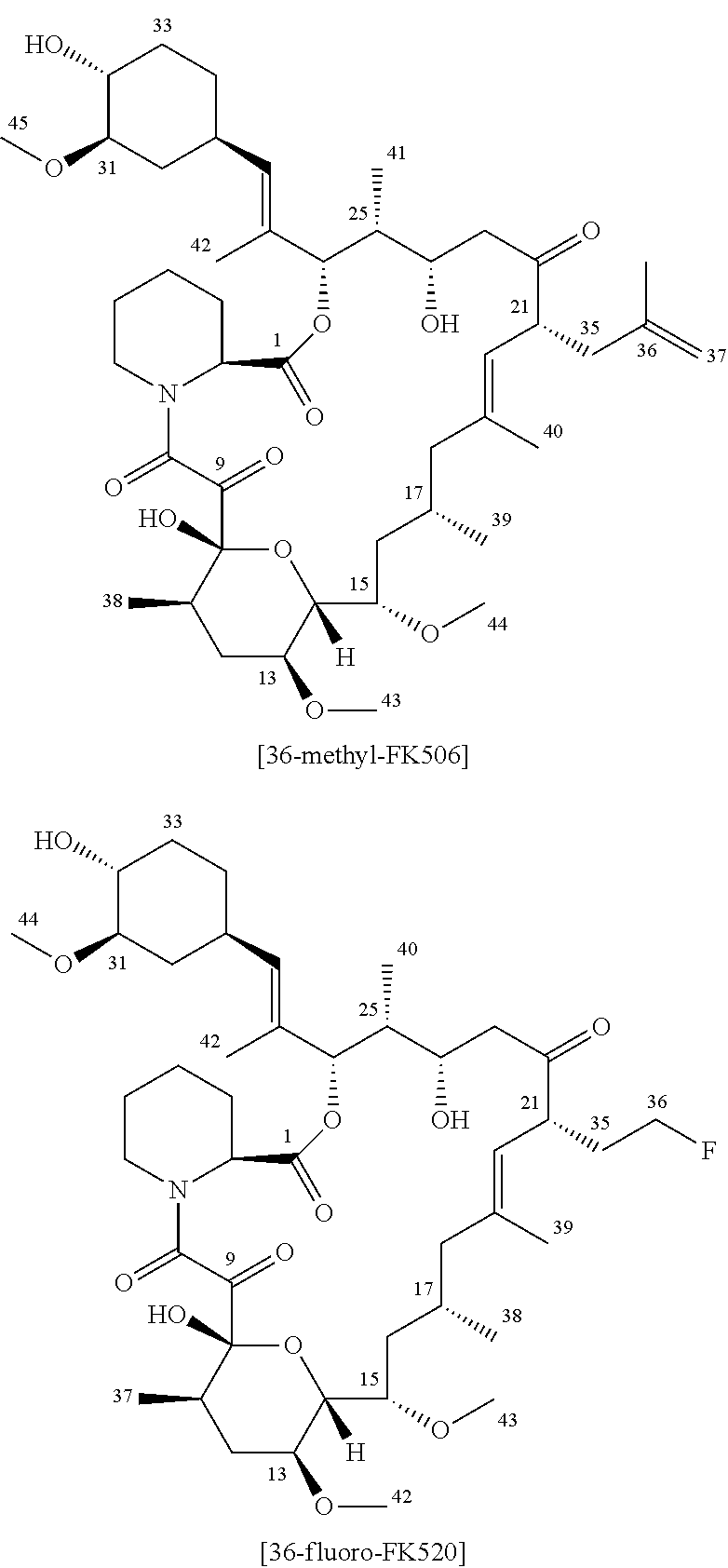
- strain of the present invention was fed with 4-methylpentanoic acid or 4-fluorocrotonic acid to produce 36-methyl-FK506 or 36-fluoro-FK520, respectively ( FIG. 6 ).
- the above analogues are the representative analogues which can be prepared by the method of the present invention, and are the example of the analogues containing altered side chains at C21.
- the term ‘modified Streptomyces sp. strain’ refers to a Streptomyces sp. strain having gene mutations.
- the modified Streptomyces sp. strain refers to a Streptomyces sp. strain comprising a modified protein involved in the biosynthesis of C21 allyl group of tacrolimus, preferably, to a Streptomyces sp. strain in which the activity of one or more enzymes selected from the group consisting of TcsA, TcsB, TcsC and TcsD is reduced, more preferably to a Streptomyces sp. strain in which the activity of TcsB is reduced compared to the endogenous activity thereof.
- the Streptomyces sp. strain may preferably be a tacrolimus-producing strain.
- the term ‘tacrolimus-producing strain’ refers to a Streptomyces sp. strain that is able to produce tacrolimus.
- the strain can be selected from the group consisting of Streptomyces sp. KCTC 11604BP, Streptomyces kanamyceticus KCTC 9225, Streptomyces sp. ATCC 55098, Streptomyces tsukubaensis No. 9993, Streptomyces sp. ATCC 53770, Streptomyces sp. 6260, Streptomyces sp. 49A, Streptomyces sp. 94128, Streptomyces glaucescens MTCC 5115 and Streptomyces sp. BICC 7522.
- the strains to be used are not particularly limited, and any known tacrolimus-producing strain may be used.
- the modified Streptomyces sp. strain may be a strain having reduced activity of endogenous TcsB, but is not limited thereto.
- endogenous activity refers to the enzyme activity that occurs in the wild-type strain.
- the endogenous activity refers to the TcsB activity that occurs in the wild-type Streptomyces sp. strain.
- the reduced TcsB activity means a decrease in TcsB activity, compared to that of a wild-type strain, and encompasses the disruption of TcsB.
- Various techniques for reduction of TcsB activity are well known in the art. Illustrative examples include the substitution of the tcsB gene with the mutated gene to reduce the endogenous TcsB activity, mutation of the regulatory region of the tcsB gene to reduce endogenouse TcsB activity, substitution of the regulatory region of the gene encoding TcsB with a regulatory element having weaker activity, deletion of the tcsB gene, introduction of an antisense oligonucleotide complementary to the mRNA sequence of the tcsB gene to inhibit the translation of the mRNA, insertion of the sequence complementary to shine-dalgarno (SD) sequence of the gene encoding TcsB on the upstream of the SD sequence of the same, and induction of reverse transcription by adding a promoter to 3′ terminal of open reading
- the gene deletion method was used as a representative method for reducing TcsB activity.
- other methods for reduction of TcsB activity can be used for preparing the modified Streptomyces sp. strain capable to produce the tacrolimus analogues containing altered C21 side chain.
- the term ‘gene deletion’ means the loss of gene function by deletion of all or a part of the corresponding gene.
- the strain may have a deletion of 175 to 2,262 bases in the tcsB gene with SEQ ID NO. 1.
- the strain may be prepared by the method described in the detailed description and Examples of the present invention, for example, in-frame deletion, but is not limited thereto.
- a Streptomyces sp. strain is transformed with a vector including a selection marker between nucleic acids encoding N- and C-terminus of the desired protein to induce recombination between the genome and the vector.
- the selection marker to be used is not particularly limited, and a selection marker that confers a selectable phenotype, such as drug resistance, nutritional auxotrophy, resistance to a cytotoxic agent or expression of a surface protein, can be used.
- tcsB-deleted strain prepared by the method described in the Examples of the present invention was deposited at the Korean Collection for Type Cultures (KCTC) under the Budapest Treaty on Feb. 25, 2011 with Accession No. KCTC 11879BP.
- the present invention provides a method for preparing a tacrolimus analogue using the isolated modified Streptomyces sp. strain.
- the present invention provides a method for preparing a tacrolimus analogue in which C21 allyl group is substituted, comprising (a) culturing the isolated modified Streptomyces sp. strain in which the activity of endogenous TcsB is reduced; and (b) feeding carboxylic acids to the strain.
- the isolated modified Streptomyces sp. strain, the tacrolimus and the tacrolimus analogue are the same as described above.
- the above method may further comprises (c) extracting the tacrolimus analogues from the culture medium of the strain.
- the above method uses Streptomyces sp. strain wherein the enzyme activity of TcsB involved in the biosynthesis of C21 allyl group of tacrolimus is reduced, and thus depending on the type of carboxylic acid added, various types of tacrolimus analogues can be produced having C21 allyl group substituted with other functional groups.
- the step (a) is the culturing of the isolated modified Streptomyces sp. strain.
- the strain for producing the novel tacrolimus analogues of the present invention may be cultured in the media containing nutrients typically used by microorganisms.
- the nutrient sources of the strain any nutrient source typically used in the art may be used without limitation, and the known nutrient sources used for the culture of Streptomyces sp. bacteria may be preferably used.
- the culture is preferably performed in a media containing malonic acid, ethanol, methionine, carbon sources, and nitrogen sources.
- the carbon source one or more substances are preferably selected from a group consisting of starch, glucose, corn oil, glycerol, maltose, mannose and inositol, and starch, glucose and corn oil are most preferred.
- a seed culture solution was inoculated in a fermentor containing the above-mentioned medium.
- the culture method may be a stationary culture or a shaking culture under aerobic conditions.
- the culture temperature may differ depending on the above culture conditions, and the culture is usually performed at 20-37° C., and preferably at 26-30° C.
- the culture may be performed for a suitable period known in the art, and if necessary, the period may be adjusted.
- it may be performed for 4 days to 7 days.
- the culture solution is filtered and extraction may be performed to obtain oily residue.
- a fraction including a target compound can be purified by column chromatography, resulting in novel pure tacrolimus analogues.
- step (b) is the feeding of carboxylic acids to the strain.
- carboxylic acid refers to the compound containing carboxylic acid group, as the substance supplied to Streptomyces sp. strain that is modified to produce tacrolimus analogues.
- carboxylic acid means a non-natural extender unit.
- non-natural extender unit refers to any compound which can be incorporated as an extender unit in polyketide synthesis that is not the usual extender unit incorporated by the PKS. Extender units are suitably provided as the free carboxylic acid, but derivatives that may be employed include salts.
- carboxylic acid is not limited as long as the tacrolimus analogue having C21 allyl group substituted can be produced by feeding the carboxylic acid to the modified strain.
- Example of such carboxylic acid includes C4 to C7 carboxylic acids such as 4-halocrotonic acids, branched/4-halobutanoic acids, branched/unsaturated/5-halopentanoic acids, branched/unsaturated hexanoic acids, and heptanoic acid, but is not limited thereto.
- the carboxylic acid may be 4-methylpentanoic acid or 4-fluorocrotonic acid, but is not limited thereto.
- Example of the present invention the tcsB-deleted Streptomyces sp. strain of the present invention was fed with 4-methylpentanoic acid or 4-fluorocrotonic acid to produce 36-methyl-FK506 or 36-fluoro-FK520, respectively.
- the present invention provides a tacrolimus analogue represented by the following Formula 1, an isomer thereof, a pharmaceutically acceptable salt thereof, or combination thereof.
- the tacrolimus and its analogues is the same as described above.
- the compound is 36-fluoro-FK520. More particularly, 36-methyl-FK506 and 36-fluoro-FK520 have the following chemical structure.
- the compounds of the present invention include an isomer or a pharmaceutically acceptable salt thereof.
- the isomer denotes the chemical relationship of having the same chemical formula but different structures, and the type of isomers includes structural isomer, geometric isomer, optical isomer and geometric isomer.
- Stereoisomer means that different compounds have the same chemical constitution but differ in the arrangement of their atoms or groups in space
- optical isomer mirror image isomer
- diastereoisomers mean stereoisomers that possess two or more chiral centers and are not mirror images.
- the compounds of the present invention may be in the form of a solvate or pro-drug, which is included within the scope of the present invention.
- the solvate preferably includes a hydrate and an ethanolate.
- the term ‘pharmaceutically acceptable salt’ refers to a relatively non-toxic, inorganic or organic acid addition salt of a compound.
- an acid-addition salt thereof formed by a pharmaceutically acceptable free acid thereof is useful.
- pharmaceutically acceptable salt is any organic or inorganic acid addition salt, which is relatively non-toxic and harmless to a patient in a pharmaceutical dose of the salt, so that the beneficial effects inherent in the compound of Formula 1 are not deteriorated by side effects ascribable to the salt.
- the salts are precipitated by a water-miscible organic solvent such as methanol, ethanol, acetone or acetonitrile to prepare the acid addition salt thereof.
- a water-miscible organic solvent such as methanol, ethanol, acetone or acetonitrile
- the mixture of equivalent amount of compound and diluted acid with water or alcohol e.g., glycol monomethylether
- water or alcohol e.g., glycol monomethylether
- an organic acid or inorganic acid may be used as a free acid.
- the inorganic acid may include hydrochloric acid, phosphoric acid, sulfuric acid, nitric acid, tartaric acid and the like
- examples of the organic acid may include methanesulfonic acid, p-toluenesulfonic acid, acetic acid, trifluoroacetic acid, maleic acid, succinic acid, oxalic acid, benzoic acid, tartaric acid, fumaric acid, mandelic acid, propionic acid, citric acid, lactic acid, glycolicacid, gluconic acid, galacturonic acid, glutamic acid, glutaric acid, glucuronic acid, aspartic acid, ascorbic acid, carbonic acid, vanillic acid, and hydroiodic acid, but are not limited thereto.
- a pharmaceutically acceptable metal salt may be prepared using a base.
- An alkali metal or alkaline earth metal salt may be obtained, for example, by dissolving a compound in an excess amount of alkali metal hydroxide or alkaline earth metal hydroxide solution, filtering the undissolved salt, and then evaporating the filtrate until dry.
- the metal salts sodium, potassium or calcium salts are pharmaceutically suitable, but the present invention is not limited thereto.
- the corresponding silver salts may be obtained by reacting an alkali metal or alkaline earth metal salt with a proper silver salt (e.g., silver nitrate).
- Pharmaceutically acceptable salts of the compound represented by Formula 1, unless otherwise indicated herein, include salts of acidic or basic groups, which may be present in the compound of Formula 1.
- the pharmaceutically acceptable salts may include sodium, calcium and potassium salts of hydroxy group, and other pharmaceutically acceptable salts of amino group, including hydrobromide, sulfate, hydrogen sulfate, phosphate, hydrogen phosphate, dihydrogen phosphate, acetate, succinate, citrate, tartrate, lactate, mandelate, methanesulfonate (mesylate) and p-toluenesulfonate (tosylate).
- the salts may be prepared using a salt preparation method known in the art.
- the compounds of the present invention may be synthesized according to the method typically used in the art, and may be preferably produced from the mutant using the method of the present invention.
- the compounds of the present invention may be produced from a Streptomyces sp. strain or the like, but the type of the strain that produces the compounds of the present invention is not limited to the above strains.
- NMR analysis revealed that 36-methyl-FK506 and 36-fluoro-FK520 of Formula 1 were revealed as tacrolimus analogues.
- the present invention provides a pharmaceutical composition, comprising the tacrolimus analogue represented by the Formula 1, an isomer thereof, a pharmaceutically acceptable salt thereof.
- the tacrolimus analogue represented by the Formula 1, the isomer and the pharmaceutically acceptable salt is the same as the described above.
- the compound of Formula 1 includes all of a compound, wherein R is 1-propen-2-yl or fluoromethyl, and combination thereof.
- the pharmaceutical composition is used for prevention or treatment of neurological diseases or immune hypersensitivity disorders.
- the 36-methyl-FK506 compound and 36-fluoro-FK520 compound show the neurite outgrowth activity, and thus the composition comprising the compound can be used for the prevention or treatment of neurological diseases.
- prevention or treatment means all of the actions in which a disease is restrained or retarded, in particular, the term ‘treatment’ refers to alocal or systemic effect in animals, particularly mammals, and more particularly humans, caused by a pharmacologically active substance.
- treatment refers to alocal or systemic effect in animals, particularly mammals, and more particularly humans, caused by a pharmacologically active substance.
- the term thus means any substance intended for use in diagnosis, cure, mitigation, treatment or prevention of disease or in the enhancement of desirable physical or mental development and conditions in an animal or human.
- neuropathological diseases refers to various neuropathological states and neurological diseases, including physical injury (e.g., spinal cord injury and trauma, sciatic or facial nerve lesion or injury, limb transplantation following amputation), nutritional disorders, ischemia, degenerative diseases, malignant diseases, infectious diseases, and damage to peripheral nerves and the central nervous system caused by drug interactions, cancer chemotherapy (e.g., acrylamide, taxol, vinca alkaloids and doxorubicin), toxins or poisons, asthenia, neurological damage or dysfunction, specifically, neurological damage or dysfunction caused by neurosurgery, peripheral nerve injury, burns, encephalomyelitis, HIV, herpes, cancer, radiation treatment, drug interaction, folic acid or Vitamin B-12 deficiency, and by exposure to neurotoxins or chemicals such as lead, and more specifically, allophasis (e.g., articulation disorders) associated with cerebral infarction, hemorrhage infarct, etc., clouding of consciousness, dyskinesia,
- physical injury e.g
- Alzheimer's disease, Parkinson's disease, amyotrophic lateral sclerosis (ALS), multiple sclerosis, diabetic neuropathy, Huntington's chorea, and peripheral neuropathy are all resulted from the damage or degeneration of the nerve cells.
- substance with the neurite outgrowth activity is useful for the treatment of the diseases induced by the damage or degeneration of the nerve cells.
- the degenerative brain disease such as Alzheimer's disease
- the lack of substance contributing to neurite outgrowth can be one of the causes of the onset of the disease, and thus the substance promoting the neurite outgrowth is known to be useful for treatment of degenerative brain disease (Yuto Kamei and Atsuko Sagara, Cytotechnology. 2002 November; 40(1-3): 99-106. More S V et al., Molecules. 2012 Jun. 4; 17(6):6728-53.).
- composition comprising 36-methyl-FK506, 36-fluoro-FK520 or combinations thereof may be used for the prevention or treatment of immune hypersensitivity disorder, but is not limited thereto.
- the 36-methyl-FK506 compound and 36-fluoro-FK520 compound demonstrate the immunosuppressive activity, and thus the composition comprising the compound can be used for suppressing immune responses, in advance, for the prevention or treatment of the immune hypersensitivity disorder.
- the term ‘immunosuppressive’ means that immune response in an organism is reduced or depressed.
- the immunosuppressive composition according to the present invention can be used for the prevention or treatment of immune hypersensitivity disorders.
- the immune hypersensitivity disorders mean the pathologic state due to abnormal activation of immune system, and examples thereof include, but are not limited to, transplant rejection; autoimmune diseases such as lupus and rheumatoid arthritis; skin hypersensitivity including allergic diseases such as rhinitis, asthma, and atopic dermatitis.
- the immunosuppressive composition according to the present invention may be administered alone or in combination with other immunosuppressive agents.
- the quantification of interleukin-2 secreted from T cells revealed that the level of interleukin-2 obtained from T cells activated with CD3/CD28 after treatment with the compound was significantly lower than that from the control group, indicating immunosuppressive activity of the compound.
- composition may further comprise pharmaceutically acceptable carrier.
- the term ‘pharmaceutically acceptable carrier’ refers to a pharmaceutically-acceptable material, composition or vehicle, such as a liquid or solid filler, diluent, excipient, solvent or encapsulating material, involved in carrying or transporting any subject composition or component thereof from one organ or portion of the body, to another organ or portion of the body.
- the composition of the present invention may further comprise a pharmaceutically acceptable carrier, excipient, or diluent, in addition to the above described active ingredients.
- Examples of the carriers, excipients and diluents include lactose, dextrose, sucrose, sorbitol, mannitol, xylitol, erythritol, maltitol, starch, arabic gum, alginate, gelatin, calcium phosphate, calcium silicate, cellulose, methyl cellulose, microcrystalline cellulose, polyvinyl pyrrolidine, water, methylhydroxybenzoate, propylhydroxybenzoate, talc, magnesium stearate, and mineral oil.
- the composition of the present invention may be formulated for oral administration in the form of powders, granules, tablets, capsules, suspensions, emulsions, syrups or aerosols, or formulated in a form suitable for topical application, suppositories or sterile injectable solutions.
- a formulation may be prepared with generally used diluents or excipients, such as fillers, thickeners, binders, humectants, disintegrators and surfactants.
- Solid formulations for oral administration may include tablets, pills, powders, granules and capsules, but are not limited thereto.
- solid formulations may be prepared by mixing the compound of Formula 1 with one or more excipients, such as starch, calcium carbonate, sucrose, lactose and gelatin.
- the solid formulations may include, in addition to a simple excipient, a lubricant such as magnesium stearate or talc.
- Liquid formulations for oral administration may include suspensions, internal solutions, emulsions and syrups, but are not limited thereto.
- the liquid formulations may include, in addition to commonly used simple diluents, such as water and liquid paraffin, various excipients, which are exemplified by humectants, sweeteners, aromatics and preservatives.
- Formulations for parenteral administration may include sterile aqueous solutions, non-aqueous solutions, suspensions, emulsions, lyophilized preparations, and suppositories.
- Non-aqueous solutions and suspensions may be prepared with propylene glycol, polyethylene glycol, vegetable oils such as olive oil, and injectable esters such as ethyl oleate.
- WITEPSOL®, macrogol, TWEEN® 61, cacao oil, laurin oil and glycerinated gelatin may be used as a base for suppositories.
- the present invention provides a method for treating neurological diseases comprising administering the composition to a subject in need thereof.
- the neurological disease, pharmaceutical composition and treatment are the same as described above.
- composition of the present invention may be administered via any of the common routes, as long as it is able to reach a desired tissue. Therefore, the composition of the present invention may be administered by topical, oral, parenteral, intranasal, intravenous, intramuscular, subcutaneous, ocular, or transdermal route, and may be formulated into a solution, a suspension, a tablet, a pill, a capsule, a sustained-releases formulation or the like.
- the preferred formulation is an injectable formulation.
- the composition may be given by subcutaneous, intramuscular, or intravenous injection.
- composition of the present invention may be administered in a therapeutically or prophylactically effective amount.
- the dose may differ depending on various factors such as disease type and severity, age, sex, mode of administration, target cell, degree of expression, etc., and may be easily determined by those of ordinary skill in the art.
- the present invention provides a method for treating immune hypersensitivity disorders comprising administering the composition to a subject in need thereof.
- the immune hypersensitivity disorders, pharmaceutical composition, administering and treatment are the same as described above.
- the present invention provides a method for suppressing immune responses comprising administering the composition to a subject in need thereof.
- the present invention provides a method for preparing a tacrolimus analogue using a Streptomyces sp. strain in which one or more enzymes selected from the group consisting of endogenous TcsA, TcsB, TcsC and TcsD are reduced.
- the tacrolimus analogues having an improved immunosuppressive effect, an improved neuroprotective effect, or improved immunosuppressive and neuroprotective effects may be produced by the method.
- TcsB The TcsB, the Streptomyces sp. strain and the tacrolimus analogues are the same as described above.
- TcsA, TcsB, TcsC and TcsD are involved in the synthesis of allylmalonyl-CoA required for the synthesis of allyl group that is specifically positioned at C21 of tacrolimus.
- the detailed biosynthetic pathway identified in the present invention is shown as a schematic diagram in FIG. 3 .
- TcsA acts as an acyltransferase and has ACP domain.
- the nucleotide sequence of tcsA and amino acid sequence of the TcsA are shown as SEQ ID No. 43 and 46, respectively.
- the TcsA may refer to the protein possessing the amino acid sequence of SEQ ID NO.
- any protein can be used without limitation, as long as it has acyltransferase activity.
- the protein with the above sequence homology has substantially the same or corresponding bioactivity as TcsA even the variants of the protein having a portion of amino acid sequence deleted, modified, substituted, or added may be included in the scope of the present invention.
- the polynucleotide that encodes the TcsA may be preferably a polynucleotide represented by a nucleotide sequence of SEQ ID NO. 43, and also includes any nucleotide sequence having a sequence homology of 70% or higher, preferably 80% or higher, more preferably 90% or higher, much more preferably 95% or higher, and most preferably 98% or higher homology to the nucleotide sequence of SEQ ID NO. 1 without limitation, as long as it is able to substantially encode a protein having TcsA activity.
- TcsC has a function of 2-Pentenoyl-ACP carboylase/reductase.
- the nucleotide sequence of tcsC and the amino acid sequence of TcsC are shown as SEQ ID No. 44 and 47, respectively.
- the TcsC may refer to the protein possessing the amino acid sequence of SEQ ID NO. 47, but also an amino acid sequence having a sequence homology of 70% or higher, preferably 80% or higher, more preferably 90% or higher, even more preferably 95% or higher, even much more preferably 98% or higher, and most preferably 99% or higher to the amino acid sequence of SEQ ID NO. 47.
- any protein can be used without limitation, as long as it has 2-Pentenoyl-ACP carboylase/reductase activity.
- the protein with the above sequence homology has substantially the same or corresponding bioactivity as TcsC even the variants of the protein having a portion of amino acid sequence deleted, modified, substituted, or added may be included in the scope of the present invention.
- the polynucleotide that encodes the TcsC may be preferably a polynucleotide represented by a nucleotide sequence of SEQ ID NO. 44, and also includes any nucleotide sequence having a sequence homology of 70% or higher, preferably 80% or higher, more preferably 90% or higher, much more preferably 95% or higher, and most preferably 98% or higher homology to the nucleotide sequence of SEQ ID NO. 1 without limitation, as long as it is able to substantially encode a protein having TcsC activity.
- TcsD has a function of acyl-ACP dehydrogenase.
- the nucleotide sequence of tcsD and the amino acid sequence of the TcsD are shown as SEQ ID No. 45 and 48, respectively.
- the TcsD may refer to the protein possessing the amino acid sequence of SEQ ID NO. 48, but also an amino acid sequence having a sequence homology of 70% or higher, preferably 80% or higher, more preferably 90% or higher, even more preferably 95% or higher, even much more preferably 98% or higher, and most preferably 99% or higher to the amino acid sequence of SEQ ID NO. 48.
- any protein can be used without limitation, as long as it has acyl-ACP dehydrogenase activity.
- the protein with the above sequence homology has substantially the same or corresponding bioactivity as TcsD even the variants of the protein having a portion of amino acid sequence deleted, modified, substituted, or added may be included in the scope of the present invention.
- the polynucleotide that encodes the TcsD may be preferably a polynucleotide represented by a nucleotide sequence of SEQ ID NO. 45, and also includes any nucleotide sequence having a sequence homology of 70% or higher, preferably 80% or higher, more preferably 90% or higher, much more preferably 95% or higher, and most preferably 98% or higher homology to the nucleotide sequence of SEQ ID NO. 1 without limitation, as long as it is able to substantially encode a protein having TcsD activity.
- the method of the present invention comprises (a) culturing the isolated modified Streptomyces sp. strain in which the activity of one or more enzymes selected from the group consisting of endogenous TcsA, TcsB, TcsC and TcsD are reduced; and (b) feeding carboxylic acids to the strain. Further, the above method may further comprise (c) the recovering of the tacrolimus analogue from the culture medium of the strain.
- the step (a) is the culturing of the isolated modified strain wherein the activity of one or more enzymes selected from the group consisting of TcsA, TcsB, TcsC and TcsD is reduced.
- the culturing condition is the same as described above.
- the step (b) in the present invention is the step for feeding carboxylic acids to the strain to produce the tacrolimus analogues having altered C21 side chain.
- the modified strain cannot produce allylmalonyl-CoA, which is the extender unit of C21 ally side chain of FK506.
- allylmalonyl-CoA which is the extender unit of C21 ally side chain of FK506.
- non-natural allyl side chain can be supplied to the strain instead of natural allyl side chain.
- the carboxylic acid is the same as described above.
- biosynthetic gene clusters were obtained from FK506 and FK520-producing strains.
- the bacteria strains used in the present invention are FK506-producing Streptomyces sp. KCTC 11604BP, Streptomyces kanamyceticus KCTC 9225, and Streptomyces sp. ATCC 55098, and FK520-producing Streptomyces hygroscopicus var. ascomyceticus ATCC14891.
- Streptomyces sp. KCTC 11604BP, its gene deletion mutants, and Streptomyces kanamyceticus KCTC 9225 were generated on ISP4 agar plates and a seed culture was prepared in R2YE broth. 50 miligrams of vegetative cells grown in the seed culture were inoculated into a 250-ml baffled flask containing 50 ml of R2YE medium and cultivated on an orbital shaker (set at 180 rpm) for 6 days at 28° C. Streptomyces hygroscopicus var. ascomyceticus ATCC 14891 was incubated in a baffled 50-ml flask containing 50 ml of SY medium and grown on an orbital shaker for 6 days at 30° C.
- Streptomyces lividans TK24 which was used as a heterologous host for preparing recombinant TcsD, was grown in YEME liquid medium.
- Escherichia coli DH5 ⁇ was used for routine subcloning, while E. coli BL21 (DE3) and E. coli BL21(DE3)pLysS (NOVAGEN®) were used as heterologous hosts for expression of recombinant TcsC and ACP tcsA .
- E. coli ET 12567/pUZ8002 was the nonmethylating plasmid donor strain for intergeneric conjugation with Streptomyces sp. KCTC 11604BP. The E.
- coli strains were grown in LB, SOB or SOC liquid medium. Ampicillin (100 ⁇ g/ml), apramycin (50 ⁇ g/ml), chloramphenicol (25 ⁇ g/ml), kanamycin (50 ⁇ g/ml), thiostrepton (25 ⁇ g/ml), and nalidixic acid (25 ⁇ g/ml) were selectively added to the growth media as required.
- FK506 biosynthetic gene clusters and their flanking regions were sequenced from three FK506-producing strains, namely Streptomyces sp. ATCC 55098, Streptomyces sp. KCTC 9225, and Streptomyces sp. KCTC 11604BP. Analysis of these sequences revealed that fifteen genes are well maintained and identically organized in the FK520 and FK506 gene clusters ( FIG. 2 ).
- the PKS and NRPS genes (fkbC, B, P and A), genes for methoxymalonyl-ACP biosynthesis (fkbG, H, I, J, K, and L) and a gene responsible for 4,5-dihydroxycyclohex-1-enecarboxylic acid (DHCHC) synthesis (fkbO), a 31-O-methyltransferase gene (fkbM), a C9 hydroxylase gene (fkbD), a regulatory gene (fkbN), and a type II thioesterase gene (fkbQ) are preserved among the clusters.
- DHCHC 4,5-dihydroxycyclohex-1-enecarboxylic acid
- the ethylmalonyl-CoA biosynthetic genes in the FK520 cluster were not found in all of the FK506 clusters.
- a transcriptional regulator Tcs7 which belongs to the LysR-family, was located downstream of fkbQ only in Streptomyces sp. KCTC 11604BP strain.
- tcsA and tcsB genes compose a distinct PKS system with noncanonical domain architecture.
- tcsA gene encodes an acyltransferase (AT) and an ACP domains
- tcsB codes for two unusual ⁇ -ketoacyl synthase (KS) domains similar to the uncharacterized PKS system of Burkholderia species.
- This unusual domain organization is analogous to the type II PKS priming system comprised of an initiating KS (KSIII), AT and ACP as reported in the biosynthetic gene clusters of doxorubicin, frenolicin, and R1128, but unique in that both AT and ACP domains are encoded by a single tcsA gene.
- TcsC shares >60% identity with crotonyl-CoA carboxylase/reductase which is shown to catalyze the reductive carboxylation of an enoyl-CoA ester in the ethylmalonyl-CoA pathway, suggesting that TcsC has a unique substrate specificity.
- TcsD is phylogenetically related to FkbI, an acyl-ACP dehydrogenase involved in the biosynthesis of methoxymalonyl-ACP of the FK520 gene cluster.
- TcsB functions as a priming KS acylated by propionyl-CoA and catalyzes the condensation with malonate loaded on TcsA.
- the resulting ACP-tethered ⁇ -keto-pentanoate is converted into trans-2-pentenyl-ACP before the chain is further processed. Because no genes encoding ⁇ -keto processing enzymes, namely the ketoreductase and dehydratase, responsible for this reductive process were found in any of the sequenced FK506 clusters, it was hypothesized that these activities are shared with the FAS-like enzyme of the host, as is the case with type II PKS initiation modules.
- SC01815 a FabG (the ⁇ -ketoacyl-ACP reductase of fatty acid biosynthesis) homolog from the genome of Streptomyces coelicolor A3 (2), was shown to function as the ⁇ -ketoacyl-ACP reductase component of the R1128 initiation module.
- TcsD might convert trans-2-pentenyl-ACP to (2E)-2,4-pentadienyl-ACP, which in turn undergoes reductive carboxylation by TcsC to allylmalonyl-ACP. Skipping the TcsD-catalyzed dehydrogenation reaction would produce propylmalonyl-CoA. No gene encoding an ACP:CoA transacylase-like enzyme, which might be required for the conversion of propylmalonyl- and allylmalonyl-ACP to propylmalonyl-CoA and allylmalonyl-CoA, respectively, was located in the FK506 gene clusters.
- TcsC and TcsD a biochemical and mass spectral approach was employed to reconstitute and measure allylmalonyl-ACP formation in vitro.
- the recombinant TcsC and ACP domain of TcsA (ACP tcsA ) were expressed in E. coli as histidine-tagged proteins and purified by nickel-affinity chromatography. Domain boundaries of ACP tcsA were chosen according to literature precedent. Soluble recombinant histidine tagged TcsD was instead obtained by expression in Streptomyces lividans TK24.
- trans-2-pentenyl-ACP tscA the most likely substrate for TcsC or TcsD is trans-2-pentenyl-ACP tscA .
- apo-ACP tcsA was biochemically converted to trans-2-pentenyl-ACP tcsA ( FIG. 5 a, b ).
- ESI-MS the NADPH-dependent reductive decarboxylation to propylmalonyl-ACP tcsA was measured by ESI-MS ( FIG. 5 c ).
- TcsC demonstrates an unprecedented example of a CCR-like carboxylase/reductase for ACP versus CoA-bound substrates. This preference for ACP-based substrates was also observed with TcsD (which did not accept trans-2-pentenyl-CoA as an alternative substrate).
- tcsgenes were inactivated in the FK506-producing strain Streptomyces sp. KCTC 11604BP by in-frame deletion via double cross-over homologous recombination. Details regarding DNA isolation and manipulation, and construction of plasmids for gene deletion and heterologous expression as well as the resulting mutant strains are described below.
- E. coli - Streptomyces shuttle vector pKC1139 was used for in-frame gene deletion. To delete nine tcs genes (tcsA, tcsB, tcsC, tcsD, tcs1, tcs2, tcs3, tcs4, and tcs5) and fkbA in Streptomyces sp.
- KCTC 11604BP the construction of recombinant plasmids was carried out by PCR amplification of the left- and right flanking fragments from fosmid (fos1004F01) DNA derived from Streptomyces sp. KCTC 11604BP. One gene was targeted in each reaction.
- the primer pairs TcsALF/TcsALR, TcsBLF/TcsBLR, TcsCLF/TcsCLR, TcsDLF/TcsDLR, Tcs1LF/Tcs1LR, Tcs2LF/Tcs2LR, Tcs3LF/Tcs3LR, Tcs4LF/Tcs4LR, Tcs5LR/Tcs5LF, and FkbALF/FkbALR were designed for the amplification of left-flanking fragments of target genes, whereas TcsARF/TcsARR, TcsBRF/TcsBRR, TcsCRF/TcsCRR, TcsDRF/TcsDRR, Tcs1RF/Tcs1RR, Tcs2RF/Tcs2RR, Tcs3RF/Tcs3RR, Tcs4RF/Tcs4RR, Tcs5RR/Tcs5RF, and F
- PCR fragments were separately cloned in pGEM-T Easy vector and sequenced. After digestion with appropriate restriction enzymes, the fragments were cloned into pKC1139 digested with HindIII-EcoRI or HindIII-XbaI, to construct 10 different in-frame deletion plasmids: p ⁇ TCSA, p ⁇ TCSB, p ⁇ TCSC, p ⁇ TCSD, p ⁇ TCS1, p ⁇ TCS2, p ⁇ TCS3, p ⁇ TCS4, p ⁇ TCS5 and p ⁇ FKBA. Information regarding the strains, plasmids, and primers used in the present Example are described in the following Table. To construct tscB deletion mutant, tcsB gene was used and TcsBLF/TcsBLR and TcsBRF/TcsBRR primers were used.
- TcsBLF (SEQ ID NO. 2) GAC AAGCTT ATGCTGGCGGTGAAGGCG(HindIII) TcsBLR: (SEQ ID NO. 3) CCG TCTAGA CCAGAAGGAATCGAGCCGGAA(XbaI) TcsBRF: (SEQ ID NO. 4) CAG TCTAGA GTGATCCGTGCCCTGCACTCC(XbaI) TcsBRR: (SEQ ID NO. 5) GCC GAATTC GATGACGATGTCCGGGTCG(EcoRI) TcsALF: (SEQ ID NO. 6) TTT AAGCTT CCGTCGGATCGGGGCGGCAG(HindIII) TcsALR: (SEQ ID NO.
- Tcs2LR (SEQ ID NO. 23) ATTTTT GGATCC CGCACGAGTCTCGGG(BamHI) Tcs2RF: (SEQ ID NO. 24) GAC GGATCC TCTGAATCGGAGATTCGT(BamHI) Tcs2RR: (SEQ ID NO. 25) TTA GAATTC GTGGCCGTTGGAGATGAA(EcoRI) Tcs3LF: (SEQ ID NO. 26) AGC AAGCTT AGTCCTCTGAGGAGCTGGTAG(HindIII) Tcs3LR: (SEQ ID NO.
- pET15b (NOVAGEN®) containing an N-terminal His 6 -tag was used for the expression of recombinant ACP tcsA and Sfp (PPTase), whereas N,C-terminal His 6 -tagged pET28a (NOVAGEN®) was used for TcsC.
- Amplification of tcsC was accomplished with the primers TcsCF and TcsCR.
- the PCR product was cloned into pET28a to generate pTCSC with an N, C-terminal His 6 -tag.
- Amplification of the DNA fragments containing ACP tcsA domain in tcsA was accomplished with the primers TcsAF and TcsAR.
- the PCR product was cloned into pET15b to produce pTCSA-ACP with an N-terminal His 6 -tag.
- the gene sfp encoding 4′-phosphopantetheinyl transferase (PPTase) from Bacillus subtilis was amplified by PCR from pGF101 using primers SfpF and SfpR.
- the PCR product was cloned into pET15b to generate pSFP with an N-terminal His 6 -tag.
- Amplification of tcsD was performed using primers TcsDF and TcsDR.
- the PCR product was cloned into pET15b to generate pTCSD1 with an N-terminal His 6 -tag. This plasmid was digested with XbaI and HindIII and then cloned into pSE34, yielding pTCSD.
- the plasmids used for in-frame gene deletion are summarized in the above Table 1. They were introduced into Streptomyces sp. KCTC 11604BP by conjugation from ET12567/pUZ8002 and then target genes were deleted by homologous recombination. A strain in which a single crossover between deletion plasmid and the KCTC 11604BP chromosome had occurred was selected by cultivation of an apramycin-resistant transconjugant at 37° C. (the non-permissive temperature for the pSG5-based replicon) in the presence of apramycin. One such colony was then subjected to three rounds of propagation in the absence of selection at 30° C. to allow for the second crossover.
- tcsA, ⁇ tcsB, ⁇ tcsC, ⁇ tcsD, ⁇ tcs1, ⁇ tcs2, ⁇ tcs3, ⁇ tcs4, ⁇ tcs5, and ⁇ fkbA were selected by their apramycin-sensitive phenotype, then verified by PCR and selectively confirmed by Southern blot analysis.
- tcsB-deleted strain ⁇ tcsB-deleted strain ( ⁇ tcsB) was prepared by deleting tcsB in Streptomyces kanamyceticus KCTC9225.
- the ⁇ tcsB strain prepared in this Example was deposited at the Korean Collection for Type Cultures (KCTC) under the Budapest Treaty in Feb. 25, 2011 under Accession No. KCTC 11879BP.
- [1- 13 C]pentanoic acid was provided as a precursor to the ⁇ tcsB mutant.
- 13 C NMR analysis of [1- 13 C]pentanoic acid-enriched FK506 revealed the specific isotopic labeling of C20 at approximately 23% enrichment.
- C8 and C22, corresponding to the positions of incorporated acetate, were also labeled at a lower percentage of 8-15% presumably from the degradation of [1- 13 C]pentanoic acid by ⁇ -oxidation.
- These acetate-derived carbons were also enriched in FK520 and FK523 purified from the same [1- 13 C]pentanoic acid-fed ⁇ tcsB mutant.
- the tcsA deletion mutant ( ⁇ tcsA strain) also produced only FK520 and FK523. Because the 3-oxopentanoate moiety bound to ACP is believed to be processed to trans-2-pentenyl-ACP by the recruited FAS-like system ( FIG. 3 ), 3-oxopentanoyl-SNAC did not restore FK506 production in the absence of TcsA as it did in the absence of TscB.
- the tcsD deletion mutant ( ⁇ tcsD strain) produced FK520 and large amounts of 36,37-dihydro-FK506, thus confirming its central role in the formation of the C36/C37 olefin of FK506. While exogenous 3-oxopentanoyl-SNAC, trans-2-pentenyl-SNAC, pentanoyl-SNAC and propylmalonyl-SNAC did not change the production profile of the ⁇ tcsD strain, the addition of allylmalonyl-SNAC restored FK506 production ( FIG. 4 d ).
- TcsA functions as an acyltransferase while TcsB works as keto synthase.
- TcsC is 2-Pentenoyl-ACP carboylase/reductase and TcsD works as Acyl-ACP dehydrogenase. That is, allylmalonyl-CoA extender unit required for the synthesis of C21 allyl group of tacrolimus is synthesized by a successive action of the TcsA, TcsB, TcsC, and TcsD.
- the ⁇ tcsB mutant of Streptomyces sp. KCTC 11604BP was grown as described above. Trans-2-hexenoic acid, 4-methylpentanoic acid, and 4-fluorocrotonic acid were supplemented in 50-ml cultures at a final concentration of 10 mM.
- FK506-related biosynthetic intermediates and their analogues which were generated by FK506-producing Streptomyces sp. KCTC 11604BP, its deletion mutants, and deletion mutants supplemented with the SNAC thioesters (3-oxopentanoyl-SNAC, trans-2-pentenyl-SNAC, pentanoyl-SNAC, allylmalonyl-SNAC, and propylmalonyl-SNAC) and a series of carboxylic acids, as well as Streptomyces hygroscopicus var. ascomyceticus ATCC 14891, were extracted with EtOAc from the fermentation broth, then analyzed by HPLC-ESI-MS/MS.
- SNAC thioesters 3-oxopentanoyl-SNAC, trans-2-pentenyl-SNAC, pentanoyl-SNAC, allylmalonyl-SNAC, and propylmalonyl
- human T-cells (1 ⁇ 10 6 cells/well) were activated with CD3/CD28 antibodies (BD Pharmingen; 0.5 ⁇ g/ml for each), then treated with two different concentrations (0.1 and 1.0 nM) of FK506, FK520, 6-methyl-FK506 and 36-fluoro-FK520 for 16 to 20 hr.
- IL-2 interleukin-2
- the neurite lengths were measured on photographic prints. Duplicate wells were run in all experiments, and the entire experiment was replicated three times. Neurite length estimated from samples treated with NGF alone was used as a control ( FIGS. 7 and 8 ).
- the tacrolimus analogues which are excellent in neuroprotective and immunosuppressive effects, can be efficiently produced by using the method for producing tacrolimus analogues of the present invention.
- the novel tacrolimus analogues which are more excellent in neuroprotective and immunosuppressive effects than the known tacrolimus, can be used for the treatment of neurological diseases and immune hypersensitivity disorders.
Landscapes
- Chemical & Material Sciences (AREA)
- Organic Chemistry (AREA)
- Life Sciences & Earth Sciences (AREA)
- Health & Medical Sciences (AREA)
- Engineering & Computer Science (AREA)
- Genetics & Genomics (AREA)
- Zoology (AREA)
- Wood Science & Technology (AREA)
- Bioinformatics & Cheminformatics (AREA)
- Biotechnology (AREA)
- General Engineering & Computer Science (AREA)
- Biomedical Technology (AREA)
- Microbiology (AREA)
- Biochemistry (AREA)
- General Health & Medical Sciences (AREA)
- Molecular Biology (AREA)
- Chemical Kinetics & Catalysis (AREA)
- General Chemical & Material Sciences (AREA)
- Medicinal Chemistry (AREA)
- Physics & Mathematics (AREA)
- Biophysics (AREA)
- Plant Pathology (AREA)
- Tropical Medicine & Parasitology (AREA)
- Virology (AREA)
- Pharmaceuticals Containing Other Organic And Inorganic Compounds (AREA)
- Micro-Organisms Or Cultivation Processes Thereof (AREA)
- Preparation Of Compounds By Using Micro-Organisms (AREA)
Abstract
Description


(1-propen-2-yl), the compound is 36-methyl-FK506, and if R is

(fluoromethyl), the compound is 36-fluoro-FK520. More particularly, 36-methyl-FK506 and 36-fluoro-FK520 have the following chemical structure.


| TcsBLF: | |
| (SEQ ID NO. 2) | |
| GACAAGCTTATGCTGGCGGTGAAGGCG(HindIII) | |
| TcsBLR: | |
| (SEQ ID NO. 3) | |
| CCGTCTAGACCAGAAGGAATCGAGCCGGAA(XbaI) | |
| TcsBRF: | |
| (SEQ ID NO. 4) | |
| CAGTCTAGAGTGATCCGTGCCCTGCACTCC(XbaI) | |
| TcsBRR: | |
| (SEQ ID NO. 5) | |
| GCCGAATTCGATGACGATGTCCGGGTCG(EcoRI) | |
| TcsALF: | |
| (SEQ ID NO. 6) | |
| TTTAAGCTTCCGTCGGATCGGGGCGGCAG(HindIII) | |
| TcsALR: | |
| (SEQ ID NO. 7) | |
| AAAGGATCCGAAGAGGAACGCCACCCCAC(BamHI) | |
| TcsARF: | |
| (SEQ ID NO. 8) | |
| TTTAGATCTTGATCCGGTCGTGATCTCCC(BglII) | |
| TcsARR: | |
| (SEQ ID NO. 9) | |
| AAAGAACTTCGTCGCCGGGCAGGTGCGC(EcoRI) | |
| TcsCLF: | |
| (SEQ ID NO. 10) | |
| TTTAAGCTTAACAAGTCCCTGCTCGGTCA(HindIII) | |
| TcsCLR: | |
| (SEQ ID NO. 11) | |
| AACGGATCCGTCTTCGACGGGGCTCCCGG(BamHI) | |
| TcsCRF: | |
| (SEQ ID NO. 12) | |
| AAAAGATCTTCCCGGGTCTACCCCCTCGA(BglII) | |
| TcsCRR: | |
| (SEQ ID NO. 13) | |
| TTTGAATTCCTCACCCAGGCCCTGACGC(EcoRI) | |
| TcsDLF: | |
| (SEQ ID NO. 14) | |
| GCTAAGCTTCTCAGGCGTCTGCGGATGC(HindIII) | |
| TcsDLR: | |
| (SEQ ID NO. 15) | |
| ATCGGATCCTTCGCTCACCGGGGCTGCC(BamHI) | |
| TcsDRF: | |
| (SEQ ID NO. 16) | |
| AGCaAGATCTGGCATGTTCTGGTCAGTCC(Bg/II) | |
| TcsDRR: | |
| (SEQ ID NO. 17) | |
| GTCGAATTCCATGCCACGAACGGGTCGA(EcoRI) | |
| Tcs1LF: | |
| (SEQ ID NO. 18) | |
| TATAAGCTTACTCGTCGCACGCGGCAGC(HindIII) | |
| Tcs1LR: | |
| (SEQ ID NO. 19) | |
| ATATCTAGACTCACCCAGGCCCTGACGC(XbaI) | |
| Tcs1RF: | |
| (SEQ ID NO. 20) | |
| ATATCTAGACCAGTGATGCGAAGGCATG(XbaI) | |
| Tcs1RR: | |
| (SEQ ID NO. 21) | |
| GACGAATTCCAGGAGGTTGACGGTGGTT(EcoRI) | |
| Tcs2LF: | |
| (SEQ ID NO. 22) | |
| ATTAAGCTTGGGCGAACTCCTCGTTCG(HindIII) | |
| Tcs2LR: | |
| (SEQ ID NO. 23) | |
| ATTTTTGGATCCCGCACGAGTCTCGGG(BamHI) | |
| Tcs2RF: | |
| (SEQ ID NO. 24) | |
| GACGGATCCTCTGAATCGGAGATTCGT(BamHI) | |
| Tcs2RR: | |
| (SEQ ID NO. 25) | |
| TTAGAATTCGTGGCCGTTGGAGATGAA(EcoRI) | |
| Tcs3LF: | |
| (SEQ ID NO. 26) | |
| AGCAAGCTTAGTCCTCTGAGGAGCTGGTAG(HindIII) | |
| Tcs3LR: | |
| (SEQ ID NO. 27) | |
| TCGAGATCTCACGAGGTCTCCTTGGAGACA(BglII) | |
| Tcs3RF: | |
| (SEQ ID NO. 28) | |
| AAAGGATCCGTCATCATCGACCCGTAG(BamHI) | |
| Tcs3RR: | |
| (SEQ ID NO. 29) | |
| TTTGAATTCTCCTTGCTGGTCTGGACG(EcoRI) | |
| Tcs4LF: | |
| (SEQ ID NO. 30) | |
| TTTAAGCTTCGGCGTGGAGGCGTGGTCG(HindIII) | |
| Tcs4LR: | |
| (SEQ ID NO. 31) | |
| AAAGGATCCCGTGAGGCCCTCGGCGACA(BamHI) | |
| Tcs4RF: | |
| (SEQ ID NO. 32) | |
| AAAGGATCCGACGAGGTGGACTCCCACG(BamHI) | |
| Tcs4RR: | |
| (SEQ ID NO. 33) | |
| TTTGAATTCCCAGCACCCTGTCGTCCCG(EcoRI) | |
| Tcs5LF: | |
| (SEQ ID NO. 34) | |
| CCGAAGCTTACAGCACGGGGATACTCTG(HindIII) | |
| Tcs5LR: | |
| (SEQ ID NO. 35) | |
| GGATCTAGACAGCCGTTCGGCGATCGCG(XbaI) | |
| Tcs5RF: | |
| (SEQ ID NO. 36) | |
| AAATCTAGAATGCGCTGACGCGGCCCCG(XbaI) | |
| Tcs5RR: | |
| (SEQ ID NO. 37) | |
| TTTGGATCCACGGTCGACTCACGCCGCC(BamHI) | |
| FkbALF: | |
| (SEQ ID NO. 38) | |
| GTTACCAAGCTTGTACCGAGGACCACGTAC(HindIII) | |
| FkbALR: | |
| (SEQ ID NO. 39) | |
| GAATCCGGATCCGACCGT TTTGTCCTGTTC(BamHI) | |
| FkbARF: | |
| (SEQ ID NO. 40) | |
| TTTACCGGATTCTTCACCGGCTCCACCGAT(BamHI) | |
| FkbARR: | |
| (SEQ ID NO. 41) | |
| GGGTCCTCTAGAAGAGAGTGTCGAGGAGATCG(XbaI) |
| TABLE 1 | ||
| Strain/vector | Relevant characteristics | Reference |
| Bacterial strains | ||
| Escherichia coli | ||
| DH5α | Host for general cloning | New England Biolabs |
| BL121(DE3) | Host for protein expression | Novagen |
| BL21(DE3)pLysS | Host for protein expression | Novagen |
| EPI300TM | Host for gene library construction | Epicentre Biotechnol. |
| ET12567/pUZ8002 | Donor strain for intergeneric conjugation | MacNeil, D. J. et al.1 |
| between E. coli and Streptomyces | ||
| BL21 (DE3)pLysS/ | Strain for ACPtcsA protein expression | This study |
| pTCSA ACP | ||
| BL21(DE3)/pTCSC | Strain for TcsC protein expression | This study |
| BL21(DE3)pLysS/pSFP | Strain for Sfp (PPTase) protein expression | This study |
| Streptomyces | ||
| ATCC 55098 (MA6858) | Wild-type FK506 (1)-producing strain | Motamedi, H. et al.2 |
| KCTC 11604BP | Wild-type 1-producing strain | This study |
| KCTC 9225 | Wild-type 1-producing strain | Muramatsu, H. et al.3 |
| ATCC 14891 | Wild-type FK520 (2)-producing strain | Wu. K. et al.4 |
| ΔtcsA | Mutant of KCTC 11604BP with an in-frame | This study |
| deletion of tcsA, produces 2 & FK523 (21) | ||
| ΔtcsB | Mutant of KCTC 11604BP with an in-frame | This study |
| deletion of tcsB, produces 2 & 21 | ||
| ΔtcsC | Mutant of KCTC 11604BP with an in-frame | This study |
| deletion of tcsC, produces 2 & 21 | ||
| ΔtcsD | Mutant of KCTC 11604BP with an in-frame | This study |
| deletion of tcsD, produces 2 & | ||
| dihydro-FK506 (27) | ||
| Δtcs1 | Mutant of KCTC 11604BP with an in-frame | This study |
| deletion of tcs1, produces 1 & 2 | ||
| Δtcs2 | Mutant of KCTC 11604BP with an in-frame | This study |
| deletion of tcs2, produces 1 & 2 | ||
| Δtcs3 | Mutant of KCTC 11604BP with an in-frame | This study |
| deletion of tcs3, produces 1 & 2 | ||
| Δtcs4 | Mutant of KCTC 11604BP with an in-frame | This study |
| deletion of tcs4, produces 1 & 2 | ||
| Δtcs5 | Mutant of KCTC 11604BP with an in-frame | This study |
| deletion of tcs5, produces 1 & 2 | ||
| ΔfkbA | Mutant of KCTC 11604BP with an in-frame | This study |
| deletion of fkbA, does not produce 1 or 2 | ||
| S. lividans TK24 | Host for protein expression | Walczak, R. J. et al5 |
| S. lividans TK24/pTCSD | TK24 mutant, expresses heterologous | This study |
| tcsD using pTCSD | ||
| Plasmids | ||
| pCCFOS1 (fosmid) | Vector for genomic library construction | Epicentre Biotechnol. |
| Litmus 28 | Multi-purpose E. coli cloning vector | New England Biolabs |
| pGEM-Teasy | PCR fragment cloning vector | Promega |
| pKC1139 | High-copy-number temperature-sensitive E. coli- | Blerman, M. et al.6 |
| Streptomyces shuttle vector | ||
| pET15b, pET28a | E. coli protein expression vector | Novagen |
| pGF101 | Sfp expression plasmid based on | Zhou, P. et al.7 |
| pET30a(+) | ||
| pSE34 | pWHM3 with PetmE* promoter | Yoon, Y. J. et al.8 |
| pΔTCSA | Deletion plasmid with in-frame deletion of | This study |
| 1,287-bp internal tcsA fragment | ||
| pΔTCSB | Deletion plasmid with in-frame deletion of | This study |
| 2,088-bp internal tcsB fragment | ||
| pΔTCSC | Deletion plasmid with in-frame deletion of | This study |
| 1,041-bp internal tcsC fragment | ||
| pΔTCSD | Deletion plasmid with in-frame deletion of | This study |
| 1,152-bp internal tcsD fragment | ||
| pΔTCS1 | Deletion plasmid with in-frame deletion of | This study |
| 1,110-bp internal tcs1 fragment | ||
| pΔTCS2 | Deletion plasmid with in-frame deletion of | This study |
| 171-bp internal tcs2 fragment | ||
| pΔTCS3 | Deletion plasmid with in-frame deletion of | This study |
| 1,209-bp internal tcs3 fragment | ||
| pΔTCS4 | Deletion plasmid with in-frame deletion of | This study |
| 864-bp internal tcs4 fragment | ||
| pΔTCS5 | Deletion plasmid with in-frame deletion of | This study |
| 666-bp internal tcs5 fragment | ||
| pΔFKBA | Deletion plasmid with in-frame deletion of | This study |
| 18,171-bp internal fkbA fragment | ||
| pTCSC | N,C-terminal His6-tagged TcsC | This study |
| expression plasmid based on pET28a(+) | ||
| pTCSA-ACP | N-terminal His6-tagged ACPtcsA expression | This study |
| plasmid based on pET15b(+) | ||
| pSFP | N-terminal His6-tagged Sfp expression | This study |
| plasmid based on pET15b(+) | ||
| pTCSD1 | N-terminal His6-tagged plasmid based on | This study |
| pET15b(+), contains tcsD ORF | ||
| pTCSD | N-terminal His6-tagged TcsD expression | This study |
| plasmid based on pSE34 | ||
| Fosmid clones | ||
| From KCTC 11604BP | ||
| fos1004F01 | Fosmid clone, contains bases 1-40,366 of | This study |
| FK506 biosynthetic gene cluster | ||
| fos1005D02 | Fosmid clone, contains bases | This study |
| 39,116-80,661 of FK506 biosynthetic | ||
| gene cluster | ||
| fos1006D05 | Fosmid clone, contains bases | This study |
| 58,172-97,743 of FK506 biosynthetic | ||
| gene cluster | ||
| From KCTC 9225 | ||
| fos1006G02 | Fosmid clone, contains bases 1-35,521 of | This study |
| FK506 biosynthetic gene cluster | ||
| fos1012A09 | Fosmid clone, contains bases | This study |
| 31,026-67,758 of FK506 biosynthetic | ||
| gene cluster | ||
| fos1004E04 | Fosmid clone, contains bases | This study |
| 41,430-85,253 of FK506 biosynthetic | ||
| gene cluster | ||
| fos1010E10 | Fosmid clone, contains bases | This study |
| 76,978-111,990 of FK506 biosynthetic | ||
| gene cluster | ||
| From ATCC 55098 | ||
| fos1011B11 | Fosmid clone, contains bases 1-41,779 of | This study |
| FK506 biosynthetic gene cluster | ||
| fos1010H09 | Fosmid clone, contains bases | This study |
| 9,843-44,811 of FK506 biosynthetic | ||
| gene cluster | ||
| fos1012B03 | Fosmid clone, contains bases | This study |
| 27,398-72,806 of FK506 biosynthetic | ||
| gene cluster | ||
| fos1001F05 | Fosmid clone, contains bases | This study |
| 59,900-95,979 of FK506 biosynthetic | ||
| gene cluster | ||
| TABLE 2 | |||
| | Sequence | 5′ to 3′ (restriction site underlined) | Restriction enzyme |
| TcsALF | TTTAAGCTTCCGTCGGATCGGGGCGGCAG | HindIII | |
| TcsALR | AAAGGATCCGAAGAGGAACGCCACCCCAC | BamHI | |
| TcsARF | TTTAGATCTTGATCCGGTCGTGATCTCCC | BglII | |
| TcsARR | AAAGAATTCGTCGCCGGGCAGGTGCGC | EcoRI | |
| TcsBLF | GACAAGCTTATGCTGGCGGTGAAGGCG | HindIII | |
| TcsBLR | CCGTCTAGACCAGAAGGAATCGAGCCGGAA | XbaI | |
| TcsBRF | CAGTCTAGAGTGATCCGTGCCCTGCACTCC | XbaI | |
| TcsBRR | GCCGAATTCGATGACGATGTCCGGGTCG | EcoRI | |
| TcsCLF | TTTAAGCTTAACAAGTCCCTGCTCGGTCA | HindIII | |
| TcsCLR | AACGGATCCGTCTTCGACGGGGCTCCCGG | BamHI | |
| TcsCRF | AAAAGATCTTCCCGGGTCTACCCCCTCGA | BglII | |
| TcsCRR | TTTGAATTCCTCACCCAGGCCCTGACGC | EcoRI | |
| TcsDLF | GCTAAGCTTCTCAGGCGTCTGCGGATGC | HindIII | |
| TcsDLR | ATCGGATCCTTCGCTCACCGGGGCTGCC | BamII | |
| TcsDRF | AGCAGATCTGGCATGTTCTGGTCAGTCC | BglII | |
| TcsDRR | GTCGAATTCCATGCCACGAACGGGTCGA | EcoRI | |
| Tcs1LF | TATAAGCTTACTCGTCGCACGCGGCAGC | HindIII | |
| Tcs1LR | ATATCTAGACTCACCCAGGCCCTGACGC | XbaI | |
| Tcs1RF | ATATCTAGACCAGTGATGCGAAGGCATG | XbaI | |
| Tcs1RR | GACGAATTCCAGGAGGTTGACGGTGGTT | EcoRI | |
| Tcs2LF | ATTAAGCTTGGGCGAACTCCTCGTTCG | HindIII | |
| Tcs2LR | ATTTTTGGATCCCGCACGAGTCTCGGG | BamHI | |
| Tcs2RF | GACGGATCCTCTGAATCGGAGATTCGT | BamHI | |
| Tcs2RR | TTAGAATTCGTGGCCGTTGGAGATGAA | EcoRI | |
| Tcs3LF | AGCAAGCTTAGTCCTCTGAGGAGCTGGTAG | HindIII | |
| Tcs3LR | TCGAGATCTCACGAGGTCTCCTTGGAGACA | BglII | |
| Tcs3RF | AAAGGATCCGTCATCATCGACCCGTAG | BamHI | |
| Tcs3RR | TTTGAATTCTCCTTGCTGGTCTGGACG | EcoRI | |
| Tcs4LF | TTTAAGCTTCGGCGTGGAGGCGTGGTCG | HindIII | |
| Tcs4LR | AAAGGATCCCGTGAGGCCCTCGGCGACA | BamHI | |
| Tcs4RF | AAAGGATCCGACGAGGTGGACTCCCACG | BamHI | |
| Tcs4RR | TTTGAATTCCCAGCACCCTGTCGTCCCG | EcoRI | |
| Tcs5LF | CCGAAGCTTACAGCACGGGGATACTCTG | HindIII | |
| Tcs5LR | GGATCTAGACAGCCGTTCGGCGATCGCG | XbaI | |
| Tcs5RF | AAATCTAGAATGCGCTGACGCGGCCCCG | XbaI | |
| Tcs5RR | TTTGGATCCACGGTCGACTCACGCCGCC | BamHI | |
| FkbDF | GAGCGGCACGGTS(C/G)GGY(C/T)TCG | For fosmid selection | |
| FkbDR | CGGGCAGCATCTCGGACGG | For fosmid selection | |
| FkbOF | TGGGCCCGCACCGN(A/C/G/T)CGACCTGTT | For fosmid selection | |
| FkbOR | GGCGATGTTGTCCAGGGCGACN(A/C/G/T)TCGC | For fosmid selection | |
| FkbALF | GTTACCAAGCTTGTACCGAGGACCACGTAC | HindIII | |
| FkbALR | GAATCCGGATCCGACCGT TTTGTCCTGTTC | BamHI | |
| FkbARF | TTTACCGGATTCTTCACCGGCTCCACCGAT | BamHI | |
| FkbARR | GGGTCCTCTAGAAGAGAGTGTCGAGGAGATCG | XbaI | |
| TcsCF | ATTAGGATCCATGACCCACGTTCGCGA | BamHI | |
| TcsCR | TATATACTCGAGCCGGGGCTGCCCC | XhoI | |
| TcsAF | CATATGACCAGTGGGGTGGCGTTC | NdeI | |
| TcsAR | GGATCCTCACCGCCGCCCGGA | BamHI | |
| SfpF | ATACATATGAAGATTTACGGAATTTATATGGACC | NdeI | |
| SfpR | ATAGGA TCCTTATAAAAGCTCTTCGTACGA | BamHI | |
| TcsDF | TTAACCCATATGAGCGAATCCGAACGCC | NdeI | |
| TcsDR | TATTCTCGAGCTAGGTACGTTTCGCG | XhoI | |
Construction of Protein Expression Plasmids
Claims (12)

Applications Claiming Priority (5)
| Application Number | Priority Date | Filing Date | Title |
|---|---|---|---|
| KR20100082059 | 2010-08-24 | ||
| KR10-2010-0082059 | 2010-08-24 | ||
| KR1020110032278A KR101261131B1 (en) | 2010-08-24 | 2011-04-07 | Novel tacrolimus derivative, neuroprotective composition comprising the same, immunosuppressive composition comprising the same, method of manufacturing the same and strain for manufacturing the same |
| KR10-2011-0032278 | 2011-04-07 | ||
| PCT/KR2011/003644 WO2012026665A1 (en) | 2010-08-24 | 2011-05-17 | Novel tacrolimus derivatives, a neuroprotective composition comprising the same, an immunosuppressive composition comprising the same, a method for preparing the same, and a mutant for producing the same |
Related Parent Applications (1)
| Application Number | Title | Priority Date | Filing Date |
|---|---|---|---|
| PCT/KR2011/003644 Continuation-In-Part WO2012026665A1 (en) | 2010-08-24 | 2011-05-17 | Novel tacrolimus derivatives, a neuroprotective composition comprising the same, an immunosuppressive composition comprising the same, a method for preparing the same, and a mutant for producing the same |
Publications (2)
| Publication Number | Publication Date |
|---|---|
| US20130230559A1 US20130230559A1 (en) | 2013-09-05 |
| US9505779B2 true US9505779B2 (en) | 2016-11-29 |
Family
ID=46128345
Family Applications (1)
| Application Number | Title | Priority Date | Filing Date |
|---|---|---|---|
| US13/774,899 Active 2031-06-15 US9505779B2 (en) | 2010-08-24 | 2013-02-22 | Tacrolimus analogues, a neuroprotective composition comprising the same, an immunosuppressive composition comprising the same, a method for preparing the same, and a mutant for producing the same |
Country Status (2)
| Country | Link |
|---|---|
| US (1) | US9505779B2 (en) |
| KR (1) | KR101261131B1 (en) |
Families Citing this family (8)
| Publication number | Priority date | Publication date | Assignee | Title |
|---|---|---|---|---|
| KR101489994B1 (en) * | 2012-07-17 | 2015-02-04 | 인하대학교 산학협력단 | Preparation method for new tautomycetin analogue with Streptomyces sp. CK4412 strain |
| US9814703B2 (en) | 2013-11-14 | 2017-11-14 | The Board Of Trustees Of The Leland Stanford Junior University | Methods for treating cancer by activation of BMP signaling |
| KR101694879B1 (en) | 2014-08-01 | 2017-01-12 | 주식회사 인트론바이오테크놀로지 | Non-immuno suppressive FK506 analogues with neuroregenerative activity and the use thereof |
| JP6774664B2 (en) | 2016-06-14 | 2020-10-28 | コリア リサーチ インスティチュート オブ バイオサイエンス アンド バイオテクノロジーKorea Research Institute Of Bioscience And Biotechnology | Agatobaculum spp. Strains with preventive or therapeutic effects on degenerative brain diseases and their uses |
| CN113939519B (en) * | 2018-12-11 | 2025-02-14 | 莫尔根生物有限公司 | New compounds for promoting hair growth and compositions containing them |
| KR102293890B1 (en) * | 2018-12-11 | 2021-08-27 | 주식회사 몰젠바이오 | A novel compound and a composition for promoting hair growth comprising the same |
| WO2020122609A1 (en) * | 2018-12-11 | 2020-06-18 | 주식회사 인트론바이오테크놀로지 | Novel compound and pharmaceutical composition comprising same for treating neurological disorders |
| CN116217800B (en) * | 2022-12-21 | 2024-03-12 | 江苏知原药业股份有限公司 | Molecular imprinting polymer of tacrolimus diene as well as preparation method and application thereof |
Citations (10)
| Publication number | Priority date | Publication date | Assignee | Title |
|---|---|---|---|---|
| US4894366A (en) | 1984-12-03 | 1990-01-16 | Fujisawa Pharmaceutical Company, Ltd. | Tricyclo compounds, a process for their production and a pharmaceutical composition containing the same |
| US5116756A (en) | 1991-01-28 | 1992-05-26 | Merck & Co., Inc. | Process for producing FK-506 |
| KR100485877B1 (en) | 2003-12-30 | 2005-04-28 | 종근당바이오 주식회사 | Microorganism producing tacrolimus and mass-productive method of tacrolimus using the same |
| EP1751272A2 (en) | 2003-10-17 | 2007-02-14 | Ranbaxy Laboratories, Ltd. | Production of tacrolimus (fk-506) using new streptomyces species |
| US20070142424A1 (en) | 2004-07-29 | 2007-06-21 | Sudhir Vaid | Process for producing tacrolimus (FK-506) using vegetable oil as sole source of carbon |
| US20080160586A1 (en) | 2004-11-03 | 2008-07-03 | Antibioticos S.P.A. | Process for the Purification of Tacrolimus |
| US20080286842A1 (en) | 2004-04-12 | 2008-11-20 | Biocon Limited | Process for the Production of Macrolides Using a Novel Strain, Streptomyces Sp. Bicc 7522 |
| WO2010106366A1 (en) * | 2009-03-17 | 2010-09-23 | Biotica Technology Limited | Fk506 and fk520 analogues and their pharmaceutical uses |
| WO2011021036A1 (en) * | 2009-08-20 | 2011-02-24 | Biotica Technology Limited | Polyketides analogues and methods for their production |
| WO2012026665A1 (en) | 2010-08-24 | 2012-03-01 | Ewha University - Industry Collaboration Foundation | Novel tacrolimus derivatives, a neuroprotective composition comprising the same, an immunosuppressive composition comprising the same, a method for preparing the same, and a mutant for producing the same |
-
2011
- 2011-04-07 KR KR1020110032278A patent/KR101261131B1/en active Active
-
2013
- 2013-02-22 US US13/774,899 patent/US9505779B2/en active Active
Patent Citations (13)
| Publication number | Priority date | Publication date | Assignee | Title |
|---|---|---|---|---|
| US4894366A (en) | 1984-12-03 | 1990-01-16 | Fujisawa Pharmaceutical Company, Ltd. | Tricyclo compounds, a process for their production and a pharmaceutical composition containing the same |
| US5116756A (en) | 1991-01-28 | 1992-05-26 | Merck & Co., Inc. | Process for producing FK-506 |
| EP1751272A2 (en) | 2003-10-17 | 2007-02-14 | Ranbaxy Laboratories, Ltd. | Production of tacrolimus (fk-506) using new streptomyces species |
| US20070191415A1 (en) | 2003-10-17 | 2007-08-16 | Ranbaxy Laboratories Limited | Production of tacrolimus (fk-506) using new streptomyces species |
| WO2005063963A1 (en) | 2003-12-30 | 2005-07-14 | Ckd Bio Corp | Microorganism producing tacrolimus and mass-productive method tacrolimus using the same |
| KR100485877B1 (en) | 2003-12-30 | 2005-04-28 | 종근당바이오 주식회사 | Microorganism producing tacrolimus and mass-productive method of tacrolimus using the same |
| US20080286842A1 (en) | 2004-04-12 | 2008-11-20 | Biocon Limited | Process for the Production of Macrolides Using a Novel Strain, Streptomyces Sp. Bicc 7522 |
| US7704725B2 (en) * | 2004-04-12 | 2010-04-27 | Biocon Limited | Process for the production of macrolides using a novel strain, Streptomyces sp. BICC 7522 |
| US20070142424A1 (en) | 2004-07-29 | 2007-06-21 | Sudhir Vaid | Process for producing tacrolimus (FK-506) using vegetable oil as sole source of carbon |
| US20080160586A1 (en) | 2004-11-03 | 2008-07-03 | Antibioticos S.P.A. | Process for the Purification of Tacrolimus |
| WO2010106366A1 (en) * | 2009-03-17 | 2010-09-23 | Biotica Technology Limited | Fk506 and fk520 analogues and their pharmaceutical uses |
| WO2011021036A1 (en) * | 2009-08-20 | 2011-02-24 | Biotica Technology Limited | Polyketides analogues and methods for their production |
| WO2012026665A1 (en) | 2010-08-24 | 2012-03-01 | Ewha University - Industry Collaboration Foundation | Novel tacrolimus derivatives, a neuroprotective composition comprising the same, an immunosuppressive composition comprising the same, a method for preparing the same, and a mutant for producing the same |
Non-Patent Citations (16)
| Title |
|---|
| Andexer et al. 2011 (Biosynthesis of the immunosuppressants FK506, FK520, and rapamycin involves a previously undescribed family of enzymes acting on chorismate; PNAS Early Edition 10.1073/1015773108; Feb. 8, 2011; pp. 1-6). * |
| Box, S. J. et al., "27-O-Demethyhapamycin, an Immunosuppressant Compound Produced by a New Strain of Streptomyces Hygroscopicus", The Journal of Antibiotics (1995) vol. 48, No. 11, pp. 1347-1349. |
| Estaquio et al. 2010 (Engineering Fluorometabolite Production: Fluorinase Expression in Salinispora tropica Yields Fluorosalinosporamide; J. Nat. Prod. 73:378-382). * |
| Eustaquio et al. 2010 (Engineering Fluorometabolite Production: Fluorinase Expression in Salinispora tropica Yields Fluorosalinosporamide; J. Nat. Prod. 73:378-382). * |
| Goranovic et al. 2010 (Origin of the Allyl Group in FK506 Biosynthesis; Journal of Biological Chemistry, 285:14292-14300; published online Mar. 1, 2010). * |
| Kim, H. S. et al., "Isolation and identification of a novel microorganism producing the immunosuppressant tacrolimus", Journal of Bioscience and Bioengineering (2008) vol. 105, No. 4, pp. 418-421. |
| Liu, Y. et al., "Biosynthesis of Salinosporamides from alpha,beta-Unsaturated Fatty Acids: Implications for Extending Polyketide Synthase Diversity" J.Am. Chem. Soc. 2009, 131, 10376. |
| Liu, Y. et al., "Biosynthesis of Salinosporamides from α,β-Unsaturated Fatty Acids: Implications for Extending Polyketide Synthase Diversity" J.Am. Chem. Soc. 2009, 131, 10376. |
| Mo et al. 2010 (Biosynthesis of the Allylmalonyl-CoA Extender Unit for the FK506 Polyketide Synthase Proceeds through a Dedicated Polyketide Synthase and Facilitates the Mutasynthesis of Analogues; JACS 133:976-985). * |
| Motamedi et al., "Structural Organization of a Multifunctional Polyketide Synthase Involved in the Biosynthesis of the Macrolide Immunosuppressant FK506", Eur. J. Biochem. 244, 74-80, 1997. |
| Muramatsu, H. et al., "Phylogenetic analysis of immunosuppressant FK506-producing streptomyces strains", Actinomycetologica (2005) vol. 19, pp. 33-39. |
| PCT/KR2011/003644 IPRP and Written Opinion dated Feb. 26, 2013. |
| PCT/KR2011/003644 ISR dated Jan. 6, 2012. |
| Rosen, M.K., Standaert, et al , "Inhibition of FKBP Rotamase Activity by Immunosuppressant FK506, Twisted Amide Surrogate", Science 1990, vol. 248, pp. 863. |
| Shafiee, A. et al., "Chemical and Biological Characterization of Two FK506 Analogs Produced by Targeted Gene Disruption in Sreptomyces sp. MA6548", The Journal of Antibiotics (1997) vol. 50, No. 5, pp. 418-423. |
| Wu et al., "The FK520 gene cluster of Streptomyces hygroscopicus var. ascomyceticus (ATCC 14891) contains genes for biosynthesis of unusual polyketide extender units" Gene, vol. 251, pp. 81-90, 2000. |
Also Published As
| Publication number | Publication date |
|---|---|
| US20130230559A1 (en) | 2013-09-05 |
| KR101261131B1 (en) | 2013-05-06 |
| KR20120019360A (en) | 2012-03-06 |
Similar Documents
| Publication | Publication Date | Title |
|---|---|---|
| US20130230559A1 (en) | Novel tacrolimus analogues, a neuroprotective composition comprising the same, an immunosuppressive composition comprising the same, a method for preparing the same, and a mutant for producing the same | |
| US8962329B2 (en) | Gene cluster | |
| WO2012026665A1 (en) | Novel tacrolimus derivatives, a neuroprotective composition comprising the same, an immunosuppressive composition comprising the same, a method for preparing the same, and a mutant for producing the same | |
| Nguyen et al. | A glutamic acid 3‐methyltransferase encoded by an accessory gene locus important for daptomycin biosynthesis in Streptomyces roseosporus | |
| Shen et al. | The Streptomyces glaucescens tcmKL polyketide synthase and tcmN polyketide cyclase genes govern the size and shape of aromatic polyketides | |
| Musiol et al. | Discrete acyltransferases involved in polyketide biosynthesis | |
| Qu et al. | Cloning, sequencing and characterization of the biosynthetic genecluster of sanglifehrin A, a potent cyclophilininhibitor | |
| EP2451955B1 (en) | Process for preparation of tacrolimus | |
| Rachid et al. | Mining the cinnabaramide biosynthetic pathway to generate novel proteasome inhibitors | |
| US8030325B2 (en) | Biosynthetic gene cluster for the production of a complex polyketide | |
| CN101978043B (en) | Genetically modified strains producing anthracycline metabolites useful as cancer drugs | |
| Chen et al. | The Streptomyces venezuelae pikAV gene contains a transcription unit essential for expression of enzymes involved in glycosylation of narbonolide and 10-deoxymethynolide | |
| EP1576159B9 (en) | The gene cluster involved in safracin biosynthesis and its uses for genetic engineering | |
| EP2658855A2 (en) | Novel polyketide compounds and methods of making same | |
| US20100022766A1 (en) | Biosynthetic gene cluster for the production of a complex polyketide | |
| CN104427870B (en) | UK-2 biosynthetic genes and methods of using same to increase UK-2 productivity | |
| Yang et al. | Biosynthesis of trialkyl-substituted aromatic polyketide NFAT-133 involves unusual P450 monooxygenase-mediating aromatization and a putative metallo-beta-lactamase fold hydrolase | |
| WO2011021036A1 (en) | Polyketides analogues and methods for their production | |
| EP1443113A1 (en) | Method of obtaining indolocarbazoles using biosynthetic rebeccamycin genes | |
| Mo et al. | Elucidation of first step of the allylmalonyl-CoA biosynthetic pathway by expression of heterologous KSIII gene and enhancement of 36-methyl-FK506 production by genetic and chemical engineering | |
| KR100861697B1 (en) | Production Method of Ansamycin Derivative Using AHVA Biosynthetic Gene Mutation and Novel Ansamycin Derivatives | |
| Salem | Biosynthesis of marineosin, a spiroaminal undecylprodiginine natural product | |
| Popoff et al. | Structure and Biosynthesis of Myxolipoxazoles and Myxopyrimidinols: Unique Myxobacterial Fatty Acids Featuring Isoxazole or 4-Pyrimidinol Heterocycles | |
| CN101027395A (en) | Biosynthetic gene cluster for the production of a complex polyketide | |
| GB2483075A (en) | Derivatives of the calcium dependant antibiotic comprising altered acyl side chains |
Legal Events
| Date | Code | Title | Description |
|---|---|---|---|
| AS | Assignment |
Owner name: EWHA UNIVERSITY - INDUSTRY COLLABORATION FOUNDATIO Free format text: ASSIGNMENT OF ASSIGNORS INTEREST;ASSIGNORS:YOON, YEO JOON;KIM, JAE JONG;LIM, SI KYU;REEL/FRAME:029976/0488 Effective date: 20130308 |
|
| AS | Assignment |
Owner name: INTRON BIOTECHNOLOGY, INC., KOREA, REPUBLIC OF Free format text: ASSIGNMENT OF ASSIGNORS INTEREST;ASSIGNOR:EWHA UNIVERSITY-INDUSTRY COLLABORATION FOUNDATION;REEL/FRAME:036602/0575 Effective date: 20150908 |
|
| STCF | Information on status: patent grant |
Free format text: PATENTED CASE |
|
| MAFP | Maintenance fee payment |
Free format text: PAYMENT OF MAINTENANCE FEE, 4TH YR, SMALL ENTITY (ORIGINAL EVENT CODE: M2551); ENTITY STATUS OF PATENT OWNER: SMALL ENTITY Year of fee payment: 4 |
|
| AS | Assignment |
Owner name: MOLGENBIO CO., LTD, KOREA, REPUBLIC OF Free format text: ASSIGNMENT OF ASSIGNORS INTEREST;ASSIGNOR:INTRON BIOTECHNOLOGY, CO. LTD;REEL/FRAME:066189/0338 Effective date: 20231220 |
|
| MAFP | Maintenance fee payment |
Free format text: PAYMENT OF MAINTENANCE FEE, 8TH YR, SMALL ENTITY (ORIGINAL EVENT CODE: M2552); ENTITY STATUS OF PATENT OWNER: SMALL ENTITY Year of fee payment: 8 |