US9469624B2 - Integrated process for producing cyclic acetals and oxymethylene polymers - Google Patents
Integrated process for producing cyclic acetals and oxymethylene polymers Download PDFInfo
- Publication number
- US9469624B2 US9469624B2 US14/359,314 US201214359314A US9469624B2 US 9469624 B2 US9469624 B2 US 9469624B2 US 201214359314 A US201214359314 A US 201214359314A US 9469624 B2 US9469624 B2 US 9469624B2
- Authority
- US
- United States
- Prior art keywords
- formaldehyde
- aprotic compound
- process according
- compound
- aprotic
- Prior art date
- Legal status (The legal status is an assumption and is not a legal conclusion. Google has not performed a legal analysis and makes no representation as to the accuracy of the status listed.)
- Expired - Fee Related, expires
Links
- -1 cyclic acetals Chemical class 0.000 title claims abstract description 128
- 238000000034 method Methods 0.000 title claims abstract description 91
- 230000008569 process Effects 0.000 title claims abstract description 87
- 229920000642 polymer Polymers 0.000 title abstract description 32
- 125000005704 oxymethylene group Chemical group [H]C([H])([*:2])O[*:1] 0.000 title abstract description 20
- WSFSSNUMVMOOMR-UHFFFAOYSA-N Formaldehyde Chemical compound O=C WSFSSNUMVMOOMR-UHFFFAOYSA-N 0.000 claims abstract description 577
- 150000001875 compounds Chemical class 0.000 claims abstract description 174
- OKKJLVBELUTLKV-UHFFFAOYSA-N Methanol Chemical compound OC OKKJLVBELUTLKV-UHFFFAOYSA-N 0.000 claims abstract description 114
- 239000003054 catalyst Substances 0.000 claims abstract description 76
- 238000006243 chemical reaction Methods 0.000 claims abstract description 69
- DHKHKXVYLBGOIT-UHFFFAOYSA-N acetaldehyde Diethyl Acetal Natural products CCOC(C)OCC DHKHKXVYLBGOIT-UHFFFAOYSA-N 0.000 claims abstract description 45
- 239000000203 mixture Substances 0.000 claims description 36
- 239000011541 reaction mixture Substances 0.000 claims description 36
- XLYOFNOQVPJJNP-UHFFFAOYSA-N water Substances O XLYOFNOQVPJJNP-UHFFFAOYSA-N 0.000 claims description 24
- 238000004821 distillation Methods 0.000 claims description 21
- HXJUTPCZVOIRIF-UHFFFAOYSA-N sulfolane Chemical compound O=S1(=O)CCCC1 HXJUTPCZVOIRIF-UHFFFAOYSA-N 0.000 claims description 20
- 238000009835 boiling Methods 0.000 claims description 14
- WSFSSNUMVMOOMR-NJFSPNSNSA-N methanone Chemical compound O=[14CH2] WSFSSNUMVMOOMR-NJFSPNSNSA-N 0.000 claims description 12
- 125000004209 (C1-C8) alkyl group Chemical group 0.000 claims description 8
- 238000006356 dehydrogenation reaction Methods 0.000 claims description 8
- 238000000895 extractive distillation Methods 0.000 claims description 8
- 229910052717 sulfur Inorganic materials 0.000 claims description 7
- NINIDFKCEFEMDL-UHFFFAOYSA-N Sulfur Chemical compound [S] NINIDFKCEFEMDL-UHFFFAOYSA-N 0.000 claims description 6
- 229910052783 alkali metal Inorganic materials 0.000 claims description 6
- 229910052784 alkaline earth metal Inorganic materials 0.000 claims description 6
- 125000004432 carbon atom Chemical group C* 0.000 claims description 6
- 229910052802 copper Inorganic materials 0.000 claims description 6
- 239000010949 copper Substances 0.000 claims description 6
- 239000011593 sulfur Substances 0.000 claims description 6
- 229910052725 zinc Inorganic materials 0.000 claims description 6
- 239000011701 zinc Substances 0.000 claims description 6
- HCHKCACWOHOZIP-UHFFFAOYSA-N Zinc Chemical compound [Zn] HCHKCACWOHOZIP-UHFFFAOYSA-N 0.000 claims description 5
- 150000001340 alkali metals Chemical class 0.000 claims description 5
- 125000000449 nitro group Chemical group [O-][N+](*)=O 0.000 claims description 5
- 150000002894 organic compounds Chemical class 0.000 claims description 5
- RYGMFSIKBFXOCR-UHFFFAOYSA-N Copper Chemical compound [Cu] RYGMFSIKBFXOCR-UHFFFAOYSA-N 0.000 claims description 4
- XTHFKEDIFFGKHM-UHFFFAOYSA-N Dimethoxyethane Chemical compound COCCOC XTHFKEDIFFGKHM-UHFFFAOYSA-N 0.000 claims description 4
- IAYPIBMASNFSPL-UHFFFAOYSA-N Ethylene oxide Chemical group C1CO1 IAYPIBMASNFSPL-UHFFFAOYSA-N 0.000 claims description 4
- 239000002202 Polyethylene glycol Substances 0.000 claims description 4
- 150000001342 alkaline earth metals Chemical class 0.000 claims description 4
- 229920001223 polyethylene glycol Polymers 0.000 claims description 4
- 125000001424 substituent group Chemical group 0.000 claims description 4
- ZUHZGEOKBKGPSW-UHFFFAOYSA-N tetraglyme Chemical compound COCCOCCOCCOCCOC ZUHZGEOKBKGPSW-UHFFFAOYSA-N 0.000 claims description 4
- 229910052718 tin Inorganic materials 0.000 claims description 3
- SBZXBUIDTXKZTM-UHFFFAOYSA-N diglyme Chemical compound COCCOCCOC SBZXBUIDTXKZTM-UHFFFAOYSA-N 0.000 claims description 2
- YFNKIDBQEZZDLK-UHFFFAOYSA-N triglyme Chemical compound COCCOCCOCCOC YFNKIDBQEZZDLK-UHFFFAOYSA-N 0.000 claims description 2
- ATJFFYVFTNAWJD-UHFFFAOYSA-N Tin Chemical compound [Sn] ATJFFYVFTNAWJD-UHFFFAOYSA-N 0.000 claims 1
- 150000002170 ethers Chemical class 0.000 claims 1
- 239000011135 tin Substances 0.000 claims 1
- 239000007788 liquid Substances 0.000 description 44
- BGJSXRVXTHVRSN-UHFFFAOYSA-N 1,3,5-trioxane Chemical compound C1OCOCO1 BGJSXRVXTHVRSN-UHFFFAOYSA-N 0.000 description 40
- 239000002253 acid Substances 0.000 description 30
- 239000011734 sodium Substances 0.000 description 27
- 229910052708 sodium Inorganic materials 0.000 description 23
- 150000003839 salts Chemical class 0.000 description 19
- DGAQECJNVWCQMB-PUAWFVPOSA-M Ilexoside XXIX Chemical compound C[C@@H]1CC[C@@]2(CC[C@@]3(C(=CC[C@H]4[C@]3(CC[C@@H]5[C@@]4(CC[C@@H](C5(C)C)OS(=O)(=O)[O-])C)C)[C@@H]2[C@]1(C)O)C)C(=O)O[C@H]6[C@@H]([C@H]([C@@H]([C@H](O6)CO)O)O)O.[Na+] DGAQECJNVWCQMB-PUAWFVPOSA-M 0.000 description 15
- 239000002609 medium Substances 0.000 description 14
- NGCMLEQSKQCTAK-UHFFFAOYSA-N tetraoxane Chemical compound C1COOOO1 NGCMLEQSKQCTAK-UHFFFAOYSA-N 0.000 description 14
- ZMXDDKWLCZADIW-UHFFFAOYSA-N N,N-Dimethylformamide Chemical compound CN(C)C=O ZMXDDKWLCZADIW-UHFFFAOYSA-N 0.000 description 12
- ZMANZCXQSJIPKH-UHFFFAOYSA-N Triethylamine Chemical compound CCN(CC)CC ZMANZCXQSJIPKH-UHFFFAOYSA-N 0.000 description 12
- 239000000178 monomer Substances 0.000 description 12
- 229930040373 Paraformaldehyde Natural products 0.000 description 10
- 239000007789 gas Substances 0.000 description 10
- 239000003999 initiator Substances 0.000 description 10
- 238000004519 manufacturing process Methods 0.000 description 10
- 238000002844 melting Methods 0.000 description 10
- 230000008018 melting Effects 0.000 description 10
- HEMHJVSKTPXQMS-UHFFFAOYSA-M Sodium hydroxide Chemical compound [OH-].[Na+] HEMHJVSKTPXQMS-UHFFFAOYSA-M 0.000 description 9
- 229920002866 paraformaldehyde Polymers 0.000 description 9
- 238000006116 polymerization reaction Methods 0.000 description 8
- ITMCEJHCFYSIIV-UHFFFAOYSA-N triflic acid Chemical compound OS(=O)(=O)C(F)(F)F ITMCEJHCFYSIIV-UHFFFAOYSA-N 0.000 description 8
- 229920001577 copolymer Polymers 0.000 description 7
- LFQSCWFLJHTTHZ-UHFFFAOYSA-N Ethanol Chemical compound CCO LFQSCWFLJHTTHZ-UHFFFAOYSA-N 0.000 description 6
- 239000002841 Lewis acid Substances 0.000 description 6
- RAHZWNYVWXNFOC-UHFFFAOYSA-N Sulphur dioxide Chemical compound O=S=O RAHZWNYVWXNFOC-UHFFFAOYSA-N 0.000 description 6
- 0 [1*]S([2*])(=O)=O Chemical compound [1*]S([2*])(=O)=O 0.000 description 6
- 150000007517 lewis acids Chemical class 0.000 description 6
- 229920006324 polyoxymethylene Polymers 0.000 description 6
- 150000003388 sodium compounds Chemical class 0.000 description 6
- 239000007787 solid Substances 0.000 description 6
- 239000002904 solvent Substances 0.000 description 6
- 238000012546 transfer Methods 0.000 description 6
- 239000007848 Bronsted acid Substances 0.000 description 5
- 230000002378 acidificating effect Effects 0.000 description 5
- 150000007513 acids Chemical class 0.000 description 5
- 239000000956 alloy Substances 0.000 description 5
- 229910045601 alloy Inorganic materials 0.000 description 5
- 230000015572 biosynthetic process Effects 0.000 description 5
- 239000006227 byproduct Substances 0.000 description 5
- 239000012159 carrier gas Substances 0.000 description 5
- 239000003795 chemical substances by application Substances 0.000 description 5
- 239000011964 heteropoly acid Substances 0.000 description 5
- VLTRZXGMWDSKGL-UHFFFAOYSA-N perchloric acid Chemical compound OCl(=O)(=O)=O VLTRZXGMWDSKGL-UHFFFAOYSA-N 0.000 description 5
- 229910052710 silicon Inorganic materials 0.000 description 5
- 239000000243 solution Substances 0.000 description 5
- 230000003068 static effect Effects 0.000 description 5
- QAOWNCQODCNURD-UHFFFAOYSA-N sulfuric acid Substances OS(O)(=O)=O QAOWNCQODCNURD-UHFFFAOYSA-N 0.000 description 5
- IJGRMHOSHXDMSA-UHFFFAOYSA-N Atomic nitrogen Chemical compound N#N IJGRMHOSHXDMSA-UHFFFAOYSA-N 0.000 description 4
- IAZDPXIOMUYVGZ-UHFFFAOYSA-N Dimethylsulphoxide Chemical compound CS(C)=O IAZDPXIOMUYVGZ-UHFFFAOYSA-N 0.000 description 4
- BQCADISMDOOEFD-UHFFFAOYSA-N Silver Chemical compound [Ag] BQCADISMDOOEFD-UHFFFAOYSA-N 0.000 description 4
- CDBYLPFSWZWCQE-UHFFFAOYSA-L Sodium Carbonate Chemical compound [Na+].[Na+].[O-]C([O-])=O CDBYLPFSWZWCQE-UHFFFAOYSA-L 0.000 description 4
- 150000001408 amides Chemical class 0.000 description 4
- 239000007864 aqueous solution Substances 0.000 description 4
- WTEOIRVLGSZEPR-UHFFFAOYSA-N boron trifluoride Chemical compound FB(F)F WTEOIRVLGSZEPR-UHFFFAOYSA-N 0.000 description 4
- 239000006085 branching agent Substances 0.000 description 4
- 125000001495 ethyl group Chemical group [H]C([H])([H])C([H])([H])* 0.000 description 4
- 239000008098 formaldehyde solution Substances 0.000 description 4
- 229930195733 hydrocarbon Natural products 0.000 description 4
- 125000004435 hydrogen atom Chemical group [H]* 0.000 description 4
- TZIHFWKZFHZASV-UHFFFAOYSA-N methyl formate Chemical compound COC=O TZIHFWKZFHZASV-UHFFFAOYSA-N 0.000 description 4
- 125000002496 methyl group Chemical group [H]C([H])([H])* 0.000 description 4
- 229910052750 molybdenum Inorganic materials 0.000 description 4
- 229910052709 silver Inorganic materials 0.000 description 4
- 239000004332 silver Substances 0.000 description 4
- LPXPTNMVRIOKMN-UHFFFAOYSA-M sodium nitrite Chemical compound [Na+].[O-]N=O LPXPTNMVRIOKMN-UHFFFAOYSA-M 0.000 description 4
- 229910052720 vanadium Inorganic materials 0.000 description 4
- FQERLIOIVXPZKH-UHFFFAOYSA-N 1,2,4-trioxane Chemical compound C1COOCO1 FQERLIOIVXPZKH-UHFFFAOYSA-N 0.000 description 3
- RTZKZFJDLAIYFH-UHFFFAOYSA-N Diethyl ether Chemical class CCOCC RTZKZFJDLAIYFH-UHFFFAOYSA-N 0.000 description 3
- FXHOOIRPVKKKFG-UHFFFAOYSA-N N,N-Dimethylacetamide Chemical compound CN(C)C(C)=O FXHOOIRPVKKKFG-UHFFFAOYSA-N 0.000 description 3
- SECXISVLQFMRJM-UHFFFAOYSA-N N-Methylpyrrolidone Chemical compound CN1CCCC1=O SECXISVLQFMRJM-UHFFFAOYSA-N 0.000 description 3
- WQDUMFSSJAZKTM-UHFFFAOYSA-N Sodium methoxide Chemical compound [Na+].[O-]C WQDUMFSSJAZKTM-UHFFFAOYSA-N 0.000 description 3
- 238000010521 absorption reaction Methods 0.000 description 3
- 150000001241 acetals Chemical class 0.000 description 3
- 150000001298 alcohols Chemical class 0.000 description 3
- 150000001491 aromatic compounds Chemical class 0.000 description 3
- 125000003118 aryl group Chemical group 0.000 description 3
- 230000008901 benefit Effects 0.000 description 3
- 239000011951 cationic catalyst Substances 0.000 description 3
- 238000010538 cationic polymerization reaction Methods 0.000 description 3
- 125000004122 cyclic group Chemical group 0.000 description 3
- 230000009849 deactivation Effects 0.000 description 3
- 230000007423 decrease Effects 0.000 description 3
- 150000002009 diols Chemical class 0.000 description 3
- 238000004817 gas chromatography Methods 0.000 description 3
- 229920001519 homopolymer Polymers 0.000 description 3
- 150000002430 hydrocarbons Chemical class 0.000 description 3
- 229910052739 hydrogen Inorganic materials 0.000 description 3
- 239000001257 hydrogen Substances 0.000 description 3
- 229910052738 indium Inorganic materials 0.000 description 3
- 229910052742 iron Inorganic materials 0.000 description 3
- XEEYBQQBJWHFJM-UHFFFAOYSA-N iron Substances [Fe] XEEYBQQBJWHFJM-UHFFFAOYSA-N 0.000 description 3
- 229910052749 magnesium Inorganic materials 0.000 description 3
- 239000011777 magnesium Substances 0.000 description 3
- 239000000463 material Substances 0.000 description 3
- VLKZOEOYAKHREP-UHFFFAOYSA-N n-Hexane Chemical compound CCCCCC VLKZOEOYAKHREP-UHFFFAOYSA-N 0.000 description 3
- 229910052757 nitrogen Inorganic materials 0.000 description 3
- 230000001590 oxidative effect Effects 0.000 description 3
- 229910052698 phosphorus Inorganic materials 0.000 description 3
- 229910052700 potassium Inorganic materials 0.000 description 3
- 238000002360 preparation method Methods 0.000 description 3
- 239000000047 product Substances 0.000 description 3
- 238000010992 reflux Methods 0.000 description 3
- 229910052711 selenium Inorganic materials 0.000 description 3
- 239000011669 selenium Substances 0.000 description 3
- KKCBUQHMOMHUOY-UHFFFAOYSA-N sodium oxide Chemical class [O-2].[Na+].[Na+] KKCBUQHMOMHUOY-UHFFFAOYSA-N 0.000 description 3
- 239000011949 solid catalyst Substances 0.000 description 3
- 239000000126 substance Substances 0.000 description 3
- 150000003462 sulfoxides Chemical class 0.000 description 3
- 239000004291 sulphur dioxide Substances 0.000 description 3
- 235000010269 sulphur dioxide Nutrition 0.000 description 3
- 238000012360 testing method Methods 0.000 description 3
- 229910052721 tungsten Inorganic materials 0.000 description 3
- 229930195735 unsaturated hydrocarbon Natural products 0.000 description 3
- AUAGGMPIKOZAJZ-UHFFFAOYSA-N 1,3,6-trioxocane Chemical compound C1COCOCCO1 AUAGGMPIKOZAJZ-UHFFFAOYSA-N 0.000 description 2
- WNXJIVFYUVYPPR-UHFFFAOYSA-N 1,3-dioxolane Chemical compound C1COCO1 WNXJIVFYUVYPPR-UHFFFAOYSA-N 0.000 description 2
- 229910015900 BF3 Inorganic materials 0.000 description 2
- KZMGYPLQYOPHEL-UHFFFAOYSA-N Boron trifluoride etherate Chemical compound FB(F)F.CCOCC KZMGYPLQYOPHEL-UHFFFAOYSA-N 0.000 description 2
- OKTJSMMVPCPJKN-UHFFFAOYSA-N Carbon Chemical compound [C] OKTJSMMVPCPJKN-UHFFFAOYSA-N 0.000 description 2
- LYCAIKOWRPUZTN-UHFFFAOYSA-N Ethylene glycol Chemical compound OCCO LYCAIKOWRPUZTN-UHFFFAOYSA-N 0.000 description 2
- UFHFLCQGNIYNRP-UHFFFAOYSA-N Hydrogen Chemical compound [H][H] UFHFLCQGNIYNRP-UHFFFAOYSA-N 0.000 description 2
- UQSXHKLRYXJYBZ-UHFFFAOYSA-N Iron oxide Chemical compound [Fe]=O UQSXHKLRYXJYBZ-UHFFFAOYSA-N 0.000 description 2
- FYYHWMGAXLPEAU-UHFFFAOYSA-N Magnesium Chemical compound [Mg] FYYHWMGAXLPEAU-UHFFFAOYSA-N 0.000 description 2
- AFVFQIVMOAPDHO-UHFFFAOYSA-N Methanesulfonic acid Chemical compound CS(O)(=O)=O AFVFQIVMOAPDHO-UHFFFAOYSA-N 0.000 description 2
- FCFMKFHUNDYKEG-UHFFFAOYSA-N O=S1(=O)CCC1 Chemical compound O=S1(=O)CCC1 FCFMKFHUNDYKEG-UHFFFAOYSA-N 0.000 description 2
- GINSRDSEEGBTJO-UHFFFAOYSA-N O=S1CCC1 Chemical compound O=S1CCC1 GINSRDSEEGBTJO-UHFFFAOYSA-N 0.000 description 2
- BUGBHKTXTAQXES-UHFFFAOYSA-N Selenium Chemical compound [Se] BUGBHKTXTAQXES-UHFFFAOYSA-N 0.000 description 2
- VYPSYNLAJGMNEJ-UHFFFAOYSA-N Silicium dioxide Chemical compound O=[Si]=O VYPSYNLAJGMNEJ-UHFFFAOYSA-N 0.000 description 2
- VMHLLURERBWHNL-UHFFFAOYSA-M Sodium acetate Chemical compound [Na+].CC([O-])=O VMHLLURERBWHNL-UHFFFAOYSA-M 0.000 description 2
- PXIPVTKHYLBLMZ-UHFFFAOYSA-N Sodium azide Chemical compound [Na+].[N-]=[N+]=[N-] PXIPVTKHYLBLMZ-UHFFFAOYSA-N 0.000 description 2
- UIIMBOGNXHQVGW-UHFFFAOYSA-M Sodium bicarbonate Chemical compound [Na+].OC([O-])=O UIIMBOGNXHQVGW-UHFFFAOYSA-M 0.000 description 2
- FAPWRFPIFSIZLT-UHFFFAOYSA-M Sodium chloride Chemical compound [Na+].[Cl-] FAPWRFPIFSIZLT-UHFFFAOYSA-M 0.000 description 2
- LSNNMFCWUKXFEE-UHFFFAOYSA-N Sulfurous acid Chemical compound OS(O)=O LSNNMFCWUKXFEE-UHFFFAOYSA-N 0.000 description 2
- 125000002723 alicyclic group Chemical group 0.000 description 2
- 125000000217 alkyl group Chemical group 0.000 description 2
- 229910052782 aluminium Inorganic materials 0.000 description 2
- 229910000323 aluminium silicate Inorganic materials 0.000 description 2
- 150000003863 ammonium salts Chemical class 0.000 description 2
- YBGKQGSCGDNZIB-UHFFFAOYSA-N arsenic pentafluoride Chemical compound F[As](F)(F)(F)F YBGKQGSCGDNZIB-UHFFFAOYSA-N 0.000 description 2
- 229910052788 barium Inorganic materials 0.000 description 2
- 239000002585 base Substances 0.000 description 2
- WERYXYBDKMZEQL-UHFFFAOYSA-N butane-1,4-diol Chemical compound OCCCCO WERYXYBDKMZEQL-UHFFFAOYSA-N 0.000 description 2
- 239000003990 capacitor Substances 0.000 description 2
- 238000006555 catalytic reaction Methods 0.000 description 2
- 150000001768 cations Chemical class 0.000 description 2
- 239000012295 chemical reaction liquid Substances 0.000 description 2
- 230000009918 complex formation Effects 0.000 description 2
- 238000010924 continuous production Methods 0.000 description 2
- 229910001610 cryolite Inorganic materials 0.000 description 2
- DIOQZVSQGTUSAI-UHFFFAOYSA-N decane Chemical compound CCCCCCCCCC DIOQZVSQGTUSAI-UHFFFAOYSA-N 0.000 description 2
- 239000010433 feldspar Substances 0.000 description 2
- 238000005227 gel permeation chromatography Methods 0.000 description 2
- 229910052736 halogen Inorganic materials 0.000 description 2
- 150000002367 halogens Chemical class 0.000 description 2
- 239000012535 impurity Substances 0.000 description 2
- APFVFJFRJDLVQX-UHFFFAOYSA-N indium atom Chemical compound [In] APFVFJFRJDLVQX-UHFFFAOYSA-N 0.000 description 2
- 239000011261 inert gas Substances 0.000 description 2
- 238000005342 ion exchange Methods 0.000 description 2
- 150000004715 keto acids Chemical class 0.000 description 2
- 239000011968 lewis acid catalyst Substances 0.000 description 2
- 229910052751 metal Inorganic materials 0.000 description 2
- 239000002184 metal Substances 0.000 description 2
- 150000002739 metals Chemical class 0.000 description 2
- 125000000956 methoxy group Chemical group [H]C([H])([H])O* 0.000 description 2
- 238000002156 mixing Methods 0.000 description 2
- SFDZETWZUCDYMD-UHFFFAOYSA-N monosodium acetylide Chemical compound [Na+].[C-]#C SFDZETWZUCDYMD-UHFFFAOYSA-N 0.000 description 2
- 229910052759 nickel Inorganic materials 0.000 description 2
- LQNUZADURLCDLV-UHFFFAOYSA-N nitrobenzene Chemical compound [O-][N+](=O)C1=CC=CC=C1 LQNUZADURLCDLV-UHFFFAOYSA-N 0.000 description 2
- 150000007530 organic bases Chemical class 0.000 description 2
- 238000007254 oxidation reaction Methods 0.000 description 2
- DHRLEVQXOMLTIM-UHFFFAOYSA-N phosphoric acid;trioxomolybdenum Chemical compound O=[Mo](=O)=O.O=[Mo](=O)=O.O=[Mo](=O)=O.O=[Mo](=O)=O.O=[Mo](=O)=O.O=[Mo](=O)=O.O=[Mo](=O)=O.O=[Mo](=O)=O.O=[Mo](=O)=O.O=[Mo](=O)=O.O=[Mo](=O)=O.O=[Mo](=O)=O.OP(O)(O)=O DHRLEVQXOMLTIM-UHFFFAOYSA-N 0.000 description 2
- 230000000379 polymerizing effect Effects 0.000 description 2
- 230000005588 protonation Effects 0.000 description 2
- 238000011084 recovery Methods 0.000 description 2
- 229910052701 rubidium Inorganic materials 0.000 description 2
- SMQUZDBALVYZAC-UHFFFAOYSA-N salicylaldehyde Chemical compound OC1=CC=CC=C1C=O SMQUZDBALVYZAC-UHFFFAOYSA-N 0.000 description 2
- YGSDEFSMJLZEOE-UHFFFAOYSA-N salicylic acid Chemical class OC(=O)C1=CC=CC=C1O YGSDEFSMJLZEOE-UHFFFAOYSA-N 0.000 description 2
- NDVLTYZPCACLMA-UHFFFAOYSA-N silver oxide Chemical compound [O-2].[Ag+].[Ag+] NDVLTYZPCACLMA-UHFFFAOYSA-N 0.000 description 2
- 238000001577 simple distillation Methods 0.000 description 2
- 239000001632 sodium acetate Substances 0.000 description 2
- 235000017281 sodium acetate Nutrition 0.000 description 2
- 229910000104 sodium hydride Inorganic materials 0.000 description 2
- VWDWKYIASSYTQR-UHFFFAOYSA-N sodium nitrate Chemical compound [Na+].[O-][N+]([O-])=O VWDWKYIASSYTQR-UHFFFAOYSA-N 0.000 description 2
- 235000010288 sodium nitrite Nutrition 0.000 description 2
- 229910001948 sodium oxide Inorganic materials 0.000 description 2
- 159000000000 sodium salts Chemical class 0.000 description 2
- 235000010339 sodium tetraborate Nutrition 0.000 description 2
- 238000001179 sorption measurement Methods 0.000 description 2
- 239000007858 starting material Substances 0.000 description 2
- 229910052712 strontium Inorganic materials 0.000 description 2
- 150000003457 sulfones Chemical class 0.000 description 2
- HHVIBTZHLRERCL-UHFFFAOYSA-N sulfonyldimethane Chemical compound CS(C)(=O)=O HHVIBTZHLRERCL-UHFFFAOYSA-N 0.000 description 2
- 238000005979 thermal decomposition reaction Methods 0.000 description 2
- 229910052719 titanium Inorganic materials 0.000 description 2
- 238000004448 titration Methods 0.000 description 2
- WJKHJLXJJJATHN-UHFFFAOYSA-N triflic anhydride Chemical compound FC(F)(F)S(=O)(=O)OS(=O)(=O)C(F)(F)F WJKHJLXJJJATHN-UHFFFAOYSA-N 0.000 description 2
- POILWHVDKZOXJZ-ARJAWSKDSA-M (z)-4-oxopent-2-en-2-olate Chemical class C\C([O-])=C\C(C)=O POILWHVDKZOXJZ-ARJAWSKDSA-M 0.000 description 1
- BYEAHWXPCBROCE-UHFFFAOYSA-N 1,1,1,3,3,3-hexafluoropropan-2-ol Chemical compound FC(F)(F)C(O)C(F)(F)F BYEAHWXPCBROCE-UHFFFAOYSA-N 0.000 description 1
- NWUYHJFMYQTDRP-UHFFFAOYSA-N 1,2-bis(ethenyl)benzene;1-ethenyl-2-ethylbenzene;styrene Chemical compound C=CC1=CC=CC=C1.CCC1=CC=CC=C1C=C.C=CC1=CC=CC=C1C=C NWUYHJFMYQTDRP-UHFFFAOYSA-N 0.000 description 1
- XGJWQNKXTXSVML-UHFFFAOYSA-N 1,3,5,7-tetraoxocane Chemical compound C1OCOCOCO1 XGJWQNKXTXSVML-UHFFFAOYSA-N 0.000 description 1
- VDFVNEFVBPFDSB-UHFFFAOYSA-N 1,3-dioxane Chemical compound C1COCOC1 VDFVNEFVBPFDSB-UHFFFAOYSA-N 0.000 description 1
- 238000001644 13C nuclear magnetic resonance spectroscopy Methods 0.000 description 1
- 238000005160 1H NMR spectroscopy Methods 0.000 description 1
- RHWGYBXYCHBKKN-UHFFFAOYSA-N 2,2-diethylthiolane 1,1-dioxide Chemical compound CCC1(CC)CCCS1(=O)=O RHWGYBXYCHBKKN-UHFFFAOYSA-N 0.000 description 1
- MZKVMVSFLGRYMW-UHFFFAOYSA-N 2,2-dipropylthiolane 1,1-dioxide Chemical compound CCCC1(CCC)CCCS1(=O)=O MZKVMVSFLGRYMW-UHFFFAOYSA-N 0.000 description 1
- WKFQMDFSDQFAIC-UHFFFAOYSA-N 2,4-dimethylthiolane 1,1-dioxide Chemical compound CC1CC(C)S(=O)(=O)C1 WKFQMDFSDQFAIC-UHFFFAOYSA-N 0.000 description 1
- LBLYYCQCTBFVLH-UHFFFAOYSA-N 2-Methylbenzenesulfonic acid Chemical compound CC1=CC=CC=C1S(O)(=O)=O LBLYYCQCTBFVLH-UHFFFAOYSA-N 0.000 description 1
- YZERTSBRDCEIGS-UHFFFAOYSA-N 2-butylthiolane 1,1-dioxide Chemical compound CCCCC1CCCS1(=O)=O YZERTSBRDCEIGS-UHFFFAOYSA-N 0.000 description 1
- ZCDDAQJNJWLCLL-UHFFFAOYSA-N 2-ethylthiolane 1,1-dioxide Chemical compound CCC1CCCS1(=O)=O ZCDDAQJNJWLCLL-UHFFFAOYSA-N 0.000 description 1
- BGXNMDZZMVYSKN-UHFFFAOYSA-N 2-hexylthiolane 1,1-dioxide Chemical compound CCCCCCC1CCCS1(=O)=O BGXNMDZZMVYSKN-UHFFFAOYSA-N 0.000 description 1
- PPDFQRAASCRJAH-UHFFFAOYSA-N 2-methylthiolane 1,1-dioxide Chemical compound CC1CCCS1(=O)=O PPDFQRAASCRJAH-UHFFFAOYSA-N 0.000 description 1
- ZOTPPJCSEATUCL-UHFFFAOYSA-N 2-pentylthiolane 1,1-dioxide Chemical compound CCCCCC1CCCS1(=O)=O ZOTPPJCSEATUCL-UHFFFAOYSA-N 0.000 description 1
- DJHXESPUGBGHDS-UHFFFAOYSA-N 2-propylthiolane 1,1-dioxide Chemical compound CCCC1CCCS1(=O)=O DJHXESPUGBGHDS-UHFFFAOYSA-N 0.000 description 1
- QTBSBXVTEAMEQO-UHFFFAOYSA-M Acetate Chemical compound CC([O-])=O QTBSBXVTEAMEQO-UHFFFAOYSA-M 0.000 description 1
- ZXDUPQWOBBEJML-UHFFFAOYSA-N C.C=O.CO.[HH] Chemical compound C.C=O.CO.[HH] ZXDUPQWOBBEJML-UHFFFAOYSA-N 0.000 description 1
- 239000004215 Carbon black (E152) Substances 0.000 description 1
- UGFAIRIUMAVXCW-UHFFFAOYSA-N Carbon monoxide Chemical compound [O+]#[C-] UGFAIRIUMAVXCW-UHFFFAOYSA-N 0.000 description 1
- 206010010144 Completed suicide Diseases 0.000 description 1
- XDTMQSROBMDMFD-UHFFFAOYSA-N Cyclohexane Chemical compound C1CCCCC1 XDTMQSROBMDMFD-UHFFFAOYSA-N 0.000 description 1
- IAZDPXIOMUYVGZ-WFGJKAKNSA-N Dimethyl sulfoxide Chemical compound [2H]C([2H])([2H])S(=O)C([2H])([2H])[2H] IAZDPXIOMUYVGZ-WFGJKAKNSA-N 0.000 description 1
- BDAGIHXWWSANSR-UHFFFAOYSA-M Formate Chemical compound [O-]C=O BDAGIHXWWSANSR-UHFFFAOYSA-M 0.000 description 1
- JVTAAEKCZFNVCJ-UHFFFAOYSA-M Lactate Chemical compound CC(O)C([O-])=O JVTAAEKCZFNVCJ-UHFFFAOYSA-M 0.000 description 1
- 229920000877 Melamine resin Polymers 0.000 description 1
- LSDPWZHWYPCBBB-UHFFFAOYSA-N Methanethiol Chemical compound SC LSDPWZHWYPCBBB-UHFFFAOYSA-N 0.000 description 1
- 238000005481 NMR spectroscopy Methods 0.000 description 1
- 229910019443 NaSi Inorganic materials 0.000 description 1
- MUBZPKHOEPUJKR-UHFFFAOYSA-N Oxalic acid Chemical compound OC(=O)C(O)=O MUBZPKHOEPUJKR-UHFFFAOYSA-N 0.000 description 1
- 229910019142 PO4 Inorganic materials 0.000 description 1
- ISWSIDIOOBJBQZ-UHFFFAOYSA-N Phenol Chemical class OC1=CC=CC=C1 ISWSIDIOOBJBQZ-UHFFFAOYSA-N 0.000 description 1
- NBIIXXVUZAFLBC-UHFFFAOYSA-N Phosphoric acid Chemical class OP(O)(O)=O NBIIXXVUZAFLBC-UHFFFAOYSA-N 0.000 description 1
- 229920012196 Polyoxymethylene Copolymer Polymers 0.000 description 1
- 229920009382 Polyoxymethylene Homopolymer Polymers 0.000 description 1
- 239000011398 Portland cement Substances 0.000 description 1
- XUIMIQQOPSSXEZ-UHFFFAOYSA-N Silicon Chemical compound [Si] XUIMIQQOPSSXEZ-UHFFFAOYSA-N 0.000 description 1
- KEAYESYHFKHZAL-UHFFFAOYSA-N Sodium Chemical compound [Na] KEAYESYHFKHZAL-UHFFFAOYSA-N 0.000 description 1
- PMZURENOXWZQFD-UHFFFAOYSA-L Sodium Sulfate Chemical compound [Na+].[Na+].[O-]S([O-])(=O)=O PMZURENOXWZQFD-UHFFFAOYSA-L 0.000 description 1
- 239000004280 Sodium formate Substances 0.000 description 1
- 229910052776 Thorium Inorganic materials 0.000 description 1
- 241001625808 Trona Species 0.000 description 1
- 229910052770 Uranium Inorganic materials 0.000 description 1
- VEUACKUBDLVUAC-UHFFFAOYSA-N [Na].[Ca] Chemical compound [Na].[Ca] VEUACKUBDLVUAC-UHFFFAOYSA-N 0.000 description 1
- 150000008043 acidic salts Chemical class 0.000 description 1
- 229910052656 albite Inorganic materials 0.000 description 1
- 150000007824 aliphatic compounds Chemical class 0.000 description 1
- 150000004703 alkoxides Chemical class 0.000 description 1
- 125000005907 alkyl ester group Chemical group 0.000 description 1
- 125000005011 alkyl ether group Chemical group 0.000 description 1
- 229960000473 altretamine Drugs 0.000 description 1
- 229940037003 alum Drugs 0.000 description 1
- 150000001412 amines Chemical class 0.000 description 1
- 150000008064 anhydrides Chemical class 0.000 description 1
- 238000010539 anionic addition polymerization reaction Methods 0.000 description 1
- 150000001450 anions Chemical class 0.000 description 1
- 229910052787 antimony Inorganic materials 0.000 description 1
- 239000000010 aprotic solvent Substances 0.000 description 1
- 229910052785 arsenic Inorganic materials 0.000 description 1
- 239000012298 atmosphere Substances 0.000 description 1
- 229910021538 borax Inorganic materials 0.000 description 1
- 229910052796 boron Inorganic materials 0.000 description 1
- 238000012662 bulk polymerization Methods 0.000 description 1
- 125000000484 butyl group Chemical group [H]C([*])([H])C([H])([H])C([H])([H])C([H])([H])[H] 0.000 description 1
- 229910052793 cadmium Inorganic materials 0.000 description 1
- BDOSMKKIYDKNTQ-UHFFFAOYSA-N cadmium atom Chemical compound [Cd] BDOSMKKIYDKNTQ-UHFFFAOYSA-N 0.000 description 1
- 229910052792 caesium Inorganic materials 0.000 description 1
- GYZGFUUDAQXRBT-UHFFFAOYSA-J calcium;disodium;disulfate Chemical compound [Na+].[Na+].[Ca+2].[O-]S([O-])(=O)=O.[O-]S([O-])(=O)=O GYZGFUUDAQXRBT-UHFFFAOYSA-J 0.000 description 1
- 229910052799 carbon Inorganic materials 0.000 description 1
- 229910002091 carbon monoxide Inorganic materials 0.000 description 1
- 150000003857 carboxamides Chemical class 0.000 description 1
- 150000001732 carboxylic acid derivatives Chemical class 0.000 description 1
- 125000002091 cationic group Chemical group 0.000 description 1
- 239000004568 cement Substances 0.000 description 1
- KXZJHVJKXJLBKO-UHFFFAOYSA-N chembl1408157 Chemical compound N=1C2=CC=CC=C2C(C(=O)O)=CC=1C1=CC=C(O)C=C1 KXZJHVJKXJLBKO-UHFFFAOYSA-N 0.000 description 1
- 239000003153 chemical reaction reagent Substances 0.000 description 1
- 229910052804 chromium Inorganic materials 0.000 description 1
- 229910052681 coesite Inorganic materials 0.000 description 1
- 230000002860 competitive effect Effects 0.000 description 1
- 238000009833 condensation Methods 0.000 description 1
- 230000005494 condensation Effects 0.000 description 1
- 239000000470 constituent Substances 0.000 description 1
- 230000007797 corrosion Effects 0.000 description 1
- 238000005260 corrosion Methods 0.000 description 1
- 229910052906 cristobalite Inorganic materials 0.000 description 1
- 150000003950 cyclic amides Chemical class 0.000 description 1
- 150000004292 cyclic ethers Chemical class 0.000 description 1
- 125000000753 cycloalkyl group Chemical group 0.000 description 1
- 230000018044 dehydration Effects 0.000 description 1
- 238000006297 dehydration reaction Methods 0.000 description 1
- 238000010586 diagram Methods 0.000 description 1
- MTHSVFCYNBDYFN-UHFFFAOYSA-N diethylene glycol Chemical compound OCCOCCO MTHSVFCYNBDYFN-UHFFFAOYSA-N 0.000 description 1
- GYZLOYUZLJXAJU-UHFFFAOYSA-N diglycidyl ether Chemical class C1OC1COCC1CO1 GYZLOYUZLJXAJU-UHFFFAOYSA-N 0.000 description 1
- NKDDWNXOKDWJAK-UHFFFAOYSA-N dimethoxymethane Chemical compound COCOC NKDDWNXOKDWJAK-UHFFFAOYSA-N 0.000 description 1
- 235000019800 disodium phosphate Nutrition 0.000 description 1
- 238000009826 distribution Methods 0.000 description 1
- 230000000694 effects Effects 0.000 description 1
- 230000005684 electric field Effects 0.000 description 1
- 239000003480 eluent Substances 0.000 description 1
- 238000010828 elution Methods 0.000 description 1
- 230000007613 environmental effect Effects 0.000 description 1
- 150000002148 esters Chemical class 0.000 description 1
- 125000001301 ethoxy group Chemical group [H]C([H])([H])C([H])([H])O* 0.000 description 1
- XYIBRDXRRQCHLP-UHFFFAOYSA-N ethyl acetoacetate Chemical class CCOC(=O)CC(C)=O XYIBRDXRRQCHLP-UHFFFAOYSA-N 0.000 description 1
- 238000002474 experimental method Methods 0.000 description 1
- 238000000605 extraction Methods 0.000 description 1
- 238000013213 extrapolation Methods 0.000 description 1
- MGJURKDLIJVDEO-UHFFFAOYSA-N formaldehyde;hydrate Chemical compound O.O=C MGJURKDLIJVDEO-UHFFFAOYSA-N 0.000 description 1
- 229910052732 germanium Inorganic materials 0.000 description 1
- 125000003055 glycidyl group Chemical group C(C1CO1)* 0.000 description 1
- 125000005842 heteroatom Chemical group 0.000 description 1
- UUVWYPNAQBNQJQ-UHFFFAOYSA-N hexamethylmelamine Chemical compound CN(C)C1=NC(N(C)C)=NC(N(C)C)=N1 UUVWYPNAQBNQJQ-UHFFFAOYSA-N 0.000 description 1
- 125000002887 hydroxy group Chemical group [H]O* 0.000 description 1
- WGCNASOHLSPBMP-UHFFFAOYSA-N hydroxyacetaldehyde Natural products OCC=O WGCNASOHLSPBMP-UHFFFAOYSA-N 0.000 description 1
- 150000002460 imidazoles Chemical class 0.000 description 1
- 239000012442 inert solvent Substances 0.000 description 1
- 238000013383 initial experiment Methods 0.000 description 1
- 229910010272 inorganic material Inorganic materials 0.000 description 1
- 239000011147 inorganic material Substances 0.000 description 1
- 229910052500 inorganic mineral Inorganic materials 0.000 description 1
- 239000003456 ion exchange resin Substances 0.000 description 1
- 229920003303 ion-exchange polymer Polymers 0.000 description 1
- 150000002500 ions Chemical class 0.000 description 1
- 125000000959 isobutyl group Chemical group [H]C([H])([H])C([H])(C([H])([H])[H])C([H])([H])* 0.000 description 1
- 238000002955 isolation Methods 0.000 description 1
- 125000001449 isopropyl group Chemical group [H]C([H])([H])C([H])(*)C([H])([H])[H] 0.000 description 1
- 229910052744 lithium Inorganic materials 0.000 description 1
- 229910052748 manganese Inorganic materials 0.000 description 1
- JDSHMPZPIAZGSV-UHFFFAOYSA-N melamine Chemical compound NC1=NC(N)=NC(N)=N1 JDSHMPZPIAZGSV-UHFFFAOYSA-N 0.000 description 1
- 229910044991 metal oxide Inorganic materials 0.000 description 1
- 150000004706 metal oxides Chemical class 0.000 description 1
- 229940098779 methanesulfonic acid Drugs 0.000 description 1
- 235000010755 mineral Nutrition 0.000 description 1
- 239000011707 mineral Substances 0.000 description 1
- 230000004048 modification Effects 0.000 description 1
- 238000012986 modification Methods 0.000 description 1
- 229910000476 molybdenum oxide Inorganic materials 0.000 description 1
- 125000004108 n-butyl group Chemical group [H]C([H])([H])C([H])([H])C([H])([H])C([H])([H])* 0.000 description 1
- 125000004123 n-propyl group Chemical group [H]C([H])([H])C([H])([H])C([H])([H])* 0.000 description 1
- PXHVJJICTQNCMI-UHFFFAOYSA-N nickel Substances [Ni] PXHVJJICTQNCMI-UHFFFAOYSA-N 0.000 description 1
- 229910052758 niobium Inorganic materials 0.000 description 1
- 125000004433 nitrogen atom Chemical group N* 0.000 description 1
- QJGQUHMNIGDVPM-UHFFFAOYSA-N nitrogen group Chemical group [N] QJGQUHMNIGDVPM-UHFFFAOYSA-N 0.000 description 1
- NOUWNNABOUGTDQ-UHFFFAOYSA-N octane Chemical compound CCCCCCC[CH2+] NOUWNNABOUGTDQ-UHFFFAOYSA-N 0.000 description 1
- 229910052657 oligoclase Inorganic materials 0.000 description 1
- 150000007524 organic acids Chemical class 0.000 description 1
- 235000005985 organic acids Nutrition 0.000 description 1
- 150000002892 organic cations Chemical class 0.000 description 1
- 239000011368 organic material Substances 0.000 description 1
- 229920000620 organic polymer Polymers 0.000 description 1
- 230000003647 oxidation Effects 0.000 description 1
- TWNQGVIAIRXVLR-UHFFFAOYSA-N oxo(oxoalumanyloxy)alumane Chemical compound O=[Al]O[Al]=O TWNQGVIAIRXVLR-UHFFFAOYSA-N 0.000 description 1
- PQQKPALAQIIWST-UHFFFAOYSA-N oxomolybdenum Chemical compound [Mo]=O PQQKPALAQIIWST-UHFFFAOYSA-N 0.000 description 1
- 125000004430 oxygen atom Chemical group O* 0.000 description 1
- FJKROLUGYXJWQN-UHFFFAOYSA-N papa-hydroxy-benzoic acid Natural products OC(=O)C1=CC=C(O)C=C1 FJKROLUGYXJWQN-UHFFFAOYSA-N 0.000 description 1
- VLTRZXGMWDSKGL-UHFFFAOYSA-M perchlorate Inorganic materials [O-]Cl(=O)(=O)=O VLTRZXGMWDSKGL-UHFFFAOYSA-M 0.000 description 1
- 125000001997 phenyl group Chemical group [H]C1=C([H])C([H])=C(*)C([H])=C1[H] 0.000 description 1
- BCTWNMTZAXVEJL-UHFFFAOYSA-N phosphane;tungsten;tetracontahydrate Chemical compound O.O.O.O.O.O.O.O.O.O.O.O.O.O.O.O.O.O.O.O.O.O.O.O.O.O.O.O.O.O.O.O.O.O.O.O.O.O.O.O.P.[W].[W].[W].[W].[W].[W].[W].[W].[W].[W].[W].[W] BCTWNMTZAXVEJL-UHFFFAOYSA-N 0.000 description 1
- 235000021317 phosphate Nutrition 0.000 description 1
- 150000003013 phosphoric acid derivatives Chemical class 0.000 description 1
- IYDGMDWEHDFVQI-UHFFFAOYSA-N phosphoric acid;trioxotungsten Chemical compound O=[W](=O)=O.O=[W](=O)=O.O=[W](=O)=O.O=[W](=O)=O.O=[W](=O)=O.O=[W](=O)=O.O=[W](=O)=O.O=[W](=O)=O.O=[W](=O)=O.O=[W](=O)=O.O=[W](=O)=O.O=[W](=O)=O.OP(O)(O)=O IYDGMDWEHDFVQI-UHFFFAOYSA-N 0.000 description 1
- OBCUTHMOOONNBS-UHFFFAOYSA-N phosphorus pentafluoride Chemical compound FP(F)(F)(F)F OBCUTHMOOONNBS-UHFFFAOYSA-N 0.000 description 1
- 229910052697 platinum Inorganic materials 0.000 description 1
- 239000003880 polar aprotic solvent Substances 0.000 description 1
- 229920000233 poly(alkylene oxides) Polymers 0.000 description 1
- 229920003229 poly(methyl methacrylate) Polymers 0.000 description 1
- 239000004926 polymethyl methacrylate Substances 0.000 description 1
- 229920001021 polysulfide Polymers 0.000 description 1
- 239000005077 polysulfide Substances 0.000 description 1
- 150000008117 polysulfides Polymers 0.000 description 1
- BWHMMNNQKKPAPP-UHFFFAOYSA-L potassium carbonate Substances [K+].[K+].[O-]C([O-])=O BWHMMNNQKKPAPP-UHFFFAOYSA-L 0.000 description 1
- 229910000027 potassium carbonate Inorganic materials 0.000 description 1
- 235000019353 potassium silicate Nutrition 0.000 description 1
- CUNPJFGIODEJLQ-UHFFFAOYSA-M potassium;2,2,2-trifluoroacetate Chemical compound [K+].[O-]C(=O)C(F)(F)F CUNPJFGIODEJLQ-UHFFFAOYSA-M 0.000 description 1
- 239000002244 precipitate Substances 0.000 description 1
- 125000001436 propyl group Chemical group [H]C([*])([H])C([H])([H])C([H])([H])[H] 0.000 description 1
- QQONPFPTGQHPMA-UHFFFAOYSA-N propylene Natural products CC=C QQONPFPTGQHPMA-UHFFFAOYSA-N 0.000 description 1
- 238000004064 recycling Methods 0.000 description 1
- 230000008929 regeneration Effects 0.000 description 1
- 238000011069 regeneration method Methods 0.000 description 1
- 229910052702 rhenium Inorganic materials 0.000 description 1
- 239000011435 rock Substances 0.000 description 1
- 229960004889 salicylic acid Drugs 0.000 description 1
- 239000013535 sea water Substances 0.000 description 1
- 238000000926 separation method Methods 0.000 description 1
- 238000007086 side reaction Methods 0.000 description 1
- 150000004760 silicates Chemical class 0.000 description 1
- CGFYHILWFSGVJS-UHFFFAOYSA-N silicic acid;trioxotungsten Chemical compound O[Si](O)(O)O.O=[W]1(=O)O[W](=O)(=O)O[W](=O)(=O)O1.O=[W]1(=O)O[W](=O)(=O)O[W](=O)(=O)O1.O=[W]1(=O)O[W](=O)(=O)O[W](=O)(=O)O1.O=[W]1(=O)O[W](=O)(=O)O[W](=O)(=O)O1 CGFYHILWFSGVJS-UHFFFAOYSA-N 0.000 description 1
- 239000010703 silicon Substances 0.000 description 1
- 239000000377 silicon dioxide Substances 0.000 description 1
- 229910001923 silver oxide Inorganic materials 0.000 description 1
- 239000002893 slag Substances 0.000 description 1
- ODZPKZBBUMBTMG-UHFFFAOYSA-N sodium amide Chemical compound [NH2-].[Na+] ODZPKZBBUMBTMG-UHFFFAOYSA-N 0.000 description 1
- 229910000030 sodium bicarbonate Inorganic materials 0.000 description 1
- 235000017557 sodium bicarbonate Nutrition 0.000 description 1
- 229910000029 sodium carbonate Inorganic materials 0.000 description 1
- 239000011780 sodium chloride Substances 0.000 description 1
- QDRKDTQENPPHOJ-UHFFFAOYSA-N sodium ethoxide Chemical compound [Na+].CC[O-] QDRKDTQENPPHOJ-UHFFFAOYSA-N 0.000 description 1
- HLBBKKJFGFRGMU-UHFFFAOYSA-M sodium formate Chemical compound [Na+].[O-]C=O HLBBKKJFGFRGMU-UHFFFAOYSA-M 0.000 description 1
- 235000019254 sodium formate Nutrition 0.000 description 1
- 239000012312 sodium hydride Substances 0.000 description 1
- 239000004317 sodium nitrate Substances 0.000 description 1
- 235000010344 sodium nitrate Nutrition 0.000 description 1
- 239000001488 sodium phosphate Substances 0.000 description 1
- 235000011008 sodium phosphates Nutrition 0.000 description 1
- NTHWMYGWWRZVTN-UHFFFAOYSA-N sodium silicate Chemical compound [Na+].[Na+].[O-][Si]([O-])=O NTHWMYGWWRZVTN-UHFFFAOYSA-N 0.000 description 1
- 229910052979 sodium sulfide Inorganic materials 0.000 description 1
- GRVFOGOEDUUMBP-UHFFFAOYSA-N sodium sulfide (anhydrous) Chemical compound [Na+].[Na+].[S-2] GRVFOGOEDUUMBP-UHFFFAOYSA-N 0.000 description 1
- GEHJYWRUCIMESM-UHFFFAOYSA-L sodium sulphite Substances [Na+].[Na+].[O-]S([O-])=O GEHJYWRUCIMESM-UHFFFAOYSA-L 0.000 description 1
- 235000010265 sodium sulphite Nutrition 0.000 description 1
- 239000004328 sodium tetraborate Substances 0.000 description 1
- VGTPCRGMBIAPIM-UHFFFAOYSA-M sodium thiocyanate Chemical compound [Na+].[S-]C#N VGTPCRGMBIAPIM-UHFFFAOYSA-M 0.000 description 1
- AKHNMLFCWUSKQB-UHFFFAOYSA-L sodium thiosulfate Chemical compound [Na+].[Na+].[O-]S([O-])(=O)=S AKHNMLFCWUSKQB-UHFFFAOYSA-L 0.000 description 1
- 235000019345 sodium thiosulphate Nutrition 0.000 description 1
- HUAUNKAZQWMVFY-UHFFFAOYSA-M sodium;oxocalcium;hydroxide Chemical compound [OH-].[Na+].[Ca]=O HUAUNKAZQWMVFY-UHFFFAOYSA-M 0.000 description 1
- WBHQBSYUUJJSRZ-UHFFFAOYSA-N sodium;sulfuric acid Chemical compound [H+].[H+].[Na+].[O-]S([O-])(=O)=O WBHQBSYUUJJSRZ-UHFFFAOYSA-N 0.000 description 1
- 238000003756 stirring Methods 0.000 description 1
- 229910052682 stishovite Inorganic materials 0.000 description 1
- 238000003860 storage Methods 0.000 description 1
- 229910052714 tellurium Inorganic materials 0.000 description 1
- PORWMNRCUJJQNO-UHFFFAOYSA-N tellurium atom Chemical compound [Te] PORWMNRCUJJQNO-UHFFFAOYSA-N 0.000 description 1
- 125000000383 tetramethylene group Chemical group [H]C([H])([*:1])C([H])([H])C([H])([H])C([H])([H])[*:2] 0.000 description 1
- HPGGPRDJHPYFRM-UHFFFAOYSA-J tin(iv) chloride Chemical compound Cl[Sn](Cl)(Cl)Cl HPGGPRDJHPYFRM-UHFFFAOYSA-J 0.000 description 1
- 229910052723 transition metal Inorganic materials 0.000 description 1
- 150000003624 transition metals Chemical class 0.000 description 1
- 229910052905 tridymite Inorganic materials 0.000 description 1
- TVBIVRGNYNBFCD-UHFFFAOYSA-N triethylazanium;trifluoromethanesulfonate Chemical compound CC[NH+](CC)CC.[O-]S(=O)(=O)C(F)(F)F TVBIVRGNYNBFCD-UHFFFAOYSA-N 0.000 description 1
- ITMCEJHCFYSIIV-UHFFFAOYSA-M triflate Chemical compound [O-]S(=O)(=O)C(F)(F)F ITMCEJHCFYSIIV-UHFFFAOYSA-M 0.000 description 1
- 239000013638 trimer Substances 0.000 description 1
- BSVBQGMMJUBVOD-UHFFFAOYSA-N trisodium borate Chemical class [Na+].[Na+].[Na+].[O-]B([O-])[O-] BSVBQGMMJUBVOD-UHFFFAOYSA-N 0.000 description 1
- RYFMWSXOAZQYPI-UHFFFAOYSA-K trisodium phosphate Chemical class [Na+].[Na+].[Na+].[O-]P([O-])([O-])=O RYFMWSXOAZQYPI-UHFFFAOYSA-K 0.000 description 1
- NCPXQVVMIXIKTN-UHFFFAOYSA-N trisodium;phosphite Chemical class [Na+].[Na+].[Na+].[O-]P([O-])[O-] NCPXQVVMIXIKTN-UHFFFAOYSA-N 0.000 description 1
Images


Classifications
-
- C—CHEMISTRY; METALLURGY
- C07—ORGANIC CHEMISTRY
- C07D—HETEROCYCLIC COMPOUNDS
- C07D323/00—Heterocyclic compounds containing more than two oxygen atoms as the only ring hetero atoms
- C07D323/04—Six-membered rings
-
- C—CHEMISTRY; METALLURGY
- C07—ORGANIC CHEMISTRY
- C07D—HETEROCYCLIC COMPOUNDS
- C07D323/00—Heterocyclic compounds containing more than two oxygen atoms as the only ring hetero atoms
- C07D323/04—Six-membered rings
- C07D323/06—Trioxane
-
- C—CHEMISTRY; METALLURGY
- C07—ORGANIC CHEMISTRY
- C07C—ACYCLIC OR CARBOCYCLIC COMPOUNDS
- C07C47/00—Compounds having —CHO groups
- C07C47/02—Saturated compounds having —CHO groups bound to acyclic carbon atoms or to hydrogen
- C07C47/04—Formaldehyde
-
- C—CHEMISTRY; METALLURGY
- C07—ORGANIC CHEMISTRY
- C07D—HETEROCYCLIC COMPOUNDS
- C07D323/00—Heterocyclic compounds containing more than two oxygen atoms as the only ring hetero atoms
-
- C—CHEMISTRY; METALLURGY
- C08—ORGANIC MACROMOLECULAR COMPOUNDS; THEIR PREPARATION OR CHEMICAL WORKING-UP; COMPOSITIONS BASED THEREON
- C08G—MACROMOLECULAR COMPOUNDS OBTAINED OTHERWISE THAN BY REACTIONS ONLY INVOLVING UNSATURATED CARBON-TO-CARBON BONDS
- C08G2/00—Addition polymers of aldehydes or cyclic oligomers thereof or of ketones; Addition copolymers thereof with less than 50 molar percent of other substances
- C08G2/10—Polymerisation of cyclic oligomers of formaldehyde
-
- C—CHEMISTRY; METALLURGY
- C08—ORGANIC MACROMOLECULAR COMPOUNDS; THEIR PREPARATION OR CHEMICAL WORKING-UP; COMPOSITIONS BASED THEREON
- C08G—MACROMOLECULAR COMPOUNDS OBTAINED OTHERWISE THAN BY REACTIONS ONLY INVOLVING UNSATURATED CARBON-TO-CARBON BONDS
- C08G2/00—Addition polymers of aldehydes or cyclic oligomers thereof or of ketones; Addition copolymers thereof with less than 50 molar percent of other substances
- C08G2/30—Chemical modification by after-treatment
- C08G2/36—Chemical modification by after-treatment by depolymerisation
-
- C—CHEMISTRY; METALLURGY
- C08—ORGANIC MACROMOLECULAR COMPOUNDS; THEIR PREPARATION OR CHEMICAL WORKING-UP; COMPOSITIONS BASED THEREON
- C08G—MACROMOLECULAR COMPOUNDS OBTAINED OTHERWISE THAN BY REACTIONS ONLY INVOLVING UNSATURATED CARBON-TO-CARBON BONDS
- C08G65/00—Macromolecular compounds obtained by reactions forming an ether link in the main chain of the macromolecule
- C08G65/02—Macromolecular compounds obtained by reactions forming an ether link in the main chain of the macromolecule from cyclic ethers by opening of the heterocyclic ring
- C08G65/04—Macromolecular compounds obtained by reactions forming an ether link in the main chain of the macromolecule from cyclic ethers by opening of the heterocyclic ring from cyclic ethers only
- C08G65/06—Cyclic ethers having no atoms other than carbon and hydrogen outside the ring
-
- C—CHEMISTRY; METALLURGY
- C08—ORGANIC MACROMOLECULAR COMPOUNDS; THEIR PREPARATION OR CHEMICAL WORKING-UP; COMPOSITIONS BASED THEREON
- C08G—MACROMOLECULAR COMPOUNDS OBTAINED OTHERWISE THAN BY REACTIONS ONLY INVOLVING UNSATURATED CARBON-TO-CARBON BONDS
- C08G65/00—Macromolecular compounds obtained by reactions forming an ether link in the main chain of the macromolecule
- C08G65/02—Macromolecular compounds obtained by reactions forming an ether link in the main chain of the macromolecule from cyclic ethers by opening of the heterocyclic ring
- C08G65/04—Macromolecular compounds obtained by reactions forming an ether link in the main chain of the macromolecule from cyclic ethers by opening of the heterocyclic ring from cyclic ethers only
- C08G65/06—Cyclic ethers having no atoms other than carbon and hydrogen outside the ring
- C08G65/16—Cyclic ethers having four or more ring atoms
-
- C—CHEMISTRY; METALLURGY
- C08—ORGANIC MACROMOLECULAR COMPOUNDS; THEIR PREPARATION OR CHEMICAL WORKING-UP; COMPOSITIONS BASED THEREON
- C08G—MACROMOLECULAR COMPOUNDS OBTAINED OTHERWISE THAN BY REACTIONS ONLY INVOLVING UNSATURATED CARBON-TO-CARBON BONDS
- C08G65/00—Macromolecular compounds obtained by reactions forming an ether link in the main chain of the macromolecule
- C08G65/02—Macromolecular compounds obtained by reactions forming an ether link in the main chain of the macromolecule from cyclic ethers by opening of the heterocyclic ring
- C08G65/30—Post-polymerisation treatment, e.g. recovery, purification, drying
-
- C—CHEMISTRY; METALLURGY
- C08—ORGANIC MACROMOLECULAR COMPOUNDS; THEIR PREPARATION OR CHEMICAL WORKING-UP; COMPOSITIONS BASED THEREON
- C08J—WORKING-UP; GENERAL PROCESSES OF COMPOUNDING; AFTER-TREATMENT NOT COVERED BY SUBCLASSES C08B, C08C, C08F, C08G or C08H
- C08J11/00—Recovery or working-up of waste materials
- C08J11/04—Recovery or working-up of waste materials of polymers
- C08J11/10—Recovery or working-up of waste materials of polymers by chemically breaking down the molecular chains of polymers or breaking of crosslinks, e.g. devulcanisation
- C08J11/16—Recovery or working-up of waste materials of polymers by chemically breaking down the molecular chains of polymers or breaking of crosslinks, e.g. devulcanisation by treatment with inorganic material
-
- C—CHEMISTRY; METALLURGY
- C08—ORGANIC MACROMOLECULAR COMPOUNDS; THEIR PREPARATION OR CHEMICAL WORKING-UP; COMPOSITIONS BASED THEREON
- C08J—WORKING-UP; GENERAL PROCESSES OF COMPOUNDING; AFTER-TREATMENT NOT COVERED BY SUBCLASSES C08B, C08C, C08F, C08G or C08H
- C08J11/00—Recovery or working-up of waste materials
- C08J11/04—Recovery or working-up of waste materials of polymers
- C08J11/10—Recovery or working-up of waste materials of polymers by chemically breaking down the molecular chains of polymers or breaking of crosslinks, e.g. devulcanisation
- C08J11/18—Recovery or working-up of waste materials of polymers by chemically breaking down the molecular chains of polymers or breaking of crosslinks, e.g. devulcanisation by treatment with organic material
- C08J11/28—Recovery or working-up of waste materials of polymers by chemically breaking down the molecular chains of polymers or breaking of crosslinks, e.g. devulcanisation by treatment with organic material by treatment with organic compounds containing nitrogen, sulfur or phosphorus
-
- C—CHEMISTRY; METALLURGY
- C08—ORGANIC MACROMOLECULAR COMPOUNDS; THEIR PREPARATION OR CHEMICAL WORKING-UP; COMPOSITIONS BASED THEREON
- C08G—MACROMOLECULAR COMPOUNDS OBTAINED OTHERWISE THAN BY REACTIONS ONLY INVOLVING UNSATURATED CARBON-TO-CARBON BONDS
- C08G2650/00—Macromolecular compounds obtained by reactions forming an ether link in the main chain of the macromolecule
- C08G2650/62—Macromolecular compounds obtained by reactions forming an ether link in the main chain of the macromolecule characterised by the nature of monomer used
-
- C—CHEMISTRY; METALLURGY
- C08—ORGANIC MACROMOLECULAR COMPOUNDS; THEIR PREPARATION OR CHEMICAL WORKING-UP; COMPOSITIONS BASED THEREON
- C08J—WORKING-UP; GENERAL PROCESSES OF COMPOUNDING; AFTER-TREATMENT NOT COVERED BY SUBCLASSES C08B, C08C, C08F, C08G or C08H
- C08J2359/00—Characterised by the use of polyacetals containing polyoxymethylene sequences only
-
- C—CHEMISTRY; METALLURGY
- C08—ORGANIC MACROMOLECULAR COMPOUNDS; THEIR PREPARATION OR CHEMICAL WORKING-UP; COMPOSITIONS BASED THEREON
- C08J—WORKING-UP; GENERAL PROCESSES OF COMPOUNDING; AFTER-TREATMENT NOT COVERED BY SUBCLASSES C08B, C08C, C08F, C08G or C08H
- C08J2359/00—Characterised by the use of polyacetals containing polyoxymethylene sequences only
- C08J2359/02—Copolyoxymethylenes
-
- Y—GENERAL TAGGING OF NEW TECHNOLOGICAL DEVELOPMENTS; GENERAL TAGGING OF CROSS-SECTIONAL TECHNOLOGIES SPANNING OVER SEVERAL SECTIONS OF THE IPC; TECHNICAL SUBJECTS COVERED BY FORMER USPC CROSS-REFERENCE ART COLLECTIONS [XRACs] AND DIGESTS
- Y02—TECHNOLOGIES OR APPLICATIONS FOR MITIGATION OR ADAPTATION AGAINST CLIMATE CHANGE
- Y02P—CLIMATE CHANGE MITIGATION TECHNOLOGIES IN THE PRODUCTION OR PROCESSING OF GOODS
- Y02P20/00—Technologies relating to chemical industry
- Y02P20/10—Process efficiency
-
- Y—GENERAL TAGGING OF NEW TECHNOLOGICAL DEVELOPMENTS; GENERAL TAGGING OF CROSS-SECTIONAL TECHNOLOGIES SPANNING OVER SEVERAL SECTIONS OF THE IPC; TECHNICAL SUBJECTS COVERED BY FORMER USPC CROSS-REFERENCE ART COLLECTIONS [XRACs] AND DIGESTS
- Y02—TECHNOLOGIES OR APPLICATIONS FOR MITIGATION OR ADAPTATION AGAINST CLIMATE CHANGE
- Y02W—CLIMATE CHANGE MITIGATION TECHNOLOGIES RELATED TO WASTEWATER TREATMENT OR WASTE MANAGEMENT
- Y02W30/00—Technologies for solid waste management
- Y02W30/50—Reuse, recycling or recovery technologies
- Y02W30/62—Plastics recycling; Rubber recycling
Definitions
- Trioxane 1,3,5-Trioxane
- POM polyoxymethylenes
- Polyoxymethylene polymers are available as homo- and copolymers.
- trioxane As the polyoxymethylene market is growing, there is a desire on the side of the trioxane producers to expand their production capacities in order to satisfy the trioxane demand on a competitive basis.
- the major technical process for the production of trioxane is the conversion of aqueous formaldehyde solutions in the presence of concentrated sulfuric acid as a catalyst.
- the process for the production of trioxane known in the prior art is complex and comprises an extraction step which necessitates tedious solvent recovery steps.
- the process conventionally and commercially known in the prior art is time and energy consuming and leads to a low degree of conversion of the formaldehyde source into the desired cyclic acetals.
- the amount of side products formed by the process is high.
- the present disclosure is directed to a process for the production of cyclic acetals, which is relatively efficient and/or has relatively high conversion rates.
- the present disclosure is also directed to producing cyclic acetals with less side products.
- the present disclosure is directed to a process in which an alcohol, such as methanol, is converted to cyclic acetals and the formed cyclic acetals may optionally be formed into polyoxymethylene polymers.
- the present disclosure is directed to a process for producing a cyclic acetal.
- the process includes reacting a formaldehyde source in the presence of a catalyst to produce a cyclic acetal, and wherein the reaction is carried out in a liquid medium comprising a liquid aprotic compound having a boiling point of 120° C. or higher determined at 1 bar, and wherein higher than 20% of the formaldehyde source is converted into the cyclic acetal during the reaction.
- the present disclosure is directed to a process for producing a cyclic acetal that includes the step of reacting a formaldehyde source in the presence of a catalyst to produce a cyclic acetal, and wherein the reaction is carried out in a liquid medium comprising a liquid aprotic compound having a boiling point of 120° C. or higher determined at 1 bar, and wherein the aprotic compound does not chemically react with the formaldehyde source during the reaction.
- the process for producing a cyclic acetal comprises contacting a formaldehyde source with a liquid medium comprising a sulfur-containing organic compound in the presence of a catalyst; and at least partially converting the formaldehyde source into a cyclic acetal.
- the process for producing a cyclic acetal comprises contacting gaseous formaldehyde with a liquid medium comprising a liquid aprotic compound in the presence of a catalyst; and at least partially converting the gaseous formaldehyde into a cyclic acetal.
- the formaldehyde source that is used to produce cyclic acetals in accordance with the present disclosure can come from numerous sources.
- the present disclosure is directed to an integrated process in which the formaldehyde source is produced from methanol for a conversion into cyclic acetals.
- the cyclic acetal can then be used to produce an oxymethylene polymer.
- the process of the present disclosure includes the steps of converting methanol to a formaldehyde and then contacting the formaldehyde with a catalyst in the presence of an aprotic compound. At least a portion of the formaldehyde is then converted to a cyclic acetal.
- a process for producing an oxymethylene polymer comprises the steps of: converting methanol to a formaldehyde; contacting the formaldehyde with a catalyst in the presence of an aprotic compound; at least partly converting the formaldehyde to a cyclic acetal; and polymerizing the cyclic acetal optionally in the presence of a comonomer to form an oxymethylene polymer.
- methanol can be subjected to a dehydrogenation process.
- the dehydrogenation process for instance, may be non-oxidative.
- formaldehyde produced according to the process may be purified or isolated using extractive distillation.
- the aprotic compound that is contacted with the formaldehyde may be in liquid form and may form a homogeneous phase with the formaldehyde as the formaldehyde is converted to the cyclic acetal in the presence of the catalyst.
- the formaldehyde may comprise gaseous formaldehyde that is absorbed by the aprotic compound for contact with the catalyst.
- the aprotic compound may be polar.
- the aprotic compound may be dipolar.
- the aprotic compound comprises a sulfur containing organic compound such as a sulfoxide, a sulfone, a sulfonate ester, or mixtures thereof.
- the aprotic compound comprises sulfolane.
- the aprotic compound may also have a relatively high static permittivity or dielectric constant of greater than about 15.
- the aprotic compound may also be nitro-group free. In particular, compounds having nitro-groups may form undesired side reactions within the process.
- the formaldehyde, the aprotic compound and the catalyst may form a reaction mixture that is primarily comprised of the aprotic compound.
- the aprotic compound may be in liquid form when contacted with the formaldehyde.
- the formaldehyde When contacted with the aprotic compound, the formaldehyde may be in gaseous form or may be dissolved in a liquid, such as water to form an aqueous formaldehyde solution.
- the catalyst may form a homogeneous phase with the aprotic compound or may form a heterogeneous phase with the aprotic compound.
- the catalyst may comprise a solid.
- FIG. 1 is a schematic diagram of one embodiment of a process in accordance with the present disclosure.
- the present disclosure is directed to a process for producing a cyclic acetal by contacting a formaldehyde source with an aprotic compound in the presence of a catalyst.
- the aprotic compound may comprise a liquid dipolar aprotic compound.
- the aprotic compound can be inert and can have a relative static permittivity of more than about 15.
- the aprotic compound may comprise a sulfur-containing organic compound.
- a formaldehyde source is first produced from an alcohol, such as methanol.
- the formaldehyde source which may comprise gaseous formaldehyde, is then contacted with the aprotic compound in the presence of the catalyst.
- a formaldehyde source includes formaldehyde and oligomers or polymers formed from formaldehyde.
- a formaldehyde source can include paraformaldehyde, oxymethylene homopolymers, and oxymethylene copolymers.
- the formaldehyde source is contacted with an aprotic compound in the presence of a catalyst.
- the aprotic compound facilitates production of the cyclic acetal in a manner that greatly enhances conversion rates.
- the cyclic acetal produced according to the process can be easily separated from the aprotic compound in the catalyst.
- the cyclic acetal can be separated or isolated from the aprotic compound through a simple distillation process, since the aprotic compound may have a much higher boiling point than the cyclic acetal.
- the aprotic compound is a liquid when contacted with the formaldehyde source.
- the formaldehyde source may dissolve into the aprotic compound or may be absorbed by the aprotic compound to form a homogeneous phase.
- the aprotic compound and the catalyst in one embodiment, may comprise a liquid reaction mixture or a liquid medium.
- the formaldehyde source reacts (converts) in the presence of a catalyst.
- a catalyst usually, cationic catalysts, such as Bronsted acids or Lewis acids, accelerate the conversion of the formaldehyde source to the desired cyclic acetals.
- the catalyst is a catalyst for the conversion (reaction) of a formaldehyde source into cyclic acetals, in particular into trioxane and/or tetroxane.
- Cyclic acetals within the meaning of the present disclosure relate to cyclic acetals derived from formaldehyde. Typical representatives are represented the following formula:
- a is an integer ranging from 1 to 3.
- Trioxane and tetroxane usually form the major part (at least 80 wt.-%, preferably at least 90 wt.-%) of the cyclic acetals formed by the process of the present disclosure.
- the weight ratio of trioxane to tetroxane varies with the catalyst used. Typically, the weight ratio of trioxane to tetroxane ranges from about 3:1 to about 40:1, preferably about 4:1 to about 20:1.
- the formaldehyde source used in the process can generally be any compound, oligomer, or polymer that is capable of being converted into a cyclic acetal.
- the formaldehyde source may be a gas, a liquid, a solid, or mixtures thereof when contacted with the aprotic compound.
- the yield and conversion of the formaldehyde source to a cyclic acetal can be improved when water and other protic compounds are absent or present in relatively low amounts.
- the formaldehyde source may contain water and/or other protic compounds in an amount less than about 10,000 ppm, such as less than about 1,000 ppm, such as less than about 100 ppm, such as from about 5 ppm to about 80 ppm, wherein the above concentration refers to the total weight of the formaldehyde source mixture.
- the formaldehyde source may comprise an aqueous solution containing formaldehyde.
- the formaldehyde source may comprise an aqueous formaldehyde solution containing from about 40% to about 90% by weight, such as from about 60% to about 90% by weight, such as from about 65% to about 85% by weight formaldehyde.
- Formaldehyde sources that may be used in accordance with the present disclosure include paraformaldehyde, which is a solid.
- the paraformaldehyde may dissolve in the aprotic compound.
- the formaldehyde source may comprise a polymer, such as a polyoxymethylene homopolymer or a polyoxymethylene copolymer.
- the polymer may have a number average molecular weight (Mn) of more than about 2000 Dalton.
- the molar mass is determined by GPC (gel permeation chromatography):
- the reaction mixture may comprise the formaldehyde source in an amount ranging from about 0.1 to about 80 wt % or about 1 to less than about 80 wt.-%, more preferably from about 5 to about 75 wt %, further preferably ranging from about 10 to about 70 wt % and most preferred ranging from about 20 to about 70 wt %, especially ranging from 30 to 60 wt.-% based on the total weight of the reaction mixture.
- the amount of formaldehyde source is at least 5 wt-% or at least 10 wt.-%, preferably ranging from 5 to 75 wt.-%, further preferably 10 to 70 wt.-%, especially 15 to 60 wt.-%, based on the total weight of the homogeneous liquid mixture consisting of the formaldehyde source and the aprotic compound.
- the weight ratio of formaldehyde source to aprotic compound is ranging from about 1:1000 to about 4:1, preferably about 1:600 to about 3:1, more preferably about 1:400 to about 2:1, further preferably about 1:200 to about 1:1, especially preferably about 1:100 to about 1:2, particularly about 1:50 to about 1:3, for example about 1:20 to about 1:6 or about 1:15 to about 1:8.
- the formaldehyde source may be derived from an alcohol.
- the alcohol for instance, may be an alcohol having from about 1 carbon to about 6 carbon atoms in the carbon chain. In one embodiment, for instance, the alcohol may comprise methanol.
- methanol is oxidized to form formaldehyde.
- Oxidizing methanol to form formaldehyde typically produces a crude formaldehyde product in which formaldehyde is contained in an aqueous solution. More particularly, the crude formaldehyde typically contains water and unreacted methanol.
- the aqueous formaldehyde solution may be contacted with the aprotic compound in the presence of the catalyst to produce a cyclic acetal.
- the crude formaldehyde product may be subjected to extractive distillation in which the formaldehyde is separated from the water and methanol.
- extractive distillation a substantially anhydrous formaldehyde gas can be produced, collected and converted into a cyclic acetal.
- methanol can be converted into formaldehyde through a dehydrogenation process.
- the dehydrogenation process may have advantages in certain applications since a virtually water-free formaldehyde may be obtained directly without having to dewater the formaldehyde.
- methanol may dehydrogenated by contacting the methanol with a catalyst at relatively high temperatures.
- the temperature may be from about 300° C. to about 1100° C., such as from about 500° C. to about 1000° C.
- dehydrogenation is a non-oxidative process according to the following equation:
- the catalyst may be, for instance, an alkali metal and compounds which are gaseous under the reaction conditions.
- Other catalysts may include alkaline earth metals and various sodium compounds, such as sodium alkoholates, which include sodium methanolate or sodium ethanolate.
- Metals that may be used as catalysts include, for example, Li, Na, K, Cs, Mg, Al, In, Ga, Ag, Cu, Zn, Fe, Ni, Co, Mo, Ti, Pt or their compounds. Also suitable are, for example, S, Se, phosphates of transition metals such as V and Fe, and heteropolyacids such as molybdophosphoric acid.
- Examples of specific catalysts are sodium or sodium compounds, aluminum oxide, alkali metal aluminate and/or alkaline earth metal aluminate, silver oxide, a catalyst comprising copper, zinc and sulfur, a catalyst comprising copper, zinc and selenium, a catalyst comprising zinc and/or indium, silver, silver, copper and silicon, compounds containing zinc, cadmium, selenium, tellurium or indium.
- a catalyst for example a sodium-containing catalyst
- metallic e.g. also as an alloy with at least one other alloy constituent, as compound or salt, where at least one nonmetallic element is chemically combined with Na (binary compounds and salts). If more than one element is present in chemically combined form in the compound, a binary, ternary or quaternary compound or salt is present.
- Use of the catalyst in supported form, for example on an inorganic support, is likewise preferred.
- sodium is used in metallic form, it can be used as solid, liquid or preferably as vapor.
- Preferred alloys are those with other alkali metals and/or alkaline earth metals, e.g. Ba, Sr, Ca, Cs, Rb, K or particularly preferably Li and/or magnesium.
- alloys with B, Al, Si and Sn can also be used. This also applies, in particular, to alloys which can comprise compounds such as sodium boride NaB 2 , sodium suicide NaSi or NaSn.
- Suitable binary sodium compounds and salts are sodium carbides such as Na 2 C 2 , NaC 8 , sodium halides such as NaF, sodium oxides such as Na 2 O, sodium azide, sodium phosphide, sodium sulfide, sodium polysulfides, preferably also sodium hydrides such as NaH.
- anhydrous, i.e. dried, salts is generally preferred.
- Particular preference is given to NaOH, NaOOC—R ⁇ (preferably formate, acetate, lactate, oxalate), NaOR′ (R′ is an organic radical having from 1 to 4 carbon atoms) and sodium carbide.
- NaOH sodium formate, sodium methoxide, sodium acetate and sodium carbides such as Na 2 C 2 .
- Suitable quaternary compounds are sodium-containing aluminosilicates which can be prepared synthetically or can also occur in a wide variety as natural minerals and rocks (e.g. sodium feldspar or albite and calcium-sodium feldspar or oligoclase). They can additionally be laden with Na by ion exchange.
- Use can also advantageously be made of double salts of the alum type or thenardite, glauberite, astrakanite, glaserite, vanthoffite, and the like.
- the sodium compounds and salts mentioned here can advantageously also be in the form of mixtures.
- Industrially available, complex mixtures such as soda lime, ground basic slag and cements, e.g. Portland cement, if desired after enrichment with sodium by storage in sodium-containing solutions (NaCl, sea water) are particularly advantageous.
- sodium compounds selected from the group consisting of:
- gaseous methanol can be contacted with multiple catalysts arranged in series.
- the process may include a primary catalyst and a secondary catalyst.
- formaldehyde yields of over 60% and low water concentrations of less than about 5 mol percent per mol of formaldehyde can be obtained at reaction temperatures of from about 600° C. to about 1000° C.
- Any suitable reactor may be used such as a fixed bed reactor or a fluidized bed reactor.
- a carrier gas stream which has been brought to a temperature above the actual reaction temperature may be contacted with the methanol as the methanol is introduced into the reactor.
- the carrier gas stream may comprise an inert gas such as nitrogen.
- the carrier gas may comprise a byproduct or a recycled stream from the reactor.
- the carrier gas stream may comprise a reducing gas.
- the carrier gas stream may comprise hydrogen gas alone or in combination with carbon monoxide.
- dehydrogenation of methanol can be configured to produce formaldehyde gas that is substantially water-free.
- the formaldehyde gas produced during dehydrogenation can be fed directly to a reactor for converting the formaldehyde into a cyclic acetal.
- the formaldehyde gas may be contacted with an aprotic compound in the presence of a catalyst for producing the cyclic acetal, such as trioxane.
- the formaldehyde produced from methanol may be collected in crude form.
- the collected product may contain formaldehyde combined with water and/or unreacted methanol.
- converting methanol to formaldehyde through an oxidation reaction typically produces crude methanol.
- the methanol is contacted with a catalyst comprising an oxide, such as a metal oxide.
- a catalyst comprising an oxide, such as a metal oxide.
- oxide such as a metal oxide.
- catalysts include, for instance, iron oxide, molybdenum oxide, mixtures thereof and the like.
- the catalyst may comprise silver, a silver-based compound, and/or lead.
- Aqueous solutions of formaldehyde may, in one embodiment, be fed directly to a reactor for producing a cyclic acetal in accordance with the present disclosure. Yields, however, can be greatly improved if the formaldehyde is first separated from the aqueous solution and fed to the reactor for producing the cyclic acetal.
- Formaldehyde forms an azeotrope with water at a formaldehyde concentration of greater than about 20% by weight. Consequently, problems have been experienced in separating formaldehyde from water through a simple distillation process.
- a formaldehyde solution may be fed through an extractive distillation process for recovering substantially anhydrous formaldehyde that then may be converted into a cyclic acetal by contact with an aprotic compound in combination with a catalyst.
- the crude formaldehyde is fed to the middle or lower part of a distillation column.
- An extractant is also fed to the distillation column above the crude formaldehyde.
- the extractant is inert to the formaldehyde but is capable of separating solvents contained with the formaldehyde, such as water. In this manner, purified formaldehyde gas can be collected from the top of the column.
- the process includes a distillation column 10 .
- Crude formaldehyde is fed to the distillation column 10 through one or more ports 12 .
- the crude formaldehyde may comprise formaldehyde and water and optionally methanol.
- the crude formaldehyde may contain formaldehyde in an amount from about 30% to about 90% by weight, such as from about 50% to about 75% by weight.
- Methanol may be present in an amount less than about 15% by weight, such as in an amount less than about 10% by weight, such as in an amount less than about 5% by weight.
- the remainder of the crude formaldehyde comprises water.
- the crude formaldehyde is fed to the distillation column 10 generally in a middle portion of the column or towards the bottom portion.
- the crude formaldehyde may be in liquid form, may be gaseous, or may comprise a mixture of a liquid and gas.
- An extractant is also fed to the distillation column 10 through one or more ports 14 .
- the extractant can be inert to the formaldehyde.
- the extractant is hydrophilic.
- the extractant for instance, may be a solvent for both formaldehyde and water.
- an extractant is selected that shifts the vapor-liquid equilibrium of the formaldehyde-water solution to the gaseous side of formaldehyde.
- the extractant also may have a boiling point higher than water (higher than 100° C. at one atmosphere).
- the extractant may comprise a polyalkylene oxide.
- the extractant may comprise a glycol or a glycol ether.
- examples of extractants that may be used include diethylene glycol dimethyl ether, triethylene glycol dimethyl ether, tetraethylene glycol dimethyl ether, polyethylene glycol dimethyl ether, or the corresponding diethyl ethers of the above materials.
- the extractant may also comprise a mixture of the above.
- the extractant may comprise polyethylene glycol dimethyl ether having from about 5 to about 50 ethylene oxide units.
- the polyethylene glycol dimethyl ether may have an average molecular weight of from about 200 to about 2000.
- the extractant is fed to the distillation column 10 generally in an amount from about 40 to about 120 times the total weight of water and methanol contained in the crude formaldehyde.
- Distillation conditions can vary depending upon the composition of the crude formaldehyde, the composition of the purified formaldehyde recovered from the top of the column, and the concentration of extractant fed into the column.
- the height of the distillation column and the stage where the crude formaldehyde is to be supplied can be decided from a stage efficiency experimentally obtained from the vapor-liquid equilibrium relationship.
- the height of the column portion above the stage where the crude formaldehyde is supplied can be increased as the concentration of the crude formaldehyde decreases. Further, in order to increase the recovery of formaldehyde, the height of the column portion below the stage where the crude formaldehyde is supplied may be increased.
- the position of feeding the crude formaldehyde is desirably between the middle portion and just above the bottom.
- the position of feeding the extractant is preferably the top of the column in cases where the extractant has a small vapor pressure, i.e., 50 mmHg or less at 100° C. In cases where the extractant vapor pressure is relatively high, i.e., more than 50 mmHg at 100° C., some height is required above the position of feeding the extractant for recovering the extractant.
- the distillation temperature preferably ranges from 80° to 200° C., more preferably 120° to 180° C.
- the pressure in the distillation system preferably ranges from normal pressure to 5 kg/cm 2 G, more preferably 1 kg/cm 2 G to 3 kg/cm 2 G.
- the extractant having been used for distillation contains water, formaldehyde and other impurities and can be regenerated for recycling.
- Various methods of regeneration are possible, and a stripping method using an inert gas such as nitrogen under normal pressure or reduced pressure is preferred.
- the extractant which contains water and other impurities may be collected from the distillation column 10 through an effluent 16.
- Purified formaldehyde is recovered from the top 18 of the distillation column 10 .
- the distillation column 10 may include a rectifying section 20 .
- the extractant may be fed to the rectifying section.
- the vapor stream leaving the top of the column is condensed fully and fed partly back into the column above the rectifying section by a reflux section 22 .
- the reflux section 22 can include a condenser 24 and a reflux pump 26 .
- the formaldehyde recovered from the top of the column may be washed or fed through an absorption tower.
- the formaldehyde source is converted to a cyclic acetal by contacting the formaldehyde source with an aprotic compound and a catalyst.
- an aprotic compound is a compound that does not contain any substantial amounts of hydrogen atoms which can disassociate.
- the aprotic compound is liquid under the reaction conditions. Therefore, the aprotic compound may have a melting point of about 180° C. or less, preferably about 150° C. or less, more preferably about 120° C. or less, especially about 60° C. or less.
- an aprotic compound which has a melting point in the order of preference (the lower the melting point the more preferred) of below about 50° C., below about 40° C. and below about 30° C. and below about 20° C.
- aprotic compounds which are liquid at about 25 or about 30° C. are suitable since they can be easily transported by pumps within the production plant.
- the aprotic compound may have a boiling point of about 120° C. or higher, preferably about 140° C. or higher, more preferably about 160° C. or higher, especially about 180° C. or higher, determined at 1 bar.
- the boiling point of the aprotic compound is about 200° C. or higher, preferably about 230° C. or higher, more preferably about 240° C. or higher, further preferably about 250° C. or higher and especially about 260° C. or higher or 270° C. or higher.
- the higher the boiling point the better the cyclic acetals, especially trioxane and/or tetroxane, formed by the process of the present disclosure can be separated by distillation.
- the boiling point of the aprotic compound is at least about 20° C. higher than the boiling point of the cyclic acetal formed, in particular at least about 20° C. higher than the boiling point of trioxane and/or tetroxane.
- aprotic compounds are preferred which do not form an azeotrope with the cyclic acetal, especially do not form an azeotrope with trioxane.
- the reaction mixture or liquid medium in the reactor 40 comprises at least about 20 wt.-%, preferably at least about 40 wt.-%, more preferably at least about 60 wt.-%, most preferably at least about 80 wt.-% and especially at least about 90 wt.-% of the aprotic compound(s), wherein the weight is based on the total weight of the reaction mixture.
- the liquid medium or the reaction mixture or the liquid mixture may comprise one or more aprotic compound(s).
- the liquid medium essentially consists of the aprotic compound.
- the liquid medium comprises at least about 95 wt.-%, preferably at least about 98 wt.-%, more preferably at least about 99 wt.-%, especially at least about 99.5 wt.-%, in particular at least about 99.9 wt.-% of the aprotic compound(s).
- the liquid medium is the aprotic compound, i.e., the liquid medium is consisting of the aprotic compound.
- liquid aprotic compounds which at least partly dissolve or absorb the formaldehyde source lead to excellent results in terms of conversion of the formaldehyde source into the desired cyclic acetals.
- aprotic compounds are preferred which at least partly dissolve or absorb the formaldehyde source under the reaction conditions.
- the aprotic compound used in the process can be a polar aprotic compound, especially a dipolar compound.
- Polar aprotic solvents are much more suitable to dissolve the formaldehyde source.
- Non-polar aprotic compounds such as unsubstituted hydrocarbons (e.g. cyclic hydrocarbons such as cyclohexane, or alicyclic hydrocarbons such as hexane, octane, decane, etc.) or unsubstituted unsaturated hydrocarbons or unsubstituted aromatic compounds are less suitable.
- the aprotic compound is not an unsubstituted hydrocarbon or unsubstituted unsaturated hydrocarbon or unsubstituted aromatic compound.
- the reaction mixture comprises unsubstituted hydrocarbons and/or unsubstituted unsaturated hydrocarbons and/or unsubstituted aromatic compounds in an amount of less than about 50 wt.-%, more preferably less than about 25 wt.-%, further preferably less than about 10 wt.-%, especially less than about 5 wt.-%, e.g. less than about 1 wt.-% or about 0 wt.-%.
- Halogen containing compounds are less preferred due to environmental aspects and due to their limited capability to dissolve the formaldehyde sources. Further, the halogenated aliphatic compounds may cause corrosions in vessels or pipes of the plant and it is difficult to separate the cyclic acetals formed from the halogenated compounds.
- the aprotic compound is halogen free.
- the reaction mixture comprises less than about 50 wt.-%, more preferably less than about 25 wt.-%, further preferably less than 10 wt.-%, more preferably less than 5 wt.-%, especially less than 1 wt.-% or 0 wt.-% of halogenated compounds.
- the aprotic compound is preferably free of sulphur dioxide.
- the reaction mixture comprises less than about 50 wt.-%, more preferably less than about 25 wt.-%, further preferably less than 10 wt.-%, more preferably less than 5 wt.-%, especially less than 1 wt.-% or 0 wt.-% of sulphur dioxide.
- Polar aprotic compounds are especially preferred.
- the aprotic compound has a relative static permittivity of more than about 15, preferably more than about 16 or more than about 17, further preferably more than about 20, more preferably of more than about 25, especially of more than about 30, determined at 25° C. or in case the aprotic compound has a melting point higher than 25° C. the relative permittivity is determined at the melting point of the aprotic compound.
- the relative static permittivity, ⁇ r can be measured for static electric fields as follows: first the capacitance of a test capacitor C 0 , is measured with vacuum between its plates. Then, using the same capacitor and distance between its plates the capacitance C x with an aprotic compound between the plates is measured. The relative dielectric constant can be then calculated as
- the relative permittivity is determined at 25° C. or or in case the aprotic compound has a melting point higher than 25° C. the relative permittivity is determined at the melting point of the aprotic compound.
- the aprotic compound is a dipolar aprotic compound.
- the aprotic compound within the meaning of the present invention is generally a dipolar and non-protogenic compound which has a relative permittivity as defined above of more than 15, preferably more than 25 or more than 30, determined at 25° C. or in case the aprotic compound has a melting point higher than 25° C. the relative permittivity is determined at the melting point of the aprotic compound.
- the process can be carried out in manner wherein the formaldehyde source is completely dissolved or absorbed in the liquid medium or reaction mixture or liquid mixture (A).
- the formaldehyde source and the aprotic compound form a homogenous phase under the reaction conditions.
- Suitable aprotic compounds are selected from the group consisting of organic sulfoxides, organic sulfones, organic sulfonate ester, and mixtures thereof.
- the aprotic compound is selected from sulfur containing organic compounds.
- the aprotic compound is preferably selected from the group consisting of cyclic or alicyclic organic sulfoxides, alicyclic or cyclic sulfones, and mixtures thereof.
- n is an integer ranging from 1 to 6, preferably 2 or 3, and wherein the ring carbon atoms may optionally be substituted by one or more substituents, preferably selected from C 1 -C 8 -alkyl which may be branched or unbranched.
- Preferred compounds of formula (I) are sulfolane, methylsulfolane, dimethylsulfolane, ethylsulfolane, diethylsulfolane, propylsulfolane, dipropylsulfolane, butylsulfolane, dibutylsulfolane, pentylsulfolane, dipentylsulfolane, and hexylsulfolane as well as octylsulfolane.
- the aprotic compound is sulfolane (tetrahydrothiophene-1,1-dioxide).
- Sulfolane is an excellent solvent for the formaldehyde source, it is stable under acidic conditions, it does not deactivate the catalysts and it does not form an azeotrope with trioxane. Further, it is a solvent which is inert under the reaction conditions.
- reaction mixture refers to the mixture which is used for the reaction of the formaldehyde source to the cyclic acetals.
- concentrations and amounts of the individual components of the reaction mixture refer to the concentrations and amounts at the beginning of the reaction. In other words the reaction mixture is defined by the amounts of its starting materials, i.e. the amounts of initial components.
- liquid mixture (A) refers to the amounts of the components at the beginning of the reaction, i.e. prior to the reaction.
- the formaldehyde source reacts to the cyclic acetals and, as a consequence, the concentration of the formaldehyde source decreases while the concentration of the cyclic acetals increases.
- a typical reaction mixture of the invention comprises a formaldehyde source which is at least partly, preferably completely dissolved or absorbed in sulfolane and a catalyst.
- an especially preferred embodiment of the present invention is a process for producing cyclic acetal comprising reacting a formaldehyde source in the presence of a catalyst wherein the reaction is carried out in sulfolane or a process for producing cyclic acetal from a formaldehyde source in the presence of a catalyst and sulfolane.
- a further preferred aprotic compound is represented by formula (II):
- R 1 and R 2 are independently selected from C 1 -C 8 -alkyl which may be branched or unbranched, preferably wherein R 1 and R 2 independently represent methyl or ethyl. Especially preferred is dimethyl sulfone.
- aprotic compound is represented by formula (III):
- n is an integer ranging from 1 to 6, preferably 2 or 3, and wherein the ring carbon atoms may optionally be substituted by one or more substituents, preferably selected from C 1 -C 8 -alkyl which may be branched or unbranched.
- Suitable aprotic compounds are also represented by formula (IV):
- R 3 and R 4 are independently selected from C 1 -C 8 -alkyl which may be branched or unbranched, preferably wherein R 1 and R 2 independently represent methyl or ethyl.
- dimethyl sulfoxide Especially preferred is dimethyl sulfoxide.
- a mixture of two or more aprotic compounds is used.
- a mixture of aprotic compounds may be used to decrease the melting point of the aprotic medium.
- the aprotic compound comprises or is consisting of a mixture of sulfolane and dimethyl sulfoxide.
- the process of the invention is carried out in the presence of a catalyst for the conversion of the formaldehyde source into cyclic acetals.
- Suitable catalysts are any components which accelerate the conversion of the formaldehyde source to the cyclic acetals.
- the catalyst is a catalyst for the conversion (reaction) of a formaldehyde source into cyclic acetals, preferably into trioxane and/or tetroxane.
- cationic catalysts can be used for the process of the invention.
- the formation of cyclic acetals can be heterogeneously or homogenously catalysed.
- the liquid mixture comprising the formaldehyde source and the aprotic compound is contacted with the solid catalyst or an immiscible liquid catalyst.
- a typical liquid immiscible catalyst is a liquid acidic ion exchange resin.
- Solid catalyst means that the catalyst is at least partly, preferably completely in solid form under the reaction conditions.
- Typical solid catalysts which may be used for the process of the present invention are acid ion-exchange material, Lewis acids and/or Bronsted acids fixed on a solid support, wherein the support may be an inorganic material such as SiO 2 or organic material such as organic polymers.
- Preferred catalysts are selected from the group consisting of Bronsted acids and Lewis acids.
- the catalyst is preferably selected from the group consisting of trifluoromethanesulfonic acid, perchloric acid, methanesulfonic acid, toluenesulfonic acid and sulfuric acid, or derivatives thereof such as anhydrides or esters or any other derivatives that generate the corresponding acid under the reaction conditions.
- Lewis acids like boron trifluoride, arsenic pentafluoride can also be used. It is also possible to use mixtures of all the individual catalysts mentioned above.
- the catalyst is typically used in an amount ranging from about 0.001 to about 15 wt %, preferably about 0.01 to about 5 wt % or about 0.01 to about 10 wt.-%, more preferably from about 0.05 to about 2 wt % and most preferably from about 0.05 to about 0.5 wt %, based on the total weight of the reaction mixture.
- the aprotic compound does not essentially deactivate the catalyst.
- the catalysts used for the formation of cyclic acetals from a formaldehyde source are cationic catalysts, such as Bronsted acids or Lewis acids.
- the aprotic compound does essentially not deactivate the catalyst used in the process of the present invention.
- Aprotic solvents such as dimethylformamide (DMF), dimethylacetamide (DMAC) or N-methylpyrrolidone (NMP) are too basic and therefore may deactivate the catalyst and, as a consequence, said solvents are less suitable.
- the liquid reaction mixture is essentially free of amides, preferably essentially free of acylic or cyclic amides.
- Essentially free means that the amides may be present in an amount of less than about 5 wt.-%, preferably less than about 2 wt.-%, more preferably less than 0.5 wt.-%, especially less than about 0.01 wt.-% and, in particular, less than 0.001 wt.-% or about 0 wt.-%, wherein the weight is based on the total weight of the liquid reaction mixture.
- Nitro group containing compounds can lead to undesired side products or even demonstrate an insufficient solubility for the formaldehyde sources.
- the aprotic compound preferably does not comprise a nitro group and/or a nitrogen atom.
- the aprotic compound is a non-aromatic aprotic compound.
- the aprotic compound is not nitrobenzene or an aromatic nitro compound.
- the aprotic compound does not comprise ether.
- the aprotic compound does not deactivate the catalyst if under the reaction conditions less than about 95%, preferably less than about 50%, more preferably less than about 10%, of the Bronsted acid catalyst used protonates the aprotic compound.
- the aprotic compound does not deactivate the catalyst if under the reaction conditions less than about 90 wt-%, preferably less than about 50 wt.-%, more preferably less than about 10 wt-% of the Lewis acid catalyst forms a complex with the aprotic compound.
- the degree of protonation and complex formation can be determined by NMR spectroscopy such as 1 H or 13 C-NMR.
- the degree of protonation and complex formation is determined at 250° C., preferably in d 6 -DMSO.
- the deactivation of the catalyst can also be determined in the following manner:
- the aprotic compound should not be too basic in order to avoid deactivation of the catalysts.
- the aprotic compound preferably does not chemically react with the formaldehyde source under the reaction conditions, i.e. is an inert aprotic compound.
- the aprotic compound should not react chemically with the formaldehyde source or the cyclic acetal obtained by the process of the invention.
- Compounds like water and alcohols are not suitable as they react with formaldehyde.
- an aprotic compound does not chemically react with the formaldehyde source when it meets the following test criteria:
- aprotic compound under the acidic reaction conditions the aprotic compound should be essentially stable. Therefore, aliphatic ethers or acetals are less suitable as aprotic compounds.
- the aprotic compound is considered stable under acidic conditions within the meaning of the present invention if the aprotic compound meets the following test conditions:
- aprotic compound to be tested containing 0.5% by weight (wt.-%) trifluoromethanesulfonic acid is heated at 120° C. for 1 hour. If less than about 0.5 wt.-%, preferably less than about 0.05 wt.-%, more preferably less than about 0.01 wt.-% and most preferably less than about 0.001 wt.-% of the aprotic compound has chemically reacted, then the aprotic compound is considered to be stable under acidic conditions.
- the amount of formaldehyde source is at least 5 wt.-% or at least 10 wt.-%, preferably ranging from 5 to 75 wt.-%, further preferably 10 to 70 wt.-%, especially 15 to 60 wt.-%, based on the total weight of the homogeneous liquid mixture consisting of the formaldehyde source and the aprotic compound.
- the weight ratio of formaldehyde source to aprotic compound is ranging from about 1:1000 to about 4:1, preferably about 1:600 to about 3:1, more preferably about 1:400 to about 2:1, further preferably about 1:200 to about 1:1, especially preferably about 1:100 to about 1:2, particularly about 1:50 to about 1:3, for example about 1:20 to about 1:6 or about 1:15 to about 1:8.
- the reaction is carried out at a temperature higher than about 0° C., preferably ranging from about 0° C. to about 150° C., more preferably ranging from about 10° C. to about 120° C., further preferably from about 20° C. to about 100° C. and most preferably from about 30° C. to about 90° C.
- the reaction can be carried out at a temperature higher than 0° C., preferably ranging from 0° C. to 200° C., more preferably ranging from 20° C. to 150° C., further preferably ranging from 40° C. to 130° C. and most preferably from 60° C. to 120° C., especially from 80° C. to 120° C. or from 80° C. to 100° C.
- the pressure during the reaction can generally be from about 10 millibars to about 20 bars, such as from about 0.5 bar to about 10 bar, such as from about 0.5 bar to about 2 bar.
- a further advantageous of the process of the present invention is that the cyclic acetals can easily be separated from the reaction mixture.
- the cyclic acetal, especially the trioxane can be separated from the reaction mixture by distillation in a high purity grade.
- aprotic compounds such as sulfolane
- the formed cyclic acetals can simply be distilled off.
- the formed trioxane can be distilled off without the formation of an azeotrope of sulfolane with trioxane.
- the process of the invention can be carried out batch wise or as a continuous process.
- the process is carried out as a continuous process wherein the formaldehyde source is continuously fed to the liquid medium comprising the catalyst and wherein the cyclic acetals, e.g. the trioxane, is continuously separated (isolated) by separation methods such as distillation.
- the cyclic acetals e.g. the trioxane
- the process of the invention leads to an extremely high conversion of the formaldehyde source to the desired cyclic acetals.
- the final conversion of the formaldehyde source to the cyclic acetal is greater than 10%, based on initial formaldehyde source.
- the final conversion refers to the conversion of the formaldehyde source into the cyclic acetals in the liquid system.
- the final conversion corresponds to the maximum conversion achieved in the liquid system.
- the final conversion of the formaldehyde source into the cyclic acetals, preferably trioxane and/or tetroxane is higher than 12%, preferably higher than 14%, more preferably higher than 16%, further preferably higher than 20%, especially higher than 30%, particularly higher than 50%, for example higher than 80% or higher than 90%.
- the conversion of the formaldehyde source into the cyclic acetals, preferably trioxane and/or tetroxane is higher than 12%, preferably higher than 14%, more preferably higher than 16%, further preferably higher than 20%, especially higher than 30%, particularly higher than 50%, for example higher than 80% or higher than 90%.
- the cyclic acetal produced according to the present disclosure is then used as a monomer for producing oxymethylene polymers.
- the oxymethylene polymer for instance, may comprise a homopolymer or a copolymer.
- an integrated process may include first converting methanol to a formaldehyde source, contacting the formaldehyde source with an aprotic compound in the presence of a catalyst to produce a cyclic acetal, and then polymerizing the cyclic acetal to produce an oxymethylene polymer.
- the cyclic acetal can be used to produce any suitable polyoxymethylene polymer in accordance with the present disclosure.
- the oxymethylene polymer production process may comprise any suitable process for producing oxymethylene homopolymers and/or copolymers.
- the polymer production process may comprise an anionic polymerization process or a cationic polymerization process.
- the process for producing the oxymethylene polymer may comprise a heterogeneous process where the polymer precipitates in a liquid, may comprise a homogeneous process such as a bulk polymerization process that forms a molten polymer or may be a polymer process that includes both a heterogeneous phase and a homogeneous phase.
- a monomer that forms —CH 2 —O— units or a mixture of different monomers are reacted in the presence of an initiator.
- monomers that form —CH 2 O-units are the cyclic acetals formed according to the present disclosure, such as 1,3,5-trioxane(trioxane) or 1,3,5,7-tetraoxocane.
- the oxymethylene polymers are generally unbranched linear polymers which generally contain at least 80 mol %, preferably at least 90 mol %, in particular at least 95 mol %, of oxymethylene units (—CH 2 —O—). Alongside these, the oxymethylene polymers contain —(CH 2 )x-O— units, where x can assume the values from 2 to 25. Small amounts of branching agents can be used if desired. Examples of branching agents used are alcohols whose functionality is three or higher, or their derivatives, preferably tri- to hexahydric alcohols or their derivatives.
- branching agents include monofunctional and/or polyfunctional glycidyl compounds, such as glycidyl ethers.
- the amount of branching agents is usually not more than 1% by weight, based on the total amount of monomer used for the preparation of the oxymethylene polymers, preferably not more than 0.3% by weight.
- Oxymethylene polymers can also contain hydroxyalkylene end groups —O—(CH 2 ) x —OH, alongside methoxy end groups, where x can assume the values from 2 to 25.
- These polymers can be prepared by carrying out the polymerization in the presence of diols of the general formula HO—(CH 2 ) x —OH, where x can assume the values from 2 to 25.
- the polymerization in the presence of the diols leads, via chain transfer, to polymers having hydroxyalkylene end groups.
- the concentration of the diols in the reaction mixture depends on the percentage of the end groups intended to be present in the form of —O—(CH 2 ) x —OH, and is from 10 ppm by weight to 2 percent by weight.
- the molecular weights of these polymers can be adjusted within a wide range.
- the polymers typically have repeat structural units of the formula —(CH 2 —O—) n —, where n indicates the average degree of polymerization (number average) and preferably varies in the range from 100 to 10 000, in particular from 500 to 4000.
- Oxymethylene polymers can be prepared in which at least 80%, preferably at least 90%, particularly preferably at least 95%, of all of the end groups are alkyl ether groups, in particular methoxy or ethoxy groups.
- Comonomers that may be used to produce oxymethylene copolymers including cyclic ethers or cyclic formals. Examples include, for instance, 1,3-dioxolane, diethylene glycol formal, 1,4-butanediol formal, ethylene oxide, propylene 1,2-oxide, butylene 1,2-oxide, butylene 1,3-oxide, 1,3 dioxane, 1,3,6-trioxocane, and the like. In general, one or more of the above comonomers may be present in an amount from about 0.1 to about 20 mol %, such as from about 0.2 to about 10 mol %, based on the amount of trioxane.
- the molecular weight of the resultant homo- and copolymers can be adjusted via use of acetals of formaldehyde (chain transfer agents). These also lead to production of etherified end groups of the polymers, and a separate reaction with capping reagents can therefore be omitted. Chain transfer agents used are monomeric or oligomeric acetals of formaldehyde.
- Preferred chain transfer agents are compounds of the formula I R 1 —(O—(CH 2 ) q —O—R 2 (I), in which R 1 and R 2 , independently of one another, are monovalent organic radicals, preferably alkyl radicals, such as butyl, propyl, ethyl, and in particular methyl, and q is a whole number from 1 to 50.
- the amounts used of the chain transfer agents are usually up to 5000 ppm, preferably from 100 to 3000 ppm, based on the monomer (mixture).
- the initiators used can comprise the cationic initiators usually used in the preparation of oxymethylene homo- and copolymers.
- these are protic acids, e.g. fluorinated or chlorinated alkyl- and arylsulfonic acids, such as trifluoromethanesulfonic acid, trifluoromethanesulfonic anhydride, or Lewis acids, such as stannic tetrachloride, arsenic pentafluoride, phosphorus pentafluoride, and boron trifluoride, and also their complex compounds, e.g. boron trifluoride etherate, and carbocation sources, such as triphenylmethyl hexafluorophosphate.
- protic acids e.g. fluorinated or chlorinated alkyl- and arylsulfonic acids, such as trifluoromethanesulfonic acid, trifluoromethanesulfonic anhydride, or Lewis acids, such as stannic
- the initiator for cationic polymerization is an isopoly acid or a heteropolyacid or an acid salt thereof which may be dissolved in an alkyl ester of a polybasic carboxylic acid.
- the heteropoly acid is a generic term for polyacids formed by the condensation of different kinds of oxo acids through dehydration and contains a mono- or poly-nuclear complex ion wherein a hetero element is present in the center and the oxo acid residues are condensed through oxygen atoms.
- Such a heteropoly acid is represented by formula (1): H x [M m M′ n O z ].y H 2 O (1) wherein M represents an element selected from the group consisting of P, Si, Ge, Sn, As, Sb, U, Mn, Re, Cu, Ni, Ti, Co, Fe, Cr, Th and Ce, M′ represents an element selected from the group consisting of W, Mo, V and Nb, m is 1 to 10, n is 6 to 40, z is 10 to 100, x is an integer of 1 or above, and y is 0 to 50.
- the heteropoly acid is a compound represented by the following formula: H x [M m M′ n O z ].y H 2 O wherein M represents an element selected from the group consisting of P and Si; M′ represents a coordinating element selected from the group consisting of W, Mo and V; z is 10 to 100; m is 1 to 10; n is 6 to 40; x is an integer of at least 1; and y is 0 to 50.
- the central element (M) in the formula described above may be composed of one or more kinds of elements selected from P and Si and the coordinate element (M′) may be composed of at least one element selected from W Mo and V, particularly preferably W or Mo.
- acidic salts of heteropoly acids each having a form, in which any of the various metals substitutes for a part of H's (hydrogen atoms) in the formula (1) can also be used as the initiator.
- heteropoly acids are selected from the group consisting of phosphomolybdic acid, phosphotungstic acid, phosphomolybdotungstic acid, phosphomolybdovanadic acid, phosphomolybdotungstovanadic acid, phosphotungstovanadic acid, silicotu ngstic acid, silicomolybdic acid, silicomolybdotungstic acid, silicomolybdotungstovanadic acid and acid salts thereof.
- heteropoly acids selected from 12-molybdophosphoric acid (H 3 PMO 12 O 40 ) and 12-tungstophosphoric acid (H 3 PW 12 O 40 ) and mixtures thereof.
- the amount of the heteropoly acid or the acid salt thereof to be used as a initiator for the polymerization of a monomer component, which forms —CH 2 —O-units is 0.1 to 1000 ppm, preferably 0.2 to 40 ppm, more preferably 0.3 to 5 ppm based on the total amount of the monomer component.
- the initiator for cationic polymerization comprises at least one protic acid and at least one salt of a protic acid, wherein said at least one protic acid is sulfuric acid, tetrafluoroboric acid, perchloric acid, fluorinated alkyl sulfonic acid, chlorinated alkyl sulfonic acid or aryl sulfonic acid, and wherein said salt of protic acid is an alkali metal or alkaline earth metal salt of protic acid and/or a substituted ammonium salt of protic acid, the cations of the ammonium salt having the general formula (I)
- R 1 -R 4 are independently hydrogen, an alkyl group or an aryl group.
- R 1 to R 4 are independently hydrogen, an alkyl group such as methyl, ethyl, n-propyl, isopropyl, n-butyl, isobutyl or an aryl group such as phenyl or 4-methoxypheny.
- Substituted ammonium ions are also preferred because the corresponding salts are very simple to prepare by mixing the protic acid with the corresponding amine. Thus, mixing triethylamine and trifluoromethanesulfonic acid forms triethylammonium triflate.
- Useful organic cations further include protonated nitrogenous compounds, examples being protonated imidazole and protonated amides.
- Useful amides include for example dimethylformamide, dimethylacetamide and N-methylpyrrolidone.
- the anions of the salts are chosen for low nucleophilicity and good thermal stability. Examples are perchlorate, tetrafluoroborate, tetraphenylborate, hexafluorophosphate and the preferred trifluorometha nesulfonate.
- the molar ratio of protic acid to salt can be varied within a wide window.
- molar ratios of protic acid to salt in the range from 1:0.01 to 1:2000 are possible, preferably in the range from 1:0.5 to 1:10, more preferably in the range from 1:0.8 to 1:8 and most preferably in the range from 1:1 to 1:4.
- the amount of the above initiator used is in the range from 10 ⁇ 6 % by weight to 1% by weight, preferably in the range from 10 ⁇ 5 % by weight to 10 ⁇ 3 % by weight and more preferably in the range from 2 ⁇ 10 ⁇ 5 % by weight to 5 ⁇ 10 ⁇ 4 % by weight, based on the total weight of monomers used.
- the amount of initiator used depends on the chemical composition of the protic acid and the chemical composition of the monomers or monomer mixture. For example, typically less initiator is used for homopolymerizing 1,3,5-trioxane than for copolymerizing trioxane with dioxolane.
- the reaction mixture which still comprises unconverted monomers and/or byproducts, such as trioxane and formaldehyde, alongside polymer, is brought into contact with deactivators.
- deactivators can be added in bulk form or a form diluted with an inert solvent to the polymerization mixture. The result is rapid and complete deactivation of the active chain ends.
- Deactivators that can be used are those compounds which react with the active chain ends in such a way as to terminate the polymerization reaction.
- Examples are the organic bases triethylamine or melamine, and also the inorganic bases potassium carbonate or sodium acetate. It is also possible to use very weak organic bases, such as carboxamides, e.g. dimethylformamide. Tertiary bases are particularly preferred, examples being triethylamine and hexamethylmelamine.
- the concentrations used of the bases are preferably from 1 ppm to 1% by weight, based on the polymerization material. Concentrations of from 10 ppm to 5000 ppm are preferred.
- Anhydrous formaldehyde was prepared by the thermal decomposition of paraformaldehyde (essay: 96 wt %, from Acros Organics) at a rate of ca. 1 g/min at appr. 120° C. and a pressure of 80 mbar.
- the formaldehyde gas was absorbed in a absorption column containing 500 g sulfolane ( ⁇ 0.1 wt % water) with 0.1 wt % triflic acid at around 40° C. After 1 hr, the sulfolane in the adsorption column was neutralized with triethylamine and analyzed by GC and sulfite titration. The following composition was found:
- Trioxane 8.3 wt %
- Formaldehyde 0.6 wt %
- Anhydrous formaldehyde was prepared by the thermal decomposition of paraformaldehyde at a rate of 1 g/min.
- the formaldehyde gas was absorbed in a absorption column containing 500 g sulfolane ( ⁇ 0.1 wt.-% water) with 0.1 wt.-% trifluoromethanesulfonic acid.
- the reaction is carried out in a temperature range from 30 to 40° C. After 50 min the sulfolane in the adsorption column was analysed by gas chromatography (GC) and sulfite titration. The following composition was found:
- Trioxane 6.8 wt %
- Formaldehyde 1.1 wt %
Landscapes
- Chemical & Material Sciences (AREA)
- Organic Chemistry (AREA)
- Health & Medical Sciences (AREA)
- Chemical Kinetics & Catalysis (AREA)
- Medicinal Chemistry (AREA)
- Polymers & Plastics (AREA)
- General Chemical & Material Sciences (AREA)
- Life Sciences & Earth Sciences (AREA)
- Sustainable Development (AREA)
- Low-Molecular Organic Synthesis Reactions Using Catalysts (AREA)
- Heterocyclic Compounds That Contain Two Or More Ring Oxygen Atoms (AREA)
- Polyoxymethylene Polymers And Polymers With Carbon-To-Carbon Bonds (AREA)
- Organic Low-Molecular-Weight Compounds And Preparation Thereof (AREA)
- Compositions Of Macromolecular Compounds (AREA)
Abstract
Description

wherein a is an integer ranging from 1 to 3.
-
- Eluent: hexafluoroisopropanol+0.05% of trifluoroacetic acid potassium salt
- Column temperature: 40° C.
- Flow rate: 0.5 ml/min
- Detector: differential refractometer Agilent 01362A.


wherein
n is an integer ranging from 1 to 6, preferably 2 or 3, and
wherein the ring carbon atoms may optionally be substituted by one or more substituents, preferably selected from C1-C8-alkyl which may be branched or unbranched. Preferred compounds of formula (I) are sulfolane, methylsulfolane, dimethylsulfolane, ethylsulfolane, diethylsulfolane, propylsulfolane, dipropylsulfolane, butylsulfolane, dibutylsulfolane, pentylsulfolane, dipentylsulfolane, and hexylsulfolane as well as octylsulfolane.

wherein R1 and R2 are independently selected from C1-C8-alkyl which may be branched or unbranched, preferably wherein R1 and R2 independently represent methyl or ethyl. Especially preferred is dimethyl sulfone.

wherein
n is an integer ranging from 1 to 6, preferably 2 or 3, and
wherein the ring carbon atoms may optionally be substituted by one or more substituents, preferably selected from C1-C8-alkyl which may be branched or unbranched.

wherein R3 and R4 are independently selected from C1-C8-alkyl which may be branched or unbranched, preferably wherein R1 and R2 independently represent methyl or ethyl.
Final conversion=(amount of trioxane in the reaction mixture expressed in weight-% at the end of the reaction)/(amount of formaldehyde source in the reaction mixture expressed in weight-% at t=0 [initial amount of formaldehyde source in the reaction mixture])
R1—(O—(CH2)q—O—R2 (I),
in which R1 and R2, independently of one another, are monovalent organic radicals, preferably alkyl radicals, such as butyl, propyl, ethyl, and in particular methyl, and q is a whole number from 1 to 50.
Hx[MmM′nOz ].yH2O (1)
wherein
M represents an element selected from the group consisting of P, Si, Ge, Sn, As, Sb, U, Mn, Re, Cu, Ni, Ti, Co, Fe, Cr, Th and Ce,
M′ represents an element selected from the group consisting of W, Mo, V and Nb,
m is 1 to 10,
n is 6 to 40,
z is 10 to 100,
x is an integer of 1 or above, and
y is 0 to 50.
Hx[MmM′nOz ].yH2O
wherein
M represents an element selected from the group consisting of P and Si;
M′ represents a coordinating element selected from the group consisting of W, Mo and V;
z is 10 to 100;
m is 1 to 10;
n is 6 to 40;
x is an integer of at least 1; and
y is 0 to 50.

where R1-R4 are independently hydrogen, an alkyl group or an aryl group.

where R1 to R4 are independently hydrogen, an alkyl group such as methyl, ethyl, n-propyl, isopropyl, n-butyl, isobutyl or an aryl group such as phenyl or 4-methoxypheny.
-
- 77.5%
Final conversion of formaldehyde to trioxane and tetroxane in the reaction mixture: - 88%
- 77.5%
Claims (20)
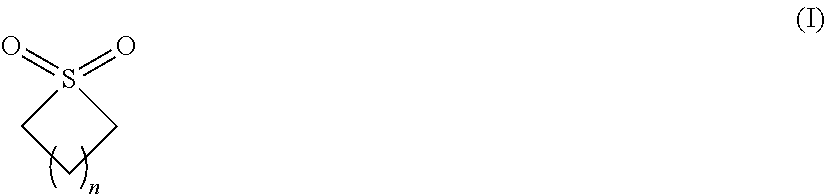


Priority Applications (1)
| Application Number | Priority Date | Filing Date | Title |
|---|---|---|---|
| US14/359,314 US9469624B2 (en) | 2011-11-24 | 2012-11-23 | Integrated process for producing cyclic acetals and oxymethylene polymers |
Applications Claiming Priority (13)
| Application Number | Priority Date | Filing Date | Title |
|---|---|---|---|
| EP11190574 | 2011-11-24 | ||
| EP11190567 | 2011-11-24 | ||
| EP11190574 | 2011-11-24 | ||
| EP11190574.1 | 2011-11-24 | ||
| EP11190586.5 | 2011-11-24 | ||
| EP11190586 | 2011-11-24 | ||
| EP11190567.5 | 2011-11-24 | ||
| EP11190586 | 2011-11-24 | ||
| EP11190567 | 2011-11-24 | ||
| US201261718393P | 2012-10-25 | 2012-10-25 | |
| US201261718557P | 2012-10-25 | 2012-10-25 | |
| PCT/EP2012/073541 WO2013076288A1 (en) | 2011-11-24 | 2012-11-23 | Integrated process for producing cyclic acetals and oxymethylene polymers |
| US14/359,314 US9469624B2 (en) | 2011-11-24 | 2012-11-23 | Integrated process for producing cyclic acetals and oxymethylene polymers |
Publications (2)
| Publication Number | Publication Date |
|---|---|
| US20140329988A1 US20140329988A1 (en) | 2014-11-06 |
| US9469624B2 true US9469624B2 (en) | 2016-10-18 |
Family
ID=47216340
Family Applications (8)
| Application Number | Title | Priority Date | Filing Date |
|---|---|---|---|
| US14/359,594 Active 2033-01-15 US9499512B2 (en) | 2011-11-24 | 2012-11-23 | Process for producing a cyclic acetal in a heterogeneous reaction system |
| US14/359,308 Abandoned US20140323686A1 (en) | 2011-11-24 | 2012-11-23 | Process for Recycling A Formaldehyde Source During A Polymerization Process |
| US14/359,223 Expired - Fee Related US9574061B2 (en) | 2011-11-24 | 2012-11-23 | Process for producing a cyclic acetal |
| US14/359,314 Expired - Fee Related US9469624B2 (en) | 2011-11-24 | 2012-11-23 | Integrated process for producing cyclic acetals and oxymethylene polymers |
| US14/359,333 Expired - Fee Related US9365537B2 (en) | 2011-11-24 | 2012-11-23 | Process for recycling polyacetals |
| US14/359,319 Active US9604956B2 (en) | 2011-11-24 | 2012-11-23 | Process for the production of trioxane |
| US14/359,203 Active US9546148B2 (en) | 2011-11-24 | 2012-11-23 | Process for the production of trioxane from aqueous formaldehyde sources |
| US15/179,548 Abandoned US20160280882A1 (en) | 2011-11-24 | 2016-06-10 | Process For Recycling Polyacetals |
Family Applications Before (3)
| Application Number | Title | Priority Date | Filing Date |
|---|---|---|---|
| US14/359,594 Active 2033-01-15 US9499512B2 (en) | 2011-11-24 | 2012-11-23 | Process for producing a cyclic acetal in a heterogeneous reaction system |
| US14/359,308 Abandoned US20140323686A1 (en) | 2011-11-24 | 2012-11-23 | Process for Recycling A Formaldehyde Source During A Polymerization Process |
| US14/359,223 Expired - Fee Related US9574061B2 (en) | 2011-11-24 | 2012-11-23 | Process for producing a cyclic acetal |
Family Applications After (4)
| Application Number | Title | Priority Date | Filing Date |
|---|---|---|---|
| US14/359,333 Expired - Fee Related US9365537B2 (en) | 2011-11-24 | 2012-11-23 | Process for recycling polyacetals |
| US14/359,319 Active US9604956B2 (en) | 2011-11-24 | 2012-11-23 | Process for the production of trioxane |
| US14/359,203 Active US9546148B2 (en) | 2011-11-24 | 2012-11-23 | Process for the production of trioxane from aqueous formaldehyde sources |
| US15/179,548 Abandoned US20160280882A1 (en) | 2011-11-24 | 2016-06-10 | Process For Recycling Polyacetals |
Country Status (6)
| Country | Link |
|---|---|
| US (8) | US9499512B2 (en) |
| EP (5) | EP2782905B1 (en) |
| JP (5) | JP6192651B2 (en) |
| KR (4) | KR20140102243A (en) |
| CN (7) | CN108164500B (en) |
| WO (7) | WO2013076290A1 (en) |
Cited By (2)
| Publication number | Priority date | Publication date | Assignee | Title |
|---|---|---|---|---|
| US20140316147A1 (en) * | 2011-11-24 | 2014-10-23 | Ticona Gmbh | Process For The Production of Trioxane |
| US10829467B2 (en) | 2018-03-29 | 2020-11-10 | Celanese Sales Germany Gmbh | Process for producing a cyclic acetal in a heterogeneous reaction system |
Families Citing this family (12)
| Publication number | Priority date | Publication date | Assignee | Title |
|---|---|---|---|---|
| CN105218513B (en) * | 2014-05-29 | 2017-12-12 | 中国石油大学(北京) | A kind of method of synthesizing triformol |
| FR3024729B1 (en) * | 2014-08-07 | 2018-09-07 | Arkema France | PROCESS FOR THE PREPARATION OF TRIOXANE |
| CN104478848B (en) * | 2015-01-09 | 2016-06-29 | 开封龙宇化工有限公司 | A kind of metaformaldehyde lightness-removing column separator adds aqueous alkali cleaning device and using method |
| CN105175389B (en) * | 2015-09-10 | 2018-09-07 | 中国石油大学(北京) | A method of being catalyzed formaldehyde synthesizing triformol using acid and salt |
| CN107474037A (en) * | 2017-07-03 | 2017-12-15 | 湖北三里枫香科技有限公司 | A kind of multistage fixed bed type metaformaldehyde manufacturing technique method and preparation facilities |
| FR3108909A1 (en) * | 2020-04-07 | 2021-10-08 | Arkema Fance | Recycling of polyacetal for the production of polyoxymethylenedialkylethers |
| WO2021213663A1 (en) * | 2020-04-23 | 2021-10-28 | Wacker Chemie Ag | Process for preparing aldehydes from 1,3,5 trioxanes |
| US20220049043A1 (en) * | 2020-08-14 | 2022-02-17 | Celanese International Corporation | Use of Biomass to Produce Polyoxymethylene Copolymers |
| CN112724118B (en) * | 2020-12-08 | 2023-02-28 | 中国石油大学(华东) | A kind of biomass alcoholysis method of petroleum-based plastic POM |
| US20220380557A1 (en) * | 2021-05-20 | 2022-12-01 | Xerox Corporation | Polyoxymethylene microparticles and methods of production and use thereof |
| TW202413339A (en) * | 2022-06-03 | 2024-04-01 | 日商三菱瓦斯化學股份有限公司 | Composition, and method for producing trioxane using same |
| US11643486B1 (en) | 2022-06-08 | 2023-05-09 | Arkema Inc. | Non-linear vinylidene fluoride copolymers |
Citations (39)
| Publication number | Priority date | Publication date | Assignee | Title |
|---|---|---|---|---|
| GB1012372A (en) | 1963-12-05 | 1965-12-08 | Ici Ltd | Improvements in the production of trioxane |
| US3305529A (en) | 1961-08-25 | 1967-02-21 | Tenneco Chem | Polymerization of formaldehyde in the presence of a polyvalent metal chelate of a beta-diketone |
| AT252913B (en) | 1964-12-29 | 1967-03-10 | Perstorp Aktiebolag | Process for the production of trioxane |
| GB1130513A (en) | 1964-11-25 | 1968-10-16 | Meissner Kg Josef | Production of trioxane |
| US3457227A (en) | 1965-03-11 | 1969-07-22 | Continental Oil Co | Preparation of polyoxymethylene using metal acetylacetonate polymerization catalysts |
| US3471998A (en) | 1966-08-17 | 1969-10-14 | Asahi Chemical Ind | Process for purifying formaldehyde |
| US3506615A (en) | 1968-01-17 | 1970-04-14 | Celanese Corp | Polymerization of oxymethylene and methylene sulfide forming monomers by metal acetylacetonates |
| US3697546A (en) | 1970-01-14 | 1972-10-10 | Japan Gas Chemical Co | Method of producing trioxan |
| US3804808A (en) | 1971-10-19 | 1974-04-16 | Ube Industries | Method for polymerizing formaldehyde |
| GB1524440A (en) | 1975-12-23 | 1978-09-13 | Sir Soc Italiana Resine Spa | Process for the thermal and chemical stability of etherified acetal homopolymers and of acetal copolymers |
| US4323502A (en) | 1978-10-05 | 1982-04-06 | Hoechst Aktiengesellschaft | Process for the simultaneous preparation of trioxan and cyclic formals |
| US4330474A (en) | 1978-06-26 | 1982-05-18 | Chemische Werke Huels, A.G. | Process for the manufacture of cyclic acetals of aliphatic aldehydes |
| US4358623A (en) | 1981-07-23 | 1982-11-09 | Celanese Corporation | Process for catalytically converting methanol to formaldehyde |
| US4420641A (en) | 1981-07-27 | 1983-12-13 | Celanese Corporation | Formaldehyde production |
| US4450301A (en) | 1982-10-21 | 1984-05-22 | Celanese Corporation | Process for converting methanol to formaldehyde |
| US4563536A (en) | 1980-02-22 | 1986-01-07 | Asahi Kasei Kogyo Kabushiki Kaisha | Method for synthesizing trioxane |
| US4962235A (en) * | 1988-04-07 | 1990-10-09 | Asahi Kasei Kogyo Kabushiki Kaisha | Process for producing high purity formaldehyde |
| US4967014A (en) | 1988-02-03 | 1990-10-30 | Asahi Kasei Kogyo Kabushiki Kaisha | Process for producing formaldehyde and derivatives thereof |
| US5008463A (en) | 1989-06-24 | 1991-04-16 | Hoechst Aktiengesellschaft | Process for the preparation of formaldehyde |
| DE4137846A1 (en) | 1991-11-16 | 1993-05-19 | Basf Ag | METHOD FOR PRODUCING WATER-FREE AND FORMALDEHYDE-FREE |
| US5508448A (en) | 1992-12-31 | 1996-04-16 | Hoechst Aktiengesellschaft | Process for the preparation of trioxane |
| US5767294A (en) | 1993-02-17 | 1998-06-16 | Hoechst Celanese Corporation | Process for the production of trioxane from formaldehyde |
| US5929257A (en) | 1995-04-21 | 1999-07-27 | Polyplastics Co., Ltd. | Process for producing trioxane |
| DE19822598A1 (en) | 1998-05-20 | 1999-11-25 | Degussa | Formaldehyde production by dehydrogenation of methanol |
| US6232507B1 (en) | 1998-03-10 | 2001-05-15 | Ticona Gmbh | Method for non-oxidative production of formaldehyde from methanol |
| US20010053865A1 (en) * | 1997-06-02 | 2001-12-20 | Ticona Gmbh, Corporation Of Germany | Process for the non-oxidative preparation of formaldehyde from methanol |
| US6362305B1 (en) | 1998-03-31 | 2002-03-26 | Ticona Gmbh | Method for producing formaldehyde from methanol |
| US6448448B1 (en) | 1998-03-31 | 2002-09-10 | Ticona Gmbh | Process for the non-oxidative preparation of formaldehyde from methanol |
| US6472566B2 (en) | 1998-03-31 | 2002-10-29 | Ticona Gmbh | Apparatus for the preparation of formaldehyde from methanol |
| US6781018B2 (en) | 2002-02-20 | 2004-08-24 | The Regents Of The University Of California | Process and catalyst for production of formaldehyde from dimethyl ether |
| US20060058537A1 (en) | 2002-12-13 | 2006-03-16 | Ticona Gmbh | Method for the produciton of trioxane |
| US20060185513A1 (en) | 2003-03-04 | 2006-08-24 | Basf Aktiengesellschaft | Method for preparing highly concentrated, gaseous formaldehydes |
| US7301055B2 (en) | 2000-12-15 | 2007-11-27 | Ticona Gmbh | Process for removing methanol from formaldehyde-containing solutions |
| US20080234459A1 (en) | 2005-08-26 | 2008-09-25 | Basf Se | Process for Preparing Polyoxymethtylene Homopolymers or Copolymers |
| US7598402B2 (en) | 2007-05-22 | 2009-10-06 | Lanzhou Institute Of Chemical Physics Chinese Academy Of Sciences | Process for synthesizing trioxymethylene using ionic liquid |
| US20100004409A1 (en) | 2006-07-26 | 2010-01-07 | Basf Se | Method for producing polyoxymethylenes with certain deactivators |
| CN101665409A (en) | 2008-09-04 | 2010-03-10 | 中国科学院兰州化学物理研究所 | Method for catalytic synthesis of 1,3-dibasic alcohol or cyclic acetal of 1,3-dibasic alcohol by using ionic liquid |
| US20100121081A1 (en) | 2007-01-25 | 2010-05-13 | Basf Se | Method for separating trioxane from a trioxane/formaldehyde/water mixture by means of pressure change rectification |
| US20100145079A1 (en) | 2007-03-30 | 2010-06-10 | Basf Se | Method for producing cyclic formaldehyde derivatives from polyoxy dialkyl ethers |
Family Cites Families (6)
| Publication number | Priority date | Publication date | Assignee | Title |
|---|---|---|---|---|
| JPH06228126A (en) * | 1993-02-05 | 1994-08-16 | Asahi Chem Ind Co Ltd | Synthesis of trioxane |
| DE19920830A1 (en) * | 1999-05-06 | 2000-11-09 | Ticona Gmbh | Trimerization of formaldehyde in the gas phase |
| JP2002226426A (en) * | 2001-02-02 | 2002-08-14 | Mitsubishi Gas Chem Co Inc | Method for producing dimethylolbutanoic acid |
| DE102005012480A1 (en) * | 2005-03-16 | 2006-09-21 | Basf Ag | Process for removing residual monomers from polyoxymethylenes |
| JP2007230979A (en) * | 2006-03-03 | 2007-09-13 | Showa Denko Kk | Method for producing 1,3-propanediol |
| EP2782905B1 (en) * | 2011-11-24 | 2020-01-01 | Celanese Sales Germany GmbH | Process for the production of trioxane |
-
2012
- 2012-11-23 EP EP12788600.0A patent/EP2782905B1/en active Active
- 2012-11-23 JP JP2014542867A patent/JP6192651B2/en not_active Expired - Fee Related
- 2012-11-23 KR KR1020147017142A patent/KR20140102243A/en not_active Withdrawn
- 2012-11-23 US US14/359,594 patent/US9499512B2/en active Active
- 2012-11-23 WO PCT/EP2012/073543 patent/WO2013076290A1/en not_active Ceased
- 2012-11-23 EP EP12794929.5A patent/EP2782909A1/en not_active Withdrawn
- 2012-11-23 KR KR1020147017191A patent/KR101969615B1/en active Active
- 2012-11-23 JP JP2014542866A patent/JP6192650B2/en active Active
- 2012-11-23 WO PCT/EP2012/073542 patent/WO2013076289A1/en not_active Ceased
- 2012-11-23 KR KR1020147017132A patent/KR20140102241A/en not_active Ceased
- 2012-11-23 JP JP2014542869A patent/JP6192652B2/en active Active
- 2012-11-23 CN CN201711457383.5A patent/CN108164500B/en active Active
- 2012-11-23 JP JP2014542868A patent/JP6144272B2/en not_active Expired - Fee Related
- 2012-11-23 CN CN201280057572.2A patent/CN103946219B/en not_active Expired - Fee Related
- 2012-11-23 EP EP12788604.2A patent/EP2782908B1/en active Active
- 2012-11-23 WO PCT/EP2012/073545 patent/WO2013076292A1/en not_active Ceased
- 2012-11-23 US US14/359,308 patent/US20140323686A1/en not_active Abandoned
- 2012-11-23 CN CN201280057582.6A patent/CN104105695A/en active Pending
- 2012-11-23 EP EP12788603.4A patent/EP2782907B8/en not_active Not-in-force
- 2012-11-23 US US14/359,223 patent/US9574061B2/en not_active Expired - Fee Related
- 2012-11-23 US US14/359,314 patent/US9469624B2/en not_active Expired - Fee Related
- 2012-11-23 WO PCT/EP2012/073540 patent/WO2013076287A1/en not_active Ceased
- 2012-11-23 WO PCT/EP2012/073541 patent/WO2013076288A1/en not_active Ceased
- 2012-11-23 JP JP2014542870A patent/JP6192653B2/en not_active Expired - Fee Related
- 2012-11-23 WO PCT/EP2012/073539 patent/WO2013076286A1/en not_active Ceased
- 2012-11-23 US US14/359,333 patent/US9365537B2/en not_active Expired - Fee Related
- 2012-11-23 CN CN201280057570.3A patent/CN104024240A/en active Pending
- 2012-11-23 KR KR1020147017187A patent/KR20140107309A/en not_active Withdrawn
- 2012-11-23 CN CN201280057948.XA patent/CN103958493B/en not_active Expired - Fee Related
- 2012-11-23 WO PCT/EP2012/073544 patent/WO2013076291A1/en not_active Ceased
- 2012-11-23 CN CN201710109742.1A patent/CN106866615B/en active Active
- 2012-11-23 US US14/359,319 patent/US9604956B2/en active Active
- 2012-11-23 EP EP12788601.8A patent/EP2782906B1/en not_active Not-in-force
- 2012-11-23 CN CN201280057571.8A patent/CN103958492A/en active Pending
- 2012-11-23 US US14/359,203 patent/US9546148B2/en active Active
-
2016
- 2016-06-10 US US15/179,548 patent/US20160280882A1/en not_active Abandoned
Patent Citations (42)
| Publication number | Priority date | Publication date | Assignee | Title |
|---|---|---|---|---|
| US3305529A (en) | 1961-08-25 | 1967-02-21 | Tenneco Chem | Polymerization of formaldehyde in the presence of a polyvalent metal chelate of a beta-diketone |
| GB1012372A (en) | 1963-12-05 | 1965-12-08 | Ici Ltd | Improvements in the production of trioxane |
| GB1130513A (en) | 1964-11-25 | 1968-10-16 | Meissner Kg Josef | Production of trioxane |
| AT252913B (en) | 1964-12-29 | 1967-03-10 | Perstorp Aktiebolag | Process for the production of trioxane |
| US3457227A (en) | 1965-03-11 | 1969-07-22 | Continental Oil Co | Preparation of polyoxymethylene using metal acetylacetonate polymerization catalysts |
| US3471998A (en) | 1966-08-17 | 1969-10-14 | Asahi Chemical Ind | Process for purifying formaldehyde |
| US3506615A (en) | 1968-01-17 | 1970-04-14 | Celanese Corp | Polymerization of oxymethylene and methylene sulfide forming monomers by metal acetylacetonates |
| US3697546A (en) | 1970-01-14 | 1972-10-10 | Japan Gas Chemical Co | Method of producing trioxan |
| US3804808A (en) | 1971-10-19 | 1974-04-16 | Ube Industries | Method for polymerizing formaldehyde |
| GB1524440A (en) | 1975-12-23 | 1978-09-13 | Sir Soc Italiana Resine Spa | Process for the thermal and chemical stability of etherified acetal homopolymers and of acetal copolymers |
| US4330474A (en) | 1978-06-26 | 1982-05-18 | Chemische Werke Huels, A.G. | Process for the manufacture of cyclic acetals of aliphatic aldehydes |
| US4323502A (en) | 1978-10-05 | 1982-04-06 | Hoechst Aktiengesellschaft | Process for the simultaneous preparation of trioxan and cyclic formals |
| US4563536A (en) | 1980-02-22 | 1986-01-07 | Asahi Kasei Kogyo Kabushiki Kaisha | Method for synthesizing trioxane |
| US4358623A (en) | 1981-07-23 | 1982-11-09 | Celanese Corporation | Process for catalytically converting methanol to formaldehyde |
| US4420641A (en) | 1981-07-27 | 1983-12-13 | Celanese Corporation | Formaldehyde production |
| US4450301A (en) | 1982-10-21 | 1984-05-22 | Celanese Corporation | Process for converting methanol to formaldehyde |
| US4967014A (en) | 1988-02-03 | 1990-10-30 | Asahi Kasei Kogyo Kabushiki Kaisha | Process for producing formaldehyde and derivatives thereof |
| US4962235A (en) * | 1988-04-07 | 1990-10-09 | Asahi Kasei Kogyo Kabushiki Kaisha | Process for producing high purity formaldehyde |
| US5008463A (en) | 1989-06-24 | 1991-04-16 | Hoechst Aktiengesellschaft | Process for the preparation of formaldehyde |
| DE4137846A1 (en) | 1991-11-16 | 1993-05-19 | Basf Ag | METHOD FOR PRODUCING WATER-FREE AND FORMALDEHYDE-FREE |
| US5508448A (en) | 1992-12-31 | 1996-04-16 | Hoechst Aktiengesellschaft | Process for the preparation of trioxane |
| US5767294A (en) | 1993-02-17 | 1998-06-16 | Hoechst Celanese Corporation | Process for the production of trioxane from formaldehyde |
| US5929257A (en) | 1995-04-21 | 1999-07-27 | Polyplastics Co., Ltd. | Process for producing trioxane |
| US20010053865A1 (en) * | 1997-06-02 | 2001-12-20 | Ticona Gmbh, Corporation Of Germany | Process for the non-oxidative preparation of formaldehyde from methanol |
| US6388102B2 (en) | 1997-06-02 | 2002-05-14 | Ticona Gmbh | Process for the preparation of trioxane and polyoxymethylene copolymers |
| US6232507B1 (en) | 1998-03-10 | 2001-05-15 | Ticona Gmbh | Method for non-oxidative production of formaldehyde from methanol |
| US6362305B1 (en) | 1998-03-31 | 2002-03-26 | Ticona Gmbh | Method for producing formaldehyde from methanol |
| US6448448B1 (en) | 1998-03-31 | 2002-09-10 | Ticona Gmbh | Process for the non-oxidative preparation of formaldehyde from methanol |
| US6472566B2 (en) | 1998-03-31 | 2002-10-29 | Ticona Gmbh | Apparatus for the preparation of formaldehyde from methanol |
| US6653487B2 (en) | 1998-03-31 | 2003-11-25 | Ticona Gmbh | Process for preparing trioxane, polyoxymethylene and polyoxymethylene copolymers |
| DE19822598A1 (en) | 1998-05-20 | 1999-11-25 | Degussa | Formaldehyde production by dehydrogenation of methanol |
| US7301055B2 (en) | 2000-12-15 | 2007-11-27 | Ticona Gmbh | Process for removing methanol from formaldehyde-containing solutions |
| US6781018B2 (en) | 2002-02-20 | 2004-08-24 | The Regents Of The University Of California | Process and catalyst for production of formaldehyde from dimethyl ether |
| US20060058537A1 (en) | 2002-12-13 | 2006-03-16 | Ticona Gmbh | Method for the produciton of trioxane |
| US20060185513A1 (en) | 2003-03-04 | 2006-08-24 | Basf Aktiengesellschaft | Method for preparing highly concentrated, gaseous formaldehydes |
| US7390932B2 (en) | 2003-03-04 | 2008-06-24 | Basf Aktiengesellschaft | Method for preparing highly concentrated, gaseous formaldehydes |
| US20080234459A1 (en) | 2005-08-26 | 2008-09-25 | Basf Se | Process for Preparing Polyoxymethtylene Homopolymers or Copolymers |
| US20100004409A1 (en) | 2006-07-26 | 2010-01-07 | Basf Se | Method for producing polyoxymethylenes with certain deactivators |
| US20100121081A1 (en) | 2007-01-25 | 2010-05-13 | Basf Se | Method for separating trioxane from a trioxane/formaldehyde/water mixture by means of pressure change rectification |
| US20100145079A1 (en) | 2007-03-30 | 2010-06-10 | Basf Se | Method for producing cyclic formaldehyde derivatives from polyoxy dialkyl ethers |
| US7598402B2 (en) | 2007-05-22 | 2009-10-06 | Lanzhou Institute Of Chemical Physics Chinese Academy Of Sciences | Process for synthesizing trioxymethylene using ionic liquid |
| CN101665409A (en) | 2008-09-04 | 2010-03-10 | 中国科学院兰州化学物理研究所 | Method for catalytic synthesis of 1,3-dibasic alcohol or cyclic acetal of 1,3-dibasic alcohol by using ionic liquid |
Non-Patent Citations (16)
| Title |
|---|
| Abstract of Japanese Patent JP2007230979, Sep. 13, 2007, 2 pages. |
| Abstract of Japanese Patent -JPH06228126, Aug. 16, 1994, 1 page. |
| Co pending U.S. Appl. No. 14/359,203, filed May 19, 2014. |
| Co pending U.S. Appl. No. 14/359,223, filed May 19, 2014. |
| Co pending U.S. Appl. No. 14/359,308, filed May 20, 2014. |
| Co pending U.S. Appl. No. 14/359,319, filed May 20, 2014. |
| Co pending U.S. Appl. No. 14/359,333, filed May 20, 2014. |
| Co pending U.S. Appl. No. 14/359,594, filed May 21, 2014. |
| International Search Report and Written Opinion for application PCT/EP2012/073541 dated Apr. 15, 2013. |
| JP S37-011033 B. |
| JP S46-031867 B. |
| JP S47-007029 B. |
| New Jersey Department of Health and Senior Services, Hazardous Substance Fact Sheet. "Boron Trifluoride Diethyl Etherate." (c) Apr. 2000. Available from : . |
| New Jersey Department of Health and Senior Services, Hazardous Substance Fact Sheet. "Boron Trifluoride Diethyl Etherate." (c) Apr. 2000. Available from : < http://nj.gov/health/eoh/rtkweb/documents/fs/0248.pdf>. |
| Shoujin Su, Philippe Zaza and Albert Renken: Catalytic Dehydrogenation of Methanol to Water-Free Formaldehyde, Chem. Eng. Technol. 17 (1994) pp. 34-40. |
| Yamaguchi T. et al: "Synthesis of cyclooligomers of formaldehyde in liquid sulfur dioxide", Chemistry and Industry, vol. 43, Oct. 23, 1971 pp. 1226-1227, XP008149518, Society of Chemical Industry, London; GB ISSN: 0009-3068. |
Cited By (3)
| Publication number | Priority date | Publication date | Assignee | Title |
|---|---|---|---|---|
| US20140316147A1 (en) * | 2011-11-24 | 2014-10-23 | Ticona Gmbh | Process For The Production of Trioxane |
| US9604956B2 (en) * | 2011-11-24 | 2017-03-28 | Celanese Sales Germany Gmbh | Process for the production of trioxane |
| US10829467B2 (en) | 2018-03-29 | 2020-11-10 | Celanese Sales Germany Gmbh | Process for producing a cyclic acetal in a heterogeneous reaction system |
Also Published As
Similar Documents
| Publication | Publication Date | Title |
|---|---|---|
| US20140329988A1 (en) | Integrated Process for Producing Cyclic Acetals and Oxymethylene Polymers | |
| JP3181666B2 (en) | Method for producing polyoxyalkylene glycol-monoether of monohydric alcohol | |
| US10829467B2 (en) | Process for producing a cyclic acetal in a heterogeneous reaction system | |
| US3435077A (en) | Process for the production of asymmetrical formals | |
| Masamoto et al. | Development of an advanced process for manufacturing polyacetal resin |
Legal Events
| Date | Code | Title | Description |
|---|---|---|---|
| AS | Assignment |
Owner name: TICONA GMBH, GERMANY Free format text: ASSIGNMENT OF ASSIGNORS INTEREST;ASSIGNORS:HAUBS, MICHAEL;HOFFMOCKEL, MICHAEL;KURZ, KLAUS;AND OTHERS;SIGNING DATES FROM 20140602 TO 20140610;REEL/FRAME:033155/0848 |
|
| AS | Assignment |
Owner name: NUTRINOVA NUTRITION SPECIALTIES & FOOD INGREDIENTS Free format text: ASSIGNMENT OF ASSIGNORS INTEREST;ASSIGNOR:TICONA GMBH;REEL/FRAME:038687/0784 Effective date: 20150730 Owner name: CELANESE SALES GERMANY GMBH, GERMANY Free format text: CHANGE OF NAME;ASSIGNOR:NUTRINOVA NUTRITION SPECIALTIES & FOOD INGREDIENTS GMBH;REEL/FRAME:038689/0595 Effective date: 20150806 |
|
| STCF | Information on status: patent grant |
Free format text: PATENTED CASE |
|
| FEPP | Fee payment procedure |
Free format text: MAINTENANCE FEE REMINDER MAILED (ORIGINAL EVENT CODE: REM.); ENTITY STATUS OF PATENT OWNER: LARGE ENTITY |
|
| LAPS | Lapse for failure to pay maintenance fees |
Free format text: PATENT EXPIRED FOR FAILURE TO PAY MAINTENANCE FEES (ORIGINAL EVENT CODE: EXP.); ENTITY STATUS OF PATENT OWNER: LARGE ENTITY |
|
| STCH | Information on status: patent discontinuation |
Free format text: PATENT EXPIRED DUE TO NONPAYMENT OF MAINTENANCE FEES UNDER 37 CFR 1.362 |
|
| FP | Lapsed due to failure to pay maintenance fee |
Effective date: 20201018 |