US9447139B2 - Ship inhibitors and uses thereof - Google Patents
Ship inhibitors and uses thereof Download PDFInfo
- Publication number
- US9447139B2 US9447139B2 US13/640,162 US201113640162A US9447139B2 US 9447139 B2 US9447139 B2 US 9447139B2 US 201113640162 A US201113640162 A US 201113640162A US 9447139 B2 US9447139 B2 US 9447139B2
- Authority
- US
- United States
- Prior art keywords
- group
- hydrogen
- ship
- amino
- ship1
- Prior art date
- Legal status (The legal status is an assumption and is not a legal conclusion. Google has not performed a legal analysis and makes no representation as to the accuracy of the status listed.)
- Active
Links
- 0 [1*]C12C(=C)CC3C(C(=C)cc4([13*])c([3*])C(C)C([4*])CC34[2*])C1CCC2[5*] Chemical compound [1*]C12C(=C)CC3C(C(=C)cc4([13*])c([3*])C(C)C([4*])CC34[2*])C1CCC2[5*] 0.000 description 3
- FQWXWVQKJYMXAA-YCJGHWEMSA-N [H][C@@]12CCC[C@@]1(C)CC[C@@]1([H])[C@@]2([H])CC[C@@]2([H])C(N)C(N)CC[C@]12C.[H][C@@]12CCC[C@@]1(C)CC[C@@]1([H])[C@@]2([H])CC[C@@]2([H])C(N)C(O)CC[C@]12C.[H][C@@]12CCC[C@@]1(C)CC[C@@]1([H])[C@@]2([H])CC[C@@]2([H])C(N)CCC[C@]12C.[H][C@@]12CC[C@@]3([H])[C@]4([H])CCC[C@@]4(C)CC[C@]3([H])[C@@]1(C)CC(N)C(N)C2.[H][C@@]12CC[C@@]3([H])[C@]4([H])CCC[C@@]4(C)CC[C@]3([H])[C@@]1(C)CC(N)C(O)C2.[H][C@@]12CC[C@@]3([H])[C@]4([H])CCC[C@@]4(C)CC[C@]3([H])[C@@]1(C)CC(O)C(N)C2 Chemical compound [H][C@@]12CCC[C@@]1(C)CC[C@@]1([H])[C@@]2([H])CC[C@@]2([H])C(N)C(N)CC[C@]12C.[H][C@@]12CCC[C@@]1(C)CC[C@@]1([H])[C@@]2([H])CC[C@@]2([H])C(N)C(O)CC[C@]12C.[H][C@@]12CCC[C@@]1(C)CC[C@@]1([H])[C@@]2([H])CC[C@@]2([H])C(N)CCC[C@]12C.[H][C@@]12CC[C@@]3([H])[C@]4([H])CCC[C@@]4(C)CC[C@]3([H])[C@@]1(C)CC(N)C(N)C2.[H][C@@]12CC[C@@]3([H])[C@]4([H])CCC[C@@]4(C)CC[C@]3([H])[C@@]1(C)CC(N)C(O)C2.[H][C@@]12CC[C@@]3([H])[C@]4([H])CCC[C@@]4(C)CC[C@]3([H])[C@@]1(C)CC(O)C(N)C2 FQWXWVQKJYMXAA-YCJGHWEMSA-N 0.000 description 2
- GBIMPTUUDQHREI-QAJWIXAESA-N [H][C@@]12CCC[C@@]1(C)CC[C@@]1([H])[C@@]2([H])CC[C@@]2([H])C(N)C(N)CC[C@]12C.[H][C@@]12CC[C@@]3([H])[C@]4([H])CCC[C@@]4(C)CC[C@]3([H])[C@@]1(C)CC(N)C(N)C2 Chemical compound [H][C@@]12CCC[C@@]1(C)CC[C@@]1([H])[C@@]2([H])CC[C@@]2([H])C(N)C(N)CC[C@]12C.[H][C@@]12CC[C@@]3([H])[C@]4([H])CCC[C@@]4(C)CC[C@]3([H])[C@@]1(C)CC(N)C(N)C2 GBIMPTUUDQHREI-QAJWIXAESA-N 0.000 description 2
- QKGJHXWVIDMTTD-KPLKFDQZSA-N [H][C@@]12CCC[C@@]1(C)CC[C@@]1([H])[C@@]2([H])CC[C@@]2([H])C(N)C(O)CC[C@]12C.[H][C@@]12CCC[C@@]1(C)CC[C@@]1([H])[C@@]2([H])CC[C@@]2([H])C(N)CCC[C@]12C.[H][C@@]12CC[C@@]3([H])[C@]4([H])CCC[C@@]4(C)CC[C@]3([H])[C@@]1(C)CC(N)C(O)C2.[H][C@@]12CC[C@@]3([H])[C@]4([H])CCC[C@@]4(C)CC[C@]3([H])[C@@]1(C)CC(O)C(N)C2.[H][C@@]12CC[C@@]3([H])[C@]4([H])CCC[C@@]4(C)CC[C@]3([H])[C@@]1(C)CC[C@@H](C)C2.[H][C@@]12CC[C@@]3([H])[C@]4([H])CCC[C@@]4(C)CC[C@]3([H])[C@@]1(C)CC[C@H](C)C2.[H][C@]12CCC(N)C[C@]1(C)[C@@]1([H])CC[C@]3(C)CCC[C@@]3([H])[C@]1([H])CC2 Chemical compound [H][C@@]12CCC[C@@]1(C)CC[C@@]1([H])[C@@]2([H])CC[C@@]2([H])C(N)C(O)CC[C@]12C.[H][C@@]12CCC[C@@]1(C)CC[C@@]1([H])[C@@]2([H])CC[C@@]2([H])C(N)CCC[C@]12C.[H][C@@]12CC[C@@]3([H])[C@]4([H])CCC[C@@]4(C)CC[C@]3([H])[C@@]1(C)CC(N)C(O)C2.[H][C@@]12CC[C@@]3([H])[C@]4([H])CCC[C@@]4(C)CC[C@]3([H])[C@@]1(C)CC(O)C(N)C2.[H][C@@]12CC[C@@]3([H])[C@]4([H])CCC[C@@]4(C)CC[C@]3([H])[C@@]1(C)CC[C@@H](C)C2.[H][C@@]12CC[C@@]3([H])[C@]4([H])CCC[C@@]4(C)CC[C@]3([H])[C@@]1(C)CC[C@H](C)C2.[H][C@]12CCC(N)C[C@]1(C)[C@@]1([H])CC[C@]3(C)CCC[C@@]3([H])[C@]1([H])CC2 QKGJHXWVIDMTTD-KPLKFDQZSA-N 0.000 description 2
- MFDYRGUXQGTBNK-FLJOOECTSA-O CC1=CC=C(S(=O)(=O)Cl)C=C1.Cl.[H][C@@]12CC[C@@]3([H])[C@]4([H])CCC(=O)[C@@]4(C)CC[C@]3([H])[C@@]1(C)CC[C@@H](N=[N+]=[N-])C2.[H][C@@]12CC[C@@]3([H])[C@]4([H])CCC(=O)[C@@]4(C)CC[C@]3([H])[C@@]1(C)CC[C@@H]([NH3+])C2.[H][C@@]12CC[C@@]3([H])[C@]4([H])CCC(=O)[C@@]4(C)CC[C@]3([H])[C@@]1(C)CC[C@H](C)C2.[H][C@@]12CC[C@@]3([H])[C@]4([H])CCC(=O)[C@@]4(C)CC[C@]3([H])[C@@]1(C)CC[C@H](O)C2.[N-]=[N+]=N[Na] Chemical compound CC1=CC=C(S(=O)(=O)Cl)C=C1.Cl.[H][C@@]12CC[C@@]3([H])[C@]4([H])CCC(=O)[C@@]4(C)CC[C@]3([H])[C@@]1(C)CC[C@@H](N=[N+]=[N-])C2.[H][C@@]12CC[C@@]3([H])[C@]4([H])CCC(=O)[C@@]4(C)CC[C@]3([H])[C@@]1(C)CC[C@@H]([NH3+])C2.[H][C@@]12CC[C@@]3([H])[C@]4([H])CCC(=O)[C@@]4(C)CC[C@]3([H])[C@@]1(C)CC[C@H](C)C2.[H][C@@]12CC[C@@]3([H])[C@]4([H])CCC(=O)[C@@]4(C)CC[C@]3([H])[C@@]1(C)CC[C@H](O)C2.[N-]=[N+]=N[Na] MFDYRGUXQGTBNK-FLJOOECTSA-O 0.000 description 1
- LDNCLKZFDIZQAB-GCSFWTCKSA-O CCC(O)(CC(=O)O)C(=O)O.[H][C@@]12CC=C3C[C@H]([NH3+])CC[C@]3(C)[C@@]1([H])CC[C@@]1(C)[C@@]2([H])CC[C@]1([H])[C@H](C)CCCC(C)C Chemical compound CCC(O)(CC(=O)O)C(=O)O.[H][C@@]12CC=C3C[C@H]([NH3+])CC[C@]3(C)[C@@]1([H])CC[C@@]1(C)[C@@]2([H])CC[C@]1([H])[C@H](C)CCCC(C)C LDNCLKZFDIZQAB-GCSFWTCKSA-O 0.000 description 1
- RHENBDHCWNWENL-KENKMHKYSA-N Cl.N.[H][C@@]12CC[C@]3([H])[C@]([H])(CC[C@@]4(C)[C@@]3([H])CC[C@]4([H])[C@H](C)CCCC(C)C)[C@@]1(C)CC[C@H](Cl)C2.[H][C@@]12CC[C@]3([H])[C@]([H])(CC[C@@]4(C)[C@@]3([H])CC[C@]4([H])[C@H](C)CCCC(C)C)[C@@]1(C)CC[C@H](I)C2.[H][C@@]12CC[C@]3([H])[C@]([H])(CC[C@@]4(C)[C@@]3([H])CC[C@]4([H])[C@H](C)CCCC(C)C)[C@@]1(C)CC[C@H](N)C2.[H][C@@]12CC[C@]3([H])[C@]([H])(CC[C@@]4(C)[C@@]3([H])CC[C@]4([H])[C@H](C)CCCC(C)C)[C@@]1(C)CC[C@H](N=[N+]=[N-])C2.[H][C@@]12CC[C@]3([H])[C@]([H])(CC[C@@]4(C)[C@@]3([H])CC[C@]4([H])[C@H](C)CCCC(C)C)[C@@]1(C)CC[C@H](O)C2.[N-]=[N+]=N[Na] Chemical compound Cl.N.[H][C@@]12CC[C@]3([H])[C@]([H])(CC[C@@]4(C)[C@@]3([H])CC[C@]4([H])[C@H](C)CCCC(C)C)[C@@]1(C)CC[C@H](Cl)C2.[H][C@@]12CC[C@]3([H])[C@]([H])(CC[C@@]4(C)[C@@]3([H])CC[C@]4([H])[C@H](C)CCCC(C)C)[C@@]1(C)CC[C@H](I)C2.[H][C@@]12CC[C@]3([H])[C@]([H])(CC[C@@]4(C)[C@@]3([H])CC[C@]4([H])[C@H](C)CCCC(C)C)[C@@]1(C)CC[C@H](N)C2.[H][C@@]12CC[C@]3([H])[C@]([H])(CC[C@@]4(C)[C@@]3([H])CC[C@]4([H])[C@H](C)CCCC(C)C)[C@@]1(C)CC[C@H](N=[N+]=[N-])C2.[H][C@@]12CC[C@]3([H])[C@]([H])(CC[C@@]4(C)[C@@]3([H])CC[C@]4([H])[C@H](C)CCCC(C)C)[C@@]1(C)CC[C@H](O)C2.[N-]=[N+]=N[Na] RHENBDHCWNWENL-KENKMHKYSA-N 0.000 description 1
- LVGOVGYFFLECAL-WURWYTMDSA-N Cl.[H][C@@]12CC[C@@]3([H])[C@]4([H])CCC(=O)[C@@]4(C)CC[C@]3([H])[C@@]1(C)CC[C@H](O)C2.[H][C@@]12CC[C@@]3([H])[C@]4([H])CCC[C@@]4(C)CC[C@]3([H])[C@@]1(C)CC[C@@H](C)C2.[H][C@@]12CC[C@@]3([H])[C@]4([H])CCC[C@@]4(C)CC[C@]3([H])[C@@]1(C)CC[C@@H](N)C2.[H][C@@]12CC[C@@]3([H])[C@]4([H])CCC[C@@]4(C)CC[C@]3([H])[C@@]1(C)CC[C@@H](N=[N+]=[N-])C2.[H][C@@]12CC[C@@]3([H])[C@]4([H])CCC[C@@]4(C)CC[C@]3([H])[C@@]1(C)CC[C@H](O)C2 Chemical compound Cl.[H][C@@]12CC[C@@]3([H])[C@]4([H])CCC(=O)[C@@]4(C)CC[C@]3([H])[C@@]1(C)CC[C@H](O)C2.[H][C@@]12CC[C@@]3([H])[C@]4([H])CCC[C@@]4(C)CC[C@]3([H])[C@@]1(C)CC[C@@H](C)C2.[H][C@@]12CC[C@@]3([H])[C@]4([H])CCC[C@@]4(C)CC[C@]3([H])[C@@]1(C)CC[C@@H](N)C2.[H][C@@]12CC[C@@]3([H])[C@]4([H])CCC[C@@]4(C)CC[C@]3([H])[C@@]1(C)CC[C@@H](N=[N+]=[N-])C2.[H][C@@]12CC[C@@]3([H])[C@]4([H])CCC[C@@]4(C)CC[C@]3([H])[C@@]1(C)CC[C@H](O)C2 LVGOVGYFFLECAL-WURWYTMDSA-N 0.000 description 1
- BHONZXUINQMCHG-CGQRWKIMSA-N [AlH3].[H][C@@]12CC[C@]3([H])[C@]([H])(CC[C@@]4(C)[C@@]3([H])CC[C@]4([H])[C@H](C)CCCC(C)C)[C@@]1(C)CC[C@@H](N)C2.[H][C@@]12CC[C@]3([H])[C@]([H])(CC[C@@]4(C)[C@@]3([H])CC[C@]4([H])[C@H](C)CCCC(C)C)[C@@]1(C)CC[C@@H](N=[N+]=[N-])C2.[H][C@@]12CC[C@]3([H])[C@]([H])(CC[C@@]4(C)[C@@]3([H])CC[C@]4([H])[C@H](C)CCCC(C)C)[C@@]1(C)CC[C@@H](NC(C)=O)C2.[H][C@@]12CC[C@]3([H])[C@]([H])(CC[C@@]4(C)[C@@]3([H])CC[C@]4([H])[C@H](C)CCCC(C)C)[C@@]1(C)CC[C@H](O)C2.[LiH] Chemical compound [AlH3].[H][C@@]12CC[C@]3([H])[C@]([H])(CC[C@@]4(C)[C@@]3([H])CC[C@]4([H])[C@H](C)CCCC(C)C)[C@@]1(C)CC[C@@H](N)C2.[H][C@@]12CC[C@]3([H])[C@]([H])(CC[C@@]4(C)[C@@]3([H])CC[C@]4([H])[C@H](C)CCCC(C)C)[C@@]1(C)CC[C@@H](N=[N+]=[N-])C2.[H][C@@]12CC[C@]3([H])[C@]([H])(CC[C@@]4(C)[C@@]3([H])CC[C@]4([H])[C@H](C)CCCC(C)C)[C@@]1(C)CC[C@@H](NC(C)=O)C2.[H][C@@]12CC[C@]3([H])[C@]([H])(CC[C@@]4(C)[C@@]3([H])CC[C@]4([H])[C@H](C)CCCC(C)C)[C@@]1(C)CC[C@H](O)C2.[LiH] BHONZXUINQMCHG-CGQRWKIMSA-N 0.000 description 1
- YGPZWPHDULZYFR-VEIPTCAHSA-O [Cl-].[H][C@@]12CC=C3C[C@H]([NH3+])CC[C@]3(C)[C@@]1([H])CC[C@@]1(C)[C@@]2([H])CC[C@]1([H])[C@H](C)CCCC(C)C Chemical compound [Cl-].[H][C@@]12CC=C3C[C@H]([NH3+])CC[C@]3(C)[C@@]1([H])CC[C@@]1(C)[C@@]2([H])CC[C@]1([H])[C@H](C)CCCC(C)C YGPZWPHDULZYFR-VEIPTCAHSA-O 0.000 description 1
- WFEJUWNQVAYWJS-HLUDHZFRSA-O [Cl-].[H][C@@]12CC[C@@]3([H])[C@]4([H])CCC(=O)[C@@]4(C)CC[C@]3([H])[C@@]1(C)CC[C@@H]([NH3+])C2 Chemical compound [Cl-].[H][C@@]12CC[C@@]3([H])[C@]4([H])CCC(=O)[C@@]4(C)CC[C@]3([H])[C@@]1(C)CC[C@@H]([NH3+])C2 WFEJUWNQVAYWJS-HLUDHZFRSA-O 0.000 description 1
- RWOGTNSOIWQNOK-PHFHYRSDSA-O [Cl-].[H][C@@]12CC[C@@]3([H])[C@]4([H])CCC[C@@]4(C)CC[C@]3([H])[C@@]1(C)CC[C@@H]([NH3+])C2 Chemical compound [Cl-].[H][C@@]12CC[C@@]3([H])[C@]4([H])CCC[C@@]4(C)CC[C@]3([H])[C@@]1(C)CC[C@@H]([NH3+])C2 RWOGTNSOIWQNOK-PHFHYRSDSA-O 0.000 description 1
- OYYWTUDXLPIEKV-VEIPTCAHSA-N [H]C12=CC[C@]3([H])[C@]([H])(CC[C@@]4(C)[C@@]3([H])CC[C@]4([H])[C@H](C)CCCC(C)C)[C@@]1(C)CC[C@@H](N=[N+]=[N-])C2 Chemical compound [H]C12=CC[C@]3([H])[C@]([H])(CC[C@@]4(C)[C@@]3([H])CC[C@]4([H])[C@H](C)CCCC(C)C)[C@@]1(C)CC[C@@H](N=[N+]=[N-])C2 OYYWTUDXLPIEKV-VEIPTCAHSA-N 0.000 description 1
- JMNOFUYARGFFHZ-MYCXPVSUSA-N [H][C@@]12CC=C3C[C@@H](C)CC[C@]3(C)[C@@]1([H])CC[C@@]1(C)[C@@]2([H])CC[C@]1([H])[C@H](C)CCCC(C)C.[H][C@@]12CC=C3C[C@@H](CC)CC[C@]3(C)[C@@]1([H])CC[C@@]1(C)[C@@]2([H])CC[C@]1([H])[C@H](C)CCCC(C)C.[H][C@@]12CC=C3C[C@@H](CCC)CC[C@]3(C)[C@@]1([H])CC[C@@]1(C)[C@@]2([H])CC[C@]1([H])[C@H](C)CCCC(C)C.[H][C@@]12CC=C3C[C@H](CCC)CC[C@]3(C)[C@@]1([H])CC[C@@]1(C)[C@@]2([H])CC[C@]1([H])[C@H](C)CCCC(C)C Chemical compound [H][C@@]12CC=C3C[C@@H](C)CC[C@]3(C)[C@@]1([H])CC[C@@]1(C)[C@@]2([H])CC[C@]1([H])[C@H](C)CCCC(C)C.[H][C@@]12CC=C3C[C@@H](CC)CC[C@]3(C)[C@@]1([H])CC[C@@]1(C)[C@@]2([H])CC[C@]1([H])[C@H](C)CCCC(C)C.[H][C@@]12CC=C3C[C@@H](CCC)CC[C@]3(C)[C@@]1([H])CC[C@@]1(C)[C@@]2([H])CC[C@]1([H])[C@H](C)CCCC(C)C.[H][C@@]12CC=C3C[C@H](CCC)CC[C@]3(C)[C@@]1([H])CC[C@@]1(C)[C@@]2([H])CC[C@]1([H])[C@H](C)CCCC(C)C JMNOFUYARGFFHZ-MYCXPVSUSA-N 0.000 description 1
- XJFFGSUHMHKHEN-JGULGZJOSA-N [H][C@@]12CC=C3C[C@@H](C)CC[C@]3(C)[C@@]1([H])CC[C@@]1(C)[C@@]2([H])CC[C@]1([H])[C@H](C)CCCC(C)C.[H][C@@]12CC=C3C[C@@H](CC)CC[C@]3(C)[C@@]1([H])CC[C@@]1(C)[C@@]2([H])CC[C@]1([H])[C@H](C)CCCC(C)C.[H][C@@]12CC=C3C[C@@H](CCC)CC[C@]3(C)[C@@]1([H])CC[C@@]1(C)[C@@]2([H])CC[C@]1([H])[C@H](C)CCCC(C)C.[H][C@@]12CC[C@@]3([H])[C@]4([H])CCC(=C)[C@@]4(C)CC[C@]3([H])[C@@]1(C)CC[C@@H](C)C2.[H][C@@]12CC[C@@]3([H])[C@]4([H])CCC(=C)[C@@]4(C)CC[C@]3([H])[C@@]1(C)CC[C@H](C)C2.[H][C@@]12CC[C@@]3([H])[C@]4([H])CCC[C@@]4(C)CC[C@]3([H])[C@@]1(C)CC[C@@H](C)C2 Chemical compound [H][C@@]12CC=C3C[C@@H](C)CC[C@]3(C)[C@@]1([H])CC[C@@]1(C)[C@@]2([H])CC[C@]1([H])[C@H](C)CCCC(C)C.[H][C@@]12CC=C3C[C@@H](CC)CC[C@]3(C)[C@@]1([H])CC[C@@]1(C)[C@@]2([H])CC[C@]1([H])[C@H](C)CCCC(C)C.[H][C@@]12CC=C3C[C@@H](CCC)CC[C@]3(C)[C@@]1([H])CC[C@@]1(C)[C@@]2([H])CC[C@]1([H])[C@H](C)CCCC(C)C.[H][C@@]12CC[C@@]3([H])[C@]4([H])CCC(=C)[C@@]4(C)CC[C@]3([H])[C@@]1(C)CC[C@@H](C)C2.[H][C@@]12CC[C@@]3([H])[C@]4([H])CCC(=C)[C@@]4(C)CC[C@]3([H])[C@@]1(C)CC[C@H](C)C2.[H][C@@]12CC[C@@]3([H])[C@]4([H])CCC[C@@]4(C)CC[C@]3([H])[C@@]1(C)CC[C@@H](C)C2 XJFFGSUHMHKHEN-JGULGZJOSA-N 0.000 description 1
- BXRFGMYQTFGPER-BUHDJAINSA-N [H][C@@]12CC=C3C[C@H](C)CC[C@]3(C)[C@@]1([H])CC[C@@]1(C)[C@@]2([H])CC[C@]1([H])[C@H](C)CCCC(C)C.[H][C@@]12CC=C3C[C@H](CC)CC[C@]3(C)[C@@]1([H])CC[C@@]1(C)[C@@]2([H])CC[C@]1([H])[C@H](C)CCCC(C)C.[H][C@@]12CC=C3C[C@H](CCC)CC[C@]3(C)[C@@]1([H])CC[C@@]1(C)[C@@]2([H])CC[C@]1([H])[C@H](C)CCCC(C)C.[H][C@@]12CC[C@]3([H])[C@]([H])(CC[C@@]4(C)[C@@]3([H])CC[C@]4([H])[C@H](C)CCCC(C)C)[C@@]1(C)CC[C@H](CC)C2.[H][C@@]12CC[C@]3([H])[C@]([H])(CC[C@@]4(C)[C@@]3([H])CC[C@]4([H])[C@H](C)CCCC(C)C)[C@@]1(C)CC[C@H](CCC)C2 Chemical compound [H][C@@]12CC=C3C[C@H](C)CC[C@]3(C)[C@@]1([H])CC[C@@]1(C)[C@@]2([H])CC[C@]1([H])[C@H](C)CCCC(C)C.[H][C@@]12CC=C3C[C@H](CC)CC[C@]3(C)[C@@]1([H])CC[C@@]1(C)[C@@]2([H])CC[C@]1([H])[C@H](C)CCCC(C)C.[H][C@@]12CC=C3C[C@H](CCC)CC[C@]3(C)[C@@]1([H])CC[C@@]1(C)[C@@]2([H])CC[C@]1([H])[C@H](C)CCCC(C)C.[H][C@@]12CC[C@]3([H])[C@]([H])(CC[C@@]4(C)[C@@]3([H])CC[C@]4([H])[C@H](C)CCCC(C)C)[C@@]1(C)CC[C@H](CC)C2.[H][C@@]12CC[C@]3([H])[C@]([H])(CC[C@@]4(C)[C@@]3([H])CC[C@]4([H])[C@H](C)CCCC(C)C)[C@@]1(C)CC[C@H](CCC)C2 BXRFGMYQTFGPER-BUHDJAINSA-N 0.000 description 1
- FBUQMBFOMGJUOD-KDLMJFJASA-N [H][C@@]12CC=C3C[C@H](C)CC[C@]3(C)[C@@]1([H])CC[C@@]1(C)[C@@]2([H])CC[C@]1([H])[C@H](C)CCCC(C)C.[H][C@@]12CC=C3C[C@H](CC)CC[C@]3(C)[C@@]1([H])CC[C@@]1(C)[C@@]2([H])CC[C@]1([H])[C@H](C)CCCC(C)C.[H][C@@]12CC[C@]3([H])[C@]([H])(CC[C@@]4(C)[C@@]3([H])CC[C@]4([H])[C@H](C)CCCC(C)C)[C@@]1(C)CC[C@H](CC)C2.[H][C@@]12CC[C@]3([H])[C@]([H])(CC[C@@]4(C)[C@@]3([H])CC[C@]4([H])[C@H](C)CCCC(C)C)[C@@]1(C)CC[C@H](CCC)C2 Chemical compound [H][C@@]12CC=C3C[C@H](C)CC[C@]3(C)[C@@]1([H])CC[C@@]1(C)[C@@]2([H])CC[C@]1([H])[C@H](C)CCCC(C)C.[H][C@@]12CC=C3C[C@H](CC)CC[C@]3(C)[C@@]1([H])CC[C@@]1(C)[C@@]2([H])CC[C@]1([H])[C@H](C)CCCC(C)C.[H][C@@]12CC[C@]3([H])[C@]([H])(CC[C@@]4(C)[C@@]3([H])CC[C@]4([H])[C@H](C)CCCC(C)C)[C@@]1(C)CC[C@H](CC)C2.[H][C@@]12CC[C@]3([H])[C@]([H])(CC[C@@]4(C)[C@@]3([H])CC[C@]4([H])[C@H](C)CCCC(C)C)[C@@]1(C)CC[C@H](CCC)C2 FBUQMBFOMGJUOD-KDLMJFJASA-N 0.000 description 1
- YGPZWPHDULZYFR-VEIPTCAHSA-N [H][C@@]12CC=C3C[C@H](N)CC[C@]3(C)[C@@]1([H])CC[C@@]1(C)[C@@]2([H])CC[C@]1([H])[C@H](C)CCCC(C)C Chemical compound [H][C@@]12CC=C3C[C@H](N)CC[C@]3(C)[C@@]1([H])CC[C@@]1(C)[C@@]2([H])CC[C@]1([H])[C@H](C)CCCC(C)C YGPZWPHDULZYFR-VEIPTCAHSA-N 0.000 description 1
- CAVIXFLZQDBVJP-ALOHZCFUSA-N [H][C@@]12CCC[C@@]1(C)CC[C@@]1([H])[C@@]2([H])CC[C@@]2([H])C(N)C(N)CC[C@]12C.[H][C@@]12CCC[C@@]1(C)CC[C@@]1([H])[C@@]2([H])CC[C@@]2([H])C(N)C(O)CC[C@]12C.[H][C@@]12CC[C@@]3([H])[C@]4([H])CCC[C@@]4(C)CC[C@]3([H])[C@@]1(C)CC(N)C(N)C2.[H][C@@]12CC[C@@]3([H])[C@]4([H])CCC[C@@]4(C)CC[C@]3([H])[C@@]1(C)CC(O)C(N)C2 Chemical compound [H][C@@]12CCC[C@@]1(C)CC[C@@]1([H])[C@@]2([H])CC[C@@]2([H])C(N)C(N)CC[C@]12C.[H][C@@]12CCC[C@@]1(C)CC[C@@]1([H])[C@@]2([H])CC[C@@]2([H])C(N)C(O)CC[C@]12C.[H][C@@]12CC[C@@]3([H])[C@]4([H])CCC[C@@]4(C)CC[C@]3([H])[C@@]1(C)CC(N)C(N)C2.[H][C@@]12CC[C@@]3([H])[C@]4([H])CCC[C@@]4(C)CC[C@]3([H])[C@@]1(C)CC(O)C(N)C2 CAVIXFLZQDBVJP-ALOHZCFUSA-N 0.000 description 1
- KAAXHPRDCKOLIH-YUFWQKAMSA-N [H][C@@]12CCC[C@@]1(C)CC[C@@]1([H])[C@@]2([H])CC[C@@]2([H])C(N)CCC[C@]12C.[H][C@@]12CC[C@@]3([H])[C@]4([H])CCC[C@@]4(C)CC[C@]3([H])[C@@]1(C)CC(N)C(O)C2.[H][C@@]12CC[C@@]3([H])[C@]4([H])CCC[C@@]4(C)CC[C@]3([H])[C@@]1(C)CC[C@H](C)C2.[H][C@@]12CC[C@@]3([H])[C@]4([H])CCC[C@@]4(C)CC[C@]3([H])[C@@]1(C)CC[C@H](CC)C2.[H][C@@]12CC[C@@]3([H])[C@]4([H])CCC[C@@]4(C)CC[C@]3([H])[C@@]1(C)CC[C@H](CCC)C2.[H][C@]12CCC(N)C[C@]1(C)[C@@]1([H])CC[C@]3(C)CCC[C@@]3([H])[C@]1([H])CC2 Chemical compound [H][C@@]12CCC[C@@]1(C)CC[C@@]1([H])[C@@]2([H])CC[C@@]2([H])C(N)CCC[C@]12C.[H][C@@]12CC[C@@]3([H])[C@]4([H])CCC[C@@]4(C)CC[C@]3([H])[C@@]1(C)CC(N)C(O)C2.[H][C@@]12CC[C@@]3([H])[C@]4([H])CCC[C@@]4(C)CC[C@]3([H])[C@@]1(C)CC[C@H](C)C2.[H][C@@]12CC[C@@]3([H])[C@]4([H])CCC[C@@]4(C)CC[C@]3([H])[C@@]1(C)CC[C@H](CC)C2.[H][C@@]12CC[C@@]3([H])[C@]4([H])CCC[C@@]4(C)CC[C@]3([H])[C@@]1(C)CC[C@H](CCC)C2.[H][C@]12CCC(N)C[C@]1(C)[C@@]1([H])CC[C@]3(C)CCC[C@@]3([H])[C@]1([H])CC2 KAAXHPRDCKOLIH-YUFWQKAMSA-N 0.000 description 1
- WVJWIQJTYHTBBU-VEXRIMRNSA-N [H][C@@]12CC[C@@]3([H])[C@]4([H])CCC(=O)[C@@]4(C)CC[C@]3([H])[C@@]1(C)CC[C@@H](C)C2.[H][C@@]12CC[C@@]3([H])[C@]4([H])CCC(=O)[C@@]4(C)CC[C@]3([H])[C@@]1(C)CC[C@H](C)C2.[H][C@@]12CC[C@@]3([H])[C@]4([H])CCC[C@@]4(C)CC[C@]3([H])[C@@]1(C)CC[C@@H](C)C2.[H][C@@]12CC[C@@]3([H])[C@]4([H])CCC[C@@]4(C)CC[C@]3([H])[C@@]1(C)CC[C@@H](CC)C2.[H][C@@]12CC[C@@]3([H])[C@]4([H])CCC[C@@]4(C)CC[C@]3([H])[C@@]1(C)CC[C@@H](CCC)C2 Chemical compound [H][C@@]12CC[C@@]3([H])[C@]4([H])CCC(=O)[C@@]4(C)CC[C@]3([H])[C@@]1(C)CC[C@@H](C)C2.[H][C@@]12CC[C@@]3([H])[C@]4([H])CCC(=O)[C@@]4(C)CC[C@]3([H])[C@@]1(C)CC[C@H](C)C2.[H][C@@]12CC[C@@]3([H])[C@]4([H])CCC[C@@]4(C)CC[C@]3([H])[C@@]1(C)CC[C@@H](C)C2.[H][C@@]12CC[C@@]3([H])[C@]4([H])CCC[C@@]4(C)CC[C@]3([H])[C@@]1(C)CC[C@@H](CC)C2.[H][C@@]12CC[C@@]3([H])[C@]4([H])CCC[C@@]4(C)CC[C@]3([H])[C@@]1(C)CC[C@@H](CCC)C2 WVJWIQJTYHTBBU-VEXRIMRNSA-N 0.000 description 1
- WRRHJVBXSKFWKX-HLUDHZFRSA-N [H][C@@]12CC[C@@]3([H])[C@]4([H])CCC(=O)[C@@]4(C)CC[C@]3([H])[C@@]1(C)CC[C@@H](N=[N+]=[N-])C2 Chemical compound [H][C@@]12CC[C@@]3([H])[C@]4([H])CCC(=O)[C@@]4(C)CC[C@]3([H])[C@@]1(C)CC[C@@H](N=[N+]=[N-])C2 WRRHJVBXSKFWKX-HLUDHZFRSA-N 0.000 description 1
- NQJRVDPLOGMAOB-WSVRAQSBSA-N [H][C@@]12CC[C@@]3([H])[C@]4([H])CCC(=O)[C@@]4(C)CC[C@]3([H])[C@@]1(C)CC[C@H](C)C2 Chemical compound [H][C@@]12CC[C@@]3([H])[C@]4([H])CCC(=O)[C@@]4(C)CC[C@]3([H])[C@@]1(C)CC[C@H](C)C2 NQJRVDPLOGMAOB-WSVRAQSBSA-N 0.000 description 1
- HKFFWOSXTSVUCV-WDCLZLQXSA-N [H][C@@]12CC[C@@]3([H])[C@]4([H])CCC[C@@]4(C)CC[C@]3([H])[C@@]1(C)CC[C@@H](C)C2 Chemical compound [H][C@@]12CC[C@@]3([H])[C@]4([H])CCC[C@@]4(C)CC[C@]3([H])[C@@]1(C)CC[C@@H](C)C2 HKFFWOSXTSVUCV-WDCLZLQXSA-N 0.000 description 1
- AZHFTNARYMWDLC-XHKYBLSESA-N [H][C@@]12CC[C@@]3([H])[C@]4([H])CCC[C@@]4(C)CC[C@]3([H])[C@@]1(C)CC[C@@H](CC)C2.[H][C@@]12CC[C@@]3([H])[C@]4([H])CCC[C@@]4(C)CC[C@]3([H])[C@@]1(C)CC[C@@H](CCC)C2.[H][C@@]12CC[C@@]3([H])[C@]4([H])CCC[C@@]4(C)CC[C@]3([H])[C@@]1(C)CC[C@H](C)C2.[H][C@@]12CC[C@@]3([H])[C@]4([H])CCC[C@@]4(C)CC[C@]3([H])[C@@]1(C)CC[C@H](CC)C2.[H][C@@]12CC[C@@]3([H])[C@]4([H])CCC[C@@]4(C)CC[C@]3([H])[C@@]1(C)CC[C@H](CCC)C2.[H][C@]12CCC(N)C[C@]1(C)[C@@]1([H])CC[C@]3(C)CCC[C@@]3([H])[C@]1([H])CC2 Chemical compound [H][C@@]12CC[C@@]3([H])[C@]4([H])CCC[C@@]4(C)CC[C@]3([H])[C@@]1(C)CC[C@@H](CC)C2.[H][C@@]12CC[C@@]3([H])[C@]4([H])CCC[C@@]4(C)CC[C@]3([H])[C@@]1(C)CC[C@@H](CCC)C2.[H][C@@]12CC[C@@]3([H])[C@]4([H])CCC[C@@]4(C)CC[C@]3([H])[C@@]1(C)CC[C@H](C)C2.[H][C@@]12CC[C@@]3([H])[C@]4([H])CCC[C@@]4(C)CC[C@]3([H])[C@@]1(C)CC[C@H](CC)C2.[H][C@@]12CC[C@@]3([H])[C@]4([H])CCC[C@@]4(C)CC[C@]3([H])[C@@]1(C)CC[C@H](CCC)C2.[H][C@]12CCC(N)C[C@]1(C)[C@@]1([H])CC[C@]3(C)CCC[C@@]3([H])[C@]1([H])CC2 AZHFTNARYMWDLC-XHKYBLSESA-N 0.000 description 1
- RWOGTNSOIWQNOK-PHFHYRSDSA-N [H][C@@]12CC[C@@]3([H])[C@]4([H])CCC[C@@]4(C)CC[C@]3([H])[C@@]1(C)CC[C@@H](N)C2 Chemical compound [H][C@@]12CC[C@@]3([H])[C@]4([H])CCC[C@@]4(C)CC[C@]3([H])[C@@]1(C)CC[C@@H](N)C2 RWOGTNSOIWQNOK-PHFHYRSDSA-N 0.000 description 1
- ZBKMCNYQWYLVQT-PHFHYRSDSA-N [H][C@@]12CC[C@@]3([H])[C@]4([H])CCC[C@@]4(C)CC[C@]3([H])[C@@]1(C)CC[C@@H](N=[N+]=[N-])C2 Chemical compound [H][C@@]12CC[C@@]3([H])[C@]4([H])CCC[C@@]4(C)CC[C@]3([H])[C@@]1(C)CC[C@@H](N=[N+]=[N-])C2 ZBKMCNYQWYLVQT-PHFHYRSDSA-N 0.000 description 1
- DWPNHYRPELWSCF-TVWVXWENSA-N [H][C@@]12CC[C@@]3([H])[C@]4([H])CCC[C@@]4(C)CC[C@]3([H])[C@@]1(C)CC[C@@H](NC(C)=O)C2 Chemical compound [H][C@@]12CC[C@@]3([H])[C@]4([H])CCC[C@@]4(C)CC[C@]3([H])[C@@]1(C)CC[C@@H](NC(C)=O)C2 DWPNHYRPELWSCF-TVWVXWENSA-N 0.000 description 1
- VNANWIXMXMLDSH-BUFIFMQBSA-N [H][C@@]12CC[C@@]3([H])[C@]4([H])CCC[C@@]4(C)CC[C@]3([H])[C@@]1(C)CC[C@H](C)C2.[H][C@]12CCC(N)C[C@]1(C)[C@@]1([H])CC[C@]3(C)CCC[C@@]3([H])[C@]1([H])CC2 Chemical compound [H][C@@]12CC[C@@]3([H])[C@]4([H])CCC[C@@]4(C)CC[C@]3([H])[C@@]1(C)CC[C@H](C)C2.[H][C@]12CCC(N)C[C@]1(C)[C@@]1([H])CC[C@]3(C)CCC[C@@]3([H])[C@]1([H])CC2 VNANWIXMXMLDSH-BUFIFMQBSA-N 0.000 description 1
- DJTOLSNIKJIDFF-LOVVWNRFSA-N [H][C@@]12CC[C@@]3([H])[C@]4([H])CCC[C@@]4(C)CC[C@]3([H])[C@@]1(C)CC[C@H](O)C2 Chemical compound [H][C@@]12CC[C@@]3([H])[C@]4([H])CCC[C@@]4(C)CC[C@]3([H])[C@@]1(C)CC[C@H](O)C2 DJTOLSNIKJIDFF-LOVVWNRFSA-N 0.000 description 1
- NRRZZQKGMORVSY-SKQHXPFBSA-N [H][C@@]12CC[C@]3([H])[C@]([H])(CC[C@@]4(C)[C@@]3([H])CC[C@]4([H])[C@H](C)CCCC(C)C)[C@@]1(C)CC[C@@H](C)C2.[H][C@@]12CC[C@]3([H])[C@]([H])(CC[C@@]4(C)[C@@]3([H])CC[C@]4([H])[C@H](C)CCCC(C)C)[C@@]1(C)CC[C@@H](CC)C2.[H][C@@]12CC[C@]3([H])[C@]([H])(CC[C@@]4(C)[C@@]3([H])CC[C@]4([H])[C@H](C)CCCC(C)C)[C@@]1(C)CC[C@@H](CCC)C2.[H][C@@]12CC[C@]3([H])[C@]([H])(CC[C@@]4(C)[C@@]3([H])CC[C@]4([H])[C@H](C)CCCC(C)C)[C@@]1(C)CC[C@H](C)C2 Chemical compound [H][C@@]12CC[C@]3([H])[C@]([H])(CC[C@@]4(C)[C@@]3([H])CC[C@]4([H])[C@H](C)CCCC(C)C)[C@@]1(C)CC[C@@H](C)C2.[H][C@@]12CC[C@]3([H])[C@]([H])(CC[C@@]4(C)[C@@]3([H])CC[C@]4([H])[C@H](C)CCCC(C)C)[C@@]1(C)CC[C@@H](CC)C2.[H][C@@]12CC[C@]3([H])[C@]([H])(CC[C@@]4(C)[C@@]3([H])CC[C@]4([H])[C@H](C)CCCC(C)C)[C@@]1(C)CC[C@@H](CCC)C2.[H][C@@]12CC[C@]3([H])[C@]([H])(CC[C@@]4(C)[C@@]3([H])CC[C@]4([H])[C@H](C)CCCC(C)C)[C@@]1(C)CC[C@H](C)C2 NRRZZQKGMORVSY-SKQHXPFBSA-N 0.000 description 1
- XZGFBIYTTRXTTF-AJZPXGGSSA-N [H][C@@]12CC[C@]3([H])[C@]([H])(CC[C@@]4(C)[C@@]3([H])CC[C@]4([H])[C@H](C)CCCC(C)C)[C@@]1(C)CC[C@@H](C)C2.[H][C@@]12CC[C@]3([H])[C@]([H])(CC[C@@]4(C)[C@@]3([H])CC[C@]4([H])[C@H](C)CCCC(C)C)[C@@]1(C)CC[C@@H](CC)C2.[H][C@@]12CC[C@]3([H])[C@]([H])(CC[C@@]4(C)[C@@]3([H])CC[C@]4([H])[C@H](C)CCCC(C)C)[C@@]1(C)CC[C@@H](CCC)C2.[H][C@@]12CC[C@]3([H])[C@]([H])(CC[C@@]4(C)[C@@]3([H])CC[C@]4([H])[C@H](C)CCCC(C)C)[C@@]1(C)CC[C@H](C)C2.[H][C@@]12CC[C@]3([H])[C@]([H])(CC[C@]4(C)[C@@H](C(C)CCCC(C)C)CC[C@@]34[H])[C@@]1(C)CC[C@@H](NC(C)=O)C2 Chemical compound [H][C@@]12CC[C@]3([H])[C@]([H])(CC[C@@]4(C)[C@@]3([H])CC[C@]4([H])[C@H](C)CCCC(C)C)[C@@]1(C)CC[C@@H](C)C2.[H][C@@]12CC[C@]3([H])[C@]([H])(CC[C@@]4(C)[C@@]3([H])CC[C@]4([H])[C@H](C)CCCC(C)C)[C@@]1(C)CC[C@@H](CC)C2.[H][C@@]12CC[C@]3([H])[C@]([H])(CC[C@@]4(C)[C@@]3([H])CC[C@]4([H])[C@H](C)CCCC(C)C)[C@@]1(C)CC[C@@H](CCC)C2.[H][C@@]12CC[C@]3([H])[C@]([H])(CC[C@@]4(C)[C@@]3([H])CC[C@]4([H])[C@H](C)CCCC(C)C)[C@@]1(C)CC[C@H](C)C2.[H][C@@]12CC[C@]3([H])[C@]([H])(CC[C@]4(C)[C@@H](C(C)CCCC(C)C)CC[C@@]34[H])[C@@]1(C)CC[C@@H](NC(C)=O)C2 XZGFBIYTTRXTTF-AJZPXGGSSA-N 0.000 description 1
Images


Classifications
-
- C—CHEMISTRY; METALLURGY
- C07—ORGANIC CHEMISTRY
- C07J—STEROIDS
- C07J41/00—Normal steroids containing one or more nitrogen atoms not belonging to a hetero ring
- C07J41/0005—Normal steroids containing one or more nitrogen atoms not belonging to a hetero ring the nitrogen atom being directly linked to the cyclopenta(a)hydro phenanthrene skeleton
-
- A—HUMAN NECESSITIES
- A61—MEDICAL OR VETERINARY SCIENCE; HYGIENE
- A61K—PREPARATIONS FOR MEDICAL, DENTAL OR TOILETRY PURPOSES
- A61K31/00—Medicinal preparations containing organic active ingredients
- A61K31/56—Compounds containing cyclopenta[a]hydrophenanthrene ring systems; Derivatives thereof, e.g. steroids
-
- A—HUMAN NECESSITIES
- A61—MEDICAL OR VETERINARY SCIENCE; HYGIENE
- A61K—PREPARATIONS FOR MEDICAL, DENTAL OR TOILETRY PURPOSES
- A61K31/00—Medicinal preparations containing organic active ingredients
- A61K31/56—Compounds containing cyclopenta[a]hydrophenanthrene ring systems; Derivatives thereof, e.g. steroids
- A61K31/565—Compounds containing cyclopenta[a]hydrophenanthrene ring systems; Derivatives thereof, e.g. steroids not substituted in position 17 beta by a carbon atom, e.g. estrane, estradiol
-
- A—HUMAN NECESSITIES
- A61—MEDICAL OR VETERINARY SCIENCE; HYGIENE
- A61K—PREPARATIONS FOR MEDICAL, DENTAL OR TOILETRY PURPOSES
- A61K31/00—Medicinal preparations containing organic active ingredients
- A61K31/56—Compounds containing cyclopenta[a]hydrophenanthrene ring systems; Derivatives thereof, e.g. steroids
- A61K31/575—Compounds containing cyclopenta[a]hydrophenanthrene ring systems; Derivatives thereof, e.g. steroids substituted in position 17 beta by a chain of three or more carbon atoms, e.g. cholane, cholestane, ergosterol, sitosterol
-
- A—HUMAN NECESSITIES
- A61—MEDICAL OR VETERINARY SCIENCE; HYGIENE
- A61P—SPECIFIC THERAPEUTIC ACTIVITY OF CHEMICAL COMPOUNDS OR MEDICINAL PREPARATIONS
- A61P35/00—Antineoplastic agents
-
- C—CHEMISTRY; METALLURGY
- C07—ORGANIC CHEMISTRY
- C07J—STEROIDS
- C07J1/00—Normal steroids containing carbon, hydrogen, halogen or oxygen, not substituted in position 17 beta by a carbon atom, e.g. estrane, androstane
- C07J1/0003—Androstane derivatives
- C07J1/0007—Androstane derivatives not substituted in position 17
-
- C—CHEMISTRY; METALLURGY
- C07—ORGANIC CHEMISTRY
- C07J—STEROIDS
- C07J1/00—Normal steroids containing carbon, hydrogen, halogen or oxygen, not substituted in position 17 beta by a carbon atom, e.g. estrane, androstane
- C07J1/0003—Androstane derivatives
- C07J1/0011—Androstane derivatives substituted in position 17 by a keto group
-
- C—CHEMISTRY; METALLURGY
- C07—ORGANIC CHEMISTRY
- C07J—STEROIDS
- C07J31/00—Normal steroids containing one or more sulfur atoms not belonging to a hetero ring
- C07J31/003—Normal steroids containing one or more sulfur atoms not belonging to a hetero ring the S atom directly linked to a ring carbon atom of the cyclopenta(a)hydrophenanthrene skeleton
-
- C—CHEMISTRY; METALLURGY
- C07—ORGANIC CHEMISTRY
- C07J—STEROIDS
- C07J31/00—Normal steroids containing one or more sulfur atoms not belonging to a hetero ring
- C07J31/006—Normal steroids containing one or more sulfur atoms not belonging to a hetero ring not covered by C07J31/003
-
- C—CHEMISTRY; METALLURGY
- C07—ORGANIC CHEMISTRY
- C07J—STEROIDS
- C07J41/00—Normal steroids containing one or more nitrogen atoms not belonging to a hetero ring
- C07J41/0005—Normal steroids containing one or more nitrogen atoms not belonging to a hetero ring the nitrogen atom being directly linked to the cyclopenta(a)hydro phenanthrene skeleton
- C07J41/0011—Unsubstituted amino radicals
-
- C—CHEMISTRY; METALLURGY
- C07—ORGANIC CHEMISTRY
- C07J—STEROIDS
- C07J41/00—Normal steroids containing one or more nitrogen atoms not belonging to a hetero ring
- C07J41/0033—Normal steroids containing one or more nitrogen atoms not belonging to a hetero ring not covered by C07J41/0005
- C07J41/005—Normal steroids containing one or more nitrogen atoms not belonging to a hetero ring not covered by C07J41/0005 the 17-beta position being substituted by an uninterrupted chain of only two carbon atoms, e.g. pregnane derivatives
-
- C—CHEMISTRY; METALLURGY
- C07—ORGANIC CHEMISTRY
- C07J—STEROIDS
- C07J41/00—Normal steroids containing one or more nitrogen atoms not belonging to a hetero ring
- C07J41/0033—Normal steroids containing one or more nitrogen atoms not belonging to a hetero ring not covered by C07J41/0005
- C07J41/0055—Normal steroids containing one or more nitrogen atoms not belonging to a hetero ring not covered by C07J41/0005 the 17-beta position being substituted by an uninterrupted chain of at least three carbon atoms which may or may not be branched, e.g. cholane or cholestane derivatives, optionally cyclised, e.g. 17-beta-phenyl or 17-beta-furyl derivatives
-
- C—CHEMISTRY; METALLURGY
- C07—ORGANIC CHEMISTRY
- C07J—STEROIDS
- C07J41/00—Normal steroids containing one or more nitrogen atoms not belonging to a hetero ring
- C07J41/0005—Normal steroids containing one or more nitrogen atoms not belonging to a hetero ring the nitrogen atom being directly linked to the cyclopenta(a)hydro phenanthrene skeleton
- C07J41/0027—Azides
-
- C—CHEMISTRY; METALLURGY
- C07—ORGANIC CHEMISTRY
- C07J—STEROIDS
- C07J9/00—Normal steroids containing carbon, hydrogen, halogen or oxygen substituted in position 17 beta by a chain of more than two carbon atoms, e.g. cholane, cholestane, coprostane
Definitions
- the present invention relates to small molecule inhibitors of SHIP and therapeutic uses of these inhibitors.
- Src homology 2 domain-containing inositol 5-phosphatase 1 is a cytosolic protein that has been found to control the intracellular level of the phosphoinositide 3-kinase product phosphotidylinositol-3,4,5-trisphosphate and function as a negative regulator of cytokine and immune receptor signaling.
- SHIP1 deficient hosts are permissive for engraftment of major histocompatibility complex (MHC) mismatched bone marrow (BM) grafts, exhibit reduced GVHD post-transplant and delayed rejection of vascularized allogeneic heart grafts (Refs. 1-5).
- MHC major histocompatibility complex
- BM bone marrow
- SHIP1 deficiency profoundly increases myeloid immunoregulatory (MIR) cell numbers and their function and granulocyte numbers (Refs. 2, 4, 6-8). These studies suggest that SHIP1 could be targeted to facilitate increase granulocyte/neutrophil numbers during infection or to reduce the severity and incidence of deleterious allogeneic T cell responses in bone marrow and organ transplantation (Ref. 5).
- MIR myeloid immunoregulatory
- SHIP1, SHIP2 and PTEN are commonly viewed as opposing the activity of the PI3K/Akt signaling axis that promotes survival of cancer cells and tumors.
- the enzymatic activities of these inositol phosphatases are quite distinct in that the 3′-polyphosphatase activity of PTEN reverses the PI3K reaction to generate PI(4,5)P 2 from PI(3,4,5)P 3 , while the 5′-poly-phosphatase activity of SHIP1/2 converts PI(3,4,5)P 3 to PI(3,4)P 2 .
- This distinction is potentially crucial as it might enable SHIP1/2 and PTEN to have distinctly different effects on Akt signaling.
- Akt Akt binds with greater affinity to the SHIP1/2 product PI(3,4)P 2 leading to more potent activation of Akt than the direct product of PI3K, PI(3,4,5)P 3 (Ref 9).
- SHIP1 which is expressed in most blood cell malignancies, might actually contribute to their growth and survival.
- PI(3,4)P 2 levels are increased in leukemia cells (Ref. 10) and increased levels of PI(3,4)P 2 promote the transformation and tumorigenicity of mouse embryonic fibroblasts (MEF) (Ref. 11).
- the present invention is directed to overcoming these and other deficiencies in the art.
- the present invention relates to SHIP inhibitor compounds of the formula (I), and pharmaceutically acceptable salts thereof, where formula (I) is as follows:
- SHIP inhibitor compounds are also referred to herein as “SHIP inhibitors,” “SHIP1 inhibitors,” “SHIP1 inhibitor compounds,” and the like.
- the SHIP inhibitor compounds of the present invention are selective inhibitors of SHIP1.
- R 1 is a straight chain C 1 -C 4 alkyl or C 1 -C 4 haloalkyl. In one embodiment, R 1 is methyl.
- R 2 is hydrogen, methyl, or halomethyl. In one embodiment, R 2 is methyl.
- R 3 is hydrogen, substituted or unsubstituted amino, C 1 -C 4 alkyl, C 1 -C 4 haloalkyl, or C 1 -C 4 alkenyl. In one embodiment, both R 3 and R 13 are hydrogen.
- R 4 is hydrogen, hydroxy, substituted or unsubstituted amino, alkyl, or benzyl. In one embodiment, R 4 is hydrogen.
- R 5 includes a divalent oxo atom, or two hydrogen atoms, or one hydrogen atom together with an alkyl group. In one embodiment, R 5 represents one hydrogen atom together with an alkyl group. In one embodiment, alkyl group is 1,5-dimethylhexyl.
- X 1 may be selected from the group consisting of hydrogen, hydroxy, mercapto, alkoxy, aryloxy, alkylthio, and arylthio.
- the alkoxy, aryloxy, alkylthio, and arylthio moieties may be further substituted.
- X 1 may also be selected from the group consisting of alkylcarbonamido, arylcarbonamido, aminocarbonamido, hydrazinocarbonamido, alkylsulfonamido, arylsulfonamido, aminosulfonamido, and hydrazinosulfonamido, all of which may be further substituted.
- X 1 may also be selected from the group consisting of (C 1 -C 4 alkyl)carbonyloxy, (C 1 -C 4 alkoxy)carbonyloxy, arylcarbonyloxy, aryloxycarbonyloxy, and aminocarbonyloxy, all of which may be further substituted.
- X 1 may further be selected from the group consisting of a substituted or unsubstituted amino and secondary and tertiary amino groups that include at least one C 1 -C 4 alkyl, C 5 -C 6 cycloalkyl, aryl, or heterocyclic substituent, or combinations thereof.
- the secondary or tertiary amino group contains at least one C 1 -C 4 alkyl moiety, which may be further substituted.
- X 1 may further be an aminoalkyl group, amino(CH 2 ) n , where “amino” is an unsubstituted or a substituted secondary or tertiary amino as defined above, and n is an integer from 1 to 4.
- X 1 may further represent a divalent oxygen moiety, ⁇ O, or a divalent N-hydroxyamino moiety, ⁇ NOH.
- X 1 may further be an amino group, except when: R 1 and R 2 are each methyl; X 2 , R 3 , R 4 , and R 13 are each hydrogen; and R 5 represents one hydrogen atom together with an alkyl group, where the alkyl group is 1,5-dimethylhexyl alkyl group.
- Each X 2 is independently defined to represent a divalent oxo or two hydrogen atoms. In one embodiment, each X 2 represents two hydrogen atoms.
- the present invention relates to a method of treating graft versus host disease in a subject. This includes the step of administering a SHIP1 inhibitor of the present invention to a subject in need of treatment.
- the present invention relates to a method of inhibiting a SHIP1 protein in a cell.
- the method includes the step of contacting the cell containing a SHIP1 protein with a SHIP1 inhibitor of the present invention.
- the present invention relates to a method of selectively inhibiting a SHIP1 protein in a cell.
- the method includes the step of contacting the cell containing a SHIP1 protein with a SHIP1 inhibitor of the present invention, wherein the SHIP1 inhibitor of the present invention is provided in an amount effective to inhibit SHIP1 but not to inhibit SHIP2 or PTEN.
- the present invention relates to a method for treating or preventing graft-versus-host disease (GVHD) in a recipient of an organ or tissue transplant.
- the method includes the step of administering to the transplant recipient a SHIP inhibitor of the present invention in a pharmaceutically effective amount after the transplantation.
- the step of administering the SHIP1 inhibitor is performed prior to the organ or tissue transplant.
- the present invention relates to a method of modulating SHIP activity in a cell expressing SHIP1 or SHIP2.
- the method includes the step of contacting the cell with at least one SHIP inhibitor of the present invention.
- the SHIP modulation is used to prevent at least one disease selected from the group consisting of autoimmune disease, graft-versus-host disease, and solid organ graft rejection, dietary-induced obesity, tumor cell growth.
- the modulated SHIP can be SHIP1 or SHIP2.
- the SHIP modulation is used to prevent dietary-induced obesity.
- the SHIP modulation can be used to modulate cell numbers and functions of cells selected from the group consisting of hematopoietic stem cells, NK cells, Treg cells, and myeloid derived suppressor cells.
- the Treg cells are naive FoxP3+ T cells.
- the SHIP modulation is used to convert naive/effector CD4+ T cells into immunoregulatory cells.
- the SHIP modulation can be used to facilitate engraftment of cells selected from the group consisting of allogenic bone marrow stem cells, hematopoietic stem cells, pluripotent stem cells, IPS, and derivatives thereof.
- the present invention relates to a method of ex vivo or in vitro treatment of transplants.
- the method can include the steps of isolating blood derived cells, bone marrow transplants, or organ transplants and contacting the isolated blood derived cells, bone marrow transplants, or organ transplants with a SHIP inhibitor of the present invention.
- the treatment of transplants serves to inactivate T-lymphocytes contained in the sample.
- the present invention relates to a method of inhibiting tumor growth and metastasis in a subject.
- the method includes the step of administering to the subject one or more SHIP inhibitors of the present invention.
- the present invention relates to a method of treating a hematologic malignancy in a subject.
- the method includes the step of administering to the subject one or more SHIP inhibitors of the present invention.
- the hematologic malignancy can be a leukemia, lymphoma, multiple myeloma, myelodysplastic syndrome (MDS), myeloproliferative disease (MPD) or MDS/MPD diseases.
- MDS myelodysplastic syndrome
- MPD myeloproliferative disease
- MDS/MPD diseases MDS/MPD diseases.
- the leukemia is acute lymphoblastic leukemia, acute myelogenous leukemia, chronic myelogenous leukemia, or chronic lymphocytic leukemia.
- the lymphoma is Hodgkin's disease, small lymphocytic lymphoma, diffuse large B-cell lymphoma, follicular lymphoma, mantle cell lymphoma, hairy cell leukemia, marginal zone lymphoma, Burkitt's lymphoma, Post-transplant lymphoproliferative disorder, T-cell pro lymphocytic leukemia, B-cell prolymphocytic leukemia, Waldenstrom's macroglobulinemiallymphoplasmacytic lymphoma, or other NK- or T-cell lymphomas.
- the myeloproliferative disease is polycythemia vera, essential thrombocytosis or myelofibrosis.
- the MDS/MPD disease is chronic myelomonocytic leukemia, juvenile myelomonocytic leukemia, and atypical chronic myeloid leukemia.
- the present invention relates to a method of inducing apoptosis of multiple myeloma cells.
- the method includes the step of contacting the cells with one or more SHIP inhibitors of the preset invention.
- the present invention relates to a method of treating multiple myeloma in a subject.
- the method includes the step of administering to the subject one or more SHIP inhibitors of the present invention.
- the present invention relates to a method of inhibiting the proliferation of a human breast cancer cell.
- the method includes the step of contacting the cell with one or more SHIP inhibitors of the present invention.
- the present invention relates to a method of treating breast cancer in a subject.
- the method includes the step of administering to the subject one or more SHIP inhibitors of the present invention.
- the present invention relates to a method of treating myelosuppression in a subject.
- This method includes the step of administering to the subject one or more SHIP1 inhibitor compound of the present invention under conditions effective to treat myelosuppression in the subject.
- the present invention relates to a method of treating anemia in a subject.
- This method includes the step of administering to the subject one or more SHIP1 inhibitor compound of the present invention under conditions effective to treat anemia in the subject.
- the present invention relates to a method of increasing platelets in a subject.
- This method includes the step of administering to the subject one or more SHIP1 inhibitor compound of the present invention under conditions effective to increase platelets in the subject.
- the present invention relates to a method of aiding recovery of a subject who has undergone a bone marrow transplant.
- This method includes the step of administering to the subject one or more SHIP1 inhibitor compound of the present invention under conditions effective to increase production in the subject of blood cell components, thereby aiding the post-bone marrow transplant recovery of the subject.
- This method can be used to aid the recovery of subjects who have undergone an autologous bone marrow transplant or an allogenic bone marrow transplant.
- this method can further include administering at least one growth factor to the subject along with the one or more SHIP1 inhibitor compound.
- the present invention relates to a method of enhancing blood stem cell harvest from a subject.
- This method includes the step of administering to the subject one or more SHIP1 inhibitor compound of the present invention under conditions effective to mobilize stem cells in the subject from the bone marrow to the blood.
- FIG. 1 shows the results of a SHIP1 malachite phosphatase assay. Lack of green color indicates inhibition for the amide and the hydrochloride, while the ethylamine is a poor inhibitor
- FIG. 2 shows the results of a SHIP1 malachite phosphatase assay. Lack of green color indicates inhibition.
- FIG. 3 shows the results of a SHIP1 malachite phosphatase assay using a UV-Vis plate reader. Absorbance is recorded at 620 nm, smaller numbers indicate a lack of green color and inhibition of the phosphatase.
- FIG. 4 shows the results of a SHIP1 malachite phosphatase assay using a UV-Vis plate reader. Absorbance is recorded at 620 nm, smaller numbers indicate a lack of green color and inhibition of the phosphatase.
- FIGS. 5A-5C illustrate results of potency studies regarding 3 ⁇ -amino-5 ⁇ -androstane (3A5AS).
- the 3AC derivative, 3A5AS ( FIG. 5A ), is equally potent for inhibition of recombinant SHIP1 activity in vitro as measured by a Malachite Green assay (see FIG. 5B ).
- 3A5AS is more potent for killing of blood cancer cells (C1498 leukemia cells) than the parent compound 3AC as measured in the MTT assay for cell viability (see FIG. 5C ).
- FIGS. 6A-6D illustrate results relating to SHIP1 inhibitory activity of a 3AC derivative. As shown by the results, a more soluble 3AC derivative retains SHIP1 inhibitory activity in vitro and in vivo.
- FIG. 6A Malachite Green assay for SHIP1 activity against PI(3,4,5)P 3 substrate in the presence of 3AC or 3A5AS. The “No SHIP” column indicates background absorbance when the assay is carried out with PIP3 substrate in the absence of recombinant SHIP1.
- FIG. 6B MTT assay of C1498 leukemia growth in the presence of 3AC and 3A5AS at the indicated concentrations.
- FIG. 6C Examples of MIR cell induction in 3AC- and 3A5AS-treated mice as compared to a vehicle control.
- the present invention relates to SHIP inhibitor compounds of the formula (I), and pharmaceutically acceptable salts thereof, where formula (I) is as follows:
- SHIP inhibitor compounds of the present invention are also referred to herein as “SHIP inhibitors,” “SHIP1 inhibitors,” “SHIP1 inhibitor compounds,” and the like.
- the SHIP inhibitor compounds of the present invention are selective inhibitors of SHIP1.
- R 1 is a straight chain C 1 -C 4 alkyl or C 1 -C 4 haloalkyl. In one embodiment, R 1 is methyl.
- R 2 is hydrogen, methyl, or halomethyl. In one embodiment, R 2 is methyl.
- R 3 is hydrogen, substituted or unsubstituted amino, C 1 -C 4 alkyl, C 1 -C 4 haloalkyl, or C 1 -C 4 alkenyl. In one embodiment, both R 3 and R 13 are hydrogen.
- R 4 is hydrogen, hydroxy, substituted or unsubstituted amino, alkyl, or benzyl. In one embodiment, R 4 is hydrogen.
- R 5 includes a divalent oxo atom, or two hydrogen atoms, or one hydrogen atom together with an alkyl group. In one embodiment, R 5 represents one hydrogen atom together with an alkyl group. In one embodiment, alkyl group is 1,5-dimethylhexyl.
- X 1 may be selected from the group consisting of hydrogen, hydroxy, mercapto, alkoxy, aryloxy, alkylthio, and arylthio.
- the alkoxy, aryloxy, alkylthio, and arylthio moieties may be further substituted.
- X 1 may also be selected from the group consisting of alkylcarbonamido, arylcarbonamido, aminocarbonamido, hydrazinocarbonamido, alkylsulfonamido, arylsulfonamido, aminosulfonamido, and hydrazinosulfonamido, all of which may be further substituted.
- X 1 may also be selected from the group consisting of (C 1 -C 4 alkyl)carbonyloxy, (C 1 -C 4 alkoxy)carbonyloxy, arylcarbonyloxy, aryloxycarbonyloxy, and aminocarbonyloxy, all of which may be further substituted.
- X 1 may further be selected from the group consisting of a substituted or unsubstituted amino and secondary and tertiary amino groups that include at least one C 1 -C 4 alkyl, C 5 -C 6 cycloalkyl, aryl, or heterocyclic substituent, or combinations thereof.
- the secondary or tertiary amino group contains at least one C 1 -C 4 alkyl moiety, which may be further substituted.
- X 1 may further be an aminoalkyl group, amino(CH 2 ) n , where “amino” is an unsubstituted or a substituted secondary or tertiary amino as defined above, and n is an integer from 1 to 4.
- X 1 may further represent a divalent oxygen moiety, ⁇ O, or a divalent N-hydroxyamino moiety, ⁇ NOH.
- X 1 may further be an amino group, except when: R 1 and R 2 are each methyl; X 2 , R 3 , R 4 , and R 13 are each hydrogen; and R 5 represents one hydrogen atom together with an alkyl group, where the alkyl group is 1,5-dimethylhexyl alkyl group.
- Each X 2 is independently defined to represent a divalent oxo or two hydrogen atoms. In one embodiment, each X 2 represents two hydrogen atoms.
- the compounds of the present invention possess several potential chiral carbon atoms. As a consequence of these chiral centers, the compounds of the present invention may occur as racemates, racemic mixtures, individual diastereomers and substantially pure isomers. All asymmetric forms, individual isomers, and combinations thereof, are within the scope of the present invention.
- alkyl by itself or as part of another substituent means, unless otherwise stated, a straight or branched chain hydrocarbon radical having the stated number of carbon atoms and includes straight or branch chain groups such as methyl, ethyl, n-propyl, isopropyl, n-butyl, t-butyl, isobutyl, sec-butyl, and higher homologs and isomers such as n-pentyl, n-hexyl, 2-methylpentyl, 1,5-dimethylhexyl, 1-methyl-4-isopropyl, hexyl and the like.
- a divalent radical derived from an alkane is exemplified by —CH 2 CH 2 CH 2 CH 2 —.
- a divalent radical derived from an alkene is exemplified by —CH ⁇ CH—CH 2 —.
- alkenyl employed alone or in combination with other terms, means a straight chain or branched monounsaturated hydrocarbon group having the stated number of carbon atoms, such as, for example, vinyl, propenyl (allyl), crotyl, isopentenyl, and the various butenyl isomers.
- Alkyl and alkenyl groups may include substitutents selected from the group consisting of halo, hydroxy, cyano, mercapto, —S(C 1 -C 4 alkyl), amino, substituted amino, acetamido, carboxy, trifluoromethyl, C 1 -C 4 alkoxy, (C 1 -C 4 alkoxy)carbonyl and aminocarbonyl.
- cycloalkyl means an unsubstituted or substituted monovalent saturated cyclic hydrocarbon radical having the stated number of carbon atoms, including, various isomers of cyclopentyl and cyclohexyl.
- cycloalkenyl means an unsubstituted or substituted monovalent monounsaturated cyclic hydrocarbon radical having the stated number of carbon atoms, including, various isomers of cyclopentenyl and cyclohexenyl.
- cycloalkadienyl means a monovalent diunsaturated cyclic radical having the stated number of carbon atoms, including, the various isomers of cyclopentadienyl and cyclohexadienyl.
- the substituents can be one or two of the same or different substituents selected from halo, hydroxy, cyano, mercapto, —S(C 1 -C 4 alkyl), amino, substituted amino, acetamido, carboxy, trifluoromethyl, C 1 -C 4 alkoxy, (C 1 -C 4 alkoxy)carbonyl and aminocarbonyl.
- the dotted lines between the 4,5 and 5,6 positions represent the presence or absence of an additional bond; that is, an unsaturation. Only one unsaturation can be present at any one time.
- the 5 position hydrogen atom and R 13 shown in Formula (I) will, of course, be absent when an unsaturation is present.
- aryl means an unsubstituted or substituted monovalent phenyl group.
- the substituents may be independently selected from halo, —OH, —SH, —S(C 1 -C 4 ) alkyl), C 1 -C 5 alkyl, C 1 -C 5 alkoxy, carboxy, (C 1 -C 4 alkoxy)carbonyl, aminocarbonyl, C 1 -C 4 alkylaminocarbonyl, amino, acetamido, C 1 -C 4 alkylamino, di(C 1 -C 4 alkyl)amino or a group —(CH 2 ) q —R where q is 1, 2, 3, or 4 and R is hydroxy, C 1 -C 4 alkoxy, carboxy, C 1 -C 4 alkoxycarbonyl, amino, aminocarbonyl, C 1 -C 4 alkylamino or di(C 1 -C 4 alkyl)amino.
- benzyl means a monovalent group in which a phenyl moiety is substituted by a methylene group.
- the benzyl group may include further substituents on the phenyl moiety.
- amino means a group —NH 2 .
- substituted amino means an amino group where one or both amino hydrogens are independently replaced by a C 1 -C 4 alkyl, C 2 -C 4 alkenyl, C 5 -C 6 cycloalkyl, C 5 -C 6 cycloalkenyl, aryl, benzyl, or a group —(CH 2 ) q —R where q is 1, 2, 3, or 4 and R is hydroxy, C 1 -C 4 alkoxy, carboxy, C 1 -C 4 alkoxycarbonyl, amino, aminocarbonyl, C 1 -C 4 alkylamino or di(C 1 -C 4 alkyl)amino.
- alkylcarbonamido means a group (C 1 -C 4 alkyl)C(O)N(R)—, where R represents H or C 1 -C 4 alkyl. More specifically, the term “acetamido” means a group CH 3 C(O)NH—.
- arylcarbonamido means a group (aryl)C(O)N(R)—, where R represents H or C 1 -C 4 alkyl.
- aminocarbonamido means a group R′R′′NC(O)N(R)—, where R represents H or C 1 -C 4 alkyl, and R′ and R′′ independently represent H, C 1 -C 4 alkyl, C 5 -C 6 cycloalkyl, aryl, or heterocyclic.
- alkylsulfonamido means a group (C 1 -C 4 alkyl)SO 2 N(R)—, where R represents H or C 1 -C 4 alkyl.
- arylsulfonamido means a group (aryl)SO 2 N(R)—, where R represents H or C 1 -C 4 alkyl.
- aminonosulfonamido means a group R′R′′NHSO 2 N(R)—, where R represents H or C 1 -C 4 alkyl, and R′ and R′′ independently represent H, C 1 -C 4 alkyl, C 5 -C 6 cycloalkyl, aryl, or heterocyclic.
- alkylcarbonyloxy means a group (C 1 -C 4 alkyl)C(O)O—.
- alkoxycarbonyloxy means a group (C 1 -C 4 alkyl)OC(O)O—.
- arylcarbonyloxy means a group (aryl)C(O)O—.
- aryloxycarbonyloxy means a group (aryl)OC(O)O—.
- aminocarbonyloxy means a group R′R′′NC(O)O—, where R′ and R′′ independently represent H, C 1 -C 4 alkyl, C 5 -C 6 cycloalkyl, aryl, or heterocyclic.
- halo means chloro, bromo, fluoro or iodo.
- mercapto means a group —SH.
- heterocycle means an unsubstituted or substituted stable 5- or 6-membered monocyclic heterocyclic ring that consists of carbon atoms and from one to three heteroatoms selected from the group consisting of N, O and S, and wherein the nitrogen and sulfur heteroatoms may optionally be oxidized, and the nitrogen heteroatom may optionally be quaternized.
- the heterocyclic ring may be attached, unless otherwise stated, at any heteroatom or carbon atom that affords a stable structure.
- the heterocycle may be unsubstituted or substituted with one or two substituents.
- the compound of formula (I) is a compound of a formula as set forth below:
- the present invention provides methods for prevention and clinical treatment of various forms of graft-versus-host disease (GVHD) by using inhibitors of SH2-domain containing inositol phosphatase (SHIP).
- SHIP SH2-domain containing inositol phosphatase
- novel formulations of SHIP inhibitors are provided for the treatment in order to suppress T-lymphocyte mediated immune responses.
- SHIP1-deficiency has been linked to transplant tolerance in genetic studies. Accordingly, molecular targeting of SHIP1 can be utilized to achieve similar effects, including an increase in immunoregulatory capacity.
- the SHIP1 inhibitor compounds of the present invention provide such molecular targeting. Treatment with the SHIP1 inhibitor compounds of the present invention significantly expands the myeloid immunoregulatory cell compartment and impairs the ability of peripheral lymphoid tissues to prime allogeneic T cell responses. In addition, treatment with the SHIP1 inhibitor compounds of the present invention profoundly increases granulocyte production without triggering the myeloid-associated lung consolidation observed in SHIP1 +/ ⁇ mice. It was also found that chemical inhibition of SHIP1 triggers apoptosis of blood cancer cells. Thus, SHIP1 inhibitors of the present invention provide a novel class of small molecules that have the potential to enhance allogeneic transplantation, boost innate immunity, and improve the treatment of hematologic malignancies.
- SHIP is critical in cell-mediated allogeneic immune responses, and SHIP deficient hosts do not support priming of allogeneic T cell responses. Targeting SHIP facilitates allogeneic transplantation. It is also believed that the SHIP1 inhibitor compounds of the present invention can also inhibit SHIP2, a potential molecular target in diabetes, but not PTEN. It is further believed that the SHIP1 inhibitor compounds of the present invention can also inhibit the ability of peripheral lymphoid tissues to prime allogeneic T cell responses in vitro. It is believed that administration of the SHIP1 inhibitor compounds of the present invention expands the number of both myeloid and T lymphoid immunoregulatory cells in secondary lymphoid tissues where GvHD is primed and expands the number of NK cells in the periphery of models. Such results demonstrate the enzymatic activity of SHIP is required for the priming of allogeneic T cells responses.
- SHIP1 inhibitor compounds of the present invention are believed to significantly inhibit the enzymatic activity of SHIP in solution.
- compounds identified in the solution based assay for SHIP activity are cell permeable and can alter the immune system in a manner comparable to that observed in SHIP deficient mice, the ability of some of the more potent SHIP inhibitors can be tested to inhibit priming of an allogeneic T cell response in vitro and for the ability to expand immunoregulatory cell populations and to abrogate GvHD.
- a potent inhibitor of SHIP in solution is also shown to inhibit priming of an allogeneic T cell response as measured in an MHC-mismatched MLR and can significantly expand the number of myeloid and T lymphoid immunoregulatory cells in secondary lymphoid tissues.
- SHIP inhibitors identified via a HTS screen can impair priming of allogenic T cells responses in vitro and can expand immunoregulatory cells in lymphoid tissues suggests that chemical inhibition of SHIP activity could be utilized to facilitate allogeneic transplantation procedures. Therefore, the SHIP1 inhibitor compounds of the present invention are useful to enhance engraftment of allogeneic BM as Treg cells are known to not only combat GvHD, but can also facilitate engraftment of donor BM in MHC-mismatched transplant settings. In addition, expansion of myeloid derived suppressor cell (MDSC) and Treg cell numbers also reduces the frequency that donor T cells are primed by host antigen presenting cells (APC) in secondary lymphoid tissues and, thus reduces the incidence and severity of GvHD.
- MDSC myeloid derived suppressor cell
- APC host antigen presenting cells
- the SHIP inhibitors of the present invention will prove useful for reducing organ graft rejection.
- SHIP-deficient mice exhibit normal humoral immunity and APC priming of T cell response to foreign antigens, the compounds described herein spare normal adaptive immune function.
- they offer a more selective method to dampen deleterious host and donor allogenic T cell responses without compromising adaptive immune functions necessary to combat opportunistic pathogens that frequently infect transplant patients undergoing conventional immunosuppressive therapies.
- SHIP inhibition also prevents chemo-attraction of tumor cells to directed tissues in vivo.
- SDF1 serves as a chemo-attractant to lure stem cells and tumor cells into tissue sites, referred to as metastasis for tumor cells.
- SDF1/CXCL 12 produced in BM (bone marrow) or solid organs (e.g. spleen) in SHIP-deficient mice.
- SHIP inhibitors may be administered to shut down or significantly reduce production of SDF1/CXCL 12 in tissues and organs.
- the SHIP inhibitors are also useful to inhibit tumor growth and metastasis in solid organs and tissues.
- the present disclosure further describes the identification and initial in vivo characterization of small molecule inhibitors of the SHIP1 enzyme.
- these compounds are cell permeable and can alter the immune system in a manner comparable to that observed in SHIP1 deficient mice, their ability to expand MIR cells and to consequently inhibit priming of an allogeneic T cell response was tested. It is shown herein that chemical inhibition of SHIP1 is capable of both.
- SHIP1 inhibition promotes a profound increase in circulating granulocyte numbers and apoptosis of blood cancer cells.
- SHIP1-deficient mice exhibit normal humoral immunity [Brauweiler A, et al., J Exp Mad (2000) 191(9):1545-1554; Liu Q, et al., J Exp Med (1998) 188(7):1333-1342] and priming of T cell responses to naive antigens [Ghansah T, et al., J Immunol (2004) 173(12):7324-7330], the SHIP1 inhibitor described here, and potentially others, may not significantly compromise adaptive immune function.
- the SHIP1 inhibitor compounds of the present invention offers a more selective method to dampen deleterious host and donor allogeneic T cell responses without compromising adaptive immune functions necessary to combat opportunistic pathogens that can compromise the recovery and survival of transplant patients receiving state-of-the-art immunosuppressive regimens.
- SHIP1/2 could amplify survival signals in transformed or neoplastic cells by providing additional plasma membrane locations for recruitment and activation of PH-domain containing kinases, such as Akt.
- PI(3,4)P 2 levels are found to be increased in leukemia cells.
- SHIP1 inhibition can be used as an adjunct to other therapeutics to further decrease the survival of hematologic malignancies.
- SHIP1/2 inhibitors in non-hematologic cancers as SHIP2 expression is increased in breast cancer and promotes survival signals from EGF-R in these cells.
- SHIP1 null mutation results in the absence of SHIP1 protein.
- the absence of SHIP1 protein has the potential to permit inappropriate activities by other signaling proteins that assume its place in cell signaling complexes. In fact, this is known to occur in SHIP1 +/ ⁇ NK cells, as loss of SHIP1 expression leads to inappropriate recruitment of SHP1 to the 2B4 SLAM family receptor converting this receptor from activating mode to a dominant inhibitory mode.
- SHIP1 inhibitors will also offer benefits to cancer patients.
- a SHIP1 inhibitor could be used to enhance granulocyte recovery after autologous BMT or high dose chemo/radiotherapy that frequently compromises granulocyte production and function.
- Granulocytes serve as the first line of defense against bacterial, fungal and parasitic infections and thus play a prominent role in recovery following myeloablative therapies.
- the growth and survival of SHIP1-expressing blood cell malignancies is significantly reduced by chemical inhibition of SHIP1.
- the SHIP1 inhibitor compounds of the present invention represent a novel class of compounds that could potentially find utility in both transplantation and the treatment of cancer.
- a method for treating a patient suffering from GVHD.
- the method comprises administering to the GVHD patient a composition including a SHIP1 inhibitor compound of the present invention.
- Dosage amounts and frequency will vary according to the particular SHIP inhibitor, the dosage form, and individual patient characteristics. Generally speaking, determining the dosage amount and frequency for a particular SHIP inhibitor, dosage form, and individual patient characteristic can be accomplished using conventional dosing studies, coupled with appropriate diagnostics.
- a SHIP inhibitor is used to treat patients that have acute Graft vs Host Disease (aGVHD) but failed at least one immunosuppressive regimen such as a regimen including steroids such as prednisone and methylprednisolone, cyclophosphamide, cyclosporin A, FK506, thalidomide, azathioprine, and daclizumab.
- aGVHD Graft vs Host Disease
- steroids such as prednisone and methylprednisolone
- cyclophosphamide cyclosporin A
- FK506, thalidomide thalidomide
- azathioprine azathioprine
- daclizumab hematopoietic stem cell transplant
- a SHIP inhibitor of the present invention can also be used as a prophylaxis to prevent onset of GVHD or to reduce the effects of GVHD.
- a SHIP inhibitor of the present invention may be administered as a GVHD prophylaxis to a transplant recipient within a predetermined time window before or after the transplantation.
- a SHIP inhibitor of the present invention may be administered to the recipient on days ⁇ 3 or ⁇ 2 (i.e., 3 or 2 days before the transplantation) as part of a non-myeloablative conditioning regimen, then followed by transplantation such as hematopoietic stem cell infusion.
- a SHIP inhibitor of the present invention may be administered as a GVHD prophylaxis to a transplant recipient after the transplantation.
- a SHIP inhibitor of the present invention is administered to the transplant recipient at 0.5-1.5 mg/m 2 /day on days +8, +15, +22, and +30 following stem cell infusion.
- a SHIP inhibitor of the present invention can also be used in a combination therapy for acute or chronic GVHD.
- the combination therapy may have synergistic therapeutic effects on the patients and thus requires lower amount of the SHIP inhibitor of the present invention and the other agent used in conjunction to achieve satisfactory therapeutic efficacy.
- potential side effects associated with high dose of drugs, such as myelosuppression, are reduced and the patient's quality of life is improved.
- the other therapeutic agents include, but are not limited to, immunosuppressive agents such as steroids (e.g., prednisone and methylprednisolone), cyclophosphamide, cyclosporin A, FK506, thalidomide, azathioprine, monoclonal antibodies (e.g., Daclizumab (anti-interleukin (IL)-2), Infliximab (anti-tumor necrosis factor), MEDI-205 (anti-CD2), abx-cbl (anti-CD147), and polyclonal antibodies (e.g., ATG (anti-thymocyte globulin)).
- immunosuppressive agents such as steroids (e.g., prednisone and methylprednisolone), cyclophosphamide, cyclosporin A, FK506, thalidomide, azathioprine, monoclonal antibodies (e.g., Daclizumab (anti-interle
- a SHIP inhibitor of the present invention may be combined with a steroid such as methylprednisolone to treat GVHD.
- a combination may be too broadly immunosuppressive to render the patient more susceptible to opportunistic infection.
- a SHIP inhibitor of the present invention may preferably be combined with monoclonal antibodies which specifically target T-cells such as Infliximab, Daclizumab, MEDI-205, or abx-cbl.
- the monoclonal antibody may be administered at the FDA-approved dosage and by its standard route of administration (e.g., IV), followed by oral or parenteral administration of a SHIP inhibitor of the present invention.
- the SHIP inhibitor may also be used in conjunction with other immunosuppressive agents as prophylaxis for GVHD post-transplantation.
- the recipient of bone marrow transplant may be treated with a SHIP inhibitor of the present invention in conjunction with a standard post infusion regimen including mini-methotrexate at 5 mg/m 2 (as opposed to the conventional dose at 10-15 mg/m 2 ), cyclosporine A (5-6 mg/Kg/d IV or 10-18 mg/Kgld orally) and FK506 (0.05-0.1 mglKg/d IV or 0.15-0.3 mg/Kg/d orally).
- a SHIP inhibitor of the present invention may be used in conjunction with other types of therapy as prophylaxis for GVHD prior to transplantation.
- the recipient of bone marrow transplant may be pretreated with a SHIP inhibitor of the present invention in conjunction with TBI (radiation), phototherapy, melphalan, cyclophosphamide or ATG to prevent the onset of GVHD.
- the invention relates to a method of ex vivo or in vitro treatment of blood derived cells, bone marrow transplants, or other organ transplants.
- the method comprises treating the blood derived cells, bone marrow transplants, or other organ transplants with a SHIP inhibitor of the present invention in an effective amount such that activities of T-lymphocytes therein are substantially inhibited, particularly by at least 50% reduction in activity, more particularly by at least 80% reduction in activity, and further more particularly by at least 90% reduction in activity.
- the invention is practiced in an in vitro or ex vivo environment. All of the discussion above regarding clinical treatment or prevention of GVHD that is relevant to an in vitro or ex vivo environment applies to this practice.
- practice of an in vitro or ex vivo embodiment of the invention might be useful in the practice of immune system transplants, such as bone marrow transplants or peripheral stem cell procurement.
- the SHIP inhibitor might be used, as generally described above, to treat the transplant material to inactivate T-lymphocytes therein so that the T-lymphocyte mediated immune response is suppressed upon transplantation.
- a SHIP inhibitor of the present invention may be added to a preservation solution for an organ transplant in an amount sufficient to inhibit activity of T-lymphocytes of the organ.
- a preservation solution may be suitable for preservation of different kind of organs such as heart, kidney and liver as well as tissue therefrom.
- An example of commercially available preservation solutions is Plegisol (Abbott), and other preservation solutions named in respect of its origins include the UW-solution (University of Wisconsin), the Stanford solution and the Modified Collins solution.
- the preservation solution may also contain conventional co-solvents, excipients, stabilizing agents and/or buffering agents.
- the dosage form of the SHIP inhibitor of the present invention may be a liquid solution ready for use or intended for dilution with a preservation solution.
- the dosage form may be lyophilized or power filled prior to reconstitution with a preservation solution.
- the lyophilized substance may contain, if suitable, conventional excipients.
- the preservation solution or buffer containing a SHIP inhibitor of the present invention may also be used to wash or rinse an organ transplant prior to transplantation or storage.
- a preservation solution containing pentostatin may be used to flush perfuse an isolated heart which is then stored at 4°.
- practice of the invention might be used to condition organ transplants prior to transplantation.
- a SHIP inhibitor of the present invention may be added to the washing buffer to rid the transplant of active T-lymphocytes.
- the concentration of the SHIP inhibitor in the preservation solution or wash buffer may vary according to the type of transplant.
- Other applications in vitro or ex vivo using a SHIP inhibitor of the present invention will occur to one of skill in the art and are therefore contemplated as being within the scope of the invention.
- pretreating is intended to mean that a first treatment is administered prior to, or in conjunction with, a second treatment.
- the pretreatment may be performed before another, later treatment, thus allowing the pretreatment time to take effect.
- the pretreatment may be performed or administered simultaneously with a second treatment without a temporal delay.
- a pretreatment is administered prior to a second treatment.
- administration and variants thereof (e.g., “administering” a compound) in reference to a compound of the invention means introducing the compound or a prodrug of the compound into the system of the animal in need of treatment.
- a compound of the invention or prodrug thereof is provided in combination with one or more other active agents (e.g., a cytotoxic agent, etc.)
- “administration” and its variants are each understood to include concurrent and sequential introduction of the compound or prod rug thereof and other agents.
- composition is intended to encompass a product comprising the specified ingredients in the specified amounts, as well as any product which results, directly or indirectly, from combination of the specified ingredients in the specified amounts.
- an effective amount means that amount of active compound or pharmaceutical agent that elicits the biological or medicinal response in a tissue, system, animal or human that is being sought by a researcher, veterinarian, medical doctor or other clinician.
- an effective amount comprises an amount sufficient to cause a tumor to shrink and/or to decrease the growth rate of the tumor (such as to suppress tumor growth) or to prevent or delay other unwanted cell proliferation.
- an effective amount is an amount sufficient to delay development.
- an effective amount is an amount sufficient to prevent or delay occurrence and/or recurrence.
- An effective amount can be administered in one or more doses.
- the effective amount of the drug or composition may: (i) reduce the number of cancer cells; (ii) reduce tumor size; (iii) inhibit, retard, slow to some extent and preferably stop cancer cell infiltration into peripheral organs; (iv) inhibit (i.e., slow to some extent and preferably stop) tumor metastasis; (v) inhibit tumor growth; (vi) prevent or delay occurrence and/or recurrence of tumor; and/or (vii) relieve to some extent one or more of the symptoms associated with the cancer.
- treating cancer refers to administration to a mammal afflicted with a cancerous condition and refers to an effect that alleviates the cancerous condition by killing the cancerous cells, but also to an effect that results in the inhibition of growth and/or metastasis of the cancer.
- treatment refers to obtaining beneficial or desired clinical results.
- beneficial or desired clinical results include, but are not limited to, anyone or more of: alleviation of one or more symptoms (such as tumor growth or metastasis), diminishment of extent of cancer, stabilized (i.e., not worsening) state of cancer, preventing or delaying spread (e.g., metastasis) of the cancer, preventing or delaying occurrence or recurrence of cancer, delay or slowing of cancer progression, amelioration of the cancer state, and remission (whether partial or total).
- the methods of the invention contemplate anyone or more of these aspects of treatment.
- a “subject in need of treatment” is a mammal with a condition that is life-threatening or that impairs health or shortens the lifespan of the mammal.
- a “pharmaceutically acceptable” component is one that is suitable for use with humans and/or animals without undue adverse side effects (such as toxicity, irritation, and allergic response) commensurate with a reasonable benefit/risk ratio.
- a “safe and effective amount” refers to the quantity of a component that is sufficient to yield a desired therapeutic response without undue adverse side effects (such as toxicity, irritation, or allergic response) commensurate with a reasonable benefit/risk ratio when used in the manner of this invention.
- a “pharmaceutically acceptable carrier” is a carrier, such as a solvent, suspending agent or vehicle, for delivering the compound or compounds in question to the animal or human.
- the carrier may be liquid or solid and is selected with the planned manner of administration in mind.
- Liposomes are also a pharmaceutical carrier.
- carrier includes any and all solvents, dispersion media, vehicles, coatings, diluents, antibacterial and antifungal agents, isotonic and absorption delaying agents, buffers, carrier solutions, suspensions, colloids, and the like. The use of such media and agents for pharmaceutical active substances is well known in the art. Except insofar as any conventional media or agent is incompatible with the active ingredient, its use in the therapeutic compositions is contemplated.
- a person of ordinary skill in the art can easily determine an appropriate dose of one of the instant compositions to administer to a subject without undue experimentation.
- a physician will determine the actual dosage which will be most suitable for an individual patient and it will depend on a variety of factors including the activity of the specific compound employed, the metabolic stability and length of action of that compound, the age, body weight, general health, sex, diet, mode and time of administration, rate of excretion, drug combination, the severity of the particular condition, and the individual undergoing therapy.
- the dosages disclosed herein are exemplary of the average case. There can of course be individual instances where higher or lower dosage ranges are merited, and such are within the scope of this invention.
- the SHIP inhibitor compounds of the present invention can be used for various other applications, particularly regarding treatment of conditions that follow chemotherapy, radiation therapy, or infection, or that occur in myelodysplastic/bone failure patients. Such conditions can include, without limitation, myelosuppression, anemia, and the lack of platelets.
- the SHIP inhibitors of the present invention may be used to boost production of all key blood cell types as well as white blood cells and lymphocytes.
- the SHIP inhibitors of the present invention may also be used for patients recovering from either an autologous or allogenic bone marrow transplant to enhance recovery of key blood cell components after transplant.
- SHIP inhibitors of the present invention can be combined with a combination therapy, e.g., to boost neutrophils/granulocytes, red blood cells, and platelets in a subject.
- the SHIP inhibitors of the present invention may be used to enhance blood stem cell harvest, e.g., SHIP inhibitors have been shown to mobilize a radioprotective dose of such stem cells from the bone marrow to the blood.
- the present invention relates to a method of treating myelosuppression in a subject.
- This method includes the step of administering to the subject one or more SHIP1 inhibitor compound of the present invention under conditions effective to treat myelosuppression in the subject.
- the present invention relates to a method of treating anemia in a subject.
- This method includes the step of administering to the subject one or more SHIP1 inhibitor compound of the present invention under conditions effective to treat anemia in the subject.
- the present invention relates to a method of increasing platelets in a subject.
- This method includes the step of administering to the subject one or more SHIP1 inhibitor compound of the present invention under conditions effective to increase platelets in the subject.
- the present invention relates to a method of aiding recovery of a subject who has undergone a bone marrow transplant.
- This method includes the step of administering to the subject one or more SHIP1 inhibitor compound of the present invention under conditions effective to increase production in the subject of blood cell components, thereby aiding the post-bone marrow transplant recovery of the subject.
- This method can be used to aid the recovery of subjects who have undergone an autologous bone marrow transplant or an allogenic bone marrow transplant.
- this method can further include administering at least one growth factor to the subject along with the one or more SHIP1 inhibitor compound.
- the present invention relates to a method of enhancing blood stem cell harvest from a subject.
- This method includes the step of administering to the subject one or more SHIP1 inhibitor compound of the present invention under conditions effective to mobilize stem cells in the subject from the bone marrow to the blood.
- the 3 ⁇ -acetamido-5 ⁇ -cholestane of the present invention can be made using the following synthetic scheme:
- the ⁇ -amine compound of the present invention can be made using the following synthetic scheme:
- SHIP inhibitors of the present invention are contemplated as being SHIP inhibitors of the present invention, as described below:
- potassium hydroxide (1.58 g, 28.2 mmol) was dissolved in ethylene glycol (10 mL) by heating. The solution was cooled at room temperature before adding trans-androsterone (2.00 g, 6.89 mmol) and hydrazine hydrate (0.98 mL, 20.2 mmol). The solution was heated to reflux at 208° C. After 23 h, the solution was cooled at room temperature before adding HCl (14.1 mL, 2M). It was extracted with CH 2 Cl 2 (4 ⁇ 30 mL). The organic layer were collected, combined, dried over Na 2 SO 4 , and concentrated under reduced pressure.
- trans-androsterone (1.00 g, 3.44 mmol) and p-toluenesulfonyl chloride (1.51 g, 7.91 mmol) was dissolved in in pyridine (4.30 mL).
- pyridine 4.30 mL
- the reaction mixture was stirred continuously at room temperature. After 24 h, the reaction mixture was quenched by adding H 2 O (10 mL) and it was extracted with CH 2 Cl 2 (3 ⁇ 20 mL).
- 3 ⁇ -Azidocholest-5-ene (4.62 mmol, 1.9 g) was dissolved in 154 mL of anhydrous diethyl ether. Lithium aluminum hydride (46.2 mmol, 1.75 g) was then added in one portion. After 30 hours, the reaction mixture was cooled to 0° C. 1.75 mL of deionized water was then added dropwise. After stirring for five minutes, 1.75 mL of 15% aqueous NaOH was added dropwise. After stirring for another five minutes, 5.25 mL of deionized water was added dropwise. The reaction was then stirred until all the salts turned white.
- 3 ⁇ -Aminocholest-5-ene (1.61 mmol, 0.59 g) was dissolved in 2 mL of anhydrous diethyl ether. Hydrogen chloride (2.0 M in diethyl ether) (3.22 mmol, 1.61 mL) was then added. After 3 hours, a white precipitate formed. The reaction was then filtered and the solid was washed with diethyl ether to afford 3 ⁇ -aminocholest-5-ene hydrochloride (0.31 g, 46%) as a white solid.
- 3 ⁇ -Aminocholest-5-ene (0.82 mmol, 300 mg) was dissolved in 1.64 ml of tetrahydrofuran.
- Citric acid (0.82 mmol, 158 mg) was dissolved in 0.82 ml of tetrahydrofuran.
- the solution of citric acid was added dropwise to the solution of cholesterol amine. The mixture was stirred until the solution became very cloudy (approximately 15 minutes). The solution was vacuum filtered. The resulting white solid was washed with tetrahydrofuran, collected, and dried under high vacuum for 12 hours to produce 298 mg of the 3 ⁇ -aminocholest-5-ene citrate in 63% yield.
- 3A5AS is also more potent at inducing MIR cell numbers in vivo as it can induce a comparable MIR cell increase at 1504 as opposed to 60 ⁇ M 3AC ( FIG. 6C ,D).
Landscapes
- Chemical & Material Sciences (AREA)
- Organic Chemistry (AREA)
- Health & Medical Sciences (AREA)
- General Health & Medical Sciences (AREA)
- Life Sciences & Earth Sciences (AREA)
- Medicinal Chemistry (AREA)
- Pharmacology & Pharmacy (AREA)
- Animal Behavior & Ethology (AREA)
- Public Health (AREA)
- Veterinary Medicine (AREA)
- Epidemiology (AREA)
- Nuclear Medicine, Radiotherapy & Molecular Imaging (AREA)
- General Chemical & Material Sciences (AREA)
- Chemical Kinetics & Catalysis (AREA)
- Pharmaceuticals Containing Other Organic And Inorganic Compounds (AREA)
- Acyclic And Carbocyclic Compounds In Medicinal Compositions (AREA)
- Medicines That Contain Protein Lipid Enzymes And Other Medicines (AREA)
Abstract
Description

wherein the groups R1, R2, R3, R4, R5, R13, X1, and X2 are as hereinafter defined below.

wherein the groups R1, R2, R3, R4, R5, R13, X1, and X2 are as hereinafter defined.


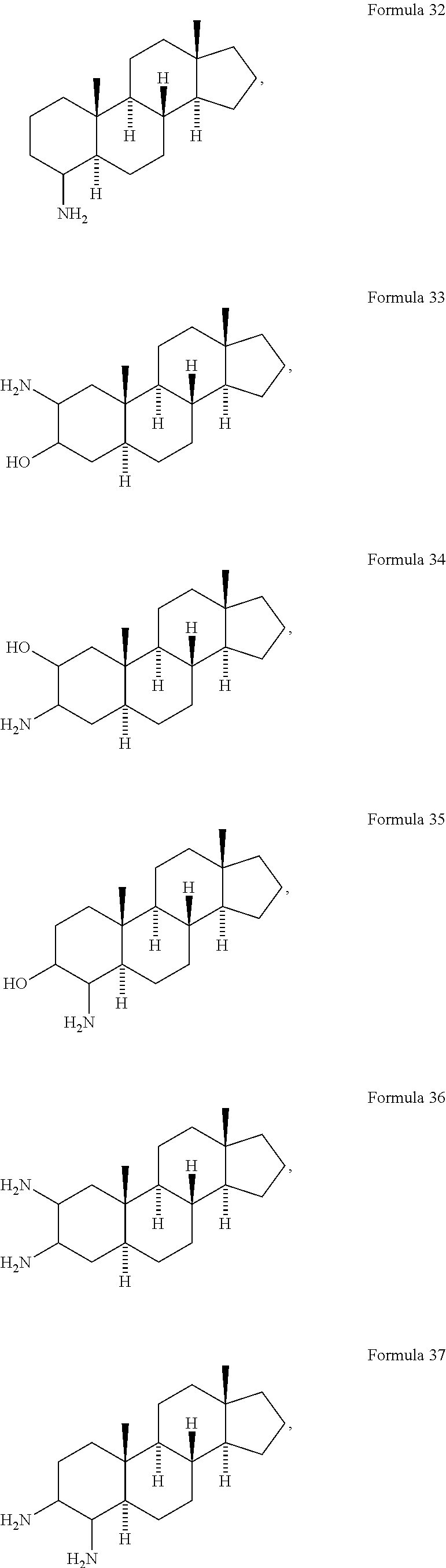
and pharmaceutically acceptable salts thereof, wherein X═NR2, NRCOR, NHCONR2, OR, SR, OCOR, OCONR2, or NHCNHNH2, and wherein R═H, alkyl, cycloalkyl, aryl, or benzyl.


- 1. Wang J W, et al. (2002) Influence of SHIP on the NK repertoire and allogeneic bone marrow transplantation. (Translated from eng) Science 295(5562):2094-2097 (in eng).
- 2. Ghansah T, et al. (2004) Expansion of myeloid suppressor cells in SHIP-deficient mice represses allogeneic T cell responses. (Translated from eng) J Immunol 173(12):7324-7330 (in eng).
- 3. Wahle J A, et al. (2006) Cutting edge: dominance by an MHC-independent inhibitory receptor compromises NK killing of complex targets. (Translated from eng) J Immunol 176(12):7165-7169 (in eng).
- 4. Paraiso K H, Ghansah T, Costello A, Engelman R W, & Kerr W G (2007) Induced SHIP deficiency expands myeloid regulatory cells and abrogates graft-versus-host disease. (Translated from eng) J Immunol 178(5):2893-2900 (in eng).
- 5. Kerr W G (2008) A role for SHIP in stem cell biology and transplantation. Curr Stem Cell Res Ther 3(2):99-106.
- 6. Helgason C D, et al. (1998) Targeted disruption of SHIP leads to hemopoietic perturbations, lung pathology, and a shortened life span. Genes & Development 12(11):1610-1620.
- 7. Rauh M J, et al. (2005) SHIP represses the generation of alternatively activated macrophages. Immunity 23(4):361-374.
- 8. Takeshita S, et al. (2002) SHIP-deficient mice are severely osteoporotic due to increased numbers of hyper-resorptive osteoclasts. Nat Med 8(9):943-949.
- 9. Franke T F, Kaplan D R, Cantley L C, & Toker A (1997) Direct regulation of the Akt proto-oncogene product by phosphatidylinositol-3,4-bisphosphate [see comments]. Science 275(5300):665-668.
- 10. Jain S K, et al. (1996) PI 3-kinase activation in BCR/abl-transformed hematopoietic cells does not require interaction of p85 SH2 domains with p210 BCR/abl. (Translated from eng) Blood 88(5):1542-1550 (in eng).
- 11. Ivetac I, et al. (2009) Regulation of PI(3)K/Akt signalling and cellular transformation by inositol polyphosphate 4-phosphatase-1. (Translated from eng) EMBO Rep 10(5):487-493 (in eng).
Claims (26)


Priority Applications (1)
| Application Number | Priority Date | Filing Date | Title |
|---|---|---|---|
| US13/640,162 US9447139B2 (en) | 2010-04-09 | 2011-04-11 | Ship inhibitors and uses thereof |
Applications Claiming Priority (3)
| Application Number | Priority Date | Filing Date | Title |
|---|---|---|---|
| US32237810P | 2010-04-09 | 2010-04-09 | |
| US13/640,162 US9447139B2 (en) | 2010-04-09 | 2011-04-11 | Ship inhibitors and uses thereof |
| PCT/US2011/031930 WO2011127465A2 (en) | 2010-04-09 | 2011-04-11 | Ship inhibitors and uses thereof |
Related Parent Applications (1)
| Application Number | Title | Priority Date | Filing Date |
|---|---|---|---|
| PCT/US2011/031930 A-371-Of-International WO2011127465A2 (en) | 2010-04-09 | 2011-04-11 | Ship inhibitors and uses thereof |
Related Child Applications (1)
| Application Number | Title | Priority Date | Filing Date |
|---|---|---|---|
| US15/269,209 Division US11319336B2 (en) | 2010-04-09 | 2016-09-19 | Ship inhibitors and uses thereof |
Publications (2)
| Publication Number | Publication Date |
|---|---|
| US20130102577A1 US20130102577A1 (en) | 2013-04-25 |
| US9447139B2 true US9447139B2 (en) | 2016-09-20 |
Family
ID=44763588
Family Applications (3)
| Application Number | Title | Priority Date | Filing Date |
|---|---|---|---|
| US13/640,162 Active US9447139B2 (en) | 2010-04-09 | 2011-04-11 | Ship inhibitors and uses thereof |
| US15/269,209 Active US11319336B2 (en) | 2010-04-09 | 2016-09-19 | Ship inhibitors and uses thereof |
| US17/542,090 Abandoned US20220162254A1 (en) | 2010-04-09 | 2021-12-03 | Ship inhibitors and uses thereof |
Family Applications After (2)
| Application Number | Title | Priority Date | Filing Date |
|---|---|---|---|
| US15/269,209 Active US11319336B2 (en) | 2010-04-09 | 2016-09-19 | Ship inhibitors and uses thereof |
| US17/542,090 Abandoned US20220162254A1 (en) | 2010-04-09 | 2021-12-03 | Ship inhibitors and uses thereof |
Country Status (5)
| Country | Link |
|---|---|
| US (3) | US9447139B2 (en) |
| EP (2) | EP2556055B1 (en) |
| DK (1) | DK2556055T3 (en) |
| ES (1) | ES2742213T3 (en) |
| WO (1) | WO2011127465A2 (en) |
Cited By (3)
| Publication number | Priority date | Publication date | Assignee | Title |
|---|---|---|---|---|
| US10702538B2 (en) | 2014-06-17 | 2020-07-07 | The Research Foundation For The State University Of New York | Ship inhibition to induce activation of natural killer cells |
| US10736877B2 (en) | 2015-12-31 | 2020-08-11 | Syracuse University | Tryptamine-based ship inhibitors for the treatment of cancer |
| US20220023315A1 (en) * | 2018-07-31 | 2022-01-27 | The Research Foundation For The State University Of New York | Methods of activating microglial cells |
Families Citing this family (7)
| Publication number | Priority date | Publication date | Assignee | Title |
|---|---|---|---|---|
| US9447139B2 (en) | 2010-04-09 | 2016-09-20 | The Research Foundation Of State University Of New York | Ship inhibitors and uses thereof |
| CN104072564B (en) * | 2013-03-28 | 2016-08-17 | 广州市赛普特医药科技股份有限公司 | 2 β, 3 α, 5 α-trihydroxy-androstane-6-ketone and preparation method thereof and purposes |
| CA2953917C (en) * | 2013-07-01 | 2021-10-19 | The Research Foundation For The State University Of New York | Ship inhibition to combat obesity |
| US11185552B2 (en) | 2016-11-16 | 2021-11-30 | Ichor, Llc | Inhibitors of glucose-6-phosphate dehydrogenase for treating cardiovascular and pulmonary conditions |
| US20210186989A1 (en) * | 2018-06-06 | 2021-06-24 | Centro Nacional De Investigaciones Cardiovasculares Carlos Iii | Enhanced trained immunity in myeloid cells by ship-1 inhibition |
| CN112315964B (en) * | 2020-12-07 | 2024-01-26 | 中国医科大学附属盛京医院 | Application of cyclopentyl phenanthridine benzene compound in preparation of TLN1 protein inhibitor |
| CN114716499B (en) * | 2022-04-24 | 2023-05-23 | 浙江工商大学 | Biological sterol guanidyl modified cholic acid chelating agent, preparation method and application |
Citations (4)
| Publication number | Priority date | Publication date | Assignee | Title |
|---|---|---|---|---|
| GB900572A (en) | 1957-09-27 | 1962-07-11 | Oletta S A | Funtumia alkaloids |
| BE702699A (en) | 1967-08-16 | 1968-01-15 | ||
| WO2008068037A1 (en) | 2006-12-08 | 2008-06-12 | Jado Technologies Gmbh | Cholesterylamines for the treatment and prevention of infectious diseases |
| WO2010045199A2 (en) | 2008-10-13 | 2010-04-22 | University Of South Florida | Method of modulating ship activity |
Family Cites Families (9)
| Publication number | Priority date | Publication date | Assignee | Title |
|---|---|---|---|---|
| GB1000410A (en) * | 1962-03-30 | 1965-08-04 | Sterling Drug Inc | Amino-androstanes |
| CS126738B5 (en) * | 1965-08-31 | 1968-03-15 | ||
| AU746878B2 (en) | 1996-12-20 | 2002-05-02 | Novo Nordisk A/S | Meiosis regulating compounds |
| AU2003284140A1 (en) | 2002-10-11 | 2004-05-04 | Isis Pharmaceuticals, Inc. | Method for inhibiting angiogenesis with ship-1 inhibitors |
| PT1601363E (en) | 2003-03-11 | 2012-08-17 | Trophos | Use of derivatives of cholest-4-en-3-one as medicaments, pharmaceutical compositions containing same, novel derivatives and preparation method thereof |
| CA2571440A1 (en) | 2004-06-29 | 2006-01-12 | Jadolabs Gmbh | Use of steroid-derived pharmaceutical compositions for treating disorders relating to pathological processes in lipid rafts |
| WO2011069118A1 (en) | 2009-12-04 | 2011-06-09 | Aquinox Pharmaceuticals Inc. | Ship1 modulators and methods related thereto |
| US9447139B2 (en) | 2010-04-09 | 2016-09-20 | The Research Foundation Of State University Of New York | Ship inhibitors and uses thereof |
| CA2953917C (en) | 2013-07-01 | 2021-10-19 | The Research Foundation For The State University Of New York | Ship inhibition to combat obesity |
-
2011
- 2011-04-11 US US13/640,162 patent/US9447139B2/en active Active
- 2011-04-11 EP EP11766857.4A patent/EP2556055B1/en active Active
- 2011-04-11 ES ES11766857T patent/ES2742213T3/en active Active
- 2011-04-11 WO PCT/US2011/031930 patent/WO2011127465A2/en not_active Ceased
- 2011-04-11 DK DK11766857.4T patent/DK2556055T3/en active
- 2011-04-11 EP EP19189158.9A patent/EP3581563B1/en active Active
-
2016
- 2016-09-19 US US15/269,209 patent/US11319336B2/en active Active
-
2021
- 2021-12-03 US US17/542,090 patent/US20220162254A1/en not_active Abandoned
Patent Citations (5)
| Publication number | Priority date | Publication date | Assignee | Title |
|---|---|---|---|---|
| GB900572A (en) | 1957-09-27 | 1962-07-11 | Oletta S A | Funtumia alkaloids |
| BE702699A (en) | 1967-08-16 | 1968-01-15 | ||
| WO2008068037A1 (en) | 2006-12-08 | 2008-06-12 | Jado Technologies Gmbh | Cholesterylamines for the treatment and prevention of infectious diseases |
| WO2010045199A2 (en) | 2008-10-13 | 2010-04-22 | University Of South Florida | Method of modulating ship activity |
| US20120178725A1 (en) * | 2008-10-13 | 2012-07-12 | H. Lee Moffitt Cancer And Research Institute, Inc. | Method of modulating ship activity |
Non-Patent Citations (24)
| Title |
|---|
| Ahmad et al., "Synthesis of facial amphiphile 3,7-diamino-5.alpha.-cholestane derivatives as a molecular receptor", Bulletin of the Korean Chemical Society, vol. 30, No. 9, 2009, pp. 2101-2106. |
| Annis et al., "Inhibitors of the Lipid Phosphatase SHIP2 Discovered by High Throughput Affinity Selection-Mass Spectrometry Screening of Combinatorial Libraries", Combinatorial Chemistry and High Throughput Screening, vol. 12, No. 8, Sep. 1, 2009, pp. 760-771. |
| Cowell et al, "Bromo, chloro, and amino derivatives of 5.alpha.-androstane and 5.alpha.-estrane", Journal of the Chemical Society, Perkin Transactions 1, Chemical Society, vol. 1974, No. 13, Jan. 1, 1974, pp. 1505-1513. |
| Extended European Search Report issued in European Patent Application No. 11766857.4, mailed Jan. 17, 2014. |
| Francisco et al., "Aminoselenenylation of Alkenes: Syntheses of p-Phenylseleno Carbamates and p-Phenylseleno Cyanamides", Journal of the Chemical Society, No. 9, Jan. 1990, pp. 2417-2427. |
| Harwood et al., "The synthesis of 3.alpha.-/3.beta.-cholesteryl and cholestanyl esters and esthers-an assessment of their mesogenicity", Molecular Crystals and Liquid Crystals Science and Technology. Section A. Molecular Crystals and Liquid Crystals; Proceedings of the 17th International Liquid Crystal Conference: Strasbourg, France, Jul. 19-24, 1998, vol. 332, Jan. 1, 1999. |
| Hungria et al. (Cancer Chemotherm Pharmacol, 2004, 53, 51-60). * |
| International Search Report and Written Opinion issued in PCT/U52011/031930, mailed Dec. 27, 2011. |
| J. G. Cannon Chapter Nineteen in Burger's Medicinal Chemistry and Drug Discovery, Fifth Edition, vol. I: Principles and Practice, Wiley-Interscience 1995, pp. 783-802, 784. * |
| Jang et al, "Synthesis of 9-Anthryl Ethers from trans-9, 10-Dihydro-9, 10-dimethoxy-anthracene by Acid-Catalyzed Transetherification", Synthesis, vol. 2009, No. 10, Apr. 30, 2009, pp. 1703-1707. |
| Li et al., Short Synthesis of Triamine Derivatives of Cholic Acid, 1999, Tetrahedron Letters, 40, 1861-1864. * |
| Liu et al. (Cancer Research, 2005, 65, 2269-2276). * |
| Manhas et al., "Steroids. Part X.1 A Convenient Synthesis of Alkyl Aryl Ethers", Journal of the Chemical Society, Perkin Transactions 1: Organic and Bio-Organic Chemistry, No. 5, Jan. 1, 1975, pp. 461-463. |
| Medline Plus (Fungal Infections; Jul. 22, 2008). * |
| Nikolaropoulos et al., "Formation of Acetamido-Aza-Steroids," J. Heterocyclic Chem., 27:1997-1999 (1990). |
| Phillipps et al., "A New Series of Steroidal Antidysrhythmic Agents," J. Steroid Biochem., 19(1):759-765 (1983). |
| Ponsold et al., "Dartsellung und Ringoffnungsreaktionen der epirneren 2.3-Imino-cholestane", Chemische Berichte, vol. 99, No. 5, Jan. 1, 1966, pp. 1502-1508. |
| Silver et al. (Annals of the New York Academy of Sciences, 1970, 171, 838-862). * |
| Smith et al. "Optically active amines. 30. Application of the salicylidenimino chirality rule to aliphatic and alicyclic amines", The Journal of Organic Chemistry, vol. 47, No. 13, Jun. 1, 1982, pp. 2525-2531. |
| Suwa et al., "Discovery and Functional Characterization of a Novel Small Molecule Inhibitor of the Intracellular Phosphatase, SHIP2", British Journal of Pharmacology, vol. 158, No. 3, Oct. 19, 2009, pp. 879-887. |
| Syhora et al., "Olefin-Forming Elimination of the Amido Group," Tetrahedron Letters, 28:2369-2376 (1965). |
| Vill et al., "Liquid crystalline cholestanyl and cholesteryl ether lipids", Molecular Crystals and Liquid Crystals Science and Technology. Section A. Molecular Crystals and Liquid Crystals, vol. 250, Jan. 1, 1994, pp. 73-83. |
| Wu et al., "Organic Photochemistry. Part 94. Triethylamine-Photosensitized Reduction of a Ketone Via a Chemical Sensitization Mechanism", Journal of the American Chemical Society, vol. 114, No. 5, Feb. 1, 1992, pp. 1812-1816. |
| Yagi et al., "Synthesis of C-3 ureido steroids", The Journal of Organic Chemistry, vol. 32, No. 3, Mar. 1, 1967, pp. 713-718. |
Cited By (3)
| Publication number | Priority date | Publication date | Assignee | Title |
|---|---|---|---|---|
| US10702538B2 (en) | 2014-06-17 | 2020-07-07 | The Research Foundation For The State University Of New York | Ship inhibition to induce activation of natural killer cells |
| US10736877B2 (en) | 2015-12-31 | 2020-08-11 | Syracuse University | Tryptamine-based ship inhibitors for the treatment of cancer |
| US20220023315A1 (en) * | 2018-07-31 | 2022-01-27 | The Research Foundation For The State University Of New York | Methods of activating microglial cells |
Also Published As
| Publication number | Publication date |
|---|---|
| DK2556055T3 (en) | 2019-08-19 |
| US20220162254A1 (en) | 2022-05-26 |
| ES2742213T3 (en) | 2020-02-13 |
| WO2011127465A2 (en) | 2011-10-13 |
| EP2556055A4 (en) | 2014-02-19 |
| US11319336B2 (en) | 2022-05-03 |
| EP3581563C0 (en) | 2023-06-28 |
| EP3581563B1 (en) | 2023-06-28 |
| EP2556055B1 (en) | 2019-07-31 |
| US20170051006A1 (en) | 2017-02-23 |
| EP3581563A1 (en) | 2019-12-18 |
| EP2556055A2 (en) | 2013-02-13 |
| US20130102577A1 (en) | 2013-04-25 |
| WO2011127465A3 (en) | 2012-03-15 |
Similar Documents
| Publication | Publication Date | Title |
|---|---|---|
| US20220162254A1 (en) | Ship inhibitors and uses thereof | |
| AU2014244744B2 (en) | Pharmaceutical composition for inhibiting immune response through inducing differentiation into regulator T cells and promoting proliferation of regulator T cells | |
| US9006221B2 (en) | Method of modulating ship activity | |
| EP3130582B1 (en) | Compound having immune disease treatment effect and use thereof | |
| US20250082644A1 (en) | Combination therapies for the treatment of cancer | |
| EP3341007A1 (en) | Malt1 inhibitors and uses thereof | |
| US9149489B2 (en) | Inhibitors of glycolysis useful in the treatment of brain tumors | |
| EP2873417B1 (en) | Immune tolerance inducer | |
| WO2009108926A1 (en) | Inhibitors of glycolysis useful in the treatment of brain tumors | |
| AU2014284360A1 (en) | Ship inhibition to combat obesity | |
| JP2021191804A (en) | Method of treatment and compositions comprising dual pi3k delta-gamma kinase inhibitor and corticosteroid | |
| EP4522772A1 (en) | Treating diseases and disorders with irak4-modifying compounds | |
| WO2017209270A1 (en) | Activated t cell- and/or b cell-selective cell death inducer or cell death promoter comprising as active ingredient 25-hydroxycholesterol or cholesterol analogous thereto | |
| IL324691A (en) | Methods of treating cancer in subjects with prior immune checkpoint inhibitor exposure | |
| CA3182616A1 (en) | Tlr7/8 antagonists and uses thereof | |
| US20240269120A1 (en) | Method for Treating an Autoimmune and Inflammatory Disease | |
| JP7354245B2 (en) | Novel carbonate compound having a pyrrolopyrimidine skeleton or a pharmaceutically acceptable salt thereof | |
| HK40101281A (en) | Combination therapies for the treatment of cancer | |
| HK40096682A (en) | Methods of treating diseases and disorders | |
| HK1204285B (en) | Immune tolerance inducer | |
| HK1205950B (en) | Immune tolerance inducer |
Legal Events
| Date | Code | Title | Description |
|---|---|---|---|
| AS | Assignment |
Owner name: NATIONAL INSTITUTES OF HEALTH (NIH), U.S. DEPT. OF Free format text: CONFIRMATORY LICENSE;ASSIGNOR:THE RESEARCH FOUNDATION OF STATE UNIVERSITY OF NEW YORK;REEL/FRAME:027111/0512 Effective date: 20110923 |
|
| AS | Assignment |
Owner name: SYRACUSE UNIVERSITY, NEW YORK Free format text: ASSIGNMENT OF ASSIGNORS INTEREST;ASSIGNOR:CHISHOLM, JOHN D.;REEL/FRAME:029879/0026 Effective date: 20121101 |
|
| AS | Assignment |
Owner name: THE RESEARCH FOUNDATION OF STATE UNIVERSITY OF NEW Free format text: ASSIGNMENT OF ASSIGNORS INTEREST;ASSIGNOR:KERR, WILLIAM G.;REEL/FRAME:030069/0034 Effective date: 20130304 |
|
| STCF | Information on status: patent grant |
Free format text: PATENTED CASE |
|
| AS | Assignment |
Owner name: NATIONAL INSTITUTES OF HEALTH (NIH), U.S. DEPT. OF Free format text: CONFIRMATORY LICENSE;ASSIGNOR:STATE UNIVERSITY OF NEW YORK;REEL/FRAME:040093/0496 Effective date: 20160920 |
|
| CC | Certificate of correction | ||
| AS | Assignment |
Owner name: THE RESEARCH FOUNDATION FOR THE STATE UNIVERSITY O Free format text: CORRECTIVE ASSIGNMENT TO CORRECT THE ASSIGNEE NAME PREVIOUSLY RECORDED AT REEL: 030069 FRAME: 0034. ASSIGNOR(S) HEREBY CONFIRMS THE ASSIGNMENT;ASSIGNOR:KERR, WILLIAM G.;REEL/FRAME:042287/0712 Effective date: 20130304 |
|
| MAFP | Maintenance fee payment |
Free format text: PAYMENT OF MAINTENANCE FEE, 4TH YR, SMALL ENTITY (ORIGINAL EVENT CODE: M2551); ENTITY STATUS OF PATENT OWNER: SMALL ENTITY Year of fee payment: 4 |
|
| MAFP | Maintenance fee payment |
Free format text: PAYMENT OF MAINTENANCE FEE, 8TH YR, SMALL ENTITY (ORIGINAL EVENT CODE: M2552); ENTITY STATUS OF PATENT OWNER: SMALL ENTITY Year of fee payment: 8 |