US944125A - Textile fabric. - Google Patents
Textile fabric. Download PDFInfo
- Publication number
- US944125A US944125A US36674907A US1907366749A US944125A US 944125 A US944125 A US 944125A US 36674907 A US36674907 A US 36674907A US 1907366749 A US1907366749 A US 1907366749A US 944125 A US944125 A US 944125A
- Authority
- US
- United States
- Prior art keywords
- warp
- sheds
- fabric
- weft
- textile fabric
- Prior art date
- Legal status (The legal status is an assumption and is not a legal conclusion. Google has not performed a legal analysis and makes no representation as to the accuracy of the status listed.)
- Expired - Lifetime
Links
- 239000004744 fabric Substances 0.000 title description 17
- 239000004753 textile Substances 0.000 title description 5
- 238000000034 method Methods 0.000 description 9
- 230000015572 biosynthetic process Effects 0.000 description 4
- 238000007519 figuring Methods 0.000 description 2
- 238000004519 manufacturing process Methods 0.000 description 2
- 241000282465 Canis Species 0.000 description 1
- 206010010071 Coma Diseases 0.000 description 1
- 240000001973 Ficus microcarpa Species 0.000 description 1
- 238000003780 insertion Methods 0.000 description 1
- 230000037431 insertion Effects 0.000 description 1
- 238000009732 tufting Methods 0.000 description 1
- 238000009941 weaving Methods 0.000 description 1
Images
Classifications
-
- D—TEXTILES; PAPER
- D03—WEAVING
- D03D—WOVEN FABRICS; METHODS OF WEAVING; LOOMS
- D03D39/00—Pile-fabric looms
- D03D39/16—Double-plush looms, i.e. for weaving two pile fabrics face-to-face
Definitions
- My invention relates to the manufacture of multiple textile fabrics in which it is desired to form several plies, to produce a good body in the fabrics, or to cut apart, to
- the object of my invention is to use such a. method, or process in the-weaving of such fabrics', so as to vproduce them in an economical manner.
- the method ⁇ in vogue, to weave )ile fab rics has hitherto beenl limited to the insertion of two separate picks, simultaneously, in two separate warp sheds, and has been accomplished by throwing two shuttles, one traveling ⁇ upon the lay, the other traveling upon the bottom warp threads of the top fabric.l
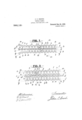
- Figure' .l represents.y in an exaggerated form, a 3- pl y fabric, which when ciit apart, forms two, single pile faced fabrios, and one double faced pile faliric, woven by my method.
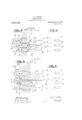
- Fig'. 2 sentation, but showing the additional fea ture of using four warp sheds :ind carrying a .supply of selectable warp threads within is a similar repro' ing of the three warp sheds for the last picks of weft shown in Fig. l. Fig. 4,' illus trates the formation of the war sheds for the last picks of weftsliown in Fig. 2.
- Fig. 5, is a front View of warp sheds, and weft. inserting needles, shown in Fig. A3.
- Fi" 6 is a similar view' of warp sheds, and needles, shown in Fig. s.
- the fabric, and Fig. 3 its process of formation, (i, .5, c. d, f', and g, are binding warp threads, and are passed through heddle eyes, a, b', o', d,ff, and g respectively, and are raised, and lowered, to form sheds; and the pile forming, or figuring, warp threads l, 2, 3, and 4f, passl through heddleeyes, l', 2, 3 and 4', and are moved as to be lifted, half! way to be boundy with center ply, or full height to be bound in the top ply.
- the binding warp threads a, b, c, d, f and g pass through heddies, a', b, c, df and g, heddles, c and fl', moving double the distance of heddles 0,, b', f and g', so as to allow for the inserting of separate picks of weft above and below the pile forming, or figuring warp threads carried in the middle ply, the said threads pass through their respective heddies, thus, threads 1, 2, and 3 pass through heddles l', 2', and 3', and are raised, to be bound, or show, in the upper ply; the l tlireadgy 5, and G, pass through lieddles 4',
- Fig. 3 illustrates the form-y show, in the bottoni ply.
- Theweft inserting y needles, 20' are arranged one above the other, and simultaneously inserted within their respeetive warp sheds.
Landscapes
- Engineering & Computer Science (AREA)
- Textile Engineering (AREA)
- Woven Fabrics (AREA)
Description
J. G. BRGUKSt TEXTILE FABRIC.
APPLIoAxmN NLB APR. s, 1907.
Yatented Deo. 2i, w09.
2 SHEETS-SHEET l.
J. C. BROGKS.
TBXTLE FABRIC.
APPMGA'MOH mman APR. e, 1901-'.
Patented Bec. 2l, w09.
2 SHEETS-SHE FIT 2.
CPY
JOHN U. BROOKS, OF YATERSON, NEW JERSEY.
TEXTILE FABRIC.
Specication of Letters Patent. Patent-.ml Doc. 21, 1909.
Application tiled April 6, 190.7. Serial No. 366,749.
To all whom it lmay concern."
Be it known that I', JoHN C. Baooits, a citizen of the United States, residing at Paterson, in the county of Passaic and State of New Jersey, have invented certain new and useful improvements in the Manufacture of T extile. Fabrics, of which the following is a specification. .A
My invention relates to the manufacture of multiple textile fabrics in which it is desired to form several plies, to produce a good body in the fabrics, or to cut apart, to
i produce several fabrics having pile surfaces on one or both facesl And the object of my invention is to use such a. method, or process in the-weaving of such fabrics', so as to vproduce them in an economical manner.
The method `in vogue, to weave )ile fab rics, has hitherto beenl limited to the insertion of two separate picks, simultaneously, in two separate warp sheds, and has been accomplished by throwing two shuttles, one traveling `upon the lay, the other traveling upon the bottom warp threads of the top fabric.l The use of a needle, to insert weft, being confined to one warp shed'formation only. ln so' called fabric blanks, the warp" sheds have been opened in succession, requir ing as many separate picks of weft as there are plies. In other abrics the pile being .formed by tufting needles, separately br nnitedly actuated.`
ln my improved method, or process, I form all warp sheds simultaneously, and simultaneously insert picksl of weft 1n each shed by using a plurality of weft needles.
therefor, acts :is stnifers for the desired principal fabric.
In the drawing, Figure' .l represents.y in an exaggerated form, a 3- pl y fabric, which when ciit apart, forms two, single pile faced fabrios, and one double faced pile faliric, woven by my method. Fig'. 2, sentation, but showing the additional fea ture of using four warp sheds :ind carrying a .supply of selectable warp threads within is a similar repro' ing of the three warp sheds for the last picks of weft shown in Fig. l. Fig. 4,' illus trates the formation of the war sheds for the last picks of weftsliown in Fig. 2. Fig. 5, is a front View of warp sheds, and weft. inserting needles, shown in Fig. A3. Fi". 6, is a similar view' of warp sheds, and needles, shown in Fig. s.
Referring to Fig. 1, the fabric, and Fig. 3, its process of formation, (i, .5, c. d, f', and g, are binding warp threads, and are passed through heddle eyes, a, b', o', d,ff, and g respectively, and are raised, and lowered, to form sheds; and the pile forming, or figuring, warp threads l, 2, 3, and 4f, passl through heddleeyes, l', 2, 3 and 4', and are moved as to be lifted, half! way to be boundy with center ply, or full height to be bound in the top ply.
Referring to Fig. 2, fabric, and Fig. 4, process of its formation, the binding warp threads a, b, c, d, f and g, pass through heddies, a', b, c, df and g, heddles, c and fl', moving double the distance of heddles 0,, b', f and g', so as to allow for the inserting of separate picks of weft above and below the pile forming, or figuring warp threads carried in the middle ply, the said threads pass through their respective heddies, thus, threads 1, 2, and 3 pass through heddles l', 2', and 3', and are raised, to be bound, or show, in the upper ply; the l tlireadgy 5, and G, pass through lieddles 4',
o and d, and fare lowered to be bound, or
the middle ply. Fig. 3, illustrates the form-y show, in the bottoni ply. Theweft inserting y needles, 20', are arranged one above the other, and simultaneously inserted within their respeetive warp sheds.
Having' described my invention, l', claim and desire to secure by Letters Patent.;-
1. The process of producing textile fabrif-s which consists in separatingbinding llt) ,snlm'antaly four pai-Ls; thym- 'Lo constitute mm1-ying pik` forming warp Lhreads`\\'thn [lm whim' lmumg warp sheds, marrying, nuslili the :mid binding Wup sheds and mbuirtingY :mumncously weft th 'Canis within each .gw-parate warp slwd Lo b'lpd :"Qgetlcr the sind warp in'ezus m :my (lemme order Cfr sucuussiom.
J. The' mohod of pro-lacing fabrics, which comas-is' m'fdlvldmg he wsu'p luto thv binding warp threxds the ohcr the p harnesses Wemdingo tha structue of 'th 'nbljim l'wding 'the ranmning m' miie-WmLv threads successively ,luto as many harnefses zs required ae? a' @miem bang woven; se@
i. EN.
femm uw' m' nlm'u wmp Sheds, um. above the'
Priority Applications (1)
| Application Number | Priority Date | Filing Date | Title |
|---|---|---|---|
| US36674907A US944125A (en) | 1907-04-06 | 1907-04-06 | Textile fabric. |
Applications Claiming Priority (1)
| Application Number | Priority Date | Filing Date | Title |
|---|---|---|---|
| US36674907A US944125A (en) | 1907-04-06 | 1907-04-06 | Textile fabric. |
Publications (1)
| Publication Number | Publication Date |
|---|---|
| US944125A true US944125A (en) | 1909-12-21 |
Family
ID=3012547
Family Applications (1)
| Application Number | Title | Priority Date | Filing Date |
|---|---|---|---|
| US36674907A Expired - Lifetime US944125A (en) | 1907-04-06 | 1907-04-06 | Textile fabric. |
Country Status (1)
| Country | Link |
|---|---|
| US (1) | US944125A (en) |
Cited By (3)
| Publication number | Priority date | Publication date | Assignee | Title |
|---|---|---|---|---|
| US2742059A (en) * | 1951-02-22 | 1956-04-17 | J H Fenner & Co Holdings Ltd | Multiple-ply textile fabrics |
| US2800701A (en) * | 1954-01-20 | 1957-07-30 | Fenner Co Ltd J H | Production of power transmission and conveyor belting |
| US3612110A (en) * | 1968-10-22 | 1971-10-12 | Gerald Charles Wildi | Woven tapes |
-
1907
- 1907-04-06 US US36674907A patent/US944125A/en not_active Expired - Lifetime
Cited By (3)
| Publication number | Priority date | Publication date | Assignee | Title |
|---|---|---|---|---|
| US2742059A (en) * | 1951-02-22 | 1956-04-17 | J H Fenner & Co Holdings Ltd | Multiple-ply textile fabrics |
| US2800701A (en) * | 1954-01-20 | 1957-07-30 | Fenner Co Ltd J H | Production of power transmission and conveyor belting |
| US3612110A (en) * | 1968-10-22 | 1971-10-12 | Gerald Charles Wildi | Woven tapes |
Similar Documents
| Publication | Publication Date | Title |
|---|---|---|
| US10019A (en) | Improvement in the manufacture of plain and figured fabrics | |
| US2225452A (en) | Method and apparatus for making a pile fabric | |
| US2095382A (en) | Method of weaving frieze pile fabrics | |
| US2101286A (en) | Method of producing double warp pile fabrics with figured backs | |
| US1846245A (en) | Pile fabric and method of making the same | |
| US451743A (en) | tonnae | |
| US892517A (en) | Pile fabric and mode of weaving same. | |
| US747588A (en) | Woven pile fabric. | |
| US934552A (en) | Woven pile fabric. | |
| US483078A (en) | Alexander morton | |
| US862968A (en) | Loom for weaving double-pile fabrics. | |
| US388682A (en) | Carpet fabric | |
| US729161A (en) | Woven fabric. | |
| US1113098A (en) | Woven pile fabric. | |
| US1104635A (en) | Velvet-weaving. | |
| US1156485A (en) | Manufacture of figured pile fabrics. | |
| US1059151A (en) | Pile-fabric loom. | |
| US2329738A (en) | Process of weaving pile fabrics | |
| US415149A (en) | Method of weaving seamless bags | |
| US2831507A (en) | Method of making pile fabrics | |
| US1812602A (en) | Pile fabric and method of making the same | |
| US2898947A (en) | Multiple pile fabric | |
| US457410A (en) | Woven fabric | |
| US991297A (en) | Loom. | |
| US1955028A (en) | Pile fabric |