US9427005B2 - Process for preparing rice gruel in aseptic package - Google Patents

Process for preparing rice gruel in aseptic package Download PDF

Info

Publication number
US9427005B2
US9427005B2 US10/581,167 US58116704A US9427005B2 US 9427005 B2 US9427005 B2 US 9427005B2 US 58116704 A US58116704 A US 58116704A US 9427005 B2 US9427005 B2 US 9427005B2
Authority
US
United States
Prior art keywords
rice
water
bowl
cooking
gruel
Prior art date
Legal status (The legal status is an assumption and is not a legal conclusion. Google has not performed a legal analysis and makes no representation as to the accuracy of the status listed.)
Active, expires
Application number
US10/581,167
Other versions
US20080138494A1 (en
Inventor
Chang-yong Lee
Jong-Wook Kim
Sang-You Kim
Current Assignee (The listed assignees may be inaccurate. Google has not performed a legal analysis and makes no representation or warranty as to the accuracy of the list.)
CJ CheilJedang Corp
Original Assignee
CJ CheilJedang Corp
Priority date (The priority date is an assumption and is not a legal conclusion. Google has not performed a legal analysis and makes no representation as to the accuracy of the date listed.)
Filing date
Publication date
Application filed by CJ CheilJedang Corp filed Critical CJ CheilJedang Corp
Assigned to CJ CORP. reassignment CJ CORP. ASSIGNMENT OF ASSIGNORS INTEREST (SEE DOCUMENT FOR DETAILS). Assignors: KIM, JONG-WOOK, KIM, SANG-YOU, LEE, CHANG-YONG
Assigned to CJ CHEILJEDANG CORP. reassignment CJ CHEILJEDANG CORP. ASSIGNMENT OF ASSIGNORS INTEREST (SEE DOCUMENT FOR DETAILS). Assignors: CJ CORPORATION
Publication of US20080138494A1 publication Critical patent/US20080138494A1/en
Application granted granted Critical
Publication of US9427005B2 publication Critical patent/US9427005B2/en
Active legal-status Critical Current
Adjusted expiration legal-status Critical

Links

Images

Classifications

    • A23L1/182
    • AHUMAN NECESSITIES
    • A23FOODS OR FOODSTUFFS; TREATMENT THEREOF, NOT COVERED BY OTHER CLASSES
    • A23LFOODS, FOODSTUFFS OR NON-ALCOHOLIC BEVERAGES, NOT OTHERWISE PROVIDED FOR; PREPARATION OR TREATMENT THEREOF
    • A23L7/00Cereal-derived products; Malt products; Preparation or treatment thereof
    • A23L7/10Cereal-derived products
    • A23L7/196Products in which the original granular shape is maintained, e.g. parboiled rice

Definitions

  • the present invention relates to a process for preparing rice gruel in an aseptic package, whereby original soft texture and taste of grains of rice can be conserved for an extended period of time and protected from microbial contamination.
  • Rice gruel is made by boiling rice in water around 100° C. for 30 minutes. It is known that 10 3 ⁇ 10 4 CFU/g of microorganism lives on the surface of rice. Although the microorganism cells are usually killed during the cooking process, heat resistant spores are not completely killed. If people eat homemade or mass produced rice gruel on the spot (or at least within one day), those thermoduric microorganism would not be a serious problem. However, when mass produced rice gruel products are to be stored at room temperature for an extended period of time or distributed, the thermoduric microorganism is easily proliferated. Therefore, traditional methods for preparing rice gruel are not appropriate for the long-term storage.
  • a cup of rice is boiled in 1.1-1.3 cups of water.
  • a cup of rice is boiled in 4-8 cups of water. Since more water is required to cook rice gruel, microorganism proliferates more easily in rice gruel, and it is very difficult to get the best taste and texture of rice because grains of rice in the rice gruel are spread greatly.
  • the present inventors tried to develop a process for preparing rice gruel in an aseptic package, featuring proper levels of spreadability and viscosity of grains, excellent texture and safety from microbial contamination.
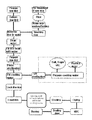
  • FIG. 1 is a flow chart describing a process for preparing rice gruel in an aseptic package according to the present invention
  • FIG. 2 illustrates an organoleptic test result of rice gruel prepared under different sterilization conditions, respectively;
  • FIG. 3 illustrates a texture analyzer profile of rice gruel prepared under different sterilization conditions, respectively
  • FIG. 4 illustrates an R/V profile of rice gruel prepared under different sterilization conditions, respectively
  • FIG. 5 illustrates an organoleptic test result of rice gruel prepared different methods of filling cooking water, respectively;
  • FIG. 6 illustrates a texture analyzer profile of rice gruel prepared different methods of filling cooking water, respectively
  • FIG. 7 illustrates an R/V profile of rice gruel prepared under different methods of filling cooking water, respectively
  • FIG. 8 illustrates an organoleptic test result of rice gruel of different preparation processes, respectively
  • FIG. 9 illustrates a texture analyzer profile of rice gruel of different preparation processes, respectively.
  • FIG. 10 illustrates an R/V profile of rice gruel of different preparation processes, respectively.
  • FIG. 11 is picture illustrating different spreadabilities of grains in rice gruel of different preparation processes.
  • the present invention has been made in view of the above problems, and it is an object of the present invention to provide a process for preparing rice gruel in an aseptic package, whereby original soft texture and taste of grains of rice can be conserved for an extended period of time and protected from microbial contamination.
  • the above and other objects can be accomplished by the provision of a process for preparing a ready-to-eat rice gruel that is easily boiled or cooked in a microwave for 1-3 minutes.
  • a certain amount of rice is rinsed and immersed in water for about 1 hour. Then, the rice is put in a heat resistant plastic bowl and sterilized in an airtight place of a temperature between 130° C. and 150° C. for 4-8 seconds four to ten times repeatedly. Later, a designated amount of water for cooking the rice is added into the bowl. Finally, the rice is sealed and packed in an aseptic space. This rice product can be conserved at room temperature for at least six months, and is perfectly safe from microbial contamination.
  • the rice gruel prepared according to the present invention not only has excellent taste and texture but also can be conserved for a long period of time because it is safe from microbial contamination.
  • the process for preparing rice gruel includes the steps of: rinsing rice; immerse the rinsed rice in water for a predetermined amount of time; sterilizing the rice under high pressure and temperature; supplying a predetermined amount of cooking water and steaming; and wrapping the rice product with a lead film in a Clean room.
  • Rice is rinsed in purified water to remove starch-bearing material and other impurities on the surface of grains, and immerse the rice in water for about one hour.
  • a predetermined amount of the rice is put in a heat resistant plastic bowl. Then, the bowl filled with the rice is sterilized at a temperature higher than 140° C. for 4.5 seconds eight times to kill any microorganisms that might live in the rice.
  • the sterilization condition should not be extremely strict because the grains of rice could be spread more than expected.
  • a predetermined amount of water is poured into the bowl for cooking the sterilized rice.
  • the rice in water is then cooked or steamed at 100° C. for 40 minutes.
  • starch of the rice is eluted into the cooking water, giving the water the rice gruel's typical viscosity.
  • the cooking water can be added two separate times such as before the cooking process and before the packing process.
  • the rice bowl is sealed with a lead film in a Clean room (Class 100 or below certified clean room, 100 particles of 0.5 ⁇ m in 1 ft 3 ) by NASA-Developed Technology, and manufactured as a rice product after going through the cooking, cooling and drying processes.
  • a Clean room Class 100 or below certified clean room, 100 particles of 0.5 ⁇ m in 1 ft 3
  • the rice gruel in an aseptic package according to the present invention features soft mouthfeel and excellent taste and texture, and it is safe from microbial contamination and can be conserved for an extended period of time. Although the rice gruel is mass produced, it provides the same quality as the homemade rice gruel with no significant differences. Because of the pleasing appearance and mild taste of the rice gruel, its popularity and commercial value in the ready-to-eat food industry will rise.
  • the bowl was filled with 226 g of cooking water.
  • the steam temperature of a rice cooking unit was set at 100° C., and the rice in the water was cooked for 40 minutes to prepare rice gruel.
  • the bowl was sealed with a lead film in an aseptic space and left aside for approximately 12 minutes for further cooking.
  • the bowl was cooled in a 10° C. water bath for 15 minutes.
  • the bowl was filled with 226 g of cooking water.
  • the steam temperature of a rice cooking unit was set at 100° C., and the rice in the water was cooked for 30 minutes to prepare rice gruel.
  • the bowl was sealed with a lead film in an aseptic space and left aside for approximately 12 minutes for further cooking.
  • the bowl was cooled in a 10° C. water bath for 15 minutes.
  • the bowl was filled with 226 g of cooking water.
  • the steam temperature of a rice cooking unit was set at 100° C., and the rice in the water was cooked for 50 minutes to prepare rice gruel.
  • the bowl was sealed with a lead film in an aseptic space and left aside for approximately 12 minutes for further cooking.
  • the bowl was cooled in a 10° C. water bath for 12 minutes.
  • the bowl was filled with 226 g of cooking water.
  • the steam temperature of a rice cooking unit was set at 100° C., and the rice in the water was cooked for 40 minutes to prepare rice gruel.
  • the bowl was sealed with a lead film in an aseptic space and left aside for approximately 12 minutes for further cooking.
  • the bowl was cooled in a 10° C. water bath for 15 minutes.
  • the bowl was filled with 226 g of cooking water.
  • the steam temperature of a rice cooking unit was set at 100° C., and the rice in the water was cooked for 40 minutes to prepare rice gruel.
  • the bowl was sealed with a lead film in an aseptic space and left aside for approximately 12 minutes for further cooking.
  • the bowl was cooled in a 10° C. water bath for 15 minutes.
  • 113 g of cooking water was added into the bowl.
  • the steam temperature of a rice cooking unit was set at 100° C., and the rice in the water was cooked for 40 minutes to prepare rice gruel.
  • 113 g of cooking water was added again into the bowl.
  • the bowl was sealed with a lead film in an aseptic space and left aside for approximately 12 minutes for further cooking.
  • the bowl was cooled in a 10° C. water bath for 15 minutes.
  • Rice gruel was prepared under different sterilization conditions as described in Example 1, and 30 people were invited to evaluate the quality of each rice gruel as part of the organoleptic test.
  • the rice gruel was evaluated in terms of spreadability of grains, texture, viscosity, appearance, color and gloss, and taste.
  • a five-point rating system was adopted (i.e., 5: excellent, 4: very good, 3: average, 2: inferior, and 1: very inferior). The evaluation result is shown in the following Table 1.
  • Texture analyzer profile of rice gruel in Examples 1-1 to 1-6 are illustrated in FIG. 3 , and R/V profile in FIG. 4 .
  • Example 1-1 obtained the highest points in the organoleptic test and texture analyzer profile.
  • Example 1-2 showed relatively lower texture and color & gloss than Example 1-1 because of the increase in sterilization temperature.
  • Example 103 showed the same qualities as Example 1-2 when the sterilization time was extended. From these observations, it can be concluded that the texture of grains of rice is softened by intensifying the effects of sterilization. The same conclusion can also be derived from the results of texture analyzer profile and RV profile. Similarly, Examples 1-4 and 1-5 exhibit such facts.
  • the texture of grains of rice is inversely proportional to the amount of starch eluded from the rice. Also, it is found out that the intensified sterilization process has a negative effect on the color and gloss. If the high temperature steam sterilization is not performed and only the cooking process was done as in Example 1-6, the rice grains were hardened, far from the desired soft rice gruel. Example 1-1 has a proper degree of texture for rice gruel because the rice was already gelatinized somewhat during the high temperature steam sterilization, and steamed again, eluding starch more easily than the steam cooking.
  • the optimal conditions for preparing microbial contamination-free rice gruel with excellent taste and texture can be established from the evaluation results. That is, the sterilization effects were maximized at 130-150° C. for 4-8 seconds four to ten times repeatedly. If the sterilization temperature is lower than 130° C. some of microorganism can still survive. Meanwhile, if the sterilization temperature is higher than 150° C., the rice is not soft in texture any more.
  • FIG. 5 illustrates an organoleptic test result of rice gruel prepared different methods of filling cooking water, respectively.
  • FIG. 6 illustrates a texture analyzer profile of Example 1-1 and Examples 2-1, 2-2, and 2-3, respectively; and FIG. 7 illustrates an R/V profile thereof.
  • Example 1-1 is superior to Example 2.
  • the preparation process of Example 2 is the best choice for preparing a liquid food with minimum spreadability of rice grains (e.g., risotto).
  • FIG. 8 illustrates an organoleptic test result of rice gruel of Example 1-1 and Examples 3 and 4, respectively.
  • FIG. 9 illustrates a texture analyzer profile of Example 1-1 and Examples 3 and 4 respectively; and FIG. 10 illustrates an R/V profile thereof.
  • Example 1-1 exhibited similar product qualities with Example 3 in terms of the spreadability, viscosity and texture.
  • Example 4 was severely ruined by retort sterilization and thus, the rice grains were overcooked.
  • starch was eluded much more than desired, which has an adverse effect on the organoleptic overall.
Landscapes

  • Health & Medical Sciences (AREA)
  • Nutrition Science (AREA)
  • Life Sciences & Earth Sciences (AREA)
  • Chemical & Material Sciences (AREA)
  • Engineering & Computer Science (AREA)
  • Food Science & Technology (AREA)
  • Polymers & Plastics (AREA)
  • Cereal-Derived Products (AREA)

Abstract

The present invention relates to a process for preparing rice gruel in an aseptic package, whereby original soft texture and taste of grains of rice can be conserved or an extended period of time and protected from microbial contamination. The preparation process of rice gruel includes the steps of: rinsing raw ice and immersing the rice in water; putting the rice in a heat resistant plastic bowl and sterilizing at 130-150° C. for 4-8 seconds four to ten times repeatedly; adding cooking water into the bowl in an aseptic space and cooking the rice; and sealing and wrapping the bowl. By adding the cooking water at two separate times, namely before the cooking process and the wrapping process, the liquid food's unique taste and texture can be maximized.

Description

RELATED APPLICATIONS
This is a National Stage of International Application Number PCT/KR2004/002992, filed Nov. 18, 2004, which claims priority to Republic of Korea Application 10-2003-0087760, filed Dec. 4, 2003.
TECHNICAL FIELD
The present invention relates to a process for preparing rice gruel in an aseptic package, whereby original soft texture and taste of grains of rice can be conserved for an extended period of time and protected from microbial contamination.
BACKGROUND ART
Rice gruel is made by boiling rice in water around 100° C. for 30 minutes. It is known that 103˜104 CFU/g of microorganism lives on the surface of rice. Although the microorganism cells are usually killed during the cooking process, heat resistant spores are not completely killed. If people eat homemade or mass produced rice gruel on the spot (or at least within one day), those thermoduric microorganism would not be a serious problem. However, when mass produced rice gruel products are to be stored at room temperature for an extended period of time or distributed, the thermoduric microorganism is easily proliferated. Therefore, traditional methods for preparing rice gruel are not appropriate for the long-term storage.
Techniques for manufacturing ready-to-eat rice products in aseptic packages were introduced in Patent application Nos. 1995-0055582 and 1992-0025931, and the Patent registration No. 228509. For instance, rice was instantaneously sterilized at 135-140° C. for 40-100 seconds five to ten times, or rice was first steam heated at 80-110° C. for 15-25 minutes and added to ultraviolet sterilized deoxidized material, or rice went through a heat treatment at 100-121° C. for 20-40 minutes and was pressure cooked at 140-160° C. for 5-10 seconds twice to ten times.
However, all of the above techniques concern rice in aseptic packages, and it has not been disclosed a process for preparing rice gruel, which is much different from rice, in aseptic package.
Typically, to cook boiled (or steamed) rice, a cup of rice is boiled in 1.1-1.3 cups of water. Meanwhile, to cook rice gruel for patients or for other reasons, a cup of rice is boiled in 4-8 cups of water. Since more water is required to cook rice gruel, microorganism proliferates more easily in rice gruel, and it is very difficult to get the best taste and texture of rice because grains of rice in the rice gruel are spread greatly.
Therefore, there is a need for a simple and effective method for preserving the mild taste and texture of freshly prepared rice gruel, while protecting against microbial contamination.
Particularly, the present inventors tried to develop a process for preparing rice gruel in an aseptic package, featuring proper levels of spreadability and viscosity of grains, excellent texture and safety from microbial contamination.
DESCRIPTION OF THE DRAWINGS
The above and other objects, features and other advantages of the present invention will be more clearly understood from the following detailed description taken in conjunction with the accompanying drawings, in which:
FIG. 1 is a flow chart describing a process for preparing rice gruel in an aseptic package according to the present invention;
FIG. 2 illustrates an organoleptic test result of rice gruel prepared under different sterilization conditions, respectively;
FIG. 3 illustrates a texture analyzer profile of rice gruel prepared under different sterilization conditions, respectively;
FIG. 4 illustrates an R/V profile of rice gruel prepared under different sterilization conditions, respectively;
FIG. 5 illustrates an organoleptic test result of rice gruel prepared different methods of filling cooking water, respectively;
FIG. 6 illustrates a texture analyzer profile of rice gruel prepared different methods of filling cooking water, respectively;
FIG. 7 illustrates an R/V profile of rice gruel prepared under different methods of filling cooking water, respectively;
FIG. 8 illustrates an organoleptic test result of rice gruel of different preparation processes, respectively;
FIG. 9 illustrates a texture analyzer profile of rice gruel of different preparation processes, respectively;
FIG. 10 illustrates an R/V profile of rice gruel of different preparation processes, respectively; and
FIG. 11 is picture illustrating different spreadabilities of grains in rice gruel of different preparation processes.
DISCLOSURE Technical Problem
Therefore, the present invention has been made in view of the above problems, and it is an object of the present invention to provide a process for preparing rice gruel in an aseptic package, whereby original soft texture and taste of grains of rice can be conserved for an extended period of time and protected from microbial contamination.
To achieve the above object and advantages, studies and experiments were done to develop a process for preparing rice gruel of excellent taste and texture in an aseptic package
Technical Solution
In accordance with an aspect of the present invention, the above and other objects can be accomplished by the provision of a process for preparing a ready-to-eat rice gruel that is easily boiled or cooked in a microwave for 1-3 minutes.
More specifically, a certain amount of rice is rinsed and immersed in water for about 1 hour. Then, the rice is put in a heat resistant plastic bowl and sterilized in an airtight place of a temperature between 130° C. and 150° C. for 4-8 seconds four to ten times repeatedly. Later, a designated amount of water for cooking the rice is added into the bowl. Finally, the rice is sealed and packed in an aseptic space. This rice product can be conserved at room temperature for at least six months, and is perfectly safe from microbial contamination.
The rice gruel prepared according to the present invention not only has excellent taste and texture but also can be conserved for a long period of time because it is safe from microbial contamination.
The process for preparing rice gruel includes the steps of: rinsing rice; immerse the rinsed rice in water for a predetermined amount of time; sterilizing the rice under high pressure and temperature; supplying a predetermined amount of cooking water and steaming; and wrapping the rice product with a lead film in a Clean room.
In a different method of the technique, 30-70 wt % of cooking water is first added prior to the cooking process, and the residual amount of the cooking water is added before the wrapping.
Rice is rinsed in purified water to remove starch-bearing material and other impurities on the surface of grains, and immerse the rice in water for about one hour.
After removing water on the rice, a predetermined amount of the rice is put in a heat resistant plastic bowl. Then, the bowl filled with the rice is sterilized at a temperature higher than 140° C. for 4.5 seconds eight times to kill any microorganisms that might live in the rice. The sterilization condition should not be extremely strict because the grains of rice could be spread more than expected.
Later, a predetermined amount of water is poured into the bowl for cooking the sterilized rice. The rice in water is then cooked or steamed at 100° C. for 40 minutes. During the cooking process, starch of the rice is eluted into the cooking water, giving the water the rice gruel's typical viscosity. Depending on which kind of rice gruel (liquid food) is to be prepared, the cooking water can be added two separate times such as before the cooking process and before the packing process.
Once the cooking process is complete, the rice bowl is sealed with a lead film in a Clean room (Class 100 or below certified clean room, 100 particles of 0.5 μm in 1 ft3) by NASA-Developed Technology, and manufactured as a rice product after going through the cooking, cooling and drying processes.
Thusly manufactured rice product can be conserved at room temperature for at least six months.
Although the preferred embodiments of the present invention have been disclosed for illustrative purposes, those skilled in the art will appreciate that various modifications, additions and substitutions are possible, without departing from the scope and spirit of the invention as disclosed in the accompanying claims.
Advantageous Effects
The rice gruel in an aseptic package according to the present invention features soft mouthfeel and excellent taste and texture, and it is safe from microbial contamination and can be conserved for an extended period of time. Although the rice gruel is mass produced, it provides the same quality as the homemade rice gruel with no significant differences. Because of the pleasing appearance and mild taste of the rice gruel, its popularity and commercial value in the ready-to-eat food industry will rise.
Mode for Invention Example 1 Preparation of Rice Gruel Under High-Temperature Steam Sterilization Conditions
(1) Sterilization for 4.5 Seconds at 140-143° C., Repeated 7 Times
10,000 g of raw rice was rinsed five times in water, immersed in water for 1 hour, and placed in a meshed ladle to drain the water. Then, 44 g of the rice was put in a heat resistant bowl. The bowl with the rice was placed in a high-temperature pressure sterilizer (manufactured by Shinwa Co.) and sealed. In result, the bowl was sterilized by high pressure steam of 140-143° C. for 4.5 seconds. This sterilization process was carried out seven times repeatedly.
After the high temperature steam sterilization, the bowl was filled with 226 g of cooking water. The steam temperature of a rice cooking unit was set at 100° C., and the rice in the water was cooked for 40 minutes to prepare rice gruel. When the cooking process is over, the bowl was sealed with a lead film in an aseptic space and left aside for approximately 12 minutes for further cooking. Finally, the bowl was cooled in a 10° C. water bath for 15 minutes.
(2) Sterilization for 4.5 Seconds at 148-150° C., Repeated 7 Times
10,000 g of raw rice was rinsed five times in water, immersed in water for 1 hour, and placed in a meshed ladle to drain the water. Then, 44 g of the rice was put in a heat resistant bowl. The bowl with the rice was placed in a high-temperature pressure sterilizer (manufactured by Shinwa Co.) and sealed. In result, the bowl was sterilized by high pressure steam of 148-150° C. for 4.5 seconds. This sterilization process was carried out seven times repeatedly.
After the high temperature steam sterilization, the bowl was filled with 226 g of cooking water. The steam temperature of a rice cooking unit was set at 100° C., and the rice in the water was cooked for 30 minutes to prepare rice gruel. When the cooking process is over, the bowl was sealed with a lead film in an aseptic space and left aside for approximately 12 minutes for further cooking. Finally, the bowl was cooled in a 10° C. water bath for 15 minutes.
(3) Sterilization for 6 Seconds at 140-143° C., Repeated 7 Times
10,000 g of raw rice was rinsed five times in water, immersed in water for 1 hour, and placed in a meshed ladle to drain the water. Then, 44 g of the rice was put in a heat resistant bowl. The bowl with the rice was placed in a high-temperature pressure sterilizer (manufactured by Shinwa Co.) and sealed. In result, the bowl was sterilized by high pressure steam of 140-143° C. for 6 seconds. This sterilization process was carried out seven times repeatedly.
After the high temperature steam sterilization, the bowl was filled with 226 g of cooking water. The steam temperature of a rice cooking unit was set at 100° C., and the rice in the water was cooked for 50 minutes to prepare rice gruel. When the cooking process is over, the bowl was sealed with a lead film in an aseptic space and left aside for approximately 12 minutes for further cooking. Finally, the bowl was cooled in a 10° C. water bath for 12 minutes.
(4) Sterilization for 6 Seconds at 148-150° C., Repeated 7 Times
10,000 g of raw rice was rinsed five times in water, immersed in water for 1 hour, and placed in a meshed ladle to drain the water. Then, 44 g of the rice was put in a heat resistant bowl. The bowl with the rice was placed in a high-temperature pressure sterilizer (manufactured by Shinwa Co.) and sealed. In result, the bowl was sterilized by high pressure steam of 148-150° C. for 6 seconds. This sterilization process was carried out seven times repeatedly.
After the high temperature steam sterilization, the bowl was filled with 226 g of cooking water. The steam temperature of a rice cooking unit was set at 100° C., and the rice in the water was cooked for 40 minutes to prepare rice gruel. When the cooking process is over, the bowl was sealed with a lead film in an aseptic space and left aside for approximately 12 minutes for further cooking. Finally, the bowl was cooled in a 10° C. water bath for 15 minutes.
(5) Sterilization for 6 Seconds at 145-150° C., Repeated 10 Times
10,000 g of raw rice was rinsed five times in water, immersed in water for 1 hour, and placed in a meshed ladle to drain the water. Then, 44 g of the rice was put in a heat resistant bowl. The bowl with the rice was placed in a high-temperature pressure sterilizer (manufactured by Shinwa Co.) and sealed. In result, the bowl was sterilized by high pressure steam of 145-150° C. for 6 seconds. This sterilization process was carried out ten times repeatedly.
After the high temperature steam sterilization, the bowl was filled with 226 g of cooking water. The steam temperature of a rice cooking unit was set at 100° C., and the rice in the water was cooked for 40 minutes to prepare rice gruel. When the cooking process is over, the bowl was sealed with a lead film in an aseptic space and left aside for approximately 12 minutes for further cooking. Finally, the bowl was cooled in a 10° C. water bath for 15 minutes.
(6) In the Absence of High Temperature Steam Sterilization
10,000 g of raw rice was rinsed five times in water, immersed in water for 1 hour, and placed in a meshed ladle to drain the water. Then, 42 g of the rice was put in a heat resistant bowl and 231 g of cooking water was poured into the bowl. The steam temperature of a rice cooking unit was set at 100° C., and the rice in the water was cooked for 40 minutes to prepare rice gruel. When the cooking process is over, the bowl was sealed with a lead film in an aseptic space and left aside for approximately 12 minutes for further cooking. Finally, the bowl was cooled in a 10° C. water bath for 15 minutes.
Example 2 Preparation of Rice Gruel Under Different Methods of Filling Cooking Water
(1) Adding 113 g of Water Prior to Cooking and Wrapping
10,000 g of raw rice was rinsed five times in water, immersed in water for 1 hour, and placed in a meshed ladle to drain the water. Then, 44 g of the rice was put in a heat resistant bowl. The bowl with the rice was placed in a high-temperature pressure sterilizer (manufactured by Shinwa Co.) and sealed. In result, the bowl was sterilized by high pressure steam of 140-143° C. for 4.5 seconds. This sterilization process was carried out seven times repeatedly.
After the high temperature steam sterilization, 113 g of cooking water was added into the bowl. The steam temperature of a rice cooking unit was set at 100° C., and the rice in the water was cooked for 40 minutes to prepare rice gruel. When the cooking process is over, 113 g of cooking water was added again into the bowl. Later, the bowl was sealed with a lead film in an aseptic space and left aside for approximately 12 minutes for further cooking. Finally, the bowl was cooled in a 10° C. water bath for 15 minutes.
(2) Adding 75 g of Water Prior to Cooking and 151 g Prior to Wrapping
10,000 g of raw rice was rinsed five times in water, immersed in water for 1 hour, and placed in a meshed ladle to drain the water. Then, 44 g of the rice was put in a heat resistant bowl. The bowl with the rice was placed in a high-temperature pressure sterilizer (manufactured by Shinwa Co.) and sealed. In result, the bowl was sterilized by high pressure steam of 140-143° C. for 4.5 seconds. This sterilization process was carried out seven times repeatedly.
After the high temperature steam sterilization, 75 g of cooking water was added into the bowl. The steam temperature of a rice cooking unit was set at 100° C., and the rice in the water was cooked for 40 minutes to prepare rice gruel. When the cooking process is over, 151 g of cooking water was added again into the bowl. Later, the bowl was sealed with a lead film in an aseptic space and left aside for approximately 12 minutes for further cooking. Finally, the bowl was cooled in a 10° C. water bath for 15 minutes.
(3) Adding 151 g of Water Prior to Cooking and 75 g Prior to Wrapping
10,000 g of raw rice was rinsed five times in water, immersed in water for 1 hour, and placed in a meshed ladle to drain the water. Then, 44 g of the rice was put in a heat resistant bowl. The bowl with the rice was placed in a high-temperature pressure sterilizer (manufactured by Shinwa Co.) and sealed. In result, the bowl was sterilized by high pressure steam of 140-143° C. for 4.5 seconds. This sterilization process was carried out seven times repeatedly.
After the high temperature steam sterilization, 151 g of cooking water was added into the bowl. The steam temperature of a rice cooking unit was set at 100° C., and the rice in the water was cooked for 40 minutes to prepare rice gruel. When the cooking process is over, 75 g of cooking water was added again into the bowl. Later, the bowl was sealed with a lead film in an aseptic space and left aside for approximately 12 minutes for further cooking. Finally, the bowl was cooled in a 10° C. water bath for 15 minutes.
Example 3 Preparation of Homemade Rice Gruel
200 g of raw rice was rinsed five times in water and immersed in water for 1 hour. After draining the water, the rice was added with 1200 g of water and boiled in a pot. The pot was put on medium high heat and when the water boils and starts bubbling, the heat was turned down as low as possible until the grains are sufficiently spread for rice gruel.
Example 4 Preparation of Retort Gruel
200 g of raw rice was rinsed five times in water and immersed in water for 1 hour. After draining the water, the rice was added with 1200 g of water in a pouch and retorted.
Experimental Example 1 Influence of Sterilization Conditions on Physical Properties of Gruel
Rice gruel was prepared under different sterilization conditions as described in Example 1, and 30 people were invited to evaluate the quality of each rice gruel as part of the organoleptic test. In the organoleptic test, the rice gruel was evaluated in terms of spreadability of grains, texture, viscosity, appearance, color and gloss, and taste. For the test, a five-point rating system was adopted (i.e., 5: excellent, 4: very good, 3: average, 2: inferior, and 1: very inferior). The evaluation result is shown in the following Table 1.
TABLE 1
Organoleptic test result
Color
Spread- and
ability Texture Viscosity Appearance Gloss Taste
Ex. 1-1 3.8 3.91 3.94 3.8 4.12 3.82
Ex. 1-2 3.84 3.75 4.02 3.75 4.02 3.69
Ex. 1-3 3.72 3.7 3.9 3.9 4.05 3.9
Ex. 1-4 3.5 3.43 3.65 3.5 3.76 3.4
Ex. 1-5 3.35 3.21 3.47 3.46 3.53 3.27
Ex. 1-6 3.2 3.02 3.11 3.21 3.84 3.31
P-value **0.019 **0.027 **0.034 **0.043 **0.047 **0.013
**CI 95% of significant difference
Texture analyzer profile of rice gruel in Examples 1-1 to 1-6 are illustrated in FIG. 3, and R/V profile in FIG. 4.
The following conclusions can be derived from the evaluation.
Example 1-1 obtained the highest points in the organoleptic test and texture analyzer profile. Example 1-2 showed relatively lower texture and color & gloss than Example 1-1 because of the increase in sterilization temperature. Example 103 showed the same qualities as Example 1-2 when the sterilization time was extended. From these observations, it can be concluded that the texture of grains of rice is softened by intensifying the effects of sterilization. The same conclusion can also be derived from the results of texture analyzer profile and RV profile. Similarly, Examples 1-4 and 1-5 exhibit such facts.
In other words, the texture of grains of rice is inversely proportional to the amount of starch eluded from the rice. Also, it is found out that the intensified sterilization process has a negative effect on the color and gloss. If the high temperature steam sterilization is not performed and only the cooking process was done as in Example 1-6, the rice grains were hardened, far from the desired soft rice gruel. Example 1-1 has a proper degree of texture for rice gruel because the rice was already gelatinized somewhat during the high temperature steam sterilization, and steamed again, eluding starch more easily than the steam cooking.
Therefore, the optimal conditions for preparing microbial contamination-free rice gruel with excellent taste and texture can be established from the evaluation results. That is, the sterilization effects were maximized at 130-150° C. for 4-8 seconds four to ten times repeatedly. If the sterilization temperature is lower than 130° C. some of microorganism can still survive. Meanwhile, if the sterilization temperature is higher than 150° C., the rice is not soft in texture any more.
Experimental Example 2 Influence of Cooking Water Filling Methods on Physical Properties of Gruel
Rice gruel was prepared under different methods of filling cooking water as described in Example 1-1 and Examples 2-1, 2-2, and 2-3, and 30 people were invited to evaluate the quality of each rice gruel as part of the organoleptic test. FIG. 5 illustrates an organoleptic test result of rice gruel prepared different methods of filling cooking water, respectively.
FIG. 6 illustrates a texture analyzer profile of Example 1-1 and Examples 2-1, 2-2, and 2-3, respectively; and FIG. 7 illustrates an R/V profile thereof.
Based on the organoleptic result, one can conclude that Example 1-1 is superior to Example 2. However, if the texture of rice grains needs to be harder the cooking water should be added two separate times, i.e., prior to the cooking process and the wrapping process, as described in Example 2. For example, the preparation process of Example 2 is the best choice for preparing a liquid food with minimum spreadability of rice grains (e.g., risotto).
In addition, if a greater amount of cooking water is added prior to the cooking process as in Examples 2-1, 2-2 and 2-3, the texture of grains is softer. This is because the starch is more easily and effectively eluded by the application of heat during the cooking process and in the present of much water. Thus, the amount of cooking water before/after the cooking process can be used as the control point of the mass production of rice gruel.
Experimental Example 3 Influence of Preparation Processes of Gruel on Physical Properties of Gruel
Rice gruel was prepared under different preparation processes of gruel as described in Example 1-1 and Examples 3 and 4, and 30 people were invited to evaluate the quality of each rice gruel as part of the organoleptic test. FIG. 8 illustrates an organoleptic test result of rice gruel of Example 1-1 and Examples 3 and 4, respectively.
FIG. 9 illustrates a texture analyzer profile of Example 1-1 and Examples 3 and 4 respectively; and FIG. 10 illustrates an R/V profile thereof.
As shown in the drawings, Example 1-1 exhibited similar product qualities with Example 3 in terms of the spreadability, viscosity and texture. However, the texture of grains in Example 4 was severely ruined by retort sterilization and thus, the rice grains were overcooked. In result, starch was eluded much more than desired, which has an adverse effect on the organoleptic overall.

Claims (5)

The invention claimed is:
1. A process for preparing rice gruel in an aseptic package, consisting essentially of the steps of:
rinsing raw rice;
immersing the rice in water;
removing the water from the rice;
and then putting the rice into a heat resistant plastic bowl in an aseptic space and sterilizing at 140-143° C. for 4.5 seconds with high pressure steam, seven times repeatedly;
adding 50-70 wt % of total cooking water into the bowl in a first adding step and cooking the rice by steaming with 100° C. steam;
adding the residual amount of the total cooking water into the bowl;
sealing and wrapping the bowl in the aseptic space; and
leaving aside the bowl for 12 minutes and then cooling the bowl in a 10° C. water bath for 15 minutes.
2. The process of claim 1, wherein the cooking water added in the first adding step is 67-70 wt % of the total cooking water.
3. A process for preparing rice gruel in an aseptic package, comprising the steps of:
rinsing raw rice;
immersing the rice in water;
removing the water from the rice;
and then putting the rice into a heat resistant plastic bowl in an aseptic space and sterilizing at 130-150° C. for 4-8 seconds with high pressure steam, four to ten times repeatedly;
adding 50-70 wt % of total cooking water into the bowl in a first adding step and cooking the rice by steaming with 100° C. steam;
adding the residual amount of the total cooking water into the bowl; and
sealing and wrapping the bowl in the aseptic space.
4. The process of claim 3, further comprising:
leaving aside the bowl for approximately 12 minutes and then cooling the bowl in a 10° C. water bath for 15 minutes.
5. The process of claim 3, wherein the cooking water added in the first adding step is 67-70 wt % of the total cooking water.
US10/581,167 2003-12-04 2004-11-18 Process for preparing rice gruel in aseptic package Active 2027-09-21 US9427005B2 (en)

Applications Claiming Priority (3)

Application Number Priority Date Filing Date Title
KR1020030087760A KR100578484B1 (en) 2003-12-04 2003-12-04 Manufacturing method of sterilized instant rice porridge using rice
KR10-2003-0087760 2003-12-04
PCT/KR2004/002992 WO2005053432A1 (en) 2003-12-04 2004-11-18 A process for preparing rice gruel in aseptic package

Publications (2)

Publication Number Publication Date
US20080138494A1 US20080138494A1 (en) 2008-06-12
US9427005B2 true US9427005B2 (en) 2016-08-30

Family

ID=34651302

Family Applications (1)

Application Number Title Priority Date Filing Date
US10/581,167 Active 2027-09-21 US9427005B2 (en) 2003-12-04 2004-11-18 Process for preparing rice gruel in aseptic package

Country Status (3)

Country Link
US (1) US9427005B2 (en)
KR (1) KR100578484B1 (en)
WO (1) WO2005053432A1 (en)

Families Citing this family (8)

* Cited by examiner, † Cited by third party
Publication number Priority date Publication date Assignee Title
KR100916531B1 (en) * 2007-10-09 2009-09-11 씨제이제일제당 (주) Process for preparing sterilized instant packaging mullet
KR100903488B1 (en) * 2007-11-30 2009-06-18 씨제이제일제당 (주) Manufacturing method of aseptic packaged rice using rice eye rice
CN102342447B (en) * 2011-10-09 2013-04-03 江南大学 Method for producing microwave-based instant rice
KR101497205B1 (en) 2013-04-17 2015-02-27 씨제이제일제당 (주) The rice gruel having excellent stability of physical properties during normal temperature circulation and the manufacturing method thereof
KR20160011431A (en) 2014-07-22 2016-02-01 늘푸른영어조합법인 The method of pap
KR102103604B1 (en) 2019-01-11 2020-04-22 전미자 Beverage typed rice porridge and manufacturing method thereof
KR102279542B1 (en) * 2019-03-25 2021-07-20 주식회사 풀무원 Method for preparing instant baby food with enhanced sensory properties and quality uniformity
KR102487829B1 (en) * 2021-04-29 2023-01-13 씨제이제일제당 (주) A method for preparation of instant cooked grains with tastes, nutrition and texture of hot pot rice

Citations (9)

* Cited by examiner, † Cited by third party
Publication number Priority date Publication date Assignee Title
US4892747A (en) * 1986-06-30 1990-01-09 Terumo Kabushiki Kaisha Low-calorie cereal and process for preparing the same
JPH03198756A (en) * 1989-12-28 1991-08-29 Yukio Ishida Cooked rice food
JPH03198656A (en) * 1989-12-26 1991-08-29 Mitsubishi Electric Corp Dc power supply
JPH05316972A (en) * 1992-05-25 1993-12-03 Kanebo Ltd Preparation of gruel
US5500242A (en) * 1993-07-28 1996-03-19 Yukio Ishida Highly water absorbed rice and method of producing the same, ultra-highly water absorbed rice and a variety of rice products utilizing the same
US5591475A (en) * 1992-02-19 1997-01-07 Ishida; Yukio Highly water absorbed rice, method for producing same and application of same
JPH0919277A (en) * 1995-07-05 1997-01-21 Katokichi:Kk Production of food put in container
US5834049A (en) * 1996-09-30 1998-11-10 Shinwa Kikai Co., Ltd. Food sterilizing method and apparatus
JP2004283084A (en) * 2003-03-24 2004-10-14 Katokichi Co Ltd Method for producing packed rice gruel

Family Cites Families (11)

* Cited by examiner, † Cited by third party
Publication number Priority date Publication date Assignee Title
JPS54122745A (en) * 1978-03-10 1979-09-22 Kyupi Kk Production of instant gruel
AU545463B2 (en) * 1982-06-25 1985-07-18 Kowa Co. Ltd. Benzoyl piperacine esters
JPS605849A (en) * 1983-06-24 1985-01-12 Tanaka Kikinzoku Kogyo Kk Sliding contact material for brushes
JPH0253448A (en) * 1988-08-17 1990-02-22 Kanemasu:Kk Production of instant gruel or 'zosui'
CN1146295A (en) * 1995-09-25 1997-04-02 赖启光 Instant rice-flake porridge
JP2912876B2 (en) * 1995-10-25 1999-06-28 株式会社シンワ機械 Method for producing aseptic packed cooked rice
KR970032442A (en) * 1995-12-23 1997-07-22 이중덕 Manufacturing method of sterile packaged white rice
KR19980044302A (en) * 1996-12-06 1998-09-05 손경식 Manufacturing method of packaged rice with long term storage
KR100228509B1 (en) * 1997-10-20 1999-11-01 손경식 Method for preparing miscellaneous graia crop
KR20000073027A (en) * 1999-05-04 2000-12-05 이강헌 Seaweed dietaryfiber and cereals main material dietgruel method
KR100655901B1 (en) * 2003-02-10 2006-12-08 씨제이 주식회사 Manufacturing method of aseptic packaged rice excellent in scattering of rice grains using long grains

Patent Citations (9)

* Cited by examiner, † Cited by third party
Publication number Priority date Publication date Assignee Title
US4892747A (en) * 1986-06-30 1990-01-09 Terumo Kabushiki Kaisha Low-calorie cereal and process for preparing the same
JPH03198656A (en) * 1989-12-26 1991-08-29 Mitsubishi Electric Corp Dc power supply
JPH03198756A (en) * 1989-12-28 1991-08-29 Yukio Ishida Cooked rice food
US5591475A (en) * 1992-02-19 1997-01-07 Ishida; Yukio Highly water absorbed rice, method for producing same and application of same
JPH05316972A (en) * 1992-05-25 1993-12-03 Kanebo Ltd Preparation of gruel
US5500242A (en) * 1993-07-28 1996-03-19 Yukio Ishida Highly water absorbed rice and method of producing the same, ultra-highly water absorbed rice and a variety of rice products utilizing the same
JPH0919277A (en) * 1995-07-05 1997-01-21 Katokichi:Kk Production of food put in container
US5834049A (en) * 1996-09-30 1998-11-10 Shinwa Kikai Co., Ltd. Food sterilizing method and apparatus
JP2004283084A (en) * 2003-03-24 2004-10-14 Katokichi Co Ltd Method for producing packed rice gruel

Non-Patent Citations (17)

* Cited by examiner, † Cited by third party
Title
Brody, Aaron. "The Wiley Encyclopedia of Packaging Technology." 2nd Edition, 1997. *
'Chinese Chicken and Rice Porridge', Gourmet, Feb. 2000. *
Congee-Rice Gruel recipe, published 1975 "The Regional Cooking of China" by Margaret Gin and Alfred E.Castle, 101 Productions. http://www.bigoven.com/recipe/71875/congee-rice-gruel. *
Formal translation of Itakura (JP05-316972) Dec. 3, 1993. *
Formal Translation of Itakura JP05-316972 published 1993. *
Formal Translation of Kato JP2004-283084 published 2004. *
Formal Translation of Matsuda JP09-019277 published 1997. *
GoogleGroup-Collection:Indian Vegetarian Recipes part 1, 1995 http://groups.google.com/group/rec.food.cooking/browse-thread/thread/a48d76b63077d817/a9ec5c11b37b49a3?hl=en&ie=UTF-8&q=More+Indian+Recipes+congee. *
GoogleGroups-More Indian recipes, 1996, http://groups.google.com/group/rec.food.veg.cooking/browse-thread/thread/ce9251887dd5912/aa15b8f909f89dee?hl=en&ie=UTF-8&q=More+Indian+Recipes+congee. *
Korean J. Food & Nutrition, Research of Kinds of Rice Porridges and Recipes of It, Lee et al., vol. 13, No. 3. 281-290 (2000).
Korean Patent Abstracts, 1019900003728 B1, May 30, 1990, Process for Preparing Retort or Canned Soup, Bon-Yol, et al.
Light, 'Cook-Chill Catering', p. 107, 2000. *
Patent Abstracts of Japan, 02-053448, Feb. 22, 1990, Production of Instant Gruel or "Zosui", Hirotsugu, Masuki.
Patent Abstracts of Japan, 09-163949, Jun. 24, 1997, Instant Rice Gruel and Its Production, Lai, Qiguang.
Patent Abstracts of Japan, 54-122745, Sep. 22, 1979, Production of Instant Rice Gruel, Mitsru, Kawamura.
Patent Abstracts of Japan, 60-058049, Apr. 4, 1985, Instant Gruel and Method for Producing the Same, Sadao, Koyama.
Zojirushi rice cooker, Apr. 23, 2002, http://groups.google.com/group/rec.food.equipment/browse-thread/thread/d54e65c50918637/8236cb470b66e5f1?hl=en&q=Zojirushi+rice+cooker+minimum+amounts. *

Also Published As

Publication number Publication date
KR100578484B1 (en) 2006-05-10
WO2005053432A1 (en) 2005-06-16
US20080138494A1 (en) 2008-06-12
KR20050054388A (en) 2005-06-10

Similar Documents

Publication Publication Date Title
KR20120120426A (en) Method for manufacturing retort rice, and retort rice
CN103584136B (en) Processing method of dry pickle braised meat soft cans
GB2038611A (en) Hermetically packaged foods
US9427005B2 (en) Process for preparing rice gruel in aseptic package
CN106793814A (en) Long-term storage rice production method and long-term storage rice ball production method
EP2214520B1 (en) A process for preparing soong-neung in aseptic package
KR100228509B1 (en) Method for preparing miscellaneous graia crop
JP5721374B2 (en) Processed chestnut and method for producing processed chestnut
JP3829488B2 (en) How to treat rice
JP2927327B2 (en) Heat treatment method for vegetables
JP4743713B2 (en) Red rice and other raw rice with beans and method for producing the same
JP3020837B2 (en) Manufacturing method of packaged food
JP2004283084A (en) Method for producing packed rice gruel
KR102823006B1 (en) Method of manufacturing kimchi sauce with big pieces of kimchi for udon with prevention of softening of texture and safety of storage
JP3731370B2 (en) Method for producing cooked rice that can be stored for a long time and packed cooked rice
JPH03155761A (en) Production of boiled rice of normal-temperature distribution
JP5721375B2 (en) Extremely soft chestnut and method for producing the same
KR20110105070A (en) Sikhye manufacturing method that can extend the shelf life
JPH07246066A (en) Processed rice, retort rice and preparation of cooked rice therefrom
JPH0533014B2 (en)
JPS6214754A (en) Preservation treatment of cooked rice and product thereof
JP2002211511A (en) Bagged food manufacturing method
JPH10146160A (en) How to make aseptic cooked rice
JP2000197455A (en) Production of germfree boiled rice
JPH05316972A (en) Preparation of gruel

Legal Events

Date Code Title Description
AS Assignment

Owner name: CJ CORP., KOREA, REPUBLIC OF

Free format text: ASSIGNMENT OF ASSIGNORS INTEREST;ASSIGNORS:LEE, CHANG-YONG;KIM, JONG-WOOK;KIM, SANG-YOU;REEL/FRAME:017943/0776

Effective date: 20060524

AS Assignment

Owner name: CJ CHEILJEDANG CORP., KOREA, REPUBLIC OF

Free format text: ASSIGNMENT OF ASSIGNORS INTEREST;ASSIGNOR:CJ CORPORATION;REEL/FRAME:020391/0469

Effective date: 20071226

FEPP Fee payment procedure

Free format text: PAYOR NUMBER ASSIGNED (ORIGINAL EVENT CODE: ASPN); ENTITY STATUS OF PATENT OWNER: LARGE ENTITY

STCF Information on status: patent grant

Free format text: PATENTED CASE

MAFP Maintenance fee payment

Free format text: PAYMENT OF MAINTENANCE FEE, 4TH YEAR, LARGE ENTITY (ORIGINAL EVENT CODE: M1551); ENTITY STATUS OF PATENT OWNER: LARGE ENTITY

Year of fee payment: 4

MAFP Maintenance fee payment

Free format text: PAYMENT OF MAINTENANCE FEE, 8TH YEAR, LARGE ENTITY (ORIGINAL EVENT CODE: M1552); ENTITY STATUS OF PATENT OWNER: LARGE ENTITY

Year of fee payment: 8