US9408828B2 - (+)-3′-angeloyloxy-4′-keto-3′,4′-dihydroseselin for treating inflammation - Google Patents
(+)-3′-angeloyloxy-4′-keto-3′,4′-dihydroseselin for treating inflammation Download PDFInfo
- Publication number
- US9408828B2 US9408828B2 US14/742,727 US201514742727A US9408828B2 US 9408828 B2 US9408828 B2 US 9408828B2 US 201514742727 A US201514742727 A US 201514742727A US 9408828 B2 US9408828 B2 US 9408828B2
- Authority
- US
- United States
- Prior art keywords
- dss
- day
- inflammatory
- lps
- mice
- Prior art date
- Legal status (The legal status is an assumption and is not a legal conclusion. Google has not performed a legal analysis and makes no representation as to the accuracy of the status listed.)
- Active
Links
- PGOMXBOHQUBUMI-BJMVGYQFSA-N C/C=C(\C)C(=O)OC1C(=O)C2=C(C=CC3=C2OC(=O)C=C3)OC1(C)C Chemical compound C/C=C(\C)C(=O)OC1C(=O)C2=C(C=CC3=C2OC(=O)C=C3)OC1(C)C PGOMXBOHQUBUMI-BJMVGYQFSA-N 0.000 description 1
- MWIMRNSBFLDMGP-IZZDOVSWSA-N C=C(OC1C(=O)C2=C(C=CC3=C2OC(=O)C=C3)OC1(C)C)/C(C)=C/C Chemical compound C=C(OC1C(=O)C2=C(C=CC3=C2OC(=O)C=C3)OC1(C)C)/C(C)=C/C MWIMRNSBFLDMGP-IZZDOVSWSA-N 0.000 description 1
Images




Classifications
-
- A—HUMAN NECESSITIES
- A61—MEDICAL OR VETERINARY SCIENCE; HYGIENE
- A61K—PREPARATIONS FOR MEDICAL, DENTAL OR TOILETRY PURPOSES
- A61K31/00—Medicinal preparations containing organic active ingredients
- A61K31/33—Heterocyclic compounds
- A61K31/335—Heterocyclic compounds having oxygen as the only ring hetero atom, e.g. fungichromin
- A61K31/365—Lactones
- A61K31/366—Lactones having six-membered rings, e.g. delta-lactones
-
- A—HUMAN NECESSITIES
- A61—MEDICAL OR VETERINARY SCIENCE; HYGIENE
- A61K—PREPARATIONS FOR MEDICAL, DENTAL OR TOILETRY PURPOSES
- A61K31/00—Medicinal preparations containing organic active ingredients
- A61K31/33—Heterocyclic compounds
- A61K31/335—Heterocyclic compounds having oxygen as the only ring hetero atom, e.g. fungichromin
- A61K31/365—Lactones
- A61K31/366—Lactones having six-membered rings, e.g. delta-lactones
- A61K31/37—Coumarins, e.g. psoralen
-
- A—HUMAN NECESSITIES
- A61—MEDICAL OR VETERINARY SCIENCE; HYGIENE
- A61K—PREPARATIONS FOR MEDICAL, DENTAL OR TOILETRY PURPOSES
- A61K9/00—Medicinal preparations characterised by special physical form
- A61K9/0012—Galenical forms characterised by the site of application
- A61K9/0053—Mouth and digestive tract, i.e. intraoral and peroral administration
Definitions
- the present invention is in the field of pharmaceuticals and chemical industries.
- the present invention relates to a compound, namely (+)-3′-Angeloyloxy-4′-keto-3,4′-dihydroseselin (Pd-Ib).
- the present invention also includes the methods of preparation and use thereof for treating inflammation, such as in alleviating the symptoms of dextran sulfate sodium (DSS)-induced chronic colitis and being used as an effective treatment against ulcerative colitis.
- DSS dextran sulfate sodium
- Saikosaponins are commonly recognized as the main components responsible for the bioactivity of Bupleurum species; however, it appears no saponins have been found in Bupleurum malconense.
- the aim of present invention is to identify the major anti-inflammatory component in the petroleum ether extract of Bupleurum malconense using bioassay-guided fractionation.
- the anti-inflammatory mechanisms of this active compound are then examined in vitro, e.g., in LPS-stimulated murine macrophage RAW-Blue cells.
- In vivo study of the anti-inflammatory effect of the major component is also performed in a disease animal model with inflammatory diseases such as ulcerative colitis to demonstrate the efficacy of the major anti-inflammatory component and determine its therapeutically effective amount.
- the objective of the present invention is to provide one compound, namely (+)-3′-Angeloyloxy-4′-keto-3,4′-dihydroseselin (Pd-Ib), for use as an anti-inflammation drug candidate through inhibition of NF- ⁇ B and iNOS activation.
- a method for treating inflammation comprising administering to a subject in needs thereof an effective amount of a compound of structure (I) is provided:
- the effective amount of said compound being administered according to the method of the present invention ranges from 2.43 to 9.72 mg/kg/day of the subject's body weight and said subject is human. Said effective amount of the compound of the present invention is orally administered daily to said subject for at least seven consecutive days after the onset of the inflammation or inflammatory diseases.
- the effective amount of said compound being administered according to the method of the present invention is about 9.72 mg/kg/day of the subject's body weight and said subject is human.
- Said effective amount of the compound of the present invention is orally administered daily to said subject for at least seven consecutive days after the onset of the inflammation or inflammatory diseases.
- the present invention includes all such variation and modifications.
- the present invention also includes all of the steps and features referred to or indicated in the specification, individually or collectively, and any and all combinations or any two or more of the steps or features.
- FIG. 1 shows NJ tree constructed by MEGA 4.0 based on psbA-trnH of 19 taxa of Dendrobium and one inspected species.
- FIG. 2 shows flow chart of bioassay-guided isolation anti-inflammatory compound of Bupleurum malconense .
- PE ext stands for petroleum ether extract
- EtOAc stands for ethyl acetate extract
- EtOH stands for ethanol extract
- H 2 O stands for water extract
- Fr stands for fraction.
- FIG. 3 shows HR-ESI-MS and 1 H NMR spectrum of Pd-Ib
- FIG. 4 shows effect of Pd-Ib on the viability of LPS-stimulated RAW-Blue cells.
- Cells are cultured for 24 hours in the presence of Pd-Ib at the concentrations indicated, from 1.25-100 ⁇ g/mL.
- Cell viability is assessed using MTT assay. Data are derived from three independent experiments and presented as mean ⁇ SEM. “con” stands for the vehicle control group.
- FIG. 5 shows inhibition effect of Pd-Ib on the I ⁇ B- ⁇ degradation in LPS-stimulated RAW-Blue cells.
- macrophages are treated with 1 ⁇ g/mL of LPS in absence or presence various concentrations of Pd-Ib (5, 10, 20 ⁇ g/mL) for 20 h
- the protein level of I ⁇ B- ⁇ is determined by Western blotting, ⁇ -actin is used as a quantity control:
- A) shows representative image of Western blotting.
- (B) shows protein levels of I ⁇ B- ⁇ is calculated with Image J software. Data are derived from three independent experiments and presented as mean ⁇ SEM. # Compared with control group. *P ⁇ 0.05 is compared with LPS-alone group.
- FIG. 6 shows effect of Pd-Ib on nuclear translocation of NF- ⁇ B as evaluated by immunofluorescence. Data are derived from three independent experiments. Original magnification, 40 ⁇ .
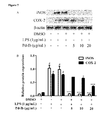
- FIG. 7 shows inhibitory effects of Pd-Ib on the iNOS and COX-2 in LPS-stimulated RAW-Blue cells.
- the protein levels of iNOS and COX-2 are determined by Western blotting, ⁇ -actin is used as a quantity control:
- A) shows representative images of Western blotting;
- B) shows protein levels of iNOS and COX-2 are calculated with Image J software. Data are derived from three independent experiments and presented as mean ⁇ SEM. # Compared with control group. *P ⁇ 0.05, **P ⁇ 0.01 and ***P ⁇ 0.001 are compared with LPS-alone group.
- FIG. 8 shows effects of pro-inflammatory factors release and nitric oxide production in LPS-stimulated RAW-Blue cells.
- macrophages are treated with 1 ⁇ g/mL of LPS in absence or presence various concentrations of Pd-Ib (5, 10, 20 ⁇ g/mL) for 20 hours, the mRNA levels of iNOS (A), TNF- ⁇ (B) and IL-1 ⁇ (C) are determined by real time PCR, while the production of NO (D) is determined by Griess reagent.
- Data are derived from three independent experiments and presented as mean ⁇ SEM, “con” stands for the vehicle control group. # Compared with control group. *P ⁇ 0.05, **P ⁇ 0.01 and ***P ⁇ 0.001 are compared with LPS-alone group.
- FIG. 9 shows the experimental design of animal model with DSS-induced colitis and treated with different concentrations of Pd-Ib or Sulfasalazine.
- FIG. 10 shows the effects of Pd-Ib on body weight change (A), disease activity index (B), and colon length (C and D) of mice with DSS-induced colitis.
- FIG. 11 shows effects of Pd-Ib on histological manifestation in DSS-induced chronic colitis in mice: (a) control; (b) 2% DSS-treated; (c) 2% DSS+sulfasalazine at 300 mg/kg/day for seven consecutive days; (d) 2% DSS+Pd-Ib at 30 mg/kg/day for seven consecutive days; (e) 2% DSS+Pd-Ib at 60 mg/kg/day for seven consecutive days; (f) 2% DSS+Pd-Ib at 120 mg/kg/day for seven consecutive days.
- FIG. 12 shows effects of Pd-Ib on suppress myeloperoxidase (MPO) activity in the colon of mice with DSS-induced colitis.
- FIG. 13 shows the effects of Pd-Ib on the production of cytokines in colon tissue of animals with DSS-induced colitis: (A) TNF- ⁇ levels; (B) IFN- ⁇ levels. (C) IL-6 levels; (D) IL-4 levels.
- LPS lipopolysaccharides, L3129
- MTT 3-[4,5-dimethylthiazol-2-yl]-2,5-diphenyltetrazoliumbromide
- DMSO dimethyl sulfoxide
- Griess reagent and all chemicals used are of HPLC grade from Sigma Chemical Co. (St. Louis, Mo., USA).
- iNOS IL-1 ⁇
- TNF- ⁇ Trizol
- SYBR Green Dulbecco's modified Eagle's medium
- ECL reagent ECL reagent
- fetal bovine serum penicillin and streptomycin
- BCA protein assay kit is supplied by Thermo Fisher Scientific (Waltham, Mass., USA).
- NF- ⁇ B, I ⁇ B- ⁇ , COX-2 and iNOS rabbit antibody are purchased from Cell Signaling Technology (Beverly, Mass., USA).
- ⁇ -Actin mouse antibody, anti-rabbit IgG and anti-mouse IgG are purchased from Santa Cruz Biotechnology (Santa Cruz, Calif., USA).
- QUANTI-Blue medium and Alexa Fluor568@ anti-rabbit IgG are purchased from Invivo Gen (San Diego, Calif., USA). Fractions are monitored and combined by thin layer chromatography (TLC). Spots are made visible by heating silica gel plates that had been immersed in 5% H 2 SO 4 in EtOH. Sulfasalazine is purchased from Sigma Corp. (Louis, USA). Dextran sulfate sodium (DSS; molecular weight: 36 to 50 kDa) is purchased from MP Biomedical (Santa Ana, Calif., USA).
- the dried roots of Bupleurum malconense are collected from Sichuan province of China.
- the plant material is identified and authenticated by Dr. Linfang Huang based on sequences of the plastid psbA-trnssel genetic region ( FIG. 1 )
- Air-dried pieces of Bupleurum malconense root (500 g) are extracted for three times by percolation in petroleum ether (1 L); the supernatant is concentrated and collected as the petroleum ether (PE) extract.
- the residue is extracted for three times by reflux in 80% ethanol at 60° C.; the solution is concentrated to yield 80% ethanol extract.
- the residue is further extracted by reflex in water (1 L) for three times to obtain the aqueous extract. Meanwhile, the 80% ethanol extract is dissolved in 200 mL of water in a separatory funnel, and then partitioned with ethyl acetate (200 mL ⁇ 3). The upper and lower layers are collected to yield the ethyl acetate extract and ethanol extract, respectively.
- the petroleum ether extract is subjected onto silica gel column chromatography (300-400 mesh, DAVISIL, Germany) using petroleum ether/ethyl acetate (PE/EtOAc) of increasing polarity as an eluent.
- Pd-Ib which is obtained from fraction 3 with 2.5% EtOAc in petroleum ether, is further purified using reverse phase HPLC (Waters system including a 2545 binary gradient module, a 2489 UV/Visible detector, a fraction collector III) on semi-preparative column Preparative RP-C 18 (Alltech Alltima-C 18 , 250 mm ⁇ 10.0 mm, 5 ⁇ m).
- the bioassay result and separation flow chart is showed in FIG. 2 .
- RAW-Blue cells (5 ⁇ 10 4 ) are cultured in 96-well plate for 24 hours, and then treated with LPS (1 ⁇ g/mL) alone or together with test samples for 20 hours.
- Secreted embryonic alkaline phosphatase (SEAP) activity in the conditioned medium is determined using QUANTI-Blue medium following manufacturer's manual. Briefly, 100 ⁇ L samples are added to 200 ⁇ L of QUANTI-Blue medium and incubated at 37° C. for 15 to 30 minutes. Absorbance is measured at 620 nm using a micro-plate reader (Benchmark plus Bio-Red, CA, USA) and fold change in SEAP activity is calculated accordingly.
- SEAP secreted embryonic alkaline phosphatase
- Raw-Blue cells are derived from RAW264.7 macrophages. Then the murine macrophage cell line of Raw-Blue cells is cultured in plastic dishes containing DMEM supplemented with 100 U/mL of penicillin, 100 ⁇ g/mL of streptomycin and 10% FBS in an incubator (5% CO 2 ) at 37° C. Cells are sub-cultured every 3 days at a dilution of 1:6.
- Cells (5 ⁇ 10 4 ) are cultured in 96-well plates for 24 hours. Then cells are cultured with various concentrations of Pd-Ib (1.25, 2.5, 5, 10, 20, 40, 80, 100 ⁇ g/mL) for 24 hours. After that, 10 ⁇ L of 5 mg/mL MTT is added to each well, and the cells are cultured in the dark for 3 hours. The medium is then discarded, and 100 ⁇ L of dimethyl sulfoxide (DMSO) is added into each well. After 15 min incubation, the optical density at 570 nm is read by using a micro-plate reader to determine the cell viability.
- Pd-Ib 1.25, 2.5, 5, 10, 20, 40, 80, 100 ⁇ g/mL
- 10 ⁇ L of 5 mg/mL MTT is added to each well, and the cells are cultured in the dark for 3 hours. The medium is then discarded, and 100 ⁇ L of dimethyl sulfoxide (DMSO) is added into each well. After 15 min incuba
- Total protein concentration is measured using a protein assay kit, followed by centrifugation at 13,500 rpm for 15 minutes at 4° C., then 10-25 ⁇ g of protein from the supernatants is then separated on 10% sodium dodecylsulphate-polyacrylamide gel (SDS-PAGE) and transferred on to polyvinylidene difluoride membranes.
- SDS-PAGE sodium dodecylsulphate-polyacrylamide gel
- the membrane After washing with TBST (3 ⁇ 10 min), the membrane is incubated with secondary antibody (1:2,000 dilution) in 5% skim milk in TBST for 1 h at room temperature. The membrane is rewashed (TBST; 3 ⁇ 10 min), and the immune-reactive proteins are detected by enhanced chemiluminescence using X-ray film and ECL reagent. The protein bands are quantified by measuring the relative intensity compared to the control using Image J Software (version 4.1.7, NIH, USA).
- Raw-Blue cells are cultured (20 ⁇ 10 4 cells/well) on glass coverslips and incubated for 24 hours. Cells are pretreated with various concentrations (5-20 ⁇ g/mL) of Pd-Ib for 2 hours. Then treated with LPS (1 ⁇ g/mL) for 20 hours. Subsequently, the coverslips are rinsed twice with PBS, and cells are fixed in 4% paraformaldehyde (PFA) in PBS at room temperature for 15 minutes. Cellular and nuclear membranes of the macrophages are permeabilized by treatment with 3% Triton X-100 in PBS for 15 minutes.
- PFA paraformaldehyde
- the cells After being blocked with 3% bovine serum albumin (BSA) in PBS for 1 hour, the cells is incubated with primary antibody in 3% BSA/PBS (1:500 dilution) at 4° C. overnight. After washing with PBS, the cells are incubated with the red-conjugated secondary antibody (1:500 dilution) in 3% BSA/PBS at room temperature for 1 hour and finally washed again for three time with PBS. Then, counter-staining is performed with DAPI (1:1,000 dilution) in 3% BSA/PBS nucleus with for 10 minutes. The cells are washed for three times with PBS, and then anti-fade mounting medium is added. Samples are observed under a fluorescence microscope.
- BSA bovine serum albumin
- Raw-Blue cells are plated at 20 ⁇ 10 5 cells/well in 12-well plate. After 24 hours of incubation, cells are pretreated with various concentrations (5-20 ⁇ g/mL) of Pd-Ib for 2 hours, followed by co-culturing with LPS (1 ⁇ g/mL) for 20 hours.
- Total RNA of Raw-Blue cells is extracted by Trizol reagent. Two micrograms (2 ⁇ g) of total RNA are reverse-transcribed with RT master mix to obtain cDNA.
- Real-time PCR is performed in a ViiA7 real-time PCR instrument (Applied Biosystems, Life Technologies, CA, USA) with the SYBR Green kit. A melting curve analysis is carried out after amplification to verify the accuracy of the amplicon. The comparative cycle of threshold ( ⁇ C T ) method of relative quantification is used to determine the fold-change in expression.
- Primer sequences for mRNA analysis of IL-1 ⁇ , TNF- ⁇ , iNOS and ⁇ -Actin are described in Table 1.
- Nitric oxide (NO) production is indirectly assessed by measuring the nitrite levels in the cultured medium determined by a colorimetric method based on the Griess reagent and sodium nitrite as a standard substance.
- the cells are pretreated with various concentrations of Pd-Ib (5-20 ⁇ g/mL). Two hours later, cells are incubated for another 20 hours in the presence of LPS (1 ⁇ g/mL) at 37° C. Then, 100 ⁇ L of each supernatant is mixed with the equal volume of Griess reagent. The samples are incubated at room temperature for 15 min. The optical densities are measured at 540 nm with a micro-plate reader and nitrite concentration is determined using a standard curve generated with known concentrations of sodium nitrite.
- 6-week-old male C57BL/6 mice weighing 18-20 g are purchased from the Laboratory Animal Services Center, the Chinese University of Hong Kong. The study protocols are approved by the committee for Care of Laboratory Animals in the School of Chinese Medicine at the Hong Kong Institution University.
- control group mice received drinking water and control diet
- DSS-treated group mice received 2.0% DSS in drinking and control diet
- positive control group mice received 2.0% DSS in drinking and ip, 300 mg/kg/day of sulfasalazine
- Pd-Ib treatment groups will be given different dosed of Pd-Ib (mice received 2.0% DSS in drinking and i.p., 30, 60, or 120 mg/kg/day, respectively).
- mice are given tap water for 6 days, and then be divided into 6 groups.
- DSS is dissolved in distilled water at a concentration of 2% (w/v) and administered to the mice.
- the first day and the last day of DSS treatment are designated as day 7 and day 11, respectively.
- Mice are marked and checked daily for body weight. On day 12, body weight, stool consistency, and gross bleeding of each mouse are assessed, and animals showing body weight loss, diarrhea, and bleeding are selected for further analysis. All colitis mice are then interventions once daily for seven days, with eight mice in each group.
- the DSS model group is administered with tap water as negative control; while sulfasalazine is given as positive control (i.p., 300 mg/kg/day) and Pd-Ib treatment groups are given different doses of Pd-Ib (i.p., 30, 60, or 120 mg/kg/day, respectively).
- a vehicle control group is also set up to receive drinking tap water without DSS throughout the entire experimental period. On day 19, after the mice are killed under anesthesia induced by pentobarbital sodium (i.p., 0.65 g/kg), the length of the large intestine is measured. All portions are stored at ⁇ 80° C. for biochemical assays.
- the DAI is determined by scoring changes in the body weight, diarrhea, colon length, and bleeding. Each score is given in Table 2. In brief, body weight, stool consistency, colon length and bleeding in the stool are monitored daily for determination of DAI. At the end of the experiment, mice are killed, and the colon is dissected from each mouse, and the length of which is measured from the ileocecal junction to the anal verge.
- the colons are opened longitudinally, gently washed with ice-cold PBS, fixed in 4% paraformaldehyde overnight, and embedded in paraffin. Five-micro-meter sections are stained with hematoxylin/eosin according to a standard procedure to evaluate colonic damage. The histological scoring system is shown in Table 3.
- MPO Myeloperoxidase
- neutrophil neutrophil
- MPO activity is measured as described in our previous study. Briefly, the colon tissues kept at ⁇ 80° C. are weighed and homogenized in 0.5% hexadecyltrimethylammonium bromide 1 mL per 100 mg of colon tissue. The homogenates are centrifuged at 19 000 rpm at 4° C. for 15 min. Aliquots of 80 iL supernatant are mixed with 120 ⁇ L potassium phosphate buffer (50 mmol, pH 6.0) with 0.0005% o-dianisidine dihydrochloride and 0.1% hydrogen peroxide.
- MPO activity is calculated from the rate of optical density changes and one unit of MPO activity is defined as the amount of enzyme present that produced a change in optical density of 1.0 U/min at 25° C. in the final reaction volume. The results are normalized to the wet weight of colon tissue and quantified as units/mg tissue.
- Colon levels of cytokines are assayed using commercially available ELISA kits. Briefly, colon samples are homogenized in phosphate buffer containing 0.05% Tween-20, 0.1 mM phenylmethylsulfonyl fluoride, 0.1 mM benzethonium chloride, 10 mM EDTA, and 20 IU aprotinin A. The homogenates are centrifuged at 16000 g at 4° C. for 15 min, and the supernatants are collected for the determination of levels of the cytokines, IL-6, IL-4, TNF- ⁇ , and IFN- ⁇ , according to the manufacturer's protocols. The amount of protein in each sample is measured by the Bradford method, using bovine serum albumin as a standard. The levels of each cytokine are evaluated in each sample and expressed in ⁇ g/mL.
- PE extract exerts significant inhibitory effect of SEAP activity compared with LPS group (18.19 ⁇ 0.967%).
- the PE extract is subjected to silica gel chromatography using PE/EtOAc as an eluent and 8 fractions are collected. Since the SEAP activity is significantly inhibited by Fr.3 (30.661 ⁇ 2.546%), further purification is carried out to isolate one pure compound.
- the spectral data ( FIG. 3 ) are identical to those reported in Wang X. B., et.
- the cytotoxic effect of Pd-Ib on Raw-Blue cells is tested with the MTT assay. As shown in FIG. 4 , the Pd-Ib of the present invention does not exhibit cytotoxic effect at dosages ranging from 1.56 to 20 ⁇ g/mL, while cell viability is reduced when macrophages are treated with Pd-Ib at doses of 40, 80, and 100 ⁇ g/mL.
- Pd-Ib Inhibits the Nuclear Translocation of NF-KB and Decreases Degradation of IKB- ⁇ in LPS-Stimulated Raw-Blue Cells
- the SEAP activity in the supernatants of LPS-stimulated RAW-Blue cells reflects the activation of NF- ⁇ B.
- the inhibition of the NF- ⁇ B activation can associate with mitigation of colon inflammation responses and apoptosis of intestinal epithelial cells in DSS mouse model.
- Western blotting and immunofluorescence analysis are performed to determine whether Pd-Ib depressed NF- ⁇ B activation.
- the effect of Pd-Ib on LPS-induced I ⁇ B- ⁇ degradation is investigated to examine the molecular mechanisms by which Pd-Ib inhibits NF- ⁇ B transcriptional activity. As shown in FIG. 5 , Pd-Ib inhibits I ⁇ B- ⁇ degradation in a dose-dependent manner compared to the LPS-stimulated macrophage.
- the immunofluorescence result shows that a low level of p65 activity is observed in the control group. It also revealed that treatment with Pd-Ib significantly inhibits the p65 nuclear translocation compared to the LPS-stimulated macrophage ( FIG. 6 ).
- Pd-Ib Suppresses the Expressions of iNOS and Cox-2 in LPS-Stimulated Raw-Blue Cell
- COX-2 and iNOS are the important enzymes that mediate inflammatory pathways.
- High expression levels will cause intestinal inflammation with motility dysfunction (Tajima et al., “EP2 and EP4 receptors on muscularis resident macrophages mediate LPS-induced intestinal dysmotility via iNOS upregulation through cAMP/ERK signals”, Am J Physiol Gastrointest Liver Physiol 2012, 302: G524-534).
- Western blotting analysis shows that Pd-Ib strongly down-regulates iNOS and COX-2 protein levels in a dose-dependent manner ( FIG. 7A ). The intensity of protein bands are analyzed and the results are shown in FIG. 7B .
- Pd-Ib Inhibits the mRNA Expressions of TNF- ⁇ and IL-1 ⁇ in LPS-Stimulated Raw-Blue Cells
- TNF- ⁇ and IL-1 ⁇ are produced in the early stage of inflammatory response and play important roles in varies inflammatory cascades.
- Real-time PCR experiments are performed to examine the expression of pro-inflammatory cytokines following LPS treatment. As shown in FIG. 8B and FIG. 8C .
- Pd-Ib could inhibit the mRNA expressions of TNF- ⁇ and IL-1 ⁇ in a dose-dependent manner, while LPS stimulation of macrophages causes an increase in their expressions.
- nitric oxide is a critical mediator of a variety of biological functions; however, production of excessive amounts of NO leads to inflammatory responses or tissue injury (Aktan F: iNOS-mediated nitric oxide production and its regulation. Life Sci 2004, 75: 639-653).
- Aktan F iNOS-mediated nitric oxide production and its regulation. Life Sci 2004, 75: 639-653.
- the effect of Pd-Ib on NO production is investigated using Griess reagent. As shown in FIG. 8D , stimulation with LPS results in a significant increase in NO production compared with the control group while treatment with Pd-Ib at 5, 10, 20 ⁇ g/mL led to 17.64 ⁇ 2.96%, 29.82 ⁇ 1.34% and 55.45 ⁇ 1.15% inhibition of NO production, respectively.
- Pd-Ib is isolated from Bupleurum malconense for the first time, and it is found to have excellent anti-inflammatory activities. To date, little is known about the role of Pd-Ib in anti-inflammatory effects. It is demonstrated that Pd-Ib suppresses LPS-induced inflammatory responses in macrophage Raw-Blue cells.
- SEAP is a widely use reporter gene widely used to screen immune-pharmacological activity upon the activation of NF- ⁇ B and activator protein 1 (AP-1).
- I ⁇ B- ⁇ which is the inhibitory subunit of NF- ⁇ B
- AP-1 activator protein 1
- NF- ⁇ B releases from the I ⁇ B- ⁇ subunit and translocates to the nucleus, where it increases the expression of the genes for many cytokines, enzymes and adhesion molecules.
- Pd-Ib is shown to significantly inhibit LPS-stimulated degradation of I ⁇ B- ⁇ and nuclear translocation of NF- ⁇ B.
- the pro-inflammatory cytokines including TNF- ⁇ and IL-1 ⁇ , play an important role in the mediation of inflammatory processes. When those mediators are overproduced, they lead to various diseases. Thus, the inhibition of pro-inflammatory cytokines release may help attenuate the inflammatory response.
- the result in the present invention indicates that Pd-Ib could significantly down-regulate the mRNAs expression of TNF- ⁇ and IL-1 ⁇ in a dose-dependent manner.
- the present invention firstly reports the isolation of Pd-Ib from Bupleurum malconense and demonstrates Pd-Ib's anti-inflammatory effect in LPS-stimulated macrophages.
- This beneficial effect in alleviating the inflammatory response of TNF- ⁇ , IL-1 ⁇ , NO and iNOS in LPS-stimulated Raw-Blue cells can be caused by down-regulating iNOS and COX-2 protein expression via the blockade of NF- ⁇ B activation. It is concluded that the petroleum ether extract of Bupleurum malconense is efficacious for the treatment of inflammatory disease; meanwhile, Pd-Ib could be a potential anti-inflammatory agent.
- the present invention will be undertaken to evaluate the possible effect of Pd-Ib in a model of chronic DSS-induced colitis in mice with the aid of macroscopic and histological analyses, to determine the key pro-inflammatory mediators involved in IBD development.
- DSS-induced colitis is one of the most common models with several characteristics resembling human ulcerative colitis.
- mice exposed to DSS drinking water develop typical symptoms of clinical colitis, including body weight loss, diarrhea, rectal bleeding and diarrhea.
- mice in groups treated with Pd-Ib at 120 mg/kg/day recover the body weight loss significantly compared with that of DSS model group after 10 days (p ⁇ 0.05).
- Pd-Ib is mildly effective in preventing body weight loss at 30 mg/kg/day and 60 mg/kg/day.
- Pd-Ib also leads to clinical improvement of DSS-induced colitis, as reflected in the DAI, colon length and the histological disease score.
- D human is equivalent dosage for adult human
- D mouse is dosage for mouse
- the lower dosage of Pd-Ib for mouse is 30 mg/kg/day; medium dosage for mouse is 60 mg/kg/day; higher dosage for mouse is 120 mg/kg/day, in which the dosage of 120 mg/kg/day for mouse is most effective in treating inflammation or inflammatory diseases in terms of preventing weight loss in the mouse model, having the lower DAI score which is comparable to untreated mice, preventing reduction in colon length, and preventing rectal bleeding found in stool.
- Colitis is induced in all groups except the control group.
- Pd-Ib and sulfasalazine are administered to mice from day 6 to day 12.
- the change in body weight is taken as the difference between the body weight before induction of colitis and that immediately before sacrifice on day 13.
- Hematoxylin and eosin staining images of representative colons are shown at magnifications of 10 ⁇ (a, control group; b, DSS model group; c, DSS plus sulfasalazine 300 mg/kg/day group; d, DSS plus Pd-Ib 30 mg/kg/day group; e, DSS plus Pd-Ib 60 mg/kg/day group; f, DSS plus Pd-Ib 120 mg/kg/day group).
- FIG. 11 the present invention shows that DSS treatment ( FIG. 11 b ) can cause typical inflammatory changes in colon architecture, including mucosal ulceration, crypt damage, edema, and cell infiltration into mucosal tissue, which compared with the control group ( FIG. 11 a ).
- the sulfasalazine treatment group can significantly decrease the damage of colon tissues.
- Pd-Ib exhibits a clinical improvement in DSS-induced colitis, which is reflected in the DAI score.
- Colon tissue sections from mice treated with Pd-Ib exhibits far fewer infiltrating cells, a significantly lower degree of mucosal injury, and less edema at different dosage treatment (as shown in FIGS. 11 d, e , and f ).
- Colitis is induced in all groups except the control group.
- Colitis is induced in all groups except the control group.
- the present invention indicates that Pd-Ib is effective in alleviating the symptoms of DSS-induced chronic colitis, proving that Pd-Ib is an effective agent in treatment against ulcerative colitis.
- the present invention is in the field of pharmaceuticals and chemical industries.
- the present invention relates to a compound, namely (+)-3′-Angeloyloxy-4′-keto-3,4′-dihydroseselin (Pd-Ib), which is isolated from Bupleurum malconense .
- the present invention also includes the methods of preparation and use thereof for treating inflammation, such as in alleviating the symptoms of DSS-induced chronic colitis and as an effective treatment against ulcerative colitis.
Landscapes
- Health & Medical Sciences (AREA)
- Chemical & Material Sciences (AREA)
- Medicinal Chemistry (AREA)
- Pharmacology & Pharmacy (AREA)
- Epidemiology (AREA)
- Life Sciences & Earth Sciences (AREA)
- Animal Behavior & Ethology (AREA)
- General Health & Medical Sciences (AREA)
- Public Health (AREA)
- Veterinary Medicine (AREA)
- Nutrition Science (AREA)
- Physiology (AREA)
- Pharmaceuticals Containing Other Organic And Inorganic Compounds (AREA)
Abstract
Description

| TABLE 1 |
| Sequence of primers used in real-time PCR |
| Gene | Primer | Sequence (5′-3′) | SEQ ID No. | |
| | Sense | CACCTTGGAGTTCACCCAGT | 1 | |
| | ACCACTCGTACTTGGGATGC | 2 | ||
| TNF- | Sense | CTGTGAAGGGAATGGGTGTT | 3 | |
| | GGTCACTGTCCCAGCATCTT | 4 | ||
| IL- | Sense | GCTGAAGGAGTTGCCAGAAA | 5 | |
| | GTGCAAGTGACTCAGGGTGA | 6 | ||
| β- | Sense | GGTGAAGGTCGGTGGAACG | 7 | |
| | CTCGCTCCTGGAAGATGGTG | 8 | ||
| TABLE 2 |
| Disease Activity Index Scores Based on Disease Marker Intensities |
| Body weight | Diarrhea | ||
| Score | loss (%) | (stool consistency) | Rectal bleeding |
| 0 | |
0 | negative |
| 1 | 1-5 | 1 | faintly blue |
| 2 | 6-10 | 2 | moderately blue |
| 3 | 10-15 | 3 | dark blue |
| 4 | >15 | 4 | dark blue, |
| prolapse | |||
| TABLE 3 |
| Histological Scoring System for DSS-Induced Colitis |
| Scoring of severity of histological damage |
| Feature | Score | Description |
| Severity of | 0 | |
| inflammation | ||
| 1 | mild | |
| 2 | moderate | |
| 3 | severe | |
| Extent of | 0 | |
| inflammation | ||
| 1 | |
|
| 2 | mucosa and |
|
| 3 | | |
| Crypt damage | ||
| 0 | |
|
| 1 | ⅓ damaged | |
| 2 | ⅔ damaged | |
| 3 | crypt loss by surface | |
| epithelium present | ||
| 4 | both crypt and surface | |
| epithelium lost | ||
D human =D mouse ×k(k=0.081)
Lower dosage of Pd-Ib for human=D mouse ×k=30 mg/kg/day×0.081=2.43 mg/kg/day;
Medium dosage for human=D mouse ×k=60 mg/kg/day×0.081=4.86 mg/kg/day;
Higher dosage for human=D mouse ×k=120 mg/kg/day×0.081=9.72 mg/kg/day.
Claims (6)

Priority Applications (1)
| Application Number | Priority Date | Filing Date | Title |
|---|---|---|---|
| US14/742,727 US9408828B2 (en) | 2014-06-18 | 2015-06-18 | (+)-3′-angeloyloxy-4′-keto-3′,4′-dihydroseselin for treating inflammation |
Applications Claiming Priority (3)
| Application Number | Priority Date | Filing Date | Title |
|---|---|---|---|
| US201462013556P | 2014-06-18 | 2014-06-18 | |
| US201462013566P | 2014-06-18 | 2014-06-18 | |
| US14/742,727 US9408828B2 (en) | 2014-06-18 | 2015-06-18 | (+)-3′-angeloyloxy-4′-keto-3′,4′-dihydroseselin for treating inflammation |
Publications (2)
| Publication Number | Publication Date |
|---|---|
| US20150366841A1 US20150366841A1 (en) | 2015-12-24 |
| US9408828B2 true US9408828B2 (en) | 2016-08-09 |
Family
ID=54868657
Family Applications (1)
| Application Number | Title | Priority Date | Filing Date |
|---|---|---|---|
| US14/742,727 Active US9408828B2 (en) | 2014-06-18 | 2015-06-18 | (+)-3′-angeloyloxy-4′-keto-3′,4′-dihydroseselin for treating inflammation |
Country Status (1)
| Country | Link |
|---|---|
| US (1) | US9408828B2 (en) |
Citations (1)
| Publication number | Priority date | Publication date | Assignee | Title |
|---|---|---|---|---|
| US20050222245A1 (en) * | 2002-04-09 | 2005-10-06 | Elcom Biotechnology, Co., Ltd. | Pyranocoumarin derivatives |
-
2015
- 2015-06-18 US US14/742,727 patent/US9408828B2/en active Active
Patent Citations (1)
| Publication number | Priority date | Publication date | Assignee | Title |
|---|---|---|---|---|
| US20050222245A1 (en) * | 2002-04-09 | 2005-10-06 | Elcom Biotechnology, Co., Ltd. | Pyranocoumarin derivatives |
Non-Patent Citations (39)
Also Published As
| Publication number | Publication date |
|---|---|
| US20150366841A1 (en) | 2015-12-24 |
Similar Documents
| Publication | Publication Date | Title |
|---|---|---|
| Nguyen et al. | Antipyretic, anti-inflammatory and analgesic activities of Periplaneta americana extract and underlying mechanisms | |
| Bao et al. | Genkwanin ameliorates adjuvant-induced arthritis in rats through inhibiting JAK/STAT and NF-κB signaling pathways | |
| Su et al. | Calycosin suppresses expression of pro-inflammatory cytokines via the activation of p62/Nrf2-linked heme oxygenase 1 in rheumatoid arthritis synovial fibroblasts | |
| Arçari et al. | Antiobesity effects of yerba maté extract (Ilex paraguariensis) in high‐fat diet–induced obese mice | |
| Pan et al. | Ethanol extract of Liriodendron chinense (Hemsl.) Sarg barks attenuates hyperuricemic nephropathy by inhibiting renal fibrosis and inflammation in mice | |
| Li et al. | Investigation of constituents from Cinnamomum camphora (L.) J. Presl and evaluation of their anti-inflammatory properties in lipopolysaccharide-stimulated RAW 264.7 macrophages | |
| Vijayakumar et al. | Hypolipidemic effect of fenugreek seeds is mediated through inhibition of fat accumulation and upregulation of LDL receptor | |
| Ahmad et al. | Naringin attenuates the development of carrageenan-induced acute lung inflammation through inhibition of NF-κb, STAT3 and pro-inflammatory mediators and enhancement of IκBα and anti-inflammatory cytokines | |
| Akram et al. | Potent anti-inflammatory and analgesic actions of the chloroform extract of Dendropanax morbifera mediated by the Nrf2/HO-1 pathway | |
| Shepherd et al. | A medicinal plant compound, capnoidine, prevents the onset of inflammation in a mouse model of colitis | |
| Chen et al. | Natural alkaloids from lotus plumule ameliorate lipopolysaccharide-induced depression-like behavior: integrating network pharmacology and molecular mechanism evaluation | |
| Wu et al. | The extract of Sonneratia apetala leaves and branches ameliorates hyperuricemia in mice by regulating renal uric acid transporters and suppressing the activation of the JAK/STAT signaling pathway | |
| Wang et al. | Phytoestrogenic molecule desmethylicaritin suppressed adipogenesis via Wnt/β-catenin signaling pathway | |
| Zhang et al. | Hepatoprotective effect of Xiayuxue decoction ethyl acetate fraction against carbon tetrachloride-induced liver fibrosis in mice via inducing apoptosis and suppressing activation of hepatic stellate cells | |
| Kang et al. | Wasabia japonica is a potential functional food to prevent colitis via inhibiting the NF-κB signaling pathway | |
| JP2020508287A (en) | New low-toxic raikoto glycoside, method for producing the same and use thereof | |
| Zhang et al. | Protective roles of Xijiao Dihuang Tang on coronary artery injury in Kawasaki disease | |
| Yang et al. | Protective effect of fuzi lizhong decoction against non-alcoholic fatty liver disease via anti-inflammatory response through regulating p53 and PPARG signaling | |
| Bindhu et al. | An edible fungi Pleurotus ostreatus inhibits adipogenesis via suppressing expression of PPAR γ and C/EBP α in 3T3-L1 cells: In vitro validation of gene knock out of RNAs in PPAR γ using CRISPR spcas9 | |
| Yeh et al. | Identification of scoparone from Chinese olive fruit as a modulator of macrophage polarization | |
| Song et al. | Acanthoic acid suppresses lipin1/2 via TLR4 and IRAK4 signalling pathways in EtOH-and lipopolysaccharide-induced hepatic lipogenesis | |
| Ha et al. | Adlay seed extract (Coix lachryma-jobi L.) decreased adipocyte differentiation and increased glucose uptake in 3T3-L1 cells | |
| Bashir et al. | In vitro assessment of anti-adipogenic and anti-inflammatory properties of black cumin (Nigella sativa L.) seeds extract on 3T3-L1 adipocytes and RAW264. 7 macrophages | |
| Zhang et al. | XCHT alleviates the pancreatic fibrosis via VDR/NLRP3 signaling pathway in a mouse model of CP | |
| Qiu et al. | Effect of Qingyitang on activity of intracellular Ca2+-Mg2+-ATPase in rats with acute pancreatitis |
Legal Events
| Date | Code | Title | Description |
|---|---|---|---|
| AS | Assignment |
Owner name: CHANGSHU RESEARCH INSTITUTE OF HONG KONG BAPTIST U Free format text: ASSIGNMENT OF ASSIGNORS INTEREST;ASSIGNORS:BIAN, ZHAOXIANG;MU, HUAIXUE;LIN, CHENGYUAN;AND OTHERS;SIGNING DATES FROM 20140529 TO 20150615;REEL/FRAME:035954/0348 Owner name: HONG KONG BAPTIST UNIVERSITY, HONG KONG Free format text: ASSIGNMENT OF ASSIGNORS INTEREST;ASSIGNORS:BIAN, ZHAOXIANG;MU, HUAIXUE;LIN, CHENGYUAN;AND OTHERS;SIGNING DATES FROM 20140529 TO 20150615;REEL/FRAME:035954/0348 |
|
| STCF | Information on status: patent grant |
Free format text: PATENTED CASE |
|
| AS | Assignment |
Owner name: CHANGSHU HKBU TECHNOLOGY COMPANY LIMITED, CHINA Free format text: CORRECTIVE ASSIGNMENT TO CORRECT THE SECOND ASSIGNEE'S NAME AND THE SECOND ASSIGNEE'S ADDRESS PREVIOUSLY RECORDED AT REEL: 035954 FRAME: 0348. ASSIGNOR(S) HEREBY CONFIRMS THE ASSIGNMENT;ASSIGNORS:BIAN, ZHAOXIANG;MU, HUAIXUE;LIN, CHENGYUAN;AND OTHERS;SIGNING DATES FROM 20140529 TO 20150615;REEL/FRAME:039484/0653 Owner name: HONG KONG BAPTIST UNIVERSITY, HONG KONG Free format text: CORRECTIVE ASSIGNMENT TO CORRECT THE SECOND ASSIGNEE'S NAME AND THE SECOND ASSIGNEE'S ADDRESS PREVIOUSLY RECORDED AT REEL: 035954 FRAME: 0348. ASSIGNOR(S) HEREBY CONFIRMS THE ASSIGNMENT;ASSIGNORS:BIAN, ZHAOXIANG;MU, HUAIXUE;LIN, CHENGYUAN;AND OTHERS;SIGNING DATES FROM 20140529 TO 20150615;REEL/FRAME:039484/0653 |
|
| CC | Certificate of correction | ||
| MAFP | Maintenance fee payment |
Free format text: PAYMENT OF MAINTENANCE FEE, 4TH YR, SMALL ENTITY (ORIGINAL EVENT CODE: M2551); ENTITY STATUS OF PATENT OWNER: SMALL ENTITY Year of fee payment: 4 |
|
| AS | Assignment |
Owner name: HONG KONG BAPTIST UNIVERSITY, HONG KONG Free format text: ASSIGNMENT OF ASSIGNORS INTEREST;ASSIGNOR:CHANGSHU HKBU TECHNOLOGY COMPANY LIMITED;REEL/FRAME:055114/0720 Effective date: 20210125 |
|
| MAFP | Maintenance fee payment |
Free format text: PAYMENT OF MAINTENANCE FEE, 8TH YR, SMALL ENTITY (ORIGINAL EVENT CODE: M2552); ENTITY STATUS OF PATENT OWNER: SMALL ENTITY Year of fee payment: 8 |