US9398564B2 - Channel selection in a wireless network - Google Patents

Channel selection in a wireless network Download PDF

Info

Publication number
US9398564B2
US9398564B2 US13/404,693 US201213404693A US9398564B2 US 9398564 B2 US9398564 B2 US 9398564B2 US 201213404693 A US201213404693 A US 201213404693A US 9398564 B2 US9398564 B2 US 9398564B2
Authority
US
United States
Prior art keywords
channel
entry
exclusion
timer
announcement
Prior art date
Legal status (The legal status is an assumption and is not a legal conclusion. Google has not performed a legal analysis and makes no representation as to the accuracy of the status listed.)
Expired - Fee Related, expires
Application number
US13/404,693
Other versions
US20120225683A1 (en
Inventor
Gary Matulis
Magued Barsoum
Owais Hassan
John Pacheco
Current Assignee (The listed assignees may be inaccurate. Google has not performed a legal analysis and makes no representation or warranty as to the accuracy of the list.)
General Dynamics Mission Systems Inc
Original Assignee
General Dynamics C4 Systems Inc
Priority date (The priority date is an assumption and is not a legal conclusion. Google has not performed a legal analysis and makes no representation as to the accuracy of the date listed.)
Filing date
Publication date
Application filed by General Dynamics C4 Systems Inc filed Critical General Dynamics C4 Systems Inc
Priority to US13/404,693 priority Critical patent/US9398564B2/en
Assigned to GENERAL DYNAMICS C4 SYSTEMS, INC. reassignment GENERAL DYNAMICS C4 SYSTEMS, INC. ASSIGNMENT OF ASSIGNORS INTEREST (SEE DOCUMENT FOR DETAILS). Assignors: PACHECO, JOHN, BARSOUM, MAGUED, MATULIS, GARY, HASSAN, OWAIS
Publication of US20120225683A1 publication Critical patent/US20120225683A1/en
Assigned to GENERAL DYNAMICS ADVANCED INFORMATION SYSTEMS, INC. reassignment GENERAL DYNAMICS ADVANCED INFORMATION SYSTEMS, INC. MERGER (SEE DOCUMENT FOR DETAILS). Assignors: GENERAL DYNAMICS C4 SYSTEMS, INC.
Assigned to GENERAL DYNAMICS MISSION SYSTEMS, INC reassignment GENERAL DYNAMICS MISSION SYSTEMS, INC MERGER AND CHANGE OF NAME (SEE DOCUMENT FOR DETAILS). Assignors: GENERAL DYNAMICS ADVANCED INFORMATION SYSTEMS, INC., GENERAL DYNAMICS MISSION SYSTEMS, LLC
Assigned to GENERAL DYNAMICS ADVANCED INFORMATION SYSTEMS, INC. reassignment GENERAL DYNAMICS ADVANCED INFORMATION SYSTEMS, INC. MERGER (SEE DOCUMENT FOR DETAILS). Assignors: GENERAL DYNAMICS C4 SYSTEMS, INC.
Assigned to GENERAL DYNAMICS MISSION SYSTEMS, INC. reassignment GENERAL DYNAMICS MISSION SYSTEMS, INC. MERGER (SEE DOCUMENT FOR DETAILS). Assignors: GENERAL DYNAMICS ADVANCED INFORMATION SYSTEMS, INC.
Application granted granted Critical
Publication of US9398564B2 publication Critical patent/US9398564B2/en
Expired - Fee Related legal-status Critical Current
Adjusted expiration legal-status Critical

Links

Images

Classifications

    • HELECTRICITY
    • H04ELECTRIC COMMUNICATION TECHNIQUE
    • H04WWIRELESS COMMUNICATION NETWORKS
    • H04W72/00Local resource management
    • H04W72/04Wireless resource allocation
    • HELECTRICITY
    • H04ELECTRIC COMMUNICATION TECHNIQUE
    • H04WWIRELESS COMMUNICATION NETWORKS
    • H04W24/00Supervisory, monitoring or testing arrangements
    • H04W24/02Arrangements for optimising operational condition
    • HELECTRICITY
    • H04ELECTRIC COMMUNICATION TECHNIQUE
    • H04WWIRELESS COMMUNICATION NETWORKS
    • H04W84/00Network topologies
    • H04W84/18Self-organising networks, e.g. ad-hoc networks or sensor networks

Definitions

  • the present disclosure generally relates to methods and systems for communicating in a wireless network, and more particularly to methods and systems for selecting a channel in a wireless network.
  • a wireless network includes at least two network nodes sending and receiving data therebetween on a certain wireless channel.
  • One such wireless network is a mobile mesh network that may or may not be connected to a network outside of the mesh network.
  • the mesh network will include many more than two nodes, referred to as mesh points, which may be spread out over a large area.
  • the mesh network is not necessarily fully connected.
  • mesh points in the network communicate over a single channel or some subset of available channels. In order to maintain all communicating mesh points on the same channel or subset of channels, the operator selects a channel and configures all mesh points with the same channel.
  • some channels are less desirable for a number of reasons such as interference, signal quality, or the presence or susceptibility to radar interference.
  • Some mesh points perform dynamic frequency selection where the presence of radar on a particular frequency is detected and a different frequency is chosen.
  • the new frequency may be elected based on a tie-breaking method where the elected channel may not necessarily be the best channel, but is one that was chosen through an arbitrary or sub-optimal process.
  • a method includes receiving a first announcement that includes channel exclusion information from a first mesh point; managing a distributed channel exclusion list based on the announcement; and generating a second announcement to the first mesh point based on the channel exclusion list.
  • FIG. 1 is a block diagram of an exemplary wireless communication system that includes a channel management system in accordance with exemplary embodiments;
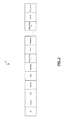
  • FIG. 2 is a block diagram illustrating data of a channel exclusion announcement that is processed by the channel management system in accordance with exemplary embodiments;
  • FIG. 3 is a dataflow diagram illustrating a channel manager module of the wireless communication system in accordance with exemplary embodiments
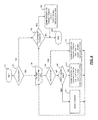
  • FIG. 4 is a flowchart illustrating a channel management method that may be implemented by the channel manager module in accordance with exemplary embodiments.
  • FIG. 5 is a flowchart illustrating a channel management method that may be implemented by the channel manager module in accordance with other exemplary embodiments.
  • module refers to any hardware, software, firmware, electronic control component, processing logic, and/or processor device, individually or in any combination, including, without limitation: an application specific integrated circuit (ASIC), an electronic circuit, a processor (shared, dedicated, or group) and memory that executes one or more software or firmware programs, a combinational logic circuit, and/or other suitable components that provide the described functionality.
  • ASIC application specific integrated circuit
  • processor shared, dedicated, or group
  • memory executes one or more software or firmware programs, a combinational logic circuit, and/or other suitable components that provide the described functionality.
  • FIG. 1 an exemplary wireless communication system for providing communications between one or more nodes or mesh points (hereinafter referred to as mesh points) is shown to include a channel management system in accordance with exemplary embodiments.
  • mesh points nodes or mesh points
  • FIG. 1 is merely illustrative and may not be drawn to scale.
  • an exemplary wireless network 10 is shown to include a plurality of mesh points 12 a - 12 n .
  • the mesh points 12 a - 12 n communicate over a particular channel (e.g., channel 100 ) or a subset of channels.
  • mesh point 12 a can communicate with mesh point 12 b and mesh point 12 n .
  • Mesh point 12 b can communicate with mesh point 12 a , mesh point 12 c , and mesh point 12 n .
  • Mesh point 12 c can communicate with mesh point 12 b , and mesh point 12 n .
  • Mesh point 12 n can communicate with mesh point 12 b and mesh point 12 c .
  • Mesh point 12 a cannot communicate directly with mesh point 12 c however, can communicate indirectly through mesh point 12 b or mesh point 12 n.
  • Each mesh point 12 a - 12 n includes a channel manager module 14 that sends information about excluded channels learned locally and excluded channels learned from other mesh points 12 a - 12 n in the form of a channel exclusion announcement (CEA) 16 .
  • CEAs 16 may be exchanged as part of a beacon or other period messages sent by the mesh point 12 a - 12 n .
  • the CEAs 16 may include information such as, but not limited to, a regulatory class of the excluded channels, the excluded channels, and a distance from the originator of the exclusion for each excluded channel.
  • FIG. 2 illustrates one embodiment of the CEA 16 , with each field described in Table 1 below.
  • the channel manager module 14 maintains a global exclusion list 18 of invalid channels.
  • the channel may be considered invalid because radar was detected on the channel, or operator configuration specifies a channel is not to be used.
  • the exclusion list 18 includes one or more entries 20 a - 20 n (e.g., one for each excluded channel).
  • Each entry 20 a - 20 n includes fields 22 - 28 .
  • Each field 22 - 28 stores information for a particular excluded channel.
  • the fields include, for example, but are not limited to, an excluded channel 22 , a distance 24 , a count 26 or other timing mechanism, and a hold count 28 or other timing mechanism.
  • the distance 24 is used to prevent a given excluded channel from being endlessly propagated throughout the wireless network 10 .
  • the distance 24 of an originator of the exclusion is set to zero.
  • the distance 24 is incremented. If the distance 24 for the excluded channel is greater than the distance 24 stored in the exclusion list 18 for that excluded channel, the excluded channel is ignored.
  • the count 26 is used to remove excluded channels from the exclusion list 18 after an event has occurred.
  • the count 26 may be used as an aging mechanism to ensure that entries corresponding to radar events are removed after X time has passed; and/or to ensure entries corresponding to a mesh points 12 a - 12 n with a statically configured excluded channel are removed from the exclusion list 18 when the mesh point 12 a - 12 n leaves the wireless network 10 .
  • the hold count 28 is used to allow time for an excluded channel to be aged out of neighboring exclusion lists 18 of neighboring mesh points 12 a - 12 n .
  • the hold count 28 may be used as an aging mechanism to hold the excluded channel in the list until Y time has passed.
  • a dataflow diagram illustrates various embodiments of the channel manager module 14 for the wireless network 10 that may be embedded within a mesh point 12 a - 12 n .
  • Various embodiments of channel manager modules 14 according to the present disclosure may include any number of sub-modules embedded within the mesh point 12 a - 12 n .
  • the sub-modules shown in FIG. 2 may be combined and/or further partitioned to similarly manage channel selection in the wireless network 10 .
  • the channel manager module 14 includes a list manager module 30 , a channel data communication module 32 , and an exclusion list datastore 34 .
  • the list manager module 30 receives as input one or more channel exclusion announcements 36 a - 36 n . Based on the received channel exclusion announcements 36 a - 36 n , the list manager module 30 generates exclusion data 38 and stores the exclusion data 38 as the channel exclusion list 18 in the exclusion list datastore 34 .
  • the exclusion data 38 includes the excluded channel 22 , the distance 24 , the count 26 , and the hold count 28 .
  • the list manager module 30 sets the distance 24 , the count 26 , and the hold count 28 for each excluded channel 22 based on whether the excluded channel 22 is a new channel and based on the distance 24 provided in the received channel exclusion announcement 36 a - 36 n.
  • the exclusion data 38 is updated by setting the distance 24 to distance (from the channel exclusion announcement 36 a - 36 n ) plus one, setting the count 26 to X (e.g., thirty seconds); and setting the hold count 28 to Y (e.g., five minutes or 300 seconds).
  • the exclusion list 18 is updated by keeping the distance 24 the same; setting the count 26 to Z (e.g., five seconds); and setting the hold count 28 to W (e.g., five minutes or 300 seconds).
  • the exclusion data 38 is not changed and the entry 20 a - 20 n for the excluded channel 22 remains the same.
  • the channel data communication module 32 generates a channel exclusion announcement 40 based on the exclusion data 38 stored in the exclusion list datastore 34 .
  • the channel data communication module 32 retrieves the exclusion list 18 from the exclusion list datastore 34 and evaluates each entry 20 a - 20 n in the exclusion list 18 . For example, for each entry 20 a - 20 n in the exclusion list 18 , the channel data communication module 32 evaluates the count 26 , and the hold count 28 . If the excluded channel 22 is a static entry, the entry 20 a - 20 n containing the excluded channel 22 remains in the exclusion list 18 . If, however, the excluded channel 22 is not a static entry, the count 26 and the hold count 28 are decremented until they each reach zero.
  • the channel data communication module 32 inserts the remaining excluded channel data 38 from the exclusion list 18 into the channel exclusion announcement 40 .
  • the channel data communication module 32 then generates signals to transmit the channel exclusion announcement 40 , for example, as part of the beacon.
  • each mesh point 12 a - 12 n After exchanging the channel exclusion announcements 36 a - 36 n and 40 , each mesh point 12 a - 12 n has an exclusion list 18 with the same or similar entries 20 a - 20 n . Each mesh point 12 a - 12 n can then determine a communication channel or a subset of communication channels based on the exclusion list 18 .
  • FIGS. 4 and 5 flowcharts illustrate channel management methods that can be performed by the channel manager module 14 of FIGS. 1 and 3 in accordance with the present disclosure.
  • the order of operation within the methods is not limited to the sequential execution as illustrated in FIGS. 4 and 5 , but may be performed in one or more varying orders as applicable and in accordance with the present disclosure.
  • FIG. 4 illustrates a list management method that may be performed by the list manager module 30 in accordance with exemplary embodiments.
  • the list manager method may be scheduled to run based on predetermined events, and/or can run continually at predetermined intervals during operation of the corresponding mesh point 12 a - 12 n.
  • the method may begin at 100 . It is determined whether a channel exclusion announcement 36 a - 36 n is received at 110 . If the channel exclusion announcement 36 a - 36 n is received at 110 , each channel in the channel exclusion announcement 36 a - 36 n is evaluated at 120 - 170 . For example, it is determined whether the channel is a new channel for exclusion at 130 . If the channel is not a new channel for exclusion, rather the channel is already present in the exclusion list 18 at 130 , the distance associated with the channel is evaluated at 140 .
  • the exclusion list 18 is updated at 150 by setting the excluded channel 22 equal to the channel, setting the distance 24 equal to the distance in the exclusion list 18 , setting the count 26 equal to five seconds or other time, and setting the hold count 28 to five minutes or other time. If, however, the distance is less than the stored distance 24 for that channel at 140 , the channel is ignored at 160 .
  • the exclusion list 18 is updated at 170 by setting the excluded channel 22 to the new channel, setting the distance 24 to the distance in the channel exclusion announcement 36 a - 36 n plus one, setting the count 26 to thirty seconds or other time, and setting the hold count 28 to five minutes or other time.
  • the exclusion list 18 is updated by setting the excluded channel 22 to the configured exclusion, by setting the distance 24 equal to zero, and by setting the count 26 to thirty seconds or other time, and setting the hold count 28 to zero. Thereafter the method may end at 200 .
  • FIG. 5 illustrates a channel data communication method that may be performed by the channel data communication module 32 in accordance with exemplary embodiments.
  • the channel data communication method may be scheduled to run based on predetermined events, and/or can run continually at predetermined intervals during operation of the corresponding mesh point.
  • the method may begin at 210 .
  • the exclusion list 18 is processed at 220 - 280 .
  • each entry 20 a - 20 n in the exclusion list 18 is extracted from the exclusion list 18 at 220 and evaluated at 230 . If the entry 20 a - 20 n is a static entry, that is, a channel that was configured at the mesh point 12 a - 12 n , the method continues by extracting the next entry 20 a - 20 n from the exclusion list 18 at 220 .
  • the entry 20 a - 20 n is not a static entry at 230 , rather the entry is an entry that has been added from another mesh point 12 a - 12 n , the corresponding count 26 is decremented at 240 and evaluated at 250 . If, at 250 , the count 26 is greater than zero, the method continues by extracting the next entry 20 a - 20 n from the exclusion list 18 at 220 . If, however, the count 26 is less than or equal to zero at 250 , the hold count 28 is evaluated at 260 .
  • the hold count 28 is decremented at 270 . If, however, the hold count 28 is equal to zero, the entry 20 a - 20 n is removed from the exclusion list 18 at 280 . Thereafter, the method continues with extracting the next entry 20 a - 20 n from the exclusion list 18 at 220 .
  • the channel exclusion announcement 40 is updated based on the exclusion list 18 at 290 .
  • the updated channel exclusion announcement 40 is transmitted at 300 ; and the method may end at 310 .
  • one or more aspects of the present disclosure can be included in an article of manufacture (e.g., one or more computer program products) having, for instance, computer usable media.
  • the media has embodied therein, for instance, computer readable program code means for providing and facilitating the capabilities of the present disclosure.
  • the article of manufacture can be included as a part of a computer system or provided separately.
  • At least one program storage device readable by a machine, tangibly embodying at least one program of instructions executable by the machine to perform the capabilities of the present disclosure can be provided.

Landscapes

  • Engineering & Computer Science (AREA)
  • Computer Networks & Wireless Communication (AREA)
  • Signal Processing (AREA)
  • Mobile Radio Communication Systems (AREA)

Abstract

Systems and methods are described for managing channel selection among a plurality of mesh points in a wireless network. In one embodiment, a method includes receiving a first announcement that includes channel exclusion information from a first mesh point; managing a distributed channel exclusion list based on the announcement; and generating a second announcement to the first mesh point based on the channel exclusion list.

Description

CROSS-REFERENCES TO RELATED APPLICATIONS
This patent application claims priority to U.S. Provisional Patent Application Ser. No. 61/447,730 filed Mar. 1, 2011 which is incorporated herein by reference in its entirety.
TECHNICAL FIELD
The present disclosure generally relates to methods and systems for communicating in a wireless network, and more particularly to methods and systems for selecting a channel in a wireless network.
BACKGROUND
A wireless network includes at least two network nodes sending and receiving data therebetween on a certain wireless channel. One such wireless network is a mobile mesh network that may or may not be connected to a network outside of the mesh network. Typically, the mesh network will include many more than two nodes, referred to as mesh points, which may be spread out over a large area. The mesh network is not necessarily fully connected. In general, mesh points in the network communicate over a single channel or some subset of available channels. In order to maintain all communicating mesh points on the same channel or subset of channels, the operator selects a channel and configures all mesh points with the same channel.
In typical network scenarios, some channels are less desirable for a number of reasons such as interference, signal quality, or the presence or susceptibility to radar interference. Some mesh points perform dynamic frequency selection where the presence of radar on a particular frequency is detected and a different frequency is chosen. The new frequency may be elected based on a tie-breaking method where the elected channel may not necessarily be the best channel, but is one that was chosen through an arbitrary or sub-optimal process.
As a result, it is desirable to provide a mechanism for mesh points to select a new channel based on known excluded channels in the network. Other desirable features and characteristics will become apparent from the subsequent detailed description and the appended claims, taken in conjunction with the accompanying drawings and this background of the invention.
BRIEF SUMMARY
According to various exemplary embodiments, systems and methods are described for managing channel selection among a plurality of mesh points in a wireless network. In one embodiment, a method includes receiving a first announcement that includes channel exclusion information from a first mesh point; managing a distributed channel exclusion list based on the announcement; and generating a second announcement to the first mesh point based on the channel exclusion list.
Other embodiments, features and details are set forth in additional detail below.
BRIEF DESCRIPTION OF THE DRAWINGS
The present invention will hereinafter be described in conjunction with the following drawing figures, wherein like numerals denote like elements, and
FIG. 1 is a block diagram of an exemplary wireless communication system that includes a channel management system in accordance with exemplary embodiments;
FIG. 2 is a block diagram illustrating data of a channel exclusion announcement that is processed by the channel management system in accordance with exemplary embodiments;
FIG. 3 is a dataflow diagram illustrating a channel manager module of the wireless communication system in accordance with exemplary embodiments;
FIG. 4 is a flowchart illustrating a channel management method that may be implemented by the channel manager module in accordance with exemplary embodiments; and
FIG. 5 is a flowchart illustrating a channel management method that may be implemented by the channel manager module in accordance with other exemplary embodiments.
DETAILED DESCRIPTION
The following detailed description of the invention is merely example in nature and is not intended to limit the invention or the application and uses of the invention. Furthermore, there is no intention to be bound by any theory presented in the preceding background or the following detailed description. As used herein, the term “module” refers to any hardware, software, firmware, electronic control component, processing logic, and/or processor device, individually or in any combination, including, without limitation: an application specific integrated circuit (ASIC), an electronic circuit, a processor (shared, dedicated, or group) and memory that executes one or more software or firmware programs, a combinational logic circuit, and/or other suitable components that provide the described functionality.
Turning now to the figures and with initial reference to FIG. 1, an exemplary wireless communication system for providing communications between one or more nodes or mesh points (hereinafter referred to as mesh points) is shown to include a channel management system in accordance with exemplary embodiments. Although the figures shown herein depict an example with certain arrangements of elements, additional intervening elements, devices, features, or components may be present in actual embodiments. It should also be understood that FIG. 1 is merely illustrative and may not be drawn to scale.
In the example shown in FIG. 1, an exemplary wireless network 10 is shown to include a plurality of mesh points 12 a-12 n. The mesh points 12 a-12 n communicate over a particular channel (e.g., channel 100) or a subset of channels. In the wireless network topology shown, mesh point 12 a can communicate with mesh point 12 b and mesh point 12 n. Mesh point 12 b can communicate with mesh point 12 a, mesh point 12 c, and mesh point 12 n. Mesh point 12 c can communicate with mesh point 12 b, and mesh point 12 n. Mesh point 12 n can communicate with mesh point 12 b and mesh point 12 c. Mesh point 12 a cannot communicate directly with mesh point 12 c however, can communicate indirectly through mesh point 12 b or mesh point 12 n.
Each mesh point 12 a-12 n includes a channel manager module 14 that sends information about excluded channels learned locally and excluded channels learned from other mesh points 12 a-12 n in the form of a channel exclusion announcement (CEA) 16. The CEAs 16 may be exchanged as part of a beacon or other period messages sent by the mesh point 12 a-12 n. The CEAs 16 may include information such as, but not limited to, a regulatory class of the excluded channels, the excluded channels, and a distance from the originator of the exclusion for each excluded channel.
FIG. 2 illustrates one embodiment of the CEA 16, with each field described in Table 1 below.
TABLE 1
Field Description
ID Vendor Proprietary IE ID
Length Length in bytes
OUI Organizational Unique Identifier
Version IE Version
Type IE Type
Subtype IE Subtype
Reg Class
1 . . . N The regulatory class of the excluded channel
CH
1 . . . N The excluded channel
Distance Distance, in hops, from the originator of the
exclusion entry
With reference back to FIG. 1, from the CEAs 16, the channel manager module 14 maintains a global exclusion list 18 of invalid channels. The channel may be considered invalid because radar was detected on the channel, or operator configuration specifies a channel is not to be used. The exclusion list 18 includes one or more entries 20 a-20 n (e.g., one for each excluded channel). Each entry 20 a-20 n includes fields 22-28. Each field 22-28 stores information for a particular excluded channel. The fields include, for example, but are not limited to, an excluded channel 22, a distance 24, a count 26 or other timing mechanism, and a hold count 28 or other timing mechanism.
The distance 24 is used to prevent a given excluded channel from being endlessly propagated throughout the wireless network 10. For example, the distance 24 of an originator of the exclusion is set to zero. At each hop, the distance 24 is incremented. If the distance 24 for the excluded channel is greater than the distance 24 stored in the exclusion list 18 for that excluded channel, the excluded channel is ignored.
The count 26 is used to remove excluded channels from the exclusion list 18 after an event has occurred. For example, the count 26 may be used as an aging mechanism to ensure that entries corresponding to radar events are removed after X time has passed; and/or to ensure entries corresponding to a mesh points 12 a-12 n with a statically configured excluded channel are removed from the exclusion list 18 when the mesh point 12 a-12 n leaves the wireless network 10. The hold count 28 is used to allow time for an excluded channel to be aged out of neighboring exclusion lists 18 of neighboring mesh points 12 a-12 n. For example, the hold count 28 may be used as an aging mechanism to hold the excluded channel in the list until Y time has passed.
Referring now to FIG. 2, and with continued reference to FIG. 1, a dataflow diagram illustrates various embodiments of the channel manager module 14 for the wireless network 10 that may be embedded within a mesh point 12 a-12 n. Various embodiments of channel manager modules 14 according to the present disclosure may include any number of sub-modules embedded within the mesh point 12 a-12 n. As can be appreciated, the sub-modules shown in FIG. 2 may be combined and/or further partitioned to similarly manage channel selection in the wireless network 10. In various embodiments, the channel manager module 14 includes a list manager module 30, a channel data communication module 32, and an exclusion list datastore 34.
The list manager module 30 receives as input one or more channel exclusion announcements 36 a-36 n. Based on the received channel exclusion announcements 36 a-36 n, the list manager module 30 generates exclusion data 38 and stores the exclusion data 38 as the channel exclusion list 18 in the exclusion list datastore 34. The exclusion data 38 includes the excluded channel 22, the distance 24, the count 26, and the hold count 28. The list manager module 30 sets the distance 24, the count 26, and the hold count 28 for each excluded channel 22 based on whether the excluded channel 22 is a new channel and based on the distance 24 provided in the received channel exclusion announcement 36 a-36 n.
For example, when the excluded channel 22 is a newly excluded channel, the exclusion data 38 is updated by setting the distance 24 to distance (from the channel exclusion announcement 36 a-36 n) plus one, setting the count 26 to X (e.g., thirty seconds); and setting the hold count 28 to Y (e.g., five minutes or 300 seconds). In another example, when the excluded channel 22 is not a newly excluded channel (e.g., is already included as an entry 20 a-20 n in the exclusion list 18) and the associated distance 24 from the received channel exclusion announcement 36 a-36 n is less than the stored distance 24 from the exclusion list 18, the exclusion list 18 is updated by keeping the distance 24 the same; setting the count 26 to Z (e.g., five seconds); and setting the hold count 28 to W (e.g., five minutes or 300 seconds). In yet another example, when the excluded channel 22 is not a newly excluded channel and the associated distance 24 from the channel exclusion announcement 36 a-36 n is greater than the stored distance 24 from the exclusion list 18, the exclusion data 38 is not changed and the entry 20 a-20 n for the excluded channel 22 remains the same.
The channel data communication module 32 generates a channel exclusion announcement 40 based on the exclusion data 38 stored in the exclusion list datastore 34. The channel data communication module 32 retrieves the exclusion list 18 from the exclusion list datastore 34 and evaluates each entry 20 a-20 n in the exclusion list 18. For example, for each entry 20 a-20 n in the exclusion list 18, the channel data communication module 32 evaluates the count 26, and the hold count 28. If the excluded channel 22 is a static entry, the entry 20 a-20 n containing the excluded channel 22 remains in the exclusion list 18. If, however, the excluded channel 22 is not a static entry, the count 26 and the hold count 28 are decremented until they each reach zero. Thereafter, the entry 20 a-20 n containing the excluded channel 22 is removed from the exclusion list 18. Once each entry 22 a-22 n in the exclusion list 18 has been evaluated, the channel data communication module 32 inserts the remaining excluded channel data 38 from the exclusion list 18 into the channel exclusion announcement 40. The channel data communication module 32 then generates signals to transmit the channel exclusion announcement 40, for example, as part of the beacon.
After exchanging the channel exclusion announcements 36 a-36 n and 40, each mesh point 12 a-12 n has an exclusion list 18 with the same or similar entries 20 a-20 n. Each mesh point 12 a-12 n can then determine a communication channel or a subset of communication channels based on the exclusion list 18.
Referring now to FIGS. 4 and 5, and with continued reference to FIGS. 1-3, flowcharts illustrate channel management methods that can be performed by the channel manager module 14 of FIGS. 1 and 3 in accordance with the present disclosure. As can be appreciated in light of the disclosure, the order of operation within the methods is not limited to the sequential execution as illustrated in FIGS. 4 and 5, but may be performed in one or more varying orders as applicable and in accordance with the present disclosure.
FIG. 4 illustrates a list management method that may be performed by the list manager module 30 in accordance with exemplary embodiments. The list manager method may be scheduled to run based on predetermined events, and/or can run continually at predetermined intervals during operation of the corresponding mesh point 12 a-12 n.
In one example, the method may begin at 100. It is determined whether a channel exclusion announcement 36 a-36 n is received at 110. If the channel exclusion announcement 36 a-36 n is received at 110, each channel in the channel exclusion announcement 36 a-36 n is evaluated at 120-170. For example, it is determined whether the channel is a new channel for exclusion at 130. If the channel is not a new channel for exclusion, rather the channel is already present in the exclusion list 18 at 130, the distance associated with the channel is evaluated at 140. If the distance is greater than the stored distance 24 for the channel at 140, the exclusion list 18 is updated at 150 by setting the excluded channel 22 equal to the channel, setting the distance 24 equal to the distance in the exclusion list 18, setting the count 26 equal to five seconds or other time, and setting the hold count 28 to five minutes or other time. If, however, the distance is less than the stored distance 24 for that channel at 140, the channel is ignored at 160.
If, at 130, the channel exclusion announcement 36 a-36 n includes a new channel, the exclusion list 18 is updated at 170 by setting the excluded channel 22 to the new channel, setting the distance 24 to the distance in the channel exclusion announcement 36 a-36 n plus one, setting the count 26 to thirty seconds or other time, and setting the hold count 28 to five minutes or other time.
If, at 110, there are no received channel exclusion announcements 36 a-36 n, or once each channel in the channel exclusion announcement 36 a-36 n is evaluated at 120, it is determined whether there are any configured exclusions at 180. If there are configured exclusions at 180, the exclusion list 18 is updated by setting the excluded channel 22 to the configured exclusion, by setting the distance 24 equal to zero, and by setting the count 26 to thirty seconds or other time, and setting the hold count 28 to zero. Thereafter the method may end at 200.
FIG. 5 illustrates a channel data communication method that may be performed by the channel data communication module 32 in accordance with exemplary embodiments. The channel data communication method may be scheduled to run based on predetermined events, and/or can run continually at predetermined intervals during operation of the corresponding mesh point.
In one example, the method may begin at 210. The exclusion list 18 is processed at 220-280. For example, each entry 20 a-20 n in the exclusion list 18 is extracted from the exclusion list 18 at 220 and evaluated at 230. If the entry 20 a-20 n is a static entry, that is, a channel that was configured at the mesh point 12 a-12 n, the method continues by extracting the next entry 20 a-20 n from the exclusion list 18 at 220.
If, however, the entry 20 a-20 n is not a static entry at 230, rather the entry is an entry that has been added from another mesh point 12 a-12 n, the corresponding count 26 is decremented at 240 and evaluated at 250. If, at 250, the count 26 is greater than zero, the method continues by extracting the next entry 20 a-20 n from the exclusion list 18 at 220. If, however, the count 26 is less than or equal to zero at 250, the hold count 28 is evaluated at 260.
If, at 260, the hold count 28 is not equal to zero, the hold count 28 is decremented at 270. If, however, the hold count 28 is equal to zero, the entry 20 a-20 n is removed from the exclusion list 18 at 280. Thereafter, the method continues with extracting the next entry 20 a-20 n from the exclusion list 18 at 220.
Once the processing of the exclusion list 18 is complete at 220, the channel exclusion announcement 40 is updated based on the exclusion list 18 at 290. The updated channel exclusion announcement 40 is transmitted at 300; and the method may end at 310.
As can be appreciated, one or more aspects of the present disclosure can be included in an article of manufacture (e.g., one or more computer program products) having, for instance, computer usable media. The media has embodied therein, for instance, computer readable program code means for providing and facilitating the capabilities of the present disclosure. The article of manufacture can be included as a part of a computer system or provided separately.
Additionally, at least one program storage device readable by a machine, tangibly embodying at least one program of instructions executable by the machine to perform the capabilities of the present disclosure can be provided.
While at least one example embodiment has been presented in the foregoing detailed description of the invention, it should be appreciated that a vast number of equivalent variations exist. It should also be appreciated that the embodiments described above are only examples, and are not intended to limit the scope, applicability, or configuration of the invention in any way. Rather, the foregoing detailed description will provide those skilled in the art with a convenient road map for implementing various examples of the invention. It should be understood that various changes may be made in the function and arrangement of elements described in an example embodiment without departing from the scope of the invention as set forth in the appended claims and their legal equivalents.

Claims (19)

What is claimed is:
1. A method of managing channel selection among a plurality of mesh points in a wireless network, comprising:
receiving a first announcement that includes channel exclusion information from a first mesh point;
managing an entry in a channel exclusion list of channels to be excluded based on the announcement, the entry including a respective field for a determined distance from an originator of the entry, a first timer, and a second timer; and
generating a second announcement to the first mesh point based on the channel exclusion list.
2. The method of claim 1 wherein the channel exclusion list includes a plurality of entries, and wherein the managing comprises at least one of adding and removing the entry to the plurality of entries in the channel exclusion list.
3. The method of claim 2 wherein the distance is a distance from an originating mesh point.
4. The method of claim 2 wherein the first timer is a timer associated with an age of the entry and wherein the second timer is a hold timer.
5. The method of claim 2 wherein each entry of the plurality of entries includes a plurality of fields, and wherein the managing comprises updating a field of the plurality of fields, and wherein the plurality of fields includes a distance field, a first timer field, and a second timer field.
6. The method of claim 1 wherein the channel exclusion information indicates at least one channel that is unsuitable for communication in the wireless network.
7. The method of claim 1 further comprising determining a channel to be excluded and adding an entry in the channel exclusion list based on the channel to be excluded.
8. The method of claim 7 wherein the determining is based on a detection of interference on the channel to be excluded.
9. The method of claim 7 wherein the determining is based on configuration of a static channel to be excluded.
10. A system for managing channel selection in a wireless network, comprising:
a datastore that stores a channel exclusion list of channels to be excluded, wherein the channel exclusion list has a plurality of entries, wherein each entry of the plurality of entries includes a plurality of fields; and
a channel manager module that selectively updates at least one field of at least one entry of the plurality of entries of the channel exclusion list based on a channel exclusion announcement the entry including a respective field for a determined distance from an originator of the entry, a first timer, and a second timer.
11. The system of claim 10 wherein each entry of the plurality of entries corresponds to an excluded channel of the wireless network.
12. The system of claim 10 wherein one of the plurality of fields is a timer field that stores the first timer for holding the entry in the exclusion list for a predetermined time based on an entry type.
13. The system of claim 10 wherein one of the plurality of fields is a timer field that stores the second timer for holding the entry in the exclusion list for a predetermined time.
14. The system of claim 10 wherein one of the plurality of fields is a distance field that stores the distance from a mesh point.
15. The system of claim 10 wherein the channel manager module resides on a first mesh point and wherein the channel manager module receives the channel exclusion announcement from a second mesh point.
16. The system of claim 10 wherein the channel manager module generates a second channel exclusion announcement based on the exclusion list.
17. The system of claim 16 wherein the second channel exclusion announcement is generated as part of a beacon.
18. The system of claim 10 wherein the channel exclusion announcement includes an excluded channel and a distance.
19. A computer program product for managing channel selection among a plurality of mesh points in a wireless network, comprising:
a non-transitory tangible storage medium readable by a processing circuit and storing instructions for execution by the processing circuit for performing a method comprising:
receiving a first announcement that includes channel exclusion information from a first mesh point;
managing an entry in a channel exclusion list of channels to be excluded based on the announcement the entry including a respective field for a determined distance from an originator of the entry, a first timer, and a second timer; and
generating a second announcement to the first mesh point based on the channel exclusion list.
US13/404,693 2011-03-01 2012-02-24 Channel selection in a wireless network Expired - Fee Related US9398564B2 (en)

Priority Applications (1)

Application Number Priority Date Filing Date Title
US13/404,693 US9398564B2 (en) 2011-03-01 2012-02-24 Channel selection in a wireless network

Applications Claiming Priority (2)

Application Number Priority Date Filing Date Title
US201161447730P 2011-03-01 2011-03-01
US13/404,693 US9398564B2 (en) 2011-03-01 2012-02-24 Channel selection in a wireless network

Publications (2)

Publication Number Publication Date
US20120225683A1 US20120225683A1 (en) 2012-09-06
US9398564B2 true US9398564B2 (en) 2016-07-19

Family

ID=46753627

Family Applications (1)

Application Number Title Priority Date Filing Date
US13/404,693 Expired - Fee Related US9398564B2 (en) 2011-03-01 2012-02-24 Channel selection in a wireless network

Country Status (1)

Country Link
US (1) US9398564B2 (en)

Families Citing this family (2)

* Cited by examiner, † Cited by third party
Publication number Priority date Publication date Assignee Title
US9398564B2 (en) * 2011-03-01 2016-07-19 General Dynamics C4 Systems, Inc. Channel selection in a wireless network
US10230491B2 (en) 2015-12-15 2019-03-12 General Electric Company System and method for communication in a body area network system

Citations (5)

* Cited by examiner, † Cited by third party
Publication number Priority date Publication date Assignee Title
US20090252134A1 (en) * 2008-04-04 2009-10-08 Ludger Schlicht Methods and systems for a mobile, broadband, routable internet
US20100232372A1 (en) * 2009-03-16 2010-09-16 Bbn Technologies Corp. Distributed assignment of frequency channels to transceivers over dynamic spectrum
US20120225683A1 (en) * 2011-03-01 2012-09-06 General Dynamics C4 Systems, Inc. Channel selection in a wireless network
US8363693B2 (en) * 2010-04-16 2013-01-29 Hitachi, Ltd. Adaptive frequency hopping in time-slotted based wireless network
US8374140B2 (en) * 2009-03-10 2013-02-12 Stmicroelectronics, Inc. Frame based, on-demand spectrum contention data frame acquisition

Patent Citations (5)

* Cited by examiner, † Cited by third party
Publication number Priority date Publication date Assignee Title
US20090252134A1 (en) * 2008-04-04 2009-10-08 Ludger Schlicht Methods and systems for a mobile, broadband, routable internet
US8374140B2 (en) * 2009-03-10 2013-02-12 Stmicroelectronics, Inc. Frame based, on-demand spectrum contention data frame acquisition
US20100232372A1 (en) * 2009-03-16 2010-09-16 Bbn Technologies Corp. Distributed assignment of frequency channels to transceivers over dynamic spectrum
US8363693B2 (en) * 2010-04-16 2013-01-29 Hitachi, Ltd. Adaptive frequency hopping in time-slotted based wireless network
US20120225683A1 (en) * 2011-03-01 2012-09-06 General Dynamics C4 Systems, Inc. Channel selection in a wireless network

Also Published As

Publication number Publication date
US20120225683A1 (en) 2012-09-06

Similar Documents

Publication Publication Date Title
US20140089619A1 (en) Object replication framework for a distributed computing environment
US20240348506A1 (en) Improvements in and relating to data analytics in a telecommunication network
CN105897301A (en) Self-adaptive anti-jamming frequency-hopping networking method
MX2011008111A (en) Method and system for implementing measurement.
WO2024012373A1 (en) Ai model information transmission method and apparatus, and device
CN104620643B (en) System and method for downlink power control and scheduling in wireless network
US8930965B1 (en) Event-driven state-machine sequencer
CN104469855A (en) A method and device for selecting time slot resources
EP3749027B1 (en) Anchor master am management method and node
GB2505229B (en) Upgrading nodes
US9398564B2 (en) Channel selection in a wireless network
US11218890B2 (en) Basic service set color selection
JP6420360B2 (en) Method, apparatus and system for CoMP-based resource allocation
CN102725999B (en) Data configuration method and telecommunication system device
EP3054728B1 (en) Mobility management method and system
CN111093291B (en) TDMA ad hoc network, construction method thereof, node and storage medium
Chlebus et al. Efficient distributed communication in ad-hoc radio networks
CN109644328B (en) Method and terminal for acquiring transmission resources in the Internet of Vehicles
EP3466144B1 (en) Systems and methods for automatically assigning an area code to a radio access network (ran) node
EP3187000B1 (en) Method and system for son coordination depending on son function priority
US20180213553A1 (en) Device and method for selectively transmitting or receiving network coordination information of mesh network
US10491421B2 (en) Ring protection network module
CN103797884B (en) Physical random access channel collisions detection method and equipment
CN104320816B (en) Neighbor discovering method based on asynchronous time piece in single-hop networks
US10200845B2 (en) D2D signal detecting method and device

Legal Events

Date Code Title Description
AS Assignment

Owner name: GENERAL DYNAMICS C4 SYSTEMS, INC., ARIZONA

Free format text: ASSIGNMENT OF ASSIGNORS INTEREST;ASSIGNORS:MATULIS, GARY;BARSOUM, MAGUED;PACHECO, JOHN;AND OTHERS;SIGNING DATES FROM 20120301 TO 20120305;REEL/FRAME:027819/0262

AS Assignment

Owner name: GENERAL DYNAMICS MISSION SYSTEMS, INC, VIRGINIA

Free format text: MERGER AND CHANGE OF NAME;ASSIGNORS:GENERAL DYNAMICS MISSION SYSTEMS, LLC;GENERAL DYNAMICS ADVANCED INFORMATION SYSTEMS, INC.;REEL/FRAME:039117/0839

Effective date: 20151209

Owner name: GENERAL DYNAMICS ADVANCED INFORMATION SYSTEMS, INC

Free format text: MERGER;ASSIGNOR:GENERAL DYNAMICS C4 SYSTEMS, INC.;REEL/FRAME:039117/0063

Effective date: 20151209

STCF Information on status: patent grant

Free format text: PATENTED CASE

AS Assignment

Owner name: GENERAL DYNAMICS MISSION SYSTEMS, INC., VIRGINIA

Free format text: MERGER;ASSIGNOR:GENERAL DYNAMICS ADVANCED INFORMATION SYSTEMS, INC.;REEL/FRAME:039269/0131

Effective date: 20151209

Owner name: GENERAL DYNAMICS ADVANCED INFORMATION SYSTEMS, INC

Free format text: MERGER;ASSIGNOR:GENERAL DYNAMICS C4 SYSTEMS, INC.;REEL/FRAME:039269/0007

Effective date: 20151209

MAFP Maintenance fee payment

Free format text: PAYMENT OF MAINTENANCE FEE, 4TH YEAR, LARGE ENTITY (ORIGINAL EVENT CODE: M1551); ENTITY STATUS OF PATENT OWNER: LARGE ENTITY

Year of fee payment: 4

FEPP Fee payment procedure

Free format text: MAINTENANCE FEE REMINDER MAILED (ORIGINAL EVENT CODE: REM.); ENTITY STATUS OF PATENT OWNER: LARGE ENTITY

LAPS Lapse for failure to pay maintenance fees

Free format text: PATENT EXPIRED FOR FAILURE TO PAY MAINTENANCE FEES (ORIGINAL EVENT CODE: EXP.); ENTITY STATUS OF PATENT OWNER: LARGE ENTITY

STCH Information on status: patent discontinuation

Free format text: PATENT EXPIRED DUE TO NONPAYMENT OF MAINTENANCE FEES UNDER 37 CFR 1.362

FP Lapsed due to failure to pay maintenance fee

Effective date: 20240719