US9388454B2 - Method for producing protein-nucleic acid conjugate, and method for detecting target substance - Google Patents
Method for producing protein-nucleic acid conjugate, and method for detecting target substance Download PDFInfo
- Publication number
- US9388454B2 US9388454B2 US14/408,375 US201314408375A US9388454B2 US 9388454 B2 US9388454 B2 US 9388454B2 US 201314408375 A US201314408375 A US 201314408375A US 9388454 B2 US9388454 B2 US 9388454B2
- Authority
- US
- United States
- Prior art keywords
- group
- nucleic acid
- protein
- terminal
- residue
- Prior art date
- Legal status (The legal status is an assumption and is not a legal conclusion. Google has not performed a legal analysis and makes no representation as to the accuracy of the status listed.)
- Expired - Fee Related
Links
- 0 *C1=CN(C2([H])OC([H])(COP(=O)([O-])OP(=O)([O-])OP(=O)([O-])O)C([H])(C)C2([H])B)C(=O)NC1=O Chemical compound *C1=CN(C2([H])OC([H])(COP(=O)([O-])OP(=O)([O-])OP(=O)([O-])O)C([H])(C)C2([H])B)C(=O)NC1=O 0.000 description 3
- CGQKENMBKJJTQN-UHFFFAOYSA-K [HH].[H]C1(COP(=O)([O-])OP(=O)([O-])OP(=O)([O-])O)OC([H])(N2C=C(CCNC(=O)[Y]CC(=O)CCC(=O)C(CCC(N)=O)CC(C)=O)C(=O)NC2=O)C([H])(B)C1([H])C Chemical compound [HH].[H]C1(COP(=O)([O-])OP(=O)([O-])OP(=O)([O-])O)OC([H])(N2C=C(CCNC(=O)[Y]CC(=O)CCC(=O)C(CCC(N)=O)CC(C)=O)C(=O)NC2=O)C([H])(B)C1([H])C CGQKENMBKJJTQN-UHFFFAOYSA-K 0.000 description 2
- WVABZRMBCQFXBK-UHFFFAOYSA-N C(CC1)CC1C1CCCCC1 Chemical compound C(CC1)CC1C1CCCCC1 WVABZRMBCQFXBK-UHFFFAOYSA-N 0.000 description 1
- FXNAARGEIVSDJM-UHFFFAOYSA-K CC(=O)CC(CCC(N)=O)C(C)=O.[HH].[H]C1(COP(=O)([O-])OP(=O)([O-])OP(=O)([O-])O)OC([H])(N2C=C(CCNC(=O)[Y]CC(=O)CCC)C(=O)NC2=O)C([H])(B)C1([H])C Chemical compound CC(=O)CC(CCC(N)=O)C(C)=O.[HH].[H]C1(COP(=O)([O-])OP(=O)([O-])OP(=O)([O-])O)OC([H])(N2C=C(CCNC(=O)[Y]CC(=O)CCC)C(=O)NC2=O)C([H])(B)C1([H])C FXNAARGEIVSDJM-UHFFFAOYSA-K 0.000 description 1
- VOTLCDIKTBURPK-UHFFFAOYSA-K CCC(=O)C(CCC(N)=O)CC(C)=O.[HH].[H]C1(COP(=O)([O-])OP(=O)([O-])OP(=O)([O-])O)OC([H])(N2C=C(CCNC(=O)[Y]CC(=O)CC)C(=O)NC2=O)C([H])(B)C1([H])C Chemical compound CCC(=O)C(CCC(N)=O)CC(C)=O.[HH].[H]C1(COP(=O)([O-])OP(=O)([O-])OP(=O)([O-])O)OC([H])(N2C=C(CCNC(=O)[Y]CC(=O)CC)C(=O)NC2=O)C([H])(B)C1([H])C VOTLCDIKTBURPK-UHFFFAOYSA-K 0.000 description 1
- WFPXELSAHMXJMY-UHFFFAOYSA-K [H]C1(COP(=O)([O-])OP(=O)([O-])OP(=O)([O-])O)OC([H])(N2C(C)=NC3=C2N=CN=C3NC)C([H])(B)C1([H])C Chemical compound [H]C1(COP(=O)([O-])OP(=O)([O-])OP(=O)([O-])O)OC([H])(N2C(C)=NC3=C2N=CN=C3NC)C([H])(B)C1([H])C WFPXELSAHMXJMY-UHFFFAOYSA-K 0.000 description 1
Images




Classifications
-
- C—CHEMISTRY; METALLURGY
- C12—BIOCHEMISTRY; BEER; SPIRITS; WINE; VINEGAR; MICROBIOLOGY; ENZYMOLOGY; MUTATION OR GENETIC ENGINEERING
- C12P—FERMENTATION OR ENZYME-USING PROCESSES TO SYNTHESISE A DESIRED CHEMICAL COMPOUND OR COMPOSITION OR TO SEPARATE OPTICAL ISOMERS FROM A RACEMIC MIXTURE
- C12P19/00—Preparation of compounds containing saccharide radicals
- C12P19/26—Preparation of nitrogen-containing carbohydrates
- C12P19/28—N-glycosides
- C12P19/30—Nucleotides
- C12P19/34—Polynucleotides, e.g. nucleic acids, oligoribonucleotides
-
- C—CHEMISTRY; METALLURGY
- C12—BIOCHEMISTRY; BEER; SPIRITS; WINE; VINEGAR; MICROBIOLOGY; ENZYMOLOGY; MUTATION OR GENETIC ENGINEERING
- C12P—FERMENTATION OR ENZYME-USING PROCESSES TO SYNTHESISE A DESIRED CHEMICAL COMPOUND OR COMPOSITION OR TO SEPARATE OPTICAL ISOMERS FROM A RACEMIC MIXTURE
- C12P21/00—Preparation of peptides or proteins
- C12P21/02—Preparation of peptides or proteins having a known sequence of two or more amino acids, e.g. glutathione
-
- C—CHEMISTRY; METALLURGY
- C12—BIOCHEMISTRY; BEER; SPIRITS; WINE; VINEGAR; MICROBIOLOGY; ENZYMOLOGY; MUTATION OR GENETIC ENGINEERING
- C12Q—MEASURING OR TESTING PROCESSES INVOLVING ENZYMES, NUCLEIC ACIDS OR MICROORGANISMS; COMPOSITIONS OR TEST PAPERS THEREFOR; PROCESSES OF PREPARING SUCH COMPOSITIONS; CONDITION-RESPONSIVE CONTROL IN MICROBIOLOGICAL OR ENZYMOLOGICAL PROCESSES
- C12Q1/00—Measuring or testing processes involving enzymes, nucleic acids or microorganisms; Compositions therefor; Processes of preparing such compositions
- C12Q1/68—Measuring or testing processes involving enzymes, nucleic acids or microorganisms; Compositions therefor; Processes of preparing such compositions involving nucleic acids
- C12Q1/6804—Nucleic acid analysis using immunogens
-
- G—PHYSICS
- G01—MEASURING; TESTING
- G01N—INVESTIGATING OR ANALYSING MATERIALS BY DETERMINING THEIR CHEMICAL OR PHYSICAL PROPERTIES
- G01N33/00—Investigating or analysing materials by specific methods not covered by groups G01N1/00 - G01N31/00
- G01N33/48—Biological material, e.g. blood, urine; Haemocytometers
- G01N33/50—Chemical analysis of biological material, e.g. blood, urine; Testing involving biospecific ligand binding methods; Immunological testing
- G01N33/53—Immunoassay; Biospecific binding assay; Materials therefor
- G01N33/5308—Immunoassay; Biospecific binding assay; Materials therefor for analytes not provided for elsewhere, e.g. nucleic acids, uric acid, worms, mites
-
- G—PHYSICS
- G01—MEASURING; TESTING
- G01N—INVESTIGATING OR ANALYSING MATERIALS BY DETERMINING THEIR CHEMICAL OR PHYSICAL PROPERTIES
- G01N33/00—Investigating or analysing materials by specific methods not covered by groups G01N1/00 - G01N31/00
- G01N33/48—Biological material, e.g. blood, urine; Haemocytometers
- G01N33/50—Chemical analysis of biological material, e.g. blood, urine; Testing involving biospecific ligand binding methods; Immunological testing
- G01N33/53—Immunoassay; Biospecific binding assay; Materials therefor
- G01N33/531—Production of immunochemical test materials
- G01N33/532—Production of labelled immunochemicals
-
- G—PHYSICS
- G01—MEASURING; TESTING
- G01N—INVESTIGATING OR ANALYSING MATERIALS BY DETERMINING THEIR CHEMICAL OR PHYSICAL PROPERTIES
- G01N33/00—Investigating or analysing materials by specific methods not covered by groups G01N1/00 - G01N31/00
- G01N33/48—Biological material, e.g. blood, urine; Haemocytometers
- G01N33/50—Chemical analysis of biological material, e.g. blood, urine; Testing involving biospecific ligand binding methods; Immunological testing
- G01N33/58—Chemical analysis of biological material, e.g. blood, urine; Testing involving biospecific ligand binding methods; Immunological testing involving labelled substances
- G01N33/582—Chemical analysis of biological material, e.g. blood, urine; Testing involving biospecific ligand binding methods; Immunological testing involving labelled substances with fluorescent label
-
- C—CHEMISTRY; METALLURGY
- C12—BIOCHEMISTRY; BEER; SPIRITS; WINE; VINEGAR; MICROBIOLOGY; ENZYMOLOGY; MUTATION OR GENETIC ENGINEERING
- C12Q—MEASURING OR TESTING PROCESSES INVOLVING ENZYMES, NUCLEIC ACIDS OR MICROORGANISMS; COMPOSITIONS OR TEST PAPERS THEREFOR; PROCESSES OF PREPARING SUCH COMPOSITIONS; CONDITION-RESPONSIVE CONTROL IN MICROBIOLOGICAL OR ENZYMOLOGICAL PROCESSES
- C12Q2521/00—Reaction characterised by the enzymatic activity
- C12Q2521/10—Nucleotidyl transfering
- C12Q2521/119—RNA polymerase
-
- C—CHEMISTRY; METALLURGY
- C12—BIOCHEMISTRY; BEER; SPIRITS; WINE; VINEGAR; MICROBIOLOGY; ENZYMOLOGY; MUTATION OR GENETIC ENGINEERING
- C12Q—MEASURING OR TESTING PROCESSES INVOLVING ENZYMES, NUCLEIC ACIDS OR MICROORGANISMS; COMPOSITIONS OR TEST PAPERS THEREFOR; PROCESSES OF PREPARING SUCH COMPOSITIONS; CONDITION-RESPONSIVE CONTROL IN MICROBIOLOGICAL OR ENZYMOLOGICAL PROCESSES
- C12Q2521/00—Reaction characterised by the enzymatic activity
- C12Q2521/10—Nucleotidyl transfering
- C12Q2521/131—Terminal transferase
-
- C—CHEMISTRY; METALLURGY
- C12—BIOCHEMISTRY; BEER; SPIRITS; WINE; VINEGAR; MICROBIOLOGY; ENZYMOLOGY; MUTATION OR GENETIC ENGINEERING
- C12Q—MEASURING OR TESTING PROCESSES INVOLVING ENZYMES, NUCLEIC ACIDS OR MICROORGANISMS; COMPOSITIONS OR TEST PAPERS THEREFOR; PROCESSES OF PREPARING SUCH COMPOSITIONS; CONDITION-RESPONSIVE CONTROL IN MICROBIOLOGICAL OR ENZYMOLOGICAL PROCESSES
- C12Q2525/00—Reactions involving modified oligonucleotides, nucleic acids, or nucleotides
- C12Q2525/10—Modifications characterised by
- C12Q2525/205—Aptamer
-
- C—CHEMISTRY; METALLURGY
- C12—BIOCHEMISTRY; BEER; SPIRITS; WINE; VINEGAR; MICROBIOLOGY; ENZYMOLOGY; MUTATION OR GENETIC ENGINEERING
- C12Q—MEASURING OR TESTING PROCESSES INVOLVING ENZYMES, NUCLEIC ACIDS OR MICROORGANISMS; COMPOSITIONS OR TEST PAPERS THEREFOR; PROCESSES OF PREPARING SUCH COMPOSITIONS; CONDITION-RESPONSIVE CONTROL IN MICROBIOLOGICAL OR ENZYMOLOGICAL PROCESSES
- C12Q2563/00—Nucleic acid detection characterized by the use of physical, structural and functional properties
- C12Q2563/119—Nucleic acid detection characterized by the use of physical, structural and functional properties the label being proteinic
Definitions
- the present invention relates to a method for producing a protein-nucleic acid conjugate and a method for detecting a target substance.
- nucleic acid probe such as an RNA probe or DNA probe that has been subjected to some form of labeling to detect and visualize the expression pattern of DNA or RNA at a cellular level
- the labeling methods employed for the probes used in these cases can be broadly classified into “radioactive isotope labeling methods”, “fluorescent labeling methods” and “enzyme labeling methods.”
- radioactive isotope labeling methods fluorescent labeling methods
- enzyme labeling methods Historically, nucleic acid probes having an introduced radioactive isotope were developed first, but in recent years, restrictions have been introduced relating to the handling of such probes, and therefore fluorescent labeling methods and enzyme labeling methods, which do not require the use of a radioactive isotope element, are attracting much attention.
- Nucleic acid aptamers are oligonucleotides (DNA or RNA) that able to bind wide variety of target substances with high affinity and specificity by their higher order structure.
- a chemical binding method is usually used as the method for introducing a labeling moiety such as an enzyme into a nucleic acid such as a nucleic acid aptamer.
- the chemical reaction may sometimes cause a deterioration in the target substance recognition ability of the nucleic acid aptamer or the like, or a deterioration in the performance of the labeling moiety.
- the labeling moiety is an enzyme, the performance of the enzyme is prone to deterioration. Accordingly, there is much demand for a method for modifying a nucleic acid such as a nucleic acid aptamer while maintaining both the recognition ability of the nucleic acid aptamer or the like and the function of the labeling moiety.
- a modification method that strongly suppresses any effects on the target substance recognition site of the nucleic acid aptamer or the like, and on other active sites such as the labeling enzyme, namely a site-specific modification method, is very desirable.
- TGase transglutaminase
- PATENT DOCUMENT 1 JP 2008-054658 A
- Objects of the present invention are to provide a method for producing a protein-nucleic acid conjugate that can detect a target substance with good sensitivity, and to provide a method for detecting a target substance.
- the present invention provides a method for producing a protein-nucleic acid conjugate, the method comprising a 3′-terminal addition step of adding at least one nucleoside triphosphate derivative having a glutamine (Gln) residue or a lysine (Lys) residue to the 3′-terminal of a nucleic acid using a 3′-terminal addition enzyme which adds a nucleotide to the 3′-terminal of a nucleic acid, and a labeling compound binding step of either binding a labeling compound having a lysine (Lys) residue and containing a labeling moiety to the above-mentioned glutamine (Gln) residue using a transglutaminase (TGase), or binding a labeling compound having a glutamine (Gin) residue and containing a labeling moiety to the above-mentioned lysine (Lys) residue using a transglutaminase (TGase).
- the 3′-terminal addition enzyme is preferably at least one of terminal deoxynucleotidyl transferase (TdT), Family A-type DNA polymerase, and poly(A) RNA polymerase.
- nucleoside triphosphate derivative is preferably represented by formula (1) shown below.
- at least one of Y and Z may be independently substituted with an amino acid other than Lys
- X represents an ethenylene group
- Y represents a methylene group
- Z represents a benzyloxy group
- the present invention also provides a method for detecting a target substance, the method comprising binding, via nucleic acid moieties, a protein-nucleic acid conjugate, which is obtained by a method for producing a protein-nucleic acid conjugate comprising a 3′-terminal addition step of adding at least one nucleoside triphosphate derivative having a glutamine (Gln) residue or a lysine (Lys) residue to the 3′-terminal of a nucleic acid using a 3′-terminal addition enzyme which adds a nucleotide to the 3′-terminal of a nucleic acid, and a labeling compound binding step of either binding a labeling compound having a lysine (Lys) residue and containing a labeling moiety to the above-mentioned glutamine (Gln) residue using a transglutaminase (TGase), or binding a labeling compound having a glutamine (Gln) residue and containing a
- the invention by adding at least one nucleoside triphosphate derivative having a glutamine (Gln) residue or the like to the 3′-terminal of a nucleic acid using a 3′-terminal addition enzyme, and subsequently binding a labeling compound having a lysine (Lys) residue or the like and containing a labeling moiety to the glutamine (Gln) residue or the like using a transglutaminase (TGase), the invention is able to provide a method for producing a protein-nucleic acid conjugate that can detect a target substance with good sensitivity.
- the protein-nucleic acid conjugate by using the protein-nucleic acid conjugate, a method for detecting a target substance which enables the target substance to be detected with good sensitivity can be provided.
- FIG. 1 is a diagram illustrating one example of a method for synthesizing Z-QG-dUTP, which represents one example of a nucleotide derivative according to an embodiment of the present invention.
- FIG. 2 is a diagram illustrating one example of a method for synthesizing Z-QG-ddUTP, which represents one example of a nucleotide derivative according to an embodiment of the present invention.
- FIG. 3 is a schematic diagram illustrating one example of a method for preparing a protein-nucleic acid conjugate according to an embodiment of the present invention.
- FIG. 4 is a schematic diagram illustrating one example of a method for preparing a protein-nucleic acid conjugate according to an embodiment of the present invention.
- FIG. 5 is a schematic diagram illustrating one example of a method for preparing a protein-nucleic acid conjugate according to an embodiment of the present invention.
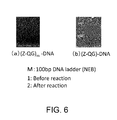
- FIG. 6 includes (a) a diagram illustrating the results of electrophoresis with an agarose gel electrophoresis device when an extension reaction was performed using TdT in Example 1 ((Z-QG) m -DNA), and (b) a diagram illustrating the results of electrophoresis with an agarose gel electrophoresis device when an extension reaction was performed using TdT in Example 1 ((Z-QG)-DNA).
- FIG. 7 is a diagram illustrating the results of electrophoresis with an agarose gel electrophoresis device when PfuAP labeling was performed using MTG in Example 1.
- FIG. 8 includes (a) a diagram illustrating the results of a dot blot using a nucleic acid probe in Example 1 ((PfuAP) n -DNA), (b) a diagram illustrating the results of a dot blot using a nucleic acid probe in Example 1 ((PfuAP)-DNA), and (c) a diagram illustrating the results of a dot blot using a nucleic acid probe in Example 1 (Comparative Example 1).
- FIG. 9 is a diagram illustrating the change over time in electrophoresis results as the TdT reaction proceeds in Example 2.
- FIG. 10 is a diagram illustrating the electrophoresis results of introducing Z-QG-dUTP and various unmodified nucleotides by TdT reaction in Example 2.
- FIG. 11 is a diagram illustrating the electrophoresis results upon changing the substrate mixing ratio in the TdT reaction in Example 2.
- FIG. 12 is a diagram illustrating the electrophoresis results upon changing the substrate mixing ratio in the MTG reaction in Example 2.
- FIG. 13 is a schematic diagram illustrating one example of a procedure for detecting thrombin in Example 2.
- FIG. 14 is a diagram illustrating a comparison of the thrombin-binding abilities and signal amplifications of (BAP) n -aptamers in Example 2.
- FIG. 15 is a diagram illustrating the electrophoresis results using different substrates in the microbial transglutaminase (MTG) reaction in Example 2.
- FIG. 16 is a diagram illustrating a comparison of the thrombin-binding abilities and signal amplifications with different substrates in Example 2.
- FIG. 17 is a diagram illustrating the results of reverse phase HPLC of Z-QG-ddUTP obtained in Example 1 of the present invention.
- FIG. 18 is a diagram illustrating the results of MALDI TOF-MS analysis of Z-QG-ddUTP obtained in Example 1 of the present invention.
- FIG. 19 is a diagram illustrating the results of reverse phase HPLC of Z-QG-(PEG) 3 -ddUTP obtained in Example 4 of the present invention.
- FIG. 20 is a diagram illustrating the results of MALDI TOF-MS analysis of Z-QG-(PEG) 3 -ddUTP obtained in Example 4 of the present invention.
- FIG. 21 is a diagram illustrating the results of electrophoresis after the TdT reaction and after the MTG reaction in Example 3.
- FIG. 22 includes (a) a diagram illustrating the results of the thrombin detection limit for a (BAP)-aptamer in Example 3, and (b) a diagram illustrating the dose-response curve.
- FIG. 23 is a diagram illustrating the results of electrophoresis after the TdT reaction and after the MTG reaction in Example 4.
- FIG. 24 includes (a) a diagram illustrating the results of the thrombin detection limit for a (BAP) n -(PEG) 3 -aptamer in Example 4, and (b) a diagram illustrating the dose-response curve.
- a method for producing a protein-nucleic acid conjugate according to an embodiment of the present invention comprises a 3′-terminal addition step of adding at least one nucleoside triphosphate derivative having a glutamine (Gln) residue or a lysine (Lys) residue to the 3′-terminal of a nucleic acid using a 3′-terminal addition enzyme which adds a nucleotide to the 3′-terminal of a nucleic acid, and a labeling compound binding step of either binding a labeling compound having a lysine (Lys) residue and containing a labeling moiety to the above-mentioned glutamine (Gln) residue using a transglutaminase (TGase), or binding a labeling compound having a glutamine (Gln) residue and containing a labeling moiety to the above-mentioned lysine (Lys) residue using a transglutaminase (TGase).
- the inventors of the present invention focused their attention on a site-specific modification method using a 3′-terminal addition enzyme such as TdT as a technique for adding a nucleotide to the 3′-terminal of a nucleic acid in order to maintain the higher order structure formation sequence of the nucleic acid.
- 3′-terminal addition enzymes such as TdT are enzymes which randomly add a deoxynucleotide to the 3′-terminal of a nucleic acid, and can produce a homopolymer in a non-template dependent manner.
- TdT and the like are considered to have poor substrate recognition, and to be capable of incorporating chemically modified nucleotides.
- TGase transglutaminases
- MMG microbial transglutaminase
- TGase is an enzyme that catalyzes transacylation reactions, and is an enzyme that, for example, catalyzes the covalent binding of the ⁇ -carboxamide group of specific Gln residues (Q) within a protein, and the ⁇ -amino group of a lysine residue (K) or any of various primary amines.
- TGase Using this TGase enables the creation of a protein-nucleic acid conjugate having an introduced labeling moiety such as a labeling enzyme. Because MTG and the like have superior substrate recognition properties, they can selectively crosslink the reactive site of the reactive site-introduced nucleic acid that has undergone extension and reactive site introduction and the reactive tag moiety of the detection enzyme or the like, and can introduce the labeling enzyme or the like with almost no loss in the activity of the enzyme.
- a nucleotide derivative Z-QG-dUTP by synthesizing a nucleotide derivative Z-QG-dUTP by binding Z-QG having a Gln residue that is recognized by TGase (MTG-recognizable Gln) to deoxyuridine triphosphate (dUTP), and then, as illustrated in FIG. 3 , using TdT or the like to perform an extension reaction of the 3′-terminal of a template nucleic acid (such as a template DNA) to incorporate the Z-QG-dUTP, a (Z-QG) m -DNA (reactive site-introduced nucleic acid) having an introduced TGase-recognizable Gln is prepared.
- a template nucleic acid such as a template DNA
- a TGase such as MTG
- a labeling compound such as a labeling enzyme having an introduced TGase-recognizable Lys such as an MTG-recognizable Lys
- a protein-nucleic acid conjugate having a ratio between the nucleic acid and the labeling moiety such as a labeling enzyme of 1:n (wherein n is an integer of 1 or greater) can be created.
- a (Z-QG) m -DNA reactive site-introduced nucleic acid having an introduced TGase-recognizable Gln is prepared.
- a TGase such as MTG
- a labeling compound such as a labeling enzyme having an introduced TGase-recognizable Lys such as an MTG-recognizable Lys
- a protein-nucleic acid conjugate having a ratio between the nucleic acid and the labeling moiety such as a labeling enzyme of 1:n (wherein n is an integer of 1 or greater) can be created.
- a nucleotide derivative z-QG-ddUTP by binding Z-QG to dideoxyuridine triphosphate (ddUTP), and then, as illustrated in FIG. 5 , using TdT or the like to incorporate the Z-QG-ddUTP at the 3′-terminal of a template nucleic acid (such as a template DNA), a (Z-QG)-DNA (reactive site-introduced nucleic acid) having an introduced TGase-recognizable Gln is prepared.
- a template nucleic acid such as a template DNA
- Z-QG-DNA reactive site-introduced nucleic acid
- a TGase such as MTG to bind a labeling compound such as a labeling enzyme having an introduced TGase-recognizable Lys such as an MTG-recognizable Lys
- a protein-nucleic acid conjugate having a ratio between the nucleic acid and the labeling moiety such as a labeling enzyme of 1:1 can be created.
- the Gln residue in the (Z-QG) m -DNA (reactive site-introduced nucleic acid) and the Lys residue in the labeling compound may be reversed.
- a nucleoside triphosphate derivative having a Lys residue that is recognized by TGase MMG-recognizable Lys
- TdT or the like to incorporate the nucleoside triphosphate derivative when performing an extension reaction at the 3′-terminal of a template nucleic acid
- a reactive site-introduced nucleic acid having an introduced TGase-recognizable Lys is prepared.
- a TGase such as MTG
- a labeling compound having an introduced TGase-recognizable Gln such as an MTG-recognizable Gln
- a protein-nucleic acid conjugate having a ratio between the nucleic acid and the labeling moiety of 1:n (wherein n is an integer of 1 or greater) can be created.
- any effects on the target substance recognition site of the template nucleic acid, and on active sites such as the labeling moiety of the labeling enzyme are suppressed, meaning a labeling compound containing a site-specific labeling moiety can be introduced into the template nucleic acid.
- the 3′-terminal addition enzyme there are no particular limitations on the 3′-terminal addition enzyme, provided it is an enzyme capable of adding a nucleotide to the 3′-terminal of the template nucleic acid, and examples include terminal deoxynucleotidyl transferase (TdT), Family A-type DNA polymerase, and poly(A) RNA polymerase. Among these, in terms of reaction efficiency and the like, TdT is preferred. TdT is an enzyme which randomly introduces a deoxynucleotide at the 3′-terminal of a nucleic acid in a non-template dependent manner.
- TdT terminal deoxynucleotidyl transferase
- Family A-type DNA polymerase Family A-type DNA polymerase
- poly(A) RNA polymerase poly(A) RNA polymerase.
- TdT is an enzyme which randomly introduces a deoxynucleotide at the 3′-terminal of a nucle
- Family A-type DNA polymerase is an enzyme which introduces dATP at the 3′-terminal of a DNA in a non-template dependent manner
- poly(A) RNA polymerase is an enzyme which introduces ATP at the 3′-terminal of an RNA in a non-template dependent manner.
- the extension reaction using TdT or the like may be performed using conventional methods.
- Examples of the template nucleic acid on which the 3′-terminal extension reaction is performed include DNA, PNA and RNA.
- sequence or length of the template nucleic acid There are no particular limitations on the sequence or length of the template nucleic acid. In terms of the length, because TdT or the like is to be bound, a length of at least 3 mer is preferable.
- nucleic acid probes formed from DNA, PNA or RNA having a complementary sequence to the target nucleic acid are desirable, and from the viewpoint of detecting molecules other than nucleic acids, nucleic acid aptamers formed from DNA or RNA are desirable.
- a nucleic acid aptamer is an oligonucleotide (DNA or RNA) which, due to its higher order structure, binds with superior affinity and specificity to a wide variety of target substances.
- a nucleic acid aptamer has binding specificity to organic small molecules or biopolymers or the like such as proteins.
- nucleic acid aptamers examples include inorganic substances (such as zinc ions and nickel ions), organic small molecules (such as ATP), coenzymes (such as NAD), sugars (such as cellobiose), and proteins (such as thrombin and interferon-gamma).
- inorganic substances such as zinc ions and nickel ions
- organic small molecules such as ATP
- coenzymes such as NAD
- sugars such as cellobiose
- proteins such as thrombin and interferon-gamma
- the nucleoside triphosphate derivative according to the present embodiment has a glutamine (Gln) residue or a lysine (Lys) residue.
- Examples of nucleoside triphosphate derivatives having a glutamine (Gln) residue or a lysine (Lys) residue include uridine triphosphate (UTP) derivatives, adenosine triphosphate (ATP) derivatives, guanosine triphosphate (GTP) derivatives, cytidine triphosphate (CTP) derivatives, deoxyuridine triphosphate (dUTP) derivatives, deoxyadenosine triphosphate (dATP) derivatives, deoxyguanosine triphosphate (dGTP) derivatives and deoxycytidine triphosphate (dCTP) derivatives which have a glutamine (Gln) residue or a lysine (Lys) residue.
- the glutamine (Gln) residue or the lysine (Lys) residue is, for example, bound to a uracil, adenine, guanine or cytosine moiety, either directly or via a substituent.
- nucleoside triphosphate derivatives can be obtained from UTP, ATP, GTP, CTP, dUTP, dATP, dGTP, dCTP or various derivatives thereof.
- these nucleoside triphosphate derivatives may also be obtained from uridine, uridine monophosphate (UMP) and diphosphate (UDP), adenosine, adenosine monophosphate (AMP) and diphosphate (ADP), guanosine, guanosine monophosphate (GMP) and diphosphate (GDP), cytidine, cytidine monophosphate (CMP) and diphosphate (CDP), deoxyuridine, deoxyuridine monophosphate (dUMP) and diphosphate (dUDP), deoxyadenosine, deoxyadenosine monophosphate (dAMP) and diphosphate (dADP), deoxyguanosine, deoxyguanosine monophosphate (dGMP) and diphosphate (dGDP), deoxycytidine, deoxycytidine monophosphate (dCMP) and diphosphate (dCDP), as well as various derivatives of these compounds.
- UMP uridine monophosphate
- the triphosphate derivatives of the above compounds can be obtained from uridine, adenosine, guanosine, cytidine, deoxyuridine, deoxyadenosine, deoxyguanosine or deoxycytidine by phosphorylation using a phosphorylation enzyme or the like (for example, see Seibutsu-kogaku kaishi (Journal of The Society for Biotechnology, Japan), 85(9), pp. 397 to 399 (2007), and Journal of Bioscience and Bioengineering, 87(6), pp. 732 to 738 (1999)), or by phosphorylation by phosphorus oxychloride in the presence of a proton sponge (for example, see Tetrahedron Letters, 29(36), pp. 4525 to 4528 (1988)).
- a phosphorylation enzyme or the like for example, see Seibutsu-kogaku kaishi (Journal of The Society for Biotechnology, Japan), 85(9), pp
- the nucleoside triphosphate derivative according to the present embodiment may be, for example, a uridine triphosphate derivative represented by formula (2) below, having a Gln residue or a Lys residue that is recognizable by TGase.
- A represents a substituent having a glutamine (Gln) residue or a lysine (Lys) residue
- B represents a hydrogen atom or a hydroxyl group
- C represents a hydrogen atom or a hydroxyl group.
- the nucleoside triphosphate derivative according to the present embodiment may be, for example, an adenosine triphosphate derivative represented by formula (3) below, having a Gln residue or a Lys residue that is recognizable by TGase.
- At least one of A 1 and A 2 represents a substituent having a glutamine (Gln) residue or a lysine (Lys) residue, with any remainder representing a hydrogen atom, B represents a hydrogen atom or a hydroxyl group, and C represents a hydrogen atom or a hydroxyl group.
- the nucleoside triphosphate derivative according to the present embodiment may be, for example, a cytidine triphosphate derivative represented by formula (4) below, having a Gln residue or a Lys residue that is recognizable by TGase.
- A represents a substituent having a glutamine (Gln) residue or a lysine (Lys) residue
- B represents a hydrogen atom or a hydroxyl group
- C represents a hydrogen atom or a hydroxyl group.
- the nucleoside triphosphate derivative according to the present embodiment may be, for example, a guanosine triphosphate derivative represented by formula (5) below, having a Gln residue or a Lys residue that is recognizable by TGase.
- A represents a substituent having a glutamine (Gln) residue or a lysine (Lys) residue
- B represents a hydrogen atom or a hydroxyl group
- C represents a hydrogen atom or a hydroxyl group.
- substituent having a glutamine (Gin) residue or a lysine (Lys) residue represented by A examples include substituents comprising a linear, branched or cyclic, saturated or unsaturated alkyl group, aminoalkyl group, aryl group or heteroaryl group that has a glutamine (Gin) residue or a lysine (Lys) residue.
- the substituent may be selected with due consideration of factors such as the ease of synthesis.
- the nucleoside triphosphate derivative according to the present embodiment is, for example, preferably a TGase substrate modified nucleotide derivative represented by formula (1) below, having a Gln residue or a Lys residue that is recognizable by TGase.
- each of X and Y independently represents a divalent linking group, and Z represents a substituent.
- B represents a hydrogen atom or a hydroxyl group
- C represents a hydrogen atom or a hydroxyl group
- m represents 0 or 1.
- Examples of the bivalent linking groups represented by X and Y which are mutually independent, include alkylene groups having a carbon number of 1 to 48 such as a methylene group, ethylene group, propylene group or butylene group, and alkenylene groups having a carbon number of 2 to 48 such as an ethenylene group, propenylene group or butenylene group.
- each of X and Y preferably independently represents an alkylene group having a carbon number of 1 to 48, an alkenylene group having a carbon number of 2 to 48, or an alkoxy group having a carbon number of 1 to 48, and those compounds in which X represents an ethenylene group and Y represents a methylene group are particularly desirable.
- An example of Y is —(C 2 H 4 O) n —C 2 H 4 —.
- Examples of the substituent represented by Z include alkyl groups having a carbon number of 1 to 48 such as a methyl group, ethyl group or propyl group, alkoxy groups having a carbon number of 1 to 48 such as a methoxy group, ethoxy group or propoxy group, aryl groups having a carbon number of 6 to 48 such as a phenyl group or naphthyl group, aryloxy groups having a carbon number of 6 to 48 such as a phenyloxy group, arylalkyl groups having a carbon number of 7 to 48 such as a benzyl group, and arylalkyloxy groups having a carbon number of 7 to 48 such as a benzyloxy group.
- Z is preferably an alkyl group having a carbon number of 1 to 48, an alkoxy group having a carbon number of 1 to 48, an aryl group having a carbon number of 6 to 48, an aryloxy group having a carbon number of 6 to 48, an arylalkyl group having a carbon number of 7 to 48, or an arylalkyloxy group having a carbon number of 7 to 48, and is more preferably a benzyloxy group.
- Z may also be substituted with a dinitrophenyl group or L-3,4-dihydroxyphenyl group or the like.
- at least one of Y and Z may be independently substituted with an amino acid other than Lys.
- the structure of the linker region that links the z-QG and UTP can be optimized. For example, by introducing a flexible linker region, access by enzymes and the like can be improved. Furthermore, by appropriate selection of Y and Z, the substrate peptide sequence can be optimized, for example enabling the affinity for enzymes and the like to be improved.
- the MTG-recognizable Gln residue preferably exists as benzyloxycarbonyl-L-glutamylglycine (Z-QG).
- Z-QG is preferable because it has a smaller molecular size than digoxigenin (DIG) or the like.
- DIG digoxigenin
- the nucleoside triphosphate derivative represented by formula (1) the nucleotide derivative in which X represents an ethenylene group, Y represents a methylene group, Z represents a benzyloxy group, B represents a hydrogen atom and C represents a hydroxyl group is the nucleotide derivative Z-QG-dUTP in which Z-QG is bound to dUTP.
- nucleoside triphosphate derivative represented by formula (1) the nucleotide derivative in which X represents an ethenylene group, Y represents a methylene group, Z represents a benzyloxy group, and B and C represent hydrogen atoms is the nucleotide derivative Z-QG-ddUTP in which Z-QG is bound to ddUTP.
- examples of good substrates for microbial TGase include peptides composed of amino acid sequences represented by LLQG (sequence number: 1), LAQG (sequence number: 2), LGQG (sequence number: 3), PLAQSH (sequence number: 4), FERQHMDS (sequence number: 5) or TEQKLISEEDL (sequence number: 6), or peptides composed of amino acid sequences represented by GLGQGGG (sequence number: 7), GFGQGGG (sequence number: 8), GVGQGGG (sequence number: 9), or GGLQGGG (sequence number: 10).
- LLQG amino acid sequences represented by LLQG (sequence number: 1), LAQG (sequence number: 2), LGQG (sequence number: 3), PLAQSH (sequence number: 4), FERQHMDS (sequence number: 5) or TEQ
- known examples of good substrates for guinea pig liver-derived TGase include benzyloxycarbonyl-L-glutamylphenylalanine (Z-QF), peptides composed of an amino acid sequence EAQQIVM (sequence number: 11), and peptides composed of amino acid sequences represented by GGGQLGG (sequence number: 12), GGGQVGG (sequence number: 13), GGGQRGG (sequence number: 14), GQQQLG (sequence number: 15), PNPQLPF (sequence number: 16) or PKPQQFM (sequence number: 17).
- the Gln residue that is recognizable by TGase may exist as one of these types of peptides.
- the N-terminal amino group can function as the TGase substrate, and therefore by-products caused by self crosslinking may occur. Accordingly, in the case of substrate peptides in which the N-terminal is a glycine (G), the peptide can be protected from becoming a TGase substrate by substituting the hydrogen atoms of the N-terminal amino group with an appropriate group, thereby ensuring that the desired linkage occurs.
- N-terminal protection is used to describe this type of protection. It is known that the reactivity varies depending on the method employed for the N-terminal protection.
- FIG. 1 A method for preparing Z-QG-dUTP is illustrated in FIG. 1 . This merely represents one example of a method for preparing a nucleoside triphosphate derivative according to the present embodiment, and the present invention is not limited to this example.
- an N-hydroxysuccinimide (NHS) group or the like is introduced into benzyloxycarbonyl-L-glutamylglycine (Z-QG) to activate the molecule (NHS-modified Z-QG).
- Z-QG benzyloxycarbonyl-L-glutamylglycine
- a dUTP having an aminated substituent at the terminal such as aminoallyl-dUTP is condensed with the NHS-modified Z-QG, yielding Z-QG-dUTP.
- Z-QG-ddUTP can be prepared as illustrated in FIG. 2 .
- a method in which a functional group that exhibits high reactivity with amino groups is introduced into the peptide may also be used as a method of introducing a peptide having a TGase-recognizable Gln residue into dUTP.
- a substrate peptide that has undergone conversion to an aldehyde, acyl azide, sulfonyl chloride, epoxide, isocyanate or isothiocyanate can be prepared, then subsequent reaction of this substrate peptide with an aminated dUTP can be used to prepare a dUTP having a Gln residue that is recognizable by TGase.
- an aminated dUTP can be used to prepare a dUTP having a Gln residue that is recognizable by TGase.
- these reactive functional groups be introduced into the substrate peptide at positions that do not affect TGase recognition.
- the method described above in which the carboxyl group of the C-terminal distant from the Gln residue is activated is the most desirable.
- Purification of the Z-QG-dUTP can be performed by high performance liquid chromatography (HPLC) or gel permeation chromatography (GPC) or the like. Further, identification of the Z-QG-dUTP can be performed by MALDI TOF-MS, NMR and IR and the like. Further, HPLC can be used to confirm the product and determine the yield.
- HPLC high performance liquid chromatography
- GPC gel permeation chromatography
- n in the ratio between the nucleic acid and the labeling moiety such as a labeling enzyme, provided that n is 1 or greater.
- the value of n may be altered as appropriate, but a larger value of n yields a higher detection sensitivity and is therefore preferred.
- n is too large, then the efficiency of the binding such as the hybridization with the target substance may sometimes deteriorate.
- a plurality of protein-nucleic acid conjugates having different labeling moieties such as different labeling enzymes or different fluorescent dyes can be prepared.
- UTP molecules or the like that have been modified with different substrate peptides may be prepared depending on the variety of TGase that is used.
- an amino acid variation may be introduced into the TGase by protein engineering to change the substrate specificity.
- MTG may be prepared in E. coli (for example, see Christian K. Marx, Thomas C. Hertel and Markus Pietzsch, Enzyme and Microbial Technology, volume 40, issue 6, 2 May 2007, pp. 1543 to 1550, “Soluble expression of a pro-transglutaminase from Streptomyces mobaraensis in Escherichia coli ”), a variant library then generated, and the MTG variants exhibiting improved heat resistance then acquired (for example, see Christian K. Marx, Thomas C. Hertel and Markus Pietzsch, Journal of Biotechnology, volume 136, issues 3-4, 10 Sep. 2008, pp. 156 to 162, “Random mutagenesis of a recombinant microbial transglutaminase for the generation of thermostable and heat-sensitive variants”).
- the Lys residue that is recognizable by TGase may be a primary amine.
- a Lys residue is used as an example, but unless specifically stated otherwise, the description also applies to primary amines.
- labeling compound having a glutamine (Gln) residue and containing a labeling moiety there are no particular limitations on the labeling compound having a glutamine (Gln) residue and containing a labeling moiety, or the labeling compound having a lysine (Lys) residue and containing a labeling moiety.
- labeling moiety examples include enzymes, fluorescent dyes, compounds containing a radioactive isotope, markers that can be detected magnetically (such as magnetic nanoparticles), markers that can be detected thermally (such as temperature-responsive polymers) and markers that can be detected electrically (such as polymers containing ferrocene sites), although from the viewpoints of detection sensitivity and handling, at least one of an enzyme and a fluorescent dye is preferable.
- fluorescent dye is a material that emits fluorescence or phosphorescence in response to irradiation with ultraviolet light or visible light or the like of a selected wavelength.
- fluorescent dyes include fluorescein, rhodamine, dansyl and carbocyanine derivatives, whereas examples of fluorescent proteins include green fluorescent protein and variants thereof.
- radioactive isotopes examples include deuterium ( 2 H), tritium ( 3 H) 10 B, 11 B, 13 C, 15 N and 18 O.
- TGase a substrate that functions as a Lys residue donor has fewer structural restrictions than a substrate that functions as a Gln residue donor. Accordingly, there are cases where the labeling enzyme that is to be modified has a TGase-recognizable Lys residue from the beginning, and cases where a tag comprising a TGase-recognizable Lys residue is added to the enzyme.
- the Lys residue (K) that is recognizable by TGase may exist as a peptide having an amino acid sequence represented by MKHKGS (sequence number: 18), MRHKGS (sequence number: 23), MRRKGS (sequence number: 24) or MHRKGS (sequence number: 25).
- Tagging with this type of peptide comprising a TGase-recognizable Lys residue can be used for the purpose of binding the labeling enzyme to a desired site on a protein, such as the C-terminal or N-terminal.
- Examples of other peptides comprising a TGase-recognizable Lys residue and their amino acid sequences include modified S-peptide (GSGMKETAAARFERAHMDSGS (sequence number: 19)), MGGSTKHKIPGGS (sequence number: 20), N-terminal glycines (N-terminal GGG, N-terminal GGGGG (sequence number: 21)), and MKHKGGGSGGGSGS (sequence number: 22) in which the linker region between N-terminal MKHKGS and the target protein has been extended.
- modified S-peptide GSGMKETAAARFERAHMDSGS (sequence number: 19)
- MGGSTKHKIPGGS sequence number: 20
- N-terminal glycines N-terminal GGG, N-terminal GGGGG (sequence number: 21)
- MKHKGGGSGGGSGS sequence number: 22
- Labeling enzymes having an added peptide comprising a TGase-recognizable Lys residue at the C-terminal or N-terminal can be prepared as recombinant proteins using genetic engineering techniques. Purification of such recombinant proteins in which a TGase substrate peptide tag has been introduced at the C-terminal or N-terminal can be conducted by gel permeation chromatography or the like, using a purification peptide tag added at the N-terminal or C-terminal respectively (for example, a (His)6-tag (hexahistidine tag)) (in order to avoid any deterioration in the reactivity of the TGase, the design should be made so that the purification peptide tag is introduced at a different terminal from the terminal containing the introduced substrate peptide tag).
- a purification peptide tag added at the N-terminal or C-terminal respectively (for example, a (His)6-tag (hexahistidine tag))
- confirmation of the amino acid sequence may be performed by using a DNA sequencer to confirm the gene sequence of the plasmid vector that codes the protein, or in the case of a substrate peptide introduced at the N-terminal, by direct identification by N-terminal analysis. Confirmation of the protein purification may be performed by SDS-PAGE or the like.
- the labeling enzyme there are no particular limitations on the labeling enzyme, provided it has a property that enables detection to be performed using a coloration reaction or the like.
- Examples include alkaline phosphatase (AP), glutathione S-transferase (GST), luciferase and peroxidase.
- AP alkaline phosphatase
- GST glutathione S-transferase
- luciferase luciferase
- peroxidase peroxidase.
- an alkaline phosphatase or peroxidase is preferred.
- proteins that can be produced by genetic engineering are preferred.
- reaction may sometimes be performed under comparatively high temperature conditions (for example, 70° C. or higher) in order to achieve a more precise base sequence-specific double strand formation, and therefore if a mesophile-derived enzyme is used, loss of activity may be a concern.
- an alkaline phosphatase derived from the hyperthermophile Pyrococcus furiosus (PfuAP) is preferred as the labeling enzyme.
- Enzymes derived from hyperthermophiles are known to generally exhibit high levels of stability relative to organic solvents and heat, and are therefore preferred (for example, see H. Atomi, Current Opinion in Chemical Biology, 9, pp. 166 to 173 (2005)), and are also preferred in terms of being comparatively easy to prepare in large quantities using a E. coli host.
- a heat-resistant enzyme using a E. coli host by subjecting the cell homogenate to a high-temperature treatment (for example, by holding at 80° C. for 30 minutes), substantially all of the contaminant protein derived from the E. coli can be precipitated, enabling a crude purification to be performed with comparative ease.
- Hyperthermophiles are microbes that can grow in extreme environments in which most bio-organisms cannot survive, and therefore hyperthermophile-derived proteins exhibit extremely high levels of heat resistance. Moreover, not only do they exhibit excellent resistance to heat, but generally also have much higher resistance to denaturants, organic solvents and pH and the like than mesophile-derived enzymes. Accordingly, it is thought that by using PfuAP, a more precise double strand formation can be achieved with no loss of enzyme activity.
- the enzyme may be stable relative to organic solvents and heat.
- This type of high-stability enzyme can be obtained by screening from the natural world (for example, see Chemistry and Chemical Industry, vol. 61 (No. 6), pp. 571 to 575 (2008), Taku Uchiyama and Kentaro Miyazaki, Bioscience and Industry, vol. 66 (No. 5), pp. 234 to 239 (2008), and Noriyuki Dokyu, Bioscience and Industry, vol. 66 (No. 12), pp. 667 to 670 (2008)), or by techniques for increasing the stability using protein engineering (for example, see Hiroyasu Ogino, Bio Industry, vol. 25 (No. 7), pp.
- Labeling compounds containing an introduced fluorescent dye moiety and having a lysine (Lys) residue can be prepared, for example, by introducing a diamine at a carboxyl group (for example, see G. T. Hermanson (1996), Bioconjugate Techniques, chapter 1, section 4.3, pp. 100 to 104, Academic Press, San Diego).
- TGase transglutaminase
- mammals guinea pig and human
- invertebrates insects, horseshoe crab, sea urchin
- bacteria and protists myxomycetes
- MTG microbial transglutaminase
- the binding reaction between the labeling compound containing the labeling moiety such as a labeling enzyme having a Lys residue and the (Z-QG) m -DNA is predicted to proceed in two stages, namely formation of an acyl-enzyme conjugate via a nucleophilic substitution reaction of the cysteine (Cys) residue that represents the MTG active center at the Gln of the (Z-QG) m -DNA, and a subsequent elimination of the MTG via a nucleophilic substitution reaction at the acyl-enzyme conjugate by the Lys of the labeling compound.
- the molar concentration ratio of the labeling compound having the TGase-recognizable Lys residue, relative to the (Z-QG) m -DNA having the TGase-recognizable Gln residue is preferably 2 or greater, and is more preferably 5 or greater.
- concentration ratio refers to a ratio between molar concentrations.
- the molar concentration ratio of NK14-PfuAP relative to (Z-QG) m -DNA can also be expressed as [NK14-PfuAP]/[(Z-QG) m -DNA].
- NK14-PfuAP is a structure in which an additional sequence composed of an amino acid 14 residue having the sequence MKHKGGGSGGGSGS is introduced at the PfuAP N-terminal and a purification tag is introduced at the C-terminal by genetic engineering.
- the expression vector for PfuAP was received from Professor Haruhiko Sakuraba of Kagawa University. During amplification of the PfuAP coding region by PCR, recombination with the protein expression vector pET22 was conducted so as to introduce both tags, and the E. coli BL21 was transformed. Following preculture and subsequent main culture in an LB medium containing ampicillin, the resulting transformant was collected by centrifugal separation, and then washed twice with 25 mM TBS.
- the cells were pulverized by an ultrasonic treatment, and then centrifugal separation was used to collect the soluble fraction.
- the hyperthermophile-derived PfuAP is stable even under high-temperature conditions, and therefore a crude purification was performed by treating the obtained cell-free extract at 80° C. for 30 minutes, thus precipitating other proteins.
- the supernatant was collected by centrifugal separation and filtration, and subsequently purified using a His-tag column.
- the liquid was concentrated by ultrafiltration, a PD-10 column was used to substitute the solvent medium with 10 mM Tris-HCl (pH 8.0), and the sample was frozen and stored until testing.
- the expression vector of an NK14-PfuAP in which the base sequence has been altered in accordance with the E. coli codon usage frequency (accession number: AB479383, sequence number: 26) may be used.
- This expression vector was obtained by custom synthesis by Codon Devices, Inc. (http://www.codondevices.com).
- An appropriate restriction enzyme site was introduced at both terminals of the gene region for coding the NK14-PfuAP, these sites were used to achieve recombination with the protein expression vector pET22, and the E. coli BL21 was transformed by the resulting NK14-PfuAP expression vector.
- the resulting transformant was collected by centrifugal separation, and then washed twice with 25 mM TBS. Following freezing and thawing of the thus obtained microbe, the cells were pulverized by an ultrasonic treatment, and then centrifugal separation was used to collect the soluble fraction.
- the hyperthermophile-derived PfuAP is stable even under high-temperature conditions, and therefore a crude purification was performed by treating the obtained cell-free extract at 80° C. for 30 minutes, thus precipitating other proteins. Following this crude purification, the supernatant was collected by centrifugal separation and filtration, and subsequently purified using a His-tag column. Following purification, the liquid was concentrated by ultrafiltration, a PD-10 column was used to substitute the solvent medium with 10 mM Tris-HCl (pH 8.0), and the sample was frozen and stored until testing.
- NK14-BAP is a structure in which an additional sequence composed of an amino acid 14 residue having the sequence MKHKGGGSGGGSGS is introduced at the N-terminal of a E. coli -derived alkaline phosphatase (BAP) by genetic engineering, and a purification tag is introduced at the C-terminal.
- BAP plasmid vector was received from Associate Professor Hiroshi Ueda of Tokyo University. During amplification of the BAP coding region by PCR, recombination with the protein expression vector pET22 was conducted so as to introduce both tags, and the E. coli BL21 was transformed.
- the resulting transformant was collected by centrifugal separation, and then washed twice with TBS (Tris Buffered Saline). Following freezing and thawing of the thus obtained microbe, the cells were pulverized by an ultrasonic treatment, and then centrifugal separation was used to collect the soluble fraction. Following filtering, the soluble fraction was purified using a His-tag column and size exclusion chromatography. Following purification, a PD-10 column was used to substitute the solvent medium with 5 mM Tris-HCl (pH 8.0), and the sample was frozen and stored until testing.
- TBS Tris Buffered Saline
- the reaction is preferably performed at a pH of 5.5 to 8.0 and at a temperature of 4 to 50° C. (for example, at room temperature (18 to 22° C.)). Under such conditions, a satisfactorily high reaction rate can be achieved within 12 hours, preferably within 6 hours, and more preferably within 3 hours.
- the method for detecting a target substance comprises binding, via the nucleic acid moieties, the above-mentioned protein-nucleic acid conjugate and a target substance that exists within a target material, and detecting the bound protein-nucleic acid conjugate via the labeling moiety.
- One example of a method of using the protein-nucleic acid conjugate according to the present embodiment as a nucleic acid probe, and binding this probe to a target substance via the nucleic acid moieties is a hybridization method in which the nucleic acid moiety of the protein-nucleic acid conjugate and the target nucleic acid that exists within the target material are bound complementarily, whereas in order to use the protein-nucleic acid conjugate as a nucleic acid aptamer, the higher order structure adopted by the nucleic acid moiety of the protein-nucleic acid conjugate is used to recognize and bind to the three dimensional structure of the target substance.
- the conditions required for these binding reactions can be set as appropriate by a person skilled in the art.
- the method for detecting a target nucleic acid according to the present embodiment can be used for purposes such as qualitative or quantitative analysis of the target substance, or identification, staining or localization or the like of the target substance.
- target substance examples include nucleic acids, organic dyes, amino acids, antibodies, antibiotics, peptides, proteins and vitamins.
- a plurality of protein-nucleic acid conjugates having different labeling moieties such as different labeling enzymes or different fluorescent dyes may be prepared, enabling a plurality of target substances to be detected simultaneously.
- the protein-nucleic acid conjugate according to the present embodiment can be used in the methods described below.
- the conjugate can be used in a method for binding a protein having pharmacological activity and an aptamer, wherein by combining, within the protein-nucleic acid conjugate, a protein that exhibits pharmacological activity with a nucleic acid aptamer having directivity toward a lesion site, the protein can be transported to the lesion site, thereby enhancing the efficacy.
- the protein-nucleic acid conjugate can also be used in a method for binding a protein and a synthetic molecule, wherein the above-mentioned protein-nucleic acid conjugate and a complementary nucleic acid moiety introduced into a synthetic molecule can be bound together, thereby hybridizing the protein and the synthetic molecule non-covalently.
- a 3′-terminal extension reaction was performed with TdT.
- TdT 3′-terminal extension reaction was performed with TdT.
- Z-QG-dUTP 1 mM
- 1 ⁇ L of dATP 10 mM
- 1 ⁇ g of a DNA ShhPCR amplification product (300 bp), sequence number: 27
- 1 ⁇ L of TdT 400 U/ ⁇ L
- 4 ⁇ L of a 5 ⁇ reaction buffer, 4 ⁇ L of CoCl 2 (25 mM) and sterilized water were mixed to yield a total of 20 ⁇ L, and the resulting mixture was incubated at 37° C. for 30 minutes.
- alkaline phosphatase labeling was performed. Specifically, 7.4 ⁇ L of the above (Z-QG) m -DNA (estimated 27 ng/ ⁇ L), 4 ⁇ L of a 10 ⁇ reaction buffer, and 8.6 ⁇ L of sterilized water were mixed and subjected to heat denaturation at 95° C. for 5 minutes. After rapid cooling, 1 ⁇ L of PfuAP (8 mg/mL) and 1 ⁇ L of MTG were added, and following incubation at 40° C.
- ARR-103 Alkaline phosphatase labeling kit
- a 3′-terminal extension reaction was performed with TdT.
- TdT 3′-terminal extension reaction was performed with TdT.
- Z-QG-ddUTP 1 mM
- 1 ⁇ g of a DNA Shh (300) PCR amplification product (300 bp)
- 1 ⁇ L of TdT 400 U/ ⁇ L
- 4 ⁇ L of a 5 ⁇ reaction buffer 4 ⁇ L of CoCl 2 (25 mM) and sterilized water were mixed to yield a total of 20 ⁇ L, and the resulting mixture was incubated at 37° C. for 30 minutes.
- alkaline phosphatase labeling was performed. Specifically, 7.4 ⁇ L of the above (Z-QG)-DNA (estimated 27 ng/ ⁇ L), 4 ⁇ L of a 10 ⁇ reaction buffer, and 9.1 ⁇ L of sterilized water were mixed and subjected to heat denaturation at 95° C. for 5 minutes. After rapid cooling, 0.5 ⁇ L of PfuAP (8 mg/mL) and 1 ⁇ L of MTG were added, and following incubation at 40° C.
- the detection sensitivity of each of the prepared PfuAP labeled nucleic acid probes was evaluated by dot blot.
- the various compositions and the protocol used during hybridization were as follows. Shh (sequence number: 27) was used as the target DNA. Further, Uromodulin (sequence number: 28) was used as a negative control.
- Each target DNA was diluted in a stepwise manner with sterilized water, and 1 ⁇ L of each sample was spotted onto a membrane (Hybond N+, manufactured by GE Healthcare Corporation) and then crosslinked by UV to immobilize the DNA on the membrane. Subsequently, the membrane was transferred into 1.5 mL of a hybridization buffer (2 M urea, 0.5 M NaCl, 10 mM Tris-HCl (pH 9.5), 1 mg/mL Torula RNA, 1 ⁇ Denhardt's Solution, 3% casein, 0.1% Triton X-100, 4% dextran sulfate), and a prehybridization was performed at 55° C. for 30 minutes.
- a hybridization buffer (2 M urea, 0.5 M NaCl, 10 mM Tris-HCl (pH 9.5), 1 mg/mL Torula RNA, 1 ⁇ Denhardt's Solution, 3% casein, 0.1% Triton X-100, 4% dextran
- nucleic acid probe prepared in Example 1 or 2 ((PfuAP) n -DNA, (PfuAP)-DNA) was added in 2 mL of a hybridization buffer (probe concentration: 10 ng/mL), and hybridization was performed at 55° C. for 16 hours.
- the membrane was rinsed once in 50 mL of a Wash I buffer (2 M urea, 100 mM Tris-HCl (pH 9.5), 150 mM NaCl, 0.1% Triton X-100), and was then transferred to another 50 mL of the Wash I buffer and washed by shaking for 30 minutes at 55° C. This operation was performed twice.
- a Wash I buffer (2 M urea, 100 mM Tris-HCl (pH 9.5), 150 mM NaCl, 0.1% Triton X-100
- the membrane was washed at 25° C. for 5 minutes in 50 mL of a Wash II buffer (100 mM Tris-HCl (pH 9.5), 100 mM NaCl, 50 mM MgCl 2 , 0.1% CHAPS). This operation was performed twice.
- a Wash II buffer 100 mM Tris-HCl (pH 9.5), 100 mM NaCl, 50 mM MgCl 2 , 0.1% CHAPS.
- CDP-STAR manufactured by Roche Holding AG
- chemiluminescent reaction was performed at 25° C. for 2 hours, and the resulting state was captured using an image capture system (ChemiDoc XRS+, manufactured by Bio-Rad Laboratories, Inc.). The results are shown in FIG. 8 .
- Z-QG-dUTP final concentration 0.5 mM
- a template DNA DNA aptamer, 5′-FITC-GGTTGGTGTGGTTGGTTTTTTTTTTTTTTTTT-3′, 30 mer, reaction traced by fluorescent labeling, sequence number: 29
- TdT final concentration 40 U/ ⁇ L
- a TdT reaction buffer pH 6.6, composition: 200 mM potassium cacodylate, 25 mM Tris-HCl, 0.25 mg/mL BSA
- CoCl 2 final concentration 5 mM
- sterilized water were mixed, and the resulting mixture was incubated at 37° C. for 60 minutes.
- the mixture was sampled at 5, 10, 20, 30 and 60 minutes, and sufficient EDTA was added to produce a final concentration of 0.5 mM, thereby halting the reaction of each solution.
- the change over time in the TdT reaction was evaluated by polyacrylamide gel electrophoresis (PAGE) (electrophoresis conditions: 15% denatured polyacrylamide gel (containing urea 7 M), 280 V, 40 mA, 60 min, TBE buffer). The results are shown in FIG. 9 .
- the DNA (DNA aptamer) band shifts to a higher molecular weight as time elapses, and it is thought that with a [template DNA 1 ⁇ M]/[Z-QG-dUTP 0.5 mM] ratio, the TdT reaction saturates after approximately 60 minutes. TdT is introduced into the DNA until the nucleotide in the solution is disappeared. This is because TdT adds mononucleotides to the template by a partition method, and the reverse reaction does not occur, so that strand extension of the product by TdT reaction corresponds with the ratio of added nucleotides relative to the template.
- the fact that the template DNA band has almost entirely disappeared is also thought to indicate that the reaction has been saturated because the Z-QG-dUTP has been added substantially equally to all the DNA, resulting in the disappearance of the Z-QG-dUTP.
- the Z-QG-dUTP molecule having a hydrophobic Z-QG exists in a continuous arrangement, and a hydrophobic interaction causes the Z-QG-dUTP molecules to cohere at the 3′-terminal, which may sometimes impair TdT access. Accordingly, an investigation was performed as to whether the introduction rate of Z-QG-dUTP could be enhanced by performing reaction with a mixture of an unmodified nucleotide and Z-QG-dUTP.
- dATP, dTTP, dCTP and dGTP were selected as examples of unmodified nucleotides representing the basic nucleotides that constitute nucleic acids, and extension reactions with TdT were performed simultaneously with these unmodified nucleotides and Z-QG-dUTP.
- Z-QG-dUTP final concentration 0.125 mM
- each unmodified dNTP final concentration 0.375 mM
- a template DNA DNA aptamer, the same as Example 2
- TdT final concentration 40 U/ ⁇ L
- TdT reaction buffer pH 6.6
- CoCl 2 final concentration 5 mM
- sterilized water was mixed, and the resulting mixture was incubated at 37° C. for 60 minutes. Sufficient EDTA was then added to produce a final concentration of 0.2 mM, thereby halting the reaction of each solution.
- the TdT reaction was evaluated by polyacrylamide gel electrophoresis (PAGE) (electrophoresis conditions: 15% denatured polyacrylamide gel (containing urea 7 M), 280 V, 40 mA, 60 min, TBE buffer). The results are shown in FIG. 10 .
- PAGE polyacrylamide gel electrophoresis
- Z-QG-dUTP (25%)+(dCTP or dGTP (75%)) the extension was less than that observed for dATP or dTTP, and appeared to have undergone less extension than the Z-QG (100%) aptamer.
- new bands were observed depending on the variety of nucleotide(s) used, confirming that the TdT substrate incorporation rates differed.
- the substrate incorporation rates in the TdT reaction exhibited a relationship represented by dATP ⁇ dTTP >>dCTP>dGTP.
- TdT reactions were performed for various mixing ratios between Z-QG-dUTP and the dNTPs (dTTP or dATP).
- the proportion of Z-QG-dUTP was set to 0, 25, 50, 75 or 100%, and the change in the extension reaction was evaluated by PAGE (electrophoresis conditions: 15% denatured polyacrylamide gel (containing urea 7 M), 280 V, 40 mA, 60 min, TBE buffer). The results are shown in FIG. 11 .
- a (Z-QG) m -aptamer prepared by TdT reaction was labeled with an alkaline phosphatase by an MTG reaction.
- reaction was performed at 4° C. for one hour in a 200 mM Tris-HCl (pH 7.5) buffer solution. Evaluation of the reaction was performed by PAGE (electrophoresis conditions: Precast gel manufactured by Atto Corporation (15% polyacrylamide gel), 250 V, 20 mA, 80 min, Tris-Glycine buffer). The results are shown in FIG. 12 .
- Thrombin detection was performed in accordance with the operations shown in Table 2, using (BAP) m -aptamers obtained by using MTG to crosslink BAP with DNA aptamers that had been extended with Z-QG-dUTP (25%) and various unmodified nucleotides (75%).
- the experimental procedure is shown in FIG. 13 and Table 2. Details of the buffer compositions are shown below. The results are shown in FIG. 14 .
- Buffer A 5 mM Tris-HCl, 1 mM EDTA, 2 M NaCl (pH 7.5)
- Buffer B 50 mM Tris-HCl, 140 mM NaCl, 1 mM MgCl 2 , 5 mM KCl, 0.1% BSA (pH 7.4)
- NTM Buffer 100 mM Tris-HCl, 100 mM NaCl, 50 mM MgCl 2 (pH 9.5)
- the DNA aptamers prepared using a mixture of Z-QG-dUTP and various unmodified nucleotides and labeled with BAP each exhibited a higher fluorescent intensity than that of only an FITC label. This indicates that even when the DNA aptamer is labeled with an enzyme, the aptamer binds with thrombin with almost no deterioration in the thrombin-binding ability, and a signal amplification function due to the enzyme is achieved.
- a (Z-QG) m -aptamer prepared by TdT reaction was labeled with an alkaline phosphatase by an MTG reaction in the same manner as that described above in (Preparation 1 of (BAP) m -Aptamers).
- the results of PAGE analysis of the DNA aptamers following the MTG reaction are shown in FIG. 15 .
- MTG( ⁇ ) represents the DNA aptamer following TdT reaction
- MTG(+) represents the DNA aptamer following TdT reaction and subsequent MTG reaction.
- each of the various DNA aptamers displays a shift to higher molecular weight, which is thought to indicate an increase in molecular weight as a result of BAP labeling.
- low-molecular weight TdT reaction products ((Z-QG)m-aptamers) disappeared almost completely, which is thought to indicate that BAP crosslinking using MTG had occurred with a reaction rate close to 100%.
- the bands in the vicinity of 600 bp are due to the gel background, and do not indicate the existence of FITC-DNA. Based on the above results, it was confirmed that all of the DNA aptamers underwent BAP labeling.
- the results of thrombin detection using the (BAP) m -Aptamers prepared in the above-described are shown in FIG. 16 .
- the labeled DNA aptamers prepared by TdT reaction with Z-QG-dUTP and Z-QG-dUTP/dTTP achieved higher sensitivity detection than the single-labeled (Z-QG-ddUTP) DNA aptamer.
- this result confirmed an improvement in detection sensitivity due to a multiple labeling effect.
- Z-QG-dUTP/dGTP also displayed a small mobility shift in PAGE result, and the fact that the MTG reaction efficiency was also low indicates that the BAP labeling is insufficient, resulting in a lower detection sensitivity. There is a possibility that this type of decrease in reaction efficiency is due to an inhibition of substrate recognition by MTG and TdT due to the formation of a guanine quadruplex.
- Z-QG-ddUTP (final concentration 0.05 mM), a template DNA (the same DNA aptamer as Example 2) (final concentration 5 ⁇ M), TdT (final concentration 40 U/ ⁇ L), a TdT reaction buffer (pH 6.6), CoCl 2 (final concentration 5 mM) and sterilized water were mixed, and the resulting mixture was incubated at 37° C. for 60 minutes. Following completion of the reaction, a heat treatment was performed at 94° C. for 15 minutes, and the solution was then cooled rapidly to halt the reaction. The reaction solution was purified using ProbeQuant G-50 Micro Columns to remove the unreacted Z-QG-ddUTP. The results of polyacrylamide gel electrophoresis (PAGE) are shown in FIG. 21 (electrophoresis conditions: 15% denatured polyacrylamide gel (containing urea 7 M), 280 V, 40 mA, 60 min, TBE buffer).
- PAGE polyacrylamide gel electrophoresis
- the (Z-QG)-aptamer prepared by the TdT reaction was labeled with an alkaline phosphatase by an MTG reaction.
- reaction was performed at 4° C. for 3 hours in a 200 mM Tris-HCl (pH 7.4) (final concentration 20 mM) buffer solution.
- sufficient NEM was added to achieve a concentration of 1 mM, and the MTG was deactivated. Evaluation of the reaction was performed by PAGE. The results are shown in FIG. 21 .
- the MTG( ⁇ ) lane represents the DNA aptamer following TdT reaction
- the MTG(+) lane represents the DNA aptamer following TdT reaction and subsequent MTG reaction.
- the template DNA aptamer and TdT reaction products are washed away in the gel and are not visible, but high molecular weight side bands appeared in the MTG(+) lane, confirming a shift to higher molecular weight due to BAP labeling.
- Thrombin detection was performed using an enzyme-linked aptamer assay (ELAA) method to evaluate the thrombin detection ability of the BAP single-labeled DNA aptamer ((BAP)-aptamer).
- ELAA enzyme-linked aptamer assay
- thrombin was detected on a streptavidin-coated black plate (hereafter abbreviated as “the plate”) using a biotinylated DNA aptamer as the immobilized ligand, and the (BAP)-aptamer as the detection ligand.
- Thrombin detection was performed by the ELAA method, under conditions including 100 ⁇ L/well of the biotinylated DNA aptamer (200 nM), 100 ⁇ L/well of a thrombin dilution series (100 nM, 50 nM, 10 nM, 1 nM, 0.1 nM, 0 nM), and 100 ⁇ L/well of the (BAP)-aptamer (50 nM).
- the experimental procedure was performed in accordance with Table 3, and the thrombin detection limit was calculated. The results for the thrombin detection limit of the (BAP)-aptamer are shown in FIG. 22 .
- NTM Buffer 100 mM Tris-HCl, 100 mM NaCl, 50 mM MgCl 2 (pH 9.5)
- the thrombin detection limit was 5 nM
- the dose-response curve ( FIG. 22( b ) ) indicates a qualitative response down to the vicinity of 5 nM. It is thought these results represent satisfactory detection sensitivity as a single-labeled DNA aptamer.
- a product synthesized by GeneACT, Inc. was used as the Z-QG-(PEG) 3 -ddUTP.
- Z-QG-(PEG) 3 -ddUTP (final concentration 0.05 mM), a template DNA (the same DNA aptamer as Example 2) (final concentration 5 ⁇ M), TdT (final concentration 40 U/ ⁇ L), a TdT reaction buffer (pH 6.6), CoCl 2 (final concentration 5 mM) and sterilized water were mixed, and the resulting mixture was incubated at 37° C. for 60 minutes. Following completion of the reaction, a heat treatment was performed at 94° C. for 15 minutes, and the solution was then cooled rapidly to halt the reaction. The reaction solution was purified using ProbeQuant G-50 Micro Columns to remove the unreacted Z-QG-(PEG) 3 -ddUTP. The results of polyacrylamide gel electrophoresis (PAGE) are shown in FIG. 23 (electrophoresis conditions: 15% denatured polyacrylamide gel (containing urea 7 M), 280 V, 40 mA, 60 min, TBE buffer).
- PAGE polyacrylamide
- the (Z-QG)-(PEG) 3 -aptamer prepared by the TdT reaction was labeled with an alkaline phosphatase by an MTG reaction.
- reaction was performed at 4° C. for 3 hours in a 200 mM Tris-HCl (pH 7.4) (final concentration 20 mM) buffer solution.
- sufficient NEM was added to achieve a concentration of 1 mM, and the MTG was deactivated. Evaluation of the reaction was performed by PAGE. The results are shown in FIG. 23 .
- the MTG( ⁇ ) lane represents the DNA aptamer following TdT reaction
- the MTG(+) lane represents the DNA aptamer following TdT reaction and subsequent MTG reaction.
- Thrombin detection was performed by the ELAA method, under conditions including 100 ⁇ L/well of the biotinylated DNA aptamer (200 nM), 100 ⁇ L/well of a thrombin dilution series (100 nM, 50 nM, 10 nM, 1 nM, 0.1 nM, 0 nM), and 100 ⁇ L/well of the (BAP)-(PEG) 3 -aptamer (50 nM).
- the experimental procedure was performed in accordance with Table 3, and the thrombin detection limit was calculated. The results for the thrombin detection limit of the (BAP)-(PEG) 3 -aptamer are shown in FIG. 24 .
- the thrombin detection limit was 5 nM, and the dose-response curve ( FIG. 24( b ) ) indicates a qualitative response down to the vicinity of 1 nM.
- the qualitative range of the detection was broader than that for the (BAP)-aptamer, and a detection limit near 1 nM is superior to that of the DNA aptamer with no PEG linker. It is thought that the reason for this improved detection limit is that a moderation in electrostatic repulsion between DNA strands as a result of the PEG linker facilitates the binding of the detection DNA aptamer with the thrombin.
Landscapes
- Health & Medical Sciences (AREA)
- Life Sciences & Earth Sciences (AREA)
- Chemical & Material Sciences (AREA)
- Engineering & Computer Science (AREA)
- Immunology (AREA)
- Molecular Biology (AREA)
- Organic Chemistry (AREA)
- Urology & Nephrology (AREA)
- Biomedical Technology (AREA)
- Hematology (AREA)
- Biochemistry (AREA)
- Microbiology (AREA)
- Biotechnology (AREA)
- General Health & Medical Sciences (AREA)
- Analytical Chemistry (AREA)
- Wood Science & Technology (AREA)
- Zoology (AREA)
- Physics & Mathematics (AREA)
- Pathology (AREA)
- Cell Biology (AREA)
- Medicinal Chemistry (AREA)
- General Physics & Mathematics (AREA)
- Food Science & Technology (AREA)
- Proteomics, Peptides & Aminoacids (AREA)
- Bioinformatics & Cheminformatics (AREA)
- General Engineering & Computer Science (AREA)
- Genetics & Genomics (AREA)
- Chemical Kinetics & Catalysis (AREA)
- General Chemical & Material Sciences (AREA)
- Biophysics (AREA)
- Tropical Medicine & Parasitology (AREA)
- Measuring Or Testing Involving Enzymes Or Micro-Organisms (AREA)
- Preparation Of Compounds By Using Micro-Organisms (AREA)
Abstract
Description

In formula (1), each of X and Y independently represents an alkylene group having a carbon number of 1 to 48 or an alkenylene group having a carbon number of 2 to 48 which may be substituted with an ethenylene group, —(C2H4O)n— group or —(C3H6O)n— group (wherein n=2, 4, 8, 12 or 24), and Z represents an alkyl group having a carbon number of 1 to 48, an alkoxy group having a carbon number of 1 to 48, an aryl group having a carbon number of 6 to 48, an aryloxy group having a carbon number of 6 to 48, an arylalkyl group having a carbon number of 7 to 48, or an arylalkyloxy group having a carbon number of 7 to 48, which may be substituted with a dinitrophenyl group or an L-3,4-dihydroxyphenyl group. Further, at least one of Y and Z may be independently substituted with an amino acid other than Lys. B represents a hydrogen atom or a hydroxyl group, C represents a hydrogen atom or a hydroxyl group, and m represents 0 or 1.

In formula (2), A represents a substituent having a glutamine (Gln) residue or a lysine (Lys) residue, B represents a hydrogen atom or a hydroxyl group, and C represents a hydrogen atom or a hydroxyl group.

In formula (3), at least one of A1 and A2 represents a substituent having a glutamine (Gln) residue or a lysine (Lys) residue, with any remainder representing a hydrogen atom, B represents a hydrogen atom or a hydroxyl group, and C represents a hydrogen atom or a hydroxyl group.

In formula (4), A represents a substituent having a glutamine (Gln) residue or a lysine (Lys) residue, B represents a hydrogen atom or a hydroxyl group, and C represents a hydrogen atom or a hydroxyl group.

In formula (5), A represents a substituent having a glutamine (Gln) residue or a lysine (Lys) residue, B represents a hydrogen atom or a hydroxyl group, and C represents a hydrogen atom or a hydroxyl group.

In formula (1), each of X and Y independently represents a divalent linking group, and Z represents a substituent. B represents a hydrogen atom or a hydroxyl group, C represents a hydrogen atom or a hydroxyl group, and m represents 0 or 1.
| TABLE 1 |
| HPLC Measurement Conditions |
| Column | Inertsil ODS-3 (10 mm × 250 mm) |
| Solvent | A = 100 mM TEAA (pH 7.0), B = acetonitrile |
| Gradient | A = 98% → 88% (5 min) |
| A = 88% → 73% (30 min) | |
| A = 73% → 63% (10 min) | |
| A = 63% → 98% (5 min) | |
| Flow rate | 5.0 mL/min |
| Detection wavelength | 260 nm |
| TABLE 2 |
| Experimental Procedure for Thrombin |
| Operation | Conditions |
| 1 | Preliminary washing | 37° C., TBST buffer (0.10% Tween 20) |
| 2 | TBA1 (0.5 μM, 100 | 37° C., Buffer A, 1 hour |
| μL/well) immobilization | ||
| Washing | 37° C., TBST buffer (0.10% Tween 20) | |
| 3 | Blocking (0.1% BSA, | 37° C., TBS, 30 |
| 100 μL/well) | ||
| Washing | 37° C., TBST buffer (0.10% Tween 20) | |
| 4 | Thrombin (0.5 μM, 100 | 4° C., Buffer B, 1 hour |
| μL/well) immobilization | ||
| Washing | 37° C., TBST buffer (0.10% Tween 20) | |
| 5 | TBA2 (0.2 μM, 100 | 4° C., Buffer B, 1 hour |
| μL/well) immobilization | ||
| Washing | 37° C., TBST buffer (0.10% Tween 20) | |
| 6 | Enzyme reaction with ECF | 37° C., NTM buffer, 30 min |
| substrate (0.02 mM, 100 | ||
| μL/well) | ||
| 7 | Fluorescent intensity | |
| measurement | ||
| TABLE 3 | |||
| | Conditions | ||
| 1 | | RT | 5 min, TBST buffer, 3 times/well |
| 2 | Biotinylated aptamer | 37° C. 1 hour, TBS, 100 μL/well | |
| | |||
| Washing | RT | ||
| 5 min, TBST buffer, 3 times/well | |||
| 3 | Blocking | 37° C. 30 min, TBS (1% BSA), | |
| 100 μL/ | |||
| Washing | RT | ||
| 5 min, TBST buffer, 3 times/well | |||
| 4 | Thrombin immobilization | 4° C. 1 hour, TBS, 100 μL/ | |
| Washing | RT | ||
| 5 min, TBST buffer, 3 times/well | |||
| 5 | |
4° C. 1 hour, TBS, 100 μL/well | |
| | |||
| Washing | RT | ||
| 5 min, TBST buffer, 3 times/well | |||
| 6 | Enzyme reaction with ECF | 37° C. 1 hour, NTM buffer, | |
| substrate (0.02 mM) | 100 μL/well | ||
| 7 | Fluorescent intensity | ||
| measurement | |||
Claims (12)


Applications Claiming Priority (3)
| Application Number | Priority Date | Filing Date | Title |
|---|---|---|---|
| JP2012-141089 | 2012-06-22 | ||
| JP2012141089A JP5509440B2 (en) | 2012-06-22 | 2012-06-22 | Method for producing protein-nucleic acid complex and method for detecting target |
| PCT/JP2013/067018 WO2013191265A1 (en) | 2012-06-22 | 2013-06-14 | Method for producing protein-nucleic acid complex, and method for detecting target substance |
Publications (2)
| Publication Number | Publication Date |
|---|---|
| US20150284762A1 US20150284762A1 (en) | 2015-10-08 |
| US9388454B2 true US9388454B2 (en) | 2016-07-12 |
Family
ID=49768857
Family Applications (1)
| Application Number | Title | Priority Date | Filing Date |
|---|---|---|---|
| US14/408,375 Expired - Fee Related US9388454B2 (en) | 2012-06-22 | 2013-06-14 | Method for producing protein-nucleic acid conjugate, and method for detecting target substance |
Country Status (4)
| Country | Link |
|---|---|
| US (1) | US9388454B2 (en) |
| EP (1) | EP2865762A4 (en) |
| JP (1) | JP5509440B2 (en) |
| WO (1) | WO2013191265A1 (en) |
Cited By (2)
| Publication number | Priority date | Publication date | Assignee | Title |
|---|---|---|---|---|
| US20220089639A1 (en) * | 2013-07-11 | 2022-03-24 | Novartis Ag | Site-specific chemoenzymatic protein modifications |
| US11786603B2 (en) | 2016-02-26 | 2023-10-17 | Regeneron Pharmaceuticals, Inc. | Optimized transglutaminase site-specific antibody conjugation |
Families Citing this family (2)
| Publication number | Priority date | Publication date | Assignee | Title |
|---|---|---|---|---|
| CA2957783C (en) * | 2014-10-02 | 2023-02-28 | Ventana Medical Systems, Inc. | Polymers and conjugates comprising the same |
| EP4356131B1 (en) * | 2021-06-17 | 2025-07-30 | F. Hoffmann-La Roche AG | Method for digital immunosensing on single molecules using label immobilization and amplification strategy |
Citations (7)
| Publication number | Priority date | Publication date | Assignee | Title |
|---|---|---|---|---|
| US5986086A (en) | 1997-06-20 | 1999-11-16 | Amersham Pharmacia Biotech Inc. | Non-sulfonated cyanine dyes for labeling nucleosides and nucleotides |
| JP2000504009A (en) | 1996-02-01 | 2000-04-04 | アマーシャム・ファーマシア・バイオテック・ユーケイ・リミテッド | Nucleoside analogues |
| WO2001019841A1 (en) * | 1999-09-17 | 2001-03-22 | Amersham Pharmacia Biotech, Inc. | Charge-modified nucleic acid terminators |
| JP2001519354A (en) | 1997-10-03 | 2001-10-23 | セ ア エス バイオ アンテルナシィオナル | Nucleoside or nucleotide fluorescent conjugates and methods for their preparation and use |
| JP2008054658A (en) | 2006-08-02 | 2008-03-13 | Kyushu Univ | Site-specific linkage of foreign molecules to proteins and their use |
| WO2010010966A1 (en) | 2008-07-24 | 2010-01-28 | 国立大学法人九州大学 | Nucleoside triphosphate derivative, nucleic acid probe, multilabeled nucleic acid probe, method for production of multilabeled nucleic acid probe, and method for detection of target nucleic acid |
| JP2011169878A (en) | 2010-01-22 | 2011-09-01 | Kyushu Univ | Nucleic acid detecting kit |
-
2012
- 2012-06-22 JP JP2012141089A patent/JP5509440B2/en active Active
-
2013
- 2013-06-14 US US14/408,375 patent/US9388454B2/en not_active Expired - Fee Related
- 2013-06-14 EP EP13807729.2A patent/EP2865762A4/en not_active Ceased
- 2013-06-14 WO PCT/JP2013/067018 patent/WO2013191265A1/en not_active Ceased
Patent Citations (11)
| Publication number | Priority date | Publication date | Assignee | Title |
|---|---|---|---|---|
| JP2000504009A (en) | 1996-02-01 | 2000-04-04 | アマーシャム・ファーマシア・バイオテック・ユーケイ・リミテッド | Nucleoside analogues |
| US6239159B1 (en) | 1996-02-01 | 2001-05-29 | Amersham Pharmacia Biotech Uk Limited | Nucleoside analogues |
| US5986086A (en) | 1997-06-20 | 1999-11-16 | Amersham Pharmacia Biotech Inc. | Non-sulfonated cyanine dyes for labeling nucleosides and nucleotides |
| JP2002507203A (en) | 1997-06-20 | 2002-03-05 | アマーシャム・ファルマシア・バイオテック・インコーポレーテッド | Non-sulfonated cyanine dyes for nucleoside and nucleotide labeling |
| JP2001519354A (en) | 1997-10-03 | 2001-10-23 | セ ア エス バイオ アンテルナシィオナル | Nucleoside or nucleotide fluorescent conjugates and methods for their preparation and use |
| US6340747B1 (en) | 1997-10-03 | 2002-01-22 | Cis Bio International | Fluorescent conjugates of nucleosides or nucleotides, process for their preparation and their uses |
| WO2001019841A1 (en) * | 1999-09-17 | 2001-03-22 | Amersham Pharmacia Biotech, Inc. | Charge-modified nucleic acid terminators |
| JP2008054658A (en) | 2006-08-02 | 2008-03-13 | Kyushu Univ | Site-specific linkage of foreign molecules to proteins and their use |
| WO2010010966A1 (en) | 2008-07-24 | 2010-01-28 | 国立大学法人九州大学 | Nucleoside triphosphate derivative, nucleic acid probe, multilabeled nucleic acid probe, method for production of multilabeled nucleic acid probe, and method for detection of target nucleic acid |
| US20110189671A1 (en) | 2008-07-24 | 2011-08-04 | Kyushu University, National University Corporation | Nucleoside triphosphate derivative, nucleic acid probe, multilabeled nucleic acid probe, method for production of multilabeled nucleic acid probe, and method for detection of target nucleic acid |
| JP2011169878A (en) | 2010-01-22 | 2011-09-01 | Kyushu Univ | Nucleic acid detecting kit |
Non-Patent Citations (13)
| Title |
|---|
| Balamurugan et al., "Effect of Linker Structure on Surface Density of Aptamer Monolayers and Their Corresponding Protein Binding Efficiency" Analytical Chemistry, vol. 80, No. 24, Dec. 15, 2008, pp. 9630-9634. |
| Baldrich et al., "Aptasensor Development: Elucidation of Critical Parameters for Optimal Aptamer Performance" Analytical Chemistry, vol. 76, No. 23, Dec. 1, 2004, pp. 7053-7063. |
| Cesar Guerra, "Analysis of oligonucleotide Microarrays by 3' end Labeling using Fluorescent Nucleotides and Terminal Transferase," Biotechniques, vol. 41, No. 1, Jul. 1, 2006, pp. 53-56. |
| Cesar Guerra, "Analysis of oligonucleotide Microarrays by 3′ end Labeling using Fluorescent Nucleotides and Terminal Transferase," Biotechniques, vol. 41, No. 1, Jul. 1, 2006, pp. 53-56. |
| Extended European Search Report dated Feb. 5, 2016, issued in counterpart European Patent Application No. 13807729.2. (10 pages). |
| International Preliminary Report on Patentability (Chapter I) International application No. PCT/JP2013/067018 mailed Sep. 17, 2013, (PCT/ISA/237) w/Partial translation. (7 pages). |
| International Search Report dated Sep. 17, 2013 issued in corresponding application No. PCT/JP2013/067018. |
| Kuwahara et al., "Direct PCR amplification of various modified DNAs having amino acids: Convenient preparation of DNA libraries with high-potential activities for in vitro selection", Bioorganic & Medicinal Chemistry, vol. 14(8), 2006, pp. 2518-2526. |
| Mari Takahara et al., "Tailing DNA Aptamers with a Functional Protein by Two-Step Enzymatic Reaction," Journal of Bioscience and Bioengineering, vol. 116, No. 6, Dec. 1, 2013, pp. 660-665. |
| Momoko Kitaoka et al., "Transglutaminase-Mediated in Situ Hybridization (TransISH) System: A New Methodology for Simplified mRNA Detection," Analytical Chemistry, vol. 84, No. 14, Jun. 10, 2012, pp. 5885-5891. |
| Momoko Kitaoka et al., "Transglutaminase-Mediated Synthesis of a DNA-(Enzyme)n, Probe for Highly Sensitive DNA Detection," Chemistry-A European Journal., vol. 17, No. 19, Apr. 5, 2011, pp. 5387-5392. |
| Notice of Grounds for Rejection dated Sep. 10, 2013 issued in corresponding application JP2012-141089, 6 pages; English translation. |
| Notification of transmittal of translation of the International Preliminary Report on Patentability (Chapter I or Chapter II) (Form PCT/IB/338) of the International Application No. PCT/JP2013/067018 mailed Dec. 24, 2014, with form PCT/IPEA/409. (6 pages). |
Cited By (2)
| Publication number | Priority date | Publication date | Assignee | Title |
|---|---|---|---|---|
| US20220089639A1 (en) * | 2013-07-11 | 2022-03-24 | Novartis Ag | Site-specific chemoenzymatic protein modifications |
| US11786603B2 (en) | 2016-02-26 | 2023-10-17 | Regeneron Pharmaceuticals, Inc. | Optimized transglutaminase site-specific antibody conjugation |
Also Published As
| Publication number | Publication date |
|---|---|
| EP2865762A1 (en) | 2015-04-29 |
| US20150284762A1 (en) | 2015-10-08 |
| JP5509440B2 (en) | 2014-06-04 |
| EP2865762A4 (en) | 2016-03-09 |
| JP2014003934A (en) | 2014-01-16 |
| WO2013191265A1 (en) | 2013-12-27 |
Similar Documents
| Publication | Publication Date | Title |
|---|---|---|
| CA2730938C (en) | Nucleoside triphosphate derivative, nucleic acid probe, multilabeled nucleic acid probe, method for production of multilabeled nucleic acid probe, and method for detection of target nucleic acid | |
| US12195495B2 (en) | Nucleoside analogue, preparation method and application | |
| Riedl et al. | Labelling of nucleosides and oligonucleotides by solvatochromic 4-aminophthalimide fluorophore for studying DNA–protein interactions | |
| US9828633B1 (en) | Modified nucleotides methods and kits | |
| US6436640B1 (en) | Use of LNA in mass spectrometry | |
| Dziuba et al. | Bodipy-labeled nucleoside triphosphates for polymerase synthesis of fluorescent DNA | |
| CN103459407B (en) | Be used for the new ferrocene label of electrochemistry calibrating and the purposes in analytical method thereof | |
| US20010009762A1 (en) | Method for 3' end-labeling ribonucleic acids | |
| US8536323B2 (en) | Modified nucleotides | |
| EP2669291A1 (en) | Modified Nucleotides Methods and Kits | |
| US20150284762A1 (en) | Method for producing protein-nucleic acid conjugate, and method for detecting target substance | |
| Kitaoka et al. | Transglutaminase‐Mediated Synthesis of a DNA–(Enzyme) n Probe for Highly Sensitive DNA Detection | |
| US6875858B1 (en) | Functionalized polynucleotide compound, optionally marked and method for detecting a target nucleic acid | |
| WO2003042657A2 (en) | Detection of nucleic acid sequences by cleavage and separation of tag-containing structures | |
| US8426127B2 (en) | Fluorescence-producing molecule | |
| JP5704481B2 (en) | Nucleic acid detection kit | |
| US20050123932A1 (en) | Nucleic acid-chelating agent conjugates | |
| JP5146785B2 (en) | Enzyme substrate modified nucleoside triphosphate derivatives | |
| CN105670979A (en) | Nucleoside phosphorylase, coding gene, high-yield strain thereof and application | |
| Kore et al. | Efficient synthesis of terminal 4-methylumbelliferyl labeled 5-fluoro-2′-deoxyuridine-5′-O-tetraphosphate (Um-PPPP-FdU): a potential probe for homogenous fluorescent assay | |
| JP6146797B2 (en) | HER2 protein detection probe, method for producing HER2 protein detection probe, and method for detecting HER2 protein | |
| Krömer | Modified nucleotides and DNA for electrochemical labelling and defined display of small molecules | |
| US20250075269A1 (en) | Compositions and methods for nucleic acid sequencing | |
| WO2024224323A1 (en) | Compositions, systems and methods for multiplex detection of target biomarkers in a sample | |
| JPWO2006106930A1 (en) | Nucleic acid probe containing Eu3 + complex and nucleic acid analysis method using the same |
Legal Events
| Date | Code | Title | Description |
|---|---|---|---|
| AS | Assignment |
Owner name: KYUSHU UNIVERSITY, NATIONAL UNIVERSITY CORPORATION Free format text: ASSIGNMENT OF ASSIGNORS INTEREST;ASSIGNORS:KAMIYA, NORIHO;HAYASHI, KOUNOSUKE;NAGAI, KENJI;SIGNING DATES FROM 20140917 TO 20141006;REEL/FRAME:034517/0600 Owner name: HITACHI ALOKA MEDICAL, LTD., JAPAN Free format text: ASSIGNMENT OF ASSIGNORS INTEREST;ASSIGNORS:KAMIYA, NORIHO;HAYASHI, KOUNOSUKE;NAGAI, KENJI;SIGNING DATES FROM 20140917 TO 20141006;REEL/FRAME:034517/0600 |
|
| STCF | Information on status: patent grant |
Free format text: PATENTED CASE |
|
| AS | Assignment |
Owner name: HITACHI, LTD., JAPAN Free format text: ASSIGNMENT OF ASSIGNORS INTEREST;ASSIGNOR:HITACHI ALOKA MEDICAL, LTD.;REEL/FRAME:041891/0325 Effective date: 20160401 |
|
| MAFP | Maintenance fee payment |
Free format text: PAYMENT OF MAINTENANCE FEE, 4TH YEAR, LARGE ENTITY (ORIGINAL EVENT CODE: M1551); ENTITY STATUS OF PATENT OWNER: LARGE ENTITY Year of fee payment: 4 |
|
| FEPP | Fee payment procedure |
Free format text: MAINTENANCE FEE REMINDER MAILED (ORIGINAL EVENT CODE: REM.); ENTITY STATUS OF PATENT OWNER: LARGE ENTITY |
|
| LAPS | Lapse for failure to pay maintenance fees |
Free format text: PATENT EXPIRED FOR FAILURE TO PAY MAINTENANCE FEES (ORIGINAL EVENT CODE: EXP.); ENTITY STATUS OF PATENT OWNER: LARGE ENTITY |
|
| STCH | Information on status: patent discontinuation |
Free format text: PATENT EXPIRED DUE TO NONPAYMENT OF MAINTENANCE FEES UNDER 37 CFR 1.362 |
|
| FP | Lapsed due to failure to pay maintenance fee |
Effective date: 20240712 |