US9312486B2 - Method for fabricating organic light emitting display device by predepositing a solvent to increase wettability and inkjet print device used therein - Google Patents

Method for fabricating organic light emitting display device by predepositing a solvent to increase wettability and inkjet print device used therein Download PDF

Info

Publication number
US9312486B2
US9312486B2 US13/944,643 US201313944643A US9312486B2 US 9312486 B2 US9312486 B2 US 9312486B2 US 201313944643 A US201313944643 A US 201313944643A US 9312486 B2 US9312486 B2 US 9312486B2
Authority
US
United States
Prior art keywords
light emitting
organic light
ink
reactive solvent
electrode
Prior art date
Legal status (The legal status is an assumption and is not a legal conclusion. Google has not performed a legal analysis and makes no representation as to the accuracy of the status listed.)
Active
Application number
US13/944,643
Other versions
US20140206119A1 (en
Inventor
Yoon Ho KANG
Current Assignee (The listed assignees may be inaccurate. Google has not performed a legal analysis and makes no representation or warranty as to the accuracy of the list.)
Samsung Display Co Ltd
Original Assignee
Samsung Display Co Ltd
Priority date (The priority date is an assumption and is not a legal conclusion. Google has not performed a legal analysis and makes no representation as to the accuracy of the date listed.)
Filing date
Publication date
Application filed by Samsung Display Co Ltd filed Critical Samsung Display Co Ltd
Assigned to SAMSUNG DISPLAY CO., LTD. reassignment SAMSUNG DISPLAY CO., LTD. ASSIGNMENT OF ASSIGNORS INTEREST (SEE DOCUMENT FOR DETAILS). Assignors: KANG, YOON HO
Publication of US20140206119A1 publication Critical patent/US20140206119A1/en
Application granted granted Critical
Publication of US9312486B2 publication Critical patent/US9312486B2/en
Active legal-status Critical Current
Anticipated expiration legal-status Critical

Links

Images

Classifications

    • HELECTRICITY
    • H10SEMICONDUCTOR DEVICES; ELECTRIC SOLID-STATE DEVICES NOT OTHERWISE PROVIDED FOR
    • H10KORGANIC ELECTRIC SOLID-STATE DEVICES
    • H10K71/00Manufacture or treatment specially adapted for the organic devices covered by this subclass
    • H10K71/10Deposition of organic active material
    • H10K71/12Deposition of organic active material using liquid deposition, e.g. spin coating
    • H10K71/13Deposition of organic active material using liquid deposition, e.g. spin coating using printing techniques, e.g. ink-jet printing or screen printing
    • H10K71/135Deposition of organic active material using liquid deposition, e.g. spin coating using printing techniques, e.g. ink-jet printing or screen printing using ink-jet printing
    • H01L51/0005
    • BPERFORMING OPERATIONS; TRANSPORTING
    • B41PRINTING; LINING MACHINES; TYPEWRITERS; STAMPS
    • B41JTYPEWRITERS; SELECTIVE PRINTING MECHANISMS, i.e. MECHANISMS PRINTING OTHERWISE THAN FROM A FORME; CORRECTION OF TYPOGRAPHICAL ERRORS
    • B41J2/00Typewriters or selective printing mechanisms characterised by the printing or marking process for which they are designed
    • B41J2/005Typewriters or selective printing mechanisms characterised by the printing or marking process for which they are designed characterised by bringing liquid or particles selectively into contact with a printing material
    • B41J2/01Ink jet
    • BPERFORMING OPERATIONS; TRANSPORTING
    • B41PRINTING; LINING MACHINES; TYPEWRITERS; STAMPS
    • B41JTYPEWRITERS; SELECTIVE PRINTING MECHANISMS, i.e. MECHANISMS PRINTING OTHERWISE THAN FROM A FORME; CORRECTION OF TYPOGRAPHICAL ERRORS
    • B41J2/00Typewriters or selective printing mechanisms characterised by the printing or marking process for which they are designed
    • B41J2/005Typewriters or selective printing mechanisms characterised by the printing or marking process for which they are designed characterised by bringing liquid or particles selectively into contact with a printing material
    • B41J2/01Ink jet
    • B41J2/015Ink jet characterised by the jet generation process
    • BPERFORMING OPERATIONS; TRANSPORTING
    • B41PRINTING; LINING MACHINES; TYPEWRITERS; STAMPS
    • B41JTYPEWRITERS; SELECTIVE PRINTING MECHANISMS, i.e. MECHANISMS PRINTING OTHERWISE THAN FROM A FORME; CORRECTION OF TYPOGRAPHICAL ERRORS
    • B41J3/00Typewriters or selective printing or marking mechanisms characterised by the purpose for which they are constructed
    • B41J3/407Typewriters or selective printing or marking mechanisms characterised by the purpose for which they are constructed for marking on special material
    • H01L51/0012
    • H01L51/56
    • HELECTRICITY
    • H05ELECTRIC TECHNIQUES NOT OTHERWISE PROVIDED FOR
    • H05BELECTRIC HEATING; ELECTRIC LIGHT SOURCES NOT OTHERWISE PROVIDED FOR; CIRCUIT ARRANGEMENTS FOR ELECTRIC LIGHT SOURCES, IN GENERAL
    • H05B33/00Electroluminescent light sources
    • H05B33/10Apparatus or processes specially adapted to the manufacture of electroluminescent light sources
    • HELECTRICITY
    • H10SEMICONDUCTOR DEVICES; ELECTRIC SOLID-STATE DEVICES NOT OTHERWISE PROVIDED FOR
    • H10KORGANIC ELECTRIC SOLID-STATE DEVICES
    • H10K71/00Manufacture or treatment specially adapted for the organic devices covered by this subclass
    • HELECTRICITY
    • H10SEMICONDUCTOR DEVICES; ELECTRIC SOLID-STATE DEVICES NOT OTHERWISE PROVIDED FOR
    • H10KORGANIC ELECTRIC SOLID-STATE DEVICES
    • H10K71/00Manufacture or treatment specially adapted for the organic devices covered by this subclass
    • H10K71/10Deposition of organic active material
    • H10K71/191Deposition of organic active material characterised by provisions for the orientation or alignment of the layer to be deposited
    • H01L51/0007
    • HELECTRICITY
    • H10SEMICONDUCTOR DEVICES; ELECTRIC SOLID-STATE DEVICES NOT OTHERWISE PROVIDED FOR
    • H10KORGANIC ELECTRIC SOLID-STATE DEVICES
    • H10K71/00Manufacture or treatment specially adapted for the organic devices covered by this subclass
    • H10K71/10Deposition of organic active material
    • H10K71/12Deposition of organic active material using liquid deposition, e.g. spin coating
    • H10K71/15Deposition of organic active material using liquid deposition, e.g. spin coating characterised by the solvent used
    • HELECTRICITY
    • H10SEMICONDUCTOR DEVICES; ELECTRIC SOLID-STATE DEVICES NOT OTHERWISE PROVIDED FOR
    • H10KORGANIC ELECTRIC SOLID-STATE DEVICES
    • H10K71/00Manufacture or treatment specially adapted for the organic devices covered by this subclass
    • H10K71/20Changing the shape of the active layer in the devices, e.g. patterning

Definitions

  • the present invention relates to a method for fabricating an organic light emitting display device and an inkjet print device used therein.
  • Flat panel display devices may be classified as an emissive-type or a non-emissive type.
  • An emissive-type display device may be a flat cathode ray tube, a plasma display panel, an electroluminescence device, or a light emitting diode.
  • a non-emissive type display device may be a liquid crystal display.
  • the electroluminescence device has advantages including wide viewing angle, superior contrast, and high response speed, and thus, has been in the spotlight as a next-generation display device.
  • the electroluminescence device is classified into either an inorganic light emitting device or an organic light emitting device depending on the material that forms a light emitting layer.
  • the organic light emitting device includes an organic light emitting layer which is made of an organic material disposed between an anode electrode and a cathode electrode. If voltages are applied to these electrodes, respectively, holes injected from the anode electrode move to the organic light emitting layer through a hole injection layer and a hole transport layer, and electrons move to the organic light emitting layer through an electron injection layer and an electron transport layer. In the organic light emitting layer, the electrons and the holes are recombined. Through this recombination, excitons are generated, and as the excitons are changed from an excited state to a ground state, the organic light emitting layer emits light to display an image.
  • the organic light emitting device includes a pixel-defining film having an opening for exposing the anode electrode, and the organic light emitting layer is formed on the anode electrode that is exposed through the opening of the pixel-defining film.
  • the organic light emitting layer may be formed by discharging organic light emitting ink on the anode electrode that is exposed through the opening of the pixel-defining film using an inkjet printing method.
  • the thickness of the organic light emitting layer which is formed by discharging the organic light emitting ink in the opening (e.g., in the inside of the opening) of the pixel-defining film may be non-uniform.
  • an organic light emitting display device which can achieve uniform light emission by forming the organic light emitting layer with a uniform thickness through improved wetting of the organic light emitting ink that is discharged in the opening of the pixel-defining film.
  • an inkjet print device which can achieve more uniform light emission by forming the organic light emitting layer with a substantially uniform thickness through improved wetting of the organic light emitting ink that is discharged in the opening of the pixel-defining film.
  • a method for fabricating an organic light emitting display device includes forming a first electrode on a substrate; forming a pixel-defining film having an opening exposing the first electrode; forming an ink non-reactive solvent portion by discharging an ink non-reactive solvent at the opening and forming an organic light emitting layer by discharging an organic light emitting ink on the ink non-reactive solvent portion; and forming a second electrode on the organic light emitting layer.
  • the opening of the pixel-defining film may have a rectangular shape.
  • the opening of the pixel-defining film may have rounded corners.
  • the ink non-reactive solvent may include a solvent which is non-reactive with the organic light emitting ink, may be transparent, and may have a boiling point that is equal to or higher than about 70° C.
  • the ink non-reactive solvent may include at least one of alcohol, dipropylene glycol monomethyl ether acetate (DPMA), ethyl acetate, n-butyl acetate, isobutyl acetate, ethylene glycol monomethyl ether acetate, ethylene glycol n-butyl ether acetate, diethylene glycol dimethyl ether, dipropylene glycol monomthyl ether acetate, diethylene glycol methyl ethyl ether, diethylene glycol ethyl ether acetate, dipropylene glycol n-butyl ether, tripropylene glycol n-propyl ether, tripropylene glycol methyl ether, propylene glycol methyl ether acetate, propylene glycol diacetate, propylene glycol monomethyl ether, propylene glycol monoethyl ether acetate, cyclohexanone, 3-methoxy propionic acid ethyl
  • Viscosity of the ink non-reactive solvent may be in a range from about 2 centi-poise (cP) to about 4 cP.
  • the method for fabricating an organic light emitting display may further include defining each pixel, and discharging the ink non-reactive solvent for each pixel line or concurrently with respect to all pixels using an inkjet print method or a nozzle print method.
  • the ink non-reactive solvent may be discharged using a spray coating method or a dipping method.
  • the ink non-reactive solvent portion may substantially cover the first electrode and an upper surface of the pixel-defining film and may have a substantially constant thickness.
  • the ink non-reactive solvent portion may have a first thickness on the first electrode, and may have a second thickness on an upper surface of the pixel-defining film, the second thickness may be greater than the first thickness.
  • the organic light emitting ink may include a solvent and solids, and the solvent of the organic light emitting ink may be the same as or different from the ink non-reactive solvent.
  • the organic light emitting layer may include a hole injection layer, a hole transport layer, an organic layer, an electron transport layer, and an electron injection layer, which are stacked on the first electrode, and the solids may include any material constituting the hole injection layer, the hole transport layer, the organic layer, the electron transport layer, and the electron injection layer.
  • the solvents of the ink non-reactive solvent portion and the organic light emitting ink may be mixed by discharging the organic light emitting ink on the ink non-reactive solvent portion.
  • the mixed solvents of the ink non-reactive solvent portion and the organic light emitting ink may be substantially evaporated, and the solids of the organic light emitting ink may remain as the organic light emitting layer.
  • the organic light emitting ink may be discharged some time after when discharging the ink non-reactive solvent is completed.
  • the ink non-reactive solvent may be discharged through an ink non-reactive solvent discharge mechanism including a first nozzle at a lower portion of a first head, and the organic light emitting ink may be discharged through an organic light emitting ink discharge mechanism including a second nozzle at a lower portion of a second head.
  • the ink non-reactive solvent discharge mechanism and the organic light emitting ink discharge mechanism may be independently controlled or may be configured to move concurrently.
  • An inkjet print device includes an ink non-reactive solvent discharge mechanism configured to form an ink non-reactive solvent portion by discharging ink non-reactive ink in an opening of a pixel-defining film, the opening exposing a first electrode on a substrate of an organic light emitting display device; and an organic light emitting ink discharge mechanism configured to form an organic light emitting layer by discharging an organic light emitting ink on the ink non-reactive solvent portion.
  • the ink non-reactive solvent discharge mechanism may include a first controller configured to control discharge of an ink non-reactive solvent and movement of a first discharger; an ink non-reactive solvent storage configured to store the ink non-reactive solvent; and the first discharger configured to receive a discharge control signal and a movement control signal from the first controller, to receive the ink non-reactive solvent from the ink non-reactive solvent storage, and to discharge the ink non-reactive solvent on the first electrode.
  • the organic light emitting ink discharge mechanism may include a second controller configured to control discharge of the organic light emitting ink and movement of a second discharger; an organic light emitting ink storage configured to store the organic light emitting ink; and the second discharger configured to receive a discharge control signal and a movement control signal from the second controller, to receive the organic light emitting ink from the organic light emitting ink storage, and to discharge the organic light emitting ink on the ink non-reactive solvent portion.
  • the first discharger may include a first nozzle at a lower portion of a first head
  • the second discharger may include a second nozzle at a lower portion of a second head
  • the first head and the second head are respectively coupled to moving devices that are configured to move independently with respect to each other.
  • the first discharger may include a first nozzle at a lower portion of a first head
  • the second discharger may include a second nozzle at a lower portion of a second head
  • the first head and the second head may be coupled to one moving device.
  • a distance between the first nozzle and the second nozzle may be substantially equal to a width of a pixel.
  • the fine residual substances are prevented from limiting the wetting of the organic light emitting ink, and thus, the wetting of the organic light emitting ink can be improved.
  • the organic light emitting layer is formed on the first electrode with a substantially uniform thickness, and thus, the display quality of the organic light emitting display device can be improved through uniform light emission of the organic light emitting layer.
  • FIG. 1 is a flowchart depicting a method for fabricating an organic light emitting display device according to an embodiment of the present invention
  • FIG. 2 is a flowchart depicting an organic light emitting layer forming step of the method for fabricating an organic light emitting display device according to an embodiment of the present invention
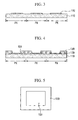
  • FIGS. 3 to 9 are cross-sectional views and a plan view of processing steps of a method for fabricating an organic light emitting display device according to an embodiment of the present invention.
  • FIGS. 10 to 14 are cross-sectional views and a plan view of a pixel-defining film forming step and an organic light emitting layer forming step of a method for fabricating an organic light emitting display device according to another embodiment of the present invention
  • FIGS. 15 to 17 are cross-sectional views of an organic light emitting layer forming step of a method for fabricating an organic light emitting display device according to still another embodiment of the present invention.
  • FIGS. 18 to 21 are cross-sectional views of an organic light emitting layer forming step of a method for fabricating an organic light emitting display device according to still another embodiment of the present invention.
  • FIGS. 22 to 24 are cross-sectional views of an organic light emitting layer forming step of a method for fabricating an organic light emitting display device according to still another embodiment of the present invention.
  • FIG. 25 is a diagram illustrating the schematic configuration of an inkjet print device used in a method for fabricating an organic light emitting display device according to an embodiment of the present invention.
  • FIG. 26 is a diagram illustrating the detailed configuration of an inkjet print device of FIG. 25 ;
  • FIG. 27 is a cross-sectional view illustrating an example of the inkjet print device of FIG. 26 .
  • first, second, third etc. may be used herein to describe various elements, components, regions, layers, and/or sections, these elements, components, regions, layers, and/or sections should not be limited by these terms. These terms are only used to distinguish one element, component, region, layer, or section from another element, component, region, layer or section. Thus, a first element, component, region, layer, or section discussed below could be termed a second element, component, region, layer, or section without departing from the teachings of the present invention.
  • FIG. 1 is a flowchart of a method for fabricating an organic light emitting display device according to an embodiment of the present invention
  • FIG. 2 is a flowchart of an organic light emitting layer forming step of the method for fabricating an organic light emitting display device according to an embodiment of the present invention
  • FIGS. 3 to 9 are cross-sectional views and a plan view of processing steps of a method for fabricating an organic light emitting display device according to an embodiment of the present invention.
  • a method for fabricating an organic light emitting display device includes a first electrode forming step (S 10 ), a pixel-defining film forming step (S 20 ), an organic light emitting layer forming step (S 30 ), and a second electrode forming step (S 40 ).
  • the first electrode forming step (S 10 ) is a step of forming a first electrode 120 on a substrate 110 .
  • the first electrode 120 may be used as an anode electrode for providing holes or as a cathode electrode for providing electrons.
  • the substrate 110 may include an insulating substrate.
  • the substrate 110 e.g., insulating substrate
  • the substrate 110 may be formed of a transparent glass material having SiO 2 as a main component.
  • the substrate 110 may be made of an opaque material or a plastic material. Further, the substrate 110 may be flexible.
  • the material layer of the first electrode is formed on the substrate 110 .
  • the material layer of the first electrode may include indium tin oxide (ITO), indium zinc oxide (IZO), zinc oxide (ZnO), or indium oxide (In 2 O 3 ).
  • the material layer of the first electrode may include (e.g., be formed by forming) at least one layer selected from the group including Ag, Mg, Al, Pt, Pd, Au, Ni, Nd, Ir, Cr, or compounds thereof and then forming at least one layer selected from the group including ITO, IZO, ZnO, or In 2 O 3 thereon.
  • the material layer of the first electrode may be formed using a method, such as Chemical Vapor Deposition (CVD) or Physical Vapor Deposition (PVD).
  • the material layer of the first electrode is patterned according to each pixel PX to form the first electrode 120 .
  • the material layer of the first electrode may be patterned through, for example, a photo etching process.
  • the first electrode 120 may be formed through direct printing using an inkjet printing or gravure printing method. In this case, the photo etching process may be omitted.
  • the pixel-defining film forming step (S 20 ) is a step of forming a pixel-defining film 130 on the substrate 110 on which the first electrode 120 is formed. More specifically, a material layer of the pixel-defining film is first formed on the entire or whole surface of a resultant material of FIG. 3 (e.g., the entire exposed surfaces of the first electrode 120 and the substrate 110 ).
  • the material layer of the pixel-defining film may include an insulating material, for example, at least one organic material selected from the group including benzocyclobutene (BCB), polyimide (PI), polyamide (PA), acrylic resin, and phenol resin.
  • the material layer of the pixel-defining film may include an inorganic material, such as silicon nitride.
  • the material layer of the pixel-defining film may be formed using a method, such as CVD (Chemical Vapor Deposition) or PVD (Physical Vapor Deposition).
  • the pixel-defining film 130 having an opening 131 is formed by patterning the material layer of the pixel-defining film so that the material layer of the pixel-defining material defines each pixel PX.
  • the material layer of the pixel-defining film may be patterned by, for example, a photo etching process.
  • the opening 131 of the pixel-defining film 130 may have a rectangular plane shape (e.g., planar rectangle shape). That is, an angle formed by adjacent side walls of the opening 131 may be a right angle.
  • the pixel-defining film 130 may be formed through direct printing using an inkjet printing or gravure printing method. In this case, the photo etching process may be omitted.
  • the organic light emitting layer forming step (S 30 ) includes forming an organic light emitting layer 140 on the first electrode 120 that is exposed through the opening 131 of the pixel-defining film 130 .
  • the organic light emitting layer 140 may include a hole injection layer formed on the first electrode 120 , a hole transport layer formed on the hole injection layer, an organic layer formed on the hole transport layer, an electron transport layer formed on the organic layer, and an electron injection layer formed on the electron transport layer. Holes provided from the first electrode 120 through the hole injection layer and the hole transport layer and electrons provided from a second electrode 150 through the electron injection layer and the electron transport layer are combined with each other in the organic layer to emit light.
  • the organic light emitting layer forming step (S 30 ) may include an ink non-reactive solvent discharge step (S 31 ) and an organic light emitting ink discharge step (S 32 ).
  • the ink non-reactive solvent discharge step (S 31 ) includes discharging an ink non-reactive solvent 135 a on or onto the first electrode 120 .
  • Discharging the ink non-reactive solvent 135 a may be performed by an inkjet print method using an ink non-reactive solvent discharge mechanism or portion 10 which includes a plurality of first nozzles 12 at (e.g., installed at) a lower portion of a first head 11 (e.g., below a first head 11 ). Further, discharging the ink non-reactive solvent 135 a may be performed for each pixel line as the first head 11 moves in one direction.
  • the first head 11 may include a thermal inkjet print head or a piezo inkjet print head. In some embodiments, discharging the ink non-reactive solvent 135 a may be performed by or using a nozzle print method.
  • the ink non-reactive solvent 135 a is a solvent which improves wetting of organic light emitting ink 140 a during discharging of the organic light emitting ink 140 a on or onto the first electrode 120 , is non-reactive with or to the organic light emitting ink 140 a , and may be used (e.g., selected) as a transparent solvent. Further, the ink non-reactive solvent 135 a may have a boiling point that is equal to or higher than about 70° C. so that the ink non-reactive solvent 135 a remains on the first electrode 120 without evaporating before or when the organic light emitting ink 140 a is discharged on or onto the first electrode 120 .
  • the ink non-reactive solvent 135 a can also be prevented from evaporating before the organic light emitting ink 140 a is discharged on or onto the first electrode 120 .
  • the ink non-reactive solvent 135 a which is non-reactive with or to the organic light emitting ink 140 a , is transparent, and has a boiling point that is equal to or higher than about 70° C.
  • the ink non-reactive solvent 135 a may, for example, include at least one selected from the group including alcohol, dipropylene glycol monomethyl ether acetate (DPMA), ethyl acetate, n-butyl acetate, isobutyl acetate, ethylene glycol monomethyl ether acetate, ethylene glycol n-butyl ether acetate, diethylene glycol dimethyl ether, dipropylene glycol monomthyl ether acetate, diethylene glycol methyl ethyl ether, diethylene glycol ethyl ether acetate, dipropylene glycol n-butyl ether, tripropylene glycol n-propyl ether, tripropylene glycol methyl methyl ether
  • the ink non-reactive solvent 135 a may have viscosity in a range of about 2 centi-poise (cP) to about 4 (cP) when it is discharged using or through the first nozzle 12 . In the above-described viscosity range, the ink non-reactive solvent 135 a can flow (e.g., flow smoothly) in or through the first nozzle 12 .
  • the organic light emitting ink discharge step (S 32 ) includes discharging the organic light emitting ink 140 a on or onto the ink non-reactive solvent portion 135 that is formed as the ink non-reactive solvent 135 a is discharged on or onto the first electrode 120 .
  • the organic light emitting ink 140 a is discharged on or onto the ink non-reactive solvent portion 135 formed thereon, and thus, the fine residual substances are prevented from limiting (e.g., directly limiting) the wetting of the organic light emitting ink 140 a.
  • the organic light emitting ink 140 a may include a solvent and solids.
  • the solvent may be the same as or may be different from the ink non-reactive solvent 135 a .
  • the solid may include a material of (e.g., constituting) any one of the hole injection layer, the hole transport layer, the organic layer, the electron transport layer, and the electron injection layer, which are stacked (e.g., mutually stacked) on the first electrode 120 .
  • the solid is a material of the hole injection layer, it may be 4,4′,4′′-tris(3-methylphenylphenylamino)triphenylamine (MTDATA), copper phthalocyanine (CuPc), or poly(3,4-ethylenedioxythiphene)/(polystyrene sulfonate) (PEDOT/PSS), but is not limited thereto.
  • MTDATA 4,4′,4′′-tris(3-methylphenylphenylamino)triphenylamine
  • CuPc copper phthalocyanine
  • PEDOT/PSS poly(3,4-ethylenedioxythiphene)/(polystyrene sulfonate)
  • the organic light emitting ink 140 a includes the solvent, and if it is discharged on or onto the ink non-reactive solvent portion 135 , it is mixed with the ink non-reactive solvent portion 135 in a liquid state. Through this mixing, wetting of the organic light emitting ink 140 a can be improved in the opening 131 of the pixel-defining film 130 .
  • Discharging the organic light emitting ink 140 a may be performed by or using the inkjet print method using an organic light emitting ink discharge mechanism or portion 20 that includes a plurality of second nozzles 22 on (e.g., installed at) the lower portion of a second head 21 (e.g., the bottom of a second head 21 ). Further, discharging the organic light emitting ink 140 a may be performed for each pixel line as the second head 21 moves in a direction (e.g., one direction).
  • the second head 21 may be a thermal inkjet print head or a piezo inkjet print head. In some embodiments, discharging the organic light emitting ink 140 a may be performed by or using the nozzle print method.
  • Discharging the organic light emitting ink 140 a on the ink non-reactive solvent portion 135 may be performed after a time (e.g., predetermined time), for example, between about two to about five seconds after discharging the ink non-reactive solvent 135 a is completed. In such a time range, the ink non-reactive solvent portion 135 , which is formed through or by discharging the ink non-reactive solvent 135 a on the first electrode 120 , can be prevented from becoming dried or evaporated.
  • a time e.g., predetermined time
  • the ink non-reactive solvent portion 135 which is formed through or by discharging the ink non-reactive solvent 135 a on the first electrode 120 , can be prevented from becoming dried or evaporated.
  • the present invention is not limited thereto.
  • the time (e.g., predetermined time) between discharging the ink non-reactive solvent 135 a and discharging the organic light emitting ink 140 a may be determined (e.g., calculated) by experiments based on the time before the ink non-reactive solvent portion 135 is dried or evaporated from the first electrode 120 .
  • the ink non-reactive solvent discharge mechanism 10 moves to an adjacent pixel PX after discharging the ink non-reactive solvent 135 a on or onto the first electrode 120 , and the organic light emitting ink discharge mechanism 20 moves to be above the ink non-reactive solvent portion 135 (e.g., to the upper side of the ink non-reactive solvent portion 135 ) formed by the ink non-reactive solvent 135 a . Further, the organic light emitting ink discharge mechanism 20 discharges the organic light emitting ink 140 a on or onto the ink non-reactive solvent portion 135 .
  • the movement of the ink non-reactive solvent discharge mechanism 10 and the movement of the organic light emitting ink discharge mechanism 20 may be performed in one direction and/or may be independently controlled. In some embodiments, the movement of the ink non-reactive solvent discharge mechanism 10 and the movement of the organic light emitting ink discharge mechanism 20 may be performed (e.g., simultaneously or concurrently performed) when the first head 11 of the ink non-reactive solvent discharge mechanism 10 and the second head 21 of the organic light emitting ink discharge mechanism 20 are coupled to a moving device.
  • the organic light emitting ink 140 a is discharged on or onto the ink non-reactive solvent portion 135 of all pixels PX to form the organic light emitting layer 140 as illustrated in FIG. 8 .
  • the solvent of the ink non-reactive solvent portion 135 and the solvent of the organic light emitting ink 140 a which are mixed due to the discharging of the organic light emitting ink 140 a , are all evaporated (e.g., completely evaporated) and the solids of the organic light emitting ink 140 a remain as the organic light emitting layer 140 .
  • the second electrode forming step (S 40 ) is a step of forming the second electrode 150 on the organic light emitting layer 140 .
  • the second electrode 150 may be used as a cathode electrode for providing electrons or an anode electrode for providing holes.
  • the second electrode forming step (S 40 ) includes forming the second electrode 150 by forming a material layer of the second electrode on the entire surfaces (e.g., entire exposed surfaces) of both the organic light emitting layer 140 and the pixel-defining film 130 .
  • the material layer of the second electrode may include indium tin oxide (ITO), indium zinc oxide (IZO), zinc oxide (ZnO), or indium oxide (In 2 O 3 ).
  • the material layer of the second electrode may include (e.g., be formed by forming) at least one layer selected from the group including Ag, Mg, Al, Pt, Pd, Au, Ni, Nd, Ir, Cr, or compounds thereof and then forming at least one layer selected from the group including ITO, IZO, ZnO, or In 2 O 3 thereon.
  • the material layer of the second electrode may be formed using a method, such as Chemical Vapor Deposition (CVD) or Physical Vapor Deposition (PVD).
  • the second electrode 150 may be formed to have different patterns by patterning the material layer of the second electrode.
  • the method for fabricating an organic light emitting display device may further include a step of placing (e.g., arranging) a sealing substrate on the upper portion of the second electrode 150 (e.g., at the top of the second electrode 150 ). Further, the method for fabricating an organic light emitting display device according to an embodiment of the present invention may further include a step of placing (e.g., arranging) spacers between the second electrode 150 and the sealing substrate.
  • the organic light emitting ink 140 a is discharged on or onto the ink non-reactive solvent portion 135 that is formed through discharging the ink non-reactive solvent 135 a to form the organic light emitting layer 140 . That is, even if the fine residual substances remain on the first electrode 120 after the process of forming the pixel-defining film 130 , the organic light emitting ink 140 a is discharged after the ink non-reactive solvent portion 135 is formed thereon, and thus, the fine residual substances are prevented from limiting (e.g., directly limiting) the wetting of the organic light emitting ink 140 a . Accordingly, the wetting of the organic light emitting ink 140 a can be improved.
  • the thickness of the organic light emitting ink 140 a can be adjusted (e.g., uniformly adjusted) in the opening 131 . Accordingly, the organic light emitting layer 140 can be formed on the first electrode 120 having (e.g., with) a substantially uniform thickness, and thus, the display quality of the organic light emitting display device can be improved through substantially uniform light emission of the respective organic light emitting layers 140 .
  • the method for fabricating an organic light emitting display device according to another embodiment of the present invention includes similar steps except for a pixel-defining film forming step. Accordingly, in describing the method for fabricating an organic light emitting display device according to another embodiment of the present invention, only the pixel-defining film forming step (e.g., the step for forming the pixel-defining film 230 ) and an organic light emitting layer forming step are different. Therefore, only the pixel-defining film forming step and the organic light emitting layer forming step will be described in detail.
  • FIGS. 10 to 14 are cross-sectional views and a plan view of a pixel-defining film forming step and an organic light emitting layer forming step of a method for fabricating an organic light emitting display device according to another embodiment of the present invention.
  • the pixel-defining film forming step in the method for fabricating an organic light emitting display device according to another embodiment of the present invention is similar to the pixel-defining film forming step (S 20 ) as described above with reference to FIG. 4 .
  • an opening 231 of the pixel-defining film 230 is formed so that the planar shape of the opening 231 has rounded corners in each pixel PX, as shown in FIG. 11 .
  • the discharged organic light emitting ink 140 a can be well spread (e.g., evenly spread) up to the edges of the opening 231 , and thus the filling (e.g., filling characteristic) of the organic light emitting ink 140 a in the opening 231 can be improved.
  • the pixel-defining film forming step as shown in FIG. 10 includes forming a material layer of the pixel-defining film on the entire surface (e.g., whole exposed surface) of the resultant materials of FIG. 3 (e.g., the substrate 110 and the first electrode 120 ).
  • the material layer of the pixel-defining film may be formed using a method, such as CVD or PVD. Because exemplary materials of the material layer of the pixel-defining film have been described above, duplicate explanation thereof will be omitted.
  • the pixel-defining film 230 having the opening 231 is formed through or by patterning of the material layer of the pixel-defining film so that the material layer defines (e.g., extends along the periphery of) each pixel PX.
  • the material layer of the pixel-defining film may, for example, be patterned through or using a photo etching process.
  • An opening of a mask that is used for patterning of the material layer of the pixel-defining film may be formed to have rounded corners.
  • the pixel-defining film 230 may be formed through direct printing using an inkjet printing or gravure printing method. In this case, the photo etching process may be omitted.
  • the organic light emitting layer forming step includes forming the organic light emitting layer 140 on the first electrode 120 that is exposed by the opening 231 of the pixel-defining film 230 .
  • the organic light emitting layer forming step may include an ink non-reactive solvent discharge step and an organic light emitting ink discharge step.
  • the ink non-reactive solvent discharge step includes discharging the ink non-reactive solvent 135 a on or onto the first electrode 120 .
  • Discharging the ink non-reactive solvent 135 a may be performed using a method as illustrated in FIG. 6 .
  • the organic light emitting ink discharge step includes discharging the organic light emitting ink 140 a on or onto the ink non-reactive solvent portion 135 that is formed through discharging the ink non-reactive solvent 135 a on or onto the first electrode 120 .
  • Discharging the organic light emitting ink 140 a may be performed using a method as illustrated in FIG. 7 .
  • the organic light emitting ink 140 a is discharged on or onto the ink non-reactive solvent portion 135 of all pixels PX to form the organic light emitting layer 140 as illustrated in FIG. 14 .
  • the solvent of the ink non-reactive solvent portion 135 and the solvent of the organic light emitting ink 140 a which are mixed due to the discharging of the organic light emitting ink 140 a , are all evaporated (e.g., entirely evaporated) through a drying step (e.g., timed drying step) or the like, and the solids of the organic light emitting ink 140 a remain as the organic light emitting layer 140 .
  • the discharged organic light emitting ink 140 a can be spread (e.g., well or fully spread) up to the edges of (e.g., can entire fill) the opening 231 , and thus, the filling (e.g., filling characteristic) of the organic light emitting ink 140 a in the opening 231 can be improved.
  • the method for fabricating an organic light emitting display device according to still another embodiment of the present invention has similar steps except for an organic light emitting layer forming step. Accordingly, in describing the method for fabricating an organic light emitting display device according to still another embodiment of the present invention, only the organic light emitting layer forming step will be described.
  • FIGS. 15 to 17 are cross-sectional views of an organic light emitting layer forming step of a method for fabricating an organic light emitting display device according to still another embodiment of the present invention.
  • the organic light emitting layer forming step includes forming the organic light emitting layer 140 on the first electrode 120 that is exposed by the opening 131 of the pixel-defining film 130 .
  • the organic light emitting layer forming step may include an ink non-reactive solvent discharge step and an organic light emitting ink discharge step.
  • the ink non-reactive solvent discharge step includes discharging the ink non-reactive solvent 135 a on or onto the first electrode 120 .
  • Discharging the ink non-reactive solvent 135 a is performed (e.g., simultaneously or concurrently performed) with respect to all pixels PX by an ink non-reactive solvent discharge mechanism or portion 10 A, unlike the embodiment depicted in FIG. 6 , where discharging the ink non-reactive solvent 135 a is performed for each pixel line as the ink non-reactive solvent discharge mechanism 10 moves relative to each pixel line. Accordingly, the ink non-reactive solvent discharge mechanism 10 A can reduce the processing time of the ink non-reactive solvent discharge step.
  • the ink non-reactive solvent discharge mechanism 10 A may have a plurality of first nozzles 12 A, the number of which corresponds to the number of pixels PX, on a lower portion of a first head 11 A (e.g., at a bottom of a first head 11 A) having a size that is similar or substantially similar to the size of the substrate 110 .
  • the organic light emitting ink discharge step includes discharging the organic light emitting ink 140 a on or onto the ink non-reactive solvent portion 135 that is formed through discharging the ink non-reactive solvent 135 a on or onto the first electrode 120 .
  • Discharging the organic light emitting ink 140 a is performed (e.g., simultaneously or concurrently performed) with respect to all pixels PX by an organic light emitting ink discharge mechanism 20 A, unlike the embodiment depicted in FIG. 7 , where discharging the organic light emitting ink 140 a is performed for each pixel line as the organic light emitting ink discharge mechanism 20 moves relative to each pixel line.
  • the organic light emitting ink discharge mechanism or portion 20 A can reduce the processing time of the organic light emitting ink discharge step.
  • the organic light emitting ink discharge mechanism 20 A may have a plurality of second nozzles 22 A, the number of which corresponds to the number of pixels PX, on a lower portion of a second head 21 A (e.g., at a bottom of a second head 21 A) having a size that is similar or substantially similar to the size of the substrate 110 .
  • the organic light emitting ink 140 a is discharged on or onto the ink non-reactive solvent portion 135 of all pixels PX to form the organic light emitting layer 140 as illustrated in FIG. 17 .
  • the solvent of the ink non-reactive solvent portion 135 and the solvent of the organic light emitting ink 140 a which are mixed due to the discharging of the organic light emitting ink 140 a , are all evaporated (e.g., entirely evaporated) through a drying step (e.g., timed drying step) or the like, and the solids of the organic light emitting ink 140 a remain as the organic light emitting layer 140 .
  • the fabrication processing time can be reduced.
  • the method for fabricating an organic light emitting display device according to still another embodiment of the present invention has similar steps except for an organic light emitting layer forming step. Accordingly, in describing the method for fabricating an organic light emitting display device according to still another embodiment of the present invention, only the organic light emitting layer forming step will be described.
  • FIGS. 18 to 21 are cross-sectional views of an organic light emitting layer forming step of a method for fabricating an organic light emitting display device according to still another embodiment of the present invention.
  • the organic light emitting layer forming step includes forming the organic light emitting layer 140 on the first electrode 120 that is exposed by (e.g., in an area exposed by) the opening 131 of the pixel-defining film 130 .
  • the organic light emitting layer forming step may include an ink non-reactive solvent discharge step and an organic light emitting ink discharge step.
  • the ink non-reactive solvent discharge step includes discharging the ink non-reactive solvent 135 a on the entire or whole surfaces (e.g., entire exposed surfaces) of both the first electrode 120 and the pixel-defining film 130 .
  • Discharging the ink non-reactive solvent 135 a may be performed using a spray coating method using a spray device 30 .
  • the ink non-reactive solvent portion 135 may cover or substantially cover the first electrode 120 and the pixel-defining film 130 and may be formed with a substantially constant thickness from (e.g., measured from) the upper surface of the pixel-defining film 130 .
  • forming the ink non-reactive solvent portion 135 may be performed using a dipping method in which the substrate 110 , on which the first electrode 120 and the pixel-defining film 130 are formed, is dipped into the ink non-reactive solvent 135 a.
  • the organic light emitting ink discharge step includes discharging the organic light emitting ink 140 a on or onto the ink non-reactive solvent portion 135 that is formed on the first electrode 120 .
  • the ink non-reactive solvent portion 135 which has a large thickness from (e.g., measured from) the first electrode 120 as shown in FIG. 19 , is dried (e.g., evaporated) within several seconds, and thus can remain on the first electrode 120 having thin thickness.
  • Discharging the organic light emitting ink 140 a may be performed using a method as illustrated in FIG. 7 .
  • the organic light emitting ink 140 a is discharged on or onto the ink non-reactive solvent portion 135 of all pixels PX to form the organic light emitting layer 140 as illustrated in FIG. 21 .
  • the solvents of the ink non-reactive solvent portion 135 and the solvents of the organic light emitting ink 140 a which are mixed due to the discharging of the organic light emitting ink 140 a , are all evaporated (e.g., entirely evaporated) through a drying step (e.g., timed drying step) or the like, and the solids of the organic light emitting ink 140 a remain as the organic light emitting layer 140 .
  • the fabrication processing time can be reduced.
  • the method for fabricating an organic light emitting display device according to still another embodiment of the present invention has similar steps except for an organic light emitting layer forming step. Accordingly, in describing the method for fabricating an organic light emitting display device according to still another embodiment of the present invention, only the organic light emitting layer forming step will be described.
  • FIGS. 22 to 24 are cross-sectional views of an organic light emitting layer forming step of a method for fabricating an organic light emitting display device according to still another embodiment of the present invention.
  • the organic light emitting layer forming step includes forming of the organic light emitting layer 140 on the first electrode 120 that is exposed by the opening 131 of the pixel-defining film 130 .
  • the organic light emitting layer forming step may include an ink non-reactive solvent discharge step and an organic light emitting ink discharge step.
  • the ink non-reactive solvent discharge step includes discharging the ink non-reactive solvent ( 135 a in FIG. 18 ) onto the entire or whole surfaces (e.g., entire exposed surfaces) of both the first electrode 120 and the pixel-defining film 130 , and as illustrated in FIG. 22 , the ink non-reactive solvent portion 135 is formed on the upper surfaces of (e.g., at the tops of) the pixel-defining film 130 and the first electrode 120 having a thin thickness. Discharging the ink non-reactive solvent 135 a may be performed using the spray coating method using the spray device 30 of FIG. 18 .
  • the ink non-reactive solvent portion 135 is formed on the upper surface of the pixel-defining film 130 (e.g., at the top of the pixel-defining film 130 ) having thin thickness, and a part of the ink non-reactive solvent 135 a of the ink non-reactive solvent portion 135 formed on the upper surface of the pixel-defining film 130 (e.g., at the top of the pixel-defining film 130 ) moves (e.g., flows or migrates) to an upper portion of the first electrode 120 (e.g., a top of the first electrode 120 ).
  • a second thickness T 2 of the ink non-reactive solvent portion 135 that is formed on the first electrode 120 is thicker than a first thickness T 1 of the ink non-reactive solvent portion 135 that is formed on the upper surface of the pixel-defining film 130 .
  • the ink non-reactive solvent portion 135 that is formed on the upper surface of the pixel-defining film 130 has a thin thickness, it may be dried (e.g., evaporated) before the organic light emitting ink discharge step is performed or during the organic light emitting ink discharge step.
  • the organic light emitting ink discharge step includes discharging the organic light emitting ink 140 a on or onto the ink non-reactive solvent portion 135 that is formed by discharging the ink non-reactive solvent 135 a on or onto the first electrode 120 .
  • Discharging the organic light emitting ink 140 a may be performed using a method as illustrated in FIG. 7 .
  • the organic light emitting ink 140 a is discharged on or onto the ink non-reactive solvent portion 135 of all pixels PX to form the organic light emitting layer 140 as illustrated in FIG. 24 .
  • the solvents of the ink non-reactive solvent portion 135 and the solvents of the organic light emitting ink 140 a which are mixed due to the discharging of the organic light emitting ink 140 a , are all evaporated (e.g., entirely evaporated) through a drying step (e.g., timed drying step) or the like, and the solids of the organic light emitting ink 140 a remain as the organic light emitting layer 140 .
  • the fabrication processing time can be reduced.
  • FIG. 25 is a diagram illustrating the schematic configuration of an inkjet print device used in a method for fabricating an organic light emitting display device according to an embodiment of the present invention.
  • FIG. 26 is a diagram illustrating the detailed configuration of an inkjet print device of FIG. 25
  • FIG. 27 is a cross-sectional view illustrating an example of the inkjet print device of FIG. 26 .
  • an inkjet print device 1 used in a method for fabricating an organic light emitting display device includes an ink non-reactive solvent discharge mechanism 10 and an organic light emitting ink discharge mechanism 20 .
  • the ink non-reactive solvent discharge mechanism 10 may include a first controller 13 , an ink non-reactive solvent storage 14 , and a first discharger 15 .
  • the first controller 13 performs discharge control corresponding to the ink non-reactive solvent through the first discharger 15 and movement control corresponding to the first discharger 15 .
  • the discharge control corresponding to the ink non-reactive solvent may include (e.g., mean) the control of viscosity or a flow rate of the ink non-reactive solvent and a discharge amount of the ink non-reactive solvent.
  • the ink non-reactive solvent storage 14 stores the ink non-reactive solvent to be discharged on or onto the opening of the pixel-defining film exposing the first electrode formed on the substrate of the organic light emitting display device.
  • the first discharger 15 receives a discharge control signal corresponding to the ink non-reactive solvent and a movement control signal corresponding to the first discharger 15 from the first controller 13 , receives the ink non-reactive solvent from the ink non-reactive solvent storage 14 , and discharges the ink non-reactive solvent on or onto the first electrode.
  • the first discharger 15 may include the first nozzle 12 that is on (e.g., installed at) the lower portion of the first head 11 (e.g., the bottom of the first head 11 ) of FIG. 6 to discharge the ink non-reactive solvent according to the discharge control signal corresponding to the ink non-reactive solvent.
  • the first discharger 15 may include a moving device coupled (e.g., connected) to the first head 11 to move the first head 11 in a direction according to the movement control signal corresponding to the first discharger 15 .
  • the organic light emitting ink discharge mechanism 20 may include a second controller 23 , an organic light emitting ink storage 24 , and a second discharger 25 .
  • the second controller 23 performs discharge control corresponding to the organic light emitting ink through the second discharger 25 and movement control corresponding to the second discharger 25 .
  • the discharge control corresponding to the organic light emitting ink may include (e.g., mean) the control of viscosity or a flow rate of the organic light emitting ink and a discharge amount of the organic light emitting ink.
  • the organic light emitting ink storage 24 stores the organic light emitting ink to be discharged on or onto the ink non-reactive solvent portion that is formed by discharging the ink non-reactive solvent on or onto the opening of the pixel-defining film exposing the first electrode formed on the substrate of the organic light emitting display device.
  • the second discharger 25 receives a discharge control signal corresponding to the organic light emitting ink and a movement control signal corresponding to the second discharger 25 from the second controller 23 , receives the organic light emitting ink from the organic light emitting ink storage 24 , and discharges the organic light emitting ink on or onto the ink non-reactive solvent portion.
  • the second discharger 25 may include the second nozzle 22 that is on (e.g., installed at) the lower portion of the second head 21 (e.g., the bottom of the second head 21 ) of FIG. 7 so as to discharge the organic light emitting ink according to the discharge control signal corresponding to the organic light emitting ink.
  • the second discharger 25 may include a moving device coupled (e.g., connected) to the second head 21 to move the second head 21 in a direction in accordance with the movement control signal corresponding to the second discharger 25 .
  • the movement of the first discharger 15 and the movement of the second discharger 25 may be independently controlled by the moving device coupled (e.g., connected) to the first head 11 and the moving device coupled (e.g., connected) to the second head 21 .
  • the movement of the first discharger 15 and the movement of the second discharger 25 may be performed (e.g., simultaneously or concurrently performed) when (e.g., in a state where) the first head 11 and the second head 21 are coupled to a moving device 40 .
  • the distance dl between the first nozzle 12 on (e.g., installed at) the lower portion of the first head 11 (e.g., the bottom of the first head 11 ) and the second nozzle 22 on (e.g., installed at) the lower portion of the second head 21 (e.g., the bottom of the second head 21 ) may be substantially equal to the width of each pixel PX on the substrate of the organic light emitting display device.

Landscapes

  • Engineering & Computer Science (AREA)
  • Manufacturing & Machinery (AREA)
  • Electroluminescent Light Sources (AREA)

Abstract

A method for fabricating an organic light emitting display device includes forming a first electrode on a substrate; forming a pixel-defining film having an opening exposing the first electrode; forming an ink non-reactive solvent portion by discharging of an ink non-reactive solvent at the opening and forming an organic light emitting layer by discharging an organic light emitting ink on the ink non-reactive solvent portion; and forming a second electrode on the organic light emitting layer.

Description

CROSS-REFERENCE TO RELATED APPLICATIONS
This application claims priority to and the benefit of Korean Patent Application No. 10-2013-0006005, filed on Jan. 18, 2013 in the Korean Intellectual Property Office, the disclosure of which is incorporated herein in its entirety by reference.
BACKGROUND
1. Field
The present invention relates to a method for fabricating an organic light emitting display device and an inkjet print device used therein.
2. Description of Related Art
Flat panel display devices may be classified as an emissive-type or a non-emissive type. An emissive-type display device may be a flat cathode ray tube, a plasma display panel, an electroluminescence device, or a light emitting diode. A non-emissive type display device may be a liquid crystal display. Among them, the electroluminescence device has advantages including wide viewing angle, superior contrast, and high response speed, and thus, has been in the spotlight as a next-generation display device. The electroluminescence device is classified into either an inorganic light emitting device or an organic light emitting device depending on the material that forms a light emitting layer.
The organic light emitting device includes an organic light emitting layer which is made of an organic material disposed between an anode electrode and a cathode electrode. If voltages are applied to these electrodes, respectively, holes injected from the anode electrode move to the organic light emitting layer through a hole injection layer and a hole transport layer, and electrons move to the organic light emitting layer through an electron injection layer and an electron transport layer. In the organic light emitting layer, the electrons and the holes are recombined. Through this recombination, excitons are generated, and as the excitons are changed from an excited state to a ground state, the organic light emitting layer emits light to display an image.
The organic light emitting device includes a pixel-defining film having an opening for exposing the anode electrode, and the organic light emitting layer is formed on the anode electrode that is exposed through the opening of the pixel-defining film.
SUMMARY
The organic light emitting layer may be formed by discharging organic light emitting ink on the anode electrode that is exposed through the opening of the pixel-defining film using an inkjet printing method.
However, after forming the pixel-defining film, fine residual substances which are invisible to the naked eye may remain on the anode electrode, and such fine residual substances may affect or deteriorate wetting of the organic light emitting ink that is discharged on the anode electrode. In this case, the thickness of the organic light emitting layer which is formed by discharging the organic light emitting ink in the opening (e.g., in the inside of the opening) of the pixel-defining film may be non-uniform.
Accordingly, it is desirable to provide a method for fabricating an organic light emitting display device which can achieve uniform light emission by forming the organic light emitting layer with a uniform thickness through improved wetting of the organic light emitting ink that is discharged in the opening of the pixel-defining film.
Furthermore, it is desirable to provide an inkjet print device which can achieve more uniform light emission by forming the organic light emitting layer with a substantially uniform thickness through improved wetting of the organic light emitting ink that is discharged in the opening of the pixel-defining film.
Additional aspects and features of the invention will be set forth in part in the description which follows and in part will become apparent to those having ordinary skill in the art upon examination of the following or may be learned from practice of the invention.
According to one embodiment of the present invention, a method for fabricating an organic light emitting display device includes forming a first electrode on a substrate; forming a pixel-defining film having an opening exposing the first electrode; forming an ink non-reactive solvent portion by discharging an ink non-reactive solvent at the opening and forming an organic light emitting layer by discharging an organic light emitting ink on the ink non-reactive solvent portion; and forming a second electrode on the organic light emitting layer.
The opening of the pixel-defining film may have a rectangular shape.
The opening of the pixel-defining film may have rounded corners.
The ink non-reactive solvent may include a solvent which is non-reactive with the organic light emitting ink, may be transparent, and may have a boiling point that is equal to or higher than about 70° C.
The ink non-reactive solvent may include at least one of alcohol, dipropylene glycol monomethyl ether acetate (DPMA), ethyl acetate, n-butyl acetate, isobutyl acetate, ethylene glycol monomethyl ether acetate, ethylene glycol n-butyl ether acetate, diethylene glycol dimethyl ether, dipropylene glycol monomthyl ether acetate, diethylene glycol methyl ethyl ether, diethylene glycol ethyl ether acetate, dipropylene glycol n-butyl ether, tripropylene glycol n-propyl ether, tripropylene glycol methyl ether, propylene glycol methyl ether acetate, propylene glycol diacetate, propylene glycol monomethyl ether, propylene glycol monoethyl ether acetate, cyclohexanone, 3-methoxy propionic acid ethyl, 3-ethoxy propionic acid methyl, 3-ethoxy propionic acid ethyl, ethylene glycol n-butyl ether acetate (EGBEA), dipropylene glycol monomethyl ether acetate (DPMA), propylene glycol diacetate (PGDA), diethylene glycol monoethyl ether (DPGME), or diethyl glycol monoethyl ether (Carbitol).
Viscosity of the ink non-reactive solvent may be in a range from about 2 centi-poise (cP) to about 4 cP.
The method for fabricating an organic light emitting display may further include defining each pixel, and discharging the ink non-reactive solvent for each pixel line or concurrently with respect to all pixels using an inkjet print method or a nozzle print method.
The ink non-reactive solvent may be discharged using a spray coating method or a dipping method.
The ink non-reactive solvent portion may substantially cover the first electrode and an upper surface of the pixel-defining film and may have a substantially constant thickness.
The ink non-reactive solvent portion may have a first thickness on the first electrode, and may have a second thickness on an upper surface of the pixel-defining film, the second thickness may be greater than the first thickness.
The organic light emitting ink may include a solvent and solids, and the solvent of the organic light emitting ink may be the same as or different from the ink non-reactive solvent.
The organic light emitting layer may include a hole injection layer, a hole transport layer, an organic layer, an electron transport layer, and an electron injection layer, which are stacked on the first electrode, and the solids may include any material constituting the hole injection layer, the hole transport layer, the organic layer, the electron transport layer, and the electron injection layer.
The solvents of the ink non-reactive solvent portion and the organic light emitting ink may be mixed by discharging the organic light emitting ink on the ink non-reactive solvent portion.
The mixed solvents of the ink non-reactive solvent portion and the organic light emitting ink may be substantially evaporated, and the solids of the organic light emitting ink may remain as the organic light emitting layer.
The organic light emitting ink may be discharged some time after when discharging the ink non-reactive solvent is completed.
The ink non-reactive solvent may be discharged through an ink non-reactive solvent discharge mechanism including a first nozzle at a lower portion of a first head, and the organic light emitting ink may be discharged through an organic light emitting ink discharge mechanism including a second nozzle at a lower portion of a second head.
The ink non-reactive solvent discharge mechanism and the organic light emitting ink discharge mechanism may be independently controlled or may be configured to move concurrently.
An inkjet print device includes an ink non-reactive solvent discharge mechanism configured to form an ink non-reactive solvent portion by discharging ink non-reactive ink in an opening of a pixel-defining film, the opening exposing a first electrode on a substrate of an organic light emitting display device; and an organic light emitting ink discharge mechanism configured to form an organic light emitting layer by discharging an organic light emitting ink on the ink non-reactive solvent portion.
The ink non-reactive solvent discharge mechanism may include a first controller configured to control discharge of an ink non-reactive solvent and movement of a first discharger; an ink non-reactive solvent storage configured to store the ink non-reactive solvent; and the first discharger configured to receive a discharge control signal and a movement control signal from the first controller, to receive the ink non-reactive solvent from the ink non-reactive solvent storage, and to discharge the ink non-reactive solvent on the first electrode.
The organic light emitting ink discharge mechanism may include a second controller configured to control discharge of the organic light emitting ink and movement of a second discharger; an organic light emitting ink storage configured to store the organic light emitting ink; and the second discharger configured to receive a discharge control signal and a movement control signal from the second controller, to receive the organic light emitting ink from the organic light emitting ink storage, and to discharge the organic light emitting ink on the ink non-reactive solvent portion.
The first discharger may include a first nozzle at a lower portion of a first head, and the second discharger may include a second nozzle at a lower portion of a second head, and the first head and the second head are respectively coupled to moving devices that are configured to move independently with respect to each other.
The first discharger may include a first nozzle at a lower portion of a first head, and the second discharger may include a second nozzle at a lower portion of a second head, and the first head and the second head may be coupled to one moving device.
A distance between the first nozzle and the second nozzle may be substantially equal to a width of a pixel.
Accordingly, even if the fine residual substances remain after forming the pixel-defining film on the first electrode, the fine residual substances are prevented from limiting the wetting of the organic light emitting ink, and thus, the wetting of the organic light emitting ink can be improved.
Accordingly, by adjusting the thickness of the organic light emitting ink in the opening of the pixel-defining film, the organic light emitting layer is formed on the first electrode with a substantially uniform thickness, and thus, the display quality of the organic light emitting display device can be improved through uniform light emission of the organic light emitting layer.
The aspects and effects according to the present invention are not limited to the contents as exemplified above, but further various aspects and effects are included in the description.
BRIEF DESCRIPTION OF THE DRAWINGS
The above and other features and aspects of the present invention will be more apparent from the following detailed description taken in conjunction with the accompanying drawings, in which:
FIG. 1 is a flowchart depicting a method for fabricating an organic light emitting display device according to an embodiment of the present invention;
FIG. 2 is a flowchart depicting an organic light emitting layer forming step of the method for fabricating an organic light emitting display device according to an embodiment of the present invention;
FIGS. 3 to 9 are cross-sectional views and a plan view of processing steps of a method for fabricating an organic light emitting display device according to an embodiment of the present invention;
FIGS. 10 to 14 are cross-sectional views and a plan view of a pixel-defining film forming step and an organic light emitting layer forming step of a method for fabricating an organic light emitting display device according to another embodiment of the present invention;
FIGS. 15 to 17 are cross-sectional views of an organic light emitting layer forming step of a method for fabricating an organic light emitting display device according to still another embodiment of the present invention;
FIGS. 18 to 21 are cross-sectional views of an organic light emitting layer forming step of a method for fabricating an organic light emitting display device according to still another embodiment of the present invention;
FIGS. 22 to 24 are cross-sectional views of an organic light emitting layer forming step of a method for fabricating an organic light emitting display device according to still another embodiment of the present invention;
FIG. 25 is a diagram illustrating the schematic configuration of an inkjet print device used in a method for fabricating an organic light emitting display device according to an embodiment of the present invention;
FIG. 26 is a diagram illustrating the detailed configuration of an inkjet print device of FIG. 25; and
FIG. 27 is a cross-sectional view illustrating an example of the inkjet print device of FIG. 26.
DETAILED DESCRIPTION
Aspects and features of the present invention and methods of accomplishing the same may be understood more readily by reference to the following detailed description of example embodiments and the accompanying drawings. The present invention may, however, be embodied in many different forms and should not be construed as being limited to the embodiments set forth herein. Rather, these embodiments are provided so that this disclosure will be thorough and complete and will fully convey the concept of the invention to those skilled in the art, and the present invention will only be defined by the appended claims.
It will also be understood that when a layer is referred to as being “on” another layer or substrate, it can be directly on the other layer or substrate, or intervening layers may also be present. The same reference numbers indicate the same components throughout the specification.
It will be understood that, although the terms first, second, third etc. may be used herein to describe various elements, components, regions, layers, and/or sections, these elements, components, regions, layers, and/or sections should not be limited by these terms. These terms are only used to distinguish one element, component, region, layer, or section from another element, component, region, layer or section. Thus, a first element, component, region, layer, or section discussed below could be termed a second element, component, region, layer, or section without departing from the teachings of the present invention.
Hereinafter, embodiments of the present invention will be described with reference to the accompanying drawings.
FIG. 1 is a flowchart of a method for fabricating an organic light emitting display device according to an embodiment of the present invention, and FIG. 2 is a flowchart of an organic light emitting layer forming step of the method for fabricating an organic light emitting display device according to an embodiment of the present invention. FIGS. 3 to 9 are cross-sectional views and a plan view of processing steps of a method for fabricating an organic light emitting display device according to an embodiment of the present invention.
A method for fabricating an organic light emitting display device according to an embodiment of the present invention includes a first electrode forming step (S10), a pixel-defining film forming step (S20), an organic light emitting layer forming step (S30), and a second electrode forming step (S40).
First, referring to FIGS. 1 and 3, the first electrode forming step (S10) is a step of forming a first electrode 120 on a substrate 110. The first electrode 120 may be used as an anode electrode for providing holes or as a cathode electrode for providing electrons.
The substrate 110 may include an insulating substrate. The substrate 110 (e.g., insulating substrate) may be formed of a transparent glass material having SiO2 as a main component. In some embodiments, the substrate 110 may be made of an opaque material or a plastic material. Further, the substrate 110 may be flexible.
A material layer of the first electrode is formed on the substrate 110. In the case where the first electrode 120 is used as the transparent electrode, the material layer of the first electrode may include indium tin oxide (ITO), indium zinc oxide (IZO), zinc oxide (ZnO), or indium oxide (In2O3). Further, in the case where the first electrode 120 is used as the reflection electrode, the material layer of the first electrode may include (e.g., be formed by forming) at least one layer selected from the group including Ag, Mg, Al, Pt, Pd, Au, Ni, Nd, Ir, Cr, or compounds thereof and then forming at least one layer selected from the group including ITO, IZO, ZnO, or In2O3 thereon. The material layer of the first electrode may be formed using a method, such as Chemical Vapor Deposition (CVD) or Physical Vapor Deposition (PVD).
Then, the material layer of the first electrode is patterned according to each pixel PX to form the first electrode 120. The material layer of the first electrode may be patterned through, for example, a photo etching process.
In another embodiment of the present invention, the first electrode 120 may be formed through direct printing using an inkjet printing or gravure printing method. In this case, the photo etching process may be omitted.
Referring to FIGS. 1 and 4, the pixel-defining film forming step (S20) is a step of forming a pixel-defining film 130 on the substrate 110 on which the first electrode 120 is formed. More specifically, a material layer of the pixel-defining film is first formed on the entire or whole surface of a resultant material of FIG. 3 (e.g., the entire exposed surfaces of the first electrode 120 and the substrate 110). The material layer of the pixel-defining film may include an insulating material, for example, at least one organic material selected from the group including benzocyclobutene (BCB), polyimide (PI), polyamide (PA), acrylic resin, and phenol resin. Further, as another example, the material layer of the pixel-defining film may include an inorganic material, such as silicon nitride. The material layer of the pixel-defining film may be formed using a method, such as CVD (Chemical Vapor Deposition) or PVD (Physical Vapor Deposition).
Then, the pixel-defining film 130 having an opening 131 is formed by patterning the material layer of the pixel-defining film so that the material layer of the pixel-defining material defines each pixel PX. The material layer of the pixel-defining film may be patterned by, for example, a photo etching process. Referring to FIG. 5, in each pixel PX, the opening 131 of the pixel-defining film 130 may have a rectangular plane shape (e.g., planar rectangle shape). That is, an angle formed by adjacent side walls of the opening 131 may be a right angle.
In another embodiment of the present invention, the pixel-defining film 130 may be formed through direct printing using an inkjet printing or gravure printing method. In this case, the photo etching process may be omitted.
Referring to FIGS. 1, 2, and 6 to 8, the organic light emitting layer forming step (S30) includes forming an organic light emitting layer 140 on the first electrode 120 that is exposed through the opening 131 of the pixel-defining film 130. The organic light emitting layer 140 may include a hole injection layer formed on the first electrode 120, a hole transport layer formed on the hole injection layer, an organic layer formed on the hole transport layer, an electron transport layer formed on the organic layer, and an electron injection layer formed on the electron transport layer. Holes provided from the first electrode 120 through the hole injection layer and the hole transport layer and electrons provided from a second electrode 150 through the electron injection layer and the electron transport layer are combined with each other in the organic layer to emit light.
The organic light emitting layer forming step (S30) may include an ink non-reactive solvent discharge step (S31) and an organic light emitting ink discharge step (S32).
As illustrated in FIG. 6, the ink non-reactive solvent discharge step (S31) includes discharging an ink non-reactive solvent 135 a on or onto the first electrode 120. Discharging the ink non-reactive solvent 135 a may be performed by an inkjet print method using an ink non-reactive solvent discharge mechanism or portion 10 which includes a plurality of first nozzles 12 at (e.g., installed at) a lower portion of a first head 11 (e.g., below a first head 11). Further, discharging the ink non-reactive solvent 135 a may be performed for each pixel line as the first head 11 moves in one direction. The first head 11 may include a thermal inkjet print head or a piezo inkjet print head. In some embodiments, discharging the ink non-reactive solvent 135 a may be performed by or using a nozzle print method.
The ink non-reactive solvent 135 a is a solvent which improves wetting of organic light emitting ink 140 a during discharging of the organic light emitting ink 140 a on or onto the first electrode 120, is non-reactive with or to the organic light emitting ink 140 a, and may be used (e.g., selected) as a transparent solvent. Further, the ink non-reactive solvent 135 a may have a boiling point that is equal to or higher than about 70° C. so that the ink non-reactive solvent 135 a remains on the first electrode 120 without evaporating before or when the organic light emitting ink 140 a is discharged on or onto the first electrode 120. If the boiling point of the ink non-reactive solvent 135 a is equal to or higher than about 70° C., the ink non-reactive solvent 135 a can also be prevented from evaporating before the organic light emitting ink 140 a is discharged on or onto the first electrode 120.
As described above, the ink non-reactive solvent 135 a, which is non-reactive with or to the organic light emitting ink 140 a, is transparent, and has a boiling point that is equal to or higher than about 70° C. The ink non-reactive solvent 135 a may, for example, include at least one selected from the group including alcohol, dipropylene glycol monomethyl ether acetate (DPMA), ethyl acetate, n-butyl acetate, isobutyl acetate, ethylene glycol monomethyl ether acetate, ethylene glycol n-butyl ether acetate, diethylene glycol dimethyl ether, dipropylene glycol monomthyl ether acetate, diethylene glycol methyl ethyl ether, diethylene glycol ethyl ether acetate, dipropylene glycol n-butyl ether, tripropylene glycol n-propyl ether, tripropylene glycol methyl ether, propylene glycol methyl ether acetate, propylene glycol diacetate, propylene glycol monomethyl ether, propylene glycol monoethyl ether acetate, cyclohexanone, 3-methoxy propionic acid ethyl, 3-ethoxy propionic acid methyl, 3-ethoxy propionic acid ethyl, ethylene glycol n-butyl ether acetate (EGBEA), dipropylene glycol monomethyl ether acetate (DPMA), propylene glycol diacetate (PGDA), diethylene glycol monoethyl ether (DPGME), or diethyl glycol monoethyl ether (Carbitol).
Further, the ink non-reactive solvent 135 a may have viscosity in a range of about 2 centi-poise (cP) to about 4 (cP) when it is discharged using or through the first nozzle 12. In the above-described viscosity range, the ink non-reactive solvent 135 a can flow (e.g., flow smoothly) in or through the first nozzle 12.
As illustrated in FIG. 7, the organic light emitting ink discharge step (S32) includes discharging the organic light emitting ink 140 a on or onto the ink non-reactive solvent portion 135 that is formed as the ink non-reactive solvent 135 a is discharged on or onto the first electrode 120.
Even if the fine residual substances remain on the first electrode 120 after forming the pixel-defining film 130, the organic light emitting ink 140 a is discharged on or onto the ink non-reactive solvent portion 135 formed thereon, and thus, the fine residual substances are prevented from limiting (e.g., directly limiting) the wetting of the organic light emitting ink 140 a.
The organic light emitting ink 140 a may include a solvent and solids. The solvent may be the same as or may be different from the ink non-reactive solvent 135 a. The solid may include a material of (e.g., constituting) any one of the hole injection layer, the hole transport layer, the organic layer, the electron transport layer, and the electron injection layer, which are stacked (e.g., mutually stacked) on the first electrode 120. For example, if the solid is a material of the hole injection layer, it may be 4,4′,4″-tris(3-methylphenylphenylamino)triphenylamine (MTDATA), copper phthalocyanine (CuPc), or poly(3,4-ethylenedioxythiphene)/(polystyrene sulfonate) (PEDOT/PSS), but is not limited thereto.
The organic light emitting ink 140 a includes the solvent, and if it is discharged on or onto the ink non-reactive solvent portion 135, it is mixed with the ink non-reactive solvent portion 135 in a liquid state. Through this mixing, wetting of the organic light emitting ink 140 a can be improved in the opening 131 of the pixel-defining film 130.
Discharging the organic light emitting ink 140 a may be performed by or using the inkjet print method using an organic light emitting ink discharge mechanism or portion 20 that includes a plurality of second nozzles 22 on (e.g., installed at) the lower portion of a second head 21 (e.g., the bottom of a second head 21). Further, discharging the organic light emitting ink 140 a may be performed for each pixel line as the second head 21 moves in a direction (e.g., one direction). The second head 21 may be a thermal inkjet print head or a piezo inkjet print head. In some embodiments, discharging the organic light emitting ink 140 a may be performed by or using the nozzle print method.
Discharging the organic light emitting ink 140 a on the ink non-reactive solvent portion 135 may be performed after a time (e.g., predetermined time), for example, between about two to about five seconds after discharging the ink non-reactive solvent 135 a is completed. In such a time range, the ink non-reactive solvent portion 135, which is formed through or by discharging the ink non-reactive solvent 135 a on the first electrode 120, can be prevented from becoming dried or evaporated. However, the present invention is not limited thereto. The time (e.g., predetermined time) between discharging the ink non-reactive solvent 135 a and discharging the organic light emitting ink 140 a may be determined (e.g., calculated) by experiments based on the time before the ink non-reactive solvent portion 135 is dried or evaporated from the first electrode 120.
As or after a discharge time of the organic light emitting ink 140 a elapses (e.g., passes), the ink non-reactive solvent discharge mechanism 10 moves to an adjacent pixel PX after discharging the ink non-reactive solvent 135 a on or onto the first electrode 120, and the organic light emitting ink discharge mechanism 20 moves to be above the ink non-reactive solvent portion 135 (e.g., to the upper side of the ink non-reactive solvent portion 135) formed by the ink non-reactive solvent 135 a. Further, the organic light emitting ink discharge mechanism 20 discharges the organic light emitting ink 140 a on or onto the ink non-reactive solvent portion 135.
The movement of the ink non-reactive solvent discharge mechanism 10 and the movement of the organic light emitting ink discharge mechanism 20 may be performed in one direction and/or may be independently controlled. In some embodiments, the movement of the ink non-reactive solvent discharge mechanism 10 and the movement of the organic light emitting ink discharge mechanism 20 may be performed (e.g., simultaneously or concurrently performed) when the first head 11 of the ink non-reactive solvent discharge mechanism 10 and the second head 21 of the organic light emitting ink discharge mechanism 20 are coupled to a moving device.
Through the movement of the organic light emitting ink discharge mechanism 20, the organic light emitting ink 140 a is discharged on or onto the ink non-reactive solvent portion 135 of all pixels PX to form the organic light emitting layer 140 as illustrated in FIG. 8. The solvent of the ink non-reactive solvent portion 135 and the solvent of the organic light emitting ink 140 a, which are mixed due to the discharging of the organic light emitting ink 140 a, are all evaporated (e.g., completely evaporated) and the solids of the organic light emitting ink 140 a remain as the organic light emitting layer 140.
Referring to FIGS. 1 and 9, the second electrode forming step (S40) is a step of forming the second electrode 150 on the organic light emitting layer 140. The second electrode 150 may be used as a cathode electrode for providing electrons or an anode electrode for providing holes.
More specifically, the second electrode forming step (S40) includes forming the second electrode 150 by forming a material layer of the second electrode on the entire surfaces (e.g., entire exposed surfaces) of both the organic light emitting layer 140 and the pixel-defining film 130. In the case where the second electrode 150 is used (e.g., formed) as the transparent electrode, the material layer of the second electrode may include indium tin oxide (ITO), indium zinc oxide (IZO), zinc oxide (ZnO), or indium oxide (In2O3). Further, in the case where the second electrode 150 is used (e.g., formed) as the reflection electrode, the material layer of the second electrode may include (e.g., be formed by forming) at least one layer selected from the group including Ag, Mg, Al, Pt, Pd, Au, Ni, Nd, Ir, Cr, or compounds thereof and then forming at least one layer selected from the group including ITO, IZO, ZnO, or In2O3 thereon. The material layer of the second electrode may be formed using a method, such as Chemical Vapor Deposition (CVD) or Physical Vapor Deposition (PVD).
In some embodiments, the second electrode 150 may be formed to have different patterns by patterning the material layer of the second electrode.
Although not illustrated, the method for fabricating an organic light emitting display device according to an embodiment of the present invention may further include a step of placing (e.g., arranging) a sealing substrate on the upper portion of the second electrode 150 (e.g., at the top of the second electrode 150). Further, the method for fabricating an organic light emitting display device according to an embodiment of the present invention may further include a step of placing (e.g., arranging) spacers between the second electrode 150 and the sealing substrate.
As described above, according to the method for fabricating an organic light emitting display device according to an embodiment of the present invention, the organic light emitting ink 140 a is discharged on or onto the ink non-reactive solvent portion 135 that is formed through discharging the ink non-reactive solvent 135 a to form the organic light emitting layer 140. That is, even if the fine residual substances remain on the first electrode 120 after the process of forming the pixel-defining film 130, the organic light emitting ink 140 a is discharged after the ink non-reactive solvent portion 135 is formed thereon, and thus, the fine residual substances are prevented from limiting (e.g., directly limiting) the wetting of the organic light emitting ink 140 a. Accordingly, the wetting of the organic light emitting ink 140 a can be improved.
If the wetting of the discharged organic light emitting ink 140 a is improved, the thickness of the organic light emitting ink 140 a can be adjusted (e.g., uniformly adjusted) in the opening 131. Accordingly, the organic light emitting layer 140 can be formed on the first electrode 120 having (e.g., with) a substantially uniform thickness, and thus, the display quality of the organic light emitting display device can be improved through substantially uniform light emission of the respective organic light emitting layers 140.
Next, a method for fabricating an organic light emitting display device according to another embodiment of the present invention will be described.
Compared to the method for fabricating an organic light emitting display device according to an embodiment of the present invention as described above, the method for fabricating an organic light emitting display device according to another embodiment of the present invention includes similar steps except for a pixel-defining film forming step. Accordingly, in describing the method for fabricating an organic light emitting display device according to another embodiment of the present invention, only the pixel-defining film forming step (e.g., the step for forming the pixel-defining film 230) and an organic light emitting layer forming step are different. Therefore, only the pixel-defining film forming step and the organic light emitting layer forming step will be described in detail.
FIGS. 10 to 14 are cross-sectional views and a plan view of a pixel-defining film forming step and an organic light emitting layer forming step of a method for fabricating an organic light emitting display device according to another embodiment of the present invention.
Referring to FIGS. 10 and 11, the pixel-defining film forming step in the method for fabricating an organic light emitting display device according to another embodiment of the present invention is similar to the pixel-defining film forming step (S20) as described above with reference to FIG. 4. However, in forming the pixel-defining film 230 on the substrate 110 on which the first electrode 120 is formed, as shown in FIG. 10, an opening 231 of the pixel-defining film 230 is formed so that the planar shape of the opening 231 has rounded corners in each pixel PX, as shown in FIG. 11. Accordingly, the discharged organic light emitting ink 140 a can be well spread (e.g., evenly spread) up to the edges of the opening 231, and thus the filling (e.g., filling characteristic) of the organic light emitting ink 140 a in the opening 231 can be improved.
The pixel-defining film forming step as shown in FIG. 10 includes forming a material layer of the pixel-defining film on the entire surface (e.g., whole exposed surface) of the resultant materials of FIG. 3 (e.g., the substrate 110 and the first electrode 120). The material layer of the pixel-defining film may be formed using a method, such as CVD or PVD. Because exemplary materials of the material layer of the pixel-defining film have been described above, duplicate explanation thereof will be omitted.
Then, the pixel-defining film 230 having the opening 231 is formed through or by patterning of the material layer of the pixel-defining film so that the material layer defines (e.g., extends along the periphery of) each pixel PX. The material layer of the pixel-defining film may, for example, be patterned through or using a photo etching process. An opening of a mask that is used for patterning of the material layer of the pixel-defining film may be formed to have rounded corners.
In another embodiment of the present invention, the pixel-defining film 230 may be formed through direct printing using an inkjet printing or gravure printing method. In this case, the photo etching process may be omitted.
Referring to FIGS. 12 to 14, the organic light emitting layer forming step includes forming the organic light emitting layer 140 on the first electrode 120 that is exposed by the opening 231 of the pixel-defining film 230. The organic light emitting layer forming step may include an ink non-reactive solvent discharge step and an organic light emitting ink discharge step.
As illustrated in FIG. 12, the ink non-reactive solvent discharge step includes discharging the ink non-reactive solvent 135 a on or onto the first electrode 120. Discharging the ink non-reactive solvent 135 a may be performed using a method as illustrated in FIG. 6.
As illustrated in FIG. 13, the organic light emitting ink discharge step includes discharging the organic light emitting ink 140 a on or onto the ink non-reactive solvent portion 135 that is formed through discharging the ink non-reactive solvent 135 a on or onto the first electrode 120. Discharging the organic light emitting ink 140 a may be performed using a method as illustrated in FIG. 7. Through the movement of the organic light emitting ink discharge mechanism 20, the organic light emitting ink 140 a is discharged on or onto the ink non-reactive solvent portion 135 of all pixels PX to form the organic light emitting layer 140 as illustrated in FIG. 14. The solvent of the ink non-reactive solvent portion 135 and the solvent of the organic light emitting ink 140 a, which are mixed due to the discharging of the organic light emitting ink 140 a, are all evaporated (e.g., entirely evaporated) through a drying step (e.g., timed drying step) or the like, and the solids of the organic light emitting ink 140 a remain as the organic light emitting layer 140.
As described above, according to the method for fabricating an organic light emitting display device according to another embodiment of the present invention, because the opening 231 of the pixel-defining film 230 is formed so that the planar shape of the opening 231 has rounded corners, the discharged organic light emitting ink 140 a can be spread (e.g., well or fully spread) up to the edges of (e.g., can entire fill) the opening 231, and thus, the filling (e.g., filling characteristic) of the organic light emitting ink 140 a in the opening 231 can be improved.
Next, a method for fabricating an organic light emitting display device according to still another embodiment of the present invention will be described.
Compared to the method for fabricating an organic light emitting display device according to an embodiment of the present invention as described above, the method for fabricating an organic light emitting display device according to still another embodiment of the present invention has similar steps except for an organic light emitting layer forming step. Accordingly, in describing the method for fabricating an organic light emitting display device according to still another embodiment of the present invention, only the organic light emitting layer forming step will be described.
FIGS. 15 to 17 are cross-sectional views of an organic light emitting layer forming step of a method for fabricating an organic light emitting display device according to still another embodiment of the present invention.
Referring to FIGS. 15 to 17, the organic light emitting layer forming step includes forming the organic light emitting layer 140 on the first electrode 120 that is exposed by the opening 131 of the pixel-defining film 130. The organic light emitting layer forming step may include an ink non-reactive solvent discharge step and an organic light emitting ink discharge step.
As illustrated in FIG. 15, the ink non-reactive solvent discharge step includes discharging the ink non-reactive solvent 135 a on or onto the first electrode 120. Discharging the ink non-reactive solvent 135 a is performed (e.g., simultaneously or concurrently performed) with respect to all pixels PX by an ink non-reactive solvent discharge mechanism or portion 10A, unlike the embodiment depicted in FIG. 6, where discharging the ink non-reactive solvent 135 a is performed for each pixel line as the ink non-reactive solvent discharge mechanism 10 moves relative to each pixel line. Accordingly, the ink non-reactive solvent discharge mechanism 10A can reduce the processing time of the ink non-reactive solvent discharge step. The ink non-reactive solvent discharge mechanism 10A may have a plurality of first nozzles 12A, the number of which corresponds to the number of pixels PX, on a lower portion of a first head 11A (e.g., at a bottom of a first head 11A) having a size that is similar or substantially similar to the size of the substrate 110.
As illustrated in FIG. 16, the organic light emitting ink discharge step includes discharging the organic light emitting ink 140 a on or onto the ink non-reactive solvent portion 135 that is formed through discharging the ink non-reactive solvent 135 a on or onto the first electrode 120. Discharging the organic light emitting ink 140 a is performed (e.g., simultaneously or concurrently performed) with respect to all pixels PX by an organic light emitting ink discharge mechanism 20A, unlike the embodiment depicted in FIG. 7, where discharging the organic light emitting ink 140 a is performed for each pixel line as the organic light emitting ink discharge mechanism 20 moves relative to each pixel line. Accordingly, the organic light emitting ink discharge mechanism or portion 20A can reduce the processing time of the organic light emitting ink discharge step. The organic light emitting ink discharge mechanism 20A may have a plurality of second nozzles 22A, the number of which corresponds to the number of pixels PX, on a lower portion of a second head 21A (e.g., at a bottom of a second head 21A) having a size that is similar or substantially similar to the size of the substrate 110.
Through the organic light emitting ink discharge mechanism 20A, the organic light emitting ink 140 a is discharged on or onto the ink non-reactive solvent portion 135 of all pixels PX to form the organic light emitting layer 140 as illustrated in FIG. 17. The solvent of the ink non-reactive solvent portion 135 and the solvent of the organic light emitting ink 140 a, which are mixed due to the discharging of the organic light emitting ink 140 a, are all evaporated (e.g., entirely evaporated) through a drying step (e.g., timed drying step) or the like, and the solids of the organic light emitting ink 140 a remain as the organic light emitting layer 140.
As described above, according to the method for fabricating an organic light emitting display device according to still another embodiment of the present invention, because the ink non-reactive solvent 135 a is discharged (e.g., simultaneously or concurrently discharged) on or onto all the pixels PX using the ink non-reactive discharge mechanism 10A, and the organic light emitting ink 140 a is discharged (e.g., simultaneously or concurrently discharged) on or onto all the pixels PX using the organic light emitting ink discharge mechanism 20A, the fabrication processing time can be reduced.
Next, a method for fabricating an organic light emitting display device according to still another embodiment of the present invention will be described.
Compared to the method for fabricating an organic light emitting display device according to an embodiment of the present invention as described above, the method for fabricating an organic light emitting display device according to still another embodiment of the present invention has similar steps except for an organic light emitting layer forming step. Accordingly, in describing the method for fabricating an organic light emitting display device according to still another embodiment of the present invention, only the organic light emitting layer forming step will be described.
FIGS. 18 to 21 are cross-sectional views of an organic light emitting layer forming step of a method for fabricating an organic light emitting display device according to still another embodiment of the present invention.
Referring to FIGS. 18 to 21, the organic light emitting layer forming step includes forming the organic light emitting layer 140 on the first electrode 120 that is exposed by (e.g., in an area exposed by) the opening 131 of the pixel-defining film 130. The organic light emitting layer forming step may include an ink non-reactive solvent discharge step and an organic light emitting ink discharge step.
As illustrated in FIG. 18, the ink non-reactive solvent discharge step includes discharging the ink non-reactive solvent 135 a on the entire or whole surfaces (e.g., entire exposed surfaces) of both the first electrode 120 and the pixel-defining film 130. Discharging the ink non-reactive solvent 135 a may be performed using a spray coating method using a spray device 30. Through discharging the ink non-reactive solvent 135, as illustrated in FIG. 19, the ink non-reactive solvent portion 135 may cover or substantially cover the first electrode 120 and the pixel-defining film 130 and may be formed with a substantially constant thickness from (e.g., measured from) the upper surface of the pixel-defining film 130. In some embodiments, forming the ink non-reactive solvent portion 135 may be performed using a dipping method in which the substrate 110, on which the first electrode 120 and the pixel-defining film 130 are formed, is dipped into the ink non-reactive solvent 135 a.
As illustrated in FIG. 20, the organic light emitting ink discharge step includes discharging the organic light emitting ink 140 a on or onto the ink non-reactive solvent portion 135 that is formed on the first electrode 120. The ink non-reactive solvent portion 135, which has a large thickness from (e.g., measured from) the first electrode 120 as shown in FIG. 19, is dried (e.g., evaporated) within several seconds, and thus can remain on the first electrode 120 having thin thickness. Discharging the organic light emitting ink 140 a may be performed using a method as illustrated in FIG. 7. Through the movement of the organic light emitting ink discharge mechanism 20, the organic light emitting ink 140 a is discharged on or onto the ink non-reactive solvent portion 135 of all pixels PX to form the organic light emitting layer 140 as illustrated in FIG. 21. The solvents of the ink non-reactive solvent portion 135 and the solvents of the organic light emitting ink 140 a, which are mixed due to the discharging of the organic light emitting ink 140 a, are all evaporated (e.g., entirely evaporated) through a drying step (e.g., timed drying step) or the like, and the solids of the organic light emitting ink 140 a remain as the organic light emitting layer 140.
As described above, according to the method for fabricating an organic light emitting display device according to still another embodiment of the present invention, because the ink non-reactive solvent portion 135 a is formed on the first electrode 120 using a simple method, such as the spray coating method using the spray device 30 or the dipping method, the fabrication processing time can be reduced.
Next, a method for fabricating an organic light emitting display device according to still another embodiment of the present invention will be described.
Compared to the method for fabricating an organic light emitting display device according to an embodiment of the present invention as described above, the method for fabricating an organic light emitting display device according to still another embodiment of the present invention has similar steps except for an organic light emitting layer forming step. Accordingly, in describing the method for fabricating an organic light emitting display device according to still another embodiment of the present invention, only the organic light emitting layer forming step will be described.
FIGS. 22 to 24 are cross-sectional views of an organic light emitting layer forming step of a method for fabricating an organic light emitting display device according to still another embodiment of the present invention.
Referring to FIGS. 22 to 24, the organic light emitting layer forming step includes forming of the organic light emitting layer 140 on the first electrode 120 that is exposed by the opening 131 of the pixel-defining film 130. The organic light emitting layer forming step may include an ink non-reactive solvent discharge step and an organic light emitting ink discharge step.
The ink non-reactive solvent discharge step includes discharging the ink non-reactive solvent (135 a in FIG. 18) onto the entire or whole surfaces (e.g., entire exposed surfaces) of both the first electrode 120 and the pixel-defining film 130, and as illustrated in FIG. 22, the ink non-reactive solvent portion 135 is formed on the upper surfaces of (e.g., at the tops of) the pixel-defining film 130 and the first electrode 120 having a thin thickness. Discharging the ink non-reactive solvent 135 a may be performed using the spray coating method using the spray device 30 of FIG. 18. Here, the ink non-reactive solvent portion 135 is formed on the upper surface of the pixel-defining film 130 (e.g., at the top of the pixel-defining film 130) having thin thickness, and a part of the ink non-reactive solvent 135 a of the ink non-reactive solvent portion 135 formed on the upper surface of the pixel-defining film 130 (e.g., at the top of the pixel-defining film 130) moves (e.g., flows or migrates) to an upper portion of the first electrode 120 (e.g., a top of the first electrode 120). Accordingly, a second thickness T2 of the ink non-reactive solvent portion 135 that is formed on the first electrode 120 is thicker than a first thickness T1 of the ink non-reactive solvent portion 135 that is formed on the upper surface of the pixel-defining film 130. Because the ink non-reactive solvent portion 135 that is formed on the upper surface of the pixel-defining film 130 has a thin thickness, it may be dried (e.g., evaporated) before the organic light emitting ink discharge step is performed or during the organic light emitting ink discharge step.
As illustrated in FIG. 23, the organic light emitting ink discharge step includes discharging the organic light emitting ink 140 a on or onto the ink non-reactive solvent portion 135 that is formed by discharging the ink non-reactive solvent 135 a on or onto the first electrode 120. Discharging the organic light emitting ink 140 a may be performed using a method as illustrated in FIG. 7. Through the movement of the organic light emitting ink discharge mechanism 20, the organic light emitting ink 140 a is discharged on or onto the ink non-reactive solvent portion 135 of all pixels PX to form the organic light emitting layer 140 as illustrated in FIG. 24. The solvents of the ink non-reactive solvent portion 135 and the solvents of the organic light emitting ink 140 a, which are mixed due to the discharging of the organic light emitting ink 140 a, are all evaporated (e.g., entirely evaporated) through a drying step (e.g., timed drying step) or the like, and the solids of the organic light emitting ink 140 a remain as the organic light emitting layer 140.
As described above, according to the method for fabricating an organic light emitting display device according to still another embodiment of the present invention, because the ink non-reactive solvent portion 135 is formed on the first electrode 120 using a simple method, such as the spray coating method using the spray device 30, the fabrication processing time can be reduced.
Next, an inkjet print device that can be used in the method for fabricating an organic light emitting display device according to an embodiment of the present invention will be described.
FIG. 25 is a diagram illustrating the schematic configuration of an inkjet print device used in a method for fabricating an organic light emitting display device according to an embodiment of the present invention. FIG. 26 is a diagram illustrating the detailed configuration of an inkjet print device of FIG. 25, and FIG. 27 is a cross-sectional view illustrating an example of the inkjet print device of FIG. 26.
Referring to FIG. 25, an inkjet print device 1 used in a method for fabricating an organic light emitting display device according to an embodiment of the present invention includes an ink non-reactive solvent discharge mechanism 10 and an organic light emitting ink discharge mechanism 20.
Referring to FIG. 26, the ink non-reactive solvent discharge mechanism 10 may include a first controller 13, an ink non-reactive solvent storage 14, and a first discharger 15.
The first controller 13 performs discharge control corresponding to the ink non-reactive solvent through the first discharger 15 and movement control corresponding to the first discharger 15. The discharge control corresponding to the ink non-reactive solvent may include (e.g., mean) the control of viscosity or a flow rate of the ink non-reactive solvent and a discharge amount of the ink non-reactive solvent.
The ink non-reactive solvent storage 14 stores the ink non-reactive solvent to be discharged on or onto the opening of the pixel-defining film exposing the first electrode formed on the substrate of the organic light emitting display device.
The first discharger 15 receives a discharge control signal corresponding to the ink non-reactive solvent and a movement control signal corresponding to the first discharger 15 from the first controller 13, receives the ink non-reactive solvent from the ink non-reactive solvent storage 14, and discharges the ink non-reactive solvent on or onto the first electrode. The first discharger 15 may include the first nozzle 12 that is on (e.g., installed at) the lower portion of the first head 11 (e.g., the bottom of the first head 11) of FIG. 6 to discharge the ink non-reactive solvent according to the discharge control signal corresponding to the ink non-reactive solvent. Further, the first discharger 15 may include a moving device coupled (e.g., connected) to the first head 11 to move the first head 11 in a direction according to the movement control signal corresponding to the first discharger 15.
The organic light emitting ink discharge mechanism 20 may include a second controller 23, an organic light emitting ink storage 24, and a second discharger 25.
The second controller 23 performs discharge control corresponding to the organic light emitting ink through the second discharger 25 and movement control corresponding to the second discharger 25. The discharge control corresponding to the organic light emitting ink may include (e.g., mean) the control of viscosity or a flow rate of the organic light emitting ink and a discharge amount of the organic light emitting ink.
The organic light emitting ink storage 24 stores the organic light emitting ink to be discharged on or onto the ink non-reactive solvent portion that is formed by discharging the ink non-reactive solvent on or onto the opening of the pixel-defining film exposing the first electrode formed on the substrate of the organic light emitting display device.
The second discharger 25 receives a discharge control signal corresponding to the organic light emitting ink and a movement control signal corresponding to the second discharger 25 from the second controller 23, receives the organic light emitting ink from the organic light emitting ink storage 24, and discharges the organic light emitting ink on or onto the ink non-reactive solvent portion. The second discharger 25 may include the second nozzle 22 that is on (e.g., installed at) the lower portion of the second head 21 (e.g., the bottom of the second head 21) of FIG. 7 so as to discharge the organic light emitting ink according to the discharge control signal corresponding to the organic light emitting ink. Further, the second discharger 25 may include a moving device coupled (e.g., connected) to the second head 21 to move the second head 21 in a direction in accordance with the movement control signal corresponding to the second discharger 25.
In some embodiments, the movement of the first discharger 15 and the movement of the second discharger 25 may be independently controlled by the moving device coupled (e.g., connected) to the first head 11 and the moving device coupled (e.g., connected) to the second head 21.
Further, referring to FIG. 27, the movement of the first discharger 15 and the movement of the second discharger 25 may be performed (e.g., simultaneously or concurrently performed) when (e.g., in a state where) the first head 11 and the second head 21 are coupled to a moving device 40. In this case, the distance dl between the first nozzle 12 on (e.g., installed at) the lower portion of the first head 11 (e.g., the bottom of the first head 11) and the second nozzle 22 on (e.g., installed at) the lower portion of the second head 21 (e.g., the bottom of the second head 21) may be substantially equal to the width of each pixel PX on the substrate of the organic light emitting display device.
In concluding the detailed description, those skilled in the art will appreciate that many variations and modifications can be made to the preferred embodiments without substantially departing from the principles of the present invention. Therefore, the disclosed preferred embodiments of the invention are to be used in a generic and descriptive sense only and not for purposes of limitation.

Claims (5)

What is claimed is:
1. An inkjet print device comprising:
an ink non-reactive solvent discharge mechanism comprising a first nozzle and being configured to form an ink non-reactive solvent portion by discharging ink non-reactive ink in an opening of a pixel-defining film and on a first electrode, the opening exposing the first electrode on a substrate of an organic light emitting display device; and
an organic light emitting ink discharge mechanism comprising a second nozzle and being configured to form an organic light emitting layer by discharging an organic light emitting ink on the ink non-reactive solvent portion,
wherein the ink non-reactive solvent discharge mechanism and the organic light emitting ink discharge mechanism are configured to move in a first direction,
wherein the first nozzle and the second nozzle are coupled to one moving device and are adjacent to each other in the first direction, and
wherein a distance between the first nozzle and the second nozzle is equal to a width of a pixel, the width of the pixel being equal to a distance between adjacent openings of the pixel-defining film.
2. The inkjet print device of claim 1, wherein the ink non-reactive solvent discharge mechanism comprises:
a first controller configured to control discharge of an ink non-reactive solvent;
an ink non-reactive solvent storage configured to store the ink non-reactive solvent; and
a first discharger configured to receive a discharge control signal from the first controller, to receive the ink non-reactive solvent from the ink non-reactive solvent storage, and to discharge the ink non-reactive solvent on the first electrode.
3. The inkjet print device of claim 2, wherein the organic light emitting ink discharge mechanism comprises:
a second controller configured to control discharge of the organic light emitting ink;
an organic light emitting ink storage configured to store the organic light emitting ink; and
a second discharger configured to receive a discharge control signal from the second controller, to receive the organic light emitting ink from the organic light emitting ink storage, and to discharge the organic light emitting ink on the ink non-reactive solvent portion.
4. The inkjet print device of claim 3, wherein the first discharger comprises the first nozzle at a lower portion of a first head, and the second discharger comprises the second nozzle at a lower portion of a second head, and
the first head and the second head coupled to the moving device.
5. The inkjet print device of claim 4, wherein the moving device is configured to receive a movement control signal from at least one of the first controller or the second controller.
US13/944,643 2013-01-18 2013-07-17 Method for fabricating organic light emitting display device by predepositing a solvent to increase wettability and inkjet print device used therein Active US9312486B2 (en)

Applications Claiming Priority (2)

Application Number Priority Date Filing Date Title
KR1020130006005A KR102048870B1 (en) 2013-01-18 2013-01-18 Method of fabricating organic light emitting display device and inkjet print device used thereto
KR10-2013-0006005 2013-01-18

Publications (2)

Publication Number Publication Date
US20140206119A1 US20140206119A1 (en) 2014-07-24
US9312486B2 true US9312486B2 (en) 2016-04-12

Family

ID=51191371

Family Applications (1)

Application Number Title Priority Date Filing Date
US13/944,643 Active US9312486B2 (en) 2013-01-18 2013-07-17 Method for fabricating organic light emitting display device by predepositing a solvent to increase wettability and inkjet print device used therein

Country Status (4)

Country Link
US (1) US9312486B2 (en)
KR (1) KR102048870B1 (en)
CN (1) CN103943791B (en)
TW (1) TWI593097B (en)

Cited By (1)

* Cited by examiner, † Cited by third party
Publication number Priority date Publication date Assignee Title
US11355538B2 (en) * 2017-08-15 2022-06-07 Bidirectional Display, Inc. Image sensor panel and method for fabricating the same

Families Citing this family (18)

* Cited by examiner, † Cited by third party
Publication number Priority date Publication date Assignee Title
CN104992958B (en) * 2015-05-26 2017-11-07 京东方科技集团股份有限公司 Organic Light Emitting Diode substrate and preparation method thereof
CN104882468B (en) * 2015-06-09 2017-12-15 京东方科技集团股份有限公司 Organic electroluminescent display substrate and preparation method thereof, display device
KR102400483B1 (en) 2015-10-02 2022-05-23 삼성디스플레이 주식회사 device for fabricating organic light emitting display device, and fabricating method of organic light emitting display device using the same
KR102457596B1 (en) * 2015-11-02 2022-10-21 삼성디스플레이 주식회사 Method of manufacturing light emitting display device
US20230276685A9 (en) * 2016-08-26 2023-08-31 Najing Technology Corporation Limited Manufacturing method for light emitting device, light emitting device, and hybrid light emitting device
CN107331681B (en) * 2017-06-21 2020-04-10 京东方科技集团股份有限公司 Display substrate, manufacturing method thereof and display device
CN108428723B (en) 2018-03-27 2021-08-03 京东方科技集团股份有限公司 Pixel defining structure and preparation method thereof, display substrate, and inkjet printing method
CN110421988B (en) * 2018-07-18 2021-04-20 广东聚华印刷显示技术有限公司 Ink jet control method and system, and ink jet printing apparatus
CN109728062B (en) * 2019-01-08 2021-10-29 京东方科技集团股份有限公司 Display panel, display device, and manufacturing method of display panel
CN109860436B (en) * 2019-01-23 2021-02-26 纳晶科技股份有限公司 Preparation method of photoelectric device functional layer and photoelectric device
CN110112327A (en) * 2019-04-08 2019-08-09 深圳市华星光电半导体显示技术有限公司 Organic light emitting diode display and its manufacturing method
CN109860441B (en) * 2019-04-18 2021-01-22 京东方科技集团股份有限公司 Organic electroluminescent display panel, manufacturing method thereof and display device
KR102813375B1 (en) * 2019-11-05 2025-05-27 삼성전자주식회사 Method of transferring micro-light emitting diode for LED display
CN110993646B (en) * 2019-11-08 2022-07-12 深圳市华星光电半导体显示技术有限公司 Preparation method of OLED (organic light emitting diode) back plate and OLED back plate
CN112319081A (en) * 2019-12-12 2021-02-05 广东聚华印刷显示技术有限公司 Ink jet printing method, ink jet printing apparatus, and light emitting device
CN111312779B (en) * 2020-02-27 2022-09-09 武汉华星光电半导体显示技术有限公司 Structure and method for optimizing ink-jet printing packaging process and display screen
KR102731962B1 (en) 2020-09-08 2024-11-20 동우 화인켐 주식회사 A laminate, a method of manufacturing the laminate and an image display device comprising the laminate
KR102773932B1 (en) 2021-01-06 2025-02-27 동우 화인켐 주식회사 A photosensitive resin composition, a pixel-partition wall one-body structure prepared using the composition, and a display device comprising thereof

Citations (8)

* Cited by examiner, † Cited by third party
Publication number Priority date Publication date Assignee Title
US20040232814A1 (en) * 2003-01-28 2004-11-25 Hirofumi Sakai Emitter, manufacturing method and manufacturing apparatus thereof, electro-optical apparatus and electronic apparatus
KR20060034870A (en) 2004-10-20 2006-04-26 삼성전자주식회사 Inkjet printing system
US20060220543A1 (en) * 2005-03-30 2006-10-05 Seiko Epson Corporation Organic electro luminescent device and method of manufacturing organic electro luminescent device
US20060228466A1 (en) * 2004-12-30 2006-10-12 Gang Yu Solution dispense and patterning process and apparatus
KR20070052505A (en) 2005-11-17 2007-05-22 삼성전자주식회사 Inkjet Printing System and Manufacturing Method of Organic Thin Film Transistor Display Panel Using the Same
US20070248746A1 (en) * 2006-04-20 2007-10-25 Norihito Ito Manufacturing method of organic electroluminescence element
KR20090000525A (en) 2007-06-28 2009-01-07 주식회사 엘지화학 Method for manufacturing bus electrode of plasma display panel and bus electrode of plasma display panel manufactured thereby
US20100240160A1 (en) * 2005-12-07 2010-09-23 Samsung Electronics Co., Ltd. Method of manufacturing display device, display device therefrom and manufacturing apparatus therefor

Patent Citations (8)

* Cited by examiner, † Cited by third party
Publication number Priority date Publication date Assignee Title
US20040232814A1 (en) * 2003-01-28 2004-11-25 Hirofumi Sakai Emitter, manufacturing method and manufacturing apparatus thereof, electro-optical apparatus and electronic apparatus
KR20060034870A (en) 2004-10-20 2006-04-26 삼성전자주식회사 Inkjet printing system
US20060228466A1 (en) * 2004-12-30 2006-10-12 Gang Yu Solution dispense and patterning process and apparatus
US20060220543A1 (en) * 2005-03-30 2006-10-05 Seiko Epson Corporation Organic electro luminescent device and method of manufacturing organic electro luminescent device
KR20070052505A (en) 2005-11-17 2007-05-22 삼성전자주식회사 Inkjet Printing System and Manufacturing Method of Organic Thin Film Transistor Display Panel Using the Same
US20100240160A1 (en) * 2005-12-07 2010-09-23 Samsung Electronics Co., Ltd. Method of manufacturing display device, display device therefrom and manufacturing apparatus therefor
US20070248746A1 (en) * 2006-04-20 2007-10-25 Norihito Ito Manufacturing method of organic electroluminescence element
KR20090000525A (en) 2007-06-28 2009-01-07 주식회사 엘지화학 Method for manufacturing bus electrode of plasma display panel and bus electrode of plasma display panel manufactured thereby

Non-Patent Citations (2)

* Cited by examiner, † Cited by third party
Title
Eastman material safety data sheet for Cyclohexylbenzene, available at http://ws.eastman.com/ProductCatalogApps/PageControllers/MSDS-PC.aspx?Product=71093424. *
Haltermann product safety bulletin for isopropyl alcohol, available at http://www.monumentchemical.com/documents/IPA-Data-and-Safety-Sheet.pdf. *

Cited By (1)

* Cited by examiner, † Cited by third party
Publication number Priority date Publication date Assignee Title
US11355538B2 (en) * 2017-08-15 2022-06-07 Bidirectional Display, Inc. Image sensor panel and method for fabricating the same

Also Published As

Publication number Publication date
TWI593097B (en) 2017-07-21
CN103943791A (en) 2014-07-23
CN103943791B (en) 2018-01-30
US20140206119A1 (en) 2014-07-24
KR20140093512A (en) 2014-07-28
TW201431057A (en) 2014-08-01
KR102048870B1 (en) 2019-11-27

Similar Documents

Publication Publication Date Title
US9312486B2 (en) Method for fabricating organic light emitting display device by predepositing a solvent to increase wettability and inkjet print device used therein
US9991321B2 (en) Organic light emitting diode display device and method of fabricating the same
US9704935B2 (en) Light-emitting display device and method of manufacturing the same
US11164922B2 (en) Method of fabricating light-emitting display device
KR101325577B1 (en) Organic electro luminescence device and method of manufacturing the same
US7777411B2 (en) Light-emitting device, method of producing light-emitting device, exposure unit, and electronic device
US11004920B2 (en) Display device and method of manufacturing the same
KR101926225B1 (en) High resolution organic light-emitting diode devices
US8975811B2 (en) Light emitting display device that effectively prevent fluorine diffusion to the light emitting layer and method for fabricating the same
US10243176B2 (en) Method for manufacturing organic EL display device and organic EL display device
US20210335907A1 (en) Array substrate, method of fabricating array substrate, display panel, and display device
JP5126185B2 (en) Coating device
US9490443B2 (en) Light emitting display device and method for fabricating the same
US9929380B2 (en) Method of manufacturing light-emitting display device
US7932113B1 (en) Method of fabricating organic light emitting diode display
US9755193B2 (en) Bank repair method, organic EL display device, and production method for same
US20160056219A1 (en) Light-emitting display device and method of manufacturing the same
US20190067395A1 (en) Self-luminous display panel manufacturing method and self-luminous display panel
US7374264B2 (en) Patterned substrate, and method and apparatus for manufacturing the same
JP2006261026A (en) Electro-optical device manufacturing method and electro-optical device
JP5125686B2 (en) Method for manufacturing light emitting device
JP2015207527A (en) Method of forming functional layer of organic light emission device and method of manufacturing organic light emission device
JP2011034737A (en) Coating device
JP2013202527A (en) Method of producing organic functional layer and organic functional element

Legal Events

Date Code Title Description
AS Assignment

Owner name: SAMSUNG DISPLAY CO., LTD., KOREA, REPUBLIC OF

Free format text: ASSIGNMENT OF ASSIGNORS INTEREST;ASSIGNOR:KANG, YOON HO;REEL/FRAME:031217/0280

Effective date: 20130416

FEPP Fee payment procedure

Free format text: PAYOR NUMBER ASSIGNED (ORIGINAL EVENT CODE: ASPN); ENTITY STATUS OF PATENT OWNER: LARGE ENTITY

STCF Information on status: patent grant

Free format text: PATENTED CASE

MAFP Maintenance fee payment

Free format text: PAYMENT OF MAINTENANCE FEE, 4TH YEAR, LARGE ENTITY (ORIGINAL EVENT CODE: M1551); ENTITY STATUS OF PATENT OWNER: LARGE ENTITY

Year of fee payment: 4

MAFP Maintenance fee payment

Free format text: PAYMENT OF MAINTENANCE FEE, 8TH YEAR, LARGE ENTITY (ORIGINAL EVENT CODE: M1552); ENTITY STATUS OF PATENT OWNER: LARGE ENTITY

Year of fee payment: 8