US9298564B2 - In place point-in-time recovery of pluggable databases - Google Patents
In place point-in-time recovery of pluggable databases Download PDFInfo
- Publication number
- US9298564B2 US9298564B2 US13/830,349 US201313830349A US9298564B2 US 9298564 B2 US9298564 B2 US 9298564B2 US 201313830349 A US201313830349 A US 201313830349A US 9298564 B2 US9298564 B2 US 9298564B2
- Authority
- US
- United States
- Prior art keywords
- database
- pluggable
- point
- time
- server
- Prior art date
- Legal status (The legal status is an assumption and is not a legal conclusion. Google has not performed a legal analysis and makes no representation as to the accuracy of the status listed.)
- Active, expires
Links
Images





Classifications
-
- G—PHYSICS
- G06—COMPUTING OR CALCULATING; COUNTING
- G06F—ELECTRIC DIGITAL DATA PROCESSING
- G06F3/00—Input arrangements for transferring data to be processed into a form capable of being handled by the computer; Output arrangements for transferring data from processing unit to output unit, e.g. interface arrangements
- G06F3/06—Digital input from, or digital output to, record carriers, e.g. RAID, emulated record carriers or networked record carriers
- G06F3/0601—Interfaces specially adapted for storage systems
- G06F3/0602—Interfaces specially adapted for storage systems specifically adapted to achieve a particular effect
- G06F3/0614—Improving the reliability of storage systems
- G06F3/0619—Improving the reliability of storage systems in relation to data integrity, e.g. data losses, bit errors
-
- G—PHYSICS
- G06—COMPUTING OR CALCULATING; COUNTING
- G06F—ELECTRIC DIGITAL DATA PROCESSING
- G06F11/00—Error detection; Error correction; Monitoring
- G06F11/07—Responding to the occurrence of a fault, e.g. fault tolerance
- G06F11/14—Error detection or correction of the data by redundancy in operations
- G06F11/1446—Point-in-time backing up or restoration of persistent data
- G06F11/1458—Management of the backup or restore process
- G06F11/1469—Backup restoration techniques
-
- G—PHYSICS
- G06—COMPUTING OR CALCULATING; COUNTING
- G06F—ELECTRIC DIGITAL DATA PROCESSING
- G06F11/00—Error detection; Error correction; Monitoring
- G06F11/07—Responding to the occurrence of a fault, e.g. fault tolerance
- G06F11/14—Error detection or correction of the data by redundancy in operations
- G06F11/1471—Error detection or correction of the data by redundancy in operations involving logging of persistent data for recovery
-
- G—PHYSICS
- G06—COMPUTING OR CALCULATING; COUNTING
- G06F—ELECTRIC DIGITAL DATA PROCESSING
- G06F12/00—Accessing, addressing or allocating within memory systems or architectures
- G06F12/02—Addressing or allocation; Relocation
- G06F12/08—Addressing or allocation; Relocation in hierarchically structured memory systems, e.g. virtual memory systems
- G06F12/0802—Addressing of a memory level in which the access to the desired data or data block requires associative addressing means, e.g. caches
- G06F12/0806—Multiuser, multiprocessor or multiprocessing cache systems
- G06F12/084—Multiuser, multiprocessor or multiprocessing cache systems with a shared cache
-
- G—PHYSICS
- G06—COMPUTING OR CALCULATING; COUNTING
- G06F—ELECTRIC DIGITAL DATA PROCESSING
- G06F13/00—Interconnection of, or transfer of information or other signals between, memories, input/output devices or central processing units
- G06F13/14—Handling requests for interconnection or transfer
- G06F13/16—Handling requests for interconnection or transfer for access to memory bus
- G06F13/1605—Handling requests for interconnection or transfer for access to memory bus based on arbitration
- G06F13/1652—Handling requests for interconnection or transfer for access to memory bus based on arbitration in a multiprocessor architecture
- G06F13/1663—Access to shared memory
-
- G—PHYSICS
- G06—COMPUTING OR CALCULATING; COUNTING
- G06F—ELECTRIC DIGITAL DATA PROCESSING
- G06F16/00—Information retrieval; Database structures therefor; File system structures therefor
- G06F16/20—Information retrieval; Database structures therefor; File system structures therefor of structured data, e.g. relational data
- G06F16/21—Design, administration or maintenance of databases
-
- G—PHYSICS
- G06—COMPUTING OR CALCULATING; COUNTING
- G06F—ELECTRIC DIGITAL DATA PROCESSING
- G06F16/00—Information retrieval; Database structures therefor; File system structures therefor
- G06F16/20—Information retrieval; Database structures therefor; File system structures therefor of structured data, e.g. relational data
- G06F16/21—Design, administration or maintenance of databases
- G06F16/211—Schema design and management
-
- G—PHYSICS
- G06—COMPUTING OR CALCULATING; COUNTING
- G06F—ELECTRIC DIGITAL DATA PROCESSING
- G06F16/00—Information retrieval; Database structures therefor; File system structures therefor
- G06F16/20—Information retrieval; Database structures therefor; File system structures therefor of structured data, e.g. relational data
- G06F16/24—Querying
- G06F16/245—Query processing
- G06F16/2455—Query execution
- G06F16/24552—Database cache management
-
- G—PHYSICS
- G06—COMPUTING OR CALCULATING; COUNTING
- G06F—ELECTRIC DIGITAL DATA PROCESSING
- G06F16/00—Information retrieval; Database structures therefor; File system structures therefor
- G06F16/20—Information retrieval; Database structures therefor; File system structures therefor of structured data, e.g. relational data
- G06F16/25—Integrating or interfacing systems involving database management systems
-
- G—PHYSICS
- G06—COMPUTING OR CALCULATING; COUNTING
- G06F—ELECTRIC DIGITAL DATA PROCESSING
- G06F16/00—Information retrieval; Database structures therefor; File system structures therefor
- G06F16/20—Information retrieval; Database structures therefor; File system structures therefor of structured data, e.g. relational data
- G06F16/25—Integrating or interfacing systems involving database management systems
- G06F16/256—Integrating or interfacing systems involving database management systems in federated or virtual databases
-
- G—PHYSICS
- G06—COMPUTING OR CALCULATING; COUNTING
- G06F—ELECTRIC DIGITAL DATA PROCESSING
- G06F16/00—Information retrieval; Database structures therefor; File system structures therefor
- G06F16/20—Information retrieval; Database structures therefor; File system structures therefor of structured data, e.g. relational data
- G06F16/28—Databases characterised by their database models, e.g. relational or object models
- G06F16/284—Relational databases
-
- G—PHYSICS
- G06—COMPUTING OR CALCULATING; COUNTING
- G06F—ELECTRIC DIGITAL DATA PROCESSING
- G06F16/00—Information retrieval; Database structures therefor; File system structures therefor
- G06F16/90—Details of database functions independent of the retrieved data types
- G06F16/95—Retrieval from the web
- G06F16/953—Querying, e.g. by the use of web search engines
- G06F16/9535—Search customisation based on user profiles and personalisation
-
- G06F17/30566—
-
- G—PHYSICS
- G06—COMPUTING OR CALCULATING; COUNTING
- G06F—ELECTRIC DIGITAL DATA PROCESSING
- G06F21/00—Security arrangements for protecting computers, components thereof, programs or data against unauthorised activity
- G06F21/60—Protecting data
- G06F21/62—Protecting access to data via a platform, e.g. using keys or access control rules
- G06F21/6218—Protecting access to data via a platform, e.g. using keys or access control rules to a system of files or objects, e.g. local or distributed file system or database
-
- G—PHYSICS
- G06—COMPUTING OR CALCULATING; COUNTING
- G06F—ELECTRIC DIGITAL DATA PROCESSING
- G06F3/00—Input arrangements for transferring data to be processed into a form capable of being handled by the computer; Output arrangements for transferring data from processing unit to output unit, e.g. interface arrangements
- G06F3/06—Digital input from, or digital output to, record carriers, e.g. RAID, emulated record carriers or networked record carriers
- G06F3/0601—Interfaces specially adapted for storage systems
- G06F3/0628—Interfaces specially adapted for storage systems making use of a particular technique
- G06F3/0646—Horizontal data movement in storage systems, i.e. moving data in between storage devices or systems
- G06F3/065—Replication mechanisms
-
- G—PHYSICS
- G06—COMPUTING OR CALCULATING; COUNTING
- G06F—ELECTRIC DIGITAL DATA PROCESSING
- G06F3/00—Input arrangements for transferring data to be processed into a form capable of being handled by the computer; Output arrangements for transferring data from processing unit to output unit, e.g. interface arrangements
- G06F3/06—Digital input from, or digital output to, record carriers, e.g. RAID, emulated record carriers or networked record carriers
- G06F3/0601—Interfaces specially adapted for storage systems
- G06F3/0668—Interfaces specially adapted for storage systems adopting a particular infrastructure
- G06F3/067—Distributed or networked storage systems, e.g. storage area networks [SAN], network attached storage [NAS]
-
- G—PHYSICS
- G06—COMPUTING OR CALCULATING; COUNTING
- G06F—ELECTRIC DIGITAL DATA PROCESSING
- G06F9/00—Arrangements for program control, e.g. control units
- G06F9/06—Arrangements for program control, e.g. control units using stored programs, i.e. using an internal store of processing equipment to receive or retain programs
- G06F9/46—Multiprogramming arrangements
- G06F9/54—Interprogram communication
- G06F9/544—Buffers; Shared memory; Pipes
-
- G—PHYSICS
- G06—COMPUTING OR CALCULATING; COUNTING
- G06F—ELECTRIC DIGITAL DATA PROCESSING
- G06F11/00—Error detection; Error correction; Monitoring
- G06F11/07—Responding to the occurrence of a fault, e.g. fault tolerance
- G06F11/14—Error detection or correction of the data by redundancy in operations
- G06F11/1446—Point-in-time backing up or restoration of persistent data
- G06F11/1448—Management of the data involved in backup or backup restore
-
- G—PHYSICS
- G06—COMPUTING OR CALCULATING; COUNTING
- G06F—ELECTRIC DIGITAL DATA PROCESSING
- G06F2201/00—Indexing scheme relating to error detection, to error correction, and to monitoring
- G06F2201/80—Database-specific techniques
-
- G—PHYSICS
- G06—COMPUTING OR CALCULATING; COUNTING
- G06F—ELECTRIC DIGITAL DATA PROCESSING
- G06F2201/00—Indexing scheme relating to error detection, to error correction, and to monitoring
- G06F2201/835—Timestamp
-
- G—PHYSICS
- G06—COMPUTING OR CALCULATING; COUNTING
- G06F—ELECTRIC DIGITAL DATA PROCESSING
- G06F2212/00—Indexing scheme relating to accessing, addressing or allocation within memory systems or architectures
- G06F2212/60—Details of cache memory
-
- G—PHYSICS
- G06—COMPUTING OR CALCULATING; COUNTING
- G06F—ELECTRIC DIGITAL DATA PROCESSING
- G06F2212/00—Indexing scheme relating to accessing, addressing or allocation within memory systems or architectures
- G06F2212/62—Details of cache specific to multiprocessor cache arrangements
Definitions
- the present invention relates to in-place point-in-time recovery of pluggable databases.
- Database consolidation involves distributing and sharing computer resources of a hardware platform among multiple databases. Important objectives of database consolidation include isolation, transportability, and fast provisioning. Isolation is the ability to limit an application's access to the appropriate database; an application is permitted access to a database while other applications are prevented access.
- Transportability is another important objective. Transportability is the ability to efficiently move databases between hosts. Transportability facilities distribution of computer resources between databases being consolidated.
- Fast provisioning is the ability to quickly deploy a database on a host. Fast provisioning facilitates transportability by enabling existing databases to be moved and/or copied to another host quickly. Fast provisioning also facilitates rapid deployment of new database to a host.
- a major responsibility of a database management system is to prepare for the possibility of a system failure. If such a failure affects the operation of a database, the DBMS must recover the database and return to normal operation as quickly as possible to minimize the effect of the failure on the database's users.
- DBMSs may attempt to perform a partial database recovery focused on the portion of the database which encountered the failure.
- a database may store data across a multitude of media devices. If one of the media devices encounters a failure, a recovery targeting the data stored on the failed media device may be quicker than recovering the entire database to a point in time prior to the failure.
- the database comprises one or more separate tablespaces which store the database's data.
- the DBMS recovers the entire database in a separate staging area. For example, recovering the database may include loading a backup of the database into the separate staging area, applying redo logs to bring the backup forward to the desired point in time, and rolling back any active transactions on the backup that have not yet committed.
- the DBMS then substitutes the tablespace to be recovered in the original database for the corresponding tablespace of the backup, along with importing the database dictionary and associated metadata.
- FIG. 1 depicts a database dictionary according to an embodiment.
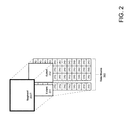
- FIG. 2 illustrates a structure in which a DBMS stores data according to an embodiment.
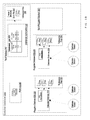
- FIG. 3A illustrates a DBMS according to an embodiment.
- FIG. 3B illustrates a detailed view of a container database according to an embodiment.
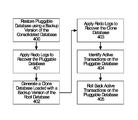
- FIG. 4 illustrates, in block diagram form, a database server performing in-place point-in-time recovery for a pluggable database according to an embodiment.
- FIG. 5 is an illustration of a clone database according to an embodiment.
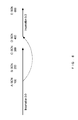
- FIG. 6 depicts a database incarnation timeline according to an embodiment.
- FIG. 7 is a block diagram that illustrates an example computer system upon which an embodiment of the invention may be implemented.
- a container database may contain multiple separate databases, which are referred to herein as pluggable databases. Each pluggable database is defined by its own separate database dictionary.
- a database dictionary comprises metadata that defines database objects contained in a database. In effect, a database dictionary defines the totality of a database. Database objects include tables, table columns, and tablespaces.
- a tablespace is a set of one or more files that are used to store the data for various types of database objects, such as a table. If data for a database object is stored in a tablespace, a database dictionary maps a database object to one or more tablespaces that hold the data for the database object.
- the tablespace point-in-time recovery is performed in a separate staging area.
- the modifications performed to the backup as a result of rolling back the active transactions are never recorded in the redo log of the original database.
- the redo log of the original database becomes non-contiguous, rendering any previously stored backups invalid.
- tablespace point-in-time recovery requires a new backup to be taken before the database can be reopened to the users, which may cause significant delay.
- the non-contiguity of the redo log also plays havoc with standby databases, which must import the recovered tablespace from the primary site following a point-in-time recovery. For large databases, the import may take weeks to complete and have a detrimental impact on the users. This may prevent the standby database from proceeding for weeks, leaving the primary database unprotected in the meantime.
- Described herein are approaches to performing in-place point-in-time recovery of pluggable databases.
- a database server maintains a container database that comprises one or more pluggable databases, a root database, and a redo log where the database server records modifications to the container database.
- the root database stores data that is shared across the one or more pluggable databases, including a shared undo log where the database server records changes performed by transactions on one or more pluggable databases and the root database.
- pluggable databases are recovered “in place”.
- the term “in place” refers to the database server recovering the pluggable databases on the container database, as opposed to performing the recovery in a separate staging area. For example, loading the pluggable database with a backup version, applying redo logs to bring the pluggable database to a desired point in time, and rollback of the active transactions can be performed while the pluggable database resides on the container database.
- any modifications performed to the pluggable database for instance as a result of rolling back the active transactions, are recorded in the container database's redo log. Since the redo log remains contiguous, the backups remain valid for future recoveries. However, due to the container database's undo log being shared between all the pluggable databases, the undo log cannot be recovered in place without rendering the other pluggable databases unavailable. Without recovering the undo log to the same point in time as the pluggable database, the database server cannot identify the active transactions on the pluggable database and perform rollback.
- the database server generates a clone database in a separate staging area and loads the clone database with the backup version of the root database, which includes the undo log.
- the database server then applies records from the redo log to bring the clone database up to the same point in time as the pluggable database.
- the undo log of the clone database contains records pertaining to the active transactions on the pluggable database.
- the database server based on the undo log of the clone database, identifies and rolls back the active transactions on the pluggable database. Once the roll backs have completed, the database server may then make the pluggable database available to the users. Therefore, since the shared areas of the container database are recovered out of place, the other pluggable databases are able to remain online and active during recovery.
- Embodiments of the present invention are used in the context of DBMSs. Therefore, a description of a DBMS is useful.
- a DBMS manages a database.
- a DBMS may comprise one or more database servers.
- a database comprises database data and a database dictionary that are stored on a persistent memory mechanism, such as a set of hard disks.
- Database data may be stored in one or more data containers. Each container contains records. The data within each record is organized into one or more fields.
- the data containers are referred to as tables, the records are referred to as rows, and the fields are referred to as columns.
- object-oriented databases the data containers are referred to as object classes, the records are referred to as objects, and the fields are referred to as attributes.
- Other database architectures may use other terminology.
- Users interact with a database server of a DBMS by submitting to the database server commands that cause the database server to perform operations on data stored in a database.
- a user may be one or more applications running on a client computer that interact with a database server. Multiple users may also be referred to herein collectively as a user.
- a database command may be in the form of a database statement that conforms to a database language.
- a database language for expressing the database commands is the Structured Query Language (SQL).
- SQL Structured Query Language
- DDL Data definition language
- SQL/XML is a common extension of SQL used when manipulating XML data in an object-relational database.
- a multi-node database management system is made up of interconnected nodes that share access to the same database.
- the nodes are interconnected via a network and share access, in varying degrees, to shared storage, e.g. shared access to a set of disk drives and data blocks stored thereon.
- the nodes in a multi-node database system may be in the form of a group of computers (e.g. work stations, personal computers) that are interconnected via a network.
- the nodes may be the nodes of a grid, which is composed of nodes in the form of server blades interconnected with other server blades on a rack.
- Each node in a multi-node database system hosts a database server.
- a server such as a database server, is a combination of integrated software components and an allocation of computational resources, such as memory, a node, and processes on the node for executing the integrated software components on a processor, the combination of the software and computational resources being dedicated to performing a particular function on behalf of one or more clients.
- Resources from multiple nodes in a multi-node database system can be allocated to running a particular database server's software.
- Each combination of the software and allocation of resources from a node is a server that is referred to herein as a “server instance” or “instance”.
- a database server may comprise multiple database instances, some or all of which are running on separate computers, including separate server blades.
- the database dictionary is central to a DBMS's management of a database.
- the database dictionary contains metadata that defines database objects physically or logically contained in the database.
- Database objects include tables, columns, data types, users, user privileges, and storage structures used for storing database object data.
- the database dictionary is modified according to DDL commands issued to add, modify, or delete database objects.
- FIG. 1 depicts a Database Dictionary 101 .
- Database dictionary 101 includes Table_sys 102 , Schema_sys 103 , Column_sys 104 , and Tablespace_sys 105 .
- Table_sys 102 is a table that contains metadata that defines, at least in part, tables within a database.
- Table_sys 102 comprises (1) records that each define a table, and (2) attributes, each of which describe an aspect or property of a table. Among such attributes are Table Name and Schema.
- Table_sys 102 contains other attributes not specifically depicted in FIG. 1 .
- Table Name is a name or label for a table
- Schema is the schema to which the table belongs.
- a schema is a defined and/or labeled set of database objects.
- One record in Table_sys 102 defines a table as having the name EMP and belonging to schema SchA.
- Another record defines a table as having the name DEPT and belonging to schema SchA.
- a third record in Table_sys 102 defines another table also as having the name EMP, but belonging to schema SchB.
- Schema_sys 103 defines schemas. Schema_sys 103 has attribute Schema Name as well as other attributes. One record in Schema_sys 103 defines a schema having the name SchA; another record defines a schema having the name SchA.
- Column_sys 104 is a table containing metadata defining column database objects.
- Column_sys 104 has attributes Column Name and Table, among other attributes.
- Column Name is a name or label for a column, and Table identifies a table to which a column belongs.
- Tablespace_sys 105 is a table defining tablespaces.
- a tablespace is set of one or more files, or one or more portions of a file, or combination thereof, that is used to store data for database objects, such as data for a table or index.
- Each record in Tablespace_sys 105 defines a tablespace.
- Attributes of Tablespace_sys 105 each describes an aspect or property of a tablespace.
- the attribute Tablespace Name is a name or label for a tablespace.
- Attribute Object identifies a database object for which a tablespace stores data.
- Attribute File specifies one or more files that are in a tablespace.
- Tablespace_sys 105 defines a tablespace as having the name TS_EMP 1 and being used to store table EMP in schema SchA, as specified by the Object attribute value of SchA.EMP.
- Another record in Tablespace_sys 105 defines a tablespace as having the name TS_DEPT 1 and being used to store data for table DEPT in schema SchA, as specified by the Object attribute value of SchA.EMP.
- Yet another record in Tablespace_sys 105 defines a tablespace as having the name TS_EMP 4 and being used to store table EMP in schema SchB, as specified by the Object attribute value of SchB.EMP.
- Database Dictionary 101 is expositive and illustrative of a database dictionary but not limiting.
- a database dictionary may have more tables and attributes than those depicted for Database Dictionary 101 .
- Other tables may define users, user privileges, and which user privileges are granted to which user.
- data structures of a database dictionary are not limited to tables, such as the tables depicted in FIG. 1
- the DBMS stores data, such as tablespace files, in one or more structures, such as blocks, extents, and segments.
- FIG. 2 illustrates an example structure in which a DBMS stores data according to an embodiment.
- Data Blocks 203 represent the finest level of granularity at which the DBMS stores data. Each of the Data Blocks 203 corresponds to a specific amount of physical space on disk. As an illustrative example, Data Blocks 203 are depicted in FIG. 2 as each representing 2Kb worth of storage. However, other embodiments may use data blocks that are smaller or larger than 2Kb.
- the next level of logical database storage is extents, illustrated by Extent 201 and Extent 202 , which each represent a specific number of contiguous Data Blocks 203 allocated for storing a specific type of information. For convenience, only two extents have been depicted in FIG. 2 , but other embodiments may organize the Data Blocks 203 into more or less than two extents depending on the quantity and type of information that needs to be stored.
- the level of logical database storage greater than an extent is called a segment, illustrated by Segment 200 .
- the Segment 200 represents a set of extents, such as Extent 201 and Extent 202 , each of which has been allocated for a specific data structure and all of which are stored in the same tablespace.
- each table's data may be stored in its own data segment, while each index's data is stored in its own index segment.
- FIG. 3A depicts an example DBMS upon which an embodiment may be implemented. Although FIG. 3A only depicts a particular number of each element, a practical environment may have many more, perhaps hundreds or thousands, of each of the elements illustrated in FIG. 3A .
- Database Server 350 represents a combination of software and resources on one or more computing devices that are communicatively coupled to Container Database 300 via Network 351 .
- An example of a computing device upon which the Database Server 350 may be implemented is described below in the “Hardware Overview”.
- Database Server 350 is configured to accept user commands, such as such as Data Definition Language (DDL) and Data Manipulation Language (DML) instructions, and carry out those commands on Container Database 300 .
- DDL Data Definition Language
- DML Data Manipulation Language
- Network 351 represents one or more local networks, wide area networks, internetworks, or service provider networks. In some embodiments, Network 351 represents the Internet.
- FIG. 3B depicts a detailed view of Container Database 300 according to an embodiment of the present invention.
- Container Database 300 contains multiple databases that are hosted and managed by Database Server 350 .
- the databases include Pluggable Database PDA 320 and Pluggable Database PDB 330 , and Root Database 310 , which is associated with Pluggable Database PDA 320 and Pluggable Database PDB 330 , as shall be explained in greater detail.
- the Container Database 300 may contain more pluggable databases than the number of pluggable databases that are depicted in FIG. 3B .
- Root Database 310 is a database that is used by the Database Server 350 to globally manage Container Database 300 , and to store metadata and/or data for “common database objects” that are accessible to users of multiple pluggable databases.
- Pluggable Database PDA 320 includes Database Dictionary 321 .
- Data for database objects of Pluggable Database PDA 320 is stored in Tablespace Files 326 . Similar to user data, metadata for a database dictionary is stored persistently in a dictionary store. Metadata contained in Database Dictionary 321 is stored in file PDA.DBDIC.
- Pluggable Database PDB 330 includes Database Dictionary 231 .
- Tablespace Files 336 store data for database objects of Pluggable Database PDB 330 .
- Metadata for a Database Dictionary 331 is stored persistently in file PDB.DBDIC.
- a database dictionary of the pluggable database may be referred to herein as a pluggable database dictionary.
- a database object defined by a pluggable database dictionary that is not a common database object is referred to herein as a pluggable database object.
- Root Database 310 is a database used by the Database Server 350 to globally manage the Container Database 300 .
- An important function facilitated by Root Database 310 is to define pluggable databases within Container Database 300 .
- Root Database 310 includes Database Dictionary 311 .
- the database dictionary of a root database may be referred to herein as a root database dictionary.
- Database Dictionary 311 contains metadata that defines various aspects of Container Database 300 needed to administer Container Database 300 and the pluggable databases contained therein. Data for database objects defined by Database Dictionary 311 is stored in Tablespace Files 316 .
- Database Dictionary 311 includes Database_sys 303 .
- Database_sys 303 defines pluggable databases within Container Database 300 . Attributes of Database_sys 303 each describes an aspect or property of a pluggable database.
- the attribute Pluggable DB is a name or label for a pluggable database.
- the attribute Dictionary Store identifies a dictionary store that holds metadata in a database dictionary.
- One record in Database Dictionary 311 defines Pluggable Database PDA 320 and its dictionary store file PDA.DBIDC.
- Another record in Database Dictionary 311 defines Pluggable Database PDB 330 and its dictionary store PDB.DBIDC.
- the Database Dictionary 311 defines common database objects that are in effect shared by pluggable databases in Container Database 300 .
- a common database object is defined in a pluggable database dictionary, which includes a reference to the common database object in the respective root database dictionary. Examples of common database objects include vendor supplied functions, utilities, tables, and views.
- a metadata-linked object there are two types of common database objects: a metadata-linked object and an object-linked object.
- metadata for the common database object is stored in the Root Database 310 .
- data for the common database object, if any is stored in a pluggable database.
- different pluggable databases may store different data for the same common database object.
- an object-linked object both the metadata and data for the database object, if any, are stored in the Root Database 310 .
- Data for this type of common database object is the same for pluggable databases in the Container Database 300 .
- Seed Pluggable Database 290 contains database objects and a database dictionary. Seed Pluggable Database 290 is cloned to rapidly create a nascent pluggable database, and facilitates fast provisioning of such pluggable databases. Seed Pluggable Database 290 contains a basic set of database objects that are commonly needed and/or used. For example, Seed Pluggable Database 290 may contain database object links to common database objects and views for accessing the pluggable database dictionary and other system information.
- Database Dictionaries 311 , 321 , and 331 are expositive and illustrative of database dictionaries in a container DBMS but are not limiting.
- Tablespace Files 316 of the Root Database 310 include an Undo File 341 , which the Database Server 350 uses to store data and/or metadata (“undo records”) related to transactions on the databases contained within Container Database 300 .
- the undo records store a before and after image of the data being modified during the transactions. For example, if during a transaction the Database Server 350 modifies a “STATE” column of a particular row to change the value from “OHIO” to “CALIFORNIA”, the Database Server 350 also stores an undo record in the Undo File 341 specifying the before value “OHIO”, the after value “CALIFORNIA”, and the location of the modification (e.g. the data block or blocks being modified).
- the Database Server 350 backtracks through the undo records to reverse any modifications the transaction had performed.
- the undo records may store metadata related to the state of the corresponding transactions, such as metadata indicating whether a transaction is active, has already committed, or is in the process of being rolled back.
- Undo records can be used for a variety of purposes, such as rolling back transactions, recovering the database, providing read consistency, etc.
- the Undo File 341 is a finite size and thus the Database Server 350 may overwrite the undo records to save space as the transactions occur.
- the segments storing the undo records may be reused after the corresponding transaction ends (e.g. by committing or being rolled back).
- the Database Server 350 may retain the undo records for a period of time after the corresponding transactions have ended.
- the undo records may be retained to provide read consistency for long running queries.
- Container Database 300 includes Redo Log 340 , which the Database Server 350 uses to store data and/or metadata (“redo records”) related to modifications performed on the Container Database 300 .
- Redo records data and/or metadata
- the Database Server 350 each time the Database Server 350 changes a data block of the Container Database 300 , the Database Server 350 also stores a redo record in the Redo Log 240 that identifies the block(s) being modified and specifies the before/after values.
- the Database Server 350 identifies redo records based on the state of the database being modified.
- the Database Server 350 may maintain a “system change number” (SCN) for the Container Database 300 .
- SCN system change number
- the Database Server 350 increments the SCN each time a transaction commits on one of the underlying databases.
- the SCN is shared among the Root Database 310 and the pluggable databases.
- the redo record is tagged or otherwise associated with information identifying the database being modified and the corresponding SCN.
- the SCN serves to identify the state of the corresponding database at the time the redo record was created.
- a timestamp may be used to the same effect.
- the Redo Log 340 stores a stream of redo records that can be used by the Database Server 350 to replay modifications to the Container Database 300 when a recovery is required, as will be discussed in more detail below.
- the state of a database will be referred to as existing at a point in time, regardless of the mechanism (timestamp, SCN, etc.) used to identify the state of the database.
- FIG. 4 illustrates, in block diagram form, a database server performing in-place point-in-time recovery for a pluggable database, according to an embodiment.
- Database Server 350 performs in-place point-in-time recovery on Pluggable Database PDA 320 .
- FIG. 4 depicts a particular order for the Database Server 350 to follow, other embodiments may perform the blocks of FIG. 4 in a different order.
- the Database Server 350 restores the Pluggable Database PDA 320 using a backup version of the Container Database 300 that corresponds to a previous point in time.
- the Database Server 350 periodically stores a backup of the Container Database 300 (“backup container database”).
- the Database Server 350 may be configured to take a backup of the Container Database 300 every set period of time, set number of SCNs, or in response to a user command specifying to take a backup.
- the Database Server 350 may overwrite the previous backup container database each time a new backup container database is recorded, or alternatively may maintain a library of backup container databases.
- the Database Server 350 substitutes the files (including the Database Dictionary 321 and the Tablespace Files 326 ) of the Pluggable Database PDA 320 with the corresponding files on the backup container database.
- the backup container database may be associated with metadata, such as one or more SCNs, indicating when the backup was taken.
- the backup container database may comprise only particular files of the Container Database 300 , rather than the entire Container Database 300 .
- the backup may include the files for the Root Database 510 and only one of the pluggable databases, essentially serving as a backup for only a particular pluggable database.
- the Database Server 350 performs block 400 in response to a restoration event.
- the Database Server 350 may receive a user command specifying to restore the Pluggable Database PDA 320 .
- the Database Server 350 may detect that the Pluggable Database PDA 320 has become corrupted or that a media device has failed and in response restore the Pluggable Database PDA 320 using an available backup container database.
- the Database Server 350 prior to restoring Pluggable Database PDA 320 , brings the Pluggable Database PDA 320 offline or otherwise prevents users from performing actions on the Pluggable Database PDA 320 .
- the Database Server 350 applies redo records from Redo Log 340 to recover the Pluggable Database PDA 320 to a later point in time.
- Database Server 350 performs block 401 in response to a recovery event.
- the Database Server 350 may receive a user command specifying to recover the Pluggable Database PDA 320 to a specific SCN.
- the Database Server 350 may apply redo records to bring the Pluggable Database PDA 320 to a point in time just before the error occurred.
- the Database Server 350 scans the stream of redo records in the Redo Log 340 and applies the modifications specified by records applicable to the Pluggable Database PDA 320 , starting from the point in time of the backup to the later point in time. For example, if the backup started at SCN 200 and the Pluggable Database PDA 320 needs to be recovered to SCN 500 , the Database Server 350 applies the redo records tagged with the intervening SCNs ( 201 - 500 ) that are applicable to Pluggable Database PDA 320 .
- the Database Server 350 generates a clone database loaded with a backup version of the Root Database 310 from the backup container database.
- the Database Server 350 creates a new container database and copies over the files corresponding to the Root Database 310 (Database Dictionary 311 and Tablespace Files 316 ) from the backup container database.
- FIG. 5 is an illustration of a clone database according to an embodiment.
- Clone Database 500 represents a temporary database created by the Database Server 350 and loaded with Root Database 510 (including Undo File 541 ), a backup version of the Root Database 310 from the backup container database.
- Root Database 510 including Undo File 541
- Clone Database 500 is the clone database generated by the Database Server 350 at block 402 .
- Database Server 350 performs blocks 402 , 403 , and 404 in response to a log recovery event.
- the Database Server 350 may perform blocks 402 , 403 , and 404 in response to receiving a user command specifying to make the Pluggable Database PDA 320 ready for access by users of the Database Server 350 .
- the Database Server 350 applies redo records from the Redo Log 340 to recover the Clone Database 500 to the later point in time.
- the Database Server 350 scans the stream of redo records in the Redo Log 340 and applies records tagged for Root Database 310 of the Container Database 300 to Root Database 510 of the Clone Database 500 , starting from the point in time of the backup to the later point in time. As a result, the Clone Database 500 is brought up to the same point in time as the Pluggable Database PDA 320 .
- the Database Server 350 identifies transactions on the Pluggable Database PDA 320 that are still active (have not committed). In an embodiment, the Database Server 350 identifies active transactions on the Pluggable Database PDA 320 based on the Undo File 541 of the Clone Database 500 . Since the Clone Database 500 and the Pluggable Database PDA 320 have both been brought up to a consistent point in time, the Undo File 541 contains records pertaining to the current transactions on the Pluggable Database PDA 320 . As a result, the Database Server 350 discerns, from the undo records of the Undo File 541 , transactions on the Pluggable Database PDA 320 that have yet to commit by the later point in time.
- the Database Server 350 rolls back the active transactions on the Pluggable Database PDA 320 .
- the Database Server 350 scans backwards through the undo records of the Undo File 541 and reverses any modifications performed by the active transactions.
- the Database Server 350 also generates redo records in the Redo Log 340 of the Container Database 300 documenting the changes caused by the rollback. The aforementioned redo records ensure that the Redo Log 340 remains contiguous and that the backup container database (and other earlier backups) will remain valid for future point-in-time recoveries.
- the Redo Log 340 may have redo records which are no longer applicable to the current state of the Pluggable Database PDA 320 .
- the aforementioned redo logs will be referred to as “orphaned redo logs”.
- the orphaned redo logs describe modifications to the Pluggable Database PDA 320 that are no longer valid due to following a state of the Pluggable Database PDA 320 that no longer exists.
- the Database Server 350 may drop the orphaned redo records from the Redo Log 340 .
- the Database Server 350 may keep the orphaned redo logs around as pertaining to different versions or “incarnations” of the Pluggable Database PDA 320 .
- the Database Server 350 can use the orphaned redo logs to restore the Pluggable Database PDA 320 to a different incarnation if required.
- the Database Server 350 after rolling back the active transactions on the Pluggable Database PDA 320 , drops or otherwise discards the Clone Database 500 and brings the Pluggable Database PDA 320 online or otherwise available for user interaction.
- a database incarnation is a new “version” of a database that happens when a database is subjected to point-in-time recovery.
- a database incarnation may fall into various categories, such as current, parent, ancestor, and sibling incarnation.
- the current incarnation represents the incarnation for which the database server is currently generating redo records. In other words, the current incarnation may be considered the “active” state of the database.
- a parent incarnation represents the incarnation from which the current incarnation branched following a point-in-time recovery.
- An ancestor incarnation represents the parent of the parent incarnation, and other further removed ancestors.
- Sibling incarnations represent two incarnations that share a common ancestor, if neither is an ancestor of the other.
- incarnations are often assigned a version number which is incremented each time a point-in-time recovery is performed.
- one of the pluggable databases may be the recipient of an in-place point-in-time recovery independent of the other pluggable databases.
- sub-incarnations is introduced to manage incarnations for container databases.
- FIG. 6 depicts a database incarnation timeline according to an embodiment.
- Pluggable Database PDA 320 is the subject of the timeline depicted in FIG. 6 .
- the arrows represent a progression in time through the redo records of the Redo Log 340 .
- point A represents the state of the Pluggable Database PDA 320 at SCN 100
- point B represents the state of Pluggable Database PDA 320 at SCN 200 , and so forth.
- Incarnations are identified by two version numbers, the first of which represents the version number of the Container Database 300 and the second represents the version number of the Pluggable Database PDA 320 .
- the first version number represents the “incarnation” and the second version number represents the “sub-incarnation”.
- the first version number is incremented each time the Container Database 300 as a whole is the recipient of a recovery and the second version number is incremented each time any pluggable database of the Container Database 300 is the recipient of a recovery.
- Incarnation 5 - 0 indicates that the Container Database 300 has been recovered 5 times and, as of the 5 th recovery, the pluggable databases have been recovered 0 times.
- the aforementioned version assignments ensure that each incarnation is assigned a unique identifier.
- the second version number since the second version number is incremented when any pluggable database is recovered, the second version number does not necessarily indicate how many times a particular pluggable database has been recovered.
- the incarnations may be additionally identified by a pluggable database identification number, allowing the second version number to be incremented independently for each pluggable database while maintaining unique identifiers.
- Pluggable Database PDA 320 proceeded to point C at SCN 399 along Incarnation 5 - 0 when the Database Server 350 detected an error.
- the Database Server 350 performed an in-place point-in-time recovery bringing the Pluggable Database PDA 320 to point A at SCN 100 .
- the Pluggable Database PDA 320 branches off into Incarnation 5 - 3 where the Pluggable Database PDA 320 proceeded through point D at SCN 400 and onwards to point E at SCN 600 .
- the dotted line connecting point A to point D represents that the redo records in between point A and point D have been effectively orphaned.
- the sub incarnation metadata specifies one or more ranges of redo records to skip.
- the sub incarnation metadata may be stored in a control file (not included in FIG. 3B ) that stores metadata about the physical structure of the entire Container Database 300 .
- the control file may store a skip range for Incarnation 5 - 3 indicating a starting point of SCN 100 and an ending point of SCN 400 .
- the metadata may specify to skip the redo records in between SCN 100 and SCN 400 during block 401 of FIG. 4 and the redo records corresponding to the same time period during block 403 of FIG. 4 .
- the Database Server 350 may be requested by a user to return to an incarnation that had previously been orphaned.
- the user may realize that the Pluggable Database PDA 320 should have been recovered to point B at SCN 200 along the parent incarnation.
- the Database Server 350 supports a command by which a user may specify the SCN and the incarnation to which the Pluggable Database PDA 320 should be recovered.
- the user may specify to recover to SCN 200 along Incarnation 5 - 0 .
- the Database Server 350 performs point-in-time recovery restoring to a backup of the Pluggable Database PDA 320 prior to point A and applying redo records, including the previously orphaned redo records, up to SCN 200 .
- redo records pertaining to Incarnation 5 - 3 become newly orphaned redo records and the Database Server 350 marks in the Database Dictionary 321 that redo records corresponding to SCN 400 through SCN 600 should be skipped.
- the Database Server 350 in addition to managing the Container Database 300 , also manages a standby database.
- the standby database acts as a functioning backup of the Container Database 300 which can be substituted for the Container Database 300 in the event that the Container Database 300 suffers a critical failure.
- the Database Server 350 propagates actions performed on the Container Database 300 to the standby database.
- a user e.g. an administrator
- standby recovery can recover through the point-in-time recovery operation received on the primary.
- no import of the pluggable database on the standby from the primary is required.
- the techniques described herein are implemented by one or more special-purpose computing devices.
- the special-purpose computing devices may be hard-wired to perform the techniques, or may include digital electronic devices such as one or more application-specific integrated circuits (ASICs) or field programmable gate arrays (FPGAs) that are persistently programmed to perform the techniques, or may include one or more general purpose hardware processors programmed to perform the techniques pursuant to program instructions in firmware, memory, other storage, or a combination.
- ASICs application-specific integrated circuits
- FPGAs field programmable gate arrays
- Such special-purpose computing devices may also combine custom hard-wired logic, ASICs, or FPGAs with custom programming to accomplish the techniques.
- the special-purpose computing devices may be desktop computer systems, portable computer systems, handheld devices, networking devices or any other device that incorporates hard-wired and/or program logic to implement the techniques.
- FIG. 7 is a block diagram that illustrates an example computer system 700 upon which an embodiment of the invention may be implemented.
- Computer system 700 includes a bus 702 or other communication mechanism for communicating information, and a hardware processor 704 coupled with bus 702 for processing information.
- Hardware processor 704 may be, for example, a general purpose microprocessor.
- Computer system 700 also includes a main memory 706 , such as a random access memory (RAM) or other dynamic storage device, coupled to bus 702 for storing information and instructions to be executed by processor 704 .
- Main memory 706 also may be used for storing temporary variables or other intermediate information during execution of instructions to be executed by processor 704 .
- Such instructions when stored in non-transitory storage media accessible to processor 704 , render computer system 700 into a special-purpose machine that is customized to perform the operations specified in the instructions.
- Computer system 700 further includes a read only memory (ROM) 708 or other static storage device coupled to bus 702 for storing static information and instructions for processor 704 .
- ROM read only memory
- a storage device 710 such as a magnetic disk or optical disk, is provided and coupled to bus 702 for storing information and instructions.
- Computer system 700 may be coupled via bus 702 to a display 712 , such as a cathode ray tube (CRT), for displaying information to a computer user.
- a display 712 such as a cathode ray tube (CRT)
- An input device 714 is coupled to bus 702 for communicating information and command selections to processor 704 .
- cursor control 716 is Another type of user input device
- cursor control 716 such as a mouse, a trackball, or cursor direction keys for communicating direction information and command selections to processor 704 and for controlling cursor movement on display 712 .
- This input device typically has two degrees of freedom in two axes, a first axis (e.g., x) and a second axis (e.g., y), that allows the device to specify positions in a plane.
- Computer system 700 may implement the techniques described herein using customized hard-wired logic, one or more ASICs or FPGAs, firmware and/or program logic which in combination with the computer system causes or programs computer system 700 to be a special-purpose machine. According to one embodiment, the techniques herein are performed by computer system 700 in response to processor 704 executing one or more sequences of one or more instructions contained in main memory 706 . Such instructions may be read into main memory 706 from another storage medium, such as storage device 710 . Execution of the sequences of instructions contained in main memory 706 causes processor 704 to perform the process steps described herein. In alternative embodiments, hard-wired circuitry may be used in place of or in combination with software instructions.
- Non-volatile media includes, for example, optical or magnetic disks, such as storage device 710 .
- Volatile media includes dynamic memory, such as main memory 706 .
- Common forms of storage media include, for example, a floppy disk, a flexible disk, hard disk, solid state drive, magnetic tape, or any other magnetic data storage medium, a CD-ROM, any other optical data storage medium, any physical medium with patterns of holes, a RAM, a PROM, and EPROM, a FLASH-EPROM, NVRAM, any other memory chip or cartridge.
- Storage media is distinct from but may be used in conjunction with transmission media.
- Transmission media participates in transferring information between storage media.
- transmission media includes coaxial cables, copper wire and fiber optics, including the wires that comprise bus 702 .
- transmission media can also take the form of acoustic or light waves, such as those generated during radio-wave and infra-red data communications.
- Various forms of media may be involved in carrying one or more sequences of one or more instructions to processor 704 for execution.
- the instructions may initially be carried on a magnetic disk or solid state drive of a remote computer.
- the remote computer can load the instructions into its dynamic memory and send the instructions over a telephone line using a modem.
- a modem local to computer system 700 can receive the data on the telephone line and use an infra-red transmitter to convert the data to an infra-red signal.
- An infra-red detector can receive the data carried in the infra-red signal and appropriate circuitry can place the data on bus 702 .
- Bus 702 carries the data to main memory 706 , from which processor 704 retrieves and executes the instructions.
- the instructions received by main memory 706 may optionally be stored on storage device 710 either before or after execution by processor 704 .
- Computer system 700 also includes a communication interface 718 coupled to bus 702 .
- Communication interface 718 provides a two-way data communication coupling to a network link 720 that is connected to a local network 722 .
- communication interface 718 may be an integrated services digital network (ISDN) card, cable modem, satellite modem, or a modem to provide a data communication connection to a corresponding type of telephone line.
- ISDN integrated services digital network
- communication interface 718 may be a local area network (LAN) card to provide a data communication connection to a compatible LAN.
- LAN local area network
- Wireless links may also be implemented.
- communication interface 718 sends and receives electrical, electromagnetic or optical signals that carry digital data streams representing various types of information.
- Network link 720 typically provides data communication through one or more networks to other data devices.
- network link 720 may provide a connection through local network 722 to a host computer 724 or to data equipment operated by an Internet Service Provider (ISP) 726 .
- ISP 726 in turn provides data communication services through the world wide packet data communication network now commonly referred to as the “Internet” 728 .
- Internet 728 uses electrical, electromagnetic or optical signals that carry digital data streams.
- the signals through the various networks and the signals on network link 720 and through communication interface 718 which carry the digital data to and from computer system 700 , are example forms of transmission media.
- Computer system 700 can send messages and receive data, including program code, through the network(s), network link 720 and communication interface 718 .
- a server 730 might transmit a requested code for an application program through Internet 728 , ISP 726 , local network 722 and communication interface 718 .
- the received code may be executed by processor 704 as it is received, and/or stored in storage device 710 , or other non-volatile storage for later execution.
Landscapes
- Engineering & Computer Science (AREA)
- Theoretical Computer Science (AREA)
- Databases & Information Systems (AREA)
- Physics & Mathematics (AREA)
- General Engineering & Computer Science (AREA)
- General Physics & Mathematics (AREA)
- Data Mining & Analysis (AREA)
- Quality & Reliability (AREA)
- Human Computer Interaction (AREA)
- Software Systems (AREA)
- Computer Security & Cryptography (AREA)
- Computational Linguistics (AREA)
- General Health & Medical Sciences (AREA)
- Computer Hardware Design (AREA)
- Bioethics (AREA)
- Health & Medical Sciences (AREA)
- Information Retrieval, Db Structures And Fs Structures Therefor (AREA)
Abstract
Description
Claims (20)
Priority Applications (3)
| Application Number | Priority Date | Filing Date | Title |
|---|---|---|---|
| US13/830,349 US9298564B2 (en) | 2012-09-28 | 2013-03-14 | In place point-in-time recovery of pluggable databases |
| US14/135,202 US9684566B2 (en) | 2012-09-28 | 2013-12-19 | Techniques for backup restore and recovery of a pluggable database |
| US15/014,969 US9928147B2 (en) | 2012-09-28 | 2016-02-03 | Forceful closure and automatic recovery of pluggable databases in a shared-everything cluster multitenant container database |
Applications Claiming Priority (2)
| Application Number | Priority Date | Filing Date | Title |
|---|---|---|---|
| US201261707726P | 2012-09-28 | 2012-09-28 | |
| US13/830,349 US9298564B2 (en) | 2012-09-28 | 2013-03-14 | In place point-in-time recovery of pluggable databases |
Related Child Applications (1)
| Application Number | Title | Priority Date | Filing Date |
|---|---|---|---|
| US14/135,202 Continuation-In-Part US9684566B2 (en) | 2012-09-28 | 2013-12-19 | Techniques for backup restore and recovery of a pluggable database |
Publications (2)
| Publication Number | Publication Date |
|---|---|
| US20140095452A1 US20140095452A1 (en) | 2014-04-03 |
| US9298564B2 true US9298564B2 (en) | 2016-03-29 |
Family
ID=50386179
Family Applications (6)
| Application Number | Title | Priority Date | Filing Date |
|---|---|---|---|
| US13/631,815 Active US9239763B2 (en) | 1998-11-24 | 2012-09-28 | Container database |
| US13/830,349 Active 2033-06-13 US9298564B2 (en) | 2012-09-28 | 2013-03-14 | In place point-in-time recovery of pluggable databases |
| US13/841,272 Active 2033-10-24 US9122644B2 (en) | 2012-09-28 | 2013-03-15 | Common users, common roles, and commonly granted privileges and roles in container databases |
| US14/135,202 Active 2034-06-25 US9684566B2 (en) | 2012-09-28 | 2013-12-19 | Techniques for backup restore and recovery of a pluggable database |
| US14/835,507 Active US10191671B2 (en) | 2012-09-28 | 2015-08-25 | Common users, common roles, and commonly granted privileges and roles in container databases |
| US15/012,621 Active 2037-10-22 US11175832B2 (en) | 2012-09-28 | 2016-02-01 | Thread groups for pluggable database connection consolidation in NUMA environment |
Family Applications Before (1)
| Application Number | Title | Priority Date | Filing Date |
|---|---|---|---|
| US13/631,815 Active US9239763B2 (en) | 1998-11-24 | 2012-09-28 | Container database |
Family Applications After (4)
| Application Number | Title | Priority Date | Filing Date |
|---|---|---|---|
| US13/841,272 Active 2033-10-24 US9122644B2 (en) | 2012-09-28 | 2013-03-15 | Common users, common roles, and commonly granted privileges and roles in container databases |
| US14/135,202 Active 2034-06-25 US9684566B2 (en) | 2012-09-28 | 2013-12-19 | Techniques for backup restore and recovery of a pluggable database |
| US14/835,507 Active US10191671B2 (en) | 2012-09-28 | 2015-08-25 | Common users, common roles, and commonly granted privileges and roles in container databases |
| US15/012,621 Active 2037-10-22 US11175832B2 (en) | 2012-09-28 | 2016-02-01 | Thread groups for pluggable database connection consolidation in NUMA environment |
Country Status (4)
| Country | Link |
|---|---|
| US (6) | US9239763B2 (en) |
| EP (1) | EP2901325B1 (en) |
| CN (1) | CN104781809B (en) |
| WO (1) | WO2014052851A1 (en) |
Cited By (15)
| Publication number | Priority date | Publication date | Assignee | Title |
|---|---|---|---|---|
| US20140279929A1 (en) * | 2013-03-15 | 2014-09-18 | Amazon Technologies, Inc. | Database system with database engine and separate distributed storage service |
| US20180075041A1 (en) * | 2015-10-23 | 2018-03-15 | Oracle International Corporation | Periodic snapshots of a pluggable database in a container database |
| US10248685B2 (en) | 2016-08-31 | 2019-04-02 | Oracle International Corporation | Efficient determination of committed changes |
| US10423600B2 (en) | 2016-09-16 | 2019-09-24 | Oracle International Corporation | Low latency query processing over a series of redo records |
| US10579478B2 (en) * | 2015-10-23 | 2020-03-03 | Oracle International Corporation | Pluggable database archive |
| US10606578B2 (en) | 2015-10-23 | 2020-03-31 | Oracle International Corporation | Provisioning of pluggable databases using a central repository |
| US10635674B2 (en) | 2012-09-28 | 2020-04-28 | Oracle International Corporation | Migrating a pluggable database between database server instances with minimal impact to performance |
| US10789131B2 (en) | 2015-10-23 | 2020-09-29 | Oracle International Corporation | Transportable backups for pluggable database relocation |
| US10860605B2 (en) | 2012-09-28 | 2020-12-08 | Oracle International Corporation | Near-zero downtime relocation of a pluggable database across container databases |
| US11068460B2 (en) | 2018-08-06 | 2021-07-20 | Oracle International Corporation | Automated real-time index management |
| US11188516B2 (en) | 2018-08-24 | 2021-11-30 | Oracle International Corproation | Providing consistent database recovery after database failure for distributed databases with non-durable storage leveraging background synchronization point |
| US11277435B2 (en) | 2016-09-14 | 2022-03-15 | Oracle International Corporation | Reducing network attack surface area for a database using deep input validation |
| US11334445B2 (en) | 2018-10-19 | 2022-05-17 | Oracle International Corporation | Using non-volatile memory to improve the availability of an in-memory database |
| US11726952B2 (en) | 2019-09-13 | 2023-08-15 | Oracle International Corporation | Optimization of resources providing public cloud services based on adjustable inactivity monitor and instance archiver |
| EP4632594A2 (en) | 2021-07-30 | 2025-10-15 | Oracle International Corporation | Data guard at pdb (pluggable database) level |
Families Citing this family (85)
| Publication number | Priority date | Publication date | Assignee | Title |
|---|---|---|---|---|
| US9239763B2 (en) | 2012-09-28 | 2016-01-19 | Oracle International Corporation | Container database |
| US10191922B2 (en) | 1998-11-24 | 2019-01-29 | Oracle International Corporation | Determining live migration speed based on workload and performance characteristics |
| US8843446B2 (en) * | 2011-07-04 | 2014-09-23 | Zerto Ltd. | Methods and apparatus for time-based dynamically adjusted journaling |
| US20140019421A1 (en) * | 2012-07-13 | 2014-01-16 | Apple Inc. | Shared Architecture for Database Systems |
| US9928147B2 (en) | 2012-09-28 | 2018-03-27 | Oracle International Corporation | Forceful closure and automatic recovery of pluggable databases in a shared-everything cluster multitenant container database |
| US9396220B2 (en) | 2014-03-10 | 2016-07-19 | Oracle International Corporation | Instantaneous unplug of pluggable database from one container database and plug into another container database |
| US8909604B1 (en) * | 2013-03-06 | 2014-12-09 | Gravic, Inc. | Methods for returning a corrupted database to a known, correct state by selectively using redo and undo operations |
| US9418129B2 (en) | 2013-03-08 | 2016-08-16 | Oracle International Corporation | Adaptive high-performance database redo log synchronization |
| US10152500B2 (en) | 2013-03-14 | 2018-12-11 | Oracle International Corporation | Read mostly instances |
| US9298933B2 (en) * | 2013-07-18 | 2016-03-29 | Sybase, Inc. | Autonomous role-based security for database management systems |
| US9830372B2 (en) | 2013-07-24 | 2017-11-28 | Oracle International Corporation | Scalable coordination aware static partitioning for database replication |
| US9767178B2 (en) | 2013-10-30 | 2017-09-19 | Oracle International Corporation | Multi-instance redo apply |
| US9922300B2 (en) * | 2013-11-26 | 2018-03-20 | Sap Se | Enterprise performance management planning operations at an enterprise database |
| US9779128B2 (en) * | 2014-04-10 | 2017-10-03 | Futurewei Technologies, Inc. | System and method for massively parallel processing database |
| CN105101196B (en) * | 2014-05-06 | 2018-11-02 | 阿里巴巴集团控股有限公司 | A kind of user account management method and device |
| JP2015225603A (en) * | 2014-05-29 | 2015-12-14 | 富士通株式会社 | Storage control device, storage control method, and storage control program |
| US10218591B2 (en) | 2014-06-23 | 2019-02-26 | Oracle International Corporation | Embedded performance monitoring of a DBMS |
| US9836360B2 (en) * | 2014-11-25 | 2017-12-05 | Sap Se | Recovery strategy with dynamic number of volumes |
| US10409835B2 (en) * | 2014-11-28 | 2019-09-10 | Microsoft Technology Licensing, Llc | Efficient data manipulation support |
| GB2534374A (en) * | 2015-01-20 | 2016-07-27 | Ibm | Distributed System with accelerator-created containers |
| GB2534373A (en) | 2015-01-20 | 2016-07-27 | Ibm | Distributed system with accelerator and catalog |
| EP3248101B1 (en) | 2015-01-23 | 2021-12-08 | ServiceNow, Inc. | Distributed computing system with resource managed database cloning |
| US9804935B1 (en) * | 2015-01-26 | 2017-10-31 | Intel Corporation | Methods for repairing a corrupted database to a new, correct state by selectively using redo and undo operations |
| US9830223B1 (en) * | 2015-01-26 | 2017-11-28 | Intel Corporation | Methods for repairing a corrupted database to a new, correct state |
| US10007352B2 (en) | 2015-08-21 | 2018-06-26 | Microsoft Technology Licensing, Llc | Holographic display system with undo functionality |
| US10657116B2 (en) | 2015-10-19 | 2020-05-19 | Oracle International Corporation | Create table for exchange |
| WO2017070572A1 (en) * | 2015-10-23 | 2017-04-27 | Oracle International Corporation | Application containers for container databases |
| US10635658B2 (en) | 2015-10-23 | 2020-04-28 | Oracle International Corporation | Asynchronous shared application upgrade |
| US10747752B2 (en) | 2015-10-23 | 2020-08-18 | Oracle International Corporation | Space management for transactional consistency of in-memory objects on a standby database |
| US10733316B2 (en) * | 2015-10-23 | 2020-08-04 | Oracle International Corporation | Pluggable database lockdown profile |
| WO2017070580A1 (en) * | 2015-10-23 | 2017-04-27 | Oracle International Corporation | Ability to group multiple container databases as a single container database cluster |
| CN108431810B (en) * | 2015-10-23 | 2022-02-01 | 甲骨文国际公司 | proxy database |
| US11657037B2 (en) | 2015-10-23 | 2023-05-23 | Oracle International Corporation | Query execution against an in-memory standby database |
| WO2017070590A1 (en) * | 2015-10-23 | 2017-04-27 | Oracle International Corporation | Proxy databases |
| US10289617B2 (en) | 2015-12-17 | 2019-05-14 | Oracle International Corporation | Accessing on-premise and off-premise datastores that are organized using different application schemas |
| US10387387B2 (en) | 2015-12-17 | 2019-08-20 | Oracle International Corporation | Enabling multi-tenant access to respective isolated data sets organized using different application schemas |
| US10171471B2 (en) * | 2016-01-10 | 2019-01-01 | International Business Machines Corporation | Evidence-based role based access control |
| US10303894B2 (en) * | 2016-08-31 | 2019-05-28 | Oracle International Corporation | Fine-grained access control for data manipulation language (DML) operations on relational data |
| US10698771B2 (en) | 2016-09-15 | 2020-06-30 | Oracle International Corporation | Zero-data-loss with asynchronous redo shipping to a standby database |
| US10747782B2 (en) * | 2016-09-16 | 2020-08-18 | Oracle International Corporation | Efficient dual-objective cache |
| US10528538B2 (en) | 2016-09-30 | 2020-01-07 | Oracle International Corporation | Leveraging SQL with user defined aggregation to efficiently merge inverted indexes stored as tables |
| US10891291B2 (en) | 2016-10-31 | 2021-01-12 | Oracle International Corporation | Facilitating operations on pluggable databases using separate logical timestamp services |
| US10949310B2 (en) * | 2016-11-28 | 2021-03-16 | Sap Se | Physio-logical logging for in-memory row-oriented database system |
| US11475006B2 (en) | 2016-12-02 | 2022-10-18 | Oracle International Corporation | Query and change propagation scheduling for heterogeneous database systems |
| US10769034B2 (en) * | 2017-03-07 | 2020-09-08 | Sap Se | Caching DML statement context during asynchronous database system replication |
| US10691722B2 (en) | 2017-05-31 | 2020-06-23 | Oracle International Corporation | Consistent query execution for big data analytics in a hybrid database |
| CN107391720A (en) * | 2017-07-31 | 2017-11-24 | 郑州云海信息技术有限公司 | A kind of data summarization method and device |
| US10949413B2 (en) * | 2017-09-29 | 2021-03-16 | Oracle International Corporation | Method and system for supporting data consistency on an active standby database after DML redirection to a primary database |
| US11386058B2 (en) | 2017-09-29 | 2022-07-12 | Oracle International Corporation | Rule-based autonomous database cloud service framework |
| US11327932B2 (en) * | 2017-09-30 | 2022-05-10 | Oracle International Corporation | Autonomous multitenant database cloud service framework |
| US10649981B2 (en) | 2017-10-23 | 2020-05-12 | Vmware, Inc. | Direct access to object state in a shared log |
| US11392567B2 (en) * | 2017-10-30 | 2022-07-19 | Vmware, Inc. | Just-in-time multi-indexed tables in a shared log |
| CN108089948B (en) * | 2017-12-20 | 2021-02-02 | 北京搜狐新媒体信息技术有限公司 | A kind of database backup method and device |
| US10642680B2 (en) | 2018-02-23 | 2020-05-05 | International Business Machines Corporation | Chronologically ordered log-structured key-value store from failures during garbage collection |
| US10635523B2 (en) | 2018-02-23 | 2020-04-28 | International Business Machines Corporation | Fast recovery from failures in a chronologically ordered log-structured key-value storage system |
| US11226876B2 (en) * | 2018-06-21 | 2022-01-18 | Sap Se | Non-blocking backup in a log replay node for tertiary initialization |
| US11386264B2 (en) * | 2018-09-14 | 2022-07-12 | Sap Se | Configuring complex tables in a client experience framework |
| US11188555B2 (en) * | 2018-10-10 | 2021-11-30 | Oracle International Corporation | Isolating a network stack for pluggable databases |
| US11113110B2 (en) * | 2018-10-19 | 2021-09-07 | Oracle International Corporation | Intelligent pooling of isolated hierarchical runtimes for cloud scale databases in a multi-tenant environment |
| US10942945B2 (en) * | 2018-10-19 | 2021-03-09 | Oracle International Corporation | Isolated hierarchical runtime environments for multi-tenant databases |
| CN109933463A (en) * | 2019-02-28 | 2019-06-25 | 苏州浪潮智能科技有限公司 | A kind of data back up method and system based on storage and backup system medium pool |
| US11281670B2 (en) * | 2019-03-30 | 2022-03-22 | Oracle International Corporation | High-performance implementation of sharing of read-only data in a multi-tenant environment |
| CN110196793B (en) * | 2019-04-30 | 2023-05-12 | 武汉达梦数据库股份有限公司 | Log analysis method and device for plug-in database |
| CN110457181B (en) * | 2019-08-02 | 2023-05-16 | 武汉达梦数据库股份有限公司 | Log optimization analysis method and device for database |
| US11055010B2 (en) * | 2019-09-05 | 2021-07-06 | Microsoft Technology Licensing, Llc | Data partition migration via metadata transfer and access attribute change |
| US11451371B2 (en) * | 2019-10-30 | 2022-09-20 | Dell Products L.P. | Data masking framework for information processing system |
| US11269825B2 (en) | 2019-12-13 | 2022-03-08 | Sap Se | Privilege retention for database migration |
| CN113050874A (en) * | 2019-12-26 | 2021-06-29 | 华为技术有限公司 | Memory setting method and device |
| US11372995B2 (en) | 2020-01-17 | 2022-06-28 | Snowflake Inc. | Container-centric access control on database objects |
| US11609828B2 (en) | 2020-01-30 | 2023-03-21 | Rubrik, Inc. | Utilizing a tablespace to export to a native database recovery environment |
| US11467925B2 (en) | 2020-01-30 | 2022-10-11 | Rubrik, Inc. | Exporting a database to a native database recovery environment |
| US11360860B2 (en) | 2020-01-30 | 2022-06-14 | Rubrik, Inc. | Exporting a database from a foreign database recovery environment |
| US11604761B2 (en) | 2020-01-30 | 2023-03-14 | Rubrik, Inc. | Utilizing a tablespace to export from a foreign database recovery environment |
| CN111611107A (en) * | 2020-05-21 | 2020-09-01 | 云和恩墨(北京)信息技术有限公司 | Method and device for acquiring database logs |
| WO2021243358A1 (en) * | 2020-05-27 | 2021-12-02 | Insight Creations Llc | Method and system for producing data visualizations via limited bandwidth communication channels |
| US11989178B2 (en) | 2020-10-26 | 2024-05-21 | Oracle International Corporation | Efficient compilation of graph queries including complex expressions on top of sql based relational engine |
| US11669411B2 (en) | 2020-12-06 | 2023-06-06 | Oracle International Corporation | Efficient pluggable database recovery with redo filtering in a consolidated database |
| US20220284056A1 (en) * | 2021-03-05 | 2022-09-08 | Oracle International Corporation | Fast and memory efficient in-memory columnar graph updates while preserving analytical performance |
| US11366920B1 (en) * | 2021-08-26 | 2022-06-21 | Snowflake Inc. | Fine-grained access control via database roles |
| CN114328509B (en) * | 2021-11-25 | 2025-10-03 | 泰康保险集团股份有限公司 | Business processing method and device |
| US12050708B2 (en) | 2022-03-11 | 2024-07-30 | Oracle International Corporation | Cardinal method for hierarchical phased secure access to system entities in isolated multi-tenant database for autonomous cloud environments |
| US11514080B1 (en) * | 2022-05-31 | 2022-11-29 | Snowflake Inc. | Cross domain transactions |
| CN114756410B (en) * | 2022-06-15 | 2022-11-11 | 苏州浪潮智能科技有限公司 | Data recovery method, device and medium for dual-computer hot standby system |
| US11934543B1 (en) | 2022-11-17 | 2024-03-19 | Snowflake Inc. | Transient object references |
| US12592934B2 (en) * | 2024-03-07 | 2026-03-31 | Oracle International Corporation | Managing approval workflows for privileged roles in private label cloud realms |
Citations (20)
| Publication number | Priority date | Publication date | Assignee | Title |
|---|---|---|---|---|
| US20020112022A1 (en) * | 2000-12-18 | 2002-08-15 | Spinnaker Networks, Inc. | Mechanism for handling file level and block level remote file accesses using the same server |
| US20030061537A1 (en) * | 2001-07-16 | 2003-03-27 | Cha Sang K. | Parallelized redo-only logging and recovery for highly available main memory database systems |
| US6804671B1 (en) | 1997-05-30 | 2004-10-12 | Oracle International Corporation | Pluggable tablespaces for database systems |
| US20040267809A1 (en) * | 2003-06-23 | 2004-12-30 | Microsoft Corporation | Resynchronization of multiple copies of a database after a divergence in transaction history |
| US20050038831A1 (en) | 2003-08-14 | 2005-02-17 | Oracle International Corporation | Automatic and dynamic provisioning of databases |
| US20070100912A1 (en) * | 2005-10-28 | 2007-05-03 | Goldengate Software, Inc. | Apparatus and method for creating a real time database replica |
| US20070244918A1 (en) * | 2003-04-30 | 2007-10-18 | Lee J W | Flashback database |
| US7822717B2 (en) * | 2006-02-07 | 2010-10-26 | Emc Corporation | Point-in-time database restore |
| US20100318570A1 (en) | 2009-06-15 | 2010-12-16 | Oracle International Corporation | Pluggable session context |
| US20110004586A1 (en) * | 2009-07-15 | 2011-01-06 | Lon Jones Cherryholmes | System, method, and computer program product for creating a virtual database |
| US20110060724A1 (en) * | 2009-09-08 | 2011-03-10 | Oracle International Corporation | Distributed database recovery |
| US20110087633A1 (en) * | 2009-10-09 | 2011-04-14 | Software Ag | Primary database system, replication database system and method for replicating data of a primary database system |
| US20110307450A1 (en) * | 2010-06-14 | 2011-12-15 | Hahn Uwe H O | Tenant separation within a database instance |
| US20120109926A1 (en) | 2010-10-28 | 2012-05-03 | Microsoft Coropration | Scoped database connections |
| US8364648B1 (en) * | 2007-04-09 | 2013-01-29 | Quest Software, Inc. | Recovering a database to any point-in-time in the past with guaranteed data consistency |
| US20130085742A1 (en) | 2011-10-04 | 2013-04-04 | Nec Laboratories America, Inc. | Service level agreement-aware migration for multitenant database platforms |
| US20130117237A1 (en) * | 2011-11-07 | 2013-05-09 | Sap Ag | Distributed Database Log Recovery |
| US20130212068A1 (en) * | 2012-02-09 | 2013-08-15 | Microsoft Corporation | Database point-in-time restore and as-of query |
| US20140095530A1 (en) | 2012-09-28 | 2014-04-03 | Oracle International Corporation | Container database |
| US20150254240A1 (en) | 2014-03-10 | 2015-09-10 | Oracle International Corporation | Instantaneous Unplug of Pluggable Database From One Container Database and Plug Into Another Container Database |
Family Cites Families (130)
| Publication number | Priority date | Publication date | Assignee | Title |
|---|---|---|---|---|
| SE448919B (en) | 1983-03-04 | 1987-03-23 | Ibm Svenska Ab | METHOD FOR TRANSFERING INFORMATION DEVICES IN A COMPUTER NETWORK, AND COMPUTER NETWORK FOR IMPLEMENTATION OF THE METHOD |
| AU591057B2 (en) | 1984-06-01 | 1989-11-30 | Digital Equipment Corporation | Local area network for digital data processing system |
| US4823122A (en) | 1984-06-01 | 1989-04-18 | Digital Equipment Corporation | Local area network for digital data processing system |
| US4664528A (en) | 1985-10-18 | 1987-05-12 | Betz Laboratories, Inc. | Apparatus for mixing water and emulsion polymer |
| US5047922A (en) | 1988-02-01 | 1991-09-10 | Intel Corporation | Virtual I/O |
| AU601328B2 (en) | 1988-05-26 | 1990-09-06 | Digital Equipment Corporation | Temporary state preservation for a distributed file service |
| US5247671A (en) | 1990-02-14 | 1993-09-21 | International Business Machines Corporation | Scalable schedules for serial communications controller in data processing systems |
| US5319754A (en) | 1991-10-03 | 1994-06-07 | Compaq Computer Corporation | Data transfer system between a computer and a host adapter using multiple arrays |
| US5642515A (en) | 1992-04-17 | 1997-06-24 | International Business Machines Corporation | Network server for local and remote resources |
| US5742760A (en) | 1992-05-12 | 1998-04-21 | Compaq Computer Corporation | Network packet switch using shared memory for repeating and bridging packets at media rate |
| JPH06214969A (en) | 1992-09-30 | 1994-08-05 | Internatl Business Mach Corp <Ibm> | Method and equipment for information communication |
| GB9309468D0 (en) | 1993-05-07 | 1993-06-23 | Roke Manor Research | Improvements in or relating to asynchronous transfer mode communication systems |
| US5289461A (en) | 1992-12-14 | 1994-02-22 | International Business Machines Corporation | Interconnection method for digital multimedia communications |
| US5392285A (en) | 1993-03-31 | 1995-02-21 | Intel Corporation | Cascading twisted pair ethernet hubs by designating one hub as a master and designating all other hubs as slaves |
| US5963556A (en) | 1993-06-23 | 1999-10-05 | Digital Equipment Corporation | Device for partitioning ports of a bridge into groups of different virtual local area networks |
| JP3263878B2 (en) | 1993-10-06 | 2002-03-11 | 日本電信電話株式会社 | Cryptographic communication system |
| US5553242A (en) | 1993-11-03 | 1996-09-03 | Wang Laboratories, Inc. | Client/server connection sharing |
| US5596745A (en) | 1994-05-16 | 1997-01-21 | International Business Machines Corporation | System and procedure for concurrent database access by multiple user applications through shared connection processes |
| US5598536A (en) | 1994-08-09 | 1997-01-28 | Shiva Corporation | Apparatus and method for providing remote users with the same unique IP address upon each network access |
| US5553239A (en) | 1994-11-10 | 1996-09-03 | At&T Corporation | Management facility for server entry and application utilization in a multi-node server configuration |
| ZA959722B (en) | 1994-12-19 | 1996-05-31 | Alcatel Nv | Traffic management and congestion control for packet-based networks |
| US5828879A (en) | 1994-12-22 | 1998-10-27 | Fore Systems, Inc. | Method and a scheduler for controlling when a server provides service to an entity |
| US5774668A (en) | 1995-06-07 | 1998-06-30 | Microsoft Corporation | System for on-line service in which gateway computer uses service map which includes loading condition of servers broadcasted by application servers for load balancing |
| US5617540A (en) | 1995-07-31 | 1997-04-01 | At&T | System for binding host name of servers and address of available server in cache within client and for clearing cache prior to client establishes connection |
| US5682534A (en) | 1995-09-12 | 1997-10-28 | International Business Machines Corporation | Transparent local RPC optimization |
| US5740175A (en) | 1995-10-03 | 1998-04-14 | National Semiconductor Corporation | Forwarding database cache for integrated switch controller |
| US5790800A (en) | 1995-10-13 | 1998-08-04 | Digital Equipment Corporation | Client application program mobilizer |
| US5805920A (en) | 1995-11-13 | 1998-09-08 | Tandem Computers Incorporated | Direct bulk data transfers |
| US5684800A (en) | 1995-11-15 | 1997-11-04 | Cabletron Systems, Inc. | Method for establishing restricted broadcast groups in a switched network |
| US5805827A (en) | 1996-03-04 | 1998-09-08 | 3Com Corporation | Distributed signal processing for data channels maintaining channel bandwidth |
| US5761507A (en) | 1996-03-05 | 1998-06-02 | International Business Machines Corporation | Client/server architecture supporting concurrent servers within a server with a transaction manager providing server/connection decoupling |
| US6647510B1 (en) | 1996-03-19 | 2003-11-11 | Oracle International Corporation | Method and apparatus for making available data that was locked by a dead transaction before rolling back the entire dead transaction |
| US7415466B2 (en) | 1996-03-19 | 2008-08-19 | Oracle International Corporation | Parallel transaction recovery |
| US5774660A (en) | 1996-08-05 | 1998-06-30 | Resonate, Inc. | World-wide-web server with delayed resource-binding for resource-based load balancing on a distributed resource multi-node network |
| US5944823A (en) | 1996-10-21 | 1999-08-31 | International Business Machines Corporations | Outside access to computer resources through a firewall |
| US5873102A (en) * | 1997-04-29 | 1999-02-16 | Oracle Corporation | Pluggable tablespaces on a transportable medium |
| US5890167A (en) * | 1997-05-08 | 1999-03-30 | Oracle Corporation | Pluggable tablespaces for database systems |
| US7031987B2 (en) * | 1997-05-30 | 2006-04-18 | Oracle International Corporation | Integrating tablespaces with different block sizes |
| US5974463A (en) | 1997-06-09 | 1999-10-26 | Compaq Computer Corporation | Scaleable network system for remote access of a local network |
| US6088728A (en) | 1997-06-11 | 2000-07-11 | Oracle Corporation | System using session data stored in session data storage for associating and disassociating user identifiers for switching client sessions in a server |
| US5978849A (en) | 1997-06-13 | 1999-11-02 | International Business Machines Corporation | Systems, methods, and computer program products for establishing TCP connections using information from closed TCP connections in time-wait state |
| US6006264A (en) | 1997-08-01 | 1999-12-21 | Arrowpoint Communications, Inc. | Method and system for directing a flow between a client and a server |
| US5987430A (en) | 1997-08-28 | 1999-11-16 | Atcom, Inc. | Communications network connection system and method |
| GB2332809A (en) | 1997-12-24 | 1999-06-30 | Northern Telecom Ltd | Least cost routing |
| US6185699B1 (en) | 1998-01-05 | 2001-02-06 | International Business Machines Corporation | Method and apparatus providing system availability during DBMS restart recovery |
| US6205449B1 (en) | 1998-03-20 | 2001-03-20 | Lucent Technologies, Inc. | System and method for providing hot spare redundancy and recovery for a very large database management system |
| US6138120A (en) | 1998-06-19 | 2000-10-24 | Oracle Corporation | System for sharing server sessions across multiple clients |
| US6226650B1 (en) | 1998-09-17 | 2001-05-01 | Synchrologic, Inc. | Database synchronization and organization system and method |
| US6295610B1 (en) | 1998-09-17 | 2001-09-25 | Oracle Corporation | Recovering resources in parallel |
| US6321235B1 (en) | 1998-09-29 | 2001-11-20 | International Business Machines Corporation | Global caching and sharing of SQL statements in a heterogeneous application environment |
| US10191922B2 (en) | 1998-11-24 | 2019-01-29 | Oracle International Corporation | Determining live migration speed based on workload and performance characteristics |
| JP2001256333A (en) | 2000-01-06 | 2001-09-21 | Canon Inc | Work allocation system, work allocation method, distributed client-server system, and computer program storage medium |
| US6742035B1 (en) * | 2000-02-28 | 2004-05-25 | Novell, Inc. | Directory-based volume location service for a distributed file system |
| US7506034B2 (en) | 2000-03-03 | 2009-03-17 | Intel Corporation | Methods and apparatus for off loading content servers through direct file transfer from a storage center to an end-user |
| US6950848B1 (en) | 2000-05-05 | 2005-09-27 | Yousefi Zadeh Homayoun | Database load balancing for multi-tier computer systems |
| US20020147652A1 (en) | 2000-10-18 | 2002-10-10 | Ahmed Gheith | System and method for distruibuted client state management across a plurality of server computers |
| US7512686B2 (en) | 2000-12-21 | 2009-03-31 | Berg Mitchell T | Method and system for establishing a data structure of a connection with a client |
| WO2002091120A2 (en) * | 2001-05-04 | 2002-11-14 | Logic Junction | System and method for logical agent engine |
| US6738933B2 (en) | 2001-05-09 | 2004-05-18 | Mercury Interactive Corporation | Root cause analysis of server system performance degradations |
| US7174379B2 (en) | 2001-08-03 | 2007-02-06 | International Business Machines Corporation | Managing server resources for hosted applications |
| US6873694B2 (en) | 2001-10-30 | 2005-03-29 | Hewlett-Packard Development Company, L.P. | Telephony network optimization method and system |
| US7039654B1 (en) | 2002-09-12 | 2006-05-02 | Asset Trust, Inc. | Automated bot development system |
| US20080027769A1 (en) | 2002-09-09 | 2008-01-31 | Jeff Scott Eder | Knowledge based performance management system |
| US9087319B2 (en) | 2002-03-11 | 2015-07-21 | Oracle America, Inc. | System and method for designing, developing and implementing internet service provider architectures |
| US20030229695A1 (en) | 2002-03-21 | 2003-12-11 | Mc Bride Edmund Joseph | System for use in determining network operational characteristics |
| US8738568B2 (en) | 2011-05-05 | 2014-05-27 | Oracle International Corporation | User-defined parallelization in transactional replication of in-memory database |
| US7496655B2 (en) | 2002-05-01 | 2009-02-24 | Satyam Computer Services Limited Of Mayfair Centre | System and method for static and dynamic load analyses of communication network |
| US7346690B1 (en) | 2002-05-07 | 2008-03-18 | Oracle International Corporation | Deferred piggybacked messaging mechanism for session reuse |
| US20040030801A1 (en) | 2002-06-14 | 2004-02-12 | Moran Timothy L. | Method and system for a client to invoke a named service |
| US7386672B2 (en) | 2002-08-29 | 2008-06-10 | International Business Machines Corporation | Apparatus and method for providing global session persistence |
| US6976022B2 (en) | 2002-09-16 | 2005-12-13 | Oracle International Corporation | Method and mechanism for batch processing transaction logging records |
| US6981004B2 (en) | 2002-09-16 | 2005-12-27 | Oracle International Corporation | Method and mechanism for implementing in-memory transaction logging records |
| US6983295B1 (en) | 2002-10-24 | 2006-01-03 | Unisys Corporation | System and method for database recovery using a mirrored snapshot of an online database |
| US7406481B2 (en) | 2002-12-17 | 2008-07-29 | Oracle International Corporation | Using direct memory access for performing database operations between two or more machines |
| US20040176996A1 (en) | 2003-03-03 | 2004-09-09 | Jason Powers | Method for monitoring a managed system |
| US7284054B2 (en) | 2003-04-11 | 2007-10-16 | Sun Microsystems, Inc. | Systems, methods, and articles of manufacture for aligning service containers |
| US7890466B2 (en) | 2003-04-16 | 2011-02-15 | Oracle International Corporation | Techniques for increasing the usefulness of transaction logs |
| US8621031B2 (en) | 2003-04-29 | 2013-12-31 | Oracle International Corporation | Method and apparatus using connection pools in communication networks |
| US7349340B2 (en) | 2003-06-18 | 2008-03-25 | Hewlett-Packard Development Company, L.P. | System and method of monitoring e-service Quality of Service at a transaction level |
| US7937493B2 (en) | 2003-08-14 | 2011-05-03 | Oracle International Corporation | Connection pool use of runtime load balancing service performance advisories |
| US7664847B2 (en) | 2003-08-14 | 2010-02-16 | Oracle International Corporation | Managing workload by service |
| US7503052B2 (en) * | 2004-04-14 | 2009-03-10 | Microsoft Corporation | Asynchronous database API |
| US20050289213A1 (en) * | 2004-06-25 | 2005-12-29 | International Business Machines Corporation | Switching between blocking and non-blocking input/output |
| US7822727B1 (en) | 2004-07-02 | 2010-10-26 | Borland Software Corporation | System and methodology for performing read-only transactions in a shared cache |
| US20060047713A1 (en) | 2004-08-03 | 2006-03-02 | Wisdomforce Technologies, Inc. | System and method for database replication by interception of in memory transactional change records |
| US8204931B2 (en) | 2004-12-28 | 2012-06-19 | Sap Ag | Session management within a multi-tiered enterprise network |
| US7302533B2 (en) * | 2005-03-11 | 2007-11-27 | International Business Machines Corporation | System and method for optimally configuring software systems for a NUMA platform |
| US7610314B2 (en) * | 2005-10-07 | 2009-10-27 | Oracle International Corporation | Online tablespace recovery for export |
| US8943181B2 (en) | 2005-11-29 | 2015-01-27 | Ebay Inc. | Method and system for reducing connections to a database |
| US8266214B2 (en) * | 2006-01-24 | 2012-09-11 | Simulat, Inc. | System and method for collaborative web-based multimedia layered platform with recording and selective playback of content |
| US9026679B1 (en) | 2006-03-30 | 2015-05-05 | Emc Corporation | Methods and apparatus for persisting management information changes |
| US20080208820A1 (en) | 2007-02-28 | 2008-08-28 | Psydex Corporation | Systems and methods for performing semantic analysis of information over time and space |
| US20090183225A1 (en) * | 2008-01-10 | 2009-07-16 | Microsoft Corporation | Pluggable modules for terminal services |
| US20090215469A1 (en) * | 2008-02-27 | 2009-08-27 | Amit Fisher | Device, System, and Method of Generating Location-Based Social Networks |
| US20120079080A1 (en) * | 2009-02-11 | 2012-03-29 | Shervin Pishevar | Apparatuses, Methods and Systems For An Interactive Proximity Display Tether With Remote Co-Play |
| US20100205153A1 (en) * | 2009-02-12 | 2010-08-12 | Accenture Global Services Gmbh | Data System Architecture to Analyze Distributed Data Sets |
| US8245008B2 (en) * | 2009-02-18 | 2012-08-14 | Advanced Micro Devices, Inc. | System and method for NUMA-aware heap memory management |
| US8271615B2 (en) | 2009-03-31 | 2012-09-18 | Cloud Connex, Llc | Centrally managing and monitoring software as a service (SaaS) applications |
| US8214424B2 (en) * | 2009-04-16 | 2012-07-03 | International Business Machines Corporation | User level message broadcast mechanism in distributed computing environment |
| US20110112901A1 (en) * | 2009-05-08 | 2011-05-12 | Lance Fried | Trust-based personalized offer portal |
| US8479216B2 (en) | 2009-08-18 | 2013-07-02 | International Business Machines Corporation | Method for decentralized load distribution in an event-driven system using localized migration between physically connected nodes and load exchange protocol preventing simultaneous migration of plurality of tasks to or from a same node |
| US8332758B2 (en) * | 2009-11-25 | 2012-12-11 | International Business Machines Corporation | Plugin-based user interface contributions to manage policies in an IT environment |
| JP5302227B2 (en) | 2010-01-19 | 2013-10-02 | 富士通テン株式会社 | Image processing apparatus, image processing system, and image processing method |
| CN102906747A (en) * | 2010-03-26 | 2013-01-30 | 诺基亚公司 | Method and apparatus for portable index on removable storage medium |
| US20110314035A1 (en) * | 2010-06-21 | 2011-12-22 | Storage Appliance Corporation | Creation, Transfer and Use of a Portable Data Map Using Metadata |
| US8625113B2 (en) * | 2010-09-24 | 2014-01-07 | Ricoh Company Ltd | System and method for distributed optical character recognition processing |
| US8478718B1 (en) | 2010-11-16 | 2013-07-02 | Symantec Corporation | Systems and methods for replicating data in cluster environments |
| US8554762B1 (en) | 2010-12-28 | 2013-10-08 | Amazon Technologies, Inc. | Data replication framework |
| US20120226659A1 (en) * | 2011-02-02 | 2012-09-06 | Ball Derek | System and method for monitoring elements and categorizing users within a network |
| US9311462B1 (en) * | 2011-03-04 | 2016-04-12 | Zynga Inc. | Cross platform social networking authentication system |
| US20120284544A1 (en) | 2011-05-06 | 2012-11-08 | Microsoft Corporation | Storage Device Power Management |
| WO2012153200A1 (en) * | 2011-05-10 | 2012-11-15 | International Business Machines Corporation | Process grouping for improved cache and memory affinity |
| US8868492B2 (en) | 2011-06-15 | 2014-10-21 | Oracle International Corporation | Method for maximizing throughput and minimizing transactions response times on the primary system in the presence of a zero data loss standby replica |
| KR101322401B1 (en) | 2012-01-31 | 2013-10-28 | 주식회사 알티베이스 | Apparatus and method for parallel processing in database management system for synchronous replication |
| US8955065B2 (en) * | 2012-02-01 | 2015-02-10 | Amazon Technologies, Inc. | Recovery of managed security credentials |
| US20130226816A1 (en) * | 2012-02-24 | 2013-08-29 | Microsoft Corporation | Creating customized project plans integrated with user data stores |
| US8805849B1 (en) | 2012-06-20 | 2014-08-12 | Symantec Corporation | Enabling use of analytic functions for distributed storage system data |
| CA2791110A1 (en) * | 2012-09-25 | 2014-03-25 | Pixton Comics Inc. | Collaborative comic creation |
| US10860605B2 (en) | 2012-09-28 | 2020-12-08 | Oracle International Corporation | Near-zero downtime relocation of a pluggable database across container databases |
| US10635674B2 (en) | 2012-09-28 | 2020-04-28 | Oracle International Corporation | Migrating a pluggable database between database server instances with minimal impact to performance |
| US9633216B2 (en) | 2012-12-27 | 2017-04-25 | Commvault Systems, Inc. | Application of information management policies based on operation with a geographic entity |
| US9563655B2 (en) | 2013-03-08 | 2017-02-07 | Oracle International Corporation | Zero and near-zero data loss database backup and recovery |
| US9830372B2 (en) | 2013-07-24 | 2017-11-28 | Oracle International Corporation | Scalable coordination aware static partitioning for database replication |
| US9767178B2 (en) | 2013-10-30 | 2017-09-19 | Oracle International Corporation | Multi-instance redo apply |
| US10635644B2 (en) * | 2013-11-11 | 2020-04-28 | Amazon Technologies, Inc. | Partition-based data stream processing framework |
| US9390120B1 (en) | 2013-12-31 | 2016-07-12 | Google Inc. | System and methods for organizing hierarchical database replication |
| WO2015126411A1 (en) | 2014-02-21 | 2015-08-27 | Hewlett-Packard Development Company, L.P. | Migrating cloud resources |
| US11172022B2 (en) | 2014-02-21 | 2021-11-09 | Hewlett Packard Enterprise Development Lp | Migrating cloud resources |
| US9684561B1 (en) * | 2014-09-29 | 2017-06-20 | EMC IP Holding Company LLC | Smart assistant for backing up data |
| CA3204109A1 (en) * | 2014-10-27 | 2016-05-06 | William Sale | System and method for performing concurrent database operations on a database record |
-
2012
- 2012-09-28 US US13/631,815 patent/US9239763B2/en active Active
-
2013
- 2013-03-14 US US13/830,349 patent/US9298564B2/en active Active
- 2013-03-15 US US13/841,272 patent/US9122644B2/en active Active
- 2013-09-27 WO PCT/US2013/062342 patent/WO2014052851A1/en not_active Ceased
- 2013-09-27 EP EP13777372.7A patent/EP2901325B1/en active Active
- 2013-09-27 CN CN201380058414.3A patent/CN104781809B/en active Active
- 2013-12-19 US US14/135,202 patent/US9684566B2/en active Active
-
2015
- 2015-08-25 US US14/835,507 patent/US10191671B2/en active Active
-
2016
- 2016-02-01 US US15/012,621 patent/US11175832B2/en active Active
Patent Citations (22)
| Publication number | Priority date | Publication date | Assignee | Title |
|---|---|---|---|---|
| US6804671B1 (en) | 1997-05-30 | 2004-10-12 | Oracle International Corporation | Pluggable tablespaces for database systems |
| US20020112022A1 (en) * | 2000-12-18 | 2002-08-15 | Spinnaker Networks, Inc. | Mechanism for handling file level and block level remote file accesses using the same server |
| US20030061537A1 (en) * | 2001-07-16 | 2003-03-27 | Cha Sang K. | Parallelized redo-only logging and recovery for highly available main memory database systems |
| US20070244918A1 (en) * | 2003-04-30 | 2007-10-18 | Lee J W | Flashback database |
| US20040267809A1 (en) * | 2003-06-23 | 2004-12-30 | Microsoft Corporation | Resynchronization of multiple copies of a database after a divergence in transaction history |
| US20050038831A1 (en) | 2003-08-14 | 2005-02-17 | Oracle International Corporation | Automatic and dynamic provisioning of databases |
| US20070100912A1 (en) * | 2005-10-28 | 2007-05-03 | Goldengate Software, Inc. | Apparatus and method for creating a real time database replica |
| US7822717B2 (en) * | 2006-02-07 | 2010-10-26 | Emc Corporation | Point-in-time database restore |
| US8364648B1 (en) * | 2007-04-09 | 2013-01-29 | Quest Software, Inc. | Recovering a database to any point-in-time in the past with guaranteed data consistency |
| US20100318570A1 (en) | 2009-06-15 | 2010-12-16 | Oracle International Corporation | Pluggable session context |
| US20110004586A1 (en) * | 2009-07-15 | 2011-01-06 | Lon Jones Cherryholmes | System, method, and computer program product for creating a virtual database |
| US20110060724A1 (en) * | 2009-09-08 | 2011-03-10 | Oracle International Corporation | Distributed database recovery |
| US20110087633A1 (en) * | 2009-10-09 | 2011-04-14 | Software Ag | Primary database system, replication database system and method for replicating data of a primary database system |
| US20110307450A1 (en) * | 2010-06-14 | 2011-12-15 | Hahn Uwe H O | Tenant separation within a database instance |
| US20120109926A1 (en) | 2010-10-28 | 2012-05-03 | Microsoft Coropration | Scoped database connections |
| US20130085742A1 (en) | 2011-10-04 | 2013-04-04 | Nec Laboratories America, Inc. | Service level agreement-aware migration for multitenant database platforms |
| US20130117237A1 (en) * | 2011-11-07 | 2013-05-09 | Sap Ag | Distributed Database Log Recovery |
| US20130212068A1 (en) * | 2012-02-09 | 2013-08-15 | Microsoft Corporation | Database point-in-time restore and as-of query |
| US20140095530A1 (en) | 2012-09-28 | 2014-04-03 | Oracle International Corporation | Container database |
| US20140095546A1 (en) | 2012-09-28 | 2014-04-03 | Oracle International Corporation | Common users, common roles, and commonly granted privileges and roles in container databases |
| US20140164331A1 (en) | 2012-09-28 | 2014-06-12 | Oracle International Corporation | Techniques for backup restore and recovery of a pluggable database |
| US20150254240A1 (en) | 2014-03-10 | 2015-09-10 | Oracle International Corporation | Instantaneous Unplug of Pluggable Database From One Container Database and Plug Into Another Container Database |
Non-Patent Citations (14)
| Title |
|---|
| Anonymous, :An Oracle White Paper Oracle Database Appliance: Migration Strategies, dated Jun. 2012, 14 pages. |
| Anonymous: "Oracle-Base-Multitenant: Overview of Container Databases (CDB) and Pluggable Databases (PDB)", dated Mar. 3, 2014, 4 pages. |
| Das et al., "Albatross: Lightweight Elasticity in Shared Storage Databases for the Cloud Using Live Data Migration", Proceedings of the VLDB Endowment, vol. 4 No. 8 Copyright, dated 2011, 12 pages. |
| Dominic Betts et al., "Developing Multi-Tenant Applications for the Cloud," 3rd Edition, Microsoft, 2012, 246 pages. |
| Francisco Munoz et al., "Oracle Database 12c Backup and Recovery Survival Guide", dated Sep. 24, 2013, 8 pages. |
| Garcia-Molina et al., "Database System Implementation", dated Jan. 1, 2000, 84 pages. |
| Muhammad Anwar, "How to Install Oracle 12c Multitenant Pluggable Database", Dated Feb. 24, 2012, 27 pages. |
| Oracle Base, Multitenant: Create and Configure a Pluggable Database (PDB) in Oracle Database 12c Release 1 (12.1), dated Jan. 8, 2014, 16 pages. |
| Preimesberger, Chris, "Oracle Profits Up, but Revenues Slip" Oracle, dated Sep. 20, 2012, 2 pages. |
| Rajeev Kumar et al., Oracle DBA, A Helping Hand, Container Database and Pluggable Database (CDB & PDB), retrieved from the internet on Dec. 4, 2013, 2 pages. |
| U.S. Appl. No. 13/631,815, filed Sep. 28, 2012, Notice of Allowance, Aug. 20, 2015. |
| U.S. Appl. No. 13/631,815, filed Sep. 28, 2012, Office Action, Dec. 23, 2013. |
| U.S. Appl. No. 13/631,815, filed Sep. 28, 2012, Office Action, Nov. 6, 2014. |
| U.S. Appl. No. 13/841,272, filed Mar. 15, 2013, Restriction Requirement, Jan. 8, 2015. |
Cited By (26)
| Publication number | Priority date | Publication date | Assignee | Title |
|---|---|---|---|---|
| US10860605B2 (en) | 2012-09-28 | 2020-12-08 | Oracle International Corporation | Near-zero downtime relocation of a pluggable database across container databases |
| US10922331B2 (en) | 2012-09-28 | 2021-02-16 | Oracle International Corporation | Cloning a pluggable database in read-write mode |
| US10635674B2 (en) | 2012-09-28 | 2020-04-28 | Oracle International Corporation | Migrating a pluggable database between database server instances with minimal impact to performance |
| US10915549B2 (en) | 2012-09-28 | 2021-02-09 | Oracle International Corporation | Techniques for keeping a copy of a pluggable database up to date with its source pluggable database in read-write mode |
| US9514007B2 (en) * | 2013-03-15 | 2016-12-06 | Amazon Technologies, Inc. | Database system with database engine and separate distributed storage service |
| US20170083565A1 (en) * | 2013-03-15 | 2017-03-23 | Amazon Technologies, Inc. | Database system with database engine and separate distributed storage service |
| US12517889B2 (en) | 2013-03-15 | 2026-01-06 | Amazon Technologies, Inc. | Database system with database engine and separate distributed storage service |
| US12038906B2 (en) | 2013-03-15 | 2024-07-16 | Amazon Technologies, Inc. | Database system with database engine and separate distributed storage service |
| US11500852B2 (en) | 2013-03-15 | 2022-11-15 | Amazon Technologies, Inc. | Database system with database engine and separate distributed storage service |
| US20140279929A1 (en) * | 2013-03-15 | 2014-09-18 | Amazon Technologies, Inc. | Database system with database engine and separate distributed storage service |
| US10698881B2 (en) * | 2013-03-15 | 2020-06-30 | Amazon Technologies, Inc. | Database system with database engine and separate distributed storage service |
| US10579478B2 (en) * | 2015-10-23 | 2020-03-03 | Oracle International Corporation | Pluggable database archive |
| US11550667B2 (en) * | 2015-10-23 | 2023-01-10 | Oracle International Corporation | Pluggable database archive |
| US10606578B2 (en) | 2015-10-23 | 2020-03-31 | Oracle International Corporation | Provisioning of pluggable databases using a central repository |
| US11068437B2 (en) * | 2015-10-23 | 2021-07-20 | Oracle Interntional Corporation | Periodic snapshots of a pluggable database in a container database |
| US10789131B2 (en) | 2015-10-23 | 2020-09-29 | Oracle International Corporation | Transportable backups for pluggable database relocation |
| US20180075041A1 (en) * | 2015-10-23 | 2018-03-15 | Oracle International Corporation | Periodic snapshots of a pluggable database in a container database |
| US11416495B2 (en) | 2015-10-23 | 2022-08-16 | Oracle International Corporation | Near-zero downtime relocation of a pluggable database across container databases |
| US10248685B2 (en) | 2016-08-31 | 2019-04-02 | Oracle International Corporation | Efficient determination of committed changes |
| US11277435B2 (en) | 2016-09-14 | 2022-03-15 | Oracle International Corporation | Reducing network attack surface area for a database using deep input validation |
| US10423600B2 (en) | 2016-09-16 | 2019-09-24 | Oracle International Corporation | Low latency query processing over a series of redo records |
| US11068460B2 (en) | 2018-08-06 | 2021-07-20 | Oracle International Corporation | Automated real-time index management |
| US11188516B2 (en) | 2018-08-24 | 2021-11-30 | Oracle International Corproation | Providing consistent database recovery after database failure for distributed databases with non-durable storage leveraging background synchronization point |
| US11334445B2 (en) | 2018-10-19 | 2022-05-17 | Oracle International Corporation | Using non-volatile memory to improve the availability of an in-memory database |
| US11726952B2 (en) | 2019-09-13 | 2023-08-15 | Oracle International Corporation | Optimization of resources providing public cloud services based on adjustable inactivity monitor and instance archiver |
| EP4632594A2 (en) | 2021-07-30 | 2025-10-15 | Oracle International Corporation | Data guard at pdb (pluggable database) level |
Also Published As
| Publication number | Publication date |
|---|---|
| US9684566B2 (en) | 2017-06-20 |
| US20140164331A1 (en) | 2014-06-12 |
| US9122644B2 (en) | 2015-09-01 |
| US9239763B2 (en) | 2016-01-19 |
| US20140095452A1 (en) | 2014-04-03 |
| US20140095546A1 (en) | 2014-04-03 |
| US20150363610A1 (en) | 2015-12-17 |
| CN104781809A (en) | 2015-07-15 |
| EP2901325A1 (en) | 2015-08-05 |
| US11175832B2 (en) | 2021-11-16 |
| CN104781809B (en) | 2018-02-09 |
| EP2901325B1 (en) | 2022-01-26 |
| US20140095530A1 (en) | 2014-04-03 |
| US20170220271A1 (en) | 2017-08-03 |
| WO2014052851A1 (en) | 2014-04-03 |
| US10191671B2 (en) | 2019-01-29 |
| US20160210201A9 (en) | 2016-07-21 |
Similar Documents
| Publication | Publication Date | Title |
|---|---|---|
| US20140095452A1 (en) | In place point-in-time recovery of pluggable databases | |
| EP3365807B1 (en) | Application containers for container databases | |
| US9747356B2 (en) | Eager replication of uncommitted transactions | |
| EP3234780B1 (en) | Detecting lost writes | |
| US8825601B2 (en) | Logical data backup and rollback using incremental capture in a distributed database | |
| US10572551B2 (en) | Application containers in container databases | |
| US7610314B2 (en) | Online tablespace recovery for export | |
| US20140019421A1 (en) | Shared Architecture for Database Systems | |
| US11068437B2 (en) | Periodic snapshots of a pluggable database in a container database | |
| US10698921B2 (en) | Persistence and initialization of synchronization state for serialized data log replay in database systems | |
| KR20180021679A (en) | Backup and restore from a distributed database using consistent database snapshots | |
| CN107844388A (en) | Recover database from standby system streaming | |
| US7720884B1 (en) | Automatic generation of routines and/or schemas for database management | |
| US20240264910A1 (en) | Backup and recovery under group-level encryption | |
| US9251189B2 (en) | Update of data structure configured to store metadata associated with a database system | |
| EP2595069B1 (en) | Replication server | |
| US20210294703A1 (en) | Enhanced Database Recovery by Maintaining Original Page Savepoint Versions | |
| US12332912B2 (en) | Performant dropping of snapshots by linking converter streams | |
| US20190012244A1 (en) | Technique For Higher Availability In A Multi-Node System | |
| US7542983B1 (en) | Delaying automated data page merging in a B+tree until after committing the transaction | |
| US11657046B1 (en) | Performant dropping of snapshots by converter branch pruning | |
| CN112069192B (en) | Multi-master with ownership transfer | |
| US12008014B2 (en) | Data guard at PDB (pluggable database) level | |
| US12079174B2 (en) | Data retrieval from archived data storage |
Legal Events
| Date | Code | Title | Description |
|---|---|---|---|
| AS | Assignment |
Owner name: ORACLE INTERNATIONAL CORPORATION, CALIFORNIA Free format text: ASSIGNMENT OF ASSIGNORS INTEREST;ASSIGNORS:LEE, J. WILLIAM;GOKHALE, VIPIN;OLAGAPPAN, MUTHU;AND OTHERS;SIGNING DATES FROM 20130322 TO 20150702;REEL/FRAME:036002/0695 |
|
| STCF | Information on status: patent grant |
Free format text: PATENTED CASE |
|
| CC | Certificate of correction | ||
| MAFP | Maintenance fee payment |
Free format text: PAYMENT OF MAINTENANCE FEE, 4TH YEAR, LARGE ENTITY (ORIGINAL EVENT CODE: M1551); ENTITY STATUS OF PATENT OWNER: LARGE ENTITY Year of fee payment: 4 |
|
| MAFP | Maintenance fee payment |
Free format text: PAYMENT OF MAINTENANCE FEE, 8TH YEAR, LARGE ENTITY (ORIGINAL EVENT CODE: M1552); ENTITY STATUS OF PATENT OWNER: LARGE ENTITY Year of fee payment: 8 |