US8901005B2 - Method for simultaneously forming features of different depths in a semiconductor substrate - Google Patents

Method for simultaneously forming features of different depths in a semiconductor substrate Download PDF

Info

Publication number
US8901005B2
US8901005B2 US13/865,223 US201313865223A US8901005B2 US 8901005 B2 US8901005 B2 US 8901005B2 US 201313865223 A US201313865223 A US 201313865223A US 8901005 B2 US8901005 B2 US 8901005B2
Authority
US
United States
Prior art keywords
vol
region
etching gas
etching
feature
Prior art date
Legal status (The legal status is an assumption and is not a legal conclusion. Google has not performed a legal analysis and makes no representation as to the accuracy of the status listed.)
Expired - Fee Related
Application number
US13/865,223
Other versions
US20130295773A1 (en
Inventor
Habib Hichri
Xi Li
Richard Wise
Current Assignee (The listed assignees may be inaccurate. Google has not performed a legal analysis and makes no representation or warranty as to the accuracy of the list.)
International Business Machines Corp
Original Assignee
International Business Machines Corp
Priority date (The priority date is an assumption and is not a legal conclusion. Google has not performed a legal analysis and makes no representation as to the accuracy of the date listed.)
Filing date
Publication date
Application filed by International Business Machines Corp filed Critical International Business Machines Corp
Priority to US13/865,223 priority Critical patent/US8901005B2/en
Assigned to INTERNATIONAL BUSINESS MACHINES CORPORATION reassignment INTERNATIONAL BUSINESS MACHINES CORPORATION ASSIGNMENT OF ASSIGNORS INTEREST (SEE DOCUMENT FOR DETAILS). Assignors: HICHRI, HABIB, LI, XI, WISE, RICHARD
Publication of US20130295773A1 publication Critical patent/US20130295773A1/en
Application granted granted Critical
Publication of US8901005B2 publication Critical patent/US8901005B2/en
Expired - Fee Related legal-status Critical Current
Anticipated expiration legal-status Critical

Links

Images

Classifications

    • HELECTRICITY
    • H01ELECTRIC ELEMENTS
    • H01LSEMICONDUCTOR DEVICES NOT COVERED BY CLASS H10
    • H01L21/00Processes or apparatus adapted for the manufacture or treatment of semiconductor or solid state devices or of parts thereof
    • H01L21/02Manufacture or treatment of semiconductor devices or of parts thereof
    • H01L21/04Manufacture or treatment of semiconductor devices or of parts thereof the devices having potential barriers, e.g. a PN junction, depletion layer or carrier concentration layer
    • H01L21/18Manufacture or treatment of semiconductor devices or of parts thereof the devices having potential barriers, e.g. a PN junction, depletion layer or carrier concentration layer the devices having semiconductor bodies comprising elements of Group IV of the Periodic Table or AIIIBV compounds with or without impurities, e.g. doping materials
    • H01L21/30Treatment of semiconductor bodies using processes or apparatus not provided for in groups H01L21/20 - H01L21/26
    • H01L21/302Treatment of semiconductor bodies using processes or apparatus not provided for in groups H01L21/20 - H01L21/26 to change their surface-physical characteristics or shape, e.g. etching, polishing, cutting
    • H01L21/306Chemical or electrical treatment, e.g. electrolytic etching
    • H01L21/3065Plasma etching; Reactive-ion etching
    • H10P50/242
    • HELECTRICITY
    • H01ELECTRIC ELEMENTS
    • H01LSEMICONDUCTOR DEVICES NOT COVERED BY CLASS H10
    • H01L21/00Processes or apparatus adapted for the manufacture or treatment of semiconductor or solid state devices or of parts thereof
    • H01L21/70Manufacture or treatment of devices consisting of a plurality of solid state components formed in or on a common substrate or of parts thereof; Manufacture of integrated circuit devices or of parts thereof
    • H01L21/71Manufacture of specific parts of devices defined in group H01L21/70
    • H01L21/76Making of isolation regions between components
    • H01L21/762Dielectric regions, e.g. EPIC dielectric isolation, LOCOS; Trench refilling techniques, SOI technology, use of channel stoppers
    • H01L21/76224Dielectric regions, e.g. EPIC dielectric isolation, LOCOS; Trench refilling techniques, SOI technology, use of channel stoppers using trench refilling with dielectric materials
    • H01L21/76229Concurrent filling of a plurality of trenches having a different trench shape or dimension, e.g. rectangular and V-shaped trenches, wide and narrow trenches, shallow and deep trenches
    • H01L21/84
    • HELECTRICITY
    • H10SEMICONDUCTOR DEVICES; ELECTRIC SOLID-STATE DEVICES NOT OTHERWISE PROVIDED FOR
    • H10DINORGANIC ELECTRIC SEMICONDUCTOR DEVICES
    • H10D86/00Integrated devices formed in or on insulating or conducting substrates, e.g. formed in silicon-on-insulator [SOI] substrates or on stainless steel or glass substrates
    • H10D86/01Manufacture or treatment
    • H10W10/0143
    • H10W10/17
    • H01L27/1087
    • H01L29/66181
    • HELECTRICITY
    • H10SEMICONDUCTOR DEVICES; ELECTRIC SOLID-STATE DEVICES NOT OTHERWISE PROVIDED FOR
    • H10BELECTRONIC MEMORY DEVICES
    • H10B12/00Dynamic random access memory [DRAM] devices
    • H10B12/01Manufacture or treatment
    • H10B12/02Manufacture or treatment for one transistor one-capacitor [1T-1C] memory cells
    • H10B12/03Making the capacitor or connections thereto
    • H10B12/038Making the capacitor or connections thereto the capacitor being in a trench in the substrate
    • H10B12/0387Making the trench
    • HELECTRICITY
    • H10SEMICONDUCTOR DEVICES; ELECTRIC SOLID-STATE DEVICES NOT OTHERWISE PROVIDED FOR
    • H10DINORGANIC ELECTRIC SEMICONDUCTOR DEVICES
    • H10D1/00Resistors, capacitors or inductors
    • H10D1/01Manufacture or treatment
    • H10D1/045Manufacture or treatment of capacitors having potential barriers, e.g. varactors
    • H10D1/047Manufacture or treatment of capacitors having potential barriers, e.g. varactors of conductor-insulator-semiconductor capacitors, e.g. trench capacitors

Definitions

  • the present invention generally relates to semiconductor devices, and particularly to the formation of differently sized features in a semiconductor substrate.
  • An eDRAM device includes a number of individual cells having a capacitor that requires a trench etched in a semiconductor substrate. To isolate the cells from other devices on the same substrate, a moat may be formed around the cells and filled with an insulating material. In order for the moat to effectively isolate the eDRAM cells, the moat may be deeper and wider than each eDRAM cell. Therefore, it may be desirable to have a method for simultaneously forming broader and deeper moats, along with narrower and shallower trenches.
  • the present invention relates to forming two differently sized features in a semiconductor substrate, where the first feature is deeper and has a larger opening than the second feature.
  • One embodiment of the invention may include first providing a stack of layers including a semiconductor substrate, a buried oxide layer on the semiconductor substrate, a semiconductor-on-insulator layer on the buried oxide layer, a nitride layer on the semiconductor-on-insulator layer, and a silicon oxide layer on the nitride layer.
  • a first opening and second opening with a smaller cross-sectional area than the first opening are then formed in the silicon oxide layer, the nitride layer, the semiconductor-on-insulator layer, and the buried oxide layer.
  • the first opening and the second opening are then etched with a first etching gas.
  • the first opening and the second opening are then etched with a second etching gas, which includes the first etching gas and a halogenated silicon compound.
  • the first etching gas includes hydrogen bromide, nitrogen trifluoride, and oxygen.
  • the halogenated silicon compound of the second etching gas is silicon tetrafluoride or silicon tetrachloride.
  • FIG. 1A depicts a top-down view of an exemplary structure formed by one embodiment of the invention.
  • FIG. 1B depicts a cross-sectional view of the structure of FIG. 1A .
  • FIGS. 2A-2E depict steps in a method of forming the structure of FIG. 1A according to one embodiment of the invention.
  • FIG. 1A depicts an exemplary structure 100 formed by one embodiment of the present invention.
  • Exemplary structure 100 includes features necessary to construct embedded dynamic random access memory (eDRAM) in a semiconductor substrate. Visible in this figure are a stack of layers 110 containing a moat 120 and a trench 130 . For illustrative purposes, only one trench 130 is shown. However, structures formed by one embodiment of the invention may contain a multitude of trenches requiring isolation surrounded by a single moat.
  • Trench 130 has a critical dimension of cd t .
  • cd t may be approximately 70 nanometers (nm).
  • Moat 120 has a critical dimension of cd m .
  • cd m may be approximately 250 nm.
  • cd m may be greater than cd t .
  • Other embodiments may include structures that are different from structure 100 , so long as they include two differently sized features to be etched.
  • FIG. 1B depicts a cross-sectional view of exemplary structure 100 of FIG. 1A as indicated by line a in FIG. 1A .
  • Stack of layers 110 is shown to include semiconductor substrate 140 , buried oxide (BOX) layer 160 , semiconductor-on-insulator (SOI) layer 170 , nitride layer 180 , and silicon oxide layer 190 .
  • substrate 140 may be made of a semiconductor material such as silicon, silicon-germanium alloy, or silicon-carbon alloy, and may include an undoped layer 141 and a doped layer 142 .
  • doped layer 142 may be approximately 3.5 micrometers ( ⁇ m) thick
  • BOX layer 160 may be approximately 140 nm thick
  • SOI layer 170 may be approximately 88 nm thick
  • nitride layer 180 may be approximately 100 nm thick
  • silicon oxide layer 190 may be approximately 1 ⁇ m thick.
  • Moat 120 extends into substrate 140 and has a depth of d m , measured from the bottom of the BOX layer 160 .
  • Trench 130 has a depth of d t also measured from the bottom of the BOX layer 160 .
  • depth d m is greater than depth d t .
  • depth d m may be at least 5 ⁇ m, but preferably approximately 5.5 ⁇ m, and depth d t may be about 3.5 ⁇ m.
  • trench 130 is shown not extending beyond the bottom of doped layer 142 , other embodiments of the invention may result in trenches that extend into undoped layer 141 .
  • FIGS. 2A-2E depict a method of forming exemplary structure 100 , according to one embodiment of the invention.
  • FIG. 2A depicts stack of layers 110 as provided, including undoped layer 141 , doped layer 142 , BOX layer 160 , SOI layer 170 , nitride layer 180 , and silicon oxide layer 190 .
  • openings 220 and 230 may be formed in BOX layer 160 , SOI layer 170 , nitride layer 180 , and silicon oxide layer 190 . These openings may be formed by dielectric etching processes commonly known in the art. In some embodiments, the process of forming openings 220 and 230 may also remove some material from substrate 140 .
  • CCPC multi-frequency diode capacity coupled plasma chamber
  • first etching gas may include 74 vol. % to 89 vol.
  • the etching process continues using the first etching gas to begin forming moat 120 and trench 130 until trench 130 has a depth d 1 of approximately 1 ⁇ m.
  • the endpoint of the first etch is dependent on the relative dimensions of the two features to be formed and will vary accordingly.
  • the first etching gas is replaced with a second etching gas while maintaining the same bias power, source power, and operating pressure.
  • the second etching gas preferably includes HBr, NF 3 , O 2 , and a halogenated silicon compound.
  • the halogenated silicon compound may be silicon tetrafluoride (SiF 4 ).
  • Other embodiments may use other compounds including, for example, silicon tetrachloride (SiCl 4 ).
  • the second etching gas may include 70 vol. % to 89 vol. % HBr, 5 vol. % to 12 vol. % NF 3 , 4 vol. % to 16 vol.
  • the etching process continues using the second etching gas to finish forming moat 120 and trench 130 , which occurs when moat 120 reaches its target depth of d m and trench 130 reach its target depth of d t .
  • a halogenated silicon compound in the second etching gas such as SiF 4
  • the addition of SiF 4 results in a faster etch rate in moat 120 , so that the final depth d m of moat 120 is deeper relative to depth d t of trench 130 when compared to an etch process without the addition of a halogenated silicon compound.
  • the addition of SiF 4 results in a rounder bottom of trench 130 , which is preferable when forming trench capacitors compared to trenches with pointed bottoms.
  • the addition of SiF4 conserves silicon oxide layer 190 .

Landscapes

  • Engineering & Computer Science (AREA)
  • Physics & Mathematics (AREA)
  • Condensed Matter Physics & Semiconductors (AREA)
  • General Physics & Mathematics (AREA)
  • Manufacturing & Machinery (AREA)
  • Computer Hardware Design (AREA)
  • Microelectronics & Electronic Packaging (AREA)
  • Power Engineering (AREA)
  • Drying Of Semiconductors (AREA)
  • Plasma & Fusion (AREA)
  • Semiconductor Memories (AREA)
  • Element Separation (AREA)

Abstract

Embodiments of the invention may include first providing a stack of layers including a semiconductor substrate, a buried oxide layer on the semiconductor substrate, a semiconductor-on-insulator layer on the buried-oxide layer, a nitride layer on the semiconductor-on-insulator layer, and a silicon oxide layer on the nitride layer. A first opening and second opening with a smaller cross-sectional area than the first opening are then formed in the silicon oxide layer, the nitride layer, the semiconductor-on-insulator layer, and the buried-oxide layer. The first opening and the second opening are then etched with a first etching gas. The first opening and the second opening are then etched with a second etching gas, which includes the first etching gas and a halogenated silicon compound, for example, silicon tetrafluoride or silicon tetrachloride. In one embodiment, the first etching gas includes hydrogen bromide, nitrogen trifluoride, and oxygen.

Description

This application is a continuation of U.S. patent application Ser. No. 13/465,050, entitled METHOD FOR SIMULTANEOUSLY FORMING FEATURES OF DIFFERENT DEPTHS IN A SEMICONDUCTOR SUBSTRATE, filed on May 7, 2012, which is incorporated by reference in its entirety.
BACKGROUND
The present invention generally relates to semiconductor devices, and particularly to the formation of differently sized features in a semiconductor substrate.
It may be necessary when manufacturing microelectronic devices to form features of different sizes and different depths in a silicon substrate. The ability to form differently sized features simultaneously is desirable. One exemplary structure sometimes requiring two differently sized features is an embedded dynamic random access memory device (eDRAM). An eDRAM device includes a number of individual cells having a capacitor that requires a trench etched in a semiconductor substrate. To isolate the cells from other devices on the same substrate, a moat may be formed around the cells and filled with an insulating material. In order for the moat to effectively isolate the eDRAM cells, the moat may be deeper and wider than each eDRAM cell. Therefore, it may be desirable to have a method for simultaneously forming broader and deeper moats, along with narrower and shallower trenches.
BRIEF SUMMARY
The present invention relates to forming two differently sized features in a semiconductor substrate, where the first feature is deeper and has a larger opening than the second feature. One embodiment of the invention may include first providing a stack of layers including a semiconductor substrate, a buried oxide layer on the semiconductor substrate, a semiconductor-on-insulator layer on the buried oxide layer, a nitride layer on the semiconductor-on-insulator layer, and a silicon oxide layer on the nitride layer. A first opening and second opening with a smaller cross-sectional area than the first opening are then formed in the silicon oxide layer, the nitride layer, the semiconductor-on-insulator layer, and the buried oxide layer. The first opening and the second opening are then etched with a first etching gas. The first opening and the second opening are then etched with a second etching gas, which includes the first etching gas and a halogenated silicon compound. In one embodiment, the first etching gas includes hydrogen bromide, nitrogen trifluoride, and oxygen. In one embodiment, the halogenated silicon compound of the second etching gas is silicon tetrafluoride or silicon tetrachloride.
BRIEF DESCRIPTION OF THE SEVERAL VIEWS OF THE DRAWINGS
The following detailed description, given by way of example and not intended to limit the disclosure solely thereto, will best be appreciated in conjunction with the accompanying figures, in which:
FIG. 1A depicts a top-down view of an exemplary structure formed by one embodiment of the invention.
FIG. 1B depicts a cross-sectional view of the structure of FIG. 1A.
FIGS. 2A-2E depict steps in a method of forming the structure of FIG. 1A according to one embodiment of the invention.
Elements of the figures are not necessarily to scale and are not intended to portray specific parameters of the invention. For clarity and ease of illustration, dimensions of elements may be exaggerated. The detailed description should be consulted for accurate dimensions. The drawings are intended to depict only typical embodiments of the invention, and therefore should not be considered as limiting the scope of the invention. In the drawings, like numbering represents like elements.
DETAILED DESCRIPTION
Exemplary embodiments now will be described more fully herein with reference to the accompanying drawings, in which exemplary embodiments are shown. This disclosure may, however, be embodied in many different forms and should not be construed as limited to the exemplary embodiments set forth herein. Rather, these exemplary embodiments are provided so that this disclosure will be thorough and complete and will fully convey the scope of this disclosure to those skilled in the art. In the description, details of well-known features and techniques may be omitted to avoid unnecessarily obscuring the presented embodiments.
FIG. 1A depicts an exemplary structure 100 formed by one embodiment of the present invention. Exemplary structure 100 includes features necessary to construct embedded dynamic random access memory (eDRAM) in a semiconductor substrate. Visible in this figure are a stack of layers 110 containing a moat 120 and a trench 130. For illustrative purposes, only one trench 130 is shown. However, structures formed by one embodiment of the invention may contain a multitude of trenches requiring isolation surrounded by a single moat. Trench 130 has a critical dimension of cdt. In exemplary structure 100, cdt may be approximately 70 nanometers (nm). Moat 120 has a critical dimension of cdm. In this exemplary structure, cdm may be approximately 250 nm. These dimensions are for illustrative purposes only and other embodiments may include trenches and moats of different dimensions. Typically cdm may be greater than cdt. Other embodiments may include structures that are different from structure 100, so long as they include two differently sized features to be etched.
FIG. 1B depicts a cross-sectional view of exemplary structure 100 of FIG. 1A as indicated by line a in FIG. 1A. Stack of layers 110 is shown to include semiconductor substrate 140, buried oxide (BOX) layer 160, semiconductor-on-insulator (SOI) layer 170, nitride layer 180, and silicon oxide layer 190. In one embodiment, substrate 140 may be made of a semiconductor material such as silicon, silicon-germanium alloy, or silicon-carbon alloy, and may include an undoped layer 141 and a doped layer 142. In one embodiment, doped layer 142 may be approximately 3.5 micrometers (μm) thick, BOX layer 160 may be approximately 140 nm thick, SOI layer 170 may be approximately 88 nm thick, nitride layer 180 may be approximately 100 nm thick, and silicon oxide layer 190 may be approximately 1 μm thick.
Visible in FIG. 1B are cross sections of moat 120 and trench 130. Moat 120 extends into substrate 140 and has a depth of dm, measured from the bottom of the BOX layer 160. Trench 130 has a depth of dt also measured from the bottom of the BOX layer 160. Typically, depth dm is greater than depth dt. In the depicted exemplary embodiment, depth dm may be at least 5 μm, but preferably approximately 5.5 μm, and depth dt may be about 3.5 μm. While trench 130 is shown not extending beyond the bottom of doped layer 142, other embodiments of the invention may result in trenches that extend into undoped layer 141.
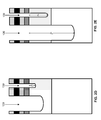
FIGS. 2A-2E depict a method of forming exemplary structure 100, according to one embodiment of the invention. FIG. 2A depicts stack of layers 110 as provided, including undoped layer 141, doped layer 142, BOX layer 160, SOI layer 170, nitride layer 180, and silicon oxide layer 190.
First, as depicted in FIG. 2B, openings 220 and 230 may be formed in BOX layer 160, SOI layer 170, nitride layer 180, and silicon oxide layer 190. These openings may be formed by dielectric etching processes commonly known in the art. In some embodiments, the process of forming openings 220 and 230 may also remove some material from substrate 140.
Next, as depicted in FIG. 2C, reactive ion etching is used to begin forming moat 120 and trench 130 (as depicted in FIG. 1B). First, surfaces 142 a and 142 b of doped layer 142 are etched in a multi-frequency diode capacity coupled plasma chamber (CCPC) with a first etching gas. In one embodiment, the CCPC preferably uses a bias power of 0.1 to 0.25 watts/centimeter3 (W/cm3) and a source power of 0.35 to 0.65 W/cm3 and an operating pressure of 50 to 150 mTorr. In one embodiment, the first etching gas may include 74 vol. % to 89 vol. % hydrogen bromide (HBr), 6 vol. % to 12 vol. % nitrogen trifluoride (NF3), and 5 vol. % to 16 vol. % oxygen (O2). As shown in the depicted exemplary embodiment of FIG. 2D, the etching process continues using the first etching gas to begin forming moat 120 and trench 130 until trench 130 has a depth d1 of approximately 1 μm. The endpoint of the first etch is dependent on the relative dimensions of the two features to be formed and will vary accordingly.
When the depth of trench 130 reaches depth d1, the first etching gas is replaced with a second etching gas while maintaining the same bias power, source power, and operating pressure. The second etching gas preferably includes HBr, NF3, O2, and a halogenated silicon compound. In one embodiment, the halogenated silicon compound may be silicon tetrafluoride (SiF4). Other embodiments may use other compounds including, for example, silicon tetrachloride (SiCl4). In one embodiment, the second etching gas may include 70 vol. % to 89 vol. % HBr, 5 vol. % to 12 vol. % NF3, 4 vol. % to 16 vol. O2%, and less than 6 vol. % SiF4. As depicted in FIG. 2E, the etching process continues using the second etching gas to finish forming moat 120 and trench 130, which occurs when moat 120 reaches its target depth of dm and trench 130 reach its target depth of dt. The presence of a halogenated silicon compound in the second etching gas, such as SiF4, presents several advantages over continuing the etching process without it. The addition of SiF4 results in a faster etch rate in moat 120, so that the final depth dm of moat 120 is deeper relative to depth dt of trench 130 when compared to an etch process without the addition of a halogenated silicon compound. Additionally, the addition of SiF4 results in a rounder bottom of trench 130, which is preferable when forming trench capacitors compared to trenches with pointed bottoms. Finally, the addition of SiF4 conserves silicon oxide layer 190.
While the present invention has been particularly shown and described with respect to preferred embodiments, it will be understood by those skilled in the art that the foregoing and other changes in forms and details may be made without departing from the spirit and scope of the invention. It is therefore intended that the present invention not be limited to the exact forms and details described and illustrated but fall within the scope of the appended claims.

Claims (14)

What is claimed is:
1. A method of forming a first feature and a second feature in a substrate, the method comprising:
etching the substrate in a first region having a first smaller cross-sectional area and in a second region having a second smaller cross-sectional area, wherein the substrate is etched with a first etching gas and the second cross-sectional area is greater than the first smaller cross-sectional area,
etching the first region and the second region with the first etching gas and a halogenated silicon compound, whereby a first feature is formed in the first region and a second feature having a greater depth than the first feature is formed in the second region.
2. The method of claim 1, wherein the first feature is a trench and the second feature is a moat.
3. The method of claim 2, wherein the trench and the moat are features of an embedded dynamic random access memory structure.
4. The method of claim 2, wherein the moat has a depth of at least 5 μm.
5. The method of claim 2, wherein the trench has depth of about 3.5 μm.
6. The method of claim 2, where the trench has a critical dimension of approximately 70 nm.
7. The method of claim 2, where the moat has a critical dimension of approximately 250 nm.
8. The method of claim 1, wherein etching the first opening and the second opening comprises reactive ion etching.
9. The method of claim 1, wherein the first etching gas comprises hydrogen bromide (HBr), nitrogen trifluoride (NF3), and oxygen (O2).
10. The method of claim 9, wherein the first etching gas comprises 74 vol. % to 89 vol. % HBr, 6 vol. % to 12 vol. % NF3, and 5 vol. % to 16 vol. % O2.
11. The method of claim 1, wherein the halogenated silicon compound of the second etching gas comprises a compound selected from the group consisting of silicon tetrafluoride and silicon tetrachloride.
12. The method of claim 1, wherein the first etching gas and a halogenated silicon compound collectively comprises 70 vol. % to 89 vol. % HBr, 5 vol. % to 12 vol. % NF3, 4 vol. % to 16 vol. O2%, and 0 vol. % to 6 vol. % SiF4.
13. The method of claim 1, wherein etching the first region and the second region with the first etching gas and a halogenated silicon compound results in the first feature having a rounded bottom.
14. The method of claim 1, wherein etching the first region and the second region with the first etching gas and a halogenated silicon compound results in a faster etch rate in the first region than in the second region.
US13/865,223 2012-05-07 2013-04-18 Method for simultaneously forming features of different depths in a semiconductor substrate Expired - Fee Related US8901005B2 (en)

Priority Applications (1)

Application Number Priority Date Filing Date Title
US13/865,223 US8901005B2 (en) 2012-05-07 2013-04-18 Method for simultaneously forming features of different depths in a semiconductor substrate

Applications Claiming Priority (2)

Application Number Priority Date Filing Date Title
US13/465,050 US8492280B1 (en) 2012-05-07 2012-05-07 Method for simultaneously forming features of different depths in a semiconductor substrate
US13/865,223 US8901005B2 (en) 2012-05-07 2013-04-18 Method for simultaneously forming features of different depths in a semiconductor substrate

Related Parent Applications (1)

Application Number Title Priority Date Filing Date
US13/465,050 Continuation US8492280B1 (en) 2012-05-07 2012-05-07 Method for simultaneously forming features of different depths in a semiconductor substrate

Publications (2)

Publication Number Publication Date
US20130295773A1 US20130295773A1 (en) 2013-11-07
US8901005B2 true US8901005B2 (en) 2014-12-02

Family

ID=48792319

Family Applications (2)

Application Number Title Priority Date Filing Date
US13/465,050 Expired - Fee Related US8492280B1 (en) 2012-05-07 2012-05-07 Method for simultaneously forming features of different depths in a semiconductor substrate
US13/865,223 Expired - Fee Related US8901005B2 (en) 2012-05-07 2013-04-18 Method for simultaneously forming features of different depths in a semiconductor substrate

Family Applications Before (1)

Application Number Title Priority Date Filing Date
US13/465,050 Expired - Fee Related US8492280B1 (en) 2012-05-07 2012-05-07 Method for simultaneously forming features of different depths in a semiconductor substrate

Country Status (1)

Country Link
US (2) US8492280B1 (en)

Families Citing this family (2)

* Cited by examiner, † Cited by third party
Publication number Priority date Publication date Assignee Title
US8492280B1 (en) * 2012-05-07 2013-07-23 International Business Machines Corporation Method for simultaneously forming features of different depths in a semiconductor substrate
CN106816372A (en) * 2015-11-30 2017-06-09 北京北方微电子基地设备工艺研究中心有限责任公司 A kind of lithographic method of silicon carbide substrates

Citations (7)

* Cited by examiner, † Cited by third party
Publication number Priority date Publication date Assignee Title
WO2003056617A1 (en) 2001-12-27 2003-07-10 Tokyo Electron Limited Etching method and plasma etching device
US7416676B2 (en) 2005-02-16 2008-08-26 Tokyo Electron Limited Plasma etching method and apparatus, control program for performing the etching method, and storage medium storing the control program
US20100099266A1 (en) 2008-09-22 2010-04-22 Applied Materials, Inc. Etch reactor suitable for etching high aspect ratio features
US7732340B2 (en) 2006-08-08 2010-06-08 Tokyo Electron Limited Method for adjusting a critical dimension in a high aspect ratio feature
US20110193193A1 (en) 2010-02-11 2011-08-11 International Business Machines Corporation Structure and method for forming isolation and buried plate for trench capacitor
US8009938B2 (en) 2008-02-29 2011-08-30 Applied Materials, Inc. Advanced process sensing and control using near infrared spectral reflectometry
US8492280B1 (en) * 2012-05-07 2013-07-23 International Business Machines Corporation Method for simultaneously forming features of different depths in a semiconductor substrate

Patent Citations (7)

* Cited by examiner, † Cited by third party
Publication number Priority date Publication date Assignee Title
WO2003056617A1 (en) 2001-12-27 2003-07-10 Tokyo Electron Limited Etching method and plasma etching device
US7416676B2 (en) 2005-02-16 2008-08-26 Tokyo Electron Limited Plasma etching method and apparatus, control program for performing the etching method, and storage medium storing the control program
US7732340B2 (en) 2006-08-08 2010-06-08 Tokyo Electron Limited Method for adjusting a critical dimension in a high aspect ratio feature
US8009938B2 (en) 2008-02-29 2011-08-30 Applied Materials, Inc. Advanced process sensing and control using near infrared spectral reflectometry
US20100099266A1 (en) 2008-09-22 2010-04-22 Applied Materials, Inc. Etch reactor suitable for etching high aspect ratio features
US20110193193A1 (en) 2010-02-11 2011-08-11 International Business Machines Corporation Structure and method for forming isolation and buried plate for trench capacitor
US8492280B1 (en) * 2012-05-07 2013-07-23 International Business Machines Corporation Method for simultaneously forming features of different depths in a semiconductor substrate

Also Published As

Publication number Publication date
US20130295773A1 (en) 2013-11-07
US8492280B1 (en) 2013-07-23

Similar Documents

Publication Publication Date Title
US8198169B2 (en) Deep trench capacitor in a SOI substrate having a laterally protruding buried strap
CN105047660B (en) Shallow trench isolation structure
US6297088B1 (en) Method for forming a deep trench capacitor of a dram cell
US8153489B2 (en) Method for fabricating semiconductor device with buried gates
US7081384B2 (en) Method of forming a silicon dioxide layer
US7575970B2 (en) Deep trench capacitor through SOI substrate and methods of forming
US8399342B2 (en) Method for fabricating semiconductor device with buried bit lines
US8669152B2 (en) Methods of manufacturing semiconductor devices
CN1838401A (en) Bottle-shaped groove and manufacturing method of bottle-shaped groove capacitor
US6661043B1 (en) One-transistor RAM approach for high density memory application
US7799694B2 (en) Methods of forming semiconductor constructions
US6713341B2 (en) Method of forming a bottle-shaped trench in a semiconductor substrate
JP3229279B2 (en) Method of forming trench buried strap
US6501120B1 (en) Capacitor under bitline (CUB) memory cell structure employing air gap void isolation
US8247305B2 (en) Method and resulting structure for deep trench polysilicon hard mask removal
US6566192B2 (en) Method of fabricating a trench capacitor of a memory cell
US8901005B2 (en) Method for simultaneously forming features of different depths in a semiconductor substrate
US8501565B2 (en) Method for fabricating deep trench isolation
US6037208A (en) Method for forming a deep trench capacitor of a DRAM cell
US9960168B2 (en) Capacitor strap connection structure and fabrication method
US7768053B2 (en) Semiconductor device with asymmetric transistor and method for fabricating the same
KR101025739B1 (en) Method for manufacturing semiconductor device with neck-free vertical gate
US7833872B2 (en) Uniform recess of a material in a trench independent of incoming topography
US20230240065A1 (en) Method of forming plug for semiconductor device and semiconductor device thereof
US20080032471A1 (en) Methods for forming shallow trench isolation structures in deep trenches and uses of the same

Legal Events

Date Code Title Description
AS Assignment

Owner name: INTERNATIONAL BUSINESS MACHINES CORPORATION, NEW Y

Free format text: ASSIGNMENT OF ASSIGNORS INTEREST;ASSIGNORS:HICHRI, HABIB;LI, XI;WISE, RICHARD;REEL/FRAME:030239/0046

Effective date: 20130411

FEPP Fee payment procedure

Free format text: MAINTENANCE FEE REMINDER MAILED (ORIGINAL EVENT CODE: REM.)

LAPS Lapse for failure to pay maintenance fees

Free format text: PATENT EXPIRED FOR FAILURE TO PAY MAINTENANCE FEES (ORIGINAL EVENT CODE: EXP.); ENTITY STATUS OF PATENT OWNER: LARGE ENTITY

STCH Information on status: patent discontinuation

Free format text: PATENT EXPIRED DUE TO NONPAYMENT OF MAINTENANCE FEES UNDER 37 CFR 1.362

FP Lapsed due to failure to pay maintenance fee

Effective date: 20181202