US8856295B2 - System and method for providing an enterprise deployment topology with thick client functionality - Google Patents
System and method for providing an enterprise deployment topology with thick client functionality Download PDFInfo
- Publication number
- US8856295B2 US8856295B2 US13/468,792 US201213468792A US8856295B2 US 8856295 B2 US8856295 B2 US 8856295B2 US 201213468792 A US201213468792 A US 201213468792A US 8856295 B2 US8856295 B2 US 8856295B2
- Authority
- US
- United States
- Prior art keywords
- applications
- dmz
- thick
- data center
- providing
- Prior art date
- Legal status (The legal status is an assumption and is not a legal conclusion. Google has not performed a legal analysis and makes no representation as to the accuracy of the status listed.)
- Active, expires
Links
Images


Classifications
-
- H—ELECTRICITY
- H04—ELECTRIC COMMUNICATION TECHNIQUE
- H04L—TRANSMISSION OF DIGITAL INFORMATION, e.g. TELEGRAPHIC COMMUNICATION
- H04L67/00—Network arrangements or protocols for supporting network services or applications
- H04L67/01—Protocols
- H04L67/02—Protocols based on web technology, e.g. hypertext transfer protocol [HTTP]
-
- H—ELECTRICITY
- H04—ELECTRIC COMMUNICATION TECHNIQUE
- H04L—TRANSMISSION OF DIGITAL INFORMATION, e.g. TELEGRAPHIC COMMUNICATION
- H04L12/00—Data switching networks
- H04L12/28—Data switching networks characterised by path configuration, e.g. LAN [Local Area Networks] or WAN [Wide Area Networks]
- H04L12/46—Interconnection of networks
- H04L12/4641—Virtual LANs, VLANs, e.g. virtual private networks [VPN]
-
- H—ELECTRICITY
- H04—ELECTRIC COMMUNICATION TECHNIQUE
- H04L—TRANSMISSION OF DIGITAL INFORMATION, e.g. TELEGRAPHIC COMMUNICATION
- H04L63/00—Network architectures or network communication protocols for network security
- H04L63/02—Network architectures or network communication protocols for network security for separating internal from external traffic, e.g. firewalls
- H04L63/0209—Architectural arrangements, e.g. perimeter networks or demilitarized zones
-
- H—ELECTRICITY
- H04—ELECTRIC COMMUNICATION TECHNIQUE
- H04L—TRANSMISSION OF DIGITAL INFORMATION, e.g. TELEGRAPHIC COMMUNICATION
- H04L63/00—Network architectures or network communication protocols for network security
- H04L63/02—Network architectures or network communication protocols for network security for separating internal from external traffic, e.g. firewalls
- H04L63/0209—Architectural arrangements, e.g. perimeter networks or demilitarized zones
- H04L63/0218—Distributed architectures, e.g. distributed firewalls
-
- H—ELECTRICITY
- H04—ELECTRIC COMMUNICATION TECHNIQUE
- H04L—TRANSMISSION OF DIGITAL INFORMATION, e.g. TELEGRAPHIC COMMUNICATION
- H04L63/00—Network architectures or network communication protocols for network security
- H04L63/02—Network architectures or network communication protocols for network security for separating internal from external traffic, e.g. firewalls
- H04L63/0272—Virtual private networks
-
- H—ELECTRICITY
- H04—ELECTRIC COMMUNICATION TECHNIQUE
- H04L—TRANSMISSION OF DIGITAL INFORMATION, e.g. TELEGRAPHIC COMMUNICATION
- H04L67/00—Network arrangements or protocols for supporting network services or applications
- H04L67/01—Protocols
- H04L67/10—Protocols in which an application is distributed across nodes in the network
-
- H—ELECTRICITY
- H04—ELECTRIC COMMUNICATION TECHNIQUE
- H04L—TRANSMISSION OF DIGITAL INFORMATION, e.g. TELEGRAPHIC COMMUNICATION
- H04L67/00—Network arrangements or protocols for supporting network services or applications
- H04L67/34—Network arrangements or protocols for supporting network services or applications involving the movement of software or configuration parameters
-
- G—PHYSICS
- G06—COMPUTING OR CALCULATING; COUNTING
- G06F—ELECTRIC DIGITAL DATA PROCESSING
- G06F8/00—Arrangements for software engineering
- G06F8/60—Software deployment
-
- G—PHYSICS
- G06—COMPUTING OR CALCULATING; COUNTING
- G06F—ELECTRIC DIGITAL DATA PROCESSING
- G06F8/00—Arrangements for software engineering
- G06F8/60—Software deployment
- G06F8/61—Installation
-
- H—ELECTRICITY
- H04—ELECTRIC COMMUNICATION TECHNIQUE
- H04L—TRANSMISSION OF DIGITAL INFORMATION, e.g. TELEGRAPHIC COMMUNICATION
- H04L41/00—Arrangements for maintenance, administration or management of data switching networks, e.g. of packet switching networks
- H04L41/08—Configuration management of networks or network elements
- H04L41/0876—Aspects of the degree of configuration automation
- H04L41/0886—Fully automatic configuration
Definitions
- the present invention is generally related to application servers, and enterprise software deployment, and is particularly related to systems and methods for providing an enterprise deployment topology with thick client functionality.
- one or more software application products can be installed and/or configured according to an integration and deployment design/blueprint that is built or optimized for use within a multi-tiered deployment topology at an organization's (i.e., customer's) data center. Based on the customer site topology, provisioning of the software applications can be optimized, and application life cycle operations performed. This enables each product to be aware of the topology, which in turn provides customers with an “out-of-the-box” solution.
- the deployment topology can also be optimized for security, performance and simplicity.
- the deployment topology can include thick client functionality.
- FIG. 1 illustrates a system which includes a multi-tiered enterprise deployment topology, in accordance with an embodiment.
- FIG. 2 illustrates another embodiment of a system which includes a multi-tiered enterprise deployment topology.
- FIG. 3 illustrates a thick client, which can be used with a multi-tiered enterprise deployment topology, in accordance with an embodiment.
- FIG. 4 illustrates a system which includes a multi-tiered enterprise deployment topology, together with a thick client, in accordance with an embodiment.
- FIG. 5 illustrates another embodiment of a system which includes a multi-tiered enterprise deployment topology, together with a thick client.
- FIG. 6 illustrates a method of installing and/or configuring a system which includes a multi-tiered enterprise deployment topology, in accordance with an embodiment.
- one or more software application products such as Fusion Applications
- Fusion Applications can be installed and/or configured according to an integration and deployment design/blueprint that is built or optimized for use within a multi-tiered deployment topology at an organization's (i.e., customer's) data center.
- the deployment topology can be optimized for security, performance and simplicity; and can also support the use of thick clients, or thick client functionality, where appropriate.
- an enterprise deployment topology is based on proven technologies and recommendations, and spans several products across a technology stack, e.g., Oracle Database, Fusion Middleware, Fusion Applications, and Fusion Middleware Control.
- enterprise deployment may also consider business service level agreements to make high-availability guidelines as widely applicable as possible; leverage database grid servers and storage grid with low-cost storage to provide highly resilient, lower cost infrastructure; use results from performance impact studies for different configurations to ensure that the high-availability architecture is optimally configured to perform and scale to business needs; enable control over the length of time to recover from an outage and the amount of acceptable data loss from a natural disaster; and/or follow recommended guidelines and architectures which are independent of hardware and operating systems.
- Fusion Applications examples include Oracle WebCenter; Oracle Business Intelligence; Hyperion; Oracle Universal Content Management; Oracle SOA Suite; Oracle WebLogic Server; Oracle JDeveloper; Oracle Enterprise Manager; Fusion Middleware Control; and Oracle Identity Management. Together, these products act as a suite of business applications that unify personal and enterprise processes, such as transactional business processes, business intelligence, and collaborative technologies.
- Oracle home An Oracle home contains installed files necessary to host a specific product. For example, the SOA Oracle home contains a directory that contains binary and library files for Oracle SOA Suite. An Oracle home resides within the directory structure of the Middleware home.
- WebLogic Server home A WebLogic Server home contains installed files necessary to host a WebLogic Server.
- the WebLogic Server home directory is a peer of Oracle home directories and resides within the directory structure of the Middleware home.
- Middleware home A Middleware home consists of the Oracle WebLogic Server home, and, optionally, one or more Oracle homes.
- a Middleware home can reside on a local file system or on a remote shared disk that is accessible through NFS.
- Oracle instance An Oracle instance contains one or more active middleware system components, e.g., Oracle Web Cache, Oracle HTTP Server, or Oracle Internet Directory. An administrator can determine which components are part of an instance, either at install time or by creating and configuring an instance at a later time.
- Domain The basic administrative unit of Oracle WebLogic Server.
- Managed Server Hosts business applications, application components, Web services, and their associated resources. Failover: When a member of a high availability system fails unexpectedly (unplanned downtime), in order to continue offering services to its consumers, the system undergoes a failover operation. If the system is an active-passive system, the passive member is activated during the failover operation and consumers are directed to it instead of the failed member.
- the failover process can be performed manually, or it can be automated by setting up hardware cluster services to detect failures and move cluster resources from the failed node to the standby node. If the system is an active-active system, the failover is performed by the load balancer entity serving requests to the active members. If an active member fails, the load balancer detects the failure and automatically redirects requests for the failed member to the surviving active members. Failback: After a system undergoes a successful failover operation, the original failed member can be repaired over time and be re-introduced into the system as a standby member. If desired, a failback process can be initiated to activate this member and deactivate the other. This process reverts the system back to its pre-failure configuration.
- Hardware cluster A hardware cluster is a collection of computers that provides a single view of network services (e.g., an IP address) or application services (e.g., databases, Web servers) to clients of these services.
- Each node in a hardware cluster is a standalone server that runs its own processes. These processes can communicate with one another to form what looks like a single system that cooperatively provides applications, system resources, and data to users.
- Cluster agent The software that runs on a node member of a hardware cluster that coordinates availability and performance operations with other nodes.
- Clusterware Software that manages the operations of the members of a cluster as a system.
- Shared storage is the storage subsystem that is accessible by all the computers in the enterprise deployment domain.
- Primary node The node that is actively running a Fusion Applications instance at any given time and has been configured to have a backup/secondary node. If the primary node fails, a Fusion Applications instance is failed over to the secondary node.
- Secondary node The node that is the backup node for a Fusion Applications instance. This is where the active instance fails over when the primary node is no longer available.
- Network host name is a name assigned to an IP address either through the/etc/hosts file or through DNS resolution.
- Physical host name This guide differentiates between the terms physical host name and network host name. This guide uses physical host name to refer to the “internal name” of the current computer.
- Physical IP Physical IP refers to the IP address of a computer on the network. In most cases, it is normally associated with the physical host name of the computer.
- Switchover During normal operation, active members of a system may require maintenance or upgrading. A switchover process can be initiated to allow a substitute member to take over the workload performed by the member that requires maintenance or upgrading, which undergoes planned downtime. Switchback: When a switchover operation is performed, a member of the system is deactivated for maintenance or upgrading.
- Virtual host name is a network addressable host name that maps to one or more physical computers via a load balancer or a hardware cluster.
- the name “virtual server name” is used herein interchangeably with virtual host name.
- a load balancer can hold a virtual host name on behalf of a set of servers, and clients communicate indirectly with the computers using the virtual host name.
- a virtual host name in a hardware cluster is a network host name assigned to a cluster virtual IP. Because the cluster virtual IP is not permanently attached to any particular node of a cluster, the virtual host name is not permanently attached to any particular node either.
- Virtual IP (Cluster virtual IP, load balancer virtual IP.)
- a virtual IP can be assigned to a hardware cluster or load balancer.
- a virtual IP serves as an entry point IP address to the group of servers which are members of the cluster.
- a virtual IP can be assigned to a server load balancer or a hardware cluster.
- a hardware cluster uses a cluster virtual IP to present to the outside world the entry point into the cluster (it can also be set up on a standalone computer). The hardware cluster's software manages the movement of this IP address between the two physical nodes of the cluster while clients connect to this IP address without the need to know which physical node this IP address is currently active on.
- each computer has its own physical IP address and physical host name, while there could be several cluster IP addresses. These cluster IP addresses float or migrate between the two nodes. The node with current ownership of a cluster IP address is active for that address.
- a load balancer also uses a virtual IP as the entry point to a set of servers. These servers tend to be active at the same time. This virtual IP address is not assigned to any individual server but to the load balancer which acts as a proxy between servers and their clients.
- an enterprise deployment topology is a design/blueprint or set of guidelines for use in configuring a system, which are based on proven technologies and recommendations, and which span several products across a technology stack.
- Each deployment topology provides specific application deployment characteristics within an enterprise environment, such as availability, scalability and security.
- Users at workstations can access, via a load balancer and firewall, a data center, such as an Oracle Data Center (ODC), which includes applications, such as Fusion Applications and other applications, that are provided according to a selected deployment topology.
- ODC Oracle Data Center
- the applications at a data center can communicate with one another within the data center, using the hypertext transfer protocol (HTTP) and internal uniform resource locators (URLs), to process requests from the users. Since the internal URLs and their communications are provided within a demilitarized/secure zone (DMZ) of the data center, they can be secured without a need for, e.g., secure socket layer (SSL), which in turn provides performance benefits.
- SSL secure socket layer
- the applications can also be accessed by users via virtual hosts and external URLs, which can utilize SSL.
- different portions or aspects of the functionality can be made available to Intranet-based users, and/or to Internet-based users.
- FIG. 1 illustrates a system which includes a multi-tiered enterprise deployment topology, in accordance with an embodiment.
- a data center e.g., an ODC data center
- the data tier can include one or more application databases (e.g., a Fusion Applications database) 102 , which are accessible via one or more database hosts 104 .
- application databases e.g., a Fusion Applications database
- the application tier can include one or more application hosts or nodes (e.g., Fusion Applications hosts) 112 , each of which in turn include one or more domains and servers.
- an application host may include a customer relationship management (CRM) domain 114 , a common domain 116 , and various other domains 118 ; each of which respectively may include a capture server 120 , contract server 122 , SOA server 124 , ESS server 126 , or other servers 128 , 130 , 132 , 134 .
- CRM customer relationship management
- the DMZ-secured public zone or web tier can include one or more web servers 144 , configured with virtual URL's 146 and proxies 147 .
- the web tier is selectively accessible to Internet-based workstations 170 , via the Internet 180 and optionally a load balancer, through a plurality of Internet-accessible URLs or ports 142 (e.g., https://crm.mycompany.com 150 , https://common.mycompany.com 154 , and https://other.
- external workstations can access applications at the data center by communicating requests 202 via the Internet, and the Internet-accessible URLs/ports, which then communicates those requests via the web servers configured with virtual URL's and proxies 204 , to the application hosts 206 , and if necessary the data tier 208 .
- FIG. 1 is provided for purposes of illustration, and that, in accordance with other embodiments, different types and arrangements of domains and servers may be provided within the application tier, and that the invention is not limited to the particular arrangement shown.
- FIG. 2 illustrates another embodiment of a system which includes a multi-tiered enterprise deployment topology using Fusion Applications.
- a primary node (CRMHOST 1 ) is actively running a Fusion Applications instance.
- a secondary node (CRMHOST 2 ) is the redundant (HA) node for that Fusion Applications instance.
- the primary node consists of an administration server and applications that have been deployed to managed servers. Managed servers can be grouped together in clusters to provide scalability and high availability for applications. Together, the primary and secondary nodes form a domain.
- nodes in the web tier are located in the demilitarized zone (DMZ) public zone.
- DMZ demilitarized zone
- two nodes WEBHOST 1 and WEBHOST 2 run Oracle HTTP Server configured with WebGate, which allows requests to be proxied from Oracle HTTP Server to WebLogic Server, and which uses Oracle Access Protocol (OAP) to communicate with Oracle Access Manager running on OAMHOST 1 and OAMHOST 2 , in the Identity Management DMZ.
- WebGate and Oracle Access Manager are used to perform operations such as user authentication.
- the Oracle Web Tier also includes a load balancer router to handle external requests. External requests are sent to the virtual host names configured on the load balancer. The load balancer then forwards the requests to Oracle HTTP Server.
- Only the HTTP ports are open: 443 for HTTPS, and 80 for HTTP.
- an external load balancer When an external load balancer is used, it should preferably allow for: load-balancing traffic to a pool of real servers through a virtual host name, so that clients access services using the virtual host name (instead of using actual host names), and the load balancer can then load-balance requests to the servers in the pool; port translation configuration so that incoming requests on the virtual host name and port are directed to a different port on the back-end servers; monitoring ports on the servers in the pool to determine availability of a service; configuring virtual server names and ports, including for each virtual server, the load balancer should allow configuration of traffic management on more than one port; detecting node failures and immediately stop routing traffic to the failed node; maintaining sticky connections to components, examples of which include cookie-based persistence or IP-based persistence; terminating SSL requests at the load balancer and forward traffic to the back-end real servers using the equivalent non-SSL protocol (e.g., HTTPS to HTTP); and other features as appropriate.
- the equivalent non-SSL protocol e.g., HTTPS to HTTP
- CRMHOST 1 and CRMHOST 2 run the managed servers in the Oracle Fusion Customer Relationship Management, Oracle Business Intelligence, Oracle Incentive Compensation, Oracle Fusion Financials, Oracle Fusion Supply Chain Management, and Oracle Fusion Human Capital Management domains.
- CRMHOST 1 and CRMHOST 2 run the managed and C/C++ servers from different domains in an active-active or active-passive implementation.
- C/C++ components are managed by Oracle Process Manager and Notification Server (OPMN), and all the managed servers are managed by Administration Server within the domain.
- OPMN Oracle Process Manager and Notification Server
- CRMHOST 1 and CRMHOST 2 also run the Oracle WebLogic Server Administration Console and Oracle Enterprise Manager Fusion Middleware Control, but in an active-passive configuration.
- the HTTP ports, OAP port, and proxy port are open.
- the OAP port is for the WebGate module running in Oracle HTTP Server in the Oracle Web Tier to communicate with Oracle Access Manager. Applications requiring external HTTP access can use Oracle HTTP Server as the proxy.
- an Oracle RAC database runs on the nodes FUSIONDBHOST 1 and FUSIONDBHOST 2 .
- the database contains the schemas needed by the Oracle Fusion Applications components.
- the components running in the application tier access this database.
- the database listener port typically, 1521
- the LDAP ports are also required to be open for the traffic accessing the LDAP storage in the IDM enterprise deployment.
- deployment topology illustrated in FIG. 2 is provided for purposes of illustration, and that, in accordance with other embodiments, and depending on different customer sites, needs and requirements, different deployment topologies can be provided, and that the invention is not limited to the particular deployment topology shown.
- an administrative subnet can be created at the data center for use with thick clients, and such clients then hosted within the data center.
- a thick client user can then login using, e.g., published SSL URL over a VNC/remote desktop, and perform thick client activities, without a need for opening holes in the corporate/data center firewalls.
- separate subnets can be created within the data center where the Fusion Applications thick clients are installed, and only the thick clients are configured to have access to the data center severs.
- An end-user can access the thick clients over, e.g. VPN using SSL enabled terminal server (or VNC).
- a user with valid credentials can then login to these servers using remote desk top and configure their components or run the reports, and/or can FTP data into this subnet and use tools provided within this subnet to load, analyze or update the data.
- FIG. 3 illustrates a thick client, which can be used with a multi-tiered enterprise deployment topology, in accordance with an embodiment.
- the thick client or administrative subnet which is located within the DMZ-secured public zone or web tier, can include one or more provider clients 240 , each of which in turn can include a server (e.g., a Linux server 240 , or Windows server 250 , 260 ) and a variety of administrative or other tools (e.g. an FTP server 246 , JDev tool 252 , or other tools 262 ).
- Other clients 270 , servers 272 , and tools 274 can be provided depending on the particular needs/requirements for a multi-tiered application environment.
- a thick-client workstation 280 located outside of the data center, can access the thick client or administrative subnet via a VPN 278 , and socket connection 282 . Requests from the thick-client workstation can be communicated via the thick client or administrative subnet and forwarded 284 to the application hosts, using appropriate protocols such as HTTP, RMI, ODBC or OAP.
- FIG. 4 illustrates a system which includes a multi-tiered enterprise deployment topology, together with a thick client, in accordance with an embodiment.
- the environment can includes a data tier, application (app) tier, and DMZ-secured public zone or web tier, as described previously. Requests from the thick-client workstation can be communicated via the thick client or administrative subnet and forwarded to the application hosts.
- FIG. 5 illustrates another embodiment of a system which includes a multi-tiered enterprise deployment topology, together with a thick client.
- a Fusion Applications environment similar to that described above with regard to FIG. 2 , can be similarly used with a thick-client workstation, wherein requests can be communicated via the thick client or administrative subnet and forwarded to the application hosts, in this example using a variety of protocols such as HTTP, RMI, ODBC or OAP, depending on the particular requirements of each application, and the particular needs of the enterprise.
- a typical Fusion Applications environment may include one or more administrative client applications, e.g., FR Studio; OBIEE Administrative Client; BI Catalog Manager; or IPM document provider clients such as OFR, OFR Verifier, OFR Designer; ODC; Mail Server for ODC; FTP Server; JDev; and/or ODI Studio.
- administrative client applications e.g., FR Studio; OBIEE Administrative Client; BI Catalog Manager; or IPM document provider clients such as OFR, OFR Verifier, OFR Designer; ODC; Mail Server for ODC; FTP Server; JDev; and/or ODI Studio.
- the administrative subnet can include a plurality of windows servers that are used to install one or more administrative thick clients therein, so that each particular administrative client application can use protocols and/or sockets appropriate to that particular administrative client application (e.g. HTTP, RMI, ODBC or OAP) to access the data center.
- protocols and/or sockets appropriate to that particular administrative client application (e.g. HTTP, RMI, ODBC or OAP) to access the data center.
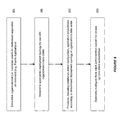
- FIG. 6 illustrates a method of installing and/or configuring a system which includes a multi-tiered enterprise deployment topology, in accordance with an embodiment.
- an organization/customer's needs and/or requirements for a multi-tiered application environment e.g., a Fusion Applications environment
- an appropriate deployment topology is determined for with the customer's data center, which takes into account the current aspects of the data center (e.g., database resources), and the customer's needs/requirements.
- the application environment is provisioned (including installing and/or configuring components, such as web servers, application, Fusion Applications, etc) according to the deployment topology.
- thick clients (administrative subnets) are optionally configured for use by thick client workstations, so that each particular client can use protocols and/or sockets appropriate to that particular client to access the data center.
- the present invention may be conveniently implemented using one or more conventional general purpose or specialized digital computer, computing device, machine, or microprocessor, including one or more processors, memory and/or computer readable storage media programmed according to the teachings of the present disclosure.
- Appropriate software coding can readily be prepared by skilled programmers based on the teachings of the present disclosure, as will be apparent to those skilled in the software art.
- the present invention includes a computer program product which is a non-transitory storage medium or computer readable medium (media) having instructions stored thereon/in which can be used to program a computer to perform any of the processes of the present invention.
- the storage medium can include, but is not limited to, any type of disk including floppy disks, optical discs, DVD, CD-ROMs, microdrive, and magneto-optical disks, ROMs, RAMs, EPROMs, EEPROMs, DRAMs, VRAMs, flash memory devices, magnetic or optical cards, nanosystems (including molecular memory ICs), or any type of media or device suitable for storing instructions and/or data.
Landscapes
- Engineering & Computer Science (AREA)
- Computer Networks & Wireless Communication (AREA)
- Signal Processing (AREA)
- Computer Security & Cryptography (AREA)
- Computer Hardware Design (AREA)
- Computing Systems (AREA)
- General Engineering & Computer Science (AREA)
- Computer And Data Communications (AREA)
- Data Exchanges In Wide-Area Networks (AREA)
- Stored Programmes (AREA)
- Storage Device Security (AREA)
Priority Applications (6)
| Application Number | Priority Date | Filing Date | Title |
|---|---|---|---|
| US13/468,792 US8856295B2 (en) | 2012-01-10 | 2012-05-10 | System and method for providing an enterprise deployment topology with thick client functionality |
| JP2014551428A JP6177799B2 (ja) | 2012-01-10 | 2013-01-10 | ソフトウェアデプロイメントトポロジー |
| CN201380004322.7A CN103999412B (zh) | 2012-01-10 | 2013-01-10 | 软件部署拓扑结构 |
| PCT/US2013/021048 WO2013106581A1 (en) | 2012-01-10 | 2013-01-10 | Software deployment topology |
| EP13702284.4A EP2803169B1 (en) | 2012-01-10 | 2013-01-10 | Software deployment topology |
| IN3609CHN2014 IN2014CN03609A (enExample) | 2012-01-10 | 2014-05-13 |
Applications Claiming Priority (3)
| Application Number | Priority Date | Filing Date | Title |
|---|---|---|---|
| US201261585188P | 2012-01-10 | 2012-01-10 | |
| US201261620881P | 2012-04-05 | 2012-04-05 | |
| US13/468,792 US8856295B2 (en) | 2012-01-10 | 2012-05-10 | System and method for providing an enterprise deployment topology with thick client functionality |
Publications (2)
| Publication Number | Publication Date |
|---|---|
| US20130179874A1 US20130179874A1 (en) | 2013-07-11 |
| US8856295B2 true US8856295B2 (en) | 2014-10-07 |
Family
ID=48744875
Family Applications (2)
| Application Number | Title | Priority Date | Filing Date |
|---|---|---|---|
| US13/468,792 Active 2032-08-31 US8856295B2 (en) | 2012-01-10 | 2012-05-10 | System and method for providing an enterprise deployment topology with thick client functionality |
| US13/679,812 Active 2034-08-22 US9906578B2 (en) | 2012-01-10 | 2012-11-16 | System and method for providing an enterprise deployment topology |
Family Applications After (1)
| Application Number | Title | Priority Date | Filing Date |
|---|---|---|---|
| US13/679,812 Active 2034-08-22 US9906578B2 (en) | 2012-01-10 | 2012-11-16 | System and method for providing an enterprise deployment topology |
Country Status (6)
| Country | Link |
|---|---|
| US (2) | US8856295B2 (enExample) |
| EP (1) | EP2803169B1 (enExample) |
| JP (1) | JP6177799B2 (enExample) |
| CN (1) | CN103999412B (enExample) |
| IN (1) | IN2014CN03609A (enExample) |
| WO (1) | WO2013106581A1 (enExample) |
Cited By (5)
| Publication number | Priority date | Publication date | Assignee | Title |
|---|---|---|---|---|
| US20130290853A1 (en) * | 2009-08-12 | 2013-10-31 | Ebay Inc. | Reservation of resources and deployment of applications using an integrated development environment |
| US20140310554A1 (en) * | 2013-04-10 | 2014-10-16 | International Business Machines Corporation | System and method for graph based k-redundant resiliency for it cloud |
| US10581867B2 (en) * | 2012-09-07 | 2020-03-03 | Oracle International Corporation | Multi-tenancy identity management system |
| US11928239B2 (en) | 2021-09-30 | 2024-03-12 | Sap Se | Sensitive data management system |
| US12306980B2 (en) | 2023-08-21 | 2025-05-20 | Bank Of America Corporation | Network operating system deployment to remote hardware for network extensibility |
Families Citing this family (28)
| Publication number | Priority date | Publication date | Assignee | Title |
|---|---|---|---|---|
| US8856295B2 (en) * | 2012-01-10 | 2014-10-07 | Oracle International Corporation | System and method for providing an enterprise deployment topology with thick client functionality |
| US9311066B1 (en) * | 2012-06-25 | 2016-04-12 | Amazon Technologies, Inc. | Managing update deployment |
| US9292279B2 (en) * | 2013-01-22 | 2016-03-22 | Maluuba Inc. | Method and system for creating and managing a dynamic route topography for service oriented software environments |
| US9575738B1 (en) * | 2013-03-11 | 2017-02-21 | EMC IP Holding Company LLC | Method and system for deploying software to a cluster |
| US9716746B2 (en) * | 2013-07-29 | 2017-07-25 | Sanovi Technologies Pvt. Ltd. | System and method using software defined continuity (SDC) and application defined continuity (ADC) for achieving business continuity and application continuity on massively scalable entities like entire datacenters, entire clouds etc. in a computing system environment |
| US10097410B2 (en) | 2014-06-26 | 2018-10-09 | Vmware, Inc. | Methods and apparatus to scale application deployments in cloud computing environments |
| US9507678B2 (en) * | 2014-11-13 | 2016-11-29 | Netapp, Inc. | Non-disruptive controller replacement in a cross-cluster redundancy configuration |
| US20160285957A1 (en) * | 2015-03-26 | 2016-09-29 | Avaya Inc. | Server cluster profile definition in a distributed processing network |
| JP6736943B2 (ja) * | 2016-03-29 | 2020-08-05 | 富士通株式会社 | 情報処理装置、情報処理方法、情報処理プログラム及び情報配信システム |
| US10033646B2 (en) * | 2016-05-12 | 2018-07-24 | International Business Machines Corporation | Resilient active-active data link layer gateway cluster |
| US20180032322A1 (en) * | 2016-07-29 | 2018-02-01 | Hewlett Packard Enterprise Development Lp | Automated devops application deployment |
| CN107222544B (zh) * | 2017-06-14 | 2020-09-18 | 千寻位置网络有限公司 | 基于多层服务架构的高可用方法及系统 |
| CN111052092B (zh) * | 2017-09-06 | 2024-03-29 | 日本电气株式会社 | 集群系统、集群系统控制方法、服务器设备、控制方法和存储程序的非暂时性计算机可读介质 |
| US11144298B2 (en) * | 2018-07-13 | 2021-10-12 | Microsoft Technology Licensing, Llc | Feature installer for software programs |
| US10956139B2 (en) * | 2018-11-26 | 2021-03-23 | Sap Se | Integration process to integration adapter connector |
| US11422784B2 (en) | 2019-01-11 | 2022-08-23 | Walmart Apollo, Llc | System and method for production readiness verification and monitoring |
| US11182139B2 (en) | 2019-01-11 | 2021-11-23 | Walmart Apollo, Llc | System and method for production readiness verification and monitoring |
| US11245750B2 (en) * | 2019-02-16 | 2022-02-08 | International Business Machines Corporation | File server load balancing |
| US11221837B2 (en) | 2019-04-11 | 2022-01-11 | Microsoft Technology Licensing, Llc | Creating and deploying packages to devices in a fleet based on operations derived from a machine learning model |
| US11029936B2 (en) * | 2019-04-11 | 2021-06-08 | Microsoft Technology Licensing, Llc | Deploying packages to devices in a fleet in stages |
| US10587457B1 (en) | 2019-05-10 | 2020-03-10 | Capital One Services, Llc | Techniques for dynamic network resiliency |
| US10644954B1 (en) * | 2019-05-10 | 2020-05-05 | Capital One Services, Llc | Techniques for dynamic network management |
| US10756971B1 (en) | 2019-05-29 | 2020-08-25 | Capital One Services, Llc | Techniques for dynamic network strengthening |
| US20210200611A1 (en) | 2019-12-30 | 2021-07-01 | Capital One Services, Llc | Techniques for utilizing disruptions to enterprise systems |
| US20220027145A1 (en) * | 2020-07-23 | 2022-01-27 | Dell Products L.P. | Cloud-based dynamic plugin distribution |
| NL2027203B1 (en) | 2020-12-22 | 2022-07-20 | Microsoft Technology Licensing Llc | Method and System of Providing Security for Anonymous Autodiscover Services |
| US12169433B1 (en) * | 2021-10-19 | 2024-12-17 | American Airlines, Inc. | Monitoring and detecting errors by location and common dependency within a complex digital ecosystem |
| US11729057B1 (en) * | 2022-02-07 | 2023-08-15 | The Bank Of New York Mellon | Application architecture drift detection system |
Citations (19)
| Publication number | Priority date | Publication date | Assignee | Title |
|---|---|---|---|---|
| US20020157020A1 (en) * | 2001-04-20 | 2002-10-24 | Coby Royer | Firewall for protecting electronic commerce databases from malicious hackers |
| US20040122942A1 (en) * | 2002-12-24 | 2004-06-24 | John Green | Method, system, and data structure for monitoring transaction performance in a managed computer network environment |
| US20050080801A1 (en) | 2000-05-17 | 2005-04-14 | Vijayakumar Kothandaraman | System for transactionally deploying content across multiple machines |
| EP1565814A1 (en) | 2002-07-17 | 2005-08-24 | Collation, Inc. | Deployment of applications in a multitier compute infrastructure |
| EP1577765A2 (en) | 2004-03-15 | 2005-09-21 | Ramco Systems Limited | Flexible deployment of software applications |
| US20050273849A1 (en) * | 2004-03-11 | 2005-12-08 | Aep Networks | Network access using secure tunnel |
| US20060080413A1 (en) | 2004-06-17 | 2006-04-13 | International Business Machines Corporation | Method and system for establishing a deployment plan for an application |
| US20070136788A1 (en) * | 2004-12-16 | 2007-06-14 | Monahan Brian Q | Modelling network to assess security properties |
| US7240325B2 (en) | 2002-09-11 | 2007-07-03 | International Business Machines Corporation | Methods and apparatus for topology discovery and representation of distributed applications and services |
| US20070260702A1 (en) | 2006-05-03 | 2007-11-08 | University Of Washington | Web browser architecture for virtual machine access |
| US20080098099A1 (en) | 2006-10-23 | 2008-04-24 | Oracle International Corporation | Facilitating Deployment Of Customizations Of Enterprise Applications |
| EP1974263A1 (en) | 2005-12-30 | 2008-10-01 | Sap Ag | Template-based configuration architecture |
| US20080256531A1 (en) | 2005-04-28 | 2008-10-16 | International Business Machines Corporation | Method and Apparatus for Deploying and Instantiating Multiple Instances of Applications in Automated Data Centers Using Application Deployment Template |
| US20100058331A1 (en) | 2008-08-28 | 2010-03-04 | International Business Machines Corporation | Automated deployment of defined topology in distributed computing environment |
| US7926051B2 (en) | 2003-11-10 | 2011-04-12 | International Business Machines Corporation | Automatic parallel non-dependent component deployment |
| US20110289134A1 (en) * | 2010-05-18 | 2011-11-24 | At&T Intellectual Property I, L.P. | End-To-End Secure Cloud Computing |
| US20120005646A1 (en) | 2010-06-30 | 2012-01-05 | Oracle International Corporation | Method and system for performing deployment management |
| US8290627B2 (en) | 2005-08-22 | 2012-10-16 | Trane International Inc. | Dynamically extensible and automatically configurable building automation system and architecture |
| US8312127B2 (en) | 2005-12-30 | 2012-11-13 | Microsoft Corporation | Discovering, defining, and implementing computer application topologies |
Family Cites Families (9)
| Publication number | Priority date | Publication date | Assignee | Title |
|---|---|---|---|---|
| AU2001247800A1 (en) * | 2000-03-24 | 2001-10-08 | Semidaq, Inc. | Systems and methods for correcting supply/demand imbalances in multi-tier exchanges |
| US7590713B2 (en) | 2003-11-24 | 2009-09-15 | Microsoft Corporation | Presenting a merged view of remote application shortcuts from multiple providers |
| JP4362778B2 (ja) | 2004-12-06 | 2009-11-11 | 村田機械株式会社 | プロキシサーバ装置 |
| US20080178278A1 (en) * | 2007-01-22 | 2008-07-24 | Doron Grinstein | Providing A Generic Gateway For Accessing Protected Resources |
| JP5246640B2 (ja) | 2007-09-28 | 2013-07-24 | インターナショナル・ビジネス・マシーンズ・コーポレーション | ユーザの操作を自動化する技術 |
| US20100057848A1 (en) * | 2008-08-27 | 2010-03-04 | Mangold Jeffrey E | System and method for optimizing the physical development of athletes |
| US9886253B2 (en) * | 2009-12-29 | 2018-02-06 | Oracle International Corporation | Techniques for managing functional service definitions in an SOA development lifecycle |
| US9749291B2 (en) * | 2011-07-15 | 2017-08-29 | International Business Machines Corporation | Securing applications on public facing systems |
| US8856295B2 (en) * | 2012-01-10 | 2014-10-07 | Oracle International Corporation | System and method for providing an enterprise deployment topology with thick client functionality |
-
2012
- 2012-05-10 US US13/468,792 patent/US8856295B2/en active Active
- 2012-11-16 US US13/679,812 patent/US9906578B2/en active Active
-
2013
- 2013-01-10 EP EP13702284.4A patent/EP2803169B1/en active Active
- 2013-01-10 JP JP2014551428A patent/JP6177799B2/ja active Active
- 2013-01-10 WO PCT/US2013/021048 patent/WO2013106581A1/en not_active Ceased
- 2013-01-10 CN CN201380004322.7A patent/CN103999412B/zh active Active
-
2014
- 2014-05-13 IN IN3609CHN2014 patent/IN2014CN03609A/en unknown
Patent Citations (20)
| Publication number | Priority date | Publication date | Assignee | Title |
|---|---|---|---|---|
| US20050080801A1 (en) | 2000-05-17 | 2005-04-14 | Vijayakumar Kothandaraman | System for transactionally deploying content across multiple machines |
| US20020157020A1 (en) * | 2001-04-20 | 2002-10-24 | Coby Royer | Firewall for protecting electronic commerce databases from malicious hackers |
| US7210143B2 (en) | 2002-07-17 | 2007-04-24 | International Business Machines Corporation | Deployment of applications in a multitier compute infrastructure |
| EP1565814A1 (en) | 2002-07-17 | 2005-08-24 | Collation, Inc. | Deployment of applications in a multitier compute infrastructure |
| US7240325B2 (en) | 2002-09-11 | 2007-07-03 | International Business Machines Corporation | Methods and apparatus for topology discovery and representation of distributed applications and services |
| US20040122942A1 (en) * | 2002-12-24 | 2004-06-24 | John Green | Method, system, and data structure for monitoring transaction performance in a managed computer network environment |
| US7926051B2 (en) | 2003-11-10 | 2011-04-12 | International Business Machines Corporation | Automatic parallel non-dependent component deployment |
| US20050273849A1 (en) * | 2004-03-11 | 2005-12-08 | Aep Networks | Network access using secure tunnel |
| EP1577765A2 (en) | 2004-03-15 | 2005-09-21 | Ramco Systems Limited | Flexible deployment of software applications |
| US20060080413A1 (en) | 2004-06-17 | 2006-04-13 | International Business Machines Corporation | Method and system for establishing a deployment plan for an application |
| US20070136788A1 (en) * | 2004-12-16 | 2007-06-14 | Monahan Brian Q | Modelling network to assess security properties |
| US20080256531A1 (en) | 2005-04-28 | 2008-10-16 | International Business Machines Corporation | Method and Apparatus for Deploying and Instantiating Multiple Instances of Applications in Automated Data Centers Using Application Deployment Template |
| US8290627B2 (en) | 2005-08-22 | 2012-10-16 | Trane International Inc. | Dynamically extensible and automatically configurable building automation system and architecture |
| EP1974263A1 (en) | 2005-12-30 | 2008-10-01 | Sap Ag | Template-based configuration architecture |
| US8312127B2 (en) | 2005-12-30 | 2012-11-13 | Microsoft Corporation | Discovering, defining, and implementing computer application topologies |
| US20070260702A1 (en) | 2006-05-03 | 2007-11-08 | University Of Washington | Web browser architecture for virtual machine access |
| US20080098099A1 (en) | 2006-10-23 | 2008-04-24 | Oracle International Corporation | Facilitating Deployment Of Customizations Of Enterprise Applications |
| US20100058331A1 (en) | 2008-08-28 | 2010-03-04 | International Business Machines Corporation | Automated deployment of defined topology in distributed computing environment |
| US20110289134A1 (en) * | 2010-05-18 | 2011-11-24 | At&T Intellectual Property I, L.P. | End-To-End Secure Cloud Computing |
| US20120005646A1 (en) | 2010-06-30 | 2012-01-05 | Oracle International Corporation | Method and system for performing deployment management |
Non-Patent Citations (13)
| Title |
|---|
| Amazon Virtual Private Cloud FAQs, Amazon Web Services, http://aws.amazon.com/vpc/faqs/, retrieved Dec. 26, 2012, 13 pages. |
| Automated Provisioning for Applications in the Cloud, VMware vFabric Application Director: Provisioning & Management, http://www.vmware.com/products/application-platform/vfabric-application-director/overview.html, retrieved Dec. 26, 2012, 2 pages. |
| Coupaye, T. et al., Foundations of Enterprise Software Deployment, http://equipes-lig.imag.fr/adele/Les.Publications/intConferences/CSMR2000Est.pdf, Oct. 1999, 9 pages. |
| Dell Kace-Software Deployment Tools and Automated Solutions, Enterprise Software Deployment Appliances and Tools-Dell KACE(TM), http://www.kace.com/solutions/business-needs/systems-deployment, retrieved Dec. 24, 2012, 3 pages. |
| Dell Kace—Software Deployment Tools and Automated Solutions, Enterprise Software Deployment Appliances and Tools—Dell KACE™, http://www.kace.com/solutions/business-needs/systems-deployment, retrieved Dec. 24, 2012, 3 pages. |
| Deployment Plan, http://msdn.microsoft.com/en-us/library/ff649036.aspx, retrieved Dec. 26, 2012, 6 pages. |
| European Patent Office, International Searching Authority, International Search Report and Written Opinion dated Apr. 8, 2013 for International Application No. PCT/US2013/021048, 8 pages. |
| Pistoia, M. et al., Enterprise Java Security, Building Secure J2EE Applications, 2004, http://flylib.com/books/en/4.289.1.56/1/, retrieved Dec. 26, 2012, 4 pages. |
| SAS(R) 9.2 Intelligence Platform: Installation and Configuration Guide, http://support.sas.com/documentation/cdl/en/biig/60946/HTML/default/viewer.htm#befdep.htm, retrieved Dec. 26, 2012, 4 pages. |
| Securing the Microsoft Platform on Amazon Web Services, Amazon Web Services, Aug. 2012, http://d36cz9buwru1tt.cloudfront.net/AWS-Microsoft-Platform-Security.pdf, 22 pages. |
| Securing the Microsoft Platform on Amazon Web Services, Amazon Web Services, Aug. 2012, http://d36cz9buwru1tt.cloudfront.net/AWS—Microsoft—Platform—Security.pdf, 22 pages. |
| VMware vFabric Application Director, Provision and Scale High-Performing Applications Faster in the Cloud, A Riverbed and VMware Joint Partner Brief, Aug. 21, 2012, http://www.riverbed.com/vmware/assets/PartnerSolutionBrief-Riverbed-Stingray-vFabric-App-Dir.pdf, 4 pages. |
| VMware vFabric Application Director, Provision and Scale High-Performing Applications Faster in the Cloud, A Riverbed and VMware Joint Partner Brief, Aug. 21, 2012, http://www.riverbed.com/vmware/assets/PartnerSolutionBrief-Riverbed—Stingray—vFabric—App—Dir.pdf, 4 pages. |
Cited By (14)
| Publication number | Priority date | Publication date | Assignee | Title |
|---|---|---|---|---|
| US10999218B2 (en) | 2009-08-12 | 2021-05-04 | Ebay Inc. | Reservation of resources and deployment of applications using an integrated development environment |
| US11652758B2 (en) | 2009-08-12 | 2023-05-16 | Ebay Inc. | Reservation of resources and deployment of applications using an integrated development environment |
| US10560398B2 (en) | 2009-08-12 | 2020-02-11 | Ebay Inc. | Reservation of resources and deployment of applications using an integrated development environment |
| US10044639B2 (en) | 2009-08-12 | 2018-08-07 | Ebay Inc. | Reservation of resources and deployment of applications using an integrated development environment |
| US20130290853A1 (en) * | 2009-08-12 | 2013-10-31 | Ebay Inc. | Reservation of resources and deployment of applications using an integrated development environment |
| US9282009B2 (en) * | 2009-08-12 | 2016-03-08 | Ebay Inc. | Reservation of resources and deployment of applications using an integrated development environment |
| US12218859B2 (en) | 2009-08-12 | 2025-02-04 | Ebay Inc. | Reservation of resources and deployment of applications using an integrated development environment |
| US10581867B2 (en) * | 2012-09-07 | 2020-03-03 | Oracle International Corporation | Multi-tenancy identity management system |
| US20140310554A1 (en) * | 2013-04-10 | 2014-10-16 | International Business Machines Corporation | System and method for graph based k-redundant resiliency for it cloud |
| US9143394B2 (en) * | 2013-04-10 | 2015-09-22 | International Business Machines Corporation | System and method for graph based K-redundant resiliency for IT cloud |
| US9077613B2 (en) * | 2013-04-10 | 2015-07-07 | International Business Machines Corporation | System and method for graph based K-redundant resiliency for IT cloud |
| US20140310559A1 (en) * | 2013-04-10 | 2014-10-16 | International Business Machines Corporation | System And Method For Graph Based K- Redundant Resiliency For IT Cloud |
| US11928239B2 (en) | 2021-09-30 | 2024-03-12 | Sap Se | Sensitive data management system |
| US12306980B2 (en) | 2023-08-21 | 2025-05-20 | Bank Of America Corporation | Network operating system deployment to remote hardware for network extensibility |
Also Published As
| Publication number | Publication date |
|---|---|
| JP6177799B2 (ja) | 2017-08-09 |
| EP2803169A1 (en) | 2014-11-19 |
| US20130179876A1 (en) | 2013-07-11 |
| US9906578B2 (en) | 2018-02-27 |
| EP2803169B1 (en) | 2020-03-04 |
| CN103999412A (zh) | 2014-08-20 |
| US20130179874A1 (en) | 2013-07-11 |
| CN103999412B (zh) | 2017-12-15 |
| IN2014CN03609A (enExample) | 2015-10-09 |
| WO2013106581A1 (en) | 2013-07-18 |
| JP2015510627A (ja) | 2015-04-09 |
Similar Documents
| Publication | Publication Date | Title |
|---|---|---|
| EP2803169B1 (en) | Software deployment topology | |
| US7743155B2 (en) | Active-active operation for a cluster of SSL virtual private network (VPN) devices with load distribution | |
| US8179809B1 (en) | Approach for allocating resources to an apparatus based on suspendable resource requirements | |
| US8234650B1 (en) | Approach for allocating resources to an apparatus | |
| US8914502B2 (en) | System and method for dynamic discovery of origin servers in a traffic director environment | |
| US8019870B1 (en) | Approach for allocating resources to an apparatus based on alternative resource requirements | |
| US7463648B1 (en) | Approach for allocating resources to an apparatus based on optional resource requirements | |
| US7703102B1 (en) | Approach for allocating resources to an apparatus based on preemptable resource requirements | |
| US9686121B2 (en) | Client-premise resource control via provider-defined interfaces | |
| US8214451B2 (en) | Network service version management | |
| US9176829B2 (en) | Managing recovery virtual machines in clustered environment | |
| US8032634B1 (en) | Approach for allocating resources to an apparatus based on resource requirements | |
| US8572249B2 (en) | Network appliance for balancing load and platform services | |
| JP2010521761A (ja) | リモートコンピュータリソースの動的割当に対する管理層方法及び装置 | |
| EP3662643B1 (en) | Automated address failover for receivers and browsers using a cloud service | |
| WO2003091895A2 (en) | System for managing and delivering digital services through computer networks | |
| US20140351422A1 (en) | Method and Apparatus for Weight Based Performance Optimization for Cloud network | |
| Chakraborty et al. | Application High Availability and Disaster Recovery on Azure | |
| Paul et al. | Oracle Fusion Middleware Enterprise Deployment Guide for Oracle WebCenter, 11g Release 1 (11.1. 1) E12037-02 | |
| Dekker et al. | High Availability Services | |
| Server | Server | |
| Ramey | Preinstallation Considerations and Prerequisites | |
| Prime | Visit PassLeader and Download Full Version 70-341 Exam Dumps | |
| Membrey et al. | Clustering for High Availability | |
| Wessler et al. | Architecture and Deployment Topologies |
Legal Events
| Date | Code | Title | Description |
|---|---|---|---|
| AS | Assignment |
Owner name: ORACLE INTERNATIONAL CORPORATION, CALIFORNIA Free format text: ASSIGNMENT OF ASSIGNORS INTEREST;ASSIGNOR:ALIMINATI, JANGA;REEL/FRAME:028191/0042 Effective date: 20120507 |
|
| STCF | Information on status: patent grant |
Free format text: PATENTED CASE |
|
| CC | Certificate of correction | ||
| MAFP | Maintenance fee payment |
Free format text: PAYMENT OF MAINTENANCE FEE, 4TH YEAR, LARGE ENTITY (ORIGINAL EVENT CODE: M1551) Year of fee payment: 4 |
|
| MAFP | Maintenance fee payment |
Free format text: PAYMENT OF MAINTENANCE FEE, 8TH YEAR, LARGE ENTITY (ORIGINAL EVENT CODE: M1552); ENTITY STATUS OF PATENT OWNER: LARGE ENTITY Year of fee payment: 8 |
|
| MAFP | Maintenance fee payment |
Free format text: PAYMENT OF MAINTENANCE FEE, 12TH YEAR, LARGE ENTITY (ORIGINAL EVENT CODE: M1553); ENTITY STATUS OF PATENT OWNER: LARGE ENTITY Year of fee payment: 12 |