US8853876B1 - Switching-based control for a power converter - Google Patents
Switching-based control for a power converter Download PDFInfo
- Publication number
- US8853876B1 US8853876B1 US13/871,309 US201313871309A US8853876B1 US 8853876 B1 US8853876 B1 US 8853876B1 US 201313871309 A US201313871309 A US 201313871309A US 8853876 B1 US8853876 B1 US 8853876B1
- Authority
- US
- United States
- Prior art keywords
- power
- frequency
- rotor
- generator
- converter
- Prior art date
- Legal status (The legal status is an assumption and is not a legal conclusion. Google has not performed a legal analysis and makes no representation as to the accuracy of the status listed.)
- Active
Links
Images



Classifications
-
- H—ELECTRICITY
- H02—GENERATION; CONVERSION OR DISTRIBUTION OF ELECTRIC POWER
- H02J—ELECTRIC POWER NETWORKS; CIRCUIT ARRANGEMENTS OR SYSTEMS FOR SUPPLYING OR DISTRIBUTING ELECTRIC POWER; SYSTEMS FOR STORING ELECTRIC ENERGY
- H02J3/00—Circuit arrangements for AC mains or AC distribution networks
- H02J3/38—Arrangements for feeding a single network from two or more generators or sources in parallel; Arrangements for feeding already energised networks from additional generators or sources in parallel
- H02J3/40—Synchronisation of generators for connection to a network or to another generator
-
- F—MECHANICAL ENGINEERING; LIGHTING; HEATING; WEAPONS; BLASTING
- F03—MACHINES OR ENGINES FOR LIQUIDS; WIND, SPRING, OR WEIGHT MOTORS; PRODUCING MECHANICAL POWER OR A REACTIVE PROPULSIVE THRUST, NOT OTHERWISE PROVIDED FOR
- F03D—WIND MOTORS
- F03D7/00—Controlling wind motors
- F03D7/02—Controlling wind motors the wind motors having rotation axis substantially parallel to the air flow entering the rotor
- F03D7/0272—Controlling wind motors the wind motors having rotation axis substantially parallel to the air flow entering the rotor by measures acting on the electrical generator
-
- F—MECHANICAL ENGINEERING; LIGHTING; HEATING; WEAPONS; BLASTING
- F03—MACHINES OR ENGINES FOR LIQUIDS; WIND, SPRING, OR WEIGHT MOTORS; PRODUCING MECHANICAL POWER OR A REACTIVE PROPULSIVE THRUST, NOT OTHERWISE PROVIDED FOR
- F03D—WIND MOTORS
- F03D7/00—Controlling wind motors
- F03D7/02—Controlling wind motors the wind motors having rotation axis substantially parallel to the air flow entering the rotor
- F03D7/0276—Controlling wind motors the wind motors having rotation axis substantially parallel to the air flow entering the rotor controlling rotor speed, e.g. variable speed
-
- F—MECHANICAL ENGINEERING; LIGHTING; HEATING; WEAPONS; BLASTING
- F03—MACHINES OR ENGINES FOR LIQUIDS; WIND, SPRING, OR WEIGHT MOTORS; PRODUCING MECHANICAL POWER OR A REACTIVE PROPULSIVE THRUST, NOT OTHERWISE PROVIDED FOR
- F03D—WIND MOTORS
- F03D7/00—Controlling wind motors
- F03D7/02—Controlling wind motors the wind motors having rotation axis substantially parallel to the air flow entering the rotor
- F03D7/028—Controlling wind motors the wind motors having rotation axis substantially parallel to the air flow entering the rotor controlling wind motor output power
-
- H—ELECTRICITY
- H02—GENERATION; CONVERSION OR DISTRIBUTION OF ELECTRIC POWER
- H02J—ELECTRIC POWER NETWORKS; CIRCUIT ARRANGEMENTS OR SYSTEMS FOR SUPPLYING OR DISTRIBUTING ELECTRIC POWER; SYSTEMS FOR STORING ELECTRIC ENERGY
- H02J3/00—Circuit arrangements for AC mains or AC distribution networks
- H02J3/38—Arrangements for feeding a single network from two or more generators or sources in parallel; Arrangements for feeding already energised networks from additional generators or sources in parallel
- H02J3/381—Dispersed generators
-
- H—ELECTRICITY
- H02—GENERATION; CONVERSION OR DISTRIBUTION OF ELECTRIC POWER
- H02P—CONTROL OR REGULATION OF ELECTRIC MOTORS, ELECTRIC GENERATORS OR DYNAMO-ELECTRIC CONVERTERS; CONTROLLING TRANSFORMERS, REACTORS OR CHOKE COILS
- H02P9/00—Arrangements for controlling electric generators for the purpose of obtaining a desired output
- H02P9/007—Control circuits for doubly fed generators
-
- F—MECHANICAL ENGINEERING; LIGHTING; HEATING; WEAPONS; BLASTING
- F05—INDEXING SCHEMES RELATING TO ENGINES OR PUMPS IN VARIOUS SUBCLASSES OF CLASSES F01-F04
- F05B—INDEXING SCHEME RELATING TO WIND, SPRING, WEIGHT, INERTIA OR LIKE MOTORS, TO MACHINES OR ENGINES FOR LIQUIDS COVERED BY SUBCLASSES F03B, F03D AND F03G
- F05B2270/00—Control
- F05B2270/30—Control parameters, e.g. input parameters
- F05B2270/337—Electrical grid status parameters, e.g. voltage, frequency or power demand
-
- H—ELECTRICITY
- H02—GENERATION; CONVERSION OR DISTRIBUTION OF ELECTRIC POWER
- H02J—ELECTRIC POWER NETWORKS; CIRCUIT ARRANGEMENTS OR SYSTEMS FOR SUPPLYING OR DISTRIBUTING ELECTRIC POWER; SYSTEMS FOR STORING ELECTRIC ENERGY
- H02J2101/00—Supply or distribution of decentralised, dispersed or local electric power generation
- H02J2101/20—Dispersed power generation using renewable energy sources
- H02J2101/28—Wind energy
-
- H—ELECTRICITY
- H02—GENERATION; CONVERSION OR DISTRIBUTION OF ELECTRIC POWER
- H02P—CONTROL OR REGULATION OF ELECTRIC MOTORS, ELECTRIC GENERATORS OR DYNAMO-ELECTRIC CONVERTERS; CONTROLLING TRANSFORMERS, REACTORS OR CHOKE COILS
- H02P2201/00—Indexing scheme relating to controlling arrangements characterised by the converter used
- H02P2201/01—AC-AC converter stage controlled to provide a defined AC voltage
-
- H—ELECTRICITY
- H02—GENERATION; CONVERSION OR DISTRIBUTION OF ELECTRIC POWER
- H02P—CONTROL OR REGULATION OF ELECTRIC MOTORS, ELECTRIC GENERATORS OR DYNAMO-ELECTRIC CONVERTERS; CONTROLLING TRANSFORMERS, REACTORS OR CHOKE COILS
- H02P2207/00—Indexing scheme relating to controlling arrangements characterised by the type of motor
- H02P2207/07—Doubly fed machines receiving two supplies both on the stator only wherein the power supply is fed to different sets of stator windings or to rotor and stator windings
- H02P2207/073—Doubly fed machines receiving two supplies both on the stator only wherein the power supply is fed to different sets of stator windings or to rotor and stator windings wherein only one converter is used, the other windings being supplied without converter, e.g. doubly-fed induction machines
-
- Y—GENERAL TAGGING OF NEW TECHNOLOGICAL DEVELOPMENTS; GENERAL TAGGING OF CROSS-SECTIONAL TECHNOLOGIES SPANNING OVER SEVERAL SECTIONS OF THE IPC; TECHNICAL SUBJECTS COVERED BY FORMER USPC CROSS-REFERENCE ART COLLECTIONS [XRACs] AND DIGESTS
- Y02—TECHNOLOGIES OR APPLICATIONS FOR MITIGATION OR ADAPTATION AGAINST CLIMATE CHANGE
- Y02E—REDUCTION OF GREENHOUSE GAS [GHG] EMISSIONS, RELATED TO ENERGY GENERATION, TRANSMISSION OR DISTRIBUTION
- Y02E10/00—Energy generation through renewable energy sources
- Y02E10/70—Wind energy
- Y02E10/72—Wind turbines with rotation axis in wind direction
-
- Y—GENERAL TAGGING OF NEW TECHNOLOGICAL DEVELOPMENTS; GENERAL TAGGING OF CROSS-SECTIONAL TECHNOLOGIES SPANNING OVER SEVERAL SECTIONS OF THE IPC; TECHNICAL SUBJECTS COVERED BY FORMER USPC CROSS-REFERENCE ART COLLECTIONS [XRACs] AND DIGESTS
- Y02—TECHNOLOGIES OR APPLICATIONS FOR MITIGATION OR ADAPTATION AGAINST CLIMATE CHANGE
- Y02E—REDUCTION OF GREENHOUSE GAS [GHG] EMISSIONS, RELATED TO ENERGY GENERATION, TRANSMISSION OR DISTRIBUTION
- Y02E10/00—Energy generation through renewable energy sources
- Y02E10/70—Wind energy
- Y02E10/76—Power conversion electric or electronic aspects
Definitions
- the present subject matter relates generally to power convertors for power generation systems and, more particularly, to a system and method for operating a power converter used in a DFIG wind turbine system when the generator is operated at speeds at or close to its synchronous speed.
- Power generation systems often include a power converter that is configured to convert an input power into a suitable power for application to a load, such as a generator, motor, electrical grid, or other suitable load.
- a power generation system such as a wind turbine system, may include a power converter for converting variable frequency alternating current power generated at the generator into alternating current power at a grid frequency (e.g. 50 Hz or 60 Hz) for application to a utility grid.
- An exemplary power generation system may generate AC power using a wind-driven doubly fed induction generator (DFIG).
- DFIG wind-driven doubly fed induction generator
- a power converter can regulate the flow of electrical power between the DFIG and the grid.
- FIG. 1 illustrates a graphical representation of the relationship between rotor voltage and rotor speed for a typical 60 Hz DFIG (e.g., a DFIG having a turns ratio of 3, a synchronous rotor speed of 1200 RPM and an operating speed range from 800 RPM to 1600 RPM).
- the DFIG has a rotor slip of +/ ⁇ 0.33, a rotor frequency of +/ ⁇ 20 Hz.
- the rotor emf magnitude is generally equal to the stator emf magnitude.
- the rotor frequency crosses through DC at the synchronous speed.
- FIG. 2 illustrates a graphical representation of the relationship between power and rotor speed for the same 60 Hz DFIG (assuming that a constant power is delivered from the DFIG's stator).
- the total power (line 202 ) flowing from the DFIG to the grid may be expressed as the summation of the stator power (line 204 ) and the rotor power (line 206 ), with the rotor power 206 being a function of the rotor speed.
- the rotor power 206 is positive and flows from the rotor into the grid.
- the rotor power 206 is negative and flows from the grid into the rotor.
- the rotor speed is equal to the synchronous speed (e.g., 1200 RPM)
- the rotor power 206 is equal to zero.
- a system and method that operates a power converter in a way to reduce the power loss of the convertor's switching elements when a generator is operating at or near its synchronous speed would be welcomed in the technology.
- the power loss reduction at or near the synchronous speed of a DFIG system would allow a converter to operate without reducing the total output current capability of the rotor side of the converter.
- the present subject matter is directed to a method for operating a power generation system that supplies power for application to a load.
- the method may generally include receiving, at a power converter, an alternating current power generated by a generator operating at a speed that is substantially equal to its synchronous speed and converting, with the power converter, the alternating current power to an output power, wherein the power converter includes at least one switching element.
- the method may include receiving a control command to control a switching frequency of the at least one switching element and adjusting the switching frequency to an adjusted switching frequency that is substantially equal to a fundamental frequency of the load.
- the present subject matter is directed to a power generation system for supplying power for application to a load.
- the power generation system may generally include a generator and a power converter coupled to the generator.
- the power converter may include at least one switching element.
- the power generation system may include a controller configured to provide control commands to adjust a switching frequency of the at least one switching element.
- the controller may be configured to adjust the switching frequency to an adjusted switching frequency that is substantially equal to a fundamental frequency of the load when the generator is operating at a speed that is substantially equal to its synchronous speed.
- the present subject matter is directed to a wind turbine system for supplying power for application to a load.
- the system may generally include a wind turbine rotor and a doubly fed induction generator coupled to the wind turbine rotor.
- the system may also include a power converter coupled to the doubly fed induction generator.
- the power converter may include a rotor side converter and a line side converter.
- the rotor side converter may include at least one switching element.
- the system may include a controller configured to provide control commands to adjust a switching frequency of the at least one switching element.
- the controller may be configured to adjust the switching frequency to an adjusted switching frequency that is substantially equal to a fundamental frequency of the load when the doubly fed induction generator is operating at a speed that is substantially equal to its synchronous speed.
- FIG. 1 illustrates a graphical representation of the relationship between rotor voltage and rotor speed for a typical DFIG generator
- FIG. 2 illustrates a graphical representation of the relationship between power and rotor speed for a typical DFIG generator
- FIG. 3 perspective view of one embodiment of a wind turbine
- FIG. 4 illustrates a schematic diagram of one embodiment of a DFIG wind turbine system in accordance with aspects of the present subject matter
- FIG. 5 illustrates a schematic diagram of one embodiment of a power converter suitable for use with the DFIG wind turbine system shown in FIG. 4 ;
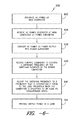
- FIG. 6 illustrates a flow diagram of one embodiment of a method for operating a power generation system (such as the DFIG wind turbine system shown in FIG. 4 ) in accordance with aspects of the present subject matter;
- FIG. 7 illustrates a data table showing the difference in peak junction temperatures achieved at synchronous speed using conventional control methodologies and using the method disclosed herein.
- the present subject matter is directed to a system and method for operating a power generation system, such as doubly fed induction generator (DFIG) wind turbine system.
- DFIG doubly fed induction generator
- the present subject matter is directed to a system and method for operating a power converter of a wind-driven DFIG in a manner that reduces the power loss of the convertor's switching elements when the generator is operating at or near its synchronous speed.
- a DFIG is typically operated at super-synchronous speeds.
- specific operating modes e.g., during a noise-reduced operating mode of the wind turbine system
- the generator may be operated at speeds at or near its synchronous speed.
- the performance of the power convertor may be enhanced by reducing the switching frequency of the switching elements to a frequency at or close to the fundamental frequency of the grid (e.g., 50 Hz or 60 Hz).
- the switching frequency on the rotor side of a DFIG power convertor is maintained at an elevated frequency (e.g., about 2000 or 3000 Hz) for all rotor speeds within the generator's operating speed range.
- an elevated switching frequency e.g., about 2000 or 3000 Hz
- the elevated switching frequency results in a higher stress on the switching elements (e.g., due to both an increased peak temperature and increased thermal cycling stresses), which may cause a de-rating of the total output current capability of the rotor side of the converter and may also lead to the switching elements wearing out prematurely.
- the elevated switching frequency may also lead to increased harmonics at the synchronous speed.
- the problems described above may be overcome. Specifically, by adjusting the switching frequency to a frequency at or near the fundamental frequency of the grid when the generator is operated at or near to its synchronous speed, the power loss in the switching elements may be significantly reduced. With such a reduction in power loss, the temperature rise in the switching elements may also be reduced, which may provide an extra margin in the output current capability of the power convertor and may also increase the component life of the switching elements. In addition, by closely matching the switching frequency with the fundamental frequency of the grid, a reduction in the amount of harmonics fed through to the line side of the converter may also be obtained, thereby decreasing the harmonic distortion to the grid.
- FIG. 3 illustrates a perspective view of one embodiment of a wind turbine 10 .
- the wind turbine 10 generally includes a tower 12 extending from a support surface 14 , a nacelle 16 mounted on the tower 12 , and a rotor 18 coupled to the nacelle 16 .
- the rotor 18 includes a rotatable hub 20 and at least one rotor blade 22 coupled to and extending outwardly from the hub 20 .
- the rotor 18 includes three rotor blades 22 .
- the rotor 18 may include more or less than three rotor blades 22 .
- Each rotor blade 22 may be spaced about the hub 20 to facilitate rotating the rotor 18 to enable kinetic energy to be transferred from the wind into usable mechanical energy, and subsequently, electrical energy.
- the rotor 18 may be rotatably coupled to an electric generator 120 ( FIG. 4 ) to permit electrical energy to be produced.
- FIG. 4 a schematic diagram of one embodiment of a DFIG wind turbine system 100 is illustrated in accordance with aspects of the present subject matter. It should be appreciated that the present subject matter will generally be described herein with reference to the system 100 shown in FIG. 4 . However, those of ordinary skill in the art, using the disclosures provided herein, should understand that aspects of the present disclosure may also be applicable in other power generation systems.
- the rotor 18 of the wind turbine 10 may, optionally, be coupled to a gear box 118 , which is, in turn, coupled to a generator 120 .
- the generator 120 is a doubly fed induction generator (DFIG).
- the DFIG 120 may be coupled to a stator bus 154 and a power converter 162 via a rotor bus 156 .
- the stator bus 154 may provide an output multiphase power (e.g. three-phase power) from a stator of the DFIG 120 and the rotor bus 156 may provide an output multiphase power (e.g. three-phase power) from a rotor of the DFIG 120 .
- the power converter 162 includes a rotor side converter 166 and a line side converter 168 .
- the DFIG 120 may be coupled via the rotor bus 156 to the rotor side converter 166 .
- the rotor side converter 166 may coupled to the line side converter 168 which may, in turn, be coupled to a line side bus 188 .
- the rotor side converter 166 and the line side converter 168 may be configured for normal operating mode in a three-phase, pulse width modulation (PWM) arrangement using insulated gate bipolar transistor (IGBT) switching elements as will be discussed in more detail with respect to FIG. 5 .
- PWM pulse width modulation
- IGBT insulated gate bipolar transistor
- the rotor side converter 166 and the line side converter 168 may be coupled via a DC link 136 across which is a DC link capacitor 138 .
- the power converter 162 may be coupled to a controller 174 in order to control the operation of the rotor side converter 166 and the line side converter 168 .
- the controller 174 may, in several embodiments, be configured as an interface between the power converter 162 and a control system 176 .
- the controller 174 may include any number of control devices.
- the controller 174 may include a processing device (e.g. microprocessor, microcontroller, etc.) executing computer-readable instructions stored in a computer-readable medium. The instructions when executed by the processing device may cause the processing device to perform operations, including providing control commands (e.g. switching frequency commands) to the switching elements of the power converter 162 .
- control commands e.g. switching frequency commands
- various line contactors and circuit breakers including, for example, a grid breaker 182 may also be included for isolating the various components as necessary for normal operation of the DFIG 120 during connection to and disconnection from the electrical grid 184 .
- a system circuit breaker 178 may couple the system bus 160 to a transformer 180 , which may be coupled to the electrical grid 184 via the grid breaker 182 .
- fuses may replace some or all of the circuit breakers.
- alternating current power generated at the DFIG 120 by rotating the rotor 18 is provided via a dual path to the electrical grid 184 .
- the dual paths are defined by the stator bus 154 and the rotor bus 156 .
- sinusoidal multi-phase (e.g. three-phase) alternating current (AC) power is provided to the power converter 162 .
- the rotor side power converter 166 converts the AC power provided from the rotor bus 156 into direct current (DC) power and provides the DC power to the DC link 136 .
- switching elements e.g. IGBTs
- IGBTs switching elements used in the bridge circuits of the rotor side power converter 166 may be modulated to convert the AC power provided from the rotor bus 156 into DC power suitable for the DC link 136 .
- the line side converter 168 converts the DC power on the DC link 136 into AC output power suitable for the electrical grid 184 .
- switching elements e.g. IGBTs
- the AC power from the power converter 162 can be combined with the power from the stator of DFIG 120 to provide multi-phase power (e.g. three-phase power) having a frequency maintained substantially at the frequency of the electrical grid 184 (e.g. 50 Hz or 60 Hz).
- circuit breakers and switches such as grid breaker 182 , system breaker 178 , stator sync switch 158 , converter breaker 186 , and line contactor 172 may be included in the system 100 to connect or disconnect corresponding buses, for example, when current flow is excessive and may damage components of the wind turbine system 100 or for other operational considerations. Additional protection components may also be included in the wind turbine system 100 .
- the power converter 162 may receive control signals from, for instance, the control system 176 via the controller 174 .
- the control signals may be based, among other things, on sensed conditions or operating characteristics of the wind turbine system 100 .
- the control signals provide for control of the operation of the power converter 162 .
- feedback in the form of a sensed speed of the DFIG 120 may be used to control the conversion of the output power from the rotor bus 156 to maintain a proper and balanced multi-phase (e.g. three-phase) power supply.
- the sensed speed may be used as a basis for adjusting the switching frequency of the switching elements (e.g., when the DIFG 120 is operating at its synchronous speed).
- controller 174 may also be used by the controller 174 to control the power converter 162 , including, for example, stator and rotor bus voltages and current feedbacks.
- switching control signals e.g. gate timing commands for IGBTs
- stator synchronizing control signals e.g. stator synchronizing control signals
- circuit breaker signals may be generated.
- the rotor side converter 166 includes a plurality of bridge circuits (e.g. H-bridge circuits), with each phase of the rotor bus 156 input to the rotor side converter 166 being coupled to a single bridge circuit.
- the line side converter 168 may also include a plurality of bridge circuits. Similar to the rotor side converter 166 , the line side converter 168 also includes a single bridge circuit for each output phase of the line converter 168 .
- the line side converter 168 , the rotor side converter 166 , or both the line side converter 168 and the rotor side converter 166 may include parallel bridge circuits without deviating from the scope of the present disclosure.
- Each bridge circuit may generally include a plurality of switching elements (e.g. IGBTs) coupled in series with one another.
- each bridge circuit includes an upper IGBT (e.g. IGBT 212 ) and a lower IGBT (e.g. IGBT 214 ).
- a diode may be coupled in parallel with each of the IGBTs.
- parallel IGBTs and diodes may be used to increase the current rating of the converter.
- the line side converter 168 and the rotor side converter 166 may be controlled, for instance, by providing control commands, using a suitable driver circuit, to the gates of the IGBTs.
- the controller 174 may provide suitable gate timing commands to the gates of the IGBTs of the bridge circuits.
- the control commands may control the switching frequency of the IGBTs to provide a desired output.
- the power convertor 162 may include any other suitable switching elements.
- FIG. 6 a flow diagram of one embodiment of a method 600 for operating a power generation system is illustrated in accordance with aspects of the present subject matter.
- the method 600 will be described herein as being implemented using a wind turbine system, such as the DFIG wind turbine system 100 described above with reference to FIG. 4 .
- the disclosed method 600 may be implemented using any other suitable power generation system that is configured to supply power for application to a load.
- FIG. 6 depicts steps performed in a particular order for purposes of illustration and discussion, the methods described herein are not limited to any particular order or arrangement.
- One skilled in the art, using the disclosures provided herein, will appreciate that various steps of the methods can be omitted, rearranged, combined and/or adapted in various ways.
- the method 600 includes generating alternating current power at a wind-driven generator.
- alternating current power may be generated at a rotor of a wind-driven DFIG.
- the alternating current power may be a multiphase alternating current power, such as a three-phase alternating current power.
- the generated alternating current power may be provided to a rotor bus such that the alternating current power can be received at a power converter ( 604 ).
- the alternating current power generated at the wind-driven generator is converted by the power converter to an output power suitable for application to a load (e.g., to an electrical grid).
- the power converter may, in several embodiments, include a plurality of switching elements. As is generally understood, the pulse width modulation of the switching elements may be controlled to provide a suitable output power for application to a load.
- the power converter may be a two-stage power converter that includes a rotor side converter and a line side converter coupled together by a DC link.
- the rotor side converter and the line side converter may each include a plurality of bridge circuits, with each bridge circuit including a plurality of switching elements coupled in series with one another.
- the switching elements of the bridge circuits in the rotor side converter may be controlled to convert the alternating current power to a DC power for application to the DC link.
- the line side converter may include a plurality of bridge circuits for converting the DC power on the DC link to an output power suitable for application to the load.
- the method 600 includes receiving a control command to control a switching frequency of the switching elements.
- control commands may be received by the power convertor from a controller in order to control the switching frequency of its switching elements.
- the switching frequency is typically maintained at an elevated switching frequency (e.g., 2000 Hz or 3000 Hz) regardless of the operating speed of the wind-driven generator.
- the switching frequency may be adjusted when the wind-driven generator is operating at a speed that is substantially equal to its synchronous speed.
- suitable control commands may be transmitted from the controller to the power convertor to appropriately adjust the switching frequency (e.g., to a frequency that is substantially equal to the fundamental load frequency, as will be described below).
- the “synchronous speed” of a generator generally refers to the speed at which the rotor current is equal to DC current.
- the operating speed of a generator may be “substantially equal” to its synchronous speed when the operating speed is within +/ ⁇ 10% of the synchronous speed, such as by operating the generator at a speed of within +/ ⁇ 5% of the synchronous speed or at a speed of within +/ ⁇ 2.5% of the synchronous speed and any other subranges therebetween.
- the switching frequency of the switching elements may be adjusted to a frequency that is substantially equal to the fundamental frequency of the load.
- the switching frequency may be adjusted to a frequency that is substantially equal to the grid frequency (e.g., 50 Hz or 60 Hz).
- the grid frequency e.g. 50 Hz or 60 Hz.
- the power losses, as well as the temperature-induced stresses, associated with the switching elements may be reduced significantly, thereby enhancing the overall performance of the power convertor (e.g., by increasing the output current capability).
- the amount of harmonic-based distortion transmitted to the grid may also be reduced significantly.
- the switching frequency may be “substantially equal” to the fundamental frequency of the load (e.g., the grid frequency) when the switching frequency is within +/ ⁇ 10% of the fundamental frequency, such as when the switching frequency is within +/ ⁇ 5% of the fundamental frequency or within +/ ⁇ 2.5% of the fundamental frequency and any other subranges therebetween.
- the switching frequency may be considered to be “substantially equal” to the fundamental frequency when the difference between the switching frequency and the slip frequency of the generator is within +/ ⁇ 10% of the fundamental frequency.
- the switching frequency may be “substantially equal” to the fundamental frequency if the switching frequency, less 2 Hz, is equal to a frequency that is within +/ ⁇ 10% of 60 Hz.
- the power converter may, in several embodiments, be a two-stage power converter that includes a rotor side converter and a line side converter coupled together by a DC link.
- the switching frequency of the switching elements forming part of the rotor side convertor may be adjusted so as to be substantially equal to the fundamental frequency when the wind-driven generator is operating at or near its synchronous speed.
- the output power is provided from the power converter to a load.
- the load may be an electrical grid.
- the load may be a motor, resistive load or any other load. It should be appreciated that, while an electrical grid is traditionally a supplier of power, the electrical grid may act as a load for the disclosed wind turbine system 100 .
- FIG. 7 an example data table is provided that shows the difference in peak junction temperatures achieved at various operating speeds, including synchronous speed, for a typical 60 Hz DFIG using both a conventional control methodology and the method 600 disclosed herein. All of the examples in FIG. 7 operate at the same rotor current. As indicated above, conventional methodologies maintain the switching frequency on the rotor side of the power convertor at an elevated frequency for all rotor speeds, which leads to an increase in the IGBT/diode peak junction temperatures at speeds at or near the synchronous speed. For example, as shown in FIG.
- the peak junction temperature rises significantly (e.g., to about 120° C.).
- the peak junction temperature may be significantly reduced (e.g., to about 88° C.).
- the resulting temperature achieved using the disclosed method 600 may be significantly lower than the temperatures achieved at other rotor speeds, thereby providing an extra margin in the output current capability of the power convertor.
Landscapes
- Engineering & Computer Science (AREA)
- Power Engineering (AREA)
- Life Sciences & Earth Sciences (AREA)
- Sustainable Development (AREA)
- Sustainable Energy (AREA)
- Chemical & Material Sciences (AREA)
- Combustion & Propulsion (AREA)
- Mechanical Engineering (AREA)
- General Engineering & Computer Science (AREA)
- Control Of Eletrric Generators (AREA)
Abstract
Description
Claims (19)
Priority Applications (1)
| Application Number | Priority Date | Filing Date | Title |
|---|---|---|---|
| US13/871,309 US8853876B1 (en) | 2013-04-26 | 2013-04-26 | Switching-based control for a power converter |
Applications Claiming Priority (1)
| Application Number | Priority Date | Filing Date | Title |
|---|---|---|---|
| US13/871,309 US8853876B1 (en) | 2013-04-26 | 2013-04-26 | Switching-based control for a power converter |
Publications (2)
| Publication Number | Publication Date |
|---|---|
| US8853876B1 true US8853876B1 (en) | 2014-10-07 |
| US20140319838A1 US20140319838A1 (en) | 2014-10-30 |
Family
ID=51626940
Family Applications (1)
| Application Number | Title | Priority Date | Filing Date |
|---|---|---|---|
| US13/871,309 Active US8853876B1 (en) | 2013-04-26 | 2013-04-26 | Switching-based control for a power converter |
Country Status (1)
| Country | Link |
|---|---|
| US (1) | US8853876B1 (en) |
Cited By (9)
| Publication number | Priority date | Publication date | Assignee | Title |
|---|---|---|---|---|
| US20140077772A1 (en) * | 2011-05-04 | 2014-03-20 | Rolls-Royce Plc | Turbine array and a method of controlling a turbine array during a loss-of-grid event |
| US20140291989A1 (en) * | 2011-06-28 | 2014-10-02 | Wilic S.Ar.L | Wind turbine for generating electric energy |
| EP3276819A1 (en) * | 2016-07-25 | 2018-01-31 | General Electric Company | Electrical power circuit and method of operating same |
| US10103663B1 (en) * | 2017-04-18 | 2018-10-16 | General Electric Company | Control method for protecting switching devices in power converters in doubly fed induction generator power systems |
| CN109995292A (en) * | 2019-04-09 | 2019-07-09 | 大连海事大学 | Controller of double-fed direct current power generation device |
| US10742149B1 (en) | 2019-04-22 | 2020-08-11 | General Electric Company | System and method for reactive power control of a wind turbine by varying switching frequency of rotor side converter |
| US10859064B2 (en) * | 2016-12-27 | 2020-12-08 | Vestas Wind Systems A/S | Control system for modular multilevel converter |
| US11056884B2 (en) | 2019-05-06 | 2021-07-06 | General Electric Company | Wind turbine system with integrated reactive power compensation device |
| EP4117171A1 (en) * | 2021-07-06 | 2023-01-11 | Siemens Gamesa Renewable Energy Innovation & Technology S.L. | Method and apparatus for computer-implemented controlling of a doubly-fed electric machine |
Families Citing this family (3)
| Publication number | Priority date | Publication date | Assignee | Title |
|---|---|---|---|---|
| CN109555652B (en) * | 2017-09-25 | 2022-07-12 | 北京金风科创风电设备有限公司 | Data monitoring system for wind generating set |
| US11736056B2 (en) * | 2019-05-30 | 2023-08-22 | General Electric Company | System and method for controlling harmonics in a renewable energy power system |
| DK4002678T3 (en) | 2020-11-16 | 2024-03-18 | Nordex Energy Se & Co Kg | Method for operating a wind turbine, and a wind turbine |
Citations (13)
| Publication number | Priority date | Publication date | Assignee | Title |
|---|---|---|---|---|
| US5225712A (en) * | 1991-02-01 | 1993-07-06 | U.S. Windpower, Inc. | Variable speed wind turbine with reduced power fluctuation and a static VAR mode of operation |
| US20020079706A1 (en) * | 2000-05-23 | 2002-06-27 | Rebsdorf Anders V. | Variable speed wind turbine having a matrix converter |
| US6750633B2 (en) * | 2001-11-17 | 2004-06-15 | Semikron Elektronik Gmbh | Electrical circuit for generating a three-phase alternating current |
| US7095128B2 (en) * | 2001-02-23 | 2006-08-22 | Jeumont S.A. | Method and device for regulating a wind machine |
| US20070052244A1 (en) * | 2003-05-02 | 2007-03-08 | Xantrex Technology Inc. | Control system for doubly fed induction generator |
| US7215035B2 (en) * | 2005-02-22 | 2007-05-08 | Xantrex Technology, Inc. | Method and apparatus for converting wind generated electricity to constant frequency electricity for a utility grid |
| US20070273155A1 (en) * | 2004-03-12 | 2007-11-29 | Werner Barton | Method for operating a frequency converter of a generator and wind energy turbine having a generator operated according to the method |
| EP1914877A2 (en) * | 2006-10-20 | 2008-04-23 | General Electric Company | Method and apparatus for operating electrical machines |
| US20090079193A1 (en) * | 2004-12-28 | 2009-03-26 | Vestas Wind Systems A/S | Method of controlling a wind turbine connected to an electric utility grid |
| WO2010058028A2 (en) * | 2008-11-24 | 2010-05-27 | Aker Engineering & Technology As | Frequency convertor |
| US20100133831A1 (en) * | 2009-11-13 | 2010-06-03 | Scholte-Wassink Hartmut | Method and apparatus for controlling a wind turbine |
| US20110101689A1 (en) * | 2009-10-30 | 2011-05-05 | Einar Vaughn Larsen | Method and apparatus for generating power in a wind turbine |
| US20130307271A1 (en) * | 2011-09-16 | 2013-11-21 | General Electric Company | Inrush current protection for wind turbines and wind farms |
-
2013
- 2013-04-26 US US13/871,309 patent/US8853876B1/en active Active
Patent Citations (14)
| Publication number | Priority date | Publication date | Assignee | Title |
|---|---|---|---|---|
| US5225712A (en) * | 1991-02-01 | 1993-07-06 | U.S. Windpower, Inc. | Variable speed wind turbine with reduced power fluctuation and a static VAR mode of operation |
| US20020079706A1 (en) * | 2000-05-23 | 2002-06-27 | Rebsdorf Anders V. | Variable speed wind turbine having a matrix converter |
| US7095128B2 (en) * | 2001-02-23 | 2006-08-22 | Jeumont S.A. | Method and device for regulating a wind machine |
| US6750633B2 (en) * | 2001-11-17 | 2004-06-15 | Semikron Elektronik Gmbh | Electrical circuit for generating a three-phase alternating current |
| US20070052244A1 (en) * | 2003-05-02 | 2007-03-08 | Xantrex Technology Inc. | Control system for doubly fed induction generator |
| US20070273155A1 (en) * | 2004-03-12 | 2007-11-29 | Werner Barton | Method for operating a frequency converter of a generator and wind energy turbine having a generator operated according to the method |
| US20090079193A1 (en) * | 2004-12-28 | 2009-03-26 | Vestas Wind Systems A/S | Method of controlling a wind turbine connected to an electric utility grid |
| US7215035B2 (en) * | 2005-02-22 | 2007-05-08 | Xantrex Technology, Inc. | Method and apparatus for converting wind generated electricity to constant frequency electricity for a utility grid |
| EP1914877A2 (en) * | 2006-10-20 | 2008-04-23 | General Electric Company | Method and apparatus for operating electrical machines |
| US7629705B2 (en) * | 2006-10-20 | 2009-12-08 | General Electric Company | Method and apparatus for operating electrical machines |
| WO2010058028A2 (en) * | 2008-11-24 | 2010-05-27 | Aker Engineering & Technology As | Frequency convertor |
| US20110101689A1 (en) * | 2009-10-30 | 2011-05-05 | Einar Vaughn Larsen | Method and apparatus for generating power in a wind turbine |
| US20100133831A1 (en) * | 2009-11-13 | 2010-06-03 | Scholte-Wassink Hartmut | Method and apparatus for controlling a wind turbine |
| US20130307271A1 (en) * | 2011-09-16 | 2013-11-21 | General Electric Company | Inrush current protection for wind turbines and wind farms |
Cited By (17)
| Publication number | Priority date | Publication date | Assignee | Title |
|---|---|---|---|---|
| US9088154B2 (en) * | 2011-05-04 | 2015-07-21 | Rolls-Royce Plc | Turbine array and a method of controlling a turbine array during a loss-of-grid event |
| US20140077772A1 (en) * | 2011-05-04 | 2014-03-20 | Rolls-Royce Plc | Turbine array and a method of controlling a turbine array during a loss-of-grid event |
| US20140291989A1 (en) * | 2011-06-28 | 2014-10-02 | Wilic S.Ar.L | Wind turbine for generating electric energy |
| US9200617B2 (en) * | 2011-06-28 | 2015-12-01 | Wilic S.Ar.L. | Wind turbine for generating electric energy |
| US10340829B2 (en) | 2016-07-25 | 2019-07-02 | General Electric Company | Electrical power circuit and method of operating same |
| EP3276819A1 (en) * | 2016-07-25 | 2018-01-31 | General Electric Company | Electrical power circuit and method of operating same |
| US10859064B2 (en) * | 2016-12-27 | 2020-12-08 | Vestas Wind Systems A/S | Control system for modular multilevel converter |
| US20180302010A1 (en) * | 2017-04-18 | 2018-10-18 | General Electric Company | Control Method for Protecting Switching Devices in Power Converters in Doubly Fed Induction Generator Power Systems |
| US10103663B1 (en) * | 2017-04-18 | 2018-10-16 | General Electric Company | Control method for protecting switching devices in power converters in doubly fed induction generator power systems |
| CN109995292A (en) * | 2019-04-09 | 2019-07-09 | 大连海事大学 | Controller of double-fed direct current power generation device |
| US10742149B1 (en) | 2019-04-22 | 2020-08-11 | General Electric Company | System and method for reactive power control of a wind turbine by varying switching frequency of rotor side converter |
| CN111828251A (en) * | 2019-04-22 | 2020-10-27 | 通用电气公司 | System and method for reactive power control of wind turbines |
| EP3731405A1 (en) | 2019-04-22 | 2020-10-28 | General Electric Company | System and method for reactive power control of a wind turbine by varying switching frequency of rotor side converter |
| CN111828251B (en) * | 2019-04-22 | 2025-02-18 | 通用电气可再生能源西班牙有限公司 | System and method for reactive power control of a wind turbine |
| US11056884B2 (en) | 2019-05-06 | 2021-07-06 | General Electric Company | Wind turbine system with integrated reactive power compensation device |
| EP4117171A1 (en) * | 2021-07-06 | 2023-01-11 | Siemens Gamesa Renewable Energy Innovation & Technology S.L. | Method and apparatus for computer-implemented controlling of a doubly-fed electric machine |
| WO2023280841A1 (en) | 2021-07-06 | 2023-01-12 | Siemens Gamesa Renewable Energy Innovation & Technology S.L. | Method and apparatus for computer-implemented controlling of a doubly-fed electric machine |
Also Published As
| Publication number | Publication date |
|---|---|
| US20140319838A1 (en) | 2014-10-30 |
Similar Documents
| Publication | Publication Date | Title |
|---|---|---|
| US8853876B1 (en) | Switching-based control for a power converter | |
| EP2709266B1 (en) | Voltage control in a doubly-fed induction generator wind turbine system | |
| US9617976B2 (en) | Systems and methods for increasing wind turbine power output | |
| CN111828251B (en) | System and method for reactive power control of a wind turbine | |
| CN111971885B (en) | DFIG converter with active filter | |
| US11296612B2 (en) | Carrier-based pulse width modulation control for back-to-back voltage source converters | |
| EP3893383A1 (en) | System and method for controlling wind turbine converters during high voltage ride through events | |
| US9030174B2 (en) | Current balance control in converter for doubly fed induction generator wind turbine system | |
| EP2808995B1 (en) | Connection for improved current balancing in a parallel bridge power converter | |
| EP3745551B1 (en) | System and method for controlling harmonics in a renewable energy power system | |
| US10731628B1 (en) | System and method for coordinated control of reactive power from a generator and a reactive power compensation device in a wind turbine system | |
| EP3506489B1 (en) | System and method for controlling switching device temperature of electrical power systems | |
| EP3487066B1 (en) | System and method for operating a doubly fed induction generator system to reduce harmonics | |
| US10958200B1 (en) | System and method for operating a wind turbine power system during low wind speeds to improve efficiency | |
| EP2741414B1 (en) | System and Method for Optimization of Dual Bridge Doubly Fed Induction Generator (DFIG) | |
| US20230125298A1 (en) | System and method for dynamically estimating active power capability of an inverter-based resource |
Legal Events
| Date | Code | Title | Description |
|---|---|---|---|
| AS | Assignment |
Owner name: GENERAL ELECTRIC COMPANY, NEW YORK Free format text: ASSIGNMENT OF ASSIGNORS INTEREST;ASSIGNORS:WAGONER, ROBERT GREGORY;HOLLIDAY, CORNELIUS EDWARD;REEL/FRAME:030297/0134 Effective date: 20130424 |
|
| STCF | Information on status: patent grant |
Free format text: PATENTED CASE |
|
| MAFP | Maintenance fee payment |
Free format text: PAYMENT OF MAINTENANCE FEE, 4TH YEAR, LARGE ENTITY (ORIGINAL EVENT CODE: M1551) Year of fee payment: 4 |
|
| MAFP | Maintenance fee payment |
Free format text: PAYMENT OF MAINTENANCE FEE, 8TH YEAR, LARGE ENTITY (ORIGINAL EVENT CODE: M1552); ENTITY STATUS OF PATENT OWNER: LARGE ENTITY Year of fee payment: 8 |
|
| AS | Assignment |
Owner name: GE INFRASTRUCTURE TECHNOLOGY LLC, SOUTH CAROLINA Free format text: ASSIGNMENT OF ASSIGNORS INTEREST;ASSIGNOR:GENERAL ELECTRIC COMPANY;REEL/FRAME:065727/0001 Effective date: 20231110 |
|
| MAFP | Maintenance fee payment |
Free format text: PAYMENT OF MAINTENANCE FEE, 12TH YEAR, LARGE ENTITY (ORIGINAL EVENT CODE: M1553); ENTITY STATUS OF PATENT OWNER: LARGE ENTITY Year of fee payment: 12 |