US8840938B2 - Bioavailability enhancing composition - Google Patents

Bioavailability enhancing composition Download PDF

Info

Publication number
US8840938B2
US8840938B2 US13/446,786 US201213446786A US8840938B2 US 8840938 B2 US8840938 B2 US 8840938B2 US 201213446786 A US201213446786 A US 201213446786A US 8840938 B2 US8840938 B2 US 8840938B2
Authority
US
United States
Prior art keywords
composition
range
weight
shu
trpv1
Prior art date
Legal status (The legal status is an assumption and is not a legal conclusion. Google has not performed a legal analysis and makes no representation as to the accuracy of the status listed.)
Active - Reinstated
Application number
US13/446,786
Other versions
US20120263808A1 (en
Inventor
W. Matthew Warnock
Current Assignee (The listed assignees may be inaccurate. Google has not performed a legal analysis and makes no representation or warranty as to the accuracy of the list.)
Individual
Original Assignee
Individual
Priority date (The priority date is an assumption and is not a legal conclusion. Google has not performed a legal analysis and makes no representation as to the accuracy of the date listed.)
Filing date
Publication date
Application filed by Individual filed Critical Individual
Priority to US13/446,786 priority Critical patent/US8840938B2/en
Publication of US20120263808A1 publication Critical patent/US20120263808A1/en
Application granted granted Critical
Publication of US8840938B2 publication Critical patent/US8840938B2/en
Active - Reinstated legal-status Critical Current
Anticipated expiration legal-status Critical

Links

Images

Classifications

    • AHUMAN NECESSITIES
    • A61MEDICAL OR VETERINARY SCIENCE; HYGIENE
    • A61KPREPARATIONS FOR MEDICAL, DENTAL OR TOILETRY PURPOSES
    • A61K31/00Medicinal preparations containing organic active ingredients
    • A61K31/12Ketones
    • A23L1/3002
    • AHUMAN NECESSITIES
    • A23FOODS OR FOODSTUFFS; TREATMENT THEREOF, NOT COVERED BY OTHER CLASSES
    • A23LFOODS, FOODSTUFFS OR NON-ALCOHOLIC BEVERAGES, NOT OTHERWISE PROVIDED FOR; PREPARATION OR TREATMENT THEREOF
    • A23L33/00Modifying nutritive qualities of foods; Dietetic products; Preparation or treatment thereof
    • A23L33/10Modifying nutritive qualities of foods; Dietetic products; Preparation or treatment thereof using additives
    • A23L33/105Plant extracts, their artificial duplicates or their derivatives
    • AHUMAN NECESSITIES
    • A61MEDICAL OR VETERINARY SCIENCE; HYGIENE
    • A61KPREPARATIONS FOR MEDICAL, DENTAL OR TOILETRY PURPOSES
    • A61K31/00Medicinal preparations containing organic active ingredients
    • A61K31/16Amides, e.g. hydroxamic acids
    • AHUMAN NECESSITIES
    • A61MEDICAL OR VETERINARY SCIENCE; HYGIENE
    • A61KPREPARATIONS FOR MEDICAL, DENTAL OR TOILETRY PURPOSES
    • A61K31/00Medicinal preparations containing organic active ingredients
    • A61K31/16Amides, e.g. hydroxamic acids
    • A61K31/164Amides, e.g. hydroxamic acids of a carboxylic acid with an aminoalcohol, e.g. ceramides
    • AHUMAN NECESSITIES
    • A61MEDICAL OR VETERINARY SCIENCE; HYGIENE
    • A61KPREPARATIONS FOR MEDICAL, DENTAL OR TOILETRY PURPOSES
    • A61K31/00Medicinal preparations containing organic active ingredients
    • A61K31/16Amides, e.g. hydroxamic acids
    • A61K31/165Amides, e.g. hydroxamic acids having aromatic rings, e.g. colchicine, atenolol, progabide
    • AHUMAN NECESSITIES
    • A61MEDICAL OR VETERINARY SCIENCE; HYGIENE
    • A61KPREPARATIONS FOR MEDICAL, DENTAL OR TOILETRY PURPOSES
    • A61K31/00Medicinal preparations containing organic active ingredients
    • A61K31/33Heterocyclic compounds
    • A61K31/395Heterocyclic compounds having nitrogen as a ring hetero atom, e.g. guanethidine or rifamycins
    • A61K31/435Heterocyclic compounds having nitrogen as a ring hetero atom, e.g. guanethidine or rifamycins having six-membered rings with one nitrogen as the only ring hetero atom
    • A61K31/44Non condensed pyridines; Hydrogenated derivatives thereof
    • A61K31/445Non condensed piperidines, e.g. piperocaine
    • A61K31/4523Non condensed piperidines, e.g. piperocaine containing further heterocyclic ring systems
    • A61K31/4525Non condensed piperidines, e.g. piperocaine containing further heterocyclic ring systems containing a five-membered ring with oxygen as a ring hetero atom
    • AHUMAN NECESSITIES
    • A61MEDICAL OR VETERINARY SCIENCE; HYGIENE
    • A61KPREPARATIONS FOR MEDICAL, DENTAL OR TOILETRY PURPOSES
    • A61K36/00Medicinal preparations of undetermined constitution containing material from algae, lichens, fungi or plants, or derivatives thereof, e.g. traditional herbal medicines
    • A61K36/18Magnoliophyta (angiosperms)
    • A61K36/185Magnoliopsida (dicotyledons)
    • A61K36/54Lauraceae (Laurel family), e.g. cinnamon or sassafras
    • AHUMAN NECESSITIES
    • A61MEDICAL OR VETERINARY SCIENCE; HYGIENE
    • A61KPREPARATIONS FOR MEDICAL, DENTAL OR TOILETRY PURPOSES
    • A61K36/00Medicinal preparations of undetermined constitution containing material from algae, lichens, fungi or plants, or derivatives thereof, e.g. traditional herbal medicines
    • A61K36/18Magnoliophyta (angiosperms)
    • A61K36/185Magnoliopsida (dicotyledons)
    • A61K36/61Myrtaceae (Myrtle family), e.g. teatree or eucalyptus
    • AHUMAN NECESSITIES
    • A61MEDICAL OR VETERINARY SCIENCE; HYGIENE
    • A61KPREPARATIONS FOR MEDICAL, DENTAL OR TOILETRY PURPOSES
    • A61K36/00Medicinal preparations of undetermined constitution containing material from algae, lichens, fungi or plants, or derivatives thereof, e.g. traditional herbal medicines
    • A61K36/18Magnoliophyta (angiosperms)
    • A61K36/185Magnoliopsida (dicotyledons)
    • A61K36/67Piperaceae (Pepper family), e.g. Jamaican pepper or kava
    • AHUMAN NECESSITIES
    • A61MEDICAL OR VETERINARY SCIENCE; HYGIENE
    • A61KPREPARATIONS FOR MEDICAL, DENTAL OR TOILETRY PURPOSES
    • A61K36/00Medicinal preparations of undetermined constitution containing material from algae, lichens, fungi or plants, or derivatives thereof, e.g. traditional herbal medicines
    • A61K36/18Magnoliophyta (angiosperms)
    • A61K36/185Magnoliopsida (dicotyledons)
    • A61K36/75Rutaceae (Rue family)
    • A61K36/758Zanthoxylum, e.g. pricklyash
    • AHUMAN NECESSITIES
    • A61MEDICAL OR VETERINARY SCIENCE; HYGIENE
    • A61KPREPARATIONS FOR MEDICAL, DENTAL OR TOILETRY PURPOSES
    • A61K36/00Medicinal preparations of undetermined constitution containing material from algae, lichens, fungi or plants, or derivatives thereof, e.g. traditional herbal medicines
    • A61K36/18Magnoliophyta (angiosperms)
    • A61K36/185Magnoliopsida (dicotyledons)
    • A61K36/81Solanaceae (Potato family), e.g. tobacco, nightshade, tomato, belladonna, capsicum or jimsonweed
    • AHUMAN NECESSITIES
    • A61MEDICAL OR VETERINARY SCIENCE; HYGIENE
    • A61KPREPARATIONS FOR MEDICAL, DENTAL OR TOILETRY PURPOSES
    • A61K36/00Medicinal preparations of undetermined constitution containing material from algae, lichens, fungi or plants, or derivatives thereof, e.g. traditional herbal medicines
    • A61K36/18Magnoliophyta (angiosperms)
    • A61K36/88Liliopsida (monocotyledons)
    • A61K36/906Zingiberaceae (Ginger family)
    • A61K36/9068Zingiber, e.g. garden ginger
    • AHUMAN NECESSITIES
    • A61MEDICAL OR VETERINARY SCIENCE; HYGIENE
    • A61PSPECIFIC THERAPEUTIC ACTIVITY OF CHEMICAL COMPOUNDS OR MEDICINAL PREPARATIONS
    • A61P3/00Drugs for disorders of the metabolism
    • A61P3/02Nutrients, e.g. vitamins, minerals
    • AHUMAN NECESSITIES
    • A61MEDICAL OR VETERINARY SCIENCE; HYGIENE
    • A61KPREPARATIONS FOR MEDICAL, DENTAL OR TOILETRY PURPOSES
    • A61K2300/00Mixtures or combinations of active ingredients, wherein at least one active ingredient is fully defined in groups A61K31/00 - A61K41/00

Definitions

  • the subject matter disclosed herein relates to bioavailability and more particularly relates to bioavailability enhancement.
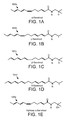
  • FIGS. 1A-F are molecular structure drawings of sanshool
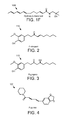
  • FIG. 2 is a molecular structure drawing of 6-shogaol
  • FIG. 3 is a molecular structure drawing of 6-gingerol
  • FIG. 4 is a molecular structure drawing of piperine
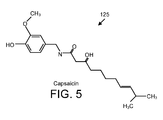
  • FIG. 5 is a molecular structure drawing of capsaicin.
  • TRPV1 Transient Receptor Potential cation channel subfamily V member 1
  • the TRPV1 receptors are activated by both by heat greater than 43° Celsius and TRPV1 agonists including vanilloids such as capsaicin, vanillin, vanillic acid, and vanillyl mandelic acid, piperine, gingerol or 6-gingerol, shogaol or 6-shogaol, sanshools including ⁇ -sanshool, ⁇ -sanshool, ⁇ -sanshool, ⁇ -sanshool, hydroxyl ⁇ -sanshool, and hydroxyl ⁇ -sanshool, and allyl isothiocyanate.
  • TRPV1 receptors are activated by TRPV1 agonists, blood flow to the area of the TRPV1 receptor is increased, increasing capillar
  • TRPV1 agonists such as capsaicin and/or piperine have been shown to increase the absorption and bioavailability of compounds such as theophylline.
  • Ginger has been shown to improve digestion. The following are examples of increased bioavailability from capsaicin, piperine, and ginger.
  • the rabbits were given a second administration the capsicum suspension 11 hours later, producing a new rise of theophylline plasma levels in every rabbit. See Bouraoui A, Toumi A, Mustapha H B, et al. “Effects of capsicum fruit on theophylline absorption and bioavailability in rabbits,” Drug Nutrient Interactions, 1998.
  • Black pepper which contains piperine, was found to significantly increase the absorption of nutrients, plant chemicals, and medications when taken internally. Black pepper increased the absorption through the intestinal tract, possibly by altering the permeability of the intestinal wall, slowing down gut motility, and stimulating intestinal enzymes. Srinivasan, L. “Black pepper and its pungent principle-piperine: a review of diverse physiological effects,” Critical Reviews of Food Science and Nutrition, 2007.
  • Rats given piperine showed an improved secretion of amylase, lipase and trypsin from the pancreas. Increasing the production of these digestive enzymes may support the digestion and breakdown of fats, carbohydrates and proteins in the body. Platel, K. et al., “Influence of dietary spices and their active principles on pancreatic digestive enzymes in albino rats,” Die Medicine, January, 2000.
  • TRPV1 agonists such as capsaicin may also cause a number of undesirable side effects when administered to a subject.
  • the side effects may include increased risk of bleeding, reduced oral drug bioavailability, reduced intestinal absorption of glucose.
  • Embodiments disclosed herein increase the absorption and bioavailability of nutrients while mitigating the side effects of ingesting TRPV1 agonists such as capsaicin by combining herbs with TRPV1 agonists.
  • the combination provides TRPV1 agonists with a combined Scoville Heat Unit (SHU) milligram (mg) dose in the range of 280,000 to 400,000 SHU mg.
  • SHU as used herein as a measure of TRPV1 activation.
  • SHU mg is calculated as the SHU of a TRPV1 agonist multiplied by the milligrams of the TRPV1 agonist in a compound.
  • the TRPV1 agonists include at least one of capsaicin, piperine, 6-gingerol, 6-shogaol, ⁇ -sanshool, ⁇ -sanshool, ⁇ -sanshool, ⁇ -sanshool, hydroxyl ⁇ -sanshool, and hydroxyl ⁇ -sanshool.
  • FIG. 1A-F are molecular structure drawings of Sanshool 105 .
  • Embodiments include ⁇ -sanshool 105 a in FIG. 1A , ⁇ -sanshool 105 b in FIG. 1B , ⁇ -sanshool 105 c in FIG. 1C , ⁇ -sanshool 105 d in FIG. 1D , hydroxyl ⁇ -sanshool 105 e in FIG. 1E , hydroxyl ⁇ -sanshool 105 f in FIG. 1F .
  • FIG. 2 is a molecular structure drawing of 6-shogaol.
  • FIG. 3 is a molecular structure drawing of 6-gingerol.
  • FIG. 4 is a molecular structure drawing of piperine.
  • FIG. 5 is a molecular structure drawing of capsaicin.
  • the TRPV1 agonist is supplied by herbs from at least one of a Zingiber family herb, a Capsicum family herb, a Piper family herb, and a Zanthoxylum family herb.
  • the Capsicum family herb may be selected from the group consisting of Capsicum annuum, Capsicum chinense , and Capsicum frutescens .
  • the Piper family herb may be selected from the group consisting of Piper nigrum and Piper longum.
  • the TRPV1 agonist is supplied by Zingiber officinale, Piper nigrum, Capsicum annuum , and Zanthoxylum piperitum .
  • the Zingiber officinale may supply TRPV1 agonist in the range of 170,000 to 250,000 SHU mg.
  • the Piper nigrum may supply TRPV1 agonist in the range of 20,000 to 30,000 SHU mg.
  • the Capsicum annuum may supply TRPV1 agonist in the range of 60,000 to 100,000 SHU mg.
  • the Zanthoxylum piperitum may supply TRPV1 agonist in the range of 20,000 to 30,000 SHU mg.
  • the TRPV1 agonist is supplied by Zingiber officinale, Piper nigrum , and Capsicum annuum .
  • the Zingiber officinale may supply TRPV1 agonist in the range of 190,000 to 265,000 SHU mg.
  • the Piper nigrum may supply TRPV1 agonist in the range of 25,000 to 35,000 SHU mg.
  • the Capsicum annuum may supply TRPV1 agonist in the range of 65,000 to 100,000 SHU mg.
  • Table 1 shows herbs, the active TRPV1 agonist in each herb, the SHU for each pure TRPV1 agonist per mg, the percentage of the TRPV1 agonist in herb, and the adjusted SHU supplied by a milligram of TRPV1 agonist.
  • compositions in Table 2 show combinations of Zingiber officinale, Piper nigrum, Capsicum annuum , and Zanthoxylum piperitum that may provide the TRPV1 agonists in the composition.
  • the formulations are only illustrative of embodiments of compositions, and are not limiting.
  • the composition of Zingiber officinale, Piper nigrum, Capsicum annuum , and Zanthoxylum piperitum may be a simple blend.
  • the composition may be an extract of a blend of the Zingiber officinale, Piper nigrum, Capsicum annuum , and Zanthoxylum piperitum .
  • a separate extract of each of the Zingiber officinale, Piper nigrum, Capsicum annuum , and Zanthoxylum piperitum is prepared and combined to form the composition.
  • the composition may further comprise Cinnamomum verum and Syzygium aromaticum .
  • the Zingiber officinale by weight is in the range of 20 to 30%
  • the Piper nigrum by weight in the range of 2 to 6%
  • the Capsicum annuum by weight is in the range of 2 to 4%
  • the Zanthoxylum piperitum by weight is in the range of 25 to 35%.
  • the composition comprises the Zingiber officinale by weight in the range of 24 to 26%, the Piper nigrum by weight in the range of 3 to 5%, the Capsicum annuum by weight in the range of 2.5 to 3.5%, and the Zanthoxylum piperitum by weight in the range of 27 to 29%.
  • the formulations in Table 3 show combinations of Zingiber officinale, Piper nigrum, Capsicum annuum, Zanthoxylum piperitum, Cinnamomum verum , and Syzygium aromaticum by weight that may provide the TRPV1 agonists.
  • the formulations are only illustrative of compositions, and are not limiting.
  • formulations are combined with at least 20% of total weight of at least one of bioavailable silicon, a chelate, bamboo, and/or Equisetum arvense (horsetail).
  • the TRPV1 agonists may increase the bioavailability of silicon in the bioavailable silicon, chelate, bamboo, and/or Equisetum arvense.

Landscapes

  • Health & Medical Sciences (AREA)
  • Natural Medicines & Medicinal Plants (AREA)
  • Life Sciences & Earth Sciences (AREA)
  • Chemical & Material Sciences (AREA)
  • Animal Behavior & Ethology (AREA)
  • Pharmacology & Pharmacy (AREA)
  • General Health & Medical Sciences (AREA)
  • Public Health (AREA)
  • Veterinary Medicine (AREA)
  • Medicinal Chemistry (AREA)
  • Epidemiology (AREA)
  • Engineering & Computer Science (AREA)
  • Mycology (AREA)
  • Botany (AREA)
  • Alternative & Traditional Medicine (AREA)
  • Biotechnology (AREA)
  • Microbiology (AREA)
  • Medical Informatics (AREA)
  • Nutrition Science (AREA)
  • Polymers & Plastics (AREA)
  • Food Science & Technology (AREA)
  • Organic Chemistry (AREA)
  • Diabetes (AREA)
  • Bioinformatics & Cheminformatics (AREA)
  • Hematology (AREA)
  • Obesity (AREA)
  • Nuclear Medicine, Radiotherapy & Molecular Imaging (AREA)
  • General Chemical & Material Sciences (AREA)
  • Chemical Kinetics & Catalysis (AREA)
  • Medicines Containing Plant Substances (AREA)
  • Acyclic And Carbocyclic Compounds In Medicinal Compositions (AREA)

Abstract

For enhancing bioavailability, a composition is administered comprising a Transient Receptor Potential cation channel subfamily V member 1 (TRPV1) agonist with a combined Scoville Heat Unit (SHU) milligram (mg) dose in the range of 280,000 to 400,000 SHU mg.

Description

CROSS-REFERENCE TO RELATED APPLICATIONS
This application claims priority to U.S. Provisional Patent Application No. 61/475,102 entitled “BIOAVAILABILITY ENHANCING COMPOUND” and filed on Apr. 13, 2011 for W. Matthew Warnock, which is incorporated herein by reference.
BACKGROUND
1. Field
The subject matter disclosed herein relates to bioavailability and more particularly relates to bioavailability enhancement.
2. Description of the Related Art
Nutrients must be digested in order to benefit the body. However, some nutrients are difficult to digest.
BRIEF DESCRIPTION OF THE DRAWINGS
A more particular description of the embodiments of the invention will be rendered by reference to specific embodiments that are illustrated in the appended drawings. Understanding that these drawings depict only some embodiments and are not therefore to be considered to be limiting of scope, the embodiments will be described and explained with additional specificity and detail through the use of the accompanying drawings, in which:
FIGS. 1A-F are molecular structure drawings of sanshool;
FIG. 2 is a molecular structure drawing of 6-shogaol;
FIG. 3 is a molecular structure drawing of 6-gingerol;
FIG. 4 is a molecular structure drawing of piperine; and
FIG. 5 is a molecular structure drawing of capsaicin.
DETAILED DESCRIPTION
Reference throughout this specification to “one embodiment,” “an embodiment,” or similar language means that a particular feature, structure, or characteristic described in connection with the embodiment is included in at least one embodiment. Thus, appearances of the phrases “in one embodiment,” “in an embodiment,” and similar language throughout this specification may, but do not necessarily, all refer to the same embodiment, but mean “one or more but not all embodiments” unless expressly specified otherwise. The terms “including,” “comprising,” “having,” and variations thereof mean “including but not limited to,” unless expressly specified otherwise. An enumerated listing of items does not imply that any or all of the items are mutually exclusive, unless expressly specified otherwise. The terms “a,” “an,” and “the” also refer to “one or more” unless expressly specified otherwise.
Nutrients must be digested in order to be of use to the body. Digestion is stimulated by the activation of Transient Receptor Potential cation channel subfamily V member 1 (TRPV1) receptors in the digestive tract. The TRPV1 receptors are activated by both by heat greater than 43° Celsius and TRPV1 agonists including vanilloids such as capsaicin, vanillin, vanillic acid, and vanillyl mandelic acid, piperine, gingerol or 6-gingerol, shogaol or 6-shogaol, sanshools including α-sanshool, β-sanshool, γ-sanshool, δ-sanshool, hydroxyl α-sanshool, and hydroxyl β-sanshool, and allyl isothiocyanate. When TRPV1 receptors are activated by TRPV1 agonists, blood flow to the area of the TRPV1 receptor is increased, increasing capillary action in the walls of the gastrointestinal tract, and resulting in increased digestion and absorption of nutrients.
TRPV1 agonists such as capsaicin and/or piperine have been shown to increase the absorption and bioavailability of compounds such as theophylline. In addition, Ginger has been shown to improve digestion. The following are examples of increased bioavailability from capsaicin, piperine, and ginger.
Example 1
Ten male rabbits were given an oral administration of theophylline (20 mg/kg) with and without a ground capsicum fruit suspension in a sustained release capsule. The absorption and bioavailability of theophylline was then measured. Concomitant absorption of capsicum increased levels of theophylline from 86.06+/−9.78 mg H/liter to 138.32+/−17.27 mg H/liter, with a P of less than 0.001. Peak theophylline plasma levels increased from 6.65+/−0.76 to 8.78+/−0.98 mg/liter, with a P of less than 0.01, and mean residence times of theophylline increased from 14.94+/−2.97 to 20.98+/−5.75 H, with a P of less than 0.001. The rabbits were given a second administration the capsicum suspension 11 hours later, producing a new rise of theophylline plasma levels in every rabbit. See Bouraoui A, Toumi A, Mustapha H B, et al. “Effects of capsicum fruit on theophylline absorption and bioavailability in rabbits,” Drug Nutrient Interactions, 1998.
Example 2
Black pepper, which contains piperine, was found to significantly increase the absorption of nutrients, plant chemicals, and medications when taken internally. Black pepper increased the absorption through the intestinal tract, possibly by altering the permeability of the intestinal wall, slowing down gut motility, and stimulating intestinal enzymes. Srinivasan, L. “Black pepper and its pungent principle-piperine: a review of diverse physiological effects,” Critical Reviews of Food Science and Nutrition, 2007.
Example 3
Rats given piperine showed an improved secretion of amylase, lipase and trypsin from the pancreas. Increasing the production of these digestive enzymes may support the digestion and breakdown of fats, carbohydrates and proteins in the body. Platel, K. et al., “Influence of dietary spices and their active principles on pancreatic digestive enzymes in albino rats,” Die Nahrung, January, 2000.
Example 4
The intake of black pepper extract, which contains piperine, stimulated stomach secretions and affected the rapidity of movement of food through the digestive tract in mice and rats. The addition of piperine to a dose of curcumin greatly increased the serum concentration of curcumin by up to 2000%. Singletary, K., “Black Pepper: Overview of Health Benefits,” Nutrition Today, 2010 January/February.
Example 5
Men who didn't eat or drink for eight hours but then had 1,200 mg of ginger before eating a bowl of soup were more likely to experience stomach muscle contractions that emptied the stomach contents into the small intestine than subjects taking a placebo. Subjects taking the placebo also had more digestive discomfort. Wu, K., et al. “Effects of Ginger on Gastric Emptying and Motility in Healthy Humans,” European Journal of Gastroenterology and Hepatology, May 2008.
Unfortunately, TRPV1 agonists such as capsaicin may also cause a number of undesirable side effects when administered to a subject. The side effects may include increased risk of bleeding, reduced oral drug bioavailability, reduced intestinal absorption of glucose.
Embodiments disclosed herein increase the absorption and bioavailability of nutrients while mitigating the side effects of ingesting TRPV1 agonists such as capsaicin by combining herbs with TRPV1 agonists. The combination provides TRPV1 agonists with a combined Scoville Heat Unit (SHU) milligram (mg) dose in the range of 280,000 to 400,000 SHU mg. SHU as used herein as a measure of TRPV1 activation. SHU mg is calculated as the SHU of a TRPV1 agonist multiplied by the milligrams of the TRPV1 agonist in a compound.
By employing multiple TRPV1 agonists with dissimilar side effects in a composition, a therapeutic dose of TRPV1 agonists is supplied while minimizing the side effects. In one embodiment, the TRPV1 agonists include at least one of capsaicin, piperine, 6-gingerol, 6-shogaol, α-sanshool, β-sanshool, γ-sanshool, δ-sanshool, hydroxyl α-sanshool, and hydroxyl β-sanshool.
FIG. 1A-F are molecular structure drawings of Sanshool 105. Embodiments include α-sanshool 105 a in FIG. 1A, γ-sanshool 105 b in FIG. 1B, β-sanshool 105 c in FIG. 1C, δ-sanshool 105 d in FIG. 1D, hydroxyl α-sanshool 105 e in FIG. 1E, hydroxyl β-sanshool 105 f in FIG. 1F.
FIG. 2 is a molecular structure drawing of 6-shogaol. FIG. 3 is a molecular structure drawing of 6-gingerol. FIG. 4 is a molecular structure drawing of piperine. FIG. 5 is a molecular structure drawing of capsaicin.
In one embodiment, the TRPV1 agonist is supplied by herbs from at least one of a Zingiber family herb, a Capsicum family herb, a Piper family herb, and a Zanthoxylum family herb. The Capsicum family herb may be selected from the group consisting of Capsicum annuum, Capsicum chinense, and Capsicum frutescens. The Piper family herb may be selected from the group consisting of Piper nigrum and Piper longum.
In one embodiment, the TRPV1 agonist is supplied by Zingiber officinale, Piper nigrum, Capsicum annuum, and Zanthoxylum piperitum. The Zingiber officinale may supply TRPV1 agonist in the range of 170,000 to 250,000 SHU mg. The Piper nigrum may supply TRPV1 agonist in the range of 20,000 to 30,000 SHU mg. The Capsicum annuum may supply TRPV1 agonist in the range of 60,000 to 100,000 SHU mg. In addition, the Zanthoxylum piperitum may supply TRPV1 agonist in the range of 20,000 to 30,000 SHU mg.
In an alternate embodiment, the TRPV1 agonist is supplied by Zingiber officinale, Piper nigrum, and Capsicum annuum. The Zingiber officinale may supply TRPV1 agonist in the range of 190,000 to 265,000 SHU mg. The Piper nigrum may supply TRPV1 agonist in the range of 25,000 to 35,000 SHU mg. The Capsicum annuum may supply TRPV1 agonist in the range of 65,000 to 100,000 SHU mg.
Table 1 shows herbs, the active TRPV1 agonist in each herb, the SHU for each pure TRPV1 agonist per mg, the percentage of the TRPV1 agonist in herb, and the adjusted SHU supplied by a milligram of TRPV1 agonist.
TABLE 1
SHU of
TRPV1 pure Percent Adjusted
Herb Agonist Agonist Agonist SHU
Zingiber 6-gingerol 60,000 6.00% 3,600
officinale 6-shogaol 160,000 6.00% 9,600
Total 13,200
Piper nigrum piperine 100,000 7.15% 7,150
Capsicum annuum capsaicin 16,000,000 0.25% 40,000
Xanthoxylum α-sanshool 80,000 0.46% 368
piperitum β-sanshool 70,000 0.07% 49
γ-sanshool 110,000 0.19% 209
δ-sanshool 110,000 0.02% 22
α-hydroxy- 26,000 2.38% 619
sanshool
β-hydroxy- 13,000 0.27% 35
sanshool
1302
The following formulations in Table 2 show combinations of Zingiber officinale, Piper nigrum, Capsicum annuum, and Zanthoxylum piperitum that may provide the TRPV1 agonists in the composition. The formulations are only illustrative of embodiments of compositions, and are not limiting.
TABLE 2
SHU mg
Formulation 1
Zingiber officinale 170,000
Piper nigrum 20,000
Capsicum annuum 60,000
Xanthoxylum piperitum 30,000
Total SHU mg 280,000
Formulation 2
Zingiber officinale 250,000
Piper nigrum 30,000
Capsicum annuum 100,000
Xanthoxylum piperitum 20,000
Total SHU mg 400,000
Formulation 3
Zingiber officinale 200,000
Piper nigrum 25,000
Capsicum annuum 80,000
Xanthoxylum piperitum 25,000
Total SHU mg 330,000
Formulation 4
Zingiber officinale 180,000
Piper nigrum 22,000
Capsicum annuum 68,000
Xanthoxylum piperitum 20,000
Total SHU mg 290,000
Formulation 5
Zingiber officinale 230,000
Piper nigrum 28,000
Capsicum annuum 92,000
Xanthoxylum piperitum 30,000
Total SHU mg 380,000
Formulation 6
Zingiber officinale 230,000
Piper nigrum 28,000
Capsicum annuum 92,000
Xanthoxylum piperitum 30,000
Total SHU mg 380,000
Formulation 7
Zingiber officinale 170,000
Piper nigrum 30,000
Capsicum annuum 100,000
Xanthoxylum piperitum 30,000
Total SHU mg 330,000
Formulation 8
Zingiber officinale 170,000
Piper nigrum 30,000
Capsicum annuum 60,000
Xanthoxylum piperitum 30,000
Total SHU mg 290,000
Formulation 9
Zingiber officinale 190,000
Piper nigrum 25,000
Capsicum annuum 65,000
Xanthoxylum piperitum 30,000
Total SHU mg 310,000
Formulation 10
Zingiber officinale 245,000
Piper nigrum 35,000
Capsicum annuum 100,000
Xanthoxylum piperitum 20,000
Total SHU mg 400,000
The composition of Zingiber officinale, Piper nigrum, Capsicum annuum, and Zanthoxylum piperitum may be a simple blend. Alternatively the composition may be an extract of a blend of the Zingiber officinale, Piper nigrum, Capsicum annuum, and Zanthoxylum piperitum. In one embodiment, a separate extract of each of the Zingiber officinale, Piper nigrum, Capsicum annuum, and Zanthoxylum piperitum is prepared and combined to form the composition.
The composition may further comprise Cinnamomum verum and Syzygium aromaticum. In one embodiment, the Zingiber officinale by weight is in the range of 20 to 30%, the Piper nigrum by weight in the range of 2 to 6%, the Capsicum annuum by weight is in the range of 2 to 4%, and the Zanthoxylum piperitum by weight is in the range of 25 to 35%. In a certain embodiment the composition comprises the Zingiber officinale by weight in the range of 24 to 26%, the Piper nigrum by weight in the range of 3 to 5%, the Capsicum annuum by weight in the range of 2.5 to 3.5%, and the Zanthoxylum piperitum by weight in the range of 27 to 29%.
The formulations in Table 3 show combinations of Zingiber officinale, Piper nigrum, Capsicum annuum, Zanthoxylum piperitum, Cinnamomum verum, and Syzygium aromaticum by weight that may provide the TRPV1 agonists. The formulations are only illustrative of compositions, and are not limiting.
TABLE 3
Percentage Weight
Formulation 11
Zingiber officinale 25%
Piper nigrum  4%
Capsicum annuum  3%
Xanthoxylum piperitum 28%
Cinnamomum verum 24%
Syzygium aromaticum
 6%
Formulation 12
Zingiber officinale 20%
Piper nigrum  3%
Capsicum annuum  3%
Xanthoxylum piperitum 29%
Cinnamomum verum 32%
Syzygium aromaticum 13%
In one embodiment, formulations are combined with at least 20% of total weight of at least one of bioavailable silicon, a chelate, bamboo, and/or Equisetum arvense (horsetail). The TRPV1 agonists may increase the bioavailability of silicon in the bioavailable silicon, chelate, bamboo, and/or Equisetum arvense.
Embodiments may be practiced in other specific forms. The described embodiments are to be considered in all respects only as illustrative and not restrictive. The scope of the invention is, therefore, indicated by the appended claims rather than by the foregoing description. All changes which come within the meaning and range of equivalency of the claims are to be embraced within their scope.
Claims (7)

What is claimed is:
1. A bioavailability enhancing composition comprising an effective amount of a Transient Receptor Potential cation channel subfamily V member 1 (TRPV1) agonist, wherein the TRPV1 agonist comprises Zingiber officinale, Piper nigrum, and Zanthoxylum piperitum with a combined Scoville Heat Unit (SHU) milligram (mg) dose in the range of 280,000 to 400,000 SHU mg, wherein SHU mg dose is calculated as the SHU of the TRPV1 agonist multiplied by milligrams of the TRPV1 agonist, wherein the Zingiber officinale is in the range of 20 to 30% by weight of the composition, the Piper nigrum is in the range of 2 to 6% by weight of the composition, and the Zanthoxylum piperitum is in the range of 25 to 35% by weight of the composition, and wherein oral administration of the composition increases nutrient bioavailability in a subject.
2. The composition of claim 1, wherein the TRPV1 agonist further comprises Capsicum annuum.
3. The composition of claim 1, wherein the Capsicum annuum is in the range of 2 to 4% by weight of the composition.
4. The composition of claim 2, wherein the composition comprises the Zingiber officinale by weight in the range of 24 to 26%, the Piper nigrum by weight in the range of 3 to 5%, the Capsicum annuum by weight in the range of 2.5 to 3.5%, and the Zanthoxylum piperitum by weight in the range of 27 to 29%.
5. A method for increasing nutrient bioavailability in a subject in need thereof comprising orally administering to the subject an effective amount of the composition of claim 1.
6. The method of claim 5, wherein the composition further comprises Capsicum annuum in the range of 2 to 4% by weight of the composition.
7. The method of claim 6, wherein the Zingiber officinale is in the range of 24 to 26% by weight of the composition, the Piper nigrum is in the range of 3 to 5% by weight of the composition, the Capsicum annuum is in the range of 2.5 to 3.5% by weight of the composition, and the Zanthoxylum piperitum is in the range of 27 to 29% by weight of the composition.
US13/446,786 2011-04-13 2012-04-13 Bioavailability enhancing composition Active - Reinstated US8840938B2 (en)

Priority Applications (1)

Application Number Priority Date Filing Date Title
US13/446,786 US8840938B2 (en) 2011-04-13 2012-04-13 Bioavailability enhancing composition

Applications Claiming Priority (2)

Application Number Priority Date Filing Date Title
US201161475102P 2011-04-13 2011-04-13
US13/446,786 US8840938B2 (en) 2011-04-13 2012-04-13 Bioavailability enhancing composition

Publications (2)

Publication Number Publication Date
US20120263808A1 US20120263808A1 (en) 2012-10-18
US8840938B2 true US8840938B2 (en) 2014-09-23

Family

ID=47006550

Family Applications (1)

Application Number Title Priority Date Filing Date
US13/446,786 Active - Reinstated US8840938B2 (en) 2011-04-13 2012-04-13 Bioavailability enhancing composition

Country Status (1)

Country Link
US (1) US8840938B2 (en)

Cited By (1)

* Cited by examiner, † Cited by third party
Publication number Priority date Publication date Assignee Title
US11253493B2 (en) 2017-01-23 2022-02-22 Cliff-Cartwright Corporation Compositions and methods affecting exercise performance

Families Citing this family (3)

* Cited by examiner, † Cited by third party
Publication number Priority date Publication date Assignee Title
BR112015018847A2 (en) 2013-02-08 2017-07-18 Gen Mills Inc sodium reduced food products
AU2018351640B2 (en) * 2017-10-20 2024-02-29 Axichem Ab Synthetic capsaicin analogues as bioenhancers
AU2021391869A1 (en) * 2020-12-04 2023-06-15 Lucta, S.A. A feed additive for increasing omega-3/omega-6 polyunsaturated fatty acids ratio in aquatic animals

Citations (1)

* Cited by examiner, † Cited by third party
Publication number Priority date Publication date Assignee Title
US5744161A (en) * 1995-02-24 1998-04-28 Sabinsa Corporation Use of piperine as a bioavailability enhancer

Patent Citations (2)

* Cited by examiner, † Cited by third party
Publication number Priority date Publication date Assignee Title
US5744161A (en) * 1995-02-24 1998-04-28 Sabinsa Corporation Use of piperine as a bioavailability enhancer
US5972382A (en) 1995-02-24 1999-10-26 Sabinsa Corporation Use of piperine as a bioavailability enhancer

Non-Patent Citations (10)

* Cited by examiner, † Cited by third party
Title
Bouraoui A, Toumi A, Mustapha HB, et al. "Effects of capsicum fruit on theophylline absorption and bioavailability in rabbits." Drug Nutrient Interactions, Jan. 1988.
Hisatomi et al. J. Agric. Food Chem. (2000) 48, 4924-3928. *
K. Platel et al., "Influence of dietary spices and their active principles on pancreatic digestive enzymes in albino rats," Die Nahrung, Jan. 2000.
L. Srinivasan, Black pepper and its pungent principle-piperine: a review of diverse physiological effects, Critical Reviews of Food Science and Nutrition, Jan. 2007.
Lee et al. Food Chemistry (2001) 443-448. *
Singletary, K., "Black Pepper: Overview of Health Benefits," Nutrition Today, Jan./Feb. 2010.
Website document entitled "Cinnamon Medicinal Properties". (available at http://www.botanical-online.com/english/cinnamon.htm). Downloaded from website Oct. 1, 2013. *
Website document entitled "Cloves nutrition Facts". (Available at http://www.nutrition-and-you.com/cloves.htm). Downloaded from website Oct. 1, 2013. *
Wu, K., et al. "Effects of Ginger on Gastric Emptying and Motility in Healthy Humans," European Journal of Gastroenterology and Hepatology, May 2008.
Yamazaki et al. Food Chemistry (2007) 171-177. *

Cited By (1)

* Cited by examiner, † Cited by third party
Publication number Priority date Publication date Assignee Title
US11253493B2 (en) 2017-01-23 2022-02-22 Cliff-Cartwright Corporation Compositions and methods affecting exercise performance

Also Published As

Publication number Publication date
US20120263808A1 (en) 2012-10-18

Similar Documents

Publication Publication Date Title
Calder et al. Targeted medical nutrition for cachexia in chronic obstructive pulmonary disease: a randomized, controlled trial
US8530447B2 (en) Dietary fiber formulation and method of administration
CN101610769B (en) Pharmaceutical composition comprising metadoxine and garlic oil
US8815310B2 (en) Compositions for boosting metabolism, assisting weight loss, and promoting cardiovascular health
US8840938B2 (en) Bioavailability enhancing composition
US20180339008A1 (en) Natural product compositions for treating or managing symptoms of add, adhd, anxiety, and depression
JP5679721B2 (en) Pharmaceutical composition containing Kampo extract
KR20220068518A (en) Composition for companion animal voluntary administration of solid formulation
EP3866615B1 (en) Dietary supplement for treating dysbiosis
JP6324391B2 (en) Formulations for treating and preventing obesity
JP6157928B2 (en) Fat accumulation inhibitor in the liver
JP2011021012A (en) Agent for prevention or amelioration of obesity
US20210315954A1 (en) Composition for increasing sexual desire or pleasure
WO2014010658A1 (en) Preparation containing indian long pepper
JP2013063947A (en) Drug promoting secretion of glp-1 and inhibiting secretion of gip
JP5925569B2 (en) Gastrointestinal hormone secretion regulator
CN116077474A (en) Methods and compositions for increasing energy expenditure using cinnamaldehyde
JP7659768B2 (en) Lipid decomposition promoter, food and drink containing the same, and processed food for promoting lipid decomposition
JP2012051811A (en) Immunoenhancing agent
ES2986705T3 (en) Olive extract suitable for reducing body mass index and visceral fat in overweight subjects
US20070009620A1 (en) Cholesterol regulating agent
ES2763874A1 (en) PHASCOLARCTOBACTERIUM FAECIUM FOR USE IN THE PREVENTION AND TREATMENT OF OBESITY AND ITS COMORBIDITIES (Machine-translation by Google Translate, not legally binding)
JP2018090570A (en) Postprandial GIP elevation inhibitor
JP2019085348A (en) In-blood lipid reducing pharmaceutical composition
CN121177327A (en) Application of tetramethylpyrazine combined with inosine in the preparation of hangover remedies and liver-protective drugs

Legal Events

Date Code Title Description
STCF Information on status: patent grant

Free format text: PATENTED CASE

MAFP Maintenance fee payment

Free format text: PAYMENT OF MAINTENANCE FEE, 4TH YR, SMALL ENTITY (ORIGINAL EVENT CODE: M2551)

Year of fee payment: 4

FEPP Fee payment procedure

Free format text: MAINTENANCE FEE REMINDER MAILED (ORIGINAL EVENT CODE: REM.); ENTITY STATUS OF PATENT OWNER: SMALL ENTITY

LAPS Lapse for failure to pay maintenance fees

Free format text: PATENT EXPIRED FOR FAILURE TO PAY MAINTENANCE FEES (ORIGINAL EVENT CODE: EXP.); ENTITY STATUS OF PATENT OWNER: SMALL ENTITY

STCH Information on status: patent discontinuation

Free format text: PATENT EXPIRED DUE TO NONPAYMENT OF MAINTENANCE FEES UNDER 37 CFR 1.362

FP Lapsed due to failure to pay maintenance fee

Effective date: 20220923

PRDP Patent reinstated due to the acceptance of a late maintenance fee

Effective date: 20231213

FEPP Fee payment procedure

Free format text: PETITION RELATED TO MAINTENANCE FEES FILED (ORIGINAL EVENT CODE: PMFP); ENTITY STATUS OF PATENT OWNER: SMALL ENTITY

Free format text: PETITION RELATED TO MAINTENANCE FEES GRANTED (ORIGINAL EVENT CODE: PMFG); ENTITY STATUS OF PATENT OWNER: SMALL ENTITY

Free format text: SURCHARGE, PETITION TO ACCEPT PYMT AFTER EXP, UNINTENTIONAL. (ORIGINAL EVENT CODE: M2558); ENTITY STATUS OF PATENT OWNER: SMALL ENTITY

MAFP Maintenance fee payment

Free format text: PAYMENT OF MAINTENANCE FEE, 8TH YR, SMALL ENTITY (ORIGINAL EVENT CODE: M2552); ENTITY STATUS OF PATENT OWNER: SMALL ENTITY

Year of fee payment: 8

STCF Information on status: patent grant

Free format text: PATENTED CASE