US8772327B2 - Phenylpropionic acid derivative and use thereof - Google Patents
Phenylpropionic acid derivative and use thereof Download PDFInfo
- Publication number
- US8772327B2 US8772327B2 US13/654,164 US201213654164A US8772327B2 US 8772327 B2 US8772327 B2 US 8772327B2 US 201213654164 A US201213654164 A US 201213654164A US 8772327 B2 US8772327 B2 US 8772327B2
- Authority
- US
- United States
- Prior art keywords
- group
- general formula
- compounds
- represented
- compound
- Prior art date
- Legal status (The legal status is an assumption and is not a legal conclusion. Google has not performed a legal analysis and makes no representation as to the accuracy of the status listed.)
- Expired - Fee Related
Links
- YPGCWEMNNLXISK-UHFFFAOYSA-N hydratropic acid Chemical class OC(=O)C(C)C1=CC=CC=C1 YPGCWEMNNLXISK-UHFFFAOYSA-N 0.000 title description 3
- 150000001875 compounds Chemical class 0.000 claims abstract description 514
- 150000003839 salts Chemical class 0.000 claims abstract description 84
- 150000003180 prostaglandins Chemical class 0.000 claims abstract description 41
- 238000004519 manufacturing process Methods 0.000 claims abstract description 39
- 238000000034 method Methods 0.000 claims description 236
- 239000003814 drug Substances 0.000 claims description 140
- 208000037265 diseases, disorders, signs and symptoms Diseases 0.000 claims description 55
- 239000004480 active ingredient Substances 0.000 claims description 50
- 201000010099 disease Diseases 0.000 claims description 49
- 230000000069 prophylactic effect Effects 0.000 claims description 46
- 230000001225 therapeutic effect Effects 0.000 claims description 45
- 238000011282 treatment Methods 0.000 claims description 44
- 239000003795 chemical substances by application Substances 0.000 claims description 38
- 230000000694 effects Effects 0.000 claims description 26
- 241000124008 Mammalia Species 0.000 claims description 24
- 229940094443 oxytocics prostaglandins Drugs 0.000 claims description 23
- 206010061218 Inflammation Diseases 0.000 claims description 20
- 230000004054 inflammatory process Effects 0.000 claims description 20
- 230000001684 chronic effect Effects 0.000 claims description 17
- 230000001154 acute effect Effects 0.000 claims description 14
- 239000008194 pharmaceutical composition Substances 0.000 claims description 14
- 102000004190 Enzymes Human genes 0.000 claims description 13
- 108090000790 Enzymes Proteins 0.000 claims description 13
- 208000026935 allergic disease Diseases 0.000 claims description 11
- 208000023275 Autoimmune disease Diseases 0.000 claims description 9
- 239000003937 drug carrier Substances 0.000 claims description 7
- 208000027866 inflammatory disease Diseases 0.000 claims description 6
- 239000003112 inhibitor Substances 0.000 claims description 6
- ZIIUUSVHCHPIQD-UHFFFAOYSA-N 2,4,6-trimethyl-N-[3-(trifluoromethyl)phenyl]benzenesulfonamide Chemical compound CC1=CC(C)=CC(C)=C1S(=O)(=O)NC1=CC=CC(C(F)(F)F)=C1 ZIIUUSVHCHPIQD-UHFFFAOYSA-N 0.000 claims description 5
- 102000015439 Phospholipases Human genes 0.000 claims description 5
- 108010064785 Phospholipases Proteins 0.000 claims description 5
- 230000001629 suppression Effects 0.000 claims description 5
- 230000036592 analgesia Effects 0.000 claims description 4
- 208000035475 disorder Diseases 0.000 claims description 4
- 208000037976 chronic inflammation Diseases 0.000 claims description 3
- 208000037893 chronic inflammatory disorder Diseases 0.000 claims description 2
- 208000030090 Acute Disease Diseases 0.000 claims 1
- 125000000217 alkyl group Chemical group 0.000 abstract description 135
- 125000004435 hydrogen atom Chemical group [H]* 0.000 abstract description 82
- 125000005843 halogen group Chemical group 0.000 abstract description 25
- 230000009471 action Effects 0.000 abstract description 20
- 230000002401 inhibitory effect Effects 0.000 abstract description 19
- WCYWZMWISLQXQU-UHFFFAOYSA-N methyl Chemical compound [CH3] WCYWZMWISLQXQU-UHFFFAOYSA-N 0.000 description 490
- -1 cyclopropylethyl group Chemical group 0.000 description 357
- XEKOWRVHYACXOJ-UHFFFAOYSA-N Ethyl acetate Chemical compound CCOC(C)=O XEKOWRVHYACXOJ-UHFFFAOYSA-N 0.000 description 102
- 239000002904 solvent Substances 0.000 description 93
- 238000012360 testing method Methods 0.000 description 91
- OKKJLVBELUTLKV-UHFFFAOYSA-N Methanol Chemical compound OC OKKJLVBELUTLKV-UHFFFAOYSA-N 0.000 description 81
- YMWUJEATGCHHMB-UHFFFAOYSA-N Dichloromethane Chemical compound ClCCl YMWUJEATGCHHMB-UHFFFAOYSA-N 0.000 description 67
- 238000006243 chemical reaction Methods 0.000 description 67
- WYURNTSHIVDZCO-UHFFFAOYSA-N Tetrahydrofuran Chemical compound C1CCOC1 WYURNTSHIVDZCO-UHFFFAOYSA-N 0.000 description 64
- 125000004432 carbon atom Chemical group C* 0.000 description 57
- 239000000243 solution Substances 0.000 description 57
- 230000015572 biosynthetic process Effects 0.000 description 55
- 238000004895 liquid chromatography mass spectrometry Methods 0.000 description 54
- 238000003786 synthesis reaction Methods 0.000 description 52
- QTBSBXVTEAMEQO-UHFFFAOYSA-N Acetic acid Chemical compound CC(O)=O QTBSBXVTEAMEQO-UHFFFAOYSA-N 0.000 description 50
- ZMXDDKWLCZADIW-UHFFFAOYSA-N N,N-Dimethylformamide Chemical compound CN(C)C=O ZMXDDKWLCZADIW-UHFFFAOYSA-N 0.000 description 49
- WEVYAHXRMPXWCK-UHFFFAOYSA-N Acetonitrile Chemical compound CC#N WEVYAHXRMPXWCK-UHFFFAOYSA-N 0.000 description 48
- XLYOFNOQVPJJNP-UHFFFAOYSA-N water Substances O XLYOFNOQVPJJNP-UHFFFAOYSA-N 0.000 description 48
- 125000002887 hydroxy group Chemical group [H]O* 0.000 description 47
- LFQSCWFLJHTTHZ-UHFFFAOYSA-N Ethanol Chemical compound CCO LFQSCWFLJHTTHZ-UHFFFAOYSA-N 0.000 description 46
- 125000003118 aryl group Chemical group 0.000 description 46
- 229940079593 drug Drugs 0.000 description 42
- 125000001424 substituent group Chemical group 0.000 description 41
- HEMHJVSKTPXQMS-UHFFFAOYSA-M Sodium hydroxide Chemical compound [OH-].[Na+] HEMHJVSKTPXQMS-UHFFFAOYSA-M 0.000 description 39
- 238000002360 preparation method Methods 0.000 description 38
- WZKSXHQDXQKIQJ-UHFFFAOYSA-N F[C](F)F Chemical compound F[C](F)F WZKSXHQDXQKIQJ-UHFFFAOYSA-N 0.000 description 37
- ZMANZCXQSJIPKH-UHFFFAOYSA-N Triethylamine Chemical class CCN(CC)CC ZMANZCXQSJIPKH-UHFFFAOYSA-N 0.000 description 37
- UIIMBOGNXHQVGW-UHFFFAOYSA-M Sodium bicarbonate Chemical compound [Na+].OC([O-])=O UIIMBOGNXHQVGW-UHFFFAOYSA-M 0.000 description 36
- 125000002496 methyl group Chemical group [H]C([H])([H])* 0.000 description 36
- 239000011541 reaction mixture Substances 0.000 description 36
- YLQBMQCUIZJEEH-UHFFFAOYSA-N Furan Chemical compound C=1C=COC=1 YLQBMQCUIZJEEH-UHFFFAOYSA-N 0.000 description 34
- VEXZGXHMUGYJMC-UHFFFAOYSA-N Hydrochloric acid Chemical compound Cl VEXZGXHMUGYJMC-UHFFFAOYSA-N 0.000 description 34
- VLKZOEOYAKHREP-UHFFFAOYSA-N n-Hexane Chemical compound CCCCCC VLKZOEOYAKHREP-UHFFFAOYSA-N 0.000 description 34
- 230000002829 reductive effect Effects 0.000 description 34
- 239000000126 substance Substances 0.000 description 34
- KDLHZDBZIXYQEI-UHFFFAOYSA-N Palladium Chemical compound [Pd] KDLHZDBZIXYQEI-UHFFFAOYSA-N 0.000 description 32
- 125000003545 alkoxy group Chemical group 0.000 description 32
- 239000002585 base Substances 0.000 description 32
- 229940002612 prodrug Drugs 0.000 description 31
- 239000000651 prodrug Substances 0.000 description 31
- 208000005069 pulmonary fibrosis Diseases 0.000 description 31
- 150000002617 leukotrienes Chemical class 0.000 description 29
- CSCPPACGZOOCGX-UHFFFAOYSA-N Acetone Chemical compound CC(C)=O CSCPPACGZOOCGX-UHFFFAOYSA-N 0.000 description 27
- 125000002947 alkylene group Chemical group 0.000 description 27
- 239000003153 chemical reaction reagent Substances 0.000 description 27
- 210000004027 cell Anatomy 0.000 description 26
- BWHMMNNQKKPAPP-UHFFFAOYSA-L potassium carbonate Chemical compound [K+].[K+].[O-]C([O-])=O BWHMMNNQKKPAPP-UHFFFAOYSA-L 0.000 description 26
- 229920006395 saturated elastomer Polymers 0.000 description 26
- JUJWROOIHBZHMG-UHFFFAOYSA-N Pyridine Chemical group C1=CC=NC=C1 JUJWROOIHBZHMG-UHFFFAOYSA-N 0.000 description 25
- YXFVVABEGXRONW-UHFFFAOYSA-N Toluene Chemical compound CC1=CC=CC=C1 YXFVVABEGXRONW-UHFFFAOYSA-N 0.000 description 24
- 239000003054 catalyst Substances 0.000 description 23
- 125000006239 protecting group Chemical group 0.000 description 23
- 239000012442 inert solvent Substances 0.000 description 22
- 125000003710 aryl alkyl group Chemical group 0.000 description 21
- RYHBNJHYFVUHQT-UHFFFAOYSA-N 1,4-Dioxane Chemical compound C1COCCO1 RYHBNJHYFVUHQT-UHFFFAOYSA-N 0.000 description 20
- CDBYLPFSWZWCQE-UHFFFAOYSA-L Sodium Carbonate Chemical compound [Na+].[Na+].[O-]C([O-])=O CDBYLPFSWZWCQE-UHFFFAOYSA-L 0.000 description 20
- 239000000203 mixture Substances 0.000 description 20
- 125000004430 oxygen atom Chemical group O* 0.000 description 20
- XTHFKEDIFFGKHM-UHFFFAOYSA-N Dimethoxyethane Chemical compound COCCOC XTHFKEDIFFGKHM-UHFFFAOYSA-N 0.000 description 19
- 125000003342 alkenyl group Chemical group 0.000 description 19
- 125000001997 phenyl group Chemical group [H]C1=C([H])C([H])=C(*)C([H])=C1[H] 0.000 description 19
- KWYUFKZDYYNOTN-UHFFFAOYSA-M Potassium hydroxide Chemical compound [OH-].[K+] KWYUFKZDYYNOTN-UHFFFAOYSA-M 0.000 description 18
- 239000002253 acid Substances 0.000 description 18
- 125000001495 ethyl group Chemical group [H]C([H])([H])C([H])([H])* 0.000 description 18
- 230000001575 pathological effect Effects 0.000 description 18
- 229910000030 sodium bicarbonate Inorganic materials 0.000 description 18
- 235000017557 sodium bicarbonate Nutrition 0.000 description 18
- RTZKZFJDLAIYFH-UHFFFAOYSA-N Diethyl ether Chemical compound CCOCC RTZKZFJDLAIYFH-UHFFFAOYSA-N 0.000 description 17
- 125000003178 carboxy group Chemical group [H]OC(*)=O 0.000 description 17
- 230000014759 maintenance of location Effects 0.000 description 17
- NLXLAEXVIDQMFP-UHFFFAOYSA-N Ammonia chloride Chemical compound [NH4+].[Cl-] NLXLAEXVIDQMFP-UHFFFAOYSA-N 0.000 description 16
- WKBOTKDWSSQWDR-UHFFFAOYSA-N Bromine atom Chemical group [Br] WKBOTKDWSSQWDR-UHFFFAOYSA-N 0.000 description 16
- 229910052801 chlorine Chemical group 0.000 description 16
- 238000010511 deprotection reaction Methods 0.000 description 16
- 239000012044 organic layer Substances 0.000 description 16
- 239000003960 organic solvent Substances 0.000 description 16
- 229910052763 palladium Inorganic materials 0.000 description 16
- 125000002023 trifluoromethyl group Chemical group FC(F)(F)* 0.000 description 16
- UHOVQNZJYSORNB-UHFFFAOYSA-N Benzene Chemical compound C1=CC=CC=C1 UHOVQNZJYSORNB-UHFFFAOYSA-N 0.000 description 15
- 125000004450 alkenylene group Chemical group 0.000 description 15
- 230000035484 reaction time Effects 0.000 description 15
- 229940124597 therapeutic agent Drugs 0.000 description 15
- IAZDPXIOMUYVGZ-UHFFFAOYSA-N Dimethylsulphoxide Chemical compound CS(C)=O IAZDPXIOMUYVGZ-UHFFFAOYSA-N 0.000 description 14
- 206010016654 Fibrosis Diseases 0.000 description 13
- 229910052799 carbon Inorganic materials 0.000 description 13
- 238000004440 column chromatography Methods 0.000 description 13
- 229910000027 potassium carbonate Inorganic materials 0.000 description 13
- HPALAKNZSZLMCH-UHFFFAOYSA-M sodium;chloride;hydrate Chemical class O.[Na+].[Cl-] HPALAKNZSZLMCH-UHFFFAOYSA-M 0.000 description 13
- OKTJSMMVPCPJKN-UHFFFAOYSA-N Carbon Chemical group [C] OKTJSMMVPCPJKN-UHFFFAOYSA-N 0.000 description 12
- 241000699666 Mus <mouse, genus> Species 0.000 description 12
- XYFCBTPGUUZFHI-UHFFFAOYSA-N Phosphine Chemical compound P XYFCBTPGUUZFHI-UHFFFAOYSA-N 0.000 description 12
- 125000000304 alkynyl group Chemical group 0.000 description 12
- YJVFFLUZDVXJQI-UHFFFAOYSA-L palladium(ii) acetate Chemical compound [Pd+2].CC([O-])=O.CC([O-])=O YJVFFLUZDVXJQI-UHFFFAOYSA-L 0.000 description 12
- UMJSCPRVCHMLSP-UHFFFAOYSA-N pyridine Natural products COC1=CC=CN=C1 UMJSCPRVCHMLSP-UHFFFAOYSA-N 0.000 description 12
- 210000001519 tissue Anatomy 0.000 description 12
- RIOQSEWOXXDEQQ-UHFFFAOYSA-N triphenylphosphine Chemical compound C1=CC=CC=C1P(C=1C=CC=CC=1)C1=CC=CC=C1 RIOQSEWOXXDEQQ-UHFFFAOYSA-N 0.000 description 12
- CYPYTURSJDMMMP-WVCUSYJESA-N (1e,4e)-1,5-diphenylpenta-1,4-dien-3-one;palladium Chemical compound [Pd].[Pd].C=1C=CC=CC=1\C=C\C(=O)\C=C\C1=CC=CC=C1.C=1C=CC=CC=1\C=C\C(=O)\C=C\C1=CC=CC=C1.C=1C=CC=CC=1\C=C\C(=O)\C=C\C1=CC=CC=C1 CYPYTURSJDMMMP-WVCUSYJESA-N 0.000 description 11
- 102000001381 Arachidonate 5-Lipoxygenase Human genes 0.000 description 11
- 108010093579 Arachidonate 5-lipoxygenase Proteins 0.000 description 11
- 241000282414 Homo sapiens Species 0.000 description 11
- 101100020289 Xenopus laevis koza gene Proteins 0.000 description 11
- 125000004419 alkynylene group Chemical group 0.000 description 11
- YZXBAPSDXZZRGB-DOFZRALJSA-N arachidonic acid Chemical class CCCCC\C=C/C\C=C/C\C=C/C\C=C/CCCC(O)=O YZXBAPSDXZZRGB-DOFZRALJSA-N 0.000 description 11
- 125000004104 aryloxy group Chemical group 0.000 description 11
- GDTBXPJZTBHREO-UHFFFAOYSA-N bromine Substances BrBr GDTBXPJZTBHREO-UHFFFAOYSA-N 0.000 description 11
- 125000001309 chloro group Chemical group Cl* 0.000 description 11
- 238000001816 cooling Methods 0.000 description 11
- 238000005859 coupling reaction Methods 0.000 description 11
- 230000002255 enzymatic effect Effects 0.000 description 11
- 229940088598 enzyme Drugs 0.000 description 11
- 230000004761 fibrosis Effects 0.000 description 11
- HEDRZPFGACZZDS-UHFFFAOYSA-N Chloroform Chemical compound ClC(Cl)Cl HEDRZPFGACZZDS-UHFFFAOYSA-N 0.000 description 10
- 241001465754 Metazoa Species 0.000 description 10
- 238000005804 alkylation reaction Methods 0.000 description 10
- 210000004369 blood Anatomy 0.000 description 10
- 239000008280 blood Substances 0.000 description 10
- 229910052794 bromium Inorganic materials 0.000 description 10
- 125000004123 n-propyl group Chemical group [H]C([H])([H])C([H])([H])C([H])([H])* 0.000 description 10
- NFHFRUOZVGFOOS-UHFFFAOYSA-N palladium;triphenylphosphane Chemical compound [Pd].C1=CC=CC=C1P(C=1C=CC=CC=1)C1=CC=CC=C1.C1=CC=CC=C1P(C=1C=CC=CC=1)C1=CC=CC=C1.C1=CC=CC=C1P(C=1C=CC=CC=1)C1=CC=CC=C1.C1=CC=CC=C1P(C=1C=CC=CC=1)C1=CC=CC=C1 NFHFRUOZVGFOOS-UHFFFAOYSA-N 0.000 description 10
- 206010039073 rheumatoid arthritis Diseases 0.000 description 10
- 229910000029 sodium carbonate Inorganic materials 0.000 description 10
- 208000024891 symptom Diseases 0.000 description 10
- WSFSSNUMVMOOMR-UHFFFAOYSA-N Formaldehyde Chemical compound O=C WSFSSNUMVMOOMR-UHFFFAOYSA-N 0.000 description 9
- RWRDLPDLKQPQOW-UHFFFAOYSA-N Pyrrolidine Chemical compound C1CCNC1 RWRDLPDLKQPQOW-UHFFFAOYSA-N 0.000 description 9
- 230000029936 alkylation Effects 0.000 description 9
- 125000004093 cyano group Chemical group *C#N 0.000 description 9
- 238000000605 extraction Methods 0.000 description 9
- 231100000025 genetic toxicology Toxicity 0.000 description 9
- 230000001738 genotoxic effect Effects 0.000 description 9
- 150000004820 halides Chemical class 0.000 description 9
- 239000007924 injection Substances 0.000 description 9
- 238000002347 injection Methods 0.000 description 9
- 239000012046 mixed solvent Substances 0.000 description 9
- 125000002950 monocyclic group Chemical group 0.000 description 9
- 230000035699 permeability Effects 0.000 description 9
- 239000000843 powder Substances 0.000 description 9
- JOXIMZWYDAKGHI-UHFFFAOYSA-N toluene-4-sulfonic acid Chemical class CC1=CC=C(S(O)(=O)=O)C=C1 JOXIMZWYDAKGHI-UHFFFAOYSA-N 0.000 description 9
- 125000000391 vinyl group Chemical group [H]C([*])=C([H])[H] 0.000 description 9
- 208000029523 Interstitial Lung disease Diseases 0.000 description 8
- 208000002193 Pain Diseases 0.000 description 8
- 241000283984 Rodentia Species 0.000 description 8
- WQDUMFSSJAZKTM-UHFFFAOYSA-N Sodium methoxide Chemical compound [Na+].[O-]C WQDUMFSSJAZKTM-UHFFFAOYSA-N 0.000 description 8
- 229910052783 alkali metal Inorganic materials 0.000 description 8
- 235000019270 ammonium chloride Nutrition 0.000 description 8
- 208000006673 asthma Diseases 0.000 description 8
- UORVGPXVDQYIDP-UHFFFAOYSA-N borane Chemical compound B UORVGPXVDQYIDP-UHFFFAOYSA-N 0.000 description 8
- 150000001721 carbon Chemical group 0.000 description 8
- 230000008878 coupling Effects 0.000 description 8
- 238000010168 coupling process Methods 0.000 description 8
- 238000005886 esterification reaction Methods 0.000 description 8
- 230000001965 increasing effect Effects 0.000 description 8
- 230000006698 induction Effects 0.000 description 8
- 125000001449 isopropyl group Chemical group [H]C([H])([H])C([H])(*)C([H])([H])[H] 0.000 description 8
- 230000036407 pain Effects 0.000 description 8
- WJKHJLXJJJATHN-UHFFFAOYSA-N triflic anhydride Chemical compound FC(F)(F)S(=O)(=O)OS(=O)(=O)C(F)(F)F WJKHJLXJJJATHN-UHFFFAOYSA-N 0.000 description 8
- ZWEHNKRNPOVVGH-UHFFFAOYSA-N 2-Butanone Chemical compound CCC(C)=O ZWEHNKRNPOVVGH-UHFFFAOYSA-N 0.000 description 7
- 125000003903 2-propenyl group Chemical group [H]C([*])([H])C([H])=C([H])[H] 0.000 description 7
- ZCYVEMRRCGMTRW-UHFFFAOYSA-N 7553-56-2 Chemical group [I] ZCYVEMRRCGMTRW-UHFFFAOYSA-N 0.000 description 7
- 241000282472 Canis lupus familiaris Species 0.000 description 7
- 102000002004 Cytochrome P-450 Enzyme System Human genes 0.000 description 7
- 108010015742 Cytochrome P-450 Enzyme System Proteins 0.000 description 7
- QAOWNCQODCNURD-UHFFFAOYSA-N Sulfuric acid Chemical class OS(O)(=O)=O QAOWNCQODCNURD-UHFFFAOYSA-N 0.000 description 7
- 150000001340 alkali metals Chemical class 0.000 description 7
- 125000003277 amino group Chemical group 0.000 description 7
- 239000003435 antirheumatic agent Substances 0.000 description 7
- 239000007864 aqueous solution Substances 0.000 description 7
- FJDQFPXHSGXQBY-UHFFFAOYSA-L caesium carbonate Chemical compound [Cs+].[Cs+].[O-]C([O-])=O FJDQFPXHSGXQBY-UHFFFAOYSA-L 0.000 description 7
- 229910000024 caesium carbonate Inorganic materials 0.000 description 7
- 210000004748 cultured cell Anatomy 0.000 description 7
- 125000001028 difluoromethyl group Chemical group [H]C(F)(F)* 0.000 description 7
- 125000005842 heteroatom Chemical group 0.000 description 7
- 238000006460 hydrolysis reaction Methods 0.000 description 7
- 230000005764 inhibitory process Effects 0.000 description 7
- 229910052740 iodine Inorganic materials 0.000 description 7
- 239000003446 ligand Substances 0.000 description 7
- 238000005259 measurement Methods 0.000 description 7
- 229910052757 nitrogen Inorganic materials 0.000 description 7
- 150000007530 organic bases Chemical class 0.000 description 7
- 230000000144 pharmacologic effect Effects 0.000 description 7
- 238000006268 reductive amination reaction Methods 0.000 description 7
- 231100000205 reproductive and developmental toxicity Toxicity 0.000 description 7
- 239000000725 suspension Substances 0.000 description 7
- ZAMOUSCENKQFHK-UHFFFAOYSA-N Chlorine atom Chemical compound [Cl] ZAMOUSCENKQFHK-UHFFFAOYSA-N 0.000 description 6
- 208000031404 Chromosome Aberrations Diseases 0.000 description 6
- ROSDSFDQCJNGOL-UHFFFAOYSA-N Dimethylamine Chemical compound CNC ROSDSFDQCJNGOL-UHFFFAOYSA-N 0.000 description 6
- 208000004232 Enteritis Diseases 0.000 description 6
- WMFOQBRAJBCJND-UHFFFAOYSA-M Lithium hydroxide Chemical compound [Li+].[OH-] WMFOQBRAJBCJND-UHFFFAOYSA-M 0.000 description 6
- BAVYZALUXZFZLV-UHFFFAOYSA-N Methylamine Chemical compound NC BAVYZALUXZFZLV-UHFFFAOYSA-N 0.000 description 6
- PCLIMKBDDGJMGD-UHFFFAOYSA-N N-bromosuccinimide Chemical compound BrN1C(=O)CCC1=O PCLIMKBDDGJMGD-UHFFFAOYSA-N 0.000 description 6
- 208000000474 Poliomyelitis Diseases 0.000 description 6
- DNIAPMSPPWPWGF-UHFFFAOYSA-N Propylene glycol Chemical compound CC(O)CO DNIAPMSPPWPWGF-UHFFFAOYSA-N 0.000 description 6
- 102100038280 Prostaglandin G/H synthase 2 Human genes 0.000 description 6
- 108050003267 Prostaglandin G/H synthase 2 Proteins 0.000 description 6
- 241000700159 Rattus Species 0.000 description 6
- 206010070835 Skin sensitisation Diseases 0.000 description 6
- 150000001502 aryl halides Chemical class 0.000 description 6
- IOJUPLGTWVMSFF-UHFFFAOYSA-N benzothiazole Chemical compound C1=CC=C2SC=NC2=C1 IOJUPLGTWVMSFF-UHFFFAOYSA-N 0.000 description 6
- 125000001797 benzyl group Chemical group [H]C1=C([H])C([H])=C(C([H])=C1[H])C([H])([H])* 0.000 description 6
- ILAHWRKJUDSMFH-UHFFFAOYSA-N boron tribromide Chemical compound BrB(Br)Br ILAHWRKJUDSMFH-UHFFFAOYSA-N 0.000 description 6
- 239000000460 chlorine Substances 0.000 description 6
- 231100000005 chromosome aberration Toxicity 0.000 description 6
- 230000006378 damage Effects 0.000 description 6
- 230000032050 esterification Effects 0.000 description 6
- 208000006454 hepatitis Diseases 0.000 description 6
- 125000000623 heterocyclic group Chemical group 0.000 description 6
- 208000015181 infectious disease Diseases 0.000 description 6
- 125000005956 isoquinolyl group Chemical group 0.000 description 6
- 125000004433 nitrogen atom Chemical group N* 0.000 description 6
- LXNAVEXFUKBNMK-UHFFFAOYSA-N palladium(II) acetate Substances [Pd].CC(O)=O.CC(O)=O LXNAVEXFUKBNMK-UHFFFAOYSA-N 0.000 description 6
- 239000003358 phospholipase A2 inhibitor Substances 0.000 description 6
- 229910052698 phosphorus Inorganic materials 0.000 description 6
- 239000011574 phosphorus Substances 0.000 description 6
- 229910000073 phosphorus hydride Inorganic materials 0.000 description 6
- 208000017983 photosensitivity disease Diseases 0.000 description 6
- 231100000434 photosensitization Toxicity 0.000 description 6
- 231100000370 skin sensitisation Toxicity 0.000 description 6
- MFRIHAYPQRLWNB-UHFFFAOYSA-N sodium tert-butoxide Chemical compound [Na+].CC(C)(C)[O-] MFRIHAYPQRLWNB-UHFFFAOYSA-N 0.000 description 6
- 239000007787 solid Substances 0.000 description 6
- LWIHDJKSTIGBAC-UHFFFAOYSA-K tripotassium phosphate Chemical compound [K+].[K+].[K+].[O-]P([O-])([O-])=O LWIHDJKSTIGBAC-UHFFFAOYSA-K 0.000 description 6
- NAWXUBYGYWOOIX-SFHVURJKSA-N (2s)-2-[[4-[2-(2,4-diaminoquinazolin-6-yl)ethyl]benzoyl]amino]-4-methylidenepentanedioic acid Chemical compound C1=CC2=NC(N)=NC(N)=C2C=C1CCC1=CC=C(C(=O)N[C@@H](CC(=C)C(O)=O)C(O)=O)C=C1 NAWXUBYGYWOOIX-SFHVURJKSA-N 0.000 description 5
- 208000024827 Alzheimer disease Diseases 0.000 description 5
- 108010078791 Carrier Proteins Proteins 0.000 description 5
- 241000282693 Cercopithecidae Species 0.000 description 5
- UFHFLCQGNIYNRP-UHFFFAOYSA-N Hydrogen Chemical compound [H][H] UFHFLCQGNIYNRP-UHFFFAOYSA-N 0.000 description 5
- 206010020751 Hypersensitivity Diseases 0.000 description 5
- FBOZXECLQNJBKD-ZDUSSCGKSA-N L-methotrexate Chemical compound C=1N=C2N=C(N)N=C(N)C2=NC=1CN(C)C1=CC=C(C(=O)N[C@@H](CCC(O)=O)C(O)=O)C=C1 FBOZXECLQNJBKD-ZDUSSCGKSA-N 0.000 description 5
- 206010025323 Lymphomas Diseases 0.000 description 5
- 206010028980 Neoplasm Diseases 0.000 description 5
- CTQNGGLPUBDAKN-UHFFFAOYSA-N O-Xylene Chemical compound CC1=CC=CC=C1C CTQNGGLPUBDAKN-UHFFFAOYSA-N 0.000 description 5
- 102000004005 Prostaglandin-endoperoxide synthases Human genes 0.000 description 5
- 108090000459 Prostaglandin-endoperoxide synthases Proteins 0.000 description 5
- 208000025865 Ulcer Diseases 0.000 description 5
- 230000002378 acidificating effect Effects 0.000 description 5
- 150000001336 alkenes Chemical class 0.000 description 5
- 230000002152 alkylating effect Effects 0.000 description 5
- 239000002246 antineoplastic agent Substances 0.000 description 5
- 229940114079 arachidonic acid Drugs 0.000 description 5
- 235000021342 arachidonic acid Nutrition 0.000 description 5
- 238000003556 assay Methods 0.000 description 5
- YNHIGQDRGKUECZ-UHFFFAOYSA-L bis(triphenylphosphine)palladium(ii) dichloride Chemical compound [Cl-].[Cl-].[Pd+2].C1=CC=CC=C1P(C=1C=CC=CC=1)C1=CC=CC=C1.C1=CC=CC=C1P(C=1C=CC=CC=1)C1=CC=CC=C1 YNHIGQDRGKUECZ-UHFFFAOYSA-L 0.000 description 5
- 206010008118 cerebral infarction Diseases 0.000 description 5
- 239000004210 ether based solvent Substances 0.000 description 5
- 125000001153 fluoro group Chemical group F* 0.000 description 5
- 238000004128 high performance liquid chromatography Methods 0.000 description 5
- 230000002458 infectious effect Effects 0.000 description 5
- 239000011630 iodine Substances 0.000 description 5
- 229960000485 methotrexate Drugs 0.000 description 5
- 208000010125 myocardial infarction Diseases 0.000 description 5
- 239000002798 polar solvent Substances 0.000 description 5
- 125000003367 polycyclic group Chemical group 0.000 description 5
- LPNYRYFBWFDTMA-UHFFFAOYSA-N potassium tert-butoxide Chemical compound [K+].CC(C)(C)[O-] LPNYRYFBWFDTMA-UHFFFAOYSA-N 0.000 description 5
- 125000004076 pyridyl group Chemical group 0.000 description 5
- 108020003175 receptors Proteins 0.000 description 5
- 239000011347 resin Substances 0.000 description 5
- 229920005989 resin Polymers 0.000 description 5
- 230000000241 respiratory effect Effects 0.000 description 5
- 241000894007 species Species 0.000 description 5
- 150000003431 steroids Chemical class 0.000 description 5
- 238000006467 substitution reaction Methods 0.000 description 5
- 238000010998 test method Methods 0.000 description 5
- 125000001412 tetrahydropyranyl group Chemical group 0.000 description 5
- 238000004809 thin layer chromatography Methods 0.000 description 5
- 230000007704 transition Effects 0.000 description 5
- BWHDROKFUHTORW-UHFFFAOYSA-N tritert-butylphosphane Chemical compound CC(C)(C)P(C(C)(C)C)C(C)(C)C BWHDROKFUHTORW-UHFFFAOYSA-N 0.000 description 5
- 229960000281 trometamol Drugs 0.000 description 5
- 231100000397 ulcer Toxicity 0.000 description 5
- 239000008096 xylene Substances 0.000 description 5
- FPZFXDGMBDJLHR-UHFFFAOYSA-N (1-methylindazol-5-yl)boronic acid Chemical compound OB(O)C1=CC=C2N(C)N=CC2=C1 FPZFXDGMBDJLHR-UHFFFAOYSA-N 0.000 description 4
- WSLDOOZREJYCGB-UHFFFAOYSA-N 1,2-Dichloroethane Chemical compound ClCCCl WSLDOOZREJYCGB-UHFFFAOYSA-N 0.000 description 4
- 125000000954 2-hydroxyethyl group Chemical group [H]C([*])([H])C([H])([H])O[H] 0.000 description 4
- VHYFNPMBLIVWCW-UHFFFAOYSA-N 4-Dimethylaminopyridine Chemical compound CN(C)C1=CC=NC=C1 VHYFNPMBLIVWCW-UHFFFAOYSA-N 0.000 description 4
- QGZKDVFQNNGYKY-UHFFFAOYSA-N Ammonia Chemical compound N QGZKDVFQNNGYKY-UHFFFAOYSA-N 0.000 description 4
- 208000008035 Back Pain Diseases 0.000 description 4
- 208000009137 Behcet syndrome Diseases 0.000 description 4
- 108010006654 Bleomycin Proteins 0.000 description 4
- RYGMFSIKBFXOCR-UHFFFAOYSA-N Copper Chemical compound [Cu] RYGMFSIKBFXOCR-UHFFFAOYSA-N 0.000 description 4
- 208000011231 Crohn disease Diseases 0.000 description 4
- 208000005171 Dysmenorrhea Diseases 0.000 description 4
- 206010013935 Dysmenorrhoea Diseases 0.000 description 4
- 206010014561 Emphysema Diseases 0.000 description 4
- 241000282412 Homo Species 0.000 description 4
- 206010059176 Juvenile idiopathic arthritis Diseases 0.000 description 4
- 206010067125 Liver injury Diseases 0.000 description 4
- JGFZNNIVVJXRND-UHFFFAOYSA-N N,N-Diisopropylethylamine (DIPEA) Chemical compound CCN(C(C)C)C(C)C JGFZNNIVVJXRND-UHFFFAOYSA-N 0.000 description 4
- 238000005481 NMR spectroscopy Methods 0.000 description 4
- NQRYJNQNLNOLGT-UHFFFAOYSA-N Piperidine Chemical compound C1CCNCC1 NQRYJNQNLNOLGT-UHFFFAOYSA-N 0.000 description 4
- 206010040047 Sepsis Diseases 0.000 description 4
- VYPSYNLAJGMNEJ-UHFFFAOYSA-N Silicium dioxide Chemical compound O=[Si]=O VYPSYNLAJGMNEJ-UHFFFAOYSA-N 0.000 description 4
- 208000027418 Wounds and injury Diseases 0.000 description 4
- 238000010521 absorption reaction Methods 0.000 description 4
- 125000002777 acetyl group Chemical group [H]C([H])([H])C(*)=O 0.000 description 4
- 150000001408 amides Chemical class 0.000 description 4
- 238000005576 amination reaction Methods 0.000 description 4
- 125000000499 benzofuranyl group Chemical group O1C(=CC2=C1C=CC=C2)* 0.000 description 4
- 229960001561 bleomycin Drugs 0.000 description 4
- OYVAGSVQBOHSSS-UAPAGMARSA-O bleomycin A2 Chemical compound N([C@H](C(=O)N[C@H](C)[C@@H](O)[C@H](C)C(=O)N[C@@H]([C@H](O)C)C(=O)NCCC=1SC=C(N=1)C=1SC=C(N=1)C(=O)NCCC[S+](C)C)[C@@H](O[C@H]1[C@H]([C@@H](O)[C@H](O)[C@H](CO)O1)O[C@@H]1[C@H]([C@@H](OC(N)=O)[C@H](O)[C@@H](CO)O1)O)C=1N=CNC=1)C(=O)C1=NC([C@H](CC(N)=O)NC[C@H](N)C(N)=O)=NC(N)=C1C OYVAGSVQBOHSSS-UAPAGMARSA-O 0.000 description 4
- 229910000085 borane Inorganic materials 0.000 description 4
- WTEOIRVLGSZEPR-UHFFFAOYSA-N boron trifluoride Chemical compound FB(F)F WTEOIRVLGSZEPR-UHFFFAOYSA-N 0.000 description 4
- 206010006451 bronchitis Diseases 0.000 description 4
- XJHCXCQVJFPJIK-UHFFFAOYSA-M caesium fluoride Chemical compound [F-].[Cs+] XJHCXCQVJFPJIK-UHFFFAOYSA-M 0.000 description 4
- 239000002775 capsule Substances 0.000 description 4
- 210000000748 cardiovascular system Anatomy 0.000 description 4
- 239000000969 carrier Substances 0.000 description 4
- 210000003169 central nervous system Anatomy 0.000 description 4
- 239000007810 chemical reaction solvent Substances 0.000 description 4
- 239000003638 chemical reducing agent Substances 0.000 description 4
- MVPPADPHJFYWMZ-UHFFFAOYSA-N chlorobenzene Chemical compound ClC1=CC=CC=C1 MVPPADPHJFYWMZ-UHFFFAOYSA-N 0.000 description 4
- 208000010247 contact dermatitis Diseases 0.000 description 4
- 210000004087 cornea Anatomy 0.000 description 4
- 125000004122 cyclic group Chemical group 0.000 description 4
- 230000018109 developmental process Effects 0.000 description 4
- XEYBRNLFEZDVAW-ARSRFYASSA-N dinoprostone Chemical compound CCCCC[C@H](O)\C=C\[C@H]1[C@H](O)CC(=O)[C@@H]1C\C=C/CCCC(O)=O XEYBRNLFEZDVAW-ARSRFYASSA-N 0.000 description 4
- CNXMDTWQWLGCPE-UHFFFAOYSA-N ditert-butyl-(2-phenylphenyl)phosphane Chemical group CC(C)(C)P(C(C)(C)C)C1=CC=CC=C1C1=CC=CC=C1 CNXMDTWQWLGCPE-UHFFFAOYSA-N 0.000 description 4
- 238000000132 electrospray ionisation Methods 0.000 description 4
- 150000002170 ethers Chemical class 0.000 description 4
- 125000002534 ethynyl group Chemical group [H]C#C* 0.000 description 4
- 229910052731 fluorine Inorganic materials 0.000 description 4
- 239000008187 granular material Substances 0.000 description 4
- 231100000753 hepatic injury Toxicity 0.000 description 4
- 125000004029 hydroxymethyl group Chemical group [H]OC([H])([H])* 0.000 description 4
- 125000001041 indolyl group Chemical group 0.000 description 4
- 230000002757 inflammatory effect Effects 0.000 description 4
- 208000030603 inherited susceptibility to asthma Diseases 0.000 description 4
- 208000014674 injury Diseases 0.000 description 4
- PNDPGZBMCMUPRI-UHFFFAOYSA-N iodine Chemical compound II PNDPGZBMCMUPRI-UHFFFAOYSA-N 0.000 description 4
- 229960004768 irinotecan Drugs 0.000 description 4
- GURKHSYORGJETM-WAQYZQTGSA-N irinotecan hydrochloride (anhydrous) Chemical compound Cl.C1=C2C(CC)=C3CN(C(C4=C([C@@](C(=O)OC4)(O)CC)C=4)=O)C=4C3=NC2=CC=C1OC(=O)N(CC1)CCC1N1CCCCC1 GURKHSYORGJETM-WAQYZQTGSA-N 0.000 description 4
- 201000002215 juvenile rheumatoid arthritis Diseases 0.000 description 4
- GWNVDXQDILPJIG-NXOLIXFESA-N leukotriene C4 Chemical compound CCCCC\C=C/C\C=C/C=C/C=C/[C@H]([C@@H](O)CCCC(O)=O)SC[C@@H](C(=O)NCC(O)=O)NC(=O)CC[C@H](N)C(O)=O GWNVDXQDILPJIG-NXOLIXFESA-N 0.000 description 4
- 208000019423 liver disease Diseases 0.000 description 4
- 238000004949 mass spectrometry Methods 0.000 description 4
- 238000000691 measurement method Methods 0.000 description 4
- 230000002503 metabolic effect Effects 0.000 description 4
- 229910052751 metal Inorganic materials 0.000 description 4
- 239000002184 metal Substances 0.000 description 4
- 125000000956 methoxy group Chemical group [H]C([H])([H])O* 0.000 description 4
- 230000004770 neurodegeneration Effects 0.000 description 4
- QJGQUHMNIGDVPM-UHFFFAOYSA-N nitrogen group Chemical group [N] QJGQUHMNIGDVPM-UHFFFAOYSA-N 0.000 description 4
- 229940021182 non-steroidal anti-inflammatory drug Drugs 0.000 description 4
- 208000005987 polymyositis Diseases 0.000 description 4
- NROKBHXJSPEDAR-UHFFFAOYSA-M potassium fluoride Chemical compound [F-].[K+] NROKBHXJSPEDAR-UHFFFAOYSA-M 0.000 description 4
- 238000011321 prophylaxis Methods 0.000 description 4
- 238000000746 purification Methods 0.000 description 4
- 125000005493 quinolyl group Chemical group 0.000 description 4
- 238000010992 reflux Methods 0.000 description 4
- 210000002345 respiratory system Anatomy 0.000 description 4
- 229930195734 saturated hydrocarbon Natural products 0.000 description 4
- 238000000926 separation method Methods 0.000 description 4
- 230000000638 stimulation Effects 0.000 description 4
- UCSJYZPVAKXKNQ-HZYVHMACSA-N streptomycin Chemical compound CN[C@H]1[C@H](O)[C@@H](O)[C@H](CO)O[C@H]1O[C@@H]1[C@](C=O)(O)[C@H](C)O[C@H]1O[C@@H]1[C@@H](NC(N)=N)[C@H](O)[C@@H](NC(N)=N)[C@H](O)[C@H]1O UCSJYZPVAKXKNQ-HZYVHMACSA-N 0.000 description 4
- 208000011580 syndromic disease Diseases 0.000 description 4
- 238000001308 synthesis method Methods 0.000 description 4
- 239000003826 tablet Substances 0.000 description 4
- 125000000335 thiazolyl group Chemical group 0.000 description 4
- FYSNRJHAOHDILO-UHFFFAOYSA-N thionyl chloride Chemical compound ClS(Cl)=O FYSNRJHAOHDILO-UHFFFAOYSA-N 0.000 description 4
- 231100000820 toxicity test Toxicity 0.000 description 4
- GETQZCLCWQTVFV-UHFFFAOYSA-N trimethylamine Chemical compound CN(C)C GETQZCLCWQTVFV-UHFFFAOYSA-N 0.000 description 4
- VUAFHZCUKUDDBC-SCSAIBSYSA-N (2s)-2-[(2-methyl-2-sulfanylpropanoyl)amino]-3-sulfanylpropanoic acid Chemical compound CC(C)(S)C(=O)N[C@H](CS)C(O)=O VUAFHZCUKUDDBC-SCSAIBSYSA-N 0.000 description 3
- OQANPHBRHBJGNZ-FYJGNVAPSA-N (3e)-6-oxo-3-[[4-(pyridin-2-ylsulfamoyl)phenyl]hydrazinylidene]cyclohexa-1,4-diene-1-carboxylic acid Chemical compound C1=CC(=O)C(C(=O)O)=C\C1=N\NC1=CC=C(S(=O)(=O)NC=2N=CC=CC=2)C=C1 OQANPHBRHBJGNZ-FYJGNVAPSA-N 0.000 description 3
- WZYWPGNLDKJXKP-UHFFFAOYSA-N 3-[2-hydroxy-4-methoxy-5-(1-methylindazol-5-yl)phenyl]propanoic acid Chemical compound COC1=CC(O)=C(CCC(O)=O)C=C1C1=CC=C(N(C)N=C2)C2=C1 WZYWPGNLDKJXKP-UHFFFAOYSA-N 0.000 description 3
- 125000003682 3-furyl group Chemical group O1C([H])=C([*])C([H])=C1[H] 0.000 description 3
- 125000003349 3-pyridyl group Chemical group N1=C([H])C([*])=C([H])C([H])=C1[H] 0.000 description 3
- 125000000339 4-pyridyl group Chemical group N1=C([H])C([H])=C([*])C([H])=C1[H] 0.000 description 3
- KDDQRKBRJSGMQE-UHFFFAOYSA-N 4-thiazolyl Chemical group [C]1=CSC=N1 KDDQRKBRJSGMQE-UHFFFAOYSA-N 0.000 description 3
- CWDWFSXUQODZGW-UHFFFAOYSA-N 5-thiazolyl Chemical group [C]1=CN=CS1 CWDWFSXUQODZGW-UHFFFAOYSA-N 0.000 description 3
- 102100033350 ATP-dependent translocase ABCB1 Human genes 0.000 description 3
- 108091006112 ATPases Proteins 0.000 description 3
- 102000057290 Adenosine Triphosphatases Human genes 0.000 description 3
- 238000010953 Ames test Methods 0.000 description 3
- 231100000039 Ames test Toxicity 0.000 description 3
- IJGRMHOSHXDMSA-UHFFFAOYSA-N Atomic nitrogen Chemical compound N#N IJGRMHOSHXDMSA-UHFFFAOYSA-N 0.000 description 3
- 206010009944 Colon cancer Diseases 0.000 description 3
- 102000004127 Cytokines Human genes 0.000 description 3
- 108090000695 Cytokines Proteins 0.000 description 3
- VVNCNSJFMMFHPL-VKHMYHEASA-N D-penicillamine Chemical compound CC(C)(S)[C@@H](N)C(O)=O VVNCNSJFMMFHPL-VKHMYHEASA-N 0.000 description 3
- QMMFVYPAHWMCMS-UHFFFAOYSA-N Dimethyl sulfide Chemical compound CSC QMMFVYPAHWMCMS-UHFFFAOYSA-N 0.000 description 3
- LYCAIKOWRPUZTN-UHFFFAOYSA-N Ethylene glycol Chemical compound OCCO LYCAIKOWRPUZTN-UHFFFAOYSA-N 0.000 description 3
- 208000009386 Experimental Arthritis Diseases 0.000 description 3
- 241000282326 Felis catus Species 0.000 description 3
- 206010061172 Gastrointestinal injury Diseases 0.000 description 3
- CPELXLSAUQHCOX-UHFFFAOYSA-N Hydrogen bromide Chemical class Br CPELXLSAUQHCOX-UHFFFAOYSA-N 0.000 description 3
- SIKJAQJRHWYJAI-UHFFFAOYSA-N Indole Chemical compound C1=CC=C2NC=CC2=C1 SIKJAQJRHWYJAI-UHFFFAOYSA-N 0.000 description 3
- 239000005411 L01XE02 - Gefitinib Substances 0.000 description 3
- SECXISVLQFMRJM-UHFFFAOYSA-N N-Methylpyrrolidone Chemical compound CN1CCCC1=O SECXISVLQFMRJM-UHFFFAOYSA-N 0.000 description 3
- 101100099277 Neurospora crassa (strain ATCC 24698 / 74-OR23-1A / CBS 708.71 / DSM 1257 / FGSC 987) rgt-1 gene Proteins 0.000 description 3
- VEQPNABPJHWNSG-UHFFFAOYSA-N Nickel(2+) Chemical compound [Ni+2] VEQPNABPJHWNSG-UHFFFAOYSA-N 0.000 description 3
- 231100000220 OECD 429 (LLNA) Skin Sensitisation Toxicity 0.000 description 3
- 206010035664 Pneumonia Diseases 0.000 description 3
- 102100038277 Prostaglandin G/H synthase 1 Human genes 0.000 description 3
- 108050003243 Prostaglandin G/H synthase 1 Proteins 0.000 description 3
- 201000003176 Severe Acute Respiratory Syndrome Diseases 0.000 description 3
- DTQVDTLACAAQTR-UHFFFAOYSA-N Trifluoroacetic acid Chemical class OC(=O)C(F)(F)F DTQVDTLACAAQTR-UHFFFAOYSA-N 0.000 description 3
- HCHKCACWOHOZIP-UHFFFAOYSA-N Zinc Chemical compound [Zn] HCHKCACWOHOZIP-UHFFFAOYSA-N 0.000 description 3
- 239000003377 acid catalyst Substances 0.000 description 3
- 239000002671 adjuvant Substances 0.000 description 3
- 239000005456 alcohol based solvent Substances 0.000 description 3
- 150000001350 alkyl halides Chemical class 0.000 description 3
- 239000003242 anti bacterial agent Substances 0.000 description 3
- 229940088710 antibiotic agent Drugs 0.000 description 3
- 125000006615 aromatic heterocyclic group Chemical group 0.000 description 3
- 150000001543 aryl boronic acids Chemical class 0.000 description 3
- 239000012298 atmosphere Substances 0.000 description 3
- JFDZBHWFFUWGJE-UHFFFAOYSA-N benzonitrile Chemical compound N#CC1=CC=CC=C1 JFDZBHWFFUWGJE-UHFFFAOYSA-N 0.000 description 3
- 210000004204 blood vessel Anatomy 0.000 description 3
- 229960004272 bucillamine Drugs 0.000 description 3
- 201000011510 cancer Diseases 0.000 description 3
- 210000000170 cell membrane Anatomy 0.000 description 3
- 208000026106 cerebrovascular disease Diseases 0.000 description 3
- PBAYDYUZOSNJGU-UHFFFAOYSA-N chelidonic acid Natural products OC(=O)C1=CC(=O)C=C(C(O)=O)O1 PBAYDYUZOSNJGU-UHFFFAOYSA-N 0.000 description 3
- DQLATGHUWYMOKM-UHFFFAOYSA-L cisplatin Chemical compound N[Pt](N)(Cl)Cl DQLATGHUWYMOKM-UHFFFAOYSA-L 0.000 description 3
- 229960004316 cisplatin Drugs 0.000 description 3
- KRKNYBCHXYNGOX-UHFFFAOYSA-N citric acid Chemical compound OC(=O)CC(O)(C(O)=O)CC(O)=O KRKNYBCHXYNGOX-UHFFFAOYSA-N 0.000 description 3
- 208000029742 colonic neoplasm Diseases 0.000 description 3
- 229910052802 copper Inorganic materials 0.000 description 3
- 239000010949 copper Substances 0.000 description 3
- USVZFSNDGFNNJT-UHFFFAOYSA-N cyclopenta-1,4-dien-1-yl(diphenyl)phosphane (2,3-dichlorocyclopenta-1,4-dien-1-yl)-diphenylphosphane iron(2+) Chemical compound [Fe++].c1cc[c-](c1)P(c1ccccc1)c1ccccc1.Clc1c(cc[c-]1Cl)P(c1ccccc1)c1ccccc1 USVZFSNDGFNNJT-UHFFFAOYSA-N 0.000 description 3
- 125000001559 cyclopropyl group Chemical group [H]C1([H])C([H])([H])C1([H])* 0.000 description 3
- 231100000433 cytotoxic Toxicity 0.000 description 3
- 230000001472 cytotoxic effect Effects 0.000 description 3
- 231100000135 cytotoxicity Toxicity 0.000 description 3
- 230000003013 cytotoxicity Effects 0.000 description 3
- 230000002354 daily effect Effects 0.000 description 3
- 238000010520 demethylation reaction Methods 0.000 description 3
- 238000011161 development Methods 0.000 description 3
- 239000012954 diazonium Substances 0.000 description 3
- 150000001989 diazonium salts Chemical class 0.000 description 3
- 230000001079 digestive effect Effects 0.000 description 3
- UAOMVDZJSHZZME-UHFFFAOYSA-N diisopropylamine Chemical compound CC(C)NC(C)C UAOMVDZJSHZZME-UHFFFAOYSA-N 0.000 description 3
- 239000002988 disease modifying antirheumatic drug Substances 0.000 description 3
- 239000002552 dosage form Substances 0.000 description 3
- 238000010828 elution Methods 0.000 description 3
- 150000002148 esters Chemical class 0.000 description 3
- DJLUGWFUVRDHLO-UHFFFAOYSA-N ethyl 4,5-dimethyl-6-oxo-7-propyl-7,8-dihydrocyclopenta[e][1]benzofuran-2-carboxylate Chemical compound O=C1C(CCC)CC2=C1C(C)=C(C)C1=C2C=C(C(=O)OCC)O1 DJLUGWFUVRDHLO-UHFFFAOYSA-N 0.000 description 3
- 125000002485 formyl group Chemical group [H]C(*)=O 0.000 description 3
- 125000000524 functional group Chemical group 0.000 description 3
- 125000002541 furyl group Chemical group 0.000 description 3
- 239000007789 gas Substances 0.000 description 3
- XGALLCVXEZPNRQ-UHFFFAOYSA-N gefitinib Chemical compound C=12C=C(OCCCN3CCOCC3)C(OC)=CC2=NC=NC=1NC1=CC=C(F)C(Cl)=C1 XGALLCVXEZPNRQ-UHFFFAOYSA-N 0.000 description 3
- 229960002584 gefitinib Drugs 0.000 description 3
- 239000000499 gel Substances 0.000 description 3
- 150000008282 halocarbons Chemical class 0.000 description 3
- 210000003494 hepatocyte Anatomy 0.000 description 3
- 150000002430 hydrocarbons Chemical group 0.000 description 3
- 239000001257 hydrogen Substances 0.000 description 3
- 229910052739 hydrogen Inorganic materials 0.000 description 3
- XMBWDFGMSWQBCA-UHFFFAOYSA-N hydrogen iodide Chemical class I XMBWDFGMSWQBCA-UHFFFAOYSA-N 0.000 description 3
- XLYOFNOQVPJJNP-UHFFFAOYSA-M hydroxide Chemical compound [OH-] XLYOFNOQVPJJNP-UHFFFAOYSA-M 0.000 description 3
- 230000009610 hypersensitivity Effects 0.000 description 3
- RAXXELZNTBOGNW-UHFFFAOYSA-N imidazole Natural products C1=CNC=N1 RAXXELZNTBOGNW-UHFFFAOYSA-N 0.000 description 3
- 150000003949 imides Chemical class 0.000 description 3
- PQNFLJBBNBOBRQ-UHFFFAOYSA-N indane Chemical compound C1=CC=C2CCCC2=C1 PQNFLJBBNBOBRQ-UHFFFAOYSA-N 0.000 description 3
- 150000007529 inorganic bases Chemical class 0.000 description 3
- 229910017053 inorganic salt Inorganic materials 0.000 description 3
- 208000028867 ischemia Diseases 0.000 description 3
- 210000003734 kidney Anatomy 0.000 description 3
- 208000017169 kidney disease Diseases 0.000 description 3
- VNYSSYRCGWBHLG-AMOLWHMGSA-N leukotriene B4 Chemical compound CCCCC\C=C/C[C@@H](O)\C=C\C=C\C=C/[C@@H](O)CCCC(O)=O VNYSSYRCGWBHLG-AMOLWHMGSA-N 0.000 description 3
- 150000002632 lipids Chemical class 0.000 description 3
- 239000007788 liquid Substances 0.000 description 3
- 238000004811 liquid chromatography Methods 0.000 description 3
- 238000001819 mass spectrum Methods 0.000 description 3
- 239000002207 metabolite Substances 0.000 description 3
- 150000007522 mineralic acids Chemical class 0.000 description 3
- 238000002156 mixing Methods 0.000 description 3
- 231100000286 mucous membrane, eye irritation or corrosion testing Toxicity 0.000 description 3
- 208000015122 neurodegenerative disease Diseases 0.000 description 3
- 210000000056 organ Anatomy 0.000 description 3
- 150000007524 organic acids Chemical class 0.000 description 3
- 201000008482 osteoarthritis Diseases 0.000 description 3
- 125000002971 oxazolyl group Chemical group 0.000 description 3
- MUJIDPITZJWBSW-UHFFFAOYSA-N palladium(2+) Chemical compound [Pd+2] MUJIDPITZJWBSW-UHFFFAOYSA-N 0.000 description 3
- 229960001639 penicillamine Drugs 0.000 description 3
- 125000000951 phenoxy group Chemical group [H]C1=C([H])C([H])=C(O*)C([H])=C1[H] 0.000 description 3
- 239000002504 physiological saline solution Substances 0.000 description 3
- 125000005575 polycyclic aromatic hydrocarbon group Chemical group 0.000 description 3
- NLKNQRATVPKPDG-UHFFFAOYSA-M potassium iodide Chemical compound [K+].[I-] NLKNQRATVPKPDG-UHFFFAOYSA-M 0.000 description 3
- 229910000160 potassium phosphate Inorganic materials 0.000 description 3
- 235000011009 potassium phosphates Nutrition 0.000 description 3
- BHMBVRSPMRCCGG-OUTUXVNYSA-N prostaglandin D2 Chemical compound CCCCC[C@H](O)\C=C\[C@@H]1[C@@H](C\C=C/CCCC(O)=O)[C@@H](O)CC1=O BHMBVRSPMRCCGG-OUTUXVNYSA-N 0.000 description 3
- XSCHRSMBECNVNS-UHFFFAOYSA-N quinoxaline Chemical compound N1=CC=NC2=CC=CC=C21 XSCHRSMBECNVNS-UHFFFAOYSA-N 0.000 description 3
- 230000003252 repetitive effect Effects 0.000 description 3
- 238000011160 research Methods 0.000 description 3
- 238000012552 review Methods 0.000 description 3
- 238000010898 silica gel chromatography Methods 0.000 description 3
- BEOOHQFXGBMRKU-UHFFFAOYSA-N sodium cyanoborohydride Chemical compound [Na+].[B-]C#N BEOOHQFXGBMRKU-UHFFFAOYSA-N 0.000 description 3
- 239000007858 starting material Substances 0.000 description 3
- 239000000758 substrate Substances 0.000 description 3
- 229960001940 sulfasalazine Drugs 0.000 description 3
- HXJUTPCZVOIRIF-UHFFFAOYSA-N sulfolane Chemical compound O=S1(=O)CCCC1 HXJUTPCZVOIRIF-UHFFFAOYSA-N 0.000 description 3
- 230000008961 swelling Effects 0.000 description 3
- 239000006188 syrup Substances 0.000 description 3
- 235000020357 syrup Nutrition 0.000 description 3
- 125000000999 tert-butyl group Chemical group [H]C([H])([H])C(*)(C([H])([H])[H])C([H])([H])[H] 0.000 description 3
- 229940126585 therapeutic drug Drugs 0.000 description 3
- DSNBHJFQCNUKMA-SCKDECHMSA-N thromboxane A2 Chemical compound OC(=O)CCC\C=C/C[C@@H]1[C@@H](/C=C/[C@@H](O)CCCCC)O[C@@H]2O[C@H]1C2 DSNBHJFQCNUKMA-SCKDECHMSA-N 0.000 description 3
- COIOYMYWGDAQPM-UHFFFAOYSA-N tris(2-methylphenyl)phosphane Chemical compound CC1=CC=CC=C1P(C=1C(=CC=CC=1)C)C1=CC=CC=C1C COIOYMYWGDAQPM-UHFFFAOYSA-N 0.000 description 3
- 210000002438 upper gastrointestinal tract Anatomy 0.000 description 3
- 239000003643 water by type Substances 0.000 description 3
- NWZSZGALRFJKBT-KNIFDHDWSA-N (2s)-2,6-diaminohexanoic acid;(2s)-2-hydroxybutanedioic acid Chemical compound OC(=O)[C@@H](O)CC(O)=O.NCCCC[C@H](N)C(O)=O NWZSZGALRFJKBT-KNIFDHDWSA-N 0.000 description 2
- UCTWMZQNUQWSLP-VIFPVBQESA-N (R)-adrenaline Chemical compound CNC[C@H](O)C1=CC=C(O)C(O)=C1 UCTWMZQNUQWSLP-VIFPVBQESA-N 0.000 description 2
- SPEUIVXLLWOEMJ-UHFFFAOYSA-N 1,1-dimethoxyethane Chemical compound COC(C)OC SPEUIVXLLWOEMJ-UHFFFAOYSA-N 0.000 description 2
- SSUJUUNLZQVZMO-UHFFFAOYSA-N 1,2,3,4,8,9,10,10a-octahydropyrimido[1,2-a]azepine Chemical compound C1CCC=CN2CCCNC21 SSUJUUNLZQVZMO-UHFFFAOYSA-N 0.000 description 2
- UWYZHKAOTLEWKK-UHFFFAOYSA-N 1,2,3,4-tetrahydroisoquinoline Chemical compound C1=CC=C2CNCCC2=C1 UWYZHKAOTLEWKK-UHFFFAOYSA-N 0.000 description 2
- LBUJPTNKIBCYBY-UHFFFAOYSA-N 1,2,3,4-tetrahydroquinoline Chemical compound C1=CC=C2CCCNC2=C1 LBUJPTNKIBCYBY-UHFFFAOYSA-N 0.000 description 2
- 125000001766 1,2,4-oxadiazol-3-yl group Chemical group [H]C1=NC(*)=NO1 0.000 description 2
- 125000004505 1,2,4-oxadiazol-5-yl group Chemical group O1N=CN=C1* 0.000 description 2
- IOEPOEDBBPRAEI-UHFFFAOYSA-N 1,2-dihydroisoquinoline Chemical compound C1=CC=C2CNC=CC2=C1 IOEPOEDBBPRAEI-UHFFFAOYSA-N 0.000 description 2
- WTBFLCSPLLEDEM-JIDRGYQWSA-N 1,2-dioleoyl-sn-glycero-3-phospho-L-serine Chemical compound CCCCCCCC\C=C/CCCCCCCC(=O)OC[C@H](COP(O)(=O)OC[C@H](N)C(O)=O)OC(=O)CCCCCCC\C=C/CCCCCCCC WTBFLCSPLLEDEM-JIDRGYQWSA-N 0.000 description 2
- FCEHBMOGCRZNNI-UHFFFAOYSA-N 1-benzothiophene Chemical compound C1=CC=C2SC=CC2=C1 FCEHBMOGCRZNNI-UHFFFAOYSA-N 0.000 description 2
- 125000001637 1-naphthyl group Chemical group [H]C1=C([H])C([H])=C2C(*)=C([H])C([H])=C([H])C2=C1[H] 0.000 description 2
- 125000004343 1-phenylethyl group Chemical group [H]C1=C([H])C([H])=C(C([H])=C1[H])C([H])(*)C([H])([H])[H] 0.000 description 2
- 125000005955 1H-indazolyl group Chemical group 0.000 description 2
- YBYIRNPNPLQARY-UHFFFAOYSA-N 1H-indene Chemical compound C1=CC=C2CC=CC2=C1 YBYIRNPNPLQARY-UHFFFAOYSA-N 0.000 description 2
- 125000004793 2,2,2-trifluoroethoxy group Chemical group FC(CO*)(F)F 0.000 description 2
- YQTCQNIPQMJNTI-UHFFFAOYSA-N 2,2-dimethylpropan-1-one Chemical group CC(C)(C)[C]=O YQTCQNIPQMJNTI-UHFFFAOYSA-N 0.000 description 2
- HBEDSQVIWPRPAY-UHFFFAOYSA-N 2,3-dihydrobenzofuran Chemical compound C1=CC=C2OCCC2=C1 HBEDSQVIWPRPAY-UHFFFAOYSA-N 0.000 description 2
- 125000004564 2,3-dihydrobenzofuran-2-yl group Chemical group O1C(CC2=C1C=CC=C2)* 0.000 description 2
- UJORPFQWUKFXIE-UHFFFAOYSA-N 2-[1-[(4-ethoxy-2,6-difluorophenyl)methyl]-5,6-dihydro-4h-cyclopenta[c]pyrazol-3-yl]-5-methoxy-n-pyridin-4-ylpyrimidin-4-amine Chemical compound FC1=CC(OCC)=CC(F)=C1CN1C(CCC2)=C2C(C=2N=C(NC=3C=CN=CC=3)C(OC)=CN=2)=N1 UJORPFQWUKFXIE-UHFFFAOYSA-N 0.000 description 2
- UHGULLIUJBCTEF-UHFFFAOYSA-N 2-aminobenzothiazole Chemical compound C1=CC=C2SC(N)=NC2=C1 UHGULLIUJBCTEF-UHFFFAOYSA-N 0.000 description 2
- 125000001622 2-naphthyl group Chemical group [H]C1=C([H])C([H])=C2C([H])=C(*)C([H])=C([H])C2=C1[H] 0.000 description 2
- 125000000094 2-phenylethyl group Chemical group [H]C1=C([H])C([H])=C(C([H])=C1[H])C([H])([H])C([H])([H])* 0.000 description 2
- 125000001494 2-propynyl group Chemical group [H]C#CC([H])([H])* 0.000 description 2
- 125000000389 2-pyrrolyl group Chemical group [H]N1C([*])=C([H])C([H])=C1[H] 0.000 description 2
- 125000000474 3-butynyl group Chemical group [H]C#CC([H])([H])C([H])([H])* 0.000 description 2
- ONZHMGRKWJMTDE-UHFFFAOYSA-N 3-chloro-4-iodoaniline Chemical compound NC1=CC=C(I)C(Cl)=C1 ONZHMGRKWJMTDE-UHFFFAOYSA-N 0.000 description 2
- MJKVTPMWOKAVMS-UHFFFAOYSA-N 3-hydroxy-1-benzopyran-2-one Chemical compound C1=CC=C2OC(=O)C(O)=CC2=C1 MJKVTPMWOKAVMS-UHFFFAOYSA-N 0.000 description 2
- 125000001397 3-pyrrolyl group Chemical group [H]N1C([H])=C([*])C([H])=C1[H] 0.000 description 2
- 125000001541 3-thienyl group Chemical group S1C([H])=C([*])C([H])=C1[H] 0.000 description 2
- OZDCZHDOIBUGAJ-UHFFFAOYSA-N 4-(trifluoromethyl)benzenesulfonyl chloride Chemical compound FC(F)(F)C1=CC=C(S(Cl)(=O)=O)C=C1 OZDCZHDOIBUGAJ-UHFFFAOYSA-N 0.000 description 2
- YGNISOAUPSJDJE-UHFFFAOYSA-N 4-bromo-3-(trifluoromethyl)aniline Chemical compound NC1=CC=C(Br)C(C(F)(F)F)=C1 YGNISOAUPSJDJE-UHFFFAOYSA-N 0.000 description 2
- MMEGELSFOYDPQW-UHFFFAOYSA-N 4-bromo-3-methylaniline Chemical compound CC1=CC(N)=CC=C1Br MMEGELSFOYDPQW-UHFFFAOYSA-N 0.000 description 2
- YYROPELSRYBVMQ-UHFFFAOYSA-N 4-toluenesulfonyl chloride Chemical compound CC1=CC=C(S(Cl)(=O)=O)C=C1 YYROPELSRYBVMQ-UHFFFAOYSA-N 0.000 description 2
- XXPBFNVKTVJZKF-UHFFFAOYSA-N 9,10-dihydrophenanthrene Chemical compound C1=CC=C2CCC3=CC=CC=C3C2=C1 XXPBFNVKTVJZKF-UHFFFAOYSA-N 0.000 description 2
- UJOBWOGCFQCDNV-UHFFFAOYSA-N 9H-carbazole Chemical compound C1=CC=C2C3=CC=CC=C3NC2=C1 UJOBWOGCFQCDNV-UHFFFAOYSA-N 0.000 description 2
- RZVAJINKPMORJF-UHFFFAOYSA-N Acetaminophen Chemical compound CC(=O)NC1=CC=C(O)C=C1 RZVAJINKPMORJF-UHFFFAOYSA-N 0.000 description 2
- MROJXXOCABQVEF-UHFFFAOYSA-N Actarit Chemical compound CC(=O)NC1=CC=C(CC(O)=O)C=C1 MROJXXOCABQVEF-UHFFFAOYSA-N 0.000 description 2
- 206010033646 Acute and chronic pancreatitis Diseases 0.000 description 2
- 206010001052 Acute respiratory distress syndrome Diseases 0.000 description 2
- 206010067484 Adverse reaction Diseases 0.000 description 2
- 208000010266 Aggressive Periodontitis Diseases 0.000 description 2
- 208000035285 Allergic Seasonal Rhinitis Diseases 0.000 description 2
- XKRFYHLGVUSROY-UHFFFAOYSA-N Argon Chemical compound [Ar] XKRFYHLGVUSROY-UHFFFAOYSA-N 0.000 description 2
- 201000001320 Atherosclerosis Diseases 0.000 description 2
- 206010003827 Autoimmune hepatitis Diseases 0.000 description 2
- 229910015900 BF3 Inorganic materials 0.000 description 2
- 208000027496 Behcet disease Diseases 0.000 description 2
- 208000008439 Biliary Liver Cirrhosis Diseases 0.000 description 2
- 208000033222 Biliary cirrhosis primary Diseases 0.000 description 2
- 208000020925 Bipolar disease Diseases 0.000 description 2
- 241000283690 Bos taurus Species 0.000 description 2
- 201000006474 Brain Ischemia Diseases 0.000 description 2
- 208000003174 Brain Neoplasms Diseases 0.000 description 2
- CPELXLSAUQHCOX-UHFFFAOYSA-M Bromide Chemical compound [Br-] CPELXLSAUQHCOX-UHFFFAOYSA-M 0.000 description 2
- 206010006458 Bronchitis chronic Diseases 0.000 description 2
- 206010006811 Bursitis Diseases 0.000 description 2
- 206010006895 Cachexia Diseases 0.000 description 2
- 229920002134 Carboxymethyl cellulose Polymers 0.000 description 2
- 206010007559 Cardiac failure congestive Diseases 0.000 description 2
- 241000700199 Cavia porcellus Species 0.000 description 2
- 208000005145 Cerebral amyloid angiopathy Diseases 0.000 description 2
- 206010008120 Cerebral ischaemia Diseases 0.000 description 2
- 208000008964 Chemical and Drug Induced Liver Injury Diseases 0.000 description 2
- VEXZGXHMUGYJMC-UHFFFAOYSA-M Chloride anion Chemical compound [Cl-] VEXZGXHMUGYJMC-UHFFFAOYSA-M 0.000 description 2
- 206010008909 Chronic Hepatitis Diseases 0.000 description 2
- 208000006545 Chronic Obstructive Pulmonary Disease Diseases 0.000 description 2
- 206010009900 Colitis ulcerative Diseases 0.000 description 2
- 208000033131 Congenital factor II deficiency Diseases 0.000 description 2
- 206010010741 Conjunctivitis Diseases 0.000 description 2
- 206010010744 Conjunctivitis allergic Diseases 0.000 description 2
- 208000020406 Creutzfeldt Jacob disease Diseases 0.000 description 2
- 208000003407 Creutzfeldt-Jakob Syndrome Diseases 0.000 description 2
- 208000010859 Creutzfeldt-Jakob disease Diseases 0.000 description 2
- 206010012289 Dementia Diseases 0.000 description 2
- 206010012438 Dermatitis atopic Diseases 0.000 description 2
- 206010012442 Dermatitis contact Diseases 0.000 description 2
- 206010012455 Dermatitis exfoliative Diseases 0.000 description 2
- AOJJSUZBOXZQNB-TZSSRYMLSA-N Doxorubicin Chemical compound O([C@H]1C[C@@](O)(CC=2C(O)=C3C(=O)C=4C=CC=C(C=4C(=O)C3=C(O)C=21)OC)C(=O)CO)[C@H]1C[C@H](N)[C@H](O)[C@H](C)O1 AOJJSUZBOXZQNB-TZSSRYMLSA-N 0.000 description 2
- 206010072268 Drug-induced liver injury Diseases 0.000 description 2
- 206010014612 Encephalitis viral Diseases 0.000 description 2
- 206010014954 Eosinophilic fasciitis Diseases 0.000 description 2
- 206010014989 Epidermolysis bullosa Diseases 0.000 description 2
- 102000010834 Extracellular Matrix Proteins Human genes 0.000 description 2
- 108010037362 Extracellular Matrix Proteins Proteins 0.000 description 2
- 206010015946 Eye irritation Diseases 0.000 description 2
- 208000004930 Fatty Liver Diseases 0.000 description 2
- 208000028387 Felty syndrome Diseases 0.000 description 2
- 208000007882 Gastritis Diseases 0.000 description 2
- 208000010412 Glaucoma Diseases 0.000 description 2
- 206010018364 Glomerulonephritis Diseases 0.000 description 2
- 206010018367 Glomerulonephritis chronic Diseases 0.000 description 2
- WQZGKKKJIJFFOK-GASJEMHNSA-N Glucose Natural products OC[C@H]1OC(O)[C@H](O)[C@@H](O)[C@@H]1O WQZGKKKJIJFFOK-GASJEMHNSA-N 0.000 description 2
- 201000005569 Gout Diseases 0.000 description 2
- 231100000938 Guinea Pig Maximization Test Toxicity 0.000 description 2
- 206010019196 Head injury Diseases 0.000 description 2
- 208000031220 Hemophilia Diseases 0.000 description 2
- 208000009292 Hemophilia A Diseases 0.000 description 2
- 208000032843 Hemorrhage Diseases 0.000 description 2
- 206010019663 Hepatic failure Diseases 0.000 description 2
- 206010019668 Hepatic fibrosis Diseases 0.000 description 2
- 206010019708 Hepatic steatosis Diseases 0.000 description 2
- 208000007514 Herpes zoster Diseases 0.000 description 2
- RPTUSVTUFVMDQK-UHFFFAOYSA-N Hidralazin Chemical compound C1=CC=C2C(NN)=NN=CC2=C1 RPTUSVTUFVMDQK-UHFFFAOYSA-N 0.000 description 2
- 101000801643 Homo sapiens Retinal-specific phospholipid-transporting ATPase ABCA4 Proteins 0.000 description 2
- 208000023105 Huntington disease Diseases 0.000 description 2
- 208000007646 Hypoprothrombinemias Diseases 0.000 description 2
- 208000014919 IgG4-related retroperitoneal fibrosis Diseases 0.000 description 2
- DGAQECJNVWCQMB-PUAWFVPOSA-M Ilexoside XXIX Chemical compound C[C@@H]1CC[C@@]2(CC[C@@]3(C(=CC[C@H]4[C@]3(CC[C@@H]5[C@@]4(CC[C@@H](C5(C)C)OS(=O)(=O)[O-])C)C)[C@@H]2[C@]1(C)O)C)C(=O)O[C@H]6[C@@H]([C@H]([C@@H]([C@H](O6)CO)O)O)O.[Na+] DGAQECJNVWCQMB-PUAWFVPOSA-M 0.000 description 2
- 208000029462 Immunodeficiency disease Diseases 0.000 description 2
- 208000022559 Inflammatory bowel disease Diseases 0.000 description 2
- 108010063738 Interleukins Proteins 0.000 description 2
- 102000015696 Interleukins Human genes 0.000 description 2
- 208000000785 Invasive Pulmonary Aspergillosis Diseases 0.000 description 2
- 206010074063 Ischaemic enteritis Diseases 0.000 description 2
- KFZMGEQAYNKOFK-UHFFFAOYSA-N Isopropanol Chemical compound CC(C)O KFZMGEQAYNKOFK-UHFFFAOYSA-N 0.000 description 2
- 208000003456 Juvenile Arthritis Diseases 0.000 description 2
- WHUUTDBJXJRKMK-VKHMYHEASA-N L-glutamic acid Chemical class OC(=O)[C@@H](N)CCC(O)=O WHUUTDBJXJRKMK-VKHMYHEASA-N 0.000 description 2
- 208000009829 Lewy Body Disease Diseases 0.000 description 2
- 201000002832 Lewy body dementia Diseases 0.000 description 2
- 206010024453 Ligament sprain Diseases 0.000 description 2
- WHXSMMKQMYFTQS-UHFFFAOYSA-N Lithium Chemical compound [Li] WHXSMMKQMYFTQS-UHFFFAOYSA-N 0.000 description 2
- 208000008930 Low Back Pain Diseases 0.000 description 2
- 206010058467 Lung neoplasm malignant Diseases 0.000 description 2
- CSNNHWWHGAXBCP-UHFFFAOYSA-L Magnesium sulfate Chemical compound [Mg+2].[O-][S+2]([O-])([O-])[O-] CSNNHWWHGAXBCP-UHFFFAOYSA-L 0.000 description 2
- 206010026749 Mania Diseases 0.000 description 2
- 208000001940 Massive Hepatic Necrosis Diseases 0.000 description 2
- 206010027476 Metastases Diseases 0.000 description 2
- AFVFQIVMOAPDHO-UHFFFAOYSA-N Methanesulfonic acid Chemical compound CS(O)(=O)=O AFVFQIVMOAPDHO-UHFFFAOYSA-N 0.000 description 2
- BAPJBEWLBFYGME-UHFFFAOYSA-N Methyl acrylate Chemical compound COC(=O)C=C BAPJBEWLBFYGME-UHFFFAOYSA-N 0.000 description 2
- 208000019695 Migraine disease Diseases 0.000 description 2
- 238000006751 Mitsunobu reaction Methods 0.000 description 2
- YNAVUWVOSKDBBP-UHFFFAOYSA-N Morpholine Chemical compound C1COCCN1 YNAVUWVOSKDBBP-UHFFFAOYSA-N 0.000 description 2
- 208000001089 Multiple system atrophy Diseases 0.000 description 2
- 201000002481 Myositis Diseases 0.000 description 2
- NWIBSHFKIJFRCO-WUDYKRTCSA-N Mytomycin Chemical compound C1N2C(C(C(C)=C(N)C3=O)=O)=C3[C@@H](COC(N)=O)[C@@]2(OC)[C@@H]2[C@H]1N2 NWIBSHFKIJFRCO-WUDYKRTCSA-N 0.000 description 2
- LRHPLDYGYMQRHN-UHFFFAOYSA-N N-Butanol Chemical compound CCCCO LRHPLDYGYMQRHN-UHFFFAOYSA-N 0.000 description 2
- UFWIBTONFRDIAS-UHFFFAOYSA-N Naphthalene Chemical compound C1=CC=CC2=CC=CC=C21 UFWIBTONFRDIAS-UHFFFAOYSA-N 0.000 description 2
- 206010029333 Neurosis Diseases 0.000 description 2
- PXHVJJICTQNCMI-UHFFFAOYSA-N Nickel Chemical compound [Ni] PXHVJJICTQNCMI-UHFFFAOYSA-N 0.000 description 2
- 101150012648 Odam gene Proteins 0.000 description 2
- 102100027069 Odontogenic ameloblast-associated protein Human genes 0.000 description 2
- 206010030113 Oedema Diseases 0.000 description 2
- 208000001132 Osteoporosis Diseases 0.000 description 2
- 241000381142 Pachydermia Species 0.000 description 2
- 229930012538 Paclitaxel Natural products 0.000 description 2
- 206010051252 Pancreatolithiasis Diseases 0.000 description 2
- 208000018737 Parkinson disease Diseases 0.000 description 2
- 229910002666 PdCl2 Inorganic materials 0.000 description 2
- 206010034464 Periarthritis Diseases 0.000 description 2
- 244000025272 Persea americana Species 0.000 description 2
- 235000008673 Persea americana Nutrition 0.000 description 2
- PCNDJXKNXGMECE-UHFFFAOYSA-N Phenazine Natural products C1=CC=CC2=NC3=CC=CC=C3N=C21 PCNDJXKNXGMECE-UHFFFAOYSA-N 0.000 description 2
- YGYAWVDWMABLBF-UHFFFAOYSA-N Phosgene Chemical compound ClC(Cl)=O YGYAWVDWMABLBF-UHFFFAOYSA-N 0.000 description 2
- 208000004550 Postoperative Pain Diseases 0.000 description 2
- 206010036595 Premature delivery Diseases 0.000 description 2
- 208000012654 Primary biliary cholangitis Diseases 0.000 description 2
- 201000004681 Psoriasis Diseases 0.000 description 2
- 201000001263 Psoriatic Arthritis Diseases 0.000 description 2
- 206010037575 Pustular psoriasis Diseases 0.000 description 2
- KYQCOXFCLRTKLS-UHFFFAOYSA-N Pyrazine Chemical compound C1=CN=CC=N1 KYQCOXFCLRTKLS-UHFFFAOYSA-N 0.000 description 2
- KAESVJOAVNADME-UHFFFAOYSA-N Pyrrole Chemical compound C=1C=CNC=1 KAESVJOAVNADME-UHFFFAOYSA-N 0.000 description 2
- SMWDFEZZVXVKRB-UHFFFAOYSA-N Quinoline Chemical compound N1=CC=CC2=CC=CC=C21 SMWDFEZZVXVKRB-UHFFFAOYSA-N 0.000 description 2
- 208000019155 Radiation injury Diseases 0.000 description 2
- 208000013616 Respiratory Distress Syndrome Diseases 0.000 description 2
- 102100033617 Retinal-specific phospholipid-transporting ATPase ABCA4 Human genes 0.000 description 2
- 206010038979 Retroperitoneal fibrosis Diseases 0.000 description 2
- 201000007981 Reye syndrome Diseases 0.000 description 2
- 206010039085 Rhinitis allergic Diseases 0.000 description 2
- 208000027786 Rickettsial infectious disease Diseases 0.000 description 2
- 206010061495 Rickettsiosis Diseases 0.000 description 2
- 206010039705 Scleritis Diseases 0.000 description 2
- 208000034189 Sclerosis Diseases 0.000 description 2
- 206010048908 Seasonal allergy Diseases 0.000 description 2
- 206010040070 Septic Shock Diseases 0.000 description 2
- 208000009106 Shy-Drager Syndrome Diseases 0.000 description 2
- VMHLLURERBWHNL-UHFFFAOYSA-M Sodium acetate Chemical compound [Na+].CC([O-])=O VMHLLURERBWHNL-UHFFFAOYSA-M 0.000 description 2
- 208000010040 Sprains and Strains Diseases 0.000 description 2
- 208000037065 Subacute sclerosing leukoencephalitis Diseases 0.000 description 2
- 206010042297 Subacute sclerosing panencephalitis Diseases 0.000 description 2
- 208000001106 Takayasu Arteritis Diseases 0.000 description 2
- NKANXQFJJICGDU-QPLCGJKRSA-N Tamoxifen Chemical compound C=1C=CC=CC=1C(/CC)=C(C=1C=CC(OCCN(C)C)=CC=1)/C1=CC=CC=C1 NKANXQFJJICGDU-QPLCGJKRSA-N 0.000 description 2
- 208000000491 Tendinopathy Diseases 0.000 description 2
- 206010043255 Tendonitis Diseases 0.000 description 2
- 208000004760 Tenosynovitis Diseases 0.000 description 2
- YTPLMLYBLZKORZ-UHFFFAOYSA-N Thiophene Chemical compound C=1C=CSC=1 YTPLMLYBLZKORZ-UHFFFAOYSA-N 0.000 description 2
- 206010043781 Thyroiditis chronic Diseases 0.000 description 2
- 108060008682 Tumor Necrosis Factor Proteins 0.000 description 2
- 206010064390 Tumour invasion Diseases 0.000 description 2
- 201000006704 Ulcerative Colitis Diseases 0.000 description 2
- 208000024780 Urticaria Diseases 0.000 description 2
- 208000018756 Variant Creutzfeldt-Jakob disease Diseases 0.000 description 2
- JXLYSJRDGCGARV-WWYNWVTFSA-N Vinblastine Natural products O=C(O[C@H]1[C@](O)(C(=O)OC)[C@@H]2N(C)c3c(cc(c(OC)c3)[C@]3(C(=O)OC)c4[nH]c5c(c4CCN4C[C@](O)(CC)C[C@H](C3)C4)cccc5)[C@@]32[C@H]2[C@@]1(CC)C=CCN2CC3)C JXLYSJRDGCGARV-WWYNWVTFSA-N 0.000 description 2
- 241000269368 Xenopus laevis Species 0.000 description 2
- XLKAROLEWCMBDC-UHFFFAOYSA-M [Br-].CCOC(=O)CC[Zn+] Chemical compound [Br-].CCOC(=O)CC[Zn+] XLKAROLEWCMBDC-UHFFFAOYSA-M 0.000 description 2
- JRTBZDWNNONAGI-UHFFFAOYSA-M [Br-].CCOC(=O)C[Zn+] Chemical compound [Br-].CCOC(=O)C[Zn+] JRTBZDWNNONAGI-UHFFFAOYSA-M 0.000 description 2
- 230000002159 abnormal effect Effects 0.000 description 2
- 150000007513 acids Chemical class 0.000 description 2
- DZBUGLKDJFMEHC-UHFFFAOYSA-N acridine Chemical compound C1=CC=CC2=CC3=CC=CC=C3N=C21 DZBUGLKDJFMEHC-UHFFFAOYSA-N 0.000 description 2
- 229950003218 actarit Drugs 0.000 description 2
- 231100000354 acute hepatitis Toxicity 0.000 description 2
- 201000010275 acute porphyria Diseases 0.000 description 2
- 239000000654 additive Substances 0.000 description 2
- 201000000028 adult respiratory distress syndrome Diseases 0.000 description 2
- 230000006838 adverse reaction Effects 0.000 description 2
- 230000001476 alcoholic effect Effects 0.000 description 2
- 150000001298 alcohols Chemical class 0.000 description 2
- 150000001339 alkali metal compounds Chemical class 0.000 description 2
- 229940100198 alkylating agent Drugs 0.000 description 2
- 239000002168 alkylating agent Substances 0.000 description 2
- 208000002205 allergic conjunctivitis Diseases 0.000 description 2
- 230000000172 allergic effect Effects 0.000 description 2
- 208000030961 allergic reaction Diseases 0.000 description 2
- 201000010105 allergic rhinitis Diseases 0.000 description 2
- VSCWAEJMTAWNJL-UHFFFAOYSA-K aluminium trichloride Chemical compound Cl[Al](Cl)Cl VSCWAEJMTAWNJL-UHFFFAOYSA-K 0.000 description 2
- 150000001412 amines Chemical class 0.000 description 2
- 229910021529 ammonia Inorganic materials 0.000 description 2
- VZTDIZULWFCMLS-UHFFFAOYSA-N ammonium formate Chemical compound [NH4+].[O-]C=O VZTDIZULWFCMLS-UHFFFAOYSA-N 0.000 description 2
- 206010002026 amyotrophic lateral sclerosis Diseases 0.000 description 2
- 238000004458 analytical method Methods 0.000 description 2
- 208000007502 anemia Diseases 0.000 description 2
- 230000033115 angiogenesis Effects 0.000 description 2
- 150000001450 anions Chemical class 0.000 description 2
- 239000000730 antalgic agent Substances 0.000 description 2
- 125000000748 anthracen-2-yl group Chemical group [H]C1=C([H])C([H])=C2C([H])=C3C([H])=C([*])C([H])=C([H])C3=C([H])C2=C1[H] 0.000 description 2
- MWPLVEDNUUSJAV-UHFFFAOYSA-N anthracene Chemical compound C1=CC=CC2=CC3=CC=CC=C3C=C21 MWPLVEDNUUSJAV-UHFFFAOYSA-N 0.000 description 2
- 239000002260 anti-inflammatory agent Substances 0.000 description 2
- 230000002421 anti-septic effect Effects 0.000 description 2
- 239000002220 antihypertensive agent Substances 0.000 description 2
- 229940030600 antihypertensive agent Drugs 0.000 description 2
- 229940064004 antiseptic throat preparations Drugs 0.000 description 2
- 208000007474 aortic aneurysm Diseases 0.000 description 2
- 150000004982 aromatic amines Chemical class 0.000 description 2
- 230000006793 arrhythmia Effects 0.000 description 2
- 206010003119 arrhythmia Diseases 0.000 description 2
- 206010003246 arthritis Diseases 0.000 description 2
- 125000004429 atom Chemical group 0.000 description 2
- 208000024998 atopic conjunctivitis Diseases 0.000 description 2
- 201000008937 atopic dermatitis Diseases 0.000 description 2
- 208000010668 atopic eczema Diseases 0.000 description 2
- 229960005207 auranofin Drugs 0.000 description 2
- AUJRCFUBUPVWSZ-XTZHGVARSA-M auranofin Chemical compound CCP(CC)(CC)=[Au]S[C@@H]1O[C@H](COC(C)=O)[C@@H](OC(C)=O)[C@H](OC(C)=O)[C@H]1OC(C)=O AUJRCFUBUPVWSZ-XTZHGVARSA-M 0.000 description 2
- ZSIQJIWKELUFRJ-UHFFFAOYSA-N azepane Chemical compound C1CCCNCC1 ZSIQJIWKELUFRJ-UHFFFAOYSA-N 0.000 description 2
- HONIICLYMWZJFZ-UHFFFAOYSA-N azetidine Chemical compound C1CNC1 HONIICLYMWZJFZ-UHFFFAOYSA-N 0.000 description 2
- 125000003785 benzimidazolyl group Chemical group N1=C(NC2=C1C=CC=C2)* 0.000 description 2
- 125000001164 benzothiazolyl group Chemical group S1C(=NC2=C1C=CC=C2)* 0.000 description 2
- 125000003236 benzoyl group Chemical group [H]C1=C([H])C([H])=C(C([H])=C1[H])C(*)=O 0.000 description 2
- WQZGKKKJIJFFOK-VFUOTHLCSA-N beta-D-glucose Chemical compound OC[C@H]1O[C@@H](O)[C@H](O)[C@@H](O)[C@@H]1O WQZGKKKJIJFFOK-VFUOTHLCSA-N 0.000 description 2
- MUALRAIOVNYAIW-UHFFFAOYSA-N binap Chemical group C1=CC=CC=C1P(C=1C(=C2C=CC=CC2=CC=1)C=1C2=CC=CC=C2C=CC=1P(C=1C=CC=CC=1)C=1C=CC=CC=1)C1=CC=CC=C1 MUALRAIOVNYAIW-UHFFFAOYSA-N 0.000 description 2
- 239000011230 binding agent Substances 0.000 description 2
- 208000028683 bipolar I disease Diseases 0.000 description 2
- 208000034158 bleeding Diseases 0.000 description 2
- 230000000740 bleeding effect Effects 0.000 description 2
- 230000036765 blood level Effects 0.000 description 2
- 230000036772 blood pressure Effects 0.000 description 2
- 208000005881 bovine spongiform encephalopathy Diseases 0.000 description 2
- 150000001649 bromium compounds Chemical class 0.000 description 2
- 125000000484 butyl group Chemical group [H]C([*])([H])C([H])([H])C([H])([H])C([H])([H])[H] 0.000 description 2
- 230000009400 cancer invasion Effects 0.000 description 2
- 239000001768 carboxy methyl cellulose Substances 0.000 description 2
- 235000010948 carboxy methyl cellulose Nutrition 0.000 description 2
- 239000008112 carboxymethyl-cellulose Substances 0.000 description 2
- 230000009787 cardiac fibrosis Effects 0.000 description 2
- 230000003197 catalytic effect Effects 0.000 description 2
- 230000004663 cell proliferation Effects 0.000 description 2
- 239000006285 cell suspension Substances 0.000 description 2
- 230000008859 change Effects 0.000 description 2
- 150000001793 charged compounds Chemical class 0.000 description 2
- 229910001914 chlorine tetroxide Inorganic materials 0.000 description 2
- 125000004803 chlorobenzyl group Chemical group 0.000 description 2
- 208000007451 chronic bronchitis Diseases 0.000 description 2
- 208000019069 chronic childhood arthritis Diseases 0.000 description 2
- 208000019425 cirrhosis of liver Diseases 0.000 description 2
- 230000015271 coagulation Effects 0.000 description 2
- 238000005345 coagulation Methods 0.000 description 2
- 239000003086 colorant Substances 0.000 description 2
- 238000004891 communication Methods 0.000 description 2
- 239000000470 constituent Substances 0.000 description 2
- 150000004696 coordination complex Chemical class 0.000 description 2
- 239000006071 cream Substances 0.000 description 2
- 229960000265 cromoglicic acid Drugs 0.000 description 2
- 238000012258 culturing Methods 0.000 description 2
- JHIVVAPYMSGYDF-UHFFFAOYSA-N cyclohexanone Chemical compound O=C1CCCCC1 JHIVVAPYMSGYDF-UHFFFAOYSA-N 0.000 description 2
- HGCIXCUEYOPUTN-UHFFFAOYSA-N cyclohexene Chemical compound C1CCC=CC1 HGCIXCUEYOPUTN-UHFFFAOYSA-N 0.000 description 2
- BGTOWKSIORTVQH-UHFFFAOYSA-N cyclopentanone Chemical compound O=C1CCCC1 BGTOWKSIORTVQH-UHFFFAOYSA-N 0.000 description 2
- LPIQUOYDBNQMRZ-UHFFFAOYSA-N cyclopentene Chemical compound C1CC=CC1 LPIQUOYDBNQMRZ-UHFFFAOYSA-N 0.000 description 2
- 230000034994 death Effects 0.000 description 2
- 238000000354 decomposition reaction Methods 0.000 description 2
- 230000003247 decreasing effect Effects 0.000 description 2
- 230000002950 deficient Effects 0.000 description 2
- 230000007850 degeneration Effects 0.000 description 2
- 230000017858 demethylation Effects 0.000 description 2
- 201000001981 dermatomyositis Diseases 0.000 description 2
- 206010012601 diabetes mellitus Diseases 0.000 description 2
- 238000003745 diagnosis Methods 0.000 description 2
- 125000003963 dichloro group Chemical group Cl* 0.000 description 2
- 125000006286 dichlorobenzyl group Chemical group 0.000 description 2
- ZBQUMMFUJLOTQC-UHFFFAOYSA-N dichloronickel;3-diphenylphosphaniumylpropyl(diphenyl)phosphanium Chemical compound Cl[Ni]Cl.C=1C=CC=CC=1[PH+](C=1C=CC=CC=1)CCC[PH+](C=1C=CC=CC=1)C1=CC=CC=C1 ZBQUMMFUJLOTQC-UHFFFAOYSA-N 0.000 description 2
- LCSNDSFWVKMJCT-UHFFFAOYSA-N dicyclohexyl-(2-phenylphenyl)phosphane Chemical group C1CCCCC1P(C=1C(=CC=CC=1)C=1C=CC=CC=1)C1CCCCC1 LCSNDSFWVKMJCT-UHFFFAOYSA-N 0.000 description 2
- FAMRKDQNMBBFBR-BQYQJAHWSA-N diethyl azodicarboxylate Substances CCOC(=O)\N=N\C(=O)OCC FAMRKDQNMBBFBR-BQYQJAHWSA-N 0.000 description 2
- HPNMFZURTQLUMO-UHFFFAOYSA-N diethylamine Chemical compound CCNCC HPNMFZURTQLUMO-UHFFFAOYSA-N 0.000 description 2
- 206010062952 diffuse panbronchiolitis Diseases 0.000 description 2
- SBZXBUIDTXKZTM-UHFFFAOYSA-N diglyme Chemical compound COCCOCCOC SBZXBUIDTXKZTM-UHFFFAOYSA-N 0.000 description 2
- IJKVHSBPTUYDLN-UHFFFAOYSA-N dihydroxy(oxo)silane Chemical compound O[Si](O)=O IJKVHSBPTUYDLN-UHFFFAOYSA-N 0.000 description 2
- 239000003085 diluting agent Substances 0.000 description 2
- 125000002147 dimethylamino group Chemical group [H]C([H])([H])N(*)C([H])([H])[H] 0.000 description 2
- VLARUOGDXDTHEH-UHFFFAOYSA-L disodium cromoglycate Chemical compound [Na+].[Na+].O1C(C([O-])=O)=CC(=O)C2=C1C=CC=C2OCC(O)COC1=CC=CC2=C1C(=O)C=C(C([O-])=O)O2 VLARUOGDXDTHEH-UHFFFAOYSA-L 0.000 description 2
- 239000006185 dispersion Substances 0.000 description 2
- 239000012153 distilled water Substances 0.000 description 2
- 239000002934 diuretic Substances 0.000 description 2
- 208000007784 diverticulitis Diseases 0.000 description 2
- 201000008865 drug-induced hepatitis Diseases 0.000 description 2
- 230000013020 embryo development Effects 0.000 description 2
- 206010015037 epilepsy Diseases 0.000 description 2
- DNJIEGIFACGWOD-UHFFFAOYSA-N ethanethiol Chemical compound CCS DNJIEGIFACGWOD-UHFFFAOYSA-N 0.000 description 2
- 125000001301 ethoxy group Chemical group [H]C([H])([H])C([H])([H])O* 0.000 description 2
- FAMRKDQNMBBFBR-UHFFFAOYSA-N ethyl n-ethoxycarbonyliminocarbamate Chemical compound CCOC(=O)N=NC(=O)OCC FAMRKDQNMBBFBR-UHFFFAOYSA-N 0.000 description 2
- VJJPUSNTGOMMGY-MRVIYFEKSA-N etoposide Chemical compound COC1=C(O)C(OC)=CC([C@@H]2C3=CC=4OCOC=4C=C3[C@@H](O[C@H]3[C@@H]([C@@H](O)[C@@H]4O[C@H](C)OC[C@H]4O3)O)[C@@H]3[C@@H]2C(OC3)=O)=C1 VJJPUSNTGOMMGY-MRVIYFEKSA-N 0.000 description 2
- 229960005420 etoposide Drugs 0.000 description 2
- 238000011156 evaluation Methods 0.000 description 2
- 230000003203 everyday effect Effects 0.000 description 2
- 230000001747 exhibiting effect Effects 0.000 description 2
- 210000002744 extracellular matrix Anatomy 0.000 description 2
- 201000001155 extrinsic allergic alveolitis Diseases 0.000 description 2
- 231100000013 eye irritation Toxicity 0.000 description 2
- 238000004992 fast atom bombardment mass spectroscopy Methods 0.000 description 2
- 208000010706 fatty liver disease Diseases 0.000 description 2
- 210000002950 fibroblast Anatomy 0.000 description 2
- 238000001914 filtration Methods 0.000 description 2
- 239000012467 final product Substances 0.000 description 2
- 238000003818 flash chromatography Methods 0.000 description 2
- 125000003983 fluorenyl group Chemical group C1(=CC=CC=2C3=CC=CC=C3CC12)* 0.000 description 2
- 125000004175 fluorobenzyl group Chemical group 0.000 description 2
- 125000004216 fluoromethyl group Chemical group [H]C([H])(F)* 0.000 description 2
- 238000009472 formulation Methods 0.000 description 2
- 210000001652 frontal lobe Anatomy 0.000 description 2
- 230000006870 function Effects 0.000 description 2
- 210000001156 gastric mucosa Anatomy 0.000 description 2
- 210000001035 gastrointestinal tract Anatomy 0.000 description 2
- 208000007565 gingivitis Diseases 0.000 description 2
- 206010061989 glomerulosclerosis Diseases 0.000 description 2
- 239000008103 glucose Substances 0.000 description 2
- 229940111120 gold preparations Drugs 0.000 description 2
- 230000035876 healing Effects 0.000 description 2
- 208000033552 hepatic porphyria Diseases 0.000 description 2
- 231100000283 hepatitis Toxicity 0.000 description 2
- 125000003187 heptyl group Chemical group [H]C([*])([H])C([H])([H])C([H])([H])C([H])([H])C([H])([H])C([H])([H])C([H])([H])[H] 0.000 description 2
- 208000037119 hereditary cerebellar ataxia Diseases 0.000 description 2
- IKDUDTNKRLTJSI-UHFFFAOYSA-N hydrazine monohydrate Substances O.NN IKDUDTNKRLTJSI-UHFFFAOYSA-N 0.000 description 2
- 238000005984 hydrogenation reaction Methods 0.000 description 2
- 230000007062 hydrolysis Effects 0.000 description 2
- 208000022098 hypersensitivity pneumonitis Diseases 0.000 description 2
- 208000022368 idiopathic cardiomyopathy Diseases 0.000 description 2
- 125000002883 imidazolyl group Chemical group 0.000 description 2
- 239000007943 implant Substances 0.000 description 2
- 238000000338 in vitro Methods 0.000 description 2
- 238000012606 in vitro cell culture Methods 0.000 description 2
- 238000001727 in vivo Methods 0.000 description 2
- 125000003392 indanyl group Chemical group C1(CCC2=CC=CC=C12)* 0.000 description 2
- 238000001802 infusion Methods 0.000 description 2
- 229910001502 inorganic halide Inorganic materials 0.000 description 2
- 229910052500 inorganic mineral Inorganic materials 0.000 description 2
- 210000002570 interstitial cell Anatomy 0.000 description 2
- 150000004694 iodide salts Chemical class 0.000 description 2
- INQOMBQAUSQDDS-UHFFFAOYSA-N iodomethane Chemical compound IC INQOMBQAUSQDDS-UHFFFAOYSA-N 0.000 description 2
- 208000002551 irritable bowel syndrome Diseases 0.000 description 2
- 125000000904 isoindolyl group Chemical group C=1(NC=C2C=CC=CC12)* 0.000 description 2
- AWJUIBRHMBBTKR-UHFFFAOYSA-N isoquinoline Chemical compound C1=NC=CC2=CC=CC=C21 AWJUIBRHMBBTKR-UHFFFAOYSA-N 0.000 description 2
- 239000007951 isotonicity adjuster Substances 0.000 description 2
- 150000002576 ketones Chemical class 0.000 description 2
- 230000003907 kidney function Effects 0.000 description 2
- 206010023497 kuru Diseases 0.000 description 2
- 230000003902 lesion Effects 0.000 description 2
- YEESKJGWJFYOOK-IJHYULJSSA-N leukotriene D4 Chemical compound CCCCC\C=C/C\C=C/C=C/C=C/[C@H]([C@@H](O)CCCC(O)=O)SC[C@H](N)C(=O)NCC(O)=O YEESKJGWJFYOOK-IJHYULJSSA-N 0.000 description 2
- 238000001294 liquid chromatography-tandem mass spectrometry Methods 0.000 description 2
- 229910052744 lithium Inorganic materials 0.000 description 2
- YNESATAKKCNGOF-UHFFFAOYSA-N lithium bis(trimethylsilyl)amide Chemical compound [Li+].C[Si](C)(C)[N-][Si](C)(C)C YNESATAKKCNGOF-UHFFFAOYSA-N 0.000 description 2
- 208000007903 liver failure Diseases 0.000 description 2
- 231100000835 liver failure Toxicity 0.000 description 2
- 239000006210 lotion Substances 0.000 description 2
- 239000000314 lubricant Substances 0.000 description 2
- 201000005202 lung cancer Diseases 0.000 description 2
- 208000020816 lung neoplasm Diseases 0.000 description 2
- 208000002780 macular degeneration Diseases 0.000 description 2
- 239000011159 matrix material Substances 0.000 description 2
- GLVAUDGFNGKCSF-UHFFFAOYSA-N mercaptopurine Chemical compound S=C1NC=NC2=C1NC=N2 GLVAUDGFNGKCSF-UHFFFAOYSA-N 0.000 description 2
- 230000009401 metastasis Effects 0.000 description 2
- 125000005948 methanesulfonyloxy group Chemical group 0.000 description 2
- BDAGIHXWWSANSR-UHFFFAOYSA-N methanoic acid Natural products OC=O BDAGIHXWWSANSR-UHFFFAOYSA-N 0.000 description 2
- 125000004184 methoxymethyl group Chemical group [H]C([H])([H])OC([H])([H])* 0.000 description 2
- QTHFMBFZESSOLO-UHFFFAOYSA-N methyl 3-[4-amino-2-methyl-5-(1-methylindazol-5-yl)phenyl]propanoate Chemical compound C1=C(C)C(CCC(=O)OC)=CC(C=2C=C3C=NN(C)C3=CC=2)=C1N QTHFMBFZESSOLO-UHFFFAOYSA-N 0.000 description 2
- PDFJZXCPICWXBK-UHFFFAOYSA-N methyl 3-[4-methoxy-2-methyl-5-(1-methylindazol-5-yl)phenyl]propanoate Chemical compound C1=C(C)C(CCC(=O)OC)=CC(C=2C=C3C=NN(C)C3=CC=2)=C1OC PDFJZXCPICWXBK-UHFFFAOYSA-N 0.000 description 2
- 125000006178 methyl benzyl group Chemical group 0.000 description 2
- 210000001589 microsome Anatomy 0.000 description 2
- 206010027599 migraine Diseases 0.000 description 2
- 235000010755 mineral Nutrition 0.000 description 2
- 239000011707 mineral Substances 0.000 description 2
- 201000006417 multiple sclerosis Diseases 0.000 description 2
- 210000003205 muscle Anatomy 0.000 description 2
- 230000035772 mutation Effects 0.000 description 2
- 206010028417 myasthenia gravis Diseases 0.000 description 2
- 206010028537 myelofibrosis Diseases 0.000 description 2
- 208000025113 myeloid leukemia Diseases 0.000 description 2
- 125000001624 naphthyl group Chemical group 0.000 description 2
- 201000009240 nasopharyngitis Diseases 0.000 description 2
- 208000004296 neuralgia Diseases 0.000 description 2
- 210000002569 neuron Anatomy 0.000 description 2
- 208000015238 neurotic disease Diseases 0.000 description 2
- 230000007935 neutral effect Effects 0.000 description 2
- BMGNSKKZFQMGDH-FDGPNNRMSA-L nickel(2+);(z)-4-oxopent-2-en-2-olate Chemical compound [Ni+2].C\C([O-])=C\C(C)=O.C\C([O-])=C\C(C)=O BMGNSKKZFQMGDH-FDGPNNRMSA-L 0.000 description 2
- LQNUZADURLCDLV-UHFFFAOYSA-N nitrobenzene Chemical compound [O-][N+](=O)C1=CC=CC=C1 LQNUZADURLCDLV-UHFFFAOYSA-N 0.000 description 2
- 125000006502 nitrobenzyl group Chemical group 0.000 description 2
- 239000012299 nitrogen atmosphere Substances 0.000 description 2
- 201000003077 normal pressure hydrocephalus Diseases 0.000 description 2
- 239000002674 ointment Substances 0.000 description 2
- 210000000287 oocyte Anatomy 0.000 description 2
- 230000003287 optical effect Effects 0.000 description 2
- 238000012261 overproduction Methods 0.000 description 2
- 229960001592 paclitaxel Drugs 0.000 description 2
- NXJCBFBQEVOTOW-UHFFFAOYSA-L palladium(2+);dihydroxide Chemical compound O[Pd]O NXJCBFBQEVOTOW-UHFFFAOYSA-L 0.000 description 2
- PIBWKRNGBLPSSY-UHFFFAOYSA-L palladium(II) chloride Chemical compound Cl[Pd]Cl PIBWKRNGBLPSSY-UHFFFAOYSA-L 0.000 description 2
- 230000001717 pathogenic effect Effects 0.000 description 2
- 125000001147 pentyl group Chemical group C(CCCC)* 0.000 description 2
- VLTRZXGMWDSKGL-UHFFFAOYSA-M perchlorate Chemical compound [O-]Cl(=O)(=O)=O VLTRZXGMWDSKGL-UHFFFAOYSA-M 0.000 description 2
- 201000006727 periodontosis Diseases 0.000 description 2
- 208000033808 peripheral neuropathy Diseases 0.000 description 2
- 239000000546 pharmaceutical excipient Substances 0.000 description 2
- CPJSUEIXXCENMM-UHFFFAOYSA-N phenacetin Chemical compound CCOC1=CC=C(NC(C)=O)C=C1 CPJSUEIXXCENMM-UHFFFAOYSA-N 0.000 description 2
- YNPNZTXNASCQKK-UHFFFAOYSA-N phenanthrene Chemical compound C1=CC=C2C3=CC=CC=C3C=CC2=C1 YNPNZTXNASCQKK-UHFFFAOYSA-N 0.000 description 2
- XHXFXVLFKHQFAL-UHFFFAOYSA-N phosphoryl trichloride Chemical compound ClP(Cl)(Cl)=O XHXFXVLFKHQFAL-UHFFFAOYSA-N 0.000 description 2
- 125000004592 phthalazinyl group Chemical group C1(=NN=CC2=CC=CC=C12)* 0.000 description 2
- WCMIIGXFCMNQDS-IDYPWDAWSA-M piperacillin sodium Chemical compound [Na+].O=C1C(=O)N(CC)CCN1C(=O)N[C@H](C=1C=CC=CC=1)C(=O)N[C@@H]1C(=O)N2[C@@H](C([O-])=O)C(C)(C)S[C@@H]21 WCMIIGXFCMNQDS-IDYPWDAWSA-M 0.000 description 2
- 206010035653 pneumoconiosis Diseases 0.000 description 2
- 201000006292 polyarteritis nodosa Diseases 0.000 description 2
- 229920001223 polyethylene glycol Polymers 0.000 description 2
- SCVFZCLFOSHCOH-UHFFFAOYSA-M potassium acetate Chemical compound [K+].CC([O-])=O SCVFZCLFOSHCOH-UHFFFAOYSA-M 0.000 description 2
- 239000011698 potassium fluoride Substances 0.000 description 2
- 235000003270 potassium fluoride Nutrition 0.000 description 2
- 239000002243 precursor Substances 0.000 description 2
- 150000003141 primary amines Chemical class 0.000 description 2
- 125000002924 primary amino group Chemical group [H]N([H])* 0.000 description 2
- 239000000047 product Substances 0.000 description 2
- 206010036807 progressive multifocal leukoencephalopathy Diseases 0.000 description 2
- 201000002212 progressive supranuclear palsy Diseases 0.000 description 2
- 230000035755 proliferation Effects 0.000 description 2
- 125000004368 propenyl group Chemical group C(=CC)* 0.000 description 2
- AQHHHDLHHXJYJD-UHFFFAOYSA-N propranolol Chemical compound C1=CC=C2C(OCC(O)CNC(C)C)=CC=CC2=C1 AQHHHDLHHXJYJD-UHFFFAOYSA-N 0.000 description 2
- 201000007183 prothrombin deficiency Diseases 0.000 description 2
- 239000008213 purified water Substances 0.000 description 2
- 125000004307 pyrazin-2-yl group Chemical group [H]C1=C([H])N=C(*)C([H])=N1 0.000 description 2
- 125000003226 pyrazolyl group Chemical group 0.000 description 2
- 125000004940 pyridazin-4-yl group Chemical group N1=NC=C(C=C1)* 0.000 description 2
- 125000002098 pyridazinyl group Chemical group 0.000 description 2
- 125000004527 pyrimidin-4-yl group Chemical group N1=CN=C(C=C1)* 0.000 description 2
- 125000004528 pyrimidin-5-yl group Chemical group N1=CN=CC(=C1)* 0.000 description 2
- 125000000714 pyrimidinyl group Chemical group 0.000 description 2
- 125000000168 pyrrolyl group Chemical group 0.000 description 2
- 125000001567 quinoxalinyl group Chemical group N1=C(C=NC2=CC=CC=C12)* 0.000 description 2
- 230000005855 radiation Effects 0.000 description 2
- 208000006934 radiodermatitis Diseases 0.000 description 2
- 230000000306 recurrent effect Effects 0.000 description 2
- 238000006722 reduction reaction Methods 0.000 description 2
- 230000008085 renal dysfunction Effects 0.000 description 2
- 201000002793 renal fibrosis Diseases 0.000 description 2
- 230000010410 reperfusion Effects 0.000 description 2
- 230000004202 respiratory function Effects 0.000 description 2
- 230000029058 respiratory gaseous exchange Effects 0.000 description 2
- 208000037803 restenosis Diseases 0.000 description 2
- 206010048628 rheumatoid vasculitis Diseases 0.000 description 2
- 201000000306 sarcoidosis Diseases 0.000 description 2
- 231100000241 scar Toxicity 0.000 description 2
- 230000002784 sclerotic effect Effects 0.000 description 2
- 208000008864 scrapie Diseases 0.000 description 2
- 150000003335 secondary amines Chemical class 0.000 description 2
- 230000035939 shock Effects 0.000 description 2
- 239000000741 silica gel Substances 0.000 description 2
- 229910002027 silica gel Inorganic materials 0.000 description 2
- 125000003808 silyl group Chemical group [H][Si]([H])([H])[*] 0.000 description 2
- 208000017520 skin disease Diseases 0.000 description 2
- 230000016160 smooth muscle contraction Effects 0.000 description 2
- 239000011734 sodium Substances 0.000 description 2
- 229910052708 sodium Inorganic materials 0.000 description 2
- 239000001632 sodium acetate Substances 0.000 description 2
- 235000017281 sodium acetate Nutrition 0.000 description 2
- 239000012279 sodium borohydride Substances 0.000 description 2
- 229910000033 sodium borohydride Inorganic materials 0.000 description 2
- LPXPTNMVRIOKMN-UHFFFAOYSA-M sodium nitrite Chemical compound [Na+].[O-]N=O LPXPTNMVRIOKMN-UHFFFAOYSA-M 0.000 description 2
- 159000000000 sodium salts Chemical class 0.000 description 2
- GEHJYWRUCIMESM-UHFFFAOYSA-L sodium sulfite Chemical compound [Na+].[Na+].[O-]S([O-])=O GEHJYWRUCIMESM-UHFFFAOYSA-L 0.000 description 2
- 239000012321 sodium triacetoxyborohydride Substances 0.000 description 2
- 238000001228 spectrum Methods 0.000 description 2
- 208000020431 spinal cord injury Diseases 0.000 description 2
- 208000002320 spinal muscular atrophy Diseases 0.000 description 2
- 239000007921 spray Substances 0.000 description 2
- 238000013112 stability test Methods 0.000 description 2
- 239000003381 stabilizer Substances 0.000 description 2
- 231100000240 steatosis hepatitis Toxicity 0.000 description 2
- 229960005322 streptomycin Drugs 0.000 description 2
- YBBRCQOCSYXUOC-UHFFFAOYSA-N sulfuryl dichloride Chemical compound ClS(Cl)(=O)=O YBBRCQOCSYXUOC-UHFFFAOYSA-N 0.000 description 2
- 239000000829 suppository Substances 0.000 description 2
- 201000004595 synovitis Diseases 0.000 description 2
- RCINICONZNJXQF-MZXODVADSA-N taxol Chemical compound O([C@@H]1[C@@]2(C[C@@H](C(C)=C(C2(C)C)[C@H](C([C@]2(C)[C@@H](O)C[C@H]3OC[C@]3([C@H]21)OC(C)=O)=O)OC(=O)C)OC(=O)[C@H](O)[C@@H](NC(=O)C=1C=CC=CC=1)C=1C=CC=CC=1)O)C(=O)C1=CC=CC=C1 RCINICONZNJXQF-MZXODVADSA-N 0.000 description 2
- 201000004415 tendinitis Diseases 0.000 description 2
- 150000003512 tertiary amines Chemical class 0.000 description 2
- FPGGTKZVZWFYPV-UHFFFAOYSA-M tetrabutylammonium fluoride Chemical compound [F-].CCCC[N+](CCCC)(CCCC)CCCC FPGGTKZVZWFYPV-UHFFFAOYSA-M 0.000 description 2
- 125000003718 tetrahydrofuranyl group Chemical group 0.000 description 2
- CXWXQJXEFPUFDZ-UHFFFAOYSA-N tetralin Chemical compound C1=CC=C2CCCCC2=C1 CXWXQJXEFPUFDZ-UHFFFAOYSA-N 0.000 description 2
- 238000002560 therapeutic procedure Methods 0.000 description 2
- 125000001544 thienyl group Chemical group 0.000 description 2
- RZWIIPASKMUIAC-VQTJNVASSA-N thromboxane Chemical compound CCCCCCCC[C@H]1OCCC[C@@H]1CCCCCCC RZWIIPASKMUIAC-VQTJNVASSA-N 0.000 description 2
- 206010043778 thyroiditis Diseases 0.000 description 2
- 208000004371 toothache Diseases 0.000 description 2
- 230000001988 toxicity Effects 0.000 description 2
- 231100000419 toxicity Toxicity 0.000 description 2
- QIWRFOJWQSSRJZ-UHFFFAOYSA-N tributyl(ethenyl)stannane Chemical compound CCCC[Sn](CCCC)(CCCC)C=C QIWRFOJWQSSRJZ-UHFFFAOYSA-N 0.000 description 2
- YLGRTLMDMVAFNI-UHFFFAOYSA-N tributyl(prop-2-enyl)stannane Chemical compound CCCC[Sn](CCCC)(CCCC)CC=C YLGRTLMDMVAFNI-UHFFFAOYSA-N 0.000 description 2
- 125000006000 trichloroethyl group Chemical group 0.000 description 2
- AQRLNPVMDITEJU-UHFFFAOYSA-N triethylsilane Chemical compound CC[SiH](CC)CC AQRLNPVMDITEJU-UHFFFAOYSA-N 0.000 description 2
- 125000004044 trifluoroacetyl group Chemical group FC(C(=O)*)(F)F 0.000 description 2
- 125000005951 trifluoromethanesulfonyloxy group Chemical group 0.000 description 2
- 125000000876 trifluoromethoxy group Chemical group FC(F)(F)O* 0.000 description 2
- 125000006493 trifluoromethyl benzyl group Chemical group 0.000 description 2
- 210000004881 tumor cell Anatomy 0.000 description 2
- 230000004614 tumor growth Effects 0.000 description 2
- 102000003390 tumor necrosis factor Human genes 0.000 description 2
- 238000004704 ultra performance liquid chromatography Methods 0.000 description 2
- 230000024883 vasodilation Effects 0.000 description 2
- 235000015112 vegetable and seed oil Nutrition 0.000 description 2
- 239000008158 vegetable oil Substances 0.000 description 2
- 238000009423 ventilation Methods 0.000 description 2
- 229960003048 vinblastine Drugs 0.000 description 2
- JXLYSJRDGCGARV-XQKSVPLYSA-N vincaleukoblastine Chemical compound C([C@@H](C[C@]1(C(=O)OC)C=2C(=CC3=C([C@]45[C@H]([C@@]([C@H](OC(C)=O)[C@]6(CC)C=CCN([C@H]56)CC4)(O)C(=O)OC)N3C)C=2)OC)C[C@@](C2)(O)CC)N2CCC2=C1NC1=CC=CC=C21 JXLYSJRDGCGARV-XQKSVPLYSA-N 0.000 description 2
- OGWKCGZFUXNPDA-XQKSVPLYSA-N vincristine Chemical compound C([N@]1C[C@@H](C[C@]2(C(=O)OC)C=3C(=CC4=C([C@]56[C@H]([C@@]([C@H](OC(C)=O)[C@]7(CC)C=CCN([C@H]67)CC5)(O)C(=O)OC)N4C=O)C=3)OC)C[C@@](C1)(O)CC)CC1=C2NC2=CC=CC=C12 OGWKCGZFUXNPDA-XQKSVPLYSA-N 0.000 description 2
- 229960004528 vincristine Drugs 0.000 description 2
- OGWKCGZFUXNPDA-UHFFFAOYSA-N vincristine Natural products C1C(CC)(O)CC(CC2(C(=O)OC)C=3C(=CC4=C(C56C(C(C(OC(C)=O)C7(CC)C=CCN(C67)CC5)(O)C(=O)OC)N4C=O)C=3)OC)CN1CCC1=C2NC2=CC=CC=C12 OGWKCGZFUXNPDA-UHFFFAOYSA-N 0.000 description 2
- 229920002554 vinyl polymer Polymers 0.000 description 2
- 201000002498 viral encephalitis Diseases 0.000 description 2
- 230000029663 wound healing Effects 0.000 description 2
- 239000011701 zinc Substances 0.000 description 2
- 229910052725 zinc Inorganic materials 0.000 description 2
- AIFRHYZBTHREPW-UHFFFAOYSA-N β-carboline Chemical compound N1=CC=C2C3=CC=CC=C3NC2=C1 AIFRHYZBTHREPW-UHFFFAOYSA-N 0.000 description 2
- OBETXYAYXDNJHR-SSDOTTSWSA-M (2r)-2-ethylhexanoate Chemical compound CCCC[C@@H](CC)C([O-])=O OBETXYAYXDNJHR-SSDOTTSWSA-M 0.000 description 1
- HSINOMROUCMIEA-FGVHQWLLSA-N (2s,4r)-4-[(3r,5s,6r,7r,8s,9s,10s,13r,14s,17r)-6-ethyl-3,7-dihydroxy-10,13-dimethyl-2,3,4,5,6,7,8,9,11,12,14,15,16,17-tetradecahydro-1h-cyclopenta[a]phenanthren-17-yl]-2-methylpentanoic acid Chemical compound C([C@@]12C)C[C@@H](O)C[C@H]1[C@@H](CC)[C@@H](O)[C@@H]1[C@@H]2CC[C@]2(C)[C@@H]([C@H](C)C[C@H](C)C(O)=O)CC[C@H]21 HSINOMROUCMIEA-FGVHQWLLSA-N 0.000 description 1
- SVDOODSCHVSYEK-IFLJXUKPSA-N (4s,4ar,5s,5ar,6s,12ar)-4-(dimethylamino)-1,5,6,10,11,12a-hexahydroxy-6-methyl-3,12-dioxo-4,4a,5,5a-tetrahydrotetracene-2-carboxamide;hydron;chloride Chemical compound Cl.C1=CC=C2[C@](O)(C)[C@H]3[C@H](O)[C@H]4[C@H](N(C)C)C(=O)C(C(N)=O)=C(O)[C@@]4(O)C(=O)C3=C(O)C2=C1O SVDOODSCHVSYEK-IFLJXUKPSA-N 0.000 description 1
- FFTVPQUHLQBXQZ-KVUCHLLUSA-N (4s,4as,5ar,12ar)-4,7-bis(dimethylamino)-1,10,11,12a-tetrahydroxy-3,12-dioxo-4a,5,5a,6-tetrahydro-4h-tetracene-2-carboxamide Chemical compound C1C2=C(N(C)C)C=CC(O)=C2C(O)=C2[C@@H]1C[C@H]1[C@H](N(C)C)C(=O)C(C(N)=O)=C(O)[C@@]1(O)C2=O FFTVPQUHLQBXQZ-KVUCHLLUSA-N 0.000 description 1
- VLSDXINSOMDCBK-BQYQJAHWSA-N (E)-1,1'-azobis(N,N-dimethylformamide) Chemical compound CN(C)C(=O)\N=N\C(=O)N(C)C VLSDXINSOMDCBK-BQYQJAHWSA-N 0.000 description 1
- PXGPLTODNUVGFL-BRIYLRKRSA-N (E,Z)-(1R,2R,3R,5S)-7-(3,5-Dihydroxy-2-((3S)-(3-hydroxy-1-octenyl))cyclopentyl)-5-heptenoic acid Chemical compound CCCCC[C@H](O)C=C[C@H]1[C@H](O)C[C@H](O)[C@@H]1CC=CCCCC(O)=O PXGPLTODNUVGFL-BRIYLRKRSA-N 0.000 description 1
- MAUMSNABMVEOGP-UHFFFAOYSA-N (methyl-$l^{2}-azanyl)methane Chemical compound C[N]C MAUMSNABMVEOGP-UHFFFAOYSA-N 0.000 description 1
- 108091032973 (ribonucleotides)n+m Proteins 0.000 description 1
- KZPYGQFFRCFCPP-UHFFFAOYSA-N 1,1'-bis(diphenylphosphino)ferrocene Chemical compound [Fe+2].C1=CC=C[C-]1P(C=1C=CC=CC=1)C1=CC=CC=C1.C1=CC=C[C-]1P(C=1C=CC=CC=1)C1=CC=CC=C1 KZPYGQFFRCFCPP-UHFFFAOYSA-N 0.000 description 1
- BBVIDBNAYOIXOE-UHFFFAOYSA-N 1,2,4-oxadiazole Chemical compound C=1N=CON=1 BBVIDBNAYOIXOE-UHFFFAOYSA-N 0.000 description 1
- YGTAZGSLCXNBQL-UHFFFAOYSA-N 1,2,4-thiadiazole Chemical compound C=1N=CSN=1 YGTAZGSLCXNBQL-UHFFFAOYSA-N 0.000 description 1
- CSNIZNHTOVFARY-UHFFFAOYSA-N 1,2-benzothiazole Chemical compound C1=CC=C2C=NSC2=C1 CSNIZNHTOVFARY-UHFFFAOYSA-N 0.000 description 1
- KTZQTRPPVKQPFO-UHFFFAOYSA-N 1,2-benzoxazole Chemical compound C1=CC=C2C=NOC2=C1 KTZQTRPPVKQPFO-UHFFFAOYSA-N 0.000 description 1
- IRFSXVIRXMYULF-UHFFFAOYSA-N 1,2-dihydroquinoline Chemical compound C1=CC=C2C=CCNC2=C1 IRFSXVIRXMYULF-UHFFFAOYSA-N 0.000 description 1
- VYMPLPIFKRHAAC-UHFFFAOYSA-N 1,2-ethanedithiol Chemical compound SCCS VYMPLPIFKRHAAC-UHFFFAOYSA-N 0.000 description 1
- FKASFBLJDCHBNZ-UHFFFAOYSA-N 1,3,4-oxadiazole Chemical compound C1=NN=CO1 FKASFBLJDCHBNZ-UHFFFAOYSA-N 0.000 description 1
- MBIZXFATKUQOOA-UHFFFAOYSA-N 1,3,4-thiadiazole Chemical compound C1=NN=CS1 MBIZXFATKUQOOA-UHFFFAOYSA-N 0.000 description 1
- BCMCBBGGLRIHSE-UHFFFAOYSA-N 1,3-benzoxazole Chemical compound C1=CC=C2OC=NC2=C1 BCMCBBGGLRIHSE-UHFFFAOYSA-N 0.000 description 1
- OCJBOOLMMGQPQU-UHFFFAOYSA-N 1,4-dichlorobenzene Chemical compound ClC1=CC=C(Cl)C=C1 OCJBOOLMMGQPQU-UHFFFAOYSA-N 0.000 description 1
- VEBNUJGPQMXZEU-UHFFFAOYSA-N 1-(2-ditert-butylphosphanylnaphthalen-1-yl)-n,n-dimethylnaphthalen-2-amine Chemical group C1=CC=C2C(C3=C4C=CC=CC4=CC=C3N(C)C)=C(P(C(C)(C)C)C(C)(C)C)C=CC2=C1 VEBNUJGPQMXZEU-UHFFFAOYSA-N 0.000 description 1
- JWDYCNIAQWPBHD-UHFFFAOYSA-N 1-(2-methylphenyl)glycerol Chemical compound CC1=CC=CC=C1OCC(O)CO JWDYCNIAQWPBHD-UHFFFAOYSA-N 0.000 description 1
- SCBZBMXPJYMXRC-UHFFFAOYSA-N 1-(bromomethyl)-3-fluorobenzene Chemical compound FC1=CC=CC(CBr)=C1 SCBZBMXPJYMXRC-UHFFFAOYSA-N 0.000 description 1
- NVNPLEPBDPJYRZ-UHFFFAOYSA-N 1-(bromomethyl)-4-fluorobenzene Chemical compound FC1=CC=C(CBr)C=C1 NVNPLEPBDPJYRZ-UHFFFAOYSA-N 0.000 description 1
- 125000004973 1-butenyl group Chemical group C(=CCC)* 0.000 description 1
- 125000004972 1-butynyl group Chemical group [H]C([H])([H])C([H])([H])C#C* 0.000 description 1
- RKMZJVBSOAVGQS-UHFFFAOYSA-N 1-methylsulfonylethanol Chemical compound CC(O)S(C)(=O)=O RKMZJVBSOAVGQS-UHFFFAOYSA-N 0.000 description 1
- WJFKNYWRSNBZNX-UHFFFAOYSA-N 10H-phenothiazine Chemical compound C1=CC=C2NC3=CC=CC=C3SC2=C1 WJFKNYWRSNBZNX-UHFFFAOYSA-N 0.000 description 1
- TZMSYXZUNZXBOL-UHFFFAOYSA-N 10H-phenoxazine Chemical compound C1=CC=C2NC3=CC=CC=C3OC2=C1 TZMSYXZUNZXBOL-UHFFFAOYSA-N 0.000 description 1
- HYZJCKYKOHLVJF-UHFFFAOYSA-N 1H-benzimidazole Chemical compound C1=CC=C2NC=NC2=C1 HYZJCKYKOHLVJF-UHFFFAOYSA-N 0.000 description 1
- LJCZNYWLQZZIOS-UHFFFAOYSA-N 2,2,2-trichlorethoxycarbonyl chloride Chemical group ClC(=O)OCC(Cl)(Cl)Cl LJCZNYWLQZZIOS-UHFFFAOYSA-N 0.000 description 1
- WSNDAYQNZRJGMJ-UHFFFAOYSA-N 2,2,2-trifluoroethanone Chemical compound FC(F)(F)[C]=O WSNDAYQNZRJGMJ-UHFFFAOYSA-N 0.000 description 1
- YJUFGFXVASPYFQ-UHFFFAOYSA-N 2,3-dihydro-1-benzothiophene Chemical compound C1=CC=C2SCCC2=C1 YJUFGFXVASPYFQ-UHFFFAOYSA-N 0.000 description 1
- KMGCKSAIIHOKCX-UHFFFAOYSA-N 2,3-dihydro-1h-inden-2-ol Chemical compound C1=CC=C2CC(O)CC2=C1 KMGCKSAIIHOKCX-UHFFFAOYSA-N 0.000 description 1
- VEPOHXYIFQMVHW-XOZOLZJESA-N 2,3-dihydroxybutanedioic acid (2S,3S)-3,4-dimethyl-2-phenylmorpholine Chemical compound OC(C(O)C(O)=O)C(O)=O.C[C@H]1[C@@H](OCCN1C)c1ccccc1 VEPOHXYIFQMVHW-XOZOLZJESA-N 0.000 description 1
- 125000004215 2,4-difluorophenyl group Chemical group [H]C1=C([H])C(*)=C(F)C([H])=C1F 0.000 description 1
- VZSRBBMJRBPUNF-UHFFFAOYSA-N 2-(2,3-dihydro-1H-inden-2-ylamino)-N-[3-oxo-3-(2,4,6,7-tetrahydrotriazolo[4,5-c]pyridin-5-yl)propyl]pyrimidine-5-carboxamide Chemical compound C1C(CC2=CC=CC=C12)NC1=NC=C(C=N1)C(=O)NCCC(N1CC2=C(CC1)NN=N2)=O VZSRBBMJRBPUNF-UHFFFAOYSA-N 0.000 description 1
- ZEMZPXWZVTUONV-UHFFFAOYSA-N 2-(2-dicyclohexylphosphanylphenyl)-n,n-dimethylaniline Chemical group CN(C)C1=CC=CC=C1C1=CC=CC=C1P(C1CCCCC1)C1CCCCC1 ZEMZPXWZVTUONV-UHFFFAOYSA-N 0.000 description 1
- 125000003821 2-(trimethylsilyl)ethoxymethyl group Chemical group [H]C([H])([H])[Si](C([H])([H])[H])(C([H])([H])[H])C([H])([H])C(OC([H])([H])[*])([H])[H] 0.000 description 1
- 125000004974 2-butenyl group Chemical group C(C=CC)* 0.000 description 1
- 125000000069 2-butynyl group Chemical group [H]C([H])([H])C#CC([H])([H])* 0.000 description 1
- 125000004198 2-fluorophenyl group Chemical group [H]C1=C([H])C(F)=C(*)C([H])=C1[H] 0.000 description 1
- 125000004204 2-methoxyphenyl group Chemical group [H]C1=C([H])C(*)=C(OC([H])([H])[H])C([H])=C1[H] 0.000 description 1
- BSKHPKMHTQYZBB-UHFFFAOYSA-N 2-methylpyridine Chemical class CC1=CC=CC=N1 BSKHPKMHTQYZBB-UHFFFAOYSA-N 0.000 description 1
- 125000006479 2-pyridyl methyl group Chemical group [H]C1=C([H])C([H])=C([H])C(=N1)C([H])([H])* 0.000 description 1
- SLRMQYXOBQWXCR-UHFFFAOYSA-N 2154-56-5 Chemical compound [CH2]C1=CC=CC=C1 SLRMQYXOBQWXCR-UHFFFAOYSA-N 0.000 description 1
- NKSZCPBUWGZONP-UHFFFAOYSA-N 3,4-dihydroisoquinoline Chemical compound C1=CC=C2C=NCCC2=C1 NKSZCPBUWGZONP-UHFFFAOYSA-N 0.000 description 1
- DNNVRTZJRKIUFK-UHFFFAOYSA-N 3,4-dihydroquinoline Chemical compound C1=CC=C2N=CCCC2=C1 DNNVRTZJRKIUFK-UHFFFAOYSA-N 0.000 description 1
- NDMPLJNOPCLANR-UHFFFAOYSA-N 3,4-dihydroxy-15-(4-hydroxy-18-methoxycarbonyl-5,18-seco-ibogamin-18-yl)-16-methoxy-1-methyl-6,7-didehydro-aspidospermidine-3-carboxylic acid methyl ester Natural products C1C(CC)(O)CC(CC2(C(=O)OC)C=3C(=CC4=C(C56C(C(C(O)C7(CC)C=CCN(C67)CC5)(O)C(=O)OC)N4C)C=3)OC)CN1CCC1=C2NC2=CC=CC=C12 NDMPLJNOPCLANR-UHFFFAOYSA-N 0.000 description 1
- SZVUNVDNNVDMRP-UHFFFAOYSA-N 3-[2-chloro-5-(1-methylindazol-5-yl)-4-(2-methylpropylamino)phenyl]propanoic acid Chemical compound CC(C)CNC1=CC(Cl)=C(CCC(O)=O)C=C1C1=CC=C(N(C)N=C2)C2=C1 SZVUNVDNNVDMRP-UHFFFAOYSA-N 0.000 description 1
- WDMPCAJKBOAFBA-UHFFFAOYSA-N 3-[2-chloro-5-(1-methylindazol-5-yl)-4-[methyl(2-methylpropyl)amino]phenyl]propanoic acid Chemical compound CC(C)CN(C)C1=CC(Cl)=C(CCC(O)=O)C=C1C1=CC=C(N(C)N=C2)C2=C1 WDMPCAJKBOAFBA-UHFFFAOYSA-N 0.000 description 1
- VKZUAUZPHJLKDX-UHFFFAOYSA-N 3-[4-(2,3-dihydro-1h-inden-2-yloxy)-2-hydroxy-5-(1-methylindazol-5-yl)phenyl]propanoic acid Chemical compound C1C2=CC=CC=C2CC1OC1=CC(O)=C(CCC(O)=O)C=C1C1=CC=C2N(C)N=CC2=C1 VKZUAUZPHJLKDX-UHFFFAOYSA-N 0.000 description 1
- KDTKJABHPTVXAI-UHFFFAOYSA-N 3-[4-hydroxy-2-methyl-5-(1-methylindazol-5-yl)phenyl]propanoic acid Chemical compound C1=C(CCC(O)=O)C(C)=CC(O)=C1C1=CC=C(N(C)N=C2)C2=C1 KDTKJABHPTVXAI-UHFFFAOYSA-N 0.000 description 1
- IPPRDFYGMYMXJN-UHFFFAOYSA-N 3-[4-methoxy-2-methyl-5-(1-methylindazol-5-yl)phenyl]propanoic acid Chemical compound COC1=CC(C)=C(CCC(O)=O)C=C1C1=CC=C(N(C)N=C2)C2=C1 IPPRDFYGMYMXJN-UHFFFAOYSA-N 0.000 description 1
- 125000004975 3-butenyl group Chemical group C(CC=C)* 0.000 description 1
- 125000004180 3-fluorophenyl group Chemical group [H]C1=C([H])C(*)=C([H])C(F)=C1[H] 0.000 description 1
- 125000004207 3-methoxyphenyl group Chemical group [H]C1=C([H])C(*)=C([H])C(OC([H])([H])[H])=C1[H] 0.000 description 1
- BJDDKZDZTHIIJB-UHFFFAOYSA-N 4,5,6,7-tetrafluoro-2-benzofuran-1,3-dione Chemical compound FC1=C(F)C(F)=C2C(=O)OC(=O)C2=C1F BJDDKZDZTHIIJB-UHFFFAOYSA-N 0.000 description 1
- OSWFIVFLDKOXQC-UHFFFAOYSA-N 4-(3-methoxyphenyl)aniline Chemical compound COC1=CC=CC(C=2C=CC(N)=CC=2)=C1 OSWFIVFLDKOXQC-UHFFFAOYSA-N 0.000 description 1
- OXZYBOLWRXENKT-UHFFFAOYSA-N 4-(trifluoromethyl)benzoyl chloride Chemical compound FC(F)(F)C1=CC=C(C(Cl)=O)C=C1 OXZYBOLWRXENKT-UHFFFAOYSA-N 0.000 description 1
- WUBBRNOQWQTFEX-UHFFFAOYSA-N 4-aminosalicylic acid Chemical compound NC1=CC=C(C(O)=O)C(O)=C1 WUBBRNOQWQTFEX-UHFFFAOYSA-N 0.000 description 1
- YTMVYYAKOPIJCZ-UHFFFAOYSA-N 4-bromo-3-fluoroaniline Chemical compound NC1=CC=C(Br)C(F)=C1 YTMVYYAKOPIJCZ-UHFFFAOYSA-N 0.000 description 1
- 125000001255 4-fluorophenyl group Chemical group [H]C1=C([H])C(*)=C([H])C([H])=C1F 0.000 description 1
- 125000004172 4-methoxyphenyl group Chemical group [H]C1=C([H])C(OC([H])([H])[H])=C([H])C([H])=C1* 0.000 description 1
- 125000004487 4-tetrahydropyranyl group Chemical group [H]C1([H])OC([H])([H])C([H])([H])C([H])(*)C1([H])[H] 0.000 description 1
- UTWKTHGCIITRAB-UHFFFAOYSA-N 5-amino-2-bromophenol Chemical compound NC1=CC=C(Br)C(O)=C1 UTWKTHGCIITRAB-UHFFFAOYSA-N 0.000 description 1
- DHMYGZIEILLVNR-UHFFFAOYSA-N 5-fluoro-1-(oxolan-2-yl)pyrimidine-2,4-dione;1h-pyrimidine-2,4-dione Chemical compound O=C1C=CNC(=O)N1.O=C1NC(=O)C(F)=CN1C1OCCC1 DHMYGZIEILLVNR-UHFFFAOYSA-N 0.000 description 1
- BSYNRYMUTXBXSQ-FOQJRBATSA-N 59096-14-9 Chemical compound CC(=O)OC1=CC=CC=C1[14C](O)=O BSYNRYMUTXBXSQ-FOQJRBATSA-N 0.000 description 1
- DSBUFKOMQODTDK-UHFFFAOYSA-N 6-bromo-7-(2,3-dihydro-1h-inden-2-yloxy)-3,4-dihydrochromen-2-one Chemical compound C1C2=CC=CC=C2CC1OC1=CC(OC(=O)CC2)=C2C=C1Br DSBUFKOMQODTDK-UHFFFAOYSA-N 0.000 description 1
- UCKCSVJDIQOXSK-UHFFFAOYSA-N 6-bromo-7-hydroxy-3,4-dihydrochromen-2-one Chemical compound O1C(=O)CCC2=C1C=C(O)C(Br)=C2 UCKCSVJDIQOXSK-UHFFFAOYSA-N 0.000 description 1
- URJXSHFEALINPJ-UHFFFAOYSA-N 6-bromo-7-methoxy-3,4-dihydrochromen-2-one Chemical compound O1C(=O)CCC2=C1C=C(OC)C(Br)=C2 URJXSHFEALINPJ-UHFFFAOYSA-N 0.000 description 1
- STQGQHZAVUOBTE-UHFFFAOYSA-N 7-Cyan-hept-2t-en-4,6-diinsaeure Natural products C1=2C(O)=C3C(=O)C=4C(OC)=CC=CC=4C(=O)C3=C(O)C=2CC(O)(C(C)=O)CC1OC1CC(N)C(O)C(C)O1 STQGQHZAVUOBTE-UHFFFAOYSA-N 0.000 description 1
- GPJCOQPUQUEBTB-UHFFFAOYSA-N 7-hydroxy-3,4-dihydrochromen-2-one Chemical compound C1CC(=O)OC2=CC(O)=CC=C21 GPJCOQPUQUEBTB-UHFFFAOYSA-N 0.000 description 1
- CJIJXIFQYOPWTF-UHFFFAOYSA-N 7-hydroxycoumarin Natural products O1C(=O)C=CC2=CC(O)=CC=C21 CJIJXIFQYOPWTF-UHFFFAOYSA-N 0.000 description 1
- GSDSWSVVBLHKDQ-UHFFFAOYSA-N 9-fluoro-3-methyl-10-(4-methylpiperazin-1-yl)-7-oxo-2,3-dihydro-7H-[1,4]oxazino[2,3,4-ij]quinoline-6-carboxylic acid Chemical compound FC1=CC(C(C(C(O)=O)=C2)=O)=C3N2C(C)COC3=C1N1CCN(C)CC1 GSDSWSVVBLHKDQ-UHFFFAOYSA-N 0.000 description 1
- PQJUJGAVDBINPI-UHFFFAOYSA-N 9H-thioxanthene Chemical compound C1=CC=C2CC3=CC=CC=C3SC2=C1 PQJUJGAVDBINPI-UHFFFAOYSA-N 0.000 description 1
- LRFVTYWOQMYALW-UHFFFAOYSA-N 9H-xanthine Chemical class O=C1NC(=O)NC2=C1NC=N2 LRFVTYWOQMYALW-UHFFFAOYSA-N 0.000 description 1
- 102000043966 ABC-type transporter activity proteins Human genes 0.000 description 1
- 108010006533 ATP-Binding Cassette Transporters Proteins 0.000 description 1
- 101150015935 ATP2 gene Proteins 0.000 description 1
- NLHHRLWOUZZQLW-UHFFFAOYSA-N Acrylonitrile Chemical compound C=CC#N NLHHRLWOUZZQLW-UHFFFAOYSA-N 0.000 description 1
- UCTWMZQNUQWSLP-UHFFFAOYSA-N Adrenaline Natural products CNCC(O)C1=CC=C(O)C(O)=C1 UCTWMZQNUQWSLP-UHFFFAOYSA-N 0.000 description 1
- 206010060934 Allergic oedema Diseases 0.000 description 1
- ITPDYQOUSLNIHG-UHFFFAOYSA-N Amiodarone hydrochloride Chemical compound [Cl-].CCCCC=1OC2=CC=CC=C2C=1C(=O)C1=CC(I)=C(OCC[NH+](CC)CC)C(I)=C1 ITPDYQOUSLNIHG-UHFFFAOYSA-N 0.000 description 1
- 229930183010 Amphotericin Natural products 0.000 description 1
- QGGFZZLFKABGNL-UHFFFAOYSA-N Amphotericin A Natural products OC1C(N)C(O)C(C)OC1OC1C=CC=CC=CC=CCCC=CC=CC(C)C(O)C(C)C(C)OC(=O)CC(O)CC(O)CCC(O)C(O)CC(O)CC(O)(CC(O)C2C(O)=O)OC2C1 QGGFZZLFKABGNL-UHFFFAOYSA-N 0.000 description 1
- 102000013455 Amyloid beta-Peptides Human genes 0.000 description 1
- 108010090849 Amyloid beta-Peptides Proteins 0.000 description 1
- 102100022278 Arachidonate 5-lipoxygenase-activating protein Human genes 0.000 description 1
- 101710187011 Arachidonate 5-lipoxygenase-activating protein Proteins 0.000 description 1
- BVKZGUZCCUSVTD-UHFFFAOYSA-M Bicarbonate Chemical compound OC([O-])=O BVKZGUZCCUSVTD-UHFFFAOYSA-M 0.000 description 1
- 208000006386 Bone Resorption Diseases 0.000 description 1
- ZOXJGFHDIHLPTG-UHFFFAOYSA-N Boron Chemical compound [B] ZOXJGFHDIHLPTG-UHFFFAOYSA-N 0.000 description 1
- COVZYZSDYWQREU-UHFFFAOYSA-N Busulfan Chemical compound CS(=O)(=O)OCCCCOS(C)(=O)=O COVZYZSDYWQREU-UHFFFAOYSA-N 0.000 description 1
- VNUGNBSZMRLILN-UHFFFAOYSA-N C[C-]1C(=C(C(=C1C)C)C)C.C(C)(C)(C)P([C-]1C=CC=C1)C(C)(C)C.[Fe+2] Chemical compound C[C-]1C(=C(C(=C1C)C)C)C.C(C)(C)(C)P([C-]1C=CC=C1)C(C)(C)C.[Fe+2] VNUGNBSZMRLILN-UHFFFAOYSA-N 0.000 description 1
- FVLVBPDQNARYJU-XAHDHGMMSA-N C[C@H]1CCC(CC1)NC(=O)N(CCCl)N=O Chemical compound C[C@H]1CCC(CC1)NC(=O)N(CCCl)N=O FVLVBPDQNARYJU-XAHDHGMMSA-N 0.000 description 1
- UGFAIRIUMAVXCW-UHFFFAOYSA-N Carbon monoxide Chemical compound [O+]#[C-] UGFAIRIUMAVXCW-UHFFFAOYSA-N 0.000 description 1
- BVKZGUZCCUSVTD-UHFFFAOYSA-L Carbonate Chemical compound [O-]C([O-])=O BVKZGUZCCUSVTD-UHFFFAOYSA-L 0.000 description 1
- AOCCBINRVIKJHY-UHFFFAOYSA-N Carmofur Chemical compound CCCCCCNC(=O)N1C=C(F)C(=O)NC1=O AOCCBINRVIKJHY-UHFFFAOYSA-N 0.000 description 1
- DLGOEMSEDOSKAD-UHFFFAOYSA-N Carmustine Chemical compound ClCCNC(=O)N(N=O)CCCl DLGOEMSEDOSKAD-UHFFFAOYSA-N 0.000 description 1
- QYQDKDWGWDOFFU-IUODEOHRSA-N Cefotiam Chemical compound CN(C)CCN1N=NN=C1SCC1=C(C(O)=O)N2C(=O)[C@@H](NC(=O)CC=3N=C(N)SC=3)[C@H]2SC1 QYQDKDWGWDOFFU-IUODEOHRSA-N 0.000 description 1
- ZKLPARSLTMPFCP-UHFFFAOYSA-N Cetirizine Chemical compound C1CN(CCOCC(=O)O)CCN1C(C=1C=CC(Cl)=CC=1)C1=CC=CC=C1 ZKLPARSLTMPFCP-UHFFFAOYSA-N 0.000 description 1
- RKWGIWYCVPQPMF-UHFFFAOYSA-N Chloropropamide Chemical compound CCCNC(=O)NS(=O)(=O)C1=CC=C(Cl)C=C1 RKWGIWYCVPQPMF-UHFFFAOYSA-N 0.000 description 1
- JZUFKLXOESDKRF-UHFFFAOYSA-N Chlorothiazide Chemical compound C1=C(Cl)C(S(=O)(=O)N)=CC2=C1NCNS2(=O)=O JZUFKLXOESDKRF-UHFFFAOYSA-N 0.000 description 1
- 102000008186 Collagen Human genes 0.000 description 1
- 108010035532 Collagen Proteins 0.000 description 1
- OCUCCJIRFHNWBP-IYEMJOQQSA-L Copper gluconate Chemical class [Cu+2].OC[C@@H](O)[C@@H](O)[C@H](O)[C@@H](O)C([O-])=O.OC[C@@H](O)[C@@H](O)[C@H](O)[C@@H](O)C([O-])=O OCUCCJIRFHNWBP-IYEMJOQQSA-L 0.000 description 1
- 229910021595 Copper(I) iodide Inorganic materials 0.000 description 1
- 206010011224 Cough Diseases 0.000 description 1
- PMATZTZNYRCHOR-CGLBZJNRSA-N Cyclosporin A Chemical compound CC[C@@H]1NC(=O)[C@H]([C@H](O)[C@H](C)C\C=C\C)N(C)C(=O)[C@H](C(C)C)N(C)C(=O)[C@H](CC(C)C)N(C)C(=O)[C@H](CC(C)C)N(C)C(=O)[C@@H](C)NC(=O)[C@H](C)NC(=O)[C@H](CC(C)C)N(C)C(=O)[C@H](C(C)C)NC(=O)[C@H](CC(C)C)N(C)C(=O)CN(C)C1=O PMATZTZNYRCHOR-CGLBZJNRSA-N 0.000 description 1
- 229930105110 Cyclosporin A Natural products 0.000 description 1
- 108010036949 Cyclosporine Proteins 0.000 description 1
- UHDGCWIWMRVCDJ-CCXZUQQUSA-N Cytarabine Chemical compound O=C1N=C(N)C=CN1[C@H]1[C@@H](O)[C@H](O)[C@@H](CO)O1 UHDGCWIWMRVCDJ-CCXZUQQUSA-N 0.000 description 1
- WEAHRLBPCANXCN-UHFFFAOYSA-N Daunomycin Natural products CCC1(O)CC(OC2CC(N)C(O)C(C)O2)c3cc4C(=O)c5c(OC)cccc5C(=O)c4c(O)c3C1 WEAHRLBPCANXCN-UHFFFAOYSA-N 0.000 description 1
- XBPCUCUWBYBCDP-UHFFFAOYSA-N Dicyclohexylamine Chemical class C1CCCCC1NC1CCCCC1 XBPCUCUWBYBCDP-UHFFFAOYSA-N 0.000 description 1
- JWCSIUVGFCSJCK-CAVRMKNVSA-N Disodium Moxalactam Chemical compound N([C@]1(OC)C(N2C(=C(CSC=3N(N=NN=3)C)CO[C@@H]21)C(O)=O)=O)C(=O)C(C(O)=O)C1=CC=C(O)C=C1 JWCSIUVGFCSJCK-CAVRMKNVSA-N 0.000 description 1
- 229940097420 Diuretic Drugs 0.000 description 1
- 208000030453 Drug-Related Side Effects and Adverse reaction Diseases 0.000 description 1
- 108010061435 Enalapril Proteins 0.000 description 1
- 241000588722 Escherichia Species 0.000 description 1
- 108010008165 Etanercept Proteins 0.000 description 1
- PXGOKWXKJXAPGV-UHFFFAOYSA-N Fluorine Chemical compound FF PXGOKWXKJXAPGV-UHFFFAOYSA-N 0.000 description 1
- GHASVSINZRGABV-UHFFFAOYSA-N Fluorouracil Chemical compound FC1=CNC(=O)NC1=O GHASVSINZRGABV-UHFFFAOYSA-N 0.000 description 1
- 206010060891 General symptom Diseases 0.000 description 1
- DNYGXMICFMACRA-XHEDQWPISA-N Gentamicin C2b Chemical compound O1[C@H](CNC)CC[C@@H](N)[C@H]1O[C@H]1[C@H](O)[C@@H](O[C@@H]2[C@@H]([C@@H](NC)[C@@](C)(O)CO2)O)[C@H](N)C[C@@H]1N DNYGXMICFMACRA-XHEDQWPISA-N 0.000 description 1
- 102000005720 Glutathione transferase Human genes 0.000 description 1
- 108010070675 Glutathione transferase Proteins 0.000 description 1
- 208000012766 Growth delay Diseases 0.000 description 1
- 229910004039 HBF4 Inorganic materials 0.000 description 1
- 102000001554 Hemoglobins Human genes 0.000 description 1
- 108010054147 Hemoglobins Proteins 0.000 description 1
- 206010019851 Hepatotoxicity Diseases 0.000 description 1
- 108090000604 Hydrolases Proteins 0.000 description 1
- 102000004157 Hydrolases Human genes 0.000 description 1
- 231100000750 In vitro toxicology Toxicity 0.000 description 1
- 206010061216 Infarction Diseases 0.000 description 1
- 102000014150 Interferons Human genes 0.000 description 1
- 108010050904 Interferons Proteins 0.000 description 1
- 108090001005 Interleukin-6 Proteins 0.000 description 1
- VQTUBCCKSQIDNK-UHFFFAOYSA-N Isobutene Chemical group CC(C)=C VQTUBCCKSQIDNK-UHFFFAOYSA-N 0.000 description 1
- AMIMRNSIRUDHCM-UHFFFAOYSA-N Isopropylaldehyde Chemical compound CC(C)C=O AMIMRNSIRUDHCM-UHFFFAOYSA-N 0.000 description 1
- ZCVMWBYGMWKGHF-UHFFFAOYSA-N Ketotifene Chemical compound C1CN(C)CCC1=C1C2=CC=CC=C2CC(=O)C2=C1C=CS2 ZCVMWBYGMWKGHF-UHFFFAOYSA-N 0.000 description 1
- WTDRDQBEARUVNC-LURJTMIESA-N L-DOPA Chemical compound OC(=O)[C@@H](N)CC1=CC=C(O)C(O)=C1 WTDRDQBEARUVNC-LURJTMIESA-N 0.000 description 1
- WTDRDQBEARUVNC-UHFFFAOYSA-N L-Dopa Natural products OC(=O)C(N)CC1=CC=C(O)C(O)=C1 WTDRDQBEARUVNC-UHFFFAOYSA-N 0.000 description 1
- AHLPHDHHMVZTML-BYPYZUCNSA-N L-Ornithine Chemical class NCCC[C@H](N)C(O)=O AHLPHDHHMVZTML-BYPYZUCNSA-N 0.000 description 1
- 150000000994 L-ascorbates Chemical class 0.000 description 1
- KDXKERNSBIXSRK-YFKPBYRVSA-N L-lysine Chemical class NCCCC[C@H](N)C(O)=O KDXKERNSBIXSRK-YFKPBYRVSA-N 0.000 description 1
- 239000002841 Lewis acid Substances 0.000 description 1
- GQYIWUVLTXOXAJ-UHFFFAOYSA-N Lomustine Chemical compound ClCCN(N=O)C(=O)NC1CCCCC1 GQYIWUVLTXOXAJ-UHFFFAOYSA-N 0.000 description 1
- 108010047230 Member 1 Subfamily B ATP Binding Cassette Transporter Proteins 0.000 description 1
- NPPQSCRMBWNHMW-UHFFFAOYSA-N Meprobamate Chemical compound NC(=O)OCC(C)(CCC)COC(N)=O NPPQSCRMBWNHMW-UHFFFAOYSA-N 0.000 description 1
- 239000012359 Methanesulfonyl chloride Substances 0.000 description 1
- DMUAPQTXSSNEDD-QALJCMCCSA-N Midecamycin Chemical compound C1[C@](O)(C)[C@@H](OC(=O)CC)[C@H](C)O[C@H]1O[C@H]1[C@H](N(C)C)[C@@H](O)[C@H](O[C@@H]2[C@H]([C@H](OC(=O)CC)CC(=O)O[C@H](C)C/C=C/C=C/[C@H](O)[C@H](C)C[C@@H]2CC=O)OC)O[C@@H]1C DMUAPQTXSSNEDD-QALJCMCCSA-N 0.000 description 1
- HZQDCMWJEBCWBR-UUOKFMHZSA-N Mizoribine Chemical compound OC1=C(C(=O)N)N=CN1[C@H]1[C@H](O)[C@H](O)[C@@H](CO)O1 HZQDCMWJEBCWBR-UUOKFMHZSA-N 0.000 description 1
- 101000836282 Mus musculus Solute carrier organic anion transporter family member 1C1 Proteins 0.000 description 1
- 241000699670 Mus sp. Species 0.000 description 1
- 201000003793 Myelodysplastic syndrome Diseases 0.000 description 1
- KWYHDKDOAIKMQN-UHFFFAOYSA-N N,N,N',N'-tetramethylethylenediamine Chemical compound CN(C)CCN(C)C KWYHDKDOAIKMQN-UHFFFAOYSA-N 0.000 description 1
- FXHOOIRPVKKKFG-UHFFFAOYSA-N N,N-Dimethylacetamide Chemical compound CN(C)C(C)=O FXHOOIRPVKKKFG-UHFFFAOYSA-N 0.000 description 1
- WVVOBOZHTQJXPB-UHFFFAOYSA-N N-anilino-N-nitronitramide Chemical compound [N+](=O)([O-])N(NC1=CC=CC=C1)[N+](=O)[O-] WVVOBOZHTQJXPB-UHFFFAOYSA-N 0.000 description 1
- ZDZOTLJHXYCWBA-VCVYQWHSSA-N N-debenzoyl-N-(tert-butoxycarbonyl)-10-deacetyltaxol Chemical compound O([C@H]1[C@H]2[C@@](C([C@H](O)C3=C(C)[C@@H](OC(=O)[C@H](O)[C@@H](NC(=O)OC(C)(C)C)C=4C=CC=CC=4)C[C@]1(O)C3(C)C)=O)(C)[C@@H](O)C[C@H]1OC[C@]12OC(=O)C)C(=O)C1=CC=CC=C1 ZDZOTLJHXYCWBA-VCVYQWHSSA-N 0.000 description 1
- BLXXJMDCKKHMKV-UHFFFAOYSA-N Nabumetone Chemical compound C1=C(CCC(C)=O)C=CC2=CC(OC)=CC=C21 BLXXJMDCKKHMKV-UHFFFAOYSA-N 0.000 description 1
- CMWTZPSULFXXJA-UHFFFAOYSA-N Naproxen Natural products C1=C(C(C)C(O)=O)C=CC2=CC(OC)=CC=C21 CMWTZPSULFXXJA-UHFFFAOYSA-N 0.000 description 1
- 101710204212 Neocarzinostatin Proteins 0.000 description 1
- JCXJVPUVTGWSNB-UHFFFAOYSA-N Nitrogen dioxide Chemical compound O=[N]=O JCXJVPUVTGWSNB-UHFFFAOYSA-N 0.000 description 1
- 241000283973 Oryctolagus cuniculus Species 0.000 description 1
- ZCQWOFVYLHDMMC-UHFFFAOYSA-N Oxazole Chemical compound C1=COC=N1 ZCQWOFVYLHDMMC-UHFFFAOYSA-N 0.000 description 1
- 101150053185 P450 gene Proteins 0.000 description 1
- 229910019142 PO4 Inorganic materials 0.000 description 1
- 229930182555 Penicillin Natural products 0.000 description 1
- JGSARLDLIJGVTE-MBNYWOFBSA-N Penicillin G Chemical compound N([C@H]1[C@H]2SC([C@@H](N2C1=O)C(O)=O)(C)C)C(=O)CC1=CC=CC=C1 JGSARLDLIJGVTE-MBNYWOFBSA-N 0.000 description 1
- 108010057150 Peplomycin Proteins 0.000 description 1
- 108091005804 Peptidases Proteins 0.000 description 1
- 102000035195 Peptidases Human genes 0.000 description 1
- CXOFVDLJLONNDW-UHFFFAOYSA-N Phenytoin Chemical compound N1C(=O)NC(=O)C1(C=1C=CC=CC=1)C1=CC=CC=C1 CXOFVDLJLONNDW-UHFFFAOYSA-N 0.000 description 1
- NBIIXXVUZAFLBC-UHFFFAOYSA-N Phosphoric acid Chemical class OP(O)(O)=O NBIIXXVUZAFLBC-UHFFFAOYSA-N 0.000 description 1
- 239000002202 Polyethylene glycol Substances 0.000 description 1
- 239000004793 Polystyrene Substances 0.000 description 1
- ZLMJMSJWJFRBEC-UHFFFAOYSA-N Potassium Chemical compound [K] ZLMJMSJWJFRBEC-UHFFFAOYSA-N 0.000 description 1
- 208000007541 Preleukemia Diseases 0.000 description 1
- XBDQKXXYIPTUBI-UHFFFAOYSA-M Propionate Chemical compound CCC([O-])=O XBDQKXXYIPTUBI-UHFFFAOYSA-M 0.000 description 1
- KNAHARQHSZJURB-UHFFFAOYSA-N Propylthiouracile Chemical compound CCCC1=CC(=O)NC(=S)N1 KNAHARQHSZJURB-UHFFFAOYSA-N 0.000 description 1
- WTKZEGDFNFYCGP-UHFFFAOYSA-N Pyrazole Chemical compound C=1C=NNC=1 WTKZEGDFNFYCGP-UHFFFAOYSA-N 0.000 description 1
- CZPWVGJYEJSRLH-UHFFFAOYSA-N Pyrimidine Chemical compound C1=CN=CN=C1 CZPWVGJYEJSRLH-UHFFFAOYSA-N 0.000 description 1
- 208000004756 Respiratory Insufficiency Diseases 0.000 description 1
- 102000037054 SLC-Transporter Human genes 0.000 description 1
- 108091006207 SLC-Transporter Proteins 0.000 description 1
- 241000607142 Salmonella Species 0.000 description 1
- GIIZNNXWQWCKIB-UHFFFAOYSA-N Serevent Chemical compound C1=C(O)C(CO)=CC(C(O)CNCCCCCCOCCCCC=2C=CC=CC=2)=C1 GIIZNNXWQWCKIB-UHFFFAOYSA-N 0.000 description 1
- 101000706987 Serratia marcescens (strain ATCC 21074 / E-15) Serralysin Proteins 0.000 description 1
- XUIMIQQOPSSXEZ-UHFFFAOYSA-N Silicon Chemical compound [Si] XUIMIQQOPSSXEZ-UHFFFAOYSA-N 0.000 description 1
- KEAYESYHFKHZAL-UHFFFAOYSA-N Sodium Chemical compound [Na] KEAYESYHFKHZAL-UHFFFAOYSA-N 0.000 description 1
- PMZURENOXWZQFD-UHFFFAOYSA-L Sodium Sulfate Chemical compound [Na+].[Na+].[O-]S([O-])(=O)=O PMZURENOXWZQFD-UHFFFAOYSA-L 0.000 description 1
- UIIMBOGNXHQVGW-DEQYMQKBSA-M Sodium bicarbonate-14C Chemical compound [Na+].O[14C]([O-])=O UIIMBOGNXHQVGW-DEQYMQKBSA-M 0.000 description 1
- 102100027233 Solute carrier organic anion transporter family member 1B1 Human genes 0.000 description 1
- PPBRXRYQALVLMV-UHFFFAOYSA-N Styrene Natural products C=CC1=CC=CC=C1 PPBRXRYQALVLMV-UHFFFAOYSA-N 0.000 description 1
- RAHZWNYVWXNFOC-UHFFFAOYSA-N Sulphur dioxide Chemical compound O=S=O RAHZWNYVWXNFOC-UHFFFAOYSA-N 0.000 description 1
- QJJXYPPXXYFBGM-LFZNUXCKSA-N Tacrolimus Chemical compound C1C[C@@H](O)[C@H](OC)C[C@@H]1\C=C(/C)[C@@H]1[C@H](C)[C@@H](O)CC(=O)[C@H](CC=C)/C=C(C)/C[C@H](C)C[C@H](OC)[C@H]([C@H](C[C@H]2C)OC)O[C@@]2(O)C(=O)C(=O)N2CCCC[C@H]2C(=O)O1 QJJXYPPXXYFBGM-LFZNUXCKSA-N 0.000 description 1
- 239000004098 Tetracycline Substances 0.000 description 1
- FZWLAAWBMGSTSO-UHFFFAOYSA-N Thiazole Chemical compound C1=CSC=N1 FZWLAAWBMGSTSO-UHFFFAOYSA-N 0.000 description 1
- FOCVUCIESVLUNU-UHFFFAOYSA-N Thiotepa Chemical compound C1CN1P(N1CC1)(=S)N1CC1 FOCVUCIESVLUNU-UHFFFAOYSA-N 0.000 description 1
- 108020004440 Thymidine kinase Proteins 0.000 description 1
- ATJFFYVFTNAWJD-UHFFFAOYSA-N Tin Chemical compound [Sn] ATJFFYVFTNAWJD-UHFFFAOYSA-N 0.000 description 1
- 206010070863 Toxicity to various agents Diseases 0.000 description 1
- HEDRZPFGACZZDS-MICDWDOJSA-N Trichloro(2H)methane Chemical class [2H]C(Cl)(Cl)Cl HEDRZPFGACZZDS-MICDWDOJSA-N 0.000 description 1
- GSEJCLTVZPLZKY-UHFFFAOYSA-N Triethanolamine Chemical class OCCN(CCO)CCO GSEJCLTVZPLZKY-UHFFFAOYSA-N 0.000 description 1
- BBNQFBHQOPZKTI-AATRIKPKSA-N [(e)-2-[4-(trifluoromethyl)phenyl]ethenyl]boronic acid Chemical compound OB(O)\C=C\C1=CC=C(C(F)(F)F)C=C1 BBNQFBHQOPZKTI-AATRIKPKSA-N 0.000 description 1
- OCBFFGCSTGGPSQ-UHFFFAOYSA-N [CH2]CC Chemical compound [CH2]CC OCBFFGCSTGGPSQ-UHFFFAOYSA-N 0.000 description 1
- CIUQDSCDWFSTQR-UHFFFAOYSA-N [C]1=CC=CC=C1 Chemical compound [C]1=CC=CC=C1 CIUQDSCDWFSTQR-UHFFFAOYSA-N 0.000 description 1
- SBVVJJFZXQBGPG-UHFFFAOYSA-M [OH-].[Na+].CO[Na] Chemical compound [OH-].[Na+].CO[Na] SBVVJJFZXQBGPG-UHFFFAOYSA-M 0.000 description 1
- 238000009825 accumulation Methods 0.000 description 1
- GOEMGAFJFRBGGG-UHFFFAOYSA-N acebutolol Chemical compound CCCC(=O)NC1=CC=C(OCC(O)CNC(C)C)C(C(C)=O)=C1 GOEMGAFJFRBGGG-UHFFFAOYSA-N 0.000 description 1
- 229960002122 acebutolol Drugs 0.000 description 1
- 125000004036 acetal group Chemical group 0.000 description 1
- 150000001242 acetic acid derivatives Chemical class 0.000 description 1
- RBYGDVHOECIAFC-UHFFFAOYSA-L acetonitrile;palladium(2+);dichloride Chemical compound [Cl-].[Cl-].[Pd+2].CC#N.CC#N RBYGDVHOECIAFC-UHFFFAOYSA-L 0.000 description 1
- TUCNEACPLKLKNU-UHFFFAOYSA-N acetyl Chemical compound C[C]=O TUCNEACPLKLKNU-UHFFFAOYSA-N 0.000 description 1
- 150000000475 acetylene derivatives Chemical class 0.000 description 1
- 125000005396 acrylic acid ester group Chemical group 0.000 description 1
- 230000036982 action potential Effects 0.000 description 1
- 230000004913 activation Effects 0.000 description 1
- 239000013543 active substance Substances 0.000 description 1
- YKIOKAURTKXMSB-UHFFFAOYSA-N adams's catalyst Chemical compound O=[Pt]=O YKIOKAURTKXMSB-UHFFFAOYSA-N 0.000 description 1
- 238000007259 addition reaction Methods 0.000 description 1
- 230000000996 additive effect Effects 0.000 description 1
- 229940102884 adrenalin Drugs 0.000 description 1
- NDAUXUAQIAJITI-UHFFFAOYSA-N albuterol Chemical compound CC(C)(C)NCC(O)C1=CC=C(O)C(CO)=C1 NDAUXUAQIAJITI-UHFFFAOYSA-N 0.000 description 1
- 125000003172 aldehyde group Chemical group 0.000 description 1
- 150000001299 aldehydes Chemical class 0.000 description 1
- 239000003513 alkali Substances 0.000 description 1
- 229910052784 alkaline earth metal Inorganic materials 0.000 description 1
- 150000004703 alkoxides Chemical class 0.000 description 1
- 125000004656 alkyl sulfonylamino group Chemical group 0.000 description 1
- 238000005905 alkynylation reaction Methods 0.000 description 1
- IYABWNGZIDDRAK-UHFFFAOYSA-N allene Chemical group C=C=C IYABWNGZIDDRAK-UHFFFAOYSA-N 0.000 description 1
- OFCNXPDARWKPPY-UHFFFAOYSA-N allopurinol Chemical compound OC1=NC=NC2=C1C=NN2 OFCNXPDARWKPPY-UHFFFAOYSA-N 0.000 description 1
- 229960003459 allopurinol Drugs 0.000 description 1
- XYLMUPLGERFSHI-UHFFFAOYSA-N alpha-Methylstyrene Chemical compound CC(=C)C1=CC=CC=C1 XYLMUPLGERFSHI-UHFFFAOYSA-N 0.000 description 1
- OBETXYAYXDNJHR-UHFFFAOYSA-N alpha-ethylcaproic acid Natural products CCCCC(CC)C(O)=O OBETXYAYXDNJHR-UHFFFAOYSA-N 0.000 description 1
- CJCSPKMFHVPWAR-JTQLQIEISA-N alpha-methyl-L-dopa Chemical compound OC(=O)[C@](N)(C)CC1=CC=C(O)C(O)=C1 CJCSPKMFHVPWAR-JTQLQIEISA-N 0.000 description 1
- 229910052782 aluminium Inorganic materials 0.000 description 1
- XAGFODPZIPBFFR-UHFFFAOYSA-N aluminium Chemical compound [Al] XAGFODPZIPBFFR-UHFFFAOYSA-N 0.000 description 1
- 238000007112 amidation reaction Methods 0.000 description 1
- 230000006229 amino acid addition Effects 0.000 description 1
- 125000006598 aminocarbonylamino group Chemical group 0.000 description 1
- 229940126575 aminoglycoside Drugs 0.000 description 1
- 239000002647 aminoglycoside antibiotic agent Substances 0.000 description 1
- 229960004909 aminosalicylic acid Drugs 0.000 description 1
- 229960005260 amiodarone Drugs 0.000 description 1
- LSQZJLSUYDQPKJ-NJBDSQKTSA-N amoxicillin Chemical compound C1([C@@H](N)C(=O)N[C@H]2[C@H]3SC([C@@H](N3C2=O)C(O)=O)(C)C)=CC=C(O)C=C1 LSQZJLSUYDQPKJ-NJBDSQKTSA-N 0.000 description 1
- 229960003022 amoxicillin Drugs 0.000 description 1
- 229940009444 amphotericin Drugs 0.000 description 1
- APKFDSVGJQXUKY-INPOYWNPSA-N amphotericin B Chemical compound O[C@H]1[C@@H](N)[C@H](O)[C@@H](C)O[C@H]1O[C@H]1/C=C/C=C/C=C/C=C/C=C/C=C/C=C/[C@H](C)[C@@H](O)[C@@H](C)[C@H](C)OC(=O)C[C@H](O)C[C@H](O)CC[C@@H](O)[C@H](O)C[C@H](O)C[C@](O)(C[C@H](O)[C@H]2C(O)=O)O[C@H]2C1 APKFDSVGJQXUKY-INPOYWNPSA-N 0.000 description 1
- AVKUERGKIZMTKX-NJBDSQKTSA-N ampicillin Chemical compound C1([C@@H](N)C(=O)N[C@H]2[C@H]3SC([C@@H](N3C2=O)C(O)=O)(C)C)=CC=CC=C1 AVKUERGKIZMTKX-NJBDSQKTSA-N 0.000 description 1
- 229960000723 ampicillin Drugs 0.000 description 1
- 230000000202 analgesic effect Effects 0.000 description 1
- 229940035676 analgesics Drugs 0.000 description 1
- RDOXTESZEPMUJZ-UHFFFAOYSA-N anisole Chemical compound COC1=CC=CC=C1 RDOXTESZEPMUJZ-UHFFFAOYSA-N 0.000 description 1
- 230000003092 anti-cytokine Effects 0.000 description 1
- 230000003110 anti-inflammatory effect Effects 0.000 description 1
- 230000000340 anti-metabolite Effects 0.000 description 1
- 230000000648 anti-parkinson Effects 0.000 description 1
- 230000001741 anti-phlogistic effect Effects 0.000 description 1
- 230000001754 anti-pyretic effect Effects 0.000 description 1
- 239000000043 antiallergic agent Substances 0.000 description 1
- 239000003416 antiarrhythmic agent Substances 0.000 description 1
- 239000003472 antidiabetic agent Substances 0.000 description 1
- 229940125708 antidiabetic agent Drugs 0.000 description 1
- 239000003429 antifungal agent Substances 0.000 description 1
- 229940121375 antifungal agent Drugs 0.000 description 1
- 229940100197 antimetabolite Drugs 0.000 description 1
- 239000002256 antimetabolite Substances 0.000 description 1
- 239000004599 antimicrobial Substances 0.000 description 1
- 239000002221 antipyretic Substances 0.000 description 1
- 239000003200 antithyroid agent Substances 0.000 description 1
- 229940043671 antithyroid preparations Drugs 0.000 description 1
- NZLBHDRPUJLHCE-UHFFFAOYSA-N aprindine Chemical compound C1C2=CC=CC=C2CC1N(CCCN(CC)CC)C1=CC=CC=C1 NZLBHDRPUJLHCE-UHFFFAOYSA-N 0.000 description 1
- 229960004957 aprindine Drugs 0.000 description 1
- 125000000637 arginyl group Chemical class N[C@@H](CCCNC(N)=N)C(=O)* 0.000 description 1
- 229910052786 argon Inorganic materials 0.000 description 1
- 150000004945 aromatic hydrocarbons Chemical class 0.000 description 1
- 238000006254 arylation reaction Methods 0.000 description 1
- 235000010323 ascorbic acid Nutrition 0.000 description 1
- 150000001510 aspartic acids Chemical class 0.000 description 1
- QVGXLLKOCUKJST-UHFFFAOYSA-N atomic oxygen Chemical compound [O] QVGXLLKOCUKJST-UHFFFAOYSA-N 0.000 description 1
- 101150026213 atpB gene Proteins 0.000 description 1
- XJHSMFDIQHVMCY-UHFFFAOYSA-M aurothiomalic acid Chemical compound OC(=O)CC(S[Au])C(O)=O XJHSMFDIQHVMCY-UHFFFAOYSA-M 0.000 description 1
- 208000027697 autoimmune lymphoproliferative syndrome due to CTLA4 haploinsuffiency Diseases 0.000 description 1
- 229960002170 azathioprine Drugs 0.000 description 1
- LMEKQMALGUDUQG-UHFFFAOYSA-N azathioprine Chemical compound CN1C=NC([N+]([O-])=O)=C1SC1=NC=NC2=C1NC=N2 LMEKQMALGUDUQG-UHFFFAOYSA-N 0.000 description 1
- FXNFHKRTJBSTCS-UHFFFAOYSA-N baicalein Chemical compound C=1C(=O)C=2C(O)=C(O)C(O)=CC=2OC=1C1=CC=CC=C1 FXNFHKRTJBSTCS-UHFFFAOYSA-N 0.000 description 1
- RQPZNWPYLFFXCP-UHFFFAOYSA-L barium dihydroxide Chemical compound [OH-].[OH-].[Ba+2] RQPZNWPYLFFXCP-UHFFFAOYSA-L 0.000 description 1
- 229910001863 barium hydroxide Inorganic materials 0.000 description 1
- 229960004495 beclometasone Drugs 0.000 description 1
- NBMKJKDGKREAPL-DVTGEIKXSA-N beclomethasone Chemical compound C1CC2=CC(=O)C=C[C@]2(C)[C@]2(Cl)[C@@H]1[C@@H]1C[C@H](C)[C@@](C(=O)CO)(O)[C@@]1(C)C[C@@H]2O NBMKJKDGKREAPL-DVTGEIKXSA-N 0.000 description 1
- 230000006399 behavior Effects 0.000 description 1
- 230000008901 benefit Effects 0.000 description 1
- RFRXIWQYSOIBDI-UHFFFAOYSA-N benzarone Chemical compound CCC=1OC2=CC=CC=C2C=1C(=O)C1=CC=C(O)C=C1 RFRXIWQYSOIBDI-UHFFFAOYSA-N 0.000 description 1
- CYKIHIBNSFRKQP-UHFFFAOYSA-N benzo[f][1]benzothiole Chemical compound C1=CC=C2C=C(SC=C3)C3=CC2=C1 CYKIHIBNSFRKQP-UHFFFAOYSA-N 0.000 description 1
- 150000001558 benzoic acid derivatives Chemical class 0.000 description 1
- WXNOJTUTEXAZLD-UHFFFAOYSA-L benzonitrile;dichloropalladium Chemical compound Cl[Pd]Cl.N#CC1=CC=CC=C1.N#CC1=CC=CC=C1 WXNOJTUTEXAZLD-UHFFFAOYSA-L 0.000 description 1
- 125000001584 benzyloxycarbonyl group Chemical group C(=O)(OCC1=CC=CC=C1)* 0.000 description 1
- 229960002537 betamethasone Drugs 0.000 description 1
- UREBDLICKHMUKA-DVTGEIKXSA-N betamethasone Chemical compound C1CC2=CC(=O)C=C[C@]2(C)[C@]2(F)[C@@H]1[C@@H]1C[C@H](C)[C@@](C(=O)CO)(O)[C@@]1(C)C[C@@H]2O UREBDLICKHMUKA-DVTGEIKXSA-N 0.000 description 1
- 125000002619 bicyclic group Chemical group 0.000 description 1
- 239000003613 bile acid Substances 0.000 description 1
- 230000003115 biocidal effect Effects 0.000 description 1
- 229960000074 biopharmaceutical Drugs 0.000 description 1
- 210000001772 blood platelet Anatomy 0.000 description 1
- 230000024279 bone resorption Effects 0.000 description 1
- 229910052796 boron Inorganic materials 0.000 description 1
- 125000001246 bromo group Chemical group Br* 0.000 description 1
- OZVBMTJYIDMWIL-AYFBDAFISA-N bromocriptine Chemical compound C1=CC(C=2[C@H](N(C)C[C@@H](C=2)C(=O)N[C@]2(C(=O)N3[C@H](C(N4CCC[C@H]4[C@]3(O)O2)=O)CC(C)C)C(C)C)C2)=C3C2=C(Br)NC3=C1 OZVBMTJYIDMWIL-AYFBDAFISA-N 0.000 description 1
- 229960002802 bromocriptine Drugs 0.000 description 1
- MKJQIOMCOYQKNP-UHFFFAOYSA-N bromomethane;magnesium Chemical compound [Mg].BrC MKJQIOMCOYQKNP-UHFFFAOYSA-N 0.000 description 1
- 229940124630 bronchodilator Drugs 0.000 description 1
- 239000000168 bronchodilator agent Substances 0.000 description 1
- 239000000872 buffer Substances 0.000 description 1
- 229960002092 busulfan Drugs 0.000 description 1
- AXCZMVOFGPJBDE-UHFFFAOYSA-L calcium dihydroxide Chemical compound [OH-].[OH-].[Ca+2] AXCZMVOFGPJBDE-UHFFFAOYSA-L 0.000 description 1
- 239000000920 calcium hydroxide Substances 0.000 description 1
- 229910001861 calcium hydroxide Inorganic materials 0.000 description 1
- 159000000007 calcium salts Chemical class 0.000 description 1
- FFGPTBGBLSHEPO-UHFFFAOYSA-N carbamazepine Chemical compound C1=CC2=CC=CC=C2N(C(=O)N)C2=CC=CC=C21 FFGPTBGBLSHEPO-UHFFFAOYSA-N 0.000 description 1
- 229960000623 carbamazepine Drugs 0.000 description 1
- 125000002915 carbonyl group Chemical group [*:2]C([*:1])=O 0.000 description 1
- 210000004413 cardiac myocyte Anatomy 0.000 description 1
- 229960003261 carmofur Drugs 0.000 description 1
- 229960005243 carmustine Drugs 0.000 description 1
- QYIYFLOTGYLRGG-GPCCPHFNSA-N cefaclor Chemical compound C1([C@H](C(=O)N[C@@H]2C(N3C(=C(Cl)CS[C@@H]32)C(O)=O)=O)N)=CC=CC=C1 QYIYFLOTGYLRGG-GPCCPHFNSA-N 0.000 description 1
- 229960005361 cefaclor Drugs 0.000 description 1
- CZTQZXZIADLWOZ-CRAIPNDOSA-N cefaloridine Chemical compound O=C([C@@H](NC(=O)CC=1SC=CC=1)[C@H]1SC2)N1C(C(=O)[O-])=C2C[N+]1=CC=CC=C1 CZTQZXZIADLWOZ-CRAIPNDOSA-N 0.000 description 1
- 229960003866 cefaloridine Drugs 0.000 description 1
- 229960000603 cefalotin Drugs 0.000 description 1
- MLYYVTUWGNIJIB-BXKDBHETSA-N cefazolin Chemical compound S1C(C)=NN=C1SCC1=C(C(O)=O)N2C(=O)[C@@H](NC(=O)CN3N=NN=C3)[C@H]2SC1 MLYYVTUWGNIJIB-BXKDBHETSA-N 0.000 description 1
- 229960001139 cefazolin Drugs 0.000 description 1
- HJJDBAOLQAWBMH-YCRCPZNHSA-N cefmenoxime Chemical compound S([C@@H]1[C@@H](C(N1C=1C(O)=O)=O)NC(=O)\C(=N/OC)C=2N=C(N)SC=2)CC=1CSC1=NN=NN1C HJJDBAOLQAWBMH-YCRCPZNHSA-N 0.000 description 1
- 229960003791 cefmenoxime Drugs 0.000 description 1
- SNBUBQHDYVFSQF-HIFRSBDPSA-N cefmetazole Chemical compound S([C@@H]1[C@@](C(N1C=1C(O)=O)=O)(NC(=O)CSCC#N)OC)CC=1CSC1=NN=NN1C SNBUBQHDYVFSQF-HIFRSBDPSA-N 0.000 description 1
- 229960003585 cefmetazole Drugs 0.000 description 1
- GCFBRXLSHGKWDP-XCGNWRKASA-N cefoperazone Chemical compound O=C1C(=O)N(CC)CCN1C(=O)N[C@H](C=1C=CC(O)=CC=1)C(=O)N[C@@H]1C(=O)N2C(C(O)=O)=C(CSC=3N(N=NN=3)C)CS[C@@H]21 GCFBRXLSHGKWDP-XCGNWRKASA-N 0.000 description 1
- 229960004682 cefoperazone Drugs 0.000 description 1
- 229960001242 cefotiam Drugs 0.000 description 1
- 229960002588 cefradine Drugs 0.000 description 1
- RDMOROXKXONCAL-UEKVPHQBSA-N cefroxadine Chemical compound C1([C@@H](N)C(=O)N[C@H]2[C@@H]3N(C2=O)C(=C(CS3)OC)C(O)=O)=CCC=CC1 RDMOROXKXONCAL-UEKVPHQBSA-N 0.000 description 1
- 229960003844 cefroxadine Drugs 0.000 description 1
- NNULBSISHYWZJU-LLKWHZGFSA-N ceftizoxime Chemical compound N([C@@H]1C(N2C(=CCS[C@@H]21)C(O)=O)=O)C(=O)\C(=N/OC)C1=CSC(N)=N1 NNULBSISHYWZJU-LLKWHZGFSA-N 0.000 description 1
- 229960001991 ceftizoxime Drugs 0.000 description 1
- 239000006143 cell culture medium Substances 0.000 description 1
- ZAIPMKNFIOOWCQ-UEKVPHQBSA-N cephalexin Chemical compound C1([C@@H](N)C(=O)N[C@H]2[C@@H]3N(C2=O)C(=C(CS3)C)C(O)=O)=CC=CC=C1 ZAIPMKNFIOOWCQ-UEKVPHQBSA-N 0.000 description 1
- 229940106164 cephalexin Drugs 0.000 description 1
- VUFGUVLLDPOSBC-XRZFDKQNSA-M cephalothin sodium Chemical compound [Na+].N([C@H]1[C@@H]2N(C1=O)C(=C(CS2)COC(=O)C)C([O-])=O)C(=O)CC1=CC=CS1 VUFGUVLLDPOSBC-XRZFDKQNSA-M 0.000 description 1
- RDLPVSKMFDYCOR-UEKVPHQBSA-N cephradine Chemical compound C1([C@@H](N)C(=O)N[C@H]2[C@@H]3N(C2=O)C(=C(CS3)C)C(O)=O)=CCC=CC1 RDLPVSKMFDYCOR-UEKVPHQBSA-N 0.000 description 1
- 230000002490 cerebral effect Effects 0.000 description 1
- 229960001803 cetirizine Drugs 0.000 description 1
- JQXXHWHPUNPDRT-YOPQJBRCSA-N chembl1332716 Chemical compound O([C@](C1=O)(C)O\C=C/[C@@H]([C@H]([C@@H](OC(C)=O)[C@H](C)[C@H](O)[C@H](C)[C@@H](O)[C@@H](C)/C=C\C=C(C)/C(=O)NC=2C(O)=C3C(O)=C4C)C)OC)C4=C1C3=C(O)C=2\C=N\N1CCN(C)CC1 JQXXHWHPUNPDRT-YOPQJBRCSA-N 0.000 description 1
- KXZJHVJKXJLBKO-UHFFFAOYSA-N chembl1408157 Chemical compound N=1C2=CC=CC=C2C(C(=O)O)=CC=1C1=CC=C(O)C=C1 KXZJHVJKXJLBKO-UHFFFAOYSA-N 0.000 description 1
- 229940126678 chinese medicines Drugs 0.000 description 1
- JCKYGMPEJWAADB-UHFFFAOYSA-N chlorambucil Chemical compound OC(=O)CCCC1=CC=C(N(CCCl)CCCl)C=C1 JCKYGMPEJWAADB-UHFFFAOYSA-N 0.000 description 1
- 229960004630 chlorambucil Drugs 0.000 description 1
- 150000001805 chlorine compounds Chemical class 0.000 description 1
- 125000000068 chlorophenyl group Chemical group 0.000 description 1
- 229960001761 chlorpropamide Drugs 0.000 description 1
- 239000000812 cholinergic antagonist Substances 0.000 description 1
- 238000004587 chromatography analysis Methods 0.000 description 1
- 210000000349 chromosome Anatomy 0.000 description 1
- 230000006020 chronic inflammation Effects 0.000 description 1
- 229960001265 ciclosporin Drugs 0.000 description 1
- WCZVZNOTHYJIEI-UHFFFAOYSA-N cinnoline Chemical compound N1=NC=CC2=CC=CC=C21 WCZVZNOTHYJIEI-UHFFFAOYSA-N 0.000 description 1
- 150000001860 citric acid derivatives Chemical class 0.000 description 1
- 229920001436 collagen Polymers 0.000 description 1
- 238000009833 condensation Methods 0.000 description 1
- 230000005494 condensation Effects 0.000 description 1
- 238000007796 conventional method Methods 0.000 description 1
- DOBRDRYODQBAMW-UHFFFAOYSA-N copper(i) cyanide Chemical compound [Cu+].N#[C-] DOBRDRYODQBAMW-UHFFFAOYSA-N 0.000 description 1
- LSXDOTMGLUJQCM-UHFFFAOYSA-M copper(i) iodide Chemical compound I[Cu] LSXDOTMGLUJQCM-UHFFFAOYSA-M 0.000 description 1
- 239000003246 corticosteroid Substances 0.000 description 1
- 229940124446 critical care medicine Drugs 0.000 description 1
- 150000003983 crown ethers Chemical class 0.000 description 1
- HGBLNBBNRORJKI-WCABBAIRSA-N cyclacillin Chemical compound N([C@H]1[C@H]2SC([C@@H](N2C1=O)C(O)=O)(C)C)C(=O)C1(N)CCCCC1 HGBLNBBNRORJKI-WCABBAIRSA-N 0.000 description 1
- 125000000753 cycloalkyl group Chemical group 0.000 description 1
- 125000001995 cyclobutyl group Chemical group [H]C1([H])C([H])([H])C([H])(*)C1([H])[H] 0.000 description 1
- 125000004850 cyclobutylmethyl group Chemical group C1(CCC1)C* 0.000 description 1
- 125000001352 cyclobutyloxy group Chemical group C1(CCC1)O* 0.000 description 1
- ZXIJMRYMVAMXQP-UHFFFAOYSA-N cycloheptene Chemical compound C1CCC=CCC1 ZXIJMRYMVAMXQP-UHFFFAOYSA-N 0.000 description 1
- 125000000113 cyclohexyl group Chemical group [H]C1([H])C([H])([H])C([H])([H])C([H])(*)C([H])([H])C1([H])[H] 0.000 description 1
- 125000002933 cyclohexyloxy group Chemical group C1(CCCCC1)O* 0.000 description 1
- KFGVRWGDTLZAAO-UHFFFAOYSA-N cyclopenta-1,3-diene dicyclohexyl(cyclopenta-1,3-dien-1-yl)phosphane iron(2+) Chemical compound [Fe++].c1cc[cH-]c1.C1CCC(CC1)P(C1CCCCC1)c1ccc[cH-]1 KFGVRWGDTLZAAO-UHFFFAOYSA-N 0.000 description 1
- 125000001511 cyclopentyl group Chemical group [H]C1([H])C([H])([H])C([H])([H])C([H])(*)C1([H])[H] 0.000 description 1
- 125000004851 cyclopentylmethyl group Chemical group C1(CCCC1)C* 0.000 description 1
- 125000001887 cyclopentyloxy group Chemical group C1(CCCC1)O* 0.000 description 1
- 125000004186 cyclopropylmethyl group Chemical group [H]C([H])(*)C1([H])C([H])([H])C1([H])[H] 0.000 description 1
- 125000000131 cyclopropyloxy group Chemical group C1(CC1)O* 0.000 description 1
- 229930182912 cyclosporin Natural products 0.000 description 1
- 229960000684 cytarabine Drugs 0.000 description 1
- STQGQHZAVUOBTE-VGBVRHCVSA-N daunorubicin Chemical compound O([C@H]1C[C@@](O)(CC=2C(O)=C3C(=O)C=4C=CC=C(C=4C(=O)C3=C(O)C=21)OC)C(C)=O)[C@H]1C[C@H](N)[C@H](O)[C@H](C)O1 STQGQHZAVUOBTE-VGBVRHCVSA-N 0.000 description 1
- 239000012024 dehydrating agents Substances 0.000 description 1
- 230000008021 deposition Effects 0.000 description 1
- 239000000645 desinfectant Substances 0.000 description 1
- 238000001514 detection method Methods 0.000 description 1
- 229960003957 dexamethasone Drugs 0.000 description 1
- UREBDLICKHMUKA-CXSFZGCWSA-N dexamethasone Chemical compound C1CC2=CC(=O)C=C[C@]2(C)[C@]2(F)[C@@H]1[C@@H]1C[C@@H](C)[C@@](C(=O)CO)(O)[C@@]1(C)C[C@@H]2O UREBDLICKHMUKA-CXSFZGCWSA-N 0.000 description 1
- 150000008049 diazo compounds Chemical class 0.000 description 1
- 125000000950 dibromo group Chemical group Br* 0.000 description 1
- 229940117389 dichlorobenzene Drugs 0.000 description 1
- DCOPUUMXTXDBNB-UHFFFAOYSA-N diclofenac Chemical compound OC(=O)CC1=CC=CC=C1NC1=C(Cl)C=CC=C1Cl DCOPUUMXTXDBNB-UHFFFAOYSA-N 0.000 description 1
- 229960001259 diclofenac Drugs 0.000 description 1
- VPLLTGLLUHLIHA-UHFFFAOYSA-N dicyclohexyl(phenyl)phosphane Chemical compound C1CCCCC1P(C=1C=CC=CC=1)C1CCCCC1 VPLLTGLLUHLIHA-UHFFFAOYSA-N 0.000 description 1
- ZBCBWPMODOFKDW-UHFFFAOYSA-N diethanolamine Chemical class OCCNCCO ZBCBWPMODOFKDW-UHFFFAOYSA-N 0.000 description 1
- 125000004786 difluoromethoxy group Chemical group [H]C(F)(F)O* 0.000 description 1
- 229940043279 diisopropylamine Drugs 0.000 description 1
- BADXJIPKFRBFOT-UHFFFAOYSA-N dimedone Chemical compound CC1(C)CC(=O)CC(=O)C1 BADXJIPKFRBFOT-UHFFFAOYSA-N 0.000 description 1
- 229910001873 dinitrogen Inorganic materials 0.000 description 1
- VXIHRIQNJCRFQX-UHFFFAOYSA-K disodium aurothiomalate Chemical compound [Na+].[Na+].[O-]C(=O)CC(S[Au])C([O-])=O VXIHRIQNJCRFQX-UHFFFAOYSA-K 0.000 description 1
- WDUDHEOUGWAKFD-UHFFFAOYSA-N ditert-butyl(cyclopenta-2,4-dien-1-yl)phosphane;iron(2+) Chemical compound [Fe+2].CC(C)(C)P(C(C)(C)C)C1=CC=C[CH-]1.CC(C)(C)P(C(C)(C)C)C1=CC=C[CH-]1 WDUDHEOUGWAKFD-UHFFFAOYSA-N 0.000 description 1
- QGBQGMHXBSLYLZ-UHFFFAOYSA-N ditert-butyl-(1-naphthalen-1-ylnaphthalen-2-yl)phosphane Chemical group C1=CC=C2C(C3=C4C=CC=CC4=CC=C3P(C(C)(C)C)C(C)(C)C)=CC=CC2=C1 QGBQGMHXBSLYLZ-UHFFFAOYSA-N 0.000 description 1
- 230000001882 diuretic effect Effects 0.000 description 1
- 229940030606 diuretics Drugs 0.000 description 1
- 229960004679 doxorubicin Drugs 0.000 description 1
- 238000001035 drying Methods 0.000 description 1
- 210000001198 duodenum Anatomy 0.000 description 1
- 239000003480 eluent Substances 0.000 description 1
- GBXSMTUPTTWBMN-XIRDDKMYSA-N enalapril Chemical compound C([C@@H](C(=O)OCC)N[C@@H](C)C(=O)N1[C@@H](CCC1)C(O)=O)CC1=CC=CC=C1 GBXSMTUPTTWBMN-XIRDDKMYSA-N 0.000 description 1
- 229960000873 enalapril Drugs 0.000 description 1
- 238000005516 engineering process Methods 0.000 description 1
- IDYZIJYBMGIQMJ-UHFFFAOYSA-N enoxacin Chemical compound N1=C2N(CC)C=C(C(O)=O)C(=O)C2=CC(F)=C1N1CCNCC1 IDYZIJYBMGIQMJ-UHFFFAOYSA-N 0.000 description 1
- 229960002549 enoxacin Drugs 0.000 description 1
- 125000004185 ester group Chemical group 0.000 description 1
- 229960000403 etanercept Drugs 0.000 description 1
- CCIVGXIOQKPBKL-UHFFFAOYSA-N ethanesulfonic acid Chemical class CCS(O)(=O)=O CCIVGXIOQKPBKL-UHFFFAOYSA-N 0.000 description 1
- GCSJLQSCSDMKTP-UHFFFAOYSA-N ethenyl(trimethyl)silane Chemical compound C[Si](C)(C)C=C GCSJLQSCSDMKTP-UHFFFAOYSA-N 0.000 description 1
- YRRUEJYFEBADQV-UHFFFAOYSA-N ethenyl-bis(2-methylpropyl)alumane Chemical compound CC(C)C[Al](C=C)CC(C)C YRRUEJYFEBADQV-UHFFFAOYSA-N 0.000 description 1
- 125000005678 ethenylene group Chemical group [H]C([*:1])=C([H])[*:2] 0.000 description 1
- 125000005677 ethinylene group Chemical group [*:2]C#C[*:1] 0.000 description 1
- 125000003754 ethoxycarbonyl group Chemical group C(=O)(OCC)* 0.000 description 1
- SFNALCNOMXIBKG-UHFFFAOYSA-N ethylene glycol monododecyl ether Chemical compound CCCCCCCCCCCCOCCO SFNALCNOMXIBKG-UHFFFAOYSA-N 0.000 description 1
- 230000005713 exacerbation Effects 0.000 description 1
- ZPAKPRAICRBAOD-UHFFFAOYSA-N fenbufen Chemical compound C1=CC(C(=O)CCC(=O)O)=CC=C1C1=CC=CC=C1 ZPAKPRAICRBAOD-UHFFFAOYSA-N 0.000 description 1
- 229960001395 fenbufen Drugs 0.000 description 1
- 230000035558 fertility Effects 0.000 description 1
- 230000008175 fetal development Effects 0.000 description 1
- 239000000835 fiber Substances 0.000 description 1
- 239000000706 filtrate Substances 0.000 description 1
- 229960000855 flavoxate Drugs 0.000 description 1
- XOEVKNFZUQEERE-UHFFFAOYSA-N flavoxate hydrochloride Chemical compound Cl.C1=CC=C2C(=O)C(C)=C(C=3C=CC=CC=3)OC2=C1C(=O)OCCN1CCCCC1 XOEVKNFZUQEERE-UHFFFAOYSA-N 0.000 description 1
- 239000012530 fluid Substances 0.000 description 1
- RMBPEFMHABBEKP-UHFFFAOYSA-N fluorene Chemical compound C1=CC=C2C3=C[CH]C=CC3=CC2=C1 RMBPEFMHABBEKP-UHFFFAOYSA-N 0.000 description 1
- 229960002949 fluorouracil Drugs 0.000 description 1
- 229960002714 fluticasone Drugs 0.000 description 1
- MGNNYOODZCAHBA-GQKYHHCASA-N fluticasone Chemical compound C1([C@@H](F)C2)=CC(=O)C=C[C@]1(C)[C@]1(F)[C@@H]2[C@@H]2C[C@@H](C)[C@@](C(=O)SCF)(O)[C@@]2(C)C[C@@H]1O MGNNYOODZCAHBA-GQKYHHCASA-N 0.000 description 1
- KSNNEUZOAFRTDS-UHFFFAOYSA-N fominoben Chemical compound ClC=1C=CC=C(NC(=O)C=2C=CC=CC=2)C=1CN(C)CC(=O)N1CCOCC1 KSNNEUZOAFRTDS-UHFFFAOYSA-N 0.000 description 1
- 229960004594 fominoben Drugs 0.000 description 1
- 235000019253 formic acid Nutrition 0.000 description 1
- 150000004675 formic acid derivatives Chemical class 0.000 description 1
- YMDXZJFXQJVXBF-STHAYSLISA-N fosfomycin Chemical compound C[C@@H]1O[C@@H]1P(O)(O)=O YMDXZJFXQJVXBF-STHAYSLISA-N 0.000 description 1
- 238000004108 freeze drying Methods 0.000 description 1
- VZCYOOQTPOCHFL-OWOJBTEDSA-L fumarate(2-) Chemical class [O-]C(=O)\C=C\C([O-])=O VZCYOOQTPOCHFL-OWOJBTEDSA-L 0.000 description 1
- JKFAIQOWCVVSKC-UHFFFAOYSA-N furazan Chemical compound C=1C=NON=1 JKFAIQOWCVVSKC-UHFFFAOYSA-N 0.000 description 1
- 230000002068 genetic effect Effects 0.000 description 1
- 230000024924 glomerular filtration Effects 0.000 description 1
- 150000002332 glycine derivatives Chemical class 0.000 description 1
- 150000004795 grignard reagents Chemical class 0.000 description 1
- 239000003102 growth factor Substances 0.000 description 1
- 230000002140 halogenating effect Effects 0.000 description 1
- 230000009931 harmful effect Effects 0.000 description 1
- 230000036541 health Effects 0.000 description 1
- 230000002440 hepatic effect Effects 0.000 description 1
- 231100000304 hepatotoxicity Toxicity 0.000 description 1
- 230000007686 hepatotoxicity Effects 0.000 description 1
- 229950002932 hexamethonium Drugs 0.000 description 1
- CBCIHIVRDWLAME-UHFFFAOYSA-N hexanitrodiphenylamine Chemical compound [O-][N+](=O)C1=CC([N+](=O)[O-])=CC([N+]([O-])=O)=C1NC1=C([N+]([O-])=O)C=C([N+]([O-])=O)C=C1[N+]([O-])=O CBCIHIVRDWLAME-UHFFFAOYSA-N 0.000 description 1
- 125000004051 hexyl group Chemical group [H]C([H])([H])C([H])([H])C([H])([H])C([H])([H])C([H])([H])C([H])([H])* 0.000 description 1
- 230000003284 homeostatic effect Effects 0.000 description 1
- 229960002474 hydralazine Drugs 0.000 description 1
- 150000003840 hydrochlorides Chemical class 0.000 description 1
- 229960002003 hydrochlorothiazide Drugs 0.000 description 1
- 229910000042 hydrogen bromide Inorganic materials 0.000 description 1
- 238000007327 hydrogenolysis reaction Methods 0.000 description 1
- 230000003301 hydrolyzing effect Effects 0.000 description 1
- BCGWQEUPMDMJNV-UHFFFAOYSA-N imipramine Chemical compound C1CC2=CC=CC=C2N(CCCN(C)C)C2=CC=CC=C21 BCGWQEUPMDMJNV-UHFFFAOYSA-N 0.000 description 1
- 229960004801 imipramine Drugs 0.000 description 1
- 229960003444 immunosuppressant agent Drugs 0.000 description 1
- 239000003018 immunosuppressive agent Substances 0.000 description 1
- 230000001976 improved effect Effects 0.000 description 1
- 125000003453 indazolyl group Chemical group N1N=C(C2=C1C=CC=C2)* 0.000 description 1
- PZOUSPYUWWUPPK-UHFFFAOYSA-N indole Natural products CC1=CC=CC2=C1C=CN2 PZOUSPYUWWUPPK-UHFFFAOYSA-N 0.000 description 1
- RKJUIXBNRJVNHR-UHFFFAOYSA-N indolenine Natural products C1=CC=C2CC=NC2=C1 RKJUIXBNRJVNHR-UHFFFAOYSA-N 0.000 description 1
- 230000001939 inductive effect Effects 0.000 description 1
- 239000011261 inert gas Substances 0.000 description 1
- 230000007574 infarction Effects 0.000 description 1
- 229960000598 infliximab Drugs 0.000 description 1
- 229940079322 interferon Drugs 0.000 description 1
- 230000009545 invasion Effects 0.000 description 1
- YXFSJHIKSHCRDI-UHFFFAOYSA-N iodomethane;magnesium Chemical compound [Mg].IC YXFSJHIKSHCRDI-UHFFFAOYSA-N 0.000 description 1
- OEXHQOGQTVQTAT-JRNQLAHRSA-N ipratropium Chemical compound O([C@H]1C[C@H]2CC[C@@H](C1)[N@@+]2(C)C(C)C)C(=O)C(CO)C1=CC=CC=C1 OEXHQOGQTVQTAT-JRNQLAHRSA-N 0.000 description 1
- 229960001888 ipratropium Drugs 0.000 description 1
- 230000002427 irreversible effect Effects 0.000 description 1
- 125000002510 isobutoxy group Chemical group [H]C([H])([H])C([H])(C([H])([H])[H])C([H])([H])O* 0.000 description 1
- 125000000959 isobutyl group Chemical group [H]C([H])([H])C([H])(C([H])([H])[H])C([H])([H])* 0.000 description 1
- 229960003350 isoniazid Drugs 0.000 description 1
- QRXWMOHMRWLFEY-UHFFFAOYSA-N isoniazide Chemical compound NNC(=O)C1=CC=NC=C1 QRXWMOHMRWLFEY-UHFFFAOYSA-N 0.000 description 1
- 125000003253 isopropoxy group Chemical group [H]C([H])([H])C([H])(O*)C([H])([H])[H] 0.000 description 1
- ZLTPDFXIESTBQG-UHFFFAOYSA-N isothiazole Chemical compound C=1C=NSC=1 ZLTPDFXIESTBQG-UHFFFAOYSA-N 0.000 description 1
- CTAPFRYPJLPFDF-UHFFFAOYSA-N isoxazole Chemical compound C=1C=NOC=1 CTAPFRYPJLPFDF-UHFFFAOYSA-N 0.000 description 1
- 229960004958 ketotifen Drugs 0.000 description 1
- 150000003893 lactate salts Chemical class 0.000 description 1
- 229960000433 latamoxef Drugs 0.000 description 1
- 239000010410 layer Substances 0.000 description 1
- VHOGYURTWQBHIL-UHFFFAOYSA-N leflunomide Chemical compound O1N=CC(C(=O)NC=2C=CC(=CC=2)C(F)(F)F)=C1C VHOGYURTWQBHIL-UHFFFAOYSA-N 0.000 description 1
- 229960000681 leflunomide Drugs 0.000 description 1
- OTZRAYGBFWZKMX-JUDRUQEKSA-N leukotriene E4 Chemical compound CCCCCC=CCC=C\C=C\C=C\[C@@H](SC[C@H](N)C(O)=O)[C@@H](O)CCCC(O)=O OTZRAYGBFWZKMX-JUDRUQEKSA-N 0.000 description 1
- 229960004502 levodopa Drugs 0.000 description 1
- 150000007517 lewis acids Chemical class 0.000 description 1
- 239000002502 liposome Substances 0.000 description 1
- JILPJDVXYVTZDQ-UHFFFAOYSA-N lithium methoxide Chemical compound [Li+].[O-]C JILPJDVXYVTZDQ-UHFFFAOYSA-N 0.000 description 1
- 210000001853 liver microsome Anatomy 0.000 description 1
- UGDPYGKWIHHBMB-UHFFFAOYSA-N lobenzarit Chemical compound OC(=O)C1=CC=CC=C1NC1=CC(Cl)=CC=C1C(O)=O UGDPYGKWIHHBMB-UHFFFAOYSA-N 0.000 description 1
- 229950005662 lobenzarit Drugs 0.000 description 1
- 229960002247 lomustine Drugs 0.000 description 1
- 229960002373 loxoprofen Drugs 0.000 description 1
- BAZQYVYVKYOAGO-UHFFFAOYSA-M loxoprofen sodium hydrate Chemical compound O.O.[Na+].C1=CC(C(C([O-])=O)C)=CC=C1CC1C(=O)CCC1 BAZQYVYVKYOAGO-UHFFFAOYSA-M 0.000 description 1
- 239000003120 macrolide antibiotic agent Substances 0.000 description 1
- 159000000003 magnesium salts Chemical class 0.000 description 1
- 150000002688 maleic acid derivatives Chemical class 0.000 description 1
- 201000006512 mast cell neoplasm Diseases 0.000 description 1
- 208000006971 mastocytoma Diseases 0.000 description 1
- 230000008774 maternal effect Effects 0.000 description 1
- IMYZQPCYWPFTAG-IQJOONFLSA-N mecamylamine Chemical compound C1C[C@@H]2C(C)(C)[C@@](NC)(C)[C@H]1C2 IMYZQPCYWPFTAG-IQJOONFLSA-N 0.000 description 1
- 229960002525 mecamylamine Drugs 0.000 description 1
- 230000007246 mechanism Effects 0.000 description 1
- 239000002609 medium Substances 0.000 description 1
- SGDBTWWWUNNDEQ-LBPRGKRZSA-N melphalan Chemical compound OC(=O)[C@@H](N)CC1=CC=C(N(CCCl)CCCl)C=C1 SGDBTWWWUNNDEQ-LBPRGKRZSA-N 0.000 description 1
- 229960001924 melphalan Drugs 0.000 description 1
- 210000004379 membrane Anatomy 0.000 description 1
- 239000012528 membrane Substances 0.000 description 1
- 238000002779 membrane potential assay Methods 0.000 description 1
- 229960003861 mephenesin Drugs 0.000 description 1
- 229960004815 meprobamate Drugs 0.000 description 1
- 229960001428 mercaptopurine Drugs 0.000 description 1
- 108020004999 messenger RNA Proteins 0.000 description 1
- 230000004060 metabolic process Effects 0.000 description 1
- 230000037323 metabolic rate Effects 0.000 description 1
- 229910052987 metal hydride Inorganic materials 0.000 description 1
- 150000004681 metal hydrides Chemical class 0.000 description 1
- AFVFQIVMOAPDHO-UHFFFAOYSA-M methanesulfonate group Chemical class CS(=O)(=O)[O-] AFVFQIVMOAPDHO-UHFFFAOYSA-M 0.000 description 1
- 229940098779 methanesulfonic acid Drugs 0.000 description 1
- IZDROVVXIHRYMH-UHFFFAOYSA-N methanesulfonic anhydride Chemical compound CS(=O)(=O)OS(C)(=O)=O IZDROVVXIHRYMH-UHFFFAOYSA-N 0.000 description 1
- QARBMVPHQWIHKH-UHFFFAOYSA-N methanesulfonyl chloride Chemical compound CS(Cl)(=O)=O QARBMVPHQWIHKH-UHFFFAOYSA-N 0.000 description 1
- UZKWTJUDCOPSNM-UHFFFAOYSA-N methoxybenzene Substances CCCCOC=C UZKWTJUDCOPSNM-UHFFFAOYSA-N 0.000 description 1
- SIZZPPSIBNYYGJ-HWKANZROSA-N methyl (E)-3-(4-amino-2-chlorophenyl)prop-2-enoate Chemical compound COC(=O)\C=C\C1=CC=C(N)C=C1Cl SIZZPPSIBNYYGJ-HWKANZROSA-N 0.000 description 1
- KCMPXBBXFOJVHV-GQCTYLIASA-N methyl (e)-3-(4-amino-2-methylphenyl)prop-2-enoate Chemical compound COC(=O)\C=C\C1=CC=C(N)C=C1C KCMPXBBXFOJVHV-GQCTYLIASA-N 0.000 description 1
- RKRGBJQQDSYZFN-HWKANZROSA-N methyl (e)-3-[4-amino-2-(trifluoromethyl)phenyl]prop-2-enoate Chemical compound COC(=O)\C=C\C1=CC=C(N)C=C1C(F)(F)F RKRGBJQQDSYZFN-HWKANZROSA-N 0.000 description 1
- QMVMBCIACYDPAJ-UHFFFAOYSA-N methyl 3-(4-amino-2-chlorophenyl)propanoate Chemical compound COC(=O)CCC1=CC=C(N)C=C1Cl QMVMBCIACYDPAJ-UHFFFAOYSA-N 0.000 description 1
- PFUCHFQQAZBFDR-UHFFFAOYSA-N methyl 3-(4-amino-2-methylphenyl)propanoate Chemical compound COC(=O)CCC1=CC=C(N)C=C1C PFUCHFQQAZBFDR-UHFFFAOYSA-N 0.000 description 1
- XTAGGMXQYZVKBY-UHFFFAOYSA-N methyl 3-(4-amino-5-bromo-2-chlorophenyl)propanoate Chemical compound COC(=O)CCC1=CC(Br)=C(N)C=C1Cl XTAGGMXQYZVKBY-UHFFFAOYSA-N 0.000 description 1
- AFESNNSPWIXHLL-UHFFFAOYSA-N methyl 3-(4-amino-5-bromo-2-methylphenyl)propanoate Chemical compound COC(=O)CCC1=CC(Br)=C(N)C=C1C AFESNNSPWIXHLL-UHFFFAOYSA-N 0.000 description 1
- RYSUDLFSANTZDF-UHFFFAOYSA-N methyl 3-[2-chloro-5-(1-methylindazol-5-yl)-4-(2-methylpropylamino)phenyl]propanoate Chemical compound C1=C(Cl)C(CCC(=O)OC)=CC(C=2C=C3C=NN(C)C3=CC=2)=C1NCC(C)C RYSUDLFSANTZDF-UHFFFAOYSA-N 0.000 description 1
- VMWZFWMXFPEMBR-UHFFFAOYSA-N methyl 3-[2-chloro-5-(1-methylindazol-5-yl)-4-[methyl(2-methylpropyl)amino]phenyl]propanoate Chemical compound C1=C(Cl)C(CCC(=O)OC)=CC(C=2C=C3C=NN(C)C3=CC=2)=C1N(C)CC(C)C VMWZFWMXFPEMBR-UHFFFAOYSA-N 0.000 description 1
- JWQSAFWFFCADLQ-UHFFFAOYSA-N methyl 3-[2-cyano-4-(2,3-dihydro-1h-inden-2-yloxy)-5-(1-methylindazol-5-yl)phenyl]propanoate Chemical compound C1=C2N(C)N=CC2=CC(C=2C=C(C(=CC=2OC2CC3=CC=CC=C3C2)C#N)CCC(=O)OC)=C1 JWQSAFWFFCADLQ-UHFFFAOYSA-N 0.000 description 1
- PWQMCJSVTPGWET-UHFFFAOYSA-N methyl 3-[2-hydroxy-4-methoxy-5-(1-methylindazol-5-yl)phenyl]propanoate Chemical compound C1=C(O)C(CCC(=O)OC)=CC(C=2C=C3C=NN(C)C3=CC=2)=C1OC PWQMCJSVTPGWET-UHFFFAOYSA-N 0.000 description 1
- KPNOSRLADWANDE-UHFFFAOYSA-N methyl 3-[2-methyl-5-(1-methylindazol-5-yl)-4-(propan-2-ylamino)phenyl]propanoate Chemical compound C1=C(C)C(CCC(=O)OC)=CC(C=2C=C3C=NN(C)C3=CC=2)=C1NC(C)C KPNOSRLADWANDE-UHFFFAOYSA-N 0.000 description 1
- XAFSOSFRYUNIII-QPJJXVBHSA-N methyl 3-[2-methyl-5-(1-methylindazol-5-yl)-4-[(e)-2-[4-(trifluoromethyl)phenyl]ethenyl]phenyl]propanoate Chemical compound C1=C(C)C(CCC(=O)OC)=CC(C=2C=C3C=NN(C)C3=CC=2)=C1\C=C\C1=CC=C(C(F)(F)F)C=C1 XAFSOSFRYUNIII-QPJJXVBHSA-N 0.000 description 1
- JPBVHCDWFWPKEP-UHFFFAOYSA-N methyl 3-[2-methyl-5-(1-methylindazol-5-yl)-4-[[4-(trifluoromethyl)benzoyl]amino]phenyl]propanoate Chemical compound C1=C(C)C(CCC(=O)OC)=CC(C=2C=C3C=NN(C)C3=CC=2)=C1NC(=O)C1=CC=C(C(F)(F)F)C=C1 JPBVHCDWFWPKEP-UHFFFAOYSA-N 0.000 description 1
- KDUQBQNMKULQHM-UHFFFAOYSA-N methyl 3-[2-methyl-5-(1-methylindazol-5-yl)-4-[[4-(trifluoromethyl)phenyl]sulfonylamino]phenyl]propanoate Chemical compound C1=C(C)C(CCC(=O)OC)=CC(C=2C=C3C=NN(C)C3=CC=2)=C1NS(=O)(=O)C1=CC=C(C(F)(F)F)C=C1 KDUQBQNMKULQHM-UHFFFAOYSA-N 0.000 description 1
- ZOWNPJWFNCUGMT-UHFFFAOYSA-N methyl 3-[2-methyl-5-(1-methylindazol-5-yl)-4-[methyl(propan-2-yl)amino]phenyl]propanoate Chemical compound C1=C(C)C(CCC(=O)OC)=CC(C=2C=C3C=NN(C)C3=CC=2)=C1N(C)C(C)C ZOWNPJWFNCUGMT-UHFFFAOYSA-N 0.000 description 1
- XIFKZDFQKCFWFD-UHFFFAOYSA-N methyl 3-[4-(2,3-dihydro-1h-inden-2-yloxy)-2-ethenyl-5-(1-methylindazol-5-yl)phenyl]propanoate Chemical compound C1=C2N(C)N=CC2=CC(C=2C=C(C(=CC=2OC2CC3=CC=CC=C3C2)C=C)CCC(=O)OC)=C1 XIFKZDFQKCFWFD-UHFFFAOYSA-N 0.000 description 1
- XMXPIZDLQDYGHQ-UHFFFAOYSA-N methyl 3-[4-(2,3-dihydro-1h-inden-2-yloxy)-2-ethyl-5-(1-methylindazol-5-yl)phenyl]propanoate Chemical compound C1=C2N(C)N=CC2=CC(C2=C(OC3CC4=CC=CC=C4C3)C=C(C(=C2)CCC(=O)OC)CC)=C1 XMXPIZDLQDYGHQ-UHFFFAOYSA-N 0.000 description 1
- YTDDFPDTJYZXEE-UHFFFAOYSA-N methyl 3-[4-(2,3-dihydro-1h-inden-2-yloxy)-2-hydroxy-5-(1-methylindazol-5-yl)phenyl]propanoate Chemical compound C1=C2N(C)N=CC2=CC(C=2C=C(C(=CC=2OC2CC3=CC=CC=C3C2)O)CCC(=O)OC)=C1 YTDDFPDTJYZXEE-UHFFFAOYSA-N 0.000 description 1
- KNCJMZBIJYVRHQ-UHFFFAOYSA-N methyl 3-[4-(2,3-dihydro-1h-inden-2-yloxy)-2-methoxy-5-(1-methylindazol-5-yl)phenyl]propanoate Chemical compound C1=C2N(C)N=CC2=CC(C=2C=C(C(=CC=2OC2CC3=CC=CC=C3C2)OC)CCC(=O)OC)=C1 KNCJMZBIJYVRHQ-UHFFFAOYSA-N 0.000 description 1
- SGVHZOTZZDWUQW-UHFFFAOYSA-N methyl 3-[4-(2,3-dihydro-1h-inden-2-yloxy)-2-methyl-5-(1-methylindazol-5-yl)phenyl]propanoate Chemical compound C1=C2N(C)N=CC2=CC(C=2C=C(C(=CC=2OC2CC3=CC=CC=C3C2)C)CCC(=O)OC)=C1 SGVHZOTZZDWUQW-UHFFFAOYSA-N 0.000 description 1
- YLRCSIVJWVLRQU-UHFFFAOYSA-N methyl 3-[4-(2,3-dihydro-1h-inden-2-yloxy)-5-(1-methylindazol-5-yl)-2-(trifluoromethylsulfonyloxy)phenyl]propanoate Chemical compound C1=C2N(C)N=CC2=CC(C=2C=C(C(=CC=2OC2CC3=CC=CC=C3C2)OS(=O)(=O)C(F)(F)F)CCC(=O)OC)=C1 YLRCSIVJWVLRQU-UHFFFAOYSA-N 0.000 description 1
- MHVXXJJIWIQKHX-UHFFFAOYSA-N methyl 3-[4-(cyclopentylamino)-2-methyl-5-(1-methylindazol-5-yl)phenyl]propanoate Chemical compound C1=C(C)C(CCC(=O)OC)=CC(C=2C=C3C=NN(C)C3=CC=2)=C1NC1CCCC1 MHVXXJJIWIQKHX-UHFFFAOYSA-N 0.000 description 1
- WNEMWXBZBIQGLA-UHFFFAOYSA-N methyl 3-[4-[(3-fluorophenyl)methoxy]-2-methyl-5-(1-methylindazol-5-yl)phenyl]propanoate Chemical compound C1=C(C)C(CCC(=O)OC)=CC(C=2C=C3C=NN(C)C3=CC=2)=C1OCC1=CC=CC(F)=C1 WNEMWXBZBIQGLA-UHFFFAOYSA-N 0.000 description 1
- TWSLVAJXNWRSFG-UHFFFAOYSA-N methyl 3-[4-[(4-fluorophenyl)methoxy]-2-methyl-5-(1-methylindazol-5-yl)phenyl]propanoate Chemical compound C1=C(C)C(CCC(=O)OC)=CC(C=2C=C3C=NN(C)C3=CC=2)=C1OCC1=CC=C(F)C=C1 TWSLVAJXNWRSFG-UHFFFAOYSA-N 0.000 description 1
- CGZNRMMVDZWCPI-UHFFFAOYSA-N methyl 3-[4-[cyclopentyl(methyl)amino]-2-methyl-5-(1-methylindazol-5-yl)phenyl]propanoate Chemical compound C1=C(C)C(CCC(=O)OC)=CC(C=2C=C3C=NN(C)C3=CC=2)=C1N(C)C1CCCC1 CGZNRMMVDZWCPI-UHFFFAOYSA-N 0.000 description 1
- ANLOQYCIQNYFCK-UHFFFAOYSA-N methyl 3-[4-amino-2-(trifluoromethyl)phenyl]propanoate Chemical compound COC(=O)CCC1=CC=C(N)C=C1C(F)(F)F ANLOQYCIQNYFCK-UHFFFAOYSA-N 0.000 description 1
- HZIKWWBETNNNIV-UHFFFAOYSA-N methyl 3-[4-amino-2-chloro-5-(1-methylindazol-5-yl)phenyl]propanoate Chemical compound C1=C(Cl)C(CCC(=O)OC)=CC(C=2C=C3C=NN(C)C3=CC=2)=C1N HZIKWWBETNNNIV-UHFFFAOYSA-N 0.000 description 1
- AOXSSTWTSLCWLT-UHFFFAOYSA-N methyl 3-[4-amino-5-(1-methylindazol-5-yl)-2-(trifluoromethyl)phenyl]propanoate Chemical compound C1=C(C(F)(F)F)C(CCC(=O)OC)=CC(C=2C=C3C=NN(C)C3=CC=2)=C1N AOXSSTWTSLCWLT-UHFFFAOYSA-N 0.000 description 1
- VCFAUVNKJFXOFL-UHFFFAOYSA-N methyl 3-[4-amino-5-bromo-2-(trifluoromethyl)phenyl]propanoate Chemical compound COC(=O)CCC1=CC(Br)=C(N)C=C1C(F)(F)F VCFAUVNKJFXOFL-UHFFFAOYSA-N 0.000 description 1
- QMJVAODDBIIEIC-UHFFFAOYSA-N methyl 3-[4-hydroxy-2-methyl-5-(1-methylindazol-5-yl)phenyl]propanoate Chemical compound C1=C(C)C(CCC(=O)OC)=CC(C=2C=C3C=NN(C)C3=CC=2)=C1O QMJVAODDBIIEIC-UHFFFAOYSA-N 0.000 description 1
- NRZZUUPRNPNQPO-UHFFFAOYSA-N methyl 3-[4-methoxy-5-(1-methylindazol-5-yl)-2-(trifluoromethylsulfonyloxy)phenyl]propanoate Chemical compound C1=C(OS(=O)(=O)C(F)(F)F)C(CCC(=O)OC)=CC(C=2C=C3C=NN(C)C3=CC=2)=C1OC NRZZUUPRNPNQPO-UHFFFAOYSA-N 0.000 description 1
- UJNZOIKQAUQOCN-UHFFFAOYSA-N methyl(diphenyl)phosphane Chemical compound C=1C=CC=CC=1P(C)C1=CC=CC=C1 UJNZOIKQAUQOCN-UHFFFAOYSA-N 0.000 description 1
- 125000000250 methylamino group Chemical group [H]N(*)C([H])([H])[H] 0.000 description 1
- 230000011987 methylation Effects 0.000 description 1
- 238000007069 methylation reaction Methods 0.000 description 1
- KTMKRRPZPWUYKK-UHFFFAOYSA-N methylboronic acid Chemical compound CB(O)O KTMKRRPZPWUYKK-UHFFFAOYSA-N 0.000 description 1
- DVSDBMFJEQPWNO-UHFFFAOYSA-N methyllithium Chemical compound C[Li] DVSDBMFJEQPWNO-UHFFFAOYSA-N 0.000 description 1
- GRVDJDISBSALJP-UHFFFAOYSA-N methyloxidanyl Chemical compound [O]C GRVDJDISBSALJP-UHFFFAOYSA-N 0.000 description 1
- 229960002757 midecamycin Drugs 0.000 description 1
- 230000003278 mimic effect Effects 0.000 description 1
- 229960004023 minocycline Drugs 0.000 description 1
- 239000003595 mist Substances 0.000 description 1
- 229960004857 mitomycin Drugs 0.000 description 1
- 229950000844 mizoribine Drugs 0.000 description 1
- 230000001459 mortal effect Effects 0.000 description 1
- 210000003097 mucus Anatomy 0.000 description 1
- 239000003471 mutagenic agent Substances 0.000 description 1
- 231100000707 mutagenic chemical Toxicity 0.000 description 1
- 230000003505 mutagenic effect Effects 0.000 description 1
- OQJBFFCUFALWQL-UHFFFAOYSA-N n-(piperidine-1-carbonylimino)piperidine-1-carboxamide Chemical compound C1CCCCN1C(=O)N=NC(=O)N1CCCCC1 OQJBFFCUFALWQL-UHFFFAOYSA-N 0.000 description 1
- 125000006606 n-butoxy group Chemical group 0.000 description 1
- 125000004108 n-butyl group Chemical group [H]C([H])([H])C([H])([H])C([H])([H])C([H])([H])* 0.000 description 1
- 125000001298 n-hexoxy group Chemical group [H]C([H])([H])C([H])([H])C([H])([H])C([H])([H])C([H])([H])C([H])([H])O* 0.000 description 1
- 125000001280 n-hexyl group Chemical group C(CCCCC)* 0.000 description 1
- 125000003935 n-pentoxy group Chemical group [H]C([H])([H])C([H])([H])C([H])([H])C([H])([H])C([H])([H])O* 0.000 description 1
- 125000000740 n-pentyl group Chemical group [H]C([H])([H])C([H])([H])C([H])([H])C([H])([H])C([H])([H])* 0.000 description 1
- 125000003506 n-propoxy group Chemical group [H]C([H])([H])C([H])([H])C([H])([H])O* 0.000 description 1
- 229960004270 nabumetone Drugs 0.000 description 1
- 229960002009 naproxen Drugs 0.000 description 1
- CMWTZPSULFXXJA-VIFPVBQESA-M naproxen(1-) Chemical compound C1=C([C@H](C)C([O-])=O)C=CC2=CC(OC)=CC=C21 CMWTZPSULFXXJA-VIFPVBQESA-M 0.000 description 1
- 239000006199 nebulizer Substances 0.000 description 1
- QZGIWPZCWHMVQL-UIYAJPBUSA-N neocarzinostatin chromophore Chemical compound O1[C@H](C)[C@H](O)[C@H](O)[C@@H](NC)[C@H]1O[C@@H]1C/2=C/C#C[C@H]3O[C@@]3([C@@H]3OC(=O)OC3)C#CC\2=C[C@H]1OC(=O)C1=C(O)C=CC2=C(C)C=C(OC)C=C12 QZGIWPZCWHMVQL-UIYAJPBUSA-N 0.000 description 1
- 210000000440 neutrophil Anatomy 0.000 description 1
- 150000002815 nickel Chemical class 0.000 description 1
- VFEDRRNHLBGPNN-UHFFFAOYSA-N nimustine Chemical compound CC1=NC=C(CNC(=O)N(CCCl)N=O)C(N)=N1 VFEDRRNHLBGPNN-UHFFFAOYSA-N 0.000 description 1
- 229960001420 nimustine Drugs 0.000 description 1
- FEMOMIGRRWSMCU-UHFFFAOYSA-N ninhydrin Chemical compound C1=CC=C2C(=O)C(O)(O)C(=O)C2=C1 FEMOMIGRRWSMCU-UHFFFAOYSA-N 0.000 description 1
- 150000002823 nitrates Chemical class 0.000 description 1
- 150000002825 nitriles Chemical class 0.000 description 1
- 125000000449 nitro group Chemical group [O-][N+](*)=O 0.000 description 1
- OSTGTTZJOCZWJG-UHFFFAOYSA-N nitrosourea Chemical compound NC(=O)N=NO OSTGTTZJOCZWJG-UHFFFAOYSA-N 0.000 description 1
- 239000000041 non-steroidal anti-inflammatory agent Substances 0.000 description 1
- OGJPXUAPXNRGGI-UHFFFAOYSA-N norfloxacin Chemical compound C1=C2N(CC)C=C(C(O)=O)C(=O)C2=CC(F)=C1N1CCNCC1 OGJPXUAPXNRGGI-UHFFFAOYSA-N 0.000 description 1
- 229960001180 norfloxacin Drugs 0.000 description 1
- 230000009701 normal cell proliferation Effects 0.000 description 1
- NIHNNTQXNPWCJQ-UHFFFAOYSA-N o-biphenylenemethane Natural products C1=CC=C2CC3=CC=CC=C3C2=C1 NIHNNTQXNPWCJQ-UHFFFAOYSA-N 0.000 description 1
- 229960001699 ofloxacin Drugs 0.000 description 1
- 238000011275 oncology therapy Methods 0.000 description 1
- 235000005985 organic acids Nutrition 0.000 description 1
- 125000005461 organic phosphorous group Chemical group 0.000 description 1
- 125000002524 organometallic group Chemical group 0.000 description 1
- NIEHEMAZEULEKB-UHFFFAOYSA-N ortho-ethylanisole Natural products CCC1=CC=CC=C1OC NIEHEMAZEULEKB-UHFFFAOYSA-N 0.000 description 1
- 201000008968 osteosarcoma Diseases 0.000 description 1
- CFHIDWOYWUOIHU-UHFFFAOYSA-N oxomethyl Chemical compound O=[CH] CFHIDWOYWUOIHU-UHFFFAOYSA-N 0.000 description 1
- 229910052760 oxygen Inorganic materials 0.000 description 1
- 239000001301 oxygen Substances 0.000 description 1
- LSQZJLSUYDQPKJ-UHFFFAOYSA-N p-Hydroxyampicillin Natural products O=C1N2C(C(O)=O)C(C)(C)SC2C1NC(=O)C(N)C1=CC=C(O)C=C1 LSQZJLSUYDQPKJ-UHFFFAOYSA-N 0.000 description 1
- VUYVXCJTTQJVKJ-UHFFFAOYSA-L palladium(2+);tricyclohexylphosphane;dichloride Chemical compound Cl[Pd]Cl.C1CCCCC1P(C1CCCCC1)C1CCCCC1.C1CCCCC1P(C1CCCCC1)C1CCCCC1 VUYVXCJTTQJVKJ-UHFFFAOYSA-L 0.000 description 1
- OTYPIDNRISCWQY-UHFFFAOYSA-L palladium(2+);tris(2-methylphenyl)phosphane;dichloride Chemical compound Cl[Pd]Cl.CC1=CC=CC=C1P(C=1C(=CC=CC=1)C)C1=CC=CC=C1C.CC1=CC=CC=C1P(C=1C(=CC=CC=1)C)C1=CC=CC=C1C OTYPIDNRISCWQY-UHFFFAOYSA-L 0.000 description 1
- 229960005489 paracetamol Drugs 0.000 description 1
- 230000036961 partial effect Effects 0.000 description 1
- 230000007170 pathology Effects 0.000 description 1
- HIANJWSAHKJQTH-UHFFFAOYSA-N pemirolast Chemical compound CC1=CC=CN(C2=O)C1=NC=C2C=1N=NNN=1 HIANJWSAHKJQTH-UHFFFAOYSA-N 0.000 description 1
- 229960004439 pemirolast Drugs 0.000 description 1
- 229940049954 penicillin Drugs 0.000 description 1
- RGSFGYAAUTVSQA-UHFFFAOYSA-N pentamethylene Natural products C1CCCC1 RGSFGYAAUTVSQA-UHFFFAOYSA-N 0.000 description 1
- HSMKTIKKPMTUQH-WBPXWQEISA-L pentolinium tartrate Chemical compound OC(=O)[C@H](O)[C@@H](O)C([O-])=O.OC(=O)[C@H](O)[C@@H](O)C([O-])=O.C1CCC[N+]1(C)CCCCC[N+]1(C)CCCC1 HSMKTIKKPMTUQH-WBPXWQEISA-L 0.000 description 1
- 229950008637 pentolonium Drugs 0.000 description 1
- 229950003180 peplomycin Drugs 0.000 description 1
- 210000005259 peripheral blood Anatomy 0.000 description 1
- 239000011886 peripheral blood Substances 0.000 description 1
- 210000001539 phagocyte Anatomy 0.000 description 1
- 239000003444 phase transfer catalyst Substances 0.000 description 1
- 229960003893 phenacetin Drugs 0.000 description 1
- DDBREPKUVSBGFI-UHFFFAOYSA-N phenobarbital Chemical compound C=1C=CC=CC=1C1(CC)C(=O)NC(=O)NC1=O DDBREPKUVSBGFI-UHFFFAOYSA-N 0.000 description 1
- 229960002695 phenobarbital Drugs 0.000 description 1
- ISWSIDIOOBJBQZ-UHFFFAOYSA-N phenol group Chemical group C1(=CC=CC=C1)O ISWSIDIOOBJBQZ-UHFFFAOYSA-N 0.000 description 1
- 229950000688 phenothiazine Drugs 0.000 description 1
- 229960002036 phenytoin Drugs 0.000 description 1
- 235000021317 phosphate Nutrition 0.000 description 1
- WTJKGGKOPKCXLL-RRHRGVEJSA-N phosphatidylcholine Chemical compound CCCCCCCCCCCCCCCC(=O)OC[C@H](COP([O-])(=O)OCC[N+](C)(C)C)OC(=O)CCCCCCCC=CCCCCCCCC WTJKGGKOPKCXLL-RRHRGVEJSA-N 0.000 description 1
- 150000003904 phospholipids Chemical class 0.000 description 1
- 150000003013 phosphoric acid derivatives Chemical class 0.000 description 1
- DHRLEVQXOMLTIM-UHFFFAOYSA-N phosphoric acid;trioxomolybdenum Chemical compound O=[Mo](=O)=O.O=[Mo](=O)=O.O=[Mo](=O)=O.O=[Mo](=O)=O.O=[Mo](=O)=O.O=[Mo](=O)=O.O=[Mo](=O)=O.O=[Mo](=O)=O.O=[Mo](=O)=O.O=[Mo](=O)=O.O=[Mo](=O)=O.O=[Mo](=O)=O.OP(O)(O)=O DHRLEVQXOMLTIM-UHFFFAOYSA-N 0.000 description 1
- UHZYTMXLRWXGPK-UHFFFAOYSA-N phosphorus pentachloride Chemical compound ClP(Cl)(Cl)(Cl)Cl UHZYTMXLRWXGPK-UHFFFAOYSA-N 0.000 description 1
- FAIAAWCVCHQXDN-UHFFFAOYSA-N phosphorus trichloride Chemical compound ClP(Cl)Cl FAIAAWCVCHQXDN-UHFFFAOYSA-N 0.000 description 1
- LFSXCDWNBUNEEM-UHFFFAOYSA-N phthalazine Chemical compound C1=NN=CC2=CC=CC=C21 LFSXCDWNBUNEEM-UHFFFAOYSA-N 0.000 description 1
- XKJCHHZQLQNZHY-UHFFFAOYSA-N phthalimide Chemical compound C1=CC=C2C(=O)NC(=O)C2=C1 XKJCHHZQLQNZHY-UHFFFAOYSA-N 0.000 description 1
- 230000035479 physiological effects, processes and functions Effects 0.000 description 1
- JZQKKSLKJUAGIC-UHFFFAOYSA-N pindolol Chemical compound CC(C)NCC(O)COC1=CC=CC2=C1C=CN2 JZQKKSLKJUAGIC-UHFFFAOYSA-N 0.000 description 1
- 229960002508 pindolol Drugs 0.000 description 1
- 229960002292 piperacillin Drugs 0.000 description 1
- 125000005936 piperidyl group Chemical group 0.000 description 1
- ISWRGOKTTBVCFA-UHFFFAOYSA-N pirfenidone Chemical compound C1=C(C)C=CC(=O)N1C1=CC=CC=C1 ISWRGOKTTBVCFA-UHFFFAOYSA-N 0.000 description 1
- 229960003073 pirfenidone Drugs 0.000 description 1
- 208000015768 polyposis Diseases 0.000 description 1
- 229920002223 polystyrene Polymers 0.000 description 1
- 239000011591 potassium Substances 0.000 description 1
- 229910052700 potassium Inorganic materials 0.000 description 1
- ZUFQCVZBBNZMKD-UHFFFAOYSA-M potassium 2-ethylhexanoate Chemical compound [K+].CCCCC(CC)C([O-])=O ZUFQCVZBBNZMKD-UHFFFAOYSA-M 0.000 description 1
- 235000011056 potassium acetate Nutrition 0.000 description 1
- NNFCIKHAZHQZJG-UHFFFAOYSA-N potassium cyanide Chemical compound [K+].N#[C-] NNFCIKHAZHQZJG-UHFFFAOYSA-N 0.000 description 1
- 239000000276 potassium ferrocyanide Substances 0.000 description 1
- 239000012286 potassium permanganate Substances 0.000 description 1
- 159000000001 potassium salts Chemical class 0.000 description 1
- DURULFYMVIFBIR-UHFFFAOYSA-N practolol Chemical compound CC(C)NCC(O)COC1=CC=C(NC(C)=O)C=C1 DURULFYMVIFBIR-UHFFFAOYSA-N 0.000 description 1
- 229960001749 practolol Drugs 0.000 description 1
- 239000002244 precipitate Substances 0.000 description 1
- 229960005205 prednisolone Drugs 0.000 description 1
- OIGNJSKKLXVSLS-VWUMJDOOSA-N prednisolone Chemical compound O=C1C=C[C@]2(C)[C@H]3[C@@H](O)C[C@](C)([C@@](CC4)(O)C(=O)CO)[C@@H]4[C@@H]3CCC2=C1 OIGNJSKKLXVSLS-VWUMJDOOSA-N 0.000 description 1
- 238000004237 preparative chromatography Methods 0.000 description 1
- 238000012746 preparative thin layer chromatography Methods 0.000 description 1
- REQCZEXYDRLIBE-UHFFFAOYSA-N procainamide Chemical compound CCN(CC)CCNC(=O)C1=CC=C(N)C=C1 REQCZEXYDRLIBE-UHFFFAOYSA-N 0.000 description 1
- 229960000244 procainamide Drugs 0.000 description 1
- MFDFERRIHVXMIY-UHFFFAOYSA-N procaine Chemical class CCN(CC)CCOC(=O)C1=CC=C(N)C=C1 MFDFERRIHVXMIY-UHFFFAOYSA-N 0.000 description 1
- CPTBDICYNRMXFX-UHFFFAOYSA-N procarbazine Chemical compound CNNCC1=CC=C(C(=O)NC(C)C)C=C1 CPTBDICYNRMXFX-UHFFFAOYSA-N 0.000 description 1
- 229960000624 procarbazine Drugs 0.000 description 1
- 230000008569 process Effects 0.000 description 1
- 230000000750 progressive effect Effects 0.000 description 1
- TVDSBUOJIPERQY-UHFFFAOYSA-N prop-2-yn-1-ol Chemical class OCC#C TVDSBUOJIPERQY-UHFFFAOYSA-N 0.000 description 1
- BDERNNFJNOPAEC-UHFFFAOYSA-N propan-1-ol Chemical compound CCCO BDERNNFJNOPAEC-UHFFFAOYSA-N 0.000 description 1
- VVWRJUBEIPHGQF-UHFFFAOYSA-N propan-2-yl n-propan-2-yloxycarbonyliminocarbamate Chemical compound CC(C)OC(=O)N=NC(=O)OC(C)C VVWRJUBEIPHGQF-UHFFFAOYSA-N 0.000 description 1
- 125000006410 propenylene group Chemical group 0.000 description 1
- 229940043274 prophylactic drug Drugs 0.000 description 1
- 229960003712 propranolol Drugs 0.000 description 1
- 125000001436 propyl group Chemical group [H]C([*])([H])C([H])([H])C([H])([H])[H] 0.000 description 1
- 229960002662 propylthiouracil Drugs 0.000 description 1
- MWWATHDPGQKSAR-UHFFFAOYSA-N propyne Chemical group CC#C MWWATHDPGQKSAR-UHFFFAOYSA-N 0.000 description 1
- KAQKFAOMNZTLHT-OZUDYXHBSA-N prostaglandin I2 Chemical compound O1\C(=C/CCCC(O)=O)C[C@@H]2[C@@H](/C=C/[C@@H](O)CCCCC)[C@H](O)C[C@@H]21 KAQKFAOMNZTLHT-OZUDYXHBSA-N 0.000 description 1
- 238000000159 protein binding assay Methods 0.000 description 1
- 235000018102 proteins Nutrition 0.000 description 1
- 108090000623 proteins and genes Proteins 0.000 description 1
- 102000004169 proteins and genes Human genes 0.000 description 1
- 229940024999 proteolytic enzymes for treatment of wounds and ulcers Drugs 0.000 description 1
- 239000004089 psychotropic agent Substances 0.000 description 1
- 210000003456 pulmonary alveoli Anatomy 0.000 description 1
- 230000002685 pulmonary effect Effects 0.000 description 1
- PBMFSQRYOILNGV-UHFFFAOYSA-N pyridazine Chemical compound C1=CC=NN=C1 PBMFSQRYOILNGV-UHFFFAOYSA-N 0.000 description 1
- YLHJACXHRQQNQR-UHFFFAOYSA-N pyridine;2,4,6-tris(ethenyl)-1,3,5,2,4,6-trioxatriborinane Chemical compound C1=CC=NC=C1.C=CB1OB(C=C)OB(C=C)O1 YLHJACXHRQQNQR-UHFFFAOYSA-N 0.000 description 1
- 150000003222 pyridines Chemical class 0.000 description 1
- JWVCLYRUEFBMGU-UHFFFAOYSA-N quinazoline Chemical compound N1=CN=CC2=CC=CC=C21 JWVCLYRUEFBMGU-UHFFFAOYSA-N 0.000 description 1
- LISFMEBWQUVKPJ-UHFFFAOYSA-N quinolin-2-ol Chemical compound C1=CC=C2NC(=O)C=CC2=C1 LISFMEBWQUVKPJ-UHFFFAOYSA-N 0.000 description 1
- 238000001959 radiotherapy Methods 0.000 description 1
- 239000000376 reactant Substances 0.000 description 1
- 230000009257 reactivity Effects 0.000 description 1
- 238000001953 recrystallisation Methods 0.000 description 1
- 230000009467 reduction Effects 0.000 description 1
- 230000011514 reflex Effects 0.000 description 1
- 230000008327 renal blood flow Effects 0.000 description 1
- 230000008263 repair mechanism Effects 0.000 description 1
- 230000027272 reproductive process Effects 0.000 description 1
- 201000004193 respiratory failure Diseases 0.000 description 1
- 230000002441 reversible effect Effects 0.000 description 1
- QBERHIJABFXGRZ-UHFFFAOYSA-M rhodium;triphenylphosphane;chloride Chemical compound [Cl-].[Rh].C1=CC=CC=C1P(C=1C=CC=CC=1)C1=CC=CC=C1.C1=CC=CC=C1P(C=1C=CC=CC=1)C1=CC=CC=C1.C1=CC=CC=C1P(C=1C=CC=CC=1)C1=CC=CC=C1 QBERHIJABFXGRZ-UHFFFAOYSA-M 0.000 description 1
- 229960001225 rifampicin Drugs 0.000 description 1
- 229960002052 salbutamol Drugs 0.000 description 1
- 150000003873 salicylate salts Chemical class 0.000 description 1
- 229960004017 salmeterol Drugs 0.000 description 1
- 125000002914 sec-butyl group Chemical group [H]C([H])([H])C([H])([H])C([H])(*)C([H])([H])[H] 0.000 description 1
- 230000028327 secretion Effects 0.000 description 1
- 229960003440 semustine Drugs 0.000 description 1
- 150000003354 serine derivatives Chemical class 0.000 description 1
- 239000008485 shosaiko-to Substances 0.000 description 1
- 229910052710 silicon Inorganic materials 0.000 description 1
- 239000010703 silicon Substances 0.000 description 1
- LFAGQMCIGQNPJG-UHFFFAOYSA-N silver cyanide Chemical compound [Ag+].N#[C-] LFAGQMCIGQNPJG-UHFFFAOYSA-N 0.000 description 1
- 229940098221 silver cyanide Drugs 0.000 description 1
- 229960001315 sodium aurothiomalate Drugs 0.000 description 1
- 239000012312 sodium hydride Substances 0.000 description 1
- 229910000104 sodium hydride Inorganic materials 0.000 description 1
- 235000010288 sodium nitrite Nutrition 0.000 description 1
- 235000010265 sodium sulphite Nutrition 0.000 description 1
- AEQFSUDEHCCHBT-UHFFFAOYSA-M sodium valproate Chemical class [Na+].CCCC(C([O-])=O)CCC AEQFSUDEHCCHBT-UHFFFAOYSA-M 0.000 description 1
- VYPDUQYOLCLEGS-UHFFFAOYSA-M sodium;2-ethylhexanoate Chemical compound [Na+].CCCCC(CC)C([O-])=O VYPDUQYOLCLEGS-UHFFFAOYSA-M 0.000 description 1
- JUJBNYBVVQSIOU-UHFFFAOYSA-M sodium;4-[2-(4-iodophenyl)-3-(4-nitrophenyl)tetrazol-2-ium-5-yl]benzene-1,3-disulfonate Chemical compound [Na+].C1=CC([N+](=O)[O-])=CC=C1N1[N+](C=2C=CC(I)=CC=2)=NC(C=2C(=CC(=CC=2)S([O-])(=O)=O)S([O-])(=O)=O)=N1 JUJBNYBVVQSIOU-UHFFFAOYSA-M 0.000 description 1
- VNFWTIYUKDMAOP-UHFFFAOYSA-N sphos Chemical group COC1=CC=CC(OC)=C1C1=CC=CC=C1P(C1CCCCC1)C1CCCCC1 VNFWTIYUKDMAOP-UHFFFAOYSA-N 0.000 description 1
- 208000010110 spontaneous platelet aggregation Diseases 0.000 description 1
- 238000010186 staining Methods 0.000 description 1
- 239000000021 stimulant Substances 0.000 description 1
- 238000003756 stirring Methods 0.000 description 1
- 210000002784 stomach Anatomy 0.000 description 1
- 150000003440 styrenes Chemical class 0.000 description 1
- 125000005415 substituted alkoxy group Chemical group 0.000 description 1
- 125000003107 substituted aryl group Chemical group 0.000 description 1
- 150000003890 succinate salts Chemical class 0.000 description 1
- 125000000472 sulfonyl group Chemical group *S(*)(=O)=O 0.000 description 1
- 229910052717 sulfur Inorganic materials 0.000 description 1
- 125000004434 sulfur atom Chemical group 0.000 description 1
- 150000003467 sulfuric acid derivatives Chemical class 0.000 description 1
- 230000004083 survival effect Effects 0.000 description 1
- 239000000375 suspending agent Substances 0.000 description 1
- 229960001967 tacrolimus Drugs 0.000 description 1
- QJJXYPPXXYFBGM-SHYZHZOCSA-N tacrolimus Natural products CO[C@H]1C[C@H](CC[C@@H]1O)C=C(C)[C@H]2OC(=O)[C@H]3CCCCN3C(=O)C(=O)[C@@]4(O)O[C@@H]([C@H](C[C@H]4C)OC)[C@@H](C[C@H](C)CC(=C[C@@H](CC=C)C(=O)C[C@H](O)[C@H]2C)C)OC QJJXYPPXXYFBGM-SHYZHZOCSA-N 0.000 description 1
- 229960001603 tamoxifen Drugs 0.000 description 1
- 230000008685 targeting Effects 0.000 description 1
- 150000003892 tartrate salts Chemical class 0.000 description 1
- 229940063683 taxotere Drugs 0.000 description 1
- 229960001674 tegafur Drugs 0.000 description 1
- WFWLQNSHRPWKFK-ZCFIWIBFSA-N tegafur Chemical compound O=C1NC(=O)C(F)=CN1[C@@H]1OCCC1 WFWLQNSHRPWKFK-ZCFIWIBFSA-N 0.000 description 1
- 229940061532 tegafur / uracil Drugs 0.000 description 1
- NRUKOCRGYNPUPR-QBPJDGROSA-N teniposide Chemical compound COC1=C(O)C(OC)=CC([C@@H]2C3=CC=4OCOC=4C=C3[C@@H](O[C@H]3[C@@H]([C@@H](O)[C@@H]4O[C@@H](OC[C@H]4O3)C=3SC=CC=3)O)[C@@H]3[C@@H]2C(OC3)=O)=C1 NRUKOCRGYNPUPR-QBPJDGROSA-N 0.000 description 1
- 229960001278 teniposide Drugs 0.000 description 1
- PUGUQINMNYINPK-UHFFFAOYSA-N tert-butyl 4-(2-chloroacetyl)piperazine-1-carboxylate Chemical compound CC(C)(C)OC(=O)N1CCN(C(=O)CCl)CC1 PUGUQINMNYINPK-UHFFFAOYSA-N 0.000 description 1
- 235000019364 tetracycline Nutrition 0.000 description 1
- 150000003522 tetracyclines Chemical class 0.000 description 1
- 229940040944 tetracyclines Drugs 0.000 description 1
- 125000004632 tetrahydrothiopyranyl group Chemical group S1C(CCCC1)* 0.000 description 1
- CZDYPVPMEAXLPK-UHFFFAOYSA-N tetramethylsilane Chemical compound C[Si](C)(C)C CZDYPVPMEAXLPK-UHFFFAOYSA-N 0.000 description 1
- VXKWYPOMXBVZSJ-UHFFFAOYSA-N tetramethyltin Chemical compound C[Sn](C)(C)C VXKWYPOMXBVZSJ-UHFFFAOYSA-N 0.000 description 1
- XOGGUFAVLNCTRS-UHFFFAOYSA-N tetrapotassium;iron(2+);hexacyanide Chemical compound [K+].[K+].[K+].[K+].[Fe+2].N#[C-].N#[C-].N#[C-].N#[C-].N#[C-].N#[C-] XOGGUFAVLNCTRS-UHFFFAOYSA-N 0.000 description 1
- ZFXYFBGIUFBOJW-UHFFFAOYSA-N theophylline Chemical compound O=C1N(C)C(=O)N(C)C2=C1NC=N2 ZFXYFBGIUFBOJW-UHFFFAOYSA-N 0.000 description 1
- 229930192474 thiophene Natural products 0.000 description 1
- 229960001196 thiotepa Drugs 0.000 description 1
- ZEMGGZBWXRYJHK-UHFFFAOYSA-N thiouracil Chemical compound O=C1C=CNC(=S)N1 ZEMGGZBWXRYJHK-UHFFFAOYSA-N 0.000 description 1
- 229950000329 thiouracil Drugs 0.000 description 1
- 210000000115 thoracic cavity Anatomy 0.000 description 1
- NLVFBUXFDBBNBW-PBSUHMDJSA-N tobramycin Chemical compound N[C@@H]1C[C@H](O)[C@@H](CN)O[C@@H]1O[C@H]1[C@H](O)[C@@H](O[C@@H]2[C@@H]([C@@H](N)[C@H](O)[C@@H](CO)O2)O)[C@H](N)C[C@@H]1N NLVFBUXFDBBNBW-PBSUHMDJSA-N 0.000 description 1
- 229960000707 tobramycin Drugs 0.000 description 1
- 125000003944 tolyl group Chemical group 0.000 description 1
- 239000002341 toxic gas Substances 0.000 description 1
- 230000001052 transient effect Effects 0.000 description 1
- TUQOTMZNTHZOKS-UHFFFAOYSA-N tributylphosphine Chemical compound CCCCP(CCCC)CCCC TUQOTMZNTHZOKS-UHFFFAOYSA-N 0.000 description 1
- DBGVGMSCBYYSLD-UHFFFAOYSA-N tributylstannane Chemical compound CCCC[SnH](CCCC)CCCC DBGVGMSCBYYSLD-UHFFFAOYSA-N 0.000 description 1
- LMJSLTNSBFUCMU-UHFFFAOYSA-N trichlormethiazide Chemical compound C1=C(Cl)C(S(=O)(=O)N)=CC2=C1NC(C(Cl)Cl)NS2(=O)=O LMJSLTNSBFUCMU-UHFFFAOYSA-N 0.000 description 1
- 229960004813 trichlormethiazide Drugs 0.000 description 1
- WLPUWLXVBWGYMZ-UHFFFAOYSA-N tricyclohexylphosphine Chemical compound C1CCCCC1P(C1CCCCC1)C1CCCCC1 WLPUWLXVBWGYMZ-UHFFFAOYSA-N 0.000 description 1
- RXJKFRMDXUJTEX-UHFFFAOYSA-N triethylphosphine Chemical compound CCP(CC)CC RXJKFRMDXUJTEX-UHFFFAOYSA-N 0.000 description 1
- GRGCWBWNLSTIEN-UHFFFAOYSA-N trifluoromethanesulfonyl chloride Chemical compound FC(F)(F)S(Cl)(=O)=O GRGCWBWNLSTIEN-UHFFFAOYSA-N 0.000 description 1
- 230000001960 triggered effect Effects 0.000 description 1
- PYIHTIJNCRKDBV-UHFFFAOYSA-L trimethyl-[6-(trimethylazaniumyl)hexyl]azanium;dichloride Chemical compound [Cl-].[Cl-].C[N+](C)(C)CCCCCC[N+](C)(C)C PYIHTIJNCRKDBV-UHFFFAOYSA-L 0.000 description 1
- 125000003258 trimethylene group Chemical group [H]C([H])([*:2])C([H])([H])C([H])([H])[*:1] 0.000 description 1
- LENZDBCJOHFCAS-UHFFFAOYSA-N tris Chemical class OCC(N)(CO)CO LENZDBCJOHFCAS-UHFFFAOYSA-N 0.000 description 1
- MBYLVOKEDDQJDY-UHFFFAOYSA-N tris(2-aminoethyl)amine Chemical compound NCCN(CCN)CCN MBYLVOKEDDQJDY-UHFFFAOYSA-N 0.000 description 1
- DLQYXUGCCKQSRJ-UHFFFAOYSA-N tris(furan-2-yl)phosphane Chemical compound C1=COC(P(C=2OC=CC=2)C=2OC=CC=2)=C1 DLQYXUGCCKQSRJ-UHFFFAOYSA-N 0.000 description 1
- 125000002221 trityl group Chemical group [H]C1=C([H])C([H])=C([H])C([H])=C1C([*])(C1=C(C(=C(C(=C1[H])[H])[H])[H])[H])C1=C([H])C([H])=C([H])C([H])=C1[H] 0.000 description 1
- 239000000814 tuberculostatic agent Substances 0.000 description 1
- 238000002525 ultrasonication Methods 0.000 description 1
- 238000009281 ultraviolet germicidal irradiation Methods 0.000 description 1
- ORHBXUUXSCNDEV-UHFFFAOYSA-N umbelliferone Chemical compound C1=CC(=O)OC2=CC(O)=CC=C21 ORHBXUUXSCNDEV-UHFFFAOYSA-N 0.000 description 1
- 241000701447 unidentified baculovirus Species 0.000 description 1
- HHJUWIANJFBDHT-KOTLKJBCSA-N vindesine Chemical compound C([N@]1C[C@@H](C[C@]2(C(=O)OC)C=3C(=CC4=C([C@]56[C@H]([C@@]([C@H](O)[C@]7(CC)C=CCN([C@H]67)CC5)(O)C(N)=O)N4C)C=3)OC)C[C@@](C1)(O)CC)CC1=C2NC2=CC=CC=C12 HHJUWIANJFBDHT-KOTLKJBCSA-N 0.000 description 1
- 229960004355 vindesine Drugs 0.000 description 1
- PGOLTJPQCISRTO-UHFFFAOYSA-N vinyllithium Chemical compound [Li]C=C PGOLTJPQCISRTO-UHFFFAOYSA-N 0.000 description 1
- 229960005080 warfarin Drugs 0.000 description 1
- PJVWKTKQMONHTI-UHFFFAOYSA-N warfarin Chemical compound OC=1C2=CC=CC=C2OC(=O)C=1C(CC(=O)C)C1=CC=CC=C1 PJVWKTKQMONHTI-UHFFFAOYSA-N 0.000 description 1
- 239000008215 water for injection Substances 0.000 description 1
- GTLDTDOJJJZVBW-UHFFFAOYSA-N zinc cyanide Chemical compound [Zn+2].N#[C-].N#[C-] GTLDTDOJJJZVBW-UHFFFAOYSA-N 0.000 description 1
- 229950009268 zinostatin Drugs 0.000 description 1
- FYQZGCBXYVWXSP-STTFAQHVSA-N zinostatin stimalamer Chemical compound O1[C@H](C)[C@H](O)[C@H](O)[C@@H](NC)[C@H]1OC1C/2=C/C#C[C@H]3O[C@@]3([C@H]3OC(=O)OC3)C#CC\2=C[C@H]1OC(=O)C1=C(C)C=CC2=C(C)C=C(OC)C=C12 FYQZGCBXYVWXSP-STTFAQHVSA-N 0.000 description 1
- 229950009233 zinostatin stimalamer Drugs 0.000 description 1
Classifications
-
- C—CHEMISTRY; METALLURGY
- C07—ORGANIC CHEMISTRY
- C07D—HETEROCYCLIC COMPOUNDS
- C07D231/00—Heterocyclic compounds containing 1,2-diazole or hydrogenated 1,2-diazole rings
- C07D231/54—Heterocyclic compounds containing 1,2-diazole or hydrogenated 1,2-diazole rings condensed with carbocyclic rings or ring systems
- C07D231/56—Benzopyrazoles; Hydrogenated benzopyrazoles
-
- A—HUMAN NECESSITIES
- A61—MEDICAL OR VETERINARY SCIENCE; HYGIENE
- A61P—SPECIFIC THERAPEUTIC ACTIVITY OF CHEMICAL COMPOUNDS OR MEDICINAL PREPARATIONS
- A61P1/00—Drugs for disorders of the alimentary tract or the digestive system
-
- A—HUMAN NECESSITIES
- A61—MEDICAL OR VETERINARY SCIENCE; HYGIENE
- A61P—SPECIFIC THERAPEUTIC ACTIVITY OF CHEMICAL COMPOUNDS OR MEDICINAL PREPARATIONS
- A61P1/00—Drugs for disorders of the alimentary tract or the digestive system
- A61P1/02—Stomatological preparations, e.g. drugs for caries, aphtae, periodontitis
-
- A—HUMAN NECESSITIES
- A61—MEDICAL OR VETERINARY SCIENCE; HYGIENE
- A61P—SPECIFIC THERAPEUTIC ACTIVITY OF CHEMICAL COMPOUNDS OR MEDICINAL PREPARATIONS
- A61P1/00—Drugs for disorders of the alimentary tract or the digestive system
- A61P1/04—Drugs for disorders of the alimentary tract or the digestive system for ulcers, gastritis or reflux esophagitis, e.g. antacids, inhibitors of acid secretion, mucosal protectants
-
- A—HUMAN NECESSITIES
- A61—MEDICAL OR VETERINARY SCIENCE; HYGIENE
- A61P—SPECIFIC THERAPEUTIC ACTIVITY OF CHEMICAL COMPOUNDS OR MEDICINAL PREPARATIONS
- A61P1/00—Drugs for disorders of the alimentary tract or the digestive system
- A61P1/16—Drugs for disorders of the alimentary tract or the digestive system for liver or gallbladder disorders, e.g. hepatoprotective agents, cholagogues, litholytics
-
- A—HUMAN NECESSITIES
- A61—MEDICAL OR VETERINARY SCIENCE; HYGIENE
- A61P—SPECIFIC THERAPEUTIC ACTIVITY OF CHEMICAL COMPOUNDS OR MEDICINAL PREPARATIONS
- A61P1/00—Drugs for disorders of the alimentary tract or the digestive system
- A61P1/18—Drugs for disorders of the alimentary tract or the digestive system for pancreatic disorders, e.g. pancreatic enzymes
-
- A—HUMAN NECESSITIES
- A61—MEDICAL OR VETERINARY SCIENCE; HYGIENE
- A61P—SPECIFIC THERAPEUTIC ACTIVITY OF CHEMICAL COMPOUNDS OR MEDICINAL PREPARATIONS
- A61P11/00—Drugs for disorders of the respiratory system
-
- A—HUMAN NECESSITIES
- A61—MEDICAL OR VETERINARY SCIENCE; HYGIENE
- A61P—SPECIFIC THERAPEUTIC ACTIVITY OF CHEMICAL COMPOUNDS OR MEDICINAL PREPARATIONS
- A61P11/00—Drugs for disorders of the respiratory system
- A61P11/02—Nasal agents, e.g. decongestants
-
- A—HUMAN NECESSITIES
- A61—MEDICAL OR VETERINARY SCIENCE; HYGIENE
- A61P—SPECIFIC THERAPEUTIC ACTIVITY OF CHEMICAL COMPOUNDS OR MEDICINAL PREPARATIONS
- A61P11/00—Drugs for disorders of the respiratory system
- A61P11/06—Antiasthmatics
-
- A—HUMAN NECESSITIES
- A61—MEDICAL OR VETERINARY SCIENCE; HYGIENE
- A61P—SPECIFIC THERAPEUTIC ACTIVITY OF CHEMICAL COMPOUNDS OR MEDICINAL PREPARATIONS
- A61P13/00—Drugs for disorders of the urinary system
- A61P13/12—Drugs for disorders of the urinary system of the kidneys
-
- A—HUMAN NECESSITIES
- A61—MEDICAL OR VETERINARY SCIENCE; HYGIENE
- A61P—SPECIFIC THERAPEUTIC ACTIVITY OF CHEMICAL COMPOUNDS OR MEDICINAL PREPARATIONS
- A61P15/00—Drugs for genital or sexual disorders; Contraceptives
-
- A—HUMAN NECESSITIES
- A61—MEDICAL OR VETERINARY SCIENCE; HYGIENE
- A61P—SPECIFIC THERAPEUTIC ACTIVITY OF CHEMICAL COMPOUNDS OR MEDICINAL PREPARATIONS
- A61P17/00—Drugs for dermatological disorders
-
- A—HUMAN NECESSITIES
- A61—MEDICAL OR VETERINARY SCIENCE; HYGIENE
- A61P—SPECIFIC THERAPEUTIC ACTIVITY OF CHEMICAL COMPOUNDS OR MEDICINAL PREPARATIONS
- A61P17/00—Drugs for dermatological disorders
- A61P17/02—Drugs for dermatological disorders for treating wounds, ulcers, burns, scars, keloids, or the like
-
- A—HUMAN NECESSITIES
- A61—MEDICAL OR VETERINARY SCIENCE; HYGIENE
- A61P—SPECIFIC THERAPEUTIC ACTIVITY OF CHEMICAL COMPOUNDS OR MEDICINAL PREPARATIONS
- A61P17/00—Drugs for dermatological disorders
- A61P17/04—Antipruritics
-
- A—HUMAN NECESSITIES
- A61—MEDICAL OR VETERINARY SCIENCE; HYGIENE
- A61P—SPECIFIC THERAPEUTIC ACTIVITY OF CHEMICAL COMPOUNDS OR MEDICINAL PREPARATIONS
- A61P17/00—Drugs for dermatological disorders
- A61P17/06—Antipsoriatics
-
- A—HUMAN NECESSITIES
- A61—MEDICAL OR VETERINARY SCIENCE; HYGIENE
- A61P—SPECIFIC THERAPEUTIC ACTIVITY OF CHEMICAL COMPOUNDS OR MEDICINAL PREPARATIONS
- A61P19/00—Drugs for skeletal disorders
-
- A—HUMAN NECESSITIES
- A61—MEDICAL OR VETERINARY SCIENCE; HYGIENE
- A61P—SPECIFIC THERAPEUTIC ACTIVITY OF CHEMICAL COMPOUNDS OR MEDICINAL PREPARATIONS
- A61P19/00—Drugs for skeletal disorders
- A61P19/02—Drugs for skeletal disorders for joint disorders, e.g. arthritis, arthrosis
-
- A—HUMAN NECESSITIES
- A61—MEDICAL OR VETERINARY SCIENCE; HYGIENE
- A61P—SPECIFIC THERAPEUTIC ACTIVITY OF CHEMICAL COMPOUNDS OR MEDICINAL PREPARATIONS
- A61P19/00—Drugs for skeletal disorders
- A61P19/06—Antigout agents, e.g. antihyperuricemic or uricosuric agents
-
- A—HUMAN NECESSITIES
- A61—MEDICAL OR VETERINARY SCIENCE; HYGIENE
- A61P—SPECIFIC THERAPEUTIC ACTIVITY OF CHEMICAL COMPOUNDS OR MEDICINAL PREPARATIONS
- A61P19/00—Drugs for skeletal disorders
- A61P19/08—Drugs for skeletal disorders for bone diseases, e.g. rachitism, Paget's disease
-
- A—HUMAN NECESSITIES
- A61—MEDICAL OR VETERINARY SCIENCE; HYGIENE
- A61P—SPECIFIC THERAPEUTIC ACTIVITY OF CHEMICAL COMPOUNDS OR MEDICINAL PREPARATIONS
- A61P19/00—Drugs for skeletal disorders
- A61P19/08—Drugs for skeletal disorders for bone diseases, e.g. rachitism, Paget's disease
- A61P19/10—Drugs for skeletal disorders for bone diseases, e.g. rachitism, Paget's disease for osteoporosis
-
- A—HUMAN NECESSITIES
- A61—MEDICAL OR VETERINARY SCIENCE; HYGIENE
- A61P—SPECIFIC THERAPEUTIC ACTIVITY OF CHEMICAL COMPOUNDS OR MEDICINAL PREPARATIONS
- A61P21/00—Drugs for disorders of the muscular or neuromuscular system
-
- A—HUMAN NECESSITIES
- A61—MEDICAL OR VETERINARY SCIENCE; HYGIENE
- A61P—SPECIFIC THERAPEUTIC ACTIVITY OF CHEMICAL COMPOUNDS OR MEDICINAL PREPARATIONS
- A61P21/00—Drugs for disorders of the muscular or neuromuscular system
- A61P21/04—Drugs for disorders of the muscular or neuromuscular system for myasthenia gravis
-
- A—HUMAN NECESSITIES
- A61—MEDICAL OR VETERINARY SCIENCE; HYGIENE
- A61P—SPECIFIC THERAPEUTIC ACTIVITY OF CHEMICAL COMPOUNDS OR MEDICINAL PREPARATIONS
- A61P25/00—Drugs for disorders of the nervous system
-
- A—HUMAN NECESSITIES
- A61—MEDICAL OR VETERINARY SCIENCE; HYGIENE
- A61P—SPECIFIC THERAPEUTIC ACTIVITY OF CHEMICAL COMPOUNDS OR MEDICINAL PREPARATIONS
- A61P25/00—Drugs for disorders of the nervous system
- A61P25/02—Drugs for disorders of the nervous system for peripheral neuropathies
-
- A—HUMAN NECESSITIES
- A61—MEDICAL OR VETERINARY SCIENCE; HYGIENE
- A61P—SPECIFIC THERAPEUTIC ACTIVITY OF CHEMICAL COMPOUNDS OR MEDICINAL PREPARATIONS
- A61P25/00—Drugs for disorders of the nervous system
- A61P25/04—Centrally acting analgesics, e.g. opioids
-
- A—HUMAN NECESSITIES
- A61—MEDICAL OR VETERINARY SCIENCE; HYGIENE
- A61P—SPECIFIC THERAPEUTIC ACTIVITY OF CHEMICAL COMPOUNDS OR MEDICINAL PREPARATIONS
- A61P25/00—Drugs for disorders of the nervous system
- A61P25/06—Antimigraine agents
-
- A—HUMAN NECESSITIES
- A61—MEDICAL OR VETERINARY SCIENCE; HYGIENE
- A61P—SPECIFIC THERAPEUTIC ACTIVITY OF CHEMICAL COMPOUNDS OR MEDICINAL PREPARATIONS
- A61P25/00—Drugs for disorders of the nervous system
- A61P25/08—Antiepileptics; Anticonvulsants
-
- A—HUMAN NECESSITIES
- A61—MEDICAL OR VETERINARY SCIENCE; HYGIENE
- A61P—SPECIFIC THERAPEUTIC ACTIVITY OF CHEMICAL COMPOUNDS OR MEDICINAL PREPARATIONS
- A61P25/00—Drugs for disorders of the nervous system
- A61P25/14—Drugs for disorders of the nervous system for treating abnormal movements, e.g. chorea, dyskinesia
- A61P25/16—Anti-Parkinson drugs
-
- A—HUMAN NECESSITIES
- A61—MEDICAL OR VETERINARY SCIENCE; HYGIENE
- A61P—SPECIFIC THERAPEUTIC ACTIVITY OF CHEMICAL COMPOUNDS OR MEDICINAL PREPARATIONS
- A61P25/00—Drugs for disorders of the nervous system
- A61P25/24—Antidepressants
-
- A—HUMAN NECESSITIES
- A61—MEDICAL OR VETERINARY SCIENCE; HYGIENE
- A61P—SPECIFIC THERAPEUTIC ACTIVITY OF CHEMICAL COMPOUNDS OR MEDICINAL PREPARATIONS
- A61P25/00—Drugs for disorders of the nervous system
- A61P25/28—Drugs for disorders of the nervous system for treating neurodegenerative disorders of the central nervous system, e.g. nootropic agents, cognition enhancers, drugs for treating Alzheimer's disease or other forms of dementia
-
- A—HUMAN NECESSITIES
- A61—MEDICAL OR VETERINARY SCIENCE; HYGIENE
- A61P—SPECIFIC THERAPEUTIC ACTIVITY OF CHEMICAL COMPOUNDS OR MEDICINAL PREPARATIONS
- A61P27/00—Drugs for disorders of the senses
- A61P27/02—Ophthalmic agents
-
- A—HUMAN NECESSITIES
- A61—MEDICAL OR VETERINARY SCIENCE; HYGIENE
- A61P—SPECIFIC THERAPEUTIC ACTIVITY OF CHEMICAL COMPOUNDS OR MEDICINAL PREPARATIONS
- A61P27/00—Drugs for disorders of the senses
- A61P27/02—Ophthalmic agents
- A61P27/06—Antiglaucoma agents or miotics
-
- A—HUMAN NECESSITIES
- A61—MEDICAL OR VETERINARY SCIENCE; HYGIENE
- A61P—SPECIFIC THERAPEUTIC ACTIVITY OF CHEMICAL COMPOUNDS OR MEDICINAL PREPARATIONS
- A61P29/00—Non-central analgesic, antipyretic or antiinflammatory agents, e.g. antirheumatic agents; Non-steroidal antiinflammatory drugs [NSAID]
-
- A—HUMAN NECESSITIES
- A61—MEDICAL OR VETERINARY SCIENCE; HYGIENE
- A61P—SPECIFIC THERAPEUTIC ACTIVITY OF CHEMICAL COMPOUNDS OR MEDICINAL PREPARATIONS
- A61P3/00—Drugs for disorders of the metabolism
- A61P3/08—Drugs for disorders of the metabolism for glucose homeostasis
- A61P3/10—Drugs for disorders of the metabolism for glucose homeostasis for hyperglycaemia, e.g. antidiabetics
-
- A—HUMAN NECESSITIES
- A61—MEDICAL OR VETERINARY SCIENCE; HYGIENE
- A61P—SPECIFIC THERAPEUTIC ACTIVITY OF CHEMICAL COMPOUNDS OR MEDICINAL PREPARATIONS
- A61P31/00—Antiinfectives, i.e. antibiotics, antiseptics, chemotherapeutics
- A61P31/04—Antibacterial agents
-
- A—HUMAN NECESSITIES
- A61—MEDICAL OR VETERINARY SCIENCE; HYGIENE
- A61P—SPECIFIC THERAPEUTIC ACTIVITY OF CHEMICAL COMPOUNDS OR MEDICINAL PREPARATIONS
- A61P33/00—Antiparasitic agents
-
- A—HUMAN NECESSITIES
- A61—MEDICAL OR VETERINARY SCIENCE; HYGIENE
- A61P—SPECIFIC THERAPEUTIC ACTIVITY OF CHEMICAL COMPOUNDS OR MEDICINAL PREPARATIONS
- A61P35/00—Antineoplastic agents
-
- A—HUMAN NECESSITIES
- A61—MEDICAL OR VETERINARY SCIENCE; HYGIENE
- A61P—SPECIFIC THERAPEUTIC ACTIVITY OF CHEMICAL COMPOUNDS OR MEDICINAL PREPARATIONS
- A61P35/00—Antineoplastic agents
- A61P35/02—Antineoplastic agents specific for leukemia
-
- A—HUMAN NECESSITIES
- A61—MEDICAL OR VETERINARY SCIENCE; HYGIENE
- A61P—SPECIFIC THERAPEUTIC ACTIVITY OF CHEMICAL COMPOUNDS OR MEDICINAL PREPARATIONS
- A61P35/00—Antineoplastic agents
- A61P35/04—Antineoplastic agents specific for metastasis
-
- A—HUMAN NECESSITIES
- A61—MEDICAL OR VETERINARY SCIENCE; HYGIENE
- A61P—SPECIFIC THERAPEUTIC ACTIVITY OF CHEMICAL COMPOUNDS OR MEDICINAL PREPARATIONS
- A61P37/00—Drugs for immunological or allergic disorders
-
- A—HUMAN NECESSITIES
- A61—MEDICAL OR VETERINARY SCIENCE; HYGIENE
- A61P—SPECIFIC THERAPEUTIC ACTIVITY OF CHEMICAL COMPOUNDS OR MEDICINAL PREPARATIONS
- A61P37/00—Drugs for immunological or allergic disorders
- A61P37/02—Immunomodulators
-
- A—HUMAN NECESSITIES
- A61—MEDICAL OR VETERINARY SCIENCE; HYGIENE
- A61P—SPECIFIC THERAPEUTIC ACTIVITY OF CHEMICAL COMPOUNDS OR MEDICINAL PREPARATIONS
- A61P37/00—Drugs for immunological or allergic disorders
- A61P37/02—Immunomodulators
- A61P37/06—Immunosuppressants, e.g. drugs for graft rejection
-
- A—HUMAN NECESSITIES
- A61—MEDICAL OR VETERINARY SCIENCE; HYGIENE
- A61P—SPECIFIC THERAPEUTIC ACTIVITY OF CHEMICAL COMPOUNDS OR MEDICINAL PREPARATIONS
- A61P37/00—Drugs for immunological or allergic disorders
- A61P37/08—Antiallergic agents
-
- A—HUMAN NECESSITIES
- A61—MEDICAL OR VETERINARY SCIENCE; HYGIENE
- A61P—SPECIFIC THERAPEUTIC ACTIVITY OF CHEMICAL COMPOUNDS OR MEDICINAL PREPARATIONS
- A61P43/00—Drugs for specific purposes, not provided for in groups A61P1/00-A61P41/00
-
- A—HUMAN NECESSITIES
- A61—MEDICAL OR VETERINARY SCIENCE; HYGIENE
- A61P—SPECIFIC THERAPEUTIC ACTIVITY OF CHEMICAL COMPOUNDS OR MEDICINAL PREPARATIONS
- A61P5/00—Drugs for disorders of the endocrine system
- A61P5/14—Drugs for disorders of the endocrine system of the thyroid hormones, e.g. T3, T4
-
- A—HUMAN NECESSITIES
- A61—MEDICAL OR VETERINARY SCIENCE; HYGIENE
- A61P—SPECIFIC THERAPEUTIC ACTIVITY OF CHEMICAL COMPOUNDS OR MEDICINAL PREPARATIONS
- A61P7/00—Drugs for disorders of the blood or the extracellular fluid
-
- A—HUMAN NECESSITIES
- A61—MEDICAL OR VETERINARY SCIENCE; HYGIENE
- A61P—SPECIFIC THERAPEUTIC ACTIVITY OF CHEMICAL COMPOUNDS OR MEDICINAL PREPARATIONS
- A61P7/00—Drugs for disorders of the blood or the extracellular fluid
- A61P7/06—Antianaemics
-
- A—HUMAN NECESSITIES
- A61—MEDICAL OR VETERINARY SCIENCE; HYGIENE
- A61P—SPECIFIC THERAPEUTIC ACTIVITY OF CHEMICAL COMPOUNDS OR MEDICINAL PREPARATIONS
- A61P9/00—Drugs for disorders of the cardiovascular system
-
- A—HUMAN NECESSITIES
- A61—MEDICAL OR VETERINARY SCIENCE; HYGIENE
- A61P—SPECIFIC THERAPEUTIC ACTIVITY OF CHEMICAL COMPOUNDS OR MEDICINAL PREPARATIONS
- A61P9/00—Drugs for disorders of the cardiovascular system
- A61P9/06—Antiarrhythmics
-
- A—HUMAN NECESSITIES
- A61—MEDICAL OR VETERINARY SCIENCE; HYGIENE
- A61P—SPECIFIC THERAPEUTIC ACTIVITY OF CHEMICAL COMPOUNDS OR MEDICINAL PREPARATIONS
- A61P9/00—Drugs for disorders of the cardiovascular system
- A61P9/10—Drugs for disorders of the cardiovascular system for treating ischaemic or atherosclerotic diseases, e.g. antianginal drugs, coronary vasodilators, drugs for myocardial infarction, retinopathy, cerebrovascula insufficiency, renal arteriosclerosis
-
- C—CHEMISTRY; METALLURGY
- C07—ORGANIC CHEMISTRY
- C07D—HETEROCYCLIC COMPOUNDS
- C07D401/00—Heterocyclic compounds containing two or more hetero rings, having nitrogen atoms as the only ring hetero atoms, at least one ring being a six-membered ring with only one nitrogen atom
- C07D401/02—Heterocyclic compounds containing two or more hetero rings, having nitrogen atoms as the only ring hetero atoms, at least one ring being a six-membered ring with only one nitrogen atom containing two hetero rings
- C07D401/12—Heterocyclic compounds containing two or more hetero rings, having nitrogen atoms as the only ring hetero atoms, at least one ring being a six-membered ring with only one nitrogen atom containing two hetero rings linked by a chain containing hetero atoms as chain links
-
- C—CHEMISTRY; METALLURGY
- C07—ORGANIC CHEMISTRY
- C07D—HETEROCYCLIC COMPOUNDS
- C07D403/00—Heterocyclic compounds containing two or more hetero rings, having nitrogen atoms as the only ring hetero atoms, not provided for by group C07D401/00
- C07D403/02—Heterocyclic compounds containing two or more hetero rings, having nitrogen atoms as the only ring hetero atoms, not provided for by group C07D401/00 containing two hetero rings
- C07D403/12—Heterocyclic compounds containing two or more hetero rings, having nitrogen atoms as the only ring hetero atoms, not provided for by group C07D401/00 containing two hetero rings linked by a chain containing hetero atoms as chain links
-
- C—CHEMISTRY; METALLURGY
- C07—ORGANIC CHEMISTRY
- C07D—HETEROCYCLIC COMPOUNDS
- C07D405/00—Heterocyclic compounds containing both one or more hetero rings having oxygen atoms as the only ring hetero atoms, and one or more rings having nitrogen as the only ring hetero atom
- C07D405/02—Heterocyclic compounds containing both one or more hetero rings having oxygen atoms as the only ring hetero atoms, and one or more rings having nitrogen as the only ring hetero atom containing two hetero rings
- C07D405/12—Heterocyclic compounds containing both one or more hetero rings having oxygen atoms as the only ring hetero atoms, and one or more rings having nitrogen as the only ring hetero atom containing two hetero rings linked by a chain containing hetero atoms as chain links
-
- C—CHEMISTRY; METALLURGY
- C07—ORGANIC CHEMISTRY
- C07D—HETEROCYCLIC COMPOUNDS
- C07D409/00—Heterocyclic compounds containing two or more hetero rings, at least one ring having sulfur atoms as the only ring hetero atoms
- C07D409/02—Heterocyclic compounds containing two or more hetero rings, at least one ring having sulfur atoms as the only ring hetero atoms containing two hetero rings
- C07D409/12—Heterocyclic compounds containing two or more hetero rings, at least one ring having sulfur atoms as the only ring hetero atoms containing two hetero rings linked by a chain containing hetero atoms as chain links
-
- C—CHEMISTRY; METALLURGY
- C07—ORGANIC CHEMISTRY
- C07D—HETEROCYCLIC COMPOUNDS
- C07D411/00—Heterocyclic compounds containing two or more hetero rings, at least one ring having oxygen and sulfur atoms as the only ring hetero atoms
- C07D411/02—Heterocyclic compounds containing two or more hetero rings, at least one ring having oxygen and sulfur atoms as the only ring hetero atoms containing two hetero rings
- C07D411/12—Heterocyclic compounds containing two or more hetero rings, at least one ring having oxygen and sulfur atoms as the only ring hetero atoms containing two hetero rings linked by a chain containing hetero atoms as chain links
-
- C—CHEMISTRY; METALLURGY
- C07—ORGANIC CHEMISTRY
- C07D—HETEROCYCLIC COMPOUNDS
- C07D413/00—Heterocyclic compounds containing two or more hetero rings, at least one ring having nitrogen and oxygen atoms as the only ring hetero atoms
- C07D413/02—Heterocyclic compounds containing two or more hetero rings, at least one ring having nitrogen and oxygen atoms as the only ring hetero atoms containing two hetero rings
- C07D413/12—Heterocyclic compounds containing two or more hetero rings, at least one ring having nitrogen and oxygen atoms as the only ring hetero atoms containing two hetero rings linked by a chain containing hetero atoms as chain links
-
- C—CHEMISTRY; METALLURGY
- C07—ORGANIC CHEMISTRY
- C07D—HETEROCYCLIC COMPOUNDS
- C07D417/00—Heterocyclic compounds containing two or more hetero rings, at least one ring having nitrogen and sulfur atoms as the only ring hetero atoms, not provided for by group C07D415/00
- C07D417/02—Heterocyclic compounds containing two or more hetero rings, at least one ring having nitrogen and sulfur atoms as the only ring hetero atoms, not provided for by group C07D415/00 containing two hetero rings
- C07D417/12—Heterocyclic compounds containing two or more hetero rings, at least one ring having nitrogen and sulfur atoms as the only ring hetero atoms, not provided for by group C07D415/00 containing two hetero rings linked by a chain containing hetero atoms as chain links
-
- C—CHEMISTRY; METALLURGY
- C07—ORGANIC CHEMISTRY
- C07D—HETEROCYCLIC COMPOUNDS
- C07D417/00—Heterocyclic compounds containing two or more hetero rings, at least one ring having nitrogen and sulfur atoms as the only ring hetero atoms, not provided for by group C07D415/00
- C07D417/14—Heterocyclic compounds containing two or more hetero rings, at least one ring having nitrogen and sulfur atoms as the only ring hetero atoms, not provided for by group C07D415/00 containing three or more hetero rings
Definitions
- the present invention relates to a novel phenylpropionic acid derivative, and a medicament comprising the phenylpropionic acid derivative as an active ingredient.
- prostaglandins and various leukotrienes are produced by various stimulations such as inflammatory and physical stimulations.
- Both of prostaglandins and leukotrienes are metabolites of arachidonic acid, and they are physiologically active substances called lipid mediators. They trigger various kinds of physiological reactions of mammals by binding to their respective receptors expressed on cell surfaces or expressed intracellularly.
- Arachidonic acid is produced from phospholipids such as phosphatidylcholine as substrates, which are components of cell membranes, with the aid of the enzymatic activity of phospholipase A 2 (PLA 2 ).
- type 4 PLA 2 is activated by inflammatory stimulation, and plays an important role in the arachidonic acid production.
- Arachidonic acid produced by PLA 2 is converted into prostaglandin (PG) H 2 by an enzymatic activity of constitutive-type cyclooxygenase (COX) 1 or inducible-type COX-2 and further converted into PGE 2 , PGD 2 , PGF 2 ⁇ , PGI 2 , thromboxane (TX) A 2 and the like by each synthetic enzyme.
- COX constitutive-type cyclooxygenase
- arachidonic acid is also metabolized by 5-lipoxygenase (5-LO) to give leukotriene (LT) A 4 , and further converted into LTB 4 , LTC 4 , LTD 4 , LTE 4 and the like by enzymatic activities of LTA 4 hydrolase, LTC 4 synthase, and glutathione-S-transferase [Goodman and Gilman's the Pharmacological Basis of Therapeutics, 11th edition (Hirokawa Shoten), 2007, p. 814; C. D. Funk, SCIENCE, 2001, vol. 294, p. 1871].
- 5-LO 5-lipoxygenase
- Each of the prostaglandins binds with a specific receptor to cause, for example, inflammatory reactions such as fervescence, increase of blood vessel permeability, vasodilation, swelling, and pain, bronchial smooth muscle contraction, platelet aggregation, tumor cell proliferation, bone resorption promotion, nerve cell degeneration and the like, and plays an important role in expression of symptoms or formation of pathological states in various diseases.
- Leukotrienes are physiological substances, each of which binds with a specific receptor to cause, for example, inflammatory reactions such as excessive accumulation of leucocytes and increase of blood vessel permeability, smooth muscle contraction, mucus secretion, tumor cell proliferation and the like, and also play an important role in expression of symptoms or formation of pathological states in various diseases.
- inflammatory reactions per se, are essential reactions in order that living bodies can survive when they face a pathogenic substance or affection, inflammatory reactions sometimes occur in excess levels in certain conditions or diseases, or they may sometimes continue without any reason for bringing evident benefits [Goodman and Gilman's the Pharmacological Basis of Therapeutics, 11th edition (Hirokawa Shoten), 2007, p. 837].
- Conditions of living bodies exhibiting acute or chronic inflammatory reactions referred to in the present specification mean conditions where excess or non-profitable inflammatory reactions are generated acutely and transiently or chronically and continuously.
- inflammatory reactions are a series of events caused by stimulations including physical hazards such as those caused by heat, infectious substance, ischemia, antigen-antibody reaction and the like, and they are accompanied by flare, swelling, algesia, and pain generation as well-known macroscopic clinical symptoms.
- physical hazards such as those caused by heat, infectious substance, ischemia, antigen-antibody reaction and the like
- they are accompanied by flare, swelling, algesia, and pain generation as well-known macroscopic clinical symptoms.
- vasodilation increase of blood vessel permeability, invasion of leucocytes and phagocytes, decomposition or fibrosis of tissues and the like are caused [Goodman and Gilman's the Pharmacological Basis of Therapeutics, 11th edition (Hirokawa Shoten), 2007, p. 837].
- prostaglandins and/or leukotrienes prostaglandins and/or leukotrienes have important roles in the inflammatory reactions.
- prostaglandins and/or leukotrienes in diseases and pathological conditions are not limited to the diseases exemplified above. It has been demonstrated that prostaglandins and/or leukotrienes are involved in various conditions, diseases, and pathological states accompanied by acute or chronic inflammatory reactions, and that their roles are important. From the above facts, various kinds of inhibitors against prostaglandin production or against leukotriene production have been used as agents for prophylactic or therapeutic treatment of conditions, diseases, and pathological conditions with acute or chronic inflammatory reactions.
- Drugs having suppressing actions on prostaglandin production include various kinds of non-steroidal anti-inflammatory drugs (NSAIDS), and they have been used as agents for therapeutic treatment of chronic rheumatoid arthritis and osteoarthritis, anti-inflammatory analgesics for external injury and the like, agents for prophylactic treatment of cerebral infarction or myocardial infarction, agents for prophylactic treatment of colorectal polyposis and the like.
- NSAIDS non-steroidal anti-inflammatory drugs
- various kinds of NSAIDS inhibit only the production of prostaglandins, and as a result, they increase production of leukotrienes to cause side effects such as asthmatic attack and gastrointestinal injury, and in addition, exhibit side effects of nephropathy and the like.
- 5-LO inhibitors described in EP279263 are available as drugs having suppressing action on leukotriene production and are known as prophylactic agents for asthma.
- their doses are limited because of induction of side effects such as hepatotoxicity, which results in unsatisfactoriness from a viewpoint of a therapeutic effect.
- Steroids inhibit productions of both of prostaglandins and leukotrienes, and accordingly, they are used as prophylactic or therapeutic agents for treatment of conditions of living bodies, various diseases, or pathological states with various acute or chronic inflammatory reactions.
- a compound which suppresses production of both of prostaglandins and leukotrienes and shows less side effects is considered to be effective as a therapeutic or prophylactic agent for the conditions, diseases or pathological states of living bodies in mammals as described above, and a method of using such compound and an existing medicament in combination is considered to be a further effective method for therapeutic treatment or prophylactic treatment. Therefore, it is desired to create a compound which suppresses production of both of prostaglandins and leukotrienes and to develop the compound as a medicament.
- Patent documents 1 to 3 are known as compounds exhibiting the same affect as that of the compounds of the present invention, all of these compounds are structurally different from the compounds of the present invention.
- An object of the present invention is to provide a compound that solves the aforementioned problems. Specifically, the object of the present invention is to provide a compound that has superior inhibitory activity against type 4 PLA 2 enzyme, and hence has prostaglandin production suppressing action and/or leukotriene production suppressing action.
- Another object of the present invention is to provide a compound for prophylactic treatment and/or therapeutic treatment of various kinds of inflammatory diseases, autoimmune diseases, allergic diseases, pains, and fibroses in mammals induced by lipid mediators.
- Another object of the present invention is to provide a pharmaceutical composition comprising such a compound as mentioned above.
- X represents a halogen atom, cyano group, an alkyl group which may be substituted, an alkenyl group which may be substituted, an alkynyl group which may be substituted, an alkoxy group which may be substituted, hydroxy group, —N(R 1 )(R 2 ), or —C(O)NHR 3 ;
- R 1 and R 2 both or independently represent hydrogen atom or an alkyl group;
- R 3 represents hydrogen atom or an alkyl group;
- Y represents hydrogen atom or an alkyl group which may be substituted;
- Z represents hydrogen atom or an alkyl group which may be substituted; and
- G represents a group represented by any one of the following general formulas (G 1 ) to (G 7 ):
- R 4 represents hydrogen atom or an alkyl group which may be substituted;
- D represents oxygen atom, —NR 10 C(O)—, —C(O)NR 10 —, —S(O) 2 NR 10 —, or —N(R 11 )—;
- R 10 represents hydrogen atom or an alkyl group which may be substituted;
- R 11 represents hydrogen atom or an alkyl group which may be substituted;
- a 1 represents an alkylene group which may be substituted;
- a 2 represents a single bond, an alkylene which may be substituted, an alkenylene which may be substituted, or an alkynylene which may be substituted;
- Q represents an aryl group which may be substituted;
- R 5 , R 6 , and R 7 all or independently represent hydrogen atom, a halogen atom, an alkyl group which may be substituted
- a medicament comprising the compound according to any one of ⁇ 1> to ⁇ 12-5> or a pharmaceutically acceptable thereof, or a prodrug thereof as an active ingredient;
- a prostaglandin and/or leucotriene production suppressing agent comprising the compound according to any one of ⁇ 1> to ⁇ 12-5> or a pharmaceutically acceptable thereof, or a prodrug thereof as an active ingredient;
- ⁇ 16> The medicament according to ⁇ 14>, which is for prophylactic and/or therapeutic treatment of a disease for which suppression of prostaglandin and/or leucotriene production is effective;
- An inhibitor against type 4 phospholipase A 2 enzyme activity comprising the compound according to any one of ⁇ 1> to ⁇ 12-5> or a pharmaceutically acceptable thereof, or a prodrug thereof as an active ingredient;
- a pharmaceutical composition for prophylactic and/or therapeutic treatment of a condition in living body of a mammal in which an acute or chronic inflammatory reaction is observed which comprises the compound according to any one of ⁇ 1> to
- the present invention provides a medicament comprising a substance selected from the group consisting of the compound according to any one of ⁇ 1> to ⁇ 12-5>, a pharmaceutically acceptable salt thereof, and a prodrug thereof as an active ingredient.
- This medicament can be used for mammals including human as a prostaglandin and/or leucotriene production suppressing agent, a prophylactic and/or therapeutic agent for a disease induced by production of prostaglandin and/or leucotriene, a prophylactic and/or therapeutic agent for an inflammatory disease, a prophylactic and/or therapeutic agent for an autoimmune disease, a prophylactic and/or therapeutic agent for an allergic disease, antipyretic and/or analgesic, a prophylactic and/or therapeutic agent for a fibrosis, and a prophylactic and/or therapeutic agent for a condition of living body in which an acute or chronic inflammatory reaction is observed.
- Examples of the method for prophylactic and/or therapeutic treatment of a disease induced by production of prostaglandin and/or leucotriene include, for example, for mammals including human, a method for prophylactic and/or therapeutic treatment of an inflammatory disease, a method for prophylactic and/or therapeutic treatment of an autoimmune disease, a method for prophylactic and/or therapeutic treatment of an allergic disease, a method for defervescence and/or analgesia, a method for prophylactic and/or therapeutic treatment of a fibrosis, a method for prophylactic and/or therapeutic treatment of a condition in a living body in which an acute or chronic inflammatory reaction is observed, and the like.
- Diseases and pathological conditions as object of application of the medicament or method for prophylactic and/or therapeutic treatment of the present invention include, for example, diseases diagnosed as arthritis, chronic rheumatoid arthritis, malignant rheumatoid arthritis, juvenile rheumatoid arthritis, Felty's syndrome, adult Still's disease, osteoarthritis, synovitis, gout, slack of artificial joint implant, fervescence, common cold, algesia, burn, thermal injury, keloplasty, menstrual pain, dysmenorrhea, menstrual cramp, allergic reaction, allergic contact hypersensitivity, allergic rhinitis, pollinosis, allergic conjunctivitis, hypersensitivity pneumonitis, allergic bronchopulmonary mycosis, emphysema, acute respiratory distress syndrome, asthma, bronchitis, chronic obstructive pulmonary disease, chronic bronchitis, pulmonary emphysema, diffuse panbronchiolitis, respiratory obstruction,
- the compounds represented by the aforementioned general formula (1) and pharmaceutically acceptable salts thereof of the present invention have superior inhibitory activity against type 4 PLA 2 .
- they have suppression actions for both of prostaglandin production and/or leucotriene production, and they have characteristics that when they are administered to human or animals, they show superior prophylactic and/or therapeutic effect for diseases or pathological conditions in which prostaglandin and/or leucotriene is involved, and they are highly safe.
- examples of the halogen atom include fluorine atom, chlorine atom, bromine atom, and iodine atom.
- Preferred examples of the halogen atom include chlorine atom, bromine atom, and iodine atom, and chlorine atom and bromine atom are more preferred. Particularly preferred is chlorine atom.
- fluorine atom is preferred.
- alkyl group examples include, for example, a straight, branched, or cyclic saturated hydrocarbon group, and a saturated hydrocarbon group consisting a combination thereof, and a lower alkyl group is preferred.
- the term “lower” means that number of carbon atoms constituting a certain functional group is, for example, 1 to 6.
- the lower alkyl group for example, an alkyl group having 1 to 6 carbon atoms is preferred, and an alkyl group having 1 to 3 carbon atoms is particularly preferred.
- an alkyl moiety of other substituents having the alkyl moiety for example, an alkoxy group and the like).
- alkyl group having 1 to 3 carbon atoms include, for example, methyl group, ethyl group, n-propyl group, isopropyl group, cyclopropyl group and the like
- preferred examples of the alkyl group having 4 to 6 carbon atoms include, for example, n-butyl group, isobutyl group, s-butyl group, t-butyl group, cyclobutyl group, cyclopropylmethyl group, n-pentyl group, cyclopentyl group, cyclopropylethyl group, cyclobutylmethyl group, n-hexyl group, cyclohexyl group, cyclopropylpropyl group, cyclobutylethyl group, cyclopentylmethyl group and the like.
- alkyl group for example, methyl group, ethyl group, n-propyl group, and isopropyl group are
- alkenyl group examples include, for example, a lower alkenyl group containing one or more double bonds and the like, and a lower alkenyl group containing one double bond is preferred.
- a lower alkenyl group for example, an alkenyl group having 2 to 5 carbon atoms is preferred, and an alkenyl group having 2 to 4 carbon atoms is particularly preferred.
- alkenyl group having 2 to 4 carbon atoms include, for example, vinyl group, allyl group, propenyl group, butylidene group, but-1-enyl group, but-2-enyl group, but-3-enyl group, and the like, and preferred examples of the alkenyl group having 5 carbon atoms include, for example, pentylidene group, pent-1-enyl group, pent-2-enyl group, pent-3-enyl group, pent-4-enyl group, and the like.
- alkenyl group for example, vinyl group, allyl group, and propenyl group are more preferred, vinyl group, and allyl group are still more preferred, and allyl group is particularly preferred.
- vinyl group is particularly preferred.
- alkynyl group examples include, for example, a lower alkynyl group containing one or more triple bonds, and the like, and a lower alkynyl group containing one triple bond is preferred.
- the lower alkynyl group for example, an alkynyl group having 2 to 5 carbon atoms is preferred.
- preferred examples include ethynyl group, prop-1-ynyl group, prop-2-ynyl group, but-1-ynyl group, but-2-ynyl group, but-3-ynyl group, pent-1-ynyl group, pent-2-ynyl group, pent-3-ynyl group, pent-4-ynyl group and the like.
- Ethynyl group, prop-2-ynyl group, and but-3-ynyl group are more preferred, ethynyl group, and prop-1-ynyl group are still more preferred, and ethynyl group is particularly preferred.
- alkoxy group examples include, for example, a straight, branched, or cyclic saturated alkyloxy group, and a saturated alkyloxy group consisting a combination thereof, and a lower alkoxy group is preferred.
- the lower alkoxy group examples include, for example, an alkoxy group having 1 to 6 carbon atoms, and an alkoxy group having 1 to 4 carbon atoms is preferred.
- Preferred examples of the alkoxy group having 1 to 4 carbon atoms include, for example, methoxy group, ethoxy group, n-propoxy group, isopropoxy group, cyclopropoxy group, n-butoxy group, isobutoxy group, s-butoxy group, t-butoxy group, cyclobutoxy group, cyclopropylmethoxy group, and the like, and preferred examples of the alkoxy group having 5 or 6 carbon atoms include, for example, n-pentyloxy group, cyclopentyloxy group, cyclopropylethyloxy group, cyclobutylmethyloxy group, n-hexyloxy group, cyclohexyloxy group, cyclopropylpropyloxy group, cyclobutylethyloxy group, cyclopentylmethyloxy group, and the like.
- the aryl ring examples include, for example, a monocyclic aromatic ring, a condensed polycyclic aromatic ring, and the like.
- the monocyclic aromatic ring or condensed polycyclic aromatic ring defined here includes a partially unsaturated monocyclic or condensed bicyclic carbon ring, hetero ring, and the like.
- the aryl ring may be a hydrocarbon ring, it may contain one or more, for example, 1 to 3, of one or more kinds of heteroatoms selected from the group consisting of nitrogen atom, sulfur atom, and oxygen atom as ring-constituting atoms other than carbon atom.
- Examples of the monocyclic aromatic ring include, for example, a monocyclic aromatic hydrocarbon, a monocyclic aromatic heterocyclic ring containing one or more heteroatoms, and the like. Examples include, for example, benzene ring, and a 5- or 6-membered aromatic heterocyclic ring containing one or more heteroatoms.
- preferred examples of the 5- or 6-membered aromatic heterocyclic ring include thiophene, pyridine, furan, thiazole, oxazole, pyrazole, pyrazine, pyrimidine, pyrrole, imidazole, pyridazine, isothiazole, isoxazole, 1,2,4-oxadiazole, 1,3,4-oxadiazole, 1,2,4-thiadiazole, 1,3,4-thiadiazole, furazan, and the like.
- Examples of the condensed polycyclic aromatic ring include, for example, a condensed polycyclic aromatic hydrocarbon, a condensed polycyclic aromatic heterocyclic ring containing one or more heteroatoms, and the like.
- Examples of the condensed polycyclic aromatic hydrocarbon include, for example, a condensed polycyclic aromatic hydrocarbon having 9 to 14 carbon atoms, i.e., bi- or tricyclic aromatic hydrocarbon, and specific preferred examples include, for example, naphthalene, 1,2,3,4-tetrahydronaphthalene, indene, 2,3-dihydroindene (indane), fluorene, phenanthrene, 9,10-dihydrophenanthrene, anthracene, and the like.
- condensed polycyclic aromatic heterocyclic ring examples include, for example, a 9- to 14-membered, preferably 9- or 10-membered, condensed polycyclic aromatic heterocyclic ring containing one or more, for example, 1 to 4, heteroatoms, and the like, and preferred specific examples include, for example, benzofuran, 2,3-dihydrobenzofuran, benzothiophene, 2,3-dihydrobenzothiophene, benzimidazole, benzoxazole, benzisoxazole, benzothiazole, benzisothiazole, naphtho[2,3-b]thiophene, quinoline, isoquinoline, 1,2-dihydroisoquinoline, 3,4-dihydroisoquinoline, 1,2-dihydroquinoline, 3,4-dihydroquinoline, 1,2,3,4-tetrahydroisoquinoline, 1,2,3,4-tetrahydroquinoline, indole, ind
- aryl group examples include, for example, a monocyclic aromatic group, a condensed polycyclic aromatic group, and the like, and a monovalent residue obtained by removing arbitrary one hydrogen atom from the aryl ring explained above can be exemplified.
- Examples of the substituent of the aryl group which may be substituted are similar to, for example, the preferred examples of the substituent of the alkyl group which may be substituted described later.
- Examples of the monocyclic aromatic group include, for example, a monovalent residue obtained by removing arbitrary one hydrogen atom from a monocyclic aromatic ring.
- Preferred specific examples of the monocyclic aromatic group include, phenyl group, thienyl group (2- or 3-thienyl group), pyridyl group (2-, 3- or 4-pyridyl group), furyl group (2- or 3-furyl group), thiazolyl group (2-, 4- or 5-thiazolyl group), oxazolyl group (2-, 4- or 5-oxazolyl group), pyrazolyl group (1-, 3- or 4-pyrazolyl group), 2-pyrazinyl group, pyrimidinyl group (2-, 4- or 5-pyrimidinyl group), pyrrolyl group (1-, 2- or 3-pyrrolyl group), imidazolyl group (1-, 2- or 4-imidazolyl group), pyridazinyl group (3- or 4-pyridazinyl group), 3-isothi
- condensed polycyclic aromatic group examples include, for example, a monovalent residue obtained by removing arbitrary one hydrogen atom from a bi- to tetracyclic, preferably, bi- or tricyclic, condensed polycyclic aromatic ring.
- the aryloxy group refers to, for example, a group consisting of an aryl group binding via oxygen atom, and the aryl moiety of the aryloxy group is similar to the aryl described above.
- the aryl moiety of the aryloxy is preferably a monocyclic aromatic group, and preferred as the aryloxy group are, for example, phenoxy group, 2-thienyloxy group, 3-thienyloxy group, 2-pyridyloxy group, 3-pyridyloxy group, 4-pyridyloxy group, 2-furyloxy group, 3-furyloxy group, 2-thiazolyloxy group, 4-thiazolyloxy group, 5-thiazolyloxy group, 2-oxazolyloxy group, 4-oxazolyloxy group, 5-oxazolyloxy group, 1-pyrazolyloxy group, 3-pyrazolyloxy group, 4-pyrazolyloxy group, 2-pyrazinyloxy group, 2-pyrimidinyloxy group, 4-pyrimidinyl
- Phenoxy group, 2-thienyloxy group, 3-thienyloxy group, 2-furyloxy group, 3-furyloxy group, 2-pyrrolyloxy group, 3-pyrrolyloxy group, and the like are preferred, and phenoxy group and 2-furyloxy group are particularly preferred.
- Examples of the substituent of the aryloxy group which may be substituted are similar to, for example, the preferred examples of the substituent of the alkyl group which may be substituted described later.
- the aralkyl group refers to, for example, an alkyl group substituted with an aryl group (arylalkyl group).
- arylalkyl group The alkyl moiety of the arylalkyl group is similar to the alkyl group described above, and the aryl moiety of the arylalkyl group is similar to the aryl described above.
- the aryl moiety of the arylalkyl is preferably a monocyclic aromatic group, and examples of the arylalkyl group include, for example, benzyl group, 2-thienylmethyl group, 3-thienylmethyl group, 2-pyridylmethyl group, 3-pyridylmethyl group, 4-pyridylmethyl group, 2-furylmethyl group, 3-furylmethyl group, 2-thiazolylmethyl group, 4-thiazolylmethyl group, 5-thiazolylmethyl group, 2-oxazolylmethyl group, 4-oxazolylmethyl group, 5-oxazolylmethyl group, 1-pyrazolylmethyl group, 3-pyrazolylmethyl group, 4-pyrazolylmethyl group, 2-pyrazinylmethyl group, 2-pyrimidinylmethyl group, 4-pyrimidinylmethyl group, 5-pyrimidinylmethyl group, 1-pyrrolylmethyl group, 2-pyrrolylmethyl group, 3-pyrrolylmethyl group, 1-imidazolylmethyl group, 2-imidazolyl
- arylalkyl group examples include, for example, 2-phenylethyl group, 2-(2-thienyl)ethyl group, 2-(3-thienyl)ethyl group, 2-(2-pyridyl)ethyl group, 2-(3-pyridyl)ethyl group, 2-(4-pyridyl)ethyl group, 2-(2-furyl)ethyl group, 2-(3-furyl)ethyl group, 2-(2-thiazolyl)ethyl group, 2-(4-thiazolyl)ethyl group, 2-(5-thiazolyl)ethyl group, 2-(2-oxazolyl)ethyl group, 2-(4-oxazolyl)ethyl group, 2-(5-oxazolyl)ethyl group, 2-(1-pyrazolyl)ethyl group, 2-(3-pyrazolyl)ethyl group, 2-(4-pyrazoly
- 2-phenylethyl group 2-(2-thienyl)ethyl group, 2-(3-thienyl)ethyl group, 2-(2-furyl)ethyl group, 2-(3-furyl)ethyl group, 2-(2-pyrrolyl)ethyl group, and 2-(3-pyrrolyl)ethyl group, and 2-(2-furyl)ethyl group is particularly preferred.
- arylalkyl group further include, for example, 1-phenylethyl group, 1-(2-thienyl)ethyl group, 1-(3-thienyl)ethyl group, 1-(2-pyridyl)ethyl group, 1-(3-pyridyl)ethyl group, 1-(4-pyridyl)ethyl group, 1-(2-furyl)ethyl group, 1-(3-furyl)ethyl group, 1-(2-thiazolyl)ethyl group, 1-(4-thiazolyl)ethyl group, 1-(5-thiazolyl)ethyl group, 1-(2-oxazolyl)ethyl group, 1-(4-oxazolyl)ethyl group, 1-(5-oxazolyl)ethyl group, 1-(1-pyrazolyl)ethyl group, 1-(3-pyrazolyl)ethyl group, 1-(4-pyrazo
- 1-phenylethyl group 1-(2-thienyl)ethyl group, 1-(3-thienyl)ethyl group, 1-(2-furyl)ethyl group, 1-(3-furyl)ethyl group, 1-(2-pyrrolyl)ethyl group, and 1-(3-pyrrolyl)ethyl group, and 1-(2-furyl)ethyl group is particularly preferred.
- Examples of the substituent of the aralkyl group which may be substituted are similar to, for example, the preferred examples of the substituent of the alkyl group which may be substituted described later.
- saturated heterocyclic group examples include, for example, a monocyclic saturated heterocyclic group, and the ring thereof is, for example, a 3- to 7-membered ring, most preferably 5- or 6-membered ring, containing one or two, preferably one, heteroatom.
- preferred examples include tetrahydropyranyl group (3- or 4-tetrahydropyranyl group), 3-tetrahydrofuryl group, piperidyl group (3- or 4-piperidyl group), 3-pyrrolidyl group, tetrahydrothiopyranyl group (3- or 4-tetrahydrothiopyranyl group), 3-tetrahydrothiofuryl group, and the like.
- a particularly preferred example includes tetrahydropyranyl group.
- Preferred examples of the substituent of the alkyl group which may be substituted include, for example, hydroxyl group, a halogen atom, carboxy group, cyano group, a saturated heterocyclic group, an alkylsulfonylamino group, aminocarbonylamino group, and the like. Hydroxyl group, and a halogen atom are more preferred, hydroxyl group and fluorine atom are still more preferred, and hydroxyl group is particularly preferred. There is also another embodiment in which fluorine atom is particularly preferred.
- alkyl group which may be substituted, one group selected from the group consisting of the preferred examples mentioned above for the alkyl group, trifluoromethyl group, difluoromethyl group, hydroxymethyl group, and 2-hydroxyethyl group is preferred.
- Methyl group, ethyl group, n-propyl group, isopropyl group, cyclopropyl group, trifluoromethyl group, difluoromethyl group, hydroxymethyl group, and 2-hydroxyethyl group are more preferred, and methyl group is particularly preferred.
- the substituents of the alkenyl group which may be substituted and the alkynyl group which may be substituted are similar to the substituent of the aforementioned alkyl group which may be substituted.
- alkenyl group which may be substituted for example, the preferred examples mentioned above for the alkenyl group are preferred, and as the alkynyl group which may be substituted, for example, the preferred examples mentioned above for the alkynyl group are preferred.
- the substituent of the alkoxy group which may be substituted is similar to, for example, the substituent of the aforementioned alkyl group which may be substituted, and one or more halogen atoms are particularly preferred.
- substituted alkoxy group for example, an alkoxy group optionally substituted with one or more halogen atoms is preferred, and an alkoxy group optionally substituted with one or more halogen atoms and having 1 to 4 carbon atoms is preferred.
- the alkoxy group is substituted with two or more halogen atoms, the halogen atoms may be the same or different.
- alkoxy group which may be substituted, a group selected from the group consisting of, for example, the preferred examples of the alkoxy group having 1 to 6 carbon atoms mentioned above, monofluoromethoxy group, difluoromethoxy group, trifluoromethoxy group, and 2,2,2-trifluoroethoxy group is preferred, and a group selected from the group consisting of the preferred examples of the alkoxy group having 1 to 6 carbon atoms mentioned above, trifluoromethoxy group, and 2,2,2-trifluoroethoxy group is particularly preferred.
- aralkyl group which may be substituted, for example, the preferred examples of the aforementioned aralkyl group are preferred.
- examples in which a carbon atom among the constituent elements forming the aryl ring of the aralkyl group is substituted with an alkyl group, an alkoxy group, amino group, hydroxyl group, or a halogen atom are preferred.
- examples include 4-methylphenylmethyl group, 4-methoxyphenylmethyl group, 4-aminophenylmethyl group, 4-hydroxyphenylmethyl group, 4-fluorophenylmethyl group, 5-methyl-2-furylmethyl group, 4-methyl-2-furylmethyl group, 5-methyl-3-furylmethyl group, 5-methyl-2-pyrrolylmethyl group, 4-methyl-2-pyrrolylmethyl group, 5-methyl-3-pyrrolylmethyl group, 5-methyl-2-thienylmethyl group, 4-methyl-2-thienylmethyl group, 5-methyl-3-thienylmethyl group, and the like.
- examples in which a nitrogen atom among the constituent elements forming the aryl ring of the aralkyl group is substituted with an alkyl group, or an alkoxy group are preferred.
- examples include 1-methyl-2-pyrrolylmethyl group, 1-ethyl-2-pyrrolylmethyl group, 1-methyl-3-pyrrolylmethyl group, and the like.
- saturated heterocyclic group which may be substituted, for example, the preferred examples of the aforementioned saturated heterocyclic group are preferred.
- the alkylene is, for example, a divalent group consisting of a straight, branched, or cyclic saturated hydrocarbon having 1 to 6 carbon atoms, or a saturated hydrocarbon having 1 to 6 carbon atoms consisting a combination thereof.
- An alkylene having 1 to 3 carbon atoms is preferred, and there is also another embodiment in which alkylene having 4 to 6 carbon atoms is preferred.
- a straight alkylene or branched alkylene is preferred, and a straight alkylene is particularly preferred.
- Specific examples include methylene, ethylene, trimethylene, tetramethylene, pentamethylene, hexamethylene, and the like, and preferred examples include methylene, ethylene, and trimethylene.
- substituent of the alkylene which may be substituted, for example, one group selected from the group consisting of the preferred examples mentioned above for the alkyl group, trifluoromethyl group, difluoromethyl group, hydroxymethyl group, and 2-hydroxyethyl group is preferred.
- Methyl group, ethyl group, n-propyl group, isopropyl group, cyclopropyl group, trifluoromethyl group, difluoromethyl group, hydroxymethyl group, and 2-hydroxyethyl group are more preferred, and methyl group is particularly preferred.
- the alkenylene is a divalent group consisting of the aforementioned alkylene containing, for example, one or more double bonds, and a lower alkenylene containing one double bond is preferred.
- a lower alkenylene for example, an alkenylene having 2 to 5 carbon atoms is preferred, and an alkenylene having 2 to 4 carbon atoms is particularly preferred.
- Preferred examples of the alkenylene having 2 to 4 carbon atoms include, for example, vinylene, allylene, propenylene, butylidenylene, and the like.
- the steric configuration may be either cis- or trans-configuration.
- Preferred steric configuration is, for example, trans-configuration.
- the substituent of the alkenylene which may be substituted is similar to, for example, the substituent of the aforementioned alkylene which may be substituted.
- Methyl group and trifluoromethyl group are preferred, and methyl group is particularly preferred.
- trifluoromethyl group is preferred.
- the alkynylene is a divalent group consisting of the aforementioned alkylene containing, for example, one or more triple bonds, and a lower alkynylene containing one triple bond is preferred.
- a lower alkynylene for example, an alkynylene having 2 to 4 carbon atoms is preferred, and an alkynylene having 2 carbon atoms is particularly preferred.
- Specific examples include ethynylene, 2-propynylene, 2-butynylene, 3-butynylene, 2-pentynylene, 3-pentynylene, and the like.
- substituent of the alkynylene which may be substituted include, for example, an alkyl group, and the like, and it may independently have one or two substituents.
- X is defined as a halogen atom, cyano group, an alkyl group which may be substituted, an alkenyl group which may be substituted, an alkynyl group which may be substituted, an alkoxy group which may be substituted, hydroxy group, —N(R 1 )(R 2 ), or —C(O)NHR 3 .
- a halogen atom, an alkyl group which may be substituted, and hydroxy group are preferred, a halogen atom and an alkyl group which may be substituted are preferred, and a halogen atom is particularly preferred.
- an alkyl group which may be substituted is particularly preferred.
- hydroxy group is preferred.
- halogen atom for example, chlorine atom, bromine atom, and the like are preferred, and chlorine atom is particularly preferred.
- alkyl group which may be substituted as X examples include the preferred examples of the alkyl group which may be substituted mentioned above. For example, methyl group, ethyl group, n-propyl group, isopropyl group, trifluoromethyl group, and the like are preferred, and methyl group is more preferred. Further, there is also another embodiment in which trifluoromethyl group is more preferred. In a further embodiment, as X, chlorine atom, methyl group, and trifluoromethyl group are preferred, and chlorine atom and methyl group are most preferred.
- R 1 and R 2 are both or independently defined as hydrogen atom or an alkyl group, and it is preferred that both R 1 and R 2 are hydrogen atoms. There is also another embodiment in which it is preferred that one of R 1 and R 2 is hydrogen atom, and the other is an alkyl group.
- the alkyl group as R 1 and R 2 include the preferred examples of the alkyl group mentioned above, an alkyl group having 1 to 3 carbon atoms is preferred, and methyl group and ethyl group are more preferred. It is more preferred that one of R 1 and R 2 is hydrogen atom, and the other is methyl group or ethyl group, and it is particularly preferred that one of R 1 and R 2 is hydrogen atom, and the other is methyl group.
- R 1 and R 2 are both alkyl groups.
- the alkyl group as R 1 for example, an alkyl group having 1 to 3 carbon atoms is preferred, and as the alkyl group as R 2 , for example, an alkyl group having 1 to 3 carbon atoms is preferred.
- R 3 is defined as hydrogen atom or an alkyl group, and it is preferably hydrogen atom. There is also another embodiment in which it is preferably an alkyl group. As the alkyl group as R 3 , for example, an alkyl group having 1 to 3 carbon atoms is preferred.
- Y is defined as hydrogen atom or an alkyl group which may be substituted, and it is preferably hydrogen atom. There is also another embodiment in which it is preferably an alkyl group which may be substituted.
- the alkyl group which may be substituted as Y for example, an alkyl group having 1 to 6 carbon atoms which may be substituted is preferred. An alkyl group having 1 to 3 carbon atoms which may be substituted is particularly preferred.
- Z is defined as hydrogen atom or an alkyl group which may be substituted, and it is preferably an alkyl group.
- hydrogen atom is preferred.
- the alkyl group include methyl group, ethyl group, n-propyl group, isopropyl group, and the like, methyl group and ethyl group are more preferred, and methyl group is particularly preferred. Further, ethyl group may be particularly preferred. Further, there is also another embodiment in which n-propyl group and isopropyl group are preferred.
- G is defined as a group represented by any one of the general formulas (G 1 ) to (G 7 ). It is preferably a group represented by the general formula (G 1 ), (G 2 ), or (G 3 ), more preferably a group represented by the general formula (G 1 ) or (G 2 ), most preferably a group represented by the general formula (G 2 ). Further, it is preferably a group represented by the general formula (G 4 ), (G 5 ), or (G 6 ), more preferably a group represented by the general formula (G 4 ) or (G 5 ), most preferably a group represented by the general formula (G 5 ). There is also another embodiment in which a group represented by the general formula (G 2 ) or (G 5 ) is particularly preferred. There is also another embodiment in which a group represented by the general formula (G 7 ) is preferred.
- G is preferably a group represented by the general formula (G 2 ), (G 3 ), (G 5 ), or (G 6 ), more preferably a group represented by the general formula (G 2 ) or (G 5 ).
- G 3 a group represented by the general formula (G 3 ) or (G 6 ) is more preferred.
- G 1 a group represented by the general formula (G 1 ) or (G 4 ) is preferred as G.
- D is defined as oxygen atom, —NR 10 C(O)—, —C(O)NR 10 —, —S(O) 2 NR 10 —, or —N(R 11 )—.
- Oxygen atom, —C(O)NR 10 —, —S(O) 2 NR 10 —, and —N(R 11 )— are preferred, oxygen atom, —C(O)NR 10 —, and —N(R 11 )— are particularly preferred, and —N(R 11 )— is most preferred.
- oxygen atom is preferred, and there is also another embodiment in which —C(O)NR 10 — is most preferred.
- —NR 10 C(O)—, —C(O)NR 10 —, and —S(O) 2 NR 10 — are preferred.
- R 4 is defined as hydrogen atom or an alkyl group which may be substituted, and hydrogen atom and an alkyl group which may be substituted are preferred. There is also another embodiment in which an alkyl group which may be substituted is most preferred. Examples of the alkyl group which may be substituted include the preferred examples of the alkyl group which may be substituted mentioned above.
- R 10 is defined as hydrogen atom or an alkyl group which may be substituted, and it is preferably hydrogen atom. It is also preferably an alkyl group. As the alkyl group as R 10 , for example, an alkyl group having 1 to 3 carbon atoms is preferred.
- R 11 is defined as hydrogen atom or an alkyl group which may be substituted, and it is preferably hydrogen atom. It is also preferably an alkyl group which may be substituted.
- alkyl group which may be substituted for example, methyl group, ethyl group, n-propyl group, isopropyl group, trifluoromethyl group, and the like are preferred, and methyl group is more preferred. There is also another embodiment in which trifluoromethyl group is more preferred.
- a 1 is defined as an alkylene which may be substituted, and the alkylene is preferably an alkylene having 2 to 6 carbon atoms. An alkylene having 2 or 3 carbon atoms is more preferred, and an alkylene having 2 carbon atoms is particularly preferred.
- a 2 is defined as a single bond, an alkylene which may be substituted, an alkenylene which may be substituted, or an alkynylene which may be substituted. It is preferably a single bond or an alkylene which may be substituted, more preferably a single bond. There is also another embodiment in which an alkylene which may be substituted is more preferred. There is also another embodiment in which an alkenylene which may be substituted or an alkynylene which may be substituted is more preferred.
- G represents a group represented by the general formula (G 5 )
- a 2 represents an alkylene which may be substituted, as the substituent
- one group selected from the group consisting of the preferred examples of the alkyl group mentioned above, trifluoromethyl group, difluoromethyl group, and an aryl group is preferred.
- An alkyl group or an aryl group is more preferred.
- the aryl group referred to here has the same definition as that of the aforementioned aryl group, and it is preferably a monocyclic aromatic group, more preferably phenyl group.
- a monocyclic and heterocyclic aromatic group such as thiazolyl group is preferred.
- G is preferably a group represented by the general formula (G 2 ), (G 3 ), (G 5 ), or (G 6 ), more preferably a group represented by the general formula (G 5 ) or (G 6 ), most preferably a group represented by the general formula (G 5 ).
- G 2 is preferably a group represented by the general formula (G 2 ).
- a 2 is defined as a single bond, an alkylene which may be substituted, an alkenylene which may be substituted, or an alkynylene which may be substituted, and it is preferably a single bond or an alkylene which may be substituted, most preferably a single bond.
- G represents a group represented by the general formula (G 3 ) or (G 6 )
- D is preferably oxygen atom or —N(R 11 )—, most preferably —N(R 11 )—.
- —C(O)NR 10 — or —S(O) 2 NR 10 — is preferred.
- G is preferably a group represented by the general formula (G 2 ), (G 3 ), (G 5 ), or (G 6 ), more preferably a group represented by the general formula (G 2 ) or (G 5 ), most preferably a group represented by the general formula (G 2 ).
- a group represented by the general formula (G 5 ) is particularly preferred.
- R 11 is defined as an alkyl group which may be substituted or hydrogen atom, and it is preferably an alkyl group which may be substituted. As the alkyl group which may be substituted, a lower alkyl group having 1 to 3 carbon atoms is more preferred. There is also another embodiment in which hydrogen atom is preferred.
- R 11 is defined as an alkyl group which may be substituted or hydrogen atom, and it is preferably an alkyl group which may be substituted.
- R 11 is defined as an alkyl group which may be substituted or hydrogen atom, and it is preferably an alkyl group which may be substituted.
- the alkyl group which may be substituted a lower alkyl group having 1 to 3 carbon atoms is more preferred.
- hydrogen atom is preferred.
- G is a group represented by the general formula (G 5 ) or (G 6 ), and D is —C(O)NR 10 —
- Q is defined as an aryl group which may be substituted, and it is preferably a monocyclic aromatic group, more preferably phenyl group.
- R 10 is defined as hydrogen atom or an alkyl group which may be substituted, and it is preferably hydrogen atom.
- an alkyl group which may be substituted is preferred.
- a lower alkyl group having 1 to 3 carbon atoms is preferred.
- R 5 , R 6 , and R 7 represent a substituent of Q, and preferred examples of these substituents are similar to the preferred examples of R 5 , R 6 , and R 7 described later.
- Q is defined as an aryl group which may be substituted, examples of the aryl group include, for example, a monocyclic aromatic group, a condensed polycyclic aromatic group, and the like, and it is preferably a monocyclic aromatic group. There is also another embodiment in which a condensed polycyclic aromatic group is preferred.
- Q is defined as an aryl group which may be substituted.
- the substituent of the aryl group which may be substituted means R 5 , R 6 , and R 7 .
- R 5 , R 6 , and R 7 are all or independently defined as hydrogen atom, a halogen atom, an alkyl group which may be substituted, an alkoxy group which may be substituted, an —N(R 12 )(R 13 ) group, an aryl group which may be substituted, an aryloxy group which may be substituted, or an aralkyl group which may be substituted, and they preferably represent hydrogen atom, a halogen atom, an alkyl group which may be substituted, or an alkoxy group which may be substituted.
- R 5 , R 6 , or R 7 represents an aryl group which may be substituted, preferred examples thereof are similar to the preferred examples of the monocyclic aromatic group mentioned above.
- R 5 , R 6 , and R 7 are hydrogen atoms, and it is particularly preferred that any two of them are hydrogen atoms. There is also another embodiment in which it is particularly preferred that any one of them is hydrogen atom.
- substitution positions of R 5 , R 6 and R 7 the combinations represented by the following general formulas (Q 1 ) to (Q 5 ) are preferred (* represents the binding position to A 2 ):
- Q is preferably a group represented by the general formula (Q 1 ), (Q 4 ), or (Q 5 ), more preferably a group represented by the general formula (Q 1 ) or (Q 4 ).
- Q 2 a group represented by the general formula (Q 2 ) or (Q 3 ) is preferred.
- Q represents a phenyl group
- preferred examples thereof include the following groups: 2-, 3-, or 4-fluorophenyl group, 2,3-difluorophenyl group, 2,4-difluorophenyl group, 3,4-difluorophenyl group, 2-fluoro-3-chlorophenyl group, 2-fluoro-4-chlorophenyl group, 2-fluoro-5-chlorophenyl group, 2-fluoro-6-chlorophenyl group, 3-fluoro-4-chlorophenyl group, 3-fluoro-5-chlorophenyl group, 3-fluoro-6-chlorophenyl group, 2-, 3-, or 4-(trifluoromethyl)phenyl group, 2-, 3-, or 4-methoxyphenyl group, 2-, 3-, or 4-ethoxyphenyl group, 2-, 3-, or 4-propoxyphenyl group, 2-, 3-, or 4-butoxyphenyl group, 2-fluoro-4-butoxyphenyl group
- R 5 , R 6 , and R 7 are hydrogen atoms, and it is more preferred that any two of them are hydrogen atoms.
- R 12 and R 13 both or independently represent hydrogen atom or an alkyl group, or R 12 and R 13 are defined as groups which bind to each other to form a saturated cyclic substituent together with the nitrogen atom, and it is preferred that both R 1 and R 2 are hydrogen atoms.
- R 1 and R 2 are hydrogen atoms, and the other is an alkyl group.
- R 1 and R 2 is hydrogen atom, and the other is methyl group or ethyl group, and it is particularly preferred that one of R 1 and R 2 is hydrogen atom, and the other is methyl group.
- R 12 and R 13 are hydrogen atoms.
- U represents a nitrogen-containing saturated ring.
- the nitrogen-containing saturated ring include, for example, a 3- to 8-membered, preferably 4- to 7-membered, monocyclic saturated heterocyclic ring containing one nitrogen atom as a ring-constituting atom.
- azetidine, pyrrolidine, piperidine, homopiperidine, and the like are preferred examples.
- m represents an integer of 0, 1 or 2, preferably 1 or 2, most preferably 1.
- n preferably represents an integer of 1, 2 or 3, most preferably 2 or 3.
- R 8 is a substituent on a ring-constituting carbon atom constituting the nitrogen-containing saturated ring represented by U, and is defined as hydrogen atom or an alkyl group which may be substituted, and it is preferably hydrogen atom.
- An alkyl group which may be substituted is also preferred. Examples of the alkyl group which may be substituted include methyl group, ethyl group, n-propyl group, fluoromethyl group, difluoromethyl group, and trifluoromethyl group, and methyl group is particularly preferred.
- R 9 is defined as hydrogen atom, an alkyl group which may be substituted, or hydroxy group, and it is preferably hydrogen atom.
- An alkyl group which may be substituted is also preferred.
- Examples of the alkyl group which may be substituted include methyl group, ethyl group, n-propyl group, fluoromethyl group, difluoromethyl group, and trifluoromethyl group, and methyl group is particularly preferred.
- the compounds of the present invention represented by the formula (1) may exist as geometrical isomers based on the cycloalkyl ring structure, and any geometrical isomers in pure forms and any mixtures of geometrical isomers fall within the scope of the present invention.
- the compounds of the present invention represented by the formula (1) may have one or more asymmetric carbons, and stereoisomers based on such asymmetric carbons such as optical antipodes and diastereoisomer may exist.
- the stereoisomers in pure forms, arbitrary mixtures, racemates and the like of the stereoisomers all fall within the scope of the present invention.
- mixtures such as racemates are preferred from a view point of easiness for preparation.
- two or more kinds of stereoisomers may exist, and arbitrary such stereoisomers in pure forms, and arbitrary mixtures of such stereoisomers all fall within the scope of the present invention.
- the compounds of the present invention represented by the formula (1) may exist as tautomers. Existence of such tautomers is apparent to those skilled in the art, and any of the tautomers fall within the scope of the present invention.
- the prodrug refers to a substance which is chemically or biochemically hydrolyzed to regenerate the compound of the present invention.
- examples of the prodrug include a compound corresponding to the compound of the present invention of which carboxyl group is converted into an appropriate ester.
- ester include pivaloyloxymethyl ester, acetyloxymethyl ester, cyclohexylacetyloxymethyl ester, 1-methylcyclohexylcarbonyloxymethyl ester, ethyloxycarbonyloxy-1-ethyl ester, cyclohexyloxycarbonyloxy-1-ethyl ester, and the like.
- Prodrugs of the compounds represented by the general formula (1) or salts thereof also fall within the scope of the present invention.
- examples of base addition salts include, for example, alkali metal salts such as sodium salts and potassium salts, alkaline earth metal salts such as magnesium salts and calcium salts, salts of organic amines such as triethylamine salts, pyridine salts, procaine salts, picoline salts, dicyclohexylamine salts, diethanolamine salts, triethanolamine salts and tris(hydroxymethyl)aminomethane salts, amino acid addition salts such as arginine salts, lysine salts, ornithine salts, serine salts, glycine salts, aspartic acid salts, and glutamic acid salts, and the like.
- alkali metal salts such as sodium salts and potassium salts
- alkaline earth metal salts such as magnesium salts and calcium salts
- salts of organic amines such as triethylamine salts, pyridine salts, procaine salts, picoline salts, dicyclohe
- [K1] the compounds of any one of [A1] to [15] which have the characteristic of [J1];
- [K2] the compounds of any one of [A1] to [15] which have the characteristic of [J2];
- [M1] the compounds of any one of [A1] to [K2] which have the characteristic of [L1];
- [M2] the compounds of any one of [A1] to [K2] which have the characteristic of [L2];
- [U1] the compounds of any one of [A1] to [S2] which have the characteristic of [T1];
- [U2] the compounds of any one of [A1] to [S2] which have the characteristic of [T2];
- [U3] the compounds of any one of [A1] to [S2] which have the characteristic of [T3];
- [W1] the compounds of any one of [A1] to [U3] which have the characteristic of [V1];
- [W2] the compounds of any one of [A1] to [U3] which have the characteristic of [V2];
- [W3] the compounds of any one of [A1] to [U3] which have the characteristic of [V3];
- [W4] the compounds of any one of [A1] to [U3] which have the characteristic of [V4];
- [W5] the compounds of any one of [A1] to [U3] which have the characteristic of [V5];
- [W8] the compounds of any one of [A1] to [U3] which have the characteristic of [V8].
- the compounds of the present invention represented by the general formula (1) are novel compounds not described in literature. Although the compounds of the present invention can be prepared by, for example, the following methods, the preparation method of the compounds of the present invention is not limited to the following methods.
- reaction time in each of the reactions is not particularly limited, progress of the reactions can be easily monitored by analysis methods described later, and therefore the reactions may be terminated when the maximum yield of objective substance is obtained.
- Each of the reactions can be performed in an inert gas atmosphere, for example, under a nitrogen flow or an argon flow, as required.
- the reactions can be appropriately performed by utilizing the methods described below.
- the literatures [International Patent Publications WO03/07686 and WO05/016862] can be referred to as main references.
- Examples of the protective group used in the present invention include the following groups: protective groups for carboxyl group (—COOH), protective groups for hydroxy group (—OH), protective groups for formyl group (—CHO), protective groups for amino group (—NH 2 ), and the like.
- Examples of the protective group for carboxyl group include, for example, an alkyl group having 1 to 4 carbon atoms, an alkenyl group having 2 to 4 carbon atoms, an alkyl group having 1 to 4 carbon atoms substituted with an alkoxy group having 1 to 4 carbon atoms, an alkyl group having 1 to 4 carbon atoms substituted with 1 to 3 halogen atoms, and the like.
- Specific examples include methyl group, ethyl group, t-butyl group, allyl group, methoxyethyl group, trichloroethyl group, and the like.
- Examples of the protective groups for hydroxy group include, for example, an alkyl group having 1 to 4 carbon atoms, an alkenyl group having 2 to 4 carbon atoms, an alkyl group having 1 to 4 carbon atoms substituted with an alkoxy group having 1 to 4 carbon atoms, an alkyl group having 1 to 4 carbon atoms substituted with 1 to 3 halogen atoms, a silyl group substituted with three of the same or different alkyl groups having 1 to 4 carbon atoms or phenyl groups, tetrahydropyranyl group, tetrahydrofuryl group, propargyl group, trimethylsilylethyl group, and the like.
- Examples of the protective groups for formyl group include, for example, an acetal group, or the like, and specific examples include dimethylacetal, and the like.
- Examples of the protective groups for amino group include, for example, benzyl group, methylbenzyl group, chlorobenzyl group, dichlorobenzyl group, fluorobenzyl group, trifluoromethylbenzyl group, nitrobenzyl group, methoxyphenyl group, N-methylaminobenzyl group, N,N-dimethylaminobenzyl group, phenacyl group, acetyl group, trifluoroacetyl group, pivaloyl group, benzoyl group, allyloxycarbonyl group, 2,2,2-trichloroethoxycarbonyl group, benzyloxycarbonyl group, t-butoxycarbonyl (Boc) group, 1-methyl-1-(4-biphenyl)ethoxycarbonyl (Bpoc) group, 9-fluorenylmethoxycarbonyl group, benzyloxymethyl (BOM) group, 2-(trimethylsilyl)ethoxymethyl (SEM) group
- protected compounds By removing these protective groups simultaneously with the preparation or stepwise during the preparation process or at the final step, protected compounds can be converted into objective compounds.
- the protection and deprotection reactions can be performed according to known methods such as the methods described in, for example, Protective Groups in Organic Synthesis, published by John Wiley and Sons (2007), and the like, and they can be performed by, for example, the methods of (1) to (6) mentioned below, and the like.
- the deprotection reaction by alkali hydrolysis is performed by, for example, reacting a protected compound with a base in a polar solvent.
- the base used in this reaction include, for example, alkali metal bases such as sodium hydroxide, potassium hydroxide, lithium hydroxide, barium hydroxide, calcium hydroxide, sodium carbonate, potassium carbonate, sodium methoxide, and potassium t-butoxide, and organic bases such as triethylamine.
- alkali metal bases such as sodium hydroxide, potassium hydroxide, lithium hydroxide, barium hydroxide, calcium hydroxide, sodium carbonate, potassium carbonate, sodium methoxide, and potassium t-butoxide
- organic bases such as triethylamine.
- they are usually used in an amount of 1 to 20 fold moles, preferably 1 to 10 fold moles, based on the reactant, when an alkali metal base is used, or 1 fold mole to a large excess amount, when an organic base is used.
- the reaction solvent it is usually preferred that the reaction is performed in an inactive medium that does not inhibit the reaction, preferably a polar solvent.
- the polar solvent include water, methanol, ethanol, tetrahydrofuran, dioxane, and the like, and these can be used as a mixture as required.
- the reaction temperature a suitable temperature, for example, from ⁇ 10° C. to the reflux temperature of the solvent, is chosen.
- the reaction time is, for example, usually 0.5 to 72 hours, preferably 1 to 48 hours, when an alkali metal base is used, or 5 hours to 14 days, when an organic base is used.
- the deprotection reaction under an acidic condition is performed, for example, in an organic solvent (dichloromethane, chloroform, dioxane, ethyl acetate, anisole and the like) in the presence of an organic acid (acetic acid, trifluoroacetic acid, methanesulfonic acid, p-toluenesulfonic acid and the like), a Lewis acid (boron tribromide, boron trifluoride, aluminum bromide, aluminum chloride and the like), or an inorganic acid (hydrochloric acid, sulfuric acid and the like), or a mixture thereof (hydrogen bromide/acetic acid and the like) at a temperature of ⁇ 10 to 100° C.
- organic acid acetic acid, trifluoroacetic acid, methanesulfonic acid, p-toluenesulfonic acid and the like
- a Lewis acid boron tribromide, boron trifluoride, aluminum bromide, aluminum
- the deprotection reaction of silyl group is performed, for example, by using tetra-n-butylammonium fluoride or the like in a water-miscible organic solvent (tetrahydrofuran, acetonitrile and the like) at a temperature of ⁇ 10 to 60° C.
- a water-miscible organic solvent tetrahydrofuran, acetonitrile and the like
- the deprotection reaction using a metal is performed, for example, in an acidic solvent (acetic acid, buffer of pH 4.2 to 7.2, a mixture of such a solution and an organic solvent such as tetrahydrofuran) in the presence of zinc powder with or without ultrasonication at a temperature of ⁇ 10 to 60° C.
- the deprotection reaction using a metal complex is performed, for example, in an organic solvent (dichloromethane, dimethylformamide, tetrahydrofuran, ethyl acetate, acetonitrile, dioxane, ethanol and the like), water, or a mixture thereof in the presence of a trap reagent (tributyltin hydride, triethylsilane, dimedone, morpholine, diethylamine, pyrrolidine and the like), an organic acid (acetic acid, formic acid, 2-ethylhexanoic acid and the like) and/or an organic acid salt (sodium 2-ethylhexanoate, potassium 2-ethylhexanoate and the like) in the presence or absence of a phosphine type regent (triphenylphosphine and the like) by using a metal complex [tetrakistriphenylphosphine palladium(0), bis(tripheny
- the compounds represented by the general formula (1) [in the general formula (1), Y, Z, and G have the same meanings as those explained above, and X represents cyano group, an alkyl group which may be substituted, an alkenyl group which may be substituted, an alkynyl group which may be substituted, an alkoxy group which may be substituted, hydroxy group, —N(R 1 )(R 2 ), or —C(O)NHR 3 ] can be prepared according to the following reaction route.
- “STEP” means a process step, and for example, “STEP1-1” means Step 1-1.
- the compounds represented by the general formula (1), wherein Y is hydrogen atom can be prepared by performing a deprotection reaction of a compound represented by the general formula (2) [in the general formula (2), X, Y, Z and G have the same meanings as those explained above, X a , Y a , and Z a have the same meanings as those of X, Y, and Z, or one or more of these group may be protected, and G a has the same meaning as that of, G (G may be protected), or represents cyano group or carboxyl group] (Step 1-1).
- the deprotection reaction may be performed according to known methods, for example, the methods described in Protective Groups in Organic Synthesis, published by John Wiley and Sons (2007), and the like.
- X a , Y a , Z a , and G a are the same groups as X, Y, Z, and G, respectively, the compounds represented by the general formula (2) constitute a part of the compounds represented by the general formula (1), and Step 1-1 mentioned above is not required.
- a hydrolysis reaction When a hydrolysis reaction is performed as a reaction for converting the compound represented by the general formula (2) into the compound represented by the general formula (1), it is usually preferable to perform the hydrolysis reaction under a basic condition, and it is more preferable to perform the hydrolysis with an alkali metal base.
- the reaction of converting the compound represented by the general formula (2) into the compound represented by the general formula (1) is preferably performed in a polar solvent.
- Examples of the base include, for example, alkali metal bases such as sodium hydroxide, potassium hydroxide, sodium carbonate, potassium carbonate, sodium methoxide, and potassium t-butoxide, and organic bases such as triethylamine.
- Amount of the bases is preferably 1 to 20 fold moles, more preferably 1 to 10 fold moles, for alkali metal bases, or 1 fold mole to a large excess amount for organic bases, based on the compound represented by the general formula (2).
- the polar solvent examples include water, methanol, ethanol, tetrahydrofuran, dioxane, and the like, and these solvents may be used as a mixture as required.
- the reaction temperature an appropriate temperature of, for example, from room temperature to the reflux temperature of the solvent is chosen.
- the reaction time is, for example, generally 0.5 to 72 hours, preferably 1 to 48 hours, when an alkali metal base is used, or generally 5 hours to 14 days when an organic base is used.
- the compounds represented by the aforementioned the general formula (1), wherein Y is an alkyl group which may be substituted can be prepared by, for example, by performing esterification of a compound represented by the general formula (1), wherein Y represents hydrogen atom with a compound of the following general formula (V): Y 1 —OH (in the formula, Y 1 represents an alkyl group which may be substituted) (Step 1-2).
- Examples of an amount used include generally an equimolar to a large excess amount, preferably 1.5 to 5 fold moles, based on the compound represented by the general formula (1).
- the inert solvent include, for example, halogenated hydrocarbons such as dichloromethane, chloroform and 1,2-dichloroethane, ethers such as tetrahydrofuran and dioxane, and benzene compounds such as benzene, toluene, xylene and chlorobenzene. These solvents can be used, for example, each alone or as a mixed solvent.
- a catalytic amount of N,N-dimethylformamide may be added.
- As the reaction temperature an appropriate temperature of from room temperature to the reflux temperature of the solvent is generally chosen.
- the reaction time is, for example, generally 0.5 to 24 hours, preferably 1 to 6 hours.
- reaction temperature an appropriate temperature from ⁇ 10° C. to room temperature is chosen.
- the reaction time is, for example, usually 0.5 to 24 hours, preferably 0.5 to 6 hours.
- the compounds represented by the general formula (2), wherein G a is a group represented by the general formula (G 3 ) or (G 6 ), A 1 in the group represented by the general formula (G 3 ) or (G 6 ) is an alkylene having one carbon atom, and D in the same represents —N(R 11 )— can be synthesized from a compound represented by the general formula (2), wherein G a is carboxyl group, or wherein G a is cyano group.
- the objective compound can be synthesized by converting the carboxyl group into an aldehyde group by hydrogenation reduction, and then subjecting the resultant to the reductive amination described later or the like.
- the compounds represented by the general formula (2), wherein G a is a group represented by the general formula (G 3 ) or (G 6 ), A 1 in the group represented by the general formula (G 3 ) or (G 6 ) is an alkylene having 2 to 6 carbon atoms which may be substituted, and D in the same is —N(R 11 )— can be prepared from a compound represented by the general formula (2), wherein G a is a group represented by the general formula (G 1 ), A 2 in the group represented by the general formula (G 1 ) is an alkenylene having one double bond in the moiety binding to D, and R 4 in the group represented by the general formula (G 1 ) is hydrogen atom [in the general formula (2), X a , Y a , and Z a have the same meanings as those explained above, respectively, A 2 , R 4 , R 5 , R 6 , R 7 , R 11 , and Q in the group represented by the general formula (G 3 ) or (G 6
- the amination referred to herein include not only conversion into unsubstituted —NH 2 , but also conversion into an amino group which may have one or two substituents.
- the inert solvent include, for example, ether solvents such as tetrahydrofuran, 1,4-dioxane and 1,2-dimethoxyethane, N,N-dimethylformamide, N-methylpyrrolidone, dimethyl sulfoxide, sulfolane, alcohol solvents such as methanol and ethanol, water, and mixed solvents of these.
- the amination regent include, for example, ammonia, primary amines such as methylamine, and secondary amines such as dimethylamine.
- the amination regent is preferably used in an amount of 1 fold mole to a large excess amount based on the compound represented by the general formula (2) mentioned above.
- the reaction is preferably performed at room temperature or under a heated condition up to about 200° C., and the reaction time is, for example, 0.5 to 72 hours.
- the compounds represented by the general formula (2), wherein G a is a group represented by the general formula (G 3 ) or a group represented by the general formula (G 6 ), A 1 in the group represented by the general formula (G 3 ) or (G 6 ) is an alkylene having 2 to 6 carbon atoms which may be substituted, and D in the same is oxygen atom can be prepared from a compound represented by the general formula (2), wherein G a is a group represented by the general formula (G 1 ), A 2 in the group represented by the general formula (G 1 ) is an alkenylene having one double bond in the moiety binding to D, and R 4 in the same is hydrogen atom.
- Examples of the method include for example, a method of etherifying a compound represented by the general formula (2), wherein G a is vinyl group in an inert solvent according to the method of Step 1-3 (iii) mentioned later, and the like.
- the compounds represented by the general formula (2), wherein G a is a group represented by the general formula (G 1 ), (R 2 ), (G 4 ), (G 5 ), or (G 7 ), and D in the group represented by the general formula (G 2 ) or (G 5 ) is oxygen atom or —N(R 11 )— can be prepared from a compound represented by the general formula (3) [in the general formula (3), X a , Y a , and Z a have the same meanings as those explained above, G b is p-toluenesulfonyloxy group (TsO—), methanesulfonyloxy group (MsO—), or trifluoromethanesulfonyloxy group (TfO—), and the group represented by the general formula (G 1 ), (G 2 ), (G 4 ), (G 5 ), or (G 7 ) may be protected] (Step 1-3).
- G b in the general formula (3) represents TsO—, MsO—, or TfO—, and G b is preferably TfO or MsO—, most preferably TfO—.
- G b and G a are the same groups, the compounds represented by the general formula (3) constitute a part of the compounds represented by the general formula (2), and Step 1-3 mentioned above is not required.
- Step 1-3 can be performed by any one of the methods of (1) to (iv) mentioned below.
- the compounds represented by the general formula (2), wherein G a is a group represented by the general formula (G 1 ) or (G 4 ) [the group represented by the general formula (G 1 ) or (G 4 ) may be protected] can be prepared from a compound represented by the general formula (3) according to, for example, the methods described in Jikken Kagaku Koza, 4th edition (edited by the Chemical Society of Japan, published by Maruzen Co., Ltd.), vol. 25, p. 403, the methods described in the literatures [J. Tsuji, Journal of Synthetic Organic Chemistry, Japan, 2001, vol. 59, No. 6, p. 609; Miyaura, N., Suzuki, A., Chemical Review, 1995, vol. 95, p.
- alkylate, alkenylate, alkynylate, or arylate a compound represented by the general formula (3) in an inert solvent.
- the inert solvent include, for example, ether solvents such as diethyl ether, tetrahydrofuran, and 1,2-dimethoxyethane, acetonitrile, N,N-dimethylformamide, water, and mixed solvents thereof.
- the alkylation, alkenylation, alkynylation, and arylation can be preferably performed, for example, by reacting an alkylating reagent, an alkenylating reagent, an alkynylating reagent, or an arylating reagent in the presence of a nickel catalyst or a palladium catalyst.
- the compounds represented by the general formula (2), wherein G a is a group represented by the general formula (G 1 ) or (G 4 ) can be prepared by deriving a compound represented by the general formula (3) into an organic boronic acid compound according to the methods described in the literature [Miyaura et al., Journal of Organometallic Chemistry, 2000, vol. 611, p.
- organic boronic acid compound aryl halide, alkyl halide, alkenyl halide, alkynyl halide, etc
- organic sulfonyl compound aryl triflate, alkenyl triflate, and the like
- organic phosphorous reagent comprising a dialkoxyphosphate (benzyl dialkylphosphate, and the like), or the like in the presence of a palladium catalyst.
- a commercially available catalyst such as tetrakis(triphenylphosphine)palladium, tetrakis(methyldiphenylphosphine)palladium, dichlorobis(triphenylphosphine)palladium, dichlorobis(tri-o-tolylphosphine)palladium, dichlorobis(tricyclohexylphosphine)palladium, dichlorobis(triethylphosphine)palladium, palladium acetate, palladium chloride, bis(acetonitrile)palladium chloride, tris(dibenzylideneacetone)dipalladium and bis(diphenylphosphinoferrocene)palladium chloride may be purchased and added to the reaction system, per se, or a catalyst may be added which is separately prepared from palladium acetate, tris(dibenzylideneacetone)dipalladium or the like
- a catalyst considered to actually participate in the reaction may also be prepared by mixing palladium acetate, tris(dibenzylideneacetone)dipalladium or the like and arbitrary ligands in the reaction system.
- the valence of palladium may be 0 or may be +2.
- phosphine ligands such as trifurylphosphine, tri(o-tolyl)phosphine, tri(cyclohexyl)phosphine, tri(t-butyl)phosphine, dicyclohexylphenylphosphine, 1,1′-bis(di-t-butylphosphino)ferrocene, 2-dicyclohexylphosphino-2′-dimethylamino-1,1′-biphenyl and 2-(di-t-butylphosphino)biphenyl, phosphine mimic ligands such as imidazol-2-ylidenecarbenes, and the like.
- phosphine ligands such as trifurylphosphine, tri(o-tolyl)phosphine, tri(cyclohexyl)phosphine, tri(t-butyl)phosphine, dicyclohexylphenyl
- Examples also include 2-dicyclohexylphosphino-2′,6′-dimethoxybiphenyl, 2-dicyclohexyl-2′,4′,6′-triisopropylbiphenyl, 1,2,3,4,5-pentamethyl-1′-(di-t-butylphosphino)ferrocene), and the like.
- Chemical equivalents of the palladium catalyst used may be one equivalent or a catalytic amount, and the amount may preferably be 0.01 to 20.0 mol %, more preferably 0.10 to 10.0 mol %.
- Examples of the base include sodium carbonate, potassium carbonate, cesium carbonate, cesium fluoride, potassium fluoride, potassium phosphate, potassium acetate, triethylamine, potassium hydroxide, sodium hydroxide, sodium methoxide, lithium methoxide and the like.
- the reaction temperature is, for example, preferably 20° C. to 150° C., and particularly preferable examples include 20° C. to 120° C.
- the reaction system may be either a two-phase system of water and an organic solvent, or a homogeneous system of a water-containing organic solvent or an organic solvent, and an appropriate system can be chosen as required, with considering properties of the reagents used for the reaction.
- organic solvent examples include uses of hydrocarbon-type solvents such as toluene, xylene and hexane, halogen-type solvents such as methylene chloride, sulfoxide-type solvents such as dimethyl sulfoxide, amide-type solvents such as dimethylformamide, ether-type solvents such as tetrahydrofuran, dioxane and diglyme, alcohol-type solvents such as methanol and ethanol, nitrile-type solvents such as acetonitrile, ketone-type solvents such as acetone and cyclohexanone, ester-type solvents such as ethyl acetate, heterocyclic-type solvents such as pyridine and the like. Two or more kinds of organic solvents may be mixed and used.
- alkylating reagent examples include, for example, Grignard reagents such as magnesium methyl iodide and magnesium methyl bromide, organic zinc reagents such as (ethoxycarbonylethyl)zinc bromide and (ethoxycarbonylmethyl)zinc bromide, organic tin reagents such as allyltributyltin and vinyltributyltin, organic aluminum reagents such as vinyldiisobutylaluminum, organic boron reagents such as an alkylboronic acid, an alkenylboronic acid, and an arylboronic acid, organic lithium reagents such as methyllithium and vinyllithium, organic copper reagents such as an alkylcopper and an alkenylcopper, organic silicon reagents such as vinyltrimethylsilane and trimethylsylilacet
- Grignard reagents such as magnesium methyl iodide and magnesium methyl bromide
- the reaction is performed, for example, at 0 to 150° C., preferably at room temperature to 120° C., and the reaction time is preferably 0.1 to 48 hours.
- the compounds represented by the general formula (2) wherein G a is methyl group can be prepared.
- allyltributyltin the compounds wherein G a is allyl group can be prepared.
- (ethoxycarbonylethyl)zinc bromide the compounds wherein G a is ethoxycarbonylethyl group can be prepared.
- the objective compounds can also be prepared by reacting an alkenyl compound or alkynyl compound including acrylic acid esters, acrylonitrile, propargyl alcohol derivatives, end acetylene derivatives, and the like in the presence of a palladium catalyst, base, copper(I) iodide, or the like.
- a palladium catalyst e.g., palladium oxide, palladium oxide, palladium oxide, or the like.
- Heck R. F. et al. J. Org. Chem., 2947 (1978); Sonogashira, K. et al., Tetrahedron, 2303 (1984), and the like can be referred to.
- Examples of the base include triethylamine, diethylamine, diisopropylamine, sodium acetate, sodium hydroxide, lithium hydroxide, potassium fluoride, potassium carbonate, cesium carbonate, cesium fluoride, sodium tert-butoxide, and the like.
- the reaction can be appropriately carried out by utilizing the aforementioned methods of Greene and Wuts, and Kocienski.
- the inert solvent examples include ether solvents such as tetrahydrofuran, 1,4-dioxane and 1,2-dimethoxyethane, toluene, and N,N-dimethylformamide
- the palladium catalyst examples include, for example, tris(dibenzylideneacetone)dipalladium(0), palladium(II)acetate, and the like.
- the compounds represented by the general formula (2) wherein amino group is introduced as G a can be prepared. Further, by using methylamine, methylamino group can be introduced, and by using dimethylamine, dimethylamino group can be introduced. A substituent having an amino group corresponding to G a can also be introduced according to this method.
- the compounds represented by the general formula (2), wherein G a is a group represented by the general formula (G 2 ) or (G 5 ), and D in the group represented by the general formula (G 2 ) or (G 5 ) is oxygen atom [the group represented by the general formula (G 2 ) or (G 5 ) may be protected] can be prepared from a compound represented by the general formula (3).
- Preferred examples of the method include a method of etherifying a compound represented by the general formula (3) in an inert solvent.
- the inert solvent examples include, for example, ether solvents such as tetrahydrofuran, 1,4-dioxane, and 1,2-dimethoxyethane, solvents such as N,N-dimethylformamide, N-methylpyrrolidone, dimethyl sulfoxide, and sulfolane, water, and mixed solvents thereof.
- ether solvents such as tetrahydrofuran, 1,4-dioxane, and 1,2-dimethoxyethane
- solvents such as N,N-dimethylformamide, N-methylpyrrolidone, dimethyl sulfoxide, and sulfolane, water, and mixed solvents thereof.
- the etherifying reagent include, for example, metal alcoholates such as those of lithium, sodium, and potassium (including, for example, C 1-6 alkoxides such as methylate, and ethylate, 2-hydroxyethylate, 2-methoxyethylate, 2-methane
- the reaction is preferably carried out in the presence of a copper catalyst, and the reaction temperature is room temperature to about 180° C.
- the etherifying agent is preferably used in an amount of 1 to 20 fold moles.
- a methylate is used as the metal alcoholate
- the compounds represented by the general formula (2) wherein methoxy group is introduced as G a can be obtained.
- ethylate ethoxy group can be introduced, by using 2-hydroxyethylate, 2-hydroxyethoxy group can be introduced, by using 2-methoxyethylate, 2-methoxyethoxy group can be introduced, and by using 2-methanesulfonylethylate, 2-methanesulfonylethoxy group can be introduced.
- the reaction time is preferably 0.1 to 72 hours.
- the compounds represented by the general formula (2), wherein G a is a group represented by the general formula (G 2 ) or (G 5 ), and D in the group represented by the general formula (G 2 ) or (G 5 ) is oxygen atom [the group represented by the general formula (G 2 ) or (G 5 ) may be protected] can be prepared by reacting a compound represented by the general formula (3) with an etherifying agent in an inert solvent in the presence of a palladium catalyst, phosphorus compound, and base (according to, for example, Buchwald, S. L., J. Org. Chem., 1158 (2000); Buchwald, S. L., Organic Letters, 1101 (2000)).
- Examples of the inert solvent include, for example, ether solvents such as tetrahydrofuran, 1,4-dioxane, and 1,2-dimethoxyethane, and toluene.
- Examples of the palladium catalyst include, for example, palladium(II)acetate, tris(dibenzylideneacetone)dipalladium(0), palladium(II) acetate and the like.
- Examples of the phosphorus compound include, for example, 2-(di-tert-butylphosphino)biphenyl, 2-(di-tert-butylphosphino)-1,1′-binaphthyl, and 2-(di-tert-butylphosphino)-2′-dimethylamino-1,1′-binaphthyl.
- Examples of the base include, for example, sodium tert-butoxide, potassium tert-butoxide, cesium carbonate, potassium phosphate, and the like.
- Examples of the etherifying agent include, for example, alcohols including methanol, ethanol, ethylene glycol, methanesulfonylethanol, and the like.
- the compounds represented by the formula (2) wherein G a is converted into a corresponding alkoxy group are obtained.
- the alkyl moiety of the alkoxy group is a protective group
- the compounds can be converted into the compounds wherein G a is hydroxyl group by performing a deprotection reaction.
- the reactions can be appropriately performed by utilizing the aforementioned methods described by Greene and Wuts, and Kocienski.
- the compounds represented by the general formula (2) wherein G a is cyano group can be prepared from a compound represented by the general formula (3).
- Preferred examples of the method include a method of cyanating a compound represented by the formula (3) in an inert solvent by using a suitable cyanating agent (according to, for example, Newman, M. S. et al., J. Org. Chem., 2525 (1961)).
- the inert solvent examples include, for example, solvents such as tetrahydrofuran, 1,4-dioxane, 1,2-dimethoxyethane, N,N-dimethylformamide, N-methylpyrrolidone, dimethyl sulfoxide, sulfolane, methanol, ethanol, and propanol, water, and mixed solvents thereof.
- the cyanating agent include, for example, copper(I) cyanide, sodium cyanide, potassium cyanide, zinc cyanide, silver cyanide, potassium ferrocyanide, and the like. The cyanating agent is preferably used in an amount of 1 to 20 fold moles, and the reaction is preferably carried out at room temperature to about 180° C.
- the coupling of a compound represented by the general formula (3) and the aforementioned cyanating agent can be performed in an inert solvent in the presence of a catalyst and a phosphorus compound (according to, for example, Weissman, S. A. et al., J. Org. Chem., 2005, 70, 1508).
- the catalyst examples include dichloro(1,1′-bis(diphenylphosphino)ferrocene)palladium(II), tetrakis(triphenylphosphine)palladium(0), dichloro(bis(triphenylphosphine))palladium (II), dichloro(bis(benzonitrile))palladium(II), tris(dibenzylideneacetone)dipalladium(0), palladium(II)acetate, dichloro(1,1′-bis(diphenylphosphino)ferrocene)nickel(II), dichloro(1,3-bis(diphenylphosphino)propane)nickel(II), dibromo(bis(triphenylphosphine))nickel(II), bis(acetylacetonato)nickel(II), and the like.
- Examples of the phosphorus compound include, for example, 2-(di-tert-butylphosphino)biphenyl, 2-(dicyclohexylphosphino)biphenyl, 2,2′-bis(diphenylphosphino)-1,1′-binaphthyl, 1,1′-bis(diphenylphosphino)ferrocene, xanthophos, and tri(tert-butyl)phosphine.
- the reactions can be appropriately carried out by utilizing the aforementioned methods described by Greene and Wuts, and Kocienski.
- the compounds represented by the general formula (3) can be prepared from a compound represented by the general formula (4) [in the formula, X a , Y a , and Z a have the same meanings as those explained above, respectively] (Step 1-4).
- preferred examples of the method include known methods such as a method of reacting the compound represented by the general formula (4) with p-toluenesulfonyl chloride, methanesulfonyl chloride, trifluoromethanesulfonyl chloride, methanesulfonic anhydride, trifluoromethanesulfonic anhydride, or the like in the presence of an appropriate base such as triethylamine, N,N-diisopropylethylamine, pyridine, sodium carbonate, potassium carbonate, or sodium hydrogencarbonate.
- an appropriate base such as triethylamine, N,N-diisopropylethylamine, pyridine, sodium carbonate, potassium carbonate, or
- the compounds represented by the general formula (2), wherein G a is a group represented by the general formula (G 2 ) or (G 5 ), and D in the group represented by the general formula (G 2 ) or (G 5 ) is oxygen atom [the group represented by the general formula (G 2 ) or (G 5 ) may be protected] can be prepared by alkylating a compound represented by the general formula (4) (Step 1-5).
- Examples of the method for the alkylation include, for example, a method of using a halide of G a (chloride, bromide, iodide, and the like).
- the reaction can usually be performed in the presence of a base.
- a base for example, an inorganic base is preferred, and for example, an alkali metal compound such as potassium carbonate, sodium carbonate, cesium carbonate, sodium hydrogencarbonate, potassium hydroxide, sodium hydroxide sodium methoxide, and potassium t-butoxide, pyridine, 4-dimethylaminopyridine, 1,8-diazabicyclo[5,4,0]undecene, or an organic tertiary amine such as trimethylamine or triethylamine is used in an amount of 1 to 10 fold moles, preferably 1 to 5 fold moles.
- the halide of G a is preferably used in an amount of 1 fold mole or more, most preferably 2 to 10 fold moles, based on the compound represented by the general formula (4).
- the reaction solvent include, for example, water, alcohol solvents such as methanol, and ethanol, inert solvents such as N,N-dimethylformamide, tetrahydrofuran, 1,4-dioxane, acetone, 2-butanone, dimethyl sulfoxide, and acetonitrile, and the like, which can be used independently or as a mixed solvent thereof, and water, N,N-dimethylformamide, and acetone can be preferably used.
- the reaction temperature is, for example, ⁇ 10° C. or higher, preferably 0 to 80° C.
- the reaction time is, for example, usually 0.5 hour or longer, preferably 2 to 20 hours.
- a catalyst such as potassium iodide and copper powder may be added as required in an amount of 0.1 to 1.5 fold moles based on the starting material.
- the aforementioned compounds can be prepared by reacting a compound represented by the general formula (4) and a hydroxide of G a , which provides the substituent G a and is commercially available or can be synthesized by a known method or a similar method thereto, in an organic solvent in the presence of a phosphine such as triphenylphosphine and tributylphosphine and an azo compound such as diethyl azodicarboxylate, diisopropyl azodicarboxylate, N,N,N′,N′-tetramethylazodicarboxamide, 1,1′-(azodicarbonyl)dipiperidine, and N,N,N′,N′-tetraisopropylcarboxamide.
- a phosphine such as triphenylphosphine and tributylphosphine
- an azo compound such as diethyl azodicarboxylate, diisopropyl azodicarboxy
- the solvent examples include ethers such as diethyl ether, tetrahydrofuran and dimethoxyethane, halogen-type solvents such as methylene chloride, and benzene compounds such as benzene, toluene, and xylene, and these solvents may be used as a mixture as required.
- the phosphine is used in an amount of, for example, generally 1 to 10 fold moles, preferably 1.5 to 5 fold moles based on the compound represented by the general formula (4).
- the azo compound is used in an amount of, for example, generally 1 to 10 fold moles, preferably 1.5 to 5 fold moles, based on the compound represented by the general formula (4).
- the alcohol is used in an amount of, for example, generally 1 to 10 fold moles, preferably 1.5 to 5 fold moles, based on the compound represented by the general formula (4).
- As the reaction temperature an appropriate temperature of from ⁇ 20° C. to 60° C. is generally chosen. Preferred examples include a temperature of from 0° C. to room temperature.
- the reaction time may generally be 1 hour to 3 days, preferably 3 to 24 hours.
- the compounds represented by the general formula (2), wherein G a is a group represented by the general formula (G 2 ) or (G 5 ), and D in the group represented by the general formula (G 2 ) or (G 5 ) is oxygen atom can be prepared from a compound represented by the general formula (4) by adding an alkene, which is commercially available or can be synthesized by a known method or a similar method thereto, in the presence of an acid catalyst as described in Jikken Kagaku Koza, 4th edition (edited by the Chemical Society of Japan, published by Maruzen Co., Ltd.), vol. 20, p. 200.
- alkene used in this reaction examples include, for example, isobutylene, cyclopentene, cyclohexene, cycloheptene, alkenes having an aromatic ring such as substituted or unsubstituted styrene and ⁇ -methylstyrene, and the like.
- the alkene is used in an amount of, for example, generally 1 fold mole to a large excess amount, preferably 1.5 to 10 fold moles, based on the compound represented by the general formula (4).
- the acid catalyst used include mineral acids such as hydrochloric acid and sulfuric acid, boron trifluoride (including solvent complex thereof), tetrafluoroboric acid, trifluorosulfonic acid and the like.
- the compounds represented by the general formula (2), wherein G a is a group represented by the general formula (G 5 ), D in the group represented by the general formula (G 5 ) is oxygen atom, and A 2 in the same is a single bond can be prepared from a compound represented by the general formula (4) by reacting the compound represented by the general formula (4) with an aryl halide under a basic condition, according to the example described in Jikken Kagaku Koza, 4th Edition (edited by Chemical Society of Japan, published by Maruzen Co., Ltd.), vol. 20, p. 191.
- the aryl halide may be an unsubstituted or substituted aryl halide, examples of the aryl halide include chlorides, bromides, or iodides of a substituted or unsubstituted aryl, which are commercially available or can be synthesized by a known method or a method similar thereto, and bromides and iodides are preferred.
- an aryl triflate may also be used instead of the aryl halide.
- the aryl halide is used in an amount of, for example, generally 1 fold mole to a large excess amount, preferably 2 to 10 fold moles, based on the compound represented by the general formula (4).
- Examples of the base include, for example, alkali metal compounds such as sodium hydroxide, potassium hydroxide, sodium carbonate, potassium carbonate, sodium hydride, sodium methoxide and potassium t-butoxide and organic tertiary amines such as pyridine, 4-dimethylaminopyridine, 1,8-diazabicyclo[5,4,0]undecene, trimethylamine, and triethylamine.
- alkali metal compounds such as sodium hydroxide, potassium hydroxide, sodium carbonate, potassium carbonate, sodium hydride, sodium methoxide and potassium t-butoxide
- organic tertiary amines such as pyridine, 4-dimethylaminopyridine, 1,8-diazabicyclo[5,4,0]undecene, trimethylamine, and triethylamine.
- These bases are used in an amount of, for example, generally 1 to 10 fold moles, preferably 1 to 5 fold moles, based on the compound represented by the general
- a phase transfer catalyst or crown ether may also be added.
- the amount of these additives is generally about 0.05 to 3 fold moles, preferably about 0.1 to 1 fold mole, based on the compound represented by the general formula (4).
- hydrocarbon-type solvents such as toluene, xylene, chlorobenzene, dichlorobenzene and nitrobenzene
- sulfoxide-type solvents such as dimethyl sulfoxide
- amide-type solvents such as dimethylformamide
- ether-type solvents such as dioxane and diglyme
- heterocyclic-type solvents such as pyridine and the like
- two or more kinds of organic solvents may be used as a mixture.
- As the reaction temperature an appropriate temperature of from room temperature to the 300° C. is generally chosen, and preferred examples include a temperature of from room temperature to 200° C.
- the reaction time is generally 1 hour to 7 days, preferably 16 hours to 3 days.
- the compounds represented by the general formula (4) can be prepared from a compound represented by the general formula (5) [in the formula, X a , Y a , and Z a have the same meanings as those explained above, and G c represents a protective group of hydroxy group] (Step 1-6). Specifically, said compound can be prepared by removing G c in the compound represented by the general formula (5) according to the methods described in Protective Groups in Organic Synthesis, published by John Wiley and Sons (2007) mentioned above, or the like.
- Examples of G c in the general formula (5) include an alkyl group, and the like, and specific examples include methyl group, and the like.
- Examples of Step 1-6 mentioned above include demethylation, and the like, and examples of the method for the demethylation include a method of performing the reaction in pyridine/hydrochloric acid complex at about 180° C., a method of using boron tribromide, and the like.
- the compound can then be prepared by performing an esterification reaction of the carboxyl group according to Step 1-2.
- X b in the general formula (6) represents TsO—, MsO—, or TfO—, preferably TfO or MsO—, most preferably TfO—.
- the compounds represented by the general formula (6) constitute a part of the compounds represented by the general formula (7), and Step 1-7 mentioned above is not required.
- the compounds represented by the aforementioned general formula (6) can be prepared from a compound represented by the aforementioned general formula (7) [in the general formula (7), G c , Y a , and Z a have the same meanings as those explained above, respectively] in the same manner as that of Step 1-4 (Step 1-8).
- the compounds represented by the aforementioned general formula (7) can be prepared by esterifying a compound represented by the aforementioned general formula (8) [in the general formula (8), G c and Z a have the same meanings as those explained above, respectively] in the same manner as that of Step 1-2 (Step 1-10).
- Step 1-10 is not required.
- the compounds represented by the aforementioned general formula (8) can be prepared by hydrolyzing a compound represented by the aforementioned general formula (9) [in the general formula (9), G c and Z a have the same meanings as those explained above, respectively] in the same manner as that of Step 1-1 (Step 1-11).
- a compound represented by the aforementioned general formula (9) [in the general formula (9), G c and Z a have the same meanings as those explained above, respectively] in the same manner as that of Step 1-1 (Step 1-11).
- the compounds represented by the aforementioned general formula (8) can be synthesized from a compound represented by the general formula (10).
- the compounds represented by the aforementioned general formula (9) can be prepared by coupling a compound represented by the general formula (10) [in the general formula (10), G c and Z a have the same meanings as those explained above, and J 1 is iodine, bromine, or chlorine] and a compound represented by the general formula (11) [in the general formula (11), G c and Z a have the same meanings as those explained above, respectively] in the same manner as that of Step 1-3, (i) (Step 1-12).
- J 1 in the general formula (10) represents iodine, bromine, or chlorine, preferably iodine or bromine, most preferably bromine.
- iodine is preferred
- chlorine is preferred.
- the compounds represented by the general formula (11) are known from the literature (International Patent Publication WO03/1078686) as arylboronic acids.
- the compounds represented by the aforementioned general formula (10) can be prepared from a compound represented by the general formula (12) [in the general formula (12), J 1 has the same meaning as that explained above] (Step 1-13).
- said compounds can be prepared by introducing a protective group into hydroxy group according to a known method, for example, the methods described in Protective Groups in Organic Synthesis, published by John Wiley and Sons (2007), and the like.
- Examples of the protective group of hydroxy group include, for example, methyl group, and the like.
- Examples of the method for the methylation include, for example, a method based on the alkylation reaction mentioned above, a method of using methyl iodide, and the like.
- the compounds represented by the aforementioned general formula (12) can be prepared by halogenating a compound represented by the general formula (13) by a method described in ordinary publications in the filed of chemistry, for example, Shin Jikken Kagaku Koza (edited by Chemical Society of Japan, published by Maruzen Co., Ltd.), vol. 14, p. 354. (Step 1-14).
- the compounds wherein J 1 is bromine can be prepared by, for example, a method of using bromine (Br 2 ), a method of using N-bromosuccinimide, and the like.
- the compounds represented by the aforementioned general formula (13) are commercially available compounds or compounds described in literatures [for example, G. Carmela et al., Journal of Medicinal Chemistry, 2000, vol. 43, p. 4747], and thus they are obtainable.
- the compounds represented by the general formula (1) [in the general formula (1), X, Y, Z, and G have the same meanings as those explained above], the compounds wherein G is a group represented by the general formula (G 2 ), (G 5 ), or (G 7 ), and D in the group represented by the general formula (G 2 ) or (G 5 ) is —N(R 11 )— can be prepared by following the reaction route mentioned below.
- the compounds represented by the aforementioned the general formula (1), wherein Y is hydrogen atom can be prepared by performing deprotection of a compound represented by the aforementioned general formula (2B) [in the general formula (2B), X c , Y b , Z b , and G d have the same meanings as those of X, Y, Z, and G explained above, or one or more of these groups may be protected] in the same manner as that of Step 1-1 (Step 2-1).
- the compounds represented by the aforementioned general formula (1), wherein Y is an alkyl group which may be substituted can be prepared by esterifying a compound represented by the general formula (1), wherein Y is hydrogen atom in the same manner as that of Step 1-2 (Step 2-2).
- the compounds represented by the general formula (2B), wherein G d is a group represented by the general formula (G 2 ) or (G 5 ), D in the group represented by the general formula (G 2 ) or (G 5 ) is —N(R 11 )—, and R 11 represents an alkyl group which may be substituted can be prepared from a compound represented by the general formula by (2B), wherein G d is a group represented by the general formula (G 2 ) or a group represented by the general formula (G 5 ), D in the group represented by the general formula (G 2 ) or (G 5 ) is —N(R 11 )—, and R 11 is hydrogen atom (Step 2-3-1).
- the aforementioned compounds can be prepared by performing alkylation, or reductive amination of the compound represented by the general formula (2B), wherein R 11 is hydrogen atom.
- G d is —NH 2
- this step is not required.
- the compounds represented by the general formula (2B), wherein G d is a group represented by the general formula (G 2 ) or (G 5 ), D in the group represented by the general formula (G 2 ) or (G 5 ) is —N(R 11 )—, and R 11 represents hydrogen atom can be prepared from a compound represented by the general formula (4B) [in the general formula (4B), X c , Y b , and Z b have the same meanings as those explained above, respectively] (Step 2-3-2).
- the aforementioned compounds can be prepared by performing alkylation, or reductive amination of the compound represented by the general formula (4B). When G d is —NH 2 , this step is not required.
- the compounds represented by the general formula (2B), wherein G d is a group represented by the general formula (G 7 ) can be prepared from a compound represented by the general formula (4B) (Step 2-3-3). Specifically, the preparation can be attained by performing alkylation, reductive amination, or both in combination of the compound represented by the general formula (4B) according to the methods described in the literatures [U. Sameer et al., Journal of Organic Chemistry, 2003, vol. 68, p. 452; J. P. Donald et al., Bioorganic & Medicinal Chemistry Letters, 1999, vol. 9, p. 919; J. Magnus et al., Tetrahedron Asymmetry, 2004, vol. 15, p. 3531: and “Acid amides and acid imides” described in Shin Jikken Kagaku Koza (edited by the Chemical Society of Japan, published by Maruzen Co., Ltd.), vol. 22, p. 137].
- Examples of the method for the alkylation include, for example, a method of using an alkyl halide (chloride, bromide, iodide, and the like).
- the reaction can usually be performed in the presence of a base.
- a base for example, an inorganic base is preferred, and examples include potassium carbonate, sodium carbonate, cesium carbonate, sodium hydrogencarbonate, potassium hydroxide, and sodium hydroxide. Particularly preferred is potassium carbonate.
- the halide is preferably used in an amount of 1 fold mole or more, most preferably 2 to 10 fold moles, based on the compound represented by the general formula (2B), wherein G d is a group represented by the general formula (G 2 ) or (G 5 ), D in the group represented by the general formula (G 2 ) or (G 5 ) is —N(R 11 )—, and R 11 represents hydrogen atom.
- G d is a group represented by the general formula (G 2 ) or (G 5 )
- D in the group represented by the general formula (G 2 ) or (G 5 ) is —N(R 11 )—
- R 11 represents hydrogen atom.
- Preferred amount of the halide relative to the compound represented by the general formula (4B) is the same as mentioned above.
- reaction solvent examples include, for example, water, alcohol solvents such as methanol and ethanol, inert solvents such as N,N-dimethylformamide, tetrahydrofuran, 1,4-dioxane, acetone, 2-butanone, dimethyl sulfoxide, and acetonitrile, and the like, which can be used independently or as a mixed solvent thereof, and preferred are water, N,N-dimethylformamide, and acetone.
- the reaction temperature is, for example, ⁇ 10° C. or higher, preferably 0 to 80° C.
- the reaction time is, for example, usually 0.5 hour or longer, preferably 2 to 20 hours.
- Examples of the method for the reductive amination include, for example, the methods described in the literature [“Reductive amination reaction” described in Shin Jikken Kagaku Koza (edited by the Chemical Society of Japan, published by Maruzen Co., Ltd.), vol. 20, p. 300], or the references cited in the literature.
- the compounds can be prepared by coupling an aldehyde or ketone corresponding to a substituent to be introduced and a compound represented by the general formula (4B) or a compound represented by the general formula (2B), wherein G d is a group represented by the general formula (G 2 ) or (G 5 ), D in the group represented by the general formula (G 2 ) or (G 5 ) is —N(R 11 )—, and R 11 represents hydrogen atom by reductive amination.
- a method of performing the coupling by allowing a reducing agent to act on the compound in a solvent is preferred.
- the reducing agent examples include, for example, metal hydride reducing agents such as sodium borohydride, zinc borohydride, sodium triacetoxyborohydride, borane/dimethyl sulfide complex, borane/pyridine complex, borane/triethylamine complex, borane/tetrahydrofuran complex, and lithium triethylborohydride, and preferred examples include sodium borohydride and sodium triacetoxyborohydride.
- the reducing agent is used in an amount of, for example, 0.1 fold mole or more, preferably 1 to 20 fold moles, based on the compound represented by the formula (2B) or (4B).
- the solvent examples include, for example, alcohols such as methanol, ethanol, and isopropanol, ethers such as tetrahydrofuran, 1,2-dimethoxyethane, and 1,4-dioxane, halogenated hydrocarbons such as dichloromethane, chloroform, and 1,2-dichloroethane, N,N-dimethylformamide and the like, and preferred examples include methanol, tetrahydrofuran, and 1,2-dichloroethane.
- the reaction temperature is, for example, 0° C. or higher, preferably 10° C. to the reflux temperature of the solvent.
- the reaction time is, for example, 0.1 hour or longer, preferably 0.5 to 30 hours.
- the compounds represented by the aforementioned general formula (2B), wherein G d is a group represented by the general formula (G 2 ) or (G 5 ), and D is —C(O)NR 10 — or —S(O) 2 NR 10 — [the group represented by the general formula (G 2 ) or (G 5 ) may be protected] can be prepared by coupling a compound represented by the general formula (4B) and a corresponding carbonyl chloride or sulfonyl chloride in an inert solvent in the presence of a base according to the method described in the literature [“Acid amides and acid imides” described in Shin Jikken Kagaku Koza (edited by the Chemical Society of Japan, published by Maruzen Co., Ltd.), vol.
- Step 2-3-4 examples of the inert solvent include, for example, halogenated hydrocarbons such as dichloromethane, chloroform, and 1,2-dichloroethane, and acetonitrile.
- the base include, for example, organic bases such as triethylamine, N,N-diisopropylethylamine, and pyridine, and inorganic bases such as potassium carbonate, and sodium hydrogencarbonate.
- the base and the carbonyl chloride or sulfonyl chloride are usually used in an amount of 1 to 6 fold moles, preferably 1.1 to 3.3 fold moles, based on the compound represented by the formula (4B), and the reaction temperature is about ⁇ 10 to 40° C., preferably about 0 to 30° C.
- the reaction time is preferably 0.1 to 48 hours.
- the compounds represented by the aforementioned the general formula (2B), wherein G d is a group represented by the general formula (G 1 ) or (G 4 ) can be prepared from a compound represented by the general formula (3B) [in the general formula (3B), X c , Y b , and Z b have the same meanings as those explained above, respectively, R 4 , R 5 , R 6 , R 7 , A 2 , and Q in the group represented by the general formula (G 1 ) or (G 4 ) have the same meanings as those explained above, L ⁇ represents a counter anion of the diazonium salt, and the group represented by the general formula (G 1 ) or (G 4 ) may be protected] according to the methods described in the literature [S.
- Step 2-4 the examples mentioned in (Step 1-3) described above can be referred to.
- the compounds represented by the aforementioned general formula (5B) can be prepared in the same manner as that of Step 1-14 by using a compound represented by the aforementioned general formula (6B) [in the general formula (6B), X c , Y b , and J 2 have the same meanings as those explained above, respectively] (Step 2-7).
- the compounds represented by the aforementioned general formula (6B) can be prepared by reducing the double bond of a compound represented by the general formula (7B) [in the general formula (7B), X c , and Y b have the same meanings as those explained above] using a reduction reaction described in the ordinary literature in the filed of chemistry (Step 2-8).
- the compounds represented by the aforementioned general formula (7B) can be prepared by performing coupling in the same manner as that of Step 1-3 by using a compound represented by the aforementioned general formula (8B) [in the general formula (8B), X c , and Y b have the same meanings as those explained above] (Step 2-9).
- the compounds represented by the general formula (8B) are commercially available or known compounds, and thus obtainable.
- 4-bromo-3-methylaniline is available from Tokyo Kasei Kogyo Co., Ltd.
- 3-Chloro-4-iodoaniline is available from Wako Pure Chemical Industries, Ltd.
- 4-Bromo-3-(trifluoromethyl)aniline is available from Aldrich Co.
- 4-Bromo-3-fluoroaniline is available from Aldrich Co.
- 5-amino-2-bromophenol is known from the literature [P. Vincent, Tetrahedron Letters, 1994, vol. 35, p. 7055].
- Examples of the preparation method for the compounds of the present invention represented by the general formula (1) which contains an asymmetric carbon in the substituent G include a method of using, as a reagent for alkylation in the aforementioned preparation methods, an alkylating agent in which a moiety corresponding to the asymmetric carbon in the substituent G is already optically active, which is commercially available (or can be prepared by a known method or a method similar thereto).
- a method is also available in which the compound of the present invention or a precursor thereof is separated as an optically active isomer by a conventional method.
- the compounds of the present invention represented by the general formula (1) contain an acidic functional group such as carboxyl group or phenolic hydroxyl group
- the compounds can be converted into pharmaceutically acceptable salts (e.g., inorganic salts with sodium, ammonia and the like, or organic salts with triethylamine and the like) by a known means.
- pharmaceutically acceptable salts e.g., inorganic salts with sodium, ammonia and the like, or organic salts with triethylamine and the like
- an inactive water-miscible organic solvent such as methanol, ethanol, acetone, and dioxane may be mixed.
- an inactive water-miscible organic solvent such as methanol, ethanol, acetone, and dioxane
- sodium hydroxide, sodium carbonate, or sodium bicarbonate a solution of sodium salt can be obtained.
- the compounds of the present invention represented by the general formula (1) contain a basic functional group such as amino group
- the compounds can be converted into pharmaceutically acceptable salts (e.g., salt with inorganic acids such as hydrochloric acid and sulfuric acid, or salts with organic acids such as acetic acid and citric acid) by a known means.
- pharmaceutically acceptable salts e.g., salt with inorganic acids such as hydrochloric acid and sulfuric acid, or salts with organic acids such as acetic acid and citric acid
- an inorganic salt it is preferable to dissolve the compounds of the present invention represented by the general formula (1) in water containing at least 1 equivalence of a desired inorganic acid.
- an inactive water-miscible organic solvent such as methanol, ethanol, acetone, and dioxane may be mixed.
- hydrochloric acid a solution of hydrochloride can be obtained.
- a solution may be evaporated, or a water-miscible organic solvent having polarity to some extent, such as butanol or ethyl methyl ketone, can be added to obtain a solid salt thereof.
- the various compounds disclosed by the present invention can be purified by known methods such as recrystallization, and variety of chromatography techniques (column chromatography, flash column chromatography, thin layer chromatography, high performance liquid chromatography).
- the compounds of the present invention represented by the general formula (1) and pharmacologically acceptable salts thereof have a superior inhibitory activity against type 4 PLA 2 , as well as an action of suppressing the production of both of prostaglandins and leukotrienes.
- the inhibitory activity against type 4 PLA 2 herein referred to includes, for example, an activity of inhibiting the type 4 PLA 2 activity for decomposing ⁇ -linolenoyl ester of 7-hydroxycoumarin (GLU) dispersed on liposome membranes of 1,2-dioleoyl-sn-glycero-3-phospho-L-serine (DOPS) by 10% or more, preferably 30% or more, most preferably 50% or more, for example, at a concentration of the compound at which the compound does not exhibit cytotoxicity.
- GLU 7-hydroxycoumarin
- DOPS 1,2-dioleoyl-sn-glycero-3-phospho-L-serine
- the action of suppressing the production of prostaglandins and/or leukotrienes herein referred to includes, for example, an action of suppressing PGE 2 production, observed when cultured cells of MG-63 which is a human osteosarcoma cell line are stimulated with IL-1 ⁇ and/or PGD 2 and LTB 4 production observed when cultured cells of RBL-2H3 which is a rat mastocytoma cell line are stimulated with IgE, by 10% or more, preferably 30% or more, most preferably 50% or more, at a concentration of the compound at which the compound does not show cytotoxicity.
- the type 4 PLA 2 inhibitory action of the compounds of the present invention can be elucidated by employing these methods.
- the enzyme inhibitory action against type 5 PLA 2 methods for measuring the enzymatic activity are described in the published literature [Chen et al., Journal of Biological Chemistry (J. Biol. Chem.), 1994, vol. 269, p. 2365; Chen et al., Biochimica Biophysica Acta (Biochim. Biophys. Acta), 1994, vol. 1215, p. 115 and the like], and the type 5 PLA 2 inhibitory action of the compounds of the present invention will be elucidated by employing these methods.
- Safety of the compounds of the present invention represented by the general formula (1) and pharmaceutically acceptable salts thereof can be confirmed by the fact that they inhibit mouse inflammatory edema, allergic edema, acetic acid writhing reaction, and rat adjuvant arthritis by oral administration at a dose of 0.1 to 500 mg/kg, or by orally administering the compounds to mice at a dose of 500 mg/kg/day for 3 days.
- the edema in the rat adjuvant arthritis may be called swelling. More specifically, it can be demonstrated that they are safe compounds as drugs for mammals, preferably humans, pets or companion animals such as dogs and cats, and farm animals, and they are useful substances as active ingredients of medicaments.
- Preferred examples of the medicaments for mammals include agents for prophylactic and/or therapeutic treatment of various conditions, various diseases, and pathological conditions in which an acute or chronic inflammatory reaction resulted from production of prostaglandin and/or leukotriene is observed, specifically inflammatory diseases, allergic diseases, autoimmune diseases, and pain.
- the conditions or diseases include, for example, arthritis, chronic rheumatoid arthritis, malignant rheumatoid arthritis, juvenile rheumatoid arthritis, Felty's syndrome, adult Still's disease, osteoarthritis, synovitis, gout, slack of artificial joint implant, fervescence, common cold, algesia, burn, thermal injury, keloplasty, menstrual pain, dysmenorrhea, menstrual cramp, allergic reaction, allergic contact hypersensitivity, allergic rhinitis, pollinosis, allergic conjunctivitis, hypersensitivity pneumonitis, allergic bronchopulmonary mycosis, emphysema, acute respiratory distress syndrome, asthma, bronchitis, chronic obstructive pulmonary disease, chronic bronchitis, pulmonary emphysema, diffuse panbronchiolitis, respiratory obstruction, graft versus host syndrome, urticaria, ultraviolet radiation dermatitis, atopic dermatitis,
- the medicament comprising the compounds of the present invention represented by the general formula (1) as active ingredients can be used for the aforementioned conditions or diseases of mammals, preferably humans, pets or companion animals such as dogs and cats or farm animals together with or in combination with one or more kinds of other prophylactic or therapeutic drugs.
- drugs that can be used together or in combination include, for example, the following drugs: immunomodulation-type antirheumatic drugs and antimetabolite used as therapeutic drugs for rheumatoid arthritis, specifically, gold preparations, bucillamine, lobenzarit, hydroxychlorokin, D-penicillamine, salazosulfapyridine, methotrexate, azathiopurin, mizoribine, leflunomide, tacrolimus, cyclosporin and the like and preparations containing the same; anti-cytokine antibody preparations directed to cytokines such as interleukin (IL)1, IL-6, and tumor necrosis factor (TNF)- ⁇ or preparations of soluble receptors for those cytokines, which are biological preparations, specifically, infliximab, etanercept and the like and preparations containing the same; steroid preparations, specifically, dexamethasone, betamethasone, prednisolone, fluticasone, be
- the method for using the compounds of the present invention represented by the general formula (1) or pharmaceutically acceptable salts thereof as the medicaments described above is not particularly limited, and an effective amount of the compounds of the present invention represented by the general formula (1) or pharmaceutically acceptable salts thereof per se may be used, or they may be mixed with a pharmaceutically acceptable carrier to form a pharmaceutical composition, and used.
- the carrier may be, for example, a suspending agent such as carboxymethylcellulose, or purified water, physiological saline or the like, if desired. Other known carriers can also be used.
- An example include a method of dispersing or dissolving the compounds of the present invention represented by the general formula (1) or a pharmaceutically acceptable salt thereof in purified water containing 0.5% carboxymethylcellulose and using the dispersion or solution.
- formulations for preparing the aforementioned pharmaceutical composition include tablet, powder, granule, syrup, suspension, capsule, injection, and the like.
- various carriers suitable for these preparations are used.
- examples of the carrier for oral preparations include excipients, binders, lubricants, fluid accelerators, and colorants.
- the compounds of the present invention are formulated as a parenteral preparation such as an injection, water for injection, physiological saline, glucose aqueous solution, vegetable oil for injection, propylene glycol, polyethylene glycol and the like can generally be used as a diluent. Disinfectants, antiseptics, stabilizers, isotonic agents, soothing agents and the like may be further added, as required.
- the compounds of the present invention When the compounds of the present invention are administered to mammals, e.g., humans, they can be administered in the form of a tablet, a powder, a granule, a suspension, a capsule or the like. They can also be parenterally administered in the form of an injection including drip infusion, a suppository, a gel, a lotion, an ointment, a cream, or a spray.
- a dose thereof varies depending on a disease to be applied, an administration route, the age, weight, degree of symptom of a patient and the like. Examples of the dose include generally an administration at a dose of 1 to 1,000 mg per day for an adult once to three times a day as divided portions. In general, an administration period may be every day for several days to two months. Both of the daily dose and the administration period may be increased or decreased depending on symptoms of a patient.
- Fibrosis which is a disease characterized by fibrosing of tissues, is known as a severe disease which is often mortal. Fibrosing of tissues is caused by proliferation of interstitial cells, which represented by fibroblasts, and production of extracellular matrix such as collagen. Fibrosing is considered a repair mechanism against tissue affections in organs. Excessive fibrosing causes fibrosing diseases of organs, and further progression of fibrosing causes sclerotic diseases. Many of such sclerotic diseases are intractable, progressive and irreversible. Although fibrosing varies in various organs, etiological hypotheses of fibrosing have many similarities.
- cytokines and growth factors are produced mainly from immunocompetent cells and platelets as well as interstitial cells such as fibroblasts themselves involved in the healing, and activated to cause deposition of extracellular matrix (Takehara, Molecular Medicine, 2001, vol. 38, p. 854).
- pulmonary fibrosis is one of the representative diseases. Pulmonary fibrosis is a disease in which disruption of alveolar structure is caused by chronic inflammation and increase of collagenic fibers in alveolar walls, and which eventually leads to respiratory failure and death. For example, pulmonary fibrosis occurs following infectious pneumonia and the like. Examples of the infectious pneumonia include severe acute respiratory syndrome (SARS) and influenzal pneumonia. It has been reported that, in SARS, in particular, severe inflammation is caused in pulmonary stroma, and as a result, it highly likely to develop into pulmonary fibrosis (Antonino et al., Radiology, 2003). In addition, pulmonary fibrosis is also caused by various medicaments.
- SARS severe acute respiratory syndrome
- influenzal pneumonia influenzal pneumonia
- steroid therapy is currently used.
- effective rate of the steroid therapy is low and the effect is only partial and transient, and thus lesions often remain [Igaku no Ayumi, 2001, vol. 197, p. 313].
- side effect of steroid agents and acute aggravation due to decrease of doses or termination of their administrations are also often observed, which remains clinically far unsatisfactory level.
- the medicament provided by the present invention can be used as a medicament comprising a type 4 PLA 2 inhibitor as an active ingredient for prophylactic and/or therapeutic treatment of fibrosis, preferably pulmonary fibrosis, further preferably drug-induced pulmonary fibrosis.
- fibrosis in particular, pulmonary fibrosis
- pulmonary fibrosis is a severe disease and is an important object of prophylactic and/or therapeutic treatment.
- pulmonary fibrosis more than 100 kinds of factors including toxic gases and various medicaments have been elucidated as the causes of early alveolopathy.
- drug-induced pulmonary fibrosis caused by such drugs is increasing.
- agent 1 Anticancer agent, immuno- Peplomycin, bleomycin, cychlophosphamide, nitrosourea, suppressant busulfan, methotrexate, azathioprine, mitomycin-C, tegafur, carmofur, tegafur/uracil preparation, cisplatin, doxorubicin, 6-mercaptopurine, daunomycin, vincristine, vinblastine, vindesine, procarbazine, neocarzinostatin, melphalan, thiotepa, nimustine, cytarabine, zinostatin stimalamer, chlorambucil, carmustine, lomustine, semustine, teniposide, etoposide, Taxol, taxotere, irinotecan, gefitinib, tamoxifen and the like 2) Antihypertensive agent, ⁇ -Methyl
- agents that cause pulmonary fibrosis at high frequency such as methotrexate and sodium aurothiomalate are used as disease-modifying antirheumatic drugs.
- disease-modifying antirheumatic drugs that may cause pulmonary fibrosis at a relatively low frequency such as actarit, bucillamine, auranofin, salazosulfapyridine, and D-penicillamine are also used.
- actarit, bucillamine, auranofin, salazosulfapyridine, and D-penicillamine are also used.
- methotrexate in particular, has come to be used as an antirheumatic agent, and onset of pulmonary fibrosis that is also histopathologically called interstitial pneumonia as the side effect of methotrexate becomes a problem in the rheumatoid arthritis treatment system.
- cychlophosphamide, Taxol, etoposide, cisplatin, vincristine, vinblastine, irinotecan, gefitinib, and bleomycin are useful as anticancer agents.
- all of these anticancer agents cause pulmonary fibrosis that is also histopathologically called as interstitial pneumonia as a side effect at a high frequency, they have a problem in the therapeutic treatment system.
- Bleomycin, gefitinib, irinotecan, and cisplatin are used for therapeutic treatment of lung cancer.
- bleomycin suffers from a problem that it causes pulmonary fibrosis at a high frequency.
- a medicament comprising a compound represented by the general formula (1) or a pharmacologically acceptable salt thereof according to the present invention is used as a type 4 PLA 2 inhibitor as a prophylactic and/or therapeutic agent for fibrosis
- an effective amount of a compound represented by the general formula (1) or a pharmacologically acceptable salt thereof, per se may be used, or the substance may be used after preparation of a pharmaceutical composition in the form of solid, liquid or gel by mixing the substance with a pharmaceutically acceptable carrier.
- the pharmaceutically acceptable carrier known information and the information about carriers described in this specification can be referred to.
- the known type 4 PLA 2 inhibitor or a pharmaceutically acceptable salt thereof, per se may be used in an effective amount, or as mentioned above, the inhibitors may be used after preparation of a pharmaceutical composition by mixing the inhibitor with a pharmaceutically acceptable carrier.
- a pharmaceutical composition comprising a compound represented by the general formula (1) or a pharmacologically acceptable salt thereof together with a known type 4 PLA 2 inhibitor as active ingredients may be prepared and used.
- Examples of the dosage form for preparation of the aforementioned pharmaceutical composition include tablet, powder, granule, syrup, suspension, capsule, inhalant, injection, and the like, and in order to prepare the compositions, various carriers are used depending on the type of the composition.
- Examples of the carrier for oral agents include, for example, excipients, binders, lubricants, flowability improvers, and colorants.
- an inhalant examples include a method of inhaling powder of the pharmaceutical composition or a solution or dispersion obtained by dissolving or suspending the pharmaceutical composition in a solvent, per se, a method of inhaling mist of the composition prepared by using a sprayer called atomizer or nebulizer
- the preparation of the aforementioned pharmaceutical composition in the form of solid can be referred to for preparation of a powder for the inhalation, and a powder obtained is preferably further made into micropowder.
- compositions When the composition is inhaled as a liquid, preferred examples of the preparation method include a method of dissolving a solid pharmaceutical composition, which is prepared by referring to the above explanation, in distilled water or a suitable solvent to obtain a solution of medicament upon use, and a method of preparing a liquid pharmaceutical composition prepared by referring the above explanation to obtain a solution of medicament.
- distilled water for injection physiological saline, glucose solution, vegetable oil for injection, propylene glycol, polyethylene glycols and the like can generally be used as diluents.
- antimicrobial agents, antiseptics, stabilizers, isotonic agents, soothing agents, and the like may be added, as required.
- a suitable dosage form can be chosen and administered via a suitable route.
- the agent can be orally administered in the form of a tablet, a powder, a granule, a syrup, a suspension, or a capsule.
- the agent can also be administered via transairway route in the form of an inhalant.
- the agent can be administered subcutaneously, intradermally, intravascularly, intramuscularly or intraperitoneally in the form of injection including a drip infusion.
- the agent can be transmucosally administered in the form of a sublingual agent or a suppository, and can be transdermally administered in the form of a gel, a lotion, an ointment, a cream, or a spray.
- a dose thereof varies depending on the dosage form, and the age, weight, degree of symptoms of a patient and the like.
- Examples of the daily dose include generally an administration at a dose of 1 to 1,000 mg per day for an adult once to three times a day as divided portions.
- As for administration period every day administration for a period of several days to two months is commonly applied.
- the daily dose and the administration period may be increased or decreased depending on symptoms of a patient.
- the agent may be administered to patients with pulmonary fibrosis as explained above.
- the prophylactic and/or therapeutic agent of the present invention may preferably be administered after the administration of, most preferably immediately after the administration of an agent, which may possibly induces pulmonary fibrosis as an adverse reaction.
- the prophylactic and/or therapeutic agent of the present invention may be administered simultaneously with an agent which may possibly induces pulmonary fibrosis as an adverse reaction, or the agent of the present invention may be administered beforehand.
- the compounds of the present invention and salts thereof as well as derivatives thereof useful as prodrugs are excellent in safety (various toxicities and safety pharmacology), pharmacokinetic performance, and the like, and thus usefulness thereof as active ingredients of medicaments can be confirmed.
- tests concerning safety include, for example, those listed below. However, they are not limited to these examples. Examples include cytotoxic tests (tests using HL60 cells, hepatocytes and the like), genotoxicity tests (Ames test, mouse lymphoma TK test, chromosomal aberration test, micronucleus test and the like), skin sensitization tests (Buehler method, GPMT method, APT method, LLNA test and the like), skin photosensitization tests (adjuvant and strip method and the like), eye irritation tests (single instillation, short-term continuation instillation, repetitive instillation and the like), safety pharmacology tests for the cardiovascular system (telemetry method, APD method, hERG inhibition assay and the like), safety pharmacology tests for the central nervous system (FOB method, modified version of Irwin method and the like), safety pharmacology tests for the respiratory system (measurement method utilizing a respiratory function measuring apparatus, measurement method utilizing a blood gas analyzer and the like),
- cytotoxic test include methods utilizing various cultured cells, for example, HL-60 cells, which are human preleukemia cells, primary isolated cultured cells of hepatocytes, a neutrophil fraction prepared from human peripheral blood, and the like. Although the test can be carried out by the method described below, the method is not limited only to the following description. Cells are prepared as a suspension of 10 5 to 10 7 cells/ml, and the suspension is added to microtubes or microplate in a volume of 0.01 to 1 mL.
- genotoxicity test examples include, the Ames test, mouse lymphoma TK test, chromosomal aberration test, micronucleus test, and the like.
- the Ames test is a method of determining reverse mutation by culturing Salmonella or Escherichia bacteria of designated species on a culture dish or the like added with a compound (refer to IYAKUSHIN (Notification by the chief of Evaluation and Licensing Division, Pharmaceutical and Medical Safety Bureau, Ministry of Health, Labor and Welfare, Japan), No.
- the skin sensitization test using mouse the LLNA (local lymph node assay) method (OECD Guideline for the testing of chemicals 429, skin sensitization 2002; Takeyoshi, M. et al., Toxicol. Lett., 119 (3), pp. 203-8, 2001; Takeyoshi, M. et al., J. Appl. Toxicol., 25 (2), pp. 129-34, 2005) and the like are available.
- LLNA local lymph node assay
- the compounds of the present invention represented by the aforementioned formula (1) and salts thereof as well as derivatives thereof useful as prodrugs as active ingredients of medicaments can be confirmed by performing, for example, a skin photosensitization test.
- the skin photosensitization test include a skin photosensitization test using guinea pig (refer to “Drug Nonclinical Test Guideline Commentary 2002”, Yakuji Nippo, published on 2002, 1-9: Skin Photosensitization Test, and the like), and the like, and examples of the method include the adjuvant and strip method (Ichikawa, H. et al., J. Invest. Dermatol., 76, pp. 498-501, 1981), Harber method (Harber, L.
- the compounds of the present invention represented by the aforementioned formula (1) and salts thereof as well as derivatives thereof useful as prodrugs as active ingredients of medicaments can be confirmed by performing, for example, an eye irritation test.
- the eye irritation test include the single instillation test method using rabbit eyes, monkey eyes, and the like (instillation of one time), short term continuous instillation test method (instillation of multiple times in a short period of time with equal intervals), repetitive instillation test method (repetitive intermittent instillation over several days to 10 days), and the like, and a method of evaluating eye irritation symptoms during a certain period of time after instillation according to the improved Draize scores (Fukui, N.
- a safety pharmacology test for the cardiovascular system examples include the telemetry method (method for measuring influence of administration of a compound under no anesthetization on electrocardiogram, heart rate, blood pressure, blood stream, and the like (Electrocardiographic, Echocardiographic, Blood Pressure and Pathological Tests of Animals for Fundamental and Clinical Medicine, edited by Sugano S., Tsubone H., Nakada Y., published on 2003, Maruzen), APD method (method for measuring cardiac muscle cell action potential retention time (Muraki, K.
- hERG inhibition evaluation method (patch clamping method (Chachin, M. et al., Nippon Yakurigaku Zasshi, 119, pp. 345-351, 2002), binding assay method (Gilbert, J. D. et al., J. Pharm. Tox. Methods, 50, pp. 187-199, 2004), Rb + efflex assay method (Cheng, C. S. et al., Drug Develop. Indust. Pharm., 28, pp.
- a safety pharmacology test for the respiratory system examples include the measurement method using a respiratory function measuring apparatus (method of measuring respiration rate, single ventilation volume, minute ventilation and the like, Drorbaugh, J. E. et al., Pediatrics, 16, pp. 81-87, 1955; Epstein, M. A. et al., Respir. Physiol., 32, pp.
- the general toxicity test is a method of orally or intravenously administering a compound dissolved or suspended in an appropriate solvent once or repetitively (over several days) to a rodent such as rat and mouse or non-rodent such as monkey and dog, and evaluating observation of general conditions, clinicochemical changes, pathohistological changes, and the like of the administered animal.
- the reproductive and developmental toxicity test is a test for examining induction of harmful effect by a compound on the reproductive and developmental processes by using a rodent such as rat and mouse or non-rodent such as monkey and dog (refer to “Drug Nonclinical Test Guideline Commentary 2002”, Yakuji Nippo, published on 2002, 1-6: Reproductive and Developmental Toxicity Test, and the like).
- reproductive and developmental toxicity test examples include tests concerning fertility and early embryogenesis up to nidation, tests concerning development and maternal functions before and after birth, tests concerning embryogenesis and fetal development (refer to IYAKUSHIN No. 1834, 2000, Appendix, “Guideline for Drug Toxicity Test”, [3] Reproductive and Developmental Toxicity Test, and the like), and the like.
- Examples of the cytochrome P450 enzyme inhibition or induction test include, for example, the method of determining in vitro whether a compound inhibits activity of a cytochrome P450 enzyme by using a cytochrome P450 enzyme of each molecular species purified from cells or prepared by using a genetic recombinant, or a human P450 expression system microsome (Miller, V. P. et al., Ann. N.Y. Acad. Sci., 919, pp. 26-32, 2000), method of measuring changes of expression of cytochrome P450 enzyme of each molecular species and enzyme activity by using human liver microsomes or disrupted cell suspension (Hengstler, J. G. et al., Drug Metab. Rev., 32, pp.
- the compounds of the present invention represented by the aforementioned formula (1) and salts thereof as well as derivatives thereof useful as prodrugs as active ingredients of medicaments can be confirmed by performing, for example, a cell permeability test.
- the cell permeability test include, for example, the method of measuring cell membrane permeability of a compound in an in vitro cell culture system using CaCO-2 cells (Delie, F. et al., Crit. Rev. Ther. Drug Carrier Syst., 14, pp. 221-286, 1997; Yamashita, S. et al., Eur. J. Pham. Sci., 10, pp. 195-204, 2000; Ingels, F. M. et al., J. Pham.
- a drug transporter ATPase assay as ATP-binding cassette (ABC) transporter.
- the drug transporter ATPase assay include the method of examining whether a compound is a substrate of P-glycoprotein (P-gp) by using a P-gp baculovirus expression system (Germann, U. A., Methods Enzymol., 292, pp. 427-41, 1998), and the like.
- Usefulness of the compounds of the present invention represented by the aforementioned formula (1) and salts thereof as well as derivatives thereof useful as prodrugs as active ingredients of medicaments can be confirmed by performing, for example, an oral absorption test.
- the oral absorption test include a method of orally administering a compound of a certain amount dissolved or suspended in an appropriate solvent to a rodent, monkey, dog or the like, and measuring blood level of the compound after the oral administration over time to evaluate blood transition of the compound by oral administration using the LC-MS/MS method (“Newest Mass Spectrometry for Life Science”, Kodansha Scientific, 2002, edited by Harada K. et al, and the like), and the like.
- LC-MS/MS method Newest Mass Spectrometry for Life Science”
- Kodansha Scientific 2002, edited by Harada K. et al, and the like
- the compounds of the present invention represented by the aforementioned formula (1) and salts thereof as well as derivatives thereof useful as prodrugs as active ingredients of medicaments can be confirmed by performing, for example, a blood concentration transition measurement test.
- the blood concentration transition measurement test include a method of orally or parenterally (e.g., intravenously, intramuscularly, intraperitoneally, subcutaneously, transdermally, by instillation, transnasally, and the like) administering a compound to a rodent, monkey, dog or the like, and measuring change of the blood level of the compound over time after the administration using the LC-MS/MS method (“Newest Mass Spectrometry for Life Science”, Kodansha Scientific, 2002, edited by Harada K. et al, and the like), and the like.
- LC-MS/MS method Newest Mass Spectrometry for Life Science
- Kodansha Scientific 2002, edited by Harada K. et al, and the like
- Usefulness of the compounds of the present invention represented by the aforementioned formula (1) and salts thereof as well as derivatives thereof useful as prodrugs as active ingredients of medicaments can be confirmed by performing, for example, a metabolic test.
- the metabolic test include the blood stability test method (method of predicting metabolic clearance in vivo based on metabolic rate of a compound in hepatic microsomes of human or other animal species (refer to Shou, W. Z. et al., J. Mass Spectrom., 40 (10) pp. 1347-1356, 2005; L1, C. et al., Drug Metab. Dispos., 34 (6), 901-905, 2006, and the like), metabolite molecular species test method, reactive metabolite test method, and the like.
- metabolite molecular species test method reactive metabolite test method
- anhydrous magnesium sulfate or anhydrous sodium sulfate was used for drying organic solvent.
- column chromatography the indication of “Quad” means use of Quad 1 preparative chromatography system (produced by Biotage), and one or several columns selected from cartridge columns KP-Sil-12M, 40S and 40M produced by the same manufacturer were used depending on the amount of sample.
- the indication of “Yamazen” means use of Multi Prep YFLC (produced by Yamazen Corporation), and any of the columns of same manufacturer, Ultra Pack Si-40A, 40B and 40D was used as the column.
- MORITEX means use of 2-ch parallel purification apparatus “Purif- ⁇ 2(50F)” produced by MORITEX Corporation, and a column of PurifPack-Si series produced by same manufacturer was used as the column.
- Silica gel 60N spherical shape, neutral, 40 to 100 ⁇ m, produced by Kanto Chemicals
- PTLC Preparative thin layer chromatography
- LC-10A (Shimadzu Corporation) was used, Develosil C-30-UG-5 (Nomura Chemical Co., Ltd.) was used as a column, and water/acetonitrile solvent containing 0.1% acetic acid was used as the eluent.
- liquid chromatography device Shimadzu LC6A system (Shimadzu Corporation) was used.
- separation column Chiralcel OJ-RH (20 mm (I.D.) ⁇ 250 mm, Daicel Chemical Industries, Ltd.) was used.
- a Platform-LC type mass spectrometry apparatus (produced by Micromass) was used as the mass spectrometer, and the measurement was performed by the electrospray ionization (ESI) method.
- ESI electrospray ionization
- As the liquid chromatography apparatus an apparatus produced by GILSON was used.
- As the separation column Develosil C30-UG-5 (50 ⁇ 4.6 mm, produced by Nomura Chemical Co., Ltd.) was used.
- Elution was generally performed at a flow rate of 2 ml/minute using a linear gradient of 5 to 98% (v/v) Solution B [acetonitrile containing 0.1% (v/v) acetic acid] in Solution A [water containing 0.1% (v/v) acetic acid] as the solvent from 0 minute to 4 minutes, and then 98% Solution B up to 6 minutes.
- (B) A single quadrupole type mass spectrometry apparatus, UPLC/SQD System (produced by Waters) was used as the mass spectrometer, and the measurement was performed by the electrospray ionization (ESI) method.
- ESI electrospray ionization
- As the liquid chromatography apparatus Acquity Ultra Performance LC produced by Waters was used.
- Example Compound x-y-z refers to the final product in “Example x-y-z”.
- Example Compound 1-1-2 refers to “the final product of Example 1-1-2”, i.e., 3-(2-hydroxy-4-methoxy-5-(1-methyl-1H-indazol-5-yl)phenyl)propanoic acid. Further, meanings of the abbreviations and the like used in the text are as described later.
- the reaction mixture was added with 1 N aqueous hydrochloric acid (10 ml), and extracted with diethyl ether (30 ml ⁇ 2), and then the aqueous layer was neutralized with 5 N aqueous hydrochloric acid, and extracted with ethyl acetate.
- the reaction mixture was washed with saturated aqueous sodium hydrogencarbonate, the organic layer was dried, and then the solvent was evaporated under reduced pressure to obtain the title compound (3.3 g).
- Example Compound 1-1-2 (3.3 g) in methanol (50 ml) was added with TsOH (200 mg, WAKO), and stirred at 60° C. for 1 hour under nitrogen atmosphere.
- the reaction mixture was added with water (30 ml), and ethyl acetate (30 ml ⁇ 2) for extraction, and then washed with saturated aqueous sodium hydrogencarbonate, the organic layer was dried, and then the solvent was evaporated under reduced pressure.
- Example Compound 1-1-1 (3.3 g) in dichloromethane (20 ml) was added with pyridine (4.0 ml, WAKO), then added with Tf 2 O (2.0 ml, TCI) under ice cooling, and stirred at room temperature for 3 hours under nitrogen atmosphere.
- the reaction mixture was added with methanol (2 ml), and the solvent was evaporated under reduced pressure.
- Example Compound 2-1-1 (30 mg) in methanol (500 ⁇ l) was added with 2 N aqueous sodium hydroxide (500 ⁇ l), and stirred at 60° C. for 2 hours.
- the reaction mixture was concentrated under reduced pressure, neutralized with 1 N aqueous hydrochloric acid under ice cooling, and then extracted with methylene chloride (2 ml ⁇ 3).
- the organic layer was washed with saturated brine, and dried, and then the solvent was evaporated under reduced pressure to obtain the title compound (25 mg).
- Example Compound 2-2-1 (30 mg) in methanol (500 ⁇ l) was added with 2 N aqueous sodium hydroxide (500 ⁇ l), and stirred fort hours. The reaction mixture was neutralized with 1 N aqueous hydrochloric acid under ice cooling, concentrated under reduced pressure, and filtered to obtain the title compound (30 mg).
- Example Compound 2-2-1 (15 mg) in DMF (1 ml) was added with potassium carbonate (16 mg, WAKO) and 4-fluorobenzyl bromide (18.8 mg, TCI), and stirred at room temperature for 12 hours.
- the reaction mixture was concentrated, then added with THF (500 ⁇ l) and 2 N aqueous sodium hydroxide (500 ⁇ l), and stirred at 60° C. for 2 hours.
- the reaction mixture was concentrated under reduced pressure, then neutralized with 1 N aqueous hydrochloric acid under ice cooling, and then extracted with methylene chloride (2 ml ⁇ 3). The organic layer was washed with saturated brine, and dried, and then the solvent was evaporated under reduced pressure to obtain the title compound (yield: 10 mg).
- Example Compound 2-2-1 (15 mg) and 3-fluorobenzyl bromide (18.8 mg, TCI) according to the method of Example 2-3-2.
- 6-Bromo-7-(2,3-dihydro-1H-inden-2-yloxy)chroman-2-one (1.25 g, Intermediate 5) can be obtained from Intermediate 2 (1.0 g) and 2-hydroxyindane (henceforth abbreviated as “sm5”, 830 mg, LANC) according to the method of Example 1-1-2, Step B.
- the title compound was obtained (yield: 690 mg) from Intermediate 5 (500 mg) according to the method of Example 1-1-2, Step C.
- Example Compound 1-5-2 300 mg
- Example 1-1-1 The title compound was obtained (yield: 300 mg) from Example Compound 1-5-2 (300 mg) according to the method of Example 1-1-1.
- Example Compound 3-5-1 29 mg in dimethoxyethane (1.0 ml) was added with p-toluenesulfone hydrazide (71 mg, KANTO) and an aqueous solution (0.5 ml) of sodium acetate (47 mg, WAKO), and stirred at 80° C. for 15 hours.
- the reaction mixture was added with water (3 ml), and added with ethyl acetate (3 ml ⁇ 2) for extraction, and then successively washed with saturated aqueous sodium hydrogencarbonate, saturated aqueous ammonium chloride, and saturated brine, the organic layer was dried, and then the solvent was evaporated under reduced pressure.
- a reaction was performed according to the synthesis method of Intermediate 1 by using Intermediate 7 (2.0 g) and 10% palladium hydroxide/activated carbon (1.5 g).
- the reaction mixture was filtered through Celite, and the solvent of the filtrate was evaporated under reduced pressure.
- the reaction mixture was successively washed with saturated aqueous sodium hydrogencarbonate, saturated aqueous ammonium chloride, and saturated brine, the organic layer was dried, and then the solvent was evaporated under reduced pressure.
- Example Compound 2-N1-1 (20 mg) and 4-(trifluoromethyl)benzenesulfonyl chloride (24 mg, TCI) in methylene chloride (0.5 ml) was added with pyridine (0.5 ml, WAKO) at 0° C., and stirred at the same temperature for 30 minutes, and then at room temperature for further 5 hours.
- the reaction mixture was washed with saturated brine (10 ml), and then dried over anhydrous magnesium sulfate.
- Example Compound 2-N1-1 (20 mg) in methylene chloride (0.45 ml) was added with a solution of 4-(trifluoromethyl)benzenesulfonyl chloride (44 mg, TCI) in methylene chloride (0.4 ml), and pyridine (0.15 ml, KANTO) at room temperature, and stirred for 18 hours by vibration.
- the reaction mixture was added with PS-trisamine resin (tris-(2-aminoethyl)amine polystyrene, 100 mg, Argonaut), and stirred at room temperature for 1 hour with stirring by vibration.
- reaction mixture was filtered, then added with a solution of tetrafluorophthalic anhydride (26 mg, Ald) in THF, and stirred for 2 hours by vibration.
- the reaction mixture was added with the PS-trisamine resin (300 mg, Argonaut), and stirred at room temperature for 2 hours by vibration.
- the reaction mixture was filtered, and the solvent was evaporated to obtain the title compound (15 mg).
- Example Compound 2-N1-1 (20 mg) in methylene chloride (0.20 ml) was added with a solution of 4-(trifluoromethyl)benzenecarbonyl chloride (25 mg, TCI) in methylene chloride (0.2 ml) and triethylamine (0.40 ml, WAKO) at room temperature, and stirred for 17 hours by vibration.
- the reaction mixture was added with PS-trisamine resin (75 mg, Argonaut), and stirred at room temperature for 2 hours by vibration.
- the reaction mixture was further added with the PS-trisamine resin (75 mg, Argonaut), MP-carbonate (150 mg), and methylene chloride, and stirred at room temperature for 3 hours by vibration.
- reaction mixture was filtered, and then further added with the PS-trisamine resin (75 mg, Argonaut) and MP-carbonate (150 mg, Argonaut), and stirred at room temperature for 17 hours by vibration.
- the reaction mixture was filtered, and the solvent was evaporated to obtain the title compound (21 mg).
- Example Compound 2-N1-1 32 mg in methanol (1 ml) was added with acetic acid (6 mg, WAKO) and acetone (8.7 mg, KANTO), stirred at room temperature for 30 minutes, then added with a solution of sodium cyanotrihydroborate in THF (1 M, 0.2 ml, Ald), and further stirred at room temperature for 4 hours.
- the reaction mixture was added with saturated aqueous sodium hydrogencarbonate (15 ml) and ethyl acetate to extract the organic layer, and washed saturated brine (30 ml), and then the solvent was evaporated.
- Example Compound 2-N301-1 (30 mg) and formaldehyde (30% aqueous solution, 0.1 ml, WAKO) and treating the resultant according to the synthesis method of Example Compound 2-N301-1.
- Example Compound 2-N1-1 (324 mg) was dissolved in a 50% aqueous solution of HBF 4 (0.5 ml), and this solution was added dropwise with an aqueous solution (0.5 ml) of sodium nitrite (83 mg) under ice cooling. The reaction mixture was stirred for 30 minutes, and then the precipitates were collected by filtration to obtain 4-(2-methoxycarbonylethyl)-5-methyl-2-(1-methyl-1H-indazol-5-yl)benzenediazonium tetrafluoroborate (Intermediate 16, yield: 200 mg).
- Example Compound 7-N1-1 34 mg in methanol (2.0 ml) was added with acetic acid (6 ⁇ L, WAKO), isobutylaldehyde (9 ⁇ L, TCI), stirred at room temperature for about 30 minutes, then added with a solution of sodium cyanotrihydroborate in THF (1 M, 0.2 ml, Ald), and stirred overnight at room temperature.
- the reaction mixture was added with saturated aqueous sodium hydrogencarbonate (1 ml) and ethyl acetate, then the organic layer was extracted, and the solvent was evaporated. The residue was purified by using a silica gel column to obtain the title compound (46 mg).
- Example Compound 7-N304-1 (10 mg) in methanol (1 ml) was added with 2 N aqueous sodium hydroxide (1 ml), and stirred for 3 hours. The reaction mixture was concentrated under reduced pressure, neutralized with 1 N aqueous hydrochloric acid under ice cooling, and then extracted with ethyl acetate. The solvent was evaporated under reduced pressure to obtain the title compound (8 mg).
- Example Compound 7-N304-1 40 mg
- formaldehyde 35% aqueous solution, 0.5 ml, KANTO
- Example Compound 7-N305-1 (10 mg) in methanol (1 ml) was added with 2 N aqueous sodium hydroxide (1 ml), and stirred for 3 hours. The reaction mixture was concentrated under reduced pressure, neutralized with 1 N aqueous hydrochloric acid under ice cooling, and then extracted with ethyl acetate. The solvent was evaporated under reduced pressure to obtain the title compound (8 mg).
- Example Compound 2-N1-1 32 mg was added with acetic acid (7 ⁇ L, WAKO) and cyclopentanone (8.0 mg, Aldrich), stirred at room temperature for 60 minutes, then added with a solution of sodium cyanotrihydroborate in THF (1 M, 0.2 ml, Ald), and stirred overnight at room temperature.
- the reaction mixture was added with saturated aqueous sodium hydrogencarbonate (0.25 ml), then filtered, and washed (dichloromethane), the organic layer was extracted, and then solvent was evaporated. The residue was purified to obtain the title compound (17 mg).
- Example Compound 2-N316-1 (30 mg) and formaldehyde (35% aqueous solution, 0.05 ml, KANTO), and treating the resultant according to the synthesis method of Example Compound 2-N316-1.
- G Substituents corresponding to G in the general formula (1) are indicated.
- the abbreviations used in the tables correspond to the abbreviations for the groups explained below.
- SM1 and SM2 Example numbers or intermediate numbers of starting materials are indicated (example numbers are indicated in the form of “Exp.—example number”, and intermediate numbers are indicated in the form of “IM—intermediate number”. For example, “IM-2” represents Intermediate 2).
- X The groups X in the general formula (1) are indicated.
- Y The groups Y in the general formula (1) are indicated.
- “Z” The groups Z in the general formula (1) are indicated.
- “LCMS” The data of liquid chromatography mass spectrometry spectra are indicated (m/z). Specifically, the data include those of “method”, “RTime”, and “mass” mentioned below.
- “method” The LCMS conditions are indicated. When the condition is indicated as “A”, it means that that the method (A) was used in the “LCMS” apparatus described above. When the condition is indicated as “B”, it means that that the method (B) was used in the “LCMS” apparatus described above.
- “Exp.1-1-1” means the preparation method described in Example 1-1-1, and means that the compound can be synthesized in the same manner as that of the example.
- “Exp. A” means the preparation method described in Example 1-1-1, step A. When an oblique line is indicated, it means that that example per se is described in the specification.
- n- normal, i: iso, s: secondary, t: tertiary, c: cyclo, Me: methyl, Et: ethyl, Pr: propyl, Bu: butyl, Pen: pentyl, Hex: hexyl, Hep: heptyl, Ph: phenyl, Bn: benzyl, Py: pyridyl, Indan: indanyl, Ac: acetyl, CHO: formyl, COOH: carboxyl, NO2: nitro, DMA: dimethylamino, NH2: Amino, CF3: trifluoromethyl, F: fluoro, Cl: chloro, Br: bromo, CF3: trifluoromethyl, OMe: methoxy, OH: hydroxy, TFA: trifluoroacetyl, SO2: sulfonyl, CO:
- cytotoxicity of the compounds was studied by using the cells after the collection of the supernatant with Cell Counting Kit-8 (Dojindo Laboratories). Specifically, Cell Counting Kit-8 was added to the cells remained after the collection of the supernatant, and then absorbance was measured at 670 nm. The absorbance of the well of the aforementioned positive control was taken as 100%, and a test compound that gave absorbance in well of less than 80% was judged to be positive in cytotoxicity.
- test compounds Example Compound Nos. 1-1-2, 1-3-2, 1-12-2, 1-13-2, 1-14-2, 1-15-2, 1-16-2, 1-18-2, 1-22-2, 1-23-2, 1-24-2, 1-26-2, 1-27-2, 1-28-2, 1-29-2, 1-30-2, 1-31-2, 1-32-2, 2-1-2, 2-2-2, 2-3-2, 2-4-2, 2-6-2, 2-7-2, 2-8-2, 2-10-2, 2-11-2, 2-17-2, 2-19-2, 2-20-2, 2-21-2, 2-25-2, 2-26-2, 2-27-2, 2-28-2, 1-5-2, 2-5-2, 3-5-2, 4-5-2, 5-5-2, 6-5-2, 2-N1-2, 2-N2-2, 2-N3-2, 2-N5-2, 2-N9-2, 2-N10-2, 2-N11-2, 2-N12-2, 2-N13-2, 2-N14-2, 2-N15-2, 2-N16-2, 2-N17-2, 2-N18-2, 2-N20-2, 7-N119-2, 7-N124-2, 2-N301-2, 2-N30, 2-N
- test compounds Compound Nos. 2-N316-2, 2-N317-2, 2-N318-2, 2-N319-2, 2-N320-2, 2-N321-2, 2-N322-2, 2-N323-2, 2-N324-2, 2-N325-2, 2-N326-2, 2-N327-2, 2-N328-2, 2-N329-2, 2-N330-2, 2-N331-2, 2-N332-2, 2-N333-2, 2-N334-2, 2-N335-2, 2-N336-2, 2-N337-2, 2-N338-2, 2-N339-2, 2-N340-2, 2-N341-2, 2-N342-2, 2-N343-2, 2-N344-2, 2-N345-2, 2-N346-2, 2-N348-2, 2-N349-2, 2-N350-2, 2-N351-2, 2-N352-2, 2-N353-2, 2-N354-2, 2-N355-2, 2-N356-2, 2-N357-2, 2-N358-2, 2-N359-2, 2-N360-2, 2-N361-2, 2-N362-2
- the compounds and salts thereof of the present invention are useful as agents for suppressing inflammatory prostaglandin production.
- the inhibitory action against type 4 PLA 2 activity was investigated by the following method. On liposome membranes prepared by ultrasonication of 1,2-dioleoyl-sn-glycero-3-phospho-L-serine (DOPS), ⁇ -linolenoyl ester of 7-hydroxycoumarin (GLU) is dispersed. Type 4 PLA 2 is added to the liposome membranes, and fluorescence of hydroxycoumarin excised by the enzymatic activity of type 4 PLA 2 is measured over time. For the measurement, a 96-well plate for fluorometry and a fluorescence plate reader (wavelength: Ex. 355 nm, Em. 460 nm) were used.
- DOPS 1,2-dioleoyl-sn-glycero-3-phospho-L-serine
- GLU 7-hydroxycoumarin
- Type 4 PLA 2 is added to the liposome membranes, and fluorescence of hydroxycoumarin excised by the enzymatic activity of type 4 PLA
- the inhibitory ratio against type 4 PLA 2 activity can be calculated from the reaction rate observed in a well to which a test compound is added, based on the results observed for a well not added with type 4 PLA 2 as a negative control, and a well to which only type 4 PLA 2 is added as a positive control, in accordance with the following equation.
- Type 4 PLA 2 activity inhibition ratio (%) [1 ⁇ ( C ⁇ B )/( A ⁇ B )] ⁇ 100 [Equation 2]
- B Maximum reaction rate of negative control
- C Maximum reaction rate in well added with test compound (2) Measurement Results
- test compounds Example Compound Nos. 1-13-2, 1-15-2, 1-18-2, 1-22-2, 1-23-2, 1-24-2, 1-25-2, 1-27-2, 1-28-2, 1-29-2, 1-30-2, 1-31-2, 1-32-2, 2-1-2, 2-2-2, 2-3-2, 2-4-2, 2-6-2, 2-7-2, 2-8-2, 2-10-2, 2-11-2, 2-17-2, 2-19-2, 2-20-2, 2-21-2, 2-25-2, 2-26-2, 2-27-2, 2-28-2, 1-5-2, 2-5-2, 3-5-2, 4-5-2, 5-5-2, 2-N3-2, 2-N12-2, 2-N18-2, 2-N20-2, 2-N101-2, 2-N102-2, 2-N112-2, 2-N115-2, 2-N119-2, 2-N124-2, 2-N125-2, 2-N128-2, 2-N133-2, 2-N136-2, 7-N119-2, 7-N124-2, 8-N119-2, 8-N124-2, 8-N125-2, 8-N128-2, 2-N301-2,
- test compounds Example Compound Nos. 2-N316-2, 2-N317-2, 2-N318-2, 2-N319-2, 2-N320-2, 2-N321-2, 2-N322-2, 2-N323-2, 2-N324-2, 2-N325-2, 2-N326-2, 2-N327-2, 2-N328-2, 2-N329-2, 2-N330-2, 2-N331-2, 2-N332-2, 2-N333-2, 2-N334-2, 2-N335-2, 2-N336-2, 2-N337-2, 2-N338-2, 2-N340-2, 2-N341-2, 2-N342-2, 2-N343-2, 2-N344-2, 2-N345-2, 2-N346-2, 2-N348-2, 2-N349-2, 2-N350-2, 2-N351-2, 2-N352-2, 2-N353-2, 2-N354-2, 2-N355-2, 2-N356-2, 2-N357-2, 2-N358-2, 2-N359-2, 2-N362-2, 2-N363-2, 2-N364-2, 2-N355-2
- the compounds and salts thereof of the present invention are useful as agents for suppressing type 4 PLA 2 activity.
- Suppressing action on PGD 2 and LTB 4 production caused by IgE antibodies as an allergic stimulant can be investigated by the following method.
- Cells of RBL-2H3, which is a rat mastocytoma cell line (purchased from ATCC) are suspended in DMEM medium (GIBCO) containing 10% fetal bovine serum (BioFluid), inoculated to each well of 48-well culture plate at a density of 2 ⁇ 10 4 cells/well and cultured overnight. Then, IgE antiserum directed to dinitrophenylated BSA (henceforth DNP-BSA) is further added to each well, and the cells are cultured for 30 minutes.
- DMEM medium containing 10% fetal bovine serum (BioFluid)
- IgE antiserum directed to dinitrophenylated BSA is further added to each well, and the cells are cultured for 30 minutes.
- the medium is changed to DMEM medium containing 0.5% fetal bovine serum, a test compound is added with each well, and DNP-BSA is further added at a final concentration of 100 ng/ml as a stimulant.
- DNP-BSA is further added at a final concentration of 100 ng/ml as a stimulant.
- the culture supernatant is collected, and the PGD 2 concentration and LTB 4 concentration in the culture supernatant are measured by using EIA kit (CAYMAN).
- CAYMAN EIA kit
- PGD 2 or LTB 4 production suppression ratio [1 ⁇ ( C ⁇ B )/( A ⁇ B )] ⁇ 100 [Equation 3]
- Cytotoxicity of the compounds can be studied in the same manner as those described above by using the cells after the collection of the supernatant with Cell Counting Kit-8.
- activities can be similarly measured by using, as control compounds for comparison, reference compound (1), 3-(2-cyclohexylmethyloxy-1,1′-biphenyl-5-yl)propionic acid described in WO99/19291, reference compounds (2) and (3), [2-(5,6,7,8-tetrahydro-5,5,8,8-tetramethyl-2-naphthalenyl)methyloxy-1,1′-biphenyl-5-yl]carboxylic acid [reference compound (2)] and 3-[3′-carboxy-2-(5,6,7,8-tetrahydro-5,5,8,8-tetramethyl-2-naphthalenyl)methyloxy-1,1′-biphenyl-6-yl]propionic acid [reference compound (3)] described in U.S. Pat. No. 5,391,817 and Japanese Patent Unexamined Publication (Kokai) No. 7-22399.
- Suppressing action on PGE 2 and LTB 4 production in zymosan-stimulated rat air pouch can be investigated by the following method. Air in a volume of 20 mL is subcutaneously injected into a Lewis female rat on its back to form an air pouch, and after three days, 10 mL of air is additionally injected. After six days from the first air injection, 3 mg of zymosan (Sigma) is injected into the air pouch to induce PGE 2 and LTB 4 production in the rat air pouch. A test compound suspended or dissolved in purified water containing 1.0% methylcellulose is orally administered to the test animals at a does of 0.1 to 500 mg/5 ml/kg 1 hour before the zymosan injection.
- PGE 2 and LTB 4 concentrations in the collected solution can be measured by using EIA kit (CAYMAN).
- PGE 2 and LTB 4 production-suppressing ratios can be calculated by using the following equation.
- a suppressing effect on footpad edema observed in rat adjuvant arthritis which is a disease model of rheumatoid arthritis as being one of autoimmune diseases and also a chronic inflammatory disease, can be studied by the following method.
- Groups of Lewis female rats each consisting of six mice are used for the test.
- the test animals are immunized by subcutaneously administering, to right hind leg footpads, 50 ⁇ l of liquid paraffin containing 10 mg/ml of M. tuberclulosis H37 RA (DIFCO) as an adjuvant.
- a test compound is suspended or dissolved in purified water containing 0.5% methylcellulose and orally administered to the test animals at 0.1 to 500 mg/5 ml/kg.
- the test compound When the therapeutic effect is investigated, the test compound is administered once a day for 14 days, from the 13th day after the immunization. When the prophylactic effect is investigated, the test compound is administered once a day for 33 days, from the 1st day after the immunization. To the control group, purified water containing 1.0% methylcellulose is administered in a similar manner, which is not added with a test compound. Every 2 or 3 days after the administration of adjuvant, volume of left hind leg footpad, which is not administered with the adjuvant, is measured by using an apparatus for measuring a volume of edema of a rat hind leg footpad (UGO BASILE). A suppression ratio on edema can be obtained by calculation using the following equation.
- Edema suppression ratio (%) ⁇ 1 ⁇ [( D ⁇ C )/ C ]/[( B ⁇ A/A] ⁇ 100 [Equation 5]
- Usefulness of the compounds can be evaluated on the basis of a dose (mg/kg) which provides 50% of the edema suppressing ratio based on the control group, i.e., ID 50 (mg/kg).
- a graph is prepared by plotting logarithmic values (X) of dose of test compound in abscissa and edema suppressing ratio (Y) in ordinate. Linear regression of Y to X is performed by using values of two points on both sides of the average of the edema suppressing ratio of 50%. The value of X can be calculated as ID 50 by substituting 50% for Y in the linear regression equation.
- the representative compounds of the present invention showed favorable ID 50 values.
- Prophylactic and therapeutic effects on pulmonary fibrosing in a bleomycin-induced rat pulmonary fibrosis model can be studied by the following method. Groups of Lewis female rats each consisting of seven rats are used for the test.
- test animals are anesthetized with ketamine and xylazine, and a 25 or 50 ⁇ g/100 ⁇ l solution of bleomycin (Nippon Kayaku) dissolved in physiological saline (Ohtsuka Pharmaceutical Factory) is injected into the tracheae by spraying using a syringe.
- the negative control group is administered with 100 ⁇ l of saline into the tracheae.
- Each test compound is suspended or dissolved in purified water containing 1.0% methylcellulose, and orally administered to the test animals at doses of 10, 30, 100 and 300 mg/5 ml/kg.
- the administration of the test compounds is started before the bleomycin administration and performed once or twice a day for consecutive 21 days.
- the administration of the test compounds is started after the bleomycin administration and performed once or twice a day for consecutive 21 days.
- the positive control group is administered with purified water containing 1.0% methylcellulose not added with any test compound in a similar manner.
- the rats are sacrificed, and lungs are fixed with neutral buffered formalin to prepare histopathological samples. Staining of the histopathological samples is performed by the Azan method or the Masson trichrome method.
- the histopathological samples of lungs are examined, and degree of fibrosing is represented with the following scores on the basis of invasion of inflammatory cells, formation of granulation tissues and proliferation of collagen fibers as indicators, i.e., ⁇ : no abnormality, ⁇ : extremely mild change, +: mild change, ++: moderate change, and +++: significant change.
- the compounds of the present invention have superior inhibitory activity against type 4 PLA 2 , and as a result, exhibit suppressing action on prostaglandin production and/or suppressing action on leukotriene production. Therefore, the compounds of the present invention are useful as active ingredients of medicaments for prophylactic and/or therapeutic treatment of various inflammatory diseases, autoimmune diseases, allergic diseases, pain and the like caused by these lipid mediators.
Landscapes
- Health & Medical Sciences (AREA)
- Organic Chemistry (AREA)
- Chemical & Material Sciences (AREA)
- Veterinary Medicine (AREA)
- Chemical Kinetics & Catalysis (AREA)
- Public Health (AREA)
- General Chemical & Material Sciences (AREA)
- Medicinal Chemistry (AREA)
- Nuclear Medicine, Radiotherapy & Molecular Imaging (AREA)
- Pharmacology & Pharmacy (AREA)
- Life Sciences & Earth Sciences (AREA)
- Animal Behavior & Ethology (AREA)
- General Health & Medical Sciences (AREA)
- Bioinformatics & Cheminformatics (AREA)
- Engineering & Computer Science (AREA)
- Neurology (AREA)
- Biomedical Technology (AREA)
- Neurosurgery (AREA)
- Physical Education & Sports Medicine (AREA)
- Immunology (AREA)
- Rheumatology (AREA)
- Pain & Pain Management (AREA)
- Diabetes (AREA)
- Orthopedic Medicine & Surgery (AREA)
- Pulmonology (AREA)
- Dermatology (AREA)
- Hematology (AREA)
- Heart & Thoracic Surgery (AREA)
- Endocrinology (AREA)
- Ophthalmology & Optometry (AREA)
- Oncology (AREA)
- Cardiology (AREA)
- Urology & Nephrology (AREA)
- Psychiatry (AREA)
- Communicable Diseases (AREA)
- Hospice & Palliative Care (AREA)
- Transplantation (AREA)
- Psychology (AREA)
- Obesity (AREA)
- Otolaryngology (AREA)
Abstract
A compound represented by the following general formula (1) or a salt thereof, which has superior inhibitory activity against type 4 PLA2, and thus has prostaglandin and/or leucotriene production suppressing action [X represents a halogen atom, an alkyl group which may be substituted, or the like, Y represents hydrogen atom or an alkyl group which may be substituted, and Z represents hydrogen atom or an alkyl group which may be substituted].

Description
This application is a Continuation of application Ser. No. 12/430,575 filed on Apr. 27, 2009 now U.S. Pat. No. 8,334,314, which claims priority to Application No. 61/048,346 filed in US, on Apr. 28, 2008. The entire contents of all of the above applications is hereby incorporated by reference.
The present invention relates to a novel phenylpropionic acid derivative, and a medicament comprising the phenylpropionic acid derivative as an active ingredient.
In living bodies of mammals, various prostaglandins and various leukotrienes are produced by various stimulations such as inflammatory and physical stimulations. Both of prostaglandins and leukotrienes are metabolites of arachidonic acid, and they are physiologically active substances called lipid mediators. They trigger various kinds of physiological reactions of mammals by binding to their respective receptors expressed on cell surfaces or expressed intracellularly.
Arachidonic acid is produced from phospholipids such as phosphatidylcholine as substrates, which are components of cell membranes, with the aid of the enzymatic activity of phospholipase A2 (PLA2). In particular, type 4 PLA2 is activated by inflammatory stimulation, and plays an important role in the arachidonic acid production. Arachidonic acid produced by PLA2 is converted into prostaglandin (PG) H2 by an enzymatic activity of constitutive-type cyclooxygenase (COX) 1 or inducible-type COX-2 and further converted into PGE2, PGD2, PGF2α, PGI2, thromboxane (TX) A2 and the like by each synthetic enzyme. Further, arachidonic acid is also metabolized by 5-lipoxygenase (5-LO) to give leukotriene (LT) A4, and further converted into LTB4, LTC4, LTD4, LTE4 and the like by enzymatic activities of LTA4 hydrolase, LTC4 synthase, and glutathione-S-transferase [Goodman and Gilman's the Pharmacological Basis of Therapeutics, 11th edition (Hirokawa Shoten), 2007, p. 814; C. D. Funk, SCIENCE, 2001, vol. 294, p. 1871].
Each of the prostaglandins binds with a specific receptor to cause, for example, inflammatory reactions such as fervescence, increase of blood vessel permeability, vasodilation, swelling, and pain, bronchial smooth muscle contraction, platelet aggregation, tumor cell proliferation, bone resorption promotion, nerve cell degeneration and the like, and plays an important role in expression of symptoms or formation of pathological states in various diseases. Leukotrienes are physiological substances, each of which binds with a specific receptor to cause, for example, inflammatory reactions such as excessive accumulation of leucocytes and increase of blood vessel permeability, smooth muscle contraction, mucus secretion, tumor cell proliferation and the like, and also play an important role in expression of symptoms or formation of pathological states in various diseases.
Although inflammatory reactions, per se, are essential reactions in order that living bodies can survive when they face a pathogenic substance or affection, inflammatory reactions sometimes occur in excess levels in certain conditions or diseases, or they may sometimes continue without any reason for bringing evident benefits [Goodman and Gilman's the Pharmacological Basis of Therapeutics, 11th edition (Hirokawa Shoten), 2007, p. 837]. Conditions of living bodies exhibiting acute or chronic inflammatory reactions referred to in the present specification mean conditions where excess or non-profitable inflammatory reactions are generated acutely and transiently or chronically and continuously. Further, inflammatory reactions are a series of events caused by stimulations including physical hazards such as those caused by heat, infectious substance, ischemia, antigen-antibody reaction and the like, and they are accompanied by flare, swelling, algesia, and pain generation as well-known macroscopic clinical symptoms. As histological mechanisms of these symptoms, it is known that vasodilation, increase of blood vessel permeability, invasion of leucocytes and phagocytes, decomposition or fibrosis of tissues and the like are caused [Goodman and Gilman's the Pharmacological Basis of Therapeutics, 11th edition (Hirokawa Shoten), 2007, p. 837]. It is known that many of these histological reactions are triggered by prostaglandins and/or leukotrienes, and prostaglandins and/or leukotrienes have important roles in the inflammatory reactions.
For example, in a pathological tissue of rheumatoid arthritis, which is an autoimmune disease and is one of chronic inflammatory diseases, expression of COX-2 and production of PGE2 or TXA2 as well as expression of 5-LO and production of LTB4 are observed [Bonnet et al., Prostaglandins, 1995, vol. 50, p. 127]. In a mouse deficient in FLAP which is a protein required for activation of 5-LO, symptoms of collagen-induced arthritis, as a disease model of chronic rheumatoid arthritis, are reported to be milder compared with those in a wild-type mouse [Griffiths et al., J. Exp. Med, 1997, vol. 185, p. 1123]. Thus, prostaglandins and leukotrienes are demonstrated to be responsible for important roles in the formation of pathologies of chronic rheumatoid arthritis.
In a pathological tissue of bronchial asthma, which is one of chronic allergic diseases, overproduction of PGD2 and TXA2 as well as overproduction of LTC4 and LTD4 are observed [Wenzel et al., Am. Rev. Respir. Dis, 1990, vol. 142, p. 112], and airway hypersensitivity, which is a disease model of bronchial asthma, is reported to unlikely occur in a PGD2 receptor deficient mouse [Matsuoka et al., SCIENCE, 2000, vol. 287, p. 2013]. Accordingly, roles of prostaglandins and leukotrienes are demonstrated to be important in bronchial asthma.
In a cerebral tissue after ischemia and reperfusion, expression of COX-2 is increased to increase PGE2 and TXA2 concentrations, whereas activity of 5-LO is increased to increase production of LTC4 [Ohtsuki et al., Am. J. Physiol., 1995, vol. 268, p. 1249]. Thus, it is known that prostaglandins and leukotrienes are responsible for important roles in the formation of infarct, which is recognized as a disorder from ischemia and reperfusion. In a pathological tissue of Alzheimer's disease, which is one of diseases accompanied by neurodegeneration, it is demonstrated that COX activity and 5-LO activity are increased, and prostaglandins and leukotrienes cause formation of β-amyloid proteins which constitute one class of pathogenic substances of Alzheimer's disease to induce degeneration of nerve cells [Sugaya et al., Jpn. J. Pharmacol., 2000, vol. 82, p. 85]. Thus, it is considered that prostaglandins and leukotrienes are responsible for important roles in formation of neurodegenerative diseases such as Alzheimer's disease.
In a pathological tissue of colon cancer, for example, COX and 5-LO are expressed, and the production of prostaglandins and leukotrienes are increased [Dreyling et al., Biochim. Biophys. Acta, 1986, vol. 878, p. 184]. Further, leukotrienes are reported to cause proliferation of colon cancer cells [Qiao et al., Biochim. Biophys. Acta, 1995, vol. 1258, p. 215; Hong et al., Cancer Res., 1999, vol. 59, p. 2223]. Thus, it is considered that prostaglandins and leukotrienes also play important roles in tissues of colon cancer.
Involvements of prostaglandins and/or leukotrienes in diseases and pathological conditions are not limited to the diseases exemplified above. It has been demonstrated that prostaglandins and/or leukotrienes are involved in various conditions, diseases, and pathological states accompanied by acute or chronic inflammatory reactions, and that their roles are important. From the above facts, various kinds of inhibitors against prostaglandin production or against leukotriene production have been used as agents for prophylactic or therapeutic treatment of conditions, diseases, and pathological conditions with acute or chronic inflammatory reactions.
Drugs having suppressing actions on prostaglandin production include various kinds of non-steroidal anti-inflammatory drugs (NSAIDS), and they have been used as agents for therapeutic treatment of chronic rheumatoid arthritis and osteoarthritis, anti-inflammatory analgesics for external injury and the like, agents for prophylactic treatment of cerebral infarction or myocardial infarction, agents for prophylactic treatment of colorectal polyposis and the like. However, various kinds of NSAIDS inhibit only the production of prostaglandins, and as a result, they increase production of leukotrienes to cause side effects such as asthmatic attack and gastrointestinal injury, and in addition, exhibit side effects of nephropathy and the like. Further, differences in an effective dose and a dose inducing the side effects are small in these NSAIDS, and no satisfactory drug is available also from a viewpoint of a therapeutic effect. For example, it has been reported that inhibition of COX by the above drug leads to suppression of biosynthesis of PG required for maintaining homeostatic functions in the upper gastrointestinal tract such as stomach and duodenum, kidney, and the like, and as a result, for example, they induce side effects such as upper gastrointestinal injury and/or renal dysfunction [Goodman and Gilman's the Pharmacological Basis of Therapeutics, 11th edition (Hirokawa Shoten), 2007, Chapter 26].
5-LO inhibitors described in EP279263 are available as drugs having suppressing action on leukotriene production and are known as prophylactic agents for asthma. However, their doses are limited because of induction of side effects such as hepatotoxicity, which results in unsatisfactoriness from a viewpoint of a therapeutic effect. Steroids inhibit productions of both of prostaglandins and leukotrienes, and accordingly, they are used as prophylactic or therapeutic agents for treatment of conditions of living bodies, various diseases, or pathological states with various acute or chronic inflammatory reactions. However, their actions are not limited to the suppressing action on lipid mediator production, but they have severe side effects such as induction and exacerbation of infection due to immune suppressing effects, growth delay and dermatrophy due to suppressing action on normal cell proliferation, digestive ulcer and the like. Therefore, their use has been limited.
Under the circumstances as explained above, a compound which suppresses production of both of prostaglandins and leukotrienes and shows less side effects is considered to be effective as a therapeutic or prophylactic agent for the conditions, diseases or pathological states of living bodies in mammals as described above, and a method of using such compound and an existing medicament in combination is considered to be a further effective method for therapeutic treatment or prophylactic treatment. Therefore, it is desired to create a compound which suppresses production of both of prostaglandins and leukotrienes and to develop the compound as a medicament.
Although the compounds disclosed in Patent documents 1 to 3, for example, are known as compounds exhibiting the same affect as that of the compounds of the present invention, all of these compounds are structurally different from the compounds of the present invention.
- Patent document 1: International Patent Publication WO99/19291
- Patent document 2: International Patent Publication WO03/07686
- Patent document 3: International Patent Publication WO05/016862
An object of the present invention is to provide a compound that solves the aforementioned problems. Specifically, the object of the present invention is to provide a compound that has superior inhibitory activity against type 4 PLA2 enzyme, and hence has prostaglandin production suppressing action and/or leukotriene production suppressing action.
Another object of the present invention is to provide a compound for prophylactic treatment and/or therapeutic treatment of various kinds of inflammatory diseases, autoimmune diseases, allergic diseases, pains, and fibroses in mammals induced by lipid mediators.
Another object of the present invention is to provide a pharmaceutical composition comprising such a compound as mentioned above.
In order to achieve the aforementioned object, the inventors of the present invention conducted various researches, and as a result, they found that compounds represented by the general formula (1) mentioned below had superior inhibitory activity against type 4 PLA2, and accomplished the present invention described below.
<1> A compound represented by the following general formula (I) or a salt thereof:

wherein, in the general formula (1),
X represents a halogen atom, cyano group, an alkyl group which may be substituted, an alkenyl group which may be substituted, an alkynyl group which may be substituted, an alkoxy group which may be substituted, hydroxy group, —N(R1)(R2), or —C(O)NHR3;
R1 and R2 both or independently represent hydrogen atom or an alkyl group;
R3 represents hydrogen atom or an alkyl group;
Y represents hydrogen atom or an alkyl group which may be substituted;
Z represents hydrogen atom or an alkyl group which may be substituted; and
G represents a group represented by any one of the following general formulas (G1) to (G7):

wherein, in the general formulas (G1), (G2), (G3), (G4), (G5), (G6), and (G7),
R4 represents hydrogen atom or an alkyl group which may be substituted;
D represents oxygen atom, —NR10C(O)—, —C(O)NR10—, —S(O)2NR10—, or —N(R11)—;
R10 represents hydrogen atom or an alkyl group which may be substituted;
R11 represents hydrogen atom or an alkyl group which may be substituted;
A1 represents an alkylene group which may be substituted;
A2 represents a single bond, an alkylene which may be substituted, an alkenylene
which may be substituted, or an alkynylene which may be substituted;
Q represents an aryl group which may be substituted;
R5, R6, and R7 all or independently represent hydrogen atom, a halogen atom, an alkyl group which may be substituted, an alkoxy group which may be substituted, —N(R12)(R13) group, an aryl group which may be substituted, an aryloxy group which may be substituted, or an aralkyl group which may be substituted;
R12 and R13 both or independently represent hydrogen atom, or an alkyl group, or R12 and R13 bind to each other to form a saturated cyclic substituent together with the nitrogen atom;
m represents an integer of 0, 1, or 2;
n represents an integer of 1, 2, 3, or 4;
R8 is a substituent on a ring constituting carbon atom constituting a nitrogen-containing saturated ring represented by U, and represents hydrogen atom or an alkyl group which may be substituted; and
R9 represents hydrogen atom, an alkyl group which may be substituted, or hydroxy group;
<2> The compound or a salt thereof according to <1>, wherein X is a halogen atom, an alkyl group which may be substituted, an alkenyl group which may be substituted, an alkoxy group which may be substituted, hydroxy group, or —N(R1)(R2)(R1 and R2 have the same meanings as those explained above);
<3> The compound or a salt thereof according to <1> or <2>, wherein Y is hydrogen atom;
<4> The compound or a salt thereof according to any one of <1> to <3>, wherein Z is an alkyl group which may be substituted;
<5> The compound or a salt thereof according to any one of <1> to <4>, wherein G is a group represented by the general formula (G2), (G3), (G5), or (G6) (the groups represented by the general formulas (G2), (G3), (G5) and (G6) have the same meanings as those explained above, provided that in the general formulas (G2), (G3), (G5) and (G6), D represents —NR10C(O)—, —C(O)NR10—, or —S(O)2NR10—);
<6> The compound or a salt thereof according to any one of <1> to <4>, wherein G is a group represented by the general formula (G2) or (G5) (the groups represented by the general formulas (G2) and (G5) have the same meanings as those explained above, provided that in the general formulas (G2) and (G5), D represents —NR10C(O)—, —C(O)NR10—, or —S(O)2NR10—);
<6-2> The compound or a salt thereof according to any one of <1> to <4>, wherein G is a group represented by the general formula (G3) or (G6)(the groups represented by the general formulas (G3) and (G6) have the same meanings as those explained above, provided that in the general formulas (G3) and (G6), D represents —NR10C(O)—, —C(O)NR10—, or —S(O)2NR10—);
<7> The compound or a salt thereof according to any one of <1> to <4>, wherein G is a group represented by the general formula (G1) or (G4) (the groups represented by the general formulas (G1) and (G4) have the same meanings as those explained above);
<8> The compound or a salt thereof according to any one of <1> to <4>, wherein G is a group represented by the general formula (G7) (the group represented by the general formula (G7) has the same meaning as that explained above);
<9> The compound or a salt thereof according to any one of <1> to <4>, wherein G is a group represented by the general formula (G2), (G3), (G5), or (G6)(the groups represented by the general formulas (G2), (G3), (G5) and (G6) have the same meanings as those explained above, provided that in the general formulas (G2), (G3), (G5) and (G6), D represents —N(R11)—);
<10> The compound or a salt thereof according to any one of <1> to <4>, wherein G is a group represented by the general formula (G2) or (G5)(the groups represented by the general formulas (G2) and (G5) have the same meanings as those explained above, provided that in the general formulas (G2) and (G5), D represents —N(R11)—);
<10-2> The compound or a salt thereof according to any one of <1> to <4>, wherein G is a group represented by the general formula (G3) or (G6)(the groups represented by the general formulas (G3) and (G6) have the same meanings as those explained above, provided that in the general formulas (G3) and (G6), D represents —N(R11)—);
<11> The compound or a salt thereof according to any one of <1> to <4>, wherein G is a group represented by the general formula (G2), (G3), (G5) or (G6)(the groups represented by the general formulas (G2), (G3), (G5) and (G6) have the same meanings as those explained above, provided that in the general formulas (G2), (G3), (G5) and (G6), D represents oxygen atom);
<12> The compound or a salt thereof according to any one of <1> to <4>, wherein G is a group represented by the general formula (G2) or (G5)(the groups represented by the general formulas (G2) and (G5) have the same meanings as those explained above, provided that in the general formulas (G2) and (G5), D represents oxygen atom);
<12-2> The compound or a salt thereof according to any one of <1> to <4>, wherein G is a group represented by the general formula (G3) or (G6) (the groups represented by the general formulas (G3) and (G6) have the same meanings as those explained above, provided that in the general formulas (G3) and (G6), D represents oxygen atom);
<12-3> The compound or a salt thereof according to any one of <1> to <4>, wherein G is a group represented by the general formula (G2) (the group represented by the general formula (G2) has the same meaning as that explained above, provided that in the general formula (G2), D represents —NH—), and X is methyl group or chlorine atom;
<12-4> The compound or a salt thereof according to any one of <1> to <4>, wherein G is a group represented by the general formula (G2) (the group represented by the general formula (G2) has the same meaning as that explained above, provided that in the general formula (G2), D represents —NH—), and X is methyl group;
<12-5> The compound or a salt thereof according to any one of <1> to <4>, wherein G is a group represented by the general formula (G2) (the group represented by the general formula (G2) has the same meaning as that explained above, provided that in the general formula (G2), D represents —NH—), and X is chlorine atom;
<13> A prodrug of the compound or a salt thereof according to any one of <1> to <12-5>;
When the item numbers are indicated with a range like “<1> to <12-5>” as mentioned above, and the range include an item indicated with a number having a subnumber like <6-2> or the like, it is meant that the item indicated with the number having a subnumber like <6-2> or the like is also cited. The same shall apply to the following definitions.
<14> A medicament comprising the compound according to any one of <1> to <12-5> or a pharmaceutically acceptable thereof, or a prodrug thereof as an active ingredient;
<15> A prostaglandin and/or leucotriene production suppressing agent comprising the compound according to any one of <1> to <12-5> or a pharmaceutically acceptable thereof, or a prodrug thereof as an active ingredient;
<16> The medicament according to <14>, which is for prophylactic and/or therapeutic treatment of a disease for which suppression of prostaglandin and/or leucotriene production is effective;
<17> An inhibitor against type 4 phospholipase A2 enzyme activity comprising the compound according to any one of <1> to <12-5> or a pharmaceutically acceptable thereof, or a prodrug thereof as an active ingredient;
<18> The medicament according to <14>, which is for prophylactic and/or therapeutic treatment of a disease induced by expression of type 4 phospholipase A2 enzyme activity;
<19> The medicament according to <14>, which is for prophylactic and/or therapeutic treatment of an inflammatory disease of a mammal;
<20> The medicament according to <14>, which is for prophylactic and/or therapeutic treatment of an autoimmune disease of a mammal;
<21> The medicament according to <14>, which is for prophylactic and/or therapeutic treatment of an allergic disease of a mammal;
<22> The medicament according to <14>, which is for defervescence and/or analgesia of a mammal;
<23> A pharmaceutical composition for prophylactic and/or therapeutic treatment of a condition in living body of a mammal in which an acute or chronic inflammatory reaction is observed, which comprises the compound according to any one of <1> to
<12-5> or a pharmaceutically acceptable thereof, or a prodrug thereof in an amount effective for the aforementioned prophylactic and/or therapeutic treatment, and a pharmaceutically acceptable carrier;
<24> A method for prophylactic and/or therapeutic treatment of a condition in living body of a mammal in which an acute or chronic inflammatory reaction is observed, which comprises the step of administering the compound according to any one of <1> to <12-5> or a pharmaceutically acceptable thereof, or a prodrug thereof to the mammal in an amount effective for the aforementioned prophylactic and/or therapeutic treatment.
From another aspect, the present invention provides a medicament comprising a substance selected from the group consisting of the compound according to any one of <1> to <12-5>, a pharmaceutically acceptable salt thereof, and a prodrug thereof as an active ingredient. This medicament can be used for mammals including human as a prostaglandin and/or leucotriene production suppressing agent, a prophylactic and/or therapeutic agent for a disease induced by production of prostaglandin and/or leucotriene, a prophylactic and/or therapeutic agent for an inflammatory disease, a prophylactic and/or therapeutic agent for an autoimmune disease, a prophylactic and/or therapeutic agent for an allergic disease, antipyretic and/or analgesic, a prophylactic and/or therapeutic agent for a fibrosis, and a prophylactic and/or therapeutic agent for a condition of living body in which an acute or chronic inflammatory reaction is observed.
The present invention also provides use of a substance selected from the group consisting of the compound according to any one of <1> to <12-5>, a pharmaceutically acceptable salt thereof, and a prodrug thereof for manufacture of the aforementioned medicament.
From a further aspect, the present invention provides a method for prophylactic and/or therapeutic treatment of a disease induced by production of prostaglandin and/or leucotriene, which comprises the step of administering an effective amount of a substance selected from the group consisting of the compound according to any one of <1> to <12-5>, a pharmaceutically acceptable salt thereof, and a prodrug thereof to a mammal.
Examples of the method for prophylactic and/or therapeutic treatment of a disease induced by production of prostaglandin and/or leucotriene include, for example, for mammals including human, a method for prophylactic and/or therapeutic treatment of an inflammatory disease, a method for prophylactic and/or therapeutic treatment of an autoimmune disease, a method for prophylactic and/or therapeutic treatment of an allergic disease, a method for defervescence and/or analgesia, a method for prophylactic and/or therapeutic treatment of a fibrosis, a method for prophylactic and/or therapeutic treatment of a condition in a living body in which an acute or chronic inflammatory reaction is observed, and the like.
Diseases and pathological conditions as object of application of the medicament or method for prophylactic and/or therapeutic treatment of the present invention include, for example, diseases diagnosed as arthritis, chronic rheumatoid arthritis, malignant rheumatoid arthritis, juvenile rheumatoid arthritis, Felty's syndrome, adult Still's disease, osteoarthritis, synovitis, gout, slack of artificial joint implant, fervescence, common cold, algesia, burn, thermal injury, keloplasty, menstrual pain, dysmenorrhea, menstrual cramp, allergic reaction, allergic contact hypersensitivity, allergic rhinitis, pollinosis, allergic conjunctivitis, hypersensitivity pneumonitis, allergic bronchopulmonary mycosis, emphysema, acute respiratory distress syndrome, asthma, bronchitis, chronic obstructive pulmonary disease, chronic bronchitis, pulmonary emphysema, diffuse panbronchiolitis, respiratory obstruction, graft versus host syndrome, urticaria, ultraviolet radiation dermatitis, atopic dermatitis, cancer, myelogenous leukemia, sarcomata, brain tumor, cachexia, tissue ulcer, digestive ulcer, gastritis, acute and chronic pancreatitis, regional enteritis, ulcerative colitis, diverticulitis, recurrent gastroenteric disorder, gastroenteric bleeding, inflammatory bowel disease, Crohn's disease, intestinal tract type Behcet's disease, infectious enteritis, ischemic enteritis, radiation enteritis, drug-induced enteritis, irritable bowel syndrome, hepatic diseases (hepatopathies, liver failures) such as acute hepatitis, fulminant hepatitis, chronic hepatitis, hepatic cirrhosis, fatty liver, alcoholic liver injury, drug liver injury (drug-induced hepatitis), congestive hepatitis, autoimmune hepatitis, primary biliary cirrhosis and hepatic porphyria, coagulation, anemia, ankylosing spondilitis, restenosis, periodontosis, epidermolysis bullosa, atherosclerosis, aortic aneurysm, periarteritis nodosa, congestive cardiac failure, arrhythmia, myocardial infarction, cerebral infarction, attack, cerebral ischemia, head injury, spinal cord injury, myelopathic muscular atrophy, neuralgia, neurodegenerative disease, Alzheimer's disease, Lewy body disease, Shy-Drager syndrome, Reye's syndrome, progressive supranuclear palsy, progressive multifocal leukoencephalopathy, normal pressure hydrocephalus, subacute sclerosing panencephalitis, frontal lobe type dementia, acute anterior poliomyelitis (poliomyelitis), poliomyelitis neurosis, viral encephalitis, Creutzfeldt-Jakob disease, Kuru disease, bovine spongiform encephalopathy (mad cow disease), scrapie, epilepsy, cerebral amyloid angiopathy, autoimmune disease, Huntington's disease, Parkinson's disease, migraine, depression, mania, manic-depressive psychosis, hereditary cerebellar ataxia, peripheral neuropathy, glaucoma, pain, gingivitis, postoperative pain, amyotrophic lateral sclerosis, osteoporosis, multiple sclerosis, ocular angiogenesis, cornea damage, macular degeneration, conjunctivitis, abnormal wound healing, sprain or strain of muscle or joint, tendinitis, skin disease, psoriasis vulgaris, pustular psoriasis, erythroderma psoriaticum, arthritic psoriasis, myasthenia gravis, multiple myositis, myositis, bursitis, diabetes mellitus, tumor invasion, tumor growth, tumor metastasis, cornea scar, scleritis, immunodeficiency disease, pachydermia, eosinophilic fasciitis, sepsis, endotoxin shock, premature delivery, hypoprothrombinemia, hemophilia, thyroiditis, sarcoidosis, Behcet's syndrome, hypersensitivity, renal disease, rickettsial infectious disease, protozoal disease, reproduction disease, sepsis shock, toothache, pain after tooth extraction, back or low back pain, periarthritis humeroscapularis, cervico-omo-brachial syndrome, tenosynovitis, acute upper respiratory inflammation, herpes zoster, fibrosis, pulmonary fibrosis, drug-induced pulmonary fibrosis, pneumoconiosis, chronic interstitial pneumonia, granulomatous interstitial pneumonia, fibrosing interstitial pneumonia, renal fibrosis, nephropyelitis, various types of secondary contracted kidney, glomerular nephritis, chronic nephritis, glomerulosclerosis, hepatic fibrosis, cardiac fibrosis after myocardial infarction, idiopathic cardiomyopathy, pancreatic sclerosis, pancreatic fibrosis, pancreatolithiasis, Takayasu's arteritis, chronic thyroiditis, dermatomyositis, multiple myositis, myelofibrosis, Banti disease, retroperitoneal fibrosis, various radiation injuries and the like, as well as pathological conditions suspected to be those diseases.
Biphenyl-5-alkanoic acid derivatives and use thereof are reported in Patent document 1. However, the moieties of these compounds corresponding to the indazole group in the compounds represented by the aforementioned general formula (1) of the present invention are phenyl groups, and therefore they are structurally different. Further, the moieties of these compounds corresponding to X in the aforementioned general formula (1) are hydrogen atoms, and therefore they are structurally different.
Moreover, substituted phenylalkanoic acid derivatives and use thereof are reported in Patent document 2. However, the moieties of these compounds corresponding to X in the compounds represented by the aforementioned general formula (1) of the present invention are limited to hydrogen atom, and therefore they are structurally different.
Substituted arylalkanoic acid derivatives and use thereof are reported in Patent document 3. However, the moieties of these compounds corresponding to X in the compounds represented by the aforementioned general formula (1) of the present invention are hydrogen atoms, or the benzene ring to which the group X in the general formula (1) binds is limited to pyridine ring in the Patent document 3. Therefore, they are structurally different.
The compounds represented by the aforementioned general formula (1) and pharmaceutically acceptable salts thereof of the present invention have superior inhibitory activity against type 4 PLA2. As a result, they have suppression actions for both of prostaglandin production and/or leucotriene production, and they have characteristics that when they are administered to human or animals, they show superior prophylactic and/or therapeutic effect for diseases or pathological conditions in which prostaglandin and/or leucotriene is involved, and they are highly safe.
Hereafter, the present invention will be specifically explained.
In the specification, unless particularly indicated, examples of the halogen atom include fluorine atom, chlorine atom, bromine atom, and iodine atom. Preferred examples of the halogen atom include chlorine atom, bromine atom, and iodine atom, and chlorine atom and bromine atom are more preferred. Particularly preferred is chlorine atom. There is also another embodiment in which fluorine atom is preferred.
Examples of the alkyl group include, for example, a straight, branched, or cyclic saturated hydrocarbon group, and a saturated hydrocarbon group consisting a combination thereof, and a lower alkyl group is preferred. In the specification, the term “lower” means that number of carbon atoms constituting a certain functional group is, for example, 1 to 6. As the lower alkyl group, for example, an alkyl group having 1 to 6 carbon atoms is preferred, and an alkyl group having 1 to 3 carbon atoms is particularly preferred. The same shall apply to an alkyl moiety of other substituents having the alkyl moiety (for example, an alkoxy group and the like).
Preferred examples of the alkyl group having 1 to 3 carbon atoms include, for example, methyl group, ethyl group, n-propyl group, isopropyl group, cyclopropyl group and the like, and preferred examples of the alkyl group having 4 to 6 carbon atoms include, for example, n-butyl group, isobutyl group, s-butyl group, t-butyl group, cyclobutyl group, cyclopropylmethyl group, n-pentyl group, cyclopentyl group, cyclopropylethyl group, cyclobutylmethyl group, n-hexyl group, cyclohexyl group, cyclopropylpropyl group, cyclobutylethyl group, cyclopentylmethyl group and the like. As the alkyl group, for example, methyl group, ethyl group, n-propyl group, and isopropyl group are particularly preferred.
Examples of the alkenyl group include, for example, a lower alkenyl group containing one or more double bonds and the like, and a lower alkenyl group containing one double bond is preferred. As the lower alkenyl group, for example, an alkenyl group having 2 to 5 carbon atoms is preferred, and an alkenyl group having 2 to 4 carbon atoms is particularly preferred. Preferred examples of the alkenyl group having 2 to 4 carbon atoms include, for example, vinyl group, allyl group, propenyl group, butylidene group, but-1-enyl group, but-2-enyl group, but-3-enyl group, and the like, and preferred examples of the alkenyl group having 5 carbon atoms include, for example, pentylidene group, pent-1-enyl group, pent-2-enyl group, pent-3-enyl group, pent-4-enyl group, and the like. As the alkenyl group, for example, vinyl group, allyl group, and propenyl group are more preferred, vinyl group, and allyl group are still more preferred, and allyl group is particularly preferred. There is also another embodiment in which vinyl group is particularly preferred.
Examples of the alkynyl group include, for example, a lower alkynyl group containing one or more triple bonds, and the like, and a lower alkynyl group containing one triple bond is preferred. As the lower alkynyl group, for example, an alkynyl group having 2 to 5 carbon atoms is preferred. Specifically, preferred examples include ethynyl group, prop-1-ynyl group, prop-2-ynyl group, but-1-ynyl group, but-2-ynyl group, but-3-ynyl group, pent-1-ynyl group, pent-2-ynyl group, pent-3-ynyl group, pent-4-ynyl group and the like. Ethynyl group, prop-2-ynyl group, and but-3-ynyl group are more preferred, ethynyl group, and prop-1-ynyl group are still more preferred, and ethynyl group is particularly preferred.
Examples of the alkoxy group include, for example, a straight, branched, or cyclic saturated alkyloxy group, and a saturated alkyloxy group consisting a combination thereof, and a lower alkoxy group is preferred. Examples of the lower alkoxy group include, for example, an alkoxy group having 1 to 6 carbon atoms, and an alkoxy group having 1 to 4 carbon atoms is preferred. Preferred examples of the alkoxy group having 1 to 4 carbon atoms include, for example, methoxy group, ethoxy group, n-propoxy group, isopropoxy group, cyclopropoxy group, n-butoxy group, isobutoxy group, s-butoxy group, t-butoxy group, cyclobutoxy group, cyclopropylmethoxy group, and the like, and preferred examples of the alkoxy group having 5 or 6 carbon atoms include, for example, n-pentyloxy group, cyclopentyloxy group, cyclopropylethyloxy group, cyclobutylmethyloxy group, n-hexyloxy group, cyclohexyloxy group, cyclopropylpropyloxy group, cyclobutylethyloxy group, cyclopentylmethyloxy group, and the like.
Examples of the aryl ring include, for example, a monocyclic aromatic ring, a condensed polycyclic aromatic ring, and the like. The monocyclic aromatic ring or condensed polycyclic aromatic ring defined here includes a partially unsaturated monocyclic or condensed bicyclic carbon ring, hetero ring, and the like. Although the aryl ring may be a hydrocarbon ring, it may contain one or more, for example, 1 to 3, of one or more kinds of heteroatoms selected from the group consisting of nitrogen atom, sulfur atom, and oxygen atom as ring-constituting atoms other than carbon atom.
Examples of the monocyclic aromatic ring include, for example, a monocyclic aromatic hydrocarbon, a monocyclic aromatic heterocyclic ring containing one or more heteroatoms, and the like. Examples include, for example, benzene ring, and a 5- or 6-membered aromatic heterocyclic ring containing one or more heteroatoms. Specifically, preferred examples of the 5- or 6-membered aromatic heterocyclic ring include thiophene, pyridine, furan, thiazole, oxazole, pyrazole, pyrazine, pyrimidine, pyrrole, imidazole, pyridazine, isothiazole, isoxazole, 1,2,4-oxadiazole, 1,3,4-oxadiazole, 1,2,4-thiadiazole, 1,3,4-thiadiazole, furazan, and the like.
Examples of the condensed polycyclic aromatic ring include, for example, a condensed polycyclic aromatic hydrocarbon, a condensed polycyclic aromatic heterocyclic ring containing one or more heteroatoms, and the like. Examples of the condensed polycyclic aromatic hydrocarbon include, for example, a condensed polycyclic aromatic hydrocarbon having 9 to 14 carbon atoms, i.e., bi- or tricyclic aromatic hydrocarbon, and specific preferred examples include, for example, naphthalene, 1,2,3,4-tetrahydronaphthalene, indene, 2,3-dihydroindene (indane), fluorene, phenanthrene, 9,10-dihydrophenanthrene, anthracene, and the like. Examples of the condensed polycyclic aromatic heterocyclic ring include, for example, a 9- to 14-membered, preferably 9- or 10-membered, condensed polycyclic aromatic heterocyclic ring containing one or more, for example, 1 to 4, heteroatoms, and the like, and preferred specific examples include, for example, benzofuran, 2,3-dihydrobenzofuran, benzothiophene, 2,3-dihydrobenzothiophene, benzimidazole, benzoxazole, benzisoxazole, benzothiazole, benzisothiazole, naphtho[2,3-b]thiophene, quinoline, isoquinoline, 1,2-dihydroisoquinoline, 3,4-dihydroisoquinoline, 1,2-dihydroquinoline, 3,4-dihydroquinoline, 1,2,3,4-tetrahydroisoquinoline, 1,2,3,4-tetrahydroquinoline, indole, indoline, quinoxaline, phenanthoridine, phenothiazine, phenoxazine, phthalazine, naphthylidine, quinazoline, cinnoline, carbazole, β-carboline, acridine, phenazine, phthalimide, thioxanthene, and the like.
Examples of the aryl group include, for example, a monocyclic aromatic group, a condensed polycyclic aromatic group, and the like, and a monovalent residue obtained by removing arbitrary one hydrogen atom from the aryl ring explained above can be exemplified.
Examples of the substituent of the aryl group which may be substituted are similar to, for example, the preferred examples of the substituent of the alkyl group which may be substituted described later.
Examples of the monocyclic aromatic group include, for example, a monovalent residue obtained by removing arbitrary one hydrogen atom from a monocyclic aromatic ring. Preferred specific examples of the monocyclic aromatic group include, phenyl group, thienyl group (2- or 3-thienyl group), pyridyl group (2-, 3- or 4-pyridyl group), furyl group (2- or 3-furyl group), thiazolyl group (2-, 4- or 5-thiazolyl group), oxazolyl group (2-, 4- or 5-oxazolyl group), pyrazolyl group (1-, 3- or 4-pyrazolyl group), 2-pyrazinyl group, pyrimidinyl group (2-, 4- or 5-pyrimidinyl group), pyrrolyl group (1-, 2- or 3-pyrrolyl group), imidazolyl group (1-, 2- or 4-imidazolyl group), pyridazinyl group (3- or 4-pyridazinyl group), 3-isothiazolyl group, 3-isoxazolyl group, 1,2,4-oxadiazol-5-yl group, 1,2,4-oxadiazol-3-yl group, and the like.
Examples of the condensed polycyclic aromatic group include, for example, a monovalent residue obtained by removing arbitrary one hydrogen atom from a bi- to tetracyclic, preferably, bi- or tricyclic, condensed polycyclic aromatic ring.
Preferred specific examples of the condensed polycyclic aromatic group include, for example, 1-naphthyl group, 2-naphthyl group, 1-indenyl group, 2-indenyl group, 2,3-dihydroinden-1-yl group, 2,3-dihydroinden-2-yl group, 2-anthryl group, quinolyl group (2-, 3-, 4-, 5-, 6-, 7- or 8-quinolyl group), isoquinolyl group (1-, 3-, 4-, 5-, 6-, 7- or 8-isoquinolyl group), 1,2-dihydroisoquinolyl group or 1,2,3,4-tetrahydroisoquinolyl group (substitution positions are the same as those of isoquinolyl group), indolyl group (1-, 2-, 3-, 4-, 5-, 6- or 7-indolyl group), isoindolyl group (1-, 2-, 4- or 5-isoindolyl group), phthalazinyl group (1-, 5- or 6-phthalazinyl group), quinoxalinyl group (2-, 3- or 5-quinoxalinyl group), benzofuranyl group (2-, 3-, 4-, 5- or 6-benzofuranyl group), 2,3-dihydrobenzofuran-1-yl group, 2,3-dihydrobenzofuran-2-yl group, 2,3-dihydrobenzothiophen-1-yl group, 2,3-dihydrobenzothiophen-2-yl group, benzothiazolyl group (2-, 4-, 5- or 6-benzothiazolyl group), benzimidazolyl group (1-, 2-, 4-, 5- or 6-benzimidazolyl group), fluorenyl group (1-, 2-, 3- or 4-fluorenyl group), or thioxanthenyl group, and the like.
The aryloxy group refers to, for example, a group consisting of an aryl group binding via oxygen atom, and the aryl moiety of the aryloxy group is similar to the aryl described above. The aryl moiety of the aryloxy is preferably a monocyclic aromatic group, and preferred as the aryloxy group are, for example, phenoxy group, 2-thienyloxy group, 3-thienyloxy group, 2-pyridyloxy group, 3-pyridyloxy group, 4-pyridyloxy group, 2-furyloxy group, 3-furyloxy group, 2-thiazolyloxy group, 4-thiazolyloxy group, 5-thiazolyloxy group, 2-oxazolyloxy group, 4-oxazolyloxy group, 5-oxazolyloxy group, 1-pyrazolyloxy group, 3-pyrazolyloxy group, 4-pyrazolyloxy group, 2-pyrazinyloxy group, 2-pyrimidinyloxy group, 4-pyrimidinyloxy group, 5-pyrimidinyloxy group, 1-pyrrolyloxy group, 2-pyrrolyloxy group, 3-pyrrolyloxy group, 1-imidazolyloxy group, 2-imidazolyloxy group, 4-imidazolyloxy group, 3-pyridazinyloxy group, 4-pyridazinyloxy group, 3-isothiazolyloxy group, 3-isooxazolyloxy group, 1,2,4-oxadiazol-5-yloxy group, 1,2,4-oxadiazol-3-yloxy group, and the like. Phenoxy group, 2-thienyloxy group, 3-thienyloxy group, 2-furyloxy group, 3-furyloxy group, 2-pyrrolyloxy group, 3-pyrrolyloxy group, and the like are preferred, and phenoxy group and 2-furyloxy group are particularly preferred.
Examples of the substituent of the aryloxy group which may be substituted are similar to, for example, the preferred examples of the substituent of the alkyl group which may be substituted described later.
The aralkyl group refers to, for example, an alkyl group substituted with an aryl group (arylalkyl group). The alkyl moiety of the arylalkyl group is similar to the alkyl group described above, and the aryl moiety of the arylalkyl group is similar to the aryl described above. The aryl moiety of the arylalkyl is preferably a monocyclic aromatic group, and examples of the arylalkyl group include, for example, benzyl group, 2-thienylmethyl group, 3-thienylmethyl group, 2-pyridylmethyl group, 3-pyridylmethyl group, 4-pyridylmethyl group, 2-furylmethyl group, 3-furylmethyl group, 2-thiazolylmethyl group, 4-thiazolylmethyl group, 5-thiazolylmethyl group, 2-oxazolylmethyl group, 4-oxazolylmethyl group, 5-oxazolylmethyl group, 1-pyrazolylmethyl group, 3-pyrazolylmethyl group, 4-pyrazolylmethyl group, 2-pyrazinylmethyl group, 2-pyrimidinylmethyl group, 4-pyrimidinylmethyl group, 5-pyrimidinylmethyl group, 1-pyrrolylmethyl group, 2-pyrrolylmethyl group, 3-pyrrolylmethyl group, 1-imidazolylmethyl group, 2-imidazolylmethyl group, 4-imidazolylmethyl group, 3-pyridazinylmethyl group, 4-pyridazinylmethyl group, 3-isothiazolylmethyl group, 3-isooxazolylmethyl group, 1,2,4-oxadiazol-5-ylmethyl group, 1,2,4-oxadiazol-3-ylmethyl group, and the like. Preferred are benzyl group, 2-thienylmethyl group, 3-thienylmethyl group, 2-furylmethyl group, 3-furylmethyl group, 2-pyrrolylmethyl group, 3-pyrrolylmethyl group, 2,3-dihydroinden-1-ylmethyl group, 2,3-dihydroinden-2-ylmethyl group, and the like, and 2-furylmethyl group is particularly preferred.
Examples of the arylalkyl group include, for example, 2-phenylethyl group, 2-(2-thienyl)ethyl group, 2-(3-thienyl)ethyl group, 2-(2-pyridyl)ethyl group, 2-(3-pyridyl)ethyl group, 2-(4-pyridyl)ethyl group, 2-(2-furyl)ethyl group, 2-(3-furyl)ethyl group, 2-(2-thiazolyl)ethyl group, 2-(4-thiazolyl)ethyl group, 2-(5-thiazolyl)ethyl group, 2-(2-oxazolyl)ethyl group, 2-(4-oxazolyl)ethyl group, 2-(5-oxazolyl)ethyl group, 2-(1-pyrazolyl)ethyl group, 2-(3-pyrazolyl)ethyl group, 2-(4-pyrazolyl)ethyl group, 2-(2-pyrazinyl)ethyl group, 2-(2-pyrimidinyl)ethyl group, 2-(4-pyrimidinyl)ethyl group, 2-(5-pyrimidinyl)ethyl group, 2-(1-pyrrolyl)ethyl group, 2-(2-pyrrolyl)ethyl group, 2-(3-pyrrolyl)ethyl group, 2-(1-imidazolyl)ethyl group, 2-(2-imidazolyl)ethyl group, 2-(4-imidazolyl)ethyl group, 2-(3-pyridazinyl)ethyl group, 2-(4-pyridazinyl)ethyl group, 2-(3-isothiazolyl)ethyl group, 2-(3-isoxazolyl)ethyl group, 2-(1,2,4-oxadiazol-5-yl)ethyl group, 2-(1,2,4-oxadiazol-3-yl)ethyl group, and the like. Preferred are 2-phenylethyl group, 2-(2-thienyl)ethyl group, 2-(3-thienyl)ethyl group, 2-(2-furyl)ethyl group, 2-(3-furyl)ethyl group, 2-(2-pyrrolyl)ethyl group, and 2-(3-pyrrolyl)ethyl group, and 2-(2-furyl)ethyl group is particularly preferred.
Examples of the arylalkyl group further include, for example, 1-phenylethyl group, 1-(2-thienyl)ethyl group, 1-(3-thienyl)ethyl group, 1-(2-pyridyl)ethyl group, 1-(3-pyridyl)ethyl group, 1-(4-pyridyl)ethyl group, 1-(2-furyl)ethyl group, 1-(3-furyl)ethyl group, 1-(2-thiazolyl)ethyl group, 1-(4-thiazolyl)ethyl group, 1-(5-thiazolyl)ethyl group, 1-(2-oxazolyl)ethyl group, 1-(4-oxazolyl)ethyl group, 1-(5-oxazolyl)ethyl group, 1-(1-pyrazolyl)ethyl group, 1-(3-pyrazolyl)ethyl group, 1-(4-pyrazolyl)ethyl group, 1-(2-pyrazinyl)ethyl group, 1-(2-pyrimidinyl)ethyl group, 1-(4-pyrimidinyl)ethyl group, 1-(5-pyrimidinyl)ethyl group, 1-(1-pyrrolyl)ethyl group, 1-(2-pyrrolyl)ethyl group, 1-(3-pyrrolyl)ethyl group, 1-(1-imidazolyl)ethyl group, 1-(2-imidazolyl)ethyl group, 1-(4-imidazolyl)ethyl group, 1-(3-pyridazinyl)ethyl group, 1-(4-pyridazinyl)ethyl group, 1-(3-isothiazolyl)ethyl group, 1-(3-isoxazolyl)ethyl group, 1-(1,2,4-oxadiazol-5-yl)ethyl group, 1-(1,2,4-oxadiazol-3-yl)ethyl group, and the like. Preferred are 1-phenylethyl group, 1-(2-thienyl)ethyl group, 1-(3-thienyl)ethyl group, 1-(2-furyl)ethyl group, 1-(3-furyl)ethyl group, 1-(2-pyrrolyl)ethyl group, and 1-(3-pyrrolyl)ethyl group, and 1-(2-furyl)ethyl group is particularly preferred.
Examples of the substituent of the aralkyl group which may be substituted are similar to, for example, the preferred examples of the substituent of the alkyl group which may be substituted described later.
Examples of the saturated heterocyclic group include, for example, a monocyclic saturated heterocyclic group, and the ring thereof is, for example, a 3- to 7-membered ring, most preferably 5- or 6-membered ring, containing one or two, preferably one, heteroatom. Specifically, preferred examples include tetrahydropyranyl group (3- or 4-tetrahydropyranyl group), 3-tetrahydrofuryl group, piperidyl group (3- or 4-piperidyl group), 3-pyrrolidyl group, tetrahydrothiopyranyl group (3- or 4-tetrahydrothiopyranyl group), 3-tetrahydrothiofuryl group, and the like. A particularly preferred example includes tetrahydropyranyl group.
Preferred examples of the substituent of the alkyl group which may be substituted include, for example, hydroxyl group, a halogen atom, carboxy group, cyano group, a saturated heterocyclic group, an alkylsulfonylamino group, aminocarbonylamino group, and the like. Hydroxyl group, and a halogen atom are more preferred, hydroxyl group and fluorine atom are still more preferred, and hydroxyl group is particularly preferred. There is also another embodiment in which fluorine atom is particularly preferred.
As the alkyl group which may be substituted, one group selected from the group consisting of the preferred examples mentioned above for the alkyl group, trifluoromethyl group, difluoromethyl group, hydroxymethyl group, and 2-hydroxyethyl group is preferred. Methyl group, ethyl group, n-propyl group, isopropyl group, cyclopropyl group, trifluoromethyl group, difluoromethyl group, hydroxymethyl group, and 2-hydroxyethyl group are more preferred, and methyl group is particularly preferred.
The substituents of the alkenyl group which may be substituted and the alkynyl group which may be substituted are similar to the substituent of the aforementioned alkyl group which may be substituted.
As the alkenyl group which may be substituted, for example, the preferred examples mentioned above for the alkenyl group are preferred, and as the alkynyl group which may be substituted, for example, the preferred examples mentioned above for the alkynyl group are preferred.
The substituent of the alkoxy group which may be substituted is similar to, for example, the substituent of the aforementioned alkyl group which may be substituted, and one or more halogen atoms are particularly preferred.
As the substituted alkoxy group, for example, an alkoxy group optionally substituted with one or more halogen atoms is preferred, and an alkoxy group optionally substituted with one or more halogen atoms and having 1 to 4 carbon atoms is preferred. When the alkoxy group is substituted with two or more halogen atoms, the halogen atoms may be the same or different.
As the alkoxy group which may be substituted, a group selected from the group consisting of, for example, the preferred examples of the alkoxy group having 1 to 6 carbon atoms mentioned above, monofluoromethoxy group, difluoromethoxy group, trifluoromethoxy group, and 2,2,2-trifluoroethoxy group is preferred, and a group selected from the group consisting of the preferred examples of the alkoxy group having 1 to 6 carbon atoms mentioned above, trifluoromethoxy group, and 2,2,2-trifluoroethoxy group is particularly preferred.
As the aralkyl group which may be substituted, for example, the preferred examples of the aforementioned aralkyl group are preferred. There is also another embodiment in which examples in which a carbon atom among the constituent elements forming the aryl ring of the aralkyl group is substituted with an alkyl group, an alkoxy group, amino group, hydroxyl group, or a halogen atom are preferred. Specifically, examples include 4-methylphenylmethyl group, 4-methoxyphenylmethyl group, 4-aminophenylmethyl group, 4-hydroxyphenylmethyl group, 4-fluorophenylmethyl group, 5-methyl-2-furylmethyl group, 4-methyl-2-furylmethyl group, 5-methyl-3-furylmethyl group, 5-methyl-2-pyrrolylmethyl group, 4-methyl-2-pyrrolylmethyl group, 5-methyl-3-pyrrolylmethyl group, 5-methyl-2-thienylmethyl group, 4-methyl-2-thienylmethyl group, 5-methyl-3-thienylmethyl group, and the like. Further, there is another embodiment in which examples in which a nitrogen atom among the constituent elements forming the aryl ring of the aralkyl group is substituted with an alkyl group, or an alkoxy group are preferred. Specifically, examples include 1-methyl-2-pyrrolylmethyl group, 1-ethyl-2-pyrrolylmethyl group, 1-methyl-3-pyrrolylmethyl group, and the like.
As the saturated heterocyclic group which may be substituted, for example, the preferred examples of the aforementioned saturated heterocyclic group are preferred.
The alkylene is, for example, a divalent group consisting of a straight, branched, or cyclic saturated hydrocarbon having 1 to 6 carbon atoms, or a saturated hydrocarbon having 1 to 6 carbon atoms consisting a combination thereof. An alkylene having 1 to 3 carbon atoms is preferred, and there is also another embodiment in which alkylene having 4 to 6 carbon atoms is preferred. A straight alkylene or branched alkylene is preferred, and a straight alkylene is particularly preferred. Specific examples include methylene, ethylene, trimethylene, tetramethylene, pentamethylene, hexamethylene, and the like, and preferred examples include methylene, ethylene, and trimethylene.
As the substituent of the alkylene which may be substituted, for example, one group selected from the group consisting of the preferred examples mentioned above for the alkyl group, trifluoromethyl group, difluoromethyl group, hydroxymethyl group, and 2-hydroxyethyl group is preferred. Methyl group, ethyl group, n-propyl group, isopropyl group, cyclopropyl group, trifluoromethyl group, difluoromethyl group, hydroxymethyl group, and 2-hydroxyethyl group are more preferred, and methyl group is particularly preferred.
The alkenylene is a divalent group consisting of the aforementioned alkylene containing, for example, one or more double bonds, and a lower alkenylene containing one double bond is preferred. As the lower alkenylene, for example, an alkenylene having 2 to 5 carbon atoms is preferred, and an alkenylene having 2 to 4 carbon atoms is particularly preferred. Preferred examples of the alkenylene having 2 to 4 carbon atoms include, for example, vinylene, allylene, propenylene, butylidenylene, and the like. Specific examples include vinylene, 1-propenylene, 2-propenylene, 1-butenylene, 2-butenylene, 3-butenylene, 1-pentenylene, 2-pentenylene, 3-pentenylene, 4-pentenylene, 2,4-pentadienylene, and the like. As for the stereochemistry of the double bond, the steric configuration may be either cis- or trans-configuration. Preferred steric configuration is, for example, trans-configuration.
The substituent of the alkenylene which may be substituted is similar to, for example, the substituent of the aforementioned alkylene which may be substituted. Methyl group and trifluoromethyl group are preferred, and methyl group is particularly preferred. There is also another embodiment in which trifluoromethyl group is preferred.
The alkynylene is a divalent group consisting of the aforementioned alkylene containing, for example, one or more triple bonds, and a lower alkynylene containing one triple bond is preferred. As the lower alkynylene, for example, an alkynylene having 2 to 4 carbon atoms is preferred, and an alkynylene having 2 carbon atoms is particularly preferred. Specific examples include ethynylene, 2-propynylene, 2-butynylene, 3-butynylene, 2-pentynylene, 3-pentynylene, and the like.
Examples of the substituent of the alkynylene which may be substituted include, for example, an alkyl group, and the like, and it may independently have one or two substituents.
X is defined as a halogen atom, cyano group, an alkyl group which may be substituted, an alkenyl group which may be substituted, an alkynyl group which may be substituted, an alkoxy group which may be substituted, hydroxy group, —N(R1)(R2), or —C(O)NHR3. A halogen atom, an alkyl group which may be substituted, and hydroxy group are preferred, a halogen atom and an alkyl group which may be substituted are preferred, and a halogen atom is particularly preferred. Further, there is also another embodiment in which an alkyl group which may be substituted is particularly preferred. Furthermore, there is also another embodiment in which hydroxy group is preferred.
As the halogen atom as X, for example, chlorine atom, bromine atom, and the like are preferred, and chlorine atom is particularly preferred.
Examples of the alkyl group which may be substituted as X include the preferred examples of the alkyl group which may be substituted mentioned above. For example, methyl group, ethyl group, n-propyl group, isopropyl group, trifluoromethyl group, and the like are preferred, and methyl group is more preferred. Further, there is also another embodiment in which trifluoromethyl group is more preferred. In a further embodiment, as X, chlorine atom, methyl group, and trifluoromethyl group are preferred, and chlorine atom and methyl group are most preferred.
R1 and R2 are both or independently defined as hydrogen atom or an alkyl group, and it is preferred that both R1 and R2 are hydrogen atoms. There is also another embodiment in which it is preferred that one of R1 and R2 is hydrogen atom, and the other is an alkyl group. Examples of the alkyl group as R1 and R2 include the preferred examples of the alkyl group mentioned above, an alkyl group having 1 to 3 carbon atoms is preferred, and methyl group and ethyl group are more preferred. It is more preferred that one of R1 and R2 is hydrogen atom, and the other is methyl group or ethyl group, and it is particularly preferred that one of R1 and R2 is hydrogen atom, and the other is methyl group. There is also another embodiment in which it is preferred that R1 and R2 are both alkyl groups. The alkyl group as R1, for example, an alkyl group having 1 to 3 carbon atoms is preferred, and as the alkyl group as R2, for example, an alkyl group having 1 to 3 carbon atoms is preferred.
R3 is defined as hydrogen atom or an alkyl group, and it is preferably hydrogen atom. There is also another embodiment in which it is preferably an alkyl group. As the alkyl group as R3, for example, an alkyl group having 1 to 3 carbon atoms is preferred.
Y is defined as hydrogen atom or an alkyl group which may be substituted, and it is preferably hydrogen atom. There is also another embodiment in which it is preferably an alkyl group which may be substituted. As the alkyl group which may be substituted as Y, for example, an alkyl group having 1 to 6 carbon atoms which may be substituted is preferred. An alkyl group having 1 to 3 carbon atoms which may be substituted is particularly preferred.
Z is defined as hydrogen atom or an alkyl group which may be substituted, and it is preferably an alkyl group. There is also another embodiment in which hydrogen atom is preferred. Examples of the alkyl group include methyl group, ethyl group, n-propyl group, isopropyl group, and the like, methyl group and ethyl group are more preferred, and methyl group is particularly preferred. Further, ethyl group may be particularly preferred. Further, there is also another embodiment in which n-propyl group and isopropyl group are preferred.

G is defined as a group represented by any one of the general formulas (G1) to (G7). It is preferably a group represented by the general formula (G1), (G2), or (G3), more preferably a group represented by the general formula (G1) or (G2), most preferably a group represented by the general formula (G2). Further, it is preferably a group represented by the general formula (G4), (G5), or (G6), more preferably a group represented by the general formula (G4) or (G5), most preferably a group represented by the general formula (G5). There is also another embodiment in which a group represented by the general formula (G2) or (G5) is particularly preferred. There is also another embodiment in which a group represented by the general formula (G7) is preferred.
Apart form the above, G is preferably a group represented by the general formula (G2), (G3), (G5), or (G6), more preferably a group represented by the general formula (G2) or (G5). There is also another embodiment in which a group represented by the general formula (G3) or (G6) is more preferred.
There is also another embodiment in which a group represented by the general formula (G1) or (G4) is preferred as G.
D is defined as oxygen atom, —NR10C(O)—, —C(O)NR10—, —S(O)2NR10—, or —N(R11)—. Oxygen atom, —C(O)NR10—, —S(O)2NR10—, and —N(R11)— are preferred, oxygen atom, —C(O)NR10—, and —N(R11)— are particularly preferred, and —N(R11)— is most preferred. There is also another embodiment in which oxygen atom is preferred, and there is also another embodiment in which —C(O)NR10— is most preferred. There is also another embodiment in which —NR10C(O)—, —C(O)NR10—, and —S(O)2NR10— are preferred.
R4 is defined as hydrogen atom or an alkyl group which may be substituted, and hydrogen atom and an alkyl group which may be substituted are preferred. There is also another embodiment in which an alkyl group which may be substituted is most preferred. Examples of the alkyl group which may be substituted include the preferred examples of the alkyl group which may be substituted mentioned above.
R10 is defined as hydrogen atom or an alkyl group which may be substituted, and it is preferably hydrogen atom. It is also preferably an alkyl group. As the alkyl group as R10, for example, an alkyl group having 1 to 3 carbon atoms is preferred.
R11 is defined as hydrogen atom or an alkyl group which may be substituted, and it is preferably hydrogen atom. It is also preferably an alkyl group which may be substituted. As the alkyl group which may be substituted, for example, methyl group, ethyl group, n-propyl group, isopropyl group, trifluoromethyl group, and the like are preferred, and methyl group is more preferred. There is also another embodiment in which trifluoromethyl group is more preferred.
A1 is defined as an alkylene which may be substituted, and the alkylene is preferably an alkylene having 2 to 6 carbon atoms. An alkylene having 2 or 3 carbon atoms is more preferred, and an alkylene having 2 carbon atoms is particularly preferred.
A2 is defined as a single bond, an alkylene which may be substituted, an alkenylene which may be substituted, or an alkynylene which may be substituted. It is preferably a single bond or an alkylene which may be substituted, more preferably a single bond. There is also another embodiment in which an alkylene which may be substituted is more preferred. There is also another embodiment in which an alkenylene which may be substituted or an alkynylene which may be substituted is more preferred.
When G represents a group represented by the general formula (G5), and A2 represents an alkylene which may be substituted, as the substituent, one group selected from the group consisting of the preferred examples of the alkyl group mentioned above, trifluoromethyl group, difluoromethyl group, and an aryl group is preferred. An alkyl group or an aryl group is more preferred. The aryl group referred to here has the same definition as that of the aforementioned aryl group, and it is preferably a monocyclic aromatic group, more preferably phenyl group. There is also another embodiment in which a monocyclic and heterocyclic aromatic group such as thiazolyl group is preferred.
When A2 represents an alkenylene which may be substituted or an alkynylene which may be substituted, G is preferably a group represented by the general formula (G1) or (G4), most preferably a group represented by the general formula (G4). There is also another embodiment in which it is preferably a group represented by the general formula (G1).
When D represents —NR10C(O)—, —C(O)NR10—, or —S(O)2NR10—, G is preferably a group represented by the general formula (G2), (G3), (G5), or (G6), more preferably a group represented by the general formula (G5) or (G6), most preferably a group represented by the general formula (G5). There is also another embodiment in which it is preferably a group represented by the general formula (G2). In such a case, A2 is defined as a single bond, an alkylene which may be substituted, an alkenylene which may be substituted, or an alkynylene which may be substituted, and it is preferably a single bond or an alkylene which may be substituted, most preferably a single bond.
When G represents a group represented by the general formula (G3) or (G6), D is preferably oxygen atom or —N(R11)—, most preferably —N(R11)—. There is also another embodiment in which —C(O)NR10— or —S(O)2NR10— is preferred.
When D represents —N(R11)—, G is preferably a group represented by the general formula (G2), (G3), (G5), or (G6), more preferably a group represented by the general formula (G2) or (G5), most preferably a group represented by the general formula (G2). There is also another embodiment in which a group represented by the general formula (G5) is particularly preferred. R11 is defined as an alkyl group which may be substituted or hydrogen atom, and it is preferably an alkyl group which may be substituted. As the alkyl group which may be substituted, a lower alkyl group having 1 to 3 carbon atoms is more preferred. There is also another embodiment in which hydrogen atom is preferred.
When D represents —N(R11)—, and G represents a group represented by the general formula (G2), preferred examples of the substituent of D formed by R4 and A2 include an alkyl group which may be substituted. Specific examples of the alkyl group and the substituent thereof are similar to those mentioned above. R11 is defined as an alkyl group which may be substituted or hydrogen atom, and it is preferably an alkyl group which may be substituted. As the alkyl group which may be substituted, a lower alkyl group having 1 to 3 carbon atoms is more preferred. There is also another embodiment in which hydrogen atom is preferred.
When D represents —N(R11)—, and G represents a group represented by the general formula (G5), the substituent of D formed by Q and A2 is preferably the aforementioned aralkyl group which may be substituted or aryl group which may be substituted, more preferably the aralkyl group which may be substituted. Specific examples of the aralkyl group which may be substituted include the preferred examples of the aralkyl group which may be substituted mentioned above. R11 is defined as an alkyl group which may be substituted or hydrogen atom, and it is preferably an alkyl group which may be substituted. As the alkyl group which may be substituted, a lower alkyl group having 1 to 3 carbon atoms is more preferred. There is also another embodiment in which hydrogen atom is preferred as R11.
When G is a group represented by the general formula (G5) or (G6), and D is —C(O)NR10—, Q is defined as an aryl group which may be substituted, and it is preferably a monocyclic aromatic group, more preferably phenyl group. R10 is defined as hydrogen atom or an alkyl group which may be substituted, and it is preferably hydrogen atom. There is also another embodiment in which an alkyl group which may be substituted is preferred. As the alkyl group which may be substituted, a lower alkyl group having 1 to 3 carbon atoms is preferred. R5, R6, and R7 represent a substituent of Q, and preferred examples of these substituents are similar to the preferred examples of R5, R6, and R7 described later.
Q is defined as an aryl group which may be substituted, examples of the aryl group include, for example, a monocyclic aromatic group, a condensed polycyclic aromatic group, and the like, and it is preferably a monocyclic aromatic group. There is also another embodiment in which a condensed polycyclic aromatic group is preferred.
Examples of the monocyclic aromatic group include, for example, a monovalent residue obtained by removing arbitrary one hydrogen atom from a monocyclic aromatic ring, and the like. As specific examples of the monocyclic aromatic group, phenyl group, thienyl group (2- or 3-thienyl group), pyridyl group (2-, 3- or 4-pyridyl group), furyl group (2- or 3-furyl group), thiazolyl group (2-, 4- or 5-thiazolyl group), oxazolyl group (2-, 4- or 5-oxazolyl group), pyrazolyl group (1-, 3- or 4-pyrazolyl group), 2-pyrazinyl group, pyrimidinyl group (2-, 4- or 5-pyrimidinyl group), pyrrolyl group (1-, 2- or 3-pyrrolyl group), imidazolyl group (1-, 2- or 4-imidazolyl group), pyridazinyl group (3- or 4-pyridazinyl group), 3-isothiazolyl group, 3-isooxazolyl group, 1,2,4-oxadiazol-5-yl group, 1,2,4-oxadiazol-3-yl group, and the like are preferred, phenyl group, pyridyl group (2-, 3- or 4-pyridyl group), furyl group (2- or 3-furyl group), thiazolyl group (2-, 4- or 5-thiazolyl group), oxazolyl group (2-, 4- or 5-oxazolyl group), and the like are more preferred, and phenyl group is particularly preferred.
Examples of the condensed polycyclic aromatic group include, for example, a monovalent residue obtained by removing arbitrary one hydrogen atom from a condensed polycyclic aromatic ring consisting of 2 to 4 rings, preferably 2 or 3 rings. Specific preferred examples of the condensed polycyclic aromatic group include, for example, 1-naphthyl group, 2-naphthyl group, 1-indenyl group, 2-indenyl group, 2,3-dihydroinden-1-yl group, 2,3-dihydroinden-2-yl group, 2-anthryl group, quinolyl group (2-, 3-, 4-, 5-, 6-, 7- or 8-quinolyl group), isoquinolyl group (1-, 3-, 4-, 5-, 6-, 7- or 8-isoquinolyl group), 1,2-dihydroisoquinolyl group or 1,2,3,4-tetrahydroisoquinolyl group (substitution positions are the same as those of isoquinolyl group), indolyl group (1-, 2-, 3-, 4-, 5-, 6- or 7-indolyl group), isoindolyl group (1-, 2-, 4- or 5-isoindolyl group), phthalazinyl group (1-, 5- or 6-phthalazinyl group), quinoxalinyl group (2-, 3- or 5-quinoxalinyl group), benzofuranyl group (2-, 3-, 4-, 5- or 6-benzofuranyl group), 2,3-dihydrobenzofuran-1-yl group, 2,3-dihydrobenzofuran-2-yl group, 2,3-dihydrobenzothiophen-1-yl group, 2,3-dihydrobenzothiophen-2-yl group, benzothiazolyl group (2-, 4-, 5- or 6-benzothiazolyl group), benzimidazolyl group (1-, 2-, 4-, 5- or 6-benzimidazolyl group), fluorenyl group (1-, 2-, 3- or 4-fluorenyl group), thioxanthenyl group, and the like.
Q is defined as an aryl group which may be substituted. The substituent of the aryl group which may be substituted means R5, R6, and R7. R5, R6, and R7 are all or independently defined as hydrogen atom, a halogen atom, an alkyl group which may be substituted, an alkoxy group which may be substituted, an —N(R12)(R13) group, an aryl group which may be substituted, an aryloxy group which may be substituted, or an aralkyl group which may be substituted, and they preferably represent hydrogen atom, a halogen atom, an alkyl group which may be substituted, or an alkoxy group which may be substituted. There is also another embodiment in which an aryl group which may be substituted, an aryloxy group which may be substituted, and an aralkyl group which may be substituted are preferred. When Q has only one position for binding a substituent, R5 is the substituent of Q, and when Q has two positions for binding a substituent, R5 and R6 are the substituents of Q.
When R5, R6, or R7 represents an aryl group which may be substituted, preferred examples thereof are similar to the preferred examples of the monocyclic aromatic group mentioned above.
When R5, R6, or R7 represents an aryloxy group which may be substituted, preferred examples thereof are similar to the preferred examples of the aryloxy group which may be substituted mentioned above.
When Q represents phenyl group, it is preferred that any one or two of R5, R6, and R7 are hydrogen atoms, and it is particularly preferred that any two of them are hydrogen atoms. There is also another embodiment in which it is particularly preferred that any one of them is hydrogen atom. As for combination of substitution positions of R5, R6 and R7, the combinations represented by the following general formulas (Q1) to (Q5) are preferred (* represents the binding position to A2):

Q is preferably a group represented by the general formula (Q1), (Q4), or (Q5), more preferably a group represented by the general formula (Q1) or (Q4). There is also another embodiment in which a group represented by the general formula (Q2) or (Q3) is preferred.
When Q represents a phenyl group, preferred examples thereof include the following groups: 2-, 3-, or 4-fluorophenyl group, 2,3-difluorophenyl group, 2,4-difluorophenyl group, 3,4-difluorophenyl group, 2-fluoro-3-chlorophenyl group, 2-fluoro-4-chlorophenyl group, 2-fluoro-5-chlorophenyl group, 2-fluoro-6-chlorophenyl group, 3-fluoro-4-chlorophenyl group, 3-fluoro-5-chlorophenyl group, 3-fluoro-6-chlorophenyl group, 2-, 3-, or 4-(trifluoromethyl)phenyl group, 2-, 3-, or 4-methoxyphenyl group, 2-, 3-, or 4-ethoxyphenyl group, 2-, 3-, or 4-propoxyphenyl group, 2-, 3-, or 4-butoxyphenyl group, 2-fluoro-4-butoxyphenyl group, 2-, 3-, or 4-phenoxyphenyl group, 2-fluoro-4-(trifluoromethyl)phenyl group, 2-fluoro-5-(trifluoromethyl)phenyl group, 2-fluoro-6-(trifluoromethyl)phenyl group, 3-fluoro-4-(trifluoromethyl)phenyl group, and 2-(biphenyl-4-yl) group.
When Q represents a condensed bicyclic aromatic group, it is preferred that any one or two of R5, R6, and R7 are hydrogen atoms, and it is more preferred that any two of them are hydrogen atoms.
R12 and R13 both or independently represent hydrogen atom or an alkyl group, or R12 and R13 are defined as groups which bind to each other to form a saturated cyclic substituent together with the nitrogen atom, and it is preferred that both R1 and R2 are hydrogen atoms. There is also another embodiment in which it is preferred that one of R1 and R2 is hydrogen atom, and the other is an alkyl group. Further, it is preferred that one of R1 and R2 is hydrogen atom, and the other is methyl group or ethyl group, and it is particularly preferred that one of R1 and R2 is hydrogen atom, and the other is methyl group. It is also preferred that R12 and R13 are hydrogen atoms. There is also another embodiment in which it is preferred that they are alkyl groups. As the saturated cyclic substituent formed by R12 and R13 binding to each other together with the nitrogen atom, for example, azetidine, pyrrolidine, piperidine, homopiperidine, and the like are preferred.
In G7 in the aforementioned general formula (1), U represents a nitrogen-containing saturated ring. Examples of the nitrogen-containing saturated ring include, for example, a 3- to 8-membered, preferably 4- to 7-membered, monocyclic saturated heterocyclic ring containing one nitrogen atom as a ring-constituting atom. Specifically, azetidine, pyrrolidine, piperidine, homopiperidine, and the like are preferred examples. Further, m represents an integer of 0, 1 or 2, preferably 1 or 2, most preferably 1. Furthermore, when m is 1 or 2, n preferably represents an integer of 1, 2 or 3, most preferably 2 or 3.
R8 is a substituent on a ring-constituting carbon atom constituting the nitrogen-containing saturated ring represented by U, and is defined as hydrogen atom or an alkyl group which may be substituted, and it is preferably hydrogen atom. An alkyl group which may be substituted is also preferred. Examples of the alkyl group which may be substituted include methyl group, ethyl group, n-propyl group, fluoromethyl group, difluoromethyl group, and trifluoromethyl group, and methyl group is particularly preferred.
R9 is defined as hydrogen atom, an alkyl group which may be substituted, or hydroxy group, and it is preferably hydrogen atom. An alkyl group which may be substituted is also preferred. There is also another embodiment in which hydroxy group is preferred. Examples of the alkyl group which may be substituted include methyl group, ethyl group, n-propyl group, fluoromethyl group, difluoromethyl group, and trifluoromethyl group, and methyl group is particularly preferred.
The compounds of the present invention represented by the formula (1) may exist as geometrical isomers based on the cycloalkyl ring structure, and any geometrical isomers in pure forms and any mixtures of geometrical isomers fall within the scope of the present invention.
The compounds of the present invention represented by the formula (1) may have one or more asymmetric carbons, and stereoisomers based on such asymmetric carbons such as optical antipodes and diastereoisomer may exist. The stereoisomers in pure forms, arbitrary mixtures, racemates and the like of the stereoisomers all fall within the scope of the present invention. There is also another embodiment in which mixtures such as racemates are preferred from a view point of easiness for preparation. Further, when the compounds of the present invention have an olefinic double bond or a cyclic structure, two or more kinds of stereoisomers may exist, and arbitrary such stereoisomers in pure forms, and arbitrary mixtures of such stereoisomers all fall within the scope of the present invention. Furthermore, the compounds of the present invention represented by the formula (1) may exist as tautomers. Existence of such tautomers is apparent to those skilled in the art, and any of the tautomers fall within the scope of the present invention.
The prodrug refers to a substance which is chemically or biochemically hydrolyzed to regenerate the compound of the present invention. For example, when the compound of the present invention has carboxyl group, examples of the prodrug include a compound corresponding to the compound of the present invention of which carboxyl group is converted into an appropriate ester. Specific examples of such ester include pivaloyloxymethyl ester, acetyloxymethyl ester, cyclohexylacetyloxymethyl ester, 1-methylcyclohexylcarbonyloxymethyl ester, ethyloxycarbonyloxy-1-ethyl ester, cyclohexyloxycarbonyloxy-1-ethyl ester, and the like. Prodrugs of the compounds represented by the general formula (1) or salts thereof also fall within the scope of the present invention.
The compounds of the present invention may also exist as salts, and they also fall within the scope of the present invention. Forms of the salts are not particularly limited. Acid addition salts are generally formed, or base addition salts may be formed depending on the types of substituents. As the salts, pharmaceutically acceptable salts are preferred. Types of acids and bases that form pharmaceutically acceptable salts are well known to those skilled in the art, and examples include, for example, those described by Berge et al. in J. Pharm. Sci., 1-19 (1977). Examples of the acid addition salts include, for example, mineral acid salts such as hydrochlorides, hydrobromides, hydroiodides, nitrates, sulfates, hydrogensulfates, phosphates, and hydrogenphosphates, organic acid salts such as acetates, trifluoroacetates, gluconates, lactates, salicylates, citrates, tartrates, ascorbates, succinates, maleates, fumarates, formates, benzoates, methanesulfonates, ethanesulfonates, and p-toluenesulfonates. Where one or more substituents contain an acidic moiety, examples of base addition salts include, for example, alkali metal salts such as sodium salts and potassium salts, alkaline earth metal salts such as magnesium salts and calcium salts, salts of organic amines such as triethylamine salts, pyridine salts, procaine salts, picoline salts, dicyclohexylamine salts, diethanolamine salts, triethanolamine salts and tris(hydroxymethyl)aminomethane salts, amino acid addition salts such as arginine salts, lysine salts, ornithine salts, serine salts, glycine salts, aspartic acid salts, and glutamic acid salts, and the like.
Although the combination of substituents in the compounds of the present invention represented by the general formula (1) is not particularly limited, for example, compounds having the following combinations are preferred:
[A1] the compounds wherein X is a lower alkyl group having 1 to 3 carbon atom;
[A2] the compounds wherein X is a halogen atom;
[B1] the compounds wherein Y is hydrogen atom;
[B2] the compounds wherein Y is a lower alkyl group having 1 to 3 carbon atom;
[B3] the compounds wherein Y is ethyl group;
[C1] the compounds of [A1] or [A2] which have the characteristic of [B1];
[C2] the compounds of [A1] or [A2] which have the characteristic of [B2];
[C3] the compounds of [A1] or [A2] which have the characteristic of [B3];
[D1] the compounds wherein Z is a lower alkyl group having 1 to 3 carbon atom;
[D2] the compounds wherein Z is methyl group;
[D3] the compounds wherein Z is hydrogen atom;
[E1] the compounds of any one of [A1] to [C3] which have the characteristic of [D1];
[E2] the compounds of any one of [A1] to [C3] which have the characteristic of [D2];
[E3] the compounds of any one of [A1] to [C3] which have the characteristic of [D3];
[F1] the compounds wherein G is a group represented by the general formula (G1);
[F2] the compounds wherein G is a group represented by the general formula (G2);
[F3] the compounds wherein G is a group represented by the general formula (G3);
[F4] the compounds wherein G is a group represented by the general formula (G4);
[F5] the compounds wherein G is a group represented by the general formula (G5);
[F6] the compounds wherein G is a group represented by the general formula (G6);
[F7] the compounds wherein G is a group represented by the general formula (G7);
[G1] the compounds of any one of [A1] to [E3] which have the characteristic of [F1];
[G2] the compounds of any one of [A1] to [E3] which have the characteristic of [F2];
[G3] the compounds of any one of [A1] to [E3] which have the characteristic of [F3];
[G4] the compounds of any one of [A1] to [E3] which have the characteristic of [F4];
[G5] the compounds of any one of [A1] to [E3] which have the characteristic of [F5];
[G6] the compounds of any one of [A1] to [E3] which have the characteristic of [F6];
[G7] the compounds of any one of [A1] to [E3] which have the characteristic of [F7];
[H1] the compounds wherein D is —C(O)NR10—;
[H2] the compounds wherein D is —N(R11)—;
[H3] the compounds wherein D is oxygen atom;
[H4] the compounds wherein D is —S(O)2NR10—;
[H5] the compounds wherein D is —NR10C(O)—;
[I1] the compounds of any one of [A1] to [G7] which have the characteristic of [H1];
[I2] the compounds of any one of [A1] to [G7] which have the characteristic of [H2];
[I3] the compounds of any one of [A1] to [G7] which have the characteristic of [H3];
[I4] the compounds of any one of [A1] to [G7] which have the characteristic of [H4];
[I5] the compounds of any one of [A1] to [G7] which have the characteristic of [H5];
[J1] the compounds wherein R4 is a lower alkyl group having 1 to 6 carbon atoms;
[J2] the compounds wherein R4 is hydrogen atom;
[K1] the compounds of any one of [A1] to [15] which have the characteristic of [J1];
[K2] the compounds of any one of [A1] to [15] which have the characteristic of [J2];
[L1] the compounds wherein R10 is a lower alkyl group having 1 to 6 carbon atoms;
[L2] the compounds wherein R10 is hydrogen atom;
[M1] the compounds of any one of [A1] to [K2] which have the characteristic of [L1];
[M2] the compounds of any one of [A1] to [K2] which have the characteristic of [L2];
[N1] the compounds wherein R11 is hydrogen atom;
[N2] the compounds wherein R11 is an alkyl group having 1 to 3 carbon atoms;
[O1] the compounds of any one of [A1] to [M2] which have the characteristic of [N1];
[O2] the compounds of any one of [A1] to [M2] which have the characteristic of [N2];
[P1] the compounds wherein A2 is a single bond;
[Q1] the compounds of any one of [A1] to [O2] which have the characteristic of [P1];
[R1] the compounds wherein A2 is an alkylene which may be substituted;
[R2] the compounds wherein A2 is an alkenylene which may be substituted;
[S1] the compounds of any one of [A1] to [Q1] which have the characteristic of [R1];
[S2] the compounds of any one of [A1] to [Q1] which have the characteristic of [R2];
[T1] the compounds wherein Q is a monocyclic aromatic group which may be substituted;
[T2] the compounds wherein Q is a polycyclic aromatic group which may be substituted;
[T3] the compounds wherein Q is a phenyl group;
[U1] the compounds of any one of [A1] to [S2] which have the characteristic of [T1];
[U2] the compounds of any one of [A1] to [S2] which have the characteristic of [T2];
[U3] the compounds of any one of [A1] to [S2] which have the characteristic of [T3];
[V1] the compounds wherein any one of R5, R6, and R7 is hydrogen atom;
[V2] the compounds wherein any two of R5, R6, and R7 are hydrogen atoms;
[V3] the compounds wherein any one of R5, R6, and R7 is an alkyl group which may be substituted;
[V4] the compounds wherein any one of R5, R6, and R7 is an alkoxy group which may be substituted;
[V5] the compounds wherein any one of R5, R6, and R7 is a halogen atom;
[V6] the compounds wherein any one of R5, R6, and R7 is an aryl group;
[V7] the compounds wherein any one of R5, R6, and R7 is an aryloxy group;
[V8] the compounds wherein any one of R5, R6, and R7 is an aralkyl group;
[W1] the compounds of any one of [A1] to [U3] which have the characteristic of [V1];
[W2] the compounds of any one of [A1] to [U3] which have the characteristic of [V2];
[W3] the compounds of any one of [A1] to [U3] which have the characteristic of [V3];
[W4] the compounds of any one of [A1] to [U3] which have the characteristic of [V4];
[W5] the compounds of any one of [A1] to [U3] which have the characteristic of [V5];
[W6] the compounds of any one of [A1] to [U3] which have the characteristic of [V6];
[W7] the compounds of any one of [A1] to [U3] which have the characteristic of [V7]; and
[W8] the compounds of any one of [A1] to [U3] which have the characteristic of [V8].
As preferred embodiments of the compounds of the present invention falling within the scope of the general formula (1), for example, the following compounds can be exemplified. However, the scope of the present invention is not limited to these compounds.


The compounds of the present invention represented by the general formula (1) are novel compounds not described in literature. Although the compounds of the present invention can be prepared by, for example, the following methods, the preparation method of the compounds of the present invention is not limited to the following methods.
Although reaction time in each of the reactions is not particularly limited, progress of the reactions can be easily monitored by analysis methods described later, and therefore the reactions may be terminated when the maximum yield of objective substance is obtained. Each of the reactions can be performed in an inert gas atmosphere, for example, under a nitrogen flow or an argon flow, as required. When protection with a protective group and subsequent deprotection are needed in each of the reactions, the reactions can be appropriately performed by utilizing the methods described below. For performing the following preparation methods, the literatures [International Patent Publications WO03/07686 and WO05/016862] can be referred to as main references.
Examples of the protective group used in the present invention include the following groups: protective groups for carboxyl group (—COOH), protective groups for hydroxy group (—OH), protective groups for formyl group (—CHO), protective groups for amino group (—NH2), and the like.
Examples of the protective group for carboxyl group include, for example, an alkyl group having 1 to 4 carbon atoms, an alkenyl group having 2 to 4 carbon atoms, an alkyl group having 1 to 4 carbon atoms substituted with an alkoxy group having 1 to 4 carbon atoms, an alkyl group having 1 to 4 carbon atoms substituted with 1 to 3 halogen atoms, and the like. Specific examples include methyl group, ethyl group, t-butyl group, allyl group, methoxyethyl group, trichloroethyl group, and the like.
Examples of the protective groups for hydroxy group include, for example, an alkyl group having 1 to 4 carbon atoms, an alkenyl group having 2 to 4 carbon atoms, an alkyl group having 1 to 4 carbon atoms substituted with an alkoxy group having 1 to 4 carbon atoms, an alkyl group having 1 to 4 carbon atoms substituted with 1 to 3 halogen atoms, a silyl group substituted with three of the same or different alkyl groups having 1 to 4 carbon atoms or phenyl groups, tetrahydropyranyl group, tetrahydrofuryl group, propargyl group, trimethylsilylethyl group, and the like. Specific examples include methyl group, ethyl group, t-butyl group, allyl group, methoxymethyl (MOM) group, methoxyethyl (MEM) group, trichloroethyl group, phenyl group, methylphenyl group, chlorophenyl group, benzyl group, methylbenzyl group, chlorobenzyl group, dichlorobenzyl group, fluorobenzyl group, trifluoromethylbenzyl group, nitrobenzyl group, methoxyphenyl group, N-methylaminobenzyl group, N,N-dimethylaminobenzyl group, phenacyl group, trityl group, 1-ethoxyethyl (EE) group, tetrahydropyranyl (THP) group, tetrahydrofuryl group, propargyl group, trimethylsilyl (TMS) group, triethylsilyl (TES) group, t-butyldimethylsilyl (TBDMS) group, t-butyldiphenylsilyl (TBDPS) group, acetyl (Ac) group, pivaloyl group, benzoyl group, allyloxycarbonyl (Alloc) group, 2,2,2-trichloroethoxycarbonyl (Troc) group, and the like.
Examples of the protective groups for formyl group include, for example, an acetal group, or the like, and specific examples include dimethylacetal, and the like.
Examples of the protective groups for amino group include, for example, benzyl group, methylbenzyl group, chlorobenzyl group, dichlorobenzyl group, fluorobenzyl group, trifluoromethylbenzyl group, nitrobenzyl group, methoxyphenyl group, N-methylaminobenzyl group, N,N-dimethylaminobenzyl group, phenacyl group, acetyl group, trifluoroacetyl group, pivaloyl group, benzoyl group, allyloxycarbonyl group, 2,2,2-trichloroethoxycarbonyl group, benzyloxycarbonyl group, t-butoxycarbonyl (Boc) group, 1-methyl-1-(4-biphenyl)ethoxycarbonyl (Bpoc) group, 9-fluorenylmethoxycarbonyl group, benzyloxymethyl (BOM) group, 2-(trimethylsilyl)ethoxymethyl (SEM) group, and the like.
By removing these protective groups simultaneously with the preparation or stepwise during the preparation process or at the final step, protected compounds can be converted into objective compounds. The protection and deprotection reactions can be performed according to known methods such as the methods described in, for example, Protective Groups in Organic Synthesis, published by John Wiley and Sons (2007), and the like, and they can be performed by, for example, the methods of (1) to (6) mentioned below, and the like.
(1) The deprotection reaction by alkali hydrolysis is performed by, for example, reacting a protected compound with a base in a polar solvent. Examples of the base used in this reaction include, for example, alkali metal bases such as sodium hydroxide, potassium hydroxide, lithium hydroxide, barium hydroxide, calcium hydroxide, sodium carbonate, potassium carbonate, sodium methoxide, and potassium t-butoxide, and organic bases such as triethylamine. For example, they are usually used in an amount of 1 to 20 fold moles, preferably 1 to 10 fold moles, based on the reactant, when an alkali metal base is used, or 1 fold mole to a large excess amount, when an organic base is used. As for the reaction solvent, it is usually preferred that the reaction is performed in an inactive medium that does not inhibit the reaction, preferably a polar solvent. Examples of the polar solvent include water, methanol, ethanol, tetrahydrofuran, dioxane, and the like, and these can be used as a mixture as required. As the reaction temperature, a suitable temperature, for example, from −10° C. to the reflux temperature of the solvent, is chosen. The reaction time is, for example, usually 0.5 to 72 hours, preferably 1 to 48 hours, when an alkali metal base is used, or 5 hours to 14 days, when an organic base is used. However, since the progress of the reaction can be monitored by thin layer chromatography (TLC), high performance liquid chromatography (HPLC), or the like, the reaction may usually be terminated when the maximum yield of the objective compound is obtained.
(2) The deprotection reaction under an acidic condition is performed, for example, in an organic solvent (dichloromethane, chloroform, dioxane, ethyl acetate, anisole and the like) in the presence of an organic acid (acetic acid, trifluoroacetic acid, methanesulfonic acid, p-toluenesulfonic acid and the like), a Lewis acid (boron tribromide, boron trifluoride, aluminum bromide, aluminum chloride and the like), or an inorganic acid (hydrochloric acid, sulfuric acid and the like), or a mixture thereof (hydrogen bromide/acetic acid and the like) at a temperature of −10 to 100° C. There is also a method of adding ethanethiol, 1,2-ethanedithiol, or the like as an additive.
(3) The deprotection reaction by hydrogenolysis is performed, for example, in a solvent [ether type solvents (tetrahydrofuran, dioxane, dimethoxyethane, diethyl ether and the like), alcohol type solvents (methanol, ethanol and the like), benzene type solvents (benzene, toluene and the like), ketone type solvents (acetone, methyl ethyl ketone and the like), nitrile type solvents (acetonitrile and the like), amide type solvents (dimethylformamide and the like), ester type solvents (ethyl acetate and the like), water, acetic acid, mixtures of two or more types of those solvents, and the like] in the presence of a catalyst (palladium/carbon powder, platinum oxide (PtO2), activated nickel and the like) and a hydrogen source such as hydrogen gas of ordinary pressure or under pressurization, ammonium formate, or hydrazine hydrate at a temperature of −10 to 60° C.
(4) The deprotection reaction of silyl group is performed, for example, by using tetra-n-butylammonium fluoride or the like in a water-miscible organic solvent (tetrahydrofuran, acetonitrile and the like) at a temperature of −10 to 60° C.
(5) The deprotection reaction using a metal is performed, for example, in an acidic solvent (acetic acid, buffer of pH 4.2 to 7.2, a mixture of such a solution and an organic solvent such as tetrahydrofuran) in the presence of zinc powder with or without ultrasonication at a temperature of −10 to 60° C.
(6) The deprotection reaction using a metal complex is performed, for example, in an organic solvent (dichloromethane, dimethylformamide, tetrahydrofuran, ethyl acetate, acetonitrile, dioxane, ethanol and the like), water, or a mixture thereof in the presence of a trap reagent (tributyltin hydride, triethylsilane, dimedone, morpholine, diethylamine, pyrrolidine and the like), an organic acid (acetic acid, formic acid, 2-ethylhexanoic acid and the like) and/or an organic acid salt (sodium 2-ethylhexanoate, potassium 2-ethylhexanoate and the like) in the presence or absence of a phosphine type regent (triphenylphosphine and the like) by using a metal complex [tetrakistriphenylphosphine palladium(0), bis(triphenylphosphine) palladium(II)dichloride, palladium(II)acetate, tris(triphenylphosphine) rhodium(I) chloride and the like] at a temperature of −10 to 60° C.
(Preparation Method 1)
(2) The deprotection reaction under an acidic condition is performed, for example, in an organic solvent (dichloromethane, chloroform, dioxane, ethyl acetate, anisole and the like) in the presence of an organic acid (acetic acid, trifluoroacetic acid, methanesulfonic acid, p-toluenesulfonic acid and the like), a Lewis acid (boron tribromide, boron trifluoride, aluminum bromide, aluminum chloride and the like), or an inorganic acid (hydrochloric acid, sulfuric acid and the like), or a mixture thereof (hydrogen bromide/acetic acid and the like) at a temperature of −10 to 100° C. There is also a method of adding ethanethiol, 1,2-ethanedithiol, or the like as an additive.
(3) The deprotection reaction by hydrogenolysis is performed, for example, in a solvent [ether type solvents (tetrahydrofuran, dioxane, dimethoxyethane, diethyl ether and the like), alcohol type solvents (methanol, ethanol and the like), benzene type solvents (benzene, toluene and the like), ketone type solvents (acetone, methyl ethyl ketone and the like), nitrile type solvents (acetonitrile and the like), amide type solvents (dimethylformamide and the like), ester type solvents (ethyl acetate and the like), water, acetic acid, mixtures of two or more types of those solvents, and the like] in the presence of a catalyst (palladium/carbon powder, platinum oxide (PtO2), activated nickel and the like) and a hydrogen source such as hydrogen gas of ordinary pressure or under pressurization, ammonium formate, or hydrazine hydrate at a temperature of −10 to 60° C.
(4) The deprotection reaction of silyl group is performed, for example, by using tetra-n-butylammonium fluoride or the like in a water-miscible organic solvent (tetrahydrofuran, acetonitrile and the like) at a temperature of −10 to 60° C.
(5) The deprotection reaction using a metal is performed, for example, in an acidic solvent (acetic acid, buffer of pH 4.2 to 7.2, a mixture of such a solution and an organic solvent such as tetrahydrofuran) in the presence of zinc powder with or without ultrasonication at a temperature of −10 to 60° C.
(6) The deprotection reaction using a metal complex is performed, for example, in an organic solvent (dichloromethane, dimethylformamide, tetrahydrofuran, ethyl acetate, acetonitrile, dioxane, ethanol and the like), water, or a mixture thereof in the presence of a trap reagent (tributyltin hydride, triethylsilane, dimedone, morpholine, diethylamine, pyrrolidine and the like), an organic acid (acetic acid, formic acid, 2-ethylhexanoic acid and the like) and/or an organic acid salt (sodium 2-ethylhexanoate, potassium 2-ethylhexanoate and the like) in the presence or absence of a phosphine type regent (triphenylphosphine and the like) by using a metal complex [tetrakistriphenylphosphine palladium(0), bis(triphenylphosphine) palladium(II)dichloride, palladium(II)acetate, tris(triphenylphosphine) rhodium(I) chloride and the like] at a temperature of −10 to 60° C.
(Preparation Method 1)
The compounds represented by the general formula (1) [in the general formula (1), Y, Z, and G have the same meanings as those explained above, and X represents cyano group, an alkyl group which may be substituted, an alkenyl group which may be substituted, an alkynyl group which may be substituted, an alkoxy group which may be substituted, hydroxy group, —N(R1)(R2), or —C(O)NHR3] can be prepared according to the following reaction route. In the following scheme, “STEP” means a process step, and for example, “STEP1-1” means Step 1-1.

For example, the compounds represented by the general formula (1), wherein Y is hydrogen atom can be prepared by performing a deprotection reaction of a compound represented by the general formula (2) [in the general formula (2), X, Y, Z and G have the same meanings as those explained above, Xa, Ya, and Za have the same meanings as those of X, Y, and Z, or one or more of these group may be protected, and Ga has the same meaning as that of, G (G may be protected), or represents cyano group or carboxyl group] (Step 1-1).
The deprotection reaction may be performed according to known methods, for example, the methods described in Protective Groups in Organic Synthesis, published by John Wiley and Sons (2007), and the like. When Xa, Ya, Za, and Ga are the same groups as X, Y, Z, and G, respectively, the compounds represented by the general formula (2) constitute a part of the compounds represented by the general formula (1), and Step 1-1 mentioned above is not required.
When a hydrolysis reaction is performed as a reaction for converting the compound represented by the general formula (2) into the compound represented by the general formula (1), it is usually preferable to perform the hydrolysis reaction under a basic condition, and it is more preferable to perform the hydrolysis with an alkali metal base. The reaction of converting the compound represented by the general formula (2) into the compound represented by the general formula (1) is preferably performed in a polar solvent.
Examples of the base include, for example, alkali metal bases such as sodium hydroxide, potassium hydroxide, sodium carbonate, potassium carbonate, sodium methoxide, and potassium t-butoxide, and organic bases such as triethylamine. Amount of the bases is preferably 1 to 20 fold moles, more preferably 1 to 10 fold moles, for alkali metal bases, or 1 fold mole to a large excess amount for organic bases, based on the compound represented by the general formula (2).
Examples of the polar solvent include water, methanol, ethanol, tetrahydrofuran, dioxane, and the like, and these solvents may be used as a mixture as required. As the reaction temperature, an appropriate temperature of, for example, from room temperature to the reflux temperature of the solvent is chosen. The reaction time is, for example, generally 0.5 to 72 hours, preferably 1 to 48 hours, when an alkali metal base is used, or generally 5 hours to 14 days when an organic base is used.
When the compound represented by the general formula (1) become solid after the reaction by forming a salt with the base used, by isolating and purifying it in a conventional manner, a salt of the compound represented by the general formula (1) can be obtained.
The compounds represented by the aforementioned the general formula (1), wherein Y is an alkyl group which may be substituted can be prepared by, for example, by performing esterification of a compound represented by the general formula (1), wherein Y represents hydrogen atom with a compound of the following general formula (V): Y1—OH (in the formula, Y1 represents an alkyl group which may be substituted) (Step 1-2).
Examples of the method for the esterification include a method of allowing the compound represented by the general formula (1) to react with an inorganic halide without solvent or in an inert solvent to convert the compound into an acid halide and then reacting the acid halide per se without solvent or the acid halide dissolved in an inert solvent in the solution with an excess amount of hydroxide. Examples of the inorganic halide include, for example, thionyl chloride, phosphoryl chloride, phosphorus pentachloride, phosphorus trichloride and the like, and thionyl chloride is a preferred example. Examples of an amount used include generally an equimolar to a large excess amount, preferably 1.5 to 5 fold moles, based on the compound represented by the general formula (1). Examples of the inert solvent include, for example, halogenated hydrocarbons such as dichloromethane, chloroform and 1,2-dichloroethane, ethers such as tetrahydrofuran and dioxane, and benzene compounds such as benzene, toluene, xylene and chlorobenzene. These solvents can be used, for example, each alone or as a mixed solvent. In order to promote the reaction, a catalytic amount of N,N-dimethylformamide may be added. As the reaction temperature, an appropriate temperature of from room temperature to the reflux temperature of the solvent is generally chosen. The reaction time is, for example, generally 0.5 to 24 hours, preferably 1 to 6 hours.
It is also possible to perform the reaction by using an excess amount of the compound represented by the general formula (V) without using solvent. As the reaction temperature, an appropriate temperature from −10° C. to room temperature is chosen. The reaction time is, for example, usually 0.5 to 24 hours, preferably 0.5 to 6 hours. When protection with a protective group and following deprotection are required, the reactions can be appropriately performed by utilizing the aforementioned methods described by Greene and Wuts, and Kocienski.
For performing the esterification, for example, “Esterification using an alcohol” described in Shin Jikken Kagaku Koza (edited by the Chemical Society of Japan, published by Maruzen Co., Ltd.), vol. 14, p. 1002, “Esterification using an O-alkylating agent”, ibid, the same volume, p. 1002, “Esterification using an alkyl halide”, ibid, the same volume, p. 1008, “Esterification reaction using a dehydrating agent”, ibid, vol. 22, p. 45, and the like can be referred to.
The compounds represented by the general formula (2), wherein Ga is a group represented by the general formula (G2) or (G3), and D in the group represented by the general formulas (G2) or (G5) is —NR10C(O)— can be prepared by performing an amidation reaction of a compound represented by the general formula (2), wherein Ga is carboxyl group (—COOH) [in the general formula (2), Xa, Ya, and Za have the same meanings as those explained above, and the group represented by the general formula (G2) or (G5) may be protected] according to the method described in the literature [“Acid amides and acid imides” described in Shin Jikken Kagaku Koza (edited by the Chemical Society of Japan, published by Maruzen Co., Ltd.), vol. 22, p. 137], and references cited in the literature.
The compounds represented by the general formula (2), wherein Ga is a group represented by the general formula (G3) or (G6), A1 in the group represented by the general formula (G3) or (G6) is an alkylene having one carbon atom, and D in the same represents —N(R11)— can be synthesized from a compound represented by the general formula (2), wherein Ga is carboxyl group, or wherein Ga is cyano group. Specifically, it is well known to those skilled in the art that the objective compound can be synthesized by converting the carboxyl group into an aldehyde group by hydrogenation reduction, and then subjecting the resultant to the reductive amination described later or the like.
The compounds represented by the general formula (2), wherein Ga is carboxyl group can be prepared from a compound represented by the general formula (2), wherein Ga is cyano group by performing a hydrolysis reaction according to the method of Step 1-1.
The compounds represented by the general formula (2), wherein Ga is a group represented by the general formula (G3) or (G6), A1 in the group represented by the general formula (G3) or (G6) is an alkylene having 2 to 6 carbon atoms which may be substituted, and D in the same is —N(R11)— can be prepared from a compound represented by the general formula (2), wherein Ga is a group represented by the general formula (G1), A2 in the group represented by the general formula (G1) is an alkenylene having one double bond in the moiety binding to D, and R4 in the group represented by the general formula (G1) is hydrogen atom [in the general formula (2), Xa, Ya, and Za have the same meanings as those explained above, respectively, A2, R4, R5, R6, R7, R11, and Q in the group represented by the general formula (G3) or (G6) have the same meanings as those explained above, respectively].
For example, the method includes a method of amination of a compound represented by the general formula (2), wherein Ga is vinyl group in an inert solvent according to the methods described in the literatures [“Amines” described in Shin Jikken Kagaku Koza (edited by the Chemical Society of Japan, published by Maruzen Co., Ltd.), vol. 20, p. 279; “Synthesis by addition reaction”, ibid, the same volume, p. 292; V. Snieckus, Chemical Review], 1990, vol. 90, p. 879], or the references cited in the literatures, and the like. The amination referred to herein include not only conversion into unsubstituted —NH2, but also conversion into an amino group which may have one or two substituents. Examples of the inert solvent include, for example, ether solvents such as tetrahydrofuran, 1,4-dioxane and 1,2-dimethoxyethane, N,N-dimethylformamide, N-methylpyrrolidone, dimethyl sulfoxide, sulfolane, alcohol solvents such as methanol and ethanol, water, and mixed solvents of these. Examples of the amination regent include, for example, ammonia, primary amines such as methylamine, and secondary amines such as dimethylamine. The amination regent is preferably used in an amount of 1 fold mole to a large excess amount based on the compound represented by the general formula (2) mentioned above. The reaction is preferably performed at room temperature or under a heated condition up to about 200° C., and the reaction time is, for example, 0.5 to 72 hours.
The compounds represented by the general formula (2), wherein Ga is a group represented by the general formula (G3) or a group represented by the general formula (G6), A1 in the group represented by the general formula (G3) or (G6) is an alkylene having 2 to 6 carbon atoms which may be substituted, and D in the same is oxygen atom can be prepared from a compound represented by the general formula (2), wherein Ga is a group represented by the general formula (G1), A2 in the group represented by the general formula (G1) is an alkenylene having one double bond in the moiety binding to D, and R4 in the same is hydrogen atom. Examples of the method include for example, a method of etherifying a compound represented by the general formula (2), wherein Ga is vinyl group in an inert solvent according to the method of Step 1-3 (iii) mentioned later, and the like.
The compounds represented by the general formula (2), wherein Ga is a group represented by the general formula (G1), (R2), (G4), (G5), or (G7), and D in the group represented by the general formula (G2) or (G5) is oxygen atom or —N(R11)— can be prepared from a compound represented by the general formula (3) [in the general formula (3), Xa, Ya, and Za have the same meanings as those explained above, Gb is p-toluenesulfonyloxy group (TsO—), methanesulfonyloxy group (MsO—), or trifluoromethanesulfonyloxy group (TfO—), and the group represented by the general formula (G1), (G2), (G4), (G5), or (G7) may be protected] (Step 1-3). When Step 1-3 is performed, Gb in the general formula (3) represents TsO—, MsO—, or TfO—, and Gb is preferably TfO or MsO—, most preferably TfO—. When Gb and Ga are the same groups, the compounds represented by the general formula (3) constitute a part of the compounds represented by the general formula (2), and Step 1-3 mentioned above is not required.
Step 1-3 can be performed by any one of the methods of (1) to (iv) mentioned below.
(i) The compounds represented by the general formula (2), wherein Ga is a group represented by the general formula (G1) or (G4) [the group represented by the general formula (G1) or (G4) may be protected] can be prepared from a compound represented by the general formula (3) according to, for example, the methods described in Jikken Kagaku Koza, 4th edition (edited by the Chemical Society of Japan, published by Maruzen Co., Ltd.), vol. 25, p. 403, the methods described in the literatures [J. Tsuji, Journal of Synthetic Organic Chemistry, Japan, 2001, vol. 59, No. 6, p. 609; Miyaura, N., Suzuki, A., Chemical Review, 1995, vol. 95, p. 2457; Snieckus, V., Chemical Review, 1990, vol. 90, p. 879]. Specifically, it is preferable to alkylate, alkenylate, alkynylate, or arylate a compound represented by the general formula (3) in an inert solvent. Examples of the inert solvent include, for example, ether solvents such as diethyl ether, tetrahydrofuran, and 1,2-dimethoxyethane, acetonitrile, N,N-dimethylformamide, water, and mixed solvents thereof. The alkylation, alkenylation, alkynylation, and arylation can be preferably performed, for example, by reacting an alkylating reagent, an alkenylating reagent, an alkynylating reagent, or an arylating reagent in the presence of a nickel catalyst or a palladium catalyst. As an alternative method, the compounds represented by the general formula (2), wherein Ga is a group represented by the general formula (G1) or (G4) can be prepared by deriving a compound represented by the general formula (3) into an organic boronic acid compound according to the methods described in the literature [Miyaura et al., Journal of Organometallic Chemistry, 2000, vol. 611, p. 392], or the references cited in the literature, and then performing a coupling reaction of the organic boronic acid compound and an organic halide (aryl halide, alkyl halide, alkenyl halide, alkynyl halide, etc), an organic sulfonyl compound (aryl triflate, alkenyl triflate, and the like), an organic phosphorous reagent comprising a dialkoxyphosphate (benzyl dialkylphosphate, and the like), or the like in the presence of a palladium catalyst.
Examples of the nickel catalyst include, for example, dichloro(1,1′-bis(diphenylphosphino)ferrocene)nickel(II), dichloro(1,3-bis(diphenylphosphino)-propane)nickel(II), and bis(acetylacetonato)nickel(II).
As the palladium catalyst, for example. a commercially available catalyst such as tetrakis(triphenylphosphine)palladium, tetrakis(methyldiphenylphosphine)palladium, dichlorobis(triphenylphosphine)palladium, dichlorobis(tri-o-tolylphosphine)palladium, dichlorobis(tricyclohexylphosphine)palladium, dichlorobis(triethylphosphine)palladium, palladium acetate, palladium chloride, bis(acetonitrile)palladium chloride, tris(dibenzylideneacetone)dipalladium and bis(diphenylphosphinoferrocene)palladium chloride may be purchased and added to the reaction system, per se, or a catalyst may be added which is separately prepared from palladium acetate, tris(dibenzylideneacetone)dipalladium or the like and arbitrary ligands and isolated. Further, a catalyst considered to actually participate in the reaction may also be prepared by mixing palladium acetate, tris(dibenzylideneacetone)dipalladium or the like and arbitrary ligands in the reaction system. The valence of palladium may be 0 or may be +2. Examples of the ligand include phosphine ligands such as trifurylphosphine, tri(o-tolyl)phosphine, tri(cyclohexyl)phosphine, tri(t-butyl)phosphine, dicyclohexylphenylphosphine, 1,1′-bis(di-t-butylphosphino)ferrocene, 2-dicyclohexylphosphino-2′-dimethylamino-1,1′-biphenyl and 2-(di-t-butylphosphino)biphenyl, phosphine mimic ligands such as imidazol-2-ylidenecarbenes, and the like. Examples also include 2-dicyclohexylphosphino-2′,6′-dimethoxybiphenyl, 2-dicyclohexyl-2′,4′,6′-triisopropylbiphenyl, 1,2,3,4,5-pentamethyl-1′-(di-t-butylphosphino)ferrocene), and the like. Chemical equivalents of the palladium catalyst used may be one equivalent or a catalytic amount, and the amount may preferably be 0.01 to 20.0 mol %, more preferably 0.10 to 10.0 mol %.
Examples of the base include sodium carbonate, potassium carbonate, cesium carbonate, cesium fluoride, potassium fluoride, potassium phosphate, potassium acetate, triethylamine, potassium hydroxide, sodium hydroxide, sodium methoxide, lithium methoxide and the like. The reaction temperature is, for example, preferably 20° C. to 150° C., and particularly preferable examples include 20° C. to 120° C.
The reaction system may be either a two-phase system of water and an organic solvent, or a homogeneous system of a water-containing organic solvent or an organic solvent, and an appropriate system can be chosen as required, with considering properties of the reagents used for the reaction. As for the organic solvent, examples include uses of hydrocarbon-type solvents such as toluene, xylene and hexane, halogen-type solvents such as methylene chloride, sulfoxide-type solvents such as dimethyl sulfoxide, amide-type solvents such as dimethylformamide, ether-type solvents such as tetrahydrofuran, dioxane and diglyme, alcohol-type solvents such as methanol and ethanol, nitrile-type solvents such as acetonitrile, ketone-type solvents such as acetone and cyclohexanone, ester-type solvents such as ethyl acetate, heterocyclic-type solvents such as pyridine and the like. Two or more kinds of organic solvents may be mixed and used.
Examples of the alkylating reagent, alkenylating reagent, alkynylating reagent, and arylating reagent include, for example, Grignard reagents such as magnesium methyl iodide and magnesium methyl bromide, organic zinc reagents such as (ethoxycarbonylethyl)zinc bromide and (ethoxycarbonylmethyl)zinc bromide, organic tin reagents such as allyltributyltin and vinyltributyltin, organic aluminum reagents such as vinyldiisobutylaluminum, organic boron reagents such as an alkylboronic acid, an alkenylboronic acid, and an arylboronic acid, organic lithium reagents such as methyllithium and vinyllithium, organic copper reagents such as an alkylcopper and an alkenylcopper, organic silicon reagents such as vinyltrimethylsilane and trimethylsylilacetylene, and the like. The alkylating reagent, alkenylating reagent, alkynylating reagent, and arylating reagent are preferably used in an amount of 1 to 20 fold moles, and the catalyst is preferably used in an amount of 0.0001 to 1 fold mole, based on the compound represented by the general formula (3).
The reaction is performed, for example, at 0 to 150° C., preferably at room temperature to 120° C., and the reaction time is preferably 0.1 to 48 hours. For example, by using tetramethyltin as the aforementioned alkylating reagent, the compounds represented by the general formula (2) wherein Ga is methyl group can be prepared. By using allyltributyltin, the compounds wherein Ga is allyl group can be prepared. By using (ethoxycarbonylethyl)zinc bromide, the compounds wherein Ga is ethoxycarbonylethyl group can be prepared. By using (ethoxycarbonylmethyl)zinc bromide, the compounds wherein Ga is ethoxycarbonylmethyl group can be prepared. By using vinyltributyltin, the compounds wherein Ga is vinyl group can be prepared. Further, by using an arylboronic acid, the compounds wherein Ga is a corresponding aryl group can be prepared.
Further, the objective compounds can also be prepared by reacting an alkenyl compound or alkynyl compound including acrylic acid esters, acrylonitrile, propargyl alcohol derivatives, end acetylene derivatives, and the like in the presence of a palladium catalyst, base, copper(I) iodide, or the like. As for these reactions, Heck R. F. et al., J. Org. Chem., 2947 (1978); Sonogashira, K. et al., Tetrahedron, 2303 (1984), and the like can be referred to. Examples of the palladium catalyst include tetrakis(triphenylphosphine)palladium(0), dichlorobis(triphenylphosphine)palladium(II), those of palladium(II)acetate/triphenylphosphine type, tris(dibenzylideneacetone)dipalladium(0)/tri(tert-butyl)phosphine type, dichlorobis(benzonitrile)palladium(0)/tri(tert-butyl)phosphine type, and the like. Examples of the base include triethylamine, diethylamine, diisopropylamine, sodium acetate, sodium hydroxide, lithium hydroxide, potassium fluoride, potassium carbonate, cesium carbonate, cesium fluoride, sodium tert-butoxide, and the like. When protection with a protective group and following deprotection are required in the aforementioned synthesis, the reaction can be appropriately carried out by utilizing the aforementioned methods of Greene and Wuts, and Kocienski.
(ii) The compounds represented by the general formula (2), wherein Ga is a group represented by the general formula (G2), (G5), or (G7), and D in the group represented by the general formula (G2) or (G5) is —N(R11)— [the group represented by the general formula (G2), (G5), or (G7) may be protected] can be prepared by performing coupling of a compound represented by the general formula (3) and an aminating agent in an inert solvent in the presence of a palladium catalyst, phosphorus compound, and base (according to, for example, Buchwald, S. L., J. Org. Chem., 1158 (2000); Buchwald, S. L., Organic Letters, 1101 (2000)). Examples of the inert solvent include ether solvents such as tetrahydrofuran, 1,4-dioxane and 1,2-dimethoxyethane, toluene, and N,N-dimethylformamide, and examples of the palladium catalyst include, for example, tris(dibenzylideneacetone)dipalladium(0), palladium(II)acetate, and the like. Examples of the phosphorus compound include, for example, 2-(di-tert-butylphosphino)biphenyl, 2-(dicyclohexylphosphino)biphenyl, 2,2′-bis(diphenylphosphino)-1,1′-binaphthyl, xanthophos, and tri(tert-butyl)phosphine. Examples of the base include, for example, sodium tert-butoxide, cesium carbonate, potassium phosphate, and the like. Examples of the aminating agent include, for example, lithium hexamethyldisilazide, primary amines such as methylamine, secondary amines such as dimethylamine, and the like. By using lithium hexamethyldisilazide, the compounds represented by the general formula (2) wherein amino group is introduced as Ga can be prepared. Further, by using methylamine, methylamino group can be introduced, and by using dimethylamine, dimethylamino group can be introduced. A substituent having an amino group corresponding to Ga can also be introduced according to this method.
(iii) The compounds represented by the general formula (2), wherein Ga is a group represented by the general formula (G2) or (G5), and D in the group represented by the general formula (G2) or (G5) is oxygen atom [the group represented by the general formula (G2) or (G5) may be protected] can be prepared from a compound represented by the general formula (3). Preferred examples of the method include a method of etherifying a compound represented by the general formula (3) in an inert solvent. Examples of the inert solvent include, for example, ether solvents such as tetrahydrofuran, 1,4-dioxane, and 1,2-dimethoxyethane, solvents such as N,N-dimethylformamide, N-methylpyrrolidone, dimethyl sulfoxide, and sulfolane, water, and mixed solvents thereof. Examples of the etherifying reagent include, for example, metal alcoholates such as those of lithium, sodium, and potassium (including, for example, C1-6 alkoxides such as methylate, and ethylate, 2-hydroxyethylate, 2-methoxyethylate, 2-methanesulfonylethylate, and the like). The reaction is preferably carried out in the presence of a copper catalyst, and the reaction temperature is room temperature to about 180° C. The etherifying agent is preferably used in an amount of 1 to 20 fold moles. For example, if a methylate is used as the metal alcoholate, the compounds represented by the general formula (2) wherein methoxy group is introduced as Ga can be obtained. By using an ethylate, ethoxy group can be introduced, by using 2-hydroxyethylate, 2-hydroxyethoxy group can be introduced, by using 2-methoxyethylate, 2-methoxyethoxy group can be introduced, and by using 2-methanesulfonylethylate, 2-methanesulfonylethoxy group can be introduced. The reaction time is preferably 0.1 to 72 hours.
(iii) The compounds represented by the general formula (2), wherein Ga is a group represented by the general formula (G2) or (G5), and D in the group represented by the general formula (G2) or (G5) is oxygen atom [the group represented by the general formula (G2) or (G5) may be protected] can be prepared from a compound represented by the general formula (3). Preferred examples of the method include a method of etherifying a compound represented by the general formula (3) in an inert solvent. Examples of the inert solvent include, for example, ether solvents such as tetrahydrofuran, 1,4-dioxane, and 1,2-dimethoxyethane, solvents such as N,N-dimethylformamide, N-methylpyrrolidone, dimethyl sulfoxide, and sulfolane, water, and mixed solvents thereof. Examples of the etherifying reagent include, for example, metal alcoholates such as those of lithium, sodium, and potassium (including, for example, C1-6 alkoxides such as methylate, and ethylate, 2-hydroxyethylate, 2-methoxyethylate, 2-methanesulfonylethylate, and the like). The reaction is preferably carried out in the presence of a copper catalyst, and the reaction temperature is room temperature to about 180° C. The etherifying agent is preferably used in an amount of 1 to 20 fold moles. For example, if a methylate is used as the metal alcoholate, the compounds represented by the general formula (2) wherein methoxy group is introduced as Ga can be obtained. By using an ethylate, ethoxy group can be introduced, by using 2-hydroxyethylate, 2-hydroxyethoxy group can be introduced, by using 2-methoxyethylate, 2-methoxyethoxy group can be introduced, and by using 2-methanesulfonylethylate, 2-methanesulfonylethoxy group can be introduced. The reaction time is preferably 0.1 to 72 hours.
As an alternative method, the compounds represented by the general formula (2), wherein Ga is a group represented by the general formula (G2) or (G5), and D in the group represented by the general formula (G2) or (G5) is oxygen atom [the group represented by the general formula (G2) or (G5) may be protected] can be prepared by reacting a compound represented by the general formula (3) with an etherifying agent in an inert solvent in the presence of a palladium catalyst, phosphorus compound, and base (according to, for example, Buchwald, S. L., J. Org. Chem., 1158 (2000); Buchwald, S. L., Organic Letters, 1101 (2000)). Examples of the inert solvent include, for example, ether solvents such as tetrahydrofuran, 1,4-dioxane, and 1,2-dimethoxyethane, and toluene. Examples of the palladium catalyst include, for example, palladium(II)acetate, tris(dibenzylideneacetone)dipalladium(0), palladium(II) acetate and the like. Examples of the phosphorus compound include, for example, 2-(di-tert-butylphosphino)biphenyl, 2-(di-tert-butylphosphino)-1,1′-binaphthyl, and 2-(di-tert-butylphosphino)-2′-dimethylamino-1,1′-binaphthyl. Examples of the base include, for example, sodium tert-butoxide, potassium tert-butoxide, cesium carbonate, potassium phosphate, and the like. Examples of the etherifying agent include, for example, alcohols including methanol, ethanol, ethylene glycol, methanesulfonylethanol, and the like. Depending on the type of the alcohol used, the compounds represented by the formula (2) wherein Ga is converted into a corresponding alkoxy group are obtained. Further, when the alkyl moiety of the alkoxy group is a protective group, the compounds can be converted into the compounds wherein Ga is hydroxyl group by performing a deprotection reaction. When protection with a protective group and following deprotection are required, the reactions can be appropriately performed by utilizing the aforementioned methods described by Greene and Wuts, and Kocienski.
(iv) The compounds represented by the general formula (2) wherein Ga is cyano group can be prepared from a compound represented by the general formula (3). Preferred examples of the method include a method of cyanating a compound represented by the formula (3) in an inert solvent by using a suitable cyanating agent (according to, for example, Newman, M. S. et al., J. Org. Chem., 2525 (1961)). Examples of the inert solvent include, for example, solvents such as tetrahydrofuran, 1,4-dioxane, 1,2-dimethoxyethane, N,N-dimethylformamide, N-methylpyrrolidone, dimethyl sulfoxide, sulfolane, methanol, ethanol, and propanol, water, and mixed solvents thereof. Examples of the cyanating agent include, for example, copper(I) cyanide, sodium cyanide, potassium cyanide, zinc cyanide, silver cyanide, potassium ferrocyanide, and the like. The cyanating agent is preferably used in an amount of 1 to 20 fold moles, and the reaction is preferably carried out at room temperature to about 180° C.
As an alternative method, the coupling of a compound represented by the general formula (3) and the aforementioned cyanating agent can be performed in an inert solvent in the presence of a catalyst and a phosphorus compound (according to, for example, Weissman, S. A. et al., J. Org. Chem., 2005, 70, 1508). Examples of the catalyst include dichloro(1,1′-bis(diphenylphosphino)ferrocene)palladium(II), tetrakis(triphenylphosphine)palladium(0), dichloro(bis(triphenylphosphine))palladium (II), dichloro(bis(benzonitrile))palladium(II), tris(dibenzylideneacetone)dipalladium(0), palladium(II)acetate, dichloro(1,1′-bis(diphenylphosphino)ferrocene)nickel(II), dichloro(1,3-bis(diphenylphosphino)propane)nickel(II), dibromo(bis(triphenylphosphine))nickel(II), bis(acetylacetonato)nickel(II), and the like. Examples of the phosphorus compound include, for example, 2-(di-tert-butylphosphino)biphenyl, 2-(dicyclohexylphosphino)biphenyl, 2,2′-bis(diphenylphosphino)-1,1′-binaphthyl, 1,1′-bis(diphenylphosphino)ferrocene, xanthophos, and tri(tert-butyl)phosphine. When protection with a protective group and following deprotection are required in the aforementioned synthesis, the reactions can be appropriately carried out by utilizing the aforementioned methods described by Greene and Wuts, and Kocienski.
The compounds represented by the general formula (3) can be prepared from a compound represented by the general formula (4) [in the formula, Xa, Ya, and Za have the same meanings as those explained above, respectively] (Step 1-4). Specifically, preferred examples of the method include known methods such as a method of reacting the compound represented by the general formula (4) with p-toluenesulfonyl chloride, methanesulfonyl chloride, trifluoromethanesulfonyl chloride, methanesulfonic anhydride, trifluoromethanesulfonic anhydride, or the like in the presence of an appropriate base such as triethylamine, N,N-diisopropylethylamine, pyridine, sodium carbonate, potassium carbonate, or sodium hydrogencarbonate.
The compounds represented by the general formula (2), wherein Ga is a group represented by the general formula (G2) or (G5), and D in the group represented by the general formula (G2) or (G5) is oxygen atom [the group represented by the general formula (G2) or (G5) may be protected] can be prepared by alkylating a compound represented by the general formula (4) (Step 1-5).
Examples of the method for the alkylation include, for example, a method of using a halide of Ga (chloride, bromide, iodide, and the like). The reaction can usually be performed in the presence of a base. As the base, for example, an inorganic base is preferred, and for example, an alkali metal compound such as potassium carbonate, sodium carbonate, cesium carbonate, sodium hydrogencarbonate, potassium hydroxide, sodium hydroxide sodium methoxide, and potassium t-butoxide, pyridine, 4-dimethylaminopyridine, 1,8-diazabicyclo[5,4,0]undecene, or an organic tertiary amine such as trimethylamine or triethylamine is used in an amount of 1 to 10 fold moles, preferably 1 to 5 fold moles. It is particularly preferable to use potassium carbonate. The halide of Ga is preferably used in an amount of 1 fold mole or more, most preferably 2 to 10 fold moles, based on the compound represented by the general formula (4). Examples of the reaction solvent include, for example, water, alcohol solvents such as methanol, and ethanol, inert solvents such as N,N-dimethylformamide, tetrahydrofuran, 1,4-dioxane, acetone, 2-butanone, dimethyl sulfoxide, and acetonitrile, and the like, which can be used independently or as a mixed solvent thereof, and water, N,N-dimethylformamide, and acetone can be preferably used. The reaction temperature is, for example, −10° C. or higher, preferably 0 to 80° C. The reaction time is, for example, usually 0.5 hour or longer, preferably 2 to 20 hours. When the reaction progresses slowly, a catalyst such as potassium iodide and copper powder may be added as required in an amount of 0.1 to 1.5 fold moles based on the starting material.
An example of an alternative method of the alkylation of Step 1-5 mentioned above includes alkylation by the Mitsunobu reaction. Specifically, compounds represented by the general formula (2), wherein Ga is a group represented by the general formula (G2) or (G5), and D in the group represented by the general formula (G2) or (G5) is oxygen atom can also be prepared from a compound represented by the general formula (4) by the Mitsunobu reaction described in the literature [Mitsunobu, O., SYNTHESIS, 1981, p. 1]. For example, the aforementioned compounds can be prepared by reacting a compound represented by the general formula (4) and a hydroxide of Ga, which provides the substituent Ga and is commercially available or can be synthesized by a known method or a similar method thereto, in an organic solvent in the presence of a phosphine such as triphenylphosphine and tributylphosphine and an azo compound such as diethyl azodicarboxylate, diisopropyl azodicarboxylate, N,N,N′,N′-tetramethylazodicarboxamide, 1,1′-(azodicarbonyl)dipiperidine, and N,N,N′,N′-tetraisopropylcarboxamide. Examples of the solvent include ethers such as diethyl ether, tetrahydrofuran and dimethoxyethane, halogen-type solvents such as methylene chloride, and benzene compounds such as benzene, toluene, and xylene, and these solvents may be used as a mixture as required. The phosphine is used in an amount of, for example, generally 1 to 10 fold moles, preferably 1.5 to 5 fold moles based on the compound represented by the general formula (4). The azo compound is used in an amount of, for example, generally 1 to 10 fold moles, preferably 1.5 to 5 fold moles, based on the compound represented by the general formula (4). The alcohol is used in an amount of, for example, generally 1 to 10 fold moles, preferably 1.5 to 5 fold moles, based on the compound represented by the general formula (4). As the reaction temperature, an appropriate temperature of from −20° C. to 60° C. is generally chosen. Preferred examples include a temperature of from 0° C. to room temperature. The reaction time may generally be 1 hour to 3 days, preferably 3 to 24 hours.
The compounds represented by the general formula (2), wherein Ga is a group represented by the general formula (G2) or (G5), and D in the group represented by the general formula (G2) or (G5) is oxygen atom can be prepared from a compound represented by the general formula (4) by adding an alkene, which is commercially available or can be synthesized by a known method or a similar method thereto, in the presence of an acid catalyst as described in Jikken Kagaku Koza, 4th edition (edited by the Chemical Society of Japan, published by Maruzen Co., Ltd.), vol. 20, p. 200. Examples of the alkene used in this reaction include, for example, isobutylene, cyclopentene, cyclohexene, cycloheptene, alkenes having an aromatic ring such as substituted or unsubstituted styrene and α-methylstyrene, and the like. The alkene is used in an amount of, for example, generally 1 fold mole to a large excess amount, preferably 1.5 to 10 fold moles, based on the compound represented by the general formula (4). Examples of the acid catalyst used include mineral acids such as hydrochloric acid and sulfuric acid, boron trifluoride (including solvent complex thereof), tetrafluoroboric acid, trifluorosulfonic acid and the like. The amount of the acid catalyst used is generally 0.05 to 5 moles, preferably 0.1 to 2 moles, based on the compound represented by the general formula (4). Examples of the solvent include ethers such as diethyl ether, tetrahydrofuran and dimethoxyethane, halogen-type solvents such as methylene chloride and benzene compounds such as benzene, toluene and xylene, and these solvents can be used as a mixture as required. Further, the alkene to be reacted may be used as a solvent. As the reaction temperature, an appropriate temperature of from −20° C. to 60° C. is generally chosen, and preferred examples include a temperature of from 0° C. to 50° C. The reaction time is generally 1 hour to 3 days, preferably 3 to 24 hours.
The compounds represented by the general formula (2), wherein Ga is a group represented by the general formula (G5), D in the group represented by the general formula (G5) is oxygen atom, and A2 in the same is a single bond can be prepared from a compound represented by the general formula (4) by reacting the compound represented by the general formula (4) with an aryl halide under a basic condition, according to the example described in Jikken Kagaku Koza, 4th Edition (edited by Chemical Society of Japan, published by Maruzen Co., Ltd.), vol. 20, p. 191. The aryl halide may be an unsubstituted or substituted aryl halide, examples of the aryl halide include chlorides, bromides, or iodides of a substituted or unsubstituted aryl, which are commercially available or can be synthesized by a known method or a method similar thereto, and bromides and iodides are preferred. Alternatively, an aryl triflate may also be used instead of the aryl halide. The aryl halide is used in an amount of, for example, generally 1 fold mole to a large excess amount, preferably 2 to 10 fold moles, based on the compound represented by the general formula (4). Examples of the base include, for example, alkali metal compounds such as sodium hydroxide, potassium hydroxide, sodium carbonate, potassium carbonate, sodium hydride, sodium methoxide and potassium t-butoxide and organic tertiary amines such as pyridine, 4-dimethylaminopyridine, 1,8-diazabicyclo[5,4,0]undecene, trimethylamine, and triethylamine. These bases are used in an amount of, for example, generally 1 to 10 fold moles, preferably 1 to 5 fold moles, based on the compound represented by the general formula (4). To the reaction system, copper powder, cuprous halide, or copper alkoxide may be added as a catalyst. Further, for example, a phase transfer catalyst or crown ether may also be added. The amount of these additives is generally about 0.05 to 3 fold moles, preferably about 0.1 to 1 fold mole, based on the compound represented by the general formula (4). As the reaction solvent, hydrocarbon-type solvents such as toluene, xylene, chlorobenzene, dichlorobenzene and nitrobenzene, sulfoxide-type solvents such as dimethyl sulfoxide, amide-type solvents such as dimethylformamide, ether-type solvents such as dioxane and diglyme, heterocyclic-type solvents such as pyridine and the like may be used. Further, two or more kinds of organic solvents may be used as a mixture. As the reaction temperature, an appropriate temperature of from room temperature to the 300° C. is generally chosen, and preferred examples include a temperature of from room temperature to 200° C. The reaction time is generally 1 hour to 7 days, preferably 16 hours to 3 days.
The compounds represented by the general formula (4) can be prepared from a compound represented by the general formula (5) [in the formula, Xa, Ya, and Za have the same meanings as those explained above, and Gc represents a protective group of hydroxy group] (Step 1-6). Specifically, said compound can be prepared by removing Gc in the compound represented by the general formula (5) according to the methods described in Protective Groups in Organic Synthesis, published by John Wiley and Sons (2007) mentioned above, or the like.
When Gc in the compound of the general formula (5) is the same as Ga in the compound of the general formula (2), Step 1-6 and Steps 1-3 to 1-5 mentioned above are not required.
Examples of Gc in the general formula (5) include an alkyl group, and the like, and specific examples include methyl group, and the like. Examples of Step 1-6 mentioned above include demethylation, and the like, and examples of the method for the demethylation include a method of performing the reaction in pyridine/hydrochloric acid complex at about 180° C., a method of using boron tribromide, and the like. When an ester group is simultaneously converted into carboxyl group at the time of the conversion of methoxy group into hydroxy group by a conventional demethylation reaction, the compound can then be prepared by performing an esterification reaction of the carboxyl group according to Step 1-2.
The compounds represented by the general formula (5), wherein Xa is cyano group, an alkyl group which may be substituted, an alkenyl group which may be substituted, an alkynyl group which may be substituted, or —N(R1)(R2) [in the formula, R1 and R2 have the same meanings as those explained above, respectively] can be prepared from a compound represented by the general formula (6) [in the general formula (6), Gc, Ya, and Za have the same meanings as those explained above, and Xb is p-toluenesulfonyloxy group (TsO—), methanesulfonyloxy group (MsO—), or trifluoromethanesulfonyloxy group (TfO—)] in the same manner as that of Step 1-3 (Step 1-7). For performing Step 1-7, Xb in the general formula (6) represents TsO—, MsO—, or TfO—, preferably TfO or MsO—, most preferably TfO—. When the group Xb is the same as the group Xa, the compounds represented by the general formula (6) constitute a part of the compounds represented by the general formula (7), and Step 1-7 mentioned above is not required.
The compounds represented by the aforementioned general formula (6) can be prepared from a compound represented by the aforementioned general formula (7) [in the general formula (7), Gc, Ya, and Za have the same meanings as those explained above, respectively] in the same manner as that of Step 1-4 (Step 1-8).
The compounds represented by the aforementioned general formula (5), wherein Xa is an alkoxy group which may be substituted can be prepared from a compound represented by the aforementioned general formula (7) in the same manner as that of Step 1-5 (Step 1-9).
When the compounds represented by the general formula (7) are the same as the compounds represented by the general formula (2), Steps 1-2 to 1-9 mentioned above are not required.
The compounds represented by the aforementioned general formula (7) can be prepared by esterifying a compound represented by the aforementioned general formula (8) [in the general formula (8), Gc and Za have the same meanings as those explained above, respectively] in the same manner as that of Step 1-2 (Step 1-10). However, when the compound represented by the general formula (8) is the same as the compound represented by the general formula (7), Step 1-10 is not required.
The compounds represented by the aforementioned general formula (8) can be prepared by hydrolyzing a compound represented by the aforementioned general formula (9) [in the general formula (9), Gc and Za have the same meanings as those explained above, respectively] in the same manner as that of Step 1-1 (Step 1-11). When the hydrolysis reaction advances in the reaction system simultaneously with the coupling reaction in Step 1-12 mentioned later, this step is not required. In such a case, the compounds represented by the aforementioned general formula (8) can be synthesized from a compound represented by the general formula (10).
The compounds represented by the aforementioned general formula (9) can be prepared by coupling a compound represented by the general formula (10) [in the general formula (10), Gc and Za have the same meanings as those explained above, and J1 is iodine, bromine, or chlorine] and a compound represented by the general formula (11) [in the general formula (11), Gc and Za have the same meanings as those explained above, respectively] in the same manner as that of Step 1-3, (i) (Step 1-12). J1 in the general formula (10) represents iodine, bromine, or chlorine, preferably iodine or bromine, most preferably bromine. There are also another embodiment in which iodine is preferred, and another embodiment in which chlorine is preferred. The compounds represented by the general formula (11) are known from the literature (International Patent Publication WO03/1078686) as arylboronic acids.
The compounds represented by the aforementioned general formula (10) can be prepared from a compound represented by the general formula (12) [in the general formula (12), J1 has the same meaning as that explained above] (Step 1-13). Specifically, said compounds can be prepared by introducing a protective group into hydroxy group according to a known method, for example, the methods described in Protective Groups in Organic Synthesis, published by John Wiley and Sons (2007), and the like.
Examples of the protective group of hydroxy group include, for example, methyl group, and the like. Examples of the method for the methylation include, for example, a method based on the alkylation reaction mentioned above, a method of using methyl iodide, and the like.
The compounds represented by the aforementioned general formula (12) can be prepared by halogenating a compound represented by the general formula (13) by a method described in ordinary publications in the filed of chemistry, for example, Shin Jikken Kagaku Koza (edited by Chemical Society of Japan, published by Maruzen Co., Ltd.), vol. 14, p. 354. (Step 1-14). The compounds wherein J1 is bromine can be prepared by, for example, a method of using bromine (Br2), a method of using N-bromosuccinimide, and the like.
The compounds represented by the aforementioned general formula (13) are commercially available compounds or compounds described in literatures [for example, G. Carmela et al., Journal of Medicinal Chemistry, 2000, vol. 43, p. 4747], and thus they are obtainable.
(Preparation Method 2)
Among the compounds represented by the general formula (1) [in the general formula (1), X, Y, Z, and G have the same meanings as those explained above], the compounds wherein G is a group represented by the general formula (G2), (G5), or (G7), and D in the group represented by the general formula (G2) or (G5) is —N(R11)— can be prepared by following the reaction route mentioned below.

The compounds represented by the aforementioned the general formula (1), wherein Y is hydrogen atom can be prepared by performing deprotection of a compound represented by the aforementioned general formula (2B) [in the general formula (2B), Xc, Yb, Zb, and Gd have the same meanings as those of X, Y, Z, and G explained above, or one or more of these groups may be protected] in the same manner as that of Step 1-1 (Step 2-1).
The compounds represented by the aforementioned general formula (1), wherein Y is an alkyl group which may be substituted can be prepared by esterifying a compound represented by the general formula (1), wherein Y is hydrogen atom in the same manner as that of Step 1-2 (Step 2-2).
The compounds represented by the general formula (2B), wherein Gd is a group represented by the general formula (G2) or (G5), D in the group represented by the general formula (G2) or (G5) is —N(R11)—, and R11 represents an alkyl group which may be substituted can be prepared from a compound represented by the general formula by (2B), wherein Gd is a group represented by the general formula (G2) or a group represented by the general formula (G5), D in the group represented by the general formula (G2) or (G5) is —N(R11)—, and R11 is hydrogen atom (Step 2-3-1). The aforementioned compounds can be prepared by performing alkylation, or reductive amination of the compound represented by the general formula (2B), wherein R11 is hydrogen atom. When Gd is —NH2, this step is not required.
The compounds represented by the general formula (2B), wherein Gd is a group represented by the general formula (G2) or (G5), D in the group represented by the general formula (G2) or (G5) is —N(R11)—, and R11 represents hydrogen atom can be prepared from a compound represented by the general formula (4B) [in the general formula (4B), Xc, Yb, and Zb have the same meanings as those explained above, respectively] (Step 2-3-2). The aforementioned compounds can be prepared by performing alkylation, or reductive amination of the compound represented by the general formula (4B). When Gd is —NH2, this step is not required.
The compounds represented by the general formula (2B), wherein Gd is a group represented by the general formula (G7) can be prepared from a compound represented by the general formula (4B) (Step 2-3-3). Specifically, the preparation can be attained by performing alkylation, reductive amination, or both in combination of the compound represented by the general formula (4B) according to the methods described in the literatures [U. Sameer et al., Journal of Organic Chemistry, 2003, vol. 68, p. 452; J. P. Donald et al., Bioorganic & Medicinal Chemistry Letters, 1999, vol. 9, p. 919; J. Magnus et al., Tetrahedron Asymmetry, 2004, vol. 15, p. 3531: and “Acid amides and acid imides” described in Shin Jikken Kagaku Koza (edited by the Chemical Society of Japan, published by Maruzen Co., Ltd.), vol. 22, p. 137].
Examples of the method for the alkylation include, for example, a method of using an alkyl halide (chloride, bromide, iodide, and the like). The reaction can usually be performed in the presence of a base. As the base, for example, an inorganic base is preferred, and examples include potassium carbonate, sodium carbonate, cesium carbonate, sodium hydrogencarbonate, potassium hydroxide, and sodium hydroxide. Particularly preferred is potassium carbonate. The halide is preferably used in an amount of 1 fold mole or more, most preferably 2 to 10 fold moles, based on the compound represented by the general formula (2B), wherein Gd is a group represented by the general formula (G2) or (G5), D in the group represented by the general formula (G2) or (G5) is —N(R11)—, and R11 represents hydrogen atom. Preferred amount of the halide relative to the compound represented by the general formula (4B) is the same as mentioned above. Examples of the reaction solvent include, for example, water, alcohol solvents such as methanol and ethanol, inert solvents such as N,N-dimethylformamide, tetrahydrofuran, 1,4-dioxane, acetone, 2-butanone, dimethyl sulfoxide, and acetonitrile, and the like, which can be used independently or as a mixed solvent thereof, and preferred are water, N,N-dimethylformamide, and acetone. The reaction temperature is, for example, −10° C. or higher, preferably 0 to 80° C. The reaction time is, for example, usually 0.5 hour or longer, preferably 2 to 20 hours.
Examples of the method for the reductive amination include, for example, the methods described in the literature [“Reductive amination reaction” described in Shin Jikken Kagaku Koza (edited by the Chemical Society of Japan, published by Maruzen Co., Ltd.), vol. 20, p. 300], or the references cited in the literature. Specifically, the compounds can be prepared by coupling an aldehyde or ketone corresponding to a substituent to be introduced and a compound represented by the general formula (4B) or a compound represented by the general formula (2B), wherein Gd is a group represented by the general formula (G2) or (G5), D in the group represented by the general formula (G2) or (G5) is —N(R11)—, and R11 represents hydrogen atom by reductive amination. A method of performing the coupling by allowing a reducing agent to act on the compound in a solvent is preferred. Examples of the reducing agent include, for example, metal hydride reducing agents such as sodium borohydride, zinc borohydride, sodium triacetoxyborohydride, borane/dimethyl sulfide complex, borane/pyridine complex, borane/triethylamine complex, borane/tetrahydrofuran complex, and lithium triethylborohydride, and preferred examples include sodium borohydride and sodium triacetoxyborohydride. The reducing agent is used in an amount of, for example, 0.1 fold mole or more, preferably 1 to 20 fold moles, based on the compound represented by the formula (2B) or (4B). Examples of the solvent include, for example, alcohols such as methanol, ethanol, and isopropanol, ethers such as tetrahydrofuran, 1,2-dimethoxyethane, and 1,4-dioxane, halogenated hydrocarbons such as dichloromethane, chloroform, and 1,2-dichloroethane, N,N-dimethylformamide and the like, and preferred examples include methanol, tetrahydrofuran, and 1,2-dichloroethane. The reaction temperature is, for example, 0° C. or higher, preferably 10° C. to the reflux temperature of the solvent. The reaction time is, for example, 0.1 hour or longer, preferably 0.5 to 30 hours.
The compounds represented by the aforementioned general formula (2B), wherein Gd is a group represented by the general formula (G2) or (G5), and D is —C(O)NR10— or —S(O)2NR10— [the group represented by the general formula (G2) or (G5) may be protected] can be prepared by coupling a compound represented by the general formula (4B) and a corresponding carbonyl chloride or sulfonyl chloride in an inert solvent in the presence of a base according to the method described in the literature [“Acid amides and acid imides” described in Shin Jikken Kagaku Koza (edited by the Chemical Society of Japan, published by Maruzen Co., Ltd.), vol. 22, p. 137] (Step 2-3-4). Examples of the inert solvent include, for example, halogenated hydrocarbons such as dichloromethane, chloroform, and 1,2-dichloroethane, and acetonitrile. Examples of the base include, for example, organic bases such as triethylamine, N,N-diisopropylethylamine, and pyridine, and inorganic bases such as potassium carbonate, and sodium hydrogencarbonate. The base and the carbonyl chloride or sulfonyl chloride are usually used in an amount of 1 to 6 fold moles, preferably 1.1 to 3.3 fold moles, based on the compound represented by the formula (4B), and the reaction temperature is about −10 to 40° C., preferably about 0 to 30° C. The reaction time is preferably 0.1 to 48 hours.
The compounds represented by the aforementioned the general formula (2B), wherein Gd is a group represented by the general formula (G1) or (G4) can be prepared from a compound represented by the general formula (3B) [in the general formula (3B), Xc, Yb, and Zb have the same meanings as those explained above, respectively, R4, R5, R6, R7, A2, and Q in the group represented by the general formula (G1) or (G4) have the same meanings as those explained above, L− represents a counter anion of the diazonium salt, and the group represented by the general formula (G1) or (G4) may be protected] according to the methods described in the literature [S. Darses et al., European Journal of Chemistry, 1999, p. 1875], or the references cited in the literature (Step 2-4). As for the metal catalyst, ligand, solvent, reaction condition, and the like used for the coupling reaction, the examples mentioned in (Step 1-3) described above can be referred to. Examples of the counter anion of diazonium salt include SO4 2—, HSO4 −, F−, Cl−, Br−, I−, NO3 −, ClO4 −, BF4 −, PF6 −, PtCl6 2−, and the like, and BF4 −, ClO4 −, PF6 −, and SO4 2− are preferred. Further, BF4 − is particularly preferred. There is also another embodiment in which PF6 − is preferred.
The compounds represented by the aforementioned the general formula (3B) can be prepared from a compound represented by the aforementioned general formula (4B) (Step 2-5). This reaction can be performed according to the methods described in the literatures [S. Darses et al., European Journal of Chemistry, 1999, p. 1875; “Synthesis from aromatic amines” described in Shin Jikken Kagaku Koza (edited by the Chemical Society of Japan, published by Maruzen Co., Ltd.), vol. 20, p. 112; and “Diazo compound” ibid, the same volume, p. 425], and the like, or and references cited in the literatures. Examples of the method include, for example, a method of reacting a diazonium salt and an aromatic amine in an inert solvent in the presence of a catalyst such as palladium and a ligand such as phosphine
The compounds represented by the aforementioned general formula (4B) can be prepared by coupling a compound represented by the general formula (5B) [in the general formula (5B), Xc, Yb, and Zb have the same meanings as those explained above, respectively, and J2 is iodine, bromine, or chlorine] and a compound represented by the aforementioned general formula (11) in the same manner as that of Step 1-12 (Step 2-6). J2 represents iodine, bromine, or chlorine, and is preferably iodine or bromine. Further, J2 is most preferably bromine. There is also another embodiment in which iodine is preferred, and there is also another embodiment in which chlorine is preferred.
The compounds represented by the aforementioned general formula (5B) can be prepared in the same manner as that of Step 1-14 by using a compound represented by the aforementioned general formula (6B) [in the general formula (6B), Xc, Yb, and J2 have the same meanings as those explained above, respectively] (Step 2-7).
The compounds represented by the aforementioned general formula (6B) can be prepared by reducing the double bond of a compound represented by the general formula (7B) [in the general formula (7B), Xc, and Yb have the same meanings as those explained above] using a reduction reaction described in the ordinary literature in the filed of chemistry (Step 2-8). Examples of the reaction include a method of converting the double bond of the compound represented by the general formula (7B) into a single bond by hydrogenation using a hydrogen source such as hydrogen gas, ammonium formate, and hydrazine hydrate in a single solvent or a mixed solvent of alcoholic-type solvents such as methanol, or ester-type solvents such as ethyl acetate in the presence of a catalyst such as palladium/carbon powder.
The compounds represented by the aforementioned general formula (7B) can be prepared by performing coupling in the same manner as that of Step 1-3 by using a compound represented by the aforementioned general formula (8B) [in the general formula (8B), Xc, and Yb have the same meanings as those explained above] (Step 2-9).
The compounds represented by the general formula (8B) are commercially available or known compounds, and thus obtainable. For example, 4-bromo-3-methylaniline is available from Tokyo Kasei Kogyo Co., Ltd. 3-Chloro-4-iodoaniline is available from Wako Pure Chemical Industries, Ltd. 4-Bromo-3-(trifluoromethyl)aniline is available from Aldrich Co. 4-Bromo-3-fluoroaniline is available from Aldrich Co. Further, 5-amino-2-bromophenol is known from the literature [P. Vincent, Tetrahedron Letters, 1994, vol. 35, p. 7055].
Examples of the preparation method for the compounds of the present invention represented by the general formula (1) which contains an asymmetric carbon in the substituent G include a method of using, as a reagent for alkylation in the aforementioned preparation methods, an alkylating agent in which a moiety corresponding to the asymmetric carbon in the substituent G is already optically active, which is commercially available (or can be prepared by a known method or a method similar thereto). A method is also available in which the compound of the present invention or a precursor thereof is separated as an optically active isomer by a conventional method. Examples of such method include, for example, a method utilizing high performance liquid chromatography (HPLC) using a chiral column, a method comprising condensation with an optically active regent to form a diastereomer, successive separation and purification, followed by decomposition, and the like. When a precursor is separated to obtain an optical isomer, an optically active compound represented by the general formula (1) can then be prepared by performing the aforementioned preparation methods.
When the compounds of the present invention represented by the general formula (1) contain an acidic functional group such as carboxyl group or phenolic hydroxyl group, the compounds can be converted into pharmaceutically acceptable salts (e.g., inorganic salts with sodium, ammonia and the like, or organic salts with triethylamine and the like) by a known means. For example, when an inorganic salt is to be obtained, it is preferable to dissolve the compounds of the present invention represented by the general formula (1) in water containing at least 1 equivalence of hydroxide, carbonate, bicarbonate or the like corresponding to a desired inorganic salt. For the reaction, an inactive water-miscible organic solvent such as methanol, ethanol, acetone, and dioxane may be mixed. For example, it is well known to those skilled in the art that by using sodium hydroxide, sodium carbonate, or sodium bicarbonate, a solution of sodium salt can be obtained.
When the compounds of the present invention represented by the general formula (1) contain a basic functional group such as amino group, the compounds can be converted into pharmaceutically acceptable salts (e.g., salt with inorganic acids such as hydrochloric acid and sulfuric acid, or salts with organic acids such as acetic acid and citric acid) by a known means. For example, when an inorganic salt is to be obtained, it is preferable to dissolve the compounds of the present invention represented by the general formula (1) in water containing at least 1 equivalence of a desired inorganic acid. For the reaction, an inactive water-miscible organic solvent such as methanol, ethanol, acetone, and dioxane may be mixed. For example, it is well known to those skilled in the art that by using hydrochloric acid, a solution of hydrochloride can be obtained.
If a solid salt is desired, a solution may be evaporated, or a water-miscible organic solvent having polarity to some extent, such as butanol or ethyl methyl ketone, can be added to obtain a solid salt thereof.
The various compounds disclosed by the present invention can be purified by known methods such as recrystallization, and variety of chromatography techniques (column chromatography, flash column chromatography, thin layer chromatography, high performance liquid chromatography).
<Pharmacological Action>
The compounds of the present invention represented by the general formula (1) and pharmacologically acceptable salts thereof have a superior inhibitory activity against type 4 PLA2, as well as an action of suppressing the production of both of prostaglandins and leukotrienes. The inhibitory activity against type 4 PLA2 herein referred to includes, for example, an activity of inhibiting the type 4 PLA2 activity for decomposing γ-linolenoyl ester of 7-hydroxycoumarin (GLU) dispersed on liposome membranes of 1,2-dioleoyl-sn-glycero-3-phospho-L-serine (DOPS) by 10% or more, preferably 30% or more, most preferably 50% or more, for example, at a concentration of the compound at which the compound does not exhibit cytotoxicity. The action of suppressing the production of prostaglandins and/or leukotrienes herein referred to includes, for example, an action of suppressing PGE2 production, observed when cultured cells of MG-63 which is a human osteosarcoma cell line are stimulated with IL-1β and/or PGD2 and LTB4 production observed when cultured cells of RBL-2H3 which is a rat mastocytoma cell line are stimulated with IgE, by 10% or more, preferably 30% or more, most preferably 50% or more, at a concentration of the compound at which the compound does not show cytotoxicity. As for a mode of action at a molecular level, it is considered that the compounds of the present invention inhibit both of COX-1 and/or COX-2, which produce prostaglandins, and 5-LO, which produces leukotrienes. It is also considered that the compounds of the present invention inhibit enzymatic activity of type 2A, 4, or 5 PLA2 involved in prostaglandin and leukotriene production and thereby suppress the production of arachidonic acid.
For example, as for the enzymatic inhibitory action against COX-1, methods for measuring the enzymatic activity are described in the published literature [Yokoyama and Tanabe, Biochemical and Biophysical Research Communications (Biochem. Biophys. Res. Commun.), 1989, vol. 165, p. 888; Funk et al., FASEB Journal (FASEB. J), 1992, vol. 5, p. 2304; Kraemer et al., Archive of Biochemistry and Biophysics (Arch. Biochem. Biophys), 1992, vol. 293, p. 391 and the like], and the COX-1 inhibitory action of the compounds of the present invention will be elucidated by employing these methods. As for the enzyme inhibitory action against COX-2, methods for measuring the enzymatic activity are described in the published literature [Xie et al., Proceeding of National Academy of Science USA (Proc. Natl. Acad. Sci. USA), 1991, vol. 88, p. 2692; Kujubu et al., Journal of Biological Chemistry (J. Biol. Chem.), 1991, vol. 266, p. 12866; O'Banion et al., Journal of Biological Chemistry (J. Biol. Chem.), 1991, vol. 266, p. 23261; Hla et al., Proceeding of National Academy of Science USA (Proc. Natl. Acad. Sci. USA), 1992, vol. 89, p. 7384; Jones et al., Journal of Biological Chemistry (J. Biol. Chem.), vol. 268, p. 9049 and the like], and the COX-2 inhibitory action of the compounds of the present invention will be elucidated by employing these methods.
As for the enzyme inhibitory action against 5-LO, methods for measuring the enzymatic activity are described in the published literature [Dixon et al., Proceeding of National Academy of Science USA (Proc. Natl. Acad. Sci. USA), 1988, vol. 85, p. 416; Rouzer et al., Journal of Biological Chemistry (J. Biol. Chem.), 1989, vol. 263, p. 10135; Chen et al., Journal of Biological Chemistry (J. Biol. Chem.), 1995, vol. 270, p. 17993 and the like], and the 5-LO inhibitory action of the compounds of the present invention will be elucidated by employing these methods. As for the enzyme inhibitory action against type 2A PLA2, methods for measuring the enzymatic activity are described in the published literature [Seilhamer et al., Journal of Biological Chemistry (J. Biol. Chem.), 1989, vol. 264, p. 5335; Kramer et al., Journal of Biological Chemistry (J. Biol. Chem.), 1989, vol. 264, p. 5768; Johansen et al., Biochemical and Biophysical Research Communications (Biochem. Biophys. Res. Commun.), 1992, vol. 187, p. 544 and the like], and the type 2A PLA2 inhibitory action of the compounds of the present invention will be elucidated by employing these methods. As for the enzyme inhibitory action against type 4 PLA2, methods for measuring the enzymatic activity are described in the published literature [Clark et al., Proceeding of National Academy of Science USA (Proc. Natl. Acad. Sci. USA), 1990, vol. 87, p. 7708; Gronich et al., Biochemical Journal (Biochem. J.), 1990, vol. 271, p. 37; Clark et al., Cell, 1991, vol. 65, p. 1043; Kramer et al., Journal of Biological Chemistry (J. Biol. Chem.), 1991, vol. 266, p. 5268; Bayburt et al., Biochemistry, 1997, vol. 36, p. 3216, and the like], and the type 4 PLA2 inhibitory action of the compounds of the present invention can be elucidated by employing these methods. As for the enzyme inhibitory action against type 5 PLA2, methods for measuring the enzymatic activity are described in the published literature [Chen et al., Journal of Biological Chemistry (J. Biol. Chem.), 1994, vol. 269, p. 2365; Chen et al., Biochimica Biophysica Acta (Biochim. Biophys. Acta), 1994, vol. 1215, p. 115 and the like], and the type 5 PLA2 inhibitory action of the compounds of the present invention will be elucidated by employing these methods.
Safety of the compounds of the present invention represented by the general formula (1) and pharmaceutically acceptable salts thereof can be confirmed by the fact that they inhibit mouse inflammatory edema, allergic edema, acetic acid writhing reaction, and rat adjuvant arthritis by oral administration at a dose of 0.1 to 500 mg/kg, or by orally administering the compounds to mice at a dose of 500 mg/kg/day for 3 days. The edema in the rat adjuvant arthritis may be called swelling. More specifically, it can be demonstrated that they are safe compounds as drugs for mammals, preferably humans, pets or companion animals such as dogs and cats, and farm animals, and they are useful substances as active ingredients of medicaments. Preferred examples of the medicaments for mammals, preferably humans, pets or companion animals such as dogs and cats, and farm animals include agents for prophylactic and/or therapeutic treatment of various conditions, various diseases, and pathological conditions in which an acute or chronic inflammatory reaction resulted from production of prostaglandin and/or leukotriene is observed, specifically inflammatory diseases, allergic diseases, autoimmune diseases, and pain.
More specifically, the conditions or diseases include, for example, arthritis, chronic rheumatoid arthritis, malignant rheumatoid arthritis, juvenile rheumatoid arthritis, Felty's syndrome, adult Still's disease, osteoarthritis, synovitis, gout, slack of artificial joint implant, fervescence, common cold, algesia, burn, thermal injury, keloplasty, menstrual pain, dysmenorrhea, menstrual cramp, allergic reaction, allergic contact hypersensitivity, allergic rhinitis, pollinosis, allergic conjunctivitis, hypersensitivity pneumonitis, allergic bronchopulmonary mycosis, emphysema, acute respiratory distress syndrome, asthma, bronchitis, chronic obstructive pulmonary disease, chronic bronchitis, pulmonary emphysema, diffuse panbronchiolitis, respiratory obstruction, graft versus host syndrome, urticaria, ultraviolet radiation dermatitis, atopic dermatitis, cancer, myelogenous leukemia, sarcomata, brain tumor, cachexia, tissue ulcer, digestive ulcer, gastritis, acute and chronic pancreatitis, regional enteritis, ulcerative colitis, diverticulitis, recurrent gastroenteric disorder, gastroenteric bleeding, inflammatory bowel disease, Crohn's disease, intestinal tract type Behcet's disease, infectious enteritis, ischemic enteritis, radiation enteritis, drug-induced enteritis, irritable bowel syndrome, hepatic diseases (hepatopathies, liver failures) such as acute hepatitis, fulminant hepatitis, chronic hepatitis, hepatic cirrhosis, fatty liver, alcoholic liver injury, drug liver injury (drug-induced hepatitis), congestive hepatitis, autoimmune hepatitis, primary biliary cirrhosis and hepatic porphyria, coagulation, anemia, ankylosing spondilitis, restenosis, periodontosis, epidermolysis bullosa, atherosclerosis, aortic aneurysm, periarteritis nodosa, congestive cardiac failure, arrhythmia, myocardial infarction, cerebral infarction, attack, cerebral ischemia, head injury, spinal cord injury, myelopathic muscular atrophy, neuralgia, neurodegenerative disease, Alzheimer's disease, Lewy body disease, Shy-Drager syndrome, Reye's syndrome, progressive supranuclear palsy, progressive multifocal leukoencephalopathy, normal pressure hydrocephalus, subacute sclerosing panencephalitis, frontal lobe type dementia, acute anterior poliomyelitis (poliomyelitis), poliomyelitis neurosis, viral encephalitis, Creutzfeldt-Jakob disease, Kuru disease, bovine spongiform encephalopathy (mad cow disease), scrapie, epilepsy, cerebral amyloid angiopathy, autoimmune disease, Huntington's disease, Parkinson's disease, migraine, depression, mania, manic-depressive psychosis, hereditary cerebellar ataxia, peripheral neuropathy, glaucoma, pain, gingivitis, postoperative pain, amyotrophic lateral sclerosis, osteoporosis, multiple sclerosis, ocular angiogenesis, cornea damage, macular degeneration, conjunctivitis, abnormal wound healing, sprain or strain of muscle or joint, tendinitis, skin disease, psoriasis vulgaris, pustular psoriasis, erythroderma psoriaticum, arthritic psoriasis, myasthenia gravis, multiple myositis, myositis, bursitis, diabetes mellitus, tumor invasion, tumor growth, tumor metastasis, cornea scar, scleritis, immunodeficiency disease, pachydermia, eosinophilic fasciitis, sepsis, endotoxin shock, premature delivery, hypoprothrombinemia, hemophilia, thyroiditis, sarcoidosis, Behcet's syndrome, hypersensitivity, renal disease, rickettsial infectious disease, protozoal disease, reproduction disease, sepsis shock and the like. Other specific conditions and diseases include toothache, pain after tooth extraction, back or low back pain, periarthritis humeroscapularis, cervico-omo-brachial syndrome, tenosynovitis, acute upper respiratory inflammation, herpes zoster, fibrosis, pulmonary fibrosis, pneumoconiosis, chronic interstitial pneumonia, granulomatous interstitial pneumonia, fibrosing interstitial pneumonia, renal fibrosis, nephropyelitis, various types of secondary contracted kidney, glomerular nephritis, chronic nephritis, glomerulosclerosis, hepatic fibrosis, cardiac fibrosis after myocardial infarction, idiopathic cardiomyopathy, pancreatic sclerosis, pancreatic fibrosis, pancreatolithiasis, Takayasu's arteritis, chronic thyroiditis, dermatomyositis, multiple myositis, myelofibrosis, Banti disease, retroperitoneal fibrosis, various radiation injuries and the like.
Further, the medicament comprising the compounds of the present invention represented by the general formula (1) as active ingredients can be used for the aforementioned conditions or diseases of mammals, preferably humans, pets or companion animals such as dogs and cats or farm animals together with or in combination with one or more kinds of other prophylactic or therapeutic drugs. Examples of the drugs that can be used together or in combination include, for example, the following drugs: immunomodulation-type antirheumatic drugs and antimetabolite used as therapeutic drugs for rheumatoid arthritis, specifically, gold preparations, bucillamine, lobenzarit, hydroxychlorokin, D-penicillamine, salazosulfapyridine, methotrexate, azathiopurin, mizoribine, leflunomide, tacrolimus, cyclosporin and the like and preparations containing the same; anti-cytokine antibody preparations directed to cytokines such as interleukin (IL)1, IL-6, and tumor necrosis factor (TNF)-α or preparations of soluble receptors for those cytokines, which are biological preparations, specifically, infliximab, etanercept and the like and preparations containing the same; steroid preparations, specifically, dexamethasone, betamethasone, prednisolone, fluticasone, beclometasone and the like and preparations containing the same; bronchodilators used as therapeutic agents for chronic bronchial asthma, specifically, salmeterol and salbutamol, which are adrenalin β2 stimulants, ipratropium, which is an anticholinergic drug, and the like and preparations containing the same; therapeutic drugs for allergic diseases, for example, theophyline, which is a xanthine analogue drug, and the like, fexoquinadine, epinastatine, cetirizine, ketotifen, disodium cromoglycate, pemirolast and the like, which are antiallergic agents, and preparations containing the same; irinotecan, 5-fluorouracil and the like, which are antitumor agents, and preparations containing the same. Further, the medicament comprising the compounds of the present invention represented by the general formula (1) as active ingredients are used, for example, together with or in combination with radiotherapy.
The method for using the compounds of the present invention represented by the general formula (1) or pharmaceutically acceptable salts thereof as the medicaments described above is not particularly limited, and an effective amount of the compounds of the present invention represented by the general formula (1) or pharmaceutically acceptable salts thereof per se may be used, or they may be mixed with a pharmaceutically acceptable carrier to form a pharmaceutical composition, and used. The carrier may be, for example, a suspending agent such as carboxymethylcellulose, or purified water, physiological saline or the like, if desired. Other known carriers can also be used. An example include a method of dispersing or dissolving the compounds of the present invention represented by the general formula (1) or a pharmaceutically acceptable salt thereof in purified water containing 0.5% carboxymethylcellulose and using the dispersion or solution.
Examples of formulations for preparing the aforementioned pharmaceutical composition include tablet, powder, granule, syrup, suspension, capsule, injection, and the like. For the manufacture of these formulations, various carriers suitable for these preparations are used. For example, examples of the carrier for oral preparations include excipients, binders, lubricants, fluid accelerators, and colorants.
When the compounds of the present invention are formulated as a parenteral preparation such as an injection, water for injection, physiological saline, glucose aqueous solution, vegetable oil for injection, propylene glycol, polyethylene glycol and the like can generally be used as a diluent. Disinfectants, antiseptics, stabilizers, isotonic agents, soothing agents and the like may be further added, as required.
When the compounds of the present invention are administered to mammals, e.g., humans, they can be administered in the form of a tablet, a powder, a granule, a suspension, a capsule or the like. They can also be parenterally administered in the form of an injection including drip infusion, a suppository, a gel, a lotion, an ointment, a cream, or a spray. A dose thereof varies depending on a disease to be applied, an administration route, the age, weight, degree of symptom of a patient and the like. Examples of the dose include generally an administration at a dose of 1 to 1,000 mg per day for an adult once to three times a day as divided portions. In general, an administration period may be every day for several days to two months. Both of the daily dose and the administration period may be increased or decreased depending on symptoms of a patient.
Fibrosis, which is a disease characterized by fibrosing of tissues, is known as a severe disease which is often mortal. Fibrosing of tissues is caused by proliferation of interstitial cells, which represented by fibroblasts, and production of extracellular matrix such as collagen. Fibrosing is considered a repair mechanism against tissue affections in organs. Excessive fibrosing causes fibrosing diseases of organs, and further progression of fibrosing causes sclerotic diseases. Many of such sclerotic diseases are intractable, progressive and irreversible. Although fibrosing varies in various organs, etiological hypotheses of fibrosing have many similarities. More specifically, a certain inflammatory lesion precedes, and in its healing process, various kinds of cytokines and growth factors are produced mainly from immunocompetent cells and platelets as well as interstitial cells such as fibroblasts themselves involved in the healing, and activated to cause deposition of extracellular matrix (Takehara, Molecular Medicine, 2001, vol. 38, p. 854).
Among fibroses, pulmonary fibrosis is one of the representative diseases. Pulmonary fibrosis is a disease in which disruption of alveolar structure is caused by chronic inflammation and increase of collagenic fibers in alveolar walls, and which eventually leads to respiratory failure and death. For example, pulmonary fibrosis occurs following infectious pneumonia and the like. Examples of the infectious pneumonia include severe acute respiratory syndrome (SARS) and influenzal pneumonia. It has been reported that, in SARS, in particular, severe inflammation is caused in pulmonary stroma, and as a result, it highly likely to develop into pulmonary fibrosis (Antonino et al., Radiology, 2003). In addition, pulmonary fibrosis is also caused by various medicaments.
In recent years, with increase of medicaments used for diagnosis, prophylactic and therapeutic treatments of various kinds of diseases, drug-induced pulmonary fibrosis caused by such drugs is increasing. Drug-induced pulmonary fibrosis is a severe disease that eventually leads to death, and it causes serious problems in therapeutic treatments of various diseases. Therefore, prophylactic and therapeutic treatments of drug-induced pulmonary fibrosis constitute a particularly important subject of concern.
Against drug-induced pulmonary fibrosis, steroid therapy is currently used. However, effective rate of the steroid therapy is low and the effect is only partial and transient, and thus lesions often remain [Igaku no Ayumi, 2001, vol. 197, p. 313]. Further, side effect of steroid agents and acute aggravation due to decrease of doses or termination of their administrations are also often observed, which remains clinically far unsatisfactory level.
As a recent finding, it was reported that administration of pirfenidone was effective against pulmonary fibrosis in clinical tests in the United States (Raghu et al., American Journal of Respiratory and Critical Care Medicine, 1999, vol. 159, p. 1061) and Japan (Nagai et al., Internal Medicine, 2002, vol. 41, p. 1118). However, development of novel prophylactic and/or therapeutic agents highly effective for these diseases is desired at all events.
The medicament provided by the present invention can be used as a medicament comprising a type 4 PLA2 inhibitor as an active ingredient for prophylactic and/or therapeutic treatment of fibrosis, preferably pulmonary fibrosis, further preferably drug-induced pulmonary fibrosis.
As described above, fibrosis, in particular, pulmonary fibrosis, is a severe disease and is an important object of prophylactic and/or therapeutic treatment. As for pulmonary fibrosis, more than 100 kinds of factors including toxic gases and various medicaments have been elucidated as the causes of early alveolopathy. As described above, with the increase of medicaments used for diagnosis, prophylactic and therapeutic treatments of various kinds of diseases, drug-induced pulmonary fibrosis caused by such drugs is increasing.
As for drug-induced pulmonary fibrosis, causality between expression of pathological conditions such as coughing, difficulty of breathing, or fervescence and the administration of medicaments is suspected, and it is considered that a diffuse interstitial shadow appears on a thoracic X-ray photograph simultaneously with or slightly after the administration of medicaments.
As medicaments reported to cause drug-induced pulmonary fibrosis, anticancer agents, anti-rheumatic agents, immunosuppressants, antibiotics, chemotherapeutants, antihypertensive agents, diuretics, anti-inflammatory/analgesic agents, biologics, Chinese medicines, and the like are known (Inooka et al., Therapeutics, 1995, vol. 29, p. 1295). Typical medicaments are shown in Table 1.
| TABLE 1 | |
| Classification | Examples of agent |
| 1) Anticancer agent, immuno- | Peplomycin, bleomycin, cychlophosphamide, nitrosourea, |
| suppressant | busulfan, methotrexate, azathioprine, mitomycin-C, |
| tegafur, carmofur, tegafur/uracil preparation, cisplatin, | |
| doxorubicin, 6-mercaptopurine, daunomycin, vincristine, | |
| vinblastine, vindesine, procarbazine, neocarzinostatin, | |
| melphalan, thiotepa, nimustine, cytarabine, zinostatin | |
| stimalamer, chlorambucil, carmustine, lomustine, | |
| semustine, teniposide, etoposide, Taxol, taxotere, | |
| irinotecan, gefitinib, tamoxifen and the like | |
| 2) Antihypertensive agent, | α -Methyldopa, trichlormethiazide, hydrochlorothiazide, |
| diuretic | enalapril, hexamethonium, mecamylamine, pentolinium, |
| practolol, pindolol, propranolol, acebutolol, hydralazine | |
| and the like | |
| 3) Antibiotic, chemo- | Cephem antibiotics (cephaloridine, cephalothin, |
| therapeutant | cephalexin, cefradine, cefazolin, cefaclor, cefmenoxime, |
| cefmetazole, cefoperazone, cefotiam, cefroxadin, | |
| ceftizoxime, latamoxef and the like), tetracyclines | |
| (minocycline, oxycycline), antituberculous agents | |
| (isoniazid, paraaminosalicylic acid, rifampicin, | |
| streptomycin), penicillin antibiotics (ampicillin, | |
| piperacillin, vastcillin, pentcillin, amoxicillin), | |
| aminoglycoside antibiotics (streptomycin), macrolide | |
| antibiotics (midecamycin), phosphomycin, aminoglycosides | |
| (tobramycin, Micromycin), new quinolone drugs (enoxacin, | |
| ofloxacin, norfloxacin), antifungal agents (amphotericin) | |
| and the like | |
| 4) Others | Inhalants (cromoglicic acid and the like), gold |
| preparations (aurothiomalic acid and the like), | |
| psychotropic agents and nervines (aminotriptyline, | |
| diphenylhydantoin, carbamazepine, phenobarbital, | |
| valproate salt, imipramine, mephenesin, meprobamate), | |
| antiphlogistic and analgesics (naproxen, acetaminophen, | |
| acetylsalicylic acid, phenacetin, diclofenac, loxoprofen, | |
| fenbufen, nabumetone, aluminoprophen and the like), | |
| antiarrhythmic agents (amiodarone, procainamide, | |
| aprindine), antidiabetic agents (chlorpropamide), | |
| antithyroid agents (thiouracil), proteolytic enzymes | |
| (serrapeptidase), antiparkinsonic agents (levodopa, | |
| bromocriptine), antirheumatic agents (bucillamine, | |
| auranofin, actarit), sho-saiko-to, chai-ling-tang, rikkunshi- | |
| to, interferon, warfarin, salazosulfapyridine, | |
| dichloroferamide, fominoben, D-penicillamine, | |
| propylthiouracil, corticosteroid, flavoxate, allopurinol, | |
| ethoxysclerol and the like | |
In therapeutic treatment of rheumatoid arthritis, for example, agents that cause pulmonary fibrosis at high frequency such as methotrexate and sodium aurothiomalate are used as disease-modifying antirheumatic drugs. Further, disease-modifying antirheumatic drugs that may cause pulmonary fibrosis at a relatively low frequency, such as actarit, bucillamine, auranofin, salazosulfapyridine, and D-penicillamine are also used. Although these disease-modifying antirheumatic drugs are useful agents in the rheumatoid arthritis treatment system, pulmonary fibrosis caused as a side effect is a factor of restricting use of these drugs. In recent years, methotrexate, in particular, has come to be used as an antirheumatic agent, and onset of pulmonary fibrosis that is also histopathologically called interstitial pneumonia as the side effect of methotrexate becomes a problem in the rheumatoid arthritis treatment system.
Further, in cancer therapy, cychlophosphamide, Taxol, etoposide, cisplatin, vincristine, vinblastine, irinotecan, gefitinib, and bleomycin are useful as anticancer agents. However, because all of these anticancer agents cause pulmonary fibrosis that is also histopathologically called as interstitial pneumonia as a side effect at a high frequency, they have a problem in the therapeutic treatment system. Bleomycin, gefitinib, irinotecan, and cisplatin are used for therapeutic treatment of lung cancer. However, if patients with lung cancer develop pulmonary fibrosis, the condition is most likely for the patients to be fatal. Among these drugs, bleomycin suffers from a problem that it causes pulmonary fibrosis at a high frequency.
More specifically, in the present invention, drug-induced pulmonary fibroses caused by the aforementioned drugs are preferred as objects of application of the prophylactic and/or therapeutic agent of present invention.
When a compound represented by the aforementioned formula (1) or a pharmacologically acceptable salt thereof is used as a type 4 PLA2 inhibitor, various combinations of the compounds represented by the formula (1) and pharmacologically acceptable salts thereof described in the specification can also be arbitrarily chosen.
When a medicament comprising a compound represented by the general formula (1) or a pharmacologically acceptable salt thereof according to the present invention is used as a type 4 PLA2 inhibitor as a prophylactic and/or therapeutic agent for fibrosis, for example, an effective amount of a compound represented by the general formula (1) or a pharmacologically acceptable salt thereof, per se, may be used, or the substance may be used after preparation of a pharmaceutical composition in the form of solid, liquid or gel by mixing the substance with a pharmaceutically acceptable carrier. As for the pharmaceutically acceptable carrier, known information and the information about carriers described in this specification can be referred to. When the medicament of the present invention is used in combination with known a type 4 PLA2 inhibitor, the known type 4 PLA2 inhibitor or a pharmaceutically acceptable salt thereof, per se, may be used in an effective amount, or as mentioned above, the inhibitors may be used after preparation of a pharmaceutical composition by mixing the inhibitor with a pharmaceutically acceptable carrier. As the medicament of the present invention, a pharmaceutical composition comprising a compound represented by the general formula (1) or a pharmacologically acceptable salt thereof together with a known type 4 PLA2 inhibitor as active ingredients may be prepared and used.
It would be readily understood by those skilled in the art that progression-preventing agents, that is used for preventing progression of pathological conditions, occasionally fall within the scope of the agent for prophylactic and/or therapeutic treatment of the present invention.
Examples of the dosage form for preparation of the aforementioned pharmaceutical composition include tablet, powder, granule, syrup, suspension, capsule, inhalant, injection, and the like, and in order to prepare the compositions, various carriers are used depending on the type of the composition. Examples of the carrier for oral agents include, for example, excipients, binders, lubricants, flowability improvers, and colorants. When an inhalant is prepared (examples of administration method include a method of inhaling powder of the pharmaceutical composition or a solution or dispersion obtained by dissolving or suspending the pharmaceutical composition in a solvent, per se, a method of inhaling mist of the composition prepared by using a sprayer called atomizer or nebulizer), the preparation of the aforementioned pharmaceutical composition in the form of solid can be referred to for preparation of a powder for the inhalation, and a powder obtained is preferably further made into micropowder. When the composition is inhaled as a liquid, preferred examples of the preparation method include a method of dissolving a solid pharmaceutical composition, which is prepared by referring to the above explanation, in distilled water or a suitable solvent to obtain a solution of medicament upon use, and a method of preparing a liquid pharmaceutical composition prepared by referring the above explanation to obtain a solution of medicament. When an injection and the like are prepared, distilled water for injection, physiological saline, glucose solution, vegetable oil for injection, propylene glycol, polyethylene glycols and the like can generally be used as diluents. Further, antimicrobial agents, antiseptics, stabilizers, isotonic agents, soothing agents, and the like may be added, as required.
When the aforementioned prophylactic and/or therapeutic agent is administered, a suitable dosage form can be chosen and administered via a suitable route. For example, the agent can be orally administered in the form of a tablet, a powder, a granule, a syrup, a suspension, or a capsule. The agent can also be administered via transairway route in the form of an inhalant. Further, the agent can be administered subcutaneously, intradermally, intravascularly, intramuscularly or intraperitoneally in the form of injection including a drip infusion. Furthermore, the agent can be transmucosally administered in the form of a sublingual agent or a suppository, and can be transdermally administered in the form of a gel, a lotion, an ointment, a cream, or a spray.
A dose thereof varies depending on the dosage form, and the age, weight, degree of symptoms of a patient and the like. Examples of the daily dose include generally an administration at a dose of 1 to 1,000 mg per day for an adult once to three times a day as divided portions. As for administration period, every day administration for a period of several days to two months is commonly applied. The daily dose and the administration period may be increased or decreased depending on symptoms of a patient.
As for the application of the aforementioned prophylactic and/or therapeutic agent, the agent may be administered to patients with pulmonary fibrosis as explained above. In addition, the prophylactic and/or therapeutic agent of the present invention may preferably be administered after the administration of, most preferably immediately after the administration of an agent, which may possibly induces pulmonary fibrosis as an adverse reaction. Furthermore, as for the administration time, the prophylactic and/or therapeutic agent of the present invention may be administered simultaneously with an agent which may possibly induces pulmonary fibrosis as an adverse reaction, or the agent of the present invention may be administered beforehand.
Furthermore, the compounds of the present invention and salts thereof as well as derivatives thereof useful as prodrugs are excellent in safety (various toxicities and safety pharmacology), pharmacokinetic performance, and the like, and thus usefulness thereof as active ingredients of medicaments can be confirmed.
Examples of tests concerning safety include, for example, those listed below. However, they are not limited to these examples. Examples include cytotoxic tests (tests using HL60 cells, hepatocytes and the like), genotoxicity tests (Ames test, mouse lymphoma TK test, chromosomal aberration test, micronucleus test and the like), skin sensitization tests (Buehler method, GPMT method, APT method, LLNA test and the like), skin photosensitization tests (adjuvant and strip method and the like), eye irritation tests (single instillation, short-term continuation instillation, repetitive instillation and the like), safety pharmacology tests for the cardiovascular system (telemetry method, APD method, hERG inhibition assay and the like), safety pharmacology tests for the central nervous system (FOB method, modified version of Irwin method and the like), safety pharmacology tests for the respiratory system (measurement method utilizing a respiratory function measuring apparatus, measurement method utilizing a blood gas analyzer and the like), general toxicity tests, reproductive and developmental toxicity tests, and the like.
Examples tests concerning pharmacokinetic performance include, for example, those listed below. However, they are not limited to these examples. Examples include cytochrome P450 enzyme inhibition or induction tests, cell permeability tests (tests using CaCO-2 cells, MDCK cells and the like), drug transporter ATPase assay, oral absorption tests, blood concentration transition measurement tests, metabolism tests (stability test, metabolite molecular species test, reactivity test and the like), solubility tests (solubility test based on turbidity method and the like), and the like.
Usefulness of the compounds of the present invention represented by the aforementioned formula (1) and salts thereof as well as derivatives thereof useful as prodrugs as active ingredients of medicaments can be confirmed by performing, for example, a cytotoxic test. Examples of the cytotoxic test include methods utilizing various cultured cells, for example, HL-60 cells, which are human preleukemia cells, primary isolated cultured cells of hepatocytes, a neutrophil fraction prepared from human peripheral blood, and the like. Although the test can be carried out by the method described below, the method is not limited only to the following description. Cells are prepared as a suspension of 105 to 107 cells/ml, and the suspension is added to microtubes or microplate in a volume of 0.01 to 1 mL. To the suspension, a solution dissolving a compound is added in a volume of 1/100 to 1 fold volume of the cell suspension, and the cells were cultured in a cell culture medium having a final concentration of the compound of 0.001 to 1000 μM for 30 minutes to several days at 37° C. under 5% CO2. After terminating the culture, survival rate of the cells is evaluated by using the MTT method, WST-1 method (Ishiyama, M., et al., In Vitro Toxicology, 8, p. 187, 1995), or the like. By measuring cytotoxicity of the compound to cells, usefulness as active ingredients of medicaments can be confirmed.
Usefulness of the compounds of the present invention represented by the aforementioned formula (1) and salts thereof as well as derivatives thereof useful as prodrugs as active ingredients of medicaments can be confirmed by performing, for example, a genotoxicity test. Examples of the genotoxicity test include, the Ames test, mouse lymphoma TK test, chromosomal aberration test, micronucleus test, and the like. The Ames test is a method of determining reverse mutation by culturing Salmonella or Escherichia bacteria of designated species on a culture dish or the like added with a compound (refer to IYAKUSHIN (Notification by the chief of Evaluation and Licensing Division, Pharmaceutical and Medical Safety Bureau, Ministry of Health, Labor and Welfare, Japan), No. 1604, 1999, “Guideline for Genotoxicity Test”, II-1. Genotoxicity Test, and the like). The mouse lymphoma TK test is a genetic mutation ability detection test targeting the thymidine kinase gene of the mouse lymphoma L5178Y cell (refer to IYAKUSHIN No. 1604, 1999, “Guideline for Genotoxicity Test”, II-3. Mouse Lymphoma TK Test; Clive, D. et al., Mutat. Res., 31, pp. 17-29, 1975; Cole, J., et al., Mutat. Res., 111, pp. 371-386, 1983, and the like). The chromosomal aberration test is a method for determining activity of causing chromosomal aberration by culturing mammalian cultured cells in the presence of a compound, then after fixation of the cells, staining and observing chromosomes of the cells (refer to IYAKUSHIN No. 1604, 1999, “Guideline for Genotoxicity Test”, II-2. Chromosomal Aberration Test Utilizing Mammalian Cultured Cells, and the like). The micronucleus test is a method of evaluating micronucleus forming ability caused by chromosomal aberration, and a method of using a rodent (in vivo test) (IYAKUSHIN No. 1604, 1999, “Guideline for Genotoxicity Test”, II-4. Micronucleus Test Using Rodent; Hayashi M. et al., Mutat. Res., 312, pp. 293-304, 1994; Hayashi, M. et al., Environ. Mol. Mutagen., 35, pp. 234-252, 2000), a method of using cultured cells (in vitro test) (Fenech M., et al., Mutat. Res., 147, pp. 29-36, 1985; Miller, B., et al., Mutat. Res., 392, pp. 45-59, 1997, and the like) are available. By elucidating genotoxicity of the compounds based on one or more of these methods, usefulness of the compounds as active ingredients of medicaments can be confirmed.
Usefulness of the compounds of the present invention represented by the aforementioned formula (1) and salts thereof as well as derivatives thereof useful as prodrugs as active ingredients of medicaments can be confirmed by performing, for example, a skin sensitization test. As the skin sensitization test using guinea pig, the Buehler method (Buehler, E. V., Arch. Dermatol., 91, pp. 171-177, 1965), GPMT method (maximization method, Magnusson B., et al., J. Invest. Dermatol., 52, pp. 268-276, 1969), APT method (adjuvant and patching method (Sato, Y. et al., Contact Dermatitis, 7, pp. 225-237, 1981)) and the like are available. Further, as the skin sensitization test using mouse, the LLNA (local lymph node assay) method (OECD Guideline for the testing of chemicals 429, skin sensitization 2002; Takeyoshi, M. et al., Toxicol. Lett., 119 (3), pp. 203-8, 2001; Takeyoshi, M. et al., J. Appl. Toxicol., 25 (2), pp. 129-34, 2005) and the like are available. By elucidating skin sensitization property of the compounds based on one or more of these methods, usefulness of the compounds as active ingredients of medicaments can be confirmed.
Usefulness of the compounds of the present invention represented by the aforementioned formula (1) and salts thereof as well as derivatives thereof useful as prodrugs as active ingredients of medicaments can be confirmed by performing, for example, a skin photosensitization test. Examples of the skin photosensitization test include a skin photosensitization test using guinea pig (refer to “Drug Nonclinical Test Guideline Commentary 2002”, Yakuji Nippo, published on 2002, 1-9: Skin Photosensitization Test, and the like), and the like, and examples of the method include the adjuvant and strip method (Ichikawa, H. et al., J. Invest. Dermatol., 76, pp. 498-501, 1981), Harber method (Harber, L. C., Arch. Dermatol., 96, pp. 646-653, 1967), Horio method (Horio, T., J. Invest. Dermatol., 67, pp. 591-593, 1976), Jordan method (Jordan, W. F., Contact Dermatitis, 8, pp. 109-116, 1982), Kochever method (Kochever, I. E. et al., J. Invest. Dermatol., 73, pp. 144-146, 1979), Maurer method (Maurer, T. et al., Br. J. Dermatol., 63, pp. 593-605, 1980), Morikawa method (Morikawa, F. et al., “Sunlight and Man”, Tokyo Univ. Press, Tokyo, pp. 529-557, 1974), Vinson method (Vinson, L. J., J. Soc. Cosm. Chem., 17, pp. 123-130, 1966), and the like. By elucidating skin photosensitization property of the compounds based on one or more of these methods, usefulness of the compounds as active ingredients of medicaments can be confirmed.
Usefulness of the compounds of the present invention represented by the aforementioned formula (1) and salts thereof as well as derivatives thereof useful as prodrugs as active ingredients of medicaments can be confirmed by performing, for example, an eye irritation test. Examples of the eye irritation test include the single instillation test method using rabbit eyes, monkey eyes, and the like (instillation of one time), short term continuous instillation test method (instillation of multiple times in a short period of time with equal intervals), repetitive instillation test method (repetitive intermittent instillation over several days to 10 days), and the like, and a method of evaluating eye irritation symptoms during a certain period of time after instillation according to the improved Draize scores (Fukui, N. et al., Gendai no Rinsho, 4 (7), pp. 277-289, 1970) and the like are available. By elucidating eye irritation of the compounds based on one or more of these methods, usefulness of the compounds as active ingredients of medicaments can be confirmed.
Usefulness of the compounds of the present invention represented by the aforementioned formula (1) and salts thereof as well as derivatives thereof useful as prodrugs as active ingredients of medicaments can be confirmed by performing, for example, a safety pharmacology test for the cardiovascular system. Examples of the safety pharmacology test for the cardiovascular system include the telemetry method (method for measuring influence of administration of a compound under no anesthetization on electrocardiogram, heart rate, blood pressure, blood stream, and the like (Electrocardiographic, Echocardiographic, Blood Pressure and Pathological Tests of Animals for Fundamental and Clinical Medicine, edited by Sugano S., Tsubone H., Nakada Y., published on 2003, Maruzen), APD method (method for measuring cardiac muscle cell action potential retention time (Muraki, K. et al., AM. J. Physiol., 269, H524-532, 1995; Ducic, I. et al., J. Cardiovasc. Pharmacol., 30 (1), pp. 42-54, 1997)), hERG inhibition evaluation method (patch clamping method (Chachin, M. et al., Nippon Yakurigaku Zasshi, 119, pp. 345-351, 2002), binding assay method (Gilbert, J. D. et al., J. Pharm. Tox. Methods, 50, pp. 187-199, 2004), Rb+ efflex assay method (Cheng, C. S. et al., Drug Develop. Indust. Pharm., 28, pp. 177-191, 2002), membrane potential assay method (Dorn, A. et al., J. Biomol. Screen., 10, pp. 339-347, 2005), and the like. By elucidating influence on the cardiovascular system of the compounds based on one or more of these methods, usefulness of the compounds as active ingredients of medicaments can be confirmed.
Usefulness of the compounds of the present invention represented by the aforementioned formula (1) and salts thereof as well as derivatives thereof useful as prodrugs as active ingredients of medicaments can be confirmed by performing, for example, a safety pharmacology test for the central nervous system. Examples of the safety pharmacology test for the central nervous system include the FOB method (Functional Observational Battery, Mattson, J. L. et al., J. American College of Technology, 15 (3), pp. 239-254, 1996)), modified version of Irwin method (method for evaluating observation of general symptoms and behavior (Irwin, S., Comprehensive Observational Assessment (Berl.) 13, pp. 222-257, 1968)), and the like. By elucidating action on the central nervous system of the compounds based on one or more of these methods, usefulness of the compounds as active ingredients of medicaments can be confirmed.
Usefulness of the compounds of the present invention represented by the aforementioned formula (1) and salts thereof as well as derivatives thereof useful as prodrugs as active ingredients of medicaments can be confirmed by performing, for example, a safety pharmacology test for the respiratory system. Examples of the safety pharmacology test for the respiratory system include the measurement method using a respiratory function measuring apparatus (method of measuring respiration rate, single ventilation volume, minute ventilation and the like, Drorbaugh, J. E. et al., Pediatrics, 16, pp. 81-87, 1955; Epstein, M. A. et al., Respir. Physiol., 32, pp. 105-120, 1978), measurement method of using a blood gas analyzer (method of measuring blood gas, hemoglobin oxygen saturation and the like, Matsuo, S., Medicina, 40, pp. 188-, 2003), and the like. By elucidating action on the respiratory system of the compounds based on one or more of these methods, usefulness of the compounds as active ingredients of medicaments can be confirmed.
Usefulness of the compounds of the present invention represented by the aforementioned formula (1) and salts thereof as well as derivatives thereof useful as prodrugs as active ingredients of medicaments can be confirmed by performing, for example, a general toxicity test. The general toxicity test is a method of orally or intravenously administering a compound dissolved or suspended in an appropriate solvent once or repetitively (over several days) to a rodent such as rat and mouse or non-rodent such as monkey and dog, and evaluating observation of general conditions, clinicochemical changes, pathohistological changes, and the like of the administered animal. By elucidating general toxicity of the compounds based on these methods, usefulness of the compounds as an active ingredient of medicament can be confirmed.
Usefulness of the compounds of the present invention represented by the aforementioned formula (1) and salts thereof as well as derivatives thereof useful as prodrugs as active ingredients of medicaments can be confirmed by performing, for example, a reproductive and developmental toxicity test. The reproductive and developmental toxicity test is a test for examining induction of harmful effect by a compound on the reproductive and developmental processes by using a rodent such as rat and mouse or non-rodent such as monkey and dog (refer to “Drug Nonclinical Test Guideline Commentary 2002”, Yakuji Nippo, published on 2002, 1-6: Reproductive and Developmental Toxicity Test, and the like). Examples of the reproductive and developmental toxicity test include tests concerning fertility and early embryogenesis up to nidation, tests concerning development and maternal functions before and after birth, tests concerning embryogenesis and fetal development (refer to IYAKUSHIN No. 1834, 2000, Appendix, “Guideline for Drug Toxicity Test”, [3] Reproductive and Developmental Toxicity Test, and the like), and the like. By elucidating reproductive and developmental toxicity of the compounds based on these methods, usefulness of the compounds as an active ingredient of medicament can be confirmed.
Usefulness of the compounds of the present invention represented by the aforementioned formula (1) and salts thereof as well as derivatives thereof useful as prodrugs as active ingredients of medicaments can be confirmed by performing, for example, a cytochrome P450 enzyme inhibition or induction test (Gomez-Lechon, M. J. et al., Curr. Drug Metab., 5 (5), pp. 443-462, 2004). Examples of the cytochrome P450 enzyme inhibition or induction test include, for example, the method of determining in vitro whether a compound inhibits activity of a cytochrome P450 enzyme by using a cytochrome P450 enzyme of each molecular species purified from cells or prepared by using a genetic recombinant, or a human P450 expression system microsome (Miller, V. P. et al., Ann. N.Y. Acad. Sci., 919, pp. 26-32, 2000), method of measuring changes of expression of cytochrome P450 enzyme of each molecular species and enzyme activity by using human liver microsomes or disrupted cell suspension (Hengstler, J. G. et al., Drug Metab. Rev., 32, pp. 81-118, 2000), method of extracting RNA from human hepatocytes exposed to a compound, and comparing mRNA expression amount with that of a control to investigate enzyme induction ability of the compound (Kato, M. et al., Drug Metab. Pharmacokinet., 20 (4), pp. 236-243, 2005), and the like. By elucidating action of the compounds on inhibition or induction of cytochrome P450 enzyme based on one or more of these methods, usefulness of the compounds as active ingredients of medicaments can be confirmed.
Usefulness of the compounds of the present invention represented by the aforementioned formula (1) and salts thereof as well as derivatives thereof useful as prodrugs as active ingredients of medicaments can be confirmed by performing, for example, a cell permeability test. Examples of the cell permeability test include, for example, the method of measuring cell membrane permeability of a compound in an in vitro cell culture system using CaCO-2 cells (Delie, F. et al., Crit. Rev. Ther. Drug Carrier Syst., 14, pp. 221-286, 1997; Yamashita, S. et al., Eur. J. Pham. Sci., 10, pp. 195-204, 2000; Ingels, F. M. et al., J. Pham. Sci., 92, pp. 1545-1558, 2003), method of measuring cell membrane permeability of a compound in an in vitro cell culture system using MDCK cells (Irvine, J. D. et al., J. Pham. Sci., 88, pp. 28-33, 1999), and the like. By elucidating cell permeability of the compounds based on one or more of these methods, usefulness of the compounds as active ingredients of medicaments can be confirmed.
Usefulness of the compounds of the present invention represented by the aforementioned formula (1) and salts thereof as well as derivatives thereof useful as prodrugs as active ingredients of medicaments can be confirmed by performing, for example, a drug transporter ATPase assay as ATP-binding cassette (ABC) transporter. Examples of the drug transporter ATPase assay include the method of examining whether a compound is a substrate of P-glycoprotein (P-gp) by using a P-gp baculovirus expression system (Germann, U. A., Methods Enzymol., 292, pp. 427-41, 1998), and the like. Moreover, the usefulness can be confirmed by performing, for example, a transportation test as a solute carrier (SLC) transporter using oocytes extracted from platanna (Xenopus laevis). Examples of the transportation test include the method of examining whether a compound is a substrate of ATP2 or not by using OATP2-expressing oocytes (Tamai I. et. al., Pharm Res., 2001 Sep., 18(9):1262-1269). By elucidating action of the compounds on the ABC transporter or SLC transporter based on these methods, usefulness of the compounds as active ingredients of medicaments can be confirmed.
Usefulness of the compounds of the present invention represented by the aforementioned formula (1) and salts thereof as well as derivatives thereof useful as prodrugs as active ingredients of medicaments can be confirmed by performing, for example, an oral absorption test. Examples of the oral absorption test include a method of orally administering a compound of a certain amount dissolved or suspended in an appropriate solvent to a rodent, monkey, dog or the like, and measuring blood level of the compound after the oral administration over time to evaluate blood transition of the compound by oral administration using the LC-MS/MS method (“Newest Mass Spectrometry for Life Science”, Kodansha Scientific, 2002, edited by Harada K. et al, and the like), and the like. By elucidating oral absorption of the compounds based on these methods, usefulness of the compounds as active ingredients of medicaments can be confirmed.
Usefulness of the compounds of the present invention represented by the aforementioned formula (1) and salts thereof as well as derivatives thereof useful as prodrugs as active ingredients of medicaments can be confirmed by performing, for example, a blood concentration transition measurement test. Examples of the blood concentration transition measurement test include a method of orally or parenterally (e.g., intravenously, intramuscularly, intraperitoneally, subcutaneously, transdermally, by instillation, transnasally, and the like) administering a compound to a rodent, monkey, dog or the like, and measuring change of the blood level of the compound over time after the administration using the LC-MS/MS method (“Newest Mass Spectrometry for Life Science”, Kodansha Scientific, 2002, edited by Harada K. et al, and the like), and the like. By elucidating blood concentration transition of the compounds based on these methods, usefulness of the compounds as active ingredients of medicaments can be confirmed.
Usefulness of the compounds of the present invention represented by the aforementioned formula (1) and salts thereof as well as derivatives thereof useful as prodrugs as active ingredients of medicaments can be confirmed by performing, for example, a metabolic test. Examples of the metabolic test include the blood stability test method (method of predicting metabolic clearance in vivo based on metabolic rate of a compound in hepatic microsomes of human or other animal species (refer to Shou, W. Z. et al., J. Mass Spectrom., 40 (10) pp. 1347-1356, 2005; L1, C. et al., Drug Metab. Dispos., 34 (6), 901-905, 2006, and the like), metabolite molecular species test method, reactive metabolite test method, and the like. By elucidating metabolic profile of the compounds based on one or more of these methods, usefulness of the compounds as active ingredients of medicaments can be confirmed.
Usefulness of the compounds of the present invention represented by the aforementioned formula (1) and salts thereof as well as derivatives thereof useful as prodrugs as active ingredients of medicaments can be confirmed by performing, for example, a solubility test. Examples of method for evaluating solubility in water include methods of confirming solubility under an acidic condition, neutral condition, or basic condition, and also include confirming change of solubility in the presence of bile acid. Examples of the solubility test include the solubility test based on the turbidity method (Lipinski, C. A. et al., Adv. Drug Deliv. Rev., 23, pp. 3-26, 1997; Bevan, C. D. et al., Anal. Chem., 72, pp. 1781-1787, 2000), and the like. By elucidating solubility of the compounds based on these methods, usefulness of the compounds as active ingredients of medicaments can be confirmed.
Usefulness of the compounds of the present invention represented by the aforementioned formula (1) and salts thereof as well as derivatives thereof useful as prodrugs as active ingredients of medicaments can be confirmed by examining, for example, upper gastrointestinal injury, renal dysfunction, and the like. As a pharmacological test for the upper gastrointestinal tract, actions on gastric mucosa can be investigated by using a starved rat gastric mucosa injury model. Examples of pharmacological test for kidney functions include renal blood flow and glomerular filtration rate measuring method [Physiology, 18th edition, Bunkodo, 1986, Chapter 17], and the like. By elucidating actions of the compounds on the upper gastrointestinal tract and renal functions using two or more of these methods, usefulness of the compounds as active ingredients of medicaments can be confirmed.
Hereafter, the present invention will be further specifically explained with reference to examples. However, the scope of the present invention is not limited to the following examples.
In the examples, for thin layer chromatography (TLC), Precoated Silica Gel 60 F254 (produced by Merck, product number: 5715-1M)) was used. After development with chloroform:methanol (1:0 to 1:1), acetonitrile:acetic acid:water (200:1:1 to 100:4:4) or ethyl acetate:hexane (1:0 to 0:1), spots were observed by UV irradiation (254 nm or 365 nm) or coloration with iodine solution, aqueous potassium permanganate, phosphomolybdic acid (ethanol solution), ninhydrine or dinitrophenylhydrazine solution in hydrochloric acid. For drying organic solvent, anhydrous magnesium sulfate or anhydrous sodium sulfate was used. As for column chromatography, the indication of “Quad” means use of Quad 1 preparative chromatography system (produced by Biotage), and one or several columns selected from cartridge columns KP-Sil-12M, 40S and 40M produced by the same manufacturer were used depending on the amount of sample. The indication of “Yamazen” means use of Multi Prep YFLC (produced by Yamazen Corporation), and any of the columns of same manufacturer, Ultra Pack Si-40A, 40B and 40D was used as the column. The indication of “MORITEX” means use of 2-ch parallel purification apparatus “Purif-α2(50F)” produced by MORITEX Corporation, and a column of PurifPack-Si series produced by same manufacturer was used as the column. For flash column chromatography, Silica gel 60N (spherical shape, neutral, 40 to 100 μm, produced by Kanto Chemicals) was used. Preparative thin layer chromatography (hereinafter abbreviated as “PTLC”) was performed by using one or several plates of PLC Plate Silica Gel 60 F254 (20×20 cm, thickness: 2 mm, concentration zone: 4 cm, produced by Merck, product number: 13793-1M) were used depending on the amount of sample. For HPLC purification, LC-10A (Shimadzu Corporation) was used, Develosil C-30-UG-5 (Nomura Chemical Co., Ltd.) was used as a column, and water/acetonitrile solvent containing 0.1% acetic acid was used as the eluent. As the liquid chromatography device used in the “preparation of chiral compounds”, Shimadzu LC6A system (Shimadzu Corporation) was used. As the separation column, Chiralcel OJ-RH (20 mm (I.D.)×250 mm, Daicel Chemical Industries, Ltd.) was used. Elution was performed under conditions of a flow rate of 10 ml/minute with a solvent consisting of 70% Solution B in Solution A, wherein Solution A is water, and Solution B is acetonitrile. When purification was performed by HPLC, the solvent was removed by lyophilization to obtain the object compound, unless particularly indicated. For the measurement of nuclear magnetic resonance (NMR) spectra, the measurement was performed by using Gemini-300 (FT-NMR, produced by Varian) or AL-300 (FT-NMR, JEOL Co., Ltd.). As the solvent, deuterated chloroform (CDCl3) was used unless specifically indicated, and chemical shifts were measured by using tetramethylsilane (TMS) as an internal standard, and indicated with δ (ppm). Binding constant was indicated with J (Hz).
For “LCMS”, mass spectrum was measured by liquid chromatography-mass spectrometry (LC-MS). For the analysis, either of the apparatuses of the following (A) and (B) was used.
(A) A Platform-LC type mass spectrometry apparatus (produced by Micromass) was used as the mass spectrometer, and the measurement was performed by the electrospray ionization (ESI) method. As the liquid chromatography apparatus, an apparatus produced by GILSON was used. As the separation column, Develosil C30-UG-5 (50×4.6 mm, produced by Nomura Chemical Co., Ltd.) was used. Elution was generally performed at a flow rate of 2 ml/minute using a linear gradient of 5 to 98% (v/v) Solution B [acetonitrile containing 0.1% (v/v) acetic acid] in Solution A [water containing 0.1% (v/v) acetic acid] as the solvent from 0 minute to 4 minutes, and then 98% Solution B up to 6 minutes.
(B) A single quadrupole type mass spectrometry apparatus, UPLC/SQD System (produced by Waters) was used as the mass spectrometer, and the measurement was performed by the electrospray ionization (ESI) method. As the liquid chromatography apparatus, Acquity Ultra Performance LC produced by Waters was used. As the separation column, ACQUITY UPLC BEH C18 (2.1×50 mm, 1.7 μm, produced by Waters) was used. Elution was generally performed at a flow rate of 0.6 ml/minute using a linear gradient of 5 to 90% (v/v) Solution B [acetonitrile containing 0.1% (v/v) acetic acid] in Solution A [water containing 0.1% (v/v) acetic acid] from 0 minute to 2.0 minutes, and then a linear gradient of 90 to 98% Solution B from 2.0 to 2.5 minutes.
(B) A single quadrupole type mass spectrometry apparatus, UPLC/SQD System (produced by Waters) was used as the mass spectrometer, and the measurement was performed by the electrospray ionization (ESI) method. As the liquid chromatography apparatus, Acquity Ultra Performance LC produced by Waters was used. As the separation column, ACQUITY UPLC BEH C18 (2.1×50 mm, 1.7 μm, produced by Waters) was used. Elution was generally performed at a flow rate of 0.6 ml/minute using a linear gradient of 5 to 90% (v/v) Solution B [acetonitrile containing 0.1% (v/v) acetic acid] in Solution A [water containing 0.1% (v/v) acetic acid] from 0 minute to 2.0 minutes, and then a linear gradient of 90 to 98% Solution B from 2.0 to 2.5 minutes.
In the following examples, the indications “Example Compound x-y-z” refers to the final product in “Example x-y-z”. For example, “Example Compound 1-1-2” refers to “the final product of Example 1-1-2”, i.e., 3-(2-hydroxy-4-methoxy-5-(1-methyl-1H-indazol-5-yl)phenyl)propanoic acid. Further, meanings of the abbreviations and the like used in the text are as described later.
A solution of hydroxycoumarin (2.0 g, TCI) in anhydrous THF (50 ml) was added with 10% palladium hydroxide/activated carbon (1.0 g, WAKO), and stirred at room temperature for 2 hours under hydrogen atmosphere. The atmosphere was replaced with nitrogen gas, and then the insoluble matters were removed by filtration through Celite. The solvent was evaporated under reduced pressure to obtain the title compound (2.0 g).
(LCMS: 163.0 (MH−), Retention time: 3.03 minutes, LCMS condition: A)
A solution of Intermediate 1 (20 g) in acetonitrile (50 ml) was added with N-bromosuccinimide (20 g, WAKO) under ice cooling, and stirred for 10 minutes under ice cooling, and then stirred at room temperature for 1 hour. The reaction mixture was concentrated under reduced pressure, and then recrystallized from acetonitrile to obtain the title compound (15 g).
(Intermediate 2, LCMS: 240.9 (MH−), Retention time: 3.25 minutes, LCMS condition: B)
A solution of Intermediate 2 (5.0 g) in THF (20 ml) was added with diethyl azodicarboxylate (4.1 g, Ald), triphenylphosphine (8.0 g, WAKO), and methanol (990 μl, KANTO), and stirred for 4 hours. The reaction mixture was added with water (100 ml) and dichloromethane (20 ml×2) and extracted, the organic layer was successively washed with saturated aqueous sodium hydrogencarbonate, saturated aqueous ammonium chloride, and saturated brine, and dried, and the solvent was evaporated under reduced pressure. The residue was purified by column chromatography (Yamazen, n-hexane:ethyl acetate=3:1) to obtain the title compound (3.0 g).
(Intermediate 3, LCMS: 254.9 (MH−), Retention time: 3.64 minutes, LCMS condition: A)
A solution of Intermediate 3 (4.2 g) in dimethoxyethane (50 ml) was added with 1-methyl-1H-indazol-5-ylboronic acid (rgt1, 4.3 g), potassium carbonate (4.5 g), water (50 ml), and tetrakistriphenylphosphinepalladium(0) [henceforth abbreviated as Pd(PPh3)4] (2.7 g, Nacarai), and stirred at 90° C. for 14 hours. This reaction mixture was added with 2 N aqueous sodium hydroxide (5 ml), and further stirred at 80° C. for 0.5 hour. The reaction mixture was added with 1 N aqueous hydrochloric acid (10 ml), and extracted with diethyl ether (30 ml×2), and then the aqueous layer was neutralized with 5 N aqueous hydrochloric acid, and extracted with ethyl acetate. The reaction mixture was washed with saturated aqueous sodium hydrogencarbonate, the organic layer was dried, and then the solvent was evaporated under reduced pressure to obtain the title compound (3.3 g).
A solution of Example Compound 1-1-2 (3.3 g) in methanol (50 ml) was added with TsOH (200 mg, WAKO), and stirred at 60° C. for 1 hour under nitrogen atmosphere. The reaction mixture was added with water (30 ml), and ethyl acetate (30 ml×2) for extraction, and then washed with saturated aqueous sodium hydrogencarbonate, the organic layer was dried, and then the solvent was evaporated under reduced pressure. The residue was purified by column chromatography (Yamazen, n-hexane:ethyl acetate=3:1), and the solvent was evaporated under reduced pressure by using a rotary evaporator to obtain the title compound (3.3 g).
A solution of Example Compound 1-1-1 (3.3 g) in dichloromethane (20 ml) was added with pyridine (4.0 ml, WAKO), then added with Tf2O (2.0 ml, TCI) under ice cooling, and stirred at room temperature for 3 hours under nitrogen atmosphere. The reaction mixture was added with methanol (2 ml), and the solvent was evaporated under reduced pressure. The residue was purified by column chromatography (Yamazen, n-hexane:ethyl acetate=3:1), and the solvent was evaporated under reduced pressure by using a rotary evaporator to obtain the title compound (yield: 2.0 g).
(Intermediate 4, LCMS: 473.2 (MH+), Retention time: 5.09 minutes, LCMS condition: A)
A solution of Intermediate 4 (23 mg) in DMF (1.0 ml) was added with methyl boronic acid (18 mg, Ald), sodium carbonate (30 mg), and PdCl2dppf·CH2Cl2 (8.0 mg, Ald), and stirred at 120° C. for 8 hours. The reaction mixture was added with water (30 ml), and ethyl acetate (30 ml×2) for extraction, and then successively washed with saturated aqueous sodium hydrogencarbonate, saturated aqueous ammonium chloride, and saturated brine, the organic layer was dried, and then the solvent was evaporated under reduced pressure. The residue was purified by column chromatography (Yamazen, n-hexane:ethyl acetate=3:1), and the solvent was evaporated under reduced pressure by using a rotary evaporator to obtain the title compound (yield: 15 mg).
A solution of Example Compound 2-1-1 (30 mg) in methanol (500 μl) was added with 2 N aqueous sodium hydroxide (500 μl), and stirred at 60° C. for 2 hours. The reaction mixture was concentrated under reduced pressure, neutralized with 1 N aqueous hydrochloric acid under ice cooling, and then extracted with methylene chloride (2 ml×3). The organic layer was washed with saturated brine, and dried, and then the solvent was evaporated under reduced pressure to obtain the title compound (25 mg).
A solution of Example Compound 2-1-1 (700 mg) in dichloromethane (5.0 ml) was added with a solution of boron tribromide in dichloromethane (1.0 M, 4.0 ml, Ald) at −78° C., stirred at for 30 minutes, and then stirred at room temperature for 2 hours. The reaction mixture was added with methanol (1.0 ml), then added with water (30 ml) and ethyl acetate (30 ml×2) for extraction, and successively washed with saturated aqueous sodium hydrogencarbonate, saturated aqueous ammonium chloride, and saturated brine, the organic layer was dried, and then the solvent was evaporated under reduced pressure. The residue was purified by column chromatography (Yamazen, n-hexane:ethyl acetate=3:1), and the solvent was evaporated under reduced pressure by using a rotary evaporator to obtain the title compound (yield: 690 mg).
A solution of Example Compound 2-2-1 (30 mg) in methanol (500 μl) was added with 2 N aqueous sodium hydroxide (500 μl), and stirred fort hours. The reaction mixture was neutralized with 1 N aqueous hydrochloric acid under ice cooling, concentrated under reduced pressure, and filtered to obtain the title compound (30 mg).
A solution of Example Compound 2-2-1 (15 mg) in DMF (1 ml) was added with potassium carbonate (16 mg, WAKO) and 4-fluorobenzyl bromide (18.8 mg, TCI), and stirred at room temperature for 12 hours. The reaction mixture was concentrated, then added with THF (500 μl) and 2 N aqueous sodium hydroxide (500 μl), and stirred at 60° C. for 2 hours. The reaction mixture was concentrated under reduced pressure, then neutralized with 1 N aqueous hydrochloric acid under ice cooling, and then extracted with methylene chloride (2 ml×3). The organic layer was washed with saturated brine, and dried, and then the solvent was evaporated under reduced pressure to obtain the title compound (yield: 10 mg).
The title compound was obtained (yield: 10 mg) from Example Compound 2-2-1 (15 mg) and 3-fluorobenzyl bromide (18.8 mg, TCI) according to the method of Example 2-3-2.
6-Bromo-7-(2,3-dihydro-1H-inden-2-yloxy)chroman-2-one (1.25 g, Intermediate 5) can be obtained from Intermediate 2 (1.0 g) and 2-hydroxyindane (henceforth abbreviated as “sm5”, 830 mg, LANC) according to the method of Example 1-1-2, Step B. The title compound was obtained (yield: 690 mg) from Intermediate 5 (500 mg) according to the method of Example 1-1-2, Step C.
(Intermediate 5, LCMS: N.D. (MH+), Retention time: 5.31 minutes, LCMS condition: A)
The title compound was obtained (yield: 300 mg) from Example Compound 1-5-2 (300 mg) according to the method of Example 1-1-1.
Methyl 3-(4-(2,3-dihydro-1H-inden-2-yloxy)-5-(1-methyl-1H-indazol-5-yl)-2-(trifluoromethylsulfonyloxy)phenyl)propanoate (Intermediate 6) can be obtained (yield: 110 mg) from Example Compound 1-5-1 (100 mg) according to the method of Example 2-1-1, Step D. The title compound was obtained (yield: 80 mg) from Intermediate 6 (100 mg) according to the method of Example 2-1-1, Step E. Intermediate 6: (LCMS: 575 (MH+), Retention time: 6.11 minutes, LCMS condition: A)
The title compound was obtained (yield: 80 mg) from Intermediate 6 (100 mg) and 2,4,6-trivinylcyclotriboroxane-pyridine complex (99 mg, Acros) according to the method of Example 2-1-1, Step E.
The title compound (42 mg) was obtained from Example Compound 1-5-1 (40 mg) and methyl iodide (42 mg, TCI) according to the method of the first half of Example 2-3-2.
A solution of Example Compound 3-5-1 (29 mg) in dimethoxyethane (1.0 ml) was added with p-toluenesulfone hydrazide (71 mg, KANTO) and an aqueous solution (0.5 ml) of sodium acetate (47 mg, WAKO), and stirred at 80° C. for 15 hours. The reaction mixture was added with water (3 ml), and added with ethyl acetate (3 ml×2) for extraction, and then successively washed with saturated aqueous sodium hydrogencarbonate, saturated aqueous ammonium chloride, and saturated brine, the organic layer was dried, and then the solvent was evaporated under reduced pressure. The residue was purified by column chromatography (Yamazen, n-hexane:ethyl acetate=3:1), and the solvent was evaporated under reduced pressure by using a rotary evaporator to obtain the title compound (yield: 25 mg).
A solution of Intermediate 6 (30 mg) in N,N-dimethylacetamide (1 ml) was added with K4[Fe(CN)6]·3H2O (6.6 mg, Ald), sodium carbonate (5.5 mg), and palladium acetate (1.1 mg, WAKO), and stirred at 120° C. for 5 hours. The reaction mixture was added with water (3 ml), and ethyl acetate (3 ml×2) for extraction, and then successively washed with saturated aqueous sodium hydrogencarbonate, saturated aqueous ammonium chloride, and saturated brine, the organic layer was dried, and then the solvent was evaporated under reduced pressure. The residue was purified by column chromatography (Yamazen, n-hexane:ethyl acetate=3:1), and the solvent was evaporated under reduced pressure by using a rotary evaporator to obtain the title compound (yield: 10 mg).
A solution of 4-bromo-3-methylaniline (5 g, TCI) in triethylamine (50 ml) was added with methyl acrylate (3.6 ml, TCI), tris(2-methylphenyl)phosphine (2.5 g, TCI), and palladium acetate (606 mg, WAKO), and stirred at 90° C. for 18 hours. The reaction mixture was added with water (30 ml) and ethyl acetate (30 ml×2) for extraction, and then successively washed with saturated aqueous sodium hydrogencarbonate, saturated aqueous ammonium chloride, and saturated brine, the organic layer was dried, and the solvent was evaporated under reduced pressure. The residue was purified by column chromatography (Yamazen, n-hexane:ethyl acetate=3:1), and the solvent was evaporated under reduced pressure by using a rotary evaporator to obtain the title compound (yield: 4.0 g).
(Intermediate 7, LCMS: 192.4 (MH+), Retention time: 1.25 minutes, LCMS condition: B)
A reaction was performed according to the synthesis method of Intermediate 1 by using Intermediate 7 (2.0 g) and 10% palladium hydroxide/activated carbon (1.5 g). The reaction mixture was filtered through Celite, and the solvent of the filtrate was evaporated under reduced pressure. The residue was purified by column chromatography (Yamazen, n-hexane:ethyl acetate=3:1), and the solvent was evaporated under reduced pressure by using a rotary evaporator to obtain the title compound (1.5 g) (the reaction was performed in THF solvent (20 ml) for 20 hours).
(Intermediate 8, LCMS: 194.3 (MH+), Retention time: 2.13 minutes, LCMS condition: A)
A solution of Intermediate 8 (1.4 g) in acetonitrile (20 ml) was added with N-bromosuccinimide (1.4 g, WAKO) under ice cooling, stirred for 10 minutes under ice cooling, and then stirred at room temperature for 3 hours. The reaction mixture was concentrated under reduced pressure, then added with ethyl acetate (10 ml), and successively washed with saturated aqueous ammonium chloride, 5% aqueous sodium sulfite, saturated aqueous sodium hydrogencarbonate and saturated brine, the organic layer was dried, and then the solvent was evaporated under reduced pressure. The residue was purified by column chromatography (Yamazen, n-hexane:ethyl acetate=3:1) to obtain the title compound (1.0 g).
(Intermediate 9, LCMS: 272.2 (MH+), Retention time: 1.51 minutes, LCMS condition: B)
A solution of Intermediate 9 (460 mg) in 1,4-dioxane (5 ml, KANTO) was added with 1-methyl-1H-indazol-5-ylboronic acid (rgt1, 350 mg), cesium carbonate (410 mg, KANTO), and PdCl2dppf·CH2Cl2 (115 mg, Ald), and stirred at 90° C. for 18 hours. The reaction mixture was cooled to room temperature, and then added with water (30 ml) and ethyl acetate (30 ml×2) to perform extraction. The reaction mixture was successively washed with saturated aqueous sodium hydrogencarbonate, saturated aqueous ammonium chloride, and saturated brine, the organic layer was dried, and then the solvent was evaporated under reduced pressure. The residue was purified by column chromatography (Yamazen, n-hexane:ethyl acetate=3:1), and the solvent was evaporated under reduced pressure by using a rotary evaporator to obtain the title compound (400 mg).
(E)-Methyl 3-(4-amino-2-chlorophenyl)acrylate (Intermediate 10) was obtained from 3-chloro-4-iodoaniline (6.8 g, TCI) according to the method of Example 2-N1-1, Step a (yield: 5.2 g). From this Intermediate 10 (2.5 g) and 10% Pd/carbon powder (N.E. Chemcat), methyl 3-(4-amino-2-chlorophenyl)propanoate (Intermediate 11) was obtained (yield: 2.5 g) according to the method of Example 2-N1-1, Step b. From this Intermediate 11 (1.0 g), methyl 3-(4-amino-5-bromo-2-chlorophenyl)propanoate (Intermediate 12) was obtained (yield: 800 mg) according to the method of Example 2-N1-1, Step c. From this Intermediate 12 (1.0 g), the title compound was obtained (yield: 900 mg) according to the method of Example 2-N1-1, Step d.
(Intermediate 10, LCMS: 212.0 (MH+), Retention time: 1.38 minutes, LCMS condition: B)
(Intermediate 11, LCMS: 214.1 (MH+), Retention time: 3.54 minutes, LCMS condition: A)
(Intermediate 12, LCMS: 291.9 (MH+), Retention time: 1.62 minutes, LCMS condition: B)
From 4-bromo-3-trifluoromethylaniline (6.5 g, WAKO), (E)-methyl 3-(4-amino-2-(trifluoromethyl)phenyl)acrylate (Intermediate 13) can be obtained (yield: 4.0 g) according to the method of Example 2-N1-1, Step a. From this Intermediate 13 (100 mg) and 10% Pd/carbon powder (N.E. Chemcat), methyl 3-(4-amino-2-(trifluoromethyl)phenyl)propanoate (Intermediate 14) was obtained (yield: 100 mg) according to the method of Example 2-N1-1, Step b.
From this Intermediate 14 (3.5 g), methyl 3-(4-amino-5-bromo-2-(trifluoromethyl)phenyl)propanoate (Intermediate 15) was obtained (yield: 2.1 g) according to the method of Example 2-N1-1, Step c. From this Intermediate 15 (100 mg), the title compound was obtained (yield: 80 mg) according to the method of Example 2-N1-1, Step d.
(Intermediate 13, LCMS: 246.0 (MH+), Retention time: 1.58 minutes, LCMS condition: B)
(Intermediate 14, LCMS: 248.2 (MH+), Retention time: 3.74 minutes, LCMS condition: A)
(Intermediate 15, LCMS: 367.1 (MH+), Retention time: 4.44 minutes, LCMS condition: A)
A solution of Example Compound 2-N1-1 (20 mg) and 4-(trifluoromethyl)benzenesulfonyl chloride (24 mg, TCI) in methylene chloride (0.5 ml) was added with pyridine (0.5 ml, WAKO) at 0° C., and stirred at the same temperature for 30 minutes, and then at room temperature for further 5 hours. The reaction mixture was washed with saturated brine (10 ml), and then dried over anhydrous magnesium sulfate. The solvent was evaporated under reduced pressure, and then the residue was purified by silica gel column chromatography (Yamazen, n-hexane:ethyl acetate=1:1) to obtain the title compound (15 mg).
A solution of Example Compound 2-N1-1 (20 mg) in methylene chloride (0.45 ml) was added with a solution of 4-(trifluoromethyl)benzenesulfonyl chloride (44 mg, TCI) in methylene chloride (0.4 ml), and pyridine (0.15 ml, KANTO) at room temperature, and stirred for 18 hours by vibration. The reaction mixture was added with PS-trisamine resin (tris-(2-aminoethyl)amine polystyrene, 100 mg, Argonaut), and stirred at room temperature for 1 hour with stirring by vibration. The reaction mixture was filtered, then added with a solution of tetrafluorophthalic anhydride (26 mg, Ald) in THF, and stirred for 2 hours by vibration. The reaction mixture was added with the PS-trisamine resin (300 mg, Argonaut), and stirred at room temperature for 2 hours by vibration. The reaction mixture was filtered, and the solvent was evaporated to obtain the title compound (15 mg).
A solution of Example Compound 2-N1-1 (20 mg) in methylene chloride (0.20 ml) was added with a solution of 4-(trifluoromethyl)benzenecarbonyl chloride (25 mg, TCI) in methylene chloride (0.2 ml) and triethylamine (0.40 ml, WAKO) at room temperature, and stirred for 17 hours by vibration. The reaction mixture was added with PS-trisamine resin (75 mg, Argonaut), and stirred at room temperature for 2 hours by vibration. The reaction mixture was further added with the PS-trisamine resin (75 mg, Argonaut), MP-carbonate (150 mg), and methylene chloride, and stirred at room temperature for 3 hours by vibration. The reaction mixture was filtered, and then further added with the PS-trisamine resin (75 mg, Argonaut) and MP-carbonate (150 mg, Argonaut), and stirred at room temperature for 17 hours by vibration. The reaction mixture was filtered, and the solvent was evaporated to obtain the title compound (21 mg).
A solution of Example Compound 2-N1-1 (32 mg) in methanol (1 ml) was added with acetic acid (6 mg, WAKO) and acetone (8.7 mg, KANTO), stirred at room temperature for 30 minutes, then added with a solution of sodium cyanotrihydroborate in THF (1 M, 0.2 ml, Ald), and further stirred at room temperature for 4 hours. The reaction mixture was added with saturated aqueous sodium hydrogencarbonate (15 ml) and ethyl acetate to extract the organic layer, and washed saturated brine (30 ml), and then the solvent was evaporated. The residue was purified by silica gel column chromatography (Yamazen, n-hexane:ethyl acetate=1:1) to obtain the title compound (49 mg).
The title compound was obtained (yield: 22 mg) by reacting Example Compound 2-N301-1 (30 mg) and formaldehyde (30% aqueous solution, 0.1 ml, WAKO) and treating the resultant according to the synthesis method of Example Compound 2-N301-1.
Example Compound 2-N1-1 (324 mg) was dissolved in a 50% aqueous solution of HBF4 (0.5 ml), and this solution was added dropwise with an aqueous solution (0.5 ml) of sodium nitrite (83 mg) under ice cooling. The reaction mixture was stirred for 30 minutes, and then the precipitates were collected by filtration to obtain 4-(2-methoxycarbonylethyl)-5-methyl-2-(1-methyl-1H-indazol-5-yl)benzenediazonium tetrafluoroborate (Intermediate 16, yield: 200 mg). A solution of this Intermediate 16 (200 mg) in 1,4-dioxane (1 ml) was successively added with water (1 ml), (E)-4-(trifluoromethyl)styrylboronic acid (200 mg, Ald), and Pd(OAc)2 (20 mg, Ald), and stirred at room temperature for 3 hours. The reaction mixture was added with saturated aqueous sodium hydrogencarbonate (15 ml) and ethyl acetate to extract the organic layer, and washed with saturated brine (30 ml), and then solvent was evaporated. The residue was purified by silica gel column chromatography (Yamazen, n-hexane:ethyl acetate=3:1) to obtain the title compound (30 mg).
A solution of Example Compound 7-N1-1 (34 mg) in methanol (2.0 ml) was added with acetic acid (6 μL, WAKO), isobutylaldehyde (9 μL, TCI), stirred at room temperature for about 30 minutes, then added with a solution of sodium cyanotrihydroborate in THF (1 M, 0.2 ml, Ald), and stirred overnight at room temperature. The reaction mixture was added with saturated aqueous sodium hydrogencarbonate (1 ml) and ethyl acetate, then the organic layer was extracted, and the solvent was evaporated. The residue was purified by using a silica gel column to obtain the title compound (46 mg).
A solution of Example Compound 7-N304-1 (10 mg) in methanol (1 ml) was added with 2 N aqueous sodium hydroxide (1 ml), and stirred for 3 hours. The reaction mixture was concentrated under reduced pressure, neutralized with 1 N aqueous hydrochloric acid under ice cooling, and then extracted with ethyl acetate. The solvent was evaporated under reduced pressure to obtain the title compound (8 mg).
The title compound was obtained (yield: 30 mg) by reacting Example Compound 7-N304-1 (40 mg) and formaldehyde (35% aqueous solution, 0.5 ml, KANTO) and treating the resultant according to the synthesis method of Example Compound 7-N304-1.
A solution of Example Compound 7-N305-1 (10 mg) in methanol (1 ml) was added with 2 N aqueous sodium hydroxide (1 ml), and stirred for 3 hours. The reaction mixture was concentrated under reduced pressure, neutralized with 1 N aqueous hydrochloric acid under ice cooling, and then extracted with ethyl acetate. The solvent was evaporated under reduced pressure to obtain the title compound (8 mg).
A solution of Example Compound 2-N1-1 (32 mg) in methanol (1 ml) was added with acetic acid (7 μL, WAKO) and cyclopentanone (8.0 mg, Aldrich), stirred at room temperature for 60 minutes, then added with a solution of sodium cyanotrihydroborate in THF (1 M, 0.2 ml, Ald), and stirred overnight at room temperature. The reaction mixture was added with saturated aqueous sodium hydrogencarbonate (0.25 ml), then filtered, and washed (dichloromethane), the organic layer was extracted, and then solvent was evaporated. The residue was purified to obtain the title compound (17 mg).
The title compound was obtained (yield: 15 mg) by reacting Example Compound 2-N316-1 (30 mg) and formaldehyde (35% aqueous solution, 0.05 ml, KANTO), and treating the resultant according to the synthesis method of Example Compound 2-N316-1.
Data measured by the apparatuses in all the examples are shown in the tables mentioned below. Meanings of the symbols used in the tables are as follows. “Exp.”: Example numbers are indicated,
“G”: Substituents corresponding to G in the general formula (1) are indicated. The abbreviations used in the tables correspond to the abbreviations for the groups explained below.
“SM1” and “SM2”: Example numbers or intermediate numbers of starting materials are indicated (example numbers are indicated in the form of “Exp.—example number”, and intermediate numbers are indicated in the form of “IM—intermediate number”. For example, “IM-2” represents Intermediate 2). The abbreviations used for “SM2” represent the groups of the abbreviations used in the drawing mentioned below. For example, the starting materials described in the columns of “SM1” and “SM2” for Example 1-5-2 in Table 2-4 correspond to “Intermediate 5 (=IM-5)” and “sm5” mentioned in Example 1-5-2, respectively.
“X”: The groups X in the general formula (1) are indicated.
“Y”: The groups Y in the general formula (1) are indicated.
“Z”: The groups Z in the general formula (1) are indicated.
“LCMS”; The data of liquid chromatography mass spectrometry spectra are indicated (m/z). Specifically, the data include those of “method”, “RTime”, and “mass” mentioned below.
“method”: The LCMS conditions are indicated. When the condition is indicated as “A”, it means that that the method (A) was used in the “LCMS” apparatus described above. When the condition is indicated as “B”, it means that that the method (B) was used in the “LCMS” apparatus described above. When the condition is indicated as “C” in the columns of the condition, mass spectrum data measured by fast atom bombardment mass spectrometry (FAB-MS) using JEOL-JMS-SX102 (made by JEOL Co., Ltd.) are indicated.
“RTime”; The retention times (minute) observed in LCMS are indicated.
“mass”: The mass spectrum data (MH+ or MH−) are indicated (the indication “N.D.” means that no molecular ion peak could be detected). The values of m/z in the columns of “mass” represent the values for the protonated molecular ions (MH+), unless particularly indicated.
“Ref.”: The preparation methods for corresponding example compounds are indicated. The symbols mentioned in the columns of Ref. represent the preparation method for reference. For example, “Exp.1-1-1” means the preparation method described in Example 1-1-1, and means that the compound can be synthesized in the same manner as that of the example. Further, “Exp. A” means the preparation method described in Example 1-1-1, step A. When an oblique line is indicated, it means that that example per se is described in the specification.
“Str.”: The structures of “G” are indicated. When an arrow is indicated in the columns of Str., it indicates the bonding position to the compound of the general formula (1).
“Spl.”: The manufacturers of the reagents used are indicated. The manufacturers of the reagents used may be indicated with the following abbreviations: “TCI”: Tokyo Chemicals, “Ald”: Aldrich, “sAld”: Sigma Aldrich, “KANTO”: Kanto Kagaku, “WAKO”: Wako Pure Chemical Industries, “LANC”: Lancaster, “MAYB”: Maybridge, “Acros”: Acros, “nakarai”: Nakarai Tesque, “AAesar”: Alfa Aesar, “Avocado”: Avocado, “Fchem”: FluoroChem, “Argonaut”: Argonaut, “ABCR”: ABCR, “Matrix”: Matrix, “Array”: Array BioPharma, “Oak”: Oakwood, “MP Biomedicals”: MP Biomedicals, “APOLLO”: APOLLO, and “APIN”: APIN.
“X”: The groups X in the general formula (1) are indicated.
“Y”: The groups Y in the general formula (1) are indicated.
“Z”: The groups Z in the general formula (1) are indicated.
“LCMS”; The data of liquid chromatography mass spectrometry spectra are indicated (m/z). Specifically, the data include those of “method”, “RTime”, and “mass” mentioned below.
“method”: The LCMS conditions are indicated. When the condition is indicated as “A”, it means that that the method (A) was used in the “LCMS” apparatus described above. When the condition is indicated as “B”, it means that that the method (B) was used in the “LCMS” apparatus described above. When the condition is indicated as “C” in the columns of the condition, mass spectrum data measured by fast atom bombardment mass spectrometry (FAB-MS) using JEOL-JMS-SX102 (made by JEOL Co., Ltd.) are indicated.
“RTime”; The retention times (minute) observed in LCMS are indicated.
“mass”: The mass spectrum data (MH+ or MH−) are indicated (the indication “N.D.” means that no molecular ion peak could be detected). The values of m/z in the columns of “mass” represent the values for the protonated molecular ions (MH+), unless particularly indicated.
“Ref.”: The preparation methods for corresponding example compounds are indicated. The symbols mentioned in the columns of Ref. represent the preparation method for reference. For example, “Exp.1-1-1” means the preparation method described in Example 1-1-1, and means that the compound can be synthesized in the same manner as that of the example. Further, “Exp. A” means the preparation method described in Example 1-1-1, step A. When an oblique line is indicated, it means that that example per se is described in the specification.
“Str.”: The structures of “G” are indicated. When an arrow is indicated in the columns of Str., it indicates the bonding position to the compound of the general formula (1).
“Spl.”: The manufacturers of the reagents used are indicated. The manufacturers of the reagents used may be indicated with the following abbreviations: “TCI”: Tokyo Chemicals, “Ald”: Aldrich, “sAld”: Sigma Aldrich, “KANTO”: Kanto Kagaku, “WAKO”: Wako Pure Chemical Industries, “LANC”: Lancaster, “MAYB”: Maybridge, “Acros”: Acros, “nakarai”: Nakarai Tesque, “AAesar”: Alfa Aesar, “Avocado”: Avocado, “Fchem”: FluoroChem, “Argonaut”: Argonaut, “ABCR”: ABCR, “Matrix”: Matrix, “Array”: Array BioPharma, “Oak”: Oakwood, “MP Biomedicals”: MP Biomedicals, “APOLLO”: APOLLO, and “APIN”: APIN.
The other abbreviations used in the text and the tables have the following meanings: n-: normal, i: iso, s: secondary, t: tertiary, c: cyclo, Me: methyl, Et: ethyl, Pr: propyl, Bu: butyl, Pen: pentyl, Hex: hexyl, Hep: heptyl, Ph: phenyl, Bn: benzyl, Py: pyridyl, Indan: indanyl, Ac: acetyl, CHO: formyl, COOH: carboxyl, NO2: nitro, DMA: dimethylamino, NH2: Amino, CF3: trifluoromethyl, F: fluoro, Cl: chloro, Br: bromo, CF3: trifluoromethyl, OMe: methoxy, OH: hydroxy, TFA: trifluoroacetyl, SO2: sulfonyl, CO: carbonyl, Nap: naphthyl, Ind: 1H-indolyl, 1HIdz: 1H-indazolyl, 2HIdz: 2H-indazolyl, Bzt: benzothiazole, 2ABzt: 2-aminobenzothiazole, BF: benzofuranyl, BT: benzo[b]thienyl, Qu: quinolyl, IQ: Isoquinolyl, THF: tetrahydrofuran, TsOH: p-toluenesulfonic acid, Tf2O: trifluoromethanesulfonic anhydride, and rgt1: 1-methyl-1H-indazol-5-ylboronic acid.
The numbers indicated before the substituents represent substitution positions. The numbers indicated before the abbreviations of aromatic rings with hyphens indicate the substitution positions on the aromatic rings. (5) mentioned in the compound names and structural formulas means that the corresponding asymmetric carbon is in the S-configuration, and (R) means that the corresponding asymmetric carbon is in the R-configuration. Further, when (R) or (S) is not indicated for a compound having an asymmetric carbon, it means that the compound was obtained as a racemic mixture of (R)-isomer and (S)-isomer at an arbitrary ratio.
When a hydrolysis reaction is performed in the synthesis process of the example compounds mentioned in the following tables, methanol, THF, or a mixed solvent thereof were appropriately used as the organic solvent used for the reaction. As for the synthesis of sm312, it is well known to those skilled in the art that said compound can be synthesized from the known compound: 2-bromothiazole-5-carboxualdehyde [known from, for example, WO2004/37818A1 (2004/05/06), and the like] according to the methods described in the literature [Pereira, R. et al., Bioorganic & Medicinal Chemistry Letters, 2006, vol. 16, p. 49], or the references cited in the literature.

| TABLE 2-1 | |||
| LCMS | |||
| Exp. | SM1 | SM2 | G | X | Y | Z | method | RTime | mass | Ref. |
| 1-1-1 | Exp. 1-1-2 | g1 | OH | Me | Me | B | 1.40 | 341.3 |
| 1-1-2 | IM-3 | rgt1 | g1 | OH | H | Me | A | 3.16 | 327.3 |
| 2-1-1 | IM-4 | g1 | Me | Me | Me | A | 4.70 | 339.3 | |
| 2-1-2 | Exp. 2-1-1 | g1 | Me | H | Me | A | 3.84 | 325.3 | |
| 2-2-1 | Exp. 2-1-1 | g2 | Me | Me | Me | B | 1.45 | 325.3 | |
| 2-2-2 | Exp. 2-2-1 | g2 | Me | H | Me | A | 3.20 | 311.3 |
| 2-3-2 | Exp. 2-2-1 | sm3 | g3 | Me | H | Me | A | 4.72 | 417.2 | |
| (MH−) | ||||||||||
| 2-4-2 | Exp. 2-2-1 | sm4 | g4 | Me | H | Me | A | 4.77 | 417.2 | Exp. 2-3-2 |
| (MH−) | ||||||||||
| 2-6-2 | Exp. 2-2-1 | sm6 | g6 | Me | H | Me | A | 4.72 | 417.2 | Exp. 2-3-2 |
| (MH−) | ||||||||||
| 2-7-2 | Exp. 2-2-1 | sm7 | g7 | Me | H | Me | A | 5.27 | 497.1 | Exp. 2-3-2 |
| (MH−) | ||||||||||
| 2-8-2 | Exp. 2-2-1 | sm8 | g8 | Me | H | Me | A | 5.41 | 467.2 | Exp. 2-3-2 |
| (MH−) | ||||||||||
| 2-10-2 | Exp. 2-2-1 | sm10 | g10 | Me | H | Me | A | 4.94 | 415.3 | Exp. 2-3-2 |
| (MH−) | ||||||||||
| 2-11-2 | Exp. 2-2-1 | sm11 | g11 | Me | H | Me | A | 4.82 | 435.2 | Exp. 2-3-2 |
| (MH−) | ||||||||||
| 2-17-2 | Exp. 2-2-1 | sm17 | g17 | Me | H | Me | A | 5.03 | 433.2 | Exp. 2-3-2 |
| (MH−) | ||||||||||
| 2-19-2 | Exp. 2-2-1 | sm19 | g19 | Me | H | Me | A | 4.85 | 435.2 | Exp. 2-3-2 |
| (MH−) | ||||||||||
| 2-20-2 | Exp. 2-2-1 | sm20 | g20 | Me | H | Me | A | 5.00 | 467.1 | Exp. 2-3-2 |
| (MH−) | ||||||||||
| 2-21-2 | Exp. 2-2-1 | sm21 | g21 | Me | H | Me | A | 4.96 | 415.3 | Exp. 2-3-2 |
| TABLE 2-2 | |||
| LCMS | |||
| Exp. | SM1 | SM2 | G | X | Y | Z | method | RTime | mass | Ref. |
| 2-25-2 | Exp. 2-2-1 | sm25 | g25 | Me | H | Me | A | 4.30 | 351.2 | Exp. 2-3-2 |
| (MH−) | ||||||||||
| 2-26-2 | Exp. 2-2-1 | sm26 | g26 | Me | H | Me | A | 4.76 | 365.0 | Exp. 2-3-2 |
| (MH−) | ||||||||||
| 2-27-2 | Exp. 2-2-1 | sm27 | g27 | Me | H | Me | A | 5.50 | 367.3 | Exp. 2-3-2 |
| 2-28-2 | Exp. 2-2-1 | sm28 | g28 | Me | H | Me | A | 5.07 | 381.3 | Exp. 2-3-2 |
| 1-3-2 | IM-5 | sm-o3 | g3 | OH | H | Me | B | 1.48 | 419.3 | Exp. 1-5-2 |
| (MH−) | ||||||||||
| 1-9-2 | IM-5 | sm-o9 | g9 | OH | H | Me | B | 1.43 | 431.3 | Exp. 1-5-2 |
| (MH−) | ||||||||||
| 1-12-2 | IM-5 | sm-o12 | g12 | OH | H | Me | B | 1.43 | 469.3 | Exp. 1-5-2 |
| (MH−) | ||||||||||
| 1-13-2 | IM-5 | sm-o13 | g13 | OH | H | Me | B | 1.55 | 415.3 | Exp. 1-5-2 |
| (MH−) | ||||||||||
| 1-14-2 | IM-5 | sm-o14 | g14 | OH | H | Me | B | 1.52 | 415.3 | Exp. 1-5-2 |
| (MH−) | ||||||||||
| 1-15-2 | IM-5 | sm-o15 | g15 | OH | H | Me | B | 1.52 | 415.3 | Exp. 1-5-2 |
| (MH−) | ||||||||||
| 1-16-2 | IM-5 | sm-o16 | g16 | OH | H | Me | B | 1.63 | 469.3 | Exp. 1-5-2 |
| (MH−) | ||||||||||
| 1-17-2 | IM-5 | sm-o17 | g17 | OH | H | Me | B | 1.57 | 437.3 | Exp. 1-5-2 |
| (MH−) | ||||||||||
| 1-18-2 | IM-5 | sm-o18 | g18 | OH | H | Me | B | 1.61 | 429.4 | Exp. 1-5-2 |
| (MH−) | ||||||||||
| 1-22-2 | IM-5 | sm-o22 | g22 | OH | H | Me | B | 1.53 | 433.3 | Exp. 1-5-2 |
| (MH−) | ||||||||||
| 1-23-2 | IM-5 | sm-o23 | g23 | OH | H | Me | B | 1.64 | 483.3 | Exp. 1-5-2 |
| (MH−) | ||||||||||
| TABLE 2-3 | |||
| LCMS | |||
| Exp. | SM1 | SM2 | G | X | Y | Z | method | RTime | mass | Ref. |
| 1-24-2 | IM-5 | sm-o24 | g24 | OH | H | Me | B | 1.80 | 421.4 | Exp. 1-5-2 |
| (MH−) | ||||||||||
| 1-26-2 | IM-5 | sm-o26 | g26 | OH | H | Me | B | 1.47 | 367.3 | Exp. 1-5-2 |
| (MH−) | ||||||||||
| 1-27-2 | IM-5 | sm-o27 | g27 | OH | H | Me | B | 1.48 | 367.3 | Exp. 1-5-2 |
| (MH−) | ||||||||||
| 1-28-2 | IM-5 | sm-o28 | g28 | OH | H | Me | B | 1.56 | 381.3 | Exp. 1-5-2 |
| (MH−) | ||||||||||
| 1-29-2 | IM-5 | sm-o29 | g29 | OH | H | Me | B | 1.89 | 423.4 | Exp. 1-5-2 |
| (MH−) | ||||||||||
| 1-30-2 | IM-5 | sm-o30 | g30 | OH | H | Me | B | 1.47 | 379.3 | Exp. 1-5-2 |
| (MH−) | ||||||||||
| 1-31-2 | IM-5 | sm-o31 | g31 | OH | H | Me | B | 1.57 | 393.3 | Exp. 1-5-2 |
| (MH−) | ||||||||||
| 1-32-2 | IM-5 | sm-o32 | g32 | OH | H | Me | B | 1.64 | 479.4 | Exp. 1-5-2 |
| (MH−) | ||||||||||
| TABLE 2-4 | |||
| LCMS | |||
| Exp. | SM1 | SM2 | G | X | Y | Z | method | RTime | mass | Ref. |
| 1-5-1 | 1-5-2 | g5 | OH | Me | Me | B | 4.83 | 443.0 |
| 1-5-2 | IM-5 | sm5 | g5 | OH | H | Me | A | 4.20 | 429.2 |
| 2-5-1 | IM-6 | g5 | Me | Me | Me | A | 5.80 | 441.2 | Exp. 2-1-1 |
| 2-5-2 | Exp. 2-5-1 | g5 | Me | H | Me | A | 5.02 | 427.1 | Exp. 2-1-2 |
| 3-5-1 | IM-6 | g5 | Vinyl | Me | Me | A | 5.81 | 453.0 | Exp. 2-1-1 |
| 3-5-2 | Exp. 3-5-1 | g5 | Vinyl | H | Me | A | 5.08 | 439.2 | Exp. 2-1-2 |
| 4-5-1 | Exp. 1-5-1 | sm1 | g5 | MeO | Me | Me | A | 5.59 | 457.2 | Exp. 2-3-1 |
| 4-5-2 | Exp. 4-5-1 | g5 | MeO | H | Me | B | 4.89 | 442.9 | Exp. 2-1-2 |
| 5-5-1 | Exp. 3-5-1 | g5 | Et | Me | Me | A | 5.88 | 455.3 | |
| 5-5-2 | Exp. 5-5-1 | g5 | Et | H | Me | A | 5.14 | 441.3 | Exp. 2-1-2 |
| 6-5-1 | IM-6 | g5 | CN | Me | Me | A | 5.54 | 452.2 | |
| 6-5-2 | Exp. 6-5-1 | g5 | CN | H | Me | A | 5.04 | 438.2 | Exp. 2-1-2 |
| TABLE 3-1 | |||
| LCMS | |||
| Exp. | SM1 | SM2 | G | X | Y | Z | method | RTime | mass | Ref. |
| 2-N1-1 | IM-9 | gn1 | Me | Me | Me | A | 3.64 | 324.3 | |
| 2-N1-2 | Exp. 2-N1-1 | gn1 | Me | H | Me | A | 3.04 | 351.2 | Exp. 2-1-2 |
| 7-N1-1 | IM-12 | gn1 | Cl | Me | Me | A | 4.36 | 344.2 | Exp. 2-N1-1 |
| 7-N1-2 | Exp. 7-N1-1 | gn1 | Cl | H | Me | A | 3.52 | 330.1 | Exp. 2-1-2 |
| 8-N1-1 | IM-15 | gn1 | CF3 | Me | Me | A | 4.47 | 378.2 | Exp. 2-N1-1 |
| 2-N2-1 | Exp. 2-N1-1 | sm-n2 | gn2 | Me | Me | Me | A | 4.54 | 532.4 |
| 2-N2-2 | Exp. 2-N2-1 | gn2 | Me | H | Me | A | 4.02 | 518.4 | Exp. 2-1-2 |
| 2-N3-1 | Exp. 2-N1-1 | sm-n3 | gn3 | Me | Me | Me | B | 1.79 | 532.2 | Exp. 2-N2-1 |
| 2-N3-2 | Exp. 2-N3-1 | gn3 | Me | H | Me | A | 3.90 | 518.4 | Exp. 2-1-2 |
| 2-N4-1 | Exp. 2-N1-1 | sm-n4 | gn4 | Me | Me | Me | B | 1.73 | 532.2 | Exp. 2-N2-1 |
| 2-N4-2 | Exp. 2-N4-1 | gn4 | Me | H | Me | A | 3.82 | 518.4 | Exp. 2-1-2 |
| 2-N5-1 | Exp. 2-N1-1 | sm-n5 | gn5 | Me | Me | Me | A | 4.58 | 566.4 | Exp. 2-N2-1 |
| 2-N5-2 | Exp. 2-N5-1 | gn5 | Me | H | Me | A | 4.06 | 552.4 | Exp. 2-1-2 |
| 2-N9-1 | Exp. 2-N1-1 | sm-n9 | gn9 | Me | Me | Me | B | 1.66 | 464.2 | Exp. 2-N2-1 |
| 2-N9-2 | Exp. 2-N9-1 | gn9 | Me | H | Me | A | 3.62 | 450.4 | Exp. 2-1-2 |
| 2-N10-1 | Exp. 2-N1-1 | sm-n10 | gn10 | Me | Me | Me | B | 1.73 | 478.2 | Exp. 2-N2-1 |
| 2-N10-2 | Exp. 2-N10-1 | gn10 | Me | H | Me | A | 3.78 | 464.4 | Exp. 2-1-2 |
| 2-N11-1 | Exp. 2-N1-1 | sm-n11 | gn11 | Me | Me | Me | B | 1.73 | 478.2 | Exp. 2-N2-1 |
| 2-N11-2 | Exp. 2-N11-1 | gn11 | Me | H | Me | A | 3.74 | 464.4 | Exp. 2-1-2 |
| TABLE 3-2 | |||
| LCMS | |||
| Exp. | SM1 | SM2 | G | X | Y | Z | method | RTime | mass | Ref. |
| 2-N12-1 | Exp. 2-N1-1 | sm-n12 | gn12 | Me | Me | Me | B | 1.72 | 478.2 | Exp. 2-N2-1 |
| 2-N12-2 | Exp. 2-N12-1 | gn12 | Me | H | Me | A | 3.76 | 464.4 | Exp. 2-1-2 |
| 2-N13-1 | Exp. 2-N1-1 | sm-n13 | gn13 | Me | Me | Me | B | 1.78 | 548.2 | Exp. 2-N2-1 |
| 2-N13-2 | Exp. 2-N13-1 | gn13 | Me | H | Me | A | 3.96 | 534.4 | Exp. 2-1-2 |
| 2-N14-1 | Exp. 2-N1-1 | sm-n14 | gn14 | Me | Me | Me | B | 1.67 | 494.2 | Exp. 2-N2-1 |
| 2-N14-2 | Exp. 2-N14-1 | gn14 | Me | H | Me | A | 3.65 | 480.4 | Exp. 2-1-2 |
| 2-N15-1 | Exp. 2-N1-1 | sm-n15 | gn15 | Me | Me | Me | B | 1.75 | 498.2 | Exp. 2-N2-1 |
| 2-N15-2 | Exp. 2-N15-1 | gn15 | Me | H | Me | A | 3.87 | 484.4 | Exp. 2-1-2 |
| 2-N16-1 | Exp. 2-N1-1 | sm-n16 | gn16 | Me | Me | Me | B | 1.68 | 482.2 | Exp. 2-N2-1 |
| 2-N16-2 | Exp. 2-N16-1 | gn16 | Me | H | Me | A | 3.66 | 468.4 | Exp. 2-1-2 |
| 2-N17-1 | Exp. 2-N1-1 | sm-n17 | gn17 | Me | Me | Me | B | 1.68 | 482.2 | Exp. 2-N2-1 |
| 2-N17-2 | Exp. 2-N17-1 | gn17 | Me | H | Me | A | 3.68 | 468.4 | Exp. 2-1-2 |
| 2-N18-1 | Exp. 2-N1-1 | sm-n18 | gn18 | Me | Me | Me | B | 1.91 | 540.3 | Exp. 2-N2-1 |
| 2-N18-2 | Exp. 2-N18-1 | gn18 | Me | H | Me | A | 4.28 | 526.5 | Exp. 2-1-2 |
| 2-N19-1 | Exp. 2-N1-1 | sm-n19 | gn19-1 | Me | Me | Me | B | 1.58 | 489.2 | Exp. 2-N2-1 |
| 2-N19-2 | Exp. 2-N19-1 | gn19-2 | Me | H | Me | A | 3.22 | 494.4 | Exp. 2-1-2 |
| 2-N20-1 | Exp. 2-N1-1 | sm-n20 | gn20 | Me | Me | Me | B | 1.92 | 556.3 | Exp. 2-N2-1 |
| 2-N20-2 | Exp. 2-N20-1 | gn20 | Me | H | Me | A | 4.38 | 542.5 | Exp. 2-1-2 |
| TABLE 3-3 | |||
| LCMS | |||
| Exp. | SM1 | SM2 | G | X | Y | Z | method | RTime | mass | Ref. |
| 2-N21-1 | Exp. 2-N1-1 | sm-n21 | gn21 | Me | Me | Me | B | 1.54 | 531.2 | Exp. 2-N2-1 |
| 2-N21-2 | Exp. 2-N21-1 | gn21 | Me | H | Me | B | 1.31 | 517.1 | Exp. 2-1-2 |
| 2-N22-1 | Exp. 2-N1-1 | sm-n22 | gn22 | Me | Me | Me | B | 1.84 | 561.2 | Exp. 2-N2-1 |
| 2-N22-2 | Exp. 2-N22-1 | gn22 | Me | H | Me | B | 1.58 | 547.1 | Exp. 2-1-2 |
| 2-N23-1 | Exp. 2-N1-1 | sm-n23 | gn23 | Me | Me | Me | B | 1.53 | 499.1 | Exp. 2-N2-1 |
| 2-N23-2 | Exp. 2-N23-1 | gn23 | Me | H | Me | B | 1.29 | 485.1 | Exp. 2-1-2 |
| 2-N24-1 | Exp. 2-N1-1 | sm-n24 | gn24 | Me | Me | Me | B | 1.61 | 483.2 | Exp. 2-N2-1 |
| 2-N24-2 | Exp. 2-N24-1 | gn24 | Me | H | Me | B | 1.35 | 469.1 | Exp. 2-1-2 |
| 2-N25-1 | Exp. 2-N1-1 | sm-n25 | gn25 | Me | Me | Me | B | 1.62 | 470.1 | Exp. 2-N2-1 |
| 2-N25-2 | Exp. 2-N25-1 | gn25 | Me | H | Me | B | 1.36 | 456.1 | Exp. 2-1-2 |
| 2-N26-1 | Exp. 2-N1-1 | sm-n26 | gn26 | Me | Me | Me | B | 1.72 | 490.2 | Exp. 2-N2-1 |
| 2-N26-2 | Exp. 2-N26-1 | gn26 | Me | H | Me | B | 1.47 | 476.1 | Exp. 2-1-2 |
| 2-N27-1 | Exp. 2-N1-1 | sm-n27 | gn27 | Me | Me | Me | B | 1.87 | 542.2 | Exp. 2-N2-1 |
| 2-N27-2 | Exp. 2-N27-1 | gn27 | Me | H | Me | B | 1.63 | 528.2 | Exp. 2-1-2 |
| 2-N28-1 | Exp. 2-N1-1 | sm-n28 | gn28 | Me | Me | Me | B | 1.83 | 536.1 | Exp. 2-N2-1 |
| 2-N28-2 | Exp. 2-N28-1 | gn28 | Me | H | Me | B | 1.58 | 522.1 | Exp. 2-1-2 |
| TABLE 3-4 | |||
| LCMS | |||
| Exp. | SM1 | SM2 | G | X | Y | Z | method | RTime | mass | Ref. |
| 2-N29-1 | Exp. 2-N1-1 | sm-n29 | gn29 | Me | Me | Me | B | 1.32 | 482.2 | Exp. 2-N2-1 |
| 2-N29-2 | Exp. 2-N29-1 | gn29 | Me | H | Me | B | 1.08 | 486.1 | Exp. 2-1-2 |
| 2-N30-1 | Exp. 2-N1-1 | sm-n30 | gn30 | Me | Me | Me | B | 1.90 | 540.2 | Exp. 2-N2-1 |
| 2-N30-2 | Exp. 2-N30-1 | gn30 | Me | H | Me | B | 1.65 | 526.2 | Exp. 2-1-2 |
| 2-N31-1 | Exp. 2-N1-1 | sm-n31 | gn31 | Me | Me | Me | B | 1.52 | 428.2 | Exp. 2-N2-1 |
| 2-N31-2 | Exp. 2-N31-1 | gn31 | Me | H | Me | B | 1.26 | 414.1 | Exp. 2-1-2 |
| 2-N32-1 | Exp. 2-N1-1 | sm-n32 | gn32 | Me | Me | Me | B | 1.42 | 402.2 | Exp. 2-N2-1 |
| 2-N32-2 | Exp. 2-N32-1 | gn32 | Me | H | Me | B | 1.16 | 388.1 | Exp. 2-1-2 |
| 2-N33-1 | Exp. 2-N1-1 | sm-n33 | gn33 | Me | Me | Me | B | 1.49 | 416.2 | Exp. 2-N2-1 |
| 2-N33-2 | Exp. 2-N33-1 | gn33 | Me | H | Me | B | 1.23 | 402.2 | Exp. 2-1-2 |
| 2-N34-1 | Exp. 2-N1-1 | sm-n34 | gn34 | Me | Me | Me | B | 1.60 | 470.1 | Exp. 2-N2-1 |
| 2-N34-2 | Exp. 2-N34-1 | gn34 | Me | H | Me | B | 1.36 | 456.1 | Exp. 2-1-2 |
| 2-N35-1 | Exp. 2-N1-1 | sm-n35 | gn35 | Me | Me | Me | B | 1.86 | 506.2 | Exp. 2-N2-1 |
| 2-N35-2 | Exp. 2-N35-1 | gn35 | Me | H | Me | B | 1.60 | 492.2 | Exp. 2-1-2 |
| 2-N36-1 | Exp. 2-N1-1 | sm-n36 | gn36 | Me | Me | Me | B | 1.92 | 568.1 | Exp. 2-N2-1 |
| 2-N36-2 | Exp. 2-N36-1 | gn36 | Me | H | Me | B | 1.67 | 554.1 | Exp. 2-1-2 |
| TABLE 3-5 | |||
| LCMS | |||
| Exp. | SM1 | SM2 | G | X | Y | Z | method | RTime | mass | Ref. |
| 2-N37-1 | Exp. 2-N1-1 | sm-n37 | gn37 | Me | Me | Me | B | 1.74 | 514.2 | Exp. 2-N2-1 |
| 2-N37-2 | Exp. 2-N37-1 | gn37 | Me | H | Me | B | 1.49 | 500.1 | Exp. 2-1-2 |
| 2-N38-1 | Exp. 2-N1-1 | sm-n38 | gn38 | Me | Me | Me | B | 1.78 | 514.2 | Exp. 2-N2-1 |
| 2-N38-2 | Exp. 2-N38-1 | gn38 | Me | H | Me | B | 1.53 | 500.1 | Exp. 2-1-2 |
| 2-N39-1 | Exp. 2-N1-1 | sm-n39 | gn39 | Me | Me | Me | B | 1.92 | 556.2 | Exp. 2-N2-1 |
| 2-N39-2 | Exp. 2-N39-1 | gn39 | Me | H | Me | B | 1.68 | 542.1 | Exp. 2-1-2 |
| 2-N40-1 | Exp. 2-N1-1 | sm-n40 | gn40 | Me | Me | Me | B | 1.38 | 479.2 | Exp. 2-N2-1 |
| 2-N40-2 | Exp. 2-N40-1 | gn40 | Me | H | Me | B | 1.14 | 465.1 | Exp. 2-1-2 |
| TABLE 3-6 | |||
| LCMS | |||
| Exp. | SM1 | SM2 | G | X | Y | Z | method | RTime | mass | Ref. |
| 2-N101-1 | Exp. 2-N1-1 | sm-n101 | gn101 | Me | Me | Me | B | 1.82 | 496.0 | |
| 2-N101-2 | Exp. 2-N101-1 | gn101 | Me | H | Me | B | 1.66 | 482.0 | Exp. 2-1-2 |
| 2-N102-1 | Exp. 2-N1-1 | sm-n102 | gn102 | Me | Me | Me | B | 1.91 | 514.0 | Exp. 2-N101-1 |
| 2-N102-2 | Exp. 2-N102-1 | gn102 | Me | H | Me | B | 1.73 | 500.0 | Exp. 2-1-2 |
| 2-N103-1 | Exp. 2-N1-1 | sm-n103 | gn103 | Me | Me | Me | B | 1.91 | 532.0 | Exp. 2-N101-1 |
| 2-N103-2 | Exp. 2-N103-1 | gn103 | Me | H | Me | B | 1.69 | 518.0 | Exp. 2-1-2 |
| 2-N104-1 | Exp. 2-N1-1 | sm-n104 | gn104 | Me | Me | Me | B | 1.84 | 554.0 | Exp. 2-N101-1 |
| 2-N104-2 | Exp. 2-N104-1 | gn104 | Me | H | Me | B | 1.61 | 539.9 | Exp. 2-1-2 |
| 2-N105-1 | Exp. 2-N1-1 | sm-n105 | gn105 | Me | Me | Me | B | 1.84 | 514.1 | Exp. 2-N101-1 |
| 2-N105-2 | Exp. 2-N105-1 | gn105 | Me | H | Me | B | 1.63 | 500.0 | Exp. 2-1-2 |
| 2-N110-1 | Exp. 2-N1-1 | sm-n110 | gn110 | Me | Me | Me | B | 1.84 | 510.0 | Exp. 2-N101-1 |
| 2-N110-2 | Exp. 2-N110-1 | gn110 | Me | H | Me | B | 1.68 | 496.0 | Exp. 2-1-2 |
| 2-N111-1 | Exp. 2-N1-1 | sm-n111 | gn111 | Me | Me | Me | B | 1.95 | 530.0 | Exp. 2-N101-1 |
| 2-N111-2 | Exp. 2-N111-1 | gn111 | Me | H | Me | B | 1.75 | 516.0 | Exp. 2-1-2 |
| 2-N112-1 | Exp. 2-N1-1 | sm-n112 | gn112 | Me | Me | Me | B | 1.92 | 530.0 | Exp. 2-N101-1 |
| 2-N112-2 | Exp. 2-N112-1 | gn112 | Me | H | Me | B | 1.78 | 515.9 | Exp. 2-1-2 |
| 2-N113-1 | Exp. 2-N1-1 | sm-n113 | gn113 | Me | Me | Me | B | 1.80 | 512.0 | Exp. 2-N101-1 |
| 2-N113-2 | Exp. 2-N113-1 | gn113 | Me | H | Me | B | 1.61 | 498.0 | Exp. 2-1-2 |
| TABLE 3-7 | |||
| LCMS | |||
| Exp. | SM1 | SM2 | G | X | Y | Z | method | RTime | mass | Ref. |
| 2-N114-1 | Exp. 2-N1-1 | sm-n114 | gn114 | Me | Me | Me | B | 1.83 | 496.0 | Exp. 2-N101-1 |
| 2-N114-2 | Exp. 2-N114-1 | gn114 | Me | H | Me | B | 1.65 | 481.9 | Exp. 2-1-2 |
| 2-N115-1 | Exp. 2-N1-1 | sm-n115 | gn115 | Me | Me | Me | B | 1.90 | 496.0 | Exp. 2-N101-1 |
| 2-N115-2 | Exp. 2-N115-1 | gn115 | Me | H | Me | B | 1.75 | 481.9 | Exp. 2-1-2 |
| 2-N116-1 | Exp. 2-N1-1 | sm-n116 | gn116 | Me | Me | Me | B | 1.69 | 506.0 | Exp. 2-N101-1 |
| 2-N116-2 | Exp. 2-N116-1 | gn116 | Me | H | Me | B | 1.49 | 491.9 | Exp. 2-1-2 |
| 2-N117-1 | Exp. 2-N1-1 | sm-n117 | gn117 | Me | Me | Me | B | 1.77 | 507.0 | Exp. 2-N101-1 |
| 2-N117-2 | Exp. 2-N117-1 | gn117 | Me | H | Me | B | 1.62 | 492.9 | Exp. 2-1-2 |
| 2-N118-1 | Exp. 2-N1-1 | sm-n118 | gn118 | Me | Me | Me | B | 1.60 | 453.0 | Exp. 2-N101-1 |
| 2-N118-2 | Exp. 2-N118-1 | gn118 | Me | H | Me | B | 1.39 | 439.0 | Exp. 2-1-2 |
| 2-N119-1 | Exp. 2-N1-1 | sm-n119 | gn119 | Me | Me | Me | B | 2.04 | 484.0 | Exp. 2-N101-1 |
| 2-N119-2 | Exp. 2-N119-1 | gn119 | Me | H | Me | B | 1.88 | 470.1 | Exp. 2-1-2 |
| 2-N120-1 | Exp. 2-N1-1 | sm-n120 | gn120 | Me | Me | Me | B | 1.90 | 520.0 | Exp. 2-N101-1 |
| 2-N120-2 | Exp. 2-N120-1 | gn120 | Me | H | Me | B | 1.73 | 505.9 | Exp. 2-1-2 |
| 2-N121-1 | Exp. 2-N1-1 | sm-n121 | gn121 | Me | Me | Me | B | 1.97 | 484.0 | Exp. 2-N101-1 |
| 2-N121-2 | Exp. 2-N121-1 | gn121 | Me | H | Me | B | 1.82 | 470.0 | Exp. 2-1-2 |
| 2-N122-1 | Exp. 2-N1-1 | sm-n122 | gn122 | Me | Me | Me | B | 1.69 | 480.0 | Exp. 2-N101-1 |
| 2-N122-2 | Exp. 2-N122-1 | gn122 | Me | H | Me | B | 1.47 | 465.9 | Exp. 2-1-2 |
| TABLE 3-8 | |||
| LCMS | |||
| Exp. | SM1 | SM2 | G | X | Y | Z | method | RTime | mass | Ref. |
| 2-N123-1 | Exp. 2-N1-1 | sm-n123 | gn123 | Me | Me | Me | B | 1.78 | 462.0 | Exp. 2-N101-1 |
| 2-N123-2 | Exp. 2-N123-1 | gn123 | Me | H | Me | B | 1.60 | 448.0 | Exp. 2-1-2 |
| 2-N124-1 | Exp. 2-N1-1 | sm-n124 | gn124 | Me | Me | Me | B | 1.97 | 500.0 | Exp. 2-N101-1 |
| 2-N124-2 | Exp. 2-N124-1 | gn124 | Me | H | Me | B | 1.81 | 486.0 | Exp. 2-1-2 |
| 2-N125-1 | Exp. 2-N1-1 | sm-n125 | gn125 | Me | Me | Me | B | 1.99 | 495.0 | Exp. 2-N101-1 |
| 2-N125-2 | Exp. 2-N125-1 | gn125 | Me | H | Me | B | 1.76 | 481.0 | Exp. 2-1-2 |
| 2-N126-1 | Exp. 2-N1-1 | sm-n126 | gn126 | Me | Me | Me | B | 2.08 | 511.0 | Exp. 2-N101-1 |
| 2-N126-2 | Exp. 2-N126-1 | gn126 | Me | H | Me | B | 1.86 | 497.0 | Exp. 2-1-2 |
| 2-N127-1 | Exp. 2-N1-1 | sm-n127 | gn127 | Me | Me | Me | B | 1.62 | 506.0 | Exp. 2-N101-1 |
| 2-N127-2 | Exp. 2-N127-1 | gn127 | Me | H | Me | B | 1.40 | 492.0 | Exp. 2-1-2 |
| 2-N128-1 | Exp. 2-N1-1 | sm-n128 | gn128 | Me | Me | Me | B | 1.98 | 525.0 | Exp. 2-N101-1 |
| 2-N128-2 | Exp. 2-N128-1 | gn128 | Me | H | Me | B | 1.78 | 511.0 | Exp. 2-1-2 |
| 2-N129-1 | Exp. 2-N1-1 | sm-n129 | gn129 | Me | Me | Me | B | 2.08 | 553.0 | Exp. 2-N101-1 |
| 2-N129-2 | Exp. 2-N129-1 | gn129 | Me | H | Me | B | 1.82 | 539.0 | Exp. 2-1-2 |
| 2-N130-1 | Exp. 2-N1-1 | sm-n130 | gn130 | Me | Me | Me | B | 1.69 | 468.0 | Exp. 2-N101-1 |
| 2-N130-2 | Exp. 2-N130-1 | gn130 | Me | H | Me | B | 1.49 | 454.0 | Exp. 2-1-2 |
| TABLE 3-9 | |||
| LCMS | |||
| Exp. | SM1 | SM2 | G | X | Y | Z | method | RTime | mass | Ref. |
| 2-N131-1 | Exp. 2-N1-1 | sm-n131 | gn131 | Me | Me | Me | B | 2.02 | 485.0 | Exp. 2-N101-1 |
| 2-N131-2 | Exp. 2-N131-1 | gn131 | Me | H | Me | B | 1.81 | 471.0 | Exp. 2-1-2 |
| 2-N132-1 | Exp. 2-N1-1 | sm-n132 | gn132 | Me | Me | Me | B | 1.93 | 525.0 | Exp. 2-N101-1 |
| 2-N132-2 | Exp. 2-N132-1 | gn132 | Me | H | Me | B | 1.74 | 511.0 | Exp. 2-1-2 |
| 2-N133-1 | Exp. 2-N1-1 | sm-n133 | gn133 | Me | Me | Me | B | 2.21 | 538.0 | Exp. 2-N101-1 |
| 2-N133-2 | Exp. 2-N133-1 | gn133 | Me | H | Me | B | 2.05 | 524.1 | Exp. 2-1-2 |
| 2-N134-1 | Exp. 2-N1-1 | sm-n134 | gn134 | Me | Me | Me | B | 1.65 | 527.0 | Exp. 2-N101-1 |
| 2-N134-2 | Exp. 2-N134-1 | gn134 | Me | H | Me | B | 1.44 | 513.0 | Exp. 2-1-2 |
| 2-N135-1 | Exp. 2-N1-1 | sm-n135 | gn135 | Me | Me | Me | B | 1.76 | 525.0 | Exp. 2-N101-1 |
| 2-N135-2 | Exp. 2-N135-1 | gn135 | Me | H | Me | B | 1.57 | 511.0 | Exp. 2-1-2 |
| 2-N136-1 | Exp. 2-N1-1 | sm-n136 | gn136 | Me | Me | Me | B | 2.11 | 593.0 | Exp. 2-N101-1 |
| 2-N136-2 | Exp. 2-N136-1 | gn136 | Me | H | Me | B | 1.95 | 579.0 | Exp. 2-1-2 |
| TABLE 3-10 | |||
| LCMS | |||
| Exp. | SM1 | SM2 | G | X | Y | Z | method | RTime | mass | Ref. |
| 7-N119-1 | Exp. 7-N2-1 | sm-n119 | gn119 | Cl | Me | Me | A | 5.98 | 504.1 | Exp. 2-N101-1 |
| 7-N119-2 | Exp. 7-N120-1 | gn119 | Cl | H | Me | A | 5.26 | 490.1 | Exp. 2-1-2 |
| 7-N124-1 | Exp. 7-N2-1 | sm-n124 | gn124 | Cl | Me | Me | A | 5.89 | 520.2 | Exp. 2-N101-1 |
| 7-N124-2 | Exp. 7-N124-1 | gn124 | Cl | H | Me | A | 5.16 | 506.1 | Exp. 2-1-2 |
| 8-N101-1 | Exp. 8-N2-1 | sm-n101 | gn101 | CF3 | Me | Me | B | 1.97 | 550.0 | Exp. 2-N101-1 |
| 8-N101-2 | Exp. 8-N101-1 | gn101 | CF3 | H | Me | B | 1.82 | 536.0 | Exp. 2-1-2 |
| 8-N102-1 | Exp. 8-N2-1 | sm-n102 | gn102 | CF3 | Me | Me | B | 2.06 | 568.0 | Exp. 2-N101-1 |
| 8-N102-2 | Exp. 8-N102-1 | gn102 | CF3 | H | Me | B | 1.88 | 554.0 | Exp. 2-1-2 |
| 8-N103-1 | Exp. 8-N2-1 | sm-n103 | gn103 | CF3 | Me | Me | B | 2.04 | 586.0 | Exp. 2-N101-1 |
| 8-N103-2 | Exp. 8-N103-1 | gn103 | CF3 | H | Me | B | 1.82 | 571.9 | Exp. 2-1-2 |
| 8-N104-1 | Exp. 8-N2-1 | sm-n104 | gn104 | CF3 | Me | Me | B | 2.00 | 608.0 | Exp. 2-N101-1 |
| 8-N104-2 | Exp. 8-N104-1 | gn104 | CF3 | H | Me | B | 1.78 | 593.9 | Exp. 2-1-2 |
| 8-N105-1 | Exp. 8-N2-1 | sm-n105 | gn105 | CF3 | Me | Me | B | 1.99 | 568.0 | Exp. 2-N101-1 |
| 8-N105-2 | Exp. 8-N105-1 | gn105 | CF3 | H | Me | B | 1.77 | 554.0 | Exp. 2-1-2 |
| TABLE 3-11 | |||
| LCMS | |||
| Exp. | SM1 | SM2 | G | X | Y | Z | method | RTime | mass | Ref. |
| 8-N110-1 | Exp. 8-N2-1 | sm-n110 | gn110 | CF3 | Me | Me | B | 1.99 | 564.0 | Exp. 2-N101-1 |
| 8-N110-2 | Exp. 8-N110-1 | gn110 | CF3 | H | Me | B | 1.83 | 550.0 | Exp. 2-1-2 |
| 8-N111-1 | Exp. 8-N2-1 | sm-n111 | gn111 | CF3 | Me | Me | B | 2.10 | 584.0 | Exp. 2-N101-1 |
| 8-N111-2 | Exp. 8-N111-1 | gn111 | CF3 | H | Me | B | 1.91 | 569.9 | Exp. 2-1-2 |
| 8-N112-1 | Exp. 8-N2-1 | sm-n112 | gn112 | CF3 | Me | Me | B | 2.07 | 584.0 | Exp. 2-N101-1 |
| 8-N112-2 | Exp. 8-N112-1 | gn112 | CF3 | H | Me | B | 1.91 | 569.9 | Exp. 2-1-2 |
| 8-N113-1 | Exp. 8-N2-1 | sm-n113 | gn113 | CF3 | Me | Me | B | 1.95 | 566.0 | Exp. 2-N101-1 |
| 8-N113-2 | Exp. 8-N113-1 | gn113 | CF3 | H | Me | B | 1.76 | 552.0 | Exp. 2-1-2 |
| 8-N114-1 | Exp. 8-N2-1 | sm-n114 | gn114 | CF3 | Me | Me | B | 1.99 | 550.0 | Exp. 2-N101-1 |
| 8-N114-2 | Exp. 8-N114-1 | gn114 | CF3 | H | Me | B | 1.82 | 535.9 | Exp. 2-1-2 |
| 8-N115-1 | Exp. 8-N2-1 | sm-n115 | gn115 | CF3 | Me | Me | B | 2.06 | 550.0 | Exp. 2-N101-1 |
| 8-N115-2 | Exp. 8-N115-1 | gn115 | CF3 | H | Me | B | 1.90 | 535.9 | Exp. 2-1-2 |
| 8-N116-1 | Exp. 8-N2-1 | sm-n116 | gn116 | CF3 | Me | Me | B | 1.86 | 560.0 | Exp. 2-N101-1 |
| 8-N116-2 | Exp. 8-N116-1 | gn116 | CF3 | H | Me | B | 1.67 | 545.9 | Exp. 2-1-2 |
| 8-N117-1 | Exp. 8-N2-1 | sm-n117 | gn117 | CF3 | Me | Me | B | 1.96 | 561.0 | Exp. 2-N101-1 |
| 8-N117-2 | Exp. 8-N117-1 | gn117 | CF3 | H | Me | B | 1.76 | 546.9 | Exp. 2-1-2 |
| TABLE 3-12 | |||
| LCMS | |||
| Exp. | SM1 | SM2 | G | X | Y | Z | method | RTime | mass | Ref. |
| 8-N118-1 | Exp. 8-N2-1 | sm-n118 | gn118 | CF3 | Me | Me | B | 1.76 | 507.0 | Exp. 2-N101-1 |
| 8-N118-2 | Exp. 8-N118-1 | gn118 | CF3 | H | Me | B | 1.57 | 493.0 | Exp. 2-1-2 |
| 8-N119-1 | Exp. 8-N2-1 | sm-n119 | gn119 | CF3 | Me | Me | B | 2.19 | 538.0 | Exp. 2-N101-1 |
| 8-N119-2 | Exp. 8-N119-1 | gn119 | CF3 | H | Me | B | 2.03 | 524.0 | Exp. 2-1-2 |
| 8-N120-1 | Exp. 8-N2-1 | sm-n120 | gn120 | CF3 | Me | Me | B | 2.07 | 574.0 | Exp. 2-N101-1 |
| 8-N120-2 | Exp. 8-N120-1 | gn120 | CF3 | H | Me | B | 1.90 | 559.9 | Exp. 2-1-2 |
| 8-N121-1 | Exp. 8-N2-1 | sm-n121 | gn121 | CF3 | Me | Me | B | 2.13 | 538.0 | Exp. 2-N101-1 |
| 8-N121-2 | Exp. 8-N121-1 | gn121 | CF3 | H | Me | B | 1.97 | 524.0 | Exp. 2-1-2 |
| 8-N122-1 | Exp. 8-N2-1 | sm-n122 | gn122 | CF3 | Me | Me | B | 1.86 | 534.0 | Exp. 2-N101-1 |
| 8-N122-2 | Exp. 8-N122-1 | gn122 | CF3 | H | Me | B | 1.66 | 519.9 | Exp. 2-1-2 |
| 8-N123-1 | Exp. 8-N2-1 | sm-n123 | gn123 | CF3 | Me | Me | B | 1.94 | 516.0 | Exp. 2-N101-1 |
| 8-N123-2 | Exp. 8-N123-1 | gn123 | CF3 | H | Me | B | 1.78 | 501.9 | Exp. 2-1-2 |
| 8-N124-1 | Exp. 8-N2-1 | sm-n124 | gn124 | CF3 | Me | Me | B | 2.12 | 554.0 | Exp. 2-N101-1 |
| 8-N124-2 | Exp. 8-N124-1 | gn124 | CF3 | H | Me | B | 1.97 | 540.0 | Exp. 2-1-2 |
| 8-N125-1 | Exp. 8-N2-1 | sm-n125 | gn125 | CF3 | Me | Me | B | 2.15 | 549.0 | Exp. 2-N101-1 |
| 8-N125-2 | Exp. 8-N125-1 | gn125 | CF3 | H | Me | B | 1.95 | 535.0 | Exp. 2-1-2 |
| TABLE 3-13 | |||
| LCMS | |||
| Exp. | SM1 | SM2 | G | X | Y | Z | method | RTime | mass | Ref. |
| 8-N126-1 | Exp. 8-N2-1 | sm-n126 | gn126 | CF3 | Me | Me | B | 2.23 | 565.0 | Exp. 2-N101-1 |
| 8-N126-2 | Exp. 8-N126-1 | gn126 | CF3 | H | Me | B | 2.02 | 550.9 | Exp. 2-1-2 |
| 8-N127-1 | Exp. 8-N2-1 | sm-n127 | gn127 | CF3 | Me | Me | B | 1.80 | 560.0 | Exp. 2-N101-1 |
| 8-N127-2 | Exp. 8-N127-1 | gn127 | CF3 | H | Me | B | 1.60 | 546.0 | Exp. 2-1-2 |
| 8-N128-1 | Exp. 8-N2-1 | sm-n128 | gn128 | CF3 | Me | Me | B | 2.14 | 579.0 | Exp. 2-N101-1 |
| 8-N128-2 | Exp. 8-N128-1 | gn128 | CF3 | H | Me | B | 1.95 | 565.0 | Exp. 2-1-2 |
| 8-N129-1 | Exp. 8-N2-1 | sm-n129 | gn129 | CF3 | Me | Me | B | 2.24 | 607.0 | Exp. 2-N101-1 |
| 8-N129-2 | Exp. 8-N129-1 | gn129 | CF3 | H | Me | B | 2.03 | 593.0 | Exp. 2-1-2 |
| 8-N130-1 | Exp. 8-N2-1 | sm-n130 | gn130 | CF3 | Me | Me | B | 1.86 | 522.0 | Exp. 2-N101-1 |
| 8-N130-2 | Exp. 8-N130-1 | gn130 | CF3 | H | Me | B | 1.68 | 507.9 | Exp. 2-1-2 |
| 8-N131-1 | Exp. 8-N2-1 | sm-n131 | gn131 | CF3 | Me | Me | B | 2.17 | 539.0 | Exp. 2-N101-1 |
| 8-N131-2 | Exp. 8-N131-1 | gn131 | CF3 | H | Me | B | 1.98 | 524.9 | Exp. 2-1-2 |
| 8-N132-1 | Exp. 8-N2-1 | sm-n132 | gn132 | CF3 | Me | Me | B | 2.10 | 579.0 | Exp. 2-N101-1 |
| 8-N132-2 | Exp. 8-N132-1 | gn132 | CF3 | H | Me | B | 1.92 | 565.0 | Exp. 2-1-2 |
| 8-N133-1 | Exp. 8-N2-1 | sm-n133 | gn133 | CF3 | Me | Me | B | 2.34 | 592.0 | Exp. 2-N101-1 |
| 8-N133-2 | Exp. 8-N133-1 | gn133 | CF3 | H | Me | B | 2.19 | 578.1 | Exp. 2-1-2 |
| TABLE 3-14 | |||
| LCMS | |||
| Exp. | SM1 | SM2 | G | X | Y | Z | method | RTime | mass | Ref. |
| 8-N134-1 | Exp. 8-N2-1 | sm-n134 | gn134 | CF3 | Me | Me | B | 1.83 | 581.0 | Exp. 2-N101-1 |
| 8-N134-2 | Exp. 8-N134-1 | gn134 | CF3 | H | Me | B | 1.63 | 567.0 | Exp. 2-1-2 |
| 8-N135-1 | Exp. 8-N2-1 | sm-n135 | gn135 | CF3 | Me | Me | B | 1.93 | 579.0 | Exp. 2-N101-1 |
| 8-N135-2 | Exp. 8-N135-1 | gn135 | CF3 | H | Me | B | 1.77 | 565.0 | Exp. 2-1-2 |
| 8-N136-1 | Exp. 8-N2-1 | sm-n136 | gn136 | CF3 | Me | Me | B | 2.24 | 647.0 | Exp. 2-N101-1 |
| 8-N136-2 | Exp. 8-N136-1 | gn136 | CF3 | H | Me | B | 2.10 | 633.0 | Exp. 2-1-2 |
| TABLE 3-15 | |||
| LCMS | |||
| Exp. | SM1 | SM2 | G | X | Y | Z | method | RTime | mass | Ref. |
| 2-N301-1 | Exp. 2-N1-1 | sm-n301 | gn301 | Me | Me | Me | B | 1.90 | 366.1 | |
| 2-N301-2 | Exp. 2-N301-1 | gn301 | Me | H | Me | B | 1.53 | 352.4 | Exp. 2-1-2 |
| 2-N302-1 | Exp. 2-N301-1 | sm-n300 | gn302 | Me | Me | Me | B | 1.56 | 380.1 |
| 2-N302-2 | Exp. 2-N302-1 | gn302 | Me | H | Me | A | 3.13 | 366.5 | Exp. 2-1-2 |
| 2-N303-1 | Exp. 2-N1-1 | sm-n303 | gn303 | Me | Me | Me | B | 1.97 | 366.1 | Exp. 2-N301-1 |
| 2-N303-2 | Exp. 2-N303-1 | gn303 | Me | H | Me | B | 1.64 | 352.4 | Exp. 2-1-2 |
| 2-N304-1 | Exp. 2-N1-1 | sm-n304 | gn304 | Me | Me | Me | B | 2.09 | 380.1 | Exp. 2-N301-1 |
| 2-N304-2 | Exp. 2-N304-1 | gn304 | Me | H | Me | B | 1.78 | 366.5 | Exp. 2-1-2 |
| 2-N305-1 | Exp. 2-N304-1 | sm-n300 | gn305 | Me | Me | Me | B | 2.04 | 393.9 | Exp. 2-N302-1 |
| 2-N305-2 | Exp. 2-N305-1 | gn305 | Me | H | Me | A | 1.72 | 380.2 | Exp. 2-1-2 |
| 2-N306-1 | Exp. 2-N1-1 | sm-n306 | gn306 | Me | Me | Me | B | 2.19 | 406.2 | Exp. 2-N301-1 |
| 2-N306-2 | Exp. 2-N306-1 | gn306 | Me | H | Me | A | 4.62 | 392.2 | Exp. 2-1-2 |
| 2-N307-1 | Exp. 2-N1-1 | sm-n307 | gn307 | Me | Me | Me | B | 2.00 | 414.0 | Exp. 2-N301-1 |
| 2-N307-2 | Exp. 2-N307-1 | gn307 | Me | H | Me | B | 1.72 | 400.5 | Exp. 2-1-2 |
| 2-N308-1 | Exp. 2-N1-1 | sm-n308 | gn308 | Me | Me | Me | B | 1.97 | 432.3 | Exp. 2-N301-1 |
| 2-N308-2 | Exp. 2-N308-1 | gn308 | Me | H | Me | A | 4.36 | 418.4 | Exp. 2-1-2 |
| 2-N309-1 | Exp. 2-N308-1 | sm-n300 | gn309 | Me | Me | Me | B | 2.09 | 446.3 | Exp. 2-N302-1 |
| 2-N309-2 | Exp. 2-N309-1 | gn309 | Me | H | Me | A | 4.51 | 432.5 | Exp. 2-1-2 |
| TABLE 3-16 | |||
| LCMS | |||
| Exp. | SM1 | SM2 | G | X | Y | Z | method | RTime | mass | Ref. |
| 2-N310-1 | Exp. 2-N1-1 | sm-n310 | gn310 | Me | Me | Me | A | 5.32 | 482.4 | Exp. 2-N301-1 |
| 2-N310-2 | Exp. 2-N310-1 | gn310 | Me | H | Me | B | 1.86 | 468.5 | Exp. 2-1-2 |
| 2-N311-1 | Exp. 2-N310-1 | sm-n300 | gn311 | Me | Me | Me | B | 2.22 | 496.3 | Exp. 2-N302-1 |
| 2-N311-2 | Exp. 2-N311-1 | gn311 | Me | H | Me | A | 5.06 | 482.4 | Exp. 2-1-2 |
| 2-N312-1 | Exp. 2-N1-1 | sm-n312 | gn312 | Me | Me | Me | A | 5.96 | 565.4 | Exp. 2-N301-1 |
| 2-N312-2 | Exp. 2-N312-1 | gn312 | Me | H | Me | A | 5.25 | 551.4 | Exp. 2-1-2 |
| 2-N313-1 | Exp. 2-N312-1 | sm-n300 | gn313 | Me | Me | Me | B | 2.32 | 579.3 | Exp. 2-N302-1 |
| 2-N313-2 | Exp. 2-N313-1 | gn313 | Me | H | Me | A | 5.51 | 565.4 | Exp. 2-1-2 |
| 2-N314-1 | Exp. 2-N1-T | sm-n314 | gn314 | Me | Me | Me | B | 2.48 | 490.3 | Exp. 2-N301-1 |
| 2-N314-2 | Exp. 2-N314-1 | gn314 | Me | H | Me | B | 1.95 | 476.5 | Exp. 2-1-2 |
| 2-N315-1 | Exp. 2-N314-1 | sm-n300 | gn315 | Me | Me | Me | A | 5.93 | 504.5 | Exp. 2-N302-1 |
| 2-N315-2 | Exp. 2-N315-1 | gn315 | Me | H | Me | A | 5.22 | 490.5 | Exp. 2-1-2 |
| 7-N304-1 | Exp. 7-N1-1 | sm-n304 | gn304 | Cl | Me | Me | A | 5.72 | 400.2 | Exp. 2-N301-1 |
| 7-N304-2 | Exp. 7-N304-1 | gn304 | Cl | H | Me | A | 4.93 | 386.2 | Exp. 2-1-2 |
| 7-N305-1 | Exp. 7-N304-1 | sm-n300 | gn305 | Cl | Me | Me | A | 6.08 | 414.2 | Exp. 2-N302-1 |
| 7-N305-2 | Exp. 7-N305-1 | gn305 | Cl | H | Me | A | 5.27 | 400.2 | Exp. 2-1-2 |
| 2-C1-1 | IM-16 | sm-c1 | gc1 | Me | Me | Me | B | 2.25 | 479 |
| 2-C1-2 | 2-C1-1 | gc2 | Me | H | Me | B | 1.97 | 465 | Exp. 2-1-2 |
| TABLE 3-17 | |||
| LCMS | |||
| Exp. | SM1 | SM2 | G | X | Y | Z | method | RTime | mass | Ref. |
| 2-N316-1 | Exp. 2-N1-1 | sm-n316 | gn316 | Me | Me | Me | B | 2.11 | 392 | Exp. 2-N301-1 |
| 2-N316-2 | Exp. 2-N316-1 | gn316 | Me | H | Me | B | 1.78 | 378 | Exp. 2-1-2 |
| 2-N317-1 | Exp. 2-N1-1 | sm-n317 | gn317 | Me | Me | Me | B | 2.18 | 394 | Exp. 2-N316-1 |
| 2-N317-2 | Exp. 2-N317-1 | gn317 | Me | H | Me | B | 1.88 | 380 | Exp. 2-1-2 |
| 2-N318-1 | Exp. 2-N1-1 | sm-n318 | gn318 | Me | Me | Me | B | 2.05 | 380 | Exp. 2-N316-1 |
| 2-N318-2 | Exp. 2-N318-1 | gn318 | Me | H | Me | B | 1.72 | 366 | Exp. 2-1-2 |
| 2-N319-1 | Exp. 2-N1-1 | sm-n319 | gn319 | Me | Me | Me | B | 2.19 | 394 | Exp. 2-N316-1 |
| 2-N319-2 | Exp. 2-N319-1 | gn319 | Me | H | Me | B | 1.89 | 380 | Exp. 2-1-2 |
| 2-N320-1 | Exp. 2-N1-1 | sm-n320 | gn320 | Me | Me | Me | B | 2.16 | 394 | Exp. 2-N316-1 |
| 2-N320-2 | Exp. 2-N320-1 | gn320 | Me | H | Me | B | 1.86 | 380 | Exp. 2-1-2 |
| 2-N321-1 | Exp. 2-N1-1 | sm-n321 | gn321 | Me | Me | Me | B | 1.80 | 352 | Exp. 2-N316-1 |
| 2-N321-2 | Exp. 2-N321-1 | gn321 | Me | H | Me | B | 1.44 | 338 | Exp. 2-1-2 |
| 2-N322-1 | Exp. 2-N1-1 | sm-n322 | gn322 | Me | Me | Me | B | 2.08 | 380 | Exp. 2-N316-1 |
| 2-N322-2 | Exp. 2-N322-1 | gn322 | Me | H | Me | B | 1.76 | 366 | Exp. 2-1-2 |
| 2-N323-1 | Exp. 2-N1-1 | sm-n323 | gn323 | Me | Me | Me | B | 2.18 | 394 | Exp. 2-N316-1 |
| 2-N323-2 | Exp. 2-N323-1 | gn323 | Me | H | Me | B | 1.87 | 380 | Exp. 2-1-2 |
| TABLE 3-18 | |||
| LCMS | |||
| Exp. | SM1 | SM2 | G | X | Y | Z | method | RTime | mass | Ref. |
| 2-N324-1 | Exp. 2-N1-1 | sm-n324 | gn324 | Me | Me | Me | B | 2.19 | 394 | Exp. 2-N316-1 |
| 2-N324-2 | Exp. 2-N324-1 | gn324 | Me | H | Me | B | 1.89 | 380 | Exp. 2-1-2 |
| 2-N325-1 | Exp. 2-N1-1 | sm-n325 | gn325 | Me | Me | Me | B | 2.05 | 392 | Exp. 2-N316-1 |
| 2-N325-2 | Exp. 2-N325-1 | gn325 | Me | H | Me | B | 1.73 | 378 | Exp. 2-1-2 |
| 2-N326-1 | Exp. 2-N1-1 | sm-n326 | gn326 | Me | Me | Me | B | 2.27 | 408 | Exp. 2-N316-1 |
| 2-N326-2 | Exp. 2-N326-1 | gn326 | Me | H | Me | B | 1.97 | 394 | Exp. 2-1-2 |
| 2-N327-1 | Exp. 2-N1-1 | sm-n327 | gn327 | Me | Me | Me | B | 2.17 | 394 | Exp. 2-N316-1 |
| 2-N327-2 | Exp. 2-N327-1 | gn327 | Me | H | Me | B | 1.85 | 380 | Exp. 2-1-2 |
| 2-N328-1 | Exp. 2-N1-1 | sm-n328 | gn328 | Me | Me | Me | B | 2.07 | 428 | Exp. 2-N316-1 |
| 2-N328-2 | Exp. 2-N328-1 | gn328 | Me | H | Me | B | 1.79 | 414 | Exp. 2-1-2 |
| 2-N329-1 | Exp. 2-N1-1 | sm-n329 | gn329 | Me | Me | Me | B | 2.15 | 442 | Exp. 2-N316-1 |
| 2-N329-2 | Exp. 2-N329-1 | gn329 | Me | H | Me | B | 1.87 | 428 | Exp. 2-1-2 |
| 2-N330-1 | Exp. 2-N1-1 | sm-n330 | gn330 | Me | Me | Me | B | 2.00 | 432 | Exp. 2-N316-1 |
| 2-N330-2 | Exp. 2-N330-1 | gn330 | Me | H | Me | B | 1.73 | 418 | Exp. 2-1-2 |
| 2-N331-1 | Exp. 2-N1-1 | sm-n331 | gn331 | Me | Me | Me | B | 1.99 | 432 | Exp. 2-N316-1 |
| 2-N331-2 | Exp. 2-N331-1 | gn331 | Me | H | Me | B | 1.73 | 418 | Exp. 2-1-2 |
| TABLE 3-19 | |||
| LCMS | |||
| Exp. | SM1 | SM2 | G | X | Y | Z | method | RTime | mass | Ref. |
| 2-N332-1 | Exp. 2-N1-1 | sm-n332 | gn332 | Me | Me | Me | B | 1.98 | 444 | Exp. 2-N316-1 |
| 2-N332-2 | Exp. 2-N332-1 | gn332 | Me | H | Me | B | 1.70 | 430 | Exp. 2-1-2 |
| 2-N333-1 | Exp. 2-N1-1 | sm-n333 | gn333 | Me | Me | Me | B | 1.76 | 444 | Exp. 2-N316-1 |
| 2-N333-2 | Exp. 2-N333-1 | gn333 | Me | H | Me | B | 1.69 | 430 | Exp. 2-1-2 |
| 2-N334-1 | Exp. 2-N1-1 | sm-n334 | gn334 | Me | Me | Me | B | 1.96 | 444 | Exp. 2-N316-1 |
| 2-N334-2 | Exp. 2-N334-1 | gn334 | Me | H | Me | B | 1.68 | 430 | Exp. 2-1-2 |
| 2-N335-1 | Exp. 2-N1-1 | sm-n335 | gn335 | Me | Me | Me | B | 2.27 | 486 | Exp. 2-N316-1 |
| 2-N335-2 | Exp. 2-N335-1 | gn335 | Me | H | Me | B | 2.03 | 472 | Exp. 2-1-2 |
| 2-N336-1 | Exp. 2-N1-1 | sm-n336 | gn336 | Me | Me | Me | B | 2.37 | 470 | Exp. 2-N316-1 |
| 2-N336-2 | Exp. 2-N336-1 | gn336 | Me | H | Me | B | 2.13 | 456 | Exp. 2-1-2 |
| 2-N337-1 | Exp. 2-N306-1 | sm-n300 | gn337 | Me | Me | Me | B | 1.89 | 420 | Exp. 2-N302-1 |
| 2-N337-2 | Exp. 2-N337-1 | gn337 | Me | H | Me | B | 1.45 | 406 | Exp. 2-1-2 |
| 2-N338-1 | Exp. 2-N316-1 | sm-n300 | gn338 | Me | Me | Me | B | 1.80 | 406 | Exp. 2-N302-1 |
| 2-N338-2 | Exp. 2-N338-1 | gn338 | Me | H | Me | B | 1.35 | 392 | Exp. 2-1-2 |
| 2-N339-1 | Exp. 2-N317-1 | sm-n300 | gn339 | Me | Me | Me | B | 2.22 | 408 | Exp. 2-N338-1 |
| 2-N339-2 | Exp. 2-N339-1 | gn339 | Me | H | Me | B | 1.85 | 394 | Exp. 2-1-2 |
| TABLE 3-20 | |||
| LCMS | |||
| Exp. | SM1 | SM2 | G | X | Y | Z | method | RTime | mass | Ref. |
| 2-N340-1 | Exp. 2-N318-1 | sm-n300 | gn340 | Me | Me | Me | B | 1.96 | 394 | Exp. 2-N338-1 |
| 2-N340-2 | Exp. 2-N340-1 | gn340 | Me | H | Me | B | 1.53 | 380 | Exp. 2-1-2 |
| 2-N341-1 | Exp. 2-N319-1 | sm-n300 | gn341 | Me | Me | Me | B | 2.23 | 408 | Exp. 2-N338-1 |
| 2-N341-2 | Exp. 2-N341-1 | gn341 | Me | H | Me | B | 1.87 | 394 | Exp. 2-1-2 |
| 2-N342-1 | Exp. 2-N320-1 | sm-n300 | gn342 | Me | Me | Me | B | 2.14 | 408 | Exp. 2-N338-1 |
| 2-N342-2 | Exp. 2-N342-1 | gn342 | Me | H | Me | B | 1.72 | 394 | Exp. 2-1-2 |
| 2-N343-1 | Exp. 2-N321-1 | sm-n300 | gn343 | Me | Me | Me | B | 1.30 | 366 | Exp. 2-N338-1 |
| 2-N343-2 | Exp. 2-N343-1 | gn343 | Me | H | Me | B | 0.99 | 352 | Exp. 2-1-2 |
| 2-N344-1 | Exp. 2-N303-1 | sm-n300 | gn344 | Me | Me | Me | B | 1.56 | 380 | Exp. 2-N338-1 |
| 2-N344-2 | Exp. 2-N344-1 | gn344 | Me | H | Me | B | 1.18 | 366 | Exp. 2-1-2 |
| 2-N345-1 | Exp. 2-N322-1 | sm-n300 | gn345 | Me | Me | Me | B | 1.73 | 394 | Exp. 2-N338-1 |
| 2-N345-2 | Exp. 2-N345-1 | gn345 | Me | H | Me | B | 1.31 | 380 | Exp. 2-1-2 |
| 2-N346-1 | Exp. 2-N323-1 | sm-n300 | gn346 | Me | Me | Me | B | 1.90 | 408 | Exp. 2-N338-1 |
| 2-N346-2 | Exp. 2-N346-1 | gn346 | Me | H | Me | B | 1.78 | 394 | Exp. 2-1-2 |
| TABLE 3-21 | |||
| LCMS | |||
| Exp. | SM1 | SM2 | G | X | Y | Z | method | RTime | mass | Ref. |
| 2-N348-1 | Exp. 2-N326-1 | sm-n300 | gn348 | Me | Me | Me | B | 2.26 | 422 | Exp. 2-N338-1 |
| 2-N348-2 | Exp. 2-N348-1 | gn348 | Me | H | Me | B | 1.89 | 408 | Exp. 2-1-2 |
| 2-N349-1 | Exp. 2-N327-1 | sm-n300 | gn349 | Me | Me | Me | B | 2.12 | 408 | Exp. 2-N338-1 |
| 2-N349-2 | Exp. 2-N349-1 | gn349 | Me | H | Me | B | 1.76 | 394 | Exp. 2-1-2 |
| 2-N350-1 | Exp. 2-N328-1 | sm-n300 | gn350 | Me | Me | Me | B | 2.12 | 442 | Exp. 2-N338-1 |
| 2-N350-2 | Exp. 2-N350-1 | gn350 | Me | H | Me | B | 1.74 | 428 | Exp. 2-1-2 |
| 2-N351-1 | Exp. 2-N329-1 | sm-n300 | gn351 | Me | Me | Me | B | 2.24 | 456 | Exp. 2-N338-1 |
| 2-N351-2 | Exp. 2-N351-1 | gn351 | Me | H | Me | B | 1.91 | 442 | Exp. 2-1-2 |
| 2-N352-1 | Exp. 2-N331-1 | sm-n300 | gn352 | Me | Me | Me | B | 2.13 | 446 | Exp. 2-N338-1 |
| 2-N352-2 | Exp. 2-N352-1 | gn352 | Me | H | Me | B | 1.83 | 432 | Exp. 2-1-2 |
| TABLE 3-22 | |||
| LCMS | |||
| Exp. | SM1 | SM2 | G | X | Y | Z | method | RTime | mass | Ref. |
| 2-N356-1 | Exp. 2-N330-1 | sm-n300 | gn356 | Me | Me | Me | B | 2.13 | 446 | Exp. 2-N338-1 |
| 2-N356-2 | Exp. 2-N356-1 | gn356 | Me | H | Me | B | 1.85 | 432 | Exp. 2-1-2 |
| 2-N357-1 | Exp. 2-N332-1 | sm-n300 | gn357 | Me | Me | Me | B | 1.81 | 458 | Exp. 2-N338-1 |
| 2-N357-2 | Exp. 2-N357-1 | gn357 | Me | H | Me | B | 1.44 | 444 | Exp. 2-1-2 |
| 2-N358-1 | Exp. 2-N333-1 | sm-n300 | gn358 | Me | Me | Me | B | 2.05 | 458 | Exp. 2-N338-1 |
| 2-N358-2 | Exp. 2-N358-1 | gn358 | Me | H | Me | B | 1.73 | 444 | Exp. 2-1-2 |
| 2-N359-1 | Exp. 2-N334-1 | sm-n300 | gn359 | Me | Me | Me | B | 1.95 | 458 | Exp. 2-N338-1 |
| 2-N359-2 | Exp. 2-N359-1 | gn359 | Me | H | Me | B | 1.58 | 444 | Exp. 2-1-2 |
| 2-N360-1 | Exp. 2-N335-1 | sm-n300 | gn360 | Me | Me | Me | B | 2.34 | 500 | Exp. 2-N338-1 |
| 2-N360-2 | Exp. 2-N360-1 | gn360 | Me | H | Me | B | 2.02 | 486 | Exp. 2-1-2 |
| 2-N361-1 | Exp. 2-N336-1 | sm-n300 | gn361 | Me | Me | Me | B | 2.47 | 484 | Exp. 2-N338-1 |
| 2-N361-2 | Exp. 2-N361-1 | gn361 | Me | H | Me | B | 2.19 | 470 | Exp. 2-1-2 |
| 2-N362-1 | Exp. 2-N307-1 | sm-n300 | gn362 | Me | Me | Me | B | 2.08 | 428 | Exp. 2-N338-1 |
| 2-N362-2 | Exp. 2-N362-1 | gn362 | Me | H | Me | B | 1.75 | 414 | Exp. 2-1-2 |
| 2-N363-1 | Exp. 2-N1-1 | sm-n363 | gn363 | Me | Me | Me | B | 2.02 | 462 | Exp. 2-N316-1 |
| 2-N363-2 | Exp. 2-N363-1 | gn363 | Me | H | Me | B | 1.77 | 448 | Exp. 2-1-2 |
| TABLE 3-23 | |||
| LCMS | |||
| Exp. | SM1 | SM2 | G | X | Y | Z | method | RTime | mass | Ref. |
| 2-N364-1 | Exp. 2-N1-1 | sm-n364 | gn364 | Me | Me | Me | B | 2.02 | 462 | Exp. 2-N316-1 |
| 2-N364-2 | Exp. 2-N364-1 | gn364 | Me | H | Me | B | 1.75 | 448 | Exp. 2-1-2 |
| 2-N365-1 | Exp. 2-N1-1 | sm-n365 | gn365 | Me | Me | Me | B | 1.92 | 492 | Exp. 2-N316-1 |
| 2-N365-2 | Exp. 2-N365-1 | gn365 | Me | H | Me | B | 1.66 | 478 | Exp. 2-1-2 |
| 2-N366-1 | Exp. 2-N1-1 | sm-n366 | gn366 | Me | Me | Me | B | 2.02 | 462 | Exp. 2-N316-1 |
| 2-N366-2 | Exp. 2-N366-1 | gn366 | Me | H | Me | B | 1.76 | 448 | Exp. 2-1-2 |
| 2-N367-1 | Exp. 2-N1-1 | sm-n367 | gn367 | Me | Me | Me | B | 2.15 | 498 | Exp. 2-N316-1 |
| 2-N367-2 | Exp. 2-N367-1 | gn367 | Me | H | Me | B | 1.91 | 484 | Exp. 2-1-2 |
| 2-N368-1 | Exp. 2-N363-1 | sm-n300 | gn368 | Me | Me | Me | B | 2.13 | 476 | Exp. 2-N338-1 |
| 2-N368-2 | Exp. 2-N368-1 | gn368 | Me | H | Me | B | 1.84 | 462 | Exp. 2-1-2 |
| 2-N369-1 | Exp. 2-N364-1 | sm-n300 | gn369 | Me | Me | Me | B | 2.14 | 476 | Exp. 2-N338-1 |
| 2-N369-2 | Exp. 2-N369-1 | gn369 | Me | H | Me | B | 1.87 | 462 | Exp. 2-1-2 |
| 2-N370-1 | Exp. 2-N365-1 | sm-n300 | gn370 | Me | Me | Me | B | 2.02 | 506 | Exp. 2-N338-1 |
| 2-N370-2 | Exp. 2-N370-1 | gn370 | Me | H | Me | B | 1.73 | 492 | Exp. 2-1-2 |
| 2-N371-1 | Exp. 2-N366-1 | sm-n300 | gn371 | Me | Me | Me | B | 2.10 | 476 | Exp. 2-N338-1 |
| 2-N371-2 | Exp. 2-N371-1 | gn371 | Me | H | Me | B | 1.77 | 462 | Exp. 2-1-2 |
| TABLE 3-24 | |||
| LCMS | |||
| Exp. | SM1 | SM2 | G | X | Y | Z | method | RTime | mass | Ref. |
| 2-N372-1 | Exp. 2-N367-1 | sm-n300 | gn372 | Me | Me | Me | B | 2.28 | 512 | Exp. 2-N338-1 |
| 2-N372-2 | Exp. 2-N372-1 | gn372 | Me | H | Me | B | 2.04 | 498 | Exp. 2-1-2 |
| 2-N373-1 | Exp. 2-N1-1 | sm-n373 | gn373 | Me | Me | Me | B | 1.83 | 472 | Exp. 2-N316-1 |
| 2-N373-2 | Exp. 2-N373-1 | gn373 | Me | H | Me | B | 1.91 | 458 | Exp. 2-1-2 |
| 2-N374-1 | Exp. 2-N1-1 | sm-n374 | gn374 | Me | Me | Me | B | 2.04 | 498 | Exp. 2-N316-1 |
| 2-N374-2 | Exp. 2-N374-1 | gn374 | Me | H | Me | B | 1.92 | 484 | Exp. 2-1-2 |
| 2-N375-1 | Exp. 2-N1-1 | sm-n375 | gn375 | Me | Me | Me | B | 1.76 | 462 | Exp. 2-N316-1 |
| 2-N375-2 | Exp. 2-N375-1 | gn375 | Me | H | Me | B | 1.77 | 448 | Exp. 2-1-2 |
| 2-N376-1 | Exp. 2-N1-1 | sm-n376 | gn376 | Me | Me | Me | B | 1.98 | 466 | Exp. 2-N316-1 |
| 2-N376-2 | Exp. 2-N376-1 | gn376 | Me | H | Me | B | 1.85 | 452 | Exp. 2-1-2 |
| 2-N377-1 | Exp. 2-N373-1 | sm-n300 | gn377 | Me | Me | Me | A | 5.44 | 486 | Exp. 2-N338-1 |
| 2-N377-2 | Exp. 2-N377-1 | gn377 | Me | H | Me | B | 1.68 | 472 | Exp. 2-1-2 |
| 2-N378-1 | Exp. 2-N374-1 | sm-n300 | gn378 | Me | Me | Me | A | 6.03 | 512 | Exp. 2-N338-1 |
| 2-N378-2 | Exp. 2-N378-1 | gn378 | Me | H | Me | B | 2.00 | 498 | Exp. 2-1-2 |
| 2-N379-1 | Exp. 2-N375-1 | sm-n300 | gn379 | Me | Me | Me | A | 5.20 | 476 | Exp. 2-N338-1 |
| 2-N379-2 | Exp. 2-N379-1 | gn379 | Me | H | Me | B | 1.62 | 462 | Exp. 2-1-2 |
| TABLE 3-25 | |||
| LCMS | |||
| Exp. | SM1 | SM2 | G | X | Y | Z | method | RTime | mass | Ref. |
| 2-N380-1 | Exp. 2-N376-1 | sm-n300 | gn380 | Me | Me | Me | A | 5.85 | 480 | Exp. 2-N338-1 |
| 2-N380-2 | Exp. 2-N380-1 | gn380 | Me | H | Me | B | 1.94 | 466 | Exp. 2-1-2 |
| 2-N382-1 | Exp. 2-N1-1 | sm-n382 | gn382 | Me | Me | Me | B | 2.11 | 428 | Exp. 2-N316-1 |
| 2-N382-2 | Exp. 2-N382-1 | gn382 | Me | H | Me | B | 1.85 | 414 | Exp. 2-1-2 |
| 2-N383-1 | Exp. 2-N1-1 | sm-n383 | gn383 | Me | Me | Me | B | 2.11 | 428 | Exp. 2-N316-1 |
| 2-N383-2 | Exp. 2-N383-1 | gn383 | Me | H | Me | B | 1.85 | 414 | Exp. 2-1-2 |
| 2-N384-1 | Exp. 2-N1-1 | sm-n384 | gn384 | Me | Me | Me | B | 2.20 | 442 | Exp. 2-N316-1 |
| 2-N384-2 | Exp. 2-N384-1 | gn384 | Me | H | Me | B | 1.95 | 428 | Exp. 2-1-2 |
| 2-N385-1 | Exp. 2-N1-1 | sm-n385 | gn385 | Me | Me | Me | B | 2.29 | 456 | Exp. 2-N316-1 |
| 2-N385-2 | Exp. 2-N385-1 | gn385 | Me | H | Me | B | 2.05 | 442 | Exp. 2-1-2 |
| 2-N386-1 | Exp. 2-N1-1 | sm-n386 | gn386 | Me | Me | Me | B | 2.27 | 456 | Exp. 2-N316-1 |
| 2-N386-2 | Exp. 2-N386-1 | gn386 | Me | H | Me | B | 2.02 | 442 | Exp. 2-1-2 |
| 2-N387-1 | Exp. 2-N1-1 | sm-n387 | gn387 | Me | Me | Me | B | 2.37 | 470 | Exp. 2-N316-1 |
| 2-N387-2 | Exp. 2-N387-1 | gn387 | Me | H | Me | B | 2.14 | 456 | Exp. 2-1-2 |
| TABLE 3-26 | |||
| LCMS | |||
| Exp. | SM1 | SM2 | G | X | Y | Z | method | RTime | mass | Ref. |
| 2-N388-1 | Exp. 2-N1-1 | sm-n388 | gn388 | Me | Me | Me | B | 2.08 | 458 | Exp. 2-N316-1 |
| 2-N388-2 | Exp. 2-N388-1 | gn388 | Me | H | Me | B | 1.83 | 444 | Exp. 2-1-2 |
| 2-N389-1 | Exp. 2-N1-1 | sm-n389 | gn389 | Me | Me | Me | B | 2.20 | 472 | Exp. 2-N316-1 |
| 2-N389-2 | Exp. 2-N389-1 | gn389 | Me | H | Me | B | 1.95 | 458 | Exp. 2-1-2 |
| 2-N390-1 | Exp. 2-N1-1 | sm-n390 | gn390 | Me | Me | Me | B | 2.37 | 500 | Exp. 2-N316-1 |
| 2-N390-2 | Exp. 2-N390-1 | gn390 | Me | H | Me | B | 2.15 | 486 | Exp. 2-1-2 |
| 2-N391-1 | Exp. 2-N1-1 | sm-n391 | gn391 | Me | Me | Me | B | 2.45 | 514 | Exp. 2-N316-1 |
| 2-N391-2 | Exp. 2-N391-1 | gn391 | Me | H | Me | B | 2.24 | 500 | Exp. 2-1-2 |
| 2-N392-1 | Exp. 2-N1-1 | sm-n392 | gn392 | Me | Me | Me | B | 2.10 | 458 | Exp. 2-N316-1 |
| 2-N392-2 | Exp. 2-N392-1 | gn392 | Me | H | Me | B | 1.83 | 444 | Exp. 2-1-2 |
| 2-N393-1 | Exp. 2-N1-1 | sm-n393 | gn393 | Me | Me | Me | B | 2.15 | 472 | Exp. 2-N316-1 |
| 2-N393-2 | Exp. 2-N393-1 | gn393 | Me | H | Me | B | 1.90 | 458 | Exp. 2-1-2 |
| 2-N395-1 | Exp. 2-N1-1 | sm-n395 | gn395 | Me | Me | Me | B | 2.16 | 498 | Exp. 2-N316-1 |
| 2-N395-2 | Exp. 2-N395-1 | gn395 | Me | H | Me | B | 1.93 | 484 | Exp. 2-1-2 |
| TABLE 3-27 | |||
| LCMS | |||
| Exp. | SM1 | SM2 | G | X | Y | Z | method | RTime | mass | Ref. |
| 2-N396-1 | Exp. 2-N1-1 | sm-n396 | gn396 | Me | Me | Me | B | 2.17 | 498 | Exp. 2-N316-1 |
| 2-N396-2 | Exp. 2-N396-1 | gn396 | Me | H | Me | B | 1.92 | 484 | Exp. 2-1-2 |
| 2-N397-1 | Exp. 2-N1-1 | sm-n397 | gn397 | Me | Me | Me | B | 2.23 | 506 | Exp. 2-N316-1 |
| 2-N397-2 | Exp. 2-N397-1 | gn397 | Me | H | Me | B | 2.00 | 492 | Exp. 2-1-2 |
| 2-N399-1 | Exp. 2-N382-1 | sm-n300 | gn399 | Me | Me | Me | B | 2.20 | 442 | Exp. 2-N338-1 |
| 2-N399-2 | Exp. 2-N399-1 | gn399 | Me | H | Me | B | 1.92 | 428 | Exp. 2-1-2 |
| 2-N400-1 | Exp. 2-N383-1 | sm-n300 | gn400 | Me | Me | Me | B | 2.19 | 442 | Exp. 2-N338-1 |
| 2-N400-2 | Exp. 2-N400-1 | gn400 | Me | H | Me | B | 1.89 | 428 | Exp. 2-1-2 |
| 2-N401-1 | Exp. 2-N384-1 | sm-n300 | gn401 | Me | Me | Me | B | 2.27 | 456 | Exp. 2-N338-1 |
| 2-N401-2 | Exp. 2-N401-1 | gn401 | Me | H | Me | B | 1.97 | 442 | Exp. 2-1-2 |
| 2-N402-1 | Exp. 2-N385-1 | sm-n300 | gn402 | Me | Me | Me | B | 2.37 | 470 | Exp. 2-N338-1 |
| 2-N402-2 | Exp. 2-N402-1 | gn402 | Me | H | Me | B | 2.10 | 456 | Exp. 2-1-2 |
| 2-N403-1 | Exp. 2-N386-1 | sm-n300 | gn403 | Me | Me | Me | B | 2.34 | 470 | Exp. 2-N338-1 |
| 2-N403-2 | Exp. 2-N403-1 | gn403 | Me | H | Me | B | 2.04 | 456 | Exp. 2-1-2 |
| TABLE 3-28 | |||
| LCMS | |||
| Exp. | SM1 | SM2 | G | X | Y | Z | method | RTime | mass | Ref. |
| 2-N404-1 | Exp. 2-N387-1 | sm-n300 | gn404 | Me | Me | Me | B | 2.46 | 484 | Exp. 2-N338-1 |
| 2-N404-2 | Exp. 2-N404-1 | gn404 | Me | H | Me | B | 2.20 | 470 | Exp. 2-1-2 |
| 2-N405-1 | Exp. 2-N388-1 | sm-n300 | gn405 | Me | Me | Me | B | 2.10 | 472 | Exp. 2-N338-1 |
| 2-N405-2 | Exp. 2-N405-1 | gn405 | Me | H | Me | B | 1.77 | 458 | Exp. 2-1-2 |
| 2-N406-1 | Exp. 2-N389-1 | sm-n300 | gn406 | Me | Me | Me | B | 2.23 | 486 | Exp. 2-N338-1 |
| 2-N406-2 | Exp. 2-N406-1 | gn406 | Me | H | Me | B | 1.92 | 472 | Exp. 2-1-2 |
| 2-N407-1 | Exp. 2-N390-1 | sm-n300 | gn407 | Me | Me | Me | B | 2.44 | 514 | Exp. 2-N338-1 |
| 2-N407-2 | Exp. 2-N407-1 | gn407 | Me | H | Me | B | 2.18 | 500 | Exp. 2-1-2 |
| 2-N408-1 | Exp. 2-N391-1 | sm-n300 | gn408 | Me | Me | Me | B | 2.54 | 528 | Exp. 2-N338-1 |
| 2-N408-2 | Exp. 2-N408-1 | gn408 | Me | H | Me | B | 2.29 | 514 | Exp. 2-1-2 |
| 2-N409-1 | Exp. 2-N392-1 | sm-n300 | gn409 | Me | Me | Me | B | 2.00 | 472 | Exp. 2-N338-1 |
| 2-N409-2 | Exp. 2-N409-1 | gn409 | Me | H | Me | B | 1.64 | 458 | Exp. 2-1-2 |
| 2-N410-1 | Exp. 2-N393-1 | sm-n300 | gn410 | Me | Me | Me | B | 2.17 | 486 | Exp. 2-N338-1 |
| 2-N410-2 | Exp. 2-N410-1 | gn410 | Me | H | Me | B | 1.85 | 472 | Exp. 2-1-2 |
| 2-N412-1 | Exp. 2-N395-1 | sm-n300 | gn412 | Me | Me | Me | B | 2.28 | 512 | Exp. 2-N338-1 |
| 2-N412-2 | Exp. 2-N412-1 | gn412 | Me | H | Me | B | 2.04 | 498 | Exp. 2-1-2 |
| 2-N413-1 | Exp. 2-N396-1 | sm-n300 | gn413 | Me | Me | Me | B | 2.28 | 512 | Exp. 2-N338-1 |
| 2-N413-2 | Exp. 2-N413-1 | gn413 | Me | H | Me | B | 2.04 | 498 | Exp. 2-1-2 |
| 2-N414-1 | Exp. 2-N397-1 | sm-n300 | gn414 | Me | Me | Me | B | 2.32 | 520 | Exp. 2-N338-1 |
| 2-N414-2 | Exp. 2-N414-1 | gn414 | Me | H | Me | B | 2.06 | 506 | Exp. 2-1-2 |
| TABLE 3-29 | |||
| LCMS | |||
| Exp. | SM1 | SM2 | G | X | Y | Z | method | RTime | mass | Ref. |
| 2-N137-1 | Exp. 2-N1-1 | sm-n137 | gn137 | Me | Me | Me | B | 2.32 | 512 | Exp. 2-N101-1 |
| 2-N137-2 | Exp. 2-N137-1 | gn137 | Me | H | Me | B | 2.05 | 498 | Exp. 2-1-2 |
| 2-N138-1 | Exp. 2-N1-1 | sm-n138 | gn138 | Me | Me | Me | B | 2.08 | 514 | Exp. 2-N101-1 |
| 2-N138-2 | Exp. 2-N138-1 | gn138 | Me | H | Me | B | 1.87 | 500 | Exp. 2-1-2 |
| 2-N139-1 | Exp. 2-N1-1 | sm-n139 | gn139 | Me | Me | Me | B | 1.76 | 472 | Exp. 2-N101-1 |
| 2-N139-2 | Exp. 2-N139-1 | gn139 | Me | H | Me | B | 1.53 | 458 | Exp. 2-1-2 |
| 2-N140-1 | Exp. 2-N1-1 | sm-n140 | gn140 | Me | Me | Me | B | 1.74 | 472 | Exp. 2-N101-1 |
| 2-N140-2 | Exp. 2-N140-1 | gn140 | Me | H | Me | B | 1.51 | 458 | Exp. 2-1-2 |
| 2-N141-1 | Exp. 2-N1-1 | sm-n141 | gn141 | Me | Me | Me | B | 1.86 | 486 | Exp. 2-N101-1 |
| 2-N141-2 | Exp. 2-N141-1 | gn141 | Me | H | Me | B | 1.64 | 472 | Exp. 2-1-2 |
| 2-N142-1 | Exp. 2-N1-1 | sm-n142 | gn142 | Me | Me | Me | B | 2.27 | 542 | Exp. 2-N101-1 |
| 2-N142-2 | Exp. 2-N142-1 | gn142 | Me | H | Me | B | 2.09 | 528 | Exp. 2-1-2 |
| 2-N143-1 | Exp. 2-N1-1 | sm-n143 | gn143 | Me | Me | Me | B | 2.37 | 556 | Exp. 2-N101-1 |
| 2-N143-2 | Exp. 2-N143-1 | gn143 | Me | H | Me | B | 2.20 | 542 | Exp. 2-1-2 |
| 2-N144-1 | Exp. 2-N1-1 | sm-n144 | gn144 | Me | Me | Me | B | 1.86 | 512 | Exp. 2-N101-1 |
| 2-N144-2 | Exp. 2-N144-1 | gn144 | Me | H | Me | B | 1.64 | 498 | Exp. 2-1-2 |
| 2-N145-1 | Exp. 2-N1-1 | sm-n145 | gn145 | Me | Me | Me | B | 1.97 | 546 | Exp. 2-N101-1 |
| 2-N145-2 | Exp. 2-N145-1 | gn145 | Me | H | Me | B | 1.76 | 532 | Exp. 2-1-2 |
| 2-N146-1 | Exp. 2-N1-1 | sm-n146 | gn146 | Me | Me | Me | B | 1.72 | 494 | Exp. 2-N101-1 |
| 2-N146-2 | Exp. 2-N146-1 | gn146 | Me | H | Me | B | 1.50 | 480 | Exp. 2-1-2 |
| 2-N147-1 | Exp. 2-N1-1 | sm-n147 | gn147 | Me | Me | Me | B | 2.18 | 528 | Exp. 2-N101-1 |
| 2-N147-2 | Exp. 2-N147-1 | gn147 | Me | H | Me | B | 1.98 | 514 | Exp. 2-1-2 |
| TABLE 3-30 | |||
| LCMS | |||
| Exp. | SM1 | SM2 | G | X | Y | Z | method | RTime | mass | Ref. |
| 7-N382-1 | Exp. 7-N1-1 | sm-n382 | gn382 | Cl | Me | Me | B | 2.19 | 448 | Exp. 7-N304-1 |
| 7-N382-2 | Exp. 7-N382-1 | gn382 | Cl | H | Me | B | 1.92 | 434 | Exp. 7-N304-2 |
| 7-N383-1 | Exp. 7-N1-1 | sm-n383 | gn383 | Cl | Me | Me | B | 2.19 | 448 | Exp. 7-N304-1 |
| 7-N383-2 | Exp. 7-N383-1 | gn383 | Cl | H | Me | B | 1.92 | 434 | Exp. 7-N304-2 |
| 7-N384-1 | Exp. 7-N1-1 | sm-n384 | gn384 | Cl | Me | Me | B | 2.27 | 462 | Exp. 7-N304-1 |
| 7-N384-2 | Exp. 7-N384-1 | gn384 | Cl | H | Me | B | 2.01 | 448 | Exp. 7-N304-2 |
| 7-N385-1 | Exp. 7-N1-1 | sm-n385 | gn385 | Cl | Me | Me | B | 2.36 | 476 | Exp. 7-N304-1 |
| 7-N385-2 | Exp. 7-N385-1 | gn385 | Cl | H | Me | B | 2.11 | 462 | Exp. 7-N304-2 |
| 7-N386-1 | Exp. 7-N1-1 | sm-n386 | gn386 | Cl | Me | Me | B | 2.33 | 476 | Exp. 7-N304-1 |
| 7-N386-2 | Exp. 7-N386-1 | gn386 | Cl | H | Me | B | 2.09 | 462 | Exp. 7-N304-2 |
| 7-N387-1 | Exp. 7-N1-1 | sm-n387 | gn387 | Cl | Me | Me | B | 2.42 | 490 | Exp. 7-N304-1 |
| 7-N387-2 | Exp. 7-N387-1 | gn387 | Cl | H | Me | B | 2.19 | 476 | Exp. 7-N304-2 |
| 7-N388-1 | Exp. 7-N1-1 | sm-n388 | gn388 | Cl | Me | Me | B | 2.16 | 478 | Exp. 7-N304-1 |
| 7-N388-2 | Exp. 7-N388-1 | gn388 | Cl | H | Me | B | 1.90 | 464 | Exp. 7-N304-2 |
| 7-N389-1 | Exp. 7-N1-1 | sm-n389 | gn389 | Cl | Me | Me | B | 2.27 | 492 | Exp. 7-N304-1 |
| 7-N389-2 | Exp. 7-N389-1 | gn389 | Cl | H | Me | B | 2.01 | 478 | Exp. 7-N304-2 |
| TABLE 3-31 | |||
| LCMS | |||
| Exp. | SM1 | SM2 | G | X | Y | Z | method | RTime | mass | Ref. |
| 7-N390-1 | Exp. 7-N1-1 | sm-n390 | gn390 | Cl | Me | Me | B | 2.43 | 520 | Exp. 7-N304-1 |
| 7-N390-2 | Exp. 7-N390-1 | gn390 | Cl | H | Me | B | 2.21 | 506 | Exp. 7-N304-2 |
| 7-N391-1 | Exp. 7-N1-1 | sm-n391 | gn391 | Cl | Me | Me | B | 2.51 | 534 | Exp. 7-N304-1 |
| 7-N391-2 | Exp. 7-N391-1 | gn391 | Cl | H | Me | B | 2.30 | 520 | Exp. 7-N304-2 |
| 7-N392-1 | Exp. 7-N1-1 | sm-n392 | gn392 | Cl | Me | Me | B | 2.20 | 478 | Exp. 7-N304-1 |
| 7-N392-2 | Exp. 7-N392-1 | gn392 | Cl | H | Me | B | 1.94 | 464 | Exp. 7-N304-2 |
| 7-N393-1 | Exp. 7-N1-1 | sm-n393 | gn393 | Cl | Me | Me | B | 2.23 | 492 | Exp. 7-N304-1 |
| 7-N393-2 | Exp. 7-N393-1 | gn393 | Cl | H | Me | B | 1.97 | 478 | Exp. 7-N304-2 |
| 7-N395-1 | Exp. 7-N1-1 | sm-n395 | gn395 | Cl | Me | Me | B | 2.22 | 518 | Exp. 7-N304-1 |
| 7-N395-2 | Exp. 7-N395-1 | gn395 | Cl | H | Me | B | 1.98 | 504 | Exp. 7-N304-2 |
| 7-N396-1 | Exp. 7-N1-1 | sm-n396 | gn396 | Cl | Me | Me | B | 2.23 | 518 | Exp. 7-N304-1 |
| 7-N396-2 | Exp. 7-N396-1 | gn396 | Cl | H | Me | B | 1.97 | 504 | Exp. 7-N304-2 |
| 7-N397-1 | Exp. 7-N1-1 | sm-n397 | gn397 | Cl | Me | Me | B | 2.29 | 526 | Exp. 7-N304-1 |
| 7-N397-2 | Exp. 7-N397-1 | gn397 | Cl | H | Me | B | 2.05 | 512 | Exp. 7-N304-2 |
| TABLE 3-32 | |||
| LCMS | |||
| Exp. | SM1 | SM2 | G | X | Y | Z | method | RTime | mass | Ref. |
| 7-N399-1 | Exp. 7-N382-1 | sm-n300 | gn399 | Cl | Me | Me | B | 2.31 | 462 | Exp. 7-N305-1 |
| 7-N399-2 | Exp. 7-N399-1 | gn399 | Cl | H | Me | B | 2.04 | 448 | Exp. 7-N305-2 |
| 7-N400-1 | Exp. 7-N383-1 | sm-n300 | gn400 | Cl | Me | Me | B | 2.33 | 462 | Exp. 7-N305-1 |
| 7-N400-2 | Exp. 7-N400-1 | gn400 | Cl | H | Me | B | 2.07 | 448 | Exp. 7-N305-2 |
| 7-N401-1 | Exp. 7-N384-1 | sm-n300 | gn401 | Cl | Me | Me | B | 2.41 | 476 | Exp. 7-N305-1 |
| 7-N401-2 | Exp. 7-N401-1 | gn401 | Cl | H | Me | B | 2.16 | 462 | Exp. 7-N305-2 |
| 7-N402-1 | Exp. 7-N385-1 | sm-n300 | gn402 | Cl | Me | Me | B | 2.49 | 490 | Exp. 7-N305-1 |
| 7-N402-2 | Exp. 7-N402-1 | gn402 | Cl | H | Me | B | 2.26 | 476 | Exp. 7-N305-2 |
| 7-N403-1 | Exp. 7-N386-1 | sm-n300 | gn403 | Cl | Me | Me | B | 2.46 | 490 | Exp. 7-N305-1 |
| 7-N403-2 | Exp. 7-N403-1 | gn403 | Cl | H | Me | B | 2.23 | 476 | Exp. 7-N305-2 |
| 7-N404-1 | Exp. 7-N387-1 | sm-n300 | gn404 | Cl | Me | Me | B | 2.57 | 504 | Exp. 7-N305-1 |
| 7-N404-2 | Exp. 7-N404-1 | gn404 | Cl | H | Me | B | 2.34 | 490 | Exp. 7-N305-2 |
| 7-N405-1 | Exp. 7-N388-1 | sm-n300 | gn405 | Cl | Me | Me | B | 2.30 | 492 | Exp. 7-N305-1 |
| 7-N405-2 | Exp. 7-N405-1 | gn405 | Cl | H | Me | B | 2.03 | 478 | Exp. 7-N305-2 |
| 7-N406-1 | Exp. 7-N389-1 | sm-n300 | gn406 | Cl | Me | Me | B | 2.39 | 506 | Exp. 7-N305-1 |
| 7-N406-2 | Exp. 7-N406-1 | gn406 | Cl | H | Me | B | 2.15 | 492 | Exp. 7-N305-2 |
| TABLE 3-33 | |||
| LCMS | |||
| Exp. | SM1 | SM2 | G | X | Y | Z | method | RTime | mass | Ref. |
| 7-N407-1 | Exp. 7-N390-1 | sm-n300 | gn407 | Cl | Me | Me | B | 2.57 | 534 | Exp. 7-N305-1 |
| 7-N407-2 | Exp. 7-N407-1 | gn407 | Cl | H | Me | B | 2.34 | 520 | Exp. 7-N305-2 |
| 7-N408-1 | Exp. 7-N391-1 | sm-n300 | gn408 | Cl | Me | Me | B | 2.66 | — | Exp. 7-N305-1 |
| 7-N408-2 | Exp. 7-N408-1 | gn408 | Cl | H | Me | B | 2.43 | 534 | Exp. 7-N305-2 |
| 7-N409-1 | Exp. 7-N392-1 | sm-n300 | gn409 | Cl | Me | Me | B | 2.34 | 492 | Exp. 7-N305-1 |
| 7-N409-2 | Exp. 7-N409-1 | gn409 | Cl | H | Me | B | 2.07 | 478 | Exp. 7-N305-2 |
| 7-N410-1 | Exp. 7-N393-1 | sm-n300 | gn410 | Cl | Me | Me | B | 2.36 | 506 | Exp. 7-N305-1 |
| 7-N410-2 | Exp. 7-N410-1 | gn410 | Cl | H | Me | B | 2.10 | 492 | Exp. 7-N305-2 |
| 7-N412-1 | Exp. 7-N395-1 | sm-n300 | gn412 | Cl | Me | Me | B | 2.35 | 532 | Exp. 7-N305-1 |
| 7-N412-2 | Exp. 7-N412-1 | gn412 | Cl | H | Me | B | 2.12 | 518 | Exp. 7-N305-2 |
| 7-N413-1 | Exp. 7-N396-1 | sm-n300 | gn413 | Cl | Me | Me | B | 2.34 | 532 | Exp. 7-N305-1 |
| 7-N413-2 | Exp. 7-N413-1 | gn413 | Cl | H | Me | B | 2.10 | 518 | Exp. 7-N305-2 |
| 7-N414-1 | Exp. 7-N397-1 | sm-n300 | gn414 | Cl | Me | Me | B | 2.42 | 540 | Exp. 7-N305-1 |
| 7-N414-2 | Exp. 7-N414-1 | gn414 | Cl | H | Me | B | 2.19 | 526 | Exp. 7-N305-2 |
| TABLE 4-1 | |||
| G | Str. | ||
| g1 |
 |
||
| g2 |
 |
||
| g3 |
 |
||
| g4 |
 |
||
| g5 |
 |
||
| g6 |
 |
||
| g7 |
 |
||
| g8 |
 |
||
| g9 |
 |
||
| g10 |
 |
||
| g11 |
 |
||
| g12 |
 |
||
| g13 |
 |
||
| g14 |
 |
||
| g15 |
 |
||
| g16 |
 |
||
| g17 |
 |
||
| g18 |
 |
||
| g19 |
 |
||
| g20 |
 |
||
| g21 |
 |
||
| g22 |
 |
||
| g23 |
 |
||
| g24 |
 |
||
| g25 |
 |
||
| g26 |
 |
||
| g27 |
 |
||
| g28 |
 |
||
| g29 |
 |
||
| g30 |
 |
||
| g31 |
 |
||
| g32 |
 |
||
| TABLE 4-2 | |||
| G | Str. | ||
| gn1 |
 |
||
| gn2 |
 |
||
| gn3 |
 |
||
| gn4 |
 |
||
| gn5 |
 |
||
| gn9 |
 |
||
| gn10 |
 |
||
| gn11 |
 |
||
| gn12 |
 |
||
| gn13 |
 |
||
| gn14 |
 |
||
| gn15 |
 |
||
| gn16 |
 |
||
| gn17 |
 |
||
| gn18 |
 |
||
| gn19-1 |
 |
||
| gn19-2 |
 |
||
| gn20 |
 |
||
| gn21 |
 |
||
| gn22 |
 |
||
| gn23 |
 |
||
| gn24 |
 |
||
| gn25 |
 |
||
| gn26 |
 |
||
| gn27 |
 |
||
| gn28 |
 |
||
| gn29 |
 |
||
| gn30 |
 |
||
| gn31 |
 |
||
| gn32 |
 |
||
| gn33 |
 |
||
| gn34 |
 |
||
| gn35 |
 |
||
| gn36 |
 |
||
| gn37 |
 |
||
| gn38 |
 |
||
| gn39 |
 |
||
| gn40 |
 |
||
| TABLE 4-3 | |||
| G | Str. | ||
| gn101 |
 |
||
| gn102 |
 |
||
| gn103 |
 |
||
| gn104 |
 |
||
| gn105 |
 |
||
| gn110 |
 |
||
| gn111 |
 |
||
| gn112 |
 |
||
| gn113 |
 |
||
| gn114 |
 |
||
| gn115 |
 |
||
| gn116 |
 |
||
| gn117 |
 |
||
| gn118 |
 |
||
| gn119 |
 |
||
| gn120 |
 |
||
| gn121 |
 |
||
| gn122 |
 |
||
| gn123 |
 |
||
| gn124 |
 |
||
| gn125 |
 |
||
| gn126 |
 |
||
| gn127 |
 |
||
| gn128 |
 |
||
| gn129 |
 |
||
| gn130 |
 |
||
| gn131 |
 |
||
| gn132 |
 |
||
| gn133 |
 |
||
| gn134 |
 |
||
| gn135 |
 |
||
| gn136 |
 |
||
| TABLE 4-4 | |||
| G | Str. | ||
| gn301 |
 |
||
| gn302 |
 |
||
| gn303 |
 |
||
| gn304 |
 |
||
| gn305 |
 |
||
| gn306 |
 |
||
| gn307 |
 |
||
| gn308 |
 |
||
| gn309 |
 |
||
| gn310 |
 |
||
| gn311 |
 |
||
| gn312 |
 |
||
| gn313 |
 |
||
| gn314 |
 |
||
| gn315 |
 |
||
| TABLE 4-5 | |||
| G | Str. | ||
| gc-1 |
 |
||
| TABLE 4-6 | |||
| G | Str. | ||
| gn316 |
 |
||
| gn317 |
 |
||
| gn318 |
 |
||
| gn319 |
 |
||
| gn320 |
 |
||
| gn321 |
 |
||
| gn322 |
 |
||
| gn323 |
 |
||
| gn324 |
 |
||
| gn325 |
 |
||
| gn326 |
 |
||
| gn327 |
 |
||
| gn328 |
 |
||
| gn329 |
 |
||
| gn330 |
 |
||
| gn331 |
 |
||
| gn332 |
 |
||
| gn333 |
 |
||
| gn334 |
 |
||
| gn335 |
 |
||
| gn336 |
 |
||
| gn337 |
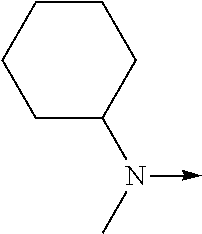 |
||
| gn338 |
 |
||
| gn339 |
 |
||
| gn340 |
 |
||
| gn341 |
 |
||
| gn342 |
 |
||
| gn343 |
 |
||
| gn344 |
 |
||
| gn345 |
 |
||
| TABLE 4-7 | |||
| G | Str. | ||
| gn346 |
 |
||
| gn348 |
 |
||
| gn349 |
 |
||
| gn350 |
 |
||
| gn351 |
 |
||
| gn352 |
 |
||
| gn356 |
 |
||
| gn357 |
 |
||
| gn358 |
 |
||
| gn359 |
 |
||
| gn360 |
 |
||
| gn361 |
 |
||
| gn362 |
 |
||
| gn363 |
 |
||
| gn364 |
 |
||
| gn365 |
 |
||
| gn366 |
 |
||
| gn367 |
 |
||
| gn368 |
 |
||
| gn369 |
 |
||
| gn370 |
 |
||
| gn371 |
 |
||
| gn372 |
 |
||
| gn373 |
 |
||
| gn374 |
 |
||
| gn375 |
 |
||
| gn376 |
 |
||
| gn377 |
 |
||
| gn378 |
 |
||
| TABLE 4-8 | |||
| G | Str. | ||
| gn379 |
 |
||
| gn380 |
 |
||
| gn382 |
 |
||
| gn383 |
 |
||
| gn384 |
 |
||
| gn385 |
 |
||
| gn386 |
 |
||
| gn387 |
 |
||
| gn388 |
 |
||
| gn389 |
 |
||
| gn390 |
 |
||
| gn391 |
 |
||
| gn392 |
 |
||
| gn393 |
 |
||
| gn395 |
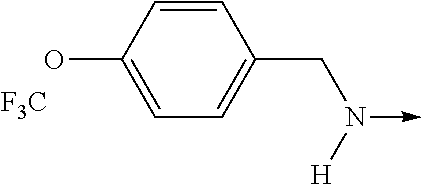 |
||
| gn396 |
 |
||
| gn397 |
 |
||
| gn399 |
 |
||
| gn400 |
 |
||
| gn401 |
 |
||
| gn402 |
 |
||
| gn403 |
 |
||
| gn404 |
 |
||
| gn405 |
 |
||
| gn406 |
 |
||
| gn407 |
 |
||
| gn408 |
 |
||
| gn409 |
 |
||
| gn410 |
 |
||
| gn412 |
 |
||
| gn413 |
 |
||
| gn414 |
 |
||
| TABLE 4-9 | |||
| G | Str. | ||
| gn137 |
 |
||
| gn138 |
 |
||
| gn139 |
 |
||
| gn140 |
 |
||
| gn141 |
 |
||
| gn142 |
 |
||
| gn143 |
 |
||
| gn144 |
 |
||
| gn145 |
 |
||
| gn146 |
 |
||
| gn147 |
 |
||
| TABLE 5-1 | ||
| SM2 | Str. | Spl. |
| sm3 |
 |
TCl |
| sm4 |
 |
TCl |
| sm6 |
 |
TCl |
| sm7 |
 |
FChem |
| sm8 |
 |
WAKO |
| Ald | ||
| sm10 |
 |
TCl |
| sm11 |
 |
TCl |
| sm17 |
 |
Ald |
| sm19 |
 |
TCl |
| sm20 |
 |
TCl |
| sm21 |
 |
TCl |
| sm25 |
 |
TCl |
| sm26 |
 |
KANTO |
| sm27 |
 |
TCl |
| sm28 |
 |
TCl |
| TABLE 5-2 | ||
| SM2 | Str. | Spl. |
| sm-o3 |
 |
TCl |
| sm-o9 |
 |
TCl |
| sm-o12 |
 |
Avocado |
| sm-o13 |
 |
TCl |
| sm-o14 |
 |
TCl |
| sm-o15 |
 |
TCl |
| sm-o16 |
 |
TCl |
| sm-o17 |
 |
TCl |
| sm-o18 |
 |
TCl |
| sm-o22 |
 |
Ald |
| sm-o23 |
 |
Ald |
| sm-o24 |
 |
Ald |
| sm-o26 |
 |
TCl |
| sm-o27 |
 |
TCl |
| sm-o28 |
 |
TCl |
| sm-o29 |
 |
TCl |
| sm-o30 |
 |
KANTO |
| sm-o31 |
 |
Ald |
| sm-o32 |
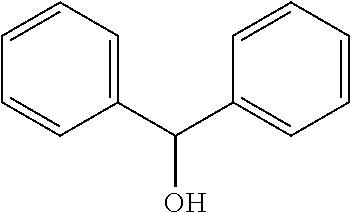 |
TCl |
| TABLE 5-3 | ||||
| SM2 | Str. | Spl. | ||
| sm-n2 |
 |
TCl | ||
| sm-n3 |
 |
Ald | ||
| sm-n4 |
 |
Ald | ||
| sm-n5 |
 |
TCl | ||
| sm-n9 |
 |
TCl | ||
| sm-n10 |
 |
TCl | ||
| sm-n11 |
 |
Ald | ||
| sm-n12 |
 |
Ald | ||
| sm-n13 |
 |
FChem | ||
| sm-n14 |
 |
Ald | ||
| sm-n15 |
 |
Ald | ||
| sm-n16 |
 |
Ald | ||
| sm-n17 |
 |
Ald | ||
| sm-n18 |
 |
Avocado | ||
| sm-n19 |
 |
MAYB | ||
| sm-n20 |
 |
AAesar | ||
| TABLE 5-4 | ||
| SM2 | Str. | Spl. |
| sm-n21 |
 |
MAYB |
| sm-n22 |
 |
MAYB |
| sm-n23 |
 |
MAYB |
| sm-n24 |
 |
AAesar |
| sm-n25 |
 |
MAYB |
| sm-n26 |
 |
Ald |
| sm-n27 |
 |
TCl |
| sm-n28 |
 |
MAYB |
| sm-n29 |
 |
MAYB |
| sm-n30 |
 |
Oak |
| sm-n31 |
 |
Ald |
| sm-n32 | —SO2Cl | TCl |
| sm-n33 |
 |
TCl |
| sm-n34 |
 |
Acros |
| sm-n35 |
 |
Ald |
| sm-n36 |
 |
Matrix |
| sm-n37 |
 |
TCl |
| sm-n38 |
 |
Ald |
| sm-n39 |
 |
AAesar |
| sm-n40 |
 |
Array |
| TABLE 5-5 | ||
| SM2 | Str. | Spl. |
| sm-n101 |
 |
TCl |
| sm-n102 |
 |
Ald |
| sm-n103 |
 |
Matrix |
| sm-n104 |
 |
TCl |
| sm-n105 |
 |
WAKO |
| sm-n110 |
 |
ABCR |
| sm-n111 |
 |
FChem |
| sm-n112 |
 |
ABCR |
| sm-n113 |
 |
Matrix |
| sm-n114 |
 |
Ald |
| sm-n115 |
 |
TCl |
| sm-n116 |
 |
Ald |
| sm-n117 |
 |
Ald |
| sm-n118 |
 |
Ald |
| sm-n119 |
 |
TCl |
| sm-n120 |
 |
LANC |
| sm-n121 |
 |
Ald |
| sm-n122 |
 |
WAKO |
| sm-n123 |
 |
TCl |
| sm-n124 |
 |
Ald |
| sm-n125 |
 |
MAYB |
| sm-n126 |
 |
MAYB |
| sm-n127 |
 |
MAYB |
| sm-n128 |
 |
MAYB |
| sm-n129 |
 |
MAYB |
| sm-n130 |
 |
MAYB |
| sm-n131 |
 |
LANC |
| sm-n132 |
 |
MAYB |
| sm-n133 |
 |
MAYB |
| sm-n134 |
 |
MAYB |
| sm-n135 |
 |
MAYB |
| sm-n136 |
 |
MAYB |
| TABLE 5-6 | ||
| SM2 | Str. | Spl. |
| sm-n300 |
 |
WAKO |
| sm-n301 |
 |
KANTO |
| sm-n303 |
 |
TCl |
| sm-n304 |
 |
TCl |
| sm-n306 |
 |
TCl |
| sm-n307 |
 |
nacalai |
| sm-n308 |
 |
TCl |
| sm-310 |
 |
TCl |
| sm-312 |
 |
|
| sm-314 |
 |
Array |
| TABLE 5-7 | ||
| SM2 | Str. | Spl. |
| sm-cl |
 |
Ald |
| TABLE 5-8 | ||
| SM2 | Str. | Spl. |
| sm-n316 |
 |
Ald |
| sm-n317 |
 |
TCl |
| sm-n318 |
 |
TCl |
| sm-n319 |
 |
TCl |
| sm-n320 |
 |
WAKO |
| sm-n321 |
 |
WAKO |
| sm-n322 |
 |
TCl |
| sm-n323 |
 |
Ald |
| sm-n324 |
 |
TCl |
| sm-n325 |
 |
TCl |
| sm-n326 |
 |
TCl |
| sm-n327 |
 |
TCl |
| sm-n328 |
 |
MP Bio- medicals |
| sm-n329 |
 |
WAKO |
| sm-n330 |
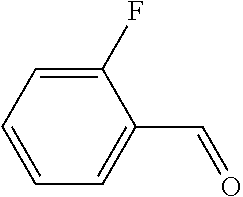 |
TCl |
| sm-n331 |
 |
TCl |
| sm-n332 |
 |
TCl |
| sm-n333 |
 |
TCl |
| sm-n334 |
 |
TCl |
| sm-n335 |
 |
TCl |
| sm-n336 |
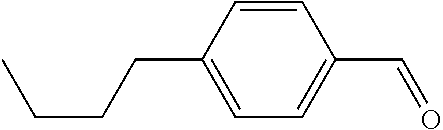 |
TCl |
| sm-n363 |
 |
ABCR |
| sm-n364 |
 |
TCl |
| sm-n365 |
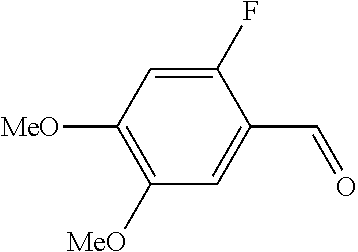 |
TCl |
| sm-n366 |
 |
TCl |
| sm-n367 |
 |
TCl |
| sm-n373 |
 |
AAesar |
| sm-n374 |
 |
TCl |
| sm-n375 |
 |
Ald |
| sm-n376 |
 |
LANC |
| sm-n382 |
 |
TCl |
| sm-n383 |
 |
TCl |
| sm-n384 |
 |
Ald |
| sm-n385 |
 |
Ald |
| sm-n386 |
 |
TCl |
| sm-n387 |
 |
TCl |
| sm-n388 |
 |
TCl |
| sm-n389 |
 |
TCl |
| sm-n390 |
 |
TCl |
| sm-n391 |
 |
TCl |
| sm-n392 |
 |
TCl |
| sm-n393 |
 |
LANC |
| sm-n395 |
 |
TCl |
| sm-n396 |
 |
LANC |
| sm-n397 |
 |
TCl |
| TABLE 5-9 | ||
| SM2 | Str. | Spl. |
| sm-n137 |
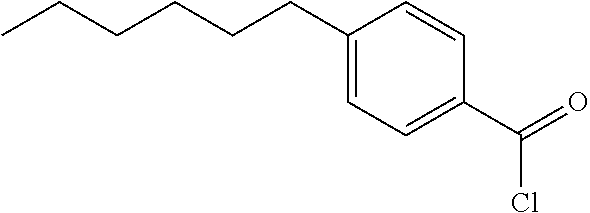 |
Ald |
| sm-n138 |
 |
LANC |
| sm-n139 |
 |
APIN |
| sm-n140 |
 |
Ald |
| sm-n141 |
 |
WAKO |
| sm-n142 |
 |
Ald |
| sm-n143 |
 |
WAKO |
| sm-n144 |
 |
Ald |
| sm-n145 |
 |
ABCR |
| sm-n146 |
 |
APOLLO |
| sm-n147 |
 |
Acros |
(1) Method for Measurement
An action of suppressing PGE2 production caused by interleukin (IL) 1β as an inflammatory stimulant was studied by the following method. Cells of MG-63, which is a human osteosarcoma cell line (purchased from Dainippon Pharmaceutical), were suspended in MEM medium (GIBCO) containing 10% fetal bovine serum (BioWest), and then inoculated to each well of 96-well culture plate at a density of 1×10⁴ cells/well and cultured overnight. The medium was changed to MEM medium containing 0.5% fetal bovine serum, and then a test compound was added to each well. Human interleukin-1β (ENDOGEN) was further added as an inflammatory stimulant at a final concentration of 0.5 ng/ml. The cells were further cultured for 18 hours. Then, the culture supernatant was collected, and the PGE2 concentration in the culture supernatant was measured by using EIA kit (CAYMAN). By using a well which was not added with the stimulant as a negative control and a well which was added only with the stimulant as a positive control, suppression ratio on PGE2 production can be calculated from produced amount of PGE2 in the well added with the test compound using the following equation.
PGE2 production suppression ratio=[1−(C−B)/(A−B)]×100 [Equation 1]
A: PGE2 production amount of positive control
B: PGE2 production amount of negative control
C: PGE2 production amount in well added with test compound
PGE2 production suppression ratio=[1−(C−B)/(A−B)]×100 [Equation 1]
A: PGE2 production amount of positive control
B: PGE2 production amount of negative control
C: PGE2 production amount in well added with test compound
Further, cytotoxicity of the compounds was studied by using the cells after the collection of the supernatant with Cell Counting Kit-8 (Dojindo Laboratories). Specifically, Cell Counting Kit-8 was added to the cells remained after the collection of the supernatant, and then absorbance was measured at 670 nm. The absorbance of the well of the aforementioned positive control was taken as 100%, and a test compound that gave absorbance in well of less than 80% was judged to be positive in cytotoxicity.
(2) Measurement Results
The test compounds (Example Compound Nos. 1-1-2, 1-3-2, 1-12-2, 1-13-2, 1-14-2, 1-15-2, 1-16-2, 1-18-2, 1-22-2, 1-23-2, 1-24-2, 1-26-2, 1-27-2, 1-28-2, 1-29-2, 1-30-2, 1-31-2, 1-32-2, 2-1-2, 2-2-2, 2-3-2, 2-4-2, 2-6-2, 2-7-2, 2-8-2, 2-10-2, 2-11-2, 2-17-2, 2-19-2, 2-20-2, 2-21-2, 2-25-2, 2-26-2, 2-27-2, 2-28-2, 1-5-2, 2-5-2, 3-5-2, 4-5-2, 5-5-2, 6-5-2, 2-N1-2, 2-N2-2, 2-N3-2, 2-N5-2, 2-N9-2, 2-N10-2, 2-N11-2, 2-N12-2, 2-N13-2, 2-N14-2, 2-N15-2, 2-N16-2, 2-N17-2, 2-N18-2, 2-N20-2, 7-N119-2, 7-N124-2, 2-N301-2, 2-N302-2, 2-N303-2, 2-N304-2, 2-N305-2, 2-N306-2, 2-N307-2, 2-N308-2, 2-N309-2, 2-N310-2, 2-N311-2, 2-N312-2, 2-N313-2, 2-N314-2, 2-N315-2, 7-N304-2, 7-N305-2) suppressed the PGE2 production caused by IL-1β by 50% or more at 0.4 μM. Moreover, all the test compounds did not exhibit cytotoxicity at that concentration.
The test compounds (Compound Nos. 2-N316-2, 2-N317-2, 2-N318-2, 2-N319-2, 2-N320-2, 2-N321-2, 2-N322-2, 2-N323-2, 2-N324-2, 2-N325-2, 2-N326-2, 2-N327-2, 2-N328-2, 2-N329-2, 2-N330-2, 2-N331-2, 2-N332-2, 2-N333-2, 2-N334-2, 2-N335-2, 2-N336-2, 2-N337-2, 2-N338-2, 2-N339-2, 2-N340-2, 2-N341-2, 2-N342-2, 2-N343-2, 2-N344-2, 2-N345-2, 2-N346-2, 2-N348-2, 2-N349-2, 2-N350-2, 2-N351-2, 2-N352-2, 2-N353-2, 2-N354-2, 2-N355-2, 2-N356-2, 2-N357-2, 2-N358-2, 2-N359-2, 2-N360-2, 2-N361-2, 2-N362-2, 2-N363-2, 2-N364-2, 2-N366-2, 2-N368-2, 2-N369-2, 2-N371-2, 2-N373-2, 2-N375-2, 2-N376-2, 2-N377-2, 2-N379-2, 2-N380-2, 2-N382-2, 2-N386-2, 2-N387-2, 2-N388-2, 2-N392-2, 2-N393-2, 2-N403-2, 2-N404-2, 2-N405-2, 2-N137-2, 2-N138-2, 2-N141-2, 2-N142-2, 2-N143-2, 2-N144-2, 2-N145-2, 2-N146-2, 2-N147-2, 2-N148-2, 7-N382-2) suppressed the PGE2 production caused by IL-1β by 50% or more at 0.4 μM. Moreover, all the test compounds did not exhibit cytotoxicity at that concentration.
Therefore, the compounds and salts thereof of the present invention are useful as agents for suppressing inflammatory prostaglandin production.
(1) Method for Measurement
The inhibitory action against type 4 PLA2 activity was investigated by the following method. On liposome membranes prepared by ultrasonication of 1,2-dioleoyl-sn-glycero-3-phospho-L-serine (DOPS), γ-linolenoyl ester of 7-hydroxycoumarin (GLU) is dispersed. Type 4 PLA2 is added to the liposome membranes, and fluorescence of hydroxycoumarin excised by the enzymatic activity of type 4 PLA2 is measured over time. For the measurement, a 96-well plate for fluorometry and a fluorescence plate reader (wavelength: Ex. 355 nm, Em. 460 nm) were used. After the measurement, the maximum reaction rate was calculated by plotting time in abscissa and fluorescence intensity in ordinate. The inhibitory ratio against type 4 PLA2 activity can be calculated from the reaction rate observed in a well to which a test compound is added, based on the results observed for a well not added with type 4 PLA2 as a negative control, and a well to which only type 4 PLA2 is added as a positive control, in accordance with the following equation.
Type 4 PLA2 activity inhibition ratio (%)=[1−(C−B)/(A−B)]×100 [Equation 2]
A: Maximum reaction rate of positive control
B: Maximum reaction rate of negative control
C: Maximum reaction rate in well added with test compound
(2) Measurement Results
Type 4 PLA2 activity inhibition ratio (%)=[1−(C−B)/(A−B)]×100 [Equation 2]
A: Maximum reaction rate of positive control
B: Maximum reaction rate of negative control
C: Maximum reaction rate in well added with test compound
(2) Measurement Results
The test compounds (Example Compound Nos. 1-13-2, 1-15-2, 1-18-2, 1-22-2, 1-23-2, 1-24-2, 1-25-2, 1-27-2, 1-28-2, 1-29-2, 1-30-2, 1-31-2, 1-32-2, 2-1-2, 2-2-2, 2-3-2, 2-4-2, 2-6-2, 2-7-2, 2-8-2, 2-10-2, 2-11-2, 2-17-2, 2-19-2, 2-20-2, 2-21-2, 2-25-2, 2-26-2, 2-27-2, 2-28-2, 1-5-2, 2-5-2, 3-5-2, 4-5-2, 5-5-2, 2-N3-2, 2-N12-2, 2-N18-2, 2-N20-2, 2-N101-2, 2-N102-2, 2-N112-2, 2-N115-2, 2-N119-2, 2-N124-2, 2-N125-2, 2-N128-2, 2-N133-2, 2-N136-2, 7-N119-2, 7-N124-2, 8-N119-2, 8-N124-2, 8-N125-2, 8-N128-2, 2-N301-2, 2-N302-2, 2-N303-2, 2-N304-2, 2-N305-2, 2-N306-2, 2-N307-2, 2-N308-2, 2-N309-2, 2-N310-2, 2-N311-2, 2-N312-2, 2-N313-2, 2-N314-2, 2-N315-2, 7-N304-2, 7-N305-2, 2-C1-2) suppressed the type 4 PLA2 activity by 50% or more at 0.4 μM.
Other test compounds (Example Compound Nos. 2-N316-2, 2-N317-2, 2-N318-2, 2-N319-2, 2-N320-2, 2-N321-2, 2-N322-2, 2-N323-2, 2-N324-2, 2-N325-2, 2-N326-2, 2-N327-2, 2-N328-2, 2-N329-2, 2-N330-2, 2-N331-2, 2-N332-2, 2-N333-2, 2-N334-2, 2-N335-2, 2-N336-2, 2-N337-2, 2-N338-2, 2-N340-2, 2-N341-2, 2-N342-2, 2-N343-2, 2-N344-2, 2-N345-2, 2-N346-2, 2-N348-2, 2-N349-2, 2-N350-2, 2-N351-2, 2-N352-2, 2-N353-2, 2-N354-2, 2-N355-2, 2-N356-2, 2-N357-2, 2-N358-2, 2-N359-2, 2-N362-2, 2-N363-2, 2-N364-2, 2-N366-2, 2-N368-2, 2-N369-2, 2-N371-2, 2-N373-2, 2-N376-2, 2-N377-2, 2-N380-2, 2-N382-2, 2-N386-2, 2-N387-2, 2-N388-2, 2-N392-2, 2-N393-2, 2-N403-2, 2-N404-2, 2-N405-2, 2-N137-2, 2-N138-2, 2-N142-2, 2-N143-2, 2-N147-2, 7-N382-2) suppressed the type 4 PLA2 activity by 50% or more at 0.4 μM.
Therefore, the compounds and salts thereof of the present invention are useful as agents for suppressing type 4 PLA2 activity.
(1) Method for Measurement
Suppressing action on PGD2 and LTB4 production caused by IgE antibodies as an allergic stimulant can be investigated by the following method. Cells of RBL-2H3, which is a rat mastocytoma cell line (purchased from ATCC), are suspended in DMEM medium (GIBCO) containing 10% fetal bovine serum (BioFluid), inoculated to each well of 48-well culture plate at a density of 2×10⁴ cells/well and cultured overnight. Then, IgE antiserum directed to dinitrophenylated BSA (henceforth DNP-BSA) is further added to each well, and the cells are cultured for 30 minutes. Then, the medium is changed to DMEM medium containing 0.5% fetal bovine serum, a test compound is added with each well, and DNP-BSA is further added at a final concentration of 100 ng/ml as a stimulant. Ten minutes after the stimulant is added, the culture supernatant is collected, and the PGD2 concentration and LTB4 concentration in the culture supernatant are measured by using EIA kit (CAYMAN). By using a well which is not added with the stimulant as a negative control and a well which is added only with the stimulant as a positive control, suppressing ratio on mediator production can be calculated from the production amount of the mediator in the well added with the test compound using the following equation.
PGD2 or LTB4 production suppression ratio=[1−(C−B)/(A−B)]×100 [Equation 3]
A: PGD2 or LTB4 production amount of positive control
B: PGD2 or LTB4 production amount of negative control
C: PGD2 or LTB4 production amount in well added with test compound
PGD2 or LTB4 production suppression ratio=[1−(C−B)/(A−B)]×100 [Equation 3]
A: PGD2 or LTB4 production amount of positive control
B: PGD2 or LTB4 production amount of negative control
C: PGD2 or LTB4 production amount in well added with test compound
Cytotoxicity of the compounds can be studied in the same manner as those described above by using the cells after the collection of the supernatant with Cell Counting Kit-8.
Further, activities can be similarly measured by using, as control compounds for comparison, reference compound (1), 3-(2-cyclohexylmethyloxy-1,1′-biphenyl-5-yl)propionic acid described in WO99/19291, reference compounds (2) and (3), [2-(5,6,7,8-tetrahydro-5,5,8,8-tetramethyl-2-naphthalenyl)methyloxy-1,1′-biphenyl-5-yl]carboxylic acid [reference compound (2)] and 3-[3′-carboxy-2-(5,6,7,8-tetrahydro-5,5,8,8-tetramethyl-2-naphthalenyl)methyloxy-1,1′-biphenyl-6-yl]propionic acid [reference compound (3)] described in U.S. Pat. No. 5,391,817 and Japanese Patent Unexamined Publication (Kokai) No. 7-22399.
Suppressing action on PGE2 and LTB4 production in zymosan-stimulated rat air pouch can be investigated by the following method. Air in a volume of 20 mL is subcutaneously injected into a Lewis female rat on its back to form an air pouch, and after three days, 10 mL of air is additionally injected. After six days from the first air injection, 3 mg of zymosan (Sigma) is injected into the air pouch to induce PGE2 and LTB4 production in the rat air pouch. A test compound suspended or dissolved in purified water containing 1.0% methylcellulose is orally administered to the test animals at a does of 0.1 to 500 mg/5 ml/kg 1 hour before the zymosan injection. To control rats, purified water containing 1.0% methylcellulose and no test compound is administered in the same manner. After 3 hours from the zymosan infusion, inside of the air pouch is washed with 10 mL of physiological saline, and the washing solution is collected. PGE2 and LTB4 concentrations in the collected solution can be measured by using EIA kit (CAYMAN). PGE2 and LTB4 production-suppressing ratios can be calculated by using the following equation.
PGE2 or LTB4 production-suppressing ratio (%)=[1=B/A]×100 [Equation 4]
A: PGE2 or LTB4 production amount in positive control group
B: PGE2 or LTB4 production amount in test compound-administered group
PGE2 or LTB4 production-suppressing ratio (%)=[1=B/A]×100 [Equation 4]
A: PGE2 or LTB4 production amount in positive control group
B: PGE2 or LTB4 production amount in test compound-administered group
(1) Method for Measurement
A suppressing effect on footpad edema observed in rat adjuvant arthritis, which is a disease model of rheumatoid arthritis as being one of autoimmune diseases and also a chronic inflammatory disease, can be studied by the following method. Groups of Lewis female rats each consisting of six mice are used for the test. The test animals are immunized by subcutaneously administering, to right hind leg footpads, 50 μl of liquid paraffin containing 10 mg/ml of M. tuberclulosis H37 RA (DIFCO) as an adjuvant. A test compound is suspended or dissolved in purified water containing 0.5% methylcellulose and orally administered to the test animals at 0.1 to 500 mg/5 ml/kg. When the therapeutic effect is investigated, the test compound is administered once a day for 14 days, from the 13th day after the immunization. When the prophylactic effect is investigated, the test compound is administered once a day for 33 days, from the 1st day after the immunization. To the control group, purified water containing 1.0% methylcellulose is administered in a similar manner, which is not added with a test compound. Every 2 or 3 days after the administration of adjuvant, volume of left hind leg footpad, which is not administered with the adjuvant, is measured by using an apparatus for measuring a volume of edema of a rat hind leg footpad (UGO BASILE). A suppression ratio on edema can be obtained by calculation using the following equation. The representative compounds of the present invention showed favorable suppression ratios on edema.
Edema suppression ratio (%)={1−[(D−C)/C]/[(B−A/A]}×100 [Equation 5]
A: Left hind leg footpad volume of positive control immediately before administration of adjuvant
B: Left hind leg footpad volume of positive control on each measurement day
C: Left hind leg footpad volume of test compound administered group immediately before administration of adjuvant
D: Left hind leg footpad volume of test compound administered group on each measurement day
Edema suppression ratio (%)={1−[(D−C)/C]/[(B−A/A]}×100 [Equation 5]
A: Left hind leg footpad volume of positive control immediately before administration of adjuvant
B: Left hind leg footpad volume of positive control on each measurement day
C: Left hind leg footpad volume of test compound administered group immediately before administration of adjuvant
D: Left hind leg footpad volume of test compound administered group on each measurement day
Usefulness of the compounds can be evaluated on the basis of a dose (mg/kg) which provides 50% of the edema suppressing ratio based on the control group, i.e., ID50 (mg/kg). A graph is prepared by plotting logarithmic values (X) of dose of test compound in abscissa and edema suppressing ratio (Y) in ordinate. Linear regression of Y to X is performed by using values of two points on both sides of the average of the edema suppressing ratio of 50%. The value of X can be calculated as ID50 by substituting 50% for Y in the linear regression equation.
The representative compounds of the present invention showed favorable ID50 values.
(1) Method for Measurement
Prophylactic and therapeutic effects on pulmonary fibrosing in a bleomycin-induced rat pulmonary fibrosis model, which is a pathological model of pulmonary fibrosis, can be studied by the following method. Groups of Lewis female rats each consisting of seven rats are used for the test.
The test animals are anesthetized with ketamine and xylazine, and a 25 or 50 μg/100 μl solution of bleomycin (Nippon Kayaku) dissolved in physiological saline (Ohtsuka Pharmaceutical Factory) is injected into the tracheae by spraying using a syringe. The negative control group is administered with 100 μl of saline into the tracheae. Each test compound is suspended or dissolved in purified water containing 1.0% methylcellulose, and orally administered to the test animals at doses of 10, 30, 100 and 300 mg/5 ml/kg. When the prophylactic effect on pulmonary fibrosing is investigated, the administration of the test compounds is started before the bleomycin administration and performed once or twice a day for consecutive 21 days. When the therapeutic effect on pulmonary fibrosing is investigated, the administration of the test compounds is started after the bleomycin administration and performed once or twice a day for consecutive 21 days. The positive control group is administered with purified water containing 1.0% methylcellulose not added with any test compound in a similar manner. On the 21st day after the administration of bleomycin, the rats are sacrificed, and lungs are fixed with neutral buffered formalin to prepare histopathological samples. Staining of the histopathological samples is performed by the Azan method or the Masson trichrome method. The histopathological samples of lungs are examined, and degree of fibrosing is represented with the following scores on the basis of invasion of inflammatory cells, formation of granulation tissues and proliferation of collagen fibers as indicators, i.e., −: no abnormality, ±: extremely mild change, +: mild change, ++: moderate change, and +++: significant change.
The compounds of the present invention have superior inhibitory activity against type 4 PLA2, and as a result, exhibit suppressing action on prostaglandin production and/or suppressing action on leukotriene production. Therefore, the compounds of the present invention are useful as active ingredients of medicaments for prophylactic and/or therapeutic treatment of various inflammatory diseases, autoimmune diseases, allergic diseases, pain and the like caused by these lipid mediators.
Claims (13)
1. The compound defined below or a salt thereof;

2. The compound defined below or a salt thereof;

3. A medicament comprising the compound according to any one of claims 1 to 2 or a pharmaceutically acceptable salt thereof as an active ingredient.
4. A prostaglandin and/or leucotriene production suppressing agent comprising the compound according to any on of claims 1 to 2 or a pharmaceutically acceptable salt thereof as an active ingredient.
5. The medicament according to claim 3 , which is for prophylactic and/or therapeutic treatment of a disease for which suppression of leucotriene production is effective.
6. A type 4 phospholipase A2 enzyme activity inhibitor comprising the compound according to any one of claims 1 to 2 or a pharmaceutically acceptable salt thereof as an active ingredient.
7. The medicament according to claims 3 , which is for therapeutic treatment of a disease induced by expression of type 4 phospholipase A2 enzyme activity.
8. The medicament according to claim 3 , which is for therapeutic treatment of an inflammatory disease of a mammal.
9. The medicament according to claim 3 , which is for therapeutic treatment of an autoimmune disease of a mammal.
10. The medicament according to claim 3 , which is for prophylactic and/or therapeutic treatment of an allergic disease of a mammal.
11. The medicament according to claim 3 , which is for defervescence and/or analgesia of a mammal wherein the defervescence and/or analgesia is through suppression of prostaglandins and/or leucotriene production.
12. A pharmaceutical composition for therapeutic treatment of a condition in living body of a mammal in which an acute or chronic inflammatory reaction is observed, which comprises the compound according to any one of claims 1 to 2 or a pharmaceutically acceptable salt thereof in an amount effective for the prophylactic and/or therapeutic treatment, and a pharmaceutically acceptable carrier.
13. A method for therapeutic treatment of acute or chronic inflammatory disease or disorder, which comprises the step of administering the compound according to any one of claims 1 to 2 or a pharmaceutically acceptable salt thereof to a mammal in need thereof in an amount effective for the therapeutic treatment.
Priority Applications (1)
| Application Number | Priority Date | Filing Date | Title |
|---|---|---|---|
| US13/654,164 US8772327B2 (en) | 2008-04-28 | 2012-10-17 | Phenylpropionic acid derivative and use thereof |
Applications Claiming Priority (3)
| Application Number | Priority Date | Filing Date | Title |
|---|---|---|---|
| US4834608P | 2008-04-28 | 2008-04-28 | |
| US12/430,575 US8334314B2 (en) | 2008-04-28 | 2009-04-27 | Phenylpropionic acid derivative and use thereof |
| US13/654,164 US8772327B2 (en) | 2008-04-28 | 2012-10-17 | Phenylpropionic acid derivative and use thereof |
Related Parent Applications (1)
| Application Number | Title | Priority Date | Filing Date |
|---|---|---|---|
| US12/430,575 Continuation US8334314B2 (en) | 2008-04-28 | 2009-04-27 | Phenylpropionic acid derivative and use thereof |
Publications (2)
| Publication Number | Publication Date |
|---|---|
| US20130131134A1 US20130131134A1 (en) | 2013-05-23 |
| US8772327B2 true US8772327B2 (en) | 2014-07-08 |
Family
ID=41255047
Family Applications (2)
| Application Number | Title | Priority Date | Filing Date |
|---|---|---|---|
| US12/430,575 Expired - Fee Related US8334314B2 (en) | 2008-04-28 | 2009-04-27 | Phenylpropionic acid derivative and use thereof |
| US13/654,164 Expired - Fee Related US8772327B2 (en) | 2008-04-28 | 2012-10-17 | Phenylpropionic acid derivative and use thereof |
Family Applications Before (1)
| Application Number | Title | Priority Date | Filing Date |
|---|---|---|---|
| US12/430,575 Expired - Fee Related US8334314B2 (en) | 2008-04-28 | 2009-04-27 | Phenylpropionic acid derivative and use thereof |
Country Status (11)
| Country | Link |
|---|---|
| US (2) | US8334314B2 (en) |
| EP (1) | EP2272832A4 (en) |
| JP (1) | JP5198560B2 (en) |
| KR (1) | KR101269393B1 (en) |
| CN (2) | CN102015656A (en) |
| AU (1) | AU2009241038B2 (en) |
| CA (1) | CA2722102C (en) |
| HK (1) | HK1209113A1 (en) |
| MX (1) | MX2010011221A (en) |
| RU (1) | RU2479579C2 (en) |
| WO (1) | WO2009133831A1 (en) |
Families Citing this family (8)
| Publication number | Priority date | Publication date | Assignee | Title |
|---|---|---|---|---|
| JP2011057661A (en) * | 2009-08-14 | 2011-03-24 | Bayer Cropscience Ag | Pesticidal carboxamides |
| WO2012136111A1 (en) * | 2011-04-02 | 2012-10-11 | 中国人民解放军军事医学科学院毒物药物研究所 | Phenylpropionic acid compound, preparation method therefor and medicinal use thereof |
| US9309212B2 (en) * | 2011-05-24 | 2016-04-12 | The Wistar Institute | Compositions and methods for modulating the activity of Epstein-Barr nuclear antigen 1 |
| EP3099667B1 (en) * | 2014-01-27 | 2017-11-01 | Allergan, Inc. | Antagonists acting at multiple prostaglandin receptors for the treatment of inflammation |
| WO2015143654A1 (en) * | 2014-03-26 | 2015-10-01 | Merck Sharp & Dohme Corp. | TrkA KINASE INHIBITORS,COMPOSITIONS AND METHODS THEREOF |
| JP2022506850A (en) | 2018-11-08 | 2022-01-17 | グラクソスミスクライン、インテレクチュアル、プロパティー、ディベロップメント、リミテッド | Chemical compound |
| CN110818907B (en) * | 2018-11-26 | 2021-10-01 | 河北民族师范学院 | A kind of zinc coordination polymer containing polycarboxylic acid and polynitrogen double ligand and preparation method thereof |
| CN113082011B (en) * | 2021-03-17 | 2022-12-09 | 中国海洋大学 | Application of C644-0303 in preparation of medicament for targeted inhibition of Wnt/beta-catenin signal pathway |
Citations (30)
| Publication number | Priority date | Publication date | Assignee | Title |
|---|---|---|---|---|
| DE2046992A1 (en) | 1970-09-24 | 1972-03-30 | Merck Patent Gmbh, 6100 Darmstadt | Isoindolinophenyl-alkanoic acid esters and salts - - antiphlogistic, antipyretic and analgesic agents |
| US3816443A (en) | 1972-02-17 | 1974-06-11 | Merck & Co Inc | 4-(benzothiazol-2-yl)fluoro phenyl-acetic acids |
| US3940434A (en) | 1972-08-24 | 1976-02-24 | Ciba-Geigy Corporation | Dicarboxylic acids and derivatives |
| JPS5293755A (en) | 1976-02-03 | 1977-08-06 | Takeda Chem Ind Ltd | Preparation of carboxylic acid derivatives |
| EP0279263A2 (en) | 1987-02-10 | 1988-08-24 | Abbott Laboratories | Indole, benzofuran, benzothiophene containing lipoxygenase inhibiting compounds |
| US5391817A (en) | 1993-12-21 | 1995-02-21 | Bristol-Myers Squibb | Biaryl phospholipase A2 inhibitors |
| US5468898A (en) | 1990-09-10 | 1995-11-21 | Rhone-Poulenc Rorer Pharmaceuticals Inc. | Substituted naphthylene compounds exhibiting selective leukotriene B4 antagonist activity |
| US5482941A (en) | 1991-12-11 | 1996-01-09 | Pfizer Inc. | Quinazolinone antianginal agents |
| WO1996026921A1 (en) | 1995-03-01 | 1996-09-06 | Toyama Chemical Co., Ltd. | Novel biphenyl derivatives or salts thereof, and anti-inflammatory agents containing the same |
| WO1997028146A1 (en) | 1996-02-01 | 1997-08-07 | The Procter & Gamble Company | Dihydrobenzofuran and related compounds useful as anti-inflammatory agents |
| WO1999043654A2 (en) | 1998-02-25 | 1999-09-02 | Genetics Institute, Inc. | Inhibitors of phospholipase enzymes |
| WO2000035886A2 (en) | 1998-12-18 | 2000-06-22 | Axys Pharmaceuticals, Inc. | (hetero)aryl-bicyclic heteroaryl derivatives, their preparation and their use as protease inhibitors |
| WO2000064436A1 (en) | 1999-04-28 | 2000-11-02 | Cg And Associates | Methods of delivery of cetyl myristoleate |
| WO2001053268A2 (en) | 2000-01-18 | 2001-07-26 | Agouron Pharmaceuticals, Inc. | Indazole compounds, pharmaceutical compositions, and their use for mediating or inhibiting cell proliferation |
| US6376546B1 (en) | 1997-10-14 | 2002-04-23 | Asahi Kasei Kabushiki Kaisha | Biphenyl-5-alkanoic acid derivatives and use thereof |
| WO2003011842A1 (en) | 2001-07-27 | 2003-02-13 | Bayer Pharmaceuticals Corporation | Indane acetic acid derivatives and their use as pharmaceutical agents, intermediates, and method of preparation |
| WO2003048122A2 (en) | 2001-12-03 | 2003-06-12 | Wyeth | Inhibitors of cytosolic phospholipase a2 |
| WO2004011446A1 (en) | 2002-07-26 | 2004-02-05 | Bayer Pharmaceuticals Corporation | Indane, dihydrobenzofuran, and tetrahydronaphthalene carboxylic acid derivatives and their use as antidiabetics |
| US20040044258A1 (en) | 2002-02-21 | 2004-03-04 | Motoshi Shoda | Substituted phenylalkanoic acid derivatives and use thereof |
| US20040102437A1 (en) | 2000-02-01 | 2004-05-27 | Atsuya Takami | Nitrogen-containing compounds having kinase inhibitory activity and drugs containing the same |
| US20040138286A1 (en) | 2001-06-12 | 2004-07-15 | Naonori Imazaki | Rho kinase inhibitors |
| US20050032858A1 (en) | 2001-10-03 | 2005-02-10 | Masae Takagi | Novel heterocyclic compound and anti-inflamatory agent |
| US20050032787A1 (en) | 2002-01-15 | 2005-02-10 | Fabio Giannessi | Pheny (alkyl)carboxylic acid derivatives and dionic phenylalkylheterocyclic derivatives and their use as medicines with serum glucose and/or serum lipid lowering activity |
| WO2005016862A1 (en) | 2003-08-14 | 2005-02-24 | Asahi Kasei Pharma Corporation | Substituted arylalkanoic acid derivative and use thereof |
| EP1614683A1 (en) | 1999-07-02 | 2006-01-11 | Agouron Pharmaceuticals, Inc. | Indazole compounds and pharmaceutical compositions for inhibiting protein kinases, and methods for their use |
| US20060122221A1 (en) | 2002-07-31 | 2006-06-08 | Angell Richard M | Fused heteroaryl derivatives for use as p38 kinase inhibitors in the treatment of i.a. rheumatoid arthristis |
| US20070232620A1 (en) | 2004-06-15 | 2007-10-04 | Dieter Dorsch | 3-Aminoindazoles |
| US20080070967A1 (en) | 2006-07-20 | 2008-03-20 | Asahi Kasei Pharma Corporation | Novel crystal forms of substituted phenylalkanoic acids and process for producing the same |
| US20090054401A1 (en) | 2006-03-30 | 2009-02-26 | Asahi Kasei Pharma Corporation | Substituted bicyclic derivatives and use thereof |
| JP5293755B2 (en) | 2011-01-28 | 2013-09-18 | Jfeスチール株式会社 | Apparatus for measuring complex permeability of magnetic material and method for measuring crystal grain size of magnetic material using the same |
Family Cites Families (5)
| Publication number | Priority date | Publication date | Assignee | Title |
|---|---|---|---|---|
| JPH0722399A (en) | 1993-06-28 | 1995-01-24 | Kawasaki Steel Corp | Method and apparatus for forming embedded plug |
| JP3109974B2 (en) * | 1994-04-01 | 2000-11-20 | イーライ・リリー・アンド・カンパニー | 1H-indole-3-glyoxylamide sPLA2 inhibitor |
| JP2004535461A (en) | 2001-07-19 | 2004-11-25 | ディーエムアイ バイオサイエンシズ インコーポレイテッド | Use of a copper chelator to inhibit protein C inactivation |
| DK1477472T3 (en) | 2002-02-21 | 2009-04-06 | Asahi Kasei Pharma Corp | Substituted phenylalkanoic acid derivatives and their use |
| BR0315417A (en) | 2002-10-24 | 2005-08-16 | Glaxo Group Ltd | 1-Acyl Pyrrolidine Derivatives for the Treatment of Viral Infections |
-
2009
- 2009-04-27 JP JP2010510101A patent/JP5198560B2/en not_active Expired - Fee Related
- 2009-04-27 CA CA2722102A patent/CA2722102C/en not_active Expired - Fee Related
- 2009-04-27 US US12/430,575 patent/US8334314B2/en not_active Expired - Fee Related
- 2009-04-27 EP EP09738768A patent/EP2272832A4/en not_active Withdrawn
- 2009-04-27 CN CN2009801149646A patent/CN102015656A/en active Pending
- 2009-04-27 CN CN201510031035.6A patent/CN104710365A/en not_active Withdrawn
- 2009-04-27 WO PCT/JP2009/058240 patent/WO2009133831A1/en not_active Ceased
- 2009-04-27 KR KR1020107023943A patent/KR101269393B1/en not_active Expired - Fee Related
- 2009-04-27 RU RU2010148387/04A patent/RU2479579C2/en not_active IP Right Cessation
- 2009-04-27 MX MX2010011221A patent/MX2010011221A/en active IP Right Grant
- 2009-04-27 AU AU2009241038A patent/AU2009241038B2/en not_active Ceased
-
2012
- 2012-10-17 US US13/654,164 patent/US8772327B2/en not_active Expired - Fee Related
-
2015
- 2015-10-08 HK HK15109804.0A patent/HK1209113A1/en unknown
Patent Citations (34)
| Publication number | Priority date | Publication date | Assignee | Title |
|---|---|---|---|---|
| DE2046992A1 (en) | 1970-09-24 | 1972-03-30 | Merck Patent Gmbh, 6100 Darmstadt | Isoindolinophenyl-alkanoic acid esters and salts - - antiphlogistic, antipyretic and analgesic agents |
| US3816443A (en) | 1972-02-17 | 1974-06-11 | Merck & Co Inc | 4-(benzothiazol-2-yl)fluoro phenyl-acetic acids |
| US3940434A (en) | 1972-08-24 | 1976-02-24 | Ciba-Geigy Corporation | Dicarboxylic acids and derivatives |
| JPS5293755A (en) | 1976-02-03 | 1977-08-06 | Takeda Chem Ind Ltd | Preparation of carboxylic acid derivatives |
| EP0279263A2 (en) | 1987-02-10 | 1988-08-24 | Abbott Laboratories | Indole, benzofuran, benzothiophene containing lipoxygenase inhibiting compounds |
| US5468898A (en) | 1990-09-10 | 1995-11-21 | Rhone-Poulenc Rorer Pharmaceuticals Inc. | Substituted naphthylene compounds exhibiting selective leukotriene B4 antagonist activity |
| US5482941A (en) | 1991-12-11 | 1996-01-09 | Pfizer Inc. | Quinazolinone antianginal agents |
| US5391817A (en) | 1993-12-21 | 1995-02-21 | Bristol-Myers Squibb | Biaryl phospholipase A2 inhibitors |
| WO1996026921A1 (en) | 1995-03-01 | 1996-09-06 | Toyama Chemical Co., Ltd. | Novel biphenyl derivatives or salts thereof, and anti-inflammatory agents containing the same |
| WO1997028146A1 (en) | 1996-02-01 | 1997-08-07 | The Procter & Gamble Company | Dihydrobenzofuran and related compounds useful as anti-inflammatory agents |
| US6376546B1 (en) | 1997-10-14 | 2002-04-23 | Asahi Kasei Kabushiki Kaisha | Biphenyl-5-alkanoic acid derivatives and use thereof |
| WO1999043654A2 (en) | 1998-02-25 | 1999-09-02 | Genetics Institute, Inc. | Inhibitors of phospholipase enzymes |
| WO2000035886A2 (en) | 1998-12-18 | 2000-06-22 | Axys Pharmaceuticals, Inc. | (hetero)aryl-bicyclic heteroaryl derivatives, their preparation and their use as protease inhibitors |
| WO2000064436A1 (en) | 1999-04-28 | 2000-11-02 | Cg And Associates | Methods of delivery of cetyl myristoleate |
| EP1614683A1 (en) | 1999-07-02 | 2006-01-11 | Agouron Pharmaceuticals, Inc. | Indazole compounds and pharmaceutical compositions for inhibiting protein kinases, and methods for their use |
| WO2001053268A2 (en) | 2000-01-18 | 2001-07-26 | Agouron Pharmaceuticals, Inc. | Indazole compounds, pharmaceutical compositions, and their use for mediating or inhibiting cell proliferation |
| US20040102437A1 (en) | 2000-02-01 | 2004-05-27 | Atsuya Takami | Nitrogen-containing compounds having kinase inhibitory activity and drugs containing the same |
| US20040138286A1 (en) | 2001-06-12 | 2004-07-15 | Naonori Imazaki | Rho kinase inhibitors |
| WO2003011842A1 (en) | 2001-07-27 | 2003-02-13 | Bayer Pharmaceuticals Corporation | Indane acetic acid derivatives and their use as pharmaceutical agents, intermediates, and method of preparation |
| US20050032858A1 (en) | 2001-10-03 | 2005-02-10 | Masae Takagi | Novel heterocyclic compound and anti-inflamatory agent |
| WO2003048122A2 (en) | 2001-12-03 | 2003-06-12 | Wyeth | Inhibitors of cytosolic phospholipase a2 |
| US20050032787A1 (en) | 2002-01-15 | 2005-02-10 | Fabio Giannessi | Pheny (alkyl)carboxylic acid derivatives and dionic phenylalkylheterocyclic derivatives and their use as medicines with serum glucose and/or serum lipid lowering activity |
| US20040044258A1 (en) | 2002-02-21 | 2004-03-04 | Motoshi Shoda | Substituted phenylalkanoic acid derivatives and use thereof |
| US6867320B2 (en) | 2002-02-21 | 2005-03-15 | Asahi Kasei Pharma Corporation | Substituted phenylalkanoic acid derivatives and use thereof |
| WO2004011446A1 (en) | 2002-07-26 | 2004-02-05 | Bayer Pharmaceuticals Corporation | Indane, dihydrobenzofuran, and tetrahydronaphthalene carboxylic acid derivatives and their use as antidiabetics |
| US20060122221A1 (en) | 2002-07-31 | 2006-06-08 | Angell Richard M | Fused heteroaryl derivatives for use as p38 kinase inhibitors in the treatment of i.a. rheumatoid arthristis |
| CN101031539A (en) | 2003-08-14 | 2007-09-05 | 旭化成制药株式会社 | Substituted arylalkanoic acid derivatives and use thereof |
| WO2005016862A1 (en) | 2003-08-14 | 2005-02-24 | Asahi Kasei Pharma Corporation | Substituted arylalkanoic acid derivative and use thereof |
| US20070213333A1 (en) | 2003-08-14 | 2007-09-13 | Asahi Kasei Phama Corporation | Substituted arylalkanoic acid derivatives and use thereof |
| JP2007528362A (en) | 2003-08-14 | 2007-10-11 | 旭化成ファーマ株式会社 | Substituted arylalkanoic acid derivatives and uses thereof |
| US20070232620A1 (en) | 2004-06-15 | 2007-10-04 | Dieter Dorsch | 3-Aminoindazoles |
| US20090054401A1 (en) | 2006-03-30 | 2009-02-26 | Asahi Kasei Pharma Corporation | Substituted bicyclic derivatives and use thereof |
| US20080070967A1 (en) | 2006-07-20 | 2008-03-20 | Asahi Kasei Pharma Corporation | Novel crystal forms of substituted phenylalkanoic acids and process for producing the same |
| JP5293755B2 (en) | 2011-01-28 | 2013-09-18 | Jfeスチール株式会社 | Apparatus for measuring complex permeability of magnetic material and method for measuring crystal grain size of magnetic material using the same |
Non-Patent Citations (23)
| Title |
|---|
| Aono et al., "1-Indancarboxylic Acids. I. Electrophilic Substitution Reactions of 1-Indancarboxylic Acid and Synthesis of 6-Substituted 1-Indancarboxylic Acids as Potential Antiinflammatory Agents", Chem. Pharm. Bull., vol. 25, No. 12, 1977, pp. 3198-3209. |
| Australian Office Action dated May 31, 2011 issued in Australian patent application No. 2009241038. |
| Canadian Office Action dated Mar. 1, 2012 issued in Canadian patent application No. 2,722,102. |
| Canadian Office Action issued in Canadian patent application No. 2,722,102 on Nov. 1, 2012. |
| Chinese Office Action dated Dec. 23, 2011 issued in Chinese patent application No. 2009/80114964.6. |
| Chinese Office Action issued in Chinese patent application No. 200980114964.6 on Nov. 2, 2012 (with English language translation). |
| Chinese Office Action of Chinese Patent Application No. 200980114964.6 dated Jun. 11, 2012. |
| European Office Action issued in European Patent Application No. 09 738 768.2 on Jan. 13, 2014. |
| Extended European Search Report for European Application No. 09738768.2 mailed Aug. 4, 2011. |
| International Preliminary Report on Patentability and Written Opinion (with English language translation) issued in PCT/JP2009/058240. |
| International Search Report issued in PCT/JP2009/058240. |
| Japanese Office Action issued in Japanese patent application No. 2010-510101 on Nov. 12, 2012 (English language excerpt). |
| Juby et al., "Antiinflammatory Activity of Some Indan-1-carboxylic Acids and Related Compounds", Journal of Medicinal Chemistry, 1972, vol. 15, No. 12, pp. 1297-1306. |
| Korean Office Action issued in Korean Patent Application No. 10-2010-7023943 on Oct. 9, 2012, with English translation. |
| Kuzuna et al., "Biological Activities of Metabolites of 6-Chloro-5-Cyclohexylindan-1-Carboxylic Acid (Tai-284: Anti-Inflammatory Agent)", Japanese Journal of Pharmacology, vol. 24, No. 5, 1974, pp. 687-693. |
| Merck Manuals online medical library (review/revision Aug. 2006), Crohn's Disease: Inflammatory Bowel Disease (IBD): Merck Manual Professional. |
| Mexican Office ACtion issued in Mexican Patent Application No. MX/A/2010/011221-PCT on Feb. 26, 2013, with English translation. |
| Notification of Reexamination issued in Chinese Patent Application No. 20090114964.6 on Sep. 25, 2013 (with English translation). |
| Office Action for European Application No. 09738768.2, dated May 8, 2013. |
| Patani et al., "Bioisosterism: A Rational Approach in Drug Design", Chem. Rev., vol. 96, No. 8 (1996) pp. 3147-3176. |
| Russian Office Action dated Jan. 21, 2011 issued in Russian patent application No. 2010148387. |
| Russian Office Action dated Mar. 21, 2012 issued in Russian patent application No. 2010148387. |
| Wolff, Manfred E., Ed., Burger's Medicinal Chemistry and Drug Discovery-Fifth Edition, New York: John Wiley & Sons, 1995,vol. 1, pp. 975-977. |
Also Published As
| Publication number | Publication date |
|---|---|
| AU2009241038A1 (en) | 2009-11-05 |
| AU2009241038B2 (en) | 2011-12-22 |
| RU2010148387A (en) | 2012-06-10 |
| EP2272832A1 (en) | 2011-01-12 |
| CN102015656A (en) | 2011-04-13 |
| US20130131134A1 (en) | 2013-05-23 |
| CN104710365A (en) | 2015-06-17 |
| MX2010011221A (en) | 2010-11-01 |
| JP5198560B2 (en) | 2013-05-15 |
| US8334314B2 (en) | 2012-12-18 |
| CA2722102C (en) | 2013-06-11 |
| RU2479579C2 (en) | 2013-04-20 |
| CA2722102A1 (en) | 2009-11-05 |
| US20100093819A1 (en) | 2010-04-15 |
| HK1209113A1 (en) | 2016-03-24 |
| EP2272832A4 (en) | 2011-09-07 |
| JPWO2009133831A1 (en) | 2011-09-01 |
| WO2009133831A1 (en) | 2009-11-05 |
| KR101269393B1 (en) | 2013-05-29 |
| KR20110002851A (en) | 2011-01-10 |
Similar Documents
| Publication | Publication Date | Title |
|---|---|---|
| US20130131134A1 (en) | Phenylpropionic acid derivative and use thereof | |
| JP3997491B2 (en) | Carbazole derivative, solvate thereof, or pharmaceutically acceptable salt thereof | |
| EP2141148B1 (en) | Indole derivative having cpla2 inhibitory activity, use of the same and method for producing the same | |
| ES2550479T3 (en) | Condensed bicyclic heteroaryl derivatives | |
| AU2009272033B2 (en) | Nitrogenated heterocyclic compound | |
| KR20060079190A (en) | Substituted arylalkanoic acid derivatives and uses thereof | |
| WO2009114993A1 (en) | Pyridazinones, the preparation and the use thereof | |
| KR20100042623A (en) | P27 protein inducer | |
| WO2010007944A1 (en) | Nitrogenated bicyclic heterocyclic compound | |
| WO2009131090A1 (en) | Amino acid compound | |
| WO2014021337A1 (en) | Compound and pharmaceutical composition for neuropsychological disorder or malignant tumor | |
| WO2004050657A2 (en) | COMPOUNDS WITH MIXED PDE-INHIBITORY AND β-ADRENERGIC ANTAGONIST OR PARTIAL AGONIST ACTIVITY FOR TREATMENT OF HEART FAILURE | |
| US20180305331A1 (en) | Pyridone derivatives and their use as kinase inhibitors | |
| US20090221599A1 (en) | Phthalazinone pyrazole derivatives, their manufacture and use as pharmaceutical agents | |
| KR102475361B1 (en) | 1-alkyl-5-arylidene-2-selenoxoimidazolidin-4-one and its derivative, a method of preparing thereof, and a composition for improving, preventing or treating of neurodegenerative disease containing the same | |
| HK1153735A (en) | Phenylpropionic acid derivative and use thereof | |
| US8008506B2 (en) | Indazole compounds | |
| US20120225909A1 (en) | Indazole analog | |
| JPWO2006132438A1 (en) | 1,3-Benzothiazinone derivatives and uses thereof | |
| US10092574B2 (en) | Inhibitors of polynucleotide repeat-associated RNA foci and uses thereof | |
| US20150336889A1 (en) | Indole derivatives, pharmaceutical compositions containing such indoles and their use as dna methylation modulators |
Legal Events
| Date | Code | Title | Description |
|---|---|---|---|
| FEPP | Fee payment procedure |
Free format text: PAYOR NUMBER ASSIGNED (ORIGINAL EVENT CODE: ASPN); ENTITY STATUS OF PATENT OWNER: LARGE ENTITY |
|
| FEPP | Fee payment procedure |
Free format text: MAINTENANCE FEE REMINDER MAILED (ORIGINAL EVENT CODE: REM.) |
|
| LAPS | Lapse for failure to pay maintenance fees |
Free format text: PATENT EXPIRED FOR FAILURE TO PAY MAINTENANCE FEES (ORIGINAL EVENT CODE: EXP.) |
|
| STCH | Information on status: patent discontinuation |
Free format text: PATENT EXPIRED DUE TO NONPAYMENT OF MAINTENANCE FEES UNDER 37 CFR 1.362 |
|
| FP | Lapsed due to failure to pay maintenance fee |
Effective date: 20180708 |