US8723017B2 - Dye sensitised solar cell - Google Patents
Dye sensitised solar cell Download PDFInfo
- Publication number
- US8723017B2 US8723017B2 US12/920,148 US92014809A US8723017B2 US 8723017 B2 US8723017 B2 US 8723017B2 US 92014809 A US92014809 A US 92014809A US 8723017 B2 US8723017 B2 US 8723017B2
- Authority
- US
- United States
- Prior art keywords
- alkyl
- aryl
- substituted
- cycloalkyl
- combinations
- Prior art date
- Legal status (The legal status is an assumption and is not a legal conclusion. Google has not performed a legal analysis and makes no representation as to the accuracy of the status listed.)
- Expired - Fee Related, expires
Links
Classifications
-
- H—ELECTRICITY
- H01—ELECTRIC ELEMENTS
- H01G—CAPACITORS; CAPACITORS, RECTIFIERS, DETECTORS, SWITCHING DEVICES, LIGHT-SENSITIVE OR TEMPERATURE-SENSITIVE DEVICES OF THE ELECTROLYTIC TYPE
- H01G9/00—Electrolytic capacitors, rectifiers, detectors, switching devices, light-sensitive or temperature-sensitive devices; Processes of their manufacture
- H01G9/20—Light-sensitive devices
- H01G9/2059—Light-sensitive devices comprising an organic dye as the active light absorbing material, e.g. adsorbed on an electrode or dissolved in solution
-
- H—ELECTRICITY
- H10—SEMICONDUCTOR DEVICES; ELECTRIC SOLID-STATE DEVICES NOT OTHERWISE PROVIDED FOR
- H10K—ORGANIC ELECTRIC SOLID-STATE DEVICES
- H10K85/00—Organic materials used in the body or electrodes of devices covered by this subclass
- H10K85/60—Organic compounds having low molecular weight
- H10K85/649—Aromatic compounds comprising a hetero atom
- H10K85/652—Cyanine dyes
-
- H—ELECTRICITY
- H01—ELECTRIC ELEMENTS
- H01G—CAPACITORS; CAPACITORS, RECTIFIERS, DETECTORS, SWITCHING DEVICES, LIGHT-SENSITIVE OR TEMPERATURE-SENSITIVE DEVICES OF THE ELECTROLYTIC TYPE
- H01G9/00—Electrolytic capacitors, rectifiers, detectors, switching devices, light-sensitive or temperature-sensitive devices; Processes of their manufacture
- H01G9/20—Light-sensitive devices
- H01G9/2027—Light-sensitive devices comprising an oxide semiconductor electrode
- H01G9/2031—Light-sensitive devices comprising an oxide semiconductor electrode comprising titanium oxide, e.g. TiO2
-
- H—ELECTRICITY
- H10—SEMICONDUCTOR DEVICES; ELECTRIC SOLID-STATE DEVICES NOT OTHERWISE PROVIDED FOR
- H10K—ORGANIC ELECTRIC SOLID-STATE DEVICES
- H10K85/00—Organic materials used in the body or electrodes of devices covered by this subclass
- H10K85/60—Organic compounds having low molecular weight
- H10K85/631—Amine compounds having at least two aryl rest on at least one amine-nitrogen atom, e.g. triphenylamine
-
- H—ELECTRICITY
- H10—SEMICONDUCTOR DEVICES; ELECTRIC SOLID-STATE DEVICES NOT OTHERWISE PROVIDED FOR
- H10K—ORGANIC ELECTRIC SOLID-STATE DEVICES
- H10K85/00—Organic materials used in the body or electrodes of devices covered by this subclass
- H10K85/60—Organic compounds having low molecular weight
- H10K85/649—Aromatic compounds comprising a hetero atom
- H10K85/654—Aromatic compounds comprising a hetero atom comprising only nitrogen as heteroatom
-
- Y—GENERAL TAGGING OF NEW TECHNOLOGICAL DEVELOPMENTS; GENERAL TAGGING OF CROSS-SECTIONAL TECHNOLOGIES SPANNING OVER SEVERAL SECTIONS OF THE IPC; TECHNICAL SUBJECTS COVERED BY FORMER USPC CROSS-REFERENCE ART COLLECTIONS [XRACs] AND DIGESTS
- Y02—TECHNOLOGIES OR APPLICATIONS FOR MITIGATION OR ADAPTATION AGAINST CLIMATE CHANGE
- Y02E—REDUCTION OF GREENHOUSE GAS [GHG] EMISSIONS, RELATED TO ENERGY GENERATION, TRANSMISSION OR DISTRIBUTION
- Y02E10/00—Energy generation through renewable energy sources
- Y02E10/50—Photovoltaic [PV] energy
- Y02E10/542—Dye sensitized solar cells
-
- Y—GENERAL TAGGING OF NEW TECHNOLOGICAL DEVELOPMENTS; GENERAL TAGGING OF CROSS-SECTIONAL TECHNOLOGIES SPANNING OVER SEVERAL SECTIONS OF THE IPC; TECHNICAL SUBJECTS COVERED BY FORMER USPC CROSS-REFERENCE ART COLLECTIONS [XRACs] AND DIGESTS
- Y02—TECHNOLOGIES OR APPLICATIONS FOR MITIGATION OR ADAPTATION AGAINST CLIMATE CHANGE
- Y02E—REDUCTION OF GREENHOUSE GAS [GHG] EMISSIONS, RELATED TO ENERGY GENERATION, TRANSMISSION OR DISTRIBUTION
- Y02E10/00—Energy generation through renewable energy sources
- Y02E10/50—Photovoltaic [PV] energy
- Y02E10/549—Organic PV cells
Definitions
- the present invention pertains to an electrode layer comprising a porous film made of oxide semiconductor fine particles sensitized with certain methin dyes. Moreover the present invention pertains to a photoelectric conversion device comprising said electrode layer, a dye sensitized solar cell comprising said photoelectric conversion device and to novel methin dyes.
- CN-C-1253436, JP-A-2005/082678 and JP-A-2007/149570 disclose photoelectric conversion devices comprising some methine dyes.
- photoelectric conversion devices sensitized with certain methin dyes have excellent overall properties, in particular that they have a particularly high photo-electric power conversion efficiency.
- the present invention pertains to an electrode layer comprising a porous film made of oxide semiconductor fine particles sensitized with a dye of formula (I),
- A is pyridinium*Y ⁇ , quinolinium*Y ⁇ or isoquinolinium*Y ⁇ , preferably pyridinium*Y ⁇ or quinolinium*Y ⁇ , most preferably pyridinium*Y ⁇ , each of which is unsubstituted or substituted;
- Y ⁇ is an inorganic or organic anion, preferably Cl ⁇ , Br ⁇ , I ⁇ , SCN ⁇ , BF 4 ⁇ , PF 6 ⁇ , ClO 4 ⁇ , SbF 6 ⁇ , AsF 6 ⁇ or an organic anion selected from the group consisting of carboxylate, sulphonate, sulphate, phosphate, phosphonate;
- n is 0 or 1, preferably 0;
- R 1 , R 2 , R 3 and R 4 are independently H, —S( ⁇ O) 2 OR 7 , —S( ⁇ O) 2 R 7 , —S( ⁇
- R 1 is D; or if D is a group of formula (IV), R 1 and R 18 can form together an unsubstituted or substituted 5-, 6- or 7-membered ring;
- R 1 -R 4 is fluorinated C 1 -C 8 alkyl or that R 2 or R 4 or both are —S( ⁇ O) 2 OR 7 , —S( ⁇ O) 2 R 7 , —S( ⁇ O)R 7 , —S( ⁇ O)OR 7 or a group of formula (II)
- R 5 is NR 8 , N—OR 8 , N—NR 8 R 9 , O or S;
- R 6 is CO—SR 7 , CO—NR 7 —NR 10 R 11 , CO—NR 7 —OR 10 , CO—O—CO—R 7 , CO—NR 7 —CO—R 10 , CO—NR 7 —CO—OR 10 , CO—NR 7 —CO—NR 10 R 11 , NR 7 R 10 , OR 7 , SR 7 , NR 7 —NR 10 R 11 , NR 7 —OR 10 , O—CO—R 7 , O—CO—OR 7 , O—CO—NR 7 R 10 , NR 7 —CO—R 10 , NR 7 —CO—OR 10 , NR 7 —CO—NR 10 R 11 , CO—R 7 , CO—OR 7 , CO—NR 7 R 10 , NR 12 —C( ⁇ NR 13 )R 7 or unsubstituted or substituted C 1 -C 20
- R 7 , R 10 and R 11 are independently H or unsubstituted or substituted C 1 -C 20 alkyl, C 8 -C 20 alkenyl, C 2 -C 20 alkynyl, C 6 -C 20 aryl, C 3 -C 20 heteroaryl, C 7 -C 20 aralkyl, C 8 -C 20 aralkenyl, C 8 -C 20 aralkynyl, C 4 -C 20 cycloalkyl, C 5 -C 20 cycloalkenyl or C 6 -C 20 cycloalkynyl, whereby the alkyl and cycloalkyl are uninterrupted or interrupted by O, S, NR 14 or combinations thereof; or R 7 or R 10 together with that group of R 1 -R 4 which is attached to the same double bond as the group of R 1 -R 4 comprising said R 7 or R 10 forms an unsubstituted or substituted aliphatic 5-, 6- or 7-membered ring
- R 14 is independently H or unsubstituted or substituted C 1 -C 20 alkyl, C 2 -C 20 alkenyl, C 2 -C 20 alkynyl, C 6 -C 20 aryl, C 4 -C 20 heteroaryl, C 7 -C 20 aralkyl, C 8 -C 20 aralkenyl, C 8 -C 20 aralkynyl, C 5 -C 20 cycloalkyl, C 5 -C 20 cycloalkenyl or C 6 -C 20 cycloalkynyl; D is independently a group of formula (III) or (IV), preferably of formula (III),
- R 17 and R 18 are independently unsubstituted or substituted C 1 -C 20 alkyl, C 2 -C 20 alkenyl, C 2 -C 20 alkynyl, C 6 -C 20 aryl, C 4 -C 24 heteroaryl, C 7 -C 20 aralkyl, C 8 -C 20 aralkenyl, C 8 -C 20 aralkynyl, C 4 -C 20 cycloalkyl, C 5 -C 20 cycloalkenyl or C 6 -C 20 cycloalkynyl, whereby the alkyl and cycloalkyl are uninterrupted or interrupted by O, S, NR 14 or combinations thereof; or R 17 and R 18 , R 17 and R 22 , R 17 and R 20 and/or R 18 and R 19 form together an unsubstituted or substituted 5-, 6- or 7-membered ring;
- R 15 , R 16 , R 19 , R 20 , R 21 , R 22 , R 23 and R 24 are independently H, NR 25 R 26 , OR 25 , SR 25 , NR 25 —NR 26 R 27 , NR 25 —OR 26 , O—CO—R 25 , O—CO—OR 25 , O—CO—NR 25 R 26 , NR 25 —CO—R 26 , NR 25 —CO—OR 26 , NR 25 —CO—NR 26 R 27 , CO—R 25 , CO—OR 25 , CO—NR 25 R 26 , S—CO—R 25 , CO—R 25 , CO—NR 25 —NR 26 R 27 , CO—NR 25 —OR 26 , CO—O—CO—R 25 , CO—O—CO—OR 25 , CO—O—CO—NR 25 R 26 , CO—NR 25 —CO—R 26 , CO—NR 25 —CO—OR 26 , or unsubstituted or substituted C 1
- R 25 , R 26 and R 27 are independently H or unsubstituted or substituted C 1 -C 20 alkyl, C 6 -C 20 aryl, C 2 -C 20 alkenyl, C 2 -C 20 alkynyl, C 6 -C 20 aryl, a 4 -C 20 heteroaryl, C 7 -C 20 aralkyl, C 8 -C 20 aralkenyl, C 8 -C 20 aralkynyl, C 4 -C 20 cycloalkyl, C 5 -C 20 cycloalkenyl or C 6 -C 20 cycloalkynyl, whereby the alkyl and cycloalkyl are uninterrupted or interrupted by O, S, NR 14 or combinations thereof; with the proviso that A or at least one of R 1 -R 4 or A and at least one of R 1 -R 4 comprises a group G, wherein G is —R 28 —COOH, —R 28 —COO
- A is pyridinium*Y ⁇ , quinolinium*Y ⁇ or isoquinolinium*Y ⁇ , preferably pyridinium*Y ⁇ or quinolinium*Y ⁇ , most preferably pyridinium*Y ⁇ , each of which is unsubstituted or substituted;
- Y ⁇ is an inorganic or organic anion, preferably Cl ⁇ , Br ⁇ , I ⁇ , SCN ⁇ , BF 4 , PF 6 ⁇ , ClO 4 ⁇ , SbF 6 ⁇ , AsF 6 ⁇ or an organic anion selected from the group consisting of carboxylate, sulphonate, sulphate, phosphate, phosphonate;
- n is 0 or 1, preferably 0;
- R 1 , R 2 , R 3 and R 4 are independently H, —S( ⁇ O) 2 OR 7 , —S( ⁇ O) 2 R 7 , —S( ⁇ O)R 7 , —S( ⁇ O)OR 7 , fluorinated C 1 -C 8 alkyl, a group of formula (II)
- R 4 form together an unsubstituted or substituted aliphatic 5-, 6- or 7-membered ring; with the proviso that at least one of R 1 -R 4 is fluorinated C 1 -C 8 alkyl or that R 2 or R 4 or both are —S( ⁇ O) 2 OR 7 , —S( ⁇ O) 2 R 7 , —S( ⁇ O)R 7 , —S( ⁇ O)OR 7 or a group of formula (II)
- R 5 is NR 8 , N—OR 8 , N—NR 8 R 9 , O or S;
- R 6 is CO—SR 7 , CO—NR 7 —NR 10 R 11 , CO—NR 7 —OR 10 , CO—O—CO—R 7 , CO—NR 7 —CO—R 10 , CO—NR 7 —CO—OR 10 , CO—NR 7 —CO—NR 10 R 11 , NR 7 R 10 , OR 7 , SR 7 , NR 7 —NR 10 R 11 , NR 7 —OR 10 , O—CO—R 7 , O—CO—OR 7 , O—CO—NR 7 R 10 , NR 7 —CO—R 10 , NR 7 —CO—OR 10 , NR 7 —CO—NR 10 R 11 , CO—R 7 , CO—OR 7 , CO—NR 7 R 10 , NR 12 —C( ⁇ NR 13 )R 7 or unsubstituted or substituted C 1 -C 20
- R 14 is independently H or unsubstituted or substituted C 1 -C 20 alkyl, C 2 -C 20 alkenyl, C 2 -C 20 alkynyl, C 6 -C 20 aryl, a 4 -C 20 heteroaryl, C 7 -C 20 aralkyl, C 8 -C 20 aralkenyl, C 8 -C 20 aralkynyl, C 5 -C 20 cycloalkyl, C 5 -C 20 cycloalkenyl or C 6 -C 20 cycloalkynyl; D is a group of formula (III) or (IV), preferably of formula (III),
- R 17 and R 18 are independently unsubstituted or substituted C 1 -C 20 alkyl, C 2 -C 20 alkenyl, C 2 -C 20 alkynyl, C 6 -C 20 aryl, a 4 -C 20 heteroaryl, C 7 -C 20 aralkyl, C 8 -C 20 aralkenyl, C 8 -C 20 aralkynyl, C 4 -C 20 cycloalkyl, C 5 -C 20 cycloalkenyl or C 6 -C 20 cycloalkynyl, whereby the alkyl and cycloalkyl are uninterrupted or interrupted by O, S, NR 14 or combinations thereof; or R 17 and R 18 , R 17 and R 22 , R 17 and R 20 and/or R 18 and R 19 form together an unsubstituted or substituted 5-, 6- or 7-membered ring; R 15 , R 16 , R 19 , R 20 , R 21 , R 22
- R 1 -R 4 is fluorinated C 1 -C 8 alkyl or that R 2 or R 4 or both are —S( ⁇ O) 2 OR 7 , —S( ⁇ O) 2 R 7 , —S( ⁇ O)R 7 , —S( ⁇ O)OR 7 or a group of formula (II) is to be understood, that then n is 0, R 1 or R 2 is fluorinated C 1 -C 8 alkyl or that R 2 is —S( ⁇ O) 2 OR 7 , —S( ⁇ O) 2 R 7 , —S( ⁇ O)R 7 , —S( ⁇ O)OR 7 or a group of formula (II).
- A is a group of formula (V)-(IX), preferably a group of formula (V)-(VII), most preferably a group of formula (V)
- Y ⁇ is Cl ⁇ , Br ⁇ , I ⁇ , SCN ⁇ , BF 4 ⁇ , PF 6 ⁇ , ClO 4 ⁇ , SbF 6 ⁇ , AsF 6 ⁇ or an organic anion selected from the group consisting of C 1 -C 20 alkyl-COO ⁇ , C 6 -C 20 aryl-COO ⁇ , C 1 -C 20 alkyl-S( ⁇ O) 2 O ⁇ , C 6 -C 20 aryl-S( ⁇ O) 2 O ⁇ , C 1 -C 20 alkyl-O—S( ⁇ O) 2 O ⁇ , C 6 -C 20 aryl-O—S( ⁇ O) 2 O ⁇ , C 1 -C 20 alkyl-P( ⁇ O) 2 O ⁇ , C 6 -C 20 aryl-P( ⁇ O) 2 O ⁇ , C 1 -C 20 alkyl-O—P( ⁇ O) 2 O
- C 1 -C 20 alkyl most preferably Y ⁇ is Br ⁇ ;
- R 29 is G, C 1 -C 20 alkyl, C 2 -C 20 alkenyl, C 2 -C 20 alkynyl, C 6 -C 20 aryl, C 4 -C 20 heteroaryl, C 7 -C 20 aralkyl, C 8 -C 20 aralkenyl, C 8 -C 20 aralkynyl, C 5 -C 20 cycloalkyl, C 5 -C 20 cycloalkenyl or C 6 -C 20 cycloalkynyl, whereby the alkyl, alkenyl, alkynyl, aryl, heteroaryl, aralkyl, aralkenyl, aralkynyl, cycloalkyl, cycloalkenyl and cycloalkynyl are unsubstituted or substituted by fluorine, pyridinium*
- n is 0 or 1;
- R 1 , R 2 , R 3 and R 4 are independently H, —S( ⁇ O) 2 OR 7 , —S( ⁇ O) 2 R 7 , —S( ⁇ O)R 7 , —S( ⁇ O)OR 7 , fluorinated C 1 -C 8 alkyl, a group of formula (II), C 1 -C 20 alkyl, C 2 -C 20 alkenyl, C 2 -C 20 alkynyl, C 6 -C 20 aryl, C 4 -C 20 heteroaryl, C 7 -C 20 aralkyl, C 8 -C 20 aralkenyl, C 8 -C 20 aralkynyl, C 4 -C 20 cycloalkyl, C 5 -C 20 cycloalkenyl or C 6 -C 20 cycloalkynyl, whereby the alkyl and cycloalkyl are uninterrupted or interrupted by O, S, NR
- R 14 , R 14 ′ are independently H, C 1 -C 20 alkyl, C 2 -C 20 alkenyl, C 2 -C 20 alkynyl, C 6 -C 20 aryl, C 4 -C 20 heteroaryl, C 7 -C 20 aralkyl, C 8 -C 20 aralkenyl, C 8 -C 20 aralkynyl, C 5 -C 20 cycloalkyl, C 5 -C 20 cycloalkenyl or C 6 -C 20 cycloalkynyl; D is independently a group of formula (III) or (IV) R 17 and R 18 are independently fluorenyl, C 1 -C 20 alkyl, C 2 -C 20 alkenyl, C 2 -C 20 alkynyl, C 6 -C 20 aryl, C 4 -C 24
- R 15 , R 16 , R 19 , R 20 , R 21 , R 22 , R 23 and R 24 are independently H, NR 25 R 26 , OR 25 , SR 25 , NR 25 —NR 26 R 27 , NR 25 —OR 26 , O—CO—OR 25 , O—CO—OR 25 , O—CO—OR 25 , O—CO—OR 25 , O—CO—NR 25 R 26 , NR 25 —CO—R 26 , NR 25 —CO—OR 26 , NR 25 —CO—OR 26 , NR 25 —CO—OR 26 , NR 25
- C 5 -C 20 cycloalkenylene or C 6 -C 20 cycloalkynylene whereby the alkylene and cycloalkylene is uninterrupted or interrupted by O, S, NR 14 or combinations thereof, and whereby the alkylene, alkenylene, alkynylene, arylene, heteroarylene, aralkylene, aralkenylene, aralkynylene, cycloalkylene, alkylene-arylene-alkylene, cycloalkenylene and cycloalkynylene are unsubstituted or substituted by fluorine, and whereby the arylene, heteroarylene and aryl can be further substituted by C 1 -C 20 alkyl, fluorinated C 1 -C 20 alkyl or combinations thereof, preferably R 37 is C 1 -C 20 alkylene; and the remainder of the substituents are as defined above.
- A is a group of formula (V)-(IX), preferably a group of formula (V)-(VII), most preferably a group of formula (V)
- Y ⁇ is Cl ⁇ , Br ⁇ , I ⁇ , SCN ⁇ , BF 4 ⁇ , PF 6 ⁇ , ClO 4 ⁇ , SbF 6 , AsF 6 ⁇ or an organic anion selected from the group consisting of C 1 -C 20 alkyl-COO ⁇ , C 6 -C 20 aryl-COO ⁇ , C 1 -C 20 alkyl-S( ⁇ O) 2 O ⁇ , C 6 -C 20 aryl-S( ⁇ O) 2 O ⁇ , C 1 -C 20 alkyl-O—S( ⁇ O) 2 O ⁇ , C 6 -C 20 aryl-O—S( ⁇ O) 2 O ⁇ , C 1 -C 20 alkyl-P( ⁇ O) 2 O ⁇ , C 6 -C 20 aryl-P( ⁇ O) 2 O ⁇ , C 1 -C 20 alkyl-O—P( ⁇ O) 2 O ⁇ and
- n is 0 or 1;
- R 1 , R 2 , R 3 and R 4 are independently H, —S( ⁇ O) 2 OR 7 , —S( ⁇ O) 2 R 7 , —S( ⁇ O)R 7 , —S( ⁇ O)OR 7 , fluorinated C 1 -C 8 alkyl, a group of formula (II), C 1 -C 20 alkyl, C 2 -C 20 alkenyl, C 2 -C 20 alkynyl, C 6 -C 20 aryl, C 4 -C 20 heteroaryl, C 7 -C 20 aralkyl, C 8 -C 20 aralkenyl, C 8 -C 20 aralkynyl, C 4 -C 20 cycloalkyl, C 5 -C 20 cycloalkenyl or C 6 -C 20 cycloalkynyl, whereby the alkyl and cycloalkyl are uninterrupted or interrupted by O, S, NR
- R 14 , R 14 ′ are independently H, C 1 -C 20 alkyl, C 2 -C 20 alkenyl, C 2 -C 20 alkynyl, C 6 -C 20 aryl, C 4 -C 20 heteroaryl, C 7 -C 20 aralkyl, C 8 -C 20 aralkenyl, C 8 -C 20 aralkynyl, C 5 -C 20 cycloalkyl, C 5 -C 20 cycloalkenyl or C 6 -C 20 cycloalkynyl;
- D is a group of formula (III) or (IV)
- R 17 and R 18 are independently fluorenyl, C 1 -C 20 alkyl, C 2 -C 20 alkenyl, C 2 -C 20 alkynyl, C 6 -C 20 aryl, C 1 -C 20 hetero
- R 15 , R 16 , R 19 , R 20 , R 21 , R 22 , R 23 and R 24 are independently H, NR 25 R 26 , OR 25 , SR 25 , NR 25 —NR 26 R 27 , NR 25 —OR 26 , O—CO—R 25 , O—CO—OR 25 , O—CO—NR 25 R 26 , NR 25 —CO—R 26 , NR 25 —CO—OR 26 , NR 25 —CO—NR 26 R 27 , CO—R 25 , CO—OR 25 , CO—NR 25 R 26
- C 5 -C 20 cycloalkenylene or C 6 -C 20 cycloalkynylene whereby the alkylene and cycloalkylene is uninterrupted or interrupted by O, S, NR 14 or combinations thereof, and whereby the alkylene, alkenylene, alkynylene, arylene, heteroarylene, aralkylene, aralkenylene, aralkynylene, cycloalkylene, alkylene-arylene-alkylene, cycloalkenylene and cycloalkynylene are unsubstituted or substituted by fluorine, and whereby the arylene, heteroarylene and aryl can be further substituted by C 1 -C 20 alkyl, fluorinated C 1 -C 20 alkyl or combinations thereof, preferably R 37 is C 1 -C 20 alkylene; and the remainder of the substituents are as defined above.
- R 29 -R 35 or at least one of R 1 -R 4 or at least one of R 29 -R 35 and at least one of R 1 -R 4 comprises a group G is to be understood that one of the groups R 29 -R 35 and R 1 -R 4 which is present in the compound of formula (I) comprises the group G.
- R 1 ′-R 4 ′ are as defined for R 1 -R 4 is to be understood as not to comprise the proviso for R 1 -R 4 .
- the compound of formula (I) is dimeric and one of R 6 , R 7 , R 10 , R 29 -R 35 is R 36 is to be understood that the dimer contains two (e.g. identical) moieties of formula (I) which are connected by the above mentioned R 36 .
- A is a group of formula (V)-(VII′), preferably a group of formula (V′);
- Y ⁇ is Cl ⁇ , Br ⁇ , I ⁇ , SCN ⁇ , BF 4 , PF 6 ⁇ , ClO 4 ⁇ , SbF 6 ⁇ , AsF 6 ⁇ or an organic anion selected from the group consisting of, C 1 -C 20 alkyl-S( ⁇ O) 2 O ⁇ , C 6 -C 20 aryl-S( ⁇ O) 2 O ⁇ , C 1 -C 20 alkyl-O—S( ⁇ O) 2 O ⁇ , C 6 -C 20 aryl-O—S( ⁇ O) 2 O ⁇ , C 1 -C 20 alkyl-P( ⁇ O) 2 O ⁇ , C 6 -C 20 aryl-P( ⁇ O) 2 O ⁇ , C 1 -C 20 alkyl-O—P( ⁇ O) 2 O ⁇ and C 6 -C 20 aryl-O—P( ⁇ O) 2 O ⁇ , whereby the aryl is un
- R 1 -R 4 is fluorinated C 1 -C 4 alkyl or that R 2 or R 4 or both are —S( ⁇ O) 2 OR 7 , —S( ⁇ O) 2 R 7 , —S( ⁇ O)R 7 , —S( ⁇ O)OR 7 or a group of formula (II);
- R 6 is O;
- R 6 is NR 7 R 10 , OR 7 , SR 7 , NR 7 —NR 10 R 11 , NR 7 —R 10 ;
- R 7 , R 10 and R 11 are independently H, C 1 -C 8 alkyl, C 6 -C 20 aryl, C 3 -C 16 heteroaryl or C 7 -C 10 aralkyl, and whereby the alkyl, aryl, heteroaryl and aralkyl are unsubstituted or substituted by halogen, S—R 14 , O—R 14 , CO—R 14 , CO—OR 14 , O—
- R 14 , R 14 ′ are independently H, C 1 -C 14 alkyl, C 6 aryl or C 7 -C 10 aralkyl;
- D is independently a group of formula (III) or (IV);
- R 17 and R 18 are independently C 1 -C 8 alkyl, C 2 -C 8 alkenyl, C 6 -C 20 aryl, C 4 -C 24 heteroaryl, C 7 -C 20 aralkyl, C 8 -C 20 aralkenyl, C 8 -C 10 aralkynyl or C 5 -C 12 cycloalkyl, whereby the alkyl, alkenyl, aryl, heteroaryl, aralkyl, aralkenyl, aralkynyl and cycloalkyl, are unsubstituted or substituted by tetrahydrofuranyl, halogen, S
- H-atom can be replaced by C 1 -C 20 alkyl, C 6 -C 20 aryl or combinations thereof, in each of said groups two geminal H-atom can be replaced by C 1 -C 20 alkylidene, and/or in each of said groups two vicinal H-atoms can be replaced by benzo, trimethylene or tetramethylene, whereby the benzo is unsubstituted or substituted by methyl(fluoren-9-ylidene); R 15 is H, NR 25 R 26 , OR 25 , SR 25 , O—CO—R 25 or NR 25 —CO—R 26 ; R 19 , R 20 and R 21 are H; R 25 and R 26 are independently H, C 1 -C 14 alkyl, C 6 aryl or C 7 -C 10 aralkyl, whereby the alkyl, aryl and aralkyl are unsubstituted or substituted by pyridinium*Y ⁇ ,
- Z + is N(R 14 ) 4 + , Li + , Na + or K + or is the cationic group
- A is a group of formula (V)-(VII′), preferably (V′)
- Y ⁇ is Cl ⁇ , Br ⁇ , I ⁇ , SCN ⁇ , BF 4 ⁇ , PF 6 ⁇ , ClO 4 ⁇ , SbF 6 ⁇ , AsF 6 ⁇ or an organic anion selected from the group consisting of, C 1 -C 20 alkyl-S( ⁇ O) 2 O ⁇ , C 6 -C 20 aryl-S( ⁇ O) 2 O ⁇ , C 1 -C 20 alkyl-O—S( ⁇ O) 2 O ⁇ , C 6 -C 20 aryl-O—S( ⁇ O) 2 O ⁇ , C 1 -C 20 alkyl-P( ⁇ O) 2 O ⁇ , C 6 -C 20 aryl-P( ⁇ O) 2 O ⁇ , C 1 -C 20 alkyl-O—P( ⁇ O) 2 O ⁇ and C 6 -C 20 aryl-O—P( ⁇ O) 2 O ⁇ , whereby the aryl
- R 14 , R 14 ′ are independently H, C 1 -C 8 alkyl, C 6 aryl or C 7 -C 10 aralkyl;
- D is a group of formula (III);
- R 17 and R 18 are independently C 1 -C 8 alkyl, C 2 -C 8 alkenyl, C 6 -C 20 aryl, C 4 -C 16 heteroaryl, C 7 -C 20 aralkyl, C 8 -C 20 aralkenyl, C 8 -C 10 aralkynyl or C 6 -C 12 cycloalkyl, whereby the alkyl, alkenyl, aryl, heteroaryl, aralkyl, aralkenyl, aralkynyl and cycloalkyl, are unsubstituted or substituted by tetrahydrofuranyl, halogen, S—R 14 ,
- R 15 is H, NR 25 R 26 , OR 25 , SR 25 , O—CO—R 25 or NR 25 —CO—R 26 ;
- R 19 , R 20 and R 21 are H;
- R 25 and R 26 are independently H, C 1 -C 14 alkyl, C o aryl or C 7 -C 10 aralkyl, whereby the alkyl, aryl and aralkyl are unsubstituted or substituted by pyridinium*Y ⁇ , halogen, S—R 14 , O—R 14 , CO—OR 14 , O—CO—R 14 ,
- the alkylene is uninterrupted), and whereby the alkylene, arylene and alkylene-arylene-alkylene are unsubstituted or substituted by fluorine, and whereby the arylene can be further substituted by C 1 -C 8 alkyl, fluorinated C 1 -C 8 alkyl or combinations thereof; and the remainder of the substituents are as defined above.
- A is a group of formula (V′);
- Y ⁇ is Cl ⁇ , Br ⁇ , I ⁇ or C 6 aryl-S( ⁇ O) 2 O ⁇ , whereby the aryl is substituted by 1 C 1 -C 14 alkyl,
- R 29 is G
- R 30 , R 31 , R 32 and R 33 are H;
- n 0 or 1
- R 1 is H
- R 1 can additionally be D
- R 2 is H or R 2 and R 15 form together —O—, preferably R 2 is H;
- R 3 is H
- R 4 is a group of formula (II),
- R 6 is O
- R 6 is NR 7 R 10 , NHR 7 , OR 7 , or N(C 1 -C 8 alkyl)-O(C 1 -C 8 alkyl);
- R 7 and R 10 are independently C 1 -C 14 alkyl, fluorinated C 1 -C 4 alkyl, benzyl, C 3 -C 14 heteroaryl or C 6 -C 20 aryl, whereby the alkyl can be substituted by N—(C 1 -C 9 alkyl) 2 , the heteroaryl can be substituted by CO—O—C 1 -C 8 alkyl or C 1 -C 8 alkyl, the benzyl and aryl can be substituted by fluorine, C 1 -C 9 alkyl, fluorinated C 1 -C 4 alkyl, O—C 1 -C 8 alkyl or N—(C 1 -C 8 alkyl) 2 or the aryl can be substituted by chlorine, CO—C 1 -C 8 alkyl, —CN, fluorinated C 1 -C 4 alkyl or fluorinated O—C 1 -C 4 alkyl; D is a group of formula (III); R 17
- R 18 is C 1 -C 8 alkyl, C 8 -C 20 aralkenyl, C 6 -C 24 heteroaryl or C 6 -C 20 aryl, whereby the aryl can be substituted by fluorine, C 1 -C 8 alkyl, S—C 1 -C 8 alkyl, O—C 1 -C 14 alkyl, CO—O—C 1 -C 8 alkyl, O-phenyl, N-(phenyl) 2 or C 8 -C 20 aralkenyl, and whereby the heteroaryl can be substituted by C 1 -C 8 alkyl, O—C 1 -C 8 alkyl or C 8 -C 20 aralkenyl;
- R 15 is H, OR 25 or O—CO—R 25 ;
- R 19 , R 20 and R 21 are H;
- R 25 is C 1 -C 14 alkyl or C 7 -C 10 aralkyl, whereby the alkyl can be substituted by
- R 1 ′ is H; R 2 ′ is H or a group of formula (II); R 21 ′ is O—C 1 -C 8 alkylene-O; and the remainder of the substituents are as defined above.
- A is a group of formula (V′);
- Y ⁇ is Cl ⁇ , Br ⁇ ; I ⁇ ,
- R 29 is G
- R 30 , R 31 , R 32 and R 33 are H;
- n 0 or 1
- R 1 is H
- R 2 is H
- R 3 is H
- R 4 is a group of formula (II),
- R 6 is O
- R 6 is NR 7 R 10 , NHR 7 , OR 7 or N(C 1 -C 8 alkyl)-O(C 1 -C 8 alkyl);
- R 7 and R 10 are independently C 1 -C 14 alkyl, fluorinated C 1 -C 4 alkyl, benzyl or C 6 aryl, whereby the benzyl and aryl can be substituted by fluorine, C 1 -C 8 alkyl, fluorinated C 1 -C 4 alkyl, O—C 1 -C 8 alkyl or N—(C 1 -C 8 alkyl) 2 ;
- R 17 is C 1 -C 8 alkyl
- R 17 and R 20 form together with the N-atom R 17 and R 18 are attached to
- R 18 is C 1 -C 8 alkyl, C 8 -C 20 aralkenyl, C 6 -C 14 heteroaryl or C 6 -C 20 aryl, whereby the aryl can be substituted by fluorine, S—C 1 -C 8 alkyl, O—C 1 -C 8 alkyl, O-phenyl or C 8 -C 20 aralkenyl, and whereby the heteroaryl is substituted by C 1 -C 8 alkyl;
- R 15 is H, OR 25 or O—CO—R 25 ;
- R 19 , R 20 and R 21 are H;
- R 25 is C 1 -C 14 alkyl or C 7 -C 10 aralkyl, whereby the alkyl can be substituted by pyridinium*Y ⁇ , and the pyridinium is substituted by C 1 -C 8 alkyl; with the proviso that R 29 comprises a group G;
- G is —R 28 —COOH;
- R 1 ′ is H; R 2 ′ is H or a group of formula (II); R 21 ′ is O—C 1 -C 8 alkylene-O; and the remainder of the substituents are as defined above.
- A is a group of formula (V′); Y ⁇ is Cl ⁇ , Br ⁇ , I ⁇ or C 6 aryl-S( ⁇ O) 2 O ⁇ , whereby the aryl is substituted by 1 C 1 -C 14 alkyl, R 29 is G; R 30 , R 31 , R 32 and R 33 are H; n is 0 or 1; R 1 is H; if n is 1, when R 1 can additionally be D; if n is 0, when R 2 a group of formula (II); if n is 1, R 2 is H or R 2 and R 15 form together —O—, preferably R 2 is H; R 3 is H; R 4 is a group of formula (II), with the proviso that either R 2 or R 4 is a group
- R 7 and R 10 are independently C 1 -C 14 alkyl, benzyl, C 3 -C 14 heteroaryl or C 6 -C 20 aryl, whereby the alkyl can be substituted by N—(C 1 -C 8 alkyl) 2 , the heteroaryl can be substituted by CO—O—C 1 -C 8 alkyl or C 1 -C 8 alkyl, and the aryl can be substituted by C 1 -C 8 alkyl, O—C 1 -C 8 alkyl, fluorinated C 1 -C 4 alkyl, fluorine, chlorine, CO—C 1 -C 8 alkyl, —CN, fluorinated C 1 -C 4 alkyl or fluorinated O—C 1 ;
- R 18 is C 1 -C 8 alkyl, C 8 -C 20 aralkenyl, C 6 -C 24 heteroaryl or C 6 -C 20 aryl, whereby the alkyl can be substituted by O—C 1 -C 14 alkyl, the aryl can be substituted by C 1 -C 8 alkyl, S—C 1 -C 8 alkyl, O—C 1 -C 14 alkyl, CO—O—C 1 -C 8 alkyl, O-phenyl, N-(phenyl) 2 or C 8 -C 20 aralkenyl, and the heteroaryl can be substituted by C 1 -C 8 alkyl, O—C 1 -C 8 alkyl or C 8 -C 20 aralkenyl; R 15 is H, OR 25 or O—CO—R 25 ; R 19 , R 20 and R 21 are H; R 25 is C 1 -C 14 alkyl or C 7 -C 10 aralkyl, whereby
- R 1 ′ is H; R 2 ′ is H or a group of formula (II); R 21 ′ is O—C 1 -C 8 alkylene-O; and the remainder of the substituents are as defined above.
- A is a group of formula (V′); Y ⁇ is Cl ⁇ , Br ⁇ ; I ⁇ , R 29 is G; R 30 , R 31 , R 32 and R 33 are H; n is 0 or 1; R 1 is H; if n is 0, when R 2 a group of formula (II); if n is 1, R 2 is H; R 3 is H; R 4 is a group of formula (II), with the proviso that either R 2 or R 4 is a group of formula (II); R 6 is O; R 6 is NR 7 R 10 , NHR 7 , OC 1 -C 14 alkyl (e.g.
- R 7 and R 10 are independently C 1 -C 14 alkyl or C 6 aryl, whereby the aryl can be substituted by fluorinated C 1 -C 4 alkyl;
- D is a group of formula (III);
- R 17 is C 1 -C 8 alkyl; or R 17 and R 20 form together with the N-atom R 17 and R 18 are attached to
- R 18 is C 1 -C 8 alkyl, C 8 -C 20 aralkenyl, C 6 -C 14 heteroaryl or C 6 -C 20 aryl, whereby the aryl can be substituted by S—C 1 -C 8 alkyl, O—C 1 -C 8 alkyl, O-phenyl or C 8 -C 20 aralkenyl, and whereby the heteroaryl is substituted by C 1 -C 8 alkyl;
- R 15 is H, OR 25 or O—CO—R 25 ;
- R 19 , R 20 and R 21 are H;
- R 25 is C 1 -C 14 alkyl or C 7 -C 10 aralkyl, whereby the alkyl can be substituted by pyridinium*Y ⁇ , and the pyridinium is substituted by C 1 -C 8 alkyl; with the proviso that R 29 comprises a group G;
- G is —R 28 —COOH;
- R 28
- R 1 ′ is H; R 2 ′ is H or a group of formula (II); R 21 ′ is O—C 1 -C 8 alkylene-O; and the remainder of the substituents are as defined above.
- D is a donor moiety
- A is an acceptor moiety
- So compounds of formula (I) contain a donor, a spacer and an acceptor.
- Some preferred spacers are:
- Some preferred dimeric spacers are:
- the donor D is attached to the left side of the spacers and the acceptor A is attached to the right side of the spacer.
- Some preferred acceptors A are:
- a preferred dimeric acceptor A is
- a preferred spacer-acceptor is
- spacer-acceptors are dimeric:
- a preferred asymmetric dimer of a compound of formula (I) is:
- a preferred donor-spacer is
- Particularly preferred donors D are:
- acceptors A are:
- the oxide semiconductor fine particles are, for instance, made of TiO 2 , SnO 2 , WO 3 , ZnO, Nb 2 O 5 , Fe 2 O 3 , ZrO 2 , MgO, WO 3 , ZnO, CdS, ZnS, PbS, Bi 2 S 3 , CdSe, CdTe or combinations thereof, preferably made of TiO 2 .
- the electrode layer comprises a dye of formula (I) or a mixture of dyes of formula (I) as the only dye(s).
- Preferred is a porous film made of oxide semiconductor fine particles which is sensitized with a dye of formula (I) and one or more further dyes.
- further dyes are metal complex dyes (preferably the metal is Ru, Pt, Ir, Rh, Re, Os, Fe, W, Cr, Mo, Ni, Co, Mn, Zn or Cu, more preferably Ru, Os or Fe, most preferably Ru) and/or organic dyes selected from the group consisting of indoline, courmarin, cyanine, merocyanine, hemicyanine, methin, azo, quinone, quinonimine, diketo-pyrrolo-pyrrole, quinacridone, squaraine, triphenylmethane, perylene, indigo, xanthene, eosin, rhodamine and combinations thereof.
- organic dyes in particular methin dye such as dye R-2, are preferred.
- the further dye is different from dyes of formula (I).
- the molar ratio of a further dye to a dye of formula (I) is 1:19 to 19:1, preferably 1:9 to 9:1, more preferably 1:5 to 5:1, most preferably 1:3 to 3:1.
- the dye is adsorbed together with an additive, preferably a co-adsorbent.
- additives are co-adsorbents selected from the group consisting of a steroid (preferably deoxycholic acid, dehydrodeoxcholic acid, chenodeoxycholic acid, cholic acid methyl ester, cholic acid sodium salt or combinations thereof), a crown ether, a cyclodextrine, a calixarene, a polyethyleneoxide and combinations thereof, especially a steroid such as chenodeoxycholic acid.
- a steroid preferably deoxycholic acid, dehydrodeoxcholic acid, chenodeoxycholic acid, cholic acid methyl ester, cholic acid sodium salt or combinations thereof
- a crown ether preferably a cyclodextrine, a calixarene, a polyethyleneoxide and combinations thereof, especially a steroid such as chenodeoxycholic acid.
- the molar ratio of such an additive to a dye of formula (I) is 1000:1 to 1:100, preferably 100:1 to 1:10, most preferably 10:1 to 1:2.
- such an additive is not a dye.
- the present invention also pertains to a photoelectric conversion device comprising an electrode layer as defined herein.
- Such photoelectric conversion devices usually comprise
- an electrolyte layer e.g. filled between the working electrode layer b and the counter electrode layer d.
- the component (c) can also be a combination of a dye of formula (I) and one or more further dyes.
- the transparent conductive electrode substrate layer (a) contains (e.g. consists of)
- the transparent conductive layer (a-2) is usually between the transparent insulating layer (a-1) and the electrode layer (b).
- the transparent insulating layer (a-1) examples include glass substrates of soda glass, fused quartz glass, crystalline quartz glass, synthetic quartz glass; heat resistant resin sheets such as a flexible film; metal sheets, transparent plastic sheets made of polyethylene terephthalate (PET), polyethylene naphthalate (PEN), polycarbonate (PC), polyether sulfone (PES); a polished plate of a ceramic, such as titanium oxide or alumina.
- transparent conductive layer (a-2) examples are conductive metal oxides such as ITO (indium-tin compounded oxide), IZO (indium-zinc compounded oxide), FTO (fluorine-doped tin oxide), zinc oxide doped with boron, gallium or aluminum, and niobium-doped titanium oxide.
- the thickness of the transparent conductive layer (a-2) is usually 0.1 to 5 ⁇ m.
- the surface resistance is usually below 40 ohms/sq, preferably below 20 ohms/sq.
- the transparent conductive layer (a-2) it is possible to form a metal wiring layer on it, made of for instance silver, platinum, aluminum, nickel or titanium.
- the area ratio of the metal wiring layer is generally within the range that does not significantly reduce the light transmittance of the transparent conductive electrode substrate layer (a).
- the metal wiring layer may be provided as a grid-like, stripe-like, or comb-like pattern.
- the electrode layer (b) is usually between the transparent conductive electrode substrate layer (a) and the electrolyte layer (e).
- the porous film of oxide semiconductor fine particles of the electrode layer (b) can be prepared by a hydrothermal process, a sol/gel process or high temperature hydrolysis in gas phase.
- the fine particles usually have an average particle diameter of from 1 nm to 1000 nm. Particles with different size can be blended and can be used as either single or multi-layered porous film.
- the porous film of the oxide semiconductor layer (b) has usually a thickness of from 0.5 to 50 ⁇ m.
- a blocking layer on the electrode layer (b) (usually between the surface of the electrode layer (b) and the dye (c)) and/or between the electrode layer (b) and the transparent conductive electrode substrate layer (a) to improve the performance of the electrode layer (b).
- An example of forming a blocking layer is immersing the electrode layer (b) into a solution of metal alkoxides such as titanium ethoxide, titanium isopropoxide and titanium butoxide, chlorides such as titanium chloride, tin chloride and zinc chloride, nitrides and sulfides and then drying or sintering the substrate.
- the blocking layer is made of a metal oxide (e.g.
- the blocking layer may be applied to prevent undesired reaction.
- the blocking is usually dense and compact, and is usually thinner than the electrode layer (b).
- the counter electrode layer (d) contains (e.g. consists of)
- the conductive layer (d-1) is usually between the insulating layer (d-2) and the electrolyte layer (e).
- the conductive layer (d-1) contains a conductive carbon (e.g. graphite, single walled carbon nanotubes, multiwalled carbon nanotubes, carbon nanofibers, carbon fibers, grapheme or carbon black), a conductive metal (e.g. gold or platinum), a metal oxide (e.g. ITO (indium-tin compounded oxide), IZO (indium-zinc compounded oxide), FTO (fluorine-doped tinoxide), zinc oxide doped with boron, gallium or aluminum, and niobium-doped titanium oxide) or mixtures thereof.
- a conductive carbon e.g. graphite, single walled carbon nanotubes, multiwalled carbon nanotubes, carbon nanofibers, carbon fibers, grapheme or carbon black
- a conductive metal e.g. gold or platinum
- a metal oxide e.g. ITO (indium-tin compounded oxide), IZO (indium-zinc compounded oxide
- the conductive layer (d-1) may be one obtained by forming a layer of platinum, carbon or the like (generally with a thickness of from 0.5 to 2,000 nm), on a thin film of a conductive oxide semiconductor, such as ITO, FTO, or the like (generally with a thickness of from 0.1 to 5 ⁇ m).
- the layer of platinum, carbon or the like is usually between the electrolyte layer (e) and the insulating layer (d-2).
- Examples of the insulating layer (d-2) includes glass substrates of soda glass, fused quartz glass, crystalline quartz glass, synthetic quartz glass; heat resistant resin sheets such as a flexible film; metal sheets, transparent plastic sheets made of polyethylene terephthalate (PET), polyethylene naphthalate (PEN), polycarbonate (PC), polyether sulfone (PES); a polished plate of a ceramic, such as titanium oxide or alumina.
- heat resistant resin sheets such as a flexible film
- metal sheets transparent plastic sheets made of polyethylene terephthalate (PET), polyethylene naphthalate (PEN), polycarbonate (PC), polyether sulfone (PES); a polished plate of a ceramic, such as titanium oxide or alumina.
- the dye (c) is usually disposed on the electrode layer (b) on that surface of the electrode layer (b) facing the electrolyte layer (e).
- the electrode layer (b) may be immersed into a solution or a dispersion liquid of the dye.
- a concentration of the dye solution or dye dispersion liquid is not limited to, but preferably from 1 ⁇ M to 1 M, and is preferably 10 ⁇ M to 0.1 M.
- the time period for the dye adsorption is preferably from 10 seconds to 1000 hours or less, more preferably from 1 minute to 200 hours or less, most preferably from 1 to 10 hours.
- the temperature for dye adsorption is preferably from room temperature to the boiling temperature of the solvent or the dispersion liquid.
- the adsorption may be carried out dipping, immersing or immersing with stirring.
- a stirrer, supersonic dispersion, a ball mill, a paint conditioner, a sand mill or the like is employed, while the stirring method shall not be limited thereto.
- the solvent for dissolving or dispersing the dye (c) includes water, alcohol solvents such as methanol, ethanol, isopropyl alcohol, t-butyl alcohol, ethylene glycol and propylene glycol, ether solvents such as dioxane, diethyl ether, dimethoxyethane, tetrahydrofuran, dioxolane, t-butyl methyl ether, ethylene glycol dialkyl ether, propylene glycol monomethyl ether acetate and propylene glycol methyl ether, ketone solvents such as acetone, amide solvents such as N,N-dimethylformamide, N,N-dimethylacetamide and N-methylpyrrolidone, nitrile solvents such as acetonitrile, methoxy acetonitrile, methoxy propionitrile, propionitrile and benzonitrile, carbonate solvents such as ethylene carbonate, propylene carbonate and diethyl
- a dye of formula (I) may be adsorbed on the electrode layer (b) solely or in combination with one or more further dyes.
- the dyes adsorbed together are not limited to dyes of formula (I).
- Two or more dyes may be adsorbed on the electrode layer (b) one by one or all together by dissolving the dyes in a solvent. It is preferable to use the dyes with different absorption peaks in different wavelengths to absorb wide range of light wavelengths and generate higher current.
- the ratio of two or more dyes adsorbed on the electrode layer (b) is not limited but preferably each dye has molar ratio of more than 10%.
- an additive may be used in combination.
- the additive may be any one of an agent that has a function presumably for controlling dye adsorption.
- the additive includes a condensation agent such as thiol or a hydroxyl compound and a co-adsorbent. These may be used solely or a mixture of them.
- the molar ratio of the additive to the dye is preferably 0.01 to 1,000, more preferably 0.1 to 100.
- the dye-adsorbed electrode layer may be treated with amines such as 4-tert-butyl pyridine.
- amines such as 4-tert-butyl pyridine.
- immersing the dye-sensitized electrode layer into amine solution which may be diluted with a solvent such as acetnitrile or ethanol can be employed.
- the electrode layer of the present invention can be obtained.
- the electrolyte layer (e) When the electrolyte layer (e) is in the form of solution or quasi-solid, the electrolyte layer (e) usually contains,
- Examples of the electrolyte compound (e-1) include a combination of a metal iodide such as lithium iodide, sodium iodide, potassium iodide, cesium iodide or calcium iodide with iodine, a combination of a quaternary ammonium iodide such as tetraalkylammonium iodide, pyridium iodide or imidazolium iodide with iodine, a combination of a metal bromide such as lithium bromide, sodium bromide, potassium bromide, cesium bromide or calcium bromide with bromine, a combination of a quaternary ammonium bromide such as tetraalykylammonium bromide or pyridinium bromide with bromine, metal complexes such as ferrocyanic acid salt-ferricyanic acid salt or ferrocene-ferricynium ion,
- the above electrolyte compounds (e-1) may be used solely or in the form of a mixture.
- an electrolyte compound (e-1) there may be used a molten salt that is in a molten state at room temperature. When such a molten salt is used, particularly, it is not necessary to use a solvent.
- the electrolyte compound (e-1) concentration in the electrolyte solution is preferably 0.05 to 20 M, more preferably 0.1 to 15 M.
- the solvent (e-2) is nitrile solvents such as acetonitrile, methoxy acetonitrile, methoxy propionitrile, propionitrile and benzonitrile, carbonate solvents such as ethylene carbonate, propylene carbonate and diethyl carbonate, alcohol solvents such as methanol, ethanol, isopropyl alcohol, t-butyl alcohol, ethylene glycol and propylene glycol, ether solvents such as dioxane, diethyl ether, dimethoxyethane, tetrahydrofuran, dioxolane, t-butyl methyl ether, ethylene glycol dialkyl ether, propylene glycol monomethyl ether acetate and propylene glycol methyl ether, water, ketone solvents such as acetone, amide solvents such as N,N-dimethylformamide, N,N-dimethylacetamide and N-methylpyrrolidone, heterocyclic compounds
- a photoelectric conversion device comprises a solvent (e.g. without an ionic liquid).
- a photoelectric conversion device comprises an ionic liquid (e.g. without a solvent).
- lithium salts especially 0.05 to 2.0 M, preferably 0.1 to 0.7 M
- pyridines especially 0.005 to 2.0M, preferably 0.02 to 0.7 M
- gelling agents especially 0.1 to 50 wt. %, preferably 1.0 to 10wt. % based on the weight of the component e) (e.g.
- polyvinylidene fluoride polyvinylidene fluoride-hexafluoropropylene copolymer, polyethylene oxide derivatives, polyacrylonitrile derivatives or amino acid derivatives
- nano particles especially 0.1 to 50 wt. %, preferably 1.0 to 10 wt. % based on the weight of the component e
- conductive nano particles in particular single-wall carbon nanotubes, multi-wall carboncarbon nanotubes or combinations thereof, carbon fibers, carbon black, polyaniline-carbon black composite TiO 2 , SiO 2 or SnO 2 ); and combinations thereof.
- an inorganic solid compound such as cooper iodide, cooper thiocyanide or the like, an organic hole-transporting material or an electron-transporting material can be used in place of the electrolyte layer (e).
- the instant electrode layer, photoelectric conversion devices and DSC can be prepared as outlined in U.S. Pat. No. 4,927,721, U.S. Pat. No. 5,084,365, U.S. Pat. No. 5,350,644 and U.S. Pat. No. 5,525,440 or in analogy thereto.
- the present invention also pertains to a dye sensitized solar cell comprising a photoelectric conversion device as described herein.
- the present invention also pertains to the use of a compound of formula (I) as defined herein as a dye in a dye sensitized solar cell.
- the present invention further pertains to a compound of formula (I) as defined herein,
- R 6 is not OR 7 , if R 7 is part of R 2 and forms together with R 15 an aliphatic 6-membered ring.
- R 6 is NR 7 R 10 , if R 7 is part of R 2 and forms together with R 15 an aliphatic 6-membered ring.
- R 7 or R 10 is part of R 2 , it does not form together with R 15 or R 16 an unsubstituted or substituted aliphatic 6- or 7-membered ring;
- R 7 or R 10 is part of R 2 , it does not form together with R 15 or R 16 a direct bond or methylene thus not forming an aliphatic 6- or 7-membered ring;
- R 7 is part of R 2 , it does not form together with R 15 a direct bond thus not forming an aliphatic 6-membered ring.
- the compounds of formula (I) can be prepared according to methods known in the art.
- Compound of formula (I) can be prepared by condensation of the corresponding pyridinium, quinolinium or isoquinolinium salt and ketone as described below:
- reaction conditions of the condensation of the quaternary salts with carbonyl compounds are reflux in ethanol in the presence of piperidine or pyrrolidine (see for instance, J. Chem. Soc. 1961, 5074 , Dyes & Pigments 2003, 58, 227), or heating in acetic anhydride (see for instance, Indian J. Chem. 1968, 6, 235.), or heating in acetic acid in a presence of ammonium acetate.
- the group G Before condensation, the group G may be protected. Then after the condensation reaction, the protection group can be removed. A group G comprising COOH or COO ⁇ Z + can be protected by, for example, t-butyl group. Then after condensation reactions, the COO-t-butyl group can be converted into COOH or COO ⁇ Z + .
- compounds of formula (I) can be prepared by condensation of the corresponding pyridine, quinoline or isoquinoline derivatives with carbonyl compounds, followed by quaternization to the corresponding pyridinium, quinolinium or isoquinolinium salt.
- the starting material are partly items of commerce or can be obtained according to methods known in the art.
- this denotation may be different groups or the same group unless otherwise stated.
- alkyl and alkylene interrupted by O, S, NR 14 or combinations comprises at least 2 carbon atoms and in case of combinations comprises at least 3 carbon atoms.
- alkyl comprises within the given limits of carbon atoms, for example methyl, ethyl, propyl, isopropyl, n-butyl, sec-butyl, isobutyl, tert-butyl, 2-ethylbutyl, n-pentyl, isopentyl, 1-methylpentyl, 1,3-dimethylbutyl, n-hexyl, 1-methylhexyl, n-heptyl, 2-methylheptyl, 1,1,3,3-tetramethylbutyl, 1-methylheptyl, 3-methylheptyl, n-octyl, 2-ethylhexyl, 1,1,3-trimethylhexyl, 1,1,3,3-tetramethylpentyl, nonyl, decyl, undecyl, 1-methylundecyl or dodecyl.
- alkenyl examples are within the given limits of carbon atoms vinyl, allyl, 1-methylethenyl, and the branched and unbranched isomers of butenyl, pentenyl, hexenyl, heptenyl, octenyl, nonenyl, decenyl, undecenyl and dodecenyl.
- alkenyl also comprises residues with more than one double bond that may be conjugated or non-conjugated, for example may comprise one double bond.
- alkynyl examples are within the given limits of carbon atoms ethynyl, propargyl, 1-methylethynyl, and the branched and unbranched isomers of butynyl, pentynyl, hexynyl, heptynyl, octynyl, nonynyl, decynyl, undecynyl and dodecynyl.
- alkynyl also comprises residues with more than one triple bond and residues with a triple bond and a double bond, all of which may be conjugated or non-conjugated. For instance, alkynyl comprises one triple bond.
- Aryl is for example phenyl, biphenyl, naphthalinyl, anthracenyl, phenanthrenyl or pyrenyl, in particular phenyl or pyrenyl, especially phenyl.
- Aryl/arylene can be (further) substituted by . . . is to be understood to include the aryl of aralkyl, aralkenyl, aralkynyl, aralkylene, aralkenylene and aralkynylene.
- Heteroaryl may comprise one or more (e.g. 1-4, in particular 1-3, especially 1-2, such as 1 heteroatom preferably selected from the group consisting of O, S and N, especially S and N, in particular N).
- heteroaryl are thiophenyl, phenyl thiophenyl, diphenyl thiophenyl, triphenyl thiophenyl, bithiophenyl, terthiophenyl, tetrathiophenyl, furanyl, bifuranyl, terfuranyl, pyrrolyl, carbazolyl, phenyl carbazolyl, diphenyl carbazolyl, triphenyl carbazolyl, tetraphenyl carbazolyl, indolyl, piperidinyl, 9H-purinyl, pteridinyl, chinolinyl, isochinyl, acridinyl, phenazinyl,
- thiophenyl thiophenyl, phenyl thiophenyl, diphenyl thiophenyl, triphenyl thiophenyl, carbazolyl, phenyl carbazolyl, diphenyl carbazolyl, triphenyl carbazolyl, tetraphenyl carbazolyl,
- thiophenyl triphenyl thiophenyl
- carbazolyl phenyl carbazolyl
- Heteroaryl as R 18 is for instance triphenyl thiophenyl, carbazolyl or phenyl carbazolyl.
- Heteroaryl as R 7 and/or R 10 is for instance thiophenyl, carbazolyl,
- Methyl(fluoren-9-ylidene) is for instance
- Aralkyl is for instance benzyl or ⁇ , ⁇ -dimethylbenzyl, especially benzyl.
- Aralkenyl includes, for instance,
- aralkynyl 2-phenylethynyl.
- cycloalkyl Some examples of cycloalkyl are
- cyclobutyl cyclopentyl, cyclohexyl, cycloheptyl, cyclooctyl, methylcyclopentyl, dimethylcyclopentyl, methylcyclohexyl and dimethylcyclohexyl, for instance cyclohexyl.
- cycloalkenyl examples are cyclopentenyl, cyclohexenyl, methylcyclopentenyl, dimethylcyclopentenyl and methylcyclohexenyl.
- Cycloalkenyl may comprise more than one double bond that may be conjugated or non-conjugated, for example may comprise one double bond.
- cycloalkynyl examples include cyclohexynyl and methylcyclohexenyl.
- halogen may comprise fluorine, chlorine, bromine and iodine; for example halogen is fluorine.
- alkylene comprises within the given limits of carbon atoms, for example methylene, ethylene, propylene, isopropylene, n-butylene, sec-butylene, isobutylene, tert-butylene, 2-ethylbutylene, n-pentylene, isopentylene, 1-methylpentylene, 1,3-dimethylbutylene, n-hexylene, 1-methylhexylene, n-heptylene, 2-methylheptylene, 1,1,3,3-tetramethylbutylene, 1-methylheptylene, 3-methylheptylene, n-octylene, 2-ethylhexylene, 1,1,3-trimethylhexylene, 1,1,3,3-tetramethylpentylene, nonylene, decylene, undecylene, 1-methylundecylene or dodecylene.
- alkenylene examples include within the given limits of carbon atoms vinylene, allylene, 1-methylethenylene, and the branched and unbranched isomers of butenylene, pentenylene, hexenylene, heptenylene, octenylene, nonenylene, decenylene, undecenylene and dodecenylene.
- alkenylene also comprises residues with more than one double bond that may be conjugated or non-conjugated, for example may comprise one double bond.
- alkynylene examples are within the given limits of carbon atoms ethynylene, propargylene, 1-methylethynylene, and the branched and unbranched isomers of butynylene, pentynylene, hexynylene, heptynylene, octynylene, nonynylene, decynylene, undecynylene and dodecynylene.
- alkynylene also comprises residues with more than one triple bond and residues with a triple bond and a double bond, all of which may be conjugated or non-conjugated. For instance, alkynylene comprises one triple bond.
- Arylene is for example phenylene, biphenylene, naphthalinylene, anthracenylene, phenanthrenylene or pyrenylene, in particular phenylene.
- Heteroarylene may comprise one or more (e.g. 1-4, in particular 1-3, especially 1-2, such as 1 heteroatom preferably selected from the group consisting of O, S and N, especially S and N, in particular N).
- heteroarylene are thiophenylene, bithiophenylene, terthiophenylene, tetrathiophenylene, furanylene, bifuranylene, terfuranylene, pyrrolylene, carbazolylene, indolylene, piperidinylene, 9H-purinylene, pteridinylene, chinolinylene, isochinylene, acridinylene, phenazinylene and
- Aralkylene is for instance phenylmethylene, phenylethylene or phenyldimethylmethylene.
- Aralkenyl includes, for instance, phenylethenylene.
- aralkynylene is phenylethynylene.
- cycloalkylene examples include cyclobutylene, cyclopentylene, cyclohexylene, cycloheptylene, cyclooctylene, methylcyclopentylene, dimethylcyclopentylene, methylcyclohexylene and dimethylcyclohexylene, for instance cyclohexylene.
- cycloalkenylene examples include cyclopentenylene, cyclohexenylene, methylcyclopentenylene, dimethylcyclopentenylene and methylcyclohexenylene.
- Cycloalkenylene may comprise more than one double bond that may be conjugated or non-conjugated, for example may comprise one double bond.
- cycloalkynylene examples include cyclohexynylene and methylcyclohexynylene.
- heteroaralkylene examples include thiophenylmethylene, thiophenylethylene, bithiophenylmethylene, bithiophenylethylene, furanylmethylene, furanylethylene, bifuranylmethylene bifuranylethylene, pyrrolylmethylene, pyrrolylethylene, indolylmethylene, indolylethylene, chinolinylmethylene, chinolinylethylene, isochinolinylmethylene and isochinolinylethylene.
- heteroaralkenylene examples include thiophenylethenylene, bithiophenylethenylene, furanylethenylene, bifuranylethenylene, pyrrolylethenylene, indolylethenylene, chinolinylethenylene and isochinolinylethenylene.
- heteroaralkynylene examples include thiophenylethynylene, bithiophenylethynylene, furanylethynylene, bifuranylethynylene, pyrrolylethynylene, indolylethynylene, chinolinylethynylene and isochinolinylethynylene.
- fluorinated alkyl is an alkyl substituted by one or more fluorine.
- fluorinated alkyl are —CF 3 , —CF 2 CF 3 , —CF 2 CF 2 CF 3 , —CF(CF 3 ) 2 , —(CF 2 ) 3 CF 3 , —(CF 2 )CF 2 H and —C(CF 3 ) 3 , in particular —CF 3 .
- fluorinated alkyl is perfluorinated.
- Ratio and % are weight ratio and weight-% unless otherwise stated.
- Aldehyde (A) is prepared via the same method as described in WO20040011555 (C-4).
- Dyes D-2 and D-4-D-61 are prepared in analogy to the above-mentioned procedures.
- the donor D is attached to the left side of the spacer and the acceptor A is attached to the right side of the spacer.
- Dyes D-62-D-111 are prepared in analogy to the above-mentioned procedure of D-1 or D-3.
- the donor D is attached to the left side of the spacer and the acceptor A is attached to the right side of the spacer.
- Titanium oxide paste (PST-18NR, supplied by Catalysts&Chemicals Ind. Co., Ltd.) is applied onto an FTO (tin oxide doped with fluorine) glass substrate ( ⁇ 12 ohms/sq, A11DU80, supplied by AGC Fabritech Co., Ltd.) by screen printing method to form a coating having an area size of 0.64 cm 2 .
- FTO titanium oxide doped with fluorine
- A11DU80 supplied by AGC Fabritech Co., Ltd.
- a working electrode layer having a thickness of 5 ⁇ m is obtained by applying heat treatment in air at 450° C. for 30 minutes and 500° C. for 30 minutes.
- a dye (D-1) 0.02 g is dissolved in 25 ml of a mixture solution of acetonitrile+t-butyl alcohol (1:1). The above-prepared transparent working electrode is immersed in the solution at room temperature for 2 hours so as to adsorb the dye.
- an ITO (indium-tin oxide) glass electrode substrate is prepared having a thickness of 8 nm electrode layer made of platinum formed thereon by sputtering.
- a solution of 0.05 M of iodine, 0.1 M of lithium iodide and 0.6 M of 1-propyl-2,3-dimethylimidazolium iodide in methoxypropionitrile is used as an electrolytic solution.
- a photoelectric conversion device is fabricated by making the above working electrode and counter electrode opposed to each other and holding the above electrolyte solution between them with a spacer having 50 ⁇ m thickness.
- the above photoelectric conversion device is evaluated under the illumination of an artificial sunlight (AM 1.5, 100 mW/cm 2 intensity) generated by a solar simulator (Peccell Technologies, Inc) from the working electrode side.
- DSC device is prepared and evaluated in the same manner as described in the example A-1 except that the compound (D-1) is replaced with a compound (D-2)-(D-34) or (D-58)-(D-61).
- DSC device is prepared and evaluated in the same manner as described in the example A-1 except that the compound (D-1) is replaced with a compound (R-1) shown below. Table 1 shows the results.
- the dye of the present invention provide DSC device with excellent photovoltaic performance.
- DSC device is prepared and evaluated in the same manner as described in the example A-1 except that the compound (D-1) is replaced with a compound (D-2, D-33 or D-27) and steroid compound (E-1) shown below is added to the dye solution.
- combinations of the dye according to the present invention with the steroid compound provide DSC device with excellent photovoltaic performance.
- DSC device is prepared and evaluated in the same manner as described in the example B-3 and B-5 except that transparent working electrode is immersed in the solution at room temperature for 3 hours. Table 3 shows the results.
- DSC device is prepared and evaluated in the same manner as described in the example A-1 except that the compound (D-1) is replaced with a mixture of compounds (R-2 and D-6) shown below.
- combinations of a dye according to the present invention and a further dye provide DSC device with excellent photovoltaic performance.
- DSC device is prepared and evaluated in the same manner as described in the example A-1 except that the compound (D-1) is replaced with a compound (D-62)-(D-111).
- the dye of the present invention provide DSC device with excellent photovoltaic performance.
Landscapes
- Engineering & Computer Science (AREA)
- Chemical & Material Sciences (AREA)
- Materials Engineering (AREA)
- Power Engineering (AREA)
- Spectroscopy & Molecular Physics (AREA)
- Physics & Mathematics (AREA)
- Microelectronics & Electronic Packaging (AREA)
- Hybrid Cells (AREA)
- Plural Heterocyclic Compounds (AREA)
- Photovoltaic Devices (AREA)
- Secondary Cells (AREA)
- Organic Low-Molecular-Weight Compounds And Preparation Thereof (AREA)
- Pharmaceuticals Containing Other Organic And Inorganic Compounds (AREA)
Abstract
Description

wherein
A is pyridinium*Y−, quinolinium*Y− or isoquinolinium*Y−, preferably pyridinium*Y− or quinolinium*Y−, most preferably pyridinium*Y−, each of which is unsubstituted or substituted;
Y− is an inorganic or organic anion, preferably Cl−, Br−, I−, SCN−, BF4 −, PF6 −, ClO4 −, SbF6 −, AsF6 − or an organic anion selected from the group consisting of carboxylate, sulphonate, sulphate, phosphate, phosphonate;
n is 0 or 1, preferably 0;
R1, R2, R3 and R4 are independently H, —S(═O)2OR7, —S(═O)2R7, —S(═O)R7, —S(═O)OR7, fluorinated C1-C8alkyl, a group of formula (II)

or unsubstituted or substituted C1-C20alkyl, C2-C20alkenyl, C2-C20alkynyl, C6-C20aryl, a4-C20heteroaryl, C7-C20aralkyl, C8-C20aralkenyl, C8-C20aralkynyl, C4-C20cycloalkyl, C5-C20cycloalkenyl or C6-C20cycloalkynyl, whereby the alkyl and cycloalkyl are uninterrupted or interrupted by O, S, NR14 or combinations thereof; or R1 and R2, R1 and R15, R1 and R16, R2 and R15, R2 and R16 or R3 and R4 form together an unsubstituted or substituted aliphatic 5-, 6- or 7-membered ring; or R2 and R15 form together an unsubstituted or substituted heteroaromatic 5-, 6- or 7-membered ring; or a substituent of A ortho to the


R5 is NR8, N—OR8, N—NR8R9, O or S;
R6 is CO—SR7, CO—NR7—NR10R11, CO—NR7—OR10, CO—O—CO—R7, CO—NR7—CO—R10, CO—NR7—CO—OR10, CO—NR7—CO—NR10R11, NR7R10, OR7, SR7, NR7—NR10R11, NR7—OR10, O—CO—R7, O—CO—OR7, O—CO—NR7R10, NR7—CO—R10, NR7—CO—OR10, NR7—CO—NR10R11, CO—R7, CO—OR7, CO—NR7R10, NR12—C(═NR13)R7 or unsubstituted or substituted C1-C20alkyl, C6-C20aryl, C2-C20alkenyl, C2-C20alkynyl, C6-C20aryl, C4-C20heteroaryl, C7-C20aralkyl, C8-C20aralkenyl, C8-C20aralkynyl, a4-C20cycloalkyl, C5-C20cycloalkenyl or C6-C20cycloalkynyl, whereby the alkyl and cycloalkyl are uninterrupted or interrupted by O, S, NR14 or combinations thereof;
R8 and R9 are independently H or unsubstituted or substituted C1-C20alkyl, C2-C20alkenyl, C2-C20alkynyl, C6-C20aryl, a4-C20heteroaryl, C7-C20aralkyl, C8-C20aralkenyl, C8-C20aralkynyl, C4-C20cycloalkyl, C5-C20cycloalkenyl or C6-C20cycloalkynyl, whereby the alkyl and cycloalkyl are uninterrupted or interrupted by O, S, NR14 or combinations thereof;

group an unsubstituted or substituted aliphatic 5-, 6- or 7-membered ring;
R12 and R13 form together an unsubstituted or substituted 5-, 6- or 7-membered ring;
R14 is independently H or unsubstituted or substituted C1-C20alkyl, C2-C20alkenyl, C2-C20alkynyl, C6-C20aryl, C4-C20heteroaryl, C7-C20aralkyl, C8-C20aralkenyl, C8-C20aralkynyl, C5-C20cycloalkyl, C5-C20cycloalkenyl or C6-C20cycloalkynyl;
D is independently a group of formula (III) or (IV), preferably of formula (III),

R17 and R18 are independently unsubstituted or substituted C1-C20alkyl, C2-C20alkenyl, C2-C20alkynyl, C6-C20aryl, C4-C24heteroaryl, C7-C20aralkyl, C8-C20aralkenyl, C8-C20aralkynyl, C4-C20cycloalkyl, C5-C20cycloalkenyl or C6-C20cycloalkynyl, whereby the alkyl and cycloalkyl are uninterrupted or interrupted by O, S, NR14 or combinations thereof; or R17 and R18, R17 and R22, R17 and R20 and/or R18 and R19 form together an unsubstituted or substituted 5-, 6- or 7-membered ring;
with the proviso that A or at least one of R1-R4 or A and at least one of R1-R4 comprises a group G,
wherein G is —R28—COOH, —R28—COO−Z+, —R28—S(═O)2OH, —R28—S(═O)2O−Z+, —R28—O—S(═O)2OH, —R28—O—S(═O)2O−Z+, —R28—P(═O)(OH)2, —R28—P(═O)(O−Z+)2, —R28—P(═O)(OH)(O−Z+), —R28—O—P(═O)(OH)2, —R28—O—P(═O)(O−Z+)2, —R28—O—P(═O)(OH)(O−Z+);
R28 is a direct bond or unsubstituted or substituted C1-C20alkylene, C2-C20alkenylene, C2-C20alkynylene, C6-C20arylene, C4-C9heteroarylene, C7-C11aralkylene, C8-C11aralkenylene, C8-C11aralkynylene, C6-C11heteroaralkylene, C7-C11heteroaralkenylene, C7-C11heteroaralkynylene or C5-C6cycloalkylene,
preferably R28 is a direct bond or unsubstituted or substituted C1-C20alkylene, more preferably a direct bond or unsubstituted or substituted C1-C6alkylene, even more preferably a direct bond or unsubstituted or substituted C1-C3alkylene, most preferably methylene; and
Z+ is N(R14)4 +, Li+, Na+ or K+ or is an ammonium cation which is part of a compound of formula (I) as part of group A.

or unsubstituted or substituted C1-C20alkyl, C2-C20alkenyl, C2-C20alkynyl, C6-C20aryl, C4-C20heteroaryl, C7-C20aralkyl, C8-C20aralkenyl, C8-C20aralkynyl, C4-C20cycloalkyl, C5-C20cycloalkenyl or C6-C20cycloalkynyl, whereby the alkyl and cycloalkyl are uninterrupted or interrupted by O, S, NR14 or combinations thereof; or R1 and R2, R1 and R15, R1 and R16, R2 and R15, R2 and R16 or R3 and R4 form together an unsubstituted or substituted aliphatic 5-, 6- or 7-membered ring; or a substituent of A ortho to the

group and either if n is O, R2 or if n is 1, R4 form together an unsubstituted or substituted aliphatic 5-, 6- or 7-membered ring;
with the proviso that at least one of R1-R4 is fluorinated C1-C8alkyl or that R2 or R4 or both are —S(═O)2OR7, —S(═O)2R7, —S(═O)R7, —S(═O)OR7 or a group of formula (II)

R5 is NR8, N—OR8, N—NR8R9, O or S;
R6 is CO—SR7, CO—NR7—NR10R11, CO—NR7—OR10, CO—O—CO—R7, CO—NR7—CO—R10, CO—NR7—CO—OR10, CO—NR7—CO—NR10R11, NR7R10, OR7, SR7, NR7—NR10R11, NR7—OR10, O—CO—R7, O—CO—OR7, O—CO—NR7R10, NR7—CO—R10, NR7—CO—OR10, NR7—CO—NR10R11, CO—R7, CO—OR7, CO—NR7R10, NR12—C(═NR13)R7 or unsubstituted or substituted C1-C20alkyl, C6-C20aryl, C2-C20alkenyl, C2-C20alkynyl, C6-C20aryl, C4-C20heteroaryl, C7-C20aralkyl, C8-C20aralkenyl, C8-C20aralkynyl, C4-C20cycloalkyl, C5-C20cycloalkenyl or C6-C20cycloalkynyl, whereby the alkyl and cycloalkyl are uninterrupted or interrupted by O, S, NR14 or combinations thereof;
R8 and R9 are independently H or unsubstituted or substituted C1-C20alkyl, C2-C20alkenyl, C2-C20alkynyl, C6-C20aryl, C4-C20heteroaryl, C7-C20aralkyl, C8-C20aralkenyl, C8-C20aralkynyl, C4-C20cycloalkyl, C5-C20cycloalkenyl or C6-C20cycloalkynyl, whereby the alkyl and cycloalkyl are uninterrupted or interrupted by O, S, NR14 or combinations thereof;
R7, R10 and R11 are independently H or unsubstituted or substituted C1-C20alkyl, C2-C20alkenyl, C2-C20alkynyl, C6-C20aryl, C4-C20heteroaryl, C7-C20aralkyl, C8-C20aralkenyl, C8-C20aralkynyl, C4-C20cycloalkyl, C5-C20cycloalkenyl or C6-C20cycloalkynyl, whereby the alkyl and cycloalkyl are uninterrupted or interrupted by O, S, NR14 or combinations thereof; or R7 or R10 together with that group of R1-R4 which is attached to the same double bond as the group of R1-R4 comprising said R7 or R10 forms an unsubstituted or substituted aliphatic 5-, 6- or 7-membered ring; or if R7 or R10 is part of R2, it can form together with R15 or R16 an unsubstituted or substituted aliphatic 6- or 7-membered ring; or if R7 or R10 is part of R2 with n being 0 or is part of R4 with n being 1, it can form together with a substituent of A ortho to the

group an unsubstituted or substituted aliphatic 5-, 6- or 7-membered ring;
R12 and R13 form together an unsubstituted or substituted 5-, 6- or 7-membered ring;
R14 is independently H or unsubstituted or substituted C1-C20alkyl, C2-C20alkenyl, C2-C20alkynyl, C6-C20aryl, a4-C20heteroaryl, C7-C20aralkyl, C8-C20aralkenyl, C8-C20aralkynyl, C5-C20cycloalkyl, C5-C20cycloalkenyl or C6-C20cycloalkynyl;
D is a group of formula (III) or (IV), preferably of formula (III),

R17 and R18 are independently unsubstituted or substituted C1-C20alkyl, C2-C20alkenyl, C2-C20alkynyl, C6-C20aryl, a4-C20heteroaryl, C7-C20aralkyl, C8-C20aralkenyl, C8-C20aralkynyl, C4-C20cycloalkyl, C5-C20cycloalkenyl or C6-C20cycloalkynyl, whereby the alkyl and cycloalkyl are uninterrupted or interrupted by O, S, NR14 or combinations thereof; or R17 and R18, R17 and R22, R17 and R20 and/or R18 and R19 form together an unsubstituted or substituted 5-, 6- or 7-membered ring;
R15, R16, R19, R20, R21, R22, R23 and R24 are independently H, NR25R26, OR25, SR25, NR25—NR26R27, NR25—OR26, O—CO—R25, O—CO—OR25, O—CO—NR25R26, NR25—CO—R26, NR25—CO—OR26, NR25—CO—NR26R27, CO—R25, O—CO—R25, CO—NR25R26, S—CO—R25, CO—R25, CO—NR25—NR26R27, CO—NR25—OR26, CO—O—CO—R25, CO—O—CO—OR25, CO—O—CO—NR25R26, CO—NR25—CO—R26, CO—NR25—CO—OR26, or unsubstituted or substituted C1-C20alkyl, C6-C20aryl, C2-C20alkenyl, C2-C20alkynyl, C6-C20aryl, a4-C20heteroaryl, C7-C20aralkyl, C8-C20aralkenyl, C8-C20aralkynyl, C4-C20cycloalkyl, C5-C20cycloalkenyl or C6-C20cycloalkynyl, whereby the alkyl and cycloalkyl are uninterrupted or interrupted by O, S, NR14 or combinations thereof;
R25, R26 and R27 are independently H or unsubstituted or substituted C1-C20alkyl, C6-C20aryl, C2-C20alkenyl, C2-C20alkynyl, C6-C20aryl, a4-C20heteroaryl, C7-C20aralkyl, C8-C20aralkenyl, C8-C20aralkynyl, C4-C20cycloalkyl, C5-C20cycloalkenyl or C6-C20cycloalkynyl, whereby the alkyl and cycloalkyl are uninterrupted or interrupted by O, S, NR14 or combinations thereof;
with the proviso that A or at least one of R1-R4 or A and at least one of R1-R4 comprises a group G,
wherein G is —R28—COOH, —R28—COO−Z+, —R28—S(═O)2OH, —R28—S(═O)2O−Z+, —R28—O—S(═O)2OH, —R28—O—S(═O)2O−Z+, —R28—P(═O)(OH)2, —R28—P(═O)(O−Z+)2, —R28—P(═O)(OH)(O−Z+), —R28—O—P(═O)(OH)2, —R28—O—P(═O)(O−Z−)2, —R28—O—P(═O)(OH)(O−Z+);
R28 is a direct bond or unsubstituted or substituted C1-C20alkylene, C2-C20alkenylene, C2-C20alkynylene, C6-C20arylene, C4-C9heteroarylene, C7-C11aralkylene, C8-C11aralkenylene, C8-C11aralkynylene, C6-C11heteroaralkylene, C7-C11heteroaralkenylene, C7-C11heteroaralkynylene or C5-C6cycloalkylene, preferably a direct bond or unsubstituted or substituted C1-C20alkylene, more preferably a direct bond or unsubstituted or substituted C1-C6alkylene, even more preferably a direct bond or unsubstituted or substituted C1-C3alkylene, most preferably methylene; and
Z+ is N(R14)4 +, Li+, Na+ or K+ or is an ammonium cation which is part of a compound of formula (I) as part of group A.

Y− is Cl−, Br−, I−, SCN−, BF4 −, PF6 −, ClO4 −, SbF6 −, AsF6 − or an organic anion selected from the group consisting of C1-C20alkyl-COO−, C6-C20aryl-COO−, C1-C20alkyl-S(═O)2O−, C6-C20aryl-S(═O)2O−, C1-C20alkyl-O—S(═O)2O−, C6-C20aryl-O—S(═O)2O−, C1-C20alkyl-P(═O)2O−, C6-C20aryl-P(═O)2O−, C1-C20alkyl-O—P(═O)2O− and C6-C20aryl-O—P(═O)2O−, whereby the aryl is unsubstituted or substituted by 1 to 4 C1-C20alkyl, or Y− is an anionic group which is part of a compound of formula (I) and is selected from the group consisting of COO−, S(═O)2O−, O—S(═O)2O−, P(═O)(O−)(O−Z+), P(═O)(OH)(O−), O—P(═O)(O−)(O−Z+), O—P(═O)(OH)(O−), preferably Y− is Cl−, Br−, I−, SCN−, BF4 −, PF6 −, ClO4 −, SbF6 −, AsF6 − or an organic anion selected from the group consisting of C1-C20alkyl-COO−, C6-C20aryl-COO−, C1-C20alkyl-S(═O)2O−, O6 − C20aryl-S(═O)2O−, C1-C20alkyl-P(═O)2O− and C6-C20aryl-P(═O)2O−, whereby the aryl is unsubstituted or substituted by 1 to 4 C1-C20alkyl, or Y− is an anionic group which is part of a compound of formula (I) and is selected from the group consisting of COO−, S(═O)2O−, P(═O)(O−)(O−Z+) and P(═O)(OH)(O−);
more preferably Y− is Cl−, Br−, I−, SCN−, BF4 −, PF6 −, ClO4 −, SbF6 −, AsF6 − or an organic anion selected from the group consisting of C1-C20alkyl-COO−, C6-C20aryl-COO−, C1-C20alkyl-S(═O)2O−, C6-C20aryl-S(═O)2O−, C1-C20alkyl-P(═O)2O− and C6-C20aryl-P(═O)2O−, whereby the aryl is unsubstituted or substituted by 1 to 4 C1-C20alkyl, or Y− is an anionic group which is part of a compound of formula (I) and is selected from the group consisting of COO−; even more preferably, Y− is Cl−, Br−, I− or an organic anion which is C6-C20aryl-S(═O)2O−, whereby the aryl is substituted by 1 to 4 (e.g. 1) C1-C20alkyl, most preferably Y− is Br−;
R29 is G, C1-C20alkyl, C2-C20alkenyl, C2-C20alkynyl, C6-C20aryl, C4-C20heteroaryl, C7-C20aralkyl, C8-C20aralkenyl, C8-C20aralkynyl, C5-C20cycloalkyl, C5-C20cycloalkenyl or C6-C20cycloalkynyl, whereby the alkyl, alkenyl, alkynyl, aryl, heteroaryl, aralkyl, aralkenyl, aralkynyl, cycloalkyl, cycloalkenyl and cycloalkynyl are unsubstituted or substituted by fluorine, pyridinium*Y−, quinolinium*Y− or isoquinolinium*Y−, whereby the pyridinium, quinolinium and isoquinolinium are unsubstituted or substituted by G, C1-C20alkyl or combinations thereof;
R30, R31, R32, R33, R34 and R35 are independently G, H, halogen, pyridinium*Y−, quinolinium*Y−, isoquinolinium*Y−, C1-C20alkyl, C2-C20alkenyl, C2-C20alkynyl, C6-C20aryl, a4-C20heteroaryl, C7-C20aralkyl, C8-C20aralkenyl, C8-C20aralkynyl, C5-C20cycloalkyl, C5-C20cycloalkenyl or C6-C20cycloalkynyl, whereby the whereby the pyridinium, quinolinium, isoquinolinium, alkyl, alkenyl, alkynyl, aryl, heteroaryl, aralkyl, aralkenyl, aralkynyl, cycloalkyl, cycloalkenyl and cycloalkynyl are unsubstituted or substituted by halogen, S—R14, O—R14, CO—OR14, O—CO—R14, NR14R14′, CONR14R14′, NR14—CO—R14′, S(═O)2OR14, S(═O)2O−Z+ or combinations thereof, and the aryl and heteroaryl can be further substituted by 1-4 C1-C20alkyl, and whereby the pyridinium, quinolinium and isoquinolinium can be further substituted by G, C1-C20alkyl or combinations thereof;
or two vicinal groups of R29-R35 form together trimethylene, tetramethylene or pentamethylene, each of which is unsubstituted or substituted by G, benzo, R14 or combinations thereof.
n is 0 or 1;
R1, R2, R3 and R4 are independently H, —S(═O)2OR7, —S(═O)2R7, —S(═O)R7, —S(═O)OR7, fluorinated C1-C8alkyl, a group of formula (II), C1-C20alkyl, C2-C20alkenyl, C2-C20alkynyl, C6-C20aryl, C4-C20heteroaryl, C7-C20aralkyl, C8-C20aralkenyl, C8-C20aralkynyl, C4-C20cycloalkyl, C5-C20cycloalkenyl or C6-C20cycloalkynyl, whereby the alkyl and cycloalkyl are uninterrupted or interrupted by O, S, NR14 or combinations thereof, and whereby the alkyl, alkenyl, alkynyl, aryl, heteroaryl, aralkyl, aralkenyl, aralkynyl, cycloalkyl, cycloalkenyl and cycloalkynyl are unsubstituted or substituted by G, halogen, S—R14, O—R14, CO—OR14, O—CO—R14, NR14R14′, CONR14R14′, NR14—CO—R14′, S(═O)2OR14, S(═O)2O−Z+ or combinations thereof, and the aryl and heteroaryl can be further substituted by C1-C20alkyl, fluorinated C1-C20alkyl, C2-C20alkenyl, C2-C20alkynyl, C7-C20aralkyl, C8-C20aralkenyl, C8-C20aralkynyl, C4-C20cycloalkyl, C5-C20cycloalkenyl, C6-C20cycloalkynyl or combinations thereof;
or R1 is D;
or R1 and R15 or R1 and R16 form together ethylene, trimethylene, tetramethylene, methylene-O,O-methylene, ethylene-O, O-ethylene, trimethylene-O,O-trimethylene, methylene-NR14, NR14-methylene, ethylene-NR14, NR14-ethylene, trimethylene-NR14 or NR14-trimethylene thus forming an aliphatic 5-, 6- or 7-membered ring;
or R2 and R15 form together —O—, —S— or —NR14—;
or if D is a group of formula (IV), R1 and R18 can form together with the N-atom R17 and R18 are attached to

whereby in each of said groups one or more H-atom can be replaced by C1-C20alkyl, C1-C20alkylidene, phenyl or combinations thereof, in each of said groups two geminal H-atom can be replaced by C1-C20alkylidene, and/or in each of said groups two vicinal H-atoms can be replaced by benzo, trimethylene or tetramethylene;
with the proviso that at least one of R1-R4 is fluorinated C1-C8alkyl or that R2 or R4 or both are —S(═O)2OR7, —S(═O)2R7, —S(═O)R7, —S(═O)OR7 or a group of formula (II);
R5 is NR8, N—OR8, N—NR8R9, O or S;
R6 is NR7R10, OR7, SR7, NR7—NR10R11, NR7—OR10, O—CO—R7, O—CO—OR7, O—CO—NR7R10, NR7—CO—R10, NR7—CO—OR10, NR7—CO—NR10R11, CO—R7, CO—OR7, CO—NR7R10, C1-C20alkyl, C6-C20aryl, C2-C20alkenyl, C2-C20alkynyl, C6-C20aryl, C4-C20heteroaryl, C7-C20aralkyl, C8-C20aralkenyl, C8-C20aralkynyl, C4-C20cycloalkyl, C5-C20cycloalkenyl or C6-C20cycloalkynyl, whereby the alkyl and cycloalkyl are uninterrupted or interrupted by O, S, NR14 or combinations thereof, and whereby the alkyl, alkenyl, alkynyl, aryl, heteroaryl, aralkyl, aralkenyl, aralkynyl, cycloalkyl, cycloalkenyl and cycloalkynyl are unsubstituted or substituted by G, halogen, S—R14, O—R14, CO—OR14, O—CO—R14, NR14R14′, CONR14R14′, NR14—CO—R14′, S(═O)2OR14, S(═O)2O−Z+ or combinations thereof, and the aryl and heteroaryl can be further substituted by C1-C20alkyl, fluorinated C1-C20alkyl, C2-C20alkenyl, C2-C20alkynyl, C7-C20aralkyl, C8-C20aralkenyl, C8-C20aralkynyl, C4-C20cycloalkyl, C5-C20cycloalkenyl, C6-C20cycloalkynyl or combinations thereof;
R8 and R9 are independently H, C1-C20alkyl, C2-C20alkenyl, C2-C20alkynyl, C6-C20aryl, C4-C20heteroaryl, C7-C20aralkyl, C8-C20aralkenyl, C8-C20aralkynyl, C4-C20cycloalkyl, C5-C20cycloalkenyl or C6-C20cycloalkynyl, whereby the alkyl and cycloalkyl are uninterrupted or interrupted by O, S, NR14 or combinations thereof, and whereby the alkyl, alkenyl, alkynyl, aryl, heteroaryl, aralkyl, aralkenyl, aralkynyl, cycloalkyl, cycloalkenyl and cycloalkynyl are unsubstituted or substituted by G, halogen, S—R14, O—R14, CO—OR14, O—CO—R14, NR14R14′, CONR14R14′, NR14—CO—R14′, S(═O)2OR14, S(═O)2O−Z+ or combinations thereof, and the aryl and heteroaryl can be further substituted by C1-C20alkyl, fluorinated C1-C20alkyl, C2-C20alkenyl, C2-C20alkynyl, C7-C20aralkyl, C8-C20aralkenyl, C8-C20aralkynyl, C5-C20cycloalkyl, C5-C20cycloalkenyl, C6-C20cycloalkynyl or combinations thereof;
R7, R10 and R11 are independently H, C1-C20alkyl, C2-C20alkenyl, C2-C20alkynyl, C6-C20aryl, C3-C20heteroaryl, C7-C20aralkyl, C8-C20aralkenyl, C8-C20aralkynyl, C1-C20cycloalkyl, C5-C20cycloalkenyl or C6-C20cycloalkynyl, whereby the alkyl and cycloalkyl are uninterrupted or interrupted by O, S, NR14 or combinations thereof, and whereby the alkyl, alkenyl, alkynyl, aryl, heteroaryl, aralkyl, aralkenyl, aralkynyl, cycloalkyl, cycloalkenyl and cycloalkynyl are unsubstituted or substituted by G, halogen, S—R14, O—R14, CO—R14, CO—OR14, O—CO—R14, NR14R14′, CONR14R14′, NR14—CO—R14′, S(═O)2OR14, S(═O)2O−Z+ or combinations thereof, and the aryl and heteroaryl can be further substituted by C1-C20alkyl, fluorinated C1-C20alkyl, fluorinated O—C1-C20alkyl, —CN, C2-C20alkenyl, C2-C20alkynyl, C7-C20aralkyl, C8-C20aralkenyl, C8-C20aralkynyl, C1-C20cycloalkyl, C5-C20cycloalkenyl, C6-C20cycloalkynyl or combinations thereof;
or R7 or R10 being part of R2 forms together with R1 a direct bond, methylene or ethylene thus forming an aliphatic 5-, 6- or 7-membered ring;
or R7 or R10 being part of R4 forms together with R3 a direct bond, methylene or ethylene thus forming an aliphatic 5-, 6- or 7-membered ring;
or if R7 or R10 is part of R2, it can form together with R15 or R16 a direct bond or methylene thus forming an aliphatic 6- or 7-membered ring;
or if R7 or R10 is part of R2 with n being 0 or is part of R4 with n being 1, it can form together with a substituent of A ortho to the

group a direct bond, methylene or ethylene thus forming an aliphatic 5-, 6- or 7-membered ring;
R14, R14′ are independently H, C1-C20alkyl, C2-C20alkenyl, C2-C20alkynyl, C6-C20aryl, C4-C20heteroaryl, C7-C20aralkyl, C8-C20aralkenyl, C8-C20aralkynyl, C5-C20cycloalkyl, C5-C20cycloalkenyl or C6-C20cycloalkynyl;
D is independently a group of formula (III) or (IV)
R17 and R18 are independently fluorenyl, C1-C20alkyl, C2-C20alkenyl, C2-C20alkynyl, C6-C20aryl, C4-C24heteroaryl, C7-C20aralkyl, C8-C20aralkenyl, C8-C20aralkynyl, C1-C20cycloalkyl, C5-C20cycloalkenyl or C6-C20cycloalkynyl, whereby the fluorenyl, alkyl and cycloalkyl are uninterrupted or interrupted by O, S, NR14 or combinations thereof, and whereby the alkyl, alkenyl, alkynyl, aryl, heteroaryl, aralkyl, aralkenyl, aralkynyl, cycloalkyl, cycloalkenyl and cycloalkynyl are unsubstituted or substituted by tetrahydrofuranyl, halogen, S—R14, O—R14, CO—OR14, O—CO—R14, NR14R14′, CONR14R14′, NR14—CO—R14′, S(═O)2OR14, S(═O)2O−Z+ or combinations thereof, and the fluorenyl, aryl and heteroaryl can be further substituted by maleic anhydridyl, maleimidyl, indenyl, C1-C20alkyl, C2-C20alkenyl, C2-C20alkynyl, C7-C20aralkyl, C8-C20aralkenyl, C8-C20aralkynyl, C1-C20cycloalkyl, C6-C20cycloalkenyl, C6-C20cycloalkynyl or combinations thereof, whereby the maleic anhydridyl and maleimidyl are unsubstituted or substituted by C1-C20alkyl, C6-C20aryl, phenyl-NR14R14′ or combinations thereof;
or R17 and R18 form together with the N they are attached to piperidinyl, piperazinyl, morpholinyl, imidazolidinyl or pyrrollidinyl, each of which is unsubstituted or substituted by C1-C20alkyl, C1-C20alkylidene, benzo, trimethylene, tetramethylene or combinations thereof, which are unsubstituted or substituted by halogen, S—R14, O—R14, CO—OR14, O—CO—R14, NR14R14′, CONR14R14′, NR14—CO—R14′, S(═O)2OR14, S(═O)2O−Z+ or combinations thereof;
or R17 and R22, R17 and R20 and/or R18 and R19 form together with the N-atom R17 and R18 are attached to

whereby in each of said groups one or more H-atom can be replaced by C1-C20alkyl, C1-C20alkylidene, phenyl or combinations thereof, in each of said groups two geminal H-atom can be replaced by C1-C20alkylidene, and/or in each of said groups two vicinal H-atoms can be replaced by benzo, trimethylene or tetramethylene, whereby the benzo is unsubstituted or substituted by methyl(fluoren-9-ylidene);
R15, R16, R19, R20, R21, R22, R23 and R24 are independently H, NR25R26, OR25, SR25, NR25—NR26R27, NR25—OR26, O—CO—OR25, O—CO—OR25, O—CO—NR25R26, NR25—CO—R26, NR25—CO—OR26, NR25—CO—NR26R27, CO—R25, CO—OR25, CO—NR25R26, CO—SR25, CO—NR25—NR26R27, CO—NR25—CO—R26, CO—O—CO—R25, CO—O—CO—OR25, CO—O—CO—NR25R26, CO—NR25—CO—R26, CO—NR25—CO—OR26, C1-C20alkyl, C2-C20alkenyl, C2-C20alkynyl, C6-C20aryl, C4-C20heteroaryl, C7-C20aralkyl, C8-C20aralkenyl, C8-C20aralkynyl, C4-C20cycloalkyl, C5-C20cycloalkenyl or C6-C20cycloalkynyl, whereby the alkyl and cycloalkyl are uninterrupted or interrupted by O, S, NR14 or combinations thereof, and whereby the alkyl, alkenyl, alkynyl, aryl, heteroaryl, aralkyl, aralkenyl, aralkynyl, cycloalkyl, cycloalkenyl and cycloalkynyl are unsubstituted or substituted by halogen, S—R14, O—R14, CO—OR14, O—CO—R14, NR14R14′, CONR14R14′, NR14—CO—R14′, S(═O)2OR14, S(═O)2O−Z+ or combinations thereof, and the aryl and heteroaryl can be further substituted by C1-C20alkyl, C2-C20alkenyl, C2-C20alkynyl, C7-C20aralkyl, C8-C20aralkenyl, C8-C20aralkynyl, C4-C20cycloalkyl, C5-C20cycloalkenyl, C6-C20cycloalkynyl or combinations thereof;
R25, R26 and R27 are independently H, C1-C20alkyl, C6-C20aryl, C2-C20alkenyl, C2-C20alkynyl, C6-C20aryl, C4-C20heteroaryl, C7-C20aralkyl, C8-C20aralkenyl, C8-C20aralkynyl, C4-C20cycloalkyl, C5-C20cycloalkenyl or C6-C20cycloalkynyl, whereby the alkyl and cycloalkyl are uninterrupted or interrupted by O, S, NR14 or combinations thereof, and whereby the alkyl, alkenyl, alkynyl, aryl, heteroaryl, aralkyl, aralkenyl, aralkynyl, cycloalkyl, cycloalkenyl and cycloalkynyl are unsubstituted or substituted by pyridinium*Y−, maleic anhydridyl, maleimidyl, halogen, S—R14, O—R14, CO—OR14, O—CO—R14, NR14R14′, CONR14R14′, NR14—CO—R14′, S(═O)2OR14, S(═O)2O−Z+ or combinations thereof, and the aryl and heteroaryl can be further substituted by C1-C20alkyl, C2-C20alkenyl, C2-C20alkynyl, C7-C20aralkyl, C8-C20aralkenyl, C8-C20aralkynyl, C4-C20cycloalkyl, C5-C20cycloalkenyl, C6-C20cycloalkynyl or combinations thereof, whereby the pyridinium, maleic anhydridyl, maleimidyl are unsusbstituted or substituted by C1-C20alkyl, C2-C20alkenyl, C2-C20alkynyl, C6-C20aryl, C6-C20aryl-O—R14, C7-C20aralkyl, C8-C20aralkenyl, C8-C20aralkynyl, C4-C20cycloalkyl, C5-C20cycloalkenyl, C6-C20cycloalkynyl, S—R14, O—R14, CO—OR14, O—CO—R14, NR14R14′, CONR14R14′, NR14—CO—R14′ or combinations thereof;
with the proviso that at least one of R29-R35 or at least one of R1-R4 or at least one of R29-R35 and at least one of R1-R4 comprises a group G;
wherein G is —R28—COOH, —R28—COO−Z+, —R28—S(═O)2OH, —R28—S(═O)2O−Z+, —R28—O—S(═O)2OH, —R28—O—S(═O)2O−Z+, —R28—P(═O)(OH)2, —R28—P(═O)(O−Z+)2, —R28—P(═O)(OH)(O−Z+), —R28—O—P(═O)(OH)2, —R28—O—P(═O)(O−Z+)2, —R28—O—P(═O)(OH)(O−Z+),
R28 is a direct bond or C1-C20alkylene, C2-C20alkenylene, C2-C20alkynylene, C6-C20arylene, C4-C9heteroarylene, C7-C11aralkylene, C8-C11aralkenylene, C8-C11aralkynylene, C6-C11heteroaralkylene, C7-C11heteroaralkenylene, C7-C11heteroaralkynylene or C5-C6cycloalkylene, whereby each of said groups is unsubstituted or substituted by halogen, S—R14, O—R14, CO—OR14, O—CO—R14, NR14R14′, CONR14R14′, NR14—CO—R14′, S(═O)2OR14, S(═O)2O−Z+ or combinations thereof, and the arylene and heteroarylene can be further substituted by 1-4 C1-C20alkyl;
Z+ is N(R14)4 +, Li+, Na+ or K+ or is the cationic group

which is part of a compound of formula (I) as part of group A;
or the compound of formula (I) is dimeric and one of R6, R7, R10, R29-R35 is R36, or R1 is

or R2 is

or R3 is

or R4 is

or R18 is

or R20 is

or R21 is

or one of R30-R35 is

A′ is as defined for A; D′ is as defined for D; R1′ is as defined for R1; R2′ is as defined for R2; R3′ is as defined for R3; R4′ is as defined for R4;
R1″, R2″, R3″, R4″ are R36;
R18′ is R37;
R20′ and R21′ are R37, O—R37—O, S—R37—S, NR14—R37—NR14′, CO—O—R37—CO, CO—O—R37—O—CO, CO—NR14—R37—NR14′—CO, CO—S—R37—S—CO, O—CO—R37—CO—O, NR14—CO—R37—CO—NR14′ or S—CO—R37—CO—S;
R36 is as defined for R37, whereby the alkylene, alkenylene, alkynylene, arylene, heteroarylene, aralkylene, aralkenylene, aralkynylene, cycloalkylene, alkylene-arylene-alkylene, cycloalkenylene and cycloalkynylene can be further substituted by G; R37 is C1-C20alkylene, C2-C20alkenylene, C2-C20alkynylene, C6-C20arylene, C4-C20heteroarylene, C7-C20aralkylene, C8-C20aralkenylene, C8-C20aralkynylene, C4-C20cycloalkylene, C1-C8alkylene-C6-C20arylene-C1-C8alkylene (e.g.

C5-C20cycloalkenylene or C6-C20cycloalkynylene, whereby the alkylene and cycloalkylene is uninterrupted or interrupted by O, S, NR14 or combinations thereof, and whereby the alkylene, alkenylene, alkynylene, arylene, heteroarylene, aralkylene, aralkenylene, aralkynylene, cycloalkylene, alkylene-arylene-alkylene, cycloalkenylene and cycloalkynylene are unsubstituted or substituted by fluorine, and whereby the arylene, heteroarylene and aryl can be further substituted by C1-C20alkyl, fluorinated C1-C20alkyl or combinations thereof, preferably R37 is C1-C20alkylene;
and the remainder of the substituents are as defined above.

Y− is Cl−, Br−, I−, SCN−, BF4 −, PF6 −, ClO4 −, SbF6, AsF6 − or an organic anion selected from the group consisting of C1-C20alkyl-COO−, C6-C20aryl-COO−, C1-C20alkyl-S(═O)2O−, C6-C20aryl-S(═O)2O−, C1-C20alkyl-O—S(═O)2O−, C6-C20aryl-O—S(═O)2O−, C1-C20alkyl-P(═O)2O−, C6-C20aryl-P(═O)2O−, C1-C20alkyl-O—P(═O)2O− and C6-C20aryl-O—P(═O)2O−, whereby the aryl is unsubstituted or substituted by 1 to 4 C1-C20alkyl, or Y− is an anionic group which is part of a compound of formula (I) and is selected from the group consisting of COO−, S(═O)2O−, O—S(═O)2O−, P(═O)(O−)(O−Z+), P(═O)(OH)(O−), O—P(═O)(O−)(O−Z+), O—P(═O)(OH)(O−); preferably Y− is Cl−, Br−, I−, SCN−, BF4 −, PF6 −, ClO4 −, SbF6 −, AsF6 − or an organic anion selected from the group consisting of C1-C20alkyl-COO−, C6-C20aryl-COO−, C1-C20alkyl-S(═O)2O−, C6-C20aryl-S(═O)2O−, C1-C20alkyl-P(═O)2O− and C6-C20aryl-P(═O)2O−, whereby the aryl is unsubstituted or substituted by 1 to 4 C1-C20alkyl, or Y− is an anionic group which is part of a compound of formula (I) and is selected from the group consisting of COO−, S(═O)2O−, P(═O)(O−)(O−Z+) and P(═O)(OH)(O−); more preferably Y− is Cl−, Br−, I−, SCN−, BF4 −, PF6 −, ClO4 −, SbF6 −, AsF6 − or an organic anion selected from the group consisting of C1-C20alkyl-COO−, C6-C20aryl-COO−, C1-C20alkyl-S(═O)2O−, C6-C20aryl-S(═O)2O−, C1-C20alkyl-P(═O)2O− and C6-C20aryl-P(═O)2O−, whereby the aryl is unsubstituted or substituted by 1 to 4 C1-C20alkyl, or Y− is an anionic group which is part of a compound of formula (I) and is selected from the group consisting of COO−; even more preferably, Y− is Cl−, Br−, I−, most preferably Y− is Br−;
R29 is G, C1-C20alkyl, C2-C20alkenyl, C2-C20alkynyl, C6-C20aryl, C4-C29heteroaryl, C7-C20aralkyl, C8-C20aralkenyl, C8-C20aralkynyl, C5-C20cycloalkyl, C5-C20cycloalkenyl or C6-C20cycloalkynyl, whereby the alkyl, alkenyl, alkynyl, aryl, heteroaryl, aralkyl, aralkenyl, aralkynyl, cycloalkyl, cycloalkenyl and cycloalkynyl are unsubstituted or substituted by fluorine, pyridinium*Y−, quinolinium*Y− or isoquinolinium*Y−, whereby the pyridinium, quinolinium and isoquinolinium are unsubstituted or substituted by G, C1-C20alkyl or combinations thereof;
R30, R31, R32, R33, R34 and R35 are independently G, H, halogen, pyridinium*Y−, quinolinium*Y−, isoquinolinium*Y−, C1-C20alkyl, C2-C20alkenyl, C2-C20alkynyl, C6-C20aryl, a4-C20heteroaryl, C7-C20aralkyl, C8-C20aralkenyl, C8-C20aralkynyl, C5-C20cycloalkyl, C5-C20cycloalkenyl or C6-C20cycloalkynyl, whereby the whereby the pyridinium, quinolinium, isoquinolinium, alkyl, alkenyl, alkynyl, aryl, heteroaryl, aralkyl, aralkenyl, aralkynyl, cycloalkyl, cycloalkenyl and cycloalkynyl are unsubstituted or substituted by halogen, S—R14, O—R14, CO—OR14, O—CO—R14, NR14R14′, CONR14R14′, NR14—CO—R14′, S(═O)2OR14, S(═O)2O−Z+ or combinations thereof, and the aryl and heteroaryl can be further substituted by 1-4 C1-C20alkyl, and whereby the pyridinium, quinolinium and isoquinolinium can be further substituted by G, C1-C20alkyl or combinations thereof;
or two vicinal groups of R29-R35 form together trimethylene, tetramethylene or pentamethylene, each of which is unsubstituted or substituted by G, benzo, R14 or combinations thereof.
n is 0 or 1;
R1, R2, R3 and R4 are independently H, —S(═O)2OR7, —S(═O)2R7, —S(═O)R7, —S(═O)OR7, fluorinated C1-C8alkyl, a group of formula (II), C1-C20alkyl, C2-C20alkenyl, C2-C20alkynyl, C6-C20aryl, C4-C20heteroaryl, C7-C20aralkyl, C8-C20aralkenyl, C8-C20aralkynyl, C4-C20cycloalkyl, C5-C20cycloalkenyl or C6-C20cycloalkynyl, whereby the alkyl and cycloalkyl are uninterrupted or interrupted by O, S, NR14 or combinations thereof, and whereby the alkyl, alkenyl, alkynyl, aryl, heteroaryl, aralkyl, aralkenyl, aralkynyl, cycloalkyl, cycloalkenyl and cycloalkynyl are unsubstituted or substituted by G, halogen, S—R14, O—R14, CO—OR14, O—CO—R14, NR14R14′, CONR14R14′, NR14—CO—R14′, S(═O)2OR14, S(═O)2O−Z+ or combinations thereof, and the aryl and heteroaryl can be further substituted by C1-C20alkyl, fluorinated C1-C20alkyl, C2-C20alkenyl, C2-C20alkynyl, C7-C20aralkyl, C8-C20aralkenyl, C8-C20aralkynyl, C4-C20cycloalkyl, C5-C20cycloalkenyl, C6-C20cycloalkynyl or combinations thereof;
or R1 and R15 or R1 and R16 form together ethylene, trimethylene, tetramethylene, methylene-O,O-methylene, ethylene-O,O-ethylene, trimethylene-O,O-trimethylene, methylene-NR14, NR14-methylene, ethylene-NR14, NR14-ethylene, trimethylene-NR14 or NR14-trimethylene thus forming an aliphatic 5-, 6- or 7-membered ring;
with the proviso that at least one of R1-R4 is fluorinated C1-C8alkyl or that R2 or R4 or both are —S(═O)2OR7, —S(═O)2R7, —S(═O)R7, —S(═O)OR7 or a group of formula (II);
R5 is NR8, N—OR8, N—NR8R9, O or S;
R6 is NR7R10, OR7, SR7, NR7—NR10R11, NR7—OR10, O—CO—R7, O—CO—OR7, O—CO—NR7R10, NR7—CO—R10, NR7—CO—OR10, NR7—CO—NR10R11, CO—R7, CO—OR7, CO—NR7R10, C1-C20alkyl, C6-C20aryl, C2-C20alkenyl, C2-C20alkynyl, C6-C20aryl, C4-C20heteroaryl, C7-C20aralkyl, C8-C20aralkenyl, C8-C20aralkynyl, C4-C20cycloalkyl, C5-C20cycloalkenyl or C6-C20cycloalkynyl, whereby the alkyl and cycloalkyl are uninterrupted or interrupted by O, S, NR14 or combinations thereof, and whereby the alkyl, alkenyl, alkynyl, aryl, heteroaryl, aralkyl, aralkenyl, aralkynyl, cycloalkyl, cycloalkenyl and cycloalkynyl are unsubstituted or substituted by G, halogen, S—R14, O—R14, CO—OR14, O—CO—R14, NR14R14′, CONR14R14′, NR14—CO—R14′, S(═O)2OR14, S(═O)2O−Z+ or combinations thereof, and the aryl and heteroaryl can be further substituted by C1-C20alkyl, fluorinated C1-C20alkyl, C2-C20alkenyl, C2-C20alkynyl, C7-C20aralkyl, C8-C20aralkenyl, C8-C20aralkynyl, C4-C20cycloalkyl, C5-C20cycloalkenyl, C6-C20cycloalkynyl or combinations thereof;
R8 and R9 are independently H, C1-C20alkyl, C2-C20alkenyl, C2-C20alkynyl, C6-C20aryl, C4-C20heteroaryl, C7-C20aralkyl, C8-C20aralkenyl, C8-C20aralkynyl, C4-C20cycloalkyl, C5-C20cycloalkenyl or C6-C20cycloalkynyl, whereby the alkyl and cycloalkyl are uninterrupted or interrupted by O, S, NR14 or combinations thereof, and whereby the alkyl, alkenyl, alkynyl, aryl, heteroaryl, aralkyl, aralkenyl, aralkynyl, cycloalkyl, cycloalkenyl and cycloalkynyl are unsubstituted or substituted by G, halogen, S—R14, O—R14, CO—OR14, O—CO—R14, NR14R14′, CONR14R14′, NR14—CO—R14′, S(═O)2OR14, S(═O)2O−Z+ or combinations thereof, and the aryl and heteroaryl can be further substituted by C1-C20alkyl, fluorinated C1-C20alkyl, C2-C20alkenyl, C2-C20alkynyl, C7-C20aralkyl, C8-C20aralkenyl, C8-C20aralkynyl, C4-C20cycloalkyl, C5-C20cycloalkenyl, C6-C20cycloalkynyl or combinations thereof;
R7, R10 and R11 are independently H, C1-C20alkyl, C2-C20alkenyl, C2-C20alkynyl, C6-C20aryl, C4-C20heteroaryl, C7-C20aralkyl, C8-C20aralkenyl, C8-C20aralkynyl, C4-C20cycloalkyl, C5-C20cycloalkenyl or C6-C20cycloalkynyl, whereby the alkyl and cycloalkyl are uninterrupted or interrupted by O, S, NR14 or combinations thereof, and whereby the alkyl, alkenyl, alkynyl, aryl, heteroaryl, aralkyl, aralkenyl, aralkynyl, cycloalkyl, cycloalkenyl and cycloalkynyl are unsubstituted or substituted by G, halogen, S—R14, O—R14, CO—OR14, O—CO—R14, NR14R14′, CONR14R14′, NR14—CO—R14′, S(═O)2OR14, S(═O)2O−Z+ or combinations thereof, and the aryl and heteroaryl can be further substituted by C1-C20alkyl, fluorinated C1-C20alkyl, C2-C20alkenyl, C2-C20alkynyl, C7-C20aralkyl, C8-C20aralkenyl, C8-C20aralkynyl, C4-C20cycloalkyl, C5-C20cycloalkenyl, C6-C20cycloalkynyl or combinations thereof;
or R7 or R10 being part of R2 forms together with R1 a direct bond, methylene or ethylene thus forming an aliphatic 5-, 6- or 7-membered ring;
or R7 or R10 being part of R4 forms together with R3 a direct bond, methylene or ethylene thus forming an aliphatic 5-, 6- or 7-membered ring;
or if R7 or R10 is part of R2, it can form together with R15 or R16 a direct bond or methylene thus forming an aliphatic 6- or 7-membered ring;
or if R7 or R10 is part of R2 with n being 0 or is part of R4 with n being 1, it can form together with a substituent of A ortho to the

group a direct bond, methylene or ethylene thus forming an aliphatic 5-, 6- or 7-membered ring;
R14, R14′ are independently H, C1-C20alkyl, C2-C20alkenyl, C2-C20alkynyl, C6-C20aryl, C4-C20heteroaryl, C7-C20aralkyl, C8-C20aralkenyl, C8-C20aralkynyl, C5-C20cycloalkyl, C5-C20cycloalkenyl or C6-C20cycloalkynyl;
D is a group of formula (III) or (IV)
R17 and R18 are independently fluorenyl, C1-C20alkyl, C2-C20alkenyl, C2-C20alkynyl, C6-C20aryl, C1-C20heteroaryl, C7-C20aralkyl, C8-C20aralkenyl, C8-C20aralkynyl, C1-C20cycloalkyl, C5-C20cycloalkenyl or C6-C20cycloalkynyl, whereby the fluorenyl, alkyl and cycloalkyl are uninterrupted or interrupted by O, S, NR14 or combinations thereof, and whereby the alkyl, alkenyl, alkynyl, aryl, heteroaryl, aralkyl, aralkenyl, aralkynyl, cycloalkyl, cycloalkenyl and cycloalkynyl are unsubstituted or substituted by tetrahydrofuranyl, halogen, S—R14, O—R14, CO—OR14, O—CO—R14, NR14R14′, CONR14R14′, NR14—CO—R14′, S(═O)2OR14, S(═O)2O−Z+ or combinations thereof, and the fluorenyl, aryl and heteroaryl can be further substituted by maleic anhydridyl, maleimidyl, indenyl, C1-C20alkyl, C2-C20alkenyl, C2-C20alkynyl, C7-C20aralkyl, C8-C20aralkenyl, C8-C20aralkynyl, C1-C20cycloalkyl, C5-C20cycloalkenyl, C6-C20cycloalkynyl or combinations thereof, whereby the maleic anhydridyl and maleimidyl are unsubstituted or substituted by C1-C20alkyl, C6-C20aryl, phenyl-NR14R14′ or combinations thereof;
or R17 and R18 form together with the N they are attached to piperidinyl, piperazinyl, morpholinyl, imidazolidinyl or pyrrollidinyl, each of which is unsubstituted or substituted by C1-C20alkyl, C1-C20alkylidene, benzo, trimethylene, tetramethylene or combinations thereof, which are unsubstituted or substituted by halogen, S—R14, O—R14, CO—OR14, O—CO—R14, NR14R14′, CONR14R14′, NR14—CO—R14′, S(═O)2OR14, S(═O)2O−Z+ or combinations thereof; or R17 and R22, R17 and R20 and/or R18 and R19 form together with the N-atom R17 and R18 are attached to

whereby in each of said groups one or more H-atom can be replaced by C1-C20alkyl, C1-C20alkylidene, phenyl or combinations thereof, in each of said groups two geminal H-atom can be replaced by Cr C20alkylidene, and/or in each of said groups two vicinal H-atoms can be replaced by benzo, trimethylene or tetramethylene;
R15, R16, R19, R20, R21, R22, R23 and R24 are independently H, NR25R26, OR25, SR25, NR25—NR26R27, NR25—OR26, O—CO—R25, O—CO—OR25, O—CO—NR25R26, NR25—CO—R26, NR25—CO—OR26, NR25—CO—NR26R27, CO—R25, CO—OR25, CO—NR25R26, CO—SR25, CO—NR25—NR26R27, CO—NR25—OR26, CO—O—CO—R25, CO—O—O—CO—R25, CO—O—CO—NR25R26, CO—NR25—CO—R26, CO—NR25—OR26, C1-C20alkyl, C2-C20alkenyl, C2-C20alkynyl, C6-C20aryl, C4-C20heteroaryl, C7-C20aralkyl, C8-C20aralkenyl, C8-C20aralkynyl, C1-C20cycloalkyl, C5-C20cycloalkenyl or C6-C20cycloalkynyl, whereby the alkyl and cycloalkyl are uninterrupted or interrupted by O, S, NR14 or combinations thereof, and whereby the alkyl, alkenyl, alkynyl, aryl, heteroaryl, aralkyl, aralkenyl, aralkynyl, cycloalkyl, cycloalkenyl and cycloalkynyl are unsubstituted or substituted by halogen, S—R14, O—R14, CO—OR14, O—CO—R14, NR14R14′, CONR14R14′, NR14—CO—R14′, S(═O)2OR14, S(═O)2O−Z+ or combinations thereof, and the aryl and heteroaryl can be further substituted by C1-C20alkyl, C2-C20alkenyl, C2-C20alkynyl, C7-C20aralkyl, C8-C20aralkenyl, C8-C20aralkynyl, C4-C20cycloalkyl, C5-C20cycloalkenyl, C6-C20cycloalkynyl or combinations thereof;
R25, R26 and R27 are independently H, C1-C20alkyl, C6-C20aryl, C2-C20alkenyl, C2-C20alkynyl, C6-C20aryl, C4-C20heteroaryl, C7-C20aralkyl, C8-C20aralkenyl, C8-C20aralkynyl, C4-C20cycloalkyl, C5-C20cycloalkenyl or C6-C20cycloalkynyl, whereby the alkyl and cycloalkyl are uninterrupted or interrupted by O, S, NR14 or combinations thereof, and whereby the alkyl, alkenyl, alkynyl, aryl, heteroaryl, aralkyl, aralkenyl, aralkynyl, cycloalkyl, cycloalkenyl and cycloalkynyl are unsubstituted or substituted by pyridinium*Y−, maleic anhydridyl, maleimidyl, halogen, S—R14, O—R14, CO—OR14, O—CO—R14, NR14R14′, CONR14R14′, NR14—CO—R14′, S(═O)2OR14, S(═O)2O−Z+ or combinations thereof, and the aryl and heteroaryl can be further substituted by C1-C20alkyl, C2-C20alkenyl, C2-C20alkynyl, C7-C20aralkyl, C8-C20aralkenyl, C8-C20aralkynyl, C4-C20cycloalkyl, C5-C20cycloalkenyl, C6-C20cycloalkynyl or combinations thereof, whereby the pyridinium, maleic anhydridyl, maleimidyl are unsusbstituted or substituted by C1-C20alkyl, C2-C20alkenyl, C2-C20alkynyl, C6-C20aryl, C6-C20aryl-O—R14, C7-C20aralkyl, C8-C20aralkenyl, C8-C20aralkynyl, C4-C20cycloalkyl, C5-C20cycloalkenyl, C6-C20cycloalkynyl, S—R14, O—R14, CO—OR14, O—CO—R14, NR14R14′, CONR14R14′, NR14—CO—R14′ or combinations thereof;
with the proviso that at least one of R29-R35 or at least one of R1-R4 or at least one of R29-R35 and at least one of R1-R4 comprises a group G;
wherein G is —R28—COOH, —R28—COO−Z+, —R28—S(═O)2OH, —R28—S(═O)2O−Z+, —R28—O—S(═O)2OH, —R28—O—S(═O)2O−Z+, —R28—P(═O)(OH)2, —R28—P(═O)(O−Z+)2, —R28—P(═O)(OH)(O−Z+), —R28—O—P(═O)(OH)2, —R28—O—P(═O)(O−Z+)2, —R28—O—P(═O)(OH)(O−Z+), preferably G is —R28—COOH, —R28—COO−Z+, —R28—S(═O)2OH, —R28—S(═O)2O−Z+, —R28—O—S(═O)2OH, —R28—O—S(═O)2O−Z+, —R28—P(═O)(OH)2, —R28—P(═O)(O−Z+)2, —R28—O—P(═O)(OH)(O−Z+), —R28—O—P(═O)(OH)2, —R28—O—P(═O)(O−Z+)2, —R28—O—P(═O)(OH)(O−); more preferably G is —R28—COOH, —R28—COO−Z+, —R28—S(═O)2OH, —R28—S(═O)2O−Z+, —R28—P(═O)(OH)2, —R28—P(═O)(O−Z+)2 or —R28—P(═O)(OH)(O−Z+); even more preferably G is —R28—COOH, —R28—COO−Z+, most preferably G is —R28—COOH; R28 is a direct bond or C1-C20alkylene, C2-C20alkenylene, C2-C20alkynylene, C6-C20arylene, C4-C9heteroarylene, C7-C11aralkylene, C8-C11aralkenylene, C8-C11aralkynylene, C6-C11heteroaralkylene, C7-C11heteroaralkenylene, C7-C11heteroaralkynylene or C5-C6cycloalkylene, whereby each of said groups is unsubstituted or substituted by halogen, S—R14, O—R14, CO—OR14, O—CO—R14, NR14R14′, CONR14R14′, NR14—CO—R14′, S(═O)2OR14, S(═O)2O−Z+ or combinations thereof, and the arylene and heteroarylene can be further substituted by 1-4 C1-C20alkyl;
Z+ is N(R14)4 +, Li+, Na+ or K+ or is the cationic group

which is part of a compound of formula (I) as part of group A; preferably Z+ is N(R14)4 +; most preferably Z+ is N(C1-C10alkyl)4 +;
or the compound of formula (I) is dimeric and one of R6, R7, R10, R29-R35 is R36, or R1 is

or R2 is

or R3 is

or R4 is

or R18 is

or R20 is

or R21 is

or one of R30-R35 is

A′ is as defined for A; D′ is as defined for D; R1′ is as defined for R1; R2′ is as defined for R2; R3′ is as defined for R3; R4′ is as defined for R4;
R1″, R2″, R3″, R4″ are R36;
R18′ is R37;
R20′ and R21′ are R37, O—R37—O, S—R37—S, NR14—R37—NR14′, CO—R37—CO, CO—O—R37—O—CO, CO—NR14—R37—NR14′—CO, CO—S—R37—S—CO, O—CO—R37—CO—O, NR14—CO—R37—CO—NR14′ or S—CO—R37—CO—S;
R36 is as defined for R37, whereby the alkylene, alkenylene, alkynylene, arylene, heteroarylene, aralkylene, aralkenylene, aralkynylene, cycloalkylene, alkylene-arylene-alkylene, cycloalkenylene and cycloalkynylene can be further substituted by G; R37 is C1-C20alkylene, C2-C20alkenylene, C2-C20alkynylene, C6-C20arylene, C4-C20heteroarylene, C7-C20aralkylene, C8-C20aralkenylene, C8-C20aralkynylene, C4-C20cycloalkylene, C1-C8alkylene-C6-C20arylene-C1-C8alkylene (e.g.

C5-C20cycloalkenylene or C6-C20cycloalkynylene, whereby the alkylene and cycloalkylene is uninterrupted or interrupted by O, S, NR14 or combinations thereof, and whereby the alkylene, alkenylene, alkynylene, arylene, heteroarylene, aralkylene, aralkenylene, aralkynylene, cycloalkylene, alkylene-arylene-alkylene, cycloalkenylene and cycloalkynylene are unsubstituted or substituted by fluorine, and whereby the arylene, heteroarylene and aryl can be further substituted by C1-C20alkyl, fluorinated C1-C20alkyl or combinations thereof, preferably R37 is C1-C20alkylene;
and the remainder of the substituents are as defined above.

Y− is Cl−, Br−, I−, SCN−, BF4, PF6 −, ClO4 −, SbF6 −, AsF6 − or an organic anion selected from the group consisting of, C1-C20alkyl-S(═O)2O−, C6-C20aryl-S(═O)2O−, C1-C20alkyl-O—S(═O)2O−, C6-C20aryl-O—S(═O)2O−, C1-C20alkyl-P(═O)2O−, C6-C20aryl-P(═O)2O−, C1-C20alkyl-O—P(═O)2O− and C6-C20aryl-O—P(═O)2O−, whereby the aryl is unsubstituted or substituted by 1 to 4 C1-C20alkyl, or Y− is an anionic group which is part of a compound of formula (I) and is selected from the group consisting of COO−, S(═O)2O−, O—S(═O)2O−, P(═O)(O−)(O−Z+), P(═O)(OH)(O−), O—P(═O)(O−)(O−Z+) and O—P(═O)(OH)(O−);
R29 is G or C1-C8alkyl, whereby the alkyl is unsubstituted or substituted by pyridinium*Y− or quinolinium*Y−, whereby the pyridinium and quinolinium are substituted by G;
R30, R31, R32, R33, R34 and R35 are independently H, pyridinium*Y− or quinolinium*Y−, whereby the pyridinium and quinolinium are substituted by G;
n is 0 or 1;
R1, R2, R3 and R4 are independently H, —S(═O)2OR7, —S(═O)2R7, —S(═O)R7, —S(═O)OR7, fluorinated C1-C4alkyl, a group of formula (II), C1-C8alkyl or C6aryl;
or R1 is D;
or R1 and R15 form together ethylene, trimethylene, methylene-O,O-methylene, ethylene-O,O-ethylene, methylene-NR14, NR14-methylene, ethylene-NR14 or NR14-ethylene, thus forming an aliphatic 5- or 6-membered ring;
or R2 and R15 form together —O—, —S— or —NR14—, preferably —O—;
or if D is a group of formula (IV), R1 and R18 can form together with the N-atom R17 and R18are attached to

in each of said groups two vicinal H-atoms can be replaced by benzo, preferably form

with the proviso that at least one of R1-R4 is fluorinated C1-C4alkyl or that R2 or R4 or both are —S(═O)2OR7, —S(═O)2R7, —S(═O)R7, —S(═O)OR7 or a group of formula (II);
R6 is O;
R6 is NR7R10, OR7, SR7, NR7—NR10R11, NR7—R10;
R7, R10 and R11 are independently H, C1-C8alkyl, C6-C20aryl, C3-C16heteroaryl or C7-C10aralkyl, and whereby the alkyl, aryl, heteroaryl and aralkyl are unsubstituted or substituted by halogen, S—R14, O—R14, CO—R14, CO—OR14, O—CO—R14, NR14R14′, CONR14R14′ or NR14—CO—R14′, and the aryl and heteroaryl can be further substituted by C1-C10alkyl or fluorinated C1-C8alkyl, fluorinated O—C1-C8alkyl, —CN or combinations thereof;
or R7 being part of R2 forms together with R1 a direct bond or methylene thus forming an aliphatic 5- or 6-membered ring;
or if R7 is part of R2, it can form together with R15 a direct bond thus forming an aliphatic 6-membered ring;
or if R7 or R10 is part of R2 with n being 0, it can form together with a substituent of A ortho to the

group a direct bond or methylene thus forming an aliphatic 5- or 6-membered ring;
R14, R14′ are independently H, C1-C14alkyl, C6aryl or C7-C10aralkyl;
D is independently a group of formula (III) or (IV);
R17 and R18 are independently C1-C8alkyl, C2-C8alkenyl, C6-C20aryl, C4-C24heteroaryl, C7-C20aralkyl, C8-C20aralkenyl, C8-C10aralkynyl or C5-C12cycloalkyl, whereby the alkyl, alkenyl, aryl, heteroaryl, aralkyl, aralkenyl, aralkynyl and cycloalkyl, are unsubstituted or substituted by tetrahydrofuranyl, halogen, S—R14, O—R14, CO—OR14, O—CO—R14, NR14R14′, CONR14R14′, NR14—CO—R14′ or combinations thereof, and the aryl and heteroaryl can be further substituted by C1-C8alkyl, C2-C8alkenyl or C8-C20aralkenyl;
or R17 and R20 form together with the N-atom R17 and R18 are attached to

whereby in each of said groups one or more H-atom can be replaced by C1-C20alkyl, C6-C20aryl or combinations thereof, in each of said groups two geminal H-atom can be replaced by C1-C20alkylidene, and/or in each of said groups two vicinal H-atoms can be replaced by benzo, trimethylene or tetramethylene, whereby the benzo is unsubstituted or substituted by methyl(fluoren-9-ylidene);
R15 is H, NR25R26, OR25, SR25, O—CO—R25 or NR25—CO—R26;
R19, R20 and R21 are H;
R25 and R26 are independently H, C1-C14alkyl, C6aryl or C7-C10aralkyl, whereby the alkyl, aryl and aralkyl are unsubstituted or substituted by pyridinium*Y−, halogen, S—R14, O—R14, CO—OR14, O—CO—R14, NR14R14′, CONR14R14′, NR14—CO—R14′ or combinations thereof, and the pyridinium and aryl can be further substituted by C1-C8alkyl;
with the proviso that at least one of R29-R35 comprises a group G;
wherein G is —R28—COOH, —R28—COO−Z+, —R28—S(═O)2OH, —R28—S(═O)2O−Z+, —R28—O—S(═O)2OH, —R28—O—S(═O)2O−Z+, —R28—P(═O)(OH)2, —R28—P(═O)(O−Z+)2, —R28—P(═O)(OH)(O−Z+), —R28—O—P(═O)(OH)2, —R28—O—P(═O)(O−Z+)2 or —R28—O—P(═O)(OH)(O−Z+),
R28 is C1-C8alkylene, which is unsubstituted or substituted by CO—OH;

which is part of a compound of formula (I) as part of group A;
or the compound of formula (I) is dimeric and one of R6, R7, R10, R29 is R36, or R18 is

or R20 is

or R21 is

A′ is as defined for A; D′ is as defined for D; R1′ is as defined for R1; R2′ is as defined for R2; R3′ is as defined for R3; R4′ is as defined for R4;
R18′ is R37;
R20′ and R21′ are R37, O—R37—O, S—R37—S, NR14—R37—NR14′, O—CO—R37—CO—O, NR14—CO—R37—CO—NR14′ or S—CO—R37—CO—S;
R36 is as defined for R37, whereby the alkylene, arylene and alkylene-arylene-alkylene can be further substituted by G;
R37 is C1-C20alkylene, C6-C10arylene or C1alkylene-C6arylene-C1alkylene, whereby the alkylene is uninterrupted or interrupted by O, S, NR14 or combinations thereof (e.g. the alkylene is uninterrupted), and whereby the alkylene, arylene and alkylene-arylene-alkylene are unsubstituted or substituted by fluorine, and whereby the arylene can be further substituted by C1-C8alkyl, fluorinated C1-C8alkyl or combinations thereof; and the remainder of the substituents are as defined above.
For instance, A is a group of formula (V)-(VII′), preferably (V′)

Y− is Cl−, Br−, I−, SCN−, BF4 −, PF6 −, ClO4 −, SbF6 −, AsF6 − or an organic anion selected from the group consisting of, C1-C20alkyl-S(═O)2O−, C6-C20aryl-S(═O)2O−, C1-C20alkyl-O—S(═O)2O−, C6-C20aryl-O—S(═O)2O−, C1-C20alkyl-P(═O)2O−, C6-C20aryl-P(═O)2O−, C1-C20alkyl-O—P(═O)2O− and C6-C20aryl-O—P(═O)2O−, whereby the aryl is unsubstituted or substituted by 1 to 4 C1-C20alkyl, or Y− is an anionic group which is part of a compound of formula (I) and is selected from the group consisting of COO−, S(═O)2O−, O—S(═O)2O−, P(═O)(O−)(O−Z+), P(═O)(OH)(O−), O—P(═O)(O−)(O−Z+) and O—P(═O)(OH)(O−);
R29 is G or C1-C8alkyl, whereby the alkyl is unsubstituted or substituted by pyridinium*Y− or quinolinium*Y−, whereby the pyridinium and quinolinium are substituted by G;
R30, R31, R32, R33, R34 and R35 are independently H, pyridinium*Y− or quinolinium*Y−, whereby the pyridinium and quinolinium are substituted by G;
n is 0 or 1;
R1, R2, R3 and R4 are independently H, —S(═O)2OR7, —S(═O)2OR7, —S(═O)R7, —S(═O)2R7, fluorinated C1-C4alkyl, a group of formula (II), C1-C8alkyl or C6aryl;
or R1 and R15 form together ethylene, trimethylene, methylene-O,O-methylene, ethylene-O,O-ethylene, methylene-NR14, NR14-methylene, ethylene-NR14 or NR14-ethylene, thus forming an aliphatic 5- or 6-membered ring;
with the proviso that at least one of R1-R4 is fluorinated C1-C4alkyl or that R2 or R4 or both are —S(═O)2OR7, —S(═O)2R7, —S(═O)R7, —S(═O)OR7 or a group of formula (II);
R6 is O;
R6 is NR7R10, OR7, SR7, NR7—NR10R11, NR7—R10;
R7, R10 and R11 are independently H, C1-C8alkyl, C6aryl or C7-C10aralkyl, and whereby the alkyl, aryl and aralkyl are unsubstituted or substituted by halogen, S—R14, O—R14, CO—OR14, O—CO—R14, NR14R14′, CONR14R14′ or NR14—CO—R14′, and the aryl can be further substituted by C1-C10alkyl or fluorinated C1-C8alkyl or combinations thereof;
or R7 being part of R2 forms together with R1 a direct bond or methylene thus forming an aliphatic 5- or 6-membered ring;
or if R7 is part of R2, it can form together with R15 a direct bond thus forming an aliphatic 6-membered ring;
or if R7 or R10 is part of R2 with n being 0, it can form together with a substituent of A ortho to the

group a direct bond or methylene thus forming an aliphatic 5- or 6-membered ring;
R14, R14′ are independently H, C1-C8alkyl, C6aryl or C7-C10aralkyl;
D is a group of formula (III);
R17 and R18 are independently C1-C8alkyl, C2-C8alkenyl, C6-C20aryl, C4-C16heteroaryl, C7-C20aralkyl, C8-C20aralkenyl, C8-C10aralkynyl or C6-C12cycloalkyl, whereby the alkyl, alkenyl, aryl, heteroaryl, aralkyl, aralkenyl, aralkynyl and cycloalkyl, are unsubstituted or substituted by tetrahydrofuranyl, halogen, S—R14, O—R14, CO—OR14, O—CO—R14, NR14R14′, CONR14R14′, NR14—CO—R14′ or combinations thereof, and the aryl and heteroaryl can be further substituted by C1-C8alkyl, C2-C8alkenyl or C8-C20aralkenyl;
or R17 and R20 form together with the N-atom R17 and R18 are attached to

whereby in each of said groups one or more H-atom can be replaced by C1-C20alkyl, C6-C20aryl or combinations thereof, in each of said groups two geminal H-atom can be replaced by C1-C20alkylidene, and/or in each of said groups two vicinal H-atoms can be replaced by trimethylene or tetramethylene;
R15 is H, NR25R26, OR25, SR25, O—CO—R25 or NR25—CO—R26;
R19, R20 and R21 are H;
R25 and R26 are independently H, C1-C14alkyl, Coaryl or C7-C10aralkyl, whereby the alkyl, aryl and aralkyl are unsubstituted or substituted by pyridinium*Y−, halogen, S—R14, O—R14, CO—OR14, O—CO—R14, NR14R14′, CONR14R14′, NR14—CO—R14′ or combinations thereof, and the pyridinium and aryl can be further substituted by C1-C8alkyl;
with the proviso that at least one of R29-R35 comprises a group G;
wherein G is —R28—COOH, —R28—COO−Z+, —R28—S(═O)2OH, —R28—S(═O)2O−Z+, —R28—O—S(═O)2OH, —R28—O—S(═O)2O−Z+, —R28—P(═O)(OH)2, —R28—P(═O)(O−Z+)2, —R28—P(═O)(OH)(O−Z+), —R28—O—P(═O)(OH)2, —R28—O—P(═O)(O−Z+)2 or —R28—O—P(═O)(OH)(O−Z+),
R28 is C1-C8alkylene;
Z+ is N(R14)4 +, Li+, Na+ or K+ or is the cationic group

which is part of a compound of formula (I) as part of group A;
or the compound of formula (I) is dimeric and one of R6, R7, R10, R29 is R36, or R18 is

or R20 is

or R21 is

A′ is as defined for A; D′ is as defined for D; R1′ is as defined for R1; R2′ is as defined for R2; R3′ is as defined for R3; R4′ is as defined for R4;
R18′ is R37;
R20′ and R21′ are R37, O—R37—O, S—R37—S, NR14—R37—NR14′, O—CO—R37—CO—O, NR14—CO—R37—CO—NR14′ or S—CO—R37—CO—S;
R36 is as defined for R37, whereby the alkylene, arylene and alkylene-arylene-alkylene can be further substituted by G;
R37 is C1-C20alkylene, C6-C10arylene or C1alkylene-C6arylene-C1alkylene, whereby the alkylene is uninterrupted or interrupted by O, S, NR14 or combinations thereof (e.g. the alkylene is uninterrupted), and whereby the alkylene, arylene and alkylene-arylene-alkylene are unsubstituted or substituted by fluorine, and whereby the arylene can be further substituted by C1-C8alkyl, fluorinated C1-C8alkyl or combinations thereof; and the remainder of the substituents are as defined above.
D is a group of formula (III);
R17 is C1-C8alkyl;
or R17 and R20 form together with the N-atom R17 and R18 are attached to

R18 is C1-C8alkyl, C8-C20aralkenyl, C6-C24 heteroaryl or C6-C20aryl, whereby the aryl can be substituted by fluorine, C1-C8alkyl, S—C1-C8alkyl, O—C1-C14alkyl, CO—O—C1-C8alkyl, O-phenyl, N-(phenyl)2 or C8-C20aralkenyl, and whereby the heteroaryl can be substituted by C1-C8alkyl, O—C1-C8alkyl or C8-C20aralkenyl;
R15 is H, OR25 or O—CO—R25;
R19, R20 and R21 are H;
R25 is C1-C14alkyl or C7-C10aralkyl, whereby the alkyl can be substituted by pyridinium*Y−, and the pyridinium is substituted by C1-C8alkyl;
with the proviso that R29 comprises a group G;
G is —R28—COOH;
R28 is C1-C3alkylene which is unsubstituted or substituted by CO—OH, preferably R28 is C1alkylene;
or the compound of formula (I) is dimeric, n is 0, and either R7 is C6arylene or R21 is

A′ is

R1′ is H;
R2′ is H or a group of formula (II);
R21′ is O—C1-C8alkylene-O;
and the remainder of the substituents are as defined above.

R18 is C1-C8alkyl, C8-C20aralkenyl, C6-C14 heteroaryl or C6-C20aryl, whereby the aryl can be substituted by fluorine, S—C1-C8alkyl, O—C1-C8alkyl, O-phenyl or C8-C20aralkenyl, and whereby the heteroaryl is substituted by C1-C8alkyl;
R15 is H, OR25 or O—CO—R25;
R19, R20 and R21 are H;
R25 is C1-C14alkyl or C7-C10aralkyl, whereby the alkyl can be substituted by pyridinium*Y−, and the pyridinium is substituted by C1-C8alkyl;
with the proviso that R29 comprises a group G;
G is —R28—COOH;
R28 is C1-C3alkylene, preferably C1alkylene;
or the compound of formula (I) is dimeric, n is 0, and either R7 is C6arylene or R21 is

A′ is

R1′ is H;
R2′ is H or a group of formula (II);
R21′ is O—C1-C8alkylene-O;
and the remainder of the substituents are as defined above.
For example, A is a group of formula (V′);
Y− is Cl−, Br−, I− or C6aryl-S(═O)2O−, whereby the aryl is substituted by 1 C1-C14alkyl,
R29 is G;
R30, R31, R32 and R33 are H;
n is 0 or 1;
R1 is H;
if n is 1, when R1 can additionally be D;
if n is 0, when R2 a group of formula (II);
if n is 1, R2 is H or R2 and R15 form together —O—, preferably R2 is H;
R3 is H;
R4 is a group of formula (II),
with the proviso that either R2 or R4 is a group of formula (II);
R6 is O;
R6 is NR7R10, NHR7, OC1-C14alkyl (e.g. OC1-C8alkyl) or N(C1-C8alkyl)-O(C1-C8alkyl), preferably NHR7 or OC1-C14alkyl, most preferably NHR7;
R7 and R10 are independently C1-C14alkyl, benzyl, C3-C14heteroaryl or C6-C20aryl, whereby the alkyl can be substituted by N—(C1-C8alkyl)2, the heteroaryl can be substituted by CO—O—C1-C8alkyl or C1-C8alkyl, and the aryl can be substituted by C1-C8alkyl, O—C1-C8alkyl, fluorinated C1-C4alkyl, fluorine, chlorine, CO—C1-C8alkyl, —CN, fluorinated C1-C4alkyl or fluorinated O—C1-C4alkyl;
D is a group of formula (III);
R17 is C1-C8alkyl;
or R17 and R20 form together with the N-atom R17 and R18 are attached to

R18 is C1-C8alkyl, C8-C20aralkenyl, C6-C24heteroaryl or C6-C20aryl, whereby the alkyl can be substituted by O—C1-C14alkyl, the aryl can be substituted by C1-C8alkyl, S—C1-C8alkyl, O—C1-C14alkyl, CO—O—C1-C8alkyl, O-phenyl, N-(phenyl)2 or C8-C20aralkenyl, and the heteroaryl can be substituted by C1-C8alkyl, O—C1-C8alkyl or C8-C20aralkenyl;
R15 is H, OR25 or O—CO—R25;
R19, R20 and R21 are H;
R25 is C1-C14alkyl or C7-C10aralkyl, whereby the alkyl can be substituted by pyridinium*Y−, and the pyridinium is substituted by C1-C8alkyl;
with the proviso that R29 comprises a group G;
G is —R28—COOH;
R28 is C1-C3alkylene which is unsubstituted or substituted by CO—OH, preferably R28 is C1alkylene;
or the compound of formula (I) is dimeric, n is 0, and either R7 is Coarylene or R21 is

A′ is

R1′ is H;
R2′ is H or a group of formula (II);
R21′ is O—C1-C8alkylene-O;
and the remainder of the substituents are as defined above.
For example, A is a group of formula (V′);
Y− is Cl−, Br−; I−,
R29 is G;
R30, R31, R32 and R33 are H;
n is 0 or 1;
R1 is H;
if n is 0, when R2 a group of formula (II);
if n is 1, R2 is H;
R3 is H;
R4 is a group of formula (II),
with the proviso that either R2 or R4 is a group of formula (II);
R6 is O;
R6 is NR7R10, NHR7, OC1-C14alkyl (e.g. OC1-C9alkyl) or N(C1-C9alkyl)-O(C1-C8alkyl);
R7 and R10 are independently C1-C14alkyl or C6aryl, whereby the aryl can be substituted by fluorinated C1-C4alkyl;
D is a group of formula (III);
R17 is C1-C8alkyl;
or R17 and R20 form together with the N-atom R17 and R18 are attached to

R18 is C1-C8alkyl, C8-C20aralkenyl, C6-C14 heteroaryl or C6-C20aryl, whereby the aryl can be substituted by S—C1-C8alkyl, O—C1-C8alkyl, O-phenyl or C8-C20aralkenyl, and whereby the heteroaryl is substituted by C1-C8alkyl;
R15 is H, OR25 or O—CO—R25;
R19, R20 and R21 are H;
R25 is C1-C14alkyl or C7-C10aralkyl, whereby the alkyl can be substituted by pyridinium*Y−, and the pyridinium is substituted by C1-C8alkyl;
with the proviso that R29 comprises a group G;
G is —R28—COOH;
R28 is O1—C3alkylene, preferably C1alkylene; or the compound of formula (I) is dimeric, n is 0, and either R7 is Coarylene or R21 is

A′ is

R1′ is H;
R2′ is H or a group of formula (II);
R21′ is O—C1-C8alkylene-O;
and the remainder of the substituents are as defined above.

D is a donor moiety, A is an acceptor moiety and

is a spacer moiety. So compounds of formula (I) contain a donor, a spacer and an acceptor.


-
- (d-1) a conductive layer and
- (d-2) an insulating layer.

In case of n=1;


preferred examples are thiophenyl, phenyl thiophenyl, diphenyl thiophenyl, triphenyl thiophenyl, carbazolyl, phenyl carbazolyl, diphenyl carbazolyl, triphenyl carbazolyl, tetraphenyl carbazolyl,

more preferred examples are thiophenyl, triphenyl thiophenyl, carbazolyl, phenyl carbazolyl,

a particularly preferred example is carbazolyl. Heteroaryl as R18 is for instance triphenyl thiophenyl, carbazolyl or phenyl carbazolyl. Heteroaryl as R7 and/or R10 is for instance thiophenyl, carbazolyl,

Methyl(fluoren-9-ylidene) is for instance

Aralkyl is for instance benzyl or α,α-dimethylbenzyl, especially benzyl.
Aralkenyl includes, for instance,

especially


cyclobutyl, cyclopentyl, cyclohexyl, cycloheptyl, cyclooctyl, methylcyclopentyl, dimethylcyclopentyl, methylcyclohexyl and dimethylcyclohexyl, for instance cyclohexyl.


Preparation of Aldehyde (A):

Preparation of Pyridinium Salt (D)
| Absorption | ||
| spectrum | ||
| Chemical Structure | λmax |
| No. | Donor | Spacer | Acceptor | (nm) | ε |
| D-1 |
 |
 |
 |
497.0 | 14500 |
| D-2 |
 |
 |
 |
506.0 | 34300 |
| D-3 |
 |
 |
 |
481.0 | 13300 |
| D-4 |
 |
 |
 |
485.0 | 17900 |
| D-5 |
 |
 |
 |
468.5 | 31400 |
| D-6 |
 |
 |
 |
487.5 | 17300 |
| D-7 |
 |
 |
 |
476.5 | 27100 |
| D-8 |
 |
 |
 |
482.0 | 15500 |
| D-9 |
 |
 |
 |
498.5 | 36200 |
| D-10 |
 |
 |
 |
476.0 | 25700 |
| D-11 |
 |
 |
 |
472.0 | 22800 |
| D-12 |
 |
 |
 |
509.0 | 13000 |
| D-13 |
 |
 |
 |
479.0 | 5090 |
| D-14 |
 |
 |
 |
503.5 | 14700 |
| D-15 |
 |
 |
 |
463.5 | 12300 |
| D-16 |
 |
 |
 |
500.0 | 39200 |
| D-17 |
 |
 |
 |
498.5 | 33700 |
| D-18 |
 |
 |
 |
497.5 | 47800 |
| D-19 |
 |
 |
 |
504.0 | 36200 |
| D-20 |
 |
 |
 |
525.5 | 34600 |
| D-21 |
 |
 |
 |
522.5 | 8990 |
| D-22 |
 |
 |
 |
486.5 | 10100 |
| D-23 |
 |
 |
 |
492.5 | 35100 |
| D-24 |
 |
 |
 |
483.5 | 31700 |
| D-25 |
 |
 |
 |
502.0 | 15000 |
| D-26 |
 |
 |
 |
477.5 | 9250 |
| D-27 |
 |
 |
 |
518.0 | 18700 |
| D-28 |
 |
 |
 |
513.0 | 18300 |
| D-29 |
 |
 |
 |
475.5 | 29500 |
| D-30 |
 |
 |
 |
505.0 | 48300 |
| D-31 |
 |
 |
 |
459.0 | 13200 |
| D-32 |
 |
 |
 |
496.5 | 12600 |
| D-33 |
 |
 |
 |
511.0 | 46200 |
| D-34 |
 |
 |
 |
473.0 | 12800 |
| D-35 |
 |
 |
 |
563.0 | 9690 |
| D-36 |
 |
 |
 |
517.5 | 3770 |
| D-37 |
 |
 |
 |
417.5 | 13600 |
| D-38 |
 |
 |
 |
408.5 | 9400 |
| D-39 |
 |
 |
 |
423.0 | 9070 |
| D-40 |
 |
 |
 |
486.0 | 17400 |
| D-41 |
 |
 |
 |
458.0 | 5810 |
| D-42 |
 |
 |
 |
450.0 | 2010 |
| D-43 |
 |
 |
 |
495.0 | 14000 |
| D-44 |
 |
 |
 |
472.0 | 15100 |
| D-45 |
 |
 |
 |
447.5 | 12400 |
| D-46 |
 |
 |
 |
389.0 | 3450 |
| D-47 |
 |
 |
 |
370.0 | 28500 |
| D-48 |
 |
 |
 |
532.5 | 13000 |
| D-49 |
 |
 |
 |
503.0 | 14600 |
| D-50 |
 |
 |
 |
503.5 | 8220 |
| D-51 |
 |
 |
 |
473.0 | 6050 |
| D-52 |
 |
 |
 |
480.0 | 13500 |
| D-53 |
 |
 |
 |
469.0 | 8230 |
| D-54 |
 |
 |
 |
502.0 | 18200 |
| D-55 |
 |
 |
 |
473.0 | 6050 |
| D-56 |
 |
 |
 |
504.0 | 18200 |
| D-57 |
 |
 |
 |
458.0 | 5810 |
| D-58 |
 |
 |
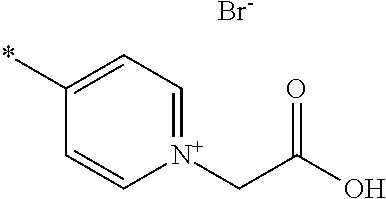 |
505.5 | 36700 |
| D-59 |
 |
 |
 |
513.0 | 25900 |
| D-60 |
 |
522.5 | 59200 |
| D-61 |
 |
501.0 | 22700 |
| Absorption | ||
| spectrum | ||
| Chemical Structure | λmax |
| No. | Donor | Spacer | Acceptor | (nm) | ε |
| D-62 |
 |
 |
 |
452.0 | 17800 |
| D-63 |
 |
 |
 |
512.5 | 27700 |
| D-64 |
 |
 |
 |
513.0 | 20100 |
| D-65 |
 |
 |
 |
485.4 | 33900 |
| D-66 |
 |
 |
 |
498.0 | 29900 |
| D-67 |
 |
 |
 |
488.0 | 19600 |
| D-68 |
 |
 |
 |
480.0 | 20900 |
| D-69 |
 |
 |
 |
506.0 | 7730 |
| D-70 |
 |
 |
 |
529.0 | 32400 |
| D-71 |
 |
 |
 |
508.0 | 35600 |
| D-72 |
 |
 |
 |
508.5 | 24300 |
| D-73 |
 |
 |
 |
506.0 | 34600 |
| D-74 |
 |
 |
 |
513.0 | 31000 |
| D-75 |
 |
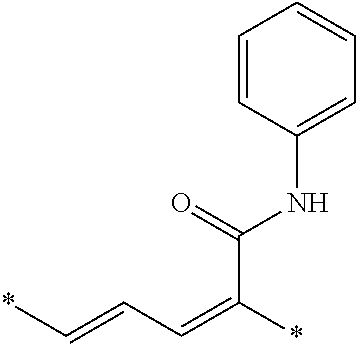 |
 |
490.0 | 25700 |
| D-76 |
 |
 |
 |
473.0 | 11600 |
| D-77 |
 |
 |
 |
469.0 | 15100 |
| D-78 |
 |
 |
 |
527.5 | 25700 |
| D-79 |
 |
 |
 |
510.0 | 27900 |
| D-80 |
 |
 |
 |
510.5 | 29300 |
| D-81 |
 |
 |
 |
507.0 | 31300 |
| D-82 |
 |
 |
 |
446.5 | 3970 |
| D-83 |
 |
 |
 |
508.5 | 33000 |
| D-84 |
 |
 |
 |
509.0 | 17300 |
| D-85 |
 |
 |
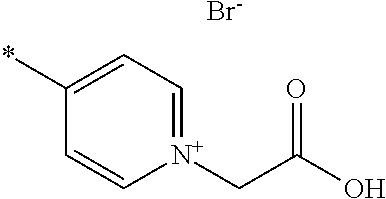 |
479.0 | 22500 |
| D-86 |
 |
 |
 |
494.5 | 19500 |
| D-87 |
 |
 |
 |
521.0 | 26600 |
| D-88 |
 |
 |
 |
506.0 | 45600 |
| D-89 |
 |
 |
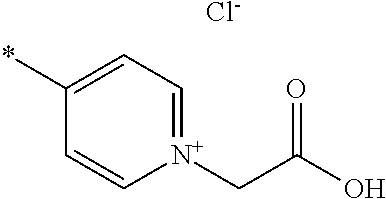 |
514.0 | 25500 |
| D-90 |
 |
 |
 |
503.5 | 24400 |
| D-91 |
 |
 |
 |
508.5 | 33000 |
| D-92 |
 |
 |
 |
511.5 | 22700 |
| D-93 |
 |
 |
 |
506.5 | 28800 |
| D-94 |
 |
 |
 |
480.0 | 9730 |
| D-95 |
 |
 |
 |
473.5 | 35300 |
| D-96 |
 |
 |
 |
505.0 | 34100 |
| D-97 |
 |
 |
 |
500.5 | 38800 |
| D-98 |
 |
 |
 |
509.0 | 11700 |
| D-99 |
 |
 |
 |
508.0 | 33100 |
| D-100 |
 |
 |
 |
520.0 | 26600 |
| D-101 |
 |
 |
 |
512.0 | 31000 |
| D-102 |
 |
 |
 |
504.0 | 39100 |
| D-103 |
 |
 |
 |
527.0 | 21100 |
| D-104 |
 |
 |
 |
501.0 | 11200 |
| D-105 |
 |
 |
 |
509.0 | 25400 |
| D-106 |
 |
 |
 |
511.0 | 24200 |
| D-107 |
 |
 |
 |
512.0 | 20900 |
| D-108 |
 |
 |
 |
499.0 | 16100 |
| D-109 |
 |
 |
 |
499.0 | 30500 |
| D-110 |
 |
 |
 |
510 | 28800 |
| D-111 |
 |
 |
 |
508.0 | 36610 |

| TABLE 1 | |||||
| Photo-electric | |||||
| Short-circuit | power | ||||
| current | Open- | Fill | conversion | ||
| density | circuit | factor | efficiency | ||
| Example | Compound | (mA/cm2) | voltage (V) | (%) | (%) |
| A-1 | D-1 | 12.6 | 0.55 | 0.45 | 3.14 |
| A-2 | D-2 | 14.6 | 0.59 | 0.44 | 3.78 |
| A-3 | D-3 | 10.7 | 0.60 | 0.59 | 3.82 |
| A-4 | D-4 | 10.2 | 0.63 | 0.52 | 3.34 |
| A-5 | D-5 | 10.6 | 0.58 | 0.51 | 3.10 |
| A-6 | D-6 | 8.8 | 0.63 | 0.55 | 3.11 |
| A-7 | D-7 | 11.8 | 0.52 | 0.49 | 3.02 |
| A-8 | D-8 | 9.0 | 0.64 | 0.56 | 3.24 |
| A-9 | D-9 | 8.8 | 0.67 | 0.58 | 3.40 |
| A-10 | D-10 | 8.8 | 0.62 | 0.58 | 3.17 |
| A-11 | D-11 | 8.7 | 0.58 | 0.59 | 2.96 |
| A-12 | D-12 | 10.4 | 0.61 | 0.57 | 3.56 |
| A-13 | D-13 | 8.8 | 0.60 | 0.61 | 3.19 |
| A-14 | D-14 | 11.5 | 0.63 | 0.57 | 4.14 |
| A-15 | D-15 | 9.0 | 0.62 | 0.61 | 3.42 |
| A-16 | D-16 | 10.3 | 0.61 | 0.58 | 3.65 |
| A-17 | D-17 | 10.5 | 0.67 | 0.60 | 4.16 |
| A-18 | D-18 | 8.5 | 0.64 | 0.61 | 3.27 |
| A-19 | D-19 | 11.3 | 0.61 | 0.49 | 3.36 |
| A-20 | D-20 | 11.7 | 0.61 | 0.54 | 3.80 |
| A-21 | D-21 | 13.5 | 0.63 | 0.55 | 4.72 |
| A-22* | R-1 | 9.8 | 0.50 | 0.52 | 2.54 |
| A-23 | D-22 | 11.5 | 0.55 | 0.51 | 3.20 |
| A-24 | D-23 | 12.0 | 0.66 | 0.52 | 4.12 |
| A-25 | D-24 | 8.9 | 0.65 | 0.61 | 3.52 |
| A-26 | D-25 | 8.7 | 0.64 | 0.62 | 3.45 |
| A-27 | D-26 | 9.4 | 0.62 | 0.61 | 3.60 |
| A-28 | D-27 | 12.8 | 0.62 | 0.56 | 4.46 |
| A-29 | D-28 | 10.5 | 0.59 | 0.58 | 3.61 |
| A-30 | D-29 | 8.5 | 0.65 | 0.62 | 3.40 |
| A-31 | D-30 | 12.3 | 0.64 | 0.52 | 4.03 |
| A-32 | D-31 | 9.6 | 0.54 | 0.53 | 2.72 |
| A-33 | D-32 | 8.5 | 0.54 | 0.59 | 2.71 |
| A-34 | D-33 | 12.1 | 0.67 | 0.53 | 4.28 |
| A-35 | D-34 | 10.4 | 0.62 | 0.60 | 3.84 |
| A-36 | D-58 | 12.6 | 0.65 | 0.56 | 4.60 |
| A-37 | D-59 | 10.4 | 0.62 | 0.53 | 3.42 |
| A-38 | D-60 | 12.1 | 0.50 | 0.52 | 3.15 |
| A-39 | D-61 | 8.4 | 0.62 | 0.63 | 3.29 |
| *comparison | |||||

| TABLE 2 | |||||||
| Short-circuit | Open- | Photo-electric | |||||
| Steroid | current | circuit | Fill | power | |||
| Steroid | compound | density | voltage | factor | conversion | ||
| Example | Compound | compound | (mM) | (mA/cm2) | (V) | (%) | efficiency (%) |
| B-1 | D-2 | E-1 | 0 | 14.6 | 0.59 | 0.44 | 3.78 |
| B-2 | D-2 | E-1 | 2 | 15.3 | 0.59 | 0.45 | 4.03 |
| B-3 | D-2 | E-1 | 8 | 14.8 | 0.60 | 0.49 | 4.32 |
| B-4 | D-33 | E-1 | 0 | 12.1 | 0.67 | 0.53 | 4.28 |
| B-5 | D-33 | E-1 | 8 | 12.6 | 0.68 | 0.54 | 4.61 |
| B-6 | D-27 | E-1 | 0 | 12.9 | 0.63 | 0.55 | 4.46 |
| B-7 | D-27 | E-1 | 2 | 12.9 | 0.66 | 0.57 | 4.86 |
| B-8 | D-27 | E-1 | 8 | 12.6 | 0.68 | 0.59 | 5.03 |
| TABLE 3 | |||||
| Short-circuit | Open- | Photo-electric | |||
| current | circuit | Fill | power | ||
| density | voltage | factor | conversion | ||
| Example | Compound | (mA/cm2) | (V) | (%) | efficiency (%) |
| B-9 | D-2 | 13.7 | 0.66 | 0.55 | 5.01 |
| B-10 | D-33 | 12.8 | 0.68 | 0.57 | 4.95 |

| TABLE 4 | ||||||
| Compound | Compound | Short-circuit | Fill | Photo-electric | ||
| R-2 | D-6 | current density | Open-circuit | factor | power conversion | |
| Example | (mM) | (mM) | (mA/cm2) | voltage (V) | (%) | efficiency (%) |
| C-1* | 1.8 | 0.0 | 7.1 | 0.527 | 0.54 | 2.04 |
| C-2 | 0.0 | 1.8 | 11.8 | 0.520 | 0.49 | 3.02 |
| C-3 | 0.9 | 0.9 | 12.5 | 0.534 | 0.50 | 3.35 |
| *comparison | ||||||
| TABLE 6 | |||||
| Short-circuit | Open- | Photo-electric | |||
| current | circuit | Fill | power | ||
| density | voltage | factor | conversion | ||
| Example | Compound | (mA/cm2) | (V) | (%) | efficiency( %) |
| A-40 | D-62 | 9.29 | 0.64 | 0.61 | 3.68 |
| A-41 | D-63 | 13.1 | 0.64 | 0.54 | 4.48 |
| A-42 | D-64 | 12.6 | 0.63 | 0.54 | 4.26 |
| A-43 | D-65 | 7.8 | 0.61 | 0.64 | 3.05 |
| A-44 | D-66 | 11.7 | 0.65 | 0.60 | 4.57 |
| A-45 | D-67 | 12.1 | 0.64 | 0.57 | 4.41 |
| A-46 | D-68 | 9.7 | 0.62 | 0.58 | 3.51 |
| A-47 | D-69 | 9.4 | 0.66 | 0.61 | 3.81 |
| A-48 | D-70 | 6.8 | 0.61 | 0.66 | 2.73 |
| A-49 | D-71 | 13.5 | 0.66 | 0.52 | 4.64 |
| A-50 | D-72 | 12.6 | 0.63 | 0.58 | 4.62 |
| A-51 | D-73 | 9.1 | 0.65 | 0.59 | 3.46 |
| A-52 | D-74 | 11.7 | 0.66 | 0.60 | 4.64 |
| A-53 | D-75 | 7.6 | 0.59 | 0.63 | 2.83 |
| A-54 | D-76 | 9.2 | 0.67 | 0.62 | 3.81 |
| A-55 | D-77 | 9.6 | 0.65 | 0.59 | 3.67 |
| A-56 | D-78 | 11.3 | 0.62 | 0.60 | 4.12 |
| A-57 | D-79 | 11.4 | 0.62 | 0.58 | 4.05 |
| A-58 | D-80 | 10.3 | 0.64 | 0.60 | 3.94 |
| A-59 | D-81 | 12.9 | 0.67 | 0.55 | 4.72 |
| A-60 | D-82 | 7.2 | 0.63 | 0.63 | 2.83 |
| A-61 | D-83 | 11.5 | 0.69 | 0.56 | 4.47 |
| A-62 | D-84 | 9.3 | 0.62 | 0.61 | 3.49 |
| A-63 | D-85 | 9.2 | 0.66 | 0.58 | 3.54 |
| A-64 | D-86 | 8.1 | 0.65 | 0.60 | 3.12 |
| A-65 | D-87 | 11.7 | 0.58 | 0.51 | 3.43 |
| A-66 | D-88 | 11.0 | 0.53 | 0.49 | 2.80 |
| A-67 | D-89 | 12.7 | 0.67 | 0.52 | 4.47 |
| A-68 | D-90 | 9.6 | 0.62 | 0.57 | 3.39 |
| A-69 | D-91 | 11.5 | 0.69 | 0.56 | 4.47 |
| A-70 | D-92 | 12.3 | 0.60 | 0.53 | 3.93 |
| A-71 | D-93 | 10.5 | 0.63 | 0.47 | 3.14 |
| A-72 | D-94 | 10.0 | 0.53 | 0.50 | 2.68 |
| A-73 | D-95 | 10.0 | 0.65 | 0.55 | 3.54 |
| A-74 | D-96 | 11.5 | 0.66 | 0.53 | 3.99 |
| A-75 | D-97 | 10.2 | 0.63 | 0.47 | 3.04 |
| A-76 | D-98 | 9.4 | 0.59 | 0.58 | 3.21 |
| A-77 | D-99 | 13.0 | 0.68 | 0.57 | 4.96 |
| A-78 | D-100 | 12.0 | 0.64 | 0.51 | 3.88 |
| A-79 | D-101 | 10.7 | 0.58 | 0.53 | 3.26 |
| A-80 | D-102 | 13.3 | 0.66 | 0.47 | 4.08 |
| A-81 | D-103 | 13.2 | 0.57 | 0.46 | 3.50 |
| A-82 | D-104 | 8.4 | 0.66 | 0.64 | 3.54 |
| A-83 | D-105 | 10.3 | 0.66 | 0.55 | 3.72 |
| A-84 | D-106 | 10.2 | 0.62 | 0.56 | 3.54 |
| A-85 | D-107 | 10.0 | 0.61 | 0.57 | 3.49 |
| A-86 | D-108 | 9.0 | 0.68 | 0.61 | 3.74 |
| A-87 | D-109 | 10.5 | 0.69 | 0.57 | 4.16 |
| A-88 | D-110 | 12.5 | 0.60 | 0.54 | 4.03 |
| A-89 | D-111 | 10.0 | 0.64 | 0.55 | 3.51 |
Claims (17)


Applications Claiming Priority (4)
| Application Number | Priority Date | Filing Date | Title |
|---|---|---|---|
| EP08152419 | 2008-03-07 | ||
| EP08152419.1 | 2008-03-07 | ||
| EP08152419 | 2008-03-07 | ||
| PCT/EP2009/052243 WO2009109499A1 (en) | 2008-03-07 | 2009-02-26 | Dye sensitised solar cell |
Publications (2)
| Publication Number | Publication Date |
|---|---|
| US20110061723A1 US20110061723A1 (en) | 2011-03-17 |
| US8723017B2 true US8723017B2 (en) | 2014-05-13 |
Family
ID=39511061
Family Applications (1)
| Application Number | Title | Priority Date | Filing Date |
|---|---|---|---|
| US12/920,148 Expired - Fee Related US8723017B2 (en) | 2008-03-07 | 2009-02-26 | Dye sensitised solar cell |
Country Status (9)
| Country | Link |
|---|---|
| US (1) | US8723017B2 (en) |
| EP (1) | EP2253031B1 (en) |
| JP (1) | JP5761999B2 (en) |
| KR (1) | KR101464025B1 (en) |
| CN (1) | CN101965652B (en) |
| AR (1) | AR070859A1 (en) |
| AU (1) | AU2009221291B2 (en) |
| TW (1) | TWI465521B (en) |
| WO (1) | WO2009109499A1 (en) |
Cited By (1)
| Publication number | Priority date | Publication date | Assignee | Title |
|---|---|---|---|---|
| US20150108415A1 (en) * | 2012-03-30 | 2015-04-23 | Basf Se | Quinolinium dyes with fluorinated counter anion for dye sensitized solar cells |
Families Citing this family (31)
| Publication number | Priority date | Publication date | Assignee | Title |
|---|---|---|---|---|
| JP5749883B2 (en) * | 2008-10-29 | 2015-07-15 | 富士フイルム株式会社 | Dye, photoelectric conversion element and photoelectrochemical cell using the same |
| JP5557484B2 (en) * | 2008-10-29 | 2014-07-23 | 富士フイルム株式会社 | Dye, photoelectric conversion element and photoelectrochemical cell using the same |
| US8779126B2 (en) | 2008-10-29 | 2014-07-15 | Fujifilm Corporation | Dye, photoelectric conversion element using the same, photoelectrochemical cell, and method of producing dye |
| CN102598332A (en) | 2009-09-04 | 2012-07-18 | 巴斯夫欧洲公司 | Dye-sensitized solar cells |
| JP5620081B2 (en) * | 2009-09-28 | 2014-11-05 | 富士フイルム株式会社 | Method for manufacturing photoelectric conversion element |
| JP2011071070A (en) * | 2009-09-28 | 2011-04-07 | Fujifilm Corp | Manufacturing method of photoelectric conversion element, photoelectric conversion element, and photoelectrochemical cell |
| CN102695759A (en) * | 2009-12-30 | 2012-09-26 | 株式会社东进世美肯 | New organic dyes and methods for their manufacture |
| KR101882394B1 (en) * | 2009-12-31 | 2018-07-26 | 주식회사 동진쎄미켐 | Novel organic dye and preparation thereof |
| WO2011081357A2 (en) * | 2009-12-30 | 2011-07-07 | 주식회사 동진쎄미켐 | Novel organic dye and method for preparing same |
| KR20110083011A (en) * | 2010-01-13 | 2011-07-20 | 삼성코닝정밀소재 주식회사 | Dye-sensitized solar cell electrode substrate and dye-sensitized solar cell |
| JP2011150883A (en) * | 2010-01-21 | 2011-08-04 | Nec Corp | Photoelectric transfer element, optical sensor, and solar cell |
| JP2011150881A (en) * | 2010-01-21 | 2011-08-04 | Nec Corp | Photoelectric transfer element, optical sensor, and solar cell |
| WO2011108613A1 (en) * | 2010-03-05 | 2011-09-09 | 富士フイルム株式会社 | Photoelectric conversion element and photoelectrochemical cell |
| CN102844829A (en) * | 2010-03-29 | 2012-12-26 | 巴斯夫欧洲公司 | Dye sensitised solar cell |
| US20110233477A1 (en) * | 2010-03-29 | 2011-09-29 | Basf Se | Dye sensitised solar cell |
| CN102034610A (en) * | 2010-09-21 | 2011-04-27 | 上海大学 | Semiconductor zinc oxide thin film surface modification method |
| JP5655591B2 (en) * | 2011-01-26 | 2015-01-21 | 日本精工株式会社 | Photoelectric conversion element |
| FR2982615A1 (en) | 2011-11-10 | 2013-05-17 | Commissariat Energie Atomique | ORGANIC DYE AND ITS USES IN PHOTOVOLTAIC CELLS |
| CN102643558A (en) * | 2012-01-20 | 2012-08-22 | 华东师范大学 | N-carboxymethylpyridinium inner salt organic dye and preparation method and application thereof |
| EP2804852A2 (en) | 2012-01-20 | 2014-11-26 | Regents Of The University Of Minnesota | Therapeutic compounds |
| TWI434895B (en) | 2012-03-28 | 2014-04-21 | Ind Tech Res Inst | Dyes and photoelectric conversion devices containing the same |
| KR101711986B1 (en) | 2012-11-20 | 2017-03-03 | 삼성에스디아이 주식회사 | Positive active material composition for lithium secondary battery and lithium secondary battery |
| CN104919613A (en) | 2013-01-15 | 2015-09-16 | 巴斯夫欧洲公司 | Trigene oligomers and polymers and their use as hole-conducting materials |
| US20160155575A1 (en) * | 2013-07-25 | 2016-06-02 | Basf Se | Methine dyes with large organic counter anion for dye sensitized solar cells |
| EP2937399A1 (en) | 2014-04-22 | 2015-10-28 | Basf Se | Hole-transport materials for organic solar cells or organic optical sensors |
| CN104788992B (en) * | 2015-03-04 | 2017-07-07 | 苏州大学 | A kind of α bromos acrylamide reactive group half flower cyanines vital fluorescence dye and preparation method |
| FR3050994B1 (en) | 2016-05-09 | 2018-05-25 | Commissariat A L'energie Atomique Et Aux Energies Alternatives | ORGANIC DYE WITH IMPROVED EFFICIENCY AND ITS USES IN PHOTOVOLTAIC CELLS |
| JP6721809B2 (en) * | 2016-05-20 | 2020-07-15 | 山田化学工業株式会社 | Dye compound |
| EP3406691A1 (en) | 2017-05-22 | 2018-11-28 | Commissariat à l'Energie Atomique et aux Energies Alternatives | Organic photochromic dye and uses thereof for dye sensitized solar cells |
| JP7677629B2 (en) * | 2018-07-10 | 2025-05-15 | アンビエント フォトニクス, インコーポレイテッド | Solar cell dyes and their combinations for copper redox-based dye-sensitized solar cells |
| CN113801124A (en) * | 2020-06-11 | 2021-12-17 | 北京鼎材科技有限公司 | Thermally activated delayed fluorescent materials, organic electroluminescent devices and their applications |
Citations (9)
| Publication number | Priority date | Publication date | Assignee | Title |
|---|---|---|---|---|
| JP2004022222A (en) | 2002-06-13 | 2004-01-22 | Nippon Kayaku Co Ltd | Dye-sensitizing photoelectric converter element |
| US20040187918A1 (en) | 2001-07-06 | 2004-09-30 | Masaaki Ikeda | Photoelectric conversion element sensitized with coloring matter |
| CN1534021A (en) | 2003-04-02 | 2004-10-06 | �Ϻ���ͨ��ѧ | Large conjugated hemicyanine dyes, their synthesis and their sensitized nanocrystalline semiconductor solar cells |
| US20040260093A1 (en) | 2002-12-05 | 2004-12-23 | Dyomics Gmbh | Compound, especially marker-dye on the basis of polymethines |
| JP2005082678A (en) | 2003-09-08 | 2005-03-31 | Mitsubishi Paper Mills Ltd | Photoelectric conversion material, semiconductor electrode, and photoelectric conversion element using the same |
| WO2006079334A2 (en) | 2005-01-31 | 2006-08-03 | Dyomics Gmbh | Protein identifying and quantifying method |
| WO2006097334A1 (en) | 2005-03-18 | 2006-09-21 | Cognis Ip Management Gmbh | Antiperspirant composition based on dicarboxylic acid diesters of a c6-c18 dicarboxylic acid with c12-c22 fatty alcohols |
| WO2006134939A1 (en) * | 2005-06-14 | 2006-12-21 | Nippon Kayaku Kabushiki Kaisha | Dye-sensitized photoelectric conversion device |
| JP2007149570A (en) | 2005-11-30 | 2007-06-14 | Nippon Kayaku Co Ltd | Dye-sensitized photoelectric conversion element |
Family Cites Families (2)
| Publication number | Priority date | Publication date | Assignee | Title |
|---|---|---|---|---|
| KR101001548B1 (en) | 2004-06-29 | 2010-12-17 | 삼성에스디아이 주식회사 | Dye-Sensitized Solar Cell Using Photoelectric Conversion Device |
| KR101166017B1 (en) * | 2006-06-01 | 2012-07-23 | 삼성에스디아이 주식회사 | Dye having a function of surfactant and solar cells comprising the same |
-
2009
- 2009-02-26 WO PCT/EP2009/052243 patent/WO2009109499A1/en not_active Ceased
- 2009-02-26 KR KR1020107022317A patent/KR101464025B1/en not_active Expired - Fee Related
- 2009-02-26 US US12/920,148 patent/US8723017B2/en not_active Expired - Fee Related
- 2009-02-26 JP JP2010549100A patent/JP5761999B2/en not_active Expired - Fee Related
- 2009-02-26 CN CN200980108083.3A patent/CN101965652B/en not_active Expired - Fee Related
- 2009-02-26 AU AU2009221291A patent/AU2009221291B2/en not_active Ceased
- 2009-02-26 EP EP09718302A patent/EP2253031B1/en not_active Not-in-force
- 2009-03-06 AR ARP090100813A patent/AR070859A1/en not_active Application Discontinuation
- 2009-03-06 TW TW098107315A patent/TWI465521B/en not_active IP Right Cessation
Patent Citations (13)
| Publication number | Priority date | Publication date | Assignee | Title |
|---|---|---|---|---|
| US20040187918A1 (en) | 2001-07-06 | 2004-09-30 | Masaaki Ikeda | Photoelectric conversion element sensitized with coloring matter |
| JP2004022222A (en) | 2002-06-13 | 2004-01-22 | Nippon Kayaku Co Ltd | Dye-sensitizing photoelectric converter element |
| US20040260093A1 (en) | 2002-12-05 | 2004-12-23 | Dyomics Gmbh | Compound, especially marker-dye on the basis of polymethines |
| CN1534021A (en) | 2003-04-02 | 2004-10-06 | �Ϻ���ͨ��ѧ | Large conjugated hemicyanine dyes, their synthesis and their sensitized nanocrystalline semiconductor solar cells |
| CN1253436C (en) | 2003-04-02 | 2006-04-26 | 北京大学 | Large conjugated half cyanine dye, its synthesis and its sensitized nano-crystal semiconductor solar energy battery |
| JP2005082678A (en) | 2003-09-08 | 2005-03-31 | Mitsubishi Paper Mills Ltd | Photoelectric conversion material, semiconductor electrode, and photoelectric conversion element using the same |
| WO2006079334A2 (en) | 2005-01-31 | 2006-08-03 | Dyomics Gmbh | Protein identifying and quantifying method |
| WO2006097334A1 (en) | 2005-03-18 | 2006-09-21 | Cognis Ip Management Gmbh | Antiperspirant composition based on dicarboxylic acid diesters of a c6-c18 dicarboxylic acid with c12-c22 fatty alcohols |
| US20090214457A1 (en) | 2005-03-18 | 2009-08-27 | Markus Dierker | Antiperspirant Composition Based on Dicarboxylic Acid Diesters of a C6-C18 Dicarboxylic Acid With C12-C22 Fatty Alcohols |
| WO2006134939A1 (en) * | 2005-06-14 | 2006-12-21 | Nippon Kayaku Kabushiki Kaisha | Dye-sensitized photoelectric conversion device |
| EP1892792A1 (en) | 2005-06-14 | 2008-02-27 | Nippon Kayaku Kabushiki Kaisha | Dye-sensitized photoelectric conversion device |
| US20090165858A1 (en) * | 2005-06-14 | 2009-07-02 | Koichiro Shigaki | Dye-sensitized photoelectric conversion device |
| JP2007149570A (en) | 2005-11-30 | 2007-06-14 | Nippon Kayaku Co Ltd | Dye-sensitized photoelectric conversion element |
Non-Patent Citations (9)
| Title |
|---|
| Dentani, T. et al., "Flexible zinc oxide solar cells sensitized by styryl dyes", Dyes and Pigments, 2008, vol. 77, pp. 59-69. |
| English Language Abstract of JP 2005-082678 Printed on Nov. 30, 2010. |
| English Language Abstract of JP 2007-149570 Printed on Nov. 30, 2010. |
| English language abstract of WO2006/079334 printed on Mar. 2, 2011. |
| English language machine-generated translation of CN1534021 (18 pages); 2004. |
| Li, F. et al., "Photoelectric conversion property of a photoresponsive D-Pi-A dye containing both N=N and CH=CH bonds", Colloids and Surfaces A: Physicochem. Eng. Aspects, 2006, vol. 275, pp. 92-98. |
| Li, F. et al., "Photoelectric conversion property of a photoresponsive D-Π-A dye containing both N=N and CH=CH bonds", Colloids and Surfaces A: Physicochem. Eng. Aspects, 2006, vol. 275, pp. 92-98. |
| Partial English language translation for JP2004-022222 (5 pages); 2004. |
| Translation of Claims of CN 1253436 (C), 2006. |
Cited By (2)
| Publication number | Priority date | Publication date | Assignee | Title |
|---|---|---|---|---|
| US20150108415A1 (en) * | 2012-03-30 | 2015-04-23 | Basf Se | Quinolinium dyes with fluorinated counter anion for dye sensitized solar cells |
| US9865823B2 (en) * | 2012-03-30 | 2018-01-09 | Basf Se | Quinolinium dyes with fluorinated counter anion for dye sensitized solar cells |
Also Published As
| Publication number | Publication date |
|---|---|
| JP2011517363A (en) | 2011-06-02 |
| KR20100133408A (en) | 2010-12-21 |
| CN101965652A (en) | 2011-02-02 |
| US20110061723A1 (en) | 2011-03-17 |
| AU2009221291A1 (en) | 2009-09-11 |
| EP2253031B1 (en) | 2012-10-17 |
| TW200946599A (en) | 2009-11-16 |
| AU2009221291B2 (en) | 2014-03-27 |
| KR101464025B1 (en) | 2014-11-21 |
| WO2009109499A1 (en) | 2009-09-11 |
| EP2253031A1 (en) | 2010-11-24 |
| CN101965652B (en) | 2014-11-26 |
| AR070859A1 (en) | 2010-05-12 |
| TWI465521B (en) | 2014-12-21 |
| JP5761999B2 (en) | 2015-08-12 |
Similar Documents
| Publication | Publication Date | Title |
|---|---|---|
| US20110061723A1 (en) | Dye sensitised solar cell | |
| Kong et al. | Review of recent progress in dye‐sensitized solar cells | |
| Kumara et al. | Fabrication of dye-sensitized solar cells using triethylamine hydrothiocyanate as a CuI crystal growth inhibitor | |
| Tennakone et al. | A solid-state photovoltaic cell sensitized with a ruthenium bipyridyl complex | |
| US7989691B2 (en) | Dye for dye-sensitized solar cell and dye-sensitized solar cell including the same | |
| JP4477729B2 (en) | Photoelectric conversion element and solar cell using the same | |
| JP5023866B2 (en) | Dye-sensitized photoelectric conversion element, method for producing the same, and electronic device | |
| KR101008226B1 (en) | New organic dyes and preparation methods thereof | |
| US8709299B2 (en) | Dye sensitised solar cell | |
| JP6150732B2 (en) | Photovoltaic element | |
| US9595678B2 (en) | Dye solar cell with improved stability | |
| JP2005135656A (en) | Photoelectric conversion element | |
| CN103026438A (en) | Dye solar cells with improved stability | |
| JP2013527560A (en) | Dye-sensitized solar cell | |
| JP5239262B2 (en) | Solar cell | |
| US20070089783A1 (en) | Semiconductor electrode, fabrication method thereof and solar cell comprising the same | |
| Elangovan et al. | Performance of dye-sensitized solar cells based on various sensitizers applied on TiO2-Nb2O5 core/shell photoanode structure | |
| Kim et al. | Two-dimensional X-shaped organic dyes bearing two anchoring groups to TiO2 photoanode for efficient dye-sensitized solar cells | |
| US20190221375A1 (en) | Photoelectric conversion element, dye-sensitized solar cell, metal complex dye, dye solution, and oxide semiconductor electrode | |
| JP5815514B2 (en) | NOVEL ORGANIC DYE AND METHOD FOR PRODUCING THE SAME | |
| US11094474B2 (en) | Photoelectric conversion element, dye-sensitized solar cell, metal complex dye, dye composition, and oxide semiconductor electrode | |
| Zhang et al. | Optical and electrical properties of organic-inorganic composite system | |
| Palomares et al. | Kinetic redundancy in dye-sensitized solar cells: the use of high-bandgap metal oxide barrier layers | |
| Hill | Surface Sensitization and Modification in Hybrid Organic-inorganic Photovoltaics | |
| Yum et al. | Molecular engineering of sensitizers for conversion of solar energy into electricity |
Legal Events
| Date | Code | Title | Description |
|---|---|---|---|
| AS | Assignment |
Owner name: BASF SE, GERMANY Free format text: ASSIGNMENT OF ASSIGNORS INTEREST;ASSIGNORS:KUNIMOTO, KAZUHIKO;YAMAMOTO, HIROSHI;NAKAMICHI, SHINJI;AND OTHERS;SIGNING DATES FROM 20101119 TO 20101122;REEL/FRAME:025426/0110 |
|
| STCF | Information on status: patent grant |
Free format text: PATENTED CASE |
|
| MAFP | Maintenance fee payment |
Free format text: PAYMENT OF MAINTENANCE FEE, 4TH YEAR, LARGE ENTITY (ORIGINAL EVENT CODE: M1551) Year of fee payment: 4 |
|
| FEPP | Fee payment procedure |
Free format text: MAINTENANCE FEE REMINDER MAILED (ORIGINAL EVENT CODE: REM.); ENTITY STATUS OF PATENT OWNER: LARGE ENTITY |
|
| LAPS | Lapse for failure to pay maintenance fees |
Free format text: PATENT EXPIRED FOR FAILURE TO PAY MAINTENANCE FEES (ORIGINAL EVENT CODE: EXP.); ENTITY STATUS OF PATENT OWNER: LARGE ENTITY |
|
| STCH | Information on status: patent discontinuation |
Free format text: PATENT EXPIRED DUE TO NONPAYMENT OF MAINTENANCE FEES UNDER 37 CFR 1.362 |
|
| FP | Lapsed due to failure to pay maintenance fee |
Effective date: 20220513 |