US8718668B2 - Device and method for tracking an accessed location of a network - Google Patents
Device and method for tracking an accessed location of a network Download PDFInfo
- Publication number
- US8718668B2 US8718668B2 US12/207,557 US20755708A US8718668B2 US 8718668 B2 US8718668 B2 US 8718668B2 US 20755708 A US20755708 A US 20755708A US 8718668 B2 US8718668 B2 US 8718668B2
- Authority
- US
- United States
- Prior art keywords
- location
- perimeter
- accessed
- network
- registered
- Prior art date
- Legal status (The legal status is an assumption and is not a legal conclusion. Google has not performed a legal analysis and makes no representation as to the accuracy of the status listed.)
- Active, expires
Links
Images


Classifications
-
- H—ELECTRICITY
- H04—ELECTRIC COMMUNICATION TECHNIQUE
- H04W—WIRELESS COMMUNICATION NETWORKS
- H04W4/00—Services specially adapted for wireless communication networks; Facilities therefor
- H04W4/02—Services making use of location information
- H04W4/029—Location-based management or tracking services
-
- H—ELECTRICITY
- H04—ELECTRIC COMMUNICATION TECHNIQUE
- H04W—WIRELESS COMMUNICATION NETWORKS
- H04W4/00—Services specially adapted for wireless communication networks; Facilities therefor
- H04W4/02—Services making use of location information
-
- H—ELECTRICITY
- H04—ELECTRIC COMMUNICATION TECHNIQUE
- H04L—TRANSMISSION OF DIGITAL INFORMATION, e.g. TELEGRAPHIC COMMUNICATION
- H04L63/00—Network architectures or network communication protocols for network security
- H04L63/10—Network architectures or network communication protocols for network security for controlling access to devices or network resources
- H04L63/107—Network architectures or network communication protocols for network security for controlling access to devices or network resources wherein the security policies are location-dependent, e.g. entities privileges depend on current location or allowing specific operations only from locally connected terminals
-
- H—ELECTRICITY
- H04—ELECTRIC COMMUNICATION TECHNIQUE
- H04L—TRANSMISSION OF DIGITAL INFORMATION, e.g. TELEGRAPHIC COMMUNICATION
- H04L65/00—Network arrangements, protocols or services for supporting real-time applications in data packet communication
- H04L65/1066—Session management
- H04L65/1073—Registration or de-registration
-
- H—ELECTRICITY
- H04—ELECTRIC COMMUNICATION TECHNIQUE
- H04L—TRANSMISSION OF DIGITAL INFORMATION, e.g. TELEGRAPHIC COMMUNICATION
- H04L67/00—Network arrangements or protocols for supporting network services or applications
- H04L67/50—Network services
- H04L67/52—Network services specially adapted for the location of the user terminal
-
- H—ELECTRICITY
- H04—ELECTRIC COMMUNICATION TECHNIQUE
- H04W—WIRELESS COMMUNICATION NETWORKS
- H04W4/00—Services specially adapted for wireless communication networks; Facilities therefor
- H04W4/02—Services making use of location information
- H04W4/021—Services related to particular areas, e.g. point of interest [POI] services, venue services or geofences
-
- H—ELECTRICITY
- H04—ELECTRIC COMMUNICATION TECHNIQUE
- H04L—TRANSMISSION OF DIGITAL INFORMATION, e.g. TELEGRAPHIC COMMUNICATION
- H04L63/00—Network architectures or network communication protocols for network security
- H04L63/02—Network architectures or network communication protocols for network security for separating internal from external traffic, e.g. firewalls
- H04L63/0227—Filtering policies
- H04L63/0263—Rule management
-
- H—ELECTRICITY
- H04—ELECTRIC COMMUNICATION TECHNIQUE
- H04L—TRANSMISSION OF DIGITAL INFORMATION, e.g. TELEGRAPHIC COMMUNICATION
- H04L63/00—Network architectures or network communication protocols for network security
- H04L63/10—Network architectures or network communication protocols for network security for controlling access to devices or network resources
-
- H04L67/24—
-
- H—ELECTRICITY
- H04—ELECTRIC COMMUNICATION TECHNIQUE
- H04L—TRANSMISSION OF DIGITAL INFORMATION, e.g. TELEGRAPHIC COMMUNICATION
- H04L67/00—Network arrangements or protocols for supporting network services or applications
- H04L67/50—Network services
- H04L67/54—Presence management, e.g. monitoring or registration for receipt of user log-on information, or the connection status of the users
-
- H—ELECTRICITY
- H04—ELECTRIC COMMUNICATION TECHNIQUE
- H04W—WIRELESS COMMUNICATION NETWORKS
- H04W24/00—Supervisory, monitoring or testing arrangements
- H04W24/10—Scheduling measurement reports ; Arrangements for measurement reports
-
- H—ELECTRICITY
- H04—ELECTRIC COMMUNICATION TECHNIQUE
- H04W—WIRELESS COMMUNICATION NETWORKS
- H04W4/00—Services specially adapted for wireless communication networks; Facilities therefor
- H04W4/02—Services making use of location information
- H04W4/025—Services making use of location information using location based information parameters
-
- H—ELECTRICITY
- H04—ELECTRIC COMMUNICATION TECHNIQUE
- H04W—WIRELESS COMMUNICATION NETWORKS
- H04W4/00—Services specially adapted for wireless communication networks; Facilities therefor
- H04W4/06—Selective distribution of broadcast services, e.g. multimedia broadcast multicast service [MBMS]; Services to user groups; One-way selective calling services
- H04W4/08—User group management
-
- H—ELECTRICITY
- H04—ELECTRIC COMMUNICATION TECHNIQUE
- H04W—WIRELESS COMMUNICATION NETWORKS
- H04W48/00—Access restriction; Network selection; Access point selection
- H04W48/18—Selecting a network or a communication service
-
- H—ELECTRICITY
- H04—ELECTRIC COMMUNICATION TECHNIQUE
- H04W—WIRELESS COMMUNICATION NETWORKS
- H04W8/00—Network data management
- H04W8/26—Network addressing or numbering for mobility support
Definitions
- VoIP Voice over Internet protocol
- VoIP Voice over Internet protocol
- a VoIP device may be any reasonably suitable device that converts analog audio signals into data packets and vice versa and communicates the analog audio signals and the data packets through an analog audio port and a data packet port, respectively.
- An analog terminal adapter (ATA) and a multimedia terminal adapter (MTA) are examples of VoIP devices.
- data packets each comprise a header field and a data field, where the header fields are used for processing data packets and may each include at least one of a source Internet protocol (IP) address, a destination IP address, a time, and any other data related to processing of data packets including cyclic redundancy check (CRC) bits.
- IP Internet protocol
- CRC cyclic redundancy check
- a user of the VoIP device may first sign up for a VoIP service through a service provider, where the VoIP device may have an assigned telephone number.
- the user may make and receive telephone calls through the assigned telephone number regardless of where the user is located around the world by accessing a VoIP network using the VoIP device.
- Users may plug one or more telephones into a VoIP device, and the telephones will operate, usually transparently, on the VoIP network.
- VoIP telephone service has been gaining popularity over telephone calls made through a plain old telephone service (POTS).
- POTS plain old telephone service
- One of the strengths of VoIP telephone services is their costs. They have been becoming a relatively less expensive way of making and receiving telephone calls in comparison to telephone calls made through the POTS.
- tracing of call origins available in POTS for location-based services such as dispatching emergency services and law enforcement has not been made available in VoIP networks due to the size and constantly changing nature of VoIP networks and portability of VoIP devices.
- FIG. 1 illustrates a system for tracking a location of a VoIP device accessing a network and using the tracked location for location-based services according to an embodiment of the invention
- FIG. 2 illustrates a VoIP device comprising an access control module for controlling an access to a network by using registered access locations according to an embodiment of the invention
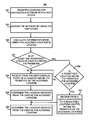
- FIG. 3 illustrates a method for tracking a location of a VoIP device accessing a network and using the tracked location for providing location-based services according to an embodiment of the invention.
- While telephone calls may be made from any location around the world via a VoIP network such as the Internet, it is desirable to have information as to a location where a VoIP device is connected to the network for providing location-based services such as dispatching emergency services, law enforcement, billing by service providers, determining routing paths to and from the accessed location, etc.
- location-based services such as dispatching emergency services, law enforcement, billing by service providers, determining routing paths to and from the accessed location, etc.
- the location where the VoIP device is accessing the VoIP network is calculated by using any reasonably suitable way for calculating an access location on the VoIP network such as use of a ping signal, a triangulation method, etc. If the calculation does not pinpoint the exact access location, at least a perimeter within which the access location lies (that is, the calculation is not able to pinpoint the exact access location but identifies a physical boundary in the network within which the access location) may be obtained.
- a user of the device may be prompted to perform one of a verification and a manual entry of a location within the perimeter as the access location.
- the verification may comprise verifying one of the at least one registered location located within the perimeter as the access location.
- FIG. 1 shown therein is a system 100 for tracking a location where a VoIP device 120 accesses a network 130 and using the tracked location for providing location-based services according to an embodiment of the invention.
- the system 100 may include additional components and that some of the components described herein may be removed and/or modified without departing from a scope of the system 100 .
- a customer premise equipment (CPE) 110 may be any reasonably suitable device that converts audio sounds into analog audio signals and vice versa such as a telephone, a microphone, a speaker, a television, a computer, etc.
- the VoIP device 120 communicates analog audio signals to and from the CPE 110 , communicates data packets to and from the network 130 , and converts the analog audio signals into the data packets and vice versa.
- the VoIP device 120 may be any reasonably suitable VoIP device such as ATAs and MTAs.
- the VoIP device 120 may access the network 130 for making or receiving telephone calls.
- the network 130 may comprise an access control device 131 of a service provider and one or more networks such as a packet-switched network 132 and a public switched telephone network (PSTN) 133 as shown in FIG. 1 .
- PSTN public switched telephone network
- a registration of one or more locations where the VoIP device 120 may access the network 130 may be performed through the access control device 131 of the service provider.
- the registration of one or more access locations may be performed independently of the VoIP device 120 by allowing a registration through a website when users sign up for VoIP service with a service provider or, when users are signing up for VoIP service through a telephone call, a live operator, a voice response system, etc.
- the VoIP device 120 When a registration of one or more locations where the VoIP device 120 may access the network 130 is performed through the VoIP device 120 and the access control device 131 of the service provider, the VoIP device 120 becomes a conduit for the registration, and the service provider provides and maintains any necessary registration software/hardware for the registration and may be responsible for storing records of the registrations in the network.
- the registration of one or more locations where the VoIP device 120 may access the network 130 may be performed through, for instance, a software/hardware of the VoIP device 120 .
- any telephone number assigned by a service provider to the VoIP device 120 may be a separate record from the registered access locations.
- the assigned U.S. telephone number may show up on a caller identification provided to the call recipient, while the network access location outside the United States may be required to be registered.
- the access location (e.g., the street and city address of the access location) is calculated according to any suitable method of calculating an access location on a network such as the methods discussed below.
- the exact access location may be pinpointed, and the calculated, exact access location may be provided to a location-based service 140 .
- the exact calculated access location may be provided to the location-based service 140 automatically, if the calculated access location does not match one of the registered locations, the user may be prompted to register the calculated location as the registered location.
- the access location calculation may not be able to pinpoint the exact location and may instead determine a perimeter within which the access location lies, where the calculated perimeter may be provided to the location-based service 140 authorized to receive the information. After determining the perimeter within which the access location lies, the registered locations located within the perimeter are further determined. For instance, the access location calculation may determine that two or more registered locations lie within the perimeter. In such a case, the user may be prompted to select and verify one of the registered locations within the perimeter as the access location.
- the user may be prompted to verify the registered location as the access location.
- a user may be required to select the registered location as the access location in response to a display or an audio announcement of one or more registered locations within the access location.
- the user may be allowed to manually enter the access location.
- the user may be prompted to manually enter a location as the access location. After the manual entry of the location by the user, if the manually entered location is within the perimeter, the manually entered location is determined to be the access location.
- the call by the user may be blocked from being transmitted to the recipient and/or terminated.
- the calculation pinpoints an access location, which does not match one of the registered locations, and the user is unable to register the calculated location after the prompt, the call by the user may be blocked from being transmitted to the recipient and/or terminated.
- the user may be prompted through a voice recording to register a new access location through, for instance, a voice command mechanism, a keypad on the telephone, a touch screen on the MTA device, an email to a personal email account of the user, a regular postal mail to one or more of the already registered access locations of the user, etc.
- a voice command mechanism for instance, a keypad on the telephone, a touch screen on the MTA device, an email to a personal email account of the user, a regular postal mail to one or more of the already registered access locations of the user, etc.
- one or both of the calculated access location and the verified or manually entered access location may be provided to the location-based service 140 .
- any one or more or all of the functions of the access control device 131 and functions of the service provider may be alternatively provided by the VoIP device 120 by providing equivalent functions in the VoIP device.
- the VoIP device 120 may control access to the network 130 , perform a registration of access locations and any updates thereof, and/or terminate the network access after a failure to properly update the registered access locations.
- the access control device 131 allows transmission of data packets to and from the VoIP device 120 through the packet-switched network 132 and, possibly, through another network, such as the PSTN 133 , of the network 130 .
- network 130 in FIG. 1 is shown as having the access control device 131 , the packet-switched network 132 , and the PSTN 133 according to an embodiment of the invention, it should be understood that the network 130 may include additional components and that some of the components described herein may be removed and/or modified without departing from a scope of the network 130 .
- the packet-switched network 132 may be any reasonably suitable network for transmitting and managing data packets in the network based on a header field of each data packet such as the Internet.
- the PSTN 133 is a network of the world's public circuit-switched telephone networks and converts data packets received from the packet-switched network 132 into analog audio signals before being forwarded to a telephone line of the recipient of the call.
- the data packets may be transferred to and from another VoIP device connected to the packet-switched network 132 directly.
- data packets corresponding to a telephone call may be transferred to and from a telephone user by communicating the data packets through both the packet-switched network 132 and another network such as a public switched telephone network (PSTN) 133 before reaching the other user.
- PSTN public switched telephone network
- the calculation may be performed by any reasonably suitable way of calculating an accessed location in a network such as using a global positioning system (GPS) embedded within the VoIP device 120 to calculate the location, using a ping signal from a source server to analyze a round-trip time and a path that the ping signal takes in reaching the access location and coming back and to calculate the access location based on the analysis, a triangulation method, etc.
- GPS global positioning system
- the triangulation method determines an access location in a network by sending ping signals from several servers around the world and analyzing the paths and the round-trip times that the ping signals take in reaching the access location and coming back to the source servers. More specifically, by using known information as to the locations of the servers, the triangulation method calculates the location of the access location.
- the calculation of the access location may be further improved by having more servers placed at different locations on the network for generating pings. For instance, three servers strategically located around the world may be used to triangulate the access location and provide a relatively more accurate calculation of the access location.
- the calculation of the access location may be initiated by either the network 130 via, for instance, a server on the network 130 or the VoIP device 120 via, for instance, a software and/or hardware on the VoIP device 120 .
- the calculation of the access location may be performed by either the VoIP device 120 (for instance, via an embedded GPS within the VoIP device 120 ) or by the network 130 through, for instance, a dedicated server in the network 130 for performing a triangulation based on information collected from use of pings sent by multiple servers around the world as described above.
- the calculated access location information may be routed through the network 130 to the location-based service 140 .
- the location-based service 140 may be connected to the packet-switched network 132 through the PSTN 133 , and the calculated access location may be transferred through both the packet-switched network 132 and the PSTN 133 before reaching the location-based service 140 as shown in FIG. 1 .
- the PSTN 133 receives from the packet-switched network 132 data packets corresponding to the calculated access location and converts the received data packets into analog audio signals before being forwarded to a telephone line corresponding to the location-based service 140 .
- the location-based service 140 may be another VoIP device connected to the packet-switched network 132 and may receive the calculated access location information directly from the packet-switched network 132 without having the information transferred through the PSTN 133 .
- the location-based service 140 may be any reasonably suitable location-based service such as emergency services, law enforcement, a service provider, etc.
- the location-based service 140 may use the access location information for any location-based service such as dispatching emergency services, law enforcement, billing by service providers, disallowing network access from certain geographic locations to specific VoIP devices, determining routing paths to and from the access location, etc.
- the access location information may be used in determining routes for transmitting data packets to and from the access location. An optimization of routes based on the access location information may be especially useful if, for instance, several tiers of the Internet exist and where voice traffic and data traffic follow different paths going from one point to another.
- a VoIP device 120 comprising an access control module 230 for controlling an access to a network by using registered access location information according to an embodiment of the invention.
- the VoIP device 120 incorporates all of the functions of the access control device 131 in the access control module 230 .
- the VoIP device 120 may include additional components and that some of the components described herein may be removed and/or modified without departing from a scope of the VoIP device 120 .
- the VoIP device 120 may include one or more of a modem, an MTA, a cordless base station and a wireless router.
- the VoIP device 120 may include an analog signal port 210 and a data packet port 240 .
- the analog signal port 210 may be any reasonably suitable analog signal port for receiving and transmitting analog audio signals and may comprise one port or separate ports for performing the receipt and transmission of analog audio signals, respectively.
- the data packet port 240 may be any reasonably suitable port for receiving and transmitting data packets and may comprise one port or separate ports for performing the receipt and the transmission of analog audio signals, respectively.
- a control processor 220 comprises circuitry to convert the analog audio signals into data packets and vice versa and communicates the audio signals through the analog signal port 210 and the data packets through the data packet port 240 .
- the access control module 230 performs all of the above-described functions of the access control device 131 by appropriately controlling the control processor 220 and any one more other components of the VoIP device 120 .
- FIG. 3 shown therein is a method 300 for tracking a location of the VoIP device 120 accessing a network and using the tracked location for location-based services according to an embodiment of the invention. It should be apparent to those of ordinary skill in the art that other steps may be added or existing steps may be removed, modified or rearranged without departing from a scope of the method 300 .
- locations for accessing the network with the VoIP device 120 is registered, for instance, by the access control module 230 .
- the network is accessed by using the VoIP device 120 at a location of the network for communicating data packets of the device, wherein the VoIP device 120 is configured to convert analog audio signals into the data packets and vice versa.
- a perimeter within which the accessed location is located is calculated.
- a manual entry of a location within the perimeter is received from the user of the VoIP device 120 at step 305 .
- a manual entry of a location within the perimeter is received from the user of the VoIP device 120 at step 305 .
- a verification of one of the registered locations located within the perimeter as the accessed location is received from the user of the VoIP device 120 at step 307 .
- the received one of the verified location and the manually entered location is determined as the accessed location.
- the determined accessed location is provided to a location-based service.
- the above-described operations of tracking a location where the VoIP device 120 accesses the network 130 and using the tracked location for location-based services 140 in reference to exemplary features and embodiments of FIGS. 1-3 may be contained as a computer program product embodied on one or more tangible computer readable storage mediums.
- the computer program product may exist in a variety of forms both active and inactive.
- the computer program product may exist as software program(s) comprised of program instructions in source code, object code, executable code or other formats whether compressed or uncompressed.
- Exemplary tangible computer readable storage mediums include conventional computer system RAM, ROM, EPROM, EEPROM, and magnetic or optical disks or tapes.
- FIGS. 1-3 While exemplary features and embodiments of FIGS. 1-3 have been explained within the context of each feature and embodiment, any one or all of the exemplary features and embodiments of the invention may be applied and is incorporated in any and all of the embodiments of the invention unless clearly contradictory.
Landscapes
- Engineering & Computer Science (AREA)
- Computer Networks & Wireless Communication (AREA)
- Signal Processing (AREA)
- Computer Security & Cryptography (AREA)
- Computer Hardware Design (AREA)
- Computing Systems (AREA)
- General Engineering & Computer Science (AREA)
- Business, Economics & Management (AREA)
- General Business, Economics & Management (AREA)
- Multimedia (AREA)
- Telephonic Communication Services (AREA)
Abstract
Description
Claims (20)
Priority Applications (1)
| Application Number | Priority Date | Filing Date | Title |
|---|---|---|---|
| US12/207,557 US8718668B2 (en) | 2007-09-10 | 2008-09-10 | Device and method for tracking an accessed location of a network |
Applications Claiming Priority (2)
| Application Number | Priority Date | Filing Date | Title |
|---|---|---|---|
| US97116007P | 2007-09-10 | 2007-09-10 | |
| US12/207,557 US8718668B2 (en) | 2007-09-10 | 2008-09-10 | Device and method for tracking an accessed location of a network |
Publications (2)
| Publication Number | Publication Date |
|---|---|
| US20090069035A1 US20090069035A1 (en) | 2009-03-12 |
| US8718668B2 true US8718668B2 (en) | 2014-05-06 |
Family
ID=40432420
Family Applications (1)
| Application Number | Title | Priority Date | Filing Date |
|---|---|---|---|
| US12/207,557 Active 2032-11-20 US8718668B2 (en) | 2007-09-10 | 2008-09-10 | Device and method for tracking an accessed location of a network |
Country Status (1)
| Country | Link |
|---|---|
| US (1) | US8718668B2 (en) |
Families Citing this family (6)
| Publication number | Priority date | Publication date | Assignee | Title |
|---|---|---|---|---|
| JP2009075923A (en) * | 2007-09-21 | 2009-04-09 | Canon Inc | File system, data processing apparatus, file reference method, program, and storage medium |
| US9009796B2 (en) | 2010-11-18 | 2015-04-14 | The Boeing Company | Spot beam based authentication |
| US8949941B2 (en) | 2010-11-18 | 2015-02-03 | The Boeing Company | Geothentication based on network ranging |
| JP6556976B2 (en) * | 2011-10-27 | 2019-08-07 | ザ・ボーイング・カンパニーThe Boeing Company | Geocentration based on network ranging |
| US20150004935A1 (en) * | 2013-06-26 | 2015-01-01 | Nokia Corporation | Method and apparatus for generating access codes based on information embedded in various signals |
| US11706607B1 (en) * | 2021-06-16 | 2023-07-18 | T-Mobile Usa, Inc. | Location based routing that bypasses circuit-based networks |
Citations (3)
| Publication number | Priority date | Publication date | Assignee | Title |
|---|---|---|---|---|
| US6507914B1 (en) | 1994-11-15 | 2003-01-14 | Absolute Software Corporation | Computer security monitoring apparatus and system |
| US6839695B2 (en) | 2001-05-03 | 2005-01-04 | Pitney Bowes Inc. | Postage meter location system |
| US7068168B2 (en) | 2004-11-12 | 2006-06-27 | Simon Girshovich | Wireless anti-theft system for computer and other electronic and electrical equipment |
-
2008
- 2008-09-10 US US12/207,557 patent/US8718668B2/en active Active
Patent Citations (4)
| Publication number | Priority date | Publication date | Assignee | Title |
|---|---|---|---|---|
| US6507914B1 (en) | 1994-11-15 | 2003-01-14 | Absolute Software Corporation | Computer security monitoring apparatus and system |
| US20030172306A1 (en) * | 1994-11-15 | 2003-09-11 | Fraser Cain | Security apparatus and method |
| US6839695B2 (en) | 2001-05-03 | 2005-01-04 | Pitney Bowes Inc. | Postage meter location system |
| US7068168B2 (en) | 2004-11-12 | 2006-06-27 | Simon Girshovich | Wireless anti-theft system for computer and other electronic and electrical equipment |
Also Published As
| Publication number | Publication date |
|---|---|
| US20090069035A1 (en) | 2009-03-12 |
Similar Documents
| Publication | Publication Date | Title |
|---|---|---|
| US7388490B2 (en) | Methods and systems for locating VOIP terminals for improved 911 service | |
| EP1839421B1 (en) | A method and apparatus for handling emergency calls in a packet switched radio access network | |
| US20060109960A1 (en) | System and method for unilateral verification of caller location information | |
| EP2060102B1 (en) | Dual mode service wifi access control | |
| AU2006332940B2 (en) | A method and apparatus for routing emergency calls in a VoIP system | |
| AU2006335102B2 (en) | A method and apparatus for routing emergency calls in a VoIP system | |
| AU2006335113B2 (en) | A method and apparatus for routing emergency calls in a VoIP system | |
| US8369266B2 (en) | Two stage mobile device geographic location determination | |
| US20050090225A1 (en) | A Simplified Second Generation Enhanced Emergency Communications System SSGE-911 | |
| US8442204B2 (en) | Real-time update of location information regarding a communications device | |
| US8554168B1 (en) | Systems and methods for alternative routing of voice over IP originated emergency calls | |
| US20080304487A1 (en) | Enhancing subscriber location tracking mechanism for voice over internet protocol services | |
| US20050169248A1 (en) | Method and apparatus for providing in-band location information in an emergency response network | |
| US20060252408A1 (en) | Using MAC address of a WLAN access point as location information | |
| US20090069035A1 (en) | Device and Method for Tracking an Accessed Location of a Network | |
| US20070127452A1 (en) | Voice over Internet protocol (VoIP) mobility detection | |
| MX2009001402A (en) | METHOD AND ARRANGEMENT TO PROVIDE LOCATION INFORMATION IN A COMMUNICATION TERMINAL. | |
| US20070153982A1 (en) | Method and Apparatus for Routing Emergency Calls in a VoIP System | |
| CN105992147A (en) | Emergency call realization method and apparatus | |
| US10694332B2 (en) | Establishing the location of unmanaged network access points | |
| CN101352058A (en) | Method and apparatus for routing emergency calls in a VoIP system | |
| US8170578B1 (en) | Location reporting system |
Legal Events
| Date | Code | Title | Description |
|---|---|---|---|
| AS | Assignment |
Owner name: GENERAL INSTRUMENT CORPORATION, PENNSYLVANIA Free format text: ASSIGNMENT OF ASSIGNORS INTEREST;ASSIGNOR:IGVAL, JACOB;REEL/FRAME:021527/0750 Effective date: 20080911 |
|
| AS | Assignment |
Owner name: MOTOROLA MOBILITY LLC, ILLINOIS Free format text: ASSIGNMENT OF ASSIGNORS INTEREST;ASSIGNOR:GENERAL INSTRUMENT HOLDINGS, INC.;REEL/FRAME:030866/0113 Effective date: 20130528 Owner name: GENERAL INSTRUMENT HOLDINGS, INC., CALIFORNIA Free format text: ASSIGNMENT OF ASSIGNORS INTEREST;ASSIGNOR:GENERAL INSTRUMENT CORPORATION;REEL/FRAME:030764/0575 Effective date: 20130415 |
|
| STCF | Information on status: patent grant |
Free format text: PATENTED CASE |
|
| AS | Assignment |
Owner name: GOOGLE TECHNOLOGY HOLDINGS LLC, CALIFORNIA Free format text: ASSIGNMENT OF ASSIGNORS INTEREST;ASSIGNOR:MOTOROLA MOBILITY LLC;REEL/FRAME:034183/0599 Effective date: 20141028 |
|
| MAFP | Maintenance fee payment |
Free format text: PAYMENT OF MAINTENANCE FEE, 4TH YEAR, LARGE ENTITY (ORIGINAL EVENT CODE: M1551) Year of fee payment: 4 |
|
| MAFP | Maintenance fee payment |
Free format text: PAYMENT OF MAINTENANCE FEE, 8TH YEAR, LARGE ENTITY (ORIGINAL EVENT CODE: M1552); ENTITY STATUS OF PATENT OWNER: LARGE ENTITY Year of fee payment: 8 |
|
| FEPP | Fee payment procedure |
Free format text: MAINTENANCE FEE REMINDER MAILED (ORIGINAL EVENT CODE: REM.); ENTITY STATUS OF PATENT OWNER: LARGE ENTITY |