US8645248B2 - Integrated customer communications computer system and process for implementing same - Google Patents
Integrated customer communications computer system and process for implementing same Download PDFInfo
- Publication number
- US8645248B2 US8645248B2 US13/282,822 US201113282822A US8645248B2 US 8645248 B2 US8645248 B2 US 8645248B2 US 201113282822 A US201113282822 A US 201113282822A US 8645248 B2 US8645248 B2 US 8645248B2
- Authority
- US
- United States
- Prior art keywords
- communications
- communication
- content
- computer system
- templates
- Prior art date
- Legal status (The legal status is an assumption and is not a legal conclusion. Google has not performed a legal analysis and makes no representation as to the accuracy of the status listed.)
- Active
Links
Images




Classifications
-
- G—PHYSICS
- G06—COMPUTING OR CALCULATING; COUNTING
- G06Q—INFORMATION AND COMMUNICATION TECHNOLOGY [ICT] SPECIALLY ADAPTED FOR ADMINISTRATIVE, COMMERCIAL, FINANCIAL, MANAGERIAL OR SUPERVISORY PURPOSES; SYSTEMS OR METHODS SPECIALLY ADAPTED FOR ADMINISTRATIVE, COMMERCIAL, FINANCIAL, MANAGERIAL OR SUPERVISORY PURPOSES, NOT OTHERWISE PROVIDED FOR
- G06Q10/00—Administration; Management
- G06Q10/10—Office automation; Time management
Definitions
- Emerging systems and methods lack straight through computer processing for a variety of technological and/or computer driven processes to support both flexibility and global consistency, to standardize processes for an enhanced customer experience, and to reduce the need for IT support and other development resources.
- An integrated customer communications computer system includes at least one computer database; and a communications computer system, in communication with said at least one database and at least one component of an account opening system, and configured to provide outbound customer communications.
- the communications computer system generates documents associated with the communications in a predefined format, in real-time or in batch, by merging templates comprising static data received from a template repository, dynamic data received from said at least one component of the account opening system, and static content for the templates received from a content repository.
- the communications computer system includes a communication manager, comprising a communication controller receiving, recording, sending, and processing at least one of communication requests and history requests from the at least one component of the account opening system, and transmitting communications responsive thereto; a document manager managing documents associated with the communications; and a communication history component maintaining a record of the communications transmitted, including at least one of date, time, channel, and content, and saving the record to a communication history database;
- the communications computer system includes a plurality of transmission channels for transmitting the communications; an interface for managing the templates and the content; and a document repository storing, retrieving, and managing storage of the documents.
- the communications computer system transmits the documents to at least one of the channels via a communication link.
- the communications computer system transmits the documents to at least one of multiple channels and multiple recipients.
- the communications computer system receives channel preferences for the communication from a customer data management system.
- the communication requests comprise individual communication requests and batch communication requests.
- the communication manager further comprises a batch handler managing batch communications responsive to the batch communication requests.
- the communication requests are for at least one of a new document to be generated by the communications computer system and an existing document to be retrieved from said at least one database.
- the communications computer system is configured to determine when more than one communication for the same recipient is transmitted by the same communication method, and when the more than one communication is transmitted by the same communication method, the communications computer system groups the communications together into one communication.
- the communications computer system provides logs of the communications to a customer contact history database.
- the document repository manages the storage of the documents by setting a configurable maximum storage period at a document level.
- the communications computer system converts a saved document to a different format for transmission.
- the interface for managing the templates is configured to provide a user functionality to create, preview, edit, maintain and delete communication templates for different channels, define what data items are included in the communication, insert dynamic variables that vary by at least one of channel and communication type, define a source of the dynamic data for the communication, and make deployments to various environments for validation.
- the communication history component maintains and configures the communication history to be searchable by at least one of customer, communication type, channel, and date.
- the communications computer system provides the communications automatically, responsive to a predetermined configurable trigger event or alert.
- the communications computer system is configured to capture metrics data regarding messages sent, delivered, bounced, opened, and clicked, and transmit the metrics data to a computer intelligence system to generate reports at aggregate and detailed customer level views.
- the communications computer system further includes an interface that is configured to provide a user functionality to manage communications; access, retrieve, and view the stored documents; view the communication history; and view metrics and request reports.
- the communication controller receives the at least one of communication requests and history requests from at least one of a front end application, an application processing engine, and a product or service system.
- the communication controller is configured to route the communication requests to a predetermined channel for distribution.
- the front end application executes at least one of a free format portlet to transmit a free format communication, and a communication history portlet enabling a user to search the transmitted communications for review and resend to the same transmission channel.
- the communications computer system transmits the documents to a third party system, including at least one of a print service provider, an SMS provider, and an email provider.
- the communication requests include a request type, a message ID, a message version, a product type, a document type, a channel ID, customer data, and account information.
- the communication requests comprise information regarding what documents are to be sent, the dynamic data required to generate the documents, the document formats, the delivery channels, and the data required by the delivery channels.
- the communications computer system is configured to determine when the data required by the delivery channels is not provided in the communication request, and when the data required by the delivery channels is not provided in the communication request, the communications computer system retrieves the data from the at least one component of the account opening system.
- the communications computer system further includes a message handler providing an interface to external applications.
- the communications computer system is configured to transmit the communications using the dynamic data and the templates to an automated teller machine (ATM).
- ATM automated teller machine
- the interface for managing the templates and the content is configured to be accessible to a user based on entitlements.
- the interface for managing the templates and the content is configured to provide the user functionality to request the communications, and the user functionality to request the communications comprises functionality to select the template comprising at least one of header, footer, marketing, body, and web links; select a milestone comprising at least one of validate identity, decisioning, product configuration, funding, and boarding/fulfillment; select at least one of a message type, a brand, a line of business description, a language, a layout, and a channel; and enter the content and select images to be included in the document, and the communications computer system is configured to display, responsive to the user selection, the template specific for the selected channel and layout.
- the interface for managing the templates and the content is configured to interface with a content management application to retrieve a channel layout template, generate the content, apply the content to the template, and transmit the communication to the customer.
- the interface for managing the templates and the content is configured to receive input from a user comprising at least one of text, images, layout, and templates, and to deploy content control files comprising user entered content and images in a predetermined format responsive to the channel to a content and template host server.
- the content and template hosting server is configured to be accessible to local interfaces of different geographical locations for managing the templates and the content.
- the communication controller is configured to receive inbound communications from a plurality of channels.
- a computer implemented method of providing integrated customer communications includes generating documents associated with the communications in a predefined format, in real-time or in batch, by merging templates comprising static data received from a template repository, dynamic data received from said at least one component of the account opening system, and static content for the templates received from a content repository, including receiving, recording, sending, and processing at least one of communication requests and history requests from the at least one component of the account opening system, and transmitting communications responsive thereto; managing documents associated with the communications; and maintaining a record of the communications transmitted, including at least one of date, time, channel, and content, and saving the record to a communication history database.
- the method includes transmitting the communications via one or more transmission channels; managing the templates and the content; and storing, retrieving, and managing storage of the documents.
- the method includes transmitting the documents to multiple channels and/or multiple recipients.
- the method includes managing batch communications responsive to batch communication requests.
- the method includes determining when more than one communication for the same recipient is transmitted by the same communication method, and when the more than one communication is transmitted by the same communication method, grouping the communications together into one communication.
- the method includes providing logs of the communications to a customer contact history database.
- the method includes creating, previewing, editing, maintaining and deleting communication templates for different channels, defining what data items are included in the communication, inserting dynamic variables that vary by at least one of channel and communication type, defining a source of the dynamic data for the communication, and making deployments to various environments for validation.
- the method includes generating the documents associated with the communications automatically, responsive to a predetermined configurable trigger event or alert.
- the method includes capturing metrics data regarding messages sent, delivered, bounced, opened, and clicked, and transmitting the metrics data to a computer intelligence system to generate reports at aggregate and detailed customer level views.
- the method includes managing communications; accessing, retrieving, and viewing the stored documents; viewing the communication history; and/or viewing metrics and request reports.
- the method includes transmitting the documents to a third party system, including at least one of a print service provider, an SMS provider, and an email provider.
- the method includes determining when the data required by the delivery channels is not provided in the communication request, and when the data required by the delivery channels is not provided in the communication request, retrieving the data from the at least one component of the account opening system.
- the method includes transmitting the communications using the dynamic data and the templates to an automated teller machine (ATM).
- ATM automated teller machine
- the method includes requesting the communications, including selecting the template comprising at least one of header, footer, marketing, body, and web links; selecting a milestone comprising at least one of validate identity, decisioning, product configuration, funding, and boarding/fulfillment; selecting at least one of a message type, a brand, a line of business description, a language, a layout, and a channel; and entering the content and select images to be included in the document.
- the method includes interfacing with a content management application to retrieve a channel layout template, generate the content, apply the content to the template, and transmit the communication to the customer.
- the method includes receiving input from a user comprising at least one of text, images, layout, and templates, and deploying content control files comprising user entered content and images in a predetermined format responsive to the channel to a content and template host server.
- the method includes receiving inbound communications from a plurality of channels.
- FIG. 1 is an exemplary diagram showing how ICCM may interface with various account opening product/service systems or data stores to receive communication requests and data input, according to some embodiments of the invention.
- FIG. 2 provides an exemplary view of the main flow of the outbound customer communication processes, according to some embodiments.
- FIG. 3 shows an overview of ICCM functionality, according to some embodiments of the invention.
- FIG. 4 shows at a high level how ICCM may be deployed regionally.
- FIG. 5 gives a high level view of traceability, according to some embodiments.
- FIG. 6 shows a high level view of exemplary logical components of ICCM and their functional capabilities, according to some embodiments of the invention.
- FIG. 7 shows an exemplary ICCM system context, according to some embodiments.
- FIG. 8 shows another exemplary ICCM system context, according to some embodiments.
- FIGS. 9-13 illustrate exemplary architecture use cases, according to some embodiments of the invention.
- FIG. 9 shows an exemplary Send Communication use case.
- FIG. 10 shows an exemplary Send Communication—Batch use case.
- FIG. 11 shows an exemplary Re-Send Communication—Print use case.
- FIG. 12 shows an exemplary Re-Send Communication—Email use case.
- FIG. 13 shows an exemplary Create Document use case.
- FIG. 14 illustrates exemplary PIN processes in ICCM.
- FIG. 15 is an exemplary Real-Time ICCM Component Architecture diagram.
- FIG. 16 is an exemplary ICCM Component Architecture diagram for Batch communications.
- FIGS. 17-23 are exemplary diagrams of customer facing functions of ICCM, according to some embodiments.
- FIG. 17 is an exemplary diagram of the Search Communication History function.
- FIG. 18 is an exemplary diagram of the Search Communication function.
- FIG. 19 is an exemplary diagram of the Create Document function.
- FIG. 20 is an exemplary diagram of the Resend Communication function.
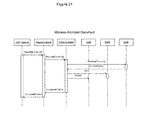
- FIG. 21 is an exemplary diagram of the Retrieve Archived Document function.
- FIG. 22 is an exemplary diagram of the Send Batch Communication function.
- FIG. 23 is an exemplary diagram of the Update Communication History Status function
- FIG. 24 is an exemplary diagram showing a High Level View of Real-Time Dialogue Processing.
- FIG. 25 is an exemplary diagram showing a High Level View of Batch Dialogue Processing.
- FIG. 26 is an exemplary diagram illustrating Real-Time Dialogue Processing to produce a PDF document back to a front-end browser.
- FIG. 27 is an exemplary diagram illustrating Real-Time Dialogue Processing to produce batch AFP file to transmit to local print service providers.
- FIG. 28 is an exemplary diagram illustrating Batch Dialogue Processing to produce a batch AFP file to transmit to local print service providers
- FIG. 29 illustrates how real-time processing may be managed through KANA Connect, according to some embodiments.
- FIG. 30 illustrates how batch processing may be initiated through a dataload to a KANA Connect database, according to some embodiments.
- FIG. 31 depicts an exemplary high level architecture diagram for SeMCast.
- FIG. 32 illustrates an exemplary email batch archival system flow.
- FIG. 33 illustrates an exemplary print batch archival system flow.
- FIG. 34 shows an exemplary diagram of an Internet Channel PDF & HTML real time archival system flow.
- FIG. 35 is an exemplary diagram illustrating ICCM Resend Print Communication functionality.
- FIG. 36 depicts an exemplary content/template management flow, according to some embodiments.
- FIG. 37 illustrates an exemplary data capture hierarchy for templates.
- FIGS. 38-41 show screenshots of exemplary content/template management screens.
- FIG. 42 is an exemplary diagram of Primary Template Deployment.
- FIGS. 43 and 44 are exemplary diagrams of Dialogue and Teamsite integration, according to some embodiments of the invention.
- FIGS. 45-48 show schematics of run-time flow, according to various embodiments of the invention.
- FIG. 49 is an exemplary diagram illustrating how the ICCM Front End may provide a Send Communication Service API and/or Document Ability Service API.
- FIG. 50 is an exemplary diagram illustrating how ICCM may provide a Free Format Portlet and/or a Communication History Portlet.
- FIG. 51 shows an exemplary high level architecture diagram for DataStage.
- FIG. 52 is an exemplary diagram of how EAI may be used for integration between calling applications to ICCM real-time controller and ICCM controller to delivery channels, according to some embodiments.
- FIG. 53 is an exemplary diagram of how ICCM delivery channels may use third party vendors for delivering communications.
- FIG. 54 shows an exemplary conceptual operational architecture for ICCM, according to some embodiments.
- FIG. 55 depicts the ITO setup for SIT environment, according to some embodiments.
- FIG. 56 depicts the ICCM SAT environment with Goldstacks for OnDemand and DataStage.
- FIG. 57 illustrates an exemplary logical deployment view of ICCM, according to some embodiments.
- FIG. 58 shows an exemplary diagram of the process of transforming incoming requests from Fixed Format to XML.
- FIG. 59 depicts the transformation of an incoming request from Fixed Format to XML, according to some embodiments.
- FIG. 60 shows an exemplary diagram of the logical architecture for ICCM and related components, according to some embodiments.
- FIG. 61 shows an exemplary process diagram for Send New Communication (Straight Through Processing), according to some embodiments.
- FIG. 62 shows an exemplary process diagram for Create/Modify Template according to some embodiments.
- FIG. 63 illustrates an exemplary screen showing message history for a customer.
- the integrated customer communications module (ICCM) of the present invention provides computer system architectures and computer implemented methods for customer communications.
- ICCM supports a variety of communication types (print, email, SMS, etc.) and user types (customer, staff, etc.), and may work in conjunction with a plurality of account opening component systems to support an overall account opening process.
- ICCM can serve as a single source for templates and content for merging communications to/from customers, provide straight through processing of customer communications, and eliminate the need for each individual system to develop its own communication solution.
- ICCM can maximize reuse, promote standardization, reduce time to market, and reduce cost.
- ICCM can interface with various account opening product/service systems or data stores to receive communication requests and data input. ICCM can then render a document in a pre-defined format in real-time or in batch.
- ICCM output can be delivered through a variety of delivery channels, including multiple channels.
- ICCM can work with any channel needed by a calling product/service system, including, but not limited to, Internet, E-mail, SMS, Phone (outbound dialler), Print, Fax, ATM, Kiosk, and Secure Messages. Users can receive communication in their language of choice, via their preferred delivery channel(s), when they need it.
- ICCM can also store documents and communication records with appropriate access controls.
- ICCM comprises the following main components:
- the Communication Request Router accepts communications requests from OneHSBC (OH) systems and local systems and routes those requests to the appropriate channel for distribution.
- the request may contain, for example, information regarding what documents are to be sent, the dynamic data required to generated new documents, the document formats, and the delivery channels and the data required by the delivery channels, etc.
- ICCM retrieves it from the appropriate systems.
- the Template Management tool may be used to create, store, preview, amend, delete and maintain templates used in generation of documents in formats needed by the channels.
- the Document Management tool is used in the creation and storage of documents.
- User interfaces can, for example, allow a user to set and manage communication; access, retrieve and view documents; view communication history; and/or view metrics and run reports (this may be provided by the work stream handling metrics functionality).
- FIG. 2 provides an exemplary view of the main flow of the outbound customer communication processes, according to some embodiments.
- Host systems such as HUB or processes such as Account Opening (AO) may send individual communication requests or bulk communication requests in batch to ICCM. Requests may also be made by staff or customer.
- ICCM may receive requests via CRM Action Queue.
- the requests may be for new documents, existing documents, or a combination of both. Sometimes, a previous communication may be requested again, to be sent either to the same address or additional addresses.
- the communication request provides ICCM with the template IDs/criteria and the processed data (dynamic data) to produce the documents.
- the communication request also includes information about the delivery channel(s), the addresses to which the communication is to be delivered, when the communication is to be delivered, branding, etc. It is the responsibility of the host system to collect as much customer and message data as possible prior to handing the request off to the ICCM. If not all data is present, the ICCM will fetch dynamic data (such as the customer preferred channel) to complete the transaction request where appropriate.
- Information that may be included with the communication request includes, but is not limited to, one or more of:
- a feed translator may convert the communication request and the data associated with it into a format understandable to ICCM.
- ICCM produces the documents by merging the templates, which contain static data, together with the dynamic data provided by the requester and tailoring content such as logos, barcodes, etc. from a content repository.
- the produced documents are transformed into the required formats and provided to the delivery channels via a communication link.
- a communication may be issued through multiple channels at the same time and to multiple recipients, if necessary.
- they may be stored in a permanent storage, such as OnDemand.
- Existing documents may be retrieved from the storage rather than produced again, transformed into the required formats, and delivered.
- the maximum period for the storage of the documents should be determined at country level since regulations vary from country to country. In some embodiments, a minimum period of seven years can be assumed. The requirement for maximum storage period may vary from document to document. For example, some documents may need to be maintained permanently, some others for the lifetime of the account. Therefore, ICCM can handle the maximum storage period at document level.
- processed data and template criteria received from the host system may include customer data, arrangement data, transaction data, template criteria, urgency of document, security level of communication, etc.
- ICCM may then select a template based on the provided criteria; select content based on customer data, legal entity, etc. provided; and merge the data from the host system, the content, and the template to output the rendered document.
- the rendered document may then be stored (e.g., in OnDemand), indexed based on a variety of predetermined parameters for easy and rapid retrieval, and access rights may be set for the document.
- the rendered document is provided to the preferred channel(s), to specified addresses, in specified number of copies, with specified level of security and specified level of urgency, responsive to customer preferences and any other required criteria.
- a record is preferably kept of each and every communication that is issued to a customer through ICCM, including date, time, channel, and content, and stored for a length of time determined by the entity.
- the history is preferably easily accessible by users in order to help address any enquiries that may arise as a result of the issue of the communication and may also be visible to the customer as described previously.
- the history may be searched, for example by customer, communication type, channel issued and/or date issued, to allow the user to narrow down the communication items they wish to view.
- ICCM has the ability to retrieve and provide communication records based upon specified criteria. If only a single communication record meets the criteria, it will provide that record. If several communication records meet the criteria, it may, for example, provide a list of the records together with descriptive data (e.g., communication name, date, customer number, etc.) as well as their hyperlinks so that the desired communication record may be selected and retrieved.
- descriptive data e.g., communication name, date, customer number, etc.
- ICCM can automatically issue a communication to a customer, based on a trigger event or alert.
- the events/actions that trigger communications to the customer are configurable by the local entity, and may be automated, semi-automated, or manual.
- the local entity can set up rules surrounding when these triggers will occur, parameterized so they can choose what type of communication will be sent when an event occurs (e.g., send after n days pending, send when an application status changes, etc.). This could apply to both outbound and inbound customer communications.
- the account opening system may automatically raise a trigger or alert, based on an event that has taken place (e.g., when a milestone status changes), to ICCM, requesting that a communication be sent. For instance, if an application has been pending for a certain number of days, a chaser communication may be required, at various, pre-determined and repeated intervals.
- ICCM in order to enable monitoring, anticipation of potential problems and identification of opportunities for performance improvement, ICCM will capture data and pass it to a data warehouse where appropriate reports will be built at aggregate and detailed customer level views. For example, ICCM can capture total messages sent, delivered, bounced, opened, clicked, etc.
- ICCM preferably supports maintenance of an audit trail (e.g., capture and storage of relevant data for follow up in case of issues). ICCM also supports maintenance, storage, and analysis of metrics for process, performance and cost management, SLA management, capacity and volume planning, and supports reporting of metrics and their implications at predetermined frequency to predetermined users, entities, and/or systems.
- an audit trail e.g., capture and storage of relevant data for follow up in case of issues.
- ICCM also supports maintenance, storage, and analysis of metrics for process, performance and cost management, SLA management, capacity and volume planning, and supports reporting of metrics and their implications at predetermined frequency to predetermined users, entities, and/or systems.
- ICCM also supports one or more of: the ability to send a document to multiple channels simultaneously; the ability to resend to the same channel and to extend trigger to include other channels; the ability to group together like documentation for the same address (e.g., advices for interest applications to multiple accounts of a customer); ability to group by legal entity when multiple legal entities exist in a country or region; ability to provide parameters for sorting documents based on country or region requirements.
- FIG. 3 shows an overview of ICCM functionality, according to some embodiments of the invention.
- ICCM can, for example, support the following exemplary use cases:
- ICCM preferably supports communications in multiple languages. In some embodiments, ICCM supports Islamic Finance capabilities.
- ICCM is not generally a rules engine nor a workflow engine nor CRM nor a scheduler for CRM Action Queue. Authentication, and authorization will be handled by a separate system; however, they are pre-requisites for accessing ICCM.
- ICCM will not generally store customer preferences (such as preferred channel of communication).
- ICCM will not generally develop functionality, such as audit trail or entitlements; rather it will use available functionality.
- ICCM will not generally process data (e.g., calculations such as determination of balance, ratios, etc. for each transaction or as of a certain date) for the requesting process/system. It will be provided the data to be merged in the template by the requesting process/system, the criteria for selecting the template and the content (like logos), the addresses to which the communication is to be sent, security level of the communication, etc. ICCM will, however, perform sorting (e.g., by date) and grouping of data and calculate the totals, sub-totals, average, etc. for a group of rows for a column.
- sorting e.g., by date
- text received as part of the data from the requesting process/system (e.g., transaction narratives in a statement) will not be translated to a different language by ICCM.
- access permission to documents will be determined externally to ICCM.
- communication scheduling and follow up will be done by CRM. Consequently, CRM will cancel/override previously issued communication requests before issuing the request to ICCM.
- Communication history data can be used by calling/product systems to query status and perform appropriate action.
- ICCM is preferably a regionally deployed application, where multiple entities can be supported on a single instance.
- ICCM Front End User Interface will follow a local deployment model.
- FIG. 4 shows at a high level how ICCM may be deployed regionally. In a single data center multiple instances of ICCM may exist, each instance supporting a different region. FIG. 4 also depicts that the delivery channels for ICCM may have their own one or more instances.
- ICCM will use a centralized database for holding data.
- the ICCM data model will take into consideration data partitioning based on the recommended partitioning strategy based on Country, Group member, Operational unit.
- ICCM will use the central Reference data repository for storage and retrieval of reference data and/or will implement National Language Support (NLS) through use of UTF-8 format for data.
- NLS National Language Support
- ICCM will use an EBA process for business modeling, and an ESA process for message modeling. ICCM will preferably use a standardized messaging format for supporting applications.
- ICCM services will generally be:
- ICCM will conform, for example, to standard GITO to establish the operational architecture for the solution.
- R2 green components will be used wherever available for the space.
- the core system will be built on the standard GoldStack for ICCM, for example: Application Server, DB Server, MQ Server. And IHS Server.
- a SuSe Linux Enterprise Server (SLES) may be indicated in certain Superstacks.
- ICCM delivery channels and Archival systems will be based on the stacks defined for each channel.
- ICCM FE will be based on the Websphere Portal server.
- the “Core” Application Servers are Superstacks (e.g., WAS-SLES 2.0.1: SLES9 SP3, 32 bit, WAS 6.1.0.17).
- IBM's OnDemand Web enablement Kit ODWEK
- the ICCM core does not necessarily use an HTTP server in front of the appserver as there is no presentation layer.
- Connectivity is preferably provided from Core Application Servers to MQ using MQ client; Application Servers to DB servers using jdbc; and Application Servers to OnDemand using ODWEK.
- Exemplary “Channel Template Hosting Provider” Application Servers may include, for example, Superstack (WAS-SLES 2.0.1: SLES9 SP3, 32 bit, WAS 6.1.0.17) and Superstack: IHS-SLES 2.0.1 (SLES9 SP3, 32 bit, IHS 6.1.0.17). IHS will be co-located with WAS on these systems. Connectivity is preferably provided from Core Application Servers to Database Server using JDBC and DataStage to Database using SQL.
- the MQ server is Superstack: WMQ 1.0.0 (Solaris 10, WMQ 6.0.2.0). Connectivity is preferably provided from MQ to Message Broker and AppServer to MQ Server.
- the “Internet Client Content” IHS Server may, for example, be Superstack: IHS-SLES 2.0.1 (SLES9 SP3, 32 bit, IHS 6.1.0.17).
- a cluster of IHS servers may be provided in the Internet DMZ to deliver static content to Internet-based clients. This content could be in the form of gif, jpg, css, javascript, etc. In some embodiments, these servers will have no j2ee functionality.
- Connectivity is preferably provided from Internet Clients using HTTP(S).
- the ICCM core application servers are preferably clustered, however since the application is stateless, no session persistence is required. Multiple application servers can pull communication requests off of the MQ queues and perform parallel processing.
- the Channel Template Content Hosting Provider application servers do not need to be clustered. They may be used to merge content fragments and request data into useable communication templates that will then be consumed by the various channels within ICCM. In some embodiments, functionality of these systems will be limited to what is provided in j2ee specifications, and no additional application code will be deployed on these systems.
- ICCM relies heavily on the communication database server.
- local redundancy is provided as well as data replication across datacenters for disaster recovery.
- Queue managers will be run on dedicated, clustered hardware and will be accessed by the application servers using client connections.
- Network load balancing will be employed to distribute request traffic to clusters of IHS servers.
- Queue depth monitoring may be provided on an asynchronous work queue.
- ICCM is a regional service by design. It is to be shared by the entities within a region. If desired, multiple instances of ICCM may be deployed, and smaller sub-groupings of entities within a region may be created.
- ICCM will work closely with the Group Information Architecture team for data modeling and will adhere to group standards for modeling.
- ICCM will preferably follow the standard RBPM process throughout the lifecycle of the project. Appropriate version control and modeling tools will be used at each phase of the project. Traceability will be tracked through the mapping between each document.
- FIG. 5 gives a high level view.
- FIG. 6 shows a high level view of the logical components and their functional capabilities supporting the Customer Communications module according to some embodiments of the invention.
- Table 1 provides a summary of exemplary functions of one or more logical components in the ICCM system, grouped by functional area, according to some embodiments of the invention.
- OH Systems Internet Channel One HSBC Internet channel provides UI based features to enable bank customers perform internet banking operations. These will act as ICCM service requester. Call Centre Channel Provides features for bank staff (CSRs) to perform customer servicing operations. These will act as ICCM service requester. Application Processing One HSBC product supporting Application Processing These will act as ICCM service requester. Product Systems Other One HSBC systems requiring sending of customer communications. These will act as service requester to ICCM.
- OHCDM One HSBC Customer Data Management. Houses Customer Preferences. ICCM will be a service requester to OHCDM for getting channel preferences for a communication.
- OHSS One HSBC Sales Services team. Houses Contact history.
- ICCM will be a service requester to OHSS and will use OHSS as the data store for Customer communication history Business Intelligence OH application responsible for providing business data warehousing and analytics. ICCM will provide data for BI/MI operations. ICCM F/E ICCM F/E ICCM Front End component is a utility providing integration options to internet channels. Integration options will be service based or UI based. OH Systems may choose not to use ICCM F/E and communicate with ICCM directly, by making service calls. ICCM Communication Manager Communication Controller Central component responsible for handling the request, interfacing with other ICCM components to fulfil the request. Controller will also be responsible for receiving, recording, sending and related orchestration of communication and history requests. Communication Controller will be responsible for handling real-time communications.
- Message Handler Component for providing external applications interface into ICCM. It also handles sending back response/ acknowledgement to the calling applications.
- Communication Document Component responsible for managing documents management associated with a communication. Provides Communication search and Retrieval from archival system for search and retrieval of communication documents from the Document Repository. Communication history Maintain a record of communication sent. Provide services for insert, update and searching of communication history.
- ICCM Batch Handler Batch Process Process for handling Batch Communications for ICCM. Batch communications will be communications sent into ICCM as a large file and ICCM processes the file as a batch.
- eMail Communication composition using dynamic data and templates and delivery via eMail SMS Communication composition using dynamic data and templates and delivery via SMS PIB eMail Communication composition using dynamic data and templates and delivery via secure eMail Encrypted eMail Communication composition using dynamic data and templates and delivery via encrypted eMail Print Communication composition using dynamic data and templates and delivery via print mail Web Compose and return document back to the caller Fax Communication composition using dynamic data and templates and delivery via Fax Outbound Dialler Communication composition using dynamic data and templates and delivery via Outbound Dialler voice message ATM Communication composition using dynamic data and templates and deliver to ATM Kiosk Template/Content Repository Template Mgmt Module that provides interface to manage templates for communications. For e.g. template for Terms and Condition eMail etc.
- the ICCM system context may be as shown in FIG. 7 .
- Table 2 provides a summary of exemplary functions of the various logical components in the ICCM system as shown in FIG. 7 , grouped by functional area.
- Communication Controller will also be responsible for receiving, recording, sending and related orchestration of communication and history requests.
- Communication Controller will be responsible for handling real-time communications.
- Message Handler Component for providing external applications interface into ICCM. It also handles sending back response/acknowledgement to the calling applications.
- Communication Document Component responsible for managing documents associated with a management communication. Provides Communication search and Retrieval from archival system for search and retrieval of communication documents from the Document Repository.
- Communication history Maintain a record of communication sent. Provide services for insert, update and searching of communication history.
- ICCM Batch Handler Batch Process Process for handling Batch Communications for ICCM. Batch communications will be communications sent into ICCM as a large file and ICCM processes the file as a batch.
- Template/Content Repository eMessaging Template Mgmt Module that provides interface to manage templates for communications. For e.g. template for Terms and Condition eMail etc. Content Mgmt Module that provides interface for business users to manage static content on the template. Template/Content Entitlements Entitlement solution contained within the template/content repositories Template/Content Repository Dialogue Template Mgmt Module that provides interface to manage templates for communications print and web (PDF) communications.
- Template/Content Entitlements Entitlement solution contained within the template/content repositories Document Repository Document Archival Store documents in an archival system Document Retrieval Retrieve Documents from the archive Document Retention Document storage management - Retention, expiration and move Delivery Providers (Third Party) Logical Component Description Local Print Centre Local print centre that receives the print file for printing and delivering via mail Phone Messaging Service Local SMSC provider. Provider Data Communication History Record of communication history Communication Archive Repository Archive of actual communication that was sent out
- ICCM includes one or more of the following features:
- Sales Services will be the single service provider for managing the bank's human interaction with potential and existing customers, and will include the communication history database.
- OHCDM will become the centralized repository for holding customer preferences, and ICCM will interface with CDU to retrieve customer preferences.
- the ICCM system context may be as shown in FIG. 8 .
- FIGS. 9-13 illustrate exemplary architecture use cases, according to some embodiments of the invention.
- FIG. 9 shows an exemplary Send Communication use case.
- FIG. 10 shows an exemplary Send Communication—Batch use case.
- FIG. 11 shows an exemplary Re-Send Communication—Print use case.
- FIG. 12 shows an exemplary Re-Send Communication—Email use case.
- FIG. 13 shows an exemplary Create Document use case.
- PIN Communications may be sent through ICCM via the eMessaging delivery channels.
- PIN has a special security requirement that it should not be stored and should be transmitted in an encrypted manner between systems.
- FIG. 14 illustrates exemplary PIN processes in ICCM.
- FIG. 15 is an exemplary Real-Time ICCM Component Architecture diagram. Table 3 summarizes the logical components of FIG. 15 according to some embodiments.
- CMF Common Common envelope for messages coming into ICCM Message Format DataStage ETL Tool Extraction, Transformation and Loading tool
- Print Centre 3 rd Party Delivery Provides services for printing and delivery of mail.
- Hist DB Database Communication history database Provides storage for communication history.
- Print Rqst DB Database Database for holding requests for print for batch purposes
- FIG. 16 is an exemplary ICCM Component Architecture diagram for Batch communications. Table 4 summarizes the logical components of FIG. 16 .
- Kana Connect eMail Communication composition using dynamic data and templates and delivery via eMail Kana Connect SMS Communication composition using dynamic data and templates and delivery via SMS SeMCast Secure eMail Communication composition using dynamic data and templates and delivery via secure eMail Print Dialogue Print Composition Communication composition using dynamic data and templates and delivery via print channel CMF Common Common envelope for messages Message Format coming into ICCM DataStage ETL Tool Extraction, Transformation and Loading tool Print Centre 3 rd Party Delivery Provides services for printing and delivery of mail.
- FIGS. 17-23 are exemplary diagrams of customer facing functions of ICCM, according to some embodiments.
- FIG. 17 is an exemplary diagram of the Search Communication History function.
- FIG. 18 is an exemplary diagram of the Search Communication function.
- FIG. 19 is an exemplary diagram of the Create Document function.
- FIG. 20 is an exemplary diagram of the Resend Communication function.
- FIG. 21 is an exemplary diagram of the Retrieve Archived Document function.
- FIG. 22 is an exemplary diagram of the Send Batch Communication function.
- FIG. 23 is an exemplary diagram of the Update Communication History Status function.
- Dialogue will be used as the delivery channel for print communications and also for generating PDF documents for the internet (Front End) channel.
- An example of a print communication would be a Welcome letter, while a Terms and Conditions could be sent through the internet channel.
- Dialogue used as the composition engine in the Retail Distribution Account Opening stream.
- the possibilities include one or more of the following:
- FIG. 24 is an exemplary diagram showing a High Level View of Real-Time Dialogue Processing.
- FIG. 24 shows how requests for customer documents will flow from the front-end application for processing, according to some embodiments:
- FIG. 25 is an exemplary diagram showing a High Level View of Batch Dialogue Processing.
- FIG. 25 shows how requests for customer documents will flow from the front-end application for processing, according to some embodiments:
- FIG. 26 is an exemplary diagram illustrating Real-Time Dialogue Processing to produce a PDF document back to a front-end browser.
- FIG. 26 is a detailed representation of a single Dialogue process showing how requests for a customer document will flow from the front-end, according to some embodiments:
- FIG. 27 is an exemplary diagram illustrating Real-Time Dialogue Processing to produce batch AFP file to transmit to local print service providers (Real-Time In ⁇ Batch Out).
- FIG. 27 is a detailed representation of a single Dialogue process showing how requests for a customer document will flow from the front-end, according to some embodiments:
- FIG. 28 is an exemplary diagram illustrating Batch Dialogue Processing to produce a batch AFP file to transmit to local print service providers.
- FIG. 28 is a detailed representation of a single Dialogue process showing how requests for a customer document will flow from the front-end, according to some embodiments:
- Send communication requests will be initiated from the product system to ICCM. Distribution to the different fulfillment engines will be processed by the Messaging Module and handed off to each delivery channel. For sending out eMail and SMS communications, Kana is the tool of choice.
- real-time processing will be managed through the KANA Connect event listener.
- the event listener is a service within Connect that listens and processes XML message triggers.
- the SMSC will be responsible for aggregation and delivery to customer's mobile phone.
- batch processing will be initiated through a dataload to the Connect database.
- Connect schema several staging tables will be loaded with new customer email/SMS requests.
- Oracle ETL processes will commence to load the target tables and activate the campaigns within Connect.
- SeMCast will be used to support production of HTML documents such as terms and conditions for presentment on the AO front end application.
- FIG. 31 depicts an exemplary high level architecture diagram for SeMCast.
- these documents will need to be retrieved from the archive and sent for delivery.
- OnDemand is the R2 green technology used for document archival. Listed below are some exemplary scenarios explaining how OnDemand may be utilized.
- eMail communications can be archived in OnDemand.
- OnDemand eMail Archival
- steps below are followed:
- FIG. 32 illustrates an exemplary email batch archival system flow.
- ICCM also provides Print Archival functionality (Dialogue on same LPAR)—e.g., archival of print documents that need to be reproduced exactly the same as issued.
- Print Archival functionality (Dialogue on same LPAR)—e.g., archival of print documents that need to be reproduced exactly the same as issued. The steps below and FIG. 33 explain an exemplary print archival process:
- FIG. 34 shows an exemplary diagram of Internet Channel PDF & HTML Archival system flow, according to some embodiments. The steps may, for example, be as follows:
- FIG. 35 is an exemplary diagram illustrating ICCM Resend Print (Archived) Communication functionality. The steps may, for example, be as follows:
- the ICCM Integrated Customer Communications Module
- ICCM also supports simultaneous multiple channel delivery, and can, for example, automatically resend duplicate copies via preferred channel, or multiple channels, on customer request.
- the ICCM fulfilment engine will interface with a Group standard, enterprise content management application to allow it to fetch the appropriate channel layout template, generate personalized, channel optimized content, apply it to the template, and distribute the message onto the customer/prospect as required by the business.
- ICCM provides users the ability to create, modify, and deploy templates in real-time and online.
- ICCM Template and Content Management is optionally based on entitlements (e.g., by user, user type, user role, product type, channel, customer group/segment, field on screen). Different templates may have different entitlements. Templates are preferably standard across countries. Differences should be to comply with external regulations rather than internal differences. ICCM templates are easily searchable so that duplicates are not created. Templates can be in multiple languages, both single and double byte, and languages that write from right to left. The same template can contain more than one language (e.g., address in English, narrative in Chinese). Templates can include images and graphics, in color and/or black and white. Rendered documents can contain bar code (printable and includable in files such as PDF). Rendered documents are printable on multiple size stationary, pre-printed stock or plain paper, and one side or both sides (duplex) of a sheet.
- entitlements e.g., by user, user type, user
- Templates are able to contain the following, but are not limited to these examples:
- HTS within the content management application (BDE/Teamsite), HTS will provide a set of data capture templates (DCTs) that will allow business users to manage assets (text, images, dynamic data, content fragments) used for their communications.
- DCTs data capture templates
- These document capture templates will allow business users to manipulate certain components of the communication (content, color scheme, font, images) in a very non-technical, user friendly manner that does not alter the predefined look, feel, and layout of the communication.
- the Teamsite templates will collect multi-channel communication data in a centralized fashion and output content fragments in the form of content control files, or tagged text.
- Teamsite Template is interchangeable with the terms Data Capture Template (DCT) and Primary Business Template.
- DCT Data Capture Template
- a data capture template is a consolidated data entry point for the communication or document that is to be sent to the customer. This template is designed to collect multi-channel data in a centralized fashion, allowing business users to specify eMail, SMS, Print/PDF, HTML and Secure eMail content all via the same content management tool. This data could be comprised of text, hyperlinks, dynamic “merge” data fields, and images.
- the DCTs allow users to specify both local (within the workarea) and external data elements (accessible via an HTTP request).
- IT Templates (Secondary Technology Templates or Channel Optimized Templates—XSLT, or Dialogue (proprietary format)) refer to a template that defines the layout or “landscape” of the document. At run-time, it will combine all of the data elements (content fragments and images) input through the BDE data capture template to format the communication document prior to distribution.
- Secondary templates are preferably not directly manipulated by a business user, but they will be composed through a combination of data provided through the primary template and logic coded within the secondary template by an HTS resource. Secondary templates will be designed, developed, and maintained by HTS resources based on business requirements.
- the layout of a document refers to the look and feel of the document components of the document, including images, and sections of text and paragraphs.
- the types of layout defined and developed for each group of documents are based on the assumption that a set of potential common layouts will be defined, and they can be used across each groupMember/controlCode/operationalUnit per ICCM installation. Modification to the layout will impact all users using that template, and new template could be added with IT involvement.
- Layouts available for the initial release are: LTR 1 , LTR 2 , MKT 1 , MKT 2 , FLX, TC 1 , TC 2 , LST 1 , LST 2 and MIX.
- the installation of ICCM may include the environment setup for BDE Teamsite, its workarea, the deployment workflows for eChannels and Dialogue, in addition to the setup for content/template hosting servers.
- the ICCM content and templates can make use of the existing customer-facing BDE deployments. Future deployments can make use of the customer facing BDEs already available within the regions.
- steps involving BDE templating include one or more of the following:
- FIG. 36 depicts an exemplary content/template management flow, according to some embodiments.
- FIG. 37 illustrates an exemplary data capture hierarchy for templates.
- the process for template creation/management is as follows:
- FIGS. 38-41 show screenshots of exemplary content/template management screens.
- FIG. 42 is an exemplary diagram of Primary Template Deployment.
- the content control files and images when published, will be deployed to content and template hosting servers residing on webservers and appservers.
- the content files generated for Dialogue/Print will be renamed and bundled, and then transmitted via NDM to the zseries mainframe through NDM Gateway.
- a business user will be able to create and edit the content and images for a given communication's primary template.
- the content may consist of multiple metadata attributes and content sections. Communications are designed to be sent over multiple channels (eMail, SMS, Print, etc), and the content/dynamic variables will vary by channel and communication type.
- the content will be captured as fragments. There are, for example, five fragments defined:
- the template will allow for each of these fragments to be chosen.
- Rules can be applied based on the input message values. Some of the possible field values for the rules are:
- the right fragment will be displayed when the message is composed. All the content and images should be captured via fragments for that channel, layout relating to that milestone, message type.
- the body fragment would be the one where the template will support additional rules.
- the content can be formatted (bold, italics, etc.), and the content author should be able to do it at data capturing time.
- the content can contain variables that will be replaced at runtime, and the data capture should allow those variables to be placed within the content, preferably restricting to a predefined list of attribute names (as defined by the data dictionary) and enforcing the format. For example, In “Dear $ ⁇ first_name ⁇ $ ⁇ last_name ⁇ ”, $ ⁇ first_name ⁇ and $ ⁇ last_name ⁇ are two placeholders for the two variables that to be placed with dynamic data at run-time.
- the dynamic fields are can be identified using special format, such as ⁇ $field_name>.
- Content may also contain fixed sections or blocks of space that can be allocated for users to enter data in a “free format” fashion such a enabling the user to manually add a few lines of free-form text to an outbound template.
- Dynamic attributes will be selected from a drop down within the body template and they will be confined to those variables predefined within the data dictionary. The values themselves can be added/updated/removed by an administrator within Teamsite/BDE since the file will be stored locally within the Teamsite branch.
- one or more of the following exemplary fields will be available based on the channel within the template:
- the ICCM Preview option implemented is not default Preview provided by TeamSite.
- ICCM provides customized preview functionality using Javascript/Form API and it will open new browser window for Preview. This preview will support any xml input file to be taken as input and apply the user entered content control file (xsl) to it, so XSL transformation will happen in the browser and corresponding output document should be displayed as the result of the Preview function.
- xsl user entered content control file
- a few sample input xmls may be provided, which the user can customize or copy and change.
- the ICCM Teamsite templates/Business Primary templates will generate the content control files that contains the user entered contents and specified images/footer include files in a format most appropriate for its presentation channel and its delivery application.
- SMS content can be output as text only or EMail content will be output as text and/or HTML.
- Dialogue tagged text—Tagged text is a proprietary format required by Dialogue. Except for the channel Dialogue Print/Letter, all content files generated through business primary templates are xsl content control files, which can be used by ICCM to produce the final communication document.
- ICCM data capture templates/business primary templates and channel optimized templates will be designed and installed by HTS resources. After successful development and installation, the business user will have access to the set of Teamsite templates that will allow them to add and edit content, select and insert dynamic variables, to produce the content files, and finally, make deployments to various environments for validation and, as well as to PROD region for rollout.
- Standard and recommended steps may include, for example:
- ICCM application servers will operate in a regional deployment model, with full access to local or regionally deployed content.
- the configuration of the ICCM infrastructure (regional, local, etc.) has no bearing on the creation, manipulation, or deployment of the ICCM templates, the content and images within the templates, or their generated content, as long as the generated content is accessible to internal JAVA based applications and external internet users (customers and prospects) who will need to view the email images within the communication/document.
- the generated content from an ICCM Teamsite content generating template could be deployed to a mid-tier web server that can be exposed via an HTTP call, accessed locally, or deployed to an alternate file system for replication onto a Dialogue server (zseries) for paper based fulfillment.
- the files will be deployed as .HTML, .TXT or other types that could be part of the content fragments.
- the files do not need to be compiled or deployed as EARs WARs TARs, etc. This may be called “hot” deployment since it is not part of a standard J2ee deployment package (standard servlet packaging constructs). Libraries will not be deployed that can be leveraged through the JSPs.
- tagged text contents will be generated, and they will be deployed to the content hosting server just like the content fragments for other channels. But a customized script will conduct concatenating of all content files into a single text file, and another script will transport the new file using scp command to mainframe using NDM process and rename it to the desire name for Dialogue. It will run periodically, probably as a daily job.
- images will not be managed through BDE Teamsite, instead they will be managed by Dialogue directly.
- ICCM templates can be created from a centralized HTS development area and installed into the entities local Teamsite/BDE implementations.
- Each country will have their own branch and workflows defined for the ICCM template deployment process.
- the entity should be able to deploy to the same target location as where the entities 2G content goes (existing branches) with designated folder structures for ICCM contents and templates.
- FIGS. 43 and 44 are exemplary diagrams of Dialogue and Teamsite integration, according to some embodiments of the invention.
- Run-time flow refers to the process by which ICCM receives client requests and instructs its internal functional components to fetch the contents and combine with the client request data to compose the complete communication document before sending it out to the customer.
- FIGS. 45-48 show various schematics of this process.
- FIG. 46 is an exemplary diagram of a Communication Request from a client system (MQ real time or NDM batch).
- ICCM Front End application provides services for Front End applications to interface with ICCM.
- ICCM FE is offered as a separate component.
- ICCM Front End provides a Send Communication Service API (this service will allow a Java application to send a communication via ICCM) and/or Document Ability Service API (this service will allow a Java application to check whether a certain doctype (document template ID) is available to be created and subsequently downloaded/printed).
- Send Communication Service API this service will allow a Java application to send a communication via ICCM
- Document Ability Service API this service will allow a Java application to check whether a certain doctype (document template ID) is available to be created and subsequently downloaded/printed).
- ICCM may also provide a Free Format Portlet (an application to send a free format message to a customer via email, mail or SMS) and/or a Communication History Portlet (allows the staff/customer to search a previously sent communication for review and resend to the same delivery channel). Both portlets preferably allow the label, text configuration through the BDE for NLS support.
- the doctype ID, and key defined by ICCM BE is stored in ESR for centralization.
- ICCM Batch Process should be able to receive outbound customer communication requests from the various business processes of Group, generate/retrieve necessary documents/messages, and deliver them to different communication channels as requested. Communication may be requested by, for example, a Business process such as Account Opening, a Staff user, and/or a Customer user. Requested documents may be new and have to be produced, or existing and have to be retrieved from storage and, if necessary, resent.
- a Business process such as Account Opening, a Staff user, and/or a Customer user.
- Requested documents may be new and have to be produced, or existing and have to be retrieved from storage and, if necessary, resent.
- DataStage will receive various files in batch mode and create the required output for various communication channels, Hist DB, calling Systems and BI.
- FIG. 51 shows an exemplary high level architecture diagram for DataStage.
- EAI will be used for integration between calling applications to ICCM real-time controller and ICCM controller to delivery channels.
- calling applications making real-time requests will use R2DS (formerly GSI) component of EAI to interface with ICCM.
- ICCM will use Websphere Message Broker to interface with delivery channels.
- Message broker will be responsible for one or more of the following:
- ICCM delivery channels will use third party vendors for delivering communications out to the users.
- the third party vendors are depicted in the diagram in FIG. 53 and described in Table 5.
- the integration of delivery channels to third party systems should be a regional effort.
- ICCM is a service provider to other systems within AO.
- the systems may include, for example, HUB, Cards, APe and AO Front End.
- one or more of the following four areas are places where requests need to be authenticated and data needs to be secured.
- ICCM Staff authoring content for communications: ICCM also provides ability for staff users to manipulate static content that goes on various communications. The authentication and entitlements will be achieved through Teamsite (see, e.g., description and figures for Template and Content Management).
- PIN eMail and SMS request through ICCM uses netHSM: PIN communications require special handling as security requirements dictate that PIN should not be sent in a non-encrypted format between systems and the PIN should not be stored during the process of sending a communication.
- the PIN will be encrypted using RSA before sending to ICCM.
- ICCM controller will not decrypt the PIN and will pass it through to the delivery channel (KANA Connect), in an encrypted format.
- Kana will decrypt the PIN, right before composition of communication, by calling a crypto provider class.
- the crypto provider class will retrieve the private key, for decryption, from netHSM.
- netHSM Java API will be used to access the private key.
- Interface to third party vendors is a local implementation.
- the interface to third party vendors is over a secure channel like VPN using authentication and encryption during transfer of data. Commonly Connect Direct secure transfer is used.
- FIG. 54 shows an exemplary conceptual operational architecture for ICCM, according to some embodiments.
- Table 6 lists various monitoring alerts and recover resilience information for ICCM components.
- ICCM in general does not retry sending of communications automatically. For real-time if a communication fails then an exception is sent back to the calling system and the transaction is terminated. In case of batch the batch is failed and report is sent back to the calling application.
- the delivery channel may retry sending communication on their own based on the type of failure and the configuration controlling the number of retries within the channel.
- Kana Connect is the only channel supporting retry all other channels fail the transaction and no retry is performed.
- the ICCM components have capabilities to handle much higher volumes. This is evident in other solutions using similar tools. For example, Dialogue produces, for example, 20 million statements per month for CRS. Kana handles, for example, 60 million messages a month in the US.
- Table 9 lists exemplary environments that are built for the core product, their usage and scope.
- the scheduled deployments are environment will be used by controlled through a change technology team to test control process.
- various functions for delivery Fixes are promoted to the to the SAT environment. environment only after they have been tested in Dev-Int env. This environment is for integration testing and will not have resilency and recovery tools in place.
- SAT - System Systems Acceptance Testing This environment if for TCoE Deployments to this environment Acceptance environment used by the team and supports the purpose are also controlled as per Testing testing team of validating and certifying the schedule and fixes need to be functionality of the solution tested in De-In and SIT before being promoted to this environment Performance Serves the purpose of Used by GPCoE to validate Being defined currently Testing supporting performance performance of various testing of applications components.
- FIG. 55 depicts the ITO setup for SIT environment, according to some embodiments.
- FIG. 56 depicts the ICCM SAT environment with Goldstacks for OnDemand and Datastage.
- Table 10 lists configuration items, according to some embodiments.
- FIG. 57 illustrates an exemplary logical deployment view of ICCM, according to some embodiments.
- Table 11 describes ICCM Configuration Management, according to some embodiments.
- ICCM Integrated Customer Communications Module
- business Templates may need IT users to send both communications and documents to customers and prospects via support for defining multiple delivery channels encapsulating eMail, SMS, Secure eMail, Websites, and Templates) Paper (with other channels to be added at later releases).
- the ICCM fulfilment engine will interface with a Group standard content management application so that it can fetch the appropriate channel template, generate personalized, channel optimized content, and distribute the message onto the customer/prospect as required by the business.
- HTS will develop a set of document capture templates that will allow the business users to manage assets (text, images, dynamic data, content fragments) used for their communications. These templates will not allow the users to control the layout or apply conditional logic; however these features may be added at a later date.
- the Teamsite templates will be designed to collect multi-channel data in a centralized fashion and output content fragments in the form of content control files, or tagged text.
- Document Types ICCM enables businesses and regions to define specific Document Types. For ICCM Document Types will have to be configured in BDE (Templates) and will need IT support. Each document types can also be further specified if it is to be archived or not.
- Communication Priority ICCM Provides the ability to treat transmission of certain document types on priority. Settings based on This is supported only in real time mode. Businesses in various regions can Document Types determine their own priority document types. Configuration will need IT support. Document retention period Document retention period will need to be configured in onDemand based on regional in OnDemand (configured requirements. This will be an IT controlled configuration and will be configured within with IT support) OnDemand jobs for data clean-up. The retention period will also be configured for maintaining documents on DASD or Tape. Document archival (IT Configuration setting to enable archival of certain types of documents within controlled configuration) OnDemand. This will be IT controlled configuration and will be governed on the basis of regional requirements.
- ICCM maintains a history of the communications that it has processed and also archive composed documents for resend. For this purpose, ICCM maintains a Communications history database where all communications through ICCM are recorded. In some embodiments, for archival of composed documents, a commercially available archival application, such as OnDemand, is used.
- ICCM provides a single standard interface for sending out communications through various channels. As part of this ICCM accepts the incoming messages in standard OH format that is a fixed format message.
- the delivery channels of ICCM may require the data to be formatted to suit the channel needs. In some embodiments, this format is XML. Additionally delivery channels may not accept the incoming data to have the NLS fields encoded (NLS fields are Base64 encoded as per OH messaging strategy). In such cases, the NLS data should be decoded before being sent to the delivery channels.
- ICCM uses Messages Broker in real-time and Datastage in batch mode to perform these operations.
- the incoming data might be a code and needs to be converted to appropriate text to go on the composed document. This may be performed at each of the delivery channels.
- the code to text translation for eMessaging (Kana and SeMCast) channels is stored within the BDE.
- For Dialogue this is stored within the Dialogue PUB file.
- ICCM uses OH messaging strategy to define messages for applications calling ICCM.
- ICCM will use fixed format messages from calling applications to ICCM.
- Messages between ICCM and delivery channels will be XML based.
- ICCM will transform the messages from Fixed Format to XML for consumption by the delivery channels.
- the message format may be the same for both batch and real-time. ESA process is followed for both service and message modeling.
- Table 12 lists some exemplary messages that may be provided by ICCM.
- the ICCM message may have a structure as shown in Table 13.
- FF Meta Data will generally contain all the data necessary to perform the communication such as destination address, DocumentTypelD, etc. Whatever is internal to ICCM for request processing is generally part of metadata.
- RQSTHDR segment holds fields such as Channel Identifier, frontEndId, groupMember, etc.
- the Core FF Data area may contain the document data used for communication that is deemed to be part of the core product for a given document type. It holds the fields which are part of customer communications. For example, for AS Communication Information, mentioned fields are part of Core FF Data—fundingAmount, dateOfSweep, fundingExchangeRate, etc.
- Local Field with Predefined Blocks may have sub blocks of different data types to serve regional/local fields.
- Local fields are the placeholders which are specific to region, and subcategorized to different logical section based on the data types, for example, NLSSupported Fields, non NLS fields, Date, Time, Amount, etc.
- the envelope for message transfer will be the standard ISM 1.2. This will apply both to message interface between calling applications to ICCM and ICCM to Delivery Channels.
- the NLS fields between calling applications to ICCM will be Base64 encoded UTF-8 data.
- the NLS fields between ICCM to Delivery channels will be UTF-8.
- ICCM accepts the incoming requests in Fixed Format and the delivery channels require XML as input.
- FIG. 58 describes the transformation process.
- FIG. 59 depicts the transformation of the message. The transformation may be performed, for example, in Message Broker for real-time and within Datastage for batch.
- ICCM provides a variety of core functions including:
- ICCM supports a variety of communication processing modes, including:
- a duration/tolerance can be specified for the modes (e.g., “real time” may not necessarily signify instantaneous, but can mean “within the next x minutes maximum”).
- ICCM and related components may include one or more of the components listed in Table 14.
- FIG. 60 shows an exemplary diagram of the logical architecture for these components, according to some embodiments.
- Table 15 lists some exemplary ICCM use cases.
- ICCM supports one or more of:
- FIGS. 61 and 62 show exemplary process diagrams for Send New Communication (Straight Through Processing) and Create/Modify Template functions, respectively.
- FIG. 63 shows an exemplary customer history screen, according to some embodiments.
- a customer may have a customer ID, and a message history may be displayed, showing messages, for example, by one or more of campaign, subject, date sent, status, template, and archive.
- ICCM is the group strategic solution for the delivery and receipt of structured customer communications.
- Structured customer communications refer to both printed and electronic formats commonly delivered as letters, invoices, alerts, notifications, agreements, advices, etc.
- ICCM can help an organization deliver global customer service and brand excellence, for example:
- Benefits of ICCM may include, for example: reduce redundant functionality across group systems and regional solutions; improve deployment processes and increase utilization of group systems; increase global propositions and capabilities; expand direct channel product range and leverage direct for emerging markets; establish a single operational model, delivering economies of scale in existing and emerging markets while providing scalability; eradicate duplication on a global scale through global simplification and standardization.
- Table 16 summarizes exemplary features and benefits of ICCM.
- Benefits Standard content and templates. Pre-built “look Cost savings to individual entities with pre-developed and feel” for standardized communications as part of templates that can be configured upon deployment for a workstream release. Initial release contains local compliance for rapid deployment. Standard content and templates for Account Opening of Savings, Checking, Term Deposit, Overdraft and Credit Cards. Template Management. System to organize, Reduced time to market and staff effort over multiple version, dynamically update, and administer content designs of communications. and templates. Multi-channel outbound delivery. Communications Single solution in support of multiple channels reduces delivered via email, SMS, high-volume print, secure redundant outbound communication solutions and bank mail, fax, local print, and additional channels as promotes consistent branding and marketing. needed. Multi-channel inbound acceptance.
- Offers an Single solution in support of multiple channels reduces automated solution to receive, classify, notify, reply redundant inbound communication solutions and and store from end-customer channels SMS, email, promotes consistent handling physical mail, and branch.
- Archive and Records Management Storage for all Reduces cost of saving documents by keeping only what types of structured communications configurable for is necessary and for the optimal amount of time. efficient management.
- Communications History Searchable and Complete history of all structured communications viewable history of all communication requests made delivered to a customer assists both CRM and to ICCM. Communications which have been Compliance needs. archived are retrievable in same search.
- Table 17 summarizes exemplary product applications of ICCM and their functions. Additional ICCM product capabilities are also contemplated.
- ICCM Controller In house developed Java-based application that orchestrates inbound and outbound communications. Manages channel selection(s), failure handling, archive, and history activities.
- Business Design Provides design and delivery for communications. Environment Provides control for channel dependent settings HP Dialogue (templates). Returns delivery success and failure BrickStreet Connect information to ICCM Controller.
- SemCast EDMS Provides archive and retrieval services. Inbound and IBM On Demand Outbound customer communications are stored, depending on business need, and are available for later retrieval and resend.
- a procedure is here, and generally, conceived to be a self-consistent sequence of steps leading to a desired result. These steps are those requiring physical manipulations of physical quantities. Usually, though not necessarily, these quantities take the form of electrical or magnetic signals capable of being stored, transferred, combined, compared and otherwise manipulated. It proves convenient at times, principally for reasons of common usage, to refer to these signals as bits, values, elements, symbols, characters, terms, numbers, or the like. It should be noted, however, that all of these and similar terms are to be associated with the appropriate physical quantities and are merely convenient labels applied to these quantities.
- instructions and/or operations performed may be referred to in terms, such as generating, determining, adding and/or comparing.
- the instructions and/or operations described herein which form part of the present invention are machine operations. Useful machines for performing the operation of the present invention include general purpose digital computers or similar devices that have been programmed to perform these specialized operations.
- the present invention also relates to apparatus for performing these operations.
- This apparatus may be specially constructed for the required purpose or it may comprise a general purpose computer as selectively activated or reconfigured by a computer program stored in the computer.
- Various general purpose machines may be used with programs written in accordance with the teachings herein providing a specialized machine thereby, or it may prove more convenient to construct more specialized apparatus to perform the required method steps. The required structure for a variety of these machines will appear from the description given.
- the system according to the invention may include a general purpose computer programmed in a particular manner, or a specially programmed special purpose computer.
- the user may interact with the system, for example, via a personal computer, wireless device, PDA, etc. Either of these may be implemented as a distributed computer system rather than a single computer.
- the communications link may be a dedicated link, a modem over a POTS line, the Internet, an Intranet and/or any other method of communicating between computers and/or users.
- the processing could be controlled by a software program on one or more computer systems or processors, or could even be partially or wholly implemented in hardware.
- the system according to one or more embodiments of the invention is optionally suitably equipped with a multitude or combination of processors or storage devices.
- the computer may be replaced by, or combined with, any suitable processing system operative in accordance with the concepts of embodiments of the present invention, laptop/notebook, mini, mainframe and super computers, wireless smart devices, as well as processing system network combinations of the same.
- portions of the system may be provided in any appropriate electronic format, including, for example, provided over a communication line as electronic signals, provided on CD and/or DVD, provided on optical disk memory, etc.
- Any presently available or future developed computer software language and/or hardware components can be employed in such embodiments of the present invention.
- at least some of the functionality mentioned above could be implemented using Visual Basic, C, C++ or any assembly language appropriate in view of the processor being used. It could also be written in an object oriented and/or interpretive environment such as Java and transported to multiple destinations to various users.
- the specific sequence of the described process may be altered so that certain processes are conducted in parallel or independent, with other processes, to the extent that the processes are not dependent upon each other.
- the specific order of steps described herein is not to be considered implying a specific sequence of steps to perform the process.
- one or more process steps may be implemented by a user assisted process and/or manually.
- Other alterations or modifications of the above processes are also contemplated.
- further insubstantial approximations of the process and/or algorithms are also considered within the scope of the processes described herein.
Landscapes
- Engineering & Computer Science (AREA)
- Business, Economics & Management (AREA)
- Strategic Management (AREA)
- Entrepreneurship & Innovation (AREA)
- Human Resources & Organizations (AREA)
- Operations Research (AREA)
- Economics (AREA)
- Marketing (AREA)
- Data Mining & Analysis (AREA)
- Quality & Reliability (AREA)
- Tourism & Hospitality (AREA)
- Physics & Mathematics (AREA)
- General Business, Economics & Management (AREA)
- General Physics & Mathematics (AREA)
- Theoretical Computer Science (AREA)
- Information Transfer Between Computers (AREA)
- Financial Or Insurance-Related Operations Such As Payment And Settlement (AREA)
Priority Applications (2)
| Application Number | Priority Date | Filing Date | Title |
|---|---|---|---|
| US13/282,822 US8645248B2 (en) | 2010-10-27 | 2011-10-27 | Integrated customer communications computer system and process for implementing same |
| US13/354,915 US9275360B2 (en) | 2010-05-21 | 2012-01-20 | Account opening flow configuration computer system and process for implementing same |
Applications Claiming Priority (3)
| Application Number | Priority Date | Filing Date | Title |
|---|---|---|---|
| US40721010P | 2010-10-27 | 2010-10-27 | |
| US201161435000P | 2011-01-21 | 2011-01-21 | |
| US13/282,822 US8645248B2 (en) | 2010-10-27 | 2011-10-27 | Integrated customer communications computer system and process for implementing same |
Related Parent Applications (1)
| Application Number | Title | Priority Date | Filing Date |
|---|---|---|---|
| US13/293,957 Continuation-In-Part US8468090B2 (en) | 2010-05-21 | 2011-11-10 | Account opening computer system architecture and process for implementing same |
Related Child Applications (1)
| Application Number | Title | Priority Date | Filing Date |
|---|---|---|---|
| US13/276,956 Continuation-In-Part US8589213B2 (en) | 2010-05-21 | 2011-10-19 | Computer metrics system and process for implementing same |
Publications (2)
| Publication Number | Publication Date |
|---|---|
| US20120179677A1 US20120179677A1 (en) | 2012-07-12 |
| US8645248B2 true US8645248B2 (en) | 2014-02-04 |
Family
ID=45994744
Family Applications (1)
| Application Number | Title | Priority Date | Filing Date |
|---|---|---|---|
| US13/282,822 Active US8645248B2 (en) | 2010-05-21 | 2011-10-27 | Integrated customer communications computer system and process for implementing same |
Country Status (3)
| Country | Link |
|---|---|
| US (1) | US8645248B2 (de) |
| EP (1) | EP2633480A4 (de) |
| WO (1) | WO2012058385A2 (de) |
Cited By (5)
| Publication number | Priority date | Publication date | Assignee | Title |
|---|---|---|---|---|
| US9189761B1 (en) * | 2012-05-17 | 2015-11-17 | Emc Corporation | Action flow client framework |
| US20170329585A1 (en) * | 2016-05-12 | 2017-11-16 | Fujitsu Limited | Apparatus and method to compile a variadic template function |
| US10324672B2 (en) | 2016-11-17 | 2019-06-18 | Brett Heap | Systems and methods for consistent printing amongst disparate print vendors |
| US10726389B2 (en) * | 2015-04-21 | 2020-07-28 | Walmart Apollo, Llc | Inventory information distribution systems, devices and methods |
| US10868719B2 (en) | 2017-04-28 | 2020-12-15 | Oracle International Corporation | System and method for federated configuration in an application server environment |
Families Citing this family (30)
| Publication number | Priority date | Publication date | Assignee | Title |
|---|---|---|---|---|
| US9613150B2 (en) * | 2007-12-28 | 2017-04-04 | International Business Machines Corporation | Remote viewing of documents via the web in real-time |
| US20120317013A1 (en) * | 2011-06-13 | 2012-12-13 | Ho Ming Luk | Computer-Implemented Systems And Methods For Scoring Stored Enterprise Data |
| US20140053060A1 (en) * | 2012-08-17 | 2014-02-20 | Launchbase, LLC | Website development tool |
| US10311449B2 (en) * | 2012-09-05 | 2019-06-04 | Nextlevel Association Solutions, Inc. | Systems and methods for targeted advertising |
| US8914308B2 (en) * | 2013-01-24 | 2014-12-16 | Bank Of America Corporation | Method and apparatus for initiating a transaction on a mobile device |
| US10515146B2 (en) * | 2013-03-21 | 2019-12-24 | Elateral, Inc. | Multi-template kit system and process |
| WO2014168829A1 (en) * | 2013-04-08 | 2014-10-16 | Elateral, Inc. | Multi-channel queuing |
| US10163153B1 (en) | 2013-08-26 | 2018-12-25 | Wells Fargo Bank, N.A. | Electronic disclosure delivery system and method |
| US9208335B2 (en) * | 2013-09-17 | 2015-12-08 | Auburn University | Space-time separated and jointly evolving relationship-based network access and data protection system |
| US20150095081A1 (en) * | 2013-10-01 | 2015-04-02 | Avaya Inc. | Stackable strategies |
| US9405786B2 (en) * | 2013-10-22 | 2016-08-02 | Nice-Systems Ltd. | System and method for database flow management |
| US9378194B2 (en) * | 2013-10-29 | 2016-06-28 | Sap Se | Previewing email templates in marketing campaigns |
| US9626442B1 (en) * | 2014-05-06 | 2017-04-18 | Sprint Communications Company L.P. | System and method for a customer care document management system |
| US11095576B2 (en) * | 2014-06-25 | 2021-08-17 | Nordis Inc. | Automated, user implemented, secure document and communication creation and management system and method |
| US12050862B2 (en) * | 2014-06-25 | 2024-07-30 | Noridis, LLC | Communication fulfillment architectures, systems, and methods |
| US11520979B2 (en) * | 2014-06-25 | 2022-12-06 | Nordis, Llc | Communication fulfillment architectures, systems, and methods |
| US20160012031A1 (en) * | 2014-07-08 | 2016-01-14 | Bank Of America Corporation | Template-based message generation tool |
| US10255336B2 (en) | 2015-05-07 | 2019-04-09 | Datometry, Inc. | Method and system for transparent interoperability between applications and data management systems |
| IN2015CH02514A (de) * | 2015-05-19 | 2015-07-10 | Wipro Ltd | |
| US10594779B2 (en) * | 2015-08-27 | 2020-03-17 | Datometry, Inc. | Method and system for workload management for data management systems |
| US10721286B2 (en) * | 2018-05-23 | 2020-07-21 | Open Text Sa Ulc | Communication management systems and methods for local delivery service |
| US11294869B1 (en) | 2018-12-19 | 2022-04-05 | Datometry, Inc. | Expressing complexity of migration to a database candidate |
| US11204898B1 (en) | 2018-12-19 | 2021-12-21 | Datometry, Inc. | Reconstructing database sessions from a query log |
| US11403291B1 (en) | 2018-12-20 | 2022-08-02 | Datometry, Inc. | Static emulation of database queries for migration to a different database |
| CN111552885B (zh) * | 2020-05-15 | 2024-01-30 | 国泰君安证券股份有限公司 | 实现自动化实时消息推送运营的系统及其方法 |
| CN114818634A (zh) * | 2021-01-19 | 2022-07-29 | 腾讯科技(深圳)有限公司 | 数据处理方法、装置、终端设备及计算机可读存储介质 |
| WO2023044279A1 (en) * | 2021-09-15 | 2023-03-23 | HSBC Technology and Services (USA) Inc. | Application programming interface (api) automation framework |
| US20230274083A1 (en) * | 2022-02-25 | 2023-08-31 | Accenture Global Solutions Limited | Digital rationalization of correspondence |
| CN114726914A (zh) * | 2022-04-12 | 2022-07-08 | 北京自如信息科技有限公司 | 一种跨服务商信息发送方法、装置和电子设备 |
| WO2025023987A1 (en) * | 2023-07-21 | 2025-01-30 | Inkit, Inc. | Methods and systems for file generation and storage |
Citations (96)
| Publication number | Priority date | Publication date | Assignee | Title |
|---|---|---|---|---|
| US5866889A (en) | 1995-06-07 | 1999-02-02 | Citibank, N.A. | Integrated full service consumer banking system and system and method for opening an account |
| US6021397A (en) | 1997-12-02 | 2000-02-01 | Financial Engines, Inc. | Financial advisory system |
| US6199077B1 (en) | 1998-12-08 | 2001-03-06 | Yodlee.Com, Inc. | Server-side web summary generation and presentation |
| US6278993B1 (en) | 1998-12-08 | 2001-08-21 | Yodlee.Com, Inc. | Method and apparatus for extending an on-line internet search beyond pre-referenced sources and returning data over a data-packet-network (DPN) using private search engines as proxy-engines |
| US6292789B1 (en) * | 1997-08-26 | 2001-09-18 | Citibank, N.A. | Method and system for bill presentment and payment |
| US20010042785A1 (en) | 1997-06-13 | 2001-11-22 | Walker Jay S. | Method and apparatus for funds and credit line transfers |
| US6412073B1 (en) | 1998-12-08 | 2002-06-25 | Yodiee.Com, Inc | Method and apparatus for providing and maintaining a user-interactive portal system accessible via internet or other switched-packet-network |
| US20020091635A1 (en) | 2000-09-20 | 2002-07-11 | Venkatachari Dilip | Method and apparatus for managing transactions |
| US20020156720A1 (en) | 2001-02-13 | 2002-10-24 | Christina Chow | Real-time brokerage account application system and method |
| US20020165745A1 (en) | 2000-05-22 | 2002-11-07 | Greene William S. | Method and system for realizing an aggregator in a management operations center implemented in a global ecosystem of interrelated services |
| US20020165993A1 (en) | 2001-05-04 | 2002-11-07 | Andre Kramer | System and method of partitioning software components of a monolithic component-based application program to separate graphical user interface elements for local execution at a client system in conjunction with remote execution of the application program at a server system |
| US20030069780A1 (en) | 2001-10-05 | 2003-04-10 | Hailwood John W. | Customer relationship management |
| US6567850B1 (en) | 1998-10-28 | 2003-05-20 | Yodlee, Inc. | System and method for determining revenue from an intermediary derived from servicing data requests |
| US20030101131A1 (en) | 2001-11-01 | 2003-05-29 | Warren Mary Carter | System and method for establishing or modifying an account with user selectable terms |
| US20030120593A1 (en) | 2001-08-15 | 2003-06-26 | Visa U.S.A. | Method and system for delivering multiple services electronically to customers via a centralized portal architecture |
| US20030135457A1 (en) | 2002-09-06 | 2003-07-17 | Stewart Whitney Hilton | Method and apparatus for providing online financial account services |
| US20030158928A1 (en) | 2000-10-04 | 2003-08-21 | Knox Christopher R. | Systems and methods for supporting the delivery of streamed content |
| US20030187741A1 (en) | 1995-07-17 | 2003-10-02 | 24/7 Media, Inc. | On-line interactive system and method for providing content and advertising information to a targeted set of viewers |
| US6633910B1 (en) | 1999-09-16 | 2003-10-14 | Yodlee.Com, Inc. | Method and apparatus for enabling real time monitoring and notification of data updates for WEB-based data synchronization services |
| US20030208526A1 (en) * | 2002-04-16 | 2003-11-06 | Hitachi, Ltd. | Method for reducing communication data amount in business to business electronic commerce |
| US20030225692A1 (en) | 2002-05-31 | 2003-12-04 | Providian Financial Corporation | Account opening system, method and computer program product |
| US20030236728A1 (en) | 2000-09-20 | 2003-12-25 | Amir Sunderji | Method and apparatus for managing a financial transaction system |
| US20040015818A1 (en) * | 2001-03-20 | 2004-01-22 | International Business Machines Corporation | Development shell |
| US20040019853A1 (en) * | 2002-01-18 | 2004-01-29 | Hiroshi Takizawa | Document authoring system and authoring management program |
| US6725425B1 (en) | 1998-12-08 | 2004-04-20 | Yodlee.Com | Method and apparatus for retrieving information from semi-structured, web-based data sources |
| US6802042B2 (en) | 1999-06-01 | 2004-10-05 | Yodlee.Com, Inc. | Method and apparatus for providing calculated and solution-oriented personalized summary-reports to a user through a single user-interface |
| US20040230417A1 (en) | 2003-05-16 | 2004-11-18 | Achim Kraiss | Multi-language support for data mining models |
| US20040230516A1 (en) | 2003-05-15 | 2004-11-18 | Cantor Index Llc | System and method for establishing and providing access to an online account |
| US20050018249A1 (en) | 1999-01-29 | 2005-01-27 | Canon Kabushiki Kaisha | Network print system, and information processing apparatus and its control method |
| US6859212B2 (en) | 1998-12-08 | 2005-02-22 | Yodlee.Com, Inc. | Interactive transaction center interface |
| US6865680B1 (en) | 2000-10-31 | 2005-03-08 | Yodlee.Com, Inc. | Method and apparatus enabling automatic login for wireless internet-capable devices |
| US6867789B1 (en) | 2000-02-15 | 2005-03-15 | Bank One, Delaware, National Association | System and method for generating graphical user interfaces |
| US6871220B1 (en) | 1998-10-28 | 2005-03-22 | Yodlee, Inc. | System and method for distributed storage and retrieval of personal information |
| US6871346B1 (en) | 2000-02-11 | 2005-03-22 | Microsoft Corp. | Back-end decoupled management model and management system utilizing same |
| US6886025B1 (en) * | 1999-07-27 | 2005-04-26 | The Standard Register Company | Method of delivering formatted documents over a communications network |
| US20050125442A1 (en) * | 2003-12-05 | 2005-06-09 | Oxman Brian D. | Producing domestic relations orders |
| US20050144101A1 (en) | 2003-12-31 | 2005-06-30 | Yelena Khandros | System for reducing information required to open a new account |
| US20050171833A1 (en) | 2003-10-28 | 2005-08-04 | Wolfram Jost | Systems and methods for acquiring time-dependent data for business process analysis |
| US20050187809A1 (en) * | 2004-01-15 | 2005-08-25 | Falkenhainer Brian C. | Adaptive process systems and methods for managing business processes |
| US20050246269A1 (en) | 2004-03-12 | 2005-11-03 | Sybase, Inc. | System Providing Methodology for Consolidation of Financial Information |
| US20050262453A1 (en) | 2004-05-21 | 2005-11-24 | Luca Massasso | Modular data management system |
| US20060036954A1 (en) | 2004-05-25 | 2006-02-16 | International Business Machines Corporation | Web services based portlet catalog |
| US7013310B2 (en) | 2002-01-03 | 2006-03-14 | Cashedge, Inc. | Method and apparatus for retrieving and processing data |
| US20060075334A1 (en) * | 2004-09-29 | 2006-04-06 | Canon Kabushiki Kaisha | Information processing apparatus, history file generation method and program |
| US20060101393A1 (en) * | 2004-10-22 | 2006-05-11 | Gerken Christopher H | System and Method for Building an Open Model Driven Architecture Pattern Based on Exemplars |
| US20060116949A1 (en) | 2004-06-18 | 2006-06-01 | Washington Mutual, Inc. | System for automatically transferring account information, such as information regarding a financial services account |
| US20060143107A1 (en) | 2004-12-15 | 2006-06-29 | Dumas Michael H | Computerized method and system for creating a new brokerage account |
| US7085997B1 (en) | 1998-12-08 | 2006-08-01 | Yodlee.Com | Network-based bookmark management and web-summary system |
| US20060195816A1 (en) | 1996-10-31 | 2006-08-31 | Michael Grandcolas | Methods and systems for implementing on-line financial institution services via a single platform |
| US20060230343A1 (en) | 1998-12-08 | 2006-10-12 | Yodlee.Com, Inc. | Method and apparatus for detecting changes in websites and reporting results to web developers for navigation template repair purposes |
| US20070022027A1 (en) | 2003-08-27 | 2007-01-25 | Sandeep Gupta | Application processing and decision systems and processes |
| US20070061254A1 (en) | 2005-09-15 | 2007-03-15 | Richard Blunck | Systems and methods for opening, funding, and managing financial accounts |
| US20070067239A1 (en) | 2005-09-19 | 2007-03-22 | Cashedge, Inc. | Method and Apparatus for Transferring Financial Information |
| US7200804B1 (en) | 1998-12-08 | 2007-04-03 | Yodlee.Com, Inc. | Method and apparatus for providing automation to an internet navigation application |
| US7203845B2 (en) | 2002-01-11 | 2007-04-10 | Cashedge, Inc. | Multiple trust modes for handling data |
| US20070089047A1 (en) | 2005-10-17 | 2007-04-19 | International Business Machines Corporation | Visualization of collaborative portlet sequences |
| US7225464B2 (en) | 2002-04-03 | 2007-05-29 | Yodlee.Com, Inc. | Method for verifying the identity of a user for session authentication purposes during Web navigation |
| US20070130347A1 (en) | 1998-12-08 | 2007-06-07 | Yodlee.Com, Inc. | Method and Apparatus for Providing Calculated and Solution-Oriented Personalized Summary-Reports to a User through a Single User-Interface |
| US20070244816A1 (en) | 2006-04-14 | 2007-10-18 | Mustafa Patni | Systems and methods for opening, funding, and/or using a financial account, such as a checking account |
| US20070282627A1 (en) * | 2002-04-12 | 2007-12-06 | International Business Machines Corporation | Facilitating management of service elements usable in providing information technology service offerings |
| US20080080017A1 (en) * | 2006-09-28 | 2008-04-03 | Hiroaki Ishizuka | System, apparatus and method for document management |
| US20080091593A1 (en) | 2006-04-28 | 2008-04-17 | Rockne Egnatios | Methods and systems for opening and funding a financial account online |
| US20080098030A1 (en) * | 2001-06-01 | 2008-04-24 | International Business Machines Corporation | Automated management of internet and/or web site content |
| US20080177848A1 (en) | 2006-12-28 | 2008-07-24 | Anurag Wakhlu | System and method of sharing and dissemination of electronic information |
| US20080189185A1 (en) | 2005-08-10 | 2008-08-07 | Ebank Corporation | Account Opening Method |
| US20080262901A1 (en) | 2005-10-21 | 2008-10-23 | Feeva Technology. Inc. | Systems and Method of Network Operation and Information Processing, Including Data Acquisition, Processing and Provision, Including Data Acquisition, Processing and Provision and/or Interoperability Features |
| US20080275816A1 (en) | 2007-05-01 | 2008-11-06 | Yodlee.Com | Method and System for Increasing Client Participation in a Network-Based Bill Pay Service |
| US20080288861A1 (en) * | 2007-04-04 | 2008-11-20 | Microsoft Corporation | Generating a word-processing document from database content |
| US20080288376A1 (en) | 2007-04-27 | 2008-11-20 | Cashedge, Inc. | Centralized payment hub method and system |
| US20080301023A1 (en) | 2007-05-02 | 2008-12-04 | Cashedge, Inc. | Multi-Channel and Cross-Channel Account Opening |
| US20080306846A1 (en) | 2003-10-31 | 2008-12-11 | Yodlee, Inc. | System and Method for a Frame-Based Internet Enabled User Interface |
| US20090007098A1 (en) | 2005-02-22 | 2009-01-01 | Connectif Solutions, Inc. | Distributed Asset Management System and Method |
| US20090024505A1 (en) | 2007-06-28 | 2009-01-22 | Cashedge, Inc. | Global Risk Administration Method and System |
| US20090030771A1 (en) | 2001-11-28 | 2009-01-29 | Jeff Scott Eder | Performance management platform |
| US7536340B2 (en) | 2000-07-24 | 2009-05-19 | Cashedge, Inc. | Compliance monitoring method and apparatus |
| US7571140B2 (en) | 2002-12-16 | 2009-08-04 | First Data Corporation | Payment management |
| US7577598B2 (en) | 2001-05-01 | 2009-08-18 | United Parcel Service Of America, Inc. | Account opening facilitation system, method and computer program product |
| US20090234466A1 (en) | 2005-10-12 | 2009-09-17 | Ulrich Kunze | Method and Device for Controlling a Computer-Aided Arithmetic Process in a Technical System |
| US7606752B2 (en) | 2006-09-07 | 2009-10-20 | Yodlee Inc. | Host exchange in bill paying services |
| US20090265211A1 (en) | 2000-07-13 | 2009-10-22 | May Jason W | Method and system for detecting fraud |
| US20090276359A1 (en) | 2008-04-24 | 2009-11-05 | Cashedge, Inc. | Multi-Product-Multi-Channel Payment Platform System and Method |
| US7644023B2 (en) | 1998-12-08 | 2010-01-05 | Yodlee.Com, Inc. | Portfolio synchronizing between different interfaces |
| US20100030687A1 (en) | 2008-01-18 | 2010-02-04 | Cashedge, Inc. | Real-Time Settlement of Financial Transactions Using Electronic Fund Transfer Networks |
| US7672879B1 (en) | 1998-12-08 | 2010-03-02 | Yodlee.Com, Inc. | Interactive activity interface for managing personal data and performing transactions over a data packet network |
| US20100063896A1 (en) | 2008-07-31 | 2010-03-11 | Teresa Rose | Method for online account opening |
| US20100094878A1 (en) | 2005-09-14 | 2010-04-15 | Adam Soroca | Contextual Targeting of Content Using a Monetization Platform |
| US20100121677A1 (en) | 2008-11-12 | 2010-05-13 | International Business Machines Corporation | Business partner collaboration and buy analysis |
| US7729283B2 (en) | 1999-06-01 | 2010-06-01 | Yodlee.Com, Inc. | Method and apparatus for configuring and establishing a secure credential-based network link between a client and a service over a data-packet-network |
| US7734541B2 (en) | 1998-12-08 | 2010-06-08 | Yodlee.Com, Inc. | Interactive funds transfer interface |
| US20100205065A1 (en) | 1998-12-08 | 2010-08-12 | Yodlee.Com, Inc. | Interactive Funds Transfer Interface |
| US20100217662A1 (en) | 2005-09-14 | 2010-08-26 | Jorey Ramer | Presenting Sponsored Content on a Mobile Communication Facility |
| US7797207B1 (en) | 2000-07-24 | 2010-09-14 | Cashedge, Inc. | Method and apparatus for analyzing financial data |
| US20100293447A1 (en) * | 2009-05-13 | 2010-11-18 | International Business Machines Corporation | Assisting document creation |
| US7856453B2 (en) | 1998-12-08 | 2010-12-21 | Yodlee.Com, Inc. | Method and apparatus for tracking functional states of a web-site and reporting results to web developers |
| US20110029491A1 (en) * | 2009-07-29 | 2011-02-03 | International Business Machines Corporation | Dynamically detecting near-duplicate documents |
| US7925579B1 (en) | 2003-12-01 | 2011-04-12 | Fannie Mae | System and method for processing a loan |
Family Cites Families (2)
| Publication number | Priority date | Publication date | Assignee | Title |
|---|---|---|---|---|
| AU2002950435A0 (en) * | 2002-07-29 | 2002-09-12 | Trade Wind Communications Ltd | A Bulk Communications Process Using Multiple Delivery Media |
| US20080104501A1 (en) * | 2006-10-27 | 2008-05-01 | Sap Ag | Cross-tier intelligent document generation and management |
-
2011
- 2011-10-27 WO PCT/US2011/058014 patent/WO2012058385A2/en not_active Ceased
- 2011-10-27 US US13/282,822 patent/US8645248B2/en active Active
- 2011-10-27 EP EP11837064.2A patent/EP2633480A4/de not_active Withdrawn
Patent Citations (126)
| Publication number | Priority date | Publication date | Assignee | Title |
|---|---|---|---|---|
| US5866889A (en) | 1995-06-07 | 1999-02-02 | Citibank, N.A. | Integrated full service consumer banking system and system and method for opening an account |
| US6131810A (en) | 1995-06-07 | 2000-10-17 | Citibank, N.A. | Integrated full service consumer banking system and system and method for opening an account |
| US6354490B1 (en) | 1995-06-07 | 2002-03-12 | Citibank, N.A. | Integrated full service consumer banking system and system and method for opening an account |
| US20030187741A1 (en) | 1995-07-17 | 2003-10-02 | 24/7 Media, Inc. | On-line interactive system and method for providing content and advertising information to a targeted set of viewers |
| US20060195816A1 (en) | 1996-10-31 | 2006-08-31 | Michael Grandcolas | Methods and systems for implementing on-line financial institution services via a single platform |
| US20010042785A1 (en) | 1997-06-13 | 2001-11-22 | Walker Jay S. | Method and apparatus for funds and credit line transfers |
| US6292789B1 (en) * | 1997-08-26 | 2001-09-18 | Citibank, N.A. | Method and system for bill presentment and payment |
| US6021397A (en) | 1997-12-02 | 2000-02-01 | Financial Engines, Inc. | Financial advisory system |
| US6567850B1 (en) | 1998-10-28 | 2003-05-20 | Yodlee, Inc. | System and method for determining revenue from an intermediary derived from servicing data requests |
| US6871220B1 (en) | 1998-10-28 | 2005-03-22 | Yodlee, Inc. | System and method for distributed storage and retrieval of personal information |
| US20070130347A1 (en) | 1998-12-08 | 2007-06-07 | Yodlee.Com, Inc. | Method and Apparatus for Providing Calculated and Solution-Oriented Personalized Summary-Reports to a User through a Single User-Interface |
| US7734541B2 (en) | 1998-12-08 | 2010-06-08 | Yodlee.Com, Inc. | Interactive funds transfer interface |
| US7685525B2 (en) | 1998-12-08 | 2010-03-23 | Yodlee.com, Inc | Interactive transaction center interface |
| US7672879B1 (en) | 1998-12-08 | 2010-03-02 | Yodlee.Com, Inc. | Interactive activity interface for managing personal data and performing transactions over a data packet network |
| US6412073B1 (en) | 1998-12-08 | 2002-06-25 | Yodiee.Com, Inc | Method and apparatus for providing and maintaining a user-interactive portal system accessible via internet or other switched-packet-network |
| US7644023B2 (en) | 1998-12-08 | 2010-01-05 | Yodlee.Com, Inc. | Portfolio synchronizing between different interfaces |
| US7313813B2 (en) | 1998-12-08 | 2007-12-25 | Yodlee.Com, Inc. | Method and apparatus for providing and maintaining a user-interactive portal system accessible via internet or other switched-packet-network |
| US6594766B2 (en) | 1998-12-08 | 2003-07-15 | Yodlee.Com, Inc. | Method and apparatus for providing and maintaining a user-interactive portal system accessible via internet or other switched-packet-network |
| US7856453B2 (en) | 1998-12-08 | 2010-12-21 | Yodlee.Com, Inc. | Method and apparatus for tracking functional states of a web-site and reporting results to web developers |
| US20070180380A1 (en) | 1998-12-08 | 2007-08-02 | Yodlee.Com, Inc. | Method and Apparatus for Providing Automation to an Internet Navigation Application |
| US7178096B2 (en) | 1998-12-08 | 2007-02-13 | Yodlee.Com, Inc. | Method and apparatus for providing calculated and solution-oriented personalized summary-reports to a user through a single user-interface |
| US7200804B1 (en) | 1998-12-08 | 2007-04-03 | Yodlee.Com, Inc. | Method and apparatus for providing automation to an internet navigation application |
| US6278993B1 (en) | 1998-12-08 | 2001-08-21 | Yodlee.Com, Inc. | Method and apparatus for extending an on-line internet search beyond pre-referenced sources and returning data over a data-packet-network (DPN) using private search engines as proxy-engines |
| US20060253463A1 (en) | 1998-12-08 | 2006-11-09 | Yodlee.Com A Corporation Of California | Network-Based Bookmark Management and Web-Summary System |
| US20060230343A1 (en) | 1998-12-08 | 2006-10-12 | Yodlee.Com, Inc. | Method and apparatus for detecting changes in websites and reporting results to web developers for navigation template repair purposes |
| US6199077B1 (en) | 1998-12-08 | 2001-03-06 | Yodlee.Com, Inc. | Server-side web summary generation and presentation |
| US7085997B1 (en) | 1998-12-08 | 2006-08-01 | Yodlee.Com | Network-based bookmark management and web-summary system |
| US6725425B1 (en) | 1998-12-08 | 2004-04-20 | Yodlee.Com | Method and apparatus for retrieving information from semi-structured, web-based data sources |
| US20100205065A1 (en) | 1998-12-08 | 2010-08-12 | Yodlee.Com, Inc. | Interactive Funds Transfer Interface |
| US6859212B2 (en) | 1998-12-08 | 2005-02-22 | Yodlee.Com, Inc. | Interactive transaction center interface |
| US20050018249A1 (en) | 1999-01-29 | 2005-01-27 | Canon Kabushiki Kaisha | Network print system, and information processing apparatus and its control method |
| US6802042B2 (en) | 1999-06-01 | 2004-10-05 | Yodlee.Com, Inc. | Method and apparatus for providing calculated and solution-oriented personalized summary-reports to a user through a single user-interface |
| US7729283B2 (en) | 1999-06-01 | 2010-06-01 | Yodlee.Com, Inc. | Method and apparatus for configuring and establishing a secure credential-based network link between a client and a service over a data-packet-network |
| US20100205079A1 (en) | 1999-06-01 | 2010-08-12 | Yodlee.Com, Inc. | Method and Apparatus for Configuring and Establishing a Secure Credential-Based Network Link Between a Client and a Service over a Data-Packet-Network |
| US6886025B1 (en) * | 1999-07-27 | 2005-04-26 | The Standard Register Company | Method of delivering formatted documents over a communications network |
| US20090006582A1 (en) | 1999-09-16 | 2009-01-01 | Yodlee.Com | Method and Apparatus for Restructuring of Personalized Data for Transmission from a Data Network to Connected and Portable Network Appliances |
| US7424520B2 (en) | 1999-09-16 | 2008-09-09 | Yodlee.Com | Method and apparatus for restructuring of personalized data for transmission from a data network to connected and portable network appliances |
| US6633910B1 (en) | 1999-09-16 | 2003-10-14 | Yodlee.Com, Inc. | Method and apparatus for enabling real time monitoring and notification of data updates for WEB-based data synchronization services |
| US6871346B1 (en) | 2000-02-11 | 2005-03-22 | Microsoft Corp. | Back-end decoupled management model and management system utilizing same |
| US6867789B1 (en) | 2000-02-15 | 2005-03-15 | Bank One, Delaware, National Association | System and method for generating graphical user interfaces |
| US7676751B2 (en) | 2000-02-15 | 2010-03-09 | Jpmorgan Chase Bank, Na | System and method for processing applicant input information |
| US20020165745A1 (en) | 2000-05-22 | 2002-11-07 | Greene William S. | Method and system for realizing an aggregator in a management operations center implemented in a global ecosystem of interrelated services |
| US20090265211A1 (en) | 2000-07-13 | 2009-10-22 | May Jason W | Method and system for detecting fraud |
| US7536340B2 (en) | 2000-07-24 | 2009-05-19 | Cashedge, Inc. | Compliance monitoring method and apparatus |
| US7797207B1 (en) | 2000-07-24 | 2010-09-14 | Cashedge, Inc. | Method and apparatus for analyzing financial data |
| US20100299286A1 (en) | 2000-07-24 | 2010-11-25 | Cashedge, Inc. | Method and Apparatus for Analyzing Financial Data |
| US20080086426A1 (en) | 2000-09-20 | 2008-04-10 | Cashedge, Inc. | Method and Apparatus for Managing Transactions |
| US7321875B2 (en) | 2000-09-20 | 2008-01-22 | Cashedge, Inc. | Method and apparatus for implementing financial transactions |
| US7321874B2 (en) | 2000-09-20 | 2008-01-22 | Cashedge, Inc. | Method and apparatus for implementing financial transactions |
| US20020091635A1 (en) | 2000-09-20 | 2002-07-11 | Venkatachari Dilip | Method and apparatus for managing transactions |
| US20080208737A1 (en) | 2000-09-20 | 2008-08-28 | Cash Edge, Inc. | Funds Transfer Method and Apparatus |
| US20080082454A1 (en) | 2000-09-20 | 2008-04-03 | Cashedge, Inc. | Method and Apparatus for Managing Transactions |
| US20030236728A1 (en) | 2000-09-20 | 2003-12-25 | Amir Sunderji | Method and apparatus for managing a financial transaction system |
| US7383223B1 (en) | 2000-09-20 | 2008-06-03 | Cashedge, Inc. | Method and apparatus for managing multiple accounts |
| US20080086403A1 (en) | 2000-09-20 | 2008-04-10 | Cashedge, Inc. | Method and Apparatus for Managing Transactions |
| US7505937B2 (en) | 2000-09-20 | 2009-03-17 | Cashedge, Inc. | Method and apparatus for implementing financial transactions |
| US20030158928A1 (en) | 2000-10-04 | 2003-08-21 | Knox Christopher R. | Systems and methods for supporting the delivery of streamed content |
| US6865680B1 (en) | 2000-10-31 | 2005-03-08 | Yodlee.Com, Inc. | Method and apparatus enabling automatic login for wireless internet-capable devices |
| US20020156720A1 (en) | 2001-02-13 | 2002-10-24 | Christina Chow | Real-time brokerage account application system and method |
| US20040015818A1 (en) * | 2001-03-20 | 2004-01-22 | International Business Machines Corporation | Development shell |
| US7577598B2 (en) | 2001-05-01 | 2009-08-18 | United Parcel Service Of America, Inc. | Account opening facilitation system, method and computer program product |
| US20020165993A1 (en) | 2001-05-04 | 2002-11-07 | Andre Kramer | System and method of partitioning software components of a monolithic component-based application program to separate graphical user interface elements for local execution at a client system in conjunction with remote execution of the application program at a server system |
| US20080098030A1 (en) * | 2001-06-01 | 2008-04-24 | International Business Machines Corporation | Automated management of internet and/or web site content |
| US20030120593A1 (en) | 2001-08-15 | 2003-06-26 | Visa U.S.A. | Method and system for delivering multiple services electronically to customers via a centralized portal architecture |
| US20030069780A1 (en) | 2001-10-05 | 2003-04-10 | Hailwood John W. | Customer relationship management |
| US20030101131A1 (en) | 2001-11-01 | 2003-05-29 | Warren Mary Carter | System and method for establishing or modifying an account with user selectable terms |
| US20090030771A1 (en) | 2001-11-28 | 2009-01-29 | Jeff Scott Eder | Performance management platform |
| US7013310B2 (en) | 2002-01-03 | 2006-03-14 | Cashedge, Inc. | Method and apparatus for retrieving and processing data |
| US7873677B2 (en) | 2002-01-03 | 2011-01-18 | Cashedge, Inc. | Method and apparatus for retrieving and processing data |
| US7203845B2 (en) | 2002-01-11 | 2007-04-10 | Cashedge, Inc. | Multiple trust modes for handling data |
| US7657761B2 (en) | 2002-01-11 | 2010-02-02 | Cashedge, Inc. | Multiple trust modes for handling data |
| US20040019853A1 (en) * | 2002-01-18 | 2004-01-29 | Hiroshi Takizawa | Document authoring system and authoring management program |
| US7225464B2 (en) | 2002-04-03 | 2007-05-29 | Yodlee.Com, Inc. | Method for verifying the identity of a user for session authentication purposes during Web navigation |
| US20070282627A1 (en) * | 2002-04-12 | 2007-12-06 | International Business Machines Corporation | Facilitating management of service elements usable in providing information technology service offerings |
| US20030208526A1 (en) * | 2002-04-16 | 2003-11-06 | Hitachi, Ltd. | Method for reducing communication data amount in business to business electronic commerce |
| US20030225692A1 (en) | 2002-05-31 | 2003-12-04 | Providian Financial Corporation | Account opening system, method and computer program product |
| US20030135457A1 (en) | 2002-09-06 | 2003-07-17 | Stewart Whitney Hilton | Method and apparatus for providing online financial account services |
| US7571140B2 (en) | 2002-12-16 | 2009-08-04 | First Data Corporation | Payment management |
| US20040230516A1 (en) | 2003-05-15 | 2004-11-18 | Cantor Index Llc | System and method for establishing and providing access to an online account |
| US20040230417A1 (en) | 2003-05-16 | 2004-11-18 | Achim Kraiss | Multi-language support for data mining models |
| US20070022027A1 (en) | 2003-08-27 | 2007-01-25 | Sandeep Gupta | Application processing and decision systems and processes |
| US20090048999A1 (en) | 2003-08-27 | 2009-02-19 | Sandeep Gupta | Application processing and decision systems and processes |
| US20090112753A1 (en) | 2003-08-27 | 2009-04-30 | Sandeep Gupta | Application processing and decision systems and processes |
| US20050171833A1 (en) | 2003-10-28 | 2005-08-04 | Wolfram Jost | Systems and methods for acquiring time-dependent data for business process analysis |
| US20080306846A1 (en) | 2003-10-31 | 2008-12-11 | Yodlee, Inc. | System and Method for a Frame-Based Internet Enabled User Interface |
| US7925579B1 (en) | 2003-12-01 | 2011-04-12 | Fannie Mae | System and method for processing a loan |
| US20050125442A1 (en) * | 2003-12-05 | 2005-06-09 | Oxman Brian D. | Producing domestic relations orders |
| US20050144101A1 (en) | 2003-12-31 | 2005-06-30 | Yelena Khandros | System for reducing information required to open a new account |
| US20050187809A1 (en) * | 2004-01-15 | 2005-08-25 | Falkenhainer Brian C. | Adaptive process systems and methods for managing business processes |
| US20050246269A1 (en) | 2004-03-12 | 2005-11-03 | Sybase, Inc. | System Providing Methodology for Consolidation of Financial Information |
| US20050262453A1 (en) | 2004-05-21 | 2005-11-24 | Luca Massasso | Modular data management system |
| US20060036954A1 (en) | 2004-05-25 | 2006-02-16 | International Business Machines Corporation | Web services based portlet catalog |
| US20060116949A1 (en) | 2004-06-18 | 2006-06-01 | Washington Mutual, Inc. | System for automatically transferring account information, such as information regarding a financial services account |
| US20060075334A1 (en) * | 2004-09-29 | 2006-04-06 | Canon Kabushiki Kaisha | Information processing apparatus, history file generation method and program |
| US20060101393A1 (en) * | 2004-10-22 | 2006-05-11 | Gerken Christopher H | System and Method for Building an Open Model Driven Architecture Pattern Based on Exemplars |
| US20060143107A1 (en) | 2004-12-15 | 2006-06-29 | Dumas Michael H | Computerized method and system for creating a new brokerage account |
| US7933819B2 (en) | 2004-12-15 | 2011-04-26 | Bank Of America Corporation | Computerized method and system for creating a new brokerage account |
| US20090007098A1 (en) | 2005-02-22 | 2009-01-01 | Connectif Solutions, Inc. | Distributed Asset Management System and Method |
| US20080189185A1 (en) | 2005-08-10 | 2008-08-07 | Ebank Corporation | Account Opening Method |
| US20100217662A1 (en) | 2005-09-14 | 2010-08-26 | Jorey Ramer | Presenting Sponsored Content on a Mobile Communication Facility |
| US20100094878A1 (en) | 2005-09-14 | 2010-04-15 | Adam Soroca | Contextual Targeting of Content Using a Monetization Platform |
| US20070061254A1 (en) | 2005-09-15 | 2007-03-15 | Richard Blunck | Systems and methods for opening, funding, and managing financial accounts |
| US20070067239A1 (en) | 2005-09-19 | 2007-03-22 | Cashedge, Inc. | Method and Apparatus for Transferring Financial Information |
| US20090234466A1 (en) | 2005-10-12 | 2009-09-17 | Ulrich Kunze | Method and Device for Controlling a Computer-Aided Arithmetic Process in a Technical System |
| US20070089047A1 (en) | 2005-10-17 | 2007-04-19 | International Business Machines Corporation | Visualization of collaborative portlet sequences |
| US20080262901A1 (en) | 2005-10-21 | 2008-10-23 | Feeva Technology. Inc. | Systems and Method of Network Operation and Information Processing, Including Data Acquisition, Processing and Provision, Including Data Acquisition, Processing and Provision and/or Interoperability Features |
| US20070244816A1 (en) | 2006-04-14 | 2007-10-18 | Mustafa Patni | Systems and methods for opening, funding, and/or using a financial account, such as a checking account |
| US20080091600A1 (en) | 2006-04-28 | 2008-04-17 | Rockne Egnatios | Methods and systems for opening and funding a financial account online |
| US20080091593A1 (en) | 2006-04-28 | 2008-04-17 | Rockne Egnatios | Methods and systems for opening and funding a financial account online |
| US20080091591A1 (en) | 2006-04-28 | 2008-04-17 | Rockne Egnatios | Methods and systems for opening and funding a financial account online |
| US7856386B2 (en) | 2006-09-07 | 2010-12-21 | Yodlee, Inc. | Host exchange in bill paying services |
| US7606752B2 (en) | 2006-09-07 | 2009-10-20 | Yodlee Inc. | Host exchange in bill paying services |
| US20080080017A1 (en) * | 2006-09-28 | 2008-04-03 | Hiroaki Ishizuka | System, apparatus and method for document management |
| US20080177848A1 (en) | 2006-12-28 | 2008-07-24 | Anurag Wakhlu | System and method of sharing and dissemination of electronic information |
| US20080288861A1 (en) * | 2007-04-04 | 2008-11-20 | Microsoft Corporation | Generating a word-processing document from database content |
| US20080288400A1 (en) | 2007-04-27 | 2008-11-20 | Cashedge, Inc. | Centralized Payment Method and System for Online and Offline Transactions |
| US20080288376A1 (en) | 2007-04-27 | 2008-11-20 | Cashedge, Inc. | Centralized payment hub method and system |
| US20080275816A1 (en) | 2007-05-01 | 2008-11-06 | Yodlee.Com | Method and System for Increasing Client Participation in a Network-Based Bill Pay Service |
| US20080301023A1 (en) | 2007-05-02 | 2008-12-04 | Cashedge, Inc. | Multi-Channel and Cross-Channel Account Opening |
| US20090024505A1 (en) | 2007-06-28 | 2009-01-22 | Cashedge, Inc. | Global Risk Administration Method and System |
| US20100030687A1 (en) | 2008-01-18 | 2010-02-04 | Cashedge, Inc. | Real-Time Settlement of Financial Transactions Using Electronic Fund Transfer Networks |
| US20090276359A1 (en) | 2008-04-24 | 2009-11-05 | Cashedge, Inc. | Multi-Product-Multi-Channel Payment Platform System and Method |
| US20100063896A1 (en) | 2008-07-31 | 2010-03-11 | Teresa Rose | Method for online account opening |
| US20100121677A1 (en) | 2008-11-12 | 2010-05-13 | International Business Machines Corporation | Business partner collaboration and buy analysis |
| US20100293447A1 (en) * | 2009-05-13 | 2010-11-18 | International Business Machines Corporation | Assisting document creation |
| US20110029491A1 (en) * | 2009-07-29 | 2011-02-03 | International Business Machines Corporation | Dynamically detecting near-duplicate documents |
Non-Patent Citations (5)
| Title |
|---|
| International Search Report and Written Opinion from International application No. PCT/US11/056839, issued Mar. 8, 2012. |
| International Search Report and Written Opinion from International application No. PCT/US11/37143, issued Sep. 21, 2011. |
| International Search Report and Written Opinion from International application No. PCT/US11/55767, issued Mar. 7, 2012. |
| International Search Report and Written Opinion from International application No. PCT/US11/58014, issued Feb. 27, 2012. |
| International Search Report and Written Opinion from International application No. PCT/US12/22022, issued May 8, 2012. |
Cited By (8)
| Publication number | Priority date | Publication date | Assignee | Title |
|---|---|---|---|---|
| US9189761B1 (en) * | 2012-05-17 | 2015-11-17 | Emc Corporation | Action flow client framework |
| US10726389B2 (en) * | 2015-04-21 | 2020-07-28 | Walmart Apollo, Llc | Inventory information distribution systems, devices and methods |
| US11593759B2 (en) * | 2015-04-21 | 2023-02-28 | Walmart Apollo, Llc | Inventory information distribution systems, devices and methods |
| US20230169463A1 (en) * | 2015-04-21 | 2023-06-01 | Walmart Apollo, Llc | Inventory information distribution systems, devices and methods |
| US20170329585A1 (en) * | 2016-05-12 | 2017-11-16 | Fujitsu Limited | Apparatus and method to compile a variadic template function |
| US10013244B2 (en) * | 2016-05-12 | 2018-07-03 | Fujitsu Limited | Apparatus and method to compile a variadic template function |
| US10324672B2 (en) | 2016-11-17 | 2019-06-18 | Brett Heap | Systems and methods for consistent printing amongst disparate print vendors |
| US10868719B2 (en) | 2017-04-28 | 2020-12-15 | Oracle International Corporation | System and method for federated configuration in an application server environment |
Also Published As
| Publication number | Publication date |
|---|---|
| WO2012058385A3 (en) | 2012-06-21 |
| EP2633480A4 (de) | 2016-08-17 |
| EP2633480A2 (de) | 2013-09-04 |
| US20120179677A1 (en) | 2012-07-12 |
| WO2012058385A2 (en) | 2012-05-03 |
Similar Documents
| Publication | Publication Date | Title |
|---|---|---|
| US8645248B2 (en) | Integrated customer communications computer system and process for implementing same | |
| US7715032B2 (en) | Bulk communications process using multiple delivery media | |
| US11106856B2 (en) | Document architecture with fragment-driven role based access controls | |
| US11811617B2 (en) | Systems and methods for communication flow modeling | |
| US7761306B2 (en) | icFoundation web site development software and icFoundation biztalk server 2000 integration | |
| US8782616B2 (en) | Templates for configuring digital sending devices to achieve an automated business process | |
| US20030120593A1 (en) | Method and system for delivering multiple services electronically to customers via a centralized portal architecture | |
| US20050004885A1 (en) | Document/form processing method and apparatus using active documents and mobilized software | |
| US20090271762A1 (en) | Business software application system and method | |
| US20090319402A1 (en) | Automated Invoice Processing Software and Services | |
| US20080086369A1 (en) | Method and apparatus for message campaigns | |
| US20110047480A1 (en) | System and Method to aggregate users data that is spread all over the internet and show an uniform view in the form the user is most used to | |
| US8229977B1 (en) | Web site deployment framework | |
| US20150100645A1 (en) | Dynamically rebuilding content of sent out emails | |
| Kwok et al. | A web services implementation framework for financial enterprise content management | |
| US12572733B1 (en) | Document generation platform for generative AI assisted document generation | |
| US20250278742A1 (en) | Method for managing customer communications | |
| Kwok et al. | A web-based and email driven electronic contract management system | |
| AU2003249755B2 (en) | A bulk communications process using multiple delivery media | |
| WO2006118572A1 (en) | Document/form processing method and apparatus using active documents and mobilized software | |
| Chiou | XML based supply chain integration at the Los Angeles and Long Beach ports | |
| Hung et al. | Engineering Financial Enterprise Content Management Services | |
| Gibney et al. | Managing information and records: the definitive guide |
Legal Events
| Date | Code | Title | Description |
|---|---|---|---|
| AS | Assignment |
Owner name: HSBC TECHNOLOGIES INC., NEW JERSEY Free format text: ASSIGNMENT OF ASSIGNORS INTEREST;ASSIGNORS:ROSELLI, PARIS F;LESANDRO, RONALD M.;HAYES, MARTIN;AND OTHERS;SIGNING DATES FROM 20111220 TO 20120309;REEL/FRAME:027843/0936 |
|
| AS | Assignment |
Owner name: HSBC TECHNOLOGY & SERVICES (USA) INC., ILLINOIS Free format text: MERGER;ASSIGNOR:HSBC TECHNOLOGIES INC.;REEL/FRAME:031486/0181 Effective date: 20121213 |
|
| STCF | Information on status: patent grant |
Free format text: PATENTED CASE |
|
| FPAY | Fee payment |
Year of fee payment: 4 |
|
| MAFP | Maintenance fee payment |
Free format text: PAYMENT OF MAINTENANCE FEE, 8TH YEAR, LARGE ENTITY (ORIGINAL EVENT CODE: M1552); ENTITY STATUS OF PATENT OWNER: LARGE ENTITY Year of fee payment: 8 |
|
| MAFP | Maintenance fee payment |
Free format text: PAYMENT OF MAINTENANCE FEE, 12TH YEAR, LARGE ENTITY (ORIGINAL EVENT CODE: M1553); ENTITY STATUS OF PATENT OWNER: LARGE ENTITY Year of fee payment: 12 |