US8435548B2 - Peptide derivatives and cosmetic composition comprising the same - Google Patents

Peptide derivatives and cosmetic composition comprising the same Download PDF

Info

Publication number
US8435548B2
US8435548B2 US12/646,538 US64653809A US8435548B2 US 8435548 B2 US8435548 B2 US 8435548B2 US 64653809 A US64653809 A US 64653809A US 8435548 B2 US8435548 B2 US 8435548B2
Authority
US
United States
Prior art keywords
peptide
cosmetic composition
peptide derivative
skin
resin
Prior art date
Legal status (The legal status is an assumption and is not a legal conclusion. Google has not performed a legal analysis and makes no representation as to the accuracy of the status listed.)
Active
Application number
US12/646,538
Other versions
US20100261879A1 (en
Inventor
Dai Hyun JUNG
Sang Hyun MOH
Jung Hun Lee
Su Jung KIM
Hyung Sik Kim
Hyo Hyun SEO
Yeon Ja BAE
Current Assignee (The listed assignees may be inaccurate. Google has not performed a legal analysis and makes no representation or warranty as to the accuracy of the list.)
BIO-FD&C Co Ltd
Original Assignee
BIO FD&C CO Ltd
Priority date (The priority date is an assumption and is not a legal conclusion. Google has not performed a legal analysis and makes no representation as to the accuracy of the date listed.)
Filing date
Publication date
Application filed by BIO FD&C CO Ltd filed Critical BIO FD&C CO Ltd
Assigned to BIO-FD&C CO., LTD. reassignment BIO-FD&C CO., LTD. ASSIGNMENT OF ASSIGNORS INTEREST (SEE DOCUMENT FOR DETAILS). Assignors: BAE, YEON JA, JUNG, DAI HYUN, KIM, HYUNG SIK, KIM, SU JUNG, LEE, JUNG HUN, MOH, SANG HYUN, SEO, HYO HYUN
Publication of US20100261879A1 publication Critical patent/US20100261879A1/en
Application granted granted Critical
Publication of US8435548B2 publication Critical patent/US8435548B2/en
Active legal-status Critical Current
Anticipated expiration legal-status Critical

Links

Classifications

    • CCHEMISTRY; METALLURGY
    • C07ORGANIC CHEMISTRY
    • C07KPEPTIDES
    • C07K5/00Peptides containing up to four amino acids in a fully defined sequence; Derivatives thereof
    • C07K5/04Peptides containing up to four amino acids in a fully defined sequence; Derivatives thereof containing only normal peptide links
    • C07K5/10Tetrapeptides
    • C07K5/1019Tetrapeptides with the first amino acid being basic
    • CCHEMISTRY; METALLURGY
    • C07ORGANIC CHEMISTRY
    • C07KPEPTIDES
    • C07K7/00Peptides having 5 to 20 amino acids in a fully defined sequence; Derivatives thereof
    • C07K7/04Linear peptides containing only normal peptide links
    • C07K7/06Linear peptides containing only normal peptide links having 5 to 11 amino acids
    • AHUMAN NECESSITIES
    • A61MEDICAL OR VETERINARY SCIENCE; HYGIENE
    • A61KPREPARATIONS FOR MEDICAL, DENTAL OR TOILETRY PURPOSES
    • A61K8/00Cosmetics or similar toiletry preparations
    • A61K8/18Cosmetics or similar toiletry preparations characterised by the composition
    • A61K8/30Cosmetics or similar toiletry preparations characterised by the composition containing organic compounds
    • A61K8/64Proteins; Peptides; Derivatives or degradation products thereof
    • AHUMAN NECESSITIES
    • A61MEDICAL OR VETERINARY SCIENCE; HYGIENE
    • A61QSPECIFIC USE OF COSMETICS OR SIMILAR TOILETRY PREPARATIONS
    • A61Q19/00Preparations for care of the skin
    • A61Q19/02Preparations for care of the skin for chemically bleaching or whitening the skin
    • CCHEMISTRY; METALLURGY
    • C07ORGANIC CHEMISTRY
    • C07KPEPTIDES
    • C07K5/00Peptides containing up to four amino acids in a fully defined sequence; Derivatives thereof
    • C07K5/02Peptides containing up to four amino acids in a fully defined sequence; Derivatives thereof containing at least one abnormal peptide link
    • C07K5/0215Peptides containing up to four amino acids in a fully defined sequence; Derivatives thereof containing at least one abnormal peptide link containing natural amino acids, forming a peptide bond via their side chain functional group, e.g. epsilon-Lys, gamma-Glu
    • CCHEMISTRY; METALLURGY
    • C07ORGANIC CHEMISTRY
    • C07KPEPTIDES
    • C07K5/00Peptides containing up to four amino acids in a fully defined sequence; Derivatives thereof
    • C07K5/04Peptides containing up to four amino acids in a fully defined sequence; Derivatives thereof containing only normal peptide links
    • C07K5/08Tripeptides
    • C07K5/0802Tripeptides with the first amino acid being neutral
    • C07K5/0812Tripeptides with the first amino acid being neutral and aromatic or cycloaliphatic
    • CCHEMISTRY; METALLURGY
    • C07ORGANIC CHEMISTRY
    • C07KPEPTIDES
    • C07K5/00Peptides containing up to four amino acids in a fully defined sequence; Derivatives thereof
    • C07K5/04Peptides containing up to four amino acids in a fully defined sequence; Derivatives thereof containing only normal peptide links
    • C07K5/08Tripeptides
    • C07K5/0819Tripeptides with the first amino acid being acidic
    • AHUMAN NECESSITIES
    • A61MEDICAL OR VETERINARY SCIENCE; HYGIENE
    • A61KPREPARATIONS FOR MEDICAL, DENTAL OR TOILETRY PURPOSES
    • A61K2800/00Properties of cosmetic compositions or active ingredients thereof or formulation aids used therein and process related aspects
    • A61K2800/40Chemical, physico-chemical or functional or structural properties of particular ingredients
    • A61K2800/52Stabilizers
    • A61K2800/522Antioxidants; Radical scavengers

Definitions

  • the present invention relates to peptide derivatives and a cosmetic composition comprising the same. More specifically, the present invention relates to peptide derivatives, which has an excellent skin whitening effect without any skin stimulation and good stability, and a cosmetic composition for skin whitening comprising the same.
  • Skin is a very important tissue, which protects a human body by being exposed to external environment and also has biochemical and physical functions. This tissue is composed of three primary layers: epidermis, dermis and hypodermis.
  • the human skin color is determined depending on red blood cells in blood, carotene and melanin in combination, but the skin color differences between races or hyperpigmentation such as chloasma and freckle are mainly caused by melanin.
  • the melanin residing in the epidermis which is an outer skin layer, is synthesized by a process comprising the following steps: 1) an amino acid, tyrosine is converted into DOPA and then DOPA quinone by an enzyme tyrosinase, and 2) DOPA quinone is subjected to a non-enzymatic oxidation. It has a useful role in blocking ultraviolet light to protect the skin organ below the dermis.
  • the melanin which is created by means of internal or external stress-based stimulus, is a stable substance which remains until it is discharged to the outside through a skin horning process even when the stress disappears.
  • the melanin generation may increase through an in vivo polymerization-oxidation process using an enzyme such as tyrosinase as a catalyst when the generation of free radicals increases in skin, inflammatory response occurs, or UV light is applied.
  • the UV light stimulates the melanin generation, and the partially increased melanin causes chloasma, etc., and undesired problem on skin aesthetically.
  • hydroquinone hydroquinone, kojic acid, arbutin, glutathione or vitamin C (ascorbic acid), etc. has been used as a cosmetic ingredient, but theses inhibitors have disadvantages of unsatisfactory whitening effect, instability and severe skin stimulation.
  • the present inventors have extensively studied, and as a result, they discovered that the peptide derivatives of the present invention, wherein glutathione-like peptides are connected to benzoic acid derivatives, have excellent tyrosinase inhibition effect suppressing the melanin generation with low skin stimulation and good stability during long-term storage.
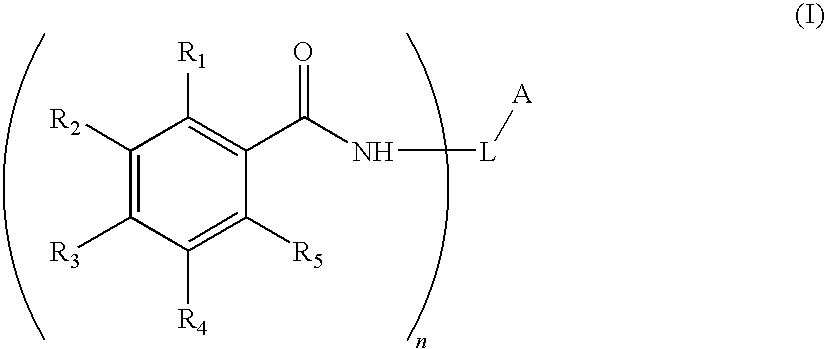
  • One aspect of the present invention relates to a novel peptide derivative of formula (I), which may be used as an ingredient of functional cosmetics:
  • R 1 to R 5 are each independently hydrogen, hydroxy, C 1 -C 6 alkyl, C 1 -C 6 alkoxy, cyano, halo or amino, preferably, hydrogen or hydroxy;
  • n 1 or 2, more preferably, 2;
  • L is absent or a linker, preferably, Lys
  • A is a glutathione-like peptide consisting of 3 to 12 amino acid residues.
  • A is a glutathione-like peptide consisting of 3 to 12 amino acid residues comprising a peptide fragment of formula (II): —X—Y—Z— (II)
  • X is Glu, Gln, Asp or Asn, preferably, Glu;
  • Y is Cys
  • Z is Gly, Ala, Val, Leu, Ile or Phe, preferably, Gly.
  • Another aspect of the present invention relates to a peptide derivative of formula (III):
  • L is absent or Lys, preferably, Lys
  • A is Glu-Cys-Gly.
  • L is absent or Lys, preferably, Lys
  • A is Glu-Cys-Gly.
  • C 1 -C 6 alkyl as used herein means a straight or branched hydrocarbon having 1 to 6 carbon atoms, which includes methyl, ethyl, n-propyl, i-propyl and n-butyl, but is not limited thereto.
  • C 1 -C 6 alkoxy as used herein means a straight or branched alkoxy having 1 to 6 carbon atoms, which includes methoxy, ethoxy and n-propanoxy, but is not limited thereto.
  • amino acid residues of the peptide can be nature or non-natural amino acid residues.
  • the peptide derivative of the present invention may be prepared by synthesizing the desired peptide, and coupling the peptide with a benzoic acid derivative.
  • the desired peptide may be prepared by extracting an in vivo protein and treating the protein with a protease to depolymerize, or using a genetic recombination and protein expression system, and preferably, prepared by a chemical synthetic method using a peptide synthesizer.
  • the peptide derivative of the present invention may be prepared by a process comprising the steps of:
  • SPPS solid phase peptide synthesis
  • the functional group-protected amino acid may be used to synthesize the peptide, and the protecting group attached to the functional group is removed in the step (3).
  • compositions particularly a cosmetic composition for skin whitening, comprising the peptide derivative according to the present invention.
  • the peptide derivative of the present invention has a whitening effect by an inhibition activity of tyrosinase, which is related to the melanin generation. Further, the peptide derivative also has an anti-oxidative activity.
  • the cosmetic composition of the present invention may preferably contain the peptide derivative according to the present invention as an active ingredient in an amount of 0.001 to 10.0 wt %.
  • the specific amount of the active ingredient may be properly decided depending on its purpose of use.
  • the cosmetic composition of the present invention may include common cosmetic ingredients typically used in the art, for example, common adjuvants such as antioxidant, stabilizer, solubilizer, vitamin, colorant and perfumery, and carriers besides the peptide derivative according to the present invention as an active ingredient.
  • common adjuvants such as antioxidant, stabilizer, solubilizer, vitamin, colorant and perfumery, and carriers besides the peptide derivative according to the present invention as an active ingredient.
  • the cosmetic composition of the present invention may be formulated to any form usually used in the art, for example, solution, suspension, emulsion, paste, gel, cream, powder, spray, etc.
  • the examples of the carriers include animal oil, vegetable oil, wax, paraffin, starch, tragacanth, cellulose derivative, polyethylene glycol, silicon, bentonite, silica, talc and zinc oxide, etc.
  • the examples of the carriers include lactose, talc, silica, aluminum hydroxide, calcium silicate and polyamide power, etc., and especially in the case that the form is spray, additionally include propellant such as chlorofluorohydrocarbon, propane/butane and dimethylether.
  • the examples of the carriers include solvent, solubilizer and emulsifier such as water, ethanol, isopropanol, ethyl carbonate, ethyl acetate, benzyl alcohol, benzyl benzoate, propylene glycol, 1,3-butylglycol oil, glycerol fatty acid ester, polyethylene glycol and sorbitan fatty acid ester, etc.
  • the examples of the carriers include liquid diluent such as water, ethanol and propylene glycol, suspending agent such as ethoxylated isostearyl alcohol, polyoxyethylene sorbitol ester and polyoxyethylene sorbitan ester, microcrystalline cellulose, aluminum methahydroxide, bentonite, agar, tragacanth, etc.
  • the cosmetic composition of the present invention may be applied to cosmetics such as skin, lotion, cream, pack, coloring cosmetics, sun block cream, two-way cake, face powder, compact, makeup base, skin cover, eye shadow, lip stick, lip gloss, lip fix and eyebrow pencil.
  • cosmetics such as skin, lotion, cream, pack, coloring cosmetics, sun block cream, two-way cake, face powder, compact, makeup base, skin cover, eye shadow, lip stick, lip gloss, lip fix and eyebrow pencil.
  • the peptide derivatives according to the present invention wherein glutathione-like peptides are connected to benzoic acid derivatives, have excellent tyrosinase inhibition and anti-oxidative activities to show excellent skin whitening effect, good biocompatibility without any skin stimulation, and stability during long-term storage.
  • the peptide derivatives of the present invention wherein glutathione-like peptides are connected to benzoic acid derivatives through a linker, has better tyrosinase inhibition effect than the peptide derivatives, wherein glutathione-like peptides are directly connected to benzoic acid derivatives without any linker.
  • the peptide derivative of the present invention can be effectively used for a cosmetic composition for skin whitening as a functional cosmetic ingredient.
  • the desired peptide was synthesized by the common solid phase peptide synthesis (SPPS) using 9-fluorenylmethoxycarbonyl (Fmoc) as an amino acid protecting group, and the amino acid residues thereof were extended by using N-hydroxybenzotriazole (HOBt) and N,N′-dicyclohexylcarbodiimide (DCC) as an activating agent [see: Wang C. Chan, Perter D. White, ‘Fmoc solid phase peptide synthesis’, Oxford].
  • SPPS common solid phase peptide synthesis
  • Fmoc 9-fluorenylmethoxycarbonyl
  • DCC N,N′-dicyclohexylcarbodiimide
  • glycine resin whose amino group is protected with Fmoc (Nova Biochem, Inc) was swollen in 3 ml of a solvent, N-methyl-2-pyrrolidone (NMP) for 20 min in a glass reactor, the solvent was removed, and Fmoc was removed by treating twice with 3 ml of 20% piperidine.
  • the glycine resin whose Fmoc was removed was treated twice with dichloromethane (DCM) and twice with NMP, and reacted with a cysteine solution activated with HOBt-DCC at room temperature for about 2 hours.
  • DCM dichloromethane
  • NMP N-methyl-2-pyrrolidone
  • the NH 2 -protected peptide(lysyl-glutamyl-cysteinyl-glycine (SEQ ID NO: 1))-resin obtained above was reacted with 20% piperidine/NMP solution to remove the Fmoc attached to the amino group, washed with NMP and DCM, and subjected to a coupling reaction with 5 equivalents of gallic acid (Lancaster, Inc) at room temperature overnight. After the reaction was completed, the resin was washed several times with NMP and DCM, and dried.
  • the dried galloyl-tetrapeptide-resin was reacted with a mixture of trifluoroacetic acid:phenol:thioanisole:water:ethanedithiol (82.5:5:5:5:2.5 (v/v)) at room temperature for 2 to 3 hours to remove the functional group protecting groups, t-butyloxycarbonyl (Boc) and trityl (triphenylmethyl) and separate the galloyl-tetrapeptide from the resin. Then, the peptide was precipitated with cold diethylether.
  • the obtained galloyl-tetrapeptide was purified by reverse phase high performance liquid chromatography (column: Gemini, C18 110A 250 ⁇ 21.2 mm) using water containing 0.1% trifluoroacetic acid, and acetonitrile as a solvent.
  • Example 1 The procedure of Example 1 was repeated to synthesize a NH 2 -protected peptide(lysyl-glutamyl-cysteinyl-glycine (SEQ ID NO: 1))-resin.
  • the NH 2 -protected peptide(lysyl-glutamyl-cysteinyl-glycine (SEQ ID NO: 1))-resin obtained above was reacted with 20% piperidine/NMP solution to remove the Fmoc attached to the amino group, washed with NMP and DCM, and subjected to a coupling reaction with 10 equivalents of gallic acid (Lancaster, Inc) at room temperature overnight. After the reaction was completed, the resin was washed several times with NMP and DCM, and dried.
  • the dried digalloyl-tetrapeptide-resin was reacted with a mixture of trifluoroacetic acid:phenol:thioanisole:water:ethanedithiol (82.5:5:5:5:2.5 (v/v)) at room temperature for 2 to 3 hours to remove the functional group protecting groups, t-butyloxycarbonyl (Boc) and trityl (triphenylmethyl) and separate the digalloyl-tetrapeptide from the resin. Then, the peptide was precipitated with cold diethylether.
  • the obtained digalloyl-tetrapeptide was purified by reverse phase high performance liquid chromatography (column: Gemini, C18 110A 250 ⁇ 21.2 mm) using water containing 0.1% trifluoroacetic acid, and acetonitrile as a solvent.
  • Example 2 The procedure of Example 1 was repeated to synthesize a NH 2 -protected peptide(glutamyl-cysteinyl-glycine (SEQ ID NO: 2))-resin.
  • the NH 2 -protected peptide(glutamyl-cysteinyl-glycine (SEQ ID NO: 2))-resin obtained above was reacted with 20% piperidine/NMP solution to remove the Fmoc attached to the amino group, washed with NMP and DCM, and subjected to a coupling reaction with 5 equivalents of gallic acid (Lancaster, Inc) at room temperature overnight. After the reaction was completed, the resin was washed several times with NMP and DCM, and dried.
  • the dried galloyl-tripeptide-resin was reacted with a mixture of trifluoroacetic acid:phenol:thioanisole:water:ethanedithiol (82.5:5:5:5:2.5 (v/v)) at room temperature for 2 to 3 hours to remove the functional group protecting groups, t-butyloxycarbonyl (Boc) and trityl (triphenylmethyl) and separate the galloyl-tripeptide from the resin. Then, the peptide was precipitated with cold diethylether.
  • the obtained galloyl-tripeptide was purified by reverse phase high performance liquid chromatography (column: Gemini, C18 110A 250 ⁇ 21.2 mm) using water containing 0.1% trifluoroacetic acid, and acetonitrile as a solvent.
  • test compounds were prepared to a final concentration of 100 ⁇ M and put into a 96-well plate, and 220 ⁇ l of 100 mM sodium phosphate buffer (pH 6.8) and 40 ⁇ l of 1.5 mM L-tyrosine solution were added thereto.
  • the resulting mixture was reacted with the addition of 20 ⁇ l of mushroom tyrosinase (1,500 units/ml, Sigma) at 37° C. for 20 min.
  • 0.2 ml of the reacted solution was transferred to a 96-well plate, and its absorbance was measured at 490 nm with a microplate reader to obtain the inhibition effect on tyrosinase.
  • the tyrosinase inhibition effect was calculated according to the following formula 1 by using the absorbance of pure water as a control, and expressed as a percentage.
  • Tyrosinase ⁇ ⁇ Inhibition ⁇ ⁇ ( % ) 100 - ( Absorbance ⁇ ⁇ of ⁇ ⁇ each ⁇ ⁇ test ⁇ ⁇ compound Absorbance ⁇ ⁇ of ⁇ ⁇ control ) ⁇ 100 [ Formula ⁇ ⁇ 1 ]
  • the peptide derivatives of the present invention wherein the glutathione-like peptide was connected to gallic acid, have significantly improved tyrosinase inhibition effects than gallic acid, and has better inhibition effects than the peptide derivatives of Comparative Examples 1 and 2, wherein a soy bean-derived peptide, which is known to have a good anti-oxidative activity, was connected to gallic acid or the peptide derivatives of Comparative Example 3, wherein a neuro peptide was connected to gallic acid.
  • the peptide derivative wherein the glutathione-like peptide was connected to gallic acid through lysine, has better tyrosinase inhibition effect than the peptide derivative, wherein the glutathione-like peptide was directly connected to gallic acid.
  • a representative antioxidant, vitamin C (Sigma) was used as a positive control, and the galloyl-tetrapeptide and digalloyl-tetrapeptide according to the present invention were mixed with 1,1-diphenyl-2-picrylhydrazyl (DPPH, Sigma) producing free radicals in ethanol to determine the reduced amounts of the produced free radicals.
  • DPPH 1,1-diphenyl-2-picrylhydrazyl
  • DPPH 1,1-diphenyl-2-picrylhydrazyl
  • the anti-oxidative activity (free radical scavenging activity) was calculated according to the following formula 2 by using the absorbance of pure water as a control, and expressed as a percentage.
  • Free ⁇ ⁇ Radical ⁇ ⁇ Scavenging ⁇ ⁇ activity ⁇ ⁇ ( % ) 100 - ( Absorbance ⁇ ⁇ of ⁇ ⁇ each ⁇ ⁇ test ⁇ ⁇ compound Absorbance ⁇ ⁇ of ⁇ ⁇ control ) ⁇ 100 [ Formula ⁇ ⁇ 2 ]
  • the galloyl-tetrapeptide and digalloyl-tetrapeptide prepared in Example 1 and 2 respectively showed better free radical scavenging activities than vitamin C. Therefore, it was confirmed that the peptide derivatives of the present invention had excellent anti-oxidative activities.

Landscapes

  • Chemical & Material Sciences (AREA)
  • Health & Medical Sciences (AREA)
  • Organic Chemistry (AREA)
  • Life Sciences & Earth Sciences (AREA)
  • General Health & Medical Sciences (AREA)
  • Proteomics, Peptides & Aminoacids (AREA)
  • Biophysics (AREA)
  • Molecular Biology (AREA)
  • Medicinal Chemistry (AREA)
  • Genetics & Genomics (AREA)
  • Biochemistry (AREA)
  • Public Health (AREA)
  • Veterinary Medicine (AREA)
  • Animal Behavior & Ethology (AREA)
  • Epidemiology (AREA)
  • Birds (AREA)
  • Dermatology (AREA)
  • Peptides Or Proteins (AREA)
  • Cosmetics (AREA)
  • Medicines That Contain Protein Lipid Enzymes And Other Medicines (AREA)

Abstract

Disclosed are peptide derivatives, wherein glutathione-like peptides are connected to benzoic acid derivatives, and a cosmetic composition comprising the same. The peptide derivatives have excellent tyrosinase inhibition and anti-oxidative activities to show excellent skin whitening effect, biocompatibility without skin stimulation, and stability during long-term storage. Therefore, they can be effectively used for a cosmetic composition for skin whitening.

Description

TECHNICAL FIELD
The present invention relates to peptide derivatives and a cosmetic composition comprising the same. More specifically, the present invention relates to peptide derivatives, which has an excellent skin whitening effect without any skin stimulation and good stability, and a cosmetic composition for skin whitening comprising the same.
BACKGROUND ART
Skin is a very important tissue, which protects a human body by being exposed to external environment and also has biochemical and physical functions. This tissue is composed of three primary layers: epidermis, dermis and hypodermis. The human skin color is determined depending on red blood cells in blood, carotene and melanin in combination, but the skin color differences between races or hyperpigmentation such as chloasma and freckle are mainly caused by melanin. The melanin residing in the epidermis, which is an outer skin layer, is synthesized by a process comprising the following steps: 1) an amino acid, tyrosine is converted into DOPA and then DOPA quinone by an enzyme tyrosinase, and 2) DOPA quinone is subjected to a non-enzymatic oxidation. It has a useful role in blocking ultraviolet light to protect the skin organ below the dermis.
However, the melanin, which is created by means of internal or external stress-based stimulus, is a stable substance which remains until it is discharged to the outside through a skin horning process even when the stress disappears. In addition, the melanin generation may increase through an in vivo polymerization-oxidation process using an enzyme such as tyrosinase as a catalyst when the generation of free radicals increases in skin, inflammatory response occurs, or UV light is applied. In particular, the UV light stimulates the melanin generation, and the partially increased melanin causes chloasma, etc., and undesired problem on skin aesthetically.
For this reason, as an inhibitor of melanin generation, hydroquinone, kojic acid, arbutin, glutathione or vitamin C (ascorbic acid), etc. has been used as a cosmetic ingredient, but theses inhibitors have disadvantages of unsatisfactory whitening effect, instability and severe skin stimulation.
TECHNICAL PROBLEM
In order to solve the above-mentioned problems of the prior arts, the present inventors have extensively studied, and as a result, they discovered that the peptide derivatives of the present invention, wherein glutathione-like peptides are connected to benzoic acid derivatives, have excellent tyrosinase inhibition effect suppressing the melanin generation with low skin stimulation and good stability during long-term storage.
Therefore, it is an object of the present invention to provide a peptide derivative having an excellent tyrosinase inhibition and anti-oxidative activities without any skin stimulation, and good stability during long-term storage.
It is another object of the present invention to provide a cosmetic composition for skin whitening comprising the peptide derivative.
TECHNICAL SOLUTION
One aspect of the present invention relates to a novel peptide derivative of formula (I), which may be used as an ingredient of functional cosmetics:
Figure US08435548-20130507-C00001
wherein,
R1 to R5 are each independently hydrogen, hydroxy, C1-C6 alkyl, C1-C6 alkoxy, cyano, halo or amino, preferably, hydrogen or hydroxy;
n is 1 or 2, more preferably, 2;
L is absent or a linker, preferably, Lys; and
A is a glutathione-like peptide consisting of 3 to 12 amino acid residues.
Preferably, A is a glutathione-like peptide consisting of 3 to 12 amino acid residues comprising a peptide fragment of formula (II):
—X—Y—Z—  (II)
wherein,
X is Glu, Gln, Asp or Asn, preferably, Glu;
Y is Cys; and
Z is Gly, Ala, Val, Leu, Ile or Phe, preferably, Gly.
Another aspect of the present invention relates to a peptide derivative of formula (III):
Figure US08435548-20130507-C00002
wherein,
L is absent or Lys, preferably, Lys; and
A is Glu-Cys-Gly.
Further aspect of the present invention relates to a peptide derivative of formula (IV):
Figure US08435548-20130507-C00003
wherein,
L is absent or Lys, preferably, Lys; and
A is Glu-Cys-Gly.
The term “C1-C6 alkyl” as used herein means a straight or branched hydrocarbon having 1 to 6 carbon atoms, which includes methyl, ethyl, n-propyl, i-propyl and n-butyl, but is not limited thereto.
The term “C1-C6 alkoxy” as used herein means a straight or branched alkoxy having 1 to 6 carbon atoms, which includes methoxy, ethoxy and n-propanoxy, but is not limited thereto.
In this description, common rules for peptide nomenclature based on the single or three letter amino acid code apply unless mentioned otherwise. In other words, the central portion of the amino acid structure is represented by the three letter code (e.g., Ala, Lys) or one letter code (e.g., A, K), and L-configuration is assumed unless D-configuration is specifically indicated by “D-” followed by the three letter code (e.g., D-Ala, D-Lys).
The amino acid residues of the peptide can be nature or non-natural amino acid residues.
The peptide derivative of the present invention may be prepared by synthesizing the desired peptide, and coupling the peptide with a benzoic acid derivative.
The desired peptide may be prepared by extracting an in vivo protein and treating the protein with a protease to depolymerize, or using a genetic recombination and protein expression system, and preferably, prepared by a chemical synthetic method using a peptide synthesizer.
For example, the peptide derivative of the present invention may be prepared by a process comprising the steps of:
(1) obtaining a NH2-protected peptide-resin by a common solid phase peptide synthesis (SPPS);
(2) reacting the obtained NH2-protected peptide-resin with a benzoic acid derivative; and
(3) removing the resin.
In the case that a functional group is located at a side chain of an amino acid residue of the desired peptide, in the step (1), the functional group-protected amino acid may be used to synthesize the peptide, and the protecting group attached to the functional group is removed in the step (3).
An exemplary process for preparing the peptide derivative according to the present invention using the functional group-protected amino acid is depicted in the following Reaction Scheme 1.
Figure US08435548-20130507-C00004
Further, another exemplary process for preparing the peptide derivative according to the present invention using the functional group-protected amino acid is depicted in the following Reaction Scheme 2.
Figure US08435548-20130507-C00005
Further aspect of the present invention relates to a cosmetic composition, particularly a cosmetic composition for skin whitening, comprising the peptide derivative according to the present invention.
The peptide derivative of the present invention has a whitening effect by an inhibition activity of tyrosinase, which is related to the melanin generation. Further, the peptide derivative also has an anti-oxidative activity.
The cosmetic composition of the present invention may preferably contain the peptide derivative according to the present invention as an active ingredient in an amount of 0.001 to 10.0 wt %. The specific amount of the active ingredient may be properly decided depending on its purpose of use.
The cosmetic composition of the present invention may include common cosmetic ingredients typically used in the art, for example, common adjuvants such as antioxidant, stabilizer, solubilizer, vitamin, colorant and perfumery, and carriers besides the peptide derivative according to the present invention as an active ingredient.
The cosmetic composition of the present invention may be formulated to any form usually used in the art, for example, solution, suspension, emulsion, paste, gel, cream, powder, spray, etc.
In the case that the cosmetic composition is formulated as paste, cream or gel, the examples of the carriers include animal oil, vegetable oil, wax, paraffin, starch, tragacanth, cellulose derivative, polyethylene glycol, silicon, bentonite, silica, talc and zinc oxide, etc.
In the case that the cosmetic composition is formulated as powder or spray, the examples of the carriers include lactose, talc, silica, aluminum hydroxide, calcium silicate and polyamide power, etc., and especially in the case that the form is spray, additionally include propellant such as chlorofluorohydrocarbon, propane/butane and dimethylether.
In the case that the cosmetic composition is formulated as solution or emulsion, the examples of the carriers include solvent, solubilizer and emulsifier such as water, ethanol, isopropanol, ethyl carbonate, ethyl acetate, benzyl alcohol, benzyl benzoate, propylene glycol, 1,3-butylglycol oil, glycerol fatty acid ester, polyethylene glycol and sorbitan fatty acid ester, etc.
In the case that the cosmetic composition is formulated as suspension, the examples of the carriers include liquid diluent such as water, ethanol and propylene glycol, suspending agent such as ethoxylated isostearyl alcohol, polyoxyethylene sorbitol ester and polyoxyethylene sorbitan ester, microcrystalline cellulose, aluminum methahydroxide, bentonite, agar, tragacanth, etc.
The cosmetic composition of the present invention may be applied to cosmetics such as skin, lotion, cream, pack, coloring cosmetics, sun block cream, two-way cake, face powder, compact, makeup base, skin cover, eye shadow, lip stick, lip gloss, lip fix and eyebrow pencil.
ADVANTAGEOUS EFFECTS
The peptide derivatives according to the present invention, wherein glutathione-like peptides are connected to benzoic acid derivatives, have excellent tyrosinase inhibition and anti-oxidative activities to show excellent skin whitening effect, good biocompatibility without any skin stimulation, and stability during long-term storage.
In particular, the peptide derivatives of the present invention, wherein glutathione-like peptides are connected to benzoic acid derivatives through a linker, has better tyrosinase inhibition effect than the peptide derivatives, wherein glutathione-like peptides are directly connected to benzoic acid derivatives without any linker.
Therefore, the peptide derivative of the present invention can be effectively used for a cosmetic composition for skin whitening as a functional cosmetic ingredient.
BEST MODE
The present invention is further illustrated by the following examples, which are not to be construed to limit the scope of the invention.
Example 1 Preparation of Galloyl-Tetrapeptide(Lysyl-Glutamyl-Cysteinyl-Glycine) (SEQ ID NO: 1)
1.1: Synthesis of NH2-Protected Peptide-Resin
The desired peptide was synthesized by the common solid phase peptide synthesis (SPPS) using 9-fluorenylmethoxycarbonyl (Fmoc) as an amino acid protecting group, and the amino acid residues thereof were extended by using N-hydroxybenzotriazole (HOBt) and N,N′-dicyclohexylcarbodiimide (DCC) as an activating agent [see: Wang C. Chan, Perter D. White, ‘Fmoc solid phase peptide synthesis’, Oxford].
Specifically, 0.04 g of glycine resin whose amino group is protected with Fmoc (Nova Biochem, Inc) was swollen in 3 ml of a solvent, N-methyl-2-pyrrolidone (NMP) for 20 min in a glass reactor, the solvent was removed, and Fmoc was removed by treating twice with 3 ml of 20% piperidine. The glycine resin whose Fmoc was removed was treated twice with dichloromethane (DCM) and twice with NMP, and reacted with a cysteine solution activated with HOBt-DCC at room temperature for about 2 hours. The above reaction procedure was sequentially repeated using glutamine and lysine to obtain a NH2-protected peptide(lysyl-glutamyl-cysteinyl-glycine (SEQ ID NO: 1))-resin, which was washed twice with DCM, twice with NMP and twice with DCM, and then completely dried.
1.2: Synthesis of Galloyl-Tetrapeptide
The NH2-protected peptide(lysyl-glutamyl-cysteinyl-glycine (SEQ ID NO: 1))-resin obtained above was reacted with 20% piperidine/NMP solution to remove the Fmoc attached to the amino group, washed with NMP and DCM, and subjected to a coupling reaction with 5 equivalents of gallic acid (Lancaster, Inc) at room temperature overnight. After the reaction was completed, the resin was washed several times with NMP and DCM, and dried.
The dried galloyl-tetrapeptide-resin was reacted with a mixture of trifluoroacetic acid:phenol:thioanisole:water:ethanedithiol (82.5:5:5:5:2.5 (v/v)) at room temperature for 2 to 3 hours to remove the functional group protecting groups, t-butyloxycarbonyl (Boc) and trityl (triphenylmethyl) and separate the galloyl-tetrapeptide from the resin. Then, the peptide was precipitated with cold diethylether.
The obtained galloyl-tetrapeptide was purified by reverse phase high performance liquid chromatography (column: Gemini, C18 110A 250×21.2 mm) using water containing 0.1% trifluoroacetic acid, and acetonitrile as a solvent.
Yield: 71%
Example 2 Preparation of Digalloyl-Tetrapeptide(Lysyl-Glutamyl-Cysteinyl-Glycine) (SEQ ID No: 1)
2.1: Synthesis of NH2-Protected Peptide-Resin
The procedure of Example 1 was repeated to synthesize a NH2-protected peptide(lysyl-glutamyl-cysteinyl-glycine (SEQ ID NO: 1))-resin.
2.2: Synthesis of Digalloyl-Tetrapeptide
The NH2-protected peptide(lysyl-glutamyl-cysteinyl-glycine (SEQ ID NO: 1))-resin obtained above was reacted with 20% piperidine/NMP solution to remove the Fmoc attached to the amino group, washed with NMP and DCM, and subjected to a coupling reaction with 10 equivalents of gallic acid (Lancaster, Inc) at room temperature overnight. After the reaction was completed, the resin was washed several times with NMP and DCM, and dried.
The dried digalloyl-tetrapeptide-resin was reacted with a mixture of trifluoroacetic acid:phenol:thioanisole:water:ethanedithiol (82.5:5:5:5:2.5 (v/v)) at room temperature for 2 to 3 hours to remove the functional group protecting groups, t-butyloxycarbonyl (Boc) and trityl (triphenylmethyl) and separate the digalloyl-tetrapeptide from the resin. Then, the peptide was precipitated with cold diethylether.
The obtained digalloyl-tetrapeptide was purified by reverse phase high performance liquid chromatography (column: Gemini, C18 110A 250×21.2 mm) using water containing 0.1% trifluoroacetic acid, and acetonitrile as a solvent.
Yield: 62%
HPLC purity: >98%
Molecular weight: 739.7 (M++Na: 760.5, M++K: 776.4).
Example 3 Preparation of Galloyl-Tripeptide(Glutamyl-Cysteinyl-Glycine) (SEQ ID No: 2)
3.1: Synthesis of NH2-Protected Peptide-Resin
The procedure of Example 1 was repeated to synthesize a NH2-protected peptide(glutamyl-cysteinyl-glycine (SEQ ID NO: 2))-resin.
3.2: Synthesis of Galloyl-Tripeptide
The NH2-protected peptide(glutamyl-cysteinyl-glycine (SEQ ID NO: 2))-resin obtained above was reacted with 20% piperidine/NMP solution to remove the Fmoc attached to the amino group, washed with NMP and DCM, and subjected to a coupling reaction with 5 equivalents of gallic acid (Lancaster, Inc) at room temperature overnight. After the reaction was completed, the resin was washed several times with NMP and DCM, and dried.
The dried galloyl-tripeptide-resin was reacted with a mixture of trifluoroacetic acid:phenol:thioanisole:water:ethanedithiol (82.5:5:5:5:2.5 (v/v)) at room temperature for 2 to 3 hours to remove the functional group protecting groups, t-butyloxycarbonyl (Boc) and trityl (triphenylmethyl) and separate the galloyl-tripeptide from the resin. Then, the peptide was precipitated with cold diethylether.
The obtained galloyl-tripeptide was purified by reverse phase high performance liquid chromatography (column: Gemini, C18 110A 250×21.2 mm) using water containing 0.1% trifluoroacetic acid, and acetonitrile as a solvent.
Yield: 69%
Comparative Example 1 Preparation of Galloyl-Tripeptide(Tyrosyl-Histidyl-Tyrosine) (SEQ ID No: 3)
The procedure of Example 1 was repeated to obtain the title compound.
Yield: 76%
Comparative Example 2 Preparation of Digalloyl-Tetrapeptide(Lysyl-Tyrosyl-Histidyl-Tyrosine) (SEQ ID No: 4)
The procedure of Example 2 was repeated to obtain the title compound.
Yield: 71%
Comparative Example 3 Preparation of Galloyl-Decapeptide(Tyrosyl-Glycyl-Glycyl-Phenylalanyl-Leucyl-Arginyl-Lysyl-Tyrosyl-Prolyl-Lysine) (SEQ ID No: 5)
The procedure of Example 1 was repeated to obtain the title compound.
Yield: 59%
Test Example 1 Test of Inhibition Effect on Tyrosinase Activity
Inhibition effects of the prepared compounds were measured by the known method (see: Pomerantz S. H., J. Biochem., 24:161-168, 1966).
The test compounds were prepared to a final concentration of 100 μM and put into a 96-well plate, and 220 μl of 100 mM sodium phosphate buffer (pH 6.8) and 40 μl of 1.5 mM L-tyrosine solution were added thereto. The resulting mixture was reacted with the addition of 20 μl of mushroom tyrosinase (1,500 units/ml, Sigma) at 37° C. for 20 min. 0.2 ml of the reacted solution was transferred to a 96-well plate, and its absorbance was measured at 490 nm with a microplate reader to obtain the inhibition effect on tyrosinase.
The tyrosinase inhibition effect was calculated according to the following formula 1 by using the absorbance of pure water as a control, and expressed as a percentage.
Tyrosinase Inhibition ( % ) = 100 - ( Absorbance of each test compound Absorbance of control ) × 100 [ Formula 1 ]
The results are shown in Table 1.
TABLE 1
Sample Peptide derivative Inhibition (%)
Example 1 Gallic acid-KECG 40
Example 2 (Gallic acid)2-KECG 52
Example 3 Gallic acid-ECG 34
Comparative Example 1 Gallic acid-YHY 15
Comparative Example 2 (Gallic acid)2-KYHY 21
Comparative Example 3 Gallic acid-YGGFLRKYPK 5
Gallic acid 10
As shown in Table 1, it was confirmed that the peptide derivatives of the present invention, wherein the glutathione-like peptide was connected to gallic acid, have significantly improved tyrosinase inhibition effects than gallic acid, and has better inhibition effects than the peptide derivatives of Comparative Examples 1 and 2, wherein a soy bean-derived peptide, which is known to have a good anti-oxidative activity, was connected to gallic acid or the peptide derivatives of Comparative Example 3, wherein a neuro peptide was connected to gallic acid. Further, the peptide derivative, wherein the glutathione-like peptide was connected to gallic acid through lysine, has better tyrosinase inhibition effect than the peptide derivative, wherein the glutathione-like peptide was directly connected to gallic acid.
Test Example 2 Free Radical Scavenging Activity Test (Anti-Oxidative Activity Test)
Free radical scavenging activities of the galloyl-tetrapeptide and digalloyl-tetrapeptide prepared in Examples 1 and 2, respectively, were measured by a common DPPH method.
A representative antioxidant, vitamin C (Sigma) was used as a positive control, and the galloyl-tetrapeptide and digalloyl-tetrapeptide according to the present invention were mixed with 1,1-diphenyl-2-picrylhydrazyl (DPPH, Sigma) producing free radicals in ethanol to determine the reduced amounts of the produced free radicals. Specifically, 0.4 ml of ethanol was mixed with 0.1 ml of the peptide derivative dissolved in purified water and 0.5 ml of 0.1 mM DPPH solution so that the final concentration of the peptide derivative was 10, 50 and 100 μM. The resulting solution was vigorously vortexed for 10 sec, kept at a dark cold place for 30 min, and then its absorbance was measured at 517 nm by ELISA method.
The anti-oxidative activity (free radical scavenging activity) was calculated according to the following formula 2 by using the absorbance of pure water as a control, and expressed as a percentage.
Free Radical Scavenging activity ( % ) = 100 - ( Absorbance of each test compound Absorbance of control ) × 100 [ Formula 2 ]
The results are shown in Table 2.
TABLE 2
Concentration Free radical scavenging activity (%)
(uM) Vitamin C Gallic acid Example 1 Example 2
10 55.2 63.1 65.8 82.1
50 68.3 70.4 78.2 82.0
100 72.5 75.1 78.1 83.5
As shown in Table 2, the galloyl-tetrapeptide and digalloyl-tetrapeptide prepared in Example 1 and 2, respectively showed better free radical scavenging activities than vitamin C. Therefore, it was confirmed that the peptide derivatives of the present invention had excellent anti-oxidative activities.
While the invention has been described with respect to the above specific embodiments, it should be recognized that various modifications and changes may be made to the invention by those skilled in the art which also fall within the scope of the invention as defined by the appended claims.
Claims (10)

The invention claimed is:
1. A peptide derivative of formula (I):
Figure US08435548-20130507-C00006
wherein,
R1 to R5 are each independently hydrogen, hydroxy, a C1-C6 alkyl, C1-C6 alkoxy, cyano, halo or amino;
n is 1 or 2;
L is absent or a linker; and
A is a glutathione-like peptide consisting of 3 to 12 amino acid residues comprising a peptide fragment Glu-Cys-Gly.
2. The peptide derivative according to claim 1, wherein L is Lys.
3. The peptide derivative according to claim 1, wherein n is 2.
4. The peptide derivative according to claim 1, wherein R1 to R5 are each independently hydrogen or hydroxy.
5. The peptide derivative according to claim 1, wherein R1 and R5 are hydrogen, and R2 to R4 are hydroxy.
6. A peptide derivative of formula (III):
Figure US08435548-20130507-C00007
wherein,
L is absent or Lys; and
A is Glu-Cys-Gly.
7. The peptide derivative according to claim 6, wherein L is Lys.
8. A peptide derivative of formula (IV):
Figure US08435548-20130507-C00008
wherein,
L is Lys; and
A is Glu-Cys-Gly.
9. A cosmetic composition comprising the peptide derivative according to claim 1.
10. A cosmetic composition according to claim 9, which is used for skin whitening.
US12/646,538 2009-04-13 2009-12-23 Peptide derivatives and cosmetic composition comprising the same Active US8435548B2 (en)

Applications Claiming Priority (2)

Application Number Priority Date Filing Date Title
KR20090031705 2009-04-13
KR10-2009-0031705 2009-04-13

Publications (2)

Publication Number Publication Date
US20100261879A1 US20100261879A1 (en) 2010-10-14
US8435548B2 true US8435548B2 (en) 2013-05-07

Family

ID=42396438

Family Applications (1)

Application Number Title Priority Date Filing Date
US12/646,538 Active US8435548B2 (en) 2009-04-13 2009-12-23 Peptide derivatives and cosmetic composition comprising the same

Country Status (4)

Country Link
US (1) US8435548B2 (en)
EP (1) EP2241573A3 (en)
JP (1) JP5123284B2 (en)
KR (1) KR101138312B1 (en)

Cited By (1)

* Cited by examiner, † Cited by third party
Publication number Priority date Publication date Assignee Title
KR20160129292A (en) * 2015-04-30 2016-11-09 주식회사 바이오에프디엔씨 Galloyl-peptide derivatives and Anti-aginig Skin External Composition Comprising the Same

Families Citing this family (6)

* Cited by examiner, † Cited by third party
Publication number Priority date Publication date Assignee Title
KR101308977B1 (en) * 2011-10-06 2013-09-16 주식회사 웰스킨 Cosmetic composition for skin whitening containing tripeptide of cysteine-methionine
KR101410589B1 (en) * 2012-07-19 2014-06-20 주식회사 바이오에프디엔씨 Neuropeptide derivatives and Composition for Skin External Application Comprising the Same
KR101354915B1 (en) 2013-01-30 2014-01-24 동신대학교산학협력단 Galloyl-peptide and cosmetic external preparation composition for skin using the same
KR101527280B1 (en) * 2013-07-23 2015-06-09 주식회사 바이오에프디엔씨 Novel Peptide derivatives from Jellyfish Extract and Composition for Skin External Application Comprising the Same
JP7100390B2 (en) * 2017-09-18 2022-07-13 エニジェン カンパニー.,リミテッド. Active substance-hexapeptide complex and cosmetic composition containing it
KR20240100404A (en) * 2021-11-04 2024-07-01 쉔젠 윈키 테크놀로지 컴퍼니 리미티드 Hexapeptide derivatives and cosmetic or pharmaceutical compositions and uses thereof

Citations (4)

* Cited by examiner, † Cited by third party
Publication number Priority date Publication date Assignee Title
KR20040049999A (en) 2002-12-06 2004-06-14 주식회사 태평양 A novel whitening agent, a method for preparing thereof and an external composition for skin whitening containing the same
EP1481669A1 (en) 2003-05-30 2004-12-01 Yamanouchi Pharmaceutical Co. Ltd. Use of polyhydroxy phenols and polyphenols for modulating p-selectin activity
US7166296B2 (en) * 2001-07-02 2007-01-23 Sarlan, Ltd. Pharmaceutical formulations and ligands for use therein; mimetics for UEA-1
EP1792630A1 (en) 2005-12-02 2007-06-06 The Procter & Gamble Company Conjugates of amino acids and vitamin B3 for percutaneous delivery of vitamin B3

Family Cites Families (1)

* Cited by examiner, † Cited by third party
Publication number Priority date Publication date Assignee Title
US6180666B1 (en) 1997-09-05 2001-01-30 Anmax, Inc. Use of gallic acid esters to increase bioavailability of orally administered pharmaceutical compounds

Patent Citations (4)

* Cited by examiner, † Cited by third party
Publication number Priority date Publication date Assignee Title
US7166296B2 (en) * 2001-07-02 2007-01-23 Sarlan, Ltd. Pharmaceutical formulations and ligands for use therein; mimetics for UEA-1
KR20040049999A (en) 2002-12-06 2004-06-14 주식회사 태평양 A novel whitening agent, a method for preparing thereof and an external composition for skin whitening containing the same
EP1481669A1 (en) 2003-05-30 2004-12-01 Yamanouchi Pharmaceutical Co. Ltd. Use of polyhydroxy phenols and polyphenols for modulating p-selectin activity
EP1792630A1 (en) 2005-12-02 2007-06-06 The Procter & Gamble Company Conjugates of amino acids and vitamin B3 for percutaneous delivery of vitamin B3

Non-Patent Citations (5)

* Cited by examiner, † Cited by third party
Title
Appeldoorn C. M. et al; "Rational optimization of a short human P-selectin binding peptide leads to nanomolar affinity antagonists." J. Biol. Chem. (2003) 278(12) 10201-10207. *
European Patent Office, European Search Report issued in corresponding EP Application No. 09180600.0, dated Apr. 14, 2011.
Kim, You-Jung; "Antimelanogenic and antioxidant properties of gallic acid." Biol. Pharm. Bull. (2007) 30(6) p. 1052-1055. *
Kong, Kwang-Hoon et al; "Expression and characterization of human tyrosinase from a bacterial expression system." Comp Biochem Physiol B (2000) 125 p. 563-569. *
Korkmaz, B et al; "Discriminating between the activites of human neutrophil elastase and proteinase 3 using serpin-derived fluorogenic substrates." J. Biol. Chem. (2002) 277(42) p. 39074-39081. *

Cited By (1)

* Cited by examiner, † Cited by third party
Publication number Priority date Publication date Assignee Title
KR20160129292A (en) * 2015-04-30 2016-11-09 주식회사 바이오에프디엔씨 Galloyl-peptide derivatives and Anti-aginig Skin External Composition Comprising the Same

Also Published As

Publication number Publication date
JP5123284B2 (en) 2013-01-23
KR20100113441A (en) 2010-10-21
KR101138312B1 (en) 2012-04-27
EP2241573A2 (en) 2010-10-20
EP2241573A3 (en) 2011-05-18
US20100261879A1 (en) 2010-10-14
JP2010248166A (en) 2010-11-04

Similar Documents

Publication Publication Date Title
US8435548B2 (en) Peptide derivatives and cosmetic composition comprising the same
JP3635703B2 (en) Ectoine and ectoin derivatives as moisturizers in cosmetics
ES2550145T3 (en) TGFP-CAP peptide and its uses
KR100753472B1 (en) A fusion peptide in which TA peptide is bound to a peptide derived from C-terminus of human collagen type I, a method for preparing the same, and a cosmetic composition for improving skin wrinkles comprising the same
EP2420510B1 (en) Nicotinoyl peptide derivatives and cosmetic composition comprising the same
EP2222325A2 (en) Compositions for reducing oxidative stress and uses thereof
CN101296939B (en) Peptide for promoting hair growth and improving wrinkles and cosmetic composition containing the same
CN117247427A (en) Peptide compound, composition and application thereof
KR102007077B1 (en) Cosmetic composition containing anti-aging and wrinkle preventing pentapeptide and pentapeptide dimer production method
AU2017399481B2 (en) Conjugate of salicylic acid and peptide
KR102211099B1 (en) A cosmetic composition for improving skin condition comprising functional lipopeptides
KR101719355B1 (en) Peptides Having Activities of Skin Condition Improvement and Uses Thereof
KR102660375B1 (en) PGC-1α-derived Peptide Derivative and Cosmetic Composition Comprising the Same
KR20200058350A (en) Peptide derivatives that enhance skin moisturization and method for manufacturing the same
KR102038697B1 (en) Cosmetic Composition for Anti-oxidation and Whitening of Skin
JP2008515858A (en) Synthetic peptides that reduce or eliminate bags formed under the lower eye contour and their use in cosmetic or dermopharmaceutical compositions
KR101410589B1 (en) Neuropeptide derivatives and Composition for Skin External Application Comprising the Same
KR20220154475A (en) Cosmetic composition made of peptide, a combination of pantoteic acid that is effective in improving wrinkles and preventing aging
KR102203424B1 (en) A zdhhc13-derived peptide, and uses thereof
KR102120981B1 (en) Gentisic acid derivative, method for production thereof and external skin composition containing the same
KR102016658B1 (en) Conjugate of salicylic acid and peptide
KR20250080808A (en) New peptide and cosmetic composition the peptide as active ingredient
HK40014079A (en) Conjugate of salicylic acid and peptide
HK40014079B (en) Conjugate of salicylic acid and peptide
KR20250125272A (en) Tetrapeptide derivatives and cosmetic or pharmaceutical compositions and uses thereof

Legal Events

Date Code Title Description
AS Assignment

Owner name: BIO-FD&C CO., LTD., KOREA, REPUBLIC OF

Free format text: ASSIGNMENT OF ASSIGNORS INTEREST;ASSIGNORS:JUNG, DAI HYUN;MOH, SANG HYUN;LEE, JUNG HUN;AND OTHERS;REEL/FRAME:024081/0593

Effective date: 20091222

STCF Information on status: patent grant

Free format text: PATENTED CASE

FEPP Fee payment procedure

Free format text: PAYOR NUMBER ASSIGNED (ORIGINAL EVENT CODE: ASPN); ENTITY STATUS OF PATENT OWNER: SMALL ENTITY

FPAY Fee payment

Year of fee payment: 4

MAFP Maintenance fee payment

Free format text: PAYMENT OF MAINTENANCE FEE, 8TH YR, SMALL ENTITY (ORIGINAL EVENT CODE: M2552); ENTITY STATUS OF PATENT OWNER: SMALL ENTITY

Year of fee payment: 8

MAFP Maintenance fee payment

Free format text: PAYMENT OF MAINTENANCE FEE, 12TH YR, SMALL ENTITY (ORIGINAL EVENT CODE: M2553); ENTITY STATUS OF PATENT OWNER: SMALL ENTITY

Year of fee payment: 12