US8182622B1 - No-perchlorate flare composition - Google Patents

No-perchlorate flare composition Download PDF

Info

Publication number
US8182622B1
US8182622B1 US13/047,340 US201113047340A US8182622B1 US 8182622 B1 US8182622 B1 US 8182622B1 US 201113047340 A US201113047340 A US 201113047340A US 8182622 B1 US8182622 B1 US 8182622B1
Authority
US
United States
Prior art keywords
approximately
percent
composition
range
pyrotechnic
Prior art date
Legal status (The legal status is an assumption and is not a legal conclusion. Google has not performed a legal analysis and makes no representation as to the accuracy of the status listed.)
Active
Application number
US13/047,340
Inventor
David Charles Ouart
John Alexander Conkling
Jeffrey Woodrow Johnson
Current Assignee (The listed assignees may be inaccurate. Google has not performed a legal analysis and makes no representation or warranty as to the accuracy of the list.)
Standard Fusee Corp
Original Assignee
Standard Fusee Corp
Priority date (The priority date is an assumption and is not a legal conclusion. Google has not performed a legal analysis and makes no representation as to the accuracy of the date listed.)
Filing date
Publication date
Application filed by Standard Fusee Corp filed Critical Standard Fusee Corp
Priority to US13/047,340 priority Critical patent/US8182622B1/en
Assigned to STANDARD FUSEE CORPORATION reassignment STANDARD FUSEE CORPORATION ASSIGNMENT OF ASSIGNORS INTEREST (SEE DOCUMENT FOR DETAILS). Assignors: JOHNSON, JEFFREY WOODROW, CONKLING, JOHN ALEXANDER, OUART, DAVID CHARLES
Application granted granted Critical
Publication of US8182622B1 publication Critical patent/US8182622B1/en
Active legal-status Critical Current
Anticipated expiration legal-status Critical

Links

Images

Classifications

    • CCHEMISTRY; METALLURGY
    • C06EXPLOSIVES; MATCHES
    • C06CDETONATING OR PRIMING DEVICES; FUSES; CHEMICAL LIGHTERS; PYROPHORIC COMPOSITIONS
    • C06C15/00Pyrophoric compositions; Flints
    • CCHEMISTRY; METALLURGY
    • C06EXPLOSIVES; MATCHES
    • C06BEXPLOSIVES OR THERMIC COMPOSITIONS; MANUFACTURE THEREOF; USE OF SINGLE SUBSTANCES AS EXPLOSIVES
    • C06B31/00Compositions containing an inorganic nitrogen-oxygen salt
    • C06B31/02Compositions containing an inorganic nitrogen-oxygen salt the salt being an alkali metal or an alkaline earth metal nitrate
    • C06B31/04Compositions containing an inorganic nitrogen-oxygen salt the salt being an alkali metal or an alkaline earth metal nitrate with carbon or sulfur
    • C06B31/06Compositions containing an inorganic nitrogen-oxygen salt the salt being an alkali metal or an alkaline earth metal nitrate with carbon or sulfur with an organic non-explosive or an organic non-thermic component
    • CCHEMISTRY; METALLURGY
    • C06EXPLOSIVES; MATCHES
    • C06BEXPLOSIVES OR THERMIC COMPOSITIONS; MANUFACTURE THEREOF; USE OF SINGLE SUBSTANCES AS EXPLOSIVES
    • C06B31/00Compositions containing an inorganic nitrogen-oxygen salt
    • C06B31/02Compositions containing an inorganic nitrogen-oxygen salt the salt being an alkali metal or an alkaline earth metal nitrate
    • C06B31/08Compositions containing an inorganic nitrogen-oxygen salt the salt being an alkali metal or an alkaline earth metal nitrate with a metal oxygen-halogen salt, e.g. inorganic chlorate, inorganic perchlorate
    • CCHEMISTRY; METALLURGY
    • C06EXPLOSIVES; MATCHES
    • C06CDETONATING OR PRIMING DEVICES; FUSES; CHEMICAL LIGHTERS; PYROPHORIC COMPOSITIONS
    • C06C9/00Chemical contact igniters; Chemical lighters

Definitions

  • the present invention relates to illuminating pyrotechnic compositions, such as those in signal or distress flares, and to signal flares and the like comprising such compositions. More specifically, the invention relates to flare compositions denoting the absence of perchlorate oxidizers from such compositions, and signal or distress flares having compositions denoting the absence of perchlorate oxidizers.
  • Pyrotechnics are used in a variety of applications including signal or distress flares.
  • Most existing flares use perchlorate oxidizers to produce their desired colors, but there are a variety of shortcomings with such perchlorate oxidizers.
  • residual perchlorates may leach into groundwater and require remediation.
  • Perchlorates cause widespread contamination in groundwater, which has been found to be a serious problem.
  • the present invention provides for reformulated pyrotechnic compositions that eliminate perchlorate ingredients while still maintaining acceptable flare performance without the use of metal fuels or highly energetic materials, such as those categorized as UN (United Nations) 1.1 materials.
  • the invention provides for a perchlorate-free pyrotechnic composition.
  • the pyrotechnic composition includes from approximately sixty-seven percent (67%) to approximately seventy-eight percent (78%) of strontium nitrate [Sr(NO 3 ) 2 ], from approximately two percent (2%) to approximately eleven percent (11%) of potassium nitrate [KNO 3 ], from approximately six percent (6%) to approximately fifteen percent (15%) of sulfur [S], from approximately one percent (1%) to approximately ten percent (10%) of polyvinyl chloride, from approximately one percent (1.0%) to approximately four percent (4%) of paraffin oil, and from approximately zero percent (0%) to approximately two percent (2%) of sawdust mixture.
  • FIG. 1 is a longitudinal sectional view of one embodiment of the present invention.
  • FIG. 2 is a flowchart diagram illustrating one exemplary mixing sequence for forming a pyrotechnic composition in accordance with the present invention
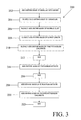
  • FIG. 3 is a flowchart diagram illustrating one exemplary mixing sequence for forming an ignition button composition in accordance with the present invention.
  • a flare 10 comprising a pyrotechnic composition 22 is shown. More specifically, the flare 10 may comprise a cylindrical paper tube or casing 12 closed at its rearward end 14 by a plug 16 which may be made of wood or plastic or the like. The plug 16 seals the rearward end 14 of the flare 10 to form a closure. At the forward end 18 of the flare 10 , opposite the rearward end 14 , a fitted cap 20 is mounted so as to form another closure, thereby enclosing the composition 22 .
  • An ignition button composition 26 may be affixed or set into the forwardmost tip 24 of the pyrotechnic composition 22 , or proximate the forwardmost tip 24 of the pyrotechnic composition 22 , in an arrangement such that lighting the ignition button composition 26 ignites the pyrotechnic composition 22 .
  • the perchlorate-free pyrotechnic composition 22 may include from approximately sixty-seven percent (67%) to approximately seventy-eight percent (78%) of strontium nitrate [Sr(NO 3 ) 2 ], from approximately two percent (2%) to approximately eleven percent (11%) of potassium nitrate [KNO 3 ], from approximately six percent (6%) to approximately fifteen percent (15%) of sulfur [S], from approximately one percent (1%) to approximately ten percent (10%) of polyvinyl chloride, from approximately one percent (1.0%) to approximately four percent (4%) of paraffin oil, and from approximately zero percent (0%) to approximately two percent (2%) of sawdust mixture.
  • the pyrotechnic composition 22 of the present disclosure includes:
  • the sawdust mixture may be omitted from the perchlorate-free pyrotechnic composition 22 (i.e. a composition that includes 0% sawdust mixture).
  • the sawdust mixture may comprise a combination of hardwood sawdust, paraffin oil, and paraffin wax.
  • the sawdust mixture may include from approximately seventy-four percent (74%) to approximately eighty-four percent (84%) of hardwood sawdust, from approximately seven percent (7%) to approximately eighteen percent (18%) of paraffin wax, and from approximately zero percent (0%) to approximately thirteen percent (13%) of paraffin oil.
  • the perchlorate-free pyrotechnic composition of the present invention is not limited to a particular sawdust mixture, or even the presence of a sawdust mixture in the composition at all.
  • the sawdust mixture includes:
  • the particle size distribution of the various ingredients may also be an important factor in the successful creation of a no-perchlorate flare.
  • one exemplary embodiment of the pyrotechnic composition 22 may include the following particle size distributions:
  • the polyvinyl chloride ingredient may be defined by numerous properties including a degree of polymerization between approximately 800 and approximately 3000, a gel temperature (FF, ALTC-29) between approximately 140° F. and approximately 250° F., a K-value between approximately 60 and approximately 120, and a relative viscosity (1% cyclohexanone) between approximately 2 and approximately 4.
  • FF gel temperature
  • ALTC-29 gel temperature
  • K-value between approximately 60 and approximately 120
  • relative viscosity 1% cyclohexanone
  • the paraffin wax ingredient of the sawdust mixture may have a melting point between approximately 100° F. and approximately 140° F., an oil content between approximately 0.5% and approximately 3.5%, a viscosity at 210° F. between approximately 30 and approximately 55, and a flash point greater than approximately 380° F.
  • paraffin wax ingredients defined by various other properties or property values are also possible.
  • the paraffin oil ingredient of the sawdust mixture may have a boiling point between approximately 650° F. and approximately 1300° F., although other boiling points are also possible.
  • the potassium nitrate ingredient may be replaced with another suitable nitrate compound including, but not limited to, calcium nitrate, lithium nitrate, or magnesium nitrate.
  • the polyvinyl chloride ingredient may also be replaced with one or more alternative chlorinated ingredients, such as a chlorinated paraffin wax or a chlorinated rubber.
  • paraffin oil in both the sawdust mixture and the pyrotechnic composition generally
  • the paraffin oil may be replaced with one or more alternative ingredients including, but not limited to, naphthenic oil, castor oil, halogenated hydrocarbon liquid, any of the cooking oils, or various fuel oils such as diesel fuel.
  • the paraffin wax of the sawdust mixture may be replaced with another suitable ingredient such as asphalt, gilsonite, or a halogenated hydrocarbon wax or rubber.
  • the paraffin wax may be replaced with a chlorinated hydrocarbon.
  • the ignition button composition 26 may include from approximately forty percent (40%) to approximately fifty-six percent (56%) of potassium chlorate [KClO3], from approximately twelve percent (12%) to approximately thirty-six percent (36%) of potassium nitrate [KNO 3 ], from approximately four percent (4%) to approximately twelve percent (12%) of strontium nitrate [Sr(NO 3 ) 2 ], from approximately zero percent (0%) to approximately five percent (5%) of charcoal, from approximately zero percent (0%) to approximately five percent (5%) of marble dust, from approximately zero percent (0%) to approximately five percent (5%) of burnt umber, and from approximately eight percent (8%) to approximately twenty percent (20%) of shellac.
  • the ignition button composition 26 of the present disclosure includes:
  • the potassium chlorate component may include from approximately twenty percent (20%) to approximately thirty-six percent (36%) of fine potassium chlorate, and from approximately twelve percent (12%) to approximately twenty-eight percent (28%) of coarse potassium chlorate.
  • the 48% (by mass) of potassium chlorate may be comprised of approximately 28% fine potassium chlorate and approximately 20% coarse potassium chlorate.
  • the particle size distribution of the various ingredients may also be an important factor for the successful manufacture of a no-perchlorate flare.
  • the ignition button composition 26 may include the following particle size distribution:
  • the potassium nitrate may also include an anti-cake ingredient with a maximum concentration of approximately 1%.
  • an anti-cake ingredient with a maximum concentration of approximately 1%.
  • any suitable anti-cake ingredient may be used, one exemplary anti-cake ingredient that has been found to provide beneficial results is fumed silica.
  • the potassium nitrate in the ignition button composition 26 may also be replaced with another suitable nitrate compound such as calcium nitrate, lithium nitrate, magnesium nitrate, or the like.
  • the strontium nitrate in the ignition button composition 26 may also be replaced with alternative nitrate compounds such as calcium nitrate, lithium nitrate, magnesium nitrate, or the like.
  • the charcoal, marble dust, burnt umber, and shellac ingredients also have suitable substitutes.
  • Substitute compounds for the charcoal ingredient include, but are not limited to, carbon black, aluminum, magnesium, and magnalium.
  • Substitute compounds for the marble dust ingredient include, but are not limited to, technical or reagent grade calcium carbonate, technical or reagent grade strontium carbonate, technical or reagent grade magnesium carbonate, technical or reagent grade lithium carbonate, and technical or reagent grade lithium bicarbonate.
  • Substitute compounds for the burnt umber ingredient include, but are not limited to, technical or reagent grade iron III oxide, technical or reagent grade nickel oxide, technical or reagent grade manganese oxide, and technical or reagent grade black iron oxide.
  • substitute compounds for the shellac ingredient include, but are not limited to, red gum, gum copal, and colophony resin.
  • FIG. 2 is a flowchart diagram illustrating one exemplary mixing sequence 100 for forming a pyrotechnic composition for a no-perchlorate flare in accordance with the present invention.
  • the mixing sequence 100 will be described with reference to the pyrotechnic composition ingredients set forth in the tables above. However, it should be understood that mixing sequences involving other ingredients are also contemplated and within the intended scope of the present invention.
  • the mixing sequence 100 begins at step 102 where approximately one-half of the mass of strontium nitrate is added into a mixer. The entire mass of the potassium nitrate is then added to the mixer in step 104 , followed by the entire mass of the sawdust mixture in step 106 . The combined strontium nitrate, potassium nitrate, and sawdust mixture are subsequently mixed together in step 108 .
  • step 110 approximately one-half of the mass of paraffin oil and the entire mass of the polyvinyl chloride is added into the mixer.
  • the polyvinyl chloride should not be screened.
  • the combined strontium nitrate, potassium nitrate, sawdust mixture, paraffin oil, and polyvinyl chloride are then mixed together in step 112 .
  • the mixing sequence 100 continues at step 114 where the entire mass of sulfur is added to the mixer, and the ingredients mixed in step 116 . After mixing in the entire mass of sulfur, the remaining mass of strontium nitrate is added in step 118 , and the ingredients once again mixed in step 120 .
  • the mixing sequence 100 ends with the addition of the remaining paraffin oil in step 122 , and a final mixing step 124 .
  • FIG. 3 is a flowchart diagram illustrating one exemplary mixing sequence 200 for forming an ignition button composition for a no-perchlorate flare in accordance with the present invention.
  • the mixing sequence 200 will be described with reference to the ignition button composition ingredients set forth in the tables above. However, it should be understood that mixing sequences involving other ingredients are also contemplated and within the intended scope of the present invention.
  • the mixing sequence 200 begins at step 202 where the entire mass of the shellac (which has been dissolved in a solvent) is added into a mixer. The entire mass of the charcoal is then slowly added into the mixer in step 204 , followed by the marble dust in step 206 . After slowly adding the marble dust into the mixer, the burnt umber is slowly added into the mixer in step 208 and the fine potassium chlorate slowly added into the mixer in step 210 . The ingredients added into the mixer in steps 202 - 210 are then mixed together in step 212 .
  • step 212 After the initial mixing step 212 , the entire mass of the potassium nitrate is added in step 214 followed by another mixing step 216 . Subsequently, the entire masses of the strontium nitrate and the coarse potassium chlorate are added into the mixer in steps 218 and 220 , respectively. A final mixing step 222 ensures adequate mixing of all of the ingredients.

Landscapes

  • Chemical & Material Sciences (AREA)
  • Organic Chemistry (AREA)
  • Inorganic Chemistry (AREA)
  • Chemical Kinetics & Catalysis (AREA)
  • General Chemical & Material Sciences (AREA)
  • Engineering & Computer Science (AREA)
  • Metallurgy (AREA)
  • Air Bags (AREA)

Abstract

The invention provides for a perchlorate-free pyrotechnic composition. In one embodiment of the present invention, the pyrotechnic composition includes from approximately sixty-seven percent (67%) to approximately seventy-eight percent (78%) of strontium nitrate [Sr(NO3)2], from approximately two percent (2%) to approximately eleven percent (11%) of potassium nitrate [KNO3], from approximately six percent (6%) to approximately fifteen percent (15%) of sulfur [S], from approximately one percent (1%) to approximately ten percent (10%) of polyvinyl chloride, from approximately one percent (1.0%) to approximately four percent (4%) of paraffin oil, and from approximately zero percent (0%) to approximately two percent (2%) of sawdust mixture.

Description

BACKGROUND OF THE INVENTION
1. Field of the Invention
The present invention relates to illuminating pyrotechnic compositions, such as those in signal or distress flares, and to signal flares and the like comprising such compositions. More specifically, the invention relates to flare compositions denoting the absence of perchlorate oxidizers from such compositions, and signal or distress flares having compositions denoting the absence of perchlorate oxidizers.
2. Background of the Invention
Pyrotechnics are used in a variety of applications including signal or distress flares. Most existing flares use perchlorate oxidizers to produce their desired colors, but there are a variety of shortcomings with such perchlorate oxidizers. For example, residual perchlorates may leach into groundwater and require remediation. Perchlorates cause widespread contamination in groundwater, which has been found to be a serious problem. When perchlorates are present in drinking water they can inhibit the uptake of iodine by the thyroid gland, leading to potentially serious health problems that can result in permanent neurological damage.
Attempts have been made to reformulate pyrotechnic compositions to eliminate perchlorate ingredients, while maintaining acceptable performance levels of the flares. However, such attempts result in the use of less energetic oxidizers or other factors that reduce the efficacy of the flare. In one exemplary reformulation, perchlorate oxidizers are substituted with nitrate or other less energetic oxidizers. Because these oxidizers are less reactive than those that include perchlorate, high-energy metal fuels are used to make up for the loss in energy. As appreciated by those skilled in the art, metal fuels are hazardous to the environment and degrade over time. Furthermore, the risk of ignition of the metal fuels makes manufacturing of the pyrotechnic composition a sensitive process.
The present invention, inter alia, provides for reformulated pyrotechnic compositions that eliminate perchlorate ingredients while still maintaining acceptable flare performance without the use of metal fuels or highly energetic materials, such as those categorized as UN (United Nations) 1.1 materials.
BRIEF SUMMARY OF THE INVENTION
The invention provides for a perchlorate-free pyrotechnic composition. In one embodiment of the present invention, the pyrotechnic composition includes from approximately sixty-seven percent (67%) to approximately seventy-eight percent (78%) of strontium nitrate [Sr(NO3)2], from approximately two percent (2%) to approximately eleven percent (11%) of potassium nitrate [KNO3], from approximately six percent (6%) to approximately fifteen percent (15%) of sulfur [S], from approximately one percent (1%) to approximately ten percent (10%) of polyvinyl chloride, from approximately one percent (1.0%) to approximately four percent (4%) of paraffin oil, and from approximately zero percent (0%) to approximately two percent (2%) of sawdust mixture.
BRIEF DESCRIPTION OF THE DRAWINGS
FIG. 1 is a longitudinal sectional view of one embodiment of the present invention.
FIG. 2 is a flowchart diagram illustrating one exemplary mixing sequence for forming a pyrotechnic composition in accordance with the present invention
FIG. 3 is a flowchart diagram illustrating one exemplary mixing sequence for forming an ignition button composition in accordance with the present invention.
DETAILED DESCRIPTION OF THE INVENTION
The embodiments disclosed herein are not exhaustive nor do they limit the invention to the precise forms disclosed in the following detailed description. Referring now to FIG. 1, a flare 10 comprising a pyrotechnic composition 22 is shown. More specifically, the flare 10 may comprise a cylindrical paper tube or casing 12 closed at its rearward end 14 by a plug 16 which may be made of wood or plastic or the like. The plug 16 seals the rearward end 14 of the flare 10 to form a closure. At the forward end 18 of the flare 10, opposite the rearward end 14, a fitted cap 20 is mounted so as to form another closure, thereby enclosing the composition 22. An ignition button composition 26 may be affixed or set into the forwardmost tip 24 of the pyrotechnic composition 22, or proximate the forwardmost tip 24 of the pyrotechnic composition 22, in an arrangement such that lighting the ignition button composition 26 ignites the pyrotechnic composition 22.
In the present disclosure, perchlorate oxidizers currently used in various flare compositions are substituted. The perchlorate-free pyrotechnic composition 22 may include from approximately sixty-seven percent (67%) to approximately seventy-eight percent (78%) of strontium nitrate [Sr(NO3)2], from approximately two percent (2%) to approximately eleven percent (11%) of potassium nitrate [KNO3], from approximately six percent (6%) to approximately fifteen percent (15%) of sulfur [S], from approximately one percent (1%) to approximately ten percent (10%) of polyvinyl chloride, from approximately one percent (1.0%) to approximately four percent (4%) of paraffin oil, and from approximately zero percent (0%) to approximately two percent (2%) of sawdust mixture.
In one specific embodiment, the pyrotechnic composition 22 of the present disclosure includes:
Ingredient % By Mass
Strontium Nitrate 72.40%
Potassium Nitrate  8.05%
Sulfur 10.45%
Polyvinyl Chloride  5.34%
Paraffin Oil  2.82%
Sawdust Mixture  0.94%
As set forth above, the sawdust mixture may be omitted from the perchlorate-free pyrotechnic composition 22 (i.e. a composition that includes 0% sawdust mixture). However, when the sawdust mixture is present in the perchlorate-free pyrotechnic composition 22, numerous mixtures are possible as will be appreciated by those skilled in the art. For example, in one exemplary embodiment the sawdust mixture may comprise a combination of hardwood sawdust, paraffin oil, and paraffin wax. Particularly, the sawdust mixture may include from approximately seventy-four percent (74%) to approximately eighty-four percent (84%) of hardwood sawdust, from approximately seven percent (7%) to approximately eighteen percent (18%) of paraffin wax, and from approximately zero percent (0%) to approximately thirteen percent (13%) of paraffin oil.
In view of the foregoing, the perchlorate-free pyrotechnic composition of the present invention is not limited to a particular sawdust mixture, or even the presence of a sawdust mixture in the composition at all.
In one specific embodiment, the sawdust mixture includes:
Sawdust Mixture % By Mass
Hardwood Sawdust 78.8%
Paraffin Wax 13.2%
Paraffin Oil  8.0%
In addition to providing an appropriate concentration of the various ingredients in the pyrotechnic composition 22, the particle size distribution of the various ingredients may also be an important factor in the successful creation of a no-perchlorate flare. For example, one exemplary embodiment of the pyrotechnic composition 22 may include the following particle size distributions:
Ingredient Particle Size Distribution
Strontium Nitrate i. 2% +/− 2% of total mass retained on
20 mesh screen
ii. 2% +/− 2% of total mass retained on
30 mesh screen
iii. 27% +/− 10% of total mass retained on
40 mesh screen
iv. 33% +/− 10% of total mass retained on
50 mesh screen
v. 21% +/− 10% of total mass retained on
70 mesh screen
vi. 7% +/− 5% of total mass retained on
100 mesh screen
vii. 5% +/− 4% of total mass retained on
140 mesh screen
viii. 4% +/− 4% of total mass to pan
Potassium Nitrate i. 4% +/− 3% of total mass retained on
40 mesh screen
ii. 64% +/− 24% of total mass retained on
100 mesh screen
iii. 16% +/− 8% of total mass retained on
140 mesh screen
iv. 9% +/− 7% of total mass retained on
200 mesh screen
v. 7% +/− 6% of total mass retained in pan
Sulfur i. 20% of total mass retained on
200 mesh screen
Polyvinyl Chloride i. Median particle size of 5 microns to
100 microns
Paraffin Oil N/A
Hardwood Sawdust i. Maximum 3% of total mass retained on
Component of 10 mesh screen
Sawdust Mixture ii. Minimum 85% of total mass retained on
30 mesh screen
iii. Maximum 10% of total mass retained on
60 mesh screen
iv. Maximum 6% of total mass to pan
In one exemplary but non-limiting embodiment, the polyvinyl chloride ingredient may be defined by numerous properties including a degree of polymerization between approximately 800 and approximately 3000, a gel temperature (FF, ALTC-29) between approximately 140° F. and approximately 250° F., a K-value between approximately 60 and approximately 120, and a relative viscosity (1% cyclohexanone) between approximately 2 and approximately 4. However, polyvinyl chloride ingredients defined by various other properties or property values are also possible.
The paraffin wax ingredient of the sawdust mixture may have a melting point between approximately 100° F. and approximately 140° F., an oil content between approximately 0.5% and approximately 3.5%, a viscosity at 210° F. between approximately 30 and approximately 55, and a flash point greater than approximately 380° F. However, paraffin wax ingredients defined by various other properties or property values are also possible. The paraffin oil ingredient of the sawdust mixture may have a boiling point between approximately 650° F. and approximately 1300° F., although other boiling points are also possible.
As will be appreciated by those skilled in the art, numerous alternative embodiments of the pyrotechnic composition 22 are possible and within the scope of the present invention. For example, in alternative embodiments the potassium nitrate ingredient may be replaced with another suitable nitrate compound including, but not limited to, calcium nitrate, lithium nitrate, or magnesium nitrate. The polyvinyl chloride ingredient may also be replaced with one or more alternative chlorinated ingredients, such as a chlorinated paraffin wax or a chlorinated rubber.
Additionally, the paraffin oil (in both the sawdust mixture and the pyrotechnic composition generally) may be replaced with one or more alternative ingredients including, but not limited to, naphthenic oil, castor oil, halogenated hydrocarbon liquid, any of the cooking oils, or various fuel oils such as diesel fuel. Furthermore, the paraffin wax of the sawdust mixture may be replaced with another suitable ingredient such as asphalt, gilsonite, or a halogenated hydrocarbon wax or rubber. For example, in one exemplary alternative embodiment the paraffin wax may be replaced with a chlorinated hydrocarbon.
In view of the non-exhaustive list of substitute ingredients set forth above, one of ordinary skill in the art would realize that many alternative compositions may be formulated without departing from the intended scope of the present invention.
In those embodiments of the present invention that include an ignition button composition 26, the ignition button composition 26 may include from approximately forty percent (40%) to approximately fifty-six percent (56%) of potassium chlorate [KClO3], from approximately twelve percent (12%) to approximately thirty-six percent (36%) of potassium nitrate [KNO3], from approximately four percent (4%) to approximately twelve percent (12%) of strontium nitrate [Sr(NO3)2], from approximately zero percent (0%) to approximately five percent (5%) of charcoal, from approximately zero percent (0%) to approximately five percent (5%) of marble dust, from approximately zero percent (0%) to approximately five percent (5%) of burnt umber, and from approximately eight percent (8%) to approximately twenty percent (20%) of shellac.
In one specific embodiment, the ignition button composition 26 of the present disclosure includes:
Ingredient % By Mass
Potassium Chlorate 48.00%
Potassium Nitrate 24.45%
Strontium Nitrate  7.71%
Charcoal  1.64%
Marble Dust  3.60%
Burnt Umber  2.50%
Shellac 12.10%
It may be preferable to divide the total potassium chlorate concentration into two portions, including a fine potassium chlorate portion and a coarse potassium chlorate portion. The potassium chlorate component may include from approximately twenty percent (20%) to approximately thirty-six percent (36%) of fine potassium chlorate, and from approximately twelve percent (12%) to approximately twenty-eight percent (28%) of coarse potassium chlorate. With reference to the specific embodiment of the ignition button composition set forth above, the 48% (by mass) of potassium chlorate may be comprised of approximately 28% fine potassium chlorate and approximately 20% coarse potassium chlorate.
In addition to providing an appropriate concentration of the various ingredients in the ignition button composition 26, the particle size distribution of the various ingredients may also be an important factor for the successful manufacture of a no-perchlorate flare. In one exemplary but non-limiting embodiment, the ignition button composition 26 may include the following particle size distribution:
Ingredient Particle Size Distribution
Fine Potassium i. 32% +/− 10% of total mass less than
Chlorate 212 microns and greater than 125 microns
ii. 11% +/− 10% of total mass less than
125 microns and greater than 106 microns
iii. 19% +/− 10% of total mass less than
106 microns and greater than 75 microns
iv. 7%, +10%/−5%, of total mass less than
75 microns and greater than 63 microns
v. 32% +/− 5% of total mass less than
63 microns
Coarse Potassium i. 1% +/− 1% of total mass greater than
Chlorate 180 microns
ii. 31% +/− 10% of total mass less than
180 microns and greater than 75 microns
iii. 25% +/− 10% of total mass less than
75 microns and greater than 45 microns
iv. 44% +/−5% of total mass less than
45 microns
Potassium Nitrate i. 1% of total mass retained on
170 mesh screen
Strontium Nitrate i. 2% +/− 2% of total mass retained on
20 mesh screen
ii. 2% +/− 2% of total mass retained on
30 mesh screen
iii. 27% +/− 10% of total mass retained on
40 mesh screen
iv. 33% +/− 10% of total mass retained on
50 mesh screen
v. 21% +/− 10% of total mass retained on
70 mesh screen
vi. 7% +/− 5% of total mass retained on
100 mesh screen
vii. 5% +/− 4% of total mass retained on
140 mesh screen
viii. 4% +/− 4% of total mass to pan
Charcoal i. Maximum 2% of total mass retained on
100 mesh screen
ii. Minimum 30% of total mass passed
through 325 mesh screen
Marble Dust i. Maximum 1% of total mass retained on
325 mesh screen
Burnt Umber i. Maximum 1.0% of total mass retained on
325 mesh screen
Shellac N/A
Optionally, the potassium nitrate may also include an anti-cake ingredient with a maximum concentration of approximately 1%. Although any suitable anti-cake ingredient may be used, one exemplary anti-cake ingredient that has been found to provide beneficial results is fumed silica.
As will be appreciated by those skilled in the art, numerous alternative embodiments of the ignition button composition 26 are possible and within the scope of the present invention. For example, similar to the pyrotechnic composition 22, the potassium nitrate in the ignition button composition 26 may also be replaced with another suitable nitrate compound such as calcium nitrate, lithium nitrate, magnesium nitrate, or the like. The strontium nitrate in the ignition button composition 26 may also be replaced with alternative nitrate compounds such as calcium nitrate, lithium nitrate, magnesium nitrate, or the like.
The charcoal, marble dust, burnt umber, and shellac ingredients also have suitable substitutes. Substitute compounds for the charcoal ingredient include, but are not limited to, carbon black, aluminum, magnesium, and magnalium. Substitute compounds for the marble dust ingredient include, but are not limited to, technical or reagent grade calcium carbonate, technical or reagent grade strontium carbonate, technical or reagent grade magnesium carbonate, technical or reagent grade lithium carbonate, and technical or reagent grade lithium bicarbonate. Substitute compounds for the burnt umber ingredient include, but are not limited to, technical or reagent grade iron III oxide, technical or reagent grade nickel oxide, technical or reagent grade manganese oxide, and technical or reagent grade black iron oxide. Finally, substitute compounds for the shellac ingredient include, but are not limited to, red gum, gum copal, and colophony resin.
In view of the non-exhaustive list of substitute ingredients set forth above, one of ordinary skill in the art would realize that many alternative compositions may be formulated without departing from the intended scope of the present invention.
Now that the various ingredients and particle size distributions defining the pyrotechnic and ignition button compositions in accordance with the present invention have been described, exemplary mixing sequences for creating the pyrotechnic and ignition button compositions will be set forth in detail.
FIG. 2 is a flowchart diagram illustrating one exemplary mixing sequence 100 for forming a pyrotechnic composition for a no-perchlorate flare in accordance with the present invention. Particularly, the mixing sequence 100 will be described with reference to the pyrotechnic composition ingredients set forth in the tables above. However, it should be understood that mixing sequences involving other ingredients are also contemplated and within the intended scope of the present invention.
The mixing sequence 100 begins at step 102 where approximately one-half of the mass of strontium nitrate is added into a mixer. The entire mass of the potassium nitrate is then added to the mixer in step 104, followed by the entire mass of the sawdust mixture in step 106. The combined strontium nitrate, potassium nitrate, and sawdust mixture are subsequently mixed together in step 108.
Moving next to step 110, approximately one-half of the mass of paraffin oil and the entire mass of the polyvinyl chloride is added into the mixer. Preferably, the polyvinyl chloride should not be screened. The combined strontium nitrate, potassium nitrate, sawdust mixture, paraffin oil, and polyvinyl chloride are then mixed together in step 112.
The mixing sequence 100 continues at step 114 where the entire mass of sulfur is added to the mixer, and the ingredients mixed in step 116. After mixing in the entire mass of sulfur, the remaining mass of strontium nitrate is added in step 118, and the ingredients once again mixed in step 120. The mixing sequence 100 ends with the addition of the remaining paraffin oil in step 122, and a final mixing step 124.
Although several exemplary steps were described with reference to the pyrotechnic composition mixing sequence 100, those skilled in the art will appreciate that the order and number of steps may be modified without departing from the intended scope of the invention. Thus, the exemplary steps were provided merely for purposes of example and not limitation.
FIG. 3 is a flowchart diagram illustrating one exemplary mixing sequence 200 for forming an ignition button composition for a no-perchlorate flare in accordance with the present invention. Particularly, the mixing sequence 200 will be described with reference to the ignition button composition ingredients set forth in the tables above. However, it should be understood that mixing sequences involving other ingredients are also contemplated and within the intended scope of the present invention.
The mixing sequence 200 begins at step 202 where the entire mass of the shellac (which has been dissolved in a solvent) is added into a mixer. The entire mass of the charcoal is then slowly added into the mixer in step 204, followed by the marble dust in step 206. After slowly adding the marble dust into the mixer, the burnt umber is slowly added into the mixer in step 208 and the fine potassium chlorate slowly added into the mixer in step 210. The ingredients added into the mixer in steps 202-210 are then mixed together in step 212.
After the initial mixing step 212, the entire mass of the potassium nitrate is added in step 214 followed by another mixing step 216. Subsequently, the entire masses of the strontium nitrate and the coarse potassium chlorate are added into the mixer in steps 218 and 220, respectively. A final mixing step 222 ensures adequate mixing of all of the ingredients.
Although several exemplary steps were described with reference to the ignition button composition mixing sequence 200, those skilled in the art will appreciate that the order and number of steps may be modified without departing from the intended scope of the invention. Thus, the exemplary steps were provided merely for purposes of example and not limitation.
Although various representative embodiments of this invention have been described above with a certain degree of particularity, those skilled in the art could make numerous alterations to the disclosed embodiments without departing from the spirit or scope of the inventive subject matter set forth in the specification and claims.

Claims (8)

1. A pyrotechnic composition comprising, by mass:
strontium nitrate within the range of approximately sixty-seven percent (67%) to approximately seventy-eight percent (78%) of the composition;
potassium nitrate within the range of approximately two percent (2%) to approximately eleven percent (11%) of the composition;
sulfur within the range of approximately six percent (6%) to approximately fifteen percent (15%) of the composition;
polyvinyl chloride within the range of approximately one percent (1%) to approximately ten percent (10%) of the composition;
paraffin oil within the range of approximately one percent (1.0%) to approximately four percent (4%) of the composition; and
a sawdust mixture within the range of approximately zero percent (0%) to approximately two percent (2%) of the composition.
2. The pyrotechnic composition according to claim 1 which is substantially free of perchlorate oxidizers.
3. The pyrotechnic composition according to claim 1, said pyrotechnic composition comprising, by mass, 72.40% of the composition strontium nitrate, 8.05% of the composition potassium nitrate, 10.45% of the composition sulfur, 5.34% of the composition polyvinyl chloride, 2.82% of the composition paraffin oil, and 0.94% of the composition sawdust mixture.
4. The pyrotechnic composition of claim 1 wherein said composition is incorporated into a pyrotechnic flare comprising:
a casing closed at least at one end and containing said pyrotechnic composition.
5. The pyrotechnic flare according to claim 4, said pyrotechnic flare further comprising an ignition button composition, the ignition button composition comprising, by mass:
potassium chlorate within the range of approximately forty percent (40%) to approximately fifty-six percent (56%);
potassium nitrate within the range of approximately twelve percent (12%) to approximately thirty-six percent (36%);
strontium nitrate within the range of approximately four percent (4%) to approximately twelve percent (12%);
charcoal within the range of approximately zero percent (0%) to approximately five percent (5%);
marble dust within the range of approximately zero percent (0%) to approximately five percent (5%);
burnt umber within the range of approximately zero percent (0%) to approximately five percent (5%); and
shellac within the range of approximately eight percent (8%) to approximately twenty percent (20%).
6. The pyrotechnic flare according to claim 5, said ignition button composition comprising, by mass, 48.00% of the ignition button composition potassium chlorate; 24.45% of the ignition button composition potassium nitrate; 7.71% of the ignition button composition strontium nitrate; 1.64% of the ignition button composition charcoal; 3.60% of the ignition button composition marble dust; 2.50% of the ignition button composition burnt umber; and 12.10% of the ignition button composition shellac.
7. A method of producing the pyrotechnic composition of claim 1 comprising:
mixing the composition of claim 1 together; and
pressing the composition into a casing.
8. The method of producing a pyrotechnic composition according to claim 7, wherein mixing comprises mixing, by mass, 72.40% strontium nitrate, 8.05% potassium nitrate, 10.45% sulfur, 5.34% polyvinyl chloride, 2.82% paraffin oil, and 0.94% sawdust mixture.
US13/047,340 2011-03-14 2011-03-14 No-perchlorate flare composition Active US8182622B1 (en)

Priority Applications (1)

Application Number Priority Date Filing Date Title
US13/047,340 US8182622B1 (en) 2011-03-14 2011-03-14 No-perchlorate flare composition

Applications Claiming Priority (1)

Application Number Priority Date Filing Date Title
US13/047,340 US8182622B1 (en) 2011-03-14 2011-03-14 No-perchlorate flare composition

Publications (1)

Publication Number Publication Date
US8182622B1 true US8182622B1 (en) 2012-05-22

Family

ID=46061221

Family Applications (1)

Application Number Title Priority Date Filing Date
US13/047,340 Active US8182622B1 (en) 2011-03-14 2011-03-14 No-perchlorate flare composition

Country Status (1)

Country Link
US (1) US8182622B1 (en)

Cited By (2)

* Cited by examiner, † Cited by third party
Publication number Priority date Publication date Assignee Title
CN106855490A (en) * 2016-11-16 2017-06-16 东莞市宇洁新材料有限公司 Method for generation, device of the air clearing product performance test with dirt source and the dirt source
WO2021116718A1 (en) 2019-12-09 2021-06-17 Sdekas Ioannis A chimney fire extinguishing product

Citations (5)

* Cited by examiner, † Cited by third party
Publication number Priority date Publication date Assignee Title
US3257801A (en) * 1962-07-09 1966-06-28 North American Aviation Inc Pyrotechnic composition comprising solid oxidizer, boron and aluminum additive and binder
US3841929A (en) * 1963-07-12 1974-10-15 Rockwell International Corp Solid propellant containing strontium carbonate-calcium citrate burning rate depressant
US3862865A (en) * 1971-05-24 1975-01-28 Kilgore Corp Sparkler composition
US4078954A (en) * 1975-07-03 1978-03-14 Societe Nationale Des Poudres Et Explosifs Illuminating pyrotechnic composition which generates gases
US6599379B2 (en) * 2001-04-12 2003-07-29 Dmd Systems, Llc Low-smoke nitroguanidine and nitrocellulose based pyrotechnic compositions

Patent Citations (5)

* Cited by examiner, † Cited by third party
Publication number Priority date Publication date Assignee Title
US3257801A (en) * 1962-07-09 1966-06-28 North American Aviation Inc Pyrotechnic composition comprising solid oxidizer, boron and aluminum additive and binder
US3841929A (en) * 1963-07-12 1974-10-15 Rockwell International Corp Solid propellant containing strontium carbonate-calcium citrate burning rate depressant
US3862865A (en) * 1971-05-24 1975-01-28 Kilgore Corp Sparkler composition
US4078954A (en) * 1975-07-03 1978-03-14 Societe Nationale Des Poudres Et Explosifs Illuminating pyrotechnic composition which generates gases
US6599379B2 (en) * 2001-04-12 2003-07-29 Dmd Systems, Llc Low-smoke nitroguanidine and nitrocellulose based pyrotechnic compositions

Cited By (2)

* Cited by examiner, † Cited by third party
Publication number Priority date Publication date Assignee Title
CN106855490A (en) * 2016-11-16 2017-06-16 东莞市宇洁新材料有限公司 Method for generation, device of the air clearing product performance test with dirt source and the dirt source
WO2021116718A1 (en) 2019-12-09 2021-06-17 Sdekas Ioannis A chimney fire extinguishing product

Similar Documents

Publication Publication Date Title
DE3031369C2 (en) Pyrotechnic charge consisting of a smoke composition and an ignition charge and a method for producing the mist mixture and the ignition charge
Sabatini A review of illuminating pyrotechnics
DE3321943C2 (en)
CN1069889C (en) Lead-free priming mixture for percussion primer
Sabatini et al. High‐nitrogen‐based pyrotechnics: longer‐and brighter‐burning, perchlorate‐free, red‐light illuminants for military and civilian applications
Sabatini et al. High‐nitrogen‐based pyrotechnics: Development of perchlorate‐free green‐light illuminants for military and civilian applications
US4133707A (en) Priming mix with minimum viscosity change
US8182622B1 (en) No-perchlorate flare composition
Moretti et al. High‐Performing Red‐Light‐Emitting Pyrotechnic Illuminants through the Use of Perchlorate‐Free Materials
US2968542A (en) Illuminants
GB1147724A (en) Priming mixtures
US3052577A (en) Smoke forming compositions
RU2214848C1 (en) Aerosol-generating energetic polymeric composite for system of volume fire extinguishing
DE2530209A1 (en) FIRE PRODUCT COMPOSITION
US20070068610A1 (en) Microcrystalline Nitrocellulose Pyrotechnic Compositions
RU2528257C1 (en) Pyrotechnic signal composition
AU759857B2 (en) Priming composition
RU2026272C1 (en) Gun-powder composition
GB2044748A (en) Improvement to Coloured Pyrotechnic Flare Compositions
US8608879B1 (en) Environmentally friendly flare illuminant composition
RU2045507C1 (en) Safety explosive
RU2850806C1 (en) Pyrotechnic composition of red fire for signal cartridges
DE310049C (en)
RU2046123C1 (en) Pyrotechnical composition of red fire
CN103880572A (en) Pyrotechnic composition for fireworks and crackers

Legal Events

Date Code Title Description
AS Assignment

Owner name: STANDARD FUSEE CORPORATION, MARYLAND

Free format text: ASSIGNMENT OF ASSIGNORS INTEREST;ASSIGNORS:OUART, DAVID CHARLES;CONKLING, JOHN ALEXANDER;JOHNSON, JEFFREY WOODROW;SIGNING DATES FROM 20110301 TO 20110308;REEL/FRAME:025949/0269

STCF Information on status: patent grant

Free format text: PATENTED CASE

FPAY Fee payment

Year of fee payment: 4

MAFP Maintenance fee payment

Free format text: PAYMENT OF MAINTENANCE FEE, 8TH YR, SMALL ENTITY (ORIGINAL EVENT CODE: M2552); ENTITY STATUS OF PATENT OWNER: SMALL ENTITY

Year of fee payment: 8

MAFP Maintenance fee payment

Free format text: PAYMENT OF MAINTENANCE FEE, 12TH YR, SMALL ENTITY (ORIGINAL EVENT CODE: M2553); ENTITY STATUS OF PATENT OWNER: SMALL ENTITY

Year of fee payment: 12