US8093041B1 - Method and apparatus for membrane-based, two-stage gas production from solid biomaterials - Google Patents
Method and apparatus for membrane-based, two-stage gas production from solid biomaterials Download PDFInfo
- Publication number
- US8093041B1 US8093041B1 US12/011,121 US1112108A US8093041B1 US 8093041 B1 US8093041 B1 US 8093041B1 US 1112108 A US1112108 A US 1112108A US 8093041 B1 US8093041 B1 US 8093041B1
- Authority
- US
- United States
- Prior art keywords
- reactor
- cod
- hydrolysis
- hydrogen
- manure
- Prior art date
- Legal status (The legal status is an assumption and is not a legal conclusion. Google has not performed a legal analysis and makes no representation as to the accuracy of the status listed.)
- Active, expires
Links
- 239000012528 membrane Substances 0.000 title claims abstract description 55
- 238000000034 method Methods 0.000 title abstract description 74
- 238000004519 manufacturing process Methods 0.000 title abstract description 42
- 239000007787 solid Substances 0.000 title abstract description 16
- 239000012620 biological material Substances 0.000 title abstract description 12
- 238000000855 fermentation Methods 0.000 claims abstract description 30
- 239000000463 material Substances 0.000 claims abstract description 8
- 235000014113 dietary fatty acids Nutrition 0.000 claims description 13
- 229930195729 fatty acid Natural products 0.000 claims description 13
- 239000000194 fatty acid Substances 0.000 claims description 13
- 150000004665 fatty acids Chemical class 0.000 claims description 13
- 239000002131 composite material Substances 0.000 claims description 8
- 239000012530 fluid Substances 0.000 claims description 5
- PNEYBMLMFCGWSK-UHFFFAOYSA-N aluminium oxide Inorganic materials [O-2].[O-2].[O-2].[Al+3].[Al+3] PNEYBMLMFCGWSK-UHFFFAOYSA-N 0.000 claims description 4
- 238000004891 communication Methods 0.000 claims description 4
- DEPMYWCZAIMWCR-UHFFFAOYSA-N nickel ruthenium Chemical compound [Ni].[Ru] DEPMYWCZAIMWCR-UHFFFAOYSA-N 0.000 claims description 2
- 238000006460 hydrolysis reaction Methods 0.000 abstract description 73
- 230000007062 hydrolysis Effects 0.000 abstract description 68
- UFHFLCQGNIYNRP-UHFFFAOYSA-N Hydrogen Chemical compound [H][H] UFHFLCQGNIYNRP-UHFFFAOYSA-N 0.000 abstract description 60
- 239000007789 gas Substances 0.000 abstract description 37
- 239000010815 organic waste Substances 0.000 abstract description 12
- 230000004151 fermentation Effects 0.000 abstract description 11
- 244000005700 microbiome Species 0.000 abstract description 4
- 239000001257 hydrogen Substances 0.000 description 76
- 229910052739 hydrogen Inorganic materials 0.000 description 76
- 239000010871 livestock manure Substances 0.000 description 70
- 210000003608 fece Anatomy 0.000 description 65
- 230000008569 process Effects 0.000 description 57
- 239000001913 cellulose Substances 0.000 description 49
- 229920002678 cellulose Polymers 0.000 description 49
- 229920002488 Hemicellulose Polymers 0.000 description 44
- 238000006243 chemical reaction Methods 0.000 description 42
- 241000283690 Bos taurus Species 0.000 description 33
- 239000000758 substrate Substances 0.000 description 32
- 239000002028 Biomass Substances 0.000 description 28
- 150000002431 hydrogen Chemical class 0.000 description 24
- VNWKTOKETHGBQD-UHFFFAOYSA-N methane Chemical compound C VNWKTOKETHGBQD-UHFFFAOYSA-N 0.000 description 22
- 238000000926 separation method Methods 0.000 description 21
- CURLTUGMZLYLDI-UHFFFAOYSA-N Carbon dioxide Chemical compound O=C=O CURLTUGMZLYLDI-UHFFFAOYSA-N 0.000 description 17
- 239000003623 enhancer Substances 0.000 description 16
- 229910002787 Ru-Ni Inorganic materials 0.000 description 14
- 229910002793 Ru–Ni Inorganic materials 0.000 description 14
- 239000002699 waste material Substances 0.000 description 14
- XLYOFNOQVPJJNP-UHFFFAOYSA-N water Substances O XLYOFNOQVPJJNP-UHFFFAOYSA-N 0.000 description 14
- 239000007788 liquid Substances 0.000 description 13
- 239000000047 product Substances 0.000 description 13
- 229910002092 carbon dioxide Inorganic materials 0.000 description 12
- 230000012010 growth Effects 0.000 description 12
- 230000002053 acidogenic effect Effects 0.000 description 11
- 239000012071 phase Substances 0.000 description 11
- VYPSYNLAJGMNEJ-UHFFFAOYSA-N Silicium dioxide Chemical compound O=[Si]=O VYPSYNLAJGMNEJ-UHFFFAOYSA-N 0.000 description 9
- 230000003115 biocidal effect Effects 0.000 description 9
- 239000003139 biocide Substances 0.000 description 9
- 230000029087 digestion Effects 0.000 description 9
- 239000002105 nanoparticle Substances 0.000 description 8
- 108010059892 Cellulase Proteins 0.000 description 7
- 239000002253 acid Substances 0.000 description 7
- 229940106157 cellulase Drugs 0.000 description 7
- 239000010802 sludge Substances 0.000 description 7
- QTBSBXVTEAMEQO-UHFFFAOYSA-N Acetic acid Chemical compound CC(O)=O QTBSBXVTEAMEQO-UHFFFAOYSA-N 0.000 description 6
- 238000005516 engineering process Methods 0.000 description 6
- 238000002474 experimental method Methods 0.000 description 6
- 239000000446 fuel Substances 0.000 description 6
- KDLHZDBZIXYQEI-UHFFFAOYSA-N palladium Substances [Pd] KDLHZDBZIXYQEI-UHFFFAOYSA-N 0.000 description 6
- 238000003752 polymerase chain reaction Methods 0.000 description 6
- 230000000087 stabilizing effect Effects 0.000 description 6
- 238000012360 testing method Methods 0.000 description 6
- 229910003158 γ-Al2O3 Inorganic materials 0.000 description 6
- WQZGKKKJIJFFOK-GASJEMHNSA-N Glucose Natural products OC[C@H]1OC(O)[C@H](O)[C@@H](O)[C@@H]1O WQZGKKKJIJFFOK-GASJEMHNSA-N 0.000 description 5
- 150000007513 acids Chemical class 0.000 description 5
- 239000001569 carbon dioxide Substances 0.000 description 5
- 239000008103 glucose Substances 0.000 description 5
- 239000012510 hollow fiber Substances 0.000 description 5
- 230000005764 inhibitory process Effects 0.000 description 5
- 230000000670 limiting effect Effects 0.000 description 5
- 239000011159 matrix material Substances 0.000 description 5
- 238000007254 oxidation reaction Methods 0.000 description 5
- 230000036961 partial effect Effects 0.000 description 5
- 239000000523 sample Substances 0.000 description 5
- 229910052594 sapphire Inorganic materials 0.000 description 5
- 239000013589 supplement Substances 0.000 description 5
- 241000894006 Bacteria Species 0.000 description 4
- 108010020056 Hydrogenase Proteins 0.000 description 4
- 230000031018 biological processes and functions Effects 0.000 description 4
- 230000008859 change Effects 0.000 description 4
- 239000000835 fiber Substances 0.000 description 4
- 230000001965 increasing effect Effects 0.000 description 4
- 230000007246 mechanism Effects 0.000 description 4
- 230000000696 methanogenic effect Effects 0.000 description 4
- 230000003647 oxidation Effects 0.000 description 4
- 230000000243 photosynthetic effect Effects 0.000 description 4
- 238000011160 research Methods 0.000 description 4
- 238000010206 sensitivity analysis Methods 0.000 description 4
- 239000000377 silicon dioxide Substances 0.000 description 4
- 238000005063 solubilization Methods 0.000 description 4
- 230000007928 solubilization Effects 0.000 description 4
- 239000000126 substance Substances 0.000 description 4
- FERIUCNNQQJTOY-UHFFFAOYSA-M Butyrate Chemical compound CCCC([O-])=O FERIUCNNQQJTOY-UHFFFAOYSA-M 0.000 description 3
- FERIUCNNQQJTOY-UHFFFAOYSA-N Butyric acid Natural products CCCC(O)=O FERIUCNNQQJTOY-UHFFFAOYSA-N 0.000 description 3
- 108090000790 Enzymes Proteins 0.000 description 3
- 102000004190 Enzymes Human genes 0.000 description 3
- PXHVJJICTQNCMI-UHFFFAOYSA-N Nickel Chemical compound [Ni] PXHVJJICTQNCMI-UHFFFAOYSA-N 0.000 description 3
- QVGXLLKOCUKJST-UHFFFAOYSA-N atomic oxygen Chemical compound [O] QVGXLLKOCUKJST-UHFFFAOYSA-N 0.000 description 3
- 239000003054 catalyst Substances 0.000 description 3
- 229910052681 coesite Inorganic materials 0.000 description 3
- 229910052906 cristobalite Inorganic materials 0.000 description 3
- 235000013365 dairy product Nutrition 0.000 description 3
- 230000001419 dependent effect Effects 0.000 description 3
- 230000000694 effects Effects 0.000 description 3
- 229940088598 enzyme Drugs 0.000 description 3
- 230000002550 fecal effect Effects 0.000 description 3
- 239000003337 fertilizer Substances 0.000 description 3
- 238000002309 gasification Methods 0.000 description 3
- 238000010438 heat treatment Methods 0.000 description 3
- 238000005286 illumination Methods 0.000 description 3
- 230000002401 inhibitory effect Effects 0.000 description 3
- 230000001404 mediated effect Effects 0.000 description 3
- 230000000813 microbial effect Effects 0.000 description 3
- 239000000203 mixture Substances 0.000 description 3
- 238000012544 monitoring process Methods 0.000 description 3
- 239000011368 organic material Substances 0.000 description 3
- 239000001301 oxygen Substances 0.000 description 3
- 229910052760 oxygen Inorganic materials 0.000 description 3
- 239000002245 particle Substances 0.000 description 3
- 244000052769 pathogen Species 0.000 description 3
- 108090000623 proteins and genes Proteins 0.000 description 3
- 238000009790 rate-determining step (RDS) Methods 0.000 description 3
- 238000001179 sorption measurement Methods 0.000 description 3
- 241000894007 species Species 0.000 description 3
- 238000010561 standard procedure Methods 0.000 description 3
- 229910052682 stishovite Inorganic materials 0.000 description 3
- 239000010409 thin film Substances 0.000 description 3
- 229910052905 tridymite Inorganic materials 0.000 description 3
- 239000002351 wastewater Substances 0.000 description 3
- RPAJSBKBKSSMLJ-DFWYDOINSA-N (2s)-2-aminopentanedioic acid;hydrochloride Chemical compound Cl.OC(=O)[C@@H](N)CCC(O)=O RPAJSBKBKSSMLJ-DFWYDOINSA-N 0.000 description 2
- QTBSBXVTEAMEQO-UHFFFAOYSA-M Acetate Chemical compound CC([O-])=O QTBSBXVTEAMEQO-UHFFFAOYSA-M 0.000 description 2
- IJGRMHOSHXDMSA-UHFFFAOYSA-N Atomic nitrogen Chemical compound N#N IJGRMHOSHXDMSA-UHFFFAOYSA-N 0.000 description 2
- 241000193830 Bacillus <bacterium> Species 0.000 description 2
- 241000193403 Clostridium Species 0.000 description 2
- SRBFZHDQGSBBOR-IOVATXLUSA-N D-xylopyranose Chemical compound O[C@@H]1COC(O)[C@H](O)[C@H]1O SRBFZHDQGSBBOR-IOVATXLUSA-N 0.000 description 2
- 241000588724 Escherichia coli Species 0.000 description 2
- 150000001413 amino acids Chemical class 0.000 description 2
- 238000013459 approach Methods 0.000 description 2
- 150000001720 carbohydrates Chemical class 0.000 description 2
- 235000014633 carbohydrates Nutrition 0.000 description 2
- 230000003197 catalytic effect Effects 0.000 description 2
- 239000007795 chemical reaction product Substances 0.000 description 2
- 239000000470 constituent Substances 0.000 description 2
- 230000034994 death Effects 0.000 description 2
- 230000003247 decreasing effect Effects 0.000 description 2
- 238000001514 detection method Methods 0.000 description 2
- 238000011161 development Methods 0.000 description 2
- 238000009792 diffusion process Methods 0.000 description 2
- 230000007613 environmental effect Effects 0.000 description 2
- 238000001722 flash pyrolysis Methods 0.000 description 2
- 239000002803 fossil fuel Substances 0.000 description 2
- 239000011521 glass Substances 0.000 description 2
- 230000003301 hydrolyzing effect Effects 0.000 description 2
- 229920005610 lignin Polymers 0.000 description 2
- 239000007791 liquid phase Substances 0.000 description 2
- 238000013507 mapping Methods 0.000 description 2
- 230000004060 metabolic process Effects 0.000 description 2
- CSJDCSCTVDEHRN-UHFFFAOYSA-N methane;molecular oxygen Chemical compound C.O=O CSJDCSCTVDEHRN-UHFFFAOYSA-N 0.000 description 2
- 244000005706 microflora Species 0.000 description 2
- 238000012986 modification Methods 0.000 description 2
- 230000004048 modification Effects 0.000 description 2
- 239000003345 natural gas Substances 0.000 description 2
- 229910052763 palladium Inorganic materials 0.000 description 2
- 230000035699 permeability Effects 0.000 description 2
- 239000012466 permeate Substances 0.000 description 2
- 241000512250 phototrophic bacterium Species 0.000 description 2
- 239000010970 precious metal Substances 0.000 description 2
- 238000000746 purification Methods 0.000 description 2
- 238000004064 recycling Methods 0.000 description 2
- 238000011218 seed culture Methods 0.000 description 2
- 239000002910 solid waste Substances 0.000 description 2
- 235000000346 sugar Nutrition 0.000 description 2
- 150000008163 sugars Chemical class 0.000 description 2
- 230000002123 temporal effect Effects 0.000 description 2
- 241000588914 Enterobacter Species 0.000 description 1
- 101100500479 Hafnia alvei eaeA gene Proteins 0.000 description 1
- 229910002335 LaNi5 Inorganic materials 0.000 description 1
- 229910003271 Ni-Fe Inorganic materials 0.000 description 1
- 229910001252 Pd alloy Inorganic materials 0.000 description 1
- 241000191043 Rhodobacter sphaeroides Species 0.000 description 1
- KJTLSVCANCCWHF-UHFFFAOYSA-N Ruthenium Chemical compound [Ru] KJTLSVCANCCWHF-UHFFFAOYSA-N 0.000 description 1
- 101710189490 Spore cortex-lytic enzyme Proteins 0.000 description 1
- 238000010521 absorption reaction Methods 0.000 description 1
- 238000009825 accumulation Methods 0.000 description 1
- 230000000789 acetogenic effect Effects 0.000 description 1
- 238000010306 acid treatment Methods 0.000 description 1
- 150000001298 alcohols Chemical class 0.000 description 1
- 229910045601 alloy Inorganic materials 0.000 description 1
- 239000000956 alloy Substances 0.000 description 1
- 235000001014 amino acid Nutrition 0.000 description 1
- 230000004125 anoxygenic photosynthesis Effects 0.000 description 1
- PYMYPHUHKUWMLA-UHFFFAOYSA-N arabinose Natural products OCC(O)C(O)C(O)C=O PYMYPHUHKUWMLA-UHFFFAOYSA-N 0.000 description 1
- 238000003556 assay Methods 0.000 description 1
- 230000001580 bacterial effect Effects 0.000 description 1
- 244000052616 bacterial pathogen Species 0.000 description 1
- SRBFZHDQGSBBOR-UHFFFAOYSA-N beta-D-Pyranose-Lyxose Natural products OC1COC(O)C(O)C1O SRBFZHDQGSBBOR-UHFFFAOYSA-N 0.000 description 1
- WQZGKKKJIJFFOK-VFUOTHLCSA-N beta-D-glucose Chemical compound OC[C@H]1O[C@@H](O)[C@H](O)[C@@H](O)[C@@H]1O WQZGKKKJIJFFOK-VFUOTHLCSA-N 0.000 description 1
- 230000033228 biological regulation Effects 0.000 description 1
- 230000005540 biological transmission Effects 0.000 description 1
- 230000015572 biosynthetic process Effects 0.000 description 1
- 238000009835 boiling Methods 0.000 description 1
- 239000006227 byproduct Substances 0.000 description 1
- 230000015556 catabolic process Effects 0.000 description 1
- 238000012512 characterization method Methods 0.000 description 1
- 238000004140 cleaning Methods 0.000 description 1
- 238000002485 combustion reaction Methods 0.000 description 1
- 230000001609 comparable effect Effects 0.000 description 1
- 125000004122 cyclic group Chemical group 0.000 description 1
- 230000001461 cytolytic effect Effects 0.000 description 1
- 238000007405 data analysis Methods 0.000 description 1
- 238000006731 degradation reaction Methods 0.000 description 1
- 238000009795 derivation Methods 0.000 description 1
- 238000013461 design Methods 0.000 description 1
- 238000003795 desorption Methods 0.000 description 1
- 238000010586 diagram Methods 0.000 description 1
- 238000010494 dissociation reaction Methods 0.000 description 1
- 230000005593 dissociations Effects 0.000 description 1
- 101150107911 eae gene Proteins 0.000 description 1
- 238000005868 electrolysis reaction Methods 0.000 description 1
- 230000002708 enhancing effect Effects 0.000 description 1
- 230000007071 enzymatic hydrolysis Effects 0.000 description 1
- 238000006047 enzymatic hydrolysis reaction Methods 0.000 description 1
- 230000007247 enzymatic mechanism Effects 0.000 description 1
- 238000001704 evaporation Methods 0.000 description 1
- 230000008020 evaporation Effects 0.000 description 1
- 239000000706 filtrate Substances 0.000 description 1
- 235000013305 food Nutrition 0.000 description 1
- 239000010794 food waste Substances 0.000 description 1
- 238000009472 formulation Methods 0.000 description 1
- 239000007792 gaseous phase Substances 0.000 description 1
- 238000003209 gene knockout Methods 0.000 description 1
- 230000002068 genetic effect Effects 0.000 description 1
- 239000005431 greenhouse gas Substances 0.000 description 1
- XLYOFNOQVPJJNP-ZSJDYOACSA-N heavy water Substances [2H]O[2H] XLYOFNOQVPJJNP-ZSJDYOACSA-N 0.000 description 1
- 230000002573 hemicellulolytic effect Effects 0.000 description 1
- 239000013067 intermediate product Substances 0.000 description 1
- 239000010808 liquid waste Substances 0.000 description 1
- 230000014759 maintenance of location Effects 0.000 description 1
- 238000013178 mathematical model Methods 0.000 description 1
- 238000010946 mechanistic model Methods 0.000 description 1
- 238000009285 membrane fouling Methods 0.000 description 1
- LWJROJCJINYWOX-UHFFFAOYSA-L mercury dichloride Chemical compound Cl[Hg]Cl LWJROJCJINYWOX-UHFFFAOYSA-L 0.000 description 1
- 239000002184 metal Substances 0.000 description 1
- 229910052751 metal Inorganic materials 0.000 description 1
- 238000002156 mixing Methods 0.000 description 1
- 235000013379 molasses Nutrition 0.000 description 1
- 239000000178 monomer Substances 0.000 description 1
- 229910052759 nickel Inorganic materials 0.000 description 1
- 229910052757 nitrogen Inorganic materials 0.000 description 1
- 230000003287 optical effect Effects 0.000 description 1
- 150000007524 organic acids Chemical class 0.000 description 1
- 235000005985 organic acids Nutrition 0.000 description 1
- 239000005416 organic matter Substances 0.000 description 1
- TWNQGVIAIRXVLR-UHFFFAOYSA-N oxo(oxoalumanyloxy)alumane Chemical compound O=[Al]O[Al]=O TWNQGVIAIRXVLR-UHFFFAOYSA-N 0.000 description 1
- 238000009928 pasteurization Methods 0.000 description 1
- 238000007747 plating Methods 0.000 description 1
- 239000002574 poison Substances 0.000 description 1
- 231100000614 poison Toxicity 0.000 description 1
- 239000011148 porous material Substances 0.000 description 1
- 238000002203 pretreatment Methods 0.000 description 1
- 230000002265 prevention Effects 0.000 description 1
- 238000004537 pulping Methods 0.000 description 1
- 230000003134 recirculating effect Effects 0.000 description 1
- 230000002441 reversible effect Effects 0.000 description 1
- 229910052707 ruthenium Inorganic materials 0.000 description 1
- 229920006395 saturated elastomer Polymers 0.000 description 1
- 238000001878 scanning electron micrograph Methods 0.000 description 1
- 239000006152 selective media Substances 0.000 description 1
- 238000012163 sequencing technique Methods 0.000 description 1
- 235000012239 silicon dioxide Nutrition 0.000 description 1
- 238000002741 site-directed mutagenesis Methods 0.000 description 1
- 239000002002 slurry Substances 0.000 description 1
- 239000002689 soil Substances 0.000 description 1
- 230000006641 stabilisation Effects 0.000 description 1
- 238000011105 stabilization Methods 0.000 description 1
- 238000003860 storage Methods 0.000 description 1
- 238000012546 transfer Methods 0.000 description 1
- 230000007723 transport mechanism Effects 0.000 description 1
- WFKWXMTUELFFGS-UHFFFAOYSA-N tungsten Chemical compound [W] WFKWXMTUELFFGS-UHFFFAOYSA-N 0.000 description 1
- 229910052721 tungsten Inorganic materials 0.000 description 1
- 239000010937 tungsten Substances 0.000 description 1
- 241001148471 unidentified anaerobic bacterium Species 0.000 description 1
- 230000035899 viability Effects 0.000 description 1
- 238000004065 wastewater treatment Methods 0.000 description 1
Images




Classifications
-
- C—CHEMISTRY; METALLURGY
- C12—BIOCHEMISTRY; BEER; SPIRITS; WINE; VINEGAR; MICROBIOLOGY; ENZYMOLOGY; MUTATION OR GENETIC ENGINEERING
- C12M—APPARATUS FOR ENZYMOLOGY OR MICROBIOLOGY; APPARATUS FOR CULTURING MICROORGANISMS FOR PRODUCING BIOMASS, FOR GROWING CELLS OR FOR OBTAINING FERMENTATION OR METABOLIC PRODUCTS, i.e. BIOREACTORS OR FERMENTERS
- C12M21/00—Bioreactors or fermenters specially adapted for specific uses
- C12M21/04—Bioreactors or fermenters specially adapted for specific uses for producing gas, e.g. biogas
-
- C—CHEMISTRY; METALLURGY
- C12—BIOCHEMISTRY; BEER; SPIRITS; WINE; VINEGAR; MICROBIOLOGY; ENZYMOLOGY; MUTATION OR GENETIC ENGINEERING
- C12M—APPARATUS FOR ENZYMOLOGY OR MICROBIOLOGY; APPARATUS FOR CULTURING MICROORGANISMS FOR PRODUCING BIOMASS, FOR GROWING CELLS OR FOR OBTAINING FERMENTATION OR METABOLIC PRODUCTS, i.e. BIOREACTORS OR FERMENTERS
- C12M23/00—Constructional details, e.g. recesses, hinges
- C12M23/24—Gas permeable parts
-
- C—CHEMISTRY; METALLURGY
- C12—BIOCHEMISTRY; BEER; SPIRITS; WINE; VINEGAR; MICROBIOLOGY; ENZYMOLOGY; MUTATION OR GENETIC ENGINEERING
- C12M—APPARATUS FOR ENZYMOLOGY OR MICROBIOLOGY; APPARATUS FOR CULTURING MICROORGANISMS FOR PRODUCING BIOMASS, FOR GROWING CELLS OR FOR OBTAINING FERMENTATION OR METABOLIC PRODUCTS, i.e. BIOREACTORS OR FERMENTERS
- C12M23/00—Constructional details, e.g. recesses, hinges
- C12M23/58—Reaction vessels connected in series or in parallel
-
- Y—GENERAL TAGGING OF NEW TECHNOLOGICAL DEVELOPMENTS; GENERAL TAGGING OF CROSS-SECTIONAL TECHNOLOGIES SPANNING OVER SEVERAL SECTIONS OF THE IPC; TECHNICAL SUBJECTS COVERED BY FORMER USPC CROSS-REFERENCE ART COLLECTIONS [XRACs] AND DIGESTS
- Y02—TECHNOLOGIES OR APPLICATIONS FOR MITIGATION OR ADAPTATION AGAINST CLIMATE CHANGE
- Y02E—REDUCTION OF GREENHOUSE GAS [GHG] EMISSIONS, RELATED TO ENERGY GENERATION, TRANSMISSION OR DISTRIBUTION
- Y02E50/00—Technologies for the production of fuel of non-fossil origin
- Y02E50/30—Fuel from waste, e.g. synthetic alcohol or diesel
Definitions
- the present invention relates to a two-stage membrane-based apparatus and method for production of gas from biological materials using fermentative and photosynthetic processes.
- Hydrogen (H 2 ) has been identified as a renewable and pollution-free high-efficiency carrier that has the potential to replace the nonrenewable fossil fuels of today.
- H 2 production technologies such as electrolysis or biomass gasification, are energy-intensive and expensive.
- Many technical challenges relating to hydrogen's generation, storage, and usage remain to be solved before it can be widely adapted for use.
- Hydrogen can be produced by thermochemical, electrochemical, or biological processes.
- biological processes are emerging as more environment-friendly, less energy-intensive, and sustainable.
- Recent research suggests that hydrogen produced via biological processes or from biomass, i.e. biohydrogen, is feasible, where the biomass is organic matter such as chemical feedstock or waste streams, and can be sustainable and cost-effective in the latter case.
- Current research has identified three processes as viable for biohydrogen production: biophotolysis by cyanobateria; photofermentation by anoxygenic phototrophic bacteria; and fermentation by anaerobic bacteria. The following are examples of such hydrogen production technologies.
- U.S. Pat. No. 7,083,956 to Paterek entitled “Method For Hydrogen Production From Organic Wastes Using a Two-Phase Bioreactor System”, issued Aug. 1, 2006, discloses a method for hydrogen production from organic wastes and manures using a two-phase bioreactor system with biodegradable solid being introduced into first stage anaerobic bioreactor utilizing indigenous microflora.
- the liquid effluent, including fatty acids, is transferred into second stage anaerobic bioreactor, which is not photofermentative. Hydrogen passes through semi-permeable fibers of the second stage.
- U.S. Pat. No. 6,887,692 to Paterek entitled “Method and Apparatus For Hydrogen Production From Organic Wastes and Manure,” issued May, 2005, discloses a method and system for hydrogen production in which a feedstock of at least one biodegradable solid is introduced into a first stage anaerobic bioreactor and a liquid effluent formed.
- a hollow fiber membrane separates liquid phases.
- the liquid effluent is transferred into a second stage anaerobic bioreactor having a plurality of hollow semipermeable fibers having an outer surface coated with a biofilm formed by at least one hydrogenogenic bacteria, which forms hydrogen gas within the lumen of the hollow semipermeable fibers.
- the hydrogen thus produced is removed from the lumen of the hollow semipermeable fibers.
- Anaerobic technology has been proven to be energy-efficient in stabilizing organic waste streams. Reports from several laboratory studies and full-scale projects have documented successful applications of this technology in stabilizing liquid waste streams and generating energy in the form of gaseous methane. However, large-scale application of this technology in stabilizing particulate wastes to produce energy has been hindered by the poor kinetics of the overall process. Conversion of particulate organic wastes to gaseous methane involves multiple steps in series and parallel, diverse groups of microorganisms, and different environments.
- Hydrogen is removed by absorption in materials such as Pd and LaNi 5 ; stripping by boiling or by a recirculating gas such as nitrogen; or evaporation at large surface areas.
- materials such as Pd and LaNi 5 ; stripping by boiling or by a recirculating gas such as nitrogen; or evaporation at large surface areas.
- a recirculating gas such as nitrogen
- Typical gas components in biogas include CH 4 , N 2 , CO 2 , H 2 O (vapor) and trace amounts of NH 3 , H 2 S, and HCl.
- Traditional biogas separation processes focus on CH 4 enrichment, which is similar to CO 2 separation from natural gas. Both adsorption and membrane processes have previously been applied in biogas separation.
- a hollow fiber membrane separation process for natural gas upgrade has been commercialized by Air Liquide (MEDAL-Air Liquid). Palladium and alloy membranes for H 2 separation from gas mixtures have been extensively studied and documented. The mechanism of H 2 transport through such membranes involves the following series of steps: adsorption; dissociation; ionization; diffusion; reassociation; and desorption.
- H 2 loses its electron to the palladium structure and diffuses through the membrane as a proton. At the exit surface the reverse process occurs.
- the trace components including NH 3 , H 2 S, and HCl in biogas could potentially poison the precious metal components in the H 2 separation membrane and significantly reduce the membrane performance and stability.
- Microporous SiO 2 membranes have shown high selectivity and permeability for H 2 at close to ambient temperature.
- embodiments of the present invention preferably comprise an apparatus and method to produce hydrogen from solid biological material, such as organic solid wastes (OSWs) or the like.
- embodiments of the present invention preferably comprise an apparatus and method of anaerobic hydrolysis and fermentation, or a chemical conversion of carbohydrates into alcohols or acids in the absence of oxygen, in tandem with photofermentation, and comprising a gas-specific membrane.
- Embodiments of the present invention preferably comprise a single vessel design incorporating at least two steps, an anaerobic fermentation stage and a photofermentation stage, and preferably comprise a membrane, preferably a hollow fiber membrane, separating fluid or gaseous phases.
- Other embodiments of the present invention preferably comprise an apparatus and method comprising biological conversion of acids to a gas and a heat treatment to suppress methanogens.
- Embodiments of the present invention preferably comprise a two-step process configuration for hydrogen production, preferably at room temperature, from biomaterials with the first step preferably comprising generating H 2 gas or other gases through anaerobic hydrolysis and fermentation and the second step comprising generating additional H 2 gas or other gases through photofermentation of the products of the first stage and stabilizing the waste.
- substrates should preferably be carbohydrates from renewable sources at sufficient concentrations requiring minimum pretreatment, and available throughout the year at low cost.
- Materials comprising OSWs meet these requirements, and may be ideal feedstocks for biohydrogen production from the standpoint of pollution prevention, economics, and sustainability.
- Cellulose, hemicellulose, and lignin are the primary components of plant cells, and are thus the primary components of OSWs such as biomass wastes, food wastes, and farm wastes.
- the conversion of cellulose and hemicellulose first to glucose and xylose, respectively, and then to hydrogen, therefore, is a rational and sustainable solution to abatement of pollution, depletion of fossil fuel reserves, and emissions of greenhouse gases.
- Biohydrogen has recently been produced from liquid organic substrates in pure and sterile forms, but there is a need for producing biohydrogen from any kind of biomaterials, including solid biomaterials. Additionally, combining waste stabilization and H 2 production in this manner conserves limited resources and be a cost-effective and sustainable approach.
- Cattle manure is currently produced at a rate of 2.2 ⁇ 10 4 kg/yr/cow, which translates to a COD equivalent of 2 ⁇ 101 4 kg/yr.
- the current practice of applying the manure to the ground as a fertilizer runs in the face of new regulations that prohibit land application.
- Embodiments of the present invention preferably comprise a system for producing a gas preferably comprising a multi-stage reactor preferably comprising at least one leach-bed reactor, at least one suspended-growth reactor, and a gas-specific membrane system preferably in fluid communication with the multi-stage reactor.
- the suspended-growth reactor is preferably in fluid communication with the leach-bed reactor.
- the suspended-growth reactor preferably comprises a continuous stirred-tank reactor.
- the multi-stage reactor preferably comprises a plurality of tubes, where the tubes are preferably perforated.
- the gas-specific membrane system preferably comprises ruthenium, nickel, alumina, or alumina composite.
- the gas-specific membrane system preferably comprises a hydrogen-selective membrane.
- the suspended-growth reactor preferably comprises a light source.
- the suspended-growth reactor preferably further comprises a magnetic stirrer.
- the leach-bed reactor preferably comprises a fixed-bed reactor.
- Embodiments of the present invention preferably comprise a method for producing gas preferably comprising the steps of anaerobic hydrolysis-fermentation; photofermentation; removing the gas; and maintaining pH.
- the anaerobic hydrolysis-fermentation and photofermentation may occur in tandem.
- the anaerobic hydrolysis-fermentation preferably comprises percolating leachate in cross flow mode.
- the anaerobic hydrolysis-fermentation preferably comprises anaerobically fermenting leachate preferably at room temperature to preferably produce gas (e.g. hydrogen gas), carbon dioxide, and fatty acids.
- the photofermentation preferably comprises converting fatty acids to preferably produce gas (e.g. hydrogen), carbon dioxide, and organic residue.
- the anaerobic hydrolysis-fermentation and photofermentation preferably occur at room temperature. Maintaining pH preferably comprises monitoring and controlling different pH levels in different stages. Hydrogen partial pressure is preferably maintained and product inhibition is preferably avoided by preferably rapidly and efficiently separating the gas.
- Anaerobic hydrolysis-fermentation preferably occurs in a leach-bed reactor. Photofermentation preferably occurs in a suspended-growth reactor stage.
- Anaerobic hydrolysis-fermentation preferably comprises fermenting a biomaterial. The biomaterial is preferably a solid.
- Anaerobic hydrolysis-fermentation and photofermentation preferably comprise utilizing naturally occurring organisms in manure.
- FIG. 1 is a schematic of a reactor illustrating an embodiment of the present invention
- FIG. 2 is a computer-generated image of a schematic of the overview of the preferred embodiment of the method of the invention
- FIG. 3 is a diagram illustrating the energetics of a sequence of processes of an embodiment of the present invention.
- FIG. 4 is a computer-generated image graph of dissolved carbon oxygen demand (COD) over time
- FIG. 5 is a computer-generated image graph of dissolved carbon oxygen demand (COD) (measured) versus dissolved COD (predicted);
- FIG. 6 is a computer-generated image graph of a compilation of COD mean profiles for eight parameters, including biokinetic coefficients and hydrolysis rate constants;
- FIG. 7 is a drawing illustrating a conceptual model of a batch system
- FIG. 8 is a computer-generated image graph illustrating comparisons of dissolved COD production with and without biocide
- FIG. 9 is a graph illustrating average pH in the liquid phase in reactors.
- FIG. 10 is a graph illustrating enhancement of hydrolysis by cellulose
- FIG. 11 is a graph illustrating a comparison of three hydrolysis models referencing Reactor 1 where each inset shows measured COD vs. predicted COD;
- FIG. 12 is a graph illustrating a comparison of three hydrolysis models referencing Reactor 2 where each inset shows measured COD vs. predicted COD;
- FIG. 13 is a graph illustrating a comparison of three hydrolysis models referencing Reactor 3 , where each inset shows measured COD vs. predicted COD;
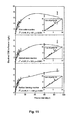
- FIG. 14 is a graph illustrating a comparison of three hydrolysis models referencing Reactor 4 , where each inset shows measured COD vs. predicted COD;
- FIG. 15 is a graph illustrating a comparison of three hydrolysis models referencing Reactor 5 , where each inset shows measured COD vs. predicted COD;
- FIG. 16 is an illustration of overall comparisons of measured COD and predicted COD of three hydrolysis models
- FIG. 17 is an illustration of a scanning electron microscope (SEM) image of binary Ru—Ni nanoparticles.
- FIG. 18 is an illustration of an overall X-Ray mapping of nanoparticles with a core-and-shell structure of the Ru—Ni nanoparticles.
- An embodiment of the present invention preferably comprises a reactor comprising: hydrogen selective separation membranes that maximize hydrogen production from OSWs; microbial populations and metabolisms in a biological hydrogen production process; a membrane system for hydrogen separation and purification; a refined model for hydrolysis/acidogenesis integrated with a logistic growth model for photofermentation to formulate and validate a complete model for biological hydrogen production; and optimal parameters and operating conditions to maximize hydrogen production.
- Acidogenesis comprises a biological reaction where simple monomers are converted into volatile fatty acids.
- the present invention comprises a reactor for integrating anaerobic fermentation and photofermentation to produce hydrogen from solid organic wastes.
- Hydrogen generation by the two processes preferably occurs in tandem.
- Hydrogen partial pressure e.g. ⁇ 2,000 Pa
- Product inhibition is preferably avoided by incorporating a hydrogen selective membrane for efficient removal of hydrogen.
- a different pH for the two stages is maintained by two-stage reactor configuration with individual pH control.
- Substrate inhibition is avoided by flexibility to adjust recycle rate.
- High cell concentration for anaerobic fermentation is preferably maintained by a fixed bed reactor for anaerobic fermentation.
- Low HRT for anaerobic fermentation is preferably maintained by a fixed bed reactor with recycling.
- Uniform and optimal light intensity is preferably maintained by a suspended growth reactor for photofermentation. In a suspended growth reactor the biomass is preferably suspended in the liquid being treated.
- Abundant and low cost inocula is employed, preferably by utilizing naturally occurring organisms in cattle manure.
- the reactor size is minimized preferably by cross-flow configuration, with built-in illumination.
- the overall cost is minimized preferably by using end products as nursery pots and fertilizers, reusing effluent in pulping digested manure, and recycling effluent as fertilizer.
- Embodiments of the present invention preferably relate to a method and apparatus comprising two-stage membrane-based production of gas, preferably hydrogen gas or other gas, from solid biological materials, preferably organic waste materials or other biomaterials, using fermentative and photosynthetic processes comprising microorganisms.
- Embodiments of the present invention preferably comprise a vessel, such as a reactor or other vessel, integrating a two-stage process comprising anaerobic hydrolysis and fermentation and photofermentation to produce gas, including but not limited to hydrogen gas, preferably from solid biological organic wastes, while suppressing methanogens and stabilizing wastes, and the second step generates additional hydrogen through photofermentation of the products of the first stage, as well as stabilizing the waste.
- a support for the biomass preferably comprises a manure matrix.
- the anaerobic fermentor comprising the apparatus for anaerobic hydrolysis and fermentation, preferably comprises a leach-bed configuration, with the leachate preferably percolating in cross flow mode to maximize the hydrolysis and acidogenesis processes.
- a leach-bed reactor configuration preferably comprises an efficient dry digestion process.
- the photofermentation reactor preferably comprises a continuous stirred-tank reactor (CSTR) configuration to maximize the light transmission for the phototrophic process.
- Gas including but not limited to hydrogen, is preferably selectively harvested from both stages.
- Another embodiment of the present invention preferably comprises a flat panel reactor for larger scale, outdoor application.
- An embodiment of the present invention preferably comprises a method of hydrolysis-acidogenesis in leach-bed reactors for the first stage that is preferably coupled to a second stage comprising a suspended growth reactor, comprising a logistic growth model for photofermentation in the second stage.
- Methane formation is preferably suppressed in a first stage by inhibiting methanogens, preferably by heat-shocking anaerobic sludge to inhibit methane-forming species, maintaining a low hydrogen partial pressure preferably by using hydrogen-selective membranes in the head space, maintaining a low hydraulic detention time, and maintaining a pH less than approximately 5.0.
- Photofermentation is preferably accomplished by maintaining a pH from approximately 6.0 to 7.0.
- An embodiment of the present invention preferably comprises a process overview resulting in combustion of hydrogen to produce water, with an energy conversion efficiency of hydrogen of approximately 55%, and a net yield of 12 moles of hydrogen, or 3,432 kJ.
- An embodiment of the present invention preferably comprises a unique membrane that rapidly removes biogases and efficiently separates out high-purity hydrogen.
- Embodiments of the present invention preferably comprise hydrogen-specific membranes that resolve technical problems in converting wastes to hydrogen by alleviating process feed-back inhibition, preventing conversion and consumption of hydrogen, and concentrating and purifying the gas product.
- the conversion of solid waste into a value-added energy-efficient fuel, as well as nursery pots that can be produced from digested residues addresses current waste-management problems in diverse, economically important industries, including but not limited to the dairy and food industries.
- a preferred embodiment of the present invention preferably removes hydrogen gas from the bioreactor preferably by using a unique hydrogen-selective composite membrane, preferably comprising aluminum oxide as a substrate.
- Embodiments of the present invention preferably comprise a separation layer comprising a ruthenium-nickel thin film acting as a catalyst for hydrogen oxidation.
- Other embodiments of the present invention preferably comprise a microporous silicon dioxide matrix.
- FIG. 1 illustrates an embodiment of the present invention comprising reactor 10 .
- Reactor 10 comprises tube 20 , tube 22 , and tube 24 disposed concentrically inside tank 30 .
- Feedstock, preferably comprising wet cattle manure, 40 is placed in annular space 60 between tube 20 and tube 22 , both preferably perforated.
- Leachate 50 percolates from tank 30 radially through tube 20 , through feedstock 40 and into annular space 60 between tubes 22 and 24 . Thereafter, leachate 50 overflows into tube 24 , where it is isolated from acid producing phase 40 , so that optimal pH can be maintained for each phase.
- Light source 64 is placed at the center of tube 24 . This configuration enables dry digestion under controlled moisture content.
- Anaerobic fermentation occurs in annular space 60 between tube 22 and tube 24 , producing H 2 , CO 2 and dissolved fatty acids.
- Leachate 50 carries the dissolved volatile acids into the second stage in tube 24 , where photofermentation takes place with the production of H 2 and CO 2 .
- the two stages are fitted with pH monitors/controllers 66 to maintain optimal pH in each stage.
- a fraction of the effluent is preferably recycled to the first stage.
- Carbon dioxide in headspace 70 is preferably absorbed (e.g. with 50% KOH traps 68 ).
- Mixing in the second stage is preferably provided by stirrer (e.g. magnetic stirrer 72 ).
- Membranes 74 in the two stages enable hydrogen levels to be maintained at a specified pressure.
- Embodiments of the present invention preferably comprise an apparatus for gas separation, preferably hydrogen-selective membranes, preferably comprising Ru—Ni/ ⁇ -Al 2 O 3 / ⁇ -Al 2 O 3 composites, microporous SiO 2 composites, and hollow fiber membranes.
- Biogas generated in the fermentation reaction comprises trace amounts of CH 4 , NH 3 , HCl, H 2 S, so the hydrogen separation membrane preferably tolerates these trace gas components. This requirement excludes the use of palladium and palladium alloy membranes because these precious metals are prone to attack by the acid gases.
- Ru— Ni/ ⁇ -Al 2 O 3 / ⁇ -Al 2 O 3 composite membranes comprise ⁇ -Al 2 O 3 substrates to provide mechanical strength, and comprise ⁇ -Al 2 O 3 to provide a transitional layer between a separation layer and a macroporous substrate.
- the Ru—Ni/ ⁇ -Al 2 O 3 / ⁇ -Al 2 O 3 composite membranes preferably comprise a separation layer of Ru—Ni.
- a transitional layer significantly reduces the thickness of the separation layer and enhances permeability and stability.
- Embodiments of the present invention preferably comprise a catalytic membrane and method for optimum proton generation and rate of diffusion.
- An embodiment of the present invention comprise Ru—Ni membranes comprising catalytic properties that facilitate characteristic hydrogen oxidation reactions that involve H 2 dissociative adsorption on and permeation through the Ru—Ni surface with both pure H 2 and gas mixtures comprising trace components in the biogas.
- Another embodiment of the present invention preferably comprises a membrane comprising microporous SiO 2 composite membranes preferably comprising an ⁇ -Al 2 O 3 substrate to provide the mechanical strength, ⁇ -Al 2 O 3 to provide the transitional layer between the separation layer and the macroporous substrate, and a separation layer of microporous SiO 2 .
- a sol-gel technique preferably prepares a top layer and a transitional layer. Pure H 2 and H 2 gas preferably permeate the composite membranes.
- Another embodiment of the present invention preferably comprises a membrane comprising a commercial hollow fiber membrane preferably comprising an apparatus for separating biogas, especially for biohydrogen purification.
- the value of n is a function of membrane pore size and hydrogen transport mechanism.
- An embodiment of the present invention comprises an integrated process of hydrogen production from particulate organic wastes including hydrolysis, acidogenesis, anoxygenic photosynthesis, and separation of hydrogen from biogases in order to produce biohydrogen.
- Acidogenic bacteria 88 exist as a biofilm in manure matrix 78 .
- the particulate degradable portion of cattle manure is comprised of hemicellulose 80 and cellulose 82 . These two fractions are enzymatically hydrolyzed to their soluble hemicellulose 84 and soluble cellulose 86 and then degraded by acidogens 88 in first stage 90 at different rates, to produce fatty acids, H 2 and CO 2 .
- the hydrolysis of hemicellulose 80 , and of cellulose 82 are surface limiting reactions while the utilization of soluble hemicellulose 84 and of soluble cellulose 86 by acidogens 88 are a two-substrate-single-biomass.
- the fatty acids in the dissolved form flow from first stage 90 to second stage 92 , where phototrophic bacteria 94 utilize them in the presence of light 96 , to produce H 2 and CO 2 .
- An embodiment of the present invention comprises a downflow leach-bed reactor fed with cattle manure, modified for radial cross flow and utilizing a photosynthetic process and a membrane process.
- the present invention accommodates pH variation and speciation of volatile acids.
- Anaerobic fermentation followed by photofermentation of the products is an optimal process for producing H 2 .
- This two-step configuration produces H 2 at a practical rate and economic yield with minimal energy needs, and at the same time, stabilizes wastes.
- Embodiments of the present invention comprise a substrate comprising biomass, and the CO 2 produced by this process is climate-neutral. Energetics of this sequence of processes utilizing glucose as the feedstock and acetate and butyrate as intermediate products are illustrated in FIG. 3 .
- Embodiments of the present invention comprise producing H 2 by fermentation of organics comprising cultures of Enterobacter, Bacillus , and Clostridium , of which, the latter have been found to yield the maximum yield of 1.6 to 2.36 M H 2 /M glucose.
- Embodiments of the present invention comprise viable production of hydrogen using non-sterile feedstocks, comprising exploiting natural and/or abundant culture sources, such as soil micro flora or excess sludge from wastewater treatment plants. However, if mixed cultures from these sources are to be used, activity of hydrogen-consuming organisms (e.g. methanogens) found in those sources should be inhibited.
- Methods to inhibit methanogens include pretreatment of cultures and operating the reactor at short hydraulic retention times (e.g. approximately ⁇ 8 hrs) and low pH (e.g. approximately 5 to 6.5). Two pretreatment methods reported to be effective in suppressing methanogens in the seed are acid-treatment and heat-treatment.
- Embodiments of the present invention comprise generating volatile fatty acids by hydrolysis and acidogenesis in a leach-bed reactor at HRT of approximately 2 to 3 hrs and at pH approximately ⁇ 5.5 using naturally occurring organisms in cattle manure residues.
- Embodiments of the present invention comprise inhibiting methanogenesis to levels of methane in the gas phase comprising less than approximately 1%.
- Embodiments of the present invention comprise using naturally occurring organisms comprise Rhodobacter sphaeroides for photofermentation in the second stage.
- Embodiments of the present invention comprise a method to use cattle manure residues as feedstock in producing hydrogen through anaerobic fermentation followed by photofermentation.
- Cellulose, hemicellulose, and lignin are the primary constituents of cattle manure as well as many other solid biomaterials.
- the invention is further described herein. While the preferred embodiment of the invention is directed to production of hydrogen gas from solid organic waste materials, the invention is also useful in any fuel derivation as appropriate using fermentative and photosynthetic microorganisms or their byproducts.
- a mathematical model for the hydrolysis and acidogenesis reactions in anaerobic digestion/fermentation of cattle manure was performed.
- the particulate hydrolysable fraction of cow manure was composed of cellulose and hemicellulose that were hydrolyzed at different rates according to a surface-limiting reaction.
- the respective soluble products of hydrolysis were utilized by acidogens at different rates, according to a two-substrate, single-biomass model.
- Batch experimental results were used to identify sensitive parameters and to calibrate and validate the model. Results predicted by the model agreed well with the experimentally measured data not used in the calibration process. The correlation coefficient exceeded 0.91.
- the most significant parameter in the hydrolysis-acidogenesis phase was the hydrolysis rate constant for the cellulose fraction.
- a two-substrate, single-biomass model was developed for the hydrolysis/acidogenesis phase and was validated using experimental batch data. A sensitivity analysis of the model parameters was performed.
- a two-phase reactor system was developed for dry digestion of cattle manure residues, with a leach-bed reactor comprising the first stage and a suspended growth reactor comprising the second stage.
- Chemical oxygen demand (COD) generation was optimized by enhancing hydrolysis and acidogenesis and minimizing methanogenic activity by maintaining pH below 5.5.
- substrate degradation curves exhibited two distinct segments. This observed two-segment profile was due to two components of cattle manure, a readily degradable faction, hemicellulose, and a slowly degradable fraction, cellulose. Different hydrolysis parameters and biokinetic parameters were found for the two components. Two enzymatic mechanisms were found: one mediated by native organisms found in manure residues and the other mediated by either external enzymes or by seed cultures that were added to the reactor to augment the hydrolysis process.
- Acidogenesis was subsequently modeled.
- the acidogenic biomass grew on the soluble products of hydrolysis consisting of a readily degradable component, hemicellulose, and a slowly degradable component, cellulose.
- the growth of acidogenic biomass was modeled as a single biomass (acidogens) feeding on two non-inhibitory substrates (soluble hemicellulose and soluble cellulose) with different biokinetic constants.
- the model formulation involved hydrolysis process parameters and biokinetic parameters. The parameters were established following a curve-fitting process using experimental data from a batch reactor run without any supplement. Experimental data from two batch reactors with various doses of heated anaerobic sludge added as a supplement were then used to validate the model using parameters estimated from another reactor.
- Table 1 summarizes the initial concentrations of acidogens, particulate hemicellulose, and particulate cellulose per gram of manure.
- the initial concentration of acidogen biomass was estimated from data reported in the literature.
- Initial concentrations of dissolved COD, which resulted from hemicellulose and cellulose after adding water, are also shown in Table 1.
- the pH remained below 6 throughout the tests. Methanogens have negligible activity at pH less than 6.0, thus the dominant processes occurring in the test reactors was hydrolysis and acidogenesis.
- Yield coefficients for acidogenic growth on soluble hemicellulose and cellulose were established based on studies on similar substrates. Based on a sensitivity analysis, when the yield was changed by a factor of two, the variation in the COD values predicted was less than 10% of the measured value. Thus, the yield values were set at 0.084 and 0.042 g COD of VSS/g COD, respectively.
- Specific COD conversion rates, C i were determined by fitting predicted COD data to experimentally measured COD data from Reactor 2 . A correlation coefficient>0.95 and p ⁇ 0.005 were used as criteria to establish how good the fit was.
- This process yielded specific COD conversion rates of 0.15 g COD/g sludge for hemicellulose and 0.001 g COD/g sludge for cellulose.
- the four hydrolysis parameters (K 1h , K 1c , K ish , and K 1sc ) and the four biokinetic parameters (k h , k c , k sh , and k sc ) determined through curve fitting using measured data from Reactor 1 , and validated with the laboratory data from Reactors 2 and 3 are listed in Table 2.
- the maximum hydrolysis rates, K 1 were established for the surface-limiting model (1.4. per day for hemicellulose and 0.09 per day for cellulose).
- the hydrolysis saturation constants, K 1s were established to be 28 g COD/g COD for hemicellulose and 1.5 g COD/g COD for cellulose.
- K 1sh and K 1sc were the least sensitive of the eight parameters.
- (dS c /dt) uptake ⁇ k c (S c X/(K sc (1+S h /K sh ))+S c ) MLR.
- the maximum growth rate of acidogens k i was found to be 0.51 per day for soluble hemicellulose and 0.034 per day for soluble cellulose.
- the values for saturation constant K s were established as 15 g COD/L for hemicellulose and 100 g COD/L for cellulose.
- FIG. 4 illustrates model predictions using the parameters found, closely following the temporal trend in the measured COD data from Reactor 1 , which did not receive any supplement. Measured data from Reactors 2 and 3 that received seed supplement were used to further validate the model. The two variables that distinguish Reactors 2 and 3 from each other and from Reactor 1 are the seed-to-manure ratio and the manure-to-water ratio compiled in Table 4.
- FIG. 5 shows agreement between the COD predicted by the model and the measured COD values from the three reactors.
- a two-substrate, single biomass model integrating hydrolysis and acidogenesis in anaerobic digestion of cattle manure was validated using batch experimental data.
- Hydrolysis was the rate-limiting step in the anaerobic digestion of complex particulate substrates and was used in designing, monitoring, analyzing, and optimizing the anaerobic gasification process.
- Reactor 1 contained a raw manure sample, topped with water.
- Reactors 2 to 5 contained raw manure, enriched with different amounts of the cellulose enhancer and topped with water.
- Another set of experiments was conducted to verify that active hydrolytic organisms were already present in the manure samples. In these experiments, two 600-mL batch reactors (labeled Reactors 6 and 7 ) were run in duplicate. Both of those reactors were filled with raw manure samples and water; Reactor 7 , however, was dosed with a biocide (1.9 g/L HgCl 2 ) to inhibit bacterial activity.
- a biocide 1.9 g/L HgCl 2
- Three kinetic models were evaluated for suitability in describing anaerobic hydrolysis of par-ticulate wastes.
- the three hydrolysis models evaluated were: a first-order reaction in particulate substrate concentration model, a second-order reaction in acidogenic biomass and particulate substrate concentrations model, and a two-parameter, surface-limiting reaction model.
- Process models incorporating the three hydrolysis reaction models were developed to describe the hydrolysis-acidogenesis phase in the fermentation of cattle manure.
- a hydrolysis-acidogenesis phase was modeled and was based on the simplifying assumptions that the particulate hemicellulose and cellulose fractions were hydrolyzed by acidogens; the acidogens grew attached to the solid matrix, utilizing the dissolved form of hemicellulose and cellulose as substrate; and the enhancers hydrolyzed the particulate hemicellulose and cellulose in proportion to their respective initial concentrations.
- the solubilization efficiency of the enhancer, cellulase was estimated to be 15% through a curve-fitting process.
- a sensitivity analysis showed that the change in COD production was within 1% when the efficiency ranged from 10 to 20%. There was negligible methanogenic activity in the reactors. Thus, the only processes occurring in the reactors were hydrolysis and acidogenesis.
- FIG. 7 illustrating a conceptual model of batch system 90 comprising hydrolysis 1 of particulate hemicellulose 92 , hydrolysis 2 of particulate cellulose 94 , biouptake 3 of soluble hemicellulose 96 , and biouptake 4 of soluble cellulose 98 to acidogen 99 .
- the rate of change of particulate species i in the forms of hemicellulose 92 and cellulose 94 ) due to hydrolysis can be expressed as follows for the three hydrolysis reaction models:
- the overall rate of the anaerobic process of gasification of particulate wastes by the above scheme is dependent on the rate limiting step comprising the hydrolysis step as the rate-limiting step.
- Hydrolysis reaction models for use in modeling the hydrolysis/acidogenesis step in the digestion of cattle manure are:
- the utilization rates of dissolved hemicellulose and cellulose by the acidogenic biomass can be expressed as follows according to the two-substrate-one-biomass model:
- a i the yield coefficient [ ⁇ ]
- k d the death rate [1/day].
- the model equations contain up to four hydrolysis process parameters (K 1h and K 1sh for hemicellulose and K 1c and K 1sc for cellulose) and four biological process parameters (k h and K sh for hemicellulose and k c and K sc for cellulose). Since these parameters were not measured through independent experiments, a curve-fitting process was used to estimate them. Measured COD data from Reactor 1 was used in the curve-fitting process to estimate the eight parameters, which were then validated using measured COD data from Reactors 2 , 3 , 4 , and 5 . The model equations were solved using a dynamic simulation program to generate the COD profile as a function of time.
- Typical yield coefficients ranged as follows: 0.026 g COD of VSS/g COD for cattle manure wastewater, where VSS is Volatile Suspended Solids; 0.047 g COD of VSS/g COD for amino acids and sugars; 0.057 g COD of VSS/g COD for activated sludge; 0.051 g COD of VSS/g COD for molasses wastewater; and 0.100 g COD of VSS/g COD for with amino acid, sugars, and fatty acid.
- absolute values for the yield coefficients were not established; the same values were used for the three models, but of appropriate magnitude.
- the following values were used for the yield coefficients: 0.084 and 0.042 g COD of VSS/g COD, for a h and a c , respectively.
- FIG. 8 is an illustration of the impact of the biocide dose on dissolved COD production in Reactors 6 and 7 .
- Reactor 6 which was not dosed with the biocide
- COD production continued to increase with time while COD production in Reactor 7 , which was dosed with the biocide, was significantly lower.
- the slight increase in COD production in Reactor 7 was due to abiotic processes or inadequate biocide dosage.
- the production of dissolved COD was primarily due to active hydrolytic organisms naturally present in cattle manure.
- FIG. 9 illustrates that the pH in all the reactors remained below 5.5. Methanogenic activity was negligible in this pH range and the only processes that occurred in the reactors were hydrolysis and acidogenesis.
- FIG. 10 is an illustration of the enhancement of the hydrolysis process as reflected by the increase in COD generation due to increasing doses of cellulase as the enhancer.
- COD generation increased 25 to 30% when the cellulase-to manure ratio increased from 2 mg/g to 3.9 mg/g.
- further increase of cellulose-to-manure ratio up to 7.8 mg/g did not result in any increase in COD release due to saturation, due to mass transfer limitations in the hydrolysis step in this surface-limiting model.
- the best-fit values for the eight parameters were found by a curve-fitting process to match the COD data measured in Reactor 1 that did not receive any enhancers.
- the best-fit parameters found for the three hydrolysis models are compiled in Table 4.
- the hydrolysis parameters are different for the three models as the underlying mechanisms are different.
- the estimated k i values are comparable for the three models as expected; while the K si values are compara-ble for the first-order and second-order models, the corresponding values for the surface-limiting model are an order of magnitude higher.
- the COD profiles predicted using the three hydrolysis reaction models were compared against the measured COD data for Reactors 1 to 5 in FIGS. 11 to 15 .
- the surface-limiting reaction and the second-order reaction models fitted the measured data better than the first-order reaction model as shown by the line of perfect fit in FIG. 16 .
- the trend and the closeness of fit of both the first-order and second-order reaction models deteriorated with time, while the trend and the fit of the surface-limiting reaction model was consistent throughout the full range of the tests.
- the substrate-to-microorganism ratio, P i /X was a limiting factor in the hydrolysis of particulate substrates, rather than the remaining substrate concentration P i as modeled by the first-order reaction model.
- the three hydrolysis models predicted COD generation reasonably well.
- the single-parameter, second-order model was more realistic than the first-order reaction model and easy to apply.
- the surface-limiting reaction model fitted the data with a slightly better quality of fit over the range tested and involved two parameters established experimentally.
- Membrane processes are implemented for hydrogen fuel cell and hydrogen separation.
- Binary Ru—Ni thin films are synthesized to act as novel fuel cell catalysts for hydrogen oxidation.
- a flash pyrolysis process is developed to deposit Ru—Ni nanoparticles with a core-and-shell structure. Hydrogen oxidation and permeation properties are investigated.
- the Ru—Ni nanoparticles are deposited on the surface of a sol-gel derived mesoporous ⁇ -Al 2 O 3 layer as the hydrogen selective separation membrane.
- the inorganic membranes have sufficiently large separation factors for hydrogen and significantly high resistances for membrane fouling.
- Binary Ru—Ni thin films are synthesized as novel fuel cell catalysts for hydrogen oxidation and for membrane processes for hydrogen fuel cell and hydrogen separation.
- Ru—Ni nanoparticles with core-and-shell structure were deposited by a flash pyrolysis process.
- a SEM image of the binary Ru—Ni nanoparticles is shown in FIG. 17
- the X-Ray mapping of a single Ru—Ni nanoparticle is shown in FIG. 18 .
- Microbial populations are tracked by monitoring their populations as well as their metabolism. Microbial populations are tracked by combining culture-based detection methods with molecular-based detection. Populations which are metabolically useful (e.g. spore-formers potentially involved in hydrogen production) as well as pathogens harbored in the feedstock manure (e.g. fecal coliforms and subsets of fecal coliforms such as E. coli 0157) are monitored. A polymerase chain reaction (PCR) is employed to detect pathogenic bacteria, and PCR is used to track other groups of interest.
- PCR polymerase chain reaction
- a spore cortex lytic enzyme gene is utilized, which is conserved among many Clostridium and Bacillus species using PCR primers.
- the culture-based assay for spore-formers involves pasteurization of the sample, then plating on non-selective medium grown under anaerobic conditions. Organisms that harbor the hydrogenase enzyme are monitored. For example, the hydrogenase gene in one of the sulfate-reducing bacteria produces hydrogen, and is sequenced; PCR primers track this common Ni—Fe type of hydrogenase.
- Indicator pathogens are enumerated using the membrane fecal coliform standard method, and representative pathogens such as E. coli are PCR-amplified utilizing primers specific for the attaching and effacing locus (eaeA) gene. Genetic characterization and manipulation is performed. Bacteria which play key roles in the bioconversion process and genetically characterize appropriate genes by, for example, sequencing PCR products of hydrogenase as well those involved in butyrate production are isolated. Genetically manipulating appropriate isolates in order to knock out genes that divert electron flow to products such as butyrate instead of hydrogen is accomplished. Site-directed mutagenesis is used. Gene knock-out mutants are tested in bioreactor studies to document changes in H 2 production efficiency.
- eA attaching and effacing locus
- Performance is characterized and tested.
- the reactor is operated at 30° C. in an environmental chamber.
- the photofermentation occurs under illumination of a 200 W/m 2 tungsten lamp.
- a pH controller is used to maintain the optimal pH for the two stages.
- Liquid samples collected from the two stages are analyzed for volatile acids, using gas chromatograph with FID; for optical density, using a spectrophotometer; and for COD, following standard methods.
- the gas production rate from each stage is measured using water columns. Gas samples are analyzed by gas chromatograph fitted with thermal conductivity detector.
Landscapes
- Health & Medical Sciences (AREA)
- Life Sciences & Earth Sciences (AREA)
- Engineering & Computer Science (AREA)
- Chemical & Material Sciences (AREA)
- Wood Science & Technology (AREA)
- Organic Chemistry (AREA)
- Bioinformatics & Cheminformatics (AREA)
- Zoology (AREA)
- Genetics & Genomics (AREA)
- Biomedical Technology (AREA)
- Microbiology (AREA)
- Biotechnology (AREA)
- Biochemistry (AREA)
- General Engineering & Computer Science (AREA)
- General Health & Medical Sciences (AREA)
- Sustainable Development (AREA)
- Clinical Laboratory Science (AREA)
- Molecular Biology (AREA)
- General Chemical & Material Sciences (AREA)
- Oil, Petroleum & Natural Gas (AREA)
- Treatment Of Sludge (AREA)
- Processing Of Solid Wastes (AREA)
Abstract
Description
C6O6H12 (glucose)+2H2O=2CH3COOH (fatty acid)+4H2 (g)+2CO2 (g)
and photofermentation, where:
2CH3COOH+4H2O=8H2 (g)+4CO2 (g)
resulting in:
C6O6H12 (glucose)+6H2O=12H2 (g)+6CO2 (g).
| TABLE 1 |
| Reactor contents |
| Reactor | | Reactor | |
| Description | |||
| 1 | 2 | 3 | |
| Amount of wet cattle manure (g) | 120 | 120 | 120 |
| Moisture content in wet | 77.5 | 77.5 | 77.5 |
| cattle manure (%) | |||
| Amount of seed added, dry (g) | 0.00 | 4.85 | 7.28 |
| Initial concentration of | 0.035 | 0.035 | 0.035 |
| biomass (g COD/g manure) | |||
| Initial concentration of | 0.42 | 0.42 | 0.42 |
| hemicellulose (g COD/g manure) | |||
| Initial concentration of cellulose | 0.41 | 0.41 | 0.41 |
| (g COD/g manure) | |||
| Initial COD concentration which | 0.83 | 0.87 | 0.88 |
| hydrolyzed from hemicellulose (g COD/L) | |||
| Initial COD concentration hydrolyzed | 0.82 | 0.84 | 0.85 |
| from cellulose (g COD/L) | |||
| Total water (L) | 0.523 | 0.528 | 0.532 |
| Seed-to-manure ratio SMR (g/g) | 0.00 | 0.18 | 0.927 |
| Dry manure-to-liquid ratio MLR (g/L) | 51.68 | 51.15 | 50.90 |
| TABLE 2 |
| Model parameter output |
| Value at 37° C. |
| Model Parameters | Hemicellulose | Cellulose |
| Maximum rate of hydrolysis, K1i (day−1) | 1.4 ± 0.13 | 0.09 ± 0.008 |
| Saturation constant for hydrolysis, K1si (—) | 28.0 ± 2.52 | 1.5 ± 0.14 |
| Saturation constant for fermentation, | 15.0 ± 1.35 | 100 ± 9.0 |
| Ksi (g COD/L) | ||
| Maximum substrate | 1.8 ± 0.16 | 0.80 ± 0.07 |
| utilization rate, ki (1/day) | ||
| TABLE 3 |
| Contents of test reactors. |
| Reactor | Reactor | Reactor | Reactor | Reactor | | Reactor | |
| Description | |||||||
| 1 | 2 | 3 | 4 | 5 | 6 | 7 | |
| Amount of wet cattle manure (g) | 120 | 120 | 120 | 120 | 120 | 100 | 100 |
| Moisture content in wet manure (%) | 78.7 | 78.7 | 78.7 | 78.7 | 78.7 | 77.3 | 77.3 |
| Amount of cellulase added (g) | 0.00 | 0.05 | 0.10 | 0.15 | 0.20 | 0.00 | 0.00 |
| Amount of biocide added (g) | 0.00 | 0.00 | 0.00 | 0.00 | 0.00 | 0.00 | 1.00 |
| Water added to reactor (L) | 0.40 | 0.45 | 0.45 | 0.45 | 0.45 | 0.43 | 0.43 |
| Cellulase-to-manure ratio (mg/g) | 0.00 | 2.00 | 3.90 | 5.90 | 7.80 | NA | NA |
| Manure-to-liquid ratio (g/L) | 51.68 | 46.93 | 46.93 | 46.93 | 46.93 | 42.83 | 42.83 |
dP i /dt=−K 1i(P i)−α(P i,0 /P t,0)
Second-Order Reaction Model:
dP i /dt=−K 1i(P i)(X)−α(P i,0 /P t,0)
Surface-Limiting Reaction Model (Contois Kinetic Model):
dP i /dt=−K 1i(P i /X/(K 1si +P i /X))(X)−α(P i,0 /P t,0)
α=C eEMR
where Ce is the specific COD conversion rate of the enhancer (g COD/g enhancer-day) and EMR is the enhancer-to-manure ratio (grams enhancer/g manure). The specific COD conversion rate of cellulase was obtained from the supplier as 2.074 g COD/g cellulase-day.
(dS h /dt)u =−k h(S h X/(K sh(1+S c /K sc))+S h)MLR
Uptake Rate of Cellulose by Acidogens:
(dS c /dt)u =−k c(S c X/(K sc(1+S h /K sh))+S c)MLR
Therefore, the net rate of change of dissolved species (i=hemicellulose or cellulose) in the reactor is:
(dS i /dt)=−(dP i /dt)MLR+(dS i /dt)u
Thus, the rate of change of dissolved COD in the reactor is:
The rate of growth of acidogenic biomass can be expressed as:
where ai is the yield coefficient [−]; and kd is the death rate [1/day].
| TABLE 4 |
| Best-fit values of model parameters. |
| First-order | Second-order | Surface limiting | |
| Parameter | reaction model | reaction model | reaction model |
| For hemicellulose: | |||
| K1h (day−1) | 0.05 ± 0.006 | 1.2 ± 0.104 | 1.4 ± 0.12 |
| K1sh (—) | — | — | 28.0 ± 2.0 |
| Kh (day−1) | 1.0 ± 0.12 | 0.9 ± 0.078 | 1.8 ± 0.16 |
| Ksh (g COD/L) | 2.2 ± 0.26 | 2.5 ± 0.22 | 15.0 ± 1.29 |
| For cellulose: | |||
| K1c (day−1) | 0.019 ± 2.28 | 0.28 ± 0.024 | 0.09 ± 0.008 |
| K1sc (—) | — | — | 1.5 ± 0.13 |
| Kc (day−1) | 0.75 ± 0.09 | 0.5 ± 0.044 | 0.8 ± 0.07 |
| Ksc (g COD/L) | 75.0 ± 9.0 | 55.0 ± 4.8 | 100.0 ± 8.6 |
| TABLE 5 |
| Quality of Prediction of the three models. |
| Reactor | Reactor | Reactor | | Reactor | |||
| Model | |||||||
| 1 | 2 | 3 | 4 | 5 | Overall | ||
| First-order reaction | R2 | 0.932 | 0.851 | 0.925 | 0.903 | 0.894 | 0.881 |
| (data points = 12) | F | 137.28 | 56.93 | 122.88 | 93.46 | 83.95 | 427.48 |
| p | <0.001 | <0.001 | <0.001 | <0.001 | <0.001 | <0.001 | |
| Second-order reaction | R2 | 0.97 | 0.903 | 0.938 | 0.935 | 0.913 | 0.913 |
| (data points = 12) | F | 324.74 | 93.56 | 151.11 | 143.96 | 113.08 | 607.03 |
| p | <0.001 | <0.000 | <0.001 | <0.001 | <0.001 | <0.001 | |
| Third-order reaction | R2 | 0.992 | 0.921 | 0.932 | 0.937 | 0.911 | 0.914 |
| (data points = 12) | F | 1187.74 | 115.65 | 137.27 | 149.68 | 102.09 | 619.77 |
| p | <0.001 | <0.000 | <0.001 | <0.001 | <0.001 | <0.001 | |
Claims (7)
Priority Applications (2)
| Application Number | Priority Date | Filing Date | Title |
|---|---|---|---|
| US12/011,121 US8093041B1 (en) | 2007-01-23 | 2008-01-23 | Method and apparatus for membrane-based, two-stage gas production from solid biomaterials |
| US13/347,012 US8343749B2 (en) | 2007-01-23 | 2012-01-10 | Method and apparatus for membrane-based, two-stage gas production from solid biomaterials |
Applications Claiming Priority (2)
| Application Number | Priority Date | Filing Date | Title |
|---|---|---|---|
| US88625007P | 2007-01-23 | 2007-01-23 | |
| US12/011,121 US8093041B1 (en) | 2007-01-23 | 2008-01-23 | Method and apparatus for membrane-based, two-stage gas production from solid biomaterials |
Related Child Applications (1)
| Application Number | Title | Priority Date | Filing Date |
|---|---|---|---|
| US13/347,012 Division US8343749B2 (en) | 2007-01-23 | 2012-01-10 | Method and apparatus for membrane-based, two-stage gas production from solid biomaterials |
Publications (1)
| Publication Number | Publication Date |
|---|---|
| US8093041B1 true US8093041B1 (en) | 2012-01-10 |
Family
ID=45419076
Family Applications (2)
| Application Number | Title | Priority Date | Filing Date |
|---|---|---|---|
| US12/011,121 Active 2029-12-02 US8093041B1 (en) | 2007-01-23 | 2008-01-23 | Method and apparatus for membrane-based, two-stage gas production from solid biomaterials |
| US13/347,012 Active US8343749B2 (en) | 2007-01-23 | 2012-01-10 | Method and apparatus for membrane-based, two-stage gas production from solid biomaterials |
Family Applications After (1)
| Application Number | Title | Priority Date | Filing Date |
|---|---|---|---|
| US13/347,012 Active US8343749B2 (en) | 2007-01-23 | 2012-01-10 | Method and apparatus for membrane-based, two-stage gas production from solid biomaterials |
Country Status (1)
| Country | Link |
|---|---|
| US (2) | US8093041B1 (en) |
Cited By (5)
| Publication number | Priority date | Publication date | Assignee | Title |
|---|---|---|---|---|
| US20090305376A1 (en) * | 2005-11-11 | 2009-12-10 | Wilhelm Gantefort | Fermenter for producing biogas from organic material |
| US20120152812A1 (en) * | 2009-06-16 | 2012-06-21 | University Of Massachusetts | Method to reduce sludge generation in wastewater treatment systems |
| US9528656B1 (en) | 2013-10-14 | 2016-12-27 | Arrowhead Center, Inc. | Elastomeric, hydrogen-resistant biopolymer and its use in oil and gas refining, and in the storage and transport of hydrogen gas |
| US20170204434A1 (en) * | 2014-09-11 | 2017-07-20 | Drexel University | Maximizing Production of Hydrogen From Waste Materials by Active Removal of Hydrogen |
| US20230045512A1 (en) * | 2021-07-29 | 2023-02-09 | Detechc Llc | Biopowerplant: third generation biorefinery with improved capacity to use domestic wastewater, landfill leachate and sea salt water as an input to generate green energy, water for reuse, biofuel, organic fertilizers and capture atmospheric co2 |
Families Citing this family (3)
| Publication number | Priority date | Publication date | Assignee | Title |
|---|---|---|---|---|
| EP2965800B1 (en) * | 2014-07-08 | 2019-01-30 | Airbus Defence and Space GmbH | Method and device for treating gas |
| US10323259B2 (en) | 2016-02-08 | 2019-06-18 | Indian Oil Corporation Limited | Formulation and process for biohydrogen production |
| US11827870B2 (en) * | 2021-05-20 | 2023-11-28 | Generen Labs, Inc. | Device for producing metabolites |
Citations (23)
| Publication number | Priority date | Publication date | Assignee | Title |
|---|---|---|---|---|
| US5464539A (en) | 1993-09-07 | 1995-11-07 | Kajima Corporation | Process for the production of hydrogen by microorganisms |
| US5599451A (en) | 1994-09-29 | 1997-02-04 | National Research Council Of Canada | Anaerobic and aerobic integrated system for biotreatment of toxic wastes (canoxis) |
| US5714384A (en) * | 1994-06-28 | 1998-02-03 | Wilson; John R. | Compartmentalized tissue culture bag |
| US5804424A (en) | 1992-01-13 | 1998-09-08 | Kaplan; Samuel | Process for the production of hydrogen using photosynthetic proteobacteria |
| JP2001078754A (en) | 1999-09-14 | 2001-03-27 | Nippon Telegr & Teleph Corp <Ntt> | Strains of photosynthetic bacteria and their preparation |
| US20020185437A1 (en) | 2001-03-31 | 2002-12-12 | Ajit Haridas | Method for purification of waste water and a "RFLR" device for performing the same |
| US6573214B2 (en) | 2000-05-31 | 2003-06-03 | Uop Llc | Preferential oxidation catalyst |
| US20030168403A1 (en) | 2000-09-15 | 2003-09-11 | Diego Corcho-Sanchez | Bioreactor |
| US6673742B2 (en) | 2000-05-31 | 2004-01-06 | Uop Llc | Method for producing a preferential oxidation catalyst |
| US20040129135A1 (en) * | 2002-03-05 | 2004-07-08 | Roark Shane E. | Dense, layered membranes for hydrogen separation |
| US6860996B2 (en) | 2001-12-19 | 2005-03-01 | Japan Science And Technology Corporation | Method of producing hydrogen gas by using hydrogen bacteria |
| US20050064577A1 (en) | 2002-05-13 | 2005-03-24 | Isaac Berzin | Hydrogen production with photosynthetic organisms and from biomass derived therefrom |
| US6887692B2 (en) | 2002-12-17 | 2005-05-03 | Gas Technology Institute | Method and apparatus for hydrogen production from organic wastes and manure |
| US20060011757A1 (en) | 2003-01-15 | 2006-01-19 | Carl-Olof Palm | Method and device for disintegration of organic material and use of the device |
| US7008538B2 (en) | 2003-08-20 | 2006-03-07 | Kasparian Kaspar A | Single vessel multi-zone wastewater bio-treatment system |
| US20060118485A1 (en) | 1999-01-13 | 2006-06-08 | Opencel Llc | Method of and apparatus for converting biological materials into energy resources |
| WO2006061390A1 (en) | 2004-12-10 | 2006-06-15 | L'air Liquide, Societe Anonyme Pour L'etude Et L'exploitation Des Procedes Georges Claude | Catalytic membrane reactor |
| US7067453B1 (en) | 2001-07-13 | 2006-06-27 | Innovatek, Inc. | Hydrocarbon fuel reforming catalyst and use thereof |
| US7083956B2 (en) | 2003-07-07 | 2006-08-01 | Gas Technology Institute | Method for hydrogen production from organic wastes using a two-phase bioreactor system |
| US7138046B2 (en) | 1996-06-06 | 2006-11-21 | World Hydrogen Energy Llc | Process for production of hydrogen from anaerobically decomposed organic materials |
| US7144566B2 (en) | 2001-05-11 | 2006-12-05 | Nippon Mitsubishi Oil Corporation | Process of producing fuel gas for fuel cell |
| US20060272956A1 (en) | 2005-05-31 | 2006-12-07 | Felder Mitchell S | Dual hydrogen production apparatus |
| US20060292685A1 (en) | 2005-06-21 | 2006-12-28 | Diz Harry R | Method of sustained microbial production of hydrogen gas in a bioreactor utilizing an equalization tank |
-
2008
- 2008-01-23 US US12/011,121 patent/US8093041B1/en active Active
-
2012
- 2012-01-10 US US13/347,012 patent/US8343749B2/en active Active
Patent Citations (23)
| Publication number | Priority date | Publication date | Assignee | Title |
|---|---|---|---|---|
| US5804424A (en) | 1992-01-13 | 1998-09-08 | Kaplan; Samuel | Process for the production of hydrogen using photosynthetic proteobacteria |
| US5464539A (en) | 1993-09-07 | 1995-11-07 | Kajima Corporation | Process for the production of hydrogen by microorganisms |
| US5714384A (en) * | 1994-06-28 | 1998-02-03 | Wilson; John R. | Compartmentalized tissue culture bag |
| US5599451A (en) | 1994-09-29 | 1997-02-04 | National Research Council Of Canada | Anaerobic and aerobic integrated system for biotreatment of toxic wastes (canoxis) |
| US7138046B2 (en) | 1996-06-06 | 2006-11-21 | World Hydrogen Energy Llc | Process for production of hydrogen from anaerobically decomposed organic materials |
| US20060118485A1 (en) | 1999-01-13 | 2006-06-08 | Opencel Llc | Method of and apparatus for converting biological materials into energy resources |
| JP2001078754A (en) | 1999-09-14 | 2001-03-27 | Nippon Telegr & Teleph Corp <Ntt> | Strains of photosynthetic bacteria and their preparation |
| US6573214B2 (en) | 2000-05-31 | 2003-06-03 | Uop Llc | Preferential oxidation catalyst |
| US6673742B2 (en) | 2000-05-31 | 2004-01-06 | Uop Llc | Method for producing a preferential oxidation catalyst |
| US20030168403A1 (en) | 2000-09-15 | 2003-09-11 | Diego Corcho-Sanchez | Bioreactor |
| US20020185437A1 (en) | 2001-03-31 | 2002-12-12 | Ajit Haridas | Method for purification of waste water and a "RFLR" device for performing the same |
| US7144566B2 (en) | 2001-05-11 | 2006-12-05 | Nippon Mitsubishi Oil Corporation | Process of producing fuel gas for fuel cell |
| US7067453B1 (en) | 2001-07-13 | 2006-06-27 | Innovatek, Inc. | Hydrocarbon fuel reforming catalyst and use thereof |
| US6860996B2 (en) | 2001-12-19 | 2005-03-01 | Japan Science And Technology Corporation | Method of producing hydrogen gas by using hydrogen bacteria |
| US20040129135A1 (en) * | 2002-03-05 | 2004-07-08 | Roark Shane E. | Dense, layered membranes for hydrogen separation |
| US20050064577A1 (en) | 2002-05-13 | 2005-03-24 | Isaac Berzin | Hydrogen production with photosynthetic organisms and from biomass derived therefrom |
| US6887692B2 (en) | 2002-12-17 | 2005-05-03 | Gas Technology Institute | Method and apparatus for hydrogen production from organic wastes and manure |
| US20060011757A1 (en) | 2003-01-15 | 2006-01-19 | Carl-Olof Palm | Method and device for disintegration of organic material and use of the device |
| US7083956B2 (en) | 2003-07-07 | 2006-08-01 | Gas Technology Institute | Method for hydrogen production from organic wastes using a two-phase bioreactor system |
| US7008538B2 (en) | 2003-08-20 | 2006-03-07 | Kasparian Kaspar A | Single vessel multi-zone wastewater bio-treatment system |
| WO2006061390A1 (en) | 2004-12-10 | 2006-06-15 | L'air Liquide, Societe Anonyme Pour L'etude Et L'exploitation Des Procedes Georges Claude | Catalytic membrane reactor |
| US20060272956A1 (en) | 2005-05-31 | 2006-12-07 | Felder Mitchell S | Dual hydrogen production apparatus |
| US20060292685A1 (en) | 2005-06-21 | 2006-12-28 | Diz Harry R | Method of sustained microbial production of hydrogen gas in a bioreactor utilizing an equalization tank |
Non-Patent Citations (131)
| Title |
|---|
| "Carbon Dioxide Membrane Principles and MEDAL Membrane", http://www.medal.airliguide.com/en/co-membrane/co-membrane-technology.html. |
| "Environmental monitoring by feedlots", United States Department of Agriculture, Animal and Plant Health Inspection Service, Veterinary Services Jan. 1995. |
| "Guide Manual on NPDES Regulations for Concentrated Animal Feeding Operations", United States Environmental Protection Agency, Office of Water EPA833-B-95-001 Dec. 1995. |
| "Multi-stage Membrane Systems for Pipeline and Offshore and benefits", http://www.medal.airliquide.com/en/co-membrane/co2-membrane-natural-gas-sweetening/natural-gas-sweetening-pipeline-and-offshore.html. |
| "Standard Methods for the examination of water and wastewater", American Public Health Association, Washington, D.C. 1998 , 5-17. |
| Akkerman, Ida et al., "Photobiological hydrogen production: photochemical efficiency and bioreactor design", International Journal of Hydrogen Energy vol. 27, Elsevier Science Ltd. 2002, 1195-1208. |
| Anderson, Ken et al., "Anaerobic treatment processes", The Handbook of Water and Wastewater Microbiology Elsevier 2003, 391-426. |
| Barlaz, Morton A. et al., "Methane Production from Municipal Refuse: A Review of Enhancement Techniques and Microbial Dynamics", Critical Reviews in Environmental Control vol. 19, Issue 6 1990, 557-584. |
| Batstone, D. J. et al., "The IWA Anaerobic Digestion Model No. 1 (ADM1)", Water Science and Technology vol. 45, No. 1, IWA Publishing 2002 , 65-73. |
| Beneman, John R. "The Technology of Biohydrogen", Biohydrogen Ed. Zaborsky et al, Plenum Press, New York 1998 , 19-30. |
| Benemann, John R. , "Hydrogen production by microalgae", Journal of Applied Phycology vol. 12, Kluwer Academic Publishers, Netherlands 2000 , 291-300. |
| Bernard, Olivier et al., "Dynamical Model Development and Parameter Identification for an Anaerobic Wastewater Treatment Process", Biotechnology and Bioengineering vol. 75, No. 4 Nov. 20, 2001 , 424-438. |
| Borzacconi, Liliana et al., "Hydrolysis Constant and VFA Inhibition in Acidogenic Phase of MSW Anaerobic Degradation", Wat. Sci. Tech. vol. 36, No. 6-7, Elsevier Science, Ltd., Great Britain 1997 , 479-484. |
| Bryers, J. D. , "Structured Modeling of the Anaerobic Digestion of Biomass Particulates", Biotechnology and Bioengineering vol. XXVII, John Wiley & Sons, Inc. 1985 , 638-649. |
| Chang, Feng-Yung et al., "Biohydrogen production using an up-flow anaerobic sludge blanket reactor", International Journal of Hydrogen Energy vol. 29, Elsevier Ltd. 2004 , 33-39. |
| Chang, Jo-Shu et al., "Biohydrogen production with fixed-bed bioreactors", International Journal of Hydrogen Energy vol. 27, Elsevier Science Ltd. 2002 , 1167-1174. |
| Contois, D. E. , "Kinetics of Bacterial Growth: Relationship between Population Density and Specific Growth Rate of Continuous Cultures", J. gen. Microbiol. vol. 21 1959 , 40-50. |
| Das, Debabrata et al., "Hydrogen production by biological processes: a survey of literature", International Journal of Hydrogen Energy vol. 26, Elsevier Science Ltd. 2001 , 13-28. |
| De Lorenzo, Victor et al., "Analysis and Construction of Stable Phenotypes in Gram-Negative Bacteria with Tn-5 and Tn10-Derived Minitransposons", Methods in Enzymology vol. 235, Academic Press, Inc. 1994 , 386-405. |
| Dehority, B. A. , "Degradation and Utilization of Isolated Hemicellulose by Pure Cultures of Cellulolytic Rume Bacteria", Journal of Bacteriology vol. 80, No. 6, American Society for Microbiology Jun. 1965 , 1515-1520. |
| Dehority, B. A. et al., "Digestibility of Forage Hemicellulose and Pectin by Rumen Bacteria In Vitro and the Effect of Linification Thereon", J. Dairy Sci. vol. 45 1962 , 508-512. |
| Denac, M. et al., "Modeling Dynamic Experiments on the Anaerobic Degradation of Molasses Wastewater", Biotechnology and Bioengineering vol. 31, John Wiley & Sons, Inc. 1988 , 1-10. |
| Deng, S. G. et al., "Microwave heating synthesis of supported sorbents", Chemical Engineering Science vol. 52, No. 10, Elsevier Science Ltd. Great Britain 1997 , 1563-1575. |
| Deng, S. G. et al., "Microwave synthesis of mesoporous and microporous alumina powders", Journal of Materials Science Letters vol. 16, Chapman & Hall 1997 , 1291-1294. |
| Deng, S. G. et al., "Sol-Gel Preparation and Properties of Alumina Adsorbents for Gas Separation", AIChE Journal vol. 41, No. 3 Mar. 1995 , 559-570. |
| Deng, S.G. et al., "Granulation of Sol-Gel-Derived Nanostructured Alumina", AIChE Journal vol. 43, No. 2 Feb. 1997 , 505-514. |
| Eastman, John A. et al., "Solubilization of particulate organic carbon during the acid phase of anaerobic digestion", Jounral WPCF vol. 53, No. 3 1981 , 352-366. |
| El-Mashad, H. M. et al., "A dispersion based model for anaerobic digestion of solid cattle wastes in a stratified thermophilic accumulation system", Water Science & Technology vol. 52, No. 1-2, IWA Publishing 2005 , 193-202. |
| Fan, Yaoting et al., "Optimization of initial substrate and pH levels for germination of sporing hydrogent-producing anaerobes in cow dung compost", Bioresource Technology vol. 91 2004 , 189-193. |
| Fernandez, F.G. A. et al., "Modeling of Biomass Productivity in Tubular Photobioreactors for Microalgal Cultures: Effects of Dilution Rate, Tube Diameter, and Solar Irradiance", Biotechnology and Bioengineering vol. 58, No. 6, John Wiley & Sons, Inc. Jun. 20, 1998 , 605-616. |
| Frigon, D. et al., "Who eats what? Classifying microbial populations based on diurnal profies of rRNA levels", Water Science and Technology vol. 46, No. 1-2, IWA Publishing 2002 , 1-9. |
| Gavalas, G. R. et al., "Deposition of H2-Permselective SiO2 Films", Chemical Engineering Science vol. 44, No. 9, Pergamon Press, Great Britain 1989 , 1829-1835. |
| Ghaly, A. E. et al., "Kinetics of an Intermittent-Flow, Continuous-Mix Anaerobie Reactor", Energy Sources vol. 22, Taylor & Francis 2000 , 525-542. |
| Ghosh, S. , "Gasification of Concentrated Particulate and Solid Substrates by Biphasic Anaerobic Digestion", Biotechnological Advances in Processing Municiapt Waste for Fuels and Chemicals ed. A.A. Antonopoulos, Noyes Data Corporation, Park Ridge, New Jersey 1987 , 303-320. |
| Ghosh, S. et al., "Bioconversion of Water Hyacinth-Coastal Bermuda Grass-MSW-Sludge Blends to Methane", Biotechnology and Bioengineering Symposium No. 10, John Wiley & Sons, Inc. 1980 , 163-187. |
| Gossett, James M. et al., "Anaerobic Digestion of Waste Activated Sludge", ASCE Jour. Env. Egrg. Presented at the Jul. 8-10, 1980, National Conference on Environmental Engineering, ASCE, New York, N.Y. Jul. 8, 1980 , 1101-1120. |
| Gray, F. V. et al., "Origins of the Volatile Fatty Acids in the Rumen", Nature No. 4322 Aug. 30, 1952 , 375-376. |
| Gray, F. V. et al., "The Fermentation of Hemicellulose by Washed Suspensions of Rumen Bacteria", Aust. J. Agr. Res. vol. 9 1958 , 797-801. |
| Grobbelaar, Johan U. et al., "Use of photoacclimation in the design of a novel photobioreactor to achieve high yields in algal mass cultivation", Jounral of Applied Phycology vol. 15, Kluwer Academic Publishers, The Netherlands 2003 , 121-126. |
| Gujer, W. et al., "Conversion Processes in Anaerobic Digestion", Wat. Sci. Tech. vol. 15, IAWPRC/Pergamon Press Ltd., Great Britain 1983 , 127-167. |
| Guwy, A. J. et al., "Hydrogen Production in a High Rate Fluidised Bed Anaerobic Digester", Wat. Res. vol. 31, No. 6, Elsevier Science Ltd., Great Britain 1997 , 1291-1298. |
| Hai-Lou, Xu et al., "A hybrid anaerobic solid-liquid bioreactor for food waste digestion", Biotechnology Letters vol. 24, Aluwer Academic Publishers, Netherlands 2002 , 757-761. |
| Hawkes, F. R. et al., "Sustainable fermentative hydrogen production: challenges for process optimisation", International Journal of Hydrogen Energy vol. 27, Elsevier Science Ltd. 2002 , 1339-1347. |
| Heukelekian, H. et al., "Transformation of Some Lipids in Anaerobic Sludge Digestion", Sewage and Industrial Wastes vol. 30, No. 9 Sep. 1958 , 1108-1120. |
| Higuchi, Y. et al., "Hydrolytic activity of alpha-amylase in anaerobic digested sludge", Water Science & Technology vol. 52, No. 1-2, IWA Publishing 2005 , 259-266. |
| Hill, D. T. et al., "A dynamic model for simulation of animal waste digestion", Journal WPCF Oct. 1977 , 2129-2143. |
| Howard, B. H. , "Hydrolysis of the Soluble Pentosans of Wheat Flour and Rhodymenia palmata by Ruminal Micro-organisms", Biochem. J. vol. 67 1957 , 643-651. |
| Huang, Andrew A. , "Enzymatic Hydrolysis of Cellulose to Sugar", Biotechnol. & Bioeng. Symp. No. 5, John Wiley & Sons, Inc. 1975 , 245-252. |
| Hussy, I. et al., "Continuous Fermentative Hydrogen Production from a Wheat Starch Co-Product by Mixed Microflora", Biotechnology and Bioengineering vol. 84, No. 6, Wiley Periodicals, Inc. Dec. 20, 2003 , 619-626. |
| Jordal, K. et al., "Integration of H2-separating membrane technology in gas turbine processes for CO2 capture", Energy vol. 29, Elsevier Ltd. 2004 , 1269-1278. |
| Kalyuzhnyi, S. V. , "Batch Anaerobic Digestion of Glucose and Its Mathematical Modeling. II. Description, Verification and Application of Model", Bioresource Technology vol. 59, Elsevier Science Limited Great Britain 1997 , 249-258. |
| Kayhanian, Masoud et al., "Development of a Mathematical Model for the Simulation of the Biodegradation of Organic Substrates in a High-Solids Anaerobic Digestion Process", J. Chem. Tech. Biotechnol. vol. 66, SCI, Great Britain 1996 , 312-322. |
| Kobayashi, Michiharu et al., "The Mass Culture and Cell Utilization of Photosynthetic Bacteria", Process Biochemistry Sep. 1978 , 27-30. |
| Koku, Harun et al., "Aspects of metabolism of hydrogen production by Rhodobacter sphaeroides", International Journal of Hydrogen Energy vol. 27, Elsevier Science Ltd. 2002 , 1315-1329. |
| Lay, Jiunn-Jyi , "Biohydrogen Generation by Mesophilic Anaerobic Fermentation of Microcrystalline Cellulose", Biotechnology and Bioengineering vol. 74, No. 4, John Wiley & Sons, Inc. Aug. 20, 2001 , 280-287. |
| Lay, Jiunn-Jyi , "Modeling and Optimization of Anaerobic Digested Sludge Converting Starch to Hydrogen", Biotechnology and Bioengineering vol. 68, No. 3, John Wiley & Sons, Inc. May 5, 2000 , 269-278. |
| Lay, Jiunn-Jyi et al., "Feasibility of Biological Hydrogen Production from Organic Fraction of Municiapl Solid Waste", Wat. Res. vol. 33, No. 11, Elsevier Science Ltd., Great Britain 1999 , 2579-2586. |
| Lay, Jiunn-Jyi et al., "Influence of chemical nature of organic wastes on their conversion to hydrogen by heat-shock digested sludge", International Journal of Hydrogen Energy vol. 28, Elsevier Ltd. 2003 , 1361-1367. |
| Lee, Kuo-Shing et al., "Anaerobic Hydrogen Production with an Efficient Carrier-induced Granular Sludge Bed Bioreactor", Biotechnology and Bioengineering vol. 87, No. 5, Wiley Periodicals, Inc. Sep. 5, 2004 , 648-657. |
| Lee, Kuo-Shing et al., "H2 production with anaerobic sludge using activated-carbon supported packed-bed bioreactors", Biotechnology Letters vol. 25, Kluwer Academic Publishers, The Netherlands 2003 , 133-138. |
| Lee, Yuan-Kun , "Microalgal mass culture systems and methods: Their limitation and potential", Journal of Applied Phycology vol. 13, Kluwer Academic Publishers, The Netherlands 2001 , 307-315. |
| Lettinga, G. , "Digestion and degradation, air for life", Water Science and Technology vol. 44, No. 8, IWA Publishing 2001 , 157-176. |
| Levin, David B. et al., "Biohydrogen production: prospects and limitations to practial application", International Journal of Hydrogen Energy vol. 29, Elsevier Ltd. 2004 , 173-185. |
| Levin, David B. et al., "Biohydrogen production: prospects and limitations to practial application", International Journal of Hydrogen Energy vol. 29, Elsevier Ltd. 2004 , 173-185. |
| Lin, C. Y. et al., "Anaerobic Hydrogen Production from Sucrose Using an Acid-Enriched Sewage Sludge Microflora", Eng. Life Sci. vol. 4, No. 1, Wiley-VCH Verlag GmbH & Co., Weinheim 2004 , 66-70. |
| Lin, Y. S. et al., "Sol-gel preparation of nanostructured adsorbents", Adsorption and Its Application in Industry and Environmental Protection, Studies in Surface Science and Catalysis vol. 120, Ed. A. Dabrowski, Elsevier Science B.V. 1998 , 653-686. |
| Logan, Bruce E. et al., "Biological Hydrogen Production Measured in Batch Anaerobic Respirometers", Environ. Sci. Technol. vol. 36, No. 11, American Chemical Society 2002 , 2530-2535. |
| Ma, Yi H. et al., "Thin Composite Palladium and Palladium/Alloy Membrances for Hydrogen Separation", Ann. N.Y. Acad. Sci. vol. 984, New York Academy of Sciences 2003 , 346-360. |
| Mahmoud, Nidal et al., "Anaerobic stabilisation and conversion of biopolymers in primary sludge-effect of temperature and slude retention time", Water Research vol. 38, Elsevier, Ltd. 2004 , 983-991. |
| Masse, D. I. et al., "Comprehensive Model of Anaerobic Digestion of Swine Manure Slurry in a Sequencing Batch Reactor", Wat. Res. vol. 34, No. 12, Elsevier Science Ltd., Great Britain 2000 , 3087-3106. |
| Mata-Alvarez, Joan , "A Dynamic Simulation of a Two-Phase Anaerobic Digestion System for Solid Wastes", Biotechnology and Bioengineering vol. 30, John Wiley & Sons, Inc. 1987 , 844-851. |
| Mata-Alvarez, Joan , "A Simulation Study of a Continuous Two-Phase Dry Digestion System", Biotechnology and Bioengineering vol. 34, John Wiley & Sons, Inc. 1989 , 609-616. |
| Miron, Asterio S. et al., "Bubble-Column and Airlift Photobioreactors for Algal Culture", AIChE Journal vol. 46, No. 9 Sep. 2000 , 1872-1887. |
| Miron, Yehuda et al., "The Role of Sludge Retention Time in the Hydrolysis and Acidification of Lipids, Carbohydrates and Proteins During Digestion of Primary Sludge in CSTR Systems", Wat. Res. vol. 34, No. 5, Elsevier Science Ltd., Great Britain 2000 , 1705-1713. |
| Miyake, Jun , "The Science of Biohydrogen", Biohydrogen Ed. Zaborsky, et al., Plenum Press, New York 1998 , 7-18. |
| Modigell, M. et al., "Reactor Development for a Biosolar Hydrogen Production Process", Renewable Energy vol. 14, Nos. 1-4, Elsevier Science Ltd., Great Britain 1998 , 421-426. |
| Morales-Morales, Hugo A. et al., "Optimization of a Reusable Hollow-Fiber Ultrafilter for Simultaneous Concentration of Enteric Bacteria, Protozoa, and Viruses from Water", Applied and Environmental Microbiology vol. 69, No. 7, American Society for Microbiology Jul. 2003 , 4098-4102. |
| Mosqueda, Gilberto et al., "A Set of Genes Encoding a Second Toluene Efflux System in Pseudomonos putida DOT-TIE is Linked to the tod Genes for Toluene Metabolism", Journal of Bacteriology vol. 182, No. 4, American Society for Microbiology Feb. 2000 , 937-943. |
| Munch, Elisabeth V. et al., "Mathematical Modelling of Prefermenters-I. Model Development and Verification", Wat. Res. vol. 33, No. 12, Elsevier Science Ltd., Great Britain 1999 , 2757-2768. |
| Munch, Elisabeth V. et al., "Mathematical Modelling of Prefermenters—I. Model Development and Verification", Wat. Res. vol. 33, No. 12, Elsevier Science Ltd., Great Britain 1999 , 2757-2768. |
| Myint, M. et al., "Anaerobic fermentation of cattle manure: Modeling of hydrolysis and acidogenesis", Water Research vol. 41, Elsevier Ltd. 2007 , 323-332. |
| Myint, M. et al., "Evaluation of First-Order, Second-Order, and Surface-Limiting Reactions in Anaerobic Hydrolysis of Cattle Manure", Environmental Engineering Science vol. 23, No. 6, Mary Ann Liebert, Inc. 2006 , 970-980. |
| Negri, E. D. et al., "A Mathematical Model of Volatile Fatty Acids (VFA) Production in Plug-Flow Reactor Treating the Organic Fracion of Municipal Solid Waste (MSW)", Wat. Sci. Tech. vol. 27, No. 2, IAWQ, Great Britain 1993 , 201-208. |
| Noykova, Nelly et al., "Quantitative Analyses of Anaerobic Wastewater Treatment Processes: Identifiability and Parameter Estimation", Biotechnology and Bioengineering Vo. 78, No. 1, Wiley Periodicals, Inc. Apr. 5, 2002 , 89-103. |
| Oh, Sang-Eun et al., "Biological Hydrogen Production Using a Membrance Bioreactor", Biotechnology and Bioengineering vol. 8, No. 1, Wiley Periodicals, Inc. Jul. 5, 2004 , 119-127. |
| Oh, Sang-Eun et al., "The Relative Effectiveness of pH Control and Heat Treatment for Enhancing Biohydrogen Gas Production", Environ. Sci. Technol. vol. 37, No. 22, American Chemical Society Oct. 16, 2003 , 5186-5190. |
| Olivas, Yolanda et al., "The Influence of Redox Potential on the Degradation of Halogenated Methanes", Environmental Toxicology and Chemistry vol. 21, No. 3, SETAC, USA 2002 , 493-499. |
| Omstead, D. R. et al., "Membrane-Controlled Digestion: Anaerobic Production of Methane and Organic Acids", Biotechnology and Bioengineering Symp. No. 10, John Wiley & Sons, Inc. 1980 , 247-258. |
| Ong, H. K. et al., "Physical, Chemical and Biomethanation Characteristics of Stratified Cattle-Manure Slurry", Asian-Aus. J. Animal Sci. vol. 13 2000 , 1593-1597. |
| Orhon, Derin et al., "Experimental Basis for the Hydrolysis of Slowly Biodegradable Substrate in Different Wastewaters", Wat. Sci. Tech. vol. 39, No. 1, Elsevier Science Ltd., Great Britain 1999 , 87-95. |
| Palazzi, E. et al., "Process development of continuous hydrogen production by Enterobacter aerogenes in a packed col. reactor", Bioprocess Engineering vol. 22, Springer-Verlag 2000 , 205-213. |
| Palmisano,, Anna C. et al., "Introduction to Solid Waste Decomposition", Microbiology of Solid Waste eds. A.C. Palmisano and M.A. Barlaz, CRC Press, New York 1996 , 1-30. |
| Pavlostathis, S. G. et al., "Kinetics of Anaerobic Treatment: A Critical Review", Critical Reviews in Environmental Control vol. 21, Nos. 5-6, CRC Press, Inc. 1991 , 411-490. |
| Pavlostathis, Spyros G. et al., "Preliminary Conversion Mechanisms in Anaerobic Digestion of Biological Sludges", ASCE J. Environ. Eng. vol. 114, No. 3, ASCE Jun. 1988 , 575-592. |
| Pingali, Kalyana C. et al., "Direct Synthesis of Ru-Ni Nanoparticles with Core-and-Shell Structure", Chem. Eng. Comm. vol. 194, Taylor & Francis Group, LLC, 2007 , 780-786. |
| Pingali, Kalyana C. et al., "Direct Synthesis of Ru—Ni Nanoparticles with Core-and-Shell Structure", Chem. Eng. Comm. vol. 194, Taylor & Francis Group, LLC, 2007 , 780-786. |
| Pingali, Kalyana C. et al., "Silver Nanoparticles from Ultrasonic Spray Pyrolysis of Aqueous Silver Nitrate", Aerosol Science and Technology vol. 39, American Association for Aerosol Research 2005 , 1010-1014. |
| Poulsen, O. M. et al., "A Standard Formula for the Determination of the Initial Rate of Hydrolysis of Carboxymethylcellulose", Biotechnology and Bioengineering vol. 27, John Wiley & Sons, Inc. 1985 , 409-414. |
| Ray, Bill T. et al., "Sludge Digestion by Anaerobic Fluidized Beds. II: Kinetic Model", Journal of Environmental Engineering vol. 115, No. 6, ASCE 1989 , 1156-1170. |
| Robbins, John E. et al., "Methane Production from Cattle Waste and Delignified Straw", Infection and Immunity vol. 38, No. 1 Jul. 1979 , 175-177. |
| Rousset, Marc et al., "Heterologous Expression of the Desulfovibrio gigas[NiFe] Hydrogenase in Desulfovibrio fructosovorans MR400", Journal of Bacteriology vol. 180, No. 18, American Society for Microbiology Sep. 1998 , 4982-4986. |
| Ruel, S. M. et al., "Modeling Acidogenic and Sulfate-Reducing Processes for the Determination of Fermentable Fractions in Wastewater", Biotechnology and Bioengineering vol. 80, No. 5, Wiley Periodicals, Inc. Dec. 5, 2002 , 525-536. |
| Ruiz, Thomas R. et al., "Identification and characterization of nuclease activities in anaerobic environmental samples", Can. J. Microbiol. vol. 46, NRC Canada 2000 , 736-740. |
| Sandhu, K. S. et al., "Prevalance of the eaeA gene in verotoxigenci Escherichia coli strains from dairy cattle in Southwest Ontario", Epidemiol. Infect. vol. 116, Cambridge University Press 1996 , 1-7. |
| Sasikala, K. et al., "Anoxygenic Phototrophic Bacteria: Physiology and Advances in Hydrogen Production Technology", Advances in Applied Microbiology vol. 38, Academic Press, Inc. 1993 , 211-295. |
| Shimamoto, Seiko et al., "Partial Characterization of an Enzyme Fraction with Protease Activity Which Converts the Spore Peptidoglycan Hydrolase (SIeC) Prevursor to an Active Enzyme during Germination of Clostribidum perfringens S40 Spores and Analysis of a Gene Cluster . . . ", Journal of Bacteriology vol. 183, No. 12, American Society for Microbiology Jun. 2001 , 3742-3751. |
| Siegrist, H. et al., "Mathematical Moddling of Anaerobic Mesophilic Sewage Sludge Treatment", Wat. Sci. Tech. vol. 27, No. 2, IAWQ, Great Britain 1993 , 25-36. |
| Simeonov, IV. et al., "Dynamic Modeling of Mesophilic Anaerobic Digestion of Animal Waste", Wat. Res. vol. 30, No. 5, Elsevier Science Ltd. Great Britain 1996 , 1087-1094. |
| Sleat, R. et al., "Activities and Distribution of Key Microbial Groups in Landfill", Sanitary Landfilling: Process, Technology and Environmental Impact Eds. Christenson, T.H. et al., Academic Press, Orlando, FL. 1989 , 51-59. |
| Sung, Shihwu et al., "Performance of temperature-phased anaerobic digestion (TPAD) system treating dairy cattle wastes", Water Research vol. 37, Elsivier Science Ltd. 2003 , 1628-1636. |
| Tanisho, S. et al., "Fermentative Hydrogen Evolution by Enterobacter aerogenes Strain E. 82005", Int. J. Hydrogen Energy vol. 12, No. 9 1987 , 623-627. |
| Tellez, G. , "Biological treatment process for removing petroleum hudrocarbons from oilfield produced waters", Ph.D. Dissertation, New Mexico State Unversity 1994. |
| Tsygankov, A. A. , "Laboratory Scale Photobioreactors", Applied Biochemistry and Microbiology vol. 37, No. 4 2001 , 333-341. |
| Turner, John A. et al., "Hydrogen Economy based on Renewable Energy Sources", The Electrochemical Society Interface Fall 2004 , 24-30. |
| Uhlhom, R.J.R. , "Ceramic Membrances for Gas Separation: Synthesis and Transport Properties (abstract)", Ph.D. Thesis, University of Twente, The Netherlands 1990. |
| Van Ginkiel, Steven et al., "Biohydrogen Production as a Function of pH and Substrate Concentration", Environ. Sci. Technol. vol. 35, American Chemical Society Nov. 2, 2001 , 4726-4730. |
| Van Groenestijn, J. W. et al., "Energy aspects of biological hydrogen production in high rate bioreactors operated in the thermophilic temperature range", International Journal of Hydrogen Energy vol. 27, Elsevier Science Ltd. 2002 , 1141-1147. |
| Van Horn, H. H. et al., "Components of Dairy Manure Management Systems", Journal of Dairy Science vol. 77, No. 7 1994 , 2008-2030. |
| Van Niel, Ed W. et al., "Substrate and Product Inhibition of Hydrogen Production by the Extreme Thermophile, Caldicellulosiruptor saccharolyticus", Biotechnology and Bioengineering vol. 81, No. 3, Wiley Periodicals, Inc. Feb. 5, 2003 , 255-262. |
| Vavilin, V. A. et al., "A Description of Hydrolysis Kinetics in Anaerobic Degradation of Particulate Organic Matter", Bioresource Technology vol. 56, Elsevier Science Limited Great Britain 1996 , 229-237. |
| Vavilin, Vasily A. et al., "Distributed Model of Solid Waste Anaerobic Digestion", Biotechnology and Bioengineering vol. 81, No. 1, Wiley Periodicals, Inc. Jan. 5, 2003 , 66-73. |
| Veeken, Adrie et al., "Effect of pH and VFA on Hydrolysis of Organic Solid Waste", Journal of Environmental Engineering Dec. 2000 , 1076-1081. |
| Veeken, Adrie et al., "Effect of temperature on hydrolysis rates of selected biowaste components", Bioresource Technology vol. 69 1999 , 249-254. |
| White, James K. et al., "A framework to contain a spatially distributed model of the degradation of solid waste in landfills", Waste Manage Res vol . 21, ISWA, U.K. 2003 , 330-345. |
| Woods, Calvin E. et al., "Stage Digestion of Wastewater Sludge", Journal WPCF vol. 37, No. 11 Nov. 1965 , 1495-1505. |
| Yokoi, Haruhiko et al., "H2 production from starch by a mixed culture of Clostridium butyricum and Rhodobacter sp. M-19", Biotechnology Letters vol. 20, No. 9, Chapman & Hall Sep. 1998 , 895-899. |
| Yu, H. W. et al., "Energy recovery from grass using two-phase anaerobic digestion", Waste Management vol. 22, Elsevier Science Ltd. 2002 , 1-5. |
| Yu, H.-Q. et al., "High-rate anaerobic hydrolysis and acidogenesis of sewage sludge in a modified upflow reactor", Water Science and Technology Vo. 48, No. 4. IWA Publishing 2003 , 69-75. |
| Yu, Z. et al., "Dechlorination of polychlorinated methans by a sequential methanogenic-denitrifying bioreactor system", Appl Microbiol Biotechnol vol. 53, Springer-Verlag 2000 , 484-489. |
| Zhang, Tong et al., "Biohydrogen production from starch in wastewater under thermophilic condition", Journal of Environmental Management vol. 69, Elsevier Ltd. 2003 , 149-156. |
| Zhu, Heguang et al., "Hydrogen production as a novel process of wastewater treatment—studies on tofu wastewater with entrapped R. sphaeroides and mutagenesis", International Journal of Hydrogen Energy vol. 27, Elsevier Science Ltd. 2002 , 1349-1357. |
Cited By (9)
| Publication number | Priority date | Publication date | Assignee | Title |
|---|---|---|---|---|
| US20090305376A1 (en) * | 2005-11-11 | 2009-12-10 | Wilhelm Gantefort | Fermenter for producing biogas from organic material |
| US8283159B2 (en) * | 2005-11-11 | 2012-10-09 | Wilheim Gantefort | Fermenter for producing biogas from organic material |
| US20120152812A1 (en) * | 2009-06-16 | 2012-06-21 | University Of Massachusetts | Method to reduce sludge generation in wastewater treatment systems |
| US9422178B2 (en) * | 2009-06-16 | 2016-08-23 | University Of Massachusetts | Wastewater treatment system to reduce sludge generation |
| US9528656B1 (en) | 2013-10-14 | 2016-12-27 | Arrowhead Center, Inc. | Elastomeric, hydrogen-resistant biopolymer and its use in oil and gas refining, and in the storage and transport of hydrogen gas |
| US9914787B2 (en) | 2013-10-14 | 2018-03-13 | Arrowhead Center, Inc. | Elastomeric, hydrogen-resistant biopolymer and its use in oil and gas and hydrogen gas piping and transportation |
| US20170204434A1 (en) * | 2014-09-11 | 2017-07-20 | Drexel University | Maximizing Production of Hydrogen From Waste Materials by Active Removal of Hydrogen |
| US10030254B2 (en) * | 2014-09-11 | 2018-07-24 | Drexel University | Maximizing production of hydrogen from waste materials by active removal of hydrogen |
| US20230045512A1 (en) * | 2021-07-29 | 2023-02-09 | Detechc Llc | Biopowerplant: third generation biorefinery with improved capacity to use domestic wastewater, landfill leachate and sea salt water as an input to generate green energy, water for reuse, biofuel, organic fertilizers and capture atmospheric co2 |
Also Published As
| Publication number | Publication date |
|---|---|
| US8343749B2 (en) | 2013-01-01 |
| US20120107895A1 (en) | 2012-05-03 |
Similar Documents
| Publication | Publication Date | Title |
|---|---|---|
| Jain et al. | Bio-hydrogen production through dark fermentation: an overview | |
| US12416025B2 (en) | System for the production of methane from CO2 | |
| Zhang et al. | Improvement of biohydrogen production from dark fermentation by cocultures and activated carbon immobilization | |
| US8343749B2 (en) | Method and apparatus for membrane-based, two-stage gas production from solid biomaterials | |
| Lin et al. | Hydrogen production during the anaerobic acidogenic conversion of glucose | |
| Han et al. | Biohydrogen production by anaerobic fermentation of food waste | |
| EP2771472B1 (en) | Method for in situ hydrogen based biogas upgrading | |
| Lavagnolo et al. | Two-stage anaerobic digestion of the organic fraction of municipal solid waste–Effects of process conditions during batch tests | |
| Arooj et al. | Continuous biohydrogen production in a CSTR using starch as a substrate | |
| Lin et al. | Fermentative hydrogen production from xylose using anaerobic mixed microflora | |
| Gómez et al. | Hydrogen production: two stage processes for waste degradation | |
| Wang et al. | Optimization and modeling of biohydrogen production by mixed bacterial cultures from raw cassava starch | |
| Lin et al. | Biohydrogen production from sucrose using base-enriched anaerobic mixed microflora | |
| Anjum et al. | Bioreactors and biophoton-driven biohydrogen production strategies | |
| Sinbuathong et al. | Dark fermentation of starch factory wastewater with acid-and base-treated mixed microorganisms for biohydrogen production | |
| Vaez et al. | Towards the development of biofuel production from paper mill effluent | |
| AU2013220906B2 (en) | Method and system for electro-assisted hydrogen production from organic material | |
| JP2016532441A (en) | Method and system for producing hydrogen, methane, volatile fatty acids, and alcohols from organic matter | |
| US20220127646A1 (en) | Methods and apparatus for hydrogen based biogas upgrading | |
| US7232669B1 (en) | Process for enhancing anaerobic biohydrogen production | |
| Alqarzaee et al. | Biomass-based hydrogen production towards renewable energy sources: an advance study | |
| Lin et al. | Anaerobic Hydrogen Production from Sucrose Using an Acid‐Enriched Sewage Sludge Microflora | |
| Singh | Fermentative biohydrogen production using microbial consortia | |
| Watanabe et al. | Biohydrogen using leachate from an industrial waste landfill as inoculum | |
| Salehmin et al. | Challenges and mitigation strategies related to biohydrogen production |
Legal Events
| Date | Code | Title | Description |
|---|---|---|---|
| AS | Assignment |
Owner name: ARROWHEAD CENTER, INC., NEW MEXICO Free format text: ASSIGNMENT OF ASSIGNORS INTEREST;ASSIGNORS:NIRMALAKHANDAN, NAGAMANY;DENG, SHUGUANG;SMITH, GEOFFREY;SIGNING DATES FROM 20080221 TO 20080229;REEL/FRAME:020894/0322 |
|
| STCF | Information on status: patent grant |
Free format text: PATENTED CASE |
|
| FPAY | Fee payment |
Year of fee payment: 4 |
|
| CC | Certificate of correction | ||
| MAFP | Maintenance fee payment |
Free format text: PAYMENT OF MAINTENANCE FEE, 8TH YR, SMALL ENTITY (ORIGINAL EVENT CODE: M2552); ENTITY STATUS OF PATENT OWNER: SMALL ENTITY Year of fee payment: 8 |
|
| FEPP | Fee payment procedure |
Free format text: MAINTENANCE FEE REMINDER MAILED (ORIGINAL EVENT CODE: REM.); ENTITY STATUS OF PATENT OWNER: SMALL ENTITY |
|
| FEPP | Fee payment procedure |
Free format text: 11.5 YR SURCHARGE- LATE PMT W/IN 6 MO, SMALL ENTITY (ORIGINAL EVENT CODE: M2556); ENTITY STATUS OF PATENT OWNER: SMALL ENTITY |
|
| MAFP | Maintenance fee payment |
Free format text: PAYMENT OF MAINTENANCE FEE, 12TH YR, SMALL ENTITY (ORIGINAL EVENT CODE: M2553); ENTITY STATUS OF PATENT OWNER: SMALL ENTITY Year of fee payment: 12 |