US8051292B2 - System for proximity determination - Google Patents
System for proximity determination Download PDFInfo
- Publication number
- US8051292B2 US8051292B2 US11/629,435 US62943505A US8051292B2 US 8051292 B2 US8051292 B2 US 8051292B2 US 62943505 A US62943505 A US 62943505A US 8051292 B2 US8051292 B2 US 8051292B2
- Authority
- US
- United States
- Prior art keywords
- time
- challenge
- proximity
- response
- proximity challenge
- Prior art date
- Legal status (The legal status is an assumption and is not a legal conclusion. Google has not performed a legal analysis and makes no representation as to the accuracy of the status listed.)
- Expired - Fee Related, expires
Links
Images



Classifications
-
- H—ELECTRICITY
- H04—ELECTRIC COMMUNICATION TECHNIQUE
- H04L—TRANSMISSION OF DIGITAL INFORMATION, e.g. TELEGRAPHIC COMMUNICATION
- H04L63/00—Network architectures or network communication protocols for network security
- H04L63/08—Network architectures or network communication protocols for network security for authentication of entities
- H04L63/0823—Network architectures or network communication protocols for network security for authentication of entities using certificates
-
- G—PHYSICS
- G06—COMPUTING OR CALCULATING; COUNTING
- G06F—ELECTRIC DIGITAL DATA PROCESSING
- G06F21/00—Security arrangements for protecting computers, components thereof, programs or data against unauthorised activity
- G06F21/30—Authentication, i.e. establishing the identity or authorisation of security principals
- G06F21/31—User authentication
- G06F21/33—User authentication using certificates
-
- H—ELECTRICITY
- H04—ELECTRIC COMMUNICATION TECHNIQUE
- H04W—WIRELESS COMMUNICATION NETWORKS
- H04W12/00—Security arrangements; Authentication; Protecting privacy or anonymity
- H04W12/06—Authentication
-
- G—PHYSICS
- G06—COMPUTING OR CALCULATING; COUNTING
- G06F—ELECTRIC DIGITAL DATA PROCESSING
- G06F2221/00—Indexing scheme relating to security arrangements for protecting computers, components thereof, programs or data against unauthorised activity
- G06F2221/21—Indexing scheme relating to G06F21/00 and subgroups addressing additional information or applications relating to security arrangements for protecting computers, components thereof, programs or data against unauthorised activity
- G06F2221/2103—Challenge-response
-
- G—PHYSICS
- G06—COMPUTING OR CALCULATING; COUNTING
- G06F—ELECTRIC DIGITAL DATA PROCESSING
- G06F2221/00—Indexing scheme relating to security arrangements for protecting computers, components thereof, programs or data against unauthorised activity
- G06F2221/21—Indexing scheme relating to G06F21/00 and subgroups addressing additional information or applications relating to security arrangements for protecting computers, components thereof, programs or data against unauthorised activity
- G06F2221/2111—Location-sensitive, e.g. geographical location, GPS
-
- G—PHYSICS
- G06—COMPUTING OR CALCULATING; COUNTING
- G06F—ELECTRIC DIGITAL DATA PROCESSING
- G06F2221/00—Indexing scheme relating to security arrangements for protecting computers, components thereof, programs or data against unauthorised activity
- G06F2221/21—Indexing scheme relating to G06F21/00 and subgroups addressing additional information or applications relating to security arrangements for protecting computers, components thereof, programs or data against unauthorised activity
- G06F2221/2129—Authenticate client device independently of the user
-
- H—ELECTRICITY
- H04—ELECTRIC COMMUNICATION TECHNIQUE
- H04L—TRANSMISSION OF DIGITAL INFORMATION, e.g. TELEGRAPHIC COMMUNICATION
- H04L63/00—Network architectures or network communication protocols for network security
- H04L63/04—Network architectures or network communication protocols for network security for providing a confidential data exchange among entities communicating through data packet networks
- H04L63/0428—Network architectures or network communication protocols for network security for providing a confidential data exchange among entities communicating through data packet networks wherein the data content is protected, e.g. by encrypting or encapsulating the payload
-
- H—ELECTRICITY
- H04—ELECTRIC COMMUNICATION TECHNIQUE
- H04L—TRANSMISSION OF DIGITAL INFORMATION, e.g. TELEGRAPHIC COMMUNICATION
- H04L63/00—Network architectures or network communication protocols for network security
- H04L63/06—Network architectures or network communication protocols for network security for supporting key management in a packet data network
-
- H—ELECTRICITY
- H04—ELECTRIC COMMUNICATION TECHNIQUE
- H04W—WIRELESS COMMUNICATION NETWORKS
- H04W12/00—Security arrangements; Authentication; Protecting privacy or anonymity
- H04W12/02—Protecting privacy or anonymity, e.g. protecting personally identifiable information [PII]
-
- H—ELECTRICITY
- H04—ELECTRIC COMMUNICATION TECHNIQUE
- H04W—WIRELESS COMMUNICATION NETWORKS
- H04W12/00—Security arrangements; Authentication; Protecting privacy or anonymity
- H04W12/04—Key management, e.g. using generic bootstrapping architecture [GBA]
-
- H—ELECTRICITY
- H04—ELECTRIC COMMUNICATION TECHNIQUE
- H04W—WIRELESS COMMUNICATION NETWORKS
- H04W12/00—Security arrangements; Authentication; Protecting privacy or anonymity
- H04W12/60—Context-dependent security
- H04W12/63—Location-dependent; Proximity-dependent
-
- H—ELECTRICITY
- H04—ELECTRIC COMMUNICATION TECHNIQUE
- H04W—WIRELESS COMMUNICATION NETWORKS
- H04W24/00—Supervisory, monitoring or testing arrangements
Definitions
- the present invention relates to networks that utilize secure devices and/or secure elements.
- a round-trip signal propagation time in a small “home” network is likely to be considerably smaller than a corresponding time in an “external” network, such as an internet-like network.
- an “external” network propagation delays through switching elements, store-and-forward nodes, and so forth are likely to be much longer than propagation delays in the “home” network.
- a good estimate of an in-home round-trip propagation delay is less than approximately 10 milliseconds, whereas an external network will have a considerably longer round-trip propagation delay.
- Such a difference in propagation delay between an “external” network and a “home” is not only due to differences in physical distances within the networks, but also, and mainly, due to additional “hops” between network routers and other network elements.
- Propagation delay by itself is not an acceptable measure of proximity between network elements because of the following reasons:
- a distance between the local device and the remote device is then determined based on a time between the transmitting the message and the receiving of the response and a function, such as communicating with the remote device, is preformed in the local device based on the distance determined.
- the communication between the local device and the remote device may be enabled or disabled depending on the distance that the remote device is from the local device.
- WO 02/35036 of Volvo Teknisk Utveckling AB describes a method for controlling authorization for access to an object, in which a signal communication via electromagnetic waves is established between the object and a wireless portable unit when a tripping device on the object is actuated.
- the signal communication comprises at least one first signal that is sent from the object to the portable unit, and at least one second signal that is sent from the portable unit to the object in response to the first signal.
- the second signal comprises sufficient information for verifying that the portable unit has an approved identity.
- the verification information is checked, a distance is measured between the object and the portable unit and the authorization is confirmed if both the checked verification information is approved is approved and the measured distance is less than a predetermined value. For the distance measurement, a time is measured for the transmission of at least one of the first signals and at least one of the second signals with verification information.
- a source node communicates a query to a target node.
- the target node is configured to automatically send a response to the sender of the query.
- the communication time is determined based on the time duration between the transmission of the query and receipt of the response at the source node.
- the communication time is compared to a threshold value b determine whether the target node is local or remote relative to the source node.
- the node-verification protocol includes a query response sequence, wherein the source node communicates to a target node, and the target node communicates a corresponding response to the source node.
- the target node is configures to communicate two responses to the query: a first response that is transmitted immediately upon receipt of the query, and a second response based on the contents of the query.
- the communication time is determined based upon the time duration between the transmission of the query and receipt of the first response at the source node and the second response is compared for correspondence to the query, to verify the authenticity of the target node.
- the node-verification protocol includes a query response sequence between the source node and the target node.
- the source node establishes a lower bound on the distance between the source node and the target node based on a measure of the time required to effect this query-response sequence including the time required to communicate the query and response, as well as the time required to process the query and generate the response to the source node.
- the target node includes a measure of the time required to process the query and generate the response to the source node. The source node subtracts this time from the total query-response time to determine the time consumed for the communication.
- the Secure Video Processor (SVP) Alliance is a group which offers a standard secure method for digital content protection providing new opportunities for content delivery while ensuring protection for content owners, and low cost and ease of use for consumers. More information about the SVP Alliance, and SVPs is available on the World Wide Web at www.svpalliance.org. The information disclosed in the document found on the SVP Alliance website at www.svpalliance.org/docs/FAQ.pdfis hereby incorporated herein by reference.
- the present invention in preferred embodiments thereof, seeks to provide improved methods for securely measuring proximity between network elements in a network while minimizing hardware requirements through using facilities of secure devices and secure elements in the network, for example, which is not meant to be limiting, facilities of Secure Video Processors (SVPs).
- SSLPs Secure Video Processors
- a method for determining proximity between a first device and a second device including providing a first device storing a first device private key, the first device having an associated secure first device certificate storing secured information, the secured information including a first device public key corresponding to the first device private key, providing a second device storing a second device private key, the second device having an associated secure second device certificate storing secured information, the secured information including a second device public key corresponding to the second device private key, and a second device processing delay, providing a copy of the second device certificate to the first device, establishing a secure authenticated channel between the first device and the second device, sending a proximity challenge from the first device to the second device, the proximity challenge including a numeric challenge value, receiving the proximity challenge at the second device, processing the proximity challenge at the second device to produce the response to the proximity challenge, and sending the response to the proximity challenge from the second device to the first device, receiving the response to the proximity challenge at the first device, and performing the
- the proximity challenge from the first device to the second device is digitally signed.
- the proximity challenge from the first device to the second device is encrypted.
- the determining a gross time includes starting a first timer upon the sending the proximity challenge from the first device to the second device, and stopping the timer upon the receiving the response to the proximity challenge at the first device.
- the determining a gross time includes recording a time of sending the proximity challenge from the first device to the second device, recording a time of the receiving the response to the proximity challenge from the second device to the first device, and subtracting the recorded time of the sending from the recorded time of the receiving, thereby determining the gross time between sending the proximity challenge and receiving the response to the proximity challenge.
- the first threshold is included in a first content segment license.
- the first content segment license defines an average allowable time for the first threshold.
- the average allowable time for the first threshold is a moving average allowable time.
- the first content segment license defines a maximum allowable time for the first threshold.
- the first content segment license defines a first repetition rate.
- the first repetition rate defines a repetition at a fixed interval.
- the first repetition rate defines a repetition at a variable interval.
- the maximum allowable time is set to zero.
- the first content segment license is digitally signed in order to prevent tampering.
- the first device certificate also includes a field specifying a sum of time required for the first device to perform all computations involved in responding to the proximity challenge.
- the establishing the Secure Authenticated Channel occurs before sending the proximity challenge from the first device.
- the secure first device certificate includes a first device processing delay.
- the method includes providing a copy of the first device certificate to the second device, sending a proximity challenge from the second device to the first device, the proximity challenge including a numeric challenge value, receiving the proximity challenge at the first device, processing the proximity challenge at the first device to produce the response to the proximity challenge, and sending the response to the proximity challenge from the first device to the second device, receiving the response to the proximity challenge at the second device, and performing the following at the second device verifying, at the second device, that the response to the proximity challenge is legitimate, determining a gross time between sending the proximity challenge and receiving the response to the proximity challenge, subtracting the first device processing delay from the gross time to produce a net response time, and comparing the net response time to a second threshold and determining whether the second device and the first device are in proximity based on a result of the comparing.
- the proximity challenge from the second device to the first device is digitally signed.
- the proximity challenge from the second device to the first device is encrypted.
- the determining a gross time includes starting a timer to upon the sending the proximity challenge from the second device to the first device, and stopping the timer upon the receiving the response to the proximity challenge at the second device.
- the determining a gross time includes recording a time of sending the proximity challenge from the second device to the first device, recording a time of the receiving the response to the proximity challenge from the first device to the second device, and subtracting the recorded time of the sending from the recorded time of the receiving, thereby determining the gross time between sending the proximity challenge and receiving the response to the proximity challenge.
- the second threshold is included in a second content segment license.
- the second content segment license defines an average allowable time for the second threshold.
- the average allowable time for the second threshold is a moving average allowable time.
- the second content segment license defines a maximum allowable time for the second threshold.
- the second content segment license defines a second repetition rate.
- the second repetition rate defines a repetition at a fixed interval.
- the second repetition rate defines a repetition at a variable interval.
- the maximum allowable time is set to zero.
- the second content segment license is digitally signed in order to prevent tampering.
- the second device certificate also includes a field specifying a sum of time required for the device to perform all computations involved in responding to the proximity challenge.
- the establishing the Secure Authenticated Channel occurs before sending the proximity challenge from the second device.
- a certificate storing secured information relating to a device, the device storing a device private key, the secured information including a device public key corresponding to the device private key, and a device processing delay.
- a device including a communications system operative to communicate with other devices, a private key for encrypting communication between the device and the other devices, a secure device certificate storing secured information, the information including a public key corresponding to the device private key, and a device processing delay, and a processor operative to receive input from the communications system, decrypt the input using the public key, encrypt output using the private key, and send the encrypted output to the communications system for communicating with other devices.
- the communication system includes a wireless communication system.
- the communication system includes a wire based communication system.
- FIG. 1 is a simplified flowchart illustration of a bidirectional Challenge-Response Sequence or “Handshake” procedure through a Secure Authenticated Channel (SAC) in accordance with a preferred embodiment of the present invention
- FIG. 2 is a simplified block diagram illustration of one preferred embodiment of a device certificate, comprising information used during the challenge-response sequence of FIG. 1 ;
- FIG. 3 is a simplified block diagram of a device comprising the device certificate of FIG. 2 ;
- FIG. 4 is a simplified timeline illustration of dataflow in a preferred embodiment of a unidirectional challenge-response sequence, similar to the preferred embodiment of the bidirectional challenge-response sequence of FIG. 1 ;
- FIG. 5 is a simplified timeline illustration of dataflow in a preferred embodiment of the bidirectional challenge-response sequence, similar to the preferred embodiment of the bidirectional challenge-response sequence of FIG. 1 ;
- FIG. 6 is a simplified flowchart diagram of a preferred method of implementation unidirectional proximity measurement in a first device incorporating a challenge-response sequence similar to the preferred embodiment of the bidirectional challenge-response sequence of FIG. 1 ;
- FIG. 7 is a simplified flowchart diagram of a preferred method of implementation of a method of time determination in the first device within the system of FIG. 6 ;
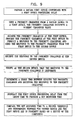
- FIG. 8 is a simplified flowchart diagram of an alternative preferred method of implementation of a method of time determination in the first device within the system of FIG. 6 ;
- FIG. 9 is a simplified flowchart diagram of a preferred method of implementation of unidirectional proximity measurement in a second device incorporating a challenge-response sequence similar to the preferred embodiment of the bidirectional challenge-response sequence of FIG. 1 ;
- FIG. 10 is a simplified flowchart diagram of a preferred method of implementation of a method of time determination in the second device within the system of FIG. 9 ;
- FIG. 11 is a simplified flowchart diagram of an alternative preferred method of implementation of a method of time determination in the second device within the system of FIG. 9 .
- SVP Secure Video Processor
- VOD Video On-Demand
- each SVP device has a Device Certificate, signed by an “Ancestor”.
- the Certificate contains various pieces of data relating to the device's properties and restrictions placed upon it, and also a public key.
- the device also has a private key paired to the public key, but such private key is preferably held in secret by the device.
- SVP Secure Authenticated Channel
- any two SVP devices exchange certificates, and each party verifies the other party's certificate. Verification is obtained through a procedure in which a signature of each certificate is checked against a public key of its “ancestor”, until arriving at a known common ancestor. Such a procedure is known as a “Chain of Trust”. It is appreciated that such a procedure may be lengthy, but it does not have to be carried out repeatedly (provided that each of the devices keeps the other party's certificate in a memory).
- a SAC is established through a Challenge-Response Sequence, or a “Handshake” procedure as shown in FIG. 1 .
- the Challenge-Response Sequence or the “Handshake” procedure is implemented as follows:
- each content segment is accompanied by a secured control structure called “Content Segment License” (CSL).
- CSL contains (signed) data relating to requirements and limitations imposed on a particular content segment.
- proximity measurement between any two devices is accomplished through measuring a time required either to complete a “Handshake” procedure (Challenge-Response Sequence) or to reply to a message sent through an existing SAC. Time may be adjusted by values securely included in Device Certificates and CSLs.
- Each particular content item may have different requirements in regard to proximity.
- Each CSL preferably contains fields specifying one or more values of characterizing “threshold” net round-trip time—average, maximum, and so forth. Other examples of such fields are related to the statistical manner in which measurement should be taken (for example, repetition rate). Some of that data may be fixed (“default”), in which case there is no need to include it in the CSL. Various schemes may be utilized to reduce the amount of data added to the CSL for such purpose (for example, indicating by a bit whether default parameter values are to be used, in which case there is no need to transmit the values themselves).
- Each Device Certificate would contain fields specifying one or more values characterizing the device's intrinsic delay, for example, the sum of the time required for the device to do all computations involved in responding to a proximity challenge, the likely variation of such a delay, and so forth.
- a first proximity measurement method in accordance with a preferred embodiment of the present invention, may be performed with an existing SAC.
- the first proximity measurement method is preferably implemented as follows:
- a second proximity measurement method in accordance with a preferred embodiment of the present invention, may be performed with a new Handshake (a new SAC). In such a case a special command/type is not required.
- the second proximity measurement method may be implemented in two ways.
- the second proximity measurement method may be implemented by measuring a time from Output Challenge to Input Response as follows:
- the second proximity measurement method may be implemented by measuring a time from Output Response to Input Response as follows:
- net propagation time may be calculated by subtracting the sum of intrinsic processing delays (obtained from the device's own certificate and the target device's certificate) from the value recorded by the timer. A result thus obtained may preferably be compared with the threshold value specified by the CSL.
- the present invention is not limited to SVPs; rather, the present invention may alternatively or additionally be implemented by communicating secure devices and secure elements other than SVPs, where the secure devices and the secure elements similarly perform any of the proximity measurement methods mentioned above.
- FIG. 2 is a simplified block diagram illustration of one preferred embodiment of a device certificate 200 , comprising information used during the challenge-response sequence of FIG. 1 .
- the device certificate 200 comprises a public key 230 .
- the public key 230 is used to decrypt communication between the device and other devices with which the device is securely communicating.
- a device intrinsic processing delay 260 is also comprised in the device certificate 200 .
- the device intrinsic processing delay 260 is explained in detail above.
- FIG. 3 is a simplified block diagram of a device 300 comprising the device certificate 200 of FIG. 2 .
- the device 300 comprises standard hardware and software, which, for ease of depiction, are not shown in FIG. 3 .
- the device 300 comprises a device private key 310 .
- the device private key 310 is used to encrypt communication between the device 300 and other devices.
- the device 300 further comprises a processor 330 which is operative to receive, via a communications system 350 , incoming communications from other devices.
- the communications system 350 comprises standard hardware and software, which, for ease of depiction, are not shown in FIG. 3 .
- the processor uses the public key 230 to decrypt incoming encrypted communications from other devices.
- the processor 330 is also operative to encrypt, using the device private key 310 , communications from the device 300 to other devices. Communications from the device 300 to other devices are sent from the processor 330 to the communication system 350 , and from the communication system 350 to other devices.
- FIG. 4 is a simplified timeline illustration of dataflow in a preferred embodiment of a unidirectional challenge-response sequence, similar to the preferred embodiment of the bidirectional challenge-response sequence of FIG. 1 .
- time is depicted flowing from the top of FIG. 4 to the bottom of FIG. 4 .
- Events occurring in FIG. 4 are depicted indicating whether they occur at a first device or as data flowing from one device to another or between both devices.
- the events depicted in FIG. 4 are numbered as T_m (T 4 I, T 42 , . . . , T 48 ), where n increases from 1 to 8.
- FIG. 5 is a simplified timeline illustration of dataflow in a preferred embodiment of the bidirectional challenge-response sequence, similar to the preferred embodiment of the bidirectional challenge-response sequence of FIG. 1 .
- time is depicted flowing from the top of FIG. 5 to the bottom of FIG. 5 .
- Events occurring in FIG. 5 are depicted indicated whether they occur at the first device or as data flowing from one device to another or between both devices.
- the events depicted in FIG. 5 are numbered as T 5 n (T 5 I, T 52 , . . . , T 58 ), where n increases from 1 to 8.
- the first device needs to have received the device certificate of a second device.
- the first device needs to have received the device certificate of the second device, and the second device needs to have received the device certificate of the first device.
- the device certificate may be received by direct exchange, from a trusted third party, may be burned in when the device is manufactured, or in any other appropriate fashion.
- FIGS. 6-11 Reference is now made to FIGS. 6-11 .
- FIG. 6 is a simplified flowchart diagram of a preferred method of implementation unidirectional proximity measurement in a first device incorporating a challenge-response sequence similar to the preferred embodiment of the bidirectional challenge-response sequence of FIG. 1 ;
- FIG. 7 is a simplified flowchart diagram of a preferred method of implementation of a method of time determination in the first device within the system of FIG. 6 ;
- FIG. 8 is a simplified flowchart diagram of an alternative preferred method of implementation of a method of time determination in the first device within the system of FIG. 6 ;
- FIG. 9 is a simplified flowchart diagram of a preferred method of implementation of unidirectional proximity measurement in a second device incorporating a challenge-response sequence similar to the preferred embodiment of the bidirectional challenge-response sequence of FIG. 1 ;
- FIG. 10 is a simplified flowchart diagram of a preferred method of implementation of a method of time determination in the second device within the system of FIG. 9 ;
- FIG. 11 is a simplified flowchart diagram of an alternative preferred method of implementation of a method of time determination in the second device within the system of FIG. 9 .
- FIGS. 6-11 are believed to be self explanatory in light of the above discussion of the present invention.
Landscapes
- Engineering & Computer Science (AREA)
- Computer Security & Cryptography (AREA)
- Theoretical Computer Science (AREA)
- Computer Hardware Design (AREA)
- General Engineering & Computer Science (AREA)
- Computer Networks & Wireless Communication (AREA)
- Signal Processing (AREA)
- Computing Systems (AREA)
- Physics & Mathematics (AREA)
- General Physics & Mathematics (AREA)
- Software Systems (AREA)
- Mobile Radio Communication Systems (AREA)
- Data Exchanges In Wide-Area Networks (AREA)
- Storage Device Security (AREA)
Priority Applications (1)
| Application Number | Priority Date | Filing Date | Title |
|---|---|---|---|
| US11/629,435 US8051292B2 (en) | 2004-06-28 | 2005-05-11 | System for proximity determination |
Applications Claiming Priority (3)
| Application Number | Priority Date | Filing Date | Title |
|---|---|---|---|
| US58333804P | 2004-06-28 | 2004-06-28 | |
| US11/629,435 US8051292B2 (en) | 2004-06-28 | 2005-05-11 | System for proximity determination |
| PCT/IL2005/000499 WO2006018826A1 (en) | 2004-06-28 | 2005-05-11 | System for proximity determination |
Publications (2)
| Publication Number | Publication Date |
|---|---|
| US20070300070A1 US20070300070A1 (en) | 2007-12-27 |
| US8051292B2 true US8051292B2 (en) | 2011-11-01 |
Family
ID=35907257
Family Applications (1)
| Application Number | Title | Priority Date | Filing Date |
|---|---|---|---|
| US11/629,435 Expired - Fee Related US8051292B2 (en) | 2004-06-28 | 2005-05-11 | System for proximity determination |
Country Status (5)
| Country | Link |
|---|---|
| US (1) | US8051292B2 (de) |
| EP (1) | EP1761861A4 (de) |
| CN (1) | CN100552661C (de) |
| AU (1) | AU2005273532B2 (de) |
| WO (1) | WO2006018826A1 (de) |
Cited By (4)
| Publication number | Priority date | Publication date | Assignee | Title |
|---|---|---|---|---|
| US20120309416A1 (en) * | 2010-11-18 | 2012-12-06 | The Boeing Company | Geothentication based on network ranging |
| US9009796B2 (en) | 2010-11-18 | 2015-04-14 | The Boeing Company | Spot beam based authentication |
| KR20160058491A (ko) * | 2014-11-17 | 2016-05-25 | 삼성전자주식회사 | 사용자 기기의 식별자에 기반하여 서비스를 제공하는 방법 및 장치 |
| US20240220643A1 (en) * | 2021-05-27 | 2024-07-04 | Koninklijke Philips N.V. | Receiver Preventing Stall Conditions in a Transmitter While Maintaining Compatibility and Method Therefore |
Families Citing this family (37)
| Publication number | Priority date | Publication date | Assignee | Title |
|---|---|---|---|---|
| US7991998B2 (en) * | 2002-09-30 | 2011-08-02 | Koninklijke Philips Electronics N.V. | Secure proximity verification of a node on a network |
| US8234387B2 (en) | 2003-06-05 | 2012-07-31 | Intertrust Technologies Corp. | Interoperable systems and methods for peer-to-peer service orchestration |
| KR101248296B1 (ko) | 2005-10-18 | 2013-03-27 | 인터트러스트 테크놀로지즈 코포레이션 | 디지털 권리 관리를 위한 방법 |
| US9626667B2 (en) | 2005-10-18 | 2017-04-18 | Intertrust Technologies Corporation | Digital rights management engine systems and methods |
| US10587683B1 (en) * | 2012-11-05 | 2020-03-10 | Early Warning Services, Llc | Proximity in privacy and security enhanced internet geolocation |
| US10581834B2 (en) | 2009-11-02 | 2020-03-03 | Early Warning Services, Llc | Enhancing transaction authentication with privacy and security enhanced internet geolocation and proximity |
| WO2012142178A2 (en) | 2011-04-11 | 2012-10-18 | Intertrust Technologies Corporation | Information security systems and methods |
| US9680763B2 (en) | 2012-02-14 | 2017-06-13 | Airwatch, Llc | Controlling distribution of resources in a network |
| US10404615B2 (en) | 2012-02-14 | 2019-09-03 | Airwatch, Llc | Controlling distribution of resources on a network |
| EP2717552A1 (de) * | 2012-10-04 | 2014-04-09 | Nagravision S.A. | Tragbare Nahkommunikationsvorrichtung |
| US9154480B1 (en) * | 2012-12-12 | 2015-10-06 | Emc Corporation | Challenge-response authentication of a cryptographic device |
| US20140244514A1 (en) * | 2013-02-26 | 2014-08-28 | Digimarc Corporation | Methods and arrangements for smartphone payments and transactions |
| US20140280955A1 (en) | 2013-03-14 | 2014-09-18 | Sky Socket, Llc | Controlling Electronically Communicated Resources |
| US9698991B2 (en) | 2013-03-15 | 2017-07-04 | Ologn Technologies Ag | Systems, methods and apparatuses for device attestation based on speed of computation |
| US9456344B2 (en) * | 2013-03-15 | 2016-09-27 | Ologn Technologies Ag | Systems, methods and apparatuses for ensuring proximity of communication device |
| US10177915B2 (en) | 2013-03-15 | 2019-01-08 | Ologn Technologies Ag | Systems, methods and apparatuses for device attestation based on speed of computation |
| US9401915B2 (en) * | 2013-03-15 | 2016-07-26 | Airwatch Llc | Secondary device as key for authorizing access to resources |
| EP2995061B1 (de) | 2013-05-10 | 2018-04-18 | OLogN Technologies AG | Sicherstellen der nàhe von wifi kommunikationsgeràten |
| US9455998B2 (en) | 2013-09-17 | 2016-09-27 | Ologn Technologies Ag | Systems, methods and apparatuses for prevention of relay attacks |
| US9998438B2 (en) * | 2013-10-23 | 2018-06-12 | Microsoft Technology Licensing, Llc | Verifying the security of a remote server |
| US9195821B2 (en) * | 2013-11-24 | 2015-11-24 | Truly Protect Oy | System and methods for remote software authentication of a computing device |
| US9471511B2 (en) | 2013-11-24 | 2016-10-18 | Truly Protect Oy | System and methods for CPU copy protection of a computing device |
| EP2903204A1 (de) * | 2014-02-03 | 2015-08-05 | Tata Consultancy Services Limited | Computerimplementiertes System und Verfahren zur leichtgewichtigen Authentifizierung auf Datagrammtransport für Internet der Dinge |
| US9311639B2 (en) | 2014-02-11 | 2016-04-12 | Digimarc Corporation | Methods, apparatus and arrangements for device to device communication |
| US9584964B2 (en) | 2014-12-22 | 2017-02-28 | Airwatch Llc | Enforcement of proximity based policies |
| US10690762B2 (en) * | 2015-05-29 | 2020-06-23 | Qualcomm Incorporated | Systems and methods for determining an upper bound on the distance between devices |
| US20160352605A1 (en) * | 2015-05-29 | 2016-12-01 | Qualcomm Incorporated | Systems and methods for distance bounding to an authenticated device |
| CN105681056B (zh) * | 2016-01-13 | 2019-03-19 | 阿里巴巴集团控股有限公司 | 对象分配方法及装置 |
| US11582215B2 (en) * | 2016-06-12 | 2023-02-14 | Apple Inc. | Modifying security state with secured range detection |
| US10944579B2 (en) * | 2017-05-26 | 2021-03-09 | Combined Conditional Access Development And Support, Llc | Device pairing and authentication |
| CN110198517B (zh) * | 2018-05-10 | 2021-07-20 | 腾讯科技(深圳)有限公司 | 一种基于自学习路径选择的端口扫描方法和系统 |
| MY209315A (en) * | 2019-02-12 | 2025-07-02 | Panasonic Ip Man Co Ltd | Remote control system |
| US11540137B2 (en) * | 2019-04-17 | 2022-12-27 | Apple Inc. | Pairing devices based on distance |
| US12309297B2 (en) | 2020-08-07 | 2025-05-20 | Google Llc | Encrypted response timing for presence detection |
| US12058528B2 (en) | 2020-12-31 | 2024-08-06 | Prove Identity, Inc. | Identity network representation of communications device subscriber in a digital domain |
| US11764980B2 (en) | 2021-04-30 | 2023-09-19 | Huawei Technologies Co., Ltd. | Digital contact tracing security and privacy with proximity-based ID exchange with a time-based distance-bounding |
| US20240232398A1 (en) * | 2021-05-27 | 2024-07-11 | Koninklijke Philips N.V. | Receiver with Enhanced Transmitter Compatibility and Method Therefore |
Citations (15)
| Publication number | Priority date | Publication date | Assignee | Title |
|---|---|---|---|---|
| US6178449B1 (en) * | 1997-11-26 | 2001-01-23 | International Business Machines Corporation | Apparatus and method for measuring transaction time in a computer system |
| WO2001093434A2 (en) | 2000-05-26 | 2001-12-06 | Xtremespectrum, Inc. | Method and system for enabling device functions based on distance information |
| WO2002035036A1 (en) | 2000-10-23 | 2002-05-02 | Volvo Technological Development Corporation | A method for controlling authorization to an object and a computer program product for the authorization control |
| US20020087666A1 (en) | 2000-12-29 | 2002-07-04 | Huffman Stephen Mark | Method for geolocating logical network addresses |
| US6505240B1 (en) | 1998-08-31 | 2003-01-07 | Trevor I. Blumenau | Ameliorating bandwidth requirements for the simultaneous provision of multiple sets of content over a network |
| US20030046022A1 (en) | 2001-08-31 | 2003-03-06 | International Business Machines Corporation | System and method for determining the location of remote devices |
| US20030085997A1 (en) * | 2000-04-10 | 2003-05-08 | Satoshi Takagi | Asset management system and asset management method |
| US20030097655A1 (en) * | 2001-11-21 | 2003-05-22 | Novak Robert E. | System and method for providing conditional access to digital content |
| WO2003079638A1 (en) | 2002-03-12 | 2003-09-25 | Koninklijke Philips Electronics, N.V. | Using timing signals to determine proximity between two nodes |
| WO2004014037A1 (en) | 2002-07-26 | 2004-02-12 | Koninklijke Philips Electronics N.V. | Secure authenticated distance measurement |
| WO2004030311A1 (en) | 2002-09-30 | 2004-04-08 | Koninklijke Philips Electronics N.V. | Secure proximity verification of a node on a network |
| WO2004030312A1 (en) | 2002-09-30 | 2004-04-08 | Koninklijke Philips Electronics N.V. | Verifying a node on a network |
| US20040128387A1 (en) | 2002-12-27 | 2004-07-01 | Kwan Wu Chin | Broadcasting information in ad-hoc network clusters between pseudo-random time intervals |
| US6826690B1 (en) * | 1999-11-08 | 2004-11-30 | International Business Machines Corporation | Using device certificates for automated authentication of communicating devices |
| US6865612B2 (en) * | 2000-02-19 | 2005-03-08 | International Business Machines Corporation | Method and apparatus to provide high precision packet traversal time statistics in a heterogeneous network |
-
2005
- 2005-05-11 CN CNB2005800217281A patent/CN100552661C/zh not_active Expired - Fee Related
- 2005-05-11 WO PCT/IL2005/000499 patent/WO2006018826A1/en not_active Ceased
- 2005-05-11 US US11/629,435 patent/US8051292B2/en not_active Expired - Fee Related
- 2005-05-11 EP EP05740622A patent/EP1761861A4/de not_active Withdrawn
- 2005-05-11 AU AU2005273532A patent/AU2005273532B2/en not_active Ceased
Patent Citations (15)
| Publication number | Priority date | Publication date | Assignee | Title |
|---|---|---|---|---|
| US6178449B1 (en) * | 1997-11-26 | 2001-01-23 | International Business Machines Corporation | Apparatus and method for measuring transaction time in a computer system |
| US6505240B1 (en) | 1998-08-31 | 2003-01-07 | Trevor I. Blumenau | Ameliorating bandwidth requirements for the simultaneous provision of multiple sets of content over a network |
| US6826690B1 (en) * | 1999-11-08 | 2004-11-30 | International Business Machines Corporation | Using device certificates for automated authentication of communicating devices |
| US6865612B2 (en) * | 2000-02-19 | 2005-03-08 | International Business Machines Corporation | Method and apparatus to provide high precision packet traversal time statistics in a heterogeneous network |
| US20030085997A1 (en) * | 2000-04-10 | 2003-05-08 | Satoshi Takagi | Asset management system and asset management method |
| WO2001093434A2 (en) | 2000-05-26 | 2001-12-06 | Xtremespectrum, Inc. | Method and system for enabling device functions based on distance information |
| WO2002035036A1 (en) | 2000-10-23 | 2002-05-02 | Volvo Technological Development Corporation | A method for controlling authorization to an object and a computer program product for the authorization control |
| US20020087666A1 (en) | 2000-12-29 | 2002-07-04 | Huffman Stephen Mark | Method for geolocating logical network addresses |
| US20030046022A1 (en) | 2001-08-31 | 2003-03-06 | International Business Machines Corporation | System and method for determining the location of remote devices |
| US20030097655A1 (en) * | 2001-11-21 | 2003-05-22 | Novak Robert E. | System and method for providing conditional access to digital content |
| WO2003079638A1 (en) | 2002-03-12 | 2003-09-25 | Koninklijke Philips Electronics, N.V. | Using timing signals to determine proximity between two nodes |
| WO2004014037A1 (en) | 2002-07-26 | 2004-02-12 | Koninklijke Philips Electronics N.V. | Secure authenticated distance measurement |
| WO2004030311A1 (en) | 2002-09-30 | 2004-04-08 | Koninklijke Philips Electronics N.V. | Secure proximity verification of a node on a network |
| WO2004030312A1 (en) | 2002-09-30 | 2004-04-08 | Koninklijke Philips Electronics N.V. | Verifying a node on a network |
| US20040128387A1 (en) | 2002-12-27 | 2004-07-01 | Kwan Wu Chin | Broadcasting information in ad-hoc network clusters between pseudo-random time intervals |
Non-Patent Citations (10)
| Title |
|---|
| A. Menezes et al., Handbook of Applied Cryptography, Chapter 12 (CRC press, Inc. 1997). |
| A. Menezes et al., Handbook of Applied Cryptography, Chapter 13 (CRC press, Inc. 1997). |
| Jan. 27, 2010 Office Communication in connection with AU 2005 273532. |
| Jul. 23, 2010 Office Communication in connection with prosecution of AU 2005 273532. |
| Mar. 31, 2010 Office Communication in connection with EP 05 740 622.5 (8 pgs.). |
| May 31, 2011 Office Communication in connection with prosecution of EP 05 740 622.5. |
| Nov. 12, 2009 supplementary search report for EP 05 74 0622.5. |
| Oct. 7, 2010 Office Communication in connection with prosecution of IL 180021 (w/English translation). |
| SVP-Secure Video Processor, "Frequently Asked Questions" available on the World Wide Web at www.svpalliance.org. (6 pages). |
| SVP—Secure Video Processor, "Frequently Asked Questions" available on the World Wide Web at www.svpalliance.org. (6 pages). |
Cited By (7)
| Publication number | Priority date | Publication date | Assignee | Title |
|---|---|---|---|---|
| US20120309416A1 (en) * | 2010-11-18 | 2012-12-06 | The Boeing Company | Geothentication based on network ranging |
| US8949941B2 (en) * | 2010-11-18 | 2015-02-03 | The Boeing Company | Geothentication based on network ranging |
| US9009796B2 (en) | 2010-11-18 | 2015-04-14 | The Boeing Company | Spot beam based authentication |
| KR20160058491A (ko) * | 2014-11-17 | 2016-05-25 | 삼성전자주식회사 | 사용자 기기의 식별자에 기반하여 서비스를 제공하는 방법 및 장치 |
| US20170338959A1 (en) * | 2014-11-17 | 2017-11-23 | Samsung Electronics Co., Ltd. | Method and apparatus for providing service on basis of identifier of user equipment |
| US10862684B2 (en) * | 2014-11-17 | 2020-12-08 | Samsung Electronics Co., Ltd. | Method and apparatus for providing service on basis of identifier of user equipment |
| US20240220643A1 (en) * | 2021-05-27 | 2024-07-04 | Koninklijke Philips N.V. | Receiver Preventing Stall Conditions in a Transmitter While Maintaining Compatibility and Method Therefore |
Also Published As
| Publication number | Publication date |
|---|---|
| CN1977257A (zh) | 2007-06-06 |
| WO2006018826A1 (en) | 2006-02-23 |
| US20070300070A1 (en) | 2007-12-27 |
| EP1761861A4 (de) | 2009-12-16 |
| AU2005273532B2 (en) | 2011-04-07 |
| EP1761861A1 (de) | 2007-03-14 |
| CN100552661C (zh) | 2009-10-21 |
| AU2005273532A1 (en) | 2006-02-23 |
Similar Documents
| Publication | Publication Date | Title |
|---|---|---|
| AU2005273532B2 (en) | System for proximity determination | |
| JP7170661B2 (ja) | ハイパーセキュアラストマイル通信の方法及び装置 | |
| US8276209B2 (en) | Proximity check server | |
| US7096359B2 (en) | Authentication scheme for ad hoc and sensor wireless networks | |
| JP3552648B2 (ja) | アドホック無線通信用データ送受システム及びアドホック無線通信用データ送受方法 | |
| Yan et al. | Providing location security in vehicular ad hoc networks | |
| JP4504192B2 (ja) | 加入モジュールへのセキュアアクセス方法 | |
| US9356940B2 (en) | Security and access system based on multi-dimensional location characteristics | |
| JP4270033B2 (ja) | 通信システムおよび通信方法 | |
| US20210167963A1 (en) | Decentralised Authentication | |
| WO2011009317A1 (zh) | 认证方法、认证系统及认证服务器 | |
| CN104243452B (zh) | 一种云计算访问控制方法及系统 | |
| US9177114B2 (en) | Method and apparatus for determining the proximity of a client device | |
| CN114039732A (zh) | 一种物理层认证方法、系统、设备及计算机可读存储介质 | |
| CN113613241B (zh) | 基于区块链的无线网络节点数据处理方法及装置 | |
| CN116158054B (zh) | 访问令牌使用方法和设备 | |
| CN115022850B (zh) | 一种d2d通信的认证方法、装置、系统、电子设备及介质 | |
| CN101453733A (zh) | 无线Mesh网络中基于监视节点的虫洞攻击检测方法 | |
| Brassil et al. | Traffic signature-based mobile device location authentication | |
| US12341910B1 (en) | Systems and methods for blockchain-enabled end-to-end encryption | |
| KR101880999B1 (ko) | 사물 인터넷 네트워크의 엔드 투 엔드 데이터 암호화 시스템 및 방법 | |
| CN105553966B (zh) | 密钥交换的方法及装置 | |
| CN113422681B (zh) | 一种基于量子密码的区块链数字签名方法、装置及系统 | |
| KR101204648B1 (ko) | 무선 통신 네트워크와 유선 통신 네트워크가 공존하는 통신 네트워크에서 안전하게 비밀키를 교환하는 방법 | |
| US8312166B2 (en) | Proximity detection method |
Legal Events
| Date | Code | Title | Description |
|---|---|---|---|
| AS | Assignment |
Owner name: NDS LIMITED, UNITED KINGDOM Free format text: ASSIGNMENT OF ASSIGNORS INTEREST;ASSIGNORS:SHEN-ORR, CHAIM D.;HIBSHOOSH, ELIPHAZ;BELENKY, YAACOV;REEL/FRAME:017601/0390 Effective date: 20060103 |
|
| AS | Assignment |
Owner name: J.P. MORGAN EUROPE LIMITED, UNITED KINGDOM Free format text: SECURITY AGREEMENT;ASSIGNORS:NDS LIMITED;NEWS DATACOM LIMITED;REEL/FRAME:022678/0712 Effective date: 20090428 Owner name: J.P. MORGAN EUROPE LIMITED,UNITED KINGDOM Free format text: SECURITY AGREEMENT;ASSIGNORS:NDS LIMITED;NEWS DATACOM LIMITED;REEL/FRAME:022678/0712 Effective date: 20090428 |
|
| AS | Assignment |
Owner name: NDS HOLDCO, INC., NEW YORK Free format text: SECURITY AGREEMENT;ASSIGNORS:NDS LIMITED;NEWS DATACOM LIMITED;REEL/FRAME:022703/0071 Effective date: 20090428 Owner name: NDS HOLDCO, INC.,NEW YORK Free format text: SECURITY AGREEMENT;ASSIGNORS:NDS LIMITED;NEWS DATACOM LIMITED;REEL/FRAME:022703/0071 Effective date: 20090428 |
|
| AS | Assignment |
Owner name: NDS LIMITED, UNITED KINGDOM Free format text: RELEASE OF INTELLECTUAL PROPERTY SECURITY INTERESTS;ASSIGNOR:NDS HOLDCO, INC.;REEL/FRAME:025940/0710 Effective date: 20110310 Owner name: NEWS DATACOM LIMITED, UNITED KINGDOM Free format text: RELEASE OF INTELLECTUAL PROPERTY SECURITY INTERESTS;ASSIGNOR:NDS HOLDCO, INC.;REEL/FRAME:025940/0710 Effective date: 20110310 |
|
| AS | Assignment |
Owner name: NEWS DATACOM LIMITED, CALIFORNIA Free format text: RELEASE OF PATENT SECURITY INTERESTS;ASSIGNOR:J.P.MORGAN EUROPE LIMITED;REEL/FRAME:026042/0124 Effective date: 20110310 Owner name: NDS LIMITED, CALIFORNIA Free format text: RELEASE OF PATENT SECURITY INTERESTS;ASSIGNOR:J.P.MORGAN EUROPE LIMITED;REEL/FRAME:026042/0124 Effective date: 20110310 |
|
| ZAAA | Notice of allowance and fees due |
Free format text: ORIGINAL CODE: NOA |
|
| ZAAB | Notice of allowance mailed |
Free format text: ORIGINAL CODE: MN/=. |
|
| STCF | Information on status: patent grant |
Free format text: PATENTED CASE |
|
| CC | Certificate of correction | ||
| AS | Assignment |
Owner name: CISCO TECHNOLOGY, INC., CALIFORNIA Free format text: ASSIGNMENT OF ASSIGNORS INTEREST;ASSIGNOR:NDS LIMITED;REEL/FRAME:030258/0465 Effective date: 20130314 |
|
| CC | Certificate of correction | ||
| FPAY | Fee payment |
Year of fee payment: 4 |
|
| MAFP | Maintenance fee payment |
Free format text: PAYMENT OF MAINTENANCE FEE, 8TH YEAR, LARGE ENTITY (ORIGINAL EVENT CODE: M1552); ENTITY STATUS OF PATENT OWNER: LARGE ENTITY Year of fee payment: 8 |
|
| FEPP | Fee payment procedure |
Free format text: MAINTENANCE FEE REMINDER MAILED (ORIGINAL EVENT CODE: REM.); ENTITY STATUS OF PATENT OWNER: LARGE ENTITY |
|
| LAPS | Lapse for failure to pay maintenance fees |
Free format text: PATENT EXPIRED FOR FAILURE TO PAY MAINTENANCE FEES (ORIGINAL EVENT CODE: EXP.); ENTITY STATUS OF PATENT OWNER: LARGE ENTITY |
|
| STCH | Information on status: patent discontinuation |
Free format text: PATENT EXPIRED DUE TO NONPAYMENT OF MAINTENANCE FEES UNDER 37 CFR 1.362 |
|
| FP | Lapsed due to failure to pay maintenance fee |
Effective date: 20231101 |