US8043826B2 - Device for monitoring inhibition of platelet function response - Google Patents
Device for monitoring inhibition of platelet function response Download PDFInfo
- Publication number
- US8043826B2 US8043826B2 US11/632,780 US63278005A US8043826B2 US 8043826 B2 US8043826 B2 US 8043826B2 US 63278005 A US63278005 A US 63278005A US 8043826 B2 US8043826 B2 US 8043826B2
- Authority
- US
- United States
- Prior art keywords
- chamber
- blood
- assay
- agonist
- fluid
- Prior art date
- Legal status (The legal status is an assumption and is not a legal conclusion. Google has not performed a legal analysis and makes no representation as to the accuracy of the status listed.)
- Expired - Fee Related, expires
Links
Images


Classifications
-
- G—PHYSICS
- G01—MEASURING; TESTING
- G01N—INVESTIGATING OR ANALYSING MATERIALS BY DETERMINING THEIR CHEMICAL OR PHYSICAL PROPERTIES
- G01N33/00—Investigating or analysing materials by specific methods not covered by groups G01N1/00 - G01N31/00
- G01N33/48—Biological material, e.g. blood, urine; Haemocytometers
- G01N33/50—Chemical analysis of biological material, e.g. blood, urine; Testing involving biospecific ligand binding methods; Immunological testing
- G01N33/92—Chemical analysis of biological material, e.g. blood, urine; Testing involving biospecific ligand binding methods; Immunological testing involving lipids, e.g. cholesterol, lipoproteins, or their receptors
-
- C—CHEMISTRY; METALLURGY
- C12—BIOCHEMISTRY; BEER; SPIRITS; WINE; VINEGAR; MICROBIOLOGY; ENZYMOLOGY; MUTATION OR GENETIC ENGINEERING
- C12Q—MEASURING OR TESTING PROCESSES INVOLVING ENZYMES, NUCLEIC ACIDS OR MICROORGANISMS; COMPOSITIONS OR TEST PAPERS THEREFOR; PROCESSES OF PREPARING SUCH COMPOSITIONS; CONDITION-RESPONSIVE CONTROL IN MICROBIOLOGICAL OR ENZYMOLOGICAL PROCESSES
- C12Q1/00—Measuring or testing processes involving enzymes, nucleic acids or microorganisms; Compositions therefor; Processes of preparing such compositions
- C12Q1/26—Measuring or testing processes involving enzymes, nucleic acids or microorganisms; Compositions therefor; Processes of preparing such compositions involving oxidoreductase
-
- C—CHEMISTRY; METALLURGY
- C12—BIOCHEMISTRY; BEER; SPIRITS; WINE; VINEGAR; MICROBIOLOGY; ENZYMOLOGY; MUTATION OR GENETIC ENGINEERING
- C12Q—MEASURING OR TESTING PROCESSES INVOLVING ENZYMES, NUCLEIC ACIDS OR MICROORGANISMS; COMPOSITIONS OR TEST PAPERS THEREFOR; PROCESSES OF PREPARING SUCH COMPOSITIONS; CONDITION-RESPONSIVE CONTROL IN MICROBIOLOGICAL OR ENZYMOLOGICAL PROCESSES
- C12Q1/00—Measuring or testing processes involving enzymes, nucleic acids or microorganisms; Compositions therefor; Processes of preparing such compositions
- C12Q1/66—Measuring or testing processes involving enzymes, nucleic acids or microorganisms; Compositions therefor; Processes of preparing such compositions involving luciferase
Definitions
- Platelets function to stop bleeding by forming clots, and they initiate the process of wound healing. This occurs when platelets are activated, causing them to change shape, adhere, spread, release chemical messengers and activators, aggregate, and assemble with fibrin.
- platelet activation and clot formation can also place a person at risk of pathological cardiovascular events.
- venous blood clot formation in the legs a condition known as deep vein thrombosis, creates the risk that the blood clots could embolize (break apart) and result in clot entrapment in the lungs or the brain, causing pulmonary embolisms and stroke-related conditions.
- Platelet activation and fibrin formation in other locations in some persons create aggregates and small clots in the arterial circulation that can also lead to embolization and strokes.
- Arterial stents are another type of device placed in the circulatory system that place patients at risk from platelet activation. Arterial stents are placed in clogged coronary and carotid arteries to provide oxygen to cardiac tissue. They are typically around 5 mm in diameter and are made from stainless steel or other materials. Due to the introduction of a foreign material in the blood stream, platelets can become activated and attach to the wall of the stented vessel. This leads to reocclusion (restenosis) of the stented vessel, which is a very significant risk in patients with arterial stents. Restenosis in the first 28 days is reported in 0.5 to 8% of persons receiving stents.
- glycoprotein receptors on the surface of the platelets undergo a conformational change from a relatively inactive conformation to an activated form.
- the activated receptors mediate the adhesion of more platelets by adhering to the circulating plasma protein fibrinogen, which serves as a bridging ligand between platelets.
- the adhesion and aggregation of platelets constitutes primary hemostasis.
- the fibrin clot is the end product of a series of reactions involving plasma proteins.
- the process is known as blood coagulation.
- fibrin is formed from fibrinogen, a large circulating plasma protein, by specific proteolysis.
- the protein thrombin is consumed.
- Fibrin monomers next spontaneously associate to form polymers and form a loose reinforcement of the platelet plug.
- Fibrin polymers are then cross-linked by certain enzymes. The fibrin polymer also traps red cells and white cells to form a finished clot.
- Platelets are activated by a variety of stimuli. Collagen, ADP, thrombin, and physical shear stress all activate platelets.
- One of the first steps in activation is that a platelet membrane phospholipase, phospholipase A 2 , cleaves membrane lipids to release the fatty acid arachidonic acid.
- Arachidonic acid is oxidized in the platelet by the enzyme cyclooxygenase to the prostaglandin PGG 2 .
- PGG 2 can be enzymatically converted to PGH 2
- PGH 2 is converted by thromboxane synthetase to thromboxane A 2 (TxA 2 ).
- TxA 2 is a very potent activator of platelets and greatly amplifies the platelet release reaction, where the platelets secrete the contents of certain cytoplasmic bodies, including alpha granules and dense bodies.
- the components secreted from dense bodies are ADP, Ca ++ , Mg ++ , and serotonin.
- Aspirin acts by acetylating and inactivating cyclooxygenase-1 in platelets, preventing the synthesis of TxA 2 . By preventing the synthesis of TxA 2 , aspirin significantly reduces platelet activation and thus reduces clotting. Aspirin inactivates cyclooxygenase-1 (COX1) at a lower dose and more completely than it inactivates or inhibits another isoform of cyclooxygenase, cyclooxygenase-2. COX1 is the predominant cyclooxygenase in platelets. COX2 is involved in inflammation. (Vane, J. R., et al., 2003, The mechanism of action of aspirin, Thrombosis Research 110: 255.)
- aspirin for most patients is an effective agent to prevent clots and pathological cardiovascular events. But many people are resistant to aspirin. In one study, 5.5% or 9.5% of patients were resistant to aspirin, as assayed by two different techniques, and 23.8% of patients were semi-resistant (Gum, P. A., et al., 2001, Am. J Cardiology 88: 230). Other studies estimate 5-40% of patients are aspirin resistant, depending on the assay and the population studied (Bhatt, D. L., 2004, J. Am. College of Cardiology Vol. 43, No. 6, 2004). This is very important, because aspirin resistance is significantly associated with an increased risk of death, myocardial infarction, or cerebrovascular accident (Altman, R., et al., 2004, Thrombosis J. 2: 1).
- PFA-100 platelet function analyzer-100
- the blood comes into contact with the membrane where platelets adhere and aggregate.
- a platelet plug forms, occluding the aperture and stopping blood flow.
- the closure time is a measure of platelet function.
- Another device used to measure aspirin response is the Accumetrix VERIFYNOW Aspirin Assay (www.accumetrics.com/products/ultegra_asa.html).
- This product uses a turbidity-based optical detection system.
- the device contains fibrinogen-coated beads, and a platelet agonist. Blood is withdrawn, citrated, and then mixed with the coated beads and the agonist. Aggregation of the platelets to the beads is measured optically.
- a new method of monitoring aspirin response or response to other COX1 inhibitors is needed.
- the method would use a small volume of blood (e.g., less than a drop), use unprocessed whole blood, be fast, and be relatively specific for the pathway inhibited by aspirin, the COX1 pathway.
- the invention involves a method to measure inhibition of platelet function by aspirin or another cyclooxygenase-1 inhibitor.
- Blood is withdrawn from a patient who has taken aspirin and mixed with a COX1-dependent platelet agonist, typically arachidonic acid, which is the substrate for the enzyme cyclooxygenase-1 in platelets.
- a COX1-dependent platelet agonist typically arachidonic acid
- Arachidonic acid is converted in platelets by COX1 to PGG 2 and then to thromboxane A 2 .
- Thromboxane A 2 is a potent activator of platelets and instigates the platelet release reaction, where the platelets secrete the contents of their dense bodies and alpha granules.
- One of the compounds secreted from the dense bodies is ATP.
- the secreted extracellular ATP or other extracellular platelet-release-reaction product is detected, and its concentration is quantitatively or qualitatively determined.
- the result from the determination of the extracellular release-reaction product (e.g., ATP) concentration is compared with a standard, which can be the result from blood taken from the same patient before she or he took aspirin.
- Aspirin acts by inactivating cyclooxygenase-1, the predominant cyclooxygenase in platelets. Thus, if aspirin has inactivated most or all cyclooxygenase-1, the amount of thromboxane A 2 produced will be decreased, the release reaction will be weaker, and less release reaction product (e.g., ATP) will be secreted, as compared to when the patient does not take aspirin.
- release reaction product e.g., ATP
- the method can use less than a drop of blood. Whole blood can be used without any further processing. And results can be obtained at the patient's bedside in less than five minutes.
- the assay since ATP release is strongly induced by thromboxane A 2 , the assay has high specificity for the pathway inhibited by aspirin, the COX1 pathway: thromboxane A 2 synthesis from arachidonic acid.
- a finger prick is performed to draw a drop of blood from a patient who has not had aspirin or another COX1 inhibitor for at least several hours, preferably 8 days.
- the lifetime of platelets is about 8 days.
- Aspirin covalently modifies the COX1 in platelets to inactivate it. So the effect of aspirin lingers until all the platelets inactivated by aspirin have been cleared.
- Other COX1 inhibitors may act by a noncovalent inhibition and have a shorter duration of action.
- Approximately 2-10 ⁇ l of blood is taken and diluted 500:1 with buffer.
- the ATP-consuming and light-producing enzyme luciferase and its substrate luciferin are added, and a background reading of light emission is taken.
- Arachidonic acid is then added to the sample, and the increase in light emission is monitored.
- the patient then swallows aspirin, and the procedure is performed again, and the results compared. If the aspirin is working, there will be a large decrease in light emission in the blood sample drawn after the patient takes aspirin as compared to the sample drawn before the patient takes aspirin. If the patient is aspirin-resistant, the difference between the two results will be smaller.
- one embodiment of the invention provides a method of monitoring COX1-inhibitor response involving: (a) collecting platelet-containing mammalian blood treated with a COX1 inhibitor; (b) mixing the blood with a COX1-dependent platelet agonist to generate agonist-activated blood; (c) monitoring an extracellular platelet-release-reaction product (e.g. ATP) in the agonist-activated blood to generate a measurement; and (d) comparing the measurement to a standard value.
- an extracellular platelet-release-reaction product e.g. ATP
- Another embodiment of the invention provides a device for monitoring COX1-inhibitor response including: (a) a fluid-tight material forming an assay chamber; (b) a pump functionally linked to the assay chamber for pumping fluids into the assay chamber; (c) a light detector functionally linked to the assay chamber for detecting light emitted in the assay chamber; (d) a fluid-tight material forming a blood chamber for holding blood, the blood chamber functionally linked to the pump; (e) a fluid-tight material forming an enzyme chamber for holding a solution of a light-producing ATP-consuming enzyme, the enzyme chamber functionally linked to the pump; and (f) a fluid-tight material forming an agonist chamber for holding a solution of a COX1-dependent platelet agonist, the agonist chamber functionally linked to the pump.
- Another embodiment of the invention provides a system for monitoring COX1-inhibitor response including: (a) a fluid-tight material forming an assay chamber; (b) a pump functionally linked to the assay chamber for pumping fluids into the assay chamber; (c) a light detector functionally linked to the assay chamber for detecting light emitted in the assay chamber; (d) a fluid-tight material forming a blood chamber for holding blood, the blood chamber functionally linked to the pump; (e) a fluid-tight material forming an enzyme chamber for holding a solution of a light-producing ATP-consuming enzyme, the enzyme chamber functionally linked to the pump; (f) a fluid-tight material forming an agonist chamber for holding a solution of a COX1-dependent platelet agonist, the agonist chamber functionally linked to the pump; (g) a controller coupled to the pump and programmed to deliver to the assay chamber a predetermined volume of the blood, a predetermined volume of the light-producing enzyme solution, and a
- approximately 10 ⁇ l of whole blood is taken by a finger prick, and is mixed with arachidonic acid and placed in an assay chamber.
- the blood mixture in the assay chamber is physically agitated as light emission is monitored.
- the agitation activates the platelets, amplifying the activation by arachidonic acid.
- Arachidonic acid is relatively unstable on storage, and therefore assays of COX1 inhibitor response using arachidonic acid as agonist can be hampered by inconsistency in the activity of different batches of arachidonic acid. Physically agitating the sample makes the assay more tolerant of differences in the quality of the arachidonic acid added.
- Agitation also amplifies the effect of arachidonic acid, which speeds the release of ATP by the platelets (the ultimate amplitude of ATP release remains the same). This increases the signal, if the signal measured is the slope of the increase of light emission during the assay.
- another embodiment of the invention provides a device for monitoring COX1 inhibitor response that includes: (a) a receptor adapted to hold an assay chamber; (b) a means for agitating fluid in the assay chamber, functionally linked to the assay chamber; and (c) a light detector functionally linked to the assay chamber for detecting light emitted in the assay chamber; wherein the device does not comprise a lamp for measuring platelet aggregation in the assay chamber.
- Another embodiment of the invention provides a device for monitoring COX1 inhibitor response that includes: (a) a receptor adapted to hold an assay chamber; (b) an agitator functionally linked to the assay chamber to agitate fluid in the assay chamber; and (c) a light detector functionally linked to the assay chamber for detecting light emitted in the assay chamber; wherein the agitator is adapted to agitate fluid in the assay chamber by agitating the assay chamber or at least one wall of the assay chamber.
- a disposable cuvette for use in a device to measure COX1 inhibitor response
- the cuvette including: (a) a fluid-tight material forming an assay chamber for holding an assay mixture including blood, a light-producing ATP-consuming enzyme, and a COX1-dependent platelet agonist; and (b) a fluid-tight material forming a sealed but breakable reagent chamber that contains the light-producing ATP-consuming enzyme or the COX1-dependent platelet agonist, or both.
- the reagent chamber is designed on breakage to empty its contents into the assay chamber.
- the assay chamber includes a transparent window that allows light emission.
- FIG. 1 shows the pathway of thromboxane A 2 synthesis from arachidonic acid.
- FIGS. 2A-C show luciferase assay results with arachidonic-acid-treated diluted blood drawn from three individuals before and after taking aspirin. The light emission reflects extracellular ATP.
- FIG. 3 is a schematic diagram of a device for monitoring COX1 inhibitor response.
- FIG. 4 is a schematic diagram of a device for monitoring COX1 inhibitor response, where the device includes a valve.
- FIG. 5 is a schematic diagram of a system for monitoring COX1 inhibitor response.
- FIG. 6 is a diagram of a particular apparatus for monitoring aspirin response that pumps fluids into an assay chamber.
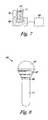
- FIG. 7 is a diagram of a device for monitoring COX1 inhibitor response that pumps fluids into a cuvette.
- FIG. 8 is a diagram of a disposable cuvette of the invention for use in a device for monitoring COX1 inhibitor response.
- COX1 inhibitor refers to an agent that selectively inhibits COX1 more than it inhibits COX2 or inhibits COX1 at a lower concentration of agent than COX2.
- the inhibition can be due to covalent or noncovalent interactions.
- the inhibition can be inactivation, competitive, uncompetitive, or non-competitive inhibition.
- the most common COX1 inhibitor is aspirin.
- SC-58560 Bolla, M., et al., Hypertension, Apr. 19, 2004).
- platelet-containing blood refers to whole blood or processed blood that contains platelets, e.g., platelet-rich plasma.
- measurement and “standard value” refer to quantitative or qualitative assessments that can be compared with each other.
- blood treated with a COX1 inhibitor refers to blood contacted with a COX1 inhibitor either in vivo or ex situ.
- the blood can be contacted with the inhibitor (e.g., aspirin), e.g., by orally administering aspirin to a mammal, or by contacting blood with aspirin after withdrawing the blood from a mammal.
- the inhibitor e.g., aspirin
- dilution medium refers to any suitable liquid for diluting blood. This typically is an aqueous solution that includes a pH buffer and solutes sufficient to maintain an appropriate osmoticum in the dilution buffer, such as phosphate buffered saline or HEPES/HANKS. Dilution medium, however, need not contain a pH buffer, and could be water or for instance, a salt or sucrose solution in water.
- ATP-consuming enzyme refers to an enzyme that uses and consumes ATP as a substrate.
- chamber refers to a vessel that contains fluids.
- the chamber can be substantially enclosed, or could be, for instance, a section of tubing in which liquid is held.
- a “light detector” as used herein is any apparatus or component of an apparatus capable of qualitatively or, preferably, quantitatively determining the intensity of light or number of photons emitted in an assay chamber.
- An example of a light detector is a photon counter.
- a “COX1-dependent platelet agonist” as used herein is an agonist whose activation of platelets is substantially inhibited by aspirin in aspirin-sensitive humans.
- a COX1-dependent platelet agonist is an agonist that induces a maximal rate of extracellular ATP release in aspirin-sensitive humans in the assays described herein that is at least 5 times higher in non-aspirin-treated blood than in aspirin-treated blood.
- a platelet agonist that is not COX1 dependent as used herein refers to an agonist whose activation of platelets is not substantially inhibited by aspirin in aspirin-sensitive humans.
- the most preferred COX1-dependent platelet agonist is arachidonic acid.
- the most preferred platelet agonist that is not COX1 dependent is thromboxane A 2 .
- Other platelet agonists that are not COX1 dependent include collagen, thrombin, and ADP.
- “An extracellular platelet-release-reaction product,” as used herein, is a component secreted from platelets in response to arachidonic acid, whose maximal rate of secretion in aspirin-sensitive humans is at least 2 times faster before the person takes aspirin than the maximal rate of secretion after the person takes aspirin.
- the platelet-release-reaction product is a product whose maximal rate of secretion is at least 3 times faster, more preferably at least 5 times faster, before the person takes aspirin than after the person takes aspirin.
- the extracellular platelet-release-reaction product may be soluble in the extracellular medium or may become exposed on the extracellular platelet membrane surface after the release reaction.
- the preferred extracellular platelet-release-reaction product is ATP.
- Other examples of extracellular release reaction products include the dense body components GDP, GTP, ADP, serotonin, Mg ++ , and Ca ++ , as well as the alpha granule components fibrinogen, von Willebrand factor, fibronectin, thrombospondin, vitronectin, factor V, factor XI, protein S, platelet-derived growth factor, transforming growth factor ⁇ , epidermal growth factor, P-selectin, GMP 33, and osteonectin.
- the Megakaryocyte-Platelet System, R. R. Rifkin in Clinical Hematology: Principles, Procedures, Correlations , second edition, Stiene-Martin, E. A., et al., eds., Lippincott, N.Y., 1998.
- FIG. 1 The pathway of thromboxane A 2 synthesis from arachidonic acid in platelets is shown in FIG. 1 . Aspirin inhibits this pathway by acetylating cyclooxygenase and inactivating the enzyme.
- the COX1 inhibitor is aspirin.
- the extracellular platelet-release-reaction product is ATP.
- the COX1-dependent platelet agonist is arachidonic acid.
- phospholipase A 2 activators Another example of a class of COX1-dependent platelet agonists is phospholipase A 2 activators. Compounds that activate phospholipase A 2 stimulate the release of arachidonic acid by the phospholipase A 2 in platelets.
- COX1-dependent platelet agonists include propyl gallate and U-46619 (Bolla, M. et al. Hypertension , Apr. 19, 2004.)
- the step of monitoring extracellular ATP involves adding to the blood an ATP-consuming enzyme that catalyzes a reaction, and monitoring the enzyme-catalyzed reaction.
- monitoring the enzyme-catalyzed reaction involves monitoring a product produced by the reaction.
- the product can be, for instance, light.
- monitoring the reaction involves monitoring the disappearance of a reactant.
- the enzyme is luciferase (e.g., firefly luciferase).
- the method further involves adding luciferin to the blood.
- the luciferin is firefly luciferin.
- the steps of the invention can be performed in any suitable order.
- the enzyme in the embodiments that involve adding to the blood an ATP-consuming enzyme that catalyzes a reaction and monitoring the reaction, the enzyme can be added to the blood before, together with, or after the COX1-dependent agonist.
- the substrate can be added before, together with, or after both the enzyme and the agonist.
- luciferin and luciferase are added to the blood before the blood is mixed with the COX1-dependent platelet agonist. In another particular embodiment, luciferin and luciferase are added to the blood after the blood is mixed with the agonist.
- Particular embodiments of the method of the invention further involve diluting the blood.
- the sensitivity of this method is such that whole blood can easily be diluted 1:1000 or more.
- the agonist-activated blood is diluted enough to prevent platelet aggregation.
- the dilution of the blood preferably occurs before or while mixing the blood with the platelet agonist to generate agonist-activated blood.
- the agonist-activated blood is diluted at least 1/10, at least 1/20, or at least 1/100.
- the step of monitoring extracellular ATP involves adding luciferin and luciferase to the blood, and monitoring light produced by the luciferase.
- One of the advantages of the method of the invention is that small volumes of blood can be used. Blood can be collected by a finger prick, and less than a drop can be used. In particular embodiments, less than 120, less than 100, less than 75, less than 40, less than 20, less than 12, or less than 10 microliters are collected from the mammal. In other particular embodiments, less than 120, less than 100, less than 75, less than 40, less than 20, less than 12, or less than 10 microliters of blood is mixed with the COX1-dependent platelet agonist.
- the mammal is a human.
- the platelet-containing blood is whole blood.
- a particular embodiment of the invention provides a method of monitoring COX1 inhibitor response involving collecting less than 100 ⁇ l whole blood from a mammal, wherein the blood is treated in vivo or ex situ with a COX1 inhibitor; mixing the blood treated with a COX1 inhibitor with a COX1-dependent platelet agonist to generate agonist-activated blood; monitoring an extracellular platelet-release-reaction product in the agonist-activated blood to generate a measurement; and comparing the measurement to a standard value.
- One method of determining the standard value for comparison in the assay is to collect non-aspirin-treated blood (or blood not treated with a COX1 inhibitor) from the same mammalian subject, and perform the same assay on the non-aspirin-treated blood to generate a measurement to be used as the standard value.
- the standard value is determined by a method involving collecting platelet-containing standard blood from the mammal; mixing the standard blood with the COX1-dependent platelet agonist to generate agonist-activated standard blood; and monitoring the extracellular platelet-release-reaction product (e.g., ATP) in the agonist-activated standard blood to generate the standard value; wherein the standard blood is not treated with the COX1 inhibitor.
- the mammalian subject has not been treated with the COX1 inhibitor for at least 3 hours, more preferably at least 6 hours, more preferably at least 12 hours, and more preferably still at least 24 hours, and most preferably at least 8 days before the blood is collected.
- the COX1 inhibitor is aspirin
- the subject has not been treated with aspirin for at least 24 hours, more preferably for at least 3 days, and more preferably still for at least 8 days before the blood is collected.
- the standard value can be obtained also by assaying blood of subjects different from the subject whose COX1-inhibitor-treated blood is assayed, and establishing a typical measured value reflecting the extracellular platelet-release-reaction product in agonist-activated blood where the blood is not COX1-inhibitor treated or where the blood is COX1-inhibitor-treated from subjects either resistant or sensitive to the COX1 inhibitor.
- the measurement and standard value can be quantitative or qualitative, and can be time courses or individual time points.
- the measurement and standard value can be direct measurements of extracellular ATP concentration at a certain time point after mixing the blood with the agonist. They can also be time courses of light emission using luciferin or luciferase or individual time points of quantity of light emitted at a specific time after agonist mixing using luciferin and luciferase.
- Another potential measurement is to determine the amount of extracellular platelet-release-reaction product (e.g., ATP) secreted due to the agonist, then lyse the platelets with detergent such as TRITON X-100 or SDS, and determine the extracellular platelet-release-reaction product after platelet lysis, which represents the total cellular product.
- the measurement and standard value can be the difference in product (e.g., ATP) concentration before and after detergent lysis, or the ratio of product concentration before cell lysis to product concentration after cell lysis. That difference or ratio measurement can be compared between blood treated with the COX1 inhibitor (the measurement) and blood not treated with the COX1 inhibitor (the standard).
- the standard value is determined by a method involving: (a) collecting platelet-containing standard blood from the mammal; (b) diluting the standard blood; (c) mixing the standard blood with the COX1-dependent platelet agonist to generate agonist-activated standard blood; and (d) monitoring extracellular ATP in the agonist-activated standard blood to generate the standard value, wherein the step of monitoring extracellular ATP involves (i) adding luciferin and luciferase to the standard blood, and (ii) monitoring light produced by the luciferase; wherein the standard blood is not treated with the COX1 inhibitor.
- luciferin and luciferase are added to the standard blood before mixing the standard blood with the agonist (e.g., arachidonic acid). In another, less preferred, embodiment, they are added after mixing the standard blood with agonist.
- the agonist e.g., arachidonic acid
- a result of assaying for the extracellular platelet-release-reaction product (e.g., ATP) in agonist-activated COX1-inhibitor-treated blood is compared with a result obtained using blood not treated with the COX1 inhibitor, preferably from the same individual.
- extracellular platelet-release-reaction product e.g., ATP
- a result of assaying for the extracellular platelet-release-reaction product in arachidonic-acid-activated aspirin-treated blood is compared with a result obtained using non-aspirin-treated blood, preferably from the same individual.
- results from COX1-dependent agonist treatment can also be compared to results obtained using an agonist that is not COX1 dependent.
- the amount of extracellular platelet-release-reaction product in arachidonic-acid-activated COX1-inhibitor-treated blood can be compared with the amount of extracellular platelet-release-reaction product in thromboxane-A 2 -activated COX1-inhibitor-treated blood.
- Thromboxane A 2 is the end product of the cyclooxygenase-1 pathway, the target of aspirin.
- thromboxane A 2 will activate platelets to the same extent whether or not they are treated with a COX1 inhibitor such as aspirin and whether or not the platelets are sensitive to the COX1 inhibitor.
- a COX1 inhibitor such as aspirin
- arachidonic acid will activate platelets to a much greater extent if the platelets are not treated with the COX1 inhibitor or are insensitive to the COX1 inhibitor.
- aspirin is also not expected to have as large an effect on the extent of platelet activation by certain other activators, including thrombin, collagen, and ADP, as it does on the extent of platelet activation by arachidonic acid.
- the amount of extracellular ATP induced by arachidonic acid activation can be compared to the amount of extracellular ATP induced by activation with thrombin, collagen, or ADP.
- the standard value is determined by a method involving: collecting platelet-containing COX1-inhibitor-treated standard blood from the mammal; mixing the standard blood with a non-COX1-dependent platelet agonist to generate activated standard blood; and monitoring the extracellular platelet-release-reaction product (e.g., ATP) in the activated standard blood to generate the standard value.
- the non-COX1-dependent platelet agonist can be, for instance, thromboxane A 2 , thrombin, collagen, or ADP.
- extracellular platelet-release-reaction product is ATP
- a preferred method of detecting the ATP is by enzymatic methods, as described herein, in particular by the use of luciferin.
- ATP can also be detected, for example, by HPLC or gas chromatography, with or without mass spectrometry.
- Other extracellular platelet-release-reaction products can also be detected by HPLC, gas chromatography, and/or mass spectrometry.
- Some platelet-release-reaction products can be detected by enzymatic means, where for instance the release reaction product is a substrate for an enzymatic reaction, and the course of the enzymatic reaction is monitored by monitoring a product of the enzymatic reaction.
- Some extracellular platelet-release-reaction products, particularly proteins, are amenable to detection by immunologic means, such as ELISA.
- the method further includes before or during the monitoring step, agitating the blood in such a manner as to enhance platelet activation by the agonist.
- the blood is agitated as it is mixed with the agonist.
- arachidonic acid is fairly unstable on storage, and so different batches of arachidonic acid can have different activity levels. Physically mixing or agitating platelets activates them, and so amplifies the activation by arachidonic acid. The agitation thus makes the assay less sensitive to variations in the quality of arachidonic acid (or other agonist) used.
- the agitation also accelerates the rate of ATP release with arachidonic acid and other agonists. Thus, if rate of ATP release is measured, the signal is larger when agitation is combined with adding a platelet agonist.
- the blood is not agitated in such a manner as to enhance platelet activation by the platelet agonist.
- the invention also provides a device, schematically shown in FIG. 3 , having a fluid-tight material forming an assay chamber 11 , a pump 20 for pumping fluids into the assay chamber, and a light detector 12 for detecting light emitted in the assay chamber.
- the device also includes a fluid-tight material forming a blood chamber 14 for holding blood 15 , the blood chamber functionally linked to the pump 20 .
- the device also includes a fluid-tight material forming an enzyme chamber 16 for holding a solution of a light-producing enzyme 17 , the enzyme chamber functionally linked to the pump 20 .
- the device also includes a fluid-tight material forming an agonist chamber 18 for holding a solution of a COX1-dependent platelet agonist 19 , the agonist chamber functionally linked to the pump 20 .
- the “solution” of a COX1-dependent platelet agonist can be pure agonist or undissolved agonist in suspension, but preferably is a true solution of the agonist (e.g., arachidonic acid) dissolved in water, ethanol, or another solvent.
- the device further includes a valve 13 functionally linked to the pump, the assay chamber, the blood chamber, the enzyme chamber, and the agonist chamber ( FIG. 4 ).
- the valve can be, for instance, a multi-position valve.
- the device further includes a fluid-tight material forming a dilution medium chamber for holding dilution medium, the dilution medium chamber functionally linked to the pump.
- Two or three of the assay chamber, the blood chamber, the enzyme chamber, and the agonist chamber can be the same chamber.
- the invention also provides a system for monitoring aspirin response involving all the elements of the device, along with a controller 21 for delivering to the assay chamber a predetermined volume of the blood, a predetermined volume of the light-producing enzyme solution, and a predetermined volume of the agonist solution; and a display 23 linked to the light detector for displaying light detector results ( FIG. 5 ).
- the predetermined volume of blood is less than 120, less than 100, less than 75, less than 40, less than 20, less than 12, or less than 10 microliters.
- One embodiment of the invention provides a kit for determining response to a COX1 inhibitor (e.g., aspirin) involving a COX1-dependent platelet agonist (e.g., arachidonic acid), an ATP-consuming enzyme, and instruction means.
- a COX1 inhibitor e.g., aspirin
- COX1-dependent platelet agonist e.g., arachidonic acid
- an ATP-consuming enzyme e.g., arachidonic acid
- the enzyme is a light-producing ATP-consuming enzyme.
- One embodiment of the invention provides a device for monitoring COX1 inhibitor response that includes: (a) a receptor 30 adapted to hold an assay chamber; (b) a means 32 for agitating fluid in the assay chamber, functionally linked to the assay chamber; and (c) a light detector 12 functionally linked to the assay chamber for detecting light emitted in the assay chamber; wherein the device does not comprise a lamp for measuring platelet aggregation in the assay chamber.
- the means 32 for agitating fluid 31 in the assay chamber can be any suitable means that produces enough physical mixing to activate the platelet release reaction, at least with the assistance of a platelet agonist.
- This can be a stir bar in the assay chamber linked to a motor to rotate the stir bar.
- the means for agitating fluid in the assay chamber can also be a pump to pump fluid through a passageway, where the assay chamber is a section of the passageway or the whole passageway. It is preferred in this embodiment that there be an obstruction in the passageway, such as an abrupt narrowing of the passageway. Platelets are activated by the change in shear as they pass the obstruction.
- Another embodiment of the means for agitating fluid in the assay chamber is an agitator adapted to agitate fluid in the assay chamber by agitating the assay chamber or at least one wall of the assay chamber.
- a cellular phone vibrator for instance, can be used to vibrate or agitate the assay chamber.
- the agitator may be directly linked to assay chamber or may be linked to agitate the receptor adapted to hold the assay chamber.
- the device further comprises the assay chamber 11 , held in the receptor.
- the assay chamber further comprises 1-99 ⁇ l of whole blood, as well as a COX1-dependent platelet agonist, and an ATP-consuming light-producing enzyme.
- the assay chamber has a capacity for less than 300 ⁇ l of fluid.
- the means for agitating fluid is an agitator adapted to agitate fluid in the assay chamber by agitating the assay chamber or at least one wall of the assay chamber.
- the device is adapted to be hand held.
- the device or at least one section of the device is less than about 5 cm thick and less than about 10 cm wide.
- the cuvette 40 includes: (a) a fluid-tight material forming an assay chamber 11 for holding an assay mixture including blood, a light-producing ATP-consuming enzyme, and a COX1-dependent platelet agonist; and (b) a fluid-tight material forming a sealed but breakable reagent chamber 41 that contains the light-producing ATP-consuming enzyme or the COX1-dependent platelet agonist, or both.
- the reagent chamber 41 is designed on breakage to empty its contents 43 into the assay chamber 11 .
- the assay chamber 11 includes a transparent window that allows light emission. The window can be just a part of a wall of the assay chamber or can be the entire wall of the assay chamber.
- FIG. 8 shows a particular embodiment of the disposable cuvette 40 where the reagent chamber 41 is separated from the assay chamber 11 by a breakable barrier.
- the reagent chamber is shown as squeezable bulb with flexible walls. Squeezing the walls of reagent chamber 41 increases the pressure in the reagent chamber causing barrier 42 to break, allowing the contents 43 of the reagent chamber to flow into assay chamber 11 .
- the reagent chamber contains the COX1-dependent platelet agonist, where the agonist is arachidonic acid, and the reagent chamber is gas tight and contains no O 2 .
- Molecular oxygen can oxidize arachidonic acid.
- the arachidonic acid is more stable if it is stored in a gas-tight chamber free of oxygen.
- results p Time courses of light emission in the assays for three individuals before and after taking aspirin are shown in FIGS. 2A-C .
- the slope of light emission vs. time after arachidonic acid is added to the sample is very steep for the no-aspirin sample but almost flat for the aspirin sample.
- the ratio of the no-aspirin maximal slope to the aspirin maximal slope is greater than 10:1.
- results for the individual of FIG. 2B show a ratio of maximal slopes of the no-aspirin to the aspirin sample of slightly less than 2:1.
- the individual of FIG. 2B is less responsive to aspirin than the individuals of FIGS. 2A and 2C . Discussion:
- the data can be analyzed in several ways.
- the maximal slopes of the no-aspirin and aspirin samples can be compared.
- the peak light emission levels can be compared.
- the light emission at a certain time after adding arachidonic acid to the blood, e.g., 2 minutes, can be compared.
- a difference in light emission levels can be calculated for each sample and then compared, e.g., light emission at 2 minutes after adding arachidonic acid minus emission at 10 seconds after adding arachidonic acid or minus emission before adding arachidonic acid.
- An apparatus for monitoring aspirin response that pumps fluids into a cuvette.
- FIG. 6 Blood is diluted and stored in a diluted blood chamber or container 14 .
- Firefly luciferin and luciferase are stored in a firefly extract container 16 .
- Arachidonic acid is stored in a third container, an arachidonic acid container 18 .
- Tubing 24 connects the solutions in each container to a bi-directional pump 20 .
- the tubing to the three containers merges together before the pump, so that fluid is pumped by the pump simultaneously from all three containers and mixed together. If the tubing to each container is the same diameter, equal volumes are pumped from each container. By using tubing of unequal diameters to each container, the volume drawn from each container relative to the others can be controlled.
- the drawn fluids come together in the merged section of the tubing and are pulled by the pump 20 past a check valve 13 .
- the fluids are pumped by the bi-directional pump to an assay chamber 11 positioned within a photon counter 12 such as a photomultiplier tube.
- the fluids are further mixed, either by brownian motion or by a mechanical mixer, and the photons emitted are counted by the photon counter.
- the pump and photon counter are preferably microprocessor controlled.
- a typical fluid injection analysis (FIA) manifold includes a pump, injection valve, photon counter, and tubing.
- the pump is used to propel one or more streams through the photon counter via a narrow-bore (0.5-0.8 mm ID) tubing. These streams may be reagents or buffer.
- the injection valve is used to periodically introduce a small volume (generally less than 100 ⁇ l) sample of one reagent into the carrier stream. As the sample is carried to the detector, the fluid dynamics of flow through a narrow-bore tubing mixes sample and carrier, leading to the reaction to form a detectable species (in this case light emission). This species is sensed by the detector as a transient peak.
- the height and area of the peak are proportional to concentration and are used to quantify the concentration of the species being determined by comparison to samples of known concentration (a calibration curve).
- a calibration curve For instance, blood, dilution buffer, and luciferin/luciferase can be premixed in the carrier stream, and arachidonic acid can be the injectable reagent added last to start the reaction.
- a selection valve and a bi-directional pump are used to draw up small volumes of sample and reagents, and then propel them through a coil to a detector. Again the process causes mixing of the sample and reagent segments leading to chemistry that forms a detectable species before reaching the detector.
Landscapes
- Life Sciences & Earth Sciences (AREA)
- Chemical & Material Sciences (AREA)
- Health & Medical Sciences (AREA)
- Engineering & Computer Science (AREA)
- Organic Chemistry (AREA)
- Molecular Biology (AREA)
- Zoology (AREA)
- Wood Science & Technology (AREA)
- Proteomics, Peptides & Aminoacids (AREA)
- Immunology (AREA)
- Biophysics (AREA)
- Microbiology (AREA)
- Biotechnology (AREA)
- General Health & Medical Sciences (AREA)
- Analytical Chemistry (AREA)
- Biochemistry (AREA)
- Physics & Mathematics (AREA)
- Bioinformatics & Cheminformatics (AREA)
- Urology & Nephrology (AREA)
- Genetics & Genomics (AREA)
- General Engineering & Computer Science (AREA)
- Biomedical Technology (AREA)
- Hematology (AREA)
- Cell Biology (AREA)
- Endocrinology (AREA)
- Food Science & Technology (AREA)
- Medicinal Chemistry (AREA)
- General Physics & Mathematics (AREA)
- Pathology (AREA)
- Measuring Or Testing Involving Enzymes Or Micro-Organisms (AREA)
- Investigating Or Analysing Biological Materials (AREA)
- Pharmaceuticals Containing Other Organic And Inorganic Compounds (AREA)
Abstract
Description
Discussion:
Claims (40)
Priority Applications (1)
| Application Number | Priority Date | Filing Date | Title |
|---|---|---|---|
| US11/632,780 US8043826B2 (en) | 2004-05-14 | 2005-05-14 | Device for monitoring inhibition of platelet function response |
Applications Claiming Priority (3)
| Application Number | Priority Date | Filing Date | Title |
|---|---|---|---|
| US10/846,439 US20050255534A1 (en) | 2004-05-14 | 2004-05-14 | Method and device for monitoring asprin response |
| PCT/US2005/016882 WO2005113800A2 (en) | 2004-05-14 | 2005-05-14 | Method and device for monitoring aspirin response |
| US11/632,780 US8043826B2 (en) | 2004-05-14 | 2005-05-14 | Device for monitoring inhibition of platelet function response |
Related Parent Applications (1)
| Application Number | Title | Priority Date | Filing Date |
|---|---|---|---|
| US10/846,439 Continuation US20050255534A1 (en) | 2004-05-14 | 2004-05-14 | Method and device for monitoring asprin response |
Publications (2)
| Publication Number | Publication Date |
|---|---|
| US20080254491A1 US20080254491A1 (en) | 2008-10-16 |
| US8043826B2 true US8043826B2 (en) | 2011-10-25 |
Family
ID=35309901
Family Applications (4)
| Application Number | Title | Priority Date | Filing Date |
|---|---|---|---|
| US10/846,439 Abandoned US20050255534A1 (en) | 2004-05-14 | 2004-05-14 | Method and device for monitoring asprin response |
| US11/632,780 Expired - Fee Related US8043826B2 (en) | 2004-05-14 | 2005-05-14 | Device for monitoring inhibition of platelet function response |
| US12/052,363 Expired - Fee Related US7833793B2 (en) | 2004-05-14 | 2008-03-20 | Method and device for monitoring inhibition of platelet function |
| US12/947,770 Expired - Fee Related US8841129B2 (en) | 2004-05-14 | 2010-11-16 | Method for monitoring inhibition of platelet function |
Family Applications Before (1)
| Application Number | Title | Priority Date | Filing Date |
|---|---|---|---|
| US10/846,439 Abandoned US20050255534A1 (en) | 2004-05-14 | 2004-05-14 | Method and device for monitoring asprin response |
Family Applications After (2)
| Application Number | Title | Priority Date | Filing Date |
|---|---|---|---|
| US12/052,363 Expired - Fee Related US7833793B2 (en) | 2004-05-14 | 2008-03-20 | Method and device for monitoring inhibition of platelet function |
| US12/947,770 Expired - Fee Related US8841129B2 (en) | 2004-05-14 | 2010-11-16 | Method for monitoring inhibition of platelet function |
Country Status (3)
| Country | Link |
|---|---|
| US (4) | US20050255534A1 (en) |
| EP (1) | EP1766048A4 (en) |
| WO (1) | WO2005113800A2 (en) |
Families Citing this family (3)
| Publication number | Priority date | Publication date | Assignee | Title |
|---|---|---|---|---|
| US20050255534A1 (en) | 2004-05-14 | 2005-11-17 | Ericson Daniel G | Method and device for monitoring asprin response |
| US7935498B2 (en) * | 2006-07-07 | 2011-05-03 | Siemens Healthcare Diagnostics Inc. | Methods for identifying patients with increased risk of an adverse cardiovascular event |
| DE102011003936A1 (en) | 2011-02-10 | 2012-08-16 | Oxprotect Gmbh | Use of proteins / peptides that bind to GRP78 (BIP) in laboratory methods for monitoring platelet aggregation inhibitors |
Citations (3)
| Publication number | Priority date | Publication date | Assignee | Title |
|---|---|---|---|---|
| WO2001017649A1 (en) | 1999-09-03 | 2001-03-15 | Baxter International Inc. | Blood processing procedures with related sensing procedures |
| US6716391B1 (en) | 2003-03-20 | 2004-04-06 | Global Fia, Inc. | Automated chemiluminescence analyzer |
| WO2005113800A2 (en) | 2004-05-14 | 2005-12-01 | Medical Innovations International, Inc. | Method and device for monitoring aspirin response |
Family Cites Families (1)
| Publication number | Priority date | Publication date | Assignee | Title |
|---|---|---|---|---|
| GB892367A (en) * | 1960-02-15 | 1962-03-28 | Beckman Instruments Inc | Cuvette |
-
2004
- 2004-05-14 US US10/846,439 patent/US20050255534A1/en not_active Abandoned
-
2005
- 2005-05-14 EP EP05772254A patent/EP1766048A4/en not_active Withdrawn
- 2005-05-14 US US11/632,780 patent/US8043826B2/en not_active Expired - Fee Related
- 2005-05-14 WO PCT/US2005/016882 patent/WO2005113800A2/en not_active Ceased
-
2008
- 2008-03-20 US US12/052,363 patent/US7833793B2/en not_active Expired - Fee Related
-
2010
- 2010-11-16 US US12/947,770 patent/US8841129B2/en not_active Expired - Fee Related
Patent Citations (4)
| Publication number | Priority date | Publication date | Assignee | Title |
|---|---|---|---|---|
| WO2001017649A1 (en) | 1999-09-03 | 2001-03-15 | Baxter International Inc. | Blood processing procedures with related sensing procedures |
| US6716391B1 (en) | 2003-03-20 | 2004-04-06 | Global Fia, Inc. | Automated chemiluminescence analyzer |
| WO2005113800A2 (en) | 2004-05-14 | 2005-12-01 | Medical Innovations International, Inc. | Method and device for monitoring aspirin response |
| EP1766048A2 (en) | 2004-05-14 | 2007-03-28 | Medical Innovations International, Inc. | Method and device for monitoring aspirin response |
Non-Patent Citations (22)
Also Published As
| Publication number | Publication date |
|---|---|
| WO2005113800A3 (en) | 2006-07-27 |
| EP1766048A4 (en) | 2008-11-19 |
| WO2005113800A2 (en) | 2005-12-01 |
| US20080166744A1 (en) | 2008-07-10 |
| EP1766048A2 (en) | 2007-03-28 |
| US20110059521A1 (en) | 2011-03-10 |
| US20080254491A1 (en) | 2008-10-16 |
| US8841129B2 (en) | 2014-09-23 |
| US7833793B2 (en) | 2010-11-16 |
| US20050255534A1 (en) | 2005-11-17 |
Similar Documents
| Publication | Publication Date | Title |
|---|---|---|
| US6010911A (en) | Apparatus for performing a heparin-independent high sensitivity platelet function evaluation technique | |
| Gurbel et al. | First report of the point-of-care TEG: a technical validation study of the TEG-6S system | |
| US5951951A (en) | Platelet function evaluation technique for citrated whole blood | |
| AU2006239202B2 (en) | Method and system for absolute platelet percent aggregation determination | |
| US20180185839A1 (en) | Microfluidic Device For Real-Time Clinical Monitoring And Quantitative Assessment Of Whole Blood Coagulation | |
| CN106574922B (en) | Methodology and reagents for detecting fibrinolysis and hyperfibrinolysis | |
| US8802386B2 (en) | Diagnostic test for determining the concentration of transient proteolytic activity in composite biological media | |
| JP2010518371A (en) | Diagnostic composition and use thereof in measurement of coagulation properties of test fluids | |
| Paniccia et al. | Comparison of different methods to evaluate the effect of aspirin on platelet function in high-risk patients with ischemic heart disease receiving dual antiplatelet treatment | |
| CN105424944A (en) | Detection and Classification of an Anticoagulant Using A Clotting Assay | |
| JP2008539400A (en) | Measurement of thrombin activity in whole blood | |
| CN107250375A (en) | In the presence of thrombolytic agent new morbid state is identified using viscoelasticity analysis | |
| US8841129B2 (en) | Method for monitoring inhibition of platelet function | |
| Haines et al. | In vitro and in vivo assessment of platelet function in healthy dogs during administration of a low-dose aspirin regimen | |
| Mason et al. | The current role of platelet function testing in clinical practice | |
| Bialkower et al. | Paper diagnostic for direct measurement of fibrinogen concentration in whole blood | |
| US20120178114A1 (en) | Methods and devices for detecting thrombin generation | |
| Tseeng et al. | Aspirin resistance: biological and clinical implications | |
| Carroll et al. | A Thrombelastograph whole blood assay for clinical monitoring of NSAID-insensitive transcellular platelet activation by arachidonic acid | |
| Van Werkum et al. | Monitoring antiplatelet therapy with point-of-care platelet function assays: a review of the evidence | |
| Dudek et al. | Fluorescence-based blood coagulation assay device for measuring activated partial thromboplastin time | |
| RU2405042C1 (en) | Method and kit for immune-enzyme assay of functional activity of human complement component c2 | |
| Gaston et al. | Preparation of canine factor VII deficient substrate plasma | |
| Jin et al. | Dynamic Multiparameter Platelet Function Assessment Using a Capacitive Biosensor | |
| Spannagl et al. | Laboratory coagulation tests |
Legal Events
| Date | Code | Title | Description |
|---|---|---|---|
| AS | Assignment |
Owner name: MEDICAL INNOVATIONS INTERNATIONAL, INC., MINNESOTA Free format text: ASSIGNMENT OF ASSIGNORS INTEREST;ASSIGNOR:ERICSON, DANIEL G.;REEL/FRAME:020864/0995 Effective date: 20071112 |
|
| STCF | Information on status: patent grant |
Free format text: PATENTED CASE |
|
| AS | Assignment |
Owner name: LEMAIRE PATENT LAW FIRM, P.L.L.C., MINNESOTA Free format text: SECURITY AGREEMENT;ASSIGNOR:MEDICAL INNOVATIONS INTERNATIONAL, INC.;REEL/FRAME:029486/0265 Effective date: 20121214 |
|
| AS | Assignment |
Owner name: LEMAIRE PATENT LAW FIRM, P.L.L.C., MINNESOTA Free format text: SECURITY INTEREST;ASSIGNOR:MEDICAL INNOVATIONS INTERNATIONAL, INC.;REEL/FRAME:035305/0547 Effective date: 20150330 |
|
| REMI | Maintenance fee reminder mailed | ||
| FPAY | Fee payment |
Year of fee payment: 4 |
|
| SULP | Surcharge for late payment | ||
| FEPP | Fee payment procedure |
Free format text: MAINTENANCE FEE REMINDER MAILED (ORIGINAL EVENT CODE: REM.); ENTITY STATUS OF PATENT OWNER: SMALL ENTITY |
|
| LAPS | Lapse for failure to pay maintenance fees |
Free format text: PATENT EXPIRED FOR FAILURE TO PAY MAINTENANCE FEES (ORIGINAL EVENT CODE: EXP.); ENTITY STATUS OF PATENT OWNER: SMALL ENTITY |
|
| STCH | Information on status: patent discontinuation |
Free format text: PATENT EXPIRED DUE TO NONPAYMENT OF MAINTENANCE FEES UNDER 37 CFR 1.362 |
|
| FP | Lapsed due to failure to pay maintenance fee |
Effective date: 20191025 |