US7973036B2 - 2-methyl-5-imino-benzo[D][1 ,3]oxazin[5-B]pyrazole compound, preparation and use thereof - Google Patents

2-methyl-5-imino-benzo[D][1 ,3]oxazin[5-B]pyrazole compound, preparation and use thereof Download PDF

Info

Publication number
US7973036B2
US7973036B2 US13/054,674 US200913054674A US7973036B2 US 7973036 B2 US7973036 B2 US 7973036B2 US 200913054674 A US200913054674 A US 200913054674A US 7973036 B2 US7973036 B2 US 7973036B2
Authority
US
United States
Prior art keywords
group
compound
compared
dpph
oxazin
Prior art date
Legal status (The legal status is an assumption and is not a legal conclusion. Google has not performed a legal analysis and makes no representation as to the accuracy of the status listed.)
Expired - Fee Related
Application number
US13/054,674
Other versions
US20110118247A1 (en
Inventor
Guoqiang Su
Yicai Gao
Guirong Sun
Liming Wu
Yu Ren
Current Assignee (The listed assignees may be inaccurate. Google has not performed a legal analysis and makes no representation or warranty as to the accuracy of the list.)
Qingdao Huanghai Pharmaceutical Co Ltd
Nanjing Zhongrui Medicine Co Ltd
Original Assignee
Qingdao Huanghai Pharmaceutical Co Ltd
Nanjing Zhongrui Medicine Co Ltd
Priority date (The priority date is an assumption and is not a legal conclusion. Google has not performed a legal analysis and makes no representation as to the accuracy of the date listed.)
Filing date
Publication date
Application filed by Qingdao Huanghai Pharmaceutical Co Ltd, Nanjing Zhongrui Medicine Co Ltd filed Critical Qingdao Huanghai Pharmaceutical Co Ltd
Assigned to QINGDAO HUANGHAI PHARMACEUTICAL CO., LTD, Nanjing Zhongrui Medicine Co., Ltd. reassignment QINGDAO HUANGHAI PHARMACEUTICAL CO., LTD ASSIGNMENT OF ASSIGNORS INTEREST (SEE DOCUMENT FOR DETAILS). Assignors: REN, YU, SU, GUOQIANG, GAO, YICAI, SUN, GUIRONG, WU, LIMING
Publication of US20110118247A1 publication Critical patent/US20110118247A1/en
Application granted granted Critical
Publication of US7973036B2 publication Critical patent/US7973036B2/en
Expired - Fee Related legal-status Critical Current
Anticipated expiration legal-status Critical

Links

Images

Classifications

    • CCHEMISTRY; METALLURGY
    • C07ORGANIC CHEMISTRY
    • C07DHETEROCYCLIC COMPOUNDS
    • C07D231/00Heterocyclic compounds containing 1,2-diazole or hydrogenated 1,2-diazole rings
    • C07D231/02Heterocyclic compounds containing 1,2-diazole or hydrogenated 1,2-diazole rings not condensed with other rings
    • C07D231/10Heterocyclic compounds containing 1,2-diazole or hydrogenated 1,2-diazole rings not condensed with other rings having two or three double bonds between ring members or between ring members and non-ring members
    • C07D231/14Heterocyclic compounds containing 1,2-diazole or hydrogenated 1,2-diazole rings not condensed with other rings having two or three double bonds between ring members or between ring members and non-ring members with hetero atoms or with carbon atoms having three bonds to hetero atoms with at the most one bond to halogen, e.g. ester or nitrile radicals, directly attached to ring carbon atoms
    • C07D231/18One oxygen or sulfur atom
    • C07D231/20One oxygen atom attached in position 3 or 5
    • C07D231/22One oxygen atom attached in position 3 or 5 with aryl radicals attached to ring nitrogen atoms
    • AHUMAN NECESSITIES
    • A61MEDICAL OR VETERINARY SCIENCE; HYGIENE
    • A61KPREPARATIONS FOR MEDICAL, DENTAL OR TOILETRY PURPOSES
    • A61K31/00Medicinal preparations containing organic active ingredients
    • A61K31/33Heterocyclic compounds
    • A61K31/395Heterocyclic compounds having nitrogen as a ring hetero atom, e.g. guanethidine or rifamycins
    • A61K31/41Heterocyclic compounds having nitrogen as a ring hetero atom, e.g. guanethidine or rifamycins having five-membered rings with two or more ring hetero atoms, at least one of which being nitrogen, e.g. tetrazole
    • A61K31/4151,2-Diazoles
    • A61K31/41521,2-Diazoles having oxo groups directly attached to the heterocyclic ring, e.g. antipyrine, phenylbutazone, sulfinpyrazone
    • AHUMAN NECESSITIES
    • A61MEDICAL OR VETERINARY SCIENCE; HYGIENE
    • A61KPREPARATIONS FOR MEDICAL, DENTAL OR TOILETRY PURPOSES
    • A61K31/00Medicinal preparations containing organic active ingredients
    • A61K31/33Heterocyclic compounds
    • A61K31/395Heterocyclic compounds having nitrogen as a ring hetero atom, e.g. guanethidine or rifamycins
    • A61K31/535Heterocyclic compounds having nitrogen as a ring hetero atom, e.g. guanethidine or rifamycins having six-membered rings with at least one nitrogen and one oxygen as the ring hetero atoms, e.g. 1,2-oxazines
    • A61K31/53751,4-Oxazines, e.g. morpholine
    • A61K31/53831,4-Oxazines, e.g. morpholine ortho- or peri-condensed with heterocyclic ring systems
    • AHUMAN NECESSITIES
    • A61MEDICAL OR VETERINARY SCIENCE; HYGIENE
    • A61PSPECIFIC THERAPEUTIC ACTIVITY OF CHEMICAL COMPOUNDS OR MEDICINAL PREPARATIONS
    • A61P25/00Drugs for disorders of the nervous system
    • AHUMAN NECESSITIES
    • A61MEDICAL OR VETERINARY SCIENCE; HYGIENE
    • A61PSPECIFIC THERAPEUTIC ACTIVITY OF CHEMICAL COMPOUNDS OR MEDICINAL PREPARATIONS
    • A61P7/00Drugs for disorders of the blood or the extracellular fluid
    • AHUMAN NECESSITIES
    • A61MEDICAL OR VETERINARY SCIENCE; HYGIENE
    • A61PSPECIFIC THERAPEUTIC ACTIVITY OF CHEMICAL COMPOUNDS OR MEDICINAL PREPARATIONS
    • A61P7/00Drugs for disorders of the blood or the extracellular fluid
    • A61P7/02Antithrombotic agents; Anticoagulants; Platelet aggregation inhibitors
    • AHUMAN NECESSITIES
    • A61MEDICAL OR VETERINARY SCIENCE; HYGIENE
    • A61PSPECIFIC THERAPEUTIC ACTIVITY OF CHEMICAL COMPOUNDS OR MEDICINAL PREPARATIONS
    • A61P9/00Drugs for disorders of the cardiovascular system
    • AHUMAN NECESSITIES
    • A61MEDICAL OR VETERINARY SCIENCE; HYGIENE
    • A61PSPECIFIC THERAPEUTIC ACTIVITY OF CHEMICAL COMPOUNDS OR MEDICINAL PREPARATIONS
    • A61P9/00Drugs for disorders of the cardiovascular system
    • A61P9/10Drugs for disorders of the cardiovascular system for treating ischaemic or atherosclerotic diseases, e.g. antianginal drugs, coronary vasodilators, drugs for myocardial infarction, retinopathy, cerebrovascula insufficiency, renal arteriosclerosis
    • CCHEMISTRY; METALLURGY
    • C07ORGANIC CHEMISTRY
    • C07DHETEROCYCLIC COMPOUNDS
    • C07D498/00Heterocyclic compounds containing in the condensed system at least one hetero ring having nitrogen and oxygen atoms as the only ring hetero atoms
    • C07D498/02Heterocyclic compounds containing in the condensed system at least one hetero ring having nitrogen and oxygen atoms as the only ring hetero atoms in which the condensed system contains two hetero rings
    • C07D498/04Ortho-condensed systems

Definitions

  • the present invention belongs to the field of pharmaceutical chemistry, which particularly relates to 2-methyl-5-imino-benzo[d][1,3]Oxazin[5-b]pyrazole compound and preparation method and uses thereof.
  • Thrombosis is the pathological basis of cerebrovascular diseases with high disability rate and lethality rate, such as stroke, which is a disease process involving various factors, like blood vessels, blood, blood flow.
  • Thrombosis is related to coagulation system, endothelial cell function and dysfunction of cell adhesion, etc.
  • Antithrombotic drugs include anticoagulants, antiplatelet drugs and endothelial cell-targeted drugs.
  • platelet GP II b/11Ia receptor antagonists include monoclonal antibody like abciximab, synthetic peptide receptor antagonist like eptifibatide, non-peptide receptor antagonists like tirofiban and non-peptide mimetics like lanifiban.
  • the occlusive artery unblocked in a short time may restore the brain function, but continuous ischemia over a period of time will result in irreversible brain cell damage.
  • the area around the irreversible injured ischemic center is available penumbra.
  • hyperthyroidism of arachidonic acid metabolism can lead to the increase of free radical production, and peroxidation of unsaturated fatty acids forming cell membrane phospholipids will cause cell membrane damage and increase the dysfunction of brain cells.
  • Cranial nerve protection is an important part of stroke therapy.
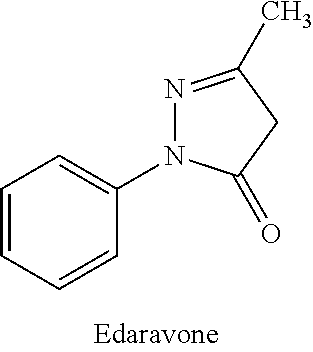
  • Brain protective agent edaravone was firstly recommended according to evidences of evidence-based medicine in latest Japanese stroke treatment guidelines, which injected new life for the treatment of stroke.
  • edaravone In the treatment of acute cerebral infarction, edaravone with cerebral protecting action was recommended.
  • Clinical studies showed that edaravone was effective for improving the prognosis of patients with acute cerebral infarction (occurred within 72 hours), especially more significant within 24 hours of the onset.
  • An objective of the present invention is to provide a compound 2-methyl-5-imino-benzo[d][1,3]oxazin[5-b]pyrazole or pharmaceutically acceptable salts thereof with medicinal value.
  • Another objective of the present invention is to provide a method for preparing the above compound.
  • the first aspect of the invention is to provide a compound of formula (II), 2-methyl-5-imino-benzo[d][1,3]oxazin[5-b]pyrazole
  • the pharmaceutically acceptable salts referred to herein are general salts produced by the above compound and pharmaceutically used general acid or base, with no other side effects and increased chemical properties (like water-solubility, etc.), in which the acid or base is often selected from hydrochloric acid, hydrobromic acid, sulfuric acid, nitric acid, phosphoric acid, succinic acid, maleic acid, fumaric acid, acetic acid, citric acid, tartaric acid, benzoic acid, naphthalene sulfonic acid, hydrogen sodium, sodium carbonate, sodium bicarbonate or potassium hydroxide, etc.
  • the second aspect of the invention is to provide a method for preparing compound of formula II: comprising steps of (1) reacting compound M with an acetyl acetate in the existence of a base to give compound N; and (2) making compound N ring-closed in hydrogen chloride gas.
  • the reaction equation of which is as follows:
  • the reaction solvent is an alcohol, such as ethanol or methano; the base is a sodium alkoxide, such as sodium methoxide, sodium ethoxide, etc; and the reaction temperature is from 40 to 80° C.
  • the solvent is dichloromethane or THF, and the reaction temperature is from 20 to 40° C.
  • the compound of the present invention or pharmaceutically acceptable salts thereof can be used in the pharmaceutical field, such as drugs for treatment or prevention of cardio-cerebrovascular diseases. It has be shown in pharmacodynamic experiments that the compound of the present invention, 2-methyl-5-imino-benzo[d][1,3]oxazin[5-b]pyrazole (hereinafter referred to as TR), can significantly improve the neurological defect symptoms of cerebral ischemia-reperfusion animals in a dose-dependent manner, decrease the cerebral infarction area, reduce the severity of brain injury, relieve the brain edema and inhibit the lipid peroxidation of injured brain tissue with onset dose of 3 mg/kg.
  • TR 2-methyl-5-imino-benzo[d][1,3]oxazin[5-b]pyrazole
  • FIG. 1 is DPPH standard curve.
  • FIG. 2 is the relation graph of anti-DPPH free radical ability with reaction time.
  • FIG. 3 is the impact column drawing of TR on neurological defect symptoms, wherein the results are illustrated as X ⁇ SD, compared with the sham operation group, *P ⁇ 0.05, and compared with the model group, # P ⁇ 0.05.
  • FIG. 4 is the impact of TR on cerebral infarction area, wherein the results are illustrated as X ⁇ SD, compared with the sham operation group, *P ⁇ 0.05, compared with the model group, # P ⁇ 0.05, and compared with the low dose group, & P ⁇ 0.05.
  • FIG. 5 is the impact column drawing of TR on cerebral infarction area, wherein the results are illustrated as X ⁇ SD, compared with the sham operation group, *P ⁇ 0.05, compared with the model group, # P ⁇ 0.05, and compared with the low dose group, & P ⁇ 0.05.
  • FIG. 6 is the impact column drawing of TR on cerebral infarction area, wherein the results are illustrated as X ⁇ SD, compared with the sham operation group, *P ⁇ 0.05, compared with the model group, # P ⁇ 0.05, and compared with the low dose group, & P ⁇ 0.05.
  • FIG. 7 is the impact column drawing of TR on brain water content, wherein the results are illustrated as X ⁇ SD, compared with the sham operation group, *P ⁇ 0.05, and compared with the model group, # P ⁇ 0.05.
  • FIG. 8 is the impact column drawing of TR on brain tissue SOD (U/mgprot) activity, wherein the results are illustrated as X ⁇ SD, compared with the sham operation group, *P ⁇ 0.05, and compared with the model group, # P ⁇ 0.05.
  • FIG. 9 is the impact column drawing of TR on brain tissue MDA (nmol/mgprot) activity, wherein the results are illustrated as X ⁇ SD, compared with the sham operation group, *P ⁇ 0.05, and compared with the model group, # P ⁇ 0.05.
  • Dry hydrogen chloride gas was pumped into 20 g (0.1 mol) of 1-(2-cyanophenyl)-3-methylpyrazol-5-one and 200 ml of anhydrous tetrahydrofuran with stirring till the saturation was reached. The mixture was stirred at room temperature overnight, and concentrated to dry under vacuum. Then 100 ml of anhydrous tetrahydrofuran and 10 g of anhydrous sodium acetate were added and stirred at room temperature for 1 h followed by filtration. The tetrahydrofuran was concentrated under vacuum. Resulting solution was recrystallized with ethyl acetate to give 13 g of off-white crystal.
  • 2,2-diphenyl-1-picrylhydrazyl (DPPH) free radical spectrophotometry is a simple method for screening antioxidants, the principle of which is using the characteristic absorption peak of DPPH solution at 517 nm.
  • free radical scavengers existed, single electron pairing between free radical scavenger and DPPH allowed the absorption of DPPH disappeared, and its decoloring degree and accepted electron number present as quantitative relation, and the antioxidant activity of samples can be evaluated through the amount of cleared DPPH, so the spectrophotometry can be used for quantitative analysis.
  • DPPH was accurately weighed and placed in a volumetric flask, and diluted to 100 ml with 95% ethanol.
  • the absorbance (A) of DPPH was measured at 517 nm.
  • DPPH was accurately weighed and placed in a 100 ml volumetric flask, and diluted to 100 ml with 95% ethanol to produce the DPPH solution.
  • Test Drug Solution the Test Drug was Accurately Weighed and Placed in a 100 ml volumetric flask, dissolved with 20 ml of 95% ethanol, adjusted to pH 7.5 and diluted to 100 ml with 95% ethanol.
  • E ⁇ ( mg ⁇ DPPH ⁇ / ⁇ mg ) DPPH ⁇ ⁇ concentration ⁇ ⁇ ( mg ⁇ / ⁇ 100 ⁇ ⁇ ml ) ⁇ 5 / 7 - ( absorption ⁇ ⁇ value ⁇ ⁇ A + 0.0285 ) / 0.219 ⁇ ( mg ⁇ / ⁇ 100 ⁇ ⁇ ml ) Test ⁇ ⁇ drug ⁇ ⁇ concentration ⁇ C ⁇ ( mg ⁇ / ⁇ 100 ⁇ ⁇ ml ) ⁇ 2 / 7 ⁇ ⁇
  • V ⁇ ( mmol ⁇ DPPH ⁇ / ⁇ mmol ) E ⁇ ( mgDPPH ⁇ / ⁇ mg ) 394.32 / test ⁇ ⁇ drug ⁇ ⁇ molecular ⁇ ⁇ weight
  • Compound 1 was 2-methyl-benzo[d][1,3]oxazin[5-b]pyrazole-5-one
  • Compound 2 was 2-methyl-5-imino-benzo[d][1,3]oxazin[5-b]pyrazole (TR)
  • Compound 3 was 1-(2-cyanophenyl)-3-methylpyrazol-5-one.
  • the relationship of anti-DPPH free radical ability V (mmolDPPH/mmol) with reaction time (min) was shown in FIG. 2 .
  • the results of anti-DPPH free radical test showed that the DPPH free radical scavenging ability in 30 min of Compound 3 was the largest, and one molecular of Compound 3 could scavenge 1.942 molecular of DPPH free radical.
  • One molecular of edaravone could scavenge 1.657 molecular of DPPH free radical, and the DPPH free radical scavenging ability of Compound 3 was slightly stronger than Edaravone.
  • the DPPH free radical scavenging ability of Compound 1 and Compound 2 was related with the reaction time.
  • Cerebral ischemia reperfusion model of middle cerebral artery occlusion was established in SD rats using the suture method of internal carotid artery. Test rats were administrated once 0.5 hours after ischemia reperfusion, then once every 2 hours, for totally three times. Neurological defect symptoms were observed 48 hours after cerebral ischemia. The animals were killed and specimens were taken to determine the cerebral infarction area and severity of brain injury. 2-methyl-5-imino-benzo[d][1,3]oxazin[5-b]pyrazole (hereinafter referred to as TR) was used as test substance, and nimodipine was used for reference.
  • TR 2-methyl-5-imino-benzo[d][1,3]oxazin[5-b]pyrazole
  • the severity scores of neurological defect symptoms were shown in Table 4 and FIG. 3 .
  • There was significant difference between the model group and the sham operation group (F5, 41 28.05, P ⁇ 0.001), which showed that cerebral ischemia-reperfusion can cause serious neurological defect symptoms.
  • the cerebral infarction area result of each group was shown in Table 5 and FIG. 4 .
  • the brain injury result of each group was shown in Table 6 and FIG. 5 .
  • the severity scores of neurological defect symptoms were shown in Table 1 and FIG. 1 .
  • the severity scores of neurological defect symptoms were shown in Table 1 and FIG. 1 .
  • the brain water content of each group was shown in Table 8 and FIG. 7 .
  • There was significant difference between the model group and the sham operation group (F5, 42 20.06, P ⁇ 0.001), which showed that cerebral ischemia-reperfusion can cause brain edema.
  • the brain tissue SOD activity and MDA level of each group was shown in Table 9 and FIGS. 8 and 9 .
  • TR can significantly improve the neurological defect symptoms of cerebral ischemia-reperfusion animals in a dose dependent manner, decreased the brain infarction area, reduced the brain damage, relieved the cerebral edema, inhibit the lipid peroxidation of injured brain tissue with onset dose of 3 mg/kg.

Landscapes

  • Health & Medical Sciences (AREA)
  • Chemical & Material Sciences (AREA)
  • Organic Chemistry (AREA)
  • Life Sciences & Earth Sciences (AREA)
  • Veterinary Medicine (AREA)
  • Public Health (AREA)
  • General Health & Medical Sciences (AREA)
  • Medicinal Chemistry (AREA)
  • Animal Behavior & Ethology (AREA)
  • Pharmacology & Pharmacy (AREA)
  • Engineering & Computer Science (AREA)
  • Bioinformatics & Cheminformatics (AREA)
  • Chemical Kinetics & Catalysis (AREA)
  • Nuclear Medicine, Radiotherapy & Molecular Imaging (AREA)
  • General Chemical & Material Sciences (AREA)
  • Epidemiology (AREA)
  • Cardiology (AREA)
  • Diabetes (AREA)
  • Heart & Thoracic Surgery (AREA)
  • Hematology (AREA)
  • Urology & Nephrology (AREA)
  • Vascular Medicine (AREA)
  • Biomedical Technology (AREA)
  • Neurology (AREA)
  • Neurosurgery (AREA)
  • Pharmaceuticals Containing Other Organic And Inorganic Compounds (AREA)
  • Nitrogen And Oxygen Or Sulfur-Condensed Heterocyclic Ring Systems (AREA)

Abstract

The present invention disclosed compound 2-methyl-5-imino-benzo[d][1,3]oxazin[5-b]pyrazole and preparation method and uses thereof. The compound 2-methyl-5-imino-benzo[d][1,3]oxazin[5-b]pyrazole of the present invention has the following structure of formula (II), wherein the compound or pharmaceutically acceptable salts thereof can be used for preparing the drugs for treatment or prevention of cardiovascular diseases.
Figure US07973036-20110705-C00001

Description

CROSS REFERENCE TO RELATED PATENT APPLICATION
The present application is the US national stage of PCT/CN2009/070905 filed on Mar. 20, 2009, which claims the priority of the Chinese patent application No. 200810022314.6 filed on Jul. 18, 2008, which application is incorporated herein by reference.
FIELD OF THE INVENTION
The present invention belongs to the field of pharmaceutical chemistry, which particularly relates to 2-methyl-5-imino-benzo[d][1,3]Oxazin[5-b]pyrazole compound and preparation method and uses thereof.
BACKGROUND OF THE INVENTION
Thrombosis is the pathological basis of cerebrovascular diseases with high disability rate and lethality rate, such as stroke, which is a disease process involving various factors, like blood vessels, blood, blood flow. Thrombosis is related to coagulation system, endothelial cell function and dysfunction of cell adhesion, etc. Antithrombotic drugs include anticoagulants, antiplatelet drugs and endothelial cell-targeted drugs. Commonly used clinical anti-platelet drugs include aspirin, ticlopidine and clopidogrel; platelet GP II b/11Ia receptor antagonists include monoclonal antibody like abciximab, synthetic peptide receptor antagonist like eptifibatide, non-peptide receptor antagonists like tirofiban and non-peptide mimetics like lanifiban.
After stroke attacked, the occlusive artery unblocked in a short time may restore the brain function, but continuous ischemia over a period of time will result in irreversible brain cell damage. The area around the irreversible injured ischemic center is available penumbra. Even the blood supply is restored in a certain time, part of brain cells still had delayed neuronal death, which will cause various related factors, such as the release of excitatory amino acids, nerve cells calcium influx and free radicals etc, especially production of free radicals is considered to be one of main factors causing brain dysfunction. In ischemic state, hyperthyroidism of arachidonic acid metabolism can lead to the increase of free radical production, and peroxidation of unsaturated fatty acids forming cell membrane phospholipids will cause cell membrane damage and increase the dysfunction of brain cells.
Cranial nerve protection is an important part of stroke therapy. Brain protective agent edaravone was firstly recommended according to evidences of evidence-based medicine in latest Japanese stroke treatment guidelines, which injected new life for the treatment of stroke. In the treatment of acute cerebral infarction, edaravone with cerebral protecting action was recommended. Clinical studies showed that edaravone was effective for improving the prognosis of patients with acute cerebral infarction (occurred within 72 hours), especially more significant within 24 hours of the onset.
Figure US07973036-20110705-C00002
SUMMARY OF THE INVENTION
An objective of the present invention is to provide a compound 2-methyl-5-imino-benzo[d][1,3]oxazin[5-b]pyrazole or pharmaceutically acceptable salts thereof with medicinal value.
Another objective of the present invention is to provide a method for preparing the above compound.
Further objective of the present invention is to provide the use of the compound or pharmaceutically acceptable salts thereof.
The objectives of the present invention can be achieved through the following measures:
The first aspect of the invention is to provide a compound of formula (II), 2-methyl-5-imino-benzo[d][1,3]oxazin[5-b]pyrazole
Figure US07973036-20110705-C00003

or pharmaceutically acceptable salts thereof.
The pharmaceutically acceptable salts referred to herein are general salts produced by the above compound and pharmaceutically used general acid or base, with no other side effects and increased chemical properties (like water-solubility, etc.), in which the acid or base is often selected from hydrochloric acid, hydrobromic acid, sulfuric acid, nitric acid, phosphoric acid, succinic acid, maleic acid, fumaric acid, acetic acid, citric acid, tartaric acid, benzoic acid, naphthalene sulfonic acid, hydrogen sodium, sodium carbonate, sodium bicarbonate or potassium hydroxide, etc.
The second aspect of the invention is to provide a method for preparing compound of formula II: comprising steps of (1) reacting compound M with an acetyl acetate in the existence of a base to give compound N; and (2) making compound N ring-closed in hydrogen chloride gas. The reaction equation of which is as follows:
Figure US07973036-20110705-C00004
In the first step reaction, the reaction solvent is an alcohol, such as ethanol or methano; the base is a sodium alkoxide, such as sodium methoxide, sodium ethoxide, etc; and the reaction temperature is from 40 to 80° C. In the second step reaction, the solvent is dichloromethane or THF, and the reaction temperature is from 20 to 40° C.
The compound of the present invention or pharmaceutically acceptable salts thereof can be used in the pharmaceutical field, such as drugs for treatment or prevention of cardio-cerebrovascular diseases. It has be shown in pharmacodynamic experiments that the compound of the present invention, 2-methyl-5-imino-benzo[d][1,3]oxazin[5-b]pyrazole (hereinafter referred to as TR), can significantly improve the neurological defect symptoms of cerebral ischemia-reperfusion animals in a dose-dependent manner, decrease the cerebral infarction area, reduce the severity of brain injury, relieve the brain edema and inhibit the lipid peroxidation of injured brain tissue with onset dose of 3 mg/kg.
BRIEF DESCRIPTION OF DRAWINGS
FIG. 1 is DPPH standard curve.
FIG. 2 is the relation graph of anti-DPPH free radical ability with reaction time.
FIG. 3 is the impact column drawing of TR on neurological defect symptoms, wherein the results are illustrated as X±SD, compared with the sham operation group, *P<0.05, and compared with the model group, #P<0.05.
FIG. 4 is the impact of TR on cerebral infarction area, wherein the results are illustrated as X±SD, compared with the sham operation group, *P<0.05, compared with the model group, #P<0.05, and compared with the low dose group, &P<0.05.
FIG. 5 is the impact column drawing of TR on cerebral infarction area, wherein the results are illustrated as X±SD, compared with the sham operation group, *P<0.05, compared with the model group, #P<0.05, and compared with the low dose group, &P<0.05.
FIG. 6 is the impact column drawing of TR on cerebral infarction area, wherein the results are illustrated as X±SD, compared with the sham operation group, *P<0.05, compared with the model group, #P<0.05, and compared with the low dose group, &P<0.05.
FIG. 7 is the impact column drawing of TR on brain water content, wherein the results are illustrated as X±SD, compared with the sham operation group, *P<0.05, and compared with the model group, #P<0.05.
FIG. 8 is the impact column drawing of TR on brain tissue SOD (U/mgprot) activity, wherein the results are illustrated as X±SD, compared with the sham operation group, *P<0.05, and compared with the model group, #P<0.05.
FIG. 9 is the impact column drawing of TR on brain tissue MDA (nmol/mgprot) activity, wherein the results are illustrated as X±SD, compared with the sham operation group, *P<0.05, and compared with the model group, #P<0.05.
DETAILED DESCRIPTION OF THE INVENTION Example I Preparation of 2-methyl-5-imino-benzo[d][1,3]oxazin[5-b]pyrazole (compound II) Preparation of 2-hydrazino benzonitrile hydrochloride
Figure US07973036-20110705-C00005
600 ml of concentrated hydrochloric acid, 500 ml of crushed ice and 59 g (0.5 mol) of 2-aminobenzonitrile were added into a 2000 ml three-neck flask and stirred until completely dissolved. The mixture was placed in ice salt bath till −7˜−3° C., and dropped with sodium nitrite solution (34.5 g (0.5 mol) sodium nitrate dissolved in 150 ml water). After dropping completed, the mixture was stirred for 10 min to give orange yellow clear solution for using.
350 g of stannous chloride and 1000 ml of concentrated hydrochloric acid were added into a 5000 ml three-neck flask and stirred until completely dissolved. The mixture was placed in ice salt bath till −5° C., and dropped with the above diazonium salt solution to obtain white precipitate. After dropping completed, the mixture was continuously stirred for 2 hours and filtered. The filter cake was washed with a large number of NaCl saturated solution, and then washed with cold 15% hydrochloric acid and dried to obtain 36 g of 2-hydrazino benzonitrile hydrochloride.
Preparation of 1-(2-cyanophenyl)-3-methylpyrazol-5-one
Figure US07973036-20110705-C00006
8.5 g (0.05 mol) of 2-hydrazino benzonitrile hydrochloride, 6 g (0.05 mol) of methyl acetoacetate and 100 ml of methanol were added into a 250 ml reaction flask, and then 50% methanol sodium solution (5.5 g (0.051 mol) sodium methoxide dissolved in 50 ml methanol) was added under stirring. After stirring for 10 min, the mixture was heated and refluxed for 6 h, and immediately filtered. The solid was washed with 20 ml of methanol. The methanol was recovered until the remained volume was 50 ml. 200 ml of ice water was poured with stirring to give the solid. The solid was filtered and washed with water to give 7 g of light yellow solid.
Preparation of 2-methyl-5-imino-benzo[d][1,3]oxazin[5-b]pyrazole (compound II)
Figure US07973036-20110705-C00007
Dry hydrogen chloride gas was pumped into 20 g (0.1 mol) of 1-(2-cyanophenyl)-3-methylpyrazol-5-one and 200 ml of anhydrous tetrahydrofuran with stirring till the saturation was reached. The mixture was stirred at room temperature overnight, and concentrated to dry under vacuum. Then 100 ml of anhydrous tetrahydrofuran and 10 g of anhydrous sodium acetate were added and stirred at room temperature for 1 h followed by filtration. The tetrahydrofuran was concentrated under vacuum. Resulting solution was recrystallized with ethyl acetate to give 13 g of off-white crystal.
M/Z [M+1]+, 200; [M+Na]+, 222.
1HNMR: δ13.2693 ppm (NH); 8.0219 ppm (1H, d); 7.611 ppm (1H, d); 7.459 ppm (1H, s); 7.0941 ppm (1H, s); 5.9555 ppm (1H, s); 2.467 ppm (3H, s).
13CNMR: δ154.5172 ppm; 154.2973 ppm; 142.589 ppm; 140.0084 ppm; 136.0494 ppm; 124.4878 ppm; 123.4394 ppm; 113.0434 ppm; 109.6637 ppm; 102.6622 ppm; 19.7732 ppm.
Anti-DPPH Free Radical Test
2,2-diphenyl-1-picrylhydrazyl (DPPH) free radical spectrophotometry is a simple method for screening antioxidants, the principle of which is using the characteristic absorption peak of DPPH solution at 517 nm. When free radical scavengers existed, single electron pairing between free radical scavenger and DPPH allowed the absorption of DPPH disappeared, and its decoloring degree and accepted electron number present as quantitative relation, and the antioxidant activity of samples can be evaluated through the amount of cleared DPPH, so the spectrophotometry can be used for quantitative analysis.
DPPH Standard Curve
DPPH was accurately weighed and placed in a volumetric flask, and diluted to 100 ml with 95% ethanol. The absorbance (A) of DPPH was measured at 517 nm.
TABLE 1
Absorption value of DPPH solution of different concentrations
DPPH concentration (mg/100 ml)
5.360 2.680 1.072 0.536 0.268
Absorption value (A) 1.160 0.538 0.198 0.093 0.046
DPPH standard curve was shown in FIG. 1, the linear equation of which was as follows: y=0.219x−0.0285; r=0.9994.
Preparation of DPPH Solution
DPPH was accurately weighed and placed in a 100 ml volumetric flask, and diluted to 100 ml with 95% ethanol to produce the DPPH solution.
Preparation of Test Drug Solution: the Test Drug was Accurately Weighed and Placed in a 100 ml volumetric flask, dissolved with 20 ml of 95% ethanol, adjusted to pH 7.5 and diluted to 100 ml with 95% ethanol.
Absorption Value Determination of Test Drug-DPPH Solution
5.0 ml of DPPH solution and 2.0 ml test drug solution were taken and placed in a 10 ml volumetric flask, fully shaken at room temperature for a certain time followed by determination of absorption value (A) at 517 nm.
Formula for calculating DPPH free radical scavenging ability of test drug, E (mgDPPH/mg):
E ( mg DPPH / mg ) = DPPH concentration ( mg / 100 ml ) × 5 / 7 - ( absorption value A + 0.0285 ) / 0.219 ( mg / 100 ml ) Test drug concentration C ( mg / 100 ml ) × 2 / 7
Formula for calculating DPPH free radical scavenging ability of test drug, V (mmolDPPH/mmol):
V ( mmol DPPH / mmol ) = E ( mgDPPH / mg ) 394.32 / test drug molecular weight
TABLE
Test results of scavenging DPPH free radical for 30 min
Concentration Absorption value of
of test drug reaction liquid
Samples C(mg/100 ml) (A) E(mgDPPH/mg) V(mmolDPPH/mmol)
DPPH 5.080 0.760
Edaravone 2.430 0.115 4.237 3.752 1.657
1.215 0.397 4.785
0.608 0.633 3.322
0.304 0.699 3.195
0.152 0.728 3.222
Compound 1 2.440 0.486 1.792 1.687 0.856
1.220 0.589 2.262
0.610 0.712 1.252
0.305 0.732 1.481
0.153 0.744 1.650
Compound 2 2.440 0.692 0.445 0.419 0.212
1.220 0.717 0.561
0.610 0.748 0.310
0.305 0.753 0.368
0.153 0.756 0.409
Compound 3 2.540 0.052 4.464 3.510 1.942
1.270 0.440 4.032
0.635 0.650 2.770
0.318 0.695 3.215
0.159 0.729 3.067
TABLE 3
Determined values of reaction liquid
absorption value at different times
(DPPH: 5.080 mg/100 ml)
Reaction time (min)
Sample (concentration) 30 60 90 120 150
Compound 0.712 0.701 0.678 0.654 0.641
1(0.61 mg/100 ml)
Compound 0.748 0.735 0.720 0.705 0.693
2(0.61 mg/100 ml)
Compound 0.650 0.648 0.646 0.647 0.645
3(0.64 mg/100 ml)
In Table 2 and 3, Compound 1 was 2-methyl-benzo[d][1,3]oxazin[5-b]pyrazole-5-one, Compound 2 was 2-methyl-5-imino-benzo[d][1,3]oxazin[5-b]pyrazole (TR), and Compound 3 was 1-(2-cyanophenyl)-3-methylpyrazol-5-one.
The relationship of anti-DPPH free radical ability V (mmolDPPH/mmol) with reaction time (min) was shown in FIG. 2. The results of anti-DPPH free radical test showed that the DPPH free radical scavenging ability in 30 min of Compound 3 was the largest, and one molecular of Compound 3 could scavenge 1.942 molecular of DPPH free radical. One molecular of edaravone could scavenge 1.657 molecular of DPPH free radical, and the DPPH free radical scavenging ability of Compound 3 was slightly stronger than Edaravone. The DPPH free radical scavenging ability of Compound 1 and Compound 2 was related with the reaction time. With the reaction time, Compound 1 and Compound 2 were gradually hydrolyzed into Compound 3, and the DPPH free radical scavenging ability was gradually increased. The DPPH free radical scavenging ability of Compound 1 was one-eighth of Compound 3, and the DPPH free radical scavenging ability of Compound 1 at 150 min was equivalent with Compound 3.
Pharmacodynamic Experiments
Cerebral ischemia reperfusion model of middle cerebral artery occlusion (MCAO) was established in SD rats using the suture method of internal carotid artery. Test rats were administrated once 0.5 hours after ischemia reperfusion, then once every 2 hours, for totally three times. Neurological defect symptoms were observed 48 hours after cerebral ischemia. The animals were killed and specimens were taken to determine the cerebral infarction area and severity of brain injury. 2-methyl-5-imino-benzo[d][1,3]oxazin[5-b]pyrazole (hereinafter referred to as TR) was used as test substance, and nimodipine was used for reference.
Influence of TR on Neurological Defect Symptoms
The severity scores of neurological defect symptoms were shown in Table 4 and FIG. 3. There was significant difference between the model group and the sham operation group (F5, 41=28.05, P<0.001), which showed that cerebral ischemia-reperfusion can cause serious neurological defect symptoms. Compared with the model group, the neurological defect symptoms were significantly reduced in the TR high dose group (F5, 41=28.05, P<0.001), the medium dose group (F5, 41=28.05, P<0.001), the low dose group (F5, 41=28.05, P=0.001), and the nimodipine group (F5, 41=28.05, P<0.001).
TABLE 4
Influence of TR on neurological defect symptoms
Scores of
neurological
Total Operation Dose defect
Group number failed Death n (mg/kg) symptoms
Model group 12 3 2 7 2.9 ± 0.53* 
Sham operation 7 0 0 7 0.0 ± 0.00  
group
Nimodipine 12 0 2 10 0.4 1.2 ± 0.41*#
group
TR6.0 mg/kg 11 2 1 8 6.0 1.0 ± 0.46*#
group
TR3.0 mg/kg 11 3 0 8 3.0 1.1 ± 0.44*#
group
TR1.5 mg/kg 12 2 3 7 1.5 1.6 ± 0.75* 
group
X ± SD, compared with Sham operation group,
*P < 0.05; and compared with model group,
#P < 0.05.
Influence of TR on Cerebral Infarction Area
The cerebral infarction area result of each group was shown in Table 5 and FIG. 4. There was significant difference between the model group and the sham operation group (F5, 41=23.34, P<0.001), which showed that cerebral ischemia-reperfusion can cause significant cerebral infarction. Compared with the model group, the cerebral infarction area was significantly reduced in the TR high dose group (F5, 41=23.34, P<0.001), the medium dose group (F5, 41=23.34, P<0.001), the low dose group (F5, 41=23.34, P=0.044), and the nimodipine group (F5, 41=23.34, P<0.001). There was significant difference between the TR high dose group and the TR low dose group (F5, 41=23.34, P=0.009).
TABLE 5
Influence of TR on cerebral infarction area
Cerebral
Total Operation Dose infarction area
Group number failed Death n (mg/kg) (%)
Model group 12 3 2 7 43.7 ± 11.29*
Sham 7 0 0 7 0.0 ± 0.00 
operation
group
Nimodipine 12 0 2 10 0.4  6.7 ± 6.30#&
group
TR6.0 mg/kg 11 2 1 8 6.0  6.7 ± 6.30#&
group
TR3.0 mg/kg 11 3 0 8 3.0  17.4 ± 10.05*#
group
TR1.5 mg/kg 12 2 3 7 1.5 26.5 ± 13.24*
group
X ± SD, compared with Sham operation group,
*P < 0.05; compared with model group,
#P < 0.05, and compared with the low dose group,
&P < 0.05.
Influence of TR on Brain Injury
The brain injury result of each group was shown in Table 6 and FIG. 5. There was significant difference between the model group and the sham operation group (F5, 41=20.52, P<0.001), which showed that cerebral ischemia-reperfusion can cause significant brain injury. Compared with the model group, the brain injury was significantly reduced in the TR high dose group (F5, 41=20.52, P<0.001), the medium dose group (F5, 41=20.52, P=0.001), and the nimodipine group (F5, 41=20.52, P<0.001). There was significant difference between the TR high dose group and the TR low dose group (F5, 41=20.52, P=0.004).
TABLE 6
Influence of TR on brain injury
Cerebral
Total Operation Dose infarction
Group number failed Death n (mg/kg) area (%)
Model group 12 3 2 7 51.1 ± 10.70* 
Sham 7 0 0 7 1.8 ± 1.57  
operation
group
Nimodipine 12 0 2 10 0.4 12.8 ± 12.09#&
group
TR6.0 mg/kg 11 2 1 8 6.0 8.1 ± 5.68#&
group
TR3.0 mg/kg 11 3 0 8 3.0 22.7 ± 12.10*#
group
TR1.5 mg/kg 12 2 3 7 1.5 33.6 ± 16.08* 
group
X ± SD, compared with Sham operation group,
*P < 0.05; compared with model group,
#P < 0.05, and compared with the low dose group,
&P < 0.05.
Influence of TR on Neurological Defect Symptoms
The severity scores of neurological defect symptoms were shown in Table 1 and FIG. 1. There was significant difference between the model group and the sham operation group (F5, 41=28.05, P<0.001), which showed that cerebral ischemia-reperfusion can cause serious neurological defect symptoms. Compared with the model group, the neurological defect symptoms were significantly relieved in the TR high dose group (F5, 41=28.05, P<0.001), the medium dose group (F5, 41=28.05, P<0.001), the low dose group (F5, 41=28.05, P=0.001), and the nimodipine group (F5, 41=28.05, P<0.001). The results illustrated that TR can improve the neurological defect symptoms of cerebral ischemia-reperfusion animals.
TABLE 7
Influence of TR on neurological defect symptoms
Scores of
neurological
Total Operation Dose defect
Group number failed Death n (mg/kg) symptoms
Model group 11 1 1 9 3.0 ± 0.00* 
Sham operation 9 0 0 9 0.0 ± 0.00 
group
Nimodipine 10 3 07 7 0.4 1.3 ± 0.86*#
group
TR6.0 mg/kg 11 1 1 9 6.0 1.0 ± 0.58*#
group
TR3.0 mg/kg 11 3 0 8 3.0 1.8 ± 0.70*#
group
TR1.5 mg/kg 10 3 0 7 1.5 1.9 ± 0.84*#
group
X ± SD, compared with Sham operation group,
*P < 0.05 and compared with model group,
#P < 0.05.
Influence of TR on Water Content in Brain
The brain water content of each group was shown in Table 8 and FIG. 7. There was significant difference between the model group and the sham operation group (F5, 42=20.06, P<0.001), which showed that cerebral ischemia-reperfusion can cause brain edema. Compared with the model group, the water content in brain was significantly reduced in the TR high dose group (F5, 42=20.06, P<0.001), the medium dose group (F5, 42=20.06, P=0.039), and the nimodipine group (F5, 42=20.06, P=0.003). No obvious difference was found in the low dose group and the model group (F5, 42=20.06, P=0.086).
TABLE 8
Influence of TR on water content in brain
Variation value
of water
Total Operation Dose content in
Group number failed Death n (mg/kg) brain (%)
Model group 11 1 1 9 3.4 ± 0.90* 
Sham 9 0 0 9 −0.1 ± 0.18  
operation
group
Nimodipine 10 3 7 7 0.4 1.6 ± 0.59*#
group
TR6.0 mg/kg 11 1 1 9 6.0 1.2 ± 0.55*#
group
TR3.0 mg/kg 11 3 0 8 3.0 2.0 ± 1.01*#
group
TR1.5 mg/kg 10 3 0 7 1.5 2.1 ± 1.08* 
group
X ± SD, compared with Sham operation group,
*P < 0.05 and compared with model group,
#P < 0.05.
Influence of TR on SOD Activity and MDA Level in Damaged Brain Tissue
The brain tissue SOD activity and MDA level of each group was shown in Table 9 and FIGS. 8 and 9. There was significant difference between the model group and the sham operation group (F5, 42=26.96, P<0.001), MDA content was significantly increased (F5, 42=26.96, P<0.001) and SOD activity was obviously reduced (F5, 42=17.13, P<0.001), which showed that cerebral ischemia-reperfusion can cause lipid peroxidation of injured brain tissue. Compared with the model group, the MDA content was significantly decreased in the TR high dose group (F5, 42=26.96, P<0.001). No obvious difference was found in the TR medium dose group (F5, 42=26.96, P=0.141), the low dose group (F5, 42=26.96, P=0.211), the nimodipine group (F5, 42=26.96, P=0.961) and the model group. Compared with the model group, the SOD activity was significantly increased in the TR high dose group (F5, 42=17.13, P=0.007). No obvious difference was found in the TR medium dose group (F5, 42=17.13, P=0.157), the low dose group (F5, 42=17.13, P=0.826), the nimodipine group (F5, 42=17.13, P=0.435) and the model group.
TABLE 9
Influence of TR on brain tissue SOD activity (U/mgprot) and MDA content
(nmol/mgprot)
Total Operation Dose SOD MDA
Group number failed Death n (mg/kg) (U/mgprot) (nmol/mgprot)
Model group 11 1 1 9  92.5 ± 18.3* 8.1 ± 0.91*
Sham operation 9 0 0 9 172.9 ± 26.4  2.9 ± 1.10 
group
Nimodipine group 10 3 07 7 0.4 114.8 ± 16.4* 7.6 ± 1.28*
TR6.0 mg/kg group 11 1 1 9 6.0  132.7 ± 21.0*#  5.0 ± 1.10*#
TR3.0 mg/kg group 11 3 0 8 3.0 121.6 ± 16.8* 6.5 ± 0.81*
TR1.5 mg/kg group 10 3 0 7 1.5 107.1 ± 15.5* 6.6 ± 1.30*
X ± SD, compared with Sham operation group,
*P < 0.05 and compared with model group,
#P < 0.05.
The reperfusion model results of SD rats with middle cerebral artery occlusion showed that TR can significantly improve the neurological defect symptoms of cerebral ischemia-reperfusion animals in a dose dependent manner, decreased the brain infarction area, reduced the brain damage, relieved the cerebral edema, inhibit the lipid peroxidation of injured brain tissue with onset dose of 3 mg/kg.

Claims (5)

1. A compound of formula (II), 2-methyl-5-imino-benzo[d][1,3]oxazin[5-b]pyrazole,
Figure US07973036-20110705-C00008
or a pharmaceutically acceptable salt thereof.
2. A method for preparing the compound of formula II of claim 1, comprising steps of (1) reacting compound M with an acetyl acetate in the existence of a base to give compound N; and (2) making compound N ring-closed in hydrogen chloride gas:
Figure US07973036-20110705-C00009
3. The method according to claim 2, wherein said step (1) being conducted in a solvent selected from ethanol or methanol at a temperature from 40 to 80° C., and said base being selected from sodium methoxide and sodium ethoxide.
4. The method according to claim 2, wherein said step (2) being conducted in a solvent selected from dichloromethane and THF at a temperature from 20 to 40° C.
5. A pharmaceutical composition comprising the compound or pharmaceutically acceptable salts thereof according to claim 1 in an amount of therapeutical effect and a pharmaceutically acceptable excipient.
US13/054,674 2008-07-18 2009-03-20 2-methyl-5-imino-benzo[D][1 ,3]oxazin[5-B]pyrazole compound, preparation and use thereof Expired - Fee Related US7973036B2 (en)

Applications Claiming Priority (4)

Application Number Priority Date Filing Date Title
CN200810022314 2008-07-18
CNA2008100223146A CN101318968A (en) 2008-07-18 2008-07-18 Benzoxazine-pyrazoles and opened loop compound
CN200810022314.6 2008-07-18
PCT/CN2009/070905 WO2010006521A1 (en) 2008-07-18 2009-03-20 2-methyl-5h-pyrazolo[1,5-a][3,1]benzoxazin-5-imine compound, the preparation and the use thereof

Publications (2)

Publication Number Publication Date
US20110118247A1 US20110118247A1 (en) 2011-05-19
US7973036B2 true US7973036B2 (en) 2011-07-05

Family

ID=40179265

Family Applications (1)

Application Number Title Priority Date Filing Date
US13/054,674 Expired - Fee Related US7973036B2 (en) 2008-07-18 2009-03-20 2-methyl-5-imino-benzo[D][1 ,3]oxazin[5-B]pyrazole compound, preparation and use thereof

Country Status (4)

Country Link
US (1) US7973036B2 (en)
JP (1) JP5345213B2 (en)
CN (2) CN101318968A (en)
WO (2) WO2010006485A1 (en)

Families Citing this family (9)

* Cited by examiner, † Cited by third party
Publication number Priority date Publication date Assignee Title
CN101318968A (en) 2008-07-18 2008-12-10 青岛黄海制药有限责任公司 Benzoxazine-pyrazoles and opened loop compound
CN101830831B (en) * 2010-05-25 2013-06-12 青岛黄海制药有限责任公司 Method for preparing ortho-diazanyl benzonitrile
CN101966146B (en) * 2010-09-15 2012-07-18 青岛黄海制药有限责任公司 Medicinal composition solution and preparation method and use thereof
US8522624B2 (en) 2011-03-02 2013-09-03 Cameron International Corporation System and method for pressure balancing a flow meter
CN108912142B (en) * 2018-08-08 2021-06-18 延边大学 Pyrrolobenzoxazinone compound and its injection and use in antithrombotic
CN111116608B (en) * 2020-01-10 2022-02-11 南京医科大学 A class of N-benzylaniline derivatives with free radical scavenging effect and their medicinal uses
CN115109073A (en) * 2021-03-19 2022-09-27 南京中瑞药业有限公司 Crystalline tylorravone
CN119768407A (en) * 2022-09-09 2025-04-04 南京中瑞药业有限公司 Protein phosphatase agonist and application thereof
CN117055658B (en) * 2023-10-11 2024-01-02 江苏徕德生物医药有限公司 Self-adaptive temperature control system and method for tiarelvone crystallization production process

Citations (2)

* Cited by examiner, † Cited by third party
Publication number Priority date Publication date Assignee Title
WO2010006521A1 (en) 2008-07-18 2010-01-21 青岛黄海制药有限责任公司 2-methyl-5h-pyrazolo[1,5-a][3,1]benzoxazin-5-imine compound, the preparation and the use thereof
US7745432B2 (en) * 2005-04-11 2010-06-29 Tibotec Pharmaceuticals Ltd. (1,10b-dihydro-2-(aminoalkyl-phenyl)-5H-pyrazolo[1,5 C][1,3]benzoxazin-5-yl)phenyl methanone derivatives as HIV viral replication inhibitors

Family Cites Families (3)

* Cited by examiner, † Cited by third party
Publication number Priority date Publication date Assignee Title
JP2004091441A (en) * 2002-09-04 2004-03-25 Mitsubishi Pharma Corp Oral administration preparation containing pyrazolone derivative
JP2004300153A (en) * 2003-03-20 2004-10-28 Kiyoshi Kurokawa Protein modification product formation inhibitor
WO2006129524A1 (en) * 2005-06-03 2006-12-07 Renascience Co., Ltd. Carbonyl compound remover

Patent Citations (2)

* Cited by examiner, † Cited by third party
Publication number Priority date Publication date Assignee Title
US7745432B2 (en) * 2005-04-11 2010-06-29 Tibotec Pharmaceuticals Ltd. (1,10b-dihydro-2-(aminoalkyl-phenyl)-5H-pyrazolo[1,5 C][1,3]benzoxazin-5-yl)phenyl methanone derivatives as HIV viral replication inhibitors
WO2010006521A1 (en) 2008-07-18 2010-01-21 青岛黄海制药有限责任公司 2-methyl-5h-pyrazolo[1,5-a][3,1]benzoxazin-5-imine compound, the preparation and the use thereof

Also Published As

Publication number Publication date
JP5345213B2 (en) 2013-11-20
WO2010006521A1 (en) 2010-01-21
CN101508696B (en) 2011-04-06
US20110118247A1 (en) 2011-05-19
CN101318968A (en) 2008-12-10
JP2011528323A (en) 2011-11-17
WO2010006485A1 (en) 2010-01-21
CN101508696A (en) 2009-08-19

Similar Documents

Publication Publication Date Title
US7973036B2 (en) 2-methyl-5-imino-benzo[D][1 ,3]oxazin[5-B]pyrazole compound, preparation and use thereof
US9623029B2 (en) 3-[4-(7H-pyrrolo[2,3-d]pyrimidin-4-yl)-1H-pyrazol-1-yl]octane- or heptane-nitrile as JAK inhibitors
KR101991326B1 (en) Opioid Receptor Ligands and Methods of Using and Making Same
KR20230145446A (en) IRAK4 degrader and its uses
EP3458448B1 (en) Fasn inhibitors for use in treating non-alcoholic steatohepatitis
IL319000A (en) Pyrazolopyrimidine compounds and medical use thereof
WO2021255086A1 (en) Small molecule modulators of il-17
WO2019218864A1 (en) ORGANIC AMINE ESTER DERIVATIVE DRUG OF 2-(α-HYDROXYPENTYL)BENZOIC ACID
JP7029400B2 (en) Cyclic compound
US20240033234A1 (en) Therapeutic compounds, formulations, and use thereof
US11845741B2 (en) Pilocarpine ionic liquids for treatment of glaucoma
AU2012297498A1 (en) Salt and polymorph of pyrazolopyrimidinone compound, and pharmaceutical composition containing the same, preparation method and use thereof
EP1994931A1 (en) Prophylactic or therapeutic agent for allergic ophthalmic disease or allergic nasal disease comprising tricyclic triazolobenzoazepine derivative
WO2024115713A1 (en) Brisc deubiquitinating enzyme inhibitors
WO2024249820A2 (en) Neuroplastigen modulators for the treatment of pain, itch and nerve injury
CN106279164A (en) 5 new type phosphodiesterase inhibitor and application thereof
EA050218B1 (en) 6-METHYLURACIL DERIVATIVES WITH ANTICHOLINESTERASE ACTIVITY AND THEIR APPLICATION
CN120192305A (en) A polycyclic compound containing a benzene ring, its pharmaceutical composition and its application
AU2015255289A1 (en) 3-[4-(7h-pyrrolo[2,3-d]pyrimidin-4-yl)-1h-pyrazol-1-yl]octane- or heptane-nitrile as jak inhibitors
HK1168773B (en) 3-[4-(7h-pyrrolo[2,3-d]pyrimidin-4-yl)-1h-pyrazol-1-yl]octane- or heptane-nitrile as jak inhibitors

Legal Events

Date Code Title Description
AS Assignment

Owner name: QINGDAO HUANGHAI PHARMACEUTICAL CO., LTD, CHINA

Free format text: ASSIGNMENT OF ASSIGNORS INTEREST;ASSIGNORS:SU, GUOQIANG;GAO, YICAI;SUN, GUIRONG;AND OTHERS;SIGNING DATES FROM 20110112 TO 20110113;REEL/FRAME:025654/0896

Owner name: NANJING ZHONGRUI MEDICINE CO., LTD., CHINA

Free format text: ASSIGNMENT OF ASSIGNORS INTEREST;ASSIGNORS:SU, GUOQIANG;GAO, YICAI;SUN, GUIRONG;AND OTHERS;SIGNING DATES FROM 20110112 TO 20110113;REEL/FRAME:025654/0896

STCF Information on status: patent grant

Free format text: PATENTED CASE

FPAY Fee payment

Year of fee payment: 4

FEPP Fee payment procedure

Free format text: MAINTENANCE FEE REMINDER MAILED (ORIGINAL EVENT CODE: REM.); ENTITY STATUS OF PATENT OWNER: SMALL ENTITY

LAPS Lapse for failure to pay maintenance fees

Free format text: PATENT EXPIRED FOR FAILURE TO PAY MAINTENANCE FEES (ORIGINAL EVENT CODE: EXP.); ENTITY STATUS OF PATENT OWNER: SMALL ENTITY

STCH Information on status: patent discontinuation

Free format text: PATENT EXPIRED DUE TO NONPAYMENT OF MAINTENANCE FEES UNDER 37 CFR 1.362

FP Lapsed due to failure to pay maintenance fee

Effective date: 20190705