US7798694B2 - Thermal layer, backlight unit and display device including the same - Google Patents
Thermal layer, backlight unit and display device including the same Download PDFInfo
- Publication number
- US7798694B2 US7798694B2 US11/507,531 US50753106A US7798694B2 US 7798694 B2 US7798694 B2 US 7798694B2 US 50753106 A US50753106 A US 50753106A US 7798694 B2 US7798694 B2 US 7798694B2
- Authority
- US
- United States
- Prior art keywords
- parts
- weight
- light
- reflector
- light source
- Prior art date
- Legal status (The legal status is an assumption and is not a legal conclusion. Google has not performed a legal analysis and makes no representation as to the accuracy of the status listed.)
- Expired - Fee Related, expires
Links
- 239000004020 conductor Substances 0.000 claims abstract description 43
- 239000011230 binding agent Substances 0.000 claims abstract description 34
- 239000003795 chemical substances by application Substances 0.000 claims abstract description 28
- 239000000203 mixture Substances 0.000 claims abstract description 23
- 239000000945 filler Substances 0.000 claims abstract description 16
- 239000004973 liquid crystal related substance Substances 0.000 claims description 23
- 150000008065 acid anhydrides Chemical class 0.000 claims description 7
- 239000002270 dispersing agent Substances 0.000 claims description 7
- 150000007519 polyprotic acids Polymers 0.000 claims description 6
- 239000002904 solvent Substances 0.000 claims description 6
- 239000000080 wetting agent Substances 0.000 claims description 6
- 239000000654 additive Substances 0.000 claims 2
- 230000000996 additive effect Effects 0.000 claims 2
- 239000010410 layer Substances 0.000 description 57
- 230000000052 comparative effect Effects 0.000 description 26
- OKTJSMMVPCPJKN-UHFFFAOYSA-N Carbon Chemical compound [C] OKTJSMMVPCPJKN-UHFFFAOYSA-N 0.000 description 12
- 239000000463 material Substances 0.000 description 12
- 238000012360 testing method Methods 0.000 description 12
- -1 polyethylene terephthalate Polymers 0.000 description 11
- 210000004027 cell Anatomy 0.000 description 7
- 239000003086 colorant Substances 0.000 description 7
- 239000012788 optical film Substances 0.000 description 7
- XEKOWRVHYACXOJ-UHFFFAOYSA-N Ethyl acetate Chemical compound CCOC(C)=O XEKOWRVHYACXOJ-UHFFFAOYSA-N 0.000 description 6
- ZMXDDKWLCZADIW-UHFFFAOYSA-N N,N-Dimethylformamide Chemical compound CN(C)C=O ZMXDDKWLCZADIW-UHFFFAOYSA-N 0.000 description 6
- YXFVVABEGXRONW-UHFFFAOYSA-N Toluene Chemical compound CC1=CC=CC=C1 YXFVVABEGXRONW-UHFFFAOYSA-N 0.000 description 6
- 239000011248 coating agent Substances 0.000 description 6
- 238000000576 coating method Methods 0.000 description 6
- 238000001816 cooling Methods 0.000 description 6
- 239000011347 resin Substances 0.000 description 6
- 229920005989 resin Polymers 0.000 description 6
- 238000009792 diffusion process Methods 0.000 description 5
- 229920000139 polyethylene terephthalate Polymers 0.000 description 5
- 239000005020 polyethylene terephthalate Substances 0.000 description 5
- 229920002635 polyurethane Polymers 0.000 description 5
- 239000004814 polyurethane Substances 0.000 description 5
- BQCADISMDOOEFD-UHFFFAOYSA-N Silver Chemical compound [Ag] BQCADISMDOOEFD-UHFFFAOYSA-N 0.000 description 4
- 239000002253 acid Substances 0.000 description 4
- 125000003178 carboxy group Chemical group [H]OC(*)=O 0.000 description 4
- 239000011247 coating layer Substances 0.000 description 4
- 239000010949 copper Substances 0.000 description 4
- 150000002009 diols Chemical class 0.000 description 4
- 229910002804 graphite Inorganic materials 0.000 description 4
- 239000010439 graphite Substances 0.000 description 4
- 238000000034 method Methods 0.000 description 4
- 229920003229 poly(methyl methacrylate) Polymers 0.000 description 4
- 239000004926 polymethyl methacrylate Substances 0.000 description 4
- 230000008569 process Effects 0.000 description 4
- 239000000758 substrate Substances 0.000 description 4
- ZWEHNKRNPOVVGH-UHFFFAOYSA-N 2-Butanone Chemical compound CCC(C)=O ZWEHNKRNPOVVGH-UHFFFAOYSA-N 0.000 description 3
- QTBSBXVTEAMEQO-UHFFFAOYSA-N Acetic acid Chemical compound CC(O)=O QTBSBXVTEAMEQO-UHFFFAOYSA-N 0.000 description 3
- CSCPPACGZOOCGX-UHFFFAOYSA-N Acetone Chemical compound CC(C)=O CSCPPACGZOOCGX-UHFFFAOYSA-N 0.000 description 3
- UHOVQNZJYSORNB-UHFFFAOYSA-N Benzene Chemical compound C1=CC=CC=C1 UHOVQNZJYSORNB-UHFFFAOYSA-N 0.000 description 3
- LFQSCWFLJHTTHZ-UHFFFAOYSA-N Ethanol Chemical compound CCO LFQSCWFLJHTTHZ-UHFFFAOYSA-N 0.000 description 3
- XAGFODPZIPBFFR-UHFFFAOYSA-N aluminium Chemical compound [Al] XAGFODPZIPBFFR-UHFFFAOYSA-N 0.000 description 3
- 150000008064 anhydrides Chemical class 0.000 description 3
- 238000003491 array Methods 0.000 description 3
- 210000002858 crystal cell Anatomy 0.000 description 3
- 230000007423 decrease Effects 0.000 description 3
- 239000003822 epoxy resin Substances 0.000 description 3
- 239000011521 glass Substances 0.000 description 3
- 239000012948 isocyanate Substances 0.000 description 3
- 125000000466 oxiranyl group Chemical group 0.000 description 3
- 239000002245 particle Substances 0.000 description 3
- 229920000647 polyepoxide Polymers 0.000 description 3
- 229920001225 polyester resin Polymers 0.000 description 3
- 239000004645 polyester resin Substances 0.000 description 3
- 230000005855 radiation Effects 0.000 description 3
- 230000004044 response Effects 0.000 description 3
- 229910052709 silver Inorganic materials 0.000 description 3
- 239000004332 silver Substances 0.000 description 3
- OUPZKGBUJRBPGC-UHFFFAOYSA-N 1,3,5-tris(oxiran-2-ylmethyl)-1,3,5-triazinane-2,4,6-trione Chemical compound O=C1N(CC2OC2)C(=O)N(CC2OC2)C(=O)N1CC1CO1 OUPZKGBUJRBPGC-UHFFFAOYSA-N 0.000 description 2
- JWAZRIHNYRIHIV-UHFFFAOYSA-N 2-naphthol Chemical compound C1=CC=CC2=CC(O)=CC=C21 JWAZRIHNYRIHIV-UHFFFAOYSA-N 0.000 description 2
- HGINCPLSRVDWNT-UHFFFAOYSA-N Acrolein Chemical compound C=CC=O HGINCPLSRVDWNT-UHFFFAOYSA-N 0.000 description 2
- WSFSSNUMVMOOMR-UHFFFAOYSA-N Formaldehyde Chemical compound O=C WSFSSNUMVMOOMR-UHFFFAOYSA-N 0.000 description 2
- NTIZESTWPVYFNL-UHFFFAOYSA-N Methyl isobutyl ketone Chemical compound CC(C)CC(C)=O NTIZESTWPVYFNL-UHFFFAOYSA-N 0.000 description 2
- UIHCLUNTQKBZGK-UHFFFAOYSA-N Methyl isobutyl ketone Natural products CCC(C)C(C)=O UIHCLUNTQKBZGK-UHFFFAOYSA-N 0.000 description 2
- LRHPLDYGYMQRHN-UHFFFAOYSA-N N-Butanol Chemical compound CCCCO LRHPLDYGYMQRHN-UHFFFAOYSA-N 0.000 description 2
- NBIIXXVUZAFLBC-UHFFFAOYSA-N Phosphoric acid Chemical compound OP(O)(O)=O NBIIXXVUZAFLBC-UHFFFAOYSA-N 0.000 description 2
- 239000002202 Polyethylene glycol Substances 0.000 description 2
- GWEVSGVZZGPLCZ-UHFFFAOYSA-N Titan oxide Chemical compound O=[Ti]=O GWEVSGVZZGPLCZ-UHFFFAOYSA-N 0.000 description 2
- RTAQQCXQSZGOHL-UHFFFAOYSA-N Titanium Chemical compound [Ti] RTAQQCXQSZGOHL-UHFFFAOYSA-N 0.000 description 2
- 239000006096 absorbing agent Substances 0.000 description 2
- WNLRTRBMVRJNCN-UHFFFAOYSA-N adipic acid Chemical compound OC(=O)CCCCC(O)=O WNLRTRBMVRJNCN-UHFFFAOYSA-N 0.000 description 2
- 229910052782 aluminium Inorganic materials 0.000 description 2
- WPYMKLBDIGXBTP-UHFFFAOYSA-N benzoic acid Chemical compound OC(=O)C1=CC=CC=C1 WPYMKLBDIGXBTP-UHFFFAOYSA-N 0.000 description 2
- 150000001732 carboxylic acid derivatives Chemical class 0.000 description 2
- JHIVVAPYMSGYDF-UHFFFAOYSA-N cyclohexanone Chemical compound O=C1CCCCC1 JHIVVAPYMSGYDF-UHFFFAOYSA-N 0.000 description 2
- 230000003247 decreasing effect Effects 0.000 description 2
- 238000001035 drying Methods 0.000 description 2
- 229940093499 ethyl acetate Drugs 0.000 description 2
- 235000019439 ethyl acetate Nutrition 0.000 description 2
- 239000010408 film Substances 0.000 description 2
- VKYKSIONXSXAKP-UHFFFAOYSA-N hexamethylenetetramine Chemical compound C1N(C2)CN3CN1CN2C3 VKYKSIONXSXAKP-UHFFFAOYSA-N 0.000 description 2
- 125000002887 hydroxy group Chemical group [H]O* 0.000 description 2
- 229940043265 methyl isobutyl ketone Drugs 0.000 description 2
- 229920001223 polyethylene glycol Polymers 0.000 description 2
- CVHZOJJKTDOEJC-UHFFFAOYSA-N saccharin Chemical compound C1=CC=C2C(=O)NS(=O)(=O)C2=C1 CVHZOJJKTDOEJC-UHFFFAOYSA-N 0.000 description 2
- 229940081974 saccharin Drugs 0.000 description 2
- 235000019204 saccharin Nutrition 0.000 description 2
- 239000000901 saccharin and its Na,K and Ca salt Substances 0.000 description 2
- 229920002803 thermoplastic polyurethane Polymers 0.000 description 2
- UMGDCJDMYOKAJW-UHFFFAOYSA-N thiourea Chemical compound NC(N)=S UMGDCJDMYOKAJW-UHFFFAOYSA-N 0.000 description 2
- 239000010936 titanium Substances 0.000 description 2
- 229910052719 titanium Inorganic materials 0.000 description 2
- JOYRKODLDBILNP-UHFFFAOYSA-N urethane group Chemical group NC(=O)OCC JOYRKODLDBILNP-UHFFFAOYSA-N 0.000 description 2
- WRIDQFICGBMAFQ-UHFFFAOYSA-N (E)-8-Octadecenoic acid Natural products CCCCCCCCCC=CCCCCCCC(O)=O WRIDQFICGBMAFQ-UHFFFAOYSA-N 0.000 description 1
- UOCLXMDMGBRAIB-UHFFFAOYSA-N 1,1,1-trichloroethane Chemical compound CC(Cl)(Cl)Cl UOCLXMDMGBRAIB-UHFFFAOYSA-N 0.000 description 1
- ARXJGSRGQADJSQ-UHFFFAOYSA-N 1-methoxypropan-2-ol Chemical compound COCC(C)O ARXJGSRGQADJSQ-UHFFFAOYSA-N 0.000 description 1
- LQJBNNIYVWPHFW-UHFFFAOYSA-N 20:1omega9c fatty acid Natural products CCCCCCCCCCC=CCCCCCCCC(O)=O LQJBNNIYVWPHFW-UHFFFAOYSA-N 0.000 description 1
- GOLORTLGFDVFDW-UHFFFAOYSA-N 3-(1h-benzimidazol-2-yl)-7-(diethylamino)chromen-2-one Chemical compound C1=CC=C2NC(C3=CC4=CC=C(C=C4OC3=O)N(CC)CC)=NC2=C1 GOLORTLGFDVFDW-UHFFFAOYSA-N 0.000 description 1
- BZOVBIIWPDQIHF-UHFFFAOYSA-N 3-hydroxy-2-methylbenzenesulfonic acid Chemical compound CC1=C(O)C=CC=C1S(O)(=O)=O BZOVBIIWPDQIHF-UHFFFAOYSA-N 0.000 description 1
- VZCCTDLWCKUBGD-UHFFFAOYSA-N 8-[[4-(dimethylamino)phenyl]diazenyl]-10-phenylphenazin-10-ium-2-amine;chloride Chemical compound [Cl-].C1=CC(N(C)C)=CC=C1N=NC1=CC=C(N=C2C(C=C(N)C=C2)=[N+]2C=3C=CC=CC=3)C2=C1 VZCCTDLWCKUBGD-UHFFFAOYSA-N 0.000 description 1
- QSBYPNXLFMSGKH-UHFFFAOYSA-N 9-Heptadecensaeure Natural products CCCCCCCC=CCCCCCCCC(O)=O QSBYPNXLFMSGKH-UHFFFAOYSA-N 0.000 description 1
- 239000005711 Benzoic acid Substances 0.000 description 1
- 229910001369 Brass Inorganic materials 0.000 description 1
- DKPFZGUDAPQIHT-UHFFFAOYSA-N Butyl acetate Natural products CCCCOC(C)=O DKPFZGUDAPQIHT-UHFFFAOYSA-N 0.000 description 1
- BVKZGUZCCUSVTD-UHFFFAOYSA-L Carbonate Chemical compound [O-]C([O-])=O BVKZGUZCCUSVTD-UHFFFAOYSA-L 0.000 description 1
- RYGMFSIKBFXOCR-UHFFFAOYSA-N Copper Chemical compound [Cu] RYGMFSIKBFXOCR-UHFFFAOYSA-N 0.000 description 1
- 239000004375 Dextrin Substances 0.000 description 1
- 229920001353 Dextrin Polymers 0.000 description 1
- BRLQWZUYTZBJKN-UHFFFAOYSA-N Epichlorohydrin Chemical compound ClCC1CO1 BRLQWZUYTZBJKN-UHFFFAOYSA-N 0.000 description 1
- VGGSQFUCUMXWEO-UHFFFAOYSA-N Ethene Chemical compound C=C VGGSQFUCUMXWEO-UHFFFAOYSA-N 0.000 description 1
- 239000005977 Ethylene Substances 0.000 description 1
- 108010010803 Gelatin Proteins 0.000 description 1
- WQZGKKKJIJFFOK-GASJEMHNSA-N Glucose Natural products OC[C@H]1OC(O)[C@H](O)[C@@H](O)[C@@H]1O WQZGKKKJIJFFOK-GASJEMHNSA-N 0.000 description 1
- 240000004670 Glycyrrhiza echinata Species 0.000 description 1
- 235000001453 Glycyrrhiza echinata Nutrition 0.000 description 1
- 235000006200 Glycyrrhiza glabra Nutrition 0.000 description 1
- 235000017382 Glycyrrhiza lepidota Nutrition 0.000 description 1
- DGAQECJNVWCQMB-PUAWFVPOSA-M Ilexoside XXIX Chemical compound C[C@@H]1CC[C@@]2(CC[C@@]3(C(=CC[C@H]4[C@]3(CC[C@@H]5[C@@]4(CC[C@@H](C5(C)C)OS(=O)(=O)[O-])C)C)[C@@H]2[C@]1(C)O)C)C(=O)O[C@H]6[C@@H]([C@H]([C@@H]([C@H](O6)CO)O)O)O.[Na+] DGAQECJNVWCQMB-PUAWFVPOSA-M 0.000 description 1
- CTQNGGLPUBDAKN-UHFFFAOYSA-N O-Xylene Chemical compound CC1=CC=CC=C1C CTQNGGLPUBDAKN-UHFFFAOYSA-N 0.000 description 1
- 239000005642 Oleic acid Substances 0.000 description 1
- ZQPPMHVWECSIRJ-UHFFFAOYSA-N Oleic acid Natural products CCCCCCCCC=CCCCCCCCC(O)=O ZQPPMHVWECSIRJ-UHFFFAOYSA-N 0.000 description 1
- 239000001888 Peptone Substances 0.000 description 1
- 108010080698 Peptones Proteins 0.000 description 1
- LGRFSURHDFAFJT-UHFFFAOYSA-N Phthalic anhydride Natural products C1=CC=C2C(=O)OC(=O)C2=C1 LGRFSURHDFAFJT-UHFFFAOYSA-N 0.000 description 1
- 229920002367 Polyisobutene Polymers 0.000 description 1
- 239000004721 Polyphenylene oxide Substances 0.000 description 1
- ZLMJMSJWJFRBEC-UHFFFAOYSA-N Potassium Chemical compound [K] ZLMJMSJWJFRBEC-UHFFFAOYSA-N 0.000 description 1
- 241001085205 Prenanthella exigua Species 0.000 description 1
- DNIAPMSPPWPWGF-UHFFFAOYSA-N Propylene glycol Chemical group CC(O)CO DNIAPMSPPWPWGF-UHFFFAOYSA-N 0.000 description 1
- 235000021355 Stearic acid Nutrition 0.000 description 1
- QAOWNCQODCNURD-UHFFFAOYSA-N Sulfuric acid Chemical compound OS(O)(=O)=O QAOWNCQODCNURD-UHFFFAOYSA-N 0.000 description 1
- GSEJCLTVZPLZKY-UHFFFAOYSA-N Triethanolamine Chemical compound OCCN(CCO)CCO GSEJCLTVZPLZKY-UHFFFAOYSA-N 0.000 description 1
- XSQUKJJJFZCRTK-UHFFFAOYSA-N Urea Natural products NC(N)=O XSQUKJJJFZCRTK-UHFFFAOYSA-N 0.000 description 1
- 229920006311 Urethane elastomer Polymers 0.000 description 1
- 238000010521 absorption reaction Methods 0.000 description 1
- 235000010489 acacia gum Nutrition 0.000 description 1
- 239000001785 acacia senegal l. willd gum Substances 0.000 description 1
- 235000011054 acetic acid Nutrition 0.000 description 1
- DPXJVFZANSGRMM-UHFFFAOYSA-N acetic acid;2,3,4,5,6-pentahydroxyhexanal;sodium Chemical compound [Na].CC(O)=O.OCC(O)C(O)C(O)C(O)C=O DPXJVFZANSGRMM-UHFFFAOYSA-N 0.000 description 1
- 150000000475 acetylene derivatives Chemical class 0.000 description 1
- 238000012644 addition polymerization Methods 0.000 description 1
- 239000000853 adhesive Substances 0.000 description 1
- 230000001070 adhesive effect Effects 0.000 description 1
- 239000001361 adipic acid Substances 0.000 description 1
- 235000011037 adipic acid Nutrition 0.000 description 1
- 125000001931 aliphatic group Chemical group 0.000 description 1
- 229920003232 aliphatic polyester Polymers 0.000 description 1
- RGCKGOZRHPZPFP-UHFFFAOYSA-N alizarin Chemical compound C1=CC=C2C(=O)C3=C(O)C(O)=CC=C3C(=O)C2=C1 RGCKGOZRHPZPFP-UHFFFAOYSA-N 0.000 description 1
- HSFWRNGVRCDJHI-UHFFFAOYSA-N alpha-acetylene Natural products C#C HSFWRNGVRCDJHI-UHFFFAOYSA-N 0.000 description 1
- PNEYBMLMFCGWSK-UHFFFAOYSA-N aluminium oxide Inorganic materials [O-2].[O-2].[O-2].[Al+3].[Al+3] PNEYBMLMFCGWSK-UHFFFAOYSA-N 0.000 description 1
- 229910000147 aluminium phosphate Inorganic materials 0.000 description 1
- 150000001408 amides Chemical class 0.000 description 1
- 150000003863 ammonium salts Chemical class 0.000 description 1
- 125000003118 aryl group Chemical group 0.000 description 1
- 235000010233 benzoic acid Nutrition 0.000 description 1
- HIFVAOIJYDXIJG-UHFFFAOYSA-N benzylbenzene;isocyanic acid Chemical compound N=C=O.N=C=O.C=1C=CC=CC=1CC1=CC=CC=C1 HIFVAOIJYDXIJG-UHFFFAOYSA-N 0.000 description 1
- 230000015572 biosynthetic process Effects 0.000 description 1
- 239000010951 brass Substances 0.000 description 1
- JHIWVOJDXOSYLW-UHFFFAOYSA-N butyl 2,2-difluorocyclopropane-1-carboxylate Chemical compound CCCCOC(=O)C1CC1(F)F JHIWVOJDXOSYLW-UHFFFAOYSA-N 0.000 description 1
- 229940043232 butyl acetate Drugs 0.000 description 1
- 229910052799 carbon Inorganic materials 0.000 description 1
- BVKZGUZCCUSVTD-UHFFFAOYSA-N carbonic acid Chemical compound OC(O)=O BVKZGUZCCUSVTD-UHFFFAOYSA-N 0.000 description 1
- 239000001768 carboxy methyl cellulose Substances 0.000 description 1
- 230000008859 change Effects 0.000 description 1
- 238000006243 chemical reaction Methods 0.000 description 1
- 150000001875 compounds Chemical class 0.000 description 1
- 238000010276 construction Methods 0.000 description 1
- 229910052593 corundum Inorganic materials 0.000 description 1
- 230000002542 deteriorative effect Effects 0.000 description 1
- 235000019425 dextrin Nutrition 0.000 description 1
- 150000002019 disulfides Chemical class 0.000 description 1
- 229920001971 elastomer Polymers 0.000 description 1
- 125000002534 ethynyl group Chemical group [H]C#C* 0.000 description 1
- 235000021323 fish oil Nutrition 0.000 description 1
- 239000008273 gelatin Substances 0.000 description 1
- 229920000159 gelatin Polymers 0.000 description 1
- 235000019322 gelatine Nutrition 0.000 description 1
- 235000011852 gelatine desserts Nutrition 0.000 description 1
- 239000008103 glucose Substances 0.000 description 1
- 235000001727 glucose Nutrition 0.000 description 1
- 239000003292 glue Substances 0.000 description 1
- VOZRXNHHFUQHIL-UHFFFAOYSA-N glycidyl methacrylate Chemical group CC(=C)C(=O)OCC1CO1 VOZRXNHHFUQHIL-UHFFFAOYSA-N 0.000 description 1
- 230000020169 heat generation Effects 0.000 description 1
- 239000004312 hexamethylene tetramine Substances 0.000 description 1
- 235000010299 hexamethylene tetramine Nutrition 0.000 description 1
- FUZZWVXGSFPDMH-UHFFFAOYSA-N hexanoic acid Chemical compound CCCCCC(O)=O FUZZWVXGSFPDMH-UHFFFAOYSA-N 0.000 description 1
- 150000002497 iodine compounds Chemical class 0.000 description 1
- IQPQWNKOIGAROB-UHFFFAOYSA-N isocyanate group Chemical group [N-]=C=O IQPQWNKOIGAROB-UHFFFAOYSA-N 0.000 description 1
- 150000002513 isocyanates Chemical class 0.000 description 1
- QXJSBBXBKPUZAA-UHFFFAOYSA-N isooleic acid Natural products CCCCCCCC=CCCCCCCCCC(O)=O QXJSBBXBKPUZAA-UHFFFAOYSA-N 0.000 description 1
- 229940010454 licorice Drugs 0.000 description 1
- FPYJFEHAWHCUMM-UHFFFAOYSA-N maleic anhydride Chemical compound O=C1OC(=O)C=C1 FPYJFEHAWHCUMM-UHFFFAOYSA-N 0.000 description 1
- 229910052751 metal Inorganic materials 0.000 description 1
- 239000002184 metal Substances 0.000 description 1
- 238000012986 modification Methods 0.000 description 1
- 230000004048 modification Effects 0.000 description 1
- QIQXTHQIDYTFRH-UHFFFAOYSA-N octadecanoic acid Chemical compound CCCCCCCCCCCCCCCCCC(O)=O QIQXTHQIDYTFRH-UHFFFAOYSA-N 0.000 description 1
- OQCDKBAXFALNLD-UHFFFAOYSA-N octadecanoic acid Natural products CCCCCCCC(C)CCCCCCCCC(O)=O OQCDKBAXFALNLD-UHFFFAOYSA-N 0.000 description 1
- 235000019198 oils Nutrition 0.000 description 1
- ZQPPMHVWECSIRJ-KTKRTIGZSA-N oleic acid Chemical compound CCCCCCCC\C=C/CCCCCCCC(O)=O ZQPPMHVWECSIRJ-KTKRTIGZSA-N 0.000 description 1
- 235000021313 oleic acid Nutrition 0.000 description 1
- 150000002924 oxiranes Chemical class 0.000 description 1
- 239000003973 paint Substances 0.000 description 1
- 235000019319 peptone Nutrition 0.000 description 1
- 235000011007 phosphoric acid Nutrition 0.000 description 1
- 150000003014 phosphoric acid esters Chemical class 0.000 description 1
- 239000000049 pigment Substances 0.000 description 1
- 229920003023 plastic Polymers 0.000 description 1
- 239000004033 plastic Substances 0.000 description 1
- 229920002401 polyacrylamide Polymers 0.000 description 1
- 229920000058 polyacrylate Polymers 0.000 description 1
- 229920000768 polyamine Polymers 0.000 description 1
- 229920000515 polycarbonate Polymers 0.000 description 1
- 239000004417 polycarbonate Substances 0.000 description 1
- 229920000570 polyether Polymers 0.000 description 1
- 229920000642 polymer Polymers 0.000 description 1
- 229920001451 polypropylene glycol Polymers 0.000 description 1
- 229910052700 potassium Inorganic materials 0.000 description 1
- 239000011591 potassium Substances 0.000 description 1
- 239000000843 powder Substances 0.000 description 1
- TVDSBUOJIPERQY-UHFFFAOYSA-N prop-2-yn-1-ol Chemical compound OCC#C TVDSBUOJIPERQY-UHFFFAOYSA-N 0.000 description 1
- 238000012552 review Methods 0.000 description 1
- 239000005060 rubber Substances 0.000 description 1
- 229910052708 sodium Inorganic materials 0.000 description 1
- 239000011734 sodium Substances 0.000 description 1
- 235000019812 sodium carboxymethyl cellulose Nutrition 0.000 description 1
- 229920001027 sodium carboxymethylcellulose Polymers 0.000 description 1
- AKHNMLFCWUSKQB-UHFFFAOYSA-L sodium thiosulfate Chemical compound [Na+].[Na+].[O-]S([O-])(=O)=S AKHNMLFCWUSKQB-UHFFFAOYSA-L 0.000 description 1
- 235000019345 sodium thiosulphate Nutrition 0.000 description 1
- UIIMBOGNXHQVGW-UHFFFAOYSA-N sodium;hydron;carbonate Chemical compound [Na+].OC(O)=O UIIMBOGNXHQVGW-UHFFFAOYSA-N 0.000 description 1
- 229910001220 stainless steel Inorganic materials 0.000 description 1
- 239000010935 stainless steel Substances 0.000 description 1
- 239000008117 stearic acid Substances 0.000 description 1
- 239000000126 substance Substances 0.000 description 1
- 150000003464 sulfur compounds Chemical class 0.000 description 1
- 239000001117 sulphuric acid Substances 0.000 description 1
- 235000011149 sulphuric acid Nutrition 0.000 description 1
- 239000004094 surface-active agent Substances 0.000 description 1
- 239000012209 synthetic fiber Substances 0.000 description 1
- 229920002994 synthetic fiber Polymers 0.000 description 1
- 229920001187 thermosetting polymer Polymers 0.000 description 1
- 229960004418 trolamine Drugs 0.000 description 1
- MWOOGOJBHIARFG-UHFFFAOYSA-N vanillin Chemical compound COC1=CC(C=O)=CC=C1O MWOOGOJBHIARFG-UHFFFAOYSA-N 0.000 description 1
- FGQOOHJZONJGDT-UHFFFAOYSA-N vanillin Natural products COC1=CC(O)=CC(C=O)=C1 FGQOOHJZONJGDT-UHFFFAOYSA-N 0.000 description 1
- 235000012141 vanillin Nutrition 0.000 description 1
- 230000000007 visual effect Effects 0.000 description 1
- XLYOFNOQVPJJNP-UHFFFAOYSA-N water Substances O XLYOFNOQVPJJNP-UHFFFAOYSA-N 0.000 description 1
- 238000009736 wetting Methods 0.000 description 1
- 239000008096 xylene Substances 0.000 description 1
- 229910001845 yogo sapphire Inorganic materials 0.000 description 1
Images




Classifications
-
- G—PHYSICS
- G02—OPTICS
- G02B—OPTICAL ELEMENTS, SYSTEMS OR APPARATUS
- G02B6/00—Light guides; Structural details of arrangements comprising light guides and other optical elements, e.g. couplings
- G02B6/0001—Light guides; Structural details of arrangements comprising light guides and other optical elements, e.g. couplings specially adapted for lighting devices or systems
- G02B6/0011—Light guides; Structural details of arrangements comprising light guides and other optical elements, e.g. couplings specially adapted for lighting devices or systems the light guides being planar or of plate-like form
- G02B6/0033—Means for improving the coupling-out of light from the light guide
- G02B6/005—Means for improving the coupling-out of light from the light guide provided by one optical element, or plurality thereof, placed on the light output side of the light guide
- G02B6/0055—Reflecting element, sheet or layer
-
- C—CHEMISTRY; METALLURGY
- C08—ORGANIC MACROMOLECULAR COMPOUNDS; THEIR PREPARATION OR CHEMICAL WORKING-UP; COMPOSITIONS BASED THEREON
- C08K—Use of inorganic or non-macromolecular organic substances as compounding ingredients
- C08K3/00—Use of inorganic substances as compounding ingredients
- C08K3/02—Elements
- C08K3/04—Carbon
-
- G—PHYSICS
- G02—OPTICS
- G02B—OPTICAL ELEMENTS, SYSTEMS OR APPARATUS
- G02B6/00—Light guides; Structural details of arrangements comprising light guides and other optical elements, e.g. couplings
- G02B6/0001—Light guides; Structural details of arrangements comprising light guides and other optical elements, e.g. couplings specially adapted for lighting devices or systems
- G02B6/0011—Light guides; Structural details of arrangements comprising light guides and other optical elements, e.g. couplings specially adapted for lighting devices or systems the light guides being planar or of plate-like form
- G02B6/0081—Mechanical or electrical aspects of the light guide and light source in the lighting device peculiar to the adaptation to planar light guides, e.g. concerning packaging
- G02B6/0085—Means for removing heat created by the light source from the package
-
- G—PHYSICS
- G02—OPTICS
- G02F—OPTICAL DEVICES OR ARRANGEMENTS FOR THE CONTROL OF LIGHT BY MODIFICATION OF THE OPTICAL PROPERTIES OF THE MEDIA OF THE ELEMENTS INVOLVED THEREIN; NON-LINEAR OPTICS; FREQUENCY-CHANGING OF LIGHT; OPTICAL LOGIC ELEMENTS; OPTICAL ANALOGUE/DIGITAL CONVERTERS
- G02F1/00—Devices or arrangements for the control of the intensity, colour, phase, polarisation or direction of light arriving from an independent light source, e.g. switching, gating or modulating; Non-linear optics
- G02F1/01—Devices or arrangements for the control of the intensity, colour, phase, polarisation or direction of light arriving from an independent light source, e.g. switching, gating or modulating; Non-linear optics for the control of the intensity, phase, polarisation or colour
- G02F1/13—Devices or arrangements for the control of the intensity, colour, phase, polarisation or direction of light arriving from an independent light source, e.g. switching, gating or modulating; Non-linear optics for the control of the intensity, phase, polarisation or colour based on liquid crystals, e.g. single liquid crystal display cells
- G02F1/133—Constructional arrangements; Operation of liquid crystal cells; Circuit arrangements
- G02F1/1333—Constructional arrangements; Manufacturing methods
- G02F1/1335—Structural association of cells with optical devices, e.g. polarisers or reflectors
- G02F1/1336—Illuminating devices
- G02F1/133615—Edge-illuminating devices, i.e. illuminating from the side
-
- G—PHYSICS
- G02—OPTICS
- G02F—OPTICAL DEVICES OR ARRANGEMENTS FOR THE CONTROL OF LIGHT BY MODIFICATION OF THE OPTICAL PROPERTIES OF THE MEDIA OF THE ELEMENTS INVOLVED THEREIN; NON-LINEAR OPTICS; FREQUENCY-CHANGING OF LIGHT; OPTICAL LOGIC ELEMENTS; OPTICAL ANALOGUE/DIGITAL CONVERTERS
- G02F1/00—Devices or arrangements for the control of the intensity, colour, phase, polarisation or direction of light arriving from an independent light source, e.g. switching, gating or modulating; Non-linear optics
- G02F1/01—Devices or arrangements for the control of the intensity, colour, phase, polarisation or direction of light arriving from an independent light source, e.g. switching, gating or modulating; Non-linear optics for the control of the intensity, phase, polarisation or colour
- G02F1/13—Devices or arrangements for the control of the intensity, colour, phase, polarisation or direction of light arriving from an independent light source, e.g. switching, gating or modulating; Non-linear optics for the control of the intensity, phase, polarisation or colour based on liquid crystals, e.g. single liquid crystal display cells
- G02F1/133—Constructional arrangements; Operation of liquid crystal cells; Circuit arrangements
- G02F1/1333—Constructional arrangements; Manufacturing methods
- G02F1/1335—Structural association of cells with optical devices, e.g. polarisers or reflectors
- G02F1/1336—Illuminating devices
- G02F1/133628—Illuminating devices with cooling means
Definitions
- the present invention relates to a thermal layer, a backlight unit and a display device including the same.
- the present invention relates to a thermal layer capable of improving the temperature character of a display device, as well as a backlight unit and a display device including the same.
- a Liquid Crystal Display device hereinafter, referred to as a “LCD device”) is an electrical device which changes electrical data generated from many apparatuses into visual data, and transfers them by using variation of liquid crystal transmissivity according to applied voltage.
- a LCD device is a device for displaying information, but does not have a light source in itself.
- a LCD device needs an extra device to uniformly brighten the entire screen by a light source installed at the rear surface of the LCD device.
- a Back Light Unit hereinafter, referred to as a “BLU” is used to provide light to the screen of the LCD device.
- a BLU is classified into either a direct-light type or an edge-light type according to the installed position of a light source.
- the light source In a direct-light type of BLU, the light source is disposed under the liquid crystal panel, and in an edge-light type of BLU, the light source is disposed on the side of light guiding plate.
- An edge-light type of BLU comprises a light source unit, a light guiding plate, a reflector, and an optical film.
- the light source unit comprises at least one light source generating light with a predetermined wavelength, and a light source reflector.
- the light generated from the light source is reflected by the light source reflector, which is made up of reflective material, and the reflector. Then, the reflected light is diffused uniformly through the entire light guiding plate.
- the optical film comprises a diffuser, a prism sheet, and a protection sheet.
- the light uniformly diffused in the light guiding plate passes through the diffuser.
- the diffuser diffuses or condenses the light having passed through the light guiding plate so that the brightness is uniform and the viewing angle is wider.
- the prism sheet refracts the light having passed through the diffuser, and converges the light incident in low angle to the direction substantially perpendicular to the prism sheet so that the brightness is increased within the range of the effective viewing angle.
- the protection sheet is disposed on the prism sheet.
- the protection sheet prevents the prism sheet from being damaged, and widens the narrowed viewing angle.
- a Cold Cathode Fluorescent Lamp (hereinafter, referred to as a “CCFL”) is used mainly as the light source of the BLU.
- a CCFL Cold Cathode Fluorescent Lamp
- the LCD device emits light by the BLU installed to a liquid crystal panel, the inside temperature of the LCD device increases, and the temperature of the CCFL increases up to 80° C. to 90° C.
- a direct-light type of BLU has a reflector under the light source.
- most heat generated from the light source is transferred to the reflector.
- the reflector is overheated by the transferred heat, and thus may be deformed.
- a Plasma Display Panel (hereinafter, referred to as a “PDP”) is a light-emitting display device having a structure wherein a plurality of discharge cells are disposed between a pair of glass substrates, and need not have an extra light source unlike a LCD device. But, it is a well-known fact that in a PDP, a discharge cell that is induced to emit light for displaying an image generates heat, whereby the temperature of the PDP increases. That is, the heat generated in the discharge cell is transferred to the glass substrate, but is not transferred in a direction parallel to the panel surface due to the characteristic of glass materials having low thermal conductivity.
- the temperature of the discharge cell activated for emitting a light is remarkably increased, but the temperature of the discharge cell not activated is not increased that much.
- the temperature of the panel is increased partly in an image-forming area. This temperature difference may induce heat declining of the discharge cell affected thereby.
- An object of the present invention is to provide a thermal layer, a backlight unit (BLU) and a display device including the same, which can effectively increase brightness by improving the temperature difference in a panel surface, in order to resolve the above-described problems occurred in display devices.
- BLU backlight unit
- Another object of the present invention is to provide a thermal layer which can increase brightness by preventing increase in the temperature of a light source, as well as a BLU and a display device including the same.
- Another object of the present invention is to provide a thermal layer which can absorb heat transferred to a reflector, as well as a BLU and a display device including the same.
- a composition for a thermal layer according to the present invention comprises a thermally conductive material, about 10 to 40 parts by weight of a binder based on 100 parts by weight of the thermally conductive material, about 5 to 30 parts by weight of a filler based on 100 parts by weight of the thermally conductive material and about 5 to 40 parts by weight of a curing agent based on 100 parts by weight of the binder.
- a backlight unit comprises a light source, a reflector for reflecting light emitted from the light source and a thermal layer disposed on one surface of the reflector.
- the thermal layer is formed by applying a mixture comprising a thermally conductive material, about 10 to 40 parts by weight of a binder based on 100 parts by weight of the thermally conductive material, about 5 to 30 parts by weight of a filler based on 100 parts by weight of the thermally conductive material and about 5 to 40 parts by weight of a curing agent based on 100 parts by weight of the binder.
- a display device comprises a liquid crystal panel displaying an image by using a light and a backlight unit providing the light to the backside of the liquid crystal display panel.
- the backlight unit comprises a light source, a reflector for reflecting light emitted from the light source and a thermal layer disposed on one surface of the reflector.
- the thermal layer is formed with a mixture comprising a thermally conductive material, about 10 to 40 parts by weight of a binder based on 100 parts by weight of the thermally conductive material, about 5 to 30 parts by weight of a filler based on 100 parts by weight of the thermally conductive material and about 5 to 40 parts by weight of a curing agent based on 100 parts by weight of the binder.
- the thermal layer, as well as the backlight unit and the display device including the same according to the present invention can increase brightness by improving the temperature difference of the panel surface.
- the thermal layer, as well as the backlight unit and the display device including the same according to the present invention can increase brightness by effectively absorbing heat transferred to the reflector and preventing increase in the temperature of the light source.
- FIG. 1 is a cross-sectional view showing a liquid crystal display device using a backlight unit (BLU) according to one preferred embodiment of the present invention
- FIG. 2 is a cross-sectional view schematically showing a direct-light type of BLU according to one preferred embodiment of the present invention
- FIG. 3 is a cross-sectional view schematically showing an edge-light type of BLU according to one preferred embodiment of the present invention
- FIG. 4 is a perspective view showing the relation of the reflector and the thermal layer according to one preferred embodiment of the present invention.
- FIG. 5 is a cross-sectional view showing reflectors used in a trial test.
- FIG. 6A and FIG. 6B are graphs showing the cooling rate of each reflector.
- FIG. 6A consists of graphs showing the temperature distribution of the reflectors
- FIG. 6B consists of graphs showing the temperature of the light sources.
- FIG. 7A and FIG. 7B are graphs showing the temperature diffusion rate of each reflector in the results of the trial tests.
- FIG. 8 is a graph showing the brightness character of the LCD device according to each reflector in the results of the trial tests.
- FIG. 1 is a cross-sectional view showing a liquid crystal display device using a backlight unit (BLU) according to one embodiment of the present invention.
- FIG. 2 is a cross-sectional view schematically showing a direct-light type of BLU according to one embodiment of the present invention.
- FIG. 3 is a cross-sectional view schematically showing an edge-light type of BLU according to one embodiment of the present invention.
- a liquid crystal display device (hereinafter, referred as to a “LCD device”) comprises a liquid crystal panel 200 (hereinafter, referred as to “LC panel,” 200 ) and a backlight unit 202 (hereinafter, referred as to “BLU,” 202 ).
- LC panel liquid crystal panel
- BLU backlight unit
- the LC panel 200 comprises a lower polarizing film 204 , an upper polarizing film 206 , a lower substrate 208 , an upper substrate 210 , color filters 212 , black matrices 214 , pixel electrodes 216 , common electrodes 218 , a liquid crystal layer 220 , and TFT arrays 222 .
- the color filters 212 include red, green and blue color filters, and generate an image according to red, green or blue in case light is applied thereto.
- the TFT arrays 222 switch the pixel electrodes 216 as switching elements.
- the common electrodes 218 and the pixel electrodes 216 array molecules of the liquid crystal layer 220 according to a certain voltage applied from the outside.
- the liquid crystal layer 220 comprises certain molecules, and the molecules are arrayed according to the voltage difference between the pixel electrodes 216 and the common electrodes 218 .
- the BLU 202 is disposed at a lower part of the LC panel 200 , and provides light, for example, white light, to the LC panel 200 .
- the BLU 202 is classified as either a direct-light type or a edge-light type according to the installed position of the light source.
- the direct-light type of BLU the light source is disposed under the LC panel
- the edge-light type of BLU the light source is disposed on the side of a light guiding plate.
- both the direct-light type of BLU and the edge-light type of BLU can be used.
- the direct-light type of BLU 202 a comprises a light source 302 , a transparent plate 310 , a reflector 320 , a thermal layer 322 and an optical film 330 .
- the light source 302 may be formed by a plurality of Cold Cathode Fluorescent Lamps (hereinafter, referred to as “CCFL”).
- CCFL Cold Cathode Fluorescent Lamps
- a light emitting diode hereinafter, referred to as “LED”
- EEFL electrode fluorescent lamp
- the LED can be formed by the colors red, green and blue, or by white light.
- uniformity of the light can be maintained as well as miniaturization of the BLU 202 a and the efficiency of the light can be improved.
- the EEFL has better brightness than the CCFL, and is better to operate in parallel because the electrode is external.
- the EEFL can reduce the cost for components and weight of the LCD module because it can reduce the number of inverters needed for a conventional light source.
- the reflector 320 disposed under the light source 302 reflects the light from the light source 302 towards the transparent plate 310 .
- the reflector 320 according to one embodiment of the present invention can be made by coating silver on a sheet comprising stainless steel, brass, aluminum, polyethylene terephthalate (PET), etc., and coating titanium to prevent change by heat absorption over a long period of time though heat is generated minutely.
- the reflector 320 according to another embodiment of the present invention can be made by dispersing bubbles on a sheet of plastic like PET.
- the light efficiency may be improved by installing the light source 302 in which a light source reflector (not shown) is disposed under the light source 302 , and making the light from the light source 302 incident to the diffuser.
- the light source reflector is made of highly reflective material, and may be made by coating silver to the surface.
- heat generated from the light source 302 during the light generation process is transferred to the reflector 320 disposed under the light source 302 .
- a thermal layer 322 is formed under the reflector 320 in order to spread the heat transferred to the reflector 320 .
- the thermal layer 322 will be described later.
- the transparent plate 310 transmits the light incident from the light source 302 .
- the transparent plate 310 may comprise polymethylmethacrylate (PMMA), polyethylene terephthalate (PET), polycarbonate (PC), etc. Desirably, the transparent plate 310 comprises polymethylmethacrylate (PMMA).
- a plurality of light sources 302 are disposed under the LC panel 200 , and so the bright lines generated from the light sources 302 appears as a certain pattern on the top of the LC panel 200 .
- the transparent plate 310 has a pattern plays a role of transmitting the light generated from the light sources 302 while removing the bright lines. But, in the BLU 202 a according to the present invention, a transparent plate 310 lacking such a pattern may also be used.
- the optical film 330 comprises a diffuser 332 , a prism sheet 334 , a protection sheet 336 and a polarizer 338 .
- the diffuser 332 diffuses or condenses incident light so that the brightness becomes uniform and the viewing angle becomes wider.
- the prism sheet 334 condenses a part of the light diffused or condensed by the diffuser into the direction of the protection sheet 336 , and reflects the other light into the direction of the diffuser 332 .
- the protection sheet 336 is disposed on the prism sheet 334 .
- the protection sheet 336 prevents the prism sheet 334 from being damaged, and widens the narrowed viewing angle.
- the polarizer 338 reflects a part of the light diffused by the protection sheet 336 in the direction of the light source 302 , and provides the remaining light to the LC panel 200 . That is, the polarizer 338 plays a role to pass certain polarized light, and reflects other light.
- the polarizer 338 passes a longitudinal wave (P wave) in the light diffused by the protection sheet 336 , and reflects a transverse wave (S wave) in the direction of the transparent plate 310 .
- P wave longitudinal wave
- S wave transverse wave
- the transverse wave reflected in the polarizer 338 is re-reflected by the reflector 320 .
- the re-reflected light includes the longitudinal wave and the transverse wave.
- the transverse wave reflected by the polarizer 338 is changed to light including the longitudinal wave and the transverse wave by being re-reflected in the reflector 320 .
- the changed light is incident to the polarizer 338 by passing the diffuser 332 , the prism sheet 334 and the protection sheet 336 .
- the longitudinal wave in the changed light passes the polarizer 338 , and the transverse wave is reflected in the direction of the diffuser 332 .
- the reflected light is re-reflected by the reflector 320 , and changed to light including the longitudinal wave and the transverse wave.
- protection sheet 336 and the polarizer 338 can be used individually or in combination, as described above.
- the BLU 202 a improves the efficiency of light by repeating the above process.
- the edge-light type of BLU 202 b comprises a light source unit 300 , a light guiding plate 340 , a reflector 320 , a thermal layer 322 , and an optical film 330 .
- the light source unit 300 includes one and more light sources 302 and a light source reflector 304 .
- the light source 302 generates light having a certain wavelength.
- the light source 302 may be the CCFL, the LED or the EEFL, as described for the direct-light type of BLU 202 a above.
- the light source reflector 304 reflects the light from the light source 302 to the light guiding plate 340 and increases the amount of light incident to the light guiding plate 340 .
- the light generated from the light source 302 is reflected by the light source reflector 304 and the reflector 320 . Then, the reflected light is diffused uniformly through the entire light guiding plate 340 .
- the reflector 320 disposed under the light source unit 300 , reflects the light from the light source 302 again to the light guiding plate 340 .
- the reflector 320 can be made by coating silver on a base material comprising a material such as aluminum, etc. to increase the reflection rate, and coating titanium to prevent deformation at the time of heat generation.
- the heat generated from the light source 302 during the light generation process is transferred to the reflector 320 disposed under the light source 302 .
- a thermal layer 322 is formed under the reflector 320 in order to spread the heat transferred to the reflector 320 . Also, the reflector and the thermal layer 322 substantially cover the light source unit 300 .
- the thermal layer 322 will be described below.
- the optical film 330 comprises a diffuser 332 , a prism sheet 334 , a protection sheet 336 and a polarizer 338 .
- the light diffused uniformly in the light guiding plate 340 passes the diffuser 332 .
- the diffuser 332 diffuses or condenses the light passing the light guiding plate 340 so that the brightness becomes uniform and the viewing angle becomes wider.
- the construction and characteristics of the prism sheet 334 , the protection sheet 336 , and the polarizer 338 may be the same as described above for the direct-light type of the BLU 202 a
- the BLU 202 provides a plane light of white light to the LC panel 200 .
- the TFT arrays 222 switch the pixel electrodes 216 .
- the intensity of radiation is controlled, and such controlled plane light is provided to the color filters 212 .
- the color filters 212 embody an image with certain gradation.
- the red, green and blue color filter form one pixel, and the pixel embodies an image by combination of light passing the red, green and blue color filters.
- thermal layer 322 formed on the BLU 202 according to the present invention will be described.
- FIG. 4 is a perspective view showing relation between the reflector and the thermal layer.
- the thermal layer 322 is formed on the bottom surface of the reflector 320 to radiate heat transferred to the reflector 320 .
- the thermal layer 322 is formed by applying a mixture forming the thermal layer 322 onto the bottom surface of the reflector 320 and drying it.
- the thermal layer 322 can effectively absorb the heat transferred to the reflector 320 since the thermal conductivity of the thermal layer 322 is superior. Also, the thermal layer 322 can prevent excessive increasing in the temperature of the light source 302 since the thermal layer 322 effectively absorbs the heat generated from the light source 302 .
- the light source 302 maintains a temperature that can provide the best efficiency even though the LCD device may be driven for a long time.
- the temperature of the surface of the LC panel 200 is partly increased in a cell area emitting light of high brightness since such partial temperature difference causes differences in the response velocity of the liquid crystals.
- the difference in response velocity becomes a cause in decrease of the brightness of the LCD device.
- the thermal layer 322 formed on the bottom surface of the reflector 320 efficiently absorbs the heat generated in the LC panel 200 since the temperature of the LC panel 200 is uniform.
- the thermal layer 322 can prevent decrease in the brightness of the LCD device.
- the thermal layer 322 is manufactured by using a thermally conductive material.
- This material is preferably selected so as to have superior thermal conductivity, thus allowing the thermal layer 322 to absorb the heat transferred to the reflector 320 and radiate it to the outside the LCD device.
- the thermally conductive material may be a metal powder, such as aluminum powder, copper powder, silver powder or mixtures thereof
- the thermally conductive material is a graphite powder. But, a thermal layer 322 manufactured by using only graphite powder may be easily broken due to the physical characteristics of graphite.
- a mixture forming the thermal layer 322 is a mixture comprising a thermally conductive material, such as a graphite powder, as well as a binder, a curing agent and a filler. Also, the mixture can further comprise a dispersing agent and a solvent.
- the mixture can further comprise a leveling agent, a wetting agent, a polybasic acid and an acid anhydride.
- the present composition comprises a thermally conductive material, about 10 to 40 parts by weight of a binder based on 100 parts by weight of the thermally conductive material, about 5 to 30 parts by weight of a filler based on 100 parts by weight of the thermally conductive material, and about 5 to 40 parts by weight of a curing agent based on 100 parts by weight of the binder.
- the mixture comprises about 100 parts by weight of a thermally conductive material, about 10 to 40 parts by weight of a binder based on 100 parts by weight of the thermally conductive material, about 5 to 30 parts by weight of a filler based on 100 parts by weight of the thermally conductive material, about 0.1 to 10 parts by weight of a solvent based on 100 parts by weight of the thermally conductive material, about 0.1 to 10 parts by weight of a dispersing agent based on 100 parts by weight of the thermally conductive material, and about 5 to 40 parts by weight of a curing agent based on 100 parts by weight of the binder.
- the binder is preferably a material having a superior thermal conductivity and thermal resistance, such as polyester resin, urethane resin, epoxy resin, acryl resin, etc.
- the binder may be present in an amount of about 10 to 40 parts by weight based on 100 parts by weight of the thermally conductive material, preferably about 20 to 30 parts by weight based upon 100 parts by weight of the thermally conductive material.
- the binder may be at least one selected from the group consisting of polyester resin having carboxyl end-group, polyester resin having hydroxyl end-group, epoxy resin having oxirane functional group, acryl resin having carboxyl end-group, acryl resin having hydroxyl end-group, acryl resin having glycidyl methacrylate (GMA) end-group and urethane resin.
- the binder functions to integrate the thermally conductive material particles, such as the graphite powder particles. Therefore, due to the binder, the bonding of thermally conductive material particles is not broken even though external force is exerted on the thermal layer. Consequently, the thermal layer is not broken easily.
- the physical and chemical properties of polyurethane in the material used as the binder are as follows.
- Polyurethane is rubber-state elastic body of polymer compounds having urethane bond —OCONH— within the molecule. Recently, the use of polyurethane has been extended to various fields such as urethane rubbers, synthetic fibers, adhesives, paints, urethane forms, automobile bumpers, etc.
- polyurethane is prepared by addition polymerization of a diol (e.g. 1,4-buthandiol, etc.) and a di-isocyanate (diphenylmethane di-isocyanate, etc.).
- a diol e.g. 1,4-buthandiol, etc.
- a di-isocyanate di-isocyanate
- a polyether diol such as polyethyleneglycol and polypropyleneglycol
- an aliphatic polyester of a terminal diol are used as diols.
- polyurethane is usually used in a thermosetting form by adding tri-isocyanate.
- the curing agent functions to allow easy drying and curing of the mixture when applied to the reflector 320 .
- the curing agent may be at least one selected from the group consisting of epoxy resin curing agent having oxirane group, TGIC (triglycidyl isocyanurate) curing agent having oxirane group, curing agent having isocyanate group, curing agent having blocked isocyanate, curing agent having carboxyl end-group and aliphatic or aromatic curing agent including at least one of epoxide and anhydride reaction group.
- the curing agent may be present in an amount of about 5 to 40 parts by weight based on 100 parts by weight of the binder, preferably about 8-12 parts by weight based on 100 parts by weight of the binder.
- the filler is a material helping thermal diffusion, and may be at least one selected from the group consisting of Al 2 O 3 , Al, BN and Cu coated with Ag.
- the filler may be present in an amount of about 5 to 30 parts by weight based on 100 parts by weight of the thermally conductive material, preferably about 10 to 20 parts by weight based on 100 parts by weight of the thermally conductive material.
- Cu is easily oxidized when the mixture is prepared. In the case Cu is oxidized, because the performance of the mixture may be lowered, it is desirable that Cu is used by coating with Ag. Desirably, BN is used as the filler.
- the dispersing agent is at least one selected from the group consisting of a polyamine amide based material, phosphoric acid ester based material, polyisobutylene, oleic acid, stearic acid, fish oil, ammonium salt of a polycarboxylic acid, sodium carboxymethyl cellulose and mixtures thereof.
- the dispersing agent may be present in an amount of about 0.1 to 10 parts by weight based on 100 parts by weight of the thermally conductive material, preferably about 0.1 to 1 parts by weight based on 100 parts by weight of the thermally conductive material.
- the solvent is one or more selected from the group consisting of methylethylketone, ethanol, xylene, toluene, acetone, trichloroethane, butanol, methylisobutylketone (MIBK), ethylacetate (EA), butylacetate, cyclohexanone, water, propylene glycol mono methyl ether, and mixtures thereof.
- the solvent may be present in an amount of about 0.1 to 10 parts by weight based on 100 parts by weight of the thermally conductive material.
- a polyacrylate based material may be used as the leveling agent.
- the leveling agent may be used in an amount of about 0 to 20 parts by weight based on 100 parts by weight of the binder.
- the wetting agent is designed to accelerate the wetting function and may be used as a surfactant.
- exemplary, but non-limiting wetting agents may be at least one selected from the group consisting of benzene, toluene, dimethylformamide (DMF), butynediol, butendiol, propargyl alcohol, formalin, coumarin, thiourea, carbon acid, acrolein, acetylene derivative, ethylene, saccharin, allyl sulfonate, tri-ethanol amine, hexamethylenetetramine, epichlorohydrin, vanillin, licorice, glue, gelatin(e), glucose, dextrin, arabic gum, ⁇ -naphthol, polyacrylamide, iodine compound, polyethylene glycol, cresol sulfonic acid, amine aldehyde group, sodium thiosulfate, carbonate, acetylene acid soda, potassium, turkey red oil, pe
- the polybasic acid may any known polybasic acid, such as be phthalic anhydride, maleic anhydride, adipic acid.
- the polybasic acid may be used in an amount of about 0 to 20 parts by weight based on 100 parts by weight of the binder.
- the acid anhydride is (RCO) 2 O.
- Exemplary are anhydride dehydrated and condensed one type of carboxylic acid, mixed acid anhydride condensed two type of carboxylic acid, and ring shaped anhydride dehydrated two carboxyl groups from dibasic acid.
- the acid anhydride may be at least one selected from carbonic acid, sulphuric acid, phosphoric acid, acetic acid, and benzoic acid.
- the acid anhydride may be used in an amount of about 0 to 20 parts by weight based on 100 parts by weight of the binder.
- the thermal layer 322 formed from the above mixture has good thermal conductivity as well as good thermal stability and good mechanical properties (ductility and tensile strength). Thus, it can efficiently absorb the heat of the reflector 320 and radiated the heat away from the device.
- the thermal layer 322 can be used for a plasma display panel (PDP) and an organic electroluminescent device (OELD) as well as the LCD device.
- PDP plasma display panel
- OELD organic electroluminescent device
- FIG. 5 is a cross-sectional view showing the reflectors used in the trial tests.
- Example 1 includes a thermal layer having a thickness of 142 ⁇ m under a reflector.
- the reflector is UX-150 made by DUPONT Inc., having a thickness of 150 ⁇ m.
- Example 2 includes a thermal layer having a thickness of 50 ⁇ m formed by compressing the thermal layer with a roller after forming under the reflector.
- the reflector is UX-150 made by DUPONT Inc., having a thickness of 150 ⁇ m.
- Example 1 and Example 2 are not formed with a back coating layer.
- the mixture of the thermal layer using in Example 1 and Example 2 comprises about 100 parts by weight of a graphite powder, about 25 parts by weight of a binder based on 100 parts by weight of the graphite powder, about 15 parts by weight of a filler and about 0.5 parts by weight of a dispersing agent based on 100 parts by weight of the graphite powder, and about 10 parts by weight of a curing agent based on 100 parts by weight of the binder.
- acryl resin is used as the binder
- Al is used as the filler
- GSC-041 made by Nipoly is used as the curing agent.
- Comparative example 1 is formed with a back coating layer with a thickness of 30 ⁇ m under a reflector.
- the reflector in Comparative example 1 is RP-10, made by SKC and having a thickness of 188 ⁇ m.
- the back coating layer of Comparative example 1 includes a pigment (e.g., TiO 2 ) acryl resin and curing agent, and is used to prevent exposure of the frame of the BLU to the outside.
- a pigment e.g., TiO 2
- Comparative example 2 attaches a graphite sheet having a thickness of 100 ⁇ m under a reflector.
- the reflector is UX-150 made by DUPONT Inc., and has a thickness of 150 ⁇ m. Comparative example 2 is not formed with a back coating layer.
- the reflectors of Example 1, Example 2, Comparative example 1, Comparative example 2 is built into the BLU, and then the LCD device is driven for a predetermined time.
- the LCD devices built with each reflector is evaluated with respect to the brightness character, the cooling rate of the temperature of the light source in the BLU, the cooling efficiency of the reflector and the temperature diffusing efficiency.
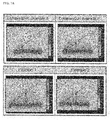
- FIG. 6A and FIG. 6B are graphs showing the cooling rate of each reflector
- FIG. 6A is a graph showing the temperature distribution of the reflectors
- FIG. 6B is a graph showing the temperatures of the light sources.
- FIG. 6A is a graph showing the temperature distribution of the light source and the reflector viewed from the top of the BLU, with the light source disposed in the lower end of the horizontal axis.
- the bar graph at the right side of each vertical axis shows the temperature according to each of the colors distributed the BLU. In the bar graph, higher temperatures are designated with red colors, and lower temperatures are designated with blue colors.
- Comparative example 1 shows bright red around the light source, and the reflector, which is the further from the light source, shows more bright blue. But, Example 1 and Example 2 show light red or yellow around the light source, and the reflector shows light blue.
- Example 1 and Example 2 exhibit better diffusing of heat generated from the light source to the reflector, and better cooling of the light source.
- the temperature of the light source in Comparative example 1 is 40.3° C.
- the temperature of the light source in Comparative example 2 is 35.9° C.
- the temperature of the light source in both Example 1 and Example 2 is 34.7° C.
- Example 1 and Example 2 Comparing the temperature of each of the light sources, the temperature in Example 1 and Example 2 is lower than that in Comparative example 1 and Comparative example 2. That is, Example 1 and Example 2 have a good light source efficiency.
- Comparative example 2 having the attached graphite sheet has better heat radiation than Comparative example 1, not having the heat absorber. But, Example 1 and Example 2, formed with the thermal layer, both have better heat radiation than the others.
- Example 1 and Example 2 Due to the thermal layer formed under the reflector of Example 1 and Example 2, these examples have excellent performance in absorbing the heat transferred to the reflector, and radiating heat to the outside of the LCD device.
- FIG. 7A and FIG. 7B are graphs showing the temperature diffusion rate of each reflector in the results of the trial tests.
- FIG. 7A and FIG. 7B are graphs showing the temperature distribution of the reflector according to the distance from the light source.
- FIG. 7A consists of graphs showing the temperature distribution of the light source and the reflector viewed from the top of the BLU, with the light source disposed in the lower end of the horizontal axis.
- the bar graphs on the right side of the vertical axis shows the temperature according to each of the colors distributed the BLU.
- the higher temperatures are designated with blue colors
- the lower temperatures are designated with yellow colors.
- Example 1 and Example 2 exhibit smaller temperature differences according to the distance from the light source compared to Comparative example 1 and Comparative example 2.
- the thermal layer formed under the reflector efficiently absorbs the heat generated from the LC panel, and transfers the heat generated from one area of the LC panel to surrounding areas so that the temperature of the LC panel is uniform.
- FIG. 8 is a graph showing the brightness character of the LCD device according to each of the reflectors in the results of the trial tests.
- the brightness of the Comparative example 2 is better than that of Comparative example 1, and the brightness of Example 1 and Example 2 are better than that of Comparative example 2.
- the brightness of the LCD device is improved.
- Example 1 and Example 2 formed with the thermal layer 322 under the reflector 320 , show good characteristics of cooling, thermal diffusion and brightness.
Landscapes
- Physics & Mathematics (AREA)
- Chemical & Material Sciences (AREA)
- Optics & Photonics (AREA)
- General Physics & Mathematics (AREA)
- Nonlinear Science (AREA)
- Polymers & Plastics (AREA)
- Organic Chemistry (AREA)
- Health & Medical Sciences (AREA)
- Medicinal Chemistry (AREA)
- Mathematical Physics (AREA)
- Crystallography & Structural Chemistry (AREA)
- Chemical Kinetics & Catalysis (AREA)
- Planar Illumination Modules (AREA)
- Liquid Crystal (AREA)
- Arrangement Of Elements, Cooling, Sealing, Or The Like Of Lighting Devices (AREA)
- Optical Elements Other Than Lenses (AREA)
- Devices For Indicating Variable Information By Combining Individual Elements (AREA)
Abstract
Description
| TABLE 1 | |||||
| Temperature of | |||||
| Kind of | Thermal | cooled light | Brightness | ||
| reflector | absorber | source (° C.) | character | ||
| Comparative | RP-10 | 40.3 | 100 | |
| Example 1 | ||||
| Comparative | DUPONT | Graphite sheet | 35.9 | 106.3 |
| Example 2 | UX-150 | |||
| Example 1 | DUPONT | Thermal layer | 34.7 | 108 |
| UX-150 | ||||
| Example 2 | DUPONT | Compressed | 34.7 | 107 |
| UX-150 | thermal layer | |||
Claims (8)
Applications Claiming Priority (4)
| Application Number | Priority Date | Filing Date | Title |
|---|---|---|---|
| KR10-2005-0100342 | 2005-10-24 | ||
| KR1020050100342 | 2005-10-24 | ||
| KR10-2006-0012265 | 2006-02-08 | ||
| KR1020060012265A KR20070080782A (en) | 2006-02-08 | 2006-02-08 | Thermal diffusion layer, backlight unit and display device including same |
Publications (2)
| Publication Number | Publication Date |
|---|---|
| US20070091636A1 US20070091636A1 (en) | 2007-04-26 |
| US7798694B2 true US7798694B2 (en) | 2010-09-21 |
Family
ID=37732768
Family Applications (2)
| Application Number | Title | Priority Date | Filing Date |
|---|---|---|---|
| US11/506,852 Expired - Fee Related US7527408B2 (en) | 2005-10-24 | 2006-08-21 | Backlight unit having heat dissipating layer, display device having heat dissipating layer, and method for manufacturing heat dissipating layer |
| US11/507,531 Expired - Fee Related US7798694B2 (en) | 2005-10-24 | 2006-08-22 | Thermal layer, backlight unit and display device including the same |
Family Applications Before (1)
| Application Number | Title | Priority Date | Filing Date |
|---|---|---|---|
| US11/506,852 Expired - Fee Related US7527408B2 (en) | 2005-10-24 | 2006-08-21 | Backlight unit having heat dissipating layer, display device having heat dissipating layer, and method for manufacturing heat dissipating layer |
Country Status (6)
| Country | Link |
|---|---|
| US (2) | US7527408B2 (en) |
| EP (2) | EP1777579B1 (en) |
| JP (2) | JP2007119735A (en) |
| DE (1) | DE602006001715D1 (en) |
| PL (1) | PL1777579T3 (en) |
| TW (2) | TWI324166B (en) |
Cited By (7)
| Publication number | Priority date | Publication date | Assignee | Title |
|---|---|---|---|---|
| US20110116000A1 (en) * | 2009-11-13 | 2011-05-19 | Manufacturing Resources International, Inc. | Thermal plate with optional cooling loop in electronic display |
| US20110141400A1 (en) * | 2009-12-10 | 2011-06-16 | Jong Gu Heo | Liquid crystal display device |
| US20140104873A1 (en) * | 2012-10-12 | 2014-04-17 | Shenzhen China Star Optoelectroncs Technology Co., Ltd. | Backlight module |
| US9950500B2 (en) | 2008-05-21 | 2018-04-24 | Manufacturing Resources International, Inc. | Glass assembly |
| US11591261B2 (en) | 2008-05-21 | 2023-02-28 | Manufacturing Resources International, Inc. | Photoinitiated optical adhesive and method for using same |
| US12055809B2 (en) | 2021-02-12 | 2024-08-06 | Manufacturing Resources International, Inc. | Display assembly using structural adhesive |
| US12350730B1 (en) | 2023-12-27 | 2025-07-08 | Manufacturing Resources International, Inc. | Bending mandril comprising ultra high molecular weight material, related bending machines, systems, and methods |
Families Citing this family (28)
| Publication number | Priority date | Publication date | Assignee | Title |
|---|---|---|---|---|
| KR20060104081A (en) * | 2005-03-29 | 2006-10-09 | 삼성전자주식회사 | LCD Display |
| US7527408B2 (en) | 2005-10-24 | 2009-05-05 | Lg Electronics Inc. | Backlight unit having heat dissipating layer, display device having heat dissipating layer, and method for manufacturing heat dissipating layer |
| CN101400940B (en) * | 2006-05-30 | 2011-02-09 | 夏普株式会社 | Backlight device and display device using same |
| US20080049445A1 (en) * | 2006-08-25 | 2008-02-28 | Philips Lumileds Lighting Company, Llc | Backlight Using High-Powered Corner LED |
| KR20080035741A (en) * | 2006-10-20 | 2008-04-24 | 삼성전자주식회사 | Method for manufacturing light source unit, backlight unit having light source unit, and liquid crystal display device having same |
| US7976741B2 (en) * | 2007-02-12 | 2011-07-12 | Ichia Technologies, Inc. | Method of manufacturing light guide plate of keypad |
| TWM324219U (en) * | 2007-06-13 | 2007-12-21 | Chunghwa Picture Tubes Ltd | Direct-type backlight module |
| US7661865B2 (en) * | 2007-10-17 | 2010-02-16 | Nec Lcd Technologies, Ltd. | Liquid crystal display backlight and liquid crystal display device |
| WO2009081618A1 (en) * | 2007-12-21 | 2009-07-02 | Sharp Kabushiki Kaisha | Backlight module, liquid crystal backlight unit and television set |
| KR101392734B1 (en) * | 2007-12-21 | 2014-05-09 | 삼성디스플레이 주식회사 | Backlight assembly, display device having the backlight assembly and method of manufacturing the same |
| TWI472845B (en) * | 2008-07-21 | 2015-02-11 | Au Optronics Corp | Back light module and assembling method thereof |
| US20110085342A1 (en) * | 2009-10-14 | 2011-04-14 | Alex Horng | Heat dissipating device for lighting module |
| KR101177480B1 (en) | 2011-02-14 | 2012-08-24 | 엘지전자 주식회사 | Lighting apparatus and display device comprising the same |
| JP5803351B2 (en) * | 2011-07-04 | 2015-11-04 | 大日本印刷株式会社 | Color filter |
| CN102601026B (en) * | 2011-12-21 | 2014-06-11 | 清华大学深圳研究生院 | Heat dissipation layer and preparation method thereof |
| WO2014193803A1 (en) * | 2013-05-31 | 2014-12-04 | 3M Innovative Properties Company | Reflective tray for a backlight, comprising a polymeric dielectric multilayer reflector |
| WO2014208368A1 (en) * | 2013-06-27 | 2014-12-31 | 堺ディスプレイプロダクト株式会社 | Light source device and display device |
| KR101705218B1 (en) * | 2015-10-08 | 2017-02-09 | 에스케이씨하스디스플레이필름(유) | Heat-dissipative reflection sheet and preparation method thereof |
| KR101673858B1 (en) * | 2016-02-02 | 2016-11-08 | 윤여근 | Heat-radiation sheet and method of manufacturing thereof |
| KR101924567B1 (en) * | 2016-12-16 | 2018-12-03 | 에스케이씨하이테크앤마케팅(주) | Heat-dissipative shielding sheet and preparation method thereof |
| JP6810165B2 (en) | 2016-12-28 | 2021-01-06 | 株式会社クラレ | Method for producing vinyl polymer |
| CN109772350B (en) * | 2017-11-14 | 2021-08-31 | 中国石油化工股份有限公司 | Supported catalyst for co-production of propynol by producing 1, 4-butynediol and preparation method and application thereof |
| KR102690621B1 (en) | 2018-04-11 | 2024-08-01 | 주식회사 쿠라레 | Polyvinyl alcohol composition and use thereof, and method for producing vinyl resin |
| CN108828838B (en) * | 2018-07-03 | 2022-06-17 | 浙江锦浩光电材料有限公司 | Backlight module with constant temperature function |
| CN109233712A (en) * | 2018-08-08 | 2019-01-18 | 无锡帝科电子材料股份有限公司 | A kind of semiconductor packages glue and preparation process |
| CN110776616B (en) * | 2019-10-26 | 2021-06-22 | 福建华夏蓝新材料科技有限公司 | Efficient wetting water-based isocyanate curing agent |
| CN116057424B (en) | 2020-09-11 | 2025-08-01 | 富士胶片株式会社 | Liquid crystal display device having a light shielding layer |
| CN112420865B (en) * | 2020-11-19 | 2022-12-27 | 晶澳太阳能有限公司 | Back plate structure, photovoltaic module and preparation method |
Citations (31)
| Publication number | Priority date | Publication date | Assignee | Title |
|---|---|---|---|---|
| US3923697A (en) * | 1974-02-01 | 1975-12-02 | Harold Ellis | Electrically conductive compositions and their use |
| JPS54143094A (en) * | 1978-04-28 | 1979-11-07 | Citizen Watch Co Ltd | Structure of reflecting plate of liquid crystal display unit |
| US4239675A (en) * | 1979-02-02 | 1980-12-16 | Ferrigno Thomas H | Low density fillers and pigments |
| JPS61285241A (en) | 1985-06-13 | 1986-12-16 | Matsushita Electric Works Ltd | Phenolic resin molding material |
| EP0226361A1 (en) | 1985-12-02 | 1987-06-24 | Polyplastics Co. Ltd. | Electrically conductive resin composition |
| JPS62207313A (en) | 1986-03-06 | 1987-09-11 | Adachi Shin Sangyo Kk | Thermosetting resin molding material |
| JPS63202411A (en) | 1987-02-18 | 1988-08-22 | Matsushita Electric Works Ltd | Resin mold |
| US5170194A (en) * | 1989-12-26 | 1992-12-08 | Canon Kabushiki Kaisha | Reflection type liquid crystal valve and projector having the same |
| US5742366A (en) | 1992-12-25 | 1998-04-21 | Citizen Watch Co., Ltd. | LCD having a heat conduction means and a heat assist means |
| WO1999018581A1 (en) | 1997-10-02 | 1999-04-15 | Ormet Corporation | Novel metal-containing compositions and uses thereof, including preparation of resistor and thermistor elements |
| KR19990075202A (en) | 1998-03-18 | 1999-10-15 | 윤종용 | LCD Module |
| EP1029893A2 (en) | 1999-02-16 | 2000-08-23 | Nichias Corporation | Resin composition |
| JP2001031880A (en) | 1999-07-22 | 2001-02-06 | Hitachi Chem Co Ltd | Heat radiating molding material |
| CN2505925Y (en) | 2001-10-31 | 2002-08-14 | 上海华虹计通智能卡系统有限公司 | Combined structure of transit contact IC card and coin box |
| US20030043586A1 (en) | 2001-08-31 | 2003-03-06 | Sagal E. Mikhail | Thermally conductive lamp reflector |
| JP2003105108A (en) | 2001-09-28 | 2003-04-09 | Fine Rubber Kenkyusho:Kk | Heat conductive sheet |
| KR20030032769A (en) | 2001-10-20 | 2003-04-26 | 김우식 | Resin Composition for Heat Sink and a Method of Manufacturing Sheets for Heat Sink Using the Same |
| US20030090901A1 (en) | 2001-11-09 | 2003-05-15 | Lg. Philips Lcd Co., Ltd. | Direct-type back light device and method of manufacturing the same |
| US20040032725A1 (en) | 2002-08-16 | 2004-02-19 | Chin-Kun Hsieh | Direct-type backlight unit for flat panel liquid crystal displays |
| JP2004101693A (en) | 2002-09-06 | 2004-04-02 | Taisei Laminator Co Ltd | Light reflection sheet and planar light source using the same |
| US20040251804A1 (en) | 2003-06-11 | 2004-12-16 | Cool Options, Inc. | Thermally-conductive plastic articles having light reflecting surfaces |
| US6835453B2 (en) | 2001-01-22 | 2004-12-28 | Parker-Hannifin Corporation | Clean release, phase change thermal interface |
| US20050014867A1 (en) | 2003-07-16 | 2005-01-20 | Wayne State University | Method of delaminating a graphite structure with a coating agent in a supercritical fluid |
| CN1580896A (en) | 2003-08-06 | 2005-02-16 | 友达光电股份有限公司 | Edge-lit backlight module |
| TWI235635B (en) | 2003-10-28 | 2005-07-01 | Grand Power Sources Inc | Composite for laminated heat dissipation object |
| US20050179352A1 (en) | 2000-12-14 | 2005-08-18 | Fujitsu Display Technologies Corporation | Backlight having discharge tube, reflector and heat conduction member contacting discharge tube |
| US6936653B2 (en) | 2002-03-14 | 2005-08-30 | Carbon Nanotechnologies, Inc. | Composite materials comprising polar polymers and single-wall carbon nanotubes |
| US20050254259A1 (en) | 2002-06-24 | 2005-11-17 | Tomoyoshi Yamashita | Light source device and light polarizing element |
| US20050265048A1 (en) | 2004-05-11 | 2005-12-01 | Chi Mei Optoelectronics Corp. | Back light module and system for liquid crystal panels |
| US20060098457A1 (en) | 2004-11-09 | 2006-05-11 | Au Optronics Corp. | Flat display and backlight module thereof |
| TW200716733A (en) | 2005-10-24 | 2007-05-01 | Lg Electronics Inc | Thermal layer, backlight unit and display device including the same |
Family Cites Families (1)
| Publication number | Priority date | Publication date | Assignee | Title |
|---|---|---|---|---|
| JP4343659B2 (en) * | 2003-11-17 | 2009-10-14 | 古河スカイ株式会社 | Infrared radioactive resin-coated aluminum reflector with excellent workability |
-
2006
- 2006-08-21 US US11/506,852 patent/US7527408B2/en not_active Expired - Fee Related
- 2006-08-21 DE DE602006001715T patent/DE602006001715D1/en active Active
- 2006-08-21 PL PL06017384T patent/PL1777579T3/en unknown
- 2006-08-21 EP EP06017384A patent/EP1777579B1/en not_active Not-in-force
- 2006-08-22 US US11/507,531 patent/US7798694B2/en not_active Expired - Fee Related
- 2006-08-24 EP EP06017670A patent/EP1777580A1/en not_active Withdrawn
- 2006-08-25 TW TW095131297A patent/TWI324166B/en not_active IP Right Cessation
- 2006-08-25 TW TW095131296A patent/TWI315731B/en not_active IP Right Cessation
- 2006-09-20 JP JP2006255082A patent/JP2007119735A/en not_active Withdrawn
- 2006-09-20 JP JP2006254882A patent/JP2007123250A/en active Pending
Patent Citations (32)
| Publication number | Priority date | Publication date | Assignee | Title |
|---|---|---|---|---|
| US3923697A (en) * | 1974-02-01 | 1975-12-02 | Harold Ellis | Electrically conductive compositions and their use |
| JPS54143094A (en) * | 1978-04-28 | 1979-11-07 | Citizen Watch Co Ltd | Structure of reflecting plate of liquid crystal display unit |
| US4239675A (en) * | 1979-02-02 | 1980-12-16 | Ferrigno Thomas H | Low density fillers and pigments |
| JPS61285241A (en) | 1985-06-13 | 1986-12-16 | Matsushita Electric Works Ltd | Phenolic resin molding material |
| EP0226361A1 (en) | 1985-12-02 | 1987-06-24 | Polyplastics Co. Ltd. | Electrically conductive resin composition |
| JPS62207313A (en) | 1986-03-06 | 1987-09-11 | Adachi Shin Sangyo Kk | Thermosetting resin molding material |
| JPS63202411A (en) | 1987-02-18 | 1988-08-22 | Matsushita Electric Works Ltd | Resin mold |
| US5170194A (en) * | 1989-12-26 | 1992-12-08 | Canon Kabushiki Kaisha | Reflection type liquid crystal valve and projector having the same |
| US5742366A (en) | 1992-12-25 | 1998-04-21 | Citizen Watch Co., Ltd. | LCD having a heat conduction means and a heat assist means |
| WO1999018581A1 (en) | 1997-10-02 | 1999-04-15 | Ormet Corporation | Novel metal-containing compositions and uses thereof, including preparation of resistor and thermistor elements |
| KR19990075202A (en) | 1998-03-18 | 1999-10-15 | 윤종용 | LCD Module |
| EP1029893A2 (en) | 1999-02-16 | 2000-08-23 | Nichias Corporation | Resin composition |
| JP2001031880A (en) | 1999-07-22 | 2001-02-06 | Hitachi Chem Co Ltd | Heat radiating molding material |
| US20050179352A1 (en) | 2000-12-14 | 2005-08-18 | Fujitsu Display Technologies Corporation | Backlight having discharge tube, reflector and heat conduction member contacting discharge tube |
| US6835453B2 (en) | 2001-01-22 | 2004-12-28 | Parker-Hannifin Corporation | Clean release, phase change thermal interface |
| US20030043586A1 (en) | 2001-08-31 | 2003-03-06 | Sagal E. Mikhail | Thermally conductive lamp reflector |
| JP2003105108A (en) | 2001-09-28 | 2003-04-09 | Fine Rubber Kenkyusho:Kk | Heat conductive sheet |
| KR20030032769A (en) | 2001-10-20 | 2003-04-26 | 김우식 | Resin Composition for Heat Sink and a Method of Manufacturing Sheets for Heat Sink Using the Same |
| CN2505925Y (en) | 2001-10-31 | 2002-08-14 | 上海华虹计通智能卡系统有限公司 | Combined structure of transit contact IC card and coin box |
| US20030090901A1 (en) | 2001-11-09 | 2003-05-15 | Lg. Philips Lcd Co., Ltd. | Direct-type back light device and method of manufacturing the same |
| US6936653B2 (en) | 2002-03-14 | 2005-08-30 | Carbon Nanotechnologies, Inc. | Composite materials comprising polar polymers and single-wall carbon nanotubes |
| US20050254259A1 (en) | 2002-06-24 | 2005-11-17 | Tomoyoshi Yamashita | Light source device and light polarizing element |
| US20040032725A1 (en) | 2002-08-16 | 2004-02-19 | Chin-Kun Hsieh | Direct-type backlight unit for flat panel liquid crystal displays |
| JP2004101693A (en) | 2002-09-06 | 2004-04-02 | Taisei Laminator Co Ltd | Light reflection sheet and planar light source using the same |
| US20040251804A1 (en) | 2003-06-11 | 2004-12-16 | Cool Options, Inc. | Thermally-conductive plastic articles having light reflecting surfaces |
| US20050014867A1 (en) | 2003-07-16 | 2005-01-20 | Wayne State University | Method of delaminating a graphite structure with a coating agent in a supercritical fluid |
| CN1580896A (en) | 2003-08-06 | 2005-02-16 | 友达光电股份有限公司 | Edge-lit backlight module |
| TWI235635B (en) | 2003-10-28 | 2005-07-01 | Grand Power Sources Inc | Composite for laminated heat dissipation object |
| US20050265048A1 (en) | 2004-05-11 | 2005-12-01 | Chi Mei Optoelectronics Corp. | Back light module and system for liquid crystal panels |
| US20060098457A1 (en) | 2004-11-09 | 2006-05-11 | Au Optronics Corp. | Flat display and backlight module thereof |
| TW200716733A (en) | 2005-10-24 | 2007-05-01 | Lg Electronics Inc | Thermal layer, backlight unit and display device including the same |
| TW200717106A (en) | 2005-10-24 | 2007-05-01 | Lg Electronics Inc | Backlight unit having heat dissipating layer, display device having heat dissipating layer, and method for manufacturing heat dissipating layer |
Non-Patent Citations (1)
| Title |
|---|
| English version of KR 1999-0075202 A, Oct. 15, 1999. * |
Cited By (13)
| Publication number | Priority date | Publication date | Assignee | Title |
|---|---|---|---|---|
| US12071372B2 (en) | 2008-05-21 | 2024-08-27 | Manufacturing Resources International, Inc. | Photoinitiated optical adhesive and method for using same |
| US9950500B2 (en) | 2008-05-21 | 2018-04-24 | Manufacturing Resources International, Inc. | Glass assembly |
| US10730269B2 (en) | 2008-05-21 | 2020-08-04 | Manufacturing Resources International, Inc. | Glass assembly |
| US11591261B2 (en) | 2008-05-21 | 2023-02-28 | Manufacturing Resources International, Inc. | Photoinitiated optical adhesive and method for using same |
| US8497972B2 (en) * | 2009-11-13 | 2013-07-30 | Manufacturing Resources International, Inc. | Thermal plate with optional cooling loop in electronic display |
| US20110116000A1 (en) * | 2009-11-13 | 2011-05-19 | Manufacturing Resources International, Inc. | Thermal plate with optional cooling loop in electronic display |
| US20110141400A1 (en) * | 2009-12-10 | 2011-06-16 | Jong Gu Heo | Liquid crystal display device |
| US8373823B2 (en) * | 2009-12-10 | 2013-02-12 | Lg Display Co., Ltd. | Liquid crystal display device |
| US20140104873A1 (en) * | 2012-10-12 | 2014-04-17 | Shenzhen China Star Optoelectroncs Technology Co., Ltd. | Backlight module |
| US12055809B2 (en) | 2021-02-12 | 2024-08-06 | Manufacturing Resources International, Inc. | Display assembly using structural adhesive |
| US12197060B2 (en) | 2021-02-12 | 2025-01-14 | Manufacturing Resources International, Inc. | Display assembly using structural adhesive |
| US12436422B2 (en) | 2021-02-12 | 2025-10-07 | Manufacturing Resources International, Inc. | Display assembly using structural adhesive |
| US12350730B1 (en) | 2023-12-27 | 2025-07-08 | Manufacturing Resources International, Inc. | Bending mandril comprising ultra high molecular weight material, related bending machines, systems, and methods |
Also Published As
| Publication number | Publication date |
|---|---|
| JP2007123250A (en) | 2007-05-17 |
| EP1777579B1 (en) | 2008-07-09 |
| US7527408B2 (en) | 2009-05-05 |
| TWI324166B (en) | 2010-05-01 |
| TW200717106A (en) | 2007-05-01 |
| TWI315731B (en) | 2009-10-11 |
| TW200716733A (en) | 2007-05-01 |
| EP1777579A1 (en) | 2007-04-25 |
| DE602006001715D1 (en) | 2008-08-21 |
| PL1777579T3 (en) | 2008-12-31 |
| US20070091636A1 (en) | 2007-04-26 |
| EP1777580A1 (en) | 2007-04-25 |
| US20070091588A1 (en) | 2007-04-26 |
| JP2007119735A (en) | 2007-05-17 |
Similar Documents
| Publication | Publication Date | Title |
|---|---|---|
| US7798694B2 (en) | Thermal layer, backlight unit and display device including the same | |
| KR100801023B1 (en) | Backlight unit comprising a thermal diffusion layer, a display device having the same and a method of manufacturing the thermal diffusion layer | |
| US11243428B2 (en) | Lighting apparatus | |
| KR100954476B1 (en) | Optical sheet for controlling the direction of ray of light | |
| US10634948B2 (en) | Lighting device and display device | |
| KR101131150B1 (en) | A backlight unitBLU for display device using LEDs | |
| CN1740846A (en) | Illuminating equipment and display equipment using the same | |
| US10216039B2 (en) | Backlight unit an display device including the same | |
| CN109597242A (en) | A kind of flexibility direct-light-type backlight and its display device | |
| KR20080032753A (en) | Ink for pattern formation, manufacturing method thereof, light guide plate, light emitting unit and liquid crystal display device having the same | |
| KR101082898B1 (en) | Backlight assembly and liquid crystal display apparatus having the same | |
| KR20190048830A (en) | Backlight unit and liquid crystal display using the same | |
| US20060203480A1 (en) | Backlight assembly and display apparatus having the same | |
| US8988634B2 (en) | Optical film and liquid crystal display device comprising the same | |
| KR101248161B1 (en) | Thermal spreading layer, backlight unit and display apparatus including the same | |
| KR20070080782A (en) | Thermal diffusion layer, backlight unit and display device including same | |
| KR100820676B1 (en) | Backlight unit and display device including a thermal diffusion layer | |
| JP4165704B2 (en) | Backlight | |
| KR20070080780A (en) | Backlight unit and display device including a thermal diffusion layer | |
| US20240264338A1 (en) | Prism sheet, diffusion sheet and display apparatus | |
| KR20200130598A (en) | Display apparatus having optical distance | |
| KR101159326B1 (en) | LCD Display | |
| KR20120045445A (en) | Light unit, and liquid crystal display | |
| JP2009085986A (en) | Optical sheet and backlight unit and display device using the same | |
| KR20070001715A (en) | LCD Display |
Legal Events
| Date | Code | Title | Description |
|---|---|---|---|
| AS | Assignment |
Owner name: LG ELECTRONICS INC., KOREA, REPUBLIC OF Free format text: ASSIGNMENT OF ASSIGNORS INTEREST;ASSIGNOR:HWANG, KAB JIN;REEL/FRAME:018208/0109 Effective date: 20060726 |
|
| FEPP | Fee payment procedure |
Free format text: PAYOR NUMBER ASSIGNED (ORIGINAL EVENT CODE: ASPN); ENTITY STATUS OF PATENT OWNER: LARGE ENTITY |
|
| FPAY | Fee payment |
Year of fee payment: 4 |
|
| FEPP | Fee payment procedure |
Free format text: MAINTENANCE FEE REMINDER MAILED (ORIGINAL EVENT CODE: REM.) |
|
| LAPS | Lapse for failure to pay maintenance fees |
Free format text: PATENT EXPIRED FOR FAILURE TO PAY MAINTENANCE FEES (ORIGINAL EVENT CODE: EXP.); ENTITY STATUS OF PATENT OWNER: LARGE ENTITY |
|
| STCH | Information on status: patent discontinuation |
Free format text: PATENT EXPIRED DUE TO NONPAYMENT OF MAINTENANCE FEES UNDER 37 CFR 1.362 |
|
| FP | Lapsed due to failure to pay maintenance fee |
Effective date: 20180921 |