US7718786B2 - Process for obtaining recombined nucleotide sequences in vitro, libraries of sequences and sequences thus obtained - Google Patents
Process for obtaining recombined nucleotide sequences in vitro, libraries of sequences and sequences thus obtained Download PDFInfo
- Publication number
- US7718786B2 US7718786B2 US11/143,455 US14345505A US7718786B2 US 7718786 B2 US7718786 B2 US 7718786B2 US 14345505 A US14345505 A US 14345505A US 7718786 B2 US7718786 B2 US 7718786B2
- Authority
- US
- United States
- Prior art keywords
- fragments
- sequences
- library
- polynucleotide
- recombined
- Prior art date
- Legal status (The legal status is an assumption and is not a legal conclusion. Google has not performed a legal analysis and makes no representation as to the accuracy of the status listed.)
- Expired - Fee Related, expires
Links
- 238000000034 method Methods 0.000 title abstract description 71
- 238000000338 in vitro Methods 0.000 title abstract description 12
- 230000008569 process Effects 0.000 title description 51
- 108091028043 Nucleic acid sequence Proteins 0.000 title description 4
- 239000012634 fragment Substances 0.000 claims abstract description 97
- 108091033319 polynucleotide Proteins 0.000 claims abstract description 84
- 102000040430 polynucleotide Human genes 0.000 claims abstract description 84
- 239000002157 polynucleotide Substances 0.000 claims abstract description 84
- 108090000364 Ligases Proteins 0.000 claims description 6
- 102000003960 Ligases Human genes 0.000 claims description 6
- 230000000295 complement effect Effects 0.000 claims description 2
- 230000001404 mediated effect Effects 0.000 abstract 1
- 108090000623 proteins and genes Proteins 0.000 description 43
- 238000006243 chemical reaction Methods 0.000 description 36
- 230000035772 mutation Effects 0.000 description 29
- 239000000203 mixture Substances 0.000 description 21
- 239000000872 buffer Substances 0.000 description 20
- 238000005215 recombination Methods 0.000 description 20
- 230000006798 recombination Effects 0.000 description 20
- 239000013598 vector Substances 0.000 description 20
- 102000004190 Enzymes Human genes 0.000 description 19
- 108090000790 Enzymes Proteins 0.000 description 19
- 108091034117 Oligonucleotide Proteins 0.000 description 16
- 238000009396 hybridization Methods 0.000 description 16
- 230000003321 amplification Effects 0.000 description 15
- 238000003199 nucleic acid amplification method Methods 0.000 description 15
- 239000000047 product Substances 0.000 description 15
- 238000012216 screening Methods 0.000 description 15
- 108020004414 DNA Proteins 0.000 description 13
- 238000006116 polymerization reaction Methods 0.000 description 13
- TWRXJAOTZQYOKJ-UHFFFAOYSA-L Magnesium chloride Chemical compound [Mg+2].[Cl-].[Cl-] TWRXJAOTZQYOKJ-UHFFFAOYSA-L 0.000 description 12
- 230000000875 corresponding effect Effects 0.000 description 12
- 230000029087 digestion Effects 0.000 description 12
- JLCPHMBAVCMARE-UHFFFAOYSA-N [3-[[3-[[3-[[3-[[3-[[3-[[3-[[3-[[3-[[3-[[3-[[5-(2-amino-6-oxo-1H-purin-9-yl)-3-[[3-[[3-[[3-[[3-[[3-[[5-(2-amino-6-oxo-1H-purin-9-yl)-3-[[5-(2-amino-6-oxo-1H-purin-9-yl)-3-hydroxyoxolan-2-yl]methoxy-hydroxyphosphoryl]oxyoxolan-2-yl]methoxy-hydroxyphosphoryl]oxy-5-(5-methyl-2,4-dioxopyrimidin-1-yl)oxolan-2-yl]methoxy-hydroxyphosphoryl]oxy-5-(6-aminopurin-9-yl)oxolan-2-yl]methoxy-hydroxyphosphoryl]oxy-5-(6-aminopurin-9-yl)oxolan-2-yl]methoxy-hydroxyphosphoryl]oxy-5-(6-aminopurin-9-yl)oxolan-2-yl]methoxy-hydroxyphosphoryl]oxy-5-(6-aminopurin-9-yl)oxolan-2-yl]methoxy-hydroxyphosphoryl]oxyoxolan-2-yl]methoxy-hydroxyphosphoryl]oxy-5-(5-methyl-2,4-dioxopyrimidin-1-yl)oxolan-2-yl]methoxy-hydroxyphosphoryl]oxy-5-(4-amino-2-oxopyrimidin-1-yl)oxolan-2-yl]methoxy-hydroxyphosphoryl]oxy-5-(5-methyl-2,4-dioxopyrimidin-1-yl)oxolan-2-yl]methoxy-hydroxyphosphoryl]oxy-5-(5-methyl-2,4-dioxopyrimidin-1-yl)oxolan-2-yl]methoxy-hydroxyphosphoryl]oxy-5-(6-aminopurin-9-yl)oxolan-2-yl]methoxy-hydroxyphosphoryl]oxy-5-(6-aminopurin-9-yl)oxolan-2-yl]methoxy-hydroxyphosphoryl]oxy-5-(4-amino-2-oxopyrimidin-1-yl)oxolan-2-yl]methoxy-hydroxyphosphoryl]oxy-5-(4-amino-2-oxopyrimidin-1-yl)oxolan-2-yl]methoxy-hydroxyphosphoryl]oxy-5-(4-amino-2-oxopyrimidin-1-yl)oxolan-2-yl]methoxy-hydroxyphosphoryl]oxy-5-(6-aminopurin-9-yl)oxolan-2-yl]methoxy-hydroxyphosphoryl]oxy-5-(4-amino-2-oxopyrimidin-1-yl)oxolan-2-yl]methyl [5-(6-aminopurin-9-yl)-2-(hydroxymethyl)oxolan-3-yl] hydrogen phosphate Polymers Cc1cn(C2CC(OP(O)(=O)OCC3OC(CC3OP(O)(=O)OCC3OC(CC3O)n3cnc4c3nc(N)[nH]c4=O)n3cnc4c3nc(N)[nH]c4=O)C(COP(O)(=O)OC3CC(OC3COP(O)(=O)OC3CC(OC3COP(O)(=O)OC3CC(OC3COP(O)(=O)OC3CC(OC3COP(O)(=O)OC3CC(OC3COP(O)(=O)OC3CC(OC3COP(O)(=O)OC3CC(OC3COP(O)(=O)OC3CC(OC3COP(O)(=O)OC3CC(OC3COP(O)(=O)OC3CC(OC3COP(O)(=O)OC3CC(OC3COP(O)(=O)OC3CC(OC3COP(O)(=O)OC3CC(OC3COP(O)(=O)OC3CC(OC3COP(O)(=O)OC3CC(OC3COP(O)(=O)OC3CC(OC3COP(O)(=O)OC3CC(OC3CO)n3cnc4c(N)ncnc34)n3ccc(N)nc3=O)n3cnc4c(N)ncnc34)n3ccc(N)nc3=O)n3ccc(N)nc3=O)n3ccc(N)nc3=O)n3cnc4c(N)ncnc34)n3cnc4c(N)ncnc34)n3cc(C)c(=O)[nH]c3=O)n3cc(C)c(=O)[nH]c3=O)n3ccc(N)nc3=O)n3cc(C)c(=O)[nH]c3=O)n3cnc4c3nc(N)[nH]c4=O)n3cnc4c(N)ncnc34)n3cnc4c(N)ncnc34)n3cnc4c(N)ncnc34)n3cnc4c(N)ncnc34)O2)c(=O)[nH]c1=O JLCPHMBAVCMARE-UHFFFAOYSA-N 0.000 description 11
- 108091008146 restriction endonucleases Proteins 0.000 description 11
- 108010054576 Deoxyribonuclease EcoRI Proteins 0.000 description 10
- 238000012408 PCR amplification Methods 0.000 description 9
- 239000011543 agarose gel Substances 0.000 description 9
- 239000013615 primer Substances 0.000 description 9
- 238000005520 cutting process Methods 0.000 description 8
- 239000000499 gel Substances 0.000 description 8
- 235000018102 proteins Nutrition 0.000 description 8
- 102000004169 proteins and genes Human genes 0.000 description 8
- QKNYBSVHEMOAJP-UHFFFAOYSA-N 2-amino-2-(hydroxymethyl)propane-1,3-diol;hydron;chloride Chemical compound Cl.OCC(N)(CO)CO QKNYBSVHEMOAJP-UHFFFAOYSA-N 0.000 description 7
- FAPWRFPIFSIZLT-UHFFFAOYSA-M Sodium chloride Chemical compound [Na+].[Cl-] FAPWRFPIFSIZLT-UHFFFAOYSA-M 0.000 description 7
- 230000005012 migration Effects 0.000 description 7
- 238000013508 migration Methods 0.000 description 7
- 101150056152 ponB gene Proteins 0.000 description 7
- 238000004925 denaturation Methods 0.000 description 6
- 230000036425 denaturation Effects 0.000 description 6
- ZMMJGEGLRURXTF-UHFFFAOYSA-N ethidium bromide Chemical compound [Br-].C12=CC(N)=CC=C2C2=CC=C(N)C=C2[N+](CC)=C1C1=CC=CC=C1 ZMMJGEGLRURXTF-UHFFFAOYSA-N 0.000 description 6
- 229960005542 ethidium bromide Drugs 0.000 description 6
- 229910001629 magnesium chloride Inorganic materials 0.000 description 6
- 238000010186 staining Methods 0.000 description 6
- 238000011282 treatment Methods 0.000 description 6
- 108010006785 Taq Polymerase Proteins 0.000 description 5
- 238000010367 cloning Methods 0.000 description 5
- 239000013612 plasmid Substances 0.000 description 5
- 108010063905 Ampligase Proteins 0.000 description 4
- 230000000694 effects Effects 0.000 description 4
- 230000002255 enzymatic effect Effects 0.000 description 4
- 238000001727 in vivo Methods 0.000 description 4
- 239000013642 negative control Substances 0.000 description 4
- 238000002360 preparation method Methods 0.000 description 4
- 239000011780 sodium chloride Substances 0.000 description 4
- XLYOFNOQVPJJNP-UHFFFAOYSA-N water Substances O XLYOFNOQVPJJNP-UHFFFAOYSA-N 0.000 description 4
- 108010061982 DNA Ligases Proteins 0.000 description 3
- 102000012410 DNA Ligases Human genes 0.000 description 3
- 238000002835 absorbance Methods 0.000 description 3
- 230000008901 benefit Effects 0.000 description 3
- 230000015556 catabolic process Effects 0.000 description 3
- 230000001413 cellular effect Effects 0.000 description 3
- 230000002068 genetic effect Effects 0.000 description 3
- 238000002703 mutagenesis Methods 0.000 description 3
- 231100000350 mutagenesis Toxicity 0.000 description 3
- 238000003786 synthesis reaction Methods 0.000 description 3
- 230000009466 transformation Effects 0.000 description 3
- GPRLSGONYQIRFK-MNYXATJNSA-N triton Chemical compound [3H+] GPRLSGONYQIRFK-MNYXATJNSA-N 0.000 description 3
- YBJHBAHKTGYVGT-ZKWXMUAHSA-N (+)-Biotin Chemical compound N1C(=O)N[C@@H]2[C@H](CCCCC(=O)O)SC[C@@H]21 YBJHBAHKTGYVGT-ZKWXMUAHSA-N 0.000 description 2
- 108020004705 Codon Proteins 0.000 description 2
- 102000053602 DNA Human genes 0.000 description 2
- 239000003155 DNA primer Substances 0.000 description 2
- 101100191017 Dictyostelium discoideum ponB gene Proteins 0.000 description 2
- 108010042407 Endonucleases Proteins 0.000 description 2
- 102000004533 Endonucleases Human genes 0.000 description 2
- 102000004150 Flap endonucleases Human genes 0.000 description 2
- 108090000652 Flap endonucleases Proteins 0.000 description 2
- 230000009471 action Effects 0.000 description 2
- 238000004458 analytical method Methods 0.000 description 2
- 230000015572 biosynthetic process Effects 0.000 description 2
- 230000001276 controlling effect Effects 0.000 description 2
- SUYVUBYJARFZHO-RRKCRQDMSA-N dATP Chemical class C1=NC=2C(N)=NC=NC=2N1[C@H]1C[C@H](O)[C@@H](COP(O)(=O)OP(O)(=O)OP(O)(O)=O)O1 SUYVUBYJARFZHO-RRKCRQDMSA-N 0.000 description 2
- 238000006731 degradation reaction Methods 0.000 description 2
- 238000000605 extraction Methods 0.000 description 2
- 230000007062 hydrolysis Effects 0.000 description 2
- 238000006460 hydrolysis reaction Methods 0.000 description 2
- 101150116543 mrcB gene Proteins 0.000 description 2
- 239000011541 reaction mixture Substances 0.000 description 2
- 238000000926 separation method Methods 0.000 description 2
- 241000894007 species Species 0.000 description 2
- 238000006467 substitution reaction Methods 0.000 description 2
- 230000000153 supplemental effect Effects 0.000 description 2
- 101000942941 Arabidopsis thaliana DNA ligase 6 Proteins 0.000 description 1
- 108091035707 Consensus sequence Proteins 0.000 description 1
- 230000004544 DNA amplification Effects 0.000 description 1
- AHCYMLUZIRLXAA-SHYZEUOFSA-N Deoxyuridine 5'-triphosphate Chemical compound O1[C@H](COP(O)(=O)OP(O)(=O)OP(O)(O)=O)[C@@H](O)C[C@@H]1N1C(=O)NC(=O)C=C1 AHCYMLUZIRLXAA-SHYZEUOFSA-N 0.000 description 1
- 241000588724 Escherichia coli Species 0.000 description 1
- 241001646716 Escherichia coli K-12 Species 0.000 description 1
- 108060002716 Exonuclease Proteins 0.000 description 1
- QNAYBMKLOCPYGJ-REOHCLBHSA-N L-alanine Chemical compound C[C@H](N)C(O)=O QNAYBMKLOCPYGJ-REOHCLBHSA-N 0.000 description 1
- 101710202686 Penicillin-sensitive transpeptidase Proteins 0.000 description 1
- 229920001131 Pulp (paper) Polymers 0.000 description 1
- 101100153110 Saccharomyces cerevisiae (strain ATCC 204508 / S288c) THO2 gene Proteins 0.000 description 1
- 108020004682 Single-Stranded DNA Proteins 0.000 description 1
- RYYWUUFWQRZTIU-UHFFFAOYSA-N Thiophosphoric acid Chemical group OP(O)(S)=O RYYWUUFWQRZTIU-UHFFFAOYSA-N 0.000 description 1
- 235000004279 alanine Nutrition 0.000 description 1
- 238000013459 approach Methods 0.000 description 1
- 230000008827 biological function Effects 0.000 description 1
- 229960002685 biotin Drugs 0.000 description 1
- 235000020958 biotin Nutrition 0.000 description 1
- 239000011616 biotin Substances 0.000 description 1
- 238000004061 bleaching Methods 0.000 description 1
- 230000008859 change Effects 0.000 description 1
- 239000007795 chemical reaction product Substances 0.000 description 1
- 239000003153 chemical reaction reagent Substances 0.000 description 1
- 238000012790 confirmation Methods 0.000 description 1
- 239000000356 contaminant Substances 0.000 description 1
- 235000013365 dairy product Nutrition 0.000 description 1
- 230000008030 elimination Effects 0.000 description 1
- 238000003379 elimination reaction Methods 0.000 description 1
- 230000009483 enzymatic pathway Effects 0.000 description 1
- 102000013165 exonuclease Human genes 0.000 description 1
- 238000001400 expression cloning Methods 0.000 description 1
- 239000000835 fiber Substances 0.000 description 1
- 239000000796 flavoring agent Substances 0.000 description 1
- 235000019634 flavors Nutrition 0.000 description 1
- 230000006870 function Effects 0.000 description 1
- 238000005286 illumination Methods 0.000 description 1
- 230000000415 inactivating effect Effects 0.000 description 1
- 230000001939 inductive effect Effects 0.000 description 1
- 238000002372 labelling Methods 0.000 description 1
- 238000004519 manufacturing process Methods 0.000 description 1
- 239000000463 material Substances 0.000 description 1
- 101150023497 mcrA gene Proteins 0.000 description 1
- 239000002480 mineral oil Substances 0.000 description 1
- 235000010446 mineral oil Nutrition 0.000 description 1
- 238000002156 mixing Methods 0.000 description 1
- 230000004048 modification Effects 0.000 description 1
- 238000012986 modification Methods 0.000 description 1
- 102000039446 nucleic acids Human genes 0.000 description 1
- 108020004707 nucleic acids Proteins 0.000 description 1
- 150000007523 nucleic acids Chemical class 0.000 description 1
- 230000035479 physiological effects, processes and functions Effects 0.000 description 1
- 230000008929 regeneration Effects 0.000 description 1
- 238000011069 regeneration method Methods 0.000 description 1
- 101150098466 rpsL gene Proteins 0.000 description 1
- 230000035939 shock Effects 0.000 description 1
- 239000000243 solution Substances 0.000 description 1
- 238000000527 sonication Methods 0.000 description 1
- 238000007619 statistical method Methods 0.000 description 1
- 239000000126 substance Substances 0.000 description 1
- 239000004753 textile Substances 0.000 description 1
- 230000001225 therapeutic effect Effects 0.000 description 1
- 231100000419 toxicity Toxicity 0.000 description 1
- 230000001988 toxicity Effects 0.000 description 1
- 238000012800 visualization Methods 0.000 description 1
Images



Classifications
-
- C—CHEMISTRY; METALLURGY
- C12—BIOCHEMISTRY; BEER; SPIRITS; WINE; VINEGAR; MICROBIOLOGY; ENZYMOLOGY; MUTATION OR GENETIC ENGINEERING
- C12N—MICROORGANISMS OR ENZYMES; COMPOSITIONS THEREOF; PROPAGATING, PRESERVING, OR MAINTAINING MICROORGANISMS; MUTATION OR GENETIC ENGINEERING; CULTURE MEDIA
- C12N15/00—Mutation or genetic engineering; DNA or RNA concerning genetic engineering, vectors, e.g. plasmids, or their isolation, preparation or purification; Use of hosts therefor
- C12N15/09—Recombinant DNA-technology
- C12N15/10—Processes for the isolation, preparation or purification of DNA or RNA
- C12N15/102—Mutagenizing nucleic acids
- C12N15/1027—Mutagenizing nucleic acids by DNA shuffling, e.g. RSR, STEP, RPR
-
- C—CHEMISTRY; METALLURGY
- C07—ORGANIC CHEMISTRY
- C07H—SUGARS; DERIVATIVES THEREOF; NUCLEOSIDES; NUCLEOTIDES; NUCLEIC ACIDS
- C07H21/00—Compounds containing two or more mononucleotide units having separate phosphate or polyphosphate groups linked by saccharide radicals of nucleoside groups, e.g. nucleic acids
- C07H21/02—Compounds containing two or more mononucleotide units having separate phosphate or polyphosphate groups linked by saccharide radicals of nucleoside groups, e.g. nucleic acids with ribosyl as saccharide radical
Definitions
- the present invention relates to a method of obtaining recombined nucleotide sequences in vitro.
- the invention is particularly aimed at generating and then selecting polynucleotide sequences which are liable to have one or several advantageous properties as compared to the corresponding properties of reference sequences and therefore capable of conferring an improved phenotype and/or of producing improved proteins.
- DNA-Shuffling comprises two steps, the random fragmenting by DNAse I of polynucleotide sequences, and an amplification by PCR in which the fragments previously generated serve as primers.
- the change of template provokes recombinations at the level of the regions having homologous sequences.
- FIG. 1A A schematic representation of this method is provided in FIG. 1A .
- the step consists of mixing different polynucleotide sequences containing various mutations in the presence of a pair of primers.
- This mixture is subjected to a PCR type of reaction in which the hybridization and polymerization steps are grouped together in a single step of very short duration. These conditions permit hybridization of primers but reduce the duration hence the length of polymerization, in such a way that the fragments which are partially synthesized are randomly hybridized to the polynucleotide sequences having different mutations, thus permitting the recombination.
- FIG. 1B A schematic representation of this method is provided at FIG. 1B .
- the polymerization step is indispensable to the process of recombination.
- this polymerization step can bring about undesired supplemental mutations.
- the DNA-shuffling and the step procedures rest on the principle of the hybridization of a “mega-primer” (6) to a template, which likely leads to difficulties in implementation for polynucleotide sequences of size greater than 1.5 kbp (11).
- these two techniques do not permit the control of the rate of recombination, since they are made randomly in the course of successive polymerization steps.
- the present invention solves the disadvantages described above by offering a simple method for the preparation of recombined polynucleotide sequences, permitting the generation of polynucleotide sequences capable of displaying advantageous properties as compared to the corresponding properties of the sequences of reference and therefore capable of conferring an improved phenotype and/or producing improved proteins.
- the process of the invention can include at the output of step (d) and before step (e), the repeating of steps (b), (c) and (d) no longer with the fragments of step (a) but with the products of step (d).
- step (d) This embodiment is particularly useful in the case where, at the outlet of step (d) all the fragments are not ligated.
- the process of the invention moreover includes, at the end of step (d) and before step (e), one or several of the following reaction cycles:
- step (b), (c) and (d) are equivalent in steps (b), (c) and (d) but carried out not with the fragments of step (a) but with the ligated and non-ligated fragments coming out of step (d).
- the process of the invention can moreover include one or several of the following steps:
- the ends of the fragments generated at step (a) are such that there can be adjacent hybridization of these ends to the assembling template or templates at step (c) and ligation of these fragments with each other at step (d).
- the polynucleotide sequences of the library on which the process of the invention is carried out must include zones of homology either between them or with the assembling templates, so as to permit the generating of the ends of the fragments such as described above.
- One advantageous embodiment of the process of the invention consists in simultaneously carrying out steps (c) and (d) according to a reaction called RLR for the English expression of “Recombining Ligation Reaction.”
- the process of the invention is notable in that it favors and accelerates the random recombination in vitro of polynucleotide sequences and these polynucleotide sequences can be genes.
- gene is understood a DNA fragment or sequence associated with a biological function.
- a gene can be obtained in different manners, such as chemical synthesis, synthesis by polymerization or by extraction of said gene starting with a source of nucleic acids.
- the in vitro recombination of the polynucleotide sequences of the initial library by the process of the invention therefore permits the obtaining of a new library containing sequences having acquired one or several characteristics of the sequences of the previous library.
- the process of the invention therefore comprises an in vitro technique of evolution.
- the process of the invention comprises an alternative to recombinant PCR such as implemented in the techniques of DNA shuffling (12) or of StEP (14), since it does not require the in vitro polymerization step in order to end up with the recombination.
- the key step of the process of the invention is the step (d) of ligation on an assembling template, which assures a very high degree of faithfulness in the course of the recombination events.
- the process of the invention is notable in that it permits a considerable increase in the efficiency of the reassembling of the fragments to ligate.
- n n possibilities of reassociation of the fragments by using a classical process of ligation without using a reassembling template which directs the ligation
- the ligation is directed by the assembling template, which permits to direct obtention of the single form of interest.
- the fragmenting of these polynucleotide sequences at step (a) can be done either in a controlled manner or in a random manner.
- step (a) consists of subjecting the polynucleotide sequences of the library to hydrolysis by the action of one or several restriction enzymes.
- the degree of recombination and the position of the points of recombination of the recombined polynucleotide sequences are determined by the fragmenting of step (a).
- any enzymatic or mechanical means known to a person skilled in the art allowing a random cutting of the double-stranded DNA can be used, such as for example DNAse I digestion or sonication.
- the process of the invention which permits a considerable increase in the efficiency of reassembling fragments to be ligated, can therefore be applied to the directing of blunt end multi-molecular ligation.
- single or double-stranded oligonucleotides complementary only to the 3′ end of a fragment and 5′ of the adjacent fragment are used as the assembling template in steps (b) or (c), which permits adjacent hybridization of these two ends on the same template after the denaturation step.
- the ends of the fragments can be ligated so as to direct the direction of the ligation of the blunt ended fragments.
- the same approach can be contemplated for the positioning of the ligation of fragments having sticky ends.
- An especially preferred embodiment of the process of the invention consists of adding at step (c) and/or at step (d) enzymes capable of recognizing and of cutting in a specific manner the non-hybridized ends of fragments, when these overlap with other hybridized fragments on the same template.
- a preferred example of this type of enzyme is the Flap endonuclease enzyme (10).
- a particular embodiment of the process of the invention therefore consists of using enzymes of the Flap endonuclease type when the fragments generated at step (a) can be overlapping during the hybridization on the assembling template (of) at step (c).
- these enzymes have the property of recognizing and of cutting, in a specific manner, the non-hybridized ends of these fragments, when they overlap with other hybridized fragments on the same template.
- these enzymes therefore permit increasing the number of adjacent ends that can be ligated at step (d), which is particularly important in the case of fragments obtained by random cutting, as these fragments have zones overlapping with each other when they are hybridized on the assembling template.
- the endonucleases capable of recognizing and of cutting in a specific manner the non-hybridized ends of the fragments such as the Flaps, added at step (c) and/or at step (d) will have the same properties of thermoresistance and of high temperature activity as said ligase.
- the library of polynucleotide sequences on which the process of the present invention is carried out can be generated by any method known to a person skilled in the art, for example starting with a wild type gene, by successive steps of directed mutagenesis, by “error prone” PCR (2), by random chemical mutagenesis, by random in vivo mutagenesis, or by combining genes of close or distinct families within the same species or different species so as to obtain a variety of polynucleotide sequences in said library.
- the invention more particularly contemplates a process in which the library of double-stranded polynucleotide sequences is obtained by a polymerization chain reaction carried out under conditions that permit creation of random point mutations.
- the initial library of double-stranded polynucleotide sequences can be composed of synthetic sequences which will be fragmented at step (a) or which can be the fragments of step (a).
- step (a) consists of subjecting the polynucleotide sequences of the library to hydrolysis by the action of one or several restriction enzymes.
- the size of the smallest fragment thus generated will advantageously be greater or equal to 40 bp, in order to retain a hybridization temperature compatible with that of the ligation step (d) which is generally of the order of 65° C.
- Step (a) can also be carried out by generating a library of fragments by random enzymatic or mechanical treatment.
- step (a) can consist of a random treatment with DNAse I of a library of partially heterologous double-stranded polynucleotide sequences.
- this embodiment of the process of the invention has the characteristic of permitting the use of fragments generated by this treatment as templates for each other, for the hybridization in the course of step (c) or of the RLR reaction of the steps (c) and (d) simultaneously.
- Step (b) can be carried out by combining at least two distinct libraries of fragments separately generated at step (a) starting from the same initial library by different treatments, as for example with different restriction enzymes.
- the fragments obtained at step (a) are used as templates for each other, for the hybridization during the course of step (c) or the RLR reaction of steps (c) and (d) simultaneously.
- the fragments of step (a) of the process of the invention can be equally generated by amplification reactions such as PCR realized on the polynucleotide sequences of the library.
- Two solutions are contemplated.
- the oligonucleotide primers can be conceived in a manner so as to generate fragments having ends which are adjacent all along the length of the assembling sequence.
- the oligonucleotide primers are conceived in a fashion so as to generate fragments having common sequences, these fragments being capable of serving as an assembling template for each other at step (b) or at step (c).
- the process of the invention permits the combining in a random manner of different fragments obtained at step (a) and of reassembling them during steps (b), (c) and (d) within a polynucleotide sequence. This process therefore reproduces in vitro the recombination phenomena which can occur in vivo by favoring them.
- the process of the invention is therefore particularly of interest above all for recombining polynucleotide sequences among themselves in order to generate new polynucleotide sequences having interesting properties as compared to the corresponding properties of the reference sequences.
- the effectiveness of the recombination of the process of the invention depends on the number of fragments generated by a polynucleotide sequence at step (a). Consequently, the process of the invention will use polynucleotide sequences having been fragmented into n fragments, n advantageously being greater or equal to three.
- the assembling template of step (b) or (c) is for example a polynucleotide sequence coming from the initial library or a consensus sequence of said library, single or double-stranded. In the case where the assembling template is incorporated directly at step (c) of the invention, this template must be single-stranded.
- the assembling templates of steps (b) or (c) are composed of single or double-stranded oligonucleotides.
- oligonucleotides single or double-stranded, of variable length, are added at step (b) or (c) in addition to the template.
- oligonucleotides are designed (to be capable of being) so as to be substituted for a portion of the fragments of step (c), in effect, their sequence is such that:
- step (e) of the process of the invention it is possible to separate the recombined polynucleotide sequences from the assembling template thanks to a labeling present in the assembling template or in the recombined polynucleotide sequences.
- the label of the assembling template can be a hapten and the recombined polynucleotide sequences template are separated from the assembling template by techniques known to a person skilled in the art, such as for example an anti-hapten antibody boundon a support or a biotin-streptavidine reaction, if the hapten is a biotin label.
- the assembling template can also be prepared specifically in a way so as to facilitate its elimination at the end of the process of the invention. It can thus be synthesized by PCR amplification using methylated dATP, which permits its degradation by the restriction endonuclease Dpn I. In this case, the recombined polynucleotide sequences must not contain methylated dATP.
- the template can also have been prepared by PCR amplification by using dUTP, which permits its degradation by treatment with a uracyl-DNA-glycosylase.
- the process of the invention can include before the possible cloning of step (e), a step of amplification of the recombined polynucleotide sequences.
- Any amplification technique is acceptable, notably a PCR amplification.
- One of the most simple consists of carrying out a PCR which permits specific amplification of the recombined polynucleotide sequences owing to primers which can only be hybridized at the ends of the recombined sequences.
- the PCR products are then cloned in order to be characterized and the polynucleotide sequences having advantageous properties as compared to the corresponding properties of the reference sequences are selected.
- the invention has for its object the generation of polynucleotide sequences liable to have advantageous properties as compared to the corresponding properties of reference sequences.
- the recombined polynucleotide sequences obtained at step (d) and possibly cloned are screened by any appropriate means in order to select the recombined polynucleotide sequences or the clones having advantageous properties as compared to the corresponding properties of the reference sequences.
- advantageous property is understood to be, for example, the thermostability of an enzyme or its ability to function under conditions of pH or of temperature or of saline concentration more adapted to an enzymatic process than the control proteins usually used for said process.
- such a process can be an industrial process to breakdown textile fibers or bleaching paper pulps or producing flavors in the dairy industry, the processes of biocatalysis for the synthesis by an enzymatic pathway of new therapeutic molecules, etc.
- the polynucleotide sequence library can therefore be the result of a screening having permitted selection by any appropriate means of polynucleotide sequences having advantageous properties as compared to control sequences.
- the sequences selected in this way comprise a limited library.
- sequences coding for the protein or proteins having one or more advantageous properties as compared to the reference proteins are thus selected, by in vivo or in vitro screenings, and can be used to form a new library for a possible repeating of the process of the invention.
- One advantageous embodiment of the process of the invention therefore consists of using as the library several polynucleotide sequences selected after a first implementation of the process of the invention, possibly mixed with other polynucleotide sequences.
- the screening techniques which can be applied to each of the clones of step (e)
- the screening techniques in vitro give rise to the advantage of being free of problems of cellular physiology, and of any drawbacks tied to the in vivo expression cloning.
- this type of screening is easily automated, which permits screening a higher number of recombined polynucleotide sequences.
- the invention also relates to a recombined polynucleotide sequence obtained by a process according to the invention, as well as to a vector containing such a recombined polynucleotide sequence, a cellular host transformed by a recombined polynucleotide sequence or by a vector of the invention, as well as a protein coded by this recombined polynucleotide sequence.
- the invention includes as well the corresponding libraries of recombined polynucleotide sequences, vectors, cellular hosts, or proteins.
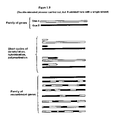
- FIG. 1 is a schematic representation of the processes of the prior art corresponding respectively to DNA-shuffling ( FIG. 1A ) and to StEP ( FIG. 1B ).
- FIG. 2 is a schematic representation of an example of carrying out the process of the invention and of certain of its variations and applications.
- FIG. 3 represents the positions of the ten zones of mutations (Pvu II and Pst I) carried by each mutant of the ponB gene used for the examples of the implementation of the invention.
- FIG. 4 represents the position of the primers used as compared to the sequence of the ponB gene.
- FIG. 5 represents the migration on agarose gel of RLR and of PCR reaction products of these RLR reactions.
- FIG. 6 represents the position of the mutations as compared to the restriction fragments.
- the process of the invention was put into practice starting from a library of gene mutants of ponB, coding for the PBP1b of E. coli (1). Ten mutants of this gene were used. The gene sequence of each mutant differs from that of the native gene by a non homologous zone of thirteen to sixteen bases in length resulting from the substitution of five initial codons by five alanine codons according to the technique described by Lefsky et al. (8).
- each mutant is characterized by the presence of a unique site of the restriction enzyme Pvu II surrounded by two Pst I enzyme sites, which permits the mutants to be distinguished from each other by their digestion profile with these restriction endonucleases.
- FIG. 3 represents the positions of the ten zones of mutations (Pvu II and Pst I) carried by each mutant.
- the PCR products were purified, mixed in equimolar quantity in order to form the library.
- the polynucleotide sequences of this library were digested with the restriction enzymes Hinf I and Bsa I, in such a way as to generate libraries of restriction fragments.
- the restriction fragments were then incubated with various amounts of the wild type template, at different quantities, in the presence of a thermostable ligase.
- a fraction of the reaction mixture was used to carry out a PCR amplification with a couple of primers specific to the 5′ and 3′ ends of the genes of the mutants and non-specific to the 5′ and 3′ ends of the wild type template.
- the amplification product was cloned and the obtained clones were analyzed for their digestion profile with the Pvu II or Pst I restriction endonucleases. The obtained profiles permitted the determination of which fragment(s) of the mutants had been able to be recombined with the others in order to form an entire gene.
- the strain MC1061 (F ⁇ araD139, ⁇ (ara-leu)7696, galE15, galK16, ⁇ (lac)X74, rpsL (Str R ), mcrA mcrB1, hsdR2 (r k ⁇ m k + )) is derived from Escherichia coli K12.
- the vector pARAPONB stems from the vector pARA13 (3) in which the ponB gene carrying a thrombin-cutting site (9) was introduced between the restriction sites Nco I and Nar I.
- the vector pET26b+ is one of the pET vectors developed by Studier and Moffatt (13) and commercialized by NOVAGEN Corporation.
- the oligonucleotides were synthesized by ISOPRIM corporation (Toulouse). The oligonucleotide sequences are reported in Table I below.
- Buffers Composition T Tris HCl 10 mM, pH 8.0 Polymerization 20 ⁇ Tris HCl 100 mM pH 8.3, MgCl 2 15 mM, KCl 500 mM, 1.0% TRITON X100 ® Restriction A 10 ⁇ 500 mM NaCl, 100 mM Tris HCl pH 7.9, 100 mM MgCl 2 , 10 mM DTT Restriction B 10 ⁇ 1 M NaCl, 500 mM Tris HCl pH 7.9, 100 mM MgCl 2 , 10 mM DTT Restriction C 10 ⁇ 500 mM NaCl, 1 M Tris HCl pH 7.5, 100 mM mM MgCl 2 , 0.25% TRITON X100 ® AMPLIGASE 10 ⁇ 200 mM Tris HCl pH 8.3, 250 mM KCl, 100 mM MgCl 2 , 5 mM NAD, 0.1% TRITON X100 ®
- the wild type ponB gene was amplified by a PCR reaction step by using as primers the oligonucleotides M1 and M2 ( FIG. 4 ).
- Five PCR reactions were prepared by adding 50 ng of pPONBPBR plasmid carrying the wild type gene (7) to a mixture containing 10 ⁇ l of polymerization buffer, 10 ⁇ l of dNTPs 2 mM, 20 pmol of each oligonucleotide M1 and M2, and 5 U of Taq DNA polymerase, in a final volume of 100 ⁇ l.
- These mixtures were incubated in Perkin-Elmer 9600 Thermocycler according to the following program: (94° C.-2 min.) ⁇ (94° C. 15 sec.-60° C. 30 sec.-72° C. 1 min.) ⁇ 29 cycles-(72° C.-3 min.).
- the product of the five PCR was mixed and loaded on a 1% TBEagarose gel after migration and staining of the gel with ethidium bromide, the band at 2651 bp, corresponding to the ponB gene amplification product surrounded by two fragments of 26 bp and 90 bp respectively, was visualized by trans-illumination under ultraviolet, and cut out with a scalpel in order to be purified with the QIAquick system (QIAGEN). All the DNA thus purified was eluted in 120 ⁇ l of buffer T. The concentration of this DNA was approximately 100 ng/ ⁇ l as measured by its absorbance at 260 nm.
- the genes of the ten mutants were separately amplified by a PCR reaction with oligonucleotides N and E. These oligonucleotides introduce respectively the restriction sites Nco I and Eco RI, permitting the cloning of the products obtained with these two sites.
- Each PCR reaction was prepared by adding 50 ng of the plasmid carrying the mutant gene to a mixture containing 10 ⁇ l of polymerization buffer, 10 ⁇ l of dNTPs 2 mM, 20 pmol of each oligonucleotide N and E, and 5 U of Taq DNA polymerase, in a final volume of 100 ⁇ l.
- This mixture was incubated in a Perkin-Elmer 9600 thermocycler according to the following program: (94° C.-2 min.) ⁇ (94° C. 15 sec.-60° C. 30 sec.-72° C. 1 min.) ⁇ 29 cycles-(72° C.-3 min.).
- the specificity of the genetic amplification was verified by restriction profile with the Pvu II endonuclease, by incubating 5 ⁇ l of each PCR product 1 hour at 37° C. in a mixture containing 3 ⁇ l of restriction buffer A and 5 U of the Pvu II enzyme in a final volume of 30 ⁇ l. 15 ⁇ l of that digestion reaction were loaded on a TBE 1% agarose gel. After migration and staining with ethidium bromide, the gel was exposed to ultraviolet. The visualization of the restriction fragments permitted confirmation of the specificity of the genetic amplification of each mutant gene.
- V RLR RECOMBINING LIGATION REACTION
- the RLR reaction (Recombining Ligation Reaction) was carried out by incubating determined quantities of restriction fragments Hinf I-Bsa I from the genes of ten mutants with the complete template (i.e., the wild type ponB gene), in the presence of a thermostable DNA ligase.
- the table IV below reports the composition of the mixtures for RLR.
- the negative control is identical to the reaction of RLR4, but does not contain thermostable DNA ligase.
- RLR4 thermostable DNA ligase.
- These different mixtures were covered with a drop of mineral oil and incubated in a Perkin-Elmer 9600 thermocycler in 200 ⁇ l microtubes according to the following program: (94° C., 5 min.) ⁇ (94° C., 1 min.-65° C., 4 min.) ⁇ 35 cycles.
- This PCR reaction permitted specific amplification of the ligation products formed in the course of the RLR reaction, without amplifying the template, since the oligonucleotides A1 and A2 are not able to hybridize with the template (it), as shown in FIG. 4 .
- the PCR amplification products of the RLR 1, 2 and 3 reactions were purified with the WIZARD PCR PREPS system (PROMEGA) and eluted in 45 ⁇ l of buffer T. 6 ⁇ l of each purified PCR were incubated 1 hour at 37° C. in a mixture containing 3 ⁇ l of restriction buffer C, 3 ⁇ l of BSA (1 mg/ml), 20 U of the Eco RI enzyme, 10 U of the Nco I enzyme and 15 ⁇ l of water.
- linearized vectors as well as the digested PCR were purified on a TBE 1% agarose gel with the QIAquick system (QIAGEN). Each vector or each digested PCR was eluted in 30 ⁇ l of buffer T.
- each PCR digested with each of the vectors was carried out according to the conditions described in table V below, and incubated at 16° C. for 16 hours.
- a first screening of the clones obtained after transformation of the ligations with the vector pARAPONB was carried out by PCR. 42 colonies, 14 from each ligation LpAR1, LpAR2 and LpAR3, were resuspended individually in a PCR mixture containing 5 ⁇ l of polymerization buffer, 40 pmol of each oligonucleotide A1 and A2, 5 ⁇ l of 2 mM dNTPs and 5 U of Taq DNA polymerase in a final volume of 50 ⁇ l. A negative control was obtained by adding to the PCR mixture 50 ng of the plasmid pBR322 in place of the colony.
- the second screening was effected by carrying out an extraction of the plasmidic DNA (5) from 21 clones resulting from the transformation of the ligations with the vector pET26b+ (7 clones of each ligation). 5 ⁇ l of the plasmidic DNA thus obtained for each clone were incubated for 1 hour at 37° C. in a mixture containing 1 ⁇ l of restriction buffer C, 6 U of the enzyme Pst I, 3 U of the enzyme Nco I and 6 U of the enzyme Eco RI in a final volume of 10 ⁇ l. 5 ⁇ l of each of these digestions were loaded on a TBE 1% agarose gel.
Landscapes
- Chemical & Material Sciences (AREA)
- Health & Medical Sciences (AREA)
- Genetics & Genomics (AREA)
- Life Sciences & Earth Sciences (AREA)
- Organic Chemistry (AREA)
- Engineering & Computer Science (AREA)
- Biochemistry (AREA)
- Biotechnology (AREA)
- Molecular Biology (AREA)
- General Health & Medical Sciences (AREA)
- Bioinformatics & Cheminformatics (AREA)
- Zoology (AREA)
- Biomedical Technology (AREA)
- Wood Science & Technology (AREA)
- General Engineering & Computer Science (AREA)
- Crystallography & Structural Chemistry (AREA)
- Plant Pathology (AREA)
- Microbiology (AREA)
- Biophysics (AREA)
- Physics & Mathematics (AREA)
- Measuring Or Testing Involving Enzymes Or Micro-Organisms (AREA)
- Enzymes And Modification Thereof (AREA)
Abstract
Description
-
- a) fragmenting a library of double-stranded polynucleotide sequences,
- b) the denaturation of fragments possibly in the presence of one or several assembling templates,
- c) the hybridization of said fragments with one or several assembling templates if the template/templates is/are not present in step (b),
- d) the ligation of said fragments in order to obtain recombined polynucleotide sequences,
- e) the selection of recombined nucleotide sequences having advantageous properties as compared to the corresponding properties of one or several reference sequences.
-
- denaturation of the ligated and non-ligated fragments coming out of step (d), possibly in the presence of one or several assembling templates.
- hybridization of said fragments with one or several assembling templates if it (they) is (are) not present at the time of the denaturation,
- ligation of said fragments.
-
- the separation of the recombined polynucleotide sequences from the assembling template or templates before step (e),
- the amplification of the double-stranded recombined polynucleotide sequences before step (e).
- the cloning of the recombined polynucleotide sequences possibly after separation of the recombined strands from the template or templates and obtaining of the corresponding double strand before step (e).
-
- controlling with precision the zones where the recombination takes place, or
- inducing recombination between polynucleotide sequences, for example genes, if the ends of the fragments are created in zones of homology between these sequences, or in zones of homology between these sequences and the assembling template or templates.
-
- if they are perfectly homologous with the sequence of the fragment which they are replacing, they favor certain combinations, or
- if they are partially heterologous with the sequence of the fragment that they are replacing, they introduce one or a more directed supplemental mutations.
| TABLE | ||
| Oligo N | ||
| 5′ |
||
| (SEQ ID NO:1) | ||
| |
5′ | |
| TCC | ||
| 3′ (SEQ ID NO:2) | ||
| |
5′ |
|
| (SEQ ID NO:3) | ||
| |
5′ |
|
| (SEQ ID NO:4) | ||
| |
5′ |
|
| (SEQ ID NO:5) | ||
| |
5′ |
|
| (SEQ ID NO:6) | ||
| TABLE II | ||
| Enzyme | Concentration | Supplier |
| NcoI | 10 | U/μl | New England Biolabs |
| PstI | 20 | U/μl | New England Biolabs |
| Eco RI | 20 | U/μl | New England Biolabs |
| Bsa I | 5 | U/μl | New England Biolabs |
| Hinf I | 10 | U/μl | New England Biolabs |
| Pvu II | 10 | U/μl | New England Biolabs |
| T4 DNA ligase | 400 | U/μl | New England Biolabs |
| Taq DNA polymerase | 5 | U/μl | PROMEGA |
| AMPLIGASE | 100 | U/μl | EPICENTRE |
| Buffers | Composition | |
| | Tris HCl | 10 mM, pH 8.0 |
| Polymerization 20× | Tris HCl 100 mM pH 8.3, MgCl2 15 | |
| mM, KCl 500 mM, 1.0% TRITON X100 | ||
| Restriction A | ||
| 10× | 500 mM NaCl, 100 mM Tris HCl pH 7.9, | |
| 100 mM MgCl2, 10 mM DTT | ||
| |
1 M NaCl, 500 mM Tris HCl pH 7.9, | |
| 100 mM MgCl2, 10 mM DTT | ||
| |
500 mM NaCl, 1 M Tris HCl pH 7.5, | |
| 100 mM mM MgCl2, 0.25% TRITON | ||
| AMPLIGASE | ||
| 10× | 200 mM Tris HCl pH 8.3, 250 mM KCl, | |
| 100 mM MgCl2, 5 mM NAD, 0.1% TRITON | ||
| | ||
| Ligation | ||
| 10× | 500 mM Tris HCl pH 7.5, 100 mM | |
| MgCl2, 100 mM DTT, 10 mM ATP, 250 | ||
| μg/ml BSA | ||
| | ||||||
| RLR | ||||||
| 1 | |
|
RLR 4 | T- | ||
| Fragments Hinf I - Bsa I | 0.5 | |
1 | |
2 | |
5 | |
5 | μl |
| of ten mutants | ||||||||||
| (100 ng/μl) | ||||||||||
| Wild type ponB | 0.6 | μl | 1.2 | μl | 2.4 | |
6 | |
6 | μl |
| template | ||||||||||
| (100 ng/μl) | ||||||||||
| AMPLIGASE 10× |
2 | |
2 | |
2 | |
2 | |
2 | μl |
| AMPLIGASE (25 U/μl) | 1 | |
1 | |
1 | |
1 | μl | — |
| H2O | qsp 20 | μl | qsp 20 | μl | qsp 20 | μl | qsp 20 | μl | qsp 20 | μl |
| TABLE V | |||
| Ligation with the vector pARAPONB | Ligation with the vector pET26b+ | ||
| LpAR1 | LpAR2 | LpAR3 | TLpAR | LpET1 | LpET2 | LpET3 | | ||
| PCR amplification |
| 4 | μl | — | — | — | 4 | μl | — | — | — | |
| |
||||||||||
| Nco I - Eco RI |
| PCR amplification | — | 4 | μl | — | — | — | 4 | μl | — | — |
| |
||||||||||
| Nco I - Eco RI |
| PCR amplification | — | — | 4 | μl | — | — | — | 4 | μl | — |
| |
||||||||||
| Nco I - Eco |
| Vector pARAPONB |
| 1 | |
1 | |
1 | |
1 | μl | — | — | — | — | |
| digested Nco I - | ||||||||||||
| Eco RI |
| Vector pET26b+ | — | — | — | — | 1 | |
1 | |
1 | |
1 | μl |
| digested Nco I - | ||||||||||||
| Eco |
| Ligation Buffer |
| 2 | |
2 | |
2 | |
2 | |
2 | |
2 | |
2 | |
2 | | |
| Ligase | ||||||||||||||||
| 1 | |
1 | |
1 | |
1 | |
1 | |
1 | |
1 | |
1 | μl | |
| H2O | 12 | μl | 12 | μl | 12 | μl | 16 | μl | 12 | μl | 12 | μl | 12 | μl | 16 | μl |
| TABLE IV | ||
| % | ||
| 0 | 1 | 2 | 3 | 4 | ||
| mutation | mutation | mutations | mutations | mutations | ||
| Statistics | 30.24 | 44.04 | 21.44 | 4.04 | 0.24 |
| PCR | 21 | 63 | 16 | 0 | 0 |
| Screening | |||||
| Mini- | 14 | 62 | 24 | 0 | 0 |
| preparation | |||||
| Screening | |||||
-
- 1) Broome-Smith J. K., Edelman Al, Yousif S. and Spratt B. G., (1985), The nucleotide sequence of the ponA and ponB genes encoding penicillin-binding proteins 1A and 1B of Escherichia coli K12, Eur. J. Biochem., 147, 437-446.
- 2) Caldwell R. C. and Joyce G., 1992, Randomization of genes by PCR mutagenesis, PCR Methods and Application, 2, 28-33.
- 3) Cagnon C., Valverde V. and Masson J.-M., (1991), A new family of sugar inducible expression vectors for Escherichia coli, Prot. Eng., 4, 843-847.
- 4) Hanahan D., (1985), Techniques for transformation of Escherichia coli, in DNA cloning: a practical approach, Glover D. M. (ed), IRL Press, Oxford vol I, 109-135.
- 5) Maniatis T., Fristch E. F. and Sambrook J., (1982), Molecular cloning. A laboratory Manual, Cold Spring Harbor Laboratory, Cold Spring Harbor, N.Y.
- 6) Landt et al., Gene, 96, 125-128, 1990.
- 7) Lefèvre F., Topological Analysis of the Penicillin Binding Protein 1b of Escherichia coli, 1997, Thèse.
- 8) Lefèvre F., Rémy M. H. and Masson J. M., 1997 (a), Alanine-stretch scanning mutagenesis: a simple and efficient method to probe protein structure and function, Nuc. Acids Res., 25, 447-448.
- 9) Lefèvre F., Rémy M. H. and Masson J. M., 1997 (b), Topographical and functional investigation of Escherichia coli Penicillin-Binding Protein 1b by alanine stretch scanning mutagenesis, J. Bacteriol., 179, 4761-4767.
- 10) Lyamichev V., Mast A. I., Prudent J. R., Kaiser M. W., Takova T., Kwiatkowski R. W., Sander T. J., de Arruda M., Arco D. A., Neri B. P. and Brown M. A. D., 1999, Polymorphism identification and quantitative detection of genomic DNA by invasive cleavage of oligonucleotide probes, Nature Biotechnology, 17, 292-296.
- 11) Picard et al., Nuc. Acids Res., 22, 2587-2591, 1994.
- 12) Stemmer W. P. C., (1994), Rapid evolution of a protein in vitro by DNA shuffling, Nature, 370, 141-144.
- 13) Studier F. W. and Moffatt B. A., 1986, Use of bacteriophage T7 RNA polymerase to direct selective high-level expression of cloned genes, J. Mol. Biol, 189, 113-130.
- 14) Zhao, H., Giver L., Shao Z., Affholter J. A. and Arnold F., 1998, Molecular evolution by staggered extension process (StEP) in vitro recombination, Nature Biotech., 16, 258-261.
Claims (3)
Priority Applications (1)
| Application Number | Priority Date | Filing Date | Title |
|---|---|---|---|
| US11/143,455 US7718786B2 (en) | 1998-08-12 | 2005-06-03 | Process for obtaining recombined nucleotide sequences in vitro, libraries of sequences and sequences thus obtained |
Applications Claiming Priority (5)
| Application Number | Priority Date | Filing Date | Title |
|---|---|---|---|
| FR9810338A FR2782323B1 (en) | 1998-08-12 | 1998-08-12 | PROCESS FOR THE IN VITRO PRODUCTION OF RECOMBINANT POLYNUCLEOTIDE SEQUENCES, SEQUENCE BANKS AND SEQUENCES THUS OBTAINED |
| FR98/10338 | 1998-08-12 | ||
| PCT/FR1999/001973 WO2000009679A1 (en) | 1998-08-12 | 1999-08-11 | Method for obtaining in vitro recombined polynucleotide sequences, sequence banks and resulting sequences |
| US09/723,316 US6951719B1 (en) | 1999-08-11 | 2000-11-28 | Process for obtaining recombined nucleotide sequences in vitro, libraries of sequences and sequences thus obtained |
| US11/143,455 US7718786B2 (en) | 1998-08-12 | 2005-06-03 | Process for obtaining recombined nucleotide sequences in vitro, libraries of sequences and sequences thus obtained |
Related Parent Applications (1)
| Application Number | Title | Priority Date | Filing Date |
|---|---|---|---|
| US09/723,316 Continuation US6951719B1 (en) | 1998-08-12 | 2000-11-28 | Process for obtaining recombined nucleotide sequences in vitro, libraries of sequences and sequences thus obtained |
Publications (2)
| Publication Number | Publication Date |
|---|---|
| US20050221378A1 US20050221378A1 (en) | 2005-10-06 |
| US7718786B2 true US7718786B2 (en) | 2010-05-18 |
Family
ID=35005095
Family Applications (2)
| Application Number | Title | Priority Date | Filing Date |
|---|---|---|---|
| US09/723,316 Expired - Lifetime US6951719B1 (en) | 1998-08-12 | 2000-11-28 | Process for obtaining recombined nucleotide sequences in vitro, libraries of sequences and sequences thus obtained |
| US11/143,455 Expired - Fee Related US7718786B2 (en) | 1998-08-12 | 2005-06-03 | Process for obtaining recombined nucleotide sequences in vitro, libraries of sequences and sequences thus obtained |
Family Applications Before (1)
| Application Number | Title | Priority Date | Filing Date |
|---|---|---|---|
| US09/723,316 Expired - Lifetime US6951719B1 (en) | 1998-08-12 | 2000-11-28 | Process for obtaining recombined nucleotide sequences in vitro, libraries of sequences and sequences thus obtained |
Country Status (1)
| Country | Link |
|---|---|
| US (2) | US6951719B1 (en) |
Cited By (24)
| Publication number | Priority date | Publication date | Assignee | Title |
|---|---|---|---|---|
| US10272410B2 (en) | 2013-08-05 | 2019-04-30 | Twist Bioscience Corporation | De novo synthesized gene libraries |
| US10669304B2 (en) | 2015-02-04 | 2020-06-02 | Twist Bioscience Corporation | Methods and devices for de novo oligonucleic acid assembly |
| US10696965B2 (en) | 2017-06-12 | 2020-06-30 | Twist Bioscience Corporation | Methods for seamless nucleic acid assembly |
| US10744477B2 (en) | 2015-04-21 | 2020-08-18 | Twist Bioscience Corporation | Devices and methods for oligonucleic acid library synthesis |
| US10754994B2 (en) | 2016-09-21 | 2020-08-25 | Twist Bioscience Corporation | Nucleic acid based data storage |
| US10844373B2 (en) | 2015-09-18 | 2020-11-24 | Twist Bioscience Corporation | Oligonucleic acid variant libraries and synthesis thereof |
| US10894959B2 (en) | 2017-03-15 | 2021-01-19 | Twist Bioscience Corporation | Variant libraries of the immunological synapse and synthesis thereof |
| US10894242B2 (en) | 2017-10-20 | 2021-01-19 | Twist Bioscience Corporation | Heated nanowells for polynucleotide synthesis |
| US10907274B2 (en) | 2016-12-16 | 2021-02-02 | Twist Bioscience Corporation | Variant libraries of the immunological synapse and synthesis thereof |
| US10936953B2 (en) | 2018-01-04 | 2021-03-02 | Twist Bioscience Corporation | DNA-based digital information storage with sidewall electrodes |
| US10975372B2 (en) | 2016-08-22 | 2021-04-13 | Twist Bioscience Corporation | De novo synthesized nucleic acid libraries |
| US10987648B2 (en) | 2015-12-01 | 2021-04-27 | Twist Bioscience Corporation | Functionalized surfaces and preparation thereof |
| US11332738B2 (en) | 2019-06-21 | 2022-05-17 | Twist Bioscience Corporation | Barcode-based nucleic acid sequence assembly |
| US11377676B2 (en) | 2017-06-12 | 2022-07-05 | Twist Bioscience Corporation | Methods for seamless nucleic acid assembly |
| US11407837B2 (en) | 2017-09-11 | 2022-08-09 | Twist Bioscience Corporation | GPCR binding proteins and synthesis thereof |
| US11492727B2 (en) | 2019-02-26 | 2022-11-08 | Twist Bioscience Corporation | Variant nucleic acid libraries for GLP1 receptor |
| US11492665B2 (en) | 2018-05-18 | 2022-11-08 | Twist Bioscience Corporation | Polynucleotides, reagents, and methods for nucleic acid hybridization |
| US11492728B2 (en) | 2019-02-26 | 2022-11-08 | Twist Bioscience Corporation | Variant nucleic acid libraries for antibody optimization |
| US11512347B2 (en) | 2015-09-22 | 2022-11-29 | Twist Bioscience Corporation | Flexible substrates for nucleic acid synthesis |
| US11550939B2 (en) | 2017-02-22 | 2023-01-10 | Twist Bioscience Corporation | Nucleic acid based data storage using enzymatic bioencryption |
| US12091777B2 (en) | 2019-09-23 | 2024-09-17 | Twist Bioscience Corporation | Variant nucleic acid libraries for CRTH2 |
| US12173282B2 (en) | 2019-09-23 | 2024-12-24 | Twist Bioscience, Inc. | Antibodies that bind CD3 epsilon |
| US12357959B2 (en) | 2018-12-26 | 2025-07-15 | Twist Bioscience Corporation | Highly accurate de novo polynucleotide synthesis |
| US12570750B2 (en) | 2019-12-09 | 2026-03-10 | Twist Bioscience Corporation | Antibodies that bind adenosine A2A receptors and methods of use thereof to treat cancer and neurological diseases |
Families Citing this family (5)
| Publication number | Priority date | Publication date | Assignee | Title |
|---|---|---|---|---|
| US6951719B1 (en) * | 1999-08-11 | 2005-10-04 | Proteus S.A. | Process for obtaining recombined nucleotide sequences in vitro, libraries of sequences and sequences thus obtained |
| WO2003010311A2 (en) * | 2001-07-23 | 2003-02-06 | Dsm Ip Assets B.V. | Process for preparing variant polynucleotides |
| EP1327682B1 (en) * | 2002-01-11 | 2009-05-13 | BioSpring Gesellschaft für Biotechnologie mbH | Method for producing DNA |
| US20120295793A1 (en) * | 2010-01-22 | 2012-11-22 | Proteus | Methods of generating modified polynucleotide libraries and methods of using the same for directed protein evolution |
| FR3022557B1 (en) | 2014-06-20 | 2019-01-25 | Proteus | EXOGLUCANASE VARIANTS WITH IMPROVED ACTIVITY AND USES THEREOF |
Citations (61)
| Publication number | Priority date | Publication date | Assignee | Title |
|---|---|---|---|---|
| US4500640A (en) | 1981-04-17 | 1985-02-19 | Kyowa Hakko Kogyo Co., Ltd. | Plasmids |
| WO1995022625A1 (en) | 1994-02-17 | 1995-08-24 | Affymax Technologies N.V. | Dna mutagenesis by random fragmentation and reassembly |
| US5614389A (en) | 1992-08-04 | 1997-03-25 | Replicon, Inc. | Methods for the isothermal amplification of nucleic acid molecules |
| WO1997020078A1 (en) | 1995-11-30 | 1997-06-05 | Maxygen, Inc. | Methods for generating polynucleotides having desired characteristics by iterative selection and recombination |
| WO1997022715A1 (en) | 1995-12-18 | 1997-06-26 | Abbott Laboratories | Interference free biosensor |
| US5650271A (en) | 1990-09-21 | 1997-07-22 | Amgen Inc. | Enzymatic synthesis of oligonucleotides |
| WO1997042330A1 (en) | 1996-05-06 | 1997-11-13 | American Home Products Corporation | Chain reaction cloning |
| WO1998013485A1 (en) * | 1996-09-27 | 1998-04-02 | Maxygen, Inc. | Methods for optimization of gene therapy by recursive sequence shuffling and selection |
| WO1998015567A2 (en) | 1996-10-07 | 1998-04-16 | MAX-PLANCK-Gesellschaft zur Förderung der Wissenschaften e.V. | Gene synthesis method |
| WO1998027230A1 (en) | 1996-12-18 | 1998-06-25 | Maxygen, Inc. | Methods and compositions for polypeptide engineering |
| WO1998032845A1 (en) | 1997-01-24 | 1998-07-30 | Bioinvent International Ab | A method for in vitro molecular evolution of protein function |
| US5837458A (en) | 1994-02-17 | 1998-11-17 | Maxygen, Inc. | Methods and compositions for cellular and metabolic engineering |
| US5874283A (en) | 1995-05-30 | 1999-02-23 | John Joseph Harrington | Mammalian flap-specific endonuclease |
| JPH1175849A (en) | 1997-09-04 | 1999-03-23 | Agency Of Ind Science & Technol | Thermostable Flap endonuclease from a hyperthermophilic bacterium belonging to the genus Pyrococcus |
| US6013456A (en) | 1998-07-24 | 2000-01-11 | Lumigen, Inc. | Methods of sequencing polynucleotides by ligation of multiple oligomers |
| FR2782323A1 (en) | 1998-08-12 | 2000-02-18 | Proteus | In vitro recombination of polynucleotide fragments to obtain sequences with improved properties involves ligation on an assembly matrix |
| US6096548A (en) | 1996-03-25 | 2000-08-01 | Maxygen, Inc. | Method for directing evolution of a virus |
| WO2000058517A1 (en) | 1999-03-26 | 2000-10-05 | Diversa Corporation | Exonuclease-mediated nucleic acid reassembly in directed evolution |
| US6153410A (en) | 1997-03-25 | 2000-11-28 | California Institute Of Technology | Recombination of polynucleotide sequences using random or defined primers |
| US6159690A (en) * | 1997-06-16 | 2000-12-12 | Bioinvent International Ab | Method for in vitro molecular evolution of protein function using exonuclease and amplification |
| WO2000077262A1 (en) | 1999-06-14 | 2000-12-21 | Diversa Corporation | Synthetic ligation reassembly in directed evolution |
| US6165793A (en) | 1996-03-25 | 2000-12-26 | Maxygen, Inc. | Methods for generating polynucleotides having desired characteristics by iterative selection and recombination |
| US6171820B1 (en) | 1995-12-07 | 2001-01-09 | Diversa Corporation | Saturation mutagenesis in directed evolution |
| WO2001023401A2 (en) | 1999-09-28 | 2001-04-05 | Maxygen, Inc. | Use of codon-varied oligonucleotide synthesis for synthetic sequence recombination |
| WO2001027160A1 (en) | 1999-10-14 | 2001-04-19 | Applied Molecular Evolution, Inc. | Methods of optimizing antibody variable region binding affinity |
| WO2001029212A1 (en) | 1999-10-19 | 2001-04-26 | Enchira Biotechnology Corporation | Methods for chimeragenesis of whole genomes or large polynucleotides |
| WO2001029211A2 (en) | 1999-10-19 | 2001-04-26 | Enchira Biotechnology Corporation | Method for directed evolution by random chimeragenesis on transient templates |
| US6238884B1 (en) | 1995-12-07 | 2001-05-29 | Diversa Corporation | End selection in directed evolution |
| WO2001042509A1 (en) | 1999-12-10 | 2001-06-14 | Invitrogen Corporation | Use of multiple recombination sites with unique specificity in recombinational cloning |
| US6251674B1 (en) | 1997-01-17 | 2001-06-26 | Maxygen, Inc. | Evolution of whole cells and organisms by recursive sequence recombination |
| WO2001051663A2 (en) | 2000-01-11 | 2001-07-19 | Maxygen, Inc. | Integrated systems and methods for diversity generation and screening |
| WO2001064864A2 (en) | 2000-02-28 | 2001-09-07 | Maxygen, Inc. | Single-stranded nucleic acid template-mediated recombination and nucleic acid fragment isolation |
| US6287862B1 (en) | 1997-01-17 | 2001-09-11 | Maxygen, Inc. | Evolution of whole cells and organisms by recursive sequence recombination |
| US6291165B1 (en) | 1997-03-18 | 2001-09-18 | Novo Nordisk A/S | Shuffling of heterologous DNA sequences |
| WO2001070947A2 (en) | 2000-03-20 | 2001-09-27 | Maxygen, Inc. | Method for generating recombinant dna molecules in complex mixtures |
| WO2001073000A2 (en) | 2000-03-24 | 2001-10-04 | Maxygen, Inc. | Methods for modulating cellular and organismal phenotypes |
| US6309883B1 (en) | 1994-02-17 | 2001-10-30 | Maxygen, Inc. | Methods and compositions for cellular and metabolic engineering |
| WO2001081568A1 (en) | 2000-04-21 | 2001-11-01 | Genencor International, Inc. | Non-pcr based recombination of nucleic acids |
| US6319714B1 (en) | 1999-01-19 | 2001-11-20 | Maxygen, Inc. | Oligonucleotide mediated nucleic acid recombination |
| US6322969B1 (en) | 1998-05-27 | 2001-11-27 | The Regents Of The University Of California | Method for preparing permuted, chimeric nucleic acid libraries |
| WO2001090346A2 (en) | 2000-05-23 | 2001-11-29 | California Institute Of Technology | Gene recombination and hybrid protein development |
| WO2001096551A2 (en) | 2000-06-14 | 2001-12-20 | Diversa Corporation | Whole cell engineering by mutagenizing a substantial portion of a starting genome, combining mutations, and optionally repeating |
| US6337186B1 (en) | 1998-06-17 | 2002-01-08 | Maxygen, Inc. | Method for producing polynucleotides with desired properties |
| WO2002004629A2 (en) | 2000-07-07 | 2002-01-17 | Maxygen, Inc. | Molecular breeding of transposable elements |
| WO2002006469A2 (en) | 2000-07-18 | 2002-01-24 | Enchira Biotechnology Corporation | Methods of ligation mediated chimeragenesis utilizing populations of scaffold and donor nucleic acids |
| US6348314B1 (en) | 1996-01-24 | 2002-02-19 | Third Wave Technologies, Inc. | Invasive cleavage of nucleic acids |
| US6352842B1 (en) | 1995-12-07 | 2002-03-05 | Diversa Corporation | Exonucease-mediated gene assembly in directed evolution |
| US6358740B1 (en) | 1999-03-05 | 2002-03-19 | Maxygen, Inc. | Recombination of insertion modified nucleic acids |
| US6358709B1 (en) | 1995-12-07 | 2002-03-19 | Diversa Corporation | End selection in directed evolution |
| US6361974B1 (en) | 1995-12-07 | 2002-03-26 | Diversa Corporation | Exonuclease-mediated nucleic acid reassembly in directed evolution |
| US6365408B1 (en) | 1998-06-19 | 2002-04-02 | Maxygen, Inc. | Methods of evolving a polynucleotides by mutagenesis and recombination |
| US6368861B1 (en) | 1999-01-19 | 2002-04-09 | Maxygen, Inc. | Oligonucleotide mediated nucleic acid recombination |
| US6387620B1 (en) | 1999-07-28 | 2002-05-14 | Gilead Sciences, Inc. | Transcription-free selex |
| US6406855B1 (en) | 1994-02-17 | 2002-06-18 | Maxygen, Inc. | Methods and compositions for polypeptide engineering |
| US6518065B1 (en) | 1994-02-17 | 2003-02-11 | Maxygen, Inc. | Methods for generating polynucleotides having desired characteristics by iterative selection and recombination |
| US20030054390A1 (en) | 1999-01-19 | 2003-03-20 | Maxygen, Inc. | Oligonucleotide mediated nucleic acid recombination |
| US20030092023A1 (en) | 1998-08-12 | 2003-05-15 | Daniel Dupret | Method of shuffling polynucleotides using templates |
| US20030104417A1 (en) | 1998-08-12 | 2003-06-05 | Proteus S.A. | Template-mediated, ligation-oriented method of nonrandomly shuffling polynucleotides |
| US20040191772A1 (en) | 1998-08-12 | 2004-09-30 | Dupret Daniel Marc | Method of shuffling polynucleotides using templates |
| US6951719B1 (en) * | 1999-08-11 | 2005-10-04 | Proteus S.A. | Process for obtaining recombined nucleotide sequences in vitro, libraries of sequences and sequences thus obtained |
| US6991922B2 (en) * | 1998-08-12 | 2006-01-31 | Proteus S.A. | Process for in vitro creation of recombinant polynucleotide sequences by oriented ligation |
-
2000
- 2000-11-28 US US09/723,316 patent/US6951719B1/en not_active Expired - Lifetime
-
2005
- 2005-06-03 US US11/143,455 patent/US7718786B2/en not_active Expired - Fee Related
Patent Citations (99)
| Publication number | Priority date | Publication date | Assignee | Title |
|---|---|---|---|---|
| US4500640A (en) | 1981-04-17 | 1985-02-19 | Kyowa Hakko Kogyo Co., Ltd. | Plasmids |
| US5650271A (en) | 1990-09-21 | 1997-07-22 | Amgen Inc. | Enzymatic synthesis of oligonucleotides |
| US5614389A (en) | 1992-08-04 | 1997-03-25 | Replicon, Inc. | Methods for the isothermal amplification of nucleic acid molecules |
| US5837458A (en) | 1994-02-17 | 1998-11-17 | Maxygen, Inc. | Methods and compositions for cellular and metabolic engineering |
| WO1995022625A1 (en) | 1994-02-17 | 1995-08-24 | Affymax Technologies N.V. | Dna mutagenesis by random fragmentation and reassembly |
| US6277638B1 (en) | 1994-02-17 | 2001-08-21 | Maxygen, Inc. | Methods for generating polynucleotides having desired characteristics by iterative selection and recombination |
| US6518065B1 (en) | 1994-02-17 | 2003-02-11 | Maxygen, Inc. | Methods for generating polynucleotides having desired characteristics by iterative selection and recombination |
| EP0752008A1 (en) | 1994-02-17 | 1997-01-08 | Affymax Technologies N.V. | Dna mutagenesis by random fragmentation and reassembly |
| US6287861B1 (en) | 1994-02-17 | 2001-09-11 | Maxygen, Inc. | Methods for generating polynucleotides having desired characteristics by iterative selection and recombination |
| US6444468B1 (en) | 1994-02-17 | 2002-09-03 | Maxygen, Inc. | Methods for generating polynucleotides having desired characteristics by iterative selection and recombination |
| US6420175B1 (en) | 1994-02-17 | 2002-07-16 | Maxygen, Inc. | Methods for generating polynucleotides having desired characteristics by iterative selection and recombination |
| US6406855B1 (en) | 1994-02-17 | 2002-06-18 | Maxygen, Inc. | Methods and compositions for polypeptide engineering |
| US6372497B1 (en) | 1994-02-17 | 2002-04-16 | Maxygen, Inc. | Methods for generating polynucleotides having desired characteristics by iterative selection and recombination |
| US5830721A (en) | 1994-02-17 | 1998-11-03 | Affymax Technologies N.V. | DNA mutagenesis by random fragmentation and reassembly |
| US6180406B1 (en) | 1994-02-17 | 2001-01-30 | Maxygen, Inc. | Methods for generating polynucleotides having desired characteristics by iterative selection and recombination |
| US6291242B1 (en) | 1994-02-17 | 2001-09-18 | Maxygen, Inc. | Methods for generating polynucleotides having desired characteristics by iterative selection and recombination |
| US5605793A (en) | 1994-02-17 | 1997-02-25 | Affymax Technologies N.V. | Methods for in vitro recombination |
| US6355484B1 (en) | 1994-02-17 | 2002-03-12 | Maxygen, Inc. | Methods and compositions for polypeptides engineering |
| US6344356B1 (en) | 1994-02-17 | 2002-02-05 | Maxygen, Inc. | Methods for recombining nucleic acids |
| US6297053B1 (en) | 1994-02-17 | 2001-10-02 | Maxygen, Inc. | Methods for generating polynucleotides having desired characteristics by iterative selection and recombination |
| US6117679A (en) | 1994-02-17 | 2000-09-12 | Maxygen, Inc. | Methods for generating polynucleotides having desired characteristics by iterative selection and recombination |
| US6323030B1 (en) | 1994-02-17 | 2001-11-27 | Maxygen, Inc. | Methods for generating polynucleotides having desired characteristics by iterative selection and recombination |
| US6132970A (en) | 1994-02-17 | 2000-10-17 | Maxygen, Inc. | Methods of shuffling polynucleotides |
| US6319713B1 (en) | 1994-02-17 | 2001-11-20 | Maxygen, Inc. | Methods and compositions for polypeptide engineering |
| US6309883B1 (en) | 1994-02-17 | 2001-10-30 | Maxygen, Inc. | Methods and compositions for cellular and metabolic engineering |
| US6335160B1 (en) | 1995-02-17 | 2002-01-01 | Maxygen, Inc. | Methods and compositions for polypeptide engineering |
| US5874283A (en) | 1995-05-30 | 1999-02-23 | John Joseph Harrington | Mammalian flap-specific endonuclease |
| EP1138763A2 (en) | 1995-11-30 | 2001-10-04 | Maxygen, Inc. | Method for generating polynucleotides having desired characteristics by iterative selection and recombination |
| US20030027156A1 (en) | 1995-11-30 | 2003-02-06 | Maxygen, Inc. | Methods and compositions for polypeptide engineering |
| WO1997020078A1 (en) | 1995-11-30 | 1997-06-05 | Maxygen, Inc. | Methods for generating polynucleotides having desired characteristics by iterative selection and recombination |
| US6361974B1 (en) | 1995-12-07 | 2002-03-26 | Diversa Corporation | Exonuclease-mediated nucleic acid reassembly in directed evolution |
| US20020142394A1 (en) | 1995-12-07 | 2002-10-03 | Diversa Corporation | Exonuclease-mediated gene assembly in directed evolution |
| US6358709B1 (en) | 1995-12-07 | 2002-03-19 | Diversa Corporation | End selection in directed evolution |
| US6352842B1 (en) | 1995-12-07 | 2002-03-05 | Diversa Corporation | Exonucease-mediated gene assembly in directed evolution |
| US6171820B1 (en) | 1995-12-07 | 2001-01-09 | Diversa Corporation | Saturation mutagenesis in directed evolution |
| US6238884B1 (en) | 1995-12-07 | 2001-05-29 | Diversa Corporation | End selection in directed evolution |
| US20030036116A1 (en) | 1995-12-07 | 2003-02-20 | Diversa Corporation | Exonuclease-mediated nucleic acid reassembly in directed evolution |
| WO1997022715A1 (en) | 1995-12-18 | 1997-06-26 | Abbott Laboratories | Interference free biosensor |
| US6348314B1 (en) | 1996-01-24 | 2002-02-19 | Third Wave Technologies, Inc. | Invasive cleavage of nucleic acids |
| US6165793A (en) | 1996-03-25 | 2000-12-26 | Maxygen, Inc. | Methods for generating polynucleotides having desired characteristics by iterative selection and recombination |
| US6482647B1 (en) | 1996-03-25 | 2002-11-19 | Maxygen, Inc. | Evolving susceptibility of cellular receptors to viral infection by recursive recombination |
| US6096548A (en) | 1996-03-25 | 2000-08-01 | Maxygen, Inc. | Method for directing evolution of a virus |
| US6143527A (en) * | 1996-05-06 | 2000-11-07 | American Home Products Corporation | Chain reaction cloning using a bridging oligonucleotide and DNA ligase |
| WO1997042330A1 (en) | 1996-05-06 | 1997-11-13 | American Home Products Corporation | Chain reaction cloning |
| WO1998013485A1 (en) * | 1996-09-27 | 1998-04-02 | Maxygen, Inc. | Methods for optimization of gene therapy by recursive sequence shuffling and selection |
| WO1998015567A2 (en) | 1996-10-07 | 1998-04-16 | MAX-PLANCK-Gesellschaft zur Förderung der Wissenschaften e.V. | Gene synthesis method |
| US6303344B1 (en) | 1996-12-18 | 2001-10-16 | Maxygen, Inc. | Methods and compositions for polypeptide engineering |
| WO1998027230A1 (en) | 1996-12-18 | 1998-06-25 | Maxygen, Inc. | Methods and compositions for polypeptide engineering |
| US6455253B1 (en) | 1996-12-18 | 2002-09-24 | Maxygen, Inc. | Methods and compositions for polypeptide engineering |
| US6287862B1 (en) | 1997-01-17 | 2001-09-11 | Maxygen, Inc. | Evolution of whole cells and organisms by recursive sequence recombination |
| US6335198B1 (en) | 1997-01-17 | 2002-01-01 | Maxygen, Inc. | Evolution of whole cells and organisms by recursive sequence recombination |
| US6251674B1 (en) | 1997-01-17 | 2001-06-26 | Maxygen, Inc. | Evolution of whole cells and organisms by recursive sequence recombination |
| US6326204B1 (en) | 1997-01-17 | 2001-12-04 | Maxygen, Inc. | Evolution of whole cells and organisms by recursive sequence recombination |
| WO1998032845A1 (en) | 1997-01-24 | 1998-07-30 | Bioinvent International Ab | A method for in vitro molecular evolution of protein function |
| US6291165B1 (en) | 1997-03-18 | 2001-09-18 | Novo Nordisk A/S | Shuffling of heterologous DNA sequences |
| US6177263B1 (en) | 1997-03-25 | 2001-01-23 | California Institute Of Technology | Recombination of polynucleotide sequences using random or defined primers |
| US6153410A (en) | 1997-03-25 | 2000-11-28 | California Institute Of Technology | Recombination of polynucleotide sequences using random or defined primers |
| US6159690A (en) * | 1997-06-16 | 2000-12-12 | Bioinvent International Ab | Method for in vitro molecular evolution of protein function using exonuclease and amplification |
| US6251649B1 (en) | 1997-09-04 | 2001-06-26 | Director - General Of Agency Of Industrial Science And Technology | Thermostable flap endonuclease derived from a hyperthermophile bacterium belonging to the genus pyrococcus |
| JPH1175849A (en) | 1997-09-04 | 1999-03-23 | Agency Of Ind Science & Technol | Thermostable Flap endonuclease from a hyperthermophilic bacterium belonging to the genus Pyrococcus |
| US6322969B1 (en) | 1998-05-27 | 2001-11-27 | The Regents Of The University Of California | Method for preparing permuted, chimeric nucleic acid libraries |
| US6337186B1 (en) | 1998-06-17 | 2002-01-08 | Maxygen, Inc. | Method for producing polynucleotides with desired properties |
| US6365408B1 (en) | 1998-06-19 | 2002-04-02 | Maxygen, Inc. | Methods of evolving a polynucleotides by mutagenesis and recombination |
| US6013456A (en) | 1998-07-24 | 2000-01-11 | Lumigen, Inc. | Methods of sequencing polynucleotides by ligation of multiple oligomers |
| FR2782323A1 (en) | 1998-08-12 | 2000-02-18 | Proteus | In vitro recombination of polynucleotide fragments to obtain sequences with improved properties involves ligation on an assembly matrix |
| US20030092023A1 (en) | 1998-08-12 | 2003-05-15 | Daniel Dupret | Method of shuffling polynucleotides using templates |
| US20040191772A1 (en) | 1998-08-12 | 2004-09-30 | Dupret Daniel Marc | Method of shuffling polynucleotides using templates |
| US6991922B2 (en) * | 1998-08-12 | 2006-01-31 | Proteus S.A. | Process for in vitro creation of recombinant polynucleotide sequences by oriented ligation |
| US20030104417A1 (en) | 1998-08-12 | 2003-06-05 | Proteus S.A. | Template-mediated, ligation-oriented method of nonrandomly shuffling polynucleotides |
| US20030054390A1 (en) | 1999-01-19 | 2003-03-20 | Maxygen, Inc. | Oligonucleotide mediated nucleic acid recombination |
| US6319714B1 (en) | 1999-01-19 | 2001-11-20 | Maxygen, Inc. | Oligonucleotide mediated nucleic acid recombination |
| US6426224B1 (en) | 1999-01-19 | 2002-07-30 | Maxygen, Inc. | Oligonucleotide mediated nucleic acid recombination |
| US6479652B1 (en) | 1999-01-19 | 2002-11-12 | Maxygen, Inc. | Oligonucleotide mediated nucleic acid recombination |
| US6368861B1 (en) | 1999-01-19 | 2002-04-09 | Maxygen, Inc. | Oligonucleotide mediated nucleic acid recombination |
| US6376246B1 (en) | 1999-02-05 | 2002-04-23 | Maxygen, Inc. | Oligonucleotide mediated nucleic acid recombination |
| US6365377B1 (en) | 1999-03-05 | 2002-04-02 | Maxygen, Inc. | Recombination of insertion modified nucleic acids |
| US6358740B1 (en) | 1999-03-05 | 2002-03-19 | Maxygen, Inc. | Recombination of insertion modified nucleic acids |
| WO2000058517A1 (en) | 1999-03-26 | 2000-10-05 | Diversa Corporation | Exonuclease-mediated nucleic acid reassembly in directed evolution |
| WO2000077262A1 (en) | 1999-06-14 | 2000-12-21 | Diversa Corporation | Synthetic ligation reassembly in directed evolution |
| US6605449B1 (en) | 1999-06-14 | 2003-08-12 | Diversa Corporation | Synthetic ligation reassembly in directed evolution |
| US6537776B1 (en) | 1999-06-14 | 2003-03-25 | Diversa Corporation | Synthetic ligation reassembly in directed evolution |
| US6387620B1 (en) | 1999-07-28 | 2002-05-14 | Gilead Sciences, Inc. | Transcription-free selex |
| US6951719B1 (en) * | 1999-08-11 | 2005-10-04 | Proteus S.A. | Process for obtaining recombined nucleotide sequences in vitro, libraries of sequences and sequences thus obtained |
| WO2001023401A2 (en) | 1999-09-28 | 2001-04-05 | Maxygen, Inc. | Use of codon-varied oligonucleotide synthesis for synthetic sequence recombination |
| WO2001027160A1 (en) | 1999-10-14 | 2001-04-19 | Applied Molecular Evolution, Inc. | Methods of optimizing antibody variable region binding affinity |
| WO2001029212A1 (en) | 1999-10-19 | 2001-04-26 | Enchira Biotechnology Corporation | Methods for chimeragenesis of whole genomes or large polynucleotides |
| WO2001029211A2 (en) | 1999-10-19 | 2001-04-26 | Enchira Biotechnology Corporation | Method for directed evolution by random chimeragenesis on transient templates |
| WO2001042509A1 (en) | 1999-12-10 | 2001-06-14 | Invitrogen Corporation | Use of multiple recombination sites with unique specificity in recombinational cloning |
| WO2001051663A2 (en) | 2000-01-11 | 2001-07-19 | Maxygen, Inc. | Integrated systems and methods for diversity generation and screening |
| US20010039014A1 (en) | 2000-01-11 | 2001-11-08 | Maxygen, Inc. | Integrated systems and methods for diversity generation and screening |
| WO2001064864A2 (en) | 2000-02-28 | 2001-09-07 | Maxygen, Inc. | Single-stranded nucleic acid template-mediated recombination and nucleic acid fragment isolation |
| WO2001070947A2 (en) | 2000-03-20 | 2001-09-27 | Maxygen, Inc. | Method for generating recombinant dna molecules in complex mixtures |
| WO2001073000A2 (en) | 2000-03-24 | 2001-10-04 | Maxygen, Inc. | Methods for modulating cellular and organismal phenotypes |
| US20010049104A1 (en) | 2000-03-24 | 2001-12-06 | Stemmer Willem P.C. | Methods for modulating cellular and organismal phenotypes |
| WO2001081568A1 (en) | 2000-04-21 | 2001-11-01 | Genencor International, Inc. | Non-pcr based recombination of nucleic acids |
| WO2001090346A2 (en) | 2000-05-23 | 2001-11-29 | California Institute Of Technology | Gene recombination and hybrid protein development |
| WO2001096551A2 (en) | 2000-06-14 | 2001-12-20 | Diversa Corporation | Whole cell engineering by mutagenizing a substantial portion of a starting genome, combining mutations, and optionally repeating |
| WO2002004629A2 (en) | 2000-07-07 | 2002-01-17 | Maxygen, Inc. | Molecular breeding of transposable elements |
| WO2002006469A2 (en) | 2000-07-18 | 2002-01-24 | Enchira Biotechnology Corporation | Methods of ligation mediated chimeragenesis utilizing populations of scaffold and donor nucleic acids |
Non-Patent Citations (20)
| Title |
|---|
| Carter, P. et al., "Antibody Engineering Using Very Long Template-Assembled Oligonucleotides," Methods: A Companion to Methods in Enzymology, vol. 3, No. 3, pp. 183-192 (1991). |
| Chang, C. J. et al., "Evolution of a cytokine using DNA family shuffling", Nature Biotechnology, vol. 17, Aug. 1999, pp. 793-797. |
| Coco, W. M. et al., "DNA shuffling method for generating highly recombined genes evolved enzymes", Nature Biotechnology, vol. 15, Apr. 2001, pp. 354-358. |
| Crameri, A. et al., "DNA shuffling of a family of genes from diverse species accelerates directed evolution", Nature, vol. 391, Jan. 1998, pp. 288-291. |
| Definition of thermostable, Merriam-Webster Online Dictionary, at http://www.m-w.com/dictionary/thermostable (Apr. 30, 2007). |
| Gary et al., "The DNA Repair Enodnuclease XPG Binds to Proliferating Cell Nuclear Antigen (PCNA) and Shares Sequence Elements with the PCNA-binding Regions of FEN-1", The Journal of Biological Chemistry, 1997, vol. 39, pp. 24552-24529. |
| Harayama, S. "Artificial evolution by DNA shuffling", Tibtech, Feb. 1998, vol. 16, pp. 76-82. |
| Kurtzman, A., "Advances in directed protein evolution by recursive genetic recombination: applications to therapeutic proteins", Current Opinion in Biotechnology, 2001, vol. 12, pp. 361-370. |
| Lyamichev, V. et al., "Polymorphism Identification and Quantitative Detection of Genomic DNA by Invasive Cleavage of Oligonucleotide Probes", Nature Biotechnology, vol. 17, pp. 292-296 (1999). |
| Michnick, S. et al., "'Itching' for New Strategies in Protein Engineering," Nature Biotechnology, vol. 17, pp. 1159-1160 (1999). |
| Minshull, J. et al., "Protein evolution by molecular breeding", Current Opinion in Chemical Biology, 1999, vol. 3, pp. 284-290. |
| Ness, J. E. et al., "DNA shuffling of subgenomic sequences of subtilisin", Nature Biotechnology, vol. 17, Sep. 1999, pp. 893-896. |
| New England Biolabs, Inc., "T4 DNA Ligase," Technical Bulletin #M0202 (Jul. 31, 2006), available at http://www.neb.com/nebecomm/TechBulletinFiles/techbulletinM0202.pdf. |
| Nickerson, D., et al., "Automated DNA diagnostics using an ELISA-based oligonucleotide ligation assay," Proc. Natl. Acad. Sci. USA 87:8923-8927 (1990). |
| Pelletier, J., "A rachitt for our toolbox", Nature Biotechnology, vol. 19, No. 4, Apr. 2001, pp. 314-315. |
| Punnonen, J. et al., "Molecular breeding by DNA shuffling", Science & Medicine, pp. 38-47, Mar./Apr. 2000. |
| Rouwendal et al., "Simultaneous Mutagensis of Multiple Sites: Application of the Ligase Chain Reaction Using PCR Products Instead of Oligonucleotides," Biotechniques, Vo. 15, No. 1, Jul. 1993, pp. 172-178. |
| Stemmer, W. P. C., "DNA shuffling by random fragmentation and reassembly: In vitro recombination for molecular evolution", Proc. Natl. Acad. Sci. USA, vol. 91, pp. 10747-10751, Oct. 1994. |
| Zhao, H. et al., "Molecular Evolution by Staggered Extension Process (StEP) In Vitro Recombination", Nature Biotechnology, vol. 16, pp. 258-261 (1998). |
| Zhao, H. et al., "Optimization of DNA Shuffling for High Fidelity Recombination", Nucleic Acids Research, vol. 25, No. 6, pp. 1307-1308, (1997). |
Cited By (48)
| Publication number | Priority date | Publication date | Assignee | Title |
|---|---|---|---|---|
| US10272410B2 (en) | 2013-08-05 | 2019-04-30 | Twist Bioscience Corporation | De novo synthesized gene libraries |
| US10773232B2 (en) | 2013-08-05 | 2020-09-15 | Twist Bioscience Corporation | De novo synthesized gene libraries |
| US10583415B2 (en) | 2013-08-05 | 2020-03-10 | Twist Bioscience Corporation | De novo synthesized gene libraries |
| US10618024B2 (en) | 2013-08-05 | 2020-04-14 | Twist Bioscience Corporation | De novo synthesized gene libraries |
| US10632445B2 (en) | 2013-08-05 | 2020-04-28 | Twist Bioscience Corporation | De novo synthesized gene libraries |
| US10639609B2 (en) | 2013-08-05 | 2020-05-05 | Twist Bioscience Corporation | De novo synthesized gene libraries |
| US10384188B2 (en) | 2013-08-05 | 2019-08-20 | Twist Bioscience Corporation | De novo synthesized gene libraries |
| US11452980B2 (en) | 2013-08-05 | 2022-09-27 | Twist Bioscience Corporation | De novo synthesized gene libraries |
| US11559778B2 (en) | 2013-08-05 | 2023-01-24 | Twist Bioscience Corporation | De novo synthesized gene libraries |
| US11185837B2 (en) | 2013-08-05 | 2021-11-30 | Twist Bioscience Corporation | De novo synthesized gene libraries |
| US12569822B2 (en) | 2013-08-05 | 2026-03-10 | Twist Bioscience Corporation | De novo synthesized gene libraries |
| US11697668B2 (en) | 2015-02-04 | 2023-07-11 | Twist Bioscience Corporation | Methods and devices for de novo oligonucleic acid assembly |
| US10669304B2 (en) | 2015-02-04 | 2020-06-02 | Twist Bioscience Corporation | Methods and devices for de novo oligonucleic acid assembly |
| US11691118B2 (en) | 2015-04-21 | 2023-07-04 | Twist Bioscience Corporation | Devices and methods for oligonucleic acid library synthesis |
| US10744477B2 (en) | 2015-04-21 | 2020-08-18 | Twist Bioscience Corporation | Devices and methods for oligonucleic acid library synthesis |
| US11807956B2 (en) | 2015-09-18 | 2023-11-07 | Twist Bioscience Corporation | Oligonucleic acid variant libraries and synthesis thereof |
| US10844373B2 (en) | 2015-09-18 | 2020-11-24 | Twist Bioscience Corporation | Oligonucleic acid variant libraries and synthesis thereof |
| US11512347B2 (en) | 2015-09-22 | 2022-11-29 | Twist Bioscience Corporation | Flexible substrates for nucleic acid synthesis |
| US10987648B2 (en) | 2015-12-01 | 2021-04-27 | Twist Bioscience Corporation | Functionalized surfaces and preparation thereof |
| US10975372B2 (en) | 2016-08-22 | 2021-04-13 | Twist Bioscience Corporation | De novo synthesized nucleic acid libraries |
| US12056264B2 (en) | 2016-09-21 | 2024-08-06 | Twist Bioscience Corporation | Nucleic acid based data storage |
| US11263354B2 (en) | 2016-09-21 | 2022-03-01 | Twist Bioscience Corporation | Nucleic acid based data storage |
| US10754994B2 (en) | 2016-09-21 | 2020-08-25 | Twist Bioscience Corporation | Nucleic acid based data storage |
| US11562103B2 (en) | 2016-09-21 | 2023-01-24 | Twist Bioscience Corporation | Nucleic acid based data storage |
| US10907274B2 (en) | 2016-12-16 | 2021-02-02 | Twist Bioscience Corporation | Variant libraries of the immunological synapse and synthesis thereof |
| US11550939B2 (en) | 2017-02-22 | 2023-01-10 | Twist Bioscience Corporation | Nucleic acid based data storage using enzymatic bioencryption |
| US10894959B2 (en) | 2017-03-15 | 2021-01-19 | Twist Bioscience Corporation | Variant libraries of the immunological synapse and synthesis thereof |
| US10696965B2 (en) | 2017-06-12 | 2020-06-30 | Twist Bioscience Corporation | Methods for seamless nucleic acid assembly |
| US12270028B2 (en) | 2017-06-12 | 2025-04-08 | Twist Bioscience Corporation | Methods for seamless nucleic acid assembly |
| US11377676B2 (en) | 2017-06-12 | 2022-07-05 | Twist Bioscience Corporation | Methods for seamless nucleic acid assembly |
| US11332740B2 (en) | 2017-06-12 | 2022-05-17 | Twist Bioscience Corporation | Methods for seamless nucleic acid assembly |
| US11407837B2 (en) | 2017-09-11 | 2022-08-09 | Twist Bioscience Corporation | GPCR binding proteins and synthesis thereof |
| US11745159B2 (en) | 2017-10-20 | 2023-09-05 | Twist Bioscience Corporation | Heated nanowells for polynucleotide synthesis |
| US10894242B2 (en) | 2017-10-20 | 2021-01-19 | Twist Bioscience Corporation | Heated nanowells for polynucleotide synthesis |
| US10936953B2 (en) | 2018-01-04 | 2021-03-02 | Twist Bioscience Corporation | DNA-based digital information storage with sidewall electrodes |
| US12086722B2 (en) | 2018-01-04 | 2024-09-10 | Twist Bioscience Corporation | DNA-based digital information storage with sidewall electrodes |
| US12522868B2 (en) | 2018-05-18 | 2026-01-13 | Twist Bioscience Corporation | Polynucleotides, reagents, and methods for nucleic acid hybridization |
| US11732294B2 (en) | 2018-05-18 | 2023-08-22 | Twist Bioscience Corporation | Polynucleotides, reagents, and methods for nucleic acid hybridization |
| US11492665B2 (en) | 2018-05-18 | 2022-11-08 | Twist Bioscience Corporation | Polynucleotides, reagents, and methods for nucleic acid hybridization |
| US12357959B2 (en) | 2018-12-26 | 2025-07-15 | Twist Bioscience Corporation | Highly accurate de novo polynucleotide synthesis |
| US11492728B2 (en) | 2019-02-26 | 2022-11-08 | Twist Bioscience Corporation | Variant nucleic acid libraries for antibody optimization |
| US11492727B2 (en) | 2019-02-26 | 2022-11-08 | Twist Bioscience Corporation | Variant nucleic acid libraries for GLP1 receptor |
| US12331427B2 (en) | 2019-02-26 | 2025-06-17 | Twist Bioscience Corporation | Antibodies that bind GLP1R |
| US12565715B2 (en) | 2019-02-26 | 2026-03-03 | Twist Bioscience Corporation | Variant nucleic acid libraries for antibody optimization |
| US11332738B2 (en) | 2019-06-21 | 2022-05-17 | Twist Bioscience Corporation | Barcode-based nucleic acid sequence assembly |
| US12091777B2 (en) | 2019-09-23 | 2024-09-17 | Twist Bioscience Corporation | Variant nucleic acid libraries for CRTH2 |
| US12173282B2 (en) | 2019-09-23 | 2024-12-24 | Twist Bioscience, Inc. | Antibodies that bind CD3 epsilon |
| US12570750B2 (en) | 2019-12-09 | 2026-03-10 | Twist Bioscience Corporation | Antibodies that bind adenosine A2A receptors and methods of use thereof to treat cancer and neurological diseases |
Also Published As
| Publication number | Publication date |
|---|---|
| US6951719B1 (en) | 2005-10-04 |
| US20050221378A1 (en) | 2005-10-06 |
Similar Documents
| Publication | Publication Date | Title |
|---|---|---|
| US6951719B1 (en) | Process for obtaining recombined nucleotide sequences in vitro, libraries of sequences and sequences thus obtained | |
| AU769516B2 (en) | Method for obtaining (in vitro) recombined polynucleotide sequences, sequence banks and resulting sequences | |
| Shyamala et al. | Genome walking by single-specific-primer polymerase chain reaction: SSP-PCR | |
| US6991922B2 (en) | Process for in vitro creation of recombinant polynucleotide sequences by oriented ligation | |
| US7833759B2 (en) | Method of increasing complementarity in a heteroduplex | |
| JP6552969B2 (en) | Library preparation method for directed evolution | |
| JPH1066576A (en) | Double-stranded DNA having protruding ends and method for shuffling DNA using the same | |
| JP2001057893A (en) | DNA mutagenesis by random fragmentation and reassembly | |
| JP2004187694A (en) | Method for producing polynucleotides having desired characteristics by iterative selection and recombination | |
| Ikeuchi et al. | Chimeric gene library construction by a simple and highly versatile method using recombination‐dependent exponential amplification | |
| US20040191772A1 (en) | Method of shuffling polynucleotides using templates | |
| AU2002338443B2 (en) | Template-mediated, ligation-oriented method of nonrandomly shuffling polynucleotides | |
| US20030036641A1 (en) | Methods for homology-driven reassembly of nucleic acid sequences | |
| JP3526326B2 (en) | Site-directed mutagenesis method | |
| US20030104417A1 (en) | Template-mediated, ligation-oriented method of nonrandomly shuffling polynucleotides | |
| US20030092023A1 (en) | Method of shuffling polynucleotides using templates | |
| AU2002338443A1 (en) | Template-mediated, ligation-oriented method of nonrandomly shuffling polynucleotides | |
| US20030087254A1 (en) | Methods for the preparation of polynucleotide libraries and identification of library members having desired characteristics | |
| JPH1066577A (en) | Nucleic acid pool and method for producing the same | |
| WO2003040376A1 (en) | Method for site-directed mutagenesis of nucleic acid molecules using a single primer | |
| EP1548113B1 (en) | A method for obtaining circular mutated and/or chimaeric polynucleotides | |
| KR100482530B1 (en) | Method for effecting site-directed mutagenesis | |
| AU755415B2 (en) | Recombination of polynucleotide sequences using random or defined primers | |
| KR20000015984A (en) | Recombination of polynucleotide sequences using random or defined primers | |
| AU2002307170A1 (en) | Methods for the preparation of polynucleotide librairies and identification of library members having desired characteristics |
Legal Events
| Date | Code | Title | Description |
|---|---|---|---|
| STCF | Information on status: patent grant |
Free format text: PATENTED CASE |
|
| FPAY | Fee payment |
Year of fee payment: 4 |
|
| FEPP | Fee payment procedure |
Free format text: PAT HOLDER NO LONGER CLAIMS SMALL ENTITY STATUS, ENTITY STATUS SET TO UNDISCOUNTED (ORIGINAL EVENT CODE: STOL); ENTITY STATUS OF PATENT OWNER: LARGE ENTITY |
|
| FEPP | Fee payment procedure |
Free format text: MAINTENANCE FEE REMINDER MAILED (ORIGINAL EVENT CODE: REM.) |
|
| FEPP | Fee payment procedure |
Free format text: 7.5 YR SURCHARGE - LATE PMT W/IN 6 MO, LARGE ENTITY (ORIGINAL EVENT CODE: M1555) |
|
| MAFP | Maintenance fee payment |
Free format text: PAYMENT OF MAINTENANCE FEE, 8TH YEAR, LARGE ENTITY (ORIGINAL EVENT CODE: M1552) Year of fee payment: 8 |
|
| FEPP | Fee payment procedure |
Free format text: MAINTENANCE FEE REMINDER MAILED (ORIGINAL EVENT CODE: REM.); ENTITY STATUS OF PATENT OWNER: LARGE ENTITY |
|
| LAPS | Lapse for failure to pay maintenance fees |
Free format text: PATENT EXPIRED FOR FAILURE TO PAY MAINTENANCE FEES (ORIGINAL EVENT CODE: EXP.); ENTITY STATUS OF PATENT OWNER: LARGE ENTITY |
|
| STCH | Information on status: patent discontinuation |
Free format text: PATENT EXPIRED DUE TO NONPAYMENT OF MAINTENANCE FEES UNDER 37 CFR 1.362 |
|
| FP | Lapsed due to failure to pay maintenance fee |
Effective date: 20220518 |