US7405202B2 - CRISP polypeptides as contraceptives and inhibitors of sperm capacitation - Google Patents
CRISP polypeptides as contraceptives and inhibitors of sperm capacitation Download PDFInfo
- Publication number
- US7405202B2 US7405202B2 US10/515,868 US51586805A US7405202B2 US 7405202 B2 US7405202 B2 US 7405202B2 US 51586805 A US51586805 A US 51586805A US 7405202 B2 US7405202 B2 US 7405202B2
- Authority
- US
- United States
- Prior art keywords
- crisp
- sperm
- capacitation
- polypeptide
- seq
- Prior art date
- Legal status (The legal status is an assumption and is not a legal conclusion. Google has not performed a legal analysis and makes no representation as to the accuracy of the status listed.)
- Expired - Fee Related, expires
Links
Images




Classifications
-
- C—CHEMISTRY; METALLURGY
- C07—ORGANIC CHEMISTRY
- C07K—PEPTIDES
- C07K14/00—Peptides having more than 20 amino acids; Gastrins; Somatostatins; Melanotropins; Derivatives thereof
- C07K14/435—Peptides having more than 20 amino acids; Gastrins; Somatostatins; Melanotropins; Derivatives thereof from animals; from humans
- C07K14/46—Peptides having more than 20 amino acids; Gastrins; Somatostatins; Melanotropins; Derivatives thereof from animals; from humans from vertebrates
- C07K14/47—Peptides having more than 20 amino acids; Gastrins; Somatostatins; Melanotropins; Derivatives thereof from animals; from humans from vertebrates from mammals
-
- A—HUMAN NECESSITIES
- A61—MEDICAL OR VETERINARY SCIENCE; HYGIENE
- A61K—PREPARATIONS FOR MEDICAL, DENTAL OR TOILETRY PURPOSES
- A61K38/00—Medicinal preparations containing peptides
- A61K38/16—Peptides having more than 20 amino acids; Gastrins; Somatostatins; Melanotropins; Derivatives thereof
- A61K38/17—Peptides having more than 20 amino acids; Gastrins; Somatostatins; Melanotropins; Derivatives thereof from animals; from humans
- A61K38/1703—Peptides having more than 20 amino acids; Gastrins; Somatostatins; Melanotropins; Derivatives thereof from animals; from humans from vertebrates
- A61K38/1709—Peptides having more than 20 amino acids; Gastrins; Somatostatins; Melanotropins; Derivatives thereof from animals; from humans from vertebrates from mammals
-
- A—HUMAN NECESSITIES
- A61—MEDICAL OR VETERINARY SCIENCE; HYGIENE
- A61P—SPECIFIC THERAPEUTIC ACTIVITY OF CHEMICAL COMPOUNDS OR MEDICINAL PREPARATIONS
- A61P15/00—Drugs for genital or sexual disorders; Contraceptives
- A61P15/16—Masculine contraceptives
-
- A—HUMAN NECESSITIES
- A61—MEDICAL OR VETERINARY SCIENCE; HYGIENE
- A61P—SPECIFIC THERAPEUTIC ACTIVITY OF CHEMICAL COMPOUNDS OR MEDICINAL PREPARATIONS
- A61P15/00—Drugs for genital or sexual disorders; Contraceptives
- A61P15/18—Feminine contraceptives
Definitions
- the present invention includes a method of inhibiting sperm capacitation including contacting sperm with a CRISP polypeptide. Also included in the present invention is a method of inhibiting sperm capacitation in an individual including the administration of a CRISP polypeptide to the individual.
- the present invention also includes a method for inhibiting fertilization of an egg by sperm in an individual, comprising the administration of a CRISP polypeptide to the individual.
- the present invention includes a method of inhibiting the phosphorylation of a protein at tyrosine residues including contacting the protein with a CRISP polypeptide.
- the protein may be on the surface of mammalian sperm.
- a further aspect of the present invention includes a method of inhibiting an acrosomal reaction including contacting the acrosomal reaction with a CRISP polypeptide.
- the CRISP polypeptide may be administered orally. In some embodiments of the methods of the present invention, the CRISP polypeptide may be administered parenterally. In some embodiments of the methods of the present invention, the CRISP polypeptide may be administered transdermally. In some embodiments of the methods of the present invention, the CRISP polypeptide may be administered in a composition including a pharmaceutically acceptable carrier.
- the individual may be a mammalian male. In some embodiments of the methods of the present invention, the individual may be a mammalian female. In some embodiments of the methods of the present invention, the CRISP polypeptide may be administered intravaginally, including administered as a time released, vaginal implant. In other embodiments of the methods of the present invention, the CRISP polypeptide is administered to the vagina of the mammalian female in an amount capable of inhibiting sperm capacitation, rendering said sperm incapable of fertilization.
- the CRISP polypeptide has at least about 40% structural identity to a polypeptide selected from the group consisting of human CRISP-1 (SEQ ID NO:1, rat CRISP-1 (SEQ ID NO:2), mouse CRISP-1 (SEQ ID NO:3), human CRISP-2 (SEQ ID NO:4), rat CRISP-2 (SEQ ID NO:5), human CRISP-3 (SEQ ID NO:6), mouse CRISP-3 (SEQ ID NO:7), and biologically active analogs thereof.
- human CRISP-1 SEQ ID NO:1, rat CRISP-1 (SEQ ID NO:2), mouse CRISP-1 (SEQ ID NO:3), human CRISP-2 (SEQ ID NO:4), rat CRISP-2 (SEQ ID NO:5), human CRISP-3 (SEQ ID NO:6), mouse CRISP-3 (SEQ ID NO:7), and biologically active analogs thereof.
- the CRISP polypeptide has at least about 40% structural identity to human CRISP-1 (SEQ ID NO:1) or a biologically active analog thereof. In some embodiments of the methods of the present invention, the CRISP polypeptide is human CRISP-1 (SEQ ID NO:1).
- the CRISP polypeptide has about at least 40% structural identity to rat CRISP-1 (SEQ ID NO:2) of a biologically active analog thereof. In some embodiments of the methods of the present invention, the CRISP polypeptide is rat CRISP-1 (SEQ ID NO:2).
- a contraceptive composition including a CRISP polypeptide in an amount effective to inhibit sperm capacitation, inhibit phosphorylation of a protein at tyrosine residues, inhibit an acrosome reaction, and/or inhibit fertilization of an egg by sperm.
- the CRISP polypeptide has at least about 40% structural identity to a polypeptide selected from the group consisting of human CRISP-1 (SEQ ID NO:1, rat CRISP-1 (SEQ ID NO:2), mouse CRISP-1 (SEQ ID NO:3), human CRISP-2 (SEQ ID NO:4), rat CRISP-2 (SEQ ID NO:5), human CRISP-3 (SEQ ID NO:6), mouse CRISP-3 (SEQ ID NO:7) and biologically active analogs thereof.
- the CRISP polypeptide has at least about 40% structural identity to human CRISP-1 (SEQ ID NO:1) and biologically active analogs thereof.
- the CRISP polypeptide is human CRISP-1 (SEQ ID NO:1). In some embodiments of the contraceptive composition of the present invention, the CRISP polypeptide has at least about 40% structural identity to rat CRISP-1 (SEQ ID NO:2), and biologically active analogs thereof. In other embodiments of the contraceptive composition of the present invention, the CRISP polypeptide is rat CRISP-1 (SEQ ID NO:2). In some embodiments of the contraceptive composition of the present invention, the contraceptive composition further includes a spermicidal or an antiviral agent.
- FIG. 1 Immunoblot of solubilized rat sperm collected from the end of the epididymis and incubated in a defined capacitation medium in vitro for 5 hours under controlled conditions. A sample of sperm was taken at the beginning of incubation to provide the time zero conditions (lane 1). Aliquots of collected sperm were incubated under the following various conditions: 5 hours under non-capacitation conditions (lane 2); 5 hours under capacitating conditions (lane 3); and 5 hours under capacitating conditions with increasing concentrations of CRISP-1 (lanes 4, 5, and 6).
- FIG. 1A the immunoblot is stained with an anti-phosphotyrosine antibody.
- FIG. 1B shows the same gel stained with an anti-CRISP-1 antibody.
- FIG. 2 The requirement of incubating rat sperm with bovine serum albumin (BSA) to achieve the tyrosine phosphorylation associated with capacitation.
- BSA bovine serum albumin
- Rat epididymal sperm were isolated in BWW with (+BSA) or without ( ⁇ BSA) 15 mg/ml lipid-rich BSA for 5 hours. Aliquots of sperm were checked for tyrosine phosphorylation at 1, 3, and 5 hour time points by western blot analysis using an anti-phosphotyrosine antibody ( FIG. 2A ). A steady accumulation of tyrosine phosphorylation was observed in the presence of BSA, with negligible phosphorylation in BWW alone.
- BSA bovine serum albumin
- sperm were incubated with 15 mg/ml BSA with (Ch) or without (B) the addition of 30 ⁇ M cholesterol sulfate and tyrosine phosphorylation compared to levels seen in sperm incubated in BWW alone (C).
- FIG. 3 The comparative activity of lipid-rich BSA and Fraction V BSA in the induction of protein tyrosine phosphorylation of rat and mouse sperm. Rat epididymal sperm were incubated in increasing concentrations of lipid-rich (LR) or Fraction V (F5) BSA and protein tyrosine phosphorylation was determined after 5 hours ( FIG. 3A ). Both lipid-rich and Fraction V BSA showed maximal induction of phosphorylation at 15 mg/ml, but phosphorylation was greatest in lipid-rich BSA at each concentration.
- Fraction V BSA is routinely used for capacitation studies in other species, 4 mg/ml lipid-rich or Fraction V BSA were tested in capacitation incubations with mouse sperm ( FIG. 3B ). With mouse sperm, both lipid-rich and Fraction V are equipotent at inducing protein tyrosine phosphorylation.
- FIG. 4 The requirement of extracellular Ca ++ for induction of capacitation in rat sperm.
- Sperm were incubated in BWW solution with (+Ca ++ ) or without ( ⁇ Ca ++ ) 1.7 mM Ca ++ .
- BWW solution with (+Ca ++ ) or without ( ⁇ Ca ++ ) 1.7 mM Ca ++ .
- sperm were tested for the presence of tyrosine-phosphorylated proteins.
- the presence of extracellular calcium ion was required for maximal phosphorylation.
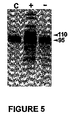
- FIG. 5 The requirement of extracellular bicarbonate ion for induction of capacitation in rat sperm.
- Sperm were incubated in BWW solution with (+) or without ( ⁇ ) 25 mM HCO 3 ⁇ for 4 hours and then tested for the presence of tyrosine-phosphorylated proteins.
- the presence of bicarbonate ion in the media was required for tyrosine phosphorylation of sperm proteins. Omission of bicarbonate resulted in phosphorylation levels the same as BWW alone (C).
- FIG. 6 Quantitative kinetics of cholesterol extraction and protein tyrosine phosphorylation of sperm proteins.
- Rat epididymal sperm were incubated in 1 or 2 mM methyl- ⁇ -cyclodextran (MBCD) and extracted cholesterol measured at time intervals out to 2 hours ( FIG. 6A ).
- the levels of cholesterol were determined by the Amplex Red Cholesterol assay and the results normalized to cholesterol extracted in BWW alone.
- Protein tyrosine phosphorylation was measured by western blot at hourly time points during extraction with MBCD ( FIG. 6B ). Cholesterol extraction reached a plateau with 1 mM MBCD at 30 minutes and with 2 mM MBCD between 60 and 120 minutes (later time points not shown). Maximal phosphorylation lagged behind maximal cholesterol extraction with both concentrations of MBCD.
- FIG. 7 The effect of incubation of rat epididymal sperm with exogenous purified Crisp-1 on the level of protein tyrosine phosphoryation.
- Sperm were incubated under capacitating conditions with 15 mg/ml lipid-rich BSA for 5 hours in the presence of increasing concentrations ( ⁇ g/ml) of purified proteins DE ( FIG. 7A ).
- Analysis of cells prior to capacitation incubation are shown as control (C).
- C At 400 ⁇ g/ml protein tyrosine phosphorylation was nearly completely inhibited.
- the same Western blot was stripped and probed with antibody CAP-A ( FIG. 7B ) and 4E9 ( FIG. 7C ).
- Protein detected by CAP-A demonstrates that Crisp-1 re-associates with the sperm in a dose dependent fashion that correlates with the inhibition of capacitation ( FIG. 7B ).
- Antibody CAP-A detects all forms of Crisp-1 including processed forms of proteins D and E.
- Monoclonal antibody 4E9 detects only forms of Protein E ( FIG. 7C ). Comparison of the staining with 4E9, which stains only a processed form of protein E extracted from the sperm surface, and CAP-A demonstrates that only an unprocessed form of protein D re-associates with sperm to inhibit phosphorylation.
- FIG. 8 The effect of incubation of rat epididymal sperm with exogenous purified Crisp-1 on the level of progesterone induced acrosome reaction.
- Sperm were incubated under capacitating conditions for 1 hours in the presence or absence of 400 ⁇ g/ml Crisp-1.
- Progesterone (P4) at 1 ⁇ M was added to sperm after 30 minutes of incubation to induce the acrosome reaction.
- DMSO the solvent used for the P4 stock solution, was added to control cells. Addition of P4 to capacitated sperm (+BSA+P4) caused a statistically significant (*P ⁇ 0.05) increase in acrosome reacted sperm compared to capacitated sperm (+BSA or +BSA+DMSO).
- FIG. 9 The reversibility of protein tyrosine phosphoryation inhibition by exogenous purified Crisp-1 in rat epididymal sperm.
- Sperm were incubated under capacitating conditions with 15 mg/ml lipid-rich BSA for 5 hours in the presence (lane 4) or absence (lane 3) of 200 ⁇ g/ml Crisp-1.
- sperm were washed free of exogenous Crisp-1 and incubated for an additional 3 (lane 5) or 19 (lane 6) hours.
- Sperm at time zero and after 5 hours in BWW without BSA are shown in lanes 1 and 2, respectively.
- Sperm proteins were analyzed by western blot analysis for protein tyrosine phosphorylation ( FIG. 9A ) and Crisp-1 ( FIG.
- FIG. 10 Effect of exogenous administration of cAMP analog, dibromo-cAMP (db-cAMP), and the phosphodiesterase inhibitor IBMX on the protein tyrosine phosphorylation associated with capacitation.
- db-cAMP dibromo-cAMP
- IBMX the phosphodiesterase inhibitor
- Control phosphorylation in BWW or BWW with BSA are shown in lanes 1 and 2, respectively.
- exogenous cAMP and IBMX overcome the block to phosphorylation caused by omission of BSA, Ca ++ , or HCO 3 ⁇ from the capacitation medium, indicating that cAMP acts downstream for the effect of these three required constituents of capacitation.
- the ability of cAMP to overcome the inhibition of phosphorylation by Crisp-1 was tested by incubating sperm under capacitating conditions with and without db-cAMP/IBMX in the presence of 400 ⁇ g/ml pure Crisp-1 (lanes 3 & 4, respectively, FIG. 10B ).
- FIG. 11 Amino acid sequence of human CRISP-1 (SEQ ID NO:1), rat CRISP-1 (SEQ ID NO:2), mouse CRISP-1 (SEQ ID NO:3), human CRISP-2 (SEQ ID NO:4), rat CRISP-2 (SEQ ID NO:5), human CRISP-3 (SEQ ID NO:6) and mouse CRISP-3 (SEQ ID NO7).
- FIG. 12 cDNA sequences encoding human CRISP-1 (SEQ ID NO:8), rat CRISP-1 (SEQ ID NO:9), mouse CRISP-1 (SEQ ID NO:10), human CRISP-2 (SEQ ID NO:11), rat CRISP-2 (SEQ ID NO:12), human CRISP-3 (SEQ ID NO:13) and mouse CRISP-3 (SEQ ID NO:14).
- CRISP polypeptide inhibits sperm capacitation, inhibits protein phosphorylation at tyrosine residues, and inhibits the acrosomal reaction.
- CRISP polypeptides can be used in improved methods of contraception, without affecting or interfering with the hormonal or immune systems.
- the CRISP polypeptides of the present invention include naturally occurring CRISP polypeptides and biologically active analogs thereof.
- Naturally occurring CRISP polypeptides comprise a family of Cysteine-RIch Secretory Proteins that are expressed in numerous organs in male animals, particularly in the reproductive tract. CRISP polypeptides are not generally expressed in female animals, with the exception of neutrophils, and possibly in tumors. In the male, CRISP-1 is expressed primarily in the epididymis, CRISP-2 is expressed primarily in the testis and CRISP-3 is expressed primarily in salivary glands. Prostate and seminal vesicles also have low expression of some of these proteins. Sperm require passage through the epididymis before they are able to fertilize an egg.
- CRISP-1 a secretory product of the epididymis
- CRISP-1 a secretory product of the epididymis
- the CRISP family of polypeptides has been extensively characterized and the amino acid sequences of the CRISP-1, CRISP-2 and CRISP-3 polypeptides from a number of species are known.
- the CRISP-1 polypeptides from human (Kratzschmar et al., Eur. J. Biochem. 236(3):827-36, 1996), rat (Klemme et al., Gene 240(2):279-88, 1999; Charest et al., Mol. Endocrinol. 2 (10), 999-1004, 1988; Brooks et al., Eur. J. Biochem 161(1):13-18, 1986), and mouse (Eberspaecher et al., Mol. Reprod. Dev.
- the human CRISP-1 amino acid sequence (SEQ ID NO:1) is available as Genbank Accession Number CAA64524, the rat CRISP-1 amino acid sequence (SEQ ID NO:2) is available as Genbank Accession Number AAD41529, and the mouse CRISP-1 amino acid sequence (SEQ ID NO:3) is available as Genbank Accession A49202, all of which are shown in FIG. 11 .
- the cDNA sequence encoding human CRISP-1 (SEQ ID NO:8) is available as Genbank Accession Number X95237
- the cDNA sequence encoding rat CRISP-1 (SEQ ID NO:9) is available as Genbank Accession Number NM — 022859
- the cDNA sequence encoding mouse CRISP-1 (SEQ ID NO:10) is available as Genbank Accession Number L05559, all of which are shown in FIG. 12 .
- the CRISP-2 polypeptides from human (Kratzschmar et al., Eur. J. Biochem. 236 (3), 827-836, 1996) and rat (O'Bryan et al., Mol. Reprod. Dev. 50 (3), 313-322, 1998) have been characterized.
- the human CRISP-2 amino acid sequence (SEQ ID NO:4), available as Genbank Accession Number P16562, and the rat CRISP-2 amino acid sequence (SEQ ID NO:5), available as Genbank Accession Number AAD48090, are shown in FIG. 11 .
- the cDNA sequence encoding human CRISP-2 (SEQ ID NO:11) is available as Genbank Accession Number X95239 and the cDNA sequence encoding rat CRISP-2 (SEQ ID NO:12) is available as Genbank Accession Number AF078552, all of which are shown in FIG. 12 .
- the CRISP-3 polypeptides from human (Kratzschmar et al., Eur. J. Biochem. 236 (3), 827-836, 1996) and mouse (Haendler et al., Endocrinology 133 (1), 192-198 (1993)) have been characterized.
- the human CRISP-3 amino acid sequence (SEQ ID NO:6), available as Genbank Accession Number P54108, and the mouse CRISP-3 amino acid sequence (SEQ ID NO:7), available as Genbank Accession Number Q03402, are shown in FIG. 11 .
- the cDNA sequence encoding human CRISP-3 (SEQ ID NO:13) is available as Genbank Accession Number X95240 and the cDNA sequence encoding mouse CRISP-3 (SEQ ID NO:14) is available as Genbank Accession Number L05560, all of which are shown in FIG. 12 .
- the CRISP polypeptides of the present invention may be derived from a variety of species, including, but not limited to, human, primate, rat, mouse, bovine, and horse.
- the CRISP polypeptides of the present invention include, but are not limited to, CRISP-1, CRISP-2 and CRISP-3 polypeptides.
- the CRISP polypeptides of the present invention include, but are not limited to, human CRISP-1 (SEQ ID NO:1), rat CRISP-1 (SEQ ID NO:2), mouse CRISP-1 (SEQ ID NO:3), human CRISP-2 (SEQ ID NO:4), rat CRISP-2 (SEQ ID NO:5), human CRISP-3 (SEQ ID NO:6), and mouse CRISP-3 (SEQ ID NO:7).
- Polypeptide refers to a polymer of amino acids and does not refer to a specific length of a polymer of amino acids.
- the terms peptide, oligopeptide, protein, and enzyme are included within the definition of polypeptide, whether naturally occurring or synthetically derived, for instance, by recombinant techniques or chemically or enzymatically synthesized. This term also includes post-expression modifications of the polypeptide, for example, glycosylations, acetylations, phosphorylations, and the like. The following abbreviations are used throughout the application:
- a CRISP polypeptide also includes “biologically active analogs” of naturally occurring CRISP polypeptides.
- the CRISP polypeptides of the present invention include, but are not limited to, biologically active analogs of human CRISP-1 (SEQ ID NO:1), rat CRISP-1 (SEQ ID NO:2), mouse CRISP-1 (SEQ ID NO:3), human CRISP-2 (SEQ ID NO:4), rat CRISP-2 (SEQ ID NO:5), human CRISP-3 (SEQ ID NO:6), or mouse CRISP-3 (SEQ ID NO:7).
- biological activity means to inhibit protein tyrosine phosphorylation, inhibit sperm capacitation, inhibit an acrosome reaction, and/or inhibit fertilization of an egg by sperm.
- biological activity of a CRISP polypeptide can be easily assessed using the various assays described herein as well as other assays well known to one with ordinary skill in the art.
- An inhibition in biological activity can be readily ascertained by the various assays described herein, and by assays known to one of skill in the art.
- An inhibition in biological activity can be quantitatively measured and described as a percentage of the biological activity of a comparable control.
- the biological activity of the present invention includes an inhibition that is at least about 5%, at least about 10%, at least about 15%, at least about 20%, at least about 25%, at least about 30%, at least about 35%, at least about 40%, at least about 45%, at least about 50%, at least about 55%, at least about 60%, at least about 65%, at least about 70%, at least about 75%, at least about 80%, at least about 85%, at least about 90%, at least about 95%, at least about 99%, at least about 100%, at least about 110%, at least about 125%, at least about 150%, at least about 200%, at least or about 250% of the activity of a suitable control.
- a “biologically active analog” of a CRISP polypeptide includes polypeptides having one or more amino acid substitutions that do not eliminate biological activity.
- Substitutes for an amino acid in the polypeptides of the invention may be selected from other members of the class to which the amino acid belongs. For example, it is well-known in the art of protein biochemistry that an amino acid belonging to a grouping of amino acids having a particular size or characteristic (such as charge, hydrophobicity and hydrophilicity) can be substituted for another amino acid without altering the activity of a protein, particularly in regions of the protein that are not directly associated with biological activity. Substitutes for an amino acid may be selected from other members of the class to which the amino acid belongs.
- nonpolar (hydrophobic) amino acids include alanine, leucine, isoleucine, valine, proline, phenylalanine, tryptophan, and tyrosine.
- Polar neutral amino acids include glycine, serine, threonine, cysteine, tyrosine, asparagine and glutamine.
- the positively charged (basic) amino acids include arginine, lysine and histidine.
- the negatively charged (acidic) amino acids include aspartic acid and glutamic acid.
- Examples of such preferred conservative substitutions include Lys for Arg and vice versa to maintain a positive charge; Glu for Asp and vice versa to maintain a negative charge; Ser for Thr so that a free —OH is maintained; and Gln for Asn to maintain a free NH2.
- biologically active analogs of a CRISP polypeptide containing deletions or additions of one or more contiguous or noncontiguous amino acids that do not eliminate the biological activity of the CRISP polypeptide are also contemplated.
- a “biologically active analog” of a CRISP polypeptide includes “fragments” and “modifications” of a CRISP polypeptide.
- a “fragment” of a CRISP polypeptide means a CRISP polypeptide that has been truncated at the N-terminus, the C-terminus, or both.
- the CRISP protein family is characterized by sixteen-conserved cysteine residues located within the C-terminus of the polypeptide.
- a “fragment” of a CRISP polypeptide may include 1, 2, 3, 4, 5 6, 7, 8, 9, 10, 11, 12, 13, 14, 15, or 16 of the conserved cysteine residues of the CRISP protein family.
- a fragment may range for about 5 to about 250 amino acids in length.
- Fragments of a CRISP polypeptide with potential biological activity can be identified by many means. One means of identifying such fragments of a CRISP polypeptide with biological activity is to compare the amino acid sequences of a CRISP polypeptide from rat, mouse, human and/or other species to one another. Regions of homology can then be prepared as fragments.
- a “modification” of a CRISP polypeptide includes CRISP polypeptides or fragments thereof chemically or enzymatically derivatized at one or more constituent amino acid, including side chain modifications, backbone modifications, and N- and C-terminal modifications including acetylation, hydroxylation, methylation, amidation, and the attachment of carbohydrate or lipid moieties, cofactors, and the like. Modified polypeptides of the invention may retain the biological activity of the unmodified polypeptide or may exhibit a reduced or increased biological activity.
- the CRISP polypeptides and biologically active analogs thereof of the present invention include native (naturally occurring), recombinant, and chemically or enzymatically synthesized polypeptides.
- the CRISP polypeptides of the present invention may be prepared following the procedures for the isolation of CRISP-1 polypeptide from rat sperm detailed by Hall and Tubbs ( Prep. Biochem. Biotechnol. 27(4):239-51, 1997).
- the CRISP polypeptides of the present invention can be prepared recombinantly, by well known methods, including, for example, preparation as fusion proteins in bacteria and insect cells.
- isolated means that a polynucleotide or polypeptide is either removed from its natural environment or synthetically derived, for instance by recombinant techniques, or chemically or enzymatically synthesized.
- An isolated polynucleotide denotes a polynucleotide that has been removed from its natural genetic milieu and is thus free of other extraneous or unwanted coding sequences, and is in a form suitable for use within genetically engineered protein production systems.
- Isolated polynucleotides of the present invention are free of other coding sequences with which they are ordinarily associated, but may include naturally occurring 5′ and 3′ untranslated regions such as promoters and terminators.
- the polynucleotide or polypeptide is purified, i.e., essentially free from any other polynucleotides or polypeptides and associated cellular products or other impurities.
- structural similarity refers to the identity between two polypeptides. Structural similarity is generally determined by aligning the residues of the two polypeptides to optimize the number of identical amino acids along the lengths of their sequences; gaps in either or both sequences are permitted in making the alignment in order to optimize the number of identical amino acids, although the amino acids in each sequence must nonetheless remain in their proper order.
- polypeptides may be compared using the Blastp program of the BLAST 2 search algorithm, as described by Tatusova et al. ( FEMS Microbiol. Lett., 174; 247-250, 1999) and available on the world wide web at ncbi.nlm.nih.gov/BLAST/.
- structural similarity may be referred to by percent “identity” or may be referred to by percent “similarity.” “Identity” refers to the presence of identical amino acids and “similarity” refers to the presence of not only identical amino acids but also the presence of conservative substitutions.
- the CRISP polypeptides of the present invention include polypeptides with at least about 40%, at least about 45%, at least about 50%, at least about 55%, at least about 60%, at least about 65%, at least about 70%, at least about 75%, at least about 80%, at least about 85%, at least about 90%, at least about 95%, or at least about 99% structural identity to a known rat, mouse or human CRISP polypeptide.
- the CRISP polypeptides of the present invention also include polypeptides with at least about 40%, at least about 45%, at least about 50%, at least about 55%, at least about 60%, at least about 65%, at least about 70%, at least about 75%, at least about 80%, at least about 85%, at least about 90%, at least about 95%, or at least about 99% structural similarity to a known rat, mouse or human CRISP polypeptide.
- the CRISP polypeptides of the present invention may include, but are not limited to, polypeptides with at least about 40%, at least about 45%, at least about 50%, at least about 55%, at least about 60%, at least about 65%, at least about 70%, at least about 75%, at least about 80%, at least about 85%, at least about 90%, at least about 95%, or at least about 99% structural identity to human CRISP-1 (SEQ ID NO:1), rat CRISP-1 (SEQ ID NO:2), or mouse CRISP-1 (SEQ ID NO:3).
- the CRISP polypeptides of the present invention may also include, but are not limited to, polypeptides with at least about 40%, at least about 45%, at least about 50%, at least about 55%, at least about 60%, at least about 65%, at least about 70%, at least about 75%, at least about 80%, at least about 85%, at least about 90%, at least about 95%, or at least about 99% structural similarity to human CRISP-1 (SEQ ID NO:1), rat CRISP-1 (SEQ ID NO:2), or mouse CRISP-1 (SEQ ID NO:3).
- a CRISP polypeptide including biologically active analogs thereof, can be administered to a subject in an effective amount sufficient to inhibit protein phosphorylation at tyrosine residues, inhibit sperm capacitation, inhibit an acrosome reaction, and/or inhibit the fertilization of an egg by sperm.
- the CRISP polypeptides of the present invention may be administered to a male or female individual.
- the individual may be a mammal, including, but not limited to a mouse, rat, primate, bovine, or human.
- a CRISP-1 polypeptide, or a biologically active analog thereof can be administered to a subject in an effective amount sufficient to inhibit protein phosphorylation at tyrosine residues, inhibit sperm capacitation, inhibit an acrosome reaction, and/or inhibit the fertilization of an egg by sperm.
- an “acrosome reaction” or “acrosomal reaction” includes the sequence of structural changes that occur in spermatozoa when in the vicinity of an oocyte. Such structural changes serve to facilitate entry of a spermatozoon into the oocyte and include the fusion of portions of the outer membrane of the acrosome with the plasma membrane of the sperm head, creating openings through which the enzymes of the acrosome are released. See, for example, Wasserman et al., Nat. Cell Biol. 3:9-14, 2001.
- an “effective amount” of an agent as provided herein is meant a nontoxic but sufficient amount of the agent or composition to provide the desired effect.
- an “effective amount” of a CRISP polypeptide is an amount sufficient to inhibit protein phosphorylation at a tyrosine residue, inhibit sperm capacitation, inhibit an acrosome reaction, and/or affect contraception.
- the exact amount required will vary from subject to subject, depending on the species, age, and general condition of the subject, the severity of the condition being treated, and the particular agent and its mode of administration, and the like. Thus, it is not possible to specify an exact “effective amount.” However, an appropriate effective amount may be determined by one of ordinary skill in the art using only routine experimentation. Therapeutically effective concentrations and amounts may be determined for each application herein empirically by testing the compounds in known in vitro and in vivo systems, such as those described herein; dosages for humans or other animals may then be extrapolated therefrom.
- a CRISP polypeptide may be delivered by intravaginal administration.
- a CRISP polypeptide may be provided as a cream gel, foam, emulsion, suppository, and the like.
- CRISP polypeptides may be contained within a time released vaginal implant.
- a CRISP polypeptide may be delivered by oral administration.
- a CRISP polypeptide may be provided as a liquid, a tablet, a pill, a capsule, a gel coated tablet, a syrup, or some other oral administration method.
- CRISP polypeptides may be contained within a bio-erodible matrix for time-controlled release.
- a CRISP polypeptide may be delivered by transdermal administration.
- a CRISP polypeptide may be provided as a cream, a transdermal patch, and the like.
- CRISP polypeptides may be contained within a time released composition.
- a CRISP polypeptide may be delivered by parenteral administration.
- a CRISP polypeptide may by provided in an aqueous solution, for example, the solution should be suitably buffered if necessary and the liquid diluent first rendered isotonic with sufficient saline or glucose.
- aqueous solutions are especially suitable for intravenous, intramuscular, subcutaneous, intraperitoneal, and intratumoral administration.
- sterile aqueous media that can be employed will be known to those of skill in the art in light of the present disclosure (see for example, “Remington's Pharmaceutical Sciences” 15th Edition). Some variation in dosage will necessarily occur depending on the condition of the subject being treated. The person responsible for administration will, in any event, determine the appropriate dose for the individual subject.
- preparations should meet sterility, pyrogenicity, and general safety and purity standards as required by the FDA.
- the present invention includes contraceptive compositions including an effective amount of a CRISP polypeptide, or a biologically active analog thereof, in an amount effective to inhibit sperm capacitation, inhibit protein tyrosine phosphorylation, inhibit an acrosome reaction, and/or effect contraception.
- These contraceptive compositions may contain one or more active agents.
- such contraceptive compositions may include, one or more CRISP polypeptides.
- Such contraceptive compositions may include one or more additional active agents that are not a CRISP polypeptide.
- Such active agents may include, but are not limited to, spermicidal agents and/or antiviral agents.
- the CRISP polypeptides of the present invention may be administered at once, or may be divided into a number of smaller doses to be administered at intervals of time. It is understood that the precise dosage and duration of treatment is a function of the desired therapeutic outcome and may be determined empirically using known testing protocols or by extrapolation from in vivo or in vitro test data. It is to be noted that concentrations and dosage values may also vary with the severity of the condition to be treated. It is to be further understood that for any particular subject, specific dosage regimens should be adjusted over time according to the individual need and the professional judgment of the person administering or supervising the administration of the compositions, and that the concentration ranges set forth herein are exemplary only and are not intended to limit the scope or practice of the claimed compositions and methods.
- the agents of the present invention may be administered to the subject in combination with other modes of contraception. The agents of the present invention can be administered before, during or after the administration of the other therapies.
- the CRISP polypeptides of the present invention may be formulated in a composition along with a “carrier.”
- carrier includes any and all solvents, dispersion media, vehicles, coatings, diluents, antibacterial and antifungal agents, isotonic and absorption delaying agents, buffers, carrier solutions, suspensions, colloids, and the like.
- carrier includes any and all solvents, dispersion media, vehicles, coatings, diluents, antibacterial and antifungal agents, isotonic and absorption delaying agents, buffers, carrier solutions, suspensions, colloids, and the like.
- the use of such media and agents for pharmaceutical active substances is well known in the art. Except insofar as any conventional media or agent is incompatible with the active ingredient, its use in the therapeutic compositions is contemplated. Supplementary active ingredients can also be incorporated into the compositions.
- pharmaceutically acceptable is meant a material that is not biologically or otherwise undesirable, i.e., the material may be administered to an individual along with a CRISP polypeptide without causing any undesirable biological effects or interacting in a deleterious manner with any of the other components of the pharmaceutical composition in which it is contained.
- a “subject” or an “individual” is an organism, including, for example, a mammal.
- a mammal may include, for example, a rat, mouse, a primate, a domestic pet, such as, but not limited to, a dog or a cat, livestock, such as, but not limited to, a cow, a horse, and a pig, or a human.
- Subject also includes model organisms, including, for example, animal models, used to study fertilization of an egg by sperm, sperm capacitation, protein tyrosine phosphorylation, or the acrosome reaction.
- control sample or subject is one in which a CRISP pathway has not been manipulated in any way.
- ex vivo is a cell that has been removed from the body of a subject and in vivo is within the body of a subject.
- a,” “an,” “the,” and “at least one” are used interchangeably and mean one or more than one.
- the present invention also includes an isolated molecule, the molecule being present on the sperm plasma membrane and binds to a CRISP polypeptide.
- the molecule may be an isolated component of a calcium channel or a receptor involved in calcium channel signaling.
- the isolated molecule may be a molecule being present on the sperm plasma membrane and binds to a CRISP-1 polypeptide, or a biologically active analog, fragment, or modification thereof.
- This molecule that binds to a CRISP-1 polypeptide may be an isolated component of a calcium channel or a receptor involved in calcium channel signaling.
- Example 1 The results of Example 1 are shown in FIG. 1 .
- Rat sperm were collected from the end of the epididymis and incubated in a defined capacitation medium in vitro for 5 hours under controlled conditions. A sample of sperm was taken at the beginning of incubation to provide the time zero conditions (lane 1 of FIG. 1 ). Aliquots of collected sperm were incubated under the following various conditions:
- FIG. 1A shows phosphotyrosine distribution in sperm under the various incubation conditions. Under non-capacitating conditions, there appears to be some phosphorylation activity. This phosphorylation activity is significantly increased under capacitation conditions, with numerous different proteins exhibiting phosphorylation. Phosphorylation activity is inhibited on many proteins by the addition of CRISP-1.
- FIG. 1B shows the same gel stained with an anti-CRISP-1 antibody. In lane 1 (time zero) one can see two bands (the D form and the E form of CRISP-1). Under both non-capacitating and capacitating conditions, the D form of CRISP-1 is lost from sperm (see lanes 2 and 3). When CRISP-1 is added back (see lanes 4, 5 and 6), the D form re-appears in a dose-dependent fashion. The E form, which is also present in the added CRISP-1 protein, remains constant under all experimental conditions.
- CRISP-1 protein tyrosine phosphorylation, a universal indicator of capacitation.
- Crisp-1 (DE, AEG) is a glycoprotein couplet (comprised of protein D and protein E, hereinafter referred to collectively as Crisp-1) that is secreted by the epididymal epithelium (Brooks and Higgins, Journal of Reproduction & Fertility 1980; 59: 363-375; Moore et al, Molecular Reproduction & Development 1994; 37: 181-194) and associates with the sperm surface (Rochwerger and Cuasnicu, Molecular Reproduction & Development 1992; 31: 3441; Xu et al, Mol Reprod Dev 1997; 46: 377-382.).
- Crisp-1 is one of many epididymis-secreted proteins that associate with sperm (Faye et al, Biol Reprod 1980, 23: 423-432; Kohane et al, Biol Reprod 1980, 23: 737-742; Moore, J Exp Zool 1981, 215: 77-85 (1981); Wong and Tsang, Biol Reprod 1982, 27: 1239-1246; Tezon et al, Biol Reprod 1985, 32: 591-597; Iusem et al, Biol Reprod 1989, 40: 307-316; Vreeburg et al., Bull Assoc Anat ( Nancy ) 1991, 75: 171-173; Rankin et al., Biology of Reproduction 1992, 46: 747-766; Boue e
- capacitation has been the subject of intense investigation, particularly since it is possible to capacitate sperm in vitro and use them to fertilize an egg.
- Common themes about what happens during capacitation are beginning to emerge.
- it is necessary for cholesterol to be removed from the membrane which can be accomplished in vitro by incubating sperm in a medium containing serum albumin (Davis, Proc Soc Exp Biol Med 1976, 151: 240-243; Davis et al., Proc Natl Acad Sci USA 1980, 77: 1546-1550) or other cholesterol-binding agents such as cyclodextrins (Choi and Toyoda, Biol Reprod 1998, 59: 1328-1333; Visconti et al., Biol Reprod 1999, 61: 76-84).
- Cholesterol removal results in a cAMP-dependent tyrosine phosphorylation of a number of proteins, both in the sperm plasma membrane and in intracellular structures such as the axoneme and fibrous sheath. Initiation and completion of capacitation is absolutely dependent on extracellular Ca ++ and HCO 3 ⁇ , in addition to a cholesterol sequestering agent.
- Anti-Phosphotyrosine (4G10) monoclonal IgG conjugated to horseradish peroxidase (HRP) was purchased from Upstate Biotechnology Inc. (Lake Placid, N.Y.).
- ALEXA FLUOR 488 goat anti-rabbit IgG, AMPLEX Red Cholesterol Assay Kit and Slow-Fade were purchased from Molecular Probes (Eugene, Oreg.).
- Cold water fish skin gelatin (40% solution) was purchased from Electron Microscopy Sciences (Washington, Pa.).
- SUPER SIGNAL West Pico Chemiluminescent Substrate was purchased from Pierce Chemical Co. (Rockford, Ill.).
- BWW minus calcium or bicarbonate was prepared according to the recipe reported by Biggers, et. al. (1971) (Biggers et al, Methods in Mammalian Embryology 1971, 86-116).
- Sperm were capacitated in BWW with 15 mg/ml ALBUMAX I lipid-rich BSA, unless otherwise noted.
- Other cholesterol acceptor molecules included Fraction V BSA and methyl- ⁇ -cyclodextrin, and were added to BWW in some experiments.
- blots were blocked with 6.5% fish skin gelatin in TBS-T (Tris Buffererd Saline with 0.1% Tween 20) for 30 minutes followed by incubation with anti-phosphotyrosine-HRP antibody (1:15,000), in blocking solution, for 1 hour at room temperature. The blots were washed with TBS-T, followed by incubation with HRP substrate (Super Signal West Pico) for 5 minutes. Blots were exposed to X-ray film for 5 to 30 seconds.
- TBS-T Tris Buffererd Saline with 0.1% Tween 20
- HRP substrate Super Signal West Pico
- sperm were stained immunocytochemically with anti-peptide antibody CAP-A and monoclonal antibody 4E9 essentially as previously described (Moore et al., Molecular Reproduction & Development 1994; 37: 181-194). Briefly, sperm were washed 3 ⁇ in BWW to remove media, fixed with Bouin's fixative for 30 minutes and washed extensively with PBS. Cells were blocked for 30 minutes with 1% BSA/PBS and antibodies were added for an hour incubation at room temperature. The anti-peptide antibody CAP-A was used at a dilution of 1:200 while mAb 4E9 was used at 1:1000.
- the final mixture was centrifuged for 5 minutes at 600 ⁇ g and one ml of the organic (lower) phase was removed to a new tube.
- the lipids in the organic phase were dried under a stream of desiccated nitrogen and stored at ⁇ 20° C.
- Cholesterol was measured in the extracted lipid samples using the Amplex Red Cholesterol Assay Kit, according to the manufacturers instructions. Briefly, dried lipid samples were resuspended in 50 ⁇ l of reaction buffer and mixed 1:1 with working solution containing 300 ⁇ M Amplex Red reagent, 2 U/ml horseradish peroxidase, 2 U/ml cholesterol oxidase and 2 U/ml cholesterol esterase in wells of a 96-well microtiter plate. A standard curve was prepared using the cholesterol reference standard provided with the kit. All samples were incubated for 2 hrs at 37° C. Fluorescence of reaction product was measured at various time points in a FL600 Microplate Reader (BIOTEK Instruments, Inc., Winooski, Vt.) with an excitation filter of 530 nm and an emission filter of 590 nm.
- FL600 Microplate Reader BIOTEK Instruments, Inc., Winooski, Vt.
- Acrosome reaction and staining The acrosome reaction and assessment of acrosomal status was performed essentially as described by Bendahmane et al. (Bendahmane et al., Arch Biochem Biophys 2002, 404: 38-47). Following incubation under capacitating or non-capacitating conditions for 30 minutes, progesterone (P4), dissolved in DMSO, was added to a final concentration of 1 ⁇ M. After an additional 30 minutes of incubation, sperm were fixed in 4% paraformaldehyde, washed and dried on slides.
- P4 progesterone
- the sperm were stained with 0.22% Coomassie blue G-250 solution for 2 minutes, rinsed with distilled water and allowed to air dry. Slides were coverslipped using Permount mounting media and observed under a Nikon brightfield microscope at a magnification of 600 ⁇ . For each condition within an experiment, 500 cells were assessed for acrosomal status.
- FIG. 2A demonstrates, by western blot with an antibody against phosphotyrosine, the dependence of capacitation on incubation with a lipid-accepting molecule, in this experiment bovine serum albumin (BSA).
- BSA bovine serum albumin
- FIG. 3A demonstrates that lipid-rich BSA was superior to fraction V for inducing tyrosine phosphorylation in rat sperm at all concentrations investigated. In fact, incubation of sperm with fraction V BSA gave very low levels of tyrosine phosphorylation in rat sperm.
- FIG. 4 The dependence of rat sperm capacitation on exogenous Ca ++ is shown in FIG. 4 .
- Incubation in the absence of exogenously added Ca ++ for 4 hours was accompanied by minimal tyrosine phosphorylation compared to sperm incubated in the presence of 1.7 mM Ca ++ .
- the level of tyrosine phosphorylation in the absence of exogenous Ca ++ was higher than that seen in the absence of BSA, which may be attributable to trace amounts of Ca ++ in the medium or to the availability of Ca ++ from intracellular sources.
- capacitation was shown to be dependent on the presence of bicarbonate ion in the medium by assessing protein tyrosine phosphorylation in the presence and absence of HCO 3 ⁇ ( FIG. 5 ). Solutions in this experiment were buffered with HEPES buffer to insure that the requirement of bicarbonate was not simply due to its buffering capacity in the medium.
- sperm were incubated with two doses of the cholesterol-binding molecule methyl- ⁇ -cyclodextran (MBCD). During incubation with MBCD, cholesterol was removed from the sperm in a dose-dependent fashion. MBCD at 2 mM removed twice as much cholesterol as 1 mM MBCD ( FIG. 6A ). When protein tyrosine phosphorylation was measured, phosphorylation in 2 mM MBCD was increased in both kinetics and total amount over that observed with 1 mM MBCD ( FIG. 6B ).
- MBCD cholesterol-binding molecule methyl- ⁇ -cyclodextran
- Protein tyrosine phosphorylation lagged behind the removal of cholesterol from the sperm plasma membrane, as indicated by the fact that cholesterol removal was at a plateau within 30 minutes with 1 mM MBCD ( FIG. 6A ) yet no increase in phosphorylation was observed until 2 hours ( FIG. 6B ). These results indicated that protein tyrosine phosphorylation is dependent on cholesterol removal in a dose dependent fashion, but that the kinetics of cholesterol removal is not rate limiting to the phosphorylation process.
- GM 1 staining is tightly confined to the post-acrosomal and head cap regions of the sperm.
- GM 1 staining begins to diffuse over the equatorial region and acrosome, and increased staining is seen on the sperm tail.
- the sperm show very specific staining with ⁇ CT over the equatorial segment and the head cap region.
- the intensity of staining with antibody 4E9 which recognizes only the E form of Crisp-1, does not change with time in BWW and decreases only marginally when the sperm are incubated for 4 hours with MBCD.
- Staining, with antibodies that differentiate the binding of the protein D and E form of Crisp-1 demonstrates that the majority of the protein D and E forms of Crisp-1 is lost during capacitation incubation, with or without a cholesterol binding agent.
- the protein E form of Crisp-1 remains confined to the tail of the sperm without detectable loss or redistribution during the capacitation process.
- FIG. 7A shows the effect on protein tyrosine phosphorylation of incubating sperm under capacitating conditions in the presence of increasing concentrations of purified Crisp-1. At a dose of 400 ⁇ g/ml, Crisp-1 inhibits almost completely the protein tyrosine phosphorylation associated with capacitation.
- sperm Most, if not all, mammalian sperm require cholesterol removal from the plasma membrane in order for capacitation to occur. However, the mechanism by which cholesterol removal facilitates capacitation in sperm is not known. One likely possibility is that removal of cholesterol from lipid microdomains, or rafts, facilitates the movement of signaling molecules in the plasma membrane, allowing critical interactions that lead to the activation of adenylate cyclase and subsequent tyrosine phosphorylation of target proteins.
- lipid rafts on mouse and guinea pig sperm (Travis et al., Dev Biol 2001, 240: 599-610; Trevino et al., FEBS Lett 2001, 509: 119-125.; Honda et al., J Biol Chem 2002, 277: 16976-16984).
- rat sperm contain discrete regions of staining for binding of cholera toxin ⁇ subunit, which binds to the ganglioside GM 1 , a common lipid component of membrane rafts.
- capacitation and the acrosome reaction are calcium ion dependent functions of mammalian sperm (Visconti et al., J Reprod Immunol 2002, 53: 133-150); Breitbart, Mol Cell Endocrinol 2002, 187: 139-144).
- Our results demonstrate that exogenous calcium is required for the tyrosine phosphorylation accompanying capacitation, consistent with this requirement shown in earlier studies for other mammalian species (Visconti et al., Development 1995, 121: 1129-1137; Dorval et al., Biol Reprod 2002, 67: 1538-1545).
- the mouse seminal vesicle autoantigen has been shown to inhibit protein tyrosine phosphorylation associated with sperm capacitation and human seminal plasma has been shown to contain a factor(s) with similar activity (Huang et al., Biol Reprod 2000, 63: 1562-1566 (2000); Tomes et al., Mol Hum Reprod 1998, 4: 17-25). Although little is known of the mechanism of capacitation suppression reported in seminal plasma and secretory proteins of the seminal vesicles, it appears that suppression of premature capacitation is an important function of fluids of the male excurrent reproductive tract.
- a possible role for Crisp-1 in sperm-egg fusion may involve regulation of signaling events, particularly those associated with protein tyrosine phosphorylation. Processed Crisp-1 remaining on the sperm plasma membrane could interact with signaling molecules on the egg surface to initiate or otherwise regulate the fusion event.
Landscapes
- Health & Medical Sciences (AREA)
- Life Sciences & Earth Sciences (AREA)
- Chemical & Material Sciences (AREA)
- General Health & Medical Sciences (AREA)
- Organic Chemistry (AREA)
- Medicinal Chemistry (AREA)
- Zoology (AREA)
- Public Health (AREA)
- Gastroenterology & Hepatology (AREA)
- Veterinary Medicine (AREA)
- Proteomics, Peptides & Aminoacids (AREA)
- Pharmacology & Pharmacy (AREA)
- Bioinformatics & Cheminformatics (AREA)
- Animal Behavior & Ethology (AREA)
- Engineering & Computer Science (AREA)
- General Chemical & Material Sciences (AREA)
- Biophysics (AREA)
- Epidemiology (AREA)
- Toxicology (AREA)
- Chemical Kinetics & Catalysis (AREA)
- Reproductive Health (AREA)
- Biochemistry (AREA)
- Nuclear Medicine, Radiotherapy & Molecular Imaging (AREA)
- Genetics & Genomics (AREA)
- Molecular Biology (AREA)
- Endocrinology (AREA)
- Marine Sciences & Fisheries (AREA)
- Immunology (AREA)
- Gynecology & Obstetrics (AREA)
- Medicines That Contain Protein Lipid Enzymes And Other Medicines (AREA)
- Peptides Or Proteins (AREA)
Abstract
Description
- A=Ala=Alanine
- V=Val=Valine
- L=Leu=Leucine
- I=Ile=Isoleucine
- P=Pro=Proline
- F=Phe=Phenylalanine
- W=Trp=Tryptophan
- M=Met=Methionine
- G=Gly=Glycine
- S=Ser=Serine
- T=Thr=Threonine
- C=Cys=Cysteine
- Y=Tyr=Tyrosine
- N=Asn=Asparagine
- Q=Gln=Glutamine
- D=Asp=Aspartic Acid
- E=Glu=Glutamic Acid
- K=Lys=Lysine
- R=Arg=Arginine
- H=His=Histidine
-
- For 5 hours under non-capacitation conditions (
lane 2 ofFIG. 1 ) - For 5 hours under capacitating conditions (
lane 3 ofFIG. 1 ) - For 5 hours under capacitating conditions with increasing concentrations of CRISP-1 (
lanes FIG. 1 ).
At the end of incubation, sperm were solubilized and solubilized sperm proteins were separated by SDS gel electrophoresis. Proteins were then transblotted onto a membrane and treated with a primary anti-phosphotyrosine antibody. The results of this anti-phosphotyrosine western blot are shown inFIG. 1A . After recording the results with the anti-phosphotyrosine antibody, the transblot was striped of antibodies and re-probed with an antibody against CRISP-1. The results of this anti-CRISP-1 western blot are shown asFIG. 1B .
- For 5 hours under non-capacitation conditions (
- SEQ ID NO: 1-7 are amino acid sequences.
- SEQ ID NO: 8-14 are cDNA sequences.
Claims (3)
Priority Applications (1)
| Application Number | Priority Date | Filing Date | Title |
|---|---|---|---|
| US10/515,868 US7405202B2 (en) | 2002-05-28 | 2003-05-28 | CRISP polypeptides as contraceptives and inhibitors of sperm capacitation |
Applications Claiming Priority (3)
| Application Number | Priority Date | Filing Date | Title |
|---|---|---|---|
| US38362802P | 2002-05-28 | 2002-05-28 | |
| PCT/US2003/016669 WO2003100025A2 (en) | 2002-05-28 | 2003-05-28 | Crisp polypeptides as contraceptives and inhibitors of sperm capacitation |
| US10/515,868 US7405202B2 (en) | 2002-05-28 | 2003-05-28 | CRISP polypeptides as contraceptives and inhibitors of sperm capacitation |
Publications (2)
| Publication Number | Publication Date |
|---|---|
| US20050282729A1 US20050282729A1 (en) | 2005-12-22 |
| US7405202B2 true US7405202B2 (en) | 2008-07-29 |
Family
ID=29584590
Family Applications (1)
| Application Number | Title | Priority Date | Filing Date |
|---|---|---|---|
| US10/515,868 Expired - Fee Related US7405202B2 (en) | 2002-05-28 | 2003-05-28 | CRISP polypeptides as contraceptives and inhibitors of sperm capacitation |
Country Status (6)
| Country | Link |
|---|---|
| US (1) | US7405202B2 (en) |
| EP (1) | EP1513865A4 (en) |
| AU (1) | AU2003239901A1 (en) |
| CA (1) | CA2487419A1 (en) |
| MX (1) | MXPA04011731A (en) |
| WO (1) | WO2003100025A2 (en) |
Families Citing this family (10)
| Publication number | Priority date | Publication date | Assignee | Title |
|---|---|---|---|---|
| US7405202B2 (en) | 2002-05-28 | 2008-07-29 | Regents Of The University Of Minnesota | CRISP polypeptides as contraceptives and inhibitors of sperm capacitation |
| US8367313B2 (en) | 2003-07-23 | 2013-02-05 | Cornell University | Method of determining sperm capacitation |
| WO2005009222A2 (en) | 2003-07-23 | 2005-02-03 | Cornell Research Foundation, Inc. | Method of determining sperm capacitation |
| CN103293319A (en) * | 2013-05-22 | 2013-09-11 | 苏州市马尔泰新材料有限公司 | Gold-labeled test paper for rapidly diagnosing carcinoma jaw |
| CN103308695A (en) * | 2013-05-22 | 2013-09-18 | 苏州市马尔泰新材料有限公司 | Cysteine-rich secretory protein 1 (CRISP1) kit for cheek carcinoma diagnosis |
| CN103308693A (en) * | 2013-05-22 | 2013-09-18 | 苏州市马尔泰新材料有限公司 | Application of secretory protein 1 rich in cysteine in medical apparatus |
| CN103257242B (en) * | 2013-05-22 | 2015-01-28 | 上海市第十人民医院 | Application of CRISP (cysteine-rich secretory protein)1 kit for diagnosing carcinoma of buccal mucosa |
| CN103308694A (en) * | 2013-05-22 | 2013-09-18 | 苏州市马尔泰新材料有限公司 | Gold-labeled kit for salivary gland carcinoma diagnosis |
| CN103267859B (en) * | 2013-05-22 | 2015-03-11 | 上海市第十人民医院 | Application of CRISP1 (cystein-rich secretory protein 1) test paper for diagnosing gingival carcinoma |
| TWI748992B (en) | 2016-02-17 | 2021-12-11 | 美商安德羅維亞生命科學公司 | Methods and test kits for determining male fertility status |
Citations (41)
| Publication number | Priority date | Publication date | Assignee | Title |
|---|---|---|---|---|
| GB974910A (en) | 1961-07-06 | 1964-11-11 | Joseph Bornstein | Polypeptide growth promoting agent for animals |
| US5250417A (en) | 1991-04-23 | 1993-10-05 | Rhomed Incorporated | Method for acrosome reaction assay |
| US5565197A (en) | 1991-02-21 | 1996-10-15 | Exoxemis, Inc. | Method which utilizes a haloperoxidase composition to inhibit the growth of microorganisms which cause sexually transmitted diseases |
| US5569581A (en) | 1993-11-17 | 1996-10-29 | The Penn State Research Foundation | Alteration and prediction of male fertility using seminal plasma and its components |
| WO1997027218A1 (en) | 1996-01-29 | 1997-07-31 | U.S. Environmental Protection Agency | Method for evaluating and affecting male fertility |
| US5660997A (en) | 1987-04-08 | 1997-08-26 | Cytogam, Inc. | Methods for determining antibodies specific for sex associated sperm membrane proteins |
| US5707829A (en) | 1995-08-11 | 1998-01-13 | Genetics Institute, Inc. | DNA sequences and secreted proteins encoded thereby |
| US5723305A (en) | 1996-04-18 | 1998-03-03 | Sullivan; Robert | Marker for male infertility and/or fertility |
| US5756681A (en) | 1997-04-02 | 1998-05-26 | New York Blood Center | Method for providing contraception |
| US5851817A (en) | 1994-07-19 | 1998-12-22 | Board Of Regents, The University Of Texas System | Species specific egg-binding proteins of sperm |
| US5910568A (en) | 1996-01-11 | 1999-06-08 | The Penn State Research Foundation | Molecule involved in binding of sperm to egg surfaces and procedures for use of this molecule to enhance or decrease potential fertility |
| JPH11279197A (en) | 1998-02-26 | 1999-10-12 | Council Scient Ind Res | Purified new goat epididymal advancing protein and purification of the protein useful as fertility promoting factor/suppressing factor |
| WO1999054354A1 (en) | 1998-04-23 | 1999-10-28 | U.S. Environmental Protection Agency | Sp22, a fertility-associated protein from sperm and a method for evaluating and affecting male fertility using it |
| WO1999057267A2 (en) | 1998-05-05 | 1999-11-11 | University Of Bristol | Human epididymal glytathione peroxidase |
| US5989549A (en) | 1998-06-08 | 1999-11-23 | Immucon Inc. | Acrosomal sperm protein and uses thereof |
| US6011013A (en) | 1997-06-20 | 2000-01-04 | Oregon Health Sciences University | Contraceptive compositions and methods |
| US6045786A (en) | 1989-02-01 | 2000-04-04 | Johns Hopkins University | Topical application of antibodies for prophylaxis against sexually transmitted diseases and pregnancy |
| US6051603A (en) | 1998-01-20 | 2000-04-18 | Wayne Hughes Institute | Vanadium (IV) metallocene complexes having sperm motility inhibiting activity |
| WO2000031264A2 (en) | 1998-11-20 | 2000-06-02 | Zymogenetics, Inc. | Testis-specific cystatin-like protein cystatin t |
| EP1006125A1 (en) | 1998-12-02 | 2000-06-07 | Council of Scientific and Industrial Research | Goat epididymal forward motility protein |
| US6083940A (en) | 1994-01-06 | 2000-07-04 | Sri International | Method and composition for effecting contraception in a mammalian male |
| US6159934A (en) | 1995-12-20 | 2000-12-12 | Indiana University Foundation | Use of GHRH-RP to stimulate stem cell factor production |
| US6166178A (en) | 1996-10-01 | 2000-12-26 | University Technology Corporation | Telomerase catalytic subunit |
| US6177475B1 (en) | 1992-06-30 | 2001-01-23 | Billings Pharmaceuticals, Inc. | Methods of using integrin modulators for treatment of inflammation |
| US6180682B1 (en) | 1999-01-26 | 2001-01-30 | Virgil A. Place | Buccal drug delivery system for use in male contraception |
| US6191120B1 (en) | 1998-03-25 | 2001-02-20 | Wayne Hughes Institute | Spermicidally active 5-halo-6-alkoxy-5,6-dihydro-2′,3′-dideoxy-uridines and their pharamaceutical compositions |
| US6197940B1 (en) | 1996-01-29 | 2001-03-06 | U.S. Environmental Protection Agency | Method for evaluating and affecting male fertility |
| WO2001031343A2 (en) | 1999-10-28 | 2001-05-03 | Urogenesys, Inc. | Diagnosis and therapy of cancer using sgp28-related molecules |
| US6235708B1 (en) | 1998-11-20 | 2001-05-22 | Zymogenetics, Inc | Testis-specific cystatin-like protein cystatin T |
| US6245529B1 (en) | 1998-11-20 | 2001-06-12 | Zymogenetics, Inc. | Testis-specific cystatin-like protein cystatin T |
| US6251671B1 (en) | 1996-02-28 | 2001-06-26 | Vanderbilt University | Compositions and methods of making embryonic stem cells |
| US6258364B1 (en) | 1996-06-28 | 2001-07-10 | University Of Virginia Patent Foundation | Purified sperm surface antigen, monoclonal antibody therefor and application therefor |
| WO2001066747A2 (en) | 2000-03-03 | 2001-09-13 | Curagen Corporation | Proteins named fctrx and nucleic acids encoding same |
| WO2002000001A2 (en) | 2000-06-30 | 2002-01-03 | Ingenium Pharmaceuticals Ag | HUMAN G PROTEIN-COUPLED RECEPTOR IGPcR20, AND USES THEREOF |
| US6337348B1 (en) | 1998-11-05 | 2002-01-08 | Parker Hughes Institute | Oxy-vanadium (iv) complexes having spermicidal activity |
| US20020004479A1 (en) | 1996-05-23 | 2002-01-10 | Ursula-Friederike Habenicht | Zona pellucida proteins for contraception |
| WO2002014348A2 (en) | 2000-08-11 | 2002-02-21 | Applied Research Systems Ars Holding N.V. | Glycoproteins and methods of use thereof |
| US6350736B1 (en) | 1998-06-29 | 2002-02-26 | Parker Hughes Institute | Aryl phosphate derivatives of d4T having anti-HIV activity |
| US20020058309A1 (en) | 1997-12-03 | 2002-05-16 | Genentech, Inc. | Secreted and transmembrane polypeptides and nucleic acids encoding the same |
| US20020164368A1 (en) | 2000-12-18 | 2002-11-07 | Ronald Zimmerman | Male contraceptive method and composition |
| WO2003100025A2 (en) | 2002-05-28 | 2003-12-04 | Regents Of The University Of Minnesota | Crisp polypeptides as contraceptives and inhibitors of sperm capacitation |
Family Cites Families (1)
| Publication number | Priority date | Publication date | Assignee | Title |
|---|---|---|---|---|
| JP2002335292A (en) * | 2001-05-08 | 2002-11-22 | Nec Microsystems Ltd | Fsk demodulation method and system |
-
2003
- 2003-05-28 US US10/515,868 patent/US7405202B2/en not_active Expired - Fee Related
- 2003-05-28 AU AU2003239901A patent/AU2003239901A1/en not_active Abandoned
- 2003-05-28 WO PCT/US2003/016669 patent/WO2003100025A2/en not_active Ceased
- 2003-05-28 EP EP03734209A patent/EP1513865A4/en not_active Withdrawn
- 2003-05-28 CA CA002487419A patent/CA2487419A1/en not_active Abandoned
- 2003-05-28 MX MXPA04011731A patent/MXPA04011731A/en not_active Application Discontinuation
Patent Citations (48)
| Publication number | Priority date | Publication date | Assignee | Title |
|---|---|---|---|---|
| GB974910A (en) | 1961-07-06 | 1964-11-11 | Joseph Bornstein | Polypeptide growth promoting agent for animals |
| US5660997A (en) | 1987-04-08 | 1997-08-26 | Cytogam, Inc. | Methods for determining antibodies specific for sex associated sperm membrane proteins |
| US6045786A (en) | 1989-02-01 | 2000-04-04 | Johns Hopkins University | Topical application of antibodies for prophylaxis against sexually transmitted diseases and pregnancy |
| US6355235B1 (en) | 1989-02-01 | 2002-03-12 | Johns Hopkins University | Topical application of antibodies for contraception and for prophylaxis against sexually transmitted diseases |
| US5565197A (en) | 1991-02-21 | 1996-10-15 | Exoxemis, Inc. | Method which utilizes a haloperoxidase composition to inhibit the growth of microorganisms which cause sexually transmitted diseases |
| US5718896A (en) | 1991-02-21 | 1998-02-17 | Eoe, Inc. | Methods for the inhibiting the transmission of sexually transmitted diseases |
| US5250417A (en) | 1991-04-23 | 1993-10-05 | Rhomed Incorporated | Method for acrosome reaction assay |
| US6177475B1 (en) | 1992-06-30 | 2001-01-23 | Billings Pharmaceuticals, Inc. | Methods of using integrin modulators for treatment of inflammation |
| US5569581A (en) | 1993-11-17 | 1996-10-29 | The Penn State Research Foundation | Alteration and prediction of male fertility using seminal plasma and its components |
| US6083940A (en) | 1994-01-06 | 2000-07-04 | Sri International | Method and composition for effecting contraception in a mammalian male |
| US5851817A (en) | 1994-07-19 | 1998-12-22 | Board Of Regents, The University Of Texas System | Species specific egg-binding proteins of sperm |
| US5969093A (en) | 1995-08-11 | 1999-10-19 | Genetics Institute, Inc. | Secreted proteins |
| US5707829A (en) | 1995-08-11 | 1998-01-13 | Genetics Institute, Inc. | DNA sequences and secreted proteins encoded thereby |
| US6159934A (en) | 1995-12-20 | 2000-12-12 | Indiana University Foundation | Use of GHRH-RP to stimulate stem cell factor production |
| US5910568A (en) | 1996-01-11 | 1999-06-08 | The Penn State Research Foundation | Molecule involved in binding of sperm to egg surfaces and procedures for use of this molecule to enhance or decrease potential fertility |
| US6197940B1 (en) | 1996-01-29 | 2001-03-06 | U.S. Environmental Protection Agency | Method for evaluating and affecting male fertility |
| WO1997027218A1 (en) | 1996-01-29 | 1997-07-31 | U.S. Environmental Protection Agency | Method for evaluating and affecting male fertility |
| US6251671B1 (en) | 1996-02-28 | 2001-06-26 | Vanderbilt University | Compositions and methods of making embryonic stem cells |
| US5723305A (en) | 1996-04-18 | 1998-03-03 | Sullivan; Robert | Marker for male infertility and/or fertility |
| US6344442B2 (en) | 1996-05-23 | 2002-02-05 | Schering Aktiengesellschaft | Zona pellucida proteins for contraception |
| US20020004479A1 (en) | 1996-05-23 | 2002-01-10 | Ursula-Friederike Habenicht | Zona pellucida proteins for contraception |
| US6258364B1 (en) | 1996-06-28 | 2001-07-10 | University Of Virginia Patent Foundation | Purified sperm surface antigen, monoclonal antibody therefor and application therefor |
| US6166178A (en) | 1996-10-01 | 2000-12-26 | University Technology Corporation | Telomerase catalytic subunit |
| US5756681A (en) | 1997-04-02 | 1998-05-26 | New York Blood Center | Method for providing contraception |
| US6011013A (en) | 1997-06-20 | 2000-01-04 | Oregon Health Sciences University | Contraceptive compositions and methods |
| US20020058309A1 (en) | 1997-12-03 | 2002-05-16 | Genentech, Inc. | Secreted and transmembrane polypeptides and nucleic acids encoding the same |
| US6319947B1 (en) | 1998-01-20 | 2001-11-20 | Parker Hughes Institute | Vanadium (IV) metallocene complexes having spermicidal activity |
| US6051603A (en) | 1998-01-20 | 2000-04-18 | Wayne Hughes Institute | Vanadium (IV) metallocene complexes having sperm motility inhibiting activity |
| JPH11279197A (en) | 1998-02-26 | 1999-10-12 | Council Scient Ind Res | Purified new goat epididymal advancing protein and purification of the protein useful as fertility promoting factor/suppressing factor |
| US6231862B1 (en) | 1998-02-26 | 2001-05-15 | Council Of Scientific And Industrial Research | Purified new epididymal forward motility protein and a process for the isolation of the said epididymal forward motility protein useful as a fertility prometer/blocker |
| US6191120B1 (en) | 1998-03-25 | 2001-02-20 | Wayne Hughes Institute | Spermicidally active 5-halo-6-alkoxy-5,6-dihydro-2′,3′-dideoxy-uridines and their pharamaceutical compositions |
| WO1999054354A1 (en) | 1998-04-23 | 1999-10-28 | U.S. Environmental Protection Agency | Sp22, a fertility-associated protein from sperm and a method for evaluating and affecting male fertility using it |
| WO1999057267A2 (en) | 1998-05-05 | 1999-11-11 | University Of Bristol | Human epididymal glytathione peroxidase |
| US5989549A (en) | 1998-06-08 | 1999-11-23 | Immucon Inc. | Acrosomal sperm protein and uses thereof |
| US6350736B1 (en) | 1998-06-29 | 2002-02-26 | Parker Hughes Institute | Aryl phosphate derivatives of d4T having anti-HIV activity |
| US6337348B1 (en) | 1998-11-05 | 2002-01-08 | Parker Hughes Institute | Oxy-vanadium (iv) complexes having spermicidal activity |
| WO2000031264A2 (en) | 1998-11-20 | 2000-06-02 | Zymogenetics, Inc. | Testis-specific cystatin-like protein cystatin t |
| US6245529B1 (en) | 1998-11-20 | 2001-06-12 | Zymogenetics, Inc. | Testis-specific cystatin-like protein cystatin T |
| US6235708B1 (en) | 1998-11-20 | 2001-05-22 | Zymogenetics, Inc | Testis-specific cystatin-like protein cystatin T |
| EP1006125A1 (en) | 1998-12-02 | 2000-06-07 | Council of Scientific and Industrial Research | Goat epididymal forward motility protein |
| US6306823B1 (en) | 1998-12-02 | 2001-10-23 | Council Of Scientific & Industrial Research | Purified new epididymal forward motility protein and a process for isolation of the said epididymal forward motility protein useful as a fertility promoter/blocker |
| US6180682B1 (en) | 1999-01-26 | 2001-01-30 | Virgil A. Place | Buccal drug delivery system for use in male contraception |
| WO2001031343A2 (en) | 1999-10-28 | 2001-05-03 | Urogenesys, Inc. | Diagnosis and therapy of cancer using sgp28-related molecules |
| WO2001066747A2 (en) | 2000-03-03 | 2001-09-13 | Curagen Corporation | Proteins named fctrx and nucleic acids encoding same |
| WO2002000001A2 (en) | 2000-06-30 | 2002-01-03 | Ingenium Pharmaceuticals Ag | HUMAN G PROTEIN-COUPLED RECEPTOR IGPcR20, AND USES THEREOF |
| WO2002014348A2 (en) | 2000-08-11 | 2002-02-21 | Applied Research Systems Ars Holding N.V. | Glycoproteins and methods of use thereof |
| US20020164368A1 (en) | 2000-12-18 | 2002-11-07 | Ronald Zimmerman | Male contraceptive method and composition |
| WO2003100025A2 (en) | 2002-05-28 | 2003-12-04 | Regents Of The University Of Minnesota | Crisp polypeptides as contraceptives and inhibitors of sperm capacitation |
Non-Patent Citations (102)
Also Published As
| Publication number | Publication date |
|---|---|
| CA2487419A1 (en) | 2003-12-04 |
| EP1513865A2 (en) | 2005-03-16 |
| MXPA04011731A (en) | 2005-02-14 |
| WO2003100025A2 (en) | 2003-12-04 |
| EP1513865A4 (en) | 2006-05-03 |
| AU2003239901A8 (en) | 2003-12-12 |
| US20050282729A1 (en) | 2005-12-22 |
| WO2003100025A3 (en) | 2004-06-24 |
| AU2003239901A1 (en) | 2003-12-12 |
Similar Documents
| Publication | Publication Date | Title |
|---|---|---|
| Roberts et al. | Inhibition of capacitation-associated tyrosine phosphorylation signaling in rat sperm by epididymal protein Crisp-1 | |
| Karhunen et al. | Distribution of catechol-O-methyltransferase enzyme in rat tissues. | |
| Holtsberg et al. | Lysophosphatidic acid induces necrosis and apoptosis in hippocampal neurons | |
| US7405202B2 (en) | CRISP polypeptides as contraceptives and inhibitors of sperm capacitation | |
| Ekhlasi‐Hundrieser et al. | Expression of spermadhesin genes in porcine male and female reproductive tracts | |
| CZ340698A3 (en) | Peptides, pharmaceutical compositions and test kits containing them and a diagnostic procedure utilizing these peptides | |
| Estienne et al. | Androgen‐dependent expression of FcγRIIB2 by thyrocytes from patients with autoimmune Graves' disease: a possible molecular clue for sex dependence of autoimmune disease | |
| BOUKHAROV et al. | Guanine nucleotide-dependent translocation of RhoA from cytosol to high affinity membrane binding sites in human erythrocytes | |
| WO2016140910A2 (en) | Compositions and methods of using anti-mullerian hormone for treatment of infertility | |
| JP2002503962A (en) | Human protein phosphatase II-C-like protein | |
| WO2003004612A2 (en) | Inhibitor of t cell activation | |
| JP2006522022A (en) | Contraceptive methods and compositions associated with proteasome interference | |
| US6962988B2 (en) | Egg specific surface proteins | |
| Kumar Yadav et al. | Heparin and heparin binding proteins: potential relevance to reproductive physiology | |
| Karaman et al. | An experimental study on the use of exosomes against acetaminophen-induced uterine and fallopian tubes damage in rats | |
| CA2315294C (en) | Use of citrulline peptides derived from filaggrin for treating autoimmune diseases | |
| US20060089297A1 (en) | Sperm specific lysozyme-like proteins | |
| AU772403B2 (en) | Methods and compositions for modulating fertility | |
| US7384913B2 (en) | PT32 sperm protein, sperm c-Yes, oocyte cytoplasmic c-Yes, and uses thereof | |
| US20030207393A1 (en) | Cbp86, a sperm specific protein | |
| EP1132472A1 (en) | Novel protein and utilization thereof | |
| JP2006516896A (en) | ePAD, oocyte-specific protein | |
| WO2001023424A1 (en) | A phosphatidylethanolamine binding protein (pebp-2) and uses thereof | |
| Ruse | S100 proteins as calcium signaling mediators and transglutaminase substrates in keratinocyte biology | |
| CA2408022A1 (en) | Pt32 sperm protein, sperm c-yes, oocyte cytoplasmic c-yes, and uses thereof |
Legal Events
| Date | Code | Title | Description |
|---|---|---|---|
| AS | Assignment |
Owner name: MINNESOTA, REGENTS OF THE UNIVERSITY OF, MINNESOTA Free format text: ASSIGNMENT OF ASSIGNORS INTEREST;ASSIGNORS:HAMILTON, DAVID W.;ROBERTS, KENNETH P.;ENSRUD, KATHY M.;REEL/FRAME:016410/0655;SIGNING DATES FROM 20031126 TO 20031211 |
|
| STCF | Information on status: patent grant |
Free format text: PATENTED CASE |
|
| FPAY | Fee payment |
Year of fee payment: 4 |
|
| AS | Assignment |
Owner name: NATIONAL INSTITUTES OF HEALTH (NIH), U.S. DEPT. OF Free format text: CONFIRMATORY LICENSE;ASSIGNOR:UNIVERSITY OF MINNESOTA;REEL/FRAME:035446/0193 Effective date: 20150407 |
|
| FPAY | Fee payment |
Year of fee payment: 8 |
|
| FEPP | Fee payment procedure |
Free format text: MAINTENANCE FEE REMINDER MAILED (ORIGINAL EVENT CODE: REM.); ENTITY STATUS OF PATENT OWNER: SMALL ENTITY |
|
| LAPS | Lapse for failure to pay maintenance fees |
Free format text: PATENT EXPIRED FOR FAILURE TO PAY MAINTENANCE FEES (ORIGINAL EVENT CODE: EXP.); ENTITY STATUS OF PATENT OWNER: SMALL ENTITY |
|
| STCH | Information on status: patent discontinuation |
Free format text: PATENT EXPIRED DUE TO NONPAYMENT OF MAINTENANCE FEES UNDER 37 CFR 1.362 |
|
| STCH | Information on status: patent discontinuation |
Free format text: PATENT EXPIRED DUE TO NONPAYMENT OF MAINTENANCE FEES UNDER 37 CFR 1.362 |