US7185322B2 - Method and apparatus for parallel action processing - Google Patents
Method and apparatus for parallel action processing Download PDFInfo
- Publication number
- US7185322B2 US7185322B2 US10/889,232 US88923204A US7185322B2 US 7185322 B2 US7185322 B2 US 7185322B2 US 88923204 A US88923204 A US 88923204A US 7185322 B2 US7185322 B2 US 7185322B2
- Authority
- US
- United States
- Prior art keywords
- action
- actions
- asynchronous
- human
- element types
- Prior art date
- Legal status (The legal status is an assumption and is not a legal conclusion. Google has not performed a legal analysis and makes no representation as to the accuracy of the status listed.)
- Expired - Lifetime
Links
Images



Classifications
-
- G—PHYSICS
- G06—COMPUTING OR CALCULATING; COUNTING
- G06F—ELECTRIC DIGITAL DATA PROCESSING
- G06F8/00—Arrangements for software engineering
- G06F8/40—Transformation of program code
- G06F8/41—Compilation
Definitions
- the present application generally relates to systems and methods for software development and execution.
- the present application relates more specifically to methods for asynchronously converting human-readable software components into an executable format.
- Code promotion may be automated through the execution of software designed to carryout the transformation process.
- a batch program may be designed to promote code in a serial manner (also referred to herein as “synchronous” or “linear”). Following a serial method, one component is completely processed before the next is begun.
- serial code promotion is employed by prior art source and configuration management products, and products which maintain audit trails for program source changes.
- One shortcoming of serial code promotion techniques is that they fail to efficiently utilize processor time during execution. Accordingly, executing code promotion in a serial fashion can be time intensive. Consequently, there is a need for methods and apparatus that perform code promotion in a more time efficient manner.
- an example method for translating a plurality of human-readable software elements into a machine executable format.
- the method includes defining a plurality of actions to be performed. Each action is associated with at least one human-readable software element, and each action has an associated element type which is selected from among a plurality of element types.
- the method also includes sequencing the plurality of actions according to the plurality of associated element types.
- the method further includes executing a plurality of asynchronous action processing tasks, and assigning an action to each of the asynchronous action processing tasks in accordance with the sequencing. Actions continue to be assigned until each of the actions is performed.
- an example system for translating human-readable software elements into a machine executable format.
- the system includes an action definition module operative to define a plurality of actions to be performed on a plurality of human-readable software elements.
- the action definition module is further operative to associate one of a plurality of element types with each action.
- the system also includes an action sequencing module which is operative to sequence actions defined by the action definition module according to element type.
- the system further includes an asynchronous action execution module operative to instantiate a plurality of asynchronous action processing tasks.
- the asynchronous action execution module is further operative to assign each sequenced action to an asynchronous action processing task until all of the sequenced actions have been executed.
- the plurality of asynchronous action processing tasks are operative to execute the action assigned by the asynchronous action execution module.
- an example apparatus for translating a plurality of human-readable software elements into a machine executable format.
- the apparatus includes a processor and a memory connected to the processor.
- the memory stores a program to control the operation of said processor.
- the processor is operative with the program in the memory to define a plurality of actions to be performed. Each action associated with at least one human-readable software element, and each action has an associated element type selected from among a plurality of element types.
- the processor is also operative with the program in the memory to sequence the plurality of actions according to the plurality of associated element types, and execute a plurality of asynchronous action processing tasks.
- the program is further operative with the program in the memory to assign an action to each of the asynchronous action processing tasks in accordance with the sequencing until each of the actions is performed.
- an example computer-readable storage medium is disclosed.
- the medium is encoded with processing instructions for translating a plurality of human-readable software elements into a machine executable format.
- FIG. 1 is a block diagram illustrating an example software development environment
- FIG. 2 is a block diagram illustrating an example code promotion system
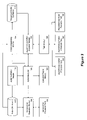
- FIG. 3 is an example methodology for asynchronous code promotion.
- Software development environment 100 includes one or more software element editing tools 110 .
- Such tools 110 may include text editors, HTML editors, graphical editors, and database definition tools, for example.
- Software element editing tools 110 are used to create and edit a plurality of software elements 120 .
- Software elements 120 include human-readable elements that may be transformed or interpreted to create a machine executable program or application.
- Software development environment 100 further includes action processing system 200 , also referred to herein as code promotion system 200 , which processes software elements 110 in cooperation with external processors 130 to generate machine executable elements 140 .
- External processors 130 may include any processor or utility for creating machine executable elements, such as an assembler, a compiler and a linker, for example.
- a schematic block diagram illustrates example code promotion system 200 , and associated data flow throughout the example system.
- the example code promotion system 200 may be a stand alone application or may be integrated into a more comprehensive software application and is used to transform human-readable software elements, such as C++ source code for example, into one or more machine executable files or modules.
- Example system 200 may be used to track changes for and transform software elements of a plurality of applications or projects in development.
- Example system 200 includes an action definition module 210 that enables a user to define actions to be executed by the system to transform a set of human-readable software elements into an executable format.
- Action definition module 210 stores the action definitions in database 215 .
- the action definitions in database 215 identify a human-readable software element, an element type, and an action to be executed.
- An element is an entity, such as a program copy member, for example, that is managed by system 200 .
- An element type is a user-defined grouping of elements. Common element types include copy members, header files, programs and link-edit control statements, for example. Due to the dependencies that may exist between elements of different types, action processing may need to occur in a specific sequence. An example of this is a program that uses a copy member. The copy member might need to be processed prior to the program, because the program is dependent on the copy member.
- Action executor module 220 When appropriate, such as upon completing a set of action definitions for a project, for example, a user may initiate action executor module 220 to execute the previously defined actions.
- Action executor module 220 initially determines whether the project actions are to be executed in a serial/synchronous fashion or in a parallel/asynchronous fashion. If the project actions are to be executed in a serial fashion, action executor module 220 directs serial action execution module 225 to control the execution of the project actions.
- Serial action execution module 225 employs a single serial action processor task 230 to execute each action defined for the project. In the illustrated embodiment, if project actions are determined to be executed in a serial fashion, the actions are executed in a first-in, first-out (“FIFO”) order by serial action execution module 225 .
- the project administrator could, at her option, enable or disable the parallel processing feature at installation or post-installation time.
- action executor module 220 directs action sequencing module 235 to sequence the action definitions for the project according to element type.
- the sequenced action definitions are stored in database 240 .
- other techniques may be used to provide sequenced action definitions, such as the use of an index file identifying the relevant action definitions and the order in which they should be processed asynchronously.
- asynchronous action execution module 245 is then initiated by action executor 220 .
- Asynchronous action execution module 245 accesses the sequenced action definitions 240 and directs task monitor 250 to instantiate and monitor a plurality of asynchronous action processor tasks 255 , 260 , and 265 .
- Task monitor 250 assigns actions to tasks 250 , 255 , and 260 in the sequenced order.
- Task monitor 250 is notified by each task when it completes the execution of its assigned action. It should be recognized that although the example system includes three tasks 255 , 260 , and 265 , more or fewer tasks may be employed. In one embodiment, a project administrator may define the number of asynchronous execution tasks that may be instantiated.
- task monitor 250 Upon being notified of a task completion, task monitor 250 queries the task for an action execution message log. The action execution messages are stored in memory by task monitor 250 . Task monitor then receives the next sequenced action having the same element type, if any, from execution module 245 . It should be noted that each task will be reused as many times as appropriate to complete processing of all actions in the sequenced action stack. If an action of the same element type is received, the action is dispatched to the available asynchronous action processor task 255 , 260 , and 165 that just completed its work. If an action is received, but for another element type, task monitor 250 waits for all asynchronous action processor tasks to complete processing the current element type prior to assigning actions having another element type.
- the execution module 245 notifies the action executor 220 of its completion. As execution processing completes, the action executor 220 queries the task monitor 250 for the stored action execution message logs and provides the messages to execution report module 270 which is responsible for preparing an execution report.
- FIG. 3 is a flowchart illustrating an example method 300 for translating human-readable software elements into machine executable format.
- a user or automated process defines the actions to be performed during a translation.
- Each action definition references an associated software element, an associated element type selected from a set of predefined element types and an action to be taken.
- the defined actions are attributed to a particular project, and certain project-specific values may be assigned.
- a user may define whether to utilize serial or parallel processing for a project.
- a user may determine the number of parallel action processor tasks to utilize when processing the actions of a project.
- an asynchronous action execution module such as module 245 , instantiates a plurality of asynchronous action processor tasks, such as tasks 255 , 260 and 265 the sequenced action definitions are processed in order according to element type as illustrated by blocks 325 , 330 and 335 .
- all of the action definitions associated with a particular element type are processed to completion before processing action definitions of another element type. Upon processing all of the action definitions associated with all of the element types, the processing is completed.
- the asynchronous action processing techniques described herein may make more efficient use of computer resources and lead to a reduction in the total time to complete processing as compared to the serial processing techniques of the prior art.
- the present application describes a system and method for accomplishing parallel action processing which has as one possible application the ability to promote code in a parallel manner enabling the realization of reduced processing time.
- the methods and systems described in the present application may be embodied in a stand-alone code promotion utility or may be incorporated into a more comprehensive software system, such one that automates the management of the software development process, from initial design through distribution, for example.
- a software system may be used to maintain audit trails for program source changes, as well as follow customer-defined procedures to transform software elements source to an executable format, such as through compiling, assembling, and linking.
- project administrators may use the system facilities to automate code promotion and may realized reduced processing time due to the parallel processing system and method described in the present application.
Landscapes
- Engineering & Computer Science (AREA)
- General Engineering & Computer Science (AREA)
- Theoretical Computer Science (AREA)
- Software Systems (AREA)
- Physics & Mathematics (AREA)
- General Physics & Mathematics (AREA)
- Stored Programmes (AREA)
- Magnetic Resonance Imaging Apparatus (AREA)
Priority Applications (1)
| Application Number | Priority Date | Filing Date | Title |
|---|---|---|---|
| US10/889,232 US7185322B2 (en) | 2003-07-11 | 2004-07-12 | Method and apparatus for parallel action processing |
Applications Claiming Priority (2)
| Application Number | Priority Date | Filing Date | Title |
|---|---|---|---|
| US48703903P | 2003-07-11 | 2003-07-11 | |
| US10/889,232 US7185322B2 (en) | 2003-07-11 | 2004-07-12 | Method and apparatus for parallel action processing |
Publications (2)
| Publication Number | Publication Date |
|---|---|
| US20050144596A1 US20050144596A1 (en) | 2005-06-30 |
| US7185322B2 true US7185322B2 (en) | 2007-02-27 |
Family
ID=34079335
Family Applications (1)
| Application Number | Title | Priority Date | Filing Date |
|---|---|---|---|
| US10/889,232 Expired - Lifetime US7185322B2 (en) | 2003-07-11 | 2004-07-12 | Method and apparatus for parallel action processing |
Country Status (3)
| Country | Link |
|---|---|
| US (1) | US7185322B2 (de) |
| EP (1) | EP1652072A4 (de) |
| WO (1) | WO2005008414A2 (de) |
Cited By (3)
| Publication number | Priority date | Publication date | Assignee | Title |
|---|---|---|---|---|
| US20060184652A1 (en) * | 2005-02-16 | 2006-08-17 | Microsoft Corporation | Applications for remote differential compresssion |
| US20180113679A1 (en) * | 2016-10-21 | 2018-04-26 | Samsung Electronics Co., Ltd. | System and method for software development based on procedures |
| US10318252B2 (en) | 2013-12-05 | 2019-06-11 | Ab Initio Technology Llc | Managing interfaces for sub-graphs |
Families Citing this family (13)
| Publication number | Priority date | Publication date | Assignee | Title |
|---|---|---|---|---|
| US7386663B2 (en) | 2004-05-13 | 2008-06-10 | Cousins Robert E | Transaction-based storage system and method that uses variable sized objects to store data |
| US7877350B2 (en) * | 2005-06-27 | 2011-01-25 | Ab Initio Technology Llc | Managing metadata for graph-based computations |
| CN101501678B (zh) * | 2006-08-10 | 2013-10-16 | 起元科技有限公司 | 在基于图的计算中分配服务 |
| EP2234017A3 (de) * | 2007-07-26 | 2010-10-27 | Ab Initio Technology LLC | Berechnung auf Grundlage von Transaktionsdiagrammen mit Fehlerverarbeitung |
| CN102317911B (zh) | 2009-02-13 | 2016-04-06 | 起元技术有限责任公司 | 管理任务执行 |
| US8667329B2 (en) * | 2009-09-25 | 2014-03-04 | Ab Initio Technology Llc | Processing transactions in graph-based applications |
| CN107066241B (zh) | 2010-06-15 | 2021-03-09 | 起元技术有限责任公司 | 用于动态加载基于图的计算的系统和方法 |
| US8966441B2 (en) * | 2012-07-12 | 2015-02-24 | Oracle International Corporation | Dynamic scripts to extend static applications |
| US9507682B2 (en) | 2012-11-16 | 2016-11-29 | Ab Initio Technology Llc | Dynamic graph performance monitoring |
| US10108521B2 (en) | 2012-11-16 | 2018-10-23 | Ab Initio Technology Llc | Dynamic component performance monitoring |
| US9274926B2 (en) | 2013-01-03 | 2016-03-01 | Ab Initio Technology Llc | Configurable testing of computer programs |
| US10657134B2 (en) | 2015-08-05 | 2020-05-19 | Ab Initio Technology Llc | Selecting queries for execution on a stream of real-time data |
| SG11201803929YA (en) | 2015-12-21 | 2018-06-28 | Ab Initio Technology Llc | Sub-graph interface generation |
Citations (12)
| Publication number | Priority date | Publication date | Assignee | Title |
|---|---|---|---|---|
| US5410696A (en) * | 1992-03-16 | 1995-04-25 | Hitachi, Ltd. | Method of processing a program by parallel processing, and a processing unit thereof |
| US5452461A (en) * | 1989-04-28 | 1995-09-19 | Hitachi, Ltd. | Program parallelizing apparatus capable of optimizing processing time |
| US5479598A (en) * | 1992-10-23 | 1995-12-26 | International Business Machines Corporation | Compact graphical parallel program user output interface controlled directly by the parallel computer program |
| US5561801A (en) * | 1991-12-13 | 1996-10-01 | Thinking Machines Corporation | System and method for multilevel promotion |
| US5732234A (en) * | 1990-05-04 | 1998-03-24 | International Business Machines Corporation | System for obtaining parallel execution of existing instructions in a particulr data processing configuration by compounding rules based on instruction categories |
| US5768594A (en) * | 1995-07-14 | 1998-06-16 | Lucent Technologies Inc. | Methods and means for scheduling parallel processors |
| US5774728A (en) * | 1995-12-27 | 1998-06-30 | International Business Machines Corporation | Method and system for compiling sections of a computer program for multiple execution environments |
| US5999729A (en) * | 1997-03-06 | 1999-12-07 | Continuum Software, Inc. | System and method for developing computer programs for execution on parallel processing systems |
| US5999987A (en) * | 1994-02-11 | 1999-12-07 | International Business Machines Corporation | Concurrent processing in object oriented parallel and near parallel |
| US6433802B1 (en) * | 1998-12-29 | 2002-08-13 | Ncr Corporation | Parallel programming development environment |
| US20030200536A1 (en) * | 2002-02-07 | 2003-10-23 | Thomas Stuefe | Parallel compiling with a serial scheduler |
| US20050066321A1 (en) * | 2003-09-22 | 2005-03-24 | Nikitin Andrey A. | Parallel processor language, method for translating C++ programs into this language, and method for optimizing execution time of parallel processor programs |
-
2004
- 2004-07-12 WO PCT/US2004/022175 patent/WO2005008414A2/en not_active Ceased
- 2004-07-12 US US10/889,232 patent/US7185322B2/en not_active Expired - Lifetime
- 2004-07-12 EP EP04756858A patent/EP1652072A4/de not_active Withdrawn
Patent Citations (12)
| Publication number | Priority date | Publication date | Assignee | Title |
|---|---|---|---|---|
| US5452461A (en) * | 1989-04-28 | 1995-09-19 | Hitachi, Ltd. | Program parallelizing apparatus capable of optimizing processing time |
| US5732234A (en) * | 1990-05-04 | 1998-03-24 | International Business Machines Corporation | System for obtaining parallel execution of existing instructions in a particulr data processing configuration by compounding rules based on instruction categories |
| US5561801A (en) * | 1991-12-13 | 1996-10-01 | Thinking Machines Corporation | System and method for multilevel promotion |
| US5410696A (en) * | 1992-03-16 | 1995-04-25 | Hitachi, Ltd. | Method of processing a program by parallel processing, and a processing unit thereof |
| US5479598A (en) * | 1992-10-23 | 1995-12-26 | International Business Machines Corporation | Compact graphical parallel program user output interface controlled directly by the parallel computer program |
| US5999987A (en) * | 1994-02-11 | 1999-12-07 | International Business Machines Corporation | Concurrent processing in object oriented parallel and near parallel |
| US5768594A (en) * | 1995-07-14 | 1998-06-16 | Lucent Technologies Inc. | Methods and means for scheduling parallel processors |
| US5774728A (en) * | 1995-12-27 | 1998-06-30 | International Business Machines Corporation | Method and system for compiling sections of a computer program for multiple execution environments |
| US5999729A (en) * | 1997-03-06 | 1999-12-07 | Continuum Software, Inc. | System and method for developing computer programs for execution on parallel processing systems |
| US6433802B1 (en) * | 1998-12-29 | 2002-08-13 | Ncr Corporation | Parallel programming development environment |
| US20030200536A1 (en) * | 2002-02-07 | 2003-10-23 | Thomas Stuefe | Parallel compiling with a serial scheduler |
| US20050066321A1 (en) * | 2003-09-22 | 2005-03-24 | Nikitin Andrey A. | Parallel processor language, method for translating C++ programs into this language, and method for optimizing execution time of parallel processor programs |
Non-Patent Citations (2)
| Title |
|---|
| Notification of Transmittal of The International Search Report for Application PCT/US04/22175 (4 pages), Sep. 23, 2005. |
| Written Opinion of the International Searching Authority for Application PCT/US04/22175 (5 pages), Sep. 23, 2005. |
Cited By (5)
| Publication number | Priority date | Publication date | Assignee | Title |
|---|---|---|---|---|
| US20060184652A1 (en) * | 2005-02-16 | 2006-08-17 | Microsoft Corporation | Applications for remote differential compresssion |
| US7640363B2 (en) * | 2005-02-16 | 2009-12-29 | Microsoft Corporation | Applications for remote differential compression |
| US10318252B2 (en) | 2013-12-05 | 2019-06-11 | Ab Initio Technology Llc | Managing interfaces for sub-graphs |
| US20180113679A1 (en) * | 2016-10-21 | 2018-04-26 | Samsung Electronics Co., Ltd. | System and method for software development based on procedures |
| US10592212B2 (en) * | 2016-10-21 | 2020-03-17 | Samsung Electronics Co., Ltd. | System and method for software development based on procedures |
Also Published As
| Publication number | Publication date |
|---|---|
| US20050144596A1 (en) | 2005-06-30 |
| WO2005008414A2 (en) | 2005-01-27 |
| EP1652072A2 (de) | 2006-05-03 |
| WO2005008414A3 (en) | 2005-11-17 |
| EP1652072A4 (de) | 2008-12-31 |
Similar Documents
| Publication | Publication Date | Title |
|---|---|---|
| US7185322B2 (en) | Method and apparatus for parallel action processing | |
| CN110287052B (zh) | 一种异常任务的根因任务确定方法及装置 | |
| CN110309071B (zh) | 测试代码的生成方法及模块、测试方法及系统 | |
| US7316005B2 (en) | Data race detection using sequential program analysis | |
| US7178134B2 (en) | Method and apparatus for resolving memory allocation trace data in a computer system | |
| US7552361B2 (en) | Software testing optimization apparatus and method | |
| JP5209059B2 (ja) | ソース・コード処理方法、システム、及びプログラム | |
| US20120054722A1 (en) | Trace generating unit, system, and program of the same | |
| US20110126179A1 (en) | Method and System for Dynamic Patching Software Using Source Code | |
| CN119396406B (zh) | 一种用于Java开发的自动增量编译方法和系统 | |
| CN109615138B (zh) | 一种作业流程调优方法及装置 | |
| CN105302717A (zh) | 一种大数据平台的检测方法及装置 | |
| CN115905031B (zh) | 一种基于精准质量保障系统的测试用例推荐方法 | |
| CN107102942B (zh) | 一种基于输入域错误定位的极小故障定位方法 | |
| CN1295778C (zh) | 一种验证芯片硬件行为与软件模拟行为的一致性的方法 | |
| CN120029637B (zh) | Kubernetes集群一键部署及生命周期管理方法及系统 | |
| GB2539961A (en) | Code hotspot encapsulation | |
| CN111208993B (zh) | 一种流程化数据分析处理系统 | |
| CN114091111A (zh) | 一种区块链智能合约的存储方法及装置 | |
| CN115774612B (zh) | 一种基于线程的程序执行过程剖析方法和系统 | |
| KR102935141B1 (ko) | 테스트 케이스 재사용을 위한 소프트웨어 테스트 시스템 및 방법 | |
| US6526408B1 (en) | System and method for in-process data record summarization and exception testing using virtual data records held in processor memory | |
| CN113505970A (zh) | 基于表级血缘关系的数据批次处理方法及系统 | |
| Prodan et al. | ZEN: a directive based experiment specification language for performance and parameter studies of parallel scientific applications | |
| CN116797338A (zh) | 主机数据移行冲突检测方法及装置 |
Legal Events
| Date | Code | Title | Description |
|---|---|---|---|
| AS | Assignment |
Owner name: COMPUTER ASSOCIATES THINK INC., NEW YORK Free format text: ASSIGNMENT OF ASSIGNORS INTEREST;ASSIGNORS:BUCKLEY, FREDERICK H.;MCCULLOUGH, PETER G.;REEL/FRAME:016318/0456 Effective date: 20050208 |
|
| STCF | Information on status: patent grant |
Free format text: PATENTED CASE |
|
| STCF | Information on status: patent grant |
Free format text: PATENTED CASE |
|
| FPAY | Fee payment |
Year of fee payment: 4 |
|
| FEPP | Fee payment procedure |
Free format text: PAYOR NUMBER ASSIGNED (ORIGINAL EVENT CODE: ASPN); ENTITY STATUS OF PATENT OWNER: LARGE ENTITY Free format text: PAYER NUMBER DE-ASSIGNED (ORIGINAL EVENT CODE: RMPN); ENTITY STATUS OF PATENT OWNER: LARGE ENTITY |
|
| FPAY | Fee payment |
Year of fee payment: 8 |
|
| MAFP | Maintenance fee payment |
Free format text: PAYMENT OF MAINTENANCE FEE, 12TH YEAR, LARGE ENTITY (ORIGINAL EVENT CODE: M1553); ENTITY STATUS OF PATENT OWNER: LARGE ENTITY Year of fee payment: 12 |