US6919472B2 - Catalyst compositions for the selective conversion of alkanes to unsaturated carboxylic acids, methods of making and methods of using thereof - Google Patents
Catalyst compositions for the selective conversion of alkanes to unsaturated carboxylic acids, methods of making and methods of using thereof Download PDFInfo
- Publication number
- US6919472B2 US6919472B2 US10/325,093 US32509302A US6919472B2 US 6919472 B2 US6919472 B2 US 6919472B2 US 32509302 A US32509302 A US 32509302A US 6919472 B2 US6919472 B2 US 6919472B2
- Authority
- US
- United States
- Prior art keywords
- mov
- catalyst
- catalyst composition
- acid
- niobium
- Prior art date
- Legal status (The legal status is an assumption and is not a legal conclusion. Google has not performed a legal analysis and makes no representation as to the accuracy of the status listed.)
- Expired - Lifetime
Links
Images

Classifications
-
- C—CHEMISTRY; METALLURGY
- C07—ORGANIC CHEMISTRY
- C07C—ACYCLIC OR CARBOCYCLIC COMPOUNDS
- C07C51/00—Preparation of carboxylic acids or their salts, halides or anhydrides
- C07C51/16—Preparation of carboxylic acids or their salts, halides or anhydrides by oxidation
- C07C51/21—Preparation of carboxylic acids or their salts, halides or anhydrides by oxidation with molecular oxygen
- C07C51/215—Preparation of carboxylic acids or their salts, halides or anhydrides by oxidation with molecular oxygen of saturated hydrocarbyl groups
-
- B—PERFORMING OPERATIONS; TRANSPORTING
- B01—PHYSICAL OR CHEMICAL PROCESSES OR APPARATUS IN GENERAL
- B01J—CHEMICAL OR PHYSICAL PROCESSES, e.g. CATALYSIS OR COLLOID CHEMISTRY; THEIR RELEVANT APPARATUS
- B01J23/00—Catalysts comprising metals or metal oxides or hydroxides, not provided for in group B01J21/00
- B01J23/002—Mixed oxides other than spinels, e.g. perovskite
-
- B—PERFORMING OPERATIONS; TRANSPORTING
- B01—PHYSICAL OR CHEMICAL PROCESSES OR APPARATUS IN GENERAL
- B01J—CHEMICAL OR PHYSICAL PROCESSES, e.g. CATALYSIS OR COLLOID CHEMISTRY; THEIR RELEVANT APPARATUS
- B01J23/00—Catalysts comprising metals or metal oxides or hydroxides, not provided for in group B01J21/00
- B01J23/38—Catalysts comprising metals or metal oxides or hydroxides, not provided for in group B01J21/00 of noble metals
- B01J23/54—Catalysts comprising metals or metal oxides or hydroxides, not provided for in group B01J21/00 of noble metals combined with metals, oxides or hydroxides provided for in groups B01J23/02 - B01J23/36
- B01J23/66—Silver or gold
- B01J23/68—Silver or gold with arsenic, antimony, bismuth, vanadium, niobium, tantalum, polonium, chromium, molybdenum, tungsten, manganese, technetium or rhenium
- B01J23/683—Silver or gold with arsenic, antimony, bismuth, vanadium, niobium, tantalum, polonium, chromium, molybdenum, tungsten, manganese, technetium or rhenium with chromium, molybdenum or tungsten
- B01J23/686—Silver or gold with arsenic, antimony, bismuth, vanadium, niobium, tantalum, polonium, chromium, molybdenum, tungsten, manganese, technetium or rhenium with chromium, molybdenum or tungsten with molybdenum
-
- B—PERFORMING OPERATIONS; TRANSPORTING
- B01—PHYSICAL OR CHEMICAL PROCESSES OR APPARATUS IN GENERAL
- B01J—CHEMICAL OR PHYSICAL PROCESSES, e.g. CATALYSIS OR COLLOID CHEMISTRY; THEIR RELEVANT APPARATUS
- B01J27/00—Catalysts comprising the elements or compounds of halogens, sulfur, selenium, tellurium, phosphorus or nitrogen; Catalysts comprising carbon compounds
- B01J27/14—Phosphorus; Compounds thereof
- B01J27/186—Phosphorus; Compounds thereof with arsenic, antimony, bismuth, vanadium, niobium, tantalum, polonium, chromium, molybdenum, tungsten, manganese, technetium or rhenium
- B01J27/195—Phosphorus; Compounds thereof with arsenic, antimony, bismuth, vanadium, niobium, tantalum, polonium, chromium, molybdenum, tungsten, manganese, technetium or rhenium with vanadium, niobium or tantalum
- B01J27/198—Vanadium
- B01J27/199—Vanadium with chromium, molybdenum, tungsten or polonium
-
- B—PERFORMING OPERATIONS; TRANSPORTING
- B01—PHYSICAL OR CHEMICAL PROCESSES OR APPARATUS IN GENERAL
- B01J—CHEMICAL OR PHYSICAL PROCESSES, e.g. CATALYSIS OR COLLOID CHEMISTRY; THEIR RELEVANT APPARATUS
- B01J35/00—Catalysts, in general, characterised by their form or physical properties
- B01J35/70—Catalysts, in general, characterised by their form or physical properties characterised by their crystalline properties, e.g. semi-crystalline
-
- B—PERFORMING OPERATIONS; TRANSPORTING
- B01—PHYSICAL OR CHEMICAL PROCESSES OR APPARATUS IN GENERAL
- B01J—CHEMICAL OR PHYSICAL PROCESSES, e.g. CATALYSIS OR COLLOID CHEMISTRY; THEIR RELEVANT APPARATUS
- B01J2235/00—Indexing scheme associated with group B01J35/00, related to the analysis techniques used to determine the catalysts form or properties
- B01J2235/15—X-ray diffraction
-
- B—PERFORMING OPERATIONS; TRANSPORTING
- B01—PHYSICAL OR CHEMICAL PROCESSES OR APPARATUS IN GENERAL
- B01J—CHEMICAL OR PHYSICAL PROCESSES, e.g. CATALYSIS OR COLLOID CHEMISTRY; THEIR RELEVANT APPARATUS
- B01J2523/00—Constitutive chemical elements of heterogeneous catalysts
-
- B—PERFORMING OPERATIONS; TRANSPORTING
- B01—PHYSICAL OR CHEMICAL PROCESSES OR APPARATUS IN GENERAL
- B01J—CHEMICAL OR PHYSICAL PROCESSES, e.g. CATALYSIS OR COLLOID CHEMISTRY; THEIR RELEVANT APPARATUS
- B01J37/00—Processes, in general, for preparing catalysts; Processes, in general, for activation of catalysts
- B01J37/02—Impregnation, coating or precipitation
- B01J37/0236—Drying, e.g. preparing a suspension, adding a soluble salt and drying
Definitions
- This invention relates to a catalyst for producing an unsaturated carboxylic acid from an alkane, a method of making said catalyst and a method of using said catalyst.
- this invention relates to a catalyst for producing acrylic acid from propane by a single step vapor phase oxidation reaction.
- an unsaturated carboxylic acid such as acrylic acid or methacrylic acid
- an olefin such as propylene or isobutylene
- oxygen to form an alkenylaldehyde, such as acrolein or methacrolein, which is subsequently catalytically reacted with oxygen.
- Alkanes, such as propane have advantages of cost and of availability over olefins. Furthermore, a one step process would have advantages over the present commercial process.
- U.S. Pat. No. 5,380,933 discloses a catalyst of oxides of molybdenum, vanadium, tellurium, and elements selected from niobium, tantalum, tungsten, titanium, aluminum, zirconium, chromium, manganese, iron, ruthenium, cobalt, rhodium, nickel, palladium, platinum, antimony, bismuth, boron, indium or cerium.
- Japanese published patent application H10-57813 discloses a metal oxide catalyst of molybdenum, vanadium, tellurium and/or antimony and an element selected from niobium, tantalum, tungsten, titanium, aluminum, zirconium, chromium, manganese, iron, ruthenium, cobalt, rhodium, nickel, palladium, platinum, bismuth, boron, indium, phosphorus, rare earth elements, alkali metals, alkali-earth metals.
- Japanese published patent application H10-45664 discloses a catalyst of oxides of molybdenum, vanadium, antimony and an element selected from niobium, tantalum, tungsten, titanium, zirconium, chromium, iron, manganese, ruthenium, cobalt, rhodium, nickel, palladium, platinum, boron, indium, alkali metals, alkali-earth metals, and rare earth elements.
- European published patent application 0 962 253 discloses a catalyst having oxides of molybdenum, tungsten, iron, niobium, tantalum, zirconium, ruthenium and mixtures thereof; vanadium, cerium, chromium and mixtures, thereof; tellurium, bismuth, antimony, selenium, and mixtures thereof; and niobium, tantalum, tungsten, titanium, aluminum, zirconium, chromium, manganese, iron, ruthenium, cobalt, rhenium, nickel, palladium, platinum, antimony, bismuth, boron, indium, cerium and mixtures thereof. Japanese issued patent no.
- 96-120,617 discloses a supported catalyst having oxides of molybdenum, vanadium, antimony, one of niobium, tantalum, tin, tungsten, titanium, nickel, iron, chromium or cobalt, and at least one of sodium, potassium, rubidium, cesium, phosphorus and arsenic.
- Japanese patent no. 00-246,108 discloses a catalyst having oxides of molybdenum, vanadium, antimony, at least one of niobium and tantalum and at least one of silver, zinc, tin, lead, arsenic, copper, thallium and selenium.
- Japanese published patent application H6-128286 disclosed a heteropolyacid catalyst having oxides of phosphorus, molybdenum, vanadium, at least one of arsenic and antimony, and at least one of tin, lead, cerium, cobalt, iron, zirconium, thorium, tungsten, germanium, nickel, rhenium, bismuth, chromium, boron, magnesium, calcium, barium, strontium, selenium, tellurium, silver, aluminum, zinc, copper, titanium, potassium, rubidium, cesium and thallium.
- 6,160,162 and 6,114,278 disclose a calcined catalyst having molybdenum, vanadium, gallium, palladium, niobium and at least one of lanthanum, tellurium, germanium, zinc, silicon, indium and tungsten.
- U.S. Pat. No. 5,994,580 discloses oxides of molybdenum, vanadium, antimony and at least one of niobium, tantalum, tin, tungsten, titanium, nickel, iron, chromium and cobalt. Japanese patent no.
- 11114418 discloses a catalyst having oxides of niobium, molybdenum, antimony, at least one of phosphorus, arsenic, boron, silicon and germanium and at least one of potassium, cesium, rubidium, calcium, magnesium, tellurium, chromium, manganese, iron, cobalt, nickel, cooper silver, lead, bismuth, aluminum, gallium, indium, tin, zinc, lanthanum, cerium, yttrium, tungsten, tantalum, ruthenium, rhodium, palladium, platinum, iridium, osmium, rhenium and hafnium.
- Ciobium discloses bismuth based catalysts with vanadium, niobium, or tantalum and chromium, molybdenum or tungsten, optionally with lithium, sodium, potassium, copper, silver or gold.
- U.S. Pat. No. 4,339,355 discloses a catalyst having molybdenum, vanadium and niobium with chromium, cooper, manganese or yttrium.
- 19622331 discloses a catalyst having molybdenum, bismuth and phosphorus with vanadium, niobium, tantalum, chromium, tungsten, gallium, cerium or lanthanum; lithium, sodium, potassium, rubidium, cesium, copper, silver, gold, palladium or platinum; tin lead, antimony, bismuth, tellurium, iron, cobalt or nickel; and silicon, aluminum, titanium or zirconium.
- U.S. Pat. No. 5,807,531 discloses a catalyst having molybdenum and vanadium with tungsten, niobium, titanium, zirconium, hafnium, tantalum, chromium, silicon or germanium. Japanese patent application no.
- 4,250,346 discloses a catalyst for catalytically oxydehydrogenating ethane to ethylene, said catalyst having molybdenum with chromium, manganese, niobium, tantalum, titanium, vanadium or tungsten or bismuth, cerium, cobalt, copper, iron, potassium, magnesium, nickel, phosphorus, lead, antimony, silicon, tin, thallium or uranium.
- Japanese patent application no. 98 310,539 discloses a catalyst to form propylene from propane, said catalyst having molybdenum, vanadium and niobium.
- U.S. Pat. No. 5,380,933 discloses a molybdovanadate catalyst for the oxidation of propane to acrylic acid with a yield of 52%.
- the catalyst contains molybdenum, vanadium, niobium and tellurium.
- Tellurium can become volatile at the temperatures used for the oxidation of propane to acrylic acid (350-425° C.). Catalyst life can be affected by the loss of tellurium.
- tellurium is an environmental hazard which must be contained or controlled with means which add to the overall process costs.
- the present catalyst does not contain tellurium.
- Japanese patent application no. H6-218286 discloses a silver-containing molybdovanadate catalyst (0.1 gram-mole of silver per 12 gram-moles of molybdenum) for conversion of propane to acrolein and acrylic acid.
- the catalyst also contained phosphorus, copper, barium, tellurium, iron, cerium and potassium.
- the overall yield for acrylic acid was less than 0.2%.
- the silver-containing catalyst was not shown to have any advantages over other claimed catalysts. Silver was only one of twenty-nine possible elements in the claimed catalyst.
- This invention is a silver-containing catalyst for use in a one step process for producing an unsaturated carboxylic acid, such as acrylic acid or methacrylic acid, from an alkane, such as propane or isobutane, a method of making a silver-containing catalyst and a method of producing an unsaturated carboxylic acid, such as acrylic acid or methacrylic acid, from an alkane, such as propane or isobutane, with a silver-containing catalyst.
- an unsaturated carboxylic acid such as acrylic acid or methacrylic acid
- the catalyst has a composition of MoV a Nb b Ag c M d O x wherein optional element M is at least one element from aluminum, copper, lithium, sodium, potassium, rubidium, cesium, gallium, phosphorus, iron, rhenium, cobalt, chromium, manganese, arsenic, indium, thallium, bismuth, germanium, tin, cerium or lanthanum; a is 0.05 to 0.99, preferably 0.1 to 0.5, most preferably 0.2; b is 0.01 to 0.99, preferably 0.05 to 0.2, most preferably 0.06 to 0.12; c is 0.01 to 0.99, preferably 0.05 to 0.5, most preferably 0.12 to 0.35; d is 0 to 0.5, preferably 0.01 to 0.25, most preferably 0.02 to 0.1; and x is determined by the valence requirements of the other components of the catalyst composition.
- This invention is generally a mixed metal oxide catalyst and, more specifically, a molybdovanadate catalyst.
- the catalyst of the present invention is a mixture of oxides of molybdenum, vanadium, niobium and silver. In addition, it may contain oxides of other metals, such as aluminum, copper, lithium, sodium, potassium, rubidium, cesium, gallium, phosphorus, iron, rhenium, cobalt, chromium, manganese, arsenic, indium, thallium, bismuth, germanium, tin, cerium or lanthanum.
- the catalyst of the present invention has the composition described in the following formulae: MoV a Nb b Ag c O x MoV a Nb b Ag c M d O x
- optional element M may be one or more selected from aluminum, copper, lithium, sodium, potassium, rubidium, cesium, gallium, phosphorus, iron, rhenium, cobalt, chromium, manganese, arsenic, indium, thallium, bismuth, germanium, tin, cerium or lanthanum;
- a is 0.05 to 0.99, preferably 0.1 to 0.5, most preferably 0.2;
- b is 0.01 to 0.99, preferably 0.05 to 0.2, most preferably 0.06 to 0.12;
- c is 0.01 to 0.99, preferably 0.05 to 0.5, most preferably 0.12 to 0.35;
- d is 0 to 0.5, preferably 0.01 to 0.25, most preferably 0.02 to 0.1; and
- x is determined by the
- This catalyst may be used in a one-step process for producing an unsaturated carboxylic acid, such as acrylic acid or methacrylic acid, from an alkane, such as propane or isobutane.
- the alkane is preferably one having three to eight carbon atoms and is most preferable propane or isobutane.
- the process is preferably a vapor phase reaction in which the catalyst in brought into contact with an alkane and oxygen.
- the molar ratio of alkane:oxygen is preferably in the range of from 0.05:1 to 10:1.
- the contact time for the reactants preferably is in the range of from 0.1 to 10 seconds, preferably 0.1 to 5 seconds. Steam may be added to the reaction gases.
- the molar ratio of alkane:steam is in the range from 0.05:1 to 10:1.
- an inert gas such as nitrogen, argon or helium may be used a carrier medium. If a carrier medium is used, the molar ratio of alkane:carrier preferably is in the range from 0.02:1 to 10:1.
- the reaction temperature for the method of using the present invention is 320-450° C., preferably 350-400° C.
- the reaction pressure is 0 to 75 psig, preferably 5 to 50 psig.
- the method of using the present invention will, in addition to the unsaturated carboxylic acid, produce byproducts, including an olefin.
- byproducts including an olefin.
- the alkane is propane
- byproducts of carbon monoxide, carbon dioxide, acetic acid and propylene will be formed.
- the olefin, such as propylene may be separated from the other byproducts and recycled into the feed stream.
- the catalyst and process of the present invention can convert an olefin into an unsaturated carboxylic acid, e.g., propylene into acrylic acid.
- the olefin may be separated from the other byproducts and converted to an unsaturated carboxylic acid in a separate process using known catalysts for converting an olefin into an unsaturated carboxylic acid or used in other processes to produce other products.
- the catalyst of the present invention may be used as an unsupported catalyst or a supported catalyst. If supported, the support should be an inert solid which is chemically unreactive with any of the active components of the catalyst and is preferably silica, alumina, niobia, titania, zirconia or mixtures thereof.
- the catalyst may be affixed to the support by methods known in the art, including incipient wetness, slurried reactions and spray drying.
- the catalyst is not limited by shape, size or particle distribution and may be formed as appropriate for the reaction vessel in the process. Examples are powder, granules, spheres, cylinders, saddles, etc.
- the catalyst is prepared from a solution of water-soluble compounds of each of the component metals. If the compounds are insoluble in water, a slurry or suspension may be formed and thoroughly dispersed or mixed. In the alternative, a solvent other than water, such as an acid or an alkali, may be used. Heat may be applied to facilitate dissolution in the solvent. Generally, a mixture of compounds of the elements, such as salts of other complexes, in the approximate desired gram-atom ratio is dissolved to form a solution. The solution can be heated to help react the compounds. Hydrothermal techniques known in the art can be applied to use elevated temperatures and pressures in solution. The liquid solvent is removed and the resulting catalyst composition is dried and then calcined.
- a solvent other than water such as an acid or an alkali
- Suitable precursor molybdenum compounds are molybdenum salts, such as ammonium paramolybdate, molybdenum oxides, molybdic acids or molybdenum chlorides.
- Suitable precursor vanadium compounds are vanadium salts, such as ammonium metavanadate, vanadium oxides, vanadium oxalates or vanadium sulfates.
- Suitable precursor niobium compounds are niobium oxalate, ammonium niobium oxalate, niobium oxide, hydrous niobium oxide or niobic acid.
- Oxalic acid and niobic acid may be dissolved in water to obtain a solution. With respect to the obtained solution, it is preferred that the molar ratio of oxalic acid to niobium is in the range of from 1:1 to 12:1, preferably from 3:1 to 6:1.
- a dicarboxylic acid other than oxalic acid such as malonic acid, succinic acid, glutaric acid and adipic acid, or a tricarboxylic acid, such as citric acid, may be used with or without niobic acid to form a solution.
- Suitable precursor silver compounds are silver oxide, silver acetate, silver carbonate, silver nitrate or silver halides, such as silver chloride.
- Suitable precursor compounds of other metals such as aluminum, copper, lithium, sodium, potassium, rubidium, cesium, gallium, iron, rhenium, cobalt, chromium, manganese, indium, thallium, bismuth, germanium, tin, cerium or lanthanum, are salts such as oxalates, tartrates, citrates, nitrates, halides, carbonates, bicarbonates, hydroxides, oxides and the like with nitrate and oxalate salts being preferred when appropriate and available.
- appropriate precursor compounds would include ammonium hydrogen phosphate, ammonium phosphate, phosphorus pentoxide, phosphoric acid, phosphorus acid, arsenic acid and arsenic oxide.
- the liquid solvent may be removed by filtration, evaporation or centrifuge. If heat is used during removal of the liquid, preferably the temperature will be in the range from 40 to 100° C. Drying the catalyst composition is by methods known in the art. Spray drying may be used as a means to remove the liquid solvent and dry the catalyst in a single operation. After the catalyst composition is dried, preferably it is heat treated in air at a temperature in the range of 250-350° C. for 1 to 10 hours. Calcination of the catalyst composition preferably occurs in an inert gas, such as argon or nitrogen, at a temperature in the range of 550-650° C. for 1 to 10 hours.
- the solid catalyst may be further prepared by high-energy ballmilling with a planetary ballmill or lower energy grinding or crushing means to obtain desired particle size, particle shape and/or particle size distribution.
- the catalyst of the catalyst of the present invention can attain a conversion of propane of 43% and a selectivity to acrylic acid of 49% for an overall yield of 21%.
- a mixed metal oxide with a nominal composition of MoV 0.3 Nb 0.12 Ag 0.23 O x was prepared as follows:
- a mixed metal oxide with a nominal composition of MoV 0.2 Nb 0.12 Ag 0.23 O x was prepared in a similar manner as in Example 1 except that the amount of ammonium metavanadate used was 5.32 g.
- a mixed metal oxide with a nominal composition of MoV 0.3 Nb 0.12 Ag 0.18 O x was prepared in a similar manner as in Example 1 except that the amount of silver nitrate used was 6.95 g.
- a mixed metal oxide with a nominal composition of MoV 0.3 Nb 0.06 Ag 0.12 O x was prepared in a similar manner as in Example 1 except that the amounts of niobic acid, oxalic acid and silver nitrate used were 2.33 g, 13.75 g, and 4.63 g respectively.
- a mixed metal oxide with a nominal composition of MoV 0.3 Nb 0.06 Ag 0.35 O x was prepared in a similar manner as in Example 4 except that the amounts of silver nitrate used was 13.51 g.
- a mixed metal oxide with a nominal composition of MoV 0.3 Nb 0.12 Ag 0.23 Cs 0.02 O x was prepared in a similar manner as in Example 1 except that 0.88 g of cesium nitrate was added to solution C.
- a mixed metal oxide with a nominal composition of MoV 0.3 Nb 0.12 Ag 0.23 Al 0.10 O x was prepared in a similar manner as in Example 1 except that 8.52 g of aluminum nitrate was added to solution C.
- a mixed metal oxide with a nominal composition of MoV 0.3 Nb 0.12 Ag 0.23 Ga 0.03 O x was prepared in a similar manner as in Example 1 except that 0.639 g of gallium oxide in 20 mL of water was added to the reaction mixture after the addition of solution C.
- a mixed metal oxide with a nominal composition of MoV 0.3 Nb 0.12 Ag 0.12 P 0.05 O x was prepared in a similar manner as in Example 1 except that 1.31 g of phosphoric acid in 40 mL of water was added to the silver nitrate to form solution C.
- a mixed metal oxide with a nominal composition of MoV 0.3 Nb 0.12 O x was prepared as follows:
- a mixed metal oxide with a nominal composition of MoV 0.3 Nb 0.12 Zn 0.23 O x was prepared in a similar manner as in Example 1 except that 15.55 g of zinc nitrate were used in place of silver nitrate.
- a mixed metal oxide with a nominal composition of MoV 0.3 Nb 0.12 Ni 0.23 O x was prepared in a similar manner as in Example 1 except that 15.20 g of nickel(II) nitrate were used in place of silver nitrate.
- a mixed metal oxide with a nominal composition of MoV 0.3 Nb 0.12 Al 0.23 O x was prepared in a similar manner as in Example 1 except that 19.60 g of aluminum nitrate were used in place of silver nitrate.
- a mixed metal oxide with a nominal composition of MoV 0.3 Nb 0.12 Cu 0.23 O x was prepared in a similar manner as in Example 1 except that 12.63 g of copper nitrate were used in place of silver nitrate.
- the catalyst compositions of the above Examples for the production of acrylic acid have the general formula: MoV a Nb b Ag c M d O x wherein Mo is molybdenum, V is vanadium, Nb is niobium, Ag is silver, optional element M may be one or more selected from aluminum, cesium, gallium or phosphorus; a is 0.02 to 0.3; b is 0.06 to 0.12; c is 0.12 to 0.35; d is 0 to 0.1; and x is determined by the valence requirements of the other components of the catalyst composition.
- These catalyst compositions can be made and used according to the processes disclose herein.
- the X-ray diffraction pattern of the mixed metal oxide catalysts of the present invention is descriptive of the crystalline components of this catalyst.
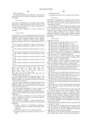
- the catalyst compositions of the Examples above have a characteristic X-ray diffraction having four main diffraction peaks at the diffraction angles of 2 ⁇ , measured by using Cu K ⁇ radiation:
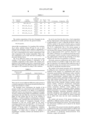
- Comparative Example 10 used a catalyst having oxides of molybdenum, vanadium and niobium only and, while the conversion of propane was higher for this catalyst than for any of the catalysts of Examples 1-5 which in addition to molybdenum, vanadium and niobium also contained silver, the selectivity to acrylic acid for the catalyst of Comparative Example 10 was nonexistent so that the overall yields for the silver-containing catalysts were favorable (0% v. 1.0-21.3%).
- a feed composition having a high propane content (propane:oxygen molar ratios of approximately 2:1 and 1:1, Runs #8, #9 and #11, Table 1) with the catalyst of the present invention gives a reaction product with a high selectivity to acrylic acid (45.7%, 45.4% and 54.1%, respectively). Due to the excess propane in relation to oxygen, the % conversion is lower than for other runs having lower propane content (propane:oxygen molar ratios of approximately 0.33:1 and 0.6:1, Runs #1-7 and #10, Table 1). However, in a continuous process the unconverted propane could be recycled.
- a feed composition having a high propane content has the advantage of low flammability and decreases the possibility of explosion.
- the catalyst of the present invention can be rejuvenated by adding the same compounds which may be used in the synthesis of the catalyst, e.g., molybdenum salts, such as ammonium paramolybdate, molybdenum oxides, molybdic acids or molybdenum chlorides; vanadium salts, such as ammonium metavanadate, vanadium oxides or vanadium sulfates; niobium oxalate, ammonium niobium oxalate, niobium oxide hydrous niobium oxide or niobic acid; silver oxide, silver acetate, silver carbonate, silver nitrate or silver halides, such as silver chloride; oxalates, tartrates, citrates, nitrates, halides, carbonates, bicarbonates, hydroxides, oxides of metals, such as aluminum, copper, lithium, sodium, potassium, rubidium, cesium, gallium, iron, rhenium, cobal
- the catalyst and process of the present invention are applicable to different reaction systems, such as fixed bed, moving bed and fluidized bed reactors.
- the catalyst particle size and process conditions can be altered for the desired reaction system.
- the catalyst of the present invention should be applicable to different processes, such as ammoxidation of alkanes and olefins, e.g., producing acrylonitrile from propane, oxygen and ammonia or producing methacrylonitrile from isobutane, oxygen and ammonia.
Landscapes
- Chemical & Material Sciences (AREA)
- Organic Chemistry (AREA)
- Engineering & Computer Science (AREA)
- Materials Engineering (AREA)
- Chemical Kinetics & Catalysis (AREA)
- Oil, Petroleum & Natural Gas (AREA)
- Catalysts (AREA)
- Organic Low-Molecular-Weight Compounds And Preparation Thereof (AREA)
Abstract
MoVaNbbAgcMdOx
wherein optional element M may be one or more selected from aluminum, copper, lithium, sodium, potassium, rubidium, cesium, gallium, phosphorus, iron, rhenium, cobalt, chromium, manganese, arsenic, indium, thallium, bismuth, germanium, tin, cerium or lanthanum; a is 0.05 to 0.99, b is 0.01 to 0.99, c is 0.01 to 0.99, d is 0 to 0.5 and x is determined by the valence requirements of the other components of the catalyst composition. This catalyst is prepared by co-precipitation of compounds of molybdenum, vanadium, niobium, silver and M to form a mixed metal oxide catalyst. This catalyst can be used for the selective conversion of an alkane to an unsaturated carboxylic acid in a one-step process or the ammoxidation of alkanes and olefins.
Description
MoVaNbbAgcOx
MoVaNbbAgcMdOx
wherein optional element M may be one or more selected from aluminum, copper, lithium, sodium, potassium, rubidium, cesium, gallium, phosphorus, iron, rhenium, cobalt, chromium, manganese, arsenic, indium, thallium, bismuth, germanium, tin, cerium or lanthanum; a is 0.05 to 0.99, preferably 0.1 to 0.5, most preferably 0.2; b is 0.01 to 0.99, preferably 0.05 to 0.2, most preferably 0.06 to 0.12; c is 0.01 to 0.99, preferably 0.05 to 0.5, most preferably 0.12 to 0.35; d is 0 to 0.5, preferably 0.01 to 0.25, most preferably 0.02 to 0.1; and x is determined by the valence requirements of the other components of the catalyst composition.
- Solution A: in 400 mL of warm water 40.12 g ammonium paramolybdate were dissolved followed by 7.97 g of ammonium metavanadate. The solution was allowed to cool to ambient temperature.
- Solution B: in 160 mL of water 20.62 g of oxalic acid dihydrate and 4.65 g of niobic acid were heated for ½ hour to form a solution. The solution was allowed to cool to ambient temperature.
- Solution C: 8.88 g of silver nitrate was dissolved in 40 mL of water at ambient temperature.
- Solution B was added to solution A with stirring followed by solution C to obtain a slurry. The slurry was stirred overnight. Water was evaporated from the slurry at 50° C. to form a paste. The paste was dried in the oven for several days to from a solid product.
The obtained solid was calcined in air for 5 hours at 300° C. then in a stream of argon at 600° C. The solid was then crushed, pressed and sieved and the fraction of 18 to 35 mesh was tested.
- Solution A: in 655 mL of warm water 40.12 g ammonium paramolybdate were dissolved followed by 7.93 g of ammonium metavanadate. The solution was allowed to cool to ambient temperature.
- Solution B: in 160 mL of water 17.0 g of niobium oxalate were suspended at ambient temperature.
- Solution B was added to solution A with stirring to obtain a yellow solution. Water was evaporated from the solution at 50° C. to form a paste. The paste was dried in the oven for several days to from a solid product.
The obtained solid was calcined in a stream of argon at 600° C. The solid was then crushed, pressed and sieved and the fraction of 18 to 35 mesh was tested.
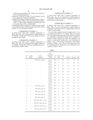
| TABLE 1 | |||||||||
| Feed | |||||||||
| Composition | |||||||||
| Run | Catalyst | Catalyst | Propane/O2/ | SV | Pressure | Temp. | % | % | % |
| # | Example | Composition | N2/H2O | (h−1) | Psig | ° C. | Conversion | Selectivity | Yield |
| 1 | 1 | MoV0.3Nb0.12Ag0.23Ox | 2.2/6.7/ | 3200 | 20 | 380 | 49.4 | 26.7 | 13.2 |
| 60.0/31.1 | |||||||||
| 2 | 1 | ″ | 2.2/6.7/ | 3200 | 20 | 360 | 37.5 | 38.3 | 14.4 |
| 60.0/31.1 | |||||||||
| 3 | 1 | ″ | 2.2/6.7/ | 3200 | 20 | 350 | 32.0 | 44.3 | 14.2 |
| 60.0/31.1 | |||||||||
| 4 | 1 | ″ | 2.2/6.7/ | 3200 | 10 | 380 | 41.5 | 32.0 | 13.3 |
| 60.0/31.1 | |||||||||
| 5 | 1 | ″ | 3.1/5.0/ | 3300 | 20 | 370 | 30.2 | 33.3 | 10.1 |
| 45.0/46.9 | |||||||||
| 6 | 1 | ″ | 3.1/5.0/ | 3300 | 20 | 360 | 25.1 | 39.7 | 10.0 |
| 45.0/46.9 | |||||||||
| 7 | 1 | ″ | 2.2/6.7/ | 3200 | 32 | 360 | 37.1 | 41.6 | 15.4 |
| 60.0/31.1 | |||||||||
| 8 | 1 | ″ | 11.8/5.9/ | 3900 | 20 | 350 | 14.0 | 45.7 | 6.4 |
| 52.9/29.4 | |||||||||
| 9 | 1 | ″ | 6.2/6.2/ | 3700 | 20 | 350 | 16.0 | 45.4 | 7.3 |
| 56.2/31.3 | |||||||||
| 10 | 2 | MoV0.2Nb0.12Ag0.23Ox | 2.2/6.7/ | 3200 | 32 | 380 | 43.1 | 49.5 | 21.3 |
| 60.0/31.1 | |||||||||
| 11 | 2 | MoV0.2Nb0.12Ag0.23Ox | 11.8/5.9/ | 3900 | 20 | 360 | 11.9 | 54.1 | 6.4 |
| 52.9/29.4 | |||||||||
| 12 | 3 | MoV0.3Nb0.12Ag0.18Ox | 2.2/6.7/ | 2500 | 20 | 360 | 54.1 | 20.6 | 11.1 |
| 60.0/31.1 | |||||||||
| 13 | 4 | MoV0.3Nb0.06Ag0.12Ox | 2.2/6.7/ | 3200 | 32 | 360 | 50.4 | 29.6 | 14.9 |
| 60.0/31.1 | |||||||||
| 14 | 5 | MoV0.3Nb0.06Ag0.35Ox | 2.2/6.7/ | 3200 | 20 | 400 | 4.0 | 25.1 | 1.0 |
| 60.0/31.1 | |||||||||
| 15 | 6 | MoV0.3Nb0.12Ag0.23Cs0.02Ox | 2.2/6.7/ | 2500 | 20 | 400 | 25.8 | 23.9 | 6.2 |
| 60.0/31.1 | |||||||||
| 16 | 7 | MoV0.3Nb0.12Ag0.23Al0.10Ox | 2.2/6.7/ | 2500 | 20 | 400 | 21.4 | 20.8 | 4.5 |
| 60.0/31.1 | |||||||||
| 17 | 8 | MoV0.3Nb0.12Ag0.23Ga0.03Ox | 2.2/6.7/ | 3300 | 20 | 380 | 50.0 | 21.7 | 10.8 |
| 60.0/31.1 | |||||||||
| 18 | 9 | MoV0.3Nb0.12Ag0.23P0.05Ox | 2.2/6.7/ | 3200 | 32 | 370 | 45.4 | 36.1 | 16.4 |
| 60.0/31.1 | |||||||||
| TABLE 2 | |||||||||
| Feed | |||||||||
| Composition | |||||||||
| Run | Comparative | Catalyst | Propane/O2/ | SV | Pressure | Temp. | % | ||
| # | Example | Composition | N2/H2O | (h−1) | Psig | ° C. | % Conversion | % Selectivity | Yield |
| 19 | 10 | MoV0.3Nb0.12Ox | 2.2/6.7/ | 1600 | 20 | 380 | 64.0 | 0.0 | 0.0 |
| 60.0/31.1 | |||||||||
| 20 | 11 | MoV0.3Nb0.12Zn0.23Ox | 2.2/6.7/ | 3200 | 20 | 380 | 26.9 | 1.9 | 0.5 |
| 60.0/31.1 | |||||||||
| 21 | 12 | MoV0.3Nb0.12Ni0.23Ox | 2.2/6.7/ | 3200 | 20 | 400 | 51.0 | 1.4 | 0.7 |
| 60.0/31.1 | |||||||||
| 22 | 13 | MoV0.3Nb0.12Al0.23Ox | 2.2/6.7/ | 3200 | 20 | 400 | 30.7 | 0.9 | 0.3 |
| 60.0/31.1 | |||||||||
| 23 | 14 | MoV0.3Nb0.12Cu0.23Ox | 2.2/6.7/ | 3200 | 20 | 380 | 7.9 | 3.3 | 0.3 |
| 60.0/31.1 | |||||||||
MoVaNbbAgcMdOx
wherein Mo is molybdenum, V is vanadium, Nb is niobium, Ag is silver, optional element M may be one or more selected from aluminum, cesium, gallium or phosphorus; a is 0.02 to 0.3; b is 0.06 to 0.12; c is 0.12 to 0.35; d is 0 to 0.1; and x is determined by the valence requirements of the other components of the catalyst composition. These catalyst compositions can be made and used according to the processes disclose herein.
| TABLE 3 | ||
| Diffraction Angle | ||
| 2θ (±0.3°) | d spacing (Å) | Relative Intensity |
| 22.3 | 3.99 | 100 |
| 26.2 | 3.40 | 30-80 |
| 27.0 | 3.30 | 30-80 |
| 27.7 | 3.21 | 20-80 |
There may be several additional diffraction peaks present in a catalyst composition of the present invention but these four peaks will normally be evident.
Claims (75)
MoVaNbbAgcOx
MoVaNbbAgcMdOx
MoVaNbbAgcOx
MoVaNbbAgcMdOx
MoVaNbbAgcOx
MoVaNbbAgcMdOx
MoVaNbbAgcMdOx
MoVaNbbAgcMdOx
MoVaNbbAgcMdOx
MoVaNbbAgcMdOx
Priority Applications (1)
| Application Number | Priority Date | Filing Date | Title |
|---|---|---|---|
| US10/325,093 US6919472B2 (en) | 2001-12-21 | 2002-12-20 | Catalyst compositions for the selective conversion of alkanes to unsaturated carboxylic acids, methods of making and methods of using thereof |
Applications Claiming Priority (2)
| Application Number | Priority Date | Filing Date | Title |
|---|---|---|---|
| US34487301P | 2001-12-21 | 2001-12-21 | |
| US10/325,093 US6919472B2 (en) | 2001-12-21 | 2002-12-20 | Catalyst compositions for the selective conversion of alkanes to unsaturated carboxylic acids, methods of making and methods of using thereof |
Publications (2)
| Publication Number | Publication Date |
|---|---|
| US20030135071A1 US20030135071A1 (en) | 2003-07-17 |
| US6919472B2 true US6919472B2 (en) | 2005-07-19 |
Family
ID=26984769
Family Applications (1)
| Application Number | Title | Priority Date | Filing Date |
|---|---|---|---|
| US10/325,093 Expired - Lifetime US6919472B2 (en) | 2001-12-21 | 2002-12-20 | Catalyst compositions for the selective conversion of alkanes to unsaturated carboxylic acids, methods of making and methods of using thereof |
Country Status (1)
| Country | Link |
|---|---|
| US (1) | US6919472B2 (en) |
Cited By (5)
| Publication number | Priority date | Publication date | Assignee | Title |
|---|---|---|---|---|
| US20040192966A1 (en) * | 2003-03-24 | 2004-09-30 | Saudi Basic Industries Corporation | Catalyst composition for the selective conversion of alkanes to unsaturated carboxylic acids, method of making and method of using thereof |
| US20050221979A1 (en) * | 2004-03-30 | 2005-10-06 | Honda Motor Co., Ltd. | Purification catalyst for exhaust gas |
| US20060247446A1 (en) * | 2003-07-25 | 2006-11-02 | Samuel Neto | Multi-metal oxide containing silver, vanadium and a promoter metal and use thereof |
| US20090171118A1 (en) * | 2006-02-14 | 2009-07-02 | Jean-Marc Millet | Preparing a compound comprising a combination of two crystal phases |
| WO2015021126A1 (en) * | 2013-08-06 | 2015-02-12 | The Scripps Research Institute | Conversion of alkanes to organoseleniums and organotelluriums |
Families Citing this family (7)
| Publication number | Priority date | Publication date | Assignee | Title |
|---|---|---|---|---|
| US8193387B2 (en) * | 2003-12-19 | 2012-06-05 | Saudi Basic Industries Corporation | Process for producing an unsaturated carboxylic acid from an alkane |
| EP2179793A1 (en) * | 2008-10-21 | 2010-04-28 | Sued-Chemie AG | Phosphorous-containing mixed oxide catalysts |
| CN101733140B (en) * | 2008-11-18 | 2012-01-11 | 中国石油天然气股份有限公司 | A kind of preparation method of shape-selective molecular sieve composition |
| WO2010136551A2 (en) * | 2009-05-29 | 2010-12-02 | Basf Se | Catalyst and method for partially oxidizing hydrocarbons |
| US8921257B2 (en) * | 2011-12-02 | 2014-12-30 | Saudi Basic Industries Corporation | Dual function partial oxidation catalyst for propane to acrylic acid conversion |
| CN108686671A (en) * | 2018-06-11 | 2018-10-23 | 福州大学 | A kind of preparation of low-temp methanol decomposition catalyst |
| CN115990498B (en) * | 2021-10-18 | 2024-09-10 | 鞍山七彩化学股份有限公司 | Vanadium catalyst and method for synthesizing adiponitrile by catalyzing same |
Citations (22)
| Publication number | Priority date | Publication date | Assignee | Title |
|---|---|---|---|---|
| US4250346A (en) | 1980-04-14 | 1981-02-10 | Union Carbide Corporation | Low temperature oxydehydrogenation of ethane to ethylene |
| US4256914A (en) * | 1978-08-25 | 1981-03-17 | Ube Industries, Ltd. | Catalytic oxidation of methacrolein |
| US4339355A (en) | 1975-10-09 | 1982-07-13 | Union Carbide Corporation | Catalytic oxide of molybdenum, vanadium, niobium and optional 4th metal |
| JPH06218286A (en) | 1992-12-02 | 1994-08-09 | Mitsui Toatsu Chem Inc | Process for producing acrolein or acrylic acid and catalyst used therefor |
| US5380933A (en) | 1993-01-28 | 1995-01-10 | Mitsubishi Kasei Corporation | Method for producing an unsaturated carboxylic acid |
| CN1159960A (en) | 1996-03-20 | 1997-09-24 | 中国科学院大连化学物理研究所 | Catalyst and process for preparing propenal by oxidation of propane |
| DE19622331A1 (en) | 1996-06-04 | 1997-12-11 | Basf Ag | Process of heterogeneously catalyzed gas phase oxidation of propane to acrolein |
| JPH1045664A (en) | 1996-07-30 | 1998-02-17 | Mitsubishi Chem Corp | Method for producing α, β-unsaturated carboxylic acid |
| JPH1057813A (en) | 1996-08-22 | 1998-03-03 | Mitsubishi Chem Corp | Method for producing composite metal oxide catalyst and method for producing acrylic acid using the catalyst |
| JPH10120617A (en) | 1996-10-21 | 1998-05-12 | Toagosei Co Ltd | Production of acrylic acid |
| US5807531A (en) | 1995-11-16 | 1998-09-15 | Basf Aktiengesellschaft | Multimetal oxides |
| JPH10310539A (en) | 1997-05-09 | 1998-11-24 | Mitsubishi Chem Corp | Gas phase catalytic oxidation reaction of hydrocarbons |
| JPH11114418A (en) | 1997-09-30 | 1999-04-27 | Sumitomo Chem Co Ltd | Catalyst for gas phase catalytic oxidation reaction of isobutane and method for producing alkene and / or oxygenated compound using the same |
| WO1999051339A1 (en) * | 1998-04-02 | 1999-10-14 | Bp Chemicals Limited | Catalyst and process for the oxidation of ethane and/or ethylene |
| US5994580A (en) | 1996-10-21 | 1999-11-30 | Toagosei Co., Ltd. | Process for producing acrylic acid |
| EP0962253A2 (en) | 1998-05-21 | 1999-12-08 | Rohm And Haas Company | A process for preparing a multi-metal oxide catalyst |
| US6087525A (en) * | 1999-01-11 | 2000-07-11 | Saudia Basic Industries Corporation | Highly active and selective catalysts for the production of unsaturated nitriles, methods of making and using the same |
| JP2000246108A (en) | 1999-03-01 | 2000-09-12 | Toagosei Co Ltd | Metal oxide catalyst and production of acrylic acid using same |
| US6160162A (en) | 1998-11-16 | 2000-12-12 | Saudi Basic Industries Corporation | Methods of catalytic oxidation of propane to acrylic acid |
| US6432870B1 (en) * | 1999-05-25 | 2002-08-13 | Toagosei Co., Ltd. | Process for preparing metal oxide catalyst for acrylic acid production |
| US20030004379A1 (en) * | 2001-06-18 | 2003-01-02 | Gaffney Anne Mae | Hydrothermally synthesized MO-V-M-X oxide catalysts for the selective oxidation of hydrocarbons |
| US6656873B2 (en) * | 2001-06-14 | 2003-12-02 | Sanjay Chaturvedi | Mixed metal oxide catalyst |
-
2002
- 2002-12-20 US US10/325,093 patent/US6919472B2/en not_active Expired - Lifetime
Patent Citations (22)
| Publication number | Priority date | Publication date | Assignee | Title |
|---|---|---|---|---|
| US4339355A (en) | 1975-10-09 | 1982-07-13 | Union Carbide Corporation | Catalytic oxide of molybdenum, vanadium, niobium and optional 4th metal |
| US4256914A (en) * | 1978-08-25 | 1981-03-17 | Ube Industries, Ltd. | Catalytic oxidation of methacrolein |
| US4250346A (en) | 1980-04-14 | 1981-02-10 | Union Carbide Corporation | Low temperature oxydehydrogenation of ethane to ethylene |
| JPH06218286A (en) | 1992-12-02 | 1994-08-09 | Mitsui Toatsu Chem Inc | Process for producing acrolein or acrylic acid and catalyst used therefor |
| US5380933A (en) | 1993-01-28 | 1995-01-10 | Mitsubishi Kasei Corporation | Method for producing an unsaturated carboxylic acid |
| US5807531A (en) | 1995-11-16 | 1998-09-15 | Basf Aktiengesellschaft | Multimetal oxides |
| CN1159960A (en) | 1996-03-20 | 1997-09-24 | 中国科学院大连化学物理研究所 | Catalyst and process for preparing propenal by oxidation of propane |
| DE19622331A1 (en) | 1996-06-04 | 1997-12-11 | Basf Ag | Process of heterogeneously catalyzed gas phase oxidation of propane to acrolein |
| JPH1045664A (en) | 1996-07-30 | 1998-02-17 | Mitsubishi Chem Corp | Method for producing α, β-unsaturated carboxylic acid |
| JPH1057813A (en) | 1996-08-22 | 1998-03-03 | Mitsubishi Chem Corp | Method for producing composite metal oxide catalyst and method for producing acrylic acid using the catalyst |
| US5994580A (en) | 1996-10-21 | 1999-11-30 | Toagosei Co., Ltd. | Process for producing acrylic acid |
| JPH10120617A (en) | 1996-10-21 | 1998-05-12 | Toagosei Co Ltd | Production of acrylic acid |
| JPH10310539A (en) | 1997-05-09 | 1998-11-24 | Mitsubishi Chem Corp | Gas phase catalytic oxidation reaction of hydrocarbons |
| JPH11114418A (en) | 1997-09-30 | 1999-04-27 | Sumitomo Chem Co Ltd | Catalyst for gas phase catalytic oxidation reaction of isobutane and method for producing alkene and / or oxygenated compound using the same |
| WO1999051339A1 (en) * | 1998-04-02 | 1999-10-14 | Bp Chemicals Limited | Catalyst and process for the oxidation of ethane and/or ethylene |
| EP0962253A2 (en) | 1998-05-21 | 1999-12-08 | Rohm And Haas Company | A process for preparing a multi-metal oxide catalyst |
| US6160162A (en) | 1998-11-16 | 2000-12-12 | Saudi Basic Industries Corporation | Methods of catalytic oxidation of propane to acrylic acid |
| US6087525A (en) * | 1999-01-11 | 2000-07-11 | Saudia Basic Industries Corporation | Highly active and selective catalysts for the production of unsaturated nitriles, methods of making and using the same |
| JP2000246108A (en) | 1999-03-01 | 2000-09-12 | Toagosei Co Ltd | Metal oxide catalyst and production of acrylic acid using same |
| US6432870B1 (en) * | 1999-05-25 | 2002-08-13 | Toagosei Co., Ltd. | Process for preparing metal oxide catalyst for acrylic acid production |
| US6656873B2 (en) * | 2001-06-14 | 2003-12-02 | Sanjay Chaturvedi | Mixed metal oxide catalyst |
| US20030004379A1 (en) * | 2001-06-18 | 2003-01-02 | Gaffney Anne Mae | Hydrothermally synthesized MO-V-M-X oxide catalysts for the selective oxidation of hydrocarbons |
Cited By (14)
| Publication number | Priority date | Publication date | Assignee | Title |
|---|---|---|---|---|
| US20040192966A1 (en) * | 2003-03-24 | 2004-09-30 | Saudi Basic Industries Corporation | Catalyst composition for the selective conversion of alkanes to unsaturated carboxylic acids, method of making and method of using thereof |
| US7504357B2 (en) | 2003-03-24 | 2009-03-17 | Saudi Basic Industries Corporation | Catalyst composition for the selective conversion of alkanes to unsaturated carboxylic acids, method of making and method of using thereof |
| US7229946B2 (en) * | 2003-03-24 | 2007-06-12 | Saudi Basic Industries Corporation | Catalyst composition for the selective conversion of alkanes to unsaturated carboxylic acids, method of making and method of using thereof |
| US20060247446A1 (en) * | 2003-07-25 | 2006-11-02 | Samuel Neto | Multi-metal oxide containing silver, vanadium and a promoter metal and use thereof |
| US7462727B2 (en) * | 2003-07-25 | 2008-12-09 | Basf Aktiengesellschaft | Multimetal oxide containing silver, vanadium and a promoter metal and use thereof |
| US7345199B2 (en) | 2004-03-23 | 2008-03-18 | Saudi Basic Industries Corporation | Catalyst composition for the selective conversion of alkanes to unsaturated carboxylic acids, method of making and method of using thereof |
| US20070232828A1 (en) * | 2004-03-23 | 2007-10-04 | Saudi Basic Industries Corporation | Catalyst composition for the selective conversion of alkanes to unsaturated carboxylic acids, method of making and method of using thereof |
| US7338917B2 (en) * | 2004-03-30 | 2008-03-04 | Honda Motor Co., Ltd. | Purification catalyst for exhaust gas |
| US20050221979A1 (en) * | 2004-03-30 | 2005-10-06 | Honda Motor Co., Ltd. | Purification catalyst for exhaust gas |
| US20090171118A1 (en) * | 2006-02-14 | 2009-07-02 | Jean-Marc Millet | Preparing a compound comprising a combination of two crystal phases |
| US8207080B2 (en) * | 2006-02-14 | 2012-06-26 | Centre National De La Recherche Scientifique (C.N.R.S.) | Preparing a compound comprising a combination of two crystal phases |
| WO2015021126A1 (en) * | 2013-08-06 | 2015-02-12 | The Scripps Research Institute | Conversion of alkanes to organoseleniums and organotelluriums |
| US9505714B2 (en) | 2013-08-06 | 2016-11-29 | The Scripps Research Institute | Conversion of alkanes to organoseleniums and organotelluriums |
| EA032269B1 (en) * | 2013-08-06 | 2019-05-31 | Дзе Скриппс Рисерч Инститьют | Conversion of alkanes to organoseleniums and organotelluriums |
Also Published As
| Publication number | Publication date |
|---|---|
| US20030135071A1 (en) | 2003-07-17 |
Similar Documents
| Publication | Publication Date | Title |
|---|---|---|
| US7504357B2 (en) | Catalyst composition for the selective conversion of alkanes to unsaturated carboxylic acids, method of making and method of using thereof | |
| US7009075B2 (en) | Process for the selective conversion of alkanes to unsaturated carboxylic acids | |
| US6946422B2 (en) | Preparation of mixed metal oxide catalysts for catalytic oxidation of olefins to unsaturated aldehydes | |
| US6916763B2 (en) | Process for preparing a catalyst for the oxidation and ammoxidation of olefins | |
| JPS6214535B2 (en) | ||
| US6919472B2 (en) | Catalyst compositions for the selective conversion of alkanes to unsaturated carboxylic acids, methods of making and methods of using thereof | |
| EP2117706A1 (en) | Catalyst for oxidation of saturated and unsaturated aldehydes to unasturated carboxylic acid, method of marking and method of using thereof | |
| EP1587617B1 (en) | Oxidation process | |
| PL202774B1 (en) | Method for the selective production of acetic acid by catalytic oxidation of ethane and/or ethylene | |
| JPH1017523A (en) | Method for producing acetic acid | |
| US7229945B2 (en) | Process of making mixed metal oxide catalysts for the production of unsaturated aldehydes from olefins | |
| US20040192973A1 (en) | Mixed metal oxide catalysts for the production of unsaturated aldehydes from olefins | |
| JP4182237B2 (en) | Catalyst for gas-phase catalytic oxidation reaction of isobutane and method for producing alkene and / or oxygen-containing compound using the same | |
| US4552978A (en) | Oxidation of unsaturated aldehydes | |
| JPH10128112A (en) | Catalyst for gas-phase catalytic oxidation reaction of isobutane and method for producing the same | |
| JP4809532B2 (en) | Catalyst for catalytic oxidation of propane to acrylic acid, its production and use | |
| US7232788B2 (en) | Mixed metal oxide catalysts for the production of unsaturated aldehydes from olefins | |
| JPH09278680A (en) | Method for producing alkene and / or oxygen-containing compound |
Legal Events
| Date | Code | Title | Description |
|---|---|---|---|
| AS | Assignment |
Owner name: SAUDI BASIC INDUSTRIES CORPORATION, SAUDI ARABIA Free format text: ASSIGNMENT OF ASSIGNORS INTEREST;ASSIGNORS:HAZIN, PAULETTE N.;ELLIS, PAUL E., JR.;REEL/FRAME:013622/0145 Effective date: 20021206 |
|
| AS | Assignment |
Owner name: SAUDI BASIC INDUSTRIES CORPORATION, SAUDI ARABIA Free format text: ASSIGNMENT OF ASSIGNORS INTEREST;ASSIGNORS:HAZIN, PAULETTE N.;ELLIS, PAUL E., JR.;REEL/FRAME:014602/0156 Effective date: 20030421 |
|
| STCF | Information on status: patent grant |
Free format text: PATENTED CASE |
|
| FPAY | Fee payment |
Year of fee payment: 4 |
|
| FPAY | Fee payment |
Year of fee payment: 8 |
|
| FPAY | Fee payment |
Year of fee payment: 12 |