US6492159B1 - Cloudy fruit juices and methods for making same - Google Patents
Cloudy fruit juices and methods for making same Download PDFInfo
- Publication number
- US6492159B1 US6492159B1 US09/319,790 US31979099A US6492159B1 US 6492159 B1 US6492159 B1 US 6492159B1 US 31979099 A US31979099 A US 31979099A US 6492159 B1 US6492159 B1 US 6492159B1
- Authority
- US
- United States
- Prior art keywords
- activity
- cloud
- endoglucanase
- enzyme
- cmcase
- Prior art date
- Legal status (The legal status is an assumption and is not a legal conclusion. Google has not performed a legal analysis and makes no representation as to the accuracy of the status listed.)
- Expired - Fee Related
Links
- 238000000034 method Methods 0.000 title description 38
- 235000015203 fruit juice Nutrition 0.000 title description 7
- 230000000694 effects Effects 0.000 claims abstract description 64
- 108010059892 Cellulase Proteins 0.000 claims abstract description 60
- 102000004190 Enzymes Human genes 0.000 claims abstract description 60
- 108090000790 Enzymes Proteins 0.000 claims abstract description 60
- 108010085318 carboxymethylcellulase Proteins 0.000 claims abstract description 28
- 108010029182 Pectin lyase Proteins 0.000 claims abstract description 27
- 235000013399 edible fruits Nutrition 0.000 claims abstract description 19
- 238000002360 preparation method Methods 0.000 claims abstract description 17
- 239000000203 mixture Substances 0.000 claims abstract description 14
- 108010083879 xyloglucan endo(1-4)-beta-D-glucanase Proteins 0.000 claims abstract description 14
- 239000005418 vegetable material Substances 0.000 claims abstract description 8
- 239000000463 material Substances 0.000 claims description 35
- 208000037595 EN1-related dorsoventral syndrome Diseases 0.000 claims description 14
- 241000228245 Aspergillus niger Species 0.000 claims description 12
- 101100389355 Mus musculus Endov gene Proteins 0.000 claims description 12
- 241000223261 Trichoderma viride Species 0.000 claims description 8
- 230000000593 degrading effect Effects 0.000 claims description 6
- 108010091371 endoglucanase 1 Proteins 0.000 claims description 4
- 108010091384 endoglucanase 2 Proteins 0.000 claims description 4
- 108010092450 endoglucanase Z Proteins 0.000 claims description 4
- 230000001747 exhibiting effect Effects 0.000 claims 2
- 238000000424 optical density measurement Methods 0.000 claims 1
- 229940088598 enzyme Drugs 0.000 description 48
- 229920002000 Xyloglucan Polymers 0.000 description 28
- 235000011389 fruit/vegetable juice Nutrition 0.000 description 28
- 108010008885 Cellulose 1,4-beta-Cellobiosidase Proteins 0.000 description 26
- 241000220225 Malus Species 0.000 description 26
- 235000011430 Malus pumila Nutrition 0.000 description 16
- 239000000725 suspension Substances 0.000 description 15
- PXIPVTKHYLBLMZ-UHFFFAOYSA-N Sodium azide Chemical compound [Na+].[N-]=[N+]=[N-] PXIPVTKHYLBLMZ-UHFFFAOYSA-N 0.000 description 14
- 239000002299 complementary DNA Substances 0.000 description 14
- 230000008569 process Effects 0.000 description 14
- 229920002134 Carboxymethyl cellulose Polymers 0.000 description 13
- 235000010948 carboxy methyl cellulose Nutrition 0.000 description 13
- 235000021016 apples Nutrition 0.000 description 12
- 229940106157 cellulase Drugs 0.000 description 12
- 235000021447 cloudy apple juice Nutrition 0.000 description 12
- 239000002245 particle Substances 0.000 description 10
- 210000004027 cell Anatomy 0.000 description 9
- 238000004519 manufacturing process Methods 0.000 description 9
- WQZGKKKJIJFFOK-GASJEMHNSA-N Glucose Natural products OC[C@H]1OC(O)[C@H](O)[C@@H](O)[C@@H]1O WQZGKKKJIJFFOK-GASJEMHNSA-N 0.000 description 8
- 238000011534 incubation Methods 0.000 description 8
- 241001138401 Kluyveromyces lactis Species 0.000 description 7
- 230000005540 biological transmission Effects 0.000 description 7
- 239000000872 buffer Substances 0.000 description 7
- 238000002474 experimental method Methods 0.000 description 7
- CIWBSHSKHKDKBQ-JLAZNSOCSA-N Ascorbic acid Chemical compound OC[C@H](O)[C@H]1OC(=O)C(O)=C1O CIWBSHSKHKDKBQ-JLAZNSOCSA-N 0.000 description 6
- 241000228215 Aspergillus aculeatus Species 0.000 description 6
- 230000015556 catabolic process Effects 0.000 description 6
- 210000002421 cell wall Anatomy 0.000 description 6
- 238000006731 degradation reaction Methods 0.000 description 6
- 239000000284 extract Substances 0.000 description 6
- 230000014509 gene expression Effects 0.000 description 6
- 239000006228 supernatant Substances 0.000 description 6
- 108091032973 (ribonucleotides)n+m Proteins 0.000 description 5
- 108010084185 Cellulases Proteins 0.000 description 5
- 102000005575 Cellulases Human genes 0.000 description 5
- VMHLLURERBWHNL-UHFFFAOYSA-M Sodium acetate Chemical compound [Na+].CC([O-])=O VMHLLURERBWHNL-UHFFFAOYSA-M 0.000 description 5
- 229920002678 cellulose Polymers 0.000 description 5
- 239000001913 cellulose Substances 0.000 description 5
- 229920006184 cellulose methylcellulose Polymers 0.000 description 5
- 229920001542 oligosaccharide Polymers 0.000 description 5
- 150000002482 oligosaccharides Chemical class 0.000 description 5
- 230000003287 optical effect Effects 0.000 description 5
- 239000013612 plasmid Substances 0.000 description 5
- 239000013598 vector Substances 0.000 description 5
- 108010069678 xyloglucan endotransglycosylase Proteins 0.000 description 5
- 229920001817 Agar Polymers 0.000 description 4
- 241000588724 Escherichia coli Species 0.000 description 4
- 239000008272 agar Substances 0.000 description 4
- PYMYPHUHKUWMLA-UHFFFAOYSA-N arabinose Natural products OCC(O)C(O)C(O)C=O PYMYPHUHKUWMLA-UHFFFAOYSA-N 0.000 description 4
- SRBFZHDQGSBBOR-UHFFFAOYSA-N beta-D-Pyranose-Lyxose Natural products OC1COC(O)C(O)C1O SRBFZHDQGSBBOR-UHFFFAOYSA-N 0.000 description 4
- AIYUHDOJVYHVIT-UHFFFAOYSA-M caesium chloride Chemical compound [Cl-].[Cs+] AIYUHDOJVYHVIT-UHFFFAOYSA-M 0.000 description 4
- 239000008103 glucose Substances 0.000 description 4
- 125000001475 halogen functional group Chemical group 0.000 description 4
- 230000036961 partial effect Effects 0.000 description 4
- 238000012216 screening Methods 0.000 description 4
- 239000000758 substrate Substances 0.000 description 4
- 235000000346 sugar Nutrition 0.000 description 4
- 241000894006 Bacteria Species 0.000 description 3
- SHZGCJCMOBCMKK-UHFFFAOYSA-N D-mannomethylose Natural products CC1OC(O)C(O)C(O)C1O SHZGCJCMOBCMKK-UHFFFAOYSA-N 0.000 description 3
- SRBFZHDQGSBBOR-IOVATXLUSA-N D-xylopyranose Chemical compound O[C@@H]1COC(O)[C@H](O)[C@H]1O SRBFZHDQGSBBOR-IOVATXLUSA-N 0.000 description 3
- 241000196324 Embryophyta Species 0.000 description 3
- 241000233866 Fungi Species 0.000 description 3
- PEDCQBHIVMGVHV-UHFFFAOYSA-N Glycerine Chemical compound OCC(O)CO PEDCQBHIVMGVHV-UHFFFAOYSA-N 0.000 description 3
- 238000011993 High Performance Size Exclusion Chromatography Methods 0.000 description 3
- 102000008100 Human Serum Albumin Human genes 0.000 description 3
- 108091006905 Human Serum Albumin Proteins 0.000 description 3
- 241000220324 Pyrus Species 0.000 description 3
- FAPWRFPIFSIZLT-UHFFFAOYSA-M Sodium chloride Chemical compound [Na+].[Cl-] FAPWRFPIFSIZLT-UHFFFAOYSA-M 0.000 description 3
- 241000223259 Trichoderma Species 0.000 description 3
- AVKUERGKIZMTKX-NJBDSQKTSA-N ampicillin Chemical compound C1([C@@H](N)C(=O)N[C@H]2[C@H]3SC([C@@H](N3C2=O)C(O)=O)(C)C)=CC=CC=C1 AVKUERGKIZMTKX-NJBDSQKTSA-N 0.000 description 3
- 229960000723 ampicillin Drugs 0.000 description 3
- 238000004458 analytical method Methods 0.000 description 3
- 229960005070 ascorbic acid Drugs 0.000 description 3
- 235000010323 ascorbic acid Nutrition 0.000 description 3
- 239000011668 ascorbic acid Substances 0.000 description 3
- 229940041514 candida albicans extract Drugs 0.000 description 3
- 238000005119 centrifugation Methods 0.000 description 3
- 235000020971 citrus fruits Nutrition 0.000 description 3
- 235000021448 clear apple juice Nutrition 0.000 description 3
- 238000010367 cloning Methods 0.000 description 3
- 238000010276 construction Methods 0.000 description 3
- 230000001627 detrimental effect Effects 0.000 description 3
- 239000012634 fragment Substances 0.000 description 3
- 230000002538 fungal effect Effects 0.000 description 3
- 239000007788 liquid Substances 0.000 description 3
- 229920001277 pectin Polymers 0.000 description 3
- 230000009467 reduction Effects 0.000 description 3
- 230000002829 reductive effect Effects 0.000 description 3
- 230000009466 transformation Effects 0.000 description 3
- 239000012138 yeast extract Substances 0.000 description 3
- 229920000936 Agarose Polymers 0.000 description 2
- 244000144730 Amygdalus persica Species 0.000 description 2
- 241000228212 Aspergillus Species 0.000 description 2
- IJGRMHOSHXDMSA-UHFFFAOYSA-N Atomic nitrogen Chemical compound N#N IJGRMHOSHXDMSA-UHFFFAOYSA-N 0.000 description 2
- HEDRZPFGACZZDS-UHFFFAOYSA-N Chloroform Chemical compound ClC(Cl)Cl HEDRZPFGACZZDS-UHFFFAOYSA-N 0.000 description 2
- 108020004635 Complementary DNA Proteins 0.000 description 2
- GUBGYTABKSRVRQ-CUHNMECISA-N D-Cellobiose Chemical compound O[C@@H]1[C@@H](O)[C@H](O)[C@@H](CO)O[C@H]1O[C@@H]1[C@@H](CO)OC(O)[C@H](O)[C@H]1O GUBGYTABKSRVRQ-CUHNMECISA-N 0.000 description 2
- 108020004414 DNA Proteins 0.000 description 2
- 101001096557 Dickeya dadantii (strain 3937) Rhamnogalacturonate lyase Proteins 0.000 description 2
- IAZDPXIOMUYVGZ-UHFFFAOYSA-N Dimethylsulphoxide Chemical compound CS(C)=O IAZDPXIOMUYVGZ-UHFFFAOYSA-N 0.000 description 2
- 101000637245 Escherichia coli (strain K12) Endonuclease V Proteins 0.000 description 2
- SHZGCJCMOBCMKK-DHVFOXMCSA-N L-fucopyranose Chemical compound C[C@@H]1OC(O)[C@@H](O)[C@H](O)[C@@H]1O SHZGCJCMOBCMKK-DHVFOXMCSA-N 0.000 description 2
- 108010059881 Lactase Proteins 0.000 description 2
- GUBGYTABKSRVRQ-QKKXKWKRSA-N Lactose Natural products OC[C@H]1O[C@@H](O[C@H]2[C@H](O)[C@@H](O)C(O)O[C@@H]2CO)[C@H](O)[C@@H](O)[C@H]1O GUBGYTABKSRVRQ-QKKXKWKRSA-N 0.000 description 2
- CSNNHWWHGAXBCP-UHFFFAOYSA-L Magnesium sulfate Chemical compound [Mg+2].[O-][S+2]([O-])([O-])[O-] CSNNHWWHGAXBCP-UHFFFAOYSA-L 0.000 description 2
- 244000141359 Malus pumila Species 0.000 description 2
- 108010059820 Polygalacturonase Proteins 0.000 description 2
- 235000009827 Prunus armeniaca Nutrition 0.000 description 2
- 244000018633 Prunus armeniaca Species 0.000 description 2
- 235000006040 Prunus persica var persica Nutrition 0.000 description 2
- 230000009471 action Effects 0.000 description 2
- 230000002411 adverse Effects 0.000 description 2
- 108010005774 beta-Galactosidase Proteins 0.000 description 2
- 238000010805 cDNA synthesis kit Methods 0.000 description 2
- 238000012512 characterization method Methods 0.000 description 2
- 239000007795 chemical reaction product Substances 0.000 description 2
- IQFVPQOLBLOTPF-HKXUKFGYSA-L congo red Chemical compound [Na+].[Na+].C1=CC=CC2=C(N)C(/N=N/C3=CC=C(C=C3)C3=CC=C(C=C3)/N=N/C3=C(C4=CC=CC=C4C(=C3)S([O-])(=O)=O)N)=CC(S([O-])(=O)=O)=C21 IQFVPQOLBLOTPF-HKXUKFGYSA-L 0.000 description 2
- 230000001419 dependent effect Effects 0.000 description 2
- 230000029087 digestion Effects 0.000 description 2
- 229940079919 digestives enzyme preparation Drugs 0.000 description 2
- 239000012153 distilled water Substances 0.000 description 2
- 238000009826 distribution Methods 0.000 description 2
- 239000000706 filtrate Substances 0.000 description 2
- 230000010354 integration Effects 0.000 description 2
- 235000021579 juice concentrates Nutrition 0.000 description 2
- 239000008101 lactose Substances 0.000 description 2
- KWGKDLIKAYFUFQ-UHFFFAOYSA-M lithium chloride Chemical compound [Li+].[Cl-] KWGKDLIKAYFUFQ-UHFFFAOYSA-M 0.000 description 2
- 238000002156 mixing Methods 0.000 description 2
- 238000012986 modification Methods 0.000 description 2
- 230000004048 modification Effects 0.000 description 2
- 235000021017 pears Nutrition 0.000 description 2
- 239000001814 pectin Substances 0.000 description 2
- 235000010987 pectin Nutrition 0.000 description 2
- 108020004410 pectinesterase Proteins 0.000 description 2
- 238000007747 plating Methods 0.000 description 2
- 239000002244 precipitate Substances 0.000 description 2
- 238000012545 processing Methods 0.000 description 2
- 239000003223 protective agent Substances 0.000 description 2
- 239000002994 raw material Substances 0.000 description 2
- 239000011780 sodium chloride Substances 0.000 description 2
- 238000010186 staining Methods 0.000 description 2
- 150000008163 sugars Chemical class 0.000 description 2
- 238000012360 testing method Methods 0.000 description 2
- 235000013311 vegetables Nutrition 0.000 description 2
- XLYOFNOQVPJJNP-UHFFFAOYSA-N water Chemical compound O XLYOFNOQVPJJNP-UHFFFAOYSA-N 0.000 description 2
- HDTRYLNUVZCQOY-UHFFFAOYSA-N α-D-glucopyranosyl-α-D-glucopyranoside Natural products OC1C(O)C(O)C(CO)OC1OC1C(O)C(O)C(O)C(CO)O1 HDTRYLNUVZCQOY-UHFFFAOYSA-N 0.000 description 1
- FYGDTMLNYKFZSV-URKRLVJHSA-N (2s,3r,4s,5s,6r)-2-[(2r,4r,5r,6s)-4,5-dihydroxy-2-(hydroxymethyl)-6-[(2r,4r,5r,6s)-4,5,6-trihydroxy-2-(hydroxymethyl)oxan-3-yl]oxyoxan-3-yl]oxy-6-(hydroxymethyl)oxane-3,4,5-triol Chemical compound O[C@@H]1[C@@H](O)[C@H](O)[C@@H](CO)O[C@H]1OC1[C@@H](CO)O[C@@H](OC2[C@H](O[C@H](O)[C@H](O)[C@H]2O)CO)[C@H](O)[C@H]1O FYGDTMLNYKFZSV-URKRLVJHSA-N 0.000 description 1
- UHPMCKVQTMMPCG-UHFFFAOYSA-N 5,8-dihydroxy-2-methoxy-6-methyl-7-(2-oxopropyl)naphthalene-1,4-dione Chemical compound CC1=C(CC(C)=O)C(O)=C2C(=O)C(OC)=CC(=O)C2=C1O UHPMCKVQTMMPCG-UHFFFAOYSA-N 0.000 description 1
- PZUPAGRIHCRVKN-UHFFFAOYSA-N 5-[5-[3,4-dihydroxy-6-[(3,4,5-trihydroxyoxan-2-yl)oxymethyl]-5-[3,4,5-trihydroxy-6-[(3,4,5-trihydroxyoxan-2-yl)oxymethyl]oxan-2-yl]oxyoxan-2-yl]oxy-3,4-dihydroxy-6-[(3,4,5-trihydroxyoxan-2-yl)oxymethyl]oxan-2-yl]oxy-6-(hydroxymethyl)oxane-2,3,4-triol Chemical compound OCC1OC(O)C(O)C(O)C1OC1C(O)C(O)C(OC2C(C(O)C(OC3C(C(O)C(O)C(COC4C(C(O)C(O)CO4)O)O3)O)C(COC3C(C(O)C(O)CO3)O)O2)O)C(COC2C(C(O)C(O)CO2)O)O1 PZUPAGRIHCRVKN-UHFFFAOYSA-N 0.000 description 1
- 235000009434 Actinidia chinensis Nutrition 0.000 description 1
- 244000298697 Actinidia deliciosa Species 0.000 description 1
- 235000009436 Actinidia deliciosa Nutrition 0.000 description 1
- 235000007119 Ananas comosus Nutrition 0.000 description 1
- 244000099147 Ananas comosus Species 0.000 description 1
- 101710152845 Arabinogalactan endo-beta-1,4-galactanase Proteins 0.000 description 1
- 108010023063 Bacto-peptone Proteins 0.000 description 1
- 208000023514 Barrett esophagus Diseases 0.000 description 1
- 235000016068 Berberis vulgaris Nutrition 0.000 description 1
- 241000335053 Beta vulgaris Species 0.000 description 1
- 102100026189 Beta-galactosidase Human genes 0.000 description 1
- 229920002498 Beta-glucan Polymers 0.000 description 1
- 241001465180 Botrytis Species 0.000 description 1
- 241000207199 Citrus Species 0.000 description 1
- 235000005979 Citrus limon Nutrition 0.000 description 1
- 244000131522 Citrus pyriformis Species 0.000 description 1
- 235000013162 Cocos nucifera Nutrition 0.000 description 1
- 244000060011 Cocos nucifera Species 0.000 description 1
- 244000241257 Cucumis melo Species 0.000 description 1
- 235000015510 Cucumis melo subsp melo Nutrition 0.000 description 1
- AEMOLEFTQBMNLQ-YMDCURPLSA-N D-galactopyranuronic acid Chemical compound OC1O[C@H](C(O)=O)[C@H](O)[C@H](O)[C@H]1O AEMOLEFTQBMNLQ-YMDCURPLSA-N 0.000 description 1
- 244000000626 Daucus carota Species 0.000 description 1
- 235000002767 Daucus carota Nutrition 0.000 description 1
- 101710147028 Endo-beta-1,4-galactanase Proteins 0.000 description 1
- 101710163644 Endoglucanase 15 Proteins 0.000 description 1
- 241000701959 Escherichia virus Lambda Species 0.000 description 1
- 235000016623 Fragaria vesca Nutrition 0.000 description 1
- 240000009088 Fragaria x ananassa Species 0.000 description 1
- 235000011363 Fragaria x ananassa Nutrition 0.000 description 1
- PNNNRSAQSRJVSB-SLPGGIOYSA-N Fucose Natural products C[C@H](O)[C@@H](O)[C@H](O)[C@H](O)C=O PNNNRSAQSRJVSB-SLPGGIOYSA-N 0.000 description 1
- 241000223218 Fusarium Species 0.000 description 1
- 108700007698 Genetic Terminator Regions Proteins 0.000 description 1
- 229920001503 Glucan Polymers 0.000 description 1
- 108010056771 Glucosidases Proteins 0.000 description 1
- 102000004366 Glucosidases Human genes 0.000 description 1
- 229920002488 Hemicellulose Polymers 0.000 description 1
- 241000223198 Humicola Species 0.000 description 1
- 235000007688 Lycopersicon esculentum Nutrition 0.000 description 1
- 231100000678 Mycotoxin Toxicity 0.000 description 1
- 108091028043 Nucleic acid sequence Proteins 0.000 description 1
- 240000007594 Oryza sativa Species 0.000 description 1
- 235000007164 Oryza sativa Nutrition 0.000 description 1
- 238000013494 PH determination Methods 0.000 description 1
- 241000228143 Penicillium Species 0.000 description 1
- 235000014443 Pyrus communis Nutrition 0.000 description 1
- 235000011552 Rhamnus crocea Nutrition 0.000 description 1
- 240000007651 Rubus glaucus Species 0.000 description 1
- 235000011034 Rubus glaucus Nutrition 0.000 description 1
- 235000009122 Rubus idaeus Nutrition 0.000 description 1
- 240000004808 Saccharomyces cerevisiae Species 0.000 description 1
- 240000003768 Solanum lycopersicum Species 0.000 description 1
- 235000002595 Solanum tuberosum Nutrition 0.000 description 1
- 244000061456 Solanum tuberosum Species 0.000 description 1
- 229930006000 Sucrose Natural products 0.000 description 1
- CZMRCDWAGMRECN-UGDNZRGBSA-N Sucrose Chemical compound O[C@H]1[C@H](O)[C@@H](CO)O[C@@]1(CO)O[C@@H]1[C@H](O)[C@@H](O)[C@H](O)[C@@H](CO)O1 CZMRCDWAGMRECN-UGDNZRGBSA-N 0.000 description 1
- 206010042566 Superinfection Diseases 0.000 description 1
- 235000004298 Tamarindus indica Nutrition 0.000 description 1
- 240000004584 Tamarindus indica Species 0.000 description 1
- ZMZDMBWJUHKJPS-UHFFFAOYSA-M Thiocyanate anion Chemical compound [S-]C#N ZMZDMBWJUHKJPS-UHFFFAOYSA-M 0.000 description 1
- HDTRYLNUVZCQOY-WSWWMNSNSA-N Trehalose Natural products O[C@@H]1[C@@H](O)[C@@H](O)[C@@H](CO)O[C@@H]1O[C@@H]1[C@H](O)[C@@H](O)[C@@H](O)[C@@H](CO)O1 HDTRYLNUVZCQOY-WSWWMNSNSA-N 0.000 description 1
- 235000021307 Triticum Nutrition 0.000 description 1
- 244000098338 Triticum aestivum Species 0.000 description 1
- 235000004240 Triticum spelta Nutrition 0.000 description 1
- 240000000851 Vaccinium corymbosum Species 0.000 description 1
- 235000003095 Vaccinium corymbosum Nutrition 0.000 description 1
- 240000001717 Vaccinium macrocarpon Species 0.000 description 1
- 235000012545 Vaccinium macrocarpon Nutrition 0.000 description 1
- 235000017537 Vaccinium myrtillus Nutrition 0.000 description 1
- 235000002118 Vaccinium oxycoccus Nutrition 0.000 description 1
- 241000759263 Ventia crocea Species 0.000 description 1
- FJJCIZWZNKZHII-UHFFFAOYSA-N [4,6-bis(cyanoamino)-1,3,5-triazin-2-yl]cyanamide Chemical compound N#CNC1=NC(NC#N)=NC(NC#N)=N1 FJJCIZWZNKZHII-UHFFFAOYSA-N 0.000 description 1
- UGXQOOQUZRUVSS-ZZXKWVIFSA-N [5-[3,5-dihydroxy-2-(1,3,4-trihydroxy-5-oxopentan-2-yl)oxyoxan-4-yl]oxy-3,4-dihydroxyoxolan-2-yl]methyl (e)-3-(4-hydroxyphenyl)prop-2-enoate Chemical compound OC1C(OC(CO)C(O)C(O)C=O)OCC(O)C1OC1C(O)C(O)C(COC(=O)\C=C\C=2C=CC(O)=CC=2)O1 UGXQOOQUZRUVSS-ZZXKWVIFSA-N 0.000 description 1
- 238000002835 absorbance Methods 0.000 description 1
- 239000002253 acid Substances 0.000 description 1
- 239000003513 alkali Substances 0.000 description 1
- 125000003275 alpha amino acid group Chemical group 0.000 description 1
- HDTRYLNUVZCQOY-LIZSDCNHSA-N alpha,alpha-trehalose Chemical compound O[C@@H]1[C@@H](O)[C@H](O)[C@@H](CO)O[C@@H]1O[C@@H]1[C@H](O)[C@@H](O)[C@H](O)[C@@H](CO)O1 HDTRYLNUVZCQOY-LIZSDCNHSA-N 0.000 description 1
- WQZGKKKJIJFFOK-PHYPRBDBSA-N alpha-D-galactose Chemical compound OC[C@H]1O[C@H](O)[C@H](O)[C@@H](O)[C@H]1O WQZGKKKJIJFFOK-PHYPRBDBSA-N 0.000 description 1
- 235000015197 apple juice Nutrition 0.000 description 1
- PYMYPHUHKUWMLA-WDCZJNDASA-N arabinose Chemical compound OC[C@@H](O)[C@@H](O)[C@H](O)C=O PYMYPHUHKUWMLA-WDCZJNDASA-N 0.000 description 1
- 229920000617 arabinoxylan Polymers 0.000 description 1
- 238000003556 assay Methods 0.000 description 1
- 235000021028 berry Nutrition 0.000 description 1
- AEMOLEFTQBMNLQ-UHFFFAOYSA-N beta-D-galactopyranuronic acid Natural products OC1OC(C(O)=O)C(O)C(O)C1O AEMOLEFTQBMNLQ-UHFFFAOYSA-N 0.000 description 1
- WQZGKKKJIJFFOK-VFUOTHLCSA-N beta-D-glucose Chemical compound OC[C@H]1O[C@@H](O)[C@H](O)[C@@H](O)[C@@H]1O WQZGKKKJIJFFOK-VFUOTHLCSA-N 0.000 description 1
- 235000021014 blueberries Nutrition 0.000 description 1
- 239000001768 carboxy methyl cellulose Substances 0.000 description 1
- 239000008112 carboxymethyl-cellulose Substances 0.000 description 1
- 238000006243 chemical reaction Methods 0.000 description 1
- 239000003795 chemical substances by application Substances 0.000 description 1
- 238000004587 chromatography analysis Methods 0.000 description 1
- 150000001875 compounds Chemical class 0.000 description 1
- 239000012141 concentrate Substances 0.000 description 1
- 238000001816 cooling Methods 0.000 description 1
- 235000004634 cranberry Nutrition 0.000 description 1
- 239000012531 culture fluid Substances 0.000 description 1
- 230000007423 decrease Effects 0.000 description 1
- 239000007857 degradation product Substances 0.000 description 1
- 150000002016 disaccharides Chemical class 0.000 description 1
- 238000001952 enzyme assay Methods 0.000 description 1
- 239000013604 expression vector Substances 0.000 description 1
- 238000000605 extraction Methods 0.000 description 1
- 238000001914 filtration Methods 0.000 description 1
- 238000009472 formulation Methods 0.000 description 1
- 229930182830 galactose Natural products 0.000 description 1
- 238000000227 grinding Methods 0.000 description 1
- ZMZDMBWJUHKJPS-UHFFFAOYSA-N hydrogen thiocyanate Natural products SC#N ZMZDMBWJUHKJPS-UHFFFAOYSA-N 0.000 description 1
- 230000006698 induction Effects 0.000 description 1
- 230000005764 inhibitory process Effects 0.000 description 1
- 238000002955 isolation Methods 0.000 description 1
- 235000014058 juice drink Nutrition 0.000 description 1
- 229940116108 lactase Drugs 0.000 description 1
- 230000000670 limiting effect Effects 0.000 description 1
- 239000007791 liquid phase Substances 0.000 description 1
- 239000012160 loading buffer Substances 0.000 description 1
- 230000007774 longterm Effects 0.000 description 1
- 229910052943 magnesium sulfate Inorganic materials 0.000 description 1
- 239000003550 marker Substances 0.000 description 1
- 108020004999 messenger RNA Proteins 0.000 description 1
- 238000010369 molecular cloning Methods 0.000 description 1
- 229910000402 monopotassium phosphate Inorganic materials 0.000 description 1
- 239000002636 mycotoxin Substances 0.000 description 1
- 229910052757 nitrogen Inorganic materials 0.000 description 1
- 230000002018 overexpression Effects 0.000 description 1
- 238000012261 overproduction Methods 0.000 description 1
- 238000004806 packaging method and process Methods 0.000 description 1
- 230000002351 pectolytic effect Effects 0.000 description 1
- 239000012071 phase Substances 0.000 description 1
- 229920001282 polysaccharide Polymers 0.000 description 1
- 239000005017 polysaccharide Substances 0.000 description 1
- 150000004804 polysaccharides Chemical class 0.000 description 1
- 239000000843 powder Substances 0.000 description 1
- 238000001556 precipitation Methods 0.000 description 1
- 239000000047 product Substances 0.000 description 1
- 230000000644 propagated effect Effects 0.000 description 1
- 108090000623 proteins and genes Proteins 0.000 description 1
- 102000004169 proteins and genes Human genes 0.000 description 1
- 239000011541 reaction mixture Substances 0.000 description 1
- 235000009566 rice Nutrition 0.000 description 1
- VWDWKYIASSYTQR-UHFFFAOYSA-N sodium nitrate Inorganic materials [Na+].[O-][N+]([O-])=O VWDWKYIASSYTQR-UHFFFAOYSA-N 0.000 description 1
- 235000014214 soft drink Nutrition 0.000 description 1
- 230000006641 stabilisation Effects 0.000 description 1
- 238000011105 stabilization Methods 0.000 description 1
- 238000003860 storage Methods 0.000 description 1
- 239000005720 sucrose Substances 0.000 description 1
- 235000013619 trace mineral Nutrition 0.000 description 1
- 239000011573 trace mineral Substances 0.000 description 1
- 238000000108 ultra-filtration Methods 0.000 description 1
- 230000000007 visual effect Effects 0.000 description 1
- 238000005406 washing Methods 0.000 description 1
- 229920001221 xylan Polymers 0.000 description 1
- 150000004823 xylans Chemical class 0.000 description 1
Images

Classifications
-
- A—HUMAN NECESSITIES
- A23—FOODS OR FOODSTUFFS; TREATMENT THEREOF, NOT COVERED BY OTHER CLASSES
- A23L—FOODS, FOODSTUFFS OR NON-ALCOHOLIC BEVERAGES, NOT OTHERWISE PROVIDED FOR; PREPARATION OR TREATMENT THEREOF
- A23L2/00—Non-alcoholic beverages; Dry compositions or concentrates therefor; Preparation or treatment thereof
- A23L2/52—Adding ingredients
- A23L2/62—Clouding agents; Agents to improve the cloud-stability
Definitions
- the instant invention relates to cloudy juices and methods for making same.
- the invention is particularly concerned with cloudy juices from pomaceous fruit.
- the invention is further concerned with cell wall—cloud—material obtainable by a method according to the invention and uses thereof.
- the invention also concerns enzyme preparations which can suitably be used for the preparation of cloud material and/or juice containing said cloud material.
- Liquefaction is a process which is frequently used for the manufacturing of clear apple juice.
- the process aims at a complete degradation of cell walls using cell wall degrading enzymes.
- This process can be realized by treating apples with an appropriate pectolytic enzyme, for instance pectin lyase (PL), in combination with a crude cellulase preparation, containing several endoglucanases, cellobiohydrolase (CBH) and several other activities.
- pectolytic enzyme for instance pectin lyase (PL)
- PL pectin lyase
- CBH cellobiohydrolase
- the process above has two important drawbacks. Firstly, the enzyme formulation used in this process apparently contains components that are detrimental for cloud stability. Secondly, the balance between fungal glucarases and endogenous XET, is very important in order to obtain a cloudy juice. However, this balance is difficult to manage in practice as it requires knowledge of the endogenous XET-levels. No methods are known to determine such levels in an industrial context and the method is difficult to reproduce, even on a small scale. A further disadvantage, associated with the use of ripe apples, resides in their susceptibility to fungal attack. Fungi, such as Penicillium produce mycotoxins, which end up in the juice.
- WO 95/34223 Another method for making a cloudy apple juice is disclosed in WO 95/34223.
- the method herein disclosed involves the use of enzymes that attack the hairy regions of the pectin backbone, such as rhamnogalacturonase (RGase), rhamnogalacturonan acerylescerase (RGAE), galactanase, and combinations thereof.
- RGase rhamnogalacturonase
- RGAE rhamnogalacturonan acerylescerase
- galactanase and combinations thereof.
- a strong warning is expressed against the use of homogalacturonan degrading enzymes as they would destroy cloud stability (vide page 10, Experiment 4, page 6, 11, 13 to 16).
- a cloudy apple juice is obtained when a method is used comprising the step of treating apple material with a mixture of enzymes comprising a homogalacturonan depolymerizing activity, such as pectin lyase (EC 4.2.2.10), and an enzyme with endoglucanase activity (EC 3.-2.1.4), in the absence of enzymes which reduce the cloud volume by more than 25%, as determined by a method which comprises:
- the enzyme preparations are characterised by the presence of an endoglucanase having CMCase activity, preferably a CMCase activity to xyloglucanase activity ratio of at least 0.7, and an enzyme having homogalacturonan depolymerizing activity such as a combination of pectin esterase and polygalacturonase, preferably pectin lyase.
- a preferred embodiment of the invention is a process which is essentially free from cellobiohydrolase activity (EC 3.2.1.91).
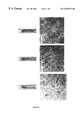
- FIG. 1 Cloud material (A,D) treated with endoV (B,E) or a combination of endoV and CBH (C,F) .
- Arrow heads in C indicate agglomerates that are formed upon addition of CBH.
- Scale bar in D-F represents 100 ⁇ m.
- EndoV is used as an example treatment of isolated cloud material with other endoglucanases gave similar results.
- FIG. 2 General scheme for the cloudy apple juice manufacturing on an industrial scale.
- Enzymes having CMCase activity which can suitably be used are preferably selected from the group consisting of EndoI, EndoIV, EndoV (EC 3.2.1.4) from Trichoderma reesii (which is the same as Trichoderma viride ), and celA from A. niger .
- EndoI, EndoIV, EndoV EC 3.2.1.4
- Trichoderma reesii which is the same as Trichoderma viride
- celA from A. niger
- the invention is not limited to these endoglucanases, as other suitable enzymes having CMCase may be found in organisms, including plants, such as pea (Nakamura S. et al., 1995, Plant Cel. Physiol. 36, 1229-1235), fungi, yeast and bacteria.
- the enzymes are preferably obtainable from fungi such as Trichoderma, Aspergillus, such CelA and CelB from A. niger described herein, egII and egIII from Aspergillus aculeatus as described by Dalboege H. et al., (1994, WO 94/14953), Fusarium, Botrytis and Humicola.
- fungi such as Trichoderma, Aspergillus, such CelA and CelB from A. niger described herein, egII and egIII from Aspergillus aculeatus as described by Dalboege H. et al., (1994, WO 94/14953), Fusarium, Botrytis and Humicola.
- the ratio of CMCase activity to xyloglucanase activity should be in excess of 0.7, as CMCase activity is more important than xyloglucanase activity in the process according to the invention.
- the endoglucanases according to the invention preferably have a pH optimum above 2 and below 7.
- the pH optimum is below 6, such as 5 or lower, or 3.5.
- the enzyme may be chosen in accordance with the pH of the fruit pulp. It is well known that some fruits (apples and citrus fruit) are more acid than others (pear, apricot, peach) and the choice of cloudyfying-enzymes may be adapted accordingly.
- endoglucanase that may be added in the process of making cloudy juices is not very critical; in order to obtain a juice by partial liquefaction (hereinafter sometimes referred to as “cloudyfaction”) sufficient endoglucanase must be present to achieve disintegration of the fruit or vegetable raw material. It Is preferable to add endoglucanase enzyme on the basis of CMCase activity, as the amount of xyloglucanase activity is of far less importance, if at all.
- the amount should be above 1 mU CMCase activity per gram fruit or vegetable material, preferably more than 5 mU CMCase per g vegetable material, still more preferably more than 10 mU CMCase activity per g vegetable material.
- the amount of endoglucanase varies between 15 mU and 30 mU per a vegetable material; however, these values are arbitrary, as a ten-fold increase of CMCase activity did not have a negative effect on cloud stability. It is envisaged that the upper limit, at least in an industrial process, is reached due to commercial considerations such as enzyme cost price, rather than due to technological considerations.
- pectin lyase may be determined empirically, but :will as a general rule be between 1 mU and 1 U per gram fruit or vegetable material, more typically between 10 and 100 mU/g. Should pectin esterase or polygalacturonase be used, suitable amounts may be determined empirically by the person having ordinary skill In the art.
- the amount of cloud material and amount of liquid should be chosen such as to obtain a cloud volume which is equal to the total volume (100 % cloud occupancy). These amounts may easily be determined empirically; in the case of a cloudy apple juice according to the invention, it was determined that 5 mg cloud material in a total volume of 3 ml occupies about 45% of the total juice volume. In order to obtain a cloud occupancy of 100% the liquid phase should be reduced. Alternatively more concentrated cloud material can be added until the cloud occupancy reaches 100%.
- the cloud material according to the invention can be stored in highly concentrated form without precipitation problems, even for very long times.
- the cloud material is totally dried in the absence of protective agents it does not resume its original configuration upon rehydration and loses the properties which make it attractive for the fruit juice industry. It may be possible to dry cloud material in the presence of protective agents such as trehalose or sucrose, without such negative effects.
- the minimum amount of cloud material needed in a cloudy juice to obtain 100% cloud occupancy may be exceeded several fold according to the wishes of the juice manufacturers or the consumers.
- high density cloudy juice concentrates may be offered to the juice manufacturers for further processing.
- stable cloudy juices with a very high optical density (or a low transmission) may be offered to the consumer.
- the invention is especially useful to make cloudy juices from pomaceous fruit, such as apples and pears, but the method also finds use in the manufacture of cloudy juices, or cloudy juice concentrates, from other fruit.
- a cloud according to the invention is meant to indicate that the transmission at OD 660 is less than a clear apple juice, preferably less than 90%, more preferably less than 80% still more preferably less than 50% of (commercially available) clear apple juice.
- a cloud according to the invention is distinguished from the phenomenon of “chill haze”, which has a different composition in terms of sugars, especially by the high (more than 40mol %) arabinose content.
- chill haze as the name indicates is a temperature dependent phenomenon (it disappears at room temperature and appears upon cooling) whereas the cloud according to the invention is not temperature dependent in temperature range +40° C. to room temperature.
- the cloud according to the invention can further be characterised in that the sum of xyloglucan (consisting essentially of Glucose, Xylose, Galactose and Fucose) and cellulose (characterised by its very high Glucose) amounts to more than 50% (w/w) .
- the cloudy material consists of particles, having a diameter of between 100 and 1000 ⁇ m, more typically between 100 and 500 ⁇ m, still more typically between 200 and 300 ⁇ m, usually of about 250 ⁇ m.
- the larger particles consist of agglomerates of cells or cell remnants, or combinations thereof.
- the smallest particles consist essentially of single cells or cell remnants, surrounded by or partially surrounded, as the case may be, by cell walls which have at least been partially degraded by the action of the enzymes.
- the cloud according to the invention is in essence a different cloud than those known to exist in cloudy citrus fruit juices; the latter consist essentially of protein and pectin, and cannot be obtained by the methods according to the invention.
- cloudy juices can be made from other fruits than apple, on a large scale, using the methods according to the invention.
- cloudy material from apple juice isolated by a process according the invention can be added to a clear juice from another fruit, for example a non-pomaceous fruit.
- the method according to the invention is directly applied to other fruit material yielding cloudy fruit juices wherein the cloud is indigenous to the fruit.
- the fruit may be selected from any one or mixtures of apples, pears, berries (strawberry, raspberry, blue berry, red berry, cranberry, pine-apple, citrus, such as orange or lemon, kiwi, peach, apricot, melon, coconut, and the like.
- Fruit in the context of this invention must be construed in a broad sense, so as to encompass vegetables, including but not limited to tomato, potato, carrot, beet, rice and the like.
- Enzymes with an adverse effect on cloud stability as determined by the method according to the invention comprise cellobiohydrolase from T. viride . It is envisaged that other cellobiohydrolases have an adverse effect on cloud stability as well, but this may be tested.
- the presence of noctious enzymes i.e. enzymes having a negative influence on cloud stability as defined herein
- noctious enzymes i.e. enzymes having a negative influence on cloud stability as defined herein
- cellobiohydrolase from a T. viride may also be inhibited or inactivated in addition to, or instead of, removal.
- Enzymes. Three endoglucanases (endo, endoIV, and endoV; EC 3.2.1.4) and CHB (previously referred to as exoIII; EC 3.-2.1.91) were purified to homogeneity from a commercial preparation derived from Trichoderma viride (Maxazyme Cl, Gist-brocades, Delft, The Netherlands) as described by Beldman et al. (1985, Eur. J. Biochem. 146, 301-308).
- niqer N400 cultures were grown for 69 and 81 h respectively, as described In EP-A-0 463 706 but without yeast extract: and with 2% of a crude wheat arabinoxylan fraction instead of oat spelt xylan, after which the mycelium was harvested by filtration and then washed with sterile saline. The mycelium was subsequently frozen in liquid nitrogen after which it was powdered using a Microdismembrator (Braun) . Total RNA was isolated from mycelial powder in accordance with the qaunidium thiocyanate/CsCl protocol described in Sambrook et al.
- RNA was centrifuged twice using a CsCl gradient.
- Poly A + MRA was isolated from 5 mg of total RNA by oligo (dT)-cellulose chromatography (Aviv and Leder, 1972, Sambrook e: al., 1989) with the following modifications: SDS is omitted from all solutions and the loading buffer was supplemented with 9% (v/v) dimethylsulfoxide.
- cDNA was synthesized from 7 ⁇ g poly A + MRNA and ligated into bacteriophage lambda ⁇ Uni-ZAP XR using the ZAPTM-cDNA synthesis kit (Stratagene) according to the manufacturer's instructions. After ligation of the cDNA into Uni-ZAP XR vector-arms, the phage DNA was packaged using PackageneTM extracts (Promega) according to the manufacturer's instructions. Ligation of 120 ng cDNA in 1.2 Mg vector arms and subsequent packaging of the reaction mixture resulted in a primary library consisting of 3.5 ⁇ 10 4 recombinant phages. This primary library was amplified using E. coli XLI-Blue MRF′, titrated and stored at 4° C.
- the bacteria were removed from the solution by centrifugation at 4.000 ⁇ g at 40° C. for 10 min. To the supernatant, 0.3% chloroform was added and the number of plaque forming units (pfu) was determined.
- the phage stock contained approximately 10 10 pfu/ml.
- the recombinant Uni-ZAP XR clones containing A. niger cDNA were converted to Bluescript phagemids using superinfection with the filamentous helper phage EXASSISTTM and E. coli SOLR strain which are included in the cDNA synthesis kit from Stratagene, according to the manufacturer's instructions.
- a glycerol stock containing about 100 colonies per ⁇ l of suspension was stored at ⁇ 80° C.
- A. aculeatus CBS 101.43 expression library was constructed in a similar way to the A. niger library, described above.
- A. aculeatus CBS 101.43 was grown up in minimal medium containing Timberlake trace elements, 0.1% yeast extract and 1% soy okara for periods of 40, 52, 64 and 76 hrs at 30° C.
- Minimal medium contains per litre 6 g NaN0 3 , 1,5 g KH 2 P0 4 , 0.5 g KCl and 0.5 9 MgSO 4 .
- RNA and polyA + RNA was isolated as described above. From the cDNA library about 150,000 primary plaques were amplified. Phages were stored at a concentration of 2.2 ⁇ 10 7 , pfu/ml. Phages were converted to phagemids as described in Example I. From 24 random clones plasmids were isolated. They all contained inserts varying in sizes between 0.6 and 2.0 kb.
- Cells are plated in an overlay of 5 ml containing about 200 colonies per plate. The overlay is kept at 50° C. and contains 2 ⁇ TY, 0.2% CMC, 0.75% agar and 100 ⁇ g ampicillin per ml. Plates are covered with 5 ml 0.5% agarose, 0.2% CMC and 100 ⁇ g ampicillin per ml kept at 50° C.
- Overexpression of cellulases in K. lactis Construction of expression vectors—Starting vector pGBHSA20 contains the promoter and terminator sequence of the lactase gene (lac4) K. lactis and a G418 selection marker; a strain harbouring this plasmid has been deposited at the Central Bureau voor Schimmelcultures, Ooosterstraat 1, Baarn, The Netherlands, on Oct. 3, 1996, under accession number CBS 997.96.
- the present cDNA insert encoding HSA human serum albumin
- niger cDNA12 a 3′ XhoI site was present.
- the 5′ HindIII site was created by subcloning a KpnI/EcoRI fragment containing the full length cDNA12, in the corresponding sites of vector pMTL22P. Digestion with HindIII, adjacent to the EcoRI site of the cDNA, and a subsequent partial digestion with XhoI (cDNA12 contains an internal XhoI site) released a HindIII/XhoI fragment which was cloned in the unique HindIII/XhoI sites of pGBHSA20.
- the resulting construct, in which the HSA encoding cDNA was replaced by cDNA1, was named pCVlac12.
- the same cloning strategy was followed for cDNA64, eventually resulting in expression vector pCVlac64.
- K. lactis Prior to transformation, vectors pCVlac12 and pCVlac64 were linearized with HpaI having a unique site in the lactase promoter which is required for homologous integration.
- K. lactis strain CBS2359 was transformed with 15 ⁇ g vector DNA using the LiCl method as described by Ito et al. (1983, J. Bact. 153, 163-168). Transformants were selected on YePD plates (10 g/l yeast extract, 20 g/l Bacto-peptone, 20 g/1 glucose, 20 g/l Bacto-agar) containing 50 ⁇ g/ml G418.
- Sample preparation Culture filtrate were taken from K. lactis CBS2359 containing (pCVlac12)T10 and K. lactis CBS2359 containing (pVClac64)T41. Samples were concentrated by ultrafiltration prior to use.
- L12 (CelA) was used for cloudyfaction.
- PL (EC 4.2.2.10) was purified to apparent homogeneity from a commercial preparation derived from Aspergillus niger (Ultra-zym 100, Ciba-Geigy, now available from Novo Ferment AG, Basel, Switzerland) as described by Van Houdenhoven (1975, PhD Thesis, Study on pectin lyases, Wageningen Agricultural University, The Netherlands)
- Table 1 lists a number of properties of the various endoclucanases.
- Mol Xyloglu- wt pH CMC can Enzyme (kDa) pI opt. (mU mg ⁇ 1 ) (mU mg ⁇ 1 ) Trichoderma viride Maxazyme na.* na. na. 30,190 29,736 endoI 50 s 5.3 s 5 1,142 ⁇ 10 endoIV 24 s 7.7 s 5 26,672 37,079 endoV 57 s 4.4 s 5 1,370 1,640 Aspergillus aculeatus egII 35 t 3.4 t 3 t n.d. n.d.
- Endo IV Trichoderma viride
- CelA Aspergillus niger
- EndoI and endoV from Trichoderma viride have a much higher molecular weight.
- the pH optimum for most of the endoglucanases is around 5; egII is different in this respect and has a pH optimum of 3.
- the enzymes differ largely in their specificity for CMC and xyloglucan. In fact, three groups of endoglucanases can be distinguished:
- apples were homogenized in a Braun kitchen machine (MX32, Frankfurt, Germany; 5 mm blade).
- MX32 Frankfurt, Germany
- One g of apple was incubated (40° C.; 150 rpm) with 3 mL of a 200 mM NaOAc buffer (pH 4) containing 0.01% (w/v) NaN 3 , 1% (w/v) ascorbic acid, 50 mU PL and an amount of glucanase preparations which was equivalent to 17 mU of CMCase activity (endoIV), 21 mU of CMCase activity (endoV), 25 mU CMCase activity (Maxazyme) 29 mU CMCase activity (endoI and CelA). After 24 h, the extent of disintegration was evaluated visually.
- a cloudyfaction experiment was performed on a larger scale, under similar conditions as in Example 1. In this case 92.5 a of apple was used, and enzyme dosage was adjusted accordingly.
- the cloud material was recovered as follows. The juice was removed from the incubation mixture, and the remaining apple pieces were washed twice with distilled water. The cloud material in the juice was precipitated by centrifugation (2 min, 3000 g). After removing most of the supernatant, the cloud material was resuspended in distilled water, and centrifuged again. This washing procedure was repeated until the supernatant was a clear liquid. Finally, the cloud material was resuspended and stored at 40° C. in a solution containing 2.85 mg cloud mL ⁇ 1 and 0.01% (w/v) NaN 3 .
- Cloud material (100 mg) obtained with PL and endoIV according to Example 2 was extracted (20° C.) with solutions (50 mL) of respectively 1 M KOH and 4 M KOH, containing 1% (w/w) Na BH 4 , as described before (Vincken et al., 1994, Plant. Physiol. 104, 99-107). Fractions so obtained were degraded with various glucanases including CBH for sugar analysis.
- the cloud particles have a diameter of approximately 250 ⁇ m. Approximately 75% (w/w) of the cloud is composed of sugars, of which 80% can be attributed to the cellulose-xyloglucan network. The cloud material was subjected to a series of extractins. Approximately 85% (w/w) was recovered in four fractions: 1 KOH (25 mg), 4 M KOH (15 mg), and a residue (45 mg). The sugar composition of the different fractions is shown in Table 3.
- the 1 M KOH fraction contained the major part of the pectic polysaccharides, and a substantial part of the xyloglucan molecules.
- the 4 M KOH extract consisted predominantly of xyloglucan.
- HPSEC of the 1 and 4 M KOQ extracts showed that the former was composed of two populations and the latter of only one. Both extracts were treated with endoV to investigate which population was composed of xyloglucan molecules.
- the digests were separated by HPSEC, and from shifts in mol wt distribution it was concluded that the xyloglucan molecules in the 4 M KOH extract were slightly larger than those in the 1 M KOH extract.
- the cloud has been obtained by using an endoglucanase, the xyloglucan molecules still have a high molecular weight. The molecules were much larger than ten-oligo-fragments.
- Cloud material (5 mg) obtained according to the process described in Example 3 was suspended in 3 mL of 25 mM NaOAc buffer pH 5, containing 0.01% (w/v) NaN 3 and an appropriate amount of enzyme, and incubated at 40° C. for 16 h (head-over-tail mixing).
- Maxazyme, endoIV, endoV 25 mU of xyloglucanase activity added per incubation; which corresponds 17 mU CMCase activity in the case of endoIV, 21 mU CMCase for endoV
- endoI 5 ⁇ g added per incubation, which is equal to about 6 mU
- CBH 15 ⁇ g added per incubation
- the cloud volume was reduced to about 25% o the total volume, i.e. a reduction of about 45% (45 ⁇ 25)/45*100%).
- CBH is the only enzyme that is found to be detrimental to the cloud stability.
- a cell wall degrading enzyme producing organism such as a Trichoderma strain, in which the CBH genes are knocked out, may be used to produce a mixture of enzymes that can be readily used to manufacture cloudy fruit juices.
- Such a preparation might be an alternative for the use of highly purified or cloned enzymes having CMCase activity.
- Digests of cloud material were analyzed by HPAEC, and peak areas for Glc, cellobiose, and the total amount of xyloglucan oligosaccharides (XXXG, XXFG, and XLFG) were determined by integration.
- Maxazyme increases the transmission percentage of the cloud suspension more efficiently than endoglucanase +CBH is attributed to the presence of Siglucosidase in the Maxazyme preparation, causing cellobiose degradation which, in turn, is believed to reduce feedback inhibition of cellobiohydrolase.
- the cloud material was treated with the endoglucanases.
- the total amount of xyloglucan oligosaccharides was estimated by degrading a similar amount of cloud to completeness with Maxazyme, and subsequently quantifying these oligosaccharides using HPAEC. All endoglucanases (except endoI) released 10-15% of the xyloglucan oligosaccharides present in the cloud particles (Table 4).
- a liquefaction experiment was performed on a industrial scale, starting from 1 ton of apples. Apples from Golden Delicious were sorted out and then ground with grinder type Bucher to obtain pulp particles of about 3 to 4 mm in size. Ascorbic acid was added during grinding at 500 ppm. Enzymes were added at the same time: the pectin lyase used previously was added at 50,000 units per ton apples; glucanase (endo IV) was added at 29,000 units per ton apples. The cloudyfaction was carried out during 45 minutes at room temperature (12 to 25° C.).
- the liquefied pulp so obtained was centrifuged and pasteurised.
- the concentrate so obtained is ready for further processing by juice or soft drink manufacturers.
- the cloud can be isolated and added to different fruit juices to obtain cloudy double (triple, etc.) fruit juices.
Landscapes
- Health & Medical Sciences (AREA)
- Nutrition Science (AREA)
- Life Sciences & Earth Sciences (AREA)
- Chemical & Material Sciences (AREA)
- Engineering & Computer Science (AREA)
- Food Science & Technology (AREA)
- Polymers & Plastics (AREA)
- Non-Alcoholic Beverages (AREA)
- Enzymes And Modification Thereof (AREA)
- Preparation Of Fruits And Vegetables (AREA)
- Micro-Organisms Or Cultivation Processes Thereof (AREA)
Abstract
An enzyme preparation composition comprising a mixture of enzymes comprising an enzyme with homogalacturonan activity, more specifically pectin lyase, and an enzyme with endoglucanase activity, wherein the enzymes are in relative proportions to produce cloud volume from fruit or vegetable material. The preparation is such that enzymes which reduce the cloud volume by more than 5% are excluded, and wherein the endoglucanase has both CMCase activity and xyloglucanase activity in a ratio of at least 0.7.
Description
The instant invention relates to cloudy juices and methods for making same. The invention is particularly concerned with cloudy juices from pomaceous fruit. The invention is further concerned with cell wall—cloud—material obtainable by a method according to the invention and uses thereof. The invention also concerns enzyme preparations which can suitably be used for the preparation of cloud material and/or juice containing said cloud material.
Liquefaction is a process which is frequently used for the manufacturing of clear apple juice. The process aims at a complete degradation of cell walls using cell wall degrading enzymes. This process can be realized by treating apples with an appropriate pectolytic enzyme, for instance pectin lyase (PL), in combination with a crude cellulase preparation, containing several endoglucanases, cellobiohydrolase (CBH) and several other activities.
A process for making a cloudy apple juice has been described in Vincken et al. (1996, PhD Thesis, Enzymic Modification of Cellulase-Xyloglucan Networks, Wageningen Agricultural University, The Netherlands, Chapter 9) by partial degradation of apple cell walls. This yields a suspension of eroded apple cells which is mainly composed of cellulose and xyloglucan. It is unknown why these cellulose-xyloglucan complexes do not precipitate like cellulose particles do. It is thought that the xyloglucan molecules play a role in stabilization.
By this process Vincken et al. have been able to produce a cloudy apple juice on a small scale, using pectin lyase and small amounts of a crude cellulase preparation and ripe apples. The use of ripe apples is thought to be important in this process, because these contain large amounts of xyloglucan endotransglycosylase (XET) . It is thought that a small amount of xyloglucanase is required to trigger the depolymerizing action of XET. The XET then weakens the apple cell wall, facilitating juice release but leaving the major part of the cellulose-xyloglucan network intact. A too large dose of cellulase destroys the cloud.
From an industrial point of view, the process above has two important drawbacks. Firstly, the enzyme formulation used in this process apparently contains components that are detrimental for cloud stability. Secondly, the balance between fungal glucarases and endogenous XET, is very important in order to obtain a cloudy juice. However, this balance is difficult to manage in practice as it requires knowledge of the endogenous XET-levels. No methods are known to determine such levels in an industrial context and the method is difficult to reproduce, even on a small scale. A further disadvantage, associated with the use of ripe apples, resides in their susceptibility to fungal attack. Fungi, such as Penicillium produce mycotoxins, which end up in the juice.
Another method for making a cloudy apple juice is disclosed in WO 95/34223. The method herein disclosed involves the use of enzymes that attack the hairy regions of the pectin backbone, such as rhamnogalacturonase (RGase), rhamnogalacturonan acerylescerase (RGAE), galactanase, and combinations thereof. A strong warning is expressed against the use of homogalacturonan degrading enzymes as they would destroy cloud stability (vide page 10, Experiment 4, page 6, 11, 13 to 16).
It is an object of the invention to provide a reproducible method for making cloudy apple juice which can be practiced on an industrial scale.
It was surprisingly found that a cloudy apple juice is obtained when a method is used comprising the step of treating apple material with a mixture of enzymes comprising a homogalacturonan depolymerizing activity, such as pectin lyase (EC 4.2.2.10), and an enzyme with endoglucanase activity (EC 3.-2.1.4), in the absence of enzymes which reduce the cloud volume by more than 25%, as determined by a method which comprises:
(a) suspending 5 mg of a cloud material
obtainable by homogenizing 1 g of apple pieces of Malus malus L. cv. Jonagold, after removal of the peel and core, using a Braun Kitchen machine (MX32, Frankfurt, Germany; 5 mm blade), incubating at 40° C. under continuous head-over-tail mixing at 150 rpm in 3 mL of a 200 mM NaOAc buffer (pH 4) containing 0.01% (w/v) NaN3, 1% ascorbic acid, 50 mU pectin lyase and an amount of endoglucanase with an equivalent of 25 mU of xyloglucanase activity,
in 3 ml of a 25 mM NaOAc buffer (pH 5), containing about 0.01% (w/v) NaN3,
(b) Incubating the cloud suspension so obtained for 1 h at about 40° C., in the presence of the said enzyme, during which the cloud suspension and enzyme is mixed head-over-tail,
(c) allowing the cloud to settle at about 40° C. for 24 hours, and
(d) determining the effect of the enzyme on cloud stability by calculating the difference between the cloud volume or the cloud suspension obtained by following the above steps in the absence of the said enzyme and subtracting the volume obtained of the cloud suspension obtained by following the above steps in the presence of the enzyme.
By the use of this test, enzyme cocktails in which undesirable enzymes are absent have been developed. The enzyme preparations are characterised by the presence of an endoglucanase having CMCase activity, preferably a CMCase activity to xyloglucanase activity ratio of at least 0.7, and an enzyme having homogalacturonan depolymerizing activity such as a combination of pectin esterase and polygalacturonase, preferably pectin lyase.
In principle, there is no upper limit to the ratio (endoI in Table 1 has a CMCase/XGase ratio of about 114 and performs very well in a process for making a cloudy juice according to the invention; the CMCase activity is by far the most important in the partial apple liquefaction of apple material, but it cannot be concluded that XGase activity is absolutely redundant).
By using a method according to the invention, enzymes of the crude cellulase preparation which destroy cloud stability can be identified. Accordingly, a preferred embodiment of the invention is a process which is essentially free from cellobiohydrolase activity (EC 3.2.1.91).
The invention is further illustrated by the following figure(s).
FIG. 1. Cloud material (A,D) treated with endoV (B,E) or a combination of endoV and CBH (C,F) . Arrow heads in C indicate agglomerates that are formed upon addition of CBH. Scale bar in D-F represents 100 μm. EndoV is used as an example treatment of isolated cloud material with other endoglucanases gave similar results.
FIG. 2. General scheme for the cloudy apple juice manufacturing on an industrial scale.
Enzymes having CMCase activity which can suitably be used are preferably selected from the group consisting of EndoI, EndoIV, EndoV (EC 3.2.1.4) from Trichoderma reesii (which is the same as Trichoderma viride), and celA from A. niger. However, it will be clear that the invention is not limited to these endoglucanases, as other suitable enzymes having CMCase may be found in organisms, including plants, such as pea (Nakamura S. et al., 1995, Plant Cel. Physiol. 36, 1229-1235), fungi, yeast and bacteria. The enzymes are preferably obtainable from fungi such as Trichoderma, Aspergillus, such CelA and CelB from A. niger described herein, egII and egIII from Aspergillus aculeatus as described by Dalboege H. et al., (1994, WO 94/14953), Fusarium, Botrytis and Humicola. Preferably, but not necessarily, the ratio of CMCase activity to xyloglucanase activity should be in excess of 0.7, as CMCase activity is more important than xyloglucanase activity in the process according to the invention.
The endoglucanases according to the invention preferably have a pH optimum above 2 and below 7. Preferably, the pH optimum is below 6, such as 5 or lower, or 3.5. The enzyme may be chosen in accordance with the pH of the fruit pulp. It is well known that some fruits (apples and citrus fruit) are more acid than others (pear, apricot, peach) and the choice of cloudyfying-enzymes may be adapted accordingly.
The amount of endoglucanase that may be added in the process of making cloudy juices is not very critical; in order to obtain a juice by partial liquefaction (hereinafter sometimes referred to as “cloudyfaction”) sufficient endoglucanase must be present to achieve disintegration of the fruit or vegetable raw material. It Is preferable to add endoglucanase enzyme on the basis of CMCase activity, as the amount of xyloglucanase activity is of far less importance, if at all. Generally, the amount should be above 1 mU CMCase activity per gram fruit or vegetable material, preferably more than 5 mU CMCase per g vegetable material, still more preferably more than 10 mU CMCase activity per g vegetable material. In the specific embodiments, the amount of endoglucanase varies between 15 mU and 30 mU per a vegetable material; however, these values are arbitrary, as a ten-fold increase of CMCase activity did not have a negative effect on cloud stability. It is envisaged that the upper limit, at least in an industrial process, is reached due to commercial considerations such as enzyme cost price, rather than due to technological considerations.
The amount of pectin lyase may be determined empirically, but :will as a general rule be between 1 mU and 1 U per gram fruit or vegetable material, more typically between 10 and 100 mU/g. Should pectin esterase or polygalacturonase be used, suitable amounts may be determined empirically by the person having ordinary skill In the art.
In order to get a cloudy juice with attractive appearance the amount of cloud material and amount of liquid should be chosen such as to obtain a cloud volume which is equal to the total volume (100 % cloud occupancy). These amounts may easily be determined empirically; in the case of a cloudy apple juice according to the invention, it was determined that 5 mg cloud material in a total volume of 3 ml occupies about 45% of the total juice volume. In order to obtain a cloud occupancy of 100% the liquid phase should be reduced. Alternatively more concentrated cloud material can be added until the cloud occupancy reaches 100%. The cloud material according to the invention can be stored in highly concentrated form without precipitation problems, even for very long times.
If the cloud material is totally dried in the absence of protective agents it does not resume its original configuration upon rehydration and loses the properties which make it attractive for the fruit juice industry. It may be possible to dry cloud material in the presence of protective agents such as trehalose or sucrose, without such negative effects.
Obviously, the minimum amount of cloud material needed in a cloudy juice to obtain 100% cloud occupancy may be exceeded several fold according to the wishes of the juice manufacturers or the consumers. Hence, high density cloudy juice concentrates may be offered to the juice manufacturers for further processing. Similarly, stable cloudy juices with a very high optical density (or a low transmission) may be offered to the consumer.
The invention is especially useful to make cloudy juices from pomaceous fruit, such as apples and pears, but the method also finds use in the manufacture of cloudy juices, or cloudy juice concentrates, from other fruit.
A cloud according to the invention is meant to indicate that the transmission at OD660 is less than a clear apple juice, preferably less than 90%, more preferably less than 80% still more preferably less than 50% of (commercially available) clear apple juice. A cloud according to the invention is distinguished from the phenomenon of “chill haze”, which has a different composition in terms of sugars, especially by the high (more than 40mol %) arabinose content. Furthermore, chill haze, as the name indicates is a temperature dependent phenomenon (it disappears at room temperature and appears upon cooling) whereas the cloud according to the invention is not temperature dependent in temperature range +40° C. to room temperature. The cloud according to the invention can further be characterised in that the sum of xyloglucan (consisting essentially of Glucose, Xylose, Galactose and Fucose) and cellulose (characterised by its very high Glucose) amounts to more than 50% (w/w) . The cloudy material consists of particles, having a diameter of between 100 and 1000 μm, more typically between 100 and 500 μm, still more typically between 200 and 300 μm, usually of about 250 μm. The larger particles consist of agglomerates of cells or cell remnants, or combinations thereof. The smallest particles consist essentially of single cells or cell remnants, surrounded by or partially surrounded, as the case may be, by cell walls which have at least been partially degraded by the action of the enzymes. The cloud according to the invention is in essence a different cloud than those known to exist in cloudy citrus fruit juices; the latter consist essentially of protein and pectin, and cannot be obtained by the methods according to the invention.
While the method is illustrated in greater detail for cloudy apple juice manufacturing, it will be clear to hose of skill In the art, that cloudy juices can be made from other fruits than apple, on a large scale, using the methods according to the invention. According to one embodiment cloudy material from apple juice isolated by a process according the invention can be added to a clear juice from another fruit, for example a non-pomaceous fruit. In the alternative, the method according to the invention is directly applied to other fruit material yielding cloudy fruit juices wherein the cloud is indigenous to the fruit. The fruit may be selected from any one or mixtures of apples, pears, berries (strawberry, raspberry, blue berry, red berry, cranberry, pine-apple, citrus, such as orange or lemon, kiwi, peach, apricot, melon, coconut, and the like. Fruit in the context of this invention must be construed in a broad sense, so as to encompass vegetables, including but not limited to tomato, potato, carrot, beet, rice and the like.
Enzymes with an adverse effect on cloud stability as determined by the method according to the invention comprise cellobiohydrolase from T. viride. It is envisaged that other cellobiohydrolases have an adverse effect on cloud stability as well, but this may be tested.
According to a another embodiment of the invention, the presence of noctious enzymes (i.e. enzymes having a negative influence on cloud stability as defined herein), such as cellobiohydrolase from a T. viride, may also be inhibited or inactivated in addition to, or instead of, removal.
The invention is illustrated in greater detail by the following non-limiting examples.
Enzymes.—Three endoglucanases (endo, endoIV, and endoV; EC 3.2.1.4) and CHB (previously referred to as exoIII; EC 3.-2.1.91) were purified to homogeneity from a commercial preparation derived from Trichoderma viride (Maxazyme Cl, Gist-brocades, Delft, The Netherlands) as described by Beldman et al. (1985, Eur. J. Biochem. 146, 301-308). A novel cellulase from Aspergillus niger—CelA—has been identified and produced in K. lactis transformed with a cDNA encoding the enzymes, as described below.
Induction and isolation of mRNA—A. niqer N400 cultures were grown for 69 and 81 h respectively, as described In EP-A-0 463 706 but without yeast extract: and with 2% of a crude wheat arabinoxylan fraction instead of oat spelt xylan, after which the mycelium was harvested by filtration and then washed with sterile saline. The mycelium was subsequently frozen in liquid nitrogen after which it was powdered using a Microdismembrator (Braun) . Total RNA was isolated from mycelial powder in accordance with the qaunidium thiocyanate/CsCl protocol described in Sambrook et al. (1989), except that the RNA was centrifuged twice using a CsCl gradient. Poly A+ MRA was isolated from 5 mg of total RNA by oligo (dT)-cellulose chromatography (Aviv and Leder, 1972, Sambrook e: al., 1989) with the following modifications: SDS is omitted from all solutions and the loading buffer was supplemented with 9% (v/v) dimethylsulfoxide.
Construction of the cDNA library—cDNA was synthesized from 7 μg poly A+ MRNA and ligated into bacteriophage lambda λ Uni-ZAP XR using the ZAP™-cDNA synthesis kit (Stratagene) according to the manufacturer's instructions. After ligation of the cDNA into Uni-ZAP XR vector-arms, the phage DNA was packaged using Packagene™ extracts (Promega) according to the manufacturer's instructions. Ligation of 120 ng cDNA in 1.2 Mg vector arms and subsequent packaging of the reaction mixture resulted in a primary library consisting of 3.5×10⁴ recombinant phages. This primary library was amplified using E. coli XLI-Blue MRF′, titrated and stored at 4° C.
Conversion of phases into phagemids—Phages were propagated by plating them in NZYCM topagarose containing 0.7% agarose on 85 mm diameter NZYCM (1.5% agar) plates as described by Maniatis et al. (Marnats et al. (1982): Molecular cloning, a laboratory manual, Cold Spring Harbor Laboratory, Cold Spring Harbor, N.Y. pp64) using E. coli BB4 as plating bacteria. After overnight incubation at 37° C. confluent plates were obtained from which the phages were eluted by adding 5 ml SM buffer and storing the plate for 2 hrs at 4° C. with intermittent shaking. After collection of the supernatant, the bacteria were removed from the solution by centrifugation at 4.000×g at 40° C. for 10 min. To the supernatant, 0.3% chloroform was added and the number of plaque forming units (pfu) was determined. The phage stock contained approximately 1010 pfu/ml.
The recombinant Uni-ZAP XR clones containing A. niger cDNA were converted to Bluescript phagemids using superinfection with the filamentous helper phage EXASSIST™ and E. coli SOLR strain which are included in the cDNA synthesis kit from Stratagene, according to the manufacturer's instructions. For long term storage a glycerol stock containing about 100 colonies per μl of suspension was stored at −80° C.
Construction of an Aspergillus aculeatus cDNA expression library in E. coli.—An A. aculeatus CBS 101.43 expression library was constructed in a similar way to the A. niger library, described above. A. aculeatus CBS 101.43 was grown up in minimal medium containing Timberlake trace elements, 0.1% yeast extract and 1% soy okara for periods of 40, 52, 64 and 76 hrs at 30° C. Minimal medium contains per litre 6 g NaN03, 1,5 g KH2P04, 0.5 g KCl and 0.5 9 MgSO4.
From mycelium at 40 and 52 hrs total RNA and polyA+ RNA was isolated as described above. From the cDNA library about 150,000 primary plaques were amplified. Phages were stored at a concentration of 2.2×10⁷, pfu/ml. Phages were converted to phagemids as described in Example I. From 24 random clones plasmids were isolated. They all contained inserts varying in sizes between 0.6 and 2.0 kb.
Screening of a plasmid cDNA library for cellulase-producing colonies—The screening procedure is modified from Wood et al. (Methods in Enzymology 160, 59-74).
Plates containing 20 ml 2×TY, 0.2% CMC (Sigma C-4888), 1.5% agar and 100 μg ampicillin per ml. Cells are plated in an overlay of 5 ml containing about 200 colonies per plate. The overlay is kept at 50° C. and contains 2×TY, 0.2% CMC, 0.75% agar and 100 μg ampicillin per ml. Plates are covered with 5 ml 0.5% agarose, 0.2% CMC and 100 μg ampicillin per ml kept at 50° C.
Plates are dried and incubated for 48 hrs at 37° C. Next, 5 ml 0.1% Congo Red. (Aldrich no C8, 445.3) is poured on the plates. After staining for 1-2 hrs plates are destained with 5 ml 5M NaCl for 0.5-1 hrs.
About 12,000 colonies from A. niger cDNA library were plated. Screening on CMC resulted in 89 colonies giving a halo after staining with Congo Red. Colonies were subdivided in 3 classes with a large, intermediate and a small halo. From each class 3 colonies were grown up, plasmids isolated and cDNAs sequenced. All contained a full length cDNA copy. The plasmids fell into two separate classes. From each class a colony was deposited at the CBS, Baarn, the Netherlands. A colony giving a small halo was deposited on Aug. 3, 1995and designated CBS 589.95. A colony giving a large halo was deposited on Sep. 21, 1995 and designated CBS 662.95. The DNA sequences of the inserts are as shown in SEQ ID No. 1 and 3, respectively, of an application entitled “Fungal Cellulases” (Ref. PCT-2761), filed on Oct. 14, 1996 in the name of Gist-brocades, a copy of which is attached hereto.
Overexpression of cellulases in K. lactis—Construction of expression vectors—Starting vector pGBHSA20 contains the promoter and terminator sequence of the lactase gene (lac4) K. lactis and a G418 selection marker; a strain harbouring this plasmid has been deposited at the Central Bureau voor Schimmelcultures, Ooosterstraat 1, Baarn, The Netherlands, on Oct. 3, 1996, under accession number CBS 997.96. The present cDNA insert encoding HSA (human serum albumin) was replaced by cellulase encoding cDNA12 and cDNA64 from A. niger. For cloning the A. niger cDNA12, a 3′ XhoI site was present. The 5′ HindIII site was created by subcloning a KpnI/EcoRI fragment containing the full length cDNA12, in the corresponding sites of vector pMTL22P. Digestion with HindIII, adjacent to the EcoRI site of the cDNA, and a subsequent partial digestion with XhoI (cDNA12 contains an internal XhoI site) released a HindIII/XhoI fragment which was cloned in the unique HindIII/XhoI sites of pGBHSA20. The resulting construct, in which the HSA encoding cDNA was replaced by cDNA1, was named pCVlac12. The same cloning strategy was followed for cDNA64, eventually resulting in expression vector pCVlac64.
Transformation of K. lactis—Prior to transformation, vectors pCVlac12 and pCVlac64 were linearized with HpaI having a unique site in the lactase promoter which is required for homologous integration. K. lactis strain CBS2359 was transformed with 15 μg vector DNA using the LiCl method as described by Ito et al. (1983, J. Bact. 153, 163-168). Transformants were selected on YePD plates (10 g/l yeast extract, 20 g/l Bacto-peptone, 20 g/1 glucose, 20 g/l Bacto-agar) containing 50 μg/ml G418.
Screening for cellulase croducina K. lactis transformants K. lactis—transformants were screened for expression of the cellulases 12 and 64 in an enzyme assay using Cellazyme C tablets containing AZCL-hemicellulose colour complex (Megazyme, Australia). Cellulases release a blue AZCL compound which can be quantified by measuring the absorbance at 590 nm. To determine the cellulase activity in culture filtrate, transformants were grown in YePD at 30° C., 200 rpm, overnight. Next day culture fluid was harvested by pelleting the cells by centrifuqation. Cellulase activity in the supernatant was variable for independent transformants and cDNA64 containing transformants showed very low levels of enzyme activity compared to the cDNA12 transformants.
Expression of the cellulase cDNAs was enhanced when transformants were grown on lactose instead of glucose.
Mass production of cellulase—K. lactis transformants containing the pCVlac1 or pCVlac64 construct and with highest cellulase activity as determined in the above mentioned assays, were grown in 1 liter of YeP with 2% lactose, at 30° C., 200 rpm during two days. Subsequently cells were pelleted by centrifugation and the supernatant was harvested for further characterization of enzyme activities.
Characterization of cloned cellulases from Aspergillus—Determination of enzyme activity—The activity of the products from pCVlac1 (L12—CelA) and pCVlac64 (L64—CelB) towards CMC, xyloglucan and β-lucan was determined by treating 250 μg of the substrate in 200 μL of a 50 mM NaCAc buffer pH 5 containing 0.01% (w/v) NaN3 for 1 h at 40 ° C. The release of reducing end groups was measured according to the method of Nelson-Somogyl et al. (1952) J. Biol. Chem. 195, 19-23.
| CMC | Xyloglucan | β-glucan | ||
| clone 12 | 600 | 29 | 1923 | ||
| clone 64 | 458 | 57 | 729 | ||
Determination of pH optimum—The pH optimum of L12 and L64 was determined using viscosity reduction.
Sample preparation—Culture filtrate were taken from K. lactis CBS2359 containing (pCVlac12)T10 and K. lactis CBS2359 containing (pVClac64)T41. Samples were concentrated by ultrafiltration prior to use.
L12 (CelA) was used for cloudyfaction.
The cloning of CDNA into expression cassette, transformation of K. lactis and overproduction of A. aculeatus endoglucanase egII and egIII can be done fully analogous to the procedure followed for the endoglucanases from A. niger.
PL (EC 4.2.2.10) was purified to apparent homogeneity from a commercial preparation derived from Aspergillus niger (Ultra-zym 100, Ciba-Geigy, now available from Novo Ferment AG, Basel, Switzerland) as described by Van Houdenhoven (1975, PhD Thesis, Study on pectin lyases, Wageningen Agricultural University, The Netherlands)
Raw materials and substrates.—Apples (Malus malus L., cv. Jonagold) were obtained at the local market. Carboxymethyl cellulose (CMC; Akuce 1 AF type 0305) was obtained from Akzo (Arnhem, The Netherlands) . Tamarind seed xyloglucan was kindly provided by Dainippon Pharmaceutical (Osaka, Japan) . Glc and ceiobiose were obtained from Merck (Darmstadt, Germany).
Determination of enzyme activities.—The activity of Maxazyme and of the various endoglucanases towards CMC and xyloglucan was determined by treating 250 μg of the substrate in 200 μL of a 50 mM NaOAc buffer pH 5 containing 0.01% (w/v) NaN3 for 1 h at 40° C. The release of reducing end groups was measured according to the method of Somogyi (1952, J. Biol. Chem. 195, 19-23).
Analytical methods.—Sugar composition, molecular weight distributions (HPSEC), protein content, cellulose and xylogluan degradation products (HPAEC) were determined as described before (Vincken et al., 1996 (PhD thesis Ch. 8, supra; relevant parts of this chapter are incorporated herein by reference).
Table 1 lists a number of properties of the various endoclucanases.
| TABLE 1 |
| Some properties of different endoglucanases and their |
| activity towards CMC and xyloglucan. |
| Mol | Xyloglu- | ||||
| wt | pH | CMC | can | ||
| Enzyme | (kDa) | pI | opt. | (mU mg−1) | (mU mg−1) |
| Trichoderma | |||||
| viride | |||||
| Maxazyme | na.* | na. | na. | 30,190 | 29,736 |
| endoI | 50s | 5.3s | 5 | 1,142 | <<10 |
| endoIV | 24s | 7.7s | 5 | 26,672 | 37,079 |
| endoV | 57s | 4.4s | 5 | 1,370 | 1,640 |
| Aspergillus | |||||
| aculeatus | |||||
| egII | 35t | 3.4t | 3t | n.d. | n.d. |
| egIII | 26t | 5.5t | 5t | n.d. | n.d. |
| Aspergillus | |||||
| niger | |||||
| CelA | 26U | 4.2U | 3.5 | 600 | 29 |
| CelB | n.d. | n.d. | 3.5 | 458 | 57 |
| *Not applicable; sValues according to Beldman et al. (1985, Eur. J. Biochem. 146, 301-308); tValues according to Dalboege et al. (1994, WO 94/14953); UValues calculated from the amino acid sequence. n.d. not determined. | |||||
Endo IV (Trichoderma viride) and CelA (Aspergillus niger) are low-molecular-weight endoglucanases. EndoI and endoV from Trichoderma viride have a much higher molecular weight. Most of the endoglucanases have pI values between 4 and 6, except for endoIV (pI=7.7) and egII (pI=3.4) . The pH optimum for most of the endoglucanases is around 5; egII is different in this respect and has a pH optimum of 3. The enzymes differ largely in their specificity for CMC and xyloglucan. In fact, three groups of endoglucanases can be distinguished:
(i) has a high CMCase and a low xyloglucanase activity (endoI, CelA);
(ii) has a low CMCase and a high xyloglucanase activity (egII), and
(iii) has activity towards both substrates (endoIV, endoV, egIII).
Cloudyfaction experiments have been successfully performed using the endoglucanases/CMCases from group (i) and (iii), as described below; The usefulness of the CMCase from group (ii) remains to be tested.
After removing the peel and core, apples were homogenized in a Braun kitchen machine (MX32, Frankfurt, Germany; 5 mm blade). One g of apple was incubated (40° C.; 150 rpm) with 3 mL of a 200 mM NaOAc buffer (pH 4) containing 0.01% (w/v) NaN3, 1% (w/v) ascorbic acid, 50 mU PL and an amount of glucanase preparations which was equivalent to 17 mU of CMCase activity (endoIV), 21 mU of CMCase activity (endoV), 25 mU CMCase activity (Maxazyme) 29 mU CMCase activity (endoI and CelA). After 24 h, the extent of disintegration was evaluated visually.
All endoglucanases tested were able to disintegrate apple tissue in combination with PL (Table 2).
| TABLE 2 |
| Ability of different endoglucanases to disintegrate |
| apple fruit tissue in combination with PL. |
| Enzyme | disintegration | ||
| endoI | yes | ||
| endoIV | yes | ||
| endoV | yes | ||
| CelA | yes | ||
| CelB | yes | ||
In each case where disintegration was obtained with PL and an individual endoglucanase a cloudy juice was obtained.
Incubations with no enzyme added, as well as PL or Maxazyme alone, did not show any degradation so the apple tissue at all.
A combination of PL and Maxazyme (which contains endoglucanases and cellobiohydrolase) gave a much further degradation than was the case with combinations of PL with each of the individual endoglucanases; an almost clear juice was obtained.
In all trials where a cloudy juice was obtained the cloud volume was adjusted to a volume of 100% relative to the total juice volume. The cloudy juices remained stable (no sign of reduced cloud occupancy) for several months, which shows that one of the objects of the present invention, providing fruit juices which can remain on the shelves in the super market without losing their visual attractiveness, is achieved.
In conclusion all endoglucanases tested were capable in combination with pectin lyase of producing a cloudy apple juice as long as no cellobiohydrolase is present. This is concluded from the trial with PL and Maxazyme (a combination of endoglucanases, cellobiohydrolases and glucosidases).
A cloudyfaction experiment was performed on a larger scale, under similar conditions as in Example 1. In this case 92.5 a of apple was used, and enzyme dosage was adjusted accordingly.
The cloud material was recovered as follows. The juice was removed from the incubation mixture, and the remaining apple pieces were washed twice with distilled water. The cloud material in the juice was precipitated by centrifugation (2 min, 3000 g). After removing most of the supernatant, the cloud material was resuspended in distilled water, and centrifuged again. This washing procedure was repeated until the supernatant was a clear liquid. Finally, the cloud material was resuspended and stored at 40° C. in a solution containing 2.85 mg cloud mL−1 and 0.01% (w/v) NaN3.
The cloudy suspension when adjusted to a cloud volume of 100% relative to total juice volume of 100% remained stable (there was no sign of a reduction in cloud occupancy) for several weeks (in fact till the end of the experiment).
Cloud material (100 mg) obtained with PL and endoIV according to Example 2 was extracted (20° C.) with solutions (50 mL) of respectively 1 M KOH and 4 M KOH, containing 1% (w/w) Na BH4, as described before (Vincken et al., 1994, Plant. Physiol. 104, 99-107). Fractions so obtained were degraded with various glucanases including CBH for sugar analysis.
The cloud particles have a diameter of approximately 250μm. Approximately 75% (w/w) of the cloud is composed of sugars, of which 80% can be attributed to the cellulose-xyloglucan network. The cloud material was subjected to a series of extractins. Approximately 85% (w/w) was recovered in four fractions: 1 KOH (25 mg), 4 M KOH (15 mg), and a residue (45 mg). The sugar composition of the different fractions is shown in Table 3.
| TABLE 3 |
| Composition (mol %) of cloud |
| material and fractions obtained by sequential extraction with |
| alkali. |
| Rha | Fuc | Ara | Xyl | Man | Gal | Glc | GalA | ||
| Cloud | 2 | 2 | 5 | 11 | 3 | 4 | 64 | 9 |
| 1 M KOH | tr | 3 | 15 | 24 | 3 | 13 | 18 | 24 |
| 4 M KOH | tr | 6 | tr | 30 | 4 | 10 | 43 | 7 |
| Residue | tr | 0 | 0 | tr | 4 | 1 | 90 | 5 |
| tr = traces | ||||||||
The 1 M KOH fraction contained the major part of the pectic polysaccharides, and a substantial part of the xyloglucan molecules. The 4 M KOH extract consisted predominantly of xyloglucan.
HPSEC of the 1 and 4 M KOQ: extracts showed that the former was composed of two populations and the latter of only one. Both extracts were treated with endoV to investigate which population was composed of xyloglucan molecules. The digests were separated by HPSEC, and from shifts in mol wt distribution it was concluded that the xyloglucan molecules in the 4 M KOH extract were slightly larger than those in the 1 M KOH extract. Although the cloud has been obtained by using an endoglucanase, the xyloglucan molecules still have a high molecular weight. The molecules were much larger than ten-oligo-fragments.
In order to investigate whether the stability of the cloud material was influenced by the presence of different glucanases, the following experiment was carried out. Cloud material (5 mg) obtained according to the process described in Example 3 was suspended in 3 mL of 25 mM NaOAc buffer pH 5, containing 0.01% (w/v) NaN3 and an appropriate amount of enzyme, and incubated at 40° C. for 16 h (head-over-tail mixing). Maxazyme, endoIV, endoV (25 mU of xyloglucanase activity added per incubation; which corresponds 17 mU CMCase activity in the case of endoIV, 21 mU CMCase for endoV) and endoI (5 μg added per incubation, which is equal to about 6 mU) were either added alone, or in combination with CBH (15 μg added per incubation). After 16 h, the suspensions were allowed to settle at 40° C., and after 24 h the cloud volume was evaluated. The clouds incubated without enzymes settled at a cloud volume of about 45% of the total volume. The incubations in the absence of CBH all yielded a cloud volume of approximately 45%, which is the same as the untreated cloud.
In the incubations which included CBH, the cloud volume was reduced to about 25% o the total volume, i.e. a reduction of about 45% (45−25)/45*100%).
Reaction products were analyzed by HPAEC. The cloud stability was not affected by treatment with endoglucanase. The optical density (expressed as % transmission) of endoglucanase-treated suspensions were similar to that of a blank (Table 4). The suspensions had a similar appearance (FIGS. 2A, B), and cloud particles did not seem to be degraded (FIGS. 2D, E) . From these experiments it was concluded that the major part of xyloglucan is not accessible for endoglucanases, and that xyloglucan tails sticking out in solution are not important for the stability or the cloud. Addition of CBH to the cloud material has a detrimental effect on the stability of the suspension. The optical density decreases (Table 4) ; the transmission increases by about 60% (compare CBH to endoglucanase, and approximately 85% of the xyloglucan oligosaccharides are released. Apparently, CBH increases the accessibility of the xyloglucan molecules. The suspension has a different appearance. Larger agglomerates are formed (FIG. 1C), which precipitate quickly. These clouds have lost stability completely. It is not known what these larger structures are and why they are formed. Upon addition of CBH, the cloud particles lose their integrity (FIG. 1F).
So far, CBH is the only enzyme that is found to be detrimental to the cloud stability. This means that a cell wall degrading enzyme producing organism, such as a Trichoderma strain, in which the CBH genes are knocked out, may be used to produce a mixture of enzymes that can be readily used to manufacture cloudy fruit juices. Such a preparation might be an alternative for the use of highly purified or cloned enzymes having CMCase activity.
| TABLE 4 |
| Optical density and release of reaction products |
| after treatment of isolated cloud material |
| with various enzymes and combinations thereof. |
| cello- | xylo- | ||||
| % T* | Glcs | bioses | glucans | ||
| Blank | 17 | 1.5 | 0.5 | 0 | ||
| Maxazyme | 32 | 29.7 | 3.9 | 3.6 | ||
| endoglucanase | 15 | 1.5 | 0.5 | 0.5 | ||
| CBH | 25 | 15 | 23 | 1.1 | ||
| endoglucanase + CBH | 26 | 17 | 23 | 3.0 | ||
| *Optical density of the suspension was determined at 660 nm. % T refers to percentage transmission; an increase in transmission indicates cloud degradation. Blank: no enzyme added to the cloud suspension. sArbitrary units. Digests of cloud material were analyzed by HPAEC, and peak areas for Glc, cellobiose, and the total amount of xyloglucan oligosaccharides (XXXG, XXFG, and XLFG) were determined by integration. | ||||||
The fact that Maxazyme increases the transmission percentage of the cloud suspension more efficiently than endoglucanase +CBH is attributed to the presence of Siglucosidase in the Maxazyme preparation, causing cellobiose degradation which, in turn, is believed to reduce feedback inhibition of cellobiohydrolase.
In order to investigate which part of the xyloglucan molecules sticks out of the cloud particles, the cloud material was treated with the endoglucanases. The amount of xyloglucan oligosaccha,ides which was released by this treatment, was estimated using HPAEC. The total amount of xyloglucan oligosaccharides was estimated by degrading a similar amount of cloud to completeness with Maxazyme, and subsequently quantifying these oligosaccharides using HPAEC. All endoglucanases (except endoI) released 10-15% of the xyloglucan oligosaccharides present in the cloud particles (Table 4).
A liquefaction experiment was performed on a industrial scale, starting from 1 ton of apples. Apples from Golden Delicious were sorted out and then ground with grinder type Bucher to obtain pulp particles of about 3 to 4 mm in size. Ascorbic acid was added during grinding at 500 ppm. Enzymes were added at the same time: the pectin lyase used previously was added at 50,000 units per ton apples; glucanase (endo IV) was added at 29,000 units per ton apples. The cloudyfaction was carried out during 45 minutes at room temperature (12 to 25° C.).
The liquefied pulp so obtained was centrifuged and pasteurised. The concentrate so obtained is ready for further processing by juice or soft drink manufacturers.
Alternatively, the cloud can be isolated and added to different fruit juices to obtain cloudy double (triple, etc.) fruit juices.
Claims (4)
1. An enzyme preparation suitable for the preparation of cloud material from fruit or vegetable material comprising pectin lyase (EC 4.2.2.10) and endoglucanase (EC 3.2.1.4), wherein 1) the pectin lyase (EC 4.2.2.10) and endoglucanase (EC 3.2.1.4) are present in relative amounts to produce the cloud material, 2) the endoglucanase has both CMCase and xyloglucanase activity wherein the ratio of said CMCase activity to xyloglucanase activity is at least 0.7 and 3) the preparation does not contain enzymes which reduce the cloud volume, as determined by a calculated difference in relative cloud volumes or by optical density measurement at 660 nm, by more than 5%.
2. A composition comprising enzymes, wherein said composition exhibits homogalacturonan degrading activity and endoglucanase activity, said endoglucanase activity including both CMCase activity and xyloglucanase activity, these activities having a CMCase activity to xyloglucanase activity ratio of at least 0.7, wherein the enzyme exhibiting homogalacturonan degrading activity and the enzyme exhibiting endoglucanase activity are present in relative amounts to produce cloud material from fruit or vegetable material.
3. The enzyme preparation according to claim 1 or 2 , wherein the endoglucanase has a pH optimum between 2 and 7.
4. The enzyme preparation according to claim 1 or 2 , wherein the endoglucanase is selected from the group consisting of the endoI, endoIV, and endoV glucanases from Trichoderma viride, and CelA from Aspergillus niger.
Applications Claiming Priority (3)
| Application Number | Priority Date | Filing Date | Title |
|---|---|---|---|
| EP96203515 | 1996-12-11 | ||
| EP96203515 | 1996-12-11 | ||
| PCT/EP1997/007139 WO1998028991A2 (en) | 1996-12-11 | 1997-12-10 | Cloudy fruit juices and methods for making same |
Publications (1)
| Publication Number | Publication Date |
|---|---|
| US6492159B1 true US6492159B1 (en) | 2002-12-10 |
Family
ID=8224687
Family Applications (1)
| Application Number | Title | Priority Date | Filing Date |
|---|---|---|---|
| US09/319,790 Expired - Fee Related US6492159B1 (en) | 1996-12-11 | 1997-12-10 | Cloudy fruit juices and methods for making same |
Country Status (9)
| Country | Link |
|---|---|
| US (1) | US6492159B1 (en) |
| EP (1) | EP0944336B1 (en) |
| JP (1) | JP2001505784A (en) |
| AT (1) | ATE221325T1 (en) |
| AU (1) | AU6090298A (en) |
| BR (1) | BR9713696A (en) |
| DE (1) | DE69714461T2 (en) |
| PL (1) | PL334074A1 (en) |
| WO (1) | WO1998028991A2 (en) |
Cited By (3)
| Publication number | Priority date | Publication date | Assignee | Title |
|---|---|---|---|---|
| WO2003017950A3 (en) * | 2001-08-31 | 2003-06-12 | Univ Georgia Res Found | Methods for making pectin-based mixed polymers |
| US20040249080A1 (en) * | 2003-06-09 | 2004-12-09 | Shankernarayanan Manivakkam J. | Soft touch polyolefin compositions |
| US20070020744A1 (en) * | 2005-07-15 | 2007-01-25 | Amano Enzyme Usa Co., Ltd | Enzyme compositions that enhance the flavor of food and beverages |
Families Citing this family (4)
| Publication number | Priority date | Publication date | Assignee | Title |
|---|---|---|---|---|
| US6489279B2 (en) | 1998-05-05 | 2002-12-03 | The Procter & Gamble Company | Laundry and cleaning compositions containing xyloglucanase enzymes |
| WO2002082923A1 (en) * | 2001-04-10 | 2002-10-24 | Cp Kelco Aps | Modified pectic substance |
| DK1377180T3 (en) * | 2001-04-10 | 2007-12-27 | Basf Ag | Microcapsules |
| KR102649857B1 (en) * | 2023-09-26 | 2024-03-21 | 주식회사 마이웰에프앤에프 | Feed additive composition to improve digestive function and method for manufacturing feed additive composition |
Citations (1)
| Publication number | Priority date | Publication date | Assignee | Title |
|---|---|---|---|---|
| WO1994014953A1 (en) * | 1992-12-23 | 1994-07-07 | Novo Nordisk A/S | An enzyme with endoglucanase activity |
Family Cites Families (8)
| Publication number | Priority date | Publication date | Assignee | Title |
|---|---|---|---|---|
| EP0406314B1 (en) * | 1988-03-24 | 1993-12-01 | Novo Nordisk A/S | A cellulase preparation |
| DE69107455T3 (en) * | 1990-05-09 | 2004-09-23 | Novozymes A/S | A CELLULASE PREPARATION CONTAINING AN ENDOGLUCANASE ENZYME. |
| EP0495257B1 (en) * | 1991-01-16 | 2002-06-12 | The Procter & Gamble Company | Compact detergent compositions with high activity cellulase |
| DE69117490T2 (en) * | 1991-04-12 | 1996-09-26 | Procter & Gamble | Compact detergent containing polyvinylpyrrolidone |
| DK73891D0 (en) * | 1991-04-22 | 1991-04-22 | Novo Nordisk As | ENZYME TREATMENT |
| EP0540784B1 (en) * | 1991-11-06 | 2000-01-19 | The Procter & Gamble Company | Dye transfer inhibiting compositions |
| AU6917094A (en) * | 1993-05-28 | 1994-12-20 | Procter & Gamble Company, The | Method for producing a natural citrus pulp thickener, stabilizer and cloud agent for beverages |
| AU716471B2 (en) * | 1995-10-13 | 2000-02-24 | Gist-Brocades B.V. | Fungal cellulases |
-
1997
- 1997-12-10 JP JP52958498A patent/JP2001505784A/en active Pending
- 1997-12-10 WO PCT/EP1997/007139 patent/WO1998028991A2/en not_active Ceased
- 1997-12-10 AT AT97954927T patent/ATE221325T1/en not_active IP Right Cessation
- 1997-12-10 AU AU60902/98A patent/AU6090298A/en not_active Abandoned
- 1997-12-10 US US09/319,790 patent/US6492159B1/en not_active Expired - Fee Related
- 1997-12-10 DE DE69714461T patent/DE69714461T2/en not_active Expired - Fee Related
- 1997-12-10 BR BR9713696-4A patent/BR9713696A/en not_active IP Right Cessation
- 1997-12-10 EP EP97954927A patent/EP0944336B1/en not_active Expired - Lifetime
- 1997-12-10 PL PL97334074A patent/PL334074A1/en unknown
Patent Citations (1)
| Publication number | Priority date | Publication date | Assignee | Title |
|---|---|---|---|---|
| WO1994014953A1 (en) * | 1992-12-23 | 1994-07-07 | Novo Nordisk A/S | An enzyme with endoglucanase activity |
Non-Patent Citations (8)
Cited By (3)
| Publication number | Priority date | Publication date | Assignee | Title |
|---|---|---|---|---|
| WO2003017950A3 (en) * | 2001-08-31 | 2003-06-12 | Univ Georgia Res Found | Methods for making pectin-based mixed polymers |
| US20040249080A1 (en) * | 2003-06-09 | 2004-12-09 | Shankernarayanan Manivakkam J. | Soft touch polyolefin compositions |
| US20070020744A1 (en) * | 2005-07-15 | 2007-01-25 | Amano Enzyme Usa Co., Ltd | Enzyme compositions that enhance the flavor of food and beverages |
Also Published As
| Publication number | Publication date |
|---|---|
| ATE221325T1 (en) | 2002-08-15 |
| WO1998028991A2 (en) | 1998-07-09 |
| JP2001505784A (en) | 2001-05-08 |
| DE69714461T2 (en) | 2003-04-03 |
| BR9713696A (en) | 2000-05-09 |
| PL334074A1 (en) | 2000-01-31 |
| EP0944336A2 (en) | 1999-09-29 |
| EP0944336B1 (en) | 2002-07-31 |
| DE69714461D1 (en) | 2002-09-05 |
| AU6090298A (en) | 1998-07-31 |
| WO1998028991A3 (en) | 1998-11-12 |
Similar Documents
| Publication | Publication Date | Title |
|---|---|---|
| Figueroa et al. | Changes in cell wall polysaccharides and cell wall degrading enzymes during ripening of Fragaria chiloensis and Fragaria× ananassa fruits | |
| Huber et al. | Polyuronides in avocado (Persea americana) and tomato (Lycopersicon esculentum) fruits exhibit markedly different patterns of molecular weight downshifts during ripening | |
| Prasanna et al. | Fruit ripening phenomena–an overview | |
| US6140096A (en) | Enzyme with endo-1,3(4)-β-glucanase activity | |
| Pilnik et al. | Pectic enzymes in fruit and vegetable juice manufacture | |
| Seymour et al. | Cell wall disassembly and fruit softening. | |
| US6492159B1 (en) | Cloudy fruit juices and methods for making same | |
| Ranwala et al. | Soluble and wall-bound invertases in strawberry fruit | |
| US5550045A (en) | Cloning and expression of DNA encoding a ripening form of a polypeptide having rhamnogalcturonase activity | |
| JP4267696B2 (en) | Enzyme having galactanase activity | |
| Gross | Recent developments on tomato fruit softening. | |
| JP2000505302A (en) | Enzyme having galactanase activity | |
| Brummell | Primary cell wall metabolism during fruit ripening | |
| Kadi | Development of zinc oxide nanoparticles as safe coating for the shelf life extension of grapes (Vitisvinifera L., Red Globe) fruits | |
| Hubbard et al. | Developmental changes in carbohydrate concentration and activaties of sucrose metabolizing enzymes in fruits of two Capsicum annuum L. genotypes | |
| Negi et al. | Structural deterioration of the produce: the breakdown of cell wall components | |
| US6306635B1 (en) | Fungal cellulases | |
| Fils-Lycaon et al. | Changes in glycosidase activities during development and ripening of melon | |
| WO1994014952A1 (en) | An enzyme with polygalacturonase activity | |
| US5474922A (en) | β-1,4-galactanase and a DNA sequence | |
| Prasanna et al. | Multiple forms of β‐galactosidase from mango (Mangifera indica L Alphonso) fruit pulp | |
| Elhassan et al. | Role of cellulase enzyme in fruit softening during muskmelon fruit ripening | |
| Shomer et al. | Mechanism which enables the cell wall to retain homogenous appearance of tomato juice | |
| Grassin et al. | Enzymes in fruit and vegetable processing and juice extraction | |
| MXPA99005278A (en) | Cloudy fruit juices and methods for making same |
Legal Events
| Date | Code | Title | Description |
|---|---|---|---|
| AS | Assignment |
Owner name: GIST-BROCADES B.V., NETHERLANDS Free format text: ASSIGNMENT OF ASSIGNORS INTEREST;ASSIGNORS:VINCKEN, JEAN PAUL;BELDMAN, GERRIT;VORAGEN, ALPHONS GERALD JOSEPH;REEL/FRAME:010149/0826;SIGNING DATES FROM 19990611 TO 19990628 |
|
| FPAY | Fee payment |
Year of fee payment: 4 |
|
| REMI | Maintenance fee reminder mailed | ||
| LAPS | Lapse for failure to pay maintenance fees | ||
| STCH | Information on status: patent discontinuation |
Free format text: PATENT EXPIRED DUE TO NONPAYMENT OF MAINTENANCE FEES UNDER 37 CFR 1.362 |
|
| FP | Lapsed due to failure to pay maintenance fee |
Effective date: 20101210 |