US6339180B1 - Process for producing polypropylene from C3 olefins selectively produced in a fluid catalytic cracking process - Google Patents
Process for producing polypropylene from C3 olefins selectively produced in a fluid catalytic cracking process Download PDFInfo
- Publication number
- US6339180B1 US6339180B1 US09/517,503 US51750300A US6339180B1 US 6339180 B1 US6339180 B1 US 6339180B1 US 51750300 A US51750300 A US 51750300A US 6339180 B1 US6339180 B1 US 6339180B1
- Authority
- US
- United States
- Prior art keywords
- propylene
- products
- olefins
- catalyst
- total
- Prior art date
- Legal status (The legal status is an assumption and is not a legal conclusion. Google has not performed a legal analysis and makes no representation as to the accuracy of the status listed.)
- Expired - Fee Related
Links
Images
Classifications
-
- C—CHEMISTRY; METALLURGY
- C10—PETROLEUM, GAS OR COKE INDUSTRIES; TECHNICAL GASES CONTAINING CARBON MONOXIDE; FUELS; LUBRICANTS; PEAT
- C10G—CRACKING HYDROCARBON OILS; PRODUCTION OF LIQUID HYDROCARBON MIXTURES, e.g. BY DESTRUCTIVE HYDROGENATION, OLIGOMERISATION, POLYMERISATION; RECOVERY OF HYDROCARBON OILS FROM OIL-SHALE, OIL-SAND, OR GASES; REFINING MIXTURES MAINLY CONSISTING OF HYDROCARBONS; REFORMING OF NAPHTHA; MINERAL WAXES
- C10G51/00—Treatment of hydrocarbon oils, in the absence of hydrogen, by two or more cracking processes only
- C10G51/02—Treatment of hydrocarbon oils, in the absence of hydrogen, by two or more cracking processes only plural serial stages only
- C10G51/023—Treatment of hydrocarbon oils, in the absence of hydrogen, by two or more cracking processes only plural serial stages only only thermal cracking steps
-
- C—CHEMISTRY; METALLURGY
- C10—PETROLEUM, GAS OR COKE INDUSTRIES; TECHNICAL GASES CONTAINING CARBON MONOXIDE; FUELS; LUBRICANTS; PEAT
- C10G—CRACKING HYDROCARBON OILS; PRODUCTION OF LIQUID HYDROCARBON MIXTURES, e.g. BY DESTRUCTIVE HYDROGENATION, OLIGOMERISATION, POLYMERISATION; RECOVERY OF HYDROCARBON OILS FROM OIL-SHALE, OIL-SAND, OR GASES; REFINING MIXTURES MAINLY CONSISTING OF HYDROCARBONS; REFORMING OF NAPHTHA; MINERAL WAXES
- C10G57/00—Treatment of hydrocarbon oils, in the absence of hydrogen, by at least one cracking process or refining process and at least one other conversion process
- C10G57/02—Treatment of hydrocarbon oils, in the absence of hydrogen, by at least one cracking process or refining process and at least one other conversion process with polymerisation
-
- C—CHEMISTRY; METALLURGY
- C10—PETROLEUM, GAS OR COKE INDUSTRIES; TECHNICAL GASES CONTAINING CARBON MONOXIDE; FUELS; LUBRICANTS; PEAT
- C10G—CRACKING HYDROCARBON OILS; PRODUCTION OF LIQUID HYDROCARBON MIXTURES, e.g. BY DESTRUCTIVE HYDROGENATION, OLIGOMERISATION, POLYMERISATION; RECOVERY OF HYDROCARBON OILS FROM OIL-SHALE, OIL-SAND, OR GASES; REFINING MIXTURES MAINLY CONSISTING OF HYDROCARBONS; REFORMING OF NAPHTHA; MINERAL WAXES
- C10G2400/00—Products obtained by processes covered by groups C10G9/00 - C10G69/14
- C10G2400/20—C2-C4 olefins
Definitions
- the present invention relates to a process for producing polypropylene from C 3 olefins selectively produced from a catalytically cracked or thermally cracked naphtha stream.
- a problem inherent in producing olefins products using FCC units is that the process depends on a specific catalyst balance to maximize production of light olefins while also achieving high conversion of the 650° F.+( ⁇ 340° C.+) feed components.
- olefins selectivity is generally low because of undesirable side reactions, such as extensive cracking, isomerization, aromatization and hydrogen transfer reactions. Light saturated gases produced from undesirable side reactions result in increased costs to recover the desirable light olefins. Therefore, it is desirable to maximize olefins production in a process that allows a high degree of control over the selectivity to C 2 -C 4 olefins that are processed and polymerized to form products such as polypropylene and polyethylene.
- An embodiment of the present invention comprises a process for producing polypropylene comprising the steps of (a) contacting a naphtha feed containing between about 10 and about 30 wt. % paraffins and between about 15 and about 70 wt. % olefins with a catalyst to form a cracked product, the catalyst comprising about 10 to about 50 wt. % of a crystalline zeolite having an average pore diameter less than about 0.7 nm, the reaction conditions including a temperature from about 500° C.
- the catalyst is a ZSM-5 type catalyst.
- the feed contains about 10 to 30 wt. % paraffins, and from about 20 to 70 wt. % olefins.
- reaction zone is operated at a temperature from about 525° C. to about 600° C.
- Suitable hydrocarbons feeds for producing the relatively high C 2 , C 3 , and C 4 olefins yields are those streams boiling in the naphtha range and containing from about 5 wt. % to about 35 wt. %, preferably from about 10 wt. % to about 30 wt. %, and more preferably from about 10 to 25 wt. % paraffins, and from about 15 wt. %, preferably from about 20 wt. % to about 70 wt. % olefins.
- the feed may also contain naphthenes and aromatics.
- Naphtha boiling range streams are typically those having a boiling range from about 65° F. to about 430° F. (18-225° C.), preferably from about 65° F. to about 300° F. (18-150° C.).
- the naphtha feed can be a thermally-cracked or catalytically-cracked naphtha derived from any appropriate source, including fluid catalytic cracking (FCC) of gas oils and resids or delayed- or fluid-coking of resids.
- FCC fluid catalytic cracking
- the naphtha streams used in the present invention derive from the fluid catalytic cracking of gas oils and resids because the product naphthas are typically rich in olefins and/or diolefins and relatively lean in paraffins.
- the process of the present invention is performed in a process unit comprising a reaction zone, a stripping zone, a catalyst regeneration zone, and a fractionation zone.
- the naphtha feed is fed into the reaction zone where it contacts a source of hot, regenerated catalyst.
- the hot catalyst vaporizes and cracks the feed at a temperature from about 500° C. to 650° C., preferably from about 525° C. to 600° C.
- the cracking reaction deposits coke on the catalyst, thereby deactivating the catalyst.
- the cracked products are separated from the coked catalyst and sent to a fractionator.
- the coked catalyst is passed through the stripping zone where volatiles are stripped from the catalyst particles with steam.
- the stripping can be preformed under low severity conditions to retain a greater fraction of adsorbed hydrocarbons for heat balance.
- the stripped catalyst is then passed to the regeneration zone where it is regenerated by burning coke on the catalyst in the presence of an oxygen containing gas, preferably air. Decoking restores catalyst activity and simultaneously heats the catalyst to between about 650° C. and about 750° C.
- the hot catalyst is then recycled to the reaction zone to react with fresh naphtha feed. Flue gas formed by burning coke in the regenerator may be treated for removal of particulates and for conversion of carbon monoxide.
- the cracked products from the reaction zone are sent to a fractionation zone where various products are recovered, particularly a C 3 fraction and a C 4 fraction.
- the reaction zone is operated at process conditions that will maximize C 2 to C 4 olefins, particularly propylene, selectivity with relatively high conversion of C 5 + olefins.
- Catalysts suitable for use in the practice of the present invention are those which are comprising a crystalline zeolite having an average pore diameter less than about 0.7 nanometers (nm), said crystalline zeolite comprising from about 10 wt. % to about 50 wt. % of the total fluidized catalyst composition.
- the crystalline zeolite be selected from the family of medium-pore-size ( ⁇ 0.7 nm) crystalline aluminosilicates, otherwise referred to as zeolites.
- zeolites are the medium-pore zeolites with a silica to alumina molar ratio of less than about 75:1, preferably less than about 50:1, and more preferably less than about 40:1, although some embodiments incorporate silica-to-alumina ratios greater than 40:1.
- the pore diameter also referred to as effective pore diameter, is measured using standard adsorption techniques and hydrocarbonaceous compounds of known minimum kinetic diameters. See Breck, Zeolite Molecular Sieves , 1974 and Anderson et al., J. Catalysis 58, 114 (1979), both of which are incorporated herein by reference.
- Medium-pore-size zeolites that can be used in the practice of the present invention are described in “Atlas of Zeolite Structure Types,” eds. W. H. Meier and D. H. Olson, Butterworth-Heineman, Third Edition, 1992, which is hereby incorporated by reference.
- the medium-pore-size zeolites generally have a pore size from about 0.5 nm, to about 0.7 nm and include for example, MFI, MFS, MEL, MTW, EUO, MTT, HEU, FER, and TON structure type zeolites (IUPAC Commission of Zeolite Nomenclature).
- Non-limiting examples of such medium-pore-size zeolites include ZSM-5, ZSM-12, ZSM-22, ZSM-23, ZSM-34, ZSM-35, ZSM-38, ZSM-48, ZSM-50, silicalite, and silicalite 2.
- ZSM-5 which is described in U.S. Pat. Nos. 3,702,886 and 3,770,614.
- ZSM-11 is described in U.S. Pat. No. 3,709,979; ZSM-12 in U.S. Pat. No. 3,832,449; ZSM-21 and ZSM-38 in U.S. Pat. No. 3,948,758; ZSM-23 in U.S. Pat. No. 4,076,842; and ZSM-35 in U.S.
- Suitable medium-pore-size zeolites include the silicoaluminophosphates (SAPO), such as SAPO-4 and SAPO-11 which is described in U.S. Pat. No. 4,440,871; chromosilicates; gallium silicates; iron silicates; aluminum phosphates (ALPO), such as ALPO-11 described in U.S. Pat. No. 4,310,440; titanium aluminosilicates (TASO), such as TASO-45 described in EP-A No. 229,295; boron silicates, described in U.S. Pat. No. 4,254,297; titanium aluminophosphates (TAPO), such as TAPO-11 described in U.S. Pat. No. 4,500,651; and iron aluminosilicates.
- SAPO silicoaluminophosphates
- SAPO-4 and SAPO-11 which is described in U.S. Pat. No. 4,440,871
- chromosilicates such as
- the medium-pore-size zeolites can include “crystalline admixtures” which are thought to be the result of faults occurring within the crystal or crystalline area during the synthesis of the zeolites.
- Examples of crystalline admixtures of ZSM-5 and ZSM-11 are disclosed in U.S. Pat. No. 4,229,424, which is incorporated herein by reference.
- the crystalline admixtures are themselves medium-pore-size zeolites and are not to be confused with physical admixtures of zeolites in which distinct crystals of crystallites of different zeolites are physically present in the same catalyst composite or hydrothermal reaction mixtures.
- the catalysts of the present invention are held together with an inorganic oxide matrix material component.
- the inorganic oxide matrix component binds the catalyst components together so that the catalyst product is hard enough to survive interparticle and reactor wall collisions.
- the inorganic oxide matrix can be made from an inorganic oxide sol or gel which is dried to “bind” the catalyst components together.
- the inorganic oxide matrix is not catalytically active and will be comprising oxides of silicon and aluminum.
- separate alumina phases are incorporated into the inorganic oxide matrix.
- Species of aluminum oxyhydroxides- ⁇ -alumina, boehmite, diaspore, and transitional aluminas such as ⁇ -alumina, ⁇ -alumina, ⁇ -alumina, ⁇ -alumina, ⁇ -alumina, ⁇ -alumina, and ⁇ -alumina can be employed.
- the alumina species is an aluminum trihydroxide such as gibbsite, bayerite, nordstrandite, or doyelite.
- the matrix material may also contain phosphorous or aluminum phosphate.
- Process conditions include temperatures from about 500° C. to about 650° C., preferably from about 525° C. to 600° C., hydrocarbon partial pressures from about 10 to 40 psia (70-280 kPa), preferably from about 20 to 35 psia (140-245 kPa); and a catalyst to naphtha (wt/wt) ratio from about 3 to 12, preferably from about 4 to 10, where catalyst weight is total weight of the catalyst composite.
- steam is concurrently introduced with the naphtha stream into the reaction zone and comprises up to about 50 wt. % of the hydrocarbon feed.
- the feed residence time in the reaction zone be less than about 10 seconds, for example from about 1 to 10 seconds.
- ethylene comprises at least about 90 mol. % of the C 2 products, with the weight ratio of propylene:ethylene being greater than about 4, and that the “full range” C 5 + naphtha product is enhanced in both motor and research octanes relative to the naphtha feed. It is within the scope of this invention to pre-coke the catalysts before introducing the feed to further improve the selectivity to propylene. It is also within the scope of this invention to feed an effective amount of single ring aromatics to the reaction zone to also improve the selectivity of propylene versus ethylene.
- the aromatics may be from an external source such as a reforming process unit or they may consist of heavy naphtha recycle product from the instant process.
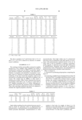
- Example 1 shows that increasing Cat/Oil ratio improves propylene yield, but sacrifices propylene purity.
- Comparison of Examples 3 and 4 and 5 and 6 shows reducing oil partial pressure greatly improves propylene purity without compromising propylene yield.
- Comparison of Examples 7 and 8 and 9 and 10 shows increasing temperature improves both propylene yield and purity.
- Comparison of Examples 11 and 12 shows decreasing cat residence time improves propylene yield and purity.
- Example 13 shows an example where both high propylene yield and purity are obtained at a reactor temperature and cat/oil ratio that can be achieved using a conventional FCC reactor/regenerator design for the second stage.
- the cracking of olefins and paraffins contained in naphtha streams can produce significant amounts of ethylene and propylene.
- the selectivity to ethylene or propylene and selectivity of propylene to propane varies as a function of catalyst and process operating conditions. It has been found that propylene yield can be increased by co-feeding steam along with cat naphtha to the reactor.
- the catalyst may be ZSM-5 or other small or medium-pore zeolites. Table 2 below illustrates the increase in propylene yield when 5 wt.
- % steam is co-fed with an FCC naphtha containing 38.8 wt % olefins.
- propylene yield increased, the propylene purity is diminished.
- other operating conditions may need to be adjusted to maintain the targeted propylene selectivity.
- Light olefins resulting from the preferred process may be used as feeds for processes such as oligomerization, polymerization, co-polymerization, ter-polymerization, and related processes (hereinafter “polymerization”) to form macromolecules.
- Such light olefins may be polymerized both alone and in combination with other species, in accordance with polymerization methods known in the art. In some cases it may be desirable to separate, concentrate, purify, upgrade, or otherwise process the light olefins prior to polymerization.
- Propylene and ethylene are preferred polymerization feeds. Polypropylene and polyethylene are preferred polymerization products made therefrom.
Landscapes
- Chemical & Material Sciences (AREA)
- Oil, Petroleum & Natural Gas (AREA)
- Engineering & Computer Science (AREA)
- Chemical Kinetics & Catalysis (AREA)
- General Chemical & Material Sciences (AREA)
- Organic Chemistry (AREA)
- Physics & Mathematics (AREA)
- Thermal Sciences (AREA)
- Organic Low-Molecular-Weight Compounds And Preparation Thereof (AREA)
Abstract
Description
| TABLE 1 | |||||||||
| Feed | Temp. | Oil Res. | Cat Res. | Wt. % | Wt. % | Propylene | |||
| Example | Olefins, wt % | ° C. | Cat/Oil | Oil psia | Time, sec | Time, sec | C3 = | C3 − | Purity, % |
| 1 | 38.6 | 566 | 4.2 | 36 | 0.5 | 4.3 | 11.4 | 0.5 | 95.8% |
| 2 | 38.6 | 569 | 8.4 | 32 | 0.6 | 4.7 | 12.8 | 0.8 | 94.1% |
| 3 | 22.2 | 510 | 8.8 | 18 | 1.2 | 8.6 | 8.2 | 1.1 | 88.2% |
| 4 | 22.2 | 511 | 9.3 | 38 | I.2 | 5.6 | 6.3 | 1.9 | 76.8% |
| 5 | 38.6 | 632 | 16.6 | 20 | 1.7 | 9.8 | 16.7 | 1.0 | 94.4% |
| 6 | 38.6 | 630 | 16.6 | 13 | 1.3 | 7.5 | 16.8 | 0.6 | 96.6% |
| 7 | 22.2 | 571 | 5.3 | 27 | 0.4 | 0.3 | 6.0 | 0.2 | 96.8% |
| 8 | 22.2 | 586 | 5.1 | 27 | 0.3 | 0.3 | 7.3 | 0.2 | 97.3% |
| 9 | 22.2 | 511 | 9.3 | 38 | 1.2 | 5.6 | 6.3 | 1.9 | 76.8% |
| 10 | 22.2 | 607 | 9.2 | 37 | 1.2 | 6.0 | 10.4 | 2.2 | 82.5% |
| 11 | 22.2 | 576 | 18.0 | 32 | 1.0 | 9.0 | 9.6 | 4.0 | 70.6% |
| 12 | 22.2 | 574 | 18.3 | 32 | 1.0 | 2.4 | 10.1 | 1.9 | 84.2% |
| 13 | 38.6 | 606 | 8.5 | 22 | 1.0 | 7.4 | 15.0 | 0.7 | 95.5% |
| Example | Wt. % C2 = | Wt. % C2 − | Ratio of C3 = to C2 = | Ratio of C3 = to C2 − | Wt. % C3 = |
| 1 | 2.35 | 2.73 | 4.9 | 4.2 | 11.4 |
| 2 | 3.02 | 3.58 | 4.2 | 3.6 | 12.8 |
| 3 | 2.32 | 2.53 | 3.5 | 3.2 | 8.2 |
| 4 | 2.16 | 2.46 | 2.9 | 2.6 | 6.3 |
| 5 | 6.97 | 9.95 | 2.4 | 1.7 | 16.7 |
| 6 | 6.21 | 8.71 | 2.7 | 1.9 | 16.8 |
| 7 | 1.03 | 1.64 | 5.8 | 3.7 | 6.0 |
| 8 | 1.48 | 2.02 | 4.9 | 3.6 | 7.3 |
| 9 | 2.16 | 2.46 | 2.9 | 2.6 | 6.3 |
| 10 | 5.21 | 6.74 | 2.0 | 1.5 | 10.4 |
| 11 | 4.99 | 6.67 | 1.9 | 1.4 | 9.6 |
| 12 | 4.43 | 6.27 | 2.3 | 1.6 | 10.1 |
| 13 | 4.45 | 5.76 | 3.3 | 2.6 | 15.0 |
| C2 − = CH4 + C2H4 + C2H6 | |||||
| TABLE 2 | |||||||||
| Steam | Temp. | Oil Res. | Cat Res. | Wt % | Wt % | Propylene | |||
| Example | Co-feed | C | Cat/Oil | Oil psia | Time, sec | Time, sec | Propylene | Propane | Purity, % |
| 14 | No | 630 | 8.7 | 18 | 0.8 | 8.0 | 11.7 | 0.3 | 97.5% |
| 15 | Yes | 631 | 8.8 | 22 | 1.2 | 6.0 | 13.9 | 0.6 | 95.9% |
| 16 | No | 631 | 8.7 | 18 | 0.8 | 7.8 | 13.6 | 0.4 | 97.1% |
| 17 | Yes | 632 | 8.4 | 22 | 1.1 | 6.1 | 14.6 | 0.8 | 94.8% |
Claims (17)
Priority Applications (24)
| Application Number | Priority Date | Filing Date | Title |
|---|---|---|---|
| US09/517,503 US6339180B1 (en) | 1998-05-05 | 2000-03-02 | Process for producing polypropylene from C3 olefins selectively produced in a fluid catalytic cracking process |
| MXPA02008552A MXPA02008552A (en) | 2000-03-02 | 2001-03-01 | Process for producing polypropylene from c3. |
| CN 01805874 CN1406254A (en) | 2000-03-02 | 2001-03-01 | Process for producing poly propylene from C3 olefins selectively produced in a fluid catalytic cracking process from a naphtha/steam feed |
| AU2001239990A AU2001239990A1 (en) | 2000-03-02 | 2001-03-01 | Process for producing polypropylene from C3 olefins selectively produced in a fluid catalytic cracking process from a naphtha/steam feed |
| JP2001564253A JP2004516335A (en) | 2000-03-02 | 2001-03-01 | Process for producing polypropylene from C3 olefins selectively produced from naphtha / steam feed in a fluid catalytic cracking process |
| CA002400524A CA2400524A1 (en) | 2000-03-02 | 2001-03-01 | Process for producing polypropylene from c3 olefins selectively produced in a fluid catalytic cracking process |
| PCT/US2001/006685 WO2001064761A2 (en) | 2000-03-02 | 2001-03-01 | Process for producing polypropylene from c3 olefins selectively produced in a fluid catalytic cracking process from a naphtha/steam feed |
| CN 01805862 CN1406253A (en) | 2000-03-02 | 2001-03-01 | Process for producing polypropylene from C3 olefins selectively produced in a fluid catalytic cracking process |
| AU2001243379A AU2001243379A1 (en) | 2000-03-02 | 2001-03-01 | Process for producing polypropylene from C3 olefins selectively produced in a fluid catalytic cracking process |
| JP2001564252A JP2004516334A (en) | 2000-03-02 | 2001-03-01 | Process for producing polypropylene from C3 olefins selectively produced from naphtha / steam feed in a fluid catalytic cracking process |
| MXPA02008553A MXPA02008553A (en) | 2000-03-02 | 2001-03-01 | Process for producing polypropylene from c3. |
| MXPA02008554A MXPA02008554A (en) | 2000-03-02 | 2001-03-01 | Process for producing polypropylene from c3. |
| CA002400598A CA2400598A1 (en) | 2000-03-02 | 2001-03-01 | Process for producing polypropylene from c3 olefins selectively produced in a fluid catalytic cracking process |
| PCT/US2001/006686 WO2001064762A2 (en) | 2000-03-02 | 2001-03-01 | Process for producing polypropylene from c3 olefins selectively produced by a two stage fluid catalytic cracking process |
| CA002400382A CA2400382A1 (en) | 2000-03-02 | 2001-03-01 | Process for producing polypropylene from c3 olefins selectively produced in a fluid catalytic cracking process from a naphtha/steam feed |
| PCT/US2001/006684 WO2001064760A2 (en) | 2000-03-02 | 2001-03-01 | Process for producing polypropylene from c3 olefins selectively produced in a fluid catalytic cracking process |
| AU2001239991A AU2001239991A1 (en) | 2000-03-02 | 2001-03-01 | Process for producing polypropylene from c3 olefins selectively produced by a two stage fluid catalytic cracking process |
| EP01916344A EP1259555A2 (en) | 2000-03-02 | 2001-03-01 | Process for producing polypropylene from c3 olefins selectively produced in a fluid catalytic cracking process |
| EP01913235A EP1261648A2 (en) | 2000-03-02 | 2001-03-01 | Process for producing polypropylene from c3 olefins selectively produced in a fluid catalytic cracking process |
| PCT/US2001/006687 WO2001064763A2 (en) | 2000-03-02 | 2001-03-01 | Process for producing polypropylene from c3 olefins selectively produced in a fluid catalytic cracking process |
| EP01914623A EP1261649A2 (en) | 2000-03-02 | 2001-03-01 | Process for producing polypropylene from c3 olefins selectively produced in a fluid catalytic cracking process from a naphtha/steam feed |
| CN 01805858 CN1406252A (en) | 2000-03-02 | 2001-03-01 | Process for producing polypropylene from C3 olefins selectively produced in a fluid catalytic cracking process |
| JP2001564255A JP2003525323A (en) | 2000-03-02 | 2001-03-01 | Process for producing polypropylene from C3 olefins selectively produced from naphtha / steam feed in a fluid catalytic cracking process |
| AU2001241916A AU2001241916A1 (en) | 2000-03-02 | 2001-03-01 | Process for producing polypropylene from C3 olefins selectively produced in a fluid catalytic cracking process |
Applications Claiming Priority (2)
| Application Number | Priority Date | Filing Date | Title |
|---|---|---|---|
| US09/073,085 US6069287A (en) | 1998-05-05 | 1998-05-05 | Process for selectively producing light olefins in a fluid catalytic cracking process |
| US09/517,503 US6339180B1 (en) | 1998-05-05 | 2000-03-02 | Process for producing polypropylene from C3 olefins selectively produced in a fluid catalytic cracking process |
Related Parent Applications (1)
| Application Number | Title | Priority Date | Filing Date |
|---|---|---|---|
| US09/073,085 Continuation-In-Part US6069287A (en) | 1998-05-05 | 1998-05-05 | Process for selectively producing light olefins in a fluid catalytic cracking process |
Publications (1)
| Publication Number | Publication Date |
|---|---|
| US6339180B1 true US6339180B1 (en) | 2002-01-15 |
Family
ID=46203818
Family Applications (1)
| Application Number | Title | Priority Date | Filing Date |
|---|---|---|---|
| US09/517,503 Expired - Fee Related US6339180B1 (en) | 1998-05-05 | 2000-03-02 | Process for producing polypropylene from C3 olefins selectively produced in a fluid catalytic cracking process |
Country Status (1)
| Country | Link |
|---|---|
| US (1) | US6339180B1 (en) |
Cited By (8)
| Publication number | Priority date | Publication date | Assignee | Title |
|---|---|---|---|---|
| US20040182745A1 (en) * | 2003-02-28 | 2004-09-23 | Chen Tan Jen | Fractionating and further cracking a C6 fraction from a naphtha feed for propylene generation |
| US20040182747A1 (en) * | 2003-02-28 | 2004-09-23 | Chen Tan Jen | C6 recycle for propylene generation in a fluid catalytic cracking unit |
| US20060231461A1 (en) * | 2004-08-10 | 2006-10-19 | Weijian Mo | Method and apparatus for making a middle distillate product and lower olefins from a hydrocarbon feedstock |
| US20100163455A1 (en) * | 2007-04-13 | 2010-07-01 | Hadjigeorge George A | Systems and methods for making a middle distillate product and lower olefins from a hydrocarbon feedstock |
| US20100200460A1 (en) * | 2007-04-30 | 2010-08-12 | Shell Oil Company | Systems and methods for making a middle distillate product and lower olefins from a hydrocarbon feedstock |
| US9745519B2 (en) | 2012-08-22 | 2017-08-29 | Kellogg Brown & Root Llc | FCC process using a modified catalyst |
| WO2017151283A1 (en) | 2016-02-29 | 2017-09-08 | Sabic Global Technologies B.V. | A process for producing olefins using aromatic saturation |
| US12134737B1 (en) | 2023-04-20 | 2024-11-05 | Saudi Arabian Oil Company | Fluid catalytic cracking unit with reactivity based naphtha recycle to enhance propylene production |
Citations (31)
| Publication number | Priority date | Publication date | Assignee | Title |
|---|---|---|---|---|
| US3442792A (en) | 1966-08-17 | 1969-05-06 | Exxon Research Engineering Co | Process for improving motor octane of olefinic naphthas |
| US3893905A (en) * | 1973-09-21 | 1975-07-08 | Universal Oil Prod Co | Fluid catalytic cracking process with improved propylene recovery |
| US3928172A (en) | 1973-07-02 | 1975-12-23 | Mobil Oil Corp | Catalytic cracking of FCC gasoline and virgin naphtha |
| US4171257A (en) | 1978-10-23 | 1979-10-16 | Chevron Research Company | Petroleum distillate upgrading process |
| US4282085A (en) | 1978-10-23 | 1981-08-04 | Chevron Research Company | Petroleum distillate upgrading process |
| US4502945A (en) | 1982-06-09 | 1985-03-05 | Chevron Research Company | Process for preparing olefins at high pressure |
| US4830728A (en) | 1986-09-03 | 1989-05-16 | Mobil Oil Corporation | Upgrading naphtha in a multiple riser fluid catalytic cracking operation employing a catalyst mixture |
| US4865718A (en) | 1986-09-03 | 1989-09-12 | Mobil Oil Corporation | Maximizing distillate production in a fluid catalytic cracking operation employing a mixed catalyst system |
| EP0347003A1 (en) | 1988-06-16 | 1989-12-20 | Shell Internationale Researchmaatschappij B.V. | Process for the conversion of a hydrocarbonaceous feedstock |
| US4950387A (en) | 1988-10-21 | 1990-08-21 | Mobil Oil Corp. | Upgrading of cracking gasoline |
| US5026935A (en) | 1989-10-02 | 1991-06-25 | Arco Chemical Technology, Inc. | Enhanced production of ethylene from higher hydrocarbons |
| US5026936A (en) | 1989-10-02 | 1991-06-25 | Arco Chemical Technology, Inc. | Enhanced production of propylene from higher hydrocarbons |
| US5043522A (en) | 1989-04-25 | 1991-08-27 | Arco Chemical Technology, Inc. | Production of olefins from a mixture of Cu+ olefins and paraffins |
| US5069776A (en) | 1989-02-27 | 1991-12-03 | Shell Oil Company | Process for the conversion of a hydrocarbonaceous feedstock |
| US5160424A (en) | 1989-11-29 | 1992-11-03 | Mobil Oil Corporation | Hydrocarbon cracking, dehydrogenation and etherification process |
| US5171921A (en) | 1991-04-26 | 1992-12-15 | Arco Chemical Technology, L.P. | Production of olefins |
| US5292976A (en) | 1993-04-27 | 1994-03-08 | Mobil Oil Corporation | Process for the selective conversion of naphtha to aromatics and olefins |
| US5372704A (en) | 1990-05-24 | 1994-12-13 | Mobil Oil Corporation | Cracking with spent catalyst |
| US5378352A (en) | 1991-11-19 | 1995-01-03 | Mobil Oil Corporation | Hydrocarbon upgrading process |
| US5389232A (en) | 1992-05-04 | 1995-02-14 | Mobil Oil Corporation | Riser cracking for maximum C3 and C4 olefin yields |
| US5396010A (en) | 1993-08-16 | 1995-03-07 | Mobil Oil Corporation | Heavy naphtha upgrading |
| US5414172A (en) | 1993-03-08 | 1995-05-09 | Mobil Oil Corporation | Naphtha upgrading |
| US5472594A (en) | 1994-07-18 | 1995-12-05 | Texaco Inc. | FCC process for producing enhanced yields of C4 /C5 olefins |
| US5846403A (en) * | 1996-12-17 | 1998-12-08 | Exxon Research And Engineering Company | Recracking of cat naphtha for maximizing light olefins yields |
| WO1998056874A1 (en) | 1997-06-10 | 1998-12-17 | Exxon Chemical Patents Inc. | Enhanced olefin yield and catalytic process with diolefins |
| US5865987A (en) | 1995-07-07 | 1999-02-02 | Mobil Oil | Benzene conversion in an improved gasoline upgrading process |
| US5865988A (en) | 1995-07-07 | 1999-02-02 | Mobil Oil Corporation | Hydrocarbon upgrading process |
| US6069287A (en) * | 1998-05-05 | 2000-05-30 | Exxon Research And Engineering Co. | Process for selectively producing light olefins in a fluid catalytic cracking process |
| US6093867A (en) * | 1998-05-05 | 2000-07-25 | Exxon Research And Engineering Company | Process for selectively producing C3 olefins in a fluid catalytic cracking process |
| US6106697A (en) * | 1998-05-05 | 2000-08-22 | Exxon Research And Engineering Company | Two stage fluid catalytic cracking process for selectively producing b. C.su2 to C4 olefins |
| US6118035A (en) * | 1998-05-05 | 2000-09-12 | Exxon Research And Engineering Co. | Process for selectively producing light olefins in a fluid catalytic cracking process from a naphtha/steam feed |
-
2000
- 2000-03-02 US US09/517,503 patent/US6339180B1/en not_active Expired - Fee Related
Patent Citations (32)
| Publication number | Priority date | Publication date | Assignee | Title |
|---|---|---|---|---|
| US3442792A (en) | 1966-08-17 | 1969-05-06 | Exxon Research Engineering Co | Process for improving motor octane of olefinic naphthas |
| US3928172A (en) | 1973-07-02 | 1975-12-23 | Mobil Oil Corp | Catalytic cracking of FCC gasoline and virgin naphtha |
| US3893905A (en) * | 1973-09-21 | 1975-07-08 | Universal Oil Prod Co | Fluid catalytic cracking process with improved propylene recovery |
| US4171257A (en) | 1978-10-23 | 1979-10-16 | Chevron Research Company | Petroleum distillate upgrading process |
| US4282085A (en) | 1978-10-23 | 1981-08-04 | Chevron Research Company | Petroleum distillate upgrading process |
| US4502945A (en) | 1982-06-09 | 1985-03-05 | Chevron Research Company | Process for preparing olefins at high pressure |
| US4830728A (en) | 1986-09-03 | 1989-05-16 | Mobil Oil Corporation | Upgrading naphtha in a multiple riser fluid catalytic cracking operation employing a catalyst mixture |
| US4865718A (en) | 1986-09-03 | 1989-09-12 | Mobil Oil Corporation | Maximizing distillate production in a fluid catalytic cracking operation employing a mixed catalyst system |
| EP0347003A1 (en) | 1988-06-16 | 1989-12-20 | Shell Internationale Researchmaatschappij B.V. | Process for the conversion of a hydrocarbonaceous feedstock |
| EP0347003B1 (en) | 1988-06-16 | 1996-05-08 | Shell Internationale Researchmaatschappij B.V. | Process for the conversion of a hydrocarbonaceous feedstock |
| US4950387A (en) | 1988-10-21 | 1990-08-21 | Mobil Oil Corp. | Upgrading of cracking gasoline |
| US5069776A (en) | 1989-02-27 | 1991-12-03 | Shell Oil Company | Process for the conversion of a hydrocarbonaceous feedstock |
| US5043522A (en) | 1989-04-25 | 1991-08-27 | Arco Chemical Technology, Inc. | Production of olefins from a mixture of Cu+ olefins and paraffins |
| US5026935A (en) | 1989-10-02 | 1991-06-25 | Arco Chemical Technology, Inc. | Enhanced production of ethylene from higher hydrocarbons |
| US5026936A (en) | 1989-10-02 | 1991-06-25 | Arco Chemical Technology, Inc. | Enhanced production of propylene from higher hydrocarbons |
| US5160424A (en) | 1989-11-29 | 1992-11-03 | Mobil Oil Corporation | Hydrocarbon cracking, dehydrogenation and etherification process |
| US5372704A (en) | 1990-05-24 | 1994-12-13 | Mobil Oil Corporation | Cracking with spent catalyst |
| US5171921A (en) | 1991-04-26 | 1992-12-15 | Arco Chemical Technology, L.P. | Production of olefins |
| US5378352A (en) | 1991-11-19 | 1995-01-03 | Mobil Oil Corporation | Hydrocarbon upgrading process |
| US5389232A (en) | 1992-05-04 | 1995-02-14 | Mobil Oil Corporation | Riser cracking for maximum C3 and C4 olefin yields |
| US5414172A (en) | 1993-03-08 | 1995-05-09 | Mobil Oil Corporation | Naphtha upgrading |
| US5292976A (en) | 1993-04-27 | 1994-03-08 | Mobil Oil Corporation | Process for the selective conversion of naphtha to aromatics and olefins |
| US5396010A (en) | 1993-08-16 | 1995-03-07 | Mobil Oil Corporation | Heavy naphtha upgrading |
| US5472594A (en) | 1994-07-18 | 1995-12-05 | Texaco Inc. | FCC process for producing enhanced yields of C4 /C5 olefins |
| US5865987A (en) | 1995-07-07 | 1999-02-02 | Mobil Oil | Benzene conversion in an improved gasoline upgrading process |
| US5865988A (en) | 1995-07-07 | 1999-02-02 | Mobil Oil Corporation | Hydrocarbon upgrading process |
| US5846403A (en) * | 1996-12-17 | 1998-12-08 | Exxon Research And Engineering Company | Recracking of cat naphtha for maximizing light olefins yields |
| WO1998056874A1 (en) | 1997-06-10 | 1998-12-17 | Exxon Chemical Patents Inc. | Enhanced olefin yield and catalytic process with diolefins |
| US6069287A (en) * | 1998-05-05 | 2000-05-30 | Exxon Research And Engineering Co. | Process for selectively producing light olefins in a fluid catalytic cracking process |
| US6093867A (en) * | 1998-05-05 | 2000-07-25 | Exxon Research And Engineering Company | Process for selectively producing C3 olefins in a fluid catalytic cracking process |
| US6106697A (en) * | 1998-05-05 | 2000-08-22 | Exxon Research And Engineering Company | Two stage fluid catalytic cracking process for selectively producing b. C.su2 to C4 olefins |
| US6118035A (en) * | 1998-05-05 | 2000-09-12 | Exxon Research And Engineering Co. | Process for selectively producing light olefins in a fluid catalytic cracking process from a naphtha/steam feed |
Cited By (12)
| Publication number | Priority date | Publication date | Assignee | Title |
|---|---|---|---|---|
| US20040182745A1 (en) * | 2003-02-28 | 2004-09-23 | Chen Tan Jen | Fractionating and further cracking a C6 fraction from a naphtha feed for propylene generation |
| US20040182747A1 (en) * | 2003-02-28 | 2004-09-23 | Chen Tan Jen | C6 recycle for propylene generation in a fluid catalytic cracking unit |
| US7267759B2 (en) | 2003-02-28 | 2007-09-11 | Exxonmobil Research And Engineering Company | Fractionating and further cracking a C6 fraction from a naphtha feed for propylene generation |
| US7270739B2 (en) | 2003-02-28 | 2007-09-18 | Exxonmobil Research And Engineering Company | Fractionating and further cracking a C6 fraction from a naphtha feed for propylene generation |
| US7425258B2 (en) | 2003-02-28 | 2008-09-16 | Exxonmobil Research And Engineering Company | C6 recycle for propylene generation in a fluid catalytic cracking unit |
| US20060231461A1 (en) * | 2004-08-10 | 2006-10-19 | Weijian Mo | Method and apparatus for making a middle distillate product and lower olefins from a hydrocarbon feedstock |
| US20100163455A1 (en) * | 2007-04-13 | 2010-07-01 | Hadjigeorge George A | Systems and methods for making a middle distillate product and lower olefins from a hydrocarbon feedstock |
| US8920630B2 (en) * | 2007-04-13 | 2014-12-30 | Shell Oil Company | Systems and methods for making a middle distillate product and lower olefins from a hydrocarbon feedstock |
| US20100200460A1 (en) * | 2007-04-30 | 2010-08-12 | Shell Oil Company | Systems and methods for making a middle distillate product and lower olefins from a hydrocarbon feedstock |
| US9745519B2 (en) | 2012-08-22 | 2017-08-29 | Kellogg Brown & Root Llc | FCC process using a modified catalyst |
| WO2017151283A1 (en) | 2016-02-29 | 2017-09-08 | Sabic Global Technologies B.V. | A process for producing olefins using aromatic saturation |
| US12134737B1 (en) | 2023-04-20 | 2024-11-05 | Saudi Arabian Oil Company | Fluid catalytic cracking unit with reactivity based naphtha recycle to enhance propylene production |
Similar Documents
| Publication | Publication Date | Title |
|---|---|---|
| US6258990B1 (en) | Process for producing polypropylene from C3 olefins selectively produced in a fluid catalytic cracking process from a naphtha/steam feed | |
| US6069287A (en) | Process for selectively producing light olefins in a fluid catalytic cracking process | |
| US6093867A (en) | Process for selectively producing C3 olefins in a fluid catalytic cracking process | |
| US6313366B1 (en) | Process for selectively producing C3 olefins in a fluid catalytic cracking process | |
| US6803494B1 (en) | Process for selectively producing propylene in a fluid catalytic cracking process | |
| EP1259555A2 (en) | Process for producing polypropylene from c3 olefins selectively produced in a fluid catalytic cracking process | |
| EP1289887A1 (en) | Process for selectively producing c3 olefins in a fluid catalytic cracking process | |
| US6388152B1 (en) | Process for producing polypropylene from C3 olefins selectively produced in a fluid catalytic cracking process | |
| ZA200206891B (en) | Process for producing polypropylene from C3 olefins selectively produced in a fluid catalytic cracking process. |
Legal Events
| Date | Code | Title | Description |
|---|---|---|---|
| AS | Assignment |
Owner name: EXXONMOBIL RESEARCH AND ENGINEERING COMPANY, NEW J Free format text: ASSIGNMENT OF ASSIGNORS INTEREST;ASSIGNORS:LADWIG, PAUL K.;ASPLIN, JOHN E.;STUNTZ, GORDON F.;AND OTHERS;REEL/FRAME:011781/0510;SIGNING DATES FROM 20010410 TO 20010425 |
|
| AS | Assignment |
Owner name: EXXONMOBIL CHEMICAL PATENTS INC., TEXAS Free format text: ASSIGNMENT OF ASSIGNORS INTEREST;ASSIGNOR:EXXONMOBIL RESEARCH AND ENGINEERING COMPANY;REEL/FRAME:011851/0534 Effective date: 20010509 |
|
| FPAY | Fee payment |
Year of fee payment: 4 |
|
| REMI | Maintenance fee reminder mailed | ||
| LAPS | Lapse for failure to pay maintenance fees | ||
| STCH | Information on status: patent discontinuation |
Free format text: PATENT EXPIRED DUE TO NONPAYMENT OF MAINTENANCE FEES UNDER 37 CFR 1.362 |
|
| FP | Lapsed due to failure to pay maintenance fee |
Effective date: 20100115 |