US6280630B1 - Process for the treatment of effluent streams - Google Patents
Process for the treatment of effluent streams Download PDFInfo
- Publication number
- US6280630B1 US6280630B1 US09/424,724 US42472400A US6280630B1 US 6280630 B1 US6280630 B1 US 6280630B1 US 42472400 A US42472400 A US 42472400A US 6280630 B1 US6280630 B1 US 6280630B1
- Authority
- US
- United States
- Prior art keywords
- process according
- water stream
- ettringite
- calcium
- calcium sulphate
- Prior art date
- Legal status (The legal status is an assumption and is not a legal conclusion. Google has not performed a legal analysis and makes no representation as to the accuracy of the status listed.)
- Expired - Fee Related
Links
Images

Classifications
-
- C—CHEMISTRY; METALLURGY
- C02—TREATMENT OF WATER, WASTE WATER, SEWAGE, OR SLUDGE
- C02F—TREATMENT OF WATER, WASTE WATER, SEWAGE, OR SLUDGE
- C02F1/00—Treatment of water, waste water, or sewage
- C02F1/52—Treatment of water, waste water, or sewage by flocculation or precipitation of suspended impurities
-
- C—CHEMISTRY; METALLURGY
- C02—TREATMENT OF WATER, WASTE WATER, SEWAGE, OR SLUDGE
- C02F—TREATMENT OF WATER, WASTE WATER, SEWAGE, OR SLUDGE
- C02F1/00—Treatment of water, waste water, or sewage
- C02F1/52—Treatment of water, waste water, or sewage by flocculation or precipitation of suspended impurities
- C02F1/5209—Regulation methods for flocculation or precipitation
-
- C—CHEMISTRY; METALLURGY
- C02—TREATMENT OF WATER, WASTE WATER, SEWAGE, OR SLUDGE
- C02F—TREATMENT OF WATER, WASTE WATER, SEWAGE, OR SLUDGE
- C02F1/00—Treatment of water, waste water, or sewage
- C02F1/52—Treatment of water, waste water, or sewage by flocculation or precipitation of suspended impurities
- C02F1/5236—Treatment of water, waste water, or sewage by flocculation or precipitation of suspended impurities using inorganic agents
- C02F1/5245—Treatment of water, waste water, or sewage by flocculation or precipitation of suspended impurities using inorganic agents using basic salts, e.g. of aluminium and iron
-
- C—CHEMISTRY; METALLURGY
- C02—TREATMENT OF WATER, WASTE WATER, SEWAGE, OR SLUDGE
- C02F—TREATMENT OF WATER, WASTE WATER, SEWAGE, OR SLUDGE
- C02F1/00—Treatment of water, waste water, or sewage
- C02F1/66—Treatment of water, waste water, or sewage by neutralisation; pH adjustment
-
- C—CHEMISTRY; METALLURGY
- C02—TREATMENT OF WATER, WASTE WATER, SEWAGE, OR SLUDGE
- C02F—TREATMENT OF WATER, WASTE WATER, SEWAGE, OR SLUDGE
- C02F2101/00—Nature of the contaminant
- C02F2101/10—Inorganic compounds
- C02F2101/101—Sulfur compounds
-
- C—CHEMISTRY; METALLURGY
- C02—TREATMENT OF WATER, WASTE WATER, SEWAGE, OR SLUDGE
- C02F—TREATMENT OF WATER, WASTE WATER, SEWAGE, OR SLUDGE
- C02F2103/00—Nature of the water, waste water, sewage or sludge to be treated
- C02F2103/10—Nature of the water, waste water, sewage or sludge to be treated from quarries or from mining activities
-
- C—CHEMISTRY; METALLURGY
- C02—TREATMENT OF WATER, WASTE WATER, SEWAGE, OR SLUDGE
- C02F—TREATMENT OF WATER, WASTE WATER, SEWAGE, OR SLUDGE
- C02F2301/00—General aspects of water treatment
- C02F2301/04—Flow arrangements
- C02F2301/043—Treatment of partial or bypass streams
-
- C—CHEMISTRY; METALLURGY
- C02—TREATMENT OF WATER, WASTE WATER, SEWAGE, OR SLUDGE
- C02F—TREATMENT OF WATER, WASTE WATER, SEWAGE, OR SLUDGE
- C02F2301/00—General aspects of water treatment
- C02F2301/04—Flow arrangements
- C02F2301/046—Recirculation with an external loop
-
- Y—GENERAL TAGGING OF NEW TECHNOLOGICAL DEVELOPMENTS; GENERAL TAGGING OF CROSS-SECTIONAL TECHNOLOGIES SPANNING OVER SEVERAL SECTIONS OF THE IPC; TECHNICAL SUBJECTS COVERED BY FORMER USPC CROSS-REFERENCE ART COLLECTIONS [XRACs] AND DIGESTS
- Y10—TECHNICAL SUBJECTS COVERED BY FORMER USPC
- Y10S—TECHNICAL SUBJECTS COVERED BY FORMER USPC CROSS-REFERENCE ART COLLECTIONS [XRACs] AND DIGESTS
- Y10S210/00—Liquid purification or separation
- Y10S210/902—Materials removed
- Y10S210/911—Cumulative poison
- Y10S210/912—Heavy metal
Definitions
- THIS invention relates to a process for the treatment of water streams.
- Water streams typically waste waters, and in particular acid mine drainage waters, can have pH values as low as 1.5 or 2. They also typically contain high levels of dissolved calcium, magnesium, heavy metals and sulphate. These water streams are traditionally neutralised with lime prior to discharge, and as a result they contain large quantities of calcium sulphate in solution. The discharge of these water streams into natural water courses presents a growing environmental problem.
- a process for the removal of sulphates and calcium from a water stream comprises the steps of:
- the water stream may be combined with both an amount of amorphous aluminium trihydroxide and an amount of lime (CaO) to raise the pH of the water stream, typically to 11.0.
- amorphous aluminium trihydroxide an amount of lime (CaO) to raise the pH of the water stream, typically to 11.0.
- CaO lime
- the mass ratio of amorphous aluminium trihydroxide which is combined with the water stream is preferably such that the ratio of amorphous aluminium trihydroxide to sulphate present in the water stream is up to 1:1.
- this ratio may be from 0.1 to 1:1, such as from 0.5 to 0.8:1 or 0.65 to 1:1.
- the ettringite may be removed from the water stream by settling and/or filtration.
- Amorphous aluminium trihydroxide may be recovered from the ettringite removed from the water stream by decomposing an ettringite suspension or slurry as described below.
- the recovered amorphous aluminium trihydroxide may be recycled to treat a water stream containing sulphates and calcium.
- the water stream may be effluent mine water with a pH ranging from highly acidic to highly alkaline.
- the pH may be in the range 2 to 8 or greater.
- the process may include a first preliminary step of raising the pH of the water stream.
- the pH may be raised to a value of between 11.0 and 12.6 such as between 11.7 and 12.3 or between 11.7 and 12.0.
- the pH of the water stream may be raised above 12.0 to remove sulphates associated with potassium and/or sodium.
- the pH of the water stream may be raised by adding lime (CaO) and/or another alkali to it.
- the first preliminary step may include the removal of impurities that are insoluble at the raised pH value as precipitates.
- the precipitates may be hydroxides.
- the impurities may comprise magnesium and/or heavy metals, such as iron, aluminium and manganese.
- the process may include a second preliminary step of desupersaturating the water stream by reducing its calcium sulphate content to a saturation level.
- the desupersaturating step may involve passing the water stream through a high solids precipitator to cause precipitation of calcium sulphate on gypsum seed in the form of calcium sulphate dihydrate (gypsum).
- the gypsum seed may be freshly introduced or recycled from one of the solid/liquid separation steps of the process of the invention.
- the process may include a post treatment step of adding carbon dioxide to the water stream to precipitate dissolved lime as calcium carbonate and to reduce the pH of the water stream to a value of between 7.0 and 10.0, preferably to between 7.5 and 9.0.
- the precipitated calcium carbonate is preferably recovered by settling and/or filtration.
- the post treatment step may involve the addition of sufficient carbon dioxide to from soluble calcium bicarbonate to produce a less corrosive, more stable waste water.
- a process for separating amorphous aluminium trihydroxide from a suspension containing solid amorphous aluminium trihydroxide and solid or dissolved calcium sulphate comprises the steps of:
- the suspension containing amorphous aluminium trihydroxide and calcium sulphate may be a decomposed ettringite slurry decomposed in a decomposition step.
- the pH in the ettringite decomposition step may have been lowered to decompose the ettringite.
- the pH in the ettringite decomposition step is preferably lowered to a pH in the range of 4.0 to 8.5.
- the pH in the ettringite decomposition step may be lowered by adding an acid or by sparging with CO 2 or SO 2 .
- sulphuric acid is added to lower the pH and optionally to supersaturate the resulting calcium sulphate solution.
- a sufficient volume of saturated calcium sulphate solution may be added to the decomposed ettringite to ensure that the calcium sulphate resulting from the breakdown of the ettringite is substantially dissolved to form the supersaturated solution of calcium sulphate, leaving the amorphous aluminium trihydroxide in suspension.
- the process may also comprise the step of desupersaturating the supersaturated calcium sulphate solution by precipitating calcium sulphate on gypsum seed to form gypsum and a saturated calcium sulphate solution.
- the saturated calcium sulphate solution may be recycled and added to the ettringite slurry decomposition step.
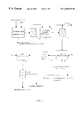
- FIG. 1 is a schematic representation of a waste water treatment process of the invention.
- FIG. 2 is a schematic representation of a process for the recovery of amorphous aluminium trihydroxide from ettringite.
- the process of the invention is a process for the removal of impurities, typically calcium and sulphate, from water streams, particularly industrial waste waters such as acid mine drainage waters.
- impurities typically calcium and sulphate
- the most important step of the process involves the addition of amorphous aluminium trihydroxide (Al(OH) 3 ) to a water stream, hereinafter referred to as the waste water.
- amorphous aluminium trihydroxide Al(OH) 3
- ettringite insoluble calcium sulphoaluminate
- An important advantage of this process is that the addition of amorphous aluminium trihydroxide to the water stream or waste water stream does not result in the addition of further ions to the final water or waste water stream to be discharged.
- the use of aluminium trihydroxide in amorphous and reactive form is also important in the process of the invention.
- the process of the invention comprises a number of preliminary steps and post treatment steps.
- step 1 the pH of the acid waste water is raised by adding lime (CaO) or another alkali, such as caustic soda, to it. This raises the pH of the waste water to a value of between 11.0 and 12.6. At this pH, iron, aluminium, manganese, magnesium and other heavy metal impurities precipitate out of solution as hydroxides. The precipitates are solid precipitates which are separated out from the waste water by using a solids/liquid separator 10 . The calcium content of the water, with the addition of the lime, increases. In some instances, if the waste water already contains a high concentration of calcium, a highly supersaturated calcium sulphate solution is generated. This supersaturated waste water then passes on to the next step of the process, (preliminary) step 2 .
- lime CaO
- caustic soda another alkali
- step 1 is performed. However, if the waste water has been pre-limed to the required pH and the precipitated solids removed, step 1 can be omitted from the overall treatment process of the invention.
- Step 2 is only performed if the waste water is a calcium sulphate supersaturated solution.
- the waste water is desupersaturated by using freshly introduced or recycled gypsum seed and removing some of the calcium sulphate in the form of calcium sulphate dihydrate (gypsum) in a high solids precipitator 12 .
- This process takes approximately 15 minutes and brings the calcium sulphate content of the waste water down to saturation level. If the waste water is not supersaturated, this step is bypassed.
- the removal of impurities as hydroxides and the recovery of gypsum from a calcium sulphate supersaturated solution could be performed without the intermediate solid/liquid separation of preliminary step 1 .
- the waste water, saturated with calcium sulphate is then transferred to the next step of the process, step 3 .
- step 3 the crucial step of the process is performed.
- Amorphous aluminium trihydroxide and lime are added to the waste water.
- the amount of amorphous aluminium trihydroxide that is added depends on the required degree of calcium sulphate removal from the waste water stream.
- the dosage of amorphous aluminium trihydroxide to calcium-associated sulphate present is up to 1:1, typically in the ratio of 0.1, to 1:1.
- the dosage of amorphous aluminium trihydroxide may be from 0.5 to 0.8:1 or 0.65 to 1:1.
- amorphous aluminium trihydroxide is required.
- the ratio of Al(OH 3 ) to SO 4 is 0.54:1.
- a greater amount of amorphous aluminium trihydroxide is added to ensure maximum precipitation.
- the lime is added to ensure a stable, high pH of the waste water, which allows the formation of ettringite to proceed.
- Amorphous aluminium trihydroxide may be produced as a gel from a sodium aluminate solution, either by gassing the solution with carbon dioxide or by neutralising it with acid. It may also be produced by precipitation from an acidic aluminium salt (typically aluminium sulphate, chloride or nitrate). The preparation step which involves gassing with carbon dioxide is preferred.
- the reaction which occurs in step 3 in the waste water between the lime, aluminium trihydroxide and soluble calcium sulphate present must be carried out in the alkaline pH range, at a pH of between 11.0 and 12.6 for example 12.5, such as between 11.7 and 12.3 for example 11.8, and preferably at a pH of between 11.5 and 12.5.
- this high pH may be achieved by adding lime.
- the pH may be raised about 12.0 to remove sulphates associated with potassium and/or sodium and this may require additional amorphous aluminium trihydroxide.
- the reaction is usually complete within 15 minutes and the mineral ettringite, which is insoluble calcium sulphoaluminate, is formed.
- the insoluble ettringite which is formed settles fairly rapidly and/or is easily filtered out in a solids/liquid separator 14 .
- the aluminium trihydroxide can be recovered from the precipitated ettringite in an associated process and recycled as described below. This ensures that the process of the invention is highly cost effective when compared to alternatives such as ion exchange and membrane separation techniques.
- step 4 carbon dioxide is added to the high pH waste water by gassing.
- the carbon dioxide reacts with any calcium ions still present in the waste water (some from the dissolved lime) to form calcium carbonate which is also insoluble and which can be separated from the waste water in a solids/liquid separator 16 .
- the addition of carbon dioxide also reduces the final pH of the waste water to a more neutral pH of between 7 and 10 and preferably to a pH of between 7.5 and 9.
- the treated waste water, at the more neutral pH and with the majority of the dissolved impurities now removed, can then be discharged.
- An alternative is to add a sufficient amount of carbon dioxide to form soluble calcium bicarbonate. This results in a treated waste stream with a higher residual alkalinity which is a less corrosive, more stable waste water. Should a use exist for the high pH water leaving step 3 , then step 4 can be omitted.
- the process of the invention is highly effective in treating sulphate-containing waste waters, particularly calcium sulphate-containing waste waters. However, it does not remove sulphate combined with either sodium or potassium, unless the formation of ettringite is carried out at a pH exceeding 12.0. At a pH of above 12.0 the following reaction could take place:
- waters with a high chloride content may require further treatment following the calcium sulphate removal process, depending on the discharge specification requirements.
- the removal/recovery of amorphous aluminium trihydroxide from ettringite is set out schematically in FIG. 2 .
- the amorphous aluminium trihydroxide is recovered from the ettringite and recycled. This substantially improves the economics of the process.
- An important feature of this invention is the recovery of amorphous aluminium trihydroxide from the ettringite slurry formed in step 3 and which is recovered in the solids/liquids separator 14 .
- the ettringite slurry is decomposed by lowering the pH to a value of less than pH 9 and preferably to a value of between 4.0 and 8.5.
- This can be achieved by adding acid, for example sulphuric, hydrochloric or nitric acid. It may also be achieved by sparging with CO 2 or SO 3 .
- the method of adding sulphuric acid (step 5 ) is preferred.
- the ettringite formed in step 3 is reacted with sulphuric acid at a pH of between 4 and 8.5.
- sulphuric acid at a pH of between 4 and 8.5.
- the amorphous aluminium trihydroxide is then separated by settling and/or filtration by a liquid solids separator 18 and may be washed and recycled back to step 3 of the process described above and illustrated in FIG. 1 .
- the resulting supersaturated calcium sulphate solution is then sent to a high solids precipitator 20 , similar to that used in step 2 of the process illustrated in FIG. 1 .
- the calcium and sulphate levels are reduces by precipitation on gypsum seed, normally crystalline.
- the calcium sulphate in the saturated solution is at a saturation level of about 2.1 grams per liter. This produces a saturated calcium sulphate solution.
- the accumulated, precipitated gypsum is bled from the bottom of the solids/liquid separator 22 and removed from the system.
- the saturated calcium sulphate solution is recycled to the ettringite decomposition reactor.
- the separation of amorphous aluminium trihydroxide from the calcium sulphate, both of which have resulted from the decomposition of the ettringite, in the ettringite slurry relies on the difference in calcium sulphate concentrations between supersaturated and saturated calcium sulphate solutions.
- the concentration of calcium sulphate in the solution is raised by the addition of sulphuric acid and/or recycled calcium sulphate solution.
- a sufficient volume of saturated calcium sulphate solution is added to the decomposed slurry to dissolve the calcium sulphate resulting from the decomposition of ettringite. This raises the concentration of calcium sulphate to above the saturation concentration.
- the level of supersaturation may be up to a total calcium sulphate concentration of about 8 grams per liter. It is important that this step is carried out at a pH of above 4 and generally less than 10 so that the amorphous aluminium trihydroxide remains insoluble. The solid aluminium trihydroxide which has remained in suspension is then removed from the supersaturated calcium sulphate solution by settling and/or filtration.
- This process results in a high recovery of greater than 95% of amorphous aluminium trihydroxide, provided that sulphuric acid is used to decompose the ettringite.
- the rate of the desupersaturation reaction is proportional to both the concentration difference between the ionic species in solution and the equilibrium saturation concentration and the surface area of seed material.
- the gypsum is added as the seed material to produce a large surface area of seed for precipitation to occur on. Stirring was again commenced for 20 minutes. The waste water was then separated from the gypsum and analysed. The results are set out in column S2 in Table 1.
- This example illustrates the recovery of amorphous aluminium trihydroxide from ettringite.
- the ettringite produced in Example 1 was filtered and washed and then added to 5 liters of saturated calcium sulphate solution in a stirred reaction vessel. Sulphuric acid was then slowly added until the pH dropped and stabilised at a value of 6.0. The slurry was then filtered to remove the solids. Both the solids and the resulting filtrate were analysed.
Landscapes
- Chemical & Material Sciences (AREA)
- Life Sciences & Earth Sciences (AREA)
- Hydrology & Water Resources (AREA)
- Engineering & Computer Science (AREA)
- Environmental & Geological Engineering (AREA)
- Water Supply & Treatment (AREA)
- Organic Chemistry (AREA)
- Inorganic Chemistry (AREA)
- Removal Of Specific Substances (AREA)
- Compounds Of Alkaline-Earth Elements, Aluminum Or Rare-Earth Metals (AREA)
- Treating Waste Gases (AREA)
Abstract
This invention relates to a process for removing sulphates and calcium from a water stream which includes the steps of: combining the water stream and an amount of amorphous aluminum trihydroxide (Al(OH)3); allowing the formation of ettringite (3CaO.Al2O3.3CaSO4.31/32H2O) as a precipitate; and removing the precipitated ettringite from the water stream.
Description
THIS invention relates to a process for the treatment of water streams.
Water streams, typically waste waters, and in particular acid mine drainage waters, can have pH values as low as 1.5 or 2. They also typically contain high levels of dissolved calcium, magnesium, heavy metals and sulphate. These water streams are traditionally neutralised with lime prior to discharge, and as a result they contain large quantities of calcium sulphate in solution. The discharge of these water streams into natural water courses presents a growing environmental problem.
The solubility of calcium sulphate dihydrate (gypsum) in water at 20° C. is 2.35 g/l, which means that one cubic meter of water saturated with calcium sulphate would contain 0.55 kg of calcium and 1.31 kg of sulphate. In other words, a saturated acidic mine water stream flowing at 500 m3/h, would contaminate natural water courses with 2390 t calcium and 5746 t sulphate annually.
According to the invention a process for the removal of sulphates and calcium from a water stream comprises the steps of:
combining the water stream and an amount of amorphous aluminium trihydroxide (Al(OH3));
allowing the formation of ettringite (3CaO.Al2O3.3CaSO4.31/32H2O) as a precipitate; and
recovering the precipitated ettringite from the water stream.
The water stream may be combined with both an amount of amorphous aluminium trihydroxide and an amount of lime (CaO) to raise the pH of the water stream, typically to 11.0.
The mass ratio of amorphous aluminium trihydroxide which is combined with the water stream is preferably such that the ratio of amorphous aluminium trihydroxide to sulphate present in the water stream is up to 1:1.
When the water stream contains calcium-associated sulphate and is saturated with respect to calcium sulphate and a high degree of calcium sulphate removal is required, this ratio may be from 0.1 to 1:1, such as from 0.5 to 0.8:1 or 0.65 to 1:1.
The ettringite may be removed from the water stream by settling and/or filtration. Amorphous aluminium trihydroxide may be recovered from the ettringite removed from the water stream by decomposing an ettringite suspension or slurry as described below. The recovered amorphous aluminium trihydroxide may be recycled to treat a water stream containing sulphates and calcium.
The water stream may be effluent mine water with a pH ranging from highly acidic to highly alkaline.
The pH may be in the range 2 to 8 or greater.
The process may include a first preliminary step of raising the pH of the water stream. The pH may be raised to a value of between 11.0 and 12.6 such as between 11.7 and 12.3 or between 11.7 and 12.0.
The pH of the water stream may be raised above 12.0 to remove sulphates associated with potassium and/or sodium.
The pH of the water stream may be raised by adding lime (CaO) and/or another alkali to it.
The first preliminary step may include the removal of impurities that are insoluble at the raised pH value as precipitates.
The precipitates may be hydroxides.
The impurities may comprise magnesium and/or heavy metals, such as iron, aluminium and manganese.
The process may include a second preliminary step of desupersaturating the water stream by reducing its calcium sulphate content to a saturation level.
The desupersaturating step may involve passing the water stream through a high solids precipitator to cause precipitation of calcium sulphate on gypsum seed in the form of calcium sulphate dihydrate (gypsum).
The gypsum seed may be freshly introduced or recycled from one of the solid/liquid separation steps of the process of the invention.
The process may include a post treatment step of adding carbon dioxide to the water stream to precipitate dissolved lime as calcium carbonate and to reduce the pH of the water stream to a value of between 7.0 and 10.0, preferably to between 7.5 and 9.0.
The precipitated calcium carbonate is preferably recovered by settling and/or filtration.
Alternatively, the post treatment step may involve the addition of sufficient carbon dioxide to from soluble calcium bicarbonate to produce a less corrosive, more stable waste water.
According to another aspect of the invention a process for separating amorphous aluminium trihydroxide from a suspension containing solid amorphous aluminium trihydroxide and solid or dissolved calcium sulphate comprises the steps of:
adding sulphate and/or calcium and a sufficient volume of water to the suspension to ensure that the calcium sulphate is substantially dissolved to form a supersaturated solution of calcium sulphate with amorphous aluminium trihydroxide in suspension; and
recovering the suspended amorphous aluminium trihydroxide.
The suspension containing amorphous aluminium trihydroxide and calcium sulphate may be a decomposed ettringite slurry decomposed in a decomposition step.
The pH in the ettringite decomposition step may have been lowered to decompose the ettringite.
The pH in the ettringite decomposition step is preferably lowered to a pH in the range of 4.0 to 8.5.
The pH in the ettringite decomposition step may be lowered by adding an acid or by sparging with CO2 or SO2. Preferably, sulphuric acid is added to lower the pH and optionally to supersaturate the resulting calcium sulphate solution.
A sufficient volume of saturated calcium sulphate solution may be added to the decomposed ettringite to ensure that the calcium sulphate resulting from the breakdown of the ettringite is substantially dissolved to form the supersaturated solution of calcium sulphate, leaving the amorphous aluminium trihydroxide in suspension.
The process may also comprise the step of desupersaturating the supersaturated calcium sulphate solution by precipitating calcium sulphate on gypsum seed to form gypsum and a saturated calcium sulphate solution.
The saturated calcium sulphate solution may be recycled and added to the ettringite slurry decomposition step.
The invention will now be described in more detail, by way of example only, with reference to the accompanying drawings.
FIG. 1 is a schematic representation of a waste water treatment process of the invention; and
FIG. 2 is a schematic representation of a process for the recovery of amorphous aluminium trihydroxide from ettringite.
The process of the invention, as set out schematically in FIG. 1, is a process for the removal of impurities, typically calcium and sulphate, from water streams, particularly industrial waste waters such as acid mine drainage waters.
The most important step of the process involves the addition of amorphous aluminium trihydroxide (Al(OH)3) to a water stream, hereinafter referred to as the waste water. This results in the formation and precipitation of insoluble calcium sulphoaluminate (ettringite) (3CaO.Al2O3.3CaSO4.31/32H2O). (This significantly reduces the dissolved salt content of the waste water and particularly the amount of calcium and sulphate ions in solution.) An important advantage of this process is that the addition of amorphous aluminium trihydroxide to the water stream or waste water stream does not result in the addition of further ions to the final water or waste water stream to be discharged. The use of aluminium trihydroxide in amorphous and reactive form is also important in the process of the invention.
The process of the invention comprises a number of preliminary steps and post treatment steps.
In the case of acid waste water containing sulphates, in (preliminary) step 1 the pH of the acid waste water is raised by adding lime (CaO) or another alkali, such as caustic soda, to it. This raises the pH of the waste water to a value of between 11.0 and 12.6. At this pH, iron, aluminium, manganese, magnesium and other heavy metal impurities precipitate out of solution as hydroxides. The precipitates are solid precipitates which are separated out from the waste water by using a solids/liquid separator 10. The calcium content of the water, with the addition of the lime, increases. In some instances, if the waste water already contains a high concentration of calcium, a highly supersaturated calcium sulphate solution is generated. This supersaturated waste water then passes on to the next step of the process, (preliminary) step 2.
If the waste water has already been pre-limed, but not to the high pH required in step 1 of the present process, then step 1 is performed. However, if the waste water has been pre-limed to the required pH and the precipitated solids removed, step 1 can be omitted from the overall treatment process of the invention.
In step 3, the crucial step of the process is performed. Amorphous aluminium trihydroxide and lime (if necessary) are added to the waste water. The amount of amorphous aluminium trihydroxide that is added depends on the required degree of calcium sulphate removal from the waste water stream. The dosage of amorphous aluminium trihydroxide to calcium-associated sulphate present is up to 1:1, typically in the ratio of 0.1, to 1:1. When the calcium sulphate level of the waste water is close to saturation and total removal is required, the dosage of amorphous aluminium trihydroxide may be from 0.5 to 0.8:1 or 0.65 to 1:1. If, however, the level of calcium sulphate removal required is lower, then a lower dosage of amorphous aluminium trihydroxide is required. (Theoretically, in the ettringite structure, the ratio of Al(OH3) to SO4 is 0.54:1. However, in practice a greater amount of amorphous aluminium trihydroxide is added to ensure maximum precipitation.) The lime is added to ensure a stable, high pH of the waste water, which allows the formation of ettringite to proceed.
Amorphous aluminium trihydroxide may be produced as a gel from a sodium aluminate solution, either by gassing the solution with carbon dioxide or by neutralising it with acid. It may also be produced by precipitation from an acidic aluminium salt (typically aluminium sulphate, chloride or nitrate). The preparation step which involves gassing with carbon dioxide is preferred.
The reaction which occurs in step 3 in the waste water between the lime, aluminium trihydroxide and soluble calcium sulphate present must be carried out in the alkaline pH range, at a pH of between 11.0 and 12.6 for example 12.5, such as between 11.7 and 12.3 for example 11.8, and preferably at a pH of between 11.5 and 12.5. As indicated above, this high pH may be achieved by adding lime. The pH may be raised about 12.0 to remove sulphates associated with potassium and/or sodium and this may require additional amorphous aluminium trihydroxide.
The reaction, the chemical details of which are set out below, is usually complete within 15 minutes and the mineral ettringite, which is insoluble calcium sulphoaluminate, is formed.
| Lime | Aluminium | Soluble | Water | Calcium Sulphoaluminate |
| Trihydroxide | Calcium | (ettringite) (Insoluble) | ||
| Sulphate | ||||
The insoluble ettringite which is formed settles fairly rapidly and/or is easily filtered out in a solids/liquid separator 14. The aluminium trihydroxide can be recovered from the precipitated ettringite in an associated process and recycled as described below. This ensures that the process of the invention is highly cost effective when compared to alternatives such as ion exchange and membrane separation techniques.
The waste water which has now had the ettringite removed from it still has a high pH and it is then transferred to the next step of the process, (post treatment) step 4.
In step 4 carbon dioxide is added to the high pH waste water by gassing. The carbon dioxide reacts with any calcium ions still present in the waste water (some from the dissolved lime) to form calcium carbonate which is also insoluble and which can be separated from the waste water in a solids/liquid separator 16. The addition of carbon dioxide also reduces the final pH of the waste water to a more neutral pH of between 7 and 10 and preferably to a pH of between 7.5 and 9. The treated waste water, at the more neutral pH and with the majority of the dissolved impurities now removed, can then be discharged. An alternative is to add a sufficient amount of carbon dioxide to form soluble calcium bicarbonate. This results in a treated waste stream with a higher residual alkalinity which is a less corrosive, more stable waste water. Should a use exist for the high pH water leaving step 3, then step 4 can be omitted.
The process of the invention is highly effective in treating sulphate-containing waste waters, particularly calcium sulphate-containing waste waters. However, it does not remove sulphate combined with either sodium or potassium, unless the formation of ettringite is carried out at a pH exceeding 12.0. At a pH of above 12.0 the following reaction could take place:
Also, waters with a high chloride content may require further treatment following the calcium sulphate removal process, depending on the discharge specification requirements.
The removal/recovery of amorphous aluminium trihydroxide from ettringite is set out schematically in FIG. 2. In the recovery stage, the amorphous aluminium trihydroxide is recovered from the ettringite and recycled. This substantially improves the economics of the process.
An important feature of this invention is the recovery of amorphous aluminium trihydroxide from the ettringite slurry formed in step 3 and which is recovered in the solids/liquids separator 14.
The ettringite slurry is decomposed by lowering the pH to a value of less than pH 9 and preferably to a value of between 4.0 and 8.5. This can be achieved by adding acid, for example sulphuric, hydrochloric or nitric acid. It may also be achieved by sparging with CO2 or SO3. The method of adding sulphuric acid (step 5) is preferred.
In this preferred method, the ettringite formed in step 3 is reacted with sulphuric acid at a pH of between 4 and 8.5. This results in the formation of a highly supersaturated solution of calcium sulphate, leaving only the amorphous aluminium trihydroxide in suspension. The amorphous aluminium trihydroxide is then separated by settling and/or filtration by a liquid solids separator 18 and may be washed and recycled back to step 3 of the process described above and illustrated in FIG. 1. The resulting supersaturated calcium sulphate solution is then sent to a high solids precipitator 20, similar to that used in step 2 of the process illustrated in FIG. 1. Here the calcium and sulphate levels are reduces by precipitation on gypsum seed, normally crystalline. The calcium sulphate in the saturated solution is at a saturation level of about 2.1 grams per liter. This produces a saturated calcium sulphate solution. The accumulated, precipitated gypsum is bled from the bottom of the solids/liquid separator 22 and removed from the system. The saturated calcium sulphate solution is recycled to the ettringite decomposition reactor.
The separation of amorphous aluminium trihydroxide from the calcium sulphate, both of which have resulted from the decomposition of the ettringite, in the ettringite slurry relies on the difference in calcium sulphate concentrations between supersaturated and saturated calcium sulphate solutions. The concentration of calcium sulphate in the solution is raised by the addition of sulphuric acid and/or recycled calcium sulphate solution. A sufficient volume of saturated calcium sulphate solution is added to the decomposed slurry to dissolve the calcium sulphate resulting from the decomposition of ettringite. This raises the concentration of calcium sulphate to above the saturation concentration. The level of supersaturation may be up to a total calcium sulphate concentration of about 8 grams per liter. It is important that this step is carried out at a pH of above 4 and generally less than 10 so that the amorphous aluminium trihydroxide remains insoluble. The solid aluminium trihydroxide which has remained in suspension is then removed from the supersaturated calcium sulphate solution by settling and/or filtration.
This process results in a high recovery of greater than 95% of amorphous aluminium trihydroxide, provided that sulphuric acid is used to decompose the ettringite.
The process of the invention will now be illustrated by means of the following examples.
5 liters of acid mine waste water, with a composition set out in Table 1 below, was treated with 4.5 grams of lime in a stirred reaction vessel. The lime addition was just enough to raise the pH of the waste water to 11.7. The reaction between lime and the free acidity in the water, as well as with the dissolved metal salts, results in the formation of calcium salts and the precipitation of magnesium, aluminium and the majority of heavy metal impurities present as hydroxides. This reaction was allowed to proceed for about 15 minutes and the precipitated solids were then separated. After this the waste water was analysed and the results are set out in column S1 in Table 1. The waste water was then returned to the reaction vessel and 500 grams of gypsum was added to the solution. The rate of the desupersaturation reaction is proportional to both the concentration difference between the ionic species in solution and the equilibrium saturation concentration and the surface area of seed material. The gypsum is added as the seed material to produce a large surface area of seed for precipitation to occur on. Stirring was again commenced for 20 minutes. The waste water was then separated from the gypsum and analysed. The results are set out in column S2 in Table 1.
The waste water was again returned to the reaction vessel and 5.0 grams of amorphous aluminium trihydroxide was added while stirring. Lime was then added again until the pH rose to and stabilised at 11.8. The reaction was allowed to proceed for 15 minutes and then the precipitated ettringite was separated from the waste water. The waste water was analysed again. The results are set out in column S3 in Table 1.
The waste waster was again returned to the reaction vessel and carbon dioxide was sparged into it until the pH dropped to a value of 8.5. The precipitated calcium carbonate was separated from the water. The waste water was again analysed. The results are set out in column S4 in Table 1.
| TABLE 1 | |||||
| Raw Waste | |||||
| Water | |||||
| Element | (mg/l) | S1 (mg/l) | S2 (mg/l) | S3 (mg/l) | S4 (mg/l) |
| Ca | 545 | 1209 | 580 | 146 | 6 |
| Mg | 345 | 1 | 1 | 0.05 | 0.05 |
| Mn | 23 | 0.02 | 0.02 | <0.01 | <0.02 |
| |
10 | 0.04 | 0.03 | <0.02 | <0.02 |
| |
4 | 0.32 | 0.27 | 0.9 | 1.0 |
| K | 44 | 35 | 35 | 39 | 39 |
| Na | 41 | 46 | 46 | 55 | 55 |
| |
10 | 10 | 11 | 26 | 26 |
| SO4 | 3000 | 2800 | 1450 | 73 | 75 |
| PH | 3.1 | 11.7 | 11.7 | 11.8 | 8.5 |
| T.D.S. | 4400 | 4270 | 2300 | 465 | 255 |
It will be noted that the calcium and sulphate content of the water has dropped markedly. The concentration of the other impurities, magnesium, manganese, iron and aluminium has also dropped markedly. This has resulted in the total dissolved solids content of the waste water also dropping markedly. The potassium, sodium and chloride content of the solution has remained substantially constant. The pH of the solution which previously was very low has now been brought to within a neutral range making it environmentally acceptable.
This example illustrates the recovery of amorphous aluminium trihydroxide from ettringite. The ettringite produced in Example 1 was filtered and washed and then added to 5 liters of saturated calcium sulphate solution in a stirred reaction vessel. Sulphuric acid was then slowly added until the pH dropped and stabilised at a value of 6.0. The slurry was then filtered to remove the solids. Both the solids and the resulting filtrate were analysed.
500 grams of calcium sulphate was then added to the filtrate in a stirred reaction vessel and the desupersaturation reaction allowed to proceed for 20 minutes. The slurry was then filtered and the calcium content of the filtrate measured again.
| Mass of solids recovered | 5.4 | grams | ||
| Percentage Al in solids | 31.5% | |||
| Ca content of saturated solution | 595 | mg/liter | ||
| Ca content of supersaturated solution | 1675 | mg/liter | ||
| Ca content of desupersaturated solution | 607 | mg/liter | ||
| Aluminium recovery | 98.3% | |||
As is apparent, almost total recovery of the amorphous aluminium trihydroxide was achieved. Almost all of the calcium in the ettringite was converted to calcium sulphate in the form of the supersaturated calcium sulphate solution. The supersaturated solution was easily desupersaturated to reform a saturated calcium sulphate solution. The saturated calcium sulphate solution can by recycled to the process for recovering amorphous aluminium trihydroxide from the ettringite while the recovered amorphous aluminium trihydroxide can be recycled to the process illustrated in FIG. 1.
Claims (22)
1. A process for the removal of sulphates and calcium from a water stream, said process comprising the steps of:
(a) adding an alkali to the water stream to raise the pH of the water stream to between 11 and 12.6;
(b) combining the water stream with amorphous aluminum trihydroxide (Al(OH)3) to cause formation of ettringite (3CaO.Al2O3.3CaSO4.31/32H2O) as a precipitate;
(c) removing the precipitated ettringite from the water stream; and
(d) decomposing the removed ettringite to recover amorphous aluminum trihydroxide, said decomposing comprising (a) treating the ettringite with a saturation calcium sulphate solution in an amount sufficient to form a suspension of amorphous aluminum trihydroxide in a supersaturated solution of calcium sulphate and (b) recovering the suspended amorphous aluminum trihydroxide while leaving the calcium sulphate remaining in the supersaturated solution.
2. A process according to claim 1, wherein the pH of the water stream is raised by combining it with an amount of lime (CaO).
3. A process according to claim 1, wherein the mass ratio of amorphous aluminum trihydroxide to sulphate present in the water stream is between 0.1 to 1:1.
4. A process according to claim 1, wherein the water stream contains calcium-associated sulphate and wherein the mass ratio of amorphous aluminum trihydroxide to sulphate present in the water stream is in the range of 0.5 to 0.8:1.
5. A process according claim 1, wherein the ettringite is removed from the water stream by solids/liquid separationn.
6. A process according to claim 5, wherein the solids/liquids separation is by settling and/or filtration.
7. A process according to claim 1, which comprises adding carbon dioxide to the water stream once the ettringite has been removed to cause precipitation of calcium carbonate or to cause the formation of soluble calcium bicarbonate.
8. A process according to claim 7, wherein the precipitated calcium carbonate is removed by solids/liquid separation.
9. A process according to claim 8, wherein the solids/liquid separation is by settling and/or filtration.
10. A process according to claim 1, wherein the water stream is mine water with a pH ranging from 2 to 8.
11. A process according to claim 10, wherein the water stream is mine water with an acidic pH.
12. A process according to claim 11, which comprises a first preliminary step of raising the pH of the water stream.
13. A process according to claim 12, wherein in the first preliminary step the water stream is combined with an amount of lime and/or another alkali to raise its pH.
14. A process according to claim 12, wherein the first preliminary step impurities that are insoluble at the raised pH are removed as precipitates.
15. A process according to claim 14, wherein the precipitates are hydroxides.
16. A process according to claim 14, wherein the precipitates are heavy metal precipitates.
17. A process according to claim 12, which comprises a second preliminary step of reducing the calcium sulphate content of the water stream to a saturation level by causing precipitation of calcium sulphate on gypsum in the form of calcium sulphate dihydrate.
18. A process according to claim 1, wherein the pH in the ettringite decomposition step is lowered to a pH in the range of 4.0 to 8.5 to decompose the ettringite.
19. A process according to claim 18, wherein the pH in the ettringite decomposition step is lowered by adding an acid or by sparging with CO2 or SO3 gas.
20. A process according to claim 19, wherein the pH in the ettringite decomposition step is lowered by adding sulphuric acid.
21. A process according to claim 1, which comprises the step of desupersaturating the supersaturated calcium sulphate solution by precipitating calcium sulphate on gypsum seed to form gypsum and a saturated calcium sulphate solution.
22. A process according to claim 21, comprising recycling the saturated calcium sulfate solution and using the recycled saturated calcium sulfate solution in step (d) to decompose the removed ettringite.
Applications Claiming Priority (3)
| Application Number | Priority Date | Filing Date | Title |
|---|---|---|---|
| GBGB9711451.6A GB9711451D0 (en) | 1997-06-03 | 1997-06-03 | A process for the treatment of effluent streams |
| GB9711451 | 1997-06-03 | ||
| PCT/GB1998/001610 WO1998055405A1 (en) | 1997-06-03 | 1998-06-03 | A process for the treatment of effluent streams |
Publications (1)
| Publication Number | Publication Date |
|---|---|
| US6280630B1 true US6280630B1 (en) | 2001-08-28 |
Family
ID=10813499
Family Applications (1)
| Application Number | Title | Priority Date | Filing Date |
|---|---|---|---|
| US09/424,724 Expired - Fee Related US6280630B1 (en) | 1997-06-03 | 1998-06-03 | Process for the treatment of effluent streams |
Country Status (8)
| Country | Link |
|---|---|
| US (1) | US6280630B1 (en) |
| EP (1) | EP0986518B1 (en) |
| AU (1) | AU740773B2 (en) |
| CA (1) | CA2292582A1 (en) |
| DE (1) | DE69807868T2 (en) |
| GB (1) | GB9711451D0 (en) |
| WO (1) | WO1998055405A1 (en) |
| ZA (1) | ZA984724B (en) |
Cited By (29)
| Publication number | Priority date | Publication date | Assignee | Title |
|---|---|---|---|---|
| US20030121861A1 (en) * | 2001-11-01 | 2003-07-03 | Korea Institute Of Science And Technology | Method for anion removal by forming chemical precipitation under an electric field and continuous process for anion removal |
| US20030160003A1 (en) * | 2000-08-21 | 2003-08-28 | Maree Johannes Phillippus | Water treatment method |
| US6656247B1 (en) * | 2002-08-08 | 2003-12-02 | Dynatec Corporation | Selective precipitation of manganese from magnesium-containing solutions |
| RU2233802C1 (en) * | 2003-07-16 | 2004-08-10 | Федеральное государственное унитарное предприятие Межотраслевой научно-исследовательский институт экологии топливно-энергетического комплекса | Method of cleaning waste water from sulfate ions |
| RU2236384C1 (en) * | 2003-07-16 | 2004-09-20 | Федеральное государственное унитарное предприятие Межотраслевой научно-исследовательский институт экологии топливно-энергетического комплекса | Method of removing sulfate ions from waste water |
| US20070036701A1 (en) * | 2005-08-11 | 2007-02-15 | Huege Fred R | Treatment of high sulfate containing quicklime |
| US7300585B1 (en) | 2004-07-15 | 2007-11-27 | Mays Chemical Company, Inc. | Method of treatment of effluent stream |
| WO2009152148A1 (en) * | 2008-06-11 | 2009-12-17 | The Regents Of The University Of California | Method and system for high recovery water desalting |
| WO2010033674A1 (en) | 2008-09-17 | 2010-03-25 | Siemens Water Technologies Corp. | High recovery sulfate removal process |
| US20100187130A1 (en) * | 2009-01-29 | 2010-07-29 | Total Separation Solutions, Llc. | Coagulants made in situ from sulfate-containing water and uses therewith |
| US20110024359A1 (en) * | 2009-07-29 | 2011-02-03 | General Electric Company | Method for removing chloride from aqueous solution |
| US20110198285A1 (en) * | 2010-02-17 | 2011-08-18 | Katana Energy Llc | Zero Discharge Water Desalination Plant With Minerals Extraction Integrated With Natural Gas Combined Cycle Power Generation |
| WO2011163451A1 (en) * | 2010-06-23 | 2011-12-29 | Veolia Water Solutions & Technologies Support | A process for reducing the sulfate concentration in a wastewater stream |
| US20120031850A1 (en) * | 2010-08-05 | 2012-02-09 | Kevin Smith | Extraction of Sulfate from Water |
| US20120193296A1 (en) * | 2011-01-31 | 2012-08-02 | Rahul Shankar Bhaduri | Method for Treating Acid Mine Drainage |
| US20130020259A1 (en) * | 2011-07-18 | 2013-01-24 | Katana Energy Llc | Membrane and Electrodialysis based Seawater Desalination with Salt, Boron and Gypsum Recovery |
| US20130140234A1 (en) * | 2011-12-06 | 2013-06-06 | Ronald N. Drake | Antisolvent process for treating liquids that include high total dissolved solids |
| WO2014033361A1 (en) * | 2012-08-27 | 2014-03-06 | Outotec Oyj | Method for removing sulphate, calcium and/or other soluble metals from waste water |
| US20140116954A1 (en) * | 2012-10-25 | 2014-05-01 | The Water Company | Removal of ions from aqueous fluid |
| US20140144843A1 (en) * | 2012-11-27 | 2014-05-29 | Veolia Water Solutions & Technologies Support | Process for Reducing the Sulfate Concentration in a Wastewater Stream by Employing Regenerated Gibbsite |
| WO2014096549A1 (en) * | 2012-12-20 | 2014-06-26 | Outotec Oyj | Method of treating industrial water |
| US20140251906A1 (en) * | 2013-03-06 | 2014-09-11 | Ecolab Usa Inc. | Addition of aluminum reagents to sulfate-containing waste stream reduce sulfate concentration |
| US9389209B2 (en) | 2014-09-05 | 2016-07-12 | Ecolab Usa Inc. | Oxoanion concentration determination using aluminum reagents |
| CN107117738A (en) * | 2017-04-24 | 2017-09-01 | 华中科技大学 | A kind of Manganese Ore District method of wastewater treatment |
| US10071923B2 (en) | 2014-09-05 | 2018-09-11 | Ecolab Usa Inc. | Addition of aluminum reagents to oxoanion-containing water streams |
| WO2019241446A1 (en) * | 2018-06-13 | 2019-12-19 | The Water Company, Llc | Controlled removal of ions from aqueous fluid |
| WO2020041514A1 (en) * | 2018-08-21 | 2020-02-27 | Evoqua Water Technologies Llc | Methods and systems for treating phosphogypsum-containing water |
| US12168618B2 (en) | 2014-03-10 | 2024-12-17 | Evoqua Water Technologies Llc | Phospate recovery by acid retardation |
| US12540090B2 (en) | 2018-08-21 | 2026-02-03 | Evoqua Water Technologies Llc | Methods and systems for treating phosphogypsum-containing water |
Families Citing this family (7)
| Publication number | Priority date | Publication date | Assignee | Title |
|---|---|---|---|---|
| GB0711055D0 (en) * | 2007-06-08 | 2007-07-18 | Integrated Effluent Solutions | Improved effluent treatment |
| FI127809B (en) * | 2014-02-26 | 2019-03-15 | Outotec Oyj | Method for removing sulfate from waste water |
| MX2018000858A (en) * | 2015-07-22 | 2018-05-04 | Mintek | Effluent treatment process - ph refinement for sulphate removal. |
| US10676381B2 (en) | 2015-07-22 | 2020-06-09 | Mintek | Effluent treatment process for sulphate removal |
| WO2021028621A1 (en) | 2019-08-15 | 2021-02-18 | Teknologian Tutkimuskeskus Vtt Oy | Use of secondary aluminium in precipitation of sulphate from waste water |
| SE545642C2 (en) * | 2020-07-16 | 2023-11-21 | Axolot Solutions Holding Ab | A method and a system for removal of sulfate from wastewater by electrocoagulation |
| EP4488238A1 (en) | 2023-07-07 | 2025-01-08 | OASE GmbH | Process for binding sulfate in a body of water, product obtained through the process, annealed mixture to be used in the process, and use of such a mixture |
Citations (8)
| Publication number | Priority date | Publication date | Assignee | Title |
|---|---|---|---|---|
| US3959133A (en) * | 1974-09-11 | 1976-05-25 | Metcalf & Eddy, Inc. | Alum recovery and waste disposal in water treatment |
| US4539119A (en) * | 1983-07-26 | 1985-09-03 | Cann Everett D | Process for the treatment of waste and contaminated waters with improved recovery of aluminum and iron flocculating agents |
| EP0250626A1 (en) | 1986-06-30 | 1988-01-07 | Walhalla-Kalk Entwicklungs- und Vertriebsgesellschaft mbH | Process for the separation of sulfate ions from waste water |
| US5202062A (en) * | 1990-03-02 | 1993-04-13 | Hitachi Ltd. | Disposal method of radioactive wastes |
| US5275691A (en) * | 1991-02-28 | 1994-01-04 | Fuji Photo Film Co., Ltd. | Method for treating a surface of an aluminum substrate for a printing plate |
| EP0584502A2 (en) | 1992-08-21 | 1994-03-02 | A.I.R. BETEILIGUNGS GmbH | Process for the spontaneous precipitation of sulfates dissolved in water as calcium aluminium sulfate and the application of this process for the preparation of low-chloride gypsum-anhydrite containing aluminium oxide |
| US5547588A (en) * | 1994-10-25 | 1996-08-20 | Gas Research Institute | Enhanced ettringite formation for the treatment of hazardous liquid waste |
| US5695646A (en) * | 1994-09-08 | 1997-12-09 | Passavant-Werke Ag | Process for conditioning soft water to become drinking water |
-
1997
- 1997-06-03 GB GBGB9711451.6A patent/GB9711451D0/en active Pending
-
1998
- 1998-06-02 ZA ZA9804724A patent/ZA984724B/en unknown
- 1998-06-03 DE DE69807868T patent/DE69807868T2/en not_active Expired - Fee Related
- 1998-06-03 US US09/424,724 patent/US6280630B1/en not_active Expired - Fee Related
- 1998-06-03 CA CA002292582A patent/CA2292582A1/en not_active Withdrawn
- 1998-06-03 WO PCT/GB1998/001610 patent/WO1998055405A1/en not_active Ceased
- 1998-06-03 AU AU77790/98A patent/AU740773B2/en not_active Expired
- 1998-06-03 EP EP98925812A patent/EP0986518B1/en not_active Expired - Lifetime
Patent Citations (8)
| Publication number | Priority date | Publication date | Assignee | Title |
|---|---|---|---|---|
| US3959133A (en) * | 1974-09-11 | 1976-05-25 | Metcalf & Eddy, Inc. | Alum recovery and waste disposal in water treatment |
| US4539119A (en) * | 1983-07-26 | 1985-09-03 | Cann Everett D | Process for the treatment of waste and contaminated waters with improved recovery of aluminum and iron flocculating agents |
| EP0250626A1 (en) | 1986-06-30 | 1988-01-07 | Walhalla-Kalk Entwicklungs- und Vertriebsgesellschaft mbH | Process for the separation of sulfate ions from waste water |
| US5202062A (en) * | 1990-03-02 | 1993-04-13 | Hitachi Ltd. | Disposal method of radioactive wastes |
| US5275691A (en) * | 1991-02-28 | 1994-01-04 | Fuji Photo Film Co., Ltd. | Method for treating a surface of an aluminum substrate for a printing plate |
| EP0584502A2 (en) | 1992-08-21 | 1994-03-02 | A.I.R. BETEILIGUNGS GmbH | Process for the spontaneous precipitation of sulfates dissolved in water as calcium aluminium sulfate and the application of this process for the preparation of low-chloride gypsum-anhydrite containing aluminium oxide |
| US5695646A (en) * | 1994-09-08 | 1997-12-09 | Passavant-Werke Ag | Process for conditioning soft water to become drinking water |
| US5547588A (en) * | 1994-10-25 | 1996-08-20 | Gas Research Institute | Enhanced ettringite formation for the treatment of hazardous liquid waste |
Non-Patent Citations (14)
| Title |
|---|
| Albino, V et al. "Potential Application of Ettringite Generating Systems for Hazardous Waste Stabilization." Journal of Hazardous Materials 51 (1996); pp. 241-252. |
| Bensted, J: A discussion of the paper"Solid Solution of Ettringites:Part 1:Incorporation of OH and CO3 2- in 3CaO.Al2O3.3CaSO4.32H2O". Cement and Concrete Research.vol. 21,(1991)p679. |
| Brown, P W et al. "Kinetics of the Early Hydration of Tricalcium Aluminate in Solutions . . . " Journal of the American Ceramic Society, vol. 67, (Dec. 1984) pp. 793-795. |
| Eitel Wilhelm: Recent Investigations of the System Lime-Alumina-Calcium Sulfate-Water . . . Journal of the American Concrete Institute, (Jan. 1957) pp. 679-698. |
| English Translation Of Claims of EP 0584502 Dated Mar. 2, 1994. |
| English Translation Of EP 0250626 Dated Jan. 7, 1988. |
| Heil, G et al. "Reduction of Sulphate Contents of Industrial Sewerage by Ettringite Precipitation." vol. 35, No. 9 (1991) pp. 1231-1237. |
| Jones, F E: "Equilibria with Crystalline Al2O3 3H2O, Alumina Gel, and Solid Solution." The Quaternary System CaO-Al2O3-CaSO4-H2O at 25° C (1944) pp. 311-357. |
| McCarthy, GJ:"Synthesis, Crystal Chemistry and Stability of Ettringite, A Material with Potential Applications in . . ." Mat. Res. Soc. Symp. Proc., vol. 245, (1992); pp. 129-140. |
| Mohamed, A.M.O. et al. "Ettringite Formation in Lime-Remediated Mine Tailings: I. Thermodynamic Modeling."CIM Bulletin(Nov./Dec. 1995)vol. 88,No.995 pp. 69-75. |
| Poellmann, H et al. "Solid Solution of Ettringites." Cement and Concrete Research, vol. 23, (1993) pp. 422-430. |
| Pöllmann, H et al. "Compounds with Ettringite Structure" N. JB. Miner.Abh, 160 (1989) pp. 133-158. |
| Taylor, R.M. et al. "Remediation of AMD: The Green Precipitate Process." EPD Congress, (1998) pp. 367-379. |
| Woroszynska, A et al. "Removal of Sulphates from Tap Water by Precipitation or Crystallization of Ettringite." Environmental Science Research, vol. 51 (1996) pp. 193-201. |
Cited By (56)
| Publication number | Priority date | Publication date | Assignee | Title |
|---|---|---|---|---|
| US20030160003A1 (en) * | 2000-08-21 | 2003-08-28 | Maree Johannes Phillippus | Water treatment method |
| US6863819B2 (en) * | 2000-08-21 | 2005-03-08 | Csir | Water treatment method |
| US20030121861A1 (en) * | 2001-11-01 | 2003-07-03 | Korea Institute Of Science And Technology | Method for anion removal by forming chemical precipitation under an electric field and continuous process for anion removal |
| US6811704B2 (en) * | 2001-11-01 | 2004-11-02 | Korea Institute Of Science And Technology | Method for anion removal by forming chemical precipitation under an electric field and continuous process for anion removal |
| US6656247B1 (en) * | 2002-08-08 | 2003-12-02 | Dynatec Corporation | Selective precipitation of manganese from magnesium-containing solutions |
| FR2843315A1 (en) * | 2002-08-08 | 2004-02-13 | Dynatec Corp | SELECTIVE PROCESSING OF MANGANESE FROM ACID SOLUTIONS CONTAINING MAGNESIUM AND ALUMINUM. |
| RU2233802C1 (en) * | 2003-07-16 | 2004-08-10 | Федеральное государственное унитарное предприятие Межотраслевой научно-исследовательский институт экологии топливно-энергетического комплекса | Method of cleaning waste water from sulfate ions |
| RU2236384C1 (en) * | 2003-07-16 | 2004-09-20 | Федеральное государственное унитарное предприятие Межотраслевой научно-исследовательский институт экологии топливно-энергетического комплекса | Method of removing sulfate ions from waste water |
| US7300585B1 (en) | 2004-07-15 | 2007-11-27 | Mays Chemical Company, Inc. | Method of treatment of effluent stream |
| US20070036701A1 (en) * | 2005-08-11 | 2007-02-15 | Huege Fred R | Treatment of high sulfate containing quicklime |
| WO2009152148A1 (en) * | 2008-06-11 | 2009-12-17 | The Regents Of The University Of California | Method and system for high recovery water desalting |
| US20110155665A1 (en) * | 2008-06-11 | 2011-06-30 | The Regents Of The University Of California | Method and System for High Recovery Water Desalting |
| WO2010033674A1 (en) | 2008-09-17 | 2010-03-25 | Siemens Water Technologies Corp. | High recovery sulfate removal process |
| US20110163032A1 (en) * | 2008-09-17 | 2011-07-07 | Siemens Pte Ltd | High recovery sulfate removal process |
| US20100187130A1 (en) * | 2009-01-29 | 2010-07-29 | Total Separation Solutions, Llc. | Coagulants made in situ from sulfate-containing water and uses therewith |
| US20110024359A1 (en) * | 2009-07-29 | 2011-02-03 | General Electric Company | Method for removing chloride from aqueous solution |
| US20110198285A1 (en) * | 2010-02-17 | 2011-08-18 | Katana Energy Llc | Zero Discharge Water Desalination Plant With Minerals Extraction Integrated With Natural Gas Combined Cycle Power Generation |
| US9045351B2 (en) * | 2010-02-17 | 2015-06-02 | Hl Seawater Holdings, Llc | Zero discharge water desalination plant with minerals extraction integrated with natural gas combined cycle power generation |
| EP2585185A4 (en) * | 2010-06-23 | 2013-10-30 | Veolia Water Solutions & Tech | METHOD FOR REDUCING SULPHATE CONCENTRATION IN A WASTEWATER CURRENT |
| US9085477B2 (en) | 2010-06-23 | 2015-07-21 | Veolia Water Solutions & Technologies Support | Process for reducing the sulfate concentration in a wastewater stream |
| CN103025403A (en) * | 2010-06-23 | 2013-04-03 | 维利亚水务解决方案及技术支持公司 | A process for reducing the sulfate concentration in a wastewater stream |
| WO2011163451A1 (en) * | 2010-06-23 | 2011-12-29 | Veolia Water Solutions & Technologies Support | A process for reducing the sulfate concentration in a wastewater stream |
| CN103025403B (en) * | 2010-06-23 | 2015-03-25 | 维利亚水务解决方案及技术支持公司 | A process for reducing the sulfate concentration in a wastewater stream |
| US20120031850A1 (en) * | 2010-08-05 | 2012-02-09 | Kevin Smith | Extraction of Sulfate from Water |
| US8834725B2 (en) * | 2011-01-31 | 2014-09-16 | Chevron U.S.A. Inc. | Method for treating acid mine drainage |
| US20120193296A1 (en) * | 2011-01-31 | 2012-08-02 | Rahul Shankar Bhaduri | Method for Treating Acid Mine Drainage |
| US20130020259A1 (en) * | 2011-07-18 | 2013-01-24 | Katana Energy Llc | Membrane and Electrodialysis based Seawater Desalination with Salt, Boron and Gypsum Recovery |
| US8999171B2 (en) * | 2011-07-18 | 2015-04-07 | Hl Seawater Holdings, Llc | Membrane and electrodialysis based seawater desalination with salt, boron and gypsum recovery |
| US10226740B2 (en) * | 2011-07-18 | 2019-03-12 | Hl Seawater Holdings, Llc | Membrane and electrodialysis based seawater desalination with salt, boron and gypsum recovery |
| US20130140234A1 (en) * | 2011-12-06 | 2013-06-06 | Ronald N. Drake | Antisolvent process for treating liquids that include high total dissolved solids |
| US9416033B2 (en) * | 2011-12-06 | 2016-08-16 | Drake Water Technologies, Inc. | Antisolvent process for treating liquids that include high total dissolved solids |
| WO2014033361A1 (en) * | 2012-08-27 | 2014-03-06 | Outotec Oyj | Method for removing sulphate, calcium and/or other soluble metals from waste water |
| EA033375B1 (en) * | 2012-08-27 | 2019-10-31 | Outotec Finland Oy | Method for removing sulphate, calcium and/or other soluble metals from waste water |
| CN104603068A (en) * | 2012-08-27 | 2015-05-06 | 奥图泰(芬兰)有限公司 | Method for removing sulphate, calcium and/or other soluble metals from waste water |
| US9656887B2 (en) * | 2012-10-25 | 2017-05-23 | The Water Company | Removal of ions from aqueous fluid |
| US20140116954A1 (en) * | 2012-10-25 | 2014-05-01 | The Water Company | Removal of ions from aqueous fluid |
| US20140144843A1 (en) * | 2012-11-27 | 2014-05-29 | Veolia Water Solutions & Technologies Support | Process for Reducing the Sulfate Concentration in a Wastewater Stream by Employing Regenerated Gibbsite |
| US9278875B2 (en) * | 2012-11-27 | 2016-03-08 | Veolia Water Solutions & Technologies Support | Process for reducing the sulfate concentration in a wastewater stream by employing regenerated gibbsite |
| US10040709B2 (en) * | 2012-11-27 | 2018-08-07 | Veolia Water Solutions & Technologies Support | Process for reducing the sulfate concentration in a wastewater stream by employing regenerated gibbsite |
| WO2014096549A1 (en) * | 2012-12-20 | 2014-06-26 | Outotec Oyj | Method of treating industrial water |
| AU2017201329B2 (en) * | 2012-12-20 | 2019-04-11 | Metso Finland Oy | Method of treating industrial water |
| EA028173B1 (en) * | 2012-12-20 | 2017-10-31 | Оутотек (Финлэнд) Ой | Method of treating industrial water |
| EP2935126A4 (en) * | 2012-12-20 | 2016-08-24 | Outotec Finland Oy | PROCESS FOR TREATING INDUSTRIAL WATER |
| CN105008288B (en) * | 2013-03-06 | 2018-04-24 | 艺康美国股份有限公司 | The waste stream for adding aluminon to containing sulfate radicals reduces the concentration of sulfate radical |
| US20140251906A1 (en) * | 2013-03-06 | 2014-09-11 | Ecolab Usa Inc. | Addition of aluminum reagents to sulfate-containing waste stream reduce sulfate concentration |
| CN105008288A (en) * | 2013-03-06 | 2015-10-28 | 艺康美国股份有限公司 | Addition of aluminum reagents to sulfate-containing waste stream reduce sulfate concentration |
| US12168618B2 (en) | 2014-03-10 | 2024-12-17 | Evoqua Water Technologies Llc | Phospate recovery by acid retardation |
| US9389209B2 (en) | 2014-09-05 | 2016-07-12 | Ecolab Usa Inc. | Oxoanion concentration determination using aluminum reagents |
| US10071923B2 (en) | 2014-09-05 | 2018-09-11 | Ecolab Usa Inc. | Addition of aluminum reagents to oxoanion-containing water streams |
| CN107117738B (en) * | 2017-04-24 | 2019-12-17 | 华中科技大学 | A kind of wastewater treatment method in manganese mining area |
| CN107117738A (en) * | 2017-04-24 | 2017-09-01 | 华中科技大学 | A kind of Manganese Ore District method of wastewater treatment |
| WO2019241446A1 (en) * | 2018-06-13 | 2019-12-19 | The Water Company, Llc | Controlled removal of ions from aqueous fluid |
| US11091379B2 (en) | 2018-06-13 | 2021-08-17 | The Water Company, Llc | Controlled removal of ions from aqueous fluid |
| US11926542B2 (en) | 2018-06-13 | 2024-03-12 | The Water Company, Llc | Controlled removal of ions from aqueous fluid |
| WO2020041514A1 (en) * | 2018-08-21 | 2020-02-27 | Evoqua Water Technologies Llc | Methods and systems for treating phosphogypsum-containing water |
| US12540090B2 (en) | 2018-08-21 | 2026-02-03 | Evoqua Water Technologies Llc | Methods and systems for treating phosphogypsum-containing water |
Also Published As
| Publication number | Publication date |
|---|---|
| EP0986518A1 (en) | 2000-03-22 |
| GB9711451D0 (en) | 1997-07-30 |
| DE69807868D1 (en) | 2002-10-17 |
| AU7779098A (en) | 1998-12-21 |
| DE69807868T2 (en) | 2003-01-16 |
| WO1998055405A1 (en) | 1998-12-10 |
| EP0986518B1 (en) | 2002-09-11 |
| AU740773B2 (en) | 2001-11-15 |
| CA2292582A1 (en) | 1998-12-10 |
| ZA984724B (en) | 1999-12-02 |
Similar Documents
| Publication | Publication Date | Title |
|---|---|---|
| US6280630B1 (en) | Process for the treatment of effluent streams | |
| AU2013308317B2 (en) | Method for removing sulphate, calcium and/or other soluble metals from waste water | |
| US6464883B2 (en) | Remover of fluoride ion and treatment method for wastewater containing fluoride ion using the same | |
| EP3110765B1 (en) | Method of removing sulphate from waste water | |
| JP6288217B1 (en) | Method and apparatus for treating wastewater containing sulfuric acid, fluorine and heavy metal ions | |
| AU2016297289B2 (en) | Effluent treatment process - pH refinement for sulphate removal | |
| US20160244348A1 (en) | A method for treating alkaline brines | |
| AU2016297288B2 (en) | Improved effluent treatment process for sulphate removal | |
| US7067106B2 (en) | Aluminum hydroxide, made via the bayer process, with low organic carbon | |
| US4012297A (en) | Mercury recovery and recycle process | |
| KR20080058077A (en) | Waste water treatment method containing fluorine ion | |
| JPH0315512B2 (en) | ||
| JPH08132066A (en) | Method for treating metal-containing wastewater | |
| CN211712837U (en) | System for removing sulfate in water and water treatment system comprising same | |
| JPH05186215A (en) | How to purify salt water | |
| JPH0244772B2 (en) | ||
| DE10005240A1 (en) | Improving the precipitation of uranium and other contaminants from radioactive water by decomposing the carbonate complexes prior to precipitation by addition of lime | |
| JPS646831B2 (en) | ||
| OA18661A (en) | Improved effluent treatment process for sulphate removal. |
Legal Events
| Date | Code | Title | Description |
|---|---|---|---|
| AS | Assignment |
Owner name: MINTEK, SOUTH AFRICA Free format text: ASSIGNMENT OF ASSIGNORS INTEREST;ASSIGNOR:RAMSAY, JAMES IAN;REEL/FRAME:010635/0947 Effective date: 20000210 |
|
| REMI | Maintenance fee reminder mailed | ||
| LAPS | Lapse for failure to pay maintenance fees | ||
| STCH | Information on status: patent discontinuation |
Free format text: PATENT EXPIRED DUE TO NONPAYMENT OF MAINTENANCE FEES UNDER 37 CFR 1.362 |
|
| FP | Lapsed due to failure to pay maintenance fee |
Effective date: 20050828 |