US6148723A - Weather resistant signage and a process for fabrication thereof - Google Patents
Weather resistant signage and a process for fabrication thereof Download PDFInfo
- Publication number
- US6148723A US6148723A US09/157,781 US15778198A US6148723A US 6148723 A US6148723 A US 6148723A US 15778198 A US15778198 A US 15778198A US 6148723 A US6148723 A US 6148723A
- Authority
- US
- United States
- Prior art keywords
- ink
- substrate
- mesh
- sign
- establishing
- Prior art date
- Legal status (The legal status is an assumption and is not a legal conclusion. Google has not performed a legal analysis and makes no representation as to the accuracy of the status listed.)
- Expired - Fee Related
Links
- 238000000034 method Methods 0.000 title claims abstract description 21
- 238000004519 manufacturing process Methods 0.000 title claims description 3
- 239000000758 substrate Substances 0.000 claims abstract description 23
- 239000000463 material Substances 0.000 claims abstract description 12
- 238000007650 screen-printing Methods 0.000 claims abstract description 10
- 229920005989 resin Polymers 0.000 claims abstract description 9
- 239000011347 resin Substances 0.000 claims abstract description 9
- SVONRAPFKPVNKG-UHFFFAOYSA-N 2-ethoxyethyl acetate Chemical compound CCOCCOC(C)=O SVONRAPFKPVNKG-UHFFFAOYSA-N 0.000 claims abstract description 8
- 239000003849 aromatic solvent Substances 0.000 claims abstract description 6
- LYCAIKOWRPUZTN-UHFFFAOYSA-N Ethylene glycol Chemical compound OCCO LYCAIKOWRPUZTN-UHFFFAOYSA-N 0.000 claims description 9
- 239000000853 adhesive Substances 0.000 claims description 4
- 230000001070 adhesive effect Effects 0.000 claims description 4
- 238000005520 cutting process Methods 0.000 claims description 4
- 230000006866 deterioration Effects 0.000 claims description 4
- 239000000049 pigment Substances 0.000 claims description 4
- 238000007639 printing Methods 0.000 claims description 4
- 229920000139 polyethylene terephthalate Polymers 0.000 claims description 3
- 239000005020 polyethylene terephthalate Substances 0.000 claims description 3
- 238000001035 drying Methods 0.000 claims description 2
- -1 polyethylene terephthalate Polymers 0.000 claims 4
- 230000000007 visual effect Effects 0.000 claims 4
- 230000015556 catabolic process Effects 0.000 claims 2
- 238000006731 degradation reaction Methods 0.000 claims 2
- 239000004744 fabric Substances 0.000 abstract description 6
- 229920000728 polyester Polymers 0.000 abstract description 5
- 230000001681 protective effect Effects 0.000 abstract description 5
- 239000004615 ingredient Substances 0.000 abstract description 4
- 239000011248 coating agent Substances 0.000 abstract description 3
- 238000000576 coating method Methods 0.000 abstract description 3
- 239000002904 solvent Substances 0.000 abstract description 3
- XLYOFNOQVPJJNP-UHFFFAOYSA-N water Substances O XLYOFNOQVPJJNP-UHFFFAOYSA-N 0.000 abstract description 3
- SECXISVLQFMRJM-UHFFFAOYSA-N N-Methylpyrrolidone Chemical compound CN1CCCC1=O SECXISVLQFMRJM-UHFFFAOYSA-N 0.000 description 2
- 230000000694 effects Effects 0.000 description 2
- 230000005855 radiation Effects 0.000 description 2
- 229920002554 vinyl polymer Polymers 0.000 description 2
- KXGFMDJXCMQABM-UHFFFAOYSA-N 2-methoxy-6-methylphenol Chemical compound [CH]OC1=CC=CC([CH])=C1O KXGFMDJXCMQABM-UHFFFAOYSA-N 0.000 description 1
- HIZCTWCPHWUPFU-UHFFFAOYSA-N Glycerol tribenzoate Chemical compound C=1C=CC=CC=1C(=O)OCC(OC(=O)C=1C=CC=CC=1)COC(=O)C1=CC=CC=C1 HIZCTWCPHWUPFU-UHFFFAOYSA-N 0.000 description 1
- 238000007689 inspection Methods 0.000 description 1
- 238000003475 lamination Methods 0.000 description 1
- 239000005011 phenolic resin Substances 0.000 description 1
- 229920001568 phenolic resin Polymers 0.000 description 1
- 230000019612 pigmentation Effects 0.000 description 1
- 229920006267 polyester film Polymers 0.000 description 1
- 230000002062 proliferating effect Effects 0.000 description 1
- 238000009877 rendering Methods 0.000 description 1
- 239000000126 substance Substances 0.000 description 1
- 125000000391 vinyl group Chemical group [H]C([*])=C([H])[H] 0.000 description 1
- ORGHESHFQPYLAO-UHFFFAOYSA-N vinyl radical Chemical class C=[CH] ORGHESHFQPYLAO-UHFFFAOYSA-N 0.000 description 1
Images
Classifications
-
- B—PERFORMING OPERATIONS; TRANSPORTING
- B41—PRINTING; LINING MACHINES; TYPEWRITERS; STAMPS
- B41M—PRINTING, DUPLICATING, MARKING, OR COPYING PROCESSES; COLOUR PRINTING
- B41M1/00—Inking and printing with a printer's forme
- B41M1/26—Printing on other surfaces than ordinary paper
- B41M1/30—Printing on other surfaces than ordinary paper on organic plastics, horn or similar materials
-
- B—PERFORMING OPERATIONS; TRANSPORTING
- B41—PRINTING; LINING MACHINES; TYPEWRITERS; STAMPS
- B41M—PRINTING, DUPLICATING, MARKING, OR COPYING PROCESSES; COLOUR PRINTING
- B41M7/00—After-treatment of prints, e.g. heating, irradiating, setting of the ink, protection of the printed stock
- B41M7/0027—After-treatment of prints, e.g. heating, irradiating, setting of the ink, protection of the printed stock using protective coatings or layers by lamination or by fusion of the coatings or layers
-
- B—PERFORMING OPERATIONS; TRANSPORTING
- B41—PRINTING; LINING MACHINES; TYPEWRITERS; STAMPS
- B41M—PRINTING, DUPLICATING, MARKING, OR COPYING PROCESSES; COLOUR PRINTING
- B41M7/00—After-treatment of prints, e.g. heating, irradiating, setting of the ink, protection of the printed stock
- B41M7/0081—After-treatment of prints, e.g. heating, irradiating, setting of the ink, protection of the printed stock using electromagnetic radiation or waves, e.g. ultraviolet radiation, electron beams
-
- B—PERFORMING OPERATIONS; TRANSPORTING
- B41—PRINTING; LINING MACHINES; TYPEWRITERS; STAMPS
- B41M—PRINTING, DUPLICATING, MARKING, OR COPYING PROCESSES; COLOUR PRINTING
- B41M1/00—Inking and printing with a printer's forme
- B41M1/12—Stencil printing; Silk-screen printing
Definitions
- the present invention relates generally to the field of signs bearing indicia such as advertising signs, and more particularly to signs especially adapted to resist the effects of weather including solar ultraviolet radiation and the like.
- a typical dye impregnated lithograph sign when subjected to sunlight virtually on a daily basis, begins to fade and deteriorate in a matter of months.
- a typical screen printed sign having conventional pigmentation in the form of tints and tones, on a standard substrate, has a maximum life span of a few years. Signs which last only months or even a few years, are inadequate in many applications. For example, signs on outdoor vending machines, billboards, retail stores and the like, would be inordinately expensive to replace even every few years. Either because of their prolific numbers (i.e., vending machines) or their large size, frequent sign replacement can be very costly.
- the present invention comprises a process of fabricating weather resistant signage by screen printing indicia on a UV-treated impregnated polyester protective film using a Cellosolve acetate-based ink.
- the resulting sign is extremely resistant to solar UV, thus preserving the indicia brightness and clarity for a very long period of time even under the most extreme conditions.
- the process of the present invention thus results in a sign which is superior to prior art signs, particularly when exposed to sunlight and other weather-induced effects over a period of at least 10 to 20 years.
- the screen printing process of the preferred embodiment comprises the steps of first preparing a film image, then preparing a fabric mesh ranging from 125 to 230 mesh for black and white images and ranging from 355 to 425 mesh for color images.
- the fabric mesh is attached to a stencil and the film image is attached to the stencil.
- the combination is placed into a vacuum frame for exposure to high intensity light, after which the stencil is washed with pressurized water, dried by fan, taped and touched up for pinholes or other blemishes.
- the ink used in the preferred embodiment comprises a clear base having Cellosolve acetate, SC-1 50 aromatic solvent, VITEL PE-200, VITEL PE-222 and VITEL PE-307 solvent based coating resins, as well as thinner and resin and other ingredients to be detailed hereinafter. Pigment is added to the clear base as desired to achieve color density and printability.
- the substrate comprises a UV treated, impregnated polyester protective film in gauge 48 to 500, such as "COURTGUARD” film sold by Courtaulds Performance Films of Martinsville, Va.
- the inked substrate is dried at about 180 degrees Fahrenheit and at about 15 feet/minute feed rate through a standard conventional gas or electrical dryer with heat chamber and forced air.
- the inventive method is then completed with cutting and finishing as required for a particular application.
- the resulting sign has an expected outdoor life of 15 to 20 years without color fade and with no perceptible material deterioration.
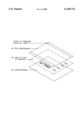
- FIG. 1 is a representation of the steps of the method of the invention for forming a longlife sign that can be exposed to sunlight.
- the preferred embodiment of the present invention comprises the process of screen printing weather resistant signs.
- the novelty of the process resides primarily in the combination of substrate and the ink used to fabricate the signs.
- the ink is formed from a clear base which, in the preferred embodiment, has the ingredients listed in Table I herein.
- the principal ingredients of the clear base are Cellosolve acetate, SC-15-aromatic solvent, VITEL PE-200, PE-222 and PE-307 solvent based coating resins, methyl pyrrolidone, TW 1810 thinner and Vyes vinyl resin.
- the substrate is a polyester film having the chemical name "polyethylene terephthalate". The material is impregnated with ethylene glycol and transmits less than 2% of incident ultraviolet light at a wavelength of 358 nm. The substrate thickness depends upon the desired usage but generally speaking the thicker the substrate the more durable the sign exposed to direct sunlight. Commercially available thicknesses range from 48 gauge to 500 gauge.
- Step (1) Production art: Black-and-white rendering camera ready. Tracings can be cut by hand on Rubylith or computer-controlled plotter.
- Step (2) Photographic copy of art Using a process camera, computer or scanner line film is used to produce a negative or positive image on film. After film is processed and dried, touch-up pinholes and prepare for making a film positive or negative via a contact printer to produce a film negative or positive. Touch film up to correct blemishes. This film is to be used for making a screen for printing.
- Step (3) Select fabric mesh: Ranging from 125 mesh to 330 mesh, a proper mesh and a proper stencil should be used. Direct or indirect stencil, depends on subject to be printed. Subject can be face up or face down.
- Step (4) Making a screen for print: A film positive or negative is taped to the stencil.
- the screen with stencil attached to fabric is placed into a vacuum frame ready for exposure by high-intensive light source. After exposure, stencil is washed out by water under pressure. Screen is dried by fan, taped and touched up for pinholes or other blemishes.
- Step (5) Printing Screen printing by hand or semi-automatic press. Type of press is dictated by quantities and sheet size to accommodate design size.
- Step (6) Drying Feed the printed substrate through a standard conventional gas or electrical dryer with heat chamber and forced air at about 180 degrees Fahrenheit at a rate of about 15 feet/minute.
- Step (7) Various sheet by Rosenthal sheeter, power shear, die cutting or by hand.
- Step (8) Bindery or finishing: Inspection, adhesive application, typical hand lamination, power laminator or screen-printed adhesive. If size of finished design is finished in roll form, an adhesive coater can be used.
Landscapes
- Physics & Mathematics (AREA)
- Health & Medical Sciences (AREA)
- Electromagnetism (AREA)
- General Health & Medical Sciences (AREA)
- Toxicology (AREA)
- Application Of Or Painting With Fluid Materials (AREA)
- Printing Methods (AREA)
- Inks, Pencil-Leads, Or Crayons (AREA)
Abstract
A process of fabricating weather resistant signage by screen printing indicia on a UV-treated impregnated polyester protective film using a Cellosolve acetate-based ink. The resulting sign is extremely resistant to solar UV, thus preserving the indicia brightness and clarity for a very long period of time even under the most extreme conditions. The screen printing process of the preferred embodiment comprises the steps of first preparing a film image, then preparing a fabric mesh ranging from 125 to 230 mesh for black and white images and ranging from 355 to 425 mesh for halftone color images. The fabric mesh is attached to a stencil and the film image is attached to the stencil. The combination is placed into a vacuum frame for exposure to high intensity light, after which the stencil is washed with pressurized water, dried by fan, taped and touched up for pinholes or other blemishes. The ink used in the preferred embodiment comprises a clear base having Cellosolve acetate, SC-150 aromatic solvent, VITEL PE-200, VITEL PE-222 and VITEL PE-307 solvent-based coating resins, as well as thinner and resin and other ingredients. The preferred embodiment of the invention uses a unique substrate for the sign material. Generally, the substrate comprises a UV treated, impregnated polyester protective film.
Description
1. Field of the Invention
The present invention relates generally to the field of signs bearing indicia such as advertising signs, and more particularly to signs especially adapted to resist the effects of weather including solar ultraviolet radiation and the like.
2. Prior Art
Conventional outdoor advertising signs have a relatively short life span. A typical dye impregnated lithograph sign, when subjected to sunlight virtually on a daily basis, begins to fade and deteriorate in a matter of months. A typical screen printed sign, having conventional pigmentation in the form of tints and tones, on a standard substrate, has a maximum life span of a few years. Signs which last only months or even a few years, are inadequate in many applications. For example, signs on outdoor vending machines, billboards, retail stores and the like, would be inordinately expensive to replace even every few years. Either because of their prolific numbers (i.e., vending machines) or their large size, frequent sign replacement can be very costly.
Accordingly, their is an ongoing need for an improved sign, having a substrate material and an ink, which can remain relatively unaffected by sunlight and other weather phenomenon even for a decade or more.
The present invention comprises a process of fabricating weather resistant signage by screen printing indicia on a UV-treated impregnated polyester protective film using a Cellosolve acetate-based ink. The resulting sign is extremely resistant to solar UV, thus preserving the indicia brightness and clarity for a very long period of time even under the most extreme conditions. The process of the present invention thus results in a sign which is superior to prior art signs, particularly when exposed to sunlight and other weather-induced effects over a period of at least 10 to 20 years.
The screen printing process of the preferred embodiment comprises the steps of first preparing a film image, then preparing a fabric mesh ranging from 125 to 230 mesh for black and white images and ranging from 355 to 425 mesh for color images. The fabric mesh is attached to a stencil and the film image is attached to the stencil. The combination is placed into a vacuum frame for exposure to high intensity light, after which the stencil is washed with pressurized water, dried by fan, taped and touched up for pinholes or other blemishes. The ink used in the preferred embodiment comprises a clear base having Cellosolve acetate, SC-1 50 aromatic solvent, VITEL PE-200, VITEL PE-222 and VITEL PE-307 solvent based coating resins, as well as thinner and resin and other ingredients to be detailed hereinafter. Pigment is added to the clear base as desired to achieve color density and printability.
The preferred embodiment of the invention uses a unique substrate for the sign material. Generally, the substrate comprises a UV treated, impregnated polyester protective film in gauge 48 to 500, such as "COURTGUARD" film sold by Courtaulds Performance Films of Martinsville, Va.
After the screen printing process is completed, either by hand or by semi-automatic press, the inked substrate is dried at about 180 degrees Fahrenheit and at about 15 feet/minute feed rate through a standard conventional gas or electrical dryer with heat chamber and forced air. The inventive method is then completed with cutting and finishing as required for a particular application. The resulting sign has an expected outdoor life of 15 to 20 years without color fade and with no perceptible material deterioration.
It is therefore a principal object of the present invention to provide a process for fabricating superior weather resistant signs such as for outdoor advertising and the like.
It is another object of the present invention to provide a novel combination of ink, substrate and printing method to improve the lifespan of signage exposed to UV radiation such as sunlight.
It is still another object of the invention to provide a novel process of screen printing onto a polyester protective film substrate to fabricate advertising signs which have substantially longer life than prior art advertising signs.
The aforementioned objects and advantages of the present invention, as well as additional objects and advantages thereof, will be more fully understood hereinafter as a result of a detailed description of a preferred embodiment when taken in conjunction with the following drawing in which:
FIG. 1 is a representation of the steps of the method of the invention for forming a longlife sign that can be exposed to sunlight.
The preferred embodiment of the present invention comprises the process of screen printing weather resistant signs. The novelty of the process resides primarily in the combination of substrate and the ink used to fabricate the signs. The ink is formed from a clear base which, in the preferred embodiment, has the ingredients listed in Table I herein.
              TABLE I
______________________________________
INK CLEAR BASE
WT/GAL VOLUME   MATERIAL            WEIGHT
______________________________________
8.11   3.58     CELLOSOLVE ACETATE  29.00
7.46   1.92     SC-150 AROMATIC SOLVENT
                                    14.35
8.57   0.56     METHYL PYRROLIDONE  4.78
10.52  0.24     BENZOFLEX S-404     2.55
10.42  0.73     VITEL PE-200        7.65
10.08  1.01     VITEL PE-307        10.21
10.41  0.49     VITEL PE-222        5.12
7.94   0.22     TW1810 THINNER      1.73
8.70   0.30     CK-2400, PHENOLIC RESIN
                                    2.59
7.94   1.21     TW1810 THINNER      9.61
10.83  0.59     VYES VINYL RESIN    6.41
6.84   0.01     BYK 052             0.10
18.18  0.23     SILCRON G-600       4.10
8.43   0.19     SILWET L-77         1.60
11.00  0.02     MEGAFAC F-177       0.20
______________________________________
The principal ingredients of the clear base, based upon volume, are Cellosolve acetate, SC-15-aromatic solvent, VITEL PE-200, PE-222 and PE-307 solvent based coating resins, methyl pyrrolidone, TW 1810 thinner and Vyes vinyl resin. The substrate is a polyester film having the chemical name "polyethylene terephthalate". The material is impregnated with ethylene glycol and transmits less than 2% of incident ultraviolet light at a wavelength of 358 nm. The substrate thickness depends upon the desired usage but generally speaking the thicker the substrate the more durable the sign exposed to direct sunlight. Commercially available thicknesses range from 48 gauge to 500 gauge.
The steps of the present process, using the aforementioned ink and substrate, comprise the following:
Step (1) Production art: Black-and-white rendering camera ready. Tracings can be cut by hand on Rubylith or computer-controlled plotter.
Step (2) Photographic copy of art: Using a process camera, computer or scanner line film is used to produce a negative or positive image on film. After film is processed and dried, touch-up pinholes and prepare for making a film positive or negative via a contact printer to produce a film negative or positive. Touch film up to correct blemishes. This film is to be used for making a screen for printing.
Step (3) Select fabric mesh: Ranging from 125 mesh to 330 mesh, a proper mesh and a proper stencil should be used. Direct or indirect stencil, depends on subject to be printed. Subject can be face up or face down.
Step (4) Making a screen for print: A film positive or negative is taped to the stencil. The screen with stencil attached to fabric is placed into a vacuum frame ready for exposure by high-intensive light source. After exposure, stencil is washed out by water under pressure. Screen is dried by fan, taped and touched up for pinholes or other blemishes.
Step (5) Printing: Screen printing by hand or semi-automatic press. Type of press is dictated by quantities and sheet size to accommodate design size.
Step (6) Drying: Feed the printed substrate through a standard conventional gas or electrical dryer with heat chamber and forced air at about 180 degrees Fahrenheit at a rate of about 15 feet/minute.
Step (7) Cutting: Various sheet by Rosenthal sheeter, power shear, die cutting or by hand.
Step (8) Bindery or finishing: Inspection, adhesive application, typical hand lamination, power laminator or screen-printed adhesive. If size of finished design is finished in roll form, an adhesive coater can be used.
Use of a described ink (with the addition of a selected pigment) on the disclosed substrate in the aforementioned screen printing process, results in a sign which can withstand direct sunlight with little or no apparent deterioration for 10 to 20 years.
Claims (6)
1. A method of fabricating a durable sign resistant to degradation from outdoor environmental exposure comprising the steps of:
(a) establishing a substrate including an ethylene glycol impregnated polyethylene terephthalate base material;
(b) establishing an ink including a predetermined quantity of a Cellosolve acetate component;
(c) establishing a film image;
(d) forming a screen containing said film image in accordance with a mesh parameter within an approximating range of 125 to 425;
(e) printing upon said substrate by applying said ink to at least a portion of said substrate through said screen for establishing thereon visual indicia corresponding to said film image; and,
(f) drying said ink applied to said base material;
whereby said durable sign is adapted to maintain said visual indicia without substantial fade and without substantial material deterioration over an extended period of substantially undisturbed outdoor use greater than 10 years.
2. The method as recited in claim 1 wherein said screen of step (d) is fabric-mesh-formed.
3. The method as recited in claim 1 further comprising the steps of cutting said printed substrate, and applying an adhesive material thereto.
4. The method as recited in claim 1 wherein step (c) includes establishing said ink to further include predetermined quantities of aromatic solvent, thinner, resin, and pigment components.
5. A durable sign resistant to degradation from outdoor environmental exposure comprising:
(a) a substrate including an ethylene glycol impregnated polyethylene terephthalate base material; and,
(b) visual indicia formed on said substrate by an ink containing a predetermined quantity of a Cellosolve acetate component, said ink being applied by a screen printing process to a selective portion of said substrate in accordance with a mesh parameter within an approximating range of 125 to 425;
whereby said durable sign is adapted to maintain said visual indicia without substantial fade and without substantial material deterioration over an extended period of substantially undisturbed outdoor use greater than 10 years.
6. The durable sign as recited in claim 5 wherein said ink further includes predetermined quantities of aromatic solvent, thinner, resin, and pigment components.
Priority Applications (1)
| Application Number | Priority Date | Filing Date | Title |
|---|---|---|---|
| US09/157,781 US6148723A (en) | 1998-09-21 | 1998-09-21 | Weather resistant signage and a process for fabrication thereof |
Applications Claiming Priority (1)
| Application Number | Priority Date | Filing Date | Title |
|---|---|---|---|
| US09/157,781 US6148723A (en) | 1998-09-21 | 1998-09-21 | Weather resistant signage and a process for fabrication thereof |
Publications (1)
| Publication Number | Publication Date |
|---|---|
| US6148723A true US6148723A (en) | 2000-11-21 |
Family
ID=22565258
Family Applications (1)
| Application Number | Title | Priority Date | Filing Date |
|---|---|---|---|
| US09/157,781 Expired - Fee Related US6148723A (en) | 1998-09-21 | 1998-09-21 | Weather resistant signage and a process for fabrication thereof |
Country Status (1)
| Country | Link |
|---|---|
| US (1) | US6148723A (en) |
Cited By (2)
| Publication number | Priority date | Publication date | Assignee | Title |
|---|---|---|---|---|
| US20060222828A1 (en) * | 2005-04-01 | 2006-10-05 | John Boyle & Company, Inc. | Recyclable display media |
| ES2273598A1 (en) * | 2005-10-18 | 2007-05-01 | Puntodis Accesible Solutions In Sing-Writting, S.L | Fabrication method of labels or signboards using screen printing and varnish application, by printing figures and letters on label or signboard using screen printing, in which figures and letters can be read by vision and tactile method |
Citations (7)
| Publication number | Priority date | Publication date | Assignee | Title |
|---|---|---|---|---|
| US2779269A (en) * | 1954-04-08 | 1957-01-29 | Burdick Company | Method of making advertising signs |
| US3943105A (en) * | 1969-11-21 | 1976-03-09 | Martin Processing Company, Incorporated | Process for treating dyed and undyed polyester materials with an agent to overcome or inhibit the destructive effects of ultraviolet light |
| US4415607A (en) * | 1982-09-13 | 1983-11-15 | Allen-Bradley Company | Method of manufacturing printed circuit network devices |
| US4848348A (en) * | 1983-11-14 | 1989-07-18 | Minnesota Mining And Manufacturing Company | Coated films |
| US5215826A (en) * | 1990-09-25 | 1993-06-01 | Rexham Industries Corp. | Surfacing film with thermoformable carrier layer |
| US5270507A (en) * | 1989-01-19 | 1993-12-14 | Shin-Etsu Polymer Co., Ltd. | Push button switch and method for manufacturing same |
| US5854306A (en) * | 1996-01-05 | 1998-12-29 | Herbert Glatt | Wear resistant image printing on latex surfaces |
-
1998
- 1998-09-21 US US09/157,781 patent/US6148723A/en not_active Expired - Fee Related
Patent Citations (7)
| Publication number | Priority date | Publication date | Assignee | Title |
|---|---|---|---|---|
| US2779269A (en) * | 1954-04-08 | 1957-01-29 | Burdick Company | Method of making advertising signs |
| US3943105A (en) * | 1969-11-21 | 1976-03-09 | Martin Processing Company, Incorporated | Process for treating dyed and undyed polyester materials with an agent to overcome or inhibit the destructive effects of ultraviolet light |
| US4415607A (en) * | 1982-09-13 | 1983-11-15 | Allen-Bradley Company | Method of manufacturing printed circuit network devices |
| US4848348A (en) * | 1983-11-14 | 1989-07-18 | Minnesota Mining And Manufacturing Company | Coated films |
| US5270507A (en) * | 1989-01-19 | 1993-12-14 | Shin-Etsu Polymer Co., Ltd. | Push button switch and method for manufacturing same |
| US5215826A (en) * | 1990-09-25 | 1993-06-01 | Rexham Industries Corp. | Surfacing film with thermoformable carrier layer |
| US5854306A (en) * | 1996-01-05 | 1998-12-29 | Herbert Glatt | Wear resistant image printing on latex surfaces |
Cited By (3)
| Publication number | Priority date | Publication date | Assignee | Title |
|---|---|---|---|---|
| US20060222828A1 (en) * | 2005-04-01 | 2006-10-05 | John Boyle & Company, Inc. | Recyclable display media |
| ES2273598A1 (en) * | 2005-10-18 | 2007-05-01 | Puntodis Accesible Solutions In Sing-Writting, S.L | Fabrication method of labels or signboards using screen printing and varnish application, by printing figures and letters on label or signboard using screen printing, in which figures and letters can be read by vision and tactile method |
| ES2273598B1 (en) * | 2005-10-18 | 2008-04-01 | Puntodis Accesible Solutions In Sing-Writting, S.L | MANUFACTURING PROCESS OF LABELS THROUGH SERIGRAPHIC TECHNIQUE OF VARNISH APPLICATION FOR CONFORMATION OF ALTORELIEVES IN FIGURES AND LETTERS THAT FACILITATE THE TOUCH READING IN ADDITION TO THE VISUAL. |
Similar Documents
| Publication | Publication Date | Title |
|---|---|---|
| US4286008A (en) | Dry release transfers | |
| CA2347255A1 (en) | Modification of receiver surface to reject stamp cancellation information | |
| CN109016712A (en) | A kind of light transmission diaphragm embedding note with light display color pattern and suitable mould | |
| CN108891112A (en) | A kind of anti-pseudo-colours of holographic laser is aluminized two-sided Composite food packaging and its preparation | |
| US6148723A (en) | Weather resistant signage and a process for fabrication thereof | |
| US5429047A (en) | Method of printing color images on textured surfaces | |
| US8357476B2 (en) | Method for producing a base material for screen printing, and base material of this type | |
| US5249828A (en) | Printed product and method of manufacture | |
| CN105612061A (en) | Thermal transfer paper for printing and digital printing | |
| CN1276297A (en) | Technology combining silk screen print respectively with offset, relief, or intaglio print | |
| EP1153756A1 (en) | Printing process combining conventional and braille printing with the aid of an offset-type printing machine | |
| CA1330177C (en) | Printing ink system for the production of rub-off printings | |
| CN112644192A (en) | Reflective silk-screen manufacturing process | |
| CN222495736U (en) | Waterproof printed matter | |
| US7923412B1 (en) | Creating background colors on thermal printing material | |
| JP2002079737A (en) | Brilliant printed matter | |
| KR200190447Y1 (en) | Print matter with gold leaf | |
| US9270861B2 (en) | Method for printing inks on a substrate | |
| JP4895743B2 (en) | Manufacturing method of offset printed matter with excellent light resistance | |
| KR100321117B1 (en) | Print Matter with Gold Leaf and Method for Making the same | |
| JPH1195025A (en) | Manufacture of color filter and roller used therefor | |
| GB1604274A (en) | Multilayer transfers | |
| US2229867A (en) | Artist's working paper | |
| Novakovic et al. | 15.1 Fundamentals of Screen Printing 247 15.2 Stencil/Plate Making 249 15.2. 1 Screen Printing Mesh 249 15.2. 2 Screen Printing Frame 251 15.2. 2.1 Screen Printing Frame | |
| KR200354980Y1 (en) | label |
Legal Events
| Date | Code | Title | Description |
|---|---|---|---|
| REMI | Maintenance fee reminder mailed | ||
| REIN | Reinstatement after maintenance fee payment confirmed | ||
| FEPP | Fee payment procedure |
Free format text: PETITION RELATED TO MAINTENANCE FEES FILED (ORIGINAL EVENT CODE: PMFP); ENTITY STATUS OF PATENT OWNER: SMALL ENTITY |
|
| FEPP | Fee payment procedure |
Free format text: PETITION RELATED TO MAINTENANCE FEES GRANTED (ORIGINAL EVENT CODE: PMFG); ENTITY STATUS OF PATENT OWNER: SMALL ENTITY |
|
| FP | Lapsed due to failure to pay maintenance fee |
Effective date: 20041121 |
|
| FPAY | Fee payment |
Year of fee payment: 4 |
|
| SULP | Surcharge for late payment | ||
| PRDP | Patent reinstated due to the acceptance of a late maintenance fee |
Effective date: 20050628 |
|
| REMI | Maintenance fee reminder mailed | ||
| LAPS | Lapse for failure to pay maintenance fees | ||
| STCH | Information on status: patent discontinuation |
Free format text: PATENT EXPIRED DUE TO NONPAYMENT OF MAINTENANCE FEES UNDER 37 CFR 1.362 |
|
| FP | Lapsed due to failure to pay maintenance fee |
Effective date: 20081121 |