US6148548A - Construction machine - Google Patents

Construction machine Download PDF

Info

Publication number
US6148548A
US6148548A US09/342,265 US34226599A US6148548A US 6148548 A US6148548 A US 6148548A US 34226599 A US34226599 A US 34226599A US 6148548 A US6148548 A US 6148548A
Authority
US
United States
Prior art keywords
work machine
traveling
hydraulic pumps
pump
hydraulic
Prior art date
Legal status (The legal status is an assumption and is not a legal conclusion. Google has not performed a legal analysis and makes no representation as to the accuracy of the status listed.)
Expired - Fee Related
Application number
US09/342,265
Inventor
Yutaka Tohji
Current Assignee (The listed assignees may be inaccurate. Google has not performed a legal analysis and makes no representation or warranty as to the accuracy of the list.)
Kobe Steel Ltd
Original Assignee
Kobe Steel Ltd
Priority date (The priority date is an assumption and is not a legal conclusion. Google has not performed a legal analysis and makes no representation as to the accuracy of the date listed.)
Filing date
Publication date
Application filed by Kobe Steel Ltd filed Critical Kobe Steel Ltd
Assigned to KABUSHIKI KAISHA KOBE SEIKO SHO (KOBE STEEL, LTD.) reassignment KABUSHIKI KAISHA KOBE SEIKO SHO (KOBE STEEL, LTD.) ASSIGNMENT OF ASSIGNORS INTEREST (SEE DOCUMENT FOR DETAILS). Assignors: TOHJI, YUTAKA
Application granted granted Critical
Publication of US6148548A publication Critical patent/US6148548A/en
Anticipated expiration legal-status Critical
Expired - Fee Related legal-status Critical Current

Links

Images

Classifications

    • EFIXED CONSTRUCTIONS
    • E02HYDRAULIC ENGINEERING; FOUNDATIONS; SOIL SHIFTING
    • E02FDREDGING; SOIL-SHIFTING
    • E02F9/00Component parts of dredgers or soil-shifting machines, not restricted to one of the kinds covered by groups E02F3/00 - E02F7/00
    • E02F9/20Drives; Control devices
    • EFIXED CONSTRUCTIONS
    • E02HYDRAULIC ENGINEERING; FOUNDATIONS; SOIL SHIFTING
    • E02FDREDGING; SOIL-SHIFTING
    • E02F9/00Component parts of dredgers or soil-shifting machines, not restricted to one of the kinds covered by groups E02F3/00 - E02F7/00
    • E02F9/20Drives; Control devices
    • E02F9/22Hydraulic or pneumatic drives
    • E02F9/2278Hydraulic circuits
    • E02F9/2285Pilot-operated systems
    • EFIXED CONSTRUCTIONS
    • E02HYDRAULIC ENGINEERING; FOUNDATIONS; SOIL SHIFTING
    • E02FDREDGING; SOIL-SHIFTING
    • E02F9/00Component parts of dredgers or soil-shifting machines, not restricted to one of the kinds covered by groups E02F3/00 - E02F7/00
    • E02F9/20Drives; Control devices
    • E02F9/22Hydraulic or pneumatic drives
    • E02F9/2221Control of flow rate; Load sensing arrangements
    • E02F9/2239Control of flow rate; Load sensing arrangements using two or more pumps with cross-assistance
    • E02F9/2242Control of flow rate; Load sensing arrangements using two or more pumps with cross-assistance including an electronic controller
    • EFIXED CONSTRUCTIONS
    • E02HYDRAULIC ENGINEERING; FOUNDATIONS; SOIL SHIFTING
    • E02FDREDGING; SOIL-SHIFTING
    • E02F9/00Component parts of dredgers or soil-shifting machines, not restricted to one of the kinds covered by groups E02F3/00 - E02F7/00
    • E02F9/20Drives; Control devices
    • E02F9/22Hydraulic or pneumatic drives
    • E02F9/2278Hydraulic circuits
    • E02F9/2282Systems using center bypass type changeover valves
    • EFIXED CONSTRUCTIONS
    • E02HYDRAULIC ENGINEERING; FOUNDATIONS; SOIL SHIFTING
    • E02FDREDGING; SOIL-SHIFTING
    • E02F9/00Component parts of dredgers or soil-shifting machines, not restricted to one of the kinds covered by groups E02F3/00 - E02F7/00
    • E02F9/20Drives; Control devices
    • E02F9/22Hydraulic or pneumatic drives
    • E02F9/2278Hydraulic circuits
    • E02F9/2292Systems with two or more pumps
    • EFIXED CONSTRUCTIONS
    • E02HYDRAULIC ENGINEERING; FOUNDATIONS; SOIL SHIFTING
    • E02FDREDGING; SOIL-SHIFTING
    • E02F9/00Component parts of dredgers or soil-shifting machines, not restricted to one of the kinds covered by groups E02F3/00 - E02F7/00
    • E02F9/20Drives; Control devices
    • E02F9/22Hydraulic or pneumatic drives
    • E02F9/2278Hydraulic circuits
    • E02F9/2296Systems with a variable displacement pump

Definitions

  • the present invention relates to a construction machine such as a hydraulic excavator.
  • FIG. 4 is a side view thereof.
  • the reference numeral 30 denotes a hydraulic excavator.
  • the hydraulic excavator 30 has a lower carriage 31.
  • the lower carriage 31 is provided with a pair of crawlers 31a, the crawlers 31a each comprising a track frame 31b, an idler wheel 31c and a traveling motor 31d which are mounted through shafts at front and rear ends, respectively, of the track frame 31b, and a shoe 31e entrained on both idler wheel 31c and traveling motor 31d.
  • the paired crawlers 31a are connected together through a center frame (not shown).
  • the rotatable superstructure 32 On top of the lower carriage 31 is mounted a rotatable superstructure 32.
  • the rotatable superstructure 32 is provided with a counter weight 32a mounted at the rear end thereof and a cab 37 formed at the front portion thereof.
  • the cab 37 is provided with an operator seat (not shown) disposed at a rear position in the interior of the cab, a pair of operating levers (not shown) disposed at both side positions in front of the operator seat, and a pair of traveling levers (not shown) disposed in front of the operator seat.
  • an attachment 33 In front of the cab 37 is provided an attachment 33 so that it can rise and fall with a boom foot pin (not shown) as fulcrum, the attachment 33 comprising a boom 34, an arm 35 and a bucket 36.
  • the boom 34 is made capable of rise and fall by means of a boom cylinder 34a both ends of which are connected respectively to the front end of rotatable superstructure 32 and the boom 34.
  • the arm 35 is connected pivotably to the front end of the boom 34.
  • the arm 35 is made pivotable by means of an arm cylinder 35a which is disposed between the back of the boom 34 and a base end of the arm 35.
  • the bucket 36 is mounted pivotably at a front end portion of the arm 35.
  • the bucket 36 is made pivotable by means of a bucket cylinder 36a disposed between the bucket and the back of the arm 35.
  • An operator of the hydraulic excavator sits on the operator seat and operates the traveling levers to supply a hydraulic oil to each traveling motor 31d from a hydraulic pump which is mounted in the interior of the rotatable superstructure and which will be described later, thereby causing movement of the hydraulic excavator.
  • the operator operates the operating levers to supply the hydraulic oil from the hydraulic pump to a rotating motor which will be described later, thereby causing rotation of the rotatable superstructure.
  • the hydraulic oil is fed to the cylinders 34a, 35a and 36a to actuate the attachment 33, thereby performing operations such as excavation.
  • the above conventional hydraulic excavator is provided with two such hydraulic pumps as referred to above.
  • a control valve for example during work, a first pump is used for the boom cylinder 34a and the bucket cylinder 36a and a second pump is used for the arm cylinder 35a and the rotating motor (not shown).
  • the first and second pumps are used for a right traveling motor (31d) and a left traveling motor (31d), respectively. This state is assumed to indicate that the control valve is in the position of neutral function.
  • the traveling motors 31d and any (hereinafter referred to as the "work machine actuator") of the boom cylinder 34a, bucket cylinder 36a, arm cylinder 35a and rotating motor (not shown) are driven at a time
  • the first and second pumps for example, are used exclusively for the work machine actuator and the traveling pump, respectively. This state is assumed to indicate that the control valve is in the position of independent traveling function.
  • the independent traveling function of the control valve is changed into a straight traveling function while providing a pump communication path for communication between the first and second pumps.
  • control valve assuming the position of straight traveling function, when the hydraulic pressure on either the traveling side or the work machine side becomes high, oil flows to the low pressure side through the first-second pump communication path in the straight traveling function, thus giving rise to the problem that the high-pressure side becomes inoperative or the low-pressure side accelerates.
  • the construction machine of the present invention comprises two hydraulic pumps; right and left traveling motors for causing the construction machine to travel; work machine actuators for actuating a work machine of the construction machine; a control valve which makes control so that a hydraulic oil discharged from the two hydraulic pumps is fed to at least either the light and left traveling motors or the work machine actuators and so that when both traveling operation and work machine operation are performed simultaneously, the hydraulic oil discharged from one of the two hydraulic pumps is fed to the traveling motors and the hydraulic oil from the other hydraulic pump is fed to the work machine actuators, the control valve providing communication between the two hydraulic pumps through a pump communication path; drive signal detecting means which detects drive signals with respect to the two hydraulic pumps when the traveling operation and the work machine operation are performed simultaneously; and a controller which controls the control valve so as to throttle or close the pump communication path in accordance with the drive signals detected by the drive signal detecting means.
  • the controller may be constructed so as to compare the drive signals detected by the drive signal detecting means and throttle or close the pump communication path when the difference in magnitude between the drive signals is larger than a predetermined value or throttle or close the same path when the magnitude of one of the drive signals is larger than a predetermined value.
  • the drive signal detecting means may be attached to each of the two hydraulic pumps. In this case, since drive signals from the two hydraulic pumps are detected directly and therefore can be compared with each other easily.
  • the drive signal detecting means may be attached to each of the traveling motors and the work machine actuators. In this case, it is possible to control the communication path between the two hydraulic pumps in accordance with drive signals from the traveling motors and the work machine actuators.
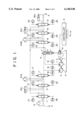
  • FIG. 1 is an electro-hydraulic circuit diagram of a construction machine according to the first embodiment of the present invention
  • FIG. 2 is a flowchart showing a method for controlling a control valve used in the construction machine of the first embodiment
  • FIG. 3 is a flowchart showing a method for controlling a control valve used in a construction machine according to the second embodiment of the present invention.
  • FIG. 4 is a side view of a conventional hydraulic excavator.
  • FIG. 1 is an electro-hydraulic circuit diagram of a construction machine according to the first embodiment of the present invention, in which the same constructional portions as in the prior art are identified by the same reference numerals as in FIG. 4.
  • the numerals 31dL and 31dR denote left and right traveling motors mounted on a lower carriage 31.
  • the left and right traveling motors 31dL, 31dR are connected with traveling pilot change-over valves 7 and 8, respectively, through conduit lines .
  • the traveling motors 31dL and 31dR are controlled by operation of the traveling pilot change-over valves 7 and 8 which is done as necessary by operation of the foregoing paired traveling levers.
  • Numeral 13 denotes a rotating motor mounted on a rotatable Superstructure 32.
  • the rotating motor 13 and a rotating pilot change-over valve 11 are connected with each other through a conduit line.
  • the rotating motor 13 is controlled by operation of the rotating pilot change-over valve 11 which is done as necessary by operation of the foregoing operating levers.
  • Numerals 34a, 35a and 36a denote a boom cylinder, an arm cylinder and a bucket cylinder, respectively, which are mounted on an attachment 33.
  • the cylinders 34a, 35a and 36a are connected respectively to a pilot changeover valve 10 for the boom, a pilot change-over valve 9 for the arm and a pilot change-over valve 12 for the bucket, through conduit lines.
  • the cylinders 34a, 35a and 36a are controlled by operation of the pilot change-over valves 10, 9 and 12 which is done as necessary by operation of the foregoing paired operating levers.
  • the rotating motor 13, boom cylinder 34a, arm cylinder 35a and bucket cylinder 36a correspond to work machine actuators, but no limitation is made thereto.
  • Actuators other than the left and right traveling motors 31dL, 31dR correspond thereto.
  • Numerals 1 and 2 denote first and second pumps (hydraulic pumps), respectively, for the discharge of hydraulic oil.
  • Numeral 4 denotes an oil tank and numeral 6 denotes a control valve.
  • the hydraulic oil sucked up from the oil tank 4 by the first pump 1 passes through the control valve 6, further through the traveling pilot change-over valve 8, pilot change-over valve 10 for the boom and the pilot change-over valve 12 for the bucket, and is fed to the traveling motor 31dR, boom cylinder 34a and bucket cylinder 36a to drive them. Thereafter, it is relieved to the oil tank 4.
  • the hydraulic oil sucked up from the oil tank 4 by the second pump 2 flows through the control valve 6, further through the traveling pilot change-over valve 7, pilot change-over valve 9 for the arm and rotating pilot change-over valve 11, and is fed to the traveling motor 31dL, arm cylinder 35a and rotating motor 13 to drive them. It is then relieved to the oil tank 4.
  • the control valve 6 is provided with a neutral function, a, a straight traveling function, b, and a communication path opening/closing function, c.
  • the neutral function, a, and the straight traveling function, b are almost the same as the neutral function and the straight traveling function both referred to above in connection with the prior art.
  • the communication path opening/closing function it will be described later.
  • a control operation, or a change-over operation, for the control valve is carried out by means of a controller 5 which will be described later.
  • the control valve 6 is changed over to each of the functions a ⁇ c by exertion of a pilot pressure on a pilot port of the control valve 6 which pilot pressure is discharged from a pilot pump 3.
  • This change-over control is effected by controlling a relief valve 14 disposed between the pilot port of the control valve 6 and the pilot pump 3, which control is made by the controller 5 to be described later.
  • Numerals 15 and 16 denote pressure sensors as drive signal detecting means for detecting pump pressures discharged from the first and second pumps 1, 2.
  • Numerals 17 to 20 denote pressure sensors for detecting left and right traveling operations, the pressure sensors 17 to 20 being disposed between left and right traveling levers (not shown) and the left and right pilot change-over valves 7, 8.
  • Numerals 21 to 28 denote pressure sensors for detecting work machine operations, the pressure sensors 21 to 28 being disposed between operating levers (not shown) and the pilot change-over valves 9 to 12 for the work machine.
  • Pressures detected by the pressure sensors 17 to 28 are inputted as operation signals to the controller 5.
  • the controller 5 discriminates the operation signals fed from the pressure sensors 15 ⁇ 28 and actuates the control valve 6 in accordance with the thus-discriminated operations signals.
  • the controller 5 holds the control valve 6 at the position of the neutral function, a.
  • the controller 5 changes over the position of the control valve 6 to the position of the straight traveling function, b.
  • the controller 5 is provided with a drive signal comparing means which compares the magnitudes of discharge pressures (drive signals) detected by the pressure sensors 15 and 16 serving as drive signal detecting means. If the difference between both discharge pressures is found to be large (say look or more) as a result of comparison made by the drive signal comparing means, the pump communication path between the first and second hydraulic pumps is closed. That is, the position of the control valve 6 is changed over from the straight traveling function, b, to the communication path opening/closing function, c, which serves as a communication path control means.
  • FIG. 2 is a flowchart showing how to control the control valve used in the construction machine of the first embodiment.
  • step S1 there is made judgment as to whether a traveling operation and a work machine operation are being performed simultaneously. If the answer is affirmative, the flow advances to step S2. On the other hand, if it is one operation that is being performed, the flow returns to step S1.
  • step S2 on the basis of the result of step S1, the control valve 6 is changed over from its neutral function, a, to its straight traveling function, b, and the flow shifts to step S3.
  • step S3 there is made a comparison between the discharge pressure from the first pump 1 and that from the second pump 2. If the resulting difference ( ⁇ P) is at a level (say above 100 k) at which pressure interference is apt to occur, the flow shifts to step S4. Conversely, if the discharge pressure difference ( ⁇ P) is at a level (say 100 k or less) at which pressure interference is difficult to occur, the flow shifts to step S5.
  • step S4 since it was judged in step S3 that the discharge pressure difference ( ⁇ P) between the first pump 1 and the second pump 2 was large and reached the level of easy occurrence of pressure interference, the control valve 6 is changed over from its straight traveling function, b, to its communication path opening/closing function, c, in order to prevent the occurrence of pressure interference, and then the flow shifts to step S6.
  • step S5 since it was judged in step S3 that the discharge pressure difference ( ⁇ P) between the first and second pumps was not so large and did not reach the level of easy occurrence of pressure interference, the control valve 6 is changed over to its straight traveling function, b, and the flow returns to step S1.
  • steps S6 et seq. judgment is repeated as to in what manner the control valve 6 is to be changed over, taking work contents or ever-changing discharge pressures of the first and second pumps into account. More specifically, in step S6 there is made judgment as to whether a traveling operation and a work machine operation are being conducted at a time, and if the answer is affirmative, the magnitude of a discharge pressure difference ( ⁇ P) is checked and the flow shifts to step S7 for judging to which function the control valve 6 is to be changed over. Conversely, if it is only one operation that is being conducted, the flow shifts to step S8 because there is no fear of pressure interference occurring between the first pump 1 and the second pump 2.
  • step S7 it is judged whether the discharge pressure difference ( ⁇ P) between the first and second pumps 1, 2 is at the level of easy occurrence of pressure interference. If the discharge pressure difference ( ⁇ P) is found to be at a level (say below 50 k) at which the possibility of pressure interference is extremely low, the flow shifts to step S9 because the occurrence of pressure interference is not likely at all. Conversely, if the discharge pressure difference ( ⁇ P) is at a level (say 50 k or more) at which there may occur a pressure interference, the flow returns to step S3 to judge whether the discharge pressure difference is at a level (say 100 k or more) at which pressure interference is still easier to occur.
  • step S8 since it was judged in step S6 that only one of a traveling operation and a work machine operation was being performed, the position of the control valve 6 is changed over from its straight traveling function, b, to its neutral function, a, and the flow returns to step S1.
  • step S9 since it was judged in step S7 that the discharge pressure difference ( ⁇ P) between the first and second pumps 1, 2 was at a level (say below 50 k) of an extremely low possibility of pressure interference, the control valve 6 is changed over from its communication path opening/closing function, c, to its straight traveling function, b and the flow returns to step S1.
  • ⁇ P discharge pressure difference
  • the discharge pressures of the first and second pumps 1, 2 are detected as drive signals, this constitutes no limitation.
  • Drive pressures of the left and right traveling motors 31dL, 31dR and of the work machine actuators 13, 34a, 35a, 36a may be detected.
  • the higher side of the drive pressures of both traveling motors 31dL, 31dR may, for example, substitute the discharge pressure of the second pump 2, and out of the work machine actuators 13, 34a, 35a and 36a, the one which is of the highest drive pressure may substitute the discharge pressure of the first pump.
  • a certain specific drive pressure (say the boom heat pressure) may be used as a substitute for the discharge pressure of the first pump 1.
  • the communication path opening/closing function, c is provided in the control valve 6 for the purpose of completely closing the communication path between the first and second pumps, this constitutes no limitation.
  • the first-second pump communication path may be throttled.
  • pressure sensors are used for the detection of drive signals
  • pressure switches or the like may be used for the same purpose.
  • Operations of the left and right traveling operation levers are detected by the pressure sensors 17 ⁇ 28 and are inputted as operation signals to the controller. Further, discharge pressures of the first and second pumps 1, 2 are detected by the pressure sensors 15 and 16, respectively, and are inputted as drive signals to the controller.
  • the controller performs the following discrimination for the operation signals inputted from the pressure sensors 15 ⁇ 28 and actuates the control valve 6 in accordance with the thus-discriminated operation signals.
  • the controller holds the control valve 6 at the position of the neutral function, a.
  • the controller changes over the position of the control valve 6 to the position of the straight traveling function, b.
  • the controller then checks the magnitudes of the drive signals from the first and second pumps 1, 2 which have been detected by the pressure sensors 15 and 16 as drive signal detecting means. If the drive signal from one of the first and second pumps is higher than a predetermined value, the controller makes control to close the first-second pump communication path. That is, the controller changes over the position of the control valve 6 from the straight traveling function, b, to the communication path opening/closing function, c, which serves as a communication path control means.
  • FIG. 3 is a flowchart showing how to control the control valve used in the construction machine of this second embodiment.
  • step S11 there is made judgment as to whether a traveling operation and a work machine operation are being performed simultaneously. If the answer is affirmative, the flow shifts to step S12, while if the answer is negative, the flow returns to step S11.
  • step S12 on the basis of the result obtained in step S11 the position of the control valve 6 is changed over from the neutral function, a, to the straight traveling function, b, and the flow shifts to step S13.
  • step S13 the magnitudes of discharge pressures from the first pump 1 (p1) and the second pump 2 (P2) are checked. If the discharge pressure of either the first pump 1 or the second pump 2 is higher than a first preset pressure (a pressure at which pressure interference will apt to occur), the flow shifts to step S14 because there is a fear that pressure interference may occur between both pumps. Conversely, if the said discharge pressure is lower than the first preset pressure, the flow shifts to step S15 because of a low possibility of pressure interference between both pumps.
  • a first preset pressure a pressure at which pressure interference will apt to occur
  • step S14 since it was judged in step S13 that pressure interference might occur between the first and second pumps 1, 2, the controller changes over the position of the control valve 6 from the straight traveling function, b, to the communication path opening/closing function, c, to prevent the occurrence of pressure interference. Then, the flow shifts to step S16.
  • step S15 since it was judged in step S13 that the possibility of pressure interference between the first and second pumps 1, 2 was low, the controller changes over the position of the control valve 6 to the straight traveling function, b, and the flow returns to step S11.
  • step S16 judgment is repeated as to in what manner the control valve 6 is to be changed over, taking work contents and ever-changing discharge pressures from the first and second pumps 1, 2 into account. More specifically, in step S16 there is made judgment as to whether the traveling operation and the work machine operation are still being conducted simultaneously, and if the answer is affirmative, the magnitudes of discharge pressures from the first and second pumps 1, 2 are checked and the flow shifts to step S17 for judging to which function the control valve 6 should be changed over. On the other hand, if the answer in step S16 is negative, that is, if it is only one operation that is being performed, the flow shifts to step S18 because of a low possibility of pressure interference between both pumps.
  • step S17 it is judged whether there still is a fear of occurrence of pressure interference with respect to the magnitudes of discharge pressure from the first pump 1 (P1) and the second pump 2 (P2). If the discharge pressure of either the first pump 1 or the second pump 2 is lower than a second preset pressure, which is lower than the first preset pressure and which corresponds to a level of an extremely low possibility of pressure interference, the flow shifts to step S19 because it is possible to judge that the possibility of pressure interference is extremely low. On the other hand, if the said discharge pressure is higher than the second preset pressure, the flow returns to step S13 because pressure interference is likely to occur.
  • step S18 since it was judged in step S16 that only one of the traveling operation and the work machine operation was being performed, the position of the control valve 6 is changed over from the straight traveling function, b, to the neutral function, a, and the flow returns to step S11.
  • step S19 since it was judged in step S17 that the discharge pressure of either the first or the second pump was lower than the second preset pressure and that the possibility of pressure interference was extremely low, the position of the control valve 6 is changed over from the communication path opening/closing function, c, to the straight traveling function, b, and the flow returns to step S11.
  • control valve 6 is provided with the communication path opening/closing function, c, for completely closing the communication path between the first and second pumps, this constitutes no limitation.
  • the communication path may be throttled.
  • pressure sensors used for detecting drive signals may be substituted by pressure switches or the like.
Landscapes

  • Engineering & Computer Science (AREA)
  • Mining & Mineral Resources (AREA)
  • Civil Engineering (AREA)
  • General Engineering & Computer Science (AREA)
  • Structural Engineering (AREA)
  • Physics & Mathematics (AREA)
  • Fluid Mechanics (AREA)
  • Operation Control Of Excavators (AREA)
  • Details Of Reciprocating Pumps (AREA)
  • Fluid-Pressure Circuits (AREA)

Abstract

A construction machine comprising two hydraulic pumps; right and left traveling motors for causing the construction machine to travel; work machine actuators for actuating a work machine of the construction machine; a control valve which makes control so that a hydraulic oil discharged from the two hydraulic pumps is fed to at least either the right and left traveling motors or the work machine actuators and so that when both traveling operation and work machine operation are performed simultaneously, the hydraulic oil discharged from one of the two hydraulic pumps is fed to the traveling motors and the hydraulic oil from the other hydraulic pump is fed to the work machine actuators, the control valve providing communication between the two hydraulic pumps through a pump communication path; a drive signal detecting device which detects drive signals with respect to the two hydraulic pumps when the traveling operation and the work machine operation are performed simultaneously; and a controller which controls the controls valve so as to throttle or close the pump communication path in accordance with the drive signals detected by the drive signal detecting device. According to this construction machine, pressure interference is not likely to occur between the two hydraulic pumps, nor is it likely that oil may flow from a high pressure side to a low pressure side, causing the high pressure side to become inoperative and the low pressure side to become accelerated.

Description

BACKGROUND OF THE INVENTION
1. Field of the Invention
The present invention relates to a construction machine such as a hydraulic excavator.
2. Description of the Related Art
An example of a conventional hydraulic excavator will be described below with reference to FIG. 4 which is a side view thereof.
In the same figure, the reference numeral 30 denotes a hydraulic excavator. The hydraulic excavator 30 has a lower carriage 31. The lower carriage 31 is provided with a pair of crawlers 31a, the crawlers 31a each comprising a track frame 31b, an idler wheel 31c and a traveling motor 31d which are mounted through shafts at front and rear ends, respectively, of the track frame 31b, and a shoe 31e entrained on both idler wheel 31c and traveling motor 31d. The paired crawlers 31a are connected together through a center frame (not shown).
On top of the lower carriage 31 is mounted a rotatable superstructure 32. The rotatable superstructure 32 is provided with a counter weight 32a mounted at the rear end thereof and a cab 37 formed at the front portion thereof. The cab 37 is provided with an operator seat (not shown) disposed at a rear position in the interior of the cab, a pair of operating levers (not shown) disposed at both side positions in front of the operator seat, and a pair of traveling levers (not shown) disposed in front of the operator seat.
In front of the cab 37 is provided an attachment 33 so that it can rise and fall with a boom foot pin (not shown) as fulcrum, the attachment 33 comprising a boom 34, an arm 35 and a bucket 36. The boom 34 is made capable of rise and fall by means of a boom cylinder 34a both ends of which are connected respectively to the front end of rotatable superstructure 32 and the boom 34. The arm 35 is connected pivotably to the front end of the boom 34. The arm 35 is made pivotable by means of an arm cylinder 35a which is disposed between the back of the boom 34 and a base end of the arm 35. The bucket 36 is mounted pivotably at a front end portion of the arm 35. The bucket 36 is made pivotable by means of a bucket cylinder 36a disposed between the bucket and the back of the arm 35.
An operator of the hydraulic excavator sits on the operator seat and operates the traveling levers to supply a hydraulic oil to each traveling motor 31d from a hydraulic pump which is mounted in the interior of the rotatable superstructure and which will be described later, thereby causing movement of the hydraulic excavator. Likewise, the operator operates the operating levers to supply the hydraulic oil from the hydraulic pump to a rotating motor which will be described later, thereby causing rotation of the rotatable superstructure. Further, the hydraulic oil is fed to the cylinders 34a, 35a and 36a to actuate the attachment 33, thereby performing operations such as excavation.
The above conventional hydraulic excavator is provided with two such hydraulic pumps as referred to above. By operation of a control valve, for example during work, a first pump is used for the boom cylinder 34a and the bucket cylinder 36a and a second pump is used for the arm cylinder 35a and the rotating motor (not shown). On the other hand, during traveling, the first and second pumps are used for a right traveling motor (31d) and a left traveling motor (31d), respectively. This state is assumed to indicate that the control valve is in the position of neutral function.
Further, in the case where the traveling motors 31d and any (hereinafter referred to as the "work machine actuator") of the boom cylinder 34a, bucket cylinder 36a, arm cylinder 35a and rotating motor (not shown) are driven at a time, the first and second pumps, for example, are used exclusively for the work machine actuator and the traveling pump, respectively. This state is assumed to indicate that the control valve is in the position of independent traveling function.
However, even when the work machine actuator is driven while both right and left traveling motors are in operation, the control valve switches from the position of neutral function to the position of independent traveling function, so that switching is made from the previous oil distribution to the right and left traveling motors by the first and second pumps respectively into the oil distribution to both right and left traveling motors by only the second pump. Consequently, the load on the second pump doubles and the flow rate is reduced by half, thus giving rise to a deceleration shock.
In general, therefore, the independent traveling function of the control valve is changed into a straight traveling function while providing a pump communication path for communication between the first and second pumps. By so doing, even where the traveling motors and the work machine actuator are driven at a time, the oil present in the first pump is distributed to the second pump, whereby a shock such as a deceleration shock is cushioned to a certain extent.
However, the following problem has been encountered in the aforesaid change from the independent traveling function of the control valve to the straight traveling function.
When the work machine actuator is to be operated while the hydraulic excavator is moving up a steep slope (say at a second pump pressure of 300 k) and when the work which is done by the work machine actuator is under no load or under a light load (say at a first pump pressure of 100 k), the oil present on the second pump side flows to the first pump side through the first-second pump communication path in the straight traveling function, with the result that the traveling of the excavator stops and the work machine accelerates.
Conversely, when the boom as a work machine is operated in its rising direction in a state in which the traveling motor pressure is not so high (say at a second pump pressure of 100 k), for example during a load lifting work on a level ground, the oil present on the first pump side flows to the second pump side by the straight traveling function because of a high boom rising load pressure (say 200 k), so that the traveling speed increases and the motion of the work machine becomes slow or stops.
More particularly, with the control valve assuming the position of straight traveling function, when the hydraulic pressure on either the traveling side or the work machine side becomes high, oil flows to the low pressure side through the first-second pump communication path in the straight traveling function, thus giving rise to the problem that the high-pressure side becomes inoperative or the low-pressure side accelerates.
SUMMARY OF THE INVENTION
It is an object of the present invention to provide a construction machine capable of preventing pressure interference even in the event the operating pressure of traveling motors or of a work machine actuator becomes high when both traveling operation and work machine operation are performed simultaneously.
The construction machine of the present invention comprises two hydraulic pumps; right and left traveling motors for causing the construction machine to travel; work machine actuators for actuating a work machine of the construction machine; a control valve which makes control so that a hydraulic oil discharged from the two hydraulic pumps is fed to at least either the light and left traveling motors or the work machine actuators and so that when both traveling operation and work machine operation are performed simultaneously, the hydraulic oil discharged from one of the two hydraulic pumps is fed to the traveling motors and the hydraulic oil from the other hydraulic pump is fed to the work machine actuators, the control valve providing communication between the two hydraulic pumps through a pump communication path; drive signal detecting means which detects drive signals with respect to the two hydraulic pumps when the traveling operation and the work machine operation are performed simultaneously; and a controller which controls the control valve so as to throttle or close the pump communication path in accordance with the drive signals detected by the drive signal detecting means.
In the present invention it is not likely that there may occur a pressure interference between the two hydraulic pumps, and therefore there is no fear that oil may flow from the high pressure side to the low pressure side, resulting in the high pressure side becoming inoperative or the low pressure side becoming accelerated.
The controller may be constructed so as to compare the drive signals detected by the drive signal detecting means and throttle or close the pump communication path when the difference in magnitude between the drive signals is larger than a predetermined value or throttle or close the same path when the magnitude of one of the drive signals is larger than a predetermined value.
The drive signal detecting means may be attached to each of the two hydraulic pumps. In this case, since drive signals from the two hydraulic pumps are detected directly and therefore can be compared with each other easily.
The drive signal detecting means may be attached to each of the traveling motors and the work machine actuators. In this case, it is possible to control the communication path between the two hydraulic pumps in accordance with drive signals from the traveling motors and the work machine actuators.
BRIEF DESCRIPTION OF THE DRAWINGS
FIG. 1 is an electro-hydraulic circuit diagram of a construction machine according to the first embodiment of the present invention;
FIG. 2 is a flowchart showing a method for controlling a control valve used in the construction machine of the first embodiment;
FIG. 3 is a flowchart showing a method for controlling a control valve used in a construction machine according to the second embodiment of the present invention; and
FIG. 4 is a side view of a conventional hydraulic excavator.
DESCRIPTION OF THE PREFERRED EMBODIMENTS
Embodiments of the present invention will be described hereinunder with reference to FIGS. 1 to 3.
FIRST EMBODIMENT (FIGS. 1 and 2)
FIG. 1 is an electro-hydraulic circuit diagram of a construction machine according to the first embodiment of the present invention, in which the same constructional portions as in the prior art are identified by the same reference numerals as in FIG. 4.
In FIG. 1, the numerals 31dL and 31dR denote left and right traveling motors mounted on a lower carriage 31. The left and right traveling motors 31dL, 31dR are connected with traveling pilot change-over valves 7 and 8, respectively, through conduit lines . The traveling motors 31dL and 31dR are controlled by operation of the traveling pilot change-over valves 7 and 8 which is done as necessary by operation of the foregoing paired traveling levers.
Numeral 13 denotes a rotating motor mounted on a rotatable Superstructure 32. The rotating motor 13 and a rotating pilot change-over valve 11 are connected with each other through a conduit line. The rotating motor 13 is controlled by operation of the rotating pilot change-over valve 11 which is done as necessary by operation of the foregoing operating levers.
Numerals 34a, 35a and 36a denote a boom cylinder, an arm cylinder and a bucket cylinder, respectively, which are mounted on an attachment 33. The cylinders 34a, 35a and 36a are connected respectively to a pilot changeover valve 10 for the boom, a pilot change-over valve 9 for the arm and a pilot change-over valve 12 for the bucket, through conduit lines. The cylinders 34a, 35a and 36a are controlled by operation of the pilot change-over valves 10, 9 and 12 which is done as necessary by operation of the foregoing paired operating levers.
In this embodiment the rotating motor 13, boom cylinder 34a, arm cylinder 35a and bucket cylinder 36a correspond to work machine actuators, but no limitation is made thereto. Actuators other than the left and right traveling motors 31dL, 31dR correspond thereto.
Numerals 1 and 2 denote first and second pumps (hydraulic pumps), respectively, for the discharge of hydraulic oil. Numeral 4 denotes an oil tank and numeral 6 denotes a control valve.
The hydraulic oil sucked up from the oil tank 4 by the first pump 1 passes through the control valve 6, further through the traveling pilot change-over valve 8, pilot change-over valve 10 for the boom and the pilot change-over valve 12 for the bucket, and is fed to the traveling motor 31dR, boom cylinder 34a and bucket cylinder 36a to drive them. Thereafter, it is relieved to the oil tank 4.
On the other hand, the hydraulic oil sucked up from the oil tank 4 by the second pump 2 flows through the control valve 6, further through the traveling pilot change-over valve 7, pilot change-over valve 9 for the arm and rotating pilot change-over valve 11, and is fed to the traveling motor 31dL, arm cylinder 35a and rotating motor 13 to drive them. It is then relieved to the oil tank 4.
The control valve 6 is provided with a neutral function, a, a straight traveling function, b, and a communication path opening/closing function, c. The neutral function, a, and the straight traveling function, b, are almost the same as the neutral function and the straight traveling function both referred to above in connection with the prior art. As to the communication path opening/closing function, it will be described later. A control operation, or a change-over operation, for the control valve is carried out by means of a controller 5 which will be described later. In more particular terms, the control valve 6 is changed over to each of the functions a˜c by exertion of a pilot pressure on a pilot port of the control valve 6 which pilot pressure is discharged from a pilot pump 3. This change-over control is effected by controlling a relief valve 14 disposed between the pilot port of the control valve 6 and the pilot pump 3, which control is made by the controller 5 to be described later.
Numerals 15 and 16 denote pressure sensors as drive signal detecting means for detecting pump pressures discharged from the first and second pumps 1, 2.
Numerals 17 to 20 denote pressure sensors for detecting left and right traveling operations, the pressure sensors 17 to 20 being disposed between left and right traveling levers (not shown) and the left and right pilot change-over valves 7, 8. Numerals 21 to 28 denote pressure sensors for detecting work machine operations, the pressure sensors 21 to 28 being disposed between operating levers (not shown) and the pilot change-over valves 9 to 12 for the work machine.
Pressures detected by the pressure sensors 17 to 28 are inputted as operation signals to the controller 5. In the following manner the controller 5 discriminates the operation signals fed from the pressure sensors 15˜28 and actuates the control valve 6 in accordance with the thus-discriminated operations signals.
If the operation signals fed to the controller 5 are either the left and right operation signals (pressure sensors 17 to 20) or the work machine operation signals (pressure sensors 21 to 28), the controller 5 holds the control valve 6 at the position of the neutral function, a.
On the other hand, if the operation signals fed to the controller 5 are both left and right operation signals (pressure sensors 17 to 20) and work machine operation signals (pressure sensors 21 to 28), the controller 5 changes over the position of the control valve 6 to the position of the straight traveling function, b.
The controller 5 is provided with a drive signal comparing means which compares the magnitudes of discharge pressures (drive signals) detected by the pressure sensors 15 and 16 serving as drive signal detecting means. If the difference between both discharge pressures is found to be large (say look or more) as a result of comparison made by the drive signal comparing means, the pump communication path between the first and second hydraulic pumps is closed. That is, the position of the control valve 6 is changed over from the straight traveling function, b, to the communication path opening/closing function, c, which serves as a communication path control means.
FIG. 2 is a flowchart showing how to control the control valve used in the construction machine of the first embodiment.
In the same figure, first in step S1, there is made judgment as to whether a traveling operation and a work machine operation are being performed simultaneously. If the answer is affirmative, the flow advances to step S2. On the other hand, if it is one operation that is being performed, the flow returns to step S1.
In step S2, on the basis of the result of step S1, the control valve 6 is changed over from its neutral function, a, to its straight traveling function, b, and the flow shifts to step S3.
In step S3, there is made a comparison between the discharge pressure from the first pump 1 and that from the second pump 2. If the resulting difference (ΔP) is at a level (say above 100 k) at which pressure interference is apt to occur, the flow shifts to step S4. Conversely, if the discharge pressure difference (ΔP) is at a level (say 100 k or less) at which pressure interference is difficult to occur, the flow shifts to step S5.
In step S4, since it was judged in step S3 that the discharge pressure difference (ΔP) between the first pump 1 and the second pump 2 was large and reached the level of easy occurrence of pressure interference, the control valve 6 is changed over from its straight traveling function, b, to its communication path opening/closing function, c, in order to prevent the occurrence of pressure interference, and then the flow shifts to step S6.
In step S5, since it was judged in step S3 that the discharge pressure difference (ΔP) between the first and second pumps was not so large and did not reach the level of easy occurrence of pressure interference, the control valve 6 is changed over to its straight traveling function, b, and the flow returns to step S1.
In steps S6 et seq., judgment is repeated as to in what manner the control valve 6 is to be changed over, taking work contents or ever-changing discharge pressures of the first and second pumps into account. More specifically, in step S6 there is made judgment as to whether a traveling operation and a work machine operation are being conducted at a time, and if the answer is affirmative, the magnitude of a discharge pressure difference (ΔP) is checked and the flow shifts to step S7 for judging to which function the control valve 6 is to be changed over. Conversely, if it is only one operation that is being conducted, the flow shifts to step S8 because there is no fear of pressure interference occurring between the first pump 1 and the second pump 2.
In step S7 it is judged whether the discharge pressure difference (ΔP) between the first and second pumps 1, 2 is at the level of easy occurrence of pressure interference. If the discharge pressure difference (ΔP) is found to be at a level (say below 50 k) at which the possibility of pressure interference is extremely low, the flow shifts to step S9 because the occurrence of pressure interference is not likely at all. Conversely, if the discharge pressure difference (ΔP) is at a level (say 50 k or more) at which there may occur a pressure interference, the flow returns to step S3 to judge whether the discharge pressure difference is at a level (say 100 k or more) at which pressure interference is still easier to occur.
In step S8, since it was judged in step S6 that only one of a traveling operation and a work machine operation was being performed, the position of the control valve 6 is changed over from its straight traveling function, b, to its neutral function, a, and the flow returns to step S1.
In step S9, since it was judged in step S7 that the discharge pressure difference (ΔP) between the first and second pumps 1, 2 was at a level (say below 50 k) of an extremely low possibility of pressure interference, the control valve 6 is changed over from its communication path opening/closing function, c, to its straight traveling function, b and the flow returns to step S1.
Although in this embodiment the discharge pressures of the first and second pumps 1, 2 are detected as drive signals, this constitutes no limitation. Drive pressures of the left and right traveling motors 31dL, 31dR and of the work machine actuators 13, 34a, 35a, 36a may be detected. In this case, the higher side of the drive pressures of both traveling motors 31dL, 31dR may, for example, substitute the discharge pressure of the second pump 2, and out of the work machine actuators 13, 34a, 35a and 36a, the one which is of the highest drive pressure may substitute the discharge pressure of the first pump. As to the work machine actuators, a certain specific drive pressure (say the boom heat pressure) may be used as a substitute for the discharge pressure of the first pump 1.
Although in this embodiment the communication path opening/closing function, c, is provided in the control valve 6 for the purpose of completely closing the communication path between the first and second pumps, this constitutes no limitation. For example, the first-second pump communication path may be throttled.
Further, although in this embodiment pressure sensors are used for the detection of drive signals, pressure switches or the like may be used for the same purpose.
SECOND EMBODIMENT (FIGS. 1 and 3)
Since the components used in a construction machine according to this second embodiment are of the same structures as those used in the construction machine of the above first embodiment, except the controller 5, reference will be made to FIG. 1 and explanations thereof omitted here.
Operations of the left and right traveling operation levers are detected by the pressure sensors 17˜28 and are inputted as operation signals to the controller. Further, discharge pressures of the first and second pumps 1, 2 are detected by the pressure sensors 15 and 16, respectively, and are inputted as drive signals to the controller.
The controller performs the following discrimination for the operation signals inputted from the pressure sensors 15˜28 and actuates the control valve 6 in accordance with the thus-discriminated operation signals.
If the operation signals inputted to the controller are either the left and right traveling operation signals (pressure sensors 17˜20) or the work machine operation signals (pressure sensors 21˜28), the controller holds the control valve 6 at the position of the neutral function, a.
On the other hand, if the operation signals inputted to the controller are both the left and right traveling operation signals (pressure sensors 17˜20) and the work machine operation signals (pressure sensors 21˜28), the controller changes over the position of the control valve 6 to the position of the straight traveling function, b.
The controller then checks the magnitudes of the drive signals from the first and second pumps 1, 2 which have been detected by the pressure sensors 15 and 16 as drive signal detecting means. If the drive signal from one of the first and second pumps is higher than a predetermined value, the controller makes control to close the first-second pump communication path. That is, the controller changes over the position of the control valve 6 from the straight traveling function, b, to the communication path opening/closing function, c, which serves as a communication path control means.
FIG. 3 is a flowchart showing how to control the control valve used in the construction machine of this second embodiment.
In the same figure, in step S11 there is made judgment as to whether a traveling operation and a work machine operation are being performed simultaneously. If the answer is affirmative, the flow shifts to step S12, while if the answer is negative, the flow returns to step S11.
In step S12, on the basis of the result obtained in step S11 the position of the control valve 6 is changed over from the neutral function, a, to the straight traveling function, b, and the flow shifts to step S13.
In step S13, the magnitudes of discharge pressures from the first pump 1 (p1) and the second pump 2 (P2) are checked. If the discharge pressure of either the first pump 1 or the second pump 2 is higher than a first preset pressure (a pressure at which pressure interference will apt to occur), the flow shifts to step S14 because there is a fear that pressure interference may occur between both pumps. Conversely, if the said discharge pressure is lower than the first preset pressure, the flow shifts to step S15 because of a low possibility of pressure interference between both pumps.
In step S14, since it was judged in step S13 that pressure interference might occur between the first and second pumps 1, 2, the controller changes over the position of the control valve 6 from the straight traveling function, b, to the communication path opening/closing function, c, to prevent the occurrence of pressure interference. Then, the flow shifts to step S16.
In step S15, since it was judged in step S13 that the possibility of pressure interference between the first and second pumps 1, 2 was low, the controller changes over the position of the control valve 6 to the straight traveling function, b, and the flow returns to step S11.
In steps S16 et seq., judgment is repeated as to in what manner the control valve 6 is to be changed over, taking work contents and ever-changing discharge pressures from the first and second pumps 1, 2 into account. More specifically, in step S16 there is made judgment as to whether the traveling operation and the work machine operation are still being conducted simultaneously, and if the answer is affirmative, the magnitudes of discharge pressures from the first and second pumps 1, 2 are checked and the flow shifts to step S17 for judging to which function the control valve 6 should be changed over. On the other hand, if the answer in step S16 is negative, that is, if it is only one operation that is being performed, the flow shifts to step S18 because of a low possibility of pressure interference between both pumps.
In step S17, it is judged whether there still is a fear of occurrence of pressure interference with respect to the magnitudes of discharge pressure from the first pump 1 (P1) and the second pump 2 (P2). If the discharge pressure of either the first pump 1 or the second pump 2 is lower than a second preset pressure, which is lower than the first preset pressure and which corresponds to a level of an extremely low possibility of pressure interference, the flow shifts to step S19 because it is possible to judge that the possibility of pressure interference is extremely low. On the other hand, if the said discharge pressure is higher than the second preset pressure, the flow returns to step S13 because pressure interference is likely to occur.
In step S18, since it was judged in step S16 that only one of the traveling operation and the work machine operation was being performed, the position of the control valve 6 is changed over from the straight traveling function, b, to the neutral function, a, and the flow returns to step S11.
In step S19, since it was judged in step S17 that the discharge pressure of either the first or the second pump was lower than the second preset pressure and that the possibility of pressure interference was extremely low, the position of the control valve 6 is changed over from the communication path opening/closing function, c, to the straight traveling function, b, and the flow returns to step S11.
Although in this embodiment the control valve 6 is provided with the communication path opening/closing function, c, for completely closing the communication path between the first and second pumps, this constitutes no limitation. For example, the communication path may be throttled.
Further, the pressure sensors used for detecting drive signals may be substituted by pressure switches or the like.

Claims (6)

I claim:
1. A construction machine comprising:
two hydraulic pumps;
right and left traveling motors for causing the construction machine to travel;
work machine actuators for actuating a work machine of the construction machine;
a control valve which makes control so that a hydraulic oil discharged from said two hydraulic pumps is fed to at least either said right and left traveling motors or said work machine actuators and so that when a traveling operation and a work machine operation are performed simultaneously, the hydraulic oil discharged from one of said two hydraulic pumps is fed to said traveling motors and the hydraulic oil from the other hydraulic pump is fed to said work machine actuators, said control valve providing communication between said two hydraulic pumps through a pump communication path;
drive signal detecting means which detects drive signals with respect to said two hydraulic pumps when the traveling operation and the work machine operation are performed simultaneously; and
a controller which controls said control valve so as to throttle or close said pump communication path in accordance with the drive signals detected by said drive signal detecting means.
2. A construction machine according to claim 1, wherein said controller compares the drive signals detected by said drive signal detecting means and throttles or closes said pump communication path when the difference in magnitude between the drive signals is larger than a predetermined value.
3. A construction machine according to claim 1, wherein said controller compares the drive signals detected by said drive signal detecting means and throttles or closes said pump communication path when the magnitude of one of the drive signals is larger than a predetermined value.
4. A construction machine according to claim 1, wherein said drive signal detecting means is attached to each of said two hydraulic pumps.
5. A construction machine according to claim 1, wherein said drive signal detecting means is attached to each of said traveling motors and said work machine actuators.
6. A construction machine with two hydraulic pumps mounted thereon and wherein at the time of a traveling operation said two hydraulic pumps drive right and left traveling motors respectively, while when a traveling operation and a work machine operation are performed simultaneously, the traveling motors are driven by one of said hydraulic pumps and work machine actuators are driven by the other hydraulic pump, said two hydraulic pumps being in communication with each other, characterized by including:
drive signal detecting means for detecting drive signals with respect to said two hydraulic pumps when both said traveling operation and work machine operation are performed simultaneously; and
communication path control means which throttles or closes a communication path between said two hydraulic pumps in accordance with the drive signals detected by said drive signal detecting means.
US09/342,265 1998-06-30 1999-06-29 Construction machine Expired - Fee Related US6148548A (en)

Applications Claiming Priority (2)

Application Number Priority Date Filing Date Title
JP10-201142 1998-06-30
JP20114298A JP4111286B2 (en) 1998-06-30 1998-06-30 Construction machine traveling control method and apparatus

Publications (1)

Publication Number Publication Date
US6148548A true US6148548A (en) 2000-11-21

Family

ID=16436106

Family Applications (1)

Application Number Title Priority Date Filing Date
US09/342,265 Expired - Fee Related US6148548A (en) 1998-06-30 1999-06-29 Construction machine

Country Status (3)

Country Link
US (1) US6148548A (en)
JP (1) JP4111286B2 (en)
KR (1) KR100314863B1 (en)

Cited By (32)

* Cited by examiner, † Cited by third party
Publication number Priority date Publication date Assignee Title
EP1176115A1 (en) * 2000-07-28 2002-01-30 Kobelco Construction Machinery Co., Ltd. Hydraulic circuit for a crane
US6430922B2 (en) 2000-04-13 2002-08-13 Kobelco Construction Machinery Co., Ltd. Construction machine
EP1316650A3 (en) * 2001-08-22 2003-07-23 Kobelco Construction Machinery Co., Ltd. Hydraulic system for construction machine
US20040154294A1 (en) * 2003-02-12 2004-08-12 Volvo Construction Equipment Holding Sweden Ab Hydraulic system for heavy equipment option apparatus
US20050102865A1 (en) * 2003-11-17 2005-05-19 Bell James M. Method of changing operating characteristics of an implement
EP1577447A1 (en) * 2004-03-18 2005-09-21 Kobelco Construction Machinery Co., Ltd. Hydraulic control device for hydraulic excavator
US20050204736A1 (en) * 2004-03-17 2005-09-22 Kobelco Construction Machinery Co., Ltd Hydraulic control device for working machine
US20060265915A1 (en) * 2005-05-26 2006-11-30 Kobelco Construction Machinery Co., Ltd. Working machine
US20070016349A1 (en) * 2005-07-15 2007-01-18 Kobelco Construction Machinery Co., Ltd. Hydraulic control apparatus for hydraulic excavator
US20070169474A1 (en) * 2006-01-20 2007-07-26 Kobelco Construction Machinery Co., Ltd. Hydraulic control device for working machine
US20070193261A1 (en) * 2006-02-20 2007-08-23 Kobelco Construction Machinery Co., Ltd. Hydraulic controlling device of working machine
US20070205026A1 (en) * 2005-08-02 2007-09-06 Volvo Construction Equipment Holding Sweden Ab. Traveling system for heavy construction equipment
US20070204607A1 (en) * 2006-02-27 2007-09-06 Kobelco Construction Machinery Co., Ltd. Hydraulic circuit of construction machine
US20080236154A1 (en) * 2007-03-30 2008-10-02 Volvo Construction Equipment Holding Sweden Ab Hydraulic circuit for construction equipment
GB2448652A (en) * 2006-05-15 2008-10-22 Komatsu Mfg Co Ltd Hydraulic traveling vehicle and method of controlling hydraulic traveling vehicle
US20090057049A1 (en) * 2006-05-15 2009-03-05 Komatsu Ltd. Hydraulic traveling vehicle
EP1889976A4 (en) * 2005-03-14 2009-03-25 Yanmar Co Ltd Hydraulic circuit structure of work vehicle
US20090090102A1 (en) * 2006-05-03 2009-04-09 Wilfred Busse Method of reducing the load of one or more engines in a large hydraulic excavator
US20110056192A1 (en) * 2009-09-10 2011-03-10 Robert Weber Technique for controlling pumps in a hydraulic system
US20110056194A1 (en) * 2009-09-10 2011-03-10 Bucyrus International, Inc. Hydraulic system for heavy equipment
CN102996397A (en) * 2012-11-28 2013-03-27 晶日金刚石工业有限公司 Variable radial ultrahigh-pressure oil pump
CN103201523A (en) * 2010-11-05 2013-07-10 日立建机株式会社 Hydraulic drive device for construction machine
US8606451B2 (en) 2010-10-06 2013-12-10 Caterpillar Global Mining Llc Energy system for heavy equipment
US8626403B2 (en) 2010-10-06 2014-01-07 Caterpillar Global Mining Llc Energy management and storage system
US8718845B2 (en) 2010-10-06 2014-05-06 Caterpillar Global Mining Llc Energy management system for heavy equipment
US20140223895A1 (en) * 2013-02-13 2014-08-14 Yiu Ting Chu System for adaptively providing power from a series of fluid pumps to a series of fluid motors
US9190852B2 (en) 2012-09-21 2015-11-17 Caterpillar Global Mining Llc Systems and methods for stabilizing power rate of change within generator based applications
US20180051720A1 (en) * 2015-09-29 2018-02-22 Hitachi Construction Machinery Co., Ltd. Hydraulic Fluid Energy Regeneration Apparatus of Work Machine
EP3216927A4 (en) * 2014-11-05 2018-08-01 Volvo Construction Equipment AB Driving straight ahead device for construction machine and control method therefor
US10184499B2 (en) * 2013-07-24 2019-01-22 Volvo Construction Equipment Ab Hydraulic circuit for construction machine
CN112639296A (en) * 2018-09-28 2021-04-09 神钢建机株式会社 Hydraulic drive device for traveling construction machine
US20240052600A1 (en) * 2021-03-31 2024-02-15 Hitachi Construction Machinery Co., Ltd. Construction machine

Families Citing this family (1)

* Cited by examiner, † Cited by third party
Publication number Priority date Publication date Assignee Title
JP5293176B2 (en) * 2008-12-26 2013-09-18 コベルコ建機株式会社 Hydraulic control equipment for construction machinery

Citations (10)

* Cited by examiner, † Cited by third party
Publication number Priority date Publication date Assignee Title
US5052179A (en) * 1989-07-07 1991-10-01 Kabushiki Kaisha Kobe Seiko Sho Pump discharge flow rate controlled by pilot pressure acting on vehicle drive valves
JPH0470429A (en) * 1990-07-11 1992-03-05 Yutani Heavy Ind Ltd Hydraulic circuit for construction machine
US5101627A (en) * 1989-01-31 1992-04-07 Kabushiki Kaisha Kobe Seiko Sho Adjustable flow-combining restrictor for hydraulic excavator dual pump circuit
US5392539A (en) * 1991-12-24 1995-02-28 Hitachi Construction Machinery Co., Ltd. Hydraulic drive system for construction machine
US5446979A (en) * 1992-04-20 1995-09-05 Hitachi Construction Machinery Co., Ltd. Hydraulic circuit system for civil engineering and construction machines
US5722190A (en) * 1996-03-15 1998-03-03 The Gradall Company Priority biased load sense hydraulic system for hydraulic excavators
US5911506A (en) * 1997-10-08 1999-06-15 Hitachi Construction Machinery Co., Ltd. Control system for prime mover and hydraulic pump of hydraulic construction machine
US5940997A (en) * 1997-09-05 1999-08-24 Hitachi Construction Machinery Co., Ltd. Hydraulic circuit system for hydraulic working machine
US5950430A (en) * 1996-06-28 1999-09-14 Kabushiki Kaisha Kobe Seiko Sho Construction machine
US6018895A (en) * 1996-03-28 2000-02-01 Clark Equipment Company Valve stack in a mini-excavator directing fluid under pressure from multiple pumps to actuable elements

Patent Citations (10)

* Cited by examiner, † Cited by third party
Publication number Priority date Publication date Assignee Title
US5101627A (en) * 1989-01-31 1992-04-07 Kabushiki Kaisha Kobe Seiko Sho Adjustable flow-combining restrictor for hydraulic excavator dual pump circuit
US5052179A (en) * 1989-07-07 1991-10-01 Kabushiki Kaisha Kobe Seiko Sho Pump discharge flow rate controlled by pilot pressure acting on vehicle drive valves
JPH0470429A (en) * 1990-07-11 1992-03-05 Yutani Heavy Ind Ltd Hydraulic circuit for construction machine
US5392539A (en) * 1991-12-24 1995-02-28 Hitachi Construction Machinery Co., Ltd. Hydraulic drive system for construction machine
US5446979A (en) * 1992-04-20 1995-09-05 Hitachi Construction Machinery Co., Ltd. Hydraulic circuit system for civil engineering and construction machines
US5722190A (en) * 1996-03-15 1998-03-03 The Gradall Company Priority biased load sense hydraulic system for hydraulic excavators
US6018895A (en) * 1996-03-28 2000-02-01 Clark Equipment Company Valve stack in a mini-excavator directing fluid under pressure from multiple pumps to actuable elements
US5950430A (en) * 1996-06-28 1999-09-14 Kabushiki Kaisha Kobe Seiko Sho Construction machine
US5940997A (en) * 1997-09-05 1999-08-24 Hitachi Construction Machinery Co., Ltd. Hydraulic circuit system for hydraulic working machine
US5911506A (en) * 1997-10-08 1999-06-15 Hitachi Construction Machinery Co., Ltd. Control system for prime mover and hydraulic pump of hydraulic construction machine

Cited By (61)

* Cited by examiner, † Cited by third party
Publication number Priority date Publication date Assignee Title
US6430922B2 (en) 2000-04-13 2002-08-13 Kobelco Construction Machinery Co., Ltd. Construction machine
US6868671B2 (en) 2000-07-28 2005-03-22 Kobelco Construction Machinery Co., Ltd. Hydraulic circuit for a crane
EP1176115A1 (en) * 2000-07-28 2002-01-30 Kobelco Construction Machinery Co., Ltd. Hydraulic circuit for a crane
EP1316650A3 (en) * 2001-08-22 2003-07-23 Kobelco Construction Machinery Co., Ltd. Hydraulic system for construction machine
US6708490B2 (en) 2001-08-22 2004-03-23 Kobelco Construction Machinery Co., Ltd. Hydraulic system for construction machine
US7155908B2 (en) * 2003-02-12 2007-01-02 Volvo Construction Equipment Holding Sweden Ab Hydraulic system for heavy equipment option apparatus
US20040154294A1 (en) * 2003-02-12 2004-08-12 Volvo Construction Equipment Holding Sweden Ab Hydraulic system for heavy equipment option apparatus
US7017674B2 (en) * 2003-11-17 2006-03-28 Caterpillar Inc. Method of changing operating characteristics of an implement
US20050102865A1 (en) * 2003-11-17 2005-05-19 Bell James M. Method of changing operating characteristics of an implement
US7168246B2 (en) * 2004-03-17 2007-01-30 Kobelco Construction Machinery Co., Ltd. Hydraulic control device for working machine
US20050204736A1 (en) * 2004-03-17 2005-09-22 Kobelco Construction Machinery Co., Ltd Hydraulic control device for working machine
US20050204734A1 (en) * 2004-03-18 2005-09-22 Kobelco Construction Machinery Co., Ltd. Hydraulic control system for hydraulic excavator
EP1577447A1 (en) * 2004-03-18 2005-09-21 Kobelco Construction Machinery Co., Ltd. Hydraulic control device for hydraulic excavator
US7178333B2 (en) * 2004-03-18 2007-02-20 Kobelco Construction Machinery Co., Ltd. Hydraulic control system for hydraulic excavator
US7954315B2 (en) 2005-03-14 2011-06-07 Yanmar Co., Ltd. Hydraulic circuit structure of work vehicle
US20090077958A1 (en) * 2005-03-14 2009-03-26 Masaaki Yamashita Hydraulic Circuit Structure of Work Vehicle
EP1889976A4 (en) * 2005-03-14 2009-03-25 Yanmar Co Ltd Hydraulic circuit structure of work vehicle
EP1726723A3 (en) * 2005-05-26 2007-01-31 Kobelco Construction Machinery Co., Ltd. Working machine
US20060265915A1 (en) * 2005-05-26 2006-11-30 Kobelco Construction Machinery Co., Ltd. Working machine
US20070016349A1 (en) * 2005-07-15 2007-01-18 Kobelco Construction Machinery Co., Ltd. Hydraulic control apparatus for hydraulic excavator
US7499783B2 (en) * 2005-07-15 2009-03-03 Kobelco Construction Machinery Co., Ltd. Hydraulic control apparatus for hydraulic excavator
US20070205026A1 (en) * 2005-08-02 2007-09-06 Volvo Construction Equipment Holding Sweden Ab. Traveling system for heavy construction equipment
US7594395B2 (en) 2006-01-20 2009-09-29 Kobelco Construction Machinery Co., Ltd. Hydraulic control device for working machine
US20070169474A1 (en) * 2006-01-20 2007-07-26 Kobelco Construction Machinery Co., Ltd. Hydraulic control device for working machine
US7497080B2 (en) 2006-02-20 2009-03-03 Kobelco Construction Machinery Co., Ltd. Hydraulic controlling device of working machine
US20070193261A1 (en) * 2006-02-20 2007-08-23 Kobelco Construction Machinery Co., Ltd. Hydraulic controlling device of working machine
EP1820909A3 (en) * 2006-02-20 2007-09-19 Kobelco Construction Machinery Co., Ltd. Hydraulic controlling device of working machine
US7878770B2 (en) 2006-02-27 2011-02-01 Kobelco Construction Machinery Co., Ltd. Hydraulic circuit of construction machine
US20070204607A1 (en) * 2006-02-27 2007-09-06 Kobelco Construction Machinery Co., Ltd. Hydraulic circuit of construction machine
US20090090102A1 (en) * 2006-05-03 2009-04-09 Wilfred Busse Method of reducing the load of one or more engines in a large hydraulic excavator
US20090057049A1 (en) * 2006-05-15 2009-03-05 Komatsu Ltd. Hydraulic traveling vehicle
US8464826B2 (en) * 2006-05-15 2013-06-18 Komatsu Ltd. Hydraulic traveling vehicle
US20090057040A1 (en) * 2006-05-15 2009-03-05 Komatsu Ltd. Hydraulic traveling vehicle and control method for hydraulic traveling vehicle
GB2449199B (en) * 2006-05-15 2011-03-02 Komatsu Mfg Co Ltd Hydraulic traveling vehicle
GB2448652B (en) * 2006-05-15 2011-03-02 Komatsu Mfg Co Ltd Hydraulic traveling vehicle and method of controlling hydraulic traveling vehicle
US7931099B2 (en) 2006-05-15 2011-04-26 Komatsu Ltd. Hydraulic traveling vehicle and control method for hydraulic traveling vehicle
CN101490424B (en) * 2006-05-15 2012-05-23 株式会社小松制作所 Hydraulic traveling vehicle and method of controlling hydraulic traveling vehicle
GB2448652A (en) * 2006-05-15 2008-10-22 Komatsu Mfg Co Ltd Hydraulic traveling vehicle and method of controlling hydraulic traveling vehicle
US7841175B2 (en) * 2007-03-30 2010-11-30 Volvo Construction Equipment Holding Sweden Ab Hydraulic circuit for construction equipment
US20080236154A1 (en) * 2007-03-30 2008-10-02 Volvo Construction Equipment Holding Sweden Ab Hydraulic circuit for construction equipment
US20110056192A1 (en) * 2009-09-10 2011-03-10 Robert Weber Technique for controlling pumps in a hydraulic system
US20110056194A1 (en) * 2009-09-10 2011-03-10 Bucyrus International, Inc. Hydraulic system for heavy equipment
US9120387B2 (en) 2010-10-06 2015-09-01 Caterpillar Global Mining Llc Energy management system for heavy equipment
US8606451B2 (en) 2010-10-06 2013-12-10 Caterpillar Global Mining Llc Energy system for heavy equipment
US8626403B2 (en) 2010-10-06 2014-01-07 Caterpillar Global Mining Llc Energy management and storage system
US8718845B2 (en) 2010-10-06 2014-05-06 Caterpillar Global Mining Llc Energy management system for heavy equipment
CN103201523A (en) * 2010-11-05 2013-07-10 日立建机株式会社 Hydraulic drive device for construction machine
CN103201523B (en) * 2010-11-05 2015-05-06 日立建机株式会社 Hydraulic drive device for construction machine
US9190852B2 (en) 2012-09-21 2015-11-17 Caterpillar Global Mining Llc Systems and methods for stabilizing power rate of change within generator based applications
CN102996397B (en) * 2012-11-28 2015-03-18 晶日金刚石工业有限公司 Variable radial ultrahigh-pressure oil pump
CN102996397A (en) * 2012-11-28 2013-03-27 晶日金刚石工业有限公司 Variable radial ultrahigh-pressure oil pump
US20140223895A1 (en) * 2013-02-13 2014-08-14 Yiu Ting Chu System for adaptively providing power from a series of fluid pumps to a series of fluid motors
US9593772B2 (en) * 2013-02-13 2017-03-14 Yiu Ting Chu System for adaptively providing power from a series of fluid pumps to a series of fluid motors
US10184499B2 (en) * 2013-07-24 2019-01-22 Volvo Construction Equipment Ab Hydraulic circuit for construction machine
EP3216927A4 (en) * 2014-11-05 2018-08-01 Volvo Construction Equipment AB Driving straight ahead device for construction machine and control method therefor
US20180051720A1 (en) * 2015-09-29 2018-02-22 Hitachi Construction Machinery Co., Ltd. Hydraulic Fluid Energy Regeneration Apparatus of Work Machine
US10584722B2 (en) * 2015-09-29 2020-03-10 Hitachi Construction Machinery Co., Ltd. Hydraulic fluid energy regeneration apparatus of work machine
CN112639296A (en) * 2018-09-28 2021-04-09 神钢建机株式会社 Hydraulic drive device for traveling construction machine
EP3835597A4 (en) * 2018-09-28 2021-10-27 Kobelco Construction Machinery Co., Ltd. HYDRAULIC DRIVE DEVICE FOR MOVING WORK MACHINE
US11542963B2 (en) 2018-09-28 2023-01-03 Kobelco Construction Machinery Co., Ltd. Hydraulic drive device for traveling work machine
US20240052600A1 (en) * 2021-03-31 2024-02-15 Hitachi Construction Machinery Co., Ltd. Construction machine

Also Published As

Publication number Publication date
JP2000017693A (en) 2000-01-18
KR20000006563A (en) 2000-01-25
KR100314863B1 (en) 2001-11-17
JP4111286B2 (en) 2008-07-02

Similar Documents

Publication Publication Date Title
US6148548A (en) Construction machine
KR100748465B1 (en) Hydraulic pressure control device of construction machinery
CN101490425B (en) Hydraulic traveling vehicle
US7069674B2 (en) Hydraulic circuit for backhoe
EP2042661B1 (en) Backhoe hydraulic system
CN101490424B (en) Hydraulic traveling vehicle and method of controlling hydraulic traveling vehicle
JP4776487B2 (en) Backhoe hydraulic system
JP4480565B2 (en) Backhoe hydraulic circuit structure
EP3660223B1 (en) Construction machinery
JP2022057494A (en) Work machine hydraulic system
JP2022056577A (en) Work vehicle
JP3965932B2 (en) Hydraulic control circuit of excavator
JP7800180B2 (en) Hydraulic drive system and construction machinery equipped with the same
JPH08218443A (en) Hydraulic drive for construction machinery
JPH09324446A (en) Hydraulic drive for construction vehicles
JP3469980B2 (en) Boom swing hydraulic excavator
EP3967884B1 (en) Hydraulic control device for work machine
JP3680689B2 (en) Excavator dozer control device
JP3441772B2 (en) Hydraulic excavator travel restriction device
JP6807399B2 (en) Work vehicle and flood control method
JP3849974B2 (en) Interference prevention control device for construction machinery
JP2025054830A (en) Work Machine
JP3739441B2 (en) Work equipment interference prevention device
JP2002038537A (en) Backhoe hydraulic system
JP2726364B2 (en) Backhoe

Legal Events

Date Code Title Description
AS Assignment

Owner name: KABUSHIKI KAISHA KOBE SEIKO SHO (KOBE STEEL, LTD.)

Free format text: ASSIGNMENT OF ASSIGNORS INTEREST;ASSIGNOR:TOHJI, YUTAKA;REEL/FRAME:010250/0273

Effective date: 19990622

FEPP Fee payment procedure

Free format text: PAYER NUMBER DE-ASSIGNED (ORIGINAL EVENT CODE: RMPN); ENTITY STATUS OF PATENT OWNER: LARGE ENTITY

Free format text: PAYOR NUMBER ASSIGNED (ORIGINAL EVENT CODE: ASPN); ENTITY STATUS OF PATENT OWNER: LARGE ENTITY

FPAY Fee payment

Year of fee payment: 4

REMI Maintenance fee reminder mailed
LAPS Lapse for failure to pay maintenance fees

Free format text: PATENT EXPIRED FOR FAILURE TO PAY MAINTENANCE FEES (ORIGINAL EVENT CODE: EXP.); ENTITY STATUS OF PATENT OWNER: LARGE ENTITY

STCH Information on status: patent discontinuation

Free format text: PATENT EXPIRED DUE TO NONPAYMENT OF MAINTENANCE FEES UNDER 37 CFR 1.362

FP Lapsed due to failure to pay maintenance fee

Effective date: 20081121