US6147258A - Preparation of substituted guanidine derivatives - Google Patents
Preparation of substituted guanidine derivatives Download PDFInfo
- Publication number
- US6147258A US6147258A US09/176,904 US17690498A US6147258A US 6147258 A US6147258 A US 6147258A US 17690498 A US17690498 A US 17690498A US 6147258 A US6147258 A US 6147258A
- Authority
- US
- United States
- Prior art keywords
- sub
- sup
- alkyl
- aryl
- cycloalkyl
- Prior art date
- Legal status (The legal status is an assumption and is not a legal conclusion. Google has not performed a legal analysis and makes no representation as to the accuracy of the status listed.)
- Expired - Fee Related
Links
- 150000002357 guanidines Chemical class 0.000 title claims abstract description 12
- 229940083094 guanine derivative acting on arteriolar smooth muscle Drugs 0.000 title claims abstract description 6
- 238000002360 preparation method Methods 0.000 title description 7
- MVXMNHYVCLMLDD-UHFFFAOYSA-N 4-methoxynaphthalene-1-carbaldehyde Chemical compound C1=CC=C2C(OC)=CC=C(C=O)C2=C1 MVXMNHYVCLMLDD-UHFFFAOYSA-N 0.000 claims abstract description 23
- 239000002253 acid Substances 0.000 claims abstract description 20
- 125000002924 primary amino group Chemical group [H]N([H])* 0.000 claims abstract description 14
- 125000000467 secondary amino group Chemical group [H]N([*:1])[*:2] 0.000 claims abstract description 13
- 125000001424 substituent group Chemical group 0.000 claims abstract description 4
- 238000006243 chemical reaction Methods 0.000 claims description 23
- 238000000034 method Methods 0.000 claims description 20
- MYFXBBAEXORJNB-UHFFFAOYSA-N calcium cyanamide Chemical compound [Ca+2].[N-]=C=[N-] MYFXBBAEXORJNB-UHFFFAOYSA-N 0.000 claims description 16
- 150000001412 amines Chemical class 0.000 claims description 12
- 229910052799 carbon Inorganic materials 0.000 claims description 9
- 229910052739 hydrogen Inorganic materials 0.000 claims description 9
- 238000004519 manufacturing process Methods 0.000 claims description 9
- XLYOFNOQVPJJNP-UHFFFAOYSA-N water Substances O XLYOFNOQVPJJNP-UHFFFAOYSA-N 0.000 claims description 9
- FSYKKLYZXJSNPZ-UHFFFAOYSA-N sarcosine Chemical compound C[NH2+]CC([O-])=O FSYKKLYZXJSNPZ-UHFFFAOYSA-N 0.000 claims description 8
- 229910052700 potassium Inorganic materials 0.000 claims description 7
- 229910052708 sodium Inorganic materials 0.000 claims description 7
- 229910052791 calcium Inorganic materials 0.000 claims description 6
- 239000011575 calcium Substances 0.000 claims description 6
- 229910052744 lithium Inorganic materials 0.000 claims description 6
- 108010077895 Sarcosine Proteins 0.000 claims description 5
- KXDHJXZQYSOELW-UHFFFAOYSA-N Carbamic acid Chemical compound NC(O)=O KXDHJXZQYSOELW-UHFFFAOYSA-N 0.000 claims description 4
- 229940043230 sarcosine Drugs 0.000 claims description 4
- 239000002904 solvent Substances 0.000 claims description 3
- IIACRCGMVDHOTQ-UHFFFAOYSA-N sulfamic acid Chemical compound NS(O)(=O)=O IIACRCGMVDHOTQ-UHFFFAOYSA-N 0.000 claims description 3
- 229910014813 CaC2 Inorganic materials 0.000 claims description 2
- 101150108015 STR6 gene Proteins 0.000 claims 1
- 150000001732 carboxylic acid derivatives Chemical group 0.000 claims 1
- 239000007795 chemical reaction product Substances 0.000 claims 1
- 239000003960 organic solvent Substances 0.000 claims 1
- 101100386054 Saccharomyces cerevisiae (strain ATCC 204508 / S288c) CYS3 gene Proteins 0.000 abstract 1
- 101150035983 str1 gene Proteins 0.000 abstract 1
- -1 1-methylpentyl Chemical group 0.000 description 62
- XZMCDFZZKTWFGF-UHFFFAOYSA-N Cyanamide Chemical compound NC#N XZMCDFZZKTWFGF-UHFFFAOYSA-N 0.000 description 16
- QAOWNCQODCNURD-UHFFFAOYSA-N Sulfuric acid Chemical compound OS(O)(=O)=O QAOWNCQODCNURD-UHFFFAOYSA-N 0.000 description 16
- CVSVTCORWBXHQV-UHFFFAOYSA-N creatine Chemical compound NC(=[NH2+])N(C)CC([O-])=O CVSVTCORWBXHQV-UHFFFAOYSA-N 0.000 description 16
- ZRALSGWEFCBTJO-UHFFFAOYSA-N Guanidine Chemical class NC(N)=N ZRALSGWEFCBTJO-UHFFFAOYSA-N 0.000 description 11
- 239000000047 product Substances 0.000 description 9
- NBIIXXVUZAFLBC-UHFFFAOYSA-N Phosphoric acid Chemical compound OP(O)(O)=O NBIIXXVUZAFLBC-UHFFFAOYSA-N 0.000 description 8
- 229960003624 creatine Drugs 0.000 description 8
- 239000006046 creatine Substances 0.000 description 8
- 239000000243 solution Substances 0.000 description 8
- 125000004432 carbon atom Chemical group C* 0.000 description 6
- 125000006374 C2-C10 alkenyl group Chemical group 0.000 description 5
- 150000007513 acids Chemical class 0.000 description 5
- 238000001816 cooling Methods 0.000 description 5
- 239000000203 mixture Substances 0.000 description 5
- 239000012266 salt solution Substances 0.000 description 5
- ZUFONQSOSYEWCN-UHFFFAOYSA-M sodium;2-(methylamino)acetate Chemical compound [Na+].CNCC([O-])=O ZUFONQSOSYEWCN-UHFFFAOYSA-M 0.000 description 5
- 125000006552 (C3-C8) cycloalkyl group Chemical group 0.000 description 4
- QGZKDVFQNNGYKY-UHFFFAOYSA-N Ammonia Chemical compound N QGZKDVFQNNGYKY-UHFFFAOYSA-N 0.000 description 4
- 229910000147 aluminium phosphate Inorganic materials 0.000 description 4
- 239000007864 aqueous solution Substances 0.000 description 4
- 239000013078 crystal Substances 0.000 description 4
- 229910001385 heavy metal Inorganic materials 0.000 description 4
- 125000000959 isobutyl group Chemical group [H]C([H])([H])C([H])(C([H])([H])[H])C([H])([H])* 0.000 description 4
- 125000001972 isopentyl group Chemical group [H]C([H])([H])C([H])(C([H])([H])[H])C([H])([H])C([H])([H])* 0.000 description 4
- 125000001449 isopropyl group Chemical group [H]C([H])([H])C([H])(*)C([H])([H])[H] 0.000 description 4
- 125000002496 methyl group Chemical group [H]C([H])([H])* 0.000 description 4
- 125000004108 n-butyl group Chemical group [H]C([H])([H])C([H])([H])C([H])([H])C([H])([H])* 0.000 description 4
- 125000000740 n-pentyl group Chemical group [H]C([H])([H])C([H])([H])C([H])([H])C([H])([H])C([H])([H])* 0.000 description 4
- 125000004123 n-propyl group Chemical group [H]C([H])([H])C([H])([H])C([H])([H])* 0.000 description 4
- 125000001971 neopentyl group Chemical group [H]C([*])([H])C(C([H])([H])[H])(C([H])([H])[H])C([H])([H])[H] 0.000 description 4
- 239000007858 starting material Substances 0.000 description 4
- 229910003944 H3 PO4 Inorganic materials 0.000 description 3
- KWYUFKZDYYNOTN-UHFFFAOYSA-M Potassium hydroxide Chemical compound [OH-].[K+] KWYUFKZDYYNOTN-UHFFFAOYSA-M 0.000 description 3
- HEMHJVSKTPXQMS-UHFFFAOYSA-M Sodium hydroxide Chemical compound [OH-].[Na+] HEMHJVSKTPXQMS-UHFFFAOYSA-M 0.000 description 3
- 239000006227 byproduct Substances 0.000 description 3
- 150000001875 compounds Chemical class 0.000 description 3
- 239000012452 mother liquor Substances 0.000 description 3
- 238000001953 recrystallisation Methods 0.000 description 3
- 125000002914 sec-butyl group Chemical group [H]C([H])([H])C([H])([H])C([H])(*)C([H])([H])[H] 0.000 description 3
- 150000003335 secondary amines Chemical class 0.000 description 3
- 239000011734 sodium Substances 0.000 description 3
- 239000000725 suspension Substances 0.000 description 3
- 238000003786 synthesis reaction Methods 0.000 description 3
- 125000001973 tert-pentyl group Chemical group [H]C([H])([H])C([H])([H])C(*)(C([H])([H])[H])C([H])([H])[H] 0.000 description 3
- 125000005919 1,2,2-trimethylpropyl group Chemical group 0.000 description 2
- 125000005918 1,2-dimethylbutyl group Chemical group 0.000 description 2
- 125000006218 1-ethylbutyl group Chemical group [H]C([H])([H])C([H])([H])C([H])([H])C([H])(*)C([H])([H])C([H])([H])[H] 0.000 description 2
- 125000006176 2-ethylbutyl group Chemical group [H]C([H])([H])C([H])([H])C([H])(C([H])([H])*)C([H])([H])C([H])([H])[H] 0.000 description 2
- 125000004493 2-methylbut-1-yl group Chemical group CC(C*)CC 0.000 description 2
- 125000005916 2-methylpentyl group Chemical group 0.000 description 2
- 125000003542 3-methylbutan-2-yl group Chemical group [H]C([H])([H])C([H])(*)C([H])(C([H])([H])[H])C([H])([H])[H] 0.000 description 2
- 125000005917 3-methylpentyl group Chemical group 0.000 description 2
- IJGRMHOSHXDMSA-UHFFFAOYSA-N Atomic nitrogen Chemical compound N#N IJGRMHOSHXDMSA-UHFFFAOYSA-N 0.000 description 2
- WKBOTKDWSSQWDR-UHFFFAOYSA-N Bromine atom Chemical compound [Br] WKBOTKDWSSQWDR-UHFFFAOYSA-N 0.000 description 2
- CURLTUGMZLYLDI-UHFFFAOYSA-N Carbon dioxide Chemical compound O=C=O CURLTUGMZLYLDI-UHFFFAOYSA-N 0.000 description 2
- ZAMOUSCENKQFHK-UHFFFAOYSA-N Chlorine atom Chemical compound [Cl] ZAMOUSCENKQFHK-UHFFFAOYSA-N 0.000 description 2
- PXGOKWXKJXAPGV-UHFFFAOYSA-N Fluorine Chemical compound FF PXGOKWXKJXAPGV-UHFFFAOYSA-N 0.000 description 2
- DHMQDGOQFOQNFH-UHFFFAOYSA-N Glycine Chemical compound NCC(O)=O DHMQDGOQFOQNFH-UHFFFAOYSA-N 0.000 description 2
- 229910003556 H2 SO4 Inorganic materials 0.000 description 2
- XEEYBQQBJWHFJM-UHFFFAOYSA-N Iron Chemical compound [Fe] XEEYBQQBJWHFJM-UHFFFAOYSA-N 0.000 description 2
- WMFOQBRAJBCJND-UHFFFAOYSA-M Lithium hydroxide Chemical compound [Li+].[OH-] WMFOQBRAJBCJND-UHFFFAOYSA-M 0.000 description 2
- CHJJGSNFBQVOTG-UHFFFAOYSA-N N-methyl-guanidine Natural products CNC(N)=N CHJJGSNFBQVOTG-UHFFFAOYSA-N 0.000 description 2
- RAHZWNYVWXNFOC-UHFFFAOYSA-N Sulphur dioxide Chemical compound O=S=O RAHZWNYVWXNFOC-UHFFFAOYSA-N 0.000 description 2
- XSQUKJJJFZCRTK-UHFFFAOYSA-N Urea Chemical compound NC(N)=O XSQUKJJJFZCRTK-UHFFFAOYSA-N 0.000 description 2
- 229910021529 ammonia Inorganic materials 0.000 description 2
- 125000003118 aryl group Chemical group 0.000 description 2
- 230000015572 biosynthetic process Effects 0.000 description 2
- GDTBXPJZTBHREO-UHFFFAOYSA-N bromine Substances BrBr GDTBXPJZTBHREO-UHFFFAOYSA-N 0.000 description 2
- 229910052794 bromium Inorganic materials 0.000 description 2
- 229910002092 carbon dioxide Inorganic materials 0.000 description 2
- 239000000460 chlorine Substances 0.000 description 2
- 229910052801 chlorine Inorganic materials 0.000 description 2
- 125000004122 cyclic group Chemical group 0.000 description 2
- SWSQBOPZIKWTGO-UHFFFAOYSA-N dimethylaminoamidine Natural products CN(C)C(N)=N SWSQBOPZIKWTGO-UHFFFAOYSA-N 0.000 description 2
- 238000004821 distillation Methods 0.000 description 2
- 125000001495 ethyl group Chemical group [H]C([H])([H])C([H])([H])* 0.000 description 2
- 238000001914 filtration Methods 0.000 description 2
- 229910052731 fluorine Inorganic materials 0.000 description 2
- 239000011737 fluorine Substances 0.000 description 2
- 229910052736 halogen Inorganic materials 0.000 description 2
- 150000002367 halogens Chemical class 0.000 description 2
- 125000004051 hexyl group Chemical group [H]C([H])([H])C([H])([H])C([H])([H])C([H])([H])C([H])([H])C([H])([H])* 0.000 description 2
- 230000007062 hydrolysis Effects 0.000 description 2
- 238000006460 hydrolysis reaction Methods 0.000 description 2
- 125000002887 hydroxy group Chemical group [H]O* 0.000 description 2
- 239000012535 impurity Substances 0.000 description 2
- 150000002500 ions Chemical class 0.000 description 2
- 125000004491 isohexyl group Chemical group C(CCC(C)C)* 0.000 description 2
- 125000001280 n-hexyl group Chemical group C(CCCCC)* 0.000 description 2
- 125000001624 naphthyl group Chemical group 0.000 description 2
- 125000003538 pentan-3-yl group Chemical group [H]C([H])([H])C([H])([H])C([H])(*)C([H])([H])C([H])([H])[H] 0.000 description 2
- 125000001997 phenyl group Chemical group [H]C1=C([H])C([H])=C(*)C([H])=C1[H] 0.000 description 2
- 150000003141 primary amines Chemical class 0.000 description 2
- 150000003839 salts Chemical class 0.000 description 2
- 125000003548 sec-pentyl group Chemical group [H]C([H])([H])C([H])([H])C([H])([H])C([H])(*)C([H])([H])[H] 0.000 description 2
- 238000003756 stirring Methods 0.000 description 2
- 239000000126 substance Substances 0.000 description 2
- XOAAWQZATWQOTB-UHFFFAOYSA-N taurine Chemical compound NCCS(O)(=O)=O XOAAWQZATWQOTB-UHFFFAOYSA-N 0.000 description 2
- 125000000999 tert-butyl group Chemical group [H]C([H])([H])C(*)(C([H])([H])[H])C([H])([H])[H] 0.000 description 2
- ILROLYQPRYHHFG-UHFFFAOYSA-N 1-$l^{1}-oxidanylprop-2-en-1-one Chemical group [O]C(=O)C=C ILROLYQPRYHHFG-UHFFFAOYSA-N 0.000 description 1
- VXNZUUAINFGPBY-UHFFFAOYSA-N 1-Butene Chemical group CCC=C VXNZUUAINFGPBY-UHFFFAOYSA-N 0.000 description 1
- 125000004973 1-butenyl group Chemical group C(=CCC)* 0.000 description 1
- AFFLGGQVNFXPEV-UHFFFAOYSA-N 1-decene Chemical group CCCCCCCCC=C AFFLGGQVNFXPEV-UHFFFAOYSA-N 0.000 description 1
- 125000006433 1-ethyl cyclopropyl group Chemical group [H]C([H])([H])C([H])([H])C1(*)C([H])([H])C1([H])[H] 0.000 description 1
- 125000004827 1-ethylpropylene group Chemical group [H]C([H])([H])C([H])([H])C([H])([*:1])C([H])([H])C([H])([H])[*:2] 0.000 description 1
- 125000006039 1-hexenyl group Chemical group 0.000 description 1
- 125000006432 1-methyl cyclopropyl group Chemical group [H]C([H])([H])C1(*)C([H])([H])C1([H])[H] 0.000 description 1
- 125000004806 1-methylethylene group Chemical group [H]C([H])([H])C([H])([*:1])C([H])([H])[*:2] 0.000 description 1
- 125000006023 1-pentenyl group Chemical group 0.000 description 1
- 125000004825 2,2-dimethylpropylene group Chemical group [H]C([H])([H])C(C([H])([H])[H])(C([H])([H])[*:1])C([H])([H])[*:2] 0.000 description 1
- XWSGEVNYFYKXCP-UHFFFAOYSA-N 2-[carboxymethyl(methyl)amino]acetic acid Chemical compound OC(=O)CN(C)CC(O)=O XWSGEVNYFYKXCP-UHFFFAOYSA-N 0.000 description 1
- 125000004974 2-butenyl group Chemical group C(C=CC)* 0.000 description 1
- 125000006040 2-hexenyl group Chemical group 0.000 description 1
- 125000006026 2-methyl-1-butenyl group Chemical group 0.000 description 1
- 125000006029 2-methyl-2-butenyl group Chemical group 0.000 description 1
- 125000006024 2-pentenyl group Chemical group 0.000 description 1
- 125000006027 3-methyl-1-butenyl group Chemical group 0.000 description 1
- 125000003143 4-hydroxybenzyl group Chemical group [H]C([*])([H])C1=C([H])C([H])=C(O[H])C([H])=C1[H] 0.000 description 1
- 239000004475 Arginine Substances 0.000 description 1
- 239000005997 Calcium carbide Substances 0.000 description 1
- ODINCKMPIJJUCX-UHFFFAOYSA-N Calcium oxide Chemical compound [Ca]=O ODINCKMPIJJUCX-UHFFFAOYSA-N 0.000 description 1
- OKTJSMMVPCPJKN-UHFFFAOYSA-N Carbon Chemical compound [C] OKTJSMMVPCPJKN-UHFFFAOYSA-N 0.000 description 1
- KCXVZYZYPLLWCC-UHFFFAOYSA-N EDTA Chemical compound OC(=O)CN(CC(O)=O)CCN(CC(O)=O)CC(O)=O KCXVZYZYPLLWCC-UHFFFAOYSA-N 0.000 description 1
- 239000004471 Glycine Substances 0.000 description 1
- VEXZGXHMUGYJMC-UHFFFAOYSA-N Hydrochloric acid Chemical compound Cl VEXZGXHMUGYJMC-UHFFFAOYSA-N 0.000 description 1
- UFHFLCQGNIYNRP-UHFFFAOYSA-N Hydrogen Chemical compound [H][H] UFHFLCQGNIYNRP-UHFFFAOYSA-N 0.000 description 1
- XUJNEKJLAYXESH-REOHCLBHSA-N L-Cysteine Chemical compound SC[C@H](N)C(O)=O XUJNEKJLAYXESH-REOHCLBHSA-N 0.000 description 1
- ONIBWKKTOPOVIA-BYPYZUCNSA-N L-Proline Chemical compound OC(=O)[C@@H]1CCCN1 ONIBWKKTOPOVIA-BYPYZUCNSA-N 0.000 description 1
- QNAYBMKLOCPYGJ-REOHCLBHSA-N L-alanine Chemical compound C[C@H](N)C(O)=O QNAYBMKLOCPYGJ-REOHCLBHSA-N 0.000 description 1
- ODKSFYDXXFIFQN-BYPYZUCNSA-P L-argininium(2+) Chemical compound NC(=[NH2+])NCCC[C@H]([NH3+])C(O)=O ODKSFYDXXFIFQN-BYPYZUCNSA-P 0.000 description 1
- CKLJMWTZIZZHCS-REOHCLBHSA-N L-aspartic acid Chemical compound OC(=O)[C@@H](N)CC(O)=O CKLJMWTZIZZHCS-REOHCLBHSA-N 0.000 description 1
- ROHFNLRQFUQHCH-YFKPBYRVSA-N L-leucine Chemical compound CC(C)C[C@H](N)C(O)=O ROHFNLRQFUQHCH-YFKPBYRVSA-N 0.000 description 1
- KDXKERNSBIXSRK-YFKPBYRVSA-N L-lysine Chemical compound NCCCC[C@H](N)C(O)=O KDXKERNSBIXSRK-YFKPBYRVSA-N 0.000 description 1
- FFEARJCKVFRZRR-BYPYZUCNSA-N L-methionine Chemical compound CSCC[C@H](N)C(O)=O FFEARJCKVFRZRR-BYPYZUCNSA-N 0.000 description 1
- COLNVLDHVKWLRT-QMMMGPOBSA-N L-phenylalanine Chemical compound OC(=O)[C@@H](N)CC1=CC=CC=C1 COLNVLDHVKWLRT-QMMMGPOBSA-N 0.000 description 1
- KZSNJWFQEVHDMF-BYPYZUCNSA-N L-valine Chemical compound CC(C)[C@H](N)C(O)=O KZSNJWFQEVHDMF-BYPYZUCNSA-N 0.000 description 1
- ROHFNLRQFUQHCH-UHFFFAOYSA-N Leucine Natural products CC(C)CC(N)C(O)=O ROHFNLRQFUQHCH-UHFFFAOYSA-N 0.000 description 1
- 239000004472 Lysine Substances 0.000 description 1
- KDXKERNSBIXSRK-UHFFFAOYSA-N Lysine Natural products NCCCCC(N)C(O)=O KDXKERNSBIXSRK-UHFFFAOYSA-N 0.000 description 1
- PWHULOQIROXLJO-UHFFFAOYSA-N Manganese Chemical compound [Mn] PWHULOQIROXLJO-UHFFFAOYSA-N 0.000 description 1
- GRYLNZFGIOXLOG-UHFFFAOYSA-N Nitric acid Chemical compound O[N+]([O-])=O GRYLNZFGIOXLOG-UHFFFAOYSA-N 0.000 description 1
- 229910019142 PO4 Inorganic materials 0.000 description 1
- ONIBWKKTOPOVIA-UHFFFAOYSA-N Proline Natural products OC(=O)C1CCCN1 ONIBWKKTOPOVIA-UHFFFAOYSA-N 0.000 description 1
- NINIDFKCEFEMDL-UHFFFAOYSA-N Sulfur Chemical compound [S] NINIDFKCEFEMDL-UHFFFAOYSA-N 0.000 description 1
- KZSNJWFQEVHDMF-UHFFFAOYSA-N Valine Natural products CC(C)C(N)C(O)=O KZSNJWFQEVHDMF-UHFFFAOYSA-N 0.000 description 1
- 238000005903 acid hydrolysis reaction Methods 0.000 description 1
- 230000002378 acidificating effect Effects 0.000 description 1
- 239000013543 active substance Substances 0.000 description 1
- 235000004279 alanine Nutrition 0.000 description 1
- 150000001298 alcohols Chemical class 0.000 description 1
- 229910052784 alkaline earth metal Inorganic materials 0.000 description 1
- 125000002947 alkylene group Chemical group 0.000 description 1
- IYABWNGZIDDRAK-UHFFFAOYSA-N allene Chemical group C=C=C IYABWNGZIDDRAK-UHFFFAOYSA-N 0.000 description 1
- 150000001408 amides Chemical class 0.000 description 1
- 235000001014 amino acid Nutrition 0.000 description 1
- 150000001413 amino acids Chemical class 0.000 description 1
- ODKSFYDXXFIFQN-UHFFFAOYSA-N arginine Natural products OC(=O)C(N)CCCNC(N)=N ODKSFYDXXFIFQN-UHFFFAOYSA-N 0.000 description 1
- 125000003710 aryl alkyl group Chemical group 0.000 description 1
- 235000003704 aspartic acid Nutrition 0.000 description 1
- QVGXLLKOCUKJST-UHFFFAOYSA-N atomic oxygen Chemical compound [O] QVGXLLKOCUKJST-UHFFFAOYSA-N 0.000 description 1
- RQPZNWPYLFFXCP-UHFFFAOYSA-L barium dihydroxide Chemical compound [OH-].[OH-].[Ba+2] RQPZNWPYLFFXCP-UHFFFAOYSA-L 0.000 description 1
- 125000001797 benzyl group Chemical group [H]C1=C([H])C([H])=C(C([H])=C1[H])C([H])([H])* 0.000 description 1
- OQFSQFPPLPISGP-UHFFFAOYSA-N beta-carboxyaspartic acid Natural products OC(=O)C(N)C(C(O)=O)C(O)=O OQFSQFPPLPISGP-UHFFFAOYSA-N 0.000 description 1
- 239000003139 biocide Substances 0.000 description 1
- AXCZMVOFGPJBDE-UHFFFAOYSA-L calcium dihydroxide Chemical compound [OH-].[OH-].[Ca+2] AXCZMVOFGPJBDE-UHFFFAOYSA-L 0.000 description 1
- 239000000920 calcium hydroxide Substances 0.000 description 1
- 229910001861 calcium hydroxide Inorganic materials 0.000 description 1
- 159000000007 calcium salts Chemical class 0.000 description 1
- 239000004202 carbamide Substances 0.000 description 1
- BVKZGUZCCUSVTD-UHFFFAOYSA-N carbonic acid Chemical compound OC(O)=O BVKZGUZCCUSVTD-UHFFFAOYSA-N 0.000 description 1
- 238000005119 centrifugation Methods 0.000 description 1
- 239000008139 complexing agent Substances 0.000 description 1
- 238000002425 crystallisation Methods 0.000 description 1
- 230000008025 crystallization Effects 0.000 description 1
- 125000001995 cyclobutyl group Chemical group [H]C1([H])C([H])([H])C([H])(*)C1([H])[H] 0.000 description 1
- 125000000582 cycloheptyl group Chemical group [H]C1([H])C([H])([H])C([H])([H])C([H])([H])C([H])(*)C([H])([H])C1([H])[H] 0.000 description 1
- 125000000113 cyclohexyl group Chemical group [H]C1([H])C([H])([H])C([H])([H])C([H])(*)C([H])([H])C1([H])[H] 0.000 description 1
- 125000000640 cyclooctyl group Chemical group [H]C1([H])C([H])([H])C([H])([H])C([H])([H])C([H])(*)C([H])([H])C([H])([H])C1([H])[H] 0.000 description 1
- 125000001511 cyclopentyl group Chemical group [H]C1([H])C([H])([H])C([H])([H])C([H])(*)C1([H])[H] 0.000 description 1
- 125000001559 cyclopropyl group Chemical group [H]C1([H])C([H])([H])C1([H])* 0.000 description 1
- XUJNEKJLAYXESH-UHFFFAOYSA-N cysteine Natural products SCC(N)C(O)=O XUJNEKJLAYXESH-UHFFFAOYSA-N 0.000 description 1
- 235000018417 cysteine Nutrition 0.000 description 1
- QGBSISYHAICWAH-UHFFFAOYSA-N dicyandiamide Chemical compound NC(N)=NC#N QGBSISYHAICWAH-UHFFFAOYSA-N 0.000 description 1
- 235000015872 dietary supplement Nutrition 0.000 description 1
- 238000009826 distribution Methods 0.000 description 1
- 239000003814 drug Substances 0.000 description 1
- 229940079593 drug Drugs 0.000 description 1
- 238000001035 drying Methods 0.000 description 1
- 150000002148 esters Chemical class 0.000 description 1
- 238000000605 extraction Methods 0.000 description 1
- 239000012065 filter cake Substances 0.000 description 1
- 235000013305 food Nutrition 0.000 description 1
- 125000003187 heptyl group Chemical group [H]C([*])([H])C([H])([H])C([H])([H])C([H])([H])C([H])([H])C([H])([H])C([H])([H])[H] 0.000 description 1
- 125000005842 heteroatom Chemical group 0.000 description 1
- 239000001257 hydrogen Substances 0.000 description 1
- 229910000041 hydrogen chloride Inorganic materials 0.000 description 1
- NBZBKCUXIYYUSX-UHFFFAOYSA-N iminodiacetic acid Chemical compound OC(=O)CNCC(O)=O NBZBKCUXIYYUSX-UHFFFAOYSA-N 0.000 description 1
- 125000006301 indolyl methyl group Chemical group 0.000 description 1
- 229910052742 iron Inorganic materials 0.000 description 1
- 125000000555 isopropenyl group Chemical group [H]\C([H])=C(\*)C([H])([H])[H] 0.000 description 1
- 239000003446 ligand Substances 0.000 description 1
- VTHJTEIRLNZDEV-UHFFFAOYSA-L magnesium dihydroxide Chemical compound [OH-].[OH-].[Mg+2] VTHJTEIRLNZDEV-UHFFFAOYSA-L 0.000 description 1
- 239000000347 magnesium hydroxide Substances 0.000 description 1
- 229910001862 magnesium hydroxide Inorganic materials 0.000 description 1
- 229910052748 manganese Inorganic materials 0.000 description 1
- 239000011572 manganese Substances 0.000 description 1
- 239000000463 material Substances 0.000 description 1
- 229910052751 metal Inorganic materials 0.000 description 1
- 239000002184 metal Substances 0.000 description 1
- 150000002739 metals Chemical class 0.000 description 1
- 229930182817 methionine Natural products 0.000 description 1
- 125000003136 n-heptyl group Chemical group [H]C([H])([H])C([H])([H])C([H])([H])C([H])([H])C([H])([H])C([H])([H])C([H])([H])* 0.000 description 1
- 229910017604 nitric acid Inorganic materials 0.000 description 1
- 150000002825 nitriles Chemical class 0.000 description 1
- 229910052757 nitrogen Inorganic materials 0.000 description 1
- 125000002347 octyl group Chemical group [H]C([*])([H])C([H])([H])C([H])([H])C([H])([H])C([H])([H])C([H])([H])C([H])([H])C([H])([H])[H] 0.000 description 1
- 239000007800 oxidant agent Substances 0.000 description 1
- 229910052760 oxygen Inorganic materials 0.000 description 1
- 239000001301 oxygen Substances 0.000 description 1
- 239000002245 particle Substances 0.000 description 1
- COLNVLDHVKWLRT-UHFFFAOYSA-N phenylalanine Natural products OC(=O)C(N)CC1=CC=CC=C1 COLNVLDHVKWLRT-UHFFFAOYSA-N 0.000 description 1
- 235000021317 phosphate Nutrition 0.000 description 1
- 150000003013 phosphoric acid derivatives Chemical class 0.000 description 1
- 239000000843 powder Substances 0.000 description 1
- 239000002244 precipitate Substances 0.000 description 1
- 125000004368 propenyl group Chemical group C(=CC)* 0.000 description 1
- 238000000746 purification Methods 0.000 description 1
- 239000011541 reaction mixture Substances 0.000 description 1
- 238000010992 reflux Methods 0.000 description 1
- 229920006395 saturated elastomer Polymers 0.000 description 1
- 238000007086 side reaction Methods 0.000 description 1
- 159000000000 sodium salts Chemical class 0.000 description 1
- 229940048098 sodium sarcosinate Drugs 0.000 description 1
- MBEGFNBBAVRKLK-UHFFFAOYSA-N sodium;iminomethylideneazanide Chemical compound [Na+].[NH-]C#N MBEGFNBBAVRKLK-UHFFFAOYSA-N 0.000 description 1
- 239000007787 solid Substances 0.000 description 1
- 238000003860 storage Methods 0.000 description 1
- 229910052717 sulfur Inorganic materials 0.000 description 1
- 239000011593 sulfur Substances 0.000 description 1
- 150000003467 sulfuric acid derivatives Chemical class 0.000 description 1
- 229960003080 taurine Drugs 0.000 description 1
- CLZWAWBPWVRRGI-UHFFFAOYSA-N tert-butyl 2-[2-[2-[2-[bis[2-[(2-methylpropan-2-yl)oxy]-2-oxoethyl]amino]-5-bromophenoxy]ethoxy]-4-methyl-n-[2-[(2-methylpropan-2-yl)oxy]-2-oxoethyl]anilino]acetate Chemical compound CC1=CC=C(N(CC(=O)OC(C)(C)C)CC(=O)OC(C)(C)C)C(OCCOC=2C(=CC=C(Br)C=2)N(CC(=O)OC(C)(C)C)CC(=O)OC(C)(C)C)=C1 CLZWAWBPWVRRGI-UHFFFAOYSA-N 0.000 description 1
- 239000004474 valine Substances 0.000 description 1
- 125000000391 vinyl group Chemical group [H]C([*])=C([H])[H] 0.000 description 1
- 229920002554 vinyl polymer Polymers 0.000 description 1
- 238000005406 washing Methods 0.000 description 1
Images
Classifications
-
- C—CHEMISTRY; METALLURGY
- C07—ORGANIC CHEMISTRY
- C07C—ACYCLIC OR CARBOCYCLIC COMPOUNDS
- C07C277/00—Preparation of guanidine or its derivatives, i.e. compounds containing the group, the singly-bound nitrogen atoms not being part of nitro or nitroso groups
- C07C277/08—Preparation of guanidine or its derivatives, i.e. compounds containing the group, the singly-bound nitrogen atoms not being part of nitro or nitroso groups of substituted guanidines
Definitions
- the present invention relates to an improved process for preparing substituted guanidinium compounds by reacting calcium cyanamide with a primary or secondary amino carboxylic acid or a primary or secondary amino sulfonic acid or derivatives thereof.
- Substituted guanidinium compounds are widespread in nature. Examples of important representatives of this class of substances are amino acids such as arginine and creatine.
- substituted guanidine compounds are known as sterically hindered bases, as biocides and as complex ligands.
- the industrial utilizability of most of the compounds of this type is greatly restricted owing to the high production costs thereof.
- guanidine derivative is creatine which, as the cell's energy carrier, is employed as dietary supplement in the food and drugs sector.
- guanidinium salts from cyanamide is known and is described, for example, in U.S. Pat. No. 2,425,341, where aqueous cyanamide solutions are reacted with aqueous solutions of the amines at >80° C. and at pH >8.
- R 1 H C 1 -C 20 -alkyl
- R 2 (C 1 -C 20 -alkylene)--COOR 3 , --(C 1 -C 20 -alkylene)--CONR 4 R 5 , --(C 1 -C 20 -alkylene)--CN, --(C 1 -C 20 -alkylene)--SO 2 R 6 ;
- R 3 H C 1 -C 20 -alkyl, C 2 -C 10 -alkenyl, C 3 -C 8 -cycloalkyl, C 6 -C 18 -aryl, Na, K, Li, Ca, Mg, N(R 1 ) 4 ;
- R 4 and R 5 independently of one another H, C 1 -C 20 -alkyl, C 2 -C 10 -alkenyl, C 3 -C 8 -cycloalkyl, C 6 -C 18 -aryl;
- R 7 H C 1 -C 20 -alkyl, C 2 -C 10 -alkenyl, C 3 -C 8 -cycloalkyl, C 6 -C 18 -aryl, Na, K, Li, Ca, Mg, N(R 1 ) 4 ;
- R 8 H C 1 -C 20 -alkyl, C 2 -C 10 -alkenyl, C 3 -C 8 -cycloalkyl, C 6 -C 18 -aryl.
- the novel process thus complies in particular with commercial limiting conditions such as low costs of starting materials, easy industrial implementation, improved yields and adequate purity of the product.
- Suitable in principle for the reaction with calcium cyanamide are all the claimed amino carboxylic acids and amino sulfonic acids and derivatives thereof of the formula II.
- Alkyl radicals which may be mentioned for R 1 , R 3 to R 5 and R 7 to R 8 are branched or unbranched C 1 -C 20 -alkyl chains, preferably methyl, ethyl, n-propyl, 1-methylethyl, n-butyl, 1-methylpropyl, 2-methylpropyl, 1,1-dimethylethyl, n-pentyl, 1-methylbutyl, 2-methylbutyl, 3-methylbutyl, 2,2-dimethylpropyl, 1-ethylpropyl, n-hexyl, 1,1-dimethylpropyl, 1,2-dimethylpropyl, 1-methylpentyl, 2-methylpentyl, 3-methylpentyl, 4-methylpentyl, 1,1-dimethylbutyl, 1,2-dimethylbutyl, 1,3-dimethylbutyl, 2,2-dimethylbutyl, 2,3-dimethylbutyl, 3,3-dimethyl
- Alkenyl radicals which may be mentioned for R 3 to R 5 and for R 7 and R 8 are branched or unbranched C 2 -C 10 -alkenyl chains, preferably vinyl, propenyl, isopropenyl, 1-butenyl, 2-butenyl, 1-pentenyl, 2-pentenyl, 2-methyl-1-butenyl, 2-methyl-2-butenyl, 3-methyl- 1-butenyl, 1-hexenyl, 2-hexenyl, 1-heptenyl, 2-heptenyl, 1-octenyl or 2-octenyl.
- Alkylene radicals which may be mentioned for R 2 are branched or unbranched C 1 -C 20 -alkylene chains, preferably methylene, ethylene, n-propylene, 1-methylethylene, n-butylene, 1-methylpropylene, 2-methylpropylene, 1,1-dimethylethylene, n-pentylene, 1-methylbutylene, 2-methylbutylene, 3-methylbutylene, 2,2-dimethylpropylene, 1-ethylpropylene, n-hexylene, 1,1-dimethylpropylene, 1,2-dimethylpropylene, 1-methylpentylene, 2-methylpentylene, 3-methylpentylene, 4-methylpentylene, 1,1-dimethylbutylene, 1,2-dimethylbutylene, 1,3-dimethylbutylene, 2,2-dimethylbutylene, 2,3-dimethylbutylene, 3,3-dimethylbutylene, 1-ethylbutylene, 2-ethylbutylene
- the 1- to 20-membered alkylene chains may be substituted by the following radicals:
- C 1 -C 6 -alkyl for example methyl, ethyl, n-propyl, 1-methylethyl, n-butyl, 1-methylpropyl-, 2-methylpropyl, 1,1-dimethylethyl, n-pentyl, 1-methylbutyl, 2-methylbutyl, 3-methylbutyl, 2,2-dimethylpropyl, 1-ethylpropyl, n-hexyl, 1,1-dimethylpropyl, 1,2-dimethylpropyl, 1-methylpentyl, 2-methylpentyl, 3-methylpentyl, 4-methylpentyl, 1,1-dimethylbutyl, 1,2-dimethylbutyl, 1,3-dimethylbutyl, 2,2-dimethylbutyl, 2,3-dimethylbutyl, 3,3-dimethylbutyl, 1-ethylbutyl, 2-ethylbutyl, 1,1,2-trimethylpropyl, 1,2,2-
- arylalkyl for example benzyl, p-hydroxybenzyl, indolylmethyl.
- Cycloalkyl radicals which may be mentioned for R 3 to R 5 and for R 7 and R 8 are preferably branched or unbranched C 3 -C 8 -cycloalkyl radicals such as cyclopropyl, cyclobutyl, cyclopentyl, cyclohexyl, cycloheptyl, 1-methylcyclopropyl, 1-ethylcyclopropyl, 1-propylcyclopropyl, 1-butylcyclopropyl, 1-pentylcyclopropyl, 1-methyl-1-butylcyclopropyl, 1,2-dimethylcyclopropyl, 1-methyl-2-ethylcyclopropyl or cyclooctyl.
- the cycloalkyl radicals may be substituted by one or more, eg. 1 to 3, radicals such as halogen, eg. fluorine, chlorine or bromine, cyano, nitro, amino, C 1 -C 4 -alkylamino, C 1 -C 4 -dialkylamino, hydroxyl, C 1 -C 4 -alkyl, C 1 -C 4 -alkoxy or other radicals, or contain 1 to 3 heteroatoms, such as sulfur, nitrogen, whose free valencies can be saturated by hydrogen or C 1 -C 4 -alkyl, or oxygen, in the ring.
- radicals such as halogen, eg. fluorine, chlorine or bromine, cyano, nitro, amino, C 1 -C 4 -alkylamino, C 1 -C 4 -dialkylamino, hydroxyl, C 1 -C 4 -alkyl, C 1 -C 4 -alkoxy or other radicals,
- Suitable alkoxy radicals for R 6 are those having 1 to 20 carbon atoms, preferably having 1 to 12 carbon atoms, particularly preferably 1 to 8 carbon atoms.
- Suitable and preferred mono- or disubstituted amino radicals for R 6 are those containing alkyl radicals having 1 to 20, preferably 1 to 12, carbon atoms, such as methyl, n-propyl, n-butyl, 2-methylpropyl, l,1-dimethylpropyl, hexyl, heptyl, 2-ethylhexyl, isopropyl, 1-methylpropyl, n-pentyl, 3-methylbutyl, 2,2-dimethylpropyl, 1-methyl-1-ethylpropyl and octyl.
- Suitable tetraalkylammonium radicals for R 3 and R 7 are those containing alkyl radicals having 1 to 20, preferably 1 to 12, particularly preferably 1 to 6, carbon atoms, such as methyl, n-propyl, isopropyl, 2-methylpropyl, 1,1-dimethylpropyl, 1-methylpropyl, 2,2-dimethylpropyl, 1-methyl-1-ethylpropyl, n-butyl, 3-methylbutyl, n-pentyl and hexyl.
- Aryl means aromatic rings or ring systems having 6 to 18 carbon atoms in the ring system, for exmaple phenyl or naphthyl, each of which may be substituted by one or more radicals such as halogen, eg. fluorine, chlorine or bromine, cyano, nitro, amino, C 1 -C 4 -alkylamino, C 1 -C 4 -dialkylamino, hydroxyl, C 1 -C 4 -alkyl, C 1 -C 4 -alkoxy or other radicals.
- halogen eg. fluorine, chlorine or bromine
- cyano nitro, amino, C 1 -C 4 -alkylamino, C 1 -C 4 -dialkylamino, hydroxyl, C 1 -C 4 -alkyl, C 1 -C 4 -alkoxy or other radicals.
- Unsubstituted or substituted phenyl, methoxyphenyl and naphthyl
- Compounds of the formula II which are preferably used are all the primary and secondary amino carboxylic acids or amino sulfonic acids which are soluble in water or in water-miscible solvents.
- Particularly preferred representatives include taurine and amino carboxylic acids such as glycine, alanine, valine, proline, leucine, phenylalanine, lysine, methionine, cysteine, aspartic acid, iminodiacetic acid and sarcosine and their esters, amides and nitriles and their salts.
- the very particularly preferred compound of the formula II is sarcosine which can be used both as free acid and, in particular, as Na or K salt in the form of a 5 to 60% by weight, preferably 35 to 45% by weight, aqueous solution.
- the novel process for preparing substituted guanidine derivatives is particularly distinguished by the possibility of employing in place of the costly pure cyanamide, which is normally commercially available as crystalline pure product or as a solution stabilized at pH 3-6, the very low-cost and widely available nitrolime.
- Nitrolime means products which are obtained, for example, by reacting CaC 2 with N 2 at 800-1100° C. As a rule, they contain 5-98% by weight, preferably 20-95% by weight, particularly preferably 30-90% by weight, of calcium cyanamide.
- the industrially available gray to black nitrolime contains not only calcium cyanamide but also impurities such as carbon, calcium carbide, CaO and traces of metals, normally in contents ⁇ 1%. It is, of course, also possible to use pure calcium cyanamide. However, it is particularly advantageous, because more economical, to use technical, not very pure nitrolime. This is preferably employed in the form of a powder with a particle size distribution from 1 to 100 ⁇ m. However, it is also possible to employ granulated, extruded or otherwise compacted material, as well as an appropriate suspension in water, alcohols or other water-miscible solvents.
- Gagnon et al. in Can. J. Chem. 36 (1958) describe the reaction of calcium cyanamide with primary C 1 -C 5 -amine nitrates.
- alkaline cyanamide hydrolysis is catalyzed by heavy metal ions, in particular by iron and manganese.
- nitrolime used which itself undergoes alkaline reaction in water, does not require acidic hydrolysis in a separate step but, surprisingly, can be employed without further pretreatment directly at the desired pH for the reaction with the amine.
- the pH normally used in this case is in the region of the pK of the amine, ie. in a range from 6 to 14, preferably from 8 to 12, particularly preferably from 9 to 11.
- the synthesis can take place in such a way that nitrolime is metered into a solution of a primary or secondary amine while keeping the pH constant in the abovementioned range. It is possible to meter in a solid or a suspension for this purpose.
- the reaction in this case is carried out at from 20 to 120° C., in particular from 40 to 80° C.
- Nitrolime is added in equal portions over a period of from 0.5 to 10 h, preferably from 1 to 6 h, particularly preferably from 2.5 to 3 h.
- the metering is, as a rule, followed by stirring for 0.5 to 10 h, preferably 1 to 3 h.
- the molar ratio of calcium cyanamide to primary or secondary amine is in the range from 0.9 to 5.0, preferably from 0.9 to 4.0, in particular from 1.0 to 2.0.
- complexing agents such as phosphates, sulfates, aminopolycarboxylates, for exaple EDTA or aminopolyphosphonates.
- any precipitated inorganic byproducts can be removed at from 20 to 100° C., preferably 50 to 90° C., by processes known per se, such as filtration or centrifugation.
- the required guanidinium derivatives are isolated in a manner known per se.
- the required product can be obtained as crystals by cooling the filtered reaction solution to -20 to 60° C., in particular 0 to 40° C. Filtration can, where appropriate, be followed by recrystallization to improve the purity.
- Another advantage of the novel process is that industrially costly cooling, as required for the preparation of cyanamide, can be dispensed with. Because of the mild temperatures used, the reaction can be carried out under atmospheric pressure, which is particularly simple industrially.
- the pH can be maintained by employing, depending on the initial pH of the base, either acids such as CO 2 , SO 2 , HCl, HNO 3 , H 2 SO 4 , H 2 SO 3 , H 3 PO 3 , H 3 PO 2 and H 3 PO 4 , and/or bases such as NaOH, KOH, LiOH, Ca(OH) 2 , Ba(OH) 2 , Mg(OH) 2 . Only acids are required if the amines should be present in basic and not in neutralized or partially neutralized form.
- acids such as CO 2 , SO 2 , HCl, HNO 3 , H 2 SO 4 , H 2 SO 3 , H 3 PO 3 , H 3 PO 2 and H 3 PO 4
- bases such as NaOH, KOH, LiOH, Ca(OH) 2 , Ba(OH) 2 , Mg(OH) 2 . Only acids are required if the amines should be present in basic and not in neutralized or partially neutralized form.
- Preferred acids are those which are easily available industrially and result together with traces of heavy metals in complexes of low solubility, such as CO 2 , H 2 SO 4 , H 3 PO 4 . However, it is also possible and preferred to employ mixtures of these and other acids.
- Example 2 The reaction was carried out as in Example 1. The pH was adjusted using 85% strength phosphoric acid. Creatine was obtained in a total yield of 75% with a purity before recrystallization of about 89%.
Landscapes
- Chemical & Material Sciences (AREA)
- Organic Chemistry (AREA)
- Organic Low-Molecular-Weight Compounds And Preparation Thereof (AREA)
Abstract
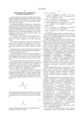
Substituted guanidine derivatives of the formula I ##STR1## are prepared by reacting calcium cyanamide with a primary or secondary amino carboxylic acid or a primary or secondary amino sulfonic acid or their derivatives of the formula II ##STR2## where the substituents R1 and R2 have the meanings explained in the description.
Description
The present invention relates to an improved process for preparing substituted guanidinium compounds by reacting calcium cyanamide with a primary or secondary amino carboxylic acid or a primary or secondary amino sulfonic acid or derivatives thereof.
Substituted guanidinium compounds are widespread in nature. Examples of important representatives of this class of substances are amino acids such as arginine and creatine. In addition, substituted guanidine compounds are known as sterically hindered bases, as biocides and as complex ligands. However, the industrial utilizability of most of the compounds of this type is greatly restricted owing to the high production costs thereof.
One example of a biologically active guanidine derivative is creatine which, as the cell's energy carrier, is employed as dietary supplement in the food and drugs sector.
The synthesis of guanidinium salts from cyanamide is known and is described, for example, in U.S. Pat. No. 2,425,341, where aqueous cyanamide solutions are reacted with aqueous solutions of the amines at >80° C. and at pH >8.
The preparation of creatine is described, for example, in EP-A-0 754 679 and the further literature quoted therein, the maximum yields being only 70%.
One disadvantage of the abovementioned syntheses of guanidinium compounds is the use of aqueous solutions of pure cyanamide. These solutions are very costly and, owing to the instability of cyanamide, generally not widely available.
The industrial preparation of pure cyanamide or aqueous solutions thereof starts from nitrolime. However, production is complicated because, owing to the great instability of cyanamide, special precautions must be taken during preparation and storage. The preparation is described, for example, in D.R.P. 267514 and D.R.P. 648542.
It is an object of the present invention to provide a low-cost and easily implemented process for preparing substituted guanidines based on widely available starting materials and not having the abovementioned disadvantages.
We have found that this object is achieved by a process for preparing substituted guanidine derivatives of the formula I, ##STR3## which comprises reacting calcium cyanamide with a primary or secondary amino carboxylic acid or a primary or secondary amino sulfonic acid or derivatives thereof, of the formula II ##STR4## where the substituents R1 and R2 have, independently of one another, the following meanings:
R1 H, C1 -C20 -alkyl;
R2 --(C1 -C20 -alkylene)--COOR3, --(C1 -C20 -alkylene)--CONR4 R5, --(C1 -C20 -alkylene)--CN, --(C1 -C20 -alkylene)--SO2 R6 ;
R3 H, C1 -C20 -alkyl, C2 -C10 -alkenyl, C3 -C8 -cycloalkyl, C6 -C18 -aryl, Na, K, Li, Ca, Mg, N(R1)4 ;
R4 and R5 independently of one another H, C1 -C20 -alkyl, C2 -C10 -alkenyl, C3 -C8 -cycloalkyl, C6 -C18 -aryl;
R6 OR7, N(R8)2 ;
R7 H, C1 -C20 -alkyl, C2 -C10 -alkenyl, C3 -C8 -cycloalkyl, C6 -C18 -aryl, Na, K, Li, Ca, Mg, N(R1)4 ;
R8 H, C1 -C20 -alkyl, C2 -C10 -alkenyl, C3 -C8 -cycloalkyl, C6 -C18 -aryl.
The novel process thus complies in particular with commercial limiting conditions such as low costs of starting materials, easy industrial implementation, improved yields and adequate purity of the product.
Suitable in principle for the reaction with calcium cyanamide are all the claimed amino carboxylic acids and amino sulfonic acids and derivatives thereof of the formula II.
Alkyl radicals which may be mentioned for R1, R3 to R5 and R7 to R8 are branched or unbranched C1 -C20 -alkyl chains, preferably methyl, ethyl, n-propyl, 1-methylethyl, n-butyl, 1-methylpropyl, 2-methylpropyl, 1,1-dimethylethyl, n-pentyl, 1-methylbutyl, 2-methylbutyl, 3-methylbutyl, 2,2-dimethylpropyl, 1-ethylpropyl, n-hexyl, 1,1-dimethylpropyl, 1,2-dimethylpropyl, 1-methylpentyl, 2-methylpentyl, 3-methylpentyl, 4-methylpentyl, 1,1-dimethylbutyl, 1,2-dimethylbutyl, 1,3-dimethylbutyl, 2,2-dimethylbutyl, 2,3-dimethylbutyl, 3,3-dimethylbutyl, 1-ethylbutyl, 2-ethylbutyl, 1,1,2-trimethylpropyl, 1,2,2-trimethylpropyl, 1-ethyl-1-methylpropyl, 1-ethyl-2-methylpropyl, n-heptyl, n-octyl, n-nonyl, n-decyl, n-undecyl, n-dodecyl, n-tridecyl, n-tetradecyl, n-pentadecyl, n-hexadecyl, n-heptadecyl, n-octadecyl, n-nonadecyl or n-eicosyl.
Alkenyl radicals which may be mentioned for R3 to R5 and for R7 and R8 are branched or unbranched C2 -C10 -alkenyl chains, preferably vinyl, propenyl, isopropenyl, 1-butenyl, 2-butenyl, 1-pentenyl, 2-pentenyl, 2-methyl-1-butenyl, 2-methyl-2-butenyl, 3-methyl- 1-butenyl, 1-hexenyl, 2-hexenyl, 1-heptenyl, 2-heptenyl, 1-octenyl or 2-octenyl.
Alkylene radicals which may be mentioned for R2 are branched or unbranched C1 -C20 -alkylene chains, preferably methylene, ethylene, n-propylene, 1-methylethylene, n-butylene, 1-methylpropylene, 2-methylpropylene, 1,1-dimethylethylene, n-pentylene, 1-methylbutylene, 2-methylbutylene, 3-methylbutylene, 2,2-dimethylpropylene, 1-ethylpropylene, n-hexylene, 1,1-dimethylpropylene, 1,2-dimethylpropylene, 1-methylpentylene, 2-methylpentylene, 3-methylpentylene, 4-methylpentylene, 1,1-dimethylbutylene, 1,2-dimethylbutylene, 1,3-dimethylbutylene, 2,2-dimethylbutylene, 2,3-dimethylbutylene, 3,3-dimethylbutylene, 1-ethylbutylene, 2-ethylbutylene, 1,1,2-trimethylpropylene, 1,2,2-trimethylpropylene, 1-ethyl-1-methylpropylene, 1-ethyl-2-methylpropylene, n-heptylene, n-octylene, n-nonylene, n-decylene, n-undecylene, n-dodecylene, n-tridecylene, n-tetradecylene, n-pentadecylene, n-hexadecylene, n-heptadecylene, n-octadecylene, n-nonadecylene or n-eicosylene.
The 1- to 20-membered alkylene chains may be substituted by the following radicals:
C1 -C6 -alkyl, for example methyl, ethyl, n-propyl, 1-methylethyl, n-butyl, 1-methylpropyl-, 2-methylpropyl, 1,1-dimethylethyl, n-pentyl, 1-methylbutyl, 2-methylbutyl, 3-methylbutyl, 2,2-dimethylpropyl, 1-ethylpropyl, n-hexyl, 1,1-dimethylpropyl, 1,2-dimethylpropyl, 1-methylpentyl, 2-methylpentyl, 3-methylpentyl, 4-methylpentyl, 1,1-dimethylbutyl, 1,2-dimethylbutyl, 1,3-dimethylbutyl, 2,2-dimethylbutyl, 2,3-dimethylbutyl, 3,3-dimethylbutyl, 1-ethylbutyl, 2-ethylbutyl, 1,1,2-trimethylpropyl, 1,2,2-trimethylpropyl, 1-ethyl-1-methylpropyl, 1-ethyl-2-methylpropyl;
mercaptomethyl, 1-aminobutyl, 1-carboxyethyl;
arylalkyl, for example benzyl, p-hydroxybenzyl, indolylmethyl.
Cycloalkyl radicals which may be mentioned for R3 to R5 and for R7 and R8 are preferably branched or unbranched C3 -C8 -cycloalkyl radicals such as cyclopropyl, cyclobutyl, cyclopentyl, cyclohexyl, cycloheptyl, 1-methylcyclopropyl, 1-ethylcyclopropyl, 1-propylcyclopropyl, 1-butylcyclopropyl, 1-pentylcyclopropyl, 1-methyl-1-butylcyclopropyl, 1,2-dimethylcyclopropyl, 1-methyl-2-ethylcyclopropyl or cyclooctyl.
The cycloalkyl radicals may be substituted by one or more, eg. 1 to 3, radicals such as halogen, eg. fluorine, chlorine or bromine, cyano, nitro, amino, C1 -C4 -alkylamino, C1 -C4 -dialkylamino, hydroxyl, C1 -C4 -alkyl, C1 -C4 -alkoxy or other radicals, or contain 1 to 3 heteroatoms, such as sulfur, nitrogen, whose free valencies can be saturated by hydrogen or C1 -C4 -alkyl, or oxygen, in the ring.
Suitable alkoxy radicals for R6 are those having 1 to 20 carbon atoms, preferably having 1 to 12 carbon atoms, particularly preferably 1 to 8 carbon atoms.
Examples which may be mentioned are:
______________________________________
methoxy             ethoxy
  isopropoxy n-propoxy
  1-methylpropoxy n-butoxy
  n-pentoxy 2-methylpropoxy
  3-methylbutoxy 1,1-dimethylpropoxy
  2,2-dimethylpropoxy hexoxy
  1-methyl-1-ethylpropoxy heptoxy
  octoxy 2-ethylhexoxy
______________________________________
Suitable and preferred mono- or disubstituted amino radicals for R6 are those containing alkyl radicals having 1 to 20, preferably 1 to 12, carbon atoms, such as methyl, n-propyl, n-butyl, 2-methylpropyl, l,1-dimethylpropyl, hexyl, heptyl, 2-ethylhexyl, isopropyl, 1-methylpropyl, n-pentyl, 3-methylbutyl, 2,2-dimethylpropyl, 1-methyl-1-ethylpropyl and octyl.
Suitable tetraalkylammonium radicals for R3 and R7 are those containing alkyl radicals having 1 to 20, preferably 1 to 12, particularly preferably 1 to 6, carbon atoms, such as methyl, n-propyl, isopropyl, 2-methylpropyl, 1,1-dimethylpropyl, 1-methylpropyl, 2,2-dimethylpropyl, 1-methyl-1-ethylpropyl, n-butyl, 3-methylbutyl, n-pentyl and hexyl.
Aryl means aromatic rings or ring systems having 6 to 18 carbon atoms in the ring system, for exmaple phenyl or naphthyl, each of which may be substituted by one or more radicals such as halogen, eg. fluorine, chlorine or bromine, cyano, nitro, amino, C1 -C4 -alkylamino, C1 -C4 -dialkylamino, hydroxyl, C1 -C4 -alkyl, C1 -C4 -alkoxy or other radicals. Unsubstituted or substituted phenyl, methoxyphenyl and naphthyl are preferred.
Compounds of the formula II which are preferably used are all the primary and secondary amino carboxylic acids or amino sulfonic acids which are soluble in water or in water-miscible solvents. Particularly preferred representatives include taurine and amino carboxylic acids such as glycine, alanine, valine, proline, leucine, phenylalanine, lysine, methionine, cysteine, aspartic acid, iminodiacetic acid and sarcosine and their esters, amides and nitriles and their salts.
The very particularly preferred compound of the formula II is sarcosine which can be used both as free acid and, in particular, as Na or K salt in the form of a 5 to 60% by weight, preferably 35 to 45% by weight, aqueous solution.
The novel process for preparing substituted guanidine derivatives is particularly distinguished by the possibility of employing in place of the costly pure cyanamide, which is normally commercially available as crystalline pure product or as a solution stabilized at pH 3-6, the very low-cost and widely available nitrolime.
Nitrolime means products which are obtained, for example, by reacting CaC2 with N2 at 800-1100° C. As a rule, they contain 5-98% by weight, preferably 20-95% by weight, particularly preferably 30-90% by weight, of calcium cyanamide. The industrially available gray to black nitrolime contains not only calcium cyanamide but also impurities such as carbon, calcium carbide, CaO and traces of metals, normally in contents <1%. It is, of course, also possible to use pure calcium cyanamide. However, it is particularly advantageous, because more economical, to use technical, not very pure nitrolime. This is preferably employed in the form of a powder with a particle size distribution from 1 to 100 μm. However, it is also possible to employ granulated, extruded or otherwise compacted material, as well as an appropriate suspension in water, alcohols or other water-miscible solvents.
The reaction of calcium cyanamide with ammonia is described in U.S. Pat. No. 2,114,280. In this case, calcium cyanamide is reacted with an excess of ammonia under elevated pressure at >130° C. to give unsubstituted guanidine.
Gagnon et al. in Can. J. Chem. 36 (1958) describe the reaction of calcium cyanamide with primary C1 -C5 -amine nitrates.
H. Michaud et al. in Chem. Ztg. 112 (1988) 10, 287-294 and F. Baum in Biochem. Z. 26 (1910), 325-332 report that in some cases large amounts of byproducts such as dicyandiamide and urea result on hydrolysis of nitrolime without addition of acid.
To prevent these side reactions it is necessary, on the one hand, to keep the temperature below 40° C., better below 20° C., which necessitates costly cooling and, on the other hand, the pH must be brought into the acidic range by adding acids, in particular carbonic acid.
However, this procedure is time-consuming and, moreover, results in a very dilute cyanamide solution, which must be concentrated by additional distillation.
It is also known that alkaline cyanamide hydrolysis is catalyzed by heavy metal ions, in particular by iron and manganese.
It was therefore all the more surprising that technical calcium cyanamide can be converted in the presence of traces of heavy metals in an alkaline medium into the guanidine derivative in good yields.
Another advantage of the process is the fact that the nitrolime used, which itself undergoes alkaline reaction in water, does not require acidic hydrolysis in a separate step but, surprisingly, can be employed without further pretreatment directly at the desired pH for the reaction with the amine. The pH normally used in this case is in the region of the pK of the amine, ie. in a range from 6 to 14, preferably from 8 to 12, particularly preferably from 9 to 11.
This saves considerable amounts of acid compared with the separate preparation of cyanamide from calcium cyanamide and subsequent conversion to the guanidine, because the novel process is carried out exclusively in alkaline medium.
The synthesis can take place in such a way that nitrolime is metered into a solution of a primary or secondary amine while keeping the pH constant in the abovementioned range. It is possible to meter in a solid or a suspension for this purpose. The reaction in this case is carried out at from 20 to 120° C., in particular from 40 to 80° C.
Nitrolime is added in equal portions over a period of from 0.5 to 10 h, preferably from 1 to 6 h, particularly preferably from 2.5 to 3 h.
The metering is, as a rule, followed by stirring for 0.5 to 10 h, preferably 1 to 3 h.
The molar ratio of calcium cyanamide to primary or secondary amine is in the range from 0.9 to 5.0, preferably from 0.9 to 4.0, in particular from 1.0 to 2.0.
To remove dissolved heavy metal ions, it may be advantageous to employ complexing agents such as phosphates, sulfates, aminopolycarboxylates, for exaple EDTA or aminopolyphosphonates.
To eliminate odoriferous byproducts it is possible also to add oxidizing agents such as H2 O2.
It is possible in this way to improve the purity of the resulting guanidine derivative without any losses of yield.
After the reaction, any precipitated inorganic byproducts can be removed at from 20 to 100° C., preferably 50 to 90° C., by processes known per se, such as filtration or centrifugation.
The required guanidinium derivatives are isolated in a manner known per se. Thus, for example, the required product can be obtained as crystals by cooling the filtered reaction solution to -20 to 60° C., in particular 0 to 40° C. Filtration can, where appropriate, be followed by recrystallization to improve the purity. However, it is also possible to remove the product from the reaction mixture by extraction in order then to isolate it pure by distillation or crystallization.
Another advantage of the novel process is that industrially costly cooling, as required for the preparation of cyanamide, can be dispensed with. Because of the mild temperatures used, the reaction can be carried out under atmospheric pressure, which is particularly simple industrially.
It is particularly surprising that the yields of the novel reaction are comparable with those from the reaction of pure cyanamide, and are therefore higher, based on the calcium cyanamide content, for the overall process of liberation of the cyanamide and reaction to give the guanidinium salt, because of the smaller number of steps.
In addition, it is possible to achieve higher conversions by employing the low-cost nitrolime in excess, which is frequently uneconomical when pure cyanamide is used. The purity of the isolated guanidinium salt is comparable with that of the product prepared from pure cyanamide. This is particularly surprising because the technical starting material is highly impure.
It is possible to use as starting materials not only the calcium salt of cyanamide but also other alkaline earth metal salts.
It is also possible in the case of the primary and secondary amines to employ not only the pure substances but in particular, advantageously, technical products, eg. in place of pure sarcosine a technical sodium salt solution with active substance contents of 5-60%, but preferably 40%, which may also contain water-soluble impurities such as N-methyliminodiacetic acid.
The use of technical products is particularly advisable when no other reactive amines are present and it is particularly economically advantageous because, for example, the purification of the amine is costly and results in large losses.
The pH can be maintained by employing, depending on the initial pH of the base, either acids such as CO2, SO2, HCl, HNO3, H2 SO4, H2 SO3, H3 PO3, H3 PO2 and H3 PO4, and/or bases such as NaOH, KOH, LiOH, Ca(OH)2, Ba(OH)2, Mg(OH)2. Only acids are required if the amines should be present in basic and not in neutralized or partially neutralized form.
Preferred acids are those which are easily available industrially and result together with traces of heavy metals in complexes of low solubility, such as CO2, H2 SO4, H3 PO4. However, it is also possible and preferred to employ mixtures of these and other acids.
The process for preparing substituted guanidinium derivatives is explained in detail in the following examples.
Reaction of sarcosine sodium salt solution with calcium cyanamide at pH 10 in the presence of sulfuric acid
In a 2 l reactor with reflux condenser, paddle stirrer, thermostat and pH-controlled sulfuric acid metering, a total of 14.0 g of 50% strength sulfuric acid was metered into a mixture of 133 g of 40.1% strength aqueous sodium sarcosinate solution and 53 g of water to adjust to a pH of 10. Then, at 60° C., a total of 87.2 g of nitrolime (supplied by Aldrich, granular product, CaCN2 content=84%) were added in portions over the course of 2 h. In order to keep the pH at 10, a total of 403 g of 25% strength sulfuric acid was metered in during the addition period. The temperature was kept at 60° C. by cooling. After the addition was complete, stirring was continued at the stated temperature for 2 h, and the mixture was then heated to 80° C. over the course of 20 min. The resulting greenish suspension was filtered at 80° C., and the black filter cake was washed twice with 250 ml of water at 80° C. The mother liquor and washing water were combined and treated with 2 g of 85% strength H3 PO4. The fine colorless precipitate which formed was filtered off, and the now colorless solution was cooled to 5° C. After removal of the crystals which formed, the remaining mother liquor was concentrated under reduced pressure until about 50% of the amount remained and, after cooling, a 2nd fraction of crystals resulted. In total, after drying, 66.4 g of colorless crystals were obtained with a creatine content of 89.0% and a residual water content of 11%, equivalent to an isolated yield of 58%. The creatine content in the mother liquor was 1.3%, and thus the calculated yield from the reaction was 68%.
Reaction of sarcosine sodium salt solution with calcium cyanamide at pH 11 in the presence of sulfuric acid
The reaction was carried out as in Example 1 with the exception of the pH (pH 11 in place of pH 10) and afforded a total yield of creatine of 56%.
Reaction of Sarcosine Sodium Salt Solution with Calcium Cyanamide at pH 10 in the Presence of Phosphoric Acid
The reaction was carried out as in Example 1. The pH was adjusted using 85% strength phosphoric acid. Creatine was obtained in a total yield of 75% with a purity before recrystallization of about 89%.
Reaction of Sarcosine Sodium Salt Solution with Calcium Cyanamide at pH 10 in the Presence of a Mixture of Sulfuric Acid and Phosphoric Acid
The reaction was carried out as in Example 1 using a mixture of sulfuric acid and phosphoric acid in place of sulfuric acid to adjust the pH. Creatine was obtained in a total yield of 86% with a purity before recrystallization of about 95%.
Claims (15)
1. A process for preparing substituted guanidine derivatives of the formula I, ##STR5## which comprises reacting calcium cyanamide with a primary or secondary amino carboxylic acid or a primary or secondary amino sulfonic acid or derivatives thereof, of the formula II ##STR6## where the substituents R1 and R2 have, independently of one another, the following meanings:
______________________________________
R.sup.1
     H,
   C.sub.1 --C.sub.20 -alkyl;
  R.sup.2 --(C.sub.1 --C.sub.20 -alkylene)--COOR.sup.3,
   --(C.sub.1 --C.sub.20 -alkylene)--CONR.sup.4 R.sup.5, --(C.sub.1
     --C.sub.20 -alkylene)--CN,
   --(C.sub.1 --C.sub.20 -alkylene)--SO.sub.2 R.sup.6;
  R.sup.3 H, C.sub.1 --C.sub.20 -alkyl, C.sub.2 --C.sub.10 -alkenyl,
     C.sub.3 --C.sub.8 -cycloalkyl,
   C.sub.6 --C.sub.18 -aryl,
   Na, K, Li, Ca, Mg, N(R.sup.1).sub.4 ;
      R.sup.4  and R.sup.5  independently of one another
               H, C.sub.1 --C.sub.20 -alkyl, C.sub.2 --C.sub.10 -alkenyl,
               C.sub.3 --C.sub.8 -cycloalkyl,
   C.sub.6 --C.sub.18 -aryl;
  R.sup.6 OR.sup.7, N(R.sup.8).sub.2 ;
  R.sup.7 H, C.sub.1 --C.sub.20 -alkyl, C.sub.2 --C.sub.10 -alkenyl,
               C.sub.3 --C.sub.8 -cycloalkyl,
   C.sub.6 --C.sub.18 -aryl,
   Na, K, Li, Ca, Mg, N(R.sup.1).sub.4 ;
  R.sup.8 H, C.sub.1 --C.sub.20 -alkyl, C.sub.2 --C.sub.10 -alkenyl,
               C.sub.3 --C.sub.8 -cycloalkyl,
   C.sub.6 --C.sub.18 -aryl.
______________________________________
2. The process as claimed in claim 1, wherein calcium cyanamide is reacted with a primary or secondary amine of the formula II in water and/or a water-miscible organic solvent at from 20 to 120° C. and at a pH of from 6 to 14.
3. The process as claimed in claim 1, wherein said calcium cyanamide is technical grade nitrolime having a calcium cyanamide content of from 30 to 95% by weight.
4. The process as claimed in claim 1, wherein the amino carboxylic acid or amino sulfonic acid or derivatives thereof is/are soluble in water or in a water-miscible solvent.
5. The process as claimed in claim 4, wherein said amino carboxylic acid is sarcosine.
6. A process for preparing substituted guanidine derivatives of formula I: ##STR7## which comprises reacting nitrolime with a primary or secondary carboxylic acid or a primary or secondary amino sulfonic acid or derivatives thereof of formula II: ##STR8## wherein substituents R1 and R2, independently of each other, have the following meanings:
______________________________________
R.sup.3
     H, C.sub.1 --C.sub.20 -alkyl,
   C.sub.2 --Cl.sub.10 -alkenyl, C.sub.3 --C.sub.8 -cycloalkyl, C.sub.6
     --C.sub.18 -aryl, Na, K,
   Li, Ca, Mg, N(R.sup.1).sub.4 ;
      R.sup.4  and R.sup.5  independently of one another
               H, C.sub.1 --C.sub.20 -alkyl,
   C.sub.2 --Cl.sub.10 -alkenyl, C.sub.3 --C.sub.8 -cycloalkyl, C.sub.6
               --C.sub.18 -aryl,
   C.sub.6 --C.sub.18 -aryl;
  R.sup.6 OR.sup.7, N(R.sup.8).sub.2 ;
  R.sup.7 H, C.sub.1 --C.sub.20 -alkyl, C.sub.2 --C.sub.20 -alkenyl,
               C.sub.3 --C.sub.8 -cycloalkyl,
   C.sub.6 --C.sub.18 -aryl; Na, K, Li, Ca, Mg, N(R.sup.1).sub.4 ;
                R.sup.8 H, C.sub.1 --C.sub.20 -alkyl,
   C.sub.2 --C.sub.10 -alkenyl, C.sub.3 --C.sub.8 -cycloalkyl, C.sub.6
               --C.sub.18 -aryl.
______________________________________
7. The process of claim 6, wherein said nitrolime contains from 5 to 98% by weight CaNCN and is a reaction product of CaC2 and N2 at 800-1100° C.
8. The process of claim 7, wherein the amount of CaNCN in said nitrolime ranges from 20 to 95% by weight.
9. The process of claim 7, wherein said amount of CaNCN in said nitrolime ranges from 30 to 90% by weight.
10. The process of claim 6, wherein the reaction occurs at a pH of 6 to 14 and a temperature of 20 to 120° C.
11. The process of claim 10, wherein said pH ranges from 8 to 12.
12. The process of claim 11, wherein said pH ranges from 9 to 11.
13. The process of claim 10, wherein said temperature ranges from 40 to 80° C.
14. The process of claim 1, wherein the molar ratio of calcium cyanamide to primary or secondary amino carboxylic acid or primary or secondary amino sulfonic acid or derivatives thereof ranges from 0.9 to 5.0.
15. The process of claim 14, wherein said molar ratio ranges from 0.9 to 4.0.
Applications Claiming Priority (2)
| Application Number | Priority Date | Filing Date | Title |
|---|---|---|---|
| DE19748697 | 1997-11-04 | ||
| DE19748697A DE19748697A1 (en) | 1997-11-04 | 1997-11-04 | Process for the preparation of substituted guanidine derivatives |
Publications (1)
| Publication Number | Publication Date |
|---|---|
| US6147258A true US6147258A (en) | 2000-11-14 |
Family
ID=7847584
Family Applications (1)
| Application Number | Title | Priority Date | Filing Date |
|---|---|---|---|
| US09/176,904 Expired - Fee Related US6147258A (en) | 1997-11-04 | 1998-10-22 | Preparation of substituted guanidine derivatives |
Country Status (6)
| Country | Link |
|---|---|
| US (1) | US6147258A (en) |
| EP (1) | EP0915082B1 (en) |
| JP (1) | JPH11209335A (en) |
| CN (1) | CN1078588C (en) |
| AT (1) | ATE211130T1 (en) |
| DE (2) | DE19748697A1 (en) |
Cited By (3)
| Publication number | Priority date | Publication date | Assignee | Title |
|---|---|---|---|---|
| US6518458B1 (en) * | 1999-01-11 | 2003-02-11 | Merck Patent Gmbh | (Aminoiminomethyl) amino) alkane-carboxamides and their applications in therapy |
| US20030163000A1 (en) * | 2001-08-31 | 2003-08-28 | Brian Atkinson | Halogen exchange reactions and catalysts therefor |
| WO2004031133A1 (en) * | 2002-10-04 | 2004-04-15 | Flexsys B.V. | Process for the synthesis of guanidine derivatives |
Families Citing this family (3)
| Publication number | Priority date | Publication date | Assignee | Title |
|---|---|---|---|---|
| DE102006016227A1 (en) * | 2006-04-06 | 2007-10-11 | Degussa Gmbh | Process for the preparation of creatine, creatine monohydrate or guanidinoacetic acid |
| CN102649772A (en) * | 2012-04-19 | 2012-08-29 | 宁夏兴平精细化工股份有限公司 | Artificially-synthesized taurocyamine and synthetic method thereof |
| CN103936633A (en) * | 2014-05-13 | 2014-07-23 | 宁夏宝马药业有限公司 | Preparation method of gugnidotaurine |
Citations (3)
| Publication number | Priority date | Publication date | Assignee | Title |
|---|---|---|---|---|
| US2425341A (en) * | 1944-08-11 | 1947-08-12 | American Cyanamid Co | Production of mono- and unsymmetrically disubstituted guanidines |
| DE964590C (en) * | 1950-12-23 | 1957-05-23 | Int Minerals & Chem Corp | Process for the production of glycocyamine |
| EP0754679A1 (en) * | 1995-07-18 | 1997-01-22 | SKW Trostberg Aktiengesellschaft | Process for the preparation of creatin or creatine-monohydrate |
-
1997
- 1997-11-04 DE DE19748697A patent/DE19748697A1/en not_active Withdrawn
-
1998
- 1998-10-14 DE DE59802519T patent/DE59802519D1/en not_active Expired - Fee Related
- 1998-10-14 EP EP98119418A patent/EP0915082B1/en not_active Expired - Lifetime
- 1998-10-14 AT AT98119418T patent/ATE211130T1/en not_active IP Right Cessation
- 1998-10-22 US US09/176,904 patent/US6147258A/en not_active Expired - Fee Related
- 1998-11-02 JP JP10312197A patent/JPH11209335A/en not_active Abandoned
- 1998-11-04 CN CN98123751A patent/CN1078588C/en not_active Expired - Fee Related
Patent Citations (4)
| Publication number | Priority date | Publication date | Assignee | Title |
|---|---|---|---|---|
| US2425341A (en) * | 1944-08-11 | 1947-08-12 | American Cyanamid Co | Production of mono- and unsymmetrically disubstituted guanidines |
| DE964590C (en) * | 1950-12-23 | 1957-05-23 | Int Minerals & Chem Corp | Process for the production of glycocyamine |
| EP0754679A1 (en) * | 1995-07-18 | 1997-01-22 | SKW Trostberg Aktiengesellschaft | Process for the preparation of creatin or creatine-monohydrate |
| US5719319A (en) * | 1995-07-18 | 1998-02-17 | Skw Trostberg Aktiengesellschaft | Process for the preparation of a creatine or creatine monohydrate |
Non-Patent Citations (2)
| Title |
|---|
| P.E. Gagnon, et al., Can. J. Chem., Vol. 36, pp. 737 743, Alkylguanidine Nitrates and Alkylnitroguanidines, 1958. * |
| P.E. Gagnon, et al., Can. J. Chem., Vol. 36, pp. 737-743, "Alkylguanidine Nitrates and Alkylnitroguanidines, "1958. |
Cited By (3)
| Publication number | Priority date | Publication date | Assignee | Title |
|---|---|---|---|---|
| US6518458B1 (en) * | 1999-01-11 | 2003-02-11 | Merck Patent Gmbh | (Aminoiminomethyl) amino) alkane-carboxamides and their applications in therapy |
| US20030163000A1 (en) * | 2001-08-31 | 2003-08-28 | Brian Atkinson | Halogen exchange reactions and catalysts therefor |
| WO2004031133A1 (en) * | 2002-10-04 | 2004-04-15 | Flexsys B.V. | Process for the synthesis of guanidine derivatives |
Also Published As
| Publication number | Publication date |
|---|---|
| ATE211130T1 (en) | 2002-01-15 |
| DE59802519D1 (en) | 2002-01-31 |
| EP0915082A3 (en) | 1999-11-24 |
| EP0915082A2 (en) | 1999-05-12 |
| DE19748697A1 (en) | 1999-05-06 |
| CN1218039A (en) | 1999-06-02 |
| EP0915082B1 (en) | 2001-12-19 |
| JPH11209335A (en) | 1999-08-03 |
| CN1078588C (en) | 2002-01-30 |
Similar Documents
| Publication | Publication Date | Title |
|---|---|---|
| US5719319A (en) | Process for the preparation of a creatine or creatine monohydrate | |
| EP0546867B1 (en) | Preparation of ethylenediaminetriacetic acid | |
| US6093848A (en) | Preparation of substituted guanidine derivatives | |
| KR100269079B1 (en) | Process for the preparation of a halosubstituted aromatic acid | |
| EP0546866B1 (en) | Ethylenediamine-N,N'-diacetic acid-N'-cyanomethyl, salts thereof, and their preparation | |
| JPH11209335A (en) | Production of substituted guanidine derivative | |
| US5994582A (en) | Preparation of substituted guanidine derivative | |
| US3919284A (en) | Process for making 2-cyano-2-hydroxyiminoacetamide salts | |
| US5969182A (en) | Preparation of substituted guanidine derivatives | |
| US5155264A (en) | Process for preparing glycine in high yield | |
| US6143929A (en) | Process for preparing guanidine derivatives | |
| DK149473B (en) | PROCEDURE FOR PREPARING AMINOMETHAN PHOSPHONIC ACIDS | |
| US6509497B1 (en) | Process for preparing guanidine derivatives | |
| CN114685300A (en) | Preparation method of o-chlorophenylglycine | |
| CA1134861A (en) | Monomeric n-methyleneaminoacetonitrile | |
| CA1130305A (en) | Process for the preparation of n,n'-disubstituted 2-naphthaleneethanimidamide and intermediates used therein | |
| CN113563214B (en) | Synthesis method of glycine | |
| JPS62267253A (en) | Production of alpha-amino acid | |
| US2553022A (en) | Preparation of cyanoacetyl ureas | |
| US6121490A (en) | Production of solid tertiary amine oxides | |
| EP1244646B1 (en) | Dinitrile intermediates for the synthesis of omapatrilat and methods for producing same | |
| US5554762A (en) | Process for the preparation of 1,1'-methane-bis (Hydantoin) | |
| JPS6115872B2 (en) | ||
| JPH0138103B2 (en) | ||
| JPH0723214B2 (en) | Method for producing stable aqueous solution of calcium dicyanamide |
Legal Events
| Date | Code | Title | Description |
|---|---|---|---|
| AS | Assignment |
Owner name: BASF AKTIENGESELLSCHAFT, GERMANY Free format text: ASSIGNMENT OF ASSIGNORS INTEREST;ASSIGNORS:GREINDL, THOMAS;SCHERR, GUENTER;SCHNEIDER, ROLF;AND OTHERS;REEL/FRAME:009636/0902;SIGNING DATES FROM 19980702 TO 19980708 |
|
| FPAY | Fee payment |
Year of fee payment: 4 |
|
| REMI | Maintenance fee reminder mailed | ||
| LAPS | Lapse for failure to pay maintenance fees | ||
| STCH | Information on status: patent discontinuation |
Free format text: PATENT EXPIRED DUE TO NONPAYMENT OF MAINTENANCE FEES UNDER 37 CFR 1.362 |
|
| FP | Lapsed due to failure to pay maintenance fee |
Effective date: 20081114 |