US6147175A - Crosslinked biological products, process for obtaining such products, and their use as removers - Google Patents
Crosslinked biological products, process for obtaining such products, and their use as removers Download PDFInfo
- Publication number
- US6147175A US6147175A US09/194,384 US19438498A US6147175A US 6147175 A US6147175 A US 6147175A US 19438498 A US19438498 A US 19438498A US 6147175 A US6147175 A US 6147175A
- Authority
- US
- United States
- Prior art keywords
- accordance
- flour
- product
- gel
- range
- Prior art date
- Legal status (The legal status is an assumption and is not a legal conclusion. Google has not performed a legal analysis and makes no representation as to the accuracy of the status listed.)
- Expired - Lifetime
Links
- 238000000034 method Methods 0.000 title claims abstract description 29
- 230000008569 process Effects 0.000 title claims abstract description 26
- 235000013312 flour Nutrition 0.000 claims abstract description 54
- 239000003431 cross linking reagent Substances 0.000 claims abstract description 35
- 238000001035 drying Methods 0.000 claims abstract description 30
- 239000002245 particle Substances 0.000 claims abstract description 19
- 238000004132 cross linking Methods 0.000 claims abstract description 13
- 241000209140 Triticum Species 0.000 claims abstract description 11
- 235000021307 Triticum Nutrition 0.000 claims abstract description 11
- 239000007787 solid Substances 0.000 claims abstract description 6
- 240000003834 Triticum spelta Species 0.000 claims abstract description 5
- 235000004240 Triticum spelta Nutrition 0.000 claims abstract description 5
- 239000006185 dispersion Substances 0.000 claims abstract description 5
- WSFSSNUMVMOOMR-UHFFFAOYSA-N Formaldehyde Chemical compound O=C WSFSSNUMVMOOMR-UHFFFAOYSA-N 0.000 claims description 43
- HEMHJVSKTPXQMS-UHFFFAOYSA-M Sodium hydroxide Chemical group [OH-].[Na+] HEMHJVSKTPXQMS-UHFFFAOYSA-M 0.000 claims description 17
- 235000013339 cereals Nutrition 0.000 claims description 16
- 238000010438 heat treatment Methods 0.000 claims description 15
- 238000000227 grinding Methods 0.000 claims description 13
- XLYOFNOQVPJJNP-UHFFFAOYSA-N water Substances O XLYOFNOQVPJJNP-UHFFFAOYSA-N 0.000 claims description 13
- FPYJFEHAWHCUMM-UHFFFAOYSA-N maleic anhydride Chemical group O=C1OC(=O)C=C1 FPYJFEHAWHCUMM-UHFFFAOYSA-N 0.000 claims description 9
- 239000002994 raw material Substances 0.000 claims description 9
- 238000009826 distribution Methods 0.000 claims description 8
- 239000003795 chemical substances by application Substances 0.000 claims description 7
- 239000000725 suspension Substances 0.000 claims description 7
- 238000005422 blasting Methods 0.000 claims description 5
- 238000000576 coating method Methods 0.000 claims description 5
- 238000011282 treatment Methods 0.000 claims description 5
- 230000032683 aging Effects 0.000 claims description 4
- 239000011248 coating agent Substances 0.000 claims description 4
- 238000012545 processing Methods 0.000 claims description 4
- 238000007873 sieving Methods 0.000 claims description 4
- 239000000758 substrate Substances 0.000 claims description 4
- 239000008098 formaldehyde solution Substances 0.000 claims description 2
- 230000005484 gravity Effects 0.000 claims description 2
- 230000000379 polymerizing effect Effects 0.000 claims description 2
- WSFSSNUMVMOOMR-NJFSPNSNSA-N methanone Chemical compound O=[14CH2] WSFSSNUMVMOOMR-NJFSPNSNSA-N 0.000 claims 2
- 150000008044 alkali metal hydroxides Chemical group 0.000 claims 1
- 239000008365 aqueous carrier Substances 0.000 claims 1
- 230000018044 dehydration Effects 0.000 claims 1
- 238000006297 dehydration reaction Methods 0.000 claims 1
- 150000004676 glycans Chemical class 0.000 abstract description 6
- 229920001282 polysaccharide Polymers 0.000 abstract description 6
- 239000005017 polysaccharide Substances 0.000 abstract description 6
- 239000000126 substance Substances 0.000 abstract description 3
- 238000006116 polymerization reaction Methods 0.000 abstract 2
- 229910000000 metal hydroxide Inorganic materials 0.000 abstract 1
- 150000004692 metal hydroxides Chemical class 0.000 abstract 1
- 238000009877 rendering Methods 0.000 abstract 1
- 239000000499 gel Substances 0.000 description 64
- 239000000047 product Substances 0.000 description 62
- 229920002472 Starch Polymers 0.000 description 18
- 235000019698 starch Nutrition 0.000 description 15
- 239000008107 starch Substances 0.000 description 15
- 238000006243 chemical reaction Methods 0.000 description 13
- 230000035882 stress Effects 0.000 description 13
- 230000000694 effects Effects 0.000 description 10
- 230000015572 biosynthetic process Effects 0.000 description 8
- 230000008859 change Effects 0.000 description 8
- 238000003756 stirring Methods 0.000 description 8
- BRLQWZUYTZBJKN-UHFFFAOYSA-N Epichlorohydrin Chemical compound ClCC1CO1 BRLQWZUYTZBJKN-UHFFFAOYSA-N 0.000 description 7
- 230000007062 hydrolysis Effects 0.000 description 7
- 238000006460 hydrolysis reaction Methods 0.000 description 7
- 239000012467 final product Substances 0.000 description 6
- 102000004169 proteins and genes Human genes 0.000 description 6
- 108090000623 proteins and genes Proteins 0.000 description 6
- 238000010008 shearing Methods 0.000 description 6
- 238000005496 tempering Methods 0.000 description 6
- 239000000654 additive Substances 0.000 description 5
- 239000008187 granular material Substances 0.000 description 5
- 239000003973 paint Substances 0.000 description 5
- 238000012360 testing method Methods 0.000 description 5
- -1 aldehyde compounds Chemical class 0.000 description 4
- 238000001816 cooling Methods 0.000 description 4
- 239000000203 mixture Substances 0.000 description 4
- 239000008188 pellet Substances 0.000 description 4
- 239000002002 slurry Substances 0.000 description 4
- RTZKZFJDLAIYFH-UHFFFAOYSA-N Diethyl ether Chemical compound CCOCC RTZKZFJDLAIYFH-UHFFFAOYSA-N 0.000 description 3
- 239000003139 biocide Substances 0.000 description 3
- 238000004140 cleaning Methods 0.000 description 3
- 238000001125 extrusion Methods 0.000 description 3
- 239000000463 material Substances 0.000 description 3
- 229910052751 metal Inorganic materials 0.000 description 3
- XHXFXVLFKHQFAL-UHFFFAOYSA-N phosphoryl chloride Substances ClP(Cl)(Cl)=O XHXFXVLFKHQFAL-UHFFFAOYSA-N 0.000 description 3
- IKHGUXGNUITLKF-UHFFFAOYSA-N Acetaldehyde Chemical compound CC=O IKHGUXGNUITLKF-UHFFFAOYSA-N 0.000 description 2
- WQZGKKKJIJFFOK-GASJEMHNSA-N Glucose Natural products OC[C@H]1OC(O)[C@H](O)[C@@H](O)[C@@H]1O WQZGKKKJIJFFOK-GASJEMHNSA-N 0.000 description 2
- BAVYZALUXZFZLV-UHFFFAOYSA-N Methylamine Chemical group NC BAVYZALUXZFZLV-UHFFFAOYSA-N 0.000 description 2
- LGRFSURHDFAFJT-UHFFFAOYSA-N Phthalic anhydride Natural products C1=CC=C2C(=O)OC(=O)C2=C1 LGRFSURHDFAFJT-UHFFFAOYSA-N 0.000 description 2
- 206010040844 Skin exfoliation Diseases 0.000 description 2
- PXIPVTKHYLBLMZ-UHFFFAOYSA-N Sodium azide Chemical compound [Na+].[N-]=[N+]=[N-] PXIPVTKHYLBLMZ-UHFFFAOYSA-N 0.000 description 2
- 239000003082 abrasive agent Substances 0.000 description 2
- 230000000996 additive effect Effects 0.000 description 2
- JHIWVOJDXOSYLW-UHFFFAOYSA-N butyl 2,2-difluorocyclopropane-1-carboxylate Chemical compound CCCCOC(=O)C1CC1(F)F JHIWVOJDXOSYLW-UHFFFAOYSA-N 0.000 description 2
- 230000015556 catabolic process Effects 0.000 description 2
- 239000003153 chemical reaction reagent Substances 0.000 description 2
- 239000004927 clay Substances 0.000 description 2
- 239000002131 composite material Substances 0.000 description 2
- 150000001875 compounds Chemical class 0.000 description 2
- 230000007423 decrease Effects 0.000 description 2
- 239000012153 distilled water Substances 0.000 description 2
- LEQAOMBKQFMDFZ-UHFFFAOYSA-N glyoxal Chemical compound O=CC=O LEQAOMBKQFMDFZ-UHFFFAOYSA-N 0.000 description 2
- 238000007542 hardness measurement Methods 0.000 description 2
- 229910052739 hydrogen Inorganic materials 0.000 description 2
- 239000001257 hydrogen Substances 0.000 description 2
- 239000004615 ingredient Substances 0.000 description 2
- 230000007774 longterm Effects 0.000 description 2
- 239000002609 medium Substances 0.000 description 2
- 239000002184 metal Substances 0.000 description 2
- 238000000465 moulding Methods 0.000 description 2
- 229920000642 polymer Polymers 0.000 description 2
- 238000002360 preparation method Methods 0.000 description 2
- 210000003491 skin Anatomy 0.000 description 2
- 239000012265 solid product Substances 0.000 description 2
- 230000000087 stabilizing effect Effects 0.000 description 2
- 230000003068 static effect Effects 0.000 description 2
- 229940100445 wheat starch Drugs 0.000 description 2
- BGJSXRVXTHVRSN-UHFFFAOYSA-N 1,3,5-trioxane Chemical compound C1OCOCO1 BGJSXRVXTHVRSN-UHFFFAOYSA-N 0.000 description 1
- LSNNMFCWUKXFEE-UHFFFAOYSA-M Bisulfite Chemical compound OS([O-])=O LSNNMFCWUKXFEE-UHFFFAOYSA-M 0.000 description 1
- SXRSQZLOMIGNAQ-UHFFFAOYSA-N Glutaraldehyde Chemical compound O=CCCCC=O SXRSQZLOMIGNAQ-UHFFFAOYSA-N 0.000 description 1
- OFOBLEOULBTSOW-UHFFFAOYSA-N Malonic acid Chemical compound OC(=O)CC(O)=O OFOBLEOULBTSOW-UHFFFAOYSA-N 0.000 description 1
- 229920000877 Melamine resin Polymers 0.000 description 1
- 239000005956 Metaldehyde Substances 0.000 description 1
- PAYRUJLWNCNPSJ-UHFFFAOYSA-N N-phenyl amine Natural products NC1=CC=CC=C1 PAYRUJLWNCNPSJ-UHFFFAOYSA-N 0.000 description 1
- 229910019213 POCl3 Inorganic materials 0.000 description 1
- 239000002262 Schiff base Substances 0.000 description 1
- 150000004753 Schiff bases Chemical class 0.000 description 1
- 238000002441 X-ray diffraction Methods 0.000 description 1
- 238000005299 abrasion Methods 0.000 description 1
- 230000009471 action Effects 0.000 description 1
- 238000004458 analytical method Methods 0.000 description 1
- 125000002490 anilino group Chemical group [H]N(*)C1=C([H])C([H])=C([H])C([H])=C1[H] 0.000 description 1
- 238000000137 annealing Methods 0.000 description 1
- 239000012736 aqueous medium Substances 0.000 description 1
- 239000007864 aqueous solution Substances 0.000 description 1
- 238000003556 assay Methods 0.000 description 1
- 230000001580 bacterial effect Effects 0.000 description 1
- 239000002585 base Substances 0.000 description 1
- 238000006664 bond formation reaction Methods 0.000 description 1
- 238000011109 contamination Methods 0.000 description 1
- 239000013078 crystal Substances 0.000 description 1
- 238000006731 degradation reaction Methods 0.000 description 1
- 239000003599 detergent Substances 0.000 description 1
- 238000011161 development Methods 0.000 description 1
- 230000018109 developmental process Effects 0.000 description 1
- 239000008121 dextrose Substances 0.000 description 1
- 230000029087 digestion Effects 0.000 description 1
- 238000004090 dissolution Methods 0.000 description 1
- 230000005611 electricity Effects 0.000 description 1
- 230000002255 enzymatic effect Effects 0.000 description 1
- 238000001704 evaporation Methods 0.000 description 1
- 230000008020 evaporation Effects 0.000 description 1
- 239000010419 fine particle Substances 0.000 description 1
- 239000012530 fluid Substances 0.000 description 1
- IVJISJACKSSFGE-UHFFFAOYSA-N formaldehyde;1,3,5-triazine-2,4,6-triamine Chemical compound O=C.NC1=NC(N)=NC(N)=N1 IVJISJACKSSFGE-UHFFFAOYSA-N 0.000 description 1
- 125000000524 functional group Chemical group 0.000 description 1
- 230000002538 fungal effect Effects 0.000 description 1
- 230000004927 fusion Effects 0.000 description 1
- 239000007789 gas Substances 0.000 description 1
- 239000003349 gelling agent Substances 0.000 description 1
- 239000011521 glass Substances 0.000 description 1
- 239000008103 glucose Substances 0.000 description 1
- 125000002791 glucosyl group Chemical group C1([C@H](O)[C@@H](O)[C@H](O)[C@H](O1)CO)* 0.000 description 1
- 229940015043 glyoxal Drugs 0.000 description 1
- 238000010335 hydrothermal treatment Methods 0.000 description 1
- 125000004029 hydroxymethyl group Chemical group [H]OC([H])([H])* 0.000 description 1
- 238000011065 in-situ storage Methods 0.000 description 1
- 230000000977 initiatory effect Effects 0.000 description 1
- 238000002347 injection Methods 0.000 description 1
- 239000007924 injection Substances 0.000 description 1
- 238000007689 inspection Methods 0.000 description 1
- 230000003993 interaction Effects 0.000 description 1
- 238000011835 investigation Methods 0.000 description 1
- 150000002500 ions Chemical class 0.000 description 1
- TWNIBLMWSKIRAT-VFUOTHLCSA-N levoglucosan Chemical compound O[C@@H]1[C@@H](O)[C@H](O)[C@H]2CO[C@@H]1O2 TWNIBLMWSKIRAT-VFUOTHLCSA-N 0.000 description 1
- 238000004519 manufacturing process Methods 0.000 description 1
- 238000005259 measurement Methods 0.000 description 1
- JDSHMPZPIAZGSV-UHFFFAOYSA-N melamine Chemical compound NC1=NC(N)=NC(N)=N1 JDSHMPZPIAZGSV-UHFFFAOYSA-N 0.000 description 1
- 239000007769 metal material Substances 0.000 description 1
- GKKDCARASOJPNG-UHFFFAOYSA-N metaldehyde Chemical compound CC1OC(C)OC(C)OC(C)O1 GKKDCARASOJPNG-UHFFFAOYSA-N 0.000 description 1
- 238000013021 overheating Methods 0.000 description 1
- 238000004806 packaging method and process Methods 0.000 description 1
- 239000012071 phase Substances 0.000 description 1
- 229920001592 potato starch Polymers 0.000 description 1
- 238000003672 processing method Methods 0.000 description 1
- 230000002035 prolonged effect Effects 0.000 description 1
- 238000009991 scouring Methods 0.000 description 1
- 210000004927 skin cell Anatomy 0.000 description 1
- 239000011734 sodium Substances 0.000 description 1
- JVBXVOWTABLYPX-UHFFFAOYSA-L sodium dithionite Chemical compound [Na+].[Na+].[O-]S(=O)S([O-])=O JVBXVOWTABLYPX-UHFFFAOYSA-L 0.000 description 1
- 235000011121 sodium hydroxide Nutrition 0.000 description 1
- UGTZMIPZNRIWHX-UHFFFAOYSA-K sodium trimetaphosphate Chemical compound [Na+].[Na+].[Na+].[O-]P1(=O)OP([O-])(=O)OP([O-])(=O)O1 UGTZMIPZNRIWHX-UHFFFAOYSA-K 0.000 description 1
- 235000019832 sodium triphosphate Nutrition 0.000 description 1
- 239000002689 soil Substances 0.000 description 1
- 239000007790 solid phase Substances 0.000 description 1
- 230000006641 stabilisation Effects 0.000 description 1
- 238000011105 stabilization Methods 0.000 description 1
- 229910001220 stainless steel Inorganic materials 0.000 description 1
- 239000010935 stainless steel Substances 0.000 description 1
- 230000001954 sterilising effect Effects 0.000 description 1
- 238000004659 sterilization and disinfection Methods 0.000 description 1
- 238000010408 sweeping Methods 0.000 description 1
- 230000008961 swelling Effects 0.000 description 1
- 230000007306 turnover Effects 0.000 description 1
- 230000004580 weight loss Effects 0.000 description 1
Images
Classifications
-
- B—PERFORMING OPERATIONS; TRANSPORTING
- B24—GRINDING; POLISHING
- B24C—ABRASIVE OR RELATED BLASTING WITH PARTICULATE MATERIAL
- B24C11/00—Selection of abrasive materials or additives for abrasive blasts
- B24C11/005—Selection of abrasive materials or additives for abrasive blasts of additives, e.g. anti-corrosive or disinfecting agents in solid, liquid or gaseous form
-
- B—PERFORMING OPERATIONS; TRANSPORTING
- B24—GRINDING; POLISHING
- B24C—ABRASIVE OR RELATED BLASTING WITH PARTICULATE MATERIAL
- B24C11/00—Selection of abrasive materials or additives for abrasive blasts
-
- C—CHEMISTRY; METALLURGY
- C08—ORGANIC MACROMOLECULAR COMPOUNDS; THEIR PREPARATION OR CHEMICAL WORKING-UP; COMPOSITIONS BASED THEREON
- C08B—POLYSACCHARIDES; DERIVATIVES THEREOF
- C08B31/00—Preparation of derivatives of starch
- C08B31/003—Crosslinking of starch
-
- C—CHEMISTRY; METALLURGY
- C09—DYES; PAINTS; POLISHES; NATURAL RESINS; ADHESIVES; COMPOSITIONS NOT OTHERWISE PROVIDED FOR; APPLICATIONS OF MATERIALS NOT OTHERWISE PROVIDED FOR
- C09K—MATERIALS FOR MISCELLANEOUS APPLICATIONS, NOT PROVIDED FOR ELSEWHERE
- C09K3/00—Materials not provided for elsewhere
- C09K3/14—Anti-slip materials; Abrasives
- C09K3/1409—Abrasive particles per se
Definitions
- the present invention relates to the field of biological chemistry and to polysaccharides in particular.
- the present invention hence deals with biological products resulting from polymerizing and crosslinking cereal flours by means of a divalent crosslinking agent.
- vitreous polysaccharide particles can be obtained from starch. These particles have an apparent hardness intermediate the hardness of the coating to be abraded and the hardness of the substrate bearing said coating whereby selective abrasion is achieved.
- These particles are formed of wheat starch which had been annealed beforehand to obtain a solid product having a moisture content in the range of 10 to 70% by weight, reacted mainly with epichlorhydrin as crosslinking agent to yield polysaccharide molecules having intermolecular chemical cross-linkages, and ground such that the resulting solid product forms granular particules of a specified particle size and displays hardness up to 4.0 Moh.
- the granules described in the above mentioned patent are comprised of starch of well defined water content, which is amorphous in structure and contains little dextrose.
- the product has therefore undergone only minor hydrolysis in the course of different treatments in alkaline conditions.
- crosslinking agent used in this process is one selected besides epichlorhydrin, among sodium tripolyphosphate or sodium trimetaphosphate.
- wheat starch must be subjected to prolonged annealing to undergo complete gelatinization and then to full drying in an oven or extruder following crosslinking. There is obtained in this way a bulk product which becomes hard and glass-like upon cooling to room temperature.
- the biological product which is disclosed in the present application hence differs from the one previously described in patent N° 2 646 621 in that it derives not from variably hydrolyzed starch but from flour, in that the crosslinking agent is not epichlorhydrin but is chosen among divalent crosslinking agents selected from the group of halogen-multisubstituted derivatives, aldehyde compounds, divalent aldehyde compounds, and dicarboxylic acid anhydrides, and in that the drying is performed not in an extruder having different heating portions or compartments but in an extruder or oven ensuring thorough drying without crust formation or, by contrast, without formation of products of too brittle a character.
- crosslinking agent can lead either to ether bond formation on hydroxymethyl groups at position 6 of glucose units, or to intramolecular crosslinking reactions between individual straight chain polysaccharides.
- the actual crosslinking reagent used could favor either one of these reactions or by contrast have no specificity.
- presence of protein in flour further results in more complex reactions due to intramolecular Maillard reaction.
- Elasticity and compressibility of the gel both depend on the type of flour used. For instance, in the case of cereal flour, elasticity is high and compressibility is poor whereas for potato flour, the opposite holds true.
- the source of flour confers to the gel a specific texture (elasticity, breakdown) while other properties of the gel relate to the starch content and gelling temperature, as well as to the flour/proteinlother ingredients ratio.
- Protein whenever present result in better contact between granules and a consolidated molecular network. These interactions only occur with certain grades of flour (such as wheat), which contain "tacky materials" at grain joints. Protein trapped inside the network play a static role and confer a specific structure to the media. Protein contained in the composition greatly affect the effectiveness of the product.
- grades of flour such as wheat
- the thus obtained abrasive grit performs better and is less brittle when blasted.
- the type of crosslinking agent has a significant effect on hardness measurement.
- the abrasive material of the invention is harder than the standard product now available.
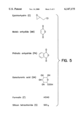
- crosslinking agents used must be divalent i.e. have two electron-rich functional groups (maleic anhydride, phthalic anhydride, glyoxal, glutaraldehyde).
- Other crosslinking agents may be used, such as e.g.
- Raw materials to be used are preferably either animal feed or baker's wheat flour or spelt wheat flour having undergone no other treatment than grinding into flour.
- the crosslinking agent is chosen among twice chorine substituted derivatives and especially phosphorus oxychloride, aldehyde compounds like formaldehyde or acetaldehyde or maleic anhydride.
- formalin treatment of the gel is conducted using an aqueous flour slurry.
- Raw flour concentration may vary to a great extent and will lie more especially in the range of 15 to 45% of total mass of the slurry.
- This procedure may be carried out in a glass or metal reactor being heated by an outer jacket and equipped with a stirring device of sufficient output. Stirring is aimed at obtaining a stable homogeneous texture following heating without causing gel disruption.
- the reactor may further be fitted with a device for drying the gel in situ optionally by applying partial vacuum.
- the reactor may further be provided with a back-up external heating device such as a microwave oven.
- the latter will be further fitted with a gel unloading device such as is achievable by air injection under pressure to provide for unloading of extremely viscous gel with high solids content.
- gelatinization is performed in a sealed reactor, such as a 700 liter capacity reactor, fitted with a double jacket heating system supplied with steam from a 40 KW boiler.
- the stirring device is an anchor blade stirrer, driven by a 2.3 KW engine.
- the reactor is internally provided with a counteracting screw blade and is connected to a pressurized air inlet whereby pressure is raised in the chamber to assist in discharge operations.
- an alkaline agent diluted in water such as sodium hydroxyde in an amount of from 0.3 to 0.6 g of sodium hydroxyde per Kg of flour,
- a divalent crosslinking agent at a rate of from 0.1 to 0.3 g per Kg of flour in case of formalin or phthalic anhydride, at a rate of from 0.3 to 0.6 g per Kg of flour with respect to maleic anhydride,
- a biocidal agent to prevent bacterial or fungal contamination.
- formalin is used as crosslinking agent. This can be either used in its free state in aqueous solution or in combination with bisulfite as commercially available or still in the form of formaldehyde/sodium sulfoxylate or a Schiff base, bound to aniline or methylamine, or still as a polymer such as metaldehyde or trioxane.
- the reactor is discharged and the slurry is subjected to drying.
- Drying is preferably carried out in an incubator under free or forced convection or inside a reactor where the gel can both be subjected to partial vacuum and drying under microwave energy.
- This extra energy input allows a sufficient temperature to be maintained deep into the gel (at least 70° to 75° C.) so that conversion of the gel into a vitreous or glass-like material can take place.
- optimal drying of the gel can be achieved in as short as 4 hours including time needed for gelatinization and that a sufficient temperature is maintained deep into the gel to cause vitreous fusion of grains.
- Drying can also be conducted in an incubator or an oven at temperatures in excess of 100° C.; in which case drying is faster though crust formation might seriously occur, i.e. formation of two dry layers on either side of a still moist gel layer, the drying of which is uncertain due to the impervious nature of the lower and upper coat layers.
- the product according to the invention is usually in the form of a uniform solid phase, the color of which may vary according to the process actually used and more so with the drying procedure being employed as well as the type of raw material being selected. Shore hardness measurement conducted on calibrated test samples has shown a hardness value comprised between 70 and 85.
- the raw product is not used as such but is subject to grinding by means of an impeller breaker (cutter grinder) for instance.
- the raw product When the product contains more moisture, i.e. when the dry solids content is notably less than 78%, the raw product is insufficiently rigid and too elastic, which fact might interfere with the grinding process.
- the product has been pelletized following extrusion. Pellets must undergo tempering during several hours (14 hours for example to achieve a uniform bulk moisture content).
- the sieving screen is calibrated according to the desired particle size.
- a 1 to 2 mm mesh screen is particularly well adapted.
- the ground product is subsequently sifted to achieve a uniform particle size distribution with the screen cutoff, lying suitably in the range of 0.2 to 0.25 mm.
- the biological product according to the invention is in the form of solid and translucent grains, showing no evidence of crystalline structure by X ray diffraction analysis. Transparency thereof as shown by microscopical inspection is excellent. Trace amounts of bran or even degraded protein were detected if at all as tiny black spots, as can be observed by microscopic examination. Residual water content is preferably higher than 12% without exceeding 20% and affects the product hardness.
- a water content of about 15% is namely achieved by running three drying cycles in a OTW-150 equipement at 70-90° C. and two drying-cooling cycles with a DNTW equipement at 90-100° C.
- the biological product according to the invention is slightly brown in color. This is a strong evidence of a Maillard reaction taking place.
- the hardness of the product as expressed in Mohs depends on dryness and ranges from 2 to 4 Mohs and is a function of the type of raw material being used and the drying process being selected.
- biological products according to the invention obtained from spelt wheat flour have a higher hardness index (3-4 Mohs) with respect to those prepared from ordinary wheat flour (2-2.3 Mohs after drying in an incubator under forced convection).
- the Moh index reflecting hardness is difficult to measure and cannot merely be used to define abrasiveness of such a product.
- the biological product according to the invention has a coarse touch which is typical of its abrasiveness.
- the final product has no hygroscopic character nor any tendency to agglomerate under the influence of static electricity, provided care is taken to remove very fine particles ( ⁇ 0.23 ⁇ m).
- the biological product may have optionally added thereto a biocidal agent to prevent degradation thereof or development of molds.
- the product according to the invention finds use as an abrasive grit mainly in high pressure dry jet processing.
- the product may be recovered and continously recycled for up to six times without loss in quality.
- It can further be used for cleaning of building exteriors mainly on building fronts, historical or religious monuments without harming moulding structures, carved work, architectural inclusions and ornaments.
- the biological product of the invention is advantageous in that it is entirely biodegradable leaving no harmful or undesirable residue behind. Accordingly, it can subsequently be disposed or decomposed, leaving only few undesirable particles such as gum, tar, polymers, trace metallic elements which remain after digestion of the is biological product mainly by means of enzymatic products.
- the biological product according to the invention has been found to be very versatile and thus suitable for a wide range of applications. It is possible to vary the jet pressure, the origin of raw materials and the processing method without substantially changing the properties of the final product.
- the product thus obtained allows more savings in production costs than prior art products mainly derived from prepurified starches which are expected to be substantially more expensive.
- the invention further relates to the use of biological products according to the invention as abrasive grit, either alone, or in suspension in a high pressure air jet directed against different types of substrate.
- the invention relates in particular to the use of the biological product according to the invention as paint stripper or remover for aircraft cabins or car metal sheets, to remove residual paint without attacking the primer.
- the invention is still concerned with the use of the biological product according to the invention as remover for either cladded or painted composite or metallic surfaces, for furniture or domestic electric appliances.
- the invention is also directed to the use of suspensions of the biological product of the invention, optionally in combination with detergents, for cleaning building exteriors in particular those comprising carved works, moulding structures, architectural inclusions having an aesthetic or historical value.
- the invention is further directed to the use of the biological product of the invention as scourer for floors, walls or ceilings, such as for example corridors and underground passageways.
- the biological product of the invention can be used either as such by projection techniques or in admixture at a concentration of 10 to 50% in a gas propellent such as compressed air for a period of 1 to 10 hours or a time sufficient to get a surface with no traces of prior coating or soils on building surfaces being cleaned.
- a gas propellent such as compressed air
- the biological product of the invention finds equally use as a skin abrasive.
- a sweeping jet is continously applied on the skin to remove skin cells and perform a cleaning process referred to as peeling.
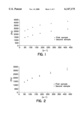
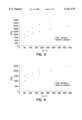
- FIG. 1 to 4 are graphs of rheograms for gels of the invention as function of shearing stress.
- FIG. 5 illustrates the compounds tested.
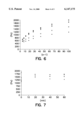
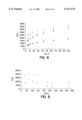
- FIGS. 6 through 9 are graphs of the behavior of a series of gels of different crosslinking agents.
- the product Prior to packaging, the product can be subject to dry sterilization with no loss in efficiency.
- the reactor is charged with distilled water having a temperature of less than 45° C.
- Wheat flour is weighed as well as other optional ingredients. Stirring is intially set at a rate of 50 RPM approx. and a preweighed amount of flour, sodium hydroxyde predissolved in 50 ml of distilled water and then a commercial formaldehyde solution and 0.25 g of sodium azide are added in succession.
- the stirring speed is then adjusted to approx. 30 RPM whereupon heating is initiated valve temperature specification : 80° C. and boiler temperature specification :150° C.).
- the gel Upon reaching a temperature of 80° C., the gel is allowed to age at this temperature for 15 to 30 minutes.
- the gel is then discharged from the reactor and arranged on prewarmed and preweighed incubator plates.
- the plates are weighed at regular time intervals to monitor the weight loss until the point where the required residual moisture content is reached.
- the drying time decreases as the concentration of the gel is increased and the thickness thereof is reduced.
- the drying slurry is inverted in order to avoid crust formation which would otherwise slow down water evaporation.
- Two batches among the above contain the same additives (formalin in concentration of 0.15 g/Kg of flour, sodium hydroxyde at 0.4 g/Kg of flour).
- maleic anhydride was used (at 0.4 g/Kg of flour, in the presence of sodium hydroxyde at 0.4 g/Kg of flour).
- Two batches contained a biocidal agent (N 3 Na) in an amount of 0.001 g/kg.
- Wheat flour was extruded, gelatinized in the form of non-expanded ropes of 2.5 mm in diameter and subsequently granulated. The bead-like pellets were then dried, ground and sieved.
- the pellets must undergo tempering for several hours (14 hours during the tests) so that a homogeneous moisture content is achieved Homogeneous moisture content and tempering of product greatly affect the hardness and structure of the final product
- the crosslinking agent is usually combined with a base which acts as a primer in crosslinking reactions.
- the effect of this additive on rheological properties has been investigated. Viscosity was measured with the aid of a Rheomat Mettler RM 180 model Viscosimeter.
- a blank (designated by--gel) was measured, i.e. a 15% additive-free starch gel suspension, which has been heated to 80° C. according to the procedure set out above.
- Plotted rheograms (FIGS. 1 and 2) were obtained for two samples : the first at t 0 , i.e. at the point where gel temperature is 80° C., and the second at t 0+15 minutes.
- the rheogram obtained shows that the starch gel is a shear-thinning non Newtonian fluid (appended sheet I-1) with a threshold of about 1000 Pa.
- the second test was conducted by merely adding sodium hydroxyde as additive (S-gel) using the same operating conditions.
- the rheological behaviour of the gel changes with time (time-extended heat treatment) as set forth in the litterature.
- First curing cycle demonstrates a viscosity peak (gelatinization) which is followed by a gradual drop in viscosity due to partial hydrolysis of starch.
- FIG. 1 is a detailed depiction of the change in rheological behaviour of SE gel as a function of shearing stress given in Pa and of shearing rate given in s -1 for two sequentially drawn samples.
- FIG. 2 is a detailed description of the change in rheological behaviour of the--gel as a function of shearing stress given in Pa and shearing rate given in s -1 for two sequentially drawn samples.
- FIG. 3 describes in detail the change in rheological behaviour for S gel under the same operating conditions
- FIG. 4 demonstrates in detail the change in rheological behaviour of -E gel as a function of the shearing stress given in s -1 for two sequentially drawn samples.
- the crosslinking agent generates linkages between starch chains by forming covalent bonds (stronger than hydrogen bonds), thereby consolidating the structure of the gel and increasing its resistance to extensive heat treatment. Given that crosslinking is characterized by an increase in gel viscosity with respect to the blank, different crosslinking agents were tested besides epichlorhydrin.
- Gels were prepared in the same conditions as previously stated, with 0.4 g of sodium hydroxyde per Kg of flour and 0.4 g of crosslinking agent /Kg of flour being added (0.15 g/Kg in case of formalin).
- FIG. 6 depicts in detail the behaviour of a series of gels formed with the aid of distinct crosslinking agents
- Efficient crosslinking agents resulting in an increase in viscosity are most notably maleic anhydride and formalin.
- Crosslinking (SF) gels is observed to exert a stabilizing effect which confers resistance to extensive heat treatment.
- Study of the effect of crosslinking agent concentration is interesting: as a general rule, viscosity of the gel drops as concentration is increased. Although unexpected, this finding fully agrees with the litterature.
- gelatinization consists of swelling of the granules which stick one to the other. This phenomenon is reflected by an increase in viscosity of the suspension.
- hydrolysis if heat treatment is continued, granules will burst, as a result of partial hydrolysis of starch molecules. This is reflected by a drop in viscosity.
- FIG. 8 depicts in detail the change in rheological behaviour of SF gel during long term heat treatment (at 80° C.) as a function of shear stress given in Pa and shear gradient given in s -1 .
- FIG. 9 is a schematic representation of the time course change in shear stress for SF gel as given in minutes under
Landscapes
- Chemical & Material Sciences (AREA)
- Engineering & Computer Science (AREA)
- Materials Engineering (AREA)
- Mechanical Engineering (AREA)
- Organic Chemistry (AREA)
- Medicinal Chemistry (AREA)
- Health & Medical Sciences (AREA)
- Chemical Kinetics & Catalysis (AREA)
- Biochemistry (AREA)
- Polymers & Plastics (AREA)
- Life Sciences & Earth Sciences (AREA)
- Polysaccharides And Polysaccharide Derivatives (AREA)
- Compositions Of Macromolecular Compounds (AREA)
- Agricultural Chemicals And Associated Chemicals (AREA)
- Polishing Bodies And Polishing Tools (AREA)
- Preparation Of Compounds By Using Micro-Organisms (AREA)
- Treatments Of Macromolecular Shaped Articles (AREA)
- Addition Polymer Or Copolymer, Post-Treatments, Or Chemical Modifications (AREA)
Abstract
Description
______________________________________
Media characteristics
______________________________________
Particle size distribution:
                   0.120 mm to 1.8 mm
  Specific gravity (S.G.): 0.75 to 0.85
  Shore index hardness: 70 to 85
______________________________________
______________________________________
                   SHORE
  TEST n°  MOISTURE (%) HARDNESS D δ (HARDNESS)* Aw
______________________________________
1      22          73         4.13      0.458
  2 17 66.3 4.32 0.491
  3 20.8 73 4.15 0.543
  4 21.2 56 6.2 0.339
  5 16.7 73.5 4.96 0.537
  6 16.4 68.4 5.06 0.475
  7 17.2 70.8 6.12 0.562
  8 16 77 5.2 0.596
  9 18.3 76 4.3 0.521
______________________________________
 Aw = water activity measurement
______________________________________
minimal shear stress (D = 7.67 s.sup.-1) and
  maximal shear stress (D = 100 s.sup.-1)
______________________________________
Claims (21)
Applications Claiming Priority (3)
| Application Number | Priority Date | Filing Date | Title |
|---|---|---|---|
| FR97/03931 | 1997-04-01 | ||
| FR9703931A FR2761365B1 (en) | 1997-04-01 | 1997-04-01 | NEW CROSSLINKED BIOLOGICALS, PROCESS FOR OBTAINING THEM AND APPLICATION THEREOF AS STRIPPING PRODUCTS |
| PCT/FR1998/000658 WO1998044004A1 (en) | 1997-04-01 | 1998-04-01 | Crosslinked biological products, process for obtaining such products, and their use as removers |
Publications (1)
| Publication Number | Publication Date |
|---|---|
| US6147175A true US6147175A (en) | 2000-11-14 |
Family
ID=9505378
Family Applications (1)
| Application Number | Title | Priority Date | Filing Date |
|---|---|---|---|
| US09/194,384 Expired - Lifetime US6147175A (en) | 1997-04-01 | 1998-04-01 | Crosslinked biological products, process for obtaining such products, and their use as removers |
Country Status (11)
| Country | Link |
|---|---|
| US (1) | US6147175A (en) |
| EP (1) | EP0904297B1 (en) |
| JP (1) | JP2000511589A (en) |
| CN (1) | CN1093137C (en) |
| AT (1) | ATE270307T1 (en) |
| AU (1) | AU741791B2 (en) |
| CA (1) | CA2256738C (en) |
| DE (1) | DE69824803T2 (en) |
| FR (1) | FR2761365B1 (en) |
| NZ (1) | NZ332970A (en) |
| WO (1) | WO1998044004A1 (en) |
Cited By (1)
| Publication number | Priority date | Publication date | Assignee | Title |
|---|---|---|---|---|
| US6677386B1 (en) * | 1999-01-25 | 2004-01-13 | Ato B.V. | Biopolymer nanoparticles |
Families Citing this family (3)
| Publication number | Priority date | Publication date | Assignee | Title |
|---|---|---|---|---|
| FR2802127B1 (en) | 1999-12-09 | 2002-09-06 | Biodecap Ind | NEW TECHNICAL TRAY FOR STRIPPING AND / OR PAINTING AND WORKSHOPS SO PERFORMED |
| FR2802844B1 (en) * | 1999-12-23 | 2002-03-29 | Biodecap Ind | PROJECTION NOZZLE AND STRIPPING DEVICE PROVIDED WITH SAME |
| FR2886867B1 (en) * | 2005-06-14 | 2007-08-17 | Univ Franche Comte Etablisseme | PROCESS FOR PRODUCING A GEL-TYPE COMPOUND FOR THE TREATMENT OF EFFLUENT |
Citations (4)
| Publication number | Priority date | Publication date | Assignee | Title |
|---|---|---|---|---|
| DE94628C (en) * | ||||
| LU27993A1 (en) * | ||||
| CH269496A (en) * | 1945-06-18 | 1950-07-15 | Scholten Chemische Fab | Process for the production of formaldehyde starch which is soluble or swellable in cold water. |
| EP0396226A2 (en) * | 1989-05-02 | 1990-11-07 | ADM Agri-Industries, Ltd. | Glass-like polysaccharide abrasive grit |
-
1997
- 1997-04-01 FR FR9703931A patent/FR2761365B1/en not_active Expired - Fee Related
-
1998
- 1998-04-01 WO PCT/FR1998/000658 patent/WO1998044004A1/en not_active Ceased
- 1998-04-01 NZ NZ332970A patent/NZ332970A/en unknown
- 1998-04-01 CN CN98800740A patent/CN1093137C/en not_active Expired - Fee Related
- 1998-04-01 EP EP98917284A patent/EP0904297B1/en not_active Expired - Lifetime
- 1998-04-01 AU AU70540/98A patent/AU741791B2/en not_active Ceased
- 1998-04-01 US US09/194,384 patent/US6147175A/en not_active Expired - Lifetime
- 1998-04-01 AT AT98917284T patent/ATE270307T1/en not_active IP Right Cessation
- 1998-04-01 JP JP10541255A patent/JP2000511589A/en active Pending
- 1998-04-01 DE DE69824803T patent/DE69824803T2/en not_active Expired - Fee Related
- 1998-04-01 CA CA002256738A patent/CA2256738C/en not_active Expired - Fee Related
Patent Citations (5)
| Publication number | Priority date | Publication date | Assignee | Title |
|---|---|---|---|---|
| DE94628C (en) * | ||||
| LU27993A1 (en) * | ||||
| CH269496A (en) * | 1945-06-18 | 1950-07-15 | Scholten Chemische Fab | Process for the production of formaldehyde starch which is soluble or swellable in cold water. |
| EP0396226A2 (en) * | 1989-05-02 | 1990-11-07 | ADM Agri-Industries, Ltd. | Glass-like polysaccharide abrasive grit |
| US5066335A (en) * | 1989-05-02 | 1991-11-19 | Ogilvie Mills Ltd. | Glass-like polysaccharide abrasive grit |
Cited By (1)
| Publication number | Priority date | Publication date | Assignee | Title |
|---|---|---|---|---|
| US6677386B1 (en) * | 1999-01-25 | 2004-01-13 | Ato B.V. | Biopolymer nanoparticles |
Also Published As
| Publication number | Publication date |
|---|---|
| EP0904297A1 (en) | 1999-03-31 |
| FR2761365B1 (en) | 1999-06-25 |
| CN1093137C (en) | 2002-10-23 |
| EP0904297B1 (en) | 2004-06-30 |
| DE69824803D1 (en) | 2004-08-05 |
| CA2256738C (en) | 2007-01-30 |
| DE69824803T2 (en) | 2005-07-14 |
| CA2256738A1 (en) | 1998-10-08 |
| FR2761365A1 (en) | 1998-10-02 |
| CN1228095A (en) | 1999-09-08 |
| AU7054098A (en) | 1998-10-22 |
| JP2000511589A (en) | 2000-09-05 |
| ATE270307T1 (en) | 2004-07-15 |
| WO1998044004A1 (en) | 1998-10-08 |
| AU741791B2 (en) | 2001-12-06 |
| NZ332970A (en) | 2000-09-29 |
Similar Documents
| Publication | Publication Date | Title |
|---|---|---|
| Tosh et al. | Evaluation of structure in the formation of gels by structurally diverse (1→ 3)(1→ 4)-β-D-glucans from four cereal and one lichen species | |
| Li et al. | Eco‐friendly extraction and physicochemical properties of pectin from jackfruit peel waste with subcritical water | |
| Vold et al. | A study of the chain stiffness and extension of alginates, in vitro epimerized alginates, and periodate-oxidized alginates using size-exclusion chromatography combined with light scattering and viscosity detectors | |
| US5360903A (en) | Glass-like polysaccharide abrasive grit | |
| Izydorczyk et al. | Cereal arabinoxylans: advances in structure and physicochemical properties | |
| Moreno et al. | Chemical and rheological properties of an extracellular polysaccharide produced by the cyanobacterium Anabaena sp. ATCC 33047 | |
| de los Ángeles Cornejo-Villegas et al. | The effect of Ca2+ ions on the pasting, morphological, structural, vibrational, and mechanical properties of corn starch–water system | |
| Jyothi et al. | Microwave‐assisted synthesis and characterization of succinate derivatives of cassava (Manihot esculenta Crantz) starch | |
| US6147175A (en) | Crosslinked biological products, process for obtaining such products, and their use as removers | |
| US20040157532A1 (en) | Glass-like polysaccharides | |
| Wang et al. | Preparation and performance study of carboxymethylated Napier grass (Pennisetum purpureum) cellulose dust suppressant | |
| CN105873991A (en) | Xyloglucan film | |
| Tsai et al. | Two-stage microfluidization combined with ultrafiltration treatment for chitosan mass production and molecular weight manipulation | |
| US6197951B1 (en) | Starch graft copolymer blast media | |
| US6159257A (en) | Water-resistant, glass-like, polysaccharide abrasive grits and method of making same | |
| Rollings et al. | Kinetics of enzymatic starch liquefaction: Simulation of the high‐molecular‐weight product distribution | |
| CA2342202A1 (en) | Improved enzyme thinned starches | |
| CN114560972B (en) | Ecological environment-friendly pesticide slow-release material and preparation method and application thereof | |
| Fanari et al. | Durum wheat dough torque measurements: Characterization and study of the mixing process parameters as a function of water and salt amounts | |
| FI70229B (en) | STRAIGHTENING MODIFICATIONS WITHOUT FRAME RELEASE FRAMEWORK | |
| Kazimierczak et al. | Enzymatic modification of potato starch | |
| Rogovina et al. | Investigation of biodegradability of composites based on polyethylene and polysaccharides by independent methods | |
| US20150225487A1 (en) | Hydrogel made of a chemically modified polysaccharide-protein blend, method for the production of a ppb hydrogel, and uses thereof | |
| RU2784190C1 (en) | Method for obtaining a polysaccharide composite material based on ultrasonic treatment | |
| RU2845059C1 (en) | Method of producing a composite material with a short life cycle |
Legal Events
| Date | Code | Title | Description |
|---|---|---|---|
| AS | Assignment |
Owner name: SYNDICAT INTERPROFESSIONNEL BIODECAP, FRANCE Free format text: ASSIGNMENT OF ASSIGNORS INTEREST;ASSIGNOR:BONHOURE, JEAN-PAUL;REEL/FRAME:010064/0856 Effective date: 19981021 Owner name: SYNDICAT INTERPROFESSIONNEL BIODECAP, FRANCE Free format text: ASSIGNMENT OF ASSIGNORS INTEREST;ASSIGNOR:DOUMEIZEL, JACQUES;REEL/FRAME:010065/0850 Effective date: 19981016 Owner name: SYNDICAT INTERPROFESSIONNEL BIODECAP, FRANCE Free format text: ASSIGNMENT OF ASSIGNORS INTEREST;ASSIGNOR:THERY, DENIS;REEL/FRAME:010067/0784 Effective date: 19981029 |
|
| REMI | Maintenance fee reminder mailed | ||
| REIN | Reinstatement after maintenance fee payment confirmed | ||
| FP | Lapsed due to failure to pay maintenance fee |
Effective date: 20041114 |
|
| FEPP | Fee payment procedure |
Free format text: PETITION RELATED TO MAINTENANCE FEES FILED (ORIGINAL EVENT CODE: PMFP); ENTITY STATUS OF PATENT OWNER: SMALL ENTITY |
|
| FEPP | Fee payment procedure |
Free format text: PETITION RELATED TO MAINTENANCE FEES GRANTED (ORIGINAL EVENT CODE: PMFG); ENTITY STATUS OF PATENT OWNER: SMALL ENTITY |
|
| FPAY | Fee payment |
Year of fee payment: 4 |
|
| SULP | Surcharge for late payment | ||
| PRDP | Patent reinstated due to the acceptance of a late maintenance fee |
Effective date: 20061121 |
|
| STCF | Information on status: patent grant |
Free format text: PATENTED CASE |
|
| FEPP | Fee payment procedure |
Free format text: PAYOR NUMBER ASSIGNED (ORIGINAL EVENT CODE: ASPN); ENTITY STATUS OF PATENT OWNER: SMALL ENTITY |
|
| FPAY | Fee payment |
Year of fee payment: 8 |
|
| FPAY | Fee payment |
Year of fee payment: 12 |
|
| SULP | Surcharge for late payment |
Year of fee payment: 11 |