US6059905A - Process for treating a copper-beryllium alloy - Google Patents
Process for treating a copper-beryllium alloy Download PDFInfo
- Publication number
- US6059905A US6059905A US08/412,834 US41283495A US6059905A US 6059905 A US6059905 A US 6059905A US 41283495 A US41283495 A US 41283495A US 6059905 A US6059905 A US 6059905A
- Authority
- US
- United States
- Prior art keywords
- copper
- alloy
- beryllium
- beryllium alloy
- process according
- Prior art date
- Legal status (The legal status is an assumption and is not a legal conclusion. Google has not performed a legal analysis and makes no representation as to the accuracy of the status listed.)
- Expired - Fee Related
Links
- 238000000034 method Methods 0.000 title claims abstract description 30
- 229910000952 Be alloy Inorganic materials 0.000 title claims abstract description 28
- PXHVJJICTQNCMI-UHFFFAOYSA-N Nickel Chemical compound [Ni] PXHVJJICTQNCMI-UHFFFAOYSA-N 0.000 claims abstract description 37
- 229910045601 alloy Inorganic materials 0.000 claims abstract description 31
- 239000000956 alloy Substances 0.000 claims abstract description 31
- 229910052790 beryllium Inorganic materials 0.000 claims abstract description 30
- 229910052759 nickel Inorganic materials 0.000 claims abstract description 19
- 238000003483 aging Methods 0.000 claims abstract description 18
- ATBAMAFKBVZNFJ-UHFFFAOYSA-N beryllium atom Chemical compound [Be] ATBAMAFKBVZNFJ-UHFFFAOYSA-N 0.000 claims abstract description 18
- RYGMFSIKBFXOCR-UHFFFAOYSA-N Copper Chemical compound [Cu] RYGMFSIKBFXOCR-UHFFFAOYSA-N 0.000 claims abstract description 16
- 229910052802 copper Inorganic materials 0.000 claims abstract description 16
- 239000010949 copper Substances 0.000 claims abstract description 16
- 238000000137 annealing Methods 0.000 claims abstract description 14
- 239000010941 cobalt Substances 0.000 claims abstract description 13
- 229910017052 cobalt Inorganic materials 0.000 claims abstract description 13
- GUTLYIVDDKVIGB-UHFFFAOYSA-N cobalt atom Chemical compound [Co] GUTLYIVDDKVIGB-UHFFFAOYSA-N 0.000 claims abstract description 13
- 238000005096 rolling process Methods 0.000 claims abstract description 10
- RTAQQCXQSZGOHL-UHFFFAOYSA-N Titanium Chemical compound [Ti] RTAQQCXQSZGOHL-UHFFFAOYSA-N 0.000 claims abstract description 6
- QCWXUUIWCKQGHC-UHFFFAOYSA-N Zirconium Chemical compound [Zr] QCWXUUIWCKQGHC-UHFFFAOYSA-N 0.000 claims abstract description 6
- 239000010936 titanium Substances 0.000 claims abstract description 6
- 229910052719 titanium Inorganic materials 0.000 claims abstract description 6
- 229910052726 zirconium Inorganic materials 0.000 claims abstract description 6
- 238000005482 strain hardening Methods 0.000 claims abstract description 5
- 239000000203 mixture Substances 0.000 claims description 10
- 239000000463 material Substances 0.000 description 19
- 238000012360 testing method Methods 0.000 description 10
- XEEYBQQBJWHFJM-UHFFFAOYSA-N iron Substances [Fe] XEEYBQQBJWHFJM-UHFFFAOYSA-N 0.000 description 7
- 238000004519 manufacturing process Methods 0.000 description 6
- 230000032683 aging Effects 0.000 description 5
- 238000005275 alloying Methods 0.000 description 5
- 229910000881 Cu alloy Inorganic materials 0.000 description 4
- 229910052782 aluminium Inorganic materials 0.000 description 4
- 230000001143 conditioned effect Effects 0.000 description 4
- 229910052742 iron Inorganic materials 0.000 description 4
- 229910052710 silicon Inorganic materials 0.000 description 4
- 230000000930 thermomechanical effect Effects 0.000 description 4
- XUIMIQQOPSSXEZ-UHFFFAOYSA-N Silicon Chemical compound [Si] XUIMIQQOPSSXEZ-UHFFFAOYSA-N 0.000 description 3
- XAGFODPZIPBFFR-UHFFFAOYSA-N aluminium Chemical compound [Al] XAGFODPZIPBFFR-UHFFFAOYSA-N 0.000 description 3
- 238000005336 cracking Methods 0.000 description 3
- 229910001325 element alloy Inorganic materials 0.000 description 3
- 239000010703 silicon Substances 0.000 description 3
- 238000012986 modification Methods 0.000 description 2
- 230000004048 modification Effects 0.000 description 2
- 239000002244 precipitate Substances 0.000 description 2
- 229910000906 Bronze Inorganic materials 0.000 description 1
- VYZAMTAEIAYCRO-UHFFFAOYSA-N Chromium Chemical compound [Cr] VYZAMTAEIAYCRO-UHFFFAOYSA-N 0.000 description 1
- FYYHWMGAXLPEAU-UHFFFAOYSA-N Magnesium Chemical compound [Mg] FYYHWMGAXLPEAU-UHFFFAOYSA-N 0.000 description 1
- PWHULOQIROXLJO-UHFFFAOYSA-N Manganese Chemical compound [Mn] PWHULOQIROXLJO-UHFFFAOYSA-N 0.000 description 1
- ATJFFYVFTNAWJD-UHFFFAOYSA-N Tin Chemical compound [Sn] ATJFFYVFTNAWJD-UHFFFAOYSA-N 0.000 description 1
- HCHKCACWOHOZIP-UHFFFAOYSA-N Zinc Chemical compound [Zn] HCHKCACWOHOZIP-UHFFFAOYSA-N 0.000 description 1
- 230000009286 beneficial effect Effects 0.000 description 1
- DMFGNRRURHSENX-UHFFFAOYSA-N beryllium copper Chemical compound [Be].[Cu] DMFGNRRURHSENX-UHFFFAOYSA-N 0.000 description 1
- 239000010974 bronze Substances 0.000 description 1
- 229910052804 chromium Inorganic materials 0.000 description 1
- 239000011651 chromium Substances 0.000 description 1
- 238000005097 cold rolling Methods 0.000 description 1
- 230000000052 comparative effect Effects 0.000 description 1
- 238000013461 design Methods 0.000 description 1
- 230000000694 effects Effects 0.000 description 1
- 239000012467 final product Substances 0.000 description 1
- 229910052749 magnesium Inorganic materials 0.000 description 1
- 239000011777 magnesium Substances 0.000 description 1
- 229910052748 manganese Inorganic materials 0.000 description 1
- 239000011572 manganese Substances 0.000 description 1
- 239000011159 matrix material Substances 0.000 description 1
- 239000000155 melt Substances 0.000 description 1
- 238000012545 processing Methods 0.000 description 1
- 229910052709 silver Inorganic materials 0.000 description 1
- 239000004332 silver Substances 0.000 description 1
- 238000010561 standard procedure Methods 0.000 description 1
- 230000035882 stress Effects 0.000 description 1
- 238000007669 thermal treatment Methods 0.000 description 1
- 238000003466 welding Methods 0.000 description 1
- 239000011701 zinc Substances 0.000 description 1
- 229910052725 zinc Inorganic materials 0.000 description 1
Images

Classifications
-
- C—CHEMISTRY; METALLURGY
- C22—METALLURGY; FERROUS OR NON-FERROUS ALLOYS; TREATMENT OF ALLOYS OR NON-FERROUS METALS
- C22F—CHANGING THE PHYSICAL STRUCTURE OF NON-FERROUS METALS AND NON-FERROUS ALLOYS
- C22F1/00—Changing the physical structure of non-ferrous metals or alloys by heat treatment or by hot or cold working
- C22F1/08—Changing the physical structure of non-ferrous metals or alloys by heat treatment or by hot or cold working of copper or alloys based thereon
-
- C—CHEMISTRY; METALLURGY
- C22—METALLURGY; FERROUS OR NON-FERROUS ALLOYS; TREATMENT OF ALLOYS OR NON-FERROUS METALS
- C22C—ALLOYS
- C22C9/00—Alloys based on copper
- C22C9/06—Alloys based on copper with nickel or cobalt as the next major constituent
Definitions
- the present invention relates to a process for treating a copper-beryllium alloy which provides improved formability with little, if any, sacrifice to strength, conductivity and stress-relaxation.
- U.S. Pat. No. 2,289,593 teaches a ternary age hardenable copper-based alloy containing various proportions of beryllium and nickel (up to 4.25% nickel and 0.8% beryllium) that is characterized by improved conductivity which can be especially utilized in welding electrodes.
- U.S. Pat. No. 4,179,314 relates to an age hardenable copper-based alloy containing beryllium, cobalt and/or nickel and minor amounts of other elements (up to 3.5% nickel and 0.2 to 1.0% beryllium) that undergoes thermomechanical treatment to enhance conductivity and mechanical properties at elevated temperatures, especially intended for rotor wedges for electrical generators.
- U.S. Pat. No. 4,657,601 teaches a thermomechanical process for making an age hardenable copper-based alloy containing beryllium, cobalt and/or nickel and minor amounts of other elements (0.2 to 0.7% beryllium and 1.0 to 3.5% nickel and cobalt) which produces an improved combination of strength, ductility, formability and conductivity for alloys in strip form intended for the production of spring connectors, among other uses.
- the degree of formability of the material i.e., the ability of the material to be bent and shaped without fracture, is assessed by dividing the minimum bend radius having no cracking when the material is bent 90° or 180° ("R") by the thickness of the material ("T"). This is known as the R/T ratio.
- the axis of the bend in the material is made either parallel to or perpendicular to the rolling direction of the strip.
- Copper-based alloys such as phosphorus-bronze that derive their strength principally from cold working, that is, deformation below the annealing temperature to cause permanent strain hardening, typically exhibit disparate R/T ratios depending upon the particular bend orientation and strength level of the alloy.
- Mill hardened copper-beryllium alloys at higher strength levels are characterized by more nearly isotropic formability than the cold worked alloys as described in Getting Full Value From Beryllium Copper in Connector Design (1982), published in the Proceedings of the 15th Annual Connectors and Interconnection Technology Symposium (1982).
- a family of lower cost, high conductivity copper beryllium connector alloys does exist in which the formability in one direction is significantly different in a transverse direction.
- U.S. Pat. No. 4,551,187 reports parallel axis to perpendicular axis bend 90° R/T ratios from 3:1 to 9:1.
- U.S. Pat. No. 4,657,601 cites parallel axis bend to perpendicular axis bend 90° R/T ratios between 2:1 and 9:1.
- the present process yields an age hardenable copper-beryllium alloy which has improved, substantially isotropic levels of formability, especially in the direction parallel to the alloy rolling direction together with satisfactory levels of strength, ductility, stress-relaxation and electrical conductivity by means of a novel thermomechanical treatment.
- a treatment process is provided for a copper-beryllium alloy comprising from about 0.2% to about 0.7% beryllium, no greater than about 3.5% selected from the group consisting of cobalt and nickel and mixtures thereof, no greater than about 0.5% selected from the group consisting of titanium and zirconium and mixtures thereof, and at least about 90% copper, wherein the alloy has been cold worked to a ready-to-finish gauge.
- the process comprises the steps of annealing the cold worked ready-to-finish gauge copper-beryllium alloy at a temperature from about 1500° F. to about 1685° F., cold working the annealed copper-beryllium alloy to reduce its gauge in a range from about 20% to about 60%; and age hardening the copper-beryllium alloy at a temperature of from about 700° F. to about 950° F. for about 1 to about 7 hours.
- Tension leveling may be included in the present method before the age hardening step. Tension leveling may also be included in the present method after the age hardening step.
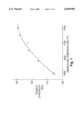
- FIG. 1 is a plot of the tensile strength (after age hardening) against the annealing temperature for a nominal copper alloy in accordance with the present invention comprising 1.95% nickel and 0.4% beryllium;
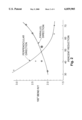
- FIG. 2 is a plot of 180° bend R/T ratios (after age hardening) against reduction in cross-section;
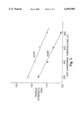
- FIG. 3 is a plot of tensile strength against age hardening temperature for two annealing temperatures.
- FIG. 4 is a plot of tensile strength (after age hardening) against reduction in cross-section for two process conditions.
- the present treatment process is believed to be adaptable to the manufacture of copper-beryllium alloys within the range of alloying materials described herein. These alloys will generally comprise from about 0.2% to about 0.7% beryllium, up to about 3.5% of material selected from the group consisting of cobalt and nickel and mixtures thereof, up to about 0.5% of material selected from the group consisting of titanium and zirconium and mixtures thereof, and at least about 90% copper. Preferably the alloy comprises at least 1.0 wt % nickel
- the present process is particularly directed to preferred alloy compositions within the composition limits of a high-copper alloy, specifically designated alloy C17510 under the Unified Numbering System. C17510 is defined as comprising up to 0.01% Fe, 1.4% to 2.2% Ni, up to 0.30% Co, up to 0.20% Si, 0.2% to 0.6% Be, up to 0.2% Al, with the remainder comprising copper.
- the copper-beryllium alloy is prepared in a melt form which is cast, conditioned, heat treated and cold worked to a ready-to-finish gauge according to any standard method known to those skilled in the art.
- the ready-to-finish gauge cold worked copper-beryllium alloy is then treated with the present process.
- Solution anneals for ready-to-finish gauge cold worked C17510 are conventionally performed at temperatures of 1750° F. or higher. Higher temperatures shorten the time period for annealing thereby reducing production costs and improving production rates.
- the higher temperatures used in previous methods dissolve more beryllium and nickel and/or cobalt in the copper matrix, producing more second phase precipitate upon age hardening. This greater amount of higher second phase precipitate provides higher strength as shown in FIG. 1.
- Lower temperature annealing is characterized by the presence of finer grains. By using lower temperature annealing from about 1500° F. to about 16850F, and preferably from about 1565° F. to about 1650° F., the present process has achieved unexpected, beneficial results as described below.
- the annealed copper-beryllium is cold worked to reduce its cross-section, typically its vertical thickness in the form of a strip, in the range of from about 20% and about 60%, and preferably from about 50% to about 60%, to develop specific improved, isotropic formability in the direction of both the parallel axis and the perpendicular axis of alloy rolling.
- FIG. 2 shows that more reduction favors perpendicular direction formability and less reduction favors parallel direction formability.
- the final product can be made to exhibit isotropic formability or superior parallel or perpendicular formability as desired for particular applications.
- the cold worked material is age hardened at a temperature of from about 700° F. to about 950° F. to develop the desired mechanical properties.
- FIG. 3 shows that higher age hardening temperatures generally produce lower values for mechanical properties, specifically tensile strength--a condition that typically occurs when material is processed in accordance with this invention.
- the time period required at a given temperature varies from about one to about seven hours, and preferably from about three to about seven hours.
- FIG. 4 shows how tensile strength is affected by cold work prior to final age hardening.
- Curve I is typical of prior processes for the same alloy in which increased cold reduction results in lower strength values. This would be expected in over-aged material, because the more severely cold worked material would lose strength faster.
- Curve II representing examples of the same alloy treated in accordance with the present invention.
- the claimed alloys made from the present process are those which comprise from about 0.2% to about 0.7% beryllium, up to about 3.5% of material selected from the group consisting of cobalt and nickel and mixtures thereof, up to about 0.5% of material selected from the group consisting of titanium and zirconium and mixtures thereof, and at least about 90% copper, substantially within the range for alloys which meet the composition limits of the high-copper alloy C17510.
- the alloys made by the present process exhibit improved, isotropic formability in the directions both parallel and perpendicular to the direction of alloy rolling while maintaining conventional levels of strength and electrical conductivity.
- the present treatment process may further comprise a tension leveling step to impart flatness to the alloy before or after the age hardening step.
- a further stress relief thermal treatment step may be provided after age-hardening and tension-leveling the copper-beryllium alloy at a temperature of from about 500° F. to about 900° F. for a period of up to 7 minutes.
- Copper-beryllium was melted, cast and hot-worked to a thickness of approximately 0.35 inch. It was then conditioned and cold-worked to a ready-to-finish gauge of 0.015 inch. The cold-worked copper-beryllium was then strand annealed, cold worked and age hardened as indicated in Table I. Annealing was performed at two different temperatures, 1750° F. and 1685° F. and cold rolling was performed to five different target gauges to effect a variety of percentages of cold reduction. Age hardening temperatures were selected to develop a target range of mechanical properties.
- Copper-beryllium was melted, cast, and hot-worked to approximately 0.35 inch.
- the hot-worked copper-beryllium was then conditioned and cold worked to a ready-to-finish gauge of 0.016 inch.
- the cold worked copper-beryllium was next strand annealed at a temperature of approximately 1750° F., cold worked to a gauge of approximately 0.014 inches and heat treated at 890° F. for five hours.
- the chemistry of the copper-beryllium is shown in Table IV, with copper being the balance of the alloying materials.
- Copper-beryllium was melted, cast and hot-worked to approximately 0.6 inch. The hot-worked copper-beryllium was then conditioned and cold worked to approximately 0.1 inch. Subsequently, the copper-beryllium was annealed and cold worked to a ready-to-finish gauge; then strand annealed, cold worked and age hardened as indicated in Table VI. Finish gauge was 0.005 inch for 50% and 87% cold reduction samples, and 0.009 inch for 10% cold reduction samples.
- the chemistry of the copper-beryllium used for this example is shown in Table VII, with copper being the balance of the alloying materials.
- Example III The results in Example III indicate that the use of lower percentage cold reduction over a range of annealing and aging temperatures shows a relatively constant R/T bend in both the perpendicular and parallel axis directions. This shows improved and isotropic formability over a wide range of strength levels.
Landscapes
- Chemical & Material Sciences (AREA)
- Engineering & Computer Science (AREA)
- Materials Engineering (AREA)
- Mechanical Engineering (AREA)
- Metallurgy (AREA)
- Organic Chemistry (AREA)
- Physics & Mathematics (AREA)
- Thermal Sciences (AREA)
- Crystallography & Structural Chemistry (AREA)
- Conductive Materials (AREA)
Abstract
A treatment process is provided for a copper-beryllium alloy comprising from about 0.2% to about 0.7% beryllium, no greater than 3.5% of cobalt and/or nickel, no greater than 0.5% of titanium and/or zirconium and at least 90% copper, wherein the alloy has been cold worked to a ready-to-finish gauge, comprising the steps of annealing the cold worked ready-to-finish gauge copper-beryllium alloy at a temperature from about 1500° F. to about 1685° F., cold working the annealed copper-beryllium alloy to reduce its gauge to a range of from about 20% to about 60%, and age hardening the copper-beryllium alloy at a temperature of from about 700° F. to about 950° F. for about 1 to about 7 hours. The alloy is characterized by satisfactory levels of strength and electrical conductivity as well as enhanced levels of formability, particularly in the direction parallel to the direction of rolling the alloy.
Description
This is a continuation of application Ser. No. 08/193,830, filed Feb. 9, 1994, now abandoned. And a continuation-in-part of application Ser. No. 08/112,500, filed Aug. 26, 1993, now abandoned.
The present invention relates to a process for treating a copper-beryllium alloy which provides improved formability with little, if any, sacrifice to strength, conductivity and stress-relaxation.
For decades, there have been modifications of the proportions of alloying elements in the copper-beryllium-nickel and/or cobalt systems and changes in thermomechanical processing in attempts to impart an especially desirable combination of engineering characteristics, heretofore unavailable, with varying degrees of success.
U.S. Pat. No. 2,289,593 teaches a ternary age hardenable copper-based alloy containing various proportions of beryllium and nickel (up to 4.25% nickel and 0.8% beryllium) that is characterized by improved conductivity which can be especially utilized in welding electrodes.
U.S. Pat. No. 4,179,314 relates to an age hardenable copper-based alloy containing beryllium, cobalt and/or nickel and minor amounts of other elements (up to 3.5% nickel and 0.2 to 1.0% beryllium) that undergoes thermomechanical treatment to enhance conductivity and mechanical properties at elevated temperatures, especially intended for rotor wedges for electrical generators.
U.S. Pat. No. 4,657,601 teaches a thermomechanical process for making an age hardenable copper-based alloy containing beryllium, cobalt and/or nickel and minor amounts of other elements (0.2 to 0.7% beryllium and 1.0 to 3.5% nickel and cobalt) which produces an improved combination of strength, ductility, formability and conductivity for alloys in strip form intended for the production of spring connectors, among other uses.
An important consideration in the manufacture of strip which is intended for use in various connector applications is the capacity of the material to be formed or bent into useful shapes without cracking. The degree of formability of the material, i.e., the ability of the material to be bent and shaped without fracture, is assessed by dividing the minimum bend radius having no cracking when the material is bent 90° or 180° ("R") by the thickness of the material ("T"). This is known as the R/T ratio. The axis of the bend in the material is made either parallel to or perpendicular to the rolling direction of the strip.
Copper-based alloys such as phosphorus-bronze that derive their strength principally from cold working, that is, deformation below the annealing temperature to cause permanent strain hardening, typically exhibit disparate R/T ratios depending upon the particular bend orientation and strength level of the alloy. Mill hardened copper-beryllium alloys at higher strength levels (greater than 100 ksi TS) are characterized by more nearly isotropic formability than the cold worked alloys as described in Getting Full Value From Beryllium Copper in Connector Design (1982), published in the Proceedings of the 15th Annual Connectors and Interconnection Technology Symposium (1982).
A family of lower cost, high conductivity copper beryllium connector alloys does exist in which the formability in one direction is significantly different in a transverse direction. U.S. Pat. No. 4,551,187 reports parallel axis to perpendicular axis bend 90° R/T ratios from 3:1 to 9:1. U.S. Pat. No. 4,657,601 cites parallel axis bend to perpendicular axis bend 90° R/T ratios between 2:1 and 9:1.
Therefore, there is a need in the art for an age hardenable copper-beryllium alloy which produces enhanced levels of formability (lower R/T ratios), especially in the direction parallel to the rolling direction, together with conventional levels of strength, ductility, stress-relaxation and electrical conductivity.
The present process yields an age hardenable copper-beryllium alloy which has improved, substantially isotropic levels of formability, especially in the direction parallel to the alloy rolling direction together with satisfactory levels of strength, ductility, stress-relaxation and electrical conductivity by means of a novel thermomechanical treatment.
A treatment process is provided for a copper-beryllium alloy comprising from about 0.2% to about 0.7% beryllium, no greater than about 3.5% selected from the group consisting of cobalt and nickel and mixtures thereof, no greater than about 0.5% selected from the group consisting of titanium and zirconium and mixtures thereof, and at least about 90% copper, wherein the alloy has been cold worked to a ready-to-finish gauge.
The process comprises the steps of annealing the cold worked ready-to-finish gauge copper-beryllium alloy at a temperature from about 1500° F. to about 1685° F., cold working the annealed copper-beryllium alloy to reduce its gauge in a range from about 20% to about 60%; and age hardening the copper-beryllium alloy at a temperature of from about 700° F. to about 950° F. for about 1 to about 7 hours. Tension leveling may be included in the present method before the age hardening step. Tension leveling may also be included in the present method after the age hardening step.
The foregoing summary, as well as the following detailed description of preferred embodiments of the invention, will be better understood when read in conjunction with the appended drawings. For the purpose of illustrating the invention, there is shown in the drawings embodiments which are presently preferred. It should be understood, however, that the invention is not limited to the precise arrangements and instrumentalities shown. In the drawings:
FIG. 1 is a plot of the tensile strength (after age hardening) against the annealing temperature for a nominal copper alloy in accordance with the present invention comprising 1.95% nickel and 0.4% beryllium;
FIG. 2 is a plot of 180° bend R/T ratios (after age hardening) against reduction in cross-section;
FIG. 3 is a plot of tensile strength against age hardening temperature for two annealing temperatures; and
FIG. 4 is a plot of tensile strength (after age hardening) against reduction in cross-section for two process conditions.
The present treatment process is believed to be adaptable to the manufacture of copper-beryllium alloys within the range of alloying materials described herein. These alloys will generally comprise from about 0.2% to about 0.7% beryllium, up to about 3.5% of material selected from the group consisting of cobalt and nickel and mixtures thereof, up to about 0.5% of material selected from the group consisting of titanium and zirconium and mixtures thereof, and at least about 90% copper. Preferably the alloy comprises at least 1.0 wt % nickel The present process is particularly directed to preferred alloy compositions within the composition limits of a high-copper alloy, specifically designated alloy C17510 under the Unified Numbering System. C17510 is defined as comprising up to 0.01% Fe, 1.4% to 2.2% Ni, up to 0.30% Co, up to 0.20% Si, 0.2% to 0.6% Be, up to 0.2% Al, with the remainder comprising copper.
The copper-beryllium alloy is prepared in a melt form which is cast, conditioned, heat treated and cold worked to a ready-to-finish gauge according to any standard method known to those skilled in the art. The ready-to-finish gauge cold worked copper-beryllium alloy is then treated with the present process.
Solution anneals for ready-to-finish gauge cold worked C17510 are conventionally performed at temperatures of 1750° F. or higher. Higher temperatures shorten the time period for annealing thereby reducing production costs and improving production rates. The higher temperatures used in previous methods dissolve more beryllium and nickel and/or cobalt in the copper matrix, producing more second phase precipitate upon age hardening. This greater amount of higher second phase precipitate provides higher strength as shown in FIG. 1. Lower temperature annealing is characterized by the presence of finer grains. By using lower temperature annealing from about 1500° F. to about 16850F, and preferably from about 1565° F. to about 1650° F., the present process has achieved unexpected, beneficial results as described below.
The annealed copper-beryllium is cold worked to reduce its cross-section, typically its vertical thickness in the form of a strip, in the range of from about 20% and about 60%, and preferably from about 50% to about 60%, to develop specific improved, isotropic formability in the direction of both the parallel axis and the perpendicular axis of alloy rolling. FIG. 2 shows that more reduction favors perpendicular direction formability and less reduction favors parallel direction formability. The final product can be made to exhibit isotropic formability or superior parallel or perpendicular formability as desired for particular applications.
The cold worked material is age hardened at a temperature of from about 700° F. to about 950° F. to develop the desired mechanical properties. FIG. 3 shows that higher age hardening temperatures generally produce lower values for mechanical properties, specifically tensile strength--a condition that typically occurs when material is processed in accordance with this invention. The time period required at a given temperature varies from about one to about seven hours, and preferably from about three to about seven hours.
FIG. 4 shows how tensile strength is affected by cold work prior to final age hardening. Curve I is typical of prior processes for the same alloy in which increased cold reduction results in lower strength values. This would be expected in over-aged material, because the more severely cold worked material would lose strength faster. An unexpected result is the nearly flat curve shown in Curve II representing examples of the same alloy treated in accordance with the present invention.
It has been discovered that in practicing the present process, certain combinations of annealing temperatures, percentage cold reduction and age hardening temperatures produce material in which tensile strength remains within a narrow range but formability varies as previously described with the degree of cold reduction over a wide range. Thus, the present process allows the manufacture of strip to commercially useful strength levels with varying bend formability characteristics required for particular high copper alloy applications.
The claimed alloys made from the present process are those which comprise from about 0.2% to about 0.7% beryllium, up to about 3.5% of material selected from the group consisting of cobalt and nickel and mixtures thereof, up to about 0.5% of material selected from the group consisting of titanium and zirconium and mixtures thereof, and at least about 90% copper, substantially within the range for alloys which meet the composition limits of the high-copper alloy C17510. The alloys made by the present process exhibit improved, isotropic formability in the directions both parallel and perpendicular to the direction of alloy rolling while maintaining conventional levels of strength and electrical conductivity.
The present treatment process may further comprise a tension leveling step to impart flatness to the alloy before or after the age hardening step. In addition, a further stress relief thermal treatment step may be provided after age-hardening and tension-leveling the copper-beryllium alloy at a temperature of from about 500° F. to about 900° F. for a period of up to 7 minutes.
The invention will now be described in more detail with respect to the following specific, non-limiting examples:
Copper-beryllium was melted, cast and hot-worked to a thickness of approximately 0.35 inch. It was then conditioned and cold-worked to a ready-to-finish gauge of 0.015 inch. The cold-worked copper-beryllium was then strand annealed, cold worked and age hardened as indicated in Table I. Annealing was performed at two different temperatures, 1750° F. and 1685° F. and cold rolling was performed to five different target gauges to effect a variety of percentages of cold reduction. Age hardening temperatures were selected to develop a target range of mechanical properties.
              TABLE I
______________________________________
                                     Percentage
   Annealing Aging Aging Time Cold
  Sample Temp. (° F.) Temp. (° F.) (hours) Reduction
______________________________________
1      1750       890       5        32
  2 1750 890 5 40
  3 1750 890 5 52
  4 1750 890 5 63
  5 1750 890 5 70
  6 1685 825 5 30
  7 1685 825 5 40
  8 1685 825 5 50
  9 1685 825 5 60
  10  1685 825 5 70
______________________________________
Strip samples of the same alloy were tested parallel to the rolling direction for ultimate tensile strength (UTS), 0.2% yield strength (YS), elongation, electrical conductivity, and 90° and 180° perpendicular (⊥) axis and parallel (∥) axis bend tests. The results of these tests are shown in Table II. The chemistry of the copper beryllium strip is listed in Table III, with copper being the balance of the listed alloying materials.
              TABLE II
______________________________________
                    Elong-
                          Conduc-
                                 180°
                                      90°
                                           180°
                                                90°
   UTS YS ation tivity R/T R/T R/T R/T
  Sample (ksi) (ksi) (%) (% IACS) ⊥ ⊥ ∥ ∥
______________________________________
1     126.2  116.5  10    56.9   3.1  2.5  2.0  1.5
  2 124.7 115.2 10 57.1 2.4 2.2 2.2 1.7
  3 122.7 112.4 10.3 57.8 2.2 1.7 2.2 1.7
  4 121.3 110.5 10.2 60.0 1.8 0.7 2.5 1.4
  5 118.2 106.9 10 61.3 1.8 0.1 2.7 --
  6 125.7 113.1 12.7 55.2 1.9 1.9 1.5 0.1
  7 125.8 114.8 9.3 54.9 2.0 1.7 1.6 0.1
  8 127.1 116.6 11.7 55.7 1.9 1.3 1.9 0.5
  9 124.4 116.3 12 54.9 1.7 0.7 2.0 0.7
  10  125.9 116.9 9 58.2 1.8 0.1 2.2 --
______________________________________
              TABLE III
______________________________________
Element      Alloy Weight Percent
______________________________________
Beryllium    0.40
  Iron 0.05
  Silicon 0.02
  Aluminum 0.01
  Cobalt 0.07
  Tin 0.01
  Lead 0.005
  Zinc 0.02
  Nickel 1.95
  Chromium 0.004
  Manganese 0.004
  Magnesium <0.01
  Silver <0.01
  Zirconium 0.026
  Titanium <0.002
______________________________________
Copper-beryllium was melted, cast, and hot-worked to approximately 0.35 inch. The hot-worked copper-beryllium was then conditioned and cold worked to a ready-to-finish gauge of 0.016 inch. The cold worked copper-beryllium was next strand annealed at a temperature of approximately 1750° F., cold worked to a gauge of approximately 0.014 inches and heat treated at 890° F. for five hours.
The chemistry of the copper-beryllium is shown in Table IV, with copper being the balance of the alloying materials.
              TABLE IV
______________________________________
Element     Alloy Weight Percent
______________________________________
Beryllium   0.410
  Iron 0.034
  Silicon 0.024
  Aluminum 0.011
  Cobalt 0.120
  Nickel 1.876
______________________________________
Samples of this alloy were tested from both ends of a coil for ultimate tensile strength, 0.2%. yield strength, elongation, electrical conductivity and 90° (⊥ and ∥) bend tests R/T. The average results of the tests are shown in
              TABLE V
______________________________________
                   Elong-   Conduc-
                                   90°
                                         90°
  UTS YS ation tivity R/T R/T
  (ksi) (ksi) (%) (% IACS) ⊥ ∥
______________________________________
122.6-123.2
         105.1-108.0
                   16       58     1.4   0.3
______________________________________
Copper-beryllium was melted, cast and hot-worked to approximately 0.6 inch. The hot-worked copper-beryllium was then conditioned and cold worked to approximately 0.1 inch. Subsequently, the copper-beryllium was annealed and cold worked to a ready-to-finish gauge; then strand annealed, cold worked and age hardened as indicated in Table VI. Finish gauge was 0.005 inch for 50% and 87% cold reduction samples, and 0.009 inch for 10% cold reduction samples.
              TABLE VI
______________________________________
                                     Percentage
   Annealing Aging Aging Time Cold
  Sample Temp. (° F.) Temp. (° F.) (Hours) Reduction
______________________________________
 1     1565       775       5        10
   2 1565 825 5 10
   3 1565 775 5 50
   4 1565 825 5 50
   5 1565 775 5 87
   6 1565 825 5 87
   7 1590 775 5 10
   8 1590 825 5 10
   9 1590 775 5 50
  10 1590 825 5 50
  11 1590 775 5 87
  12 1590 825 5 87
  13 1650 775 5 10
  14 1650 825 5 10
  15 1650 775 5 50
  16 1650 825 5 50
  17 1650 775 5 87
  18 1650 825 5 87
  19 1685 775 5 10
  20 1685 825 5 10
  21 1685 775 5 50
  22 1685 825 5 50
  23 1685 775 5 87
  24 1685 825 5 87
______________________________________
The chemistry of the copper-beryllium used for this example is shown in Table VII, with copper being the balance of the alloying materials.
              TABLE VII
______________________________________
Element     Alloy weight Percent
______________________________________
Beryllium   0.42
  Iron 0.01
  Silicon 0.01
  Aluminum 0.018
  Cobalt 0.02
  Nickel 1.94
______________________________________
These samples were tested for ultimate tensile strength, 0.2% yield strength, elongation, electrical conductivity, and 180° perpendicular and parallel axis bend tests. Bend test acceptance criteria included the absence of significant "orange peel" or surface pitting resembling the skin of an orange. This standard was adopted as it is a tougher standard to comply with as compared to the absence of cracking. The smallest test radius available was 0.005 inch. The samples which passed with this particular test radius are so indicated in the test results. The results of the tests appear in Table VIII.
              TABLE VIII
______________________________________
                             Conduc- 180°
                                           180°
   UTS* YS* Elonga- tivity R/T R/T
  Sample (ksi) (ksi) tion (%) (% IACS) ∥ ⊥
______________________________________
 1     81.2    68.4    18    56      0.6†
                                           0.7
   2 85.2 74.0 17 59 0.6† 0.6†
   3 102.3 92.1 10 60 1.0† 1.0†
   4 99.1 91.3 8 64 1.0† 1.0†
   5 96.7 90.8 8 64 1.0† 1.0†
   6 81.6 74.3 10 70 1.0† 1.0†
   7 87.4 71.7 20 55 0.6† 0.6†
   8 84.1 70.8 19 57 0.6† 0.6†
   9 103.9 94.8 9 59 1.0† 1.0†
  10 102.5 93.4 10 62 1.0† 1.0†
  11 101.1 94.7 10 61 1.6 1.0†
  12 83.8 76.0 10 69 1.0† 1.0†
  13 109.9 91.8 18 59 1.1 0.7†
  14 103.4 87.5 17 61 1.1 0.7
  15 116.1 105.7 13 58 1.0† 1.0†
  16 108.3 101.0 8 62 1.0† 1.0†
  17 107.3 100.9 12 61 2.4 1.0†
  18 95.3 88.2 13 67 1.6 1.0†
  19 117.9 98.2 15 57 0.6† 1.1
  20 107.6 90.1 15 61 0.6† 0.7
  21 124.6 111.7 10 58 1.0† 1.2
  22 112.1 103.7 6 62 1.0† 1.0†
  23 112.2 105.4 9 61 2.4 1.2
  24 94.1 87.5 8 68 1.2 1.2
______________________________________
 *Average of four values
 †Sample which passed with a radius of 0.005 inch.
The results in Example III indicate that the use of lower percentage cold reduction over a range of annealing and aging temperatures shows a relatively constant R/T bend in both the perpendicular and parallel axis directions. This shows improved and isotropic formability over a wide range of strength levels.
It will be appreciated by those skilled in the art that changes could be made to the embodiments described above without departing from the broad inventive concept thereof. It is understood, therefore, that this invention is not limited to the particular embodiments disclosed, but it is intended to cover modifications within the spirit and scope of the present invention as defined by the appended claims.
Claims (9)
1. A treatment process for providing substantially uniform formability in both a perpendicular and a parallel rolling direction of a strip of a copper-beryllium alloy consisting essentially of from 0.38% to about 0.6% beryllium, from about 1.4% to about 2.2% nickel, from about 0% to about 2.1 cobalt, no greater than about 0.5% selected from the group consisting of titanium and zirconium and mixtures thereof, and at least about 90% copper, wherein the alloy has been cold worked to a ready-to-finish gauge, comprising the steps of:
(a) annealing the cold worked ready-to-finish gauge copper-beryllium alloy strip at a temperature from about 1500° F. to 1600° F.;
(b) further cold working the annealed copper-beryllium alloy strip to reduce its gauge by an amount in a range from about 20% to about 60%; and
(c) age hardening the further cold-worked copper-beryllium alloy strip at a temperature of from about 700° F. to about 950° F. for about 1 to about 7 hours to produce substantially uniform formability in both the parallel and perpendicular rolling directions in the copper-beryllium alloy strip, wherein the 180° R/T bend ratio of the age-hardened copper-beryllium alloy strip in both the parallel and perpendicular rolling directions is no greater than about 1.4.
2. The process according to claim 1, wherein the alloy further comprises at least about 1.0% nickel.
3. The process according to claim 1, further comprising a step of tension leveling the alloy before the age hardening step (c).
4. The process according to claim 1, further comprising a step (d) of tension leveling the alloy after the age hardening step (c).
5. The process according to claim 1, wherein the cold worked ready-to-finish gauge copper-beryllium alloy is annealed at a temperature from about 1565° F. to about 1650° F.
6. The process according to claim 1, wherein the annealed copper-beryllium alloy is cold worked to reduce its gauge in a range from about 50% to about 60%.
7. The process according to claim 4, further comprising a step (e) of heat treating the age hardened copper-beryllium alloy at a temperature of from about 500° F. to about 900° F. for a period of up to 7 minutes.
8. The process according to claim 1, wherein the copper-beryllium alloy is age hardened from about 3 to about 7 hours.
9. A copper-beryllium alloy treated by the process according to claim 1.
Priority Applications (1)
| Application Number | Priority Date | Filing Date | Title |
|---|---|---|---|
| US08/412,834 US6059905A (en) | 1993-08-26 | 1995-03-29 | Process for treating a copper-beryllium alloy |
Applications Claiming Priority (3)
| Application Number | Priority Date | Filing Date | Title |
|---|---|---|---|
| US11250093A | 1993-08-26 | 1993-08-26 | |
| US19383094A | 1994-02-09 | 1994-02-09 | |
| US08/412,834 US6059905A (en) | 1993-08-26 | 1995-03-29 | Process for treating a copper-beryllium alloy |
Related Parent Applications (2)
| Application Number | Title | Priority Date | Filing Date |
|---|---|---|---|
| US11250093A Continuation-In-Part | 1993-08-26 | 1993-08-26 | |
| US19383094A Continuation | 1993-08-26 | 1994-02-09 |
Publications (1)
| Publication Number | Publication Date |
|---|---|
| US6059905A true US6059905A (en) | 2000-05-09 |
Family
ID=26810028
Family Applications (1)
| Application Number | Title | Priority Date | Filing Date |
|---|---|---|---|
| US08/412,834 Expired - Fee Related US6059905A (en) | 1993-08-26 | 1995-03-29 | Process for treating a copper-beryllium alloy |
Country Status (1)
| Country | Link |
|---|---|
| US (1) | US6059905A (en) |
Cited By (10)
| Publication number | Priority date | Publication date | Assignee | Title |
|---|---|---|---|---|
| WO2002052052A3 (en) * | 2000-12-21 | 2002-09-12 | Brush Wellman | Improved weld gun arm casting |
| US6682613B2 (en) | 2002-03-26 | 2004-01-27 | Ipsco Enterprises Inc. | Process for making high strength micro-alloy steel |
| US20040101432A1 (en) * | 2002-04-03 | 2004-05-27 | Ipsco Enterprises Inc. | High-strength micro-alloy steel |
| CN100387740C (en) * | 2005-03-10 | 2008-05-14 | 泰兴市无氧铜材厂 | Titanium Bronze for Turbine Generator Rotor Slot Wedge and Its Processing Technology |
| US20080240974A1 (en) * | 2002-02-15 | 2008-10-02 | Thomas Helmenkamp | Age-hardenable copper alloy |
| CN101333609B (en) * | 2007-06-28 | 2011-03-16 | 周水军 | Low copper beryllium mold material for gravitation and low-pressure casting and production process thereof |
| EP1967597A3 (en) * | 2007-02-27 | 2012-04-11 | Fisk Alloy Wire, Inc. | Beryllium-Copper conductor |
| CN112210692A (en) * | 2020-09-10 | 2021-01-12 | 新余市长城铜产品开发有限公司 | Beryllium bronze long guide rail and manufacturing method thereof |
| CN115233032A (en) * | 2022-08-01 | 2022-10-25 | 河南云锦空天特导新材料有限公司 | A kind of copper alloy wire and its preparation method and application |
| CN115369280A (en) * | 2022-08-20 | 2022-11-22 | 国工恒昌新材料沧州有限公司 | C17460 alloy and preparation process thereof |
Citations (10)
| Publication number | Priority date | Publication date | Assignee | Title |
|---|---|---|---|---|
| US2289593A (en) * | 1940-08-03 | 1942-07-14 | Charles B Sawyer | Alloy |
| US4179314A (en) * | 1978-12-11 | 1979-12-18 | Kawecki Berylco Industries, Inc. | Treatment of beryllium-copper alloy and articles made therefrom |
| JPS56163248A (en) * | 1980-05-21 | 1981-12-15 | Ngk Insulators Ltd | Manufacture of drawn material of beryllium-copper alloy |
| US4425168A (en) * | 1982-09-07 | 1984-01-10 | Cabot Corporation | Copper beryllium alloy and the manufacture thereof |
| US4551187A (en) * | 1984-06-08 | 1985-11-05 | Brush Wellman Inc. | Copper alloy |
| US4565586A (en) * | 1984-06-22 | 1986-01-21 | Brush Wellman Inc. | Processing of copper alloys |
| US4599120A (en) * | 1985-02-25 | 1986-07-08 | Brush Wellman Inc. | Processing of copper alloys |
| US4657601A (en) * | 1983-11-10 | 1987-04-14 | Brush Wellman Inc. | Thermomechanical processing of beryllium-copper alloys |
| US4692192A (en) * | 1984-10-30 | 1987-09-08 | Ngk Insulators, Ltd. | Electroconductive spring material |
| US4724013A (en) * | 1984-06-08 | 1988-02-09 | Brush Wellman, Inc. | Processing of copper alloys and product |
-
1995
- 1995-03-29 US US08/412,834 patent/US6059905A/en not_active Expired - Fee Related
Patent Citations (10)
| Publication number | Priority date | Publication date | Assignee | Title |
|---|---|---|---|---|
| US2289593A (en) * | 1940-08-03 | 1942-07-14 | Charles B Sawyer | Alloy |
| US4179314A (en) * | 1978-12-11 | 1979-12-18 | Kawecki Berylco Industries, Inc. | Treatment of beryllium-copper alloy and articles made therefrom |
| JPS56163248A (en) * | 1980-05-21 | 1981-12-15 | Ngk Insulators Ltd | Manufacture of drawn material of beryllium-copper alloy |
| US4425168A (en) * | 1982-09-07 | 1984-01-10 | Cabot Corporation | Copper beryllium alloy and the manufacture thereof |
| US4657601A (en) * | 1983-11-10 | 1987-04-14 | Brush Wellman Inc. | Thermomechanical processing of beryllium-copper alloys |
| US4551187A (en) * | 1984-06-08 | 1985-11-05 | Brush Wellman Inc. | Copper alloy |
| US4724013A (en) * | 1984-06-08 | 1988-02-09 | Brush Wellman, Inc. | Processing of copper alloys and product |
| US4565586A (en) * | 1984-06-22 | 1986-01-21 | Brush Wellman Inc. | Processing of copper alloys |
| US4692192A (en) * | 1984-10-30 | 1987-09-08 | Ngk Insulators, Ltd. | Electroconductive spring material |
| US4599120A (en) * | 1985-02-25 | 1986-07-08 | Brush Wellman Inc. | Processing of copper alloys |
Non-Patent Citations (7)
| Title |
|---|
| A. Guha et al., Development Of A Nickel Containing Beryllium Copper Alloy For Connector Applications (prior to 1983) pp. 134 140. * |
| A. Guha et al., Development Of A Nickel-Containing Beryllium Copper Alloy For Connector Applications (prior to 1983) pp. 134-140. |
| A. Guha, High Performance Mill Hardened Beryllium Copper C17510 Strip For Electrical And Electronic Applications, 16th Annual Connectors And Interconnection Technology Symposium (Nov. 14, 1983) pp. 132 140. * |
| A. Guha, High Performance Mill Hardened Beryllium Copper C17510 Strip For Electrical And Electronic Applications, 16th Annual Connectors And Interconnection Technology Symposium (Nov. 14, 1983) pp. 132-140. |
| M.G. Kinnavy, Recent Developments In Tension Leveling, Iron And Steel Engineeer Yearbook (1972), presented before the AISE Annual Convention (Sep. 28, 1971) (all pages). * |
| S. Goldstein et al., Copper Beryllium Alloy Strip With Improved Formability, 16th Annual Connectors And Interconnection Technology Symposium, Nov. 14, 1983 (pp. 1 9). * |
| S. Goldstein et al., Copper-Beryllium Alloy Strip With Improved Formability, 16th Annual Connectors And Interconnection Technology Symposium, Nov. 14, 1983 (pp. 1-9). |
Cited By (12)
| Publication number | Priority date | Publication date | Assignee | Title |
|---|---|---|---|---|
| WO2002052052A3 (en) * | 2000-12-21 | 2002-09-12 | Brush Wellman | Improved weld gun arm casting |
| US20080240974A1 (en) * | 2002-02-15 | 2008-10-02 | Thomas Helmenkamp | Age-hardenable copper alloy |
| US6682613B2 (en) | 2002-03-26 | 2004-01-27 | Ipsco Enterprises Inc. | Process for making high strength micro-alloy steel |
| US20040101432A1 (en) * | 2002-04-03 | 2004-05-27 | Ipsco Enterprises Inc. | High-strength micro-alloy steel |
| US7220325B2 (en) | 2002-04-03 | 2007-05-22 | Ipsco Enterprises, Inc. | High-strength micro-alloy steel |
| CN100387740C (en) * | 2005-03-10 | 2008-05-14 | 泰兴市无氧铜材厂 | Titanium Bronze for Turbine Generator Rotor Slot Wedge and Its Processing Technology |
| EP1967597A3 (en) * | 2007-02-27 | 2012-04-11 | Fisk Alloy Wire, Inc. | Beryllium-Copper conductor |
| CN101333609B (en) * | 2007-06-28 | 2011-03-16 | 周水军 | Low copper beryllium mold material for gravitation and low-pressure casting and production process thereof |
| CN112210692A (en) * | 2020-09-10 | 2021-01-12 | 新余市长城铜产品开发有限公司 | Beryllium bronze long guide rail and manufacturing method thereof |
| CN112210692B (en) * | 2020-09-10 | 2021-12-17 | 新余市长城铜产品开发有限公司 | Beryllium bronze long guide rail and manufacturing method thereof |
| CN115233032A (en) * | 2022-08-01 | 2022-10-25 | 河南云锦空天特导新材料有限公司 | A kind of copper alloy wire and its preparation method and application |
| CN115369280A (en) * | 2022-08-20 | 2022-11-22 | 国工恒昌新材料沧州有限公司 | C17460 alloy and preparation process thereof |
Similar Documents
| Publication | Publication Date | Title |
|---|---|---|
| US4425168A (en) | Copper beryllium alloy and the manufacture thereof | |
| US5893953A (en) | Copper alloy and process for obtaining same | |
| EP0579278B1 (en) | Processing of copper alloys with moderate conductivity and high strength | |
| US4073667A (en) | Processing for improved stress relaxation resistance in copper alloys exhibiting spinodal decomposition | |
| US4605532A (en) | Copper alloys having an improved combination of strength and conductivity | |
| US4090890A (en) | Method for making copper-nickel-tin strip material | |
| US4179314A (en) | Treatment of beryllium-copper alloy and articles made therefrom | |
| US4049426A (en) | Copper-base alloys containing chromium, niobium and zirconium | |
| US3937638A (en) | Method for treating copper-nickel-tin alloy compositions and products produced therefrom | |
| JPH08503022A (en) | Copper alloy having high strength and electrical conductivity and method for producing the same | |
| US4599119A (en) | Age-hardening copper titanium alloy | |
| US4728372A (en) | Multipurpose copper alloys and processing therefor with moderate conductivity and high strength | |
| US4657601A (en) | Thermomechanical processing of beryllium-copper alloys | |
| US6153031A (en) | Lean, high conductivity, relaxation-resistant beryllium-nickel-copper alloys | |
| US5882442A (en) | Iron modified phosphor-bronze | |
| US20010001400A1 (en) | Grain refined tin brass | |
| US4305762A (en) | Copper base alloy and method for obtaining same | |
| US5853505A (en) | Iron modified tin brass | |
| JPH07166279A (en) | Copper-base alloy excellent in corrosion resistance, punchability, and machinability and production thereof | |
| US4566915A (en) | Process for producing an age-hardening copper titanium alloy strip | |
| US4594116A (en) | Method for manufacturing high strength copper alloy wire | |
| US3297497A (en) | Copper base alloy | |
| US4238249A (en) | Process for the preparation of a copper-zinc material | |
| US4338130A (en) | Precipitation hardening copper alloys | |
| JPS59215448A (en) | functional alloy |
Legal Events
| Date | Code | Title | Description |
|---|---|---|---|
| FPAY | Fee payment |
Year of fee payment: 4 |
|
| FPAY | Fee payment |
Year of fee payment: 8 |
|
| REMI | Maintenance fee reminder mailed | ||
| LAPS | Lapse for failure to pay maintenance fees | ||
| STCH | Information on status: patent discontinuation |
Free format text: PATENT EXPIRED DUE TO NONPAYMENT OF MAINTENANCE FEES UNDER 37 CFR 1.362 |
|
| FP | Lapsed due to failure to pay maintenance fee |
Effective date: 20120509 |