This application claims the benefit of U.S. Provisional Application No. 60/053,088, filed Jun. 13, 1997.
FIELD OF THE INVENTION
The present invention relates to Vitamin D compounds and methods for making them. More specifically, the invention relates to 14-epi-19-norvitamin D analogs having good differentiative and anti-proliferative activity and little or no calcemic activity. These 14-epi-19-nor-vitamin D analogs represent a new structural class of vitamin D compounds with distinctive and advantageous biological properties.
BACKGROUND OF THE INVENTION
The natural hormone, 1α,25-dihydroxyvitamin D3, is known as a highly potent regulator of calcium homeostatsis in animals and humans and its activity in cellular differentiation has also been established.
A useful therapeutic method for the treatment of malignancies is the administration of compounds that stimulate the differentiation of malignant cells to normal cells, thereby inhibiting and/or reversing the malignant transformation. For example, it has been disclosed in U.S. Pat. No. 4,391,802 that 1α,25-dihydroxyvitamin D3 and 1α-hydroxyvitamin D3 possess potent antileukemic activity by virtue of inducing the differentiation of malignant cells (specifically leukemia cells) to non-malignant macrophages (monocytes). These malignancies and others (e.g. breast, skin, prostate, bone, etc.) have all been shown to possess a specific intracellular protein that specifically binds 1α,25-dihydroxyvitamin D3 and closely related 1α hydroxylated vitamin D compounds. The binding of 1α,25-dihydroxyvitamin D3 to the vitamin D receptor (VDR) protein initiates the sub-cellular events which bring about differentiation and anti-proliferation of malignant cells which contain the VDR protein. Consequently, these compounds are useful for the treatment of VDR positive malignancies. However, when used for such treatment, these known 1α-hydroxyvitamin D compounds have the disadvantage that they are also very potent calcemic agents which cause elevated blood calcium levels by stimulating intestinal calcium absorption and bone calcium resorption. Such activity represents the well-known classical function of these compounds. Elevated calcemic activity is, of course, a serious, undesirable side effect and unfortunately the cell differentiation activity of these compounds occurs at concentrations that elicit severe hypercalcemia.
A need exists for new vitamin D analogs that exhibit the separation of activities in cell differentiation and calcium regulation. Such a difference in activity may be useful in the treatment VDR positive cancers and other differentiative and hyperproliferative disorders. See, D. D. Bikle, Endocrine Reviews (1992) Vol.13, No. 4, pp. 765-784.
Chemical modification of the 1,25-dihydroxyvitamin D3 structure has yielded numerous analogs with altered biological activity. The majority of the chemical modifications have been to the C-17 side chain. To a lesser extent, structural changes have been introduced into the vitamin D ring structure. A few examples of 14-epi-Vitamin D analogs, in which the normal trans-fused C/D-ring juncture has the cis-fused configuration, have been synthesized previously. See, S. Jeganathan, A. D. Johnston, E. A. Kuenzel, A. W. Norman and W. H. Okamura, Journal of Organic Chemistry (1984) Vol. 49, pp. 2152-2158. However, it has been shown that these 14-epi-vitamin D analogs preferentially equilibrate to their pre-vitamin D isomer, which is opposite to the case for the normal vitamin D analogs where the equilibrium favors the vitamin structure over the corresponding pre-vitamin. The pre-vitamin D isomer has been shown to possess minimal biological activity when compared to its vitamin D counterpart, see, R. Bouillion et al. Journal of Bone and Mineral Research (1993) Vol. 8, No. 8, pp.1009-1015. The unstable 14-epivitamin D analogs are of little therapeutic value once isomerized to the pre-vitamin form.
The 19-nor-vitamin D structure has been synthesized previously; see, K. L. Perlman, R. E. Swenson, H. E. Paaren, H. K. Schnoes and H. F. DeLuca, Tetrahedron Letters (1991) pp. 7663-7666, and has been shown to possess reduced calcemic activity while retaining cellular activity similar to the natural hormone, 1α,25-dihydroxyvitamin D3.
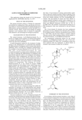
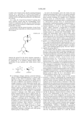
The standardized numbering system for the natural hormone, 1α,25dihydroxyvitamin D3, and 19-nor-1,25-dihydroxyvitamin D3 where the 19-methylene group has been replaced with two hydrogens, is shown below in formula I and formula II which are as follows. ##STR1##
SUMMARY OF THE INVENTION
In accordance with the present invention, a new class of 19-nor-vitamin D analogs have been discovered that exhibit a desired and very advantageous activity pattern in terms of their cell differentiation activity and calcium regulation. These 14-epi-19-nor-vitamin D compounds are characterized by inversion of the C-14 center from the normal α configuration to the β configuration. The 14-epi-19-nor-vitamin D structure yields a class of vitamin D compounds in which the vitamin to pre-vitamin interconversion cannot take place. Therefore, the 14-epi-19-nor-vitamin D structure is stable as the vitamin isomer, thereby retaining biological activity. As a sub-class of 14-epi-19-nor-vitamin D compounds, the 20-epi isomer is also characterized by low calcemic activity and high anti-proliferative and differentiative activity.
As a class, the 14-epi-19-nor-vitamin D analogs show lower calcemic activity than the corresponding 19-nor-vitamin D compounds and thus are more desirable therapeutic agents for the treatment of differentiative and hyperproliferative disorders.
In accordance with the present invention, 14-epi-19-nor-vitamin D analog compounds are within the general formula IlI as follows: ##STR2## wherein the group R in the above structure represents a steroid side chain as it occurs in any of the natural vitamin D compounds, or in synthetic analogs thereof. More specifically, R may represent side chains shown below where: ##STR3## R1 is hydrogen, halogen, hydroxy, protected hydroxy, alkoxy or hydrocarbylsulphonyloxy or a group of the formula Z--R6 where Z represents oxygen, sulfur, NR7, SO or CR7 R8, and where R6, R7 and R8 may be the same or different, each represent a hydrogen or a straight, branched or cyclic hydrocarbon group, saturated or unsaturated, having 1-12 carbon atoms which may carry one or more substituents selected from halogen, hydroxy, protected hydroxy, alkoxy or oxo groups and R1 and R2 together represent an oxo group or ═CR7 R8 and R3 or R4 together or individually represent a hydrogen atom, alkyl group, hydroxy group, protected hydroxy group or alkoxy group. X1 and X2, which may be the same or different, represent a hydrogen, a hydroxyl protecting group or alkoxy group, Y1 is hydrogen and Y2 is hydrogen, alkyl, a hydroxyl, a protected hydroxyl group or alkoxy group. In addition, Y1 and Y2 may be the same or different and represent hydrogen, alkyl, hydroxyl, a protected hydroxyl group or an alkoxy group, or Y1 and Y2 together may represent a single oxo group or a single ═CR9 R10 group, where R9 and R10, together or individually, represent a hydrogen atom, alkyl group, hydroxy group or alkoxy group.
As used in the description, and in the claims, the term "hydroxy-protecting group" refers to any group commonly used for the protection of hydroxy functions during subsequent reactions, including, for example, acyl or alkylsilyl groups such as trimethylsilyl, triethylsilyl, t-butyidimethylsilyl and analogous alkyl or arylsilylradicals, or alkoxyalkyl groups such as methoxymethyl, ethoxymethyl, methoxyethoxymethyl, tetrahydrofuranyl or tetrahydropyranyl. A "protected hydroxy" is a hydroxy function derivatized by one of the hydroxy-protecting groups. "Alkyl" represents a straight-chain or branched hydrocarbon radical of 1 to 10 carbons in all its isomeric forms, such as methyl, ethyl, propyl, isopropyl, butyl, isobutyl, pentyl, etc., and the terms "hydroxyalkyl", "fluoroalkyl" and "deuteroalkyl" refer to such an alkyl radical substituted by one or more hydroxy, fluoro or deuterium groups respectively. An "acyl" group is an alkanoyl group of 1 to 6 carbons in all its isomeric forms, or an aroyl group such as benzoyl, or halo-, nitro-, or alkyl substituted benzoyl groups, or an alkoxycarbonyl group of the type Alkyl---CO--, such as methoxycarbonyl, ethoxycarbonyl, etc., or a dicarboxylic acyl group such as oxalyl, malonyl, succinoyl, or glutaroyl. The term "aryl" signifies a phenyl-, or an alkyl-, nitro- or halo-substituted phenyl group. The term "alkoxy" signifies the group alkyl-O--.
In accordance with one aspect of the present invention, the new 14-epi-19-nor-vitamin D analog compounds have biological characteristics that include high cell differentiation and anti-proliferative activity and low calcemic activity.
Specific examples of compounds in accordance with the present invention include 14-epi-19-nor-1α,25-dihydroxyvitamin D3, 14-epi-20-epi-19-nor-1α,25-dihydroxyvitamin D3, 14-epi-20-epi-19-nor-1α-hydroxyvitamin D3, 14-epi-19-nor-1α-hydroxyvitamin D3 and 14-epi-19-nor-2methylene-1α,25-dihydroxyvitamin D3. Other examples of compounds of this type are 14-epi-19-nor-1α,25-dihydroxyvitamin D2, 14-epi-19-nor-24-homo-1α,25-dihydroxyvitamin D3, 14-epi-19-nor-20(S)-hydroxymethyl-1α-hydroxypregnacalciferol and 14-epi-19-nor-20(R)-hydroxymethyl-1 α-hydroxypregnacalciferol. Additional examples are all of the above compounds with a hydroxy group at either the 2α or 2β position, and a 3'-hydroxypropoxy group at the 2α or 2β position.
In accordance with another aspect of the present invention, a method of synthesizing the foregoing novel compounds is provided. The synthesis method in accordance with the present invention includes the following steps: synthesis of the bicyclic ketone of Structure I where the substituent R may represent any desired group as previously defined, it being understood that any functionalities in R that might be sensitive, or that might interfere with the A-ring condensation reaction be suitably protected by methods well known in the art. Bicyclic ketones of Structure I can be prepared by known methods as documented, See, G. -D. Zhu and W. H. Okamura, Chemical Reviews (1995) Vol. 95, pp.1877-1952; epimerization of the natural C-14 stereochemistry to the 14-epi configuration by treatment with base in an alcohol solvent to yield the 14-epi-bicyclic ketone of Structure II; preparation of 19-nor-ring-A synthons of Structure III where the Z functionality represents a group the renders the hydrogen on the adjacent carbon center sufficiently acidic to yield a reactive carbanion upon treatment with strong base. Examples of such groups are --P(O)Ph2, --P(O)(OAlkyl)2, --SO2Ar or --Si(Alkyl)3. Compounds of this type can be prepared by known methods as described in U.S. Pat. No. 5,281,731. Coupling of the A-ring synthon III with the 14-epi-bicyclic ketone II to yield the desired 14-epi-19-nor-vitamin D structure IV. The general outline of the synthetic methodology is given in the following FLOW DIAGRAM. ##STR4## This methodology represents an application of the convergent synthesis concept which has been applied for the preparation of vitamin D compounds and 19-nor-vitamin D compounds e.g. See, G.-D. Zhu and W. H. Okamura, Chemical Reviews (1995) Vol. 95, pp.1877-1952!. An alternative synthetic method would be to construct the 14-epi-19-nor-20(R) and 20(S)-hydroxymethyl vitamin compounds prior to side-chain attachment by condensation of an A-ring fragment as defined above with a suitably protected 20-hydroxymethyl-C/D-ring fragment. These derivatives could then be side-chain elaborated to the desired 14-epi-19-nor-vitamin D compounds.
The following synthetic schemes are detailed for 14-epi-19-norvitamin D analogs in which Y1 and Y2 are hydrogen. However, these processes are also effective in synthesizing the class of 14-epi-19-norvitamin D analogs in which Y1 is hydrogen and Y2 is hydrogen, alkyl, a hydroxyl, a protected hydroxyl group or alkoxy group.
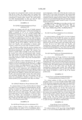
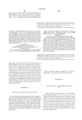
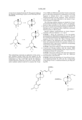
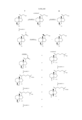
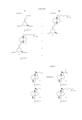
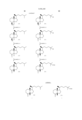
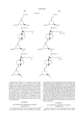
Specific synthetic transformations are shown diagrammatically in Process Schemes 1, 2, 3 and 4.
SCHEME 1 shows the preparation of the De-A,B-8β-(triethylsilyloxy)-20(S)-(hydroxymethyl)-pregnane 5! and De-A,B-8β-(triethylsilyloxy)-20(R)-(hydroxymethyl)-pregnane 7! from vitamin D2. These C/D-ring isomers when coupled to the appropriate side chain fragment, oxidized and epimerized provide the necessary structure for condensation with a ring-A unit to afford the corresponding 14-epi-19-nor-vitamin D analogs.
SCHEME 2 shows the synthesis of the side chain elaborated 14-epi-8-oxo-C/D-ring synthon with the natural 20(R) stereochemistry, 13! and assembly of the 14-epi-19-nor-1α,25-dihydroxyvitamin D3 analog 27!.
SCHEME 3 shows the synthesis of the side chain elaborated 14-epi-8-oxo-C/D-ring synthons with the 20(S)-epi stereochemistry, 18! and 23!
SCHEME 4 shows the preparation of 14-epi-20-epi-19-nor-1α,25-dihydroxyvitamin D3 29! and the corresponding 14-epi-20-epi-19-nor-1 α-hydroxyvitamin D3 pro-drug analog 28!. ##STR5##
Experimental details for the chemical process steps depicted in the schemes are provided in the specific examples which follow. Compound designations by Arabic numerals (e.g., compound 1!, 2!, 3!, etc.) as used in these examples refer to the structures so numbered in the schemes. The 19-nor-vitamin D compounds possessing the normal C-14 configuration were prepared by condensing the bicyclic ketone I, prior to base catalyzed C-14 epimerization, with the appropriate A-ring fragment. These 19-nor-vitamin D derivatives with the normal C-14 configuration were biologically evaluated along with the 14-epi-19-nor-vitamin D analogs in order to establish the beneficial effect of the 14-epi modification.
EXAMPLE 1
De-A,B-8β-hydroxy-20(S)-(hydroxymethyl)-pregnane 12!
To a stirred solution of 25.0 g of vitamin D2 1! in 1500 ml of methanol was added 15 ml of pyridine. The solution was cooled in a dry icxe/acetone bath and treated with ozone until saturation and an intense blue color was evident. The solution was purged with oxygen for 15 min. and treated with 6.0 g of sodium borohydride. The reaction was allowed to warm to room temperature treated with an additional 3.0 g of sodium borohydride followed by a final 3.0 g potion of sodium borohydride 30 min later. After an additional 30 min at room temperature, the reaction was quenched with 200 ml of water and concentrated under vacuum. The residue was extracted with 750 ml of ethyl acetate and the aqueous layer removed. The organic extract was washed with 250 ml 1N HCl, 250 ml of sat. HaHCO3, 250 ml of sat. NaCl, dried over Na2 SO4 and concentrated under vacuum to yield 17.42 g of 2! as an oil suitable for the following reaction without any further purification.
EXAMPLE 2
De-A,B-8β-hydroxy-20(S)-(acetoxymethyl)-pregnane 3!
A stirred solution of 17.42 g of 2! in 70 ml of anhy. pyridine was cooled in an ice bath and 9.0 ml of acetic anhydride was added dropwise. The reaction was maintained at ice bath temperatures for 18 hrs then quenched by addition of 100 ml of sat. NaHCO3. After 30 min. the quenched reaction was extracted with 2×250 ml of ethyl acetate. The organic extracts were washed with 1N HCl until the pH of the wash was less than 1,250 ml of sat. NaHCO3, 250 ml of sat. NaCl, dried over Na2 SO4 and concentrated under vacuum to yield 17.38 g of 3! as an oil suitable for use in the next reaction without further purification.
EXAMPLE 3
De-A,B-8β-(triethylsilyloxy)-20(S)Aacetoxymethyl)-pregnane 41!
To a stirred solution of 17.38 g of 3! in 80 ml of dimethylformamide (DMF) was added 13.8 g of imidazole and mixture stirred until homogeneous. To this solution was added 11.6 ml of chloro-triethylsilane and the reaction was maintained at room temperature overnight. At the end of this time the reaction was quenched with 100 ml of ice/water and extracted with 2×250 ml of ethyl acetate. The organic extract was washed with 250 ml of 1N HCl, 250 ml of sat. NaHCO3, 250 ml of sat. NaCl, dried over Na2 SO4 and concentrated under vacuum to yield 30.0 g of crude product. This material was flashed chromatographed on 200 g of silica gel with 5% ethyl acetate in hexanes to yield 18.65 g of the desired product 4!.
EXAMPLE 4
De-A,B-8β-(triethylsilyloxy)-20(S)-(hydroxymethyl)-pregnane 5!
To a stirred suspension of 2.8 g of lithium aluminum hydride (LAH) in 200 ml of anhy. ether cooled in an ice bath was added a solution of 18.65 g of 4! in 90 ml of ether dropwise over 15 min. After 20 min at ice bath temperatures the reaction was diluted with 90 ml of ether and quenched by the careful dropwise addition of 10% NaOH until a free flowing white ppt. formed. The solution was filtered and concentrated to dryness under vacuum to yield 15.8 g of the desired product 5!.
EXAMPLE 5
De-A,B-8β-(triethylsilyloxy)-20(S)-formyl-pregnane 6!
To a stirred solution of 8.14 g of 5! in 125 ml of dimethyl sulfoxide (DMSO) and 62 ml of dichloromethane cooled to ice bath temperatures was added 21 ml of triethylamine followed by 19.88 g of sulfur trioxide-pyridine complex. After 30 min the reaction was concentrated under vacuum and extracted with 500 ml of ethyl acetate. The ethyl acetate extract was washed with 300 ml of water, 300 ml of sat. NaCl, dried over Na2 SO4 and concentrated to dryness under vacuum. The crude residue was percolated through 50 g of silica gel with 20% ethyl acetate in hexanes and the eluate concentrated to dryness under vacuum to yield 7.75 g of the desired product 6!.
EXAMPLE 6
De-A,B-8β-triethylsilyloxy)-20(R)-(hydroxymethyl)-preinane 7!
To a stirred solution of 5.88 g of 6! in 120 ml of methanol was added 6.10 g of NaHCO3. The reaction was heated to reflux under argon for 0.5 hrs and cooled in an ice bath. To the stirred suspension was added 1.41 g of NaBH4 and the ice bath was removed. After 15 min the reaction was quenched with 30 ml of water, filtered and concentrated under vacuum. The crude product was extracted with 200 ml of ethyl acetate and the organic extract was washed with 150 ml of water, 150 ml of sat. NaCl, dried over Na2 SO4 and concentrated under vacuum to yield 5.70 g of the 20(R) and 20(S) alcohols. Flash chromatography on 245 g of silica gel in 8% ethyl acetate in hexanes yielded 2.54 g of the pure 20(R) alcohol 7! followed by 2.52 g of a mixture of the 20(R) 7! and 20(S) 5! alcohols.
EXAMPLE 7
De-A,B-8β,25-bis(triethylsilyloxy)-cholestane 19!
A flask was charged with 989 mg of freshly prepared magnesium turnings under argon. To the stirred turnings was added a solution of 5.26 g of 1-bromo-3-methyl-3(triethylsilyloxy)-butane in 19 ml of freshly distilled THF dropwise over 25 min. After the Grignard reaction had cooled to room temperature, a solution of 3.28 g of 6! in 15 ml of THF was added dropwise over 6 min. After 15 min the reaction was quenched with water and extracted with 250 ml of ethyl acetate. The organic extract was washed with 180 ml of 1N HCl, 180 ml of sat. NaHCO3, 180 ml of sat. NaCl, dried over Na2 SO4 and concentrated to dryness under vacuum to yield 7.04 g of the crude 22-hydroxy product.
The 22-hydroxy product from the previous reaction was dissolved in 11 ml of anhy. dichloromethane and 2.71 g of thiocarbonyl-diimidazole was added. The reaction was heated to a gently reflux overnight. At the end of this time the reaction was cooled and concentrated under vacuum. The crude product was percolated through silica gel with 35% ethyl acetate in hexanes and the eluate was concentrated under vacuum to yield 7.89 g of the 22-oxythiocarbonylimidazolate.
A stirred solution of the compound from the previous reaction in 170 ml of toluene was heated to 78° C. and a solution of 4.08 ml of tributyltin hydride and 0.498 g of AIBN in 30 ml of toluene was added dropwise over 10 min. The reaction was maintained at 78° C. for an additional 30 min. then cooled to room temperature and concentrated under vacuum. The crude reaction was taken up in 300 ml of ethyl acetate and the organic solution was washed with 250 ml 1N HCl, 250 ml of sat. NaHCO3, 250 ml of sat. NaCl, dried over Na2 SO4 and concentrated under vacuum. The crude product was percolated through silica gel with hexanes and the eluate was concentrated to dryness to yield 6.66 g of the desired product 19! contaminated with alkyl tin residue.
EXAMPLE 8
De-A,B-8β,25-dihydroxycholestane 10!
To a stirred solution of 6.66 g of 9! in 80 ml of ethanol was added 4.0 g of pyridinium p-toluenesulfonate and the solution was heated to reflux for 7.5 hrs. At the end of this time the reaction was concentrated under vacuum and diluted with 125 ml of ethyl acetate. The organic solution was washed with 75 ml of sat. NaHCO3, 75 ml of sat. NaCl, dried over Na2 SO4 and concentrated to dryness under vacuum. The crude product was flash chromatographed on 60 g of silica gel with 30% ethyl acetate in hexanes to yield 1.69 g of the desired product 10!.
EXAMPLE 9
De-A,B-25-hydroxy8-oxo-holestane 11!
To a stirred solution of 1.69 g of 10! in 60 ml of dichloromethane was added 4.3 g of pyridinium chlorochromate and the reaction was allowed to stir for 1.5 hr at room temp. At the end of this time the reaction was diluted with 75 ml of ether and decanted. The reaction flask was extracted with 2×40 ml portions of ether which were combined with the original reaction solution. The combined extracts were percolated through silica gel with ether and the eluate was concentrated under vacuum to yield 1.78 g of the desired product 11!.
1 H NMR (CDCl3,500 MHz,δ): 0.64 (3H,s,18-CH3); 0.97 (3H,d,J=6 Hz,21-CH3); 1.22 (6H,s,26&27-CH3). MS, m/e (relative intensity): 280(3), M+, C18 H32 O2 ; 262(30), M+--H2 O; 59(95) (CH3)2 COH+; 55(100) H2 CHCO+
EXAMPLE 10
De-A,B-14-epi-25-hydroxy-8-oxo-cholestane 121!
To a stirred solution of 1.30 g of 11! in 60 ml of ethanol was added 4 ml of 10% NaOH and the reaction was allowed to stir at room temp. for 1 hr. At the end of this time the reaction was concentrated under vacuum and extracted with 150 ml of ethyl acetate. The organic extract was washed with 2×75 ml of water, 75 ml of sat. NaCl, dried over Na2 SO4 and concentrated under vacuum to yield 1.25 g of crude product. This material was flash chromatographed on 85 g of silica gel in 20% ethyl acetate in hexanes to yield 0.79 g of the desired product 12!.
1 H NMR (CDCl3,500 MHz,δ: 1.04 (3H,s,18-CH3); 0.90 (3H,d,J=6 Hz,21-CH3); 1.21 (6H,s,26&27-CH3). MS, m/e (relative intensity): 280(3), M+, C,18 H32 O2 ; 262(35), M+--H2 O; 59(80), (CH3)2 COH+; 55(65) H2 CHCO+
EXAMPLE 11
De-A,B-14-epi8-oxo-25-(trimethylsilyloxy)-cholestane 13!
To a stirred solution of 107 mg of 12! in 2 ml of anhy. dichloromethane was added 220 ul of trimethylsilyl imidazole. After 45 min. the reaction was diluted with 50 ml of ethyl acetate, washed with 50 ml of sat. NaCl, dried over Na2 SO4 and concentrated to dryness under vacuum. The crude product was percolated through silica gel with 20% ethyl acetate in hexanes to yield 129 mg of the desired product 13!.
EXAMPLE 12
De-A,B-8β-(triethylsilyloxy)-20(R)-formyl-pregnane 8!
To a stirred solution of 3.20 g of 7! in 25 ml of dimethyl sulfoxide (DMSO) and 25 ml of dichloromethane cooled to ice bath temperatures was added 8.2 ml of triethylamine followed by 7.81 g of sulfur trioxide-pyridine complex. After 30 min the reaction was concentrated under vacuum and extracted with 200 ml of ethyl acetate. The ethyl acetate extract was washed with 200 ml of water, 200 ml of sat. NaCl, dried over Na2 SO4 and concentrated to dryness under vacuum. The crude residue was percolated through 25 g of silica gel with 20% ethyl acetate in hexanes and the eluate concentrated to dryness under vacuum to yield 3.06 g of the desired product 8!.
EXAMPLE 13
De-A,B-8β-(triethylsilyloxy)-20(R)-(iodomethyl)-pregnane 14!
To a stirred solution of 450 mg of 7! in 4 ml of anhy. pyridine cooled in an ice bath was added 0.79 g of p-toluenesulfonyl chloride. The reaction was placed at refrigerator temperature for 18 hrs. At the end of this time the reaction was quenched with ice and extracted with 50 ml of ethyl acetate. The organic extract was washed 2×30 ml of 1N HCl, 50 ml of sat. NaHCO3, 50 ml of sat. NaCl, dried over Na2 SO4 and concentrated to dryness under vacuum to yield 574 mg of the desired 22-tosyloxy product.
A stirred suspension of 568 mg of the 22-tosylate and 1.4 g of sodium iodide in 10 ml of acetone was heated to reflux for 5 hrs. At the end of this time the reaction was cooled to room temperature and concentrated under vacuum. The crude reaction was extracted with 50 ml of ethyl acetate and the organic extract was washed with 35 ml of water, 35 ml of sat. NaCl, dried over Na2 SO4 and concentrated to dryness under vacuum. The crude product was percolated through silica gel with 5% ethyl acetate in hexanes and the eluate concentrated to dryness to yield 489 mg of the desired product 14!.
EXAMPLE 14
De-A,B-8β-(triethylsilyloxy)-20-epi-cholestane 15!
A 25 ml oven dried flask was charged with 106 mg of freshly prepared magnesium turnings under argon. A solution of 330 mg 1-bromo-3-methylbutane in 3 ml of freshly distilled tetrahydrofuran was added dropwise over 5 min. The exothermic reaction was cooled to room temperature and transferred to a clean and dry 25 ml flask cooled in an ice bath containing 43 mg of copper(I)iodide under argon. This suspension was allowed to stir for 20 min. and a solution of the 239 mg of the 22-iodo compound 14! in 2 ml of THF was added dropwise over 5 min. After 1 hr the reaction was quenched with 2 ml of methanol and percolated through silica gel with hexanes. The eluate was concentrated to dryness under vacuum to yield 214 mg of product 15!.
EXAMPLE 15
De-A,B-8β-hydroxy-20-epi-cholestane 16!
A solution of 214 mg of 15! in 4 ml of THF was treated with 4.4 ml of 1 M tetrabutylammonium fluoride in THF for 1 hr at 45° C. The reaction was cooled to room temperature and concentrated under vacuum. The crude product was extracted with 50 ml of ethyl acetate and the organic extract was washed with 2×30 ml of water, 30 ml of sat. NaCl, dried over Na2 SO4 and concentrated to dryness to yield 175 mg of crude product. This material was flash chromatographed on 35 g of silica in 10% ethyl acetate in hexanes to yield 65 mg of the desired product 16!.
EXAMPLE 16
De-A,B-20-epi-8-oxo-cholestane 17!
A stirred solution of 63 mg of 16! in 4 ml of dichloromethane was treated with 5 157 mg of pyridinium chlorochromate at room temperature. After 1 hour, the reaction was diluted with 25 ml of ether. This solution was percolated through silica gel with ether and the eluate was concentrated to dryness to yield 63 mg of the desired product 17!.
1 H NMR (CDCl3,500 MHz,δ): 0.64 (3H,s,18-CH3); 0.85 (3H,d,J=6 Hz,21-CH3) 0.88 (6H,d,j=7 Hz,26&27-CH3). MS, m/e (relative intensity): 264(25), M+, C18 H32 O; 249(25), M+--CH3 ; 55(100) H2 CHCO+
EXAMPLE 17
De-A,B-14-epi-20-epi-8-oxo-cholestane 1!
A stirred solution of 63 mg of 17! in 3 ml of ethanol was treated with 0.2 ml of 10% NaOH at room temp. After 1 hr the reaction was concentrated under vacuum and extracted with 40 ml of ether. The organic phase was washed with 2×25 ml of water, 25 ml of sat. NaCl, dried over Na2 SO4 and concentrated to dryness under vacuum. The crude product was flash chromatographed on silica gel with 5% ethyl acetate to yield 43 mg of the desired product 18!.
EXAMPLE 18
De-A,B-8β,25-bis(triethylsilyloxy)-20-epi-cholestane 19!
A flask was charged with 853 mg of freshly prepared magnesium turnings under argon. To the stirred turnings was added a solution of 4.91 g of 1-bromo-3-methyl-3(triethylsilyloxy)-butane in 15 ml of freshly distilled THF dropwise over 20 min. After the Grignard reaction had cooled to room temperature, a solution of 3.06 g of 8! in 12 ml of THF was added dropwise over 5 min. After 15 min the reaction was quenched with water and extracted with 200 ml of ethyl acetate. The organic extract was washed with 150 ml of 1N HCl, 150 ml of sat. NaHCO3, 150 ml of sat. NaCl, dried over Na2 SO4 and concentrated to dryness under vacuum to yield 6.64 g of the crude 22-hydroxy product.
The 22-hydroxy product from the previous reaction was dissolved in 10 ml of anhy. dichloromethane and 2.53 g of thiocarbonyl-diimidazole was added. The reaction was heated to a gently reflux overnight. At the end of this time the reaction was cooled and concentrated under vacuum. The crude product was percolated through silica gel with 35% ethyl acetate in hexanes and the eluate was concentrated under vacuum to yield 7.48 g of the 22oxythiocarbonylimidazolate.
A stirred solution of the compound from the previous reaction in 160 ml of toluene was heated to 78° C. and a solution of 3.8 ml of tributyltin hydride and 0.466 g of AIBN in 30 ml of toluene was added dropwise over 10 min. The reaction was maintained at 78° C. for an additional 30 min. then cooled to room temperature and concentrated under vacuum. The crude reaction was taken up in 300 ml of ethyl acetate and the organic solution was washed with 250 ml 1N HCl, 250 ml of sat. NaHCO3, 250 ml of sat. NaCl, dried over Na2 SO4 and concentrated under vacuum. The crude product was percolated through silica gel with hexanes and the eluate was concentrated to dryness to yield 7.44 g of the desired product 19! contaminated with alkyl tin residue.
EXAMPLE 19
De-A,B-8β,25-dihydroxy-20-epi-cholestane 20!
To a stirred solution of 7.44 g of 19! in 80 ml of ethanol was added 4.0 g of pyridinium p-toluenesulfonate and the solution was heated to reflux for 7.5 hrs. At the end of this time the reaction was concentrated under vacuum and diluted with 125 ml of ethyl acetate. The organic solution was washed with 75 ml of sat. NaHCO3, 75 ml of sat. NaCl, dried over Na2 SO4 and concentrated to dryness under vacuum. The crude product was flash chromatographed on 60 g of silica gel with 30% ethyl acetate in hexanes to yield 1.85 g of the desired product 20!.
EXAMPLE 20
De-A,B-20-epi-25-hydroxy-8-oxo-cholestane 21!
To a stirred solution of 2.18 g of 20! in 80 ml of dichloromethane was added 5.47 g of pyridinium chlorochromate and the reaction was allowed to stir for 1.25 hrs at room temperature. At the end of this time the reaction was diluted with 75 ml of ether and decanted. The reaction flask was extracted with 2×40 ml portions of ether which were combined with the original reaction solution. The combined extracts were percolated through silica gel with ether and the eluate was concentrated under vacuum to yield 1.97 g of the desired product 21!.
1 H NMR (CDCl3,500 MHz,δ): 0.64 (3H,s,18-CH3); 0.87 (3H,d,J=6Hz,21-CH3); 1.22 (6H,s,26&27-CH3). MS, m/e (relative intensity): 280(2), M+, C18 H32 O2 ; 262(20), M+--H2 O; 59(90) (CH3)2 COH+; 55(100) H2 CHCO+
EXAMPLE 21
De-A,B-14-epi-20-epi-25-hydroxy-8-oxo-cholestane 221!
To a stirred solution of 46 mg of 211 ! in 2ml of ethanol was added 150 ul of 10% NaOH. The mixture was allowed to react for 1.25 hr at room temperature then concentrated to dryness under vacuum. The crude reaction mixture was dissolved in 30 ml of ethyl acetate and washed with 30 ml of water, 30 ml of sat. NaCl, dried over Na2 SO4 and concentrated to dryness under vacuum. The crude product was flash chromatographed on 27 g of silica with 25% ethyl acetate in hexanes to yield 25 mg of the desired product 22!.
EXAMPLE 22
De-A,B-14epi-20-epi-8-oxo-25:(trimethylsilyloxy)-cholestane 23!
To a stirred solution of 25 mg of 22! in 2 ml of anhy. dichloromethane was added 150 ul of trimethylsilylimidazole under argon and the reaction was maintained at room temperature for 9 hrs. At the end of this time the reaction was quenched with a small amount of ice then diluted with 30 ml of ethyl acetate. The organic solution was washed with 20 ml of water, 20 ml of sat. NaCl, dried over Na2 SO4 and concentrated to dryness under vacuum. The crude product was flash chromatographed on 20 g of silica gel with 10% ethyl acetate in hexanes to yield 25 mg of the desired product 23!.
EXAMPLE 23
14-epi-19-nor-1α,3β-bis(t-butyldimethylsilyloxy)-25-(trimethylsilyloxy)-vitamin D3 24!
To a stirred solution of 0.84 g of the 19-nor-A-ring phosphine oxide ▭ in 3 ml of freshly distilled THF cooled to dry ice/acetone temperature under argon was added 0.865 ml of 1.7M n-butyl lithium in hexanes dropwise over 5 min.
After 25 min. a solution of0.129 g of 13! in 2.5 ml of THF was added dropwise over 10 min. The reaction was maintained at dry ice/acetone temperature for 3 hrs then allowed to warm to room temperature. At the end of this time the reaction was quenched with 2 ml of water diluted with 50 ml of ethyl acetate, washed with 25 ml of sat. NaHCO3, 25 ml of sat. NaCl, dried over Na2 SO4 and concentrated under vacuum. The crude product was flash chromatographed on 20 g of silica gel in 2% ethyl acetate in hexanes to yield 235 mg of the desired compound 24!.
EXAMPLE 24
14-epi-20-epi-19-nor-1α,3β-bis(t-butyldimethylsilyloxy)-vitamin D3 25!
To a stirred solution of 367 mg of the A-ring phosphine oxide ▭ in 2 ml of freshly distilled THF cooled to -30° C. under argon was added 360 ul of 1.7M n-butyl lithium in hexanes dropwise over 1 min. The reaction was allowed to stir at -30° C. for 30 min then cooled in a dry ice/acetone bath to -78° C. To this deep red solution was added 42.5 mg of 18! in 2 ml of THF dropwise over 10 min. The reaction was maintained at -78° C. for 3 hrs the slowly warmed to room temperature. The reaction was quenched with 2 ml of water and diluted with 50 ml of ethyl acetate. The ethyl acetate solution was washed with 30 ml of sat. NaCl, dried over Na2 SO4 and concentrated to dryness under vacuum to yield 397 mg of crude product. This material was percolated through silica gel with 3% ethyl acetate in hexanes and the eluate concentrated under vacuum to yield 105 mg of the desired product 25!.
EXAMPLE 25
14-epi-20-epi-19-nor-1α,3β-bis(t-butyldimethylsilyloxy)-25-(trimethylsilyloxy)-vitamin D3, 261!
To a stirred solution of 160 mg of the A-ring phosphine oxide ▭ in 2 ml of freshly distilled THF cooled to -30° C. under argon was added 150 ul of 1.7M n-butyl lithium in hexanes dropwise over 1 min. The reaction was allowed to stir at -30° C. for 30 min then cooled in a dry ice/acetone bath to -78° C. To this deep red solution was added 25 mg of 23! in 2 ml of THF dropwise over 10 min. The reaction was maintained at -78° C. for 3 hrs then slowly warmed to room temperature. The reaction was quenched with 1 ml of water and diluted with 30 ml of ethyl acetate. The ethyl acetate solution was washed with 20 ml of sat. NaCl, dried over Na2 SO4 and concentrated to dryness under vacuum to yield 200 mg of crude product. This material was percolated through silica gel with 5% ethyl acetate in hexanes and the eluate concentrated under vacuum to yield 44 mg of the desired product 26!.
EXAMPLE 26
14epi-19-nor-1α,25-dihydroxyvitamin D3 271!
To a stirred solution of 235 mg of 24! in 2 ml of THF was added 2 ml of 1M tetrabutylammonium fluoride in THF and the reaction was brought to 70° C. for 1.5 hr. At the end of this time the reaction was cooled, concentrated under vacuum and diluted with 50 ml of ethyl acetate. The organic solution was washed with 30 ml of water, 30 ml of sat. NaCl, dried over Na2 SO4 and concentrated under vacuum. The crude product was flash chromatographed on 20 g of silica gel in 35% acetone in hexanes to yield 123 mg of the desired product 27!.
__________________________________________________________________________
.sup.1 H NMR (CDCl.sub.3, 500 MHz, δ): 0.93 (3H, s, 18-CH.sub.3);
0.89 (3H, d, J = 7 Hz, 21-CH.sub.3);
1.23 (6H, s, 26 & 27-CH.sub.3); 4.08 (1H, m, 1-CH); 4.08 (1H, m, 3-CH);
6.04
(1H, d, J = 14 Hz, 7-CH); 6.26 (1H, d, J = 14 Hz, 6-CH).
__________________________________________________________________________
MS, m/e (relative intensity): 404(10), M+, C26 H44 O3 ; 386(32), M+--H2 O; 275(10), M+--side chain; 59(100) (CH3)2 COH+; UV (ε): 252 nm (33,000)
EXAMPLE 27
14-epi-20-epi-19-nor-1α-hydroxyvitamin D3 28!
To a stirred solution of 99 mg of 25! in 3 ml of THF was added 1.3 ml of 1M tetrabutylammonium fluoride in THF and the reaction was brought to 45° C. for 3 hrs. At the end of this time the reaction was cooled and concentrated under vacuum. The crude reaction was extracted with 50 ml of ethyl acetate and the organic extract was washed with 3×30 ml of water, 30 ml of sat. NaCl, dried over Na2 SO4 and concentrated under vacuum to yield 93 mg of crude product. This material was flash chromatographed on 35 g of silica gel with 35% ethyl acetate in hexanes to yield 52 mg of the desired product 28!.
__________________________________________________________________________
.sup.1 H NMR (CDCl.sub.3, 500 MHz, δ): 0.93 (3H, s, 18-CH.sub.3);
0.82 (3H, d, J = 7 Hz, 21-CH.sub.3);
0.87 (6H, d, J = 7 Hz, 26 & 27-CH.sub.3); 4.10 (1H, m, 1-CH); 4.10 (1H,
m, 3-CH); 6.04
(1H, d, J = 14 Hz, 7-CH); 6.26 (1H, d, J = 14 Hz, 6-CH).
__________________________________________________________________________
MS, m/e (relative intensity): 388(80), M+, C26 H44 O2 ; 275(20), M+--side chain; UV (ε): 252 nm (41,000)
EXAMPLE 28
14-epi-20-epi-19-nor-1α,25-dihydroxyvitamin D3 29!
A stirred solution of 44 mg of 26! in 1.5 ml tetrahydrofuran (THF) was heated to 45° C. and 1.5 ml of a 1 M solution of tetrabutylammonium fluoride in THF was added. After 2.5 hrs at 45° C. the reaction was concentrated under vacuum and extracted with 50 ml of ethyl acetate. The organic extract was washed with 3×30 ml of water, 30 ml of sat. NaCl, dried over Na2 SO4 and concentrated under vacuum to yield 38.8 mg of the crude 19-nor vitamin analog. The crude product was flash chromatographed on 35 g of silica gel with 40% acetone in hexanes to yield 21.2 mg of the desired product 29!.
__________________________________________________________________________
.sup.1 H NMR (CDCl.sub.3, 500 MHz, δ): 0.93 (3H, s, 18-CH.sub.3);
0.85 (3H, d, J = 7 Hz, 21-CH.sub.3);
1.21 (6H, s, 26 & 27-CH.sub.3); 4.10 (1H, m, 1-CH); 4.10 (1H, m, 3-CH);
6.04
(1H, d, J = 14 Hz, 7-CH); 6.26 (1H, d, J = 14 Hz, 6-CH).
__________________________________________________________________________
MS, m/e (relative intensity): 404(25), M+, C26 H44 O3 ; 386(70), M+--H2 O; 275(20), M+--side chain; 59(100) (CH3)2 COH+; UV (ε): 252 nm (38.000)
BIOLOGICAL ACTIVITY
The 14-epi-19-nor-vitamin D analogs were compared to the corresponding 19-nor-vitamin D compounds for; 1) ability to bind the Vitamin D Receptor (VDR) protein, 2) ability to induce differentiation and antiproliferative activity in a HL-60 cell line, and 3) calcemic activity in vitamin D deficient rat, using established assays known in the art. The assay procedures and results obtained are described in more detail in the following Examples.
EXAMPLE 29
Binding to the Procine Intestinal Nuclear Vitamin D Receptor.
The ability of the 14-epi-19-nor vitamin D analogs and the corresponding 19-nor-vitamin D analogs to displace radiolabeled 1α,25-dihdyroxyvitamin D3 from the vitamin D receptor (VDR) protein was measured and the concentration required to effect 50% (EC50) displacement of label is given below.
______________________________________
                          Activity vs.
                  EC.sub.50
                          1,25(OH).sub.2 D.sub.3
______________________________________
1,25(OH).sub.2 D.sub.3
                    0.82 nM   1.0
19-nor-1,25(OH).sub.2 D.sub.3
                    4.20 nM   0.2
14-epi-19-nor-1,25(OH).sub.2 D.sub.3  27!
                    4.50 nM   0.18
20-epi-19-nor-1,25(OH).sub.2 D.sub.3
                    0.80 nM   1.0
14-epi-20-epi-19-nor-1,25(OH).sub.2 D.sub.3 8 29!
                    2.50 nM   0.33
20-epi-19-nor-1(OH)D.sub.3
                     600 nM   0.0013
14-epi-20-epi-19-nor-1(OH)D.sub.3  28!
                    >1000 nM  <0.0008
______________________________________
EXAMPLE 30
Differentiation of HL-60 Cells.
The ability of the 14-epi-19-nor-vitamin analogs and the corresponding 19-nor-vitamin D analogs to induce differentiation in the human HL-60 promyelocyte cell line was measured by a nitroblue tetrazolium (NBT) reduction assay. The results are given as the concentration necessary to induce differentiation in 50% of the cells (IC50).
______________________________________
                          Activity vs.
                  EC.sub.50
                          1,25(OH).sub.2 D.sub.3
______________________________________
1,25(OH).sub.2 D.sub.3
                    0.5 nM    1.0
19-nor-1,25(OH).sub.2 D.sub.3
                     13 nM    0.40
14-epi-19-nor-1,25(OH).sub.2 D.sub.3  27!
                     15 nM    0.33
20-epi-19-nor-1,25(OH).sub.2 D.sub.3
                    0.2 nM    25
14-epi-20-epi-19-nor-1,25(OH).sub.2 D.sub.3  29!.
                    0.5 nM    10.0
______________________________________
EXAMPLE 31
Inhibition of HL-60 Cell Proliferation.
The ability of the 14-epi-19-nor-vitamin D analogs and the corresponding 19-nor-vitamin D analogs to inhibit proliferation of the HL-60 cell line was measured by thymidine incorporation assay. The results are given as the concentration necessary to bring about a 50% reduction in thymidine incorporation (IC50).
______________________________________
                          Activity vs.
                  EC.sub.50
                          1,25(OH).sub.2 D.sub.3
______________________________________
1,25(OH).sub.2 D.sub.3
                      30 nM   1.0
19-nor-1,25(OH).sub.2 D.sub.3
                      60 nM   0.5
14-epi-19-nor-1,25(OH).sub.2 D.sub.3  27!
                      80 nM   0.4
20-epi-19-nor-1,25(OH).sub.2 D.sub.3
                     4.0 nM   7.5
14-epi-20-epi-19-nor-1,25(OH).sub.2 D.sub.3  29!.
                    0.66 nM   45
______________________________________
EXAMPLE 32
In vivo Calcemic Activity
The biological activity of the 14-epi-19-nor-vitamin D analogs and the corresponding 19-nor-vitamin D analogs was evaluated in terms of their ability to induce intestinal calcium transport and bone calcium mobilization in the D deficient rat. These studies were carried out with five to six rats per group. Male weanling rats were fed a vitamin D-deficient diet for one week and then shifted to the same diet but with calcium removed for three weeks. The hypocalcemic rats were dosed intraperitoneally with the indicated dose of compound per day for a total of 7 days. Twenty-four hours after the last dose all animals were killed by decapitation and serum calcium was measured by atomic absorption spectroscopy in the presence of 1.0% lanthanium chloride. Intestinal calcium transport was measureed by the everted gut sac technique of of Martin and Deluca.
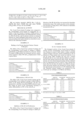
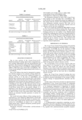
              TABLE 1
______________________________________
19-nor-1-hydroxyvitamin D analogs
          AMOUNT     TRANSPORT  SERUM CALCIUM
GROUP     (pmol/d/7 days)
                     (S/M)      (mg/100 ml)
______________________________________
D-Deficient
          0          3.4 ± 0.5
                                3.1 ± 0.1
1(OH)D.sub.3
          250        8.1 ± 0.1
                                4.8 ± 0.3
          625        10.6 ± 1.4
                                5.9 ± 0.1
19-nor-1(OH)D.sub.3
          250        6.3 ± 0.7
                                3.4 ± 0.2
          625        8.6 ± 0.7
                                3.7 ± 0.2
          1390       7.2 ± 0.2
                                3.8 ± 0.2
20-epi-19-nor-
          250        7.6 ± 0.5
                                4.1 ± 0.1
1(OH)D.sub.3
          625        9.2 ± 1.1
                                5.4 ± 0.3
          1300       11.7 ± 1.4
                                6.7 ± 0.2
______________________________________
 The results are the average of 5 rats (mean ± SEM)
              TABLE 2
______________________________________
19-nor-1,25-dihydroxyvitamin D analogs
          AMOUNT     TRANSPORT  SERUM CALCIUM
GROUP     (pmol/d/7 days)
                     (S/M)      (mg/100 ml)
______________________________________
D-Deficient
          0          3.1 ± 0.1
                                3.4 ± 0.1
1,25(OH).sub.2 D.sub.3
          250        7.8 ± 0.4
                                5.3 ± 0.3
19-nor-   250        4.8 ± 0.4
                                3.6 ± 0.1
1,25(OH).sub.2 D.sub.3
          625        4.9 ± 0.5
                                3.6 ± 0.2
          1300       4.8 ± 0.5
                                3.7 ± 0.2
20-epi-19-nor-
          250        7.3 ± 0.1
                                5.7 ± 0.5
1,25(OH).sub.2 D.sub.3
          625        8.2 ± 0.7
                                6.3 ± 0.4
          1300       8.7 ± 0.7
                                6.6 ± 0.5
14-epi-19-nor-
          250        4.1 ± 0.4
                                3.6 ± 0.2
1,25(OH).sub.2 D.sub.3  27!
          625        3.2 ± 0.4
                                3.2 ± 0.1
          1300       3.5 ± 0.3
                                3.4 ± 0.1
______________________________________
 The results are the average of 5 rats (mean ± SEM)
              TABLE 3
______________________________________
14-epi-20-epi-19-nor-vitamin D analogs
          AMOUNT     TRANSPORT  SERUM CALCIUM
GROUP     (pmol/d/7 days)
                     (S/M)      (mg/100 ml)
______________________________________
D-Deficient
          0          3.46 ± 0.27
                                3.92 ± 0.11
1,25(OH).sub.2 D.sub.3
          260        7.18 ± 0.47
                                5.36 ± 0.27
14-epi-20-epi-19-
          260        3.80 ± 0.23
                                3.96 ± 0.05
nor-1(OH)D.sub.3
          625        5.14 ± 0.66
                                4.11 ± 0.10
 28!      1300       5.90 ± 0.49
                                3.79 ± 0.05
14-epi-20-epi-19-
          260        4.36 ± 0.30
                                4.02 ± 0.16
nor-1,25(OH).sub.2 D.sub.3
          625        6.94 ± 0.27
                                3.66 ± 0.06
 29!      1300       7.14 ± 0.44
                                4.10 ± 0.20
______________________________________
 The results are the average of 6 rats (mean ± SEM)
ANALYSIS OF RESULTS
The in vitro activity of the 14-epi-19-nor-1α,25-dihydroxyvitamin D analogs shows these compounds possess excellent differentiative (D) and anti-proliferative (I) properties. The most potent analog is the 20-epi isomer 29!. The 14-epi-20-epi-19-nor-1,25-(OH)2 D3 compound 29! is 10(D) to 45(I) times more potent than 1,25-(OH)2 D3. The 19-nor-14-epi analog 27! is approximately half as active as 1,25-(OH)2 D3.
The in vitro efficacy data must be interpreted in conjunction with the analogs in vivo calcemic activity which estimates toxicity. The 14-epi-19-nor analog 27! shows no calcemic activity at 5× the dose of 1,25-(OH)2 D3 and therefore has a calcemic activity less than 20% of the natural hormone. The actual calcemic activity of this analog may be significantly lower because the dose response curve was not extended to a point where an equivalent response relative to 1,25-(OH)2 D3 was obtained. The calcemic activity of this analog may be extremely low. The calcemic response of the 14-epi-20-epi isomer 29! is also greatly reduced. It is important to note that the 14-epi-20epi isomer 29! shows only minimal gut activity (20% of the natural hormone) and no effect on bone at any of the doses tested. These results indicate an extremely favorable spectrum of activity for analog 29!.
The overall anti-cancer efficacy of these analogs may be represented as a ratio defined by differentiative activity (D) and anti-proliferative activity (I) relative to calcemic activity. If the ratios of (D) activity and (I) activity to calcemic activity for 1,25-(OH)2 D3 are taken to be 1, ratios with ranges greater than 1 indicate therapeutic potential greater than the natural hormone.
Therapeutic Potential (T.P.)=cellular activity/calcemic activity
14-epi-19-nor-1α,25-(OH)2 D3 27!
T.P.=0.33(D)/<<0.2-0.4(I)/<<0.2=>>1.7(D)-2.0(I)
14-epi-20-epi-19-nor-1α25-(OH)2 D3 29!
T.P.=8.0(D)/<0.2-56(I)/<0.2=>40(D)-280(I)
The therapeutic potential for each of the 14-epi-19-nor-drug analogs is more favorable than 1,25-(OH)2 D3. The 14-epi-20-epi-19-nor analog 29!, possess the highest ratio. The analog with the normal C-20 configuration 27! has a lower therapeutic potential, however, this value can be expected to increase once the full dose response curve for calcemic activity has been established.
The in vivo results also establish the PRO-DRUG concept for the 14-epi-19-nor-25-deoxy-analog 28!. The pro-drug 14-epi-20-epi-19-nor-1α-hydroxyvitamin D3 28! elicits biological activity In vivo similar to the 25hydroxylated analog 29!, confirming that it has been 25-hydroxylated by the liver. The 14-epi-20-epi-19-nor analog 28! also shows reduced activity on gut compared to the 25-hydroxy drug compound and no activity on bone. This minimal bone activity resulting in lower calcemic toxicity may have important clinical implications.
IMPORTANCE OF FINDINGS
The 14-epi-19-nor-vitamin D drug analogs, 27! and 29!, show an enhanced therapeutic potential relative to the natural hormone, 1α,25-(OH) 2 D3, for the treatment of VDR positive malignancies. The introduction of the 14-epi modification into the 20-epi-19-nor structure results in a compound with greatly reduced calcemic activity and accentuated cellular activity. The 14-epi-20-epi-19-nor-1,25-(OH)2 D3 analog 29! has a therapeutic potential exceeding the natural hormone by two orders of magnitude. The 14-epi-19-nor analog with the natural 20(R) configuration 27! possesses cellular activity similar to the native hormone while having greatly reduced calcemic activity.
The corresponding 19-nor pro-drug congener, 28!, has been shown to be activated in vivo to the active drug product. These results also indicate that rapid metabolic clearance is not a factor in the low calcemic activity of the 19-nor-vitamin D analogs. These preliminary results suggest that the pro-drugs may be less toxic due to diminished activity on bone.
Hence, the 14-epi-19-nor vitamin D analogs that were synthesized and evaluated in the present invention represent an effective practical embodiment of the concept of differentiative therapy of hyperproliferative disorders and diseases.
Another aspect of the above invention are pharmaceutical preparations of the 14-epi-19-nor-vitamin D compounds which can be formulated as solutions in innocuous solvents, or as emulsions, suspensions or dispersions in suitable innocuous solvents or carriers, or as pills, tablets or capsules by conventional methods known in the art, given that such formulations may also contain other pharmaceutically acceptable and non-toxic excipients, such as stabilizers, anti-oxidants, binders, coloring agents or emulsifying or taste modifying agents and that such formulations can be advantageously administered by injection, or by intravenous infusion of suitable sterile solutions, or in the form of oral doses via the alimentary canal, or by topical application.