US5876971A - Thrombin inhibitor from the saliva of protostomia - Google Patents
Thrombin inhibitor from the saliva of protostomia Download PDFInfo
- Publication number
- US5876971A US5876971A US08/448,438 US44843895A US5876971A US 5876971 A US5876971 A US 5876971A US 44843895 A US44843895 A US 44843895A US 5876971 A US5876971 A US 5876971A
- Authority
- US
- United States
- Prior art keywords
- protein
- sequence
- seq
- thrombin
- mature
- Prior art date
- Legal status (The legal status is an assumption and is not a legal conclusion. Google has not performed a legal analysis and makes no representation as to the accuracy of the status listed.)
- Expired - Fee Related
Links
- 210000003296 saliva Anatomy 0.000 title claims abstract description 43
- 229940122388 Thrombin inhibitor Drugs 0.000 title claims abstract description 28
- 239000003868 thrombin inhibitor Substances 0.000 title claims abstract description 28
- 101000712605 Theromyzon tessulatum Theromin Proteins 0.000 title claims abstract description 23
- 241001466055 Protostomia Species 0.000 title description 2
- 108090000623 proteins and genes Proteins 0.000 claims abstract description 223
- 102000004169 proteins and genes Human genes 0.000 claims abstract description 222
- 241001414832 Meccus pallidipennis Species 0.000 claims abstract description 37
- 208000007536 Thrombosis Diseases 0.000 claims abstract description 14
- 206010002388 Angina unstable Diseases 0.000 claims abstract description 8
- 206010003210 Arteriosclerosis Diseases 0.000 claims abstract description 8
- 208000007814 Unstable Angina Diseases 0.000 claims abstract description 8
- 208000011775 arteriosclerosis disease Diseases 0.000 claims abstract description 8
- 230000023555 blood coagulation Effects 0.000 claims abstract description 8
- 201000004332 intermediate coronary syndrome Diseases 0.000 claims abstract description 8
- 238000001631 haemodialysis Methods 0.000 claims abstract description 7
- 230000000322 hemodialysis Effects 0.000 claims abstract description 7
- 108090000190 Thrombin Proteins 0.000 claims description 52
- 229960004072 thrombin Drugs 0.000 claims description 52
- 239000002299 complementary DNA Substances 0.000 claims description 42
- 230000000694 effects Effects 0.000 claims description 36
- 108020004414 DNA Proteins 0.000 claims description 34
- 238000000034 method Methods 0.000 claims description 33
- 108010076504 Protein Sorting Signals Proteins 0.000 claims description 23
- 230000008569 process Effects 0.000 claims description 21
- 238000000746 purification Methods 0.000 claims description 16
- 239000013598 vector Substances 0.000 claims description 16
- 108091028043 Nucleic acid sequence Proteins 0.000 claims description 15
- 239000000203 mixture Substances 0.000 claims description 11
- 238000004519 manufacturing process Methods 0.000 claims description 9
- 238000002399 angioplasty Methods 0.000 claims description 8
- 230000004481 post-translational protein modification Effects 0.000 claims description 7
- 239000008194 pharmaceutical composition Substances 0.000 claims description 6
- 125000001429 N-terminal alpha-amino-acid group Chemical group 0.000 claims description 5
- 239000011543 agarose gel Substances 0.000 claims description 5
- 239000003623 enhancer Substances 0.000 claims description 5
- 239000003112 inhibitor Substances 0.000 claims description 4
- 238000004587 chromatography analysis Methods 0.000 claims description 3
- 238000001704 evaporation Methods 0.000 claims description 2
- 230000008020 evaporation Effects 0.000 claims description 2
- 125000003275 alpha amino acid group Chemical group 0.000 claims 2
- 238000001641 gel filtration chromatography Methods 0.000 claims 2
- 108091006086 inhibitor proteins Proteins 0.000 claims 2
- 239000000546 pharmaceutical excipient Substances 0.000 claims 2
- GOJUJUVQIVIZAV-UHFFFAOYSA-N 2-amino-4,6-dichloropyrimidine-5-carbaldehyde Chemical group NC1=NC(Cl)=C(C=O)C(Cl)=N1 GOJUJUVQIVIZAV-UHFFFAOYSA-N 0.000 claims 1
- 102000053602 DNA Human genes 0.000 claims 1
- 230000002265 prevention Effects 0.000 abstract description 10
- 241000124008 Mammalia Species 0.000 abstract description 6
- KKJUPNGICOCCDW-UHFFFAOYSA-N 7-N,N-Dimethylamino-1,2,3,4,5-pentathiocyclooctane Chemical compound CN(C)C1CSSSSSC1 KKJUPNGICOCCDW-UHFFFAOYSA-N 0.000 abstract description 5
- 241000238631 Hexapoda Species 0.000 abstract description 5
- 210000004369 blood Anatomy 0.000 abstract description 4
- 239000008280 blood Substances 0.000 abstract description 4
- 235000018102 proteins Nutrition 0.000 description 188
- 150000001413 amino acids Chemical class 0.000 description 89
- 229940024606 amino acid Drugs 0.000 description 50
- 235000001014 amino acid Nutrition 0.000 description 50
- 239000002773 nucleotide Substances 0.000 description 41
- 125000003729 nucleotide group Chemical group 0.000 description 41
- 238000012360 testing method Methods 0.000 description 31
- 210000004907 gland Anatomy 0.000 description 25
- 238000012986 modification Methods 0.000 description 21
- 230000000692 anti-sense effect Effects 0.000 description 20
- 230000004048 modification Effects 0.000 description 19
- 238000003780 insertion Methods 0.000 description 16
- 230000037431 insertion Effects 0.000 description 16
- 238000006467 substitution reaction Methods 0.000 description 15
- 238000012217 deletion Methods 0.000 description 13
- 230000037430 deletion Effects 0.000 description 13
- 239000012634 fragment Substances 0.000 description 13
- 210000004027 cell Anatomy 0.000 description 11
- 230000006870 function Effects 0.000 description 11
- 239000013612 plasmid Substances 0.000 description 11
- 239000013615 primer Substances 0.000 description 11
- 206010053567 Coagulopathies Diseases 0.000 description 10
- 230000035602 clotting Effects 0.000 description 10
- 238000003752 polymerase chain reaction Methods 0.000 description 10
- 108090000765 processed proteins & peptides Proteins 0.000 description 10
- 241000588724 Escherichia coli Species 0.000 description 8
- 102000007625 Hirudins Human genes 0.000 description 8
- 108010007267 Hirudins Proteins 0.000 description 8
- WQPDUTSPKFMPDP-OUMQNGNKSA-N hirudin Chemical compound C([C@@H](C(=O)N[C@@H](CCC(O)=O)C(=O)N[C@@H](CCC(O)=O)C(=O)N[C@@H]([C@@H](C)CC)C(=O)N1[C@@H](CCC1)C(=O)N[C@@H](CCC(O)=O)C(=O)N[C@@H](CCC(O)=O)C(=O)N[C@@H](CC=1C=CC(OS(O)(=O)=O)=CC=1)C(=O)N[C@@H](CC(C)C)C(=O)N[C@@H](CCC(N)=O)C(O)=O)NC(=O)[C@H](CC(O)=O)NC(=O)CNC(=O)[C@H](CC(O)=O)NC(=O)[C@H](CC(N)=O)NC(=O)[C@H](CC=1NC=NC=1)NC(=O)[C@H](CO)NC(=O)[C@H](CCC(N)=O)NC(=O)[C@H]1N(CCC1)C(=O)[C@H](CCCCN)NC(=O)[C@H]1N(CCC1)C(=O)[C@@H](NC(=O)CNC(=O)[C@H](CCC(O)=O)NC(=O)CNC(=O)[C@@H](NC(=O)[C@@H](NC(=O)[C@H]1NC(=O)[C@H](CCC(N)=O)NC(=O)[C@H](CC(N)=O)NC(=O)[C@H](CCCCN)NC(=O)[C@H](CCC(O)=O)NC(=O)CNC(=O)[C@H](CC(O)=O)NC(=O)[C@H](CO)NC(=O)CNC(=O)[C@H](CC(C)C)NC(=O)[C@H]([C@@H](C)CC)NC(=O)[C@@H]2CSSC[C@@H](C(=O)N[C@@H](CCC(O)=O)C(=O)NCC(=O)N[C@@H](CO)C(=O)N[C@@H](CC(N)=O)C(=O)N[C@H](C(=O)N[C@H](C(NCC(=O)N[C@@H](CCC(N)=O)C(=O)NCC(=O)N[C@@H](CC(N)=O)C(=O)N[C@@H](CCCCN)C(=O)N2)=O)CSSC1)C(C)C)NC(=O)[C@H](CC(C)C)NC(=O)[C@H]1NC(=O)[C@H](CC(C)C)NC(=O)[C@H](CC(N)=O)NC(=O)[C@H](CCC(N)=O)NC(=O)CNC(=O)[C@H](CO)NC(=O)[C@H](CCC(O)=O)NC(=O)[C@H]([C@@H](C)O)NC(=O)[C@@H](NC(=O)[C@H](CC(O)=O)NC(=O)[C@@H](NC(=O)[C@H](CC=2C=CC(O)=CC=2)NC(=O)[C@@H](NC(=O)[C@@H](N)C(C)C)C(C)C)[C@@H](C)O)CSSC1)C(C)C)[C@@H](C)O)[C@@H](C)O)C1=CC=CC=C1 WQPDUTSPKFMPDP-OUMQNGNKSA-N 0.000 description 8
- 230000005764 inhibitory process Effects 0.000 description 8
- 108010074860 Factor Xa Proteins 0.000 description 7
- 229940006607 hirudin Drugs 0.000 description 7
- 238000002955 isolation Methods 0.000 description 7
- FAPWRFPIFSIZLT-UHFFFAOYSA-M Sodium chloride Chemical compound [Na+].[Cl-] FAPWRFPIFSIZLT-UHFFFAOYSA-M 0.000 description 6
- 108090000631 Trypsin Proteins 0.000 description 6
- 102000004142 Trypsin Human genes 0.000 description 6
- 238000010521 absorption reaction Methods 0.000 description 6
- 230000003024 amidolytic effect Effects 0.000 description 6
- 230000008859 change Effects 0.000 description 6
- 230000013595 glycosylation Effects 0.000 description 6
- 108020004707 nucleic acids Proteins 0.000 description 6
- 102000039446 nucleic acids Human genes 0.000 description 6
- 150000007523 nucleic acids Chemical class 0.000 description 6
- 239000000243 solution Substances 0.000 description 6
- 239000012588 trypsin Substances 0.000 description 6
- 102000004411 Antithrombin III Human genes 0.000 description 5
- 108090000935 Antithrombin III Proteins 0.000 description 5
- 108010072220 Cyclophilin A Proteins 0.000 description 5
- 108091034117 Oligonucleotide Proteins 0.000 description 5
- 102100034539 Peptidyl-prolyl cis-trans isomerase A Human genes 0.000 description 5
- 230000002776 aggregation Effects 0.000 description 5
- 238000004220 aggregation Methods 0.000 description 5
- 229960005348 antithrombin iii Drugs 0.000 description 5
- 210000001772 blood platelet Anatomy 0.000 description 5
- 238000003776 cleavage reaction Methods 0.000 description 5
- 238000006206 glycosylation reaction Methods 0.000 description 5
- 230000007017 scission Effects 0.000 description 5
- DHMQDGOQFOQNFH-UHFFFAOYSA-N Glycine Chemical compound NCC(O)=O DHMQDGOQFOQNFH-UHFFFAOYSA-N 0.000 description 4
- HSQGMTRYSIHDAC-BQBZGAKWSA-N Leu-Ala Chemical compound CC(C)C[C@H](N)C(=O)N[C@@H](C)C(O)=O HSQGMTRYSIHDAC-BQBZGAKWSA-N 0.000 description 4
- KDXKERNSBIXSRK-UHFFFAOYSA-N Lysine Chemical class NCCCCC(N)C(O)=O KDXKERNSBIXSRK-UHFFFAOYSA-N 0.000 description 4
- 239000007983 Tris buffer Substances 0.000 description 4
- 101710162629 Trypsin inhibitor Proteins 0.000 description 4
- 229940122618 Trypsin inhibitor Drugs 0.000 description 4
- 230000037396 body weight Effects 0.000 description 4
- 210000004899 c-terminal region Anatomy 0.000 description 4
- 238000001962 electrophoresis Methods 0.000 description 4
- 229920001542 oligosaccharide Polymers 0.000 description 4
- 150000002482 oligosaccharides Chemical class 0.000 description 4
- 238000001742 protein purification Methods 0.000 description 4
- 210000003079 salivary gland Anatomy 0.000 description 4
- 208000010110 spontaneous platelet aggregation Diseases 0.000 description 4
- 239000002753 trypsin inhibitor Substances 0.000 description 4
- WEVYAHXRMPXWCK-UHFFFAOYSA-N Acetonitrile Chemical compound CC#N WEVYAHXRMPXWCK-UHFFFAOYSA-N 0.000 description 3
- 108010049003 Fibrinogen Proteins 0.000 description 3
- 102000008946 Fibrinogen Human genes 0.000 description 3
- 102000007056 Recombinant Fusion Proteins Human genes 0.000 description 3
- 108010008281 Recombinant Fusion Proteins Proteins 0.000 description 3
- 229920002684 Sepharose Polymers 0.000 description 3
- 239000004019 antithrombin Substances 0.000 description 3
- 230000015572 biosynthetic process Effects 0.000 description 3
- 239000003814 drug Substances 0.000 description 3
- 210000002472 endoplasmic reticulum Anatomy 0.000 description 3
- 229940012952 fibrinogen Drugs 0.000 description 3
- 230000023597 hemostasis Effects 0.000 description 3
- 229960002897 heparin Drugs 0.000 description 3
- 229920000669 heparin Polymers 0.000 description 3
- 230000003993 interaction Effects 0.000 description 3
- BPHPUYQFMNQIOC-NXRLNHOXSA-N isopropyl beta-D-thiogalactopyranoside Chemical compound CC(C)S[C@@H]1O[C@H](CO)[C@H](O)[C@H](O)[C@H]1O BPHPUYQFMNQIOC-NXRLNHOXSA-N 0.000 description 3
- 239000008177 pharmaceutical agent Substances 0.000 description 3
- 230000037452 priming Effects 0.000 description 3
- 102000004196 processed proteins & peptides Human genes 0.000 description 3
- 239000000047 product Substances 0.000 description 3
- 239000011780 sodium chloride Substances 0.000 description 3
- FWMNVWWHGCHHJJ-SKKKGAJSSA-N 4-amino-1-[(2r)-6-amino-2-[[(2r)-2-[[(2r)-2-[[(2r)-2-amino-3-phenylpropanoyl]amino]-3-phenylpropanoyl]amino]-4-methylpentanoyl]amino]hexanoyl]piperidine-4-carboxylic acid Chemical compound C([C@H](C(=O)N[C@H](CC(C)C)C(=O)N[C@H](CCCCN)C(=O)N1CCC(N)(CC1)C(O)=O)NC(=O)[C@H](N)CC=1C=CC=CC=1)C1=CC=CC=C1 FWMNVWWHGCHHJJ-SKKKGAJSSA-N 0.000 description 2
- 241000894006 Bacteria Species 0.000 description 2
- UXVMQQNJUSDDNG-UHFFFAOYSA-L Calcium chloride Chemical compound [Cl-].[Cl-].[Ca+2] UXVMQQNJUSDDNG-UHFFFAOYSA-L 0.000 description 2
- 108091026890 Coding region Proteins 0.000 description 2
- 108020004705 Codon Proteins 0.000 description 2
- 239000004471 Glycine Substances 0.000 description 2
- 108090000942 Lactalbumin Proteins 0.000 description 2
- 102000004407 Lactalbumin Human genes 0.000 description 2
- 102000012479 Serine Proteases Human genes 0.000 description 2
- 108010022999 Serine Proteases Proteins 0.000 description 2
- UIIMBOGNXHQVGW-UHFFFAOYSA-M Sodium bicarbonate Chemical compound [Na+].OC([O-])=O UIIMBOGNXHQVGW-UHFFFAOYSA-M 0.000 description 2
- 108010023197 Streptokinase Proteins 0.000 description 2
- IQFYYKKMVGJFEH-XLPZGREQSA-N Thymidine Chemical group O=C1NC(=O)C(C)=CN1[C@@H]1O[C@H](CO)[C@@H](O)C1 IQFYYKKMVGJFEH-XLPZGREQSA-N 0.000 description 2
- 239000000654 additive Substances 0.000 description 2
- 230000000996 additive effect Effects 0.000 description 2
- OIRDTQYFTABQOQ-KQYNXXCUSA-N adenosine Chemical compound C1=NC=2C(N)=NC=NC=2N1[C@@H]1O[C@H](CO)[C@@H](O)[C@H]1O OIRDTQYFTABQOQ-KQYNXXCUSA-N 0.000 description 2
- 238000001042 affinity chromatography Methods 0.000 description 2
- 239000001110 calcium chloride Substances 0.000 description 2
- 229910001628 calcium chloride Inorganic materials 0.000 description 2
- 230000015556 catabolic process Effects 0.000 description 2
- 238000007796 conventional method Methods 0.000 description 2
- 238000006731 degradation reaction Methods 0.000 description 2
- AAOVKJBEBIDNHE-UHFFFAOYSA-N diazepam Chemical compound N=1CC(=O)N(C)C2=CC=C(Cl)C=C2C=1C1=CC=CC=C1 AAOVKJBEBIDNHE-UHFFFAOYSA-N 0.000 description 2
- 201000010099 disease Diseases 0.000 description 2
- 208000037265 diseases, disorders, signs and symptoms Diseases 0.000 description 2
- -1 e.g. Proteins 0.000 description 2
- 238000010828 elution Methods 0.000 description 2
- 239000000499 gel Substances 0.000 description 2
- 238000001502 gel electrophoresis Methods 0.000 description 2
- 210000002288 golgi apparatus Anatomy 0.000 description 2
- 238000009396 hybridization Methods 0.000 description 2
- 238000000338 in vitro Methods 0.000 description 2
- 238000011534 incubation Methods 0.000 description 2
- 230000002401 inhibitory effect Effects 0.000 description 2
- 238000002347 injection Methods 0.000 description 2
- 239000007924 injection Substances 0.000 description 2
- 238000001155 isoelectric focusing Methods 0.000 description 2
- 238000005259 measurement Methods 0.000 description 2
- 238000010369 molecular cloning Methods 0.000 description 2
- 229920002401 polyacrylamide Polymers 0.000 description 2
- 230000010076 replication Effects 0.000 description 2
- 230000028327 secretion Effects 0.000 description 2
- 239000000758 substrate Substances 0.000 description 2
- 239000006228 supernatant Substances 0.000 description 2
- 230000002537 thrombolytic effect Effects 0.000 description 2
- 230000009466 transformation Effects 0.000 description 2
- 230000014616 translation Effects 0.000 description 2
- DGVVWUTYPXICAM-UHFFFAOYSA-N β‐Mercaptoethanol Chemical compound OCCS DGVVWUTYPXICAM-UHFFFAOYSA-N 0.000 description 2
- YKBGVTZYEHREMT-KVQBGUIXSA-N 2'-deoxyguanosine Chemical compound C1=NC=2C(=O)NC(N)=NC=2N1[C@H]1C[C@H](O)[C@@H](CO)O1 YKBGVTZYEHREMT-KVQBGUIXSA-N 0.000 description 1
- VGONTNSXDCQUGY-RRKCRQDMSA-N 2'-deoxyinosine Chemical compound C1[C@H](O)[C@@H](CO)O[C@H]1N1C(N=CNC2=O)=C2N=C1 VGONTNSXDCQUGY-RRKCRQDMSA-N 0.000 description 1
- CKTSBUTUHBMZGZ-SHYZEUOFSA-N 2'‐deoxycytidine Chemical compound O=C1N=C(N)C=CN1[C@@H]1O[C@H](CO)[C@@H](O)C1 CKTSBUTUHBMZGZ-SHYZEUOFSA-N 0.000 description 1
- JKMHFZQWWAIEOD-UHFFFAOYSA-N 2-[4-(2-hydroxyethyl)piperazin-1-yl]ethanesulfonic acid Chemical compound OCC[NH+]1CCN(CCS([O-])(=O)=O)CC1 JKMHFZQWWAIEOD-UHFFFAOYSA-N 0.000 description 1
- KFDVPJUYSDEJTH-UHFFFAOYSA-N 4-ethenylpyridine Chemical compound C=CC1=CC=NC=C1 KFDVPJUYSDEJTH-UHFFFAOYSA-N 0.000 description 1
- CXISPYVYMQWFLE-VKHMYHEASA-N Ala-Gly Chemical compound C[C@H]([NH3+])C(=O)NCC([O-])=O CXISPYVYMQWFLE-VKHMYHEASA-N 0.000 description 1
- 108010088751 Albumins Proteins 0.000 description 1
- 102000009027 Albumins Human genes 0.000 description 1
- 206010003178 Arterial thrombosis Diseases 0.000 description 1
- ACRYGQFHAQHDSF-ZLUOBGJFSA-N Asn-Asn-Asn Chemical compound NC(=O)C[C@H](N)C(=O)N[C@@H](CC(N)=O)C(=O)N[C@@H](CC(N)=O)C(O)=O ACRYGQFHAQHDSF-ZLUOBGJFSA-N 0.000 description 1
- HCAUEJAQCXVQQM-ACZMJKKPSA-N Asn-Glu-Asp Chemical compound [H]N[C@@H](CC(N)=O)C(=O)N[C@@H](CCC(O)=O)C(=O)N[C@@H](CC(O)=O)C(O)=O HCAUEJAQCXVQQM-ACZMJKKPSA-N 0.000 description 1
- DCXYFEDJOCDNAF-UHFFFAOYSA-N Asparagine Natural products OC(=O)C(N)CC(N)=O DCXYFEDJOCDNAF-UHFFFAOYSA-N 0.000 description 1
- 108091003079 Bovine Serum Albumin Proteins 0.000 description 1
- 102000003846 Carbonic anhydrases Human genes 0.000 description 1
- 108090000209 Carbonic anhydrases Proteins 0.000 description 1
- 108020004635 Complementary DNA Proteins 0.000 description 1
- 241000699800 Cricetinae Species 0.000 description 1
- 108010068682 Cyclophilins Proteins 0.000 description 1
- 102000001493 Cyclophilins Human genes 0.000 description 1
- ZGERHCJBLPQPGV-ACZMJKKPSA-N Cys-Ser-Gln Chemical compound C(CC(=O)N)[C@@H](C(=O)O)NC(=O)[C@H](CO)NC(=O)[C@H](CS)N ZGERHCJBLPQPGV-ACZMJKKPSA-N 0.000 description 1
- 239000003155 DNA primer Substances 0.000 description 1
- CKTSBUTUHBMZGZ-UHFFFAOYSA-N Deoxycytidine Natural products O=C1N=C(N)C=CN1C1OC(CO)C(O)C1 CKTSBUTUHBMZGZ-UHFFFAOYSA-N 0.000 description 1
- KCXVZYZYPLLWCC-UHFFFAOYSA-N EDTA Chemical compound OC(=O)CN(CC(O)=O)CCN(CC(O)=O)CC(O)=O KCXVZYZYPLLWCC-UHFFFAOYSA-N 0.000 description 1
- 102000004190 Enzymes Human genes 0.000 description 1
- 108090000790 Enzymes Proteins 0.000 description 1
- 241000206602 Eukaryota Species 0.000 description 1
- 102000009123 Fibrin Human genes 0.000 description 1
- 108010073385 Fibrin Proteins 0.000 description 1
- BWGVNKXGVNDBDI-UHFFFAOYSA-N Fibrin monomer Chemical compound CNC(=O)CNC(=O)CN BWGVNKXGVNDBDI-UHFFFAOYSA-N 0.000 description 1
- FTIJVMLAGRAYMJ-MNXVOIDGSA-N Gln-Ile-Leu Chemical compound CC(C)C[C@@H](C(O)=O)NC(=O)[C@H]([C@@H](C)CC)NC(=O)[C@@H](N)CCC(N)=O FTIJVMLAGRAYMJ-MNXVOIDGSA-N 0.000 description 1
- CBEUFCJRFNZMCU-SRVKXCTJSA-N Glu-Met-Leu Chemical compound [H]N[C@@H](CCC(O)=O)C(=O)N[C@@H](CCSC)C(=O)N[C@@H](CC(C)C)C(O)=O CBEUFCJRFNZMCU-SRVKXCTJSA-N 0.000 description 1
- FUTAPPOITCCWTH-WHFBIAKZSA-N Gly-Asp-Asp Chemical compound [H]NCC(=O)N[C@@H](CC(O)=O)C(=O)N[C@@H](CC(O)=O)C(O)=O FUTAPPOITCCWTH-WHFBIAKZSA-N 0.000 description 1
- UFPXDFOYHVEIPI-BYPYZUCNSA-N Gly-Gly-Asp Chemical compound NCC(=O)NCC(=O)N[C@H](C(O)=O)CC(O)=O UFPXDFOYHVEIPI-BYPYZUCNSA-N 0.000 description 1
- 235000010469 Glycine max Nutrition 0.000 description 1
- 244000068988 Glycine max Species 0.000 description 1
- 239000007995 HEPES buffer Substances 0.000 description 1
- 241000258937 Hemiptera Species 0.000 description 1
- HTTJABKRGRZYRN-UHFFFAOYSA-N Heparin Chemical compound OC1C(NC(=O)C)C(O)OC(COS(O)(=O)=O)C1OC1C(OS(O)(=O)=O)C(O)C(OC2C(C(OS(O)(=O)=O)C(OC3C(C(O)C(O)C(O3)C(O)=O)OS(O)(=O)=O)C(CO)O2)NS(O)(=O)=O)C(C(O)=O)O1 HTTJABKRGRZYRN-UHFFFAOYSA-N 0.000 description 1
- 241000237902 Hirudo medicinalis Species 0.000 description 1
- RXVOMIADLXPJGW-GUBZILKMSA-N His-Asp-Glu Chemical compound [H]N[C@@H](CC1=CNC=N1)C(=O)N[C@@H](CC(O)=O)C(=O)N[C@@H](CCC(O)=O)C(O)=O RXVOMIADLXPJGW-GUBZILKMSA-N 0.000 description 1
- LCWXJXMHJVIJFK-UHFFFAOYSA-N Hydroxylysine Natural products NCC(O)CC(N)CC(O)=O LCWXJXMHJVIJFK-UHFFFAOYSA-N 0.000 description 1
- RENBRDSDKPSRIH-HJWJTTGWSA-N Ile-Phe-Met Chemical compound N[C@@H]([C@@H](C)CC)C(=O)N[C@@H](CC1=CC=CC=C1)C(=O)N[C@@H](CCSC)C(=O)O RENBRDSDKPSRIH-HJWJTTGWSA-N 0.000 description 1
- DRCKHKZYDLJYFQ-YWIQKCBGSA-N Ile-Thr Chemical group CC[C@H](C)[C@H](N)C(=O)N[C@@H]([C@@H](C)O)C(O)=O DRCKHKZYDLJYFQ-YWIQKCBGSA-N 0.000 description 1
- DCXYFEDJOCDNAF-REOHCLBHSA-N L-asparagine Chemical compound OC(=O)[C@@H](N)CC(N)=O DCXYFEDJOCDNAF-REOHCLBHSA-N 0.000 description 1
- ZDXPYRJPNDTMRX-VKHMYHEASA-N L-glutamine Chemical compound OC(=O)[C@@H](N)CCC(N)=O ZDXPYRJPNDTMRX-VKHMYHEASA-N 0.000 description 1
- ROHFNLRQFUQHCH-YFKPBYRVSA-N L-leucine Chemical compound CC(C)C[C@H](N)C(O)=O ROHFNLRQFUQHCH-YFKPBYRVSA-N 0.000 description 1
- FFEARJCKVFRZRR-BYPYZUCNSA-N L-methionine Chemical compound CSCC[C@H](N)C(O)=O FFEARJCKVFRZRR-BYPYZUCNSA-N 0.000 description 1
- TYYLDKGBCJGJGW-UHFFFAOYSA-N L-tryptophan-L-tyrosine Natural products C=1NC2=CC=CC=C2C=1CC(N)C(=O)NC(C(O)=O)CC1=CC=C(O)C=C1 TYYLDKGBCJGJGW-UHFFFAOYSA-N 0.000 description 1
- OUYCCCASQSFEME-QMMMGPOBSA-N L-tyrosine Chemical compound OC(=O)[C@@H](N)CC1=CC=C(O)C=C1 OUYCCCASQSFEME-QMMMGPOBSA-N 0.000 description 1
- 102000008192 Lactoglobulins Human genes 0.000 description 1
- 108010060630 Lactoglobulins Proteins 0.000 description 1
- MJWVXZABPOKJJF-ACRUOGEOSA-N Leu-Phe-Phe Chemical compound [H]N[C@@H](CC(C)C)C(=O)N[C@@H](CC1=CC=CC=C1)C(=O)N[C@@H](CC1=CC=CC=C1)C(O)=O MJWVXZABPOKJJF-ACRUOGEOSA-N 0.000 description 1
- ABHIXYDMILIUKV-CIUDSAMLSA-N Lys-Asn-Asn Chemical compound [H]N[C@@H](CCCCN)C(=O)N[C@@H](CC(N)=O)C(=O)N[C@@H](CC(N)=O)C(O)=O ABHIXYDMILIUKV-CIUDSAMLSA-N 0.000 description 1
- 239000004472 Lysine Chemical class 0.000 description 1
- 241001465754 Metazoa Species 0.000 description 1
- 239000004677 Nylon Substances 0.000 description 1
- 108010058846 Ovalbumin Proteins 0.000 description 1
- 241000919536 Panstrongylus Species 0.000 description 1
- 241000919533 Panstrongylus megistus Species 0.000 description 1
- BQMFWUKNOCJDNV-HJWJTTGWSA-N Phe-Val-Ile Chemical compound [H]N[C@@H](CC1=CC=CC=C1)C(=O)N[C@@H](C(C)C)C(=O)N[C@@H]([C@@H](C)CC)C(O)=O BQMFWUKNOCJDNV-HJWJTTGWSA-N 0.000 description 1
- 108010065081 Phosphorylase b Proteins 0.000 description 1
- 241000276498 Pollachius virens Species 0.000 description 1
- FDINZVJXLPILKV-DCAQKATOSA-N Pro-His-Asn Chemical compound [H]N1CCC[C@H]1C(=O)N[C@@H](CC1=CNC=N1)C(=O)N[C@@H](CC(N)=O)C(O)=O FDINZVJXLPILKV-DCAQKATOSA-N 0.000 description 1
- 241001474791 Proboscis Species 0.000 description 1
- 241000722249 Rhodnius prolixus Species 0.000 description 1
- 101100386054 Saccharomyces cerevisiae (strain ATCC 204508 / S288c) CYS3 gene Proteins 0.000 description 1
- 206010040047 Sepsis Diseases 0.000 description 1
- QFBNNYNWKYKVJO-DCAQKATOSA-N Ser-Arg-Lys Chemical compound NCCCC[C@@H](C(O)=O)NC(=O)[C@@H](NC(=O)[C@@H](N)CO)CCCN=C(N)N QFBNNYNWKYKVJO-DCAQKATOSA-N 0.000 description 1
- YMTLKLXDFCSCNX-BYPYZUCNSA-N Ser-Gly-Gly Chemical compound OC[C@H](N)C(=O)NCC(=O)NCC(O)=O YMTLKLXDFCSCNX-BYPYZUCNSA-N 0.000 description 1
- 108010071390 Serum Albumin Proteins 0.000 description 1
- 102000007562 Serum Albumin Human genes 0.000 description 1
- 102100029950 Shiftless antiviral inhibitor of ribosomal frameshifting protein Human genes 0.000 description 1
- 241000696714 Stenocercus angel Species 0.000 description 1
- 229930006000 Sucrose Natural products 0.000 description 1
- CZMRCDWAGMRECN-UGDNZRGBSA-N Sucrose Chemical compound O[C@H]1[C@H](O)[C@@H](CO)O[C@@]1(CO)O[C@@H]1[C@H](O)[C@@H](O)[C@H](O)[C@@H](CO)O1 CZMRCDWAGMRECN-UGDNZRGBSA-N 0.000 description 1
- 108010006785 Taq Polymerase Proteins 0.000 description 1
- GQPQJNMVELPZNQ-GBALPHGKSA-N Thr-Ser-Trp Chemical compound C[C@H]([C@@H](C(=O)N[C@@H](CO)C(=O)N[C@@H](CC1=CNC2=CC=CC=C21)C(=O)O)N)O GQPQJNMVELPZNQ-GBALPHGKSA-N 0.000 description 1
- 241001414833 Triatoma Species 0.000 description 1
- 241001249485 Triatoma dimidiata Species 0.000 description 1
- 241001414831 Triatoma infestans Species 0.000 description 1
- 241000351625 Triatoma maculata Species 0.000 description 1
- LUMQYLVYUIRHHU-YJRXYDGGSA-N Tyr-Ser-Thr Chemical compound [H]N[C@@H](CC1=CC=C(O)C=C1)C(=O)N[C@@H](CO)C(=O)N[C@@H]([C@@H](C)O)C(O)=O LUMQYLVYUIRHHU-YJRXYDGGSA-N 0.000 description 1
- FZADUTOCSFDBRV-RNXOBYDBSA-N Tyr-Tyr-Trp Chemical compound C([C@H](N)C(=O)N[C@@H](CC=1C=CC(O)=CC=1)C(=O)N[C@@H](CC=1C2=CC=CC=C2NC=1)C(O)=O)C1=CC=C(O)C=C1 FZADUTOCSFDBRV-RNXOBYDBSA-N 0.000 description 1
- GVJUTBOZZBTBIG-AVGNSLFASA-N Val-Lys-Arg Chemical compound CC(C)[C@@H](C(=O)N[C@@H](CCCCN)C(=O)N[C@@H](CCCN=C(N)N)C(=O)O)N GVJUTBOZZBTBIG-AVGNSLFASA-N 0.000 description 1
- 206010047249 Venous thrombosis Diseases 0.000 description 1
- 239000008351 acetate buffer Substances 0.000 description 1
- PHQYVJYGYLEHAN-UHFFFAOYSA-N acetic acid;5,5-diethyl-1,3-diazinane-2,4,6-trione Chemical compound CC(O)=O.CCC1(CC)C(=O)NC(=O)NC1=O PHQYVJYGYLEHAN-UHFFFAOYSA-N 0.000 description 1
- 230000009471 action Effects 0.000 description 1
- 230000004913 activation Effects 0.000 description 1
- 239000004480 active ingredient Substances 0.000 description 1
- 230000001154 acute effect Effects 0.000 description 1
- 238000005377 adsorption chromatography Methods 0.000 description 1
- 108010047495 alanylglycine Proteins 0.000 description 1
- 230000002785 anti-thrombosis Effects 0.000 description 1
- 239000003146 anticoagulant agent Substances 0.000 description 1
- 238000013459 approach Methods 0.000 description 1
- 229960001230 asparagine Drugs 0.000 description 1
- 235000009582 asparagine Nutrition 0.000 description 1
- 108010040443 aspartyl-aspartic acid Proteins 0.000 description 1
- 230000001580 bacterial effect Effects 0.000 description 1
- 210000004204 blood vessel Anatomy 0.000 description 1
- 238000009835 boiling Methods 0.000 description 1
- 229940098773 bovine serum albumin Drugs 0.000 description 1
- 239000000872 buffer Substances 0.000 description 1
- 238000004113 cell culture Methods 0.000 description 1
- 230000001413 cellular effect Effects 0.000 description 1
- 229920002678 cellulose Polymers 0.000 description 1
- 239000001913 cellulose Substances 0.000 description 1
- 238000012512 characterization method Methods 0.000 description 1
- 238000007385 chemical modification Methods 0.000 description 1
- 238000006243 chemical reaction Methods 0.000 description 1
- 230000001684 chronic effect Effects 0.000 description 1
- 238000010367 cloning Methods 0.000 description 1
- 230000000295 complement effect Effects 0.000 description 1
- 150000001875 compounds Chemical class 0.000 description 1
- NKLPQNGYXWVELD-UHFFFAOYSA-M coomassie brilliant blue Chemical compound [Na+].C1=CC(OCC)=CC=C1NC1=CC=C(C(=C2C=CC(C=C2)=[N+](CC)CC=2C=C(C=CC=2)S([O-])(=O)=O)C=2C=CC(=CC=2)N(CC)CC=2C=C(C=CC=2)S([O-])(=O)=O)C=C1 NKLPQNGYXWVELD-UHFFFAOYSA-M 0.000 description 1
- 235000018417 cysteine Nutrition 0.000 description 1
- 125000000151 cysteine group Chemical class N[C@@H](CS)C(=O)* 0.000 description 1
- 230000006378 damage Effects 0.000 description 1
- YSMODUONRAFBET-UHFFFAOYSA-N delta-DL-hydroxylysine Natural products NCC(O)CCC(N)C(O)=O YSMODUONRAFBET-UHFFFAOYSA-N 0.000 description 1
- 238000004925 denaturation Methods 0.000 description 1
- 230000036425 denaturation Effects 0.000 description 1
- 230000001419 dependent effect Effects 0.000 description 1
- VGONTNSXDCQUGY-UHFFFAOYSA-N desoxyinosine Natural products C1C(O)C(CO)OC1N1C(NC=NC2=O)=C2N=C1 VGONTNSXDCQUGY-UHFFFAOYSA-N 0.000 description 1
- 238000011161 development Methods 0.000 description 1
- 230000018109 developmental process Effects 0.000 description 1
- 238000000502 dialysis Methods 0.000 description 1
- 235000013681 dietary sucrose Nutrition 0.000 description 1
- 238000010790 dilution Methods 0.000 description 1
- 239000012895 dilution Substances 0.000 description 1
- 239000012153 distilled water Substances 0.000 description 1
- VHJLVAABSRFDPM-QWWZWVQMSA-N dithiothreitol Chemical compound SC[C@@H](O)[C@H](O)CS VHJLVAABSRFDPM-QWWZWVQMSA-N 0.000 description 1
- 230000003511 endothelial effect Effects 0.000 description 1
- 238000005516 engineering process Methods 0.000 description 1
- 229940088598 enzyme Drugs 0.000 description 1
- YSMODUONRAFBET-UHNVWZDZSA-N erythro-5-hydroxy-L-lysine Chemical compound NC[C@H](O)CC[C@H](N)C(O)=O YSMODUONRAFBET-UHNVWZDZSA-N 0.000 description 1
- HQPMKSGTIOYHJT-UHFFFAOYSA-N ethane-1,2-diol;propane-1,2-diol Chemical compound OCCO.CC(O)CO HQPMKSGTIOYHJT-UHFFFAOYSA-N 0.000 description 1
- 239000013613 expression plasmid Substances 0.000 description 1
- 229950003499 fibrin Drugs 0.000 description 1
- 230000020764 fibrinolysis Effects 0.000 description 1
- 125000000524 functional group Chemical group 0.000 description 1
- 238000002523 gelfiltration Methods 0.000 description 1
- 230000002068 genetic effect Effects 0.000 description 1
- 238000010353 genetic engineering Methods 0.000 description 1
- 239000011521 glass Substances 0.000 description 1
- 108010042598 glutamyl-aspartyl-glycine Proteins 0.000 description 1
- 150000004676 glycans Chemical class 0.000 description 1
- VPZXBVLAVMBEQI-UHFFFAOYSA-N glycyl-DL-alpha-alanine Natural products OC(=O)C(C)NC(=O)CN VPZXBVLAVMBEQI-UHFFFAOYSA-N 0.000 description 1
- 108010067216 glycyl-glycyl-glycine Proteins 0.000 description 1
- XKUKSGPZAADMRA-UHFFFAOYSA-N glycyl-glycyl-glycine Natural products NCC(=O)NCC(=O)NCC(O)=O XKUKSGPZAADMRA-UHFFFAOYSA-N 0.000 description 1
- 238000004128 high performance liquid chromatography Methods 0.000 description 1
- 230000003054 hormonal effect Effects 0.000 description 1
- 230000002209 hydrophobic effect Effects 0.000 description 1
- QJHBJHUKURJDLG-UHFFFAOYSA-N hydroxy-L-lysine Natural products NCCCCC(NO)C(O)=O QJHBJHUKURJDLG-UHFFFAOYSA-N 0.000 description 1
- 230000001900 immune effect Effects 0.000 description 1
- 239000012535 impurity Substances 0.000 description 1
- 238000001727 in vivo Methods 0.000 description 1
- 238000004255 ion exchange chromatography Methods 0.000 description 1
- 210000003292 kidney cell Anatomy 0.000 description 1
- LFEUVBZXUFMACD-UHFFFAOYSA-H lead(2+);trioxido(oxo)-$l^{5}-arsane Chemical compound [Pb+2].[Pb+2].[Pb+2].[O-][As]([O-])([O-])=O.[O-][As]([O-])([O-])=O LFEUVBZXUFMACD-UHFFFAOYSA-H 0.000 description 1
- 108010071185 leucyl-alanine Proteins 0.000 description 1
- 230000010534 mechanism of action Effects 0.000 description 1
- 230000008018 melting Effects 0.000 description 1
- 238000002844 melting Methods 0.000 description 1
- 239000012528 membrane Substances 0.000 description 1
- 229930182817 methionine Natural products 0.000 description 1
- 230000035772 mutation Effects 0.000 description 1
- 208000010125 myocardial infarction Diseases 0.000 description 1
- 229920001778 nylon Polymers 0.000 description 1
- 229940046166 oligodeoxynucleotide Drugs 0.000 description 1
- 230000003204 osmotic effect Effects 0.000 description 1
- 229940092253 ovalbumin Drugs 0.000 description 1
- 230000008506 pathogenesis Effects 0.000 description 1
- 230000035515 penetration Effects 0.000 description 1
- 230000000144 pharmacologic effect Effects 0.000 description 1
- 108010073025 phenylalanylphenylalanine Proteins 0.000 description 1
- 229920001993 poloxamer 188 Polymers 0.000 description 1
- 229920001282 polysaccharide Polymers 0.000 description 1
- 239000005017 polysaccharide Substances 0.000 description 1
- 230000001323 posttranslational effect Effects 0.000 description 1
- 239000002243 precursor Substances 0.000 description 1
- 238000002360 preparation method Methods 0.000 description 1
- 238000001243 protein synthesis Methods 0.000 description 1
- 230000009467 reduction Effects 0.000 description 1
- 108091008146 restriction endonucleases Proteins 0.000 description 1
- 150000003839 salts Chemical class 0.000 description 1
- 230000009291 secondary effect Effects 0.000 description 1
- 238000012163 sequencing technique Methods 0.000 description 1
- 238000012882 sequential analysis Methods 0.000 description 1
- 125000003607 serino group Chemical group [H]N([H])[C@]([H])(C(=O)[*])C(O[H])([H])[H] 0.000 description 1
- 101150091813 shfl gene Proteins 0.000 description 1
- 230000035939 shock Effects 0.000 description 1
- 229910000030 sodium bicarbonate Inorganic materials 0.000 description 1
- 210000004988 splenocyte Anatomy 0.000 description 1
- 239000007858 starting material Substances 0.000 description 1
- 230000000638 stimulation Effects 0.000 description 1
- 101150035983 str1 gene Proteins 0.000 description 1
- 239000000126 substance Substances 0.000 description 1
- 125000001424 substituent group Chemical group 0.000 description 1
- 229960004793 sucrose Drugs 0.000 description 1
- 230000019635 sulfation Effects 0.000 description 1
- 238000005670 sulfation reaction Methods 0.000 description 1
- 239000000725 suspension Substances 0.000 description 1
- 208000024891 symptom Diseases 0.000 description 1
- 230000002194 synthesizing effect Effects 0.000 description 1
- 230000001225 therapeutic effect Effects 0.000 description 1
- 230000001732 thrombotic effect Effects 0.000 description 1
- 210000001519 tissue Anatomy 0.000 description 1
- 238000013519 translation Methods 0.000 description 1
- 108010044292 tryptophyltyrosine Proteins 0.000 description 1
- 210000004881 tumor cell Anatomy 0.000 description 1
- 108010087967 type I signal peptidase Proteins 0.000 description 1
- XLYOFNOQVPJJNP-UHFFFAOYSA-N water Chemical compound O XLYOFNOQVPJJNP-UHFFFAOYSA-N 0.000 description 1
- 239000003643 water by type Substances 0.000 description 1
Images


Classifications
-
- C—CHEMISTRY; METALLURGY
- C12—BIOCHEMISTRY; BEER; SPIRITS; WINE; VINEGAR; MICROBIOLOGY; ENZYMOLOGY; MUTATION OR GENETIC ENGINEERING
- C12N—MICROORGANISMS OR ENZYMES; COMPOSITIONS THEREOF; PROPAGATING, PRESERVING, OR MAINTAINING MICROORGANISMS; MUTATION OR GENETIC ENGINEERING; CULTURE MEDIA
- C12N15/00—Mutation or genetic engineering; DNA or RNA concerning genetic engineering, vectors, e.g. plasmids, or their isolation, preparation or purification; Use of hosts therefor
- C12N15/09—Recombinant DNA-technology
- C12N15/11—DNA or RNA fragments; Modified forms thereof; Non-coding nucleic acids having a biological activity
-
- C—CHEMISTRY; METALLURGY
- C07—ORGANIC CHEMISTRY
- C07K—PEPTIDES
- C07K14/00—Peptides having more than 20 amino acids; Gastrins; Somatostatins; Melanotropins; Derivatives thereof
- C07K14/81—Protease inhibitors
- C07K14/8107—Endopeptidase (E.C. 3.4.21-99) inhibitors
- C07K14/811—Serine protease (E.C. 3.4.21) inhibitors
-
- A—HUMAN NECESSITIES
- A61—MEDICAL OR VETERINARY SCIENCE; HYGIENE
- A61P—SPECIFIC THERAPEUTIC ACTIVITY OF CHEMICAL COMPOUNDS OR MEDICINAL PREPARATIONS
- A61P7/00—Drugs for disorders of the blood or the extracellular fluid
- A61P7/02—Antithrombotic agents; Anticoagulants; Platelet aggregation inhibitors
-
- A—HUMAN NECESSITIES
- A61—MEDICAL OR VETERINARY SCIENCE; HYGIENE
- A61P—SPECIFIC THERAPEUTIC ACTIVITY OF CHEMICAL COMPOUNDS OR MEDICINAL PREPARATIONS
- A61P9/00—Drugs for disorders of the cardiovascular system
- A61P9/10—Drugs for disorders of the cardiovascular system for treating ischaemic or atherosclerotic diseases, e.g. antianginal drugs, coronary vasodilators, drugs for myocardial infarction, retinopathy, cerebrovascula insufficiency, renal arteriosclerosis
-
- C—CHEMISTRY; METALLURGY
- C07—ORGANIC CHEMISTRY
- C07K—PEPTIDES
- C07K14/00—Peptides having more than 20 amino acids; Gastrins; Somatostatins; Melanotropins; Derivatives thereof
- C07K14/435—Peptides having more than 20 amino acids; Gastrins; Somatostatins; Melanotropins; Derivatives thereof from animals; from humans
-
- A—HUMAN NECESSITIES
- A61—MEDICAL OR VETERINARY SCIENCE; HYGIENE
- A61K—PREPARATIONS FOR MEDICAL, DENTAL OR TOILETRY PURPOSES
- A61K38/00—Medicinal preparations containing peptides
Definitions
- the invention relates to proteins, which are thrombin inhibitors from the saliva of protostomia.
- Thrombin has a key function in the thrombus formation in blood vessels. It catalyzes the cleavage of fibrinogen to fibrin. It leads to the formation of blood clots. Further, it induces the aggregation of blood platelets.
- the enzyme is involved in the pathogenesis of different diseases, such as, e.g., arterial and venous thrombosis or arteriosclerosis.
- thrombin III is a protein occurring in plasma with a molecular weight of 58 kDa. Antithrombin III binds first to heparin, which is a polysaccharide. Then, the antithrombin III-heparin complex binds to thrombin and inhibits this thrombin. A very stable complex of thrombin and antithrombin III results and antithrombin III is cleaved from thrombin.
- antithrombin III In addition to thrombin, antithrombin III also inhibits other serine proteases such as, e.g., factor Xa (Pratt, C. W. and Church, F. C. (1991) "Antithrombin: Structure and Function," Seminars in Hematology 28: 3-9).
- factor Xa Pratt, C. W. and Church, F. C. (1991) "Antithrombin: Structure and Function," Seminars in Hematology 28: 3-9).
- the protein hirudin was isolated from the Hirudo medicinalis leech. It has a molecular weight of about 7 kDa and binds to thrombin by ionic interaction. It is specific for thrombin (Johnson, P. H. et al. (1989) "Biochemistry and Genetic engineering of hirudin," Seminars in Thrombosis and Hemostasis 15: 302-315).
- the invention provides natural proteins or proteins that can be synthetically produced, which are thrombin inhibitors and can be isolated from the saliva of insects which suck the blood of mammals.
- Proteins according to the invention which can be isolated from the Triatoma pallidipennis cone-nosed bug are preferred.
- the proteins according to the invention can be of natural origin.
- the proteins are obtained by the saliva being purified. Also, it is possible to isolate the proteins from the salivary glands or to take the cells synthesizing the protein from the salivary glands and to keep them in the culture. The supernatants produced by this cell culture are harvested and worked up. The cell supernatant is purified and the proteins according to the invention are isolated and enriched. All enrichment stages of the isolation and the purification are part of the invention. Preferred are the enrichment stages of the isolation and purification in which the proteins according to the invention can be used for pharmaceutical purposes. Thus, purifications of 50% of the thrombin inhibitor are achieved relative to the total protein, preferred are 85%, more preferred 95% and most preferred 99% of the thrombin inhibitor relative to the total protein.
- the invention comprises not only the proteins which can be isolated from Triatoma pallidipennis, but also proteins which can be synthesized from other types of insects.
- proteins which can be isolated from Triatoma pallidipennis and which are in the group of the most preferred, other proteins are preferred which are derived from Triatoma infestans, Triatoma dimidiata, Triatoma maculata, Rhodnius prolixus, Panstrongylus megistus and Panstrongylus infestans.
- the proteins according to the invention synthetically. Included in this is the protein synthesis according to J. M. SEWART and J. D. YOUNG, San Francisco, 1969 and J. MEIENHOFER, Hormonal Proteins and Peptides, Vol. 2, p. 46, Academic Press (New York), 1973 and E. SCHODER and K. LUBKE, The Peptides, Vol. 1, Academic Press (New York), 1965.
- the recombinant proteins which are produced according to known processes, are also included in the synthetically produced proteins.
- the proteins according to the invention can be glycosylated or, if they are synthesized in prokaryotes, unglycosylated.
- the function of the inhibitor is to be determined in different testing systems. Standard testing processes are described in Examples 2 to 4 and 9.
- the proteins according to the invention can be detected in the saliva of insects which suck the blood of mammals. These proteins are usually synthesized from cells of the salivary glands. Therefore, the proteins can be isolated from the saliva.
- the proteins according to the invention are not limited to this production method and isolation. Rather, also comprised are all synthetically-produced thrombin inhibitors according to the invention which can be detected in the saliva and isolated from it.
- the invention further comprises a natural protein or a protein that can be synthetically produced, which is a thrombin inhibitor and can be isolated from the saliva of insects which suck the blood of mammals, preferably of Triatoma pallidipennis,
- the protein, as active protein has an N-terminal sequence (SEQ ID NO: 19) as follows: ##STR1## or b) in which the protein, as active protein, exhibits allelic modifications of the N-terminal amino acid sequence previously mentioned under a), in which one or two amino acids of the N-terminal amino acid sequence are substituted, deleted or inserted, without in this case the activity of the active protein being significantly affected, or
- the invention further comprises a protein which is a thrombin inhibitor and
- allelic modifications which comprise the substitutions, the deletions and/or the insertions of up to 30 amino acids, are part of the group of proteins according to the invention. Preferred are deletions, substitutions and/or insertions of up to 20 amino acids, more preferred of up to 10 amino acids, most preferred are the deletions, substitutions and/or insertions of one, two, three, four, five, six, seven, eight or nine amino acids.
- proteins according to the invention consists in a protein, which consists of a signal sequence and a mature protein according to the invention,
- the protein exhibits allelic modifications of one of the amino acid sequences previously mentioned under g), in which at least one amino acid of the amino acid sequence is substituted, deleted or inserted, without in this case the activity of the mature active protein being significantly affected, or
- allelic modifications which comprise the substitutions, the deletions and/or the insertions of up to 32 amino acids, are part of the group of proteins according to the invention. Preferred are deletions, substitutions and/or insertions of up to 21 amino acids, more preferred of up to 11 amino acids, most preferred are the deletions, substitutions and/or insertions of one, two, three, four, five, six, seven, eight or nine amino acids.
- proteins according to the invention which are recombinant proteins.
- the proteins can be glycosylated.
- the proteins according to the invention comprise the mature proteins and the corresponding precursor proteins, which consist of a "signal sequence” and the sequence of the mature protein.
- the "signal sequence” precedes the sequence of the mature protein.
- the mature protein begins with the previously mentioned N-terminal sequence under point a).
- the "signal sequence” is necessary for the penetration of the endoplasmic reticulum.
- the invention further also comprises cDNA or DNA, which codes a mature thrombin inhibitor,
- cDNA or DNA codes one of the following amino acid sequences:
- the invention further comprises a cDNA or DNA, which codes a thrombin inhibitor,
- cc in which the cDNA or DNA has one of the following nucleotide sequences:
- cDNA or DNA exhibits an allelic modification of one of the nucleotide sequences under cc), in which at least one nucleotide is substituted, deleted or inserted, without in this case the activity of the protein, which is coded under cc) by the allelic modification of the nucleotide sequence, being significantly affected.
- allelic modifications which result in a change of the amino acid sequence, are part of the invention, if these modifications comprise the substitutions, the deletions and/or the insertions of up to 30 amino acids.
- the invention also further comprises a genetic material, which also contains a signal sequence in addition to the sequence coding the mature protein.
- This signal sequence has been found in the cDNA bank, other signal sequences are also possible which allow an expression and secretion of protein.
- the invention comprises a cDNA or DNA, which codes a thrombin inhibitor with signal sequence,
- cDNA or DNA has one of the following nucleotide sequences:
- ff in which the cDNA or DNA exhibits an allelic modification of one of the nucleotide sequences under ee), in which at least one nucleotide is substituted, deleted or inserted, without in this case the activity of the mature protein, which including its signal sequence is coded by the allelic modifications of the nucleotide sequence under ee), being significantly affected.
- the mature protein can always be measured, even if the signal sequence is also indicated. Should the signal sequence be provided, the function can always be measured on the protein, so that it is obtained after removal of the signal sequence.
- the invention comprises binding molecules (for example, peptides or their derivatives), single-chain proteins, antibodies or fragments of the antibodies, which recognize domains specific to the mature protein according to the invention.
- binding molecules for example, peptides or their derivatives
- single-chain proteins for example, single-chain proteins
- antibodies or fragments of the antibodies which recognize domains specific to the mature protein according to the invention.
- the purified protein according to the invention it is easily possible for one skilled in the art to produce monoclonal antibodies. In this case, the known method of Kohler and Milstein and its further developments are used. Thus, a mouse is immunized several times with the purified protein specifically by the conventional method, the splenocytes are removed and fused with suitable tumor cells. The hybrids are then selected.
- the proteins of the invention can be isolated from the saliva of the Triatoma pallidipennis cone-nosed bug. The purification takes place by a gel filtration and a subsequent affinity chromatography on thrombin Sepharose (see Example 1).
- the proteins have the previously described amino acid sequences. They have a molecular weight of about 18,000 ⁇ 3,000 Da (see Example 6).
- the isoelectric point is in the range of pH 4.5 to 5.2, if the method described in Example 8 is used.
- the proteins of the invention inhibit the action of thrombin in the blood clotting and in the activation of platelets and in the amidolytic test.
- the testing systems are described in Examples 2, 3, 4 and 9.
- the proteins of the invention inhibit the activity of thrombin in the amidolytic test at a ratio of thrombin to the protein according to the invention of 1:87 only to about 50%. In a concentration of 35 nmol/l, the proteins of the invention lengthen the thrombin time (1 IU/ml) 5-fold.
- the proteins of the invention are specific for thrombin.
- Other serine proteases e.g., factor Xa or trypsin
- factor Xa or trypsin are not demonstrably inhibited even in a 40-fold excess (see example 7).
- Another part of the invention is a vector, which contains a cDNA or DNA according to the invention, further a matching promoter and optionally a matching enhancer. Also, one more "signal sequence" can be comprised. Vectors are described in detail in European publications EP 0 480 651, EP 0 462 632 and EP 0 173 177.
- Another embodiment of the invention consists in a eukaryotic or prokaryotic host cell, which is transformed with a vector according to the invention.
- the genetic code is degenerated, i.e., most amino acids of more than one codon are coded from three nucleotides. Therefore, several allelic modifications on the level of the nucleotides do not lead to a change of the amino acid sequence. Therefore, allelic modifications take place in particular on the level of the DNA and can have a secondary effect on the amino acid sequence.
- the cDNA or DNA sequences, which code the proteins according to the invention can be modified according to conventional techniques to produce variants of the proteins according to the invention, which have basically the same activity as the described and characterized proteins of the invention. In this connection, the activity is measured as it is described in Examples 2 to 4 and 9.
- Amino acids can be substituted as represented in Table 1, without the function of the protein thus being significantly affected. In each individual case, it is to be decided by the activity test what influence the change has on the function of the protein.
- the functions or the immunological identity are significantly changed if substituents are selected which are less conservative in the substitution than the amino acids shown in Table 1. Such significant changes can be achieved by substitutions with amino acids, which differ more in their structure and in the functional groups. Significant changes have an effect that the three-dimensional structure is changed and/or that for example, the pleated sheet structure or the helical structure is affected. Also, interactions of the charges and the hydrophobic chains are to be observed in the changes.
- the mutations are defined by the homology (similarity) of two proteins coming up for comparison.
- the proteins according to the invention have amino acid sequences which have a homology of at least 80%, preferably 90%, more preferably 95% and most preferably 98% of the structure according to the invention, as they are defined by the sequences under d) or g) (Seq. Id. Nos. 1 to 8) and as they are further obtained after the purification according to Example 1.
- the invention also comprises modifications of the DNA or cDNA. These modified sequences hybridize under stringent conditions with the DNA sequences, which code the proteins according to the invention (see sequences under aa); cc) and ee)).
- the cDNA or DNA sequences have nucleotide sequences, which have an identity including shorter (up to 15 nucleotides) deletions and insertions of at least 70%, preferably 82%, more preferably 90% and most preferably 95% with the cDNA or DNA sequences according to the invention (see aa), cc) and ee)).
- the identity including short (up to 15 nucleotides) deletions and insertions can be measured by a hybridization, as it is described in R. KNIPPERS, Molekulare Genetik (Molecular Genetics), 1982, Third Edition, Georg Thieme Verlag Stuttgart, New York.
- the glycosylation is a basic function of the endoplasmic reticulum and/or the Golgi apparatus.
- the sequence and the branching of the oligosaccharides are formed in the endoplasmic reticulum and changed in the Golgi apparatus.
- the oligosaccharides can be N-linked oligosaccharides (asparagine-linked) or O-linked oligosaccharides (serine-, threonine- or hydroxylysine-linked).
- the form of the glycosylation is dependent on the produced cell type and on the type from which the corresponding cell type is derived.
- the extent and the type of the glycosylation can be affected by substances, as it is described in European publication EP 0 222 313.
- the variation of the glycosylation can change the function of the protein.
- Proteins often form covalent bonds inside the chains. These disulfide bridges are produced between two cysteines. In this connection, the protein is specifically pleated. The disulfide bridges stabilize the three-dimensional structure of the proteins.
- amino acids can be changed, as it is described in international publication WO 91/10684.
- the protein can be sulfated. This change is described in connection with hirudin.
- the invention further comprises a process for the production of proteins according to the invention with the following steps:
- the proteins are preferably purified according to Example 1. But other isolation and purification methods are also possible:
- the invention also comprises a process for the purification of proteins according to the invention, in which the proteins are isolated, purified on at least one column and then concentrated by evaporation.
- Preferred are chromatography columns or adsorption chromatography columns.
- the invention comprises, moreover, a process for the purification of proteins according to the invention, in which the process consists of the following steps:
- the proteins according to the invention have pharmacological effects and can therefore be used as pharmaceutical active ingredients.
- the invention also comprises a pharmaceutical agent, which contains one of the proteins according to the invention or a mixture of them. Further, a pharmaceutical composition which contains one of the proteins according to the invention or a mixture of proteins according to the invention, in the presence of pharmaceutically compatible and acceptable compounds and vehicles, is part of the invention.
- the invention also comprises a pharmaceutical composition which contains one of the pharmaceutically active proteins according to the invention or their mixture, and a pharmaceutically compatible salt or a pharmaceutically compatible vehicle.
- proteins of sequence protocol nos. 1 to 4 according to the invention show an inhibition of thrombin activity.
- the inhibition of thrombin activity can be detected in the clotting test (see Example 2), in the blood-platelet aggregation test (see Example 3) and in the amidolytic test (see Example 4) and by measuring the thrombin time (see Example 9).
- the measurement of the thrombin time is the preferred testing system.
- the proteins according to the invention show a lengthening of the thrombin time at concentrations of 10 to 60 nmol/l (thrombin concentration 1 IU/ml). At a concentration of 58 nmol/l, a 9-fold lengthening takes place. Higher concentrations can be used without disturbing the testing system. Thus, the proteins according to the invention can be used in concentrations of 10 to 200 nmol/l.
- test results of this in vitro test show that the proteins according to the invention can be used as pharmaceutical agents or for medical treatment. These test results can be transferred from the in vitro testing system to an in vivo system, since an established test arrangement is involved in the clotting test (M. TALBOT (1989) "Biology of Recombinant Hirudin, A New Prospect in the Treatment of Thrombosis” Seminars in Thrombosis and Hemostasis 15: 293-301).
- the proteins of the invention can therefore be used for the treatment and prevention of thromboses, unstable angina or arteriosclerosis, or for prevention of a reblockage of vessels after PTCA/PTA (angioplasty with a balloon catheter) or for preventing the blood clotting in hemodialysis.
- the proteins of the invention can be used as an antithrombotic and/or antiarteriosclerotic medicine in mammals, especially humans, for treatment of thrombotic and/or arteriosclerotic symptoms. These can occur with tearing of arteriosclerotic aggregations (plaques), in the destruction of endothelial tissue, such as, for example, in sepsis, in transplants or in unstable angina. They can also be used to avoid renewed blockages after the treatment of myocardial infarctions and/or in fibrinolysis or angioplasty.
- the protein of the invention can be administered before, during and/or after the insertion of the catheter.
- the invention further provides
- thromboses thromboses, unstable angina or arteriosclerosis or for prevention of a reblockage of vessels after PTCA/PTA or for prevention of blood clotting in hemodialysis;
- a process for the treatment of thromboses, unstable angina or arteriosclerosis, or for the prevention of a reblockage of vessels after PTCA/PTA or thrombolysis or for the prevention of blood clotting in hemodialysis which process comprises an administration of an amount of protein according to the invention in which the amount suppresses the disease and in which the amount of protein is given to a patient who requires such a medicine;
- a pharmaceutical composition for the treatment of thromboses, unstable angina or arteriosclerosis, or for the prevention of a reblockage of vessels after PTCA/PTA or thrombolysis or for the prevention of blood clotting in hemodialysis which comprises treatment of one of the proteins according to the invention or their mixture and at least one pharmaceutically compatible vehicle and additive.
- doses are suitable. They depend, for example, on the protein used, on the host, on the type of administration and on the type and severity of the conditions to be treated.
- the daily doses comprise a range of 2 ⁇ g to 2000 ⁇ g per kg of body weight.
- a recommended daily dose lies in the range of 2 to 2000 ⁇ g per kg of body weight when the protein purified according to Example 1 is used.
- this dose is suitably administered in partial doses up to four times daily.
- the daily doses in the short-term treatment of acute clots with 20 to 2000 ⁇ g per kg of body weight can be greater than the doses in the chronic treatment with 2 to 200 ⁇ g per kg of body weight.
- the proteins according to the invention can be administered in every usual method, especially in the form of injection solutions or suspensions.
- compositions which comprise one of the proteins according to the invention or their mixture and at least one pharmaceutically compatible vehicle or additive.
- Such compositions can be produced according to known processes. In this case, reference is to be made to Remington's Pharmaceutical Science, 15th ed., Mack Publishing Company, East Pennsylvania (1980).
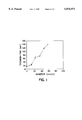
- FIG. 1 Lengthening of the thrombin time when adding the protein according to the invention from Triatoma pallidipennis,
- FIG. 3 Inhibition of the thrombin activity in the clotting test.
- the cone-nosed bugs are excited by mechanical stimulation of their proboscis for secretion of their saliva.
- the saliva is picked up on a glass plate and collected with a siliconized, drawn-out Pasteur pipette.
- the saliva is freeze-dried and dissolved in a concentration of 2.5 mg/ml in distilled water. 2 ml of this solution is gel-filtered on a "Superose 12 HR 16/50" column (Pharmacia) in 10 mmol/l of tris/HCl, pH 7.4, 0.0001% "Pluronic F68.”
- the fractions active in the clotting test are combined and applied to a CH-activated Sepharose (Pharmacia) to which thrombin previously was coupled according to the data of the manufacturer.
- the protein of the invention binds to this column provided with thrombin.
- the column is washed with Tyrode's buffer (without serum albumin), then it is eluted first with 10 mmol/l of Na-acetate, pH 4.5, and then with 10 mmol/l of glycine, pH 2.5. In the eluates, the pH is adjusted to 7.
- the 10 mmol/l of glycine eluate contains the purified protein of the invention. It is active in the clotting test (see Example 2), in the platelet aggregation test (see example 3), in the amidolytic test (see Example 4) and lengthens the thrombin time (see Example 9).
- the preparation contains no impurities detectable in the SDS-gel electrophoresis.
- bovine serum albumin (0.1% in 0.1 mol/l of NaHCO 3 , pH 9.5
- a microtiterplate 80 ⁇ l of 100 mmol/l of tris/HCl, pH 7.4; 150 mmol/l of NaCl and 0.03 IU (1.35 mmol/l) of thrombin and 100 ⁇ l of a diluted solution of the protein of the invention (32-630 ng) are incubated for 10 minutes at 37° C. and then mixed with 100 ⁇ l (50 nmol) of substrate S2238 (Kabi Vitrum). After an incubation of 30 minutes at 37° C., the absorption is measured at 405 nm. 630 ng (117 nmol/l) inhibits the activity of the thrombin to approximately 50%. In a concentration of 6 nmol/l, hirudin inhibits the activity of thrombin 85%. (See FIG. 2)
- the purified protein of the invention was sequenced in an automatic amino acid sequenator (Applied Biosystems, Inc.) according to the instructions of the manufacturer.
- the sequence of amino acids 1 to 21 (of the N-terminus) is: Ala-Glu-Gly-Asp-Asp-Cys-Ser-Leu-Glu-Lys-Ala-Met-Gly-Asp-Phe-?-Pro-Glu-Glu-Phe-Phe (SEQ ID NO:18) "?” means not identifiable with complete reliability.
- lysine is involved with the same degree of probability.
- the protein of the invention was applied in the reduced state (reduction with dithiothreitol) and in the nonreduced state together with the molecular weight markers (Electrophoresis Calibration Kit of Pharmacia), phosphorylase b (94 kDa), albumin (67 kDa), ovalbumin (43 kDa), carbonic anhydrase (30 kDa), trypsin inhibitor (20.1 kDa) and lactalbumin (14.4 kDa) to a 12.5% SDS-polyacrylamide gel and after the electrophoresis according to Laemmli (1970, Nature 227, 680-685), is stained Coomassie brilliant blue.
- the molecular weight markers Electrophore Calibration Kit of Pharmacia
- phosphorylase b 94 kDa
- albumin 67 kDa
- ovalbumin 43 kDa
- carbonic anhydrase (30 kDa)
- trypsin inhibitor (20.1 kDa)
- the protein of the invention travels only slightly above the trypsin inhibitor during the electrophoresis. This corresponds to a molecular weight of about 21000 Da.
- the protein of the invention travels between the trypsin inhibitor and lactalbumin, which corresponds to a molecular weight of about 18000 Da.
- the protein of the invention does not inhibit serine protease factor Xa and trypsin.
- factor Xa and of trypsin The activity of factor Xa and of trypsin is measured with the following test.
- factor Xa determination 0.004 IU (0.653 pmol) of factor Xa (American Diagnostica) and 0.5 ⁇ g (28 pmol) of the protein of the invention, and for the trypsin determination, 0.004 IU (0.019 pmol) of trypsin (Sigma) and 0.016 ⁇ g (0.817 pmol) of the protein of the invention are added to 80 ⁇ l of 50 mmol/l of tris/HCl, pH 8.0, 227 mmol/l NaCl, and incubated for 2 minutes at 37° C.
- the protein of the invention is applied to a gel for isoelectric focussing in the range of pH 3 to 9 (Pharmacia) and focussed together with standard proteins (Calibration Kit pH 3 to 10 of Pharmacia).
- the thrombin time measures the activity of exogenic thrombin, which is added to the test plasma.
- 50 ⁇ l of solution of the protein of the invention in different dilutions (6 to 58 nmol/l ) and 50 ⁇ l of diethylbarbiturate-acetate buffer with pH 7.6 are added to 0.1 ml of plasma and incubated for 1 minute at 37° C.
- 0.1 ml of thrombin solution (3 IU/ml)
- the protein of the invention which is present in a concentration of 35 nmol/l, lengthens the clotting time 5-fold in comparison to a control batch. (See FIG. 1)
- the purified protein of the invention (59 ⁇ g) is reduced with 10% 2-mercaptoethanol (2 hours at room temperature under N 2 ) and then reacted with 4-vinylpyridine (2 hours at room temperature under N 2 ). After a dialysis from 25 mmol/l of tris/HCl, pH 8.5; 1 mmol/l of EDTA, the sample is mixed with 1 ⁇ g of Lys C (Boehringer Mannheim) and incubated for 6 hours at 37° C.
- the primer model, priming piece
- the synthesized oligonucleotide sequences of the primer are used to amplify a fragment of the cDNA according to the invention with the PCR (polymerase chain reaction).
- Two oligonucleotide primers are produced by the nucleotide sequence being derived from the previously partially determined amino acid sequence of the N-terminal area of the complete protein according to the invention and of one of its fragments. In this case, the following amino acid sequences are used:
- the template consists of the cDNA, which is derived from a poly-A + -RNA, which was previously isolated from the salivary glands of Triatoma pallidipennis. (SAMBROCK et al.: Molecular Cloning (Chapter 7, pp. 18-22, Cold Spring Harbor Laboratory Press, 1989)
- Template priming piece 5'-GCI GA(A/G) GGI GA(C/T) GA (C/T) TG (C/T) TCI CTI GA(A/G) AA(A/G) GCI ATG GGI GA(C/T) TT-3' (SEQ ID NO:23)
- Non-template-priming piece antisense primer:
- G deoxyguanosine
- T deoxythymidine
- the PCR consists of 40 cycles. A cycle appears as follows:
- the PCR replication product obtained by the previously described process exhibits a band on an agarose gel.
- the latter is isolated from the agarose gel, which exhibits a low melting point, and directly conveyed to the PCR plasmid (Stratagene) and subcloned.
- the process corresponds to the description of the protocol of the manufacturer (PCR-ScriptTM SK(+) cloning kit of Stratagene).
- the DNA sequence of the insertion product corresponds to the sequence of the PCR product and is determined as it is described in SANGER et al. Proc Natl Acad Sci USA (1977) 74: 5463-5467.
- cDNA library About 400,000 primary clones from the salivary gland-cDNA bank of T. pallidipennis (cDNA library) are transferred on nylon membranes (Pall Biosupport East Hills, N.Y., USA) and screened, as the manufacturer stipulates. A marked sample, which was obtained with the help of the previously described PCR replication method is used in this case. The selection process is performed twice, followed by a conversion of phage-DNA to plasmid-DNA and a sequential analysis of the insert (incorporated DNA) of this plasmid.
- Ti12 The longest cDNA clone (Ti12) begins with nucleotides TG, which correspond to an incomplete priming codon for methionine. This is obvious when an additional isolated clone (Ti5) is taken into consideration, which was found with a selection process with 600,000 phages of the same cDNA bank, which was used in the selection of Ti12, Ti28 and Ti45.
- the four cDNA sequences of the protein according to the invention are selected, identified and sequenced according to the previously described methods. Only 9 positions exhibit differences in the derived amino acid sequence. The differences are listed in Table 2.
- the identity and similarilty of the four mature proteins according to the invention is about 95 or 98%, depending on which comparison partner is selected.
- matching promoters and optionally matching enhancers can be connected with the respective DNA sequences, so that then a usable vector is present.
- M. WIRTH, L. SCHUMACHER and H. HAUSER in H. S. CONRADT (ed) Protein Glycosylation, Cellular Biotechnical and Analytical Aspects Vol. 15, 49-52, VCH publishers, Weinheim, 1991); also J. KRATZSCHMAR et al. (1992) Genes 116: 281-284.
- the expression of such a vector is possible in eukaryotes (for example, baby hamster kidney cells).
- the DNA sequences can be incorporated in matching prokaryotic vectors for expression in E. coli strains.
- the construct for expression of the recombinant protein according to the invention in prokaryotes is produced by the commercially available plasmid pKK233-2 being used, which contains the IPTG-inducible trc promoter.
- the vector suitable for expression comprises this plasmid pKK233-2, in which both the coding sequence of the protein according to the invention and a signal sequence are inserted.
- the signal sequence is a modified signal sequence, which is attributable to the secreted E. coli protein cyclophilin a.
- the signal sequence and the coding DNA is downstream from the promoter, by which the pKK/cph develops (T. HAYANO 1991) Biochemistry 30: 3041-3048).
- the coding sequences of the protein according to the invention are inserted in the expression plasmid and the thus obtained construct (pKK/cph-protein) is used for the transformation of competent E. coli JM 105 cells.
- the following pair of partially overlapping and complementary oligodeoxynucleotides is used to recover the coding DNA for the signal sequence of cyclophilin a.
- the corresponding C-terminal end of the cyclophilin sequence is modified to form an optimum cleavage point for the bacterial signal peptidase.
- the modification consists in the fact that the last seven triplicates of the C-terminal end are exchanged for triplicates which code the following amino acid sequence: Phe-Ser-Ala-Ser-Ala-Leu-Ala (SEQ ID NO:25) (R. E. DALBEY and G. von HEIJNE (1992) TIBS 17: 474-478).
- Sense-bearing oligonucleotide sequence (sense oligo)
- Non-sense-bearing oligonucleotide sequence (antisense oligo)
- the DNA fragments are cleaved with AflIII and HindIII.
- the cleavage points are underlined.
- the DNA fragment between the NcoI and HindIII point of plasmid pKK233-2 is subcloned.
- the NheI point, which together with the HindIII point facilitates the further subcloning of cDNA pieces, is made known by bold print.
- Sense-bearing oligonucleotide sequence (sense oligo)
- Non-sense-bearing oligonucleotide sequence (antisense oligo)
- E. coli JM 105 cells are transformed with the use of the CaCl 2 process.
- 1 ⁇ g of pKK/cph DNA, which codes the protein according to the invention, is used.
- IPTG isopropyl- ⁇ -D-thiogalactoside.
- the cells are centrifuged off and subjected to an osmotic shock (saccharose and subsequent H 2 O treatment).
- the thus obtained periplasma fraction inhibits the activity of thrombin in the clotting test (Comparison Example 2).
- the inhibitory activity is purified by ion exchange chromatography on DE-52 cellulose and thrombin affinity chromatography. (comparison Example 1)
- the purified fraction has the same inhibitory activity as the saliva protein. It shows identical behavior in an SDS-polyacrylamide electrophoresis (Comparison Example 6). Further, it is identical in the N-terminal amino acid sequence with the mature saliva protein.
Landscapes
- Health & Medical Sciences (AREA)
- Chemical & Material Sciences (AREA)
- Life Sciences & Earth Sciences (AREA)
- Organic Chemistry (AREA)
- Genetics & Genomics (AREA)
- Engineering & Computer Science (AREA)
- General Health & Medical Sciences (AREA)
- Medicinal Chemistry (AREA)
- Molecular Biology (AREA)
- Bioinformatics & Cheminformatics (AREA)
- Biophysics (AREA)
- Biochemistry (AREA)
- Proteomics, Peptides & Aminoacids (AREA)
- Gastroenterology & Hepatology (AREA)
- Zoology (AREA)
- Biomedical Technology (AREA)
- Animal Behavior & Ethology (AREA)
- Biotechnology (AREA)
- Chemical Kinetics & Catalysis (AREA)
- General Chemical & Material Sciences (AREA)
- Nuclear Medicine, Radiotherapy & Molecular Imaging (AREA)
- Pharmacology & Pharmacy (AREA)
- Wood Science & Technology (AREA)
- Public Health (AREA)
- Veterinary Medicine (AREA)
- General Engineering & Computer Science (AREA)
- Urology & Nephrology (AREA)
- Toxicology (AREA)
- Physics & Mathematics (AREA)
- Heart & Thoracic Surgery (AREA)
- Diabetes (AREA)
- Plant Pathology (AREA)
- Microbiology (AREA)
- Cardiology (AREA)
- Vascular Medicine (AREA)
- Hematology (AREA)
- Medicines That Contain Protein Lipid Enzymes And Other Medicines (AREA)
- Peptides Or Proteins (AREA)
- Acyclic And Carbocyclic Compounds In Medicinal Compositions (AREA)
- Medicines Containing Material From Animals Or Micro-Organisms (AREA)
Abstract
The invention relates to a natural protein or a protein that can be synthetically produced, which is a thrombin inhibitor and can be isolated from the saliva of insects which suck the blood of mammals. Preferred is the Triatoma pallidipennis insect. The protein is used for the treatment of thromboses or unstable angina or arteriosclerosis, or for the prevention of a reblockage of vessels after PTCA/PTA or for the prevention of blood clotting in hemodialysis.
Description
This application is a continuation of application Ser. No. 08/460,383, filed Jun. 2, 1995, now abandoned.
The invention relates to proteins, which are thrombin inhibitors from the saliva of protostomia.
Thrombin has a key function in the thrombus formation in blood vessels. It catalyzes the cleavage of fibrinogen to fibrin. It leads to the formation of blood clots. Further, it induces the aggregation of blood platelets. The enzyme is involved in the pathogenesis of different diseases, such as, e.g., arterial and venous thrombosis or arteriosclerosis.
Therefore, the use of a thrombin inhibitor for treatment of thromboses is promising. The most important previously known thrombin inhibitors are antithrombin III-heparin and hirudin. Antithrombin III is a protein occurring in plasma with a molecular weight of 58 kDa. Antithrombin III binds first to heparin, which is a polysaccharide. Then, the antithrombin III-heparin complex binds to thrombin and inhibits this thrombin. A very stable complex of thrombin and antithrombin III results and antithrombin III is cleaved from thrombin. In addition to thrombin, antithrombin III also inhibits other serine proteases such as, e.g., factor Xa (Pratt, C. W. and Church, F. C. (1991) "Antithrombin: Structure and Function," Seminars in Hematology 28: 3-9).
The protein hirudin was isolated from the Hirudo medicinalis leech. It has a molecular weight of about 7 kDa and binds to thrombin by ionic interaction. It is specific for thrombin (Johnson, P. H. et al. (1989) "Biochemistry and Genetic engineering of hirudin," Seminars in Thrombosis and Hemostasis 15: 302-315).
In addition to the previously mentioned thrombin inhibitors, which are included in the prior art, other inhibitors are necessary which have another mechanism of action or an increased activity.
The invention provides natural proteins or proteins that can be synthetically produced, which are thrombin inhibitors and can be isolated from the saliva of insects which suck the blood of mammals.
Proteins according to the invention which can be isolated from the Triatoma pallidipennis cone-nosed bug are preferred.
The proteins according to the invention can be of natural origin. The proteins are obtained by the saliva being purified. Also, it is possible to isolate the proteins from the salivary glands or to take the cells synthesizing the protein from the salivary glands and to keep them in the culture. The supernatants produced by this cell culture are harvested and worked up. The cell supernatant is purified and the proteins according to the invention are isolated and enriched. All enrichment stages of the isolation and the purification are part of the invention. Preferred are the enrichment stages of the isolation and purification in which the proteins according to the invention can be used for pharmaceutical purposes. Thus, purifications of 50% of the thrombin inhibitor are achieved relative to the total protein, preferred are 85%, more preferred 95% and most preferred 99% of the thrombin inhibitor relative to the total protein.
The invention comprises not only the proteins which can be isolated from Triatoma pallidipennis, but also proteins which can be synthesized from other types of insects. Thus, in addition to the proteins which can be isolated from Triatoma pallidipennis and which are in the group of the most preferred, other proteins are preferred which are derived from Triatoma infestans, Triatoma dimidiata, Triatoma maculata, Rhodnius prolixus, Panstrongylus megistus and Panstrongylus infestans.
It is likewise possible to produce the proteins according to the invention synthetically. Included in this is the protein synthesis according to J. M. SEWART and J. D. YOUNG, San Francisco, 1969 and J. MEIENHOFER, Hormonal Proteins and Peptides, Vol. 2, p. 46, Academic Press (New York), 1973 and E. SCHODER and K. LUBKE, The Peptides, Vol. 1, Academic Press (New York), 1965. The recombinant proteins, which are produced according to known processes, are also included in the synthetically produced proteins. Depending on the host organism, the proteins according to the invention can be glycosylated or, if they are synthesized in prokaryotes, unglycosylated.
The function of the inhibitor is to be determined in different testing systems. Standard testing processes are described in Examples 2 to 4 and 9.
The proteins according to the invention can be detected in the saliva of insects which suck the blood of mammals. These proteins are usually synthesized from cells of the salivary glands. Therefore, the proteins can be isolated from the saliva. The proteins according to the invention are not limited to this production method and isolation. Rather, also comprised are all synthetically-produced thrombin inhibitors according to the invention which can be detected in the saliva and isolated from it.
The invention further comprises a natural protein or a protein that can be synthetically produced, which is a thrombin inhibitor and can be isolated from the saliva of insects which suck the blood of mammals, preferably of Triatoma pallidipennis,
a) in which the protein, as active protein, has an N-terminal sequence (SEQ ID NO: 19) as follows: ##STR1## or b) in which the protein, as active protein, exhibits allelic modifications of the N-terminal amino acid sequence previously mentioned under a), in which one or two amino acids of the N-terminal amino acid sequence are substituted, deleted or inserted, without in this case the activity of the active protein being significantly affected, or
c) in which the protein, as active protein, exhibits posttranslational modifications of the N-terminal sequences under a) and b), which do not significantly affect the activity of the active protein.
The invention further comprises a protein which is a thrombin inhibitor and
d) which, as active mature protein, has one of the following sequences:
i) SEQ ID NO:1
ii) SEQ ID NO:2
iii) SEQ ID NO:3
iv) SEQ ID NO:4 or
e) which, as active mature protein, exhibits allelic modifications of one of the amino acid sequences previously mentioned under d), in which at least one amino acid of the amino acid sequence is substituted, deleted or inserted, without in this case the activity of the active protein being significantly affected, or
f) which, as active mature protein, exhibits posttranslational modifications of one of the sequences under d) and e), which do not significantly affect the activity of the active protein.
All allelic modifications, which comprise the substitutions, the deletions and/or the insertions of up to 30 amino acids, are part of the group of proteins according to the invention. Preferred are deletions, substitutions and/or insertions of up to 20 amino acids, more preferred of up to 10 amino acids, most preferred are the deletions, substitutions and/or insertions of one, two, three, four, five, six, seven, eight or nine amino acids.
Another embodiment of the proteins according to the invention consists in a protein, which consists of a signal sequence and a mature protein according to the invention,
g) in which the protein has one of the following sequences:
i) SEQ ID NO:5
ii) SEQ ID NO:6
iii) SEQ ID NO:7
iv) SEQ ID NO:8 or
h) in which the protein exhibits allelic modifications of one of the amino acid sequences previously mentioned under g), in which at least one amino acid of the amino acid sequence is substituted, deleted or inserted, without in this case the activity of the mature active protein being significantly affected, or
i) in which the protein exhibits posttranslational modifications of one of the sequences under g) and h) which do not significantly affect the activity of the active mature protein.
All allelic modifications, which comprise the substitutions, the deletions and/or the insertions of up to 32 amino acids, are part of the group of proteins according to the invention. Preferred are deletions, substitutions and/or insertions of up to 21 amino acids, more preferred of up to 11 amino acids, most preferred are the deletions, substitutions and/or insertions of one, two, three, four, five, six, seven, eight or nine amino acids.
Most preferred are proteins according to the invention which are recombinant proteins. In this case, the proteins can be glycosylated.
The proteins according to the invention comprise the mature proteins and the corresponding precursor proteins, which consist of a "signal sequence" and the sequence of the mature protein. In this case, the "signal sequence" precedes the sequence of the mature protein. The mature protein begins with the previously mentioned N-terminal sequence under point a). The "signal sequence" is necessary for the penetration of the endoplasmic reticulum.
The invention further also comprises cDNA or DNA, which codes a mature thrombin inhibitor,
aa) in which the cDNA or DNA codes one of the following amino acid sequences:
i) SEQ ID NO:1
ii) SEQ ID NO:2
iii) SEQ ID NO:3
iv) SEQ ID NO:4 or
bb) in which the cDNA or DNA codes allelic modifications of one of the amino acid sequences under aa),
in which at least one amino acid of the amino acid sequence is substituted, deleted or inserted, without
in this case the activity of the active protein being
significantly affected.
The allelic modifications were defined above under the point "Sequences of mature proteins."
The invention further comprises a cDNA or DNA, which codes a thrombin inhibitor,
cc) in which the cDNA or DNA has one of the following nucleotide sequences:
i) SEQ ID NO:9
ii) SEQ ID NO:10
iii) SEQ ID NO:11
iv) SEQ ID NO:12 or
dd) in which the cDNA or DNA exhibits an allelic modification of one of the nucleotide sequences under cc), in which at least one nucleotide is substituted, deleted or inserted, without in this case the activity of the protein, which is coded under cc) by the allelic modification of the nucleotide sequence, being significantly affected.
All DNA constructs also then are included in the listed sequences according to the invention, when those nucleotides are exchanged that code the same amino acid because of the degenerated code. The exchange of such nucleotides is obvious and the corresponding amino acids are disclosed in every biochemistry textbook. (R. KNIPPERS, 1982, 3rd Edition, Molekulare Genetik Molecular Genetics!, Georg Thieme Verlag)
All allelic modifications, which result in a change of the amino acid sequence, are part of the invention, if these modifications comprise the substitutions, the deletions and/or the insertions of up to 30 amino acids. Preferred are deletions, substitutions and/or insertions of up to 20 amino acids, more preferred of up to 10 amino acids, most preferred are the deletions, substitutions and/or insertions of one, two, three, four, five, six, seven, eight or nine amino acids.
The invention also further comprises a genetic material, which also contains a signal sequence in addition to the sequence coding the mature protein. This signal sequence has been found in the cDNA bank, other signal sequences are also possible which allow an expression and secretion of protein.
Thus, the invention comprises a cDNA or DNA, which codes a thrombin inhibitor with signal sequence,
ee) in which the cDNA or DNA has one of the following nucleotide sequences:
i) SEQ ID NO:13
ii) SEQ ID NO:14
iii) SEQ ID NO:15
iv) SEQ ID NO:16 or
ff) in which the cDNA or DNA exhibits an allelic modification of one of the nucleotide sequences under ee), in which at least one nucleotide is substituted, deleted or inserted, without in this case the activity of the mature protein, which including its signal sequence is coded by the allelic modifications of the nucleotide sequence under ee), being significantly affected.
The allelic modifications were previously defined under dd).
If the activity of the protein is provided to determine whether the allelic modification is included under the group of proteins according to the invention, the mature protein can always be measured, even if the signal sequence is also indicated. Should the signal sequence be provided, the function can always be measured on the protein, so that it is obtained after removal of the signal sequence.
Further, the invention comprises binding molecules (for example, peptides or their derivatives), single-chain proteins, antibodies or fragments of the antibodies, which recognize domains specific to the mature protein according to the invention. If the purified protein according to the invention is present, it is easily possible for one skilled in the art to produce monoclonal antibodies. In this case, the known method of Kohler and Milstein and its further developments are used. Thus, a mouse is immunized several times with the purified protein specifically by the conventional method, the splenocytes are removed and fused with suitable tumor cells. The hybrids are then selected.
The proteins of the invention can be isolated from the saliva of the Triatoma pallidipennis cone-nosed bug. The purification takes place by a gel filtration and a subsequent affinity chromatography on thrombin Sepharose (see Example 1). The proteins have the previously described amino acid sequences. They have a molecular weight of about 18,000±3,000 Da (see Example 6). The isoelectric point is in the range of pH 4.5 to 5.2, if the method described in Example 8 is used.
The proteins of the invention inhibit the action of thrombin in the blood clotting and in the activation of platelets and in the amidolytic test. The testing systems are described in Examples 2, 3, 4 and 9. The proteins inhibit the clotting in a concentration of 8 nmol/l at a thrombin concentration of 1.27 nmol/l. They inhibit the thrombin-induced platelet aggregation to 100% in a concentration of 15 ng/ml. This concentration corresponds in a used thrombin concentration of 0.06 IU/ml=0.812 pmol/ml (IU=international units) to a molar ratio of thrombin to the protein according to the invention of about 1:1. On the other hand, the proteins of the invention inhibit the activity of thrombin in the amidolytic test at a ratio of thrombin to the protein according to the invention of 1:87 only to about 50%. In a concentration of 35 nmol/l, the proteins of the invention lengthen the thrombin time (1 IU/ml) 5-fold.
The proteins of the invention are specific for thrombin. Other serine proteases (e.g., factor Xa or trypsin) are not demonstrably inhibited even in a 40-fold excess (see example 7).
Another part of the invention is a vector, which contains a cDNA or DNA according to the invention, further a matching promoter and optionally a matching enhancer. Also, one more "signal sequence" can be comprised. Vectors are described in detail in European publications EP 0 480 651, EP 0 462 632 and EP 0 173 177.
Another embodiment of the invention consists in a eukaryotic or prokaryotic host cell, which is transformed with a vector according to the invention.
Most deletions, insertions and substitutions seem to have not resulted in any drastic change in the characteristic of the protein of the invention. Since it is difficult to indicate in advance the exact effect of a substitution, a deletion or an insertion, the function of the changed protein has to be compared with the function of the protein according to the invention. The methods to be used for this purpose are indicated, for example, in Examples 2 to 4 and 9. The protein according to Seq. Id. Nos. 1 to 4, also the protein which is purified according to Example 1 and also the purification method of Example 1 for the comparison protein are used as a standard.
The genetic code is degenerated, i.e., most amino acids of more than one codon are coded from three nucleotides. Therefore, several allelic modifications on the level of the nucleotides do not lead to a change of the amino acid sequence. Therefore, allelic modifications take place in particular on the level of the DNA and can have a secondary effect on the amino acid sequence.
The cDNA or DNA sequences, which code the proteins according to the invention, can be modified according to conventional techniques to produce variants of the proteins according to the invention, which have basically the same activity as the described and characterized proteins of the invention. In this connection, the activity is measured as it is described in Examples 2 to 4 and 9.
Amino acids can be substituted as represented in Table 1, without the function of the protein thus being significantly affected. In each individual case, it is to be decided by the activity test what influence the change has on the function of the protein.
              TABLE 1
______________________________________
USUAL SUBSTITUTION OF AMINO ACIDS IN A PROTEIN
                 SUBSTITUTION PERFORMED
ORIGINAL AMINO ACID
                 BY WAY OF EXAMPLE
______________________________________
Ala              Gly, Ser
Arg              Lys
Asn              Gln, His
Asp              Glu
Cys              Ser
Gln              Asn
Glu              Asp
Gly              Ala, Pro
His              Asn, Gln
Ile              Leu, Val
Leu              Ile, Val
Lys              Arg, Gln, Glu
Met              Leu, Tyr, Ile
Phe              Met, Leu, Tyr
Ser              Thr
Thr              Ser
Trp              Tyr
Tyr              Trp, Phe
Val              Ile, Leu
______________________________________
The functions or the immunological identity are significantly changed if substituents are selected which are less conservative in the substitution than the amino acids shown in Table 1. Such significant changes can be achieved by substitutions with amino acids, which differ more in their structure and in the functional groups. Significant changes have an effect that the three-dimensional structure is changed and/or that for example, the pleated sheet structure or the helical structure is affected. Also, interactions of the charges and the hydrophobic chains are to be observed in the changes.
The mutations are defined by the homology (similarity) of two proteins coming up for comparison. The term homology comprises similar amino acids (for example, Table 1) and gaps in the sequences of the amino acids (homology=similarity). The proteins according to the invention have amino acid sequences which have a homology of at least 80%, preferably 90%, more preferably 95% and most preferably 98% of the structure according to the invention, as they are defined by the sequences under d) or g) (Seq. Id. Nos. 1 to 8) and as they are further obtained after the purification according to Example 1.
As previously mentioned, the invention also comprises modifications of the DNA or cDNA. These modified sequences hybridize under stringent conditions with the DNA sequences, which code the proteins according to the invention (see sequences under aa); cc) and ee)). The cDNA or DNA sequences have nucleotide sequences, which have an identity including shorter (up to 15 nucleotides) deletions and insertions of at least 70%, preferably 82%, more preferably 90% and most preferably 95% with the cDNA or DNA sequences according to the invention (see aa), cc) and ee)). The identity including short (up to 15 nucleotides) deletions and insertions can be measured by a hybridization, as it is described in R. KNIPPERS, Molekulare Genetik (Molecular Genetics), 1982, Third Edition, Georg Thieme Verlag Stuttgart, New York.
The previously mentioned posttranslational modifications are to be understood to mean changes which occur during or after the translation. This includes the glycosylation, the formation of disulfide bridges, the chemical modifications of the amino acids, thus, for example, the sulfation, which is described in connection with hirudin. (J. W. FENTON (1989) "Thrombin Interactions with Hirudin," Seminars in Thrombosis and Hemostasis 15: 265-268)
The glycosylation is a basic function of the endoplasmic reticulum and/or the Golgi apparatus. The sequence and the branching of the oligosaccharides are formed in the endoplasmic reticulum and changed in the Golgi apparatus. The oligosaccharides can be N-linked oligosaccharides (asparagine-linked) or O-linked oligosaccharides (serine-, threonine- or hydroxylysine-linked). The form of the glycosylation is dependent on the produced cell type and on the type from which the corresponding cell type is derived. The extent and the type of the glycosylation can be affected by substances, as it is described in European publication EP 0 222 313. The variation of the glycosylation can change the function of the protein.
Proteins often form covalent bonds inside the chains. These disulfide bridges are produced between two cysteines. In this connection, the protein is specifically pleated. The disulfide bridges stabilize the three-dimensional structure of the proteins.
Further, the amino acids can be changed, as it is described in international publication WO 91/10684. Also, the protein can be sulfated. This change is described in connection with hirudin.
The invention further comprises a process for the production of proteins according to the invention with the following steps:
Cultivation of a host cell, which is transformed with a vector, which contains a cDNA or DNA according to the invention, and
isolation and purification of the protein or proteins.
The proteins are preferably purified according to Example 1. But other isolation and purification methods are also possible:
Methods of Enzymology, Volume 182: Guide to Protein Purification, ed. Murray P. DEUTSCHER, Academic Press, 1990;
Protein Purification Application--A Practical Approach, ed. E. L. V. HARRIS and S. ANGEL, IRL-Press 1990;
Protein Purification, Principles and Practice, Ropert SCOPES, Springer-Verlag 1982; and
Protein Purification, Principles, High Resolution Methods and Applications, ed. H.-C. JANSON and L. RYDEN, VCH publishers 1989.
The invention also comprises a process for the purification of proteins according to the invention, in which the proteins are isolated, purified on at least one column and then concentrated by evaporation. Preferred are chromatography columns or adsorption chromatography columns.
The invention comprises, moreover, a process for the purification of proteins according to the invention, in which the process consists of the following steps:
Applying the saliva on a "Superose 12 HR-column" and elution and
renewed application on a CH-activated Sepharose column, to which thrombin was previously coupled, and elution.
The purification is described in detail in Example 1.
The proteins according to the invention have pharmacological effects and can therefore be used as pharmaceutical active ingredients. The invention also comprises a pharmaceutical agent, which contains one of the proteins according to the invention or a mixture of them. Further, a pharmaceutical composition which contains one of the proteins according to the invention or a mixture of proteins according to the invention, in the presence of pharmaceutically compatible and acceptable compounds and vehicles, is part of the invention. The invention also comprises a pharmaceutical composition which contains one of the pharmaceutically active proteins according to the invention or their mixture, and a pharmaceutically compatible salt or a pharmaceutically compatible vehicle.
In particular, the proteins of sequence protocol nos. 1 to 4 according to the invention show an inhibition of thrombin activity.
The inhibition of thrombin activity can be detected in the clotting test (see Example 2), in the blood-platelet aggregation test (see Example 3) and in the amidolytic test (see Example 4) and by measuring the thrombin time (see Example 9). The measurement of the thrombin time is the preferred testing system.
The proteins according to the invention show a lengthening of the thrombin time at concentrations of 10 to 60 nmol/l (thrombin concentration 1 IU/ml). At a concentration of 58 nmol/l, a 9-fold lengthening takes place. Higher concentrations can be used without disturbing the testing system. Thus, the proteins according to the invention can be used in concentrations of 10 to 200 nmol/l.
The test results of this in vitro test show that the proteins according to the invention can be used as pharmaceutical agents or for medical treatment. These test results can be transferred from the in vitro testing system to an in vivo system, since an established test arrangement is involved in the clotting test (M. TALBOT (1989) "Biology of Recombinant Hirudin, A New Prospect in the Treatment of Thrombosis" Seminars in Thrombosis and Hemostasis 15: 293-301). The proteins of the invention can therefore be used for the treatment and prevention of thromboses, unstable angina or arteriosclerosis, or for prevention of a reblockage of vessels after PTCA/PTA (angioplasty with a balloon catheter) or for preventing the blood clotting in hemodialysis. The proteins of the invention can be used as an antithrombotic and/or antiarteriosclerotic medicine in mammals, especially humans, for treatment of thrombotic and/or arteriosclerotic symptoms. These can occur with tearing of arteriosclerotic aggregations (plaques), in the destruction of endothelial tissue, such as, for example, in sepsis, in transplants or in unstable angina. They can also be used to avoid renewed blockages after the treatment of myocardial infarctions and/or in fibrinolysis or angioplasty. In this case, the protein of the invention can be administered before, during and/or after the insertion of the catheter.
The invention further provides
(i) the use of one of the proteins according to the invention or their mixture for the production of a medicine for the treatment of
thromboses, unstable angina or arteriosclerosis or for prevention of a reblockage of vessels after PTCA/PTA or for prevention of blood clotting in hemodialysis;
(ii) a process for the treatment of thromboses, unstable angina or arteriosclerosis, or for the prevention of a reblockage of vessels after PTCA/PTA or thrombolysis or for the prevention of blood clotting in hemodialysis, which process comprises an administration of an amount of protein according to the invention in which the amount suppresses the disease and in which the amount of protein is given to a patient who requires such a medicine;
(iii) a pharmaceutical composition for the treatment of thromboses, unstable angina or arteriosclerosis, or for the prevention of a reblockage of vessels after PTCA/PTA or thrombolysis or for the prevention of blood clotting in hemodialysis, which comprises treatment of one of the proteins according to the invention or their mixture and at least one pharmaceutically compatible vehicle and additive.
For this therapeutic action, different doses are suitable. They depend, for example, on the protein used, on the host, on the type of administration and on the type and severity of the conditions to be treated.
But in general, satisfactory results in animals are to be expected when the daily doses comprise a range of 2 μg to 2000 μg per kg of body weight. In larger mammals, for example, in humans, a recommended daily dose lies in the range of 2 to 2000 μg per kg of body weight when the protein purified according to Example 1 is used. For example, this dose is suitably administered in partial doses up to four times daily. The daily doses in the short-term treatment of acute clots with 20 to 2000 μg per kg of body weight can be greater than the doses in the chronic treatment with 2 to 200 μg per kg of body weight.
Satisfactory results are also to be expected when the protein of the invention is administered subcutaneously. Preferred is the specific injection in the part of the body in which clots have formed.
The proteins according to the invention can be administered in every usual method, especially in the form of injection solutions or suspensions.
This invention makes available pharmaceutical compositions which comprise one of the proteins according to the invention or their mixture and at least one pharmaceutically compatible vehicle or additive. Such compositions can be produced according to known processes. In this case, reference is to be made to Remington's Pharmaceutical Science, 15th ed., Mack Publishing Company, East Pennsylvania (1980).
The test results are illustrated based on the figures, which show the following in detail:
FIG. 1: Lengthening of the thrombin time when adding the protein according to the invention from Triatoma pallidipennis,
FIG. 2: Inhibition of the thrombin activity in the amidolytic test (Triatoma=thrombin inhibitor from Triatoma pallidipennis),
FIG. 3: Inhibition of the thrombin activity in the clotting test.
Obtaining the saliva of Triatoma pallidipennis and purification of the protein of the invention
The cone-nosed bugs are excited by mechanical stimulation of their proboscis for secretion of their saliva. The saliva is picked up on a glass plate and collected with a siliconized, drawn-out Pasteur pipette.
The saliva is freeze-dried and dissolved in a concentration of 2.5 mg/ml in distilled water. 2 ml of this solution is gel-filtered on a "Superose 12 HR 16/50" column (Pharmacia) in 10 mmol/l of tris/HCl, pH 7.4, 0.0001% "Pluronic F68." The fractions active in the clotting test (see Example 2) are combined and applied to a CH-activated Sepharose (Pharmacia) to which thrombin previously was coupled according to the data of the manufacturer. The protein of the invention binds to this column provided with thrombin. First, the column is washed with Tyrode's buffer (without serum albumin), then it is eluted first with 10 mmol/l of Na-acetate, pH 4.5, and then with 10 mmol/l of glycine, pH 2.5. In the eluates, the pH is adjusted to 7. The 10 mmol/l of glycine eluate contains the purified protein of the invention. It is active in the clotting test (see Example 2), in the platelet aggregation test (see example 3), in the amidolytic test (see Example 4) and lengthens the thrombin time (see Example 9). The preparation contains no impurities detectable in the SDS-gel electrophoresis.
Inhibition of the thrombin activity in the clotting test
In a microtiterplate, which is coated with bovine serum albumin (0.1% in 0.1 mol/l of NaHCO3, pH 9.5), 80 μl of 20 mmol/l of HEPES, pH 7.4; 0.15 mrnol/l of NaCl; 20 μl of 20 mmol/l of CaCl2 ; 100 μl of a diluted solution of the protein of the invention (5-50 ng) and 20 μl of thrombin (0.03 IU=0.03 International Units) are pipetted. After an incubation of 2 minutes at 37° C., 100 μl of fibrinogen (5 mg/ml) is added and incubated for 40 minutes at 37° C. Then, the absorption is measured at 405 nm. 45 ng (=8 nmol/l) of the purified protein of the invention inhibits the fibrinogen cleavage completely. Under the same test conditions, hirudin shows the same effectiveness (complete inhibition with 8 nmol/l). (See FIG. 3)
Inhibition of the thrombin activity in the blood platelet aggregation test
500 μl of gel-filtered blood platelets (300,000/ml) is incubated with the protein of this invention (5-100 ng/ml) for 1 minute at 37° C. Then, the aggregation is induced with thrombin (0.06 IU/ml) and the aggregation is recorded in an aggregometer. Measurements with the purified protein of the invention show that at a concentration of 15 ng/ml, the aggregation is inhibited to 100%.
Inhibition of the thrombin activity in the amidolytic test
In a microtiterplate, 80 μl of 100 mmol/l of tris/HCl, pH 7.4; 150 mmol/l of NaCl and 0.03 IU (1.35 mmol/l) of thrombin and 100 μl of a diluted solution of the protein of the invention (32-630 ng) are incubated for 10 minutes at 37° C. and then mixed with 100 μl (50 nmol) of substrate S2238 (Kabi Vitrum). After an incubation of 30 minutes at 37° C., the absorption is measured at 405 nm. 630 ng (117 nmol/l) inhibits the activity of the thrombin to approximately 50%. In a concentration of 6 nmol/l, hirudin inhibits the activity of thrombin 85%. (See FIG. 2)
Determination of the N-terminal amino acid sequence
The purified protein of the invention was sequenced in an automatic amino acid sequenator (Applied Biosystems, Inc.) according to the instructions of the manufacturer. The sequence of amino acids 1 to 21 (of the N-terminus) is: Ala-Glu-Gly-Asp-Asp-Cys-Ser-Leu-Glu-Lys-Ala-Met-Gly-Asp-Phe-?-Pro-Glu-Glu-Phe-Phe (SEQ ID NO:18) "?" means not identifiable with complete reliability. With this amino acid, lysine is involved with the same degree of probability.
SDS-Gel electrophoresis and determination of the molecular weight
The protein of the invention was applied in the reduced state (reduction with dithiothreitol) and in the nonreduced state together with the molecular weight markers (Electrophoresis Calibration Kit of Pharmacia), phosphorylase b (94 kDa), albumin (67 kDa), ovalbumin (43 kDa), carbonic anhydrase (30 kDa), trypsin inhibitor (20.1 kDa) and lactalbumin (14.4 kDa) to a 12.5% SDS-polyacrylamide gel and after the electrophoresis according to Laemmli (1970, Nature 227, 680-685), is stained Coomassie brilliant blue. In the reduced state, the protein of the invention travels only slightly above the trypsin inhibitor during the electrophoresis. This corresponds to a molecular weight of about 21000 Da. In the nonreduced state, the protein of the invention travels between the trypsin inhibitor and lactalbumin, which corresponds to a molecular weight of about 18000 Da.
The protein of the invention does not inhibit serine protease factor Xa and trypsin.
The activity of factor Xa and of trypsin is measured with the following test. For factor Xa determination, 0.004 IU (0.653 pmol) of factor Xa (American Diagnostica) and 0.5 μg (28 pmol) of the protein of the invention, and for the trypsin determination, 0.004 IU (0.019 pmol) of trypsin (Sigma) and 0.016 μg (0.817 pmol) of the protein of the invention are added to 80 μl of 50 mmol/l of tris/HCl, pH 8.0, 227 mmol/l NaCl, and incubated for 2 minutes at 37° C. After adding 0.05 μmol of substrate S2222 (Kabi Vitrum), it is incubated for 20 minutes at 37° C. and then the absorption is measured at 405 nm. The absorption of these batches is just as high as that of the batches without the protein of the invention, i.e., the protein inhibits neither the activity of factor Xa nor that of trypsin.
Isoelectric focussing
The protein of the invention is applied to a gel for isoelectric focussing in the range of pH 3 to 9 (Pharmacia) and focussed together with standard proteins (Calibration Kit pH 3 to 10 of Pharmacia). The focussing point of the protein of the invention was between that of the soybean trypsin inhibitor (I.P.=4.55) and that of β-lactoglobulin A (I.P.=5.2).
Lengthening of the thrombin time
The thrombin time measures the activity of exogenic thrombin, which is added to the test plasma. 50 μl of solution of the protein of the invention in different dilutions (6 to 58 nmol/l ) and 50 μl of diethylbarbiturate-acetate buffer with pH 7.6 are added to 0.1 ml of plasma and incubated for 1 minute at 37° C. After adding 0.1 ml of thrombin solution (3 IU/ml), the time until the beginning of clotting is measured (Biomatic 2000 Coagulometer of Sarstedt). The protein of the invention, which is present in a concentration of 35 nmol/l, lengthens the clotting time 5-fold in comparison to a control batch. (See FIG. 1)
Determination of internal amino acid sequences after cleavage with Lys C
The purified protein of the invention (59 μg) is reduced with 10% 2-mercaptoethanol (2 hours at room temperature under N2) and then reacted with 4-vinylpyridine (2 hours at room temperature under N2). After a dialysis from 25 mmol/l of tris/HCl, pH 8.5; 1 mmol/l of EDTA, the sample is mixed with 1 μg of Lys C (Boehringer Mannheim) and incubated for 6 hours at 37° C. This batch to be cleaved is applied on a Supersper RP-18, 4 μm (250×4mm, MZ-Analysentechnik MZ Analytical Technology!, Mainz) column and eluted with a gradient of 0.1% TFA in H2 O-0.08% TFA in 70% acetonitrile (HPLC unit of Waters). The absorption is recorded at 280 nm and at 214 nm and the eluate is fractionated. The fractions, which correspond to the absorption peak, are brought to the dried state and taken up in 30 μl of H2 O. Individual fractions are sequenced in an automatic amino acid sequenator (Applied Biosystems, Inc.) according to the instructions of the manufacturer. In this case, the following sequences occur (starting in each case from the N-terminus, "?" means not clearly identified):
1. Ala-Met-Gly-Asp-Phe-Lys-Pro-Glu-Glu-Phe-Phe-?-Gly-Thr-Arg(?)-Tyr-Leu-Ala (SEQ ID NO:21) (The determination of amino acid Arg is affected by uncertainty.)
2. Gly-Phe-Thr-Gln-Ile-Val-Glu-Ile-Gly-Tyr-Asn-Lys-(SEQ ID NO:21)
3. Asn-Gly-Glu-Gln-Tyr-Ser-Phe Lys-(SEQ ID NO:22)
Molecular cloning of the cDNAs according to the invention
If the sequence of the N-terminal end of the protein according to the invention is known, a corresponding nucleotide sequence can be determined. (See WO 90/07861)
aa) Production of specific samples in the PCR
To determine the cDNA according to the invention, first the primer (model, priming piece) is synthesized, which is derived from the amino acid sequence previously determined in the Edman degradation. The synthesized oligonucleotide sequences of the primer are used to amplify a fragment of the cDNA according to the invention with the PCR (polymerase chain reaction). (See U.S. Pat. No. 4,800,159)
Two oligonucleotide primers are produced by the nucleotide sequence being derived from the previously partially determined amino acid sequence of the N-terminal area of the complete protein according to the invention and of one of its fragments. In this case, the following amino acid sequences are used:
N-terminal sequence of the complete protein: ##STR2## and N-terminal sequence of the fragment: ##STR3##
The template consists of the cDNA, which is derived from a poly-A+ -RNA, which was previously isolated from the salivary glands of Triatoma pallidipennis. (SAMBROCK et al.: Molecular Cloning (Chapter 7, pp. 18-22, Cold Spring Harbor Laboratory Press, 1989)
Template priming piece (sense primer): 5'-GCI GA(A/G) GGI GA(C/T) GA (C/T) TG (C/T) TCI CTI GA(A/G) AA(A/G) GCI ATG GGI GA(C/T) TT-3' (SEQ ID NO:23) Non-template-priming piece (antisense primer):
5'-TT (G/A)TT (G/A)TA ICC (G/A)AT (T/C)TC IAC (G/A)AT (T/C)TG IGT (G/A)AA-3 (SEQ ID NO:24)
A=deoxyadenosine; C=deoxycytidine;
G=deoxyguanosine; T=deoxythymidine and
I=deoxyinosine
The PCR consists of 40 cycles. A cycle appears as follows:
a) 2 minutes of denaturation at 94° C.,
b) 90 seconds of hybridization at 52° C. and
c) 2 minutes of lengthening at 72° C.
The PCR replication product obtained by the previously described process exhibits a band on an agarose gel. The latter is isolated from the agarose gel, which exhibits a low melting point, and directly conveyed to the PCR plasmid (Stratagene) and subcloned. The process corresponds to the description of the protocol of the manufacturer (PCR-Script™ SK(+) cloning kit of Stratagene). The DNA sequence of the insertion product corresponds to the sequence of the PCR product and is determined as it is described in SANGER et al. Proc Natl Acad Sci USA (1977) 74: 5463-5467.
bb) Selection process of the cDNA bank and isolation of the cDNA clone according to the invention.
About 400,000 primary clones from the salivary gland-cDNA bank of T. pallidipennis (cDNA library) are transferred on nylon membranes (Pall Biosupport East Hills, N.Y., USA) and screened, as the manufacturer stipulates. A marked sample, which was obtained with the help of the previously described PCR replication method is used in this case. The selection process is performed twice, followed by a conversion of phage-DNA to plasmid-DNA and a sequential analysis of the insert (incorporated DNA) of this plasmid. As a result, four cDNA sequences are determined, which are pictured in sequence identifiers 13 to 16, in which only the triplicates for amino acids -17 to -9 in the case of Ti28 and Ti45 and the triplicate for amino acid -18 in the case of Ti12 are missing.
Every two strands of the isolated DNA are sequenced. The amino acid sequence derived from the coding DNA is completely identical with the amino acid sequence, which was previously discovered by the Edman degradation of the protein purified according to the invention.
The longest cDNA clone (Ti12) begins with nucleotides TG, which correspond to an incomplete priming codon for methionine. This is obvious when an additional isolated clone (Ti5) is taken into consideration, which was found with a selection process with 600,000 phages of the same cDNA bank, which was used in the selection of Ti12, Ti28 and Ti45.
              TABLE 2
______________________________________
Positions, in which the proteins according to the invention
have differences.
            Clone
            Klon
            Ti5    Ti12    Ti28     Ti45
______________________________________
Position
        8         IIe      Leu   Leu    Leu
Position
        32        Gly      Gly   Asp    Asp
Position
        72        Val      Val   Val    Ala
Position
        74        Asn      Asn   Asn    Lys
Position
        77        Gly      Asp   Asp    Asp
Position
        86        Ser      Gly   Gly    Gly
Position
        114       Thr      IIe   Ile    Thr
Position
        127       Leu      Phe   Phe    Phe
Position
        139       Lys      Asn   Asn    Asn
______________________________________
The four cDNA sequences of the protein according to the invention are selected, identified and sequenced according to the previously described methods. Only 9 positions exhibit differences in the derived amino acid sequence. The differences are listed in Table 2.
The identity and similarilty of the four mature proteins according to the invention is about 95 or 98%, depending on which comparison partner is selected.
Production of a plasmid coding the protein according to the invention and expression and purification of the protein produced in E. Coli
If the DNA sequences are known, matching promoters and optionally matching enhancers can be connected with the respective DNA sequences, so that then a usable vector is present. (M. WIRTH, L. SCHUMACHER and H. HAUSER, in H. S. CONRADT (ed) Protein Glycosylation, Cellular Biotechnical and Analytical Aspects Vol. 15, 49-52, VCH publishers, Weinheim, 1991); also J. KRATZSCHMAR et al. (1992) Genes 116: 281-284. The expression of such a vector is possible in eukaryotes (for example, baby hamster kidney cells). Further, the DNA sequences can be incorporated in matching prokaryotic vectors for expression in E. coli strains.
a) Production of plasmid
i) Introduction
The construct for expression of the recombinant protein according to the invention in prokaryotes is produced by the commercially available plasmid pKK233-2 being used, which contains the IPTG-inducible trc promoter. The vector suitable for expression comprises this plasmid pKK233-2, in which both the coding sequence of the protein according to the invention and a signal sequence are inserted. The signal sequence is a modified signal sequence, which is attributable to the secreted E. coli protein cyclophilin a. The signal sequence and the coding DNA is downstream from the promoter, by which the pKK/cph develops (T. HAYANO 1991) Biochemistry 30: 3041-3048).
The coding sequences of the protein according to the invention are inserted in the expression plasmid and the thus obtained construct (pKK/cph-protein) is used for the transformation of competent E. coli JM 105 cells.
(ii) Structure of the plasmid pKK/cph
The following pair of partially overlapping and complementary oligodeoxynucleotides is used to recover the coding DNA for the signal sequence of cyclophilin a. In this case, the corresponding C-terminal end of the cyclophilin sequence is modified to form an optimum cleavage point for the bacterial signal peptidase. The modification consists in the fact that the last seven triplicates of the C-terminal end are exchanged for triplicates which code the following amino acid sequence: Phe-Ser-Ala-Ser-Ala-Leu-Ala (SEQ ID NO:25) (R. E. DALBEY and G. von HEIJNE (1992) TIBS 17: 474-478).
Sense-bearing oligonucleotide sequence: (sense oligo)
5'-GCGATAACAT GTTCAAAAGC ACCCTGGCGG CGATGGCTGC TGTTTTCGCT CTGTCTG-3'; (SEQ ID NO:26)
Non-sense-bearing oligonucleotide sequence: (antisense oligo)
5'-CGCTATAAGC TTCTGCAGGC TAGCGCGCTC GCGCTGAAAG CAGACACAGT CGAAACAG-3'(SEQ ID NO:27)
After the addition of the starter sequence and the subsequent completion of the daughter pieces by use of the Taq polymerase, the DNA fragments are cleaved with AflIII and HindIII. The cleavage points are underlined. Then, the DNA fragment between the NcoI and HindIII point of plasmid pKK233-2 is subcloned. The NheI point, which together with the HindIII point facilitates the further subcloning of cDNA pieces, is made known by bold print.
(ii) Structure of the plasmid with the protein according to the invention
The following pair of starting sequences (primer) is used to duplicate the coding sequence for the mature protein according to the invention (Ti28=seq. id. no. 2). In this case, the NheI and HindlIl interfaces, which are underlined, are required for insertion in the plasmid pKK/cph.
Sense-bearing oligonucleotide sequence: (sense oligo)
5'-GCGATAGCTA GCAGCAGAAG GTGACGAC-3' (SEQ ID NO:28);
Non-sense-bearing oligonucleotide sequence: (antisense oligo)
5,-GCGATAGGAT CCAAGCTTAC TAACAAATTT CATTAGCATC AGG-3' (SEQ ID NO:29)
Ten cycles consisting of 2 minutes at 94° C., 2 minutes at 30° C. and 2.5 minutes at 72° C. are performed for the PCR (polymerase chain reaction), in which 2 μg template strands (templates) are used. The duplicated DNA is isolated on a low-boiling agarose gel, cleaved with Nhel and HindIII and conveyed to the plasmid pKK/cph, which was previously cleaved with the same restriction endonucleases. The thus obtained construct is examined with the help of a total sequencing of the coding DNA and the DNA flanking the coding DNA.
(iii) Transformation of E. coli.
E. coli JM 105 cells are transformed with the use of the CaCl2 process. In this case, 1 μg of pKK/cph DNA, which codes the protein according to the invention, is used.
b) Purification and characterization of the protein according to the invention produced with E. coli
A culture of the transformed E. coli cells is mixed with IPTG (1 mmol/l) and incubated for six hours at 37° C. (IPTG=isopropyl-β-D-thiogalactoside). The cells are centrifuged off and subjected to an osmotic shock (saccharose and subsequent H2 O treatment). The thus obtained periplasma fraction inhibits the activity of thrombin in the clotting test (Comparison Example 2). The inhibitory activity is purified by ion exchange chromatography on DE-52 cellulose and thrombin affinity chromatography. (comparison Example 1)
The purified fraction has the same inhibitory activity as the saliva protein. It shows identical behavior in an SDS-polyacrylamide electrophoresis (Comparison Example 6). Further, it is identical in the N-terminal amino acid sequence with the mature saliva protein.
__________________________________________________________________________
SEQUENCE LISTING
(1) GENERAL INFORMATION:
(iii) NUMBER OF SEQUENCES: 29
(2) INFORMATION FOR SEQ ID NO: 1:
(i) SEQUENCE CHARACTERISTICS:
(A) LENGTH: 142 amino acids
(B) TYPE: amino acid sequence
(C) STRANDEDNESS: single
(D) TOPOLOGY: linear
(ii) MOLECULE TYPE: protein
(vi) ORIGINAL SOURCE:
(A) ORGANISM: SALIVA GLAND OF TRIATOMA PALLIDIPENNIS
(C) INDIVIDUAL ISOLATE: Ti 12
(xi) SEQUENCE DESCRIPTION: SEQ ID NO: 1:
AlaGluGlyAspAspCysSerLeuGluLysAlaMetGlyAspPheLys
151015
ProGluGluPhePheAsnGlyThrTrpTyrLeuAlaHisGlyProGly
202530
ValThrSerProAlaValCysGlnLysPheThrThrSerGlySerLys
354045
GlyPheThrGlnIleValGluIleGlyTyrAsnLysPheGluSerAsn
505560
ValLysPheGlnCysAsnGlnValAspAsnLysAsnAspGluGlnTyr
65707580
SerPheLysCysLysGlySerAspAsnThrGluPheGluAlaAspPhe
859095
ThrPheIleSerValSerTyrAspAsnPheAlaLeuValCysArgSer
100105110
IleIlePheThrSerGlnProLysGluAspAspTyrLeuValPheGlu
115120125
ArgThrLysSerAspThrAspProAspAlaAsnGluIleCys
130135140
(2) INFORMATION FOR SEQ ID NO: 2:
(i) SEQUENCE CHARACTERISTICS:
(A) LENGTH: 142 amino acids
(B) TYPE: amino acid sequence
(C) STRANDEDNESS: single
(D) TOPOLOGY: linear
(ii) MOLECULE TYPE: protein
(vi) ORIGINAL SOURCE:
(A) ORGANISM: SALIVA GLAND OF TRIATOMA PALLIDIPENNIS
(C) INDIVIDUAL ISOLATE: Ti 28
(xi) SEQUENCE DESCRIPTION: SEQ ID NO: 2:
AlaGluGlyAspAspCysSerLeuGluLysAlaMetGlyAspPheLys
151015
ProGluGluPhePheAsnGlyThrTrpTyrLeuAlaHisGlyProAsp
202530
ValThrSerProAlaValCysGlnLysPheThrThrSerGlySerLys
354045
GlyPheThrGlnIleValGluIleGlyTyrAsnLysPheGluSerAsn
505560
ValLysPheGlnCysAsnGlnValAspAsnLysAsnAspGluGlnTyr
65707580
SerPheLysCysLysGlySerAspAsnThrGluPheGluAlaAspPhe
859095
ThrPheIleSerValSerTyrAspAsnPheAlaLeuValCysArgSer
100105110
IleIlePheThrSerGlnProLysGluAspAspTyrLeuValPheGlu
115120125
ArgThrLysSerAspThrAspProAspAlaAsnGluIleCys
130135140
(2) INFORMATION FOR SEQ ID NO: 3:
(i) SEQUENCE CHARACTERISTICS:
(A) LENGTH: 142 amino acids
(B) TYPE: amino acid sequence
(C) STRANDEDNESS: single
(D) TOPOLOGY: linear
(ii) MOLECULE TYPE: protein
(vi) ORIGINAL SOURCE:
(A) ORGANISM: SALIVA GLAND OF TRIATOMA PALLIDIPENNIS
(C) INDIVIDUAL ISOLATE: Ti 45
(xi) SEQUENCE DESCRIPTION: SEQ ID NO: 3:
AlaGluGlyAspAspCysSerLeuGluLysAlaMetGlyAspPheLys
151015
ProGluGluPhePheAsnGlyThrTrpTyrLeuAlaHisGlyProAsp
202530
ValThrSerProAlaValCysGlnLysPheThrThrSerGlySerLys
354045
GlyPheThrGlnIleValGluIleGlyTyrAsnLysPheGluSerAsn
505560
ValLysPheGlnCysAsnGlnAlaAspLysLysAsnAspGluGlnTyr
65707580
SerPheLysCysLysGlySerAspAsnThrGluPheGluAlaAspPhe
859095
ThrPheIleSerValSerTyrAspAsnPheAlaLeuValCysArgSer
100105110
IleThrPheThrSerGlnProLysGluAspAspTyrLeuValPheGlu
115120125
ArgThrLysSerAspThrAspProAspAlaAsnGluIleCys
130135140
(2) INFORMATION FOR SEQ ID NO: 4:
(i) SEQUENCE CHARACTERISTICS:
(A) LENGTH: 142 amino acids
(B) TYPE: amino acid sequence
(C) STRANDEDNESS: single
(D) TOPOLOGY: linear
(ii) MOLECULE TYPE: protein
(vi) ORIGINAL SOURCE:
(A) ORGANISM: SALIVA GLAND OF TRIATOMA PALLIDIPENNIS
(C) INDIVIDUAL ISOLATE: Ti 5
(xi) SEQUENCE DESCRIPTION: SEQ ID NO: 4:
AlaGluGlyAspAspCysSerIleGluLysAlaMetGlyAspPheLys
151015
ProGluGluPhePheAsnGlyThrTrpTyrLeuAlaHisGlyProGly
202530
ValThrSerProAlaValCysGlnLysPheThrThrSerGlySerLys
354045
GlyPheThrGlnIleValGluIleGlyTyrAsnLysPheGluSerAsn
505560
ValLysPheGlnCysAsnGlnValAspAsnLysAsnGlyGluGlnTyr
65707580
SerPheLysCysLysSerSerAspAsnThrGluPheGluAlaAspPhe
859095
ThrPheIleSerValSerTyrAspAsnPheAlaLeuValCysArgSer
100105110
IleThrPheThrSerGlnProLysGluAspAspTyrLeuValLeuGlu
115120125
ArgThrLysSerAspThrAspProAspAlaLysGluIleCys
130135140
(2) INFORMATION FOR SEQ ID NO: 5:
(i) SEQUENCE CHARACTERISTICS:
(A) LENGTH: 160 amino acids
(B) TYPE: amino acid sequence
(C) STRANDEDNESS: single
(D) TOPOLOGY: linear
(ii) MOLECULE TYPE: protein
(vi) ORIGINAL SOURCE:
(A) ORGANISM: SALIVA GLAND OF TRIATOMA PALLIDIPENNIS
(C) INDIVIDUAL ISOLATE: Ti 12
(ix) FEATURE:
(A) NAME/KEY: Protein
(B) LOCATION: 19..160
(xi) SEQUENCE DESCRIPTION: SEQ ID NO: 5:
MetLysThrIleIleAlaValThrIlePheGlyIleLeuThrCysAla
15-10-5
TyrAlaAlaGluGlyAspAspCysSerLeuGluLysAlaMetGlyAsp
1510
PheLysProGluGluPhePheAsnGlyThrTrpTyrLeuAlaHisGly
15202530
ProGlyValThrSerProAlaValCysGlnLysPheThrThrSerGly
354045
SerLysGlyPheThrGlnIleValGluIleGlyTyrAsnLysPheGlu
505560
SerAsnValLysPheGlnCysAsnGlnValAspAsnLysAsnAspGlu
657075
GlnTyrSerPheLysCysLysGlySerAspAsnThrGluPheGluAla
808590
AspPheThrPheIleSerValSerTyrAspAsnPheAlaLeuValCys
95100105110
ArgSerIleIlePheThrSerGlnProLysGluAspAspTyrLeuVal
115120125
PheGluArgThrLysSerAspThrAspProAspAlaAsnGluIleCys
130135140
(2) INFORMATION FOR SEQ ID NO: 6:
(i) SEQUENCE CHARACTERISTICS:
(A) LENGTH: 160 amino acids
(B) TYPE: amino acid sequence
(C) STRANDEDNESS: single
(D) TOPOLOGY: linear
(ii) MOLECULE TYPE: protein
(vi) ORIGINAL SOURCE:
(A) ORGANISM: SALIVA GLAND OF TRIATOMA PALLIDIPENNIS
(C) INDIVIDUAL ISOLATE: Ti 28
(ix) FEATURE:
(A) NAME/KEY: Protein
(B) LOCATION: 19..160
(xi) SEQUENCE DESCRIPTION: SEQ ID NO: 6:
MetLysThrIleIleAlaValThrIlePheGlyIleLeuThrCysAla
15-10-5
TyrAlaAlaGluGlyAspAspCysSerLeuGluLysAlaMetGlyAsp
1510
PheLysProGluGluPhePheAsnGlyThrTrpTyrLeuAlaHisGly
15202530
ProAspValThrSerProAlaValCysGlnLysPheThrThrSerGly
354045
SerLysGlyPheThrGlnIleValGluIleGlyTyrAsnLysPheGlu
505560
SerAsnValLysPheGlnCysAsnGlnValAspAsnLysAsnAspGlu
657075
GlnTyrSerPheLysCysLysGlySerAspAsnThrGluPheGluAla
808590
AspPheThrPheIleSerValSerTyrAspAsnPheAlaLeuValCys
95100105110
ArgSerIleIlePheThrSerGlnProLysGluAspAspTyrLeuVal
115120125
PheGluArgThrLysSerAspThrAspProAspAlaAsnGluIleCys
130135140
(2) INFORMATION FOR SEQ ID NO: 7:
(i) SEQUENCE CHARACTERISTICS:
(A) LENGTH: 160 amino acids
(B) TYPE: amino acid sequence
(C) STRANDEDNESS: single
(D) TOPOLOGY: linear
(ii) MOLECULE TYPE: protein
(vi) ORIGINAL SOURCE:
(A) ORGANISM: SALIVA GLAND OF TRIATOMA PALLIDIPENNIS
(C) INDIVIDUAL ISOLATE: Ti 45
(ix) FEATURE:
(A) NAME/KEY: Protein
(B) LOCATION: 19..160
(xi) SEQUENCE DESCRIPTION: SEQ ID NO: 7:
MetLysThrIleIleAlaValThrIlePheGlyIleLeuThrCysAla
15-10-5
TyrAlaAlaGluGlyAspAspCysSerIleGluLysAlaMetGlyAsp
1510
PheLysProGluGluPhePheAsnGlyThrTrpTyrLeuAlaHisGly
15202530
ProAspValThrSerProAlaValCysGlnLysPheThrThrSerGly
354045
SerLysGlyPheThrGlnIleValGluIleGlyTyrAsnLysPheGlu
505560
SerAsnValLysPheGlnCysAsnGlnAlaAspLysLysAsnAspGlu
657075
GlnTyrSerPheLysCysLysGlySerAspAsnThrGluPheGluAla
808590
AspPheThrPheIleSerValSerTyrAspAsnPheAlaLeuValCys
95100105110
ArgSerIleThrPheThrSerGlnProLysGluAspAspTyrLeuVal
115120125
PheGluArgThrLysSerAspThrAspProAspAlaAsnGluIleCys
130135140
(2) INFORMATION FOR SEQ ID NO: 8:
(i) SEQUENCE CHARACTERISTICS:
(A) LENGTH: 160 amino acids
(B) TYPE: amino acid sequence
(C) STRANDEDNESS: single
(D) TOPOLOGY: linear
(ii) MOLECULE TYPE: protein
(vi) ORIGINAL SOURCE:
(A) ORGANISM: SALIVA GLAND OF TRIATOMA PALLIDIPENNIS
(C) INDIVIDUAL ISOLATE: Ti 5
(ix) FEATURE:
(A) NAME/KEY: Protein
(B) LOCATION: 19..160
(xi) SEQUENCE DESCRIPTION: SEQ ID NO: 8:
MetLysThrIleIleAlaValThrIlePheGlyIleLeuThrCysAla
15-10-5
TyrAlaAlaGluGlyAspAspCysSerIleGluLysAlaMetGlyAsp
1510
PheLysProGluGluPhePheAsnGlyThrTrpTyrLeuAlaHisGly
15202530
ProGlyValThrSerProAlaValCysGlnLysPheThrThrSerGly
354045
SerLysGlyPheThrGlnIleValGluIleGlyTyrAsnLysPheGlu
505560
SerAsnValLysPheGlnCysAsnGlnValAspAsnLysAsnGlyGlu
657075
GlnTyrSerPheLysCysLysSerSerAspAsnThrGluPheGluAla
808590
AspPheThrPheIleSerValSerTyrAspAsnPheAlaLeuValCys
95100105110
ArgSerIleThrPheThrSerGlnProLysGluAspAspTyrLeuVal
115120125
LeuGluArgThrLysSerAspThrAspProAspAlaLysGluIleCys
130135140
(2) INFORMATION FOR SEQ ID NO: 9:
(i) SEQUENCE CHARACTERISTICS:
(A) LENGTH: 429 nucleotides
(B) TYPE: nucleotide sequence
(C) STRANDEDNESS: single
(D) TOPOLOGY: linear
(ii) MOLECULE TYPE: cDNA
(iii) HYPOTHETICAL: NO
(iv) ANTI-SENSE: NO
(vi) ORIGINAL SOURCE:
(A) ORGANISM: SALIVA GLAND OF TRIATOMA PALLIDIPENNIS
(C) INDIVIDUAL ISOLATE: Ti 12
(xi) SEQUENCE DESCRIPTION: SEQ ID NO: 9:
GCAGAAGGTGACGACTGTTCATTAGAAAAAGCTATGGGGGACTTTAAACCAGAGGAGTTT60
TTCAATGGAACGTGGTATTTGGCTCATGGACCGGGCGTAACAAGTCCAGCTGTCTGTCAG120
AAATTTACTACTAGTGGAAGCAAAGGTTTCACCCAAATTGTTGAAATAGGGTACAACAAA180
TTTGAAAGTAACGTGAAATTCCAATGCAATCAAGTTGATAATAAAAATGACGAACAATAT240
TCTTTCAAATGCAAAGGTAGTGATAATACTGAATTCGAAGCAGATTTTACATTTATTAGT300
GTAAGCTATGATAACTTTGCTTTAGTTTGTAGAAGTATCATATTTACATCACAGCCTAAG360
GAAGATGATTATTTGGTATTCGAACGGACTAAAAGTGACACAGATCCTGATGCTAATGAA420
ATTTGTTAG429
(2) INFORMATION FOR SEQ ID NO: 10:
(i) SEQUENCE CHARACTERISTICS:
(A) LENGTH: 429 nucleotides
(B) TYPE: nucleotide sequence
(C) STRANDEDNESS: single
(D) TOPOLOGY: linear
(ii) MOLECULE TYPE: cDNA
(iii) HYPOTHETICAL: NO
(iv) ANTI-SENSE: NO
(vi) ORIGINAL SOURCE:
(A) ORGANISM: SALIVA GLAND OF TRIATOMA PALLIDIPENNIS
(C) INDIVIDUAL ISOLATE: Ti 28
(xi) SEQUENCE DESCRIPTION: SEQ ID NO: 10:
GCAGAAGGTGACGACTGTTCATTAGAAAAAGCTATGGGGGACTTTAAACCAGAGGAGTTT60
TTCAATGGAACGTGGTATTTGGCTCATGGACCGGACGTAACAAGTCCAGCTGTCTGTCAG120
AAATTTACTACTAGTGGAAGCAAAGGTTTCACCCAAATTGTTGAAATAGGGTACAACAAA180
TTTGAAAGTAACGTGAAATTCCAATGCAATCAAGTTGATAATAAAAATGACGAACAATAT240
TCTTTCAAATGCAAAGGTAGTGATAATACTGAATTCGAAGCAGATTTTACATTTATTAGT300
GTAAGCTATGATAACTTTGCTTTAGTTTGTAGAAGTATCATATTTACATCACAGCCTAAG360
GAAGATGATTATTTGGTATTCGAACGGACTAAAAGTGACACAGATCCTGATGCTAATGAA420
ATTTGTTAG429
(2) INFORMATION FOR SEQ ID NO: 11:
(i) SEQUENCE CHARACTERISTICS:
(A) LENGTH: 429 nucleotides
(B) TYPE: nucleotide sequence
(C) STRANDEDNESS: single
(D) TOPOLOGY: linear
(ii) MOLECULE TYPE: cDNA
(iii) HYPOTHETICAL: NO
(iv) ANTI-SENSE: NO
(vi) ORIGINAL SOURCE:
(A) ORGANISM: SALIVA GLAND OF TRIATOMA PALLIDIPENNIS
(C) INDIVIDUAL ISOLATE: Ti 45
(xi) SEQUENCE DESCRIPTION: SEQ ID NO: 11:
GCAGAAGGTGATGACTGTTCATTAGAAAAAGCTATGGGGGACTTTAAACCAGAGGAGTTT60
TTCAATGGAACGTGGTATTTGGCTCATGGACCGGACGTAACAAGTCCAGCTGTCTGTCAG120
AAATTTACTACTAGTGGAAGCAAAGGTTTCACCCAAATTGTTGAAATAGGGTACAACAAA180
TTTGAAAGTAACGTGAAATTCCAATGCAATCAAGCTGACAAAAAAAATGACGAACAATAT240
TCTTTCAAATGCAAAGGTAGTGATAATACTGAATTCGAAGCAGATTTTACATTTATTAGT300
GTAAGCTATGATAACTTTGCTCTAGTTTGTAGAAGTATCACATTTACATCACAGCCTAAG360
GAAGATGATTATTTGGTATTCGAACGGACTAAAAGTGACACAGATCCTGATGCTAATGAA420
ATTTGTTAG429
(2) INFORMATION FOR SEQ ID NO: 12:
(i) SEQUENCE CHARACTERISTICS:
(A) LENGTH: 429 nucleotides
(B) TYPE: nucleotide sequence
(C) STRANDEDNESS: single
(D) TOPOLOGY: linear
(ii) MOLECULE TYPE: cDNA
(iii) HYPOTHETICAL: NO
(iv) ANTI-SENSE: NO
(vi) ORIGINAL SOURCE:
(A) ORGANISM: SALIVA GLAND OF TRIATOMA PALLIDIPENNIS
(C) INDIVIDUAL ISOLATE: Ti 5
(xi) SEQUENCE DESCRIPTION: SEQ ID NO: 12:
GCAGAAGGTGATGACTGTTCAATAGAAAAAGCTATGGGGGACTTTAAACCAGAGGAGTTT60
TTCAATGGAACGTGGTATTTGGCTCATGGACCGGGCGTAACAAGTCCAGCTGTCTGTCAG120
AAATTTACTACTAGTGGAAGCAAAGGTTTCACCCAAATTGTTGAAATAGGGTACAACAAA180
TTTGAAAGTAACGTGAAATTCCAATGCAATCAAGTTGACAATAAAAATGGCGAACAATAT240
TCTTTCAAATGCAAAAGTAGTGATAATACTGAATTCGAAGCAGATTTTACATTTATTAGT300
GTAAGCTATGATAACTTTGCTCTAGTTTGTAGAAGTATCACATTTACATCACAGCCTAAG360
GAAGATGATTATTTGGTATTAGAACGGACTAAAAGTGACACAGATCCTGATGCTAAAGAA420
ATTTGTTAG429
(2) INFORMATION FOR SEQ ID NO: 13:
(i) SEQUENCE CHARACTERISTICS:
(A) LENGTH: 483 nucleotides
(B) TYPE: nucleotide sequence
(C) STRANDEDNESS: single
(D) TOPOLOGY: linear
(ii) MOLECULE TYPE: cDNA
(iii) HYPOTHETICAL: NO
(iv) ANTI-SENSE: NO
(vi) ORIGINAL SOURCE:
(A) ORGANISM: SALIVA GLAND OF TRIATOMA PALLIDIPENNIS
(C) INDIVIDUAL ISOLATE: Ti 12
(xi) SEQUENCE DESCRIPTION: SEQ ID NO: 13:
ATGAAGACGATCATTGCAGTGACAATTTTTGGAATTTTGACATGTGCATATGCAGCAGAA60
GGTGACGACTGTTCATTAGAAAAAGCTATGGGGGACTTTAAACCAGAGGAGTTTTTCAAT120
GGAACGTGGTATTTGGCTCATGGACCGGGCGTAACAAGTCCAGCTGTCTGTCAGAAATTT180
ACTACTAGTGGAAGCAAAGGTTTCACCCAAATTGTTGAAATAGGGTACAACAAATTTGAA240
AGTAACGTGAAATTCCAATGCAATCAAGTTGATAATAAAAATGACGAACAATATTCTTTC300
AAATGCAAAGGTAGTGATAATACTGAATTCGAAGCAGATTTTACATTTATTAGTGTAAGC360
TATGATAACTTTGCTTTAGTTTGTAGAAGTATCATATTTACATCACAGCCTAAGGAAGAT420
GATTATTTGGTATTCGAACGGACTAAAAGTGACACAGATCCTGATGCTAATGAAATTTGT480
TAG483
(2) INFORMATION FOR SEQ ID NO: 14:
(i) SEQUENCE CHARACTERISTICS:
(A) LENGTH: 483 nucleotides
(B) TYPE: nucleotide sequence
(C) STRANDEDNESS: single
(D) TOPOLOGY: linear
(ii) MOLECULE TYPE: cDNA
(iii) HYPOTHETICAL: NO
(iv) ANTI-SENSE: NO
(vi) ORIGINAL SOURCE:
(A) ORGANISM: SALIVA GLAND OF TRIATOMA PALLIDIPENNIS
(C) INDIVIDUAL ISOLATE: Ti 28
(xi) SEQUENCE DESCRIPTION: SEQ ID NO: 14:
ATGAAGACGATCATTGCAGTGACAATTTTTGGAATTTTGACATGTGCATATGCAGCAGAA60
GGTGACGACTGTTCATTAGAAAAAGCTATGGGGGACTTTAAACCAGAGGAGTTTTTCAAT120
GGAACGTGGTATTTGGCTCATGGACCGGACGTAACAAGTCCAGCTGTCTGTCAGAAATTT180
ACTACTAGTGGAAGCAAAGGTTTCACCCAAATTGTTGAAATAGGGTACAACAAATTTGAA240
AGTAACGTGAAATTCCAATGCAATCAAGTTGATAATAAAAATGACGAACAATATTCTTTC300
AAATGCAAAGGTAGTGATAATACTGAATTCGAAGCAGATTTTACATTTATTAGTGTAAGC360
TATGATAACTTTGCTTTAGTTTGTAGAAGTATCATATTTACATCACAGCCTAAGGAAGAT420
GATTATTTGGTATTCGAACGGACTAAAAGTGACACAGATCCTGATGCTAATGAAATTTGT480
TAG483
(2) INFORMATION FOR SEQ ID NO: 15:
(i) SEQUENCE CHARACTERISTICS:
(A) LENGTH: 483 nucleotides
(B) TYPE: nucleotide sequence
(C) STRANDEDNESS: single
(D) TOPOLOGY: linear
(ii) MOLECULE TYPE: cDNA
(iii) HYPOTHETICAL: NO
(iv) ANTI-SENSE: NO
(vi) ORIGINAL SOURCE:
(A) ORGANISM: SALIVA GLAND OF TRIATOMA PALLIDIPENNIS
(C) INDIVIDUAL ISOLATE: Ti 45
(xi) SEQUENCE DESCRIPTION: SEQ ID NO: 15:
ATGAAGACGATCATTGCAGTGACAATTTTTGGAATTTTGACATGTGCATATGCAGCAGAA60
GGTGATGACTGTTCATTAGAAAAAGCTATGGGGGACTTTAAACCAGAGGAGTTTTTCAAT120
GGAACGTGGTATTTGGCTCATGGACCGGACGTAACAAGTCCAGCTGTCTGTCAGAAATTT180
ACTACTAGTGGAAGCAAAGGTTTCACCCAAATTGTTGAAATAGGGTACAACAAATTTGAA240
AGTAACGTGAAATTCCAATGCAATCAAGCTGACAAAAAAAATGACGAACAATATTCTTTC300
AAATGCAAAGGTAGTGATAATACTGAATTCGAAGCAGATTTTACATTTATTAGTGTAAGC360
TATGATAACTTTGCTCTAGTTTGTAGAAGTATCACATTTACATCACAGCCTAAGGAAGAT420
GATTATTTGGTATTCGAACGGACTAAAAGTGACACAGATCCTGATGCTAATGAAATTTGT480
TAG483
(2) INFORMATION FOR SEQ ID NO: 16:
(i) SEQUENCE CHARACTERISTICS:
(A) LENGTH: 483 nucleotides
(B) TYPE: nucleotide sequence
(C) STRANDEDNESS: single
(D) TOPOLOGY: linear
(ii) MOLECULE TYPE: cDNA
(iii) HYPOTHETICAL: NO
(iv) ANTI-SENSE: NO
(vi) ORIGINAL SOURCE:
(A) ORGANISM: SALIVA GLAND OF TRIATOMA PALLIDIPENNIS
(C) INDIVIDUAL ISOLATE: Ti 5
(xi) SEQUENCE DESCRIPTION: SEQ ID NO: 16:
ATGAAGACGATCATTGCAGTGACAATTTTTGGAATTTTGACATGTGCATATGCAGCAGAA60
GGTGATGACTGTTCAATAGAAAAAGCTATGGGGGACTTTAAACCAGAGGAGTTTTTCAAT120
GGAACGTGGTATTTGGCTCATGGACCGGGCGTAACAAGTCCAGCTGTCTGTCAGAAATTT180
ACTACTAGTGGAAGCAAAGGTTTCACCCAAATTGTTGAAATAGGGTACAACAAATTTGAA240
AGTAACGTGAAATTCCAATGCAATCAAGTTGACAATAAAAATGGCGAACAATATTCTTTC300
AAATGCAAAAGTAGTGATAATACTGAATTCGAAGCAGATTTTACATTTATTAGTGTAAGC360
TATGATAACTTTGCTCTAGTTTGTAGAAGTATCACATTTACATCACAGCCTAAGGAAGAT420
GATTATTTGGTATTAGAACGGACTAAAAGTGACACAGATCCTGATGCTAAAGAAATTTGT480
TAG483
(2) INFORMATION FOR SEQ ID NO: 17:
(i) SEQUENCE CHARACTERISTICS:
(A) LENGTH: 15 amino acids
(B) TYPE: amino acid sequence
(C) STRANDEDNESS: single
(D) TOPOLOGY: linear
(ii) MOLECULE TYPE: peptide
(v) FRAGMENT TYPE: N-terminal
(vi) ORIGINAL SOURCE:
(A) ORGANISM: SALIVA GLAND OF TRIATOMA PALLIDIPENNIS
(xi) SEQUENCE DESCRIPTION: SEQ ID NO: 17:
AlaGluGlyAspAspCysSerLeuGluLysAlaMetGlyAspPhe
151015
(2) INFORMATION FOR SEQ ID NO: 18:
(i) SEQUENCE CHARACTERISTICS:
(A) LENGTH: 21 amino acids
(B) TYPE: amino acid sequence
(C) STRANDEDNESS: single
(D) TOPOLOGY: linear
(ii) MOLECULE TYPE: peptide
(v) FRAGMENT TYPE: N-terminal
(vi) ORIGINAL SOURCE:
(A) ORGANISM: SALIVA GLAND OF TRIATOMA PALLIDIPENNIS
(xi) SEQUENCE DESCRIPTION: SEQ ID NO: 18:
AlaGluGlyAspAspCysSerLeuGluLysAlaMetGlyAspPheXaa
151015
ProGluGluPhePhe
20
(2) INFORMATION FOR SEQ ID NO: 19:
(i) SEQUENCE CHARACTERISTICS:
(A) LENGTH: 21 amino acids
(B) TYPE: amino acid sequence
(C) STRANDEDNESS: single
(D) TOPOLOGY: linear
(ii) MOLECULE TYPE: peptide
(v) FRAGMENT TYPE: N-terminal
(vi) ORIGINAL SOURCE:
(A) ORGANISM: SALIVA GLAND OF TRIATOMA PALLIDIPENNIS
(xi) SEQUENCE DESCRIPTION: SEQ ID NO: 19:
AlaGluGlyAspAspCysSerLeuGluLysAlaMetGlyAspPheLys
151015
ProGluGluPhePhe
20
(2) INFORMATION FOR SEQ ID NO: 20:
(i) SEQUENCE CHARACTERISTICS:
(A) LENGTH: 18 amino acids
(B) TYPE: amino acid sequence
(C) STRANDEDNESS: single
(D) TOPOLOGY: linear
(ii) MOLECULE TYPE: peptide
(v) FRAGMENT TYPE: N-terminal
(vi) ORIGINAL SOURCE:
(A) ORGANISM: SALIVA GLAND OF TRIATOMA PALLIDIPENNIS
(xi) SEQUENCE DESCRIPTION: SEQ ID NO: 20:
AlaMetGlyAspPheLysProGluGluPhePheXaaGlyThrArgTyr
151015
LeuAla
(2) INFORMATION FOR SEQ ID NO: 21:
(i) SEQUENCE CHARACTERISTICS:
(A) LENGTH: 12 amino acids
(B) TYPE: amino acid sequence
(C) STRANDEDNESS: single
(D) TOPOLOGY: linear
(ii) MOLECULE TYPE: peptide
(v) FRAGMENT TYPE: N-terminal
(vi) ORIGINAL SOURCE:
(A) ORGANISM: SALIVA GLAND OF TRIATOMA PALLIDIPENNIS
(xi) SEQUENCE DESCRIPTION: SEQ ID NO: 21:
GlyPheThrGlnIleValGluIleGlyTyrAsnLys
1510
(2) INFORMATION FOR SEQ ID NO: 22:
(i) SEQUENCE CHARACTERISTICS:
(A) LENGTH: 8 amino acids
(B) TYPE: amino acid sequence
(C) STRANDEDNESS: single
(D) TOPOLOGY: linear
(ii) MOLECULE TYPE: peptide
(v) FRAGMENT TYPE: N-terminal
(vi) ORIGINAL SOURCE:
(A) ORGANISM: SALIVA GLAND OF TRIATOMA PALLIDIPENNIS
(xi) SEQUENCE DESCRIPTION: SEQ ID NO: 22:
AsnGlyGluGlnTyrSerPheLys
15
(2) INFORMATION FOR SEQ ID NO: 23:
(i) SEQUENCE CHARACTERISTICS:
(A) LENGTH: 44 nucleotides
(B) TYPE: nucleotide sequence
(C) STRANDEDNESS: single
(D) TOPOLOGY: linear
(ii) MOLECULE TYPE: other nucleic acid
(A) DESCRIPTION: /desc = "sense primer"
(iii) HYPOTHETICAL: NO
(iv) ANTI-SENSE: NO
(ix) FEATURE:
(A) NAME/KEY: modified.sub.-- base
(B) LOCATION: one-of(3, 9, 21, 24, 33, 39)
(D) OTHER INFORMATION: /mod.sub.-- base=i
(xi) SEQUENCE DESCRIPTION: SEQ ID NO: 23:
GCNGARGGNGAYGAYTGYTCNCTNGARAARGCNATGGGNGAYTT44
(2) INFORMATION FOR SEQ ID NO: 24:
(i) SEQUENCE CHARACTERISTICS:
(A) LENGTH: 32 nucleotides
(B) TYPE: nucleotide sequence
(C) STRANDEDNESS: single
(D) TOPOLOGY: linear
(ii) MOLECULE TYPE: other nucleic acid
(A) DESCRIPTION: /desc = "antisense primer"
(vi) ORIGINAL SOURCE:
(A) ORGANISM: SALIVA GLAND OF TRIATOMA PALLIDIPENNIS
(iii) HYPOTHETICAL: NO
(iv) ANTI-SENSE: YES
(ix) FEATURE:
(A) NAME/KEY: modified.sub.-- base
(B) LOCATION: one-of(9, 19, 27)
(D) OTHER INFORMATION: /mod.sub.-- base=i
(xi) SEQUENCE DESCRIPTION: SEQ ID NO: 24:
TTRTTRTANCCRATYTCNACRATYTGNGTRAA32
(2) INFORMATION FOR SEQ ID NO: 25:
(i) SEQUENCE CHARACTERISTICS:
(A) LENGTH: 7 amino acids
(B) TYPE: amino acid sequence
(C) STRANDEDNESS: single
(D) TOPOLOGY: linear
(ii) MOLECULE TYPE: peptide
(v) FRAGMENT TYPE: C-terminal
(ix) FEATURE:
(A) NAME/KEY: Region
(B) LOCATION: 1..7
(D) OTHER INFORMATION: /note= "C-terminal end of modified
cyclophilin a"
(xi) SEQUENCE DESCRIPTION: SEQ ID NO: 25:
PheSerAlaSerAlaLeuAla
15
(2) INFORMATION FOR SEQ ID NO: 26:
(i) SEQUENCE CHARACTERISTICS:
(A) LENGTH: 57 nucleotides
(B) TYPE: nucleotide sequence
(C) STRANDEDNESS: single
(D) TOPOLOGY: linear
(ii) MOLECULE TYPE: other nucleic acid
(A) DESCRIPTION: /desc = "sense primer"
(iii) HYPOTHETICAL: NO
(iv) ANTI-SENSE: NO
(ix) FEATURE:
(A) NAME/KEY: Region
(B) LOCATION: 1..57
(D) OTHER INFORMATION: /note= "derived from an amino acid
sequence of modified cyclophilin a"
(xi) SEQUENCE DESCRIPTION: SEQ ID NO: 26:
GCGATAACATGTTCAAAAGCACCCTGGCGGCGATGGCTGCTGTTTTCGCTCTGTCTG57
(2) INFORMATION FOR SEQ ID NO: 27:
(i) SEQUENCE CHARACTERISTICS:
(A) LENGTH: 58 nucleotides
(B) TYPE: nucleotide sequence
(C) STRANDEDNESS: single
(D) TOPOLOGY: linear
(ii) MOLECULE TYPE: other nucleic acid
(A) DESCRIPTION: /desc = "antisense primer"
(iii) HYPOTHETICAL: NO
(iv) ANTI-SENSE: YES
(ix) FEATURE:
(A) NAME/KEY: Region
(B) LOCATION: 1..58
(D) OTHER INFORMATION: /note= "derived from an amino acid
sequence of modified cyclophilin a"
(xi) SEQUENCE DESCRIPTION: SEQ ID NO: 27:
CGCTATAAGCTTCTGCAGGCTAGCGCGCTCGCGCTGAAAGCAGACACAGTCGAAACAG58
(2) INFORMATION FOR SEQ ID NO: 28:
(i) SEQUENCE CHARACTERISTICS:
(A) LENGTH: 28 nucleotides
(B) TYPE: nucleotide sequence
(C) STRANDEDNESS: single
(D) TOPOLOGY: linear
(ii) MOLECULE TYPE: other nucleic acid
(A) DESCRIPTION: /desc = "sense primer"
(iii) HYPOTHETICAL: NO
(iv) ANTI-SENSE: NO
(vi) ORIGINAL SOURCE:
(A) ORGANISM: SALIVA GLAND OF TRIATOMA PALLIDIPENNIS
(ix) FEATURE:
(A) NAME/KEY: Region
(B) LOCATION: 1..28
(D) OTHER INFORMATION: /note= "derived from an amino acid
sequence of thrombin inhibitor"
(xi) SEQUENCE DESCRIPTION: SEQ ID NO: 28:
GCGATAGCTAGCAGCAGAAGGTGACGAC28
(2) INFORMATION FOR SEQ ID NO: 29:
(i) SEQUENCE CHARACTERISTICS:
(A) LENGTH: 43 nucleotides
(B) TYPE: nucleotide sequence
(C) STRANDEDNESS: single
(D) TOPOLOGY: linear
(ii) MOLECULE TYPE: other nucleic acid
(A) DESCRIPTION: /desc = "antisense primer"
(iii) HYPOTHETICAL: NO
(iv) ANTI-SENSE: YES
(vi) ORIGINAL SOURCE:
(A) ORGANISM: SALIVA GLAND OF TRIATOMA PALLIDIPENNIS
(ix) FEATURE:
(A) NAME/KEY: Region
(B) LOCATION: 1..43
(D) OTHER INFORMATION: /note= "derived from an amino acid
sequence of thrombin inhibitor"
(xi) SEQUENCE DESCRIPTION: SEQ ID NO: 29:
GCGATAGGATCCAAGCTTACTAACAAATTTCATTAGCATCAGG43
__________________________________________________________________________
Claims (29)
1. An isolated mature protein having the N-terminal amino acid sequence: ##STR4## or b) an allelic variant of an N-terminal sequence of SEQ ID NO:19 wherein 1 or 2 amino acids of SEQ ID NO:19 are substituted, deleted or inserted without significantly affecting the activity of the protein,
or
c) a sequence of SEQ ID NO:19 or an allelic variant as in b), further having a posttranslational modification which does not substantially affect the activity of the mature protein,
wherein said protein inhibits mammalian thrombin.
2. An isolated mature protein which inhibits mammalian thrombin, having an amino acid sequence selected from:
a) the sequence in SEQ ID NO:1, 2, 3 or 4; or
b) a sequence comprising an allelic variant of a sequence of SEQ ID NO:1, 2, 3 or 4; or
c) a sequence of SEQ ID NO:1, 2, 3 or 4 or an allelic variant as in b), further having a posttranslational modification which does not substantially affect the activity of the mature protein.
3. An isolated preprotein, comprising an N-terminal signal peptide sequence operably linked to a mature protein of claim 1.
4. An isolated preprotein, comprising an N-terminal signal peptide sequence operably linked to a mature protein of claim 2.
5. A preprotein of claim 4, having an amino acid sequence selected from:
a) the sequence in SEQ ID NO:5, 6, 7 or 8; or
b) a sequence comprising an allelic variant of a sequence in SEQ ID NO:5, 6, 7 or 8; or
c) a sequence of SEQ ID NO:5, 6, 7 or 8 or an allelic variant as in b), further having a posttranslational modification which does not substantially affect the activity of the mature protein.
6. A protein of claim 1, which is recombinantly produced.
7. A protein of claim 2, which is recombinantly produced.
8. A preprotein of claim 3, which is recombinantly produced.
9. A preprotein of claim 5, which is recombinantly produced.
10. A protein of claim 1, which is glycosylated.
11. A protein of claim 2, which is glycosylated.
12. A preprotein of claim 3, which is glycosylated.
13. A preprotein of claim 5, which is glycosylated.
14. An isolated cDNA or DNA which encodes a mature thrombin inhibitor protein of claim 2, having a DNA sequence selected from:
a) the sequence in SEQ ID NO:9, 10, 11 or 12; or
b) a sequence comprising an allelic variant of a sequence in SEQ ID NO:9, 10 11 or 12;
wherein said mature protein encoded thereby inhibits mammalian thrombin.
15. An isolated cDNA or DNA which encodes a preprotein comprising an N-terminal signal peptide sequence operably linked to a mature thrombin inhibitor protein encoded by a DNA of claim 14, having a DNA sequence selected from:
a) the sequence in SEQ ID NO:13, 14, 15 or 16; or
b) a sequence comprising an allelic variant of a sequence in SEQ ID NO:13, 14, 15 or 16;
wherein said mature protein encoded thereby inhibits mammalian thrombin.
16. A vector comprising a cDNA or DNA of claim 14, operably linked to a promoter and optionally to an enhancer.
17. A vector comprising a cDNA or DNA of claim 16, operably linked to a promoter and optionally to an enhancer.
18. A eukaryotic or procaryotic host cell, transformed with a vector of claim 16.
19. A eukaryotic or procaryotic host cell, transformed with a vector of claim 17.
20. A process for the production of a mature thrombin inhibitor protein, comprising:
cultivating a host cell transformed with a vector of claim 16 under conditions suitable for expression of the protein, and
isolating and purifying the protein.
21. A process for the production of a thrombin inhibitor protein, comprising:
cultivating a host cell transformed with a vector of claim 17 under conditions suitable for expression of the protein,
isolating and purifying the protein, and,
optionally, removing the signal peptide.
22. A process of claim 20, wherein the protein is isolated, purified on at least one column and then concentrated by evaporation.
23. A process for the purification of a mature thrombin inhibitor protein of claim 1, comprising:
applying a crude mixture containing said inhibitor to a an agarose gel filtration chromatography column,
eluting protein from said column,
applying the eluate having thrombin inhibitor activity to a CH-activated chromatography column to which thrombin was previously coupled, and
eluting the purified inhibitor protein.
24. A process of claim 23, wherein the crude mixture is the saliva of Triatoma pallidipennis.
25. A process for the purification of a mature thrombin inhibitor protein, comprising:
applying a crude mixture containing said inhibitor to an agarose gel filtration chromatography column,
eluting protein from said column,
applying the eluate having thrombin inhibitor activity to a CH-activated chromatography column to which thrombin was previously coupled, and
eluting the purified inhibitor protein, wherein the crude mixture is derived from a host cell transformed with a vector comprising a cDNA or DNA molecule of claim 14 operably linked to a promoter and optionally to an enhancer.
26. A pharmaceutical composition, comprising a protein of claim 1 and a pharmaceutically acceptable excipient.
27. A pharmaceutical composition, comprising a protein of claim 2 and a pharmaceutically acceptable excipient.
28. A method of treating thromboses or unstable angina or arteriosclerosis, preventing a reblockage of vessels after angioplasty with a balloon catheter or preventing blood clotting in hemodialysis, comprising administering to a patient in need thereof an effective amount of a thrombin inhibitor of claim 1.
29. A method of treating thromboses or unstable angina or arteriosclerosis, preventing a reblockage of vessels after angioplasty or preventing blood clotting during hemodialysis, comprising administering to a patient in need of such treatment an effective amount of a thrombin inhibitor of claim 2.
Priority Applications (1)
| Application Number | Priority Date | Filing Date | Title |
|---|---|---|---|
| US08/448,438 US5876971A (en) | 1992-12-04 | 1993-12-03 | Thrombin inhibitor from the saliva of protostomia |
Applications Claiming Priority (11)
| Application Number | Priority Date | Filing Date | Title |
|---|---|---|---|
| DE4241659.0 | 1992-12-04 | ||
| DE19924241659 DE4241659C1 (en) | 1992-12-04 | 1992-12-04 | New thrombin-inhibiting protein - used in treatment of thrombosis, angina and arteriosclerosis |
| DE19934304731 DE4304731A1 (en) | 1993-02-12 | 1993-02-12 | Thrombin inhibitor from the saliva of protostomes |
| DE4304731.9 | 1993-02-12 | ||
| DE4328336.5 | 1993-08-17 | ||
| DE19934328336 DE4328336A1 (en) | 1993-08-17 | 1993-08-17 | Thrombin inhibitor from the saliva of protostomes |
| DE4340798.6 | 1993-11-25 | ||
| DE19934340798 DE4340798A1 (en) | 1993-11-25 | 1993-11-25 | New thrombin inhibitory proteins from saliva of blood sucking insects |
| US08/448,438 US5876971A (en) | 1992-12-04 | 1993-12-03 | Thrombin inhibitor from the saliva of protostomia |
| PCT/DE1993/001172 WO1994013807A1 (en) | 1992-12-04 | 1993-12-03 | Clotting inhibitor made from protostomia saliva |
| US46038395A | 1995-06-02 | 1995-06-02 |
Related Parent Applications (1)
| Application Number | Title | Priority Date | Filing Date |
|---|---|---|---|
| US46038395A Continuation | 1992-12-04 | 1995-06-02 |
Publications (1)
| Publication Number | Publication Date |
|---|---|
| US5876971A true US5876971A (en) | 1999-03-02 |
Family
ID=27435649
Family Applications (1)
| Application Number | Title | Priority Date | Filing Date |
|---|---|---|---|
| US08/448,438 Expired - Fee Related US5876971A (en) | 1992-12-04 | 1993-12-03 | Thrombin inhibitor from the saliva of protostomia |
Country Status (16)
| Country | Link |
|---|---|
| US (1) | US5876971A (en) |
| EP (1) | EP0677107B1 (en) |
| JP (1) | JP3490444B2 (en) |
| KR (1) | KR100311883B1 (en) |
| AT (1) | ATE156519T1 (en) |
| AU (1) | AU680643B2 (en) |
| CA (1) | CA2150909A1 (en) |
| DE (1) | DE59307091D1 (en) |
| DK (1) | DK0677107T3 (en) |
| ES (1) | ES2107790T3 (en) |
| FI (1) | FI110669B (en) |
| GR (1) | GR3025015T3 (en) |
| HU (1) | HU220301B (en) |
| NO (1) | NO952215L (en) |
| RU (1) | RU2183214C2 (en) |
| WO (1) | WO1994013807A1 (en) |
Cited By (3)
| Publication number | Priority date | Publication date | Assignee | Title |
|---|---|---|---|---|
| US20050222622A1 (en) * | 2002-02-11 | 2005-10-06 | Gold-T Tech, Inc. | Method for preventing thrombus formation |
| US20090004176A1 (en) * | 2001-11-02 | 2009-01-01 | Paion Deutschland Gmbh | Non-neurotoxic plasminogen activating factors for treating of stroke |
| US20100272704A1 (en) * | 2007-10-18 | 2010-10-28 | Soehngen Mariola | Novel patient subgroups for thrombolysis |
Families Citing this family (5)
| Publication number | Priority date | Publication date | Assignee | Title |
|---|---|---|---|---|
| JP4005126B2 (en) * | 1994-10-07 | 2007-11-07 | ヘスカ コーポレイション | Novel ectoparasite saliva proteins and apparatus for collecting such proteins |
| US20020169104A1 (en) | 1997-05-01 | 2002-11-14 | Glenn Frank | Novel ectoparasite saliva proteins and apparatus to collect such proteins |
| GB2304048A (en) * | 1995-08-12 | 1997-03-12 | John William Carson | Medicament containing saliva extract |
| DE19724791B4 (en) * | 1997-06-06 | 2006-09-28 | Schering Ag | Thrombin inhibiting peptides, their use and pharmaceutical compositions containing them |
| CN107949569B (en) * | 2015-06-18 | 2022-05-31 | 新加坡国立大学 | Novel thrombin inhibitors |
Family Cites Families (4)
| Publication number | Priority date | Publication date | Assignee | Title |
|---|---|---|---|---|
| WO1985004418A1 (en) * | 1984-03-27 | 1985-10-10 | Transgene S.A. | Vectors for the expression of hirudine, transformed cells and process for the preparation of hirudine |
| DE3819078A1 (en) * | 1988-06-04 | 1989-12-07 | Hoechst Ag | AMBLYOMMIN, A NEW ACTIVE SUBSTANCE FOR ANTICOAGULATION THERAPY |
| DE3931839A1 (en) * | 1989-09-23 | 1991-04-04 | Basf Ag | NEW PROTEINS AND THEIR PRODUCTION |
| IL99527A (en) * | 1990-09-28 | 1997-08-14 | Lilly Co Eli | Tripeptide antithrombotic agents |
-
1993
- 1993-12-03 EP EP94900764A patent/EP0677107B1/en not_active Expired - Lifetime
- 1993-12-03 CA CA002150909A patent/CA2150909A1/en not_active Abandoned
- 1993-12-03 JP JP51365794A patent/JP3490444B2/en not_active Expired - Fee Related
- 1993-12-03 AU AU55603/94A patent/AU680643B2/en not_active Ceased
- 1993-12-03 ES ES94900764T patent/ES2107790T3/en not_active Expired - Lifetime
- 1993-12-03 US US08/448,438 patent/US5876971A/en not_active Expired - Fee Related
- 1993-12-03 KR KR1019950702267A patent/KR100311883B1/en not_active Expired - Fee Related
- 1993-12-03 RU RU95114530/13A patent/RU2183214C2/en not_active IP Right Cessation
- 1993-12-03 DK DK94900764.5T patent/DK0677107T3/en active
- 1993-12-03 HU HU9501626A patent/HU220301B/en not_active IP Right Cessation
- 1993-12-03 DE DE59307091T patent/DE59307091D1/en not_active Expired - Fee Related
- 1993-12-03 AT AT94900764T patent/ATE156519T1/en not_active IP Right Cessation
- 1993-12-03 WO PCT/DE1993/001172 patent/WO1994013807A1/en not_active Ceased
-
1995
- 1995-06-02 NO NO952215A patent/NO952215L/en not_active Application Discontinuation
- 1995-06-02 FI FI952712A patent/FI110669B/en not_active IP Right Cessation
-
1997
- 1997-10-14 GR GR970402660T patent/GR3025015T3/en unknown
Non-Patent Citations (2)
| Title |
|---|
| Hoffman, A. et al. (Mar. 1991) "Isolation and characterization of a thrombin inhibitor from the tick Ixodes ricinus" Pharmazie 46(3):209-212. |
| Hoffman, A. et al. (Mar. 1991) Isolation and characterization of a thrombin inhibitor from the tick Ixodes ricinus Pharmazie 46(3):209 212. * |
Cited By (7)
| Publication number | Priority date | Publication date | Assignee | Title |
|---|---|---|---|---|
| US20090004176A1 (en) * | 2001-11-02 | 2009-01-01 | Paion Deutschland Gmbh | Non-neurotoxic plasminogen activating factors for treating of stroke |
| US20090263373A1 (en) * | 2001-11-02 | 2009-10-22 | Mariola Sohngen | Non-neurotoxic plasminogen activating factors for treating of stroke |
| US8071091B2 (en) * | 2001-11-02 | 2011-12-06 | Paion Deutschland Gmbh | Non-neurotoxic plasminogen activating factors for treating stroke |
| US8119597B2 (en) | 2001-11-02 | 2012-02-21 | Paion Gmbh | Non-neurotoxic plasminogen activating factors for treating of stroke |
| US20050222622A1 (en) * | 2002-02-11 | 2005-10-06 | Gold-T Tech, Inc. | Method for preventing thrombus formation |
| US8603086B2 (en) | 2002-02-11 | 2013-12-10 | Gold-T Tech, Inc. | Method for preventing thrombus formation |
| US20100272704A1 (en) * | 2007-10-18 | 2010-10-28 | Soehngen Mariola | Novel patient subgroups for thrombolysis |
Also Published As
| Publication number | Publication date |
|---|---|
| NO952215D0 (en) | 1995-06-02 |
| KR100311883B1 (en) | 2002-06-24 |
| EP0677107A1 (en) | 1995-10-18 |
| AU5560394A (en) | 1994-07-04 |
| JP3490444B2 (en) | 2004-01-26 |
| EP0677107B1 (en) | 1997-08-06 |
| ATE156519T1 (en) | 1997-08-15 |
| ES2107790T3 (en) | 1997-12-01 |
| FI952712A0 (en) | 1995-06-02 |
| AU680643B2 (en) | 1997-08-07 |
| JPH08507200A (en) | 1996-08-06 |
| DK0677107T3 (en) | 1998-03-16 |
| FI952712L (en) | 1995-06-02 |
| NO952215L (en) | 1995-06-02 |
| CA2150909A1 (en) | 1994-06-23 |
| KR950704488A (en) | 1995-11-20 |
| FI110669B (en) | 2003-03-14 |
| WO1994013807A1 (en) | 1994-06-23 |
| HUT71210A (en) | 1995-11-28 |
| RU2183214C2 (en) | 2002-06-10 |
| HU9501626D0 (en) | 1995-08-28 |
| DE59307091D1 (en) | 1997-09-11 |
| GR3025015T3 (en) | 1998-01-30 |
| HU220301B (en) | 2001-11-28 |
Similar Documents
| Publication | Publication Date | Title |
|---|---|---|
| US6906033B2 (en) | Protease inhibitor peptides | |
| US5312736A (en) | Anticoagulant analogues of the tissue factor extrinsic pathway inhibitor (EPI) with reduced affinity for heparin | |
| AU676145B2 (en) | A human kunitz-type protease inhibitor variant | |
| JPH05508150A (en) | Oxidation-resistant thrombomodulin analogs | |
| EP0771211A1 (en) | Compositions and methods for the delivery of drugs by platelets for the treatment of cardiovascular diseases | |
| WO1996035788A2 (en) | Kunitz type protease inhibitors | |
| NZ296648A (en) | Nematode-extracted serine protease inhibitors and anticoagulant proteins | |
| IE70520B1 (en) | Polypeptides and polypeptide analogues with inhibitory activity against human elastase | |
| AU617989B2 (en) | Variants of hirudin, their use and their preparation | |
| CA2284095A1 (en) | Bi- or multifunctional molecules based on a dendroaspin scaffold | |
| JP3490444B2 (en) | Thrombin inhibitors from insect saliva. | |
| EP0458903A1 (en) | Soluble analogs of thrombomodulin | |
| AU685835B2 (en) | High molecular weight desulphatohirudin | |
| EP0693925B1 (en) | Production of a recombinant factor xa inhibitor of leech hirudo medicinalis | |
| DE4340798A1 (en) | New thrombin inhibitory proteins from saliva of blood sucking insects | |
| CA2328605A1 (en) | Protein z-dependent protease inhibitor | |
| DE4241659C1 (en) | New thrombin-inhibiting protein - used in treatment of thrombosis, angina and arteriosclerosis | |
| DE4328336A1 (en) | Thrombin inhibitor from the saliva of protostomes | |
| DE4304731A1 (en) | Thrombin inhibitor from the saliva of protostomes | |
| HK1013315A1 (en) | Novel polypeptide having factor xa inhibitory activity | |
| HK1013315B (en) | Novel polypeptide having factor xa inhibitory activity |
Legal Events
| Date | Code | Title | Description |
|---|---|---|---|
| FPAY | Fee payment |
Year of fee payment: 4 |
|
| FEPP | Fee payment procedure |
Free format text: PAYOR NUMBER ASSIGNED (ORIGINAL EVENT CODE: ASPN); ENTITY STATUS OF PATENT OWNER: LARGE ENTITY |
|
| REMI | Maintenance fee reminder mailed | ||
| LAPS | Lapse for failure to pay maintenance fees | ||
| STCH | Information on status: patent discontinuation |
Free format text: PATENT EXPIRED DUE TO NONPAYMENT OF MAINTENANCE FEES UNDER 37 CFR 1.362 |
|
| FP | Lapsed due to failure to pay maintenance fee |
Effective date: 20070302 |