US5750353A - Assay for non-peptide agonists to peptide hormone receptors - Google Patents
Assay for non-peptide agonists to peptide hormone receptors Download PDFInfo
- Publication number
- US5750353A US5750353A US08/570,157 US57015795A US5750353A US 5750353 A US5750353 A US 5750353A US 57015795 A US57015795 A US 57015795A US 5750353 A US5750353 A US 5750353A
- Authority
- US
- United States
- Prior art keywords
- receptor
- cck
- peptide
- agonist
- activity
- Prior art date
- Legal status (The legal status is an assumption and is not a legal conclusion. Google has not performed a legal analysis and makes no representation as to the accuracy of the status listed.)
- Expired - Lifetime
Links
- 102000014187 peptide receptors Human genes 0.000 title claims abstract description 48
- 229940127264 non-peptide agonist Drugs 0.000 title claims abstract description 21
- 108091005465 peptide hormone receptors Proteins 0.000 title description 18
- 238000003556 assay Methods 0.000 title description 7
- 108020003175 receptors Proteins 0.000 claims abstract description 193
- 102000005962 receptors Human genes 0.000 claims abstract description 192
- 230000000694 effects Effects 0.000 claims abstract description 110
- 239000000556 agonist Substances 0.000 claims abstract description 66
- 150000001875 compounds Chemical class 0.000 claims abstract description 44
- 238000000034 method Methods 0.000 claims abstract description 39
- 108010011903 peptide receptors Proteins 0.000 claims abstract description 30
- 230000008859 change Effects 0.000 claims abstract description 6
- 241000282414 Homo sapiens Species 0.000 claims description 38
- 239000005557 antagonist Substances 0.000 claims description 28
- 239000004031 partial agonist Substances 0.000 claims description 17
- 229940125425 inverse agonist Drugs 0.000 claims description 14
- 230000009991 second messenger activation Effects 0.000 abstract description 20
- 230000036961 partial effect Effects 0.000 abstract description 4
- 108010089448 Cholecystokinin B Receptor Proteins 0.000 description 104
- 235000001014 amino acid Nutrition 0.000 description 101
- 229940024606 amino acid Drugs 0.000 description 100
- 150000001413 amino acids Chemical class 0.000 description 100
- 102000052874 Gastrin receptors Human genes 0.000 description 59
- 102100036016 Gastrin/cholecystokinin type B receptor Human genes 0.000 description 45
- 108090000765 processed proteins & peptides Proteins 0.000 description 39
- 239000003446 ligand Substances 0.000 description 37
- 210000004027 cell Anatomy 0.000 description 34
- INAPMGSXUVUWAF-GCVPSNMTSA-N [(2r,3s,5r,6r)-2,3,4,5,6-pentahydroxycyclohexyl] dihydrogen phosphate Chemical compound OC1[C@H](O)[C@@H](O)C(OP(O)(O)=O)[C@H](O)[C@@H]1O INAPMGSXUVUWAF-GCVPSNMTSA-N 0.000 description 29
- 230000003834 intracellular effect Effects 0.000 description 29
- 108090000623 proteins and genes Proteins 0.000 description 25
- 235000018102 proteins Nutrition 0.000 description 24
- 102000004169 proteins and genes Human genes 0.000 description 24
- IZTQOLKUZKXIRV-YRVFCXMDSA-N sincalide Chemical compound C([C@@H](C(=O)N[C@@H](CCSC)C(=O)NCC(=O)N[C@@H](CC=1C2=CC=CC=C2NC=1)C(=O)N[C@@H](CCSC)C(=O)N[C@@H](CC(O)=O)C(=O)N[C@@H](CC=1C=CC=CC=1)C(N)=O)NC(=O)[C@@H](N)CC(O)=O)C1=CC=C(OS(O)(=O)=O)C=C1 IZTQOLKUZKXIRV-YRVFCXMDSA-N 0.000 description 18
- 238000004519 manufacturing process Methods 0.000 description 17
- BFMIRJBURUXDRG-DLOVCJGASA-N Ala-Phe-Asp Chemical compound OC(=O)C[C@@H](C(O)=O)NC(=O)[C@@H](NC(=O)[C@@H](N)C)CC1=CC=CC=C1 BFMIRJBURUXDRG-DLOVCJGASA-N 0.000 description 14
- 101001021397 Homo sapiens Gastrin/cholecystokinin type B receptor Proteins 0.000 description 14
- BHPQYMZQTOCNFJ-UHFFFAOYSA-N Calcium cation Chemical compound [Ca+2] BHPQYMZQTOCNFJ-UHFFFAOYSA-N 0.000 description 13
- 229910001424 calcium ion Inorganic materials 0.000 description 13
- 125000000539 amino acid group Chemical group 0.000 description 11
- 101800001982 Cholecystokinin Proteins 0.000 description 10
- 102100025841 Cholecystokinin Human genes 0.000 description 10
- 230000004913 activation Effects 0.000 description 10
- 238000010609 cell counting kit-8 assay Methods 0.000 description 10
- 229940107137 cholecystokinin Drugs 0.000 description 10
- 108010043649 gastrin I Proteins 0.000 description 10
- 230000035772 mutation Effects 0.000 description 10
- 102000004859 Cholecystokinin Receptors Human genes 0.000 description 9
- 108090001085 Cholecystokinin Receptors Proteins 0.000 description 9
- 102400000921 Gastrin Human genes 0.000 description 9
- 238000006467 substitution reaction Methods 0.000 description 9
- 102000012673 Follicle Stimulating Hormone Human genes 0.000 description 8
- 108010079345 Follicle Stimulating Hormone Proteins 0.000 description 8
- 108010052343 Gastrins Proteins 0.000 description 8
- 238000004458 analytical method Methods 0.000 description 8
- 229940049706 benzodiazepine Drugs 0.000 description 8
- AOXOCDRNSPFDPE-UKEONUMOSA-N chembl413654 Chemical compound C([C@H](C(=O)NCC(=O)N[C@H](CC=1C2=CC=CC=C2NC=1)C(=O)N[C@H](CCSC)C(=O)N[C@H](CC(O)=O)C(=O)N[C@H](CC=1C=CC=CC=1)C(N)=O)NC(=O)[C@@H](C)NC(=O)[C@@H](CCC(O)=O)NC(=O)[C@@H](CCC(O)=O)NC(=O)[C@@H](CCC(O)=O)NC(=O)[C@H](CCC(O)=O)NC(=O)[C@H](CCC(O)=O)NC(=O)[C@H](CC(C)C)NC(=O)[C@H](CC=1C2=CC=CC=C2NC=1)NC(=O)[C@H]1N(CCC1)C(=O)CNC(=O)[C@@H](N)CCC(O)=O)C1=CC=C(O)C=C1 AOXOCDRNSPFDPE-UKEONUMOSA-N 0.000 description 8
- 229940028334 follicle stimulating hormone Drugs 0.000 description 8
- SVUOLADPCWQTTE-UHFFFAOYSA-N 1h-1,2-benzodiazepine Chemical compound N1N=CC=CC2=CC=CC=C12 SVUOLADPCWQTTE-UHFFFAOYSA-N 0.000 description 7
- OYPRJOBELJOOCE-UHFFFAOYSA-N Calcium Chemical compound [Ca] OYPRJOBELJOOCE-UHFFFAOYSA-N 0.000 description 7
- 102400000322 Glucagon-like peptide 1 Human genes 0.000 description 7
- 101800000224 Glucagon-like peptide 1 Proteins 0.000 description 7
- 125000003275 alpha amino acid group Chemical group 0.000 description 7
- 239000011575 calcium Substances 0.000 description 7
- 229910052791 calcium Inorganic materials 0.000 description 7
- 229940040129 luteinizing hormone Drugs 0.000 description 7
- 239000000813 peptide hormone Substances 0.000 description 7
- 230000011664 signaling Effects 0.000 description 7
- 239000006144 Dulbecco’s modified Eagle's medium Substances 0.000 description 6
- DTHNMHAUYICORS-KTKZVXAJSA-N Glucagon-like peptide 1 Chemical compound C([C@@H](C(=O)N[C@@H]([C@@H](C)CC)C(=O)N[C@@H](C)C(=O)N[C@@H](CC=1C2=CC=CC=C2NC=1)C(=O)N[C@@H](CC(C)C)C(=O)N[C@@H](C(C)C)C(=O)N[C@@H](CCCCN)C(=O)NCC(=O)N[C@@H](CCCNC(N)=N)C(N)=O)NC(=O)[C@H](CCC(O)=O)NC(=O)[C@H](CCCCN)NC(=O)[C@H](C)NC(=O)[C@H](C)NC(=O)[C@H](CCC(N)=O)NC(=O)CNC(=O)[C@H](CCC(O)=O)NC(=O)[C@H](CC(C)C)NC(=O)[C@H](CC=1C=CC(O)=CC=1)NC(=O)[C@H](CO)NC(=O)[C@H](CO)NC(=O)[C@@H](NC(=O)[C@H](CC(O)=O)NC(=O)[C@H](CO)NC(=O)[C@@H](NC(=O)[C@H](CC=1C=CC=CC=1)NC(=O)[C@@H](NC(=O)CNC(=O)[C@H](CCC(O)=O)NC(=O)[C@H](C)NC(=O)[C@@H](N)CC=1N=CNC=1)[C@@H](C)O)[C@@H](C)O)C(C)C)C1=CC=CC=C1 DTHNMHAUYICORS-KTKZVXAJSA-N 0.000 description 6
- 102100039813 Inactive tyrosine-protein kinase 7 Human genes 0.000 description 6
- 102000009151 Luteinizing Hormone Human genes 0.000 description 6
- 108010073521 Luteinizing Hormone Proteins 0.000 description 6
- 241001416505 Mastomys Species 0.000 description 6
- 108010012944 Tetragastrin Proteins 0.000 description 6
- 102000011923 Thyrotropin Human genes 0.000 description 6
- 108010061174 Thyrotropin Proteins 0.000 description 6
- 241000269370 Xenopus <genus> Species 0.000 description 6
- 239000003814 drug Substances 0.000 description 6
- 238000002474 experimental method Methods 0.000 description 6
- 230000007935 neutral effect Effects 0.000 description 6
- 238000007423 screening assay Methods 0.000 description 6
- 230000007781 signaling event Effects 0.000 description 6
- 230000000638 stimulation Effects 0.000 description 6
- RGYLYUZOGHTBRF-BIHRQFPBSA-N tetragastrin Chemical compound C([C@H](NC(=O)[C@H](CC(O)=O)NC(=O)[C@@H](NC(=O)[C@@H](N)CC=1C2=CC=CC=C2NC=1)CCSC)C(N)=O)C1=CC=CC=C1 RGYLYUZOGHTBRF-BIHRQFPBSA-N 0.000 description 6
- 108010089335 Cholecystokinin A Receptor Proteins 0.000 description 5
- 102100034927 Cholecystokinin receptor type A Human genes 0.000 description 5
- WHUUTDBJXJRKMK-UHFFFAOYSA-N Glutamic acid Natural products OC(=O)C(N)CCC(O)=O WHUUTDBJXJRKMK-UHFFFAOYSA-N 0.000 description 5
- 102000023108 LH Receptors Human genes 0.000 description 5
- 108010011942 LH Receptors Proteins 0.000 description 5
- 108010087230 Sincalide Proteins 0.000 description 5
- 102000055135 Vasoactive Intestinal Peptide Human genes 0.000 description 5
- 108010003205 Vasoactive Intestinal Peptide Proteins 0.000 description 5
- 210000004556 brain Anatomy 0.000 description 5
- 238000012217 deletion Methods 0.000 description 5
- 230000037430 deletion Effects 0.000 description 5
- 201000010099 disease Diseases 0.000 description 5
- 208000037265 diseases, disorders, signs and symptoms Diseases 0.000 description 5
- 235000013922 glutamic acid Nutrition 0.000 description 5
- 239000004220 glutamic acid Substances 0.000 description 5
- 125000000291 glutamic acid group Chemical group N[C@@H](CCC(O)=O)C(=O)* 0.000 description 5
- 230000004044 response Effects 0.000 description 5
- 238000012216 screening Methods 0.000 description 5
- 108090000932 Calcitonin Gene-Related Peptide Proteins 0.000 description 4
- 102000004414 Calcitonin Gene-Related Peptide Human genes 0.000 description 4
- 241000282465 Canis Species 0.000 description 4
- HEDRZPFGACZZDS-UHFFFAOYSA-N Chloroform Chemical compound ClC(Cl)Cl HEDRZPFGACZZDS-UHFFFAOYSA-N 0.000 description 4
- DHMQDGOQFOQNFH-UHFFFAOYSA-N Glycine Chemical compound NCC(O)=O DHMQDGOQFOQNFH-UHFFFAOYSA-N 0.000 description 4
- MTCFGRXMJLQNBG-UHFFFAOYSA-N Serine Natural products OCC(N)C(O)=O MTCFGRXMJLQNBG-UHFFFAOYSA-N 0.000 description 4
- GXBMIBRIOWHPDT-UHFFFAOYSA-N Vasopressin Natural products N1C(=O)C(CC=2C=C(O)C=CC=2)NC(=O)C(N)CSSCC(C(=O)N2C(CCC2)C(=O)NC(CCCN=C(N)N)C(=O)NCC(N)=O)NC(=O)C(CC(N)=O)NC(=O)C(CCC(N)=O)NC(=O)C1CC1=CC=CC=C1 GXBMIBRIOWHPDT-UHFFFAOYSA-N 0.000 description 4
- 108010004977 Vasopressins Proteins 0.000 description 4
- 102000002852 Vasopressins Human genes 0.000 description 4
- KBZOIRJILGZLEJ-LGYYRGKSSA-N argipressin Chemical compound C([C@H]1C(=O)N[C@@H](CCC(N)=O)C(=O)N[C@@H](CC(N)=O)C(=O)N[C@@H](CSSC[C@@H](C(N[C@@H](CC=2C=CC(O)=CC=2)C(=O)N1)=O)N)C(=O)N1[C@@H](CCC1)C(=O)N[C@@H](CCCN=C(N)N)C(=O)NCC(N)=O)C1=CC=CC=C1 KBZOIRJILGZLEJ-LGYYRGKSSA-N 0.000 description 4
- 230000015572 biosynthetic process Effects 0.000 description 4
- 230000037011 constitutive activity Effects 0.000 description 4
- 230000001419 dependent effect Effects 0.000 description 4
- 229940079593 drug Drugs 0.000 description 4
- DEFVIWRASFVYLL-UHFFFAOYSA-N ethylene glycol bis(2-aminoethyl)tetraacetic acid Chemical compound OC(=O)CN(CC(O)=O)CCOCCOCCN(CC(O)=O)CC(O)=O DEFVIWRASFVYLL-UHFFFAOYSA-N 0.000 description 4
- 230000006870 function Effects 0.000 description 4
- 230000037361 pathway Effects 0.000 description 4
- YBYRMVIVWMBXKQ-UHFFFAOYSA-N phenylmethanesulfonyl fluoride Chemical compound FS(=O)(=O)CC1=CC=CC=C1 YBYRMVIVWMBXKQ-UHFFFAOYSA-N 0.000 description 4
- 229920001184 polypeptide Polymers 0.000 description 4
- 102000004196 processed proteins & peptides Human genes 0.000 description 4
- 235000004400 serine Nutrition 0.000 description 4
- 229960003726 vasopressin Drugs 0.000 description 4
- MTCFGRXMJLQNBG-REOHCLBHSA-N (2S)-2-Amino-3-hydroxypropansäure Chemical compound OC[C@H](N)C(O)=O MTCFGRXMJLQNBG-REOHCLBHSA-N 0.000 description 3
- 102000055006 Calcitonin Human genes 0.000 description 3
- 108060001064 Calcitonin Proteins 0.000 description 3
- 108091006027 G proteins Proteins 0.000 description 3
- 102000030782 GTP binding Human genes 0.000 description 3
- 108091000058 GTP-Binding Proteins 0.000 description 3
- 102000051325 Glucagon Human genes 0.000 description 3
- 108060003199 Glucagon Proteins 0.000 description 3
- CKLJMWTZIZZHCS-REOHCLBHSA-N L-aspartic acid Chemical compound OC(=O)[C@@H](N)CC(O)=O CKLJMWTZIZZHCS-REOHCLBHSA-N 0.000 description 3
- ZDXPYRJPNDTMRX-VKHMYHEASA-N L-glutamine Chemical compound OC(=O)[C@@H](N)CCC(N)=O ZDXPYRJPNDTMRX-VKHMYHEASA-N 0.000 description 3
- OKKJLVBELUTLKV-UHFFFAOYSA-N Methanol Chemical compound OC OKKJLVBELUTLKV-UHFFFAOYSA-N 0.000 description 3
- 108010086019 Secretin Proteins 0.000 description 3
- 102100037505 Secretin Human genes 0.000 description 3
- HEMHJVSKTPXQMS-UHFFFAOYSA-M Sodium hydroxide Chemical compound [OH-].[Na+] HEMHJVSKTPXQMS-UHFFFAOYSA-M 0.000 description 3
- 238000009825 accumulation Methods 0.000 description 3
- 230000002411 adverse Effects 0.000 description 3
- 235000003704 aspartic acid Nutrition 0.000 description 3
- OQFSQFPPLPISGP-UHFFFAOYSA-N beta-carboxyaspartic acid Natural products OC(=O)C(N)C(C(O)=O)C(O)=O OQFSQFPPLPISGP-UHFFFAOYSA-N 0.000 description 3
- 229960004015 calcitonin Drugs 0.000 description 3
- BBBFJLBPOGFECG-VJVYQDLKSA-N calcitonin Chemical compound N([C@H](C(=O)N[C@@H](CC(C)C)C(=O)NCC(=O)N[C@@H](CCCCN)C(=O)N[C@@H](CC(C)C)C(=O)N[C@@H](CO)C(=O)N[C@@H](CCC(N)=O)C(=O)N[C@@H](CCC(O)=O)C(=O)N[C@@H](CC(C)C)C(=O)N[C@@H](CC=1NC=NC=1)C(=O)N[C@@H](CCCCN)C(=O)N[C@@H](CC(C)C)C(=O)N[C@@H](CCC(N)=O)C(=O)N[C@@H]([C@@H](C)O)C(=O)N[C@@H](CC=1C=CC(O)=CC=1)C(=O)N1[C@@H](CCC1)C(=O)N[C@@H](CCCNC(N)=N)C(=O)N[C@@H]([C@@H](C)O)C(=O)N[C@@H](CC(N)=O)C(=O)N[C@@H]([C@@H](C)O)C(=O)NCC(=O)N[C@@H](CO)C(=O)NCC(=O)N[C@@H]([C@@H](C)O)C(=O)N1[C@@H](CCC1)C(N)=O)C(C)C)C(=O)[C@@H]1CSSC[C@H](N)C(=O)N[C@@H](CO)C(=O)N[C@@H](CC(N)=O)C(=O)N[C@@H](CC(C)C)C(=O)N[C@@H](CO)C(=O)N[C@@H]([C@@H](C)O)C(=O)N1 BBBFJLBPOGFECG-VJVYQDLKSA-N 0.000 description 3
- 238000007385 chemical modification Methods 0.000 description 3
- 230000001086 cytosolic effect Effects 0.000 description 3
- 239000013604 expression vector Substances 0.000 description 3
- MASNOZXLGMXCHN-ZLPAWPGGSA-N glucagon Chemical compound C([C@@H](C(=O)N[C@H](C(=O)N[C@@H](CCC(N)=O)C(=O)N[C@@H](CC=1C2=CC=CC=C2NC=1)C(=O)N[C@@H](CC(C)C)C(=O)N[C@@H](CCSC)C(=O)N[C@@H](CC(N)=O)C(=O)N[C@@H]([C@@H](C)O)C(O)=O)C(C)C)NC(=O)[C@H](CC(O)=O)NC(=O)[C@H](CCC(N)=O)NC(=O)[C@H](C)NC(=O)[C@H](CCCNC(N)=N)NC(=O)[C@H](CCCNC(N)=N)NC(=O)[C@H](CO)NC(=O)[C@H](CC(O)=O)NC(=O)[C@H](CC(C)C)NC(=O)[C@H](CC=1C=CC(O)=CC=1)NC(=O)[C@H](CCCCN)NC(=O)[C@H](CO)NC(=O)[C@H](CC=1C=CC(O)=CC=1)NC(=O)[C@H](CC(O)=O)NC(=O)[C@H](CO)NC(=O)[C@@H](NC(=O)[C@H](CC=1C=CC=CC=1)NC(=O)[C@@H](NC(=O)CNC(=O)[C@H](CCC(N)=O)NC(=O)[C@H](CO)NC(=O)[C@@H](N)CC=1NC=NC=1)[C@@H](C)O)[C@@H](C)O)C1=CC=CC=C1 MASNOZXLGMXCHN-ZLPAWPGGSA-N 0.000 description 3
- 229960004666 glucagon Drugs 0.000 description 3
- ZDXPYRJPNDTMRX-UHFFFAOYSA-N glutamine Natural products OC(=O)C(N)CCC(N)=O ZDXPYRJPNDTMRX-UHFFFAOYSA-N 0.000 description 3
- 235000004554 glutamine Nutrition 0.000 description 3
- 229940088597 hormone Drugs 0.000 description 3
- 239000005556 hormone Substances 0.000 description 3
- 229960000367 inositol Drugs 0.000 description 3
- 238000005259 measurement Methods 0.000 description 3
- 230000004048 modification Effects 0.000 description 3
- 238000012986 modification Methods 0.000 description 3
- 238000002703 mutagenesis Methods 0.000 description 3
- 231100000350 mutagenesis Toxicity 0.000 description 3
- -1 opioid Proteins 0.000 description 3
- 230000000849 parathyroid Effects 0.000 description 3
- 238000011160 research Methods 0.000 description 3
- 229960002101 secretin Drugs 0.000 description 3
- OWMZNFCDEHGFEP-NFBCVYDUSA-N secretin human Chemical compound C([C@@H](C(=O)N[C@H](C(=O)N[C@@H](CO)C(=O)N[C@@H](CCC(O)=O)C(=O)N[C@@H](CC(C)C)C(=O)N[C@@H](CO)C(=O)N[C@@H](CCCNC(N)=N)C(=O)N[C@@H](CC(C)C)C(=O)N[C@@H](CCCNC(N)=N)C(=O)N[C@@H](CCC(O)=O)C(=O)NCC(=O)N[C@@H](C)C(=O)N[C@@H](CCCNC(N)=N)C(=O)N[C@@H](CC(C)C)C(=O)N[C@@H](CCC(N)=O)C(=O)N[C@@H](CCCNC(N)=N)C(=O)N[C@@H](CC(C)C)C(=O)N[C@@H](CC(C)C)C(=O)N[C@@H](CCC(N)=O)C(=O)NCC(=O)N[C@@H](CC(C)C)C(=O)N[C@@H](C(C)C)C(N)=O)[C@@H](C)O)NC(=O)[C@@H](NC(=O)CNC(=O)[C@H](CC(O)=O)NC(=O)[C@H](CO)NC(=O)[C@@H](N)CC=1NC=NC=1)[C@@H](C)O)C1=CC=CC=C1 OWMZNFCDEHGFEP-NFBCVYDUSA-N 0.000 description 3
- 238000002864 sequence alignment Methods 0.000 description 3
- NCYCYZXNIZJOKI-IOUUIBBYSA-N 11-cis-retinal Chemical compound O=C/C=C(\C)/C=C\C=C(/C)\C=C\C1=C(C)CCCC1(C)C NCYCYZXNIZJOKI-IOUUIBBYSA-N 0.000 description 2
- ZOOGRGPOEVQQDX-UUOKFMHZSA-N 3',5'-cyclic GMP Chemical compound C([C@H]1O2)OP(O)(=O)O[C@H]1[C@@H](O)[C@@H]2N1C(N=C(NC2=O)N)=C2N=C1 ZOOGRGPOEVQQDX-UUOKFMHZSA-N 0.000 description 2
- QGZKDVFQNNGYKY-UHFFFAOYSA-O Ammonium Chemical compound [NH4+] QGZKDVFQNNGYKY-UHFFFAOYSA-O 0.000 description 2
- 108010064733 Angiotensins Proteins 0.000 description 2
- 102000015427 Angiotensins Human genes 0.000 description 2
- 108010051479 Bombesin Proteins 0.000 description 2
- 102000013585 Bombesin Human genes 0.000 description 2
- 101800004538 Bradykinin Proteins 0.000 description 2
- 102400000967 Bradykinin Human genes 0.000 description 2
- 102400000140 C5a anaphylatoxin Human genes 0.000 description 2
- 101800001654 C5a anaphylatoxin Proteins 0.000 description 2
- 108010012236 Chemokines Proteins 0.000 description 2
- 102000019034 Chemokines Human genes 0.000 description 2
- 102000002045 Endothelin Human genes 0.000 description 2
- 108050009340 Endothelin Proteins 0.000 description 2
- 102000003688 G-Protein-Coupled Receptors Human genes 0.000 description 2
- 108090000045 G-Protein-Coupled Receptors Proteins 0.000 description 2
- 108700012941 GNRH1 Proteins 0.000 description 2
- 102400001370 Galanin Human genes 0.000 description 2
- 101800002068 Galanin Proteins 0.000 description 2
- 102000004862 Gastrin releasing peptide Human genes 0.000 description 2
- 108090001053 Gastrin releasing peptide Proteins 0.000 description 2
- 102000003886 Glycoproteins Human genes 0.000 description 2
- 108090000288 Glycoproteins Proteins 0.000 description 2
- QXZGBUJJYSLZLT-UHFFFAOYSA-N H-Arg-Pro-Pro-Gly-Phe-Ser-Pro-Phe-Arg-OH Natural products NC(N)=NCCCC(N)C(=O)N1CCCC1C(=O)N1C(C(=O)NCC(=O)NC(CC=2C=CC=CC=2)C(=O)NC(CO)C(=O)N2C(CCC2)C(=O)NC(CC=2C=CC=CC=2)C(=O)NC(CCCN=C(N)N)C(O)=O)CCC1 QXZGBUJJYSLZLT-UHFFFAOYSA-N 0.000 description 2
- 101000946804 Homo sapiens Cholecystokinin receptor type A Proteins 0.000 description 2
- CIPFCGZLFXVXBG-FTSGZOCFSA-N Inositol 1,3,4,5-tetraphosphate Chemical compound O[C@H]1C(OP(O)(O)=O)[C@H](O)[C@@H](OP(O)(O)=O)C(OP(O)(O)=O)[C@H]1OP(O)(O)=O CIPFCGZLFXVXBG-FTSGZOCFSA-N 0.000 description 2
- 102000003746 Insulin Receptor Human genes 0.000 description 2
- 108010001127 Insulin Receptor Proteins 0.000 description 2
- 108010041872 Islet Amyloid Polypeptide Proteins 0.000 description 2
- 102000036770 Islet Amyloid Polypeptide Human genes 0.000 description 2
- 102000016267 Leptin Human genes 0.000 description 2
- 108010092277 Leptin Proteins 0.000 description 2
- 108010008364 Melanocortins Proteins 0.000 description 2
- 101710151321 Melanostatin Proteins 0.000 description 2
- 108010008211 N-Formylmethionine Leucyl-Phenylalanine Proteins 0.000 description 2
- 102400000064 Neuropeptide Y Human genes 0.000 description 2
- 108090000189 Neuropeptides Proteins 0.000 description 2
- 102400001103 Neurotensin Human genes 0.000 description 2
- 101800001814 Neurotensin Proteins 0.000 description 2
- 102400000050 Oxytocin Human genes 0.000 description 2
- 101800000989 Oxytocin Proteins 0.000 description 2
- XNOPRXBHLZRZKH-UHFFFAOYSA-N Oxytocin Natural products N1C(=O)C(N)CSSCC(C(=O)N2C(CCC2)C(=O)NC(CC(C)C)C(=O)NCC(N)=O)NC(=O)C(CC(N)=O)NC(=O)C(CCC(N)=O)NC(=O)C(C(C)CC)NC(=O)C1CC1=CC=C(O)C=C1 XNOPRXBHLZRZKH-UHFFFAOYSA-N 0.000 description 2
- 102000003982 Parathyroid hormone Human genes 0.000 description 2
- 108090000445 Parathyroid hormone Proteins 0.000 description 2
- 108010043958 Peptoids Proteins 0.000 description 2
- 241000700159 Rattus Species 0.000 description 2
- 101001002337 Rattus norvegicus Gastrin/cholecystokinin type B receptor Proteins 0.000 description 2
- 102100040756 Rhodopsin Human genes 0.000 description 2
- 108090000820 Rhodopsin Proteins 0.000 description 2
- 108010056088 Somatostatin Proteins 0.000 description 2
- 102000005157 Somatostatin Human genes 0.000 description 2
- 102000003141 Tachykinin Human genes 0.000 description 2
- 108090000190 Thrombin Proteins 0.000 description 2
- 102000003911 Thyrotropin Receptors Human genes 0.000 description 2
- 108090000253 Thyrotropin Receptors Proteins 0.000 description 2
- 102000014384 Type C Phospholipases Human genes 0.000 description 2
- 108010079194 Type C Phospholipases Proteins 0.000 description 2
- KZSNJWFQEVHDMF-UHFFFAOYSA-N Valine Natural products CC(C)C(N)C(O)=O KZSNJWFQEVHDMF-UHFFFAOYSA-N 0.000 description 2
- BUFLLCUFNHESEH-UHFFFAOYSA-N [5-(2-amino-6-oxo-3h-purin-9-yl)-4-hydroxy-2-[[hydroxy(phosphonooxy)phosphoryl]oxymethyl]oxolan-3-yl] phosphono hydrogen phosphate Chemical compound C1=2NC(N)=NC(=O)C=2N=CN1C1OC(COP(O)(=O)OP(O)(O)=O)C(OP(O)(=O)OP(O)(O)=O)C1O BUFLLCUFNHESEH-UHFFFAOYSA-N 0.000 description 2
- 125000003295 alanine group Chemical group N[C@@H](C)C(=O)* 0.000 description 2
- 230000004075 alteration Effects 0.000 description 2
- 230000003321 amplification Effects 0.000 description 2
- DNDCVAGJPBKION-DOPDSADYSA-N bombesin Chemical compound C([C@@H](C(=O)N[C@@H](CC(C)C)C(=O)N[C@@H](CCSC)C(N)=O)NC(=O)CNC(=O)[C@@H](NC(=O)[C@H](C)NC(=O)[C@H](CC=1NC2=CC=CC=C2C=1)NC(=O)[C@H](CCC(N)=O)NC(=O)[C@H](CC(N)=O)NC(=O)CNC(=O)[C@H](CC(C)C)NC(=O)[C@H](CCCNC(N)=N)NC(=O)[C@H](CCC(N)=O)NC(=O)[C@H]1NC(=O)CC1)C(C)C)C1=CN=CN1 DNDCVAGJPBKION-DOPDSADYSA-N 0.000 description 2
- QXZGBUJJYSLZLT-FDISYFBBSA-N bradykinin Chemical compound NC(=N)NCCC[C@H](N)C(=O)N1CCC[C@H]1C(=O)N1[C@H](C(=O)NCC(=O)N[C@@H](CC=2C=CC=CC=2)C(=O)N[C@@H](CO)C(=O)N2[C@@H](CCC2)C(=O)N[C@@H](CC=2C=CC=CC=2)C(=O)N[C@@H](CCCNC(N)=N)C(O)=O)CCC1 QXZGBUJJYSLZLT-FDISYFBBSA-N 0.000 description 2
- 239000000872 buffer Substances 0.000 description 2
- 210000004899 c-terminal region Anatomy 0.000 description 2
- 210000004978 chinese hamster ovary cell Anatomy 0.000 description 2
- 230000002860 competitive effect Effects 0.000 description 2
- 230000003247 decreasing effect Effects 0.000 description 2
- 238000010586 diagram Methods 0.000 description 2
- LOKCTEFSRHRXRJ-UHFFFAOYSA-I dipotassium trisodium dihydrogen phosphate hydrogen phosphate dichloride Chemical compound P(=O)(O)(O)[O-].[K+].P(=O)(O)([O-])[O-].[Na+].[Na+].[Cl-].[K+].[Cl-].[Na+] LOKCTEFSRHRXRJ-UHFFFAOYSA-I 0.000 description 2
- ZUBDGKVDJUIMQQ-UBFCDGJISA-N endothelin-1 Chemical compound C([C@@H](C(=O)N[C@@H](CC(C)C)C(=O)N[C@@H](CC(O)=O)C(=O)N[C@@H]([C@@H](C)CC)C(=O)N[C@@H]([C@@H](C)CC)C(=O)N[C@@H](CC=1C2=CC=CC=C2NC=1)C(O)=O)NC(=O)[C@H]1NC(=O)[C@H](CC=2C=CC=CC=2)NC(=O)[C@@H](CC=2C=CC(O)=CC=2)NC(=O)[C@H](C(C)C)NC(=O)[C@H]2CSSC[C@@H](C(N[C@H](CO)C(=O)N[C@@H](CO)C(=O)N[C@H](CC(C)C)C(=O)N[C@@H](CCSC)C(=O)N[C@H](CC(O)=O)C(=O)N[C@@H](CCCCN)C(=O)N[C@@H](CCC(O)=O)C(=O)N2)=O)NC(=O)[C@@H](CO)NC(=O)[C@H](N)CSSC1)C1=CNC=N1 ZUBDGKVDJUIMQQ-UBFCDGJISA-N 0.000 description 2
- PUBCCFNQJQKCNC-XKNFJVFFSA-N gastrin-releasingpeptide Chemical compound C([C@@H](C(=O)N[C@@H](CC(C)C)C(=O)N[C@@H](CCSC)C(N)=O)NC(=O)CNC(=O)[C@@H](NC(=O)[C@H](C)NC(=O)[C@H](CC=1C2=CC=CC=C2NC=1)NC(=O)[C@H](CC=1N=CNC=1)NC(=O)[C@H](CC(N)=O)NC(=O)CNC(=O)[C@H](CCCN=C(N)N)NC(=O)[C@H]1N(CCC1)C(=O)[C@H](CC=1C=CC(O)=CC=1)NC(=O)[C@H](CCSC)NC(=O)[C@H](CCCCN)NC(=O)[C@@H](NC(=O)[C@H](CC(C)C)NC(=O)[C@@H](NC(=O)[C@@H](NC(=O)CNC(=O)CNC(=O)CNC(=O)[C@H](C)NC(=O)[C@H]1N(CCC1)C(=O)[C@H](CC(C)C)NC(=O)[C@H]1N(CCC1)C(=O)[C@@H](N)C(C)C)[C@@H](C)O)C(C)C)[C@@H](C)O)C(C)C)C1=CNC=N1 PUBCCFNQJQKCNC-XKNFJVFFSA-N 0.000 description 2
- 238000011534 incubation Methods 0.000 description 2
- 230000005764 inhibitory process Effects 0.000 description 2
- CDAISMWEOUEBRE-GPIVLXJGSA-N inositol Chemical compound O[C@H]1[C@H](O)[C@@H](O)[C@H](O)[C@H](O)[C@@H]1O CDAISMWEOUEBRE-GPIVLXJGSA-N 0.000 description 2
- 230000004068 intracellular signaling Effects 0.000 description 2
- 150000002611 lead compounds Chemical class 0.000 description 2
- 229940039781 leptin Drugs 0.000 description 2
- NRYBAZVQPHGZNS-ZSOCWYAHSA-N leptin Chemical compound O=C([C@H](CO)NC(=O)[C@H](CC(C)C)NC(=O)[C@H](CC(O)=O)NC(=O)[C@H](CC(C)C)NC(=O)[C@H](CCC(N)=O)NC(=O)[C@H](CC=1C2=CC=CC=C2NC=1)NC(=O)[C@H](CC(C)C)NC(=O)[C@@H](NC(=O)[C@H](CC(O)=O)NC(=O)[C@H](CCC(N)=O)NC(=O)[C@H](CC(C)C)NC(=O)[C@H](CO)NC(=O)CNC(=O)[C@H](CCC(N)=O)NC(=O)[C@@H](N)CC(C)C)CCSC)N1CCC[C@H]1C(=O)NCC(=O)N[C@@H](CS)C(O)=O NRYBAZVQPHGZNS-ZSOCWYAHSA-N 0.000 description 2
- 239000002865 melanocortin Substances 0.000 description 2
- SLZIZIJTGAYEKK-CIJSCKBQSA-N molport-023-220-247 Chemical compound C([C@@H](C(=O)N[C@@H](C)C(=O)N[C@@H]([C@@H](C)CC)C(=O)N[C@@H](CC(O)=O)C(=O)N[C@@H](CC(N)=O)C(=O)N[C@@H](CC=1N=CNC=1)C(=O)N[C@@H](CCCNC(N)=N)C(=O)N[C@@H](CO)C(=O)N[C@@H](CC=1C=CC=CC=1)C(=O)N[C@@H](CC=1N=CNC=1)C(=O)N[C@@H](CC(O)=O)C(=O)N[C@@H](CCCCN)C(=O)N[C@@H](CC=1C=CC(O)=CC=1)C(=O)NCC(=O)N[C@@H](CC(C)C)C(=O)N[C@@H](C)C(N)=O)NC(=O)[C@H]1N(CCC1)C(=O)CNC(=O)[C@H](CC(C)C)NC(=O)[C@H](CC(C)C)NC(=O)[C@H](CC=1C=CC(O)=CC=1)NC(=O)CNC(=O)[C@H](C)NC(=O)[C@H](CO)NC(=O)[C@H](CC(N)=O)NC(=O)[C@H](CC(C)C)NC(=O)[C@@H](NC(=O)[C@H](CC=1C2=CC=CC=C2NC=1)NC(=O)CN)[C@@H](C)O)C1=CNC=N1 SLZIZIJTGAYEKK-CIJSCKBQSA-N 0.000 description 2
- PCJGZPGTCUMMOT-ISULXFBGSA-N neurotensin Chemical compound C([C@@H](C(=O)N[C@@H]([C@@H](C)CC)C(=O)N[C@@H](CC(C)C)C(O)=O)NC(=O)[C@H]1N(CCC1)C(=O)[C@H](CCCN=C(N)N)NC(=O)[C@H](CCCN=C(N)N)NC(=O)[C@H]1N(CCC1)C(=O)[C@H](CCCCN)NC(=O)[C@H](CC(N)=O)NC(=O)[C@H](CCC(O)=O)NC(=O)[C@H](CC=1C=CC(O)=CC=1)NC(=O)[C@H](CC(C)C)NC(=O)[C@H]1NC(=O)CC1)C1=CC=C(O)C=C1 PCJGZPGTCUMMOT-ISULXFBGSA-N 0.000 description 2
- BKIMMITUMNQMOS-UHFFFAOYSA-N nonane Chemical compound CCCCCCCCC BKIMMITUMNQMOS-UHFFFAOYSA-N 0.000 description 2
- 238000003199 nucleic acid amplification method Methods 0.000 description 2
- 108020004707 nucleic acids Proteins 0.000 description 2
- 102000039446 nucleic acids Human genes 0.000 description 2
- 150000007523 nucleic acids Chemical class 0.000 description 2
- URPYMXQQVHTUDU-OFGSCBOVSA-N nucleopeptide y Chemical compound C([C@@H](C(=O)N[C@@H]([C@@H](C)CC)C(=O)N[C@@H](CC(N)=O)C(=O)N[C@@H](CC(C)C)C(=O)N[C@@H]([C@@H](C)CC)C(=O)N[C@@H]([C@@H](C)O)C(=O)N[C@@H](CCCNC(N)=N)C(=O)N[C@@H](CCC(N)=O)C(=O)N[C@@H](CCCNC(N)=N)C(=O)N[C@@H](CC=1C=CC(O)=CC=1)C(N)=O)NC(=O)[C@H](CC=1NC=NC=1)NC(=O)[C@H](CCCNC(N)=N)NC(=O)[C@H](CC(C)C)NC(=O)[C@H](C)NC(=O)[C@H](CO)NC(=O)[C@H](CC=1C=CC(O)=CC=1)NC(=O)[C@H](CC=1C=CC(O)=CC=1)NC(=O)[C@H](CCCNC(N)=N)NC(=O)[C@H](C)NC(=O)[C@H](CC(C)C)NC(=O)[C@H](CC(O)=O)NC(=O)[C@H](CCC(O)=O)NC(=O)[C@H](C)NC(=O)[C@H]1N(CCC1)C(=O)[C@H](C)NC(=O)[C@H](CC(O)=O)NC(=O)[C@H](CCC(O)=O)NC(=O)CNC(=O)[C@H]1N(CCC1)C(=O)[C@H](CC(N)=O)NC(=O)[C@H](CC(O)=O)NC(=O)[C@H]1N(CCC1)C(=O)[C@H](CCCCN)NC(=O)[C@H](CO)NC(=O)[C@H]1N(CCC1)C(=O)[C@@H](N)CC=1C=CC(O)=CC=1)C1=CC=C(O)C=C1 URPYMXQQVHTUDU-OFGSCBOVSA-N 0.000 description 2
- 210000001711 oxyntic cell Anatomy 0.000 description 2
- 229960001723 oxytocin Drugs 0.000 description 2
- XNOPRXBHLZRZKH-DSZYJQQASA-N oxytocin Chemical compound C([C@H]1C(=O)N[C@H](C(N[C@@H](CCC(N)=O)C(=O)N[C@@H](CC(N)=O)C(=O)N[C@@H](CSSC[C@H](N)C(=O)N1)C(=O)N1[C@@H](CCC1)C(=O)N[C@@H](CC(C)C)C(=O)NCC(N)=O)=O)[C@@H](C)CC)C1=CC=C(O)C=C1 XNOPRXBHLZRZKH-DSZYJQQASA-N 0.000 description 2
- 229960001319 parathyroid hormone Drugs 0.000 description 2
- 239000000199 parathyroid hormone Substances 0.000 description 2
- 239000002953 phosphate buffered saline Substances 0.000 description 2
- 239000013641 positive control Substances 0.000 description 2
- 230000036515 potency Effects 0.000 description 2
- 208000006155 precocious puberty Diseases 0.000 description 2
- XNSAINXGIQZQOO-SRVKXCTJSA-N protirelin Chemical compound NC(=O)[C@@H]1CCCN1C(=O)[C@@H](NC(=O)[C@H]1NC(=O)CC1)CC1=CN=CN1 XNSAINXGIQZQOO-SRVKXCTJSA-N 0.000 description 2
- 239000002287 radioligand Substances 0.000 description 2
- 230000009467 reduction Effects 0.000 description 2
- CDAISMWEOUEBRE-UHFFFAOYSA-N scyllo-inosotol Natural products OC1C(O)C(O)C(O)C(O)C1O CDAISMWEOUEBRE-UHFFFAOYSA-N 0.000 description 2
- 230000019491 signal transduction Effects 0.000 description 2
- 150000003384 small molecules Chemical class 0.000 description 2
- 229960000553 somatostatin Drugs 0.000 description 2
- NHXLMOGPVYXJNR-ATOGVRKGSA-N somatostatin Chemical compound C([C@H]1C(=O)N[C@H](C(N[C@@H](CO)C(=O)N[C@@H](CSSC[C@@H](C(=O)N[C@@H](CCCCN)C(=O)N[C@@H](CC(N)=O)C(=O)N[C@@H](CC=2C=CC=CC=2)C(=O)N[C@@H](CC=2C=CC=CC=2)C(=O)N[C@@H](CC=2C3=CC=CC=C3NC=2)C(=O)N[C@@H](CCCCN)C(=O)N[C@H](C(=O)N1)[C@@H](C)O)NC(=O)CNC(=O)[C@H](C)N)C(O)=O)=O)[C@H](O)C)C1=CC=CC=C1 NHXLMOGPVYXJNR-ATOGVRKGSA-N 0.000 description 2
- 241000894007 species Species 0.000 description 2
- 239000000126 substance Substances 0.000 description 2
- 230000009897 systematic effect Effects 0.000 description 2
- 108060008037 tachykinin Proteins 0.000 description 2
- 238000012360 testing method Methods 0.000 description 2
- 229960004072 thrombin Drugs 0.000 description 2
- 229950001470 thyrotrophin Drugs 0.000 description 2
- 229940034199 thyrotropin-releasing hormone Drugs 0.000 description 2
- 238000001890 transfection Methods 0.000 description 2
- 239000013598 vector Substances 0.000 description 2
- FWMNVWWHGCHHJJ-SKKKGAJSSA-N 4-amino-1-[(2r)-6-amino-2-[[(2r)-2-[[(2r)-2-[[(2r)-2-amino-3-phenylpropanoyl]amino]-3-phenylpropanoyl]amino]-4-methylpentanoyl]amino]hexanoyl]piperidine-4-carboxylic acid Chemical compound C([C@H](C(=O)N[C@H](CC(C)C)C(=O)N[C@H](CCCCN)C(=O)N1CCC(N)(CC1)C(O)=O)NC(=O)[C@H](N)CC=1C=CC=CC=1)C1=CC=CC=C1 FWMNVWWHGCHHJJ-SKKKGAJSSA-N 0.000 description 1
- 208000019901 Anxiety disease Diseases 0.000 description 1
- BVKZGUZCCUSVTD-UHFFFAOYSA-M Bicarbonate Chemical compound OC([O-])=O BVKZGUZCCUSVTD-UHFFFAOYSA-M 0.000 description 1
- 102400000948 Big gastrin Human genes 0.000 description 1
- 101800000285 Big gastrin Proteins 0.000 description 1
- 108091003079 Bovine Serum Albumin Proteins 0.000 description 1
- 229940123406 CCK B receptor antagonist Drugs 0.000 description 1
- 108091006146 Channels Proteins 0.000 description 1
- 108091035707 Consensus sequence Proteins 0.000 description 1
- 241000699802 Cricetulus griseus Species 0.000 description 1
- MMWCIQZXVOZEGG-XJTPDSDZSA-N D-myo-Inositol 1,4,5-trisphosphate Chemical compound O[C@@H]1[C@H](O)[C@@H](OP(O)(O)=O)[C@H](OP(O)(O)=O)[C@@H](O)[C@@H]1OP(O)(O)=O MMWCIQZXVOZEGG-XJTPDSDZSA-N 0.000 description 1
- 102000004190 Enzymes Human genes 0.000 description 1
- 108090000790 Enzymes Proteins 0.000 description 1
- NSVOVKWEKGEOQB-LURJTMIESA-N Gly-Pro-Gly Chemical compound NCC(=O)N1CCC[C@H]1C(=O)NCC(O)=O NSVOVKWEKGEOQB-LURJTMIESA-N 0.000 description 1
- 239000004471 Glycine Substances 0.000 description 1
- SQUHHTBVTRBESD-UHFFFAOYSA-N Hexa-Ac-myo-Inositol Natural products CC(=O)OC1C(OC(C)=O)C(OC(C)=O)C(OC(C)=O)C(OC(C)=O)C1OC(C)=O SQUHHTBVTRBESD-UHFFFAOYSA-N 0.000 description 1
- 108090000862 Ion Channels Proteins 0.000 description 1
- 102000004310 Ion Channels Human genes 0.000 description 1
- WHUUTDBJXJRKMK-VKHMYHEASA-N L-glutamic acid Chemical compound OC(=O)[C@@H](N)CCC(O)=O WHUUTDBJXJRKMK-VKHMYHEASA-N 0.000 description 1
- OUYCCCASQSFEME-QMMMGPOBSA-N L-tyrosine Chemical compound OC(=O)[C@@H](N)CC1=CC=C(O)C=C1 OUYCCCASQSFEME-QMMMGPOBSA-N 0.000 description 1
- KZSNJWFQEVHDMF-BYPYZUCNSA-N L-valine Chemical compound CC(C)[C@H](N)C(O)=O KZSNJWFQEVHDMF-BYPYZUCNSA-N 0.000 description 1
- 108060001084 Luciferase Proteins 0.000 description 1
- 241000700167 Mastomys natalensis Species 0.000 description 1
- 241001465754 Metazoa Species 0.000 description 1
- 241000699666 Mus <mouse, genus> Species 0.000 description 1
- 101001002340 Mus musculus Gastrin/cholecystokinin type B receptor Proteins 0.000 description 1
- 102000003797 Neuropeptides Human genes 0.000 description 1
- 229910019142 PO4 Inorganic materials 0.000 description 1
- 206010033664 Panic attack Diseases 0.000 description 1
- 102000006461 Parathyroid Hormone Receptors Human genes 0.000 description 1
- 108010058828 Parathyroid Hormone Receptors Proteins 0.000 description 1
- 108010079943 Pentagastrin Proteins 0.000 description 1
- 229940122985 Peptide agonist Drugs 0.000 description 1
- 102000045595 Phosphoprotein Phosphatases Human genes 0.000 description 1
- 108700019535 Phosphoprotein Phosphatases Proteins 0.000 description 1
- 108010029485 Protein Isoforms Proteins 0.000 description 1
- 102000001708 Protein Isoforms Human genes 0.000 description 1
- 102000001253 Protein Kinase Human genes 0.000 description 1
- 206010037211 Psychomotor hyperactivity Diseases 0.000 description 1
- 108700008625 Reporter Genes Proteins 0.000 description 1
- 238000012300 Sequence Analysis Methods 0.000 description 1
- 208000024770 Thyroid neoplasm Diseases 0.000 description 1
- 102000006612 Transducin Human genes 0.000 description 1
- 108010087042 Transducin Proteins 0.000 description 1
- MMWCIQZXVOZEGG-HOZKJCLWSA-N [(1S,2R,3S,4S,5R,6S)-2,3,5-trihydroxy-4,6-diphosphonooxycyclohexyl] dihydrogen phosphate Chemical compound O[C@H]1[C@@H](O)[C@H](OP(O)(O)=O)[C@@H](OP(O)(O)=O)[C@H](O)[C@H]1OP(O)(O)=O MMWCIQZXVOZEGG-HOZKJCLWSA-N 0.000 description 1
- 230000002159 abnormal effect Effects 0.000 description 1
- 239000002253 acid Substances 0.000 description 1
- 230000003213 activating effect Effects 0.000 description 1
- 102000030621 adenylate cyclase Human genes 0.000 description 1
- 108060000200 adenylate cyclase Proteins 0.000 description 1
- 150000001412 amines Chemical class 0.000 description 1
- 210000004727 amygdala Anatomy 0.000 description 1
- 230000036592 analgesia Effects 0.000 description 1
- 238000010171 animal model Methods 0.000 description 1
- 238000005349 anion exchange Methods 0.000 description 1
- 230000036506 anxiety Effects 0.000 description 1
- 239000008346 aqueous phase Substances 0.000 description 1
- 125000000613 asparagine group Chemical group N[C@@H](CC(N)=O)C(=O)* 0.000 description 1
- 210000004227 basal ganglia Anatomy 0.000 description 1
- 230000008901 benefit Effects 0.000 description 1
- 150000001557 benzodiazepines Chemical class 0.000 description 1
- 125000003310 benzodiazepinyl group Chemical group N1N=C(C=CC2=C1C=CC=C2)* 0.000 description 1
- 230000000035 biogenic effect Effects 0.000 description 1
- 230000004071 biological effect Effects 0.000 description 1
- 239000007853 buffer solution Substances 0.000 description 1
- 125000003178 carboxy group Chemical group [H]OC(*)=O 0.000 description 1
- 210000000170 cell membrane Anatomy 0.000 description 1
- 239000013553 cell monolayer Substances 0.000 description 1
- 230000010307 cell transformation Effects 0.000 description 1
- 210000001638 cerebellum Anatomy 0.000 description 1
- 210000003710 cerebral cortex Anatomy 0.000 description 1
- 239000002738 chelating agent Substances 0.000 description 1
- 230000009920 chelation Effects 0.000 description 1
- 125000003636 chemical group Chemical group 0.000 description 1
- 239000002299 complementary DNA Substances 0.000 description 1
- 230000008602 contraction Effects 0.000 description 1
- 238000001514 detection method Methods 0.000 description 1
- 238000011161 development Methods 0.000 description 1
- 206010012601 diabetes mellitus Diseases 0.000 description 1
- 231100000673 dose–response relationship Toxicity 0.000 description 1
- 238000009509 drug development Methods 0.000 description 1
- 238000012912 drug discovery process Methods 0.000 description 1
- 239000000975 dye Substances 0.000 description 1
- 238000010828 elution Methods 0.000 description 1
- 229940088598 enzyme Drugs 0.000 description 1
- 238000011067 equilibration Methods 0.000 description 1
- 239000012894 fetal calf serum Substances 0.000 description 1
- 238000001914 filtration Methods 0.000 description 1
- YFHXZQPUBCBNIP-UHFFFAOYSA-N fura-2 Chemical compound CC1=CC=C(N(CC(O)=O)CC(O)=O)C(OCCOC=2C(=CC=3OC(=CC=3C=2)C=2OC(=CN=2)C(O)=O)N(CC(O)=O)CC(O)=O)=C1 YFHXZQPUBCBNIP-UHFFFAOYSA-N 0.000 description 1
- 210000000232 gallbladder Anatomy 0.000 description 1
- 108010066264 gastrin 17 Proteins 0.000 description 1
- GKDWRERMBNGKCZ-RNXBIMIWSA-N gastrin-17 Chemical compound C([C@@H](C(=O)NCC(=O)N[C@@H](CC=1C2=CC=CC=C2NC=1)C(=O)N[C@@H](CCSC)C(=O)N[C@@H](CC(O)=O)C(=O)N[C@@H](CC=1C=CC=CC=1)C(N)=O)NC(=O)[C@H](C)NC(=O)[C@H](CCC(O)=O)NC(=O)[C@H](CCC(O)=O)NC(=O)[C@H](CCC(O)=O)NC(=O)[C@H](CCC(O)=O)NC(=O)[C@H](CCC(O)=O)NC(=O)[C@H](CC(C)C)NC(=O)[C@H](CC=1C2=CC=CC=C2NC=1)NC(=O)[C@H]1N(CCC1)C(=O)CNC(=O)[C@H]1NC(=O)CC1)C1=CC=C(O)C=C1 GKDWRERMBNGKCZ-RNXBIMIWSA-N 0.000 description 1
- FMIHGWZLPSIAFY-WGFKALLTSA-N gastrin-34 Chemical compound C([C@@H](C(=O)NCC(=O)N[C@@H](CC=1C2=CC=CC=C2NC=1)C(=O)N[C@@H](CCSC)C(=O)N[C@@H](CC(O)=O)C(=O)N[C@@H](CC=1C=CC=CC=1)C(O)=O)NC(=O)[C@H](C)NC(=O)[C@H](CCC(O)=O)NC(=O)[C@H](CCC(O)=O)NC(=O)[C@H](CCC(O)=O)NC(=O)[C@H](CCC(O)=O)NC(=O)[C@H](CCC(O)=O)NC(=O)[C@H](CC(C)C)NC(=O)[C@H](CC=1C2=CC=CC=C2NC=1)NC(=O)[C@H]1N(CCC1)C(=O)CNC(=O)[C@H](CCC(N)=O)NC(=O)[C@H](CCCCN)NC(=O)[C@H](CCCCN)NC(=O)[C@H](CO)NC(=O)[C@H]1N(CCC1)C(=O)[C@H](CC(O)=O)NC(=O)[C@H](C)NC(=O)[C@@H](NC(=O)[C@H](CC(C)C)NC(=O)[C@H](CC=1N=CNC=1)NC(=O)[C@H]1N(CCC1)C(=O)[C@H]1N(CCC1)C(=O)CNC(=O)[C@H](CCC(N)=O)NC(=O)[C@H]1N(CCC1)C(=O)CNC(=O)[C@H](CC(C)C)NC(=O)[C@@H](N)CCC(N)=O)C(C)C)C1=CC=C(O)C=C1 FMIHGWZLPSIAFY-WGFKALLTSA-N 0.000 description 1
- 210000001035 gastrointestinal tract Anatomy 0.000 description 1
- 230000036541 health Effects 0.000 description 1
- 238000004128 high performance liquid chromatography Methods 0.000 description 1
- 230000007062 hydrolysis Effects 0.000 description 1
- 238000006460 hydrolysis reaction Methods 0.000 description 1
- FUKUFMFMCZIRNT-UHFFFAOYSA-N hydron;methanol;chloride Chemical compound Cl.OC FUKUFMFMCZIRNT-UHFFFAOYSA-N 0.000 description 1
- 238000002169 hydrotherapy Methods 0.000 description 1
- 230000002102 hyperpolarization Effects 0.000 description 1
- 238000001727 in vivo Methods 0.000 description 1
- 230000002401 inhibitory effect Effects 0.000 description 1
- CIPFCGZLFXVXBG-ZIQZFLOESA-N inositol 1,3,4,5-tetrakisphosphate Chemical compound O[C@H]1[C@H](OP(O)(O)=O)[C@@H](O)[C@@H](OP(O)(O)=O)[C@H](OP(O)(O)=O)[C@@H]1OP(O)(O)=O CIPFCGZLFXVXBG-ZIQZFLOESA-N 0.000 description 1
- 238000003780 insertion Methods 0.000 description 1
- 230000037431 insertion Effects 0.000 description 1
- 230000003993 interaction Effects 0.000 description 1
- 102000027411 intracellular receptors Human genes 0.000 description 1
- 108091008582 intracellular receptors Proteins 0.000 description 1
- 150000002632 lipids Chemical class 0.000 description 1
- 238000001638 lipofection Methods 0.000 description 1
- 238000005567 liquid scintillation counting Methods 0.000 description 1
- 230000028161 membrane depolarization Effects 0.000 description 1
- 239000002207 metabolite Substances 0.000 description 1
- 239000002773 nucleotide Substances 0.000 description 1
- 125000003729 nucleotide group Chemical group 0.000 description 1
- 210000001672 ovary Anatomy 0.000 description 1
- 208000019906 panic disease Diseases 0.000 description 1
- 229960000444 pentagastrin Drugs 0.000 description 1
- ANRIQLNBZQLTFV-DZUOILHNSA-N pentagastrin Chemical compound C([C@H](NC(=O)[C@H](CC(O)=O)NC(=O)[C@@H](NC(=O)[C@H](CC=1[C]2C=CC=CC2=NC=1)NC(=O)CCNC(=O)OC(C)(C)C)CCSC)C(N)=O)C1=CC=CC=C1 ANRIQLNBZQLTFV-DZUOILHNSA-N 0.000 description 1
- 230000002093 peripheral effect Effects 0.000 description 1
- 230000000144 pharmacologic effect Effects 0.000 description 1
- 239000012071 phase Substances 0.000 description 1
- 235000021317 phosphate Nutrition 0.000 description 1
- 150000003905 phosphatidylinositols Chemical class 0.000 description 1
- 239000013612 plasmid Substances 0.000 description 1
- 239000013600 plasmid vector Substances 0.000 description 1
- 229920001467 poly(styrenesulfonates) Polymers 0.000 description 1
- 230000008569 process Effects 0.000 description 1
- 108060006633 protein kinase Proteins 0.000 description 1
- 238000003653 radioligand binding assay Methods 0.000 description 1
- 229940044551 receptor antagonist Drugs 0.000 description 1
- 239000002464 receptor antagonist Substances 0.000 description 1
- 238000001525 receptor binding assay Methods 0.000 description 1
- 230000002829 reductive effect Effects 0.000 description 1
- 230000002441 reversible effect Effects 0.000 description 1
- 230000036186 satiety Effects 0.000 description 1
- 235000019627 satiety Nutrition 0.000 description 1
- 230000028327 secretion Effects 0.000 description 1
- 238000000926 separation method Methods 0.000 description 1
- 238000001228 spectrum Methods 0.000 description 1
- 210000000278 spinal cord Anatomy 0.000 description 1
- 230000002269 spontaneous effect Effects 0.000 description 1
- 230000004936 stimulating effect Effects 0.000 description 1
- 238000003860 storage Methods 0.000 description 1
- 238000002305 strong-anion-exchange chromatography Methods 0.000 description 1
- 230000001225 therapeutic effect Effects 0.000 description 1
- 229960000874 thyrotropin Drugs 0.000 description 1
- 230000001748 thyrotropin Effects 0.000 description 1
- 230000001960 triggered effect Effects 0.000 description 1
- 230000004614 tumor growth Effects 0.000 description 1
- OUYCCCASQSFEME-UHFFFAOYSA-N tyrosine Natural products OC(=O)C(N)CC1=CC=C(O)C=C1 OUYCCCASQSFEME-UHFFFAOYSA-N 0.000 description 1
- 239000004474 valine Substances 0.000 description 1
- XLYOFNOQVPJJNP-UHFFFAOYSA-N water Substances O XLYOFNOQVPJJNP-UHFFFAOYSA-N 0.000 description 1
Images


Classifications
-
- C—CHEMISTRY; METALLURGY
- C12—BIOCHEMISTRY; BEER; SPIRITS; WINE; VINEGAR; MICROBIOLOGY; ENZYMOLOGY; MUTATION OR GENETIC ENGINEERING
- C12Q—MEASURING OR TESTING PROCESSES INVOLVING ENZYMES, NUCLEIC ACIDS OR MICROORGANISMS; COMPOSITIONS OR TEST PAPERS THEREFOR; PROCESSES OF PREPARING SUCH COMPOSITIONS; CONDITION-RESPONSIVE CONTROL IN MICROBIOLOGICAL OR ENZYMOLOGICAL PROCESSES
- C12Q1/00—Measuring or testing processes involving enzymes, nucleic acids or microorganisms; Compositions therefor; Processes of preparing such compositions
- C12Q1/02—Measuring or testing processes involving enzymes, nucleic acids or microorganisms; Compositions therefor; Processes of preparing such compositions involving viable microorganisms
-
- C—CHEMISTRY; METALLURGY
- C07—ORGANIC CHEMISTRY
- C07K—PEPTIDES
- C07K14/00—Peptides having more than 20 amino acids; Gastrins; Somatostatins; Melanotropins; Derivatives thereof
- C07K14/435—Peptides having more than 20 amino acids; Gastrins; Somatostatins; Melanotropins; Derivatives thereof from animals; from humans
- C07K14/705—Receptors; Cell surface antigens; Cell surface determinants
- C07K14/72—Receptors; Cell surface antigens; Cell surface determinants for hormones
-
- G—PHYSICS
- G01—MEASURING; TESTING
- G01N—INVESTIGATING OR ANALYSING MATERIALS BY DETERMINING THEIR CHEMICAL OR PHYSICAL PROPERTIES
- G01N33/00—Investigating or analysing materials by specific methods not covered by groups G01N1/00 - G01N31/00
- G01N33/48—Biological material, e.g. blood, urine; Haemocytometers
- G01N33/50—Chemical analysis of biological material, e.g. blood, urine; Testing involving biospecific ligand binding methods; Immunological testing
- G01N33/74—Chemical analysis of biological material, e.g. blood, urine; Testing involving biospecific ligand binding methods; Immunological testing involving hormones or other non-cytokine intercellular protein regulatory factors such as growth factors, including receptors to hormones and growth factors
-
- A—HUMAN NECESSITIES
- A61—MEDICAL OR VETERINARY SCIENCE; HYGIENE
- A61K—PREPARATIONS FOR MEDICAL, DENTAL OR TOILETRY PURPOSES
- A61K38/00—Medicinal preparations containing peptides
-
- C—CHEMISTRY; METALLURGY
- C07—ORGANIC CHEMISTRY
- C07K—PEPTIDES
- C07K2319/00—Fusion polypeptide
-
- G—PHYSICS
- G01—MEASURING; TESTING
- G01N—INVESTIGATING OR ANALYSING MATERIALS BY DETERMINING THEIR CHEMICAL OR PHYSICAL PROPERTIES
- G01N2333/00—Assays involving biological materials from specific organisms or of a specific nature
- G01N2333/435—Assays involving biological materials from specific organisms or of a specific nature from animals; from humans
- G01N2333/705—Assays involving receptors, cell surface antigens or cell surface determinants
- G01N2333/72—Assays involving receptors, cell surface antigens or cell surface determinants for hormones
Definitions
- This invention relates to peptide hormone receptors.
- Peptide hormone receptors are important targets for drug research because a considerable number of diseases and other adverse effects result from abnormal receptor activity.
- High affinity, high specificity, non-peptide antagonists for peptide hormone receptors have been developed. These antagonists are therapeutically useful for decreasing receptor activation by endogenous hormones. Developing non-peptide agonists proved to be far more difficult.
- CCK cholecystokinin
- CCK-A and CCK-B/gastrin Vanderhaeghen et al., Nature, 257:604-605, 1975; Dockray, Nature, 264:568-570, 1976; Rehfeld, J. Biol. Chem., 253:4022-4030, 1978; Hill et al., Brain Res., 526:276-283, 1990; Hill et al., J. Neurosci., 10:1070-1081, 1990; Woodruff et al., Neuropeptides, (Suppl.) 19:57-64, 1991).
- the peripheral type receptor CCK-A is located in discrete brain nuclei and, in certain species, the spinal cord, and is also involved in gallbladder contraction and pancreatic enzyme secretion.
- the CCK-B/gastrin receptor is most abundant in the cerebral cortex, cerebellum, basal ganglia, and amygdala of the brain, as well as in parietal cells of the gastrointestinal tract.
- CCK-B receptor antagonists have been postulated to modulate anxiety, panic attacks, analgesia, and satiety (Ravard et al., Trends Pharmacol. Sci., 11:271-273, 1990; Singh et al., Proc. Natl. Acad. Sci.
- Applicants have developed a systematic screening assay for identifying non-peptide agonists specific to peptide hormone receptors.
- the assay is based on applicants' recognition that a peptide hormone receptor having the capability of amplifying the intrinsic activity of a ligand is useful as a screening vehicle to identify receptor-specific agonists.
- a receptor with a signaling activity higher than the corresponding human wild-type basal level of signaling activity is especially useful for detecting a reduction in activity induced by an inverse agonist.
- the receptor amplifies the signal generated when the ligand interacts with its receptor, relative to the signal generated when the ligand interacts with a human wild-type receptor.
- forms of a receptor with the ability to amplify receptor signaling are useful for efficiently screening positive and inverse non-peptide agonists to the corresponding human wild-type form of the receptor.
- the invention features a method for determining whether a candidate compound is a non-peptide agonist of a peptide hormone receptor.
- a candidate compound is exposed to a form of the peptide hormone receptor which has a greater, or an enhanced, ability to amplify the intrinsic activity of a non-peptide agonist (hereafter an ⁇ enhanced receptor ⁇ ).
- the second messenger signaling activity of the enhanced receptor is measured in the presence of the candidate compound, and compared to the second messenger signaling activity of the enhanced receptor measured in the absence of the candidate compound.
- a change in second messenger signaling activity indicates that the candidate compound is an agonist.
- an increase in second messenger signaling activity indicates that the compound is either a full or partial positive agonist; a decrease in second messenger signaling activity indicates that the compound is an inverse (also termed a ⁇ negative ⁇ ) agonist.
- Intrinsic activity is meant the ability of a ligand to activate a receptor, i.e., to act as an agonist.
- ⁇ amplify ⁇ is meant that the signal generated when the ligand interacts with the enhanced receptor is either higher for a positive agonist, or lower for an inverse agonist, than the signal produced when the same ligand interacts with a corresponding non-enhanced receptor, e.g., a wild-type human receptor.
- a ⁇ non-enhanced receptor ⁇ for the purposes of this invention, is a wild-type human receptor for the peptide hormone of interest.
- corresponding is meant the same type of peptide hormone receptor albeit in another form, e.g., a constitutively active mutant receptor.
- the corresponding wild-type form of a constitutively active mutant CCK-B/gastrin receptor would be a wild-type CCK-B/gastrin receptor; the human CCK-B/gastrin receptor is the corresponding human form of the rat CCK-B/gastrin receptor.
- enhanced receptors include synthetic mutant receptors, e.g., constitutively active mutant receptors; other mutant receptors with normal basal activity which amplify the intrinsic activity of a compound; naturally-occurring mutant receptors, e.g., those which cause a disease phenotype by virtue of their enhanced receptor activity, e.g., a naturally-occurring constitutively active receptor; and either constitutively active or wild-type non-human receptors, e.g., rat, mouse, mastomys, Xenopus, or canine receptors or hybrid variants thereof, which amplify an agonist signal to a greater extent than does the corresponding wild-type human receptor.
- An enhanced receptor may, but does not always, have a higher basal activity than the basal activity of a corresponding human wild-type receptor.
- peptide hormone receptors within the scope of the invention include, but are not limited to, receptors specific for the following peptide hormones: amylin, angiotensin, bombesin, bradykinin, C5a anaphylatoxin, calcitonin, calcitonin-gene related peptide (CGRP), chemokines, cholecystokinin (CCK), endothelin, follicle stimulating hormone (FSH), formyl-methionyl peptides, galanin, gastrin, gastrin releasing peptide, glucagon, glucagon-like peptide 1, glycoprotein hormones, gonadotrophin-releasing hormone, leptin, luteinizing hormone (LH), melanocortins, neuropeptide Y, neurotensin, opioid, oxytocin, parathyroid hormone, secretin, somatostatin, tachykinins, thrombin, thyro
- An "agonist”, as used herein, includes a positive agonist, e.g., a full or a partial positive agonist, or a negative agonist, i.e., an inverse agonist.
- An agonist is a chemical substance that combines with a receptor so as to initiate an activity of the receptor; for peptide hormone receptors, the agonist preferably alters a second messenger signaling activity.
- a positive agonist is a compound that enhances or increases the activity or second messenger signaling of a receptor.
- a "full agonist” refers to an agonist capable of activating the receptor to the maximum level of activity, e.g., a level of activity which is induced by a natural, i.e., an endogenous, peptide hormone.
- a "partial agonist” refers to a positive agonist with reduced intrinsic activity relative to a full agonist.
- a "peptoid” is a peptide-derived partial agonist.
- An "inverse agonist”, as used herein, has a negative intrinsic activity, and reduces the receptor's signaling activity relative to the signaling activity measured in the absence of the inverse agonist.
- FIG. 1 A diagram explaining the difference between full and partial agonists, inverse agonists, and antagonists is shown in FIG. 1 (see also Milligan et al., TIPS, 16:10-13, 1995).
- Non-peptide ligands include, but are not limited to, the benzodiazepines, e.g., azabicyclo 3.2.2!nonane benzodiazepine (L-740,093; Castro Pineiro et al., WO 94/03437).
- L-740,093 S and L-740,093 R refer to the S-enantiomer and the R-enantiomer of L-740,093, respectively.
- useful peptide agonists include, but are not limited to, gastrin (e.g., sulphated ("gastrin II") or unsulphated (“gastrin I”) forms of gastrin-17, or sulphated or unsulphated forms of gastrin-34), or cholecystokinin (CCK) (e.g., sulfated CCK-8 (CCK-8s), unsulphated CCK-8 (CCK-8d), CCK-4, or pentagastrin (CCK-5)).
- gastrin e.g., sulphated (“gastrin II") or unsulphated (“gastrin I") forms of gastrin-17, or sulphated or unsulphated forms of gastrin-34
- CCK cholecystokinin
- Full agonists of the CCK-B/gastrin receptor include, but are not limited to, CCK-8s, and more preferably gastrin (gastrin I).
- an "antagonist” refers to a chemical substance that inhibits the ability of an agonist to increase or decrease receptor activity.
- a ⁇ full ⁇ , or ⁇ perfect ⁇ antagonist has no intrinsic activity, and no effect on the receptor's basal activity (FIG. 1).
- Peptide-derived antagonists are, for the purposes herein, considered to be non-peptide ligands.
- the invention also features a method of isolating a form of a peptide hormone receptor suitable for detecting agonist activity of a non-peptide ligand.
- the method involves (a) exchanging a region of a functional domain of a first peptide hormone receptor with a corresponding region of a functional domain of a second peptide hormone receptor, the functional domain being selected from the group consisting of an intracellular loop and adjacent parts of a transmembrane domain; and (b) measuring the ability of the first peptide hormone receptor to amplify an agonist signal relative to a corresponding wild-type human receptor, a greater amplification in the first peptide hormone receptor would indicate that the first peptide hormone receptor is suitable for detecting agonist activity in a non-peptide ligand.
- the corresponding region can be between one and ten amino acids, e.g., a block of five to ten amino acids, or up to thirty or a hundred amino acids in length.
- the first and second peptide hormone receptors are preferably linked to different second messenger pathways. Those skilled in the art know which particular amino acids of the peptide hormone receptors are considered to be within extracellular, intracellular (cytoplasmic), or transmembrane regions of the receptor. For example, extracellular, intracellular, and transmembrane regions of the CCK-B/gastrin receptor are determined by sequence alignment with other receptors (FIG. 2), or by hydropathy analysis (Baldwin, EMBO J., 12:1693-1703, 1993). Conformation receptor modelling is described further below.
- Another method of isolating a form of a peptide hormone receptor suitable for detecting agonist activity in a non-peptide ligand involves (a) constructing a series of mutant forms of the receptor by replacing an original amino acid with another amino acid, i.e., a replacement amino acid; and (b) measuring the ability of the first peptide hormone receptor to amplify an agonist signal relative to the corresponding wild-type human receptor. An amplification in the first peptide hormone receptor would indicate that the first peptide hormone receptor is suitable for detecting agonist activity in a non-peptide ligand.
- the replaced amino acid can lie in an intracellular domain of the receptor or in a region of a transmembrane domain flanking an intracellular portion of the receptor, e.g., the intracellular domain-proximal half of the transmembrane domain, or within, e.g., 8 or 10 amino acids of the intracellular domain.
- the replacement amino acid can be of the same type in each of the mutant constructs, or various types of amino acids can be substituted at random.
- the replacement amino acid can be of the same or a different charge from the original amino acid, e.g., a negative amino acid can be exchanged for a positive amino acid, a positive amino acid can be exchanged for a negative amino acid, or a positive or negative amino acid can be exchanged for a neutral amino acid.
- the replacement amino acid is glutamine, glutamic acid, aspartic acid, or serine.
- peptide hormone a polypeptide that interacts with a target cell by contacting an extracellular receptor, i.e., a "peptide hormone receptor”.
- a "peptide” is used loosely herein to refer to a molecule comprised of amino acid residues that are connected to each other by peptide bonds.
- a “mutant receptor” is understood to be a form of the receptor in which one or more amino acid residues in the predominant receptor occurring in nature, e.g., in a naturally-occurring wild-type receptor, have been either deleted or replaced with a different type of amino acid residue.
- a constitutively active receptor is meant a receptor with a higher basal activity level than the corresponding wild-type receptor, where activity means the spontaneous ability of a receptor to signal in the absence of further activation by a positive agonist.
- the basal activity of a constitutively active receptor can also be decreased by an inverse agonist.
- a "naturally-occurring" receptor refers to a form or sequence of the receptor as it exists in an animal, or to a form of the receptor that is synonymous with the sequence known to those skilled in the art as the "wild-type" sequence.
- wild-type receptor refers to the conventionally accepted “wild-type” amino acid consensus sequence of the receptor, or to a “naturally-occurring” receptor with normal physiological patterns of ligand binding and signaling.
- a “second messenger signaling activity” refers to production of an intracellular stimulus (including, but not limited to, cAMP, cGMP, ppGpp, inositol phosphate, or calcium ion) in response to activation of the receptor, or to activation of a protein in response to receptor activation, including but not limited to a kinase, a phosphatase, or to activation or inhibition of a membrane channel.
- Sequence identity refers to the subunit sequence similarity between two nucleic acid or polypeptide molecules. When a given position in both of the two molecules is occupied by the same nucleotide or amino acid residue, e.g., if a given position (as determined by conventionally known methods of sequence alignment) in each of two polypeptides is occupied by serine, then they are identical at that position.
- the identity between two sequences is a direct function of the number of matching or identical positions, e.g., if 90% of the positions in two polypeptide sequences are identical, e.g., 9 of 10, are matched, the two sequences share 90% sequence identity.
- Bioactivity refers to the ability of a peptide hormone receptor to bind to a ligand, e.g., an agonist or an antagonist and to induce signaling.
- the invention provides an efficient and rapid assay for identifying non-peptide agonists that interact with a peptide hormone receptor.
- the newly identified agonists can serve as therapeutics, or as lead compounds for further pharmaceutical research.
- Systematic chemical modifications can be made; their effects can be functionally assessed in enhanced receptors according to the method of the invention.
- the intrinsic activity of new agonists is optimized so as to provide useful therapeutics against diseases involving a peptide-hormone receptor.
- FIG. 1 is a schematic diagram showing the relationship between a full or partial agonist, an inverse agonist, and an antagonist.
- FIG. 2 is an illustration showing a multiple alignment of cloned CCK receptor deduced amino acid sequences: mastomys CCK-B (SEQ ID NO: 1), rat CCK-B (SEQ ID NO: 2), human CCK-B (SEQ ID NO: 3), canine CCK-B (SEQ ID NO: 4), human CCK-A (SEQ ID NO: 5), rat CCK-A (SEQ ID NO: 6), and Xenopus CCK-XL (SEQ ID NO: 7).
- ⁇ A ⁇ marks the position in the hCCK-A receptor where an E to Q substitution results in an increase in PD 135,158 intrinsic activity without increasing basal receptor activity.
- ⁇ B ⁇ marks the position in the hCCK-B receptor where an L to either S or E substitution results in an increase in basal activity.
- the corresponding L to S in the hCCK-A receptor does not result in an increase in basal activity.
- ⁇ C ⁇ marks the position in the hCCK-B receptor where a V to E substitution results in an increase in basal activity.
- the corresponding I to E substitution in the human CCK-A receptor does not result in an increase in basal activity.
- the numbering shown is generic; each receptor is different based on deletions or insertions.
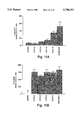
- FIGS. 3A and 3B are bar graphs showing that the intrinsic activity of peptide, peptide-derived and non-peptide ligands at the wild-type CCK-B/gastrin receptor (FIG. 3A) is amplified in a constitutively active receptor mutant (FIG. 3B).
- FIGS. 4A and 4B are illustrations of inositol phosphate production by the non-peptide agonist L-740,093.
- FIG. 4A L-740,093 S stimulated inositol phosphate production in COS-7 cells expressing a constitutively active human CCK-B/gastrin receptor.
- FIGS. 5A and 5B are illustrations of the inositol phosphate production of the non-peptide agonist L-740,093-R.
- FIG. 5A L-740,093 R inhibits basal inositol phosphate production in COS-7 cells expressing a constitutively active human CCK-B/gastrin receptor.
- FIG. 5B The inverse agonist activity induced by 10 nM L-740,093 R is partially abolished by YM022 in a concentration-dependent fashion.
- FIGS. 7A and 7B are competition binding curves showing the extent of 125 I-CCK-8 receptor binding. Binding of 125 I-CCK-8 to COS-7 cells, transiently transfected with hCCK-B-pcDNAI is shown in the presence of increasing concentrations of CCK-8, gastrin I, and CCK-4 (FIG. 7A) and L-364,718 and L-365,260 (FIG. B).
- FIGS. 8A-8C are graphs showing second messenger signaling (i.e., mobilization of intracellular calcium) in COS-7 cells that express the recombinant human brain CCK-B receptor with (FIG. 8A) and without (FIG. 8B) the addition of the calcium chelator, EGTA. This is paralleled by an increased production of inositol phosphate (FIG. 8C).
- FIG. 9 is a schematic representation of the seven transmembrane (TM) domain structure of the human CCK-B/gastrin receptor. The C-terminal domain of the third intracellular loop is highlighted in black.
- FIG. 10 is a bar graph of basal inositol phosphate accumulation in COS-7 cells transfected with wild-type CCK-B/gastrin receptor (WT), or with one of two constitutively active mutants (Mut.1, Mut.2).
- FIG. 11A and 11B are bar graphs showing a functional comparison of the CCK receptors human CCK-A (hCCK-A), human CCK-B (hCCK-B), dog CCK-B (dCCK-B), mouse CCK-B (mCCK-B), and the mastomys CCK receptor.
- L-365,260 Minor chemical modification of L-365,260 resulted in compounds which were pure antagonists (YM022), partial agonists (L-740,093 S) or inverse agonists (L-740,093 R).
- the drug discovery process for novel non-peptide agonists, including those with reverse intrinsic activity, should be guided by using enhanced receptors, e.g., constitutively active mutant receptors, in the screening assay so as to expedite identification of potential lead compounds.
- the constitutively active CCK-B/gastrin receptor mutant 325 L ⁇ E was transiently overexpressed in COS-7 cells. The fact that it was constitutively active was evident from ligand-independent production of inositol phosphate; the wild-type receptor, in contrast, exhibits only ligand-dependent inositol phosphate production. Both mutant and the wild-type receptors induced similar inositol phosphate production when maximally stimulated with the peptide agonists CCK-8s or gastrin I (FIGS. 3A and 3B).
- mutant CCK-B/gastrin receptor allowed detection of the different degrees of intrinsic activities of three benzodiazepine-derived compounds, L-740,093 R, YM022 and L-365,260.
- Each of these compounds were previously considered prototype non-peptide antagonists of the wild-type CCK-B/gastrin receptor (Castro Pineiro et al., WO 94/03437; Lotti et al., Eur. J. Pharmacol., 162:273-280, 1989; Nashida et al., J. Pharmacol. Exp. Ther., 270:1256-61, 1994; Nashida et al., J. Pharmacol. Exp. Ther., 269:725-31, 1994).
- the non-peptide compound L-365,260 had 62% efficacy when compared to the full agonist CCK-8s, and was on that basis identified as a partial agonist in the 325 L ⁇ E constitutively active mutant receptor (FIG. 3A and 3B). In fact, close re-examination of this compound's function in the wild-type CCK-B/gastrin receptor also revealed a barely detectable, yet significant, increase in inositol phosphate production that had not been seen with the other non-peptide compounds.
- L-740,093 S was almost a full agonist in the 325 L ⁇ E CCK-B/gastrin receptor mutant (FIG. 3A and 3B).
- L-740,093 S functions as a partial agonist (25% efficacy compared with CCK-8s).
- L-740,093 S is the first known non-peptide agonist for the CCK-B/gastrin receptor.
- the mirror image of L-740,093 S, L-740,093 R has properties opposite to those of the S enantiomer. L-740,093 R reduces the basal activity of the constitutively active receptor almost to wild-type levels.
- CCK-B/gastrin receptor non-peptide ligands To confirm the functional classification of CCK-B/gastrin receptor non-peptide ligands, basic pharmacologic principles were tested to determine whether they applied to interactions between the CCK-B/gastrin receptor and the benzodiazepine-derived agonists and antagonists.
- YM022 came closest to being a ⁇ perfect ⁇ antagonist, with almost no intrinsic activity on either the wild-type or the constitutively active CCK-B/gastrin receptor. In both the wild-type and the constitutively active receptors, YM022 blocked CCK-8s induced inositol phosphate production with almost identical affinity, reflected by similar pA2 values (9.78 and 9.37, respectively).
- the pA2 value measures the functional affinity of a competitive antagonist.
- pA 2 values are independent of which agonist concentrations are used to measure antagonist affinities.
- pA 2 values should also be independent of what specific agonist compounds are tested to assess antagonist affinities.
- the pA2 value is defined as the negative logarithm of the specific antagonist concentration which shifts the agonist concentration-response curve by a factor of two to the right. In other words, in the presence of a given antagonist concentration, one would need twice as much agonist as would be required in the absence of antagonist to induce the same effect.
- pA 2 values of competitive antagonists are typically assessed by Schift plots, but can also be measured by simplified ⁇ null ⁇ methods (Lazareno et al., Trends in Pharmacol. Sci., 14:237-239, 1993).
- the constitutively active mutant receptor amplified the intrinsic activity of peptide-derived partial agonists ( ⁇ peptoids ⁇ ; Horweil et al., Eur. J. Med. Chem., 30 Suppl.:537S-550S, 1995; Horwell et al., J. Med. Chem., 34:404-14, 1991).
- the peptoids used in the following experiments were derived from sequential modification of CCK-4.
- Two prototype ⁇ peptoid ⁇ compounds, PD 135,158 and PD 136,450 were converted from partial agonists in the wild-type to almost full agonists in the constitutively active CCK-B/gastrin receptor.
- peptide-derived as well as non-peptide compounds have increased efficacy on the constitutively active versus the wild-type CCK-B/gastrin receptor.
- the ratio of wild-type versus mutant receptor affinities fell within a two-fold range (Table 1A).
- Table 1B There was no apparent correlation between the intrinsic activity of CCK-B/gastrin receptor ligands and potency shifts between the wild-type and the constitutively active receptors.
- the constitutively active CCK-B/gastrin receptor illustrates a new strategy using mutant receptors as a ⁇ magnifying glass ⁇ to screen for non-peptide leads with some degree of intrinsic activity. It should be noted that the constitutively active 325 L ⁇ E mutant reliably predicted the intrinsic activity that a compound would possess when stimulating the wild-type receptor (FIG. 6). This was true over the spectrum of peptide, ⁇ peptoid ⁇ , and non-peptide ligands tested.
- the intrinsic activity (percent maximal stimulation of inositol phosphate formation) of all compounds was tested at concentrations that were at least 100-fold higher than the corresponding receptor affinities.
- L-740,093 S was comparable to that observed for the ⁇ peptoid ⁇ ligand PD 135,158, a compound that has been recently demonstrated to be a partial agonist in vivo (Ding et al., Gastroenterology, 109:1181-87, 1995).
- the binding of a ligand to a CCK receptor can be measured according to the following example.
- the binding affinity of a ligand to the human CCK-B/gastrin receptor is measured.
- COS-7 cells (1.5 ⁇ 10 6 ) were plated in 10-cm culture dishes (Nunc) and grown in Dulbecco's modified Eagle's medium containing 10% fetal calf serum in a 5% CO 2 , 95% air incubator at 37° C. After an overnight incubation, cells were transfected (Pacholczyk et al., Nature 350:350-354, 1991) with 5-7 ⁇ g of a pcDNA I expression vector containing hCCKB (HCCKB-pcDNAI). Twenty-four hours after transfection cells were split into 24-well dishes (2 ⁇ 10 4 cells/well) (Costar).
- Unlabeled agonists e.g., CCK-8s, unsulphated CCK-8 (CCK-8us), gastrin I, CCK-4 (Peninsula)
- antagonists L364,718 and L365,260 (Merck)
- the competition data were analyzed using computer software which is specifically designed for the purpose of radioligand binding assays (Inplot 4.0, GraphPad, San Diego, Calif.). Analyses of competition and saturation binding data can also be performed using computerized non-linear curve fitting (McPherson, G. A., J Pharmacol Methods, 14:213-28, 1985).
- CHO Chinese hamster ovary
- This CHO cell line was established by transfecting a hCCKB-pcDNAI Neo expression vector (Invitrogen) into CHO cells using a standard lipofection protocol (Bethesda Research Laboratories) followed by G418 selection.
- binding can be performed, e.g., for 60 min. at 22° C. (Kopin et al., Proc. Natl. Acad. Sci. USA, 89:3605-09, 1992). Separation of bound and free radioligand can be achieved by receptor-binding filtermat filtration (Klueppelberg, U. G., et al., 1989, Biochemistry 28:3463-8).
- Binding of an agonist to a CCK receptor elicits an increase in the intracellular calcium concentration and in phosphatidylinositol hydrolysis.
- COS-7 cells Forty-eight hours after transfection with hCCKB-pcDNAI, COS-7 cells were loaded with the Ca 2+ fluorophore fura-2 in modified Krebs-Ringer bicarbonate buffer. Changes in the fluorescence emission ratios (340:380 nm) after stimulation of cells with 10 -7 M CCK-8s or 10 -6 M gastrin I were measured as previously described (Rajan et al., Diabetes, 38:874-80, 1989). Extracellular calcium can be chelated with EGTA (2.5 mM) to confirm that a gastrin-induced increase in Ca 2+ ! originates primarily from intracellular Ca 2+ ! pools.
- EGTA 2.5 mM
- COS-7 cells transfected with hCCKB-pcDNAI were cultured in inositol-free Dulbecco's modified Eagle's medium (DMEM, GIBCO) which was supplemented with 10 ⁇ Ci/ml 3 H!myoinositol (ARC) for 24 hours prior to analysis. After 1 hour of equilibration in modified Krebs-Ringer bicarbonate, the cells were stimulated with 10 -7 M CCK-8s for 10 seconds and harvested in methanol-HCl.
- DMEM Dulbecco's modified Eagle's medium
- the aqueous phase was extracted with chloroform, lyophilized, and analyzed for inositol 1,4,5-triphosphate (Ins-1,3,4,5-P 3 ) and inositol 1,3,4,5-tetrakisphosphate (Ins-1,3,4,5-P 4 ) by strong anion-exchange high performance liquid chromatography (Auger et al., Cell, 57:167-75, 1989).
- a simplified method for measuring total inositol phosphate content While the above method specifically assesses Ins(1,4,5)P 3 content, a simplified screening method can be used to test for the total concentration of inositol phosphate; the simplified method does not distinguish between specific isoforms. (This method was used to measure inositol phosphate generation for the experiments shown in FIGS. 3, 4, 5, 6, and 10.)
- COS-7 cells transfected with receptor cDNA-pcDNAI were cultured in inositol-free, serum-free Dulbecco's modified Eagle's medium (DMEM, GIBCO), supplemented with 3 ⁇ Ci/ml 3 H-myo-inositol (NEN, 45-80Ci/mmol), for 18 hours prior to analysis.
- DMEM Dulbecco's modified Eagle's medium
- NNN 3 H-myo-inositol
- second messenger signaling activity can be measured according to, e.g., cAMP, cGMP, ppGpp, or calcium ion production, or using as indicators, e.g., intracellular pH, pH-sensitive dyes, or expression of a reporter gene, e.g., a luciferase gene, or measuring channel activity or cell depolarization or hyperpolarization by electrophysiological techniques.
- the screening assay of the invention can be performed using peptide hormone receptors that have a higher activity than the corresponding human wild-type receptor.
- An enhanced basal activity amplifies the intrinsic activity of ligands, and is useful for detecting either activation of the receptor by a partial agonist, or inhibition by an inverse agonist.
- Receptors that do not have an enhanced basal activity relative to the corresponding wild-type receptor, but still amplify the intrinsic activity of a partial agonist, are also useful.
- peptide hormone receptors that are useful for screening non-peptide agonists include various forms of the receptors that interact with the following peptide hormones (along with references for their respective wild-type amino acid sequences): amylin, angiotensin, bombesin, bradykinin, C5a anaphylatoxin, calcitonin, calcitonin-gene related peptide (CGRP), chemokines, cholecystokinin (CCK), endothelin, follicle stimulating hormone (FSH), formyl-methionyl peptides, galanin, gastrin, gastrin releasing peptide, glucagon, glucagon-like peptide 1, glycoprotein hormones, gonadotrophin-releasing hormone, leptin, luteinizing hormone (LH), melanocortins, neuropeptide Y, neurotensin, opioid, oxytocin, parathyroid hormone, secretin, somatostat
- An enhanced receptor can further embrace a single transmembrane domain peptide hormone receptor, e.g., an insulin receptor.
- a single transmembrane domain peptide hormone receptor e.g., an insulin receptor.
- the wild-type amino acid sequences of the above peptide hormone receptors is available in, and/or referenced in, Watson and Arkinstall, The G-Protein Linked Receptor, Academic Press, NY., 1994.
- Forms of a peptide hormone receptor that are capable of amplifying the intrinsic activity of an agonist include, but are not limited to, the following forms of receptors:
- Mutant peptide hormone receptors that are capable of amplifying the intrinsic activity of partial agonists.
- mutant human CCK-A receptor that enhances the intrinsic activity of the partial ⁇ peptoid ⁇ agonist PD 135,158, yet causes no apparent increase in agonist-independent basal receptor activity, is the mutant CCK-A receptor pMHA35.
- pMHA35 was made by replacing amino acids 138-ERY-140 of the human wild-type CCK-A receptor with QRY in the vector pcDNAI. (See FIG. 2 for an illustration of the wild-type CCK-A receptor amino acid sequence.)
- CCK-A receptors in which one or more of residues 138 E, 305 L, and 312 I are replaced with any other amino acid residue, e.g., a serine, aspartic acid, glutamine, or glutamic acid residue.
- CCK-B/gastrin receptors in which one or more of residues 151 E, 325 L, and 332 V are replaced with any other amino acid residue, e.g., a serine, aspartic acid, glutamine, or glutamic acid residue.
- Naturally-Occurring Mutant Receptors including but not limited to naturally-occurring constitutively active mutant receptors, that are associated with a disease or other adverse phenotype, e.g., a phenotype that results from a constitutively active naturally-occurring mutant receptor.
- a disease or other adverse phenotype e.g., a phenotype that results from a constitutively active naturally-occurring mutant receptor.
- Examples include, but are not limited to, the following peptide hormone receptors:
- Mutant receptors of the invention can be constructed by altering the following amino acid residues of the LH receptor: the alanine residue at position 568 to another amino acid, e.g., to a valine (Latronico et al., J. Clin. Endo. & Meta., 80(8):2490-94, 1995); the asparagine residue at position 578 to another amino acid, e.g., to a glycine or a tyrosine (Kosugi et al., Human Mol. Genet., 4(2):183-88, 1995; Laue et al., Proc.
- FSH follicle stimulating hormone
- TSH thyroid stimulating hormone
- a naturally-occurring constitutively active parathyroid (PTH) receptor results from a His to Arg substitution at conserved position 223 (Schipani et al., Science, 268:98-100, 1995).
- a constitutively active mutant G-LP1 receptor can be constructed by substituting alternative amino acids at the corresponding residues in related receptors, e.g., substituting another amino acid for the homologue His in the glucagon-like peptide 1 (G-LP1) receptor.
- G-LP1 glucagon-like peptide 1
- Non-peptide positive or inverse agonists identified in a screening assay employing any of the above-listed naturally occurring mutant receptors can be therapeutically useful against a corresponding adverse phenotype.
- CCK-A and CCK-B/gastrin receptors are both coupled to phospholipase-C activation.
- the third intracellular loop of the CCK-B/gastrin receptor would include residues that are important in second messenger signaling.
- a series of deletion mutations located in the third intracellular loop, each lacking between six and 55 amino acids, were expressed in COS-7 cells and tested for 125 I!CCK-8 binding and 3 H inositol phosphate formation.
- a method for rapidly identifying constitutively active mutant receptors relies on exchanging functional domains between two receptors, the domains being, e.g., approximately 5-10 amino acids in length.
- One of the two receptors is a form of the receptor which is the main template of the desired mutant receptor, e.g., a wild-type receptor; the second receptor is a different peptide hormone receptor from the first.
- Candidate receptors are coupled to different signal transduction pathways, e.g., a signal via a same or different second messenger pathways, yet are closely related in their amino acid sequence. These criteria are based on the idea that stretches of amino acids which function normally in their native context can confer agonist-independent signaling when transplanted into a closely related receptor which is linked to a different second-messenger signaling pathway.
- the domain swapping strategy was used to identify constitutively active mutants of the CCK-B/gastrin receptor.
- a series of short segments in the third intracellular loop were sequentially replaced with homologous amino acid sequence from the vasopressin 2 receptor, which is the receptor most nearly identical in sequence to hCCK-B.
- Vasopressin 2 is also a good candidate for swapping domains with the CCK-B/gastrin receptor because it is, different from the latter, linked to the adenylate cyclase signaling pathway.
- a five amino acid substitution (QAKLL(SEQ ID NO: 13 to AHVSA(SEQ ID NO: 14) into the homologous position of the CCK-B/gastrin receptor resulted in constitutive activity of the CCK-B/gastrin receptor.
- the QAKLL (SEQ ID NO: 13) to AHVSA (SEQ ID NO: 14) substitution caused an increased level of basal inositol phosphate formation to 290% of the wild-type CCK-B/gastrin receptor (FIG. 9, Mutant 2).
- mutations causing constitutive activity include replacement of LL to SA, L to S, and L to E.
- Glutamic acid scanning mutagenesis identifies constitutively active receptors: In addition to, or as a substitute for, deletion analysis or domain swapping, mutant receptors can be made using a process Applicants have named ⁇ amino acid scanning mutagenesis.
- Amino acid scanning mutagenesis involves sequentially replacing each amino acid found in either an intracellular loop or in the half of the transmembrane domain flanking the intracellular portion of the receptor.
- An experimental option is to change the charge of the amino acid, e.g., to exchange a negative for a positive amino acid, a positive for a negative amino acid, or a positive or negative amino acid for a neutral amino acid.
- Another option would be to exchange each amino acid, e.g., each neutral amino acid, with another neutral amino acid.
- deletion analysis was initially used to define a functionally important twelve amino acid segment within the third intracellular loop which was important for second messenger signaling. Subsequently, each of the neutral amino acids within the 12 this segment was replaced sequentially with another amino acid, preferably with glutamic acid.
- the scanning analysis technique revealed that one of the glutamic acid substitutions caused a 228% increase in the basal-level of inositol phosphate accumulation, relative to the wild-type value, in transiently transfected COS-7 cells (FIG. 9, Mutant 1).
- Constitutively active receptors include an amino acid replacement of 323 A ⁇ E (MH31 SEQ ID NO: 17), 324 K ⁇ E (MH131 SEQ ID NO: 18), 325 L ⁇ E (MH162 SEQ ID NO: 19), 327 A ⁇ E (MH13 SEQ ID NO: 20), 331 V ⁇ E (MH130 SEQ ID NO: 21), 332 V ⁇ E (MH129 SEQ ID NO: 22), and 331 VV ⁇ EE (MH72), respectively, all in pcDNAI vectors, as described above.
- FIG. 9 is a schematic representation of the seven transmembrane (TM) domain structure of the human CCK-B/gastrin receptor.
- two mutations were found to confer constitutive activity on the receptor.
- One of the mutations was constructed by glutamic acid substitution scanning (Mutant 1; MH129 SEQ ID NO: 22); a second mutation was constructed by domain swapping (Mutant 2; MH162 SEQ ID NO: 19).
- a third method for making a mutant receptor is to align the receptor of interest with a known constitutively active mutant receptor, including, but not limited to, peptide hormone, biogenic amine, rhodopsin, or other G-protein coupled receptors.
- a known constitutively active mutant receptor including, but not limited to, peptide hormone, biogenic amine, rhodopsin, or other G-protein coupled receptors.
- FIG. 2 An example of such an alignment is shown in FIG. 2.
- mutations which result in constitutive activity in the known mutant can be introduced into the corresponding position of the receptor of interest.
- known constitutively active mutant receptors include, but are not limited to, the follicle stimulating hormone (FSH) receptor, the thyroid stimulating hormone (TSH) receptor, and the luteinizing hormone receptor, e.g., a 568 Ala to Val mutation in the LH receptor (Latronico et al., J. Clin. Endo. & Meta., 80(8):2490-94, 1995).
- This method was employed to construct a CCK-A mutant receptor.
- a multiple alignment map was made which included the human and rat CCK-A sequences, the mastomys, rat, human, and canine CCK-B/gastrin receptor, and a Xenopus CCK-A/CCK-B intermediate receptor (CCK-XL; FIG. 2).
- conserved amino acids 138-ERY-140 of the CCK-A receptor were replaced with amino acids QRY, based on a known constitutively active rhodopsin mutant with enhanced transducin activation (Arnis et al., J. Biol. Chem., 269:23879-81, 1994).
- the altered amino acid residues are positioned in transmembrane domain III and flank the second intracellular loop. Although the basal level of signaling was not increased, the intrinsic activity of the non-peptide ligand PD 135,158 was significantly increased.
- Additional mutant receptors can be made by sequentially deleting intracellular portions of the receptor, and looking for an increase in basal activity, or for overactivity of a partial agonist, relative to the wild-type receptor.
- Peptide hormone receptors useful in the method of the invention can include non-human receptors which have the ability to amplify the intrinsic activity of non-peptide agonist than does the corresponding human wild-type receptor, or which have a higher basal level of activity than does the human wild-type receptor.
- basal levels of inositol phosphate production were measured for human CCK-A (hCCK-A), human CCK-B (hCCK-B), dog CCK-B (dCCK-B), mouse CCK-B (mCCK-B), and the mastomys CCK receptor (FIG. 11A), and expressed relative to the basal level of hCCK-B.
- the wild-type human CCK-A and CCK-B/gastrin receptors induced only insignificant changes of basal inositol phosphate production in COS-7 cells (as compared to control cells transfected with the empty plasmid vector, pcDNAI).
- the wild-type rat CCK-A and canine CCK-B/gastrin receptors, as well as the closely related Xenopus CCK receptor all appeared more or less functionally silent in the basal state.
- the wild type mouse CCK-B/gastrin receptor and its homologue from mastomys natalensis significantly increased basal inositol phosphate production in COS-7 cells over pcDNAI controls.
Landscapes
- Health & Medical Sciences (AREA)
- Life Sciences & Earth Sciences (AREA)
- Chemical & Material Sciences (AREA)
- Molecular Biology (AREA)
- Engineering & Computer Science (AREA)
- Organic Chemistry (AREA)
- Immunology (AREA)
- Zoology (AREA)
- Proteomics, Peptides & Aminoacids (AREA)
- General Health & Medical Sciences (AREA)
- Biochemistry (AREA)
- Analytical Chemistry (AREA)
- Biotechnology (AREA)
- Genetics & Genomics (AREA)
- Medicinal Chemistry (AREA)
- Physics & Mathematics (AREA)
- Microbiology (AREA)
- Hematology (AREA)
- Cell Biology (AREA)
- Endocrinology (AREA)
- Wood Science & Technology (AREA)
- Biophysics (AREA)
- Urology & Nephrology (AREA)
- Biomedical Technology (AREA)
- Pathology (AREA)
- General Physics & Mathematics (AREA)
- Bioinformatics & Cheminformatics (AREA)
- General Engineering & Computer Science (AREA)
- Food Science & Technology (AREA)
- Toxicology (AREA)
- Gastroenterology & Hepatology (AREA)
- Peptides Or Proteins (AREA)
- Investigating Or Analysing Biological Materials (AREA)
Abstract
Description
              TABLE 1
______________________________________
        Wild-type               Ratio
        receptor    .sup.325 L→E Mutant
                                (Wild-type/
Compound
        Ki (nM)     Ki (nM)     Mutant)
______________________________________
A) .sup.125 I CCK-8 binding affinities of tested ligands
Gastrin I
        1.35 ± 0.28
                    0.80 ± 0.16
                                1.69
CCK-8s  0.12 ± 0.01
                    0.07 ± 0.01
                                1.71
PD 135,158
        2.25 ± 0.61
                    1.01 ± 0.19
                                2.23
PD 136,450
        0.99 ± 0.1
                    0.59 ± 0.12
                                1.68
L-740,093 R
        0.19 ± 0.02
                    0.18 ± 0.04
                                1.06
YM022   0.07 ± 0.01
                    0.08 ± 0.01
                                0.88
L-364,718
        150 ± 42 170 ± 34 0.88
L-365,158
        7.16 ± 0.87
                    7.83 ± 1.51
                                0.91
L-740,093 S
        19.5 ± 1.5
                     16 ± 1.4
                                1.22
______________________________________
        Wild-type
        receptor    .sup.325 L→E Mutant
                                Ratio
        IC50 (nM)   IC50 (nM)   (Wild-type/
Compound
        95% C.I.    95% C.I.    Mutant)
______________________________________
B) Signaling potencies of tested ligands
Gastrin I
        0.24 (0.12-0.48)
                    0.20 (0.06-0.69)
                                1.20
CCK-8s  0.14 (0.11-0.19)
                    0.15 (0.08-0.30)
                                0.93
PD 135,158
        1.05 (0.29-3.83)
                    1.01 (0.21-4.80)
                                1.04
PD 136,450
        0.36 (0.04-3.35)
                    0.58 (0.23-1.46)
                                0.62
______________________________________
__________________________________________________________________________
309             transmembrane domain VI
                                   359
LT
  APGPGSGSRP
         TQAKLLAKKR
                VVRMLLVIVV
                       LFFLCWLPVY
                              SANTWR
                                   AFD
                                      (SEQ ID NO: 8)
AHVSA
      MH40!                           (SEQ ID NO: 9)
SA    MH128!                          (SEQ ID NO: 10)
S     MH156)                          (SEQ ID NO: 11)
E     MH162)                          (SEQ ID NO: 12)
__________________________________________________________________________
__________________________________________________________________________
309                                359
LT
  APGPGSGSRP
         TQAKLLAKKR
                VVRMLLVIVV
                       LFFLCWLPVY
                              SANTWR
                                   AFD
          | | |
                | | (SEQ ID NO: 15)
          E E E E E                   (SEQ ID NO: 16)
__________________________________________________________________________
              TABLE 2
______________________________________
basal         (% of      CCK-8s stimulated
receptor      human basal)
                         (% human basal)
______________________________________
rat CCK-A     77         684
Xenopus CCK   74         442
.sup.325 L to E CCKA
              231 ± 7 771 ± 36
______________________________________
__________________________________________________________________________
SEQUENCE LISTING
(1) GENERAL INFORMATION:
(iii) NUMBER OF SEQUENCES: 23
(2) INFORMATION FOR SEQ ID NO:1:
(i) SEQUENCE CHARACTERISTICS:
(A) LENGTH: 449 amino acids
(B) TYPE: amino acid
(C) STRANDEDNESS: Not Relevant
(D) TOPOLOGY: linear
(ii) MOLECULE TYPE: protein
(xi) SEQUENCE DESCRIPTION: SEQ ID NO:1:
MetGluLeuLeuLysLeuAsnSerSerValGlnGlyProGlyProGly
151015
SerGlySerSerLeuCysHisProGlyValSerLeuLeuAsnSerSer
202530
AlaGlyAsnLeuSerCysGluProProArgIleArgGlyThrGlyThr
354045
ArgGluLeuGluLeuAlaIleArgIleThrLeuTyrAlaValIlePhe
505560
LeuMetSerIleGlyGlyAsnMetLeuIleIleValValLeuGlyLeu
65707580
SerArgArgLeuArgThrValThrAsnAlaPheLeuLeuSerLeuAla
859095
ValSerAspLeuLeuLeuAlaValAlaCysMetProPheThrLeuLeu
100105110
ProAsnLeuMetGlyThrPheIlePheGlyThrValIleCysLysAla
115120125
ValSerTyrLeuMetGlyValSerValSerValSerThrLeuAsnLeu
130135140
ValAlaIleAlaLeuGluArgTyrSerAlaIleCysArgProLeuGln
145150155160
AlaArgValTrpGlnThrArgSerHisAlaAlaArgValIleLeuAla
165170175
ThrTrpLeuLeuSerGlyLeuLeuMetValProTyrProValTyrThr
180185190
ValValGlnProValGlyProArgValLeuGlnCysMetHisArgTrp
195200205
ProSerAlaArgValArgGlnThrTrpSerValLeuLeuLeuMetLeu
210215220
LeuPhePheIleProGlyValValMetAlaValAlaTyrGlyLeuIle
225230235240
SerArgGluLeuTyrLeuGlyLeuArgPheAspGlyAspAsnAspSer
245250255
AspThrGlnSerArgValArgAsnGlnGlyGlyLeuProGlyGlyThr
260265270
AlaProGlyProValHisGlnAsnGlyGlyCysArgHisValThrVal
275280285
AlaGlyGluAspAsnAspGlyCysTyrValGlnLeuProArgSerArg
290295300
LeuGluMetThrThrLeuThrThrProThrProGlyProGlyLeuAla
305310315320
SerAlaAsnGlnAlaLysLeuLeuAlaLysLysArgValValArgMet
325330335
LeuLeuValIleValLeuLeuPhePheLeuCysTrpLeuProIleTyr
340345350
SerAlaAsnThrTrpCysAlaPheAspGlyProGlyAlaMetArgAla
355360365
LeuSerGlyAlaProIleSerPheIleHisLeuLeuSerTyrAlaSer
370375380
AlaCysValAsnProLeuValTyrCysPheMetHisArgArgPheArg
385390395400
GlnAlaCysLeuAspThrCysAlaArgCysCysProArgProProArg
405410415
AlaArgProArgProLeuProAspGluAspProProThrProSerIle
420425430
AlaSerLeuSerArgLeuSerTyrThrThrIleSerThrLeuGlyPro
435440445
Gly
(2) INFORMATION FOR SEQ ID NO:2:
(i) SEQUENCE CHARACTERISTICS:
(A) LENGTH: 451 amino acids
(B) TYPE: amino acid
(C) STRANDEDNESS: Not Relevant
(D) TOPOLOGY: linear
(ii) MOLECULE TYPE: protein
(xi) SEQUENCE DESCRIPTION: SEQ ID NO:2:
MetGluLeuLeuLysLeuAsnArgSerValGlnGlyProGlyProGly
151015
SerGlySerSerLeuCysArgProGlyValSerLeuLeuAsnSerSer
202530
SerAlaGlyAsnLeuSerCysAspProProArgIleArgGlyThrGly
354045
ThrArgGluLeuGluMetAlaIleArgIleThrLeuTyrAlaValIle
505560
PheLeuMetSerValGlyGlyAsnValLeuIleIleValValLeuGly
65707580
LeuSerArgArgLeuArgThrValThrAsnAlaPheLeuLeuSerLeu
859095
AlaValSerAspLeuLeuLeuAlaValAlaCysMetProPheThrLeu
100105110
LeuProAsnLeuMetGlyThrPheIlePheGlyThrValIleCysLys
115120125
AlaIleSerTyrLeuMetGlyValSerValSerValSerThrLeuAsn
130135140
LeuValAlaIleAlaLeuGluArgTyrSerAlaIleCysArgProLeu
145150155160
GlnAlaArgValTrpGlnThrArgSerHisAlaAlaArgValIleLeu
165170175
AlaThrTrpLeuLeuSerGlyLeuLeuMetValProTyrProValTyr
180185190
ThrMetValGlnProValGlyProArgValLeuGlnCysMetHisArg
195200205
TrpProSerAlaArgValGlnGlnThrTrpSerValLeuLeuLeuLeu
210215220
LeuLeuPhePheIleProGlyValValIleAlaValAlaTyrGlyLeu
225230235240
IleSerArgGluLeuTyrLeuGlyLeuHisPheAspGlyGluAsnAsp
245250255
SerGluThrGlnSerArgAlaArgAsnGlnGlyGlyLeuProGlyGly
260265270
AlaAlaProGlyProValHisGlnAsnGlyGlyCysArgProValThr
275280285
SerValAlaGlyGluAspSerAspGlyCysCysValGlnLeuProArg
290295300
SerArgLeuGluMetThrThrLeuThrThrProThrGlyProValPro
305310315320
GlyProArgProAsnGlnAlaLysLeuLeuAlaLysLysArgValVal
325330335
ArgMetLeuLeuValIleValLeuLeuPhePheLeuCysTrpLeuPro
340345350
ValTyrSerValAsnThrTrpArgAlaPheAspGlyProGlyAlaGln
355360365
ArgAlaLeuSerGlyAlaProIleSerPheIleHisLeuLeuSerTyr
370375380
ValSerAlaCysValAsnProLeuValTyrCysPheMetHisArgArg
385390395400
PheArgGlnAlaCysLeuAspThrCysAlaArgCysCysProArgPro
405410415
ProArgAlaArgProGlnProLeuProAspGluAspProProThrPro
420425430
SerIleAlaSerLeuSerArgLeuSerTyrThrThrIleSerThrLeu
435440445
GlyProGly
450
(2) INFORMATION FOR SEQ ID NO:3:
(i) SEQUENCE CHARACTERISTICS:
(A) LENGTH: 448 amino acids
(B) TYPE: amino acid
(C) STRANDEDNESS: Not Relevant
(D) TOPOLOGY: linear
(ii) MOLECULE TYPE: protein
(xi) SEQUENCE DESCRIPTION: SEQ ID NO:3:
MetGluLeuLeuLysLeuAsnArgSerValGlnGlyThrGlyProGly
151015
ProGlyAlaSerLeuCysArgProGlyAlaProLeuLeuAsnSerSer
202530
SerValGlyAsnLeuSerCysGluProProArgIleArgGlyAlaGly
354045
ThrArgGluLeuGluLeuAlaIleArgIleThrLeuTyrAlaValIle
505560
PheLeuMetSerValGlyGlyAsnMetLeuIleIleValValLeuGly
65707580
LeuSerArgArgLeuArgThrValThrAsnAlaPheLeuLeuSerLeu
859095
AlaValSerAspLeuLeuLeuAlaValAlaCysMetProPheThrLeu
100105110
LeuProAsnLeuMetGlyThrPheIlePheGlyThrValIleCysLys
115120125
AlaValSerTyrLeuMetGlyValSerValSerValSerThrLeuSer
130135140
LeuValAlaIleAlaLeuGluArgTyrSerAlaIleCysArgProLeu
145150155160
GlnAlaArgValTrpGlnThrArgSerHisAlaAlaArgValIleVal
165170175
AlaThrTrpLeuLeuSerGlyLeuLeuMetValProTyrProValTyr
180185190
ThrValValGlnProValGlyProArgValLeuGlnCysValHisArg
195200205
TrpProSerAlaArgValArgGlnThrTrpSerValLeuLeuLeuLeu
210215220
LeuLeuPhePheIleProGlyValValMetAlaValAlaTyrGlyLeu
225230235240
IleSerArgGluLeuTyrLeuGlyLeuArgPheAspGlyAspSerAsp
245250255
SerAspSerGlnSerArgValArgAsnGlnGlyGlyLeuProGlyAla
260265270
ValHisGlnAsnGlyArgCysArgProGluThrGlyAlaValGlyGlu
275280285
AspSerAspGlyCysTyrValGlnLeuProArgSerArgProAlaLeu
290295300
GluLeuThrAlaLeuThrAlaProGlyProGlyGlySerGlySerArg
305310315320
ProThrGlnAlaLysLeuLeuAlaLysLysArgValValArgMetLeu
325330335
LeuValIleValValLeuPhePheLeuCysTrpLeuProValTyrSer
340345350
AlaAsnThrTrpArgAlaPheAspGlyProGlyAlaHisArgAlaLeu
355360365
SerGlyAlaProIleSerPheIleHisLeuLeuSerTyrAlaSerAla
370375380
CysValAsnProLeuValTyrCysPheMetHisArgArgPheArgGln
385390395400
AlaCysLeuGluThrCysAlaArgCysCysProArgProProArgAla
405410415
ArgProArgAlaLeuProAspGluAspProProThrProSerIleAla
420425430
SerLeuSerArgLeuSerTyrThrThrIleSerThrLeuGlyProGly
435440445
(2) INFORMATION FOR SEQ ID NO:4:
(i) SEQUENCE CHARACTERISTICS:
(A) LENGTH: 453 amino acids
(B) TYPE: amino acid
(C) STRANDEDNESS: Not Relevant
(D) TOPOLOGY: linear
(ii) MOLECULE TYPE: protein
(xi) SEQUENCE DESCRIPTION: SEQ ID NO:4:
MetGluLeuLeuLysLeuAsnArgSerAlaGlnGlySerGlyAlaGly
151015
ProGlyAlaSerLeuCysArgAlaGlyGlyAlaLeuLeuAsnSerSer
202530
GlyAlaGlyAsnLeuSerCysGluProProArgLeuArgGlyAlaGly
354045
ThrArgGluLeuGluLeuAlaIleArgValThrLeuTyrAlaValIle
505560
PheLeuMetSerValGlyGlyAsnValLeuIleIleValValLeuGly
65707580
LeuSerArgArgLeuArgThrValThrAsnAlaPheLeuLeuSerLeu
859095
AlaValSerAspLeuLeuLeuAlaValAlaCysMetProPheThrLeu
100105110
LeuProAsnLeuMetGlyThrPheIlePheGlyThrValValCysLys
115120125
AlaValSerTyrLeuMetGlyValSerValSerValSerThrLeuSer
130135140
LeuValAlaIleAlaLeuGluArgTyrSerAlaIleCysArgProLeu
145150155160
GlnAlaArgValTrpGlnThrArgSerHisAlaAlaArgValIleIle
165170175
AlaThrTrpMetLeuSerGlyLeuLeuMetValProTyrProValTyr
180185190
ThrAlaValGlnProAlaGlyGlyAlaArgAlaLeuGlnCysValHis
195200205
ArgTrpProSerAlaArgValArgGlnThrTrpSerValLeuLeuLeu
210215220
LeuLeuLeuPhePheValProGlyValValMetAlaValAlaTyrGly
225230235240
LeuIleSerArgGluLeuTyrLeuGlyLeuArgPheAspGluAspSer
245250255
AspSerGluSerArgValArgSerGlnGlyGlyLeuArgGlyGlyAla
260265270
GlyProGlyProAlaProProAsnGlySerCysArgProGluGlyGly
275280285
LeuAlaGlyGluAspGlyAspGlyCysTyrValGlnLeuProArgSer
290295300
ArgGlnThrLeuGluLeuSerAlaLeuThrAlaProThrProGlyPro
305310315320
GlyGlyGlyProArgProTyrGlnAlaLysLeuLeuAlaLysLysArg
325330335
ValValArgMetLeuLeuValIleValValLeuPhePheLeuCysTrp
340345350
LeuProLeuTyrSerAlaAsnThrTrpArgAlaPheAspSerSerGly
355360365
AlaHisArgAlaLeuSerGlyAlaProIleSerPheIleHisLeuLeu
370375380
SerTyrAlaSerAlaCysValAsnProLeuValTyrCysPheMetHis
385390395400
ArgArgPheArgGlnAlaCysLeuGluThrCysAlaArgCysCysPro
405410415
ArgProProArgAlaArgProArgProLeuProAspGluAspProPro
420425430
ThrProSerIleAlaSerLeuSerArgLeuSerTyrThrThrIleSer
435440445
ThrLeuGlyProGly
450
(2) INFORMATION FOR SEQ ID NO:5:
(i) SEQUENCE CHARACTERISTICS:
(A) LENGTH: 428 amino acids
(B) TYPE: amino acid
(C) STRANDEDNESS: Not Relevant
(D) TOPOLOGY: linear
(ii) MOLECULE TYPE: protein
(xi) SEQUENCE DESCRIPTION: SEQ ID NO:5:
MetAspValValAspSerLeuLeuValAsnGlySerAsnIleThrPro
151015
ProCysGluLeuGlyLeuGluAsnGluThrLeuPheCysLeuAspGln
202530
ProArgProSerLysGluTrpGlnProAlaValGlnIleLeuLeuTyr
354045
SerLeuIlePheLeuLeuSerValLeuGlyAsnThrLeuValIleThr
505560
ValLeuIleArgAsnLysArgMetArgThrValThrAsnIlePheLeu
65707580
LeuSerLeuAlaValSerAspLeuMetLeuCysLeuPheCysMetPro
859095
PheAsnLeuIleProAsnLeuLeuLysAspPheIlePheGlySerAla
100105110
ValCysLysThrThrThrTyrPheMetGlyThrSerValSerValSer
115120125
ThrPheAsnLeuValAlaIleSerLeuGluArgTyrGlyAlaIleCys
130135140
LysProLeuGlnSerArgValTrpGlnThrLysSerHisAlaLeuLys
145150155160
ValIleAlaAlaThrTrpCysLeuSerPheThrIleMetThrProTyr
165170175
ProIleTyrSerAsnLeuValProPheThrLysAsnAsnAsnGlnThr
180185190
AlaAsnMetCysArgPheLeuLeuProAsnAspValMetGlnGlnSer
195200205
TrpHisThrPheLeuLeuLeuIleLeuPheLeuIleProGlyIleVal
210215220
MetMetValAlaTyrGlyLeuIleSerLeuGluLeuTyrGlnGlyIle
225230235240
LysPheGluAlaSerGlnLysLysSerAlaLysGluArgLysProSer
245250255
ThrThrSerSerGlyLysTyrGluAspSerAspGlyCysTyrLeuGln
260265270
LysThrArgProProArgLysLeuGluLeuArgGlnLeuSerThrGly
275280285
SerSerSerArgAlaAsnArgIleArgSerAsnSerSerAlaAlaAsn
290295300
LeuMetAlaLysLysArgValIleArgMetLeuIleValIleValVal
305310315320
LeuPhePheLeuCysTrpMetProIlePheSerAlaAsnAlaTrpArg
325330335
AlaTyrAspThrAlaSerAlaGluArgArgLeuSerGlyThrProIle
340345350
SerPheIleLeuLeuLeuSerTyrThrSerSerCysValAsnProIle
355360365
IleTyrCysPheMetAsnLysArgPheArgLeuGlyPheMetAlaThr
370375380
PheProCysCysProAsnProGlyProProGlyAlaArgGlyGluVal
385390395400
GlyGluGluGluGluGlyGlyThrThrGlyAlaSerLeuSerArgPhe
405410415
SerTyrSerHisMetSerAlaSerValProProGln
420425
(2) INFORMATION FOR SEQ ID NO:6:
(i) SEQUENCE CHARACTERISTICS:
(A) LENGTH: 443 amino acids
(B) TYPE: amino acid
(C) STRANDEDNESS: Not Relevant
(D) TOPOLOGY: linear
(ii) MOLECULE TYPE: protein
(xi) SEQUENCE DESCRIPTION: SEQ ID NO:6:
MetSerHisSerProAlaArgGlnHisLeuValGluSerSerArgMet
151015
AspValValAspSerLeuLeuMetAsnGlySerAsnIleThrProPro
202530
CysGluLeuGlyLeuGluAsnGluThrLeuPheCysLeuAspGlnPro
354045
GlnProSerLysGluTrpGlnSerAlaLeuGlnIleLeuLeuTyrSer
505560
IleIlePheLeuLeuSerValLeuGlyAsnThrLeuValIleThrVal
65707580
LeuIleArgAsnLysArgMetArgThrValThrAsnIlePheLeuLeu
859095
SerLeuAlaValSerAspLeuMetLeuCysPheCysMetProPheAsn
100105110
LeuIleProAsnLeuLeuLysAspPheIlePheGlySerAlaValCys
115120125
LysThrThrThrTyrPheMetGlyThrSerValSerValSerThrPhe
130135140
AsnLeuValAlaIleSerLeuGluArgTyrGlyAlaIleCysArgPro
145150155160
LeuGlnSerArgValTrpGlnThrLysSerHisAlaLeuLysValIle
165170175
AlaAlaThrTrpCysLeuSerPheThrIleMetThrProTyrProIle
180185190
TyrSerAsnLeuValProPheThrLysAsnAsnAsnGlnThrAlaAsn
195200205
MetCysArgPheLeuLeuProSerAspAlaMetGlnGlnSerTrpGln
210215220
ThrPheLeuLeuLeuIleLeuPheLeuLeuProGlyIleValMetVal
225230235240
ValAlaTyrGlyLeuIleSerLeuGluLeuTyrGlnGlyIleLysPhe
245250255
AspAlaSerGlnLysLysSerAlaLysGluLysLysProSerThrGly
260265270
SerSerThrArgTyrGluAspSerAspGlyCysTyrLeuGlnLysSer
275280285
ArgProProArgLysLeuGluLeuGlnGlnLeuSerSerGlySerGly
290295300
GlySerArgLeuAsnArgIleArgSerSerSerSerAlaAlaAsnLeu
305310315320
IleAlaLysLysArgValIleArgMetLeuIleValIleValValLeu
325330335
PhePheLeuCysTrpMetProIlePheSerAlaAsnAlaTrpArgAla
340345350
TyrAspThrValSerAlaGluLysHisLeuSerGlyThrProIleSer
355360365
PheIleLeuLeuLeuSerTyrThrSerSerCysValAsnProIleIle
370375380
TyrCysPheMetAsnLysArgPheArgLeuGlyPheMetAlaThrPhe
385390395400
ProCysCysProAsnProGlyProProGlyValArgGlyGluValGly
405410415
GluGluGluAspGlyArgThrIleArgAlaLeuLeuSerArgTyrSer
420425430
TyrSerHisMetSerThrSerAlaProProPro
435440
(2) INFORMATION FOR SEQ ID NO:7:
(i) SEQUENCE CHARACTERISTICS:
(A) LENGTH: 453 amino acids
(B) TYPE: amino acid
(C) STRANDEDNESS: Not Relevant
(D) TOPOLOGY: linear
(ii) MOLECULE TYPE: protein
(xi) SEQUENCE DESCRIPTION: SEQ ID NO:7:
MetGluSerLeuArgSerLeuSerAsnIleSerAlaLeuHisGluLeu
151015
LeuCysArgTyrSerAsnLeuSerGlyThrLeuThrTrpAsnLeuSer
202530
SerThrAsnGlyThrHisAsnLeuThrThrAlaAsnTrpProProTrp
354045
AsnLeuAsnCysThrProIleLeuAspArgLysLysProSerProSer
505560
AspLeuAsnLeuTrpValArgIleValMetTyrSerValIlePheLeu
65707580
LeuSerValPheGlyAsnThrLeuIleIleIleValLeuValMetAsn
859095
LysArgLeuArgThrIleThrAsnSerPheLeuLeuSerLeuAlaLeu
100105110
SerAspLeuMetValAlaValLeuCysMetProPheThrLeuIlePro
115120125
AsnLeuMetGluAsnPheIlePheGlyGluValIleCysArgAlaAla
130135140
AlaTyrPheMetGlyLeuSerValSerValSerThrPheAsnLeuVal
145150155160
AlaIleSerIleGluArgTyrSerAlaIleCysAsnProLeuXaaSer
165170175
ArgValTrpGlnThrArgSerHisAlaTyrArgValIleAlaAlaThr
180185190
TrpValLeuSerSerIleIleMetIleProTyrLeuValTyrAsnLys
195200205
ThrValThrPheProMetLysAspArgArgValGlyHisGlnCysArg
210215220
LeuValTrpProSerLysGlnValGlnGlnAlaTrpTyrValLeuLeu
225230235240
LeuThrIleLeuPhePheIleProGlyValValMetIleValAlaTyr
245250255
GlyLeuIleSerArgGluLeuTyrArgGlyIleGlnPheGluMetAsp
260265270
LeuAsnLysGluAlaLysAlaHisLysAsnGlyValSerThrProThr
275280285
ThrIleProSerGlyAspGluGlyAspGlyCysTyrIleGlnValThr
290295300
LysArgArgAsnThrMetGluMetSerThrLeuThrProSerValCys
305310315320
ThrLysMetAspArgAlaArgIleAsnAsnSerGluAlaLysLeuMet
325330335
AlaLysLysArgValIleArgMetLeuIleValIleValAlaMetPhe
340345350
PheIleCysTrpMetProIlePheValAlaAsnThrTrpLysAlaPhe
355360365
AspGluLeuSerAlaPheAsnThrLeuThrGlyAlaProIleSerPhe
370375380
IleHisLeuLeuSerTyrThrSerAlaCysValAsnProLeuIleTyr
385390395400
CysPheMetAsnLysArgPheArgLysAlaPheLeuGlyThrPheSer
405410415
SerCysIleLysProCysArgAsnPheArgAspThrAspGluAspIle
420425430
AlaAlaThrGlyAlaSerLeuSerLysPheSerTyrThrThrValSer
435440445
SerLeuGlyProAla
450
(2) INFORMATION FOR SEQ ID NO:8:
(i) SEQUENCE CHARACTERISTICS:
(A) LENGTH: 51 amino acids
(B) TYPE: amino acid
(C) STRANDEDNESS: Not Relevant
(D) TOPOLOGY: linear
(ii) MOLECULE TYPE: protein
(xi) SEQUENCE DESCRIPTION: SEQ ID NO:8:
LeuThrAlaProGlyProGlySerGlySerArgProThrGlnAlaLys
151015
LeuLeuAlaLysLysArgValValArgMetLeuLeuValIleValVal
202530
LeuPhePheLeuCysTrpLeuProValTyrSerAlaAsnThrTrpArg
354045
AlaPheAsp
50
(2) INFORMATION FOR SEQ ID NO:9:
(i) SEQUENCE CHARACTERISTICS:
(A) LENGTH: 51 amino acids
(B) TYPE: amino acid
(C) STRANDEDNESS: Not Relevant
(D) TOPOLOGY: linear
(ii) MOLECULE TYPE: protein
(xi) SEQUENCE DESCRIPTION: SEQ ID NO:9:
LeuThrAlaProGlyProGlySerGlySerArgProThrAlaHisVal
151015
SerAlaAlaLysLysArgValValArgMetLeuLeuValIleValVal
202530
LeuPhePheLeuCysTrpLeuProValTyrSerAlaAsnThrTrpArg
354045
AlaPheAsp
50
(2) INFORMATION FOR SEQ ID NO:10:
(i) SEQUENCE CHARACTERISTICS:
(A) LENGTH: 51 amino acids
(B) TYPE: amino acid
(C) STRANDEDNESS: Not Relevant
(D) TOPOLOGY: linear
(ii) MOLECULE TYPE: protein
(xi) SEQUENCE DESCRIPTION: SEQ ID NO:10:
LeuThrAlaProGlyProGlySerGlySerArgProThrGlnAlaLys
151015
SerAlaAlaLysLysArgValValArgMetLeuLeuValIleValVal
202530
LeuPhePheLeuCysTrpLeuProValTyrSerAlaAsnThrTrpArg
354045
AlaPheAsp
50
(2) INFORMATION FOR SEQ ID NO:11:
(i) SEQUENCE CHARACTERISTICS:
(A) LENGTH: 51 amino acids
(B) TYPE: amino acid
(C) STRANDEDNESS: Not Relevant
(D) TOPOLOGY: linear
(ii) MOLECULE TYPE: protein
(xi) SEQUENCE DESCRIPTION: SEQ ID NO:11:
LeuThrAlaProGlyProGlySerGlySerArgProThrGlnAlaLys
151015
SerLeuAlaLysLysArgValValArgMetLeuLeuValIleValVal
202530
LeuPhePheLeuCysTrpLeuProValTyrSerAlaAsnThrTrpArg
354045
AlaPheAsp
50
(2) INFORMATION FOR SEQ ID NO:12:
(i) SEQUENCE CHARACTERISTICS:
(A) LENGTH: 51 amino acids
(B) TYPE: amino acid
(C) STRANDEDNESS: Not Relevant
(D) TOPOLOGY: linear
(ii) MOLECULE TYPE: protein
(xi) SEQUENCE DESCRIPTION: SEQ ID NO:12:
LeuThrAlaProGlyProGlySerGlySerArgProThrGlnAlaLys
151015
GluLeuAlaLysLysArgValValArgMetLeuLeuValIleValVal
202530
LeuPhePheLeuCysTrpLeuProValTyrSerAlaAsnThrTrpArg
354045
AlaPheAsp
50
(2) INFORMATION FOR SEQ ID NO:13:
(i) SEQUENCE CHARACTERISTICS:
(A) LENGTH: 5 amino acids
(B) TYPE: amino acid
(C) STRANDEDNESS: Not Relevant
(D) TOPOLOGY: linear
(ii) MOLECULE TYPE: protein
(xi) SEQUENCE DESCRIPTION: SEQ ID NO:13:
GlnAlaLysLeuLeu
15
(2) INFORMATION FOR SEQ ID NO:14:
(i) SEQUENCE CHARACTERISTICS:
(A) LENGTH: 5 amino acids
(B) TYPE: amino acid
(C) STRANDEDNESS: Not Relevant
(D) TOPOLOGY: linear
(ii) MOLECULE TYPE: protein
(xi) SEQUENCE DESCRIPTION: SEQ ID NO:14:
AlaHisTyrSerAla
15
(2) INFORMATION FOR SEQ ID NO:15:
(i) SEQUENCE CHARACTERISTICS:
(A) LENGTH: 51 amino acids
(B) TYPE: amino acid
(C) STRANDEDNESS: Not Relevant
(D) TOPOLOGY: linear
(ii) MOLECULE TYPE: protein
(xi) SEQUENCE DESCRIPTION: SEQ ID NO:15:
LeuThrAlaProGlyProGlySerGlySerArgProThrGlnAlaLys
151015
LeuLeuAlaLysLysArgValValArgMetLeuLeuValIleValVal
202530
LeuPhePheLeuCysTrpLeuProValTyrSerAlaAsnThrTrpArg
354045
AlaPheAsp
50
(2) INFORMATION FOR SEQ ID NO:16:
(i) SEQUENCE CHARACTERISTICS:
(A) LENGTH: 51 amino acids
(B) TYPE: amino acid
(C) STRANDEDNESS: Not Relevant
(D) TOPOLOGY: linear
(ii) MOLECULE TYPE: protein
(xi) SEQUENCE DESCRIPTION: SEQ ID NO:16:
LeuThrAlaProGlyProGlySerGlySerArgProThrGlnGluLys
151015
GluLeuGluLysLysArgGluGluArgMetLeuLeuValIleValVal
202530
LeuPhePheLeuCysTrpLeuProValTyrSerAlaAsnThrTrpArg
354045
AlaPheAsp
50
(2) INFORMATION FOR SEQ ID NO:17:
(i) SEQUENCE CHARACTERISTICS:
(A) LENGTH: 51 amino acids
(B) TYPE: amino acid
(C) STRANDEDNESS: Not Relevant
(D) TOPOLOGY: linear
(ii) MOLECULE TYPE: protein
(xi) SEQUENCE DESCRIPTION: SEQ ID NO:17:
LeuThrAlaProGlyProGlySerGlySerArgProThrGlnGluLys
151015
LeuLeuAlaLysLysArgValValArgMetLeuLeuValIleValVal
202530
LeuPhePheLeuCysTrpLeuProValTyrSerAlaAsnThrTrpArg
354045
AlaPheAsp
50
(2) INFORMATION FOR SEQ ID NO:18:
(i) SEQUENCE CHARACTERISTICS:
(A) LENGTH: 51 amino acids
(B) TYPE: amino acid
(C) STRANDEDNESS: Not Relevant
(D) TOPOLOGY: linear
(ii) MOLECULE TYPE: protein
(xi) SEQUENCE DESCRIPTION: SEQ ID NO:18:
LeuThrAlaProGlyProGlySerGlySerArgProThrGlnAlaGlu
151015
LeuLeuAlaLysLysArgValValArgMetLeuLeuValIleValVal
202530
LeuPhePheLeuCysTrpLeuProValTyrSerAlaAsnThrTrpArg
354045
AlaPheAsp
50
(2) INFORMATION FOR SEQ ID NO:19:
(i) SEQUENCE CHARACTERISTICS:
(A) LENGTH: 51 amino acids
(B) TYPE: amino acid
(C) STRANDEDNESS: Not Relevant
(D) TOPOLOGY: linear
(ii) MOLECULE TYPE: protein
(xi) SEQUENCE DESCRIPTION: SEQ ID NO:19:
LeuThrAlaProGlyProGlySerGlySerArgProThrGlnAlaLys
151015
GluLeuAlaLysLysArgValValArgMetLeuLeuValIleValVal
202530
LeuPhePheLeuCysTrpLeuProValTyrSerAlaAsnThrTrpArg
354045
AlaPheAsp
50
(2) INFORMATION FOR SEQ ID NO:20:
(i) SEQUENCE CHARACTERISTICS:
(A) LENGTH: 51 amino acids
(B) TYPE: amino acid
(C) STRANDEDNESS: Not Relevant
(D) TOPOLOGY: linear
(ii) MOLECULE TYPE: protein
(xi) SEQUENCE DESCRIPTION: SEQ ID NO:20:
LeuThrAlaProGlyProGlySerGlySerArgProThrGlnAlaLys
151015
LeuLeuGluLysLysArgValValArgMetLeuLeuValIleValVal
202530
LeuPhePheLeuCysTrpLeuProValTyrSerAlaAsnThrTrpArg
354045
AlaPheAsp
50
(2) INFORMATION FOR SEQ ID NO:21:
(i) SEQUENCE CHARACTERISTICS:
(A) LENGTH: 51 amino acids
(B) TYPE: amino acid
(C) STRANDEDNESS: Not Relevant
(D) TOPOLOGY: linear
(ii) MOLECULE TYPE: protein
(xi) SEQUENCE DESCRIPTION: SEQ ID NO:21:
LeuThrAlaProGlyProGlySerGlySerArgProThrGlnAlaLys
151015
LeuLeuAlaLysLysArgGluValArgMetLeuLeuValIleValVal
202530
LeuPhePheLeuCysTrpLeuProValTyrSerAlaAsnThrTrpArg
354045
AlaPheAsp
50
(2) INFORMATION FOR SEQ ID NO:22:
(i) SEQUENCE CHARACTERISTICS:
(A) LENGTH: 51 amino acids
(B) TYPE: amino acid
(C) STRANDEDNESS: Not Relevant
(D) TOPOLOGY: linear
(ii) MOLECULE TYPE: protein
(xi) SEQUENCE DESCRIPTION: SEQ ID NO:22:
LeuThrAlaProGlyProGlySerGlySerArgProThrGlnAlaLys
151015
LeuLeuAlaLysLysArgValGluArgMetLeuLeuValIleValVal
202530
LeuPhePheLeuCysTrpLeuProValTyrSerAlaAsnThrTrpArg
354045
AlaPheAsp
50
(2) INFORMATION FOR SEQ ID NO:23:
(i) SEQUENCE CHARACTERISTICS:
(A) LENGTH: 51 amino acids
(B) TYPE: amino acid
(C) STRANDEDNESS: Not Relevant
(D) TOPOLOGY: linear
(ii) MOLECULE TYPE: protein
(xi) SEQUENCE DESCRIPTION: SEQ ID NO:23:
LeuThrAlaProGlyProGlySerGlySerArgProThrGlnAlaLys
151015
LeuLeuAlaLysLysArgGluGluArgMetLeuLeuValIleValVal
202530
LeuPhePheLeuCysTrpLeuProValTyrSerAlaAsnThrTrpArg
354045
AlaPheAsp
50
__________________________________________________________________________
Claims (12)
Priority Applications (15)
| Application Number | Priority Date | Filing Date | Title |
|---|---|---|---|
| US08/570,157 US5750353A (en) | 1995-12-11 | 1995-12-11 | Assay for non-peptide agonists to peptide hormone receptors |
| AU13343/97A AU715611B2 (en) | 1995-12-11 | 1996-12-11 | Assay for and uses of peptide hormone receptor ligands |
| PCT/US1996/019958 WO1997021731A1 (en) | 1995-12-11 | 1996-12-11 | Assay for and uses of peptide hormone receptor ligands |
| EP96944823A EP0869975B1 (en) | 1995-12-11 | 1996-12-11 | Assay for and uses of peptide hormone receptor ligands |
| IL12480896A IL124808A0 (en) | 1995-12-11 | 1996-12-11 | Assay for and uses of peptide hormone receptor ligands |
| CA002239293A CA2239293A1 (en) | 1995-12-11 | 1996-12-11 | Assay for and uses of peptide hormone receptor ligands |
| JP52224897A JP4442930B2 (en) | 1995-12-11 | 1996-12-11 | Assay methods for peptide hormone receptor ligands and uses thereof |
| DE69637211T DE69637211T2 (en) | 1995-12-11 | 1996-12-11 | TESTING AND USE OF LIGANDS OF PEPTIDE HORMONE RECEPTORS. |
| KR1019980704401A KR100561963B1 (en) | 1995-12-11 | 1996-12-11 | Method and Use of Peptide Hormone Receptor |
| US09/004,349 US6566080B1 (en) | 1995-12-11 | 1998-01-08 | Assay for and uses of peptide hormone receptor agonists |
| US09/076,510 US6376198B1 (en) | 1995-12-11 | 1998-05-12 | Assay for non-peptide agonists to peptide hormone receptors |
| IL124808A IL124808A (en) | 1995-12-11 | 1998-06-08 | Assay for peptide hormone receptor ligands |
| US10/127,940 US20030180798A1 (en) | 1995-12-11 | 2002-04-23 | Assay for non-peptide agonists to peptide hormone receptors |
| US10/441,757 US20030191114A1 (en) | 1995-12-11 | 2003-05-20 | Assay for and uses of peptide hormone receptor agonists |
| JP2009198269A JP4684344B6 (en) | 1995-12-11 | 2009-08-28 | Assay methods for peptide hormone receptor ligands and uses thereof |
Applications Claiming Priority (1)
| Application Number | Priority Date | Filing Date | Title |
|---|---|---|---|
| US08/570,157 US5750353A (en) | 1995-12-11 | 1995-12-11 | Assay for non-peptide agonists to peptide hormone receptors |
Related Child Applications (2)
| Application Number | Title | Priority Date | Filing Date |
|---|---|---|---|
| US71804796A Continuation-In-Part | 1995-12-11 | 1996-09-03 | |
| US09/076,510 Division US6376198B1 (en) | 1995-12-11 | 1998-05-12 | Assay for non-peptide agonists to peptide hormone receptors |
Publications (1)
| Publication Number | Publication Date |
|---|---|
| US5750353A true US5750353A (en) | 1998-05-12 |
Family
ID=24278490
Family Applications (3)
| Application Number | Title | Priority Date | Filing Date |
|---|---|---|---|
| US08/570,157 Expired - Lifetime US5750353A (en) | 1995-12-11 | 1995-12-11 | Assay for non-peptide agonists to peptide hormone receptors |
| US09/076,510 Expired - Lifetime US6376198B1 (en) | 1995-12-11 | 1998-05-12 | Assay for non-peptide agonists to peptide hormone receptors |
| US10/127,940 Abandoned US20030180798A1 (en) | 1995-12-11 | 2002-04-23 | Assay for non-peptide agonists to peptide hormone receptors |
Family Applications After (2)
| Application Number | Title | Priority Date | Filing Date |
|---|---|---|---|
| US09/076,510 Expired - Lifetime US6376198B1 (en) | 1995-12-11 | 1998-05-12 | Assay for non-peptide agonists to peptide hormone receptors |
| US10/127,940 Abandoned US20030180798A1 (en) | 1995-12-11 | 2002-04-23 | Assay for non-peptide agonists to peptide hormone receptors |
Country Status (1)
| Country | Link |
|---|---|
| US (3) | US5750353A (en) |
Cited By (30)
| Publication number | Priority date | Publication date | Assignee | Title |
|---|---|---|---|---|
| US6207638B1 (en) | 2000-02-23 | 2001-03-27 | Pacifichealth Laboratories, Inc. | Nutritional intervention composition for enhancing and extending satiety |
| US6420563B1 (en) | 1998-07-31 | 2002-07-16 | Arena Pharmaceuticals, Inc. | Small molecule modulators of G protein-coupled receptor six |
| US6429190B1 (en) | 2000-12-15 | 2002-08-06 | Pacifichealth Laboratories, Inc. | Method for extending the satiety of food by adding a nutritional composition designed to stimulate cholecystokinin(CCK) |
| US20020119915A1 (en) * | 1999-07-27 | 2002-08-29 | Robert Portman | Nutritional intervention composition containing a source of proteinase inhibitor extending post meal satiety |
| US20020193584A1 (en) * | 1998-10-13 | 2002-12-19 | Ruoping Chen | Endogenous and non-endogenous versions of human G protein-coupled receptors |
| US20030017528A1 (en) * | 1998-11-20 | 2003-01-23 | Ruoping Chen | Human orphan G protein-coupled receptors |
| US20030023069A1 (en) * | 1997-04-14 | 2003-01-30 | Liaw Chen W. | Endogenous and non-endogenous versions of human G protein-coupled receptors |
| US6555339B1 (en) | 1997-04-14 | 2003-04-29 | Arena Pharmaceuticals, Inc. | Non-endogenous, constitutively activated human protein-coupled receptors |
| US6555522B1 (en) | 1998-02-05 | 2003-04-29 | Mount Sinai School Of Medicine Of The City Of New York | Peptides and other small molecules derived from regions of interacting proteins and uses thereof |
| US6558690B2 (en) | 2000-12-15 | 2003-05-06 | Pacific Health Laboratories, Inc. | Nutritional composition for improving the efficacy of a lipase inhibitor |
| US20030087313A1 (en) * | 2001-05-03 | 2003-05-08 | Kopin Alan S. | Dose response-based methods for identifying receptors having alterations in signaling |
| US6566080B1 (en) | 1995-12-11 | 2003-05-20 | New England Medical Center | Assay for and uses of peptide hormone receptor agonists |
| US20030166148A1 (en) * | 1998-10-13 | 2003-09-04 | Ruoping Chen | Endogenous and non-endogenous versions of human G protein-coupled receptors |
| US6653086B1 (en) | 1998-04-14 | 2003-11-25 | Arena Pharmaceuticals, Inc. | Endogenous constitutively activated G protein-coupled orphan receptors |
| US20040049800A1 (en) * | 2002-06-13 | 2004-03-11 | Kopin Alan S. | Rapid methods for assessing therapeutic activity using animals expressing constitutively active G protein coupled receptors |
| US20040110238A1 (en) * | 1998-10-13 | 2004-06-10 | Ruoping Chen | Constitutively activated human G protein coupled receptors |
| US20040142377A1 (en) * | 2001-11-27 | 2004-07-22 | Arena Pharmaceuticals, Inc. | Human G protein-coupled receptors and modulators thereof for the treatment of metabolic-related disorders |
| US20040214992A1 (en) * | 2001-05-03 | 2004-10-28 | Kopin Alan S. | Mutation induced optimization of receptor signal to noise ratio |
| WO2005046454A2 (en) | 2003-11-12 | 2005-05-26 | Trustrees Of The University Of Pennsylvania | Methods of using gelsolin to treat or prevent bacterial sepsis |
| WO2005059544A1 (en) * | 2003-12-12 | 2005-06-30 | Bayer Healthcare Ag | Diagnostics and therapeutics for diseases associated with g protein-coupled receptor cckar (cckar) |
| US20060009386A1 (en) * | 2004-05-12 | 2006-01-12 | The Brigham And Women's Hospital, Inc. | Use of gelsolin to treat infections |
| US20060240523A1 (en) * | 1997-04-14 | 2006-10-26 | Arena Pharmaceuticals, Inc. | Endogenous and non-endogenous versions of human G protein-coupled receptors |
| US20070072248A1 (en) * | 1998-10-13 | 2007-03-29 | Arena Pharmaceuticals, Inc. | Constitutively activated human G protein coupled receptors |
| US20070122878A1 (en) * | 1998-11-20 | 2007-05-31 | Ruoping Chen | Human orphan G protein-coupled receptors |
| US20070238668A1 (en) * | 2003-11-12 | 2007-10-11 | The Trustees Of The University Of Pennsylvania | Methods of using gelsolin to treat or prevent bacterial sepsis |
| US20090075314A1 (en) * | 1997-06-05 | 2009-03-19 | Barak Lawrence S | Single-cell biosensor for the measurement of gpcr ligands in a test sample |
| US20090258830A1 (en) * | 2008-01-25 | 2009-10-15 | Ravi Thadhani | Diagnostic and therapeutic uses of gelsolin in renal failure |
| US20100021428A1 (en) * | 2006-03-15 | 2010-01-28 | Stossel Thomas P | Use Of Gelsolin To Treat Multiple Sclerosis And To Diagnose Neurologic Disease (Stossel) |
| USRE42190E1 (en) | 1998-11-20 | 2011-03-01 | Arena Pharmaceuticals, Inc. | Method of identifying a compound for inhibiting or stimulating human G protein-coupled receptors |
| US8198094B2 (en) | 2006-03-15 | 2012-06-12 | The Brigham And Women's Hospital, Inc. | Methods of using gelsolin levels to characterize a subject's risk of developing rheumatoid arthritis |
Families Citing this family (4)
| Publication number | Priority date | Publication date | Assignee | Title |
|---|---|---|---|---|
| KR100900049B1 (en) | 2007-08-07 | 2009-05-28 | 한국과학기술연구원 | High sensitivity biosensor for detecting biosignal, and detector and detection method using same |
| WO2015077572A1 (en) | 2013-11-22 | 2015-05-28 | CL BioSciences LLC | Gastrin antagonists (eg yf476, netazepide) for treatment and prevention of osteoporosis |
| EP3612210A4 (en) | 2017-04-19 | 2021-01-27 | Board Of Regents, The University Of Texas System | IMMUNE CELLS EXPRESSING MODIFIED ANTIGEN RECEPTORS |
| US12473336B2 (en) | 2018-02-21 | 2025-11-18 | Board Of Regents, The University Of Texas System | Methods for activation and expansion of natural killer cells and uses thereof |
Citations (11)
| Publication number | Priority date | Publication date | Assignee | Title |
|---|---|---|---|---|
| WO1993014074A1 (en) * | 1992-01-21 | 1993-07-22 | Glaxo Spa | 1,5-benzodiazepine derivatives and their use in medicine |
| WO1994003437A1 (en) * | 1992-07-29 | 1994-02-17 | Merck Sharp & Dohme Limited | Benzodiazepine derivatives |
| WO1994024149A1 (en) * | 1993-04-15 | 1994-10-27 | Glaxo Inc. | 1,5-benzodiazepine derivatives having cck antagonistic or agonistic activity |
| WO1995006117A1 (en) * | 1993-08-20 | 1995-03-02 | Smithkline Beecham Plc | Human 5-ht2 receptor |
| EP0678577A2 (en) * | 1994-04-19 | 1995-10-25 | Takeda Chemical Industries, Ltd. | Method for the production of recombinant human LH-RH receptor proteins |
| WO1996011689A1 (en) * | 1994-10-14 | 1996-04-25 | Glaxo Wellcome Spa | Use of cck-b receptor antagonists for the treatment of sleep disorders |
| WO1996011691A1 (en) * | 1994-10-14 | 1996-04-25 | Glaxo Wellcome Inc. | Use of 1,5-benzodiazepine derivatives for the control of gastric emptying in patients with non-insulin dependent diabetes mellitus |
| WO1996011946A1 (en) * | 1994-10-17 | 1996-04-25 | Human Genome Sciences, Inc. | Human endothelin-bombesin receptor |
| US5521175A (en) * | 1992-07-29 | 1996-05-28 | Merck Sharp & Dohme Ltd. | Benzodiazepine derivatives |
| WO1996025432A1 (en) * | 1995-02-17 | 1996-08-22 | Human Genome Sciences, Inc. | Human g-protein coupled receptor |
| WO1996030406A1 (en) * | 1995-03-30 | 1996-10-03 | Human Genome Sciences, Inc. | Human g-protein coupled receptors |
Family Cites Families (1)
| Publication number | Priority date | Publication date | Assignee | Title |
|---|---|---|---|---|
| US5882944A (en) * | 1993-06-23 | 1999-03-16 | The Regents Of The University Of California | Methods for G protein coupled receptor activity screening |
-
1995
- 1995-12-11 US US08/570,157 patent/US5750353A/en not_active Expired - Lifetime
-
1998
- 1998-05-12 US US09/076,510 patent/US6376198B1/en not_active Expired - Lifetime
-
2002
- 2002-04-23 US US10/127,940 patent/US20030180798A1/en not_active Abandoned
Patent Citations (11)
| Publication number | Priority date | Publication date | Assignee | Title |
|---|---|---|---|---|
| WO1993014074A1 (en) * | 1992-01-21 | 1993-07-22 | Glaxo Spa | 1,5-benzodiazepine derivatives and their use in medicine |
| WO1994003437A1 (en) * | 1992-07-29 | 1994-02-17 | Merck Sharp & Dohme Limited | Benzodiazepine derivatives |
| US5521175A (en) * | 1992-07-29 | 1996-05-28 | Merck Sharp & Dohme Ltd. | Benzodiazepine derivatives |
| WO1994024149A1 (en) * | 1993-04-15 | 1994-10-27 | Glaxo Inc. | 1,5-benzodiazepine derivatives having cck antagonistic or agonistic activity |
| WO1995006117A1 (en) * | 1993-08-20 | 1995-03-02 | Smithkline Beecham Plc | Human 5-ht2 receptor |
| EP0678577A2 (en) * | 1994-04-19 | 1995-10-25 | Takeda Chemical Industries, Ltd. | Method for the production of recombinant human LH-RH receptor proteins |
| WO1996011689A1 (en) * | 1994-10-14 | 1996-04-25 | Glaxo Wellcome Spa | Use of cck-b receptor antagonists for the treatment of sleep disorders |
| WO1996011691A1 (en) * | 1994-10-14 | 1996-04-25 | Glaxo Wellcome Inc. | Use of 1,5-benzodiazepine derivatives for the control of gastric emptying in patients with non-insulin dependent diabetes mellitus |
| WO1996011946A1 (en) * | 1994-10-17 | 1996-04-25 | Human Genome Sciences, Inc. | Human endothelin-bombesin receptor |
| WO1996025432A1 (en) * | 1995-02-17 | 1996-08-22 | Human Genome Sciences, Inc. | Human g-protein coupled receptor |
| WO1996030406A1 (en) * | 1995-03-30 | 1996-10-03 | Human Genome Sciences, Inc. | Human g-protein coupled receptors |
Non-Patent Citations (154)
| Title |
|---|
| Allen et al., Proc. Natl. Acad. Sci. USA, "G-protein-coupled receptor genes as protooncogenes: Constitutively activating mutation of the α1β -adrenergic receptor enhances mitogenesis and tumorigenicity," 88:11354-58, 1991. |
| Allen et al., Proc. Natl. Acad. Sci. USA, G protein coupled receptor genes as protooncogenes: Constitutively activating mutation of the 1 adrenergic receptor enhances mitogenesis and tumorigenicity, 88:11354 58, 1991. * |
| Barker et al., J. Biol. Chem., "Constitutively Active 5-Hydroxytryptamine2C Receptors Reveal Novel Inverse Agonist Activity of Receptor Ligands," 269:11687-90, 1994. |
| Barker et al., J. Biol. Chem., Constitutively Active 5 Hydroxytryptamine 2C Receptors Reveal Novel Inverse Agonist Activity of Receptor Ligands, 269:11687 90, 1994. * |
| Beinborn et al., Nature, "A single amino acid of the cholecystokinin-B/gastrin receptor determines specificity for non-peptide antagonists," 362:348-50, 1993. |
| Beinborn et al., Nature, A single amino acid of the cholecystokinin B/gastrin receptor determines specificity for non peptide antagonists, 362:348 50, 1993. * |
| Black et al., Nature, "Inverse agonists exposed," 374:214-15, 1995. |
| Black et al., Nature, Inverse agonists exposed, 374:214 15, 1995. * |
| Blevins et al., "Characterization of CholecystokininA Receptor Agonist Activity by a Family of CholecystokininB Receptor Antagonists1," J. Pharm. and Exp. Therapeutics, 269:911-916, 1994. |
| Blevins et al., Characterization of Cholecystokinin A Receptor Agonist Activity by a Family of Cholecystokinin B Receptor Antagonists 1 , J. Pharm. and Exp. Therapeutics, 269:911 916, 1994. * |
| Bond et al., Nature, "Physiological effects of inverse agonists in transgenic mice with myocardial over-expression of the β2 -adrenoceptor," 374:272-76, 1995. |
| Bond et al., Nature, Physiological effects of inverse agonists in transgenic mice with myocardial over expression of the 2 adrenoceptor, 374:272 76, 1995. * |
| Chang et al., Science, "A Potent Nonpeptide Cholecystokinin Antagonist Selective for Peripheral Tissues Isolated from Aspergillus Alliaceus", vol. 230, No. 4721, Oct. 1985, pp. 177-179. |
| Chang et al., Science, A Potent Nonpeptide Cholecystokinin Antagonist Selective for Peripheral Tissues Isolated from Aspergillus Alliaceus , vol. 230, No. 4721, Oct. 1985, pp. 177 179. * |
| Chen et al., Am. Soc. Pharm., Exper. Therapeutics, "Physiological Disposition and Metabolism of L-365,260, a Potent Antagonist of Brain Cholecystokinin Receptor, in Laboratory Animals," 20:390-95, 1992. |
| Chen et al., Am. Soc. Pharm., Exper. Therapeutics, Physiological Disposition and Metabolism of L 365,260, a Potent Antagonist of Brain Cholecystokinin Receptor, in Laboratory Animals, 20:390 95, 1992. * |
| Chu et al., Gastroenterology, "Effect of Endogenous Hypergastrinemia on Gastrin Receptor Expressing Human Colon Carcinoma Transplanted to Athymic Rats," 109:1415-20, 1995. |
| Chu et al., Gastroenterology, Effect of Endogenous Hypergastrinemia on Gastrin Receptor Expressing Human Colon Carcinoma Transplanted to Athymic Rats, 109:1415 20, 1995. * |
| Clapham, Cell, "Mutations in G Protein-Linked Receptors: Novel Insights on Disease," 75:1237-39, 1993. |
| Clapham, Cell, Mutations in G Protein Linked Receptors: Novel Insights on Disease, 75:1237 39, 1993. * |
| Coughlin, Current Opinion in Cell Biology, "Expending horizons for receptors coupled to G proteins: diversity and disease," 6:191-97, 1994. |
| Coughlin, Current Opinion in Cell Biology, Expending horizons for receptors coupled to G proteins: diversity and disease, 6:191 97, 1994. * |
| De Lean et al., J. Biol. Chem., "A Ternary Complex Model Explains the Agonist-specific Binding Properties of the Adenylate Cyclase-coupled β-Adrenergic Receptor," 255:7108-17, 1980. |
| De Lean et al., J. Biol. Chem., A Ternary Complex Model Explains the Agonist specific Binding Properties of the Adenylate Cyclase coupled Adrenergic Receptor, 255:7108 17, 1980. * |
| Dethloff et al., Drug Metab., "Cholecystokinin Antagonists--a Toxicologic Perspective," 24:267-93, 1992. |
| Dethloff et al., Drug Metab., Cholecystokinin Antagonists a Toxicologic Perspective, 24:267 93, 1992. * |
| Ding et al., Gastroenterology, "Cholecystokinin-B Receptor Ligands of the Dipeptoid Series Act as Agonists on Rat Stomach Histidine Decarboxylase," 109:1181-87, 1995. |
| Ding et al., Gastroenterology, Cholecystokinin B Receptor Ligands of the Dipeptoid Series Act as Agonists on Rat Stomach Histidine Decarboxylase, 109:1181 87, 1995. * |
| Dourish et al., Science, "Postponement of Satiety by Blockade of Brain Cholecystokinin (CCK-B) Receptors," 245:1509-11, 1989. |
| Dourish et al., Science, Postponement of Satiety by Blockade of Brain Cholecystokinin (CCK B) Receptors, 245:1509 11, 1989. * |
| Evans, et al., Proc. Natl. Acad. Sci. USA, "Design of potent, orally effective, nonpeptidal antagonists of the peptide hormone cholecystokinin", 83:4918-4922, Jul. 1986. |
| Evans, et al., Proc. Natl. Acad. Sci. USA, Design of potent, orally effective, nonpeptidal antagonists of the peptide hormone cholecystokinin , 83:4918 4922, Jul. 1986. * |
| Guidobono et al, Neuropeptides, (1991) 91: 57 63, Stress Related Changes in Calcitonin Gene Related Peptide Binding Sites in the Cat Central Nevous System . * |
| Guidobono et al, Neuropeptides, (1991) 91: 57-63, "Stress Related Changes in Calcitonin Gene-Related Peptide Binding Sites in the Cat Central Nevous System". |
| H o cker et al., PD 135158, a CCK B /gastrin receptor antagonist, stimulates rat pancreatic enzyme secretion a CCK A receptor agonist, Eur. J. of Pharm., 242:105 108, 1993. * |
| H o gger et al., J. Biol. Chem., Activating and Inactivating Mutations in N and C terminal i3 Loop Junctions of Muscarinic Acetylcholine Hm1 Receptors, 270:7405 10, 1995. * |
| Harro et al., Trends Pharmacol. Sci., "CCK in animal and human research on anxiety," 14:244-49, 1993. |
| Harro et al., Trends Pharmacol. Sci., CCK in animal and human research on anxiety, 14:244 49, 1993. * |
| Hausdorff et al., J. Biol. Chem., "A Mutation of the β2 -Adrenergic Receptor Impairs Agonist Activation of Adenylyl Cyclase without Affecting High Affinity Agonist Binding," 265:1388-93, 1990. |
| Hausdorff et al., J. Biol. Chem., A Mutation of the 2 Adrenergic Receptor Impairs Agonist Activation of Adenylyl Cyclase without Affecting High Affinity Agonist Binding, 265:1388 93, 1990. * |
| Henke et al., "3-(1H-Indazol-3-ylmethyl)-1,5-benzodiazepines: CCK-A Agonists That Demonstrate Oral Activity as Satiety Agents," J. Med. Chem., 39:2655-2658, 1996. |
| Henke et al., 3 (1H Indazol 3 ylmethyl) 1,5 benzodiazepines: CCK A Agonists That Demonstrate Oral Activity as Satiety Agents, J. Med. Chem., 39:2655 2658, 1996. * |
| Hocker et al., "PD 135158, a CCKB /gastrin receptor antagonist, stimulates rat pancreatic enzyme secretion a CCKA receptor agonist," Eur. J. of Pharm., 242:105-108, 1993. |
| Hogger et al., J. Biol. Chem., "Activating and Inactivating Mutations in N- and C-terminal i3 Loop Junctions of Muscarinic Acetylcholine Hm1 Receptors," 270:7405-10, 1995. |
| Horwell et al., J. Med. Chem., "Rationally Designed `Dipeptoid` Analogues of CCK α-methyltryptophan Derivatives as Highly Selective and Orally Active Gastrin and CCK-B Antagonists with Potent Anxiolytic Properties," 34:404-14, 1991. |
| Horwell et al., J. Med. Chem., Rationally Designed Dipeptoid Analogues of CCK methyltryptophan Derivatives as Highly Selective and Orally Active Gastrin and CCK B Antagonists with Potent Anxiolytic Properties, 34:404 14, 1991. * |
| Horwell, "Development of CCK-B Antagonists," Neuropeptides, 19,(Suppl.):57-64, 1991. |
| Horwell, Development of CCK B Antagonists, Neuropeptides, 19,(Suppl.):57 64, 1991. * |
| Horwell, Eur. J. Med. Chem., "Peptoid Approaches in the Design of Antagonists of Substance P and Cholecystokinin," 30 Suppl.:537S-550S, 1995. |
| Horwell, Eur. J. Med. Chem., Peptoid Approaches in the Design of Antagonists of Substance P and Cholecystokinin, 30 Suppl.:537S 550S, 1995. * |
| Ishizuka et al., Ann. Surg., "The Effect of Gastrin on Growth of Human Stomach Cancer Cells," 215:528-535, 1992. |
| Ishizuka et al., Ann. Surg., The Effect of Gastrin on Growth of Human Stomach Cancer Cells, 215:528 535, 1992. * |
| Kenakin, Trends Pharmacol. Sci., "On the definition of efficacy," 15:408-09, 1994. |
| Kenakin, Trends Pharmacol. Sci., On the definition of efficacy, 15:408 09, 1994. * |
| Kjelsberg et al., J. Biol. Chem., "Constitutive Activation of the α1B -Adrenergic Receptor by All Amino Acid Substitutions at a Single Site," 267:1430-33, 1992. |
| Kjelsberg et al., J. Biol. Chem., Constitutive Activation of the 1B Adrenergic Receptor by All Amino Acid Substitutions at a Single Site, 267:1430 33, 1992. * |
| Koop et al., Digestion, "A New CCK-B/Gastrin Receptor Antagonist Acts as an Agonist on the Rat Pancreas" 54:286-87, 1993. |
| Koop et al., Digestion, A New CCK B/Gastrin Receptor Antagonist Acts as an Agonist on the Rat Pancreas 54:286 87, 1993. * |
| Kopin et al., J. Biol., "The Role of the Cholecystokinin-B/Gastrin Receptor Transmembrane Domains in Determining Affinity for Subtype-selective Ligands," 270:5019-23, 1995. |
| Kopin et al., J. Biol., The Role of the Cholecystokinin B/Gastrin Receptor Transmembrane Domains in Determining Affinity for Subtype selective Ligands, 270:5019 23, 1995. * |
| Kopin et al., Proc. Natol. Acad. Sci.USA, "Expression cloning and characterization of the canine parietal cell gastrin receptor," 89:3605-09, 1992. |
| Kopin et al., Proc. Natol. Acad. Sci.USA, Expression cloning and characterization of the canine parietal cell gastrin receptor, 89:3605 09, 1992. * |
| Kopp et al., N.E. J. of Medicine, "Brief Report: Congenital Hyperthyroidism Caused by a Mutation in the Thyrotropin-Receptor Gene," 332:150-54, 1995. |
| Kopp et al., N.E. J. of Medicine, Brief Report: Congenital Hyperthyroidism Caused by a Mutation in the Thyrotropin Receptor Gene, 332:150 54, 1995. * |
| Latronico et al., J. Clinical Endocrinology and Metabolism, "A Novel Mutation of the Luteinizing Hormone Receptor Gene Causing Male Gonadotropin-Independent Precocious Puberty," 80:2490-94, 1995. |
| Latronico et al., J. Clinical Endocrinology and Metabolism, A Novel Mutation of the Luteinizing Hormone Receptor Gene Causing Male Gonadotropin Independent Precocious Puberty, 80:2490 94, 1995. * |
| Lazareno et al., Trends Pharmacol. Sci., "Estimation of antagonist Kb from inhibition curves in functional experiments: alternatives to the Cheng-Prusoff equation," 14:237-39, 1993. |
| Lazareno et al., Trends Pharmacol. Sci., Estimation of antagonist K b from inhibition curves in functional experiments: alternatives to the Cheng Prusoff equation, 14:237 39, 1993. * |
| Lee et al., J. Biol. Chem., "The Human Brain Cholecystokinin-B/Gastrin Receptor," 268:8164-69, 1993. |
| Lee et al., J. Biol. Chem., The Human Brain Cholecystokinin B/Gastrin Receptor, 268:8164 69, 1993. * |
| Leff, BioWorld Today, Merck Researches Back Into Discovery of Second Human Growth Receptor, vol. 7, No. 160, 1996. * |
| Leff, Trends Pharmacol.Sci., "The two-state model of receptor activation," 16:89-97, 1995. |
| Leff, Trends Pharmacol.Sci., The two state model of receptor activation, 16:89 97, 1995. * |
| Lefkowitz et al., Trends Pharmacol. Sci., "Constitutive activity of receptors coupled to guanine nucleotide regulatory proteins," 14:303-07, 1993. |
| Lefkowitz et al., Trends Pharmacol. Sci., Constitutive activity of receptors coupled to guanine nucleotide regulatory proteins, 14:303 07, 1993. * |
| Lefkowitz, Nature, "Turned on to ill effect," 365:603-04, 1993. |
| Lefkowitz, Nature, Turned on to ill effect, 365:603 04, 1993. * |
| Lloyd et al., Physiology of the gastrointestinal tract, "Peripheral Regulation of Gastrin Acid Secretion," 1185-1226, 1994. |
| Lloyd et al., Physiology of the gastrointestinal tract, Peripheral Regulation of Gastrin Acid Secretion, 1185 1226, 1994. * |
| Lotti et al., Eur. J. of Pharmacology, "A new potent and seletive non-peptide gastrin antagonist and brain cholecystokinin receptor (CCK-B) ligand: L-365,260," 162:273-80, 1989. |
| Lotti et al., Eur. J. of Pharmacology, A new potent and seletive non peptide gastrin antagonist and brain cholecystokinin receptor (CCK B) ligand: L 365,260, 162:273 80, 1989. * |
| Matus Leibovitch et al., J. Biol. Chem., Truncation of the Thyrotropin releasing Hormone Receptor Carboxyl Tail Causes Constitutive Activity and Leads to Impaired Responsiveness in Xenopus oocytes and AtT20 Cells, 270:1041 47, 1995. * |
| Matus-Leibovitch et al., J. Biol. Chem., "Truncation of the Thyrotropin-releasing Hormone Receptor Carboxyl Tail Causes Constitutive Activity and Leads to Impaired Responsiveness in Xenopus oocytes and AtT20 Cells," 270:1041-47, 1995. |
| McPherson, J. Pharmacol. Meth., "Analysis of Radioligand Binding Experiments. A Collection of Computer Programs for the IBM PC," 14:213-28, 1995. |
| McPherson, J. Pharmacol. Meth., Analysis of Radioligand Binding Experiments. A Collection of Computer Programs for the IBM PC, 14:213 28, 1995. * |
| Milligan et al., Trends Pharmacol. Sci., "Inverse agonism: pharmacological curiosity or potential therapeutic strategy?" 16:10-13, 1995. |
| Milligan et al., Trends Pharmacol. Sci., Inverse agonism: pharmacological curiosity or potential therapeutic strategy 16:10 13, 1995. * |
| Nishida et al., J. Pharm. and Experimental Therapeutics, "Pharmacological Profile of (R)-1- 2,3-Dihydro-1-2'-methyl-phenacyl)-2-oxo-5-phenyl-1H-1,4-benzodiazepin-3-yl!-3-(3-methylphenyl)urea (YM022), a New Potent and Selective Gastrin/Cholecystokinin-B Receptor Antagonist, in Vitro and in Vivo," 269:725-31, 1994. |
| Nishida et al., J. Pharm. and Experimental Therapeutics, "YM022 {(R)-1- 2,3-dihydro-1-(2'-methyl-phenacyl)-2-oxo-5-phenyl-1H-1,4-benzodiazepin-3-yl!-3-(3-methylphenyl)urea}, a Potent and Selective Gastrin/Cholecystokinin-B Receptor Antagonist, Prevents Gastric and Duodenal Lesions in Rats," 270:1256-61, 1994. |
| Nishida et al., J. Pharm. and Experimental Therapeutics, Pharmacological Profile of ( R ) 1 2,3 Dihydro 1 2 methyl phenacyl) 2 oxo 5 phenyl 1 H 1,4 benzodiazepin 3 yl 3 (3 methylphenyl)urea (YM022), a New Potent and Selective Gastrin/Cholecystokinin B Receptor Antagonist, in Vitro and in Vivo, 269:725 31, 1994. * |
| Nishida et al., J. Pharm. and Experimental Therapeutics, YM022 (R) 1 2,3 dihydro 1 (2 methyl phenacyl) 2 oxo 5 phenyl 1H 1,4 benzodiazepin 3 yl 3 (3 methylphenyl)urea , a Potent and Selective Gastrin/Cholecystokinin B Receptor Antagonist, Prevents Gastric and Duodenal Lesions in Rats, 270:1256 61, 1994. * |
| Parker et al., J. Biol. Chem., "Truncation of the Extended Carboxyl-terminal Domain Increases the Expression and Regulatory Activity of the Avian β-adrenergic Receptor," 266:9987-96, 1991. |
| Parker et al., J. Biol. Chem., Truncation of the Extended Carboxyl terminal Domain Increases the Expression and Regulatory Activity of the Avian adrenergic Receptor, 266:9987 96, 1991. * |
| Parma et al., Mol. and Cel. Endocrinology, "Constitutively active receptors as a disease-causing mechanism," 100:159-62, 1994. |
| Parma et al., Mol. and Cel. Endocrinology, Constitutively active receptors as a disease causing mechanism, 100:159 62, 1994. * |
| Parma et al., Molecular Endocrinology, "Somatic Mutations Causing Constitutive Activity of the Thyrotropin Receptor Are the Major Cause of Hyperfunctioning Thyroid Adenomas: Identification of Additional Mutations Activating Both the Cyclic Adenosine 3', 5'-Monophosphate and Inositol Phosphate-Ca2+ Cascades," 9:725-33, 1995. |
| Parma et al., Molecular Endocrinology, Somatic Mutations Causing Constitutive Activity of the Thyrotropin Receptor Are the Major Cause of Hyperfunctioning Thyroid Adenomas: Identification of Additional Mutations Activating Both the Cyclic Adenosine 3 , 5 Monophosphate and Inositol Phosphate Ca 2 Cascades, 9:725 33, 1995. * |
| Parma et al., Nature, "Somatic mutations in the thyrotropin receptor gene cause hyperfunctioning thyroid adenomas," 365:649-51, 1993. |
| Parma et al., Nature, Somatic mutations in the thyrotropin receptor gene cause hyperfunctioning thyroid adenomas, 365:649 51, 1993. * |
| Paschke et al., J. Clinical Endocrinology and Metabolism, "Identification and Functional Characterization of Two New Somatic Mutations Causing Constitutive Activation of the Thyrotropin Receptor in Hyperfunctioning Autonomous Adenomas of the Thyroid," 79:1785-89, 1994. |
| Paschke et al., J. Clinical Endocrinology and Metabolism, Identification and Functional Characterization of Two New Somatic Mutations Causing Constitutive Activation of the Thyrotropin Receptor in Hyperfunctioning Autonomous Adenomas of the Thyroid, 79:1785 89, 1994. * |
| Patchett et al., Proc. Natl. Acad. Sci. USA, "Design and biological activities of L-163,191 (MK-0677): A potent, orally active growth hormone secretagogue," 92:7001-05, 1995. |
| Patchett et al., Proc. Natl. Acad. Sci. USA, Design and biological activities of L 163,191 (MK 0677): A potent, orally active growth hormone secretagogue, 92:7001 05, 1995. * |
| Patel et al., Molecular Pharmacology, "Biological Properties of the Benzodiazepine Amidine Derivative L-740,093, a Cholecystokinin-B/Gastrin Receptor Antagonist with High Affinity In Vitro and High Potency In Vivo," 46:943-48, 1994. |
| Patel et al., Molecular Pharmacology, Biological Properties of the Benzodiazepine Amidine Derivative L 740,093, a Cholecystokinin B/Gastrin Receptor Antagonist with High Affinity In Vitro and High Potency In Vivo, 46:943 48, 1994. * |
| Pei et al., Proc. Natl. Acad. Sci. USA, "A constitutively active mutant B2 -adrenergic receptor is constitutively desensitized and phosphorylated," 91:2699-702, 1994. |
| Pei et al., Proc. Natl. Acad. Sci. USA, A constitutively active mutant B 2 adrenergic receptor is constitutively desensitized and phosphorylated, 91:2699 702, 1994. * |
| Perlman et al., J. Biol. Chem., "Non-peptide Angiotensin Agonist," 270:1493-96, 1995. |
| Perlman et al., J. Biol. Chem., Non peptide Angiotensin Agonist, 270:1493 96, 1995. * |
| Pfeiffer et al., FEBS Letters, "Muscarinic M2-receptors enhance polyphosphoinositol release in rat gastric mucosal cells," 204:352-56, 1986. |
| Pfeiffer et al., FEBS Letters, Muscarinic M2 receptors enhance polyphosphoinositol release in rat gastric mucosal cells, 204:352 56, 1986. * |
| Porcellini et al., Oncogene, "Somatic mutations in the VI transmembrane segment of the thyrotropin receptor constitutively activate cAMP signalling in thyroid hyperfunctioning adenomas," 11:1089-93, 1995. |
| Porcellini et al., Oncogene, Somatic mutations in the VI transmembrane segment of the thyrotropin receptor constitutively activate cAMP signalling in thyroid hyperfunctioning adenomas, 11:1089 93, 1995. * |
| Rao et al., Nature, "Rhodopsin mutation G90D and a molecular mechanism for congenital night blindness," 367:639-41, 1994. |
| Rao et al., Nature, Rhodopsin mutation G90D and a molecular mechanism for congenital night blindness, 367:639 41, 1994. * |
| Ren et al., J. Biol. Chem., "Constitutively Active Mutants of the α2 -Adrenergic Receptor," 268:16483-87, 1993. |
| Ren et al., J. Biol. Chem., Constitutively Active Mutants of the 2 Adrenergic Receptor, 268:16483 87, 1993. * |
| Robbins et al., Cell, "Pigmentation Phenotypes of Variant Extension Locus Alleles Result from Point Mutations That Alter MSH Receptor Function," 72:827-34, 1993. |
| Robbins et al., Cell, Pigmentation Phenotypes of Variant Extension Locus Alleles Result from Point Mutations That Alter MSH Receptor Function, 72:827 34, 1993. * |
| Robinson et al., Neuron, "Constitutively Active Mutants of Rhodopsin," 9:719-25, 1992. |
| Robinson et al., Neuron, Constitutively Active Mutants of Rhodopsin, 9:719 25, 1992. * |
| Samama et al., J. Biol. Chem., "A Mutation-induced Activated State of the β2 -adrenergic Receptor," 268:4625-36, 1993. |
| Samama et al., J. Biol. Chem., A Mutation induced Activated State of the 2 adrenergic Receptor, 268:4625 36, 1993. * |
| Samama et al., Mol. Pharma., "Negative Antagonists Promote an Inactive Conformation of the β2 -Adrenergic Receptor," 45:390-94, 1994. |
| Samama et al., Mol. Pharma., Negative Antagonists Promote an Inactive Conformation of the 2 Adrenergic Receptor, 45:390 94, 1994. * |
| Schipani et al., Science, "A Constitutively Active Mutant PTH-PTHrP Receptor in Jansen-Type Metaphyseal Chondrodysplasia," 268:98-100, 1995. |
| Schipani et al., Science, A Constitutively Active Mutant PTH PTHrP Receptor in Jansen Type Metaphyseal Chondrodysplasia, 268:98 100, 1995. * |
| Shenker et al., Nature, "A Constitutively activating mutation of the luteinizing hormone receptor in familial male precocious puberty," 365:652-654, 1993. |
| Shenker et al., Nature, A Constitutively activating mutation of the luteinizing hormone receptor in familial male precocious puberty, 365:652 654, 1993. * |
| Showell et al., J. Med. Chem., "High-Affinity and Potent, Water-Soluble 5-Amino-1,4-benzodiazepine CCK.sub.β /Gastrin Receptor Antagonists Containing a Cationic Solubilizing Group," 37:719-21, 1994. |
| Showell et al., J. Med. Chem., High Affinity and Potent, Water Soluble 5 Amino 1,4 benzodiazepine CCK /Gastrin Receptor Antagonists Containing a Cationic Solubilizing Group, 37:719 21, 1994. * |
| Strader et al., Annu. Rev. Biochem., "Structure and Function of G Protein-Coupled Receptors," 63:102-32, 1994. |
| Strader et al., Annu. Rev. Biochem., Structure and Function of G Protein Coupled Receptors, 63:102 32, 1994. * |
| Strader et al., FASEB J., "The family of G-protein-coupled receptors," 9:745-54, 1995. |
| Strader et al., FASEB J., The family of G protein coupled receptors, 9:745 54, 1995. * |
| Strader et al., J. Biol. Chem., "A Single Amino Acid Substitution in the β-Adrenergic Receptor Promotes Partial Agonist Activity from Antagonists," 264:16470-77, 1989. |
| Strader et al., J. Biol. Chem., A Single Amino Acid Substitution in the Adrenergic Receptor Promotes Partial Agonist Activity from Antagonists, 264:16470 77, 1989. * |
| Sugg, Abstract, "Non-Peptide Agonist Ligands for CCK-A Receptors," 1995. |
| Sugg, Abstract, Non Peptide Agonist Ligands for CCK A Receptors, 1995. * |
| Sung et al., J. Biol. Chem., "Rhodopsin Mutations Responsible for Autosomal Dominant Retinitis Pigmentosa," 268:26645-49, 1993. |
| Sung et al., J. Biol. Chem., Rhodopsin Mutations Responsible for Autosomal Dominant Retinitis Pigmentosa, 268:26645 49, 1993. * |
| Sunthornthepvarakul et al., N.E. J. Medicine, "Brief Report: Resistance to Thyrotropin Caused by Mutations in the Thyrotropin-Receptor Gene," 332:155-60, 1995. |
| Sunthornthepvarakul et al., N.E. J. Medicine, Brief Report: Resistance to Thyrotropin Caused by Mutations in the Thyrotropin Receptor Gene, 332:155 60, 1995. * |
| Tiberi et al., J. Biol. Chem., "High Agonist-independent Activity Is a Distinguishing Feature of the Dopamine D1B Receptor Subtype," 269:27925-31, 1994. |
| Tiberi et al., J. Biol. Chem., High Agonist independent Activity Is a Distinguishing Feature of the Dopamine D1B Receptor Subtype, 269:27925 31, 1994. * |
| Watson et al., Trends Pharmacol. Sci., Receptor & Ion Nomenclature Supplement, 16: 1995. * |
| Westphal, Dissertations Abstracts Intl., Vanderbilt Univ., "Properties of Constitutively Active Serotonin 2C Receptors (G Protein, Inverse Agonist)" 6:(05-B)2578, 1995. |
| Westphal, Dissertations Abstracts Intl., Vanderbilt Univ., Properties of Constitutively Active Serotonin 2C Receptors (G Protein, Inverse Agonist) 6:(05 B)2578, 1995. * |
| Westphal, Mol. Pharma., "Reciprocal Binding Properties of 5-Hydroxytryptamine Type 2C Receptor Agonists and Inverse Agonists," vol. 46, pp. 937-942, 1994. |
| Westphal, Mol. Pharma., Reciprocal Binding Properties of 5 Hydroxytryptamine Type 2C Receptor Agonists and Inverse Agonists, vol. 46, pp. 937 942, 1994. * |
| Wiertelak et al., Science, "Cholecystokinin Antianalgesia: Safety Cues Abolish Morphine Analgesia," 256:830-33, 1992. |
| Wiertelak et al., Science, Cholecystokinin Antianalgesia: Safety Cues Abolish Morphine Analgesia, 256:830 33, 1992. * |
| Yano et al., J. Clinical Endocrinology & Metabolism, "A Sporadic Case of Male-Limited Precocious Puberty Has the Same Constitutively Activating Point Mutation in Luteinizing Hormone/Choriogonoadotropin Receptor Gene as Familial Cases," 79:1818-23, 1994. |
| Yano et al., J. Clinical Endocrinology & Metabolism, A Sporadic Case of Male Limited Precocious Puberty Has the Same Constitutively Activating Point Mutation in Luteinizing Hormone/Choriogonoadotropin Receptor Gene as Familial Cases, 79:1818 23, 1994. * |
Cited By (73)
| Publication number | Priority date | Publication date | Assignee | Title |
|---|---|---|---|---|
| US6566080B1 (en) | 1995-12-11 | 2003-05-20 | New England Medical Center | Assay for and uses of peptide hormone receptor agonists |
| US20030191114A1 (en) * | 1995-12-11 | 2003-10-09 | Kopin Alan S. | Assay for and uses of peptide hormone receptor agonists |
| US20060240523A1 (en) * | 1997-04-14 | 2006-10-26 | Arena Pharmaceuticals, Inc. | Endogenous and non-endogenous versions of human G protein-coupled receptors |
| US7410777B2 (en) | 1997-04-14 | 2008-08-12 | Arena Pharmaceuticals, Inc. | Non-endogenous, constitutively activated human G protein-coupled receptors |
| US7119190B2 (en) | 1997-04-14 | 2006-10-10 | Arena Pharmaceuticals, Inc. | Endogenous and non-endogenous versions of human G protein-coupled receptors |
| US20030105292A1 (en) * | 1997-04-14 | 2003-06-05 | Liaw Chen W. | Non-endogenous, constitutively activated human G protein-coupled receptors |
| US20030023069A1 (en) * | 1997-04-14 | 2003-01-30 | Liaw Chen W. | Endogenous and non-endogenous versions of human G protein-coupled receptors |
| US6555339B1 (en) | 1997-04-14 | 2003-04-29 | Arena Pharmaceuticals, Inc. | Non-endogenous, constitutively activated human protein-coupled receptors |
| US20090075314A1 (en) * | 1997-06-05 | 2009-03-19 | Barak Lawrence S | Single-cell biosensor for the measurement of gpcr ligands in a test sample |
| US7541151B2 (en) * | 1997-06-05 | 2009-06-02 | Duke University | Single-cell biosensor for the measurement of GPCR ligands in a test sample |
| US20030157644A1 (en) * | 1998-02-05 | 2003-08-21 | Mount Sinai School Of Medicine Of The City University Of New York | Peptides and other small molecules derived from regions of interacting proteins and uses thereof |
| US6555522B1 (en) | 1998-02-05 | 2003-04-29 | Mount Sinai School Of Medicine Of The City Of New York | Peptides and other small molecules derived from regions of interacting proteins and uses thereof |
| US6653086B1 (en) | 1998-04-14 | 2003-11-25 | Arena Pharmaceuticals, Inc. | Endogenous constitutively activated G protein-coupled orphan receptors |
| US20040147429A1 (en) * | 1998-04-14 | 2004-07-29 | Arena Pharmaceuticals, Inc. | Endogenous, constitutively activated G protein-coupled orphan receptors |
| US6420563B1 (en) | 1998-07-31 | 2002-07-16 | Arena Pharmaceuticals, Inc. | Small molecule modulators of G protein-coupled receptor six |
| US20040110238A1 (en) * | 1998-10-13 | 2004-06-10 | Ruoping Chen | Constitutively activated human G protein coupled receptors |
| US20040137563A9 (en) * | 1998-10-13 | 2004-07-15 | Ruoping Chen | Endogenous and non-endogenous versions of human G protein-coupled receptors |
| US20070072248A1 (en) * | 1998-10-13 | 2007-03-29 | Arena Pharmaceuticals, Inc. | Constitutively activated human G protein coupled receptors |
| US20020193584A1 (en) * | 1998-10-13 | 2002-12-19 | Ruoping Chen | Endogenous and non-endogenous versions of human G protein-coupled receptors |
| US20030166148A1 (en) * | 1998-10-13 | 2003-09-04 | Ruoping Chen | Endogenous and non-endogenous versions of human G protein-coupled receptors |
| US20050227295A9 (en) * | 1998-10-13 | 2005-10-13 | Ruoping Chen | Constitutively activated human G protein coupled receptors |
| US20060234350A1 (en) * | 1998-10-13 | 2006-10-19 | Arena Pharmaceuticals, Inc. | Endogenous and non-endogenous versions of human G protein-coupled receptors |
| US20030139588A9 (en) * | 1998-10-13 | 2003-07-24 | Ruoping Chen | Endogenous and non-endogenous versions of human G protein-coupled receptors |
| US8440391B2 (en) | 1998-10-13 | 2013-05-14 | Arena Phamaceuticals, Inc. | Constitutively activated human G protein coupled receptors |
| US20100047846A1 (en) * | 1998-10-13 | 2010-02-25 | Arena Pharmaceuticals, Inc. | Endogenous and non-endogenous versions of human g protein-coupled receptors |
| US8097452B2 (en) | 1998-11-20 | 2012-01-17 | Arena Pharmaceuticals, Inc. | Human orphan G protein-coupled receptors |
| US20110195431A1 (en) * | 1998-11-20 | 2011-08-11 | Arena Pharmaceuticals, Inc. | Human orphan g protein-coupled receptors |
| US8198049B2 (en) | 1998-11-20 | 2012-06-12 | Arena Pharmaceuticals, Inc. | Nucleic acids encoding RUP3 and methods of using same |
| US20030017528A1 (en) * | 1998-11-20 | 2003-01-23 | Ruoping Chen | Human orphan G protein-coupled receptors |
| US20080199889A1 (en) * | 1998-11-20 | 2008-08-21 | Ruoping Chen | Human orphan G protein-coupled receptors |
| US7108991B2 (en) | 1998-11-20 | 2006-09-19 | Arena Pharmaceuticals, Inc. | Human orphan G protein-coupled receptors |
| US20030148450A1 (en) * | 1998-11-20 | 2003-08-07 | Ruoping Chen | Human orphan G protein-coupled receptors |
| US20070122878A1 (en) * | 1998-11-20 | 2007-05-31 | Ruoping Chen | Human orphan G protein-coupled receptors |
| USRE42190E1 (en) | 1998-11-20 | 2011-03-01 | Arena Pharmaceuticals, Inc. | Method of identifying a compound for inhibiting or stimulating human G protein-coupled receptors |
| US7893235B2 (en) | 1998-11-20 | 2011-02-22 | Arena Pharmaceuticals, Inc. | Nucleic acids encoding the GPCR, RUP3, and methods of use thereof |
| US7816492B2 (en) | 1998-11-20 | 2010-10-19 | Arena Pharmaceuticals, Inc. | Human G protein-coupled receptors |
| US20030175891A1 (en) * | 1998-11-20 | 2003-09-18 | Ruoping Chen | Human orphan G protein-coupled receptors |
| US20020119915A1 (en) * | 1999-07-27 | 2002-08-29 | Robert Portman | Nutritional intervention composition containing a source of proteinase inhibitor extending post meal satiety |
| US6838431B2 (en) | 1999-07-27 | 2005-01-04 | Pacific Health Laboratories, Inc. | Nutritional intervention composition containing a source of proteinase inhibitor extending post meal satiety |
| US6716815B2 (en) | 2000-02-23 | 2004-04-06 | Pacific Health Laboratories, Inc. | Nutritional intervention composition for enhancing and extending satiety |
| US6207638B1 (en) | 2000-02-23 | 2001-03-27 | Pacifichealth Laboratories, Inc. | Nutritional intervention composition for enhancing and extending satiety |
| US6468962B1 (en) | 2000-02-23 | 2002-10-22 | Pacific Health Laboratories, Inc. | Nutritional intervention composition for enhancing and extending satiety |
| US6436899B2 (en) | 2000-02-23 | 2002-08-20 | Pacific Health Laboratories, Inc. | Nutritional intervention composition for enhancing and extending satiety |
| US6558690B2 (en) | 2000-12-15 | 2003-05-06 | Pacific Health Laboratories, Inc. | Nutritional composition for improving the efficacy of a lipase inhibitor |
| US6429190B1 (en) | 2000-12-15 | 2002-08-06 | Pacifichealth Laboratories, Inc. | Method for extending the satiety of food by adding a nutritional composition designed to stimulate cholecystokinin(CCK) |
| US20040214992A1 (en) * | 2001-05-03 | 2004-10-28 | Kopin Alan S. | Mutation induced optimization of receptor signal to noise ratio |
| US20030148390A1 (en) * | 2001-05-03 | 2003-08-07 | Kopin Alan S. | Dose response-based methods for identifying receptors having alterations in signaling |
| US20030087313A1 (en) * | 2001-05-03 | 2003-05-08 | Kopin Alan S. | Dose response-based methods for identifying receptors having alterations in signaling |
| US20050154029A1 (en) * | 2001-11-27 | 2005-07-14 | Arena Pharmaceuticals, Inc. | Human G protein-coupled receptors and modulators thereof for the treatment of metabolic-related disorders |
| US7829298B2 (en) | 2001-11-27 | 2010-11-09 | Arena Pharmaceuticals, Inc. | Human G protein-coupled receptors for metabolic-related disorders |
| US20040142377A1 (en) * | 2001-11-27 | 2004-07-22 | Arena Pharmaceuticals, Inc. | Human G protein-coupled receptors and modulators thereof for the treatment of metabolic-related disorders |
| US20050004178A1 (en) * | 2001-11-27 | 2005-01-06 | Arena Pharmaceuticals, Inc. | Human G protein-coupled receptors and modulators thereof for the treatment of metabolic-related disorders |
| US20110177612A1 (en) * | 2001-11-27 | 2011-07-21 | Unett David J | Human G Protein-Coupled Receptors and Modulators Thereof for the Treatment of Metabolic-Related Disorders |
| US6902902B2 (en) | 2001-11-27 | 2005-06-07 | Arena Pharmaceuticals, Inc. | Human G protein-coupled receptors and modulators thereof for the treatment of metabolic-related disorders |
| US20070079392A1 (en) * | 2001-11-27 | 2007-04-05 | Arena Pharmaceuticals, Inc. | Human G protein-coupled receptors and modulators thereof for the treatment of metabolic-related disorders |
| US20040049800A1 (en) * | 2002-06-13 | 2004-03-11 | Kopin Alan S. | Rapid methods for assessing therapeutic activity using animals expressing constitutively active G protein coupled receptors |
| WO2005046454A2 (en) | 2003-11-12 | 2005-05-26 | Trustrees Of The University Of Pennsylvania | Methods of using gelsolin to treat or prevent bacterial sepsis |
| US9408891B2 (en) | 2003-11-12 | 2016-08-09 | The Trustees Of The University Of Pennsylvania | Methods of using gelsolin to treat or prevent bacterial sepsis |
| US20070238668A1 (en) * | 2003-11-12 | 2007-10-11 | The Trustees Of The University Of Pennsylvania | Methods of using gelsolin to treat or prevent bacterial sepsis |
| US20070238655A1 (en) * | 2003-11-12 | 2007-10-11 | The Trustees Of The University Of Pennsylvania | Methods of Using Gelsolin to Treat or Prevent Bacterial Sepsis |
| WO2005059544A1 (en) * | 2003-12-12 | 2005-06-30 | Bayer Healthcare Ag | Diagnostics and therapeutics for diseases associated with g protein-coupled receptor cckar (cckar) |
| US20060009386A1 (en) * | 2004-05-12 | 2006-01-12 | The Brigham And Women's Hospital, Inc. | Use of gelsolin to treat infections |
| US10022424B2 (en) | 2004-05-12 | 2018-07-17 | The Brigham And Women's Hospital, Inc. | Use of gelsolin to treat infections |
| US20080125370A1 (en) * | 2004-05-12 | 2008-05-29 | Stossel Thomas P | Use of gelsolin to treat infections |
| US20080261260A1 (en) * | 2004-05-12 | 2008-10-23 | Stossel Thomas P | Use of gelsolin to treat infections |
| US8440622B2 (en) | 2006-03-15 | 2013-05-14 | The Brigham And Women's Hospital, Inc. | Use of gelsolin to treat multiple sclerosis and to diagnose neurologic disease (stossel) |
| US8198094B2 (en) | 2006-03-15 | 2012-06-12 | The Brigham And Women's Hospital, Inc. | Methods of using gelsolin levels to characterize a subject's risk of developing rheumatoid arthritis |
| US9316639B2 (en) | 2006-03-15 | 2016-04-19 | The Brigham And Women's Hospital, Inc. | Use of gelsolin to diagnose and treat inflammatory diseases |
| US20100021428A1 (en) * | 2006-03-15 | 2010-01-28 | Stossel Thomas P | Use Of Gelsolin To Treat Multiple Sclerosis And To Diagnose Neurologic Disease (Stossel) |
| US10238715B2 (en) | 2006-03-15 | 2019-03-26 | The Brigham And Women's Hospital, Inc. | Methods for treating or reducing the risk of arthritis in a subject by administering gelsolin |
| US20090258830A1 (en) * | 2008-01-25 | 2009-10-15 | Ravi Thadhani | Diagnostic and therapeutic uses of gelsolin in renal failure |
| US9575072B2 (en) | 2008-01-25 | 2017-02-21 | The Brigham And Women's Hospital, Inc. | Diagnostic and therapeutic uses of gelsolin in renal failure |
| US10272136B2 (en) | 2008-01-25 | 2019-04-30 | The General Hospital Corporation | Diagnostic and therapeutic uses of gelsolin in renal failure |
Also Published As
| Publication number | Publication date |
|---|---|
| US20030180798A1 (en) | 2003-09-25 |
| US6376198B1 (en) | 2002-04-23 |
Similar Documents
| Publication | Publication Date | Title |
|---|---|---|
| US5750353A (en) | Assay for non-peptide agonists to peptide hormone receptors | |
| AU715611B2 (en) | Assay for and uses of peptide hormone receptor ligands | |
| US7097969B2 (en) | Non-endogenous, constitutively activated known G protein-coupled receptors | |
| EP0579758B1 (en) | Parathyroid hormone receptor and dna encoding same | |
| CA2333857A1 (en) | Growth hormone secretagogue related receptors and nucleic acids | |
| US7150974B1 (en) | Parathyroid hormone receptor binding method | |
| US6432652B1 (en) | Methods of screening modulators of opioid receptor activity | |
| EP1693456B1 (en) | Method of identifying modulators of a g protein-coupled receptor | |
| US20020150901A1 (en) | Novel nucleic acids, polypeptides, methods of making, and uses thereof | |
| US20090176243A1 (en) | Novel monkey GPR103 and monkey QRFP and method of evaluating compound by using GPR103 | |
| JP4684344B6 (en) | Assay methods for peptide hormone receptor ligands and uses thereof | |
| AU665601B2 (en) | CDNAs encoding the gastrin and CCK-B receptors | |
| EP0951479A1 (en) | Trh receptor | |
| JP2001309792A (en) | Method for screening | |
| EP1688494A1 (en) | Monkey npy y4 recepotr and method of evaluating compound | |
| Hershey | The rat substance P receptor: cDNA and genomic cloning, functional expression, mRNA distribution, and mutational analysis of desensitization responses | |
| Bullock | Molecular characterization of a constitutively active mutant dopamine D2 receptor and two prokineticin receptors | |
| WO2002033049A1 (en) | Human tuberoinfundibular peptide of 39 residues |
Legal Events
| Date | Code | Title | Description |
|---|---|---|---|
| AS | Assignment |
Owner name: NEW ENGLAND MEDICAL CENTER HOSPITALS, INC., MASSAC Free format text: ASSIGNMENT OF ASSIGNORS INTEREST;ASSIGNORS:KOPIN, ALAN S.;BEINBORN, MARTIN;REEL/FRAME:007912/0734 Effective date: 19960301 |
|
| AS | Assignment |
Owner name: NATIONAL INSTITUTES OF HEALTH, THE, MARYLAND Free format text: CONFIRMATORY LICENSE;ASSIGNOR:NEW ENGLAND MEDICAL CENTER HOSPITALS, INC.;REEL/FRAME:008034/0827 Effective date: 19960521 |
|
| STCF | Information on status: patent grant |
Free format text: PATENTED CASE |
|
| CC | Certificate of correction | ||
| RR | Request for reexamination filed |
Effective date: 20010420 |
|
| FPAY | Fee payment |
Year of fee payment: 4 |
|
| B1 | Reexamination certificate first reexamination |
Free format text: THE PATENTABILITY OF CLAIMS 1-12 IS CONFIRMED. |
|
| FEPP | Fee payment procedure |
Free format text: PAT HOLDER NO LONGER CLAIMS SMALL ENTITY STATUS, ENTITY STATUS SET TO UNDISCOUNTED (ORIGINAL EVENT CODE: STOL); ENTITY STATUS OF PATENT OWNER: LARGE ENTITY |
|
| REFU | Refund |
Free format text: REFUND - PAYMENT OF MAINTENANCE FEE, 8TH YR, SMALL ENTITY (ORIGINAL EVENT CODE: R2552); ENTITY STATUS OF PATENT OWNER: LARGE ENTITY |
|
| FPAY | Fee payment |
Year of fee payment: 8 |
|
| FPAY | Fee payment |
Year of fee payment: 12 |